WO2020009183A1 - 庫内環境制御システム - Google Patents
庫内環境制御システム Download PDFInfo
- Publication number
- WO2020009183A1 WO2020009183A1 PCT/JP2019/026608 JP2019026608W WO2020009183A1 WO 2020009183 A1 WO2020009183 A1 WO 2020009183A1 JP 2019026608 W JP2019026608 W JP 2019026608W WO 2020009183 A1 WO2020009183 A1 WO 2020009183A1
- Authority
- WO
- WIPO (PCT)
- Prior art keywords
- air
- concentration
- detected
- state detector
- temperature
- Prior art date
- Legal status (The legal status is an assumption and is not a legal conclusion. Google has not performed a legal analysis and makes no representation as to the accuracy of the status listed.)
- Ceased
Links
- 0 C[C@@]1*(C)(*[C@@](/C=C/CCC2)/C=C2/C2C(CNC)CCCCCC2)C1 Chemical compound C[C@@]1*(C)(*[C@@](/C=C/CCC2)/C=C2/C2C(CNC)CCCCCC2)C1 0.000 description 3
Images

Classifications
-
- A—HUMAN NECESSITIES
- A23—FOODS OR FOODSTUFFS; TREATMENT THEREOF, NOT COVERED BY OTHER CLASSES
- A23B—PRESERVATION OF FOODS, FOODSTUFFS OR NON-ALCOHOLIC BEVERAGES; CHEMICAL RIPENING OF FRUIT OR VEGETABLES
- A23B2/00—Preservation of foods or foodstuffs, in general
-
- A—HUMAN NECESSITIES
- A23—FOODS OR FOODSTUFFS; TREATMENT THEREOF, NOT COVERED BY OTHER CLASSES
- A23B—PRESERVATION OF FOODS, FOODSTUFFS OR NON-ALCOHOLIC BEVERAGES; CHEMICAL RIPENING OF FRUIT OR VEGETABLES
- A23B2/00—Preservation of foods or foodstuffs, in general
- A23B2/70—Preservation of foods or foodstuffs, in general by treatment with chemicals
- A23B2/704—Preservation of foods or foodstuffs, in general by treatment with chemicals in the form of gases, e.g. fumigation; Compositions or apparatus therefor
- A23B2/708—Preservation of foods or foodstuffs, in general by treatment with chemicals in the form of gases, e.g. fumigation; Compositions or apparatus therefor in a controlled atmosphere, e.g. partial vacuum, comprising only CO2, N2, O2 or H2O
-
- A—HUMAN NECESSITIES
- A23—FOODS OR FOODSTUFFS; TREATMENT THEREOF, NOT COVERED BY OTHER CLASSES
- A23B—PRESERVATION OF FOODS, FOODSTUFFS OR NON-ALCOHOLIC BEVERAGES; CHEMICAL RIPENING OF FRUIT OR VEGETABLES
- A23B4/00—Preservation of meat, sausages, fish or fish products
- A23B4/14—Preserving with chemicals not covered by groups A23B4/02 or A23B4/12
- A23B4/16—Preserving with chemicals not covered by groups A23B4/02 or A23B4/12 in the form of gases, e.g. fumigation; Compositions or apparatus therefor
-
- A—HUMAN NECESSITIES
- A23—FOODS OR FOODSTUFFS; TREATMENT THEREOF, NOT COVERED BY OTHER CLASSES
- A23B—PRESERVATION OF FOODS, FOODSTUFFS OR NON-ALCOHOLIC BEVERAGES; CHEMICAL RIPENING OF FRUIT OR VEGETABLES
- A23B7/00—Preservation of fruit or vegetables; Chemical ripening of fruit or vegetables
- A23B7/14—Preserving or ripening with chemicals not covered by group A23B7/08 or A23B7/10
- A23B7/144—Preserving or ripening with chemicals not covered by group A23B7/08 or A23B7/10 in the form of gases, e.g. fumigation; Compositions or apparatus therefor
- A23B7/148—Preserving or ripening with chemicals not covered by group A23B7/08 or A23B7/10 in the form of gases, e.g. fumigation; Compositions or apparatus therefor in a controlled atmosphere, e.g. partial vacuum, comprising only CO2, N2, O2 or H2O
-
- F—MECHANICAL ENGINEERING; LIGHTING; HEATING; WEAPONS; BLASTING
- F25—REFRIGERATION OR COOLING; COMBINED HEATING AND REFRIGERATION SYSTEMS; HEAT PUMP SYSTEMS; MANUFACTURE OR STORAGE OF ICE; LIQUEFACTION SOLIDIFICATION OF GASES
- F25D—REFRIGERATORS; COLD ROOMS; ICE-BOXES; COOLING OR FREEZING APPARATUS NOT OTHERWISE PROVIDED FOR
- F25D11/00—Self-contained movable devices, e.g. domestic refrigerators
-
- F—MECHANICAL ENGINEERING; LIGHTING; HEATING; WEAPONS; BLASTING
- F25—REFRIGERATION OR COOLING; COMBINED HEATING AND REFRIGERATION SYSTEMS; HEAT PUMP SYSTEMS; MANUFACTURE OR STORAGE OF ICE; LIQUEFACTION SOLIDIFICATION OF GASES
- F25D—REFRIGERATORS; COLD ROOMS; ICE-BOXES; COOLING OR FREEZING APPARATUS NOT OTHERWISE PROVIDED FOR
- F25D23/00—General constructional features
Definitions
- the present disclosure relates to an environment control system in a refrigerator.
- Patent Document 1 discloses a method for maintaining freshness by spraying a liquid extracted from raw bamboo (raw bamboo extract) into a storage for storing fruits and vegetables, which is a kind of fresh product. This method is a method of maintaining the freshness of fruits and vegetables by utilizing the ethylene adsorption ability, the antifungal effect, and the antibacterial effect of the raw bamboo extract. This document also describes that the sugar content of fruits and vegetables is measured, and the spray amount of the raw bamboo extract is adjusted based on the measured sugar content.
- a storage for storing the fruits and vegetables is provided with a tank for storing the raw bamboo extract, and the raw bamboo extract is periodically stored in this tank. Need to keep refilling. For this reason, there was a problem that the man-hour required for storage of perishables increased.
- An object of the present disclosure is to reduce the number of steps required for storing fresh food.
- a first aspect of the present disclosure is directed to a storage environment control system (10), an environment control device (14) that controls a storage environment of a storage (1) that stores perishables (7), and the storage. And a state detector (15) for detecting a state index indicating the state of the perishables (7) stored in (1). And at least one of the carbon dioxide concentration as an environmental index indicating the environment inside the storage (1), and adjusting the environmental index based on the state index detected by the state detector (15). .
- the environment adjustment device (14) adjusts the environment inside the storage (1) based on the state index detected by the state detector (15).
- the environmental index indicating the environment inside the storage (1) is adjusted based on the state index of the fresh food (7) actually stored in the storage (1). Therefore, according to this aspect, it is possible to automatically bring the environment inside the storage (1) closer to the environment suitable for the fresh food (7) to be stored. As a result, it is possible to reduce the man-hour required for storing the fresh food (7).
- the state detector (15) may be configured to directly measure the state index, or may be configured to estimate or calculate the state index from a physical quantity different from the state index. It may be.
- the environment control device (14) uses at least one of the temperature of the in-compartment air, the oxygen concentration, and the carbon dioxide concentration as the environmental index. When there are a plurality of environmental indicators, the environment control device (14) adjusts each of the plurality of environmental indicators.
- the state detector uses at least one of the sugar content, hardness, and internal ethylene concentration of the fresh product (7) as the state index. It is to detect.
- the environment control device (14) adjusts the environment index based on at least one of the sugar content, hardness, and internal ethylene concentration of the fresh product (7) detected by the condition detector (15). .
- the state detector (15) includes HxR (inosine) and Hx (hypoxanthine) among the ATP-related compounds contained in the fresh product (7). Is detected as the state index.
- the environment control device (14) adjusts the environment index based on the K value of the fresh product (7) detected by the state detector (15).
- the environmental adjustment device (14) adjusts the temperature of the in-compartment air, which is the environmental index, and the state detector (15) includes the freshness.
- the sugar level of the product (7) is detected as the state index, and the environmental control device (14) determines that the sugar level of the fresh product (7) detected by the state detector (15) is higher than a first reference sugar level.
- the environment control device (14) adjusts the temperature of the air in the refrigerator based on the sugar content of the fresh product (7), which is a state indicator.
- the environment control device (14) performs an operation of lowering the temperature of the inside air when the state index (sugar content) detected by the state detector (15) is higher than the first reference sugar content, the fresh food (7)
- the state index sucgar content
- the state detector (15) is higher than the first reference sugar content
- the fresh food (7) When the freshness of (7) decreases and the sugar content increases, it is possible to suppress the decrease in freshness of the fresh product (7) by lowering the temperature of the air in the refrigerator.
- the environment control device (14) When the environment control device (14) performs an operation of increasing the temperature of the inside air when the state index (sugar content) detected by the state detector (15) is lower than the second reference sugar content, the fresh food (7) When the ripening of) is insufficient and the sugar content remains low, the temperature of the air in the refrigerator can be raised to promote ripening of the fresh product (7).
- the environmental adjustment device (14) adjusts the oxygen concentration of the in-compartment air, which is the environmental index, and the state detector (15)
- the sugar content of the fresh product (7) is detected as the state index
- the environmental control device (14) determines that the sugar content of the fresh product (7) detected by the status detector (15) is lower than the first reference sugar content.
- the environment control device (14) adjusts the oxygen concentration of the air in the refrigerator based on the sugar content of the fresh product (7), which is a condition indicator.
- the environment control device (14) performs an operation of lowering the oxygen concentration of the air in the refrigerator when the state index (sugar content) detected by the state detector (15) is higher than the first reference sugar content,
- the oxygen concentration of the air in the refrigerator can be reduced to suppress the decrease in freshness of the fresh product (7).
- the environmental control device (14) performs an operation of increasing the oxygen concentration of the air in the refrigerator when the state index (sugar content) detected by the state detector (15) is lower than the second reference sugar content, fresh food ( When the ripening of 7) is insufficient and the sugar content remains low, it is possible to increase the oxygen concentration of the air in the refrigerator and promote the ripening of the fresh product (7).
- the environment adjustment device (14) adjusts a carbon dioxide concentration of the in-compartment air, which is the environment index, and the state detector (15)
- the sugar content of the fresh product (7) is detected as the state index
- the environmental control device (14) determines that the sugar content of the fresh product (7) detected by the status detector (15) is higher than a first reference sugar content.
- the carbon dioxide concentration of the in-compartment air is increased when it is high, and when the sugar content of the fresh product (7) detected by the state detector (15) is lower than a second reference sugar content, And at least one of the operations of lowering the carbon dioxide concentration.
- the environment control device (14) adjusts the concentration of carbon dioxide in the air in the refrigerator based on the sugar content of the fresh product (7), which is a state indicator.
- the environment control device (14) performs an operation of increasing the carbon dioxide concentration of the air in the refrigerator when the state index (sugar content) detected by the state detector (15) is higher than the first reference sugar content,
- the state index sucgar content
- the environmental control device (14) performs an operation of lowering the carbon dioxide concentration of the air in the refrigerator when the state index (sugar content) detected by the state detector (15) is lower than the second reference sugar content, When the ripening of (7) is insufficient and the sugar content remains low, it is possible to reduce the carbon dioxide concentration of the air in the refrigerator and promote the ripening of the fresh product (7).
- the environmental adjustment device (14) adjusts the temperature of the in-compartment air, which is the environmental index, and the state detector (15) controls the freshness.
- the environment control device (14) detects the hardness of the object (7) as the state index, and the environment control device (14) detects that the hardness of the fresh object (7) detected by the state detector (15) is lower than a first reference hardness.
- the environment control device (14) adjusts the temperature of the air in the refrigerator based on the hardness of the fresh product (7), which is a state indicator.
- the environment control device (14) performs an operation of lowering the temperature of the internal air when the state index (hardness) detected by the state detector (15) is lower than the first reference hardness, the freshness (7)
- the freshness of (7) decreases and its hardness decreases, it is possible to suppress the decrease in freshness of the fresh product (7) by lowering the temperature of the air in the refrigerator.
- the environment control device (14) performs an operation of raising the temperature of the inside air when the state index (hardness) detected by the state detector (15) is higher than the second reference hardness, the freshness (7)
- the state index (hardness) detected by the state detector (15) is higher than the second reference hardness
- the freshness (7) When the aging is insufficient and its hardness remains high, it is possible to raise the temperature of the air in the refrigerator and promote the aging of the fresh product (7).
- the environmental adjustment device (14) adjusts the oxygen concentration of the in-compartment air, which is the environmental index, and the state detector (15)
- the hardness of the fresh product (7) is detected as the state index, and the environment control device (14) determines that the hardness of the fresh product (7) detected by the state detector (15) is lower than a first reference hardness.
- the environment control device (14) adjusts the oxygen concentration of the air in the refrigerator based on the hardness of the fresh product (7), which is a state indicator.
- the environmental control device (14) performs an operation of lowering the oxygen concentration of the air in the refrigerator when the state index (hardness) detected by the state detector (15) is lower than the first reference hardness, the freshness ( When the freshness of (7) is lowered and its hardness is lowered, it is possible to suppress the decrease in freshness of the fresh product (7) by lowering the oxygen concentration of the air in the refrigerator.
- the environment controller (14) performs an operation of increasing the oxygen concentration of the air in the refrigerator when the state index (hardness) detected by the state detector (15) is higher than the second reference hardness, the freshness ( When the ripening of 7) is insufficient and the hardness remains high, it is possible to increase the oxygen concentration of the air in the refrigerator and promote the ripening of the fresh product (7).
- the environmental adjustment device (14) adjusts a carbon dioxide concentration of the in-compartment air, which is the environmental index, and the state detector (15)
- the hardness of the fresh product (7) is detected as the condition index, and the environment control device (14) determines that the hardness of the fresh product (7) detected by the condition detector (15) is higher than a first reference hardness. And when the hardness of the fresh product (7) detected by the state detector (15) is higher than a second reference hardness, And at least one of the operations of lowering the carbon dioxide concentration.
- the environment control device (14) adjusts the carbon dioxide concentration of the air in the refrigerator based on the hardness of the fresh product (7), which is a state indicator.
- the environmental control device (14) performs an operation of increasing the carbon dioxide concentration of the air in the refrigerator when the state index (hardness) detected by the state detector (15) is lower than the first reference hardness, a fresh product
- the carbon dioxide concentration of the air in the refrigerator can be raised to suppress a decrease in freshness of the fresh product (7).
- the environment control device (14) performs an operation of lowering the carbon dioxide concentration of the air in the refrigerator when the state index (hardness) detected by the state detector (15) is higher than the second reference hardness, a fresh product
- the concentration of carbon dioxide in the air in the refrigerator can be reduced to promote the ripening of the fresh product (7).
- the environment control device (14) adjusts the temperature of the in-compartment air, which is the environmental index, and the state detector (15) controls the freshness.
- the environmental control device (14) detects the internal ethylene concentration of the perishable object as the state index, and the environmental control device (14) determines that the internal ethylene concentration of the perishable object (7) detected by the state detector (15) is lower than a first reference concentration.
- the environment control device (14) adjusts the temperature of the indoor air based on the internal ethylene concentration of the fresh product (7), which is a state indicator.
- the environment control device (14) performs an operation of lowering the temperature of the inside air when the state index (internal ethylene concentration) detected by the state detector (15) is higher than the first reference concentration,
- the state index internal ethylene concentration
- the environment control device (14) performs an operation of increasing the temperature of the inside air when the state index (internal ethylene concentration) detected by the state detector (15) is lower than the second reference concentration, When the maturation of (7) is insufficient and the internal ethylene concentration remains low, it is possible to raise the temperature of the air in the refrigerator and promote the maturation of the fresh product (7).
- the environment control device (14) adjusts the oxygen concentration of the in-compartment air, which is the environment index, and the state detector (15)
- the internal ethylene concentration of the fresh product (7) is detected as the state index
- the environmental control device (14) detects the internal ethylene concentration of the fresh product (7) detected by the state detector (15) as a first value.
- the environment control device (14) adjusts the oxygen concentration of the indoor air based on the internal ethylene concentration of the perishable (7), which is a state indicator.
- the environment control device (14) performs an operation of lowering the oxygen concentration of the air in the refrigerator when the state index (internal ethylene concentration) detected by the state detector (15) is higher than the first reference concentration,
- the oxygen concentration of the inside air can be reduced to suppress a decrease in freshness of the fresh product (7).
- the environment control device (14) performs an operation of increasing the oxygen concentration of the air in the refrigerator when the state index (internal ethylene concentration) detected by the state detector (15) is lower than the second reference concentration, When the maturation of the product (7) is insufficient and the internal ethylene concentration remains low, it is possible to increase the oxygen concentration of the air in the refrigerator and promote the maturation of the fresh product (7).
- the environmental adjustment device (14) adjusts a carbon dioxide concentration of the in-compartment air, which is the environmental index, and the state detector (15)
- the internal ethylene concentration of the fresh product (7) is detected as the state index, and the environmental control device (14) determines that the internal ethylene concentration of the fresh product (7) detected by the state detector (15) is the first.
- An operation of increasing the carbon dioxide concentration of the air in the refrigerator when the concentration is higher than the reference concentration, and the internal ethylene concentration of the perishables (7) detected by the state detector (15) is lower than the second reference concentration.
- at least one of the operation of lowering the concentration of carbon dioxide in the inside air is performed.
- the environment control device (14) adjusts the concentration of carbon dioxide in the air in the refrigerator based on the concentration of ethylene in the fresh product (7), which is a state indicator.
- the environment control device (14) performs an operation to increase the carbon dioxide concentration of the air in the refrigerator when the state index (internal ethylene concentration) detected by the state detector (15) is higher than the first reference concentration.
- the environment control device (14) performs an operation of lowering the carbon dioxide concentration of the inside air when the state index (internal ethylene concentration) detected by the state detector (15) is lower than the second reference concentration,
- the state index internal ethylene concentration
- the maturation of the fresh product (7) can be promoted by lowering the carbon dioxide concentration of the air in the refrigerator.
- the environmental adjustment device (14) adjusts the temperature of the in-compartment air, which is the environmental index, and the state detector (15) controls the freshness.
- the K value which is the ratio of HxR (inosine) and Hx (hypoxanthine) among the ATP-related compounds contained in the product (7), is detected as the state index, and the environment control device (14) is configured to detect the state detector. (15) an operation of lowering the temperature of the in-compartment air when the K value of the fresh product (7) detected is higher than a first reference K value, and the freshness detected by the state detector (15).
- the K value of the object (7) is lower than the second reference K value, at least one of the operation of increasing the temperature of the in-compartment air is performed.
- the environment control device (14) adjusts the temperature of the air in the refrigerator based on the K value of the perishable (7), which is a state index.
- the environment control device (14) performs an operation of lowering the temperature of the inside air when the state index (K value) detected by the state detector (15) is higher than the first reference K value,
- K value state index
- the freshness of (7) decreases and the K value increases, it is possible to suppress the decrease in freshness of the fresh product (7) by lowering the temperature of the air in the refrigerator.
- the environment control device (14) adjusts the temperature, the oxygen concentration, and the carbon dioxide concentration of the in-compartment air, which are the environmental indicators, and detects the state.
- the device (15) detects the sugar content of the fresh product (7) as the state index
- the environmental control device (14) detects the sugar content of the fresh product (7) detected by the condition detector (15).
- the environment control device (14) is configured to determine the temperature of the in-compartment air, the oxygen concentration of the in-compartment air, and the carbon dioxide in the in-compartment air based on the sugar content of the fresh product (7), which is a state indicator. And at least two of the concentrations. According to this aspect, when the freshness of the fresh product (7) is reduced and its sugar content is increased, the environmental index can be adjusted so that the freshness of the fresh product (7) is suppressed from being reduced. .
- the environment control device (14) adjusts the temperature, oxygen concentration, and carbon dioxide concentration of the in-compartment air, which are the environmental indicators, and
- the device (15) detects the sugar content of the fresh product (7) as the state index
- the environmental control device (14) detects the sugar content of the fresh product (7) detected by the condition detector (15). Raising the temperature of the in-compartment air when the sugar content is lower than the reference sugar content; and performing the operation when the sugar content of the fresh product (7) detected by the state detector (15) is lower than the reference sugar content.
- At least one of an operation of increasing the oxygen concentration and an operation of decreasing the carbon dioxide concentration of the in-compartment air when the sugar content of the fresh product (7) detected by the state detector (15) is lower than the reference sugar content. It does two things.
- the environment control device (14) is configured to determine the temperature of the in-compartment air, the oxygen concentration of the in-compartment air, and the carbon dioxide in the in-compartment air based on the sugar content of the fresh product (7), which is a state indicator. And at least two of the concentrations. According to this aspect, it is possible to adjust the environmental index so that the ripening of the fresh product (7) is promoted when the ripening of the fresh product (7) is insufficient and the sugar content remains low.
- the environment control device (14) adjusts the temperature, the oxygen concentration, and the carbon dioxide concentration of the indoor air, which are the environmental indicators, and
- the device (15) detects the hardness of the perishables (7) as the state index, and the environmental control device (14) detects the hardness of the perishables (7) detected by the state detector (15).
- the operation of lowering the temperature of the cold air is lower than the reference hardness.
- the environment control device (14) is configured to determine the temperature of the in-compartment air, the oxygen concentration of the in-compartment air, and the carbon dioxide in the in-compartment air based on the hardness of the perishable (7), which is a state indicator. And at least two of the concentrations. According to this aspect, when the freshness of the fresh product (7) decreases and its hardness decreases, it is possible to adjust the environmental index so that the freshness of the fresh product (7) is suppressed from decreasing. .
- the environmental control device (14) adjusts the temperature, the oxygen concentration, and the carbon dioxide concentration of the in-compartment air, which are the environmental indicators, and detects the state.
- the device (15) detects the hardness of the perishables (7) as the state index
- the environmental control device (14) detects the hardness of the perishables (7) detected by the state detector (15).
- An operation of increasing the temperature of the inside air when the hardness is higher than a reference hardness, and an operation of increasing the temperature of the inside air when the hardness of the fresh product (7) detected by the state detector (15) is higher than the reference hardness.
- At least one of an operation of increasing the oxygen concentration and an operation of decreasing the carbon dioxide concentration of the inside air when the hardness of the perishables (7) detected by the state detector (15) is higher than the reference hardness. It does two things.
- the environment control device (14) is configured to determine the temperature of the in-compartment air, the oxygen concentration of the in-compartment air, and the carbon dioxide in the in-compartment air based on the hardness of the perishable (7), which is a state indicator. And at least two of the concentrations. According to this aspect, it is possible to adjust the environmental index so that the ripening of the fresh product (7) is promoted when the ripening of the fresh product (7) is insufficient and its hardness remains high.
- the environment control device (14) adjusts the temperature, the oxygen concentration, and the carbon dioxide concentration of the in-compartment air, which are the environmental indicators, and
- the device (15) detects the internal ethylene concentration of the perishables (7) as the state index, and the environmental control device (14) detects the ethylene content of the perishables (7) detected by the state detector (15).
- the operation of lowering the temperature of the air in the refrigerator and when the internal ethylene concentration of the perishables (7) detected by the state detector (15) is higher than the reference concentration The operation of lowering the oxygen concentration of the air in the refrigerator, and the concentration of carbon dioxide in the air in the refrigerator when the internal ethylene concentration of the fresh product (7) detected by the state detector (15) is higher than the reference concentration. At least two of Is what you do.
- the environment control device (14) is configured to determine the temperature of the in-compartment air, the oxygen concentration of the in-compartment air, and the Adjust at least two of the carbon dioxide concentrations. According to this aspect, when the freshness of the fresh product (7) decreases and the internal ethylene concentration increases, it is possible to adjust the environmental index so that the decrease in freshness of the fresh product (7) is suppressed. It becomes.
- the environment control device (14) adjusts the temperature, the oxygen concentration, and the carbon dioxide concentration of the indoor air, which are the environmental indicators, and
- the device (15) detects the internal ethylene concentration of the perishables (7) as the state index, and the environmental control device (14) detects the ethylene content of the perishables (7) detected by the state detector (15).
- the internal ethylene concentration is lower than the reference concentration
- the operation of increasing the temperature of the inside air is performed, and when the internal ethylene concentration of the perishables (7) detected by the state detector (15) is lower than the reference concentration.
- the operation of increasing the oxygen concentration of the air in the refrigerator, and the concentration of carbon dioxide in the air in the refrigerator when the internal ethylene concentration of the fresh product (7) detected by the state detector (15) is lower than the reference concentration Do at least two of the actions It is.
- the environment control device (14) is configured to determine the temperature of the in-compartment air, the oxygen concentration of the in-compartment air, and the Adjust at least two of the carbon dioxide concentrations. According to this aspect, it is possible to adjust the environmental index so that the ripening of the fresh product (7) is promoted when the ripening of the fresh product (7) is insufficient and the internal ethylene concentration is kept low. Become.
- FIG. 1 is a schematic cross-sectional view of a container refrigeration device of a storage environment control system of a first embodiment and a transport container to which the refrigeration device is attached.
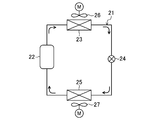
- FIG. 2 is a piping diagram of a refrigerant circuit provided in the container refrigeration apparatus of the in-compartment environment control system of the first embodiment.
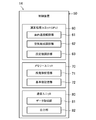
- FIG. 3 is a block diagram illustrating a configuration of the control device according to the first embodiment.
- Embodiment 1 ⁇ Embodiment 1 >> Embodiment 1 will be described.
- the in-compartment environment control system (10) of the present embodiment includes a container refrigeration device (20), an air composition control device (40), a control device (50), An index sensor (15).
- the storage environment control system (10) is provided in a transport container (1) for carrying out so-called CA (Controlled Atmosphere) transport.
- CA Controlled Atmosphere
- the container refrigeration unit (20), air composition control unit (40), and control unit (50) constitute an environment control unit (14).
- the environment control device (14) controls the environment inside the warehouse of the shipping container (1) so that the environment inside the warehouse becomes the set environment.
- the environment control device (14) sets the environmental index (for example, temperature, humidity, oxygen concentration, carbon dioxide concentration, etc. of the air in the warehouse), which is a physical quantity indicating the environment inside the warehouse of the shipping container (1), as the set value. Control the environment inside the shipping container (1) so that
- the transport container (1) provided with the indoor environment control system (10) of the present embodiment is used for transporting perishables (7).
- the perishables (7) to be transported by the transport container (1) are mainly fruits and vegetables such as fruits and vegetables.
- the container body (2) of the transport container (1) which is a storage, is formed in an elongated rectangular parallelepiped box shape. One end face of the container body (2) is open, and a container refrigeration device (20) is attached so as to close this open end.
- the interior space of the container body (2) forms a luggage compartment (5) for storing cargo (6).
- Cargo (6) is perishable (7) packed in a box.
- a floor plate (3) for placing cargo (6) is placed at the bottom of the cargo compartment (5).
- an underfloor flow path (4) for flowing the air blown out by the container refrigeration system (20) is formed between the floor plate (3) and the bottom plate of the container body (2).
- the underfloor flow path (4) is a flow path that extends along the bottom plate of the container body (2) in the longitudinal direction of the container body (2).
- One end of the underfloor flow path (4) is connected to the outlet (34) of the container refrigeration system (20), and the other end is a space above the floorboard (3) (that is, a space in which the cargo (6) is stored). ).
- the container refrigeration apparatus (20) includes a casing (30), a refrigerant circuit (21) for performing a refrigeration cycle, an external fan (26), and an internal fan (27). .
- the casing (30) includes a casing body (31) and a back plate (32).
- the casing (30) is provided with a refrigerant circuit (21), an external fan (26), and an internal fan (27).
- the casing body (31) has a lower part that is recessed toward the cargo room (5) of the shipping container (1).
- the lower part of the casing body (31) forms an external equipment room (35) communicating with the external space of the shipping container (1).
- An external fan (26) is arranged in the external equipment room (35).
- the back plate (32) is a substantially rectangular plate-shaped member.
- the rear plate (32) is disposed closer to the cargo room (5) of the transport container (1) than the casing body (31), and forms an in-compartment air flow path (36) with the casing body (31). I do.
- the upper end of the in-compartment air flow path (36) constitutes a suction port (33) of the casing (30), and the lower end constitutes an outlet (34) of the casing (30).
- the in-compartment air flow path (36) communicates with the luggage compartment (5) via the suction port (33), and communicates with the underfloor flow path (4) via the outlet (34).
- An in-compartment fan (27) is arranged above the in-compartment air flow path (36).
- the refrigerant circuit (21) is formed by connecting a compressor (22), a condenser (23), an expansion valve (24), and an evaporator (25) with piping. Closed circuit.
- the compressor (22) When the compressor (22) is operated, the refrigerant circulates through the refrigerant circuit (21), and a vapor compression refrigeration cycle is performed.
- the condenser (23) is arranged on the suction side of the external fan (26) in the external equipment room (35), and the evaporator (25) is connected to the internal air flow path (36). Is disposed below the internal fan (27).
- the compressor (22) is arranged in the external equipment room (35).
- the container refrigeration system (20) includes a refrigerator temperature sensor (37) and a refrigerator humidity sensor (38).
- the in-compartment temperature sensor (37) and the in-compartment humidity sensor (38) are arranged upstream of the evaporator (25) in the in-compartment air flow path (36).
- the in-compartment temperature sensor (37) measures the temperature of the in-compartment air sucked into the in-compartment air flow path (36) from the suction port (33).
- the in-compartment humidity sensor (38) measures the relative humidity of the in-compartment air drawn into the in-compartment air flow path (36) from the suction port (33).
- the temperature of the inside air measured by the inside temperature sensor (37) and the relative humidity of the inside air measured by the inside humidity sensor (38) are environmental indicators that are physical quantities indicating the inside environment.
- the air composition adjusting device (40) is a device for adjusting the composition of air in the shipping container (1). As shown in FIG. 1, the air composition adjusting device (40) includes a main unit (41) and a ventilation exhaust pipe (45). The main unit (41) is installed in the external equipment room (35) of the container refrigeration system (20).
- the main unit (41) of the air composition adjusting device (40) includes two adsorption cylinders, a pressurizing pump for supplying pressurized air to the adsorption cylinder, and a decompression pump for sucking air from the adsorption cylinder. And are accommodated.
- the air composition adjusting device (40) uses a so-called PSA (Pressure Swing Adsorption) method to generate modified air having a composition different from that of the outside air, using the outside air (that is, the atmosphere) as a raw material. This modified air has a higher nitrogen concentration than the outside air and a lower oxygen concentration than the outside air.
- PSA Pressure Swing Adsorption
- the main unit (41) includes an outside air inlet (42) for taking in outside air into the main unit (41). Further, a supply pipe (43) and an oxygen discharge pipe (44) are connected to the main unit (41).
- the supply pipe (43) is a pipe for introducing the corrected air (low oxygen concentration air) generated in the main unit (41) into the luggage compartment (5), and has a terminal at the end thereof.
- Open to The oxygen discharge pipe (44) is a pipe for discharging the high-oxygen-concentration air generated in the main unit (41) to the outside of the refrigerator, and the end of the oxygen discharge pipe (44) is open to the outside-compartment equipment room (35).
- the ventilation exhaust pipe (45) is a pipe for discharging the air inside the storage container (1) to the outside of the storage. One end of the ventilation exhaust pipe (45) opens to the inside air flow path (36), and the other end opens to the outside equipment room (35).
- the ventilation exhaust pipe (45) is provided with a ventilation exhaust valve (46).
- the ventilation exhaust valve (46) is an on-off valve including an electromagnetic valve.
- the air composition adjusting device (40) includes an oxygen concentration sensor (47) and a carbon dioxide concentration sensor (48).
- the oxygen concentration sensor (47) and the carbon dioxide concentration sensor (48) are arranged on the upstream side of the evaporator (25) in the internal air flow path (36).
- the oxygen concentration sensor (47) measures the oxygen concentration of the internal air sucked into the internal air passage (36) from the suction port (33).
- the carbon dioxide concentration sensor (48) measures the carbon dioxide concentration of the air in the refrigerator sucked from the suction port (33) into the air passage (36) in the refrigerator.
- the oxygen concentration of the inside air measured by the oxygen concentration sensor (47) and the carbon dioxide concentration of the inside air measured by the carbon dioxide concentration sensor (48) are environmental indicators that are physical quantities indicating the inside environment.
- the state index sensor (15) is a sensor that measures a state index that is a physical quantity indicating the freshness of the fresh product (7).
- This state index sensor (15) is a state detector.
- the state index sensor (15) measures the sugar content of the fresh product (7) as a state index.
- a near-infrared spectrometer that irradiates the target with near-infrared rays and measures the sugar content of the target based on the wavelength of the near-infrared absorbed by the target can be used.
- the indoor environment control system (10) of the present embodiment includes a plurality (three in FIG. 1) of state index sensors (15).
- the state index sensor (15) is provided for each of a plurality (three in FIG. 1) of cargoes (6) arranged at different positions.
- the control device (50) includes an arithmetic processing unit (60), a memory unit (70), and a communication unit (80).
- the control device (50) is configured to control the container refrigeration device (20) and the air composition adjustment device (40) such that the environment inside the shipping container (1) becomes the set environment. That is, the control device (50) sets the environmental index (in the present embodiment, the temperature of the in-compartment air, the oxygen concentration, and the carbon dioxide concentration), which is a physical quantity indicating the in-compartment environment of the shipping container (1), as the set value.
- the container refrigeration device (20) and the air composition control device (40) are controlled.
- the arithmetic processing unit (60) is, for example, a microprocessor composed of an integrated circuit.
- the arithmetic processing unit (60) functions as an internal temperature control unit (61), an air composition control unit (62), and a set value control unit (63).
- the refrigerator temperature control section (61) controls the container refrigeration system (20) such that the temperature of the refrigerator air in the transport container (1) becomes the set temperature.
- the set value adjusting unit (63) converts the set temperature, the O 2 set concentration, and the CO 2 set concentration into a state index (in this embodiment, the sugar content of the fresh product (7)) measured by the state index sensor (15). Adjust based on.
- the operations of the in-compartment temperature control section (61), the air composition control section (62), and the set value control section (63) will be described later in detail.
- the memory unit (70) is a semiconductor memory composed of, for example, an integrated circuit.
- the memory unit (70) stores a program for causing the control device (50) to execute a predetermined operation and data necessary for the operation of the control device (50). Further, the memory unit (70) functions as a set value storage section (71) and a reference value storage section (72).
- Set value storage unit (71) stores the set temperature, O 2 set concentration, and CO 2 nominal concentrations.
- the reference value storage unit (72) stores the first reference sugar content and the second reference sugar content used in the operation of the set value adjustment unit (63).
- the communication unit (80) is configured to perform wired communication with the container refrigeration device (20), the air composition adjusting device (40), and the state indicator sensor (15).
- the communication unit (80) functions as a data acquisition unit (81) and an output unit (82).
- the data acquisition unit (81) includes a measurement value of the inside temperature sensor (37), a measurement value of the inside humidity sensor (38), a measurement value of the oxygen concentration sensor (47), and a carbon dioxide concentration sensor (48). And the measurement value of the state index sensor (15), and transmits the received measurement value to the arithmetic processing unit (60).
- the output unit (82) outputs an operation command to the container refrigeration device (20) and an operation command to the air composition adjusting device (40).
- control device The operations performed by the in-compartment temperature control unit (61), the air composition control unit (62), and the set value control unit (63) of the control device (50) will be described.
- the in-compartment temperature control unit (61) controls the container refrigeration system (20) such that the temperature of the cargo room (5) of the transport container (1) (that is, the temperature of the in-compartment air) becomes the set temperature. I do.
- the internal temperature control section (61) reads the measured value Tr of the internal temperature sensor (37) acquired by the data acquisition section (81) and the set temperature Ts stored in the set value storage section (71). Then, the internal temperature control section (61) sets the measured value Tr of the internal temperature sensor (37) to a value within a set temperature range including the set temperature Ts (Ts ⁇ 1 ° C. in the present embodiment). The rotation speed of the compressor (22) of the container refrigeration system (20) is adjusted.
- the inside temperature control unit (61) issues an operation command to increase the rotation speed of the compressor (22). Is transmitted from the output unit (82) to the container refrigeration system (20). In the container refrigeration system (20) that has received the operation command, the rotation speed of the compressor (22) increases, and the cooling capacity of the container refrigeration system (20) increases.
- the inside temperature control unit (61) reduces the rotation speed of the compressor (22).
- the operation command is transmitted from the output unit (82) to the container refrigeration system (20).
- the rotation speed of the compressor (22) decreases, and the cooling capacity of the container refrigeration apparatus (20) decreases.
- Air composition control section controls the composition of the air (specifically, the oxygen concentration and the carbon dioxide concentration of the air in the refrigerator) in the cargo room (5) of the transport container (1) to the set concentration. And controlling the air composition adjusting device (40).
- the air composition adjusting section (62) reads the measured value ⁇ or of the oxygen concentration sensor (47) and the measured value ⁇ cr of the carbon dioxide concentration sensor (48) acquired by the data acquiring section (81). Then, the internal temperature control unit (61), the measurement value ⁇ or of the oxygen concentration sensor (47) (in the present embodiment, ⁇ os ⁇ 0.5%) O 2 set concentration range that includes the O 2 nominal concentration Faios within is the value, CO 2 set concentration range measurements ⁇ cr comprises CO 2 nominal concentration Faics carbon dioxide concentration sensor (48) (in this embodiment, ⁇ cs ⁇ 0.5%) to a value within, air composition
- the supply of the correction air from the adjusting device (40) into the cargo room (5) is interrupted, and the ventilation exhaust valve (46) is opened and closed.
- the air composition adjusting device (40) that has received the operation command generates corrected air (low oxygen concentration air) and supplies it to the luggage compartment (5) to open the ventilation exhaust valve (46).
- the air in the luggage compartment (5) is replaced with the corrected air, and the oxygen concentration of the air in the refrigerator decreases.
- air composition adjustment unit (62 ) Transmits an operation command to open the ventilation exhaust valve (46) by supplying the corrected air or the outside air from the output unit (82) to the air composition adjusting device (40).
- the air composition adjusting device (40) that has received the operation command supplies the modified air or the outside air (that is, the atmosphere) to the luggage compartment (5) and opens the ventilation exhaust valve (46).
- the corrected air or the outside air having a higher oxygen concentration than the inside air is supplied into the luggage compartment (5), and the oxygen concentration in the inside air increases.
- air composition adjusting unit (62) An operation command to stop the supply of the correction air and close the ventilation exhaust valve (46) is transmitted from the output unit (82) to the air composition adjusting device (40).
- the air composition adjusting device (40) that has received the operation command stops the supply of the corrected air to the luggage compartment (5) and closes the ventilation exhaust valve (46).
- air composition adjusting unit (62) Transmits an operation command to open the ventilation exhaust valve (46) by supplying the corrected air from the output unit (82) to the air composition adjusting device (40).
- the air composition adjusting device (40) that has received the operation command supplies the corrected air to the cargo room (5) and opens the ventilation exhaust valve (46).
- the carbon dioxide concentration of the corrected air is comparable to the atmospheric carbon dioxide concentration (about 0.03%). Therefore, in this case, the corrected air having a lower carbon dioxide concentration than the in-compartment air is supplied into the luggage compartment (5), and the in-compartment air has a reduced carbon dioxide concentration.
- air composition adjusting unit ( The air composition adjusting unit (62) transmits an operation command to stop the supply of the corrected air and close the ventilation exhaust valve (46) from the output unit (82) to the air composition adjusting device (40). .
- the air composition adjusting device (40) that has received the operation command stops the supply of the corrected air to the luggage compartment (5) and closes the ventilation exhaust valve (46). Then, since the fresh product (7) breathes and discharges carbon dioxide, the concentration of carbon dioxide in the air in the refrigerator increases.
- the set value adjusting section (63) reads the measurement value of the state index sensor (15) obtained by the data obtaining section (81) (in this embodiment, the measured value of the sugar content of the fresh product (7)).
- the indoor environment control system (10) of the present embodiment includes the plurality of state index sensors (15). Therefore, the set value adjusting unit (63) sets the value obtained by arithmetically averaging the measured values of the state index sensors (15) as the state index measured value Mf.
- the first reference sugar content Rs1 is higher than the second reference sugar content Rs2 (Rs1> Rs2).
- the sugar content of fruits and vegetables gradually increases as the freshness of the fruits and vegetables decreases (that is, as the fruits and vegetables ripen).
- the freshness of fruits and vegetables decreases with an increase in the ambient temperature, progresses with an increase in the oxygen concentration of the ambient atmosphere, and advances with a decrease in the carbon dioxide concentration of the ambient atmosphere.
- the set value adjusting unit (63) lowers the set temperature Ts, lowering the O 2 nominal concentrations Faios, increasing the CO 2 nominal concentrations Faics.
- the set value adjusting unit (63) raises the setting temperature Ts, increasing the O 2 nominal concentrations Faios, reducing the CO 2 nominal concentrations Faics.
- Set value adjusting unit (63) the set temperature Ts after the change, O 2 set concentration Faios, and CO 2 nominal concentrations Faics, recorded in the set value storage unit (71). Then, the refrigerator temperature control section (61) controls the container refrigeration apparatus (20) using the changed set temperature Ts read from the set value storage section (71). Further, air composition adjusting unit (62), using the O 2 nominal concentrations ⁇ os and CO 2 nominal concentration ⁇ cs the changed read from the setting value storage unit (71) controls air composition regulating device (40).
- the indoor environment control system (10) of the present embodiment includes an environment control device (14) and a state index sensor (15) that is a state detector.
- the environmental control device (14) adjusts the transport container (1) so that the environmental index indicating the environment inside the storage of the “transport container (1), which is a storage for fresh food (7)” becomes a set value. Adjust the cooking environment.
- the state index sensor (15) detects a state index indicating the state of the perishables (7) stored in the shipping container (1). Further, the environment adjustment device (14) adjusts the set value of the environment index based on the state index detected by the state detector (15).
- the environment adjustment device (14) adjusts the set value of the environment index based on the state index detected by the state index sensor (15), and the environment index is adjusted. Adjust the inside environment of the shipping container (1) to the set value.
- the set value of the environmental index is adjusted based on the state index of the fresh food (7) actually stored in the shipping container (1). Therefore, according to the present embodiment, it is possible to automatically bring the inside environment of the shipping container (1) closer to the environment suitable for the fresh food (7) to be stored. As a result, it is possible to reduce the man-hour required for storing the fresh food (7).
- the set value of the environmental indicator is set to a known optimum value.
- perishables can be stored in an appropriate state.
- an environmental index suitable for its storage may not be known. For this reason, in the related art, there is a possibility that a fresh product whose environmental index suitable for storage is unknown cannot be stored in an appropriate state.
- the set value adjuster (63) of the control device (50) constituting the environment adjuster (14) converts the set value of the environmental index into an actual value. It is adjusted based on the condition index of the fresh food (7) stored in the shipping container (1). Therefore, according to the present embodiment, it is possible to bring the environment inside the warehouse of the transport container (1) closer to the environment suitable for the fresh food (7) to be stored, regardless of the type of fresh food.
- the environment control device (14) uses the temperature, oxygen concentration, and carbon dioxide concentration of the in-compartment air as environment indices, and these environmental indices are set values and Adjust the inside environment of the shipping container (1) so that
- the state index sensor (15) detects the sugar content of the fresh product (7) as a state index.
- the environment adjustment device (14) of the present embodiment adjusts the set value of the environment index based on the sugar content of the fresh product (7) detected by the state index sensor (15).
- the container refrigeration system (20) of the environment control device (14) is configured to control the temperature of the indoor air, which is an environmental index, to a set value.
- the temperature is adjusted, and the state index sensor (15) detects the sugar content of the fresh product (7) as the state index.
- the set value adjusting section (63) of the control device (50) constituting the environment adjusting device (14) determines that the sugar content of the fresh product (7) detected by the state index sensor (15) is lower than the first reference sugar content.
- the set value adjustment unit (63) of the control device (50) constituting the environment adjustment device (14) adjusts the sugar content of the fresh product (7) as the state index. Based on this, the set value of the temperature of the inside air is adjusted.
- the temperature of the air in the refrigerator can be reduced to suppress the decrease in freshness of the fresh product (7).
- the freshness (7) is insufficiently matured and its sugar content remains low, it is possible to increase the temperature of the air in the refrigerator and promote the aging of the freshness (7).
- the in-compartment air conditioner (40) of the environment controller (14) is controlled so that the oxygen concentration of the in-compartment air, which is an environmental index, becomes a set value.
- the state index sensor (15) detects the sugar content of the fresh product (7) as a state index.
- the set value adjusting unit (63) of the control device (50) constituting the environment adjusting device (14) is configured such that the sugar content of the fresh product (7) detected by the state index sensor (15) is higher than the first reference sugar content.
- the set value adjustment unit (63) of the control device (50) constituting the environment adjustment device (14) adjusts the sugar content of the fresh product (7) as the state index. Based on this, the set value of the oxygen concentration of the inside air is adjusted.
- the oxygen concentration of the air in the refrigerator can be reduced to suppress the decrease in freshness of the fresh product (7).
- the freshness (7) is insufficiently matured and its sugar content remains low, it is possible to increase the oxygen concentration of the air in the refrigerator and promote the maturation of the freshness (7).
- the air composition adjusting device (40) of the environment adjusting device (14) is controlled so that the carbon dioxide concentration of the indoor air, which is an environmental index, becomes a set value.
- the concentration of carbon dioxide in the air is adjusted, and the state index sensor (15) detects the sugar content of the fresh product (7) as the state index.
- the set value adjusting section (63) of the control device (50) provided in the environment adjusting device (14) determines that the sugar content of the fresh product (7) detected by the state index sensor (15) is lower than the first reference sugar content.
- the set value adjustment unit (63) of the control device (50) constituting the environment adjustment device (14) adjusts the sugar content of the fresh product (7) as the state index. Based on this, the set value of the carbon dioxide concentration of the air in the refrigerator is adjusted. As a result, when the freshness of the fresh product (7) decreases and the sugar content increases, it is possible to suppress the decrease in freshness of the fresh product (7) by raising the carbon dioxide concentration of the air in the refrigerator. Further, when the ripening of the fresh product (7) is insufficient and the sugar content thereof remains low, the aging of the fresh product (7) can be promoted by lowering the carbon dioxide concentration of the air in the refrigerator.
- the container refrigeration system (20) of the environment control device (14) is configured to control the temperature of the indoor air, which is an environmental index, to a set value.
- the temperature is adjusted, and the air composition adjusting device (40) of the environment adjusting device (14) is operated to adjust the oxygen concentration of the air in the refrigerator so that the oxygen concentration and the carbon dioxide concentration of the indoor air, which are environmental indicators, become the respective set values.
- the state index sensor (15) detects the sugar content of the fresh product (7) as the state index.
- the set value adjusting unit (63) of the control device (50) constituting the environment adjusting device (14) is configured such that the sugar content of the fresh product (7) detected by the state index sensor (15) is higher than the first reference sugar content.
- the set value of the temperature of the inside air is lowered, and the set value of the oxygen concentration of the inside air when the sugar content of the fresh product (7) detected by the state index sensor (15) is higher than the first reference sugar content
- the set value adjustment unit (63) of the control device (50) constituting the environment adjustment device (14) adjusts the sugar content of the fresh product (7) as the state index. Based on this, the set value of the temperature of the inside air, the set value of the oxygen concentration of the inside air, and the set value of the carbon dioxide concentration of the inside air are adjusted. As a result, when the freshness of the fresh product (7) decreases and its sugar content increases, it is possible to adjust the set value of the environmental index so that the decrease in freshness of the fresh product (7) is suppressed. Become.
- the container refrigeration system (20) of the environment control device (14) is configured to control the temperature of the indoor air, which is an environmental index, to a set value.
- the temperature is adjusted, and the air composition adjusting device (40) of the environment adjusting device (14) is operated to adjust the oxygen concentration of the air in the refrigerator so that the oxygen concentration and the carbon dioxide concentration of the indoor air, which are environmental indicators, become the respective set values.
- the state index sensor (15) detects the sugar content of the fresh product (7) as the state index.
- the set value adjusting section (63) of the control device (50) constituting the environment adjusting device (14) is configured such that the sugar content of the fresh product (7) detected by the state index sensor (15) is lower than the second reference sugar content.
- the set value adjustment unit (63) of the control device (50) constituting the environment adjustment device (14) adjusts the sugar content of the fresh product (7) as the state index. Based on this, the set value of the temperature of the inside air, the set value of the oxygen concentration of the inside air, and the set value of the carbon dioxide concentration of the inside air are adjusted. As a result, when the ripening of the fresh product (7) is insufficient and its sugar content remains low, it is possible to adjust the set value of the environmental index so that the ripening of the fresh product (7) is promoted. .
- Embodiment 2 will be described.
- the in-compartment environment control system (10) of the present embodiment is obtained by changing the control device (50) and the state index sensor (15) in the in-compartment environment control system (10) of the first embodiment.
- the differences between the internal environment control system (10) of the present embodiment and the first embodiment will be described.
- the state index sensor (15) of the present embodiment measures the hardness of the fresh product (7) as a state index.
- a hardness meter using a laser Doppler method can be used as the state index sensor (15) of the present embodiment.
- a hardness meter using the laser Doppler method irradiates a target with laser light to measure a vibration spectrum of the target, and measures the hardness of the target based on a change in the vibration spectrum.
- the state index sensors (15) of the present embodiment are provided one by one for a plurality of cargoes (6) arranged at different positions.
- Control device (50) of the present embodiment is different from the first embodiment in a set value adjusting unit (63) of the arithmetic processing unit (60) and a reference value storage unit (72) of the memory unit (70).
- Set value adjusting section of the present embodiment (63), (in the present embodiment, the hardness of the perishable product (7)) state indicators state indicator sensor (15) is measured on the basis of the set temperature Ts, O 2 set concentration Faios, and configured to adjust a CO 2 nominal concentrations Faics.
- the reference value storage unit (72) of the present embodiment stores the first reference hardness Rh1 and the second reference hardness Rh2 used in the operation of the set value adjustment unit (63).
- the first reference hardness Rh1 is lower than the second reference hardness Rh2 (Rh1 ⁇ Rh2).
- the set value adjustment unit (63) reads the measurement value of the state index sensor (15) acquired by the data acquisition unit (81) (in this embodiment, the measured value of the hardness of the fresh product (7)). As in the first embodiment, the set value adjustment unit (63) of the present embodiment sets a value obtained by arithmetically averaging the measured values of the state index sensors (15) as a state index measured value Mf.
- the hardness of fruits and vegetables gradually decreases as the freshness of the fruits and vegetables decreases (that is, as the fruits and vegetables ripen).
- the freshness of fruits and vegetables decreases with an increase in the ambient temperature, progresses with an increase in the oxygen concentration of the ambient atmosphere, and advances with a decrease in the carbon dioxide concentration of the ambient atmosphere.
- the set value adjusting unit (63) lowers the set temperature Ts, lowering the O 2 nominal concentrations Faios, increasing the CO 2 nominal concentrations Faics.
- the set value adjusting unit (63) as in the first embodiment, each of the set temperature Ts and O 2 set concentration ⁇ os and CO 2 set concentration Faics, predetermined value .DELTA.Ts, Derutafaios, changing only Derutafaics.
- the set value adjusting unit (63) raises the setting temperature Ts, increasing the O 2 nominal concentrations Faios, reducing the CO 2 nominal concentrations Faics.
- the set value adjusting unit (63) as in the first embodiment, each of the set temperature Ts and O 2 set concentration ⁇ os and CO 2 set concentration Faics, predetermined value .DELTA.Ts, Derutafaios, changing only Derutafaics.
- the operations of the set value adjusting section (63), the internal temperature adjusting section (61), and the air composition adjusting section (62) are the same as those in the first embodiment.
- the state index sensor (15) detects the hardness of the fresh product (7) as a state index.
- the environment adjustment device (14) of the present embodiment adjusts the set value of the environment index based on the hardness of the fresh product (7) detected by the state index sensor (15).
- the container refrigeration system (20) of the environment control device (14) is configured to control the temperature of the indoor air, which is an environmental index, to a set value.
- the temperature is adjusted, and the state index sensor (15) detects the hardness of the fresh product (7) as the state index.
- the set value adjusting section (63) of the control device (50) constituting the environment adjusting device (14) is configured such that the hardness of the fresh product (7) detected by the state index sensor (15) is lower than the first reference hardness.
- the operation of lowering the set value of the internal air temperature when the temperature of the fresh air (7) detected by the state index sensor (15) is higher than the second reference hardness. And raising operation.
- the set value adjustment section (63) of the control device (50) that constitutes the environment adjustment device (14) is configured to control the hardness of the fresh product (7), which is a state index. Based on this, the set value of the temperature of the inside air is adjusted. As a result, when the freshness of the fresh product (7) decreases and its hardness decreases, it is possible to reduce the temperature of the air in the refrigerator and suppress the decrease in freshness of the fresh product (7). Further, when the freshness (7) is insufficiently matured and its hardness remains high, it is possible to increase the temperature of the air in the refrigerator and promote the aging of the freshness (7).
- the in-compartment air conditioner (40) of the environment controller (14) is controlled so that the oxygen concentration of the in-compartment air, which is an environmental index, becomes a set value.
- the state index sensor (15) detects the hardness of the fresh product (7) as a state index.
- the set value adjusting section (63) of the control device (50) constituting the environment adjusting device (14) is configured such that the hardness of the fresh product (7) detected by the state index sensor (15) is lower than the first reference hardness.
- the set value adjustment section (63) of the control device (50) that constitutes the environment adjustment device (14) is configured to control the hardness of the fresh product (7), which is a state index. Based on this, the set value of the oxygen concentration of the inside air is adjusted. As a result, when the freshness of the fresh product (7) decreases and its hardness decreases, the oxygen concentration of the air in the refrigerator can be reduced to suppress the decrease in freshness of the fresh product (7). Further, when the freshness (7) is insufficiently matured and its hardness remains high, it is possible to increase the oxygen concentration of the air in the refrigerator and promote the maturation of the freshness (7).
- the air composition adjusting device (40) of the environment adjusting device (14) is controlled so that the carbon dioxide concentration of the indoor air, which is an environmental index, becomes a set value.
- the carbon dioxide concentration of the air is adjusted, and the state index sensor (15) detects the hardness of the fresh product (7) as a state index.
- the set value adjusting section (63) of the control device (50) constituting the environment adjusting device (14) is configured such that the hardness of the fresh product (7) detected by the state index sensor (15) is lower than the first reference hardness.
- the set value adjustment section (63) of the control device (50) that constitutes the environment adjustment device (14) is configured to control the hardness of the fresh product (7), which is a state index. Based on this, the set value of the carbon dioxide concentration of the air in the refrigerator is adjusted. As a result, when the freshness of the fresh product (7) is lowered and its hardness is lowered, it is possible to suppress the decrease in freshness of the fresh product (7) by raising the carbon dioxide concentration of the air in the refrigerator. In addition, when the freshness (7) is insufficiently matured and its hardness remains high, it is possible to reduce the carbon dioxide concentration of the air in the refrigerator and promote the maturation of the freshness (7).
- the container refrigeration system (20) of the environment control device (14) is configured to control the temperature of the indoor air, which is an environmental index, to a set value.
- the temperature is adjusted, and the air composition adjusting device (40) of the environment adjusting device (14) is operated to adjust the oxygen concentration of the air in the refrigerator so that the oxygen concentration and the carbon dioxide concentration of the indoor air, which are environmental indicators, become the respective set values.
- the carbon dioxide concentration is adjusted, and the state index sensor (15) detects the hardness of the fresh product (7) as the state index.
- the set value adjusting section (63) of the control device (50) constituting the environment adjusting device (14) is configured such that the hardness of the fresh product (7) detected by the state index sensor (15) is lower than the first reference hardness.
- the set value of the temperature of the inside air is lowered, and when the hardness of the fresh product (7) detected by the state index sensor (15) is lower than the first reference hardness, the set value of the oxygen concentration of the inside air And an operation of increasing the set value of the carbon dioxide concentration of the air in the refrigerator when the hardness of the fresh product (7) detected by the state index sensor (15) is lower than the first reference hardness.
- the set value adjustment section (63) of the control device (50) that constitutes the environment adjustment device (14) is configured to control the hardness of the fresh product (7), which is a state index. Based on this, the set value of the temperature of the inside air, the set value of the oxygen concentration of the inside air, and the set value of the carbon dioxide concentration of the inside air are adjusted. As a result, when the freshness of the fresh product (7) decreases and its hardness decreases, it is possible to adjust the set value of the environmental index so that the freshness of the fresh product (7) is suppressed from decreasing. Become.
- the container refrigeration system (20) of the environment control device (14) is configured to control the temperature of the indoor air, which is an environmental index, to a set value.
- the temperature is adjusted, and the air composition adjusting device (40) of the environment adjusting device (14) is operated to adjust the oxygen concentration of the air in the refrigerator so that the oxygen concentration and the carbon dioxide concentration of the indoor air, which are environmental indicators, become the respective set values.
- the carbon dioxide concentration is adjusted, and the state index sensor (15) detects the hardness of the fresh product (7) as the state index.
- the set value adjusting section (63) of the control device (50) constituting the environment adjusting device (14) is configured such that the hardness of the fresh object (7) detected by the state index sensor (15) is higher than the second reference hardness.
- the set value of the temperature of the inside air is increased, and the set value of the oxygen concentration of the inside air when the hardness of the fresh product (7) detected by the state index sensor (15) is higher than the second reference hardness
- the set value adjustment section (63) of the control device (50) that constitutes the environment adjustment device (14) is configured to control the hardness of the fresh product (7), which is a state index. Based on this, the set value of the temperature of the inside air, the set value of the oxygen concentration of the inside air, and the set value of the carbon dioxide concentration of the inside air are adjusted. As a result, when the ripening of the fresh product (7) is insufficient and its hardness remains high, it is possible to adjust the set value of the environmental index so that the ripening of the fresh product (7) is promoted. .
- Embodiment 3 will be described.
- the in-compartment environment control system (10) of the present embodiment is obtained by changing the control device (50) and the state index sensor (15) in the in-compartment environment control system (10) of the first embodiment.
- the differences between the internal environment control system (10) of the present embodiment and the first embodiment will be described.
- the state index sensor (15) of the present embodiment measures the ethylene concentration (internal ethylene concentration) inside the fresh product (7) as a state index.
- a mid-infrared spectrometer that irradiates the target with mid-infrared light and measures the internal ethylene concentration of the target based on the wavelength of the mid-infrared light absorbed by the target is used. Can be used.
- Control device (50) of the present embodiment is different from the first embodiment in a set value adjusting unit (63) of the arithmetic processing unit (60) and a reference value storage unit (72) of the memory unit (70).
- the set value adjusting unit (63) of the present embodiment is configured to set temperatures Ts and O 2 based on the state index (in the present embodiment, the internal ethylene concentration of the fresh product (7)) measured by the state index sensor (15). nominal concentration Faios, and configured to adjust a CO 2 nominal concentrations Faics.
- the reference value storage unit (72) of the present embodiment stores the first reference density Rc1 and the second reference density Rc2 used in the operation of the set value adjustment unit (63).
- the first reference density Rc1 is higher than the second reference density Rc2 (Rc1> Rc2).
- the set value adjustment unit (63) reads the measurement value (in the present embodiment, the measurement value of the internal ethylene concentration of the fresh product (7)) of the state index sensor (15) acquired by the data acquisition unit (81). As in the first embodiment, the set value adjustment unit (63) of the present embodiment sets a value obtained by arithmetically averaging the measured values of the state index sensors (15) as a state index measured value Mf.
- the internal ethylene concentration of fruits and vegetables gradually increases as the freshness of the fruits and vegetables decreases (that is, as the fruits and vegetables ripen).
- the freshness of fruits and vegetables decreases with an increase in the ambient temperature, progresses with an increase in the oxygen concentration of the ambient atmosphere, and advances with a decrease in the carbon dioxide concentration of the ambient atmosphere.
- the set value adjusting unit (63) lowers the set temperature Ts, lowering the O 2 nominal concentrations Faios, increasing the CO 2 nominal concentrations Faics.
- the set value adjusting unit (63) as in the first embodiment, each of the set temperature Ts and O 2 set concentration ⁇ os and CO 2 set concentration Faics, predetermined value .DELTA.Ts, Derutafaios, changing only Derutafaics.
- the set value adjusting unit (63) raises the setting temperature Ts, increasing the O 2 nominal concentrations Faios, reducing the CO 2 nominal concentrations Faics.
- the set value adjusting unit (63) as in the first embodiment, each of the set temperature Ts and O 2 set concentration ⁇ os and CO 2 set concentration Faics, predetermined value .DELTA.Ts, Derutafaios, changing only Derutafaics.
- the operations of the set value adjusting section (63), the internal temperature adjusting section (61), and the air composition adjusting section (62) are the same as those in the first embodiment.
- the state index sensor (15) detects the internal ethylene concentration of the fresh product (7) as a state index.
- the environment adjustment device (14) of the present embodiment adjusts the set value of the environment index based on the internal ethylene concentration of the fresh product (7) detected by the state index sensor (15).
- the container refrigeration system (20) of the environment control device (14) is configured to control the temperature of the indoor air, which is an environmental index, to a set value.
- the temperature is adjusted, and the state index sensor (15) detects the internal ethylene concentration of the fresh product as a state index.
- the set value adjusting section (63) of the control device (50) constituting the environment adjusting device (14) is configured to adjust the internal ethylene concentration of the perishables (7) detected by the state index sensor (15) from the first reference concentration. Lowering the set value of the internal air temperature when the temperature is high, and when the internal ethylene concentration of the perishables (7) detected by the state index sensor (15) is lower than the second reference concentration, Operation to increase the set value of.
- the set value adjustment unit (63) of the control device (50) constituting the environment adjustment device (14) includes the internal ethylene of the fresh product (7) as a state index.
- the set value of the temperature of the inside air is adjusted based on the concentration.
- the in-compartment air conditioner (40) of the environment controller (14) is controlled so that the oxygen concentration of the in-compartment air, which is an environmental index, becomes a set value.
- the state index sensor (15) detects the internal ethylene concentration of the fresh product (7) as a state index.
- the set value adjusting section (63) of the control device (50) constituting the environment adjusting device (14) is configured to adjust the internal ethylene concentration of the perishables (7) detected by the state index sensor (15) from the first reference concentration.
- the set value adjustment unit (63) of the control device (50) constituting the environment adjustment device (14) includes the internal ethylene of the fresh product (7) as a state index.
- the set value of the oxygen concentration of the inside air is adjusted based on the concentration.
- the air composition adjusting device (40) of the environment adjusting device (14) is controlled so that the carbon dioxide concentration of the indoor air, which is an environmental index, becomes a set value.
- the carbon dioxide concentration of the air is adjusted, and the state index sensor (15) detects the internal ethylene concentration of the fresh product (7) as a state index.
- the set value adjusting section (63) of the control device (50) constituting the environment adjusting device (14) is configured to adjust the internal ethylene concentration of the perishables (7) detected by the state index sensor (15) from the first reference concentration.
- the set value adjustment unit (63) of the control device (50) constituting the environment adjustment device (14) includes the internal ethylene of the fresh product (7) as a state index. Based on the concentration, the set value of the concentration of carbon dioxide in the inside air is adjusted. As a result, when the freshness of the fresh product (7) decreases and the internal ethylene concentration increases, it is possible to suppress the decrease in freshness of the fresh product (7) by raising the carbon dioxide concentration of the air in the refrigerator. Become. Further, when the ripening of the fresh product (7) is insufficient and the internal ethylene concentration is kept low, the aging of the fresh product (7) can be promoted by reducing the carbon dioxide concentration of the air in the refrigerator.
- the container refrigeration system (20) of the environment control device (14) is configured to control the temperature of the indoor air, which is an environmental index, to a set value.
- the temperature is adjusted, and the air composition adjusting device (40) of the environment adjusting device (14) is operated to adjust the oxygen concentration of the air in the refrigerator so that the oxygen concentration and the carbon dioxide concentration of the indoor air, which are environmental indicators, become the respective set values.
- the state index sensor (15) detects the internal ethylene concentration of the fresh product (7) as a state index.
- the set value adjusting section (63) of the control device (50) constituting the environment adjusting device (14) is configured to adjust the internal ethylene concentration of the perishables (7) detected by the state index sensor (15) from the first reference concentration.
- the internal temperature of the fresh air (7) detected by the state index sensor (15) is higher than the first reference concentration
- the set value adjustment unit (63) of the control device (50) constituting the environment adjustment device (14) includes the internal ethylene of the fresh product (7) as a state index. Based on the concentration, the set value of the temperature of the inside air, the set value of the oxygen concentration of the inside air, and the set value of the carbon dioxide concentration of the inside air are adjusted. As a result, when the freshness of the fresh product (7) decreases and the internal ethylene concentration increases, the set value of the environmental index can be adjusted so as to suppress the decrease in freshness of the fresh product (7). It becomes possible.
- the container refrigeration system (20) of the environment control device (14) is configured to control the temperature of the indoor air, which is an environmental index, to a set value.
- the temperature is adjusted, and the air composition adjusting device (40) of the environment adjusting device (14) is operated to adjust the oxygen concentration of the air in the refrigerator so that the oxygen concentration and the carbon dioxide concentration of the indoor air, which are environmental indicators, become the respective set values.
- the state index sensor (15) detects the internal ethylene concentration of the fresh product (7) as a state index.
- the set value adjuster (63) of the control device (50) constituting the environmental adjuster (14) is configured to adjust the internal ethylene concentration of the perishables (7) detected by the state index sensor (15) from the second reference concentration.
- the internal temperature of the fresh air (7) detected by the state indicator sensor (15) is lower than the second reference concentration
- the set value adjustment unit (63) of the control device (50) constituting the environment adjustment device (14) includes the internal ethylene of the fresh product (7) as a state index. Based on the concentration, the set value of the temperature of the inside air, the set value of the oxygen concentration of the inside air, and the set value of the carbon dioxide concentration of the inside air are adjusted. As a result, when the ripening of perishables (7) is insufficient and the internal ethylene concentration remains low, it is possible to adjust the set value of the environmental index so that ripening of perishables (7) is promoted It becomes.
- Embodiment 4 will be described.
- the in-compartment environment control system (10) of the present embodiment is obtained by changing the control device (50) and the state index sensor (15) in the in-compartment environment control system (10) of the first embodiment. Further, in the indoor environment control system (10) of the present embodiment, the air composition adjusting device (40) is omitted.
- the differences between the internal environment control system (10) of the present embodiment and the first embodiment will be described.
- the transport container (1) provided with the indoor environment control system (10) of the present embodiment is used for transporting perishables (7).
- the perishables (7) to be transported by the transport container (1) are seafood such as fish, shellfish and shellfish, and meat such as beef, pork and chicken.
- the state index sensor (15) of the present embodiment measures the K value of the fresh product (7) as a state index.
- a near-infrared analyzer that irradiates a target with near-infrared rays and measures the K value of the target based on the wavelength of the near-infrared rays absorbed by the target is used. be able to.
- the K value is a ratio of HxR (inosine) and Hx (hypoxanthine) among ATP-related compounds contained in seafood and meat, which are fresh products (7).
- the ATP-related compound is a general term for ATP (adenosine triphosphate) contained in meat and fish and seafood, and a compound generated in a process in which the ATP is decomposed by an autolyzing enzyme contained in meat and fish and seafood.
- ATP adenosine triphosphate
- ADP adenosine diphosphate
- AMP adenylic acid
- IMP inosine acid
- HxR inosine
- Hx hypoxanthine
- the set value adjustment unit (63) reads the measurement value of the state index sensor (15) acquired by the data acquisition unit (81) (in the present embodiment, the measured value of the K value of the fresh product (7)). As in the first embodiment, the set value adjustment unit (63) of the present embodiment sets a value obtained by arithmetically averaging the measured values of the state index sensors (15) as a state index measured value Mf.
- the set value adjusting section (63) also stores the set temperature Ts stored in the set value storage section (71) and the first reference K value Rk1 and the second reference K value Rk2 stored in the reference value storage section (72). Read.
- the K value of seafood and meat gradually increases as the freshness of seafood and meat decreases (that is, as the aging of seafood and meat progresses). In general, the freshness of seafood and meat decreases more rapidly as the ambient temperature increases.
- the set value adjusting section (63) records the changed set temperature Ts in the set value storage section (71). Then, the refrigerator temperature control section (61) controls the container refrigeration apparatus (20) using the changed set temperature Ts read from the set value storage section (71).
- the operation of the air composition adjusting section (62) is the same as that of the first embodiment.
- the environment control device (14) uses the temperature of the in-compartment air as an environmental index, and transports the in-compartment air temperature as an environmental index so that the temperature of the in-compartment air becomes the set value.
- the state index sensor (15) detects the K value of the fresh product (7) as a state index.
- the environment adjustment device (14) of the present embodiment adjusts the set value of the environment index based on the K value of the fresh product (7) detected by the state index sensor (15).
- the container refrigeration system (20) of the environment control device (14) is configured to control the temperature of the indoor air, which is an environmental index, to a set value.
- the temperature is adjusted, and the state index sensor (15) detects the K value, which is the ratio of HxR (inosine) and Hx (hypoxanthine), among the ATP-related compounds contained in the fresh product (7) as the state index.
- the set value adjusting unit (63) of the control device (50) constituting the environment adjusting device (14) determines that the K value of the fresh product (7) detected by the state index sensor (15) is higher than the first reference K value. Lowering the set value of the inside air temperature when the temperature is high, and when the K value of the fresh thing (7) detected by the state index sensor (15) is lower than the second reference K value, Operation to increase the set value of.
- the set value adjustment unit (63) of the control device (50) that constitutes the environment adjustment device (14) includes a K value of a fresh product (7) as a state index.
- the set value of the temperature of the air in the refrigerator is adjusted based on.
- the set value adjusting unit (63) of the arithmetic processing unit (60) sets the value based on the acidity of the fresh product (7), which is a state index.
- temperature Ts may be configured to adjust O 2 set concentration Faios, and CO 2 nominal concentrations Faics.
- the state index sensor (15) measures the acidity of the fresh product (7) as a state index.
- a near-infrared analyzer that irradiates near-infrared light to the object and measures the acidity of the object based on the wavelength of near-infrared light absorbed by the object is used. Can be.
- the acidity of fruits and vegetables gradually decreases as the freshness of the fruits and vegetables decreases (that is, as the fruits and vegetables ripen). Therefore, when the state index measurement value Mf is lower than the first reference value, the set value adjustment unit (63) of the present modification lowers the set temperature Ts in order to delay the freshness of the fresh product (7), O 2 reducing the set concentration Faios, increasing the CO 2 nominal concentrations Faics.
- the set value adjusting section (63) of the present modified example raises the set temperature Ts in order to promote the ripening of the fresh product (7), O 2 increase the setting density Faios, reducing the CO 2 nominal concentrations Faics.
- the set value adjusting unit (63) of the arithmetic processing unit (60) is configured based on the water content of the fresh product (7), which is a state index.
- set temperature Ts, O 2 set concentration Faios, and CO 2 set concentration ⁇ cs may be configured to condition a.
- the state index sensor (15) measures the water content of the fresh product (7) as a state index.
- a near-infrared analyzer that irradiates near-infrared light to the object and measures the water content of the object based on the wavelength of the near-infrared light absorbed by the object is used. be able to.
- the moisture content of fruits and vegetables which are a kind of fresh food, gradually decreases as the freshness of fresh food decreases (that is, as ripening of fresh food proceeds). Therefore, when the state index measurement value Mf is lower than the first reference value, the set value adjustment unit (63) of the present modification lowers the set temperature Ts in order to delay the freshness of the fresh product (7), O 2 reducing the set concentration Faios, increasing the CO 2 nominal concentrations Faics.
- the set value adjusting section (63) of the present modified example raises the set temperature Ts in order to promote the ripening of the fresh product (7), O 2 increase the setting density Faios, reducing the CO 2 nominal concentrations Faics.
- the set value adjustment unit (63) of the arithmetic processing unit (60) performs setting based on the color of the fresh thing (7), which is a state index.
- temperature Ts may be configured to adjust O 2 set concentration Faios, and CO 2 nominal concentrations Faics.
- the state index sensor (15) measures the color (specifically, color change) of the fresh product (7) as a state index.
- a color difference meter that measures a difference in color of an object can be used.
- the set value adjusting unit (63) of this modification example to delay the freshness reduction of perishable products (7) lowers the set temperature Ts, lowering the O 2 nominal concentrations Faios, increasing the CO 2 nominal concentrations Faics.
- the set value adjusting unit (63) of this modification example order to accelerate ripening of perishable products (7), raising the set temperature Ts, increasing the O 2 nominal concentrations Faios, reducing the CO 2 nominal concentrations Faics.
- the setting value adjustment unit is (63), based on the sugar content and hardness and internal ethylene concentration of perishable products (7), for adjusting the set temperature Ts, O 2 set concentration Faios, and CO 2 nominal concentrations ⁇ cs
- the interior environment control system (10) of the present modified example will be described with reference to FIG.
- the state index sensor (15) includes a refractometer side for measuring the sugar content of the fresh product (7) and a hardness for measuring the hardness of the fresh product (7).
- a meter side and a densitometer side for measuring the internal ethylene concentration of the fresh product (7) are provided.
- the set value adjusting section (63) of the arithmetic processing unit (60) indicates that “the sugar content measured by the state index sensor (15) is higher than the first reference sugar content”.
- the set value adjustment unit (63) of the arithmetic processing unit (60) is configured to execute the processing when all of the first condition, the second condition, and the third condition are satisfied. lowers the set temperature Ts, lowering the O 2 nominal concentrations Faios, may be configured to raise the CO 2 nominal concentrations Faics.
- the in-compartment environment control system (10) of the present modified example has a fourth condition that “the sugar content measured by the condition index sensor (15) is lower than the second reference sugar content”; When at least one of the fifth condition that “the measured hardness is higher than the second reference concentration” and the sixth condition that “the internal ethylene concentration measured by the state index sensor (15) is lower than the second reference concentration” is satisfied.
- the fifth condition that “the measured hardness is higher than the second reference concentration” and the sixth condition that “the internal ethylene concentration measured by the state index sensor (15) is lower than the second reference concentration” is satisfied.
- raising the set temperature Ts increasing the O 2 nominal concentrations Faios, reducing the CO 2 nominal concentrations Faics.
- the set value adjustment unit (63) of the arithmetic processing unit (60) is configured to execute the processing when all of the fourth, fifth, and sixth conditions are satisfied. , raising the set temperature Ts, increasing the O 2 nominal concentrations Faios, may be configured to reduce the CO 2 nominal concentrations Faics.
- the set value adjustment unit (63) of the arithmetic processing unit (60) includes a It may be configured to perform only the operation of “adjusting the set value of the environmental index to delay the decrease in freshness of the fresh product (7)”.
- the set value adjusting unit (63) of the first embodiment to which the present modified example applies the set temperature Ts when the measured state index value Mf (sugar content) is higher than the first reference sugar content Rs1 (Mf> Rs1). lower, lower the O 2 nominal concentrations Faios, raise the CO 2 nominal concentrations Faics, when the state indicators measured value Mf (sugar content) is less than the first reference Brix Rs1 (Mf ⁇ Rs1), the set temperature Ts, O 2 set concentration Faios, and it does not change the CO 2 nominal concentrations Faics.
- the set value adjusting section (63) of the second embodiment to which the present modified example applies the set temperature Ts when the measured state index value Mf (hardness) is lower than the first reference hardness Rh1 (Mf ⁇ Rh1). lower, lower the O 2 nominal concentrations Faios, raise the CO 2 nominal concentrations Faics, when the state indicators measured value Mf (hardness) is not less than the first reference hardness Rh1 (Mf ⁇ Rh1), set temperature Ts, O 2 set concentration Faios, and it does not change the CO 2 nominal concentrations Faics.
- the set value adjusting unit (63) of the third embodiment to which the present modification is applied sets the set temperature when the state index measured value Mf (internal ethylene concentration) is higher than the first reference concentration Rc1 (Mf> Rc1). lower the ts, lowering the O 2 nominal concentrations Faios, raise the CO 2 nominal concentrations Faics, when the state indicators measured value Mf (internal ethylene concentration) is equal to or less than a first reference density Rc1 (Mf ⁇ Rc1), set temperature Ts, O 2 set concentration Faios, and CO 2 without changing the setting density Faics.
- the set value adjusting unit (63) of the fourth embodiment to which the present modification is applied sets the set temperature when the state index measured value Mf (K value) is higher than the first reference K value Rk1 (Mf> Rk1).
- the set temperature Ts is not changed.
- the set value adjustment unit (63) of the arithmetic processing unit (60) includes a It may be configured to perform only the operation of “adjusting the set value of the environmental index to promote ripening of the fresh product (7)”.
- the set value adjusting unit (63) of the first embodiment to which the present modified example applies the set temperature Ts when the state index measured value Mf (sugar content) is lower than the second reference sugar content Rs2 (Mf ⁇ Rs2). raised, raising the O 2 nominal concentrations Faios, reduce the CO 2 nominal concentrations Faics, when the state indicators measured value Mf (sugar content) is equal to or greater than the second reference Brix Rs2 (Mf ⁇ Rs2), the set temperature Ts, O 2 set concentration Faios, and it does not change the CO 2 nominal concentrations Faics.
- the set value adjusting section (63) of the second embodiment to which the present modification is applied sets the set temperature Ts when the state index measured value Mf (hardness) is higher than the second reference hardness Rh2 (Mf> Rh2). It raised, raising the O 2 nominal concentrations Faios, reduce the CO 2 nominal concentrations Faics, when the state indicators measured value Mf (hardness) of the following second reference hardness Rh2 (Mf ⁇ Rh2), set temperature Ts, O 2 set concentration Faios, and it does not change the CO 2 nominal concentrations Faics.
- the set value adjusting section (63) of the third embodiment to which the present modified example is applied sets the set temperature when the state index measured value Mf (internal ethylene concentration) is lower than the second reference concentration Rc2 (Mf ⁇ Rc2). raising Ts, raising the O 2 nominal concentrations Faios, the lower the CO 2 nominal concentrations Faics, if state index measured value Mf (internal ethylene concentration) is equal to or greater than the second reference density Rc2 (Mf ⁇ Rc2), set temperature Ts, O 2 set concentration Faios, and CO 2 without changing the setting density Faics.
- the set value adjusting unit (63) of the fourth embodiment to which the present modification is applied increases the set temperature Ts when the state index measured value Mf is lower than the second reference K value Rk2 (Mf ⁇ Rk2), When the state index measurement value Mf is equal to or greater than the second reference K value Rk2 (Mf ⁇ Rk2), the set temperature Ts is not changed.
- the set value adjusting unit (63) of the arithmetic processing unit (60) adjusts only the set temperature Ts based on the state index.
- the setting value adjusting unit (63), O 2 set may be configured to adjust on the basis of only the state index concentration Faios, to adjust, based only CO 2 set concentration ⁇ cs the state index May be configured.
- the in-compartment environment control system (10) of each of the above embodiments and modifications may include only one state index sensor (15).
- the set value adjusting unit (63) adjusts the set value of the environmental index using the measured value of one state index sensor (15) as the state index measured value Mf.
- the transport container (1) to which the in-compartment environment control system (10) of each of the above embodiments and modifications is attached is not limited to a marine transport container, but may be a land transport container. .
- the installation target of these in-compartment environment control systems (10) is not limited to the transport container (1). That is, these internal environment control systems (10) may be installed in, for example, a refrigerated warehouse or a commercial refrigerator.
- the air composition adjusting device (40) is not limited to a device that generates modified air (low oxygen concentration air) by the PSA method.
- the air composition adjusting device (40) may be configured to generate the modified air (low oxygen concentration air) using, for example, a gas separation membrane.
- This gas separation membrane has a characteristic that “the permeation speed of nitrogen is higher than the permeation speed of oxygen”.
- the air composition adjusting device (40) of this modification supplies air having a high nitrogen concentration that has passed through the gas separation membrane to the cargo room (5) as corrected air, and air having a high oxygen concentration that has not passed through the gas separation membrane. To the outside of the refrigerator.
- the present disclosure is useful for an environment control system in a refrigerator.
- Transport container storage
- Perishables 10
- Environmental control system in warehouse 14
- Environmental control device 15
- Condition index sensor condition detector
- Container refrigeration unit 40
- Air composition control unit 50 Control unit
Landscapes
- Engineering & Computer Science (AREA)
- Life Sciences & Earth Sciences (AREA)
- Chemical & Material Sciences (AREA)
- Polymers & Plastics (AREA)
- Food Science & Technology (AREA)
- Wood Science & Technology (AREA)
- Zoology (AREA)
- Physics & Mathematics (AREA)
- Chemical Kinetics & Catalysis (AREA)
- Combustion & Propulsion (AREA)
- General Chemical & Material Sciences (AREA)
- Mechanical Engineering (AREA)
- Thermal Sciences (AREA)
- General Engineering & Computer Science (AREA)
- Cold Air Circulating Systems And Constructional Details In Refrigerators (AREA)
- Devices That Are Associated With Refrigeration Equipment (AREA)
- Food Preservation Except Freezing, Refrigeration, And Drying (AREA)
Abstract
輸送用コンテナ(1)に設けられた庫内環境制御システム(10)は、冷凍装置(20)と、空気組成調節装置(40)と、制御装置と、状態指標センサ(15)とを備える。制御装置の庫内温度調節部は、庫内空気の温度が設定温度となるように、冷凍装置(20)を制御する。制御装置の空気組成調節装置は、庫内空気の酸素濃度と二酸化炭素濃度がそれぞれの設定濃度となるように、空気組成調節装置(40)を制御する。制御装置は、状態指標センサ(15)が計測した生鮮物(7)の状態指標(例えば、糖度)に基づいて、庫内空気の温度と、庫内空気の酸素濃度および二酸化炭素濃度とを調節する。
Description
本開示は、庫内環境制御システムに関するものである。
特許文献1には、生鮮物の一種である青果物を貯蔵する貯蔵庫に、生竹から抽出した液(生竹抽出液)を噴霧する鮮度保持方法が開示されている。この方法は、生竹抽出液が有するエチレンの吸着能と、防カビ効果と、抗菌効果とを利用して、青果物の鮮度を保持する方法である。また、この文献には、青果物の糖度を計測し、計測した糖度に基づいて、生竹抽出液の噴霧量を調節することが記載されている。
特許文献1に開示された方法によって青果物の鮮度を保つためには、青果物を貯蔵する貯蔵庫に、生竹抽出液を貯蔵するためのタンクを併設し、このタンクに生竹抽出液を定期的に補充し続ける必要がある。このため、生鮮物の貯蔵に要する工数が嵩むという問題があった。
本開示の目的は、生鮮物の貯蔵に要する工数を低く抑えることにある。
本開示の第1の態様は、庫内環境制御システム(10)を対象とし、生鮮物(7)を貯蔵する貯蔵庫(1)の庫内環境を調節する環境調節装置(14)と、上記貯蔵庫(1)に貯蔵された上記生鮮物(7)の状態を示す状態指標を検知する状態検知器(15)とを備え、上記環境調節装置(14)は、庫内空気の温度、酸素濃度、及び二酸化炭素濃度の少なくとも一つを、上記貯蔵庫(1)の庫内環境を示す環境指標とし、上記状態検知器(15)が検知した上記状態指標に基づいて上記環境指標を調節するものである。
第1の態様において、環境調節装置(14)は、状態検知器(15)が検知した状態指標に基づいて、貯蔵庫(1)の庫内環境を調節する。この態様において、貯蔵庫(1)の庫内環境を示す環境指標は、実際に貯蔵庫(1)に貯蔵されている生鮮物(7)の状態指標に基づいて調節される。従って、この態様によれば、貯蔵庫(1)の庫内環境を、貯蔵対象の生鮮物(7)に適した環境に、自動的に近づけることが可能となる。その結果、生鮮物(7)の貯蔵に要する工数を低く抑えることが可能となる。なお、この態様において、状態検知器(15)は、状態指標を直接に計測するように構成されていてもよいし、状態指標とは異なる物理量から状態指標を推定し、又は算出するように構成されていてもよい。
また、第1の態様において、環境調節装置(14)は、庫内空気の温度、酸素濃度、及び二酸化炭素濃度の少なくとも一つを環境指標とする。環境指標が複数の場合、環境調節装置(14)は、複数の環境指標のぞれぞれを調節する。
本開示の第2の態様は、上記第1の態様において、上記状態検知器(15)は、上記生鮮物(7)の糖度、硬度、及び内部エチレン濃度の少なくとも一つを、上記状態指標として検知するものである。
第2の態様において、環境調節装置(14)は、状態検知器(15)が検知した生鮮物(7)の糖度、硬度、及び内部エチレン濃度の少なくとも一つに基づいて、環境指標を調節する。
本開示の第3の態様は、上記第1の態様において、上記状態検知器(15)は、上記生鮮物(7)に含まれるATP関連化合物のうちのHxR(イノシン)及びHx(ヒポキサンチン)の割合であるK値を、上記状態指標として検知するものである。
第3の態様において、環境調節装置(14)は、状態検知器(15)が検知した生鮮物(7)のK値に基づいて、環境指標を調節する。
本開示の第4の態様は、上記第1の態様において、上記環境調節装置(14)は、上記環境指標である庫内空気の温度を調節し、上記状態検知器(15)は、上記生鮮物(7)の糖度を上記状態指標として検知し、上記環境調節装置(14)は、上記状態検知器(15)が検知した上記生鮮物(7)の糖度が第1の基準糖度よりも高いときに上記庫内空気の温度を下げる動作と、上記状態検知器(15)が検知した上記生鮮物(7)の糖度が第2の基準糖度よりも低いときに上記庫内空気の温度を上げる動作との少なくとも一方を行うものである。
第4の態様において、環境調節装置(14)は、状態指標である生鮮物(7)の糖度に基づいて、庫内空気の温度を調節する。状態検知器(15)が検知した状態指標(糖度)が第1の基準糖度よりも高いときに庫内空気の温度を下げる動作を、環境調節装置(14)が行う場合は、生鮮物(7)の鮮度が低下してその糖度が高くなった時に、庫内空気の温度を引き下げて生鮮物(7)の鮮度の低下を抑制することが可能となる。状態検知器(15)が検知した状態指標(糖度)が第2の基準糖度よりも低いときに庫内空気の温度を上げる動作を、環境調節装置(14)が行う場合は、生鮮物(7)の熟成が不足してその糖度が低いままである時に、庫内空気の温度を引き上げて生鮮物(7)の熟成を促進させることが可能となる。
本開示の第5の態様は、上記第1の態様において、上記環境調節装置(14)は、上記環境指標である庫内空気の酸素濃度を調節し、上記状態検知器(15)は、上記生鮮物(7)の糖度を上記状態指標として検知し、上記環境調節装置(14)は、上記状態検知器(15)が検知した上記生鮮物(7)の糖度が第1の基準糖度よりも高いときに上記庫内空気の酸素濃度を下げる動作と、上記状態検知器(15)が検知した上記生鮮物(7)の糖度が第2の基準糖度よりも低いときに上記庫内空気の酸素濃度を上げる動作との少なくとも一方を行うものである。
第5の態様において、環境調節装置(14)は、状態指標である生鮮物(7)の糖度に基づいて、庫内空気の酸素濃度を調節する。状態検知器(15)が検知した状態指標(糖度)が第1の基準糖度よりも高いときに庫内空気の酸素濃度を下げる動作を、環境調節装置(14)が行う場合は、生鮮物(7)の鮮度が低下してその糖度が高くなった時に、庫内空気の酸素濃度を引き下げて生鮮物(7)の鮮度の低下を抑制することが可能となる。状態検知器(15)が検知した状態指標(糖度)が第2の基準糖度よりも低いときに庫内空気の酸素濃度を上げる動作を、環境調節装置(14)が行う場合は、生鮮物(7)の熟成が不足してその糖度が低いままである時に、庫内空気の酸素濃度を引き上げて生鮮物(7)の熟成を促進させることが可能となる。
本開示の第6の態様は、上記第1の態様において、上記環境調節装置(14)は、上記環境指標である庫内空気の二酸化炭素濃度を調節し、上記状態検知器(15)は、上記生鮮物(7)の糖度を上記状態指標として検知し、上記環境調節装置(14)は、上記状態検知器(15)が検知した上記生鮮物(7)の糖度が第1の基準糖度よりも高いときに上記庫内空気の二酸化炭素濃度を上げる動作と、上記状態検知器(15)が検知した上記生鮮物(7)の糖度が第2の基準糖度よりも低いときに上記庫内空気の二酸化炭素濃度を下げる動作との少なくとも一方を行うものである。
第6の態様において、環境調節装置(14)は、状態指標である生鮮物(7)の糖度に基づいて、庫内空気の二酸化炭素濃度を調節する。状態検知器(15)が検知した状態指標(糖度)が第1の基準糖度よりも高いときに庫内空気の二酸化炭素濃度を上げる動作を、環境調節装置(14)が行う場合は、生鮮物(7)の鮮度が低下してその糖度が高くなった時に、庫内空気の二酸化炭素濃度を引き上げて生鮮物(7)の鮮度の低下を抑制することが可能となる。状態検知器(15)が検知した状態指標(糖度)が第2の基準糖度よりも低いときに庫内空気の二酸化炭素濃度を下げる動作を、環境調節装置(14)が行う場合は、生鮮物(7)の熟成が不足してその糖度が低いままである時に、庫内空気の二酸化炭素濃度を引き下げて生鮮物(7)の熟成を促進させることが可能となる。
本開示の第7の態様は、上記第1の態様において、上記環境調節装置(14)は、上記環境指標である庫内空気の温度を調節し、上記状態検知器(15)は、上記生鮮物(7)の硬度を上記状態指標として検知し、上記環境調節装置(14)は、上記状態検知器(15)が検知した上記生鮮物(7)の硬度が第1の基準硬度よりも低いときに上記庫内空気の温度を下げる動作と、上記状態検知器(15)が検知した上記生鮮物(7)の硬度が第2の基準硬度よりも高いときに上記庫内空気の温度を上げる動作との少なくとも一方を行うものである。
第7の態様において、環境調節装置(14)は、状態指標である生鮮物(7)の硬度に基づいて、庫内空気の温度を調節する。状態検知器(15)が検知した状態指標(硬度)が第1の基準硬度よりも低いときに庫内空気の温度を下げる動作を、環境調節装置(14)が行う場合は、生鮮物(7)の鮮度が低下してその硬度が低くなった時に、庫内空気の温度を引き下げて生鮮物(7)の鮮度の低下を抑制することが可能となる。状態検知器(15)が検知した状態指標(硬度)が第2の基準硬度よりも高いときに庫内空気の温度を上げる動作を、環境調節装置(14)が行う場合は、生鮮物(7)の熟成が不足してその硬度が高いままである時に、庫内空気の温度を引き上げて生鮮物(7)の熟成を促進させることが可能となる。
本開示の第8の態様は、上記第1の態様において、上記環境調節装置(14)は、上記環境指標である庫内空気の酸素濃度を調節し、上記状態検知器(15)は、上記生鮮物(7)の硬度を上記状態指標として検知し、上記環境調節装置(14)は、上記状態検知器(15)が検知した上記生鮮物(7)の硬度が第1の基準硬度よりも低いときに上記庫内空気の酸素濃度を下げる動作と、上記状態検知器(15)が検知した上記生鮮物(7)の硬度が第2の基準硬度よりも高いときに上記庫内空気の酸素濃度を上げる動作との少なくとも一方を行うものである。
第8の態様において、環境調節装置(14)は、状態指標である生鮮物(7)の硬度に基づいて、庫内空気の酸素濃度を調節する。状態検知器(15)が検知した状態指標(硬度)が第1の基準硬度よりも低いときに庫内空気の酸素濃度を下げる動作を、環境調節装置(14)が行う場合は、生鮮物(7)の鮮度が低下してその硬度が低くなった時に、庫内空気の酸素濃度を引き下げて生鮮物(7)の鮮度の低下を抑制することが可能となる。状態検知器(15)が検知した状態指標(硬度)が第2の基準硬度よりも高いときに庫内空気の酸素濃度を上げる動作を、環境調節装置(14)が行う場合は、生鮮物(7)の熟成が不足してその硬度が高いままである時に、庫内空気の酸素濃度を引き上げて生鮮物(7)の熟成を促進させることが可能となる。
本開示の第9の態様は、上記第1の態様において、上記環境調節装置(14)は、上記環境指標である庫内空気の二酸化炭素濃度を調節し、上記状態検知器(15)は、上記生鮮物(7)の硬度を上記状態指標として検知し、上記環境調節装置(14)は、上記状態検知器(15)が検知した上記生鮮物(7)の硬度が第1の基準硬度よりも低いときに上記庫内空気の二酸化炭素濃度を上げる動作と、上記状態検知器(15)が検知した上記生鮮物(7)の硬度が第2の基準硬度よりも高いときに上記庫内空気の二酸化炭素濃度を下げる動作との少なくとも一方を行うものである。
第9の態様において、環境調節装置(14)は、状態指標である生鮮物(7)の硬度に基づいて、庫内空気の二酸化炭素濃度を調節する。状態検知器(15)が検知した状態指標(硬度)が第1の基準硬度よりも低いときに庫内空気の二酸化炭素濃度を上げる動作を、環境調節装置(14)が行う場合は、生鮮物(7)の鮮度が低下してその硬度が低くなった時に、庫内空気の二酸化炭素濃度を引き上げて生鮮物(7)の鮮度の低下を抑制することが可能となる。状態検知器(15)が検知した状態指標(硬度)が第2の基準硬度よりも高いときに庫内空気の二酸化炭素濃度を下げる動作を、環境調節装置(14)が行う場合は、生鮮物(7)の熟成が不足してその硬度が高いままである時に、庫内空気の二酸化炭素濃度を引き下げて生鮮物(7)の熟成を促進させることが可能となる。
本開示の第10の態様は、上記第1の態様において、上記環境調節装置(14)は、上記環境指標である庫内空気の温度を調節し、上記状態検知器(15)は、上記生鮮物の内部エチレン濃度を上記状態指標として検知し、上記環境調節装置(14)は、上記状態検知器(15)が検知した上記生鮮物(7)の内部エチレン濃度が第1の基準濃度よりも高いときに上記庫内空気の温度を下げる動作と、上記状態検知器(15)が検知した上記生鮮物(7)の内部エチレン濃度が第2の基準濃度よりも低いときに上記庫内空気の温度を上げる動作との少なくとも一方を行うものである。
第10の態様において、環境調節装置(14)は、状態指標である生鮮物(7)の内部エチレン濃度に基づいて、庫内空気の温度を調節する。状態検知器(15)が検知した状態指標(内部エチレン濃度)が第1の基準濃度よりも高いときに庫内空気の温度を下げる動作を、環境調節装置(14)が行う場合は、生鮮物(7)の鮮度が低下してその内部エチレン濃度が高くなった時に、庫内空気の温度を引き下げて生鮮物(7)の鮮度の低下を抑制することが可能となる。状態検知器(15)が検知した状態指標(内部エチレン濃度)が第2の基準濃度よりも低いときに庫内空気の温度を上げる動作を、環境調節装置(14)が行う場合は、生鮮物(7)の熟成が不足してその内部エチレン濃度が低いままである時に、庫内空気の温度を引き上げて生鮮物(7)の熟成を促進させることが可能となる。
本開示の第11の態様は、上記第1の態様において、上記環境調節装置(14)は、上記環境指標である庫内空気の酸素濃度を調節し、上記状態検知器(15)は、上記生鮮物(7)の内部エチレン濃度を上記状態指標として検知し、上記環境調節装置(14)は、上記状態検知器(15)が検知した上記生鮮物(7)の内部エチレン濃度が第1の基準濃度よりも高いときに上記庫内空気の酸素濃度を下げる動作と、上記状態検知器(15)が検知した上記生鮮物(7)の内部エチレン濃度が第2の基準濃度よりも低いときに上記庫内空気の酸素濃度を上げる動作との少なくとも一方を行うものである。
第11の態様において、環境調節装置(14)は、状態指標である生鮮物(7)の内部エチレン濃度に基づいて、庫内空気の酸素濃度を調節する。状態検知器(15)が検知した状態指標(内部エチレン濃度)が第1の基準濃度よりも高いときに庫内空気の酸素濃度を下げる動作を、環境調節装置(14)が行う場合は、生鮮物(7)の鮮度が低下してその内部エチレン濃度が高くなった時に、庫内空気の酸素濃度を引き下げて生鮮物(7)の鮮度の低下を抑制することが可能となる。状態検知器(15)が検知した状態指標(内部エチレン濃度)が第2の基準濃度よりも低いときに庫内空気の酸素濃度を上げる動作を、環境調節装置(14)が行う場合は、生鮮物(7)の熟成が不足してその内部エチレン濃度が低いままである時に、庫内空気の酸素濃度を引き上げて生鮮物(7)の熟成を促進させることが可能となる。
本開示の第12の態様は、上記第1の態様において、上記環境調節装置(14)は、上記環境指標である庫内空気の二酸化炭素濃度を調節し、上記状態検知器(15)は、上記生鮮物(7)の内部エチレン濃度を上記状態指標として検知し、上記環境調節装置(14)は、上記状態検知器(15)が検知した上記生鮮物(7)の内部エチレン濃度が第1の基準濃度よりも高いときに上記庫内空気の二酸化炭素濃度を上げる動作と、上記状態検知器(15)が検知した上記生鮮物(7)の内部エチレン濃度が第2の基準濃度よりも低いときに上記庫内空気の二酸化炭素濃度を下げる動作との少なくとも一方を行うものである。
第12の態様において、環境調節装置(14)は、状態指標である生鮮物(7)の内部エチレン濃度に基づいて、庫内空気の二酸化炭素濃度を調節する。状態検知器(15)が検知した状態指標(内部エチレン濃度)が第1の基準濃度よりも高いときに庫内空気の二酸化炭素濃度を上げる動作を、環境調節装置(14)が行う場合は、生鮮物(7)の鮮度が低下してその内部エチレン濃度が高くなった時に、庫内空気の二酸化炭素濃度を引き上げて生鮮物(7)の鮮度の低下を抑制することが可能となる。状態検知器(15)が検知した状態指標(内部エチレン濃度)が第2の基準濃度よりも低いときに庫内空気の二酸化炭素濃度を下げる動作を、環境調節装置(14)が行う場合は、生鮮物(7)の熟成が不足してその内部エチレン濃度が低いままである時に、庫内空気の二酸化炭素濃度を引き下げて生鮮物(7)の熟成を促進させることが可能となる。
本開示の第13の態様は、上記第1の態様において、上記環境調節装置(14)は、上記環境指標である庫内空気の温度を調節し、上記状態検知器(15)は、上記生鮮物(7)に含まれるATP関連化合物のうちのHxR(イノシン)及びHx(ヒポキサンチン)の割合であるK値を上記状態指標として検知し、上記環境調節装置(14)は、上記状態検知器(15)が検知した上記生鮮物(7)のK値が第1の基準K値よりも高いときに上記庫内空気の温度を下げる動作と、上記状態検知器(15)が検知した上記生鮮物(7)のK値が第2の基準K値よりも低いときに上記庫内空気の温度を上げる動作との少なくとも一方を行うものである。
第13の態様において、環境調節装置(14)は、状態指標である生鮮物(7)のK値に基づいて、庫内空気の温度を調節する。状態検知器(15)が検知した状態指標(K値)が第1の基準K値よりも高いときに庫内空気の温度を下げる動作を、環境調節装置(14)が行う場合は、生鮮物(7)の鮮度が低下してそのK値が高くなった時に、庫内空気の温度を引き下げて生鮮物(7)の鮮度の低下を抑制することが可能となる。状態検知器(15)が検知した状態指標(K値)が第2の基準K値よりも低いときに庫内空気の温度を上げる動作を、環境調節装置(14)が行う場合は、生鮮物(7)の熟成が不足してそのK値が低いままである時に、庫内空気の温度を引き上げて生鮮物(7)の熟成を促進させることが可能となる。
本開示の第14の態様は、上記第1の態様において、上記環境調節装置(14)は、上記環境指標である庫内空気の温度、酸素濃度、及び二酸化炭素濃度を調節し、上記状態検知器(15)は、上記生鮮物(7)の糖度を上記状態指標として検知し、上記環境調節装置(14)は、上記状態検知器(15)が検知した上記生鮮物(7)の糖度が基準糖度よりも高いときに上記庫内空気の温度を下げる動作と、上記状態検知器(15)が検知した上記生鮮物(7)の糖度が上記基準糖度よりも高いときに上記庫内空気の酸素濃度を下げる動作と、上記状態検知器(15)が検知した上記生鮮物(7)の糖度が上記基準糖度よりも高いときに上記庫内空気の二酸化炭素濃度を上げる動作とのうちの少なくとも二つを行うものである。
第14の態様において、環境調節装置(14)は、状態指標である生鮮物(7)の糖度に基づいて、庫内空気の温度と、庫内空気の酸素濃度と、庫内空気の二酸化炭素濃度とのうちの少なくとも二つを調節する。この態様によれば、生鮮物(7)の鮮度が低下してその糖度が高くなった時に、環境指標を生鮮物(7)の鮮度の低下が抑制されるように調節することが可能となる。
本開示の第15の態様は、上記第1の態様において、上記環境調節装置(14)は、上記環境指標である庫内空気の温度、酸素濃度、及び二酸化炭素濃度を調節し、上記状態検知器(15)は、上記生鮮物(7)の糖度を上記状態指標として検知し、上記環境調節装置(14)は、上記状態検知器(15)が検知した上記生鮮物(7)の糖度が基準糖度よりも低いときに上記庫内空気の温度を上げる動作と、上記状態検知器(15)が検知した上記生鮮物(7)の糖度が上記基準糖度よりも低いときに上記庫内空気の酸素濃度を上げる動作と、上記状態検知器(15)が検知した上記生鮮物(7)の糖度が上記基準糖度よりも低いときに上記庫内空気の二酸化炭素濃度を下げる動作とのうちの少なくとも二つを行うものである。
第15の態様において、環境調節装置(14)は、状態指標である生鮮物(7)の糖度に基づいて、庫内空気の温度と、庫内空気の酸素濃度と、庫内空気の二酸化炭素濃度とのうちの少なくとも二つを調節する。この態様によれば、生鮮物(7)の熟成が不足してその糖度が低いままである時に、環境指標を生鮮物(7)の熟成が促進されるように調節することが可能となる。
本開示の第16の態様は、上記第1の態様において、上記環境調節装置(14)は、上記環境指標である庫内空気の温度、酸素濃度、及び二酸化炭素濃度を調節し、上記状態検知器(15)は、上記生鮮物(7)の硬度を上記状態指標として検知し、上記環境調節装置(14)は、上記状態検知器(15)が検知した上記生鮮物(7)の硬度が基準硬度よりも低いときに上記庫内空気の温度を下げる動作と、上記状態検知器(15)が検知した上記生鮮物(7)の硬度が上記基準硬度よりも低いときに上記庫内空気の酸素濃度を下げる動作と、上記状態検知器(15)が検知した上記生鮮物(7)の硬度が上記基準硬度よりも低いときに上記庫内空気の二酸化炭素濃度を上げる動作とのうちの少なくとも二つを行うものである。
第16の態様において、環境調節装置(14)は、状態指標である生鮮物(7)の硬度に基づいて、庫内空気の温度と、庫内空気の酸素濃度と、庫内空気の二酸化炭素濃度とのうちの少なくとも二つを調節する。この態様によれば、生鮮物(7)の鮮度が低下してその硬度が低くなった時に、環境指標を生鮮物(7)の鮮度の低下が抑制されるように調節することが可能となる。
本開示の第17の態様は、上記第1の態様において、上記環境調節装置(14)は、上記環境指標である庫内空気の温度、酸素濃度、及び二酸化炭素濃度を調節し、上記状態検知器(15)は、上記生鮮物(7)の硬度を上記状態指標として検知し、上記環境調節装置(14)は、上記状態検知器(15)が検知した上記生鮮物(7)の硬度が基準硬度よりも高いときに上記庫内空気の温度を上げる動作と、上記状態検知器(15)が検知した上記生鮮物(7)の硬度が上記基準硬度よりも高いときに上記庫内空気の酸素濃度を上げる動作と、上記状態検知器(15)が検知した上記生鮮物(7)の硬度が上記基準硬度よりも高いときに上記庫内空気の二酸化炭素濃度を下げる動作とのうちの少なくとも二つを行うものである。
第17の態様において、環境調節装置(14)は、状態指標である生鮮物(7)の硬度に基づいて、庫内空気の温度と、庫内空気の酸素濃度と、庫内空気の二酸化炭素濃度とのうちの少なくとも二つを調節する。この態様によれば、生鮮物(7)の熟成が不足してその硬度が高いままである時に、環境指標を生鮮物(7)の熟成が促進されるように調節することが可能となる。
本開示の第18の態様は、上記第1の態様において、上記環境調節装置(14)は、上記環境指標である庫内空気の温度、酸素濃度、及び二酸化炭素濃度を調節し、上記状態検知器(15)は、上記生鮮物(7)の内部エチレン濃度を上記状態指標として検知し、上記環境調節装置(14)は、上記状態検知器(15)が検知した上記生鮮物(7)の内部エチレン濃度が基準濃度よりも高いときに上記庫内空気の温度を下げる動作と、上記状態検知器(15)が検知した上記生鮮物(7)の内部エチレン濃度が上記基準濃度よりも高いときに上記庫内空気の酸素濃度を下げる動作と、上記状態検知器(15)が検知した上記生鮮物(7)の内部エチレン濃度が上記基準濃度よりも高いときに上記庫内空気の二酸化炭素濃度を上げる動作とのうちの少なくとも二つを行うものである。
第18の態様において、環境調節装置(14)は、状態指標である生鮮物(7)の内部エチレン濃度に基づいて、庫内空気の温度と、庫内空気の酸素濃度と、庫内空気の二酸化炭素濃度とのうちの少なくとも二つを調節する。この態様によれば、生鮮物(7)の鮮度が低下してその内部エチレン濃度が高くなった時に、環境指標を生鮮物(7)の鮮度の低下が抑制されるように調節することが可能となる。
本開示の第19の態様は、上記第1の態様において、上記環境調節装置(14)は、上記環境指標である庫内空気の温度、酸素濃度、及び二酸化炭素濃度を調節し、上記状態検知器(15)は、上記生鮮物(7)の内部エチレン濃度を上記状態指標として検知し、上記環境調節装置(14)は、上記状態検知器(15)が検知した上記生鮮物(7)の内部エチレン濃度が基準濃度よりも低いときに上記庫内空気の温度を上げる動作と、上記状態検知器(15)が検知した上記生鮮物(7)の内部エチレン濃度が上記基準濃度よりも低いときに上記庫内空気の酸素濃度を上げる動作と、上記状態検知器(15)が検知した上記生鮮物(7)の内部エチレン濃度が上記基準濃度よりも低いときに上記庫内空気の二酸化炭素濃度を下げる動作との少なくとも二つを行うものである。
第19の態様において、環境調節装置(14)は、状態指標である生鮮物(7)の内部エチレン濃度に基づいて、庫内空気の温度と、庫内空気の酸素濃度と、庫内空気の二酸化炭素濃度とのうちの少なくとも二つを調節する。この態様によれば、生鮮物(7)の熟成が不足してその内部エチレン濃度が低いままである時に、環境指標を生鮮物(7)の熟成が促進されるように調節することが可能となる。
《実施形態1》
実施形態1について説明する。
実施形態1について説明する。
図1及び図3に示すように、本実施形態の庫内環境制御システム(10)は、コンテナ用冷凍装置(20)と、空気組成調節装置(40)と、制御装置(50)と、状態指標センサ(15)とを備える。この庫内環境制御システム(10)は、いわゆるCA(Controlled Atmosphere)輸送を行うために輸送用コンテナ(1)に設けられる。
コンテナ用冷凍装置(20)と、空気組成調節装置(40)と、制御装置(50)とは、環境調節装置(14)を構成する。環境調節装置(14)は、輸送用コンテナ(1)の庫内環境を、庫内環境が設定環境となるように制御する。つまり、環境調節装置(14)は、輸送用コンテナ(1)の庫内環境を示す物理量である環境指標(例えば、庫内空気の温度、湿度、酸素濃度、二酸化炭素濃度など)が設定値となるように、輸送用コンテナ(1)の庫内環境を制御する。
本実施形態の庫内環境制御システム(10)が設けられた輸送用コンテナ(1)は、生鮮物(7)を輸送するために用いられる。この輸送用コンテナ(1)の輸送対象である生鮮物(7)は、主に果物や野菜などの青果物である。
貯蔵庫であるの輸送用コンテナ(1)のコンテナ本体(2)は、細長い直方体形状の箱状に形成される。コンテナ本体(2)は、一方の端面が開口し、この開口端を塞ぐようにコンテナ用冷凍装置(20)が取り付けられる。コンテナ本体(2)の内部空間は、貨物(6)を収納するための荷室(5)を構成する。貨物(6)は、生鮮物(7)を箱詰めしたものである。
荷室(5)の底部には、貨物(6)を載せるための床板(3)が配置される。この床板(3)とコンテナ本体(2)の底板との間には、コンテナ用冷凍装置(20)が吹き出した空気を流すための床下流路(4)が形成される。床下流路(4)は、コンテナ本体(2)の底板に沿ってコンテナ本体(2)の長手方向へ延びる流路である。床下流路(4)は、一端がコンテナ用冷凍装置(20)の吹出口(34)に接続し、他端が床板(3)の上側の空間(即ち、貨物(6)が収容される空間)と連通する。
-コンテナ用冷凍装置-
図1に示すように、コンテナ用冷凍装置(20)は、ケーシング(30)と、冷凍サイクルを行う冷媒回路(21)と、庫外ファン(26)と、庫内ファン(27)とを備える。
図1に示すように、コンテナ用冷凍装置(20)は、ケーシング(30)と、冷凍サイクルを行う冷媒回路(21)と、庫外ファン(26)と、庫内ファン(27)とを備える。
ケーシング(30)は、ケーシング本体(31)と、背面板(32)とを備える。このケーシング(30)には、冷媒回路(21)と、庫外ファン(26)と、庫内ファン(27)とが設けられる。
ケーシング本体(31)は、その下部が輸送用コンテナ(1)の荷室(5)側へ窪んだ形状となっている。ケーシング本体(31)の下部は、輸送用コンテナ(1)の外部空間と連通する庫外機器室(35)を形成する。この庫外機器室(35)には、庫外ファン(26)が配置される。
背面板(32)は、概ね矩形の平板状の部材である。背面板(32)は、ケーシング本体(31)よりも輸送用コンテナ(1)の荷室(5)側に配置され、ケーシング本体(31)との間に庫内空気流路(36)を形成する。
庫内空気流路(36)は、その上端がケーシング(30)の吸込口(33)を構成し、その下端がケーシング(30)の吹出口(34)を構成する。庫内空気流路(36)は、吸込口(33)を介して荷室(5)と連通し、吹出口(34)を介して床下流路(4)と連通する。庫内空気流路(36)の上部には、庫内ファン(27)が配置される。
図2に示すように、冷媒回路(21)は、圧縮機(22)と、凝縮器(23)と,膨張弁(24)と、蒸発器(25)とを配管で接続することによって形成された閉回路である。圧縮機(22)を作動させると、冷媒回路(21)を冷媒が循環し、蒸気圧縮冷凍サイクルが行われる。図1に示すように、凝縮器(23)は、庫外機器室(35)における庫外ファン(26)の吸込側に配置され、蒸発器(25)は、庫内空気流路(36)における庫内ファン(27)の下方に配置される。また、図1では図示を省略するが、圧縮機(22)は、庫外機器室(35)に配置される。
コンテナ用冷凍装置(20)は、庫内温度センサ(37)と、庫内湿度センサ(38)とを備える。庫内温度センサ(37)及び庫内湿度センサ(38)は、庫内空気流路(36)における蒸発器(25)の上流側に配置される。庫内温度センサ(37)は、吸込口(33)から庫内空気流路(36)へ吸い込まれた庫内空気の温度を計測する。庫内湿度センサ(38)は、吸込口(33)から庫内空気流路(36)へ吸い込まれた庫内空気の相対湿度を計測する。庫内温度センサ(37)が計測する庫内空気の温度と、庫内湿度センサ(38)が計測する庫内空気の相対湿度とは、庫内環境を示す物理量である環境指標である。
-空気組成調節装置-
空気組成調節装置(40)は、輸送用コンテナ(1)内の空気の組成を調節する装置である。図1に示すように、空気組成調節装置(40)は、本体ユニット(41)と、換気用排気管(45)とを備える。本体ユニット(41)は、コンテナ用冷凍装置(20)の庫外機器室(35)に設置される。
空気組成調節装置(40)は、輸送用コンテナ(1)内の空気の組成を調節する装置である。図1に示すように、空気組成調節装置(40)は、本体ユニット(41)と、換気用排気管(45)とを備える。本体ユニット(41)は、コンテナ用冷凍装置(20)の庫外機器室(35)に設置される。
図示しないが、空気組成調節装置(40)の本体ユニット(41)には、二つの吸着筒と、加圧した空気を吸着筒へ供給する加圧ポンプと、吸着筒から空気を吸引する減圧ポンプとが収容される。空気組成調節装置(40)は、いわゆるPSA(Pressure Swing Adsorption)法によって、庫外空気(即ち、大気)を原料として、庫外空気とは組成が異なる修正空気を生成する。この修正空気は、窒素濃度が庫外空気よりも高く、酸素濃度が庫外空気よりも低い。
本体ユニット(41)は、本体ユニット(41)内に庫外空気を取り込むための外気吸込口(42)を備える。また、本体ユニット(41)には、供給管(43)と酸素排出管(44)とが接続される。供給管(43)は、本体ユニット(41)において生成した修正空気(低酸素濃度空気)を荷室(5)へ導入するための配管であって、その終端が庫内空気流路(36)に開口する。酸素排出管(44)は、本体ユニット(41)において生成した高酸素濃度空気を庫外へ排出するための配管であって、その終端が庫外機器室(35)に開口する。
換気用排気管(45)は、輸送用コンテナ(1)の庫内空気を庫外へ排出するための配管である。換気用排気管(45)は、一端が庫内空気流路(36)に開口し、他端が庫外機器室(35)に開口する。換気用排気管(45)には、換気用排気弁(46)が設けられる。換気用排気弁(46)は、電磁弁からなる開閉弁である。
空気組成調節装置(40)は、酸素濃度センサ(47)と、二酸化炭素濃度センサ(48)とを備える。酸素濃度センサ(47)及び二酸化炭素濃度センサ(48)は、庫内空気流路(36)における蒸発器(25)の上流側に配置される。酸素濃度センサ(47)は、吸込口(33)から庫内空気流路(36)へ吸い込まれた庫内空気の酸素濃度を計測する。二酸化炭素濃度センサ(48)は、吸込口(33)から庫内空気流路(36)へ吸い込まれた庫内空気の二酸化炭素濃度を計測する。酸素濃度センサ(47)が計測する庫内空気の酸素濃度と、二酸化炭素濃度センサ(48)が計測する庫内空気の二酸化炭素濃度とは、庫内環境を示す物理量である環境指標である。
-状態指標センサ-
状態指標センサ(15)は、生鮮物(7)の鮮度を示す物理量である状態指標を計測するセンサである。この状態指標センサ(15)は、状態検知器である。
状態指標センサ(15)は、生鮮物(7)の鮮度を示す物理量である状態指標を計測するセンサである。この状態指標センサ(15)は、状態検知器である。
状態指標センサ(15)は、生鮮物(7)の糖度を、状態指標として計測する。状態指標センサ(15)としては、対象物に近赤外線を照射し、対象物に吸収される近赤外線の波長に基づいて対象物の糖度を計測する近赤外分光計を用いることができる。
図1に示すように、本実施形態の庫内環境制御システム(10)は、複数(図1では三つ)の状態指標センサ(15)を備える。状態指標センサ(15)は、異なる位置に配置された複数(図1では三つ)の貨物(6)に一つずつ設けられる。
-制御装置-
図3に示すように、制御装置(50)は、演算処理ユニット(60)と、メモリーユニット(70)と、通信ユニット(80)とを備える。制御装置(50)は、輸送用コンテナ(1)の庫内環境が設定環境となるように、コンテナ用冷凍装置(20)及び空気組成調節装置(40)を制御するように構成される。つまり、制御装置(50)は、輸送用コンテナ(1)の庫内環境を示す物理量である環境指標(本実施形態では、庫内空気の温度と酸素濃度と二酸化炭素濃度)が設定値となるように、コンテナ用冷凍装置(20)及び空気組成調節装置(40)を制御する。
図3に示すように、制御装置(50)は、演算処理ユニット(60)と、メモリーユニット(70)と、通信ユニット(80)とを備える。制御装置(50)は、輸送用コンテナ(1)の庫内環境が設定環境となるように、コンテナ用冷凍装置(20)及び空気組成調節装置(40)を制御するように構成される。つまり、制御装置(50)は、輸送用コンテナ(1)の庫内環境を示す物理量である環境指標(本実施形態では、庫内空気の温度と酸素濃度と二酸化炭素濃度)が設定値となるように、コンテナ用冷凍装置(20)及び空気組成調節装置(40)を制御する。
演算処理ユニット(60)は、例えば集積回路から成るマイクロプロセッサである。演算処理ユニット(60)は、庫内温度調節部(61)、空気組成調節部(62)、及び設定値調節部(63)として機能する。庫内温度調節部(61)は、輸送用コンテナ(1)の庫内空気の温度が設定温度となるように、コンテナ用冷凍装置(20)を制御する。空気組成調節部(62)は、輸送用コンテナ(1)の庫内空気の酸素濃度がO2設定濃度となり、その二酸化炭素濃度がCO2設定濃度となるように、空気組成調節装置(40)を制御する。設定値調節部(63)は、設定温度、O2設定濃度、及びCO2設定濃度を、状態指標センサ(15)が計測した状態指標(本実施形態では、生鮮物(7)の糖度)に基づいて調節する。庫内温度調節部(61)、空気組成調節部(62)、及び設定値調節部(63)の動作については、後ほど詳しく説明する。
メモリーユニット(70)は、例えば集積回路から成る半導体メモリーである。メモリーユニット(70)は、制御装置(50)に所定の動作を実行させるためのプログラムと、制御装置(50)の動作に必要なデータとを記憶する。また、メモリーユニット(70)は、設定値記憶部(71)及び基準値記憶部(72)として機能する。設定値記憶部(71)は、設定温度、O2設定濃度、及びCO2設定濃度を記憶する。基準値記憶部(72)は、設定値調節部(63)の動作において用いられる第1基準糖度および第2基準糖度を記憶する。
通信ユニット(80)は、コンテナ用冷凍装置(20)、空気組成調節装置(40)、及び状態指標センサ(15)と有線通信を行うように構成される。通信ユニット(80)は、データ取得部(81)及び出力部(82)として機能する。データ取得部(81)は、庫内温度センサ(37)の計測値と、庫内湿度センサ(38)の計測値と、酸素濃度センサ(47)の計測値と、二酸化炭素濃度センサ(48)の計測値と、状態指標センサ(15)の計測値とを受信し、受信した計測値を演算処理ユニット(60)へ伝送する。出力部(82)は、コンテナ用冷凍装置(20)に対する運転指令と、空気組成調節装置(40)に対する運転指令とを出力する。
-制御装置の動作-
制御装置(50)の庫内温度調節部(61)、空気組成調節部(62)、及び設定値調節部(63)が行う動作を説明する。
制御装置(50)の庫内温度調節部(61)、空気組成調節部(62)、及び設定値調節部(63)が行う動作を説明する。
〈庫内温度調節部〉
庫内温度調節部(61)は、輸送用コンテナ(1)の荷室(5)の気温(即ち、庫内空気の温度)が設定温度となるように、コンテナ用冷凍装置(20)を制御する。
庫内温度調節部(61)は、輸送用コンテナ(1)の荷室(5)の気温(即ち、庫内空気の温度)が設定温度となるように、コンテナ用冷凍装置(20)を制御する。
庫内温度調節部(61)は、データ取得部(81)が取得した庫内温度センサ(37)の計測値Trと、設定値記憶部(71)が記憶する設定温度Tsとを読み込む。そして、庫内温度調節部(61)は、庫内温度センサ(37)の計測値Trが設定温度Tsを含む設定温度範囲(本実施形態では、Ts±1℃)内の値となるように、コンテナ用冷凍装置(20)の圧縮機(22)の回転速度を調節する。
庫内温度センサ(37)の計測値Trが設定温度範囲を上回る場合(Tr>Ts+1℃)、庫内温度調節部(61)は、圧縮機(22)の回転速度の回転速度を引き上げる運転指令を、出力部(82)からコンテナ用冷凍装置(20)へ伝送する。この運転指令を受信したコンテナ用冷凍装置(20)では、圧縮機(22)の回転速度の回転速度が上昇し、コンテナ用冷凍装置(20)の冷却能力が増加する。
庫内温度センサ(37)の計測値Trが設定温度範囲を下回る場合(Tr<Ts-1℃)、庫内温度調節部(61)は、圧縮機(22)の回転速度の回転速度を引き下げる運転指令を、出力部(82)からコンテナ用冷凍装置(20)へ伝送する。この運転指令を受信したコンテナ用冷凍装置(20)では、圧縮機(22)の回転速度の回転速度が低下し、コンテナ用冷凍装置(20)の冷却能力が減少する。
〈空気組成調節部〉
空気組成調節部(62)は、輸送用コンテナ(1)の荷室(5)内の空気の組成(具体的には、庫内空気の酸素濃度と二酸化炭素濃度)が設定濃度となるように、空気組成調節装置(40)を制御する。
空気組成調節部(62)は、輸送用コンテナ(1)の荷室(5)内の空気の組成(具体的には、庫内空気の酸素濃度と二酸化炭素濃度)が設定濃度となるように、空気組成調節装置(40)を制御する。
空気組成調節部(62)は、データ取得部(81)が取得した酸素濃度センサ(47)の計測値φorと、二酸化炭素濃度センサ(48)の計測値φcrとを読み込む。そして、庫内温度調節部(61)は、酸素濃度センサ(47)の計測値φorがO2設定濃度φosを含むO2設定濃度範囲(本実施形態では、φos±0.5%)内の値となり、二酸化炭素濃度センサ(48)の計測値φcrがCO2設定濃度φcsを含むCO2設定濃度範囲(本実施形態では、φcs±0.5%)内の値となるように、空気組成調節装置(40)から荷室(5)内への修正空気の供給を断続すると共に、換気用排気弁(46)を開閉する。
庫内空気の酸素濃度を大気の酸素濃度(約21%)からO2設定濃度φosにまで引き下げるプルダウン時において、空気組成調節部(62)は、修正空気を供給して換気用排気弁(46)を開く運転指令を、出力部(82)から空気組成調節装置(40)へ伝送する。この運転指令を受信した空気組成調節装置(40)は、修正空気(低酸素濃度空気)を生成して荷室(5)へ供給し、換気用排気弁(46)を開状態にする。その結果、荷室(5)内の空気が修正空気に置き換わり、庫内空気の酸素濃度が低下する。
庫内空気の酸素濃度のプルダウンが終了した後において、酸素濃度センサ(47)の計測値φorがO2設定濃度範囲を下回る場合(φor<φos-0.5%)、空気組成調節部(62)は、修正空気または庫外空気を供給して換気用排気弁(46)を開く運転指令を、出力部(82)から空気組成調節装置(40)へ伝送する。この運転指令を受信した空気組成調節装置(40)は、修正空気または庫外空気(即ち、大気)を荷室(5)へ供給し、換気用排気弁(46)を開状態にする。その結果、庫内空気よりも酸素濃度の高い修正空気または庫外空気が荷室(5)内へ供給され、庫内空気の酸素濃度が上昇する。
庫内空気の酸素濃度のプルダウンが終了した後において、酸素濃度センサ(47)の計測値φorがO2設定濃度範囲を上回る場合(φor>φos+0.5%)、空気組成調節部(62)は、修正空気の供給を停止して換気用排気弁(46)を閉じる運転指令を、出力部(82)から空気組成調節装置(40)へ伝送する。この運転指令を受信した空気組成調節装置(40)は、荷室(5)への修正空気の供給を停止し、換気用排気弁(46)を閉状態にする。その結果、庫内空気に含まれる酸素が生鮮物(7)の呼吸によって消費され、庫内空気の酸素濃度が低下する。
庫内空気の酸素濃度のプルダウンが終了した後において、二酸化炭素濃度センサ(48)の計測値φcrがCO2設定濃度範囲を上回る場合(φcr>φcs+0.5%)、空気組成調節部(62)は、修正空気を供給して換気用排気弁(46)を開く運転指令を、出力部(82)から空気組成調節装置(40)へ伝送する。この運転指令を受信した空気組成調節装置(40)は、修正空気を荷室(5)へ供給し、換気用排気弁(46)を開状態にする。修正空気の二酸化炭素濃度は、大気の二酸化炭素濃度(約0.03%)と同程度である。従って、この場合は、庫内空気よりも二酸化炭素濃度の低い修正空気が荷室(5)内へ供給され、庫内空気の二酸化炭素濃度が低下する。
庫内空気の酸素濃度のプルダウンが終了した後において、二酸化炭素濃度センサ(48)の計測値φcrがCO2設定濃度範囲を下回る場合(φcr<φcs-0.5%)、空気組成調節部(62)は、空気組成調節部(62)は、修正空気の供給を停止して換気用排気弁(46)を閉じる運転指令を、出力部(82)から空気組成調節装置(40)へ伝送する。この運転指令を受信した空気組成調節装置(40)は、荷室(5)への修正空気の供給を停止し、換気用排気弁(46)を閉状態にする。そして、生鮮物(7)が呼吸を行って二酸化炭素を吐き出すため、庫内空気の二酸化炭素濃度が上昇する。
〈設定値調節部〉
設定値調節部(63)は、設定温度Ts、O2設定濃度φos、及びCO2設定濃度φcsを、状態指標センサ(15)が計測した状態指標に基づいて調節する。
設定値調節部(63)は、設定温度Ts、O2設定濃度φos、及びCO2設定濃度φcsを、状態指標センサ(15)が計測した状態指標に基づいて調節する。
設定値調節部(63)は、データ取得部(81)が取得した状態指標センサ(15)の計測値(本実施形態では、生鮮物(7)の糖度の測定値)を読み込む。上述したように、本実施形態の庫内環境制御システム(10)は、複数の状態指標センサ(15)を備える。そこで、設定値調節部(63)は、各状態指標センサ(15)の計測値を算術平均した値を、状態指標計測値Mfとする。
また、設定値調節部(63)は、設定値記憶部(71)が記憶する設定温度Ts、O2設定濃度φos、及びCO2設定濃度φcsと、基準値記憶部(72)が記憶する第1基準糖度Rs1および第2基準糖度Rs2を読み込む。なお、本実施形態において、第1基準糖度Rs1は、第2基準糖度Rs2よりも高い(Rs1>Rs2)。
一般に、青果物の糖度は、青果物の鮮度が下がるにつれて(つまり、青果物の熟成が進むにつれて)、次第に増加する。また、一般に、青果物の鮮度低下は、周囲の気温が高いほど早く進行し、周囲雰囲気の酸素濃度が高いほど早く進行し、周囲雰囲気の二酸化炭素濃度が低いほど早く進行する。
状態指標計測値Mfが第1基準糖度Rs1よりも高い場合(Mf>Rs1)は、荷室(5)内の生鮮物(7)の鮮度低下を遅らせる必要がある。そこで、この場合、設定値調節部(63)は、設定温度Tsを下げ、O2設定濃度φosを下げ、CO2設定濃度φcsを上げる。具体的に、設定値調節部(63)は、設定温度Tsを所定の値ΔTsだけ引き下げ(Ts=Ts-ΔTs)、O2設定濃度φosを所定の値Δφosだけ引き下げ(φos=φos-Δφos)、CO2設定濃度φcsを所定の値Δφcsだけ引き上げる(φcs=φcs+Δφcs)。
一方、状態指標計測値Mfが第2基準糖度Rs2よりも低い場合(Mf<Rs2)は、荷室(5)内の生鮮物(7)の熟成を促進させる必要がある。そこで、この場合、設定値調節部(63)は、設定温度Tsを上げ、O2設定濃度φosを上げ、CO2設定濃度φcsを下げる。具体的に、設定値調節部(63)は、設定温度Tsを所定の値ΔTsだけ引き上げ(Ts=Ts+ΔTs)、O2設定濃度φosを所定の値Δφosだけ引き上げ(φos=φos+Δφos)、CO2設定濃度φcsを所定の値Δφcsだけ引き下げる(φcs=φcsΔ-φcs)。
設定値調節部(63)は、変更後の設定温度Ts、O2設定濃度φos、及びCO2設定濃度φcsを、設定値記憶部(71)に記録する。そして、庫内温度調節部(61)は、設定値記憶部(71)から読み出した変更後の設定温度Tsを用いて、コンテナ用冷凍装置(20)を制御する。また、空気組成調節部(62)は、設定値記憶部(71)から読み出した変更後のO2設定濃度φos及びCO2設定濃度φcsを用いて、空気組成調節装置(40)を制御する。
-実施形態1の特徴(1)-
本実施形態の庫内環境制御システム(10)は、環境調節装置(14)と、状態検知器である状態指標センサ(15)とを備える。環境調節装置(14)は、“生鮮物(7)を貯蔵する貯蔵庫である輸送用コンテナ(1)”の庫内環境を示す環境指標が設定値となるように、輸送用コンテナ(1)の庫内環境を調節する。状態指標センサ(15)は、輸送用コンテナ(1)に貯蔵された生鮮物(7)の状態を示す状態指標を検知する。また、環境調節装置(14)は、環境指標の設定値を、状態検知器(15)が検知した状態指標に基づいて調節する。
本実施形態の庫内環境制御システム(10)は、環境調節装置(14)と、状態検知器である状態指標センサ(15)とを備える。環境調節装置(14)は、“生鮮物(7)を貯蔵する貯蔵庫である輸送用コンテナ(1)”の庫内環境を示す環境指標が設定値となるように、輸送用コンテナ(1)の庫内環境を調節する。状態指標センサ(15)は、輸送用コンテナ(1)に貯蔵された生鮮物(7)の状態を示す状態指標を検知する。また、環境調節装置(14)は、環境指標の設定値を、状態検知器(15)が検知した状態指標に基づいて調節する。
本実施形態の庫内環境制御システム(10)において、環境調節装置(14)は、状態指標センサ(15)が検知した状態指標に基づいて環境指標の設定値を調節し、環境指標が調節した設定値となるように輸送用コンテナ(1)の庫内環境を調節する。本実施形態において、環境指標の設定値は、実際に輸送用コンテナ(1)に貯蔵されている生鮮物(7)の状態指標に基づいて調節される。従って、本実施形態によれば、輸送用コンテナ(1)の庫内環境を、貯蔵対象の生鮮物(7)に適した環境に、自動的に近づけることが可能となる。その結果、生鮮物(7)の貯蔵に要する工数を低く抑えることが可能となる。
ここで、貯蔵対象の生鮮物に適した貯蔵庫の環境指標(例えば、庫内空気の温度、酸素濃度、二酸化炭素濃度)が予め分かっていれば、環境指標の設定値を既知の最適値に設定することによって、生鮮物を適切な状態で貯蔵できる。しかし、生鮮物の種類によっては、その貯蔵に適した環境指標が不明な場合がある。このため、従来は、貯蔵に適した環境指標が不明な生鮮物については、それを適切な状態で貯蔵できないおそれがあった。
これに対し、本実施形態の庫内環境制御システム(10)では、環境調節装置(14)を構成する制御装置(50)の設定値調節部(63)が、環境指標の設定値を、実際に輸送用コンテナ(1)に貯蔵されている生鮮物(7)の状態指標に基づいて調節する。従って、本実施形態によれば、生鮮物の種類に拘わらず、輸送用コンテナ(1)の庫内環境を貯蔵対象の生鮮物(7)に適した環境に近づけることが可能となる。
-実施形態1の特徴(2)-
本実施形態の庫内環境制御システム(10)において、環境調節装置(14)は、庫内空気の温度、酸素濃度、及び二酸化炭素濃度を環境指標とし、これらの環境指標がそれぞれの設定値となるように輸送用コンテナ(1)の庫内環境を調節する。
本実施形態の庫内環境制御システム(10)において、環境調節装置(14)は、庫内空気の温度、酸素濃度、及び二酸化炭素濃度を環境指標とし、これらの環境指標がそれぞれの設定値となるように輸送用コンテナ(1)の庫内環境を調節する。
-実施形態1の特徴(3)-
本実施形態の庫内環境制御システム(10)において、状態指標センサ(15)は、生鮮物(7)の糖度を状態指標として検知する。本実施形態の環境調節装置(14)は、状態指標センサ(15)が検知した生鮮物(7)の糖度に基づいて、環境指標の設定値を調節する。
本実施形態の庫内環境制御システム(10)において、状態指標センサ(15)は、生鮮物(7)の糖度を状態指標として検知する。本実施形態の環境調節装置(14)は、状態指標センサ(15)が検知した生鮮物(7)の糖度に基づいて、環境指標の設定値を調節する。
-実施形態1の特徴(4)-
本実施形態の庫内環境制御システム(10)において、環境調節装置(14)のコンテナ用冷凍装置(20)は、環境指標である庫内空気の温度が設定値となるように庫内空気の温度を調節し、状態指標センサ(15)は、生鮮物(7)の糖度を状態指標として検知する。そして、環境調節装置(14)を構成する制御装置(50)の設定値調節部(63)は、状態指標センサ(15)が検知した生鮮物(7)の糖度が第1の基準糖度よりも高いときに庫内空気の温度の設定値を下げる動作と、状態指標センサ(15)が検知した生鮮物(7)の糖度が第2基準糖度よりも低いときに庫内空気の温度の設定値を上げる動作とを行う。
本実施形態の庫内環境制御システム(10)において、環境調節装置(14)のコンテナ用冷凍装置(20)は、環境指標である庫内空気の温度が設定値となるように庫内空気の温度を調節し、状態指標センサ(15)は、生鮮物(7)の糖度を状態指標として検知する。そして、環境調節装置(14)を構成する制御装置(50)の設定値調節部(63)は、状態指標センサ(15)が検知した生鮮物(7)の糖度が第1の基準糖度よりも高いときに庫内空気の温度の設定値を下げる動作と、状態指標センサ(15)が検知した生鮮物(7)の糖度が第2基準糖度よりも低いときに庫内空気の温度の設定値を上げる動作とを行う。
本実施形態の庫内環境制御システム(10)において、環境調節装置(14)を構成する制御装置(50)の設定値調節部(63)は、状態指標である生鮮物(7)の糖度に基づいて、庫内空気の温度の設定値を調節する。その結果、生鮮物(7)の鮮度が低下してその糖度が高くなった時に、庫内空気の温度を引き下げて生鮮物(7)の鮮度の低下を抑制することが可能となる。また、生鮮物(7)の熟成が不足してその糖度が低いままである時に、庫内空気の温度を引き上げて生鮮物(7)の熟成を促進させることが可能となる。
-実施形態1の特徴(5)-
本実施形態の庫内環境制御システム(10)において、環境調節装置(14)の空気組成調節装置(40)は、環境指標である庫内空気の酸素濃度が設定値となるように庫内空気の酸素濃度を調節し、状態指標センサ(15)は、生鮮物(7)の糖度を状態指標として検知する。そして、環境調節装置(14)を構成する制御装置(50)の設定値調節部(63)は、状態指標センサ(15)が検知した生鮮物(7)の糖度が第1基準糖度よりも高いときに庫内空気の酸素濃度の設定値を下げる動作と、状態指標センサ(15)が検知した生鮮物(7)の糖度が第2基準糖度よりも低いときに庫内空気の酸素濃度の設定値を上げる動作とを行う。
本実施形態の庫内環境制御システム(10)において、環境調節装置(14)の空気組成調節装置(40)は、環境指標である庫内空気の酸素濃度が設定値となるように庫内空気の酸素濃度を調節し、状態指標センサ(15)は、生鮮物(7)の糖度を状態指標として検知する。そして、環境調節装置(14)を構成する制御装置(50)の設定値調節部(63)は、状態指標センサ(15)が検知した生鮮物(7)の糖度が第1基準糖度よりも高いときに庫内空気の酸素濃度の設定値を下げる動作と、状態指標センサ(15)が検知した生鮮物(7)の糖度が第2基準糖度よりも低いときに庫内空気の酸素濃度の設定値を上げる動作とを行う。
本実施形態の庫内環境制御システム(10)において、環境調節装置(14)を構成する制御装置(50)の設定値調節部(63)は、状態指標である生鮮物(7)の糖度に基づいて、庫内空気の酸素濃度の設定値を調節する。その結果、生鮮物(7)の鮮度が低下してその糖度が高くなった時に、庫内空気の酸素濃度を引き下げて生鮮物(7)の鮮度の低下を抑制することが可能となる。また、生鮮物(7)の熟成が不足してその糖度が低いままである時に、庫内空気の酸素濃度を引き上げて生鮮物(7)の熟成を促進させることが可能となる。
-実施形態1の特徴(6)-
本実施形態の庫内環境制御システム(10)において、環境調節装置(14)の空気組成調節装置(40)は、環境指標である庫内空気の二酸化炭素濃度が設定値となるように庫内空気の二酸化炭素濃度を調節し、状態指標センサ(15)は、生鮮物(7)の糖度を上記状態指標として検知する。そして、環境調節装置(14)に設けられた制御装置(50)の設定値調節部(63)は、状態指標センサ(15)が検知した生鮮物(7)の糖度が第1基準糖度よりも高いときに庫内空気の二酸化炭素濃度の設定値を上げる動作と、状態指標センサ(15)が検知した生鮮物(7)の糖度が第2基準糖度よりも低いときに庫内空気の二酸化炭素濃度の設定値を下げる動作とを行う。
本実施形態の庫内環境制御システム(10)において、環境調節装置(14)の空気組成調節装置(40)は、環境指標である庫内空気の二酸化炭素濃度が設定値となるように庫内空気の二酸化炭素濃度を調節し、状態指標センサ(15)は、生鮮物(7)の糖度を上記状態指標として検知する。そして、環境調節装置(14)に設けられた制御装置(50)の設定値調節部(63)は、状態指標センサ(15)が検知した生鮮物(7)の糖度が第1基準糖度よりも高いときに庫内空気の二酸化炭素濃度の設定値を上げる動作と、状態指標センサ(15)が検知した生鮮物(7)の糖度が第2基準糖度よりも低いときに庫内空気の二酸化炭素濃度の設定値を下げる動作とを行う。
本実施形態の庫内環境制御システム(10)において、環境調節装置(14)を構成する制御装置(50)の設定値調節部(63)は、状態指標である生鮮物(7)の糖度に基づいて、庫内空気の二酸化炭素濃度の設定値を調節する。その結果、生鮮物(7)の鮮度が低下してその糖度が高くなった時に、庫内空気の二酸化炭素濃度を引き上げて生鮮物(7)の鮮度の低下を抑制することが可能となる。また、生鮮物(7)の熟成が不足してその糖度が低いままである時に、庫内空気の二酸化炭素濃度を引き下げて生鮮物(7)の熟成を促進させることが可能となる。
-実施形態1の特徴(7)-
本実施形態の庫内環境制御システム(10)において、環境調節装置(14)のコンテナ用冷凍装置(20)は、環境指標である庫内空気の温度が設定値となるように庫内空気の温度を調節し、環境調節装置(14)の空気組成調節装置(40)は、環境指標である庫内空気の酸素濃度と二酸化炭素濃度がそれぞれの設定値となるように庫内空気の酸素濃度と二酸化炭素濃度を調節し、状態指標センサ(15)は、生鮮物(7)の糖度を上記状態指標として検知する。
本実施形態の庫内環境制御システム(10)において、環境調節装置(14)のコンテナ用冷凍装置(20)は、環境指標である庫内空気の温度が設定値となるように庫内空気の温度を調節し、環境調節装置(14)の空気組成調節装置(40)は、環境指標である庫内空気の酸素濃度と二酸化炭素濃度がそれぞれの設定値となるように庫内空気の酸素濃度と二酸化炭素濃度を調節し、状態指標センサ(15)は、生鮮物(7)の糖度を上記状態指標として検知する。
そして、環境調節装置(14)を構成する制御装置(50)の設定値調節部(63)は、状態指標センサ(15)が検知した生鮮物(7)の糖度が第1基準糖度よりも高いときに庫内空気の温度の設定値を下げる動作と、状態指標センサ(15)が検知した生鮮物(7)の糖度が第1基準糖度よりも高いときに庫内空気の酸素濃度の設定値を下げる動作と、状態指標センサ(15)が検知した生鮮物(7)の糖度が第1基準糖度よりも高いときに庫内空気の二酸化炭素濃度の設定値を上げる動作とを行う。
本実施形態の庫内環境制御システム(10)において、環境調節装置(14)を構成する制御装置(50)の設定値調節部(63)は、状態指標である生鮮物(7)の糖度に基づいて、庫内空気の温度の設定値と、庫内空気の酸素濃度の設定値と、庫内空気の二酸化炭素濃度の設定値とを調節する。その結果、生鮮物(7)の鮮度が低下してその糖度が高くなった時に、環境指標の設定値を、生鮮物(7)の鮮度の低下が抑制されるように調節することが可能となる。
-実施形態1の特徴(8)-
本実施形態の庫内環境制御システム(10)において、環境調節装置(14)のコンテナ用冷凍装置(20)は、環境指標である庫内空気の温度が設定値となるように庫内空気の温度を調節し、環境調節装置(14)の空気組成調節装置(40)は、環境指標である庫内空気の酸素濃度と二酸化炭素濃度がそれぞれの設定値となるように庫内空気の酸素濃度と二酸化炭素濃度を調節し、状態指標センサ(15)は、生鮮物(7)の糖度を上記状態指標として検知する。
本実施形態の庫内環境制御システム(10)において、環境調節装置(14)のコンテナ用冷凍装置(20)は、環境指標である庫内空気の温度が設定値となるように庫内空気の温度を調節し、環境調節装置(14)の空気組成調節装置(40)は、環境指標である庫内空気の酸素濃度と二酸化炭素濃度がそれぞれの設定値となるように庫内空気の酸素濃度と二酸化炭素濃度を調節し、状態指標センサ(15)は、生鮮物(7)の糖度を上記状態指標として検知する。
そして、環境調節装置(14)を構成する制御装置(50)の設定値調節部(63)は、状態指標センサ(15)が検知した生鮮物(7)の糖度が第2基準糖度よりも低いときに庫内空気の温度の設定値を上げる動作と、状態指標センサ(15)が検知した生鮮物(7)の糖度が第2基準糖度よりも低いときに庫内空気の酸素濃度の設定値を上げる動作と、状態指標センサ(15)が検知した生鮮物(7)の糖度が第2基準糖度よりも低いときに庫内空気の二酸化炭素濃度の設定値を下げる動作とを行う。
本実施形態の庫内環境制御システム(10)において、環境調節装置(14)を構成する制御装置(50)の設定値調節部(63)は、状態指標である生鮮物(7)の糖度に基づいて、庫内空気の温度の設定値と、庫内空気の酸素濃度の設定値と、庫内空気の二酸化炭素濃度の設定値とを調節する。その結果、生鮮物(7)の熟成が不足してその糖度が低いままである時に、環境指標の設定値を、生鮮物(7)の熟成が促進されるように調節することが可能となる。
《実施形態2》
実施形態2について説明する。本実施形態の庫内環境制御システム(10)は、実施形態1の庫内環境制御システム(10)において、制御装置(50)及び状態指標センサ(15)を変更したものである。ここでは、本実施形態の庫内環境制御システム(10)について、実施形態1と異なる点を説明する。
実施形態2について説明する。本実施形態の庫内環境制御システム(10)は、実施形態1の庫内環境制御システム(10)において、制御装置(50)及び状態指標センサ(15)を変更したものである。ここでは、本実施形態の庫内環境制御システム(10)について、実施形態1と異なる点を説明する。
-状態指標センサ-
本実施形態の状態指標センサ(15)は、生鮮物(7)の硬度を、状態指標として計測する。本実施形態の状態指標センサ(15)としては、レーザードップラー法を用いた硬度計を用いることができる。レーザードップラー法を用いた硬度計は、対象物にレーザー光を照射して対象物の振動スペクトルを測定し、その振動スペクトルの変化に基づいて対象物の硬度を計測する。実施形態1と同様に、本実施形態の状態指標センサ(15)は、異なる位置に配置された複数の貨物(6)に一つずつ設けられる。
本実施形態の状態指標センサ(15)は、生鮮物(7)の硬度を、状態指標として計測する。本実施形態の状態指標センサ(15)としては、レーザードップラー法を用いた硬度計を用いることができる。レーザードップラー法を用いた硬度計は、対象物にレーザー光を照射して対象物の振動スペクトルを測定し、その振動スペクトルの変化に基づいて対象物の硬度を計測する。実施形態1と同様に、本実施形態の状態指標センサ(15)は、異なる位置に配置された複数の貨物(6)に一つずつ設けられる。
-制御装置-
本実施形態の制御装置(50)は、演算処理ユニット(60)の設定値調節部(63)と、メモリーユニット(70)の基準値記憶部(72)とが、実施形態1と異なる。
本実施形態の制御装置(50)は、演算処理ユニット(60)の設定値調節部(63)と、メモリーユニット(70)の基準値記憶部(72)とが、実施形態1と異なる。
本実施形態の設定値調節部(63)は、状態指標センサ(15)が計測した状態指標(本実施形態では、生鮮物(7)の硬度)に基づいて、設定温度Ts、O2設定濃度φos、及びCO2設定濃度φcsを調節するように構成される。
本実施形態の基準値記憶部(72)は、設定値調節部(63)の動作において用いられる第1基準硬度Rh1および第2基準硬度Rh2を記憶する。本実施形態において、第1基準硬度Rh1は、第2基準硬度Rh2よりも低い(Rh1<Rh2)。
〈設定値調節部の動作〉
設定値調節部(63)は、データ取得部(81)が取得した状態指標センサ(15)の計測値(本実施形態では、生鮮物(7)の硬度の測定値)を読み込む。本実施形態の設定値調節部(63)は、実施形態1と同様に、各状態指標センサ(15)の計測値を算術平均した値を、状態指標計測値Mfとする。
設定値調節部(63)は、データ取得部(81)が取得した状態指標センサ(15)の計測値(本実施形態では、生鮮物(7)の硬度の測定値)を読み込む。本実施形態の設定値調節部(63)は、実施形態1と同様に、各状態指標センサ(15)の計測値を算術平均した値を、状態指標計測値Mfとする。
また、設定値調節部(63)は、設定値記憶部(71)が記憶する設定温度Ts、O2設定濃度φos、及びCO2設定濃度φcsと、基準値記憶部(72)が記憶する第1基準硬度Rh1および第2基準硬度Rh2を読み込む。
一般に、青果物の硬度は、青果物の鮮度が下がるにつれて(つまり、青果物の熟成が進むにつれて)、次第に低下する。また、一般に、青果物の鮮度低下は、周囲の気温が高いほど早く進行し、周囲雰囲気の酸素濃度が高いほど早く進行し、周囲雰囲気の二酸化炭素濃度が低いほど早く進行する。
状態指標計測値Mfが第1基準硬度Rh1よりも低い場合(Mf<Rh1)は、荷室(5)内の生鮮物(7)の鮮度低下を遅らせる必要がある。そこで、この場合、設定値調節部(63)は、設定温度Tsを下げ、O2設定濃度φosを下げ、CO2設定濃度φcsを上げる。その際、設定値調節部(63)は、実施形態1と同様に、設定温度TsとO2設定濃度φosとCO2設定濃度φcsのそれぞれを、所定の値ΔTs,Δφos,Δφcsだけ変更する。
一方、状態指標計測値Mfが第2基準硬度Rh2よりも高い場合(Mf>Rh2)は、荷室(5)内の生鮮物(7)の熟成を促進させる必要がある。そこで、この場合、設定値調節部(63)は、設定温度Tsを上げ、O2設定濃度φosを上げ、CO2設定濃度φcsを下げる。その際、設定値調節部(63)は、実施形態1と同様に、設定温度TsとO2設定濃度φosとCO2設定濃度φcsのそれぞれを、所定の値ΔTs,Δφos,Δφcsだけ変更する。
設定値調節部(63)は、変更後の設定温度Ts、O2設定濃度φos、及びCO2設定濃度φcsを、設定値記憶部(71)に記録する。そして、庫内温度調節部(61)は、設定値記憶部(71)から読み出した変更後の設定温度Tsを用いて、コンテナ用冷凍装置(20)を制御する。また、空気組成調節部(62)は、設定値記憶部(71)から読み出した変更後のO2設定濃度φos及びCO2設定濃度φcsを用いて、空気組成調節装置(40)を制御する。これらの設定値調節部(63)、庫内温度調節部(61)、及び空気組成調節部(62)の動作は、実施形態1と同様である。
-実施形態2の特徴(1)-
本実施形態の庫内環境制御システム(10)において、状態指標センサ(15)は、生鮮物(7)の硬度を状態指標として検知する。本実施形態の環境調節装置(14)は、状態指標センサ(15)が検知した生鮮物(7)の硬度に基づいて、環境指標の設定値を調節する。
本実施形態の庫内環境制御システム(10)において、状態指標センサ(15)は、生鮮物(7)の硬度を状態指標として検知する。本実施形態の環境調節装置(14)は、状態指標センサ(15)が検知した生鮮物(7)の硬度に基づいて、環境指標の設定値を調節する。
-実施形態2の特徴(2)-
本実施形態の庫内環境制御システム(10)において、環境調節装置(14)のコンテナ用冷凍装置(20)は、環境指標である庫内空気の温度が設定値となるように庫内空気の温度を調節し、状態指標センサ(15)は、生鮮物(7)の硬度を上記状態指標として検知する。そして、環境調節装置(14)を構成する制御装置(50)の設定値調節部(63)は、状態指標センサ(15)が検知した生鮮物(7)の硬度が第1基準硬度よりも低いときに庫内空気の温度の設定値を下げる動作と、状態指標センサ(15)が検知した生鮮物(7)の硬度が第2基準硬度よりも高いときに庫内空気の温度の設定値を上げる動作とを行う。
本実施形態の庫内環境制御システム(10)において、環境調節装置(14)のコンテナ用冷凍装置(20)は、環境指標である庫内空気の温度が設定値となるように庫内空気の温度を調節し、状態指標センサ(15)は、生鮮物(7)の硬度を上記状態指標として検知する。そして、環境調節装置(14)を構成する制御装置(50)の設定値調節部(63)は、状態指標センサ(15)が検知した生鮮物(7)の硬度が第1基準硬度よりも低いときに庫内空気の温度の設定値を下げる動作と、状態指標センサ(15)が検知した生鮮物(7)の硬度が第2基準硬度よりも高いときに庫内空気の温度の設定値を上げる動作とを行う。
本実施形態の庫内環境制御システム(10)において、環境調節装置(14)を構成する制御装置(50)の設定値調節部(63)は、状態指標である生鮮物(7)の硬度に基づいて、庫内空気の温度の設定値を調節する。その結果、生鮮物(7)の鮮度が低下してその硬度が低くなった時に、庫内空気の温度を引き下げて生鮮物(7)の鮮度の低下を抑制することが可能となる。また、生鮮物(7)の熟成が不足してその硬度が高いままである時に、庫内空気の温度を引き上げて生鮮物(7)の熟成を促進させることが可能となる。
-実施形態2の特徴(3)-
本実施形態の庫内環境制御システム(10)において、環境調節装置(14)の空気組成調節装置(40)は、環境指標である庫内空気の酸素濃度が設定値となるように庫内空気の酸素濃度を調節し、状態指標センサ(15)は、生鮮物(7)の硬度を状態指標として検知する。そして、環境調節装置(14)を構成する制御装置(50)の設定値調節部(63)は、状態指標センサ(15)が検知した生鮮物(7)の硬度が第1基準硬度よりも低いときに庫内空気の酸素濃度の設定値を下げる動作と、状態指標センサ(15)が検知した生鮮物(7)の硬度が第2基準硬度よりも高いときに庫内空気の酸素濃度の設定値を上げる動作とを行う。
本実施形態の庫内環境制御システム(10)において、環境調節装置(14)の空気組成調節装置(40)は、環境指標である庫内空気の酸素濃度が設定値となるように庫内空気の酸素濃度を調節し、状態指標センサ(15)は、生鮮物(7)の硬度を状態指標として検知する。そして、環境調節装置(14)を構成する制御装置(50)の設定値調節部(63)は、状態指標センサ(15)が検知した生鮮物(7)の硬度が第1基準硬度よりも低いときに庫内空気の酸素濃度の設定値を下げる動作と、状態指標センサ(15)が検知した生鮮物(7)の硬度が第2基準硬度よりも高いときに庫内空気の酸素濃度の設定値を上げる動作とを行う。
本実施形態の庫内環境制御システム(10)において、環境調節装置(14)を構成する制御装置(50)の設定値調節部(63)は、状態指標である生鮮物(7)の硬度に基づいて、庫内空気の酸素濃度の設定値を調節する。その結果、生鮮物(7)の鮮度が低下してその硬度が低くなった時に、庫内空気の酸素濃度を引き下げて生鮮物(7)の鮮度の低下を抑制することが可能となる。また、生鮮物(7)の熟成が不足してその硬度が高いままである時に、庫内空気の酸素濃度を引き上げて生鮮物(7)の熟成を促進させることが可能となる。
-実施形態2の特徴(4)-
本実施形態の庫内環境制御システム(10)において、環境調節装置(14)の空気組成調節装置(40)は、環境指標である庫内空気の二酸化炭素濃度が設定値となるように庫内空気の二酸化炭素濃度を調節し、状態指標センサ(15)は、生鮮物(7)の硬度を状態指標として検知する。そして、環境調節装置(14)を構成する制御装置(50)の設定値調節部(63)は、状態指標センサ(15)が検知した生鮮物(7)の硬度が第1基準硬度よりも低いときに庫内空気の二酸化炭素濃度の設定値を上げる動作と、状態指標センサ(15)が検知した生鮮物(7)の硬度が第2基準硬度よりも高いときに庫内空気の二酸化炭素濃度の設定値を下げる動作とを行う。
本実施形態の庫内環境制御システム(10)において、環境調節装置(14)の空気組成調節装置(40)は、環境指標である庫内空気の二酸化炭素濃度が設定値となるように庫内空気の二酸化炭素濃度を調節し、状態指標センサ(15)は、生鮮物(7)の硬度を状態指標として検知する。そして、環境調節装置(14)を構成する制御装置(50)の設定値調節部(63)は、状態指標センサ(15)が検知した生鮮物(7)の硬度が第1基準硬度よりも低いときに庫内空気の二酸化炭素濃度の設定値を上げる動作と、状態指標センサ(15)が検知した生鮮物(7)の硬度が第2基準硬度よりも高いときに庫内空気の二酸化炭素濃度の設定値を下げる動作とを行う。
本実施形態の庫内環境制御システム(10)において、環境調節装置(14)を構成する制御装置(50)の設定値調節部(63)は、状態指標である生鮮物(7)の硬度に基づいて、庫内空気の二酸化炭素濃度の設定値を調節する。その結果、生鮮物(7)の鮮度が低下してその硬度が低くなった時に、庫内空気の二酸化炭素濃度を引き上げて生鮮物(7)の鮮度の低下を抑制することが可能となる。また、生鮮物(7)の熟成が不足してその硬度が高いままである時に、庫内空気の二酸化炭素濃度を引き下げて生鮮物(7)の熟成を促進させることが可能となる。
-実施形態2の特徴(5)-
本実施形態の庫内環境制御システム(10)において、環境調節装置(14)のコンテナ用冷凍装置(20)は、環境指標である庫内空気の温度が設定値となるように庫内空気の温度を調節し、環境調節装置(14)の空気組成調節装置(40)は、環境指標である庫内空気の酸素濃度と二酸化炭素濃度がそれぞれの設定値となるように庫内空気の酸素濃度と二酸化炭素濃度を調節し、状態指標センサ(15)は、生鮮物(7)の硬度を状態指標として検知する。
本実施形態の庫内環境制御システム(10)において、環境調節装置(14)のコンテナ用冷凍装置(20)は、環境指標である庫内空気の温度が設定値となるように庫内空気の温度を調節し、環境調節装置(14)の空気組成調節装置(40)は、環境指標である庫内空気の酸素濃度と二酸化炭素濃度がそれぞれの設定値となるように庫内空気の酸素濃度と二酸化炭素濃度を調節し、状態指標センサ(15)は、生鮮物(7)の硬度を状態指標として検知する。
そして、環境調節装置(14)を構成する制御装置(50)の設定値調節部(63)は、状態指標センサ(15)が検知した生鮮物(7)の硬度が第1基準硬度よりも低いときに庫内空気の温度の設定値を下げる動作と、状態指標センサ(15)が検知した生鮮物(7)の硬度が第1基準硬度よりも低いときに庫内空気の酸素濃度の設定値を下げる動作と、状態指標センサ(15)が検知した生鮮物(7)の硬度が第1基準硬度よりも低いときに庫内空気の二酸化炭素濃度の設定値を上げる動作とを行う。
本実施形態の庫内環境制御システム(10)において、環境調節装置(14)を構成する制御装置(50)の設定値調節部(63)は、状態指標である生鮮物(7)の硬度に基づいて、庫内空気の温度の設定値と、庫内空気の酸素濃度の設定値と、庫内空気の二酸化炭素濃度の設定値とを調節する。その結果、生鮮物(7)の鮮度が低下してその硬度が低くなった時に、環境指標の設定値を、生鮮物(7)の鮮度の低下が抑制されるように調節することが可能となる。
-実施形態2の特徴(6)-
本実施形態の庫内環境制御システム(10)において、環境調節装置(14)のコンテナ用冷凍装置(20)は、環境指標である庫内空気の温度が設定値となるように庫内空気の温度を調節し、環境調節装置(14)の空気組成調節装置(40)は、環境指標である庫内空気の酸素濃度と二酸化炭素濃度がそれぞれの設定値となるように庫内空気の酸素濃度と二酸化炭素濃度を調節し、状態指標センサ(15)は、生鮮物(7)の硬度を状態指標として検知する。
本実施形態の庫内環境制御システム(10)において、環境調節装置(14)のコンテナ用冷凍装置(20)は、環境指標である庫内空気の温度が設定値となるように庫内空気の温度を調節し、環境調節装置(14)の空気組成調節装置(40)は、環境指標である庫内空気の酸素濃度と二酸化炭素濃度がそれぞれの設定値となるように庫内空気の酸素濃度と二酸化炭素濃度を調節し、状態指標センサ(15)は、生鮮物(7)の硬度を状態指標として検知する。
そして、環境調節装置(14)を構成する制御装置(50)の設定値調節部(63)は、状態指標センサ(15)が検知した生鮮物(7)の硬度が第2基準硬度よりも高いときに庫内空気の温度の設定値を上げる動作と、状態指標センサ(15)が検知した生鮮物(7)の硬度が第2基準硬度よりも高いときに庫内空気の酸素濃度の設定値を上げる動作と、状態指標センサ(15)が検知した生鮮物(7)の硬度が第2基準硬度よりも高いときに庫内空気の二酸化炭素濃度の設定値を下げる動作とを行う。
本実施形態の庫内環境制御システム(10)において、環境調節装置(14)を構成する制御装置(50)の設定値調節部(63)は、状態指標である生鮮物(7)の硬度に基づいて、庫内空気の温度の設定値と、庫内空気の酸素濃度の設定値と、庫内空気の二酸化炭素濃度の設定値とを調節する。その結果、生鮮物(7)の熟成が不足してその硬度が高いままである時に、環境指標の設定値を、生鮮物(7)の熟成が促進されるように調節することが可能となる。
《実施形態3》
実施形態3について説明する。本実施形態の庫内環境制御システム(10)は、実施形態1の庫内環境制御システム(10)において、制御装置(50)及び状態指標センサ(15)を変更したものである。ここでは、本実施形態の庫内環境制御システム(10)について、実施形態1と異なる点を説明する。
実施形態3について説明する。本実施形態の庫内環境制御システム(10)は、実施形態1の庫内環境制御システム(10)において、制御装置(50)及び状態指標センサ(15)を変更したものである。ここでは、本実施形態の庫内環境制御システム(10)について、実施形態1と異なる点を説明する。
-状態指標センサ-
本実施形態の状態指標センサ(15)は、生鮮物(7)の内部のエチレン濃度(内部エチレン濃度)を、状態指標として計測する。本実施形態の状態指標センサ(15)としては、対象物に中赤外線を照射し、対象物に吸収される中赤外線の波長に基づいて対象物の内部エチレン濃度を計測する中赤外分光計を用いることができる。
本実施形態の状態指標センサ(15)は、生鮮物(7)の内部のエチレン濃度(内部エチレン濃度)を、状態指標として計測する。本実施形態の状態指標センサ(15)としては、対象物に中赤外線を照射し、対象物に吸収される中赤外線の波長に基づいて対象物の内部エチレン濃度を計測する中赤外分光計を用いることができる。
-制御装置-
本実施形態の制御装置(50)は、演算処理ユニット(60)の設定値調節部(63)と、メモリーユニット(70)の基準値記憶部(72)とが、実施形態1と異なる。
本実施形態の制御装置(50)は、演算処理ユニット(60)の設定値調節部(63)と、メモリーユニット(70)の基準値記憶部(72)とが、実施形態1と異なる。
本実施形態の設定値調節部(63)は、状態指標センサ(15)が計測した状態指標(本実施形態では、生鮮物(7)の内部エチレン濃度)に基づいて、設定温度Ts、O2設定濃度φos、及びCO2設定濃度φcsを調節するように構成される。
本実施形態の基準値記憶部(72)は、設定値調節部(63)の動作において用いられる第1基準濃度Rc1および第2基準濃度Rc2を記憶する。本実施形態において、第1基準濃度Rc1は、第2基準濃度Rc2よりも高い(Rc1>Rc2)。
〈設定値調節部の動作〉
設定値調節部(63)は、データ取得部(81)が取得した状態指標センサ(15)の計測値(本実施形態では、生鮮物(7)の内部エチレン濃度の測定値)を読み込む。本実施形態の設定値調節部(63)は、実施形態1と同様に、各状態指標センサ(15)の計測値を算術平均した値を、状態指標計測値Mfとする。
設定値調節部(63)は、データ取得部(81)が取得した状態指標センサ(15)の計測値(本実施形態では、生鮮物(7)の内部エチレン濃度の測定値)を読み込む。本実施形態の設定値調節部(63)は、実施形態1と同様に、各状態指標センサ(15)の計測値を算術平均した値を、状態指標計測値Mfとする。
また、設定値調節部(63)は、設定値記憶部(71)が記憶する設定温度Ts、O2設定濃度φos、及びCO2設定濃度φcsと、基準値記憶部(72)が記憶する第1基準濃度Rc1および第2基準濃度Rc2を読み込む。
一般に、青果物の内部エチレン濃度は、青果物の鮮度が下がるにつれて(つまり、青果物の熟成が進むにつれて)、次第に上昇する。また、一般に、青果物の鮮度低下は、周囲の気温が高いほど早く進行し、周囲雰囲気の酸素濃度が高いほど早く進行し、周囲雰囲気の二酸化炭素濃度が低いほど早く進行する。
状態指標計測値Mfが第1基準濃度Rc1よりも高い場合(Mf>Rc1)は、荷室(5)内の生鮮物(7)の鮮度低下を遅らせる必要がある。そこで、この場合、設定値調節部(63)は、設定温度Tsを下げ、O2設定濃度φosを下げ、CO2設定濃度φcsを上げる。その際、設定値調節部(63)は、実施形態1と同様に、設定温度TsとO2設定濃度φosとCO2設定濃度φcsのそれぞれを、所定の値ΔTs,Δφos,Δφcsだけ変更する。
一方、状態指標計測値Mfが第2基準濃度Rc2よりも低い場合(Mf<Rc2)は、荷室(5)内の生鮮物(7)の熟成を促進させる必要がある。そこで、この場合、設定値調節部(63)は、設定温度Tsを上げ、O2設定濃度φosを上げ、CO2設定濃度φcsを下げる。その際、設定値調節部(63)は、実施形態1と同様に、設定温度TsとO2設定濃度φosとCO2設定濃度φcsのそれぞれを、所定の値ΔTs,Δφos,Δφcsだけ変更する。
設定値調節部(63)は、変更後の設定温度Ts、O2設定濃度φos、及びCO2設定濃度φcsを、設定値記憶部(71)に記録する。そして、庫内温度調節部(61)は、設定値記憶部(71)から読み出した変更後の設定温度Tsを用いて、コンテナ用冷凍装置(20)を制御する。また、空気組成調節部(62)は、設定値記憶部(71)から読み出した変更後のO2設定濃度φos及びCO2設定濃度φcsを用いて、空気組成調節装置(40)を制御する。これらの設定値調節部(63)、庫内温度調節部(61)、及び空気組成調節部(62)の動作は、実施形態1と同様である。
-実施形態3の特徴(1)-
本実施形態の庫内環境制御システム(10)において、状態指標センサ(15)は、生鮮物(7)の内部エチレン濃度を状態指標として検知する。本実施形態の環境調節装置(14)は、状態指標センサ(15)が検知した生鮮物(7)の内部エチレン濃度に基づいて、環境指標の設定値を調節する。
本実施形態の庫内環境制御システム(10)において、状態指標センサ(15)は、生鮮物(7)の内部エチレン濃度を状態指標として検知する。本実施形態の環境調節装置(14)は、状態指標センサ(15)が検知した生鮮物(7)の内部エチレン濃度に基づいて、環境指標の設定値を調節する。
-実施形態3の特徴(2)-
本実施形態の庫内環境制御システム(10)において、環境調節装置(14)のコンテナ用冷凍装置(20)は、環境指標である庫内空気の温度が設定値となるように庫内空気の温度を調節し、状態指標センサ(15)は、生鮮物の内部エチレン濃度を状態指標として検知する。そして、環境調節装置(14)を構成する制御装置(50)の設定値調節部(63)は、状態指標センサ(15)が検知した生鮮物(7)の内部エチレン濃度が第1基準濃度よりも高いときに庫内空気の温度の設定値を下げる動作と、状態指標センサ(15)が検知した生鮮物(7)の内部エチレン濃度が第2基準濃度よりも低いときに庫内空気の温度の設定値を上げる動作とを行う。
本実施形態の庫内環境制御システム(10)において、環境調節装置(14)のコンテナ用冷凍装置(20)は、環境指標である庫内空気の温度が設定値となるように庫内空気の温度を調節し、状態指標センサ(15)は、生鮮物の内部エチレン濃度を状態指標として検知する。そして、環境調節装置(14)を構成する制御装置(50)の設定値調節部(63)は、状態指標センサ(15)が検知した生鮮物(7)の内部エチレン濃度が第1基準濃度よりも高いときに庫内空気の温度の設定値を下げる動作と、状態指標センサ(15)が検知した生鮮物(7)の内部エチレン濃度が第2基準濃度よりも低いときに庫内空気の温度の設定値を上げる動作とを行う。
本実施形態の庫内環境制御システム(10)において、環境調節装置(14)を構成する制御装置(50)の設定値調節部(63)は、状態指標である生鮮物(7)の内部エチレン濃度に基づいて、庫内空気の温度の設定値を調節する。その結果、生鮮物(7)の鮮度が低下してその内部エチレン濃度が高くなった時に、庫内空気の温度を引き下げて生鮮物(7)の鮮度の低下を抑制することが可能となる。また、生鮮物(7)の熟成が不足してその内部エチレン濃度が低いままである時に、庫内空気の温度を引き上げて生鮮物(7)の熟成を促進させることが可能となる。
-実施形態3の特徴(3)-
本実施形態の庫内環境制御システム(10)において、環境調節装置(14)の空気組成調節装置(40)は、環境指標である庫内空気の酸素濃度が設定値となるように庫内空気の酸素濃度を調節し、状態指標センサ(15)は、生鮮物(7)の内部エチレン濃度を状態指標として検知する。そして、環境調節装置(14)を構成する制御装置(50)の設定値調節部(63)は、状態指標センサ(15)が検知した生鮮物(7)の内部エチレン濃度が第1基準濃度よりも高いときに庫内空気の酸素濃度の設定値を下げる動作と、状態指標センサ(15)が検知した生鮮物(7)の内部エチレン濃度が第2基準濃度よりも低いときに庫内空気の酸素濃度の設定値を上げる動作とを行う。
本実施形態の庫内環境制御システム(10)において、環境調節装置(14)の空気組成調節装置(40)は、環境指標である庫内空気の酸素濃度が設定値となるように庫内空気の酸素濃度を調節し、状態指標センサ(15)は、生鮮物(7)の内部エチレン濃度を状態指標として検知する。そして、環境調節装置(14)を構成する制御装置(50)の設定値調節部(63)は、状態指標センサ(15)が検知した生鮮物(7)の内部エチレン濃度が第1基準濃度よりも高いときに庫内空気の酸素濃度の設定値を下げる動作と、状態指標センサ(15)が検知した生鮮物(7)の内部エチレン濃度が第2基準濃度よりも低いときに庫内空気の酸素濃度の設定値を上げる動作とを行う。
本実施形態の庫内環境制御システム(10)において、環境調節装置(14)を構成する制御装置(50)の設定値調節部(63)は、状態指標である生鮮物(7)の内部エチレン濃度に基づいて、庫内空気の酸素濃度の設定値を調節する。その結果、生鮮物(7)の鮮度が低下してその内部エチレン濃度が高くなった時に、庫内空気の酸素濃度を引き下げて生鮮物(7)の鮮度の低下を抑制することが可能となる。また、生鮮物(7)の熟成が不足してその内部エチレン濃度が低いままである時に、庫内空気の酸素濃度を引き上げて生鮮物(7)の熟成を促進させることが可能となる。
-実施形態3の特徴(4)-
本実施形態の庫内環境制御システム(10)において、環境調節装置(14)の空気組成調節装置(40)は、環境指標である庫内空気の二酸化炭素濃度が設定値となるように庫内空気の二酸化炭素濃度を調節し、状態指標センサ(15)は、生鮮物(7)の内部エチレン濃度を状態指標として検知する。そして、環境調節装置(14)を構成する制御装置(50)の設定値調節部(63)は、状態指標センサ(15)が検知した生鮮物(7)の内部エチレン濃度が第1基準濃度よりも高いときに庫内空気の二酸化炭素濃度の設定値を上げる動作と、状態指標センサ(15)が検知した生鮮物(7)の内部エチレン濃度が第2基準濃度よりも低いときに庫内空気の二酸化炭素濃度の設定値を下げる動作とを行う。
本実施形態の庫内環境制御システム(10)において、環境調節装置(14)の空気組成調節装置(40)は、環境指標である庫内空気の二酸化炭素濃度が設定値となるように庫内空気の二酸化炭素濃度を調節し、状態指標センサ(15)は、生鮮物(7)の内部エチレン濃度を状態指標として検知する。そして、環境調節装置(14)を構成する制御装置(50)の設定値調節部(63)は、状態指標センサ(15)が検知した生鮮物(7)の内部エチレン濃度が第1基準濃度よりも高いときに庫内空気の二酸化炭素濃度の設定値を上げる動作と、状態指標センサ(15)が検知した生鮮物(7)の内部エチレン濃度が第2基準濃度よりも低いときに庫内空気の二酸化炭素濃度の設定値を下げる動作とを行う。
本実施形態の庫内環境制御システム(10)において、環境調節装置(14)を構成する制御装置(50)の設定値調節部(63)は、状態指標である生鮮物(7)の内部エチレン濃度に基づいて、庫内空気の二酸化炭素濃度の設定値を調節する。その結果、生鮮物(7)の鮮度が低下してその内部エチレン濃度が高くなった時に、庫内空気の二酸化炭素濃度を引き上げて生鮮物(7)の鮮度の低下を抑制することが可能となる。また、生鮮物(7)の熟成が不足してその内部エチレン濃度が低いままである時に、庫内空気の二酸化炭素濃度を引き下げて生鮮物(7)の熟成を促進させることが可能となる。
-実施形態3の特徴(5)-
本実施形態の庫内環境制御システム(10)において、環境調節装置(14)のコンテナ用冷凍装置(20)は、環境指標である庫内空気の温度が設定値となるように庫内空気の温度を調節し、環境調節装置(14)の空気組成調節装置(40)は、環境指標である庫内空気の酸素濃度と二酸化炭素濃度がそれぞれの設定値となるように庫内空気の酸素濃度と二酸化炭素濃度を調節し、状態指標センサ(15)は、生鮮物(7)の内部エチレン濃度を状態指標として検知する。
本実施形態の庫内環境制御システム(10)において、環境調節装置(14)のコンテナ用冷凍装置(20)は、環境指標である庫内空気の温度が設定値となるように庫内空気の温度を調節し、環境調節装置(14)の空気組成調節装置(40)は、環境指標である庫内空気の酸素濃度と二酸化炭素濃度がそれぞれの設定値となるように庫内空気の酸素濃度と二酸化炭素濃度を調節し、状態指標センサ(15)は、生鮮物(7)の内部エチレン濃度を状態指標として検知する。
そして、環境調節装置(14)を構成する制御装置(50)の設定値調節部(63)は、状態指標センサ(15)が検知した生鮮物(7)の内部エチレン濃度が第1基準濃度よりも高いときに庫内空気の温度の設定値を下げる動作と、状態指標センサ(15)が検知した生鮮物(7)の内部エチレン濃度が第1基準濃度よりも高いときに庫内空気の酸素濃度の設定値を下げる動作と、状態指標センサ(15)が検知した生鮮物(7)の内部エチレン濃度が第1基準濃度よりも高いときに庫内空気の二酸化炭素濃度の設定値を上げる動作とを行う。
本実施形態の庫内環境制御システム(10)において、環境調節装置(14)を構成する制御装置(50)の設定値調節部(63)は、状態指標である生鮮物(7)の内部エチレン濃度に基づいて、庫内空気の温度の設定値と、庫内空気の酸素濃度の設定値と、庫内空気の二酸化炭素濃度の設定値とを調節する。その結果、生鮮物(7)の鮮度が低下してその内部エチレン濃度が高くなった時に、環境指標の設定値を、生鮮物(7)の鮮度の低下が抑制されるように調節することが可能となる。
-実施形態3の特徴(6)-
本実施形態の庫内環境制御システム(10)において、環境調節装置(14)のコンテナ用冷凍装置(20)は、環境指標である庫内空気の温度が設定値となるように庫内空気の温度を調節し、環境調節装置(14)の空気組成調節装置(40)は、環境指標である庫内空気の酸素濃度と二酸化炭素濃度がそれぞれの設定値となるように庫内空気の酸素濃度と二酸化炭素濃度を調節し、状態指標センサ(15)は、生鮮物(7)の内部エチレン濃度を状態指標として検知する。
本実施形態の庫内環境制御システム(10)において、環境調節装置(14)のコンテナ用冷凍装置(20)は、環境指標である庫内空気の温度が設定値となるように庫内空気の温度を調節し、環境調節装置(14)の空気組成調節装置(40)は、環境指標である庫内空気の酸素濃度と二酸化炭素濃度がそれぞれの設定値となるように庫内空気の酸素濃度と二酸化炭素濃度を調節し、状態指標センサ(15)は、生鮮物(7)の内部エチレン濃度を状態指標として検知する。
そして、環境調節装置(14)を構成する制御装置(50)の設定値調節部(63)は、状態指標センサ(15)が検知した生鮮物(7)の内部エチレン濃度が第2基準濃度よりも低いときに庫内空気の温度の設定値を上げる動作と、状態指標センサ(15)が検知した生鮮物(7)の内部エチレン濃度が第2基準濃度よりも低いときに庫内空気の酸素濃度の設定値を上げる動作と、状態指標センサ(15)が検知した生鮮物(7)の内部エチレン濃度が第2基準濃度よりも低いときに庫内空気の二酸化炭素濃度の設定値を下げる動作とを行う。
本実施形態の庫内環境制御システム(10)において、環境調節装置(14)を構成する制御装置(50)の設定値調節部(63)は、状態指標である生鮮物(7)の内部エチレン濃度に基づいて、庫内空気の温度の設定値と、庫内空気の酸素濃度の設定値と、庫内空気の二酸化炭素濃度の設定値とを調節する。その結果、生鮮物(7)の熟成が不足してその内部エチレン濃度が低いままである時に、環境指標の設定値を、生鮮物(7)の熟成が促進されるように調節することが可能となる。
《実施形態4》
実施形態4について説明する。本実施形態の庫内環境制御システム(10)は、実施形態1の庫内環境制御システム(10)において、制御装置(50)及び状態指標センサ(15)を変更したものである。また、本実施形態の庫内環境制御システム(10)では、空気組成調節装置(40)が省略されている。ここでは、本実施形態の庫内環境制御システム(10)について、実施形態1と異なる点を説明する。
実施形態4について説明する。本実施形態の庫内環境制御システム(10)は、実施形態1の庫内環境制御システム(10)において、制御装置(50)及び状態指標センサ(15)を変更したものである。また、本実施形態の庫内環境制御システム(10)では、空気組成調節装置(40)が省略されている。ここでは、本実施形態の庫内環境制御システム(10)について、実施形態1と異なる点を説明する。
本実施形態の庫内環境制御システム(10)が設けられた輸送用コンテナ(1)は、生鮮物(7)を輸送するために用いられる。この輸送用コンテナ(1)の輸送対象である生鮮物(7)は、魚、貝、甲殻類などの魚介や、牛肉、豚肉、鶏肉などの食肉である。
-状態指標センサ-
本実施形態の状態指標センサ(15)は、生鮮物(7)のK値を、状態指標として計測する。本実施形態の状態指標センサ(15)としては、対象物に近赤外線を照射し、対象物に吸収される近赤外線の波長に基づいて対象物のK値を計測する近赤外分析計を用いることができる。
本実施形態の状態指標センサ(15)は、生鮮物(7)のK値を、状態指標として計測する。本実施形態の状態指標センサ(15)としては、対象物に近赤外線を照射し、対象物に吸収される近赤外線の波長に基づいて対象物のK値を計測する近赤外分析計を用いることができる。
K値は、生鮮物(7)である魚介や食肉に含まれるATP関連化合物のうちのHxR(イノシン)及びHx(ヒポキサンチン)の割合である。ATP関連化合物は、食肉や魚介に含まれるATP(アデノシン3燐酸)と、そのATPが食肉や魚介に含まれる自己消化酵素によって分解される過程で生成する化合物との総称である。具体的には、ATP(アデノシン3燐酸)と、ADP(アデノシン2燐酸)と、AMP(アデニル酸)と、IMP(イノシン酸)と、HxR(イノシン)とHx(ヒポキサンチン)とが、ATP関連化合物である。K値は、下記の数式で定義されたモル百分率である。
K値=(HxR+Hx)/(ATP+ADP+AMP+IMP+HxR+Hx)
K値=(HxR+Hx)/(ATP+ADP+AMP+IMP+HxR+Hx)
〈設定値調節部の動作〉
設定値調節部(63)は、データ取得部(81)が取得した状態指標センサ(15)の計測値(本実施形態では、生鮮物(7)のK値の測定値)を読み込む。本実施形態の設定値調節部(63)は、実施形態1と同様に、各状態指標センサ(15)の計測値を算術平均した値を、状態指標計測値Mfとする。
設定値調節部(63)は、データ取得部(81)が取得した状態指標センサ(15)の計測値(本実施形態では、生鮮物(7)のK値の測定値)を読み込む。本実施形態の設定値調節部(63)は、実施形態1と同様に、各状態指標センサ(15)の計測値を算術平均した値を、状態指標計測値Mfとする。
また、設定値調節部(63)は、設定値記憶部(71)が記憶する設定温度Tsと、基準値記憶部(72)が記憶する第1基準K値Rk1および第2基準K値Rk2を読み込む。
一般に、魚介と食肉のK値は、魚介と食肉の鮮度が下がるにつれて(つまり、魚介と食肉の熟成が進むにつれて)、次第に上昇する。また、一般に、魚介と食肉の鮮度低下は、周囲の気温が高いほど早く進行する。
状態指標計測値Mfが第1基準K値Rk1よりも高い場合(Mf>Rk1)は、荷室(5)内の生鮮物(7)の鮮度低下を遅らせる必要がある。そこで、この場合、設定値調節部(63)は、設定温度Tsを下げる。その際、設定値調節部(63)は、設定温度Tsを所定の値ΔTsだけ引き下げる(Ts=Ts-ΔTs)。
一方、状態指標計測値Mfが第2基準K値Rk2よりも低い場合(Mf<Rk2)は、荷室(5)内の生鮮物(7)の熟成を促進させる必要がある。そこで、この場合、設定値調節部(63)は、設定温度Tsを上げる。その際、設定値調節部(63)は、設定温度Tsを所定の値ΔTsだけ引き上げる(Ts=Ts+ΔTs)。
設定値調節部(63)は、変更後の設定温度Tsを設定値記憶部(71)に記録する。そして、庫内温度調節部(61)は、設定値記憶部(71)から読み出した変更後の設定温度Tsを用いて、コンテナ用冷凍装置(20)を制御する。この空気組成調節部(62)の動作は、実施形態1と同様である。
-実施形態4の特徴(1)-
本実施形態の庫内環境制御システム(10)において、環境調節装置(14)は、庫内空気の温度を環境指標とし、環境指標である庫内空気の温度がその設定値となるように輸送用コンテナ(1)の庫内環境を調節する。
本実施形態の庫内環境制御システム(10)において、環境調節装置(14)は、庫内空気の温度を環境指標とし、環境指標である庫内空気の温度がその設定値となるように輸送用コンテナ(1)の庫内環境を調節する。
-実施形態4の特徴(2)-
本実施形態の庫内環境制御システム(10)において、状態指標センサ(15)は、生鮮物(7)のK値を状態指標として検知する。本実施形態の環境調節装置(14)は、状態指標センサ(15)が検知した生鮮物(7)のK値に基づいて、環境指標の設定値を調節する。
本実施形態の庫内環境制御システム(10)において、状態指標センサ(15)は、生鮮物(7)のK値を状態指標として検知する。本実施形態の環境調節装置(14)は、状態指標センサ(15)が検知した生鮮物(7)のK値に基づいて、環境指標の設定値を調節する。
-実施形態4の特徴(3)-
本実施形態の庫内環境制御システム(10)において、環境調節装置(14)のコンテナ用冷凍装置(20)は、環境指標である庫内空気の温度が設定値となるように庫内空気の温度を調節し、状態指標センサ(15)は、生鮮物(7)に含まれるATP関連化合物のうちのHxR(イノシン)及びHx(ヒポキサンチン)の割合であるK値を状態指標として検知する。そして、環境調節装置(14)を構成する制御装置(50)の設定値調節部(63)は、状態指標センサ(15)が検知した生鮮物(7)のK値が第1基準K値よりも高いときに庫内空気の温度の設定値を下げる動作と、状態指標センサ(15)が検知した生鮮物(7)のK値が第2基準K値よりも低いときに庫内空気の温度の設定値を上げる動作とを行う。
本実施形態の庫内環境制御システム(10)において、環境調節装置(14)のコンテナ用冷凍装置(20)は、環境指標である庫内空気の温度が設定値となるように庫内空気の温度を調節し、状態指標センサ(15)は、生鮮物(7)に含まれるATP関連化合物のうちのHxR(イノシン)及びHx(ヒポキサンチン)の割合であるK値を状態指標として検知する。そして、環境調節装置(14)を構成する制御装置(50)の設定値調節部(63)は、状態指標センサ(15)が検知した生鮮物(7)のK値が第1基準K値よりも高いときに庫内空気の温度の設定値を下げる動作と、状態指標センサ(15)が検知した生鮮物(7)のK値が第2基準K値よりも低いときに庫内空気の温度の設定値を上げる動作とを行う。
本実施形態の庫内環境制御システム(10)において、環境調節装置(14)を構成する制御装置(50)の設定値調節部(63)は、状態指標である生鮮物(7)のK値に基づいて、庫内空気の温度の設定値を調節する。その結果、生鮮物(7)の鮮度が低下してそのK値が高くなった時に、庫内空気の温度を引き下げて生鮮物(7)の鮮度の低下を抑制することが可能となる。また、生鮮物(7)の熟成が不足してそのK値が低いままである時に、庫内空気の温度を引き上げて生鮮物(7)の熟成を促進させることが可能となる。
《その他の実施形態》
上述した実施形態の変形例について説明する。
上述した実施形態の変形例について説明する。
-第1変形例-
実施形態1~3のそれぞれの庫内環境制御システム(10)において、演算処理ユニット(60)の設定値調節部(63)は、状態指標である生鮮物(7)の酸度に基づいて、設定温度Ts、O2設定濃度φos、及びCO2設定濃度φcsを調節するように構成されていてもよい。
実施形態1~3のそれぞれの庫内環境制御システム(10)において、演算処理ユニット(60)の設定値調節部(63)は、状態指標である生鮮物(7)の酸度に基づいて、設定温度Ts、O2設定濃度φos、及びCO2設定濃度φcsを調節するように構成されていてもよい。
本変形例の庫内環境制御システム(10)において、状態指標センサ(15)は、生鮮物(7)の酸度を、状態指標として計測する。本変形例の状態指標センサ(15)としては、対象物に近赤外線を照射し、対象物に吸収される近赤外線の波長に基づいて対象物の酸度を計測する近赤外分析計を用いることができる。
一般に、青果物の酸度は、青果物の鮮度が下がるにつれて(つまり、青果物の熟成が進むにつれて)、次第に低下する。そこで、状態指標計測値Mfが所定の第1基準値よりも低い場合、本変形例の設定値調節部(63)は、生鮮物(7)の鮮度低下を遅らせるため、設定温度Tsを下げ、O2設定濃度φosを下げ、CO2設定濃度φcsを上げる。また、状態指標計測値Mfが所定の第2基準値よりも高い場合、本変形例の設定値調節部(63)は、生鮮物(7)の熟成を促進させるため、設定温度Tsを上げ、O2設定濃度φosを上げ、CO2設定濃度φcsを下げる。
-第2変形例-
実施形態1~3のそれぞれの庫内環境制御システム(10)において、演算処理ユニット(60)の設定値調節部(63)は、状態指標である生鮮物(7)の水分量に基づいて、設定温度Ts、O2設定濃度φos、及びCO2設定濃度φcsを調節するように構成されていてもよい。
実施形態1~3のそれぞれの庫内環境制御システム(10)において、演算処理ユニット(60)の設定値調節部(63)は、状態指標である生鮮物(7)の水分量に基づいて、設定温度Ts、O2設定濃度φos、及びCO2設定濃度φcsを調節するように構成されていてもよい。
本変形例の庫内環境制御システム(10)において、状態指標センサ(15)は、生鮮物(7)の水分量を、状態指標として計測する。本変形例の状態指標センサ(15)としては、対象物に近赤外線を照射し、対象物に吸収される近赤外線の波長に基づいて対象物の水分量を計測する近赤外分析計を用いることができる。
一般に、生鮮物の一種である青果物や花卉などの水分量は、生鮮物の鮮度が下がるにつれて(つまり、生鮮物の熟成が進むにつれて)、次第に低下する。そこで、状態指標計測値Mfが所定の第1基準値よりも低い場合、本変形例の設定値調節部(63)は、生鮮物(7)の鮮度低下を遅らせるため、設定温度Tsを下げ、O2設定濃度φosを下げ、CO2設定濃度φcsを上げる。また、状態指標計測値Mfが所定の第2基準値よりも高い場合、本変形例の設定値調節部(63)は、生鮮物(7)の熟成を促進させるため、設定温度Tsを上げ、O2設定濃度φosを上げ、CO2設定濃度φcsを下げる。
-第3変形例-
実施形態1~3のそれぞれの庫内環境制御システム(10)において、演算処理ユニット(60)の設定値調節部(63)は、状態指標である生鮮物(7)の色彩に基づいて、設定温度Ts、O2設定濃度φos、及びCO2設定濃度φcsを調節するように構成されていてもよい。
実施形態1~3のそれぞれの庫内環境制御システム(10)において、演算処理ユニット(60)の設定値調節部(63)は、状態指標である生鮮物(7)の色彩に基づいて、設定温度Ts、O2設定濃度φos、及びCO2設定濃度φcsを調節するように構成されていてもよい。
本変形例の庫内環境制御システム(10)において、状態指標センサ(15)は、生鮮物(7)の色彩(具体的には、色の変化)を、状態指標として計測する。本変形例の状態指標センサ(15)としては、対象物の色の違いを計測する色差計を用いることができる。
例えばバナナやトマトなどの生鮮物は、鮮度の変化に伴って色が変化する。そこで、状態指標センサ(15)が計測した生鮮物(7)の色の変化から生鮮物(7)の鮮度が低下していると判断できる場合、本変形例の設定値調節部(63)は、生鮮物(7)の鮮度低下を遅らせるため、設定温度Tsを下げ、O2設定濃度φosを下げ、CO2設定濃度φcsを上げる。また、状態指標センサ(15)が計測した生鮮物(7)の色の変化から生鮮物(7)の熟成が進んでいないと判断できる場合、本変形例の設定値調節部(63)は、生鮮物(7)の熟成を促進させるため、設定温度Tsを上げ、O2設定濃度φosを上げ、CO2設定濃度φcsを下げる。
-第4変形例-
実施形態1~3のそれぞれの庫内環境制御システム(10)において、演算処理ユニット(60)の設定値調節部(63)は、複数種類の状態指標に基づいて、設定温度Ts、O2設定濃度φos、及びCO2設定濃度φcsを調節するように構成されていてもよい。
実施形態1~3のそれぞれの庫内環境制御システム(10)において、演算処理ユニット(60)の設定値調節部(63)は、複数種類の状態指標に基づいて、設定温度Ts、O2設定濃度φos、及びCO2設定濃度φcsを調節するように構成されていてもよい。
ここでは、設定値調節部(63)が、生鮮物(7)の糖度と硬度と内部エチレン濃度とに基づいて、設定温度Ts、O2設定濃度φos、及びCO2設定濃度φcsを調節する場合を例に、本変形例の庫内環境制御システム(10)について説明する。
本変形例の庫内環境制御システム(10)において、状態指標センサ(15)には、生鮮物(7)の糖度を計測する糖度計側部と、生鮮物(7)の硬度を計測する硬度計側部と、生鮮物(7)の内部エチレン濃度を計測する濃度計側部とが設けられる。
本変形例の庫内環境制御システム(10)において、演算処理ユニット(60)の設定値調節部(63)は、“状態指標センサ(15)が計測した糖度が第1基準糖度よりも高い”という第1条件と、“状態指標センサ(15)が計測した硬度が第1基準硬度よりも低い”という第2条件と、“状態指標センサ(15)が計測した内部エチレン濃度が第1基準濃度よりも高い”という第3条件の少なくとも一つが成立すると、荷室(5)内の生鮮物(7)の鮮度低下を遅らせるために、設定温度Tsを下げ、O2設定濃度φosを下げ、CO2設定濃度φcsを上げる。
なお、本変形例の庫内環境制御システム(10)において、演算処理ユニット(60)の設定値調節部(63)は、第1条件と第2条件と第3条件の全てが成立したときに、設定温度Tsを下げ、O2設定濃度φosを下げ、CO2設定濃度φcsを上げるように構成されていてもよい。
また、本変形例の庫内環境制御システム(10)は、“状態指標センサ(15)が計測した糖度が第2基準糖度よりも低い”という第4条件と、“状態指標センサ(15)が計測した硬度が第2基準硬度よりも高い”という第5条件と、“状態指標センサ(15)が計測した内部エチレン濃度が第2基準濃度よりも低い”という第6条件の少なくとも一つが成立すると、荷室(5)内の生鮮物(7)の熟成を促進させるために、設定温度Tsを上げ、O2設定濃度φosを上げ、CO2設定濃度φcsを下げる。
なお、本変形例の庫内環境制御システム(10)において、演算処理ユニット(60)の設定値調節部(63)は、第4条件と第5条件と第6条件の全てが成立したときに、設定温度Tsを上げ、O2設定濃度φosを上げ、CO2設定濃度φcsを下げるように構成されていてもよい。
-第5変形例-
実施形態1~4及び第1~第4変形例のそれぞれの庫内環境制御システム(10)において、演算処理ユニット(60)の設定値調節部(63)は、“荷室(5)内の生鮮物(7)の鮮度低下を遅らせるために環境指標の設定値を調節する動作”だけを行うように構成されていてもよい。
実施形態1~4及び第1~第4変形例のそれぞれの庫内環境制御システム(10)において、演算処理ユニット(60)の設定値調節部(63)は、“荷室(5)内の生鮮物(7)の鮮度低下を遅らせるために環境指標の設定値を調節する動作”だけを行うように構成されていてもよい。
例えば、本変形例を適用した実施形態1の設定値調節部(63)は、状態指標計測値Mf(糖度)が第1基準糖度Rs1よりも高い場合(Mf>Rs1)に、設定温度Tsを下げ、O2設定濃度φosを下げ、CO2設定濃度φcsを上げ、状態指標計測値Mf(糖度)が第1基準糖度Rs1以下の場合(Mf≦Rs1)に、設定温度Ts、O2設定濃度φos、及びCO2設定濃度φcsを変更しない。
また、本変形例を適用した実施形態2の設定値調節部(63)は、状態指標計測値Mf(硬度)が第1基準硬度Rh1よりも低い場合(Mf<Rh1)に、設定温度Tsを下げ、O2設定濃度φosを下げ、CO2設定濃度φcsを上げ、状態指標計測値Mf(硬度)が第1基準硬度Rh1以上の場合(Mf≧Rh1)に、設定温度Ts、O2設定濃度φos、及びCO2設定濃度φcsを変更しない。
また、本変形例を適用した実施形態3の設定値調節部(63)は、状態指標計測値Mf(内部エチレン濃度)が第1基準濃度Rc1よりも高い場合(Mf>Rc1)に、設定温度Tsを下げ、O2設定濃度φosを下げ、CO2設定濃度φcsを上げ、状態指標計測値Mf(内部エチレン濃度)が第1基準濃度Rc1以下の場合(Mf≦Rc1)に、設定温度Ts、O2設定濃度φos、及びCO2設定濃度φcsを変更しない。
また、本変形例を適用した実施形態4の設定値調節部(63)は、状態指標計測値Mf(K値)が第1基準K値Rk1よりも高い場合(Mf>Rk1)に、設定温度Tsを下げ、状態指標計測値Mf(K値)が第1基準K値Rk1以下の場合(Mf≦Rk1)に、設定温度Tsを変更しない。
-第6変形例-
実施形態1~4及び第1~第4変形例のそれぞれの庫内環境制御システム(10)において、演算処理ユニット(60)の設定値調節部(63)は、“荷室(5)内の生鮮物(7)の熟成を促進させるために環境指標の設定値を調節する動作”だけを行うように構成されていてもよい。
実施形態1~4及び第1~第4変形例のそれぞれの庫内環境制御システム(10)において、演算処理ユニット(60)の設定値調節部(63)は、“荷室(5)内の生鮮物(7)の熟成を促進させるために環境指標の設定値を調節する動作”だけを行うように構成されていてもよい。
例えば、本変形例を適用した実施形態1の設定値調節部(63)は、状態指標計測値Mf(糖度)が第2基準糖度Rs2よりも低い場合(Mf<Rs2)に、設定温度Tsを上げ、O2設定濃度φosを上げ、CO2設定濃度φcsを下げ、状態指標計測値Mf(糖度)が第2基準糖度Rs2以上の場合(Mf≧Rs2)に、設定温度Ts、O2設定濃度φos、及びCO2設定濃度φcsを変更しない。
また、本変形例を適用した実施形態2の設定値調節部(63)は、状態指標計測値Mf(硬度)が第2基準硬度Rh2よりも高い場合(Mf>Rh2)に、設定温度Tsを上げ、O2設定濃度φosを上げ、CO2設定濃度φcsを下げ、状態指標計測値Mf(硬度)が第2基準硬度Rh2以下の場合(Mf≦Rh2)に、設定温度Ts、O2設定濃度φos、及びCO2設定濃度φcsを変更しない。
また、本変形例を適用した実施形態3の設定値調節部(63)は、状態指標計測値Mf(内部エチレン濃度)が第2基準濃度Rc2よりも低い場合(Mf<Rc2)に、設定温度Tsを上げ、O2設定濃度φosを上げ、CO2設定濃度φcsを下げ、状態指標計測値Mf(内部エチレン濃度)が第2基準濃度Rc2以上の場合(Mf≧Rc2)に、設定温度Ts、O2設定濃度φos、及びCO2設定濃度φcsを変更しない。
また、本変形例を適用した実施形態4の設定値調節部(63)は、状態指標計測値Mfが第2基準K値Rk2よりも低い場合(Mf<Rk2)に、設定温度Tsを上げ、状態指標計測値Mfが第2基準K値Rk2以上の場合(Mf≧Rk2)に、設定温度Tsを変更しない。
-第7変形例-
実施形態1~3及びそれらの変形例のそれぞれの庫内環境制御システム(10)において、演算処理ユニット(60)の設定値調節部(63)は、設定温度Tsだけを状態指標に基づいて調節するように構成されていてもよいし、O2設定濃度φos及びCO2設定濃度φcsだけを状態指標に基づいて調節するように構成されていてもよい。また、設定値調節部(63)は、O2設定濃度φosだけを状態指標に基づいて調節するように構成されていてもよいし、CO2設定濃度φcsだけを状態指標に基づいて調節するように構成されていてもよい。
実施形態1~3及びそれらの変形例のそれぞれの庫内環境制御システム(10)において、演算処理ユニット(60)の設定値調節部(63)は、設定温度Tsだけを状態指標に基づいて調節するように構成されていてもよいし、O2設定濃度φos及びCO2設定濃度φcsだけを状態指標に基づいて調節するように構成されていてもよい。また、設定値調節部(63)は、O2設定濃度φosだけを状態指標に基づいて調節するように構成されていてもよいし、CO2設定濃度φcsだけを状態指標に基づいて調節するように構成されていてもよい。
-第8変形例-
上記の各実施形態及び各変形例の庫内環境制御システム(10)は、状態指標センサ(15)を一つだけ備えていてもよい。この場合、設定値調節部(63)は、一つの状態指標センサ(15)の計測値を状態指標計測値Mfとして、環境指標の設定値を調節する。
上記の各実施形態及び各変形例の庫内環境制御システム(10)は、状態指標センサ(15)を一つだけ備えていてもよい。この場合、設定値調節部(63)は、一つの状態指標センサ(15)の計測値を状態指標計測値Mfとして、環境指標の設定値を調節する。
-第9変形例-
上記の各実施形態及び各変形例の庫内環境制御システム(10)が取り付けられる輸送用コンテナ(1)は、海上輸送用のものには限定されず、陸上輸送用のものであってもよい。また、これらの庫内環境制御システム(10)の設置対象は、輸送用コンテナ(1)に限定されない。つまり、これらの庫内環境制御システム(10)は、例えば、冷蔵倉庫や、業務用の冷蔵庫などに設置されてもよい。
上記の各実施形態及び各変形例の庫内環境制御システム(10)が取り付けられる輸送用コンテナ(1)は、海上輸送用のものには限定されず、陸上輸送用のものであってもよい。また、これらの庫内環境制御システム(10)の設置対象は、輸送用コンテナ(1)に限定されない。つまり、これらの庫内環境制御システム(10)は、例えば、冷蔵倉庫や、業務用の冷蔵庫などに設置されてもよい。
-第10変形例-
上記の各実施形態及び各変形例の庫内環境制御システム(10)において、空気組成調節装置(40)は、PSA方式によって修正空気(低酸素濃度空気)を生成するものに限定されない。
上記の各実施形態及び各変形例の庫内環境制御システム(10)において、空気組成調節装置(40)は、PSA方式によって修正空気(低酸素濃度空気)を生成するものに限定されない。
空気組成調節装置(40)は、例えばガス分離膜を用いて修正空気(低酸素濃度空気)を生成するように構成されていてもよい。このガス分離膜は、“窒素の透過速度が酸素の透過速度よりも速い”という特性を有する。本変形例の空気組成調節装置(40)は、ガス分離膜を透過した窒素濃度の高い空気を修正空気として荷室(5)へ供給し、ガス分離膜を透過しなかった酸素濃度の高い空気を庫外へ排出する。
以上、実施形態および変形例を説明したが、特許請求の範囲の趣旨および範囲から逸脱することなく、形態や詳細の多様な変更が可能なことが理解されるであろう。また、以上の実施形態および変形例は、本開示の対象の機能を損なわない限り、適宜組み合わせたり、置換したりしてもよい。
以上説明したように、本開示は、庫内環境制御システムについて有用である。
1 輸送用コンテナ(貯蔵庫)
7 生鮮物
10 庫内環境制御システム
14 環境調節装置
15 状態指標センサ(状態検知器)
20 コンテナ用冷凍装置
40 空気組成調節装置
50 制御装置
7 生鮮物
10 庫内環境制御システム
14 環境調節装置
15 状態指標センサ(状態検知器)
20 コンテナ用冷凍装置
40 空気組成調節装置
50 制御装置
Claims (19)
- 生鮮物(7)を貯蔵する貯蔵庫(1)の庫内環境を調節する環境調節装置(14)と、
上記貯蔵庫(1)に貯蔵された上記生鮮物(7)の状態を示す状態指標を検知する状態検知器(15)とを備え、
上記環境調節装置(14)は、庫内空気の温度、酸素濃度、及び二酸化炭素濃度の少なくとも一つを、上記貯蔵庫(1)の庫内環境を示す環境指標とし、上記状態検知器(15)が検知した上記状態指標に基づいて上記環境指標を調節する
ことを特徴とする庫内環境制御システム。 - 請求項1において、
上記状態検知器(15)は、上記生鮮物(7)の糖度、硬度、及び内部エチレン濃度の少なくとも一つを、上記状態指標として検知する
ことを特徴とする庫内環境制御システム。 - 請求項1において、
上記状態検知器(15)は、上記生鮮物(7)に含まれるATP関連化合物のうちのHxR(イノシン)及びHx(ヒポキサンチン)の割合であるK値を、上記状態指標として検知する
ことを特徴とする庫内環境制御システム。 - 請求項1において、
上記環境調節装置(14)は、上記環境指標である庫内空気の温度を調節し、
上記状態検知器(15)は、上記生鮮物(7)の糖度を上記状態指標として検知し、
上記環境調節装置(14)は、
上記状態検知器(15)が検知した上記生鮮物(7)の糖度が第1の基準糖度よりも高いときに上記庫内空気の温度を下げる動作と、
上記状態検知器(15)が検知した上記生鮮物(7)の糖度が第2の基準糖度よりも低いときに上記庫内空気の温度を上げる動作との少なくとも一方を行う
ことを特徴とする庫内環境制御システム。 - 請求項1において、
上記環境調節装置(14)は、上記環境指標である庫内空気の酸素濃度を調節し、
上記状態検知器(15)は、上記生鮮物(7)の糖度を上記状態指標として検知し、
上記環境調節装置(14)は、
上記状態検知器(15)が検知した上記生鮮物(7)の糖度が第1の基準糖度よりも高いときに上記庫内空気の酸素濃度を下げる動作と、
上記状態検知器(15)が検知した上記生鮮物(7)の糖度が第2の基準糖度よりも低いときに上記庫内空気の酸素濃度を上げる動作との少なくとも一方を行う
ことを特徴とする庫内環境制御システム。 - 請求項1において、
上記環境調節装置(14)は、上記環境指標である庫内空気の二酸化炭素濃度を調節し、
上記状態検知器(15)は、上記生鮮物(7)の糖度を上記状態指標として検知し、
上記環境調節装置(14)は、
上記状態検知器(15)が検知した上記生鮮物(7)の糖度が第1の基準糖度よりも高いときに上記庫内空気の二酸化炭素濃度を上げる動作と、
上記状態検知器(15)が検知した上記生鮮物(7)の糖度が第2の基準糖度よりも低いときに上記庫内空気の二酸化炭素濃度を下げる動作との少なくとも一方を行う
ことを特徴とする庫内環境制御システム。 - 請求項1において、
上記環境調節装置(14)は、上記環境指標である庫内空気の温度を調節し、
上記状態検知器(15)は、上記生鮮物(7)の硬度を上記状態指標として検知し、
上記環境調節装置(14)は、
上記状態検知器(15)が検知した上記生鮮物(7)の硬度が第1の基準硬度よりも低いときに上記庫内空気の温度を下げる動作と、
上記状態検知器(15)が検知した上記生鮮物(7)の硬度が第2の基準硬度よりも高いときに上記庫内空気の温度を上げる動作との少なくとも一方を行う
ことを特徴とする庫内環境制御システム。 - 請求項1において、
上記環境調節装置(14)は、上記環境指標である庫内空気の酸素濃度を調節し、
上記状態検知器(15)は、上記生鮮物(7)の硬度を上記状態指標として検知し、
上記環境調節装置(14)は、
上記状態検知器(15)が検知した上記生鮮物(7)の硬度が第1の基準硬度よりも低いときに上記庫内空気の酸素濃度を下げる動作と、
上記状態検知器(15)が検知した上記生鮮物(7)の硬度が第2の基準硬度よりも高いときに上記庫内空気の酸素濃度を上げる動作との少なくとも一方を行う
ことを特徴とする庫内環境制御システム。 - 請求項1において、
上記環境調節装置(14)は、上記環境指標である庫内空気の二酸化炭素濃度を調節し、
上記状態検知器(15)は、上記生鮮物(7)の硬度を上記状態指標として検知し、
上記環境調節装置(14)は、
上記状態検知器(15)が検知した上記生鮮物(7)の硬度が第1の基準硬度よりも低いときに上記庫内空気の二酸化炭素濃度を上げる動作と、
上記状態検知器(15)が検知した上記生鮮物(7)の硬度が第2の基準硬度よりも高いときに上記庫内空気の二酸化炭素濃度を下げる動作との少なくとも一方を行う
ことを特徴とする庫内環境制御システム。 - 請求項1において、
上記環境調節装置(14)は、上記環境指標である庫内空気の温度を調節し、
上記状態検知器(15)は、上記生鮮物の内部エチレン濃度を上記状態指標として検知し、
上記環境調節装置(14)は、
上記状態検知器(15)が検知した上記生鮮物(7)の内部エチレン濃度が第1の基準濃度よりも高いときに上記庫内空気の温度を下げる動作と、
上記状態検知器(15)が検知した上記生鮮物(7)の内部エチレン濃度が第2の基準濃度よりも低いときに上記庫内空気の温度を上げる動作との少なくとも一方を行う
ことを特徴とする庫内環境制御システム。 - 請求項1において、
上記環境調節装置(14)は、上記環境指標である庫内空気の酸素濃度を調節し、
上記状態検知器(15)は、上記生鮮物(7)の内部エチレン濃度を上記状態指標として検知し、
上記環境調節装置(14)は、
上記状態検知器(15)が検知した上記生鮮物(7)の内部エチレン濃度が第1の基準濃度よりも高いときに上記庫内空気の酸素濃度を下げる動作と、
上記状態検知器(15)が検知した上記生鮮物(7)の内部エチレン濃度が第2の基準濃度よりも低いときに上記庫内空気の酸素濃度を上げる動作との少なくとも一方を行う
ことを特徴とする庫内環境制御システム。 - 請求項1において、
上記環境調節装置(14)は、上記環境指標である庫内空気の二酸化炭素濃度を調節し、
上記状態検知器(15)は、上記生鮮物(7)の内部エチレン濃度を上記状態指標として検知し、
上記環境調節装置(14)は、
上記状態検知器(15)が検知した上記生鮮物(7)の内部エチレン濃度が第1の基準濃度よりも高いときに上記庫内空気の二酸化炭素濃度を上げる動作と、
上記状態検知器(15)が検知した上記生鮮物(7)の内部エチレン濃度が第2の基準濃度よりも低いときに上記庫内空気の二酸化炭素濃度を下げる動作との少なくとも一方を行う
ことを特徴とする庫内環境制御システム。 - 請求項1において、
上記環境調節装置(14)は、上記環境指標である庫内空気の温度を調節し、
上記状態検知器(15)は、上記生鮮物(7)に含まれるATP関連化合物のうちのHxR(イノシン)及びHx(ヒポキサンチン)の割合であるK値を上記状態指標として検知し、
上記環境調節装置(14)は、
上記状態検知器(15)が検知した上記生鮮物(7)のK値が第1の基準K値よりも高いときに上記庫内空気の温度を下げる動作と、
上記状態検知器(15)が検知した上記生鮮物(7)のK値が第2の基準K値よりも低いときに上記庫内空気の温度を上げる動作との少なくとも一方を行う
ことを特徴とする庫内環境制御システム。 - 請求項1において、
上記環境調節装置(14)は、上記環境指標である庫内空気の温度、酸素濃度、及び二酸化炭素濃度を調節し、
上記状態検知器(15)は、上記生鮮物(7)の糖度を上記状態指標として検知し、
上記環境調節装置(14)は、
上記状態検知器(15)が検知した上記生鮮物(7)の糖度が基準糖度よりも高いときに上記庫内空気の温度を下げる動作と、
上記状態検知器(15)が検知した上記生鮮物(7)の糖度が上記基準糖度よりも高いときに上記庫内空気の酸素濃度を下げる動作と、
上記状態検知器(15)が検知した上記生鮮物(7)の糖度が上記基準糖度よりも高いときに上記庫内空気の二酸化炭素濃度を上げる動作とのうちの少なくとも二つを行う
ことを特徴とする庫内環境制御システム。 - 請求項1において、
上記環境調節装置(14)は、上記環境指標である庫内空気の温度、酸素濃度、及び二酸化炭素濃度を調節し、
上記状態検知器(15)は、上記生鮮物(7)の糖度を上記状態指標として検知し、
上記環境調節装置(14)は、
上記状態検知器(15)が検知した上記生鮮物(7)の糖度が基準糖度よりも低いときに上記庫内空気の温度を上げる動作と、
上記状態検知器(15)が検知した上記生鮮物(7)の糖度が上記基準糖度よりも低いときに上記庫内空気の酸素濃度を上げる動作と、
上記状態検知器(15)が検知した上記生鮮物(7)の糖度が上記基準糖度よりも低いときに上記庫内空気の二酸化炭素濃度を下げる動作とのうちの少なくとも二つを行う
ことを特徴とする庫内環境制御システム。 - 請求項1において、
上記環境調節装置(14)は、上記環境指標である庫内空気の温度、酸素濃度、及び二酸化炭素濃度を調節し、
上記状態検知器(15)は、上記生鮮物(7)の硬度を上記状態指標として検知し、
上記環境調節装置(14)は、
上記状態検知器(15)が検知した上記生鮮物(7)の硬度が基準硬度よりも低いときに上記庫内空気の温度を下げる動作と、
上記状態検知器(15)が検知した上記生鮮物(7)の硬度が上記基準硬度よりも低いときに上記庫内空気の酸素濃度を下げる動作と、
上記状態検知器(15)が検知した上記生鮮物(7)の硬度が上記基準硬度よりも低いときに上記庫内空気の二酸化炭素濃度を上げる動作とのうちの少なくとも二つを行う
ことを特徴とする庫内環境制御システム。 - 請求項1において、
上記環境調節装置(14)は、上記環境指標である庫内空気の温度、酸素濃度、及び二酸化炭素濃度を調節し、
上記状態検知器(15)は、上記生鮮物(7)の硬度を上記状態指標として検知し、
上記環境調節装置(14)は、
上記状態検知器(15)が検知した上記生鮮物(7)の硬度が基準硬度よりも高いときに上記庫内空気の温度を上げる動作と、
上記状態検知器(15)が検知した上記生鮮物(7)の硬度が上記基準硬度よりも高いときに上記庫内空気の酸素濃度を上げる動作と、
上記状態検知器(15)が検知した上記生鮮物(7)の硬度が上記基準硬度よりも高いときに上記庫内空気の二酸化炭素濃度を下げる動作とのうちの少なくとも二つを行う
ことを特徴とする庫内環境制御システム。 - 請求項1において、
上記環境調節装置(14)は、上記環境指標である庫内空気の温度、酸素濃度、及び二酸化炭素濃度を調節し、
上記状態検知器(15)は、上記生鮮物(7)の内部エチレン濃度を上記状態指標として検知し、
上記環境調節装置(14)は、
上記状態検知器(15)が検知した上記生鮮物(7)の内部エチレン濃度が基準濃度よりも高いときに上記庫内空気の温度を下げる動作と、
上記状態検知器(15)が検知した上記生鮮物(7)の内部エチレン濃度が上記基準濃度よりも高いときに上記庫内空気の酸素濃度を下げる動作と、
上記状態検知器(15)が検知した上記生鮮物(7)の内部エチレン濃度が上記基準濃度よりも高いときに上記庫内空気の二酸化炭素濃度を上げる動作とのうちの少なくとも二つを行う
ことを特徴とする庫内環境制御システム。 - 請求項1において、
上記環境調節装置(14)は、上記環境指標である庫内空気の温度、酸素濃度、及び二酸化炭素濃度を調節し、
上記状態検知器(15)は、上記生鮮物(7)の内部エチレン濃度を上記状態指標として検知し、
上記環境調節装置(14)は、
上記状態検知器(15)が検知した上記生鮮物(7)の内部エチレン濃度が基準濃度よりも低いときに上記庫内空気の温度を上げる動作と、
上記状態検知器(15)が検知した上記生鮮物(7)の内部エチレン濃度が上記基準濃度よりも低いときに上記庫内空気の酸素濃度を上げる動作と、
上記状態検知器(15)が検知した上記生鮮物(7)の内部エチレン濃度が上記基準濃度よりも低いときに上記庫内空気の二酸化炭素濃度を下げる動作との少なくとも二つを行う
ことを特徴とする庫内環境制御システム。
Applications Claiming Priority (2)
| Application Number | Priority Date | Filing Date | Title |
|---|---|---|---|
| JP2018-128092 | 2018-07-05 | ||
| JP2018128092A JP2020008200A (ja) | 2018-07-05 | 2018-07-05 | 庫内環境制御システム |
Publications (1)
| Publication Number | Publication Date |
|---|---|
| WO2020009183A1 true WO2020009183A1 (ja) | 2020-01-09 |
Family
ID=69060894
Family Applications (1)
| Application Number | Title | Priority Date | Filing Date |
|---|---|---|---|
| PCT/JP2019/026608 Ceased WO2020009183A1 (ja) | 2018-07-05 | 2019-07-04 | 庫内環境制御システム |
Country Status (2)
| Country | Link |
|---|---|
| JP (1) | JP2020008200A (ja) |
| WO (1) | WO2020009183A1 (ja) |
Cited By (1)
| Publication number | Priority date | Publication date | Assignee | Title |
|---|---|---|---|---|
| CN112129025A (zh) * | 2020-09-30 | 2020-12-25 | 刘慧平 | 一种主动式外循环智能果蔬保鲜储运子母库 |
Families Citing this family (2)
| Publication number | Priority date | Publication date | Assignee | Title |
|---|---|---|---|---|
| JP7542853B2 (ja) * | 2020-12-22 | 2024-09-02 | 株式会社Giant | 鮮度管理システム、鮮度管理方法および、鮮度管理プログラム |
| JP7174283B2 (ja) | 2021-03-31 | 2022-11-17 | ダイキン工業株式会社 | 貯蔵庫、方法、およびサーバ |
Citations (7)
| Publication number | Priority date | Publication date | Assignee | Title |
|---|---|---|---|---|
| JPH01301147A (ja) * | 1988-05-28 | 1989-12-05 | Mitsui Mining & Smelting Co Ltd | 青果物の品質測定法およびその装置 |
| JPH05119033A (ja) * | 1991-10-29 | 1993-05-14 | Meiji Milk Prod Co Ltd | 牛肉の熟度測定方法 |
| JPH06319490A (ja) * | 1993-04-30 | 1994-11-22 | Mutsutaa Ham:Kk | 高圧ハムの製造方法及び高圧ハム |
| JPH07107941A (ja) * | 1993-10-15 | 1995-04-25 | Kanegafuchi Chem Ind Co Ltd | 食肉製品の製造方法 |
| JP2015515622A (ja) * | 2012-03-23 | 2015-05-28 | マサチューセッツ インスティテュート オブ テクノロジー | エチレンセンサー |
| JP2015227820A (ja) * | 2014-06-02 | 2015-12-17 | 学校法人 東洋大学 | 鮮度計測装置及び鮮度計測方法 |
| JP2017108680A (ja) * | 2015-12-16 | 2017-06-22 | 旭化成株式会社 | 青果物の保存装置及び保存方法 |
-
2018
- 2018-07-05 JP JP2018128092A patent/JP2020008200A/ja active Pending
-
2019
- 2019-07-04 WO PCT/JP2019/026608 patent/WO2020009183A1/ja not_active Ceased
Patent Citations (7)
| Publication number | Priority date | Publication date | Assignee | Title |
|---|---|---|---|---|
| JPH01301147A (ja) * | 1988-05-28 | 1989-12-05 | Mitsui Mining & Smelting Co Ltd | 青果物の品質測定法およびその装置 |
| JPH05119033A (ja) * | 1991-10-29 | 1993-05-14 | Meiji Milk Prod Co Ltd | 牛肉の熟度測定方法 |
| JPH06319490A (ja) * | 1993-04-30 | 1994-11-22 | Mutsutaa Ham:Kk | 高圧ハムの製造方法及び高圧ハム |
| JPH07107941A (ja) * | 1993-10-15 | 1995-04-25 | Kanegafuchi Chem Ind Co Ltd | 食肉製品の製造方法 |
| JP2015515622A (ja) * | 2012-03-23 | 2015-05-28 | マサチューセッツ インスティテュート オブ テクノロジー | エチレンセンサー |
| JP2015227820A (ja) * | 2014-06-02 | 2015-12-17 | 学校法人 東洋大学 | 鮮度計測装置及び鮮度計測方法 |
| JP2017108680A (ja) * | 2015-12-16 | 2017-06-22 | 旭化成株式会社 | 青果物の保存装置及び保存方法 |
Cited By (1)
| Publication number | Priority date | Publication date | Assignee | Title |
|---|---|---|---|---|
| CN112129025A (zh) * | 2020-09-30 | 2020-12-25 | 刘慧平 | 一种主动式外循环智能果蔬保鲜储运子母库 |
Also Published As
| Publication number | Publication date |
|---|---|
| JP2020008200A (ja) | 2020-01-16 |
Similar Documents
| Publication | Publication Date | Title |
|---|---|---|
| US20230180776A1 (en) | Ripening chamber and method for ripening fruit | |
| US7089751B2 (en) | Automatic fresh air exchange system | |
| WO2020022516A1 (ja) | 貯蔵条件情報の作成装置および庫内環境制御システム | |
| US20140220203A1 (en) | Device for controlling the gas medium inside a container | |
| US11176510B2 (en) | Cargo transport system for perishable products | |
| EP3709813A1 (en) | Method and reefer container, truck or trailer for ripening of vegetabile produce in a controlled atmosphere | |
| EP3673747B1 (en) | Controlled atmosphere systems | |
| EP3673746B1 (en) | Active controlled atmosphere systems | |
| CN205525835U (zh) | 一种轮船用气调保鲜箱 | |
| JP2020008200A (ja) | 庫内環境制御システム | |
| US12290078B2 (en) | Internal air adjustment device | |
| CN111857195A (zh) | 一种蔬果运输控制方法、系统及冷藏车 | |
| RU2791580C2 (ru) | Способ и контейнер-рефрижератор, автомобиль-рефрижератор или прицеп-рефрижератор для вызревания овощной продукции в контролируемой атмосфере | |
| CN105103823B (zh) | 具有自动空气调节的储存系统 | |
| EP4398730A2 (en) | Systems and methods for storing produce |
Legal Events
| Date | Code | Title | Description |
|---|---|---|---|
| 121 | Ep: the epo has been informed by wipo that ep was designated in this application |
Ref document number: 19830423 Country of ref document: EP Kind code of ref document: A1 |
|
| NENP | Non-entry into the national phase |
Ref country code: DE |
|
| 122 | Ep: pct application non-entry in european phase |
Ref document number: 19830423 Country of ref document: EP Kind code of ref document: A1 |