WO2020009118A1 - 情報処理装置、情報処理方法およびプログラム - Google Patents
情報処理装置、情報処理方法およびプログラム Download PDFInfo
- Publication number
- WO2020009118A1 WO2020009118A1 PCT/JP2019/026341 JP2019026341W WO2020009118A1 WO 2020009118 A1 WO2020009118 A1 WO 2020009118A1 JP 2019026341 W JP2019026341 W JP 2019026341W WO 2020009118 A1 WO2020009118 A1 WO 2020009118A1
- Authority
- WO
- WIPO (PCT)
- Prior art keywords
- data
- business document
- document data
- bill
- invoice
- Prior art date
- Legal status (The legal status is an assumption and is not a legal conclusion. Google has not performed a legal analysis and makes no representation as to the accuracy of the status listed.)
- Ceased
Links
Images



Classifications
-
- G—PHYSICS
- G06—COMPUTING OR CALCULATING; COUNTING
- G06Q—INFORMATION AND COMMUNICATION TECHNOLOGY [ICT] SPECIALLY ADAPTED FOR ADMINISTRATIVE, COMMERCIAL, FINANCIAL, MANAGERIAL OR SUPERVISORY PURPOSES; SYSTEMS OR METHODS SPECIALLY ADAPTED FOR ADMINISTRATIVE, COMMERCIAL, FINANCIAL, MANAGERIAL OR SUPERVISORY PURPOSES, NOT OTHERWISE PROVIDED FOR
- G06Q30/00—Commerce
- G06Q30/04—Billing or invoicing
-
- G—PHYSICS
- G06—COMPUTING OR CALCULATING; COUNTING
- G06F—ELECTRIC DIGITAL DATA PROCESSING
- G06F16/00—Information retrieval; Database structures therefor; File system structures therefor
- G06F16/10—File systems; File servers
- G06F16/18—File system types
- G06F16/182—Distributed file systems
- G06F16/1834—Distributed file systems implemented based on peer-to-peer networks, e.g. gnutella
-
- G—PHYSICS
- G06—COMPUTING OR CALCULATING; COUNTING
- G06Q—INFORMATION AND COMMUNICATION TECHNOLOGY [ICT] SPECIALLY ADAPTED FOR ADMINISTRATIVE, COMMERCIAL, FINANCIAL, MANAGERIAL OR SUPERVISORY PURPOSES; SYSTEMS OR METHODS SPECIALLY ADAPTED FOR ADMINISTRATIVE, COMMERCIAL, FINANCIAL, MANAGERIAL OR SUPERVISORY PURPOSES, NOT OTHERWISE PROVIDED FOR
- G06Q10/00—Administration; Management
- G06Q10/10—Office automation; Time management
-
- G—PHYSICS
- G06—COMPUTING OR CALCULATING; COUNTING
- G06Q—INFORMATION AND COMMUNICATION TECHNOLOGY [ICT] SPECIALLY ADAPTED FOR ADMINISTRATIVE, COMMERCIAL, FINANCIAL, MANAGERIAL OR SUPERVISORY PURPOSES; SYSTEMS OR METHODS SPECIALLY ADAPTED FOR ADMINISTRATIVE, COMMERCIAL, FINANCIAL, MANAGERIAL OR SUPERVISORY PURPOSES, NOT OTHERWISE PROVIDED FOR
- G06Q50/00—Information and communication technology [ICT] specially adapted for implementation of business processes of specific business sectors, e.g. utilities or tourism
- G06Q50/10—Services
-
- H—ELECTRICITY
- H04—ELECTRIC COMMUNICATION TECHNIQUE
- H04L—TRANSMISSION OF DIGITAL INFORMATION, e.g. TELEGRAPHIC COMMUNICATION
- H04L63/00—Network architectures or network communication protocols for network security
- H04L63/12—Applying verification of the received information
- H04L63/126—Applying verification of the received information the source of the received data
-
- H—ELECTRICITY
- H04—ELECTRIC COMMUNICATION TECHNIQUE
- H04L—TRANSMISSION OF DIGITAL INFORMATION, e.g. TELEGRAPHIC COMMUNICATION
- H04L9/00—Cryptographic mechanisms or cryptographic arrangements for secret or secure communications; Network security protocols
- H04L9/06—Cryptographic mechanisms or cryptographic arrangements for secret or secure communications; Network security protocols the encryption apparatus using shift registers or memories for block-wise or stream coding, e.g. DES systems or RC4; Hash functions; Pseudorandom sequence generators
- H04L9/0618—Block ciphers, i.e. encrypting groups of characters of a plain text message using fixed encryption transformation
-
- H—ELECTRICITY
- H04—ELECTRIC COMMUNICATION TECHNIQUE
- H04L—TRANSMISSION OF DIGITAL INFORMATION, e.g. TELEGRAPHIC COMMUNICATION
- H04L9/00—Cryptographic mechanisms or cryptographic arrangements for secret or secure communications; Network security protocols
- H04L9/32—Cryptographic mechanisms or cryptographic arrangements for secret or secure communications; Network security protocols including means for verifying the identity or authority of a user of the system or for message authentication, e.g. authorization, entity authentication, data integrity or data verification, non-repudiation, key authentication or verification of credentials
- H04L9/3236—Cryptographic mechanisms or cryptographic arrangements for secret or secure communications; Network security protocols including means for verifying the identity or authority of a user of the system or for message authentication, e.g. authorization, entity authentication, data integrity or data verification, non-repudiation, key authentication or verification of credentials using cryptographic hash functions
- H04L9/3239—Cryptographic mechanisms or cryptographic arrangements for secret or secure communications; Network security protocols including means for verifying the identity or authority of a user of the system or for message authentication, e.g. authorization, entity authentication, data integrity or data verification, non-repudiation, key authentication or verification of credentials using cryptographic hash functions involving non-keyed hash functions, e.g. modification detection codes [MDCs], MD5, SHA or RIPEMD
-
- H—ELECTRICITY
- H04—ELECTRIC COMMUNICATION TECHNIQUE
- H04L—TRANSMISSION OF DIGITAL INFORMATION, e.g. TELEGRAPHIC COMMUNICATION
- H04L9/00—Cryptographic mechanisms or cryptographic arrangements for secret or secure communications; Network security protocols
- H04L9/50—Cryptographic mechanisms or cryptographic arrangements for secret or secure communications; Network security protocols using hash chains, e.g. blockchains or hash trees
Definitions
- the present invention relates to an information processing device, an information processing method, and a program.
- a first storage unit that stores user information in which user identification information for identifying a user and at least one unique information are associated with each user, unique information stored in the first storage unit, and user identification A generation unit that generates a code for each user based on predetermined rules using the information, and stores business document information including user identification information of the first user included in the user information stored in the first storage unit
- a request for access to business document information from a second user whose user information is stored in the first storage unit is received, a first code of the first user, It is determined whether or not the second code of the second user matches, and if the first code and the second code match, the first code stored in the second storage unit is created by the first user.
- the information processing apparatus including a is known.
- a block chain is known as a method of protecting business document information from tampering. This block chain performs so-called mining processing at regular time intervals to form consensus.
- the present invention aims to maintain the consistency of business document information.
- an information processing device disclosed herein.
- the information processing apparatus receives business document data transmitted from a terminal device to a specific recipient through a network
- the information processing apparatus converts the received business document data into identification information of the recipient and identification information of an issuer of the business document data.
- a storage unit that stores the information in association with the information, the number of times the status of the business document data between the issuer and the recipient is changed indicating the progress of processing, or the number of times the data accompanying the business document data is changed,
- a determination unit that determines whether at least one of the business documents reaches a predetermined number of times; and when the predetermined number of times has been reached, the business document data and data accompanying the business document data are collected and transmitted to a plurality of consensus forming devices that form a consensus. And a transmitting unit.
- FIG. 7 is a diagram illustrating an example of a screen displayed on a terminal device after login. It is a figure showing the hardware constitutions of the bill management device of an embodiment. It is a block diagram showing the function of the bill management device of an embodiment. It is a figure explaining an example of bill data.
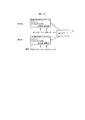
- FIG. 4 is a diagram illustrating information displayed on a summary display unit.
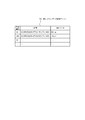
- FIG. 4 is a diagram illustrating information displayed on a summary display unit. It is a figure explaining an example of outside contact data.
- FIG. 4 is a diagram illustrating an example of attached file data.
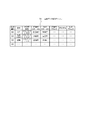
- FIG. 4 is a diagram illustrating an example of history data.
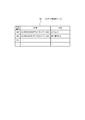
- FIG. 4 is a diagram illustrating an example of memo data.
- FIG. 3 is a block diagram illustrating functions of a database according to the embodiment.
- FIG. 4 is a diagram illustrating an example of information included in a block chain according to an embodiment.
- FIG. 1 is a diagram illustrating a bill management system according to the first embodiment.
- the bill management device 1 is connected to the terminal devices 2a, 2b, and 2c via a network such as the Internet or a dedicated line.
- the terminal device 2a is a company A
- the terminal device 2b is a company B
- the terminal device 2c is a company C
- the terminal devices 2a, 2b, and 2c are devices arranged in accounting departments of different companies.
- Examples of the terminal devices 2a, 2b, and 2c include a desktop PC, a notebook PC, a tablet terminal, and a smartphone.
- the bill management device 1 and the terminal devices 2a, 2b, and 2c implement a Web program.
- the terminal devices 2a, 2b, and 2c exchange bill data relating to the bill with the bill management device 1 via a Web browser.
- the exchange of bill data is illustrated, but the bill is an example of a business document, and the present invention is not limited to the exchange of bills.
- Other examples of business documents include, for example, quotes and order forms.
- the bill management device 1 sends information (a file hash or the like) to be written to the block chain to the network.
- the information to be written is bill data and data accompanying the bill data.
- the databases 3a, 3b, 3c are connected to one another via a blockchain network 20.
- the databases 3a, 3b, and 3c are uniquely determined based on some data and generate an irreversible and random hash function.
- the invoice management system 10 will be described assuming that each accounting staff of the company A, the company B, and the company C uses the billing system.
- the accountants in charge of the companies A, B, and C perform user registration in the invoice management device 1 using the email addresses and the like assigned to themselves, so that the invoices that the invoice management device 1 constructs. Prepare an environment to access the processing system.
- the accounting staff of Company A operates the terminal device 2a, so that the bill management device 1 displays a login screen on a monitor connected to the terminal device 2a.
- the accountant can log in to the service provided by the bill management device 1 by inputting the mail address and the password on the log-in screen.
- the e-mail address is an example of identification information for identifying a person in charge of accounting.
- the terminal devices 2a, 2b, and 2c can execute, via the invoice management device 1, processes related to invoice data obtained by digitizing the original invoice itself after logging in. Examples of the type of processing include creation, transmission / reception, browsing, and editing of bill data.
- the accounting staff of Company A issues an invoice to Company B
- the accounting staff of Company A operates the terminal device 2a, and the billing address is displayed on the management screen displayed after login.
- the invoice data specifying the e-mail address of the accountant (recipient) of Company B is transmitted to the destination of the created invoice.
- the transmitted bill data is stored by the bill management device 1.
- the bill management device 1 instead of directly exchanging the bill data between the terminal devices 2a, 2b, and 2c, all the bill data created by the terminal devices 2a, 2b, and 2c and transmitted to the billing destination are stored in the bill management device 1. Is stored and handled like shared data. Then, the invoice management device 1 gives the terminal devices 2a, 2b, 2c the authority to view and edit the invoice data as needed. In this way, the original bill itself can be digitized and processed electronically. Therefore, it is possible to save time and effort for managing and storing the bills in paper or PDF.
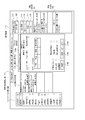
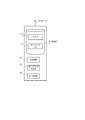
- FIG. 2 is a diagram illustrating an example of a screen displayed on the terminal device after login.
- the management screen 110 shown in FIG. 2 is an example of a screen displayed on the terminal device 2a.
- the accountant can create, issue, view, edit, and the like bill data as if it were mail software.
- the accounting staff of the company A cannot rewrite the bill data once transmitted. Also, the accounting staff of Company B cannot rewrite the invoice data. If the bill data is incomplete, bill data with a different version number will be reissued. The old version of the invoice data is not discarded but stored in the invoice management device 1 and can be browsed at any time. Further, the bill management device 1 also manages the version number of the bill data, searches the new bill data from the old bill data, and searches the old bill data from the new bill data. Can be easily performed. The details of the management screen 110 will be described later.
- the bill management device 1 When new bill data exchange (transaction) occurs, the bill management device 1 notifies the databases 3a, 3b and 3c of the transaction contents.
- the administrator of the databases 3a, 3b and 3c refers to the database owned by the user and checks whether there is any improper exchange of new bill data.
- consensus is established to determine who is authorized to update the database.
- a proof of work Proof Of Stake
- a proof of stake Proof Of Stake
- the like can be mentioned.
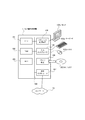
- FIG. 3 is a diagram illustrating a hardware configuration of the bill management device according to the embodiment.
- the entire bill management apparatus 1 is controlled by a CPU (Central Processing Unit) 101.
- the CPU 101 is connected to a random access memory (RAM) 102 and a plurality of peripheral devices via a bus 108.
- RAM random access memory
- the RAM 102 is used as a main storage device of the bill management device 1.
- the RAM 102 temporarily stores at least a part of an OS (Operating System) program and an application program to be executed by the CPU 101. Further, the RAM 102 stores various data used for processing by the CPU 101.
- OS Operating System
- a hard disk drive (HDD: Hard Disk Drive) 103, a graphic processing device 104, an input interface 105, a drive device 106, and a communication interface 107 are connected to the bus 108.
- the hard disk drive 103 magnetically writes and reads data on a built-in disk.
- the hard disk drive 103 is used as a secondary storage device of the bill management device 1.
- the hard disk drive 103 stores OS programs, application programs, and various data. Note that a semiconductor storage device such as a flash memory can be used as the secondary storage device.
- a monitor 104a is connected to the graphic processing device 104.
- the graphic processing device 104 displays an image on the screen of the monitor 104a according to a command from the CPU 101.
- Examples of the monitor 104a include a display device using a CRT (Cathode Ray Tube), a liquid crystal display device, and the like.
- a keyboard 105a and a mouse 105b are connected to the input interface 105.
- the input interface 105 transmits a signal transmitted from the keyboard 105a or the mouse 105b to the CPU 101.
- the mouse 105b is an example of a pointing device, and another pointing device can be used.
- Other pointing devices include, for example, touch panels, tablets, touchpads, trackballs, and the like.
- the drive device 106 reads data recorded on a portable recording medium such as an optical disc on which data is recorded so as to be readable by reflection of light or a USB (Universal Serial Bus) memory.
- a portable recording medium such as an optical disc on which data is recorded so as to be readable by reflection of light or a USB (Universal Serial Bus) memory.
- the drive device 106 is an optical drive device
- the data recorded on the optical disc 200 is read using a laser beam or the like.
- the optical disc 200 includes Blu-ray (registered trademark), DVD (Digital Versatile Disc), DVD-RAM, CD-ROM (Compact Disc Read Only Memory), CD-R (Recordable) / RW (ReWritable), and the like. .
- the communication interface 107 is connected to the network 50.
- the communication interface 107 transmits and receives data to and from another computer or communication device via the network 50.
- FIG. 3 shows the hardware configuration of the bill management device 1
- other computers such as the terminal device 2a can be realized with the same hardware configuration.
- the following functions are provided in the bill management device 1 having a hardware configuration as shown in FIG.
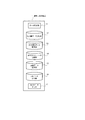
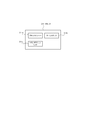
- FIG. 4 is a block diagram illustrating functions of the bill management device according to the embodiment.
- the bill management device 1 includes a data processing unit 11, a bill data storage unit 12, an external communication data storage unit 13, an attached file data storage unit 14, a history data storage unit 15, a memo data storage unit 16, , A block data generation unit 17.
- the data processing unit 11 displays the management screen 110 shown in FIG. 2 on the terminal device 2a or the like according to the operation of the accountant.
- the data processing unit 11 executes a process according to the exchange of bill data performed via the management screen 110.
- the data processing unit 11 sorts and stores the invoice data received by the invoice management device 1, an external communication (described later), a memo, and the like created by the accounting person in each storage unit.
- the bill data storage unit 12 stores the bill data received by the bill management apparatus 1 for each accounting staff (specifically, for each email address of the accounting staff).
- the invoice data received by the invoice management device 1 is created as a draft by the invoice source accounting person sent to the invoice destination accounting person or by the invoice source accounting person (issuer).
- Invoice data is included.
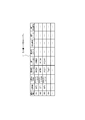
- FIG. 5 is a diagram illustrating an example of bill data. In the present embodiment, data is stored in a table.
- the invoice data management table T1 is provided with columns of invoice ID, transmission / reception, transmission / reception date and time, person in charge status, partner status, person in charge address, person in charge name, partner address, and person in charge name. Information arranged in the horizontal direction is associated with each other.
- the data processing unit 11 allocates the bill ID to the bill data when the bill management device 1 receives the bill data.
- a category indicating whether the bill data is received bill data or transmitted bill data as viewed from the accounting person is set. Specifically, “received” is set for received bill data, and “transmit” is set for transmitted bill data. The latest date and time of the date and time when the bill data was transmitted and received is stored in the column of the date and time of transmission and reception.
- the status (progress regarding processing) of the invoice data as seen from the accounting person is set.
- the partner status column the status of the bill data as viewed from the accountant in charge of the exchange of the bill data is set.
- the statuses set in the Contact Person Status column and the partner status column are "Unopened”, “Returning”, “Destroyed”, “Confirmed”, “Paid”, “Storage Box”, and “Send”. "Paid”, “returned”, “discarded”, and “paid”. The details of each status will be described later.
- the column of the person in charge stores the mail address of the person in charge of accounting.
- the column of the person in charge stores the name of the person in charge of accounting.
- the other party's address column stores the e-mail address of the accountant in charge of exchanging the bill data.
- the column of the name of the person in charge of contact stores the name of the person who exchanges the bill data.
- the information stored in the invoice data management table includes, in addition to the illustrated information, the company name and department name of the accountant, the company name of the accountant with whom the invoice data is exchanged, and the like.
- the data includes billing information such as department name, postal code of each company, address, billing item, billing amount, and the like.
- the data processing unit 11 displays the management screen 110 shown in FIG. 2 on the terminal device 2a or the like according to the operation of the accountant.
- the management screen 110 includes a user information display section 111, a status display section 112, a summary display section 113, an invoice display section 114, an external contact button 115, an attached file button 116, a history button 117, a memo button 118, and an external contact list.
- a button 119, a memo list button 120, an information display unit 121, and an information input unit 122 are displayed.
- the user information display section 111 displays information (user information) on the accountant in charge of logging into the bill management system.
- information user information
- FIG. 2 as an example, the name of the company to which the accountant belongs, the department name, last name, and the e-mail address of the accountant are displayed.
- the status display unit 112 displays, for each status, the number of invoice data handled by the accountant in charge of logging into the invoice management system. Broadly speaking, the status display unit 112 has columns for a reception box, a draft, a transmission box, and a transmission / reception box.
- the data processing unit 11 allocates the invoice data addressed to the e-mail address of the accountant to the reception box.
- the data processing unit 11 refers to the bill data management table T1. Then, the summary display unit 113 displays a summary of the bill data in which the transmission / reception column is “received” among the bill data in which the person in charge address matches “bbb@xxmail.co.jp”.
- the breakdown of the status of the invoice data allocated to the received BOX includes “unopened”, “returning”, “discarded”, “confirmed”, “paid”, and “storage box”. There is.
- the status of “unopened” is a status assigned by the data processing unit 11 to the invoice data unconfirmed by the accountant among the invoice data allocated to the reception box.
- the status of “returning” is a status assigned by the data processing unit 11 to the invoice data returned to the invoicing accountant by the accountant among the invoice data allocated to the reception box.
- the status of "Destination" is that the accountant returns the received invoice data among the invoice data allocated to the receiving box to the accountant of the billing source, and then the accountant of the billing source destroys the data. This is a status assigned by the data processing unit 11 to bill data.
- the status of “confirmed” is a status that the data processing unit 11 allocates to the invoice data selected by the accountant among the invoice data allocated to the reception box and selected by the confirmation button (described later). .
- the status of “paid” is a status assigned by the data processing unit 11 to the invoice data selected by the accounting clerk out of the invoice data allocated to the received BOX and selecting a payment button (not shown). .
- the accounting clerk can grasp the payment details by totaling the invoice data in the paid status.
- the status of the “storage box” is a status that the data processing unit 11 allocates to the invoice data of the status “paid”, which is transferred to the storage box at an arbitrary timing by the accountant.
- Each number displayed on the status display unit 112 indicates the number of assigned statuses. For example, in the unopened column of the status display unit 112, the number of invoice data items that have not been confirmed by the accountant among the received invoice data items is displayed. It should be noted that no numeral is particularly displayed in the column of the storage box of the status display unit 112.
- the data processing unit 11 refers to the bill data management table T1. Then, the data processing unit 11 displays, on the summary display unit 113, an outline of the invoice data whose clerk status is unopened among the invoice data whose clerk address matches “bbb@xxmail.co.jp”. I do. The data processing unit 11 allocates draft data which is created and stored by the accounting staff but has not been transmitted to the accounting staff at the transmission destination. The data processing unit 11 allocates the invoice data sent by the accountant to the transmission BOX.
- the data processing unit 11 refers to the bill data management table T1. Then, an outline of the invoice data whose transmission / reception column is “send” is displayed on the outline display unit 113, among the invoice data in which the person in charge address matches “bbb@xxmail.co.jp”.
- the breakdown of the status of the invoice data allocated to the transmission BOX includes “sent”, “return”, “discarded”, “paid”, and “storage box”.
- the status of “transmitted” is a status that the data processing unit 11 allocates to the invoice data assigned to the transmission BOX to the invoice data to which the accountant in charge of the invoice has not performed payment processing.
- the status of “return” is a status that the data processing unit 11 allocates to the invoice data returned from the accountant in charge of the invoice data allocated to the transmission BOX.
- the accountant can process the bill data returned from the billing destination.
- the status of “discarded” is a status assigned by the data processing unit 11 to the invoice data returned by the accountant at the billing destination and discarded by the accountant at the billing source.
- the status of “paid” indicates that among the invoice data allocated to the transmission BOX, the accounting processor of the invoicing source confirms the payment, and the data processing unit 11 responds to the invoice data for which the deposit button (not shown) is selected. This is the status to be allocated.
- the status of the “storage box” is a status assigned by the data processing unit 11 to the invoice data transferred to the storage box by the accountant at an arbitrary timing among the invoice data having the status “paid”. No number is particularly displayed in the storage box column of the status display unit 112.
- the summary display unit 113 displays a summary of the invoice data corresponding to the status selected by the accountant on the status display unit 112.
- the company name of the billing source, the subject, the due date, and the status of the sending side and the receiving side are displayed.
- the same statuses are displayed on the management screens of both accounting personnel who transmitted and received the invoice data.
- 6 and 7 are diagrams illustrating information displayed on the summary display unit.
- the billing source shown in FIG. 6 is ABC Co., Ltd.
- the billing data D1 having the subject XXwork is displayed on the status display section of the status display section on the management screen of the terminal device operated by the billing accountant. "Existing”.
- the billing destination is ⁇ Co.
- the subject is XXwork
- the status of the accountant at the billing source is D1. Is displayed on the summary display unit 113 to the effect that the status of the accountant in charge of the billing destination is "unopened".
- the outlines 113c, 113d, and 113e shown in FIG. 7A all indicate the outline of the bill data D2.
- the data processing unit 11 When a billing accountant views the invoice data D2 and selects a confirmation button (described later), the data processing unit 11 outputs a summary display unit 113 of the management screen 110 of the terminal device operated by the billing accountant. Is changed from the outline 113c to the outline 113d.
- the data processing unit 11 displays the management screen 110 of the terminal device operated by the accountant in charge of the billing source.
- the information displayed on the summary display unit 113 is changed from the summary 113d to the summary 113e.
- the outlines 113f and 113g shown in FIG. 7B both indicate the outline of the bill data D3.
- the data processing unit 11 displays the summary display unit 113 on the management screen of the terminal device operated by the billing accountant.
- the displayed information is changed from the outline 113f to the outline 113g.
- the data processing unit 11 displays the details of the bill data on the bill display unit 114.
- the contents of the invoice displayed on the invoice display unit 114 are the same as existing (paper or PDF-based) invoices, except that an address display unit 114a and various buttons described later are provided.
- the data processing unit 11 displays the mail address of the accountant (from) of the transmission source on the address display unit 114a.
- the data processing unit 11 displays the mail address of the accountant (to) to which the data is to be transmitted.
- the data processing unit 11 may display the bill ID of the bill data on the bill display unit 114.
- the accountant can process the bill displayed on the bill display unit 114 on the management screen 110. Specifically, a button for processing a bill is displayed on the bill display unit 114 according to the status of the bill data.
- FIG. 2 shows buttons displayed when the user selects the unopened invoice data.
- the bill display unit 114 includes a confirmation button 114b, a return button 114c, and a copy button 114d.
- the data processing unit 11 refers to the bill data management table T1. Then, the clerk status of the bill data displayed on the bill display unit 114 is changed to “confirmed”. Further, the data processing unit 11 decreases the number of “unopened” in the status display unit 112 by one and increases the number of “confirmed” by one.
- the data processing unit 11 refers to the bill data management table T1. Then, the status of the person in charge of the invoice data displayed on the invoice display section 114 is changed to “returning”, and the status of the other party is changed to “returning back”. Further, the data processing unit 11 decreases the number of “unopened” on the status display unit 112 by one and increases the number of “returning” by one. On the management screen of the accountant who has received the returned invoice data, the return return number in the status display section is increased by one.
- the data processing unit 11 When the copy button 114d is selected by the accountant, the data processing unit 11 creates new invoice data in which the invoice source and the invoice destination of the invoice data are replaced. Then, the data processing unit 11 stores information on the created bill data in the bill data management table T1. At this time, the person in charge status of the bill data is "draft" and the partner status is blank. Returning to FIG. 2, the description will be continued.
- the data processing unit 11 switches the management screen 110 to the outside contact input mode.
- the data processing unit 11 converts a document (text data) input to the information input unit 122 and determined by pressing an enter key on a keyboard or the like as an external communication to an e-mail of the accountant. It is stored in the external contact data storage unit 13 in association with the address and the bill data displayed on the bill display unit 114.
- FIG. 8 is a diagram illustrating an example of the external contact data. In the present embodiment, external communication data is stored in a table.
- the external contact data management table T2 is provided with columns for contact address, ID, time, and wording. Information arranged in the horizontal direction is associated with each other.
- the ID column stores the invoice ID of the invoice data (invoice data associated with the external communication data) displayed on the invoice display unit 114 when the accountant created the external communication data.
- the contact address column stores the mail address of the creator who created the external contact data.
- the time column stores the date and time when the external contact data was created.
- the wording column stores the content of the external communication.
- the data processing unit 11 refers to the external communication data management table T2 for the invoice data displayed on the invoice display unit 114, and chronologically outputs the external communication input so far.
- the information is displayed on the information display unit 121 together with the final date and time.
- the information display section 121 displays an external contact input by the accounting staff at both the source and the destination of the invoice data. For this reason, by using this outside contact input mode, both accounting staff can exchange data like a chat.
- the accounting clerk may display another process (download, pdf conversion) on the invoice data displayed on the invoice data display unit 114 on the information display unit 121 together with the date and time when the process was executed. It may be. As a result, it is possible to grasp the processing histories of both accounting personnel. ⁇ Attached file button>
- FIG. 9 is a diagram illustrating an example of the attached file data.
- the attached file data is stored in a table.
- the attached file data management table T3 has columns for ID, time, and attached data. Information arranged in the horizontal direction is associated with each other.
- the ID column stores the bill ID of the bill data (bill data associated with the attached data) displayed on the screen when the attached data is attached.
- the time column stores the date and time of attachment of the attached data.
- the name of the attached data is stored in the attached data column.
- the data processing unit 11 refers to the attached file data management table T3 for the invoice data displayed on the invoice display unit 114 and chronologically associates information on the attached files attached so far. Is displayed on the information display section 121.
- the data processing unit 11 stores the operation histories (history data) of both accounting personnel up to now in the history data storage unit 15.
- FIG. 10 is a diagram illustrating an example of the history data. In the present embodiment, data is stored in a table.
- the data processing unit 11 creates a history data management table T4 for each bill data. If the version number is different, the history data management table T4 is different.
- the history data management table T4 is provided with columns for invoice ID, operation, transmission / reception date and time, person in charge status, partner status, person in charge address, person in charge name, and partner address. Information arranged in the horizontal direction is associated with each other.
- the data processing unit 11 switches the management screen 110 to the memo input mode.
- the data processing unit 11 uses the information input unit 122 to input a character or the like determined by pressing an enter key on a keyboard or the like as a memo as a memo, and displays the mail address and bill display of the accountant in charge.
- the memo data storage unit 16 stores the bill data displayed in the unit 114 in association with the bill data. This memo can only be viewed by the person who created the memo.
- FIG. 11 is a diagram illustrating an example of the memo data.
- the memo data is stored in a table.
- the memo data management table T6 has columns for ID, time, and wording. Information arranged in the horizontal direction is associated with each other.
- the ID column stores the invoice ID of the invoice data (invoice data associated with the memo) that was displayed on the screen when the accountant created the memo.
- the time column stores the date and time when the memo data was created.
- the text field stores the contents of the memo.
- the data processing unit 11 refers to the memo data storage unit 16 and, regarding the invoice data displayed on the invoice display unit 114, displays the memos input so far in a time-series manner in the information display unit. Displayed at 121.
- the description will be continued. ⁇ Outside contact list button>
- the data processing unit 11 refers to the outside contact data storage unit 13 in which data relating to the outside contact is stored, and relates to the bill in charge of the accountant.
- An external communication list screen (external communication list screen) is displayed on the management screen 110 in chronological order.
- the data processing unit 11 refers to the memo data storage unit 16 in which data relating to the external communication is stored, and obtains a memo related to the invoice assigned by the accountant. Are displayed on the management screen 110 in chronological order. Returning to FIG. 4, the description will be continued.
- the transaction data generation unit 17 accumulates the transaction data stored in each of the storage units 12 to 16 at the timing when the transaction data has been updated a predetermined number of times, cryptographically signs the data, and makes a database 3a, 3b, 3c.
- the transaction data includes at least one of bill data, bill data status, external communication data, attached file data, history data, and memo data.
- the transaction data generation unit 17 has two counters.
- the counter (first counter) is incremented by one every time there is a change in the status indicating the progress of processing between the issuer and the recipient of the bill data.
- the transaction data generation unit 17 increments the counter (second counter) by one each time there is a change in the external communication data, attached file data, or memo data accompanying the bill data.
- Transaction data generation unit 17 determines whether the numerical value of either the first counter or the second counter reaches a predetermined number. Then, when the predetermined number of times is reached, the blocks in which the transaction data has been accumulated are transmitted to the databases 3a, 3b, 3c. Thereafter, the transaction data generation unit 17 resets the value of the counter that has reached the predetermined number.
- FIG. 12 is a block diagram illustrating functions of the database according to the embodiment.
- the database 3a includes a storage unit 31, a transmission / reception unit 32, a block header generation unit 33, and an agreement forming unit 34.
- the storage unit 31 stores a block 311 and a database list 312. Needless to say, the information stored in the storage unit 31 is not limited to these.
- the block 311 is obtained by adding information necessary for configuring the block chain to a group (transaction) of information registered in the block chain, such as an individual transaction history and a group of processes in a computer.
- FIG. 13 is a diagram illustrating an example of information included in the block chain according to the embodiment.
- the block 311 includes a block number 311a, a time stamp 311b, and a transaction list 311c.
- the block number 311a is information for identifying the block 311.
- the time stamp 311b is a time stamp of a newly created block.
- the transaction list 311c refers to a transaction history and a set of processing in a computer.
- it refers to a list of a group of information registered in the blockchain. Specifically, it includes external contact data, attached file data, history data, and memo data.
- the database list 312 is a list in which identification information (for example, an IP address) for identifying another database connected to the blockchain network 20 is stored.
- the transmission / reception unit 32 receives data (recording target data) to be recorded in the block 311 from the bill management device 1.
- the block header generation unit 33 generates a hash value for the recording target data using a hash function. Further, the block header generating unit 33 generates a block header using the generated hash value, the hash value of the immediately preceding block, and the time stamp 311b.
- the consensus forming unit 34 calculates a hash value of the block header by putting an appropriate value into the nonce “Nonce” generated by the block header generating unit 33.
- the database that first finds an answer notifies the databases 3b, 3c of that fact.
- Each of the databases 3b and 3c adds the block notified to its own database to the existing block that each has. Thereby, the consistency of the transaction data of the databases 3a, 3b, 3c is maintained.
- the invoice management device 1 receives the invoice data transmitted from the terminal devices 2a, 2b, and 2c to a specific recipient through the network.
- the invoice data storage unit 12 stores the invoice data associated with the identification information of the recipient and the identification information of the issuer of the invoice data, and the business document data between the issuer and the recipient. It is determined whether at least one of the number of times of status change indicating the progress of processing or the number of times of data attached to the business document data reaches a predetermined number, and when the number reaches the predetermined number, the invoice data and the billing And a transaction data generation unit 17 for accumulating data accompanying the document data and transmitting the data to the databases 3a, 3b, and 3c for forming consensus.
- the bill management device 1 may include the functions of the databases 3a, 3b, and 3c.
- the information display section 121 displays an external contact input by the accounting staff at both the source and the destination of the invoice data. For this reason, by using this outside contact input mode, both accounting staff can exchange data like a chat.
- the processing performed by the bill management device 1 may be distributed by a plurality of devices.
- the bill management device 1 is configured to include each storage unit such as the bill data storage unit 12, but the present invention is not limited to this, and each storage unit is formed as a cloud, and is separately provided from the data processing unit 11. May be provided at a location.
- the present invention is not limited to this, and the configuration of each unit has the same function. Any configuration can be used. Further, other arbitrary components and steps may be added to the present invention. Further, the present invention may be a combination of any two or more configurations (features) of the embodiments described above.
- the above processing functions can be realized by a computer.
- a program describing the processing contents of the functions of the bill management device 1 is provided.
- the program describing the processing content can be recorded on a computer-readable recording medium.
- the computer-readable recording medium include a magnetic storage device, an optical disk, a magneto-optical recording medium, and a semiconductor memory.
- the magnetic storage device include a hard disk drive, a flexible disk (FD), and a magnetic tape.
- the optical disk includes a DVD, a DVD-RAM, a CD-ROM / RW, and the like.
- the magneto-optical recording medium may be an MO (Magneto-Optical disk) or the like.
- portable recording media such as DVDs and CD-ROMs on which the program is recorded are sold.
- the program may be stored in a storage device of a server computer, and the program may be transferred from the server computer to another computer via a network.
- the computer that executes the program stores, for example, the program recorded on the portable recording medium or the program transferred from the server computer in its own storage device. Then, the computer reads the program from its own storage device and executes processing according to the program. The computer can also read the program directly from the portable recording medium and execute processing according to the program. Further, the computer may execute the processing according to the received program each time the program is transferred from the server computer connected via the network.
- At least a part of the above processing functions can be realized by an electronic circuit such as a DSP (Digital Signal Processor), an ASIC (Application Specific Integrated Circuit), and a PLD (Programmable Logic Device).
- a DSP Digital Signal Processor
- ASIC Application Specific Integrated Circuit
- PLD Programmable Logic Device
Landscapes
- Engineering & Computer Science (AREA)
- Business, Economics & Management (AREA)
- Theoretical Computer Science (AREA)
- Computer Security & Cryptography (AREA)
- Physics & Mathematics (AREA)
- General Physics & Mathematics (AREA)
- Strategic Management (AREA)
- Development Economics (AREA)
- Marketing (AREA)
- Economics (AREA)
- Signal Processing (AREA)
- Computer Networks & Wireless Communication (AREA)
- General Business, Economics & Management (AREA)
- Human Resources & Organizations (AREA)
- Tourism & Hospitality (AREA)
- Finance (AREA)
- Accounting & Taxation (AREA)
- Data Mining & Analysis (AREA)
- General Engineering & Computer Science (AREA)
- Entrepreneurship & Innovation (AREA)
- Databases & Information Systems (AREA)
- Operations Research (AREA)
- Computer Hardware Design (AREA)
- Computing Systems (AREA)
- Quality & Reliability (AREA)
- Primary Health Care (AREA)
- General Health & Medical Sciences (AREA)
- Health & Medical Sciences (AREA)
- Financial Or Insurance-Related Operations Such As Payment And Settlement (AREA)
- Management, Administration, Business Operations System, And Electronic Commerce (AREA)
Priority Applications (1)
| Application Number | Priority Date | Filing Date | Title |
|---|---|---|---|
| US17/140,069 US20210133833A1 (en) | 2018-07-03 | 2021-01-02 | Information processing device, information processing method, and program |
Applications Claiming Priority (2)
| Application Number | Priority Date | Filing Date | Title |
|---|---|---|---|
| JP2018126525A JP7199079B2 (ja) | 2018-07-03 | 2018-07-03 | 情報処理装置、情報処理方法およびプログラム |
| JP2018-126525 | 2018-07-03 |
Related Child Applications (1)
| Application Number | Title | Priority Date | Filing Date |
|---|---|---|---|
| US17/140,069 Continuation US20210133833A1 (en) | 2018-07-03 | 2021-01-02 | Information processing device, information processing method, and program |
Publications (1)
| Publication Number | Publication Date |
|---|---|
| WO2020009118A1 true WO2020009118A1 (ja) | 2020-01-09 |
Family
ID=69059667
Family Applications (1)
| Application Number | Title | Priority Date | Filing Date |
|---|---|---|---|
| PCT/JP2019/026341 Ceased WO2020009118A1 (ja) | 2018-07-03 | 2019-07-02 | 情報処理装置、情報処理方法およびプログラム |
Country Status (3)
| Country | Link |
|---|---|
| US (1) | US20210133833A1 (enExample) |
| JP (1) | JP7199079B2 (enExample) |
| WO (1) | WO2020009118A1 (enExample) |
Cited By (2)
| Publication number | Priority date | Publication date | Assignee | Title |
|---|---|---|---|---|
| JP7033367B1 (ja) * | 2021-11-08 | 2022-03-10 | ファーストアカウンティング株式会社 | データ処理装置、データ処理方法及びデータ処理システム |
| WO2026128769A1 (en) | 2024-12-13 | 2026-06-18 | Danisco Usa Inc. | Cleaning compositions comprising bacterial fermentate extracts and methods related thereof |
Families Citing this family (1)
| Publication number | Priority date | Publication date | Assignee | Title |
|---|---|---|---|---|
| US11616816B2 (en) * | 2018-12-28 | 2023-03-28 | Speedchain, Inc. | Distributed ledger based document image extracting and processing within an enterprise system |
Citations (3)
| Publication number | Priority date | Publication date | Assignee | Title |
|---|---|---|---|---|
| WO2017145017A1 (en) * | 2016-02-23 | 2017-08-31 | nChain Holdings Limited | Methods and systems for the efficient transfer of entities on a blockchain |
| WO2017165380A1 (en) * | 2016-03-21 | 2017-09-28 | Mastercard International Incorporated | Method and system for recording point to point transaction processing |
| JP2017187777A (ja) * | 2016-04-06 | 2017-10-12 | アバイア インコーポレーテッド | 安全なインタラクションのための、スマートフォンにおける不正の防止された許可及び認証 |
Family Cites Families (7)
| Publication number | Priority date | Publication date | Assignee | Title |
|---|---|---|---|---|
| US20080235289A1 (en) * | 2005-04-29 | 2008-09-25 | Wonderworks Llc | Method and device for managing unstructured data |
| JP5340751B2 (ja) * | 2008-04-22 | 2013-11-13 | 株式会社エヌ・ティ・ティ・ドコモ | 文書処理装置および文書処理方法 |
| US10169447B2 (en) * | 2014-02-24 | 2019-01-01 | Entefy Inc. | System and method of message threading for a multi-format, multi-protocol communication system |
| WO2016106279A1 (en) * | 2014-12-22 | 2016-06-30 | Entefy, Inc. | System and method of personalized message threading for a multi-format, multi-protocol communication system |
| US11494421B1 (en) * | 2014-12-22 | 2022-11-08 | Entefy Inc. | System and method of encrypted information retrieval through a context-aware ai engine |
| US10185557B2 (en) * | 2015-10-29 | 2019-01-22 | Ca, Inc. | Enhanced metadata tracking in a change management system |
| US11989794B2 (en) * | 2019-09-12 | 2024-05-21 | Xcential Corporation | System and method for document extraction and synthesis |
-
2018
- 2018-07-03 JP JP2018126525A patent/JP7199079B2/ja active Active
-
2019
- 2019-07-02 WO PCT/JP2019/026341 patent/WO2020009118A1/ja not_active Ceased
-
2021
- 2021-01-02 US US17/140,069 patent/US20210133833A1/en not_active Abandoned
Patent Citations (3)
| Publication number | Priority date | Publication date | Assignee | Title |
|---|---|---|---|---|
| WO2017145017A1 (en) * | 2016-02-23 | 2017-08-31 | nChain Holdings Limited | Methods and systems for the efficient transfer of entities on a blockchain |
| WO2017165380A1 (en) * | 2016-03-21 | 2017-09-28 | Mastercard International Incorporated | Method and system for recording point to point transaction processing |
| JP2017187777A (ja) * | 2016-04-06 | 2017-10-12 | アバイア インコーポレーテッド | 安全なインタラクションのための、スマートフォンにおける不正の防止された許可及び認証 |
Cited By (3)
| Publication number | Priority date | Publication date | Assignee | Title |
|---|---|---|---|---|
| JP7033367B1 (ja) * | 2021-11-08 | 2022-03-10 | ファーストアカウンティング株式会社 | データ処理装置、データ処理方法及びデータ処理システム |
| WO2023079722A1 (ja) * | 2021-11-08 | 2023-05-11 | ファーストアカウンティング株式会社 | データ処理装置、データ処理方法及びデータ処理システム |
| WO2026128769A1 (en) | 2024-12-13 | 2026-06-18 | Danisco Usa Inc. | Cleaning compositions comprising bacterial fermentate extracts and methods related thereof |
Also Published As
| Publication number | Publication date |
|---|---|
| US20210133833A1 (en) | 2021-05-06 |
| JP2020008914A (ja) | 2020-01-16 |
| JP7199079B2 (ja) | 2023-01-05 |
Similar Documents
| Publication | Publication Date | Title |
|---|---|---|
| JP6611064B2 (ja) | 端末装置、表示方法およびプログラム | |
| JP6963223B2 (ja) | 情報処理装置、情報処理方法およびプログラム | |
| CN105580026B (zh) | 信息处理装置及访问权限赋予方法 | |
| JP7867304B2 (ja) | 情報処理方法、情報処理装置およびプログラム | |
| JP7199079B2 (ja) | 情報処理装置、情報処理方法およびプログラム | |
| JP6678854B2 (ja) | 情報処理装置、情報処理方法およびプログラム | |
| US20210150493A1 (en) | Information processing apparatus and information processing method | |
| JPWO2019186934A1 (ja) | 情報処理装置、表示方法およびプログラム | |
| JPWO2018003674A1 (ja) | 情報処理装置、表示方法およびプログラム | |
| JP6883879B2 (ja) | 情報処理装置、情報処理方法およびプログラム | |
| JP6550572B2 (ja) | 情報処理装置、表示方法およびプログラム | |
| JP7795997B2 (ja) | 契約管理プログラム、情報処理装置、情報処理システムの製造方法、情報処理方法 | |
| WO2022270431A1 (ja) | 情報処理装置、情報処理方法およびプログラム | |
| JP7075142B2 (ja) | 情報処理装置、情報処理方法およびプログラム | |
| JP7311897B2 (ja) | 情報処理装置、表示方法およびプログラム | |
| JP6425156B2 (ja) | 情報処理装置、情報処理方法およびプログラム | |
| JP7795996B2 (ja) | 契約管理プログラム、情報処理装置、情報処理システムの製造方法、情報処理方法 | |
| JP2023153506A (ja) | 情報処理装置、情報処理方法およびプログラム | |
| WO2024028921A1 (ja) | 情報処理装置、情報処理方法、情報処理システム及び情報端末 | |
| HK1221305B (en) | Information processing device and access rights granting method | |
| TWM605888U (zh) | 群體智慧規章管理系統 |
Legal Events
| Date | Code | Title | Description |
|---|---|---|---|
| 121 | Ep: the epo has been informed by wipo that ep was designated in this application |
Ref document number: 19830217 Country of ref document: EP Kind code of ref document: A1 |
|
| NENP | Non-entry into the national phase |
Ref country code: DE |
|
| 122 | Ep: pct application non-entry in european phase |
Ref document number: 19830217 Country of ref document: EP Kind code of ref document: A1 |