WO2020003351A1 - 排泄情報記録プログラム、排泄情報記録方法、及び排泄情報記録用コンピュータ - Google Patents
排泄情報記録プログラム、排泄情報記録方法、及び排泄情報記録用コンピュータ Download PDFInfo
- Publication number
- WO2020003351A1 WO2020003351A1 PCT/JP2018/024014 JP2018024014W WO2020003351A1 WO 2020003351 A1 WO2020003351 A1 WO 2020003351A1 JP 2018024014 W JP2018024014 W JP 2018024014W WO 2020003351 A1 WO2020003351 A1 WO 2020003351A1
- Authority
- WO
- WIPO (PCT)
- Prior art keywords
- time
- absorbent article
- screen
- message
- information recording
- Prior art date
- Legal status (The legal status is an assumption and is not a legal conclusion. Google has not performed a legal analysis and makes no representation as to the accuracy of the status listed.)
- Ceased
Links
Images






Classifications
-
- G—PHYSICS
- G16—INFORMATION AND COMMUNICATION TECHNOLOGY [ICT] SPECIALLY ADAPTED FOR SPECIFIC APPLICATION FIELDS
- G16H—HEALTHCARE INFORMATICS, i.e. INFORMATION AND COMMUNICATION TECHNOLOGY [ICT] SPECIALLY ADAPTED FOR THE HANDLING OR PROCESSING OF MEDICAL OR HEALTHCARE DATA
- G16H40/00—ICT specially adapted for the management or administration of healthcare resources or facilities; ICT specially adapted for the management or operation of medical equipment or devices
- G16H40/60—ICT specially adapted for the management or administration of healthcare resources or facilities; ICT specially adapted for the management or operation of medical equipment or devices for the operation of medical equipment or devices
- G16H40/63—ICT specially adapted for the management or administration of healthcare resources or facilities; ICT specially adapted for the management or operation of medical equipment or devices for the operation of medical equipment or devices for local operation
-
- A—HUMAN NECESSITIES
- A61—MEDICAL OR VETERINARY SCIENCE; HYGIENE
- A61F—FILTERS IMPLANTABLE INTO BLOOD VESSELS; PROSTHESES; DEVICES PROVIDING PATENCY TO, OR PREVENTING COLLAPSING OF, TUBULAR STRUCTURES OF THE BODY, e.g. STENTS; ORTHOPAEDIC, NURSING OR CONTRACEPTIVE DEVICES; FOMENTATION; TREATMENT OR PROTECTION OF EYES OR EARS; BANDAGES, DRESSINGS OR ABSORBENT PADS; FIRST-AID KITS
- A61F5/00—Orthopaedic methods or devices for non-surgical treatment of bones or joints; Nursing devices ; Anti-rape devices
- A61F5/44—Devices worn by the patient for reception of urine, faeces, catamenial or other discharge; Colostomy devices
-
- G—PHYSICS
- G06—COMPUTING OR CALCULATING; COUNTING
- G06Q—INFORMATION AND COMMUNICATION TECHNOLOGY [ICT] SPECIALLY ADAPTED FOR ADMINISTRATIVE, COMMERCIAL, FINANCIAL, MANAGERIAL OR SUPERVISORY PURPOSES; SYSTEMS OR METHODS SPECIALLY ADAPTED FOR ADMINISTRATIVE, COMMERCIAL, FINANCIAL, MANAGERIAL OR SUPERVISORY PURPOSES, NOT OTHERWISE PROVIDED FOR
- G06Q50/00—Information and communication technology [ICT] specially adapted for implementation of business processes of specific business sectors, e.g. utilities or tourism
- G06Q50/10—Services
- G06Q50/22—Social work or social welfare, e.g. community support activities or counselling services
Definitions
- the present invention relates to an excretion information recording program, an excretion information recording method, and a computer for recording excretion information.
- caregivers In nursing homes and the like, caregivers generally change diapers of cared persons at time intervals determined in nursing homes (for example, see Patent Document 1).
- the present invention has been made in view of the above conventional problems, and has as its object to provide an excretion information recording program, an excretion information recording method, and a computer for recording excretion information.
- the main invention for achieving the above object is a computer, a first reception process for receiving a first time when the care receiver wears the absorbent article, and the first time when the care receiver wears the first time.
- a first display process for displaying a first message on a screen.
- excrement can be prevented from leaking out of the absorbent pad or the diaper worn by the care receiver.
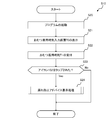
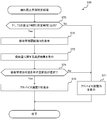
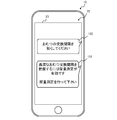
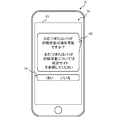
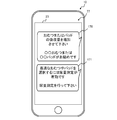
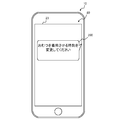
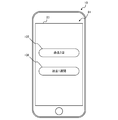
- FIG. 2 is a diagram for explaining a terminal 10. It is a flowchart which shows an example of the process when the excretion information recording program is executed. It is a figure for explaining a diaper wearing time input screen 70. It is a flow chart which shows an example of leak prevention advice display processing. It is a figure for explaining a leak detection time input screen 71. It is a flowchart which shows an example of a size confirmation process. FIG. 4 is a diagram for explaining a size confirmation screen 72. It is a flowchart which shows an example of a use method confirmation process. It is a figure for explaining a use method confirmation screen 73. It is a figure which shows the message which prompts photography of a diaper.
- FIG. 9 is a diagram for explaining an advice screen 75. It is a figure for explaining the absorption amount confirmation screen 76.
- FIG. 7 is a diagram for explaining an advice screen 77.
- FIG. 7 is a diagram for explaining an advice screen 80.
- 9 is a flowchart illustrating an example of a recording confirmation process.
- FIG. 9 is a diagram for explaining a recording confirmation screen 81.
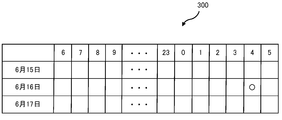
- FIG. 3 is a diagram for explaining recording information 300.
- the caregiver can take measures in accordance with the message for preventing leakage, thereby preventing the excrement from leaking out of the absorbent pad or diaper worn by the care receiver. it can.
- the computer causes the computer to execute a determination process of determining whether a difference between the second time and the first time is within a predetermined time, and the first display process includes: If it is within the time, it is desirable to display the first message including information for increasing the absorption amount of the absorbent article on the screen.
- the caregiver can prevent the occurrence of external leakage by increasing the absorption amount of the diaper and the absorbent pad.
- the computer causes the computer to execute a determination process of determining whether a difference between the second time and the first time is within a predetermined time, and the first display process includes: When it is longer than the time, it is desirable to display the first message including information for shortening the absorbent article replacement interval of the cared person shorter than the predetermined time on the screen.
- the caregiver since the caregiver can shorten the interval of changing the diaper of the care receiver, the caregiver more reliably prevents the excrement from leaking from the diaper or the like of the care receiver. be able to.
- the computer causes the computer to execute a determination process of determining whether a difference between the second time and the first time is within a predetermined time, and the first display process includes: When it is longer than the time, it is desirable to display the first message including information for changing the time at which the care receiver wears the absorbent article from the first time on the screen.
- the caregiver can change the time when the care receiver wears the diaper. Thereby, even when the time of the diaper change interval is not changed, the number of times the care receiver excretes within the change interval can be reduced, and the possibility of occurrence of leakage can be reduced. .
- the computer causes the computer to execute a third reception process for receiving information indicating whether or not the amount of absorption of the absorbent article can be increased.
- the first message including information for increasing the absorption amount of the absorbent article is displayed on the screen.
- the first information including information for shortening the absorbent article replacement time of the care receiver less than the predetermined time is received. It is desirable to display a message on the screen.
- the first message further includes information for urging the care receiver to measure the amount of urine at the predetermined time.
- the caregiver can measure the amount of urine of the cared person and grasp the amount of urine. Therefore, the caregiver can grasp the optimum diaper or absorbent pad for the cared person and the optimum diaper change interval.
- a size of the absorbent article worn by the cared person is confirmed to be a size suitable for the cared person. It is desirable that the computer execute a second display process for displaying two messages on the screen.
- a third message for confirming whether or not the use method of the absorbent article worn by the care receiver is appropriate is displayed on the screen. It is desirable that the computer execute the third display process to be performed.
- the diaper worn by the cared person or the absorbent pad used for the diaper can be checked by the caregiver as to whether the diaper is properly used, so that leakage is more reliably prevented. be able to.
- the third message includes a message for confirming whether or not the number of the absorbent pads used as the absorbent article is plural.
- the third message includes a message for confirming whether the diaper used as the absorbent article is correct before and after.
- a fourth message prompting the cared person to photograph the worn absorbent article is displayed on the screen. It is desirable to cause the computer to execute a fourth display process to be performed.
- the staff of the nursing facility and the caregiver can analyze the situation when the excrement leaks from the diaper or the like in detail by referring to the image taken later, so that the cause of the leak can be specifically determined. It becomes possible to grasp.
- the program causes the computer to execute a recording process of recording the first message, which is displayed when the second time is received, in the storage unit in association with the second time, Is desirable.
- a message when an external leak is found is recorded with time, so that the user of the program should grasp the number of external leaks, transition of time, etc., and long-term trends. Becomes possible.
- a caregiver can check whether or not the diaper size is appropriate after finding a leak without forgetting.
- a reception process for receiving a time when it is discovered that excrement is leaking from the absorbent article worn by the cared person, and after the time is received, the absorbent article worn by the cared person And a display process for displaying, on the screen, a usage confirmation message for confirming whether or not the usage has been appropriate.
- a caregiver can confirm whether or not the diaper was used properly after finding the leak without forgetting.
- a first receiving step in which a computer receives a first time when the care receiver wears the absorbent article; and that excrement is leaking from the absorbent article worn by the care receiver at the first time.
- a second time at which the computer detects the second time wherein the computer receives the second time, and based on the first and second times, a first message for preventing leakage of the excrement from the absorbent article,
- a first display processing step of causing the computer to display the information on a screen.
- excrement can be prevented from leaking out of the absorbent pad or the diaper worn by the cared person.
- a first reception processing unit that receives a first time at which the care receiver wears the absorbent article, and discovers that excrement is leaking from the absorbent article worn by the care receiver at the first time;
- a second reception processing unit for receiving the second time, and a first message for displaying on the screen a first message for preventing leakage of the excrement from the absorbent article based on the first and second times.
- a display processing unit that displays a first time at which the care receiver wears the absorbent article, and discovers that excrement is leaking from the absorbent article worn by the care receiver at the first time.
- a second reception processing unit for receiving the second time, and a first message for displaying on the screen a first message for preventing leakage of the excrement from the absorbent article based on the first and second times.
- a display processing unit that receives a first time at which the care receiver wears the absorbent article, and discovers that excrement is leaking from the absorbent article worn by the care receiver at the first time;
- the excrement can be prevented from leaking out of the absorbent pad or the diaper worn by the cared person.
- FIG. 1 is a diagram illustrating the terminal 10.
- the terminal 10 is a smartphone or a tablet, and the terminal 10 realizes various functions.
- the terminal 10 records the excretion information (information on excrement) of the cared person and, based on the recording result, the excrement leaks out of the diaper worn by the cared person or the absorbent pad of the diaper. (Hereinafter referred to as “outside leakage”) is executed to display advice or the like for preventing such leakage.
- the "diaper" and the "absorbent pad” both correspond to "absorbent articles".
- the state in which the excrement leaks out of the absorbent pad refers to a state in which the excrement leaks out of the absorbent pad but does not leak out of the diaper. Further, the state in which the excrement leaks from the diaper to the outside refers to a state in which the excrement leaks out of the diaper of the cared person, for example, the excrement adheres to the clothes of the cared person or the bed used by the cared person. .
- the terminal 10 (computer) has a storage unit 20, a control unit 21, an input unit 22, a screen 23, a communication unit 24, and a camera 25.
- the storage unit 20 stores an excretion information recording program (hereinafter, referred to as “program”) executed by a processor (not shown) of the terminal 10 and various information.
- the storage unit 20 stores, for example, information (for example, name, gender, date of birth, height, and weight) regarding a cared person to be cared at a nursing facility, date and time (date and time) when the diaper was replaced, and leakage. The information on the date and time of discovery of the diaper and the time of the diaper replacement interval determined at the nursing home is stored.
- the control unit 21 is a functional block implemented in the terminal 10 by a processor (not shown) provided in the terminal 10 executing a program.
- the control unit 21 integrally controls the terminal 10 and includes a plurality of blocks for executing various processes. The details of the functional blocks realized by the control unit 21 will be described later.
- the operation result of the operator of the terminal 10 (hereinafter, simply referred to as “operator”) is input to the input unit 22.
- the input unit 22 is realized by a tap operation on a screen 23 which is a touch panel of the terminal 10.
- the person who operates the terminal 10 is, for example, a caregiver or a staff member of a nursing facility.
- the screen 23 displays various information based on a command from the control unit 21 or an operation result of the operator, and the communication unit 24 exchanges various information with another device or the like.
- the camera 25 acquires image data by photographing.
- the control unit 21 includes a first time reception processing unit 50, a second time reception processing unit 51, an absorption amount information reception processing unit 52, It includes a determination processing section 53, a first screen display processing section 54, a second screen display processing section 55, a third screen display processing section 56, and a fourth screen display processing section 57.
- the first time reception processing unit 50 receives the time T1 (first time) at which the caregiver changed the diaper of the care receiver and caused the care receiver to wear the diaper.
- the second time reception processing unit 51 determines that the caregiver has leaked excrement from a diaper or an absorbent pad (hereinafter simply referred to as a “pad”) worn by the care receiver.
- the discovered time T2 (second time) is accepted.
- the absorption amount information reception processing unit 52 receives information regarding whether the absorption amount of the diaper of the care receiver or the absorption amount of the pad used for the diaper can be increased.
- the absorption amount of the diaper can be increased by, for example, increasing the thickness of the “absorber” provided on the diaper itself.
- the absorption amount of the pad can be increased by, for example, changing the type of the “pad”.
- the determination processing unit 53 determines that the difference between the time T1 at which the care recipient wears the diaper and the time T2 at which excretion is found to be leaking from the diaper is determined by the nursing facility, It is determined whether it is within the replacement interval.
- the first screen display processing unit 54 causes the screen 23 to display advice screens 75, 77, and 80 (described later) including advice for preventing excrement from leaking from the diaper or the pad.
- the second screen display processing unit 55 displays on the screen 23 a size confirmation screen 72 (described later) for confirming whether or not the size of the diaper worn by the cared person is suitable for the cared person. Let it.
- the third screen display processing unit 56 causes the screen 23 to display a usage confirmation screen 73 (described later) for confirming whether or not the diaper worn by the care receiver is appropriate.
- the fourth screen display processing unit 57 causes the screen 23 to display a message prompting the photographer to take a picture of the diaper worn by the care receiver.
- the diaper replacement interval from the night at the nursing home to the next morning is, for example, “7 hours (predetermined time)”. That is, for example, if the diaper of the "cared person A" is changed at 22:00, which is the timing at which the "cared person A” goes to bed, the next diaper replacement timing is 5:00 in the next morning.
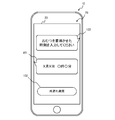
- the control unit 21 displays the diaper wearing time input screen 70 shown in FIG. 3 on the screen 23 (S21).
- the diaper wearing time input screen 70 is It includes message images 100 and 101 and an icon 102.
- the message image 100 includes a display of “Please enter the time when you wear the diaper”
- the message image 101 is an image for inputting the date and time, and includes “X / X / day / hour / minute”.
- the icon 102 is an icon that is tapped when the caregiver finds that excrement is leaking out of the diaper of the “cared person A”, and includes a display of “outside leak found”. .
- the first time reception processing unit 50 sets “5 "Monday, 24:05” is accepted as the time T1 (first time) at which the care receiver A wears the diaper (S22: first reception process).
- the staff who looks around and the caregiver who changes the diaper confirm whether or not excrement is leaking from the diaper or pad of the "cared person A". Then, for example, when the caregiver performing the diaper change finds that the care receiver A has leaked out, the icon 102 is tapped (S23: Yes). As a result, a leakage prevention advice display process (described later) is executed (S24). On the other hand, at the diaper changing timing of the next morning (5:00 in the morning), if no excrement is leaking from the diaper of “cared person A”, the icon 102 is not tapped (S23: No), and the process ends.
- FIG. 4 is a flowchart illustrating an example of the leakage prevention advice display.
- the control unit 21 displays a leak detection time input screen 71 on the screen 23 (S30).
- the leak detection time input screen 71 includes message images 110 and 111.
- the message image 110 includes a display of "Please enter the leak detection time”
- the message image 111 is an image for inputting the date and time, and includes a display of "X / X / day / hour / minute”. .
- the second time reception processing unit 51 When the operator who has found the leak taps the screen 23 and inputs the date and time when the leak was found in the message image 111 (for example, “May 25 @ 05:03”), the second time reception processing unit 51 Then, “May 25 @ 05:03” is accepted as the time T2 (second time) at which the leakage of excrement was discovered (S31: second reception process). And the control part 21 performs a size confirmation process (S32).
- FIG. 6 is a flowchart illustrating an example of the size confirmation process S32.
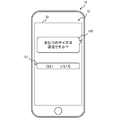
- the second screen display processing unit 55 displays a size confirmation screen 72 shown in FIG. 7 on the screen 23 (S50: second display processing).
- the size confirmation screen 72 is a screen for confirming whether the size of the diaper worn by the “cared person A” is appropriate, and includes message images 120 and 121.
- the message image 120 (second message) includes a display (size confirmation message) indicating "Is the diaper size appropriate?", And the message image 121 has an option “Yes” for selecting whether the diaper size is appropriate. ”And“ No ”.
- the operator checks the actual size of the diaper worn by the “cared person A” and determines whether or not the size is appropriate. Whether or not the diaper size of the “cared person A” is appropriate is determined in advance based on, for example, the height, the weight, and the like of the “cared person A”. For example, the appropriate size for the “cared person A” in the present embodiment is “S size” among “S (Small) size” to “L (Large) size”. For this reason, here, the operator checks whether "S size” which is an appropriate size for "cared person A” is worn.
- the caregiver can check without forgetting whether or not the diaper of the cared person has an appropriate size. For this reason, in the present embodiment, it is easy to specify the cause of the external leakage.
- the operator determines that the diaper of “cared person A” has an appropriate size
- the operator selects the option “message image 121”. If "Yes” is tapped and it is determined that the diaper of "Cared Person A” is not an appropriate size, the option “No” of the message image 121 is tapped.
- the control unit 21 receives an option selected from “Yes” and “No” in the message image 121 (S51).
- the control unit 21 executes a process based on the option received in the process S51 (S33). Specifically, when an option of “No” indicating that the size of the diaper of “cared person A” is inappropriate is received (S33: No), the control unit 21 displays an advice (not shown) on the size on the screen. 23 is displayed (S34). In the process S34, for example, an advice such as "If the size of the diaper of the cared person is wrong, external leakage may occur. Please use a diaper of an appropriate size.”
- FIG. 8 is a flowchart illustrating an example of the usage confirmation processing S35.
- the third screen display processing unit 56 displays the usage confirmation screen 73 shown in FIG. 9 on the screen 23 (S60: third display processing).
- the usage confirmation screen 73 is a screen for confirming whether the usage of the diaper worn by the “cared person A” and the pad used for the diaper are appropriate, and the message images 130 and 131 are displayed. including.
- the message image 130 (third message) includes "Is the diaper and pad used properly?", “Check if two or more absorbent pads are used", and “Is the diaper before and after correct?" Please confirm. “(Usage confirmation message).
- the message image 131 includes options “yes” and “no” for selecting whether or not the usage is appropriate.
- the operator confirms the actual use state of the diaper and the pad worn by the “cared person A” and determines whether or not the usage method is appropriate.
- An appropriate method of using the diaper or the like of “cared person A” is predetermined, and the operator checks, for example, items included in the message image 130.
- the message image 130 includes the number of pads and the display of items before and after the diaper.
- the present invention is not limited to this. For example, a matter such as "Please check the gender of the care receiver's gender” may be included.
- the caregiver checks whether a diaper that matches the gender of “cared person A” is worn by “cared person A”. Further, the operator may determine whether or not the diaper is used properly while referring to a manual or the like of a nursing facility in which an appropriate diaper is used.
- the operator taps the option “Yes” of the message image 131 when determining that the usage of the diaper or the like of “cared person A” is appropriate, and determines the option of the message image 131 when determining that the usage is not appropriate. Tap “No”. As a result, the control unit 21 receives an option selected from “Yes” and “No” in the message image 131 (S61).
- the control unit 21 ends the usage confirmation processing S35.
- the control unit 21 prompts the user to take a message 140 (No. 4) as shown in FIG. Is displayed on the screen 23 (S63: fourth display process).
- the message 140 includes an indication that “Please photograph the worn diaper with the camera”.
- the operator operates the terminal 10 to photograph a diaper worn by the “cared person A” (for example, a diaper using a plurality of pads)
- the used diaper image is converted into image data. Is stored in the storage unit 20 (S64).
- the image data is stored in the storage unit 20, the caregiver and the staff at the nursing facility can appropriately refer to the image data, and thus can accumulate knowledge about the incorrect use of the diaper.
- the control unit 21 executes a process based on the options received in the usage confirmation process S35 (S36). Specifically, when the “No” option indicating that the usage of the diaper is not appropriate is received in the processing S61 (S36: No), the control unit 21 displays advice (not shown) on the usage on the screen 23. (S37). In the process S37, for example, an advice is displayed that "If the usage of the diaper or the pad is incorrect, leakage may occur. Use the pad and the diaper correctly." On the other hand, when the option of “Yes” indicating that the method of using the diaper is appropriate is accepted in the process S61 (S36: Yes), a leakage prevention method specifying process (described later) is executed (S38).
- FIG. 11 is a flowchart illustrating an example of the leakage prevention method specifying process S38.
- the determination processing unit 53 determines that the difference between the time T1 at which the “care receiver A” wears the diaper and the time T2 at which the external leakage was found is the diaper replacement interval described above, “7 hours (predetermined time)”. Is determined (S70).
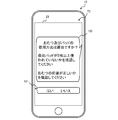
- the first screen display processing unit 54 displays the advice screen 75 on the screen 23 (S71: first display processing).
- the advice screen 75 includes message images 150 and 151 as shown in FIG.
- the message image 150 includes a message "Please shorten the diaper change interval”
- the message image 151 indicates "Urine volume to grasp the optimal diaper change interval.” The measurement is valid. Please measure the urine volume.
- the caregiver can make the diaper replacement interval of “cared person A” shorter than “7 hours”. By taking such measures, the probability of occurrence of external leakage can be reduced.
- the caregiver may separately measure the amount of urine excreted by the “cared person A” during “7 hours” from 22:00 to 5:00 in the next morning. When the urine volume is measured, it is possible to know at what intervals the diaper of “care receiver A” needs to be changed, so that the possibility of external leakage can be further reduced.
- the control unit 21 displays the absorption amount confirmation screen 76 shown in FIG. 13 on the screen 23 (S72).
- the absorption amount confirmation screen 76 includes message images 160 and 161.
- the message image 160 includes a display such as "Can the amount of absorption of the diaper or pad be increased?" And "Please refer to a predetermined site for the amount of absorption of the diaper or pad.”
- the “predetermined site” of the message image 160 is a display including information for guiding to an Internet site that introduces products of the diaper provider, for example. The operator can determine whether it is possible to increase the absorption amount of the diapers and the like used by referring to the description of the products (diapers and pads) on such an Internet site. . Further, the message image 161 includes options “Yes” and “No” for selecting whether or not the amount of absorption of the pad can be increased.
- the caregiver or the like checks the diaper or pad actually worn by the “cared person A” and determines whether it can be changed to a diaper or pad with a higher absorption amount. If only the care receiver A wears the diaper, the caregiver determines whether the absorber of the diaper can be made thicker or the pad can be used. On the other hand, when the “care receiver A” uses the diaper and the pad, the caregiver determines whether the absorber of the diaper can be made thicker or a pad with a larger absorption amount can be used. .
- the control unit 21 receives the selection result of the option of the message image 161 (information indicating whether the absorption amount can be increased) (S73: third reception process).
- the control unit 21 determines the content of the option received in the processing S73 (S74).
- the option “No” of the message image 161 indicating that the absorption amount of the diaper or pad cannot be increased S74: No
- the first screen display processing unit 54 sets the above-described advice screen 75 is displayed on the screen 23 (S71).
- the first screen display processing unit 54 displays the advice screen 77 on the screen 23. It is displayed (S75: first display processing).
- the advice screen 77 includes message images 170 and 171 as shown in FIG.
- the message image 170 (first message) includes an indication that “Please increase the amount of diapers or pads absorbed. Diapers or pads are recommended”, and the message image 171 (first message) Urine volume measurement is effective to determine the optimal diaper and pad. Please perform urine volume measurement.
- the “ ⁇ ⁇ diaper” and “ ⁇ pad” included in the message image 170 are, for example, specific product names of products having a large absorption amount.
- a caregiver can use a diaper or pad with a larger absorption amount, so that the probability of occurrence of external leakage can be reduced.
- the caregiver may separately measure the amount of urine excreted by the “cared person A” during “7 hours” from 22:00 to 5:00 in the next morning. When the amount of urine is measured, it is possible to know how much a pad having an optimum absorption amount is, so that it is possible to avoid using a diaper or a pad having a large amount of absorption wastefully.
- FIG. 16 is a flowchart illustrating an example of the recording confirmation processing S39.
- the record confirmation process S39 is a process of displaying the date and time of the discovery of the outside leak stored in the storage unit 20 on the screen 23 so that the care receiver can confirm (visually recognize) the date and time.
- the control unit 21 displays the recording confirmation screen 81 shown in FIG. Is displayed on the screen 23 (S80).
- the record confirmation screen 81 is a screen for selecting whether or not to display on the screen 23 the record information 300 (described later) indicating the number of days in the past when an external leak was found. including.
- the icon 105 is, for example, an icon that is tapped when displaying the record information 300 for the past three days, and includes a display of “past three days”.
- the icon 106 is an icon that is tapped when displaying the record information 300 for the past week, for example, and includes a display of “past 1 week”.
- the control unit 21 receives information on the tapped icon (selected icon) (S81). Then, the control unit 21 displays the record information 300 of the period according to the information of the tapped icon on the screen 23 (S82).
- FIG. 18 is an example of the record information 300 displayed on the screen 23 when the icon 105 indicating “last three days” is tapped.
- the record information 300 is information indicating a time zone in which an external leak was found in the past three days (“June 15” to “June 17”) from the current date “June 18”. Specifically, in the record information 300 of FIG.
- a predetermined mark “ ⁇ ” is added to the time zone of “4 am” on “June 16” (from 4 am to 5 am). This indicates that an outside leak was found during the time period of “4 am”.
- the record information 300 displayed on the screen 23 may include various types of information stored in the storage unit 20 in addition to the time zone in which the external leakage was found.
- the control unit 21 determines the time period during which the cared person is guided to the toilet, urination and defecation time.
- Recorded information including a band may be displayed on the screen 23.
- the caregiver can more objectively grasp the care situation of the cared person, the excretion pattern, and the like.
- the control unit 21 sets the time zone in which the external leak was found to be more conspicuous than other information (a more easily visible state). May be displayed. For example, only the time zone in which external leakage was found may be displayed with a predetermined mark “ ⁇ ”, and other information (time period of urination and excretion) may be displayed with a mark “ ⁇ ”. In addition, when the time zone in which the external leak was found and the other information (time of urination and excretion) are displayed with the same mark, only the mark in the time zone in which the external leak was found has a different color from the other marks. May be displayed.
- the first screen display processing unit 54 displays the advice screen 75 shown in FIG. 12 on the screen 23 (S71).
- the first screen display processing unit 54 may display the advice screen 80 shown in FIG. 15 (first display processing).
- the advice screen 80 includes a message image 200 (first message) including a display “Please change the time to wear diapers”. For example, during the “7 hours” from 22:00 p.m. to 5:00 p.m. the next morning, the “cared person A” urinates at 22:30 p.m. and 4:30 p.m. There is.
- the advice screen 80 may be displayed instead of the advice screen 75.
- the screen 23 is tapped and options such as the time T1 and “Yes” or “No” are input and accepted, but the present invention is not limited to this.
- the time T1 and options may be input and accepted based on an operator's voice received by a microphone (not shown) provided in the terminal 10. With such a configuration, the caregiver does not need to perform a tap operation on the screen 23 of the terminal 10, which is preferable in terms of hygiene.
- the outside leak detection time is input by the caregiver's operation, but the present invention is not limited to this.
- a leak detection sensor exit detection sensor
- the terminal 10 receives a signal indicating that the leak detection sensor has detected a leak, as “ It is good also as "outside leak discovery time.”
- the program can be supplied to the computer using a non-transitory computer readable medium (non-transitory computer, readable, medium, with, an executable, program, thenon) storing the executable program.
- a non-transitory computer readable medium include a magnetic recording medium (for example, a flexible disk, a magnetic tape, and a hard disk drive) and a CD-ROM (Read Only Memory).
Landscapes
- Health & Medical Sciences (AREA)
- Engineering & Computer Science (AREA)
- Business, Economics & Management (AREA)
- General Health & Medical Sciences (AREA)
- Biomedical Technology (AREA)
- Epidemiology (AREA)
- General Business, Economics & Management (AREA)
- Primary Health Care (AREA)
- Tourism & Hospitality (AREA)
- Public Health (AREA)
- Vascular Medicine (AREA)
- Orthopedic Medicine & Surgery (AREA)
- Veterinary Medicine (AREA)
- Child & Adolescent Psychology (AREA)
- Life Sciences & Earth Sciences (AREA)
- Heart & Thoracic Surgery (AREA)
- Economics (AREA)
- Human Resources & Organizations (AREA)
- Marketing (AREA)
- Animal Behavior & Ethology (AREA)
- Strategic Management (AREA)
- Physics & Mathematics (AREA)
- Nursing (AREA)
- General Physics & Mathematics (AREA)
- Theoretical Computer Science (AREA)
- Medical Informatics (AREA)
- Absorbent Articles And Supports Therefor (AREA)
- Orthopedics, Nursing, And Contraception (AREA)
- Medical Treatment And Welfare Office Work (AREA)
Abstract
Description
コンピュータに、被介護者に吸収性物品を着用させた第1時刻を受け付ける第1受付処理と、
前記第1時刻に前記被介護者に着用させた前記吸収性物品から排泄物が漏れていることを発見した第2時刻を受け付ける第2受付処理と、前記第1及び第2時刻に基づいて、前記吸収性物品からの排泄物の漏れを防ぐための第1メッセージを、画面に表示させる第1表示処理と、を実行させることを特徴とする排泄情報記録プログラムである。
図1は、端末10を示す図である。端末10は、スマートフォンやタブレットであり、端末10には、様々な機能が実現される。端末10は、被介護者の「排泄情報(排泄物に関する情報)」を記録する処理や、記録結果に基づいて、被介護者の着用するおむつやおむつの吸収パッドから排泄物が外へ漏れること(以下、「外漏れ」という。)を防ぐためのアドバイス等を表示する処理を実行する。なお、本実施形態では、「おむつ」および「吸収パッド」は、ともに「吸収性物品」に相当する。そして、吸収パッドから排泄物が外へ漏れる状態とは、吸収パッドからは排泄物が漏れているものの、おむつの外には漏れていない状態をいう。また、おむつから排泄物が外へ漏れる状態とは、被介護者のおむつから排泄物が外へ漏れ、例えば被介護者の衣服や被介護者の使用するベッドに排泄物が付着する状態をいう。
制御部21は、第1時刻受付処理部50、第2時刻受付処理部51、吸収量情報受付処理部52、
判定処理部53、第1画面表示処理部54、第2画面表示処理部55、第3画面表示処理部56、及び第4画面表示処理部57を含む。
図2及び図3を参照としつつ、本実施形態のプログラムが実行する処理S10について説明する。ここでは、便宜上、特定の「被介護者A」の排泄情報を記録する場合を例に説明する。また、本実施形態では、介護施設での夜から翌朝にかけたおむつの交換間隔が、例えば「7時間(所定時間)」であるとする。つまり、例えば「被介護者A」のおむつを、「被介護者A」が就寝するタイミングである22時に交換すると、次のおむつの交換タイミングは、翌朝5時となる。
メッセージ画像100,101と、アイコン102を含む。メッセージ画像100は、「おむつを着用させた時刻を入力してください」との表示を含み、メッセージ画像101は、日時を入力するための画像であり「X月X日 〇時〇分」との表示を含む。また、アイコン102は、介護者が、「被介護者A」のおむつの外に排泄物が漏れていることを発見した際にタップされるアイコンであり、「外漏れ発見」との表示を含む。
図4は、漏れ防止アドバイス表示の一例を示すフローチャートである。まず、上述したアイコン102がタップされると、制御部21は、漏れ発見時刻入力画面71を、画面23に表示させる(S30)。漏れ発見時刻入力画面71は、メッセージ画像110,111を含む。メッセージ画像110は、「漏れ発見時刻を入力してください」との表示を含み、メッセージ画像111は、日時を入力するための画像であり「X月X日 〇時〇分」との表示を含む。
図6は、サイズ確認処理S32の一例を示すフローチャートである。まず、第2画面表示処理部55は、図7に示すサイズ確認画面72を、画面23に表示させる(S50:第2表示処理)。ここで、サイズ確認画面72は、「被介護者A」に着用されたおむつのサイズが適切であるか否かを確認するための画面であり、メッセージ画像120,121を含む。
そして、操作者は、「被介護者A」のおむつが適切なサイズであると判断すると、メッセージ画像121の選択肢「はい」をタップし、「被介護者A」のおむつが適切なサイズでないと判断すると、メッセージ画像121の選択肢「いいえ」をタップする。この結果、制御部21は、メッセージ画像121における、「はい」または「いいえ」のうち、選択された選択肢を受け付ける(S51)。
図8は、使用方法確認処理S35の一例を示すフローチャートである。まず、第3画面表示処理部56は、図9に示す使用方法確認画面73を、画面23に表示させる(S60:第3表示処理)。ここで、使用方法確認画面73は、「被介護者A」が着用するおむつ及びおむつに用いられるパッドの使用方法が適切であるか否かを確認するための画面であり、メッセージ画像130,131を含む。
図11は、漏れ防止方法特定処理S38の一例を示すフローチャートである。まず、判定処理部53は、「被介護者A」におむつを着用させた時刻T1と、外漏れを発見した時刻T2との差が上述したおむつ交換の間隔である「7時間(所定時間)」以内であるか否かを判定する(S70)。
時刻T1,T2の差が「7時間」より長い場合(S70:No)、第1画面表示処理部54は、アドバイス画面75を、画面23に表示させる(S71:第1表示処理)。アドバイス画面75は、図12に示すように、メッセージ画像150,151を含む。メッセージ画像150(第1メッセージ)は、「おむつの交換間隔を短くしてください」との表示を含み、メッセージ画像151(第1メッセージ)は、「最適なおむつ交換間隔を把握するには尿量測定が有効です 尿量測定を行ってください」との表示を含む。
また、時刻T1,T2の差が「7時間」以内の場合(S70:Yes)、制御部21は、図13に示す、吸収量確認画面76を、画面23に表示させる(S72)。吸収量確認画面76は、メッセージ画像160,161を含む。メッセージ画像160は、「おむつまたはパッドの吸収量は増加可能ですか?」、「おむつまたはパッドの吸収量については、所定サイトを参照してください」との表示を含む。
図16は、記録確認処理S39の一例を示すフローチャートである。なお、記録確認処理S39は、記憶部20に記憶された外漏れの発見日時を、被介護者に確認(視認)させるべく、画面23に表示させる処理である。まず、被介護者が、プログラムが実行された際に、画面23に表示されるメイン画面の記録確認用アイコン(不図示)をタップすると、制御部21は、図17に示す記録確認画面81を、画面23に表示させる(S80)。ここで、記録確認画面81は、過去何日分の外漏れを発見した時間帯を示す記録情報300(後述)を、画面23に表示させるかを選択させるための画面であり、アイコン105,106を含む。
20 記憶部
21 制御部
22 入力部
23 画面
24 通信部
25 カメラ
50 第1時刻受付処理部
51 第2時刻受付処理部
52 吸収量情報受付処理部
53 判定処理部
54 第1画面表示処理部
55 第2画面表示処理部
56 第3画面表示処理部
57 第4画面表示処理部
70 おむつ着用時刻入力画面
71 漏れ発見時刻入力画面
72 サイズ確認画面
73 使用方法確認画面
75,77,80 アドバイス画面
76 吸収量確認画面
81 記録確認画面
100,101,110,111,120,121,130,131,140,150,151,160,161,170,171,200 メッセージ画像
102,105,106 アイコン
300 記録情報
Claims (16)
- コンピュータに、
被介護者に吸収性物品を着用させた第1時刻を受け付ける第1受付処理と、
前記第1時刻に前記被介護者に着用させた前記吸収性物品から排泄物が漏れていることを発見した第2時刻を受け付ける第2受付処理と、
前記第1及び第2時刻に基づいて、前記吸収性物品からの排泄物の漏れを防ぐための第1メッセージを、画面に表示させる第1表示処理と、
を実行させることを特徴とする排泄情報記録プログラム。 - 請求項1に記載の排泄情報記録プログラムであって、
前記第2時刻と前記第1時刻との差が所定時間以内か否かを判定する判定処理を、前記コンピュータに実行させ、
前記第1表示処理は、前記差が前記所定時間以内である場合、前記吸収性物品の吸収量を増加させる情報を含む前記第1メッセージを、前記画面に表示させること、
を特徴とする排泄情報記録プログラム。 - 請求項1に記載の排泄情報記録プログラムであって、
前記第2時刻と前記第1時刻との差が所定時間以内か否かを判定する判定処理を、前記コンピュータに実行させ、
前記第1表示処理は、前記差が前記所定時間より長い場合、前記被介護者の吸収性物品交換間隔を前記所定時間より短くする情報を含む前記第1メッセージを、前記画面に表示させること、
を特徴とする排泄情報記録プログラム。 - 請求項1に記載の排泄情報記録プログラムであって、
前記第2時刻と前記第1時刻との差が所定時間以内か否かを判定する判定処理を、前記コンピュータに実行させ、
前記第1表示処理は、前記差が前記所定時間より長い場合、前記被介護者に前記吸収性物品を着用させる時刻を、前記第1時刻から変更する情報を含む前記第1メッセージを、前記画面に表示させること、
を特徴とする排泄情報記録プログラム。 - 請求項2または請求項3に記載の排泄情報記録プログラムであって、
前記吸収性物品の吸収量を増加させることができるか否かを示す情報を受け付ける第3受付処理を、前記コンピュータに実行させ、
前記第1表示処理は、
前記差が前記所定時間以内の際に、前記吸収性物品の吸収量を増加させることができることを示す情報が受け付けられた場合、前記吸収性物品の吸収量を増加させる情報を含む前記第1メッセージを、前記画面に表示させ、前記吸収性物品の吸収量を増加させることができないことを示す情報が受け付けられた場合、前記被介護者の吸収性物品交換時間を前記所定時間より短くする情報を含む前記第1メッセージを、前記画面に表示させること、
を特徴とする排泄情報記録プログラム。 - 請求項2から5の何れか一項に記載の排泄情報記録プログラムであって、
前記第1メッセージは、前記所定時間における前記被介護者の尿の量の測定を促す情報を更に含むこと、
を特徴とする排泄情報記録プログラム。 - 請求項1から6の何れか一項に記載の排泄情報記録プログラムであって、
前記第2時刻が受け付けられた後、前記被介護者の着用する前記吸収性物品のサイズが、前記被介護者に合ったサイズであるか否かを確認させるための第2メッセージを、前記画面に表示させる第2表示処理を、前記コンピュータに実行させること、
を特徴とする排泄情報記録プログラム。 - 請求項1から7の何れか一項に記載の排泄情報記録プログラムであって、
前記第2時刻が受け付けられた後、前記被介護者の着用する前記吸収性物品の使用方法が適切であったか否かを確認させるための第3メッセージを、前記画面に表示させる第3表示処理を、前記コンピュータに実行させること、
を特徴とする排泄情報記録プログラム。 - 請求項8に記載の排泄情報記録プログラムであって、
前記第3メッセージは、前記吸収性物品として使用された吸収パッドの枚数が複数であるか否かを確認させるメッセージを含むこと、
を特徴とする排泄情報記録プログラム。 - 請求項8に記載の排泄情報記録プログラムであって、
前記第3メッセージは、前記吸収性物品として使用されたおむつの前後が正しいか否かを確認させるメッセージを含むこと、
を特徴とする排泄情報記録プログラム。 - 請求項8から10の何れか一項に記載の排泄情報記録プログラムであって、
前記被介護者の着用する前記吸収性物品の使用方法が適切でない場合、前記被介護者に着用された前記吸収性物品の撮影を促す第4メッセージを、前記画面に表示させる第4表示処理を、前記コンピュータに実行させること、
を特徴とする排泄情報記録プログラム。 - 請求項1から11の何れか1項に記載の排泄情報記録プログラムであって、
前記第2時刻が受け付けられた際に表示される前記第1メッセージを、前記第2時刻に対応付けて、記憶部に記録する記録処理を、前記コンピュータに実行させること、
を特徴とする排泄情報記録プログラム。 - コンピュータに、
被介護者に着用させた吸収性物品から排泄物が漏れていることを発見した時刻を受け付ける受付処理と、
前記時刻が受け付けられた後、前記被介護者の着用する前記吸収性物品のサイズが、前記被介護者に合ったサイズであるか否かを確認させるためのサイズ確認メッセージを、画面に表示させる表示処理と、
を実行させることを特徴とする排泄情報記録プログラム。 - コンピュータに、
被介護者に着用させた吸収性物品から排泄物が漏れていることを発見した時刻を受け付ける受付処理と、
前記時刻が受け付けられた後、前記被介護者の着用する前記吸収性物品の使用方法が適切であったか否かを確認させるための使用方法確認メッセージを、画面に表示させる表示処理と、
を実行させることを特徴とする排泄情報記録プログラム。 - 被介護者に吸収性物品を着用させた第1時刻を、コンピュータが受け付ける第1受付ステップと、
前記第1時刻に前記被介護者に着用させた前記吸収性物品から排泄物が漏れていることを発見した第2時刻を、前記コンピュータが受け付ける第2受付ステップと、
前記第1及び第2時刻に基づいて、前記吸収性物品からの前記排泄物の漏れを防ぐための第1メッセージを、前記コンピュータが画面に表示させる第1表示処理ステップと、
を含むことを特徴とする排泄情報記録方法。 - 被介護者に吸収性物品を着用させた第1時刻を受け付ける第1受付処理部と、
前記第1時刻に前記被介護者に着用させた前記吸収性物品から排泄物が漏れていることを発見した第2時刻を受け付ける第2受付処理部と、
前記第1及び第2時刻に基づいて、前記吸収性物品からの前記排泄物の漏れを防ぐための第1メッセージを、画面に表示させる第1表示処理部と、
を含むことを特徴とする排泄情報記録用コンピュータ。
Priority Applications (3)
| Application Number | Priority Date | Filing Date | Title |
|---|---|---|---|
| JP2020526731A JP7002652B2 (ja) | 2018-06-25 | 2018-06-25 | 排泄情報記録プログラム、排泄情報記録方法、及び排泄情報記録用コンピュータ |
| CN201880095089.0A CN112352290B (zh) | 2018-06-25 | 2018-06-25 | 计算机可读记录介质、排泄信息记录方法以及计算机 |
| PCT/JP2018/024014 WO2020003351A1 (ja) | 2018-06-25 | 2018-06-25 | 排泄情報記録プログラム、排泄情報記録方法、及び排泄情報記録用コンピュータ |
Applications Claiming Priority (1)
| Application Number | Priority Date | Filing Date | Title |
|---|---|---|---|
| PCT/JP2018/024014 WO2020003351A1 (ja) | 2018-06-25 | 2018-06-25 | 排泄情報記録プログラム、排泄情報記録方法、及び排泄情報記録用コンピュータ |
Publications (1)
| Publication Number | Publication Date |
|---|---|
| WO2020003351A1 true WO2020003351A1 (ja) | 2020-01-02 |
Family
ID=68984730
Family Applications (1)
| Application Number | Title | Priority Date | Filing Date |
|---|---|---|---|
| PCT/JP2018/024014 Ceased WO2020003351A1 (ja) | 2018-06-25 | 2018-06-25 | 排泄情報記録プログラム、排泄情報記録方法、及び排泄情報記録用コンピュータ |
Country Status (3)
| Country | Link |
|---|---|
| JP (1) | JP7002652B2 (ja) |
| CN (1) | CN112352290B (ja) |
| WO (1) | WO2020003351A1 (ja) |
Cited By (1)
| Publication number | Priority date | Publication date | Assignee | Title |
|---|---|---|---|---|
| US12685484B2 (en) | 2020-04-14 | 2026-07-21 | Coloplast A/S | Ostomy system with accessory device, and related methods for monitoring an ostomy system |
Citations (5)
| Publication number | Priority date | Publication date | Assignee | Title |
|---|---|---|---|---|
| JP2003141256A (ja) * | 2001-11-06 | 2003-05-16 | Michiko Tanaka | 介護業務支援システム、介護業務管理装置、介護用品搬送装置、介護業務支援方法、記録媒体及びプログラム |
| JP2015534153A (ja) * | 2012-08-28 | 2015-11-26 | エスセーアー・ハイジーン・プロダクツ・アーベー | 衛生用品の使用を監視するための相互共有データベースを用いた方法およびモバイル・アプリケーション |
| JP2016021724A (ja) * | 2014-07-14 | 2016-02-04 | Hayabusa株式会社 | オムツ交換システム、オムツ交換装置及びオムツ交換プログラム |
| JP2016120261A (ja) * | 2014-12-25 | 2016-07-07 | 花王株式会社 | 残尿量測定支援システム |
| JP6209696B1 (ja) * | 2017-03-02 | 2017-10-04 | 株式会社aba | 介護記録装置 |
Family Cites Families (5)
| Publication number | Priority date | Publication date | Assignee | Title |
|---|---|---|---|---|
| JP4274677B2 (ja) * | 2000-06-21 | 2009-06-10 | 花王株式会社 | おむつ供給支援方法 |
| US7977529B2 (en) * | 2004-11-03 | 2011-07-12 | Fred Bergman Healthcare Pty Ltd. | Incontinence management system and diaper |
| GB201022028D0 (en) * | 2010-12-23 | 2011-02-02 | Sca Hygiene Prod Ab | Tool for analysing liquid discharge data in an absorbent article, an absorbent article adapted for liquid dicharge data collection and a control unit |
| AU2011383748B2 (en) * | 2011-12-21 | 2015-08-06 | Essity Hygiene And Health Aktiebolag | Method and computer program for monitoring use of an absorbent product |
| CN105616048A (zh) * | 2016-03-17 | 2016-06-01 | 西安绿野医疗科技有限责任公司 | 一种人体排泄检测监护方法及系统 |
-
2018
- 2018-06-25 WO PCT/JP2018/024014 patent/WO2020003351A1/ja not_active Ceased
- 2018-06-25 JP JP2020526731A patent/JP7002652B2/ja active Active
- 2018-06-25 CN CN201880095089.0A patent/CN112352290B/zh active Active
Patent Citations (5)
| Publication number | Priority date | Publication date | Assignee | Title |
|---|---|---|---|---|
| JP2003141256A (ja) * | 2001-11-06 | 2003-05-16 | Michiko Tanaka | 介護業務支援システム、介護業務管理装置、介護用品搬送装置、介護業務支援方法、記録媒体及びプログラム |
| JP2015534153A (ja) * | 2012-08-28 | 2015-11-26 | エスセーアー・ハイジーン・プロダクツ・アーベー | 衛生用品の使用を監視するための相互共有データベースを用いた方法およびモバイル・アプリケーション |
| JP2016021724A (ja) * | 2014-07-14 | 2016-02-04 | Hayabusa株式会社 | オムツ交換システム、オムツ交換装置及びオムツ交換プログラム |
| JP2016120261A (ja) * | 2014-12-25 | 2016-07-07 | 花王株式会社 | 残尿量測定支援システム |
| JP6209696B1 (ja) * | 2017-03-02 | 2017-10-04 | 株式会社aba | 介護記録装置 |
Cited By (1)
| Publication number | Priority date | Publication date | Assignee | Title |
|---|---|---|---|---|
| US12685484B2 (en) | 2020-04-14 | 2026-07-21 | Coloplast A/S | Ostomy system with accessory device, and related methods for monitoring an ostomy system |
Also Published As
| Publication number | Publication date |
|---|---|
| CN112352290A (zh) | 2021-02-09 |
| CN112352290B (zh) | 2025-04-18 |
| JPWO2020003351A1 (ja) | 2021-08-02 |
| JP7002652B2 (ja) | 2022-01-20 |
Similar Documents
| Publication | Publication Date | Title |
|---|---|---|
| US20240065875A1 (en) | Ostomy patient care system and method | |
| Jeppesen et al. | Impact of stoma leakage in everyday life: data from the Ostomy Life Study 2019 | |
| de Barros et al. | User-centred design of a mobile self-management solution for Parkinson's disease | |
| JP2016127971A (ja) | 超音波尿量測定システム | |
| US10791986B1 (en) | Sleep sound detection system and use | |
| WO2016084517A1 (ja) | 放射線画像撮影装置および放射線画像撮影システム | |
| WO2019123628A1 (ja) | 健康管理支援に用いられるプログラム、健康管理支援方法、及び健康管理支援システム | |
| JP2018147104A (ja) | 介護記録装置 | |
| EP3276515A2 (en) | Enuresis alerts, amelioration, and training | |
| de Fries Jensen et al. | Leakage of stomal effluent outside the baseplate leads to rise in product usage and health professional interactions | |
| JP7002652B2 (ja) | 排泄情報記録プログラム、排泄情報記録方法、及び排泄情報記録用コンピュータ | |
| JPWO2018163379A1 (ja) | 排尿情報表示装置および排尿情報表示システム | |
| Gunning et al. | Development of a leakage impact assessment for patients with a stoma, who may be impacted by leakage | |
| JP6493450B2 (ja) | 被監視者監視システムの表示装置および表示方法ならびに被監視者監視システム | |
| JP7370738B2 (ja) | プログラム、吸収性物品の使用者支援方法、及びコンピュータシステム | |
| Taylor et al. | Experiences of wearing support garments by people living with a urostomy | |
| JP7615679B2 (ja) | 通知装置及び通知システム | |
| JP7065317B2 (ja) | 情報端末表示部の表示方法及び表示プログラム | |
| JP6150026B1 (ja) | 被監視者監視システムの中央処理装置および該方法ならびに被監視者監視システム | |
| JP6946276B2 (ja) | 被監視者監視システムの端末装置、端末装置の制御方法およびプログラムならびに被監視者監視システム | |
| Strauven et al. | Towards an ambient support system for continence management in nursing homes: an exploratory study | |
| JP2015162172A (ja) | 服薬支援装置 | |
| Ndlovu | Heylo digital leakage notification system: improving quality of life and reducing healthcare costs for ostomates | |
| KR20160050354A (ko) | 기저귀 용변 감지 시스템 | |
| US20260031209A1 (en) | Apparatus and method for monitoring compliance with patient care protocols |
Legal Events
| Date | Code | Title | Description |
|---|---|---|---|
| 121 | Ep: the epo has been informed by wipo that ep was designated in this application |
Ref document number: 18924915 Country of ref document: EP Kind code of ref document: A1 |
|
| ENP | Entry into the national phase |
Ref document number: 2020526731 Country of ref document: JP Kind code of ref document: A |
|
| NENP | Non-entry into the national phase |
Ref country code: DE |
|
| 122 | Ep: pct application non-entry in european phase |
Ref document number: 18924915 Country of ref document: EP Kind code of ref document: A1 |
|
| WWG | Wipo information: grant in national office |
Ref document number: 201880095089.0 Country of ref document: CN |