WO2019239757A1 - 通信制御装置、通信制御方法、コンピュータプログラム、及び車載通信機 - Google Patents
通信制御装置、通信制御方法、コンピュータプログラム、及び車載通信機 Download PDFInfo
- Publication number
- WO2019239757A1 WO2019239757A1 PCT/JP2019/018752 JP2019018752W WO2019239757A1 WO 2019239757 A1 WO2019239757 A1 WO 2019239757A1 JP 2019018752 W JP2019018752 W JP 2019018752W WO 2019239757 A1 WO2019239757 A1 WO 2019239757A1
- Authority
- WO
- WIPO (PCT)
- Prior art keywords
- communication
- information
- data
- vehicle
- wireless communication
- Prior art date
- Legal status (The legal status is an assumption and is not a legal conclusion. Google has not performed a legal analysis and makes no representation as to the accuracy of the status listed.)
- Ceased
Links
Images





Classifications
-
- G—PHYSICS
- G08—SIGNALLING
- G08G—TRAFFIC CONTROL SYSTEMS
- G08G1/00—Traffic control systems for road vehicles
- G08G1/09—Arrangements for giving variable traffic instructions
-
- G—PHYSICS
- G08—SIGNALLING
- G08G—TRAFFIC CONTROL SYSTEMS
- G08G1/00—Traffic control systems for road vehicles
- G08G1/16—Anti-collision systems
-
- H—ELECTRICITY
- H04—ELECTRIC COMMUNICATION TECHNIQUE
- H04W—WIRELESS COMMUNICATION NETWORKS
- H04W4/00—Services specially adapted for wireless communication networks; Facilities therefor
- H04W4/30—Services specially adapted for particular environments, situations or purposes
- H04W4/40—Services specially adapted for particular environments, situations or purposes for vehicles, e.g. vehicle-to-pedestrians [V2P]
- H04W4/44—Services specially adapted for particular environments, situations or purposes for vehicles, e.g. vehicle-to-pedestrians [V2P] for communication between vehicles and infrastructures, e.g. vehicle-to-cloud [V2C] or vehicle-to-home [V2H]
-
- H—ELECTRICITY
- H04—ELECTRIC COMMUNICATION TECHNIQUE
- H04W—WIRELESS COMMUNICATION NETWORKS
- H04W72/00—Local resource management
- H04W72/04—Wireless resource allocation
-
- H—ELECTRICITY
- H04—ELECTRIC COMMUNICATION TECHNIQUE
- H04W—WIRELESS COMMUNICATION NETWORKS
- H04W72/00—Local resource management
- H04W72/50—Allocation or scheduling criteria for wireless resources
- H04W72/56—Allocation or scheduling criteria for wireless resources based on priority criteria
Definitions
- the present disclosure relates to a communication control device, a communication control method, a computer program, and an in-vehicle communication device.
- Patent Literature 1 As one aspect of the above traffic system, a central device of a traffic control center, a plurality of roadside communication devices that communicate with the central device through a dedicated line, and an in-vehicle communication device that wirelessly communicates with each roadside communication device, (See paragraphs 0104 to 0129 of Patent Document 1).
- the central device determines the behavior of each vehicle on the basis of vehicle information (running locus) including data generation time, vehicle speed, vehicle position, traveling direction, and the like transmitted by the in-vehicle communication device of each vehicle. It is determined whether or not a predetermined abnormal event is met.
- vehicle information running locus
- the central device detects a predetermined abnormal event, the central device downlink-transmits information for notifying the content and position of the abnormal event to the in-vehicle communication device of the vehicle.
- the vehicle that has received this information notifies the passenger of the occurrence of the abnormal event. Thereby, driving support control for dealing with abnormal running is executed.
- a communication control device is a communication control device that controls wireless communication according to a plurality of wireless communication standards, and includes a measurement unit that measures a value indicating a communication state for each wireless communication standard, and one or a plurality of communication terminals A communication control unit that controls wireless transmission of the data to one or a plurality of the communication terminals based on a type of data scheduled to be wirelessly transmitted and a value indicating the measured communication status It is.
- the communication control method of the present disclosure is a communication control method for wireless communication based on a plurality of wireless communication standards, and includes a measurement step for measuring a value indicating a communication status for each wireless communication standard, and wireless communication with one or a plurality of communication terminals.
- a computer program of the present disclosure is a computer program for causing a computer to execute processing for controlling wireless communication according to a plurality of wireless communication standards, and the computer measures a value indicating a communication state for each wireless communication standard Controls wireless transmission of the data to one or more communication terminals based on a measurement unit, a type of data scheduled to be wirelessly transmitted to one or more communication terminals, and a value indicating the measured communication status It is a computer program for functioning as a communication control part.
- the in-vehicle communication device of the present disclosure is an in-vehicle communication device that is the communication terminal that wirelessly receives data from the communication control device described above.
- 1 is an overall configuration diagram of a wireless communication system according to an embodiment of the present disclosure. It is a block diagram which shows an example of an internal structure of an edge server and a core server. It is a block diagram which shows an example of an internal structure of a vehicle-mounted apparatus. It is a block diagram which shows an example of an internal structure of a pedestrian terminal. It is a block diagram which shows an example of an internal structure of a roadside sensor. 1 is an overall configuration diagram of an information providing system according to an embodiment of the present disclosure. It is explanatory drawing which shows the service example of an information provision system. It is a block diagram which shows an example of a function structure of an edge server. It is explanatory drawing which shows the example of control of the radio
- vehicle information is uplink transmitted via the communication path of the vehicle-mounted communication device ⁇ roadside communication device ⁇ central device, and information related to abnormal driving using the vehicle information as source data is the central device ⁇ roadside communication device ⁇ vehicle-mounted Downlink is transmitted on the communication path of the communicator.
- the central device generates information useful for driving support control using the vehicle information transmitted by the in-vehicle communication device as an information source, but is superior in real time based on information collected from more information sources.
- a system capable of providing appropriate information provision to a mobile terminal is desired.
- information useful for driving support control is generated, and the generated information is wirelessly transmitted from the base station to the mobile terminal.
- Information providing systems are being studied.
- important information for example, vehicles can collide with each other
- a communication control device is a communication control device that controls wireless communication according to a plurality of wireless communication standards, and a measurement unit that measures a value indicating a communication status for each wireless communication standard;
- a communication control unit that controls wireless transmission of the data to one or more communication terminals based on a type of data scheduled to be wirelessly transmitted to one or more communication terminals and a value indicating the measured communication status And comprising.
- the communication control device controls the wireless transmission of the data based on the type of data scheduled to be wirelessly transmitted to the communication terminal and the value indicating the communication status measured for each wireless communication standard. Therefore, for example, when the data type is a type including unimportant information and the value indicating the communication status of the wireless communication standard corresponding to the communication terminal is large (when the communication status is tight), the data It is possible to perform control so as to limit the wireless transmission. As a result, the tightness of the communication status of the wireless communication standard is alleviated and a communication status in which important information can be wirelessly transmitted to the communication terminal can be secured, so that important information is surely wirelessly transmitted to the communication terminal. be able to.
- the value indicating the communication status preferably includes at least a value indicating the communication status at the time of radio transmission among a value indicating the communication status at the time of radio reception and a value indicating the communication status at the time of radio transmission.
- the communication status at the time of wireless transmission of each wireless communication standard can be accurately grasped based on the value indicating the communication status at the time of wireless transmission.
- the value indicating the communication status is preferably a value based on effective throughput.
- the communication status at the time of wireless transmission of each wireless communication standard can be grasped more accurately by the value based on the effective throughput.
- the communication control unit depends on the corresponding wireless communication standard
- the wireless transmission of the first type of data is preferably stopped.
- the communication control unit Stops wireless transmission of type data.
- the communication control unit sets the value indicating the communication status. Accordingly, it is preferable to control the wireless transmission of the first type of data. According to this configuration, for example, when the first type data includes unimportant information, the communication control unit wirelessly transmits the smaller the value indicating the communication status of the wireless communication standard corresponding to the communication terminal. It is possible to control so as to increase the capacity and number of information included in one type of data. As a result, it is possible to wirelessly transmit as much first-type data as possible to the communication terminal while suppressing the tight communication status of the wireless communication standard.
- the communication control unit wirelessly transmits the second type of data regardless of the value indicating the communication status of the wireless communication standard corresponding to the communication terminal. It is preferable to do this. In this case, for example, when the second type data includes important information, the communication control unit wirelessly transmits important information regardless of the communication status of the wireless communication standard corresponding to the communication terminal. Can be wirelessly transmitted to the communication terminal.
- the communication control unit wirelessly transmits the second type of data according to all the wireless communication standards.
- the communication control unit wirelessly transmits the important information according to all wireless communication standards.
- important information is wirelessly transmitted not only to the communication terminal scheduled to be wirelessly transmitted but also to other communication terminals, so that important information can be provided to a large number of communication terminals.
- the threshold is preferably a value based on the maximum effective throughput.
- the communication status at the time of wireless transmission of each wireless communication standard can be grasped more accurately by a value based on the maximum effective throughput.
- a communication control method is a communication control method executed in the above-described communication control device. Therefore, the communication control method of this embodiment has the same operational effects as the above-described communication control device.
- a computer program according to an embodiment of the present disclosure is a computer program for causing a computer to function as the above-described communication control device. Therefore, the computer program of this embodiment has the same operational effects as the above-described communication control device.
- An in-vehicle communication device is the communication terminal that wirelessly receives data from the communication control device described above.
- the communication control device controls the wireless transmission of the data based on the type of data scheduled to be wirelessly transmitted to the vehicle-mounted communication device and the value indicating the communication status measured for each wireless communication standard. . For this reason, for example, when the data type is a type including unimportant information and the value indicating the communication status of the wireless communication standard corresponding to the communication terminal is large (when the communication status is tight), the communication control The device can be controlled to limit wireless transmission of the data.
- the tightness of the communication status of the wireless communication standard corresponding to the in-vehicle communication device is alleviated, and a communication state in which important information can be wirelessly transmitted to the in-vehicle communication device can be secured. Information can be reliably transmitted wirelessly.
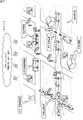
- FIG. 1 is an overall configuration diagram of a wireless communication system according to an embodiment of the present disclosure.
- the wireless communication system of the present embodiment includes a plurality of communication terminals 1A to 1D capable of wireless communication, one or more base stations 2 and base stations 2 that perform wireless communication with the communication terminals 1A to 1D.
- One or a plurality of edge servers 3 that communicate with each other in a wired or wireless manner and one or a plurality of core servers 4 that communicate with the edge server 3 in a wired or wireless manner are provided.
- the core server 4 is installed in a core data center (DC) of the core network.
- the edge server 3 is installed in a distributed data center (DC) of a metro network.
- the metro network is a communication network constructed for each city, for example. Each metro network is connected to a core network.
- the base station 2 is communicably connected to one of the edge servers 3 in the distributed data center included in the metro network.
- the core server 4 is communicably connected to the core network.
- the edge server 3 is communicably connected to the metro network. Therefore, the core server 4 can communicate with the edge server 3 and the base station 2 belonging to each metro network via the core network and the metro network.
- the base station 2 includes at least one of a macro cell base station, a micro cell base station, and a pico cell base station.
- the edge server 3 and the core server 4 are general-purpose servers capable of SDN (Software-Defined Networking).
- the base station 2 and a relay device such as a repeater (not shown) are composed of transport devices capable of SDN. Therefore, a plurality of virtual networks (network slices) S1 to S4 that satisfy conflicting service requirements such as low-latency communication and large-capacity communication are defined as physical devices of the wireless communication system by network virtualization technology. Can do.
- the above-mentioned network virtualization technology is a basic concept of “fifth generation mobile communication system” (hereinafter abbreviated as “5G”) that is currently being standardized.
- the wireless communication system of the present embodiment is compatible with a plurality of wireless communication standards, for example, wireless communication standards such as LTE (Long Term Evolution) and Wi-Fi (registered trademark: Wireless Fidelity) in addition to 5G. It also supports.
- the wireless communication system of the present embodiment is a mobile communication system that can define a plurality of network slices (hereinafter also referred to as “slices”) S1 to S4 according to predetermined service request conditions such as delay time.
- other wireless communication standards other than 5G, LTE, and Wi-Fi may be supported.
- the hierarchy of slices to be defined is not limited to four, but may be five or more.
- each network slice S1 to S4 is defined as follows.
- the slice S1 is a network slice defined so that the communication terminals 1A to 1D communicate directly.
- the communication terminals 1A to 1D that directly communicate in the slice S1 are also referred to as “node N1”.
- the slice S2 is a network slice defined so that the communication terminals 1A to 1D communicate with the base station 2.
- the highest communication node in the slice S2 (base station 2 in the illustrated example) is also referred to as “node N2”.
- the slice S3 is a network slice defined so that the communication terminals 1A to 1D communicate with the edge server 3 via the base station 2.
- the highest communication node (edge server 3 in the example) in the slice S3 is also referred to as “node N3”.
- the node N2 becomes a relay node. That is, data communication is performed through an uplink path of node N1 ⁇ node N2 ⁇ node N3 and a downlink path of node N3 ⁇ node N2 ⁇ node N1.
- the slice S4 is a network slice defined so that the communication terminals 1A to 1D communicate with the core server 4 via the base station 2 and the edge server 3.
- the highest communication node in the slice S4 (core server 4 in the figure) is also referred to as “node N4”.
- the node N2 and the node N3 are relay nodes. That is, data communication is performed through an uplink path of node N1, node N2, node N3, and node N4, and a downlink path of node N4, node N3, node N2, and node N1.
- the routing does not use the edge server 3 as a relay node.
- data communication is performed through an uplink path of node N1 ⁇ node N2 ⁇ node N4 and a downlink path of node N4 ⁇ node N2 ⁇ node N1.
- the communication terminals consist of the radio
- the vehicles 5 include not only ordinary passenger cars but also public vehicles such as route buses and emergency vehicles.
- the vehicle 5 may be a two-wheeled vehicle (motorcycle) as well as a four-wheeled vehicle.
- the drive system of the vehicle 5 may be any of engine drive, electric motor drive, and hybrid system.
- the driving method of the vehicle 5 may be either normal driving in which an occupant performs operations such as acceleration / deceleration or steering of the steering wheel, or automatic driving in which the operation is performed by software.
- the communication terminal 1 ⁇ / b> A of the vehicle 5 may be an existing wireless communication device in the vehicle 5, or may be a portable terminal brought into the vehicle 5 by a passenger.
- the passenger's portable terminal temporarily becomes a wireless communication device when connected to the in-vehicle LAN (Local Area Network) of the vehicle 5.
- LAN Local Area Network
- the communication terminal 1B is composed of a portable terminal carried by the pedestrian 7, and supports wireless communication standards such as LTE and Wi-Fi.
- the pedestrian 7 is a person who moves on foot such as outdoors on roads and parking lots and indoors such as in buildings and underground shopping streets.
- the pedestrian 7 includes not only a person walking but also a person who rides on a bicycle having no power source.
- the communication terminal 1C includes a wireless communication device mounted on the roadside sensor 8, and supports wireless communication standards such as 5G and Wi-Fi.
- the roadside sensor 8 includes an image type vehicle detector installed on the road and a security camera installed outdoors or indoors.
- the communication terminal 1D includes a wireless communication device mounted on the traffic signal controller 9 at the intersection, and corresponds to wireless communication standards such as 5G and Wi-Fi.
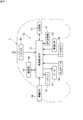
- FIG. 2 is a block diagram illustrating an example of an internal configuration of the edge server 3 and the core server 4.
- the edge server 3 includes a control unit 31 including a CPU (Central Processing Unit), a ROM (Read Only Memory) 32, a RAM (Random Access Memory) 33, a storage unit 34, a communication unit 35, and the like. Is provided.
- a CPU Central Processing Unit
- ROM Read Only Memory
- RAM Random Access Memory
- the control unit 31 functions as the edge server 3 capable of controlling the operation of each hardware by reading one or more programs stored in advance in the ROM 32 into the RAM 33 and executing the programs and communicating with the core server 4.
- the RAM 33 is composed of a volatile memory element such as SRAM or DRAM, and temporarily stores a program executed by the control unit 31 and data necessary for the execution.
- the storage unit 34 includes a nonvolatile memory element such as a flash memory or an EEPROM (Electrically Erasable Programmable Read Only Memory), or a magnetic storage device such as a hard disk.
- the storage unit 34 stores a computer program for communication control executed by the control unit 31.
- the communication unit 35 includes a communication device that executes communication processes corresponding to a plurality of wireless communication standards such as 5G, LTE, and Wi-Fi, for example, and communicates with the core server 4 and the base station 2 via the metro network. .
- the communication unit 35 transmits the information given from the control unit 31 to the external device via the metro network and gives the information received via the metro network to the control unit 31.
- the storage unit 34 of the edge server 3 stores a dynamic information map M1 (hereinafter also simply referred to as “map M1”).
- the map M1 is an aggregate (virtual database) of data in which dynamic information that changes every moment is superimposed on a high-definition digital map that is static information.
- the digital information constituting the map M1 includes the following “dynamic information”, “semi-dynamic information”, “semi-static information”, and “static information”.
- “Dynamic information” ( ⁇ 1 second) is dynamic data that requires a delay time of 1 second or less.
- the position information and signal information of moving bodies (vehicles, pedestrians, etc.) used as ITS (Intelligent Transport Systems) prefetch information correspond to dynamic information.
- “Semi-dynamic information” ( ⁇ 1 minute) is quasi-dynamic data requiring a delay time of 1 minute or less. For example, accident information, traffic jam information, narrow-area weather information, and the like correspond to quasi-dynamic information.
- the “quasi-static information” ( ⁇ 1 hour) is quasi-static data in which a delay time within one hour is allowed.
- traffic regulation information, road construction information, wide area weather information, and the like correspond to quasi-static information.
- Static information ( ⁇ 1 month) is static data in which a delay time within one month is allowed.
- road surface information, lane information, and three-dimensional structure data correspond to static information.
- the control unit 31 of the edge server 3 updates the dynamic information of the map M1 stored in the storage unit 34 every predetermined update cycle (dynamic information update process). Specifically, the control unit 31 collects, from each communication terminal 1A to 1D, various sensor information measured by the vehicle 5, the roadside sensor 8, and the like within the service area of the own device at every predetermined update period. The dynamic information of the map M1 is updated based on the collected sensor information.
- the control unit 31 When receiving the dynamic information request message from the communication terminal 1A, 1B of the predetermined user, the control unit 31 sends the latest dynamic information to the communication terminal 1A, 1B that is the transmission source of the request message for each predetermined distribution cycle.
- Distribute dynamic information distribution process.
- the control unit 31 collects traffic information and weather information of each location in the service area from a traffic control center, a private weather service support center, and the like, and based on the collected information, associate dynamic information and associate static information of the map M1. Update.
- the core server 4 includes a control unit 41 including a CPU, a ROM 42, a RAM 43, a storage unit 44, a communication unit 45, and the like.
- the control unit 41 functions as the core server 4 that controls the operation of each hardware by reading out and executing one or a plurality of programs stored in advance in the ROM 42 to the RAM 43, and allows the computer device to communicate with the edge server 3.
- the RAM 43 is composed of a volatile memory element such as SRAM or DRAM, and temporarily stores a program executed by the control unit 41 and data necessary for the execution.
- the storage unit 44 includes a nonvolatile memory element such as a flash memory or an EEPROM, or a magnetic storage device such as a hard disk.
- the communication unit 45 includes a communication device that executes communication processing corresponding to a plurality of wireless communication standards such as 5G, LTE, and Wi-Fi, and communicates with the edge server 3 and the base station 2 via the core network.
- the communication unit 45 transmits information given from the control unit 41 to the external device via the core network, and gives information received via the core network to the control unit 41.
- the storage unit 44 of the core server 4 stores a dynamic information map M2 (hereinafter, also simply referred to as “map M2”).
- map M2 The data structure of the map M2 (data structure including dynamic information, quasi-dynamic information, quasi-static information, and static information) is the same as that of the map M1.
- the map M2 may be a map of the same service area as the map M1 of the specific edge server 3, or may be a wider area map in which the maps M1 held by the plurality of edge servers 3 are integrated.
- the control unit 41 of the core server 4 dynamically updates the dynamic information in the map M2 stored in the storage unit 44 and dynamically responds to the request message. Dynamic information distribution processing for distributing information can be performed. That is, the control unit 41 can independently execute dynamic information update processing and distribution processing based on the map M2 of its own device separately from the edge server 3.
- the core server 4 belonging to the slice S4 has a longer communication delay time with the communication terminals 1A to 1D than the edge server 3 belonging to the slice S3. For this reason, even if the core server 4 independently updates the dynamic information of the map M2, it is inferior in real time as compared to the dynamic information of the map M1 managed by the edge server 3. Therefore, for example, it is preferable that the control unit 31 of the edge server 3 and the control unit 41 of the core server 4 perform dynamic information update processing and distribution processing in a distributed manner according to the priority defined for each predetermined area. .
- the control unit 41 collects traffic information and weather information of each location in the service area from a traffic control center, a private weather service support center, and the like, and based on the collected information, semi-dynamic information and semi-static information of the map M2 Update.
- the control unit 41 may adopt the semi-dynamic information and semi-static information of the map M1 received from the edge server 3 as the semi-dynamic information and semi-static information of the map M2 of the own device.
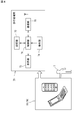
- FIG. 3 is a block diagram illustrating an example of the internal configuration of the in-vehicle device 50.
- the in-vehicle device 50 of the vehicle 5 includes a control unit (ECU: Electronic Control Unit) 51, a GPS receiver 52, a vehicle speed sensor 53, a gyro sensor 54, a storage unit 55, a display 56, a speaker 57, and an input.
- a device 58, an in-vehicle camera 59, a radar sensor 60, a communication unit 61, and the like are provided.
- the communication unit 61 includes the communication terminal 1A described above, that is, a wireless communication device capable of performing communication processing corresponding to wireless communication standards such as 5G and LTE, for example. Therefore, the vehicle 5 can communicate with the edge server 3 as a kind of mobile terminal belonging to the slice S3. The vehicle 5 can also communicate with the core server 4 as a kind of mobile terminal belonging to the slice S4.
- the control unit 51 includes a computer device that performs route search of the vehicle 5, control of the other electronic devices 52 to 61, and the like.
- the control unit 51 obtains the vehicle position of the host vehicle from GPS signals that the GPS receiver 52 periodically acquires.
- the control unit 51 complements the vehicle position and direction based on the input signals of the vehicle speed sensor 53 and the gyro sensor 54 and grasps the accurate current position and direction of the vehicle 5.
- the GPS receiver 52, the vehicle speed sensor 53, and the gyro sensor 54 are sensors that measure the current position, speed, and direction of the vehicle 5.
- the storage unit 55 includes a map database.
- the map database provides road map data to the control unit 51.
- the road map data includes link data and node data, and is stored in a recording medium such as a DVD, CD-ROM, memory card, or HDD.
- the storage unit 55 reads out necessary road map data from the recording medium and provides it to the control unit 51.
- the display 56 and the speaker 57 are output devices for notifying various types of information generated by the control unit 51 to a user who is a passenger of the vehicle 5. Specifically, the display 56 displays an input screen for route search, a map image around the host vehicle, route information to the destination, and the like. The speaker 57 outputs an announcement or the like for guiding the vehicle 5 to the destination. These output devices can also notify the passenger of the provision information received by the communication unit 61.
- the input device 58 is a device for a passenger of the vehicle 5 to perform various input operations.
- the input device 58 includes a combination of an operation switch provided on the handle, a joystick, a touch panel provided on the display 56, and the like.
- a voice recognition device that accepts input by voice recognition of the passenger can also be used as the input device 58.
- the input signal generated by the input device 58 is transmitted to the control unit 51.
- the in-vehicle camera 59 includes an image sensor that captures an image in front of the vehicle 5.
- the in-vehicle camera 59 may be either monocular or compound eye.
- the radar sensor 60 includes a sensor that detects an object existing in front of or around the vehicle 5 by a millimeter wave radar, a LiDAR (Laser Imaging Detection and Ranging) method, or the like. Based on the measurement data obtained by the in-vehicle camera 59 and the radar sensor 60, the control unit 51 executes driving support control that outputs a warning to the occupant during driving to the display 56 or performs forced braking intervention. be able to.
- the control unit 51 is configured by an arithmetic processing device such as a microcomputer that executes various control programs stored in the storage unit 55.
- the control unit 51 executes the above-described control program to display a map image on the display 56, a function to calculate a route from the departure point to the destination (including the position if there is a relay point), Various navigation functions such as a function of guiding the vehicle 5 to the destination according to the calculated route can be executed.
- the control unit 51 Based on the measurement data of at least one of the in-vehicle camera 59 and the radar sensor 60, the control unit 51 performs object recognition processing for recognizing an object in front of or around the host vehicle, and measurement for calculating a distance to the recognized object. Distance processing is possible.
- the control unit 51 can calculate the position information of the object recognized by the object recognition process from the distance calculated by the distance measurement process and the sensor position of the host vehicle.
- the control unit 51 can execute the following processes in communication with the edge server 3 (which may be the core server 4). 1) Request message transmission processing 2) Dynamic information reception processing 3) Change point information calculation processing 4) Change point information transmission processing
- the request message transmission processing is processing for transmitting, to the edge server 3, a control packet for requesting distribution of dynamic information of the map M1 that the edge server 3 sequentially updates.
- the control packet includes the vehicle ID of the host vehicle.
- the dynamic information reception process is a process for receiving dynamic information distributed by the edge server 3 to the own apparatus.
- the change point information calculation process in the vehicle 5 is a process for calculating a change amount between the received dynamic information and the comparison result between the own vehicle sensor information at the time of reception.
- Information example a1 Change point information related to recognized object
- the control unit 51 detects the object X by its own object recognition process, although the received dynamic information does not include the object X (vehicle, pedestrian, obstacle, etc.) In such a case, the detected image data and position information of the object X are used as change point information.
- the control unit 51 detects the detected object X The difference value between the image data and the position information of both is used as the change point information.
- Information example a2 Change point information regarding own vehicle
- the control unit 51 deviates the position information of the own vehicle included in the received dynamic information from the vehicle position of the own vehicle calculated by the GPS signal by a predetermined threshold or more. If they are different, the difference value between them is used as change point information.
- the control unit 51 determines the difference between the two. The value is used as change point information.
- the control unit 51 When calculating the change point information as described above, the control unit 51 generates a communication packet addressed to the edge server 3 including the calculated change point information.
- the control unit 51 includes the vehicle ID of the host vehicle in the communication packet.
- the change point information transmission process is a process of transmitting the communication packet including the change point information in the data to the edge server 3. The change point information transmission process is performed within the dynamic information distribution cycle by the edge server 3.
- control unit 51 executes driving support control that causes the display 56 to output a warning for a driver who is driving or to perform forced braking intervention. You can also.
- FIG. 4 is a block diagram illustrating an example of an internal configuration of the pedestrian terminal 70.
- the pedestrian terminal 70 in FIG. 4 includes the above-described communication terminal 1B, that is, a wireless communication device capable of communication processing corresponding to wireless communication standards such as LTE and Wi-Fi. Therefore, the pedestrian terminal 70 can communicate with the edge server 3 as a kind of mobile terminal belonging to the slice S3.
- the pedestrian terminal 70 can also communicate with the core server 4 as a kind of mobile terminal belonging to the slice S4.
- the pedestrian terminal 70 includes a control unit 71, a storage unit 72, a display unit 73, an operation unit 74, and a communication unit 75.
- the communication unit 75 includes a communication interface that wirelessly communicates with the base station 2 of the carrier that provides the service.
- the communication unit 75 converts the RF signal from the base station 2 into a digital signal and outputs the digital signal to the control unit 71, converts the digital signal input from the control unit 71 into an RF signal, and transmits the RF signal to the base station 2.
- the control unit 71 includes a CPU, a ROM, a RAM, and the like.
- the control unit 71 reads out and executes the program stored in the storage unit 72 and controls the overall operation of the pedestrian terminal 70.
- the storage unit 72 includes a hard disk, a nonvolatile memory, and the like, and stores various computer programs and data.
- the storage unit 72 stores a mobile ID that is identification information of the pedestrian terminal 70.
- the mobile ID includes, for example, a carrier subscriber's unique user ID or MAC address.
- the storage unit 72 stores various application software arbitrarily installed by the user.
- the application software includes, for example, application software for receiving an information providing service for receiving dynamic information on the map M1 and the like by wireless communication with the edge server 3 (or the core server 4).
- the operation unit 74 includes various operation buttons and a touch panel function of the display unit 73.
- the operation unit 74 outputs an operation signal corresponding to a user operation to the control unit 71.
- the display unit 73 includes, for example, a liquid crystal display and presents various types of information to the user.
- the display unit 73 can display the image data of the dynamic information maps M1 and M2 transmitted from the servers 3 and 4 on the screen.
- the control unit 71 uses the time synchronization function to acquire the current time from the GPS signal, the position detection function to measure the current position (latitude, longitude, and altitude) of the host vehicle from the GPS signal, and the direction sensor to determine the direction of the pedestrian 7. It also has an orientation detection function for measurement.
- the control unit 71 can execute the following processes in communication with the edge server 3 (which may be the core server 4). 1) Request message transmission processing 2) Terminal state information transmission processing 3) Dynamic information reception processing
- the request message transmission processing is processing for transmitting, to the edge server 3, a control packet for requesting distribution of dynamic information of the map M1 that the edge server 3 sequentially updates.
- the control packet includes the mobile ID of the pedestrian terminal 70.
- the terminal state information transmission process is a process of transmitting the state information of the pedestrian terminal 70 such as the position and orientation information of the own device to the edge server 3.
- the terminal state information may include identification information indicating whether application software that is likely to cause a so-called “walking smartphone” such as a map application, a mail application, and a game application is being displayed.
- the dynamic information reception process is a process for receiving dynamic information distributed by the edge server 3 to the own apparatus.
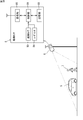
- FIG. 5 is a block diagram illustrating an example of an internal configuration of the roadside sensor 8.
- the roadside sensor 8 includes a control unit 81, a storage unit 82, a roadside camera 83, a radar sensor 84, and a communication unit 85.
- the communication unit 85 includes the above-described communication terminal 1C, that is, a wireless communication device that can perform communication processing corresponding to wireless communication standards such as 5G and Wi-Fi, for example. Therefore, the roadside sensor 8 can communicate with the edge server 3 as a kind of fixed terminal belonging to the slice S3. The roadside sensor 8 can also communicate with the core server 4 as a kind of fixed terminal belonging to the slice S4.
- the control unit 81 includes a CPU, a ROM, a RAM, and the like.
- the control unit 81 reads and executes the program stored in the storage unit 82 and controls the overall operation of the roadside sensor 8.
- the storage unit 82 includes a hard disk, a nonvolatile memory, and the like, and stores various computer programs and data.
- the storage unit 82 stores a sensor ID that is identification information of the roadside sensor 8.
- the sensor ID includes, for example, a user ID unique to the owner of the roadside sensor 8 or a MAC address.
- the roadside camera 83 is composed of an image sensor that captures video of a predetermined shooting area.
- the roadside camera 83 may be either monocular or compound eye.
- the radar sensor 60 is a sensor that detects an object existing in front of or around the vehicle 5 by a millimeter wave radar, a LiDAR method, or the like.
- the control unit 81 transmits the captured video data or the like to the security manager computer device.
- the control unit 81 transmits the captured video data and the like to the traffic control center.
- the control unit 81 performs object recognition processing for recognizing an object in the imaging area and distance measurement processing for calculating a distance to the recognized object based on at least one measurement data of the roadside camera 83 and the radar sensor 84. Is possible.
- the control unit 81 can calculate the position information of the object recognized by the object recognition process from the distance calculated by the distance measurement process and the sensor position of the own device.
- the control unit 81 can execute the following processes in communication with the edge server 3 (which may be the core server 4). 1) Change point information calculation process 2) Change point information transmission process
- the calculation process of the change point information in the roadside sensor 8 is based on the comparison result between the previous sensor information and the current sensor information for each predetermined measurement cycle (for example, the dynamic information delivery cycle by the edge server 3). It is a process which calculates the variation
- the change point information calculated by the roadside sensor 8 for example, the following information example b1 can be considered.
- the control unit 81 detects the object Y by the current object recognition process, although the object Y (vehicle, pedestrian, obstacle, etc.) is not included in the previous object recognition process. In this case, the detected image data and position information of the object Y are used as change point information.
- the control unit 81 detects the detected object Y. And the difference value between them are used as change point information.
- the control unit 81 When calculating the change point information as described above, the control unit 81 generates a communication packet addressed to the edge server 3 including the calculated change point information.
- the control unit 81 includes the sensor ID of its own device in the communication packet.
- the change point information transmission process is a process of transmitting the communication packet including the change point information in the data to the edge server 3. The change point information transmission process is performed within the dynamic information distribution cycle by the edge server 3.
- FIG. 6 is an overall configuration diagram of an information providing system according to an embodiment of the present disclosure.
- the information providing system of the present embodiment includes a large number of vehicles 5, pedestrian terminals 70 and roadside sensors 8 that are scattered in a relatively wide service area (real word) of the edge server 3.
- an edge server 3 capable of wireless communication with a plurality of wireless communication standards including 5G communication via the base station 2.
- the edge server 3 collects the above-described change point information from the vehicle 5 and the roadside sensor 8 at a predetermined cycle (step S31), integrates the collected change point information by map matching, and manages dynamic information being managed.
- the dynamic information of the map M1 is updated (step S32). If there is a request from the vehicle 5 or the pedestrian terminal 70, the edge server 3 transmits the latest dynamic information to the requesting communication node (step S33). Thereby, for example, the vehicle 5 that has received the dynamic information can use the dynamic information for driving assistance of the passenger.
- step S34 change point information collection (step S31) ⁇ dynamic information update (step S32) ⁇ dynamic information distribution (step S33) ⁇ change point information detection by a vehicle (Step S34) ⁇ Information processing in each communication node circulates in the order of change point information collection (Step S31).
- an information providing system including only one edge server 3 is illustrated, but a plurality of edge servers 3 may be included, or instead of or in addition to the edge server 3,
- One or a plurality of core servers 4 may be included.
- the dynamic information map M1 managed by the edge server 3 may be a map in which at least dynamic information of an object is superimposed on map information such as a digital map. This also applies to the core server dynamic information map M2.
- the edge server 3 may dynamically change the sensor information (specifically, change point information) collected from the vehicle 5 and the roadside sensor 8.
- the dynamic information of the information map M1 can be updated almost in real time. Therefore, various types of information can be provided to the user depending on the type of dynamic information included in the management target.
- FIG. 7 is an explanatory diagram showing a service example of the information providing system.
- the servers 3 and 4 can provide “lost child / buzzer information” to the user. For example, if the location information of the pedestrian terminal 70 owned by the elderly pedestrian 7 identified from the mobile ID circulates around the residence many times, the servers 3 and 4 7 is determined to be lost or hesitated, and the determination result is transmitted to the pedestrian terminal 70 owned by the family according to a corresponding wireless communication standard (for example, LTE or Wi-Fi).
- a corresponding wireless communication standard for example, LTE or Wi-Fi
- the servers 3 and 4 can provide “public transportation information” to the user. For example, when the pedestrian terminal 70 owned by the user is stopped at the bus stop, the servers 3 and 4 calculate the expected time when the route bus arrives at the bus stop from the location information of the route bus specified from the vehicle ID. The predicted time calculated according to the corresponding wireless communication standard (for example, LTE or Wi-Fi) is transmitted to the user's pedestrian terminal 70.
- the corresponding wireless communication standard for example, LTE or Wi-Fi
- the servers 3 and 4 can provide “emergency vehicle information” to the user. For example, when the vehicle 5 owned by the user is traveling on a road, the servers 3 and 4 calculate the expected time to catch up with the vehicle 5 from the position information of the ambulance specified from the vehicle ID, On the other hand, the calculated predicted time is transmitted according to a corresponding wireless communication standard (for example, 5G or LTE).
- a corresponding wireless communication standard for example, 5G or LTE
- the servers 3 and 4 can provide “road traffic information” to the user. For example, when there are a large number of vehicles 5 existing in a predetermined road section, the servers 3 and 4 generate traffic information such as link data of the road section in the traffic congestion and the traffic length, and the like. The generated traffic jam information is transmitted to the vehicle 5 owned by the vehicle 5 according to a corresponding wireless communication standard (for example, 5G or LTE).
- a corresponding wireless communication standard for example, 5G or LTE
- the servers 3 and 4 can provide “suspicious person information” to the user. For example, when the position information of the pedestrian 7 acquired from the roadside sensor 8 composed of a security camera circulates around the same residence many times, the servers 3 and 4 are suspicious persons. The determination result is determined, and the determination result is transmitted to the pedestrian terminal 70 of the user who owns the residence according to the corresponding wireless communication standard (for example, LTE or Wi-Fi).
- the corresponding wireless communication standard for example, LTE or Wi-Fi
- the servers 3 and 4 can provide “parking lot information” to the user.
- the servers 3 and 4 calculate the number of vehicles and the number of vacant vehicles existing in the parking lot from the image data acquired from the roadside sensor 8 installed in the parking lot, and deal with the vehicle 5 owned by the user.
- the calculated information is transmitted according to a wireless communication standard (for example, 5G or LTE).
- the servers 3 and 4 can provide “collision prediction information” to the user.
- the servers 3 and 4 can acquire the vehicles, the vehicle and the pedestrian, or the bicycle from the position information of the vehicle 5, the bicycle, and the pedestrian 7 that are obtained from the roadside camera 83 and the vehicle-mounted camera 59.
- a pedestrian is predicted to collide
- the vehicle 5 or the pedestrian terminal 70 of the pedestrian 7 is predicted to collide with a corresponding wireless communication standard (for example, 5G, LTE, Wi-Fi, etc.) Information indicating that a collision is predicted is transmitted.
- a corresponding wireless communication standard for example, 5G, LTE, Wi-Fi, etc.
- the servers 3 and 4 can provide the user with information other than the information shown in FIG.
- the servers 3 and 4 transmit entertainment information such as music information to the vehicle 5 or the pedestrian terminal 70 of the pedestrian 7 according to a corresponding wireless communication standard (for example, 5G, LTE, Wi-Fi, or the like).
- a corresponding wireless communication standard for example, 5G, LTE, Wi-Fi, or the like.
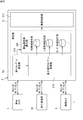
- FIG. 8 is a block diagram illustrating an example of a functional configuration of the edge server 3.
- Each function of FIG. 8 is mainly realized by the CPU by the CPU of the control unit 31 of the edge server 3 reading out one or more programs stored in the ROM 32 to the RAM 33 and executing them (see also FIG. 2). ).
- the edge server 3 of the present embodiment functions as a communication control device that controls wireless communication according to a plurality of wireless communication standards.
- the control unit 31 of the edge server 3 wirelessly measures the vehicle 5 and the pedestrian terminal 70 based on the measurement unit 311 that measures a value indicating the communication status in real time for each wireless communication standard, and the value indicating the measured communication status.
- a communication control unit 312 that controls transmission.
- the measurement unit 311 includes an effective throughput measurement unit 313, a maximum effective throughput update unit 314, and a bandwidth usage rate calculation unit 315.
- the effective throughput measuring unit 313 wirelessly transmits data including provision information (hereinafter also referred to as “provided information data”) according to the corresponding wireless communication standard to the vehicle 5 and the pedestrian terminal 70, respectively.
- provision information hereinafter also referred to as “provided information data”
- information indicating the wireless communication standard is acquired from the communication unit 35, and the effective throughput at the time of wireless transmission according to the wireless communication standard is measured.
- the effective throughput measurement unit 313 may measure the effective throughput during wireless transmission of data other than the provided information data.
- the effective throughput measurement unit 313 may measure the effective throughput at the time of wireless reception from the vehicle 5 and the pedestrian terminal 70 depending on the type of wireless communication standard.
- the maximum effective throughput update unit 314 sends the measured effective throughput and information indicating the wireless communication standard corresponding to the effective throughput from the effective throughput measurement unit 313. get. Then, the maximum effective throughput updating unit 314 holds the acquired maximum value of effective throughput as the maximum effective throughput at the time of wireless transmission in the corresponding wireless communication standard.
- the maximum effective throughput updating unit 314 determines the newly acquired effective throughput. Overwrite and update the throughput as the maximum effective throughput. Thereby, the maximum effective throughput updating unit 314 can update the maximum effective throughput of each wireless communication standard that changes from moment to moment in real time.
- the bandwidth usage rate calculation unit 315 obtains the measured effective throughput from the effective throughput measurement unit 313 each time the effective throughput measurement unit 313 measures the effective throughput of each wireless communication standard. Further, the bandwidth usage rate calculation unit 315 acquires the updated maximum effective throughput from the maximum effective throughput update unit 314 each time the maximum effective throughput update unit 314 updates the maximum effective throughput of each wireless communication standard.
- the band usage rate calculation unit 315 calculates a bandwidth usage rate that is a value indicating a communication status at the time of wireless transmission according to each wireless communication standard.
- the bandwidth usage rate is calculated by dividing the effective throughput by the maximum effective throughput. Thereby, the bandwidth usage rate calculation unit 315 can calculate the bandwidth usage rate of each wireless communication standard that changes every moment in real time.
- the communication control unit 312 wirelessly transmits the provided information data based on the provided information data scheduled to be wirelessly transmitted to the vehicle 5 or the pedestrian terminal 70 and the band usage rate of the wireless communication standard used for wireless transmission of the provided information data. To control. At that time, the communication control unit 312 acquires the band usage rate of the corresponding wireless communication standard from the band usage rate calculation unit 315.
- the communication control unit 312 determines whether the type of the provision information data scheduled to be wirelessly transmitted is the first type or the second type defined below, and if it is determined as the first type The wireless transmission of the provided information data is controlled based on the band usage rate.
- First type a type that includes provision information that does not contribute to safety (for example, the above-mentioned road traffic information, entertainment information, etc., hereinafter also referred to as “unimportant provision information”).
- Second type important provision information that contributes to safety (for example, Type including the above-mentioned collision prediction information)
- the communication control unit 312 has a wireless communication standard band usage rate corresponding to the vehicle 5 or the pedestrian terminal 70 scheduled to be wirelessly transmitted and the type of the provided information data scheduled to be wirelessly transmitted is the first type. If it is equal to or greater than the threshold, wireless transmission of the first type of provision information data according to the corresponding wireless communication standard is temporarily stopped.
- the communication control unit 312 wirelessly transmits the first type of provision information data to the vehicle 5 using LTE, which is a corresponding wireless communication standard, as shown in the upper graph of FIG.
- LTE which is a corresponding wireless communication standard
- the bandwidth usage rate is equal to or greater than the threshold (100%)
- the wireless transmission of the first type of provision information data by LTE is stopped for a predetermined time (for example, 1 to 2 seconds).
- the second type of provision information data including important provision information is changed. It is possible to secure a communication state that allows wireless transmission.
- the communication control unit 312 wirelessly transmits the first type of provision information data to the vehicle 5 or the pedestrian terminal 70 scheduled to wirelessly transmit. Information indicating that the operation is temporarily stopped is wirelessly transmitted.
- the communication control unit 312 has the first type of provision information data scheduled to be transmitted wirelessly and the bandwidth usage rate of the wireless communication standard corresponding to the vehicle 5 or the pedestrian terminal 70 scheduled to wirelessly transmit is less than the threshold value.
- the wireless transmission of the first type of provision information data is controlled according to the bandwidth usage rate. For example, when the communication control unit 312 wirelessly transmits the first type of provision information data to the vehicle 5 using LTE, which is a corresponding wireless communication standard, the LTE bandwidth usage rate is less than the threshold (100%).
- the control is performed such that the capacity, the number, and the like of the provided information included in the first type of provided information data by LTE increases as the band usage rate indicates a smaller value. As a result, it is possible to wirelessly transmit as much first-type provision information data as possible to the vehicle 5 while suppressing a situation in which the LTE communication status is tight.
- the communication control unit 312 determines the second regardless of the bandwidth usage rate of the wireless communication standard corresponding to the vehicle 5 or the pedestrian terminal 70 scheduled to wirelessly transmit.
- the type of provided information data is wirelessly transmitted according to all wireless communication standards. For example, when wirelessly transmitting the second type of provision information data including collision prediction information between the vehicles 5, the communication control unit 312 is a wireless communication standard corresponding to these vehicles 5 to be wirelessly transmitted. In addition, the communication control unit 312 wirelessly transmits the second type of provided information data using Wi-Fi, which is another wireless communication standard capable of wireless communication.
- the second type of provision information data is wirelessly transmitted by Wi-Fi or the like not only to the vehicle 5 predicted to collide but also to the pedestrian terminal 70 located around the vehicle 5. It is possible to alert the pedestrian 7 located around the vehicle 5.
- the communication control unit 312 of the present embodiment wirelessly transmits the second type of provision information data according to all wireless communication standards, but at least wireless communication corresponding to the vehicle 5 or the pedestrian terminal 70 scheduled to wirelessly transmit.
- the second type of provision information data may be wirelessly transmitted according to the standard.
- the communication control part 312 of this embodiment is controlling the radio
- the communication control unit 312 may control radio transmission to the other communication terminals 1C and 1D, or perform radio transmission to one communication terminal or three or more communication terminals of these communication terminals 1A to 1D. You may control.
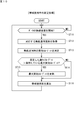
- FIG. 10 is a flowchart illustrating an example of a bandwidth usage rate measurement process of each wireless communication standard executed by the edge server 3.
- the edge server 3 starts the wireless transmission of the provided information data according to the corresponding wireless communication standard to the vehicle 5 and the pedestrian terminal 70 by the communication unit 35 (“Yes” in step ST11).
- information indicating the corresponding wireless communication standard is acquired from the communication unit 35 (step ST12).
- the edge server 3 measures the effective throughput during wireless transmission of the provided information data according to the corresponding wireless communication standard (step ST13).
- the edge server 3 determines whether or not the effective throughput measured by the effective throughput measuring unit 313 is larger than the maximum effective throughput held by itself (step ST14). If the determination result is affirmative, the edge server 3 overwrites and holds the measured effective throughput as the maximum effective throughput (step ST15), and proceeds to the next step ST16. On the other hand, if the determination result is negative, the edge server 3 proceeds to the next step ST16 without overwriting and updating the maximum effective throughput held by itself.
- step ST16 the edge server 3 calculates the band usage rate of the corresponding wireless communication standard by dividing the effective throughput measured in step ST13 by the maximum effective throughput held by itself.
- the edge server 3 repeats the processing from step ST11 to step ST16. Thereby, the edge server 3 can measure the band usage rate of each of a plurality of wireless communication standards.
- FIG. 11 is a flowchart illustrating an example of control processing for wireless transmission of provided information data executed by the edge server 3.
- the edge server 3 first determines whether or not the type of provision information data scheduled to be wirelessly transmitted to the vehicle 5 or the pedestrian terminal 70 is the first type including unimportant provision information. (Step ST31).
- step ST31 determines whether or not the band usage rate of the wireless communication standard used for wireless transmission of the provided information data is equal to or greater than a threshold (step ST32). ). If the determination result of step ST32 is affirmative, the edge server 3 stops wireless transmission of the first type of provision information data (step ST33).
- the edge server 3 wirelessly transmits information indicating that wireless transmission of the first type of provision information data to be temporarily stopped to the vehicle 5 and the pedestrian terminal 70 scheduled to wirelessly transmit (step ST34). Accordingly, the user can easily grasp that the wireless transmission of the first type of provision information data has been temporarily stopped.
- the edge server 3 returns to step ST31 when a predetermined time has elapsed since the wireless transmission of the first type of provision information data was stopped (in the case of “Yes” in step ST35).
- step ST32 determines whether the bandwidth usage rate of the wireless communication standard used for wireless transmission of the provided information data is less than the threshold.
- the wireless transmission of the first type of provision information data is controlled according to the band usage rate (step ST36). For example, the edge server 3 performs control so as to increase the capacity, the number, and the like of the provision information included in the first type provision information data as the band usage rate is smaller.
- the edge server 3 returns to step ST31 when the control of step ST36 is completed.
- step ST31 determines whether the type of provision information data scheduled to be wirelessly transmitted to the vehicle 5 or the pedestrian terminal 70 is the second type including important provision information.
- the edge server 3 wirelessly transmits the second type of provided information data according to all wireless communication standards regardless of the band usage rate of the wireless communication standard corresponding to the vehicle 5 or the pedestrian terminal 70 scheduled to wirelessly transmit (step ST37).
- the edge server 3 returns to step ST31.
- the edge server 3 is a first type in which the type of provision information data scheduled to be wirelessly transmitted to the user communication terminals 1A and 1B (in-vehicle communication device, pedestrian terminal) includes provision information that is not important. If the bandwidth usage rate of the wireless communication standard corresponding to the communication terminals 1A and 1B is equal to or greater than the threshold, wireless transmission of the first type of provision information data is temporarily stopped. As a result, the tightness of the communication status of the wireless communication standard is alleviated, and it is possible to secure a communication status in which important provision information can be wirelessly transmitted to the communication terminals 1A and 1B, which is important for the communication terminals 1A and 1B.
- the second type of provision information data including the provision information can be reliably transmitted by radio.
- the bandwidth usage rate is calculated based on the effective throughput and the maximum effective throughput at the time of wireless transmission of the provided information data
- the communication status at the time of wireless transmission of each wireless communication standard is determined based on the calculated bandwidth usage rate. Accurately grasp.
- the threshold is a value based on the maximum effective throughput, it is possible to more accurately grasp the communication status at the time of wireless transmission of each wireless communication standard.
- the edge server 3 has the first type of provision information data scheduled to be wirelessly transmitted to the user's communication terminals 1A and 1B, and the band usage rate of the wireless communication standard corresponding to the communication terminals 1A and 1B is less than the threshold value.
- the band usage rate of the wireless communication standard corresponding to the communication terminals 1A and 1B is less than the threshold value.
- the edge server 3 uses the wireless communication standard corresponding to the communication terminals 1A and 1B when the type of the provision information data scheduled to be wirelessly transmitted to the user communication terminals 1A and 1B is the second type including important provision information. Regardless of the band usage rate, the second type of provision information data is wirelessly transmitted according to all wireless communication standards. As a result, the second type of provision information data is wirelessly transmitted not only to the communication terminals 1A and 1B scheduled to be wirelessly transmitted, but also to the other communication terminals 1A and 1B. Can be provided to the user.
- the edge server 3 functions as a communication control device, but the core server 4 may function as a communication control device, or the vehicle 5 or the pedestrian terminal 70 functions as a communication control device. Good.
- Communication terminal (vehicle communication device) 1B communication terminal 1C communication terminal 1D communication terminal 2 base station 3 edge server (communication control device) 4 Core Server 5 Vehicle 7 Pedestrian 8 Roadside Sensor 9 Traffic Signal Controller 31 Controller 32 ROM 33 RAM 34 storage unit 35 communication unit 41 control unit 42 ROM 43 RAM 44 storage unit 45 communication unit 50 in-vehicle device 51 control unit 52 GPS receiver 53 vehicle speed sensor 54 gyro sensor 55 storage unit 56 display 57 speaker 58 input device 59 in-vehicle camera 60 radar sensor 61 communication unit 70 pedestrian terminal 71 control unit 72 storage Unit 73 display unit 74 operation unit 75 communication unit 81 control unit 82 storage unit 83 roadside camera 84 radar sensor 85 communication unit 311 measurement unit 312 communication control unit 313 effective throughput measurement unit 314 maximum effective throughput update unit 315 bandwidth usage rate calculation unit
Landscapes
- Engineering & Computer Science (AREA)
- Computer Networks & Wireless Communication (AREA)
- Signal Processing (AREA)
- Physics & Mathematics (AREA)
- General Physics & Mathematics (AREA)
- Traffic Control Systems (AREA)
- Mobile Radio Communication Systems (AREA)
Abstract
複数の無線通信規格による無線通信を制御する通信制御装置であって、前記無線通信規格毎に通信状況を示す値を測定する測定部と、1または複数の通信端末に無線送信予定のデータの種別、及び測定された前記通信状況を示す値に基づいて、1または複数の前記通信端末への前記データの無線送信を制御する通信制御部と、を備える通信制御装置。
Description
本開示は、通信制御装置、通信制御方法、コンピュータプログラム、及び車載通信機に関する。
本出願は、2018年6月13日出願の日本出願第2018-113048号に基づく優先権を主張し、前記日本出願に記載された全ての記載内容を援用するものである。
本出願は、2018年6月13日出願の日本出願第2018-113048号に基づく優先権を主張し、前記日本出願に記載された全ての記載内容を援用するものである。
他車両に生じた異常事象を自車両の搭乗者に報知する交通システムが既に提案されている(特許文献1参照)。
特許文献1には、上記の交通システムの一態様として、交通管制センターの中央装置と、中央装置と専用回線で通信する複数の路側通信機と、各路側通信機と無線通信する車載通信機と、を備える交通システムが記載されている(特許文献1の段落0104~0129参照)。
特許文献1には、上記の交通システムの一態様として、交通管制センターの中央装置と、中央装置と専用回線で通信する複数の路側通信機と、各路側通信機と無線通信する車載通信機と、を備える交通システムが記載されている(特許文献1の段落0104~0129参照)。
この交通システムでは、中央装置は、各車両の車載通信機がアップリンク送信したデータ生成時刻、車両速度、車両位置及び進行方向などを含む車両情報(走行軌跡)に基づいて、各車両の挙動が所定の異常事象に該当するか否かを判定する。
中央装置は、所定の異常事象を検出すると、当該異常事象の内容及び位置などを通知する情報を車両の車載通信機にダウンリンク送信する。この情報を受信した車両は、異常事象の発生を搭乗者に報知する。これにより、異常走行に対処するための運転支援制御が実行される。
中央装置は、所定の異常事象を検出すると、当該異常事象の内容及び位置などを通知する情報を車両の車載通信機にダウンリンク送信する。この情報を受信した車両は、異常事象の発生を搭乗者に報知する。これにより、異常走行に対処するための運転支援制御が実行される。
本開示の通信制御装置は、複数の無線通信規格による無線通信を制御する通信制御装置であって、前記無線通信規格毎に通信状況を示す値を測定する測定部と、1または複数の通信端末に無線送信予定のデータの種別、及び測定された前記通信状況を示す値に基づいて、1または複数の前記通信端末への前記データの無線送信を制御する通信制御部と、を備える通信制御装置である。
本開示の通信制御方法は、複数の無線通信規格による無線通信の通信制御方法であって、前記無線通信規格毎に通信状況を示す値を測定する測定ステップと、1または複数の通信端末に無線送信予定のデータの種別、及び測定された前記通信状況を示す値に基づいて、1または複数の前記通信端末への前記データの無線送信を制御する通信制御ステップと、を含む通信制御方法である。
本開示のコンピュータプログラムは、複数の無線通信規格による無線通信を制御する処理をコンピュータに実行させるためのコンピュータプログラムであって、前記コンピュータを、前記無線通信規格毎に通信状況を示す値を測定する測定部と、1または複数の通信端末に無線送信予定のデータの種別、及び測定された前記通信状況を示す値に基づいて、1または複数の前記通信端末への前記データの無線送信を制御する通信制御部として機能させるためのコンピュータプログラムである。
本開示の車載通信機は、上述の通信制御装置からデータを無線受信する前記通信端末である車載通信機である。
[本開示が解決しようとする課題]
従来の交通システムでは、車両情報は、車載通信機→路側通信機→中央装置の通信経路でアップリンク送信され、車両情報を原始データとする異常走行に関する情報は、中央装置→路側通信機→車載通信機の通信経路でダウンリンク送信される。
このように、中央装置は、車載通信機が送信した車両情報を情報源として、運転支援制御に役立つ情報を生成するが、より多くの情報源から収集された情報に基づく、リアルタイム性に優れた適切な情報提供を移動端末に提供できるシステムが望まれる。
従来の交通システムでは、車両情報は、車載通信機→路側通信機→中央装置の通信経路でアップリンク送信され、車両情報を原始データとする異常走行に関する情報は、中央装置→路側通信機→車載通信機の通信経路でダウンリンク送信される。
このように、中央装置は、車載通信機が送信した車両情報を情報源として、運転支援制御に役立つ情報を生成するが、より多くの情報源から収集された情報に基づく、リアルタイム性に優れた適切な情報提供を移動端末に提供できるシステムが望まれる。
そこで、車両等の移動端末由来の情報だけでなく、路側センサ等の固定端末由来の情報にも基づいて、運転支援制御に役立つ情報を生成し、生成した情報を基地局から移動端末に無線送信する情報提供システムが検討されている。
このような情報提供システムでは、例えば交差点の近傍など、複数の無線通信規格が混在している環境下において、車両の運転者や歩行者等のユーザに重要な情報(例えば車両同士が衝突する可能性があることを示す情報等)を提供する場合、ユーザの移動端末に対応する無線通信規格により、前記重要な情報を確実にユーザに提供できるようにするのが望ましい。
このような情報提供システムでは、例えば交差点の近傍など、複数の無線通信規格が混在している環境下において、車両の運転者や歩行者等のユーザに重要な情報(例えば車両同士が衝突する可能性があることを示す情報等)を提供する場合、ユーザの移動端末に対応する無線通信規格により、前記重要な情報を確実にユーザに提供できるようにするのが望ましい。
このような実情に鑑み、複数の無線通信規格が混在している環境下であっても、通信端末に対して、対応する無線通信規格により確実に情報提供できるようにすることを目的とする。
[本開示の効果]
本開示によれば、複数の無線通信規格が混在している環境下であっても、通信端末に対して、対応する無線通信規格により確実に情報提供することができる。
本開示によれば、複数の無線通信規格が混在している環境下であっても、通信端末に対して、対応する無線通信規格により確実に情報提供することができる。
[本開示の実施形態の説明]
最初に本開示の実施形態の内容を列記して説明する。
(1)本開示の実施形態に係る通信制御装置は、複数の無線通信規格による無線通信を制御する通信制御装置であって、前記無線通信規格毎に通信状況を示す値を測定する測定部と、1または複数の通信端末に無線送信予定のデータの種別、及び測定された前記通信状況を示す値に基づいて、1または複数の前記通信端末への前記データの無線送信を制御する通信制御部と、を備える。
最初に本開示の実施形態の内容を列記して説明する。
(1)本開示の実施形態に係る通信制御装置は、複数の無線通信規格による無線通信を制御する通信制御装置であって、前記無線通信規格毎に通信状況を示す値を測定する測定部と、1または複数の通信端末に無線送信予定のデータの種別、及び測定された前記通信状況を示す値に基づいて、1または複数の前記通信端末への前記データの無線送信を制御する通信制御部と、を備える。
前記通信制御装置によれば、通信端末に無線送信予定のデータの種別、及び無線通信規格毎に測定した通信状況を示す値に基づいて、前記データの無線送信を制御する。このため、例えば、前記データの種別が重要でない情報を含む種別であり、且つ通信端末に対応する無線通信規格の通信状況を示す値が大きい場合(通信状況が逼迫している場合)、前記データの無線送信を制限するように制御することが可能となる。これにより、前記無線通信規格の通信状況の逼迫が緩和され、通信端末に重要な情報を無線送信できる通信状況を確保することができるため、通信端末に対して重要な情報を確実に無線送信することができる。
(2)前記通信状況を示す値は、無線受信時の通信状況を示す値、及び無線送信時の通信状況を示す値のうち、少なくとも無線送信時の通信状況を示す値を含むのが好ましい。
この場合、無線送信時の通信状況を示す値に基づいて、各無線通信規格の無線送信時の通信状況を正確に把握することができる。
この場合、無線送信時の通信状況を示す値に基づいて、各無線通信規格の無線送信時の通信状況を正確に把握することができる。
(3)前記通信状況を示す値は、実効スループットに基づく値であるのが好ましい。
この場合、実効スループットに基づく値により、各無線通信規格の無線送信時の通信状況をより正確に把握することができる。
この場合、実効スループットに基づく値により、各無線通信規格の無線送信時の通信状況をより正確に把握することができる。
(4)前記通信制御部は、前記データの種別が第1種別であり、且つ前記通信端末に対応する無線通信規格の前記通信状況を示す値が閾値以上の場合、前記対応する無線通信規格による前記第1種別のデータの無線送信を停止するのが好ましい。
この構成によれば、例えば、前記第1種別のデータが重要でない情報を含み、且つ通信端末に対応する無線通信規格の通信状況を示す値が閾値以上である場合、通信制御部は前記第1種別のデータの無線送信を停止する。これにより、前記無線通信規格の通信状況の逼迫をより緩和することができる。
この構成によれば、例えば、前記第1種別のデータが重要でない情報を含み、且つ通信端末に対応する無線通信規格の通信状況を示す値が閾値以上である場合、通信制御部は前記第1種別のデータの無線送信を停止する。これにより、前記無線通信規格の通信状況の逼迫をより緩和することができる。
(5)前記通信制御部は、前記データの種別が第1種別であり、且つ前記通信端末に対応する無線通信規格の前記通信状況を示す値が閾値未満の場合、当該通信状況を示す値に応じて前記第1種別のデータの無線送信を制御するのが好ましい。
この構成によれば、例えば、前記第1種別のデータが重要でない情報を含む場合、通信制御部は、通信端末に対応する無線通信規格の通信状況を示す値が小さいほど、無線送信する前記第1種別のデータに含める情報の容量や個数等を増加させるように制御することが可能となる。これにより、無線通信規格の通信状況が逼迫するのを抑制しつつ、できるだけ多くの第1種別のデータを通信端末に無線送信することができる。
この構成によれば、例えば、前記第1種別のデータが重要でない情報を含む場合、通信制御部は、通信端末に対応する無線通信規格の通信状況を示す値が小さいほど、無線送信する前記第1種別のデータに含める情報の容量や個数等を増加させるように制御することが可能となる。これにより、無線通信規格の通信状況が逼迫するのを抑制しつつ、できるだけ多くの第1種別のデータを通信端末に無線送信することができる。
(6)前記通信制御部は、前記データの種別が第2種別である場合、前記通信端末に対応する無線通信規格の前記通信状況を示す値に関わらず、前記第2種別のデータを無線送信するのが好ましい。
この場合、例えば、前記第2種別のデータが重要な情報を含む場合、通信制御部は、通信端末に対応する無線通信規格の通信状況に関わらず重要な情報を無線送信するため、重要な情報をより確実に通信端末に無線送信することができる。
この場合、例えば、前記第2種別のデータが重要な情報を含む場合、通信制御部は、通信端末に対応する無線通信規格の通信状況に関わらず重要な情報を無線送信するため、重要な情報をより確実に通信端末に無線送信することができる。
(7)前記通信制御部は、前記第2種別のデータを、全ての前記無線通信規格により無線送信するのが好ましい。
この場合、例えば、前記第2種別のデータが重要な情報を含む場合、通信制御部は全ての無線通信規格により重要な情報を無線送信する。これにより、重要な情報は、無線送信予定の通信端末だけでなく、他の通信端末にも無線送信されるため、重要な情報を多数の通信端末に提供することができる。
この場合、例えば、前記第2種別のデータが重要な情報を含む場合、通信制御部は全ての無線通信規格により重要な情報を無線送信する。これにより、重要な情報は、無線送信予定の通信端末だけでなく、他の通信端末にも無線送信されるため、重要な情報を多数の通信端末に提供することができる。
(8)前記通信状況を示す値が実効スループットに基づく値である場合、前記閾値は、最大実効スループットに基づく値であるのが好ましい。
この場合、最大実効スループットに基づく値により、各無線通信規格の無線送信時の通信状況をより正確に把握することができる。
この場合、最大実効スループットに基づく値により、各無線通信規格の無線送信時の通信状況をより正確に把握することができる。
(9)本開示の実施形態に係る通信制御方法は、上述の通信制御装置において実行される通信制御方法である。したがって、本実施形態の通信制御方法は、上述の通信制御装置と同様の作用効果を奏する。
(10)本開示の実施形態に係るコンピュータプログラムは、コンピュータを、上述の通信制御装置として機能させるためのコンピュータプログラムである。したがって、本実施形態のコンピュータプログラムは、上述の通信制御装置と同様の作用効果を奏する。
(11)本開示の実施形態に係る車載通信機は、上述の通信制御装置からデータを無線受信する前記通信端末である。
前記車載通信機によれば、通信制御装置は、車載通信機に無線送信予定のデータの種別、及び無線通信規格毎に測定した通信状況を示す値に基づいて、前記データの無線送信を制御する。このため、例えば、前記データの種別が重要でない情報を含む種別であり、且つ通信端末に対応する無線通信規格の通信状況を示す値が大きい場合(通信状況が逼迫している場合)、通信制御装置は、前記データの無線送信を制限するように制御することが可能となる。これにより、車載通信機に対応する無線通信規格の通信状況の逼迫が緩和され、車載通信機に重要な情報を無線送信できる通信状況を確保することができるため、車載通信機に対して重要な情報を確実に無線送信することができる。
前記車載通信機によれば、通信制御装置は、車載通信機に無線送信予定のデータの種別、及び無線通信規格毎に測定した通信状況を示す値に基づいて、前記データの無線送信を制御する。このため、例えば、前記データの種別が重要でない情報を含む種別であり、且つ通信端末に対応する無線通信規格の通信状況を示す値が大きい場合(通信状況が逼迫している場合)、通信制御装置は、前記データの無線送信を制限するように制御することが可能となる。これにより、車載通信機に対応する無線通信規格の通信状況の逼迫が緩和され、車載通信機に重要な情報を無線送信できる通信状況を確保することができるため、車載通信機に対して重要な情報を確実に無線送信することができる。
[本開示の実施形態の詳細]
以下、本開示の実施形態について添付図面に基づき詳細に説明する。なお、以下に記載する実施形態の少なくとも一部を任意に組み合わせてもよい。
[無線通信システムの全体構成]
図1は、本開示の実施形態に係る無線通信システムの全体構成図である。
図1に示すように、本実施形態の無線通信システムは、無線通信が可能な複数の通信端末1A~1D、通信端末1A~1Dと無線通信する1又は複数の基地局2、基地局2と有線又は無線で通信する1又は複数のエッジサーバ3、及び、エッジサーバ3と有線又は無線で通信する1又は複数のコアサーバ4を備える。
以下、本開示の実施形態について添付図面に基づき詳細に説明する。なお、以下に記載する実施形態の少なくとも一部を任意に組み合わせてもよい。
[無線通信システムの全体構成]
図1は、本開示の実施形態に係る無線通信システムの全体構成図である。
図1に示すように、本実施形態の無線通信システムは、無線通信が可能な複数の通信端末1A~1D、通信端末1A~1Dと無線通信する1又は複数の基地局2、基地局2と有線又は無線で通信する1又は複数のエッジサーバ3、及び、エッジサーバ3と有線又は無線で通信する1又は複数のコアサーバ4を備える。
コアサーバ4は、コアネットワークのコアデータセンタ(DC)に設置されている。エッジサーバ3は、メトロネットワークの分散データセンタ(DC)に設置されている。
メトロネットワークは、例えば都市ごとに構築された通信ネットワークである。各地のメトロネットワークは、それぞれコアネットワークに接続されている。
基地局2は、メトロネットワークに含まれる分散データセンタのいずれかのエッジサーバ3に通信可能に接続されている。
メトロネットワークは、例えば都市ごとに構築された通信ネットワークである。各地のメトロネットワークは、それぞれコアネットワークに接続されている。
基地局2は、メトロネットワークに含まれる分散データセンタのいずれかのエッジサーバ3に通信可能に接続されている。
コアサーバ4は、コアネットワークに通信可能に接続されている。エッジサーバ3は、メトロネットワークに通信可能に接続されている。従って、コアサーバ4は、コアネットワーク及びメトロネットワークを介して、各地のメトロネットワークに属するエッジサーバ3及び基地局2と通信可能である。
基地局2は、マクロセル基地局、マイクロセル基地局、及びピコセル基地局のうちの少なくとも1つよりなる。
基地局2は、マクロセル基地局、マイクロセル基地局、及びピコセル基地局のうちの少なくとも1つよりなる。
本実施形態の無線通信システムにおいて、エッジサーバ3及びコアサーバ4は、SDN(Software-Defined Networking)が可能な汎用サーバよりなる。基地局2及び図示しないリピータなどの中継装置は、SDNが可能なトランスポート機器によりなる。
従って、ネットワーク仮想化技術により、低遅延通信と大容量通信などの相反するサービス要求条件を満足する複数の仮想的なネットワーク(ネットワークスライス)S1~S4を、無線通信システムの物理機器に定義することができる。
従って、ネットワーク仮想化技術により、低遅延通信と大容量通信などの相反するサービス要求条件を満足する複数の仮想的なネットワーク(ネットワークスライス)S1~S4を、無線通信システムの物理機器に定義することができる。
上記のネットワーク仮想化技術は、現時点で規格化が進行中の「第5世代移動通信システム」(以下、「5G」(5th Generation)と略記する。)の基本コンセプトである。本実施形態の無線通信システムは、複数の無線通信規格に対応するために、例えば、5Gに加えて、LTE(Long Term Evolution)、及びWi-Fi(登録商標;Wireless Fidelity)等の無線通信規格にも対応している。
もっとも、本実施形態の無線通信システムは、遅延時間などの所定のサービス要求条件に応じて複数のネットワークスライス(以下、「スライス」ともいう。)S1~S4を定義可能な移動通信システムであればよく、5G、LTE及びWi-Fi以外の他の無線通信規格に対応していてもよい。また、定義するスライスの階層は、4階層に限らず5階層以上であってもよい。
もっとも、本実施形態の無線通信システムは、遅延時間などの所定のサービス要求条件に応じて複数のネットワークスライス(以下、「スライス」ともいう。)S1~S4を定義可能な移動通信システムであればよく、5G、LTE及びWi-Fi以外の他の無線通信規格に対応していてもよい。また、定義するスライスの階層は、4階層に限らず5階層以上であってもよい。
図1の例では、各ネットワークスライスS1~S4は、次のように定義されている。
スライスS1は、通信端末1A~1Dが、直接通信するように定義されたネットワークスライスである。スライスS1で直接通信する通信端末1A~1Dを、「ノードN1」ともいう。
スライスS2は、通信端末1A~1Dが、基地局2と通信するように定義されたネットワークスライスである。スライスS2における最上位の通信ノード(図例では基地局2)を、「ノードN2」ともいう。
スライスS1は、通信端末1A~1Dが、直接通信するように定義されたネットワークスライスである。スライスS1で直接通信する通信端末1A~1Dを、「ノードN1」ともいう。
スライスS2は、通信端末1A~1Dが、基地局2と通信するように定義されたネットワークスライスである。スライスS2における最上位の通信ノード(図例では基地局2)を、「ノードN2」ともいう。
スライスS3は、通信端末1A~1Dが、基地局2を経由してエッジサーバ3と通信するように定義されたネットワークスライスである。スライスS3における最上位の通信ノード(図例ではエッジサーバ3)を、「ノードN3」ともいう。
スライスS3では、ノードN2が中継ノードとなる。すなわち、ノードN1→ノードN2→ノードN3のアップリンク経路と、ノードN3→ノードN2→ノードN1のダウンリンク経路によりデータ通信が行われる。
スライスS3では、ノードN2が中継ノードとなる。すなわち、ノードN1→ノードN2→ノードN3のアップリンク経路と、ノードN3→ノードN2→ノードN1のダウンリンク経路によりデータ通信が行われる。
スライスS4は、通信端末1A~1Dが、基地局2及びエッジサーバ3を経由してコアサーバ4と通信するように定義されたネットワークスライスである。スライスS4における最上位の通信ノード(図例ではコアサーバ4)を、「ノードN4」ともいう。
スライスS4では、ノードN2及びノードN3が中継ノードとなる。すなわち、ノードN1→ノードN2→ノードN3→ノードN4のアップリンク経路と、ノードN4→ノードN3→ノードN2→ノードN1のダウンリンク経路によりデータ通信が行われる。
スライスS4では、ノードN2及びノードN3が中継ノードとなる。すなわち、ノードN1→ノードN2→ノードN3→ノードN4のアップリンク経路と、ノードN4→ノードN3→ノードN2→ノードN1のダウンリンク経路によりデータ通信が行われる。
スライスS4において、エッジサーバ3を中継ノードとしないルーティングの場合もある。この場合、ノードN1→ノードN2→ノードN4のアップリンク経路と、ノードN4→ノードN2→ノードN1のダウンリンク経路によりデータ通信が行われる。
スライスS2において、複数の基地局2(ノードN2)が含まれる場合は、基地局2,2間の通信を辿るルーティングも可能である。
同様に、スライスS3において、複数のエッジサーバ3(ノードN3)が含まれる場合は、エッジサーバ3,3間の通信を辿るルーティングも可能である。スライスS4において、複数のコアサーバ4(ノードN4)が含まれる場合は、コアサーバ4,4の通信を辿るルーティングも可能である。
同様に、スライスS3において、複数のエッジサーバ3(ノードN3)が含まれる場合は、エッジサーバ3,3間の通信を辿るルーティングも可能である。スライスS4において、複数のコアサーバ4(ノードN4)が含まれる場合は、コアサーバ4,4の通信を辿るルーティングも可能である。
通信端末1Aは、車両5に搭載された無線通信機(車載通信機)からなり、例えば5G及びLTE等の無線通信規格に対応している。車両5には、通常の乗用車だけでなく、路線バスや緊急車両などの公共車両も含まれる。車両5は、四輪車だけでなく、二輪車(バイク)であってもよい。
車両5の駆動方式は、エンジン駆動、電気モータ駆動、及びハイブリッド方式のいずれでもよい。車両5の運転方式は、搭乗者が加減速やハンドル操舵などの操作を行う通常運転、及びその操作をソフトウェアが実行する自動運転のいずれでもよい。
車両5の駆動方式は、エンジン駆動、電気モータ駆動、及びハイブリッド方式のいずれでもよい。車両5の運転方式は、搭乗者が加減速やハンドル操舵などの操作を行う通常運転、及びその操作をソフトウェアが実行する自動運転のいずれでもよい。
車両5の通信端末1Aは、車両5に既設の無線通信機であってもよいし、搭乗者が車両5に持ち込んだ携帯端末であってもよい。
搭乗者の携帯端末は、車両5の車内LAN(Local Area Network)に接続されることにより、一時的に無線通信機となる。
搭乗者の携帯端末は、車両5の車内LAN(Local Area Network)に接続されることにより、一時的に無線通信機となる。
通信端末1Bは、歩行者7が携帯する携帯端末からなり、例えばLTE及びWi-Fi等の無線通信規格に対応している。歩行者7は、道路や駐車場などの屋外、及び建物内や地下街などの屋内を徒歩で移動する人間である。歩行者7には、徒歩だけでなく、動力源を有しない自転車などに搭乗する人間も含まれる。
通信端末1Cは、路側センサ8に搭載された無線通信機からなり、例えば5G及びWi-Fi等の無線通信規格に対応している。路側センサ8は、道路に設置された画像式車両感知器、及び屋外又は屋内に設置された防犯カメラなどよりなる。通信端末1Dは、交差点の交通信号制御機9に搭載された無線通信機からなり、例えば5G及びWi-Fi等の無線通信規格に対応している。
通信端末1Cは、路側センサ8に搭載された無線通信機からなり、例えば5G及びWi-Fi等の無線通信規格に対応している。路側センサ8は、道路に設置された画像式車両感知器、及び屋外又は屋内に設置された防犯カメラなどよりなる。通信端末1Dは、交差点の交通信号制御機9に搭載された無線通信機からなり、例えば5G及びWi-Fi等の無線通信規格に対応している。
スライスS1~S4のサービス要求条件は、次の通りである。スライスS1~S4に許容される遅延時間D1~D4は、D1<D2<D3<D4となるように定義されている。例えば、D1=1ms、D2=10ms、D3=100ms、D4=1sである。
スライスS1~S4に許容される所定期間(例えば1日)当たりのデータ通信量C1~C4は、C1<C2<C3<C4となるように定義されている。例えば、C1=20GB、C2=100GB、C3=2TB、C4=10TBである。
スライスS1~S4に許容される所定期間(例えば1日)当たりのデータ通信量C1~C4は、C1<C2<C3<C4となるように定義されている。例えば、C1=20GB、C2=100GB、C3=2TB、C4=10TBである。
上記の通り、図1の無線通信システムでは、スライスS1での直接的な無線通信(例えば、車両5の通信端末1Aが直接通信する「車車間通信」など)、及び基地局2を経由するスライスS2の無線通信が可能である。
もっとも、本実施形態では、図1の無線通信システムにおけるスライスS3及びスライスS4を利用した、比較的広域のサービスエリア(例えば、市町村や都道府県を包含するエリア)に含まれるユーザに対する情報提供サービスを想定している。
もっとも、本実施形態では、図1の無線通信システムにおけるスライスS3及びスライスS4を利用した、比較的広域のサービスエリア(例えば、市町村や都道府県を包含するエリア)に含まれるユーザに対する情報提供サービスを想定している。
[エッジサーバ及びコアサーバの内部構成]
図2は、エッジサーバ3及びコアサーバ4の内部構成の一例を示すブロック図である。
図2に示すように、エッジサーバ3は、CPU(Central Processing Unit)などを含む制御部31、ROM(Read Only Memory)32、RAM(Random Access Memory)33、記憶部34、及び通信部35などを備える。
図2は、エッジサーバ3及びコアサーバ4の内部構成の一例を示すブロック図である。
図2に示すように、エッジサーバ3は、CPU(Central Processing Unit)などを含む制御部31、ROM(Read Only Memory)32、RAM(Random Access Memory)33、記憶部34、及び通信部35などを備える。
制御部31は、ROM32に予め記憶された1又は複数のプログラムをRAM33に読み出して実行することにより、各ハードウェアの動作を制御し、コンピュータ装置をコアサーバ4と通信可能なエッジサーバ3として機能させる。
RAM33は、SRAM又はDRAMなどの揮発性のメモリ素子で構成され、制御部31が実行するプログラム及びその実行に必要なデータが一時的に記憶される。
RAM33は、SRAM又はDRAMなどの揮発性のメモリ素子で構成され、制御部31が実行するプログラム及びその実行に必要なデータが一時的に記憶される。
記憶部34は、フラッシュメモリ若しくはEEPROM(Electrically Erasable Programmable Read Only Memory)などの不揮発性のメモリ素子、又は、ハードディスクなどの磁気記憶装置などにより構成されている。記憶部34は、制御部31が実行する通信制御のためのコンピュータプログラムなどを記憶している。
通信部35は、例えば5G、LTE及びWi-Fi等の複数の無線通信規格にそれぞれ対応した通信処理を実行する通信装置からなり、メトロネットワークを介してコアサーバ4や基地局2などと通信する。通信部35は、制御部31から与えられた情報を、メトロネットワークを介して外部装置に送信するとともに、メトロネットワークを介して受信した情報を制御部31に与える。
通信部35は、例えば5G、LTE及びWi-Fi等の複数の無線通信規格にそれぞれ対応した通信処理を実行する通信装置からなり、メトロネットワークを介してコアサーバ4や基地局2などと通信する。通信部35は、制御部31から与えられた情報を、メトロネットワークを介して外部装置に送信するとともに、メトロネットワークを介して受信した情報を制御部31に与える。
図2に示すように、エッジサーバ3の記憶部34は、動的情報マップM1(以下、単に「マップM1」ともいう。)を記憶している。
マップM1は、静的情報である高精細のデジタル地図に対して、時々刻々と変化する動的情報を重畳させたデータの集合体(仮想的なデータベース)である。マップM1を構成するデジタル情報には、下記の「動的情報」、「准動的情報」、「准静的情報」、及び「静的情報」が含まれる。
マップM1は、静的情報である高精細のデジタル地図に対して、時々刻々と変化する動的情報を重畳させたデータの集合体(仮想的なデータベース)である。マップM1を構成するデジタル情報には、下記の「動的情報」、「准動的情報」、「准静的情報」、及び「静的情報」が含まれる。
「動的情報」(~1秒)は、1秒以内の遅延時間が要求される動的なデータのことである。例えば、ITS(Intelligent Transport Systems)先読み情報として活用される、移動体(車両及び歩行者など)の位置情報、及び信号情報などが動的情報に該当する。
「准動的情報」(~1分)は、1分以内の遅延時間が要求される准動的なデータのことである。例えば、事故情報、渋滞情報、及び狭域気象情報などが准動的情報に該当する。
「准動的情報」(~1分)は、1分以内の遅延時間が要求される准動的なデータのことである。例えば、事故情報、渋滞情報、及び狭域気象情報などが准動的情報に該当する。
「准静的情報」(~1時間)は、1時間以内の遅延時間が許容される准静的なデータのことである。例えば、交通規制情報、道路工事情報、及び広域気象情報などが准静的情報に該当する。
「静的情報」(~1カ月)は、1カ月以内の遅延時間が許容される静的なデータのことである。例えば、路面情報、車線情報、及び3次元構造物データなどが静的情報に該当する。
「静的情報」(~1カ月)は、1カ月以内の遅延時間が許容される静的なデータのことである。例えば、路面情報、車線情報、及び3次元構造物データなどが静的情報に該当する。
エッジサーバ3の制御部31は、記憶部34に格納されたマップM1の動的情報を、所定の更新周期ごとに更新する(動的情報の更新処理)。
具体的には、制御部31は、所定の更新周期ごとに、自装置のサービスエリア内で車両5や路側センサ8などが計測した各種のセンサ情報を、各通信端末1A~1Dから収集し、収集したセンサ情報に基づいてマップM1の動的情報を更新する。
具体的には、制御部31は、所定の更新周期ごとに、自装置のサービスエリア内で車両5や路側センサ8などが計測した各種のセンサ情報を、各通信端末1A~1Dから収集し、収集したセンサ情報に基づいてマップM1の動的情報を更新する。
制御部31は、所定のユーザの通信端末1A,1Bから動的情報の要求メッセージを受信すると、所定の配信周期ごとに、最新の動的情報を要求メッセージの送信元の通信端末1A,1Bに配信する(動的情報の配信処理)。
制御部31は、交通管制センター及び民間気象業務支援センターなどからサービスエリア内の各地の交通情報及び気象情報を収集し、収集した情報に基づいて、マップM1の准動的情報及び准静的情報を更新する。
制御部31は、交通管制センター及び民間気象業務支援センターなどからサービスエリア内の各地の交通情報及び気象情報を収集し、収集した情報に基づいて、マップM1の准動的情報及び准静的情報を更新する。
図2に示すように、コアサーバ4は、CPUなどを含む制御部41、ROM42、RAM43、記憶部44、及び通信部45などを備える。
制御部41は、ROM42に予め記憶された1又は複数のプログラムをRAM43に読み出して実行することにより、各ハードウェアの動作を制御し、コンピュータ装置をエッジサーバ3と通信可能なコアサーバ4として機能させる。
RAM43は、SRAM又はDRAMなどの揮発性のメモリ素子で構成され、制御部41が実行するプログラム及びその実行に必要なデータが一時的に記憶される。
RAM43は、SRAM又はDRAMなどの揮発性のメモリ素子で構成され、制御部41が実行するプログラム及びその実行に必要なデータが一時的に記憶される。
記憶部44は、フラッシュメモリ若しくはEEPROMなどの不揮発性のメモリ素子、又は、ハードディスクなどの磁気記憶装置などにより構成されている。
通信部45は、例えば5G、LTE及びWi-Fi等の複数の無線通信規格に対応した通信処理を実行する通信装置よりなり、コアネットワークを介してエッジサーバ3や基地局2などと通信する。通信部45は、制御部41から与えられた情報を、コアネットワークを介して外部装置に送信するとともに、コアネットワークを介して受信した情報を制御部41に与える。
通信部45は、例えば5G、LTE及びWi-Fi等の複数の無線通信規格に対応した通信処理を実行する通信装置よりなり、コアネットワークを介してエッジサーバ3や基地局2などと通信する。通信部45は、制御部41から与えられた情報を、コアネットワークを介して外部装置に送信するとともに、コアネットワークを介して受信した情報を制御部41に与える。
図2に示すように、コアサーバ4の記憶部44は、動的情報マップM2(以下、単に「マップM2」ともいう。)を記憶している。
マップM2のデータ構造(動的情報、准動的情報、准静的情報、及び静的情報を含むデータ構造)は、マップM1の場合と同様である。マップM2は、特定のエッジサーバ3のマップM1と同じサービスエリアのマップでもよいし、複数のエッジサーバ3が保持する各マップM1を統合した、より広域のマップであってもよい。
マップM2のデータ構造(動的情報、准動的情報、准静的情報、及び静的情報を含むデータ構造)は、マップM1の場合と同様である。マップM2は、特定のエッジサーバ3のマップM1と同じサービスエリアのマップでもよいし、複数のエッジサーバ3が保持する各マップM1を統合した、より広域のマップであってもよい。
コアサーバ4の制御部41は、エッジサーバ3の場合と同様に、記憶部44に格納されたマップM2の動的情報を更新する動的情報の更新処理と、要求メッセージに応答して動的情報を配信する動的情報の配信処理を行うことができる。
すなわち、制御部41は、エッジサーバ3とは別に、自装置のマップM2に基づく動的情報の更新処理及び配信処理を独自に実行可能である。
すなわち、制御部41は、エッジサーバ3とは別に、自装置のマップM2に基づく動的情報の更新処理及び配信処理を独自に実行可能である。
もっとも、スライスS4に属するコアサーバ4は、スライスS3に属するエッジサーバ3に比べて、通信端末1A~1Dとの通信の遅延時間が大きい。
このため、コアサーバ4がマップM2の動的情報を独自に更新しても、エッジサーバ3が管理するマップM1の動的情報に比べてリアルタイム性に劣る。そこで、例えば所定のエリアごとに定義した優先度に応じて、エッジサーバ3の制御部31とコアサーバ4の制御部41が動的情報の更新処理及び配信処理を分散的に処理することが好ましい。
このため、コアサーバ4がマップM2の動的情報を独自に更新しても、エッジサーバ3が管理するマップM1の動的情報に比べてリアルタイム性に劣る。そこで、例えば所定のエリアごとに定義した優先度に応じて、エッジサーバ3の制御部31とコアサーバ4の制御部41が動的情報の更新処理及び配信処理を分散的に処理することが好ましい。
制御部41は、交通管制センター及び民間気象業務支援センターなどからサービスエリア内の各地の交通情報及び気象情報を収集し、収集した情報に基づいて、マップM2の准動的情報及び准静的情報を更新する。
制御部41は、エッジサーバ3から受信したマップM1の准動的情報及び准静的情報を、自装置のマップM2の准動的情報及び准静的情報として採用してもよい。
制御部41は、エッジサーバ3から受信したマップM1の准動的情報及び准静的情報を、自装置のマップM2の准動的情報及び准静的情報として採用してもよい。
[車載装置の内部構成]
図3は、車載装置50の内部構成の一例を示すブロック図である。
図3に示すように、車両5の車載装置50は、制御部(ECU:Electronic Control Unit)51、GPS受信機52、車速センサ53、ジャイロセンサ54、記憶部55、ディスプレイ56、スピーカ57、入力デバイス58、車載カメラ59、レーダセンサ60、及び通信部61などを備える。
図3は、車載装置50の内部構成の一例を示すブロック図である。
図3に示すように、車両5の車載装置50は、制御部(ECU:Electronic Control Unit)51、GPS受信機52、車速センサ53、ジャイロセンサ54、記憶部55、ディスプレイ56、スピーカ57、入力デバイス58、車載カメラ59、レーダセンサ60、及び通信部61などを備える。
通信部61は、前述の通信端末1A、すなわち、例えば5G及びLTE等の無線通信規格にそれぞれ対応した通信処理が可能な無線通信機よりなる。
従って、車両5は、スライスS3に属する移動端末の一種として、エッジサーバ3と通信することができる。また、車両5は、スライスS4に属する移動端末の一種として、コアサーバ4と通信することもできる。
従って、車両5は、スライスS3に属する移動端末の一種として、エッジサーバ3と通信することができる。また、車両5は、スライスS4に属する移動端末の一種として、コアサーバ4と通信することもできる。
制御部51は、車両5の経路探索及び他の電子機器52~61の制御などを行うコンピュータ装置よりなる。制御部51は、GPS受信機52が定期的に取得するGPS信号により自車両の車両位置を求める。
制御部51は、車速センサ53及びジャイロセンサ54の入力信号に基づいて、車両位置及び方位を補完し、車両5の正確な現在位置及び方位を把握する。
制御部51は、車速センサ53及びジャイロセンサ54の入力信号に基づいて、車両位置及び方位を補完し、車両5の正確な現在位置及び方位を把握する。
GPS受信機52、車速センサ53及びジャイロセンサ54は、車両5の現在位置、速度及び向きを計測するセンサ類である。
記憶部55は、地図データベースを備える。地図データベースは、制御部51に道路地図データを提供する。道路地図データは、リンクデータやノードデータを含み、DVD、CD-ROM、メモリカード、又はHDDなどの記録媒体に格納されている。記憶部55は、記録媒体から必要な道路地図データを読み出して制御部51に提供する。
記憶部55は、地図データベースを備える。地図データベースは、制御部51に道路地図データを提供する。道路地図データは、リンクデータやノードデータを含み、DVD、CD-ROM、メモリカード、又はHDDなどの記録媒体に格納されている。記憶部55は、記録媒体から必要な道路地図データを読み出して制御部51に提供する。
ディスプレイ56とスピーカ57は、制御部51が生成した各種情報を車両5の搭乗者であるユーザに通知するための出力装置である。
具体的には、ディスプレイ56は、経路探索の際の入力画面、自車周辺の地図画像及び目的地までの経路情報などを表示する。スピーカ57は、車両5を目的地に誘導するためのアナウンスなどを音声出力する。これらの出力装置は、通信部61が受信した提供情報を搭乗者に通知することもできる。
具体的には、ディスプレイ56は、経路探索の際の入力画面、自車周辺の地図画像及び目的地までの経路情報などを表示する。スピーカ57は、車両5を目的地に誘導するためのアナウンスなどを音声出力する。これらの出力装置は、通信部61が受信した提供情報を搭乗者に通知することもできる。
入力デバイス58は、車両5の搭乗者が各種の入力操作を行うためデバイスである。入力デバイス58は、ハンドルに設けた操作スイッチ、ジョイスティック、及びディスプレイ56に設けたタッチパネルなどの組み合わせよりなる。
搭乗者の音声認識によって入力を受け付ける音声認識装置を、入力デバイス58とすることもできる。入力デバイス58が生成した入力信号は、制御部51に送信される。
搭乗者の音声認識によって入力を受け付ける音声認識装置を、入力デバイス58とすることもできる。入力デバイス58が生成した入力信号は、制御部51に送信される。
車載カメラ59は、車両5の前方の映像を取り込む画像センサよりなる。車載カメラ59は、単眼又は複眼のいずれでもよい。レーダセンサ60は、ミリ波レーダやLiDAR(Laser Imaging Detection and Ranging)方式などにより車両5の前方や周囲に存在する物体を検出するセンサよりなる。
制御部51は、車載カメラ59及びレーダセンサ60による計測データに基づいて、運転中の搭乗者に対する注意喚起をディスプレイ56に出力させたり、強制的なブレーキ介入を行ったりする運転支援制御を実行することができる。
制御部51は、車載カメラ59及びレーダセンサ60による計測データに基づいて、運転中の搭乗者に対する注意喚起をディスプレイ56に出力させたり、強制的なブレーキ介入を行ったりする運転支援制御を実行することができる。
制御部51は、記憶部55に格納された各種の制御プログラムを実行する、マイクロコンピュータなどの演算処理装置により構成されている。
制御部51は、上記制御プログラムを実行することにより、ディスプレイ56に地図画像を表示させる機能、出発地から目的地までの経路(中継地がある場合はその位置を含む。)を算出する機能、算出した経路に従って車両5を目的地まで誘導する機能など、各種のナビゲーション機能を実行可能である。
制御部51は、上記制御プログラムを実行することにより、ディスプレイ56に地図画像を表示させる機能、出発地から目的地までの経路(中継地がある場合はその位置を含む。)を算出する機能、算出した経路に従って車両5を目的地まで誘導する機能など、各種のナビゲーション機能を実行可能である。
制御部51は、車載カメラ59及びレーダセンサ60のうちの少なくとも1つの計測データに基づいて、自車両の前方又は周囲の物体を認識する物体認識処理と、認識した物体までの距離を算出する測距処理が可能である。
制御部51は、測距処理により算出した距離と、自車両のセンサ位置とから、物体認識処理によって認識した物体の位置情報を算出することができる。
制御部51は、測距処理により算出した距離と、自車両のセンサ位置とから、物体認識処理によって認識した物体の位置情報を算出することができる。
制御部51は、エッジサーバ3(コアサーバ4であってもよい。)との通信において、以下の各処理を実行可能である。
1)要求メッセージの送信処理
2)動的情報の受信処理
3)変化点情報の算出処理
4)変化点情報の送信処理
1)要求メッセージの送信処理
2)動的情報の受信処理
3)変化点情報の算出処理
4)変化点情報の送信処理
要求メッセージの送信処理とは、エッジサーバ3が逐次更新するマップM1の動的情報の配信を要求する制御パケットを、エッジサーバ3に送信する処理のことである。制御パケットには、自車両の車両IDが含まれる。
エッジサーバ3は、所定の車両IDを含む要求メッセージを受信すると、送信元の車両IDを有する車両5の通信端末1A宛てに、動的情報を所定の配信周期で配信する。
エッジサーバ3は、所定の車両IDを含む要求メッセージを受信すると、送信元の車両IDを有する車両5の通信端末1A宛てに、動的情報を所定の配信周期で配信する。
動的情報の受信処理とは、自装置に宛ててエッジサーバ3が配信した動的情報を、受信する処理のことである。
車両5における変化点情報の算出処理とは、受信した動的情報と、受信時点における自車両のセンサ情報との比較結果から、それらの情報間の変化量を算出する処理である。車両5が算出する変化点情報としては、例えば、次の情報例a1~a2が考えられる。
車両5における変化点情報の算出処理とは、受信した動的情報と、受信時点における自車両のセンサ情報との比較結果から、それらの情報間の変化量を算出する処理である。車両5が算出する変化点情報としては、例えば、次の情報例a1~a2が考えられる。
情報例a1:認識物体に関する変化点情報
制御部51は、受信した動的情報には物体X(車両、歩行者及び障害物など)が含まれないが、自身の物体認識処理により物体Xを検出した場合は、検出した物体Xの画像データと位置情報を変化点情報とする。
制御部51は、受信した動的情報に含まれる物体Xの位置情報と、自身の物体認識処理により求めた物体Xの位置情報とが、所定の閾値以上ずれている場合は、検出した物体Xの画像データと、両者の位置情報の差分値を変化点情報とする。
制御部51は、受信した動的情報には物体X(車両、歩行者及び障害物など)が含まれないが、自身の物体認識処理により物体Xを検出した場合は、検出した物体Xの画像データと位置情報を変化点情報とする。
制御部51は、受信した動的情報に含まれる物体Xの位置情報と、自身の物体認識処理により求めた物体Xの位置情報とが、所定の閾値以上ずれている場合は、検出した物体Xの画像データと、両者の位置情報の差分値を変化点情報とする。
情報例a2:自車両に関する変化点情報
制御部51は、受信した動的情報に含まれる自車両の位置情報と、GPS信号により自身が算出した自車両の車両位置とが、所定の閾値以上ずれている場合は、両者の差分値を変化点情報とする。
制御部51は、受信した動的情報に含まれる自車両の方位と、ジャイロセンサ54の計測データから自身が算出した自車両の方位とが、所定の閾値以上ずれている場合は、両者の差分値を変化点情報とする。
制御部51は、受信した動的情報に含まれる自車両の位置情報と、GPS信号により自身が算出した自車両の車両位置とが、所定の閾値以上ずれている場合は、両者の差分値を変化点情報とする。
制御部51は、受信した動的情報に含まれる自車両の方位と、ジャイロセンサ54の計測データから自身が算出した自車両の方位とが、所定の閾値以上ずれている場合は、両者の差分値を変化点情報とする。
制御部51は、上記のようにして変化点情報を算出すると、算出した変化点情報を含むエッジサーバ3宛の通信パケットを生成する。制御部51は、その通信パケットに自車両の車両IDを含める。
変化点情報の送信処理とは、変化点情報をデータに含む上記の通信パケットを、エッジサーバ3宛てに送信する処理のことである。変化点情報の送信処理は、エッジサーバ3による動的情報の配信周期内に行われる。
変化点情報の送信処理とは、変化点情報をデータに含む上記の通信パケットを、エッジサーバ3宛てに送信する処理のことである。変化点情報の送信処理は、エッジサーバ3による動的情報の配信周期内に行われる。
制御部51は、エッジサーバ3などから受信した動的情報に基づいて、運転中の搭乗者に対する注意喚起をディスプレイ56に出力させたり、強制的なブレーキ介入を行ったりする運転支援制御を実行することもできる。
[歩行者端末の内部構成]
図4は、歩行者端末70の内部構成の一例を示すブロック図である。
図4の歩行者端末70は、前述の通信端末1B、すなわち、例えばLTE及びWi-Fi等の無線通信規格にそれぞれ対応した通信処理が可能な無線通信機からなる。
従って、歩行者端末70は、スライスS3に属する移動端末の一種として、エッジサーバ3と通信することができる。また、歩行者端末70は、スライスS4に属する移動端末の一種として、コアサーバ4と通信することもできる。
図4は、歩行者端末70の内部構成の一例を示すブロック図である。
図4の歩行者端末70は、前述の通信端末1B、すなわち、例えばLTE及びWi-Fi等の無線通信規格にそれぞれ対応した通信処理が可能な無線通信機からなる。
従って、歩行者端末70は、スライスS3に属する移動端末の一種として、エッジサーバ3と通信することができる。また、歩行者端末70は、スライスS4に属する移動端末の一種として、コアサーバ4と通信することもできる。
図4に示すように、歩行者端末70は、制御部71、記憶部72、表示部73、操作部74、及び通信部75を備える。
通信部75は、サービスを提供するキャリアの基地局2と無線通信する通信インターフェースよりなる。通信部75は、基地局2からのRF信号をデジタル信号に変換して制御部71に出力し、制御部71から入力されたデジタル信号をRF信号に変換して、基地局2に送信する。
通信部75は、サービスを提供するキャリアの基地局2と無線通信する通信インターフェースよりなる。通信部75は、基地局2からのRF信号をデジタル信号に変換して制御部71に出力し、制御部71から入力されたデジタル信号をRF信号に変換して、基地局2に送信する。
制御部71は、CPU、ROM及びRAMなどを含む。制御部71は、記憶部72に記憶されたプログラムを読み出して実行し、歩行者端末70の全体の動作を制御する。
記憶部72は、ハードディスクや不揮発性のメモリなどより構成され、各種のコンピュータプログラムやデータを記憶する。記憶部72は、歩行者端末70の識別情報である携帯IDを記憶している。携帯IDは、例えば、キャリア契約者の固有のユーザIDやMACアドレスなどよりなる。
記憶部72は、ハードディスクや不揮発性のメモリなどより構成され、各種のコンピュータプログラムやデータを記憶する。記憶部72は、歩行者端末70の識別情報である携帯IDを記憶している。携帯IDは、例えば、キャリア契約者の固有のユーザIDやMACアドレスなどよりなる。
記憶部72は、ユーザが任意にインストールした各種のアプリケーションソフトを記憶している。
このアプリケーションソフトには、例えば、エッジサーバ3(コアサーバ4でもよい。)との無線通信により、マップM1の動的情報などを受信する情報提供サービスを享受するためのアプリケーションソフトなどが含まれる。
このアプリケーションソフトには、例えば、エッジサーバ3(コアサーバ4でもよい。)との無線通信により、マップM1の動的情報などを受信する情報提供サービスを享受するためのアプリケーションソフトなどが含まれる。
操作部74は、各種の操作ボタンや表示部73のタッチパネル機能により構成されている。操作部74は、ユーザの操作に応じた操作信号を制御部71に出力する。
表示部73は、例えば液晶ディスプレイよりなり、各種の情報をユーザに提示する。例えば、表示部73は、サーバ3,4から送信された動的情報マップM1,M2の画像データなどを画面表示することができる。
表示部73は、例えば液晶ディスプレイよりなり、各種の情報をユーザに提示する。例えば、表示部73は、サーバ3,4から送信された動的情報マップM1,M2の画像データなどを画面表示することができる。
制御部71は、GPS信号から現在時刻を取得する時刻同期機能と、GPS信号から自車両の現在位置(緯度、経度及び高度)を計測する位置検出機能と、方位センサによって歩行者7の向きを計測する方位検出機能なども有する。
制御部71は、エッジサーバ3(コアサーバ4であってもよい。)との通信において、以下の各処理を実行可能である。
1)要求メッセージの送信処理
2)端末状態情報の送信処理
3)動的情報の受信処理
1)要求メッセージの送信処理
2)端末状態情報の送信処理
3)動的情報の受信処理
要求メッセージの送信処理とは、エッジサーバ3が逐次更新するマップM1の動的情報の配信を要求する制御パケットを、エッジサーバ3に送信する処理のことである。制御パケットには、歩行者端末70の携帯IDが含まれる。
エッジサーバ3は、所定の携帯IDを含む要求メッセージを受信すると、送信元の携帯IDを有する歩行者7の通信端末1B宛てに、動的情報を所定の配信周期で配信する。
エッジサーバ3は、所定の携帯IDを含む要求メッセージを受信すると、送信元の携帯IDを有する歩行者7の通信端末1B宛てに、動的情報を所定の配信周期で配信する。
端末状態情報の送信処理とは、自装置の位置及び方位情報などの歩行者端末70の状態情報を、エッジサーバ3に送信する処理のことである。端末状態情報には、地図アプリ、メールアプリ及びゲームアプリなど、いわゆる「歩きスマホ」の原因になり易いアプリケーションソフトを表示中か否かを表す識別情報を含めてもよい。
動的情報の受信処理とは、自装置に宛ててエッジサーバ3が配信した動的情報を、受信する処理のことである。
動的情報の受信処理とは、自装置に宛ててエッジサーバ3が配信した動的情報を、受信する処理のことである。
[路側センサの内部構成]
図5は、路側センサ8の内部構成の一例を示すブロック図である。
図5に示すように、路側センサ8は、制御部81、記憶部82、路側カメラ83、レーダセンサ84、及び通信部85を備える。
図5は、路側センサ8の内部構成の一例を示すブロック図である。
図5に示すように、路側センサ8は、制御部81、記憶部82、路側カメラ83、レーダセンサ84、及び通信部85を備える。
通信部85は、前述の通信端末1C、すなわち、例えば5G及びWi-Fi等の無線通信規格にそれぞれ対応した通信処理が可能な無線通信機よりなる。
従って、路側センサ8は、スライスS3に属する固定端末の一種として、エッジサーバ3と通信することができる。また、路側センサ8は、スライスS4に属する固定端末の一種として、コアサーバ4と通信することもできる。
従って、路側センサ8は、スライスS3に属する固定端末の一種として、エッジサーバ3と通信することができる。また、路側センサ8は、スライスS4に属する固定端末の一種として、コアサーバ4と通信することもできる。
制御部81は、CPU、ROM及びRAMなどを含む。制御部81は、記憶部82に記憶されたプログラムを読み出して実行し、路側センサ8の全体の動作を制御する。
記憶部82は、ハードディスクや不揮発性のメモリなどより構成され、各種のコンピュータプログラムやデータを記憶する。記憶部82は、路側センサ8の識別情報であるセンサIDを記憶している。センサIDは、例えば、路側センサ8の所有者固有のユーザIDやMACアドレスなどよりなる。
記憶部82は、ハードディスクや不揮発性のメモリなどより構成され、各種のコンピュータプログラムやデータを記憶する。記憶部82は、路側センサ8の識別情報であるセンサIDを記憶している。センサIDは、例えば、路側センサ8の所有者固有のユーザIDやMACアドレスなどよりなる。
路側カメラ83は、所定の撮影エリアの映像を取り込む画像センサよりなる。路側カメラ83は、単眼又は複眼のいずれでもよい。レーダセンサ60は、ミリ波レーダやLiDAR方式などにより車両5の前方や周囲に存在する物体を検出するセンサよりなる。
路側センサ8が防犯カメラである場合、制御部81は、取り込んだ映像データなどを防犯管理者のコンピュータ装置に送信する。路側センサ8が画像式車両感知器である場合、制御部81は、取り込んだ映像データなどを交通管制センターに送信する。
路側センサ8が防犯カメラである場合、制御部81は、取り込んだ映像データなどを防犯管理者のコンピュータ装置に送信する。路側センサ8が画像式車両感知器である場合、制御部81は、取り込んだ映像データなどを交通管制センターに送信する。
制御部81は、路側カメラ83及びレーダセンサ84のうちの少なくとも1つの計測データに基づいて、撮影エリア内の物体を認識する物体認識処理と、認識した物体までの距離を算出する測距処理が可能である。
制御部81は、測距処理により算出した距離と、自装置のセンサ位置とから、物体認識処理によって認識した物体の位置情報を算出することができる。
制御部81は、測距処理により算出した距離と、自装置のセンサ位置とから、物体認識処理によって認識した物体の位置情報を算出することができる。
制御部81は、エッジサーバ3(コアサーバ4であってもよい。)との通信において、以下の各処理を実行可能である。
1)変化点情報の算出処理
2)変化点情報の送信処理
1)変化点情報の算出処理
2)変化点情報の送信処理
路側センサ8における変化点情報の算出処理とは、所定の計測周期(例えば、エッジサーバ3による動的情報の配信周期)ごとの、前回のセンサ情報と今回のセンサ情報との比較結果から、それらのセンサ情報間の変化量を算出する処理である。路側センサ8が算出する変化点情報としては、例えば、次の情報例b1が考えられる。
情報例b1:認識物体に関する変化点情報
制御部81は、前回の物体認識処理では物体Y(車両、歩行者及び障害物など)が含まれないが、今回の物体認識処理により物体Yを検出した場合は、検出した物体Yの画像データと位置情報を変化点情報とする。
制御部81は、前回の物体認識処理により求めた物体Yの位置情報と、今回の物体認識処理により求めた物体Yの位置情報とが、所定の閾値以上ずれている場合は、検出した物体Yの位置情報と、両者の差分値を変化点情報とする。
制御部81は、前回の物体認識処理では物体Y(車両、歩行者及び障害物など)が含まれないが、今回の物体認識処理により物体Yを検出した場合は、検出した物体Yの画像データと位置情報を変化点情報とする。
制御部81は、前回の物体認識処理により求めた物体Yの位置情報と、今回の物体認識処理により求めた物体Yの位置情報とが、所定の閾値以上ずれている場合は、検出した物体Yの位置情報と、両者の差分値を変化点情報とする。
制御部81は、上記のようにして変化点情報を算出すると、算出した変化点情報を含むエッジサーバ3宛の通信パケットを生成する。制御部81は、その通信パケットに自装置のセンサIDを含める。
変化点情報の送信処理とは、変化点情報をデータに含む上記の通信パケットを、エッジサーバ3宛てに送信する処理のことである。変化点情報の送信処理は、エッジサーバ3による動的情報の配信周期内に行われる。
変化点情報の送信処理とは、変化点情報をデータに含む上記の通信パケットを、エッジサーバ3宛てに送信する処理のことである。変化点情報の送信処理は、エッジサーバ3による動的情報の配信周期内に行われる。
[情報提供システムの全体構成]
図6は、本開示の実施形態に係る情報提供システムの全体構成図である。
図6に示すように、本実施形態の情報提供システムは、比較的広範囲であるエッジサーバ3のサービスエリア(リアルワード)に散在する多数の車両5、歩行者端末70及び路側センサ8と、これらの通信ノードと基地局2を介した5G通信を含む複数の無線通信規格での無線通信が可能なエッジサーバ3とを備える。
図6は、本開示の実施形態に係る情報提供システムの全体構成図である。
図6に示すように、本実施形態の情報提供システムは、比較的広範囲であるエッジサーバ3のサービスエリア(リアルワード)に散在する多数の車両5、歩行者端末70及び路側センサ8と、これらの通信ノードと基地局2を介した5G通信を含む複数の無線通信規格での無線通信が可能なエッジサーバ3とを備える。
エッジサーバ3は、車両5及び路側センサ8などから、前述の変化点情報を所定周期で収集しており(ステップS31)、収集した変化点情報をマップマッチングによって統合し、管理中の動的情報マップM1の動的情報を更新する(ステップS32)。
エッジサーバ3は、車両5又は歩行者端末70から要求があれば、最新の動的情報を要求元の通信ノードに送信する(ステップS33)。これにより、例えば動的情報を受信した車両5は、搭乗者の運転支援などに動的情報を活用することができる。
エッジサーバ3は、車両5又は歩行者端末70から要求があれば、最新の動的情報を要求元の通信ノードに送信する(ステップS33)。これにより、例えば動的情報を受信した車両5は、搭乗者の運転支援などに動的情報を活用することができる。
動的情報を受信した車両5は、動的情報に基づいて自車両のセンサ情報との変化点情報を検出すると、検出した変化点情報をエッジサーバ3に送信する(ステップS34)。
このように、本実施形態の情報提供システムでは、変化点情報の収集(ステップS31)→動的情報の更新(ステップS32)→動的情報の配信(ステップS33)→車両による変化点情報の検出(ステップS34)→変化点情報の収集(ステップS31)の順で、各通信ノードにおける情報処理が循環する。
このように、本実施形態の情報提供システムでは、変化点情報の収集(ステップS31)→動的情報の更新(ステップS32)→動的情報の配信(ステップS33)→車両による変化点情報の検出(ステップS34)→変化点情報の収集(ステップS31)の順で、各通信ノードにおける情報処理が循環する。
図6では、1つのエッジサーバ3のみを含む情報提供システムを例示しているが、複数のエッジサーバ3が含まれていてもよいし、エッジサーバ3の代わりに或いはエッジサーバ3に加えて、1又は複数のコアサーバ4が含まれていてもよい。
また、エッジサーバ3が管理する動的情報マップM1は、デジタル地図などの地図情報に少なくとも物体の動的情報が重畳されたマップであればよい。この点は、コアサーバの動的情報マップM2の場合も同様である。
また、エッジサーバ3が管理する動的情報マップM1は、デジタル地図などの地図情報に少なくとも物体の動的情報が重畳されたマップであればよい。この点は、コアサーバの動的情報マップM2の場合も同様である。
[情報提供システムのサービス事例]
上述の通り、本実施形態の情報提供システムでは、エッジサーバ3(コアサーバ4でもよい。)が、車両5及び路側センサ8から収集したセンサ情報(具体的には変化点情報)により、動的情報マップM1の動的情報をほぼリアルタイムで更新可能である。
従って、管理対象に含める動的情報の種類によっては、種々の情報をユーザに提供できるようになる。図7は、情報提供システムのサービス事例を示す説明図である。
上述の通り、本実施形態の情報提供システムでは、エッジサーバ3(コアサーバ4でもよい。)が、車両5及び路側センサ8から収集したセンサ情報(具体的には変化点情報)により、動的情報マップM1の動的情報をほぼリアルタイムで更新可能である。
従って、管理対象に含める動的情報の種類によっては、種々の情報をユーザに提供できるようになる。図7は、情報提供システムのサービス事例を示す説明図である。
図7に示すように、サーバ3,4は、「迷子・徘徊者情報」をユーザに提供可能である。
例えば、サーバ3,4は、携帯IDから特定した高齢の歩行者7が所有する、歩行者端末70の位置情報が、居住地の周囲を何回も周回している場合には、当該歩行者7が迷子又は徘徊していると判定し、その家族が所有する歩行者端末70に対して、対応する無線通信規格(例えばLTE又はWi-Fi等)により判定結果を送信する。
例えば、サーバ3,4は、携帯IDから特定した高齢の歩行者7が所有する、歩行者端末70の位置情報が、居住地の周囲を何回も周回している場合には、当該歩行者7が迷子又は徘徊していると判定し、その家族が所有する歩行者端末70に対して、対応する無線通信規格(例えばLTE又はWi-Fi等)により判定結果を送信する。
サーバ3,4は、「公共交通機関情報」をユーザに提供可能である。
例えば、サーバ3,4は、ユーザが所有する歩行者端末70がバス停で停止中である場合に、車両IDから特定した路線バスの位置情報から、当該路線バスがバス停に到着する予想時刻を算出し、ユーザの歩行者端末70に対して、対応する無線通信規格(例えばLTE又はWi-Fi等)により、算出した予想時刻を送信する。
例えば、サーバ3,4は、ユーザが所有する歩行者端末70がバス停で停止中である場合に、車両IDから特定した路線バスの位置情報から、当該路線バスがバス停に到着する予想時刻を算出し、ユーザの歩行者端末70に対して、対応する無線通信規格(例えばLTE又はWi-Fi等)により、算出した予想時刻を送信する。
サーバ3,4は、「緊急車両情報」をユーザに提供可能である。
例えば、サーバ3,4は、ユーザが所有する車両5が道路を走行中である場合に、車両IDから特定した救急車の位置情報から、車両5に追いつく予想時刻を算出し、ユーザの車両5に対して、対応する無線通信規格(例えば5G又はLTE等)により、算出した予想時刻を送信する。
例えば、サーバ3,4は、ユーザが所有する車両5が道路を走行中である場合に、車両IDから特定した救急車の位置情報から、車両5に追いつく予想時刻を算出し、ユーザの車両5に対して、対応する無線通信規格(例えば5G又はLTE等)により、算出した予想時刻を送信する。
サーバ3,4は、「道路交通情報」をユーザに提供可能である。
例えば、サーバ3,4は、所定の道路区間に存在する車両5が多数であるため渋滞を検出した場合には、渋滞中の道路区間のリンクデータ及び渋滞長などの渋滞情報を生成し、ユーザが所有する車両5に対して、対応する無線通信規格(例えば5G又はLTE等)により、生成した渋滞情報を送信する。
例えば、サーバ3,4は、所定の道路区間に存在する車両5が多数であるため渋滞を検出した場合には、渋滞中の道路区間のリンクデータ及び渋滞長などの渋滞情報を生成し、ユーザが所有する車両5に対して、対応する無線通信規格(例えば5G又はLTE等)により、生成した渋滞情報を送信する。
サーバ3,4は、「不審者情報」をユーザに提供可能である。
例えば、サーバ3,4は、防犯カメラよりなる路側センサ8から取得した歩行者7の位置情報が、同じ住居の周囲を何回も周回している場合には、当該歩行者7が不審者であると判定し、その住居を所有するユーザの歩行者端末70に対して、対応する無線通信規格(例えばLTE又はWi-Fi等)により、判定結果を送信する。
例えば、サーバ3,4は、防犯カメラよりなる路側センサ8から取得した歩行者7の位置情報が、同じ住居の周囲を何回も周回している場合には、当該歩行者7が不審者であると判定し、その住居を所有するユーザの歩行者端末70に対して、対応する無線通信規格(例えばLTE又はWi-Fi等)により、判定結果を送信する。
サーバ3,4は、「駐車場情報」をユーザに提供可能である。
例えば、サーバ3,4は、駐車場に設置された路側センサ8から取得した画像データから、駐車場に存在する車両台数や空き台数などを算出し、ユーザが所有する車両5に対して、対応する無線通信規格(例えば5G又はLTE等)により、算出した情報を送信する。
例えば、サーバ3,4は、駐車場に設置された路側センサ8から取得した画像データから、駐車場に存在する車両台数や空き台数などを算出し、ユーザが所有する車両5に対して、対応する無線通信規格(例えば5G又はLTE等)により、算出した情報を送信する。
サーバ3,4は、「衝突予測情報」をユーザに提供可能である。
例えば、サーバ3,4は、路側カメラ83及び車載カメラ59等から取得した、交差点付近に位置する車両5、自転車、及び歩行者7の位置情報から、車両同士、車両と歩行者、又は自転車と歩行者が衝突すると予測される場合には、衝突が予測される車両5や歩行者7の歩行者端末70に対して、対応する無線通信規格(例えば5G、LTE又はWi-Fi等)により、衝突が予測されることを示す情報を送信する。
例えば、サーバ3,4は、路側カメラ83及び車載カメラ59等から取得した、交差点付近に位置する車両5、自転車、及び歩行者7の位置情報から、車両同士、車両と歩行者、又は自転車と歩行者が衝突すると予測される場合には、衝突が予測される車両5や歩行者7の歩行者端末70に対して、対応する無線通信規格(例えば5G、LTE又はWi-Fi等)により、衝突が予測されることを示す情報を送信する。
サーバ3,4は、図7に示す情報以外の他の情報をユーザに提供可能である。例えば、サーバ3,4は、音楽情報などのエンターテイメント情報を、車両5や歩行者7の歩行者端末70に対して、対応する無線通信規格(例えば5G、LTE又はWi-Fi等)により、送信することもできる。
[エッジサーバの機能構成]
図8は、エッジサーバ3の機能構成の一例を示すブロック図である。
図8の各機能は、エッジサーバ3の制御部31のCPUがROM32に記憶されている1または複数のプログラムをRAM33に読み出して実行することにより、主にCPUによって実現される(図2も参照)。
図8は、エッジサーバ3の機能構成の一例を示すブロック図である。
図8の各機能は、エッジサーバ3の制御部31のCPUがROM32に記憶されている1または複数のプログラムをRAM33に読み出して実行することにより、主にCPUによって実現される(図2も参照)。
図8において、本実施形態のエッジサーバ3は、複数の無線通信規格による無線通信を制御する通信制御装置として機能する。エッジサーバ3の制御部31は、無線通信規格毎に通信状況を示す値をリアルタイムで測定する測定部311と、測定された通信状況を示す値等に基づいて車両5及び歩行者端末70に対する無線送信を制御する通信制御部312とを備えている。
測定部311は、実効スループット測定部313、最大実効スループット更新部314、及び帯域使用率算出部315を含んでいる。
実効スループット測定部313は、通信部35が車両5及び歩行者端末70それぞれに対して、対応する無線通信規格により提供情報を含むデータ(以下、「提供情報データ」ともいう)を無線送信するたびに、その無線通信規格を示す情報を通信部35から取得するとともに、当該無線通信規格による無線送信時の実効スループットを測定する。
実効スループット測定部313は、通信部35が車両5及び歩行者端末70それぞれに対して、対応する無線通信規格により提供情報を含むデータ(以下、「提供情報データ」ともいう)を無線送信するたびに、その無線通信規格を示す情報を通信部35から取得するとともに、当該無線通信規格による無線送信時の実効スループットを測定する。
なお、実効スループット測定部313は、提供情報データ以外のデータの無線送信時の実効スループットを測定してもよい。また、実効スループット測定部313は、無線通信規格の種別によっては、車両5及び歩行者端末70からの無線受信時の実効スループットを測定してもよい。
最大実効スループット更新部314は、実効スループット測定部313が実効スループットを測定するたびに、測定された実効スループットと、その実効スループットに対応する無線通信規格を示す情報とを、実効スループット測定部313から取得する。そして、最大実効スループット更新部314は、取得した実効スループットの最大値を、対応する無線通信規格における無線送信時の最大実効スループットとして保持する。
最大実効スループット更新部314は、複数の無線通信規格それぞれについて、実効スループット測定部313から新たに取得した実効スループットが、自身の保持する最大実効スループットよりも大きい場合には、その新たに取得した実効スループットを最大実効スループットとして上書き更新して保持する。これにより、最大実効スループット更新部314は、時々刻々と変化する各無線通信規格の最大実効スループットをリアルタイムで更新することができる。
帯域使用率算出部315は、実効スループット測定部313が各無線通信規格の実効スループットを測定するたびに、その測定された実効スループットを実効スループット測定部313から取得する。また、帯域使用率算出部315は、最大実効スループット更新部314が各無線通信規格の最大実効スループットを更新するたびに、その更新された最大実効スループットを最大実効スループット更新部314から取得する。
帯域使用率算出部315は、取得した実効スループット及び最大実効スループットに基づいて、各無線通信規格による無線送信時の通信状況を示す値である帯域使用率を算出する。帯域使用率は、実効スループットを最大実効スループットで除算することによって算出される。これにより、帯域使用率算出部315は、時々刻々と変化する各無線通信規格の帯域使用率をリアルタイムで算出することができる。
通信制御部312は、車両5又は歩行者端末70に無線送信予定の提供情報データ、及び当該提供情報データの無線送信に使用する無線通信規格の帯域使用率に基づいて、提供情報データの無線送信を制御する。その際、通信制御部312は、帯域使用率算出部315から前記対応する無線通信規格の帯域使用率を取得する。
本実施形態の通信制御部312は、前記無線送信予定の提供情報データの種別が、下記に定義する第1種別及び第2種別のどちらであるかを判定し、第1種別と判定した場合に、前記帯域使用率に基づいて提供情報データの無線送信を制御する。
第1種別:安全に寄与しない提供情報(例えば上述の道路交通情報やエンターテイメント情報等。以下、「重要でない提供情報」ともいう)を含む種別
第2種別:安全に寄与する重要な提供情報(例えば上述の衝突予測情報等)を含む種別
第1種別:安全に寄与しない提供情報(例えば上述の道路交通情報やエンターテイメント情報等。以下、「重要でない提供情報」ともいう)を含む種別
第2種別:安全に寄与する重要な提供情報(例えば上述の衝突予測情報等)を含む種別
具体的には、通信制御部312は、無線送信予定の提供情報データの種別が第1種別であり、且つ無線送信予定の車両5又は歩行者端末70に対応する無線通信規格の帯域使用率が閾値以上の場合、前記対応する無線通信規格による第1種別の提供情報データの無線送信を一時的に停止する。前記閾値は、最大実効スループットに基づく値に設定されている。本実施形態では、前記閾値は、実効スループットが最大実効スループットであるときの帯域使用率の値(=100%)に設定されている。
例えば、通信制御部312は、車両5に対して、対応する無線通信規格であるLTEにより第1種別の提供情報データを無線送信する時点において、図9の上側のグラフで示すように、LTEの帯域使用率が閾値(100%)以上である場合、LTEによる第1種別の提供情報データの無線送信を所定時間(例えば1~2秒)停止する。これにより、図9の下側のグラフで示すように、LTEの帯域使用率が低下してLTEの通信状況の逼迫が緩和されるため、重要な提供情報を含む第2種別の提供情報データを無線送信できる通信状況を確保することができる。
通信制御部312は、第1種別の提供情報データの無線送信を一時的に停止する場合、無線送信予定の車両5又は歩行者端末70に対して、第1種別の提供情報データの無線送信を一時的に停止することを示す情報を無線送信する。
通信制御部312は、第1種別の提供情報データの無線送信を一時的に停止する場合、無線送信予定の車両5又は歩行者端末70に対して、第1種別の提供情報データの無線送信を一時的に停止することを示す情報を無線送信する。
通信制御部312は、無線送信予定の提供情報データの種別が第1種別であり、且つ無線送信予定の車両5又は歩行者端末70に対応する無線通信規格の帯域使用率が前記閾値未満の場合、当該帯域使用率に応じて第1種別の提供情報データの無線送信を制御する。
例えば、通信制御部312は、車両5に対して、対応する無線通信規格であるLTEにより第1種別の提供情報データを無線送信する時点において、LTEの帯域使用率が閾値(100%)未満である場合、当該帯域使用率が小さい値を示すほど、LTEによる第1種別の提供情報データに含める提供情報の容量や個数等を増加させるように制御する。これにより、LTEの通信状況が逼迫するのを抑制しつつ、できるだけ多くの第1種別の提供情報データを車両5に無線送信することができる。
例えば、通信制御部312は、車両5に対して、対応する無線通信規格であるLTEにより第1種別の提供情報データを無線送信する時点において、LTEの帯域使用率が閾値(100%)未満である場合、当該帯域使用率が小さい値を示すほど、LTEによる第1種別の提供情報データに含める提供情報の容量や個数等を増加させるように制御する。これにより、LTEの通信状況が逼迫するのを抑制しつつ、できるだけ多くの第1種別の提供情報データを車両5に無線送信することができる。
通信制御部312は、無線送信予定の提供情報データの種別が第2種別である場合、無線送信予定の車両5又は歩行者端末70に対応する無線通信規格の帯域使用率に関わらず、第2種別の提供情報データを全ての無線通信規格により無線送信する。
例えば、通信制御部312は、車両5同士の衝突予測情報を含む第2種別の提供情報データを無線送信する場合、無線送信予定となるこれらの車両5に対応する無線通信規格である5G及びLTEだけでなく、通信制御部312が無線通信可能な他の無線通信規格であるWi-Fi等でも第2種別の提供情報データを無線送信する。
例えば、通信制御部312は、車両5同士の衝突予測情報を含む第2種別の提供情報データを無線送信する場合、無線送信予定となるこれらの車両5に対応する無線通信規格である5G及びLTEだけでなく、通信制御部312が無線通信可能な他の無線通信規格であるWi-Fi等でも第2種別の提供情報データを無線送信する。
これにより、第2種別の提供情報データは、衝突予測された車両5だけでなく、当該車両5の周囲に位置する歩行者端末70にもWi-Fi等により無線送信されるため、衝突予測された車両5の周囲に位置する歩行者7に対して注意喚起することができる。
なお、本実施形態の通信制御部312は、第2種別の提供情報データを全ての無線通信規格により無線送信しているが、少なくとも無線送信予定の車両5又は歩行者端末70に対応する無線通信規格により第2種別の提供情報データを無線送信すればよい。また、本実施形態の通信制御部312は、車両5(通信端末1A)及び歩行者端末70(通信端末1B)に対する無線送信を制御しているが、これに限定されるものではない。例えば、通信制御部312は、他の通信端末1C,1Dに対する無線送信を制御してもよいし、これらの通信端末1A~1Dのうちの1の通信端末または3以上の通信端末に対する無線送信を制御してもよい。
なお、本実施形態の通信制御部312は、第2種別の提供情報データを全ての無線通信規格により無線送信しているが、少なくとも無線送信予定の車両5又は歩行者端末70に対応する無線通信規格により第2種別の提供情報データを無線送信すればよい。また、本実施形態の通信制御部312は、車両5(通信端末1A)及び歩行者端末70(通信端末1B)に対する無線送信を制御しているが、これに限定されるものではない。例えば、通信制御部312は、他の通信端末1C,1Dに対する無線送信を制御してもよいし、これらの通信端末1A~1Dのうちの1の通信端末または3以上の通信端末に対する無線送信を制御してもよい。
[帯域使用率の測定処理]
図10は、エッジサーバ3が実行する各無線通信規格の帯域使用率の測定処理の一例を示すフローチャートである。
図10に示すように、エッジサーバ3は、通信部35が車両5及び歩行者端末70それぞれに対して、対応する無線通信規格により提供情報データの無線送信を開始すると(ステップST11で「Yes」の場合)、前記対応する無線通信規格を示す情報を通信部35から取得する(ステップST12)。そして、エッジサーバ3は、前記対応する無線通信規格による提供情報データの無線送信時の実効スループットを測定する(ステップST13)。
図10は、エッジサーバ3が実行する各無線通信規格の帯域使用率の測定処理の一例を示すフローチャートである。
図10に示すように、エッジサーバ3は、通信部35が車両5及び歩行者端末70それぞれに対して、対応する無線通信規格により提供情報データの無線送信を開始すると(ステップST11で「Yes」の場合)、前記対応する無線通信規格を示す情報を通信部35から取得する(ステップST12)。そして、エッジサーバ3は、前記対応する無線通信規格による提供情報データの無線送信時の実効スループットを測定する(ステップST13)。
次に、エッジサーバ3は、実効スループット測定部313で測定された実効スループットが、自身の保持する最大実効スループットよりも大きいかどうかを判定する(ステップST14)。
判定結果が肯定的である場合、エッジサーバ3は、前記測定された実効スループットを最大実効スループットとして上書き更新して保持し(ステップST15)、次のステップST16に移行する。一方、判定結果が否定的である場合、エッジサーバ3は、自身が保持している最大実効スループットを上書き更新することなく、次のステップST16に移行する。
判定結果が肯定的である場合、エッジサーバ3は、前記測定された実効スループットを最大実効スループットとして上書き更新して保持し(ステップST15)、次のステップST16に移行する。一方、判定結果が否定的である場合、エッジサーバ3は、自身が保持している最大実効スループットを上書き更新することなく、次のステップST16に移行する。
ステップST16では、エッジサーバ3は、ステップST13で測定した実効スループットを、自身が保持している最大実効スループットで除算することによって、前記対応する無線通信規格の帯域使用率を算出する。
エッジサーバ3は、ステップST11~ステップST16の処理を繰り返し行う。これにより、エッジサーバ3は、複数の無線通信規格それぞれの帯域使用率を測定することができる。
エッジサーバ3は、ステップST11~ステップST16の処理を繰り返し行う。これにより、エッジサーバ3は、複数の無線通信規格それぞれの帯域使用率を測定することができる。
[無線送信の制御処理]
図11は、エッジサーバ3が実行する提供情報データの無線送信の制御処理の一例を示すフローチャートである。
図11に示すように、エッジサーバ3は、まず、車両5又は歩行者端末70に無線送信予定の提供情報データの種別が、重要でない提供情報を含む第1種別であるか否かを判定する(ステップST31)。
図11は、エッジサーバ3が実行する提供情報データの無線送信の制御処理の一例を示すフローチャートである。
図11に示すように、エッジサーバ3は、まず、車両5又は歩行者端末70に無線送信予定の提供情報データの種別が、重要でない提供情報を含む第1種別であるか否かを判定する(ステップST31)。
ステップST31の判定結果が肯定的である場合、エッジサーバ3は、次に、提供情報データの無線送信に使用する無線通信規格の帯域使用率が閾値以上であるか否かを判定する(ステップST32)。
ステップST32の判定結果が肯定的である場合、エッジサーバ3は、第1種別の提供情報データの無線送信を停止する(ステップST33)。
ステップST32の判定結果が肯定的である場合、エッジサーバ3は、第1種別の提供情報データの無線送信を停止する(ステップST33)。
そして、エッジサーバ3は、第1種別の提供情報データの無線送信を一時的に停止することを示す情報を、無線送信予定の車両5及び歩行者端末70に無線送信する(ステップST34)。これにより、ユーザは、第1種別の提供情報データの無線送信が一時的に停止されたことを容易に把握することができる。
エッジサーバ3は、第1種別の提供情報データの無線送信を停止した時点から所定時間が経過すると(ステップST35で「Yes」の場合)、ステップST31に戻る。
エッジサーバ3は、第1種別の提供情報データの無線送信を停止した時点から所定時間が経過すると(ステップST35で「Yes」の場合)、ステップST31に戻る。
一方、ステップST32において判定結果が否定的である場合、つまり、提供情報データの無線送信に使用する無線通信規格の帯域使用率が閾値未満である場合、エッジサーバ3は、使用する無線通信規格の帯域使用率に応じて第1種別の提供情報データの無線送信を制御する(ステップST36)。例えば、エッジサーバ3は、前記帯域使用率が小さい値を示すほど、第1種別の提供情報データに含める提供情報の容量や個数等を増加させるように制御する。
エッジサーバ3は、ステップST36の制御が終了すると、ステップST31に戻る。
エッジサーバ3は、ステップST36の制御が終了すると、ステップST31に戻る。
また、ステップST31において判定結果が否定的である場合、つまり、車両5又は歩行者端末70に無線送信予定の提供情報データの種別が、重要な提供情報を含む第2種別である場合、エッジサーバ3は、無線送信予定の車両5又は歩行者端末70に対応する無線通信規格の帯域使用率に関わらず、第2種別の提供情報データを全ての無線通信規格により無線送信する(ステップST37)。
エッジサーバ3は、ステップST37の制御が終了すると、ステップST31に戻る。
エッジサーバ3は、ステップST37の制御が終了すると、ステップST31に戻る。
[効果について]
本実施形態によれば、エッジサーバ3は、ユーザの通信端末1A,1B(車載通信機,歩行者端末)に無線送信予定の提供情報データの種別が、重要でない提供情報を含む第1種別であり、且つ通信端末1A,1Bに対応する無線通信規格の帯域使用率が閾値以上である場合、第1種別の提供情報データの無線送信を一時的に停止する。これにより、前記無線通信規格の通信状況の逼迫が緩和され、通信端末1A,1Bに重要な提供情報を無線送信できる通信状況を確保することができるため、通信端末1A,1Bに対して、重要な提供情報を含む第2種別の提供情報データを確実に無線送信することができる。
本実施形態によれば、エッジサーバ3は、ユーザの通信端末1A,1B(車載通信機,歩行者端末)に無線送信予定の提供情報データの種別が、重要でない提供情報を含む第1種別であり、且つ通信端末1A,1Bに対応する無線通信規格の帯域使用率が閾値以上である場合、第1種別の提供情報データの無線送信を一時的に停止する。これにより、前記無線通信規格の通信状況の逼迫が緩和され、通信端末1A,1Bに重要な提供情報を無線送信できる通信状況を確保することができるため、通信端末1A,1Bに対して、重要な提供情報を含む第2種別の提供情報データを確実に無線送信することができる。
また、帯域使用率は、提供情報データの無線送信時の実効スループット及び最大実効スループットに基づいて算出されるため、算出した帯域使用率に基づいて、各無線通信規格の無線送信時の通信状況を正確に把握することができる。
また、閾値は、最大実効スループットに基づく値であるため、各無線通信規格の無線送信時の通信状況をより正確に把握することができる。
また、閾値は、最大実効スループットに基づく値であるため、各無線通信規格の無線送信時の通信状況をより正確に把握することができる。
また、エッジサーバ3は、ユーザの通信端末1A,1Bに無線送信予定の提供情報データの種別が第1種別であり、且つ通信端末1A,1Bに対応する無線通信規格の帯域使用率が閾値未満である場合、当該帯域使用率が小さい値を示すほど、第1種別の提供情報データに含める提供情報の容量や個数等を増加させるように制御することが可能となる。これにより、無線通信規格の通信状況が逼迫するのを抑制しつつ、できるだけ多くの第1種別の提供情報データを通信端末1A,1Bに無線送信することができる。
また、エッジサーバ3は、ユーザの通信端末1A,1Bに無線送信予定の提供情報データの種別が、重要な提供情報を含む第2種別である場合、通信端末1A,1Bに対応する無線通信規格の帯域使用率に関わらず、第2種別の提供情報データを全ての無線通信規格により無線送信する。これにより、第2種別の提供情報データは、無線送信予定の通信端末1A,1Bだけでなく、他の通信端末1A,1Bにも無線送信されるため、第2種別の提供情報データを多数のユーザに提供することができる。
[その他]
本実施形態では、エッジサーバ3が通信制御装置として機能しているが、コアサーバ4が通信制御装置として機能してもよいし、車両5又は歩行者端末70が通信制御装置として機能してもよい。
本実施形態では、エッジサーバ3が通信制御装置として機能しているが、コアサーバ4が通信制御装置として機能してもよいし、車両5又は歩行者端末70が通信制御装置として機能してもよい。
今回開示された実施の形態はすべての点で例示であって制限的なものではないと考えられるべきである。本発明の範囲は、上記した意味ではなく、請求の範囲によって示され、請求の範囲と均等の意味、及び範囲内でのすべての変更が含まれることが意図される。
1A 通信端末(車載通信機)
1B 通信端末
1C 通信端末
1D 通信端末
2 基地局
3 エッジサーバ(通信制御装置)
4 コアサーバ
5 車両
7 歩行者
8 路側センサ
9 交通信号制御機
31 制御部
32 ROM
33 RAM
34 記憶部
35 通信部
41 制御部
42 ROM
43 RAM
44 記憶部
45 通信部
50 車載装置
51 制御部
52 GPS受信機
53 車速センサ
54 ジャイロセンサ
55 記憶部
56 ディスプレイ
57 スピーカ
58 入力デバイス
59 車載カメラ
60 レーダセンサ
61 通信部
70 歩行者端末
71 制御部
72 記憶部
73 表示部
74 操作部
75 通信部
81 制御部
82 記憶部
83 路側カメラ
84 レーダセンサ
85 通信部
311 測定部
312 通信制御部
313 実効スループット測定部
314 最大実効スループット更新部
315 帯域使用率算出部
1B 通信端末
1C 通信端末
1D 通信端末
2 基地局
3 エッジサーバ(通信制御装置)
4 コアサーバ
5 車両
7 歩行者
8 路側センサ
9 交通信号制御機
31 制御部
32 ROM
33 RAM
34 記憶部
35 通信部
41 制御部
42 ROM
43 RAM
44 記憶部
45 通信部
50 車載装置
51 制御部
52 GPS受信機
53 車速センサ
54 ジャイロセンサ
55 記憶部
56 ディスプレイ
57 スピーカ
58 入力デバイス
59 車載カメラ
60 レーダセンサ
61 通信部
70 歩行者端末
71 制御部
72 記憶部
73 表示部
74 操作部
75 通信部
81 制御部
82 記憶部
83 路側カメラ
84 レーダセンサ
85 通信部
311 測定部
312 通信制御部
313 実効スループット測定部
314 最大実効スループット更新部
315 帯域使用率算出部
Claims (11)
- 複数の無線通信規格による無線通信を制御する通信制御装置であって、
前記無線通信規格毎に通信状況を示す値を測定する測定部と、
1または複数の通信端末に無線送信予定のデータの種別、及び測定された前記通信状況を示す値に基づいて、1または複数の前記通信端末への前記データの無線送信を制御する通信制御部と、を備える通信制御装置。 - 前記通信状況を示す値は、無線受信時の通信状況を示す値、及び無線送信時の通信状況を示す値のうち、少なくとも無線送信時の通信状況を示す値を含む、請求項1に記載の通信制御装置。
- 前記通信状況を示す値は、実効スループットに基づく値である、請求項1又は請求項2に記載の通信制御装置。
- 前記通信制御部は、前記データの種別が第1種別であり、且つ前記通信端末に対応する無線通信規格の前記通信状況を示す値が閾値以上の場合、前記対応する無線通信規格による前記第1種別のデータの無線送信を停止する、請求項1~請求項3のいずれか1項に記載の通信制御装置。
- 前記通信制御部は、前記データの種別が第1種別であり、且つ前記通信端末に対応する無線通信規格の前記通信状況を示す値が閾値未満の場合、当該通信状況を示す値に応じて前記第1種別のデータの無線送信を制御する、請求項1~請求項4のいずれか1項に記載の通信制御装置。
- 前記通信制御部は、前記データの種別が第2種別である場合、前記通信端末に対応する無線通信規格の前記通信状況を示す値に関わらず、前記第2種別のデータを無線送信する、請求項1~請求項5のいずれか1項に記載の通信制御装置。
- 前記通信制御部は、前記第2種別のデータを、全ての前記無線通信規格により無線送信する、請求項6に記載の通信制御装置。
- 前記通信状況を示す値が実効スループットに基づく値である場合、前記閾値は、最大実効スループットに基づく値である、請求項4又は請求項5に記載の通信制御装置。
- 複数の無線通信規格による無線通信の通信制御方法であって、
前記無線通信規格毎に通信状況を示す値を測定する測定ステップと、
1または複数の通信端末に無線送信予定のデータの種別、及び測定された前記通信状況を示す値に基づいて、1または複数の前記通信端末への前記データの無線送信を制御する通信制御ステップと、を含む通信制御方法。 - 複数の無線通信規格による無線通信を制御する処理をコンピュータに実行させるためのコンピュータプログラムであって、
前記コンピュータを、
前記無線通信規格毎に通信状況を示す値を測定する測定部と、
1または複数の通信端末に無線送信予定のデータの種別、及び測定された前記通信状況を示す値に基づいて、1または複数の前記通信端末への前記データの無線送信を制御する通信制御部として機能させるためのコンピュータプログラム。 - 請求項1に記載の通信制御装置からデータを無線受信する前記通信端末である車載通信機。
Applications Claiming Priority (2)
| Application Number | Priority Date | Filing Date | Title |
|---|---|---|---|
| JP2018-113048 | 2018-06-13 | ||
| JP2018113048 | 2018-06-13 |
Publications (1)
| Publication Number | Publication Date |
|---|---|
| WO2019239757A1 true WO2019239757A1 (ja) | 2019-12-19 |
Family
ID=68842171
Family Applications (1)
| Application Number | Title | Priority Date | Filing Date |
|---|---|---|---|
| PCT/JP2019/018752 Ceased WO2019239757A1 (ja) | 2018-06-13 | 2019-05-10 | 通信制御装置、通信制御方法、コンピュータプログラム、及び車載通信機 |
Country Status (1)
| Country | Link |
|---|---|
| WO (1) | WO2019239757A1 (ja) |
Citations (4)
| Publication number | Priority date | Publication date | Assignee | Title |
|---|---|---|---|---|
| JP2002288073A (ja) * | 2001-03-27 | 2002-10-04 | Toshiba Corp | 無線ネットワーク機器及び方法 |
| JP2003036493A (ja) * | 2001-07-23 | 2003-02-07 | Matsushita Electric Ind Co Ltd | 盗難追跡及び緊急通報装置 |
| JP2008205765A (ja) * | 2007-02-20 | 2008-09-04 | Sumitomo Electric Ind Ltd | 無線通信システム、無線通信装置、ipルータ装置、及び交通信号制御機 |
| JP2015115756A (ja) * | 2013-12-11 | 2015-06-22 | ソニー株式会社 | 通信制御装置、通信制御方法及びプログラム |
-
2019
- 2019-05-10 WO PCT/JP2019/018752 patent/WO2019239757A1/ja not_active Ceased
Patent Citations (4)
| Publication number | Priority date | Publication date | Assignee | Title |
|---|---|---|---|---|
| JP2002288073A (ja) * | 2001-03-27 | 2002-10-04 | Toshiba Corp | 無線ネットワーク機器及び方法 |
| JP2003036493A (ja) * | 2001-07-23 | 2003-02-07 | Matsushita Electric Ind Co Ltd | 盗難追跡及び緊急通報装置 |
| JP2008205765A (ja) * | 2007-02-20 | 2008-09-04 | Sumitomo Electric Ind Ltd | 無線通信システム、無線通信装置、ipルータ装置、及び交通信号制御機 |
| JP2015115756A (ja) * | 2013-12-11 | 2015-06-22 | ソニー株式会社 | 通信制御装置、通信制御方法及びプログラム |
Similar Documents
| Publication | Publication Date | Title |
|---|---|---|
| JP7031612B2 (ja) | 情報提供システム、サーバ、移動端末、及びコンピュータプログラム | |
| US20210014643A1 (en) | Communication control device, communication control method, and computer program | |
| US11039384B2 (en) | Wireless communication system, information acquiring terminal, computer program, method for determining whether to adopt provided information | |
| JP6699230B2 (ja) | 道路異常警告システム及び車載機 | |
| JP2020027645A (ja) | サーバ、無線通信方法、コンピュータプログラム、及び車載装置 | |
| US20180090009A1 (en) | Dynamic traffic guide based on v2v sensor sharing method | |
| CN114111819B (zh) | 使用路线信息的运载工具的轨迹规划 | |
| CN113206874B (zh) | 车路协同处理方法及装置、电子设备、存储介质 | |
| US20150304817A1 (en) | Mobile communication device and communication control method | |
| WO2021002368A1 (ja) | 安全性能評価装置、安全性能評価方法、情報処理装置、及び情報処理方法 | |
| CN111161551B (zh) | 用于检测、警报和响应紧急车辆的设备、系统和方法 | |
| JP2020091614A (ja) | 情報提供システム、サーバ、移動端末、及びコンピュータプログラム | |
| JP2019176329A (ja) | 車両通信制御方法、車両通信装置 | |
| JP2004054369A (ja) | 車両と基地局による動的優先制御方法 | |
| JPWO2019198449A1 (ja) | 情報提供システム、移動端末、情報提供装置、情報提供方法、及びコンピュータプログラム | |
| KR101850254B1 (ko) | 커넥티드 카 환경을 지원하기 위한 차량간 통신 시스템 | |
| WO2020071072A1 (ja) | 情報提供システム、移動端末、情報提供方法、及びコンピュータプログラム | |
| JP2019079454A (ja) | 車両制御システム、機能通知装置、機能通知方法およびコンピュータプログラム | |
| JP2019079453A (ja) | 情報生成システム、情報生成装置、情報生成方法およびコンピュータプログラム | |
| WO2019131075A1 (ja) | 送信装置、点群データ収集システムおよびコンピュータプログラム | |
| JP2020091652A (ja) | 情報提供システム、サーバ、及びコンピュータプログラム | |
| JP2020091612A (ja) | 情報提供システム、サーバ、及びコンピュータプログラム | |
| JP2019160059A (ja) | 情報提供装置、情報提供方法、およびコンピュータプログラム | |
| JP2020113203A (ja) | 運転支援装置 | |
| JP2020091613A (ja) | 情報提供システム、サーバ、及びコンピュータプログラム |
Legal Events
| Date | Code | Title | Description |
|---|---|---|---|
| 121 | Ep: the epo has been informed by wipo that ep was designated in this application |
Ref document number: 19820386 Country of ref document: EP Kind code of ref document: A1 |
|
| NENP | Non-entry into the national phase |
Ref country code: DE |
|
| 122 | Ep: pct application non-entry in european phase |
Ref document number: 19820386 Country of ref document: EP Kind code of ref document: A1 |
|
| NENP | Non-entry into the national phase |
Ref country code: JP |