WO2019208317A1 - アークエンド調整装置、溶接システム、アークエンド調整方法及びコンピュータプログラム - Google Patents
アークエンド調整装置、溶接システム、アークエンド調整方法及びコンピュータプログラム Download PDFInfo
- Publication number
- WO2019208317A1 WO2019208317A1 PCT/JP2019/016251 JP2019016251W WO2019208317A1 WO 2019208317 A1 WO2019208317 A1 WO 2019208317A1 JP 2019016251 W JP2019016251 W JP 2019016251W WO 2019208317 A1 WO2019208317 A1 WO 2019208317A1
- Authority
- WO
- WIPO (PCT)
- Prior art keywords
- welding
- arc end
- procedure
- unit
- adjustment
- Prior art date
- Legal status (The legal status is an assumption and is not a legal conclusion. Google has not performed a legal analysis and makes no representation as to the accuracy of the status listed.)
- Ceased
Links
Images



Classifications
-
- B—PERFORMING OPERATIONS; TRANSPORTING
- B23—MACHINE TOOLS; METAL-WORKING NOT OTHERWISE PROVIDED FOR
- B23K—SOLDERING OR UNSOLDERING; WELDING; CLADDING OR PLATING BY SOLDERING OR WELDING; CUTTING BY APPLYING HEAT LOCALLY, e.g. FLAME CUTTING; WORKING BY LASER BEAM
- B23K9/00—Arc welding or cutting
-
- B—PERFORMING OPERATIONS; TRANSPORTING
- B23—MACHINE TOOLS; METAL-WORKING NOT OTHERWISE PROVIDED FOR
- B23K—SOLDERING OR UNSOLDERING; WELDING; CLADDING OR PLATING BY SOLDERING OR WELDING; CUTTING BY APPLYING HEAT LOCALLY, e.g. FLAME CUTTING; WORKING BY LASER BEAM
- B23K9/00—Arc welding or cutting
- B23K9/10—Other electric circuits therefor; Protective circuits; Remote controls
-
- B—PERFORMING OPERATIONS; TRANSPORTING
- B23—MACHINE TOOLS; METAL-WORKING NOT OTHERWISE PROVIDED FOR
- B23K—SOLDERING OR UNSOLDERING; WELDING; CLADDING OR PLATING BY SOLDERING OR WELDING; CUTTING BY APPLYING HEAT LOCALLY, e.g. FLAME CUTTING; WORKING BY LASER BEAM
- B23K9/00—Arc welding or cutting
- B23K9/12—Automatic feeding or moving of electrodes or work for spot or seam welding or cutting
Definitions
- the present invention relates to an arc end adjusting device, a welding system, an arc end adjusting method, and a computer program for adjusting an arc end procedure in a welding process.
- the gas shielded arc welding method is a technique in which an arc is generated between the welding wire fed to the welded part of the base material and the base material, and the base material is welded by the heat of the arc. In order to prevent the base metal from being oxidized, welding is performed while spraying a shielding gas around the weld.
- Patent Document 2 the welding conditions are automatically determined by machine learning using image data obtained by imaging a welding site, bead appearance data obtained by processing the image data, spatter generation data, and the like.
- a technique for automatically setting is disclosed.
- Patent Document 3 discloses a technique for determining whether or not a welding result is good based on welding monitor data such as a welding current, a welding current, and a wire feed speed measured during the welding process.
- the process time is short.
- problems such as welding of the contact tip or the base material may occur, or the welding wire protruding from the contact tip may have an inappropriate length
- the time required for the arc start process in the next welding process becomes longer and the cycle time becomes longer due to the failure of the arc start.
- the time required for the anti-stick treatment is forcibly shortened, the weldability may be adversely affected. In order to ensure the welding quality, it was necessary for the operator to repeatedly perform the arc end process manually and set the optimum conditions based on the results of many trials.
- An object of the present invention is to automatically adjust the time required for arc end processing such as anti-stick processing and welding release processing, and to shorten the cycle time of the welding process, an arc end adjusting device, a welding system, and an arc end adjusting method. And providing a computer program.
- the arc end adjusting device is an arc end adjusting device that adjusts an arc end procedure in a repeated welding process, and acquires welding data indicating a result of an anti-stick process and a welding state in the next welding process.
- An acquisition unit and a procedure adjustment unit that adjusts the arc end procedure so that the cycle time of the welding process is shortened based on the welding data acquired by the acquisition unit.
- the acquisition unit acquires welding data
- the procedure adjustment unit adjusts the arc end procedure based on the acquired welding data.
- the welding data is information indicating the result of the anti-stick treatment and the state of welding in the next welding process following the anti-stick treatment. Is it possible to shorten the cycle time by shortening the arc end procedure? Information that contributes to the determination of whether or not the cycle time should be extended is included.
- the procedure adjustment unit can adjust the arc end procedure so that the cycle time of the welding process is shortened without deteriorating the welding result, and the cycle time of the welding process can be shortened. Can do.
- the arc end adjusting device performs an arc end process in one welding power source, more specifically, an arc end process related to one welding wire.
- the next welding process is not a welding process performed on the downstream side of the production line, but a welding process performed next with the one welding power source.
- the arc end adjusting device adjusts the arc end procedure for each welding power source, that is, for each welding wire.
- each welding power source may be provided with an arc end adjusting device, or one arc end adjusting device may be configured to adjust arc end procedures in a plurality of welding power sources.
- the arc end adjustment device includes a quality determination unit that determines the quality of the welding result of the anti-stick process and the next welding process based on the welding data acquired by the acquisition unit, and the procedure adjustment unit includes: When the pass / fail determination unit determines pass, the cycle time is shortened, and when the pass / fail determination unit determines no, the change contents of the arc end procedure are determined so that the cycle time is extended.
- the arc end adjustment device may have room to shorten the cycle time of the welding process by shortening the arc end procedure. Therefore, the cycle time of the welding process is shortened.
- the arc end adjusting device extends the cycle time of the welding process. By such adjustment processing, the cycle time of the welding process can be shortened so as not to deteriorate the welding result as much as possible.
- the procedure adjusting unit shortens the cycle time of the welding process, and as a result, when the welding result of the anti-stick treatment and the next welding process changes from a good state to a defective state, The adjustment is determined by the arc end procedure before the cycle time is shortened, and the determined arc end procedure is stored in the storage unit.
- the cycle time of the welding process can be minimized, and the storage unit stores the arc end procedure with the shortest cycle time.
- the shortest arc end procedure is not necessarily the shortest logical end time arc end procedure.
- the shortest arc end procedure is to shorten the cycle time of the welding process and perform welding, and when the welding result of the anti-stick treatment or the next welding process changes from a good state to a defective state, the cycle time is reduced. Mean arc end procedure. Thereafter, the cycle time can be immediately minimized by using the arc end procedure stored in the storage unit.
- the quality determination unit determines whether the welding result related to the welding process when the welding data is obtained.
- a pass / fail judgment neural network in which the neural network is trained to output data indicating
- the quality determination neural network is, for example, a learned deep layer neural network, and can appropriately determine the quality of the welding result.
- the type of the neural network is not particularly limited. What is necessary is just to select suitably according to the characteristic of welding data, such as CNN (Convolutional
- the procedure adjusting unit when the welding data is input, the procedure adjusting unit outputs data indicating the change contents of the arc end procedure that can shorten the cycle time of the welding process.
- the procedure adjustment neural network which learned the neural network is provided.
- the procedure adjustment neural network is, for example, a learned deep neural network, and can appropriately adjust the arc end procedure.
- the type of the neural network is not particularly limited. What is necessary is just to select suitably according to the characteristic of welding data, such as CNN, RNN, and LSTM.
- the procedure adjustment neural network outputs data indicating the change amount of the arc end procedure.
- the procedure adjustment neural network can output the change amount of the adjustable arc end procedure, not whether or not the cycle time of the welding process should be shortened.
- a procedural adjustment neural network can output a large amount of change if the welding result is very stable, and can output a small amount of change if the welding result is good but unstable. . Therefore, the cycle time of the welding process can be shortened more quickly.
- the arc end adjusting device adjusts the arc end procedure and the pass / fail determination unit for determining the pass / fail of the welding result of the anti-stick process and the next welding process based on the welding data acquired by the acquiring unit.
- a learning processing unit that learns the procedure adjustment neural network based on a determination result of the pass / fail determination unit obtained later.
- the procedure adjustment neural network performs learning using data indicating the welding result when the arc end procedure is adjusted. Therefore, the cycle time of the welding process can be shortened more effectively so as not to deteriorate the welding result.
- the learning processing unit shortens the cycle time when the pass / fail determination unit determines pass, and extends the cycle time when the pass / fail determination unit determines fail. As described above, the procedure adjustment neural network is learned.
- the procedure adjustment neural network can be learned in a direction in which the cycle time of the welding process is shortened. By this learning, the cycle time of the welding process can be minimized.
- the learning processing unit learns the procedure adjusting neural network so that the cycle time is maintained when the welding result is in an intermediate state between good and bad.
- the procedure adjustment neural network can be learned so that the cycle time of the welding process is maintained.
- the intermediate state is a state in which the welding result is relatively good, but if the cycle time is further shortened, the welding result may be deteriorated.
- the cycle time of the welding process can be minimized, and the welding result can be stabilized in a good state.
- the quality determination unit determines whether the welding result related to the welding process when the welding data is obtained.
- a pass / fail judgment neural network in which the neural network is trained to output data indicating
- the quality determination neural network is, for example, a learned deep layer neural network, and can appropriately determine the quality of the welding result.
- the procedure adjustment neural network can be learned more effectively.
- the procedure adjustment neural network includes a network configuration substantially the same as all or part of the pass / fail judgment neural network.
- the procedure adjustment neural network includes a neuron configuration that is substantially the same as all or part of the pass / fail judgment neural network.
- a part of the procedure adjustment neural network has an intermediate layer and a weighting factor that are the same or substantially the same as all or part of the pass / fail neural network. Since the determination of the quality of the welding result and the adjustment contents of the arc end procedure have some common features, the quality determination neural network can be used as the procedure adjustment neural network. That is, the initial value of the weight coefficient of the procedure adjustment neural network can be set to a more appropriate value.
- the initial weight coefficient of the procedure adjustment neural network can be obtained.
- the values can be set appropriately, and the procedure adjustment neural network can be learned more efficiently.
- the network structures of the procedure adjustment neural network and the pass / fail judgment neural network may be the same.
- the arc end adjustment device includes a state data acquisition unit that acquires state data including image data obtained by imaging a welding torch, a welding wire, and a base material at a plurality of points in the arc end processing, and the procedure adjustment
- An evaluation unit that calculates an evaluation value for the action in the state indicated by the state data, based on the state data acquired by the state data acquisition unit and the action data indicating the action related to the arc end procedure;
- An action selection unit that selects an action having the maximum evaluation value calculated by the evaluation unit.
- the arc end adjusting device is obtained after adjusting the arc end procedure and the pass / fail determination unit for determining the pass / fail of the anti-stick process and the next welding process based on the welding data acquired by the acquiring unit.
- a reward calculation unit that calculates a reward for the arc end procedure, and the state data acquisition unit
- a reinforcement learning unit that causes the evaluation unit to learn based on the state data acquired in this way, behavior data indicating behavior related to the arc end procedure, and the reward calculated by the reward calculation unit.
- the state data indicates that the evaluation unit receives the state data acquired by the state data acquisition unit and the action data indicating the action related to the arc end procedure.
- An evaluation neural network that outputs an evaluation value for the action in a state is provided.
- the welding data indicating the result of the anti-stick process includes at least the data indicating the current during the welding release process, the image of the tip of the welding wire, and the temperature of the tip of the welding wire.
- the welding data including the one and indicating the welding state in the next welding process was collected during the welding process, welding current and welding voltage detected during the welding process, feeding speed of the welding wire, short-circuit condition, and welding process.
- the data includes at least one of a welding sound and an image of a welded part imaged after the end of welding.
- the quality of the anti-stick process can be determined based on at least one of the data indicating the current during the welding release process, the image of the tip of the welding wire, and the temperature of the tip of the welding wire. it can.
- the welding current and welding voltage detected during the welding process in the next welding process, the feeding speed of the welding wire, the short-circuit condition, the welding sound collected during the welding process, and the welding site imaged after the end of welding The data representing at least one of the images can be used to adjust the arc end procedure.
- the arc end procedure includes at least a welding voltage and a welding current in the anti-stick process, a time of the anti-stick process, a retract time of the welding wire, a time of the welding release process, and the number of retries. Including one.
- the time of the anti-stick process by adjusting the welding voltage and welding current in the anti-stick process, the time of the anti-stick process, the retract time of the welding wire, the time of the welding release process and the number of retries, the arc end process or the welding process Cycle time can be shortened.
- the arc end adjustment device includes a reception unit that receives an adjustment strength for adjusting the arc end procedure by the procedure adjustment unit, and the procedure adjustment unit has an arc end at the adjustment strength received by the reception unit. Adjust the procedure.
- the user can arbitrarily set the degree of automatic adjustment of the arc end procedure performed by the procedure adjustment unit.
- the welding system includes any one of the arc end adjusting devices described above, a welding robot that holds a welding torch, and a welding power source that supplies a welding current to the welding torch.
- the welding system including the welding robot and the welding power source can shorten the cycle time of the welding process.
- the arc end adjusting device may be provided inside the welding robot and the welding power source, or may be provided inside the control device that controls the operation of the welding robot and the welding power source. You may provide separately in the exterior of an apparatus. Further, the arc end adjusting device may be a server, and the control device or the welding power source may be configured to communicate with the server to shorten the cycle time of the welding process.
- the arc end adjustment method is an arc end adjustment method for adjusting an arc end procedure in a repeated welding process, and obtains welding data indicating a result of an anti-stick process and a welding state in the next welding process. Based on the acquired welding data, the arc end procedure is adjusted so that the cycle time of the welding process is shortened.
- the cycle time of the welding process can be shortened.
- the arc end adjustment method may be a mode in which a welding power source, a control device, and the like constituting the welding system are automatically implemented, or an arc end adjustment method in which an operator connects the arc end adjustment device to the welding system. May be implemented.
- a computer program is a computer program for causing a computer to adjust an arc end procedure in a repeated welding process, and shows the result of anti-stick processing and a welding state related to a next welding process to the computer.
- This is a program for acquiring welding data and executing a process of adjusting the arc end procedure so that the cycle time of the welding process is shortened based on the acquired welding data.
- the computer can function as the arc end adjusting device.
- the time required for arc end processing such as anti-stick processing and welding release processing can be automatically adjusted, and the cycle time of the welding process can be shortened.
- FIG. 1 is a schematic diagram showing an arc welding system according to Embodiment 1.
- FIG. 1 is a block diagram illustrating an arc end adjusting device according to a first embodiment. It is a conceptual diagram which shows an arc end procedure. It is a conceptual diagram which shows an arc end procedure. It is a functional block diagram which shows the arc end adjustment apparatus which concerns on Embodiment 1.
- FIG. 3 is a flowchart illustrating an arc end adjustment method according to the first embodiment. It is a functional block diagram which shows the arc end adjusting device which concerns on Embodiment 2. It is a conceptual diagram which shows the network structure of a procedure adjustment part. It is a functional block diagram which shows the arc end adjustment apparatus which concerns on Embodiment 3. It is a functional block diagram which shows the arc end adjusting device which concerns on Embodiment 4.
- FIG. 10 is a schematic diagram showing an arc welding system according to a fifth embodiment. It is a schematic diagram which shows an arc end adjustment screen.
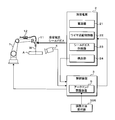
- FIG. 1 is a schematic diagram showing an arc welding system according to the first embodiment.
- the arc welding system according to the present embodiment is a consumable electrode type gas shielded arc welder, and includes a welding robot 1, a welding power source 2, a control device 3, an imaging device 4, and an arc end adjustment device 5.
- the arc end adjusting device 5 is provided in the control device 3.
- the unit of the arc end adjusting device 5 will be described as being included in the control device 3.
- control device 3 and the arc end adjusting device 5 may have a monolithic structure.
- the hardware and software of the control device 3 may realize the function of the arc end adjusting device 5.
- the arc end adjusting device 5 may be provided in the welding power source 2 or in another device. Furthermore, you may comprise so that the function of the arc end adjustment apparatus 5 may be distributedly processed with a some apparatus and server.
- the welding robot 1 automatically performs arc welding of the base material A.
- the welding robot 1 includes a base portion that is fixed to an appropriate location on the floor surface.
- a plurality of arms are rotatably connected to the base via shafts, and a welding torch 11 is held at the tip of the arm.
- the wire feeder 12 is provided in the appropriate location of the arm.
- a motor is provided at the connecting portion of each arm, and each arm rotates about the shaft portion by the rotational driving force of the motor.
- the rotation of the motor is controlled by the control device 3.
- the control device 3 can move the welding torch 11 up, down, front, back, left and right with respect to the base material A by rotating each arm.
- an encoder that outputs a signal indicating the rotation position of the arm to the control device 3 is provided at a connecting portion of each arm, and the control device 3 uses the welding torch 11 based on the signal output from the encoder. Recognize the position of
- the welding torch 11 is made of a conductive material such as a copper alloy, and has a cylindrical contact tip that guides the welding wire W to the base material A to be welded and supplies a welding current necessary for generating an arc.
- the welding current is supplied from the welding power source 2.
- the welding wire W is supplied to the welding torch 11 by the wire feeder 12 from a wire supply source (not shown).
- the welding wire W is a solid wire, for example, and functions as a consumable electrode.
- the contact tip contacts the welding wire W that is inserted through the contact tip, and supplies a welding current to the welding wire W.
- the welding torch 11 has a hollow cylindrical shape surrounding the contact tip, and has a nozzle for injecting a shielding gas from the opening at the tip to the base material A.
- the shield gas is for preventing oxidation of the base material A and the welding wire W melted by the arc.
- the shield gas is, for example, carbon dioxide, a mixed gas of carbon dioxide and argon, an inert gas such as argon, or the like.
- the shield gas is supplied from the welding power source 2.
- the welding power source 2 includes a power source unit 21, a wire feed control unit 22, a shield gas supply unit 23, and a detection unit 24.
- the power supply unit 21 is connected to the contact tip of the welding torch 11 and the base material A via a power supply cable, and supplies a welding current.
- the wire feeding control unit 22 controls the feeding speed of the welding wire W by the wire feeding device 12.
- the shield gas supply unit 23 supplies shield gas to the welding torch 11.
- the detection unit 24 detects a voltage applied to the welding torch 11 and the base material A, a current detection unit that detects a welding current flowing through the arc during the welding process, and a current during the anti-stick process and the welding release process. Includes a detector.
- the power supply unit 21 includes a power supply circuit that outputs a DC current that is PWM-controlled based on the welding current and the welding voltage detected by the detection unit 24, a signal processing circuit, and the like. Further, the welding power source 2 outputs welding monitor data indicating a welding state, an anti-stick process, and a welding release process state during the welding process to the control device 3.
- the welding monitor data is, for example, welding current data or welding voltage data indicating a welding current or welding voltage detected during the welding process. Further, the welding monitor data includes voltage or current data detected during the anti-stick process and the welding release process.
- welding monitor data feeding speed data indicating the feeding speed of the welding wire W, short-circuit condition data indicating a short-circuit condition, and welding sound data obtained by collecting sound with a microphone (not shown) may be output to the control device 3. good.
- the welding monitor data is an example of welding data indicating a result of anti-stick processing and a welding state related to the next welding process.
- the image pickup device 4 picks up an image of the distal end portion or the welded part of the welding wire W during the anti-stick process and the welding release process, and after the welding process, picks up the image of the welded part of the base material A and obtains image data. Is output to the control device 3. Further, the imaging device 4 may be an infrared camera that detects the temperature of the tip of the welding wire W.
- the image data is an example of welding data indicating a result of anti-stick processing and a welding state related to the next welding process.
- the control device 3 controls the operation of the welding robot 1 and outputs welding conditions such as a welding current, a welding voltage, a feeding speed of the welding wire W, and a supply amount of shield gas to the welding power source 2.
- the operation of the welding power source 2 is controlled.
- the control device 3 stores various welding conditions for the material of the base material A, the type of groove, and the like.
- the control apparatus 3 outputs an arc end procedure, and performs an arc end process.
- the welding conditions stored by the control device 3 are not necessarily optimal, and the arc end procedure is performed by the arc end adjusting device 5 so that the cycle time of the welding process is minimized within a range where the welding result does not deteriorate. It has been adjusted.
- each welding power source 2 may be configured to adjust the arc end procedure in the power source, or each of the plurality of welding power sources 2 may be provided with an arc end adjusting device 5 to adjust the arc end procedure in each power source. Even if it is configured so that it is negative.
- FIG. 2 is a block diagram showing the arc end adjusting device 5 according to the first embodiment.
- the arc end adjusting device 5 includes a control unit 50 that controls the operation of each component of the arc end adjusting device 5.
- An input unit 50a, an output unit 50b, and a storage unit 50c are connected to the control unit 50.
- the storage unit 50c is a nonvolatile memory such as an EEPROM (ElectricallyrErasable Programmable ROM) or a flash memory.
- the storage unit 50c stores a computer program 50d for optimizing the arc end process and minimizing the cycle time of the welding process within a range where the welding result does not deteriorate.
- the control unit 50 is a computer having a processor such as a CPU (Central Processing Unit), a GPU (Graphics Processing Unit) or a multi-core CPU, a ROM (Read Only Memory), a RAM (Random Access Memory), an input / output interface, etc. Are connected to an input unit 50a, an output unit 50b, and a storage unit 50c.
- the control unit 50 executes the computer program 50d stored in the storage unit 50c, thereby implementing an arc end adjustment method for minimizing the cycle time of the welding process in continuous production in which welding is repeatedly performed on the production line.
- the welding process repeatedly performed means the welding which one welding power supply 2 or the welding torch 11 installed in the production line repeats.
- the input unit 50 a is connected to the welding power source 2 and the imaging device 4.
- the input 50a receives welding monitor data output from the welding power source 2 and image data output from the imaging device 4.
- the welding monitor data is time-series data indicating, for example, welding current and welding voltage during the welding process, current and voltage during anti-stick processing and welding release processing, feeding speed of the welding wire W, short circuit status, welding sound, and the like.
- the image data is data representing the appearance of the tip of the welding wire W and the appearance of the bead after welding. Further, the image data may be data representing the temperature of the distal end portion of the welding wire W taken by an infrared camera.
- the output unit 50 b is connected to the welding robot 1 and the welding power source 2.
- the control unit 50 controls the welding process and the arc end procedure, and outputs control data for changing the arc end procedure to the welding robot 1 and the welding power source 2.
- the control data for changing the arc end procedure may instruct to change the arc end procedure, or may indicate the arc end procedure after the procedure change.
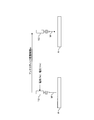
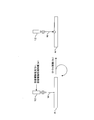
- FIG. 3A and 3B are conceptual diagrams showing an arc end procedure.
- FIG. 3A shows the procedure of the anti-stick process
- FIG. 3B shows the procedure of the welding release process.
- the control device 3 that has finished the welding process supplies a current Ia and a voltage Va smaller than those during welding for a required anti-stick processing time ta, and melts the tip of the welding wire W. It is made to burn and a solidified sphere of an appropriate size is formed at the tip. Moreover, you may perform the process which raises the welding wire W only for predetermined retract time.
- the length of the welding wire W protruding from the tip of the welding torch 11 can be set to such a length that the next welding process can be started without delay, and the shape and size of the solidified sphere can also be increased.
- the weldability in the next welding process is also good.
- the control device 3 uses the current Ir related to the required welding cancellation to perform the required welding cancellation processing.
- disconnects a welding location is performed.
- the welding release process is executed for the required number of retries Nr. The presence or absence of welding can be determined by detecting the current flowing through the welding wire W.
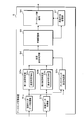
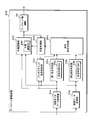
- FIG. 4 is a functional block diagram showing the arc end adjusting device 5 according to the first embodiment.
- the arc end adjusting device 5 includes, as functional blocks, a welding monitor data acquisition unit 51a, an image data acquisition unit 51b, a first pass / fail determination unit 52a, a second pass / fail determination unit 52b, an anti-stick pass / fail determination unit 52c, and pass / fail.
- a comprehensive determination unit 54, a procedure adjustment unit 55, an arc end control unit 56, and a shortest procedure storage unit 57 are provided.
- the welding monitor data acquisition part 51a acquires the welding monitor data output from the welding power supply 2, and outputs the acquired welding monitor data to the 1st quality determination part 52a and the anti-stick quality determination part 52c.
- the image data acquisition unit 51b acquires the image data output from the imaging device 4, and outputs the acquired image data to the second pass / fail determination unit 52b and the anti-stick pass / fail determination unit 52c.
- the first pass / fail determination unit 52a includes a pass / fail determination RNN 53a (Recurrent Neural Network) that outputs data indicating pass / fail of a welding result related to a welding process when the welding monitor data is obtained. .
- the pass / fail determination RNN 53a is, for example, a learned recursive neural network.
- the pass / fail determination RNN 53a includes, for example, a first neuron that outputs data indicating a probability of a good welding result and a second neuron that outputs data indicating a probability of a poor welding result. In this case, the data indicating the quality is data output from the first and second neurons.
- the pass / fail judgment RNN 53a may include a neuron in the output layer that outputs the pass / fail of the welding result as a binary value.
- the data indicating the quality is binary data output from the neuron.
- the pass / fail determination RNN 53a may include neurons in the output layer that output analog values indicating the degree of pass / fail of the welding result.
- the pass / fail judgment RNN 53a is made to learn by giving, as learning data, welding monitor data (input data) and data (teacher data) indicating the quality of the welding result corresponding to the welding data to the recursive deep neural network before learning. Just do it.
- the structure of the pass / fail judgment RNN 53a is not particularly limited.
- the pass / fail judgment RNN 53a is not necessarily a recursive neural network, and may be constituted by other types of neural networks.
- the second pass / fail judgment unit 52b includes a pass / fail judgment CNN 53b (Convolutional Neural Network) that outputs data indicating pass / fail of a welding result related to a welding process when the image data is obtained.
- the pass / fail judgment CNN 53b is a learned convolutional neural network.
- the pass / fail judgment CNN 53b includes, for example, a third neuron that outputs data indicating the probability of a good welding result and a fourth neuron that outputs data indicating the probability of a poor welding result in the output layer.
- the data indicating the quality is data output from the third and fourth neurons.
- the pass / fail judgment CNN 53b may include neurons in the output layer that output the pass / fail of the welding result as a binary value.
- the data indicating the quality is binary data output from the neuron.
- the pass / fail judgment CNN 53b may include a neuron in the output layer that outputs an analog value indicating the degree of pass / fail of the welding result.
- the pass / fail determination CNN 53b may be trained by supplying image data (input data) and data (teacher data) indicating the pass / fail of the welding result corresponding to the welding data to the convolutional neural network before learning as learning data. .
- the structure of the pass / fail judgment CNN 53b such as the number of intermediate layers and the number of neurons in each layer, is not particularly limited.
- the pass / fail judgment CNN 53b is not necessarily a convolutional neural network, and may be composed of other types of neural networks.
- the anti-stick quality determination unit 52c determines whether or not the anti-stick process is good by determining whether or not the current flowing during the welding release process of the arc end process is greater than or equal to a threshold value, for example, and determines the determination result as a good / bad overall determination unit 54. Output to. Further, the anti-stick quality determination unit 52 c determines the quality of the anti-stick process based on the image of the distal end portion of the welding wire W captured during the anti-stick process, and outputs the determination result to the quality comprehensive determination unit 54. For example, the quality of the anti-stick process is determined based on whether the size of the solidified sphere formed at the tip of the welding wire W is within a predetermined range and whether the shape of the solidified sphere matches a predetermined pattern. judge.
- the pass / fail overall determination unit 54 determines pass / fail of the anti-stick process and the welding result in the next process based on data output from the first pass / fail determination unit 52a, the second pass / fail determination unit 52b, and the anti-stick pass / fail determination unit 52c.
- the determination result is output to the procedure adjustment unit 55.
- the pass / fail overall determination unit 54 includes data output from the first and second neurons of the pass / fail determination RNN 53a, data output from the third and fourth neurons of the pass / fail determination CNN 53b, and the anti-stick pass / fail determination unit 52c. Judgment is made in combination with the judgment result.
- the quality of the next welding result is determined. It is good to judge. Further, the values of data output from each neuron may be compared by weighted addition. And the quality comprehensive determination part 54 determines with the quality comprehensively, when the welding result in a next welding process is favorable and the result of an antistick process is also favorable. Also, in the case where binary data is output from the pass / fail determination RNN 53a and the pass / fail determination CNN 53b, the pass / fail comprehensive determination unit 54 indicates that both the first pass / fail determination unit 52a and the second pass / fail determination unit 52b are good.
- the welding result of the next welding process is determined to be good, and the data indicating that one of the first quality determination unit 52a and the second quality determination unit 52b is defective is output. Then, the welding result of the next welding process is determined to be defective.
- the method of comprehensive determination is an example, and when one of the first quality determination unit 52a and the second quality determination unit 52b outputs data indicating that it is good, the welding result of the next welding process is good. You may comprise so that it may determine.
- the procedure adjusting unit 55 reduces the arc time so that the cycle time of the welding process is shortened when the determination result of the pass / fail comprehensive determination unit 54 is good, and the cycle time of the welding process is extended when the determination result is bad.
- the procedure is adjusted, and the adjustment result is output to the arc end control unit 56.
- the adjustment result is, for example, data indicating increase / decrease of various parameters of the arc end procedure, that is, current, voltage and time in the anti-stick process, retract time, current in the welding release process, time, number of retries, and the like.
- Outputs to the arc end control unit 56 data indicating that at least one of various parameters of the arc end procedure is to be increased or decreased.
- the procedure adjustment unit 55 may change the values of a plurality of parameters or change the value of one parameter in one adjustment process. Further, when the arc end procedure is adjusted by repeatedly executing steps S11 to S19 described later until the cycle time becomes the shortest, different parameters may be adjusted in each of the repeated adjustment processes. . For example, the anti-stick processing time may be adjusted in the first adjustment, and the welding release processing time may be adjusted in the second adjustment. Note that the variable may be decreased by correlating the increase / decrease amount of each parameter. Further, the change amount may be limited to a predetermined ratio range from the standard parameter value.
- the procedure adjustment unit 55 determines to shorten the cycle time of the welding process, and the welding result changes from a good state to a defective state
- the shortest procedure storage unit 57 sets the arc end procedure before the cycle time is shortened.
- the determination result is poor, the example of adjusting the arc end procedure so that the cycle time of the welding process is extended has been described above, but the determination result is improved while maintaining the cycle time.
- the parameter may be adjusted.
- the arc end control unit 56 controls the arc end by outputting control data for changing the arc end procedure to the welding power source 2 based on the adjustment result of the procedure adjusting unit 55.
- the arc end control unit 56 is based on the arc end procedure stored in the shortest procedure storage unit 57. Control the arc end.
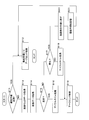
- FIG. 5 is a flowchart illustrating the arc end adjustment method according to the first embodiment.
- the control unit 50 repeatedly executes the following processing for each welding process in continuous production.
- the control unit 50 determines whether or not the storage unit 50c stores the arc end procedure with the shortest cycle time (step S11).
- step S11 determines whether or not the storage unit 50c stores the arc end procedure with the shortest cycle time.
- step S12 ends the arc based on the shortest arc end procedure stored in the storage unit 50c (step S12).
- the control unit 50 controls the arc end by outputting control data indicating the shortest arc end procedure to the welding power source 2.
- the control unit 50 may control the arc end by outputting, to the welding power source 2, control data indicating the amount of change for the arc end procedure with the shortest cycle time.
- the control unit 50 acquires welding monitor data (step S13) and acquires image data (step S13). Step S14). And the control part 50 determines the quality of an antistick process and a welding result based on the acquired welding monitor data and image data (step S15). For example, the control unit 50 determines the quality of the welding result using the learned quality determination RNN 53a and the quality determination CNN 53b. The quality of the anti-stick process and the welding release process is determined by the current during the welding release process.
- step S15 when it is determined that the welding result is good (step S15: YES), the control unit 50 shortens the cycle time of the welding process (step S16). If it is determined that the welding result is defective (step S15: NO), it is determined whether the welding result has changed from a good state to a defective state as a result of shortening the welding process last time (step S17).
- the change to the defective state is not limited to a configuration in which only one welding result is used for determination, and includes a configuration in which two or more welding results are used for determination. For example, when the welding result is in a defective state for a certain ratio or more during 10 times, it may be determined that the state has changed to a defective state.
- control unit 50 When it is determined that the welding result has not changed from the good state to the defective state (step S17: NO), the control unit 50 extends the cycle time of the welding process (step S18). Control part 50 which finished processing of Step S16 or Step S18 controls an arc end based on an adjusted arc end procedure (Step S19). Specifically, the control unit 50 controls the arc end by outputting control data indicating the arc end procedure after the adjustment process to the welding power source 2. Of course, the control unit 50 may control the arc end by outputting control data indicating the change amount of the arc end procedure to the welding power source 2.
- step S17 when it is determined that the welding result has changed from a good state to a defective state (step S17: YES), the controller 50 determines the arc end before shortening the cycle time of the welding process. Returning to the procedure (step S20), the arc end procedure before the cycle time reduction is stored in the storage unit 50c as the arc end procedure with the shortest cycle time (step S21), and the process returns to step S12.
- the arc end processing is optimized and the cycle time of the welding process is effectively performed without deteriorating the welding result. Can be shortened.
- the arc end adjusting device 5 can control welding by quickly minimizing the cycle time of the welding process.
- the arc end adjusting device 5 includes the learned pass / fail judgment RNN 53a and the pass / fail judgment CNN 53b has been described.
- the neural network of the first pass / fail judgment unit 52a and the second pass / fail judgment unit 52b is defined.
- Various parameters may be downloaded from an external server and updated.
- the parameter is information including, for example, the number of layers in the intermediate layer, the number of neurons in each layer, the weight coefficient of each neuron, the type of activation function, and the like.
- the arc end adjustment device 5 stores a flag indicating whether or not to allow the downloaded various parameters to be reflected in the first pass / fail determination unit 52a and the second pass / fail determination unit 52b, and the flag indicates permission.
- the neural network of the pass / fail judgment RNN 53a and the pass / fail judgment CNN 53b may be updated using the downloaded parameters.
- the arc end adjusting device 5 of each welding system may exchange the above parameters as necessary.
- the welding power source 2 or the control device 3 may request the server to adjust the arc end procedure, receive the adjustment amount of the arc end procedure transmitted from the server in response to the request, and adjust the arc end procedure.
- the arc end adjusting device 5 may be provided in the welding power source 2.
- the arc end adjusting device 5 may be implemented as a dedicated device for adjusting the arc end procedure. The operator can connect the dedicated device to the welding system and automatically adjust the arc end procedure.
- the first pass / fail determination unit 52a and the second pass / fail determination unit 52b include the pass / fail determination RNN 53a and the pass / fail determination CNN 53b has been described, but both or one of the determination units does not use a neural network, You may comprise so that it may determine.
- the first pass / fail determination unit 52a may determine pass / fail by a simple determination process that compares a welding current value with a predetermined threshold value.
- the second pass / fail determination unit 52b extracts a predetermined feature amount from the image data, and determines pass / fail by a simple determination process that compares the presence / absence of the feature amount, the number of feature amounts, and the like with a threshold value. good.
- the arc end adjusting device 205, the welding system, the arc end adjusting method, and the computer program 50d according to the second embodiment are such that the procedure adjusting unit 55 and the shortest procedure storage unit 57 of the first embodiment are configured by a deep neural network. Since it is different from the first embodiment, the difference will be mainly described below. Since other configurations and operational effects are the same as those of the embodiment, the corresponding portions are denoted by the same reference numerals, and detailed description thereof is omitted.
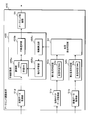
- FIG. 6 is a functional block diagram showing the arc end adjusting device 205 according to the second embodiment.
- the arc end adjusting device 205 according to the second embodiment includes a welding monitor data acquisition unit 51a, an image data acquisition unit 51b, a first pass / fail determination unit 52a, a second pass / fail determination unit 52b, and a pass / fail comprehensive determination unit 254. , A procedure adjustment unit 255, a learning processing unit 259, and an arc end control unit 56.
- the welding monitor data acquisition unit 51a acquires the welding monitor data output from the welding power source 2, and outputs the acquired welding monitor data to the first pass / fail determination unit 52a, the anti-stick pass / fail determination unit 52c, and the procedure adjustment unit 255.
- the image data acquisition unit 51b acquires the image data output from the imaging device 4, and outputs the acquired image data to the second pass / fail determination unit 52b, the anti-stick pass / fail determination unit 52c, and the procedure adjustment unit 255.
- the pass / fail comprehensive determination unit 254 of the second embodiment outputs data indicating the welding result and the probability that the anti-stick process is good and data indicating the probability that the welding result and the anti-stick process are bad to the learning processing unit 259. .
- the value of data output from the first neuron of the pass / fail determination RNN 53a, the value of data output from the third neuron of the pass / fail determination CNN 53b, and the value of data output from the anti-stick pass / fail determination unit 52c are used. Then, the probability that the welding result and the anti-stick treatment are good may be calculated.
- the probability that the welding result is defective may be calculated.
- the procedure adjustment unit 255 includes a procedure adjustment NN (Neural Network) 258 that outputs data indicating the change amount of the arc end procedure that can shorten the cycle time when welding monitor data and image data are input.
- the procedure adjustment NN258 is a learned deep neural network.
- the procedure adjustment NN 258 includes, for example, a plurality of adjustment amounts for each adjustment parameter such as the current Ia, the voltage Va and the time ta in the anti-stick process, the current Ir in the welding release process, the time tr, and the retry count Nr.
- the output layer includes a plurality of neurons that output data indicating a preferable probability.
- the procedure adjustment NN 258 may have a configuration in which an output layer includes neurons that output data indicating the adjustment amount.
- the procedure adjustment NN258 may be configured to include a neuron that outputs the adjustment amount as binary data in the output layer.
- the procedure adjustment NN 258 outputs not the binary data but the change amount of each parameter as the probability data indicating that the change amount is appropriate.
- the procedure adjustment unit 255 may change the values of a plurality of parameters in one adjustment process, or may change the value of one parameter. Also, different parameters may be adjusted in each adjustment process that is repeatedly performed.
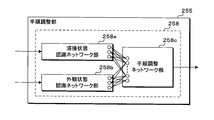
- FIG. 7 is a conceptual diagram showing a network configuration of the procedure adjustment unit 255.
- the procedure adjustment NN 258 of the procedure adjustment unit 255 includes a welding state recognition network unit 258a, an appearance recognition network unit 258b, and a procedure adjustment network unit 258c.
- the welding state recognition network unit 258a is a neural network that receives welding monitor data, recognizes a welding state during a welding process, and outputs data corresponding to the state.
- the welding monitor data is a welding current
- the welding state recognition network unit 258a can recognize a change state of the welding current.
- the welding state recognition network unit 258a may have a neural network structure similar to that of the first pass / fail determination unit 52a except for the output layer.
- the output layer comprises a plurality of neurons, preferably three or more neurons.
- the weighting coefficient of each neuron constituting the first pass / fail determination unit 52a may be set.
- the procedure adjustment unit 255 can be learned more efficiently.
- the appearance recognition network unit 258b is a neural network that receives image data, recognizes the state of the welded portion after welding, and outputs data corresponding to the state.
- the appearance recognition network unit 258b may have a neural network structure similar to that of the second pass / fail determination unit 52b except for the output layer.
- the output layer comprises a plurality of neurons, preferably three or more neurons.
- the weighting factor of each neuron constituting the second pass / fail judgment unit 52b may be set.
- the procedure adjustment NN258 can be learned more efficiently.
- the procedure adjustment network unit 258c receives data output from the welding state recognition network unit 258a and the appearance recognition network unit 258b, and outputs data indicating the change amount of the arc end procedure that can be shortened. It is.
- the neural network is preferably a deep neural network having a plurality of intermediate layers. Note that the neural network configuration of the procedure adjustment unit 255 is an example, and may be configured by a single neural network or a combination of a plurality of neural networks.
- the learning processing unit 259 learns welding monitor data and image data input to the procedure adjusting unit 255 as input data, data indicating the welding result when the arc end procedure is changed based on the data, and the quality of anti-stick processing.
- This is a processing unit that learns the procedure adjustment NN258 as data. Specifically, the learning processing unit 259 determines that the cycle time is shortened and the welding result and the anti-stick process are poor when the welding result and the anti-stick process are good based on the determination result of the pass / fail comprehensive determination unit 254. If the cycle time is extended and the welding result is in an intermediate state between good and bad, the procedure adjustment NN258 is learned so that the cycle time is maintained.
- Good welding result means, for example, a state where the probability that the welding result is good is 50% or more and the probability that the welding result is bad is less than 50%, and the result of the anti-stick treatment is good It is.
- the poor welding result is, for example, a state in which the probability that the welding result is good is less than 50%, the probability that the welding result is bad is 50% or more, or a state in which the result of the anti-stick process is bad. .
- 50% of the threshold is an example, and may be a value larger than 50%.
- the intermediate state of the welding result is, for example, a case where both the probability that the welding result is good and the probability that the welding result is bad are 50% or more, or both are less than 50%.
- the result of anti-stick treatment is in a good state.
- a situation where the probability that the welding result is good and bad is between 40% and 60% is also an intermediate state.
- Such an intermediate state is an example.
- the intermediate state is a state in which the welding result may deteriorate when the cycle time is further shortened.
- the time required for arc end processing such as anti-stick processing and welding release processing is automatically adjusted without deteriorating the welding result, and the cycle time of the welding process is minimized. Can be made. Note that, in the initial stage of learning of the procedure adjustment NN258, if the state is an intermediate state, the arc end procedure may be changed as appropriate without maintaining the cycle time.
- the learning of the procedure adjustment NN258 may be performed at an appropriate timing such as when the welding system is installed, when the external environment changes, when the welding conditions are changed, or when other setup changes are performed.
- the example in which the procedure adjustment NN258 is learned has been described.
- the learned procedure adjustment NN258 may be provided so that no further learning is performed.
- the procedure adjusting unit 255 configured by the deep neural network can perform the arc end procedure. Since the change amount is determined, the arc end of the welding process can be more appropriately controlled and minimized without deteriorating the welding result.
- the procedure adjustment unit 255 can output the change amount of the arc end procedure that shortens the cycle time of the welding process. For example, the procedure adjustment unit 255 can output a large change amount when the welding result is very stable, and can output a small change amount when the welding result is good but unstable. . Therefore, the cycle time of the welding process can be minimized more quickly.
- the procedure adjustment unit 255 can learn using the quality determination result of the welding result, and can adjust to the procedure adjustment unit 255 suitable for the environment where the welding system is installed. Therefore, the cycle time of the welding process can be minimized according to the welding conditions and the external environment.
- the learning processing unit 259 can output the data that can learn the procedure adjusting unit 255 in a direction that shortens the cycle time of the welding process and can minimize the cycle time of the welding process. Can learn the procedure adjustment neural network so that good welding results can be stably obtained. Therefore, the welding result can be stabilized in a good state and the cycle time of the welding process can be minimized.
- the arc end adjustment device 205 includes the learned procedure adjustment NN258.
- various parameters defining the neural network of the procedure adjustment unit 255 are downloaded from an external server and updated. You may comprise.
- the parameter is information including, for example, the number of layers in the intermediate layer, the number of neurons in each layer, the weight coefficient of each neuron, the type of activation function, and the like.
- the arc end adjustment device 205 stores a flag indicating whether or not to allow the downloaded various parameters to be reflected in the procedure adjustment unit 255, and uses the downloaded parameter when the flag indicates permission.
- the neural network of the procedure adjustment NN258 may be updated. When a plurality of welding systems including the arc end adjusting device 205 are installed in the factory, the arc end adjusting device 205 of each welding system may exchange the above parameters as necessary.
- the arc end adjustment device 205 may be configured to upload various parameters defining the learned procedure adjustment NN258 to an external server.
- the other arc end adjustment device 205 can update the procedure adjustment NN 258 using the parameter uploaded to the server.
- the procedure adjustment NN 258 and the first pass / fail determination unit 52a and the second pass / fail determination unit 52b are provided with a neural network.
- both or one of the pass / fail determination RNN 53a and the pass / fail determination CNN 53b is a neural network. You may comprise so that the quality of a welding result may be determined without using.
- FIG. 8 is a functional block diagram showing an arc end adjusting device 305 according to the third embodiment.
- the arc end adjusting device 305, the welding system, the arc end adjusting method, and the computer program 50d according to the third embodiment are different from those in the second embodiment in the data input to the procedure adjusting unit 355. Therefore, the differences will be mainly described below. To do. Since other configurations and operational effects are the same as those of the embodiment, the corresponding portions are denoted by the same reference numerals, and detailed description thereof is omitted.
- the arc end adjusting device 305 further includes a welding condition data acquisition unit 51c.
- the welding condition data acquisition unit 51c acquires welding condition data.
- the welding condition data includes information such as the material of the base material A, the groove shape, the welding current setting value, the welding voltage setting value, the welding speed setting value, and the frequency setting value when the welding current is periodically changed. .
- the procedure adjustment unit 355 is a data indicating the change amount of the arc end procedure that can shorten the cycle time of the welding process without deteriorating the welding result, based on the input welding monitor data and image data, and welding condition data.
- the learned procedure adjustment NN358 is output.
- the learned procedure adjustment NN 358 according to the third embodiment can be further learned using the same pass / fail comprehensive determination unit 354 and the learning processing unit 359 as those in the second embodiment.
- the arc end procedure is adjusted more effectively by taking the welding conditions into account. Can be adjusted.
- FIG. 9 is a functional block diagram showing an arc end adjusting device 405 according to the fourth embodiment.
- the arc end adjusting device 405, the welding system, the arc end adjusting method, and the computer program 50d according to the fourth embodiment are such that the procedure adjusting unit 455 and the shortest procedure storage unit 57 of the first embodiment learn the arc end procedure by deep reinforcement learning. Since the configuration is different from that of the first embodiment, the difference will be mainly described below. Since other configurations and operational effects are the same as those of the embodiment, the corresponding portions are denoted by the same reference numerals, and detailed description thereof is omitted.
- the arc end adjustment device 405 includes a welding monitor data acquisition unit 51a, an image data acquisition unit 51b, a state data acquisition unit 51d, a first pass / fail determination unit 52a, a second pass / fail determination unit 52b, and a pass / fail comprehensive determination unit 54. , A procedure adjustment unit 455 and an arc end control unit 56 are provided.
- the state data acquisition unit 51d acquires state data indicating the state s of the welding system.
- the state data includes, for example, image data obtained by imaging the welding torch 11, the welding wire W, and the base material A in the arc end process at a plurality of times, for example, moving image data.
- the welding torch 11, the welding wire W, and the base material A may be imaged with the imaging device 4, and may be imaged using another moving image imaging device.
- the moving image data preferably includes image data that can recognize the state s of the welding system, that is, the positional relationship between the welding torch 11, the welding wire W and the base material A, and the solidified sphere formed at the tip of the welding wire W by an image. .
- the image data may be an image obtained by imaging the tip of the welding wire W with an infrared camera, that is, image data indicating the temperature of the tip of the welding wire W.
- image data is mainly described as an example of state data.
- current data indicating the current flowing through the welding wire W other temperature data indicating the temperature of the welding wire W, and the like may be used. .
- the procedure adjustment unit 455 learns an arc end procedure for minimizing the cycle time of the welding process by deep reinforcement learning, and includes an evaluation unit 455a, an action selection unit 455b, a reward calculation unit 455c, and a reinforcement learning unit 455d. .
- the evaluation unit 455a calculates the evaluation value Q for the action a in the state indicated by the state data based on the state data acquired by the state data acquisition unit 51d and the action data indicating the action a related to the arc end procedure. It is a functional part.
- the state is, for example, an image representing the positional relationship or the positional relationship of the welding torch 11, the welding wire W, and the base material A.
- the action a related to the arc end procedure is determined by the start of current supply related to the anti-stick process, the current value, the start of current supply related to the weld release process, the retry of the weld release process, and the like.
- the evaluation value Q can suitably shorten the cycle time of the welding process when taking a specific action a when the welding torch 11, the welding wire W and the base material A are in a specific positional relationship. The better the welding result, the higher the value.
- the evaluation unit 455a An evaluation NN (Neural Network) 455e that outputs an evaluation value Q (s, a) for the action a is provided.
- the evaluation NN 455e may include a convolutional neural network for recognizing state data representing the state of the welding system as an image in the previous stage.
- the evaluation unit 455a may include a table that associates the state data and behavior data with the evaluation value instead of the neural network, and may output the evaluation value using the table.
- the action selection unit 455b selects the action a having the maximum evaluation value Q calculated by the evaluation unit 455a in a certain state s.
- the procedure adjustment unit 455 adjusts the arc end procedure based on the behavior a selected by the behavior selection unit 455b, and the arc end control unit 56 controls the arc end by the adjusted arc end procedure.
- the reward calculation unit 455c calculates a reward for the arc end procedure based on the determination result output from the pass / fail comprehensive determination unit 54 and the time from when the welding torch 11 reaches the welding point until the arc is generated. .
- the reward is calculated such that the better the welding result, the higher the value, the shorter the time until the arc is generated.
- the arithmetic expression for calculating the reward is not particularly limited.
- the reinforcement learning unit 455d is based on the state data and behavior data input to the evaluation NN 455e, the evaluation value Q output when each data is input, and the reward calculated by the reward calculation unit 455c.
- the evaluation NN455e is learned. Specifically, the weighting coefficient of the neural network may be learned with the evaluation value Q expressed by the following formula (1).
- the learning coefficient ⁇ is a positive value of 1 or less, for example, about 0.1.
- the discount rate ⁇ is a positive value of 1 or less, for example, about 0.9.
- the evaluation NN455e can be learned so that a higher evaluation value Q is given to the action a for which higher reward can be obtained by machine learning using the above formula (1).
- the behavior selecting unit 455b can perform a more appropriate behavior according to the state s of the welding system, that is, the positional relationship between the welding torch 11, the welding wire W, and the base material A. a, that is, the start of the anti-stick process and the start of the welding release process can be selected, and the cycle time of the welding process can be minimized.
- the reinforcement learning of the arc end adjusting device 405 may be performed by using state data obtained from a plurality of welding devices or welding systems, data such as behavior data and evaluation values, data obtained from a simulation device, and the like.
- the arc end adjustment device 405 the welding system, the arc end adjustment method, and the computer program 50d according to the fourth embodiment, it is possible to learn the deep reinforcement of the arc end procedure that shortens the cycle time of the welding process.
- FIG. 10 is a schematic diagram showing an arc welding system according to the fifth embodiment.
- the welding system according to the fifth embodiment is different from the first to fifth embodiments in that it includes an adjustment method receiving unit 506 that receives an adjustment method of an arc end procedure.
- an adjustment method receiving unit 506 that receives an adjustment method of an arc end procedure.
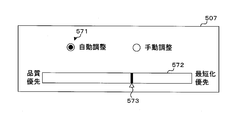
- FIG. 11 is a schematic diagram showing an arc end adjustment screen 507.
- the adjustment method reception unit 506 displays, for example, an arc end adjustment screen 507 on the terminal and receives an adjustment method of the arc end procedure.
- the arc end adjustment screen 507 includes, for example, an adjustment method selection unit 571 that receives selection of whether to adjust the arc end procedure automatically or manually.
- the adjustment method selection unit 571 is, for example, a radio button. The user can select whether to adjust the arc end procedure automatically or manually by checking the radio button.
- the arc end adjustment screen 507 indicates, when automatic adjustment of the arc end procedure is selected, a priority indicating whether adjustment with priority on minimizing cycle time should be performed or adjustment with emphasis on welding quality should be performed. It has a display unit 572 and a priority adjustment slider 573 for designating priority. By sliding the priority adjustment slider 573, the user should adjust the arc end procedure with an emphasis on welding quality, or adjust the arc end procedure with an emphasis on minimizing the cycle time. Can be specified.
- the adjustment method receiving unit 506 that receives the priority related to the welding quality by the priority adjustment slider 573 corresponds to a receiving unit that receives the adjustment strength for adjusting the arc end procedure by the procedure adjusting unit 55.
- the arc end process is executed by increasing the adjustment amount.
- the welding system it is possible to accept the importance or priority of minimizing the welding quality or cycle time and adjust the arc end procedure in a method desired by the user.
Landscapes
- Engineering & Computer Science (AREA)
- Physics & Mathematics (AREA)
- Plasma & Fusion (AREA)
- Mechanical Engineering (AREA)
- Arc Welding Control (AREA)
Abstract
繰り返し行われる溶接工程におけるアークエンド手順を調整するアークエンド調整装置(5)であって、次溶接工程に係る溶接状態を示す溶接データを取得する取得部と、該取得部にて取得した溶接データに基づいて、溶接工程のサイクルタイムが短縮されるように、前記アークエンド手順を調整する手順調整部とを備える。
Description
本発明は、溶接工程におけるアークエンド手順を調整するアークエンド調整装置、溶接システム、アークエンド調整方法及びコンピュータプログラムに関する。
溶接方法の一つに、消耗電極式のガスシールドアーク溶接法がある。ガスシールドアーク溶接法は、母材の被溶接部に送給された溶接ワイヤと、母材との間にアークを発生させ、アークの熱によって母材を溶接する手法であり、特に高温になった母材の酸化を防ぐために、シールドガスを溶接部周辺に噴射しながら溶接を行うものである。
連続生産において、溶接ロボットを用いたアーク溶接を行う場合、溶接トーチを溶接開始位置に移動させた後、ワイヤスローダウンを開始し、溶接ワイヤが母材に接触するタイミングで溶接電流を供給するアークスタート手順によってアークを発生させる。また、溶接終了時に、溶接ワイヤに小電流を供給して溶接ワイヤを一定時間燃え上がらせるアンチスティック処理が行われる(例えば、特許文献1)。アンチスティック処理を行う理由は次の通りである。ワイヤ送給機に停止信号が入力された後も、送給モータは慣性力によって溶接ワイヤを送給する。従って、溶接ワイヤが溶融池に進入し、溶融池が冷却すると溶接ワイヤの先端部が溶着金属に固着(スティック)してしまう。この固着を防ぐために、ワイヤ送給機に停止信号を入力した後、溶接電流値よりも小さい電流を通電することによって溶接ワイヤを溶融させて、溶接ワイヤが溶融池に進入することを防止する必要がある。
なお、特許文献2には、溶接部位を撮像して得られる画像データ、当該画像データを処理することにより得られるビードの外観データ、スパッタ発生量データ等を用いた機械学習により、溶接条件を自動的に設定する技術が開示されている。
また、特許文献3には、溶接工程中に計測される溶接電流、溶接電流、ワイヤ送給速度等の溶接モニタデータに基づいて、溶接結果の良否判定を行う技術が開示されている。
また、特許文献3には、溶接工程中に計測される溶接電流、溶接電流、ワイヤ送給速度等の溶接モニタデータに基づいて、溶接結果の良否判定を行う技術が開示されている。
ところで、アンチスティック処理はサイクルタイムに影響するため、その処理時間は短い方が良い。しかし、アンチスティック処理に要する時間を無理に短縮させた場合、コンタクトチップ又は母材が溶着する等の不具合が発生したり、コンタクトチップから突出する溶接ワイヤが不適当な長さとなることがあり、次溶接工程におけるアークスタート処理に要する時間が長くなり、またアークスタートに失敗することによりかえってサイクルタイムが長くなったりするという問題があった。またアンチスティック処理に要する時間を無理に短縮させた場合、溶接性に悪影響を与えることがある。
溶接品質を担保するためには、作業者が手作業で繰り返しアークエンド処理を試行し、多数の試行結果から最適と思われる条件に設定する必要があった。
溶接品質を担保するためには、作業者が手作業で繰り返しアークエンド処理を試行し、多数の試行結果から最適と思われる条件に設定する必要があった。
本発明の目的は、アンチスティック処理、溶着解除処理等のアークエンド処理に要する時間を自動で調整し、溶接工程のサイクルタイムを短縮させることができるアークエンド調整装置、溶接システム、アークエンド調整方法及びコンピュータプログラムを提供することにある。
本態様に係るアークエンド調整装置は、繰り返し行われる溶接工程におけるアークエンド手順を調整するアークエンド調整装置であって、アンチスティック処理の結果及び次溶接工程に係る溶接状態を示す溶接データを取得する取得部と、該取得部にて取得した溶接データに基づいて、溶接工程のサイクルタイムが短縮されるように、前記アークエンド手順を調整する手順調整部とを備える。
本態様によれば、取得部は溶接データを取得し、手順調整部は取得された溶接データに基づいて、アークエンド手順を調整する。溶接データは、アンチスティック処理の結果、及び当該アンチスティック処理に引き続く次溶接工程における溶接の状態を示す情報であり、アークエンド手順を短縮化することによりサイクルタイムを短縮することが可能であるか否か、あるいはサイクルタイムを延長させるべきか否か等の判定に資する情報が含まれる。手順調整部は、かかる溶接データを用いることによって、溶接結果を悪化させないで前記溶接工程のサイクルタイムが短縮されるよう、アークエンド手順を調整することができ、溶接工程のサイクルタイムを短縮させることができる。
なお、本態様に係るアークエンド調整装置は、一の溶接電源におけるアークエンド処理、より詳細には一の溶接ワイヤに係るアークエンド処理を行う。次溶接工程は、生産ラインの下流側で行われる溶接工程では無く、上記一の溶接電源で次に行われる溶接工程である。生産ラインに複数の溶接電源が設置されている場合であっても、アークエンド調整装置は、溶接電源毎、即ち溶接ワイヤ毎にアークエンド手順の調整を行う。また、言うまでもなく各溶接電源にアークエンド調整装置を設けても良いし、一つのアークエンド調整装置が複数の溶接電源におけるアークエンド手順をそれぞれ調整するように構成しても良い。
なお、本態様に係るアークエンド調整装置は、一の溶接電源におけるアークエンド処理、より詳細には一の溶接ワイヤに係るアークエンド処理を行う。次溶接工程は、生産ラインの下流側で行われる溶接工程では無く、上記一の溶接電源で次に行われる溶接工程である。生産ラインに複数の溶接電源が設置されている場合であっても、アークエンド調整装置は、溶接電源毎、即ち溶接ワイヤ毎にアークエンド手順の調整を行う。また、言うまでもなく各溶接電源にアークエンド調整装置を設けても良いし、一つのアークエンド調整装置が複数の溶接電源におけるアークエンド手順をそれぞれ調整するように構成しても良い。
本態様に係るアークエンド調整装置は、前記取得部にて取得した溶接データに基づいて、アンチスティック処理及び次溶接工程の溶接結果の良否を判定する良否判定部を備え、前記手順調整部は、前記良否判定部が良と判定した場合、前記サイクルタイムが短縮され、前記良否判定部が否と判定した場合、前記サイクルタイムが延長されるように、前記アークエンド手順の変更内容を決定する。
本態様によれば、アンチスティック処理の結果及び次溶接工程における溶接結果が良好な場合、アークエンド調整装置は、アークエンド手順を短縮化することにより溶接工程のサイクルタイムを短縮させる余地がある可能性があるため、溶接工程のサイクルタイムを短縮させる。アンチスティック処理の結果及び次溶接工程における溶接結果が不良な場合、アークエンド調整装置は、溶接工程のサイクルタイムを延長させる。かかる調整処理によって、溶接結果を極力悪化させないように、溶接工程のサイクルタイムを短縮させることができる。
本態様に係るアークエンド調整装置は、前記手順調整部は、前記溶接工程のサイクルタイムを短縮させた結果、アンチスティック処理及び次溶接工程の溶接結果が良好な状態から不良状態に変化した場合、サイクルタイム短縮前の前記アークエンド手順にて調整を確定させ、確定させた前記アークエンド手順を記憶部に記憶させる。
本態様によれば、溶接工程のサイクルタイムを最短化することができ、記憶部はサイクルタイムが最短のアークエンド手順を記憶する。当該最短のアークエンド手順は、必ずしも論理的なサイクルタイム最短のアークエンド手順では無い。最短のアークエンド手順は、溶接工程のサイクルタイムを短縮させて溶接を行ったところ、アンチスティック処理又は次溶接工程の溶接結果が良好な状態から不良状態に変化したときの、サイクルタイム短縮前のアークエンド手順を意味する。
以後、記憶部が記憶しているアークエンド手順を用いて、直ちにサイクルタイムを最短化することができる。
以後、記憶部が記憶しているアークエンド手順を用いて、直ちにサイクルタイムを最短化することができる。
本態様に係るアークエンド調整装置は、前記良否判定部は、次溶接工程に係る溶接状態を示す前記溶接データが入力された場合、該溶接データが得られるときの溶接工程に係る溶接結果の良否を示すデータを出力するようにニューラルネットワークを学習させた良否判定ニューラルネットワークを備える。
本態様によれば、良否判定ニューラルネットワークは、例えば学習済み深層ニューラルネットワークであり、溶接結果の良否を適切に判定することができる。当該ニューラルネットワークの種類は特に限定されるものでは無い。CNN(Convolutional Neural Network)、RNN(Recurrent Neural Network)、LSTM(Long Short-Term Memory)等、溶接データの特性に合わせて、適宜選択すれば良い。
本態様に係るアークエンド調整装置は、前記手順調整部は、前記溶接データが入力された場合、前記溶接工程のサイクルタイムを短縮可能な、前記アークエンド手順の変更内容を示すデータを出力するようにニューラルネットワークを学習させた手順調整ニューラルネットワークを備える。
本態様によれば、手順調整ニューラルネットワークは、例えば学習済み深層ニューラルネットワークであり、アークエンド手順を適切に調整することができる。当該ニューラルネットワークの種類は特に限定されるものでは無い。CNN、RNN、LSTM等、溶接データの特性に合わせて、適宜選択すれば良い。
本態様に係るアークエンド調整装置は、前記手順調整ニューラルネットワークは、前記アークエンド手順の変更量を示すデータを出力する。
本態様によれば、手順調整ニューラルネットワークは、溶接工程のサイクルタイムを短縮させるべきか否かでは無く、調整可能なアークエンド手順の変更量を出力することができる。例えば、手順調整ニューラルネットワークは、溶接結果が非常に安定している場合、大きな変更量を出力し、溶接結果が良好であるものの不安定であるような場合、小さな変更量を出力することができる。従って、より速やかに溶接工程のサイクルタイムを短縮させることができる。
本態様に係るアークエンド調整装置は、前記取得部にて取得した溶接データに基づいて、アンチスティック処理及び次溶接工程の溶接結果の良否を判定する良否判定部と、前記アークエンド手順を調整した後に得られる前記良否判定部の判定結果に基づいて、前記手順調整ニューラルネットワークを学習させる学習処理部とを備える。
本態様によれば、手順調整ニューラルネットワークは、アークエンド手順を調整したときの溶接結果を示すデータを用いて、学習を行う。従って、溶接結果が悪化しないよう、より効果的に溶接工程のサイクルタイムを短縮させることができる。
本態様に係るアークエンド調整装置は、前記学習処理部は、前記良否判定部が良と判定した場合、前記サイクルタイムが短縮され、前記良否判定部が否と判定した場合、前記サイクルタイムが延長されるように、前記手順調整ニューラルネットワークを学習させる。
本態様によれば、溶接工程のサイクルタイムが短縮される方向に手順調整ニューラルネットワークを学習させることができる。当該学習により、溶接工程のサイクルタイムを最短化させることができる。
本態様に係るアークエンド調整装置は、前記学習処理部は、溶接結果が良好及び不良の中間的状態である場合、前記サイクルタイムが維持されるように前記手順調整ニューラルネットワークを学習させる。
本態様によれば、溶接結果が良好及び不良の中間的状態である場合、溶接工程のサイクルタイムが維持されるように手順調整ニューラルネットワークを学習させることができる。中間的状態は、溶接結果が比較的良好な状態ではあるものの、これ以上サイクルタイムを短縮させた場合、溶接結果が悪化する可能性がある状態である。当該学習により、溶接工程のサイクルタイムを最短化させ、かつ溶接結果を良好な状態で安定化させることができる。
本態様に係るアークエンド調整装置は、前記良否判定部は、次溶接工程に係る溶接状態を示す前記溶接データが入力された場合、該溶接データが得られるときの溶接工程に係る溶接結果の良否を示すデータを出力するようにニューラルネットワークを学習させた良否判定ニューラルネットワークを備える。
本態様によれば、良否判定ニューラルネットワークは、例えば学習済み深層ニューラルネットワークであり、溶接結果の良否を適切に判定することができる。良否判定ニューラルネットワークの良否判定結果を用いることによって、より効果的に手順調整ニューラルネットワークを学習させることができる。
本態様に係るアークエンド調整装置は、前記手順調整ニューラルネットワークは、前記良否判定ニューラルネットワークの全部又は一部と実質的同一のネットワーク構成を含む。
本態様によれば、手順調整ニューラルネットワークは、良否判定ニューラルネットワークの全部又は一部と実質的同一のニューロン構成を含む。例えば、手順調整ニューラルネットワークの一部は、良否判定ニューラルネットワークの全部又は一部と同じ又は実質的同一の中間層及び重み係数を有する。溶接結果の良否の判定と、アークエンド手順の調整内容は、一部共通する特徴を有しているため、良否判定ニューラルネットワークを手順調整ニューラルネットワークに流用することができる。つまり、手順調整ニューラルネットワークの重み係数の初期値を、より適切な値に設定することができる。従って、アークエンド手順を学習させるための学習データが不足していても、溶接データ及び溶接結果の良否を示すデータの学習データを十分に用意することができれば、手順調整ニューラルネットワークの重み係数の初期値を適切に設定し、手順調整ニューラルネットワークをより効率的に学習させることができる。なお、言うまでも無く、手順調整ニューラルネットワーク及び良否判定ニューラルネットワークのネットワーク構造を同一に構成しても良い。
本態様に係るアークエンド調整装置は、アークエンド処理における溶接トーチ、溶接ワイヤ及び母材を複数時点で撮像して得た画像データを含む状態データを取得する状態データ取得部を備え、前記手順調整部は、前記状態データ取得部にて取得した状態データ、及び前記アークエンド手順に係る行動を示す行動データに基づいて、前記状態データが示す状態における前記行動に対する評価値を算出する評価部と、前記評価部にて算出される評価値が最大の行動を選択する行動選択部とを備える。
本態様によれば、アークエンド処理における溶接トーチ、溶接ワイヤ及び母材を複数時点で撮像して得た画像データを含む状態データに基づき、強化学習された評価部を用いて最適なアークエンド手順に係る行動を選択する。
本態様に係るアークエンド調整装置は、前記取得部にて取得した溶接データに基づいて、アンチスティック処理及び次溶接工程の良否を判定する良否判定部と、前記アークエンド手順を調整した後に得られる前記良否判定部の判定結果と、溶接終了後、次溶接工程における溶接が開始されるまでの時間とに基づいて、前記アークエンド手順に対する報酬を算出する報酬算出部と、前記状態データ取得部にて取得した状態データ、前記アークエンド手順に係る行動を示す行動データ、及び前記報酬算出部にて算出された報酬に基づいて、前記評価部を学習させる強化学習部とを備える。
本態様によれば、溶接工程のサイクルタイムが短縮されるアークエンド手順を強化学習することができる。
本態様に係るアークエンド調整装置は、前記評価部は、前記状態データ取得部にて取得した状態データ、及び前記アークエンド手順に係る行動を示す行動データが入力された場合、前記状態データが示す状態における前記行動に対する評価値を出力する評価ニューラルネットワークを備える。
本態様によれば、溶接工程のサイクルタイムが短縮されるアークエンド手順を深層強化学習することができる。
本態様に係るアークエンド調整装置は、アンチスティック処理の結果を示す前記溶接データは、溶着解除処理時の電流を示すデータ、溶接ワイヤの先端部の画像、及び溶接ワイヤの先端部の温度の少なくとも一つを含み、次溶接工程に係る溶接状態を示す前記溶接データは、溶接工程中に検出された溶接電流及び溶接電圧、溶接ワイヤの送給速度、短絡状況、溶接工程中に集音された溶接音、並びに溶接終了後に撮像された溶接部位の画像の少なくとも一つを示すデータを含む。
本態様によれば、溶着解除処理時の電流を示すデータ、溶接ワイヤの先端部の画像、及び溶接ワイヤの先端部の温度の少なくとも一つに基づいて、アンチスティック処理の良否を判定することができる。また、次溶接工程における溶接工程中に検出された溶接電流及び溶接電圧、溶接ワイヤの送給速度、短絡状況、溶接工程中に集音された溶接音、並びに溶接終了後に撮像された溶接部位の画像の少なくとも一つを示すデータを用いて、アークエンド手順を調整することができる。
本態様に係るアークエンド調整装置は、前記アークエンド手順は、アンチスティック処理における溶接電圧及び溶接電流、前記アンチスティック処理の時間、溶接ワイヤのリトラクト時間、並びに溶着解除処理の時間及びリトライ回数の少なくとも一つを含む。
本態様によれば、アンチスティック処理における溶接電圧及び溶接電流、当該アンチスティック処理の時間、溶接ワイヤのリトラクト時間、並びに溶着解除処理の時間及びリトライ回数を調整することによって、アークエンド処理ないし溶接工程のサイクルタイムを短縮させることができる。
本態様に係るアークエンド調整装置は、前記手順調整部によってアークエンド手順の調整を行う調整強度を受け付ける受付部を備え、前記手順調整部は、前記受付部にて受け付けた調整強度にてアークエンド手順の調整を行う。
本態様によれば、使用者は、上記手順調整部によって行われるアークエンド手順の自動調整の程度を任意に設定することができる。
本態様に係る溶接システムは、上述のいずれか一つのアークエンド調整装置と、溶接トーチを保持する溶接ロボットと、前記溶接トーチに溶接電流を供給する溶接電源とを備える。
本態様によれば、溶接ロボット及び溶接電源を備えた溶接システムは、溶接工程のサイクルタイムを短縮させることができる。なお、アークエンド調整装置は、溶接ロボット及び溶接電源の内部に設けても良いし、溶接ロボット及び溶接電源の動作を制御する制御装置の内部に設けても良いし、溶接ロボット、溶接電源及び制御装置の外部に別体で備えても良い。また、アークエンド調整装置はサーバであっても良く、制御装置又は溶接電源は、当該サーバと通信を行い、溶接工程のサイクルタイムを短縮するように構成しても良い。
本態様に係るアークエンド調整方法は、繰り返し行われる溶接工程におけるアークエンド手順を調整するアークエンド調整方法であって、アンチスティック処理の結果及び次溶接工程に係る溶接状態を示す溶接データを取得し、取得した溶接データに基づいて、溶接工程のサイクルタイムが短縮されるように、前記アークエンド手順を調整する。
本態様によれば、溶接工程のサイクルタイムを短縮させることができる。アークエンド調整方法は、溶接システムを構成する溶接電源、制御装置等が自動的に実施する態様であっても良いし、作業員が溶接システムに、アークエンド調整装置を接続してアークエンド調整方法を実施させても良い。
本態様に係るコンピュータプログラムは、コンピュータに、繰り返し行われる溶接工程におけるアークエンド手順を調整させるためのコンピュータプログラムであって、前記コンピュータに、アンチスティック処理の結果及び次溶接工程に係る溶接状態を示す溶接データを取得し、取得した溶接データに基づいて、溶接工程のサイクルタイムが短縮されるように、前記アークエンド手順を調整する処理を実行させるためのプログラムである。
本態様によれば、コンピュータを上記アークエンド調整装置として機能させることができる。
本発明によれば、アンチスティック処理、溶着解除処理等のアークエンド処理に要する時間を自動で調整し、溶接工程のサイクルタイムを短縮させることができる。
以下、本発明をその実施形態を示す図面に基づいて詳述する。また、以下に記載する実施形態の少なくとも一部を任意に組み合わせても良い。
(実施形態1)
図1は実施形態1に係るアーク溶接システムを示す模式図である。本実施形態に係るアーク溶接システムは、消耗電極式のガスシールドアーク溶接機であり、溶接ロボット1、溶接電源2、制御装置3、撮像装置4及びアークエンド調整装置5とを備える。アークエンド調整装置5は制御装置3に設けられている。なお、作図及び説明の便宜上、アークエンド調整装置5のユニットが制御装置3に含まれるものとして説明するが、制御装置3及びアークエンド調整装置5は渾然一体の構成であっても良く、見かけ上、制御装置3のハードウェア及びソフトウェアがアークエンド調整装置5の機能を実現しても良い。また、アークエンド調整装置5は溶接電源2に設けても良いし、他の装置に設けても良い。更に、アークエンド調整装置5の機能を複数の装置及びサーバで分散処理するように構成しても良い。
(実施形態1)
図1は実施形態1に係るアーク溶接システムを示す模式図である。本実施形態に係るアーク溶接システムは、消耗電極式のガスシールドアーク溶接機であり、溶接ロボット1、溶接電源2、制御装置3、撮像装置4及びアークエンド調整装置5とを備える。アークエンド調整装置5は制御装置3に設けられている。なお、作図及び説明の便宜上、アークエンド調整装置5のユニットが制御装置3に含まれるものとして説明するが、制御装置3及びアークエンド調整装置5は渾然一体の構成であっても良く、見かけ上、制御装置3のハードウェア及びソフトウェアがアークエンド調整装置5の機能を実現しても良い。また、アークエンド調整装置5は溶接電源2に設けても良いし、他の装置に設けても良い。更に、アークエンド調整装置5の機能を複数の装置及びサーバで分散処理するように構成しても良い。
溶接ロボット1は、母材Aのアーク溶接を自動で行うものである。溶接ロボット1は、床面の適宜箇所に固定される基部を備える。基部には、複数のアームが軸部を介して回動可能に連結しており、アームの先端部には溶接トーチ11が保持されている。また、アームの適宜箇所にワイヤ送給装置12が設けられている。各アームの連結部分にはモータが設けられており、モータの回転駆動力によって軸部を中心に各アームが回動する。モータの回転は制御装置3によって制御されている。制御装置3は、各アームを回動させることによって、母材Aに対して溶接トーチ11を上下前後左右に移動させることができる。また、各アームの連結部分には、アームの回動位置を示す信号を制御装置3へ出力するエンコーダが設けられており、制御装置3は、エンコーダから出力された信号に基づいて、溶接トーチ11の位置を認識する。
溶接トーチ11は、銅合金等の導電性材料からなり、溶接対象の母材Aへ溶接ワイヤWを案内すると共に、アークの発生に必要な溶接電流を供給する円筒形状のコンタクトチップを有する。溶接電流は溶接電源2から供給される。溶接ワイヤWは、図示しないワイヤ供給源からワイヤ送給装置12によって溶接トーチ11に供給される。溶接ワイヤWは、例えばソリッドワイヤであり、消耗電極として機能する。
コンタクトチップは、その内部を挿通する溶接ワイヤWに接触し、溶接電流を溶接ワイヤWに供給する。また、溶接トーチ11は、コンタクトチップを囲繞する中空円筒形状をなし、先端の開口から母材Aへシールドガスを噴射するノズルを有する。シールドガスは、アークによって溶融した母材A及び溶接ワイヤWの酸化を防止するためのものである。シールドガスは、例えば炭酸ガス、炭酸ガス及びアルゴンガスの混合ガス、アルゴン等の不活性ガス等である。シールドガスは溶接電源2から供給される。
コンタクトチップは、その内部を挿通する溶接ワイヤWに接触し、溶接電流を溶接ワイヤWに供給する。また、溶接トーチ11は、コンタクトチップを囲繞する中空円筒形状をなし、先端の開口から母材Aへシールドガスを噴射するノズルを有する。シールドガスは、アークによって溶融した母材A及び溶接ワイヤWの酸化を防止するためのものである。シールドガスは、例えば炭酸ガス、炭酸ガス及びアルゴンガスの混合ガス、アルゴン等の不活性ガス等である。シールドガスは溶接電源2から供給される。
溶接電源2は、電源部21、ワイヤ送給制御部22、シールドガス供給部23及び検出部24を備える。電源部21は、給電ケーブルを介して、溶接トーチ11のコンタクトチップ及び母材Aに接続され、溶接電流を供給する。ワイヤ送給制御部22は、ワイヤ送給装置12による溶接ワイヤWの送給速度を制御する。シールドガス供給部23は、シールドガスを溶接トーチ11に供給する。検出部24は、溶接工程中にアークを流れる溶接電流と、アンチスティック処理及び溶着解除処理中の電流とを検出する電流検出部、溶接トーチ11及び母材Aに印加される電圧を検出する電圧検出部を含む。電源部21は、検出部24にて検出された溶接電流及び溶接電圧に基づいてPWM制御された直流電流を出力する電源回路、信号処理回路等を含む。また、溶接電源2は、溶接工程中の溶接状態、アンチスティック処理及び溶着解除処理の状態を示す溶接モニタデータを制御装置3へ出力する。溶接モニタデータは、例えば、溶接工程中に検出された溶接電流又は溶接電圧を示す溶接電流データ又は溶接電圧データである。また、溶接モニタデータには、アンチスティック処理及び溶着解除処理中に検出される電圧又は電流のデータが含まれる。更に溶接モニタデータとして、溶接ワイヤWの送給速度を示す送給速度データ、短絡状況を示す短絡状況データ、図示しないマイクで集音して得られる溶接音データを制御装置3へ出力しても良い。
なお、上記溶接モニタデータは、アンチスティック処理の結果及び次溶接工程に係る溶接状態を示す溶接データの一例である。
なお、上記溶接モニタデータは、アンチスティック処理の結果及び次溶接工程に係る溶接状態を示す溶接データの一例である。
撮像装置4は、アンチスティック処理中及び溶着解除処理中の溶接ワイヤWの先端部若しくは溶接部位を撮像し、また溶接工程後、母材Aの溶接部位を撮像し、撮像して得た画像データを制御装置3へ出力する。また、撮像装置4は、溶接ワイヤWの先端部の温度を検出する赤外線カメラであっても良い。
なお、上記画像データは、アンチスティック処理の結果及び次溶接工程に係る溶接状態を示す溶接データの一例である。
なお、上記画像データは、アンチスティック処理の結果及び次溶接工程に係る溶接状態を示す溶接データの一例である。
制御装置3は、溶接ロボット1の動作を制御すると共に、溶接電源2に溶接電流、溶接電圧、溶接ワイヤWの送給速度、シールドガスの供給量等の溶接条件を溶接電源2へ出力して溶接電源2の動作を制御する。制御装置3は、母材Aの材質及び開先の種類等に対する各種溶接条件を記憶している。また、制御装置3は、アークエンド手順を出力して、アークエンド処理を実行させる。制御装置3が記憶する上記溶接条件は必ずしも最適なものでは無く、アークエンド手順については、溶接結果が悪化しない範囲で、溶接工程のサイクルタイムが最短化されるように、アークエンド調整装置5によって調整されている。
なお、図1には一組の溶接電源2及び溶接トーチ11のみが図示されているが、生産ラインに複数の溶接電源2が設置されている場合、一つのアークエンド調整装置5が、複数の溶接電源2毎に当該電源におけるアークエンド手順をそれぞれ調整するように構成しても良いし、複数の溶接電源2それぞれに、アークエンド調整装置5を各別に設け、各電源におけるアークエンド手順を調整するように構成しても負い。
なお、図1には一組の溶接電源2及び溶接トーチ11のみが図示されているが、生産ラインに複数の溶接電源2が設置されている場合、一つのアークエンド調整装置5が、複数の溶接電源2毎に当該電源におけるアークエンド手順をそれぞれ調整するように構成しても良いし、複数の溶接電源2それぞれに、アークエンド調整装置5を各別に設け、各電源におけるアークエンド手順を調整するように構成しても負い。
図2は実施形態1に係るアークエンド調整装置5を示すブロック図である。アークエンド調整装置5は、当該アークエンド調整装置5の各構成部の動作を制御する制御部50を備える。制御部50には、入力部50a、出力部50b及び記憶部50cが接続されている。
記憶部50cは、EEPROM(Electrically Erasable Programmable ROM)、フラッシュメモリ等の不揮発性メモリである。記憶部50cは、溶接結果が悪化しない範囲において、アークエンド処理を最適化し、溶接工程のサイクルタイムを最短化するためのコンピュータプログラム50dを記憶している。
制御部50は、CPU(Central Processing Unit)、GPU(Graphics Processing Unit)又はマルチコアCPU等のプロセッサ、ROM(Read Only Memory)、RAM(Random Access Memory)、入出力インタフェース等を有するコンピュータであり、インタフェースには、入力部50a、出力部50b及び記憶部50cが接続されている。制御部50は、記憶部50cが記憶するコンピュータプログラム50dを実行することにより、生産ラインで溶接が繰り返し行われる連続生産における当該溶接工程のサイクルタイムを最短化させるアークエンド調整方法を実施し、コンピュータをアークエンド調整装置5として機能させる。なお、繰り返し行われる溶接工程は、生産ラインに設置された一の溶接電源2又は溶接トーチ11が繰り返し行う溶接を意味する。
入力部50aは、溶接電源2及び撮像装置4に接続されている。入力部50aには、溶接電源2から出力された溶接モニタデータと、撮像装置4から出力された画像データが入力される。溶接モニタデータは、例えば溶接工程中の溶接電流及び溶接電圧、アンチスティック処理及び溶着解除処理中の電流及び電圧、溶接ワイヤWの送給速度、短絡状況、溶接音等を示す時系列データである。画像データは、溶接ワイヤWの先端部の外観、溶接後のビードの外観を表したデータである。また、画像データは、赤外線カメラにて撮像した、溶接ワイヤW先端部の温度を表したデータであっても良い。
出力部50bは、溶接ロボット1及び溶接電源2に接続されている。制御部50は、溶接工程及びアークエンド手順を制御し、またアークエンド手順を変更するための制御データを溶接ロボット1及び溶接電源2へ出力する。アークエンド手順を変更するための制御データは、アークエンド手順の変更を指示するものであっても良いし、手順変更後のアークエンド手順を示すものであっても良い。
図3A及び図3Bはアークエンド手順を示す概念図である。特に、図3Aはアンチスティック処理、図3Bは溶着解除処理の手順を示している。
溶接処理を終えた制御装置3は、図3Aに示すように、溶接時よりも小さい電流Ia及び電圧Vaを、所要のアンチスティック処理時間ta、供給し、溶接ワイヤWの先端部を溶融させて燃え上がらせ、適当な寸法の凝固球を当該先端部に形成させる。また、溶接ワイヤWを所定のリトラクト時間だけ引き上げる処理を実行しても良い。
アンチスティック処理を最適化することによって、溶接トーチ11のチップから突出する溶接ワイヤWの長さを、次溶接工程を滞り無く開始できる長さにすることができ、また凝固球の形状及び大きさも次溶接工程の溶接性も良好なものとなる。
溶接処理を終えた制御装置3は、図3Aに示すように、溶接時よりも小さい電流Ia及び電圧Vaを、所要のアンチスティック処理時間ta、供給し、溶接ワイヤWの先端部を溶融させて燃え上がらせ、適当な寸法の凝固球を当該先端部に形成させる。また、溶接ワイヤWを所定のリトラクト時間だけ引き上げる処理を実行しても良い。
アンチスティック処理を最適化することによって、溶接トーチ11のチップから突出する溶接ワイヤWの長さを、次溶接工程を滞り無く開始できる長さにすることができ、また凝固球の形状及び大きさも次溶接工程の溶接性も良好なものとなる。
また、溶接終了時に溶接ワイヤWが母材Aに溶着している可能性があるため、図3Bに示すように、制御装置3は、所要の溶接解除に係る電流Irを、所要の溶接解除処理時間trの間、溶接ワイヤWに供給することにより、溶着箇所を溶断する処理を実行する。また、1回の溶断処理では溶着を解消できない場合があるため、溶着が解消されていない場合、所要のリトライ回数Nrだけ、溶着解除処理を実行する。溶着の有無は、溶接ワイヤWに流れる電流を検出することによって判定することができる。
図4は実施形態1に係るアークエンド調整装置5を示す機能ブロック図である。アークエンド調整装置5は、機能ブロックとして、溶接モニタデータ取得部51aと、画像データ取得部51bと、第1良否判定部52aと、第2良否判定部52bと、アンチスティック良否判定部52c、良否総合判定部54と、手順調整部55と、アークエンド制御部56、最短手順記憶部57とを備える。
溶接モニタデータ取得部51aは、溶接電源2から出力される溶接モニタデータを取得し、取得した溶接モニタデータを第1良否判定部52a及びアンチスティック良否判定部52cへ出力する。
画像データ取得部51bは、撮像装置4から出力された画像データを取得し、取得した画像データを第2良否判定部52b及びアンチスティック良否判定部52cへ出力する。
第1良否判定部52aは、溶接モニタデータが入力された場合、当該溶接モニタデータが得られるときの溶接工程に係る溶接結果の良否を示すデータを出力する良否判定RNN53a(Recurrent Neural Network)を備える。良否判定RNN53aは、例えば、学習済みの再帰型ニューラルネットワークである。
良否判定RNN53aは、例えば、溶接結果が良好である確率を示したデータを出力する第1ニューロンと、溶接結果が不良である確率を示したデータを出力する第2ニューロンとを出力層に備える。この場合、上記良否を示すデータは、第1及び第2ニューロンから出力されたデータである。
また、良否判定RNN53aは、溶接結果の良否を2値で出力するニューロンを出力層に備えても良い。この場合、上記良否を示すデータは、当該ニューロンから出力された2値のデータである。
更に、良否判定RNN53aは、溶接結果の良否の程度を示すアナログ値を出力するニューロンを出力層に備えても良い。
良否判定RNN53aは、溶接モニタデータ(入力データ)と、当該溶接データに対応する溶接結果の良否を示すデータ(教師データ)を学習データとして、学習前の再帰型深層ニューラルネットワークに与えることによって学習させれば良い。
なお、良否判定RNN53aの中間層の層数、各層のニューロン数等、その構造は特に限定されるものでは無い。また、良否判定RNN53aは必ずしも再帰型ニューラルネットワークである必要は無く、その他の種類のニューラルネットワークで構成しても良い。
良否判定RNN53aは、例えば、溶接結果が良好である確率を示したデータを出力する第1ニューロンと、溶接結果が不良である確率を示したデータを出力する第2ニューロンとを出力層に備える。この場合、上記良否を示すデータは、第1及び第2ニューロンから出力されたデータである。
また、良否判定RNN53aは、溶接結果の良否を2値で出力するニューロンを出力層に備えても良い。この場合、上記良否を示すデータは、当該ニューロンから出力された2値のデータである。
更に、良否判定RNN53aは、溶接結果の良否の程度を示すアナログ値を出力するニューロンを出力層に備えても良い。
良否判定RNN53aは、溶接モニタデータ(入力データ)と、当該溶接データに対応する溶接結果の良否を示すデータ(教師データ)を学習データとして、学習前の再帰型深層ニューラルネットワークに与えることによって学習させれば良い。
なお、良否判定RNN53aの中間層の層数、各層のニューロン数等、その構造は特に限定されるものでは無い。また、良否判定RNN53aは必ずしも再帰型ニューラルネットワークである必要は無く、その他の種類のニューラルネットワークで構成しても良い。
第2良否判定部52bは、画像データが入力された場合、当該画像データが得られるときの溶接工程に係る溶接結果の良否を示すデータを出力する良否判定CNN53b(Convolutional Neural Network)を備える。良否判定CNN53bは、学習済みの畳み込みニューラルネットワークである。
良否判定CNN53bは、例えば、溶接結果が良好である確率を示したデータを出力する第3ニューロンと、溶接結果が不良である確率を示したデータを出力する第4ニューロンとを出力層に備える。この場合、上記良否を示すデータは、第3及び第4ニューロンから出力されたデータである。
また、良否判定CNN53bは、溶接結果の良否を2値で出力するニューロンを出力層に備えても良い。この場合、上記良否を示すデータは、当該ニューロンから出力された2値のデータである。
更に、良否判定CNN53bは、溶接結果の良否の程度を示すアナログ値を出力するニューロンを出力層に備えても良い。
良否判定CNN53bは、画像データ(入力データ)と、当該溶接データに対応する溶接結果の良否を示すデータ(教師データ)を学習データとして、学習前の畳み込みニューラルネットワークに与えることによって学習させれば良い。
なお、良否判定CNN53bの中間層の層数、各層のニューロン数等、その構造は特に限定されるものでは無い。また、良否判定CNN53bは必ずしも畳み込みニューラルネットワークである必要は無く、その他の種類のニューラルネットワークで構成しても良い。
良否判定CNN53bは、例えば、溶接結果が良好である確率を示したデータを出力する第3ニューロンと、溶接結果が不良である確率を示したデータを出力する第4ニューロンとを出力層に備える。この場合、上記良否を示すデータは、第3及び第4ニューロンから出力されたデータである。
また、良否判定CNN53bは、溶接結果の良否を2値で出力するニューロンを出力層に備えても良い。この場合、上記良否を示すデータは、当該ニューロンから出力された2値のデータである。
更に、良否判定CNN53bは、溶接結果の良否の程度を示すアナログ値を出力するニューロンを出力層に備えても良い。
良否判定CNN53bは、画像データ(入力データ)と、当該溶接データに対応する溶接結果の良否を示すデータ(教師データ)を学習データとして、学習前の畳み込みニューラルネットワークに与えることによって学習させれば良い。
なお、良否判定CNN53bの中間層の層数、各層のニューロン数等、その構造は特に限定されるものでは無い。また、良否判定CNN53bは必ずしも畳み込みニューラルネットワークである必要は無く、その他の種類のニューラルネットワークで構成しても良い。
アンチスティック良否判定部52cは、例えばアークエンド処理の溶着解除処理時に流れる電流が閾値以上であるか否かを判定することによって、アンチスティック処理の良否を判定し、判定結果を良否総合判定部54へ出力する。
また、アンチスティック良否判定部52cは、アンチスティック処理時に撮像された溶接ワイヤWの先端部の画像に基づいて、アンチスティック処理の良否を判定し、判定結果を良否総合判定部54へ出力する。例えば、溶接ワイヤWの先端部に形成される凝固球の大きさが所定範囲内であるか否か、凝固球の形状が所定パターンに適合するか否かに基づいて、アンチスティック処理の良否を判定する。
また、アンチスティック良否判定部52cは、アンチスティック処理時に撮像された溶接ワイヤWの先端部の画像に基づいて、アンチスティック処理の良否を判定し、判定結果を良否総合判定部54へ出力する。例えば、溶接ワイヤWの先端部に形成される凝固球の大きさが所定範囲内であるか否か、凝固球の形状が所定パターンに適合するか否かに基づいて、アンチスティック処理の良否を判定する。
良否総合判定部54は、第1良否判定部52a、第2良否判定部52b及びアンチスティック良否判定部52cから出力されたデータに基づいて、アンチスティック処理及び次工程における溶接結果の良否を判定し、判定結果を手順調整部55へ出力する。
例えば、良否総合判定部54は、良否判定RNN53aの第1及び第2ニューロンから出力されたデータと、良否判定CNN53bの第3及び第4ニューロンから出力されたデータと、アンチスティック良否判定部52cの判定結果とを総合して判定する。具体的には、第1ニューロン及び第3ニューロンから出力されたデータの値の和と、第2及び第4ニューロンから出力されたデータの値の和とを比較することによって、次溶接結果の良否を判定すると良い。また、各ニューロンから出力されるデータの値を重み付け加算して比較しても良い。そして、良否総合判定部54は、次溶接工程における溶接結果が良好で、かつアンチスティック処理の結果も良好である場合、総合的に良と判定する。
また、良否判定RNN53a及び良否判定CNN53bから2値データが出力される構成の場合、良否総合判定部54は、第1良否判定部52a及び第2良否判定部52bの双方が、良好であることを示すデータを出力している場合、次溶接工程の溶接結果を良と判定し、第1良否判定部52a及び第2良否判定部52bの一方が不良であることを示すデータを出力している場合、次溶接工程の溶接結果を不良と判定する。なお、総合判定の方法は一例であり、第1良否判定部52a及び第2良否判定部52bの一方が、良好であることを示すデータを出力している場合、次溶接工程の溶接結果を良と判定するように構成しても良い。
例えば、良否総合判定部54は、良否判定RNN53aの第1及び第2ニューロンから出力されたデータと、良否判定CNN53bの第3及び第4ニューロンから出力されたデータと、アンチスティック良否判定部52cの判定結果とを総合して判定する。具体的には、第1ニューロン及び第3ニューロンから出力されたデータの値の和と、第2及び第4ニューロンから出力されたデータの値の和とを比較することによって、次溶接結果の良否を判定すると良い。また、各ニューロンから出力されるデータの値を重み付け加算して比較しても良い。そして、良否総合判定部54は、次溶接工程における溶接結果が良好で、かつアンチスティック処理の結果も良好である場合、総合的に良と判定する。
また、良否判定RNN53a及び良否判定CNN53bから2値データが出力される構成の場合、良否総合判定部54は、第1良否判定部52a及び第2良否判定部52bの双方が、良好であることを示すデータを出力している場合、次溶接工程の溶接結果を良と判定し、第1良否判定部52a及び第2良否判定部52bの一方が不良であることを示すデータを出力している場合、次溶接工程の溶接結果を不良と判定する。なお、総合判定の方法は一例であり、第1良否判定部52a及び第2良否判定部52bの一方が、良好であることを示すデータを出力している場合、次溶接工程の溶接結果を良と判定するように構成しても良い。
手順調整部55は、良否総合判定部54の判定結果が良である場合、溶接工程のサイクルタイムが短縮され、判定結果が不良である場合、溶接工程のサイクルタイムが延長されるようにアークエンド手順を調整し、調整結果をアークエンド制御部56へ出力する。調整結果は、例えば、アークエンド手順の各種パラメータ、即ちアンチスティック処理における電流、電圧及び時間、リトラクト時間、溶着解除処理における電流、時間、リトライ回数等の増減を示すデータであり、手順調整部55は、アークエンド手順の各種パラメータの少なくとも一つを増減させることを示すデータをアークエンド制御部56へ出力する。
手順調整部55は、1回の調整処理で、複数のパラメータの値を変更しても良いし、一つのパラメータの値を変更しても良い。また、サイクルタイムが最短になるまで後述のステップS11~ステップS19を繰り返し実行してアークエンド手順の調整を行う場合、繰り返し行われる各調整処理で、異なるパラメータを調整するように構成しても良い。例えば、1回目の調整では、アンチスティック処理時間を調整し、2回目の調整では溶着解除処理時間を調整する等しても良い。
なお、各パラメータの増減量に相関を持たせて、変数を減少させるように構成しても良い。また、変更量を標準的なパラメータ値から所定割合の範囲内に制限するように構成しても良い。
また、手順調整部55は、溶接工程のサイクルタイムを短縮させる決定を行った結果、溶接結果が良好な状態から不良状態に変化した場合、サイクルタイム短縮前のアークエンド手順を最短手順記憶部57に記憶させる。
更に、判定結果が不良である場合、溶接工程のサイクルタイムが延長されるようにアークエンド手順を調整する例を、上で説明したが、サイクルタイムを維持しつつ判定結果が良好になるように、パラメータを調整するように構成しても良い。
手順調整部55は、1回の調整処理で、複数のパラメータの値を変更しても良いし、一つのパラメータの値を変更しても良い。また、サイクルタイムが最短になるまで後述のステップS11~ステップS19を繰り返し実行してアークエンド手順の調整を行う場合、繰り返し行われる各調整処理で、異なるパラメータを調整するように構成しても良い。例えば、1回目の調整では、アンチスティック処理時間を調整し、2回目の調整では溶着解除処理時間を調整する等しても良い。
なお、各パラメータの増減量に相関を持たせて、変数を減少させるように構成しても良い。また、変更量を標準的なパラメータ値から所定割合の範囲内に制限するように構成しても良い。
また、手順調整部55は、溶接工程のサイクルタイムを短縮させる決定を行った結果、溶接結果が良好な状態から不良状態に変化した場合、サイクルタイム短縮前のアークエンド手順を最短手順記憶部57に記憶させる。
更に、判定結果が不良である場合、溶接工程のサイクルタイムが延長されるようにアークエンド手順を調整する例を、上で説明したが、サイクルタイムを維持しつつ判定結果が良好になるように、パラメータを調整するように構成しても良い。
アークエンド制御部56は、手順調整部55の調整結果に基づいて、アークエンド手順を変更するための制御データを溶接電源2へ出力することによって、アークエンドを制御する。但し、最短手順記憶部57が、溶接工程のサイクルタイムが最短となるアークエンド手順を記憶している場合、アークエンド制御部56は、最短手順記憶部57が記憶するアークエンド手順に基づいて、アークエンドを制御する。
次にアークエンド手順の調整に係る制御部50の処理手順を説明する。
図5は実施形態1に係るアークエンド調整方法を示すフローチャートである。制御部50は、例えば以下の処理を連続生産における各溶接工程毎に繰り返し実行する。制御部50は、記憶部50cがサイクルタイム最短のアークエンド手順を記憶しているか否かを判定する(ステップS11)。サイクルタイム最短のアークエンド手順を記憶していると判定した場合(ステップS11:YES)、制御部50は記憶部50cが記憶する最短のアークエンド手順に基づいて、アークエンドする(ステップS12)。例えば、制御部50は、最短のアークエンド手順を示す制御データを溶接電源2へ出力することによって、アークエンドを制御する。もちろん、制御部50は、サイクルタイムが最短となるアークエンド手順とするための変更量を示す制御データを溶接電源2へ出力することによって、アークエンドを制御しても良い。
図5は実施形態1に係るアークエンド調整方法を示すフローチャートである。制御部50は、例えば以下の処理を連続生産における各溶接工程毎に繰り返し実行する。制御部50は、記憶部50cがサイクルタイム最短のアークエンド手順を記憶しているか否かを判定する(ステップS11)。サイクルタイム最短のアークエンド手順を記憶していると判定した場合(ステップS11:YES)、制御部50は記憶部50cが記憶する最短のアークエンド手順に基づいて、アークエンドする(ステップS12)。例えば、制御部50は、最短のアークエンド手順を示す制御データを溶接電源2へ出力することによって、アークエンドを制御する。もちろん、制御部50は、サイクルタイムが最短となるアークエンド手順とするための変更量を示す制御データを溶接電源2へ出力することによって、アークエンドを制御しても良い。
記憶部50cが、サイクルタイム最短のアークエンド手順を記憶していないと判定した場合(ステップS11:NO)、制御部50は、溶接モニタデータを取得し(ステップS13)、画像データを取得する(ステップS14)。そして、制御部50は、取得した溶接モニタデータ及び画像データに基づいて、アンチスティック処理及び溶接結果の良否を判定する(ステップS15)。例えば、制御部50は、学習済みの良否判定RNN53a及び良否判定CNN53bを用いて、溶接結果の良否を判定する。アンチスティック処理及び溶着解除処理の良否は、溶着解除処理時における電流にて判定する。
次いで、溶接結果が良好であると判定した場合(ステップS15:YES)、制御部50は、溶接工程のサイクルタイムを短縮させる(ステップS16)。溶接結果が不良であると判定した場合(ステップS15:NO)、前回、溶接工程を短縮させた結果、溶接結果が良好な状態から不良状態に変化したか否かを判定する(ステップS17)。当該不良状態への変化は、言うまでも無く、一つの溶接結果のみで判定する構成に限定されるものでは無く、2つ以上の溶接結果を用いて判断する構成も含まれる。例えば、10回中、一定の割合以上、溶接結果が不良状態である場合、不良状態へ変化したと判定しても良い。溶接結果が良好な状態から不良状態に変化していないと判定した場合(ステップS17:NO)、制御部50は、溶接工程のサイクルタイムを延長させる(ステップS18)。ステップS16、又はステップS18の処理を終えた制御部50は、調整後のアークエンド手順に基づいて、アークエンドを制御する(ステップS19)。具体的には、制御部50は、調整処理後のアークエンド手順を示す制御データを溶接電源2へ出力することによって、アークエンドを制御する。もちろん、制御部50は、アークエンド手順の変更量を示す制御データを溶接電源2へ出力することによって、アークエンドを制御しても良い。
溶接工程のサイクルタイムを短縮させた結果、溶接結果が良好な状態から不良状態に変化したと判定した場合(ステップS17:YES)、制御部50は、溶接工程のサイクルタイムを短縮前のアークエンド手順に戻し(ステップS20)、サイクルタイム短縮前のアークエンド手順をサイクルタイム最短のアークエンド手順として、記憶部50cに記憶させ(ステップS21)、処理をステップS12に戻す。
このように構成されたアークエンド調整装置5、溶接システム、アークエンド調整方法及びコンピュータプログラム50dによれば、溶接結果を悪化させること無く、アークエンド処理を最適化し、溶接工程のサイクルタイムを効果的に短縮させることができる。
また、最短化されたアークエンド手順を記憶部50cに記憶させる構成であるため、以後、アークエンド調整装置5は、速やかに溶接工程のサイクルタイムを最短化させて溶接を制御することができる。
なお、本実施形態1ではアークエンド調整装置5が学習済みの良否判定RNN53a及び良否判定CNN53bを備える例を説明したが、第1良否判定部52a及び第2良否判定部52bのニューラルネットワークを規定する各種パラメータを、外部サーバからダウンロードし、更新するように構成しても良い。パラメータは、例えば、中間層の階層数、各層のニューロンの数、各ニューロンの重み係数、活性化関数の種類等を含む情報である。また、アークエンド調整装置5は、ダウンロードした各種パラメータを、第1良否判定部52a及び第2良否判定部52bに反映させることを許可するか否かを示すフラグを記憶し、フラグが許可を示した場合にダウンロードされたパラメータを用いて良否判定RNN53a及び良否判定CNN53bのニューラルネットワークを更新するように構成しても良い。
また、工場内に、アークエンド調整装置5を備える溶接システムが複数設置されている場合、必要に応じて各溶接システムのアークエンド調整装置5が上記パラメータを交換しても良い。
更に、アークエンド調整装置5をクラウドサーバとして構成しても良い。溶接電源2又は制御装置3は、当該サーバにアークエンド手順の調整を要求し、要求に応じてサーバから送信されたアークエンド手順の調整量を受信し、アークエンド手順を調整しても良い。
更に、アークエンド調整装置5は溶接電源2に備えても良い。また、アークエンド調整装置5は、アークエンド手順調整用の専用装置として実施しても良い。作業者は、溶接システムに当該専用装置を接続し、アークエンド手順を自動で調整することができる。
また、工場内に、アークエンド調整装置5を備える溶接システムが複数設置されている場合、必要に応じて各溶接システムのアークエンド調整装置5が上記パラメータを交換しても良い。
更に、アークエンド調整装置5をクラウドサーバとして構成しても良い。溶接電源2又は制御装置3は、当該サーバにアークエンド手順の調整を要求し、要求に応じてサーバから送信されたアークエンド手順の調整量を受信し、アークエンド手順を調整しても良い。
更に、アークエンド調整装置5は溶接電源2に備えても良い。また、アークエンド調整装置5は、アークエンド手順調整用の専用装置として実施しても良い。作業者は、溶接システムに当該専用装置を接続し、アークエンド手順を自動で調整することができる。
更にまた、第1良否判定部52a及び第2良否判定部52bが良否判定RNN53a及び良否判定CNN53bを備える例を説明したが、各判定部の双方又は一方はニューラルネットワークを用いずに溶接結果の良否を判定するように構成しても良い。例えば、第1良否判定部52aは、溶接電流値と、所定の閾値とを比較する単純な判定処理で、良否を判定しても良い。また、第2良否判定部52bは、画像データから所定の特徴量を抽出し、特徴量の有無、特徴量の数等と、閾値とを比較する単純な判定処理で、良否を判定しても良い。更に、第1良否判定部52a及び第2良否判定部52bの双方を備える必要は無く、いずれか一方を備えても良い。この場合、良否総合判定部54は不要である。
(実施形態2)
実施形態2に係るアークエンド調整装置205、溶接システム、アークエンド調整方法及びコンピュータプログラム50dは、実施形態1の手順調整部55及び最短手順記憶部57が深層ニューラルネットワークにて構成されている点が実施形態1と異なるため、以下では主に上記相違点を説明する。その他の構成及び作用効果は実施形態と同様であるため、対応する箇所には同様の符号を付して詳細な説明を省略する。
実施形態2に係るアークエンド調整装置205、溶接システム、アークエンド調整方法及びコンピュータプログラム50dは、実施形態1の手順調整部55及び最短手順記憶部57が深層ニューラルネットワークにて構成されている点が実施形態1と異なるため、以下では主に上記相違点を説明する。その他の構成及び作用効果は実施形態と同様であるため、対応する箇所には同様の符号を付して詳細な説明を省略する。
図6は実施形態2に係るアークエンド調整装置205を示す機能ブロック図である。実施形態2に係るアークエンド調整装置205は、実施形態1と同様、溶接モニタデータ取得部51a、画像データ取得部51b、第1良否判定部52a、第2良否判定部52b、良否総合判定部254、手順調整部255、学習処理部259及びアークエンド制御部56を備える。
溶接モニタデータ取得部51aは、溶接電源2から出力される溶接モニタデータを取得し、取得した溶接モニタデータを第1良否判定部52a、アンチスティック良否判定部52c及び手順調整部255へ出力する。
画像データ取得部51bは、撮像装置4から出力された画像データを取得し、取得した画像データを第2良否判定部52b、アンチスティック良否判定部52c及び手順調整部255へ出力する。
実施形態2の良否総合判定部254は、溶接結果及びアンチスティック処理が良好である確率を示すデータと、溶接結果及びアンチスティック処理が不良である確率を示すデータとを学習処理部259へ出力する。例えば、良否判定RNN53aの第1ニューロンから出力されたデータの値と、良否判定CNN53bの第3ニューロンから出力されたデータの値と、アンチスティック良否判定部52cから出力されたデータの値とを用いて、溶接結果及びアンチスティック処理が良好である確率を演算すれば良い。同様に、良否判定RNN53aの第2ニューロンから出力されたデータの値と、良否判定CNN53bの第4ニューロンから出力されたデータと、アンチスティック良否判定部52cから出力されたデータの値とを用いて、溶接結果が不良である確率を演算すれば良い。
手順調整部255は、溶接モニタデータ及び画像データが入力された場合、サイクルタイムを短縮可能なアークエンド手順の変更量を示すデータを出力する手順調整NN(Neural Network)258を備える。手順調整NN258は学習済み深層ニューラルネットワークである。
手順調整NN258は、例えば、アンチスティック処理における電流Ia、電圧Va及び時間ta、溶着解除処理における電流Ir、時間tr、リトライ回数Nr等、各調整パラメータに対する複数の調整量毎に、当該調整量が好ましい確率を示したデータを出力する複数のニューロンを出力層に備える。
また、手順調整NN258は、調整量を示すデータを出力するニューロンを出力層に備える構成でも良い。更に、手順調整NN258は、調整量を2値データで出力するニューロンを出力層に備える構成であっても良い。以下、本実施形態2では、手順調整NN258が2値データでは無く、各パラメータの変更量を、当該変更量が適当であることを示す確率のデータを出力するのものとする。
なお、手順調整部255は、1回の調整処理で、複数のパラメータの値を変更しても良いし、一つのパラメータの値を変更しても良い。また、繰り返し行われる各調整処理で、異なるパラメータを調整するように構成しても良い。
手順調整NN258は、例えば、アンチスティック処理における電流Ia、電圧Va及び時間ta、溶着解除処理における電流Ir、時間tr、リトライ回数Nr等、各調整パラメータに対する複数の調整量毎に、当該調整量が好ましい確率を示したデータを出力する複数のニューロンを出力層に備える。
また、手順調整NN258は、調整量を示すデータを出力するニューロンを出力層に備える構成でも良い。更に、手順調整NN258は、調整量を2値データで出力するニューロンを出力層に備える構成であっても良い。以下、本実施形態2では、手順調整NN258が2値データでは無く、各パラメータの変更量を、当該変更量が適当であることを示す確率のデータを出力するのものとする。
なお、手順調整部255は、1回の調整処理で、複数のパラメータの値を変更しても良いし、一つのパラメータの値を変更しても良い。また、繰り返し行われる各調整処理で、異なるパラメータを調整するように構成しても良い。
図7は手順調整部255のネットワーク構成を示す概念図である。手順調整部255の手順調整NN258は、溶接状態認識ネットワーク部258aと、外観認識ネットワーク部258bと、手順調整ネットワーク部258cとを有する。
溶接状態認識ネットワーク部258aは、溶接モニタデータが入力され、溶接工程中の溶接状態を認識し、当該状態に応じたデータを出力するニューラルネットワークである。溶接モニタデータが溶接電流である場合、溶接状態認識ネットワーク部258aは、溶接電流の変化状態を認識することができる。溶接状態認識ネットワーク部258aは、例えば、出力層を除き第1良否判定部52aと同様のニューラルネットワーク構造にすると良い。出力層は、複数のニューロン、好ましくは3つ以上のニューロンを備える。また、学習前の重み係数の初期値として、第1良否判定部52aを構成する各ニューロンの重み係数を設定すると良い。より効率的に手順調整部255を学習させることができる。
外観認識ネットワーク部258bは、画像データが入力され、溶接後の溶接部位の状態を認識し、当該状態に応じたデータを出力するニューラルネットワークである。外観認識ネットワーク部258bは、例えば、出力層を除き、第2良否判定部52bと同様のニューラルネットワーク構造にすると良い。出力層は、複数のニューロン、好ましくは3つ以上のニューロンを備える。また、学習前の重み係数の初期値として、第2良否判定部52bを構成する各ニューロンの重み係数を設定すると良い。より効率的に手順調整NN258を学習させることができる。
手順調整ネットワーク部258cは、溶接状態認識ネットワーク部258a及び外観認識ネットワーク部258bからそれぞれ出力されたデータが入力され、短縮可能なアークエンド手順の変更量を示すデータを出力する、学習済みのニューラルネットワークである。当該ニューラルネットワークは、中間層を複数備える深層ニューラルネットワークで構成することが好ましい。
なお、手順調整部255のニューラルネットワーク構成は一例であり、一のニューラルネットワークで構成しても良いし、複数のニューラルネットワークを組み合わせても良い。
溶接状態認識ネットワーク部258aは、溶接モニタデータが入力され、溶接工程中の溶接状態を認識し、当該状態に応じたデータを出力するニューラルネットワークである。溶接モニタデータが溶接電流である場合、溶接状態認識ネットワーク部258aは、溶接電流の変化状態を認識することができる。溶接状態認識ネットワーク部258aは、例えば、出力層を除き第1良否判定部52aと同様のニューラルネットワーク構造にすると良い。出力層は、複数のニューロン、好ましくは3つ以上のニューロンを備える。また、学習前の重み係数の初期値として、第1良否判定部52aを構成する各ニューロンの重み係数を設定すると良い。より効率的に手順調整部255を学習させることができる。
外観認識ネットワーク部258bは、画像データが入力され、溶接後の溶接部位の状態を認識し、当該状態に応じたデータを出力するニューラルネットワークである。外観認識ネットワーク部258bは、例えば、出力層を除き、第2良否判定部52bと同様のニューラルネットワーク構造にすると良い。出力層は、複数のニューロン、好ましくは3つ以上のニューロンを備える。また、学習前の重み係数の初期値として、第2良否判定部52bを構成する各ニューロンの重み係数を設定すると良い。より効率的に手順調整NN258を学習させることができる。
手順調整ネットワーク部258cは、溶接状態認識ネットワーク部258a及び外観認識ネットワーク部258bからそれぞれ出力されたデータが入力され、短縮可能なアークエンド手順の変更量を示すデータを出力する、学習済みのニューラルネットワークである。当該ニューラルネットワークは、中間層を複数備える深層ニューラルネットワークで構成することが好ましい。
なお、手順調整部255のニューラルネットワーク構成は一例であり、一のニューラルネットワークで構成しても良いし、複数のニューラルネットワークを組み合わせても良い。
学習処理部259は、手順調整部255に入力された溶接モニタデータ及び画像データを入力データ、当該データに基づいてアークエンド手順を変更したときの溶接結果及びアンチスティック処理の良否を示すデータを学習データとして、手順調整NN258を学習させる処理部である。
具体的には、学習処理部259は、良否総合判定部254の判定結果より、溶接結果及びアンチスティック処理が良好である場合、サイクルタイムが短縮され、溶接結果及びアンチスティック処理が不良である場合、サイクルタイムが延長され、溶接結果が良好及び不良の中間的状態である場合、サイクルタイムが維持されるように、手順調整NN258を学習させる。
溶接結果が良好とは、例えば、溶接結果が良好である確率が50%以上、溶接結果が不良である確率が50%未満であるような状態であって、アンチスティック処理の結果が良好な状態である。溶接結果が不良とは、例えば、溶接結果が良好である確率が50%未満、溶接結果が不良である確率が50%以上であるような状態、又はアンチスティック処理の結果が不良な状態である。閾値の50%は一例であり、50%より大きな値であっても良い。
溶接結果が中間的状態とは、例えば、溶接結果が良好である確率及び溶接結果が不良である確率の双方が50%以上である場合、あるいは双方が50%未満であるような場合であって、アンチスティック処理の結果が良好な状態である。また、上記閾値が50%より大きい場合、例えば60%である場合、溶接結果が良好及び不良である確率が40%~60%の間にあるような状況も中間的状態である。なお、かかる中間的状態は一例である。中間的状態は、これ以上、サイクルタイムを短縮させた場合、溶接結果が悪化する可能性がある状態である。
以上の通り、手順調整NN258を学習させることによって、溶接結果を悪化させること無く、アンチスティック処理、溶着解除処理等のアークエンド処理に要する時間を自動で調整し、溶接工程のサイクルタイムを最短化させることができる。
なお、手順調整NN258の学習初期段階においては、中間的状態である場合、サイクルタイムを維持せず、アークエンド手順を適宜変更させても良い。
具体的には、学習処理部259は、良否総合判定部254の判定結果より、溶接結果及びアンチスティック処理が良好である場合、サイクルタイムが短縮され、溶接結果及びアンチスティック処理が不良である場合、サイクルタイムが延長され、溶接結果が良好及び不良の中間的状態である場合、サイクルタイムが維持されるように、手順調整NN258を学習させる。
溶接結果が良好とは、例えば、溶接結果が良好である確率が50%以上、溶接結果が不良である確率が50%未満であるような状態であって、アンチスティック処理の結果が良好な状態である。溶接結果が不良とは、例えば、溶接結果が良好である確率が50%未満、溶接結果が不良である確率が50%以上であるような状態、又はアンチスティック処理の結果が不良な状態である。閾値の50%は一例であり、50%より大きな値であっても良い。
溶接結果が中間的状態とは、例えば、溶接結果が良好である確率及び溶接結果が不良である確率の双方が50%以上である場合、あるいは双方が50%未満であるような場合であって、アンチスティック処理の結果が良好な状態である。また、上記閾値が50%より大きい場合、例えば60%である場合、溶接結果が良好及び不良である確率が40%~60%の間にあるような状況も中間的状態である。なお、かかる中間的状態は一例である。中間的状態は、これ以上、サイクルタイムを短縮させた場合、溶接結果が悪化する可能性がある状態である。
以上の通り、手順調整NN258を学習させることによって、溶接結果を悪化させること無く、アンチスティック処理、溶着解除処理等のアークエンド処理に要する時間を自動で調整し、溶接工程のサイクルタイムを最短化させることができる。
なお、手順調整NN258の学習初期段階においては、中間的状態である場合、サイクルタイムを維持せず、アークエンド手順を適宜変更させても良い。
なお、手順調整NN258の学習は、溶接システムを設置したとき、外部環境が変化したとき、溶接条件を変更したとき、その他段取り替えが行われたとき等、適宜のタイミングで実行させると良い。
また、本実施形態2では、手順調整NN258を学習させる例を説明したが、学習済みの手順調整NN258を備え、更なる学習を行わないように構成しても良い。
また、本実施形態2では、手順調整NN258を学習させる例を説明したが、学習済みの手順調整NN258を備え、更なる学習を行わないように構成しても良い。
このように構成された実施形態2に係るアークエンド調整装置205、溶接システム、アークエンド調整方法及びコンピュータプログラム50dによれば、深層ニューラルネットワークにて構成される手順調整部255が、アークエンド手順の変更量を決定する構成であるため、溶接結果を悪化させること無く、より適切に溶接工程のアークエンドを制御し、最短化することが可能である。
また、手順調整部255は、溶接工程のサイクルタイムを短縮させるアークエンド手順の変更量を出力することができる。手順調整部255は、例えば、溶接結果が非常に安定している場合、大きな変更量を出力し、溶接結果が良好であるものの不安定であるような場合、小さな変更量を出力することができる。従って、より速やかに溶接工程のサイクルタイムを最短化させることができる。
更に、手順調整部255は、溶接結果の良否判定結果を用いて学習することができ、溶接システムが設置された環境に適した手順調整部255に調整することができる。従って、溶接条件、外部環境に応じて溶接工程のサイクルタイムを最短化させることができる。
更にまた、学習処理部259は、溶接工程のサイクルタイムが短縮される方向に手順調整部255を学習させ、溶接工程のサイクルタイムを最短化させることが可能なデータを出力できるようになった後は、良好な溶接結果が安定して得られるように手順調整ニューラルネットワークを学習させることができる。従って、溶接結果を良好な状態で安定化させ、かつ溶接工程のサイクルタイムを最短化させることができる。
なお、本実施形態2ではアークエンド調整装置205が学習済みの手順調整NN258を備える例を説明したが、手順調整部255のニューラルネットワークを規定する各種パラメータを、外部サーバからダウンロードし、更新するように構成しても良い。パラメータは、例えば、中間層の階層数、各層のニューロンの数、各ニューロンの重み係数、活性化関数の種類等を含む情報である。また、アークエンド調整装置205は、ダウンロードした各種パラメータを、手順調整部255に反映させることを許可するか否かを示すフラグを記憶し、フラグが許可を示した場合にダウンロードされたパラメータを用いて手順調整NN258のニューラルネットワークを更新するように構成しても良い。
また、工場内に、アークエンド調整装置205を備える溶接システムが複数設置されている場合、必要に応じて各溶接システムのアークエンド調整装置205が上記パラメータを交換しても良い。
また、工場内に、アークエンド調整装置205を備える溶接システムが複数設置されている場合、必要に応じて各溶接システムのアークエンド調整装置205が上記パラメータを交換しても良い。
また、アークエンド調整装置205は、学習した手順調整NN258を規定する各種パラメータを外部のサーバへアップロードするように構成しても良い。他のアークエンド調整装置205は、サーバへアップロードされた当該パラメータを用いて、手順調整NN258を更新することができる。
なお、実施形態2では、手順調整NN258、並びに第1良否判定部52a及び第2良否判定部52bがニューラルネットワークを備える例を説明したが、良否判定RNN53a及び良否判定CNN53bの双方又は一方はニューラルネットワークを用いずに溶接結果の良否を判定するように構成しても良い。
(実施形態3)
図8は実施形態3に係るアークエンド調整装置305を示す機能ブロック図である。実施形態3に係るアークエンド調整装置305、溶接システム、アークエンド調整方法及びコンピュータプログラム50dは、手順調整部355に入力されるデータが実施形態2と異なるため、以下では主に上記相違点を説明する。その他の構成及び作用効果は実施形態と同様であるため、対応する箇所には同様の符号を付して詳細な説明を省略する。
図8は実施形態3に係るアークエンド調整装置305を示す機能ブロック図である。実施形態3に係るアークエンド調整装置305、溶接システム、アークエンド調整方法及びコンピュータプログラム50dは、手順調整部355に入力されるデータが実施形態2と異なるため、以下では主に上記相違点を説明する。その他の構成及び作用効果は実施形態と同様であるため、対応する箇所には同様の符号を付して詳細な説明を省略する。
実施形態3に係るアークエンド調整装置305は、更に溶接条件データ取得部51cを更に備える。溶接条件データ取得部51cは、溶接条件データを取得する。溶接条件データは、例えば、母材Aの材質、開先形状、溶接電流設定値、溶接電圧設定値、溶接速度設定値、溶接電流を周期的に変動させるときの周波数設定値等の情報を含む。
手順調整部355は、入力された溶接モニタデータ及び画像データ、並びに溶接条件データに基づいて、溶接結果を悪化させること無く溶接工程のサイクルタイムを短縮可能な、アークエンド手順の変更量を示すデータを出力する学習済みの手順調整NN358を備える。実施形態3に係る学習済みの手順調整NN358は、実施形態2と同様の良否総合判定部354及び学習処理部359を用いて更に学習させることができる。
実施形態3に係るアークエンド調整装置305、溶接システム、アークエンド調整方法及びコンピュータプログラム50dによれば、溶接条件を加味してアークエンド手順を調整する構成であるため、より効果的にアークエンド手順を調整することが可能である。
(実施形態4)
図9は実施形態4に係るアークエンド調整装置405を示す機能ブロック図である。実施形態4に係るアークエンド調整装置405、溶接システム、アークエンド調整方法及びコンピュータプログラム50dは、実施形態1の手順調整部455及び最短手順記憶部57が、深層強化学習にてアークエンド手順を学習するように構成されている点が実施形態1と異なるため、以下では主に上記相違点を説明する。その他の構成及び作用効果は実施形態と同様であるため、対応する箇所には同様の符号を付して詳細な説明を省略する。
図9は実施形態4に係るアークエンド調整装置405を示す機能ブロック図である。実施形態4に係るアークエンド調整装置405、溶接システム、アークエンド調整方法及びコンピュータプログラム50dは、実施形態1の手順調整部455及び最短手順記憶部57が、深層強化学習にてアークエンド手順を学習するように構成されている点が実施形態1と異なるため、以下では主に上記相違点を説明する。その他の構成及び作用効果は実施形態と同様であるため、対応する箇所には同様の符号を付して詳細な説明を省略する。
実施形態4に係るアークエンド調整装置405は、溶接モニタデータ取得部51a、画像データ取得部51b、状態データ取得部51d、第1良否判定部52a、第2良否判定部52b、良否総合判定部54、手順調整部455及びアークエンド制御部56を備える。
状態データ取得部51dは、溶接システムの状態sを示す状態データを取得する。状態データは、例えば、アークエンド処理における溶接トーチ11、溶接ワイヤW及び母材Aを複数時点で撮像して得た画像データ、例えば動画データを含む。溶接トーチ11、溶接ワイヤW及び母材Aは、撮像装置4にて撮像しても良いし、他の動画撮像装置を用いて撮像しても良い。動画データは、溶接システムの状態s、即ち溶接トーチ11、溶接ワイヤW及び母材Aの位置関係、溶接ワイヤWの先端部に形成される凝固球を画像で認識できる画像データを含む構成が好ましい。また、画像データは、赤外線カメラで溶接ワイヤWの先端部を撮像して得られる画像、即ち溶接ワイヤWの先端部の温度を示す画像のデータであっても良い。
なお、本実施形態4では、状態データの例として主に画像データを説明するが、溶接ワイヤWに流れる電流を示す電流データ、溶接ワイヤWの温度を示すその他の温度データ等であっても良い。
なお、本実施形態4では、状態データの例として主に画像データを説明するが、溶接ワイヤWに流れる電流を示す電流データ、溶接ワイヤWの温度を示すその他の温度データ等であっても良い。
手順調整部455は、深層強化学習によって、溶接工程のサイクルタイムを最短化するアークエンド手順を学習させるものであり、評価部455a、行動選択部455b、報酬算出部455c及び強化学習部455dを備える。
評価部455aは、状態データ取得部51dにて取得した状態データと、アークエンド手順に係る行動aを示す行動データに基づいて、状態データが示す状態における当該行動aに対する評価値Qを算出する演算機能部である。状態とは、例えば溶接トーチ11、溶接ワイヤW及び母材Aの位置関係ないし当該位置関係を表した画像である。アークエンド手順に係る行動aは、アンチスティック処理に係る電流の供給開始、電流値、溶着解除処理に係る電流の供給開始、溶着解除処理のリトライ等で定められる。評価値Qは、溶接トーチ11、溶接ワイヤW及び母材Aがある特定の位置関係にある場合、ある特定の行動aを取ったときに、溶接工程のサイクルタイムを好適に短縮させることができる程、また溶接結果が良好である程、高い値となる。
評価部455aは、例えば、状態データ取得部51dにて取得した溶接システムの状態sを示す状態データと、アークエンド手順に係る行動aを示す行動データとが入力された場合、当該状態sにおける当該行動aに対する評価値Q(s,a)を出力する評価NN(Neural Network)455eを備える。
なお、評価NN455eは、溶接システムの状態を画像で表す状態データを認識するための畳み込みニューラルネットワークを前段に備えると良い。
また、評価部455aは、ニューラルネットワークに代えて、状態データ及び行動データと、評価値とを関係付けるテーブルを備え、当該テーブルを用いて評価値を出力するように構成しても良い。
なお、評価NN455eは、溶接システムの状態を画像で表す状態データを認識するための畳み込みニューラルネットワークを前段に備えると良い。
また、評価部455aは、ニューラルネットワークに代えて、状態データ及び行動データと、評価値とを関係付けるテーブルを備え、当該テーブルを用いて評価値を出力するように構成しても良い。
行動選択部455bは、ある状態sにおいて評価部455aにて算出された評価値Qが最大の行動aを選択する。手順調整部455は、行動選択部455bによって選択された行動aに基づいてアークエンド手順の調整を行い、アークエンド制御部56は、当該調整されたアークエンド手順にてアークエンドを制御する。
報酬算出部455cは、良否総合判定部54から出力された判定結果と、溶接トーチ11が溶接箇所に到達してからアークが発生するまでの時間とに基づいて、アークエンド手順に対する報酬を算出する。報酬は、溶接結果が良好である程、アークが発生するまでの当該時間が短い程、高い値となるように算出する。報酬を算出する演算式は特に限定されるものでは無い。
強化学習部455dは、評価NN455eに入力される状態データ及び行動データと、各データが入力されたときに出力される評価値Qと、報酬算出部455cにて算出される報酬とに基づいて、評価NN455eを学習させる。具体的には、下記式(1)で表される評価値Qにて、ニューラルネットの重み係数を学習させると良い。Q(s,a)←Q(s,a)+α(r+γmaxQ(s_next,a_next)-Q(s,a))…(1)但し、s:状態a:状態sで選択した行動α:学習係数r:行動の結果得られた報酬γ:割引率maxQ(s_next,a_next):次状態で取り得る行動に対する評価値Qの最大値
学習係数αは1以下の正の値であり、例えば0.1程度の値である。割引率γは1以下の正の値であり、例えば0.9程度の値である。
上記式(1)を用いた機械学習により、より高い報酬が得られるような行動aに対して、より高い評価値Qが与えられるように、評価NN455eを学習させることができる。なお、強化学習を行う際、一定の確率でランダムに行動させ、様々な行動に対するQ値を学習させるε-グリーディ法等を用いると良い。
このように構成されたアークエンド調整装置405によれば、行動選択部455bは、溶接システムの状態s、即ち溶接トーチ11、溶接ワイヤW及び母材Aの位置関係に応じた、より適切な行動a、即ちアンチスティック処理の開始、溶接解除処理の開始を選択することができ、溶接工程のサイクルタイムを最短化させることができる。
このように構成されたアークエンド調整装置405によれば、行動選択部455bは、溶接システムの状態s、即ち溶接トーチ11、溶接ワイヤW及び母材Aの位置関係に応じた、より適切な行動a、即ちアンチスティック処理の開始、溶接解除処理の開始を選択することができ、溶接工程のサイクルタイムを最短化させることができる。
なお、アークエンド調整装置405の強化学習は、複数の溶接装置ないし溶接システムから得られる状態データ、行動データ、評価値等のデータ、シミュレーション装置から得られるデータ等を用いて、行うと良い。
実施形態4係るアークエンド調整装置405、溶接システム、アークエンド調整方法及びコンピュータプログラム50dによれば、溶接工程のサイクルタイムが短縮されるアークエンド手順を深層強化学習することができる。
なお、上記実施形態4では、深層強化学習を説明したが、ニューラルネットワークに代えて、行動及び状態に対応する評価値Qを配列を備え、アークエンド手順を調整するように構成しても良い。
(実施形態5)
図10は実施形態5に係るアーク溶接システムを示す模式図である。実施形態5に係る溶接システムは、アークエンド手順の調整方法を受け付ける調整方法受付部506を備える点が実施形態1~5と異なる。以下では主に上記相違点を説明する。その他の構成及び作用効果は実施形態と同様であるため、対応する箇所には同様の符号を付して詳細な説明を省略する。
図10は実施形態5に係るアーク溶接システムを示す模式図である。実施形態5に係る溶接システムは、アークエンド手順の調整方法を受け付ける調整方法受付部506を備える点が実施形態1~5と異なる。以下では主に上記相違点を説明する。その他の構成及び作用効果は実施形態と同様であるため、対応する箇所には同様の符号を付して詳細な説明を省略する。
図11はアークエンド調整画面507を示す模式図である。調整方法受付部506は、例えば、端末にアークエンド調整画面507を表示し、アークエンド手順の調整方法を受け付ける。アークエンド調整画面507は、例えば、アークエンド手順を自動で調整するか、手動で調整するかの選択を受け付ける調整方法選択部571を有する。調整方法選択部571は、例えばラジオボタンである。使用者は、ラジオボタンをチェックすることによって、アークエンド手順の自動調整を行うか、手動で調整するのかを選択することができる。
また、アークエンド調整画面507は、アークエンド手順の自動調整が選択された場合、サイクルタイムの最短化を優先した調整を行うべきか、溶接品質を重視した調整を行うべきかを示した優先度表示部572と、優先度を指定するための優先度調整スライダ573とを有する。使用者は、優先度調整スライダ573をスライドさせることによって、溶接品質をどの程度重視してアークエンド手順を調整すべきか、あるいはサイクルタイムの最短化をどの程度重視してアークエンド手順を調整すべきかを指定することができる。
優先度調整スライダ573にて溶接品質に係る優先度を受け付ける調整方法受付部506は、手順調整部55によってアークエンド手順の調整を行う調整強度を受け付ける受付部に対応する。
優先度調整スライダ573にて溶接品質に係る優先度を受け付ける調整方法受付部506は、手順調整部55によってアークエンド手順の調整を行う調整強度を受け付ける受付部に対応する。
制御装置3は、例えば、溶接品質の重要度が高い程、アークエンド手順の調整量を小さくしてアークエンド手順の制御を行い、サイクルタイムの最短化の重要度が高い程、アークエンド手順の調整量を大きくしてアークエンド処理を実行する。
実施形態5に係る溶接システムによれば、溶接品質又はサイクルタイムの最短化の重要度又は優先度を受け付け、使用者が所望する方法で、アークエンド手順を調整することができる。
今回開示された実施形態はすべての点で例示であって、制限的なものではないと考えられるべきである。本発明の範囲は、上記した意味ではなく、請求の範囲によって示され、請求の範囲と均等の意味及び範囲内でのすべての変更が含まれることが意図される。
1 溶接ロボット
2 溶接電源
3 制御装置
4 撮像装置
5,205,305,405 アークエンド調整装置
11 溶接トーチ
12 ワイヤ送給装置
21 電源部
22 ワイヤ送給制御部
23 シールドガス供給部
24 検出部
50 制御部
50a 入力部
50b 出力部
50c 記憶部
50d コンピュータプログラム
51a 溶接モニタデータ取得部
51b 画像データ取得部
51c 溶接条件データ取得部
51d 状態データ取得部
52a 第1良否判定部
52b 第2良否判定部
52c アンチスティック良否判定部
53a 良否判定RNN
53b 良否判定CNN
54,254,354 良否総合判定部
55,255,355,455 手順調整部
56 アークエンド制御部
57 最短手順記憶部
258 手順調整NN
258a 溶接状態認識ネットワーク部
258b 外観認識ネットワーク部
258c 手順調整ネットワーク部
259,359 学習処理部
455a 評価部
455b 行動選択部
455c 報酬算出部
455d 強化学習部
455e 評価NN
506 調整方法受付部
507 アークエンド調整画面
571 調整方法選択部
572 優先度表示部
573 優先度調整スライダ
A 母材
W 溶接ワイヤ
2 溶接電源
3 制御装置
4 撮像装置
5,205,305,405 アークエンド調整装置
11 溶接トーチ
12 ワイヤ送給装置
21 電源部
22 ワイヤ送給制御部
23 シールドガス供給部
24 検出部
50 制御部
50a 入力部
50b 出力部
50c 記憶部
50d コンピュータプログラム
51a 溶接モニタデータ取得部
51b 画像データ取得部
51c 溶接条件データ取得部
51d 状態データ取得部
52a 第1良否判定部
52b 第2良否判定部
52c アンチスティック良否判定部
53a 良否判定RNN
53b 良否判定CNN
54,254,354 良否総合判定部
55,255,355,455 手順調整部
56 アークエンド制御部
57 最短手順記憶部
258 手順調整NN
258a 溶接状態認識ネットワーク部
258b 外観認識ネットワーク部
258c 手順調整ネットワーク部
259,359 学習処理部
455a 評価部
455b 行動選択部
455c 報酬算出部
455d 強化学習部
455e 評価NN
506 調整方法受付部
507 アークエンド調整画面
571 調整方法選択部
572 優先度表示部
573 優先度調整スライダ
A 母材
W 溶接ワイヤ
Claims (20)
- 繰り返し行われる溶接工程におけるアークエンド手順を調整するアークエンド調整装置であって、
アンチスティック処理の結果及び次溶接工程に係る溶接状態を示す溶接データを取得する取得部と、
該取得部にて取得した溶接データに基づいて、溶接工程のサイクルタイムが短縮されるように、前記アークエンド手順を調整する手順調整部と
を備えるアークエンド調整装置。 - 前記取得部にて取得した溶接データに基づいて、アンチスティック処理及び次溶接工程の溶接結果の良否を判定する良否判定部を備え、
前記手順調整部は、
前記良否判定部が良と判定した場合、前記サイクルタイムが短縮され、前記良否判定部が否と判定した場合、前記サイクルタイムが延長されるように、前記アークエンド手順の変更内容を決定する
請求項1に記載のアークエンド調整装置。 - 前記手順調整部は、
前記溶接工程のサイクルタイムを短縮させた結果、アンチスティック処理及び次溶接工程の溶接結果が良好な状態から不良状態に変化した場合、サイクルタイム短縮前の前記アークエンド手順にて調整を確定させ、確定させた前記アークエンド手順を記憶部に記憶させる
請求項2に記載のアークエンド調整装置。 - 前記良否判定部は、
次溶接工程に係る溶接状態を示す前記溶接データが入力された場合、該溶接データが得られるときの溶接工程に係る溶接結果の良否を示すデータを出力するようにニューラルネットワークを学習させた良否判定ニューラルネットワークを備える
請求項2又は請求項3に記載のアークエンド調整装置。 - 前記手順調整部は、
前記溶接データが入力された場合、前記溶接工程のサイクルタイムを短縮可能な、前記アークエンド手順の変更内容を示すデータを出力するようにニューラルネットワークを学習させた手順調整ニューラルネットワークを備える
請求項1に記載のアークエンド調整装置。 - 前記手順調整ニューラルネットワークは、前記アークエンド手順の変更量を示すデータを出力する
請求項5に記載のアークエンド調整装置。 - 前記取得部にて取得した溶接データに基づいて、アンチスティック処理及び次溶接工程の溶接結果の良否を判定する良否判定部と、
前記アークエンド手順を調整した後に得られる前記良否判定部の判定結果に基づいて、前記手順調整ニューラルネットワークを学習させる学習処理部と
を備える請求項5又は請求項6に記載のアークエンド調整装置。 - 前記学習処理部は、
前記良否判定部が良と判定した場合、前記サイクルタイムが短縮され、前記良否判定部が否と判定した場合、前記サイクルタイムが延長されるように、前記手順調整ニューラルネットワークを学習させる
請求項7に記載のアークエンド調整装置。 - 前記学習処理部は、
溶接結果が良好及び不良の中間的状態である場合、前記サイクルタイムが維持されるように前記手順調整ニューラルネットワークを学習させる
請求項8に記載のアークエンド調整装置。 - 前記良否判定部は、
次溶接工程に係る溶接状態を示す前記溶接データが入力された場合、該溶接データが得られるときの溶接工程に係る溶接結果の良否を示すデータを出力するようにニューラルネットワークを学習させた良否判定ニューラルネットワークを備える
請求項7~請求項9までのいずれか一項に記載のアークエンド調整装置。 - 前記手順調整ニューラルネットワークは、前記良否判定ニューラルネットワークの全部又は一部と実質的同一のネットワーク構成を含む
請求項10に記載のアークエンド調整装置。 - アークエンド処理における溶接トーチ、溶接ワイヤ及び母材を複数時点で撮像して得た画像データを含む状態データを取得する状態データ取得部を備え、
前記手順調整部は、
前記状態データ取得部にて取得した状態データ、及び前記アークエンド手順に係る行動を示す行動データに基づいて、前記状態データが示す状態における前記行動に対する評価値を算出する評価部と、
前記評価部にて算出される評価値が最大の行動を選択する行動選択部と
を備える請求項1に記載のアークエンド調整装置。 - 前記取得部にて取得した溶接データに基づいて、アンチスティック処理及び次溶接工程の良否を判定する良否判定部と、
前記アークエンド手順を調整した後に得られる前記良否判定部の判定結果と、溶接終了後、次溶接工程における溶接が開始されるまでの時間とに基づいて、前記アークエンド手順に対する報酬を算出する報酬算出部と、
前記状態データ取得部にて取得した状態データ、前記アークエンド手順に係る行動を示す行動データ、及び前記報酬算出部にて算出された報酬に基づいて、前記評価部を学習させる強化学習部と
を備える請求項12に記載のアークエンド調整装置。 - 前記評価部は、
前記状態データ取得部にて取得した状態データ、及び前記アークエンド手順に係る行動を示す行動データが入力された場合、前記状態データが示す状態における前記行動に対する評価値を出力する評価ニューラルネットワークを備える
請求項12又は請求項13に記載のアークエンド調整装置。 - アンチスティック処理の結果を示す前記溶接データは、
溶着解除処理時の電流を示すデータ、溶接ワイヤの先端部の画像、及び溶接ワイヤの先端部の温度の少なくとも一つを含み、
次溶接工程に係る溶接状態を示す前記溶接データは、
溶接工程中に検出された溶接電流及び溶接電圧、溶接ワイヤの送給速度、短絡状況、溶接工程中に集音された溶接音、並びに溶接終了後に撮像された溶接部位の画像の少なくとも一つを示すデータを含む
請求項1~請求項14までのいずれか一項に記載のアークエンド調整装置。 - 前記アークエンド手順は、
アンチスティック処理における溶接電圧及び溶接電流、前記アンチスティック処理の時間、溶接ワイヤのリトラクト時間、並びに溶着解除処理の時間及びリトライ回数の少なくとも一つを含む
請求項1~請求項15までのいずれか一項に記載のアークエンド調整装置。 - 前記手順調整部によってアークエンド手順の調整を行う調整強度を受け付ける受付部を備え、
前記手順調整部は、
前記受付部にて受け付けた調整強度にてアークエンド手順の調整を行う
請求項1~請求項16までのいずれか一項に記載のアークエンド調整装置。 - 請求項1~請求項17までのいずれか一項に記載のアークエンド調整装置と、
溶接トーチを保持する溶接ロボットと、
前記溶接トーチに溶接電流を供給する溶接電源と
を備える溶接システム。 - 繰り返し行われる溶接工程におけるアークエンド手順を調整するアークエンド調整方法であって、
アンチスティック処理の結果及び次溶接工程に係る溶接状態を示す溶接データを取得し、
取得した溶接データに基づいて、溶接工程のサイクルタイムが短縮されるように、前記アークエンド手順を調整する
アークエンド調整方法。 - コンピュータに、繰り返し行われる溶接工程におけるアークエンド手順を調整させるためのコンピュータプログラムであって、
前記コンピュータに、
アンチスティック処理の結果及び次溶接工程に係る溶接状態を示す溶接データを取得し、
取得した溶接データに基づいて、溶接工程のサイクルタイムが短縮されるように、前記アークエンド手順を調整する
処理を実行させるためのコンピュータプログラム。
Priority Applications (2)
| Application Number | Priority Date | Filing Date | Title |
|---|---|---|---|
| KR1020197037414A KR102229880B1 (ko) | 2018-04-27 | 2019-04-16 | 아크 엔드 조정 장치, 용접 시스템, 아크 엔드 조정 방법 및 컴퓨터 프로그램을 기억하는 기록매체 |
| CN201980003067.1A CN110769960B (zh) | 2018-04-27 | 2019-04-16 | 收弧调整装置、焊接系统、收弧调整方法以及计算机程序 |
Applications Claiming Priority (2)
| Application Number | Priority Date | Filing Date | Title |
|---|---|---|---|
| JP2018087311A JP6599505B2 (ja) | 2018-04-27 | 2018-04-27 | アークエンド調整装置、溶接システム、アークエンド調整方法及びコンピュータプログラム |
| JP2018-087311 | 2018-04-27 |
Publications (1)
| Publication Number | Publication Date |
|---|---|
| WO2019208317A1 true WO2019208317A1 (ja) | 2019-10-31 |
Family
ID=68294511
Family Applications (1)
| Application Number | Title | Priority Date | Filing Date |
|---|---|---|---|
| PCT/JP2019/016251 Ceased WO2019208317A1 (ja) | 2018-04-27 | 2019-04-16 | アークエンド調整装置、溶接システム、アークエンド調整方法及びコンピュータプログラム |
Country Status (5)
| Country | Link |
|---|---|
| JP (1) | JP6599505B2 (ja) |
| KR (1) | KR102229880B1 (ja) |
| CN (1) | CN110769960B (ja) |
| TW (1) | TWI694887B (ja) |
| WO (1) | WO2019208317A1 (ja) |
Cited By (3)
| Publication number | Priority date | Publication date | Assignee | Title |
|---|---|---|---|---|
| CN113609679A (zh) * | 2021-08-06 | 2021-11-05 | 中建三局第一建设工程有限责任公司 | 焊接工艺参数的适配方法、系统、终端设备及存储介质 |
| JP2022065758A (ja) * | 2020-10-16 | 2022-04-28 | 株式会社神戸製鋼所 | 溶接システム、溶接方法、溶接支援装置、プログラム、学習装置、及び学習済みモデルの生成方法 |
| CN114951912A (zh) * | 2021-02-16 | 2022-08-30 | 株式会社安川电机 | 焊接系统、焊接品质的评价方法和焊接品的制造方法 |
Families Citing this family (4)
| Publication number | Priority date | Publication date | Assignee | Title |
|---|---|---|---|---|
| KR102166234B1 (ko) * | 2020-01-28 | 2020-10-16 | 한국 오바라 주식회사 | 저항 스폿 용접 제어 시스템 및 그 방법 |
| JP7360987B2 (ja) * | 2020-04-01 | 2023-10-13 | 株式会社ダイヘン | 溶接条件調整装置 |
| JP7167404B2 (ja) * | 2020-11-09 | 2022-11-09 | 株式会社コジマプラスチックス | 金型監視システム |
| KR102917859B1 (ko) * | 2022-08-31 | 2026-01-27 | 에이치디한국조선해양 주식회사 | 용접 결함 판별 장치 |
Citations (5)
| Publication number | Priority date | Publication date | Assignee | Title |
|---|---|---|---|---|
| JPH04210872A (ja) * | 1990-12-10 | 1992-07-31 | Daihen Corp | 消耗電極アーク溶接制御方法 |
| JP2002137060A (ja) * | 2000-10-27 | 2002-05-14 | Nachi Fujikoshi Corp | 溶着検出方法 |
| JP3841091B2 (ja) * | 2004-07-08 | 2006-11-01 | 松下電器産業株式会社 | 消耗電極式溶接方法 |
| JP2015003333A (ja) * | 2013-06-21 | 2015-01-08 | 株式会社ダイヘン | アークスタート良否傾向提示装置 |
| JP2015071178A (ja) * | 2013-10-03 | 2015-04-16 | 株式会社ダイヘン | ワイヤ送給装置、および、溶接システム |
Family Cites Families (9)
| Publication number | Priority date | Publication date | Assignee | Title |
|---|---|---|---|---|
| JP4620519B2 (ja) * | 2005-04-27 | 2011-01-26 | 株式会社ダイヘン | 消耗電極アーク溶接終了制御方法 |
| RU2317880C2 (ru) * | 2006-05-02 | 2008-02-27 | ОБЩЕСТВО С ОГРАНИЧЕННОЙ ОТВЕТСТВЕННОСТЬЮ "Нью Лайн", | Способ формирования внешней характеристики источника питания для электросварки |
| JP2011200867A (ja) * | 2010-03-24 | 2011-10-13 | Daihen Corp | アーク溶接装置 |
| JP6308651B2 (ja) * | 2013-12-05 | 2018-04-11 | 株式会社ダイヘン | アンチスティック制御方法 |
| TWI650131B (zh) | 2014-07-03 | 2019-02-11 | 杏輝藥品工業股份有限公司 | 管花肉蓯蓉萃取物之用於製備保護眼部細胞之藥品或食品用途 |
| JP6126174B2 (ja) * | 2015-07-31 | 2017-05-10 | ファナック株式会社 | 機械学習装置、アーク溶接制御装置、アーク溶接ロボットシステムおよび溶接システム |
| JP6636284B2 (ja) * | 2015-08-21 | 2020-01-29 | 株式会社ダイヘン | アーク溶接品質判定システム |
| CN108445335B (zh) | 2015-09-08 | 2020-05-08 | 浙江联宜电机有限公司 | 电机运转测试流水线 |
| CN107775150B (zh) * | 2017-09-22 | 2019-06-21 | 深圳市麦格米特焊接技术有限公司 | 一种熔化电极气体保护焊接结束过程的控制方法 |
-
2018
- 2018-04-27 JP JP2018087311A patent/JP6599505B2/ja active Active
-
2019
- 2019-04-16 KR KR1020197037414A patent/KR102229880B1/ko active Active
- 2019-04-16 WO PCT/JP2019/016251 patent/WO2019208317A1/ja not_active Ceased
- 2019-04-16 CN CN201980003067.1A patent/CN110769960B/zh active Active
- 2019-04-18 TW TW108113558A patent/TWI694887B/zh active
Patent Citations (5)
| Publication number | Priority date | Publication date | Assignee | Title |
|---|---|---|---|---|
| JPH04210872A (ja) * | 1990-12-10 | 1992-07-31 | Daihen Corp | 消耗電極アーク溶接制御方法 |
| JP2002137060A (ja) * | 2000-10-27 | 2002-05-14 | Nachi Fujikoshi Corp | 溶着検出方法 |
| JP3841091B2 (ja) * | 2004-07-08 | 2006-11-01 | 松下電器産業株式会社 | 消耗電極式溶接方法 |
| JP2015003333A (ja) * | 2013-06-21 | 2015-01-08 | 株式会社ダイヘン | アークスタート良否傾向提示装置 |
| JP2015071178A (ja) * | 2013-10-03 | 2015-04-16 | 株式会社ダイヘン | ワイヤ送給装置、および、溶接システム |
Cited By (4)
| Publication number | Priority date | Publication date | Assignee | Title |
|---|---|---|---|---|
| JP2022065758A (ja) * | 2020-10-16 | 2022-04-28 | 株式会社神戸製鋼所 | 溶接システム、溶接方法、溶接支援装置、プログラム、学習装置、及び学習済みモデルの生成方法 |
| JP7420692B2 (ja) | 2020-10-16 | 2024-01-23 | 株式会社神戸製鋼所 | 溶接システム、溶接方法、溶接支援装置、プログラム、学習装置、及び学習済みモデルの生成方法 |
| CN114951912A (zh) * | 2021-02-16 | 2022-08-30 | 株式会社安川电机 | 焊接系统、焊接品质的评价方法和焊接品的制造方法 |
| CN113609679A (zh) * | 2021-08-06 | 2021-11-05 | 中建三局第一建设工程有限责任公司 | 焊接工艺参数的适配方法、系统、终端设备及存储介质 |
Also Published As
| Publication number | Publication date |
|---|---|
| KR102229880B1 (ko) | 2021-03-18 |
| KR20200007960A (ko) | 2020-01-22 |
| TW201945106A (zh) | 2019-12-01 |
| CN110769960A (zh) | 2020-02-07 |
| CN110769960B (zh) | 2022-01-18 |
| JP6599505B2 (ja) | 2019-10-30 |
| TWI694887B (zh) | 2020-06-01 |
| JP2019188460A (ja) | 2019-10-31 |
Similar Documents
| Publication | Publication Date | Title |
|---|---|---|
| JP6599505B2 (ja) | アークエンド調整装置、溶接システム、アークエンド調整方法及びコンピュータプログラム | |
| US12097576B2 (en) | Arc start adjustment device, welding system and arc start adjustment method | |
| JP7021728B2 (ja) | 自動溶接システム、溶接制御方法、及び機械学習モデル | |
| JP7045243B2 (ja) | コンピュータプログラム、溶接情報算出装置、溶接トーチ、溶接電源、溶接システム | |
| US10500668B2 (en) | Machine learning device, arc welding control device, arc welding robot system, and welding system | |
| CN115151365B (zh) | 焊接信息的学习模型生成方法、学习模型、程序产品以及焊接系统 | |
| CN110446577B (zh) | 焊接状态判定系统以及焊接状态判定方法 | |
| JP2020163453A (ja) | 学習済モデルの生成方法、コンピュータプログラム、溶接電源装置及び学習済モデル | |
| JP2023095820A (ja) | 学習モデルの生成方法、制御装置、学習モデル、溶接システム、およびプログラム | |
| CN113492247B (zh) | 焊接条件调整装置 | |
| JP7079592B2 (ja) | 消費量調整装置、溶接システム、消費量調整方法及びコンピュータプログラム | |
| CN114641364B (zh) | 用于焊接焊缝的方法和设备 | |
| JP7385410B2 (ja) | アーク溶接システム | |
| JP2020075266A (ja) | 調整装置 | |
| JP7141289B2 (ja) | 溶接電流波形調整量算出装置及び学習方法 | |
| CN120091883A (zh) | 焊接装置及焊接控制程序 |
Legal Events
| Date | Code | Title | Description |
|---|---|---|---|
| 121 | Ep: the epo has been informed by wipo that ep was designated in this application |
Ref document number: 19791650 Country of ref document: EP Kind code of ref document: A1 |
|
| ENP | Entry into the national phase |
Ref document number: 20197037414 Country of ref document: KR Kind code of ref document: A |
|
| NENP | Non-entry into the national phase |
Ref country code: DE |
|
| 122 | Ep: pct application non-entry in european phase |
Ref document number: 19791650 Country of ref document: EP Kind code of ref document: A1 |