WO2019176862A1 - 複層ガラスパネル - Google Patents
複層ガラスパネル Download PDFInfo
- Publication number
- WO2019176862A1 WO2019176862A1 PCT/JP2019/009717 JP2019009717W WO2019176862A1 WO 2019176862 A1 WO2019176862 A1 WO 2019176862A1 JP 2019009717 W JP2019009717 W JP 2019009717W WO 2019176862 A1 WO2019176862 A1 WO 2019176862A1
- Authority
- WO
- WIPO (PCT)
- Prior art keywords
- glass
- layer
- low
- glass body
- film
- Prior art date
- Legal status (The legal status is an assumption and is not a legal conclusion. Google has not performed a legal analysis and makes no representation as to the accuracy of the status listed.)
- Ceased
Links
Images

Classifications
-
- C—CHEMISTRY; METALLURGY
- C03—GLASS; MINERAL OR SLAG WOOL
- C03C—CHEMICAL COMPOSITION OF GLASSES, GLAZES OR VITREOUS ENAMELS; SURFACE TREATMENT OF GLASS; SURFACE TREATMENT OF FIBRES OR FILAMENTS MADE FROM GLASS, MINERALS OR SLAGS; JOINING GLASS TO GLASS OR OTHER MATERIALS
- C03C17/00—Surface treatment of glass, not in the form of fibres or filaments, by coating
- C03C17/34—Surface treatment of glass, not in the form of fibres or filaments, by coating with at least two coatings having different compositions
- C03C17/36—Surface treatment of glass, not in the form of fibres or filaments, by coating with at least two coatings having different compositions at least one coating being a metal
-
- C—CHEMISTRY; METALLURGY
- C03—GLASS; MINERAL OR SLAG WOOL
- C03C—CHEMICAL COMPOSITION OF GLASSES, GLAZES OR VITREOUS ENAMELS; SURFACE TREATMENT OF GLASS; SURFACE TREATMENT OF FIBRES OR FILAMENTS MADE FROM GLASS, MINERALS OR SLAGS; JOINING GLASS TO GLASS OR OTHER MATERIALS
- C03C27/00—Joining pieces of glass to pieces of other inorganic material; Joining glass to glass other than by fusing
- C03C27/06—Joining glass to glass by processes other than fusing
-
- E—FIXED CONSTRUCTIONS
- E06—DOORS, WINDOWS, SHUTTERS, OR ROLLER BLINDS IN GENERAL; LADDERS
- E06B—FIXED OR MOVABLE CLOSURES FOR OPENINGS IN BUILDINGS, VEHICLES, FENCES OR LIKE ENCLOSURES IN GENERAL, e.g. DOORS, WINDOWS, BLINDS, GATES
- E06B3/00—Window sashes, door leaves, or like elements for closing wall or like openings; Layout of fixed or moving closures, e.g. windows in wall or like openings; Features of rigidly-mounted outer frames relating to the mounting of wing frames
- E06B3/66—Units comprising two or more parallel glass or like panes permanently secured together
- E06B3/67—Units comprising two or more parallel glass or like panes permanently secured together characterised by additional arrangements or devices for heat or sound insulation or for controlled passage of light
-
- Y—GENERAL TAGGING OF NEW TECHNOLOGICAL DEVELOPMENTS; GENERAL TAGGING OF CROSS-SECTIONAL TECHNOLOGIES SPANNING OVER SEVERAL SECTIONS OF THE IPC; TECHNICAL SUBJECTS COVERED BY FORMER USPC CROSS-REFERENCE ART COLLECTIONS [XRACs] AND DIGESTS
- Y02—TECHNOLOGIES OR APPLICATIONS FOR MITIGATION OR ADAPTATION AGAINST CLIMATE CHANGE
- Y02B—CLIMATE CHANGE MITIGATION TECHNOLOGIES RELATED TO BUILDINGS, e.g. HOUSING, HOUSE APPLIANCES OR RELATED END-USER APPLICATIONS
- Y02B80/00—Architectural or constructional elements improving the thermal performance of buildings
- Y02B80/22—Glazing, e.g. vaccum glazing
Definitions
- the present invention relates to a multilayer glass panel.
- the multi-layer glass panel is formed by forming a void layer between two or more glass plates, and thereby aims to enhance the heat insulation in the room.
- Item 1 A first glass body having at least one glass plate; A second glass body having at least one glass plate; A spacer disposed between the first glass body and the second glass body, and forming a void layer between the two glass bodies; With The visible light transmittance of the first glass body is 0.5 to 50%, The heat transmissivity is 1.5 to 2.9 W / m 2 K; A multilayer glass panel having a solar heat gain rate of 0.1 to 0.5 as measured by making incident light incident from the first glass body side.
- Item 2 The multilayer glass panel according to Item 1, wherein the visible light transmittance is 0.5 to 50%.
- Item 3 The visible light reflectance measured by making incident light incident from the first glass body side is 3 to 10%, Item 3.
- Item 4. The multilayer glass panel according to any one of Items 1 to 3, wherein the first glass body includes a first Low-E film formed on a surface on the gap layer side.
- Item 5 The multilayer glass panel according to Item 4, wherein the first Low-E film contains a transparent conductive oxide layer.
- Item 6 The multilayer glass panel according to Item 4, wherein the first Low-E film includes a silver layer mainly composed of silver.
- Item 7. The multilayer glass panel according to Item 4, wherein the first Low-E film is formed by laminating two silver layers mainly composed of silver.
- Item 8 The multilayer glass panel according to any one of Items 1 to 7, wherein the second glass body includes a second Low-E film formed on a surface on the gap layer side.
- Item 9 The multilayer glass panel according to Item 8, wherein the second Low-E film contains a transparent conductive oxide layer.
- Item 10 The multilayer glass panel according to Item 8, wherein the second Low-E film contains a silver layer mainly composed of silver.
- Item 11 The multilayer glass panel according to Item 8, wherein the second Low-E film is formed by laminating two silver layers mainly composed of silver.
- Item 12. The multilayer glass panel according to any one of Items 1 to 11, wherein at least one of the first glass body and the second glass body is constituted by a single sheet of the glass plate.
- the multilayer glass panel according to any one of Items 1 to 11, which comprises:
- the multi-layer glass panel according to the present invention can reduce the energy load.
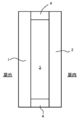
- the multi-layer glass panel according to the present embodiment has two glass bodies having substantially the same rectangular outer shape, that is, a first glass body 1 and a second glass body 2, and these glasses.
- the bodies 1 and 2 are connected to each other by a spacer 4 disposed on the peripheral edge thereof.
- the spacer 4 forms a first gap layer 3 between the two glass bodies 1 and 2.
- the first gap layer 3 is hermetically sealed by a sealing material disposed outside the spacer 4.
- each member will be described.
- the first glass body 1 can be formed of a single glass plate, laminated glass, or multilayer glass. Further, a low radiation film (Low-E film) can be formed on the glass plate constituting the first glass body 1 as necessary.
- Low-E film low radiation film
- the glass plate contained in the 1st glass body 1 is not specifically limited, A well-known glass plate can be used.
- various glass plates such as heat ray absorbing glass, clear glass, green glass, UV green glass, and soda lime glass can be used.
- the thickness of the glass plate is not particularly limited, but is preferably 2 to 15 mm, for example, and more preferably 2.5 to 8 mm.
- the said glass plate can be used.
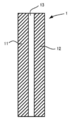
- the 1st glass body 1 can be formed with the laminated glass using these glass plates besides the said glass plate. As shown in FIG. 2, the laminated glass 1 has a resin intermediate film 13 disposed between two glass plates 11 and 12.
- the intermediate film 13 can be formed of one layer or a plurality of layers.
- the material of the single layer (single layer) of the intermediate film 13 is a thermoplastic resin.
- the heat of polyvinyl acetal type or ethylene-vinyl acetate copolymer type is used.
- a plastic resin can be suitably used.
- polyvinyl butyral (PVB) thermoplastic resins are preferred.
- the intermediate film 13 is obtained by, for example, kneading and molding a thermoplastic resin composition composed of the thermoplastic resin and a known plasticizer.
- the intermediate film 13 can also use the commercially available thermoplastic resin film as it is.
- the intermediate film 13 When the intermediate film 13 is formed of a plurality of layers, for example, the intermediate film can be formed by sandwiching a soft core layer between a pair of hard outer layers.
- the material which comprises each layer is not specifically limited, For example, it can form with a material in which a core layer becomes soft.
- the outer layer can be made of polyvinyl butyral resin (PVB). Polyvinyl butyral resin is preferable because it is excellent in adhesiveness and penetration resistance with each glass plate.
- the core layer can be composed of an ethylene vinyl acetate resin (EVA) or a polyvinyl acetal resin softer than the polyvinyl butyral resin constituting the outer layer.
- the total thickness of the intermediate film 13 is not particularly limited, but is preferably 0.3 to 6.0 mm, more preferably 0.5 to 4.0 mm, and 0.6 to 2.0 mm. It is particularly preferred.
- the thickness of the core layer is preferably 0.1 to 2.0 mm, and more preferably 0.1 to 0.6 mm. This is because if the thickness is smaller than 0.1 mm, the influence of the soft core layer is hardly exerted, and if the thickness is larger than 2.0 mm or 0.6 mm, the total thickness increases and the cost is increased.
- the thickness of the outer layer is not particularly limited, but is preferably 0.1 to 2.0 mm, and more preferably 0.1 to 1.0 mm.
- the total thickness of the intermediate film 13 can be made constant, and the thickness of the core layer can be adjusted therein.
- the method for producing the intermediate film 13 is not particularly limited.
- the resin component such as the polyvinyl acetal resin described above, a plasticizer, and other additives as necessary are blended and kneaded uniformly, and then each layer is collectively And a method of laminating two or more resin films prepared by this method by a pressing method, a laminating method or the like.
- the resin film before lamination used in a method of laminating by a press method, a laminating method or the like may have a single layer structure or a multilayer structure.
- Low-E membrane> The configuration of the Low-E film (low emission film) is not particularly limited, and a known Low-E film can be applied.
- the Low-E film is a film including a metal layer such as an Ag layer, for example.
- This film has, for example, a structure in which a dielectric layer / metal layer / sacrificial layer / dielectric layer are laminated in order from the main plane side of the glass plate.
- the Low-E film sandwiches the metal layer, the sacrificial layer disposed in contact with the metal layer on the surface of the metal layer opposite to the main plane side, and the metal layer and the sacrificial layer.
- this Low-E film may include two or more metal layers, which makes it possible to design the U-value (heat transmissivity) of the multilayer glass unit to be smaller.
- the Low-E film has, for example, a structure in which a dielectric layer / metal layer / sacrificial layer / dielectric layer / metal layer / sacrificial layer / dielectric layer are stacked in this order from the main plane side of the glass plate. Yes. That is, the Low-E film may have a first laminated structure of two or more metals. In this case, the dielectric layer sandwiched between the sacrificial layer and the metal layer is composed of two first laminated structures. Can be shared.
- Each layer of the dielectric layer, the metal layer, and the sacrificial layer may be a single layer made of one material or a laminate of two or more layers made of different materials.
- the pair of dielectric layers sandwiching the metal layer and the sacrificial layer in the first laminated structure may be made of the same material or different materials.
- a Low-E film including a metal layer is generally composed of 2n + 1 or more layers since the number of dielectric layers sandwiching the metal layer is n + 1 or more when the number of the metal layers is n. ing.
- the metal layer is, for example, an Ag layer.
- the Ag layer may be a layer mainly composed of Ag and made of Ag.
- the “main component” means a component having the largest content in the layer, and the content is usually 50% by weight or more, 70% by weight or more, 80% by weight or more, 90% by weight. % Or more is more preferable.
- a material obtained by doping Ag with a metal such as palladium, gold, indium, zinc, tin, aluminum, and copper may be used for the metal layer instead of Ag.
- the total thickness of the metal layers in the Low-E film is, for example, 18 to 34 nm, and preferably 22 to 29 nm.
- the sacrificial layer is, for example, a layer mainly composed of at least one selected from titanium, zinc, nickel, chromium, zinc / aluminum alloy, niobium, stainless steel, alloys thereof, and oxides thereof.
- a layer mainly composed of at least one selected from the group consisting of zinc oxide and zinc oxide is preferable.
- the thickness of the sacrificial layer is, for example, 0.1 to 5 nm, and preferably 0.5 to 3 nm.
- the dielectric layer is, for example, a layer mainly composed of oxide or nitride, and more specific examples of such a dielectric layer include silicon, aluminum, zinc, tin, titanium, indium, and niobium. It is a layer mainly composed of at least one selected from oxides and nitrides.
- the thickness of the dielectric layer is, for example, 8 to 120 nm, and preferably 15 to 85 nm.
- the formation method of the metal layer, the sacrificial layer, and the dielectric layer is not limited, and a known thin film formation method can be used.
- these layers can be formed by a sputtering method. That is, the Low-E film including the metal layer can be formed by, for example, a sputtering method.
- the dielectric layer made of oxide or nitride can be formed by reactive sputtering, which is a kind of sputtering method, for example.
- the sacrificial layer is a layer necessary for forming a dielectric layer on the metal layer by reactive sputtering (a layer that prevents oxidation of the metal layer by oxidizing itself during reactive sputtering). Are well known to those skilled in the art.
- the Low-E film is a laminated film including a transparent conductive oxide layer.
- This film has, for example, a second laminated structure in which a base layer / transparent conductive oxide layer is laminated in order from the main plane side of the glass plate.
- the Low-E film has a second laminated structure including a transparent conductive oxide layer and a base layer that sandwiches the transparent conductive oxide layer.
- This Low-E film may include two or more transparent conductive oxide layers.
- Each layer of the base layer and the transparent conductive oxide layer may be a single layer composed of one material or a laminate of two or more layers composed of different materials.
- the underlayer is, for example, a layer mainly composed of at least one selected from silicon, aluminum, zinc and tin oxides, and is mainly composed of at least one selected from silicon, aluminum and zinc oxides. It can be a layer.
- the underlayer suppresses alkali metal ions such as sodium ions contained in the glass plate from moving to the transparent conductive oxide layer, thereby suppressing a decrease in the function of the oxide layer.
- the thickness of the underlayer is, for example, 25 to 90 nm, preferably 35 to 70 nm.
- the underlayer may be composed of two or more layers having different refractive indexes. In this case, the reflected color of the Low-E film can be made closer to a neutral color by adjusting the thickness of each layer. It is.
- the transparent conductive oxide layer is mainly composed of at least one selected from, for example, indium tin oxide (ITO), zinc aluminum oxide, antimony-doped tin oxide (SnO: Sb), and fluorine-doped tin oxide (SnO 2 : F). It is a layer.
- the thickness of the transparent conductive oxide layer is, for example, 100 to 350 nm, and preferably 120 to 260 nm.
- the transparent conductive oxide layer includes a fluorine-doped tin oxide layer having a thickness of 120 nm or more.
- the fluorine-doped tin oxide layer having a thickness of 120 nm or more contributes to making the emissivity ⁇ of the Low-E film below a certain value.
- the emissivity ⁇ of the second Low-E film is, for example, 0.34 or less.
- the formation method of a base layer and a transparent conductive oxide layer is not limited, A well-known thin film formation method can be utilized.
- these layers can be formed by a CVD method. That is, the Low-E film including the transparent conductive oxide layer can be formed by, for example, a CVD method. Formation of a thin film by a CVD method can be performed “on-line” in a glass plate manufacturing process, more specifically, in a glass plate manufacturing process by a float method.
- the Low-E film as described above can be laminated on the surface of the first glass body 1 on the gap layer 3 side.
- the first glass body 1 is a single glass plate, it can also be formed on the surface on the indoor side (first gap layer 3 side). This also applies to laminated glass, and can be formed on the surface of the laminated glass on the indoor side (first void layer side).
- the visible light transmittance of the first glass body 1 can be 1 to 50%, preferably 0.5 to 30%, and more preferably 1 to 10%. Generally, it is known that the visible light transmittance has a certain degree of correlation with the solar heat acquisition rate described later, and when the visible light transmittance is low, the solar heat acquisition rate tends to be low. However, in the multilayer glass panel of the present invention, when the visible light transmittance of the first glass body is low rather than the visible light transmittance of the second glass body, there is an effect that the energy load of cooling and heating can be reduced.
- the reflectance of visible light from the outdoor side of the first glass body 1 is preferably 3 to 10%. On the other hand, the reflectance of visible light from the indoor side of the first glass body 1 is preferably 5 to 20%.
- the measuring method of visible light transmittance and visible light reflectance can be based on JIS R3106: 1998.
- the solar transmittance of the first glass body 1 can be 0.5 to 50%, preferably 0.5 to 30%, and more preferably 1 to 10%.
- the reflectance of solar radiation from the outdoor side of the first glass body 1 is preferably 5 to 20%.
- the reflectance of solar radiation from the indoor side of the first glass body 1 is preferably 5 to 40%.
- the measurement method of solar transmittance and solar reflectance can also be based on JIS R3106: 1998.
- the second glass body 2 can be configured in the same manner as the first glass body 1.
- the visible light transmittance, the visible light reflectance, the solar light transmittance, and the solar light reflectance may not be the same as those of the first glass body 1, and can be set to a higher transmittance, for example.
- the first gap layer 3 is formed between the glass bodies 1 and 2 by disposing the spacer 4 between the first glass body 1 and the second glass body 2.
- the spacer 4 can utilize a well-known thing and can arrange
- a sealing material (not shown) can be disposed further outside the spacer 4 to make the first gap layer 3 airtight.
- the first gap layer 3 can be, for example, 4 to 16 mm, and more preferably 6 to 16 mm. In addition to dry air, the first gap layer 3 can be filled with an inert gas such as argon or krypton.
- Thermal transmittance of the insulating glass panel is preferably 1.5 ⁇ 2.9W / m 2 K, still more preferably 1.6 ⁇ 2.8W / m 2 K.
- the heat transmissibility is low, the heat insulation performance is high.
- the heat transmissibility is lower than 1.5, heat is likely to accumulate in the room during cooling, which tends to increase energy consumption, which is not preferable.
- the heat transmissibility is greater than 2.9, heat is likely to be radiated, and the energy consumption during heating tends to increase, which is not preferable.
- the heat flow rate can be measured, for example, according to JIS R3107: 1998.
- the solar heat gain of the multi-layer glass panel is preferably 0.1 to 0.5, more preferably 0.3 or less, and even more preferably 0.25 or less.
- the solar heat acquisition rate can be measured, for example, according to JIS R3106: 1998.
- the visible light transmittance of the multilayer glass panel can be 0.5 to 50%, preferably 0.5 to 30%, and more preferably 1 to 10%.
- the reflectance of visible light from the outdoor side is preferably 3 to 10%.
- the reflectance of visible light from the indoor side is preferably 5 to 12%.
- Comparative Example 1 As Comparative Example 1, float glass (manufactured by Nippon Sheet Glass) made of a single plate having a thickness of 8 mm was used. It is the same as that used for windows and walls of old buildings.
- Comparative Example 2 As Comparative Example 2, a multilayer glass panel having a first glass body and a second glass body was prepared. A first gap layer having a thickness of 12 mm was formed between both glass bodies by a spacer. The air gap layer is filled with dry air.
- the first glass body is formed of online coating Low-E glass (made by Nippon Sheet Glass, Energy-Advantage) having a thickness of 6 mm. That is, the first glass body has a single glass plate and a Low-E film laminated on the surface of the glass plate on the first gap layer side.
- the second glass body was formed of one transparent float glass (manufactured by Nippon Sheet Glass) having a thickness of 6 mm.
- Comparative Example 3 As Comparative Example 3, a multilayer glass panel having a first glass body and a second glass body was prepared. A first gap layer having a thickness of 12 mm was formed between both glass bodies by a spacer. The first gap layer is filled with dry air.
- the first glass body is formed of sputter-coated Low-E glass (manufactured by Nippon Sheet Glass) having a thickness of 6 mm.
- the first glass body includes a dielectric layer, a layer containing silver as a main component, a dielectric layer, a layer containing silver as a main component, and a dielectric layer on the surface of the glass plate on the first gap layer side. In this order, a thin film (Low-E film) is formed by sputtering. Each of the two layers mainly composed of silver has a thickness of about 10 nm.
- the second glass body is formed of a single transparent float glass (manufactured by Nippon Sheet Glass) having a thickness of 6 mm.
- Comparative Example 4 As Comparative Example 4, a multilayer glass panel having a first glass body and a second glass body was prepared. A first gap layer having a thickness of 12 mm was formed between both glass bodies by a spacer. The first gap layer is filled with argon gas. The first glass body is formed of online coating Low-E glass (made by Nippon Sheet Glass, Energy-Advantage) having a thickness of 3 mm. That is, the first glass body has a single glass plate and a Low-E film laminated on the surface of the glass plate on the first gap layer side.
- Low-E glass made by Nippon Sheet Glass, Energy-Advantage
- the reduced pressure heat insulating double-layer glass with a Low-E film was used as the second glass body.
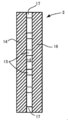
- the reduced pressure heat insulating double-glazed glass has a normal transparent float plate glass 14, a sputter-coated Low-E glass 18, and a spacer 15 having a thickness of 0.2 mm disposed therebetween.
- the surface to which the Low-E coating was applied was disposed on the spacer 15 side. All the peripheral portions of these two glass plates 14 and 18 are sealed with a known sealing agent 17, and a vacuum-evacuated second gap layer 16 is formed between the two glass plates 14 and 18. ing.
- the sputter coating Low-E glass 18 is a thin film (Low-E film) including a transparent float plate glass (manufactured by Nippon Sheet Glass) having a thickness of 6 mm, a dielectric layer, a layer mainly composed of silver, and a dielectric layer in this order. ) By a sputtering method.
- the layer mainly composed of silver has a thickness of about 10 nm.
- the second glass body 2 was arranged so that the sputter-coated Low-E glass was on the side opposite to the first glass body.
- Comparative Example 5 As Comparative Example 5, a multilayer glass panel having a first glass body and a second glass body was prepared. A first gap layer having a thickness of 0.2 mm was formed between both glass bodies by a spacer.
- the first glass body is formed of online coating Low-E glass (made by Nippon Sheet Glass, Energy-Advantage) having a thickness of 3 mm. That is, the first glass body has a single glass plate and a Low-E film laminated on the surface of the glass plate on the first gap layer side.
- the second glass body is formed of one transparent float glass (made by Nippon Sheet Glass) having a thickness of 3 mm.
- the entire peripheral edge of these two glass bodies is sealed with a known sealing agent, and the first gap layer is evacuated.
- the Low-E film of the first glass body is disposed so as to face the first gap layer side.
- Comparative Example 6 a multilayer glass panel having a first glass body and a second glass body was prepared. As shown in FIG. 3, this double-glazed glass panel is a reduced pressure heat insulating double-glazed glass, and is composed of a normal transparent float plate glass 14, a sputter-coated Low-E glass 18, and a spacer having a thickness of 0.2 mm arranged therebetween. 15 and the surface on which the Low-E coating was applied was arranged on the spacer 15 side. All the peripheral edges of these two glass plates 14 and 18 are sealed with a sealing agent 17, and a vacuum-evacuated second gap layer 16 is formed between the two glass plates 14 and 18. .
- Comparative Example 7 is formed of 8 mm thick online coating Low-E glass (Nippon Sheet Glass, Energy-Advantage). That is, Comparative Example 7 has a single glass plate and a Low-E film laminated on the indoor side surface of the glass plate.
- Low-E glass Natural Sheet Glass, Energy-Advantage
- Example 1 As Example 1, a multilayer glass panel having a first glass body and a second glass body was prepared. A first gap layer having a thickness of 12 mm was formed between both glass bodies by a spacer. The first gap layer is filled with dry air.
- the first glass body was formed of dark low-E glass.
- This dark low-E glass is a laminate of the low-E film containing two layers of silver shown in Comparative Example 3 on a dark float glass (Japan plate glass, UV Protect 400) with a thickness of 6 mm. It is.
- the second glass body is formed of a single transparent float glass (manufactured by Nippon Sheet Glass) having a thickness of 6 mm. Further, the Low-E film of the first glass body is disposed on the first gap layer side.
- Example 2 As Example 2, a multilayer glass panel having a first glass body and a second glass body was prepared. A first gap layer having a thickness of 12 mm was formed between both glass bodies by a spacer. The first gap layer is filled with dry air.
- the first glass body was formed of dark low-E glass.
- This dark color Low-E glass is obtained by laminating a dark color float glass (Galaxsee, manufactured by Nippon Sheet Glass) having a thickness of 6 mm and a low-E film containing two silver layers as shown in Comparative Example 3. .
- the second glass body is formed of a single transparent float glass (manufactured by Nippon Sheet Glass) having a thickness of 6 mm. Further, the Low-E film of the first glass body is disposed on the first gap layer side.
- Example 3 As Example 3, a multilayer glass panel having a first glass body and a second glass body was prepared. A first gap layer having a thickness of 12 mm was formed between both glass bodies by a spacer. The first gap layer is filled with dry air.
- the first glass body was formed of dark low-E glass.
- This dark-colored Low-E glass is obtained by laminating a low-E film containing two layers of silver shown in Comparative Example 3 on a dark-colored float glass (Legart 20 manufactured by Nippon Sheet Glass) with a thickness of 6 mm. .
- the second glass body is formed of a single transparent float glass (manufactured by Nippon Sheet Glass) having a thickness of 6 mm. Further, the Low-E film of the first glass body is disposed on the first gap layer side.
- Example 4 As Example 4, a multi-layer glass panel having a first glass body and a second glass body was prepared. A first gap layer having a thickness of 12 mm was formed between both glass bodies by a spacer. The first gap layer is filled with dry air.
- the first glass body was formed of dark low-E glass.
- This dark low-E glass is a laminate of the low-E film containing 2 layers of silver shown in Comparative Example 3 on a dark float glass (Japan plate glass, UV Protect 400) with a thickness of 3 mm. It is.
- the second glass body is formed of a single transparent float glass (manufactured by Nippon Sheet Glass) having a thickness of 6 mm. Further, the Low-E film of the first glass body is disposed on the first gap layer side.
- Example 5 As Example 5, a multilayer glass panel having a first glass body and a second glass body was prepared. A first gap layer having a thickness of 12 mm was formed between both glass bodies by a spacer. The first gap layer is filled with dry air.
- the first glass body was formed of dark low-E glass.
- This dark color Low-E glass is obtained by laminating a dark color float glass (Legart 50, manufactured by Nippon Sheet Glass) having a thickness of 4 mm and a Low-E film containing two silver layers as shown in Comparative Example 3. .
- the second glass body is formed of a single transparent float glass (manufactured by Nippon Sheet Glass) having a thickness of 6 mm. Further, the Low-E film of the first glass body is disposed on the first gap layer side.
- Example 6 As Example 6, a multilayer glass panel having a first glass body and a second glass body was prepared. A first gap layer having a thickness of 12 mm was formed between both glass bodies by a spacer. The first gap layer is filled with dry air.
- the first glass body was formed of the same dark color Low-E glass as in Example 1.
- the second glass body is obtained by laminating the Low-E film containing two silver layers shown in Comparative Example 3 on one transparent float glass (manufactured by Nippon Sheet Glass) having a thickness of 6 mm. Then, the Low-E films of both glass bodies were arranged so as to face the first gap layer side.
- Example 7 As Example 7, a multilayer glass panel having a first glass body and a second glass body was prepared. A first gap layer having a thickness of 12 mm was formed between both glass bodies by a spacer. The first gap layer is filled with dry air.
- the first glass body was formed of dark float glass having a thickness of 6 mm (Galaxsee, manufactured by Nippon Sheet Glass).
- the second glass body was formed of a transparent float glass (manufactured by Nippon Sheet Glass) having a thickness of 6 mm.
- Example 8 As Example 8, a multilayer glass panel having a first glass body and a second glass body was prepared. A first gap layer having a thickness of 12 mm was formed between both glass bodies by a spacer. The first gap layer is filled with dry air.
- the first glass body was formed of dark float glass having a thickness of 6 mm (Legart 20 manufactured by Nippon Sheet Glass).
- the second glass body was formed of a transparent float glass (manufactured by Nippon Sheet Glass) having a thickness of 5.8 mm.
- Example 9 As Example 9, a multilayer glass panel having a first glass body and a second glass body was prepared. A first gap layer having a thickness of 12 mm was formed between both glass bodies by a spacer. The first gap layer is filled with dry air.
- the first glass body was formed of 3.1 mm thick float glass (Galaxsee, manufactured by Nippon Sheet Glass).
- the second glass body was formed of a transparent float glass (manufactured by Nippon Sheet Glass) having a thickness of 6 mm.
- Example 10 As Example 10, a multilayer glass panel having a first glass body and a second glass body was prepared. A first gap layer having a thickness of 12 mm was formed between both glass bodies by a spacer. The first gap layer is filled with dry air.
- the first glass body was formed of dark float glass (Legart 50, manufactured by Nippon Sheet Glass) having a thickness of 4 mm.
- the second glass body was formed of a transparent float glass (manufactured by Nippon Sheet Glass) having a thickness of 6 mm.
- Example 11 As Example 11, a multilayer glass panel having a first glass body and a second glass body was prepared. A first gap layer having a thickness of 12 mm was formed between both glass bodies by a spacer. The first gap layer is filled with dry air.
- the first glass body was formed of dark float glass having the same thickness as Example 7 and having a thickness of 6 mm.
- the second glass body is obtained by laminating the Low-E film containing two silver layers shown in Comparative Example 3 on one transparent float glass (manufactured by Nippon Sheet Glass) having a thickness of 6 mm. Then, the low-E film of the second glass body was disposed so as to face the first gap layer side.
- the optical properties of the first glass bodies of the comparative examples and examples prepared as described above are as follows. However, since Comparative Examples 1 and 7 are formed of a single glass plate, their physical properties are shown.
- optical characteristics etc. of the glass plate or multilayer glass panel of a comparative example and an Example are as follows.
- the primary energy consumption was calculated using HASPEX as software. The primary energy consumption was calculated based on the cooling / heating load of the perimeter zone of the room (frame area 5 m from the wall surface: 500 m 2 ). Moreover, energy load is a ratio when the comparative example 1 is set to 100%.
- Primary energy consumption ⁇ (various energy consumption x primary energy intensity)
- Various energy consumption Air conditioning load / Equipment efficiency / Heat generation unit ⁇ Equipment efficiency: Heating 2.7, Air conditioning 3.7 ⁇ Fever unit: 3.6MJ / kWh ⁇ Temporary energy intensity: 9.76 MJ / kWh
- FIG. 4 is a bubble chart which shows the relationship between the heat flow rate and solar radiation heat gain which concern on an Example and a comparative example.
- a marker with a numerical value of 100 represents Comparative Example 1.
- Examples 1 to 11 show markers whose outer edges are colored. The numerical value in the marker indicates the energy load.
- each of the examples shows a higher energy load than the comparative example.
- the energy load is 50% or less of Comparative Example 1.
- the heat transmissibility is too low as in Comparative Examples 4 and 6, heat is accumulated in the room, and the primary energy consumption during cooling is large. Therefore, it is preferable that the heat transmissivity is not too low.
- the solar heat acquisition rate is low.
- Comparative Example 3 although the heat transmissibility and the solar heat gain are both low, it is considered that the primary energy consumption is high due to the high visible light transmittance of the first glass body. From these facts, it was found that the energy load can be reduced when the visible light transmittance of the first glass body is low and both the heat transmissivity and the solar heat gain are low in a well-balanced manner.
Landscapes
- Chemical & Material Sciences (AREA)
- Engineering & Computer Science (AREA)
- Materials Engineering (AREA)
- Chemical Kinetics & Catalysis (AREA)
- General Chemical & Material Sciences (AREA)
- Geochemistry & Mineralogy (AREA)
- Life Sciences & Earth Sciences (AREA)
- Organic Chemistry (AREA)
- Civil Engineering (AREA)
- Structural Engineering (AREA)
- Ceramic Engineering (AREA)
- Joining Of Glass To Other Materials (AREA)
- Securing Of Glass Panes Or The Like (AREA)
- Surface Treatment Of Glass (AREA)
Priority Applications (1)
| Application Number | Priority Date | Filing Date | Title |
|---|---|---|---|
| JP2020506512A JP7266020B2 (ja) | 2018-03-11 | 2019-03-11 | 複層ガラスパネル |
Applications Claiming Priority (2)
| Application Number | Priority Date | Filing Date | Title |
|---|---|---|---|
| JP2018-043678 | 2018-03-11 | ||
| JP2018043678 | 2018-03-11 |
Publications (1)
| Publication Number | Publication Date |
|---|---|
| WO2019176862A1 true WO2019176862A1 (ja) | 2019-09-19 |
Family
ID=67906722
Family Applications (1)
| Application Number | Title | Priority Date | Filing Date |
|---|---|---|---|
| PCT/JP2019/009717 Ceased WO2019176862A1 (ja) | 2018-03-11 | 2019-03-11 | 複層ガラスパネル |
Country Status (2)
| Country | Link |
|---|---|
| JP (1) | JP7266020B2 (https=) |
| WO (1) | WO2019176862A1 (https=) |
Cited By (1)
| Publication number | Priority date | Publication date | Assignee | Title |
|---|---|---|---|---|
| CN110714706A (zh) * | 2019-10-18 | 2020-01-21 | 中国建筑西南设计研究院有限公司 | 一种集热保温隔声一体化窗户及其控制方法 |
Citations (7)
| Publication number | Priority date | Publication date | Assignee | Title |
|---|---|---|---|---|
| US4069630A (en) * | 1976-03-31 | 1978-01-24 | Ppg Industries, Inc. | Heat reflecting window |
| JPH0710609A (ja) * | 1993-06-29 | 1995-01-13 | Central Glass Co Ltd | 熱遮断ガラスおよびそれを用いた複層ガラス |
| JPH07165442A (ja) * | 1993-08-12 | 1995-06-27 | Saint Gobain Vitrage | 薄層の堆積を施した透明な基材及びその断熱及び/又は日光制御への用途 |
| JP2006117482A (ja) * | 2004-10-22 | 2006-05-11 | Nippon Sheet Glass Co Ltd | 熱線遮蔽ガラス及び熱線遮蔽複層ガラス |
| JP2006143525A (ja) * | 2004-11-19 | 2006-06-08 | Nippon Sheet Glass Co Ltd | 複層ガラス |
| JP2010006684A (ja) * | 2008-05-28 | 2010-01-14 | Central Glass Co Ltd | 複層ガラス |
| WO2012165501A1 (ja) * | 2011-05-30 | 2012-12-06 | 旭硝子株式会社 | 低放射率積層体、および複層ガラス |
Family Cites Families (6)
| Publication number | Priority date | Publication date | Assignee | Title |
|---|---|---|---|---|
| US4610115A (en) * | 1984-12-17 | 1986-09-09 | Ppg Industries, Inc. | Multiple-glazed combination vision and spandrel architectural panel and curtainwall |
| JPH11228185A (ja) * | 1998-02-06 | 1999-08-24 | Nippon Sheet Glass Co Ltd | 日射遮蔽性透光板およびこれを用いた日射遮蔽性複層透光板 |
| JPH11277668A (ja) * | 1998-03-27 | 1999-10-12 | Nippon Sheet Glass Co Ltd | 日射遮蔽ガラス |
| JPWO2002092529A1 (ja) * | 2001-05-15 | 2004-08-26 | 日本板硝子株式会社 | 断熱・遮熱性ガラスパネル |
| US20040202803A1 (en) * | 2003-04-14 | 2004-10-14 | Pilkington North America, Inc. | Spandrel panel with low visible light transmittance pane |
| AU2016213183B2 (en) * | 2015-01-28 | 2019-07-25 | AGC Inc. | Coated glass sheet and insulated glazing |
-
2019
- 2019-03-11 JP JP2020506512A patent/JP7266020B2/ja active Active
- 2019-03-11 WO PCT/JP2019/009717 patent/WO2019176862A1/ja not_active Ceased
Patent Citations (7)
| Publication number | Priority date | Publication date | Assignee | Title |
|---|---|---|---|---|
| US4069630A (en) * | 1976-03-31 | 1978-01-24 | Ppg Industries, Inc. | Heat reflecting window |
| JPH0710609A (ja) * | 1993-06-29 | 1995-01-13 | Central Glass Co Ltd | 熱遮断ガラスおよびそれを用いた複層ガラス |
| JPH07165442A (ja) * | 1993-08-12 | 1995-06-27 | Saint Gobain Vitrage | 薄層の堆積を施した透明な基材及びその断熱及び/又は日光制御への用途 |
| JP2006117482A (ja) * | 2004-10-22 | 2006-05-11 | Nippon Sheet Glass Co Ltd | 熱線遮蔽ガラス及び熱線遮蔽複層ガラス |
| JP2006143525A (ja) * | 2004-11-19 | 2006-06-08 | Nippon Sheet Glass Co Ltd | 複層ガラス |
| JP2010006684A (ja) * | 2008-05-28 | 2010-01-14 | Central Glass Co Ltd | 複層ガラス |
| WO2012165501A1 (ja) * | 2011-05-30 | 2012-12-06 | 旭硝子株式会社 | 低放射率積層体、および複層ガラス |
Cited By (1)
| Publication number | Priority date | Publication date | Assignee | Title |
|---|---|---|---|---|
| CN110714706A (zh) * | 2019-10-18 | 2020-01-21 | 中国建筑西南设计研究院有限公司 | 一种集热保温隔声一体化窗户及其控制方法 |
Also Published As
| Publication number | Publication date |
|---|---|
| JPWO2019176862A1 (ja) | 2021-03-25 |
| JP7266020B2 (ja) | 2023-04-27 |
Similar Documents
| Publication | Publication Date | Title |
|---|---|---|
| CN101124085B (zh) | 抗反射绝热装配玻璃制品 | |
| JP5792623B2 (ja) | 少なくとも1つの反射防止膜を組み込む多重窓ガラスユニット及び多重窓ガラスユニットにおける反射防止膜の使用 | |
| JP5989802B2 (ja) | 減圧複層ガラスパネル | |
| CN102325732B (zh) | 提供有具有热性质的叠层和吸收层的基材 | |
| CN103443044B (zh) | 包括两个低辐射性叠层的隔离性多层窗玻璃 | |
| CN102421720B (zh) | 提供有包括高折射指数层的具有热性质的叠层的基材 | |
| CN102325733B (zh) | 提供有具有热性质的叠层和吸收层的基材 | |
| CN109336410B (zh) | 多层玻璃单元以及多层玻璃单元用玻璃板 | |
| US6413643B1 (en) | Sunlight shielding translucent glass panel and sunlight shielding translucent multilayer glass panel assembly | |
| JPH07315889A (ja) | 熱線遮蔽ガラスおよび熱線遮蔽ガラス複合体 | |
| WO2012115111A1 (ja) | 積層体 | |
| CN103737999A (zh) | 一种具有红外反射功能的镀膜玻璃及其制备方法 | |
| JP2020055736A (ja) | 窓ガラス用断熱性三層複層ガラス | |
| JP7266020B2 (ja) | 複層ガラスパネル | |
| WO2002092529A1 (fr) | Panneau de verre de protection et d'isolation thermique | |
| JP2009280464A (ja) | 低放射複層ガラス | |
| WO2019176861A1 (ja) | 太陽電池パネル | |
| JP7550163B2 (ja) | 非対称真空断熱グレージングユニット | |
| CN205202367U (zh) | 复合防火玻璃 | |
| CN210888631U (zh) | 一种多层安全Low-E玻璃 | |
| JP7071639B2 (ja) | 窓ガラス用断熱性三層複層ガラス | |
| JP2022524268A (ja) | 非対称真空断熱ガラス嵌め込みユニット | |
| JP2022525783A (ja) | 非対称真空断熱グレージングユニット | |
| WO2025131834A1 (en) | Multiple glazing providing all seasons thermal comfort | |
| WO2024200473A1 (en) | Multiple glazing providing all seasons thermal comfort |
Legal Events
| Date | Code | Title | Description |
|---|---|---|---|
| 121 | Ep: the epo has been informed by wipo that ep was designated in this application |
Ref document number: 19768157 Country of ref document: EP Kind code of ref document: A1 |
|
| ENP | Entry into the national phase |
Ref document number: 2020506512 Country of ref document: JP Kind code of ref document: A |
|
| NENP | Non-entry into the national phase |
Ref country code: DE |
|
| 122 | Ep: pct application non-entry in european phase |
Ref document number: 19768157 Country of ref document: EP Kind code of ref document: A1 |