WO2019156032A1 - 毛包上皮幹細胞の培養方法及び培養キット - Google Patents
毛包上皮幹細胞の培養方法及び培養キット Download PDFInfo
- Publication number
- WO2019156032A1 WO2019156032A1 PCT/JP2019/003903 JP2019003903W WO2019156032A1 WO 2019156032 A1 WO2019156032 A1 WO 2019156032A1 JP 2019003903 W JP2019003903 W JP 2019003903W WO 2019156032 A1 WO2019156032 A1 WO 2019156032A1
- Authority
- WO
- WIPO (PCT)
- Prior art keywords
- hair follicle
- epithelial stem
- stem cells
- culture
- follicle epithelial
- Prior art date
- Legal status (The legal status is an assumption and is not a legal conclusion. Google has not performed a legal analysis and makes no representation as to the accuracy of the status listed.)
- Ceased
Links
Images







Classifications
-
- C—CHEMISTRY; METALLURGY
- C12—BIOCHEMISTRY; BEER; SPIRITS; WINE; VINEGAR; MICROBIOLOGY; ENZYMOLOGY; MUTATION OR GENETIC ENGINEERING
- C12M—APPARATUS FOR ENZYMOLOGY OR MICROBIOLOGY; APPARATUS FOR CULTURING MICROORGANISMS FOR PRODUCING BIOMASS, FOR GROWING CELLS OR FOR OBTAINING FERMENTATION OR METABOLIC PRODUCTS, i.e. BIOREACTORS OR FERMENTERS
- C12M23/00—Constructional details, e.g. recesses, hinges
- C12M23/24—Gas permeable parts
-
- C—CHEMISTRY; METALLURGY
- C12—BIOCHEMISTRY; BEER; SPIRITS; WINE; VINEGAR; MICROBIOLOGY; ENZYMOLOGY; MUTATION OR GENETIC ENGINEERING
- C12N—MICROORGANISMS OR ENZYMES; COMPOSITIONS THEREOF; PROPAGATING, PRESERVING, OR MAINTAINING MICROORGANISMS; MUTATION OR GENETIC ENGINEERING; CULTURE MEDIA
- C12N5/00—Undifferentiated human, animal or plant cells, e.g. cell lines; Tissues; Cultivation or maintenance thereof; Culture media therefor
- C12N5/06—Animal cells or tissues; Human cells or tissues
- C12N5/0602—Vertebrate cells
- C12N5/0625—Epidermal cells, skin cells; Cells of the oral mucosa
- C12N5/0627—Hair cells
- C12N5/0628—Hair stem cells; Hair progenitors
-
- C—CHEMISTRY; METALLURGY
- C08—ORGANIC MACROMOLECULAR COMPOUNDS; THEIR PREPARATION OR CHEMICAL WORKING-UP; COMPOSITIONS BASED THEREON
- C08L—COMPOSITIONS OF MACROMOLECULAR COMPOUNDS
- C08L83/00—Compositions of macromolecular compounds obtained by reactions forming in the main chain of the macromolecule a linkage containing silicon with or without sulfur, nitrogen, oxygen or carbon only; Compositions of derivatives of such polymers
- C08L83/04—Polysiloxanes
-
- C—CHEMISTRY; METALLURGY
- C12—BIOCHEMISTRY; BEER; SPIRITS; WINE; VINEGAR; MICROBIOLOGY; ENZYMOLOGY; MUTATION OR GENETIC ENGINEERING
- C12N—MICROORGANISMS OR ENZYMES; COMPOSITIONS THEREOF; PROPAGATING, PRESERVING, OR MAINTAINING MICROORGANISMS; MUTATION OR GENETIC ENGINEERING; CULTURE MEDIA
- C12N2500/00—Specific components of cell culture medium
- C12N2500/02—Atmosphere, e.g. low oxygen conditions
-
- C—CHEMISTRY; METALLURGY
- C12—BIOCHEMISTRY; BEER; SPIRITS; WINE; VINEGAR; MICROBIOLOGY; ENZYMOLOGY; MUTATION OR GENETIC ENGINEERING
- C12N—MICROORGANISMS OR ENZYMES; COMPOSITIONS THEREOF; PROPAGATING, PRESERVING, OR MAINTAINING MICROORGANISMS; MUTATION OR GENETIC ENGINEERING; CULTURE MEDIA
- C12N2513/00—3D culture
-
- C—CHEMISTRY; METALLURGY
- C12—BIOCHEMISTRY; BEER; SPIRITS; WINE; VINEGAR; MICROBIOLOGY; ENZYMOLOGY; MUTATION OR GENETIC ENGINEERING
- C12N—MICROORGANISMS OR ENZYMES; COMPOSITIONS THEREOF; PROPAGATING, PRESERVING, OR MAINTAINING MICROORGANISMS; MUTATION OR GENETIC ENGINEERING; CULTURE MEDIA
- C12N2533/00—Supports or coatings for cell culture, characterised by material
- C12N2533/30—Synthetic polymers
-
- C—CHEMISTRY; METALLURGY
- C12—BIOCHEMISTRY; BEER; SPIRITS; WINE; VINEGAR; MICROBIOLOGY; ENZYMOLOGY; MUTATION OR GENETIC ENGINEERING
- C12N—MICROORGANISMS OR ENZYMES; COMPOSITIONS THEREOF; PROPAGATING, PRESERVING, OR MAINTAINING MICROORGANISMS; MUTATION OR GENETIC ENGINEERING; CULTURE MEDIA
- C12N2533/00—Supports or coatings for cell culture, characterised by material
- C12N2533/50—Proteins
- C12N2533/54—Collagen; Gelatin
-
- C—CHEMISTRY; METALLURGY
- C12—BIOCHEMISTRY; BEER; SPIRITS; WINE; VINEGAR; MICROBIOLOGY; ENZYMOLOGY; MUTATION OR GENETIC ENGINEERING
- C12N—MICROORGANISMS OR ENZYMES; COMPOSITIONS THEREOF; PROPAGATING, PRESERVING, OR MAINTAINING MICROORGANISMS; MUTATION OR GENETIC ENGINEERING; CULTURE MEDIA
- C12N2533/00—Supports or coatings for cell culture, characterised by material
- C12N2533/90—Substrates of biological origin, e.g. extracellular matrix, decellularised tissue
Definitions
- the present invention relates to a method for culturing hair follicle epithelial stem cells and a culture kit.
- hair follicle epithelial stem cells are stem cells for making hair, and adhere to and spread on normal culture substrates, and differentiate into cells that do not have the ability to regenerate hair by turning on an intense growth switch. It has been.
- a method of culturing hair follicle epithelial stem cells by adding a growth factor or various inhibitors to a culture solution for example, see Patent Document 1
- a method of culturing hair follicle epithelial stem cells by embedding them in Matrigel for example, See Non-Patent Document 1
- a device for maintaining the hair regeneration ability of hair follicle epithelial stem cells has been studied.
- the present inventors have so far developed a method for producing an aggregate of regenerated hair follicle primordia (see, for example, Patent Document 2). Specifically, a step of seeding mesenchymal cells and epithelial cells on a micro intaglio plate having regularly arranged micro-recesses and co-culturing while supplying oxygen to form a hair follicle primordium. It is a method to prepare.
- the present invention has been made in view of the above circumstances, and provides a hair follicle epithelial stem cell culturing method and culture kit capable of proliferating a large amount of hair follicle epithelial stem cells while maintaining hair regeneration ability.
- the method for culturing hair follicle epithelial stem cells according to the first aspect of the present invention includes an accumulation step of seeding hair follicle epithelial stem cells in a cell culture container to form an aggregate, and an extracellular body of the aggregate of hair follicle epithelial stem cells.
- the extracellular matrix component may be type I collagen.
- the cell culture vessel may be made of a material having oxygen permeability.
- the material having oxygen permeability may be polydimethylsiloxane.
- the culture kit for hair follicle epithelial stem cells comprises a cell culture container made of a material having oxygen permeability, an extracellular matrix component, and a medium.
- hair follicle epithelial stem cells can be proliferated in large quantities while maintaining the hair regeneration ability.
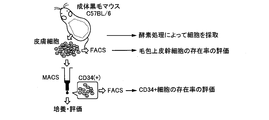
- FIG. 3 is a schematic process diagram showing a method for preparing hair follicle epithelial stem cells in Example 1.
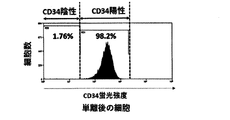
- 2 is a graph and a table showing the abundance of hair follicle epithelial stem cells in epidermal cells collected from adult mice in Example 1.
- FIG. It is a graph which shows the result of having analyzed the cell F in Example 1 (CD34 positive cell isolate
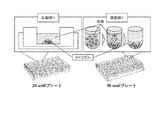
- FIG. 3 is a schematic process chart comparing hair follicle epithelial stem cell culture methods in Example 1 and Comparative Example 1.
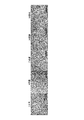
- 2 is a microscopic image of hair follicle epithelial stem cells from day 1 to day 14 of culture in Example 1.
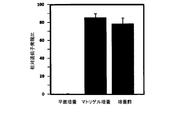
- FIG. Each scale bar represents 1 mm. It is a graph which shows the expression level of CD34 gene in the hair follicle epithelial stem cell of the culture
- FIG. 6 is a schematic process diagram showing a method for producing an oxygen permeable cell culture vessel (polydimethylsiloxane (PDMS) spheroid chip) in Example 2.
- PDMS polydimethylsiloxane
- FIG. 2 is a microscopic image of hair follicle epithelial stem cells from day 1 to day 14 of culture in Example 2.
- FIG. Each scale bar represents 1 mm. It is a graph which shows the expression level of CD34 gene in the hair follicle epithelial stem cell of the culture
- FIG. It is a microscope image of the hair follicle epithelial stem cell from the culture
- Each scale bar represents 1 mm.
- the method for culturing hair follicle epithelial stem cells of the present embodiment is a method comprising an accumulation step, a mixing step, and a culturing step.
- the accumulation step hair follicle epithelial stem cells are seeded in a cell culture container to form an aggregate.
- an extracellular matrix component is added to the hair follicle epithelial stem cell aggregate to produce a mixture of the extracellular matrix component and the hair follicle epithelial stem cell aggregate.
- a medium is added to the mixture and cultured.
- hair follicle epithelial stem cells can be proliferated in large quantities while maintaining the hair regeneration ability.
- the hair follicle epithelial stem cells and extracellular matrix components such as matrigel are mixed and cultured in a state where the hair follicle epithelial stem cells are dispersed.
- hair follicle epithelial stem cells exist in an environment in which cells are densely packed in a living body, and further, extracellular matrix components exist between the cells.
- the hair follicle epithelial stem cell which has the hair reproducibility superior to the conventional culture method of a hair follicle epithelial stem cell can be obtained.
- the “cell aggregate” here means a collection of cells seeded in a cell culture container stacked on the bottom surface by gravity or the like. Details of each step of the culture method of the present embodiment will be described below.
- hair follicle epithelial stem cells are seeded in a cell culture container and statically cultured. Cells are precipitated by gravity to form an aggregate of cells. The number of cells to be seeded can be appropriately adjusted according to the size of the cell culture vessel.
- the origin of hair follicle epithelial stem cells used in the culture method of the present embodiment is an animal, preferably a vertebrate, and more preferably a mammal. Mammals include, for example, humans, chimpanzees and other primates; dogs, cats, rabbits, horses, sheep, goats, cows, pigs, rats (including nude rats), mice (including nude mice and skid mice) ), Domestic animals such as guinea pigs, pets, laboratory animals, and the like, but are not limited thereto. Among these, the origin of cells is preferably human.
- the hair follicle epithelial stem cells may be isolated from the skin tissue of the subject animal or may be derived from universal cells. Examples of universal cells include embryonic stem (ES) cells, embryonic germ (EG) cells, induced pluripotent (iPS) stem cells, and the like.
- the hair follicle epithelial stem cells used in the culture method of the present embodiment may be single cells, and cells (for example, pigment stem cells, epidermal cells, etc.) existing around the hair follicle epithelial stem cells in the skin tissue. It may be a mixed cell containing. It can be confirmed that the hair follicle epithelial stem cell is expressing a marker protein (for example, CD34) of the hair follicle epithelial stem cell.
- a marker protein for example, CD34
- cells expressing CD34 can be obtained by known methods (for example, Fluorescence activated cell sorting (FACS) analysis using anti-CD34 antibody, Magnetic cell sorting (MACS) analysis, and immunostaining method). Etc.) can be confirmed.
- FACS Fluorescence activated cell sorting
- MCS Magnetic cell sorting
- Etc. can be confirmed.
- the culture time can be 10 minutes or more and 24 hours or less (preferably 1 hour or more and 2 hours or less), and the culture temperature is 25 ° C. or more and less than 40 ° C. (preferably 37 ° C. ). For example, it may be about 5% CO 2 condition.
- the cell culture container is preferably one in which a plurality of wells are regularly arranged on one substrate from the viewpoint of ease of observation and screening efficiency.
- individual wells arranged on a substrate are cell culture containers.
- patent document 3 International Publication No. 2017/073625.
- the density of wells in the substrate can be, for example, 20 pieces / cm 2 or more and 500 pieces / cm 2 or less, for example, 50 pieces / cm 2 or more and 250 pieces / cm 2 or less, for example, 100 pieces. / Cm 2 or more and 200 pieces / cm 2 or less.
- the density can be cultured in a state where the hair follicle epithelial stem cells are arranged at a density similar to the density of mammalian pores (particularly, primate pores including humans).
- the diameter and depth of the well opening are not particularly limited as long as they can accommodate and cultivate hair follicle epithelial stem cell aggregates, but the diameter is about the same size as a mammalian pore. For example, it can be 20 ⁇ m or more and 1 mm or less. The depth can be set to 1 mm or less, for example.
- the material of the cell culture vessel can be suitable for cell culture and is not particularly limited.
- transparent glass, a polymer material, etc. are mentioned.
- a polymer material having oxygen permeability is preferable.
- Specific examples of the polymer material having oxygen permeability include a fluororesin and silicon rubber (for example, polydimethylsiloxane (PDMS)). These materials may be used alone or in combination.
- oxygen permeability refers to the property of allowing molecular oxygen to permeate and reach the well of a cell culture container.
- Specific oxygen transmission rate may be less than or equal to about 100cm 3 / m 2 ⁇ 24h ⁇ atm or more 5000cm 3 / m 2 ⁇ 24h ⁇ atm, about 1100cm 3 / m 2 ⁇ 24h ⁇ atm or 3000 cm 3 / m may be less 2 ⁇ 24h ⁇ atm, about 1250cm 3 / m 2 ⁇ 24h ⁇ atm or more 2750cm 3 / m 2 ⁇ 24h ⁇ atm may be less.
- 24h means 24 hours
- atm means a unit of atmospheric pressure. That is, the unit “cm 3 / m 2 ⁇ 24 h ⁇ atm” represents the capacity (cm 3 ) per 1 m 2 of oxygen permeated in 24 hours under an environment of 1 atm.
- a commercially available cell culture container may be used, or a template may be prepared and the cell culture container may be prepared from scratch using PDMS as a raw material.
- Examples of commercially available cell culture containers include Prime Surface (registered trademark) 96U plate manufactured by Sumitomo Bakelite Co., Ltd.
- the medium is not particularly limited, and can be a basic medium containing components (inorganic salts, carbohydrates, hormones, essential amino acids, non-essential amino acids, vitamins) necessary for viable cell growth.
- the inorganic salt contained in the medium is to help maintain the osmotic balance of the cells and to help regulate the membrane potential.
- an inorganic salt For example, salts, such as calcium, copper, iron, magnesium, potassium, sodium, zinc, are mentioned. Salts are usually used in the form of chlorides, phosphates, sulfates, nitrates and bicarbonates.
- the osmolality of the inorganic salt in the medium can be, for example, 200 mOsm / kg or more and 400 mOsm / kg or less, for example, 280 mOsm / kg or more and 350 mOsm / kg or less, for example, 280 mOsm / kg or more. It can be 310 mOsm / kg or less, for example, 280 mOsm / kg or more and less than 300 mOsm / kg, for example, 280 mOsm / kg.
- the carbohydrate is not particularly limited, and examples thereof include glucose, galactose, maltose, and fructose.
- the concentration of carbohydrate (preferably D-glucose) in the medium is preferably 0.5 g / L or more and 2 g / L or less.
- the amino acid is not particularly limited.
- the concentration of glutamine contained in the medium can be 0.05 g / L or more and 1 g / L or less (usually 0.1 g / L or more and 0.75 g / L or less).
- Each amino acid other than glutamine contained in the medium can be 0.001 g / L or more and 1 g / L or less (usually 0.01 g / L or more and 0.15 g / L or less).
- Amino acids may be synthetically derived.
- the vitamin is not particularly limited.
- thiamine vitamin B1
- riboflavin vitamin B2
- niacinamide vitamin B3
- hemi-calcium D-pantothenate vitamin B5
- pyridoxal / pyridoxamine / pyridoxine vitamin B6
- Folic acid vitamin B9
- cyanocobalamin vitamin B12
- ascorbic acid vitamin C
- calciferol vitamin D2
- DL- ⁇ tocopherol vitamin E
- biotin vitamin H
- menadione vitamin K
- chloride examples thereof include choline and myo-inositol.
- the medium may further contain antibiotics, serum, growth factors, hormones, ROCK inhibitors or the like.
- Antibiotics include, for example, gentamicin, amphotericin, ampicillin, minomycin, kanamycin, penicillin, streptomycin, gentacin, tylosin, aureomycin, and the like used for normal animal cell culture. These antibiotics may be contained alone or in combination of two or more. In general, the concentration of the antibiotic contained in the medium is not particularly limited, and can be, for example, 0.1 ⁇ g / mL or more and 100 ⁇ g / mL or less.
- serum examples include, but are not limited to, FBS / FCS (Fetal Bovine / Calf Serum), NCS (Newborn Calf Serum), CS (Calf Serum), HS (Horse Serum), and the like.
- concentration of serum contained in the medium can be, for example, 2% by mass or more and 10% by mass or less.
- the growth factor examples include, but are not limited to, a cell growth factor and a cell adhesion factor. More specifically, examples of the growth factor include epidermal growth factor (EGF), acidic fibroblast growth factor (aFGF), and basic fibroblast growth factor (basic fibroblast growth factor). bFGF), insulin-like growth factor-1 (IGF-1), macrophage-derived growth factor (MDGF), platelet-derived growth factor (GF) Tumor angiogenesis factor (TAF), Examples thereof include vascular endothelial growth factor (VEGF). These growth factors may be included singly or in combination. Generally, the concentration of the growth factor contained in the medium is not particularly limited, and can be, for example, 1 ng / mL or more and 10 ⁇ g / mL or less.
- the hormone examples include insulin, glucagon, triiodothyronine, adrenocortical hormone (hydrocortisone, etc.) and the like. These hormones may be included singly or in combination.
- the concentration of the hormone contained in the medium is not particularly limited, and can be, for example, 1 ng / mL or more and 10 ⁇ g / mL or less.
- bovine pituitary extract may be used as a medium additive containing growth factors and hormones.
- ROCK inhibitors examples include HA-1077, Y-27632, Thiazovivin, GSK429286A, RKI-1447, GSK1807936A, HA-1100, Y-39983, AR-13324, GSK269996, AT13148, K-115, KD025, ZINC00881524, And salts thereof.
- the medium should be a known basic medium for epithelial cells that contains calcium chloride, is serum-free, and is supplemented with epidermal growth factor and, if necessary, any antibiotics and any hormones. Can do.
- the known basic medium for epithelial cells include HuMedia-KB2 (manufactured by Kurabo Industries), keratinocyte basic medium 2 (Keratinocyte Basal Medium 2) (manufactured by Promo Cell), EpiLife (registered trademark) Medium (Thermo). Fisher SCIENTIFIC).
- epithelial cell growth medium containing epidermal growth factor, any antibiotic, and any hormone examples include HuMedia-KG2 (manufactured by Kurabo Industries), keratinocyte growth medium 2 (Keratinocyte Growth Medium 2). (Promo Cell). Further, an optional growth factor, an optional ROCK inhibitor, and the like may be added to the epithelial cell growth medium containing these epidermal growth factor, an optional antibiotic, and an optional hormone.
- an extracellular matrix component is added to the hair follicle epithelial stem cell aggregate to prepare a mixture of the extracellular matrix component and the hair follicle epithelial stem cell aggregate.
- the hair follicle epithelial stem cells can be cultured in an environment close to that in the living body.
- the extracellular matrix component may or may not be gelled.
- the concentration of the extracellular matrix component in the solution can be appropriately adjusted according to the presence or absence of gelation and the hardness of the gel.
- the gelation time can also be appropriately adjusted according to the required gel hardness.
- Various conditions such as gelation temperature are not particularly limited, and examples thereof include a method of culturing in a 37 ° C. CO 2 incubator.
- Examples of the cell culture vessel used in the mixing step include the same ones as exemplified in the above “[Accumulation step]”.
- Extracellular matrix component examples include collagen (type I, type II, type III, type IV, type V, type XI, type XVII, etc.), mouse EHS tumor extract (type IV collagen, laminin, heparan sulfate proteoglycan, etc.
- Base membrane components trade name: Matrigel
- fibrin glycosaminoglycan, hyaluronic acid, proteoglycan, etc.
- gelatin, agar, agarose, etc. can be used as the polymer derived from natural products. It is possible to prepare hydrogels by selecting components such as salt, concentration, pH and the like that are optimal for each gelation.
- these polymers derived from natural products may be used alone or in combination of two or more.
- the extracellular matrix component is preferably collagen (particularly type I collagen).
- collagen particularly type I collagen.
- the extracellular matrix component may be suspended in a solvent.
- a solvent for suspending extracellular matrix components for example, a serum-free medium such as Ham's Nutrient Mixtures F-10 or Ham's Nutrient Mixtures F-12, or a buffer solution for reconstitution of extracellular matrix components (for example, Sodium hydroxide, sodium hydrogen carbonate, a buffer solution comprising HEPES-Buffer, etc.).
- a medium is added to the mixture prepared in the mixing step and cultured.
- the cell culture vessel and the medium used in the culturing step include the same as those exemplified in the above “[Accumulating step]”.
- the culture time can be 3 days or more and 21 days or less (preferably 10 days or more and 14 days or less), and the culture temperature is 25 ° C. or more and less than 40 ° C. (preferably 37 ° C.). be able to. For example, it may be about 5% CO 2 condition.
- the follicular epithelial stem cells adhere and aggregate with each other as the number of culture days elapses to form one aggregate. Through this culturing step, a large amount of hair follicle epithelial stem cells having excellent hair regeneration ability can be obtained.
- the culture method of the present embodiment may further include a confirmation step for confirming the expression of marker protein of hair follicle epithelial stem cells after the culture step.
- a confirmation step for confirming the expression of the marker protein of hair follicle epithelial stem cells include the same methods as those exemplified in the above “(hair follicle epithelial stem cells)”.
- the culture method of the present embodiment may further include an isolation step of isolating the obtained hair follicle epithelial stem cells one by one after the culture step.
- the isolation method include a method of performing an enzyme treatment such as trypsin.
- the culture kit for hair follicle epithelial stem cells of this embodiment comprises a cell culture vessel made of a material having oxygen permeability, an extracellular matrix component, and a medium.
- hair follicle epithelial stem cells can be proliferated in large quantities while maintaining the hair regeneration ability.
- the cell culture container, extracellular matrix component, and culture medium made of a material having oxygen permeability provided in the culture kit of the present embodiment are the same as those exemplified in the above “ ⁇ Follicle epithelial stem cell culture method>”. Is mentioned.
- the culture kit of this embodiment further comprises an antibody against a marker protein of hair follicle epithelial stem cells (for example, an anti-CD34 antibody). ) Etc. may be provided. Thereby, it can be confirmed whether the cell obtained by culture
- the culture method of this embodiment may further comprise an enzyme such as trypsin in addition to the cell culture vessel made of the oxygen-permeable material, the extracellular matrix component, and the medium. Thereby, the hair follicle epithelial stem cell obtained using the culture kit of this embodiment can be isolated for every cell.
- Hair follicle epithelial stem cells obtained using the culture method and culture kit of this embodiment can construct a hair follicle primordium by co-culturing with mesenchymal cells such as hair papilla cells. By transplanting this hair follicle primordium, hair can be regenerated.
- the hair follicle epithelial stem cells obtained using the culture method and culture kit of the present embodiment can regenerate the skin, for example, by transplanting into the wound part of the subject animal.
- Example 1 Culture of hair follicle epithelial stem cells 1 First, skin cells were collected from adult mice, and after evaluating the presence rate of hair follicle epithelial stem cells, they were isolated and used in subsequent tests (see FIG. 1).
- the dermal layer was then surgically removed using tweezers.
- the skin tissue was added to a 50 mL centrifuge tube together with the enzyme-treated solution, and the cells were separated by pipetting.
- the 70 ⁇ m cell strainer manufactured by BD falcon
- the 40 ⁇ m cell strainer manufactured by BD falcon
- the cells were collected by centrifugation at 1000 rpm for 3 minutes.
- the collected cells were suspended in Humedia-KG2 medium (manufactured by KURABO).
- FITC-labeled anti-CD34 antibody manufactured by BD
- PE-labeled anti-CD49f antibody manufactured by R & D Systems
- FACS Fluorescence activated cell sorting
- CD34-positive (+) cells were collected by the following procedure. All operations were performed on ice. (3-1) The collected cell suspension containing mouse epithelial cells 1.0 to 1.5 ⁇ 10 7 cells was centrifuged at 1000 rpm for 3 minutes, and then the supernatant was removed. Subsequently, 300 ⁇ L of MACS (Magnetic cell sorting) / FACS buffer (manufactured by Miltenyl Biotec) was added. (3-2) Three 5 mL tubes were prepared, and 10 to 15 ⁇ L each of the cell suspension prepared in (3-1) was dispensed. Each tube was designated as tube 1, tube 2, and tube 3, and the operation described in “(4) Procedure for each tube” was performed.
- MACS Magnetic cell sorting
- FACS buffer manufactured by Miltenyl Biotec
- the tube containing the unlabeled cell suspension may be referred to as “tube 5”. is there).
- the operation described in “(4) Procedure for each tube)” was performed.
- (3-9) 400 ⁇ L of the labeled cell suspension was collected in a 15 mL tube and stored at 4 ° C. (hereinafter, the tube containing the labeled cell suspension may be referred to as “tube 6”) .
- the operation described in “(4) Procedure for each tube)” was performed.
- Tube 1 (Preparation of unstained control) 600 ⁇ L of MACS / FACS buffer was added to tube 1 and stored at 4 ° C.
- Tube 2 (Preparation of background control) (4-2-1) Add MACS / FACS buffer so that the cell suspension in tube 2 is 50 ⁇ L, add 5 ⁇ L of FITC-labeled anti-rat IgG antibody, and let stand at 4 ° C. for 30 minutes in the dark. did. (4-2-2) 5 mL of MACS / FACS buffer was added, followed by centrifugation at 1000 rpm for 3 minutes. After removing the supernatant and resuspending in 50 ⁇ L of MACS / FACS buffer, 5 ⁇ L of anti-FITC antibody-coupled microbeads were added and allowed to stand at 4 ° C. for 30 minutes in the dark.
- Tube 3 (Preparation of isotype control) (4-3-1) Add MACS / FACS buffer so that the cell suspension in tube 3 is 50 ⁇ L, and then add 5 ⁇ L of rat IgG isotype antibody (PE-labeled rat IgG antibody) (manufactured by R & D Systems). It left still for 30 minutes at 4 degreeC in the dark place. (4-3-2) 5 mL of MACS / FACS buffer was added, followed by centrifugation at 1000 rpm for 3 minutes.
- rat IgG isotype antibody PE-labeled rat IgG antibody
- the supernatant was removed and resuspended in 50 ⁇ L of MACS / FACS buffer, 5 ⁇ L of FITC-labeled anti-rat IgG antibody was added, and the mixture was allowed to stand at 4 ° C. for 30 minutes in the dark. (4-3-3) 5 mL of MACS / FACS buffer was added, followed by centrifugation at 1000 rpm for 3 minutes. After removing the supernatant and resuspending in 50 ⁇ L of MACS / FACS buffer, 5 ⁇ L of anti-FITC antibody-coupled microbeads were added and allowed to stand at 4 ° C. for 30 minutes in the dark.
- Tube 4 (Presort sample preparation) 600 ⁇ L of MACS / FACS buffer was added to tube 4 and stored at 4 ° C.
- Tube 5 (Preparation of unlabeled cells) 400 ⁇ L of MACS / FACS buffer was added to tube 5 and stored at 4 ° C.
- Tube 6 (Preparation of labeled cells) 600 ⁇ L of MACS / FACS buffer was added to tube 6 and stored at 4 ° C.
- Humedia-KG2 medium (hereinafter sometimes referred to as “epithelial cell culture medium”) containing 20 ng / mL FGF2, 20 ng / mL VEGF-A, and 5 ⁇ M Y-27632. Prepared.
- the cell follicle epithelial stem cells of 8.0 ⁇ 10 4 cells obtained in “1.” were suspended in 100 ⁇ L of the epithelial cell culture medium prepared in (1) to prepare a cell suspension. .
- the cell suspension is dispensed into each well of a non-adherent 96 U well plate (Sumitomo Bakelite, curvature radius: 4.5 mm), incubated at 37 ° C. for 30 minutes to 24 hours, and the cells are separated by gravity. It settled on the bottom face of the culture container and it was confirmed that a cell aggregate was formed (see FIG. 4).
- the epithelial cell culture medium is added to the mixture of matrigel and hair follicle epithelial stem cells and cultured for 14 days, so that the cell density is useful for maintaining the regeneration efficiency of hair follicle epithelial stem cells. It was evaluated whether it is.
- the morphological changes of the cells over time were observed using an inverted phase contrast fluorescence microscope (IX-71, manufactured by Olympus). The results are shown in FIG.
- FIG. 5 shows that the cells were crowded on the first day of culture, but the cells were separated from each other. However, cells began to adhere and aggregate from the fourth day of culture, and almost all cells formed one aggregate on the seventh day of culture.
- FIG. 6 shows the relative CD34 gene expression level in Example 1 (high density) when the CD34 gene expression level in Comparative Example 1 (low density) described later is 1. The consideration of the gene expression level of CD34 in Example 1 shown in FIG. 6 is described in Comparative Example 1 described later.
- hair follicle epithelial stem cells were seeded in a 24-well plate (manufactured by BD falcon) without being embedded in Matrigel, and cultured in the same manner for 14 days (hereinafter sometimes referred to as “planar culture method”).
- the morphological changes of the cells over time were observed using an inverted phase contrast fluorescence microscope (IX-71, manufactured by Olympus). The results are shown in FIG. 7A (planar culture method) and FIG. 7B (conventional matrigel embedded culture method).
- hair follicle epithelial stem cells cultured by the conventional Matrigel embedded culture method were dispersed on the first to fourth days of culture, but began to form small aggregates on the seventh day of culture. The aggregate gradually increased and became about 100 to 150 ⁇ m on the 14th day of culture.
- the hair follicle epithelial stem cells cultured by the planar culture method grew faster than the hair follicle epithelial stem cells cultured by the conventional matrigel embedded culture method.
- hair follicle epithelial stem cells cultured by the conventional Matrigel embedding culture method showed almost the same gene expression level of CD34 as the hair follicle epithelial stem cells before culturing.
- hair follicle epithelial stem cells cultured by the planar culture method were found to have considerably reduced hair regeneration ability.
- hair follicle epithelial stem cells are known to have a strong proliferation switch when contact with adjacent cells is cut off due to a wound or the like, and to proliferate until they cover the surface, thereby preventing bacterial invasion from the outside world.
- the cells having the ability to form hair follicles differentiate into cells for simply covering the surface.
- the hair regeneration ability was reduced, and in the conventional matrigel embedded culture method, it was able to grow at a relatively mild rate, so the hair regeneration It is thought that it was able to culture while maintaining the ability.
- the gene expression level of CD34 is about 2.9 times higher in the hair follicle epithelial stem cells cultured by the culture method of this embodiment than in the hair follicle epithelial stem cells cultured by the conventional matrigel embedded culture method. It turns out that it improves. From the above, when culturing epithelial stem cells using Matrigel, rather than using Matrigel with cells uniformly dispersed, cells were accumulated using Matrigel after being accumulated in one place. It became clear that this is more effective in maintaining the function.
- Example 2 Culture of hair follicle epithelial stem cells using an oxygen permeable cell culture vessel 1 1. Preparation of hair follicle epithelial stem cells Hair follicle epithelial stem cells were prepared using the same method as “1.” in Example 1.
- FIG. 9 is a schematic process diagram showing a production method of an oxygen-permeable cell culture container (polydimethylsiloxane (PDMS) spheroid chip).
- PDMS polydimethylsiloxane
- FIG. 9 the details of the method for producing the oxygen-permeable cell culture vessel will be described below.
- the pattern of the produced spheroid container was designed with a computer using CAD software, V Carve Pro 6.5.
- a concave mold having a pattern was produced by cutting the olefin-based substrate according to the designed pattern using a cutting machine.
- An epoxy resin (crystal lysine: manufactured by Nissin Resin Co., Ltd.) was poured into the concave mold and cured for 1 day. Next, the concave mold was released to form a convex mold having a pattern. Subsequently, the formed convex mold was fixed to the bottom surface of a 24-well plate (manufactured by BD falcon), and polydimethylsiloxane (PDMS) was poured and solidified. Next, the convex mold was released to prepare a PDMS spheroid chip in which a regular pattern was formed on the PDMS as an oxygen permeable cell culture vessel. In the obtained PDMS spheroid chip, the depth of the well (“H” in FIG.
- the hair follicle epithelial stem cells are precipitated on the bottom of the well on the first day of culture, and gradually start to aggregate from the fourth day of culture, and form one aggregate on the seventh day of culture. The shape was maintained until.
- Example 2 Production of oxygen-permeable cell culture vessel An oxygen-permeable cell culture vessel (PDMS spheroid chip) was produced using the same method as “2.” in Example 2. 3. Culture of hair follicle epithelial stem cells (1) Preparation of epithelial cell culture medium An epithelial cell culture medium was prepared in the same manner as “2. (1)” in Example 1.
- the hair follicle epithelial stem cells were dispersed on the 1st to 4th day of culture, but formed a small aggregate on the 7th day of culture and became about 100 to 150 ⁇ m on the 14th day of culture. It was.
- hair follicle epithelial stem cells (Example 2) cultured by the culture method of the present embodiment using a PDMS spheroid chip are hair follicle epithelial stem cells (Comparative Example 1) cultured by the conventional Matrigel embedded culture method.
- the gene expression level of CD34 was about 4.2 times that of). From the above, it was shown that the PDMS spheroid chip may be useful for culturing hair follicle epithelial stem cells.
- hair follicle epithelial stem cells can be proliferated in large quantities while maintaining the hair regeneration ability.
- a regenerated hair follicle primordium having excellent hair regeneration ability can be produced.
Landscapes
- Health & Medical Sciences (AREA)
- Engineering & Computer Science (AREA)
- Life Sciences & Earth Sciences (AREA)
- Wood Science & Technology (AREA)
- Organic Chemistry (AREA)
- Chemical & Material Sciences (AREA)
- Biomedical Technology (AREA)
- Zoology (AREA)
- Bioinformatics & Cheminformatics (AREA)
- Biotechnology (AREA)
- Genetics & Genomics (AREA)
- Microbiology (AREA)
- Biochemistry (AREA)
- General Engineering & Computer Science (AREA)
- General Health & Medical Sciences (AREA)
- Cell Biology (AREA)
- Dermatology (AREA)
- Developmental Biology & Embryology (AREA)
- Clinical Laboratory Science (AREA)
- Sustainable Development (AREA)
- Micro-Organisms Or Cultivation Processes Thereof (AREA)
- Apparatus Associated With Microorganisms And Enzymes (AREA)
Priority Applications (2)
| Application Number | Priority Date | Filing Date | Title |
|---|---|---|---|
| EP19751917.6A EP3750986A4 (en) | 2018-02-07 | 2019-02-04 | PROCESS AND KIT FOR CULTURE OF EPITHELIAL STEM CELLS OF THE PILEOUS FOLLICLE |
| US16/968,323 US20210079345A1 (en) | 2018-02-07 | 2019-02-04 | Method and Kit for Culturing Hair Follicle's Epithelial Stem Cells |
Applications Claiming Priority (2)
| Application Number | Priority Date | Filing Date | Title |
|---|---|---|---|
| JP2018-020376 | 2018-02-07 | ||
| JP2018020376A JP7078925B2 (ja) | 2018-02-07 | 2018-02-07 | 毛包上皮幹細胞の培養方法及び培養キット |
Publications (1)
| Publication Number | Publication Date |
|---|---|
| WO2019156032A1 true WO2019156032A1 (ja) | 2019-08-15 |
Family
ID=67549419
Family Applications (1)
| Application Number | Title | Priority Date | Filing Date |
|---|---|---|---|
| PCT/JP2019/003903 Ceased WO2019156032A1 (ja) | 2018-02-07 | 2019-02-04 | 毛包上皮幹細胞の培養方法及び培養キット |
Country Status (4)
| Country | Link |
|---|---|
| US (1) | US20210079345A1 (https=) |
| EP (1) | EP3750986A4 (https=) |
| JP (1) | JP7078925B2 (https=) |
| WO (1) | WO2019156032A1 (https=) |
Cited By (1)
| Publication number | Priority date | Publication date | Assignee | Title |
|---|---|---|---|---|
| WO2022191812A1 (en) * | 2021-03-08 | 2022-09-15 | National Cheng Kung University | Method of facilitating wound-induced hair follicle neogenesis, tissue regeneration and reducing wound stiffness |
Families Citing this family (3)
| Publication number | Priority date | Publication date | Assignee | Title |
|---|---|---|---|---|
| WO2020066818A1 (ja) * | 2018-09-26 | 2020-04-02 | 株式会社オーガンテクノロジーズ | 毛包上皮性幹細胞の生体外増殖方法 |
| JP7372621B2 (ja) * | 2019-09-30 | 2023-11-01 | 京セラ株式会社 | 容器 |
| KR102543215B1 (ko) * | 2020-02-10 | 2023-06-14 | 연세대학교 산학협력단 | 모낭조직 배양액을 포함하는 탈모의 예방 또는 치료용 조성물 |
Citations (8)
| Publication number | Priority date | Publication date | Assignee | Title |
|---|---|---|---|---|
| JPH10118103A (ja) * | 1996-10-22 | 1998-05-12 | Toyobo Co Ltd | 皮膚付属器官様構造体を含む人工皮膚及びその製造方法 |
| JP2005218445A (ja) * | 2004-01-09 | 2005-08-18 | Technology Seed Incubation Co Ltd | 培養皮膚細胞とこれを原料として用いた移植用材及び遺伝子解析用材並びに培養皮膚細胞の製造方法 |
| JP2008125540A (ja) * | 2006-11-16 | 2008-06-05 | Lion Corp | 人工皮膚 |
| JP2009529886A (ja) * | 2006-03-17 | 2009-08-27 | インターサイテックス リミティド | 毛嚢生成のための細胞同時培養 |
| JP2012249556A (ja) | 2011-06-01 | 2012-12-20 | Nara Medical Univ | 毛包幹細胞の培養方法 |
| WO2017070506A1 (en) * | 2015-10-21 | 2017-04-27 | Indiana University Research And Technology Corporation | Derivation of human skin organoids from pluripotent stem cells |
| WO2017073625A1 (ja) | 2015-10-30 | 2017-05-04 | 国立大学法人横浜国立大学 | 再生毛包原基の集合体の製造方法、毛包組織含有シート、及び毛包組織含有シートの製造方法 |
| WO2017217393A1 (ja) * | 2016-06-17 | 2017-12-21 | 国立大学法人横浜国立大学 | 毛髪再生用細胞包埋ビーズ及びその製造方法、並びに毛髪再生用キット |
-
2018
- 2018-02-07 JP JP2018020376A patent/JP7078925B2/ja active Active
-
2019
- 2019-02-04 EP EP19751917.6A patent/EP3750986A4/en not_active Withdrawn
- 2019-02-04 WO PCT/JP2019/003903 patent/WO2019156032A1/ja not_active Ceased
- 2019-02-04 US US16/968,323 patent/US20210079345A1/en not_active Abandoned
Patent Citations (8)
| Publication number | Priority date | Publication date | Assignee | Title |
|---|---|---|---|---|
| JPH10118103A (ja) * | 1996-10-22 | 1998-05-12 | Toyobo Co Ltd | 皮膚付属器官様構造体を含む人工皮膚及びその製造方法 |
| JP2005218445A (ja) * | 2004-01-09 | 2005-08-18 | Technology Seed Incubation Co Ltd | 培養皮膚細胞とこれを原料として用いた移植用材及び遺伝子解析用材並びに培養皮膚細胞の製造方法 |
| JP2009529886A (ja) * | 2006-03-17 | 2009-08-27 | インターサイテックス リミティド | 毛嚢生成のための細胞同時培養 |
| JP2008125540A (ja) * | 2006-11-16 | 2008-06-05 | Lion Corp | 人工皮膚 |
| JP2012249556A (ja) | 2011-06-01 | 2012-12-20 | Nara Medical Univ | 毛包幹細胞の培養方法 |
| WO2017070506A1 (en) * | 2015-10-21 | 2017-04-27 | Indiana University Research And Technology Corporation | Derivation of human skin organoids from pluripotent stem cells |
| WO2017073625A1 (ja) | 2015-10-30 | 2017-05-04 | 国立大学法人横浜国立大学 | 再生毛包原基の集合体の製造方法、毛包組織含有シート、及び毛包組織含有シートの製造方法 |
| WO2017217393A1 (ja) * | 2016-06-17 | 2017-12-21 | 国立大学法人横浜国立大学 | 毛髪再生用細胞包埋ビーズ及びその製造方法、並びに毛髪再生用キット |
Non-Patent Citations (3)
| Title |
|---|
| CHACON-MARTINEZ C A ET AL.: "Hair follicle stem cell cultures reveal self-organizing plasticity of stem cells and their progeny", EMBO, vol. 36, no. 2, 2017, pages 151 - 164 |
| CHACON-MARTINEZ, CARLOS ANDRES ET AL.: "Hair follicle stem cell cultures reveal self-organizing plasticity of stem cells and their progeny", THE EMBO JOURNAL, vol. 36, no. 2, 2017, pages 151 - 164, XP055629614, ISSN: 0261-4189, DOI: 10.15252/embj.201694902 * |
| See also references of EP3750986A4 |
Cited By (1)
| Publication number | Priority date | Publication date | Assignee | Title |
|---|---|---|---|---|
| WO2022191812A1 (en) * | 2021-03-08 | 2022-09-15 | National Cheng Kung University | Method of facilitating wound-induced hair follicle neogenesis, tissue regeneration and reducing wound stiffness |
Also Published As
| Publication number | Publication date |
|---|---|
| EP3750986A4 (en) | 2021-11-10 |
| JP7078925B2 (ja) | 2022-06-01 |
| EP3750986A1 (en) | 2020-12-16 |
| US20210079345A1 (en) | 2021-03-18 |
| JP2019135947A (ja) | 2019-08-22 |
Similar Documents
| Publication | Publication Date | Title |
|---|---|---|
| US11155782B2 (en) | Method for preparing pluripotent stem cells | |
| AU2010266016B2 (en) | Differentiated pluripotent stem cell progeny depleted of extraneous phenotypes | |
| EP3250678A1 (en) | Methods to generate gastrointestinal epithelial tissue constructs | |
| KR102316007B1 (ko) | 피부 유래 전구 세포의 제작 방법 | |
| WO2010065239A1 (en) | Stem cells from urine and methods for using the same | |
| US20210189351A1 (en) | Epithelial cell spheroids | |
| CN101978047A (zh) | 干细胞聚集体及制备和使用方法 | |
| WO2019156032A1 (ja) | 毛包上皮幹細胞の培養方法及び培養キット | |
| JP7660899B2 (ja) | ナイーブ型多能性幹細胞からの栄養外胚葉誘導方法 | |
| KR20160136447A (ko) | Cd82 양성 심근 전구세포 | |
| Eder et al. | Selective culture conditions for different types of primary human bladder cells. | |
| RU2631005C1 (ru) | Способ культивирования клеток слюнной железы человека | |
| WO2021071875A1 (en) | Chondrogenic human mesenchymal stem cell (msc) sheets | |
| JP2022528737A (ja) | Abcg2陽性角膜輪部幹細胞を得る又は維持する方法 | |
| HK40013193A (en) | Method for preparing pluripotent stem cells | |
| JP2019122286A (ja) | 色素の蓄積を制御する候補化合物をスクリーニングする方法及びキット | |
| HK1222200B (en) | Method for preparing pluripotent stem cells | |
| HK1182135A (en) | Chondrogenic progenitor cells, protocol for derivation of cells and uses thereof | |
| HK1178568B (en) | Differentiated pluripotent stem cell progeny depleted of extraneous phenotypes |
Legal Events
| Date | Code | Title | Description |
|---|---|---|---|
| 121 | Ep: the epo has been informed by wipo that ep was designated in this application |
Ref document number: 19751917 Country of ref document: EP Kind code of ref document: A1 |
|
| NENP | Non-entry into the national phase |
Ref country code: DE |
|
| ENP | Entry into the national phase |
Ref document number: 2019751917 Country of ref document: EP Effective date: 20200907 |