WO2019123779A1 - 交差点内の走行軌道データ生成装置、交差点内の走行軌道データ生成プログラム及び記憶媒体 - Google Patents
交差点内の走行軌道データ生成装置、交差点内の走行軌道データ生成プログラム及び記憶媒体 Download PDFInfo
- Publication number
- WO2019123779A1 WO2019123779A1 PCT/JP2018/037405 JP2018037405W WO2019123779A1 WO 2019123779 A1 WO2019123779 A1 WO 2019123779A1 JP 2018037405 W JP2018037405 W JP 2018037405W WO 2019123779 A1 WO2019123779 A1 WO 2019123779A1
- Authority
- WO
- WIPO (PCT)
- Prior art keywords
- track data
- traveling track
- data
- intersection
- unit
- Prior art date
- Legal status (The legal status is an assumption and is not a legal conclusion. Google has not performed a legal analysis and makes no representation as to the accuracy of the status listed.)
- Ceased
Links
Images
















Classifications
-
- B—PERFORMING OPERATIONS; TRANSPORTING
- B60—VEHICLES IN GENERAL
- B60W—CONJOINT CONTROL OF VEHICLE SUB-UNITS OF DIFFERENT TYPE OR DIFFERENT FUNCTION; CONTROL SYSTEMS SPECIALLY ADAPTED FOR HYBRID VEHICLES; ROAD VEHICLE DRIVE CONTROL SYSTEMS FOR PURPOSES NOT RELATED TO THE CONTROL OF A PARTICULAR SUB-UNIT
- B60W60/00—Drive control systems specially adapted for autonomous road vehicles
- B60W60/001—Planning or execution of driving tasks
-
- B—PERFORMING OPERATIONS; TRANSPORTING
- B60—VEHICLES IN GENERAL
- B60W—CONJOINT CONTROL OF VEHICLE SUB-UNITS OF DIFFERENT TYPE OR DIFFERENT FUNCTION; CONTROL SYSTEMS SPECIALLY ADAPTED FOR HYBRID VEHICLES; ROAD VEHICLE DRIVE CONTROL SYSTEMS FOR PURPOSES NOT RELATED TO THE CONTROL OF A PARTICULAR SUB-UNIT
- B60W30/00—Purposes of road vehicle drive control systems not related to the control of a particular sub-unit, e.g. of systems using conjoint control of vehicle sub-units
- B60W30/18—Propelling the vehicle
- B60W30/18009—Propelling the vehicle related to particular drive situations
- B60W30/18159—Traversing an intersection
-
- G—PHYSICS
- G08—SIGNALLING
- G08G—TRAFFIC CONTROL SYSTEMS
- G08G1/00—Traffic control systems for road vehicles
- G08G1/01—Detecting movement of traffic to be counted or controlled
-
- G—PHYSICS
- G09—EDUCATION; CRYPTOGRAPHY; DISPLAY; ADVERTISING; SEALS
- G09B—EDUCATIONAL OR DEMONSTRATION APPLIANCES; APPLIANCES FOR TEACHING, OR COMMUNICATING WITH, THE BLIND, DEAF OR MUTE; MODELS; PLANETARIA; GLOBES; MAPS; DIAGRAMS
- G09B29/00—Maps; Plans; Charts; Diagrams, e.g. route diagram
-
- B—PERFORMING OPERATIONS; TRANSPORTING
- B60—VEHICLES IN GENERAL
- B60W—CONJOINT CONTROL OF VEHICLE SUB-UNITS OF DIFFERENT TYPE OR DIFFERENT FUNCTION; CONTROL SYSTEMS SPECIALLY ADAPTED FOR HYBRID VEHICLES; ROAD VEHICLE DRIVE CONTROL SYSTEMS FOR PURPOSES NOT RELATED TO THE CONTROL OF A PARTICULAR SUB-UNIT
- B60W2554/00—Input parameters relating to objects
- B60W2554/80—Spatial relation or speed relative to objects
Definitions
- the present disclosure relates to a travel track data generation device in an intersection, a travel track data generation program in an intersection, and a storage medium.
- Patent Document 1 estimates a new road by using a GPS locus indicating a GPS (Global Positioning System) position of a vehicle as an absolute locus, estimates a connection between the estimated new road and the existing road, and obtains map data.
- a method for updating is disclosed.
- traveling track data in an intersection is generated by connecting an entering lane on the side of entering an intersection and a leaving lane on the side of exiting from the intersection by an arc (secondary Bezier curve).
- An approach is disclosed.
- JP 2017-97088 A Unexamined-Japanese-Patent No. 2010-26875
- An object of the present disclosure is to provide a traveling track data generation apparatus in an intersection, a traveling track data generation program in an intersection, and a storage medium capable of appropriately generating traveling track data in an intersection for autonomous driving. .
- the traveling track data generation unit uses the estimated trajectory when the vehicle actually travels in the intersection and the absolute trajectory when the vehicle actually travels in the intersection to the intersection
- the traveling track data is generated by matching to the connected lane network data.
- an estimated locus when the vehicle actually travels in the intersection is The travel track data is generated by matching the lane network data connected to the intersection using the absolute track.
- By combining the estimated trajectory with the lane network data using the absolute trajectory it is possible to optimize the connection between the traveling trajectory data in the intersection and the lane network data connected to the intersection. Thereby, traveling track data in the intersection for autonomous driving can be generated appropriately.
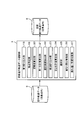
- FIG. 1 is a functional block diagram showing the entire configuration of one embodiment
- FIG. 2 is a functional block diagram of a traveling track data generation unit
- FIG. 3 is a functional block diagram of the correct travel track data selection unit
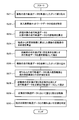
- FIG. 4 is a flowchart showing a traveling track data generation process
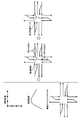
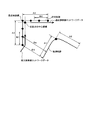
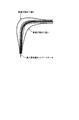
- FIG. 5 is a diagram showing an aspect of generating traveling track data
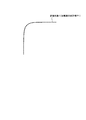
- FIG. 6 is a diagram showing an aspect of identifying lane network data
- FIG. 7 is a diagram showing an aspect of identifying center coordinates of an intersection
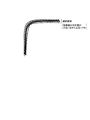
- FIG. 8 is a diagram showing an aspect of identifying the nearest coordinates
- FIG. 1 is a functional block diagram showing the entire configuration of one embodiment
- FIG. 2 is a functional block diagram of a traveling track data generation unit
- FIG. 3 is a functional block diagram of the correct travel track data selection unit
- FIG. 4 is a flowchart showing a traveling track data generation process
- FIG. 5 is a diagram showing an aspect of generating traveling track data
- FIG. 6 is a diagram showing an
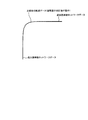
- FIG. 9 is a diagram showing an aspect of setting a trajectory acquisition section and a fitting section;
- FIG. 10 is a diagram showing an aspect of calculating an average value of distance differences;
- FIG. 11 is a diagram showing an aspect in which the estimated trajectory is moved in parallel by the average value of the distance differences,
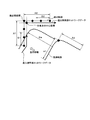
- FIG. 12 is a diagram showing an aspect of calculating the vertical distance;
- FIG. 13 is a diagram showing an aspect in which the estimated trajectory is moved in parallel by the vertical distance,
- FIG. 14 is a diagram showing an aspect of rotating the estimated trajectory;
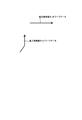
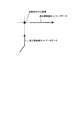
- FIG. 15 is a diagram showing an aspect of setting an ingress link vector,
- FIG. 16 is a diagram showing an aspect in which the estimated trajectory is moved in parallel to the direction of the ingress link vector, FIG.
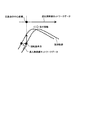
- FIG. 17 is a diagram showing an aspect in which the estimated trajectory is moved in parallel to the direction of the incoming link vector
- FIG. 18 is a flowchart showing the correct traveling track data selection process
- FIG. 19 is a diagram showing an example of selecting the correct traveling track data
- FIG. 20 is a diagram showing an aspect of narrowing the traveling track data according to the vehicle speed
- FIG. 21 is a diagram showing an aspect of identifying an end point of approach lane network data
- FIG. 22 is a diagram showing an aspect of calculating the distance difference up to the calculation section
- FIG. 23 is a diagram showing an aspect of calculating the sum of distance differences
- FIG. 24 is a diagram showing an aspect of calculating a total value of a plurality of distance differences, FIG.
- FIG. 25 is a diagram showing an aspect in which traveling track data having a sum of distance differences satisfying a first predetermined condition is extracted as a selection candidate
- FIG. 26 is a diagram showing an aspect of narrowing the traveling track data according to the curvature
- FIG. 27 is a diagram showing an aspect of calculating a total value of the entrance side distance difference and the exit side distance difference
- FIG. 28 is a diagram showing an aspect in which traveling track data whose total value satisfies a predetermined condition is selected as correct traveling track data
- FIG. 29 is a diagram showing an aspect in which overlapping portions are deleted
- FIG. 30 is a diagram showing an aspect of determining a misplacement and a crossing
- FIG. 31 is a diagram showing an aspect of adding information on the stop position of the vehicle
- FIG. 32 is a diagram showing an aspect of adding information on the travelable width of the vehicle.
- the traveling track data generation device 1 in the intersection is a device for generating traveling track data in the intersection for automatic driving, and a traveling track data generation unit 2 and a correct traveling track data selection unit 3
- the traveling track data generation unit 2 generates traveling track data in the intersection by using the absolute track and the estimated track acquired from the vehicle side and the lane network data stored in the lane network data storage unit 4 as input.
- the absolute locus is, for example, a GPS locus indicating a GPS position
- the estimated locus is, for example, a locus indicated by a sensor value of a gyro sensor.
- Lane network data is traveling track data outside the intersection.
- the traveling track data generation unit 2 outputs the generated traveling track data and stores the traveling track data in the intersection in the traveling track data storage unit 5.
- the correct traveling track data selection unit 3 receives a plurality of traveling track data in the intersection stored in the traveling track data storage unit 5 and selects the correct traveling track data from among the plurality of traveling track data. Then, the correct travel track data selection unit 3 outputs the selected correct travel track data and stores the correct travel track data in the correct travel track data storage unit 6.
- the traveling track data generation unit 2 includes a lane network data specification unit 7, a center coordinate specification unit 8, a nearest coordinate specification unit 9, a section setting unit 10, and an average value calculation unit 11.
- the correct traveling track data selection unit 3 includes a first narrowing unit 18, an end point identification unit 19, a distance difference calculation unit 20, a first total value calculation unit 21, and a selection candidate extraction unit 22.
- a second narrowing unit 23, a second total value calculation unit 24, a selection unit 25, an overlap portion deletion unit 26, and a rubbing difference intersection determination unit 27 are provided.
- microcomputer having a central processing unit (CPU), a read only memory (ROM), a random access memory (RAM), and an input / output (I / O).
- CPU central processing unit
- ROM read only memory
- RAM random access memory
- I / O input / output
- the microcomputer executes the processing corresponding to the computer program by executing the computer program stored in the non-transitional tangible storage medium, and controls the overall operation of the traveling track data generation device 1.
- the computer program executed by the microcomputer includes a traveling track data generation program.
- the lane network data identification unit 7 reads lane network data stored in the lane network data storage unit 4 and, based on the read lane network data, the entry lane network data on the side entering the intersection and the side exiting the intersection And the exit lane network data of the
- the center coordinate identification unit 8 identifies, as the center coordinates of the intersection, the intersection of the extension line of the ingress lane network data identified by the lane network data identification unit 7 and the extension line of the exit lane network data.
- the nearest coordinate identification unit 9 acquires an absolute trajectory from the vehicle side, and among the plurality of coordinates constituting the acquired absolute trajectory, coordinates that are closest to the center coordinates of the intersection identified by the center coordinate identification unit 8 Is specified as the nearest coordinate.
- the section setting unit 10 sets a trajectory acquisition section and an alignment on the basis of the nearest neighbor coordinates specified by the nearest neighbor coordinate specifying unit 9 in each of the entry-side absolute trajectory on the entry side of the absolute trajectory and the exit-side absolute trajectory on the exit side. Set the included interval.
- the average value calculation unit 11 acquires the estimated trajectory from the vehicle side, and corresponds to the combined section of the entry-side absolute trajectory set by the section setting unit 10 and the combined section of the entry-side absolute trajectory of the estimated trajectory. The average value of the distance difference with the approach side estimated trajectory is calculated.
- the first parallel movement unit 12 parallelly moves the estimated trajectory by the average value of the distance differences calculated by the average value calculation unit 11.
- the vertical distance calculation unit 13 uses the middle point of the fitting section of the entry side estimated trajectory as the rotation reference point, and calculates the vertical distance from the rotation reference point to the entry lane network data.
- the second parallel movement unit 14 parallelly moves the estimated trajectory by the vertical distance calculated by the vertical distance calculation unit 13.
- the estimated trajectory rotation unit 15 rotates the estimated trajectory so as to minimize the difference in distance between the fitting section of the approach estimated trajectory and the approach lane network data.
- the entry link vector setting unit 16 sets an entry link vector from the start point to the end point of the fitting section of the entry side estimated trajectory.
- the third parallel movement unit 17 parallelly moves the inferred trajectory in the direction of the ingress link vector set by the ingress link vector setting unit 16 so as to minimize the distance difference between the inferred trajectory and the egress lane network data. .
- the first narrowing unit 18 narrows the plurality of traveling track data according to the vehicle speed.
- the end point identifying unit 19 identifies an end point of the ingress lane network data.
- the distance difference calculation unit 20 selects one traveling track data from among a plurality of traveling track data and selects all the remaining traveling track data as a comparison target, and from the end points specified by the end point specifying unit 19 A distance difference between the traveling track data to be evaluated at predetermined intervals and the traveling track data to be compared is calculated up to the calculation section.
- the first total value calculation unit 21 calculates a total value of a plurality of distance differences calculated at predetermined intervals from the end point.
- the selection candidate extraction unit 22 extracts, as a selection candidate, traveling track data in which a total value of distance differences calculated by the first total value calculating unit 21 satisfies a first predetermined condition from among a plurality of traveling track data.
- the second narrowing unit 23 narrows the plurality of traveling track data in accordance with the curvature of the traveling track data.
- the second total value calculation unit 24 determines an entrance-side distance difference between the entrance-side travel track data on the side entering the intersection and the entrance-side lane network data among the travel track data extracted as the selection candidate, and the exit side from the intersection A total value of the exit side traveling track data and the exit side distance difference between the exit side lane network data is calculated.
- the selection unit 25 is configured such that the total value of the entrance-side distance difference and the exit-side distance difference calculated by the second total value calculation unit 24 among the plurality of traveling track data extracted as the selection candidate satisfies the second predetermined condition
- the traveling track data is selected as the correct traveling track data.
- the overlap portion deletion unit 26 deletes a portion overlapping with the entrance lane network data and the exit lane network data in the correct traveling track data selected by the selection unit 25.
- the misplacement crossing determination unit 27 determines the misplacement and crossing between the correct traveling track data and the other correct traveling track data.
- the traveling track data generation device 1 executes a traveling track data generation program, and executes traveling track data generation processing and correct traveling track data selection processing. Each of the processes will be sequentially described below.
- the traveling track data generation unit 2 executes the traveling track data generation process shown in FIG. 4 when the start event of the traveling track data generation process is established. As shown in FIG. 5, the traveling track data generation unit 2 inputs the absolute track and the estimated track acquired from the vehicle side and the lane network data stored in the lane network data storage unit 4 and travels in the intersection Trajectory data is generated, and the generated traveling trajectory data is output.
- the process which each function block of the traveling track data generation part 2 performs is demonstrated.
- the lane network data identification unit 7 reads lane network data stored in the lane network data storage unit 4 and, based on the read lane network data, as shown in FIG.
- the entry lane network data and the departure lane network data to be generated for the traveling track data are specified from among the entry lane network data and the plurality of departure lane network data on the exit side of the intersection (S1, Corresponds to the lane network data identification procedure).
- the central coordinate specifying unit 8 sets the intersection point of the extension line of the entering lane network data specified by the lane network data specifying unit 7 and the extension line of the leaving lane network data It identifies as center coordinates (S2, corresponding to center coordinates identification procedure).
- the nearest coordinate specifying unit 9 acquires an absolute trajectory from the vehicle side, and among the plurality of coordinates constituting the acquired absolute trajectory, it is closest to the center coordinates of the intersection.
- the coordinates are identified as the nearest coordinates (S3, corresponding to the nearest coordinates identification procedure). That is, among the GPS coordinates “N1” to “N7” constituting the GPS locus, the nearest coordinate specifying unit 9 specifies the GPS coordinate “N4” that is closest to the center coordinate of the intersection as the nearest coordinate.
- the section setting unit 10 sets a track acquisition section and a combination section in each of the entry-side absolute track on the entry side of the absolute track and the exit-side absolute track on the exit side S4, corresponding to the section setting procedure). That is, the section setting unit 10 sets a track acquisition section “A1” and a combination section “B1” on the basis of the nearest coordinates in the entry-side absolute track, and a track acquisition section on the basis of the nearest coordinates in the retreating absolute track. Set “A2" and the combined section "B2".
- the track acquisition section “A1” on the entry side and the track acquisition section “A2” on the exit side are, for example, “50 meters”, and the combination section “B1” on the entry side and the combination section “B2” on the exit side It is 30 meters.
- the trajectory acquisition section “A1” on the entry side and the trajectory acquisition section “A2” on the exit side may have the same value or different values.
- the alignment section “B1" on the entry side and the alignment section “B2” on the exit side may have the same value or different values.
- the average value calculation unit 11 acquires the estimated trajectory from the vehicle side, and the entry section of the entry-side absolute trajectory set by the interval setting unit 10 and the entry among the estimated trajectory
- the average value of the distance difference from the approach side estimated trajectory corresponding to the fit-in section of the side absolute trajectory is calculated (S5, corresponding to the average value calculation procedure). That is, the average value calculation unit 11 specifies the entry side estimated locus corresponding to the entry section “B1” of the entry side absolute locus, and the distance between the entry section “B1” of the entry side absolute locus and the entry side estimated locus
- An average value of differences “D1” to “Dn (n is a natural number)” is calculated.
- the first parallel movement unit 12 parallelly moves the estimated trajectory by the average value of the distance differences calculated by the average value calculation unit 11 (S6, corresponding to a first parallel movement procedure) ). That is, the first parallel movement unit 12 parallelly moves the estimated trajectory by the average value “Da” of the distance differences “D1” to “Dn”.
- the vertical distance calculation unit 13 calculates the vertical distance from the rotation reference point to the entry lane network data, using the midpoint of the fitting section of the entry side estimated trajectory as the rotation reference point. (S7, corresponding to the vertical distance calculation procedure). That is, the vertical distance calculation unit 13 calculates the vertical distance "E" from the rotation reference point to the entrance lane network data.
- the second parallel movement unit 14 parallelly moves the estimated trajectory by the vertical distance calculated by the vertical distance calculation unit 13 (S8, corresponding to a second parallel movement procedure). That is, the second parallel movement unit 14 parallelly moves the estimated trajectory by the vertical distance “E”.
- the estimated trajectory rotation unit 15 rotates the estimated trajectory so that the distance difference between the fitting section of the approach estimated trajectory and the approach lane network data is minimized (S9, estimation) Corresponds to the trajectory rotation procedure). That is, the estimated trajectory rotation unit 15 rotates the estimated trajectory such that the difference in distance “F1” to “Fn” between the fit-in section “B1” of the approach estimated trajectory and the approach lane network data is minimized.
- the entry link vector setting unit 16 sets from the start point to the end point of the fitting section of the entry side estimated trajectory as the entry link vector (S10, corresponding to the entry link vector setting procedure) . That is, the entry link vector setting unit 16 sets an entry link vector “G” from the start point to the end point of the combination section “B1” of the entry side estimated trajectory.
- the third parallel movement unit 17 parallelly moves the inferred trajectory in the direction of the approach link vector so that the distance difference between the inferred trajectory and the ingress lane network data is minimized ( S11, corresponding to the third parallel movement procedure). That is, as shown in FIG. 17, the third parallel movement unit 17 makes the approach link vector such that the distance difference “H1” to “Hn” between the leaving estimated trajectory and the leaving lane network data is minimized. Move parallel to the direction of.
- the traveling track data generation unit 2 executes the series of processes described above to use the absolute trajectory and the estimated trajectory acquired from the vehicle side and the lane network data stored in the lane network data storage unit 4. Then, traveling track data in the intersection is generated, and the generated traveling track data is stored in the traveling track data storage unit 5.
- the correct travel track data selection unit 3 selects the correct travel track data selection process shown in FIG. 18 when the start event of the correct travel track data selection process is established. Run. As shown in FIG. 19, the correct traveling track data selection unit 3 inputs a plurality of traveling track data stored in the traveling track data storage unit 5, and correct traveling track data is selected from among the plurality of traveling track data. The selected correct travel trajectory data is output. Hereinafter, the process which each function block of the correct travel track data selection part 3 performs is demonstrated.
- the first narrowing unit 18 narrows a plurality of traveling track data according to the vehicle speed (S21, corresponding to a first narrowing procedure). That is, the first narrowing unit 18 excludes, as an exception, traveling track data generated for a vehicle having a very high vehicle speed among a plurality of traveling track data and traveling trajectory data generated for a vehicle having a very low vehicle speed. Narrow down multiple travel track data.
- the end point specifying unit 19 specifies an end point of the approach lane network data (S22, corresponding to the end point specifying procedure).
- the distance difference calculation unit 20 selects one traveling track data from among a plurality of traveling track data and selects all remaining traveling track data as comparison targets, From the end point specified by the end point specifying unit 19, the distance difference between the traveling track data to be evaluated and the traveling track data to be compared at predetermined intervals is calculated up to the calculation section (S23, equivalent to distance difference calculation procedure).
- the predetermined interval is, for example, "one meter”.
- the first total value calculation unit 21 calculates a total value of a plurality of distance differences calculated at predetermined intervals from the end point (S24, corresponding to a first total value calculation procedure).
- the first total value calculation unit 21 changes the evaluation object, and as shown in FIG. 23 and FIG.
- the selection candidate extraction unit 22 is a traveling track satisfying the first predetermined condition from among the plurality of traveling track data and the sum of the distance differences calculated by the first total value calculating unit 21.
- Data is extracted as a selection candidate (S25, corresponding to the selection candidate extraction procedure).
- the first predetermined condition is, for example, a condition in which the total value of the distance differences is smaller and the top 10%.
- the second narrowing unit 23 narrows the plurality of traveling track data extracted as the selection candidate by the selection candidate extraction unit 22 according to the curvature of the traveling track data (S26, second narrowing) Equivalent to the procedure). That is, the second narrowing unit 23 excludes, as an exception, traveling track data in which the curvature partially exceeds the threshold among the plurality of traveling track data, and narrows down the plurality of traveling track data extracted as selection candidates.
- the second total value calculation unit 24 among the traveling track data narrowed down by the second narrowing unit 23, the entrance-side traveling track data and the entering-side lane network data on the side entering an intersection calculates the total value of the entrance side distance difference with the exit side traveling track data of the exit side from the intersection and the exit side distance difference between the exit lane network data ).
- the selecting unit 25 is driven such that the sum of the entrance side distance difference and the exit side distance difference out of the plurality of traveling track data extracted as the selection candidate satisfies the second predetermined condition.
- Trajectory data is selected as correct travel trajectory data (S28, corresponding to selection procedure).
- the second predetermined condition is, for example, a condition in which the total value of the entrance side distance difference and the exit side distance difference is minimum.
- the overlap portion deletion unit 26 deletes a portion overlapping with the entrance lane network data and the exit lane network data in the correct traveling track data selected by the selection unit 25 (S29, overlap) It corresponds to the partial deletion procedure). That is, the overlapping part deletion unit 26 smoothes the connection point between the correct traveling track data and the entering lane network data, and smoothes the connecting point between the correct traveling orbit data and the entering lane network data.
- the rubbing / crossing determination unit 27 determines rubbing or crossing between the correct traveling track data and the other correct traveling track data (S29, corresponding to the overlapping portion deletion procedure). That is, the collision crossing determination unit 27 determines the possibility of a vehicle collision by determining the collision or crossing between the correct traveling track data and the other correct traveling track data.
- the correct answer traveling track data selection unit 3 selects the correct answer traveling track data from among the plurality of traveling track data stored in the traveling track data storage unit 5 by executing the series of processes described above.
- the selected correct answer traveling track data is stored in the correct answer traveling track data storage unit 6.
- travel track data generation device 1 travel track data is generated by matching the estimated track when the vehicle actually travels in the intersection with the lane network data connected to the intersection using the absolute track. did. By connecting the estimated trajectory when the vehicle actually travels in the intersection with the lane network data using the absolute trajectory, the connection between the traveling track data in the intersection and the lane network data connected to the intersection is obtained. It can be optimized. Thereby, traveling track data in the intersection for autonomous driving can be generated appropriately.
- the traveling track data of the correct answer is selected as the correct traveling track data from among a plurality of traveling track data. That is, when a plurality of traveling track data are generated, not all of the generated traveling track data are appropriate, and there is a possibility that incorrect traveling track data may be generated. By selecting the correct traveling track data, it is possible to select appropriate traveling track data.
- the process of narrowing the plurality of traveling track data according to the vehicle speed in the first narrowing unit 18 or the process of narrowing the plurality of traveling track data according to the curvature of the traveling track data in the second narrowing unit 23 may be performed at any timing. . That is, immediately after performing processing of narrowing down a plurality of traveling track data according to vehicle speed, processing of narrowing down a plurality of traveling track data according to the curvature of the traveling track data may be performed. Also, these processes may be omitted.
- the correct traveling track data selection unit 3 selects the correct traveling track data
- additional information may be added to the correct traveling track data. That is, as shown in FIG. 31, the correct traveling track data selection unit 3 uses the vehicle speed serving as a determination reference when narrowing down a plurality of traveling track data according to the vehicle speed, and The stop position may be specified, and the information on the stop position of the specified vehicle may be added to the correct answer traveling track data.
- the correct answer traveling track data selection unit 3 selects a range of traveling track data passing the innermost in the intersection and traveling track data passing the outermost among the plurality of traveling track data. It may be specified as the drivable width of the vehicle, and information on the drivable width of the specified vehicle may be added to the correct answer traveling track data.
- the correct traveling track data selection unit 3 gives a margin to the range between the traveling track data passing the innermost and the traveling track data passing the outermost, and the vehicle travels in a range narrower than that range. It may be specified as a possible range.
- the correct travel track data selection unit 3 identifies only the inner travelable range by the travel track data passing the innermost, and adds information on the identified inner travelable range to the correct travel track data.
Landscapes
- Engineering & Computer Science (AREA)
- Physics & Mathematics (AREA)
- Automation & Control Theory (AREA)
- Transportation (AREA)
- Mechanical Engineering (AREA)
- Theoretical Computer Science (AREA)
- General Physics & Mathematics (AREA)
- Human Computer Interaction (AREA)
- Mathematical Physics (AREA)
- Business, Economics & Management (AREA)
- Educational Administration (AREA)
- Educational Technology (AREA)
- Traffic Control Systems (AREA)
- Instructional Devices (AREA)
- Navigation (AREA)
Abstract
自動運転用の交差点内の走行軌道データを生成する走行軌道データ生成装置は、実際に車両が交差点内を走行したときの推測軌跡を、実際に車両が交差点内を走行したときの絶対軌跡を用いて当該交差点に接続する車線ネットワークデータに対して合わせ込んで走行軌道データを生成する走行軌道データ生成部(2)を備える。
Description
本出願は、2017年12月22日に出願された日本出願番号2017-246280号に基づくもので、ここにその記載内容を援用する。
本開示は、交差点内の走行軌道データ生成装置、交差点内の走行軌道データ生成プログラム及び記憶媒体に関する。
専用の移動車両を用いて道路の形状や位置を高精度に計測し、自動運転用の走行軌道データを生成する手法がある。この手法では、原則として高価なセンサや人による膨大な作業が必要であり、高速道路や自動車専用道路等の限定された範囲でしか走行軌道データを生成することができない。そのため、一般道路等の走行軌道データを生成することはできず、交差点内の走行軌道データを生成することはできない。このような事情から、交差点内の走行軌道データを生成する技術の確立が望まれている。
例えば特許文献1には、車両のGPS(Global Positioning System)位置を示すGPS軌跡を絶対軌跡として用いて新規道路を推測し、その推測した新規道路と既存道路との接続を推定して地図データを更新する手法が開示されている。又、例えば特許文献2には、交差点に進入する側の進入側車線と交差点から退出する側の退出側車線とを円弧(二次ベジェ曲線)により接続して交差点内の走行軌道データを生成する手法が開示されている。
特許文献1に開示されている手法では、GPS位置の散らばりが大きく、上記した手法により生成した走行軌道データは精度に劣る問題がある。又、特許文献2に開示されている手法では、実際の車両の交差点内の走行軌道は交差点の形状により様々であるので、上記した手法により生成した走行軌道データは実際の走行軌道と乖離する可能性が高く、実用的でない問題がある。
本開示は、自動運転用の交差点内の走行軌道データを適切に生成することができる交差点内の走行軌道データ生成装置、交差点内の走行軌道データ生成プログラム及び記憶媒体を提供することを目的とする。
本開示の一態様によれば、走行軌道データ生成部は、実際に車両が交差点内を走行したときの推測軌跡を、実際に車両が交差点内を走行したときの絶対軌跡を用いて当該交差点に接続する車線ネットワークデータに対して合わせ込んで走行軌道データを生成する。
即ち、実際に車両が交差点内を走行したときの絶対軌跡だけを用いて交差点内の走行軌道データを生成する従来の手法とは異なり、実際に車両が交差点内を走行したときの推測軌跡を、絶対軌跡を用いて当該交差点に接続する車線ネットワークデータに対して合わせ込んで走行軌道データを生成するようにした。推測軌跡を、絶対軌跡を用いて車線ネットワークデータに対して合わせ込むことで、交差点内の走行軌道データと当該交差点に接続する車線ネットワークデータとの接続を最適化することができる。これにより、自動運転用の交差点内の走行軌道データを適切に生成することができる。
本開示についての上記目的及びその他の目的、特徴や利点は、添付の図面を参照しながら下記の詳細な記述により、より明確になる。その図面は、
図1は、一実施形態の全体構成を示す機能ブロック図であり、
図2は、走行軌道データ生成部の機能ブロック図であり、
図3は、正解走行軌道データ選択部の機能ブロック図であり、
図4は、走行軌道データ生成処理を示すフローチャートであり、
図5は、走行軌道データを生成する態様を示す図であり、
図6は、車線ネットワークデータを特定する態様を示す図であり、
図7は、交差点の中心座標を特定する態様を示す図であり、
図8は、最近傍座標を特定する態様を示す図であり、
図9は、軌跡取得区間及び合わせ込み区間を設定する態様を示す図であり、
図10は、距離差の平均値を算出する態様を示す図であり、
図11は、推測軌跡を距離差の平均値だけ並行移動させる態様を示す図であり、
図12は、垂直距離を算出する態様を示す図であり、
図13は、推測軌跡を垂直距離だけ並行移動させる態様を示す図であり、
図14は、推測軌跡を回転させる態様を示す図であり、
図15は、進入リンクベクトルを設定する態様を示す図であり、
図16は、推測軌跡を進入リンクベクトルの向きに並行移動させる態様を示す図であり、
図17は、推測軌跡を進入リンクベクトルの向きに並行移動させた態様を示す図であり、
図18は、正解走行軌道データ選択処理を示すフローチャートであり、
図19は、正解走行軌道データを選択する態様を示す図であり、
図20は、走行軌道データを車速にしたがって絞り込む態様を示す図であり、
図21は、進入側車線ネットワークデータの端点を特定する態様を示す図であり、
図22は、距離差を算出区間まで算出する態様を示す図であり、
図23は、距離差の合計値を算出する態様を示す図であり、
図24は、複数の距離差の合計値を算出する態様を示す図であり、
図25は、距離差の合計値が第1所定条件を満たす走行軌道データを選択候補として抽出する態様を示す図であり、
図26は、走行軌道データを曲率にしたがって絞り込む態様を示す図であり、
図27は、進入側距離差と退出側距離差との合計値を算出する態様を示す図であり、
図28は、合計値が所定条件を満たす走行軌道データを正解走行軌道データとして選択する態様を示す図であり、
図29は、重なり部分を削除する態様を示す図であり、
図30は、擦れ違いや交差を判定する態様を示す図であり、
図31は、車両の停止位置に関する情報を付加する態様を示す図であり、
図32は、車両の走行可能幅に関する情報を付加する態様を示す図である。
以下、一実施形態について図面を参照して説明する。図1に示すように、交差点内の走行軌道データ生成装置1は、自動運転用の交差点内の走行軌道データを生成する装置であり、走行軌道データ生成部2と、正解走行軌道データ選択部3とを備える。走行軌道データ生成部2は、車両側から取得する絶対軌跡及び推測軌跡と、車線ネットワークデータ格納部4に格納されている車線ネットワークデータとを入力とし、交差点内の走行軌道データを生成する。絶対軌跡は例えばGPS位置を示すGPS軌跡であり、推測軌跡は例えばジャイロセンサのセンサ値で示される軌跡である。又、車線ネットワークデータは交差点外の走行軌道データである。そして、走行軌道データ生成部2は、その生成した走行軌道データを出力とし、交差点内の走行軌道データを走行軌道データ格納部5に格納する。正解走行軌道データ選択部3は、走行軌道データ格納部5に格納されている交差点内の複数の走行軌道データを入力とし、その複数の走行軌道データの中から正解走行軌道データを選択する。そして、正解走行軌道データ選択部3は、その選択した正解走行軌道データを出力とし、正解走行軌道データを正解走行軌道データ格納部6に格納する。
走行軌道データ生成部2は、図2に示すように、車線ネットワークデータ特定部7と、中心座標特定部8と、最近傍座標特定部9と、区間設定部10と、平均値算出部11と、第1並行移動部12と、垂直距離算出部13と、第2並行移動部14と、推測軌跡回転部15と、進入リンクベクトル設定部16と、第3並行移動部17とを備える。正解走行軌道データ選択部3は、図3に示すように、第1絞り込み部18と、端点特定部19と、距離差算出部20と、第1合計値算出部21と、選択候補抽出部22と、第2絞り込み部23と、第2合計値算出部24と、選択部25と、重なり部分削除部26と、擦れ違い交差判定部27とを備える。これらの機能ブロックは、CPU(Central Processing Unit)、ROM(Read Only Memory)、RAM(Random Access Memory)及びI/O(Input/Output)を有するマイクロコンピュータにより構成される。マイクロコンピュータは、非遷移的実体的記憶媒体に格納されているコンピュータプログラムを実行することで、コンピュータプログラムに対応する処理を実行し、走行軌道データ生成装置1の動作全般を制御する。マイクロコンピュータが実行するコンピュータプログラムには走行軌道データ生成プログラムが含まれる。
最初に、走行軌道データ生成部2の各機能ブロックについて説明する。車線ネットワークデータ特定部7は、車線ネットワークデータ格納部4に格納されている車線ネットワークデータを読み込み、その読み込んだ車線ネットワークデータにより、交差点に進入する側の進入側車線ネットワークデータと交差点から退出する側の退出側車線ネットワークデータとを特定する。
中心座標特定部8は、車線ネットワークデータ特定部7により特定された進入側車線ネットワークデータの延長線と退出側車線ネットワークデータの延長線との交点を交差点の中心座標として特定する。最近傍座標特定部9は、車両側から絶対軌跡を取得し、その取得した絶対軌跡を構成する複数の座標の中から中心座標特定部8により特定された交差点の中心座標に最近傍となる座標を最近傍座標として特定する。
区間設定部10は、絶対軌跡の進入側である進入側絶対軌跡及び退出側である退出側絶対軌跡のそれぞれにおいて最近傍座標特定部9により特定された最近傍座標を基準として軌跡取得区間及び合わせ込み区間を設定する。平均値算出部11は、車両側から推測軌跡を取得し、区間設定部10により設定された進入側絶対軌跡の合わせ込み区間と、推測軌跡のうち当該進入側絶対軌跡の合わせ込み区間に対応する進入側推測軌跡との距離差の平均値を算出する。
第1並行移動部12は、推測軌跡を平均値算出部11により算出された距離差の平均値だけ並行移動させる。垂直距離算出部13は、進入側推測軌跡の合わせ込み区間の中間点を回転基準点とし、その回転基準点から進入側車線ネットワークデータへの垂直距離を算出する。第2並行移動部14は、推測軌跡を垂直距離算出部13により算出された垂直距離だけ並行移動させる。
推測軌跡回転部15は、推測軌跡を進入側推測軌跡の合わせ込み区間と進入側車線ネットワークデータとの距離差が最小となるように回転させる。進入リンクベクトル設定部16は、進入側推測軌跡の合わせ込み区間の始点から終点までを進入リンクベクトルとして設定する。第3並行移動部17は、推測軌跡を退出側推測軌跡と退出側車線ネットワークデータとの距離差が最小となるように進入リンクベクトル設定部16により設定された進入リンクベクトルの向きに並行移動させる。
次に、正解走行軌道データ選択部3の各機能ブロックについて説明する。第1絞り込み部18は、複数の走行軌道データを車速にしたがって絞り込む。端点特定部19は、進入側車線ネットワークデータの端点を特定する。距離差算出部20は、複数の走行軌道データの中から一の走行軌道データを評価対象とすると共に残りの全ての走行軌道データを比較対象として選択し、端点特定部19により特定された端点から所定間隔毎の評価対象の走行軌道データと比較対象の走行軌道データとの距離差を算出区間まで算出する。
第1合計値算出部21は、端点から所定間隔毎に算出された複数の距離差の合計値を算出する。選択候補抽出部22は、複数の走行軌道データの中から第1合計値算出部21により算出された距離差の合計値が第1所定条件を満たす走行軌道データを選択候補として抽出する。第2絞り込み部23は、複数の走行軌道データを当該走行軌道データの曲率にしたがって絞り込む。第2合計値算出部24は、選択候補として抽出された走行軌道データのうち交差点に進入する側の進入側走行軌道データと進入側車線ネットワークデータとの進入側距離差と、交差点から退出する側の退出側走行軌道データと退出側車線ネットワークデータとの退出側距離差との合計値を算出する。
選択部25は、選択候補として抽出された複数の走行軌道データの中から第2合計値算出部24により算出された進入側距離差と退出側距離差との合計値が第2所定条件を満たす走行軌道データを正解走行軌道データとして選択する。重なり部分削除部26は、選択部25により選択された正解走行軌道データにおいて進入側車線ネットワークデータ及び退出側車線ネットワークデータと重なる部分を削除する。擦れ違い交差判定部27は、正解走行軌道データと他の正解走行軌道データとの擦れ違いや交差を判定する。
次に、上記した構成の作用について図4から図30を参照して説明する。
走行軌道データ生成装置1は、走行軌道データ生成プログラムを実行し、走行軌道データ生成処理と正解走行軌道データ選択処理を実行する。以下、それぞれの処理について順次説明する。
走行軌道データ生成装置1は、走行軌道データ生成プログラムを実行し、走行軌道データ生成処理と正解走行軌道データ選択処理を実行する。以下、それぞれの処理について順次説明する。
(1)走行軌道データ生成処理
走行軌道データ生成装置1において、走行軌道データ生成部2は、走行軌道データ生成処理の開始イベントが成立すると、図4に示す走行軌道データ生成処理を実行する。走行軌道データ生成部2は、図5に示すように、車両側から取得する絶対軌跡及び推測軌跡と、車線ネットワークデータ格納部4に格納されている車線ネットワークデータとを入力し、交差点内の走行軌道データを生成し、その生成した走行軌道データを出力する。以下、走行軌道データ生成部2の各機能ブロックが実行する処理を説明する。
走行軌道データ生成装置1において、走行軌道データ生成部2は、走行軌道データ生成処理の開始イベントが成立すると、図4に示す走行軌道データ生成処理を実行する。走行軌道データ生成部2は、図5に示すように、車両側から取得する絶対軌跡及び推測軌跡と、車線ネットワークデータ格納部4に格納されている車線ネットワークデータとを入力し、交差点内の走行軌道データを生成し、その生成した走行軌道データを出力する。以下、走行軌道データ生成部2の各機能ブロックが実行する処理を説明する。
最初に、車線ネットワークデータ特定部7は、車線ネットワークデータ格納部4に格納されている車線ネットワークデータを読み込み、その読み込んだ車線ネットワークデータにより、図6に示すように、交差点に進入する側の複数の進入側車線ネットワークデータと交差点から退出する側の複数の退出側車線ネットワークデータの中からそれぞれ走行軌道データを生成する対象とする進入側車線ネットワークデータと退出側車線ネットワークデータを特定する(S1、車線ネットワークデータ特定手順に相当する)。
次に、中心座標特定部8は、図7に示すように、車線ネットワークデータ特定部7により特定された進入側車線ネットワークデータの延長線と退出側車線ネットワークデータの延長線との交点を交差点の中心座標として特定する(S2、中心座標特定手順に相当する)。
次に、最近傍座標特定部9は、図8に示すように、車両側から絶対軌跡を取得し、その取得した絶対軌跡を構成する複数の座標の中から交差点の中心座標に最近傍となる座標を最近傍座標として特定する(S3、最近傍座標特定手順に相当する)。即ち、最近傍座標特定部9は、GPS軌跡を構成するGPS座標「N1」~「N7」の中から交差点の中心座標に最近傍となるGPS座標「N4」を最近傍座標として特定する。
次に、区間設定部10は、図9に示すように、絶対軌跡の進入側である進入側絶対軌跡及び退出側である退出側絶対軌跡のそれぞれにおいて軌跡取得区間及び合わせ込み区間を設定する(S4、区間設定手順に相当する)。即ち、区間設定部10は、進入側絶対軌跡において最近傍座標を基準として軌跡取得区間「A1」及び合わせ込み区間「B1」を設定し、退出側絶対軌跡において最近傍座標を基準として軌跡取得区間「A2」及び合わせ込み区間「B2」を設定する。進入側の軌跡取得区間「A1」と退出側の軌跡取得区間「A2」は例えば「50メートル」であり、進入側の合わせ込み区間「B1」と退出側の合わせ込み区間「B2」は例えば「30メートル」である。尚、進入側の軌跡取得区間「A1」と退出側の軌跡取得区間「A2」は同じ値であっても良いし異なる値であっても良い。又、進入側の合わせ込み区間「B1」と退出側の合わせ込み区間「B2」も同じ値であっても良いし異なる値であっても良い。
次に、平均値算出部11は、図10に示すように、車両側から推測軌跡を取得し、区間設定部10により設定された進入側絶対軌跡の合わせ込み区間と、推測軌跡のうち当該進入側絶対軌跡の合わせ込み区間に対応する進入側推測軌跡との距離差の平均値を算出する(S5、平均値算出手順に相当する)。即ち、平均値算出部11は、進入側絶対軌跡の合わせ込み区間「B1」に対応する進入側推測軌跡を特定し、進入側絶対軌跡の合わせ込み区間「B1」と進入側推測軌跡との距離差「D1」~「Dn(nは自然数)」の平均値を算出する。
次に、第1並行移動部12は、図11に示すように、推測軌跡を平均値算出部11により算出された距離差の平均値だけ並行移動させる(S6、第1並行移動手順に相当する)。即ち、第1並行移動部12は、推測軌跡を距離差「D1」~「Dn」の平均値「Da」だけ並行移動させる。
次に、垂直距離算出部13は、図12に示すように、進入側推測軌跡の合わせ込み区間の中間点を回転基準点とし、その回転基準点から進入側車線ネットワークデータへの垂直距離を算出する(S7、垂直距離算出手順に相当する)。即ち、垂直距離算出部13は、回転基準点から進入側車線ネットワークデータへの垂直距離「E」を算出する。
次に、第2並行移動部14は、図13に示すように、推測軌跡を垂直距離算出部13により算出された垂直距離だけ並行移動させる(S8、第2並行移動手順に相当する)。即ち、第2並行移動部14は、推測軌跡を垂直距離「E」だけ並行移動させる。
次に、推測軌跡回転部15は、図14に示すように、推測軌跡を進入側推測軌跡の合わせ込み区間と進入側車線ネットワークデータとの距離差が最小となるように回転させる(S9、推測軌跡回転手順に相当する)。即ち、推測軌跡回転部15は、推測軌跡を進入側推測軌跡の合わせ込み区間「B1」と進入側車線ネットワークデータとの距離差「F1」~「Fn」が最小となるように回転させる。
次に、進入リンクベクトル設定部16は、図15に示すように、進入側推測軌跡の合わせ込み区間の始点から終点までを進入リンクベクトルとして設定する(S10、進入リンクベクトル設定手順に相当する)。即ち、進入リンクベクトル設定部16は、進入側推測軌跡の合わせ込み区間「B1」の始点から終点までを進入リンクベクトル「G」として設定する。
そして、第3並行移動部17は、図16に示すように、推測軌跡を退出側推測軌跡と退出側車線ネットワークデータとの距離差が最小となるように進入リンクベクトルの向きに並行移動させる(S11、第3並行移動手順に相当する)。即ち、第3並行移動部17は、図17に示すように、推測軌跡を退出側推測軌跡と退出側車線ネットワークデータとの距離差「H1」~「Hn」が最小となるように進入リンクベクトルの向きに並行移動させる。
走行軌道データ生成部2は、以上に説明した一連の処理を実行することで、車両側から取得する絶対軌跡及び推測軌跡と、車線ネットワークデータ格納部4に格納されている車線ネットワークデータとを用いて交差点内の走行軌道データを生成し、その生成した走行軌道データを走行軌道データ格納部5に格納する。
(2)正解走行軌道データ選択処理
走行軌道データ生成装置1において、正解走行軌道データ選択部3は、正解走行軌道データ選択処理の開始イベントが成立すると、図18に示す正解走行軌道データ選択処理を実行する。正解走行軌道データ選択部3は、図19に示すように、走行軌道データ格納部5に格納されている複数の走行軌道データを入力し、その複数の走行軌道データの中から正解走行軌道データを選択し、その選択した正解走行軌道データを出力する。以下、正解走行軌道データ選択部3の各機能ブロックが実行する処理を説明する。
走行軌道データ生成装置1において、正解走行軌道データ選択部3は、正解走行軌道データ選択処理の開始イベントが成立すると、図18に示す正解走行軌道データ選択処理を実行する。正解走行軌道データ選択部3は、図19に示すように、走行軌道データ格納部5に格納されている複数の走行軌道データを入力し、その複数の走行軌道データの中から正解走行軌道データを選択し、その選択した正解走行軌道データを出力する。以下、正解走行軌道データ選択部3の各機能ブロックが実行する処理を説明する。
最初に、第1絞り込み部18は、図20に示すように、複数の走行軌道データを車速にしたがって絞り込む(S21、第1絞り込み手順に相当する)。即ち、第1絞り込み部18は、複数の走行軌道データの中から車速が極めて速い車両を対象として生成した走行軌道データや車速が極めて遅い車両を対象として生成した走行軌道データを例外として除外し、複数の走行軌道データを絞り込む。
次に、端点特定部19は、図21に示すように、進入側車線ネットワークデータの端点を特定する(S22、端点特定手順に相当する)。
次に、端点特定部19は、図21に示すように、進入側車線ネットワークデータの端点を特定する(S22、端点特定手順に相当する)。
次に、距離差算出部20は、図22に示すように、複数の走行軌道データの中から一の走行軌道データを評価対象とすると共に残りの全ての走行軌道データを比較対象として選択し、端点特定部19により特定された端点から所定間隔毎の評価対象の走行軌道データと比較対象の走行軌道データとの距離差を算出区間まで算出する(S23、距離差算出手順に相当する)。所定間隔は例えば「1メートル」である。
次に、第1合計値算出部21は、端点から所定間隔毎に算出された複数の距離差の合計値を算出する(S24、第1合計値算出手順に相当する)。第1合計値算出部21は、評価対象を変更し、図23及び図24に示すように、複数の走行軌道データの全てについて距離差の合計値を算出する。
次に、選択候補抽出部22は、図25に示すように、複数の走行軌道データの中から第1合計値算出部21により算出された距離差の合計値が第1所定条件を満たす走行軌道データを選択候補として抽出する(S25、選択候補抽出手順に相当する)。第1所定条件は例えば距離差の合計値が小さい方から上位10%の条件等である。
次に、第2絞り込み部23は、図26に示すように、選択候補抽出部22により選択候補として抽出された複数の走行軌道データを当該走行軌道データの曲率にしたがって絞り込む(S26、第2絞り込み手順に相当する)。即ち、第2絞り込み部23は、複数の走行軌道データの中から曲率が部分的に閾値を超えている走行軌道データを例外として除外し、選択候補として抽出された複数の走行軌道データを絞り込む。
次に、第2合計値算出部24は、図27に示すように、第2絞り込み部23により絞り込まれた走行軌道データのうち交差点に進入する側の進入側走行軌道データと進入側車線ネットワークデータとの進入側距離差と、交差点から退出する側の退出側走行軌道データと退出側車線ネットワークデータとの退出側距離差との合計値を算出する(S27:第2合計値算出手順に相当する)。
次に、選択部25は、図28に示すように、選択候補として抽出された複数の走行軌道データの中から進入側距離差と退出側距離差との合計値が第2所定条件を満たす走行軌道データを正解走行軌道データとして選択する(S28、選択手順に相当する)。第2所定条件は例えば進入側距離差と退出側距離差との合計値が最小となる条件である。
次に、重なり部分削除部26は、図29に示すように、選択部25により選択された正解走行軌道データにおいて進入側車線ネットワークデータ及び退出側車線ネットワークデータと重なる部分を削除する(S29、重なり部分削除手順に相当する)。即ち、重なり部分削除部26は、正解走行軌道データと進入側車線ネットワークデータとの接続箇所を平滑化し、正解走行軌道データと進入側車線ネットワークデータとの接続箇所を平滑化する。
そして、擦れ違い交差判定部27は、正解走行軌道データと他の正解走行軌道データとの擦れ違いや交差を判定する(S29、重なり部分削除手順に相当する)。即ち、擦れ違い交差判定部27は、正解走行軌道データと他の正解走行軌道データとの擦れ違いや交差を判定することで、車両衝突の可能性を判定する。
正解走行軌道データ選択部3は、以上に説明した一連の処理を実行することで、走行軌道データ格納部5に格納されている複数の走行軌道データの中から正解走行軌道データを選択し、その選択した正解走行軌道データを正解走行軌道データ格納部6に格納する。
以上に説明したように本実施形態によれば、次に示す効果を得ることができる。
走行軌道データ生成装置1において、実際に車両が交差点内を走行したときの推測軌跡を、絶対軌跡を用いて当該交差点に接続する車線ネットワークデータに対して合わせ込んで走行軌道データを生成するようにした。実際に車両が交差点内を走行したときの推測軌跡を、絶対軌跡を用いて車線ネットワークデータに対して合わせ込むことで、交差点内の走行軌道データと当該交差点に接続する車線ネットワークデータとの接続を最適化することができる。これにより、自動運転用の交差点内の走行軌道データを適切に生成することができる。
走行軌道データ生成装置1において、実際に車両が交差点内を走行したときの推測軌跡を、絶対軌跡を用いて当該交差点に接続する車線ネットワークデータに対して合わせ込んで走行軌道データを生成するようにした。実際に車両が交差点内を走行したときの推測軌跡を、絶対軌跡を用いて車線ネットワークデータに対して合わせ込むことで、交差点内の走行軌道データと当該交差点に接続する車線ネットワークデータとの接続を最適化することができる。これにより、自動運転用の交差点内の走行軌道データを適切に生成することができる。
又、走行軌道データ生成装置1において、複数の走行軌道データの中から正解の走行軌道データを正解走行軌道データとして選択するようにした。即ち、走行軌道データを複数生成すると、その生成した全ての走行軌道データが適切であるとは限らず、適切でない走行軌道データを生成する可能性があり得るが、複数の走行軌道データの中から正解走行軌道データを選択することで、適切な走行軌道データを選択することができる。
本開示は、実施例に準拠して記述されたが、当該実施例や構造に限定されるものではないと理解される。本開示は、様々な変形例や均等範囲内の変形をも包含する。加えて、様々な組み合わせや形態、更には、それらに一要素のみ、それ以上、或いはそれ以下を含む他の組み合わせや形態をも、本開示の範疇や思想範囲に入るものである。
第1絞り込み部18において複数の走行軌道データを車速にしたがって絞り込む処理や第2絞り込み部23において複数の走行軌道データを当該走行軌道データの曲率にしたがって絞り込む処理をどのようなタイミングで行っても良い。即ち、複数の走行軌道データを車速にしたがって絞り込む処理を行った直後に、複数の走行軌道データを当該走行軌道データの曲率にしたがって絞り込む処理を行っても良い。又、これらの処理を省いても良い。
正解走行軌道データ選択部3において、正解走行軌道データを選択する際に、その正解走行軌道データに付加情報を付加しても良い。即ち、正解走行軌道データ選択部3は、図31に示すように、複数の走行軌道データを車速にしたがって絞り込む処理を行う際の判定基準となる車速を用い、その車速から交差点内での車両の停止位置を特定し、その特定した車両の停止位置に関する情報を正解走行軌道データに付加しても良い。
又、正解走行軌道データ選択部3は、図32に示すように、複数の走行軌道データの中から交差点内の最も内側を通過する走行軌道データと最も外側を通過する走行軌道データとの範囲を車両の走行可能幅として特定し、その特定した車両の走行可能幅に関する情報を正解走行軌道データに付加しても良い。尚、正解走行軌道データ選択部3は、最も内側を通過する走行軌道データと最も外側を通過する走行軌道データとの範囲に対して余裕度を持たせ、その範囲よりも狭い範囲を車両の走行可能幅として特定しても良い。又、正解走行軌道データ選択部3は、最も内側を通過する走行軌道データにより内側の走行可能範囲のみを特定し、その特定した内側の走行可能範囲に関する情報を正解走行軌道データに付加しても良いし、最も外側を通過する走行軌道データにより外側の走行可能範囲のみを特定し、その特定した外側の走行可能範囲に関する情報を正解走行軌道データに付加しても良い。
Claims (10)
- 自動運転用の交差点内の走行軌道データを生成する走行軌道データ生成装置であって、
実際に車両が交差点内を走行したときの推測軌跡を、実際に車両が交差点内を走行したときの絶対軌跡を用いて当該交差点に接続する車線ネットワークデータに対して合わせ込んで走行軌道データを生成する走行軌道データ生成部(2)を備える交差点内の走行軌道データ生成装置。 - 前記走行軌道データ生成部は、
交差点に進入する側の進入側車線ネットワークデータと交差点から退出する側の退出側車線ネットワークデータとを特定する車線ネットワークデータ特定部(7)と、
進入側車線ネットワークデータの延長線と退出側車線ネットワークデータの延長線との交点を交差点の中心座標として特定する中心座標特定部(8)と、
絶対軌跡を構成する複数の座標の中から交差点の中心座標に最近傍となる座標を最近傍座標として特定する最近傍座標特定部(9)と、
絶対軌跡のうち進入する側の進入側絶対軌跡及び退出する側の退出側絶対軌跡のそれぞれにおいて最近傍座標を基準として軌跡取得区間及び合わせ込み区間を設定する区間設定部(10)と、
進入側絶対軌跡の合わせ込み区間と、推測軌跡のうち当該進入側絶対軌跡の合わせ込み区間に対応する進入側推測軌跡との距離差の平均値を算出する平均値算出部(11)と、
推測軌跡を距離差の平均値だけ並行移動させる第1並行移動部(12)と、
進入側推測軌跡の合わせ込み区間の中間点を回転基準点とし、その回転基準点から進入側車線ネットワークデータへの垂直距離を算出する垂直距離算出部(13)と、
推測軌跡を垂直距離だけ並行移動させる第2並行移動部(14)と、
推測軌跡を進入側推測軌跡の合わせ込み区間と進入側車線ネットワークデータとの距離差が最小となるように回転させる推測軌跡回転部(15)と、
進入側推測軌跡の合わせ込み区間の始点から終点までを進入リンクベクトルとして設定する進入リンクベクトル設定部(16)と、
推測軌跡を退出側推測軌跡と退出側車線ネットワークデータとの距離差が最小となるように進入リンクベクトルの向きに並行移動させる第3並行移動部(17)と、を備える請求項1に記載した交差点内の走行軌道データ生成装置。 - 前記走行軌道データ生成部により生成された複数の走行軌道データの中から正解の走行軌道データを正解走行軌道データとして選択する正解走行軌道データ選択部(3)を備える請求項1又は2に記載した交差点内の走行軌道データ生成装置。
- 前記正解走行軌道データ選択部は、
進入側車線ネットワークデータの端点を特定する端点特定部(19)と、
複数の走行軌道データの中から一の走行軌道データを評価対象とすると共に残りの全ての走行軌道データを比較対象として選択し、端点から所定間隔毎の評価対象の走行軌道データと比較対象の走行軌道データとの距離差を算出区間まで算出する距離差算出部(20)と、
端点から所定間隔毎に算出された複数の距離差の合計値を算出する第1合計値算出部(21)と、
複数の走行軌道データの中から距離差の合計値が第1所定条件を満たす走行軌道データを選択候補として抽出する選択候補抽出部(22)と、
選択候補として抽出された走行軌道データのうち交差点に進入する側の進入側走行軌道データと進入側車線ネットワークデータとの進入側距離差と、交差点から退出する側の退出側走行軌道データと退出側車線ネットワークデータとの退出側距離差との合計値を算出する第2合計値算出部(24)と、
選択候補として抽出された複数の走行軌道データの中から進入側距離差と退出側距離差との合計値が第2所定条件を満たす走行軌道データを正解走行軌道データとして選択する選択部(25)と、
正解走行軌道データにおいて進入側車線ネットワークデータ及び退出側車線ネットワークデータと重なる部分を削除する重なり部分削除部(26)と、
正解走行軌道データと他の正解走行軌道データとの擦れ違いや交差を判定する擦れ違い交差判定部(27)を備える請求項3に記載した交差点内の走行軌道データ生成装置。 - 前記正解走行軌道データ選択部は、複数の走行軌道データを車速にしたがって絞り込む第1絞り込み部(18)を備える請求項3又は4に記載した交差点内の走行軌道データ生成装置。
- 前記正解走行軌道データ選択部は、複数の走行軌道データを曲率にしたがって絞り込む第2絞り込み部(23)を備える請求項3から5の何れか一項に記載した交差点内の走行軌道データ生成装置。
- 前記正解走行軌道データ選択部は、正解走行軌道データを選択する際に、その正解走行軌道データに付加情報を付加する請求項3から6の何れか一項に記載した交差点内の走行軌道データ生成装置。
- 自動運転用の交差点内の走行軌道データを生成する走行軌道データ生成装置(1)に、
交差点に進入する側の進入側車線ネットワークデータと交差点から退出する側の退出側車線ネットワークデータとを特定する車線ネットワークデータ特定手順と、
進入側車線ネットワークデータの延長線と退出側車線ネットワークデータの延長線との交点を交差点の中心座標として特定する中心座標特定手順と、
絶対軌跡を構成する複数の座標の中から交差点の中心座標に最近傍となる座標を最近傍座標として特定する最近傍座標特定手順と、
絶対軌跡のうち進入する側の進入側絶対軌跡及び退出する側の退出側絶対軌跡のそれぞれにおいて最近傍座標を基準として軌跡取得区間及び合わせ込み区間を設定する区間設定手順と、
進入側絶対軌跡の合わせ込み区間と、推測軌跡のうち当該進入側絶対軌跡の合わせ込み区間に対応する進入側推測軌跡との距離差の平均値を算出する平均値算出手順と、
推測軌跡を距離差の平均値だけ並行移動させる第1並行移動手順と、
進入側推測軌跡の合わせ込み区間の中間点を回転基準点とし、その回転基準点から進入側車線ネットワークデータへの垂直距離を算出する垂直距離算出手順と、
推測軌跡を垂直距離だけ並行移動させる第2並行移動手順と、
推測軌跡を進入側推測軌跡の合わせ込み区間と進入側車線ネットワークデータとの距離差が最小となるように回転させる推測軌跡回転手順と、
進入側推測軌跡の合わせ込み区間の始点から終点までを進入リンクベクトルとして設定する進入リンクベクトル設定手順と、
推測軌跡を退出側推測軌跡と退出側車線ネットワークデータとの距離差が最小となるように進入リンクベクトルの向きに並行移動させる第3並行移動手順と、を実行させる交差点内の走行軌道データ生成プログラム。 - 進入側車線ネットワークデータの端点を特定する端点特定手順と、
複数の走行軌道データの中から一の走行軌道データを評価対象とすると共に残りの全ての走行軌道データを比較対象として選択し、端点から所定間隔毎の評価対象の走行軌道データと比較対象の走行軌道データとの距離差を算出区間まで算出する距離差算出手順と、
端点から所定間隔毎に算出された複数の距離差の合計値を算出する第1合計値算出手順と、
複数の走行軌道データの中から距離差の合計値が第1所定条件を満たす走行軌道データを選択候補として抽出する選択候補抽出手順と、
選択候補として抽出された走行軌道データのうち交差点に進入する側の進入側走行軌道データと進入側車線ネットワークデータとの進入側距離差と、交差点から退出する側の退出側走行軌道データと退出側車線ネットワークデータとの退出側距離差との合計値を算出する第2合計値算出手順と、
選択候補として抽出された複数の走行軌道データの中から進入側距離差と退出側距離差との合計値が第2所定条件を満たす走行軌道データを正解走行軌道データとして選択する選択手順と、
正解走行軌道データにおいて進入側車線ネットワークデータ及び退出側車線ネットワークデータと重なる部分を削除する重なり部分削除手順と、
正解走行軌道データと他の正解走行軌道データとの擦れ違いや交差を判定する擦れ違い交差判定手順と、を実行させる請求項7に記載した交差点内の走行軌道データ生成プログラム。 - 請求項8又は9に記載した交差点内の走行軌道データ生成プログラムを記憶するコンピュータ読み取り可能な非一時的な記憶媒体。
Priority Applications (3)
| Application Number | Priority Date | Filing Date | Title |
|---|---|---|---|
| CN201880082473.7A CN111512352B (zh) | 2017-12-22 | 2018-10-05 | 交叉口内的行驶轨道数据生成装置以及存储介质 |
| DE112018006511.1T DE112018006511B4 (de) | 2017-12-22 | 2018-10-05 | Vorrichtung zum erzeugen von daten eines fahrweges innerhalb einer kreuzung, programm zum erzeugen von daten eines fahrweges innerhalb einer kreuzung, und speichermedium |
| US16/905,451 US11603114B2 (en) | 2017-12-22 | 2020-06-18 | Apparatus for generation of data of travel path inside intersection, program for generation of data of travel path inside intersection, and storage medium |
Applications Claiming Priority (2)
| Application Number | Priority Date | Filing Date | Title |
|---|---|---|---|
| JP2017-246280 | 2017-12-22 | ||
| JP2017246280A JP6988450B2 (ja) | 2017-12-22 | 2017-12-22 | 交差点内の走行軌道データ生成装置、交差点内の走行軌道データ生成プログラム及び記憶媒体 |
Related Child Applications (1)
| Application Number | Title | Priority Date | Filing Date |
|---|---|---|---|
| US16/905,451 Continuation US11603114B2 (en) | 2017-12-22 | 2020-06-18 | Apparatus for generation of data of travel path inside intersection, program for generation of data of travel path inside intersection, and storage medium |
Publications (1)
| Publication Number | Publication Date |
|---|---|
| WO2019123779A1 true WO2019123779A1 (ja) | 2019-06-27 |
Family
ID=66992585
Family Applications (1)
| Application Number | Title | Priority Date | Filing Date |
|---|---|---|---|
| PCT/JP2018/037405 Ceased WO2019123779A1 (ja) | 2017-12-22 | 2018-10-05 | 交差点内の走行軌道データ生成装置、交差点内の走行軌道データ生成プログラム及び記憶媒体 |
Country Status (5)
| Country | Link |
|---|---|
| US (1) | US11603114B2 (ja) |
| JP (1) | JP6988450B2 (ja) |
| CN (1) | CN111512352B (ja) |
| DE (1) | DE112018006511B4 (ja) |
| WO (1) | WO2019123779A1 (ja) |
Families Citing this family (12)
| Publication number | Priority date | Publication date | Assignee | Title |
|---|---|---|---|---|
| CN110160541B (zh) * | 2018-08-06 | 2022-02-22 | 腾讯大地通途(北京)科技有限公司 | 运动轨迹的重构方法和装置、存储介质、电子装置 |
| CN113939755B (zh) | 2019-06-19 | 2024-10-01 | 住友电气工业株式会社 | 光纤 |
| US11644331B2 (en) | 2020-02-28 | 2023-05-09 | International Business Machines Corporation | Probe data generating system for simulator |
| US11702101B2 (en) | 2020-02-28 | 2023-07-18 | International Business Machines Corporation | Automatic scenario generator using a computer for autonomous driving |
| US11814080B2 (en) | 2020-02-28 | 2023-11-14 | International Business Machines Corporation | Autonomous driving evaluation using data analysis |
| EP4145091A4 (en) * | 2020-04-27 | 2024-01-03 | LG Electronics, Inc. | DEVICE FOR PROVIDING A ROUTE AND METHOD FOR PROVIDING A ROUTE THEREFOR |
| JP7639527B2 (ja) * | 2021-04-23 | 2025-03-05 | 日産自動車株式会社 | 走行制御方法及び走行制御装置 |
| CN113701777B (zh) * | 2021-08-28 | 2022-11-04 | 浙江省测绘科学技术研究院 | 基于空间向量的高精地图车道关联轨迹线自动生成方法 |
| CN113968243B (zh) * | 2021-11-11 | 2024-02-23 | 北京三快在线科技有限公司 | 一种障碍物轨迹预测方法、装置、设备及存储介质 |
| CN114852076B (zh) * | 2022-03-30 | 2025-04-15 | 北京航空航天大学 | 一种混行交通流环境下自动驾驶车辆轨迹规划方法 |
| JP2024013046A (ja) * | 2022-07-19 | 2024-01-31 | 日産自動車株式会社 | 走行支援方法及び走行支援装置 |
| JP7724808B2 (ja) | 2023-02-01 | 2025-08-18 | ウーブン・バイ・トヨタ株式会社 | 基準軌跡生成装置、基準軌跡生成方法及び基準軌跡生成決定用コンピュータプログラム |
Citations (3)
| Publication number | Priority date | Publication date | Assignee | Title |
|---|---|---|---|---|
| JP2007164339A (ja) * | 2005-12-12 | 2007-06-28 | Toyota Central Res & Dev Lab Inc | 計算処理プログラム、計算処理装置、及び計算処理方法 |
| JP2008256620A (ja) * | 2007-04-06 | 2008-10-23 | Matsushita Electric Ind Co Ltd | 地図データ修正装置、地図データ修正方法、及び地図データ修正プログラム |
| JP2017091370A (ja) * | 2015-11-13 | 2017-05-25 | 株式会社デンソー | 車両の走行路情報生成システム及び車載装置 |
Family Cites Families (16)
| Publication number | Priority date | Publication date | Assignee | Title |
|---|---|---|---|---|
| JP3471003B2 (ja) * | 2000-02-02 | 2003-11-25 | 松下電器産業株式会社 | 交差点表示方法およびその地図表示装置並びに記録媒体 |
| CN100472579C (zh) * | 2004-02-13 | 2009-03-25 | 松下电器产业株式会社 | 交通信息计算装置、交通信息计算方法、交通信息显示方法及交通信息显示装置 |
| JP2007178126A (ja) * | 2005-12-26 | 2007-07-12 | Aisin Aw Co Ltd | 走行リンク特定システム |
| CN101191732A (zh) * | 2006-11-22 | 2008-06-04 | 乐金电子(昆山)电脑有限公司 | 导航系统及其数据库构建方法和检索方法 |
| JP4553033B2 (ja) | 2008-05-15 | 2010-09-29 | 株式会社デンソー | 現在位置算出装置及びプログラム |
| JP5353097B2 (ja) | 2008-07-22 | 2013-11-27 | 朝日航洋株式会社 | 道路網データ生成装置及び交差点内車線生成装置、並びにこれらの方法及びプログラム |
| JP2010026326A (ja) * | 2008-07-22 | 2010-02-04 | Asahi Koyo Kk | 道路網データ生成装置及び車両誘導路生成装置、並びにこれらの方法及びプログラム |
| US8756006B2 (en) * | 2009-03-26 | 2014-06-17 | Toyota Mapmaster Incorporated | Device and method for generating route restriction information of intersection, computer program for generating route restriction information of intersection, and recording medium for recording computer program |
| JP5510112B2 (ja) * | 2010-06-23 | 2014-06-04 | アイシン・エィ・ダブリュ株式会社 | 軌跡情報生成装置、方法およびプログラム |
| US10697790B2 (en) * | 2014-06-10 | 2020-06-30 | Clarion Co., Ltd. | Lane selecting device, vehicle control system and lane selecting method |
| CN104318766B (zh) * | 2014-10-22 | 2016-06-08 | 北京建筑大学 | 一种公交gps轨迹数据的路网匹配方法 |
| JP2017097088A (ja) | 2015-11-20 | 2017-06-01 | 株式会社日立製作所 | 地図生成装置及び地図生成方法、ナビゲーション管理システム |
| US10126135B2 (en) * | 2015-12-15 | 2018-11-13 | Nissan North America, Inc. | Traffic signal timing estimation using an artificial neural network model |
| CN105651295A (zh) * | 2016-01-15 | 2016-06-08 | 武汉光庭信息技术股份有限公司 | 基于Bezier曲线构建交叉路口驶入驶出车道Link的连接曲线算法 |
| JP2017165156A (ja) * | 2016-03-14 | 2017-09-21 | 本田技研工業株式会社 | 車両制御システム、車両制御方法、および車両制御プログラム |
| CN105788274B (zh) * | 2016-05-18 | 2018-03-27 | 武汉大学 | 基于时空轨迹大数据的城市交叉口车道级结构提取方法 |
-
2017
- 2017-12-22 JP JP2017246280A patent/JP6988450B2/ja active Active
-
2018
- 2018-10-05 DE DE112018006511.1T patent/DE112018006511B4/de active Active
- 2018-10-05 WO PCT/JP2018/037405 patent/WO2019123779A1/ja not_active Ceased
- 2018-10-05 CN CN201880082473.7A patent/CN111512352B/zh active Active
-
2020
- 2020-06-18 US US16/905,451 patent/US11603114B2/en active Active
Patent Citations (3)
| Publication number | Priority date | Publication date | Assignee | Title |
|---|---|---|---|---|
| JP2007164339A (ja) * | 2005-12-12 | 2007-06-28 | Toyota Central Res & Dev Lab Inc | 計算処理プログラム、計算処理装置、及び計算処理方法 |
| JP2008256620A (ja) * | 2007-04-06 | 2008-10-23 | Matsushita Electric Ind Co Ltd | 地図データ修正装置、地図データ修正方法、及び地図データ修正プログラム |
| JP2017091370A (ja) * | 2015-11-13 | 2017-05-25 | 株式会社デンソー | 車両の走行路情報生成システム及び車載装置 |
Also Published As
| Publication number | Publication date |
|---|---|
| JP2019114005A (ja) | 2019-07-11 |
| CN111512352A (zh) | 2020-08-07 |
| JP6988450B2 (ja) | 2022-01-05 |
| US11603114B2 (en) | 2023-03-14 |
| CN111512352B (zh) | 2022-11-15 |
| US20200317221A1 (en) | 2020-10-08 |
| DE112018006511B4 (de) | 2026-05-07 |
| DE112018006511T5 (de) | 2020-09-17 |
Similar Documents
| Publication | Publication Date | Title |
|---|---|---|
| WO2019123779A1 (ja) | 交差点内の走行軌道データ生成装置、交差点内の走行軌道データ生成プログラム及び記憶媒体 | |
| CN109785667B (zh) | 车道偏离识别方法、装置、设备和存储介质 | |
| JP7016214B2 (ja) | 走行可能領域設定装置および走行可能領域設定方法 | |
| JP7422661B2 (ja) | 走行軌跡補正方法、走行制御方法、及び走行軌跡補正装置 | |
| KR101751298B1 (ko) | 차량 경로 예측 방법 및 장치 | |
| CN111580524B (zh) | 基于路径规划的车辆换道方法、装置、设备及存储介质 | |
| CN113859267B (zh) | 路径决策方法、装置及车辆 | |
| CN112631306B (zh) | 机器人移动路径规划方法、装置及机器人 | |
| US9868443B2 (en) | Reactive path planning for autonomous driving | |
| KR101585504B1 (ko) | 자율 이동 차량의 경로 생성 방법 및 경로 생성 장치 | |
| US20140032108A1 (en) | Anchor lane selection method using navigation input in road change scenarios | |
| US20200348146A1 (en) | Apparatus for generating data of travel path inside intersection, program for generating data of travel path inside intersection, and storage medium | |
| CN107077791A (zh) | 驾驶辅助装置 | |
| US10684135B2 (en) | Method for updating an electronic card of a vehicle | |
| CN107289938B (zh) | 一种地面无人平台局部路径规划方法 | |
| Dong et al. | Smooth behavioral estimation for ramp merging control in autonomous driving | |
| US20220017106A1 (en) | Moving object control device, moving object control learning device, and moving object control method | |
| US11645853B2 (en) | Driving lane determination apparatus and method | |
| CN117508232A (zh) | 车辆周边障碍物的轨迹预测方法、装置、设备及介质 | |
| Barrios et al. | Intelligent forecasting using dead reckoning with dynamic errors | |
| CN106660562A (zh) | 用于处理车辆的测量数据以便确定停车寻找交通的开始的方法以及计算机程序产品 | |
| CN117485370A (zh) | 一种轨迹规划方法、电子设备和存储介质 | |
| US20180349712A1 (en) | Boundary line recognition apparatus | |
| JP7158894B2 (ja) | 制御システム及びプログラム | |
| JP7450206B2 (ja) | 複数のビークルの移動制御方法、移動制御装置、移動制御システム、プログラム及び記録媒体 |
Legal Events
| Date | Code | Title | Description |
|---|---|---|---|
| 121 | Ep: the epo has been informed by wipo that ep was designated in this application |
Ref document number: 18890218 Country of ref document: EP Kind code of ref document: A1 |
|
| 122 | Ep: pct application non-entry in european phase |
Ref document number: 18890218 Country of ref document: EP Kind code of ref document: A1 |