WO2019019866A1 - 一种高效处理有机污染的木质素还原纳米金颗粒修饰氮化碳的制备方法 - Google Patents
一种高效处理有机污染的木质素还原纳米金颗粒修饰氮化碳的制备方法 Download PDFInfo
- Publication number
- WO2019019866A1 WO2019019866A1 PCT/CN2018/093953 CN2018093953W WO2019019866A1 WO 2019019866 A1 WO2019019866 A1 WO 2019019866A1 CN 2018093953 W CN2018093953 W CN 2018093953W WO 2019019866 A1 WO2019019866 A1 WO 2019019866A1
- Authority
- WO
- WIPO (PCT)
- Prior art keywords
- carbon nitride
- lignin
- nano gold
- preparing
- modified carbon
- Prior art date
- Legal status (The legal status is an assumption and is not a legal conclusion. Google has not performed a legal analysis and makes no representation as to the accuracy of the status listed.)
- Ceased
Links
Images


Classifications
-
- B—PERFORMING OPERATIONS; TRANSPORTING
- B01—PHYSICAL OR CHEMICAL PROCESSES OR APPARATUS IN GENERAL
- B01J—CHEMICAL OR PHYSICAL PROCESSES, e.g. CATALYSIS OR COLLOID CHEMISTRY; THEIR RELEVANT APPARATUS
- B01J27/00—Catalysts comprising the elements or compounds of halogens, sulfur, selenium, tellurium, phosphorus or nitrogen; Catalysts comprising carbon compounds
- B01J27/24—Nitrogen compounds
-
- B—PERFORMING OPERATIONS; TRANSPORTING
- B01—PHYSICAL OR CHEMICAL PROCESSES OR APPARATUS IN GENERAL
- B01J—CHEMICAL OR PHYSICAL PROCESSES, e.g. CATALYSIS OR COLLOID CHEMISTRY; THEIR RELEVANT APPARATUS
- B01J20/00—Solid sorbent compositions or filter aid compositions; Sorbents for chromatography; Processes for preparing, regenerating or reactivating thereof
- B01J20/02—Solid sorbent compositions or filter aid compositions; Sorbents for chromatography; Processes for preparing, regenerating or reactivating thereof comprising inorganic material
-
- B—PERFORMING OPERATIONS; TRANSPORTING
- B01—PHYSICAL OR CHEMICAL PROCESSES OR APPARATUS IN GENERAL
- B01J—CHEMICAL OR PHYSICAL PROCESSES, e.g. CATALYSIS OR COLLOID CHEMISTRY; THEIR RELEVANT APPARATUS
- B01J20/00—Solid sorbent compositions or filter aid compositions; Sorbents for chromatography; Processes for preparing, regenerating or reactivating thereof
- B01J20/02—Solid sorbent compositions or filter aid compositions; Sorbents for chromatography; Processes for preparing, regenerating or reactivating thereof comprising inorganic material
- B01J20/0203—Solid sorbent compositions or filter aid compositions; Sorbents for chromatography; Processes for preparing, regenerating or reactivating thereof comprising inorganic material comprising compounds of metals not provided for in B01J20/04
- B01J20/0259—Compounds of N, P, As, Sb, Bi
-
- C—CHEMISTRY; METALLURGY
- C02—TREATMENT OF WATER, WASTE WATER, SEWAGE, OR SLUDGE
- C02F—TREATMENT OF WATER, WASTE WATER, SEWAGE, OR SLUDGE
- C02F1/00—Treatment of water, waste water, or sewage
- C02F1/28—Treatment of water, waste water, or sewage by sorption
- C02F1/281—Treatment of water, waste water, or sewage by sorption using inorganic sorbents
-
- B—PERFORMING OPERATIONS; TRANSPORTING
- B01—PHYSICAL OR CHEMICAL PROCESSES OR APPARATUS IN GENERAL
- B01J—CHEMICAL OR PHYSICAL PROCESSES, e.g. CATALYSIS OR COLLOID CHEMISTRY; THEIR RELEVANT APPARATUS
- B01J2220/00—Aspects relating to sorbent materials
- B01J2220/40—Aspects relating to the composition of sorbent or filter aid materials
- B01J2220/42—Materials comprising a mixture of inorganic materials
-
- B—PERFORMING OPERATIONS; TRANSPORTING
- B01—PHYSICAL OR CHEMICAL PROCESSES OR APPARATUS IN GENERAL
- B01J—CHEMICAL OR PHYSICAL PROCESSES, e.g. CATALYSIS OR COLLOID CHEMISTRY; THEIR RELEVANT APPARATUS
- B01J2220/00—Aspects relating to sorbent materials
- B01J2220/40—Aspects relating to the composition of sorbent or filter aid materials
- B01J2220/48—Sorbents characterised by the starting material used for their preparation
- B01J2220/4806—Sorbents characterised by the starting material used for their preparation the starting material being of inorganic character
-
- B—PERFORMING OPERATIONS; TRANSPORTING
- B01—PHYSICAL OR CHEMICAL PROCESSES OR APPARATUS IN GENERAL
- B01J—CHEMICAL OR PHYSICAL PROCESSES, e.g. CATALYSIS OR COLLOID CHEMISTRY; THEIR RELEVANT APPARATUS
- B01J2220/00—Aspects relating to sorbent materials
- B01J2220/40—Aspects relating to the composition of sorbent or filter aid materials
- B01J2220/48—Sorbents characterised by the starting material used for their preparation
- B01J2220/4812—Sorbents characterised by the starting material used for their preparation the starting material being of organic character
- B01J2220/4837—Lignin
-
- C—CHEMISTRY; METALLURGY
- C02—TREATMENT OF WATER, WASTE WATER, SEWAGE, OR SLUDGE
- C02F—TREATMENT OF WATER, WASTE WATER, SEWAGE, OR SLUDGE
- C02F2101/00—Nature of the contaminant
- C02F2101/30—Organic compounds
-
- C—CHEMISTRY; METALLURGY
- C02—TREATMENT OF WATER, WASTE WATER, SEWAGE, OR SLUDGE
- C02F—TREATMENT OF WATER, WASTE WATER, SEWAGE, OR SLUDGE
- C02F2101/00—Nature of the contaminant
- C02F2101/30—Organic compounds
- C02F2101/308—Dyes; Colorants; Fluorescent agents
-
- Y—GENERAL TAGGING OF NEW TECHNOLOGICAL DEVELOPMENTS; GENERAL TAGGING OF CROSS-SECTIONAL TECHNOLOGIES SPANNING OVER SEVERAL SECTIONS OF THE IPC; TECHNICAL SUBJECTS COVERED BY FORMER USPC CROSS-REFERENCE ART COLLECTIONS [XRACs] AND DIGESTS
- Y02—TECHNOLOGIES OR APPLICATIONS FOR MITIGATION OR ADAPTATION AGAINST CLIMATE CHANGE
- Y02W—CLIMATE CHANGE MITIGATION TECHNOLOGIES RELATED TO WASTEWATER TREATMENT OR WASTE MANAGEMENT
- Y02W10/00—Technologies for wastewater treatment
- Y02W10/30—Wastewater or sewage treatment systems using renewable energies
- Y02W10/37—Wastewater or sewage treatment systems using renewable energies using solar energy
Definitions
- the invention relates to the technical field of materials, in particular to a preparation method for efficiently treating organic contaminated lignin-reduced nano gold particles modified carbon nitride.
- C3N4 Semiconductor carbon nitride
- C3N4 Semiconductor carbon nitride
- Graphite phase carbonitride is a kind of two-dimensional polymeric material composed of carbon atoms and single atoms. Besides having the same surface effect, low size effect, quantum size effect and macroscopic quantum tunneling effect as ordinary nano materials, it also has other special features. The nature. Such as: photoluminescence, electrochemiluminescence, high catalytic performance and photoelectron properties (sensing, imaging).
- the carbon nitride band gap is 2.7 ev, which absorbs visible light as energy.
- the low carrier transport efficiency due to its faster electron hole recombination efficiency and poor conductivity hinders its catalytic efficiency and limits its large-scale application.
- the object of the present invention is to provide a preparation method for efficiently treating organic contaminated lignin-reduced nano gold particles modified carbon nitride, and to solve the above problems.
- a preparation method for efficiently treating organic pollution lignin reducing nano gold particles modified carbon nitride comprising the following steps:
- (1) preparing a semiconductor carbon nitride powder the precursor is placed in an alumina crucible, and the alumina crucible is placed in a muffle furnace to be calcined to obtain a carbon nitride powder having high catalytic performance;
- the nano-gold particle composite carbon nitride powder is centrifugally dried, placed in a mortar for grinding, and subjected to secondary calcination in a muffle furnace to obtain lignin reduction.
- the nano gold particles modify the carbon nitride.
- the precursor in the step (1) described in the step (1) is any one of urea, melamine or thiourea.
- the weighed precursor is placed in the alumina crucible in the step (1), specifically, 10 mg of urea is weighed and placed in 15 ml of alumina crucible.
- the calcination in the step (1) is specifically calcined at 550 ° C for 2 h at a temperature increase rate of 2 ° C / min, and then annealed at an annealing rate of 3 to 5 ° C / min.
- the mass ratio of the lignin to the carbon nitride powder in the step (2) is 1:5, and the chloroauric acid salt is 0.5 to 4 mM.
- the acidic solution in the step (2) is 50 mL of a 20 mM hydrochloric acid solution.
- the water bath in the step (2) is heated to: the mixed solution is poured into a 50 ml centrifuge tube, and heated in a water bath at a temperature of 80 ° C for 12 h.
- the conditions of the centrifugation in the step (3) are that the powder is separated by centrifugation at a centrifugal rate of 4000 r/min for 15 minutes.
- the drying in the step (3) is to dry the powder under vacuum at 60 ° C for 12 h.
- the secondary calcination in the step (3) is specifically calcined at 550 ° C for 2 h in a muffle furnace at a temperature increase rate of 2 ° C / min, and then annealed at an annealing rate of 3 to 5 ° C.
- the invention provides a preparation method for efficiently treating organic contaminated lignin-reduced nano gold particles modified carbon nitride, which adopts high temperature calcination to prepare carbon nitride semiconductor powder; water bath reduces nano gold modified carbon nitride, and metal,
- the non-metal and semiconductor nanoparticles are combined with the carbon nitride powder.
- the photoelectric and catalytic properties of the carbon nitride powder are greatly improved, and the utilization rate of the solar energy is improved.
- the dispersion of noble metal nanoparticles in carbon nitride can effectively capture photogenerated electrons, promote the separation of electrons and holes, and inhibit the recombination of photogenerated electrons and holes.
- lignin is widely found in woody tissues and is the second rich organic matter in the world. It has the characteristics of low cost and high efficiency.
- the lignin polymer has a large amount of phenolic hydroxyl groups and alcoholic hydroxyl groups, and functions as a reducing agent, a stabilizer, and an adhesive agent for the Au ions which are freely dissolved in the solution.
- the high adsorption of lignin itself to organic contaminants combined with the porous structure of carbon nitride further promotes the treatment of water pollution.
- the equipment required, the process is simple, the cost is low, the obtained product has good stability, light absorption, high catalysis, and high-efficiency treatment of organic dyes, and has made a solid foundation for further application in large-scale industrial production.
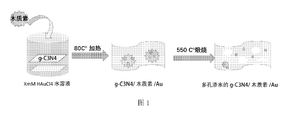
- FIG. 1 is a schematic view showing a process for preparing a method for efficiently treating organically contaminated lignin-reduced nano gold particles modified carbon nitride according to the present invention
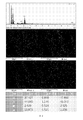
- FIG. 2 is an EDS spectrum of a lignin-reduced nano gold particle modified carbon nitride prepared by the method for preparing an organically contaminated lignin-reduced nano gold particle modified carbon nitride according to the present invention
- FIG. 3 is a fluorescence spectrum diagram of lignin-reduced nano gold particles modified carbon nitride prepared by the method for preparing organically contaminated lignin-reduced nano gold particles modified carbon nitride according to the present invention
- FIG. 7 is a SEM image of a carbon nitride semiconductor of lignin-reduced nano gold particles modified carbon nitride prepared by the method for preparing organically contaminated lignin-reduced nano gold particles modified carbon nitride according to the present invention
- FIG. 9 is an SEM image of a lignin-reduced nano gold particle modified carbon nitride prepared by the method for preparing an organically contaminated lignin-reduced nano gold particle modified carbon nitride according to the present invention
- FIG. 10 is a TEM image of a carbon nitride semiconductor of lignin-reduced nano gold particles modified carbon nitride prepared by the method for preparing organically contaminated lignin-reduced nano gold particles modified carbon nitride according to the present invention
- 11 is a high-efficiency treatment of organically contaminated lignin-reduced nano gold particles modified carbon nitride prepared by the method for preparing a lignin-reduced nano gold particle modified carbon nitride carbon nitride and lignin combined TEM image;
- FIG. 12 is a TEM image of a lignin-reduced nano gold particle modified carbon nitride prepared by the method for preparing an organically contaminated lignin-reduced nano gold particle modified carbon nitride according to the present invention
- FIG. 13 is a graph showing the adsorption performance of lignin-reduced nano gold particles modified carbon nitride prepared by the method for preparing organically contaminated lignin-reduced nano gold particles modified carbon nitride according to the present invention.
- the invention provides a preparation method for efficiently treating organic pollution lignin-reduced nano gold particle modified carbon nitride, comprising the following steps:
- a preparation method for efficiently treating organic pollution lignin reducing nano gold particles modified carbon nitride comprising:
- Step 1 preparing a semiconductor carbon nitride powder: the precursor is placed in an alumina crucible, and the alumina crucible is placed in a muffle furnace to be calcined to obtain a carbon nitride powder having high catalytic performance;
- the step may be specifically performed as follows: 10 mg of urea and 15 ml of alumina crucible are weighed, and the powder is treated at a heating rate of 2 ° C/min, calcined at 550 ° C for 2 h, and an annealing rate of 3 to 5 ° C.
- Step 2 preparing a gold nanoparticle composite carbon nitride powder by water bath reduction: taking lignin, the carbon nitride powder and the chlorogold salt are dissolved in an acidic solution to obtain a mixed solution, and continuously stirring by using a water bath heating method The mixed solution is prepared, and the reduced nano gold particles are uniformly dispersed in carbon nitride to prepare a nano gold particle composite carbon nitride powder.
- lignin and carbon nitride powder having a mass ratio of 1:5 are weighed, 50 ml of a 20 mM hydrochloric acid solution is prepared, and chloroauric acid salt (0.5 to 4 mM) is added, under the action of magnetic stirring.
- the water bath was heated at 80 ° C for 12 h, centrifuged at 4000 r / min for 15 min, and vacuum dried at 60 ° C for 12 h.
- Step 3 Preparation of high-efficiency composite product by secondary calcination: the nano gold particle composite carbon nitride powder is centrifugally dried, placed in a mortar for grinding, and subjected to secondary calcination in a muffle furnace to obtain lignin reduction. The nano gold particles modify the carbon nitride.
- FIG. 1 is a high-efficiency treatment of organic pollution lignin reduction nano gold according to the present invention. Schematic diagram of the process for preparing a particle-modified carbon nitride. As shown in FIG. 1 , carbon nitride and lignin are firstly heated by a water bath to reduce nano gold, and then calcined by a muffle furnace to obtain a porous carbon nitride lignin nano gold composite structure.
- FIG. 2 is an EDS spectrum of a lignin-reduced nano-gold particle modified carbon nitride prepared by the method for preparing an organically contaminated lignin-reduced nano gold particle modified carbon nitride according to the present invention.
- FIG. 3 is a fluorescence spectrum diagram of a lignin-reduced nano-gold particle modified carbon nitride prepared by the method for preparing an organically contaminated lignin-reduced nano gold particle modified carbon nitride according to the present invention.
- the treated carbon nitride powder has a lower fluorescence intensity than the initial carbon nitride semiconductor, indicating that the photo-generated carrier separation efficiency is improved, and further promotes the treatment of organic water pollution efficiency.
- FIG. 4 is a lignin-reduced nano gold particle modified carbon nitride prepared by preparing a method for efficiently treating organically contaminated lignin-reduced nano gold particles modified carbon nitride according to the present invention.
- the XRD spectrum of the reduced gold is reduced.
- the carbon nitride prepared by the method has obvious peaks of Au nanoparticles, indicating that the nano gold particles have been successfully reduced.
- FIG. 5 is a HRTEM image of gold for preparing a method for efficiently treating organically contaminated lignin-reduced nano gold particles modified carbon nitride according to the present invention.
- the nano-gold particles reduced by the method exhibit obvious lattice fringes, and the lattice spacing is measured as the lattice spacing of the nano-gold (111) crystal plane.
- FIG. 6 is a specific surface area test of a lignin-reduced nano gold particle modified carbon nitride prepared by the method for preparing an organically contaminated lignin-reduced nano gold particle modified carbon nitride according to the present invention.
- Figure. As shown in Fig. 6, the specific surface area of the carbon nitride prepared by the method is improved, and micropores and mesopores are formed at the same time, which further characterizes its high adsorption capacity.
- an embodiment or “an embodiment” as used herein refers to a particular feature, structure, or characteristic that can be included in at least one implementation of the invention.
- Step 1 Preparation of high temperature calcined carbon nitride powder
- the step can be specifically carried out by weighing 10 mg of urea in 15 ml of alumina crucible, and calcining at 550 ° C for 2 h at a heating rate of 2 ° C / min, and treating the powder at an annealing rate of 3 to 5 ° C.
- Step 2 Reduction of nano-gold particles by water bath heating
- the step may be specifically performed as follows: 100 mg of lignin is weighed and mixed with 500 mg of carbon nitride powder, 50 ml of a 20 mM hydrochloric acid solution is prepared, and chloroauric acid salt (2 mM) is added, under the action of magnetic stirring. The water bath was heated at 80 ° C for 12 h, centrifuged at 4000 r / min for 15 min, and vacuum dried at 60 ° C for 12 h.
- Step 3 Secondary calcination of the composite product
- the step may be specifically performed as follows: the dried powder is ground into a fine powder in a mortar, poured into an alumina crucible, and calcined at a heating rate of 2 ° C / min, 550 ° C for 2 h, 3 The powder was treated at an annealing rate of ⁇ 5 °C.
- FIG. 7-9 The surface topography of different components of the lignin-reduced nano-gold particle-modified carbon nitride which is highly effective in treating organic pollution prepared in this embodiment is shown in FIG. 7-9, and FIG. 7 is an efficient treatment of organic pollution according to the present invention.
- FIG. 8 is an efficient treatment of organic pollution according to the present invention.
- FIG. 9 is an efficient treatment according to the present invention SEM image of lignin-reduced nano gold particles modified carbon nitride prepared by organically contaminated lignin reduction nano gold particles modified carbon nitride.
- Step 1 Preparation of high temperature calcined carbon nitride powder
- the step may be specifically performed as follows: 10 mg of urea is weighed into 15 ml of alumina crucible, and the powder is treated at a heating rate of 2 ° C/min, calcined at 550 ° C for 2 h, and an annealing rate of 3 to 5 ° C.
- Step 2 Reduction of nano-gold particles by water bath heating
- the step may be specifically performed as follows: 200 mg of lignin is weighed and 1 g of carbon nitride powder is mixed, 50 ml of a 20 mM hydrochloric acid solution is prepared, and chloroauric acid salt (4 mM) is added, under the action of magnetic stirring. The water bath was heated at 80 ° C for 12 h, centrifuged at 4000 r / min for 15 min, and vacuum dried at 60 ° C for 12 h.
- Step 3 Secondary calcination of the composite product
- the step may be specifically performed as follows: the dried powder is ground into a fine powder in a mortar, poured into an alumina crucible, and calcined at a heating rate of 2 ° C / min, 550 ° C for 2 h, 3 The powder was treated at an annealing rate of ⁇ 5 °C.
- the step may be specifically performed as follows: 10 mg of urea is weighed into 15 ml of alumina crucible, and the powder is treated at a heating rate of 2 ° C/min, calcined at 550 ° C for 2 h, and an annealing rate of 3 to 5 ° C.
- Step 2 Reduction of nano-gold particles by water bath heating
- the step may be specifically performed as follows: 100 mg of lignin is weighed and mixed with 500 mg of carbon nitride powder, 50 ml of a 20 mM hydrochloric acid solution is prepared, and chloroauric acid salt (0.5 mM) is added under the action of magnetic stirring. The water bath was heated at 80 ° C for 12 h, centrifuged at 4000 r / min for 15 min, and vacuum dried at 60 ° C for 12 h.
- Step 3 Secondary calcination of the composite product
- the step may be specifically performed as follows: the dried powder is ground into a fine powder in a mortar, poured into an alumina crucible, and calcined at a heating rate of 2 ° C / min, 550 ° C for 2 h, 3 The powder was treated at an annealing rate of ⁇ 5 °C.
- the lignin-reduced nano gold particle-modified carbon nitride can efficiently treat water organic matter pollution
- FIG. 10 is an efficient treatment of organic pollution lignin according to the present invention.
- FIG. 11 is a high efficiency treatment of organic pollution lignin reduction according to the present invention TEM image of lignin-reduced nano gold particles modified carbon nitride carbon nitride and lignin prepared by the preparation method of nano gold particle modified carbon nitride
- FIG. 10 is an efficient treatment of organic pollution lignin according to the present invention.
- Lignin-reduced nano-gold particles modified carbon nitride also has the property of highly efficient adsorption of organic dyes (methylene blue 50mg/L), please refer to Figure 13, Figure 13 is adsorbed by dark room magnetic stirring for 20min, 40min, 60min from Figure 13 It can be seen that the adsorption rate of 50 mg/L methylene blue can be as high as nearly 100% for a carbonitride lignin composite material requiring only 20 min of 1 mMAu content.
- the lignin-reduced nano gold particle-modified carbon nitride has advantages such as porosity, high specific surface area, excellent catalytic efficiency, and high sensitivity sensing performance, which are suitable for various fields.
- the present invention discloses a preparation method for efficiently treating organically contaminated lignin-reduced nano gold particles modified carbon nitride.
- the method is based on the prior art and fully uses high temperature calcination to prepare a carbonitride water bath for heating and reducing nanometers.
- Gold granules which have the required equipment, simple process and low cost, have good high adsorption performance, high catalytic degradation, porous and high specific surface area, which are further promoted for large-scale industrial production.
- the specific performance is as follows: (1) The carbon nitride powder is prepared by one-step high-temperature calcination. The process and equipment required for production are extremely simple and low in cost, and the product has the advantages of being porous, high specific surface area, excellent catalytic efficiency, and high sensitive sensing performance, which are suitable for various fields.
- the prepared carbon nitride composite material can not only effectively treat pollutants, but also can be applied to SERS substrates, biomedical applications, cell imaging and the like.
Landscapes
- Chemical & Material Sciences (AREA)
- Organic Chemistry (AREA)
- Chemical Kinetics & Catalysis (AREA)
- Inorganic Chemistry (AREA)
- Analytical Chemistry (AREA)
- Engineering & Computer Science (AREA)
- Materials Engineering (AREA)
- Life Sciences & Earth Sciences (AREA)
- Hydrology & Water Resources (AREA)
- Environmental & Geological Engineering (AREA)
- Water Supply & Treatment (AREA)
- Catalysts (AREA)
- Carbon And Carbon Compounds (AREA)
Abstract
一种高效处理有机污染的木质素还原纳米金颗粒修饰氮化碳的制备方法,先利用前驱体在马弗炉高温煅烧制备半导体氮化碳粉末,然后按照一定的比例配比木质素的含量,在酸性条件下与氮化碳粉末混合,并加入贵金属盐在水浴条件下反应一段时间,离心真空干燥处理,最后将干燥后的粉末置于马弗炉内二次煅烧。该方法不但工艺简单,能源成本,原料成本低廉,而且对有机污染物的处理效果具有十分突出的效果。
Description
本发明涉及材料技术领域,具体涉及一种高效处理有机污染的木质素还原纳米金颗粒修饰氮化碳的制备方法。
半导体氮化碳(C3N4)作为热点材料在科学界被深度研究,广泛应用于各个领域:如在利用光催化对空气、水及其他物质的净化、细胞成像、生物分子的检测、气相检测、生物医疗应用以及其他方面都产生了十分突出的作用。石墨相氮化碳是由碳原子和单原子组成的一类二维聚合材料,除了具有与普通纳米材料一样的表面效应、低尺寸效应、量子尺寸效应和宏观量子隧道效应外,还具有其他特殊的性质。如:光致发光、电化学发光、高催化性能以及光电子特性(传感、成像)等。氮化碳能隙带为2.7ev,可吸收可见光作为能量驱动。然而,由于其较快的电子空穴复合效率和差的导电性导致的低载流子传输效率阻碍了其催化效率限制了其大规模的推广应用。
发明内容
本发明目的是:提供一种高效处理有机污染的木质素还原纳米金颗粒修饰氮化碳的制备方法,解决上述问题。
本发明的技术方案是:
一种高效处理有机污染的木质素还原纳米金颗粒修饰氮化碳的制备方法,该方法包括如下步骤:
(1)制备半导体氮化碳粉末:称取前驱体置于氧化铝坩埚中,将所述氧化铝坩埚置于马弗炉内煅烧,制得高效催化性能的氮化碳粉体;
(2)水浴还原制备纳米金颗粒复合氮化碳粉末:取木质素、所述氮化碳粉体与氯金酸盐溶于酸性溶液中,得混合溶液,利用水浴加热的方法不断搅拌所述混合溶液,将还原的纳米金颗粒均匀分散在氮化碳中,制得纳米金颗粒复合氮化碳粉末;
(3)二次煅烧制备高效复合产物:将所述纳米金颗粒复合氮化碳粉末离心干燥后,置于研钵中进行研磨,在马弗炉内进行二次煅烧,制得木质素还原纳米金颗粒修饰氮化碳。
进一步的,步骤(1)中所述步骤(1)中所述前驱体为尿素、三聚氰胺或硫脲中的任意 一种。
进一步的,步骤(1)中所述称取前驱体置于氧化铝坩埚中具体为称取10mg尿素置于15ml氧化铝坩埚内。
进一步的,步骤(1)中所述煅烧具体为在2℃/min的升温速率的条件下,550℃煅烧2h,然后在3~5℃/min退火速率条件下退火。
进一步的,步骤(2)中所述木质素与氮化碳粉体的质量比为1:5,所述氯金酸盐为0.5~4mM。
进一步的,步骤(2)中所述酸性溶液为50mL的20mM的盐酸溶液。
进一步的,步骤(2)中所述水浴加热为:将混合溶液倒入50ml离心管中,在温度为80℃的条件下水浴加热12h。
进一步的,步骤(3)中所述离心的条件为以4000r/min的离心速率离心15min分离粉体。
进一步的,步骤(3)中所述干燥为在60℃的条件下真空干燥粉末12h。
进一步的,步骤(3)中所述二次煅烧具体为在马弗炉内以2℃/min的升温速率的条件下,550℃煅烧2h,然后在3~5℃退火速率条件下退火。
本发明提供了一种高效处理有机污染的木质素还原纳米金颗粒修饰氮化碳的制备方法,该方法采用高温煅烧制备氮化碳半导体粉末;水浴还原纳米金修饰氮化碳,可将金属、非金属以及半导体纳米粒子与氮化碳粉末相复合。从而,大大改善氮化碳粉体的光电及催化性能,提高太阳能的利用率。一方面,贵金属纳米颗粒分散在氮化碳内可以有效捕获光生电子,促进了电子和空穴的分离,抑制光生电子和空穴的复合。同时木质素广泛存在于木质组织中,是世界第二位丰富的有机物,具有低成本、高效还原性的特性。木质素高分子内部拥有大量的酚羟基和醇羟基,作为对游离在溶液中的Au离子起着还原剂、稳定剂和附着剂的作用。再者,木质素本身具有对有机污染物的高吸附性与氮化碳多孔结构相结合进一步促进了对水污染的处理。其所需设备,工艺简单,成本低廉,所得产品具有良好的稳定性、光吸收、高催化,高效处理有机染料好的性能,为进一步应用于大规模工业化生产做出了坚实的铺垫。
为了更清楚地说明本发明实施例的技术方案,下面将对实施例描述中所需要使用的附图作简单地介绍,显而易见地,下面描述中的附图仅仅是本发明的一些实施例,对于本领域普通技术人员来讲,在不付出创造性劳动性的前提下,还可以根据这些附图获得其它的附图。
其中,
图1为本发明所述的一种高效处理有机污染的木质素还原纳米金颗粒修饰氮化碳的制备 方法的过程示意图;
图2为本发明所述的一种高效处理有机污染的木质素还原纳米金颗粒修饰氮化碳的制备方法所制备的木质素还原纳米金颗粒修饰氮化碳的EDS能谱图;
图3为本发明所述的一种高效处理有机污染的木质素还原纳米金颗粒修饰氮化碳的制备方法所制备的木质素还原纳米金颗粒修饰氮化碳的荧光光谱图;
图4为本发明所述的一种高效处理有机污染的木质素还原纳米金颗粒修饰氮化碳的制备方法所制备的木质素还原纳米金颗粒修饰氮化碳在不同溶液中还原纳米金的XRD谱图;
图5为本发明所述的一种高效处理有机污染的木质素还原纳米金颗粒修饰氮化碳的制备方法的金的HRTEM图;
图6为本发明所述的一种高效处理有机污染的木质素还原纳米金颗粒修饰氮化碳的制备方法所制备的木质素还原纳米金颗粒修饰氮化碳的比表面积测试图;
图7为本发明所述的一种高效处理有机污染的木质素还原纳米金颗粒修饰氮化碳的制备方法所制备的木质素还原纳米金颗粒修饰氮化碳的氮化碳半导体SEM图;
图8为本发明所述的一种高效处理有机污染的木质素还原纳米金颗粒修饰氮化碳的制备方法所制备的木质素还原纳米金颗粒修饰氮化碳的氮化碳与木质素结合的SEM图;
图9为本发明所述的一种高效处理有机污染的木质素还原纳米金颗粒修饰氮化碳的制备方法所制备的木质素还原纳米金颗粒修饰氮化碳的SEM图;
图10为本发明所述的一种高效处理有机污染的木质素还原纳米金颗粒修饰氮化碳的制备方法所制备的木质素还原纳米金颗粒修饰氮化碳的氮化碳半导体TEM图;
图11为本发明所述的一种高效处理有机污染的木质素还原纳米金颗粒修饰氮化碳的制备方法所制备的木质素还原纳米金颗粒修饰氮化碳的氮化碳与木质素结合的TEM图;
图12为本发明所述的一种高效处理有机污染的木质素还原纳米金颗粒修饰氮化碳的制备方法所制备的木质素还原纳米金颗粒修饰氮化碳的TEM图;
图13为本发明所述的一种高效处理有机污染的木质素还原纳米金颗粒修饰氮化碳的制备方法所制备的木质素还原纳米金颗粒修饰氮化碳的吸附性能表征图。
本发明提供一种高效处理有机污染的木质素还原纳米金颗粒修饰氮化碳的制备方法,包括以下步骤:
(1)采用在马弗炉高温煅烧制备氮化碳半导体,通过控制前驱体的类型,升温速率,煅烧温度,煅烧时间,退火方式等制备更优催化性能的氮化碳粉末;
(2)通过将一定量的木质素与煅烧的氮化碳粉末混合加入氯金酸盐,在水浴加热的条件下,控制溶液的酸碱度,加热的温度及时间,通过X射线能谱仪获取最优的贵金属纳米金沉积的氮化碳;
(3)将贵金属沉积的氮化碳复合物质高速离心分离,真空条件下干燥后,置于马弗炉内高温煅烧,进一步优化氮化碳复合结构的催化和传感性能。
为使本发明的上述目的、特征和优点能够更加明显易懂,下面结合具体实施方式对本发明作进一步详细的说明。
一种高效处理有机污染的木质素还原纳米金颗粒修饰氮化碳的制备方法,包括:
步骤一:制备半导体氮化碳粉末:称取前驱体置于氧化铝坩埚中,将所述氧化铝坩埚置于马弗炉内煅烧,制得高效催化性能的氮化碳粉体;
在一个实施例中,该步骤可以具体如下执行:称取10mg尿素与15ml氧化铝坩埚内,以2℃/min的升温速率,550℃煅烧2h,3~5℃退火速率处理粉体。
步骤二:水浴还原制备纳米金颗粒复合氮化碳粉末:取木质素、所述氮化碳粉体与氯金酸盐溶于酸性溶液中,得混合溶液,利用水浴加热的方法不断搅拌所述混合溶液,将还原的纳米金颗粒均匀分散在氮化碳中,制得纳米金颗粒复合氮化碳粉末。
在一个实施例中,称取质量比为1:5的木质素和氮化碳粉体混合,制备20mM的盐酸溶液50ml并加入氯金酸盐(0.5~4mM),在磁力搅拌的作用下,水浴80℃加热12h,4000r/min离心15min,60℃真空干燥12h。
步骤三:二次煅烧制备高效复合产物:将所述纳米金颗粒复合氮化碳粉末离心干燥后,置于研钵中进行研磨,在马弗炉内进行二次煅烧,制得木质素还原纳米金颗粒修饰氮化碳。
在一个实施例中,该步骤可以具体如下执行:将干燥后的粉末置于研钵中研磨成细粉,倒入氧化铝坩埚内,以2℃/min的升温速率,550℃煅烧2h,3~5℃退火速率处理粉体。
上述步骤所得的木质素还原纳米金颗粒修饰氮化碳,其性能请参阅图1-图6,请参阅图1,图1为本发明所述的一种高效处理有机污染的木质素还原纳米金颗粒修饰氮化碳的制备方法的过程示意图。如图1所示,氮化碳、木质素首先经过水浴加热还原纳米金,然后经马弗炉煅烧修饰获得多孔氮化碳木质素纳米金复合结构。
请参阅图2,图2为本发明所述的一种高效处理有机污染的木质素还原纳米金颗粒修饰氮化碳的制备方法所制备的木质素还原纳米金颗粒修饰氮化碳的EDS能谱图。如图2所示,为制备的微纳结构氮化碳表面EDS能谱及元素C,N,O,Au的分布图。
请参阅图3,图3为本发明所述的一种高效处理有机污染的木质素还原纳米金颗粒修饰氮化碳的制备方法所制备的木质素还原纳米金颗粒修饰氮化碳的荧光光谱图。如图3所示, 处理过的氮化碳粉体相比较初始的氮化碳半导体荧光强度更低,表示光生载流子分离效率得到提高,进一步促进处理有机水污染效率。
请参阅图4,图4为本发明所述的一种高效处理有机污染的木质素还原纳米金颗粒修饰氮化碳的制备方法所制备的木质素还原纳米金颗粒修饰氮化碳在不同溶液中还原纳米金的XRD谱图。如图4所示,经该方法整理后的氮化碳出现了明显的Au纳米颗粒的峰,说明已成功还原了纳米金颗粒。
请参阅图5,图5为本发明所述的一种高效处理有机污染的木质素还原纳米金颗粒修饰氮化碳的制备方法的金的HRTEM图。如图5所示,经该方法还原的纳米金颗粒出现明显的晶格条纹,经测量晶格间距为纳米金(111)晶面的晶格间距。
请参阅图6,图6为本发明所述的一种高效处理有机污染的木质素还原纳米金颗粒修饰氮化碳的制备方法所制备的木质素还原纳米金颗粒修饰氮化碳的比表面积测试图。如图6所示,经该方法整理后的氮化碳的比表面积得到提升,同时出现微孔、介孔,进一步表征了其高效的吸附能力。
为使本发明的上述目的、特征和优点能够更加明显易懂,下面结合附图和实施例进一步说明本发明的技术方案。但是本发明不限于所列出的实施例,还应包括在本发明所要求的权利范围内其他任何公知的改变。
首先,此处所称的“一个实施例”或“实施例”是指可包含于本发明至少一个实现方式中的特定特征、结构或特性。在本说明书中不同地方出现的“在一个实施例中”并非均指同一个实施例,也不是单独的或选择性的与其他实施例互相排斥的实施例。
其次,本发明利用结构示意图等进行详细描述,在详述本发明实施例时,为便于说明,示意图会不依一般比例作局部放大,而且所述示意图只是实例,其在此不应限制本发明保护的范围。此外,在实际制作中应包含长度、宽度及深度的三维空间。
另外,本发明中所讲的字母简称,均为本领域固定简称,其中部分字母文解释如下:SEM图:电子扫描显像图;EDS图:能谱图;XRD谱图:X射线荧光衍射;TEM图:透射电子显微镜;BET图:比表面积测试图;PL图:荧光光谱图;HRTEM谱图:高分辨率透射电镜;mM代表毫摩尔每升。
实施例一
本实施案例按如下步骤展示一种高效处理有机污染的木质素还原纳米金颗粒修饰氮化碳的制备方法:
步骤一:高温煅烧氮化碳粉体的制备
在一个实施例中,该步骤可以具体如下执行:称取10mg尿素于15ml氧化铝坩埚内,以 2℃/min的升温速率,550℃煅烧2h,3~5℃退火速率处理粉体。
步骤二:水浴加热纳米金颗粒的还原
在一个实施例中,该步骤可以具体如下执行:称取100mg木质素与500mg氮化碳粉体混合,制备20mM的盐酸溶液50ml并加入氯金酸盐(2mM),在磁力搅拌的作用下,水浴80℃加热12h,4000r/min离心15min,60℃真空干燥12h。
步骤三:二次煅烧复合产物
在一个实施例中,该步骤可以具体如下执行:将干燥后的粉末置于研钵中研磨成细粉,倒入氧化铝坩埚内,以2℃/min的升温速率,550℃煅烧2h,3~5℃退火速率处理粉体。
本实施例制备的一种高效处理有机污染的木质素还原纳米金颗粒修饰氮化碳的不同组分表面形貌请参阅图7-9,图7为本发明所述的一种高效处理有机污染的木质素还原纳米金颗粒修饰氮化碳的制备方法所制备的木质素还原纳米金颗粒修饰氮化碳的氮化碳半导体SEM图;图8为本发明所述的一种高效处理有机污染的木质素还原纳米金颗粒修饰氮化碳的制备方法所制备的木质素还原纳米金颗粒修饰氮化碳的氮化碳与木质素结合的SEM图;图9为本发明所述的一种高效处理有机污染的木质素还原纳米金颗粒修饰氮化碳的制备方法所制备的木质素还原纳米金颗粒修饰氮化碳的SEM图。
实施例二
本实施案例按如下步骤展示一种高效处理有机污染的木质素还原纳米金颗粒修饰氮化碳的制备方法:
步骤一:高温煅烧氮化碳粉体的制备
在一个实施例中,该步骤可以具体如下执行:称取10mg尿素于15ml氧化铝坩埚内,以2℃/min的升温速率,550℃煅烧2h,3~5℃退火速率处理粉体。
步骤二:水浴加热纳米金颗粒的还原
在一个实施例中,该步骤可以具体如下执行:称取200mg木质素与1g氮化碳粉体混合,制备20mM的盐酸溶液50ml并加入氯金酸盐(4mM),在磁力搅拌的作用下,水浴80℃加热12h,4000r/min离心15min,60℃真空干燥12h。
步骤三:二次煅烧复合产物
在一个实施例中,该步骤可以具体如下执行:将干燥后的粉末置于研钵中研磨成细粉,倒入氧化铝坩埚内,以2℃/min的升温速率,550℃煅烧2h,3~5℃退火速率处理粉体。
实施例三
本实施案例按如下步骤展示一种高效处理有机污染的木质素还原纳米金颗粒修饰氮化碳的制备方法:
步骤一:高温煅烧氮化碳粉体的制备
在一个实施例中,该步骤可以具体如下执行:称取10mg尿素于15ml氧化铝坩埚内,以2℃/min的升温速率,550℃煅烧2h,3~5℃退火速率处理粉体。
步骤二:水浴加热纳米金颗粒的还原
在一个实施例中,该步骤可以具体如下执行:称取100mg木质素与500mg氮化碳粉体混合,制备20mM的盐酸溶液50ml并加入氯金酸盐(0.5mM),在磁力搅拌的作用下,水浴80℃加热12h,4000r/min离心15min,60℃真空干燥12h。
步骤三:二次煅烧复合产物
在一个实施例中,该步骤可以具体如下执行:将干燥后的粉末置于研钵中研磨成细粉,倒入氧化铝坩埚内,以2℃/min的升温速率,550℃煅烧2h,3~5℃退火速率处理粉体。
在以上三个实施例中,木质素还原纳米金颗粒修饰的氮化碳可以高效处理水有机物污染,请参阅图10-12,图10为本发明所述的一种高效处理有机污染的木质素还原纳米金颗粒修饰氮化碳的制备方法所制备的木质素还原纳米金颗粒修饰氮化碳的氮化碳半导体TEM图;图11为本发明所述的一种高效处理有机污染的木质素还原纳米金颗粒修饰氮化碳的制备方法所制备的木质素还原纳米金颗粒修饰氮化碳的氮化碳与木质素结合的TEM图;图12为本发明所述的一种高效处理有机污染的木质素还原纳米金颗粒修饰氮化碳的制备方法所制备的木质素还原纳米金颗粒修饰氮化碳的TEM图。如图12所示,纳米金颗粒分散在氮化碳粉体内。
木质素还原纳米金颗粒修饰氮化碳还具有高效吸附有机染料的性能(亚甲基蓝50mg/L),请参阅图13,图13为在暗室磁力搅拌的作用下吸附20min、40min、60min从图13可以看出,仅需要20min 1mMAu含量的氮化碳木质素复合物质对50mg/L的亚甲基蓝的吸附率可高达近100%。
木质素还原纳米金颗粒修饰的氮化碳具有多孔、高比表面积、优异催化效率、高灵敏传感性能等适用于多领域的优点。
综上所述,本发明公开了一种高效处理有机污染的木质素还原纳米金颗粒修饰氮化碳的制备方法,本方法在现有技术基础上充分采用高温煅烧制备氮化碳水浴加热还原纳米金颗粒,其所需设备、工艺简单,成本低廉,所得产品具有很好的高吸附性能,高催化降解,多孔,高比表面积进一步促进了应用于大规模工业化生产。具体表现为:优点是(1)采用一步高温煅烧制备氮化碳粉体。生产所需的工艺、设备极其简单,成本低,同时产品具有多孔,高比表面积,优异催化效率,高灵敏传感性能等适用于多领域的优点。
(2)采用具有多羟基、世界第二丰富有机物同时作为造纸厂废水中的主要物质木质素作为还原剂,绿色环保低价将贵金属沉积在氮化碳中,同时其具有高吸附性能,进一步提升复 合结构处理有机水污染的能力。
(3)制备出的氮化碳复合物质不仅能够高效处理污染物,同时还可以应用于SERS基底、生物医疗应用,细胞成像等领域。
应说明的是,以上实施例仅用以说明本发明的技术方案而非限制,尽管参照较佳实施例对本发明进行了详细说明,本领域的普通技术人员应当理解,可以对本发明的技术方案进行修改或者等同替换,而不脱离本发明技术方案的精神和范围,其均应涵盖在本发明的权利要求范围当中。
Claims (10)
- 一种高效处理有机污染的木质素还原纳米金颗粒修饰氮化碳的制备方法,其特征在于,该方法包括如下步骤:(1)制备半导体氮化碳粉末:称取前驱体置于氧化铝坩埚中,将所述氧化铝坩埚置于马弗炉内煅烧,制得高效催化性能的氮化碳粉体;(2)水浴还原制备纳米金颗粒复合氮化碳粉末:取木质素、所述氮化碳粉体与氯金酸盐溶于酸性溶液中,得混合溶液,利用水浴加热的方法不断搅拌所述混合溶液,将还原的纳米金颗粒均匀分散在氮化碳中,制得纳米金颗粒复合氮化碳粉末;(3)二次煅烧制备高效复合产物:将所述纳米金颗粒复合氮化碳粉末离心干燥后,置于研钵中进行研磨,在马弗炉内进行二次煅烧,制得木质素还原纳米金颗粒修饰氮化碳。
- 根据权利要求1所述的木质素还原纳米金颗粒修饰氮化碳的制备方法,其特征在于:步骤(1)中所述前驱体为尿素、三聚氰胺或硫脲中的任意一种。
- 根据权利要求1所述的木质素还原纳米金颗粒修饰氮化碳的制备方法,其特征在于:步骤(1)中所述称取前驱体置于氧化铝坩埚中具体为称取10mg尿素置于15ml氧化铝坩埚内。
- 根据权利要求1所述的木质素还原纳米金颗粒修饰氮化碳的制备方法,其特征在于:步骤(1)中所述煅烧具体为在2℃/min的升温速率的条件下,550℃煅烧2h,然后在3~5℃/min退火速率条件下退火。
- 根据权利要求1所述的木质素还原纳米金颗粒修饰氮化碳的制备方法,其特征在于:步骤(2)中所述木质素与氮化碳粉体的质量比为1:5,所述氯金酸盐为0.5~4mM。
- 根据权利要求1所述的木质素还原纳米金颗粒修饰氮化碳的制备方法,其特征在于:步骤(2)中所述酸性溶液为50mL的20mM的盐酸溶液。
- 根据权利要求1所述的木质素还原纳米金颗粒修饰氮化碳的制备方法,其特征在于:步骤(2)中所述水浴加热为:将混合溶液倒入50ml离心管中,在温度为80℃的条件下水浴加热12h。
- 根据权利要求1所述的木质素还原纳米金颗粒修饰氮化碳的制备方法,其特征在于:步骤(3)中所述离心的条件为以4000r/min的离心速率离心15min分离粉体。
- 根据权利要求1所述的木质素还原纳米金颗粒修饰氮化碳的制备方法,其特征在于:步骤(3)中所述干燥为在60℃的条件下真空干燥粉末12h。
- 根据权利要求1所述的木质素还原纳米金颗粒修饰氮化碳的制备方法,其特征在于: 步骤(3)中所述二次煅烧具体为在马弗炉内以2℃/min的升温速率的条件下,550℃煅烧2h,然后在3~5℃退火速率条件下退火。
Applications Claiming Priority (2)
| Application Number | Priority Date | Filing Date | Title |
|---|---|---|---|
| CN201710616480.8A CN107233911B (zh) | 2017-07-26 | 2017-07-26 | 一种高效处理有机污染物的木质素还原纳米金颗粒修饰氮化碳的制备方法 |
| CN201710616480.8 | 2017-07-26 |
Publications (1)
| Publication Number | Publication Date |
|---|---|
| WO2019019866A1 true WO2019019866A1 (zh) | 2019-01-31 |
Family
ID=59989305
Family Applications (1)
| Application Number | Title | Priority Date | Filing Date |
|---|---|---|---|
| PCT/CN2018/093953 Ceased WO2019019866A1 (zh) | 2017-07-26 | 2018-07-02 | 一种高效处理有机污染的木质素还原纳米金颗粒修饰氮化碳的制备方法 |
Country Status (2)
| Country | Link |
|---|---|
| CN (1) | CN107233911B (zh) |
| WO (1) | WO2019019866A1 (zh) |
Families Citing this family (2)
| Publication number | Priority date | Publication date | Assignee | Title |
|---|---|---|---|---|
| CN107233911B (zh) * | 2017-07-26 | 2019-10-18 | 南通纺织丝绸产业技术研究院 | 一种高效处理有机污染物的木质素还原纳米金颗粒修饰氮化碳的制备方法 |
| CN107855114A (zh) * | 2017-11-30 | 2018-03-30 | 浙江海洋大学 | 纳米级带鱼鱼骨粉重金属吸附剂的制备方法 |
Citations (5)
| Publication number | Priority date | Publication date | Assignee | Title |
|---|---|---|---|---|
| CN104858448A (zh) * | 2015-05-11 | 2015-08-26 | 华南理工大学 | 木质素溶液中纳米金的绿色合成方法 |
| JP5804251B2 (ja) * | 2011-06-03 | 2015-11-04 | 国立研究開発法人物質・材料研究機構 | 多孔性窒化炭素膜、その製造方法およびそれを用いた用途 |
| CN105110447A (zh) * | 2015-09-15 | 2015-12-02 | 南京理工大学 | 一种Au/g-C3N4纳米复合材料的应用 |
| KR20160010151A (ko) * | 2014-07-18 | 2016-01-27 | 한국과학기술연구원 | 개미산의 분해 및 재생용 촉매 및 이의 제조방법 |
| CN107233911A (zh) * | 2017-07-26 | 2017-10-10 | 南通纺织丝绸产业技术研究院 | 一种高效处理有机污染的木质素还原纳米金颗粒修饰氮化碳的制备方法 |
Family Cites Families (2)
| Publication number | Priority date | Publication date | Assignee | Title |
|---|---|---|---|---|
| CN102895987B (zh) * | 2012-10-12 | 2014-04-30 | 中南大学 | 一种Au/g-C3N4复合型微纳米材料的制备方法 |
| CN104277468A (zh) * | 2013-07-10 | 2015-01-14 | 石家庄铁道大学 | 一种木质素/金属纳米粒子的复合材料及其制法 |
-
2017
- 2017-07-26 CN CN201710616480.8A patent/CN107233911B/zh active Active
-
2018
- 2018-07-02 WO PCT/CN2018/093953 patent/WO2019019866A1/zh not_active Ceased
Patent Citations (5)
| Publication number | Priority date | Publication date | Assignee | Title |
|---|---|---|---|---|
| JP5804251B2 (ja) * | 2011-06-03 | 2015-11-04 | 国立研究開発法人物質・材料研究機構 | 多孔性窒化炭素膜、その製造方法およびそれを用いた用途 |
| KR20160010151A (ko) * | 2014-07-18 | 2016-01-27 | 한국과학기술연구원 | 개미산의 분해 및 재생용 촉매 및 이의 제조방법 |
| CN104858448A (zh) * | 2015-05-11 | 2015-08-26 | 华南理工大学 | 木质素溶液中纳米金的绿色合成方法 |
| CN105110447A (zh) * | 2015-09-15 | 2015-12-02 | 南京理工大学 | 一种Au/g-C3N4纳米复合材料的应用 |
| CN107233911A (zh) * | 2017-07-26 | 2017-10-10 | 南通纺织丝绸产业技术研究院 | 一种高效处理有机污染的木质素还原纳米金颗粒修饰氮化碳的制备方法 |
Also Published As
| Publication number | Publication date |
|---|---|
| CN107233911B (zh) | 2019-10-18 |
| CN107233911A (zh) | 2017-10-10 |
Similar Documents
| Publication | Publication Date | Title |
|---|---|---|
| Liu et al. | Facile synthesis and enhanced visible-light photocatalytic activity of graphitic carbon nitride decorated with ultrafine Fe 2 O 3 nanoparticles | |
| CN103706349B (zh) | 一种纳米ZnO微球/石墨烯光催化剂及其制备方法 | |
| CN105694810B (zh) | 一种以ZIF‑67为模板制备CuO/多孔碳复合吸波材料的方法 | |
| CN110026226B (zh) | 一种石墨相氮化碳纳米片多孔材料及其制备方法和应用 | |
| Jo et al. | Synthesis of GO supported Fe 2 O 3–TiO 2 nanocomposites for enhanced visible-light photocatalytic applications | |
| CN108722356A (zh) | 一种纳米零价铁负载亲水性多孔生物炭复合材料的制备方法 | |
| CN104607231A (zh) | 具有三维有序大孔结构的氮化碳光催化剂及其制备方法 | |
| Wu et al. | Double-diffusion-based synthesis of BiVO 4 mesoporous single crystals with enhanced photocatalytic activity for oxygen evolution | |
| CN102430401A (zh) | 纳米ZnO/石墨烯光催化剂及其制备方法 | |
| Hao et al. | Oxygen vacancies in TiO2/SnOx coatings prepared by ball milling followed by calcination and their influence on the photocatalytic activity | |
| CN106732734A (zh) | 一种Z型g‑C3N4@Ag@Ag3PO4复合光催化剂的制备方法 | |
| Qi et al. | Graphene nanocluster decorated niobium oxide nanofibers for visible light photocatalytic applications | |
| Wang et al. | Rice-husk-derived mesoporous 0D/2D C3N4 isotype heterojunction with improved quantum effect for photodegradation of tetracycline antibiotics | |
| Zhang et al. | Uniform hollow TiO2: Sm3+ spheres: Solvothermal synthesis and luminescence properties | |
| CN113083348A (zh) | 一种棒状α-FeOOH/g-C3N4复合材料光催化剂的制备方法 | |
| CN107185574A (zh) | 一种不含金属元素的复合纳米光催化剂及其制备方法和应用 | |
| Ren et al. | Novel ternary Ag/CeVO4/g-C3N4 nanocomposite as a highly efficient visible-light-driven photocatalyst | |
| CN105523578A (zh) | 可调控形貌纳米氧化铜及其制备方法和该纳米氧化铜的用途 | |
| Han et al. | Efficient visible-light photocatalytic heterojunctions formed by coupling plasmonic Cu 2− x Se and graphitic carbon nitride | |
| CN107282134B (zh) | 一种石墨烯包覆的ZnO光催化剂及其制备方法 | |
| CN105289694B (zh) | 一种ZnO/ZnGaNO两相复合结构光催化粉末的制备方法 | |
| Ma et al. | Synthesis of magnetic biomass carbon-based Bi 2 O 3 photocatalyst and mechanism insight by a facile microwave and deposition method | |
| WO2019019866A1 (zh) | 一种高效处理有机污染的木质素还原纳米金颗粒修饰氮化碳的制备方法 | |
| Zhang et al. | A novel gC 3 N 4 nanosheet/Ag 3 PO 4/α-Bi 2 O 3 ternary dual Z-scheme heterojunction with increased light absorption and expanded specific surface area for efficient photocatalytic removal of TC | |
| CN110368979A (zh) | 一种管状g-C3N4/CuS/Cu2S纳米复合材料及其制备方法和应用 |
Legal Events
| Date | Code | Title | Description |
|---|---|---|---|
| 121 | Ep: the epo has been informed by wipo that ep was designated in this application |
Ref document number: 18837856 Country of ref document: EP Kind code of ref document: A1 |
|
| NENP | Non-entry into the national phase |
Ref country code: DE |
|
| 122 | Ep: pct application non-entry in european phase |
Ref document number: 18837856 Country of ref document: EP Kind code of ref document: A1 |