WO2018208075A1 - 탄소 섬유 제조용 쿼드-중합체 전구체 및 이의 제조 방법 및 사용 방법 - Google Patents
탄소 섬유 제조용 쿼드-중합체 전구체 및 이의 제조 방법 및 사용 방법 Download PDFInfo
- Publication number
- WO2018208075A1 WO2018208075A1 PCT/KR2018/005300 KR2018005300W WO2018208075A1 WO 2018208075 A1 WO2018208075 A1 WO 2018208075A1 KR 2018005300 W KR2018005300 W KR 2018005300W WO 2018208075 A1 WO2018208075 A1 WO 2018208075A1
- Authority
- WO
- WIPO (PCT)
- Prior art keywords
- quad
- weight
- weight percent
- monomer
- polymer composition
- Prior art date
- Legal status (The legal status is an assumption and is not a legal conclusion. Google has not performed a legal analysis and makes no representation as to the accuracy of the status listed.)
- Ceased
Links
Images










Classifications
-
- C—CHEMISTRY; METALLURGY
- C08—ORGANIC MACROMOLECULAR COMPOUNDS; THEIR PREPARATION OR CHEMICAL WORKING-UP; COMPOSITIONS BASED THEREON
- C08F—MACROMOLECULAR COMPOUNDS OBTAINED BY REACTIONS ONLY INVOLVING CARBON-TO-CARBON UNSATURATED BONDS
- C08F220/00—Copolymers of compounds having one or more unsaturated aliphatic radicals, each having only one carbon-to-carbon double bond, and only one being terminated by only one carboxyl radical or a salt, anhydride ester, amide, imide or nitrile thereof
- C08F220/02—Monocarboxylic acids having less than ten carbon atoms; Derivatives thereof
- C08F220/42—Nitriles
- C08F220/44—Acrylonitrile
-
- D—TEXTILES; PAPER
- D01—NATURAL OR MAN-MADE THREADS OR FIBRES; SPINNING
- D01F—CHEMICAL FEATURES IN THE MANUFACTURE OF ARTIFICIAL FILAMENTS, THREADS, FIBRES, BRISTLES OR RIBBONS; APPARATUS SPECIALLY ADAPTED FOR THE MANUFACTURE OF CARBON FILAMENTS
- D01F6/00—Monocomponent artificial filaments or the like of synthetic polymers; Manufacture thereof
- D01F6/28—Monocomponent artificial filaments or the like of synthetic polymers; Manufacture thereof from copolymers obtained by reactions only involving carbon-to-carbon unsaturated bonds
- D01F6/38—Monocomponent artificial filaments or the like of synthetic polymers; Manufacture thereof from copolymers obtained by reactions only involving carbon-to-carbon unsaturated bonds comprising unsaturated nitriles as the major constituent
-
- C—CHEMISTRY; METALLURGY
- C01—INORGANIC CHEMISTRY
- C01B—NON-METALLIC ELEMENTS; COMPOUNDS THEREOF; METALLOIDS OR COMPOUNDS THEREOF NOT COVERED BY SUBCLASS C01C
- C01B32/00—Carbon; Compounds thereof
- C01B32/05—Preparation or purification of carbon not covered by groups C01B32/15, C01B32/20, C01B32/25, C01B32/30
-
- C—CHEMISTRY; METALLURGY
- C08—ORGANIC MACROMOLECULAR COMPOUNDS; THEIR PREPARATION OR CHEMICAL WORKING-UP; COMPOSITIONS BASED THEREON
- C08F—MACROMOLECULAR COMPOUNDS OBTAINED BY REACTIONS ONLY INVOLVING CARBON-TO-CARBON UNSATURATED BONDS
- C08F2/00—Processes of polymerisation
- C08F2/38—Polymerisation using regulators, e.g. chain terminating agents, e.g. telomerisation
-
- C—CHEMISTRY; METALLURGY
- C08—ORGANIC MACROMOLECULAR COMPOUNDS; THEIR PREPARATION OR CHEMICAL WORKING-UP; COMPOSITIONS BASED THEREON
- C08F—MACROMOLECULAR COMPOUNDS OBTAINED BY REACTIONS ONLY INVOLVING CARBON-TO-CARBON UNSATURATED BONDS
- C08F2/00—Processes of polymerisation
- C08F2/44—Polymerisation in the presence of compounding ingredients, e.g. plasticisers, dyestuffs, fillers
-
- C—CHEMISTRY; METALLURGY
- C08—ORGANIC MACROMOLECULAR COMPOUNDS; THEIR PREPARATION OR CHEMICAL WORKING-UP; COMPOSITIONS BASED THEREON
- C08F—MACROMOLECULAR COMPOUNDS OBTAINED BY REACTIONS ONLY INVOLVING CARBON-TO-CARBON UNSATURATED BONDS
- C08F218/00—Copolymers of compounds having one or more unsaturated aliphatic radicals, each having only one carbon-to-carbon double bond, and at least one being terminated by an acyloxy radical of a saturated carboxylic acid, of carbonic acid or of a haloformic acid
- C08F218/14—Esters of polycarboxylic acids
- C08F218/16—Esters of polycarboxylic acids with alcohols containing three or more carbon atoms
-
- C—CHEMISTRY; METALLURGY
- C08—ORGANIC MACROMOLECULAR COMPOUNDS; THEIR PREPARATION OR CHEMICAL WORKING-UP; COMPOSITIONS BASED THEREON
- C08F—MACROMOLECULAR COMPOUNDS OBTAINED BY REACTIONS ONLY INVOLVING CARBON-TO-CARBON UNSATURATED BONDS
- C08F220/00—Copolymers of compounds having one or more unsaturated aliphatic radicals, each having only one carbon-to-carbon double bond, and only one being terminated by only one carboxyl radical or a salt, anhydride ester, amide, imide or nitrile thereof
- C08F220/02—Monocarboxylic acids having less than ten carbon atoms; Derivatives thereof
- C08F220/04—Acids; Metal salts or ammonium salts thereof
- C08F220/06—Acrylic acid; Methacrylic acid; Metal salts or ammonium salts thereof
-
- C—CHEMISTRY; METALLURGY
- C08—ORGANIC MACROMOLECULAR COMPOUNDS; THEIR PREPARATION OR CHEMICAL WORKING-UP; COMPOSITIONS BASED THEREON
- C08F—MACROMOLECULAR COMPOUNDS OBTAINED BY REACTIONS ONLY INVOLVING CARBON-TO-CARBON UNSATURATED BONDS
- C08F220/00—Copolymers of compounds having one or more unsaturated aliphatic radicals, each having only one carbon-to-carbon double bond, and only one being terminated by only one carboxyl radical or a salt, anhydride ester, amide, imide or nitrile thereof
- C08F220/02—Monocarboxylic acids having less than ten carbon atoms; Derivatives thereof
- C08F220/10—Esters
- C08F220/12—Esters of monohydric alcohols or phenols
- C08F220/14—Methyl esters, e.g. methyl (meth)acrylate
-
- C—CHEMISTRY; METALLURGY
- C08—ORGANIC MACROMOLECULAR COMPOUNDS; THEIR PREPARATION OR CHEMICAL WORKING-UP; COMPOSITIONS BASED THEREON
- C08F—MACROMOLECULAR COMPOUNDS OBTAINED BY REACTIONS ONLY INVOLVING CARBON-TO-CARBON UNSATURATED BONDS
- C08F220/00—Copolymers of compounds having one or more unsaturated aliphatic radicals, each having only one carbon-to-carbon double bond, and only one being terminated by only one carboxyl radical or a salt, anhydride ester, amide, imide or nitrile thereof
- C08F220/02—Monocarboxylic acids having less than ten carbon atoms; Derivatives thereof
- C08F220/42—Nitriles
- C08F220/44—Acrylonitrile
- C08F220/48—Acrylonitrile with nitrogen-containing monomers
-
- C—CHEMISTRY; METALLURGY
- C08—ORGANIC MACROMOLECULAR COMPOUNDS; THEIR PREPARATION OR CHEMICAL WORKING-UP; COMPOSITIONS BASED THEREON
- C08F—MACROMOLECULAR COMPOUNDS OBTAINED BY REACTIONS ONLY INVOLVING CARBON-TO-CARBON UNSATURATED BONDS
- C08F222/00—Copolymers of compounds having one or more unsaturated aliphatic radicals, each having only one carbon-to-carbon double bond, and at least one being terminated by a carboxyl radical and containing at least one other carboxyl radical in the molecule; Salts, anhydrides, esters, amides, imides, or nitriles thereof
- C08F222/02—Acids; Metal salts or ammonium salts thereof, e.g. maleic acid or itaconic acid
-
- C—CHEMISTRY; METALLURGY
- C08—ORGANIC MACROMOLECULAR COMPOUNDS; THEIR PREPARATION OR CHEMICAL WORKING-UP; COMPOSITIONS BASED THEREON
- C08F—MACROMOLECULAR COMPOUNDS OBTAINED BY REACTIONS ONLY INVOLVING CARBON-TO-CARBON UNSATURATED BONDS
- C08F226/00—Copolymers of compounds having one or more unsaturated aliphatic radicals, each having only one carbon-to-carbon double bond, and at least one being terminated by a single or double bond to nitrogen or by a heterocyclic ring containing nitrogen
- C08F226/06—Copolymers of compounds having one or more unsaturated aliphatic radicals, each having only one carbon-to-carbon double bond, and at least one being terminated by a single or double bond to nitrogen or by a heterocyclic ring containing nitrogen by a heterocyclic ring containing nitrogen
-
- C—CHEMISTRY; METALLURGY
- C08—ORGANIC MACROMOLECULAR COMPOUNDS; THEIR PREPARATION OR CHEMICAL WORKING-UP; COMPOSITIONS BASED THEREON
- C08K—Use of inorganic or non-macromolecular organic substances as compounding ingredients
- C08K5/00—Use of organic ingredients
- C08K5/16—Nitrogen-containing compounds
- C08K5/22—Compounds containing nitrogen bound to another nitrogen atom
- C08K5/23—Azo-compounds
-
- D—TEXTILES; PAPER
- D01—NATURAL OR MAN-MADE THREADS OR FIBRES; SPINNING
- D01D—MECHANICAL METHODS OR APPARATUS IN THE MANUFACTURE OF ARTIFICIAL FILAMENTS, THREADS, FIBRES, BRISTLES OR RIBBONS
- D01D5/00—Formation of filaments, threads, or the like
- D01D5/08—Melt spinning methods
-
- D—TEXTILES; PAPER
- D01—NATURAL OR MAN-MADE THREADS OR FIBRES; SPINNING
- D01F—CHEMICAL FEATURES IN THE MANUFACTURE OF ARTIFICIAL FILAMENTS, THREADS, FIBRES, BRISTLES OR RIBBONS; APPARATUS SPECIALLY ADAPTED FOR THE MANUFACTURE OF CARBON FILAMENTS
- D01F9/00—Artificial filaments or the like of other substances; Manufacture thereof; Apparatus specially adapted for the manufacture of carbon filaments
- D01F9/08—Artificial filaments or the like of other substances; Manufacture thereof; Apparatus specially adapted for the manufacture of carbon filaments of inorganic material
- D01F9/12—Carbon filaments; Apparatus specially adapted for the manufacture thereof
- D01F9/14—Carbon filaments; Apparatus specially adapted for the manufacture thereof by decomposition of organic filaments
- D01F9/20—Carbon filaments; Apparatus specially adapted for the manufacture thereof by decomposition of organic filaments from polyaddition, polycondensation or polymerisation products
- D01F9/21—Carbon filaments; Apparatus specially adapted for the manufacture thereof by decomposition of organic filaments from polyaddition, polycondensation or polymerisation products from macromolecular compounds obtained by reactions only involving carbon-to-carbon unsaturated bonds
- D01F9/22—Carbon filaments; Apparatus specially adapted for the manufacture thereof by decomposition of organic filaments from polyaddition, polycondensation or polymerisation products from macromolecular compounds obtained by reactions only involving carbon-to-carbon unsaturated bonds from polyacrylonitriles
-
- C—CHEMISTRY; METALLURGY
- C08—ORGANIC MACROMOLECULAR COMPOUNDS; THEIR PREPARATION OR CHEMICAL WORKING-UP; COMPOSITIONS BASED THEREON
- C08F—MACROMOLECULAR COMPOUNDS OBTAINED BY REACTIONS ONLY INVOLVING CARBON-TO-CARBON UNSATURATED BONDS
- C08F220/00—Copolymers of compounds having one or more unsaturated aliphatic radicals, each having only one carbon-to-carbon double bond, and only one being terminated by only one carboxyl radical or a salt, anhydride ester, amide, imide or nitrile thereof
- C08F220/02—Monocarboxylic acids having less than ten carbon atoms; Derivatives thereof
- C08F220/42—Nitriles
- C08F220/44—Acrylonitrile
- C08F220/46—Acrylonitrile with carboxylic acids, sulfonic acids or salts thereof
Definitions
- the present invention relates to melt-processable carbon fiber precursors that can be used in the production of carbon fibers, more particularly economical (low cost) melt processable quad-polymer precursors for carbon fibers, such precursors. It relates to a method for producing and a method for producing carbon fiber thereof.
- Carbon fibers have attracted attention from the aerospace, sporting goods, automotive and defense industries because of their good mechanical and additional good chemical and thermal properties (Edie 1998; Bhal 1998; Cantwell 1991; Chand). 2000; Li 2012] Most carbon fibers are made from polyacrylonitrile (PAN) precursors, but some are derived from other raw materials such as pitch (mesophase), lignin and hydrated cellulose. Pitch-based precursors have the advantages of low raw material costs, low energy requirements for carbon fiber production and high carbon yield, but their mechanical properties are very poor compared to PAN-based carbon fibers (Azarova 2011; Baker). 2013; Rahaman 2007; Salem 2001] Therefore, due to the good mechanical properties, PAN-based precursors have been found to be most suitable (Rahaman 2007; Fu I 2). 014]).
- thermal-oxidative 'stabilization' forms a ladder-like structure at a temperature in the range of 200 ° C. to 300 ° C. in an oxygen rich environment.
- the second step of 'carbonization' is usually carried out at about 1,000 ° C. to about 1,400 ° C. under an inert atmosphere to form carbon fibers (Cantwell 1991; Rahaman 2007; Jain 1987).
- Deng et al. Reported the potential of poly (acrylonitrile-co-N-vinylimidazole) (AN / VIM) as a new melt processible carbon fiber precursor [Deng 2012; Deng 2011].
- This new AN / VIM copolymer does not require UV treatment for thermal stabilization and can be processed for stabilization as a typical PAN-based precursor.
- An object of the present invention is to provide a quad-polymer precursor for producing carbon fibers, a method for producing the same, and a method for using the same, which can solve the above problems.
- the present invention relates to a quad-polymer composition.
- X, Y, Z and M are the weight percent of the quad-polymer composition.
- X + Y + Z + M 100%.
- the practice of the present invention may include one or more of the following features.
- the quad-polymer composition may have the following chemical structure.
- X may range from 0.1 wt% to 40.0 wt%.
- Y may range from 50.0 wt% to 99.0 wt%.
- Z may range from 0.1 wt% to 50.0 wt%.
- M may range from 0.1 wt% to 40.0 wt%.
- X may range from 0.1 wt% to 10.0 wt%.
- Y may range from 60.0 wt% to 95.0 wt%.
- Z may range from 2.5 wt% to 30.0 wt%.
- M may range from 0.1 wt% to 10.0 wt%.
- X may range from 0.1 wt% to 5.0 wt%.
- Y may range from 70.0% to 92.5% by weight.
- Z may range from 2.5 wt% to 25.0 wt%.
- M may range from 0.1 wt% to 5.0 wt%.
- the quad-polymer composition may have the following chemical structure.
- X may range from 0.1 wt% to 40.0 wt%.
- Y may range from 50.0 wt% to 99.0 wt%.
- Z may range from 0.1 wt% to 50.0 wt%.
- M may range from 0.1 wt% to 40.0 wt%.
- X may range from 0.1 wt% to 10.0 wt%.
- Y may range from 60.0 wt% to 95.0 wt%.
- Z may range from 2.5 wt% to 30.0 wt%.
- M may range from 0.1 wt% to 10.0 wt%.
- X may range from 0.1 wt% to 5.0 wt%.
- Y may range from 70.0% to 92.5% by weight.
- Z may range from 2.5 wt% to 25.0 wt%.
- M may range from 0.1 wt% to 5.0 wt%.
- the quad-polymer composition may have a molecular weight ranging from 18 KDa to 200 KDa.
- the quad-polymer composition may have a polydispersity index (PDI) in the range of 1.2 to 3.0.
- PDI polydispersity index
- the present invention relates to a method of preparing a quad-polymer composition.
- the method comprises the step of synthesizing a quad-polymer composition from an acid selected from the group consisting of (a) acrylonitrile, (b) vinylimidazole, (c) methyl acrylate and (d) acrylic acid and itaconic acid do.
- Quad polymers have a chemical structure, where
- the practice of the present invention may include one or more of the following features.
- the acid can be acrylic acid and the chemical structure is
- the acid may be itaconic acid and the chemical structure is
- the weight percent of acrylonitrile, weight percent of vinylimidazole, weight percent of methyl acrylate and weight percent of acid may be total weight percent relative to 100% weight percent total.
- the weight percent of acrylonitrile may be from 50.0 weight percent to 99.0 weight percent.
- the weight percent of vinylimidazole may be 0.1% to 40.0% by weight.
- the weight percent of methyl acrylate may be 0.1% to 50.0% by weight.
- the weight percent of acid can be 0.1 to 40.0 weight percent.
- X may be 0.1% to 40.0% by weight.
- Y may be 50.0% to 99.0% by weight.
- Z may be 0.1% to 50.0% by weight.
- M may be 0.1% to 40.0% by weight.
- the weight percent of acrylonitrile may be from 60.0 weight percent to 95.0 weight percent.
- the weight percent of vinylimidazole may be 0.1% to 10.0% by weight.
- the weight percent of methyl acrylate may be 2.5 weight percent to 30.0 weight percent.
- the weight percent of acid can be 0.1 to 10.0 weight percent.
- X may be 0.1% to 10.0% by weight.
- Y may be 60.0% to 95.0% by weight.
- Z may be 2.5% to 30.0% by weight.
- M may be 0.1% to 10.0% by weight.
- the weight percent of acrylonitrile may be from 70.0 weight percent to 92.5 weight percent.
- the weight percent of vinylimidazole may be 0.1% to 5.0% by weight.
- the weight percent of methyl acrylate may be 2.5% to 25.0% by weight.
- the weight percent of acid can be 0.1 to 10.0 weight percent.
- X may be 0.1% to 5.0% by weight.
- Y may be 70.0% to 92.5% by weight.
- Z may be 2.5% to 25.0% by weight.
- M may be 0.1% to 10.0% by weight.
- the invention is directed to a quad-polymer composition.
- the quad-polymer composition comprises a first monomer, a second monomer, a third monomer and a fourth monomer.
- the first monomer is acrylonitrile at weight percent of Y in the quad-polymer composition.
- the second monomer is selected from the group consisting of 1-vinyl imidazole, 4-vinyl imidazole, 2-vinyl imidazole and 1-methyl-2-vinyl imidazole, wherein the second monomer is X in the quad-polymer composition. In weight percent.
- the third monomer is an acrylate at weight percent of Z in the quad-polymer composition.
- the acrylate is selected from the group consisting of methyl acrylate, ethyl acrylate, butyl acrylate, methyl methacrylate and tert-butyl acrylate.
- the fourth monomer is an acid at weight percent of M in the quad-polymer composition.
- the acid is selected from the group consisting of acrylic acid, itaconic acid and methacrylic acid.
- the sum of Y wt% of the first monomer, X wt% of the second monomer, Z wt% of the third monomer, and M wt% of the fourth monomer is 100%.
- the practice of the present invention may include one or more of the following features.
- the second monomer may be 1-vinyl imidazole.
- the third monomer may be methyl acrylate.
- the fourth monomer may be acrylic acid or itaconic acid.
- the invention in general, in another aspect, relates to a method of forming a fiber of a quad-polymer of the invention.
- the quad-polymer includes a first monomer that is acrylonitrile.
- the quad-polymer further comprises a second monomer selected from the group consisting of 1-vinyl imidazole, 4-vinyl imidazole, 2-vinyl imidazole and 1-methyl-2-vinyl imidazole.
- the quad-polymer further comprises a third monomer selected from the group consisting of methyl acrylate, ethyl acrylate, butyl acrylate, methyl methacrylate and tert-butyl acrylate.
- the quad-polymer further comprises a fourth monomer which is an acid and is selected from the group consisting of acrylic acid, itaconic acid and methacrylic acid.
- the method includes combining a first monomer, a second monomer, a third monomer and a fourth monomer to form a quad-polymer composition.
- the method further includes melt-spinning the quad-polymer composition to form fibers of the quad-polymer composition.
- the practice of the present invention may include one or more of the following features.
- Combining the first monomer, the second monomer, the third monomer, and the fourth monomer to form the quad-polymer composition may include the use of a solvent.
- a solvent may be selected from the group consisting of dimethylformamide (DMF), dimethyl sulfoxide (DMSO), dimethylacetamide (DMAc), N-methyl-2-pyrrolidone (NMP) and mixtures thereof. Can be.
- the thin fibers may have a diameter of about 10 mm to 250 mm.
- Thin fibers may comprise (a) using a die in a capillary rheometer; (b) stretching the molten polymer under tension; And (c) a combination thereof.
- Combining the first monomer, the second monomer, the third monomer, and the fourth monomer to form a quad-polymer composition may include initiating radical polymerization using an initiator.
- the initiator may comprise a thermal initiator.
- Thermal initiators include 2,2'-azobisisobutyronitrile (AIBN), 1,1'-azobis (cyclohexanecarbonitrile), benzoyl peroxide, tert-butyl peroxide and lauroyl peroxide and their It can be selected from the group consisting of a combination.
- AIBN 2,2'-azobisisobutyronitrile
- 1,1'-azobis cyclohexanecarbonitrile
- benzoyl peroxide tert-butyl peroxide
- lauroyl peroxide and their It can be selected from the group consisting of a combination.
- the thermal initiator may be 2,2'-azobisisobutyronitrile (AIBN).
- Combining the first monomer, the second monomer, the third monomer, and the fourth monomer to form the quad-polymer composition may include the use of a chain transfer agent.
- Chain transfer agents may comprise 1-dodecanethiol.
- the melt spinning step may be performed at least in part at a temperature in the range of 100 ° C to 200 ° C.
- the melt spinning step may be performed at least in part in an atmospheric or inert atmosphere.
- the method further comprises (i) annealing the fibers; (ii) stabilizing the fibers; (iii) carbonizing the fibers; And (iv) an additional step selected from the group consisting of a combination thereof.
- Additional steps include (i) annealing the fibers; (ii) stabilizing the fibers; And (iii) carbonizing the fibers.
- the second monomer may be vinylimidazole.
- the third monomer may be methyl acrylate.
- the third monomer may be acrylic acid or itaconic acid.
- Additional steps may include an annealing step.
- the annealing step may be performed at least in part at a temperature in the range of 100 ° C. to 190 ° C. while applying tension to the fibers.
- Additional steps may include an annealing step.
- the diameter of the quad-polymer fibers can be reduced to the range of 1 ⁇ m to 300 ⁇ m by repeated drawing of the fibers during the melt spinning step and the annealing step.
- the diameter of the quad-polymer fibers can range from 1 ⁇ m to 40 ⁇ m.
- the diameter of the quad-polymer fibers can range from 1 ⁇ m to 20 ⁇ m.
- Additional steps may include an annealing step and a stabilization step.
- the annealing step and the stabilization step can be performed together.
- the annealing step and the stabilization step can be performed separately.
- the annealing step and the stabilization step can be performed at different temperatures.
- the stabilization step can be performed by a process comprising heating the quad-polymer fiber to a first temperature.
- the stabilization step can be performed by a process further comprising maintaining the quad-polymer fiber at a first temperature for a first period of time.
- the stabilization step may be performed by a process further comprising heating the quad-polymer fiber to a second temperature.
- the stabilization step can be performed by a process further comprising maintaining the quad-polymer fiber at a second temperature for a second period of time.
- the annealing step can include heating the quad-polymer fiber to a third temperature.
- the annealing step may further comprise maintaining the quad-polymer fiber at a third temperature for a first period of time.
- the annealing step may further comprise cooling the quad-polymer fiber to room temperature, wherein the annealing step is performed before the stabilization step.
- the stabilization step may further comprise heating the quad-polymer fiber to 190 ° C. at a rate of 3 ° C./minute.
- the stabilizing step may further comprise maintaining the quad-polymer fiber for a first period of 180 minutes at 190 ° C.
- the stabilization step may further comprise heating the quad-polymer fiber to 240 ° C. at a rate of 1 ° C./min.
- the stabilizing step may further comprise maintaining the quad-polymer fiber for a second period of 180 minutes at 190 ° C.
- the stabilization step may further comprise cooling the quad-polymer fiber to room temperature.
- the annealing step may further comprise heating the quad-polymer fiber to 130 ° C.
- the annealing step may further comprise maintaining the quad-polymer fiber at 190 ° C. for a third period of 48 hours.
- the annealing step may further comprise cooling the quad-polymer fiber to room temperature.
- the annealing step may be performed before the stabilization step.
- the carbonization step may be performed by heating the stabilized fibers to a temperature of 900 ° C. to 1400 ° C. or less under inert atmosphere.
- the quad-polymer composition may have a molecular weight ranging from 18 KDa to 200 KDa.
- Quad-polymer compositions may have a polydispersity index (PDI) in the range of 1.2 to 3.0.
- PDI polydispersity index
- the present invention relates to a carbon fiber composition made from quad-polymers comprising from 70% to 92.5% by weight of acrylonitrile monomers.
- the quad-polymer further comprises 0.1% to 5.0% by weight of vinylimidazole monomer.
- the quad-polymer further comprises 2.5% to 25.0% by weight of methyl acrylate monomer.
- the quad-polymer further comprises from 0.1% to 5.0% by weight of acid monomers.
- Acid monomers are acrylic acid monomers or itaconic acid monomers.
- Carbon fiber compositions are prepared by melt spinning, stabilization and carbonization.
- the carbon fiber composition has a diameter in the range of 0.5 ⁇ m to 150 ⁇ m.
- the practice of the present invention may include one or more of the following features.
- the carbon fiber composition may have a diameter in the range of 0.5 ⁇ m to 30 ⁇ m.
- the carbon fiber composition may have a diameter in the range of 0.5 ⁇ m to 15 ⁇ m.
- the present invention relates to a device comprising the quad-polymer composition described above.
- the practice of the present invention may include one or more of the following features.
- the device is selected from the group consisting of supercapacitors, lithium battery electrodes, wound healing fibers, fabrics, coatings and films, and antibacterial / antimicrobial fibers, fabrics, coatings and films.
- the present invention relates to a device comprising a fiber comprising the quad-polymer composition described above.
- the practice of the present invention may include one or more of the following features.
- This fiber is produced by the method described above.
- Such devices are selected from the group consisting of automobiles, aerospace structures, marine structures, military equipment / parts, sporting goods, robotics, furniture, and electronic components.
- the present invention describes the synthesis of new melt-processable carbon fiber precursors.
- Free radical solution polymerization techniques are used in precursor polymers that are chemically and thermally characterized. Using low cost raw materials makes them cost effective compared to current technology. Suitable thermal properties can make such polymers melt-processable.
- Thin fibers are made by melt-extrusion of the precursor polymer. These melt extruded precursor fibers have the ability to perform thermal stabilization in atmospheric conditions.
- Thermally stabilized fibers are used to produce high strength carbon fibers by carbonization process under inert conditions. Both the single precursor fiber and the tow of the precursor fibers are thermally stabilized and carbonized to obtain carbon fibers.
- the present invention provides a lower cost method of producing carbon fiber through the use of a four-component system of cheaper monomers.
- Each monomer has a specific purpose and use for the development of melt processible carbon fibers.
- Acrylonitrile is a major component required for the development of carbon fibers. It is a nitrile group that is cyclized to form a network of carbon fibers.
- VAM vinyl-imidazole
- the microstructure and mechanical properties of carbon fibers are further influenced by VIM, which helps balance the atomic ratio (N / C) of nitrogen to carbon (Guigon 1986; Deng 2009; Eng 1986), while Third component methyl acrylate is also incorporated to enhance the melting properties of the system.
- VIM VIM
- methyl acrylate low cost monomer
- the fourth component acrylic acid or itaconic acid is used to advance the onset of stabilization in the thermal environment.
- the purpose of developing quad polymer systems is to (1) lower the raw material costs associated with higher costs of AN / VIM copolymers, and (2) enhance the thermal stability of the polymer during the melt-spinning process and thermal stabilization of the polymer fibers. .
- FIG. 1 shows the synthesis scheme of AN-VIM-MA-AA quad-polymer precursors by free radical polymerization.
- FIG. 2 shows the AN-VIM-MA-AA quad-polymer synthesis scheme, including a first range of proportions (% by weight) of monomers in the feed polymer and in the resulting polymer.
- FIG. 3 shows the AN-VIM-MA-AA quad-polymer synthesis scheme, including a second range of proportions (% by weight) of monomers in the feed polymer and the resulting polymer.
- FIG. 4 shows the AN-VIM-MA-AA quad-polymer synthesis scheme, including a third range of proportions (% by weight) of monomers in the feed polymer and in the resulting polymer.
- FIG. 5 is a graph showing ATR-FTIR spectra of two AN-VIM-MA-AA quad-polymers synthesized using embodiments of the present invention.
- FIG. 6 is a graph showing the 1 H-NMR spectrum of two AN-VIM-MA-AA quad-polymers, in which the ATR-FTIR spectrum is shown in FIG. 5.
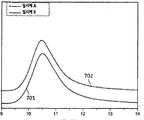
- FIG. 7 is a graph showing GPC chromatograms of two AN-VIM-MA-AA quad-polymers, in which the ATR-FTIR spectrum is shown in FIG. 5.
- FIG. 8 is a graph showing the DSC thermogram of two AN-VIM-MA-AA quad-polymers, in which the ATR-FTIR spectrum is shown in FIG. 5.
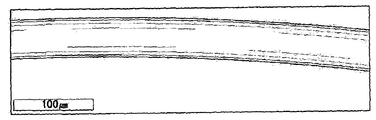
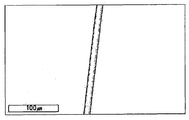
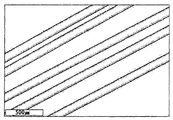
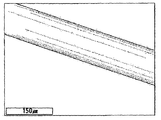
- 10 is an image of as-spun fibers spun from AN-VIM-MA-AA quad-polymer having a diameter of about 68 mm.
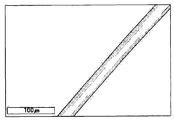
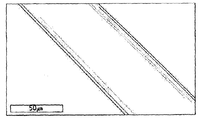
- FIG. 11 is an image of fibers as spun from AN-VIM-MA-AA quad-polymer having a diameter of about 25 mm.
- the diameter of the fiber is 20 mm.
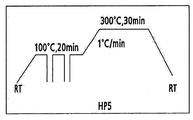
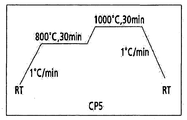
- FIG. 13 shows a diagram of a heating program of stabilization for an embodiment of the invention
- FIGS. 13A-13F show various diagrams.
- FIG. 14 is an image of stabilized fibers made from AN-VIM-MA-AA quad-polymers with a diameter of about 132 mm.
- FIG. 15 is an image of stabilized multiple fibers made from AN-VIM-MA-AA quad-polymer fibers, with Tow 5 fibers stabilized together and none of the fibers were fused together.
- FIGS. 16A-16E show various diagrams.
- 17 is an image of thermally stabilized fibers with a diameter of 147 ⁇ m.
- 18 is an optical image of carbon fiber made from AN-VIM-MA-AA quad-polymer.
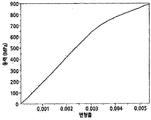
- FIG. 19 is a graph showing a stress-strain curve of the carbon fiber shown in FIG. 18.
- FIG. 21 shows AN-VIM-MA-IA quad-polymer synthesis scheme including the first range of the proportion of monomers (% by weight) in the feed polymer and the resulting polymer.
- the present invention provides a process for the production of carbon fibers through the use of a four-component system of monomers. Each monomer has a specific purpose and use for the development of melt processible carbon fibers.
- Acrylonitrile (AN) is a major component required for the development of carbon fibers. It is a nitrile group that is cyclized to form a network of carbon fibers.
- Vinyl-imidazole (VIM) is a component that allows melt processability while maintaining a carbon-to-nitrogen (C / N) ratio at an appropriate level for the development of high strength fibers.
- the third component methyl acrylate (MA) is also a melt processable monomer unit, but its main purpose is to lower the cost of offsetting the higher cost of N-vinylimidazole.
- the fourth component, acrylic acid (AA) or itaconic acid (IA) is then used to advance the onset of stabilization in the thermal environment.
- the main purpose of developing quad polymer systems is to (1) lower the development costs associated with the high cost of the original copolymer, and (2) to enhance the stabilization of the polymer fibers.
- the Yang '050 PCT patent application discloses and teaches various synthesis of AN-based copolymers, including the synthesis of acrylonitrile (AN) and N-vinylimidazole (VIM) to form copolymers. See, eg, FIG. 1 of the Yang '050 PCT patent application. Although the polymerization of the present invention can be carried out in a similar manner, the monomers used are modified as in the scheme shown in FIG. 1, which illustrates the scheme of solution polymerization of AN, VIM, MA and AA. .
- the Yang '050 PCT patent application is attached to Appendix 1, which is hereby incorporated by reference in its entirety for all purposes.
- free radical solution polymerization of AN, VIM, MA and AA monomers was carried out in 250 mL to 2,000 mL flasks equipped with thermocouple probes, condensers, addition funnels and nitrogen inlets.
- the flask was charged with DMF and purged with nitrogen for 30 minutes.
- the monomer, AIBN and chain transfer agent, 1-dodecanethiol, were then added dropwise into the flask over a period of 2 to 8 hours.
- the polymerization reaction was carried out at 70 ° C. overnight with continued stirring.
- the polymer was precipitated in deionized water, filtered, washed with methanol and hexane to remove residual monomer and then dried in a vacuum oven for 2 days until constant weight was obtained.
- the comonomers in the AN-VIM-MA-AA quad polymer can be present in any suitable ratio in the quad-polymer.
- the resulting quad-polymer may have a weight ratio range of AN: VIM: MA: AA, such that the total amount of monomers is from 100% to 100% by weight.
- the amount of each monomer in the feed and product of the quad-polymer varies as shown in FIG. 2. Specifically, they are as follows.
- AN 50.0 wt% to 99.0 wt%
- VIM 0.1% to 40.0% by weight
- MA 0.1 wt% to 50.0 wt%
- the product (AN-VIM-MA-AA polymer) has the formula
- the amount of each monomer in the feed and product of the quad-polymer varies as shown in FIG. 3. Specifically, they are as follows.
- VIM 0.1% to 10.0% by weight
- the product (AN-VIM-MA-AA polymer) has the formula
- the amount of each monomer in the feed and product of the quad-polymer varies as shown in FIG. 4. Specifically, they are as follows.
- VIM 0.1% to 5.0% by weight
- the product (AN-VIM-MA-AA polymer) has the formula
- Example A a mixture of AN, VIM, MA and AA monomers (AN: 79.0 parts by weight, VIM: 2.5 parts by weight, MA: 16.0 parts by weight and AA: 2.5 parts by weight) 28.80 gm of free radical polymerization was performed in a 500 mL flask equipped with a thermocouple probe, condenser, addition funnel and nitrogen inlet. The flask was charged with 33 gm of DMF and purged with nitrogen for 30 minutes.
- Example B a mixture of AN, VIM, MA and AA monomers (AN: 85.0 parts by weight, VIM: 2.5 parts by weight, MA: 10.0 parts by weight) And AA: 2.5 parts by weight) 281.0 gm of free radical polymerization was carried out in a 2000 mL flask equipped with a thermocouple probe, condenser, addition funnel and nitrogen inlet. The flask was charged with 330.0 gm of DMF and purged with nitrogen for 30 minutes.
- FIG. 5 shows the ATR-FTIR spectrum 501 of Example A and the ATR-FTIR spectrum 502 of Example B.
- FIG. These spectra 501-502 show that the polymerization of Examples A and B was successful.
- FIG. 6 shows the 1 H-NMR spectrum 601 of Example A and the 1 H-NMR spectrum 602 of Example B.
- FIG. These spectra 601-602 show that the polymerization of Examples A and B was successful.
- Insert 603 is an enlarged view of the spectrum of dashed box 604. In the formula, the main peak was identified and indicated in FIG. 6 (corresponding to the polymer below), which is also shown in insert 603.
- the molecular weight of the quad-polymer ranged from 18 KDa to 300 KDa and the polydispersity index (PDI) was 1.2 to 4.0. In certain embodiments of the invention, the molecular weight of the quad-polymer ranged from 40 KDa to 120 KDa and the PDI was 1.2 to 2.0.
- FIG. 7 shows the GPC chromatogram 701 of Example A and the GPC chromatogram 702 of Example B.
- FIG. The results of this GPC analysis are shown in Table 1 below.
- FIG. 8 shows the DSC thermogram 801 of Example A and the DSC thermogram 802 of Example B, the DSC analysis of Examples A and B being about 98 ° C. and as shown in this figure, respectively.
- the polymer samples of both Example A and Example B have excellent thermal properties as evidenced from their high decomposition temperature (about 250 ° C.) as demonstrated by thermo-gravimetric analysis (TGA). Showed stability. High char yields (both 52%) for both Example A and Example B were also observed from the char yield analysis.
- TGA thermo-gravimetric analysis
- Example C quad polymer precursors were prepared, which exhibited excellent extrusion, thermal stabilization and carbonization capabilities.
- This new precursor polymer has a low T g of 97 ° C. and can be extruded into thin fibers.
- One major advantage is its thermal stabilization ability. Similar to the AN-VIM copolymer precursor (disclosed and taught in the Yang '050 PCT patent application), these new quad polymer precursors are thermally stabilizeable and do not require any UV treatment.
- the raw material cost for this quad polymer precursor will be about 1.45 $ / lb, which is about 22% lower than the threshold value of 1.85 $ / lb for the AN-VIM copolymer precursor.
- Mechanical test results also showed excellent properties for these precursors.
- Carbonized fibers with a diameter of 77 ⁇ m showed a tensile strength (TS) of 894 MPa and Young's modulus (YM) of 220 GPa, while the stabilized fibers showed a coefficient of TS of 7004 MPa and TS of 294 MPa.
- the TS of neat fibers and annealed fibers were 109 MPa and 163 MPa, respectively.
- very thin fibers can be produced.
- This fiber with a diameter of 25 ⁇ m showed high mechanical strength with a TS of 369 MPa and a YM of 7.4 GPa.
- the thermal properties make the quad-polymer suitable for melt processing.
- AN-VIM-MA-AA quad-polymer precursors as described above were ground to coarse granules in a mill.
- the fibers were extruded using a Rosaland RH-7 capillary rheometer.
- 11 g of copolymer were loaded into a rheometer preheated at 100 ° C. to 200 ° C. at ambient conditions and allowed to heat for 10 minutes.
- the molten polymer passed through a die ranging in diameter from 0.01 mm to 1.0 mm.
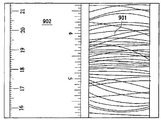
- Continuous fibers 901 were made by this method, where the fibers 901 are shown in FIG. 9 (the ruler 902 is present in FIG.
- FIG. 12 shows the spun fiber as derived from AN-VIM-MA-AA quad polymer prepared by the stretching method, the diameter of which is 20 mm.
- Annealing or stretching is the step of aligning the polymer chains parallel to the fiber axis. This process is important for increasing fiber strength. Annealing and stabilizing steps are performed together or separately.
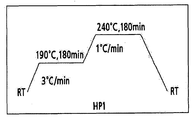
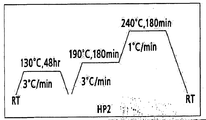
- HP1 (as shown in FIG. 13A), annealing and stabilization steps are performed together, and in HP2 (as shown in FIG. 13B), these steps are performed separately.
- the fiber diameter is reduced by 10% to 150% by the annealing stabilization process under the applied tension.
- Stabilization is the cyclization step of the acrylonitrile group.
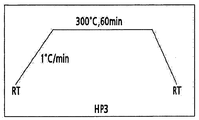
- the heating program of the stabilization stage is shown in FIGS. 13A-13F.
- the first heating program, HP1 was set directly to 190 ° C. at a rate of 3 ° C./min, held at that temperature for 180 minutes, and then at 240 ° C. at a rate of 1 ° C./min. Raised to C, held for another 180 minutes at that temperature, then cooled to room temperature.
- FIG. 14 shows optical micrographs of stabilized fibers made from AN-VIM-MA-AA quad-polymers.
- the diameter of the fiber was about 132 mm.
- FIG. 15 shows the results of this multi-fiber stabilization process, namely stabilized multi-fibers made from AN-VIM-MA-AA quad-polymer fibers, wherein the tow of five fibers was stabilized together and none of the fibers Not fused together.
- Thermally stabilized fibers can be used to produce high strength carbon fibers by carbonization processes under inert conditions. Both the single precursor fiber and the sat of precursor fibers can be thermally stabilized and carbonized to obtain carbon fibers.
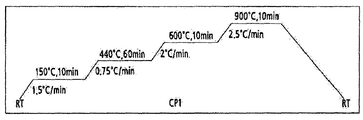
- the heating program of the carbonization step is shown in FIG. 16A (CP1).
- Carbonization is the last step in fiber formation (performed under inert conditions), where the stabilized fibers are subjected to further heat treatment.
- a typical heating program involves a number of steps (eg in CP1 shown in FIG. 16A).
- the fiber is heated from 1.5 ° C./min to 150 ° C. and held at that temperature for 10 minutes, then the temperature is raised to 440 ° C. at a rate of 0.75 ° C./min, Hold at that temperature for 60 minutes.
- the temperature is then heated to 600 ° C. at a rate of 2 ° C./min, held at that temperature for 10 minutes, then raised to 900 ° C. at a rate of 2.5 ° C./min and held for 10 minutes.
- the carbonized fibers are then cooled to room temperature.
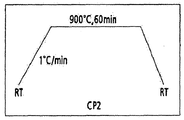
- FIGS. 16B-16E Alternative heating programs of the carbonization step are shown in FIGS. 16B-16E (CP2-CP5, respectively).
- AN-VIM-MA-AA quad-polymers were synthesized (using the process discussed and described above) and extruded using a single fiber extruder (leometer), and then the extruded fibers were stabilized at 190 ° C. for 180 minutes. Then, it was heated to 240 ° C. in a step of 3 ° C./min, and after applying tension, carbonization was performed to produce carbon fibers.
- the carbonization conditions used allowed the stabilized fibers to be heated in an oven under a nitrogen atmosphere to reach a temperature of 900 ° C. in a number of steps (as shown in FIG. 16A (CP1)).
- Carbon fibers approximately 6 cm or 2.25 inches long were successfully prepared by carbonization of stabilized fibers made from AN-VIM-MA-AA copolymer.
- stabilized fibers of 86 mm in diameter can be produced, for example, when melt extruded fibers within 338 mm in diameter, when annealed and stabilized according to heating program HP2 (FIG. 13B). ("Example D"). Table 3 shows the properties of the fiber vs stabilized fiber as spun.
- FIG. 17 shows thermally stabilized fibers having a diameter of 147 ⁇ m for Example D.
- heating program HP1 (FIG. 13A) for melt extruded fibers within 168 mm in diameter.
- Carbon fiber having a diameter of 77 mm was produced when annealed and stabilized according to the carbonization process and carbonized according to the carbonization heating program CP1 (FIG. 16A).
- Table 4 shows the properties of fiber vs stabilized fiber and carbonized fiber as spun.
- Melt-spun vs. stabilized and carbonized fibers stabilization by HP 1 and carbonization shown in FIG. 16A fiber TS YM diameter Melt-spun fiber 192 MPa 3092 MPa 168 mm Thermally stabilized fiber 294 MPa 7004 MPa 136 mm Carbonized fiber 894 MPa 220 GPa 77 mm
- FIG. 18 shows the carbon fiber of Example E having a diameter of 77 ⁇ m.
- 19 shows the results of an Instron measurement test performed using the carbon fiber of Example E.
- the fibers gave a tensile strength (TS) of approximately 894 MPa and a Young's modulus (YM) of 220 GPa.
- TS tensile strength
- YM Young's modulus
- the fourth component may be itaconic acid (IA) instead of acrylic acid (AA).
- IA itaconic acid
- Free radical solution polymerization of AN, VIM, MA and IA monomers was carried out in 250 mL to 2000 mL flasks equipped with thermocouple probes, condensers, addition funnels and nitrogen inlets. The flask was charged with DMF and purged with nitrogen for 30 minutes. The monomer, AIBN and chain transfer agent, 1-dodecanethiol, were then added dropwise into the flask over a period of 2 to 8 hours. The polymerization reaction was carried out at 70 ° C. overnight with continued stirring.
- the polymer was precipitated in deionized water, filtered, washed with methanol and hexane to remove residual monomer and then dried in a vacuum oven for 2 days until constant weight was obtained.
- 20 illustrates the scheme of solution polymerization of AN, VIM, MA and IA.
- the monomers in the AN-VIM-MA-IA quad polymer can be present in any suitable ratio within the quad-polymer, for example when the four monomers AN, VIM, MA and IA are used, the resulting quad-polymer May have a weight ratio range of AN: VIM: MA: IA such that the total amount of monomers is from 100% to 100% by weight.
- the amount of each monomer in the feed and product of the quad-polymer varies as shown in FIG. 21. Specifically, they are as follows.
- AN 50.0 wt% to 99.0 wt%
- VIM 0.1% to 40.0% by weight
- MA 0.1 wt% to 50.0 wt%
- the product (AN-VIM-MA-IA polymer) has the formula
- the amount of each monomer in the feed and product of the quad-polymer varies as follows.
- VIM 0.1% to 10.0% by weight
- the product (AN-VIM-MA-IA polymer) has the formula
- most preferably the amount of each monomer in the feed and product of the quad-polymer varies as follows.
- VIM 0.1% to 5.0% by weight
- the product (AN-VIM-MA-IA polymer) has the formula
- the second monomer may alternatively be 4-vinyl imidazole, 2-vinyl imidazole or 1-methyl-2-vinyl imidazole
- the third monomer methyl acrylate
- the fourth monomer acrylic acid or itaconic acid
Landscapes
- Chemical & Material Sciences (AREA)
- Chemical Kinetics & Catalysis (AREA)
- Organic Chemistry (AREA)
- Health & Medical Sciences (AREA)
- Medicinal Chemistry (AREA)
- Polymers & Plastics (AREA)
- Engineering & Computer Science (AREA)
- Textile Engineering (AREA)
- General Chemical & Material Sciences (AREA)
- Mechanical Engineering (AREA)
- Inorganic Chemistry (AREA)
- Addition Polymer Or Copolymer, Post-Treatments, Or Chemical Modifications (AREA)
Abstract
쿼드-중합체(quad-polymer) 조성물은 (a) 아크릴로니트릴, (b) 비닐이미다졸, (c) 메틸 아크릴레이트 및 (d) 아크릴산 또는 이타콘산의 단량체를 포함한다. 이러한 쿼드-중합체 조성물은 (예컨대 용융 방사에 의해) 섬유를 형성하는 데 사용될 수 있으며, 그런 다음 이러한 섬유는 어닐링, 안정화 및/또는 탄화되어, 탄소 섬유가 생성될 수 있다. 쿼드-중합체 조성물은 일단 탄화되면 슈퍼커패시터, 리튬 배터리 전극에 사용될 수 있고, 합성된 대로, 이러한 조성물은 상처 치유 섬유, 패브릭, 코팅 및 필름, 및 항균/항미생물 섬유, 패브릭, 코팅 및 필름에 사용될 수 있다. 쿼드-중합체 조성물로부터 형성된 탄소 섬유는 자동차, 항공우주 구조물, 해양 구조물, 군사 장비/부품, 스포츠 용품, 로봇 공학, 가구 및 전자 부품용 섬유 복합물에 사용될 수 있다.
Description
본 발명은 탄소 섬유의 제조에 사용될 수 있는 용융 가공 가능한(melt-processable) 탄소 섬유 전구체, 보다 특히 탄소 섬유용의 경제적인(저비용의) 용융 가공 가능한 쿼드-중합체(quad-polymer) 전구체, 이러한 전구체의 제조 방법, 및 이의 탄소 섬유의 제조 방법에 관한 것이다.
Azarova, M. T., et al., World production and consumption of carbon fibres. Fibre Chemistry, 2011. 42(5): p. 271-277 ("Azarova 2011").
Baker, D. A., et al., Recent advances in low-cost carbon fiber manufacture from lignin. Journal of Applied Polymer Science, 2013. 130(2): p. 713-728 ("Baker 2013").
Batchelor, B. L., et al., Plasticization for melt viscosity reduction of melt processable carbon fiber precursor, Carbon, 2016. 98: 681-688 ("Batchelor 2016").
Bhal, O. P., et al., Carbon Fibers, Third Edition, in Carbon Fibers, J.B. Donnet, et al., Editors. 1998, Marcel Dekker Inc.: New York. p. 1-84 ("Bhal 1998").
Bhanu, V. A., et al., Synthesis and characterization of acrylonitrile methyl acrylate statistical copolymers as melt processable carbon fiber precursors. Polymer, 2002. 43(18): p. 4841-4850 ("Bhanu 2002").
Bortner, M. J., et al., Shear rheological properties of acrylic copolymers and terpolymers suitable for potentially melt processable carbon fiber precursors. Journal of Applied Polymer Science, 2004. 93(6): p. 2856-2865 ("Bortner 2004").
Cantwell, W. J., et al., The impact resistance of composite materials ― a review. Composites, 1991. 22(5): p. 347-362 ("Cantwell 1991").
Chand, S., Review Carbon fibers for composites. Journal of Materials Science, 2000. 35(6): p. 1303-1312 ("Chand 2000").
Deng, W., et al., Poly (Acrylonitrile-co-1-Vinylimidazole): A New Carbon Fiber Precursor: Melt Processable and Thermally Crosslinkable Carbon Fiber Precursor, 2012: LAP Lambert Academic Publishing ("Deng 2012").
Deng, W., et al., Poly (acrylonitrile - co -1-vinylimidazole): A new melt processable carbon fiber precursor. Polymer, 2011. 52(3): p. 622-628 ("Deng 2011").
Deng, W., et al., Polym Prepr (Am Chem Soc Div Polym Chem), 2009. 50: p. 237("Deng 2009").
Edie, D. D., The effect of processing on the structure and properties of carbon fibers Carbon, 1998. 36(4): p. 345-362 ("Edie 1998").
Eng, F. P., et al., Fourier transform infrared studies on the thermal degradation of polyvinylimidazoles: Part I. Journal of Applied Polymer Science, 1986. 32(5): p. 5021-5034 ("Eng 1986").
E.P.A. and D.O.T., 2017 and later model year light- duty vehicle green house gas emissions and corporate average fuel economy standards, 2012, Federal Register. p. 62623 - 63200 ("EPA 2012").
Fu, Z., et al., Structure evolution and mechanism of polyacrylonitrile and related copolymers during the stabilization. Journal of Materials Science, 2014. 49(7): p. 2864-2874 ("Fu I 2014").
Fu, Z., et al., Effects of an itaconic acid comonomer on the structural evolution and thermal behaviors of polyacrylonitrile used for polyacrylonitrile-based carbon fibers. Journal of Applied Polymer Science, 2014. 131(19): p. n/a-n/a ("Fu II 2014").
Godshall, D., et al., Incorporation of methyl acrylate in acrylonitrile based copolymers: effects on melting behavior. Polymer, 2003. 44(15): p. 4221-4228 ("Godshall 2003").
Guigon, M., et al., Heat-treatment of high tensile strength PAN-based carbon fibres: Microtexture, structure and mechanical properties. Composites Science and Technology, 1986. 27(1): p. 1-23 ("Guigon 1986").
Jain, M., et al., Conversion of acrylonitrile-based precursor fibres to carbon fibres. Journal of Materials Science, 1987. 22(1): p. 278-300 ("Jain 1987").
Li, W., et al., Structural features of polyacrylonitrile-based carbon fibers. Journal of Materials Science, 2012. 47(2): p. 919-928 ("Li 2012").
Mukundan, T., et al., A photocrosslinkable melt processible acrylonitrile terpolymer as carbon fiber precursor. Polymer, 2006. 47(11): p. 4163-4171 ("Mikundan 2006").
Naskar, A. K., et al., UV assisted stabilization routes for carbon fiber precursors produced from melt-processible polyacrylonitrile terpolymer. Carbon, 2005. 43(5): p. 1065-1072 ("Naskar 2005").
Paiva, M. C., et al., UV stabilization route for melt-processible PAN-based carbon fibers. Carbon, 2003. 41(7): p. 1399-1409 ("Paiva 2003").
Rahaman, M. S. A., et al., A review of heat treatment on polyacrylonitrile fiber. Polymer Degradation and Stability, 2007. 92(8): p. 1421-1432 ("Rahaman 2007").
Rangarajan, P., et al., Effect of comonomers on melt processability of polyacrylonitrile. Journal of Applied Polymer Science, 2002. 85(1): p. 69-83 ("Ramgarajan I 2002").
Salem, D. R., Structure Formation in Polymeric Fibers. 2001: Hanser ("Salem 2001").
Rangarajan, P., et al., Dynamic oscillatory shear properties of potentially melt processable high acrylonitrile terpolymers. Polymer, 2002. 43(9): p. 2699-2709 ("Ramgarajan II 2002").
Yang, D. J., et al., International PCT Patent Application Publication No. WO 2015/175050, Carbon fiber compositions and methods of making, filed February 14, 2015 and published November 19, 2015 ("Yang '050 PCT Patent Application")
상기 문헌들을 참조하여, 배경기술을 설명한다.
탄소 섬유들은 이들의 우수한 기계적 특성과 더불어 부가적인 양호한 화학적 및 열적 특성 때문에, 항공우주 산업, 스포츠 용품 산업, 자동차 산업 및 방위 산업으로부터 관심을 끌어 왔다(문헌[Edie 1998; Bhal 1998; Cantwell 1991; Chand 2000; Li 2012]. 대부분의 탄소 섬유는 폴리아크릴로니트릴(PAN) 전구체로부터 제조되지만, 일부는 다른 원료들, 예컨대 피치(pitch)(중간상(mesophase)), 리그닌 및 수화된 셀룰로스로부터 유래된다. 피치-기반 전구체는 낮은 원료 비용, 탄소 섬유 제조를 위한 낮은 에너지 요건 및 높은 탄소 수율의 이점을 가지지만, 이들의 기계적 특성은 PAN-기반 탄소 섬유와 비교하여 매우 불량하다(문헌[Azarova 2011; Baker 2013; Rahaman 2007; Salem 2001]). 따라서, 우수한 기계적 특성으로 인해, PAN-기반 전구체가 가장 적절한 것으로 확인된다(문헌[Rahaman 2007; Fu I 2014]).
2012년 미국 법제에 따르면, 2017년 모델에 대한 자동차 및 경트럭의 평균 연비가 35.5 mpg일 것이고, 2025년 모델에 대해서는 54.5 mpg일 것이다[EPA 2012]. 차량 중량을 낮추는 것은 더 높은 연비를 달성하고 온실 가스 방출을 감소시키는 효과적인 방식일 것이다. 미국 에너지국(DOE; Department of Energy)에 의한 연구에 따르면, PAN-기반 탄소 섬유 복합물은 자동차 부품의 중량을 금속 부품과 비교하여 60%만큼 감소시키는 잠재력을 가진다[Baker 2013]. 자동차 부품용 복합물을 사용하기 위해, 이는 1.72 GPa의 인장 강도 및 172 GPa의 계수와 같은 기계적 특성을 필요로 한다[Baker 2013]. 그러나, PAN-기반 탄소 섬유의 생산을 위한 현재의 기술은 용액 방사(spinning) 공정을 사용하며, 이러한 공정은 고비용이며 환경적으로 유해한 용매 회수 단계를 필요로 한다. 그러므로, 탄소 섬유 복합물 부품이 모든 자동차 제작에 사용되는 경우, 유해 용매의 소모 및 회수는 막대한 환경적 문제뿐만 아니라 경제적 문제를 유발할 수 있다.
PAN-기반 전구체는 이들이 용융되기 전에 분해되기 때문에, 극성 용매를 사용한 전구체의 용액 방사(20 중량% 내지 30 중량% 용액)은 전형적인 섬유 형성 공정이다[Ramgarajan I 2002]. 전구체를 탄소 섬유로 전환하는 데 2개의 열적 처리 단계들이 필요하다. 제1 단계에서, 열적-산화적 '안정화'는 산소가 풍부한 환경에서 200℃ 내지 300℃ 범위의 온도에서 사다리-유사 구조를 형성한다. '탄화'의 제2 단계는 불활성 분위기 하에 통상 약 1,000℃ 내지 약 1,400℃에서 수행되어, 탄소 섬유를 형성한다(문헌[Cantwell 1991; Rahaman 2007; Jain 1987]).
상기 언급된 바와 같이, 용액 방사 공정은 용매 회수와 연관이 있으며, 이로써 가공 비용이 높다. 용액 방사 공정을 용융 방사로 대체하는 것은 비용 효과적이고 환경 친화적인 탄소 섬유 생산을 위한 주된 이득이다. 용융 가공 가능한 탄소 섬유 전구체는 상이한 연구자들에 의해 연구되었다. 예를 들어, 공단량체, 예컨대 메틸 아크릴레이트(MA), 이타콘산(IA), 메타크릴산(MAA), 아크릴 아미드(AM), 아크릴로일 벤조페논(ABP)을 PAN과 함께 혼입하였으나, 이들의 열적 안정화는 항상 문제가 되었다(문헌[Fu I 2014; Ramgarajan I 2002; Ramgarajan II 2002; Bhanu 2002; Bortner 2004; Fu II 2014; Godshall 2003; Mikundan 2006; Naskar 2005; Paiva 2003]). 특히, Pavia 2003 등[Paiva 2003] 및 Naskar 등[Naskar 2005]은 MA 및 ABP로 제조된 PAN-기반 용융 가공 가능한 전구체 공중합체를 연구하였으며, 이때, UV 보조된 안정화가 필요하였다. 2011년에, Deng 등은 새로운 용융 가공 가능한 탄소 섬유 전구체로서의 폴리(아크릴로니트릴-코-N-비닐이미다졸)(AN/VIM)의 잠재성을 보고하였다[Deng 2012; Deng 2011]. 이러한 새로운 AN/VIM 공중합체는 열적 안정화를 위한 UV 처리를 필요로 하지 않으며, 전형적인 PAN-기반 전구체로서의 안정화를 위해 가공될 수 있다. 최근, Batchelor 등은 올리고머 가소제를 사용한 AN/VIM 전구체 중합체에 대한 용융 점도 감소를 보고하였으며, 이때 오로지 열적 안정화만 사용되었다[Batchelor 2016]. Yang '050 PCT 특허 출원에서, 본 발명자들은 용융 가공 가능한 AN/VIM 공중합체로부터의 자동차 등급 탄소 섬유의 제조를 개시 및 교시하였다. 그러나, AN/VIM 공중합체에서 VIM의 비용이 더 높다는 측면에서, 이러한 기술을 경제적으로 실현 가능하도록 만들 저비용의 대안적인 용융 가공 가능한 전구체가 요망되고 있다.
본 발명의 목적은, 상술한 문제점을 해결할 수 있는, 탄소 섬유 제조용 쿼드-중합체 전구체 및 이의 제조 방법 및 사용 방법을 제공하는 데 있다.
본 발명은 쿼드-중합체 조성물에 관한 것이다. 쿼드-중합체 조성물은


본 발명의 실시는 하기 특징들 중 하나 이상을 포함할 수 있다.
쿼드-중합체 조성물은 하기의 화학 구조를 가질 수 있다.
.
X는 0.1 중량% 내지 40.0 중량%의 범위일 수 있다. Y는 50.0 중량% 내지 99.0 중량%의 범위일 수 있다. Z는 0.1 중량% 내지 50.0 중량%의 범위일 수 있다. M은 0.1 중량% 내지 40.0 중량%의 범위일 수 있다.
X는 0.1 중량% 내지 10.0 중량%의 범위일 수 있다. Y는 60.0 중량% 내지 95.0 중량%의 범위일 수 있다. Z는 2.5 중량% 내지 30.0 중량%의 범위일 수 있다. M은 0.1 중량% 내지 10.0 중량%의 범위일 수 있다.
X는 0.1 중량% 내지 5.0 중량%의 범위일 수 있다. Y는 70.0 중량% 내지 92.5 중량%의 범위일 수 있다. Z는 2.5 중량% 내지 25.0 중량%의 범위일 수 있다. M은 0.1 중량% 내지 5.0 중량%의 범위일 수 있다.
쿼드-중합체 조성물은 하기의 화학 구조를 가질 수 있다.
.
X는 0.1 중량% 내지 40.0 중량%의 범위일 수 있다. Y는 50.0 중량% 내지 99.0 중량%의 범위일 수 있다. Z는 0.1 중량% 내지 50.0 중량%의 범위일 수 있다. M은 0.1 중량% 내지 40.0 중량%의 범위일 수 있다.
X는 0.1 중량% 내지 10.0 중량%의 범위일 수 있다. Y는 60.0 중량% 내지 95.0 중량%의 범위일 수 있다. Z는 2.5 중량% 내지 30.0 중량%의 범위일 수 있다. M은 0.1 중량% 내지 10.0 중량%의 범위일 수 있다.
X는 0.1 중량% 내지 5.0 중량%의 범위일 수 있다. Y는 70.0 중량% 내지 92.5 중량%의 범위일 수 있다. Z는 2.5 중량% 내지 25.0 중량%의 범위일 수 있다. M은 0.1 중량% 내지 5.0 중량%의 범위일 수 있다.
쿼드-중합체 조성물은 18 KDa 내지 200 KDa 범위의 분자량을 가질 수 있다. 쿼드-중합체 조성물은 1.2 내지 3.0 범위의 다분산 지수(PDI; polydispersity index)를 가질 수 있다.
일반적으로, 또 다른 양태에서, 본 발명은 쿼드-중합체 조성물의 제조 방법에 관한 것이다. 본 방법은 (a) 아크릴로니트릴, (b) 비닐이미다졸, (c) 메틸 아크릴레이트 및 (d) 아크릴산 및 이타콘산으로 이루어진 군으로부터 선택되는 산으로부터 쿼드-중합체 조성물을 합성하는 단계를 포함한다. 쿼드 중합체는 화학 구조를 가지며, 여기서,
(A) 산이 아크릴산인 경우, 화학 구조는

(B) 산이 이타콘산인 경우, 화학 구조는

X, Y, Z 및 M은 쿼드-중합체 조성물의 중량%이다. X + Y + Z + M = 100%이다.
본 발명의 실시는 하기 특징들 중 하나 이상을 포함할 수 있다.
산은 아크릴산일 수 있고, 화학 구조는

산은 이타콘산일 수 있고, 화학 구조는

아크릴로니트릴의 중량%, 비닐이미다졸의 중량%, 메틸 아크릴레이트의 중량% 및 산의 중량%는 총 100% 중량%에 대한 총 중량%일 수 있다. 아크릴로니트릴의 중량%는 50.0 중량% 내지 99.0 중량%일 수 있다. 비닐이미다졸의 중량%는 0.1 중량% 내지 40.0 중량%일 수 있다. 메틸 아크릴레이트의 중량%는 0.1 중량% 내지 50.0 중량%일 수 있다. 산의 중량%는 0.1 중량% 내지 40.0 중량%일 수 있다.
X는 0.1 중량% 내지 40.0 중량%일 수 있다. Y는 50.0 중량% 내지 99.0 중량%일 수 있다. Z는 0.1 중량% 내지 50.0 중량%일 수 있다. M은 0.1 중량% 내지 40.0 중량%일 수 있다.
아크릴로니트릴의 중량%는 60.0 중량% 내지 95.0 중량%일 수 있다. 비닐이미다졸의 중량%는 0.1 중량% 내지 10.0 중량%일 수 있다. 메틸 아크릴레이트의 중량%는 2.5 중량% 내지 30.0 중량%일 수 있다. 산의 중량%는 0.1 중량% 내지 10.0 중량%일 수 있다.
X는 0.1 중량% 내지 10.0 중량%일 수 있다. Y는 60.0 중량% 내지 95.0 중량%일 수 있다. Z는 2.5 중량% 내지 30.0 중량%일 수 있다. M은 0.1 중량% 내지 10.0 중량%일 수 있다.
아크릴로니트릴의 중량%는 70.0 중량% 내지 92.5 중량%일 수 있다. 비닐이미다졸의 중량%는 0.1 중량% 내지 5.0 중량%일 수 있다. 메틸 아크릴레이트의 중량%는 2.5 중량% 내지 25.0 중량%일 수 있다. 산의 중량%는 0.1 중량% 내지 10.0 중량%일 수 있다.
X는 0.1 중량% 내지 5.0 중량%일 수 있다. Y는 70.0 중량% 내지 92.5 중량%일 수 있다. Z는 2.5 중량% 내지 25.0 중량%일 수 있다. M은 0.1 중량% 내지 10.0 중량%일 수 있다.
일반적으로, 또 다른 양태에서, 본 발명은 쿼드-중합체 조성물에 관한 것이다. 쿼드-중합체 조성물은 제1 단량체, 제2 단량체, 제3 단량체 및 제4 단량체를 포함한다. 제1 단량체는 쿼드-중합체 조성물 내 Y의 중량%에서 아크릴로니트릴이다. 제2 단량체는 1-비닐 이미다졸, 4- 비닐 이미다졸, 2-비닐 이미다졸 및 1-메틸-2-비닐 이미다졸로 이루어진 군으로부터 선택되며, 여기서, 제2 단량체는 쿼드-중합체 조성물 내 X의 중량%에서이다. 제3 단량체는 쿼드-중합체 조성물 내 Z의 중량%에서 아크릴레이트이다. 아크릴레이트는 메틸 아크릴레이트, 에틸 아크릴레이트, 부틸 아크릴레이트, 메틸 메타크릴레이트 및 tert-부틸 아크릴레이트로 이루어진 군으로부터 선택된다. 제4 단량체는 쿼드-중합체 조성물 내 M의 중량%에서 산이다. 산은 아크릴산, 이타콘산 및 메타크릴산으로 이루어진 군으로부터 선택된다. 제1 단량체의 Y 중량%, 제2 단량체의 X 중량%, 제3 단량체의 Z 중량% 및 제4 단량체의 M 중량%의 총합은 100%이다.
본 발명의 실시는 하기 특징들 중 하나 이상을 포함할 수 있다.
제2 단량체는 1-비닐 이미다졸일 수 있다. 제3 단량체는 메틸 아크릴레이트일 수 있다. 제4 단량체는 아크릴산 또는 이타콘산일 수 있다.
일반적으로, 또 다른 양태에서, 본 발명의 쿼드-중합체의 섬유의 형성 방법에 관한 것이다. 쿼드-중합체는 아크릴로니트릴인 제1 단량체를 포함한다. 쿼드-중합체는 1-비닐 이미다졸, 4-비닐 이미다졸, 2-비닐 이미다졸 및 1-메틸-2-비닐 이미다졸로 이루어진 군으로부터 선택되는 제2 단량체를 추가로 포함한다. 쿼드-중합체는 메틸 아크릴레이트, 에틸 아크릴레이트, 부틸 아크릴레이트, 메틸 메타크릴레이트 및 tert-부틸 아크릴레이트로 이루어진 군으로부터 선택되는 제3 단량체를 추가로 포함한다. 쿼드-중합체는, 산이고 아크릴산, 이타콘산 및 메타크릴산로 이루어진 군으로부터 선택되는 제4 단량체를 추가로 포함한다. 본 방법은 제1 단량체, 제2 단량체, 제3 단량체 및 제4 단량체를 조합하여, 쿼드- 중합체 조성물을 형성하는 단계를 포함한다. 본 방법은 추가로, 쿼드-중합체 조성물을 용융-방사하여, 쿼드-중합체 조성물의 섬유를 형성하는 단계를 포함한다.
본 발명의 실시는 하기 특징들 중 하나 이상을 포함할 수 있다.
제1 단량체, 제2 단량체, 제3 단량체 및 제4 단량체를 조합하여 쿼드-중합체 조성물을 형성하는 단계는 용매의 이용을 포함할 수 있다. 이러한 용매는 다이메틸포름아미드(DMF), 다이메틸 설폭사이드(DMSO), 다이메틸아세타미드(DMAc), N-메틸-2-피롤리돈(NMP) 및 이들의 혼합물로 이루어진 군으로부터 선택될 수 있다.
쿼드-중합체의 용융-방사는 얇은 섬유를 수득할 수 있다. 얇은 섬유는 약 10 mm 내지 250 mm의 직경을 가질 수 있다.
얇은 섬유는 (a) 모세관 레오미터에서 다이(die)를 사용하는 단계; (b) 용융된 중합체를 인장(tension) 하에 신장(stretch)시키는 단계; 및 (c) 이들의 조합으로 이루어진 군으로부터 선택되는 공정을 포함하여 수득될 수 있다.
제1 단량체, 제2 단량체, 제3 단량체 및 제4 단량체를 조합하여 쿼드-중합체 조성물을 형성하는 단계는 개시제를 사용하여 라디칼 중합을 개시하는 단계를 포함할 수 있다.
개시제는 열적 개시제를 포함할 수 있다.
열적 개시제는 2,2'-아조비스이소부티로니트릴(AIBN), 1,1'-아조비스(사이클로헥산카르보니트릴), 벤조일 퍼옥사이드, tert-부틸 퍼옥사이드 및 라우로일 퍼옥사이드 및 이들의 조합으로 이루어진 군으로부터 선택될 수 있다.
열적 개시제는 2,2'-아조비스이소부티로니트릴(AIBN)일 수 있다.
제1 단량체, 제2 단량체, 제3 단량체 및 제4 단량체를 조합하여 쿼드-중합체 조성물을 형성하는 단계는 연쇄 전달제의 이용을 포함할 수 있다.
연쇄 전달제는 1-도데칸티올을 포함할 수 있다.
용융 방사 단계는 적어도 부분적으로, 100℃ 내지 200℃ 범위의 온도에서 수행될 수 있다.
용융 방사 단계는 적어도 부분적으로, 대기 분위기 또는 불활성 분위기에서 수행될 수 있다.
본 방법은 추가로, (i) 섬유를 어닐링하는 단계; (ii) 섬유를 안정화시키는 단계; (iii) 섬유를 탄화시키는 단계; 및 (iv) 이들의 조합으로 이루어진 군으로부터 선택되는 부가적인 단계를 포함할 수 있다.
부가적인 단계는 (i) 섬유를 어닐링하는 단계; (ii) 섬유를 안정화시키는 단계; 및 (iii) 섬유를 탄화시키는 단계를 포함할 수 있다.
제2 단량체는 비닐이미다졸일 수 있다. 제3 단량체는 메틸 아크릴레이트일 수 있다. 제3 단량체는 아크릴산 또는 이타콘산일 수 있다.
부가적인 단계는 어닐링 단계를 포함할 수 있다. 어닐링 단계는 적어도 부분적으로, 상기 섬유에 인장을 적용하면서 100℃ 내지 190℃ 범위의 온도에서 수행될 수 있다.
부가적인 단계는 어닐링 단계를 포함할 수 있다. 쿼드-중합체 섬유의 직경은 용융 방사 단계 및 어닐링 단계 동안에 섬유의 반복된 연신(drawing)에 의해 1 ㎛ 내지 300 ㎛ 범위까지 감소될 수 있다.
쿼드-중합체 섬유의 직경은 1 ㎛ 내지 40 ㎛의 범위일 수 있다.
쿼드-중합체 섬유의 직경은 1 ㎛ 내지 20 ㎛의 범위일 수 있다.
부가적인 단계는 어닐링 단계 및 안정화 단계를 포함할 수 있다.
어닐링 단계 및 안정화 단계는 함께 수행될 수 있다.
어닐링 단계 및 안정화 단계는 개별적으로 수행될 수 있다. 어닐링 단계 및 안정화 단계는 상이한 온도에서 수행될 수 있다.
안정화 단계는 쿼드-중합체 섬유를 제1 온도까지 가열하는 단계를 포함하는 공정에 의해 수행될 수 있다. 안정화 단계는 쿼드-중합체 섬유를 제1 온도에서 제1 기간 동안 유지시키는 단계를 추가로 포함하는 공정에 의해 수행될 수 있다. 안정화 단계는 쿼드-중합체 섬유를 제2 온도까지 가열하는 단계를 추가로 포함하는 공정에 의해 수행될 수 있다. 안정화 단계는 쿼드-중합체 섬유를 제2 온도에서 제2 기간 동안 유지시키는 단계를 추가로 포함하는 공정에 의해 수행될 수 있다.
어닐링 단계는 쿼드-중합체 섬유를 제3 온도까지 가열하는 단계를 포함할 수 있다. 어닐링 단계는 쿼드-중합체 섬유를 제3 온도에서 제1 기간 동안 유지시키는 단계를 추가로 포함할 수 있다. 어닐링 단계는 쿼드-중합체 섬유를 실온까지 냉각시키는 단계를 추가로 포함할 수 있으며, 여기서, 어닐링 단계는 안정화 단계 전에 수행된다.
안정화 단계는 쿼드-중합체 섬유를 190℃까지 3℃/분의 속도로 가열하는 단계를 추가로 포함할 수 있다. 안정화 단계는 쿼드-중합체 섬유를 190℃에서 180분이라는 제1 기간 동안 유지시키는 단계를 추가로 포함할 수 있다. 안정화 단계는 쿼드-중합체 섬유를 240℃까지 1℃/분의 속도로 가열하는 단계를 추가로 포함할 수 있다. 안정화 단계는 쿼드-중합체 섬유를 190℃에서 180분이라는 제2 기간 동안 유지시키는 단계를 추가로 포함할 수 있다. 안정화 단계는 쿼드-중합체 섬유를 실온까지 냉각시키는 단계를 추가로 포함할 수 있다.
어닐링 단계는 쿼드-중합체 섬유를 130℃까지 가열하는 단계를 추가로 포함할 수 있다. 어닐링 단계는 쿼드-중합체 섬유를 190℃에서 48시간이라는 제3 기간 동안 유지시키는 단계를 추가로 포함할 수 있다. 어닐링 단계는 쿼드-중합체 섬유를 실온까지 냉각시키는 단계를 추가로 포함할 수 있다. 어닐링 단계는 안정화 단계 전에 수행될 수 있다.
탄화 단계는 안정화된 섬유를 불활성 분위기 하에 900℃ 내지 1400℃의 온도 이하의 온도까지 가열시킴으로써 수행될 수 있다.
쿼드-중합체 조성물은 18 KDa 내지 200 KDa 범위의 분자량을 가질 수 있다. 쿼드-중합체 조성물은 1.2 내지 3.0 범위의 다분산 지수(PDI)를 가질 수 있다.
일반적으로, 또 다른 양태에서, 본 발명은 아크릴로니트릴 단량체를 70 중량% 내지 92.5 중량%로 포함하는 쿼드-중합체로부터 제조된 탄소 섬유 조성물에 관한 것이다. 쿼드-중합체는 추가로, 비닐이미다졸 단량체를 0.1 중량% 내지 5.0 중량%로 포함한다. 쿼드-중합체는 추가로, 메틸 아크릴레이트 단량체를 2.5 중량% 내지 25.0 중량%로 포함한다. 쿼드-중합체는 추가로, 산 단량체를 0.1 중량% 내지 5.0 중량%로 포함한다. 산 단량체는 아크릴산 단량체 또는 이타콘산 단량체이다. 탄소 섬유 조성물은 용융 방사, 안정화 및 탄화에 의해 제조된다. 탄소 섬유 조성물은 0.5 ㎛ 내지 150 ㎛ 범위의 직경을 가진다.
본 발명의 실시는 하기 특징들 중 하나 이상을 포함할 수 있다.
탄소 섬유 조성물은 0.5 ㎛ 내지 30 ㎛ 범위의 직경을 가질 수 있다.
탄소 섬유 조성물은 0.5 ㎛ 내지 15 ㎛ 범위의 직경을 가질 수 있다.
일반적으로 또 다른 양태에서, 본 발명은 상기 기재된 쿼드-중합체 조성물을 포함하는 장치에 관한 것이다.
본 발명의 실시는 하기 특징들 중 하나 이상을 포함할 수 있다.
장치는 슈퍼커패시터, 리튬 배터리 전극, 상처 치유 섬유, 패브릭, 코팅 및 필름, 및 항균/항미생물 섬유, 패브릭, 코팅 및 필름으로 이루어진 군으로부터 선택된다.
일반적으로 또 다른 양태에서, 본 발명은 상기 기재된 쿼드-중합체 조성물을 포함하는 섬유를 포함하는 장치에 관한 것이다.
본 발명의 실시는 하기 특징들 중 하나 이상을 포함할 수 있다.
본 섬유는 상기 기재된 방법에 의해 제조된다.
이러한 장치는 자동차, 항공우주 구조물, 해양 구조물, 군사 장비/부품, 스포츠 용품, 로봇 공학, 가구 및 전자 부품으로 이루어진 군으로부터 선택된다.
전술한 내용은, 후속하는 본 발명의 상세한 설명이 보다 잘 이해될 수 있도록, 본 발명의 특징 및 기술적 이점을 보다 광범위하게 기재하였다. 본 발명의 부가적인 특징 및 이점들은 이하 기재될 것이며, 본 발명의 청구항의 주제를 형성한다. 당업자는, 개시된 개념 및 특정한 실시형태가 본 발명의 동일한 목적을 수행하기 위해 다른 구조들을 변형하거나 디자인하기 위한 기반으로서 쉽게 이용될 수 있음을 이해해야 한다. 또한, 당업자는, 이러한 등가적인 구성이 첨부된 청구항에 나타낸 바와 같은 본 발명의 사상 및 범위로부터 벗어나지 않음을 인지해야 한다.
또한, 본 발명은 이의 적용 시, 하기 상세한 설명에 나타나 있거나 도면에 예시되어 있는 구성성분의 구성 및 배열의 상세한 사항으로 제한되지 않음을 이해해야 한다. 본 발명은 다른 실시형태를 허용하며, 다양한 방식으로 실시 및 수행될 수 있다. 또한, 본원에 이용된 어법 및 용어는 설명을 위한 것이며 제한하려는 것으로 간주되어서는 안됨을 이해해야 한다.
본 발명은 새로운 용융-가공 가능한 탄소 섬유 전구체의 합성을 기재하고 있다. 자유 라디칼 용액 중합 기술은, 화학적 및 열적으로 특징화되는 전구체 중합체에 사용된다. 저비용의 원료를 사용하면, 이를 현재의 기술과 비교하여 비용 효과적으로 만든다. 적합한 열적 특성은 이러한 중합체를 용융-가공 가능하게 만들 수 있다. 얇은 섬유는 전구체 중합체의 용융-압출에 의해 제조된다. 이들 용융 압출된 전구체 섬유는 대기 상태에서 열적 안정화를 수행하는 능력을 가진다. 열적으로 안정화된 섬유는 불활성 조건에서 탄화 공정에 의해 고강도 탄소 섬유를 제조하는 데 사용된다. 단일 전구체 섬유, 및 전구체 섬유들의 토우(tow)는 둘 다 열적으로 안정화되고 탄화되어, 탄소 섬유가 수득된다.
본 발명은 보다 저렴한 단량체로 된 4-구성성분 시스템의 사용을 통한, 보다 저비용의 탄소 섬유의 제조 방법을 제공한다. 각각의 단량체는 용융 가공 가능한 탄소 섬유의 개발을 위한 특정한 목적 및 용도를 가진다. 아크릴로니트릴은 탄소 섬유의 개발에 필요한 주요 구성성분이다. 이는 탄소 섬유의 네트워크를 형성하기 위해 고리화되는 니트릴기이다. 비닐-이미다졸(VIM)이 PAN 내에 혼입되는 경우, 이는 결정도(crystallinity)를 교란시킴으로써 용융 가공을 허용하는 한편, 불포화된 펜던트 이미다졸기는 승온에서 열적 가교 능력을 보조한다. 탄소 섬유의 미세구조 및 기계적 특성은, 탄소에 대한 질소의 원자비(N/C)의 균형화에 일조하는 VIM에 의해 추가로 영향을 받으며(문헌[Guigon 1986; Deng 2009; Eng 1986]), 한편 제3 구성성분 메틸 아크릴레이트 또한 혼입되어, 시스템의 용융 특성을 증강시킨다. 메틸 아크릴레이트(저비용의 단량체)의 사용은 N-비닐이미다졸의 더 높은 비용을 경감시킨다. 그런 다음, 제4 구성성분인 아크릴산 또는 이타콘산이 열적 환경에서 안정화의 개시의 진보에 사용된다. 쿼드 중합체 시스템을 개발하려는 목적은 (1) AN/VIM 공중합체의 더 높은 비용과 연관된 원료 비용을 낮추고, (2) 용융-방사 공정 및 중합체 섬유의 열적 안정화 동안 중합체의 열적 안정성을 증강시키기 위한 것이다.
도 1은 자유 라디칼 중합에 의한 AN-VIM-MA-AA 쿼드-중합체 전구체의 합성 반응식을 보여준다.
도 2는 공급 중합체 및 생성된 중합체에서 단량체들의 비율(중량%)의 제1 범위를 포함하여, AN-VIM-MA-AA 쿼드-중합체 합성 반응식을 보여준다.
도 3은 공급 중합체 및 생성된 중합체에서 단량체들의 비율(중량%)의 제2 범위를 포함하여, AN-VIM-MA-AA 쿼드-중합체 합성 반응식을 보여준다.
도 4는 공급 중합체 및 생성된 중합체에서 단량체들의 비율(중량%)의 제3 범위를 포함하여, AN-VIM-MA-AA 쿼드-중합체 합성 반응식을 보여준다.
도 5는 본 발명의 실시형태를 사용하여 합성된 2개의 AN-VIM-MA-AA 쿼드-중합체의 ATR-FTIR 스펙트럼을 보여주는 그래프이다.
도 6은 ATR-FTIR 스펙트럼이 도 5에 도시된, 2개의 AN-VIM-MA-AA 쿼드-중합체의 1H-NMR 스펙트럼을 보여주는 그래프이다.
도 7은 ATR-FTIR 스펙트럼이 도 5에 도시된, 2개의 AN-VIM-MA-AA 쿼드-중합체의 GPC 크로마토그램을 보여주는 그래프이다.
도 8은 ATR-FTIR 스펙트럼이 도 5에 도시된, 2개의 AN-VIM-MA-AA 쿼드-중합체의 DSC 서모그램을 보여주는 그래프이다.
도 9는 AN-VIM-MA-AA 쿼드-중합체로부터 용융 압출된 연속 섬유의 이미지이다.
도 10은 직경이 약 68 mm인 AN-VIM-MA-AA 쿼드-중합체로부터 방사된 대로의(as-spun) 섬유의 이미지이다.
도 11은 직경이 약 25 mm인 AN-VIM-MA-AA 쿼드-중합체로부터 방사된 대로의 섬유의 이미지이다.
도 12는 신장 방법에 의해 제조된 AN-VIM-MA-AA 쿼드-중합체로부터 방사된 대로의 섬유의 이미지이며, 섬유의 직경은 20 mm이다.
도 13은 본 발명의 실시형태에 대한 안정화의 가열 프로그램의 다이어그램을 나타낸 도면으로, 도 13a 내지 도 13f는 다양한 다이어그램을 나타낸다.
도 14는 AN-VIM-MA-AA 쿼드-중합체로부터 제조된 안정화된 섬유의 이미지이며, 섬유의 직경은 약 132 mm이다.
도 15는 AN-VIM-MA-AA 쿼드-중합체 섬유로부터 제조된 안정화된 다중 섬유의 이미지이며, 이때 토우 5 섬유는 함께 안정화되고, 섬유 중 어느 것도 함께 융합되지 않았다.
도 16은 본 발명의 앞의 실시형태 탄화의 가열 프로그램의 다이어그램을 나타낸 도면으로, 도 16a 내지 도 16e는 다양한 다이어그램을 나타낸다.
도 17은 직경이 147 ㎛인 열적으로 안정화된 섬유의 이미지이다.
도 18은 AN-VIM-MA-AA 쿼드-중합체로부터 제조된 탄소 섬유의 광학 이미지이다.
도 19는 도 18에 도시된 탄소 섬유의 응력-변형 곡선을 보여주는 그래프이다.
도 20은 자유 라디칼 중합에 의한 AN-VIM-MA-IA 쿼드-중합체 전구체의 합성 반응식을 보여준다.
도 21은 공급 중합체 및 생성된 중합체에서 단량체들의 비율(중량%)의 제1 범위를 포함하여, AN-VIM-MA-IA 쿼드-중합체 합성 반응식을 보여준다.
본 발명은 단량체의 4-구성성분 시스템의 사용을 통한 탄소 섬유의 제조 방법을 제공한다. 각각의 단량체는 용융 가공 가능한 탄소 섬유의 개발을 위한 특정한 목적 및 용도를 가진다. 아크릴로니트릴(AN)은 탄소 섬유의 개발에 필요한 주요 구성성분이다. 이는 탄소 섬유의 네트워크를 형성하기 위해 고리화되는 니트릴기이다. 비닐-이미다졸(VIM)은 탄소-대-질소(C/N) 비율을 고강도 섬유의 개발을 위한 적절한 수준에서 유지시키면서도, 용융 가공성을 허용하는 구성성분이다. 제3 구성성분 메틸 아크릴레이트(MA) 또한, 용융 가공 가능한 단량체 단위이지만, 이의 주요 목적은 N-비닐이미다졸의 더 높은 비용을 상쇄시키는 비용의 저하이다. 그런 다음, 제4 구성성분인 아크릴산(AA) 또는 이타콘산(IA)이 열적 환경에서 안정화의 개시의 진보에 사용된다. 쿼드 중합체 시스템을 개발하려는 주요 목적은 (1) 오리지널 공중합체의 높은 비용과 연관된 개발 비용을 낮추고, (2) 중합체 섬유의 안정화를 증강시키기 위한 것이다.
AN-VIM-MA-AA 쿼드-중합체 합성
Yang '050 PCT 특허 출원은 공중합체를 형성하기 위해 아크릴로니트릴(AN) 및 N-비닐이미다졸(VIM)의 합성을 포함하여 AN-기반 공중합체의 다양한 합성을 개시 및 교시하고 있다. 예를 들어, Yang '050 PCT 특허 출원의 도 1을 참조한다. 본 발명의 중합은 유사한 방식으로 수행될 수 있긴 하지만, 사용되는 단량체는 도 1에 도시된 반응식에서와 같이 변경되며, 상기 도 1은 AN, VIM, MA 및 AA의 용액 중합의 반응식을 예시하고 있다. Yang '050 PCT 특허 출원은 부록 1에 부착되어 있으며, 그 전체가 모든 목적을 위해 원용에 의해 본 명세서에 포함된다.
본 발명의 일 실시형태에서, AN, VIM, MA 및 AA 단량체의 자유 라디칼 용액 중합을 열전대 프로브, 축합기, 첨가 깔때기 및 질소 유입구가 장착된 250 mL 내지 2,000 mL 플라스크에서 수행하였다. 상기 플라스크에 DMF를 충전하고, 질소를 이용하여 30분 동안 퍼지(purge)하였다. 그런 다음, 단량체, AIBN 및 연쇄 전달제, 1-도데칸티올을 상기 플라스크 내에 2시간 내지 8시간의 기간에 걸쳐 적가하였다. 중합 반응을 70℃에서 밤새 계속해서 교반하면서 수행하였다. 중합체를 탈이온수에서 침전시키고, 여과하고, 메탄올 및 헥산으로 세척하여, 잔여 단량체를 제거한 다음, 일정한 중량이 수득될 때까지 진공 오븐 내에서 2일 동안 건조하였다.
AN-VIM-MA-AA 쿼드 중합체 내 공단량체는 쿼드-중합체 내에서 임의의 적합한 비율로 존재할 수 있다. 예를 들어, 4개의 단량체 AN, VIM, MA 및 AA가 사용되는 경우, 생성된 쿼드-중합체는 AN: VIM: MA: AA의 중량비 범위를 가질 수 있어서, 단량체의 총 양은 중량%에서 100% 이하가 된다.
본 발명의 소정의 실시형태에서, 쿼드-중합체의 공급물 및 생성물 내에서 각각의 단량체의 양은 도 2에 도시된 바와 같이 다양하다. 구체적으로, 이들은 하기와 같다.
공급비(중량%): AN + VIM + MA + AA = 100%이며, 여기서,
AN = 50.0 중량% 내지 99.0 중량%
VIM = 0.1 중량% 내지 40.0 중량%
MA = 0.1 중량% 내지 50.0 중량%
AA = 0.1 중량% 내지 40.0 중량%이고,
생성물(AN-VIM-MA-AA 중합체)은 하기 화학식을 가지며,

여기서, 중합체 조성물(중량%): X + Y + Z + M = 100%이며, 여기서,
X = 0.1 중량% 내지 40.0 중량%
Y = 50.0 중량% 내지 99.0 중량%
Z = 0.1 중량% 내지 50.0 중량%
M = 100-X-Y-Z%이다.
소정의 실시형태에서, 보다 바람직하게는 쿼드-중합체의 공급물 및 생성물 내 각각의 단량체의 양은 도 3에 도시된 바와 같이 다양하다. 구체적으로, 이들은 하기와 같다.
공급비(중량%): AN + VIM + MA + AA = 100%이며, 여기서,
AN = 60.0 중량% 내지 95.0 중량%
VIM = 0.1 중량% 내지 10.0 중량%
MA = 2.5 중량% 내지 30.0 중량%
AA = 0.1 중량% 내지 10.0 중량%이고,
생성물(AN-VIM-MA-AA 중합체)은 하기 화학식을 가지며,

여기서, 중합체 조성물(중량%): X + Y + Z + M = 100%이며, 여기서,
X = 0.1 중량% 내지 10.0 중량%
Y = 60.0 중량% 내지 95.0 중량%
Z = 2.5 중량% 내지 30.0 중량%
M = 100-X-Y-Z%이다.
소정의 실시형태에서, 가장 바람직하게는 쿼드-중합체의 공급물 및 생성물 내 각각의 단량체의 양은 도 4에 도시된 바와 같이 다양하다. 구체적으로, 이들은 하기와 같다.
공급비(중량%): AN + VIM + MA + AA = 100%이며, 여기서,
AN = 70.0 중량% 내지 92.5 중량%
VIM = 0.1 중량% 내지 5.0 중량%
MA = 2.5 중량% 내지 25.0 중량%
AA = 0.1 중량% 내지 5.0 중량%이고,
생성물(AN-VIM-MA-AA 중합체)은 하기 화학식을 가지며,

여기서, 중합체 조성물(중량%): X + Y + Z + M = 100%이며, 여기서,
X = 0.1 중량% 내지 5.0 중량%
Y = 70.0 중량% 내지 92.5 중량%
Z = 2.5 중량% 내지 25.0 중량%
M = 100-X-Y-Z%이다.
예를 들어, 본 발명의 일 실시형태에서("실시예 A"), AN, VIM, MA 및 AA 단량체의 혼합물(AN: 79.0 중량부, VIM: 2.5 중량부, MA: 16.0 중량부 및 AA: 2.5 중량부) 28.80 gm의 유리 라디칼 중합을 열전대 프로브, 축합기, 첨가 깔때기 및 질소 유입구가 장착된 500 mL 플라스크에서 수행하였다. 상기 플라스크에 DMF 33 gm을 충전하고, 질소를 이용하여 30분 동안 퍼지하였다. 그런 다음, 단량체, DMF(33.6 gm), AIBN(0.123 gm) 및 연쇄 전달제, 1-도데칸티올(0.016 gm)을 상기 플라스크 내에 2시간의 기간에 걸쳐 적가하였다. 중합 반응을 70℃에서 밤새 계속해서 교반하면서 수행하였다. 중합체를 탈이온수에서 침전시키고, 여과하고, 메탄올 및 헥산으로 세척하여, 잔여 단량체를 제거한 다음, 일정한 중량이 수득될 때까지 진공 오븐 내에서 2일 동안 건조하였다. 중합체 수율은 95% 내지 85%이었다. 이러한 결과적인 생성물은 본원 및 도 5 내지 도 8에서 "실시예 A"로 지칭된다.
추가로 예를 들어, 본 발명의 또 다른 실시형태에서("실시예 B"), AN, VIM, MA 및 AA 단량체의 혼합물(AN: 85.0 중량부, VIM: 2.5 중량부, MA: 10.0 중량부 및 AA: 2.5 중량부) 281.0 gm의 유리 라디칼 중합을 열전대 프로브, 축합기, 첨가 깔때기 및 질소 유입구가 장착된 2000 mL 플라스크에서 수행하였다. 상기 플라스크에 DMF 330.0 gm을 충전하고, 질소를 이용하여 30분 동안 퍼지하였다. 그런 다음, 단량체, DMF(336 gm), AIBN(1.232 gm) 및 연쇄 전달제, 1-도데칸티올(0.16 gm)을 상기 플라스크 내에 8시간의 기간에 걸쳐 적가하였다. 중합 반응을 70℃에서 밤새 계속해서 교반하면서 수행하였다. 중합체를 탈이온수에서 침전시키고, 여과하고, 메탄올 및 헥산으로 세척하여, 잔여 단량체를 제거한 다음, 일정한 중량이 수득될 때까지 진공 오븐 내에서 2일 동안 건조하였다. 중합체 수율은 93% 내지 88%이었다. 이러한 결과적인 생성물은 본원 및 도 5 내지 도 8에서 "실시예 B"로 지칭된다.
중합의 성공을 각각 도 5 및 도 6에 도시된 바와 같이 ATR-FTIR 분광광도법 및 1H-NMR 분광광도법에 의해 평가하였다.
도 5는 실시예 A의 ATR-FTIR 스펙트럼(501) 및 실시예 B의 ATR-FTIR 스펙트럼(502)을 보여준다. 이들 스펙트럼(501 내지 502)은 실시예 A 및 실시예 B의 중합이 성공적이었음을 보여준다. 주요 피크를 식별하였으며 도 5에 표시해 두었고, 이는 OH 스트레칭(503)(3606 cm-1), CH2 스트레칭(504)(2930 cm-1), C≡N 스트레칭(505)(2241 cm-1), C=O 스트레칭(506)(1724 cm-1), 백본의 CH2 밴드(507)(1442 cm-1), C-N 고리 스트레칭(508)(1226 cm-1), C-H 고리 상-내(in-phase) 굽힘(509)(1080 cm-1) 및 이미다졸 고리 굽힘(510)(665 cm-1)이다.
도 6은 실시예 A의 1H-NMR 스펙트럼(601) 및 실시예 B의 1H-NMR 스펙트럼(602)을 보여준다. 이들 스펙트럼(601 내지 602)은 실시예 A 및 실시예 B의 중합이 성공적이었음을 보여준다. 인서트(603)는 파선 박스(604)의 스펙트럼의 확대도이다. 화학식에서, 주요 피크를 식별하였으며 도 6(하기 중합체에 상응함)에 표시해 두었고, 이는 인서트(603)에 나타나 있기도 하다.

공급물 및 중합체 내 단량체 비율은 도 4에 나타낸 비율을 따랐다(가장 바람직한 조성물에 대해).
일반적으로, 더 높은 분자량 중합체는 더 고강도의 섬유를 생성할 것이다. 그러나, 극도로 높은 분자량 중합체는, 고분자량 중합체가 더 높은 용융 점도를 제공하기 때문에 용융-가공의 능력에 부정적인 영향을 미칠 수 있다. 점도가 너무 높은 경우, 생성된 조성물이 압출되기 어려울 수 있다.
본 발명의 실시형태에서, 쿼드-중합체의 분자량은 18 KDa 내지 300 KDa의 범위이었으며, 다분산 지수(PDI)는 1.2 내지 4.0이었다. 본 발명의 소정의 실시형태에서, 쿼드-중합체의 분자량은 40 KDa 내지 120 KDa의 범위이었으며, PDI는 1.2 내지 2.0이었다.
도 7은 실시예 A의 GPC 크로마토그램(701) 및 실시예 B의 GPC 크로마토그램(702)을 보여준다. 이러한 GPC 분석의 결과를 하기 표 1에 나타낸다.
| 실시예 | Mn, KDa | Mw, KDa | PDI |
| A | 71.4 | 95.5 | 1.3 |
| B | 67.0 | 95.1 | 1.4 |
도 8은 실시예 A의 DSC 서모그램(801) 및 실시예 B의 DSC 서모그램(802)을 보여주며, 실시예 A 및 실시예 B의 DSC 분석은 이 도면에 나타난 바와 같이 각각 약 98℃ 및 약 103℃에서 유리 전이 온도를 가진다.실시예 A 및 실시예 B 둘 다의 중합체 시료들은 열-중량 분석(TGA)으로부터 입증된 이들의 높은 분해 온도(약 250℃)로부터 증명되는 바와 같이 우수한 열적 안정성을 보여주었다. 실시예 A 및 실시예 B 둘 다에 대한 높은 챠르(char) 수율(약 52%)은 또한, 챠르 수율 분석으로부터 관찰되었다. DSC, TGA 및 챠르 수율 분석의 요약을 하기 표 2에 나타낸다.
| 실시예 | Tg, ℃ | Td, ℃ | 챠르, % |
| A | 98 | 250 | 50 |
| B | 103 | 260 | 52 |
나아가 예를 들어, 본 발명의 또 다른 실시형태에서("실시예 C"), 쿼드 중합체 전구체를 제조하였으며, 이러한 전구체는 우수한 압출 능력, 열적 안정화 및 탄화 능력을 나타내었다. 실시예 C는 공급 조성이 AN: VIM: MA: AA = 79 : 2.5 : 16 : 2.5 중량%인 AN-VIM-MA-AA 쿼드-중합체이다. 이러한 새로운 전구체 중합체는 97℃의 낮은 Tg를 갖고, 얇은 섬유로 압출될 수 있다. 하나의 주요 이점은 이의 열적 안정화 능력이다. AN-VIM 공중합체 전구체(Yang '050 PCT 특허 출원에 개시 및 교시되어 있음)와 유사하게, 이러한 새로운 쿼드 중합체 전구체는 열적으로 안정화 가능하여, 임의의 UV 처리를 필요로 하지 않는다. 이러한 쿼드 중합체 전구체에 대한 원료 비용은 약 1.45 $/lb일 것이며, 이는 AN-VIM 공중합체 전구체에 대한 1.85 $/lb의 역치값보다 약 22% 더 낮다. 기계적 시험 결과 또한, 이들 전구체에 대해 우수한 특성을 보여주었다. 직경이 77 ㎛인 탄화된 섬유는 894 MPa의 인장 강도(TS) 및 220 GPa의 영률(YM; Yong's modulus)을 보여주었으며, 한편, 안정화된 섬유는 294 MPa의 TS 및 7004 MPa의 계수를 보여주었다. 순수한(neat) 섬유 및 어닐링된 섬유의 TS는 각각 109 MPa 및 163 MPa이었다.또한, 최적화된 압출 조건에서, 매우 얇은 섬유가 제조될 수 있다. 직경이 25 ㎛인 이러한 섬유는 높은 기계적 강도를 보여주었으며, TS가 369 MPa이고 YM이 7.4 GPa이었다.
용융 방사된 섬유
상기 주지된 바와 같이, 열적 특성은 쿼드-중합체가 용융-가공에 적합하도록 한다. 예를 들어, 상기 기재된 바와 같은 AN-VIM-MA-AA 쿼드-중합체 전구체를 분쇄기에서 거친 과립으로 분쇄하였다. Rosaland RH-7 모세관 레오미터를 사용하여, 섬유를 압출하였다. 전형적인 시도에서, 공중합체 11 g을 대기 조건에서 100℃ 내지 200℃에서 예열된 레오미터에 로딩하고, 10분 동안 가열되도록 놔두었다. 용융된 중합체는 직경이 0.01 mm 내지 1.0 mm 범위인 다이를 통과하였다. 연속 섬유(901)를 이러한 방법에 의해 제조하였으며, 여기서 섬유(901)는 도 9(스케일을 제공하기 위해 도 9에 룰러(902)가 존재함)에 도시되어 있다. 도 10 내지 도 11은 AN-VIM-MA-AA 쿼드 중합체로부터 방사된 대로의 섬유들을 보여주었으며, 이러한 섬유의 직경은 각각 약 68 mm 및 약 25 mm이다. 또한, 또 다른 방법의 경우, 용융된 중합체를 인장 하에 신장시켜, 더 얇은 섬유를 수득하였다. 도 12는 스트레칭 방법에 의해 제조된 AN-VIM-MA-AA 쿼드 중합체 유래의 방사된 대로의 섬유를 보여주며, 이러한 섬유의 직경은 20 mm이다.
어닐링 및 안정화
어닐링 또는 연신은 중합체 사슬을 섬유 축에 평행하게 정렬시키는 단계이다. 이러한 공정은 섬유 강도를 증가시키는 데 중요하다. 어닐링 및 안정화 단계는 함께 또는 개별적으로 수행된다.
(도 13a에 도시된 바와 같이) 가열 프로그램, HP1에서, 어닐링 및 안정화 단계를 함께 수행하고, (도 13b에 도시된 바와 같이) HP2에서, 이들 단계를 개별적으로 수행한다. 섬유 직경은, 적용된 인장 하에 어닐링 안정화 공정에 의해 10% 내지 150%까지 감소된다.
안정화는 아크릴로니트릴기의 고리화 단계이다. 안정화 단계의 가열 프로그램은 도 13a 내지 도 13f에 도시되어 있다.
도 13a에 도시된 바와 같이, 제1 가열 프로그램, HP1을 3℃/분의 속도에서 190℃까지 직접 설정하였고, 해당 온도에서 180분 동안 유지시킨 다음, 상기 온도를 1℃/분의 속도에서 240℃까지 상승시키고, 해당 온도에서 또 다른 180분 동안 유지시킨 다음, 실온까지 냉각시켰다.
도 13b에 도시된 바와 같이, HP2에서, 섬유를 130℃까지 48시간 동안 가열한 다음, HP1에서 수행된 동일한 단계를 반복하였다. 실험 및 결과로부터, 가열 프로그램 HP2가 안정화된 섬유의 형성에 최상으로 작용하였음을 확인하였다. 다른 가열 프로그램들 HP3 내지 HP6은 도 13c 내지 도 13f에 도시되어 있다. 모든 가열 프로그램 HP1 내지 HP6에서, 안정화된 섬유는 가열 동안 섬유의 말단에서 중량의 부가된 인장과 더불어 수행되었다.
도 14는 AN-VIM-MA-AA 쿼드-중합체로부터 제조된 안정화된 섬유의 광학 현미경 사진을 보여준다. 섬유의 직경은 약 132 mm이었다.
다중-섬유 어닐링 및 안정화
본 발명의 또 다른 실시형태에서, 섬유 토우에서 다중-필라멘트의 안정화를, 섬유의 임의의 용융 또는 융합 없이 수행한다. 도 15는 이러한 다중-섬유 안정화 공정의 결과, 즉 AN-VIM-MA-AA 쿼드-중합체 섬유로부터 제조된 안정화된 다중 섬유를 보여주었으며, 여기서 5개의 섬유로 된 토우는 함께 안정화되었으며 섬유 중 어느 것도 함께 융합되지 않았다.
이러한 다중 섬유 안정화는 상당한 성과이었다. 이전에, AN-VIM 전구체 (Yang '050 PCT 특허 출원에 개시 및 교시됨)를 이용한 경우, 이는 가능하지 않았다. 그러나, 본 발명의 쿼드 중합체 전구체를 이용하면, 다중-섬유 열적 안정화가 성공적으로 수행되었다.
탄화
열적으로 안정화된 섬유는 불활성 조건에서 탄화 공정에 의해 고강도 탄소 섬유를 제조하는 데 사용될 수 있다. 단일 전구체 섬유, 및 전구체 섬유들의 토 둘 다 열적으로 안정화되고 탄화되어, 탄소 섬유가 수득될 수 있다.
예를 들어, 탄화 단계의 가열 프로그램이 도 16a(CP1)에 도시되어 있다. 탄화는 섬유 형성에 있어서 마지막 단계(불활성 조건에서 수행됨)이며, 여기서, 안정화된 섬유는 추가의 가열 처리를 받는다. 전형적인 가열 프로그램은 다수의 단계들을 수반한다(예컨대 도 16a에 도시되어 있는 CP1에서). 예를 들어, CP1의 제1 단계에서, 섬유를 1.5℃/분에서 150℃까지 가열하고, 해당 온도에서 10분 동안 유지시킨 다음, 상기 온도를 0.75℃/분의 속도에서 440℃까지 상승시키고, 해당 온도에서 60분 동안 유지시킨다. 그런 다음, 온도를 2℃/분의 속도에서 600℃까지 가열하고, 해당 온도에서 10분 동안 유지시킨 다음, 다시 2.5℃/분의 속도에서 900℃까지 상승시키고, 10분 동안 유지시킨다. 그런 다음, 탄화된 섬유를 실온까지 냉각시킨다.
탄화 단계의 대안적인 가열 프로그램은 도 16b 내지 도 16e(각각 CP2 내지 CP5)에 도시되어 있다.
AN-VIM-MA-AA 쿼드-중합체를 (상기 고찰 및 기재된 공정을 사용하여) 합성하고, 단일 섬유 압출기(레오미터)를 사용하여 압출시킨 다음, 압출된 섬유를 190℃에서 180분 동안 안정화시킨 후, 3℃/분의 단계에서 240℃까지 가열시키고, 인장을 적용한 후, 탄화를 수행하여, 탄소 섬유를 생성하였다. 사용된 탄화 조건은, 안정화된 섬유를 질소 분위기 하에 오븐에서 가열하여, 다수의 단계들(도 16a(CP1)에 도시된 바와 같이)에서 온도를 900℃에 도달시켰다.
대략 6 cm 또는 2.25 인치 길이의 탄소 섬유를, AN-VIM-MA-AA 공중합체로부터 제조된 안정화된 섬유의 탄화에 의해 성공적으로 제조하였다.
어닐링, 안정화 및 탄화
본 발명의 일 실시형태에서, 예를 들어 직경이 338 mm 내인 용융 압출된 섬유에 있어서 가열 프로그램 HP2(도 13b)에 따라 어닐링 및 안정화된 경우, 직경이 86 mm인 안정화된 섬유가 제조될 수 있다("실시예 D"). 표 3은 방사된 대로의 섬유 대(vs) 안정화된 섬유의 특성을 보여준다.
| 섬유 | TS | YM | 직경 |
| 용융방사된 섬유어닐링된 섬유열적으로 안정화된 섬유 | 109 MPa163 MPa235 MPa | 3890 MPa6645 MPa183 GPa | 338 mm270 mm147 mm |
도 17은 실시예 D의 경우 직경이 147 ㎛인 열적으로 안정화된 섬유를 보여준다.본 발명의 일 실시형태에서, 예를 들어 직경이 168 mm 내인 용융 압출된 섬유에 있어서 가열 프로그램 HP1(도 13a)에 따라 어닐링 및 안정화되고, 탄화 가열 프로그램 CP1(도 16a)에 따라 탄화된 경우("실시예 E"), 직경이 77 mm인 탄소 섬유가 제조되었다. 표 4는 방사된 대로의 섬유 대(vs) 안정화된 섬유 및 탄화된 섬유의 특성을 보여준다.
| 섬유 | TS | YM | 직경 |
| 용융방사된 섬유 | 192 MPa | 3092 MPa | 168 mm |
| 열적으로 안정화된 섬유 | 294 MPa | 7004 MPa | 136 mm |
| 탄화된 섬유 | 894 MPa | 220 GPa | 77 mm |
도 18은 직경이 77 ㎛인 실시예 E의 탄소 섬유를 보여준다. 도 19는 실시예 E의 탄소 섬유를 이용하여 수행된 Instron 측정 시험의 결과를 보여준다. 섬유는 대략 894 MPa의 인장 강도(TS) 및 220GPa의 영률(YM)을 제공하였다.
AN-VIM-MA-IA 쿼드-중합체의 일반적인 합성
상기 주지된 바와 같이 본 발명의 실시형태에서, 제4 구성성분은 아크릴산(AA) 대신 이타콘산(IA)일 수 있다. AN, VIM, MA 및 IA 단량체의 자유 라디칼 용액 중합을 열전대 프로브, 축합기, 첨가 깔때기 및 질소 유입구가 장착된 250 mL 내지 2000 mL 플라스크에서 수행하였다. 상기 플라스크에 DMF를 충전하고, 질소를 이용하여 30분 동안 퍼지하였다. 그런 다음, 단량체, AIBN 및 연쇄 전달제, 1-도데칸티올을 상기 플라스크 내에 2시간 내지 8시간의 기간에 걸쳐 적가하였다. 중합 반응을 70℃에서 밤새 계속해서 교반하면서 수행하였다. 중합체를 탈이온수에서 침전시키고, 여과하고, 메탄올 및 헥산으로 세척하여, 잔여 단량체를 제거한 다음, 일정한 중량이 수득될 때까지 진공 오븐 내에서 2일 동안 건조하였다. 도 20은 AN, VIM, MA 및 IA의 용액 중합의 반응식을 예시하고 있다.
AN-VIM-MA-IA 쿼드 중합체 내 단량체는 쿼드-중합체 내에서 임의의 적합한 비율로 존재할 수 있으며, 예를 들어, 4개의 단량체 AN, VIM, MA 및 IA가 사용되는 경우, 생성된 쿼드-중합체는 AN: VIM: MA: IA의 중량비 범위를 가질 수 있어서, 단량체의 총 양은 중량%에서 100% 이하가 된다. 본 발명의 소정의 실시형태에서, 쿼드-중합체의 공급물 및 생성물 내에서 각각의 단량체의 양은 도 21에 도시된 바와 같이 다양하다. 구체적으로, 이들은 하기와 같다.
공급비(중량%): AN + VIM + MA + IA = 100%이며, 여기서,
AN = 50.0 중량% 내지 99.0 중량%
VIM = 0.1 중량% 내지 40.0 중량%
MA = 0.1 중량% 내지 50.0 중량%
IA = 0.1 중량% 내지 40.0 중량%이고,
생성물(AN-VIM-MA-IA 중합체)은 하기 화학식을 가지며,

여기서, 중합체 조성물(중량%): X + Y + Z + M = 100%이며, 여기서,
X = 0.1 중량% 내지 40.0 중량%
Y = 50.0 중량% 내지 99.0 중량%
Z = 0.1 중량% 내지 50.0 중량%
M = 100-X-Y-Z%이다.
소정의 실시형태에서, 보다 바람직하게는 쿼드-중합체의 공급물 및 생성물 내 각각의 단량체의 양은 하기와 같이 다양하다.
공급비(중량%): AN + VIM + MA + IA = 100%이며, 여기서,
AN = 60.0 중량% 내지 95.0 중량%
VIM = 0.1 중량% 내지 10.0 중량%
MA = 2.5 중량% 내지 30.0 중량%
IA = 0.1 중량% 내지 10.0 중량%이고,
생성물(AN-VIM-MA-IA 중합체)은 하기 화학식을 가지며,

여기서, 중합체 조성물(중량%): X + Y + Z + M = 100%이며, 여기서,
X = 0.1 중량% 내지 10.0 중량%
Y = 60.0 중량% 내지 95.0 중량%
Z = 2.5 중량% 내지 30.0 중량%
M = 100-X-Y-Z%이다.
소정의 실시형태에서, 가장 바람직하게는 쿼드-중합체의 공급물 및 생성물 내 각각의 단량체의 양은 하기와 같이 다양하다.
공급비(중량%): AN + VIM + MA + IA = 100%이며, 여기서,
AN = 70.0 중량% 내지 92.5 중량%
VIM = 0.1 중량% 내지 5.0 중량%
MA = 2.5 중량% 내지 25.0 중량%
IA = 0.1 중량% 내지 5.0 중량%이고,
생성물(AN-VIM-MA-IA 중합체)은 하기 화학식을 가지며,

여기서, 중합체 조성물(중량%): X + Y + Z + M = 100%이며, 여기서,
X = 0.1 중량% 내지 5.0 중량%
Y = 70.0 중량% 내지 92.5 중량%
Z = 2.5 중량% 내지 25.0 중량%
M = 100-X-Y-Z%이다.
부가적인/대안적인 실시형태
부가적인 실시형태에서: 제2 단량체(N-비닐이미다졸)는 대안적으로, 4-비닐 이미다졸, 2-비닐 이미다졸 또는 1-메틸-2-비닐 이미다졸일 수 있으며; 제3 단량체(메틸 아크릴레이트)는 대안적으로, 에틸 아크릴레이트, 부틸 아크릴레이트, 메틸 메타크릴레이트 또는 tert-부틸 아크릴레이트일 수 있고; 제4 단량체(아크릴산 또는 이타콘산)는 대안적으로, 메타크릴산일 수 있다.
Claims (20)
- 하기 (a) 및 (b)로 이루어진 군으로부터 선택되는 화학 구조를 포함하는 쿼드-중합체(quad-polymer) 조성물로서,(a); 및
 (b)
(b) (i) X, Y, Z 및 M은 쿼드-중합체 조성물의 중량%이고,(ii) X + Y + Z + M =100%인, 쿼드-중합체 조성물.
 -
 의 화학 구조를 가진, 쿼드-중합체 조성물.
 - 제2항에 있어서,(a) X가 0.1 중량% 내지 40.0 중량%의 범위이며;(b) Y가 50.0 중량% 내지 99.0 중량%의 범위이고;(c) Z가 0.1 중량% 내지 50.0 중량%의 범위이고;(d) M이 0.1 중량% 내지 40.0 중량%의 범위인, 쿼드-중합체 조성물.
- 제2항에 있어서,(a) X가 0.1 중량% 내지 10.0 중량%의 범위이며;(b) Y가 60.0 중량% 내지 95.0 중량%의 범위이고;(c) Z가 2.5 중량% 내지 30.0 중량%의 범위이고;(d) M이 0.1 중량% 내지 10.0 중량%의 범위인, 쿼드-중합체 조성물.
- 제2항에 있어서,(a) X가 0.1 중량% 내지 5.0 중량%의 범위이며;(b) Y가 70.0 중량% 내지 92.5 중량%의 범위이고;(c) Z가 2.5 중량% 내지 25.0 중량%의 범위이고;(d) M이 0.1 중량% 내지 5.0 중량%의 범위인, 쿼드-중합체 조성물.
-
 의 화학 구조를 가진 쿼드-중합체 조성물.
 - 제6항에 있어서,(a) X가 0.1 중량% 내지 40.0 중량%의 범위이며;(b) Y가 50.0 중량% 내지 99.0 중량%의 범위이고;(c) Z가 0.1 중량% 내지 50.0 중량%의 범위이고;(d) M이 0.1 중량% 내지 40.0 중량%의 범위인, 쿼드-중합체 조성물.
- 제6항에 있어서,(a) X가 0.1 중량% 내지 10.0 중량%의 범위이며;(b) Y가 60.0 중량% 내지 95.0 중량%의 범위이고;(c) Z가 2.5 중량% 내지 30.0 중량%의 범위이고;(d) M이 0.1 중량% 내지 10.0 중량%의 범위인, 쿼드-중합체 조성물.
- 제6항에 있어서,(a) X가 0.1 중량% 내지 5.0 중량%의 범위이며;(b) Y가 70.0 중량% 내지 92.5 중량%의 범위이고;(c) Z가 2.5 중량% 내지 25.0 중량%의 범위이고;(d) M이 0.1 중량% 내지 5.0 중량%의 범위인, 쿼드-중합체 조성물.
- 제1항에 있어서,(a) 쿼드-중합체 조성물이 18 KDa 내지 200 KDa 범위의 분자량을 가지고,(b) 쿼드-중합체 조성물이 1.2 내지 3.0 범위의 다분산 지수(PDI; polydispersity index)를 가지는, 쿼드-중합체 조성물.
- (a) 아크릴로니트릴, (b) 비닐이미다졸, (c) 메틸 아크릴레이트 및 (d) 아크릴산 및 이타콘산으로 이루어진 군으로부터 선택되는 산으로부터 쿼드-중합체 조성물을 합성하는 단계를 포함하는, 쿼드-중합체 조성물의 제조 방법으로서,(i) 쿼드 중합체는 하기의 화학 구조를 가지며,(A) 산이 아크릴산인 경우, 화학 구조는이고,
 (B) 산이 이타콘산인 경우, 화학 구조는이며,
 (ii) X, Y, Z 및 M은 쿼드-중합체 조성물의 중량%이고,(iii) X + Y + Z + M = 100%인, 쿼드-중합체 조성물의 제조 방법.
 - 제11항에 있어서,(a) 총 중량%에 대한 아크릴로니트릴의 중량%, 비닐이미다졸의 중량%, 메틸 아크릴레이트의 중량% 및 총 산 중량%가 100%이며;(b) 아크릴로니트릴의 중량%가 50.0 중량% 내지 99.0 중량%의 범위이며;(c) 비닐이미다졸의 중량%가 0.1 중량% 내지 40.0 중량%의 범위이며;(d) 메틸 아크릴레이트의 중량%가 0.1 중량% 내지 50.0 중량%의 범위이고;(e) 산의 중량%가 0.1 중량% 내지 40.0 중량%의 범위인, 쿼드-중합체 조성물의 제조 방법.
- 제12항에 있어서,(a) 아크릴로니트릴의 중량%가 60.0 중량% 내지 95.0 중량%의 범위이며;(b) 비닐이미다졸의 중량%가 0.1 중량% 내지 10.0 중량%의 범위이며;(c) 메틸 아크릴레이트의 중량%가 2.5 중량% 내지 30.0 중량%의 범위이고;(d) 산의 중량%가 0.1 중량% 내지 10.0 중량%의 범위인, 쿼드-중합체 조성물의 제조 방법.
- 제12항에 있어서,(a) 아크릴로니트릴의 중량%가 70.0 중량% 내지 92.5 중량%의 범위이며;(b) 비닐이미다졸의 중량%가 0.1 중량% 내지 5.0 중량%의 범위이며;(c) 메틸 아크릴레이트의 중량%가 2.5 중량% 내지 25.0 중량%의 범위이고;(d) 산의 중량%가 0.1 중량% 내지 10.0 중량%의 범위인, 쿼드-중합체 조성물의 제조 방법.
- 제1 단량체, 제2 단량체, 제3 단량체 및 제4 단량체를 포함하는 쿼드-중합체 조성물로서,(a) 제1 단량체는 쿼드-중합체 조성물 내 Y의 중량%에서 아크릴로니트릴이며;(b) 제2 단량체는 1-비닐 이미다졸, 4-비닐 이미다졸, 2-비닐 이미다졸 및 1-메틸-2-비닐 이미다졸로 이루어진 군으로부터 선택되며, 여기서, 제2 단량체는 쿼드-중합체 조성물 내 X의 중량%에 있으며;(c) 제3 단량체는 쿼드-중합체 조성물 내 Z의 중량%에서 아크릴레이트이며, 여기서, 아크릴레이트는 메틸 아크릴레이트, 에틸 아크릴레이트, 부틸 아크릴레이트, 메틸 메타크릴레이트 및 tert-부틸 아크릴레이트로 이루어진 군으로부터 선택되며;(d) 제4 단량체는 쿼드-중합체 조성물 내 M의 중량%에서 산이며, 여기서, 산은 아크릴산, 이타콘산 및 메타크릴산으로 이루어진 군으로부터 선택되고;(e) 제1 단량체의 Y 중량%, 제2 단량체의 X 중량%, 제3 단량체의 Z 중량% 및 제4 단량체의 M 중량%의 총합은 100%인, 쿼드-중합체 조성물.
- 제15항에 있어서,(a) 제2 단량체가 1-비닐 이미다졸이며;(b) 제3 단량체가 메틸 아크릴레이트이고;(c) 제4 단량체가 아크릴산 또는 이타콘산인, 쿼드-중합체 조성물.
- (a) 아크릴로니트릴인 제1 단량체, (b) 1-비닐 이미다졸, 4-비닐 이미다졸, 2-비닐 이미다졸 및 1-메틸-2-비닐 이미다졸로 이루어진 군으로부터 선택되는 제2 단량체, (c) 메틸 아크릴레이트, 에틸 아크릴레이트, 부틸 아크릴레이트, 메틸 메타크릴레이트 및 tert-부틸 아크릴레이트로 이루어진 군으로부터 선택되는 제3 단량체, 및 (d) 아크릴산, 이타콘산 및 메타크릴산으로 이루어진 군으로부터 선택되는 제4 단량체를 포함하는 쿼드-중합체의 섬유의 형성 방법으로서,상기 형성 방법은(i) 제1 단량체, 제2 단량체, 제3 단량체 및 제4 단량체를 조합하여, 쿼드-중합체 조성물을 형성하는 단계; 및(ii) 쿼드-중합체 조성물을 용융-방사하여, 쿼드-중합체 조성물의 섬유를 형성하는 단계를 포함하는, 쿼드-중합체의 섬유의 형성 방법.
- (a) 아크릴로니트릴 단량체 70 중량% 내지 92.5 중량%, (b) 비닐이미다졸 단량체 0.1 중량% 내지 5.0 중량%, (c) 메틸 아크릴레이트 단량체 2.5 중량% 내지 25.0 중량%, 및 (d) 산 단량체 0.1 중량% 내지 5.0 중량%를 포함하는 쿼드-중합체로부터 제조된 탄소 섬유 조성물로서,산 단량체는 아크릴산 단량체 또는 이타콘산 단량체이고,(i) 탄소 섬유 조성물은 용융 방사, 안정화 및 탄화에 의해 제조되고,(ii) 탄소 섬유 조성물은 0.5 ㎛ 내지 150 ㎛ 범위의 직경을 가지는, 탄소 섬유 조성물.
- 제1항에 따른 쿼드-중합체 조성물을 포함하는 장치 또는 제품.
- 제1항에 따른 쿼드-중합체 조성물을 포함하는 섬유를 포함하는 장치 또는 제품.
Priority Applications (3)
| Application Number | Priority Date | Filing Date | Title |
|---|---|---|---|
| US16/611,214 US11692285B2 (en) | 2017-05-10 | 2018-05-09 | Quad-polymer precursor for producing carbon fiber, method for producing same and method for using same |
| US18/217,813 US12065762B2 (en) | 2017-05-10 | 2023-07-03 | Quad-polymer precursor for producing carbon fiber, method for producing same and method for using same |
| US18/217,822 US12006594B2 (en) | 2017-05-10 | 2023-07-03 | Quad-polymer precursor for producing carbon fiber, method for producing same and method for using same |
Applications Claiming Priority (2)
| Application Number | Priority Date | Filing Date | Title |
|---|---|---|---|
| US201762504409P | 2017-05-10 | 2017-05-10 | |
| US62/504,409 | 2017-05-10 |
Related Child Applications (3)
| Application Number | Title | Priority Date | Filing Date |
|---|---|---|---|
| US16/611,214 A-371-Of-International US11692285B2 (en) | 2017-05-10 | 2018-05-09 | Quad-polymer precursor for producing carbon fiber, method for producing same and method for using same |
| US18/217,822 Division US12006594B2 (en) | 2017-05-10 | 2023-07-03 | Quad-polymer precursor for producing carbon fiber, method for producing same and method for using same |
| US18/217,813 Division US12065762B2 (en) | 2017-05-10 | 2023-07-03 | Quad-polymer precursor for producing carbon fiber, method for producing same and method for using same |
Publications (1)
| Publication Number | Publication Date |
|---|---|
| WO2018208075A1 true WO2018208075A1 (ko) | 2018-11-15 |
Family
ID=64105467
Family Applications (1)
| Application Number | Title | Priority Date | Filing Date |
|---|---|---|---|
| PCT/KR2018/005300 Ceased WO2018208075A1 (ko) | 2017-05-10 | 2018-05-09 | 탄소 섬유 제조용 쿼드-중합체 전구체 및 이의 제조 방법 및 사용 방법 |
Country Status (3)
| Country | Link |
|---|---|
| US (3) | US11692285B2 (ko) |
| KR (1) | KR101922638B1 (ko) |
| WO (1) | WO2018208075A1 (ko) |
Cited By (1)
| Publication number | Priority date | Publication date | Assignee | Title |
|---|---|---|---|---|
| CN115232246A (zh) * | 2021-04-22 | 2022-10-25 | 中国石油化工股份有限公司 | 聚丙烯腈基大丝束碳纤维用聚合物、制备方法及聚丙烯腈基大丝束碳纤维 |
Families Citing this family (1)
| Publication number | Priority date | Publication date | Assignee | Title |
|---|---|---|---|---|
| USD907686S1 (en) * | 2019-06-07 | 2021-01-12 | Carbon System Verwaltungs Gmbh | Parasol |
Citations (8)
| Publication number | Priority date | Publication date | Assignee | Title |
|---|---|---|---|---|
| KR20050100635A (ko) * | 2003-01-23 | 2005-10-19 | 데이진 가부시키가이샤 | 탄소 섬유 전구체용 중합체 |
| KR20060086055A (ko) * | 2005-01-25 | 2006-07-31 | 태광산업주식회사 | 전기방사에 적합한 아크릴계 공중합체 조성물 및 그의방사 용액 제조방법 |
| CN101148489A (zh) * | 2007-09-18 | 2008-03-26 | 中国科学院长春应用化学研究所 | 一种高性能聚丙烯腈基碳纤维的高亲水性纺丝液及制备方法 |
| KR20110110048A (ko) * | 2010-03-31 | 2011-10-06 | 코오롱인더스트리 주식회사 | 탄소섬유의 제조방법 및 탄소섬유용 전구체 섬유 |
| US20150174807A1 (en) * | 2013-12-23 | 2015-06-25 | Cytec Industries Inc. | Polyacrylonitrile (pan) polymers with low polydispersity index (pdi) and carbon fibers made therefrom |
| KR101562510B1 (ko) * | 2014-10-06 | 2015-10-26 | 재단법인 한국탄소융합기술원 | Pan계 탄소 섬유 및 이를 제조하는 방법 |
| WO2015175050A2 (en) * | 2014-02-14 | 2015-11-19 | The Board Of Regents Of The Univeristy Of Texas System | Carbon fiber compositions and methods of making |
| KR20160047004A (ko) * | 2014-10-21 | 2016-05-02 | 재단법인 한국탄소융합기술원 | 고 전기전도성 및 고강도 pan계 탄소 섬유 및 이를 제조하는 방법 |
-
2017
- 2017-12-12 KR KR1020170170278A patent/KR101922638B1/ko active Active
-
2018
- 2018-05-09 US US16/611,214 patent/US11692285B2/en active Active
- 2018-05-09 WO PCT/KR2018/005300 patent/WO2018208075A1/ko not_active Ceased
-
2023
- 2023-07-03 US US18/217,822 patent/US12006594B2/en active Active
- 2023-07-03 US US18/217,813 patent/US12065762B2/en active Active
Patent Citations (8)
| Publication number | Priority date | Publication date | Assignee | Title |
|---|---|---|---|---|
| KR20050100635A (ko) * | 2003-01-23 | 2005-10-19 | 데이진 가부시키가이샤 | 탄소 섬유 전구체용 중합체 |
| KR20060086055A (ko) * | 2005-01-25 | 2006-07-31 | 태광산업주식회사 | 전기방사에 적합한 아크릴계 공중합체 조성물 및 그의방사 용액 제조방법 |
| CN101148489A (zh) * | 2007-09-18 | 2008-03-26 | 中国科学院长春应用化学研究所 | 一种高性能聚丙烯腈基碳纤维的高亲水性纺丝液及制备方法 |
| KR20110110048A (ko) * | 2010-03-31 | 2011-10-06 | 코오롱인더스트리 주식회사 | 탄소섬유의 제조방법 및 탄소섬유용 전구체 섬유 |
| US20150174807A1 (en) * | 2013-12-23 | 2015-06-25 | Cytec Industries Inc. | Polyacrylonitrile (pan) polymers with low polydispersity index (pdi) and carbon fibers made therefrom |
| WO2015175050A2 (en) * | 2014-02-14 | 2015-11-19 | The Board Of Regents Of The Univeristy Of Texas System | Carbon fiber compositions and methods of making |
| KR101562510B1 (ko) * | 2014-10-06 | 2015-10-26 | 재단법인 한국탄소융합기술원 | Pan계 탄소 섬유 및 이를 제조하는 방법 |
| KR20160047004A (ko) * | 2014-10-21 | 2016-05-02 | 재단법인 한국탄소융합기술원 | 고 전기전도성 및 고강도 pan계 탄소 섬유 및 이를 제조하는 방법 |
Non-Patent Citations (1)
| Title |
|---|
| LI, P. ET AL.: "Study on Polymerization of Actylonitrile with Methylacrylate and Itaconic Acid in Mixed Solven t", JOURNAL OF APPLIED POLYMER SCIENCE, vol. 56, no. 7, 1995, pages 877 - 880, XP000535259 * |
Cited By (1)
| Publication number | Priority date | Publication date | Assignee | Title |
|---|---|---|---|---|
| CN115232246A (zh) * | 2021-04-22 | 2022-10-25 | 中国石油化工股份有限公司 | 聚丙烯腈基大丝束碳纤维用聚合物、制备方法及聚丙烯腈基大丝束碳纤维 |
Also Published As
| Publication number | Publication date |
|---|---|
| US20230357960A1 (en) | 2023-11-09 |
| US20230357959A1 (en) | 2023-11-09 |
| US12065762B2 (en) | 2024-08-20 |
| KR101922638B1 (ko) | 2018-11-27 |
| US12006594B2 (en) | 2024-06-11 |
| US11692285B2 (en) | 2023-07-04 |
| KR20180123956A (ko) | 2018-11-20 |
| US20200157264A1 (en) | 2020-05-21 |
Similar Documents
| Publication | Publication Date | Title |
|---|---|---|
| WO2019054616A1 (ko) | 폴리이미드 공중합체 및 이를 이용한 폴리이미드 필름 | |
| WO2018147602A1 (ko) | 폴리아마이드-이미드 필름 | |
| WO2020159085A1 (ko) | 폴리아미드 수지 필름 및 이를 이용한 수지 적층체 | |
| WO2018080222A2 (ko) | 폴리이미드 필름 형성용 조성물 및 이를 이용하여 제조된 폴리이미드 필름 | |
| WO2018147611A1 (ko) | 폴리아마이드-이미드 필름의 제조방법 | |
| WO2018030552A1 (ko) | 중합성 조성물 | |
| US12006594B2 (en) | Quad-polymer precursor for producing carbon fiber, method for producing same and method for using same | |
| WO2020209625A1 (ko) | 폴리아미드-이미드 블록 공중합체, 이의 제조방법 및 이를 포함하는 폴리아미드-이미드 필름 | |
| WO2021118063A1 (ko) | 알킬 아크릴레이트 화합물-비닐시안 화합물-방향족 비닐 화합물 그라프트 공중합체, 이의 제조방법 및 이를 포함하는 열가소성 수지 조성물 | |
| WO2016140559A1 (ko) | 광전소자의 플렉시블 기판용 폴리이미드 필름용 조성물 | |
| WO2020141713A1 (ko) | 신규한 디카르보닐 화합물을 포함하는 폴리아믹산 조성물의 제조방법, 폴리아믹산 조성물, 이를 이용한 폴리아미드-이미드 필름의 제조방법 및 그 제조방법을 통해 제조된 폴리아미드-이미드 필름. | |
| WO2018208077A2 (ko) | 탄소 섬유 열적 생산과 강화를 위한 첨가제 및 이로부터 제조된 탄소 섬유 | |
| WO2018147606A1 (ko) | 폴리아마이드-이미드 필름 및 이의 제조방법 | |
| WO2018147617A1 (ko) | 폴리아마이드-이미드 필름 및 이의 제조방법 | |
| WO2016122144A1 (ko) | 변성 이소부틸렌-이소프렌 고무, 이의 제조방법 및 경화물 | |
| WO2024147395A1 (ko) | 형상기억특성을 갖는 실리콘 고무 및 이의 제조 방법 | |
| WO2021066438A1 (ko) | 아라미드 나노섬유를 포함하는 고분자 복합소재 및 이의 제조방법 | |
| WO2019221448A1 (ko) | 매트릭스 공중합체, 그라프트 공중합체 및 열가소성 수지 조성물 | |
| WO2020040495A1 (ko) | 폴리이미드 전구체 조성물, 그 제조 방법 및 이를 이용한 폴리이미드 필름 | |
| WO2020130552A1 (ko) | 디아민 화합물, 이를 이용한 폴리이미드 전구체 및 폴리이미드 필름 | |
| WO2016133305A1 (ko) | 변성 이소부틸렌-이소프렌 고무, 이의 제조방법 및 경화물 | |
| WO2025183408A1 (ko) | 폴리(3-하이드록시프로피오네이트) 조성물 및 이의 제조방법 | |
| WO2024123072A1 (ko) | 공중합체 및 공중합체의 제조 방법 | |
| WO2025143461A1 (ko) | 폴리에스테르 수지 조성물 및 이의 제조 방법 | |
| WO2026101366A1 (ko) | 염화비닐계 수지 조성물 |
Legal Events
| Date | Code | Title | Description |
|---|---|---|---|
| 121 | Ep: the epo has been informed by wipo that ep was designated in this application |
Ref document number: 18799020 Country of ref document: EP Kind code of ref document: A1 |
|
| NENP | Non-entry into the national phase |
Ref country code: DE |
|
| 122 | Ep: pct application non-entry in european phase |
Ref document number: 18799020 Country of ref document: EP Kind code of ref document: A1 |