WO2018181535A1 - 他の端末情報を利用してエリア情報を推定可能な端末、システム、プログラム及び方法 - Google Patents
他の端末情報を利用してエリア情報を推定可能な端末、システム、プログラム及び方法 Download PDFInfo
- Publication number
- WO2018181535A1 WO2018181535A1 PCT/JP2018/012894 JP2018012894W WO2018181535A1 WO 2018181535 A1 WO2018181535 A1 WO 2018181535A1 JP 2018012894 W JP2018012894 W JP 2018012894W WO 2018181535 A1 WO2018181535 A1 WO 2018181535A1
- Authority
- WO
- WIPO (PCT)
- Prior art keywords
- information
- terminal
- estimation
- sensor
- generated
- Prior art date
- Legal status (The legal status is an assumption and is not a legal conclusion. Google has not performed a legal analysis and makes no representation as to the accuracy of the status listed.)
- Ceased
Links
Images


Classifications
-
- G—PHYSICS
- G08—SIGNALLING
- G08B—SIGNALLING SYSTEMS, e.g. PERSONAL CALLING SYSTEMS; ORDER TELEGRAPHS; ALARM SYSTEMS
- G08B21/00—Alarms responsive to a single specified undesired or abnormal condition and not otherwise provided for
- G08B21/02—Alarms for ensuring the safety of persons
- G08B21/10—Alarms for ensuring the safety of persons responsive to calamitous events, e.g. tornados or earthquakes
-
- G—PHYSICS
- G08—SIGNALLING
- G08B—SIGNALLING SYSTEMS, e.g. PERSONAL CALLING SYSTEMS; ORDER TELEGRAPHS; ALARM SYSTEMS
- G08B31/00—Predictive alarm systems characterised by extrapolation or other computation using updated historic data
-
- H—ELECTRICITY
- H04—ELECTRIC COMMUNICATION TECHNIQUE
- H04M—TELEPHONIC COMMUNICATION
- H04M1/00—Substation equipment, e.g. for use by subscribers
-
- H—ELECTRICITY
- H04—ELECTRIC COMMUNICATION TECHNIQUE
- H04M—TELEPHONIC COMMUNICATION
- H04M11/00—Telephonic communication systems specially adapted for combination with other electrical systems
- H04M11/04—Telephonic communication systems specially adapted for combination with other electrical systems with alarm systems, e.g. fire, police or burglar alarm systems
-
- H—ELECTRICITY
- H04—ELECTRIC COMMUNICATION TECHNIQUE
- H04Q—SELECTING
- H04Q9/00—Arrangements in telecontrol or telemetry systems for selectively calling a substation from a main station, in which substation desired apparatus is selected for applying a control signal thereto or for obtaining measured values therefrom
Definitions
- the present invention relates to a technique for estimating a predetermined event or state using sensor information.
- the Earthquake Early Warning of the Japan Meteorological Agency is well known.
- information such as the location of the epicenter and the magnitude of the earthquake is automatically generated based on the detection information from seismometers installed throughout the country, and it is stored in the mobile terminal connected to the communication network of the communication carrier. Notify earthquake information.
- Patent Document 1 proposes a technique for determining the status of its own location using a portable information terminal.
- the user's own location and the situation of this location are estimated, and further, the location of this other portable information terminal with respect to other portable information terminals existing in the surroundings. And the status of the location.
- the location of the other mobile information terminal acquired and estimated by the mobile information terminal by this inquiry and the status of the location are compared with the location estimated here and the status here, and the status of the location is determined. .
- the earthquake detection information such as the earthquake early warning is preliminarily collected at the central facility such as the Japan Meteorological Agency, etc. The occurrence is determined and the result is notified.
- one mobile information terminal acquires information related to the situation of the place from surrounding mobile terminal information by inquiry, and refers to the information acquired as a result of this inquiry Thus, the situation of its own place is determined to the last.
- each communication terminal it is very difficult for each communication terminal to accurately determine the occurrence of an event over a wide area such as a natural disaster without relying on a central information processing facility.
- conventional emergency earthquake alerts require a central facility to determine the occurrence of an earthquake.
- the occurrence of the occurrence by the portable information terminal is an event in a limited place such as a concert hall. For example, it is difficult to judge an event that occurs suddenly in a wide area such as a natural disaster.
- an object of the present invention is to provide a terminal, a system, a program, and a method capable of estimating an event or a state occurring over an area without relying on a central facility for collecting and processing information.
- terminals included in a terminal group capable of communicating with each other via a communication network each of the terminals being Sensor information collecting means for collecting sensor information from at least one type of sensor that is provided or provided externally; First estimation information generating means for estimating the presence or absence of a predetermined event or state based on the sensor information and generating first estimation information including a result of the estimation; At least one of the sensor information collected at the other terminal and the first estimation information generated at the other terminal, and at least one received from the other terminal and generated at the own terminal Second estimation information management means for estimating the presence / absence of a predetermined event or state in an area including the other terminal based on the first estimation information and generating second estimation information including a result of the estimation A terminal is provided.
- the terminal can transmit the generated second estimation information to another terminal and can receive the second estimation information generated by the other terminal from the other terminal. Further comprising a communication control means
- the second estimated information management means determines whether or not to update the generated or updated second estimated information based on the received second estimated information, and updates the second estimated information when it is determined to update It is also preferable to do.
- the second estimation information management means represents the estimation result included in the second estimation information for the generated or updated second estimation information and the received second estimation information. It is also preferable to update the generated or updated second estimation information based on a maximum or minimum value, a representative value, an average value, or a numerical value that is a predetermined ratio or number of the whole.
- the communication control means can receive information from other terminals without using an inquiry or a request.
- the second estimated information management means may use the first estimated information generated by its own terminal as the second estimated information when information related to the estimation is not received from another terminal. preferable.
- the second estimation information management means shares the second estimation information including the same estimation result with at least one other terminal.
- the first estimation information generating means generates the first estimation information based on the received sensor information.
- the system further includes a plurality of the terminals described above,
- the plurality of terminals include at least one fixed terminal installed at a predetermined position and at least one mobile terminal,
- a system is provided in which the sensor information collecting unit of the fixed terminal collects at least one sensor information different from any of the sensor information collected by the sensor information collecting unit of the mobile terminal.
- a system including a plurality of the terminals described above, wherein a plurality of the plurality of terminals share the second estimation information including the same estimation result. Is provided.
- the sensor information collecting means collects sensor information that can reflect an event or state related to a predetermined disaster
- the first estimated information generating means generates first estimated information including a result of estimation related to the presence or absence of an event or a state related to the predetermined disaster
- the second estimated information management means estimates whether or not there is an event or a state related to the predetermined disaster in the area, or whether or not the predetermined disaster has occurred.
- Sensor information collecting means for collecting sensor information from at least one type of sensor that is provided or provided externally;
- First estimation information generating means for estimating the presence or absence of a predetermined event or state based on the sensor information and generating first estimation information including a result of the estimation;
- a computer is used as second estimation information management means for estimating the presence or absence of a predetermined event or state in the area including the other terminal and generating second estimation information including the estimation result.
- a functioning event or state estimation program is provided.
- an event or state estimation method implemented in a computer mounted on a terminal included in a terminal group capable of communicating with each other via a communication network, Collecting sensor information from at least one type of sensor that is provided or provided externally; Estimating the presence or absence of a predetermined event or state based on the sensor information, and generating first estimation information including a result of the estimation; At least one of the sensor information collected at the other terminal and the first estimation information generated at the other terminal, and at least one received from the other terminal and generated at the own terminal
- An event or state estimation method comprising: estimating the presence or absence of a predetermined event or state in an area including the other terminal based on the first estimation information and generating second estimation information including a result of the estimation Is provided.
- the terminal, system, program, and method of the present invention it is possible to estimate an event or a state that occurs over an area without depending on a central facility that collects and processes information.
- FIG. 2 is a schematic diagram and a functional block diagram schematically showing an embodiment of an event or state estimation system including a terminal according to the present invention. It is a schematic diagram for demonstrating other embodiment of the event or state estimation system containing the terminal by this invention.
- FIG. 6 is a schematic diagram schematically illustrating still another embodiment of an event or state estimation system including a terminal according to the present invention. It is a sequence diagram which shows one Embodiment of the event or state estimation method by this invention.
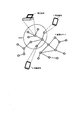
- FIG. 1 is a schematic diagram and a functional block diagram schematically showing an embodiment of an event or state estimation system including a terminal according to the present invention.
- At least one fixed terminal 1 and at least one mobile terminal 2 such as a smartphone, a tablet computer, a mobile phone, and a wearable terminal can be connected to each other via a communication network 3. And constitutes an event or state estimation system as a whole.
- Each of the fixed terminal 1 and the mobile terminal 2 includes at least one sensor (101a and 201a). Further, each of the fixed terminal 1 and the mobile terminal 2 has a function of estimating a predetermined event or state by itself.
- the events or conditions estimated at the terminal are natural disasters such as earth and sand disasters, earthquakes, heavy rains, typhoons, etc., natural phenomena, and various environmental conditions, generation of crowds, heat island phenomenon, light pollution, etc. And social phenomena and conditions.
- the sensors included in each of the fixed terminal 1 and the mobile terminal 2 include those suitable for detecting and measuring such a phenomenon or state to be estimated.
- each terminal may be provided with one or a plurality of common types of sensors, and each terminal may be independently provided with a predetermined type of sensor.
- a suitable type of sensor may be shared between the fixed terminal 1 and the mobile terminal 2.
- the sensor does not necessarily have to be built in the fixed terminal 1 or the mobile terminal 2, and may be an external device / device connected to the terminal, for example.
- the communication network 3 is a P2P (PeerPto Peer) network, and in this embodiment is an ad hoc network, and requires a central facility such as a server that collects sensor information from the terminal and performs information processing. And not. Furthermore, the communication network 3 of the present embodiment is a communication network in which each of the fixed terminal 1 and the mobile terminal 2 can send and receive information to each other without making an inquiry or request without designating a specific destination. It has become. As such a communication network, for example, one disclosed in Japanese Patent Laid-Open No. 2006-186446 can be employed. Naturally, various types of networks can be adopted as the communication network 3 as long as the fixed terminal 1 and the mobile terminal 2 can communicate with each other.
- P2P PeerPto Peer
- the terminal included in this event or state estimation system may be only the fixed terminal 1 or only the mobile terminal 2.
- the terminal included in the event or state estimation system is preferably a system including both.
- the fixed terminal 1 having a temperature / humidity sensor, a gas sensor, a tilt sensor, and a vibration sensor is installed in a place where landslides are likely to occur.
- a mobile terminal 2 that is carried by a user who stays or moves in the area and includes a temperature / humidity sensor and an acceleration sensor may be included in the system.
- each of the fixed terminal 1 and the mobile terminal 2 as an embodiment of the terminal according to the present invention has the following characteristics: (A) Sensor information collection units (111, 211) that collect “sensor information” from at least one type of sensor that is provided or provided externally; (B) a first estimation information generation unit (112, 212) that estimates presence / absence of a predetermined event or state based on “sensor information” and generates “first estimation information” including a result of the estimation; (C) at least one of “sensor information” collected at another terminal and “first estimation information” generated at another terminal, and at least one received from the other terminal; Based on the “first estimation information” generated by its own terminal, the presence or absence of a predetermined event or state in the area including the other terminal is estimated, and “second estimation information” including the result of the estimation is obtained. And a second estimated information management unit (113, 213) to be generated.
- each of the fixed terminal 1 and the mobile terminal 2 is based on the “sensor information” and / or the “first estimation information” of the other terminal, in the area including the other terminal as well as its own surroundings.
- “Second estimation information” including an estimation result of a predetermined event or state is generated.
- each of the fixed terminal 1 and the mobile terminal 2 is “ Even if the “second estimation information” is generated, it is not necessary to make an inquiry or a request to another terminal. For example, it is possible to quickly estimate an event / state in response to a change in the situation in the area. . For example, it is possible to immediately estimate an event / state for a situation that changes from moment to moment, such as a natural disaster, or a situation in which an event suddenly occurs in any of the areas at the beginning.
- the second estimated information management unit (113, 213) having the above configuration (C) is generated by the first estimated information generation unit (112, 212) in its own terminal when information related to the estimation is not received from another terminal. It is also preferable to use the “first estimated information” as the second estimated information. Thereby, it is possible to further suppress the delay of the estimation timing.
- a fixed terminal 1 shown in FIG. 1 is an embodiment of a terminal according to the present invention, and includes a plurality of sensors 101a, 101b, 101c,..., A communication interface 102, an estimated information storage unit 103, and an input / output unit.
- the processor memory realizes an event or state estimation function by executing a program that causes a computer, which is a main function unit of the fixed terminal 1, to function.
- the processor memory includes a sensor information collection unit 111, a first estimation information generation unit 112, a second estimation information management unit 113 including an information estimation unit 113a and an information update unit 113b, and communication control as functional components.
- Unit 114 and input / output control unit 115. 1 is understood as an embodiment of an event or state estimation method according to the present invention.
- the mobile terminal 2 shown in FIG. 1 is also an embodiment of the terminal according to the present invention, and includes a plurality of sensors 201a, 201b,..., A communication interface 202, an estimated information storage unit 203, and an input / output unit.
- TP / DP Touch panel display
- sensor information collection unit 211 sensor information collection unit 211
- first estimation information generation unit 212 second estimation information management unit 213, communication control unit 214
- input / output control unit 215. Have. That is, the mobile terminal 2 also has the same function as the functional component having the same name in the fixed terminal 1.
- the touch panel display 204 of the mobile terminal 2 performs the same function as the display keyboard 104 as an input / output device.
- the sensors 201a, 201b,... Of the mobile terminal 2 are not limited to the same types of sensors as the sensors 101a, 101b, 101c,.
- the functional configuration of the fixed terminal 1 will be mainly described.
- the plurality of sensors 101a, 101b, 101c,... In the fixed terminal 1 are sensor devices that are employed according to the event or state that is the estimation target. These sensor output signals can reflect the presence or absence of an event or a state relating to a predetermined disaster or the like or the extent thereof.
- these sensors include, for example, temperature and humidity sensors, voice sensors and ultrasonic sensors, gas sensors, barometric sensors, tilt sensors, vibration sensors, etc. It is possible to use a sensor that can measure the position of the terminal 1 or the environment in the vicinity thereof. One sensor or only one type of sensor may be provided per terminal.
- the sensor type is not limited to the embodiment in which the same type of sensors are arranged for all the fixed terminals 1 and mobile terminals 2 in the communication network 3.
- Sensor 101a as temperature and humidity sensor
- Sensor 101b as a gas sensor
- the sensor 101c may be a tilt sensor and the sensor 101d may be a vibration sensor.
- the sensor information collection unit 111 collects sensor information from the sensors 101a, 101b, 101c,. At this time, the sensor information collection unit 111 performs predetermined processing on the sensor output signal, for example, digitization, various types of filtering for extracting necessary frequency components and noise removal, and the processed signal indicates It is also preferable to store numerical values (sensor values) as sensor information.
- the sensor information collection unit 111 has information related to the type of sensor equipped in the terminal 1, the range of values of sensor information to be measured (sensor values after processing), the measurement cycle of each sensor, and the like. This information may be referred to when generating / collecting appropriate sensor information.
- the first estimated information generation unit 112 (A) Based on the sensor information generated by the sensor information collection unit 111, the presence or absence of a predetermined event or state such as various disasters, or whether or not an event such as the disaster has occurred is estimated, and the result of this estimation First estimation information including is generated. Furthermore, (B) The first estimation information may be generated based on sensor information received from another terminal connected to the communication network 3. In the case of (b) above, for example, a terminal obtains sensor information related to a type of sensor that is not equipped in its own terminal from an external terminal equipped with the sensor, and creates only with the sensor of its own terminal. The first estimation information that cannot be generated can be generated. This is particularly effective when comprehensive estimation is performed with a limited sensor arrangement on an event or a state that occurs in a certain terminal in an area.
- the first estimation information generation unit 112 uses a rapid increase in humidity (an increase in the humidity value equal to or greater than a predetermined threshold in a predetermined estimation period) as sensor information by the temperature / humidity sensor 101a. It is possible to acquire and generate first estimation information that rain has occurred during the estimation period. Further, as sensor information obtained by the gas sensor 101b, an increase in the concentration of a predetermined type of gas (an increase in the concentration value equal to or greater than a predetermined threshold value during a predetermined estimation period) is acquired, and first estimation information that landslide has occurred during the estimation period. May be generated.
- the first estimation information generation unit 112 acquires a sudden change in inclination (increase or decrease in an inclination angle value equal to or greater than a predetermined threshold in a predetermined estimation period) as sensor information by the inclination sensor 101c, and earth and sand in the estimation period First estimation information that the collapse has occurred can be generated. Further, as sensor information by the vibration sensor 101d, new vibration detection (detection of vibration having an intensity value greater than or equal to a predetermined threshold value) can be acquired, and first estimation information that a landslide has occurred can be generated.
- the sediment collapse It is also preferable to generate the first estimation information that the occurrence has occurred. Further, it is also possible to adopt an embodiment in which detection / measurement values are adopted as sensor information of each of the sensors 101a to 101d, and the first estimation information that the landslide has occurred is generated when these values satisfy a predetermined conditional expression. It becomes.
- the first estimation information information that a predetermined event has not occurred or is not in a predetermined state can be generated.
- the sensors 101a to 101d although sensor information indicating a rapid increase in humidity has been acquired, sensor information indicating an increase in the concentration of a predetermined type of gas, a sudden change in inclination, or detection of a new vibration. If it cannot be obtained, the first estimation information may be generated that the landslide has not occurred (although rainfall has occurred).
- a machine learning discriminator trained in advance and output from the discriminator.
- the first estimation information may be generated.
- the learning of the discriminator in advance can be performed using a large number of sets of the sensor information and the generated event as a correct answer.
- the communication control unit 114 shown in FIG. (A) The generated sensor information and / or first estimation information can be transmitted to other terminals connected to the communication network 3, (B) Sensor information generated by other terminals connected to the communication network 3 and / or first estimation information described below can be received from these other terminals.
- the communication control unit 114 (and the communication interface 102) can receive information from other terminals connected to the communication network 3 without being inquired or requested. It is also preferable that information can be transmitted / received to / from these (unspecified) terminals without specifying a specific destination. Furthermore, it is not necessary to confirm transmission / reception of information between terminals connected to the communication network 3. In this case, each terminal does not know whether the information transmitted by itself is received by other terminals. As a change mode, the communication control unit 114 may be set so that an inquiry or a request can be performed under a predetermined condition in order to extract information such as sensor information that cannot be acquired from other terminals. Good.
- the communication control unit 114 may broadcast the information to be transmitted, and may further broadcast the information when the broadcasted information is received. That is, for example, when sensor information or second estimation information is received from another terminal in the communication network 3, the information may be retransmitted to perform the information relay function. In this case, if the received sensor information and the second estimation information are the same as those already received, retransmission may not be performed.
- the second estimated information management unit 113 includes an information estimation unit 113a and an information update unit 113b.
- the information estimation unit 113a (A1) at least one of sensor information collected by another terminal connected to the communication network 3 and (a2) first estimation information generated by another terminal connected to the communication network 3 And at least one received from the other terminal, (B) Based on the first estimation information generated by the first estimation information generation unit 112, whether or not there is a predetermined event or state such as various disasters in an area including the other terminal, or an event such as the disaster It is estimated whether it occurred or not, and second estimation information including the result of this estimation is generated.
- the information update unit 113b updates the second estimation information generated or already updated by the information estimation unit 113a based on the second estimation information received from another terminal connected to the communication network 3.
- This second estimation information is updated when it is determined whether or not to update.
- the generated or updated second estimation information may be stored in the estimation information storage unit 103 as appropriate for later display or notification to other terminals.
- the information update unit 113b includes the second estimated information generated or already updated by the information estimating unit 113a and the received second estimated information. , (A) maximum or minimum value, (b) representative value, (c) average value, or (d) a predetermined ratio or number of numerical values representing estimation results included in the second estimation information
- the second estimation information generated or updated can be updated based on the numerical value.
- the second estimation information is 1 when it is estimated that a certain event has occurred, and 0 when it is estimated that no event has occurred.
- it is a certain numerical value if 3 or more or 30% or more of the 10 second estimation information is 1, it indicates a case where the second estimation information is updated to 1.
- the method for updating the second estimation information based on the numerical values (a) to (d) described above can also be applied to the generation of the second estimation information in the information estimation unit 113a. Further, as a change mode of the update process in the information update unit 113b, the generated, updated and / or received second estimation information or the like is input to a machine learning classifier trained in advance, and output from this classifier It is also possible to update the second estimation information.
- the second estimation information management unit 113 shares the second estimation information including the same estimation result with at least one other terminal connected to the communication network 3. This sharing can be realized by the above-described update process and further by mutually transmitting / receiving the updated second estimation information.
- at least a part of terminals constituting the system covers an area including the terminal without using a central facility such as a server that collects and processes information. It is also possible to share information, for example, to notify a user who needs the information with certainty.
- the second estimated information management unit 113 can also use the first estimated information generated by the first estimated information generating unit 112 as the second estimated information when information related to the estimation is not received from another terminal.
- the first estimation information generated by itself is adopted as the information relating to the area. Be reasonable.
- the second estimated information management unit 113 (A) The first estimation information that “Sand collapse has not occurred” is generated by itself, (B) From the 10 other terminals connected to the communication network 3, during the predetermined waiting period, the first estimated information that one “landslide collapse has occurred” and nine “landslides occurred” When the first estimation information is received, Since there is at least one piece of information that “sediment collapse has occurred” among all the first estimated information at hand (a total of 11), the second estimated information is “sediment collapse has occurred”. Information may be generated.
- the input / output control unit 115 displays the generated first estimation information and second estimation information on the display (DP) 104 and notifies the user.
- the notification may be generated by driving a speaker (not shown) and generating a sound or a warning sound.
- the input / output control unit 115 may display the sensor information generated by the sensor information collection unit 111, the sensor information received from another terminal, the first estimation information, or the second estimation information on the display 104. Good.
- the process of generating the second estimation information for example, the determination process
- the process of updating the second estimation information for example, the update determination process
- the input / output control unit 115 may receive information related to the user's behavior input from the user of the terminal through an input user interface such as a keyboard.
- the fixed terminal 1 may of course be used.
- the second estimated information that “landslide has occurred” is displayed on the touch panel display 204 and at the same time, A case where a plurality of icons representing options are also displayed will be described.
- the input / output control unit 115 displays “the user of the terminal” Receives information that “has been evacuated to a shelter”. Then, this information may be notified (broadcast) to other terminals in the communication network 3.
- the input / output control unit 115 receives a comment (text data) input by the user who has viewed the displayed second estimation information, for example, via the keyboard (KB) 104 or the like, Notification (broadcast) may be sent to the terminal.
- An input / output user interface such as a display / keyboard 104 is provided in an external monitor device or television device.
- an HDMI High-Definition
- HDMI High-Definition
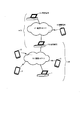
- FIG. 2 is a schematic diagram for explaining another embodiment of an event or state estimation system including a terminal according to the present invention.
- a part of the terminal group forms a cluster 1. Yes.
- the terminals in the cluster 1 share the same second estimation information (or first estimation information), for example, information that “landslide collapse has occurred”.
- such a shared state can be realized by the update process of the second estimation information and the transmission / reception of the updated second estimation information.
- these update processing and mutual transmission / reception processing are performed, so that at least the second estimation information that “a landslide has occurred”, for example, is obtained.
- each terminal in the cluster 1 shares one of the functions of the cluster head, the gateway, and the cluster member.
- the cluster 1 is set so that at least one fixed terminal installed at a predetermined position and at least one mobile terminal are both included in the cluster.
- the fixed terminal 1 in the cluster 1 includes an inclination sensor or the like that is preferably fixed and used at a predetermined position, while the mobile terminal 2 in the cluster 1 includes various points in the cluster. It may include a temperature / humidity sensor or the like, which is also preferable for taking data.
- the sensor information collecting unit 111 of the fixed terminal 1 and the sensor information collecting unit 211 of the mobile terminal 2 collect different types of sensor information. Furthermore, it is also preferable that the fixed terminal 1 provided with these characteristic sensors is arranged so as to have an installation position distribution suitable for landslide estimation in the cluster. As a result, it is possible to more reliably estimate the presence / absence / occurrence of a predetermined event or state in the cluster 1.
- FIG. 3 is a schematic diagram schematically showing still another embodiment of an event or state estimation system including a terminal according to the present invention.
- communication networks 31 and 32 similar to the communication network 3 shown in FIGS. 1 and 2 are formed, respectively (specific fixed terminals 1A and 1B).
- a plurality of fixed terminals 1 and a plurality of mobile terminals 2 are connected.
- this system is a system that estimates the occurrence of landslide disasters (landslide collapse) due to typhoons or heavy rains caused by abnormal weather in landslide disaster alert areas and guides evacuation To do.
- the communication networks 31 and 32 shown in FIG. 3 are configured in the earth and sand disaster caution area, in an area or village where the occurrence of a landslide disaster is particularly anticipated and needs to be alerted. Is installed in a place where many people gather, for example, each house in the area / village, public facilities such as government offices and public halls, and shopping centers.
- a total of m terminals including a fixed terminal 1B connected to both networks are connected to the communication network 31, while a total of n terminals including the fixed terminal 1B are connected to the communication network 32.
- a total of (m + n ⁇ 1) terminals are included in the system.
- Each of these terminals includes a predetermined sensor, collects sensor information, and generates first estimation information and second estimation information.
- the fixed terminal 1A connected to the communication network 31 has the following four sensors.
- Sensor 1 Temperature / humidity sensor
- Sensor 2 Gas sensor
- Sensor 3 Inclination sensor
- Sensor 4 Vibration sensor
- Each terminal constantly monitors whether or not a predetermined change or more has occurred in the sensor information from the sensor that it is equipped with.
- the fixed terminal 1A (A) Rapid increase in humidity in sensor information of sensor 1 (temperature / humidity sensor) (increase in humidity value above a predetermined threshold in a predetermined estimation period) Is recognized, the first estimation information that “a heavy rain has started (a heavy rain has occurred)” is generated.
- the fixed terminal 1A (B) Increase in the concentration of a predetermined type of gas in the sensor information of the sensor 2 (gas sensor) (increase in the concentration value above a predetermined threshold during a predetermined estimation period) May also be generated, the first estimation information may be generated that “a heavy rain starts (a heavy rain has occurred) and a crack has occurred in the ground”.
- the fixed terminal 1A (C) A sudden change in inclination in sensor information of sensor 3 (inclination sensor) (increase or decrease in inclination angle value greater than or equal to a predetermined threshold in a predetermined estimation period), and (d) sensor information of sensor 4 (vibration sensor) Detection of vibration in small increments (detection of a frequency component having a frequency above a predetermined threshold and having an intensity value above a predetermined threshold) May also be generated, the first estimation information that “(the ground becomes unstable) and there is a possibility of landslide” may be generated.
- the fixed terminal 1A When the fixed terminal 1A generates, for example, the first estimation information that “the ground may become unstable and may cause landslides”, a warning indicating the possibility of a landslide disaster and a prompt prompt evacuation Are displayed on its own display 104 (FIG. 1).
- the sensor information (a) to (d) and the first estimation information based on the sensor information are transmitted to other terminals so as to be known in the earth and sand disaster warning area.
- the fixed terminal 1 ⁇ / b> A transmits the sensor information and the first estimation information to a terminal group connected to the communication network 31.
- the range of these information notifications is the range of (m ⁇ 1) terminal groups connected to the communication network 31 excluding the fixed terminal 1A itself. That is, this range does not include a group of terminals connected to the communication network 32 that is in the same sediment disaster warning area.
- the fixed terminal 1 ⁇ / b> B is connected not only to the communication network 31 but also to the communication network 32.
- the fixed terminal 1B serves as a gateway, relays the sensor information and the first estimation information transmitted from the fixed terminal 1A, and is connected to the communication network 32 (the fixed terminal 1A itself) Can be delivered to a group of (n-1) terminals.
- the communication network 32 the fixed terminal 1A itself
- the fixed terminal 1A generates the first estimation information that “there is a possibility of earth and sand collapse” and notifies all the other terminals of the information
- (B) The other (m + n ⁇ 2) terminals do not generate such first estimation information, or generate the first estimation information that “there is no possibility of landslide (low)”
- the fixed terminal 1 ⁇ / b> A generates the second estimation information that “there is a possibility of earth and sand collapse” and notifies / displays, assuming that the local collapse is still estimated.
- the other (m + n ⁇ 2) terminals do not generate such second estimation information.
- (C) Among the other (m + n ⁇ 2) terminals, the number of terminals equal to or greater than the predetermined threshold generates first estimation information that “there is a possibility of landslides”, If you notify your device, All (m + n-1) terminals including the fixed terminal 1A have aggregated the first estimation information of other terminals received by themselves, and the number of first estimation information equal to or greater than a predetermined threshold has been generated. It is also preferable to generate notification and display by generating second estimation information that “there is a possibility of sediment collapse” in the sediment-related disaster warning area.
- FIG. 4 is a sequence diagram showing an embodiment of an event or state estimation method according to the present invention.
- terminals A, B and C are terminals connected to the communication network 3 and are either fixed terminals 1 or mobile terminals 2, respectively.
- the terminal A and the terminal B acquire sensor information from a sensor equipped by the terminal A and terminal B that detects a physical quantity related to the occurrence of an event such as landslide.
- Terminal A and terminal B generate first estimation information that a predetermined event has occurred based on the acquired sensor information.
- the terminal A and the terminal B broadcast the first estimation information generated by their own terminal to notify other terminals.
- the terminal C receives the first estimation information
- the terminal C receives the fact that the event occurrence is not detected by its own sensor, and generates the first estimation information that the event does not occur, Broadcast transmission may be performed to notify other terminals.
- Terminal A and terminal B generate second estimation information based on the first estimation information generated by the terminal and the received first estimation information. It is also preferable that the terminal C also generates the second estimation information based on the received first estimation information (and the first estimation information when the first estimation information generated by itself exists).
- the terminal A and the terminal B broadcast the second estimation information generated by the terminal A and the terminal B to notify other terminals. Note that the terminal C may also broadcast the second estimation information generated by itself (if the second estimation information is generated by itself) to notify other terminals.
- Terminal A and Terminal B update the second estimation information based on the second estimation information generated by itself and the received second estimation information.
- Terminal C also preferably updates the second estimated information based on the received second estimated information (if the second estimated information generated by itself exists).
- the second estimated information generated or updated between terminals A to C is transmitted or received periodically or appropriately, and collation is performed to investigate whether or not the second estimated information matches each other. It is also preferable to carry out the treatment. Further, the second estimation information may be further updated with this collation result.
- the terminal As described above in detail, according to the terminal, the system, the program, and the method according to the present invention, based on the sensor information and / or the first estimation information of the other terminal, not only its own periphery but also the other terminal
- the second estimation information including the estimation result of the predetermined event or state in the area including can be generated.
- each terminal may generate second estimation information even if it generates second estimation information. Since there is no need to make an inquiry or a request, for example, it is possible to quickly estimate an event / state for a change in the situation in the area. For example, it is possible to immediately estimate an event / state for a situation that changes from moment to moment, such as a natural disaster, or a situation in which an event occurs suddenly in any of the areas at first.
- the disaster estimation information can be made known quickly and more reliably in the disaster occurrence area, and for example, necessary evacuation can be promoted at an earlier timing.
- Fixed terminal 1 101a, 101b, 101c, 201a, 201b Sensor 102, 202 Communication interface 103, 203 Estimated information storage unit 104 Display / keyboard (DP / KB) 111, 211 Sensor information collection unit 112, 212 First estimation information generation unit 113, 213 Second estimation information management unit 113a Information estimation unit 113b Information update unit 114, 214 Communication control unit 115, 215 Input / output control unit 2 Mobile terminal 204 Touch panel display (TP / DP) 3, 31, 32 Communication network
Landscapes
- Engineering & Computer Science (AREA)
- Business, Economics & Management (AREA)
- Signal Processing (AREA)
- Emergency Management (AREA)
- Physics & Mathematics (AREA)
- General Physics & Mathematics (AREA)
- General Life Sciences & Earth Sciences (AREA)
- Environmental & Geological Engineering (AREA)
- Life Sciences & Earth Sciences (AREA)
- Geology (AREA)
- Computing Systems (AREA)
- Computer Networks & Wireless Communication (AREA)
- Telephone Function (AREA)
- Telephonic Communication Services (AREA)
- Emergency Alarm Devices (AREA)
- Small-Scale Networks (AREA)
- Alarm Systems (AREA)
Abstract
本端末は、通信ネットワークを介して互いに通信可能な端末群に含まれる端末であり、自らが備えている又は外部に設けられた少なくとも1つの種類のセンサからのセンサ情報を収集するセンサ情報収集手段と、収集されたセンサ情報に基づいて所定の事象又は状態の有無を推定し、この推定結果を含む第1推定情報を生成する第1推定情報生成手段と、他の端末で収集されたセンサ情報及び他の端末で生成された第1推定情報のうちの少なくとも1つであって、他の端末から受信された少なくとも1つと、自らの端末で生成された第1推定情報とに基づいて、他の端末を含むエリアにおける所定の事象又は状態の有無を推定し、この推定結果を含む第2推定情報を生成する第2推定情報管理手段とを有する。
Description
本発明は、センサ情報を用いて所定の事象又は状態を推定する技術に関する。
本願は、2017年3月30日に、日本に出願された特願2017-69331号に基づき優先権を主張し、その内容をここに援用する。
本願は、2017年3月30日に、日本に出願された特願2017-69331号に基づき優先権を主張し、その内容をここに援用する。
近年、種々の通信網が発展する中、地域における災害発生等の情報を、通信端末等のユーザに的確に通知するニーズが高まっている。特に、多数のユーザが、スマートフォンやウェアラブル端末等の携帯端末を常時所持している現状では、この携帯端末への適切な通知が非常に有効となる。それ故現在、携帯端末を含めた通信ネットワークにおける事象発生推定技術及び事象発生推定情報の通知技術が種々検討され、開発されている。
例えば、気象庁の緊急地震速報が周知である。この緊急地震速報においては、全国各地に設置された地震計からの検出情報に基づいて震源位置や地震の規模等の情報を自動で生成し、通信キャリアの有する通信網に接続された携帯端末に地震の情報を通知する。
また例えば、特許文献1は、携帯情報端末によって、自らの場所の状況を判定する技術を提案している。この技術においては、センサにより検知されたセンサ値に基づいて自らの場所とこの場所の状況とを推測し、さらに、周囲に存在する他の携帯情報端末に対し、この他の携帯情報端末の場所とその場所の状況とを問い合わせる。この問合せによって携帯情報端末が取得し推測した他の携帯情報端末の場所及びその場所の状況と、自ら推測した自らの場所及びここでの状況とを照合して、自らの場所の状況を判定する。
このような従来技術では、例えば緊急地震速報のように、予め全国に配置された地震計設備等からの検出情報を気象庁等の中央となる設備で集計し、この中央設備で地震等の事象の発生を判定してその結果を通知している。あるいは、特許文献1に記載された技術のように、1つの携帯情報端末が、周囲の携帯端末情報からその場所の状況に係る情報を問合せによって取得し、この問い合わせの結果取得された情報を参考にして、あくまで自らの場所の状況を判定する。
したがって、例えば、自然災害のような広範な地域にわたる事象の発生を、設けられた中央の情報処理設備に頼ることなく、各通信端末で的確に判断することは非常に困難となっている。実際、従来の緊急地震速報は、地震発生を判定する中央設備が必須となっている。また、一方で、例えば特許文献1に記載された技術において携帯情報端末によってその発生を判定できるのは、例えばコンサートホール等の限られた場所内での事象となっており、この携帯情報端末が、例えば自然災害等の広い地域で突発的に発生する事象について判断することは困難となっている。
さらに、特許文献1に記載された技術では、自己の携帯情報端末の周囲の状況を判断するにしても、周辺の他の携帯情報端末へ問い合わせを行う必要があることから、周辺状況の変化に対して速やかに状況判断の更新を行うことが困難となっている。その結果、自然災害等の時々刻々と変化する状況に対する的確な判断はほとんどできない、という問題が生じてしまう。
そこで、本発明は、情報を集計して処理する中央の設備に頼ることなく、エリアにわたって生じる事象又は状態を推定することが可能な端末、システム、プログラム及び方法を提供することを目的とする。
本発明によれば、通信ネットワークを介して互いに通信可能な端末群に含まれる端末であって、前記端末の各々は、
自らが備えている又は外部に設けられた少なくとも1つの種類のセンサからのセンサ情報を収集するセンサ情報収集手段と、
当該センサ情報に基づいて所定の事象又は状態の有無を推定し、当該推定の結果を含む第1推定情報を生成する第1推定情報生成手段と、
他の端末で収集されたセンサ情報及び他の端末で生成された第1推定情報のうちの少なくとも1つであって、当該他の端末から受信された少なくとも1つと、自らの端末で生成された第1推定情報とに基づいて、当該他の端末を含むエリアにおける所定の事象又は状態の有無を推定し、当該推定の結果を含む第2推定情報を生成する第2推定情報管理手段と
を有する端末が提供される。
自らが備えている又は外部に設けられた少なくとも1つの種類のセンサからのセンサ情報を収集するセンサ情報収集手段と、
当該センサ情報に基づいて所定の事象又は状態の有無を推定し、当該推定の結果を含む第1推定情報を生成する第1推定情報生成手段と、
他の端末で収集されたセンサ情報及び他の端末で生成された第1推定情報のうちの少なくとも1つであって、当該他の端末から受信された少なくとも1つと、自らの端末で生成された第1推定情報とに基づいて、当該他の端末を含むエリアにおける所定の事象又は状態の有無を推定し、当該推定の結果を含む第2推定情報を生成する第2推定情報管理手段と
を有する端末が提供される。
この本発明の端末の一実施形態として、本端末は、生成された第2推定情報を他の端末に送信可能とし、他の端末で生成された第2推定情報を当該他の端末から受信可能とする通信制御手段を更に有し、
第2推定情報管理手段は、受信された第2推定情報に基づいて、生成若しくは更新した第2推定情報を更新するか否かを決定し、更新すると決定した際に当該第2推定情報を更新することも好ましい。
第2推定情報管理手段は、受信された第2推定情報に基づいて、生成若しくは更新した第2推定情報を更新するか否かを決定し、更新すると決定した際に当該第2推定情報を更新することも好ましい。
また、上記の更新に係る実施形態において、第2推定情報管理手段は、生成若しくは更新した第2推定情報及び受信された第2推定情報につき、当該第2推定情報に含まれる推定の結果を表す数値における最大若しくは最小の値、代表値、平均値、又は全体のうち所定の割合又は個数となっている数値に基づいて、生成若しくは更新した第2推定情報を更新することも好ましい。
さらに、上記の更新に係る実施形態において、通信制御手段は、問合せ及び要求によることなく、他の端末から情報を受信可能であることも好ましい。
また、本発明の端末において、第2推定情報管理手段は、他の端末から推定に係る情報が受信されない場合、自らの端末で生成された第1推定情報をもって当該第2推定情報とすることも好ましい。
さらに、本発明の端末における他の実施形態として、第2推定情報管理手段は、少なくとも1つの他の端末との間で、同一の推定の結果を含む第2推定情報を共有することも好ましい。
また、本発明の端末における更なる他の実施形態として、第1推定情報生成手段は、受信されたセンサ情報にも基づいて、当該第1推定情報を生成することも好ましい。
本発明によれば、さらに、以上に述べた端末を複数含むシステムであって、
これら複数の端末は、所定の位置に設置された少なくとも1つの固定端末と、少なくとも1つの移動端末とを含み、
当該固定端末のセンサ情報収集手段は、当該移動端末のセンサ情報収集手段が収集するセンサ情報のいずれとも異なる少なくとも1つのセンサ情報を収集する
ことを特徴とするシステムが提供される。
これら複数の端末は、所定の位置に設置された少なくとも1つの固定端末と、少なくとも1つの移動端末とを含み、
当該固定端末のセンサ情報収集手段は、当該移動端末のセンサ情報収集手段が収集するセンサ情報のいずれとも異なる少なくとも1つのセンサ情報を収集する
ことを特徴とするシステムが提供される。
本発明によれば、さらにまた、以上に述べた端末を複数含むシステムであって、これら複数の端末のうちの複数が、その中で同一の推定の結果を含む第2推定情報を共有するクラスタを形成することを特徴とするシステムが提供される。
これらの本発明によるシステムにおいて、具体的に、センサ情報収集手段は、所定の災害に係る事象又は状態を反映し得るセンサ情報を収集し、
第1推定情報生成手段は、当該所定の災害に係る事象又は状態の有無に係る推定の結果を含む第1推定情報を生成し、
第2推定情報管理手段は、当該エリアにおける当該所定の災害に係る事象若しくは状態の有無、又は当該所定の災害が発生したか否かを推定する
ことも好ましい。
第1推定情報生成手段は、当該所定の災害に係る事象又は状態の有無に係る推定の結果を含む第1推定情報を生成し、
第2推定情報管理手段は、当該エリアにおける当該所定の災害に係る事象若しくは状態の有無、又は当該所定の災害が発生したか否かを推定する
ことも好ましい。
本発明によれば、また、通信ネットワークを介して互いに通信可能な端末群に含まれる端末に搭載されたコンピュータを機能させるプログラムであって、
自らが備えている又は外部に設けられた少なくとも1つの種類のセンサからのセンサ情報を収集するセンサ情報収集手段と、
当該センサ情報に基づいて所定の事象又は状態の有無を推定し、当該推定の結果を含む第1推定情報を生成する第1推定情報生成手段と、
他の端末で収集されたセンサ情報及び他の端末で生成された第1推定情報のうちの少なくとも1つであって、当該他の端末から受信された少なくとも1つと、自らの端末で生成された第1推定情報とに基づいて、当該他の端末を含むエリアにおける所定の事象又は状態の有無を推定し、当該推定の結果を含む第2推定情報を生成する第2推定情報管理手段と
してコンピュータを機能させる事象又は状態推定プログラムが提供される。
自らが備えている又は外部に設けられた少なくとも1つの種類のセンサからのセンサ情報を収集するセンサ情報収集手段と、
当該センサ情報に基づいて所定の事象又は状態の有無を推定し、当該推定の結果を含む第1推定情報を生成する第1推定情報生成手段と、
他の端末で収集されたセンサ情報及び他の端末で生成された第1推定情報のうちの少なくとも1つであって、当該他の端末から受信された少なくとも1つと、自らの端末で生成された第1推定情報とに基づいて、当該他の端末を含むエリアにおける所定の事象又は状態の有無を推定し、当該推定の結果を含む第2推定情報を生成する第2推定情報管理手段と
してコンピュータを機能させる事象又は状態推定プログラムが提供される。
本発明によれば、さらに、通信ネットワークを介して互いに通信可能な端末群に含まれる端末に搭載されたコンピュータにおいて実施される事象又は状態推定方法であって、
自らが備えている又は外部に設けられた少なくとも1つの種類のセンサからのセンサ情報を収集するステップと、
当該センサ情報に基づいて所定の事象又は状態の有無を推定し、当該推定の結果を含む第1推定情報を生成するステップと、
他の端末で収集されたセンサ情報及び他の端末で生成された第1推定情報のうちの少なくとも1つであって、当該他の端末から受信された少なくとも1つと、自らの端末で生成された第1推定情報とに基づいて、当該他の端末を含むエリアにおける所定の事象又は状態の有無を推定し、当該推定の結果を含む第2推定情報を生成するステップと
を有する事象又は状態推定方法が提供される。
自らが備えている又は外部に設けられた少なくとも1つの種類のセンサからのセンサ情報を収集するステップと、
当該センサ情報に基づいて所定の事象又は状態の有無を推定し、当該推定の結果を含む第1推定情報を生成するステップと、
他の端末で収集されたセンサ情報及び他の端末で生成された第1推定情報のうちの少なくとも1つであって、当該他の端末から受信された少なくとも1つと、自らの端末で生成された第1推定情報とに基づいて、当該他の端末を含むエリアにおける所定の事象又は状態の有無を推定し、当該推定の結果を含む第2推定情報を生成するステップと
を有する事象又は状態推定方法が提供される。
本発明の端末、システム、プログラム及び方法によれば、情報を集計して処理する中央の設備に頼ることなく、エリアにわたって生じる事象又は状態を推定することができる。
以下、本発明の実施形態について、図面を用いて詳細に説明する。
図1は、本発明による端末を含む事象又は状態推定システムの一実施形態を概略的に示す模式図及び機能ブロック図である。
図1を参照すると、少なくとも1つの固定端末1と、スマートフォン、タブレット型コンピュータ、携帯電話機や、ウェアラブル端末等である少なくとも1つの移動端末2とが、通信ネットワーク3を介して互いに通信接続可能となっており、全体で事象又は状態推定システムを構成している。これらの固定端末1及び移動端末2の各々は、少なくとも1つのセンサ(101a等及び201a等)を備えている。さらに、固定端末1及び移動端末2の各々は、自ら所定の事象又は状態を推定する機能を備えている。
ここで、端末で推定される事象又は状態とは、土砂災害、地震、豪雨や、台風等の自然災害、自然現象、及び各種環境の状態、群衆の発生、ヒートアイランド現象、光害等の人為的及び社会的現象や状態を含む。固定端末1及び移動端末2の各々が備えているセンサは、このような推定対象となる現象又は状態を検出・測定するのに適したものを含んでいる。
ここで、各端末に、1つ又は複数の共通する種類のセンサが備えられていてもよく、各端末が独立して所定の種類のセンサを備えていてもよい。または、固定端末1と移動端末2との間で、それぞれに適した種類のセンサが分担して備えられていてもよい。さらに、センサは、必ずしも固定端末1や移動端末2に内蔵されている必要はなく、例えば端末と接続された外部の装置・デバイスであってもよい。
また、通信ネットワーク3は、P2P(Peer to Peer)ネットワークであって、本実施形態においてアドホック(ad hoc)ネットワークであり、端末からセンサ情報を集計して情報処理を行うサーバ等の中央設備を必要としない。さらに、本実施形態の通信ネットワーク3は、固定端末1及び移動端末2の各端末が、特定の宛先を指定することなく問合せや要求を行うことなしに、互いに情報を送受信することができる通信網となっている。このような通信網として、例えば、特開2006-186446号公報に開示されているものを採用することができる。なお当然に、固定端末1及び移動端末2が互いに通信できるのであれば、種々の形態のネットワークが通信ネットワーク3として採用可能である。
また、この事象又は状態推定システムに含まれる端末は、固定端末1のみであってもよく、移動端末2のみであってもよい。この事象又は状態推定システムに含まれる端末は、もちろん、両者を含むシステムとすることも好ましい。例えば、土砂災害の発生を推定する場合、1つの実施例として、温湿度センサ、ガスセンサ、傾斜センサ及び振動センサを備えた固定端末1を土砂崩壊の発生しそうな場所に設置し、一方で、対象地域内で滞留又は移動するユーザに携帯されており温湿度センサ及び加速度センサを備えた移動端末2をシステム内に含むこともできる。
同じく図1において、本発明による端末の一実施形態としての固定端末1及び移動端末2の各々は、その特徴として、
(A)自らが備えている又は外部に設けられた少なくとも1つの種類のセンサからの「センサ情報」を収集するセンサ情報収集部(111,211)と、
(B)「センサ情報」に基づいて所定の事象又は状態の有無を推定し、当該推定の結果を含む「第1推定情報」を生成する第1推定情報生成部(112,212)と、
(C)他の端末で収集された「センサ情報」及び他の端末で生成された「第1推定情報」のうちの少なくとも1つであって、当該他の端末から受信された少なくとも1つと、自らの端末で生成された「第1推定情報」とに基づいて、当該他の端末を含むエリアにおける所定の事象又は状態の有無を推定し、当該推定の結果を含む「第2推定情報」を生成する第2推定情報管理部(113,213)と
を有している。
(A)自らが備えている又は外部に設けられた少なくとも1つの種類のセンサからの「センサ情報」を収集するセンサ情報収集部(111,211)と、
(B)「センサ情報」に基づいて所定の事象又は状態の有無を推定し、当該推定の結果を含む「第1推定情報」を生成する第1推定情報生成部(112,212)と、
(C)他の端末で収集された「センサ情報」及び他の端末で生成された「第1推定情報」のうちの少なくとも1つであって、当該他の端末から受信された少なくとも1つと、自らの端末で生成された「第1推定情報」とに基づいて、当該他の端末を含むエリアにおける所定の事象又は状態の有無を推定し、当該推定の結果を含む「第2推定情報」を生成する第2推定情報管理部(113,213)と
を有している。
このように、固定端末1及び移動端末2の各々は、他の端末の「センサ情報」及び/又は「第1推定情報」に基づいて、自らの周辺だけではなく、他の端末を含むエリアにおける所定の事象又は状態の推定結果を含む「第2推定情報」を生成する。その結果、情報を集計して処理する中央の設備に頼ることなく、エリアにわたって生じる事象又は状態を推定することができるのである。
また、上記の通信ネットワーク3のように、端末間での情報の送受信に宛先指定、問合せや、要求を必要としないネットワークを採用している場合、固定端末1及び移動端末2の各々は、「第2推定情報」を生成するにしても、他の端末への問い合わせや要求を行う必要がないので、例えばエリア内の状況の変化に対し速やかに事象・状態の推定を行うことが可能となる。例えば、自然災害等のように、時々刻々と変化する状況や、当初はエリア内のいずれかで突発的に事象が発生する状況に対し、直ちに事象・状態の推定を行うことができるのである。
上記構成(C)の第2推定情報管理部(113,213)は、他の端末から推定に係る情報が受信されない場合、自らの端末内の第1推定情報生成部(112,212)で生成された「第1推定情報」をもって第2推定情報とすることも好ましい。これにより、推定タイミングの遅延をより抑えることも可能となる。
次に、図1に示された機能ブロック図を用いて、本発明による端末の一実施形態における機能構成を説明する。
図1に示した固定端末1は、本発明による端末の一実施形態であり、複数のセンサ101a、101b、101c、・・・と、通信インタフェース102と、推定情報保存部103と、入出力部としてのディスプレイ・キーボード(DP・KB)104と、プロセッサ・メモリとを有する。ここで、プロセッサ・メモリは、固定端末1の主機能部であるコンピュータを機能させるプログラムを実行することによって、事象又は状態推定機能を実現させる。
さらに、プロセッサ・メモリは、機能構成部として、センサ情報収集部111と、第1推定情報生成部112と、情報推定部113a及び情報更新部113bを含む第2推定情報管理部113と、通信制御部114と、入出力制御部115とを有する。なお、図1における各機能構成部を矢印で接続した処理の流れは、本発明による事象又は状態推定方法の一実施形態としても理解される。
図1に示した移動端末2も、本発明による端末の一実施形態であって、複数のセンサ201a、201b、・・・と、通信インタフェース202と、推定情報保存部203と、入出力部としてのタッチパネル・ディスプレイ(TP・DP)204と、センサ情報収集部211と、第1推定情報生成部212と、第2推定情報管理部213と、通信制御部214と、入出力制御部215とを有している。すなわち、移動端末2も固定端末1における同名の機能構成部と同様の機能を備えている。
また、移動端末2のタッチパネル・ディスプレイ204も、入出力デバイスとしてディスプレイ・キーボード104と同様の機能を果たす。なお、上述したように、移動端末2のセンサ201a、201b、・・・は、固定端末1のセンサ101a、101b、101c、・・・と同種のセンサであることに限定されない。以下、重複を避けるため、固定端末1の機能構成を中心に説明する。
固定端末1における複数のセンサ101a、101b、101c、・・・は、推定対象である事象又は状態に応じて採用されたセンサデバイスである。これらのセンサ出力信号は、所定の災害等に係る事象若しくは状態の発生の有無又はその程度を反映し得るものとなる。例えば、土砂災害や、河川の氾濫等の環境における異常の発生を推定する場合、これらのセンサとして、例えば、温湿度センサ、音声センサや超音波センサ、ガスセンサ、気圧センサ、傾斜センサ、振動センサ等のセンサであって、端末1の位置又はその周辺における環境の状況を計測可能なセンサを用いることができる。センサは、1つの端末につき1つ又は1種類だけ装備されていてもよい。
なお、いずれの種類のセンサデバイスも周知の構成のものを採用可能である。また、センサ種別に関し、通信ネットワーク3内の全ての固定端末1や移動端末2について、同種のセンサを揃えるような実施形態に限定されるものではない。具体的には、土砂災害推定の際の固定端末1でのセンサ実装例として、例えば、
センサ101aを温湿度センサに、
センサ101bをガスセンサに、
センサ101cを傾斜センサに、及び
センサ101dを振動センサに
することが挙げられる。
センサ101aを温湿度センサに、
センサ101bをガスセンサに、
センサ101cを傾斜センサに、及び
センサ101dを振動センサに
することが挙げられる。
センサ情報収集部111は、センサ101a、101b、101c、・・・からのセンサ情報を収集する。この際、センサ情報収集部111は、センサ出力信号に対して所定の処理、例えばデジタル化や、必要周波数成分抽出及びノイズ除去のための各種フィルタリング等の処理を実施し、処理後の信号が示す数値(センサ値)をセンサ情報として保存することも好ましい。なお、センサ情報収集部111は、端末1に装備されているセンサの種類、計測されるセンサ情報(処理後のセンサ値)の値の範囲や、各センサの計測周期等に係る情報を有し、適切なセンサ情報を生成・収集する際にこの情報を参照してもよい。
第1推定情報生成部112は、
(a)センサ情報収集部111で生成されたセンサ情報に基づいて、各種災害等の所定の事象又は状態の有無、又は当該災害等の事象が発生したか否かを推定し、この推定の結果を含む第1推定情報を生成する。またさらに、
(b)通信ネットワーク3に接続された他の端末から受信されたセンサ情報にも基づいて、第1推定情報を生成してもよい。
上記(b)の場合、例えば、端末は、自らの端末には装備されていない種類のセンサに係るセンサ情報を、当該センサを装備した外部の端末から入手し、自らの端末のセンサだけでは作成しえない第1推定情報を生成することが可能となる。これは、特に、ある端末がエリア内で発生する事象や状態について、限られたセンサ配置をもって総合的な推定を行う際に有効となる。
(a)センサ情報収集部111で生成されたセンサ情報に基づいて、各種災害等の所定の事象又は状態の有無、又は当該災害等の事象が発生したか否かを推定し、この推定の結果を含む第1推定情報を生成する。またさらに、
(b)通信ネットワーク3に接続された他の端末から受信されたセンサ情報にも基づいて、第1推定情報を生成してもよい。
上記(b)の場合、例えば、端末は、自らの端末には装備されていない種類のセンサに係るセンサ情報を、当該センサを装備した外部の端末から入手し、自らの端末のセンサだけでは作成しえない第1推定情報を生成することが可能となる。これは、特に、ある端末がエリア内で発生する事象や状態について、限られたセンサ配置をもって総合的な推定を行う際に有効となる。
ここで、第1推定情報の具体例として、第1推定情報生成部112は、温湿度センサ101aによるセンサ情報として、湿度の急激な上昇(所定推定期間における所定閾値以上の湿度値の増加)を取得し、当該推定期間において降雨が発生したとの第1推定情報を生成することができる。また、ガスセンサ101bによるセンサ情報として、所定種のガスの濃度の上昇(所定推定期間における所定閾値以上の濃度値の増加)を取得し、当該推定期間において土砂崩壊が発生したとの第1推定情報を生成してもよい。
さらに、第1推定情報生成部112は、傾斜センサ101cによるセンサ情報として、急激な傾斜の変化(所定推定期間における所定閾値以上の傾斜角度値の増加又は減少)を取得し、当該推定期間において土砂崩壊が発生したとの第1推定情報を生成することができる。また、振動センサ101dによるセンサ情報として、新たな振動の検知(所定閾値以上の強度値を有する振動の検出)を取得し、土砂崩壊が発生したとの第1推定情報を生成することができる。
さらに、より確度の高い第1推定情報として、例えば、以上に述べたセンサ101a~101dによる4つのセンサ情報のうちの2つ、3つ又は4つ(全部)を取得した場合にのみ、土砂崩壊が発生したとの第1推定情報を生成することも好ましい。また、各センサ101a~101dのセンサ情報として検出・測定値を採用し、これらの値が所定の条件式を満たす場合に、土砂崩壊が発生したとの第1推定情報を生成する実施形態も可能となる。
さらに、第1推定情報として、所定の事象が発生していない、又は所定の状態にはないとの情報を生成することも可能である。例えば上記のセンサ101a~101dの例において、湿度の急激な上昇とのセンサ情報を取得したものの、所定種のガスの濃度の上昇、急激な傾斜の変化や、新たな振動の検知とのセンサ情報を得られない場合、(降雨が発生してはいるが)土砂崩壊は発生していないとの第1推定情報を生成してもよい。
また、更なる変更態様として、センサ101a~101dによる4つのセンサ情報や、他の端末から受信されたセンサ情報等を、予め学習させた機械学習の識別器に入力し、この識別器からの出力をもって第1推定情報を生成してもよい。この場合、この識別器の予めの学習は、これらのセンサ情報と、正解としての発生事象との多数の組を用いて実施することができる。
図1に示した通信制御部114は、通信インタフェース102を制御して、
(a)生成されたセンサ情報及び/又は第1推定情報を、通信ネットワーク3に接続された他の端末に送信可能とし、一方、
(b)通信ネットワーク3に接続された他の端末で生成されたセンサ情報及び/又は後述する第1推定情報を、これらの他の端末から受信可能とする。
(a)生成されたセンサ情報及び/又は第1推定情報を、通信ネットワーク3に接続された他の端末に送信可能とし、一方、
(b)通信ネットワーク3に接続された他の端末で生成されたセンサ情報及び/又は後述する第1推定情報を、これらの他の端末から受信可能とする。
ここで、通信制御部114(及び通信インタフェース102)は、問合せ及び要求によることなく、通信ネットワーク3に接続された他の端末から情報を受信可能とすることも好ましい。また、特定の宛先を指定することなく、これらの(不特定の)端末との間で情報を送受信可能であることも好ましい。さらに、通信ネットワーク3に接続された端末の間で、情報の送受信の確認が行われなくてもよい。この場合、各端末は、自らの送信した情報が他の端末に受信されたか否かを知ることはない。なお、変更態様として、自らは取得できないセンサ情報等の情報を他の端末から引き出すために、通信制御部114は、所定条件の下で問合せや要求を行うことができるように設定されていてもよい。
また、通信制御部114(及び通信インタフェース102)は、例えば、伝達すべき情報を同報送信し、さらに、この同報された情報を受信した際、それをさらに同報送信してもよい。すなわち、例えば、通信ネットワーク3内の他の端末からセンサ情報や第2推定情報を受信した際、それらの情報を再送信し、情報の中継機能を果たすものであってもよい。なおこの場合、受信されたセンサ情報や第2推定情報が既に受信されたものと同一であれば、再送信は行わないとすることができる。
次いで、第2推定情報管理部113は、情報推定部113a及び情報更新部113bを含む。このうち、情報推定部113aは、
(a1)通信ネットワーク3に接続された他の端末で収集されたセンサ情報、及び
(a2)通信ネットワーク3に接続された他の端末で生成された第1推定情報
のうちの少なくとも1つであって、当該他の端末から受信された少なくとも1つと、
(b)第1推定情報生成部112で生成された第1推定情報と
に基づいて、当該他の端末を含むエリアにおける各種災害等の所定の事象又は状態の有無、又は当該災害等の事象が発生したか否かを推定し、この推定の結果を含む第2推定情報を生成する。ここで、これらのセンサ情報や第1推定情報等を、予め学習させた機械学習の識別器に入力し、この識別器からの出力をもって第2推定情報を生成することも可能である。
(a1)通信ネットワーク3に接続された他の端末で収集されたセンサ情報、及び
(a2)通信ネットワーク3に接続された他の端末で生成された第1推定情報
のうちの少なくとも1つであって、当該他の端末から受信された少なくとも1つと、
(b)第1推定情報生成部112で生成された第1推定情報と
に基づいて、当該他の端末を含むエリアにおける各種災害等の所定の事象又は状態の有無、又は当該災害等の事象が発生したか否かを推定し、この推定の結果を含む第2推定情報を生成する。ここで、これらのセンサ情報や第1推定情報等を、予め学習させた機械学習の識別器に入力し、この識別器からの出力をもって第2推定情報を生成することも可能である。
一方、情報更新部113bは、通信ネットワーク3に接続された他の端末から受信された第2推定情報に基づいて、情報推定部113aで生成された若しくは既に更新した第2推定情報を更新するか否かを決定し、更新すると決定した際にこの第2推定情報を更新する。生成又は更新された第2推定情報は、後の表示や他の端末への通知のために適宜、推定情報保存部103に保存されてもよい。
ここで、具体的な第2推定情報更新の実施形態として、例えば、情報更新部113bは、情報推定部113aで生成された若しくは既に更新した第2推定情報、及び受信された第2推定情報につき、これらの第2推定情報に含まれる推定の結果を表す数値における
(a)最大若しくは最小の値、(b)代表値、(c)平均値、又は(d)全体のうち所定の割合又は個数となっている数値
に基づいて、生成若しくは更新した第2推定情報を更新することができる。ちなみに、上記(d)の場合は、1つの例として、第2推定情報が、ある事象が発生していると推定されるときに1であり、発生していないと推定されるときに0であるような数値である際、10個の第2推定情報のうち3つ以上又は30%以上が1ならば、第2推定情報を1に更新するといった場合を指す。
(a)最大若しくは最小の値、(b)代表値、(c)平均値、又は(d)全体のうち所定の割合又は個数となっている数値
に基づいて、生成若しくは更新した第2推定情報を更新することができる。ちなみに、上記(d)の場合は、1つの例として、第2推定情報が、ある事象が発生していると推定されるときに1であり、発生していないと推定されるときに0であるような数値である際、10個の第2推定情報のうち3つ以上又は30%以上が1ならば、第2推定情報を1に更新するといった場合を指す。
上記の(a)~(d)の数値に基づく第2推定情報の更新の方法は、情報推定部113aでの第2推定情報の生成にも適用することができる。さらに、情報更新部113bでの更新処理の変更態様として、生成、更新及び/又は受信された第2推定情報等を、予め学習させた機械学習の識別器に入力し、この識別器からの出力をもって第2推定情報を更新することも可能である。
また、第2推定情報管理部113は、通信ネットワーク3に接続された少なくとも1つの他の端末との間で、同一の推定の結果を含む第2推定情報を共有することも好ましい。この共有は、上記の更新処理によって、さらには更新された第2推定情報の互いの送受信によって実現可能となる。このように、本事象又は状態推定システムにおいては、システムを構成する少なくとも一部の端末が、情報を集計して処理するサーバ等の中央の設備を用いることなく、当該端末を含むエリアに渡るエリア情報を共有し、例えば当該情報を必要とするユーザに確実に通知する、といったことも可能となるのである。
第2推定情報管理部113は、他の端末から推定に係る情報が受信されない場合、第1推定情報生成部112で生成された第1推定情報をもって第2推定情報とすることもできる。この場合、自らの端末を含むエリア内の他の端末に装備されたセンサに基づく推定情報は取得されないのであるから、このエリアに係る情報としては、自ら生成した第1推定情報を採用するのが合理的となる。
ここで、第2推定情報の具体例を挙げる。例えば、第2推定情報管理部113は、
(a)自ら「土砂崩壊は発生していない」との第1推定情報を生成し、また、
(b)通信ネットワーク3に接続された10個の他の端末から、所定待ち受け期間の間に、1つの「土砂崩壊が発生した」との第1推定情報と、9つの「土砂崩壊は発生していない」との第1推定情報を受信した際、
全ての(合計11個の)手元にある第1推定情報のうち、「土砂崩壊が発生した」との情報が少なくとも1つ存在するので、第2推定情報として「土砂崩壊が発生した」との情報を生成してもよい。
(a)自ら「土砂崩壊は発生していない」との第1推定情報を生成し、また、
(b)通信ネットワーク3に接続された10個の他の端末から、所定待ち受け期間の間に、1つの「土砂崩壊が発生した」との第1推定情報と、9つの「土砂崩壊は発生していない」との第1推定情報を受信した際、
全ての(合計11個の)手元にある第1推定情報のうち、「土砂崩壊が発生した」との情報が少なくとも1つ存在するので、第2推定情報として「土砂崩壊が発生した」との情報を生成してもよい。
図1において、入出力制御部115は、生成された第1推定情報や第2推定情報をディスプレイ(DP)104に表示させ、ユーザに通知する。また、(図示していないスピーカを駆動し)音声や警告音を発生させてこの通知としてもよい。さらに、入出力制御部115は、センサ情報収集部111で生成されたセンサ情報や、他の端末から受信されたセンサ情報、第1推定情報や、第2推定情報をディスプレイ104に表示させてもよい。また、他の端末から受信された情報に基づいて、第2推定情報を生成したその経緯(例えば判定の経過)や第2推定情報を更新したその経緯(例えば更新決定の経過)をグラフィック表示することも可能である。
また、入出力制御部115は、この端末のユーザからキーボード等の入力ユーザインタフェースを介して入力された、ユーザの行動に係る情報を受け付けてもよい。例えば、もちろん固定端末1でもよいが、特に、移動が容易な移動端末2において、タッチパネル・ディスプレイ204に「土砂崩壊が発生した」との第2推定情報が表示されると同時に、ユーザによる行動の選択肢を表す複数のアイコンも併せて表示される場合を説明する。この場合、例えば、避難所へ避難した移動端末2のユーザが「避難所へ避難した」との行動選択肢に対応付けられたアイコンをタップすることによって、入出力制御部115は「当該端末のユーザは避難所へ避難した」旨の情報を受け取る。次いで、この情報を通信ネットワーク3内の他の端末に通知(同報)してもよい。
さらに、入出力制御部115は、表示された第2推定情報を見たユーザが例えばキーボード(KB)104等を介して入力したコメント(テキストデータ)を受け付け、それを、通信ネットワーク3内の他の端末に通知(同報)してもよい。なお、ディスプレイ・キーボード104等の入出力ユーザインタフェースが外部のモニター装置やテレビション装置に備えられており、例えば、このような装置と固定端末1との間がHDMI(登録商標)(High-Definition Multimedia Interface)端子等を経由して接続されていてもよい。
図2は、本発明による端末を含む事象又は状態推定システムの他の実施形態を説明するための模式図である。
図2によれば、アドホックネットワークを形成する通信ネットワーク3に接続された、固定端末1や移動端末2を含む多数の端末を含む本システムでは、その一部の端末群がクラスタ1を形成している。このクラスタ1内の端末群は、同一の第2推定情報(又は第1推定情報)、例えば「土砂崩壊が発生した」との情報、を共有している。
このような共有状態は、上述したように、上記の第2推定情報の更新処理によって、さらには更新された第2推定情報の互いの送受信によって実現可能となる。ここで、例えば、クラスタ1を示すクラスタ識別子(ID)を保持する端末においてこれらの更新処理や互いの送受信処理が行われることにより、例えば「土砂崩壊が発生した」との第2推定情報を少なくとも土砂崩壊エリアに対応するクラスタ1内で共有し、互いに警報をやり取りすることも可能となるのである。ちなみに、この場合、クラスタ1内の各端末は、クラスタヘッド、ゲートウェイ及びクラスタメンバのうちの何れかの機能を分担することになる。
また、クラスタ内に、所定の位置に設置された少なくとも1つの固定端末と、少なくとも1つの移動端末とが両方とも含まれるようにクラスタ1が設定されることも好ましい。ここで、例えばクラスタ1内の固定端末1は、所定の位置に固定されて使用されることが好ましい傾斜センサ等を含み、一方、クラスタ1内の移動端末2には、クラスタ内の種々の地点でデータをとることも好ましい温湿度センサ等を含んでいてもよい。
すなわち、固定端末1のセンサ情報収集部111と、移動端末2のセンサ情報収集部211とは、互いに異なる種類のセンサ情報を収集することも好ましい。またさらに、これらの特徴的なセンサを備えた固定端末1は、クラスタ内で土砂崩壊推定にとって好適な設置位置分布となるように配置されることも好ましい。これにより、クラスタ1内における所定の事象又は状態の有無・発生についてより確実な推定を行うことも可能となる。
図3は、本発明による端末を含む事象又は状態推定システムの更なる他の実施形態を概略的に示す模式図である。
図3に示した実施形態の事象又は状態推定システムでは、図1や図2に示した通信ネットワーク3と同様の通信ネットワーク31及び32が形成されており、それぞれに(特定の固定端末1A及び1Bを含む)複数の固定端末1や複数の移動端末2が接続されている。以下、1つの実施例として、本システムが、土砂災害警戒区域において、台風や異常気象に起因する豪雨等による土砂災害(土砂崩壊)の発生を推定し、避難誘導を行うシステムである場合を説明する。
本実施例では、図3に示した通信ネットワーク31及び32は、この土砂災害警戒区域内であって、土砂災害の発生が特に予想され警戒が必要な地域や集落内に構成され、固定端末1は、例えば当該地域・集落内に存在する各家屋や、役所や公民館等の公共施設、さらにはショッピングセンター等の多くの人が集まる場所等に設置される。
ここで、通信ネットワーク31には、両ネットワークに接続された固定端末1Bを含めて合計m台の端末が接続されており、一方、通信ネットワーク32には、当該固定端末1Bを含め、合計n台の端末が接続されている。すなわち、全部で(m+n-1)台の端末がシステムに含まれている。これらの端末はいずれも所定のセンサを備え、センサ情報を収集して、第1推定情報及び第2推定情報を生成する。例えば、通信ネットワーク31に接続された固定端末1Aは、以下の4つのセンサを有している。
センサ1:温湿度センサ
センサ2:ガスセンサ
センサ3:傾斜センサ
センサ4:振動センサ
センサ1:温湿度センサ
センサ2:ガスセンサ
センサ3:傾斜センサ
センサ4:振動センサ
各端末は、各自装備したセンサからのセンサ情報において所定以上の変化が発生していないか否かを常時監視する。例えば、固定端末1Aは、
(a)センサ1(温湿度センサ)のセンサ情報における、湿度の急激な上昇(所定推定期間における所定閾値以上の湿度値の増加)
を認めた場合、「大雨が降り始めた(豪雨が発生した)」との第1推定情報を生成する。または、固定端末1Aは、上記(a)に加えて、
(b)センサ2(ガスセンサ)のセンサ情報における、所定種のガスの濃度の上昇(所定推定期間における所定閾値以上の濃度値の増加)
をも認めた場合、「大雨が降り始め(豪雨が発生し)、且つ地盤に亀裂が発生している」との第1推定情報を生成してもよい。
(a)センサ1(温湿度センサ)のセンサ情報における、湿度の急激な上昇(所定推定期間における所定閾値以上の湿度値の増加)
を認めた場合、「大雨が降り始めた(豪雨が発生した)」との第1推定情報を生成する。または、固定端末1Aは、上記(a)に加えて、
(b)センサ2(ガスセンサ)のセンサ情報における、所定種のガスの濃度の上昇(所定推定期間における所定閾値以上の濃度値の増加)
をも認めた場合、「大雨が降り始め(豪雨が発生し)、且つ地盤に亀裂が発生している」との第1推定情報を生成してもよい。
さらに変更態様として、固定端末1Aは、上記(a)及び(b)に加えて、
(c)センサ3(傾斜センサ)のセンサ情報における、急激な傾斜の変化(所定推定期間における所定閾値以上の傾斜角度値の増加又は減少)、及び
(d)センサ4(振動センサ)のセンサ情報における、小刻みの振動の検知(所定閾値以上の周波数の成分であって所定閾値以上の強度値を有する周波数成分の検出)
をも認めた場合、「(地盤が不安定化し)土砂崩壊の可能性がある」との第1推定情報を生成してもよい。
(c)センサ3(傾斜センサ)のセンサ情報における、急激な傾斜の変化(所定推定期間における所定閾値以上の傾斜角度値の増加又は減少)、及び
(d)センサ4(振動センサ)のセンサ情報における、小刻みの振動の検知(所定閾値以上の周波数の成分であって所定閾値以上の強度値を有する周波数成分の検出)
をも認めた場合、「(地盤が不安定化し)土砂崩壊の可能性がある」との第1推定情報を生成してもよい。
固定端末1Aは、例えば「地盤が不安定化し土砂崩壊の可能性がある」との第1推定情報を生成した際、速やかに、土砂災害発生の可能性を示す警報と早急な避難を促すコメントとを自らのディスプレイ104(図1)に表示する。また、上記(a)~(d)のセンサ情報、及びそれらに基づく第1推定情報を、土砂災害警戒区域内で周知させるべく、他の端末に送信する。
具体的には、固定端末1Aは、通信ネットワーク31に接続された端末群に向けて上記のセンサ情報及び第1推定情報を発信する。結果として、これらの情報通知の範囲は、通信ネットワーク31に接続された、固定端末1A自身を除く(m-1)台の端末群の範囲となる。すなわち、この範囲には、同じ土砂災害警戒区域内である通信ネットワーク32に接続された端末群は入っていない。
しかしながら、図3に示すように固定端末1Bは、通信ネットワーク31だけでなく通信ネットワーク32にも接続されている。本実施例において、固定端末1Bは、ゲートウェイとしての役割を果たし、固定端末1Aから発信された上記のセンサ情報及び第1推定情報を中継して、通信ネットワーク32に接続された(固定端末1A自身を除く)(n-1)台の端末群に送り届けることができる。その結果、土砂災害警戒区域内に存在する全ての端末に対し、土砂災害発生の可能性を示す警報と早急な避難を促すコメントとを通知し表示させることも可能となるのである。
また、固定端末1A以外の(m+n-2)台の端末における少なくとも1台が、上記のような「土砂崩壊の可能性がある」との第1推定情報を生成した場合でも、以上と同様のシーケンスをもって、通信ネットワーク31及び32に接続された全ての端末に対し、当該情報を通知することができる。
ここで、例えば、
(a)固定端末1Aは「土砂崩壊の可能性がある」との第1推定情報を生成し、当該情報を他の全ての端末に通知したが、一方、
(b)他の(m+n-2)台の端末は、そのような第1推定情報を生成しておらず、または「土砂崩壊の可能性はない(低い)」との第1推定情報を生成し、当該情報を他の全ての端末に通知した場合、
固定端末1Aは、それでも局所的な崩壊を推測したとして、「土砂崩壊の可能性がある」との第2推定情報を生成し、通知・表示を行うことも好ましい。この場合、他の(m+n-2)台の端末はそのような第2推定情報を生成することはない。
(a)固定端末1Aは「土砂崩壊の可能性がある」との第1推定情報を生成し、当該情報を他の全ての端末に通知したが、一方、
(b)他の(m+n-2)台の端末は、そのような第1推定情報を生成しておらず、または「土砂崩壊の可能性はない(低い)」との第1推定情報を生成し、当該情報を他の全ての端末に通知した場合、
固定端末1Aは、それでも局所的な崩壊を推測したとして、「土砂崩壊の可能性がある」との第2推定情報を生成し、通知・表示を行うことも好ましい。この場合、他の(m+n-2)台の端末はそのような第2推定情報を生成することはない。
または変更態様として、上記(a)及び(b)の場合に、土砂災害警戒区域内の一部(固定端末1Aの位置)で土砂崩壊の可能性が認められたと判断し、固定端末1A以外の(m+n-2)台の端末も、「土砂崩壊の可能性がある」との第2推定情報を生成して通知・表示を行うようにすることも可能である。
さらに、上記(a)に合わせて、
(c)他の(m+n-2)台の端末のうち、所定閾値以上の台数の端末が「土砂崩壊の可能性がある」との第1推定情報を生成し、当該情報を他の全ての端末に通知した場合、
固定端末1Aを含む全ての(m+n-1)台の端末はそれぞれ、自らが受信した他の端末の第1推定情報を集計して、所定閾値以上の数の第1推定情報が生成されたことを認識し、土砂災害警戒区域内において「土砂崩壊の可能性がある」との第2推定情報を生成して通知・表示を行うことも好ましい。
(c)他の(m+n-2)台の端末のうち、所定閾値以上の台数の端末が「土砂崩壊の可能性がある」との第1推定情報を生成し、当該情報を他の全ての端末に通知した場合、
固定端末1Aを含む全ての(m+n-1)台の端末はそれぞれ、自らが受信した他の端末の第1推定情報を集計して、所定閾値以上の数の第1推定情報が生成されたことを認識し、土砂災害警戒区域内において「土砂崩壊の可能性がある」との第2推定情報を生成して通知・表示を行うことも好ましい。
図4は、本発明による事象又は状態推定方法の一実施形態を示すシーケンス図である。同図において、端末A、B及びCは、通信ネットワーク3に接続された端末であって、それぞれ固定端末1と移動端末2とのいずれかとなっている。
(S101a,S101b)端末A及び端末Bは、土砂崩壊等の事象の発生に係る物理量を検出した自ら装備するセンサから、センサ情報を取得する。
(S102a,S102b)端末A及び端末Bは、取得したセンサ情報に基づいて所定事象が発生したとの第1推定情報を生成する。
(S103a,S103b)端末A及び端末Bは、自らの端末で生成された第1推定情報を、他の端末に通知すべく同報送信する。なお、端末Cは、これらの第1推定情報を受信した際、自らのセンサでは当該事象発生が検出されていないことを受けて、当該事象の発生はない旨の第1推定情報を生成し、他の端末に通知すべく同報送信してもよい。
(S102a,S102b)端末A及び端末Bは、取得したセンサ情報に基づいて所定事象が発生したとの第1推定情報を生成する。
(S103a,S103b)端末A及び端末Bは、自らの端末で生成された第1推定情報を、他の端末に通知すべく同報送信する。なお、端末Cは、これらの第1推定情報を受信した際、自らのセンサでは当該事象発生が検出されていないことを受けて、当該事象の発生はない旨の第1推定情報を生成し、他の端末に通知すべく同報送信してもよい。
(S104a,S104b,S104c)端末A及び端末Bは、自らの端末で生成された第1推定情報及び受信した第1推定情報に基づいて、第2推定情報を生成する。なお、端末Cも、(自ら生成した第1推定情報が存在する場合には当該第1推定情報、及び)受信した第1推定情報に基づいて、第2推定情報を生成することも好ましい。
(S105a,S105b)端末A及び端末Bは、自ら生成した第2推定情報を、他の端末に通知すべく同報送信する。なお、端末Cも(第2推定情報を自ら生成している場合、)自ら生成した第2推定情報を他の端末に通知すべく同報送信してもよい。
(S105a,S105b)端末A及び端末Bは、自ら生成した第2推定情報を、他の端末に通知すべく同報送信する。なお、端末Cも(第2推定情報を自ら生成している場合、)自ら生成した第2推定情報を他の端末に通知すべく同報送信してもよい。
(S106a,S106b,S106c)端末A及び端末Bは、自ら生成した第2推定情報及び受信した第2推定情報に基づいて、第2推定情報を更新する。なお、端末Cも、(自ら生成した第2推定情報が存在する場合には当該第2推定情報、及び)受信した第2推定情報に基づいて、第2推定情報を更新することも好ましい。
(S107)さらに、端末A~Cの間で、生成又は更新した第2推定情報を、定期的に又は適宜送受信し合い、互いの第2推定情報が一致しているか否かを調査すべく照合処理を行うことも好ましい。また、この照合結果をもって第2推定情報をさらに更新してもよい。
以上、詳細に説明したように、本発明による端末、システム、プログラム及び方法によれば、他の端末のセンサ情報及び/又は第1推定情報に基づいて、自らの周辺だけではなく、他の端末を含むエリアにおける所定の事象又は状態の推定結果を含む第2推定情報を生成することができる。その結果、情報を集計して処理する中央の設備に頼ることなく、エリアにわたって生じる事象又は状態が推定可能となるのである。
さらに、端末間での情報の送受信に宛先指定、問合せや、要求を必要としないネットワークを採用する実施形態においては、各端末は、第2推定情報を生成するにしても、他の端末への問い合わせや要求を行う必要がないので、例えばエリア内の状況の変化に対し速やかに事象・状態の推定を行うことが可能となる。例えば、自然災害等のように、時々刻々と変化する状況や、当初はエリア内のいずれかで突発的に事象が発生する状況に対し、直ちに事象・状態の推定を行うことができる。
またこの場合、中心となって情報を集計し処理する設備を必要としないので、例えば肝心の災害時に災害推定結果を決定したり通知したりするための通信が不可能となる事態を回避し、推定精度の高いエリアの総合的な災害推定情報を、当該情報を必要としているユーザへより確実に提供することも可能となる。例えば、災害推定情報を災害発生地域内で速やかに且つより確実に周知させ、例えば必要な避難をより早いタイミングで促すこともできるのである。
以上に述べた本発明の種々の実施形態について、本発明の技術思想及び見地の範囲内での種々の変更、修正及び省略は、当業者によれば容易に行うことができる。以上に述べた説明はあくまで例示であって、何ら制約を意図するものではない。本発明は、特許請求の範囲及びその均等物によってのみ制約される。
1 固定端末1
101a、101b、101c、201a、201b センサ
102、202 通信インタフェース
103、203 推定情報保存部
104 ディスプレイ・キーボード(DP・KB)
111、211 センサ情報収集部
112、212 第1推定情報生成部
113、213 第2推定情報管理部
113a 情報推定部
113b 情報更新部
114、214 通信制御部
115、215 入出力制御部
2 移動端末
204 タッチパネル・ディスプレイ(TP・DP)
3、31、32 通信ネットワーク
101a、101b、101c、201a、201b センサ
102、202 通信インタフェース
103、203 推定情報保存部
104 ディスプレイ・キーボード(DP・KB)
111、211 センサ情報収集部
112、212 第1推定情報生成部
113、213 第2推定情報管理部
113a 情報推定部
113b 情報更新部
114、214 通信制御部
115、215 入出力制御部
2 移動端末
204 タッチパネル・ディスプレイ(TP・DP)
3、31、32 通信ネットワーク
Claims (12)
- 通信ネットワークを介して互いに通信可能な端末群に含まれる端末であって、前記端末の各々は、
自らが備えている又は外部に設けられた少なくとも1つの種類のセンサからのセンサ情報を収集するセンサ情報収集手段と、
当該センサ情報に基づいて所定の事象又は状態の有無を推定し、当該推定の結果を含む第1推定情報を生成する第1推定情報生成手段と、
他の端末で収集されたセンサ情報及び他の端末で生成された第1推定情報のうちの少なくとも1つであって、当該他の端末から受信された少なくとも1つと、自らの端末で生成された第1推定情報とに基づいて、当該他の端末を含むエリアにおける所定の事象又は状態の有無を推定し、当該推定の結果を含む第2推定情報を生成する第2推定情報管理手段と
を有する端末。 - 生成された第2推定情報を他の端末に送信可能とし、他の端末で生成された第2推定情報を当該他の端末から受信可能とする通信制御手段を更に有し、
前記第2推定情報管理手段は、受信された第2推定情報に基づいて、生成若しくは更新した第2推定情報を更新するか否かを決定し、更新すると決定した際に当該第2推定情報を更新する
請求項1に記載の端末。 - 前記第2推定情報管理手段は、生成若しくは更新した第2推定情報及び受信された第2推定情報につき、当該第2推定情報に含まれる推定の結果を表す数値における最大若しくは最小の値、代表値、平均値、又は全体のうち所定の割合又は個数となっている数値に基づいて、生成若しくは更新した第2推定情報を更新する請求項2に記載の端末。
- 前記通信制御手段は、問合せ及び要求によることなく、他の端末から情報を受信可能である請求項2又は3に記載の端末。
- 前記第2推定情報管理手段は、他の端末から推定に係る情報が受信されない場合、自らの端末で生成された第1推定情報をもって当該第2推定情報とする請求項1から4のいずれか1項に記載の端末。
- 前記第2推定情報管理手段は、少なくとも1つの他の端末との間で、同一の推定の結果を含む第2推定情報を共有する請求項1から5のいずれか1項に記載の端末。
- 前記第1推定情報生成手段は、受信されたセンサ情報にも基づいて、当該第1推定情報を生成する請求項1から6のいずれか1項に記載の端末。
- 請求項1から7のいずれか1項に記載された複数の端末を含むシステムであって、
前記複数の端末は、所定の位置に設置された少なくとも1つの固定端末と、少なくとも1つの移動端末とを含み、
当該固定端末のセンサ情報収集手段は、当該移動端末のセンサ情報収集手段が収集するセンサ情報のいずれとも異なる少なくとも1つのセンサ情報を収集する
システム。 - 請求項1から7のいずれか1項に記載された複数の端末を含むシステムであって、該複数の端末のうちの複数が、その中で同一の推定の結果を含む第2推定情報を共有するクラスタを形成するシステム。
- 前記センサ情報収集手段は、所定の災害に係る事象又は状態を反映し得るセンサ情報を収集し、
前記第1推定情報生成手段は、当該所定の災害に係る事象又は状態の有無に係る推定の結果を含む第1推定情報を生成し、
前記第2推定情報管理手段は、当該エリアにおける当該所定の災害に係る事象若しくは状態の有無、又は当該所定の災害が発生したか否かを推定する
請求項8又は9に記載のシステム。 - 通信ネットワークを介して互いに通信可能な端末群に含まれる端末に搭載されたコンピュータを機能させるプログラムであって、
自らが備えている又は外部に設けられた少なくとも1つの種類のセンサからのセンサ情報を収集するセンサ情報収集手段と、
当該センサ情報に基づいて所定の事象又は状態の有無を推定し、当該推定の結果を含む第1推定情報を生成する第1推定情報生成手段と、
他の端末で収集されたセンサ情報及び他の端末で生成された第1推定情報のうちの少なくとも1つであって、当該他の端末から受信された少なくとも1つと、自らの端末で生成された第1推定情報とに基づいて、当該他の端末を含むエリアにおける所定の事象又は状態の有無を推定し、当該推定の結果を含む第2推定情報を生成する第2推定情報管理手段と
してコンピュータを機能させる事象又は状態推定プログラム。 - 通信ネットワークを介して互いに通信可能な端末群に含まれる端末に搭載されたコンピュータにおいて実施される事象又は状態推定方法であって、
自らが備えている又は外部に設けられた少なくとも1つの種類のセンサからのセンサ情報を収集するステップと、
当該センサ情報に基づいて所定の事象又は状態の有無を推定し、当該推定の結果を含む第1推定情報を生成するステップと、
他の端末で収集されたセンサ情報及び他の端末で生成された第1推定情報のうちの少なくとも1つであって、当該他の端末から受信された少なくとも1つと、自らの端末で生成された第1推定情報とに基づいて、当該他の端末を含むエリアにおける所定の事象又は状態の有無を推定し、当該推定の結果を含む第2推定情報を生成するステップと
を有する事象又は状態推定方法。
Applications Claiming Priority (2)
| Application Number | Priority Date | Filing Date | Title |
|---|---|---|---|
| JP2017-069331 | 2017-03-30 | ||
| JP2017069331A JP6742940B2 (ja) | 2017-03-30 | 2017-03-30 | 他の端末情報を利用してエリア情報を推定可能な端末、システム、プログラム及び方法 |
Publications (1)
| Publication Number | Publication Date |
|---|---|
| WO2018181535A1 true WO2018181535A1 (ja) | 2018-10-04 |
Family
ID=63676262
Family Applications (1)
| Application Number | Title | Priority Date | Filing Date |
|---|---|---|---|
| PCT/JP2018/012894 Ceased WO2018181535A1 (ja) | 2017-03-30 | 2018-03-28 | 他の端末情報を利用してエリア情報を推定可能な端末、システム、プログラム及び方法 |
Country Status (2)
| Country | Link |
|---|---|
| JP (1) | JP6742940B2 (ja) |
| WO (1) | WO2018181535A1 (ja) |
Citations (3)
| Publication number | Priority date | Publication date | Assignee | Title |
|---|---|---|---|---|
| JP2009032141A (ja) * | 2007-07-30 | 2009-02-12 | Kajima Corp | 地震早期警報システム |
| JP2012198652A (ja) * | 2011-03-18 | 2012-10-18 | Nippon Steel & Sumikin Metal Products Co Ltd | 浸水警報発信システム及び方法 |
| JP2016189093A (ja) * | 2015-03-30 | 2016-11-04 | 日本電気株式会社 | 情報配信システム、センサノード、通信ノード、情報配信方法及びプログラム |
-
2017
- 2017-03-30 JP JP2017069331A patent/JP6742940B2/ja active Active
-
2018
- 2018-03-28 WO PCT/JP2018/012894 patent/WO2018181535A1/ja not_active Ceased
Patent Citations (3)
| Publication number | Priority date | Publication date | Assignee | Title |
|---|---|---|---|---|
| JP2009032141A (ja) * | 2007-07-30 | 2009-02-12 | Kajima Corp | 地震早期警報システム |
| JP2012198652A (ja) * | 2011-03-18 | 2012-10-18 | Nippon Steel & Sumikin Metal Products Co Ltd | 浸水警報発信システム及び方法 |
| JP2016189093A (ja) * | 2015-03-30 | 2016-11-04 | 日本電気株式会社 | 情報配信システム、センサノード、通信ノード、情報配信方法及びプログラム |
Also Published As
| Publication number | Publication date |
|---|---|
| JP2018170751A (ja) | 2018-11-01 |
| JP6742940B2 (ja) | 2020-08-19 |
Similar Documents
| Publication | Publication Date | Title |
|---|---|---|
| US20160323233A1 (en) | Method and system for providing traffic information-based social network service | |
| JP4349199B2 (ja) | 時空間通信システム | |
| US9530304B2 (en) | Distributed sensor network | |
| US8301765B2 (en) | Event detection and response using rich network content | |
| JP5646462B2 (ja) | 津波警報システム及び津波警報提供方法 | |
| JP2009288843A (ja) | サーバシステム、避難誘導システム及び避難通知方法 | |
| Greco et al. | IoT and semantic web technologies for event detection in natural disasters | |
| JP5405817B2 (ja) | 通信ネットワークシステム | |
| JP5769651B2 (ja) | 情報配信装置及び情報配信システム及びコンピュータプログラム及び情報配信方法 | |
| JP6533814B2 (ja) | 双方向型情報配信システム | |
| JP4479697B2 (ja) | 情報通知システム、情報通知方法、情報機器、及びプログラム | |
| JP4881366B2 (ja) | 緊急情報を他の住宅に送信する方法、及びそのシステム | |
| WO2018181535A1 (ja) | 他の端末情報を利用してエリア情報を推定可能な端末、システム、プログラム及び方法 | |
| JP7360295B2 (ja) | 情報収集システム、情報収集方法、およびプログラム | |
| JP4727448B2 (ja) | 震災情報提供システム、地震監視局及び基地局 | |
| JP6626963B2 (ja) | 情報分散型管理システム | |
| CN109311627B (zh) | 电梯的状态信息通信装置和远程监视系统 | |
| JP5128338B2 (ja) | 地震時映像自動通報装置 | |
| JP7351467B1 (ja) | 行政窓口通報システム、端末装置、通報管理装置、及び行政窓口通報方法 | |
| JP2024158122A (ja) | 位置情報共有システム | |
| Ismail et al. | A new distributed earthquake early warning communication protocol based on messaging | |
| JP7322244B1 (ja) | 冗長性を備えた早期損傷把握システム、冗長性を備えた早期損傷把握方法及びプログラム | |
| CN114189794B (zh) | 助听器防丢方法、装置、电子设备和计算机可读介质 | |
| JP7451931B2 (ja) | 情報処理システム、情報処理装置、情報処理方法、及びプログラム | |
| JP6784156B2 (ja) | 連絡先出力装置、連絡先出力方法及び連絡先出力プログラム |
Legal Events
| Date | Code | Title | Description |
|---|---|---|---|
| 121 | Ep: the epo has been informed by wipo that ep was designated in this application |
Ref document number: 18777996 Country of ref document: EP Kind code of ref document: A1 |
|
| NENP | Non-entry into the national phase |
Ref country code: DE |
|
| 122 | Ep: pct application non-entry in european phase |
Ref document number: 18777996 Country of ref document: EP Kind code of ref document: A1 |