WO2018181065A1 - 空気調和装置 - Google Patents
空気調和装置 Download PDFInfo
- Publication number
- WO2018181065A1 WO2018181065A1 PCT/JP2018/011897 JP2018011897W WO2018181065A1 WO 2018181065 A1 WO2018181065 A1 WO 2018181065A1 JP 2018011897 W JP2018011897 W JP 2018011897W WO 2018181065 A1 WO2018181065 A1 WO 2018181065A1
- Authority
- WO
- WIPO (PCT)
- Prior art keywords
- refrigerant
- composition ratio
- azeotropic
- refrigerant mixture
- azeotropic refrigerant
- Prior art date
- Legal status (The legal status is an assumption and is not a legal conclusion. Google has not performed a legal analysis and makes no representation as to the accuracy of the status listed.)
- Ceased
Links
Images



Classifications
-
- F—MECHANICAL ENGINEERING; LIGHTING; HEATING; WEAPONS; BLASTING
- F25—REFRIGERATION OR COOLING; COMBINED HEATING AND REFRIGERATION SYSTEMS; HEAT PUMP SYSTEMS; MANUFACTURE OR STORAGE OF ICE; LIQUEFACTION SOLIDIFICATION OF GASES
- F25B—REFRIGERATION MACHINES, PLANTS OR SYSTEMS; COMBINED HEATING AND REFRIGERATION SYSTEMS; HEAT PUMP SYSTEMS
- F25B9/00—Compression machines, plants or systems, in which the refrigerant is air or other gas of low boiling point
- F25B9/002—Compression machines, plants or systems, in which the refrigerant is air or other gas of low boiling point characterised by the refrigerant
- F25B9/006—Compression machines, plants or systems, in which the refrigerant is air or other gas of low boiling point characterised by the refrigerant the refrigerant containing more than one component
-
- F—MECHANICAL ENGINEERING; LIGHTING; HEATING; WEAPONS; BLASTING
- F25—REFRIGERATION OR COOLING; COMBINED HEATING AND REFRIGERATION SYSTEMS; HEAT PUMP SYSTEMS; MANUFACTURE OR STORAGE OF ICE; LIQUEFACTION SOLIDIFICATION OF GASES
- F25B—REFRIGERATION MACHINES, PLANTS OR SYSTEMS; COMBINED HEATING AND REFRIGERATION SYSTEMS; HEAT PUMP SYSTEMS
- F25B49/00—Arrangement or mounting of control or safety devices
- F25B49/02—Arrangement or mounting of control or safety devices for compression type machines, plants or systems
-
- F—MECHANICAL ENGINEERING; LIGHTING; HEATING; WEAPONS; BLASTING
- F25—REFRIGERATION OR COOLING; COMBINED HEATING AND REFRIGERATION SYSTEMS; HEAT PUMP SYSTEMS; MANUFACTURE OR STORAGE OF ICE; LIQUEFACTION SOLIDIFICATION OF GASES
- F25B—REFRIGERATION MACHINES, PLANTS OR SYSTEMS; COMBINED HEATING AND REFRIGERATION SYSTEMS; HEAT PUMP SYSTEMS
- F25B13/00—Compression machines, plants or systems, with reversible cycle
-
- F—MECHANICAL ENGINEERING; LIGHTING; HEATING; WEAPONS; BLASTING
- F25—REFRIGERATION OR COOLING; COMBINED HEATING AND REFRIGERATION SYSTEMS; HEAT PUMP SYSTEMS; MANUFACTURE OR STORAGE OF ICE; LIQUEFACTION SOLIDIFICATION OF GASES
- F25B—REFRIGERATION MACHINES, PLANTS OR SYSTEMS; COMBINED HEATING AND REFRIGERATION SYSTEMS; HEAT PUMP SYSTEMS
- F25B2313/00—Compression machines, plants or systems with reversible cycle not otherwise provided for
- F25B2313/031—Sensor arrangements
- F25B2313/0315—Temperature sensors near the outdoor heat exchanger
-
- F—MECHANICAL ENGINEERING; LIGHTING; HEATING; WEAPONS; BLASTING
- F25—REFRIGERATION OR COOLING; COMBINED HEATING AND REFRIGERATION SYSTEMS; HEAT PUMP SYSTEMS; MANUFACTURE OR STORAGE OF ICE; LIQUEFACTION SOLIDIFICATION OF GASES
- F25B—REFRIGERATION MACHINES, PLANTS OR SYSTEMS; COMBINED HEATING AND REFRIGERATION SYSTEMS; HEAT PUMP SYSTEMS
- F25B2400/00—Component parts or details not otherwise provided for in this subclass
- F25B2400/19—Pumping down refrigerant from one part of the cycle to another part of the cycle, e.g. when the cycle is changed from cooling to heating, or before a defrost cycle is started
-
- F—MECHANICAL ENGINEERING; LIGHTING; HEATING; WEAPONS; BLASTING
- F25—REFRIGERATION OR COOLING; COMBINED HEATING AND REFRIGERATION SYSTEMS; HEAT PUMP SYSTEMS; MANUFACTURE OR STORAGE OF ICE; LIQUEFACTION SOLIDIFICATION OF GASES
- F25B—REFRIGERATION MACHINES, PLANTS OR SYSTEMS; COMBINED HEATING AND REFRIGERATION SYSTEMS; HEAT PUMP SYSTEMS
- F25B2500/00—Problems to be solved
- F25B2500/06—Damage
-
- F—MECHANICAL ENGINEERING; LIGHTING; HEATING; WEAPONS; BLASTING
- F25—REFRIGERATION OR COOLING; COMBINED HEATING AND REFRIGERATION SYSTEMS; HEAT PUMP SYSTEMS; MANUFACTURE OR STORAGE OF ICE; LIQUEFACTION SOLIDIFICATION OF GASES
- F25B—REFRIGERATION MACHINES, PLANTS OR SYSTEMS; COMBINED HEATING AND REFRIGERATION SYSTEMS; HEAT PUMP SYSTEMS
- F25B2500/00—Problems to be solved
- F25B2500/19—Calculation of parameters
-
- F—MECHANICAL ENGINEERING; LIGHTING; HEATING; WEAPONS; BLASTING
- F25—REFRIGERATION OR COOLING; COMBINED HEATING AND REFRIGERATION SYSTEMS; HEAT PUMP SYSTEMS; MANUFACTURE OR STORAGE OF ICE; LIQUEFACTION SOLIDIFICATION OF GASES
- F25B—REFRIGERATION MACHINES, PLANTS OR SYSTEMS; COMBINED HEATING AND REFRIGERATION SYSTEMS; HEAT PUMP SYSTEMS
- F25B2700/00—Sensing or detecting of parameters; Sensors therefor
- F25B2700/19—Pressures
- F25B2700/193—Pressures of the compressor
- F25B2700/1931—Discharge pressures
Definitions
- the present invention relates to an air conditioner.
- HFC-32 difluoromethane
- HFC-125 penentafluoroethane
- HFC-410A, HFC-134a (1,1,1,2-tetrafluoroethane), and the like are used.
- GWP global warming potential
- Patent Document 1 International Publication No. 2012/157774.
- HFO-1123 (1,1,2-trifluoroethylene) has little influence on the ozone layer and global warming. It has been known.
- Patent Document 1 discloses that a mixed refrigerant obtained by mixing HFC-132 with HFO-1123 is enclosed in a refrigerant circuit to constitute an air conditioner.
- HFO-1123 has a property of causing a disproportionation reaction (self-decomposition reaction) when some energy is applied under conditions of high pressure and high temperature.
- a disproportionation reaction self-decomposition reaction
- a rapid pressure increase or a rapid temperature increase occurs, thereby damaging the equipment or pipes that make up the refrigerant circuit, and the refrigerant or reaction.
- the product is released out of the refrigerant circuit.
- an air conditioner is configured by sealing a fluorinated hydrocarbon having a property of causing a disproportionation reaction as a refrigerant in a refrigerant circuit, it is necessary to make the disproportionation reaction difficult to occur.
- a mixed refrigerant of hydrogen and another refrigerant is a non-azeotropic refrigerant mixture in which a low-boiling point refrigerant and a high-boiling point refrigerant are mixed.
- a low-boiling refrigerant rich in the refrigerant circuit is generated by circulation of the non-azeotropic refrigerant mixture accompanied by heat dissipation and evaporation during air-conditioning operation such as cooling operation and heating operation. And a portion having a composition ratio rich in high-boiling refrigerant are generated.
- fluorinated hydrocarbons having a property of causing a disproportionation reaction are unevenly distributed in each portion of the refrigerant circuit.
- the non-azeotropic refrigerant mixture is to the extent that the leakage of the non-azeotropic refrigerant mixture cannot occur in the refrigerant circuit.
- the composition of the fluorinated hydrocarbon having the property of causing a disproportionation reaction in the inside becomes large, which may cause a disproportionation reaction.
- the non-azeotropic refrigerant mixture having the desired composition ratio is added to the refrigerant circuit in the refrigerant circuit.
- the composition of fluorinated hydrocarbons that cause a disproportionation reaction in a non-azeotropic refrigerant mixture may increase to the extent that it cannot be filled, which may cause a disproportionation reaction. There is.
- An object of the present invention is that in an air conditioner in which a non-azeotropic mixed refrigerant containing a fluorinated hydrocarbon having a property of causing a disproportionation reaction in a refrigerant circuit is sealed, leakage of the non-azeotropic mixed refrigerant or poor filling occurs. However, it is to suppress the disproportionation reaction.
- An air conditioner includes a refrigerant circuit configured by connecting an outdoor unit and an indoor unit, and a control unit that controls the operation of the refrigerant circuit.
- a non-azeotropic refrigerant mixture containing a fluorinated hydrocarbon having a property of causing a reaction is enclosed in a refrigerant circuit.
- the control unit performs a pump-down operation for collecting the non-azeotropic refrigerant mixture in a portion of the refrigerant circuit included in the outdoor unit, and based on the pressure and temperature of the non-azeotropic refrigerant mixture collected in the outdoor unit by the pump-down operation.
- composition ratio is detected to obtain the composition ratio of the non-azeotropic refrigerant mixture, and the composition ratio of the non-azeotropic refrigerant mixture obtained by the composition ratio detection is within the permissible range of the composition of the fluorinated hydrocarbon that causes the disproportionation reaction.
- a warning is issued when the composition ratio is out of the range.
- the non-azeotropic refrigerant mixture is collected in the outdoor unit by the pump-down operation.
- the pump-down operation is an operation in which the refrigerant flows from the indoor unit to the outdoor unit in a state where the flow of the refrigerant from the outdoor unit to the indoor unit is stopped. Then, by the pump-down operation, almost all of the non-azeotropic refrigerant mixture including the fluorinated hydrocarbon having the property of causing the disproportionation reaction unevenly distributed in each part of the refrigerant circuit is collected in the outdoor unit, and then the composition is performed. A state suitable for ratio detection can be obtained.
- the composition ratio detection is performed to obtain the composition ratio of the non-azeotropic refrigerant mixture based on the pressure and temperature of the non-azeotropic refrigerant refrigerant collected in the outdoor unit by the pump-down operation.
- a relational expression and a data table of the saturation pressure and the saturation temperature are prepared for each composition ratio of the non-azeotropic refrigerant mixture, and the pressure and temperature of the non-azeotropic refrigerant mixture collected in the outdoor unit are prepared.
- the composition ratio of the non-azeotropic refrigerant mixture is obtained.
- the composition ratio of the non-azeotropic refrigerant mixture obtained by the composition ratio detection is a composition ratio outside the allowable range of the composition of the fluorinated hydrocarbon having the property of causing a disproportionation reaction. Therefore, it is determined that there is a possibility of causing a disproportionation reaction, a warning is issued, and the operation of the air conditioner can be stopped.
- the warning may be displayed on the air conditioner, or may be notified to the service center or the like when the air conditioner is network-connected to the service center or the like.
- the composition ratio of the non-azeotropic refrigerant mixture obtained by the composition ratio detection is within the allowable range of the composition of the fluorinated hydrocarbon having the property of causing the disproportionation reaction
- the disproportionation reaction is performed.
- the operation of the air conditioner can be continued by determining that there is no risk of waking up.
- the composition of the fluorinated hydrocarbon having the property of causing a disproportionation reaction contained in the non-azeotropic refrigerant mixture due to leakage or poor filling of the non-azeotropic refrigerant mixture is out of the allowable range. You can check for it.
- the non-azeotropic mixed refrigerant containing the fluorinated hydrocarbon having the property of causing a disproportionation reaction in the refrigerant circuit is sealed, the non-azeotropic mixed refrigerant leaks or is poorly charged. However, it is possible to suppress the disproportionation reaction.
- the air conditioner according to the second aspect is the air conditioner according to the first aspect, wherein the control unit periodically performs pump-down operation and composition ratio detection.
- An air conditioner according to a third aspect is the air conditioner according to the first or second aspect, wherein the outdoor unit includes a compressor, an outdoor heat exchanger, and a receiver, and the pump-down operation is performed outdoors. This operation collects the non-azeotropic refrigerant mixture in the heat exchanger and the receiver.
- the pump-down operation is an operation for collecting the non-azeotropic refrigerant mixture in the outdoor heat exchanger and the receiver
- a large amount of the non-azeotropic refrigerant mixture can be collected in a high-pressure liquid state.
- the accuracy of composition ratio detection can be improved.
- the air conditioner according to the fourth aspect is the air conditioner according to the third aspect, wherein the composition ratio detection is performed in the pressure of the non-azeotropic refrigerant mixture on the discharge side of the compressor, and in the outdoor heat exchanger or receiver.
- a composition ratio of the non-azeotropic refrigerant mixture is obtained based on the temperature of the non-azeotropic refrigerant mixture.
- the saturation pressure and the saturation temperature of the non-azeotropic refrigerant mixture are the pressure of the non-azeotropic refrigerant mixture on the discharge side of the compressor, And it is a value close
- the air conditioner according to the fifth aspect is the air conditioner according to the third or fourth aspect, wherein the receiver has a sampling port for extracting the non-azeotropic refrigerant mixture.
- the composition ratio of the non-azeotropic refrigerant mixture can be analyzed in detail as necessary. .
- An air conditioner according to a sixth aspect is the air conditioner according to any one of the first to fifth aspects, wherein the non-azeotropic refrigerant mixture includes HFO-1123.
- HFO-1123 is a kind of fluorinated hydrocarbon that has a disproportionation reaction, and has a lower boiling point than other refrigerants such as HFC-32. For this reason, in the non-azeotropic refrigerant mixture including HFO-1123, HFO-1123 becomes a low boiling point refrigerant and is unevenly distributed in each part of the refrigerant circuit.
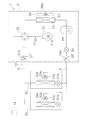
- FIG. 1 is a schematic configuration diagram of an air conditioner 1 according to an embodiment of the present invention.
- the air conditioner 1 is a device capable of cooling and heating a room such as a building by performing a vapor compression refrigeration cycle.
- the air conditioner 1 mainly includes an outdoor unit 2, indoor units 3a and 3b, a liquid refrigerant communication tube 4 and a gas refrigerant communication tube 5 that connect the outdoor unit 2 and the indoor units 3a and 3b, an outdoor unit 2 and And a control unit 19 that controls the constituent devices of the indoor units 3a and 3b.
- the vapor compression refrigerant circuit 10 of the air conditioner 1 is configured by connecting the outdoor unit 2 and the indoor units 3 a and 3 b via the refrigerant communication tubes 4 and 5.
- the indoor units 3a and 3b are installed indoors or behind the ceiling, and constitute a part of the refrigerant circuit 10. Since the indoor unit 3a and the indoor unit 3b have the same configuration, only the configuration of the indoor unit 3a will be described here.
- the configuration of the indoor unit 3b is a subscript “Subscript “b” is attached instead of “a”, and description of each part is omitted.
- the indoor unit 3a mainly has an indoor expansion valve 31a, an indoor heat exchanger 32a, and an indoor fan 33a.
- the indoor expansion valve 31a is an expansion mechanism that depressurizes the refrigerant, and an electric expansion valve is used here.
- the indoor heat exchanger 32a is a heat exchanger that exchanges heat between the refrigerant exchanged with the outdoor unit 2 through the liquid refrigerant communication tube 4 and the gas refrigerant communication tube 5 and the indoor air.
- the liquid side of the indoor heat exchanger 32 a is connected to the liquid refrigerant communication tube 4, and the gas side of the indoor heat exchanger 32 a is connected to the gas refrigerant communication tube 5.
- the indoor fan 33a is a fan that sends room air to the indoor heat exchanger 32a.
- the indoor fan 33a is driven by an indoor fan motor 34a.
- the outdoor unit 2 is installed outside and constitutes a part of the refrigerant circuit 10.
- the outdoor unit 2 mainly includes a compressor 21, a four-way switching valve 22, an outdoor heat exchanger 23, a receiver 24, an outdoor expansion valve 25, a liquid side closing valve 26, a gas side closing valve 27, And an outdoor fan 28.
- the compressor 21 is a device for compressing a refrigerant.
- a compressor in which a positive displacement compression element (not shown) is rotationally driven by a compressor motor 21a is used.
- the suction side and the discharge side of the compressor 21 are connected to the four-way switching valve 22.
- the four-way switching valve 22 connects the discharge side of the compressor 21 and the gas side of the outdoor heat exchanger 23 when the outdoor heat exchanger 23 functions as a refrigerant radiator (hereinafter referred to as “heat dissipation state”). 1 (see the solid line of the four-way switching valve 22 in FIG. 1), and when the outdoor heat exchanger 23 functions as a refrigerant evaporator (hereinafter referred to as “evaporation state”), the suction side of the compressor 21
- This is a switching mechanism capable of switching the refrigerant flow in the refrigerant circuit 10 so as to connect to the gas side of the outdoor heat exchanger 23 (see the broken line of the four-way switching valve 22 in FIG. 1).
- the outdoor heat exchanger 23 is a heat exchanger that performs heat exchange between the refrigerant exchanged with the indoor unit 3 through the liquid refrigerant communication tube 4 and the gas refrigerant communication tube 5 and outdoor air.
- the liquid side of the outdoor heat exchanger 23 is connected to the receiver 24, and the gas side of the outdoor heat exchanger 23 is connected to the four-way switching valve 22.
- the receiver 24 is a container for temporarily storing the refrigerant exchanged with the indoor unit 3 through the liquid refrigerant communication pipe 4.
- One end side of the receiver 24 is connected to the liquid side of the outdoor heat exchanger 23, and the other end side of the receiver 24 is connected to the outdoor expansion valve 25.
- the outdoor expansion valve 25 is an expansion mechanism that depressurizes the refrigerant, and an electric expansion valve is used here.
- One end side of the outdoor expansion valve 25 is connected to the receiver 24, and the other end side of the outdoor expansion valve 25 is connected to the liquid side closing valve 26.
- the liquid side shut-off valve 26 is a valve mechanism provided at a connection portion between the outdoor unit 2 and the liquid refrigerant communication pipe 4. Here, a manual valve with a service port 26 a used for refrigerant charging or the like is used. Yes.
- One end side of the liquid side closing valve 26 is connected to the outdoor expansion valve 25, and the other end side of the liquid side closing valve 26 is connected to the liquid refrigerant communication tube 4.
- the gas side shut-off valve 27 is a valve mechanism provided at a connection portion between the outdoor unit 2 and the gas refrigerant communication pipe 5, and here, a manual valve with a service port 27a used for refrigerant charging or the like is used. Yes.
- One end side of the gas side closing valve 27 is connected to the four-way switching valve 22, and the other end side of the gas side closing valve 27 is connected to the gas refrigerant communication pipe 5.
- the service ports 26a and 27a only need to be provided in a part of the refrigerant circuit 10 included in the outdoor unit 2, and are not limited to those provided in the closing valves 26 and 27.
- the outdoor fan 28 is a fan that sends outdoor air to the outdoor heat exchanger 23.
- the outdoor fan 28 is driven by an outdoor fan motor 28a.
- the outdoor unit 2 is provided with various sensors. Specifically, the outdoor unit 2 is provided with a discharge pressure sensor 11 that detects a refrigerant pressure Pd on the discharge side of the compressor 21. The outdoor unit 2 is provided with an outdoor heat exchange temperature sensor 12 that detects the temperature Tl of the refrigerant in the outdoor heat exchanger 23.
- the refrigerant communication pipes 4 and 5 are refrigerant pipes that are constructed on site when the air conditioner 1 is installed at an installation location such as a building.
- One end side of the liquid refrigerant communication tube 4 is connected to the liquid side closing valve 26 of the indoor unit 2, and the other end side of the liquid refrigerant communication tube 5 is connected to the indoor expansion valves 31a and 31b of the indoor units 3a and 3b.
- One end side of the gas refrigerant communication pipe 5 is connected to the gas side closing valve 27 of the indoor unit 2, and the other end side of the gas refrigerant communication pipe 5 is the gas side of the indoor heat exchangers 32a and 32b of the indoor units 3a and 3b. It is connected to the.
- the control unit 19 is configured by a communication connection of a control board, a remote controller or the like (not shown) provided in the outdoor unit 2 or the indoor units 3a and 3b.
- a control board a remote controller or the like (not shown) provided in the outdoor unit 2 or the indoor units 3a and 3b.
- FIG. 1 for the sake of convenience, the outdoor unit 2 and the indoor units 3a and 3b are illustrated at positions away from each other.
- the control unit 19 controls the components 21, 22, 25, 31a, 31b, 33a, 33b of the air conditioner 1 (here, the outdoor unit 2 and the indoor units 3a, 3b), that is, the operation of the refrigerant circuit 10. Operation control of the whole air conditioning apparatus 1 including it is performed.
- the refrigerant circuit 10 contains a refrigerant containing a fluorinated hydrocarbon having a property of causing a disproportionation reaction.
- a refrigerant there is an ethylene-based fluorinated hydrocarbon (hydrofluoroolefin) having a carbon-carbon double bond that has little influence on the ozone layer and global warming and is easily decomposed by OH radicals.
- hydrofluoroolefins HFO
- HFO hydrofluoroolefins
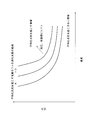
- FIG. 2 is a diagram showing the relationship between the pressure and temperature at which the mixed refrigerant containing the fluorinated hydrocarbon having the property of causing the disproportionation reaction causes the disproportionation reaction.
- the plurality of curves shown in FIG. 2 indicate the boundary between the pressure and temperature at which the mixed refrigerant causes a disproportionation reaction.
- the smaller the composition of the fluorinated hydrocarbon having the property of causing the disproportionation reaction, the higher the curve. Shifted to a high temperature region (upper right side of the figure). In the regions above and above the curves, the refrigerant causes a disproportionation reaction, and in the regions below the curve, the refrigerant does not cause a disproportionation reaction.
- a mixed refrigerant obtained by mixing another refrigerant (a refrigerant not having the property of causing a disproportionation reaction) with a fluorinated hydrocarbon having a property of causing a disproportionation reaction is used.
- a mixed refrigerant of HFO-1123 and another refrigerant is used as a refrigerant containing HFO-1123 as a fluorinated hydrocarbon having a property of causing a disproportionation reaction.
- HFO-1123 and HFC-32 As a mixed refrigerant of HFO-1123 and another refrigerant, there is a mixture of HFO-1123 and HFC-32.
- the composition (wt%) of HFO-1123 and HFC-32 is 40:60.
- HFO-1123 with HFC-134a, HFO-1234yf (2, 3, 3, 3-tetrafluoropropene) and the like there are also mixtures of HFO-1123 with HFC-134a, HFO-1234yf (2, 3, 3, 3-tetrafluoropropene) and the like.
- HFO-1123 has a boiling point different from that of other refrigerants (such as HFC-32)
- such a mixed refrigerant is a non-azeotropic refrigerant mixture in which a low-boiling refrigerant and a high-boiling refrigerant are mixed.
- HFO-1123 since HFO-1123 has a lower boiling point than other refrigerants such as HFC-32, it becomes a non-azeotropic refrigerant mixture using HFO-1123 as a low-boiling refrigerant and other refrigerant as a high-boiling refrigerant.
- the other refrigerant mixed with HFO-1123 is not limited to HFC-32 or the like, and may be any refrigerant that does not have the property of causing a disproportionation reaction. Further, the number of other refrigerants mixed in HFO-1123 is not limited to one but may be two or more.
- the fluorinated hydrocarbon having the property of causing the disproportionation reaction is not limited to HFO-1123, and an ethylene-based or acetylene-based fluorinated hydrocarbon having the property of causing the disproportionation reaction may be used.
- the fluorinated hydrocarbon having the property of causing a disproportionation reaction may be a high boiling point refrigerant having a higher boiling point than other refrigerants.
- Air-conditioning operation In the air conditioning apparatus 1, a cooling operation and a heating operation are performed as the air-conditioning operation.
- the air conditioning operation is performed by the control unit 19.
- the four-way switching valve 22 is switched to the heat dissipation state (the state shown by the solid line in FIG. 1).
- the non-azeotropic refrigerant mixture in the low-pressure gas state of the refrigeration cycle is sucked into the compressor 21 and is compressed until it reaches the high pressure of the refrigeration cycle, and then discharged.
- the high-pressure gas state non-azeotropic mixed refrigerant discharged from the compressor 21 is sent to the outdoor heat exchanger 23 through the four-way switching valve 22.
- the high-pressure gas state non-azeotropic mixed refrigerant sent to the outdoor heat exchanger 23 is supplied to the outdoor heat exchanger 23 functioning as a radiator of the non-azeotropic mixed refrigerant. Heat is exchanged with air to dissipate heat, resulting in a high-pressure liquid non-azeotropic refrigerant mixture.
- the high-pressure liquid non-azeotropic refrigerant mixture that has radiated heat in the outdoor heat exchanger 23 is temporarily stored in the receiver 24, and then passed through the outdoor expansion valve 25, the liquid-side shut-off valve 26, and the liquid refrigerant communication tube 4. It is sent to the expansion valves 31a and 31b.
- the non-azeotropic mixed refrigerant sent to the indoor expansion valves 31a and 31b is decompressed to the low pressure of the refrigeration cycle by the indoor expansion valves 31a and 31b, and becomes a low-pressure gas-liquid two-phase non-azeotropic mixed refrigerant.
- the low-pressure gas-liquid two-phase non-azeotropic mixed refrigerant decompressed by the indoor expansion valves 31a and 31b is sent to the indoor heat exchangers 32a and 32b.
- the low-pressure gas-liquid two-phase non-azeotropic refrigerant mixture sent to the indoor heat exchangers 32a and 32b is mixed with indoor air supplied as a heating source by the indoor fans 33a and 33b in the indoor heat exchangers 32a and 32b.
- the four-way switching valve 22 is switched to the evaporation state (the state indicated by the broken line in FIG. 1).
- the non-azeotropic refrigerant mixture in the low-pressure gas state of the refrigeration cycle is sucked into the compressor 21 and is compressed until it reaches the high pressure of the refrigeration cycle, and then discharged.
- the high-pressure gas state non-azeotropic refrigerant discharged from the compressor 8 is sent to the indoor heat exchangers 32 a and 32 b through the four-way switching valve 22, the gas-side closing valve 27, and the gas refrigerant communication pipe 5.
- the high-pressure gas-state non-azeotropic mixed refrigerant sent to the indoor heat exchangers 32a and 32b exchanges heat with indoor air supplied as a cooling source by the indoor fans 33a and 33b in the indoor heat exchangers 32a and 32b.
- indoor air is heated, and indoor heating is performed by being supplied indoors after that.
- the high-pressure liquid non-azeotropic refrigerant mixture radiated by the indoor heat exchangers 32 a and 32 b is sent to the outdoor expansion valve 25 through the indoor expansion valves 31 a and 31 b, the liquid refrigerant communication pipe 4 and the liquid side closing valve 26.
- the non-azeotropic refrigerant mixture sent to the outdoor expansion valve 25 is decompressed to the low pressure of the refrigeration cycle by the outdoor expansion valve 25 to become a low-pressure gas-liquid two-phase non-azeotropic refrigerant mixture.
- the low-pressure gas-liquid two-phase non-azeotropic refrigerant mixture decompressed by the outdoor expansion valve 25 is temporarily stored in the receiver 24 and then sent to the outdoor heat exchanger 23.
- the low-pressure gas-liquid two-phase non-azeotropic mixed refrigerant sent to the outdoor heat exchanger 23 is supplied as a heating source by the outdoor fan 28 in the outdoor heat exchanger 23 that functions as an evaporator of the non-azeotropic mixed refrigerant.
- the refrigerant is evaporated by exchanging heat with the outdoor air, and becomes a non-azeotropic refrigerant in a low-pressure gas state.
- the low-pressure gas state non-azeotropic mixed refrigerant evaporated in the outdoor heat exchanger 23 is again sucked into the compressor 21 through the four-way switching valve 22.
- a fluorinated hydrocarbon having a property of causing a disproportionation reaction (here, HFO-1123, which is a low boiling point refrigerant) is unevenly distributed in each part of the refrigerant circuit 10. If a non-azeotropic refrigerant mixture leaks in such a state, non-azeotropic mixing is performed in the refrigerant circuit 10 to such an extent that the non-azeotropic refrigerant mixture cannot leak.
- the composition of the fluorinated hydrocarbon having the property of causing a disproportionation reaction in the refrigerant may be increased (see FIG. 2), which may cause a disproportionation reaction.
- the non-azeotropic refrigerant mixture having the desired composition ratio is a refrigerant in the refrigerant circuit 10.
- the composition of the fluorinated hydrocarbon having the property of causing a disproportionation reaction in the non-azeotropic refrigerant mixture may be increased to the extent that the circuit 10 cannot be filled (see FIG. 2). May cause disproportionation reaction. For this reason, it is necessary to suppress the disproportionation reaction even if a non-azeotropic refrigerant mixture leaks or is poorly charged.
- a non-azeotropic refrigerant mixture collected in the outdoor unit 2 is obtained by performing a pump-down operation that collects the non-azeotropic refrigerant mixture in a portion of the refrigerant circuit 10 included in the outdoor unit 2.
- the composition ratio of the non-azeotropic refrigerant mixture is detected based on the pressure and temperature of the gas and the composition ratio of the non-azeotropic refrigerant mixture causes a disproportionation reaction.
- a warning is issued when the composition ratio is out of the range.
- FIG. 3 is a flowchart showing pump down operation and composition ratio detection.
- FIG. 4 is a graph showing the relationship between the saturation temperature and the saturation pressure of a non-azeotropic refrigerant mixture containing a fluorinated hydrocarbon having a property of causing a disproportionation reaction.
- the pump-down operation and composition ratio detection described below are performed by the control unit 19 as in the air-conditioning operation.
- the refrigerant sealed in the refrigerant circuit 10 a two-component system containing a fluorinated hydrocarbon having a property of causing a disproportionation reaction such as a mixed refrigerant of HFO-1123 and HFC-32 as a low boiling point refrigerant.
- a fluorinated hydrocarbon having a property of causing a disproportionation reaction such as a mixed refrigerant of HFO-1123 and HFC-32 as a low boiling point refrigerant.
- a mixed refrigerant of HFO-1123 and HFC-32 as a low boiling point refrigerant.
- step ST1 the control unit 19 determines whether or not a predetermined detection time has elapsed since the previous composition ratio detection (for example, an integrated value of the time during which the air conditioning operation was performed). That is, the control unit 19 periodically performs pump down operation and composition ratio detection. In the case of the first composition ratio detection, it may be determined whether or not the detection time has elapsed after the air conditioner 1 is installed. If the control unit 19 determines in step ST1 that the detection time has elapsed, the control unit 19 proceeds to the next step ST2.
- a predetermined detection time for example, an integrated value of the time during which the air conditioning operation was performed. That is, the control unit 19 periodically performs pump down operation and composition ratio detection.
- the control unit 19 determines in step ST1 that the detection time has elapsed, the control unit 19 proceeds to the next step ST2.
- the controller 19 performs a pump-down operation in step ST2.
- the pump-down operation is an operation for collecting the non-azeotropic refrigerant mixture in the portion of the refrigerant circuit 10 included in the outdoor unit 2, and stops the flow of the refrigerant from the outdoor unit 2 to the indoor units 3a and 3b.
- the refrigerant is caused to flow from the indoor units 3a and 3b to the outdoor unit 2.
- the four-way switching valve 22 is switched to the heat dissipation state (the state indicated by the solid line in FIG. 1), and the outdoor heat exchanger 23 functions as a radiator for the non-azeotropic refrigerant mixture.
- the refrigerant flow from the outdoor unit 2 to the indoor units 3a and 3b is stopped by fully closing the outdoor expansion valve 25.
- the high-pressure gas state non-azeotropic mixed refrigerant discharged from the compressor 21 dissipates heat in the outdoor heat exchanger 23 to become a high-pressure liquid state non-azeotropic mixed refrigerant. Then, it accumulates in the outdoor heat exchanger 23 and the receiver 24 located between the discharge side of the compressor 21 and the outdoor expansion valve 25.
- the non-azeotropic refrigerant mixture existing in the liquid refrigerant communication tube 4, the indoor units 3a and 3b, and the gas refrigerant communication tube 5 is reduced by being sucked into the compressor 21, and the outdoor unit 2 (mainly outdoor heat). Collected in exchanger 23 and receiver 24). And the control part 19 complete
- the pump down operation end condition is that a predetermined time (a time during which the non-azeotropic refrigerant mixture is sufficiently transferred to the outdoor unit 2) has elapsed since the pump down operation was started.
- the pressure or temperature of the non-azeotropic refrigerant mixture in the refrigerant circuit 10 (for example, the refrigerant pressure Pd on the discharge side of the compressor 21) reaches a predetermined value.
- control unit 19 performs composition ratio detection in steps ST3 and ST4, and the composition of the fluorinated hydrocarbon having the property that the composition ratio of the non-azeotropic refrigerant mixture obtained by the composition ratio detection causes a disproportionation reaction. It is determined whether the composition ratio is out of the allowable range.
- the composition ratio detection is processing for obtaining the composition ratio of the non-azeotropic mixed refrigerant based on the pressure and temperature of the non-azeotropic mixed refrigerant collected in the outdoor unit 2 by the pump-down operation as described above.
- the relationship between the saturation temperature and the saturation pressure of a non-azeotropic refrigerant mixture containing a fluorinated hydrocarbon having the property of causing a disproportionation reaction as shown in FIG. 4 is shown for each composition ratio of the non-azeotropic refrigerant mixture.
- FIG. 4 when the composition ratio of the non-azeotropic refrigerant mixture is a normal value, the relationship between the saturation pressure and the saturation temperature (solid line), and the composition ratio of the non-azeotropic refrigerant mixture is within the allowable range for the disproportionation reaction.
- the relationship (broken line) between the saturation pressure and the saturation temperature in the case of the upper limit value is shown.
- the composition ratio of the non-azeotropic mixed refrigerant is obtained from the pressure and temperature of the non-azeotropic mixed refrigerant collected in the outdoor unit 2.
- the saturation pressure and saturation temperature of the non-azeotropic refrigerant mixture are the pressure Pd of the non-azeotropic refrigerant mixture on the discharge side of the compressor 21.
- the control unit 19 obtains the composition ratio of the non-azeotropic refrigerant mixture by applying these pressure Pd and temperature Tl to the relational expression and data table of the saturation temperature and saturation pressure of the non-azeotropic refrigerant mixture. Then, the control unit 19 determines whether or not the composition ratio of the non-azeotropic refrigerant mixture obtained by the composition ratio detection is out of the allowable range of the composition of the fluorinated hydrocarbon having the property of causing a disproportionation reaction. Determine. Specifically, it is determined whether or not the composition ratio of the non-azeotropic refrigerant mixture obtained by the composition ratio detection exceeds the broken line in FIG.
- the composition ratio of the non-azeotropic refrigerant mixture obtained by the composition ratio detection is the point A corresponding to the pressure Pa and the temperature Ta
- the solid line in FIG. 4 (the normal value of the composition ratio of the non-azeotropic refrigerant mixture).
- the composition ratio of the non-azeotropic refrigerant mixture obtained by the composition ratio detection is a point B corresponding to the pressure Pb and the temperature Ta
- composition ratio of the non-azeotropic refrigerant mixture obtained by the composition ratio detection is a point C corresponding to the pressure Pc and the temperature Ta, it is at a position exceeding the broken line in FIG. Leakage or filling failure has occurred and is outside the allowable range.
- composition ratio of the non-azeotropic refrigerant mixture obtained by the composition ratio detection is a composition ratio that is outside the allowable range of the composition of the fluorinated hydrocarbon having the property of causing a disproportionation reaction. Then, it is determined that there is a possibility of causing a disproportionation reaction, and the process proceeds to the next step ST5.
- the composition ratio of the non-azeotropic refrigerant mixture obtained by the composition ratio detection is a composition ratio within the allowable range of the composition of the fluorinated hydrocarbon having the property of causing a disproportionation reaction
- the process returns to step ST1 to continue the operation of the air conditioner 1 (air conditioning operation).
- the composition of the fluorinated hydrocarbon having the property of causing the disproportionation reaction contained in the non-azeotropic refrigerant mixture due to the leakage or poor filling of the non-azeotropic refrigerant mixture is out of the allowable range. It is checked whether it is not.
- step ST5 the control unit 19 issues a warning that the non-azeotropic refrigerant mixture has a composition ratio that may cause a disproportionation reaction. And the control part 19 stops the driving
- the warning may be displayed on the air conditioner 1, or may be notified to the service center or the like when the air conditioner 1 is network-connected to the service center or the like. .
- the non-azeotropic refrigerant mixture is collected in the outdoor unit 2 by the pump-down operation.
- the pump-down operation almost all of the non-azeotropic refrigerant mixture containing the fluorinated hydrocarbon having the property of causing the disproportionation reaction unevenly distributed in each part of the refrigerant circuit 10 is collected in the outdoor unit 2 and then performed.
- a state suitable for composition ratio detection can be obtained.
- composition ratio detection is performed to obtain the composition ratio of the non-azeotropic refrigerant mixture based on the pressure Pd and the temperature Tl of the non-azeotropic refrigerant refrigerant collected in the outdoor unit 2 by the pump-down operation.
- composition ratio of the non-azeotropic refrigerant mixture obtained by the composition ratio detection is a composition ratio outside the allowable range of the composition of the fluorinated hydrocarbon having the property of causing a disproportionation reaction. Therefore, it is determined that there is a possibility of causing a disproportionation reaction, a warning is issued, and the operation of the air conditioner 1 can be stopped.
- the composition ratio of the non-azeotropic refrigerant mixture obtained by the composition ratio detection is within the allowable range of the composition of the fluorinated hydrocarbon having the property of causing the disproportionation reaction, the disproportionation reaction is performed.
- the operation of the air conditioner 1 can be continued by determining that there is no risk of waking up.
- the composition of the fluorinated hydrocarbon having the property of causing a disproportionation reaction contained in the non-azeotropic refrigerant mixture due to leakage or poor filling of the non-azeotropic refrigerant mixture is out of the allowable range. You can check for it.
- the non-azeotropic refrigerant mixture containing the fluorinated hydrocarbon having the property of causing the disproportionation reaction in the refrigerant circuit 10 is enclosed, the non-azeotropic refrigerant mixture is leaked or poorly filled. Even if it occurs, it is possible to suppress the disproportionation reaction.
- the pump-down operation is an operation for collecting the non-azeotropic refrigerant mixture in the outdoor heat exchanger 23 and the receiver 24, a large amount of the non-azeotropic refrigerant mixture is collected in a high-pressure liquid state. As a result, the accuracy of the composition ratio detection can be improved.
- the accurate non-azeotropic refrigerant pressure Pd on the discharge side of the compressor 21 and the temperature Tl of the non-azeotropic refrigerant mixture in the outdoor heat exchanger 23 are used.
- the composition ratio of the boiling mixed refrigerant can be obtained.
- the temperature Tl of the non-azeotropic refrigerant mixture in the outdoor heat exchanger 23 is used as the temperature of the non-azeotropic refrigerant mixture used in the composition ratio detection.
- the present invention is not limited to this. .
- the receiver 24 is provided with a receiver temperature sensor 13 that detects the temperature of the non-azeotropic refrigerant mixture in the receiver 24, and the temperature Tl of the non-azeotropic refrigerant mixture detected by the receiver temperature sensor 13. May be used as the temperature of the non-azeotropic refrigerant mixture used in composition ratio detection.
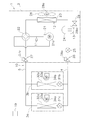
- the receiver 24 may be provided with a sampling port 29 for extracting the non-azeotropic refrigerant mixture.
- the sampling port 29 is provided with a sampling valve 29a that is manually opened and closed.
- the composition ratio of the non-azeotropic refrigerant mixture is analyzed in detail as necessary. Can do.
- the composition ratio of the non-azeotropic refrigerant mixture is determined to be within the allowable range for the disproportionation reaction by detecting the composition ratio, but the upper limit of the allowable range for the disproportionation reaction (see FIG. 4).
- a non-azeotropic refrigerant mixture can be extracted from the sampling port 29 and a detailed composition ratio analysis can be performed.
- the refrigerant circuit 10 is filled with the non-azeotropic refrigerant mixture containing a large amount of low-boiling refrigerant. It will shift. In order to prevent such a filling failure, it is preferable to fill the refrigerant circuit 10 in a liquid state with a non-azeotropic refrigerant mixture from a cylinder.
- a siphon tube 6a for taking out the liquid non-azeotropic refrigerant mixture from the vicinity of the bottom of the cylinder 6
- the refrigerant circuit 10 is filled with a non-azeotropic refrigerant mixture through the service port of the outdoor unit 2 (using the service port 26a in FIG. 7).
- the cylinder 6 may be turned upside down to fill the refrigerant circuit 10 with the non-azeotropic refrigerant mixture.
- the refrigerant circuit 10 can be filled with a non-azeotropic refrigerant mixture having a normal composition ratio.
- the outdoor unit 2 is not charged with the non-azeotropic mixed refrigerant in the gas state
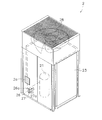
- warning information indicating that the non-azeotropic refrigerant mixture is not charged in the gas state or the non-azeotropic refrigerant mixture is charged in the liquid state is displayed on the outer surface of the outdoor unit 2.
- the label 2a is provided.
- the label 2a in the vicinity of the service ports 26a and 27a used for charging the refrigerant in order to urge the operator to be alerted.
- the model of the outdoor unit 2 is limited to this.
- the label 2a may be provided on another type of outdoor unit 2.
- the present invention is applied by taking the cooling / heating switching type air conditioner 1 capable of switching between the cooling operation and the heating operation as an example.
- the air conditioner to which the present invention can be applied is not limited to this, and the present invention can also be applied to an air conditioner capable of only cooling or an air conditioner capable of simultaneous cooling and heating.
- the indoor multi-type air conditioner 1 in which a plurality of indoor units 3a and 3b are connected to the outdoor unit 2 has been described as an example.
- the present invention is not limited to this.
- a pair type air conditioner in which one indoor unit is connected to the outdoor unit 2 may be used.
- the present invention is widely applicable to an air conditioner in which a non-azeotropic refrigerant mixture containing a fluorinated hydrocarbon having a property of causing a disproportionation reaction in a refrigerant circuit is enclosed.
Landscapes
- Engineering & Computer Science (AREA)
- Physics & Mathematics (AREA)
- Mechanical Engineering (AREA)
- Thermal Sciences (AREA)
- General Engineering & Computer Science (AREA)
- Compression-Type Refrigeration Machines With Reversible Cycles (AREA)
- Air Conditioning Control Device (AREA)
Priority Applications (3)
| Application Number | Priority Date | Filing Date | Title |
|---|---|---|---|
| US16/492,753 US11112154B2 (en) | 2017-03-31 | 2018-03-23 | Air conditioner |
| CN201880012669.9A CN110446898B (zh) | 2017-03-31 | 2018-03-23 | 空调装置 |
| EP18776250.5A EP3604971B1 (en) | 2017-03-31 | 2018-03-23 | Method for operating an air conditioner |
Applications Claiming Priority (2)
| Application Number | Priority Date | Filing Date | Title |
|---|---|---|---|
| JP2017-070186 | 2017-03-31 | ||
| JP2017070186A JP6790966B2 (ja) | 2017-03-31 | 2017-03-31 | 空気調和装置 |
Publications (1)
| Publication Number | Publication Date |
|---|---|
| WO2018181065A1 true WO2018181065A1 (ja) | 2018-10-04 |
Family
ID=63675982
Family Applications (1)
| Application Number | Title | Priority Date | Filing Date |
|---|---|---|---|
| PCT/JP2018/011897 Ceased WO2018181065A1 (ja) | 2017-03-31 | 2018-03-23 | 空気調和装置 |
Country Status (5)
| Country | Link |
|---|---|
| US (1) | US11112154B2 (https=) |
| EP (1) | EP3604971B1 (https=) |
| JP (1) | JP6790966B2 (https=) |
| CN (1) | CN110446898B (https=) |
| WO (1) | WO2018181065A1 (https=) |
Cited By (1)
| Publication number | Priority date | Publication date | Assignee | Title |
|---|---|---|---|---|
| WO2025243502A1 (ja) * | 2024-05-24 | 2025-11-27 | 日立ジョンソンコントロールズ空調株式会社 | 冷凍サイクル装置 |
Families Citing this family (4)
| Publication number | Priority date | Publication date | Assignee | Title |
|---|---|---|---|---|
| WO2017163339A1 (ja) * | 2016-03-23 | 2017-09-28 | 三菱電機株式会社 | 空気調和装置 |
| JP7535371B2 (ja) * | 2019-03-13 | 2024-08-16 | 株式会社富士通ゼネラル | 空気調和装置 |
| US20220065503A1 (en) * | 2020-09-02 | 2022-03-03 | Lance Nist | Efficient air conditioning in conjunction with pool filtration |
| GB2616477A (en) * | 2022-03-11 | 2023-09-13 | Edwards Vacuum Llc | Refrigerant testing |
Citations (6)
| Publication number | Priority date | Publication date | Assignee | Title |
|---|---|---|---|---|
| JP2002267232A (ja) * | 2001-03-12 | 2002-09-18 | Hitachi Ltd | 空気調和機のサービスシステム及びサービス提供装置 |
| WO2012157764A1 (ja) | 2011-05-19 | 2012-11-22 | 旭硝子株式会社 | 作動媒体および熱サイクルシステム |
| WO2015114774A1 (ja) * | 2014-01-30 | 2015-08-06 | 三菱電機株式会社 | 冷凍サイクル装置、空気調和装置、及び、冷凍サイクル装置における循環組成の算出方法 |
| WO2015140874A1 (ja) * | 2014-03-17 | 2015-09-24 | 三菱電機株式会社 | 空気調和装置 |
| WO2015140883A1 (ja) * | 2014-03-17 | 2015-09-24 | 三菱電機株式会社 | 空気調和機 |
| WO2015174054A1 (ja) * | 2014-05-12 | 2015-11-19 | パナソニックIpマネジメント株式会社 | 冷凍サイクル装置 |
Family Cites Families (12)
| Publication number | Priority date | Publication date | Assignee | Title |
|---|---|---|---|---|
| US4179894A (en) * | 1977-12-28 | 1979-12-25 | Wylain, Inc. | Dual source heat pump |
| JP3178103B2 (ja) * | 1992-08-31 | 2001-06-18 | 株式会社日立製作所 | 冷凍サイクル |
| US7493775B2 (en) * | 2002-10-30 | 2009-02-24 | Mitsubishi Denki Kabushiki Kaisha | Air conditioner |
| US7832222B2 (en) * | 2007-12-07 | 2010-11-16 | Spx Corporation | Background tank fill based on refrigerant composition |
| WO2012042573A1 (ja) * | 2010-09-30 | 2012-04-05 | 三菱電機株式会社 | 空気調和装置 |
| US9524483B2 (en) * | 2011-11-23 | 2016-12-20 | Advanced Aqua Group | Water conversion system |
| JP5759017B2 (ja) * | 2011-12-22 | 2015-08-05 | 三菱電機株式会社 | 空気調和装置 |
| US10145598B2 (en) * | 2014-03-14 | 2018-12-04 | Mitsubishi Electric Corporation | Refrigeration apparatus |
| CN106104170B (zh) * | 2014-03-17 | 2019-10-25 | 三菱电机株式会社 | 制冷循环装置 |
| CN106104172B (zh) * | 2014-03-17 | 2019-05-28 | 三菱电机株式会社 | 制冷循环装置 |
| KR101674075B1 (ko) * | 2015-04-25 | 2016-11-09 | 한국표준과학연구원 | 미세 누출이 없는 주름관 정압실린더 |
| US10247455B2 (en) * | 2016-07-13 | 2019-04-02 | Hanon Systems | Condenser receiver drier refrigerant filter |
-
2017
- 2017-03-31 JP JP2017070186A patent/JP6790966B2/ja active Active
-
2018
- 2018-03-23 US US16/492,753 patent/US11112154B2/en active Active
- 2018-03-23 CN CN201880012669.9A patent/CN110446898B/zh active Active
- 2018-03-23 EP EP18776250.5A patent/EP3604971B1/en active Active
- 2018-03-23 WO PCT/JP2018/011897 patent/WO2018181065A1/ja not_active Ceased
Patent Citations (6)
| Publication number | Priority date | Publication date | Assignee | Title |
|---|---|---|---|---|
| JP2002267232A (ja) * | 2001-03-12 | 2002-09-18 | Hitachi Ltd | 空気調和機のサービスシステム及びサービス提供装置 |
| WO2012157764A1 (ja) | 2011-05-19 | 2012-11-22 | 旭硝子株式会社 | 作動媒体および熱サイクルシステム |
| WO2015114774A1 (ja) * | 2014-01-30 | 2015-08-06 | 三菱電機株式会社 | 冷凍サイクル装置、空気調和装置、及び、冷凍サイクル装置における循環組成の算出方法 |
| WO2015140874A1 (ja) * | 2014-03-17 | 2015-09-24 | 三菱電機株式会社 | 空気調和装置 |
| WO2015140883A1 (ja) * | 2014-03-17 | 2015-09-24 | 三菱電機株式会社 | 空気調和機 |
| WO2015174054A1 (ja) * | 2014-05-12 | 2015-11-19 | パナソニックIpマネジメント株式会社 | 冷凍サイクル装置 |
Non-Patent Citations (1)
| Title |
|---|
| See also references of EP3604971A4 |
Cited By (1)
| Publication number | Priority date | Publication date | Assignee | Title |
|---|---|---|---|---|
| WO2025243502A1 (ja) * | 2024-05-24 | 2025-11-27 | 日立ジョンソンコントロールズ空調株式会社 | 冷凍サイクル装置 |
Also Published As
| Publication number | Publication date |
|---|---|
| US20200072518A1 (en) | 2020-03-05 |
| CN110446898A (zh) | 2019-11-12 |
| JP6790966B2 (ja) | 2020-11-25 |
| JP2018173196A (ja) | 2018-11-08 |
| CN110446898B (zh) | 2021-05-25 |
| EP3604971A4 (en) | 2020-12-02 |
| EP3604971A1 (en) | 2020-02-05 |
| US11112154B2 (en) | 2021-09-07 |
| EP3604971B1 (en) | 2024-08-07 |
Similar Documents
| Publication | Publication Date | Title |
|---|---|---|
| CN105042934B (zh) | 制冷循环装置 | |
| US10539358B2 (en) | Air-conditioning apparatus and refrigerant leakage detection method | |
| EP2306122B1 (en) | Refrigerating cycle apparatus, and air conditioning apparatus | |
| WO2018181065A1 (ja) | 空気調和装置 | |
| JP6223546B2 (ja) | 冷凍サイクル装置 | |
| JP5780977B2 (ja) | ヒートポンプサイクル装置 | |
| WO2019097620A1 (ja) | 空気調和機 | |
| WO2018011994A1 (ja) | 空気調和装置 | |
| EP3015781B1 (en) | Air conditioning device | |
| WO2016059696A1 (ja) | 冷凍サイクル装置 | |
| JP7001346B2 (ja) | 冷凍装置 | |
| JP2018173196A5 (https=) | ||
| JP6915294B2 (ja) | 冷凍装置の室外機 | |
| WO2015068455A1 (ja) | 冷凍サイクル装置およびその製造方法並びにその設置方法 | |
| JP2015215111A (ja) | ヒートポンプ機器 | |
| JP6715961B2 (ja) | 冷凍サイクル装置 | |
| WO2012137260A1 (ja) | 冷凍サイクル装置の冷媒回収方法及び冷凍サイクル装置 | |
| CN105466013A (zh) | 热泵装置 |
Legal Events
| Date | Code | Title | Description |
|---|---|---|---|
| 121 | Ep: the epo has been informed by wipo that ep was designated in this application |
Ref document number: 18776250 Country of ref document: EP Kind code of ref document: A1 |
|
| NENP | Non-entry into the national phase |
Ref country code: DE |
|
| WWE | Wipo information: entry into national phase |
Ref document number: 2018776250 Country of ref document: EP |
|
| ENP | Entry into the national phase |
Ref document number: 2018776250 Country of ref document: EP Effective date: 20191031 |