WO2018124002A1 - プロテインl-イソアスパラギン酸メチルトランスフェラーゼ活性化用組成物 - Google Patents
プロテインl-イソアスパラギン酸メチルトランスフェラーゼ活性化用組成物 Download PDFInfo
- Publication number
- WO2018124002A1 WO2018124002A1 PCT/JP2017/046510 JP2017046510W WO2018124002A1 WO 2018124002 A1 WO2018124002 A1 WO 2018124002A1 JP 2017046510 W JP2017046510 W JP 2017046510W WO 2018124002 A1 WO2018124002 A1 WO 2018124002A1
- Authority
- WO
- WIPO (PCT)
- Prior art keywords
- skin
- plant
- pimt
- protein
- activity
- Prior art date
- Legal status (The legal status is an assumption and is not a legal conclusion. Google has not performed a legal analysis and makes no representation as to the accuracy of the status listed.)
- Ceased
Links
Images


Classifications
-
- A—HUMAN NECESSITIES
- A61—MEDICAL OR VETERINARY SCIENCE; HYGIENE
- A61K—PREPARATIONS FOR MEDICAL, DENTAL OR TOILETRY PURPOSES
- A61K36/00—Medicinal preparations of undetermined constitution containing material from algae, lichens, fungi or plants, or derivatives thereof, e.g. traditional herbal medicines
- A61K36/18—Magnoliophyta (angiosperms)
- A61K36/185—Magnoliopsida (dicotyledons)
-
- A—HUMAN NECESSITIES
- A23—FOODS OR FOODSTUFFS; TREATMENT THEREOF, NOT COVERED BY OTHER CLASSES
- A23L—FOODS, FOODSTUFFS OR NON-ALCOHOLIC BEVERAGES, NOT OTHERWISE PROVIDED FOR; PREPARATION OR TREATMENT THEREOF
- A23L33/00—Modifying nutritive qualities of foods; Dietetic products; Preparation or treatment thereof
- A23L33/10—Modifying nutritive qualities of foods; Dietetic products; Preparation or treatment thereof using additives
- A23L33/105—Plant extracts, their artificial duplicates or their derivatives
-
- A—HUMAN NECESSITIES
- A61—MEDICAL OR VETERINARY SCIENCE; HYGIENE
- A61K—PREPARATIONS FOR MEDICAL, DENTAL OR TOILETRY PURPOSES
- A61K36/00—Medicinal preparations of undetermined constitution containing material from algae, lichens, fungi or plants, or derivatives thereof, e.g. traditional herbal medicines
- A61K36/18—Magnoliophyta (angiosperms)
- A61K36/185—Magnoliopsida (dicotyledons)
- A61K36/28—Asteraceae or Compositae (Aster or Sunflower family), e.g. chamomile, feverfew, yarrow or echinacea
-
- A—HUMAN NECESSITIES
- A61—MEDICAL OR VETERINARY SCIENCE; HYGIENE
- A61K—PREPARATIONS FOR MEDICAL, DENTAL OR TOILETRY PURPOSES
- A61K36/00—Medicinal preparations of undetermined constitution containing material from algae, lichens, fungi or plants, or derivatives thereof, e.g. traditional herbal medicines
- A61K36/18—Magnoliophyta (angiosperms)
- A61K36/185—Magnoliopsida (dicotyledons)
- A61K36/348—Cannabaceae
- A61K36/3486—Humulus
-
- A—HUMAN NECESSITIES
- A61—MEDICAL OR VETERINARY SCIENCE; HYGIENE
- A61K—PREPARATIONS FOR MEDICAL, DENTAL OR TOILETRY PURPOSES
- A61K36/00—Medicinal preparations of undetermined constitution containing material from algae, lichens, fungi or plants, or derivatives thereof, e.g. traditional herbal medicines
- A61K36/18—Magnoliophyta (angiosperms)
- A61K36/185—Magnoliopsida (dicotyledons)
- A61K36/53—Lamiaceae or Labiatae (Mint family), e.g. thyme, rosemary or lavender
- A61K36/535—Perilla (beefsteak plant)
-
- A—HUMAN NECESSITIES
- A61—MEDICAL OR VETERINARY SCIENCE; HYGIENE
- A61K—PREPARATIONS FOR MEDICAL, DENTAL OR TOILETRY PURPOSES
- A61K36/00—Medicinal preparations of undetermined constitution containing material from algae, lichens, fungi or plants, or derivatives thereof, e.g. traditional herbal medicines
- A61K36/18—Magnoliophyta (angiosperms)
- A61K36/185—Magnoliopsida (dicotyledons)
- A61K36/53—Lamiaceae or Labiatae (Mint family), e.g. thyme, rosemary or lavender
- A61K36/537—Salvia (sage)
-
- A—HUMAN NECESSITIES
- A61—MEDICAL OR VETERINARY SCIENCE; HYGIENE
- A61K—PREPARATIONS FOR MEDICAL, DENTAL OR TOILETRY PURPOSES
- A61K36/00—Medicinal preparations of undetermined constitution containing material from algae, lichens, fungi or plants, or derivatives thereof, e.g. traditional herbal medicines
- A61K36/18—Magnoliophyta (angiosperms)
- A61K36/185—Magnoliopsida (dicotyledons)
- A61K36/73—Rosaceae (Rose family), e.g. strawberry, chokeberry, blackberry, pear or firethorn
- A61K36/736—Prunus, e.g. plum, cherry, peach, apricot or almond
-
- A—HUMAN NECESSITIES
- A61—MEDICAL OR VETERINARY SCIENCE; HYGIENE
- A61K—PREPARATIONS FOR MEDICAL, DENTAL OR TOILETRY PURPOSES
- A61K36/00—Medicinal preparations of undetermined constitution containing material from algae, lichens, fungi or plants, or derivatives thereof, e.g. traditional herbal medicines
- A61K36/18—Magnoliophyta (angiosperms)
- A61K36/185—Magnoliopsida (dicotyledons)
- A61K36/75—Rutaceae (Rue family)
- A61K36/752—Citrus, e.g. lime, orange or lemon
-
- A—HUMAN NECESSITIES
- A61—MEDICAL OR VETERINARY SCIENCE; HYGIENE
- A61K—PREPARATIONS FOR MEDICAL, DENTAL OR TOILETRY PURPOSES
- A61K36/00—Medicinal preparations of undetermined constitution containing material from algae, lichens, fungi or plants, or derivatives thereof, e.g. traditional herbal medicines
- A61K36/18—Magnoliophyta (angiosperms)
- A61K36/185—Magnoliopsida (dicotyledons)
- A61K36/87—Vitaceae or Ampelidaceae (Vine or Grape family), e.g. wine grapes, muscadine or peppervine
-
- A—HUMAN NECESSITIES
- A61—MEDICAL OR VETERINARY SCIENCE; HYGIENE
- A61K—PREPARATIONS FOR MEDICAL, DENTAL OR TOILETRY PURPOSES
- A61K36/00—Medicinal preparations of undetermined constitution containing material from algae, lichens, fungi or plants, or derivatives thereof, e.g. traditional herbal medicines
- A61K36/18—Magnoliophyta (angiosperms)
- A61K36/88—Liliopsida (monocotyledons)
- A61K36/882—Acoraceae (Calamus family), e.g. sweetflag or Acorus calamus
-
- A—HUMAN NECESSITIES
- A61—MEDICAL OR VETERINARY SCIENCE; HYGIENE
- A61K—PREPARATIONS FOR MEDICAL, DENTAL OR TOILETRY PURPOSES
- A61K8/00—Cosmetics or similar toiletry preparations
- A61K8/18—Cosmetics or similar toiletry preparations characterised by the composition
- A61K8/96—Cosmetics or similar toiletry preparations characterised by the composition containing materials, or derivatives thereof of undetermined constitution
- A61K8/97—Cosmetics or similar toiletry preparations characterised by the composition containing materials, or derivatives thereof of undetermined constitution from algae, fungi, lichens or plants; from derivatives thereof
- A61K8/9783—Angiosperms [Magnoliophyta]
- A61K8/9789—Magnoliopsida [dicotyledons]
-
- A—HUMAN NECESSITIES
- A61—MEDICAL OR VETERINARY SCIENCE; HYGIENE
- A61K—PREPARATIONS FOR MEDICAL, DENTAL OR TOILETRY PURPOSES
- A61K8/00—Cosmetics or similar toiletry preparations
- A61K8/18—Cosmetics or similar toiletry preparations characterised by the composition
- A61K8/96—Cosmetics or similar toiletry preparations characterised by the composition containing materials, or derivatives thereof of undetermined constitution
- A61K8/97—Cosmetics or similar toiletry preparations characterised by the composition containing materials, or derivatives thereof of undetermined constitution from algae, fungi, lichens or plants; from derivatives thereof
- A61K8/9783—Angiosperms [Magnoliophyta]
- A61K8/9794—Liliopsida [monocotyledons]
-
- A—HUMAN NECESSITIES
- A61—MEDICAL OR VETERINARY SCIENCE; HYGIENE
- A61P—SPECIFIC THERAPEUTIC ACTIVITY OF CHEMICAL COMPOUNDS OR MEDICINAL PREPARATIONS
- A61P17/00—Drugs for dermatological disorders
-
- A—HUMAN NECESSITIES
- A61—MEDICAL OR VETERINARY SCIENCE; HYGIENE
- A61P—SPECIFIC THERAPEUTIC ACTIVITY OF CHEMICAL COMPOUNDS OR MEDICINAL PREPARATIONS
- A61P43/00—Drugs for specific purposes, not provided for in groups A61P1/00-A61P41/00
-
- A—HUMAN NECESSITIES
- A61—MEDICAL OR VETERINARY SCIENCE; HYGIENE
- A61Q—SPECIFIC USE OF COSMETICS OR SIMILAR TOILETRY PREPARATIONS
- A61Q19/00—Preparations for care of the skin
- A61Q19/08—Anti-ageing preparations
Definitions
- the present invention relates to a composition for activating protein L-isoaspartate methyltransferase (PIMT).
- PIMT protein L-isoaspartate methyltransferase
- the present invention also relates to a composition for promoting restoration or repair of a protein containing an isomerized amino acid.
- the present invention further relates to a method for activating PIMT and a method for promoting restoration or repair of a protein containing an isomerized amino acid.
- the present invention also relates to a method for evaluating skin restoration or repair activity, a method for evaluating skin anti-aging activity, and a method for screening an active ingredient for activation of PIMT present in the skin.
- Non-Patent Document 1 describes that D-Asp is detected from tissues such as the skin of the elderly, the crystalline lens of the eye, bones, and teeth, and that D-Asp is detected from the UV-exposed part of the skin tissue. ing.
- PIMT Protein L-isoaspartate methyltransferase
- An object of the present invention is to provide a composition for activating PIMT, which can activate protein L-isoaspartate methyltransferase (PIMT).
- Another object of the present invention is to provide a new index for evaluating skin restoration or repair activity and a new index for evaluating skin anti-aging activity, and the use of this index for skin restoration or repair activity. It is to provide an evaluation method and a method for evaluating the anti-aging activity of the skin.
- PIMT protein L-isoaspartate methyltransferase
- the expression of PIMT in skin cells is the first finding found by the present inventors. Further, the present inventor has also found that when skin-derived protein is irradiated with ultraviolet rays, Asp isomerization in the protein is induced and the isomerized protein increases. Furthermore, the present inventor has found that the expression of PIMT in skin cells decreases due to factors such as aging and exposure to ultraviolet rays.
- the present inventor has also conceived that skin restoration or repair activity and skin anti-aging activity can be evaluated using the expression level or activity of PIMT in the skin as an index. Furthermore, it has been conceived that by using the expression level or activity of PIMT in skin cells as an index, it is possible to screen for substances effective for PIMT activation, skin restoration or repair, and skin anti-aging which are present in the skin.
- the present invention includes the following composition for PIMT activation, method for evaluating skin restoration or repair activity, and the like.
- the composition for activating protein L-isoaspartate methyltransferase (PIMT) of the present invention comprises a birch plant, a birch plant, a grape plant, a leguminous soybean plant, a buckwheat plant, a perilla plant, a mandarin orange
- the plant extract has an effect of activating PIMT.
- the PIMT activation composition of the present invention is preferably a PIMT activation composition present in the skin.
- the plant extract is useful for PIMT activation (in the skin) present in the skin.
- the plant extract is preferably an extract of one or more plants selected from the group consisting of birch, grape, soybean, hop, lavender, sage, enmiso, yuzu, perilla, shobu, arnica and peach. . These plant extracts are preferred because they have a high effect of activating PIMT. Since the action of activating PIMT is particularly high, the plant extract is more preferably an extract of one or more kinds of plants selected from the group consisting of birch, grape, soybean, lavender, sage and enamel. preferable.
- composition for activating PIMT of the present invention is preferably an external preparation for skin, and more preferably a cosmetic.
- the composition for PIMT activation is food-drinks.
- the composition for promoting the restoration or restoration of a protein containing an isomerized amino acid comprises a birch family, birch plant, grapevine grape plant, legume soybean plant, Asaaceae plant, Lamiaceae plant, Citrus family An extract of one or more kinds of plants selected from the group consisting of mandarin orange plants, rosaceae genus plants, asteraceae arnica plants and rose peach plants is included.
- the composition for promoting restoration or repair of a protein containing an isomerized amino acid of the present invention is preferably a composition for promoting restoration or repair of a protein containing an isomerized amino acid in the skin.
- the plant extract is preferably an extract of one or more kinds of plants selected from the group consisting of birch, grape, soybean, hop, lavender, sage, enamel, yuzu, perilla, shobu, arnica and peach. More preferred is an extract of one or more plants selected from the group consisting of vine, soybean, lavender, sage and enamel. Since these plant extracts have a high effect of activating PIMT, they have a high effect of promoting restoration or repair of proteins containing isomerized amino acids.
- the composition for promoting restoration or repair of protein of the present invention is preferably an external preparation for skin, and more preferably a cosmetic. Moreover, as an example of another preferable aspect in this invention, it is also preferable that the composition for protein restoration
- the present invention includes birch family birch plant, grape family grape plant, leguminous soybean plant, Asaaceae caladium plant, Lamiaceae plant, citrus family mandarin plant, Dermatoaceae genus plant, asteraceae Arnica plant and Also included is a method for activating protein L-isoaspartate methyltransferase (PIMT), wherein an extract of one or more plants selected from the group consisting of Rosaceae peaches is applied to animals.
- PIMT protein L-isoaspartate methyltransferase
- the present invention includes birch family birch plant, grape family grape plant, leguminous soybean plant, Asaaceae caladium plant, Lamiaceae plant, citrus family mandarin plant, Dermatoaceae genus plant, asteraceae Arnica plant and Also included is a method for promoting restoration or repair of a protein containing an isomerized amino acid, wherein an extract of one or more plants selected from the group consisting of Rosaceae peaches is applied to animals.
- the present invention also includes a method for accelerating the restoration or repair of a protein containing an isomerized amino acid in the skin, which activates protein L-isoaspartate methyltransferase (PIMT) present in human skin.
- PIMT protein L-isoaspartate methyltransferase
- the method for evaluating skin restoration or repair activity of the present invention uses the expression level or activity of protein L-isoaspartate methyltransferase (PIMT) in skin cells as an index.
- the skin cells are preferably epidermal cells and / or dermal cells.
- Examples of the skin restoration or repair activity include skin restoration or repair activity against ultraviolet and / or aging-induced skin aging.
- the evaluation method of the present invention is preferably used for evaluating skin restoration or repair activity against amino acid isomerization due to ultraviolet rays and / or aging.
- the skin anti-aging evaluation method of the present invention uses the expression level or activity of protein L-isoaspartate methyltransferase (PIMT) in skin cells as an index.
- PIMT protein L-isoaspartate methyltransferase
- it is preferable that the anti-aging activity is anti-aging activity against skin aging caused by ultraviolet rays and / or aging.
- the method for evaluating the anti-aging activity of the skin of the present invention is preferably used for evaluating the anti-aging activity against ultraviolet aging and / or aging of the skin.
- the present invention relates to activation of PIMT present in skin, promotion of restoration or repair of skin, or anti-aging of skin, based on the expression level or activity of protein L-isoaspartate methyltransferase (PIMT) in skin cells
- PIMT protein L-isoaspartate methyltransferase
- the screening method of the active ingredient for this is also included.
- the screening method of the present invention uses the expression level or activity of PIMT in skin cells as an index, whereby a substance having an activation action of PIMT present in the skin, a substance having a skin restoration or repair promoting action, or skin It is possible to screen for a substance having an anti-aging action.
- the screening method of the present invention comprises a step of contacting a test substance with the skin cells and measuring the expression level or activity of PIMT in the skin cells, and When the expression level or activity of PIMT in skin cells contacted with the test substance is larger than the expression level or activity of PIMT in skin cells not contacted with the test substance, the test substance is used as an active ingredient. It is preferable to include a step of selecting.
- the skin cells are preferably cultured skin cells.
- PIMT protein L-isoaspartate methyltransferase
- the present invention also includes the following uses.
- PIMT protein L-isoaspartate methyltransferase
- birch family birch plant
- grapevine grape plant legume family soybean plant
- Asaaceae plant Labiatae plant
- citrus family mandarin orange Use of an extract of one or more kinds of plants selected from the group consisting of plants, Camelliaaceae plants, Compositae plants Arnica plants and Rosaceae peach plants.
- Birch family Birch plant, Grapevine plant, Legume family, Soybean plant, Lamiaceae plant, Lamiaceae plant, Citrus mandarin plant for restoring or repairing proteins containing isomerized amino acids, Use of an extract of one or more kinds of plants selected from the group consisting of the family Chrysaceae, the family Chrysanthemum, Arnica, and the family Rosaceae.
- the composition for PIMT activation which can activate PIMT can be provided.
- activating PIMT present in the skin according to the present invention restoration or repair of proteins containing amino acids isomerized in the skin can be promoted.
- a new index for evaluating skin restoration or repair activity and a new index for evaluating skin anti-aging activity can be provided.
- a substance having an activation action of PIMT present in the skin a substance having a skin restoration or repair promoting action, and a substance having an anti-aging action of skin can be screened.
- FIG. 1 is a graph showing the expression level of PIMT in skin cells.
- FIG. 2 is a graph showing the amount of SAH produced per protein amount by ultraviolet B wave (UVB) irradiation.
- FIG. 3 is a graph showing PIMT expression levels in skin fibroblasts having different passage numbers.
- FIG. 4 is a graph showing changes in PIMT expression level of dermal fibroblasts due to stress loading.
- an isomerized amino acid (also referred to as an isomerized amino acid) is an isomer of L-aspartic acid produced by isomerization of L-aspartic acid (L-Asp) or L-asparagine (L-Asn). (Isomerized aspartic acid). More specifically, isomerized aspartic acid (isomerized Asp) is D-aspartic acid (D-Asp), D-type or L-type isoaspartic acid (D- or L-isoAsp), preferably D-Asp and L-isoAsp. D-isoAsp and L-isoAsp are also called D- ⁇ -Asp and L- ⁇ -Asp, respectively.
- isomerization of amino acids means that L-Asp or L-Asn becomes isomerized aspartic acid.
- a protein containing an isomerized amino acid (amino acid residue) is also referred to as an isomerized protein.
- the number of isomerized amino acids (isomerized amino acid residues) in the isomerized protein may be one, or two or more.
- the isomerized protein can be said to be a protein denatured by amino acid isomerization.
- This isomerization of amino acids in proteins is considered to be related to various aging phenomena.
- L-Asp converting the isomerized amino acid in the isomerized protein to L-Asp (restoration or repair)
- the protein denatured by isomerization is restored to the original state (the state before isomerization, the state before denaturation), or , It can be restored to a state close to the original state.
- the restoration or repair of the isomerized protein in the present invention is performed by converting the isomerized Asp in the isomerized protein into L-Asp, or the protein denatured by the isomerization of amino acids (the state before the isomerization). State, state before denaturation), or restoration to a state close to the original state.
- the conversion of isomerized Asp in isomerized protein to L-Asp means that at least a part of isomerized Asp in isomerized protein is converted to L-Asp, and all isomerized Asp is converted to L-Asp. -Not limited to conversion to Asp.
- PIMT has an action of promoting the conversion (restoration or repair) of isomerized amino acids in proteins to normal L-amino acids. More specifically, PIMT has an action of promoting the conversion of isomerized Asp, L-isoAsp and D-Asp, into L-Asp. Therefore, activation of PIMT can promote restoration or repair of isomerized proteins. For example, activation of PIMT present in the skin can promote restoration or repair of isomerized proteins in the skin. As a result, the function of the skin protein impaired by the isomerization of L-Asp and / or L-Asn can be restored to the original state or a state close to the original state.
- Activation of PIMT is any action that enhances or promotes the action of PIMT, such as enhanced expression of PIMT, promotion of expression of PIMT, suppression of decrease in expression of PIMT, recovery of expression of PIMT, etc., any action that suppresses reduction of the action Is included.
- composition for activating PIMT comprises a birch family, birch plant, grapevine grape plant, leguminous soybean plant, Asaaceae plant, scorpionaceae plant, citrus family mandarin plant, ginger family An extract of one or more plants selected from the group consisting of Archiaceae Arnica plants and Rosaceae peach plants.
- the plant extract has an effect of activating PIMT. Therefore, these plant extracts are preferably used as active ingredients in the PIMT activation composition.
- the plant extract is also effective for the restoration or restoration promotion of a protein containing an isomerized amino acid, and can be used as an active ingredient of a composition for promoting the restoration or restoration of a protein containing the isomerized amino acid.
- a composition for promoting restoration or repair of a protein containing an isomerized amino acid (hereinafter also referred to as a composition for promoting restoration or repair of an isomerized protein) containing the extract of one or more kinds of plants described above is also 1 of the present invention.
- the composition for activating PIMT and the composition for promoting restoration or repair of isomerized protein of the present invention usually contain the above plant extract as an active ingredient.
- the PIMT activation composition is suitable as a PIMT activation composition present in the skin.
- the composition for promoting restoration or repair of isomerized proteins is suitable as a composition for promoting restoration or repair of proteins containing isomerized amino acids in the skin.
- the above-mentioned one or two or more kinds of plant extracts can be used.
- the composition for activating PIMT and the composition for promoting restoration or restoration of isomerized protein of the present invention include extracts of two or more kinds of plants, they may belong to the same genus, and may belong to different genera. It may be a plant to which it belongs.
- the birch family (Betula pendula or Betula alba) include birch (Betula pendula or Betula alba).
- the Vitaceae Vitis plant include grape (Vitis spp.).
- Grape varieties are not particularly limited, and examples include black grapes such as Cabernet Sauvignon, Concord, Merlot, Muscat Berry A; white grapes such as Chardonnay and Koshu. Among them, black grapes are preferable, and Cabernet Sauvignon, Merlot and the like are more preferable.
- leguminous soybean (Fabaceae Glycine) plant examples include soybean (Glycine max).
- Examples of the Cannabaceae Humulus plant include hops (Humulus lupulus).
- Lamiaceae plants include Lavandula (Lavandula angustifolia), Lavandula; Salvia officinalis, Salvia; Rabdosia japonica (Isodon japonicus) or Rabdosia trichocarpa (Isodon) ) And other Perilla plants such as Perilla frutescens var. Crispa.
- Citrus junos is an example of the Rutaceae Citrus plant.
- Examples of the plant belonging to the genus Acoraceae Acorus include alum (Acorus calamus).
- An example of the Asteroideae Arnica plant is Arnica montana.
- a peach (Amygdalus persica) is mentioned as a Rosaceae peach genus (Rosaceae Amygdalus) plant.
- birch family birch plant, grape family, leguminous soybean plant, Asaaceae plant, Paramecium plant (preferably a plant belonging to the genus Lavandra, Akigiri or Hyundai) Extracts of one or more kinds of citrus, citrus, rosaceae, and peach genus plants are preferred, birch, birch, vine, vine, soybean, genus More preferred are extracts of the plant of the genus Calamander and Lamiaceae, and the extract of the plant of Birchaceae, Birch, Grapevine, Leguminosae, and Lamiaceae is more preferred.
- the birch, grape, soybean, hop, lavender, sage, enmiso, yuzu, perilla, shobu, arnica, peach extract is preferable because of its high effect of activating PIMT present in the skin, birch, More preferred is an extract of grape, soybean, hop, lavender, sage, enamel, and ginger, more preferred is an extract of birch, grape, soybean, hop, lavender, sage, and enamel, and birch, grape, soybean, lavender, sage, An extract of enamel is more preferred, and an extract of birch, grape, soybean, and lavender is even more preferred.
- birch extract, grape extract and soybean extract are particularly preferable as the plant extract, and birch extract and grape extract are most preferable. It is preferable to use the extract of these 1 type, or 2 or more types of plants.
- any part of the above plant for example, root, rhizome, stem, leaf, branch, bark, flower, seed (including seed coat, embryo, endosperm, hypocotyl, cotyledon, etc.), fruit (Including pulp, peel), or a combination of these.
- a plant extract can be produced by extracting any part of the plant with a solvent.
- part for producing the extract of a plant the following site
- an extract of the following site of a plant is preferable.
- the birch of the birch family Birch is preferably bark.
- Grapes belonging to the genus Grapeaceae are preferably fruits, seed coats and / or seeds, more preferably fruit peels and seeds.
- the soybean of the leguminous soybean genus preferably uses seeds, more preferably germ (soybean bud).
- flowers are preferred.
- Lamiaceae plants it is preferable to use flowers of Lavandula lavender, flowers of Akigiri sage and Perilla of Leaves, and leaves and / or stems of Prunus genus. It is preferable to use a fruit for the Citrus citrus genus. It is preferable to use roots for the alum of the genus Aceraceae.
- Arnica belonging to the genus Arnica preferably uses flowers. It is preferable to use seeds for peaches belonging to the family Rosaceae.
- the plant part may be subjected to the extraction step as it is, or may be subjected to the extraction step after being pulverized, cut or dried.
- the extraction method of a plant is not specifically limited, It can obtain by the normal extraction method used for extraction of a plant component.
- the extraction method can be set as appropriate, and the extraction conditions are not particularly limited. For example, it is preferable to obtain by extracting each part of the plant at room temperature or under heating. At the time of extraction, operations such as stirring may be appropriately performed.
- the solvent (extraction solvent) used for the plant extraction can be appropriately selected, and those usually used for the extraction of plant components can be used.
- an extraction solvent for example, water; lower monohydric alcohol having 1 to 5 carbon atoms such as methanol, ethanol, propanol, butanol, pentanol; ethylene glycol, propylene glycol, 1,2-butylene glycol, 1,3-butylene glycol
- Polyhydric alcohols such as 1,4-butylene glycol and 2,3-butylene glycol; ketones such as acetone and methyl ethyl ketone; esters such as methyl acetate and ethyl acetate; chain and cyclic ethers such as tetrahydrofuran and diethyl ether; polyethylene glycol And polyethers such as squalane.
- the lower monohydric alcohol is preferably a monohydric alcohol having 1 to 4 carbon atoms, more preferably having 2 to 4 carbon atoms, and even more preferably ethanol.
- the polyhydric alcohol is preferably a divalent or trivalent alcohol, and more preferably a divalent alcohol.
- the polyhydric alcohol is preferably a polyhydric alcohol having 2 to 4 carbon atoms, and more preferably 1,3-butylene glycol.
- the extraction solvent water, lower monohydric alcohol, polyhydric alcohol, squalane, or a mixed solvent of two or more of these is preferable, and water, lower monohydric alcohol, polyhydric alcohol, or a mixed solvent of two or more of these is used. More preferred. In one embodiment, for example, water, lower monohydric alcohol or an aqueous solution thereof, polyhydric alcohol or an aqueous solution thereof, squalane and the like are more preferable as the extraction solvent, such as water, ethanol, an aqueous ethanol solution, 1,3-butylene glycol, , 3-butylene glycol aqueous solution, squalane and the like are more preferable.
- the lower monohydric alcohol aqueous solution preferably ethanol aqueous solution
- the polyhydric alcohol aqueous solution preferably have an alcohol concentration of 10 to 98% by volume, more preferably 30 to 95% by volume, and still more preferably 50 to 95% by volume.
- the above solvent extract is preferable.
- Birch family Birch plant Grapevine plant, Asaaceae genus plant, Lamiaceae plant (preferably a plant belonging to the genus Lavandra, Akigiri genus or Dermatophaceae), Rutaceae mandarin plant, Drosophila
- the extract of the genus Camellia and the genus Rosaceae is preferably an extract of a lower monohydric alcohol aqueous solution.
- the extract of the leguminous soybean genus plant is preferably a water extract.
- the Labiatae plant is preferably an extract of an aqueous polyhydric alcohol solution.
- An acid or alkali may be added during extraction to adjust the pH of the extraction solvent. After the extraction, it is preferable to remove the plant residue (the plant body after extraction or its part) from the extract.
- a method for removing the plant residue from the extract is not particularly limited, and examples thereof include known separation means such as filtration and centrifugation.
- a plant extraction method for example, the following method can be used.
- the plant material or dried product is pulverized, and the extraction solvent is added in an amount of 5 to 20 times by mass, and at normal pressure and room temperature, preferably 10 minutes to 15 days, more preferably 30 minutes to 10 days, more preferably 1 hour Extract for about 7 days, or extract for about 10 minutes to 1 day (more preferably about 10 minutes to 2 hours) near the boiling point of the extraction solvent, and then filter to obtain a filtrate.
- the obtained filtrate plant extract
- a plant extract obtained by extraction can be used as a plant extract as it is.
- the plant extract may be diluted with an appropriate solvent to obtain a plant extract, or may be concentrated or dried to obtain a concentrate or a dry powder, or may be used as a paste.
- concentration method and the drying method are not particularly limited, and known methods such as freeze drying and spray drying can be used.
- the dry powder can also be used by dissolving or suspending it in a solvent.
- the above-described plant extract, its concentrate, and dry powder may be further purified by deodorization, decolorization, etc., if necessary, as long as the effects of the present invention are not impaired. Such a purification method may be carried out by arbitrarily selecting ordinary means.
- filtration a method using various chromatographies such as column chromatography using a support such as ion exchange resin, synthetic adsorption resin, activated carbon, etc.
- carriers used for chromatography include Diaion HP-20 15L (product name, manufactured by Mitsubishi Chemical Corporation), Sephadex LH-20 (product name, manufactured by GE Healthcare), and the like.
- the plant extract in the present invention includes various solvent extracts obtained by the extraction method as described above, dilutions thereof, concentrates thereof or dry powders thereof, and purified products thereof. Moreover, a commercial item can also be used as said plant extract.
- the plant extract can be used for activation of PIMT, restoration of proteins containing isomerized amino acids, or promotion of repair.
- the plant extract may be used for cosmetics (cosmetic composition), pharmaceuticals (pharmaceutical compositions), quasi-drugs (PIMT) used to activate PIMT, restore isomerized proteins, or promote restoration. (Quasi-drug composition), food / beverage products (food / beverage product compositions), etc.
- the plant extract is blended in cosmetics, pharmaceuticals, quasi drugs, foods and drinks, and the like, and may be an active ingredient for activating PIMT, restoring isomerized proteins, or promoting restoration.
- the activation of PIMT is preferably activation of PIMT present in the skin.
- the restoration or repair of the isomerized protein is preferably the restoration or repair of the isomerized protein in the skin.
- PIMT When the plant extract is used, PIMT can be activated as compared with the case where the plant extract is not used. For example, when the plant extract is used, the expression level of PIMT in the skin can be increased. In addition, for example, it is possible to suppress a decrease in PIMT expression in the skin due to factors such as exposure to ultraviolet rays.
- the plant extract can restore PIMT expression in the skin that has been reduced by factors such as UV exposure.
- the plant extract may have a decreased PIMT in the skin in order to promote the expression of PIMT in the skin and to suppress the decrease in the expression of PIMT in the skin (for example, the decrease in expression due to UV exposure or aging). It can be used as an active ingredient for the recovery of expression.
- the skin-derived protein when the skin-derived protein is irradiated with ultraviolet rays, the isomerized protein increases.
- the expression level of PIMT in the skin decreases due to factors such as aging and ultraviolet rays. From these findings, it is presumed that accumulation of isomerized proteins in the skin is promoted by factors such as aging and ultraviolet rays. Skin protein denaturation due to amino acid isomerization is thought to be associated with skin aging.
- the activation of PIMT present in the skin promotes the restoration or repair of isomerized proteins in the skin. For example, it is effective in promoting the recovery of aging skin (skin state or skin function), preventing or improving skin aging, etc. It is thought that.
- Aging includes one or both of aging due to aging (physiological aging accompanying aging) and aging due to ultraviolet light (photoaging due to exposure to ultraviolet light). Prevention includes prevention and delay of the onset of symptoms. Improvement includes amelioration of symptoms, suppression of progression of symptoms and complete improvement.
- the composition for activating PIMT and the composition for promoting restoration or restoration of isomerized protein of the present invention comprising the plant extract are effective for activating PIMT existing in skin, restoring isomerized protein in skin, or promoting restoration. It is.
- the above plant extract is applied to, for example, people who are concerned about skin aging, or who wants to prevent or improve skin aging symptoms, etc., for promoting skin recovery, preventing or improving skin aging, etc. It can be preferably used.
- the use of the plant extract for the purpose may be therapeutic or non-therapeutic. “Non-therapeutic” is a concept that does not involve medical practice, that is, a concept that does not include methods for surgery, treatment or diagnosis of humans.
- the form of the composition for activating PIMT and the composition for promoting restoration or restoration of isomerized protein of the present invention is not particularly limited, and may be powder, granule, paste, solid, etc. It may be selected as appropriate.
- the above plant extract alone is a composition for PIMT activation (also referred to as PIMT activator), a composition for restoring or restoring isomerized protein (referred to as a restoration or repair accelerator for isomerized protein) Can also be used.
- a composition for activating PIMT activation also referred to as PIMT activator
- a composition for restoring or restoring isomerized protein referred to as a restoration or repair accelerator for isomerized protein
- other components may be blended to provide a composition for activating PIMT and a composition for promoting restoration or restoration of isomerized proteins.
- compositions for PIMT activation and the composition for promoting restoration or restoration of isomerized protein of the present invention can be provided in the form of an agent as an example, but is not limited to this form.
- the agent can be provided as it is as a composition or as a composition containing the agent.
- the composition for activating PIMT and the composition for promoting restoration or restoration of isomerized protein of the present invention can be used for various applications such as pharmaceuticals, quasi drugs, cosmetics, and foods and drinks.
- the composition for activating PIMT and the composition for promoting the restoration or repair of isomerized protein of the present invention are itself a pharmaceutical, pharmaceutical for activating PIMT, restoring or repairing a protein containing an isomerized amino acid It may be a quasi-drug, a cosmetic or a food or drink, or may be a material or a formulation used by blending with the pharmaceutical, a quasi-drug, a cosmetic or a food or drink.
- composition for activating PIMT and the composition for promoting restoration or restoration of isomerized protein of the present invention are suitably used, for example, as an external preparation for skin.
- the external preparation for skin includes pharmaceuticals, quasi drugs, and cosmetics (cosmetics), preferably cosmetics.
- a composition for activating PIMT and a composition for promoting restoration or repair of isomerized protein when used for PIMT activation in skin, or for promoting restoration or repair of isomerized protein in skin
- the product is an external preparation for skin, and cosmetics are more preferable.
- the skin external preparation containing the plant extract is preferably used as a skin external preparation for activating PIMT existing in the skin; a skin external preparation for promoting restoration or repair of isomerized proteins in the skin.
- the composition for activating PIMT and the composition for promoting restoration or restoration of isomerized protein of the present invention can also be used as pharmaceuticals or quasi-drugs other than external preparations for skin.
- it is also preferable that the PIMT activation composition and the isomerized protein restoration or repair promoting composition be food or drink.
- the food / beverage products containing the plant extract are preferably used, for example, for activating PIMT in the skin or for promoting restoration or repair of isomerized proteins in the skin.
- the food / beverage products containing the plant extract can be used as a food / beverage product for activating PIMT existing in the skin, or a food / beverage product for promoting restoration or repair of isomerized proteins in the skin.
- PIMT activation composition of the present invention and the composition for promoting restoration or restoration of isomerized protein are used as pharmaceuticals, quasi drugs, skin external preparations such as cosmetics, foods and drinks, etc. will be described below.
- composition for PIMT activation and the composition for promoting restoration or restoration of isomerized protein of the present invention are used as a skin external preparation (skin external preparation for PIMT activation, skin external preparation for promoting restoration or restoration of isomerized protein)
- skin external preparation for PIMT activation skin external preparation for promoting restoration or restoration of isomerized protein
- the dosage form and the like are not particularly limited, and may be any form such as a solution, emulsion, cream, gel, powder, aerosol, mist, capsule, and sheet.
- the external preparation for skin is preferably a cosmetic.
- the product form of the cosmetic is not particularly limited.
- skin care cosmetics such as face wash, makeup remover, lotion, cosmetic liquid, pack, milky lotion, cream, sunscreen; foundation, makeup base, lipstick, eye shadow, eye
- Makeup cosmetics such as liner, mascara, eyebrow, blusher, nail enamel
- hair cosmetics such as hair shampoo, hair rinse, hair styling, hair dye, hair restorer
- detergents such as soap and body soap
- the plant extract may be used alone.
- components such as carriers, additives, etc. that are acceptable for cosmetics, such as water, alcohols, oils, surfactants, thickeners, in the range not impairing the effects of the present invention.
- Metal soap, gelling agent, powder, chelating agent, water-soluble polymer, film forming agent, resin, inclusion compound, antibacterial agent, deodorant, salt, pH adjuster, ultraviolet absorber, animals and plants other than the above -One or more of microorganism-derived extracts, keratolytic agents, enzymes, hormones, other vitamins, moisturizers, bactericides, anti-inflammatory agents, fragrances and the like can be appropriately contained.
- Cosmetics can be manufactured by a general manufacturing method. For example, it can be obtained by mixing the plant extract and the component 1 or 2 or more that can be used in the cosmetic, and then processing it into a desired form.
- the above-mentioned plant extract may be used alone, and the plant extract and carriers, additives, etc. acceptable for the drug or quasi-drug It may be used in combination with these components.
- examples of such components include one or more of excipients, binders, disintegrants, lubricants, antioxidants, colorants and the like, and these can be used as necessary.
- Pharmaceutical products and quasi drugs can be produced by a general production method. For example, it can be obtained by mixing the plant extract and one or more components that can be used in a pharmaceutical or quasi-drug, and then processing the mixture into a desired form.
- the content of the plant extract in the external preparation for skin such as cosmetics is not particularly limited.
- the mass of the extract in terms of dry matter is preferably 0.0000001 to 100% by mass in the external preparation for skin. 0.000001 to 100% by mass is more preferable, 0.00001 to 99.9% by mass is further preferable, and 0.00001 to 10% by mass is particularly preferable.
- the composition for activating PIMT and the composition for accelerating restoration or repair of isomerized protein of the present invention can be a pharmaceutical other than the above-mentioned external preparation for skin and quasi-drug.
- Such pharmaceuticals or quasi drugs may be administered orally or parenterally.
- the medicinal product or quasi-drug can be in the form of an orally administered preparation (internal use) or a parenteral preparation.
- the dosage form of the orally administered preparation include liquids, tablets, powders, fine granules, granules, dragees, capsules, suspensions, emulsions, chewables and the like.
- dosage forms of parenteral preparations include injections and infusions.
- the above plant extract may be used alone, and the plant extract and components such as carriers and additives that are acceptable for the pharmaceuticals or quasi drugs. May be used in combination.
- examples of such components include one or more of excipients, binders, disintegrants, lubricants, antioxidants, colorants, corrigents, and the like, which can be used as necessary.
- Pharmaceutical products and quasi drugs can be produced by a general production method. For example, it can be obtained by mixing the plant extract and one or more components that can be used in a pharmaceutical or quasi-drug, and then processing the mixture into a desired form.
- the content of the plant extract in a pharmaceutical or quasi-drug other than the external preparation for skin is not particularly limited, and is, for example, 0. It is preferably from 000001 to 100 mass%, more preferably from 0.000001 to 100 mass%, further preferably from 0.00001 to 99.9 mass%, particularly preferably from 0.00001 to 10 mass%.
- the food or drink is not particularly limited.
- general food and drink, health food, functional indication Examples include foods and foods for specified health use.
- the form of the food or drink is not particularly limited.
- the above health food, functional indication food, and food for specified health use are various preparations such as liquids, tablets, powders, fine granules, granules, dragees, capsules, suspensions, emulsions, chewables, liquid foods, etc. It can also be in the form.
- the plant extract may be used alone, and the ingredients acceptable for the food and drink, for example, other food and drink materials, additives and the like mixed in the food and drink, It is good also as food / beverage products for PIMT activation (food / beverage product composition for PIMT activation), food / beverage products for restoration
- Such food and drink can be manufactured by a general manufacturing method. For example, what is necessary is just to mix
- the content of the plant extract in the food or drink is not particularly limited, and for example, the weight of the extract in terms of dry matter is preferably 0.0000001 to 100% by weight, and 0.000001 to 100% in the food or drink. % By mass is more preferable, 0.00001 to 99.9% by mass is further preferable, and 0.00001 to 10% by mass is particularly preferable.
- the usage amount of the pharmaceutical, quasi-drug, cosmetic, or food or drink is not particularly limited, and can be appropriately set according to the condition, weight, sex, age, or other factors of the subject.
- the above-mentioned plant extract (in terms of dry matter) is, for example, 0.01 to 500 mg per day per adult (60 kg).
- the dose when a pharmaceutical product or quasi-drug is orally administered is preferably, for example, 0.01 to 500 mg as a plant extract (in terms of dry matter) per day per adult (60 kg), for example. .
- the intake is preferably, for example, 0.01 to 500 mg as an extract of the above plant (in terms of dry matter) per day per adult (60 kg).
- the above amount of plant extract can be applied, ingested or administered in single or multiple doses.
- the target of application of the above-mentioned pharmaceuticals, quasi drugs, cosmetics or foods and drinks is not particularly limited, and can be applied to humans or non-human mammals, but humans (people) are preferred.
- an application target for example, a person who desires or requires activation of PIMT (preferably activation of PIMT in the skin), restoration of isomerized protein, or promotion of restoration (preferably restoration of isomerized protein in skin or Those who desire or need repair promotion are preferred.
- a person who is concerned about aging of the skin a person who wants to prevent or ameliorate skin aging symptoms, a person who needs to improve, a recovery of aging skin, prevention or improvement of skin aging Those who want or who need it are preferred.
- the body part to which the external preparation for skin such as cosmetics is applied is not particularly limited, but when used for the above purpose, for example, the skin of the part where aging is anxious, the part where prevention or improvement of aging symptoms is desired It is preferable to apply to the skin of the skin and the skin of the site
- the method of the present invention is effective, for example, in promoting the recovery of aging skin (skin state or skin function), preventing or improving skin aging.
- Examples of a method for activating PIMT present in human skin include a method in which the above plant extract is applied to humans.
- a method of applying the plant extract to human skin a method of applying the plant extract by administering or ingesting it to a human, and the like can be mentioned.
- the plant extract is applied to human skin.
- the plant extract is as described in the above-mentioned composition for PIMT activation.
- the plant extract can be applied in the form of the above-mentioned external preparations for skin, pharmaceuticals, quasi drugs, foods and drinks and the like.
- Birch family Birch plant Grape family Grape plant, Legume family Soybean plant, Asaaceae Caladium plant, Lamiaceae plant, Citrus family Citrus plant, Asteraceae plant, Arnica plant and Araceae plant
- a method for activating PIMT wherein an extract of one or more plants selected from the group consisting of plants is applied to an animal; an isomerized amino acid is applied, wherein the extract of one or more plants is applied to an animal.
- a method for promoting protein restoration or repair is also encompassed by the present invention.
- the animal is preferably the above-mentioned human or non-human mammal, more preferably a human.
- the method for activating PIMT is preferably a method for activating PIMT present in the skin.
- the method for promoting restoration or repair of a protein containing an isomerized amino acid is preferably a method for promoting restoration or repair of a protein containing an isomerized amino acid in the skin.
- the plant extract is preferably brought into contact with the skin.
- the plant extract is applied to animal skin.
- a skin external preparation containing the plant extract to the skin of an animal such as a human, the plant extract can be brought into contact with the skin cells.
- the plant extract, preferred embodiments thereof, preferred use amounts and the like are as described above.
- the external preparation for skin is also as described above.
- the method is preferably a non-therapeutic method (a method that does not involve medical practice).
- ⁇ Method for evaluating skin restoration or repair activity and method for evaluating skin anti-aging activity Using the expression level or activity of PIMT present in the skin as an index, skin restoration or repair activity and skin anti-aging activity can be evaluated.
- the method for evaluating skin restoration or repair activity of the present invention uses the expression level or activity of PIMT in skin cells as an index.
- the evaluation method of skin anti-aging activity of the present invention uses the expression level or activity of PIMT in skin cells as an index.
- the method for evaluating skin restoration or repair activity of the present invention and the method for evaluating skin anti-aging activity of the present invention are also referred to as the evaluation method of the present invention.
- the skin restoration or repair activity in the present invention is usually caused by isomerization (conversion to L-isoAsp or D-Asp) of amino acids (specifically, L-Asp or L-Asn) in skin proteins. It refers to the activity of restoring or repairing denatured protein (isomerized protein) and the activity of promoting the restoration or repair of isomerized protein in the skin.
- the activity of promoting the restoration or repair of isomerized protein in the skin includes the activity of suppressing the reduction of the restoration or repair activity of isomerized protein in the skin due to factors such as ultraviolet rays and aging.
- the expression level or activity of PIMT in skin cells is useful as an index for evaluating the skin restoration or repair activity.
- Skin restoring or repairing activity can also be restated as skin restoring or repairing power, skin restoring or repairing action. Skin restoration or repair activity may also contribute to skin recovery.
- skin protein denaturation due to amino acid isomerization is also considered to be related to skin aging. By restoring or repairing the isomerized protein in the skin, for example, it is considered that the function of the aged skin is restored. Therefore, the expression level or activity of PIMT in skin cells is also useful as an index of skin anti-aging activity.
- Anti-aging in the present invention is prevention or improvement of aging, preferably skin aging.
- Aging includes one or both of aging by aging and aging by ultraviolet rays.
- the expression of PIMT in skin cells is reduced by ultraviolet light and / or aging, but in skin where the decrease in PIMT expression by ultraviolet light and / or aging is small, the protein of the skin protein by ultraviolet light and / or aging is reduced. High activity to restore or repair isomerization. Using the expression level or activity of PIMT in skin cells as an index, the skin restoration against ultraviolet and / or aging-induced skin aging is suppressed. Alternatively, the repair activity can be evaluated.
- the method for evaluating skin restoration or repair activity of the present invention can be used as a method for evaluating skin restoration or repair activity against skin aging due to ultraviolet rays and / or aging.
- the method for evaluating anti-aging activity of skin of the present invention can be used as an evaluation method of anti-aging activity against skin aging due to ultraviolet rays and / or aging.
- the expression level or activity of PIMT in skin cells is used as an index. More specifically, using the expression level or activity level of PIMT as an index, the degree or change of skin restoration or repair activity, or the degree or change of skin anti-aging activity is evaluated. For example, when the expression level or activity of PIMT in skin cells is high, the activity of converting isomerized Asp in protein into L-Asp is high. That is, the activity to restore or repair the isomerized protein is high. In addition, when the expression level or activity of PIMT in skin cells is high, the activity of suppressing reduction of various functions of the skin due to amino acid isomerization is high. Therefore, when the expression level or activity of PIMT in skin cells is high, the activity (action) for restoring or repairing the skin is high, and the activity (action) for preventing or improving skin aging is high.
- Skin with a high expression level or activity of PIMT has a high restoration or repair activity of isomerized proteins, and therefore can be said to have a high skin restoration or repair activity and skin anti-aging activity.
- skin with high expression level or activity of PIMT has a low degree of aging of skin cells (aging has not progressed).
- the skin where the expression level or activity of PIMT is low has low skin restoration or repair activity and skin anti-aging activity.
- the expression or activity of PIMT when the expression or activity of PIMT is low, it can be said that the skin is aged. Therefore, by using the expression level or activity of PIMT in skin cells as an index, it is possible to objectively evaluate skin restoration or repair activity and skin anti-aging activity.
- the expression level or activity of PIMT in skin cells can also be used as an index for evaluating the degree of progress of skin aging.
- the skin restoration or repair activity of the subject or the anti-aging activity of the skin is compared with, for example, the activity of standard skin, or the skin by skin care. It is also possible to evaluate the restoration or repair activity of the skin, or the change in the anti-aging activity of the skin. For this reason, based on said evaluation, the appropriate treatment with respect to the symptom relevant to skin aging can be selected, for example.
- the skin cells used in the evaluation method of the present invention may be the skin cells of the subject who needs the evaluation or the subject who desires the evaluation, and include human or non-human mammal skin cells. Skin cells are preferred. Skin cells are usually skin cells collected from a subject. As skin cells, epidermal cells and / or dermal cells are preferred. The expression level or activity of PIMT in epidermal cells and / or dermal cells is preferable as an index for evaluating skin restoration or repair activity and skin anti-aging activity. Of these, dermal cells are more preferred.
- dermal tissue accumulates damage due to aging, ultraviolet rays, etc.
- the skin restoration or repair activity of the subject and the anti-aging activity of the skin are more appropriate Can be evaluated.
- epidermal cells are preferable from the viewpoint of easy collection.
- the method for collecting skin cells is not particularly limited.
- Epidermal cells can be collected by, for example, tape stripping.
- Dermal cells can be collected with an injection needle or the like. Further, for example, when a part of skin is collected for the purpose of regenerative medicine or the like, cells from the skin that are redundant during fat excision can be used.
- the site of the skin is not particularly limited.
- a site where the skin restoration or repair activity or the evaluation of the anti-aging activity of the skin is required or desired is preferable.
- skins such as the face (forehead, cheek, around eyes, around mouth, chin), behind ears, neck, arms, hands, feet, buttocks, etc. can be mentioned.
- skin cells of an exposed part are preferable, and examples of the skin of the exposed part include a face (particularly a cheek part), a neck part, an upper arm part, and a back of a hand.
- the skin cells in the exposed part are suitably used for evaluation of skin restoration or repair activity against skin aging caused by ultraviolet rays, and evaluation of anti-aging activity against skin aging caused by ultraviolet rays.
- evaluation is preferably performed using facial skin cells, for which evaluation of skin restoration or repair activity and anti-aging activity is considered important.
- the evaluation method of the present invention preferably includes a step of measuring the expression level of PIMT or the activity of PIMT in skin cells.
- the expression level of PIMT can be measured by measuring the amount of PIMT (protein amount) in skin cells or the amount of mRNA encoding PIMT. Since the operation is simple, it is preferable to measure the amount of PIMT as the expression level of PIMT.
- a sample is prepared by extracting a protein from the collected skin cells, and the amount of PIMT in the sample may be measured.
- the protein extraction method and the PIMT amount measurement method are not particularly limited.
- a commercially available protein extraction solvent for example, M-PER (registered trademark) Mammalian Protein Extraction Reagent manufactured by Thermo or product name Mammalian Cell Lysis Buffer manufactured by GE Healthcare, etc.
- M-PER registered trademark
- Mammalian Protein Extraction Reagent manufactured by Thermo or product name Mammalian Cell Lysis Buffer manufactured by GE Healthcare, etc.
- M-PER registered trademark
- M-PER Mammalian Protein Extraction Reagent manufactured by Thermo or product name Mammalian Cell Lysis Buffer manufactured by GE Healthcare, etc.
- the amount of PIMT can be measured by a known method such as an immunoassay method using an antibody specific for PIMT (for example, an ELISA method using an enzyme reaction or a Western blot method).
- ELISA Kit for Homo sapiens (Human) Protein L-Isopartate-O-Methyltransferase (PCMT1), manufactured by CLOUD-CLONE) can be used.
- the extraction of mRNA and the method for measuring the amount may be performed by a known method.
- the measurement of mRNA can be performed by a method such as a PCR method.
- the DNA sequence of human PIMT is known (NCBI Accession No. NM_005389).
- a person skilled in the art can easily design and synthesize primers for measuring the amount of mRNA encoding PIMT, amplify DNA, and the like.
- Primers that can be used for quantification of the human PIMT gene are commercially available (OriGene, product numbers HK25454, HK205453, etc.). Such a commercially available primer can be obtained to measure the amount of mRNA encoding PIMT.
- Measurement of PIMT activity in skin cells can be performed quantitatively or qualitatively according to any method capable of measuring PIMT enzyme activity. Specifically, a protein is extracted from skin cells, and the amount of S-adenosylhomocysteine (SAH) generated from S-adenosyl-L-methionine (SAM) by PIMT reaction is measured by HPLC, which serves as a substrate
- SAH S-adenosylhomocysteine
- SAM S-adenosyl-L-methionine
- the activity of PIMT can be measured.
- the measured values of the expression level of PIMT and the activity of PIMT may be values that are easy to use depending on the measurement method.
- the measured value of the PIMT expression level can be a value converted into the PIMT amount per protein amount.
- the level of PIMT expression or the measured value of PIMT activity can be used to evaluate the degree of skin restoration or repair activity, the degree of skin anti-aging activity, and the change in the activity.
- the step of measuring the expression level or activity of PIMT in the skin cells of a subject the population (for example, the same generation) in which the expression level or activity of PIMT in the skin cells of the subject is measured in advance
- the distribution of the expression level or activity distribution in the skin cells of the population For example, if the expression level or activity of PIMT in a skin cell of a subject is higher than the distribution of the expression level or activity of PIMT in a previously measured population of skin cells, the subject may restore or repair the skin. It is evaluated (determined) that the activity and the anti-aging activity of the skin are high.
- the expression level of PIMT in the skin cells of the exposed area and the unexposed area or The activity can also be evaluated by comparing the activity.
- the step of measuring the expression level or activity of PIMT in the skin cells of the exposed and non-exposed areas of the same subject, and the expression level of PIMT in the skin cells of the exposed and non-exposed areas or the evaluation method including the process of comparing activity is mentioned.
- UV light decreases PIMT expression or activity in skin cells.
- the expression or activity of PIMT is usually lower in the exposed skin than in the non-exposed skin. For this reason, comparing the expression level or activity of PIMT in the skin cells of the exposed area and the unexposed area, if the difference is small, it is evaluated that the skin restoration or repair activity of the subject and the anti-aging activity of the skin are high.
- the Examples of the skin of the exposed portion include the skin such as the face described above. Although it does not specifically limit as a non-exposure part, For example, a collar part etc. are mentioned.
- Comparing the expression level or activity of exposed and unexposed PIMTs in the same subject can be used to evaluate skin restoration or repair activity against UV-induced skin aging, and anti-aging activity against UV-induced skin aging. Suitable for evaluation. The smaller the difference between the PIMT expression level or activity in the non-exposed skin cells and the PIMT expression level or activity in the exposed skin cells, the skin restoration or repair activity against skin aging due to ultraviolet rays, and It is evaluated as having high anti-aging activity against aging.
- the step of measuring the expression level or activity of PIMT in the skin cells of the subject the step of irradiating the skin cells of the subject with ultraviolet light, the expression level or activity of PIMT in the skin cells of the subject after ultraviolet irradiation
- a step of measuring and a step of comparing the expression level or activity of PIMT before and after UV irradiation it is preferable to include a step of measuring and a step of comparing the expression level or activity of PIMT before and after UV irradiation.
- Comparing the expression level or activity of PIMT before and after UV irradiation is suitable for evaluating the skin restoration or repair activity against skin aging caused by UV light and the anti-aging activity against skin aging caused by UV light. It is evaluated that the lower the decrease in PIMT expression level or activity after irradiation, the higher the skin restoration or repair activity against skin aging caused by ultraviolet light and the anti-aging activity against skin aging caused by ultraviolet light compared to before UV irradiation. Is done.
- the PIMT expression level or activity in skin cells when predetermined skin care is performed on the skin can be compared with the PIMT expression level or activity when skin care is not performed.
- This comparison may be a comparison of PIMT expression level or activity before and after skin care. This makes it possible to evaluate changes in skin restoration or repair activity by skin care or changes in skin anti-aging activity. For example, when the expression level or activity of PIMT is increased by a certain skin care compared with the case where the care is not performed, the skin restoration or repair activity and the anti-aging activity of the skin are enhanced by the skin care. Can be evaluated.
- the PIMT expression level or activity in skin cells when a certain food or ingredient is ingested can also be compared with the PIMT expression level or activity when the food or ingredient is not ingested.
- the change of the skin restoration or repair activity or the change of the anti-aging activity of the skin due to the food or ingredient can be evaluated.
- skin ingestion or restoration activity by ingestion of the food or ingredient and It can be evaluated that the anti-aging activity of the skin was enhanced.
- Substances having an action of activating PIMT present in the skin, substances having an action of promoting restoration or repair of skin, and substances having an anti-aging action of skin can be screened by the method described later.
- the screening method of the present invention is a method for screening an active ingredient for activation of PIMT present in the skin, promotion of restoration or repair of the skin, or anti-aging of the skin.
- the expression level or activity of PIMT in skin cells is used as an index.
- PIMT expression level or activity in skin cells as an indicator, activation of PIMT present in skin, promotion of restoration or repair of skin, or active ingredient for anti-aging of skin, in other words, PIMT present in skin
- a substance having an activating action, a substance having a skin restoration or repair promoting action, or a substance having a skin anti-aging action can be screened.
- the screening method of the present invention is usually a method performed in vitro (in vitro screening method).
- Skin cells used in the screening method of the present invention include human or non-human mammal skin cells.
- the skin cell may be a cell collected from the above-mentioned subject, but preferably a cultured skin cell is used.
- cultured skin cells such as human epidermal keratinocytes and human dermal fibroblasts can be used.
- the skin cells used are preferably grown to confluence.
- the culture conditions for growing the cells are not particularly limited, and known conditions may be employed depending on the cells.
- the screening method of the present invention comprises a step of contacting a test substance with the skin cells and measuring the expression level or activity of PIMT in the skin cells, and When the expression level or activity of PIMT in skin cells contacted with the test substance is larger than the expression level or activity of PIMT in skin cells not contacted with the test substance, the test substance is used as an active ingredient. It is preferable to include a step of selecting.
- the test substance is not particularly limited, and examples thereof include plant extracts, cell extracts, fermentation products, proteins, peptides, vitamins, and synthetic compounds. These may be known substances or new substances.
- the method for bringing the test substance into contact with the skin cells is not particularly limited as long as the test substance can contact the cell.
- the test substance may be added to a medium for culturing the skin cells. In this case, it is preferable to measure the expression level or activity of PIMT in the cells after culturing the skin cells for a predetermined time in a medium to which a test substance is added.
- the culture medium, culture conditions, and the like can be appropriately set according to the type of cells.
- the culture time is not particularly limited, and may be appropriately set depending on the culture conditions.
- skin cells may be cultured in a medium to which a test substance is added, preferably for 5 to 72 hours, more preferably for 12 to 48 hours.
- An example of the medium is ⁇ -MEM medium.
- Serum for example, fetal calf serum
- a commercially available product may be used as the medium.
- the expression level or activity of PIMT in skin cells can be measured by the method described above. As described above, since the expression level or activity of PIMT in skin cells is reduced by ultraviolet rays, for example, the skin cells may be irradiated with ultraviolet rays before or after contacting the skin cells with a test substance.
- the test substance When the expression level or activity of PIMT in the skin cells contacted with the test substance is greater than the expression level or activity of PIMT in the skin cells not contacted with the test substance when irradiated with ultraviolet rays, the test It can be said that the substance has a high PIMT activation action existing in the skin.
- the test substance is considered to have a high effect of suppressing the restoration of isomerized protein in the skin due to ultraviolet rays or a reduction in the repair activity, that is, the skin restoration or restoration effect against skin aging caused by ultraviolet rays.
- the test substance is considered to have a high anti-aging effect against skin aging caused by ultraviolet rays.
- Skin cells not contacted with the test substance are controls.
- skin cells contacted with an active ingredient of a known anti-aging agent or the like instead of the test substance can be used.
- a test substance having a higher PIMT activating action than the known active ingredient a test having a higher skin restoring or repairing action A substance or a test substance having a high anti-aging effect on the skin can be selected.
- the active ingredient obtained by the screening method of the present invention can activate PIMT present in the skin. Thereby, restoration or repair of the skin can be promoted. Moreover, the active ingredient obtained by the screening method of the present invention can prevent or improve the above-mentioned skin aging. More specifically, skin aging can be prevented or improved based on the activity of promoting the conversion of isomerized Asp to L-Asp in skin cells.
- the present invention also encompasses the use of the expression level or activity of protein L-isoaspartate methyltransferase (PIMT) in skin cells as an indicator of skin restoration or repair activity or skin anti-aging activity. More specifically, the expression level or activity level of PIMT in skin cells can be used as an index of the activity level.
- the expression level or activity of PIMT in skin cells is preferably used as an index of skin restoration or repair activity.
- the expression level or activity of PIMT in skin cells is preferably used as an index of skin anti-aging activity.
- the present invention includes the following uses. To activate protein L-isoaspartate methyltransferase (PIMT), birch family, birch plant, grapevine grape plant, legume family soybean plant, Asaaceae plant, Labiatae plant, citrus family mandarin orange Use of an extract of one or more kinds of plants selected from the group consisting of plants, Camelliaaceae plants, Compositae plants Arnica plants and Rosaceae peach plants.
- PIMT protein L-isoaspartate methyltransferase
- Birch family Birch plant, Grapevine plant, Legume family, Soybean plant, Lamiaceae plant, Lamiaceae plant, Citrus mandarin plant for restoring or repairing proteins containing isomerized amino acids, Use of an extract of one or more kinds of plants selected from the group consisting of the family Chrysaceae, the family Chrysanthemum, Arnica, and the family Rosaceae.
- the above uses are preferably used in human or non-human mammals.
- the use may be therapeutic or non-therapeutic.
- the use can be for non-therapeutic cosmetic purposes.
- the preferable aspect etc. of a plant extract are as above-mentioned.
- the plant extract may be used as it is, or may be used as a composition containing the plant extract.
- the plant extract can be used in the form of the above-mentioned external preparation for skin, food and drink, and the like.
- the present invention relates to the use of the above plant extract for producing a composition for activating PIMT; the use of the above plant extract for producing a composition for promoting the restoration or repair of proteins containing isomerized amino acids. Is also included.
- the preferable aspect etc. of a plant extract are as above-mentioned.
- the protein extraction reagent used in the following experiments is a product name M-PER (registered trademark) Mammalian Protein Extraction Reagent manufactured by Thermo.
- M-PER registered trademark Mammalian Protein Extraction Reagent manufactured by Thermo.
- the significant difference was tested by Student's t test.
- PIMT protein L-isoaspartate methyltransferase in human skin
- PIMT Protein L-Isopartate-O-Methyltransferase
- FIG. 1 is a graph showing PIMT expression level (PIMT amount per protein amount) in skin cells. It was shown that PIMT was expressed in all skin-derived NHEK cells and NHDF cells, although it was low compared with HEK293 cells.
- Neonatal-derived normal human dermal fibroblasts used in Test Examples 2 to 8 below are the same as NHDF-NB used in Test Example 1.
- Cell culture was performed at 37 ° C. and a carbon dioxide concentration of 5 vol% unless otherwise specified.
- PIMT repair action of isomerized aspartic acid in skin protein produced by ultraviolet B wave (UVB) irradiation Normal human skin fibroblasts (NHDF-NB) derived from newborns induced isomerization of aspartic acid by UVB irradiation
- UVB ultraviolet B wave
- NHDF-NB Normal human skin fibroblasts
- a culture medium in which NHDF-NB cells were suspended was seeded in a culture dish and cultured at 37 ° C. in a carbon dioxide concentration of 5 vol% until it became confluent.
- the protein After recovering the protein from the confluent cells using the protein extraction reagent, the protein is irradiated with UVB for a certain period of time, and the amount of L- ⁇ -Asp as isomerized aspartic acid is determined by ISOQUANT (registered trademark) Isoaspartate Detection Kit (Promega) Quantitative determination was performed according to the attached instructions.
- This kit transfers the methyl group of the coenzyme S-adenosyl-L-methionine (SAM) to the ⁇ -carboxyl group of isoaspartic acid when PIMT acts on isoaspartic acid in the protein or peptide.
- SAM coenzyme S-adenosyl-L-methionine
- SAH demethylated product S-adenosyl homocyte
- DSIP delta sleep-inducing peptide
- FIG. 2 is a graph showing the amount of SAH produced per protein amount by UVB irradiation.
- * is a significant difference with respect to 0 minutes of UVB irradiation time (*: p ⁇ 0.05). It means that the amount of isomerized aspartic acid produced increases as the amount of SAH produced increases.
- a certain amount of SAH was also detected from the NHDF-NB cell-derived protein that had not been irradiated with UVB, but the amount of SAH increased depending on the UVB irradiation time (40 minutes, 60 minutes).
- NHDF-NB is a dermal fibroblast. From this result, it was shown that isomerization of aspartic acid is induced by UVB irradiation in dermal fibroblast-derived protein, and PIMT acts on aspartic acid in the isomerized skin protein. It was shown that.
- PIMT expression level in dermal fibroblasts with different passage numbers It is known that when cells are repeatedly passaged and cultured, the cells progress with aging and eventually lose their division function. For this reason, normal human dermal fibroblasts (dermal fibroblasts) derived from newborns that had been subcultured repeatedly were used as an aging model. PIMT protein expression level using normal human skin fibroblasts derived from newborns (NHDF-NB, purchased from Kurabo Corp.) with repeated passages in order to verify how the expression level of PIMT varies with aging The change of was verified.
- NHDF-NB normal human skin fibroblasts derived from newborns
- NHDF-NB cells (passage number (P): 3, 6, 10, 12, 15, and 17) that had been repeatedly subcultured were seeded and cultured at 37 ° C. in a carbon dioxide concentration of 5 vol% until they became confluent. .
- Proteins soluble in the extraction reagent were recovered from the confluent cells using a protein extraction reagent, and the amount of PIMT per protein amount was measured. The amount of PIMT was measured by the same method as in Test Example 1.
- FIG. 3 is a graph showing the PIMT expression level (PIMT amount per protein amount) in skin fibroblasts having different passage numbers.
- PIMT expression level PIMT amount per protein amount
- NHDF-NB cells in which subculture was repeated 6 times or more, a tendency for the PIMT expression level per protein amount to decrease was confirmed. It has been confirmed that isomerized aspartic acid accumulates in aged skin tissue, but in cells that have advanced aging, the expression of PIMT capable of repairing isomerized aspartic acid in the protein is reduced, leading to isomerization. Aspartic acid accumulation is expected to increase.
- ⁇ Test Example 4 Changes in PIMT expression level under various stress loads
- normal human skin fibroblasts NHDF-NB
- UVB normal human skin fibroblasts
- inflammation inflammation
- nutrient depletion Then, stimulation with active oxygen or the like was given, and changes in the protein expression level of PIMT were verified.
- the cells were seeded on a 100 mm culture dish and cultured at 37 ° C. in a carbon dioxide concentration of 5 vol%.
- An ⁇ -MEM medium manufactured by SIGMA
- FBS bovine serum
- PIMT amount was measured by the same method as in Test Example 1. Further, as a control, cells exchanged with ⁇ -MEM medium containing 10% FBS without applying the above stimuli (1) to (3) were used.
- FIG. 4 is a graph showing changes in PIMT expression level (PIMT amount per protein amount) of skin fibroblasts due to stress load.
- the expression level of PIMT was significantly reduced in comparison with control cells under hydrogen peroxide (H 2 O 2 ) exposure, UVB exposure, and undernutrition. From these facts, the expression of PIMT decreases in skin exposed to ultraviolet rays, skin exposed to reactive oxygen species, etc., and skin whose nutritional state has decreased with aging, so that isomerized asparagine It is assumed that acid accumulation increases.
- Plants and their parts used for the preparation and extraction of plant-derived extracts are as follows. (1) Isodon japonicus: stem and leaf (2) perilla (Perilla frutescens var. Crispa): leaf (3) birch (Betula pendula): bark (4) citrus (Citrus junos): fruit (5) sage ( Salvia officinalis): leaf (6) soybean (Glycine max): germ (soybean bud) (7) Arnica montana: Flowers (8) Prunus armeniaca: Seeds (9) Acorus calamus: Roots (10) Lavandula angustifolia: Flowers (11) Peach (Amygdalus persica): Seeds (12) Hop (Humulus lupulus): female flower ear (13) Vitis spp. (Cabernet sauvignon): skin and seed
- Each of the plant crushed materials (1), (3) to (5) and (7) to (13) is immersed in a 30 to 90 vol% ethanol aqueous solution having a mass 10 times the mass, and once a day at room temperature.
- the mixture was extracted with stirring for 10 minutes to 7 days. Thereafter, the residue was removed by filtration to obtain an extract.
- the extract was concentrated and freeze-dried to obtain an extract of each plant (ethanol extract) as a powder.
- the powdery plant extract was used in the evaluation of Test Examples 5 to 8.
- Perilla was extracted by the above method using 1,3-butylene glycol aqueous solution instead of ethanol aqueous solution. After extraction, the residue was removed by filtration to obtain an extract (Perilla butylene glycol extract). The extract was concentrated and freeze-dried to obtain a perilla extract (butylene glycol extract) as a powder. The powdery perilla extract was used for the evaluation of Test Examples 5-6.
- soybean germ was pulverized and extracted with 10 times the mass of hot water. Thereafter, the residue was removed by filtration to obtain an extract (soybean water extract). The extract was concentrated and freeze-dried to obtain a soybean extract (water extract) as a powder. This powdery soybean extract was used in the evaluation of Test Examples 5-6.
- ⁇ Test Example 5 Changes in PIMT expression level in skin cells by addition of plant extract Humans when the plant extract prepared in Preparation Example 1 was added using human-derived human dermal fibroblasts (NHDF-NB: purchased from Kurabo Corporation) The protein expression level of PIMT in the skin was evaluated. Cells were seeded on a 100 mm culture dish and cultured at 37 ° C. in a carbon dioxide concentration of 5 vol% until confluence. Thereafter, each plant extract described in Table 1 or 2 was added to the obtained cells at a concentration of 10 ⁇ g / mL and cultured for 24 hours.
- NHDF-NB human-derived human dermal fibroblasts
- ⁇ -MEM medium without FBS was used, and the plant extract was dissolved in dimethyl sulfoxide (DMSO) and added so that the final concentration of DMSO in the medium was 0.1% by mass.
- DMSO dimethyl sulfoxide
- a control a medium containing 0.1% by mass DMSO was used.
- the culture supernatant was removed, replaced with Hanks balanced salt solution (manufactured by Nacalai Tesque), and irradiated with UVB (integrated light intensity of about 5.7 mJ / cm 2 ).
- the plant extract was replaced with a fresh 10% FBS-containing ⁇ -MEM medium (the final concentration of the plant extract was 10 ⁇ g / mL, and the final concentration of DMSO was 0.1% by mass) to which the DMSO solution of the plant extract was added.
- the culture was further continued for 48 hours.
- PIMT Protein L-Isopartate-O-Methyltransferase
- Tables 1 and 2 The results are shown in Tables 1 and 2.
- control is a control not irradiated with UVB
- control (+ UV) is a control irradiated with UVB
- ⁇ of UV irradiation means that UVB was not irradiated
- + means that UV irradiation was performed.
- “*” and “**” indicate a significant difference from “control (+ UV)” (*: p ⁇ 0.05, **: p ⁇ 0.01).
- the quantitative results of PIMT are shown as a relative value (%) (PIMT expression level (%)) where the PIMT amount (PIMT expression level) per protein amount of the UVB-irradiated control (control (+ UV)) is 100%. Moreover, it was shown as "recovery rate (%)" how much the plant extract shows a recovery action with respect to the decrease in the expression level of PIMT by UVB irradiation.
- ⁇ Test Example 6 Changes in PIMT expression level in skin cells by addition of plant extract The following evaluation was performed using the birch extract, sage extract, soybean extract, enamel extract, and lavender extract prepared in Preparation Example 1.
- neonatal human dermal fibroblasts (NHDF-NB: purchased from Kurabo Corporation) were cultured until they became confluent. Thereafter, each plant extract was added to the obtained cells at a concentration of 10 ⁇ g / mL and cultured for 24 hours.
- As the medium ⁇ -MEM medium without FBS was used, and the plant extract was dissolved in DMSO and added so that the final concentration of DMSO in the medium was 0.1% by mass.
- a medium containing 0.1% by mass DMSO was used as a control. 24 hours after the addition of the plant extract, the culture supernatant was removed, and a fresh 10% FBS-containing ⁇ -MEM medium supplemented with the DMSO solution of the plant extract (the final concentration of the plant extract was 10 ⁇ g / mL, the final DMSO concentration). The concentration was changed to 0.1% by mass), and further cultured for 24 hours. After this culture, a sample obtained by recovering protein soluble in the protein extraction reagent from the cells was used as a sample, and the amount of PIMT per protein amount (PIMT mass / protein mass) was measured by the same method as in Test Example 5.
- the PIMT amount was measured twice for each sample, and the average value was used as the measured value for each sample.
- Table 3 shows the relative value (%) (PIMT expression level (%)) where the control PIMT expression level is 100% when each plant extract is added.
- “*” indicates a significant difference from the control (*: p ⁇ 0.05).
- NHDF-NB newborn-derived human dermal fibroblasts
- the cells were cultured until they became confluent by the same method as in Test Example 5. Thereafter, the grape extract was added to the obtained cells at a concentration of 2.5 ⁇ g / mL, 5 ⁇ g / mL or 10 ⁇ g / mL and cultured for 24 hours.
- the medium ⁇ -MEM medium without FBS was used, and the grape extract was dissolved in dimethyl sulfoxide (DMSO) and added so that the final concentration of DMSO in the medium was 0.1% by mass.
- DMSO dimethyl sulfoxide
- a sample obtained by recovering protein soluble in the protein extraction reagent from the cells was used as a sample, and the amount of PIMT per protein amount (PIMT mass / protein mass) was measured by the same method as in Test Example 5.
- the PIMT amount was measured twice for each sample, and the average value was used as the measured value for each sample.
- Table 4 shows the results.
- Control is a control not irradiated with UVB
- Control (+ UV) is a control irradiated with UVB
- ⁇ of UV irradiation means that UVB was not irradiated
- + means that UV irradiation was performed.
- ** indicates a significant difference from “control (+ UV)” (**: p ⁇ 0.01).
- the quantitative results of PIMT are shown as a relative value (%) (PIMT expression level (%)) where the PIMT amount (PIMT expression level) per protein amount of the UVB-irradiated control (control (+ UV)) is 100%.
- the recovery rate of the grape extract against the decrease in the expression level of PIMT due to UVB irradiation was shown as “recovery rate (%)”.
- the recovery rate (%) was determined by the same method as in Test Example 5.
- the PIMT expression level was higher compared to the cells to which the extract was not added and UVB irradiation was performed. It was shown that the grape extract suppresses the decrease in PIMT expression level due to UVB irradiation.
- ⁇ Test Example 8> In the same manner as in Test Example 5, neonatal human dermal fibroblasts (NHDF-NB: purchased from Kurabo Corporation) were cultured until they became confluent. Thereafter, the grape extract prepared in Preparation Example 1 was added to the obtained cells at a concentration of 2.5 ⁇ g / mL or 5 ⁇ g / mL, and cultured for 24 hours.
- the medium ⁇ -MEM medium without FBS was used, and the grape extract was dissolved in DMSO and added so that the final concentration of DMSO in the medium was 0.1% by mass. A medium containing 0.1% by mass DMSO was used as a control.
- Table 5 shows the relative value (%) (PIMT expression level (%)) where the control PIMT expression level is 100% when the grape extract is added.
- “*” indicates a significant difference from the control (*: p ⁇ 0.05).
- the expression level of PIMT was significantly increased compared to the control.
- cosmetics and foods and drinks that contain extracts of birch, grape, soybean, hop, lavender, sage, enmiso, yuzu, perilla, shobu, arnica and peach plants are shown below.
- These cosmetics and foods and drinks can be used as cosmetics and foods and drinks for PIMT activation, and are particularly suitable as cosmetics and foods and drinks for PIMT activation present in the skin.
- these cosmetics and foods and drinks can also be used as cosmetics or foods and drinks for promoting restoration or restoration of isomerized proteins, and as cosmetics or foods and drinks for promoting restoration or restoration of isomerized proteins in the skin. It can be preferably used.
- the plant extract used in Production Examples 1 to 3 was an ethanol extract of each plant (birch, grape, hop, lavender, sage, enamel, yuzu, shobu, arnica or peach) obtained in Preparation Example 1, perilla butylene.
- a glycol extract or a soybean water extract is concentrated to a solid content concentration of 0.12% by mass / volume, respectively.
- each plant extract obtained in Preparation Example 1 (powder obtained by freeze-drying the ethanol extract of each plant, perilla butylene glycol extract or soybean water extract) was used. .
- Powder for dissolution at the time of use The raw materials listed in Table 9 were uniformly stirred to prepare a powder for activating PIMT.
- the powder for dissolution at the time of use can be used, for example, by dissolving in a beverage such as water, coffee, tea or juice, or by mixing with a food such as yogurt.
- an arbitrary test substance is used instead of the plant extract, and the PIMT expression level in the skin cells when the test substance is added is evaluated.
- the test The substance is selected as the active ingredient.
- the test substance selected as an active ingredient can be used as an active ingredient for activating PIMT present in the skin, promoting skin restoration or repair, or anti-aging the skin.
- the present invention is useful in the fields of pharmaceuticals, quasi drugs, cosmetics, foods and drinks, and the like.
Landscapes
- Health & Medical Sciences (AREA)
- Natural Medicines & Medicinal Plants (AREA)
- Life Sciences & Earth Sciences (AREA)
- Engineering & Computer Science (AREA)
- Public Health (AREA)
- Veterinary Medicine (AREA)
- Animal Behavior & Ethology (AREA)
- General Health & Medical Sciences (AREA)
- Botany (AREA)
- Chemical & Material Sciences (AREA)
- Mycology (AREA)
- Biotechnology (AREA)
- Medicinal Chemistry (AREA)
- Microbiology (AREA)
- Pharmacology & Pharmacy (AREA)
- Epidemiology (AREA)
- Medical Informatics (AREA)
- Alternative & Traditional Medicine (AREA)
- Birds (AREA)
- Bioinformatics & Cheminformatics (AREA)
- Chemical Kinetics & Catalysis (AREA)
- General Chemical & Material Sciences (AREA)
- Nuclear Medicine, Radiotherapy & Molecular Imaging (AREA)
- Organic Chemistry (AREA)
- Dermatology (AREA)
- Gerontology & Geriatric Medicine (AREA)
- Nutrition Science (AREA)
- Food Science & Technology (AREA)
- Polymers & Plastics (AREA)
- Cosmetics (AREA)
- Medicines Containing Plant Substances (AREA)
- Coloring Foods And Improving Nutritive Qualities (AREA)
- Non-Alcoholic Beverages (AREA)
- Measuring Or Testing Involving Enzymes Or Micro-Organisms (AREA)
- Enzymes And Modification Thereof (AREA)
Abstract
本発明は、プロテインL-イソアスパラギン酸メチルトランスフェラーゼ(PIMT)を活性化することができるPIMT活性化用組成物、皮膚の復元又は修復活性を評価するための新しい指標及び皮膚の抗老化活性を評価するための新しい指標、並びに、この指標を用いた皮膚の復元又は修復活性の評価方法及び皮膚の抗老化活性の評価方法等の提供を目的とする。
本発明のプロテインL-イソアスパラギン酸メチルトランスフェラーゼ(PIMT)活性化用組成物は、カバノキ科カバノキ属植物、ブドウ科ブドウ属植物、マメ科ダイズ属植物、アサ科カラハナソウ属植物、シソ科植物、ミカン科ミカン属植物、ショウブ科ショウブ属植物、キク科アルニカ属植物及びバラ科モモ属植物からなる群より選択される1種以上の植物の抽出物を含む。
Description
本発明は、プロテインL-イソアスパラギン酸メチルトランスフェラーゼ(PIMT)活性化用組成物に関する。本発明はまた、異性化したアミノ酸を含むタンパク質の復元又は修復促進用組成物に関する。本発明はさらに、PIMTの活性化方法、及び、異性化したアミノ酸を含むタンパク質の復元又は修復促進方法に関する。本発明はまた、皮膚の復元又は修復活性の評価方法、皮膚の抗老化活性の評価方法、及び、皮膚に存在するPIMTの活性化等のための有効成分のスクリーニング方法に関する。
皮膚を健康で若々しい状態に保つことは、多くの人にとって関心の高い問題である。しかしながら、加齢に伴う皮膚の諸機能の低下等の内的要因と、紫外線曝露等の外的要因とによって、シワ、たるみ、ハリ不足、くすみ、皮膚の粗さ等の皮膚の老化現象が引き起こされる。特に、外的要因である紫外線による皮膚ダメージは蓄積性であり、加齢による皮膚老化の進行を加速させる、老化をより深刻な状態にするなど、皮膚に大きな影響を及ぼす。
タンパク質中のL型のアスパラギン(L-Asn)残基、アスパラギン酸(L-Asp)残基は異性化を起こしやすく、その結果D型のアスパラギン酸(D-Asp)残基や、D型又はL型のイソアスパラギン酸(D-又はL-isoAsp)残基が生じることが知られている。このタンパク質中のアミノ酸の異性化によりタンパク質の機能が損なわれ、アルツハイマー病等の疾患発症や、様々な老化現象の要因となる可能性が示唆されている。非特許文献1には、高齢者の皮膚、眼の水晶体、骨、歯等の組織からD-Aspが検出されること、皮膚組織では紫外線露光部からD-Aspが検出されることが記載されている。
動物の脳組織、赤血球細胞等で、プロテインL-イソアスパラギン酸メチルトランスフェラーゼ(PIMT:Protein L-isoaspartyl methyltransferase)が見出されている。PIMTは、L-isoAspの遊離のα-カルボキシル基又はD-Aspの遊離のβ-カルボキシル基を特異的に認識し、補酵素であるS-アデノシル-L-メチオニン(SAM)からのメチル基転移反応を触媒する酵素であり、タンパク質中のL-isoAsp及びD-Aspから、L-Aspへの変換を促進する。PIMTノックアウトマウスでは、脳、心臓、肝臓及び赤血球に異性化アスパラギン酸残基含有タンパク質が増加することが報告されている(非特許文献2)。
Fujii N. Biol Pharm Bull 28(9): 1585-1589 (2005)
Kim E.et al., Proc. Natl. Acad. Sci. U. S. A., 94, 6132-6137 (1997)
加齢及び紫外線曝露により体内でD-Asp、L-isoAsp(L-β-Asp)等の異性化したアスパラギン酸(異性化Asp)を含むタンパク質(異性化タンパク質)が増加すること、該アミノ酸の異性化によりタンパク質の立体構造が変化し、本来の機能が損なわれることから、タンパク質中のアミノ酸の異性化が皮膚等の老化とも関連することが考えられる。例えば、皮膚タンパク質中の異性化したアミノ酸残基から通常のL-アミノ酸への変換を促進することができれば、該異性化により変性したタンパク質の機能を回復させることができ、ひいては、該異性化により損なわれた皮膚の諸機能等を回復させることができると考えられる。
しかしながら、皮膚における異性化タンパク質の修復機構は明らかにされていない。また、皮膚において該異性化したアミノ酸を含むタンパク質の復元又は修復を促進する作用を有する物質も報告されていない。
本発明は、プロテインL-イソアスパラギン酸メチルトランスフェラーゼ(PIMT)を活性化することができる、PIMT活性化用組成物を提供することを目的とする。
本発明の他の目的は、皮膚の復元又は修復活性を評価するための新しい指標及び皮膚の抗老化活性を評価するための新しい指標、並びに、この指標を用いた、皮膚の復元又は修復活性の評価方法、及び、皮膚の抗老化活性の評価方法を提供することである。
本発明者は、上記課題を解決するために鋭意研究したところ、ヒトの皮膚の細胞において異性化タンパク質の復元又は修復を促進する酵素であるプロテインL-イソアスパラギン酸メチルトランスフェラーゼ(以下、PIMTともいう)が発現し、皮膚での異性化タンパク質修復機構に寄与していることを明らかにした。皮膚の細胞にPIMTが発現していることは、本発明者により初めて見いだされた知見である。また本発明者は、皮膚由来のタンパク質に紫外線を照射すると、該タンパク質中のAspの異性化が誘導され、異性化タンパク質が増加することも見出した。さらに本発明者は、加齢、紫外線曝露等の要因により皮膚細胞におけるPIMTの発現が低下することを見出した。これらの知見から、加齢、紫外線等の皮膚老化をもたらす要因により皮膚におけるPIMTの活性が低下することを明らかにし、皮膚に存在するPIMTを活性化することにより、アミノ酸の異性化により変性した皮膚タンパク質の復元又は修復を促進することができることに想到した。これらの知見に基づき、PIMTの活性を高める物質について研究を行い、特定の植物の抽出物が、該PIMTの活性化に有効であることを見出した。
本発明者はまた、皮膚におけるPIMTの発現量又はその活性を指標として、皮膚の復元又は修復活性、及び、皮膚の抗老化活性を評価できることに想到した。さらに、皮膚細胞におけるPIMTの発現量又は活性を指標とすることにより、皮膚に存在するPIMT活性化、皮膚の復元又は修復、及び、皮膚の抗老化に有効な物質をスクリーニングできることに想到した。
すなわち本発明は、以下のPIMT活性化用組成物、皮膚の復元又は修復活性の評価方法などを包含する。
本発明のプロテインL-イソアスパラギン酸メチルトランスフェラーゼ(PIMT)活性化用組成物は、カバノキ科カバノキ属植物、ブドウ科ブドウ属植物、マメ科ダイズ属植物、アサ科カラハナソウ属植物、シソ科植物、ミカン科ミカン属植物、ショウブ科ショウブ属植物、キク科アルニカ属植物及びバラ科モモ属植物からなる群より選択される1種以上の植物の抽出物を含む。
上記植物の抽出物は、PIMTを活性化する作用を有する。
本発明のPIMT活性化用組成物は、皮膚に存在するPIMT活性化用組成物であることが好ましい。上記植物の抽出物は、皮膚に存在する(皮膚中の)PIMT活性化のために有用である。
上記植物の抽出物は、シラカバ、ブドウ、ダイズ、ホップ、ラベンダー、セージ、エンメイソウ、ユズ、シソ、ショウブ、アルニカ及びモモからなる群より選択される1種以上の植物の抽出物であることが好ましい。これらの植物の抽出物は、PIMTを活性化する作用が高いため好ましい。PIMTを活性化する作用が特に高いことから、上記植物の抽出物は、シラカバ、ブドウ、ダイズ、ラベンダー、セージ及びエンメイソウからなる群より選択される1種以上の植物の抽出物であることがより好ましい。
本発明のPIMT活性化用組成物は、皮膚外用剤であることが好ましく、化粧料であることがより好ましい。また、本発明における別の好ましい態様の一例として、PIMT活性化用組成物が飲食品であることも好ましい。
本発明の異性化したアミノ酸を含むタンパク質の復元又は修復促進用組成物は、カバノキ科カバノキ属植物、ブドウ科ブドウ属植物、マメ科ダイズ属植物、アサ科カラハナソウ属植物、シソ科植物、ミカン科ミカン属植物、ショウブ科ショウブ属植物、キク科アルニカ属植物及びバラ科モモ属植物からなる群より選択される1種以上の植物の抽出物を含む。
本発明の異性化したアミノ酸を含むタンパク質の復元又は修復促進用組成物は、皮膚における異性化したアミノ酸を含むタンパク質の復元又は修復促進用組成物であることが好ましい。
上記植物の抽出物としては、シラカバ、ブドウ、ダイズ、ホップ、ラベンダー、セージ、エンメイソウ、ユズ、シソ、ショウブ、アルニカ及びモモからなる群より選択される1種以上の植物の抽出物が好ましく、シラカバ、ブドウ、ダイズ、ラベンダー、セージ及びエンメイソウからなる群より選択される1種以上の植物の抽出物がより好ましい。これらの植物の抽出物は、PIMTを活性化する作用が高いことから、異性化したアミノ酸を含むタンパク質の復元又は修復促進作用が高い。
本発明のタンパク質の復元又は修復促進用組成物は、皮膚外用剤であることが好ましく、化粧料であることがより好ましい。
また、本発明における別の好ましい態様の一例として、本発明のタンパク質の復元又は修復促進用組成物が飲食品であることも好ましい。
本発明は、カバノキ科カバノキ属植物、ブドウ科ブドウ属植物、マメ科ダイズ属植物、アサ科カラハナソウ属植物、シソ科植物、ミカン科ミカン属植物、ショウブ科ショウブ属植物、キク科アルニカ属植物及びバラ科モモ属植物からなる群より選択される1種以上の植物の抽出物を動物に適用する、プロテインL-イソアスパラギン酸メチルトランスフェラーゼ(PIMT)の活性化方法も包含する。
本発明は、カバノキ科カバノキ属植物、ブドウ科ブドウ属植物、マメ科ダイズ属植物、アサ科カラハナソウ属植物、シソ科植物、ミカン科ミカン属植物、ショウブ科ショウブ属植物、キク科アルニカ属植物及びバラ科モモ属植物からなる群より選択される1種以上の植物の抽出物を動物に適用する、異性化したアミノ酸を含むタンパク質の復元又は修復促進方法も包含する。
本発明は、ヒトの皮膚に存在するプロテインL-イソアスパラギン酸メチルトランスフェラーゼ(PIMT)を活性化する、皮膚における異性化したアミノ酸を含むタンパク質の復元又は修復促進方法も包含する。
本発明の皮膚の復元又は修復活性の評価方法は、皮膚細胞におけるプロテインL-イソアスパラギン酸メチルトランスフェラーゼ(PIMT)の発現量又は活性を指標とする。
本発明の皮膚の復元又は修復活性の評価方法においては、上記皮膚細胞が、表皮細胞及び/又は真皮細胞であることが好ましい。
上記皮膚の復元又は修復活性として、紫外線及び/又は加齢による皮膚の老化に対する皮膚の復元又は修復活性が挙げられる。本発明の評価方法は、紫外線及び/又は加齢によるアミノ酸の異性化に対する皮膚の復元又は修復活性を評価するために好適に使用される。
本発明の皮膚の復元又は修復活性の評価方法においては、上記皮膚細胞が、表皮細胞及び/又は真皮細胞であることが好ましい。
上記皮膚の復元又は修復活性として、紫外線及び/又は加齢による皮膚の老化に対する皮膚の復元又は修復活性が挙げられる。本発明の評価方法は、紫外線及び/又は加齢によるアミノ酸の異性化に対する皮膚の復元又は修復活性を評価するために好適に使用される。
本発明の皮膚の抗老化活性の評価方法は、皮膚細胞におけるプロテインL-イソアスパラギン酸メチルトランスフェラーゼ(PIMT)の発現量又は活性を指標とする。
本発明の皮膚の抗老化活性の評価方法においては、上記抗老化活性が、紫外線及び/又は加齢による皮膚の老化に対する抗老化活性であることが好ましい。本発明の皮膚の抗老化活性の評価方法は、紫外線及び/又は加齢による皮膚の老化に対する抗老化活性を評価するために好適に使用される。
本発明の皮膚の抗老化活性の評価方法においては、上記抗老化活性が、紫外線及び/又は加齢による皮膚の老化に対する抗老化活性であることが好ましい。本発明の皮膚の抗老化活性の評価方法は、紫外線及び/又は加齢による皮膚の老化に対する抗老化活性を評価するために好適に使用される。
本発明は、皮膚細胞におけるプロテインL-イソアスパラギン酸メチルトランスフェラーゼ(PIMT)の発現量又は活性を指標とする、皮膚に存在するPIMTの活性化、皮膚の復元若しくは修復促進、又は、皮膚の抗老化のための有効成分のスクリーニング方法も包含する。
本発明のスクリーニング方法は、皮膚細胞におけるPIMTの発現量又は活性を指標とすることにより、皮膚に存在するPIMTの活性化作用を有する物質、皮膚の復元若しくは修復促進作用を有する物質、又は、皮膚の抗老化作用を有する物質をスクリーニングすることができる。
本発明のスクリーニング方法は、皮膚細胞におけるPIMTの発現量又は活性を指標とすることにより、皮膚に存在するPIMTの活性化作用を有する物質、皮膚の復元若しくは修復促進作用を有する物質、又は、皮膚の抗老化作用を有する物質をスクリーニングすることができる。
本発明のスクリーニング方法は、上記皮膚細胞に被験物質を接触させて、上記皮膚細胞におけるPIMTの発現量又は活性を測定する工程、及び、
上記被験物質を接触させた皮膚細胞におけるPIMTの発現量又は活性が、上記被験物質を接触させなかった皮膚細胞におけるPIMTの発現量又は活性と比較して大きい場合に、上記被験物質を有効成分として選択する工程を含むことが好ましい。
上記皮膚細胞は、培養皮膚細胞であることが好ましい。
上記被験物質を接触させた皮膚細胞におけるPIMTの発現量又は活性が、上記被験物質を接触させなかった皮膚細胞におけるPIMTの発現量又は活性と比較して大きい場合に、上記被験物質を有効成分として選択する工程を含むことが好ましい。
上記皮膚細胞は、培養皮膚細胞であることが好ましい。
皮膚細胞におけるプロテインL-イソアスパラギン酸メチルトランスフェラーゼ(PIMT)の発現量又は活性の、皮膚の復元若しくは修復活性又は皮膚の抗老化活性の指標としての使用も本発明の1つである。皮膚におけるPIMTの発現量又は活性は、皮膚の復元又は修復活性の指標、及び、皮膚の抗老化活性の指標として有用である。
本発明は、以下の使用も包含する。
プロテインL-イソアスパラギン酸メチルトランスフェラーゼ(PIMT)を活性化するための、カバノキ科カバノキ属植物、ブドウ科ブドウ属植物、マメ科ダイズ属植物、アサ科カラハナソウ属植物、シソ科植物、ミカン科ミカン属植物、ショウブ科ショウブ属植物、キク科アルニカ属植物及びバラ科モモ属植物からなる群より選択される1種以上の植物の抽出物の使用。
異性化したアミノ酸を含むタンパク質を復元又は修復促進するための、カバノキ科カバノキ属植物、ブドウ科ブドウ属植物、マメ科ダイズ属植物、アサ科カラハナソウ属植物、シソ科植物、ミカン科ミカン属植物、ショウブ科ショウブ属植物、キク科アルニカ属植物及びバラ科モモ属植物からなる群より選択される1種以上の植物の抽出物の使用。
本発明によれば、PIMTを活性化することができる、PIMT活性化用組成物を提供することができる。本発明により皮膚に存在するPIMTを活性化することにより、皮膚において異性化したアミノ酸を含むタンパク質の復元又は修復を促進することができる。
また、本発明によれば、皮膚の復元又は修復活性を評価するための新しい指標、及び、皮膚の抗老化活性を評価するための新しい指標を提供することができる。本発明によれば、皮膚細胞におけるPIMTの発現量又は活性を指標として、皮膚の復元又は修復活性を評価することができる方法、皮膚の抗老化活性を評価することができる方法を提供することができる。本発明により、皮膚の復元若しくは修復活性、又は、皮膚の抗老化活性を客観的に評価することが可能となり、皮膚の老化に関連する症状等に対する適切な処置を選択することにも寄与し得る。また、皮膚細胞におけるPIMTの発現量又は活性を指標として用いることにより、皮膚に存在するPIMTの活性化作用を有する物質、皮膚の復元又は修復促進作用を有する物質及び皮膚の抗老化作用を有する物質をスクリーニングすることができる。
本明細書中、異性化したアミノ酸(異性化アミノ酸ともいう)とは、L-アスパラギン酸(L-Asp)やL-アスパラギン(L-Asn)が異性化して生成するL-アスパラギン酸の異性体(異性化アスパラギン酸)を意味する。
異性化アスパラギン酸(異性化Asp)とは、より具体的には、D-アスパラギン酸(D-Asp)、D型又はL型のイソアスパラギン酸(D-又はL-isoAsp)であり、好ましくはD-Asp、L-isoAspである。D-isoAsp及びL-isoAspは、それぞれD-β-Asp及びL-β-Aspとも呼ばれる。
異性化アスパラギン酸(異性化Asp)とは、より具体的には、D-アスパラギン酸(D-Asp)、D型又はL型のイソアスパラギン酸(D-又はL-isoAsp)であり、好ましくはD-Asp、L-isoAspである。D-isoAsp及びL-isoAspは、それぞれD-β-Asp及びL-β-Aspとも呼ばれる。
本明細書において、アミノ酸の異性化とは、L-Asp又はL-Asnが異性化アスパラギン酸になることをいう。異性化したアミノ酸(アミノ酸残基)を含むタンパク質を、異性化タンパク質ともいう。異性化タンパク質中の異性化アミノ酸(異性化アミノ酸残基)は、1種であってもよく、2種以上であってもよい。
タンパク質中のアミノ酸が異性化すると、該タンパク質の立体構造が変化し、本来の機能が損なわれる。このため異性化タンパク質は、アミノ酸の異性化により変性したタンパク質ともいえる。このタンパク質中のアミノ酸の異性化は、様々な老化現象等と関連していると考えられている。異性化タンパク質中の異性化アミノ酸をL-Aspに変換(復元又は修復)することにより、異性化により変性したタンパク質を、本来の状態(異性化前の状態、変性前の状態)に復元、又は、該本来の状態に近い状態に修復することができる。本発明における異性化タンパク質の復元又は修復は、異性化タンパク質中の異性化AspをL-Aspに変換すること、又は、これによりアミノ酸の異性化により変性したタンパク質を本来の状態(異性化前の状態、変性前の状態)に復元、又は、該本来の状態に近い状態に修復することを指す。また、異性化タンパク質中の異性化AspのL-Aspへの変換は、異性化タンパク質中の異性化Aspの少なくとも一部をL-Aspに変換することを意味し、全ての異性化AspをL-Aspに変換することに限られない。
PIMTは、タンパク質中の異性化アミノ酸から通常のL-アミノ酸への変換(復元又は修復)を促進する作用を有する。より具体的には、PIMTは、異性化AspであるL-isoAsp及びD-Aspから、L-Aspへの変換を促進する作用を有する。従ってPIMTを活性化することにより、異性化タンパク質の復元又は修復を促進することができる。例えば皮膚に存在するPIMTを活性化することにより、皮膚における異性化タンパク質の復元又は修復を促進することができる。これにより、L-Asp及び/又はL-Asnの異性化により損なわれる皮膚タンパク質の機能を、本来の状態又は該本来の状態に近い状態に回復することができ、ひいては、該アミノ酸の異性化による皮膚の諸機能の低下を抑制又は低下した皮膚の機能を回復することができると考えられる。
PIMTの活性化は、PIMTの発現増強、PIMTの発現促進、PIMTの発現低下抑制、PIMTの発現回復等、PIMTの作用を増強又は促進する任意の作用、該作用の低下を抑制する任意の作用を包含する。
PIMTの活性化は、PIMTの発現増強、PIMTの発現促進、PIMTの発現低下抑制、PIMTの発現回復等、PIMTの作用を増強又は促進する任意の作用、該作用の低下を抑制する任意の作用を包含する。
<PIMT活性化用組成物、及び、異性化したアミノ酸を含むタンパク質の復元又は修復促進用組成物>
本発明のPIMT活性化用組成物は、カバノキ科カバノキ属植物、ブドウ科ブドウ属植物、マメ科ダイズ属植物、アサ科カラハナソウ属植物、シソ科植物、ミカン科ミカン属植物、ショウブ科ショウブ属植物、キク科アルニカ属植物及びバラ科モモ属植物からなる群より選択される1種以上の植物の抽出物を含む。
上記植物の抽出物は、PIMTを活性化する作用を有する。従ってこれらの植物の抽出物は、PIMT活性化用組成物の有効成分として好適に使用される。また、上記植物の抽出物は、異性化したアミノ酸を含むタンパク質の復元又は修復促進のためにも有効であり、該異性化したアミノ酸を含むタンパク質の復元又は修復促進用組成物の有効成分としても好適に使用される。
上記1種以上の植物の抽出物を含む、異性化したアミノ酸を含むタンパク質の復元又は修復促進用組成物(以下、異性化タンパク質の復元又は修復促進用組成物ともいう)も、本発明の1つである。本発明のPIMT活性化用組成物及び異性化タンパク質の復元又は修復促進用組成物は、通常、上記植物の抽出物を有効成分として含むものである。
PIMT活性化用組成物は、皮膚に存在するPIMT活性化用組成物として好適である。異性化タンパク質の復元又は修復促進用組成物は、皮膚における異性化したアミノ酸を含むタンパク質の復元又は修復促進用組成物として好適である。
本発明のPIMT活性化用組成物及び異性化タンパク質の復元又は修復促進用組成物においては、上記の1種又は2種以上の植物の抽出物を使用することができる。本発明のPIMT活性化用組成物及び異性化タンパク質の復元又は修復促進用組成物が2種以上の植物の抽出物を含む場合、それらは同じ属に属する植物であってもよく、異なる属に属する植物であってもよい。
カバノキ科カバノキ属(Betulaceae Betula)植物としては、例えば、シラカバ(Betula pendula又はBetula alba)が挙げられる。
ブドウ科ブドウ属(Vitaceae Vitis)植物としては、例えば、ブドウ(Vitis spp.)が挙げられる。ブドウの品種は特に限定されないが、例えば、カベルネ・ソーヴィニヨン、コンコード、メルロー、マスカットベリーA等の黒ブドウ;シャルドネ、甲州等の白ブドウ等が挙げられる。中でも、黒ブドウが好ましく、カベルネ・ソーヴィニヨン、メルロー等がより好ましい。
カバノキ科カバノキ属(Betulaceae Betula)植物としては、例えば、シラカバ(Betula pendula又はBetula alba)が挙げられる。
ブドウ科ブドウ属(Vitaceae Vitis)植物としては、例えば、ブドウ(Vitis spp.)が挙げられる。ブドウの品種は特に限定されないが、例えば、カベルネ・ソーヴィニヨン、コンコード、メルロー、マスカットベリーA等の黒ブドウ;シャルドネ、甲州等の白ブドウ等が挙げられる。中でも、黒ブドウが好ましく、カベルネ・ソーヴィニヨン、メルロー等がより好ましい。
マメ科ダイズ属(Fabaceae Glycine)植物としては、ダイズ(Glycine max)が挙げられる。
アサ科カラハナソウ属(Cannabaceae Humulus)植物としては、ホップ(Humulus lupulus)が挙げられる。
シソ科(Lamiaceae)植物としては、ラベンダー(Lavandula angustifolia)等のラヴァンドラ属(Lavandula);セージ(Salvia officinalis)等のアキギリ属(Salvia);エンメイソウ(Rabdosia japonica (Isodon japonicus)又はRabdosia trichocarpa (Isodon trichocarpus))等のヤマハッカ属(Isodon);シソ(Perilla frutescens var. Crispa)等のシソ属(Perilla)の植物が挙げられる。
ミカン科ミカン属(Rutaceae Citrus)植物としては、ユズ(Citrus junos)が挙げられる。
ショウブ科ショウブ属(Acoraceae Acorus)植物としては、ショウブ(Acorus calamus)が挙げられる。
キク科アルニカ属(Asteroideae Arnica)植物としては、アルニカ(Arnica montana)が挙げられる。
バラ科モモ属(Rosaceae Amygdalus)植物としては、モモ(Amygdalus persica)が挙げられる。
本発明における植物抽出物として、カバノキ科カバノキ属植物、ブドウ科ブドウ属植物、マメ科ダイズ属植物、アサ科カラハナソウ属植物、シソ科植物(好ましくはラヴァンドラ属、アキギリ属又はヤマハッカ属に属する植物)、ミカン科ミカン属植物、ショウブ科ショウブ属植物、バラ科モモ属植物の1種以上の植物の抽出物が好ましく、カバノキ科カバノキ属植物、ブドウ科ブドウ属植物、マメ科ダイズ属植物、アサ科カラハナソウ属植物、シソ科植物の抽出物がより好ましく、カバノキ科カバノキ属植物、ブドウ科ブドウ属植物、マメ科ダイズ属植物、シソ科植物の抽出物がさらに好ましい。
中でも、皮膚等に存在するPIMTを活性化する作用が高いことから、上記シラカバ、ブドウ、ダイズ、ホップ、ラベンダー、セージ、エンメイソウ、ユズ、シソ、ショウブ、アルニカ、モモの抽出物が好ましく、シラカバ、ブドウ、ダイズ、ホップ、ラベンダー、セージ、エンメイソウ、ショウブの抽出物がより好ましく、シラカバ、ブドウ、ダイズ、ホップ、ラベンダー、セージ、エンメイソウの抽出物がさらに好ましく、シラカバ、ブドウ、ダイズ、ラベンダー、セージ、エンメイソウの抽出物がさらに好ましく、シラカバ、ブドウ、ダイズ、ラベンダーの抽出物がさらにより好ましい。中でも、植物抽出物として、シラカバ抽出物、ブドウ抽出物及びダイズの抽出物が特に好ましく、シラカバ抽出物及びブドウ抽出物が最も好ましい。これらの1種又は2種以上の植物の抽出物を用いることが好ましい。
中でも、皮膚等に存在するPIMTを活性化する作用が高いことから、上記シラカバ、ブドウ、ダイズ、ホップ、ラベンダー、セージ、エンメイソウ、ユズ、シソ、ショウブ、アルニカ、モモの抽出物が好ましく、シラカバ、ブドウ、ダイズ、ホップ、ラベンダー、セージ、エンメイソウ、ショウブの抽出物がより好ましく、シラカバ、ブドウ、ダイズ、ホップ、ラベンダー、セージ、エンメイソウの抽出物がさらに好ましく、シラカバ、ブドウ、ダイズ、ラベンダー、セージ、エンメイソウの抽出物がさらに好ましく、シラカバ、ブドウ、ダイズ、ラベンダーの抽出物がさらにより好ましい。中でも、植物抽出物として、シラカバ抽出物、ブドウ抽出物及びダイズの抽出物が特に好ましく、シラカバ抽出物及びブドウ抽出物が最も好ましい。これらの1種又は2種以上の植物の抽出物を用いることが好ましい。
植物の抽出物の調製には、上記植物の任意の部位、例えば、根、根茎、茎、葉、枝、樹皮、花、種子(種皮、胚芽、胚乳、胚軸、子葉等を含む)、果実(果肉、果皮を含む)、又はこれらの複数の組み合わせを使用することができる。この植物の任意の部位を溶媒で抽出することにより植物抽出物を製造することができる。
植物の抽出物を作製するのに好ましい部位として、例えば、以下の部位が挙げられる。本発明における植物抽出物としては、植物の下記部位の抽出物が好ましい。
カバノキ科カバノキ属のシラカバは、樹皮が好ましい。
ブドウ科ブドウ属のブドウは、果実、種皮及び/又は種子が好ましく、果皮及び種子がより好ましい。
マメ科ダイズ属のダイズは、種子を用いることが好ましく、胚芽(ダイズ芽)がより好ましい。アサ科カラハナソウ属のホップは、花(より好ましくは雌花穂)が好ましい。
シソ科植物であれば、ラヴァンドラ属のラベンダーは花を、アキギリ属のセージ及びシソ属のシソは葉を、ヤマハッカ属のエンメイソウは葉及び/又は茎を、それぞれ用いるのが好ましい。
ミカン科ミカン属のユズは、果実を用いることが好ましい。ショウブ科ショウブ属のショウブは、根を用いることが好ましい。キク科アルニカ属のアルニカは、花を用いるのが好ましい。バラ科モモ属のモモは、種子を用いるのが好ましい。
上記植物の部位は、そのまま抽出工程に付されてもよく、粉砕、切断又は乾燥された後に抽出工程に付されてもよい。
植物の抽出方法は特に限定されず、植物成分の抽出に用いられる通常の抽出方法により得ることができる。抽出方法は適宜設定することができ、抽出条件も特に限定されない。例えば、上記植物の各部位を常温又は加温下にて抽出することにより得ることが好ましい。抽出の際には、適宜攪拌等の操作を行ってもよい。
植物の抽出に用いる溶媒(抽出溶媒)は適宜選択することができ、植物成分の抽出に通常用いられるものを使用することができる。抽出溶媒として、例えば、水;メタノール、エタノール、プロパノール、ブタノール、ペンタノール等の炭素数1~5の低級1価アルコール;エチレングリコール、プロピレングリコール、1,2-ブチレングリコール、1,3-ブチレングリコール、1,4-ブチレングリコール、2,3-ブチレングリコール等の多価アルコール;アセトン、メチルエチルケトン等のケトン;酢酸メチル、酢酸エチル等のエステル;テトラヒドロフラン、ジエチルエーテル等の鎖状及び環状エーテル;ポリエチレングリコール等のポリエーテル;スクワラン等が挙げられる。これらは単独で用いてもよいし、2種以上を組み合わせた混合溶媒を用いてもよい。低級1価アルコールは炭素数1~4の1価アルコールが好ましく、炭素数2~4のものがより好ましく、エタノール等がさらに好ましい。多価アルコールは、例えば、2価又は3価のアルコールが好ましく、2価のアルコールがより好ましい。また、多価アルコールは、例えば、炭素数2~4の多価アルコールが好ましく、1,3-ブチレングリコール等がより好ましい。中でも、抽出溶媒として、水、低級1価アルコール、多価アルコール、スクワラン、これらの2種以上の混合溶媒が好ましく、水、低級1価アルコール、多価アルコール、これらの2種以上の混合溶媒がより好ましい。一実施形態においては、抽出溶媒として、例えば、水、低級1価アルコール又はその水溶液、多価アルコール又はその水溶液、スクワラン等がより好ましく、水、エタノール、エタノール水溶液、1,3-ブチレングリコール、1,3-ブチレングリコール水溶液、スクワラン等がさらに好ましい。例えば、低級1価アルコール水溶液(好ましくはエタノール水溶液等)及び多価アルコール水溶液は、アルコールの濃度が10~98体積%が好ましく、30~95体積%がより好ましく、50~95体積%がさらに好ましい。本発明における植物の抽出物として、上記の溶媒抽出物が好ましい。
一実施態様において、カバノキ科カバノキ属植物、ブドウ科ブドウ属植物、アサ科カラハナソウ属植物、シソ科植物(好ましくはラヴァンドラ属、アキギリ属又はヤマハッカ属に属する植物)、ミカン科ミカン属植物、ショウブ科ショウブ属植物、バラ科モモ属植物の抽出物は、低級1価アルコール水溶液の抽出物が好ましい。マメ科ダイズ属植物の抽出物は、水抽出物が好ましい。シソ科シソ属植物は、多価アルコール水溶液の抽出物が好ましい。
抽出に際して酸又はアルカリを添加し、抽出溶媒のpHを調整してもよい。
抽出後には、植物残渣(抽出後の植物体又はその部分)を抽出液から除去することが好ましい。植物残渣を抽出液から除去する方法は特に限定されず、ろ過、遠心分離等の公知の分離手段が挙げられる。
植物の抽出方法の一例として、例えば以下の方法が使用できる。植物原体又は乾燥物を細砕し、抽出溶媒を質量で5~20倍量加え、常圧下、室温で好ましくは10分~15日、より好ましくは30分~10日、さらに好ましくは1時間~7日抽出するか、又は、抽出溶媒の沸点付近で好ましくは10分~1日(より好ましくは10分~2時間)程抽出してからろ過してろ液を得る。抽出の際は、静置してもよく、適宜攪拌を行ってもよい。また、得られたろ液(植物抽出液)をそのまま植物の抽出物としてもよく、必要に応じ濃縮又は乾燥してもよい。
本発明においては、抽出により得られた植物抽出液をそのまま植物の抽出物として用いることができる。また、植物抽出液を適宜な溶媒で希釈して植物の抽出物としてもよく、濃縮又は乾燥工程を行って、濃縮物や乾燥粉末としてもよく、ペースト状として用いてもよい。濃縮方法、乾燥方法も特に限定されず、凍結乾燥、噴霧乾燥等の公知の方法を使用できる。また、乾燥粉末を、溶媒に溶解させて又は懸濁させて用いることもできる。
さらに、上記の植物抽出液、その濃縮物や乾燥粉末について、本発明の効果を損なわない範囲で、必要に応じて、さらに脱臭、脱色等の精製を行ってもよい。このような精製方法は、通常の手段を任意に選択して行えばよく、例えば、ろ過;イオン交換樹脂、合成吸着樹脂、活性炭等の担体を用いるカラムクロマト等の各種クロマトグラフィー等を用いる方法が挙げられる。クロマトグラフィーに使用する担体の一例として、例えば、ダイヤイオンHP-20 15L(製品名、三菱化学(株)製)、Sephadex LH-20(製品名、GEヘルスケア社製)等が挙げられる。
本発明における植物の抽出物は、上記のような抽出方法で得られた各種溶媒抽出液、その希釈液、その濃縮物又はその乾燥粉末、これらの精製物を含む。
また、上記植物の抽出物として、市販品を使用することもできる。
PIMTを活性化することにより、異性化タンパク質の復元又は修復が促進される。上記植物の抽出物は、PIMTの活性化、異性化したアミノ酸を含むタンパク質の復元又は修復促進のために使用することができる。例えば、上記植物の抽出物は、PIMTの活性化、異性化タンパク質の復元又は修復促進のために使用される、化粧料(化粧料組成物)、医薬品(医薬品組成物)、医薬部外品(医薬部外品組成物)、飲食品(飲食品組成物)等を製造するために好適に使用される。上記植物の抽出物は、化粧料、医薬品、医薬部外品、飲食品等に配合され、PIMTの活性化、異性化タンパク質の復元又は修復促進のための有効成分であり得る。上記PIMTの活性化は、好ましくは皮膚に存在するPIMTの活性化である。異性化タンパク質の復元又は修復は、好ましくは皮膚における異性化タンパク質の復元又は修復である。
上記植物の抽出物を用いると、該植物抽出物を用いない場合と比較して、PIMTを活性化することができる。例えば、上記植物の抽出物を用いると、皮膚におけるPIMTの発現量を増加させることができる。また、例えば、紫外線曝露等の要因による皮膚のPIMTの発現低下を抑制することができる。上記の植物抽出物は、紫外線曝露等の要因により低下した皮膚におけるPIMTの発現を回復させることができる。本発明の一態様において、上記植物抽出物は、皮膚におけるPIMTの発現促進のため、皮膚におけるPIMTの発現低下(例えば紫外線曝露又は加齢に起因する発現低下)抑制のため、皮膚における低下したPIMTの発現回復のための有効成分として使用され得る。
上述したように皮膚由来のタンパク質に紫外線を照射すると、異性化タンパク質が増加する。一方、加齢、紫外線等の要因で皮膚におけるPIMT発現量が低下する。これらの知見から、加齢、紫外線等の要因により、皮膚中の異性化タンパク質の蓄積が促進されると推定される。アミノ酸の異性化による皮膚タンパク質の変性は、皮膚の老化とも関連すると考えられる。
皮膚に存在するPIMTの活性化は、皮膚における異性化タンパク質の復元又は修復を促進することから、例えば、老化した皮膚(皮膚状態又は皮膚機能)の回復促進、皮膚老化の予防又は改善等に有効であると考えられる。老化は、加齢による老化(加齢に伴う生理的老化)及び紫外線による老化(紫外線曝露による光老化)の何れか又は両方を包含する。予防は、症状の発症の防止、遅延を包含する。改善は、症状の軽快、症状の進行抑制及び完快を包含する。
上記植物抽出物を含む本発明のPIMT活性化用組成物及び異性化タンパク質の復元又は修復促進用組成物は、皮膚に存在するPIMTの活性化、皮膚における異性化タンパク質の復元又は修復促進に有効である。上記植物抽出物は、例えば、皮膚の老化が気になる人や、皮膚老化症状の予防又は改善を希望する人等に適用して、皮膚の回復促進、皮膚老化の予防又は改善等のために好適に使用することができる。
上記目的のための上記植物の抽出物の使用は、治療的使用であっても非治療的使用であってもよい。「非治療的」とは、医療行為を含まない概念、すなわち人間を手術、治療又は診断する方法を含まない概念である。
本発明のPIMT活性化用組成物及び異性化タンパク質の復元又は修復促進用組成物の形態は特に限定されず、粉末状、顆粒状、ペースト状、固形状等であってもよく、液状であってもよく、適宜選択することができる。例えば、上記植物の抽出物を単独でPIMT活性化用組成物(PIMT活性化剤ということもできる)、異性化タンパク質の復元又は修復促進用組成物(異性化タンパク質の復元又は修復促進剤ということもできる)として用いてもよい。また、本発明の効果を損なわない限り、上記植物の抽出物に加えて、その他の成分を配合してPIMT活性化用組成物、異性化タンパク質の復元又は修復促進用組成物としてもよい。その他の成分としては、例えば、後述する医薬品、医薬部外品、化粧料、飲食品等に使用し得る成分が挙げられる。このような医薬品、医薬部外品、化粧料、飲食品は、配合成分に応じて常法により製造することができる。
本発明のPIMT活性化用組成物及び異性化タンパク質の復元又は修復促進用組成物は、一例として、剤の形態で提供することができるが、本形態に限定されるものではない。当該剤をそのまま組成物として、又は、当該剤を含む組成物として提供することもできる。
本発明のPIMT活性化用組成物及び異性化タンパク質の復元又は修復促進用組成物は、一例として、剤の形態で提供することができるが、本形態に限定されるものではない。当該剤をそのまま組成物として、又は、当該剤を含む組成物として提供することもできる。
本発明のPIMT活性化用組成物及び異性化タンパク質の復元又は修復促進用組成物は、医薬品、医薬部外品、化粧料、飲食品など様々な用途に使用することができる。本発明のPIMT活性化用組成物及び異性化タンパク質の復元又は修復促進用組成物は、それ自体が、PIMTの活性化、異性化したアミノ酸を含むタンパク質の復元又は修復促進のための医薬品、医薬部外品、化粧料又は飲食品であってもよく、又は、該医薬品、医薬部外品、化粧料又は飲食品等に配合して使用される素材又は製剤等であってもよい。
本発明のPIMT活性化用組成物及び異性化タンパク質の復元又は修復促進用組成物は、例えば、皮膚外用剤として好適に使用される。皮膚外用剤は、医薬品、医薬部外品、化粧料(化粧品)を含み、好ましくは化粧料である。一実施態様において、皮膚におけるPIMT活性化のため、又は、皮膚における異性化タンパク質の復元又は修復促進のために使用する場合は、PIMT活性化用組成物及び異性化タンパク質の復元又は修復促進用組成物を、皮膚外用剤とすることが好ましく、化粧料がより好ましい。上記植物の抽出物を含む皮膚外用剤は、皮膚に存在するPIMT活性化用の皮膚外用剤;皮膚における異性化タンパク質の復元又は修復促進用の皮膚外用剤として好適に使用される。
本発明のPIMT活性化用組成物、異性化タンパク質の復元又は修復促進用組成物は、皮膚外用剤以外の医薬品又は医薬部外品として使用することもできる。
別の実施態様においては、PIMT活性化用組成物及び異性化タンパク質の復元又は修復促進用組成物を飲食品とすることも好ましい。上記植物の抽出物を含む飲食品は、例えば、皮膚におけるPIMT活性化のため、又は、皮膚における異性化タンパク質の復元又は修復促進のために好適に使用される。上記植物の抽出物を含む飲食品は、皮膚に存在するPIMT活性化用の飲食品、皮膚における異性化タンパク質の復元又は修復促進用の飲食品として使用され得る。
本発明のPIMT活性化用組成物、異性化タンパク質の復元又は修復促進用組成物は、皮膚外用剤以外の医薬品又は医薬部外品として使用することもできる。
別の実施態様においては、PIMT活性化用組成物及び異性化タンパク質の復元又は修復促進用組成物を飲食品とすることも好ましい。上記植物の抽出物を含む飲食品は、例えば、皮膚におけるPIMT活性化のため、又は、皮膚における異性化タンパク質の復元又は修復促進のために好適に使用される。上記植物の抽出物を含む飲食品は、皮膚に存在するPIMT活性化用の飲食品、皮膚における異性化タンパク質の復元又は修復促進用の飲食品として使用され得る。
本発明のPIMT活性化用組成物、異性化タンパク質の復元又は修復促進用組成物を医薬品、医薬部外品、化粧料等の皮膚外用剤、飲食品等とする場合について以下に説明する。
本発明のPIMT活性化用組成物、異性化タンパク質の復元又は修復促進用組成物を皮膚外用剤(PIMT活性化用皮膚外用剤、異性化タンパク質の復元又は修復促進用皮膚外用剤)とする場合、剤形等は特に限定されず、例えば溶液、乳液、クリーム、ゲル、粉末、エアゾール、ミスト、カプセル及びシート等任意の形態とすることができる。皮膚外用剤は、好ましくは化粧料である。化粧料の製品形態も特に限定されず、例えば、洗顔料、メーク落とし、化粧水、美容液、パック、乳液、クリーム、日焼け止め等のスキンケア化粧料;ファンデーション、化粧下地、口紅、アイシャドー、アイライナー、マスカラ、アイブロー、頬紅、ネイルエナメル等のメイクアップ化粧料;ヘアシャンプー、ヘアリンス、整髪料、染毛料、育毛剤等の毛髪化粧料;石けん、ボディソープ等の洗浄料;入浴剤等が挙げられる。
上記化粧料には、上記植物の抽出物を単独で使用してもよい。また、このような化粧料には、本発明の効果を損なわない範囲で、化粧料に許容される担体、添加剤等の成分、例えば、水、アルコール類、油剤、界面活性剤、増粘剤、金属セッケン、ゲル化剤、粉体、キレート剤、水溶性高分子、皮膜形成剤、樹脂、包接化合物、抗菌剤、消臭剤、塩類、pH調整剤、紫外線吸収剤、上記以外の動植物・微生物由来の抽出物、角質溶解剤、酵素、ホルモン類、他のビタミン類、保湿剤、殺菌剤、抗炎症剤、香料等の1又は2以上を適宜含有させることができる。化粧料は、一般的な製造法により製造することができる。例えば、上記植物の抽出物と、上記の化粧料に使用し得る成分1又は2以上とを混合した後、所望の形態に加工することによって得ることができる。
皮膚外用剤を医薬品又は医薬部外品とする場合、上記植物の抽出物を単独で使用してもよく、該植物の抽出物と、医薬品又は医薬部外品に許容される担体、添加剤等の成分と組み合わせて使用してもよい。そのような成分として、例えば、賦形剤、結合剤、崩壊剤、滑沢剤、抗酸化剤、着色剤等の1又は2以上が挙げられ、これらは必要に応じて使用できる。医薬品、医薬部外品は、一般的な製造法により製造することができる。例えば、上記植物の抽出物と、医薬品又は医薬部外品において使用し得る成分の1又は2以上とを混合した後、所望の形態に加工することによって得ることができる。
化粧料等の皮膚外用剤中の上記植物の抽出物の含有量は特に限定されず、例えば、該抽出物の乾燥物換算の質量として、皮膚外用剤中に0.0000001~100質量%が好ましく、0.000001~100質量%がより好ましく、0.00001~99.9質量%がさらに好ましく、0.00001~10質量%が特に好ましい。
本発明のPIMT活性化用組成物、異性化タンパク質の復元又は修復促進用組成物は、上述した皮膚外用剤以外の医薬品、医薬部外品とすることもできる。このような医薬品又は医薬部外品は、経口投与されてもよく、非経口投与されてもよい。医薬品又は医薬部外品は経口投与製剤(内服剤)又は非経口投与製剤の形態とすることができる。経口投与製剤の剤形としては、液剤、錠剤、散剤、細粒剤、顆粒剤、糖衣錠、カプセル剤、懸濁液、乳剤、チュアブル剤等が挙げられる。非経口投与製剤の剤形としては、注射剤、輸液剤等が挙げられる。このような医薬品又は医薬部外品には、上記植物の抽出物を単独で使用してもよく、該植物の抽出物と、医薬品又は医薬部外品に許容される担体、添加剤等の成分と組み合わせて使用してもよい。そのような成分として、例えば、賦形剤、結合剤、崩壊剤、滑沢剤、抗酸化剤、着色剤、矯味剤等の1又は2以上が挙げられ、これらは必要に応じて使用できる。医薬品、医薬部外品は、一般的な製造法により製造することができる。例えば、上記植物の抽出物と、医薬品又は医薬部外品において使用し得る成分の1又は2以上とを混合した後、所望の形態に加工することによって得ることができる。
皮膚外用剤以外の医薬品又は医薬部外品中の上記植物の抽出物の含有量は特に限定されず、例えば、該抽出物の乾燥物換算の質量として、医薬品又は医薬部外品中に0.0000001~100質量%が好ましく、0.000001~100質量%がより好ましく、0.00001~99.9質量%がさらに好ましく、0.00001~10質量%が特に好ましい。
本発明のPIMT活性化用組成物、異性化タンパク質の復元又は修復促進用組成物を飲食品とする場合、飲食品は特に限定されず、例えば、一般的な飲食品、健康食品、機能性表示食品、特定保健用食品等が挙げられる。飲食品の形態も特に限定されない。上記健康食品、機能性表示食品、特定保健用食品は、例えば、液剤、錠剤、散剤、細粒剤、顆粒剤、糖衣錠、カプセル剤、懸濁液、乳剤、チュアブル剤、流動食等の各種製剤形態とすることもできる。
上記飲食品には、上記植物の抽出物を単独で使用してもよく、飲食品に許容される成分、例えば、他の飲食品材料、飲食品に配合される添加剤等を配合して、PIMT活性化用の飲食品(PIMT活性化用飲食品組成物)、異性化タンパク質の復元又は修復促進用の飲食品(異性化タンパク質の復元又は修復促進用飲食品組成物)としてもよい。このような飲食品は、一般的な製造法により製造することができる。例えば、飲食品の製造において、飲食品材料等に上記植物の抽出物を配合すればよい。
飲食品中の上記植物の抽出物の含有量は特に限定されず、例えば、該抽出物の乾燥物換算の質量として、飲食品中に0.0000001~100質量%が好ましく、0.000001~100質量%がより好ましく、0.00001~99.9質量%がさらに好ましく、0.00001~10質量%が特に好ましい。
上記医薬品、医薬部外品、化粧料又は飲食品の使用量は、特に限定されず、対象者の状態、体重、性別、年齢又はその他の要因に従って適宜設定することができる。化粧料等の皮膚外用剤であれば、例えば、成人(60kg)1人当たり1日当たり、上記植物の抽出物(乾燥物換算)として、例えば、0.01~500mgとするのが好ましい。医薬品又は医薬部外品を経口投与する場合の投与量は、例えば、成人(60kg)1人当たり1日当たり、植物の抽出物(乾燥物換算)として、例えば、0.01~500mgとするのが好ましい。飲食品であれば、その摂取量は、例えば、成人(60kg)1人当たり1日当たり、上記植物の抽出物(乾燥物換算)として、例えば、0.01~500mgとするのが好ましい。上記量の植物の抽出物を、単回又は複数回に分けて適用、摂取又は投与することができる。上記植物の抽出物を含む皮膚外用剤を皮膚に適用するタイミング、飲食品、医薬品又は医薬部外品を摂取又は投与するタイミングは特に限定されない。
上記医薬品、医薬部外品、化粧料又は飲食品の適用対象者としては、特に限定されず、ヒト又は非ヒト哺乳動物等に適用することができるが、ヒト(人)が好ましい。適用対象者としては、例えば、PIMTの活性化(好ましくは皮膚におけるPIMTの活性化)を希望する又は必要とする人、異性化タンパク質の復元又は修復促進(好ましくは皮膚における異性化タンパク質の復元又は修復促進)を希望する又は必要とする人が好ましい。また、一実施態様においては、例えば、皮膚の老化が気になる人、皮膚老化症状の予防又は改善を希望する人又は必要とする人、老化した皮膚の回復、皮膚の老化の予防又は改善を希望する人又は必要とする人が好ましい。また、化粧料等の皮膚外用剤を適用する身体の部位は特に限定されないが、上記目的で使用する場合は、例えば、老化が気になる部位の皮膚、老化症状の予防又は改善を希望する部位の皮膚、老化症状の予防又は改善が必要な部位の皮膚に適用することが好ましい。
<PIMTの活性化方法、及び、異性化したアミノ酸を含むタンパク質の復元又は修復促進方法>
ヒト皮膚に存在するPIMTを活性化することにより、皮膚における異性化したアミノ酸を含むタンパク質の復元又は修復を促進する方法も、本発明に包含される。
異性化タンパク質が復元又は修復されると、異性化により損なわれたタンパク質の機能を回復させることができる。従って本発明の方法は、例えば、老化した皮膚(皮膚状態又は皮膚機能)の回復促進、皮膚老化の予防又は改善等に有効である。
ヒト皮膚に存在するPIMTを活性化する方法として、ヒトに上記の植物抽出物を適用する方法が挙げられる。より具体的には、例えば、上記植物抽出物をヒト皮膚に適用する方法、上記植物抽出物をヒトに投与又は摂取させて適用する方法等が挙げられる。好ましくは植物抽出物をヒト皮膚に適用する。植物抽出物は、上記のPIMT活性化用組成物に記載した通りである。植物抽出物は、上述した皮膚外用剤、医薬品、医薬部外品、飲食品等の形態で適用することができる。皮膚に存在するPIMTを活性化することにより、皮膚における異性化したアミノ酸を含むタンパク質の復元又は修復を促進することができる。
カバノキ科カバノキ属植物、ブドウ科ブドウ属植物、マメ科ダイズ属植物、アサ科カラハナソウ属植物、シソ科植物、ミカン科ミカン属植物、ショウブ科ショウブ属植物、キク科アルニカ属植物及びバラ科モモ属植物からなる群より選択される1種以上の植物の抽出物を動物に適用する、PIMTの活性化方法;上記の1種以上の植物の抽出物を動物に適用する、異性化したアミノ酸を含むタンパク質の復元又は修復促進方法も本発明に包含される。
動物は、上述したヒト又は非ヒト哺乳動物が好ましく、ヒトがより好ましい。
上記PIMTの活性化方法は、好ましくは、皮膚に存在するPIMTの活性化方法である。異性化したアミノ酸を含むタンパク質の復元又は修復促進方法は、好ましくは皮膚における異性化したアミノ酸を含むタンパク質の復元又は修復促進方法である。皮膚におけるPIMTの活性化及び異性化タンパク質の復元又は修復促進においては、上記植物抽出物を、皮膚に接触させることが好ましい。本発明の好ましい態様においては、上記植物の抽出物を動物の皮膚に適用する。例えば、上記植物抽出物を含む皮膚外用剤をヒト等の動物の皮膚に適用することにより、上記植物の抽出物をその皮膚細胞に接触させることができる。植物の抽出物及びその好ましい態様、好ましい使用量等は上述した通りである。皮膚外用剤も上述した通りである。一態様において、上記方法は非治療的な方法(医療行為を含まない方法)であることが好ましい。
<皮膚の復元又は修復活性の評価方法、及び、皮膚の抗老化活性の評価方法>
皮膚に存在するPIMTの発現量又は活性を指標として、皮膚の復元又は修復活性、皮膚の抗老化活性を評価することができる。
本発明の皮膚の復元又は修復活性の評価方法は、皮膚細胞におけるPIMTの発現量又は活性を指標とする。本発明の皮膚の抗老化活性の評価方法は、皮膚細胞におけるPIMTの発現量又は活性を指標とする。
本明細書中、本発明の皮膚の復元又は修復活性の評価方法、及び、本発明の皮膚の抗老化活性の評価方法を、本発明の評価方法ともいう。
皮膚に存在するPIMTの発現量又は活性を指標として、皮膚の復元又は修復活性、皮膚の抗老化活性を評価することができる。
本発明の皮膚の復元又は修復活性の評価方法は、皮膚細胞におけるPIMTの発現量又は活性を指標とする。本発明の皮膚の抗老化活性の評価方法は、皮膚細胞におけるPIMTの発現量又は活性を指標とする。
本明細書中、本発明の皮膚の復元又は修復活性の評価方法、及び、本発明の皮膚の抗老化活性の評価方法を、本発明の評価方法ともいう。
本発明における皮膚の復元又は修復活性は、通常、皮膚のタンパク質中のアミノ酸(具体的には、L-AspやL-Asn)が異性化(L-isoAspやD-Aspに変換)することにより変性したタンパク質(異性化タンパク質)を復元又は修復する活性、該皮膚における異性化タンパク質の復元又は修復を促進する活性を指す。皮膚における異性化タンパク質の復元又は修復を促進する活性は、紫外線、加齢等の要因による皮膚における異性化タンパク質の復元又は修復活性の低下を抑制する活性を包含する。PIMTは異性化タンパク質の復元又は修復を促進する作用を有することから、皮膚細胞におけるPIMTの発現量又は活性は、上記皮膚の復元又は修復活性を評価するための指標として有用である。皮膚の復元又は修復活性は、皮膚の復元又は修復力、皮膚の復元又は修復作用と言い換えることもできる。皮膚の復元又は修復活性は、皮膚の回復にも寄与し得る。
また、上述したように、アミノ酸の異性化による皮膚タンパク質の変性は、皮膚の老化とも関連すると考えられる。皮膚中の異性化タンパク質が復元又は修復されることにより、例えば、老化した皮膚の機能等が回復すると考えられる。従って皮膚細胞におけるPIMTの発現量又は活性は、皮膚の抗老化活性の指標としても有用である。本発明における抗老化は、老化、好ましくは皮膚の老化の予防又は改善である。老化は、加齢による老化及び紫外線による老化の何れか又は両方を包含する。
また、例えば、皮膚細胞におけるPIMTの発現は、紫外線及び/又は加齢により低下するが、紫外線及び/又は加齢によるPIMTの発現低下が少ない皮膚では、紫外線及び/又は加齢による皮膚のタンパク質の異性化を復元又は修復する活性が高い。皮膚細胞におけるPIMTの発現量又は活性を指標とすると、このような紫外線及び/又は加齢による皮膚の復元又は修復活性の低下を抑制する、紫外線及び/又は加齢による皮膚の老化に対する皮膚の復元又は修復活性を評価することもできる。
本発明の皮膚の復元又は修復活性の評価方法は、紫外線及び/又は加齢による皮膚の老化に対する皮膚の復元又は修復活性の評価方法として使用され得る。本発明の皮膚の抗老化活性の評価方法は、紫外線及び/又は加齢による皮膚の老化に対する抗老化活性の評価方法として使用され得る。
本発明の評価方法においては、皮膚細胞におけるPIMTの発現量又は活性を指標として用いる。より具体的には、PIMTの発現量又は活性の程度を指標として、皮膚の復元又は修復活性の程度若しくは変化、皮膚の抗老化活性の程度若しくは変化を評価する。
例えば、皮膚細胞におけるPIMTの発現量又は活性が高いと、タンパク質中の異性化AspをL-Aspに変換する活性が高い。つまり、異性化タンパク質を復元又は修復する活性が高い。また、皮膚細胞におけるPIMTの発現量又は活性が高いと、アミノ酸の異性化による皮膚の諸機能の低下等を抑制する活性が高い。このため皮膚細胞におけるPIMTの発現量又は活性が高いと、皮膚を復元又は修復する活性(作用)が高く、皮膚の老化を予防又は改善する活性(作用)が高いといえる。
例えば、皮膚細胞におけるPIMTの発現量又は活性が高いと、タンパク質中の異性化AspをL-Aspに変換する活性が高い。つまり、異性化タンパク質を復元又は修復する活性が高い。また、皮膚細胞におけるPIMTの発現量又は活性が高いと、アミノ酸の異性化による皮膚の諸機能の低下等を抑制する活性が高い。このため皮膚細胞におけるPIMTの発現量又は活性が高いと、皮膚を復元又は修復する活性(作用)が高く、皮膚の老化を予防又は改善する活性(作用)が高いといえる。
PIMTの発現量又は活性が高い皮膚は、異性化タンパク質の復元又は修復活性が高いことから、皮膚の復元又は修復活性、及び、皮膚の抗老化活性が高いといえる。また、PIMTの発現量又は活性が高い皮膚は、皮膚細胞の老化の程度が低い(老化が進行していない)ともいえる。逆にPIMTの発現量又は活性が低い皮膚は、皮膚の復元又は修復活性、及び、皮膚の抗老化活性が低いといえる。また、PIMTの発現又は活性が低い場合は、老化が進行した皮膚であるともいえる。
従って、皮膚細胞におけるPIMTの発現量又は活性を指標として用いることにより、皮膚の復元又は修復活性、及び、皮膚の抗老化活性を客観的に評価することができる。また、皮膚細胞におけるPIMTの発現量又は活性は、皮膚の老化の進行度の評価の指標としても使用できる。
従って、皮膚細胞におけるPIMTの発現量又は活性を指標として用いることにより、皮膚の復元又は修復活性、及び、皮膚の抗老化活性を客観的に評価することができる。また、皮膚細胞におけるPIMTの発現量又は活性は、皮膚の老化の進行度の評価の指標としても使用できる。
皮膚細胞におけるPIMTの発現量又は活性を指標とすることにより、被験者の皮膚の復元若しくは修復活性、又は、皮膚の抗老化活性を、例えば標準的な皮膚の該活性と比較したり、スキンケアによる皮膚の復元若しくは修復活性、又は、皮膚の抗老化活性の変化を評価したりすることもできる。このため、上記の評価に基づき、例えば、皮膚の老化に関連する症状に対する適切な処置を選択することができる。
本発明の評価方法に使用される皮膚細胞は、該評価が必要とされる被験者又は該評価を希望する被験者の皮膚細胞であればよく、ヒト又は非ヒト哺乳動物の皮膚細胞が挙げられ、ヒトの皮膚細胞が好ましい。皮膚細胞は、通常、被験者から採取された皮膚細胞である。皮膚細胞としては、表皮細胞及び/又は真皮細胞が好ましい。表皮細胞及び/又は真皮細胞におけるPIMTの発現量又は活性は、皮膚の復元又は修復活性、及び、皮膚の抗老化活性の評価の指標として好ましい。中でも、真皮細胞がより好ましい。真皮組織は、加齢、紫外線等によるダメージが蓄積されるため、真皮細胞におけるPIMTの発現量又は活性を指標とすると、被験者の皮膚の復元又は修復活性、及び、皮膚の抗老化活性をより適切に評価することができる。また、採取が容易である点からは、表皮細胞が好ましい。
皮膚細胞の採取方法は特に限定されない。表皮細胞は、例えば、テープストリッピング法により採取することができる。真皮細胞は、注射針等により採取することができる。また、例えば再生医療等を目的として皮膚を一部採取した場合や、脂肪切除の際に余分となる皮膚からの細胞を使用することもできる。
皮膚の部位は特に限定されず、例えば、皮膚の復元又は修復活性、又は、皮膚の抗老化活性の評価が必要とされる部位又は希望される部位が好ましい。例えば、顔面(額、頬、目の周り、口の周り、顎)、耳の後ろ、頸部、腕、手、足、臀部等の皮膚が挙げられる。一態様において、好ましくは、露光部(紫外線露光部)の皮膚細胞であり、露光部の皮膚として、顔面(特に頬部等)、頸部、上腕部、手の甲等が挙げられる。露光部の皮膚細胞は、紫外線による皮膚の老化に対する皮膚の復元又は修復活性の評価、及び、紫外線による皮膚の老化に対する抗老化活性の評価に好適に用いられる。本発明においては、皮膚の復元又は修復活性、及び、抗老化活性の評価が重要と考えられる顔面の皮膚細胞を用いて評価することが好ましい。
本発明の評価方法は、皮膚細胞におけるPIMTの発現量又はPIMTの活性を測定する工程を含むことが好ましい。
PIMTの発現量は、皮膚細胞のPIMT量(タンパク質量)又はPIMTをコードするmRNA量を測定することにより測定することができる。操作が簡便であることから、PIMTの発現量として、PIMT量を測定することが好ましい。
PIMT量を測定する場合は、採取した皮膚細胞からタンパク質を抽出してサンプルを調製し、該サンプル中のPIMT量を測定すればよい。タンパク質の抽出方法及びPIMT量の測定方法は特に限定されない。例えば、市販のタンパク質抽出溶媒(例えば、Thermo社製のM-PER(登録商標) Mammalian Protein Extraction ReagentやGE Healthcare社製の製品名Mammalian Cell Lysis Buffer等)を用いて、皮膚細胞から抽出溶媒に可溶性のタンパク質を抽出し、PIMT測定用のサンプルとすることができる。また、皮膚細胞からのタンパク質の抽出には、浸透圧ショック法、凍結融解法、超音波処理法、ホモジナイズ等の方法を採用することもできる。
PIMT量は、PIMTに特異的な抗体を利用する免疫測定方法(例えば、酵素反応を利用したELISA法、ウェスタンブロット法)等の公知の方法により測定することができる。ELISA法は、例えば、市販のキット(ELISA Kit for Homo sapiens(Human) Protein L-Isoaspartate-O-Methyltransferase(PCMT1)、CLOUD-CLONE社製)を使用することができる。
mRNAの抽出、その量の測定方法は、公知の方法により行えばよい。mRNAの測定は、例えば、PCR法等の方法により実施することができる。ヒトPIMTのDNA配列は知られている(NCBI Accession No.NM_005389)。当業者であれば、PIMTをコードするmRNA量を測定するためのプライマーの設計や合成、DNAの増幅等を容易に行うことができる。また、ヒトPIMT遺伝子の定量に使用可能なプライマーは市販されている(OriGene社、製品番号HK25454、HK205453など)。このような市販のプライマーを入手してPIMTをコードするmRNA量を測定することもできる。
皮膚細胞におけるPIMTの活性の測定は、PIMTの酵素活性を測定できる任意の方法に従い、定量的又は定性的に実施することができる。具体的には、皮膚細胞からタンパク質を抽出し、PIMTの反応によりS-アデノシル-L-メチオニン(SAM)から生じるS-アデノシルホモシステイン(SAH)の量をHPLCにより測定する方法、基質となるisoAsp含有ペプチドをニトロベンゾオキサジアゾール(NBD)で蛍光ラベル化し、これをPIMTと反応させメチル化したのちHPLCで分離測定する方法(古地ら「YAKUGAKU ZASSHI」 127巻第12号 1927―1936項(2007))等により、PIMTの活性を測定することができる。
PIMTの発現量及びPIMTの活性の測定値は、測定法に応じて使用しやすい値を用いればよい。例えば、PIMTの発現量としてPIMT量(タンパク質量)を使用する場合、PIMT発現量の測定値は、タンパク質量あたりのPIMT量に換算したものを使用することができる。
PIMTの発現量又はPIMTの活性の測定値を用いて、皮膚の復元又は修復活性の程度、皮膚の抗老化活性の程度、該活性の変化を評価することができる。
PIMTの発現量及びPIMTの活性の測定値は、測定法に応じて使用しやすい値を用いればよい。例えば、PIMTの発現量としてPIMT量(タンパク質量)を使用する場合、PIMT発現量の測定値は、タンパク質量あたりのPIMT量に換算したものを使用することができる。
PIMTの発現量又はPIMTの活性の測定値を用いて、皮膚の復元又は修復活性の程度、皮膚の抗老化活性の程度、該活性の変化を評価することができる。
皮膚細胞におけるPIMTの発現量又は活性を指標として、皮膚の復元又は修復活性を評価する方法、皮膚の抗老化活性を評価する方法は特に限定されない。
例えば、実施態様の一例として、被験者の皮膚細胞におけるPIMTの発現量又は活性を測定する工程、該被験者の皮膚細胞におけるPIMTの発現量又は活性を、あらかじめ測定しておいた集団(例えば、同世代の集団)の皮膚細胞における発現量又は活性の分布と比較する工程を行うことができる。例えば、被験者の皮膚細胞におけるPIMTの発現量又は活性が、あらかじめ測定しておいた集団の皮膚細胞におけるPIMTの発現量又は活性の分布と比較して高い場合は、その被験者は皮膚の復元又は修復活性、及び、皮膚の抗老化活性が高いと評価(判定)される。
例えば、実施態様の一例として、被験者の皮膚細胞におけるPIMTの発現量又は活性を測定する工程、該被験者の皮膚細胞におけるPIMTの発現量又は活性を、あらかじめ測定しておいた集団(例えば、同世代の集団)の皮膚細胞における発現量又は活性の分布と比較する工程を行うことができる。例えば、被験者の皮膚細胞におけるPIMTの発現量又は活性が、あらかじめ測定しておいた集団の皮膚細胞におけるPIMTの発現量又は活性の分布と比較して高い場合は、その被験者は皮膚の復元又は修復活性、及び、皮膚の抗老化活性が高いと評価(判定)される。
また、皮膚の復元又は修復活性、及び、皮膚の抗老化活性は、個人差があると考えられることから、例えば、同一の被験者において、露光部及び非露光部の皮膚細胞のPIMTの発現量又は活性を比較して、上記活性を評価することもできる。このような評価方法の一例として、同一被験者の露光部及び非露光部の皮膚細胞におけるPIMTの発現量又は活性を測定する工程、及び、上記露光部及び非露光部の皮膚細胞におけるPIMTの発現量又は活性を比較する工程を含む評価方法が挙げられる。紫外線により皮膚細胞におけるPIMTの発現又は活性は減少する。また、紫外線によるダメージは蓄積することから、同一の被験者において、通常、露光部の皮膚では、非露光部の皮膚と比較してPIMTの発現又は活性が低いと考えられる。このため露光部及び非露光部の皮膚細胞におけるPIMTの発現量又は活性を比較して、その差が小さいと、被験者の皮膚の復元又は修復活性、及び、皮膚の抗老化活性が高いと評価される。露光部の皮膚として、上述した顔面等の皮膚が挙げられる。非露光部としては特に限定されないが、例えば、臀部等が挙げられる。
同一の被験者における露光部及び非露光部のPIMTの発現量又は活性を比較することは、紫外線による皮膚の老化に対する皮膚の復元又は修復活性の評価、及び、紫外線による皮膚の老化に対する抗老化活性を評価する際に適している。非露光部の皮膚細胞におけるPIMT発現量又は活性と、露光部の皮膚細胞におけるPIMT発現量又は活性の差が小さいほど、紫外線による皮膚の老化に対する皮膚の復元又は修復活性、及び、紫外線による皮膚の老化に対する抗老化活性が高いと評価される。
また、皮膚細胞に紫外線を照射し、照射前後におけるPIMT発現量又は活性を比較することもできる。この場合は、例えば、被験者の皮膚細胞におけるPIMTの発現量又は活性を測定する工程、該被験者の皮膚細胞に紫外線を照射する工程、紫外線照射後の被験者の皮膚細胞におけるPIMTの発現量又は活性を測定する工程、及び、紫外線照射前後におけるPIMTの発現量又は活性を比較する工程を含むことが好ましい。
紫外線照射前後におけるPIMT発現量又は活性を比較することは、紫外線による皮膚の老化に対する皮膚の復元又は修復活性の評価、及び、紫外線による皮膚の老化に対する抗老化活性を評価する際に適している。紫外線照射前と比較して、照射後のPIMT発現量又は活性の低下が小さいほど、紫外線による皮膚の老化に対する皮膚の復元又は修復活性、及び、紫外線による皮膚の老化に対する抗老化活性が高いと評価される。
紫外線照射前後におけるPIMT発現量又は活性を比較することは、紫外線による皮膚の老化に対する皮膚の復元又は修復活性の評価、及び、紫外線による皮膚の老化に対する抗老化活性を評価する際に適している。紫外線照射前と比較して、照射後のPIMT発現量又は活性の低下が小さいほど、紫外線による皮膚の老化に対する皮膚の復元又は修復活性、及び、紫外線による皮膚の老化に対する抗老化活性が高いと評価される。
また、別の実施態様の一例として、皮膚に所定のスキンケアを行った場合の皮膚細胞におけるPIMT発現量又は活性を、そのスキンケアを行わない場合のPIMT発現量又は活性と比較することもできる。この比較は、スキンケアの前後におけるPIMT発現量又は活性の比較であってもよい。これにより、スキンケアによる皮膚の復元若しくは修復活性の変化、又は、皮膚の抗老化活性の変化を評価することができる。例えば、あるスキンケアにより、該ケアを行わない場合と比較してPIMTの発現量又は活性が増加した場合に、該スキンケアにより、皮膚の復元若しくは修復活性、及び、皮膚の抗老化活性が高められたと評価することができる。
さらに、ある食品又は成分を摂取した場合の皮膚細胞におけるPIMT発現量又は活性を、該食品又は成分を摂取しない場合のPIMT発現量又は活性と比較することもできる。これにより、その食品又は成分による、皮膚の復元若しくは修復活性の変化、又は、皮膚の抗老化活性の変化を評価することができる。例えば、ある食品又は成分の摂取により、該食品又は成分を摂取しない場合と比較してPIMTの発現量又は活性が増加した場合に、該食品又は成分の摂取により、皮膚の復元又は修復活性、及び、皮膚の抗老化活性が高められたと評価することができる。
皮膚に存在するPIMTの活性化作用を有する物質、皮膚の復元又は修復促進作用を有する物質、及び、皮膚の抗老化作用を有する物質は、後述する方法によりスクリーニングすることができる。
<皮膚に存在するPIMTの活性化、皮膚の復元若しくは修復促進、又は、皮膚の抗老化のための有効成分のスクリーニング方法>
本発明のスクリーニング方法は、皮膚に存在するPIMTの活性化、皮膚の復元若しくは修復促進、又は、皮膚の抗老化のための有効成分をスクリーニングする方法である。本発明のスクリーニング方法では、皮膚細胞におけるPIMTの発現量又は活性を指標とする。
皮膚細胞におけるPIMTの発現量又は活性を指標として、皮膚に存在するPIMTの活性化、皮膚の復元若しくは修復促進、又は、皮膚の抗老化のための有効成分、換言すると、皮膚に存在するPIMTの活性化作用を有する物質、皮膚の復元若しくは修復促進作用を有する物質、又は、皮膚の抗老化作用を有する物質をスクリーニングすることができる。
本発明のスクリーニング方法は、通常、インビトロ(in vitro)で行われる方法(インビトロでのスクリーニング方法)である。
本発明のスクリーニング方法で用いられる皮膚細胞として、ヒト又は非ヒト哺乳動物の皮膚細胞が挙げられる。皮膚細胞は、上述した被験者から採取した細胞であってもよいが、好ましくは、培養皮膚細胞を用いる。例えば、ヒト表皮角化細胞、ヒト真皮線維芽細胞等の培養皮膚細胞を用いることができる。使用する皮膚細胞は、コンフルエントになるまで増殖させたものが好ましい。細胞を増殖させる際の培養条件は特に限定されず、細胞に応じて公知の条件を採用すればよい。
本発明のスクリーニング方法は、上記皮膚細胞に被験物質を接触させて、上記皮膚細胞におけるPIMTの発現量又は活性を測定する工程、及び、
上記被験物質を接触させた皮膚細胞におけるPIMTの発現量又は活性が、上記被験物質を接触させなかった皮膚細胞におけるPIMTの発現量又は活性と比較して大きい場合に、上記被験物質を有効成分として選択する工程を含むことが好ましい。
上記被験物質を接触させた皮膚細胞におけるPIMTの発現量又は活性が、上記被験物質を接触させなかった皮膚細胞におけるPIMTの発現量又は活性と比較して大きい場合に、上記被験物質を有効成分として選択する工程を含むことが好ましい。
被検物質は特に限定されず、例えば、植物抽出液、細胞抽出液、発酵生産物、タンパク質、ペプチド、ビタミン類、合成化合物などが挙げられる。これらは既知物質であってもよく、新規物質であってもよい。
皮膚細胞に被験物質を接触させる方法は、被験物質が該細胞に接触することができればよく、特に限定されない。例えば培養皮膚細胞であれば、被験物質を、該皮膚細胞を培養するための培地に添加すればよい。この際には、被験物質を添加した培地中で皮膚細胞を所定時間培養後、該細胞におけるPIMTの発現量又は活性を測定することが好ましい。培地、培養条件等は、細胞の種類等に応じて適宜設定することができる。培養時間は特に限定されず、培養条件等により適宜設定すればよい。例えば、被験物質を添加した培地中で、皮膚細胞を好ましくは5~72時間、より好ましくは12~48時間培養すればよい。例えば培地の一例として、α-MEM培地が挙げられる。培地には、血清(例えば、牛胎児血清)を添加してもよい。培地は、市販品を使用してもよい。
皮膚細胞におけるPIMTの発現量又は活性の測定は、上述した方法により行うことができる。
また、上述したように、皮膚細胞におけるPIMTの発現量又は活性は紫外線により減少することから、例えば、皮膚細胞に被験物質を接触させる前又は後に、該皮膚細胞に紫外線を照射してもよい。紫外線を照射した場合に、被験物質を接触させた皮膚細胞におけるPIMTの発現量又は活性が、上記被験物質を接触させなかった皮膚細胞におけるPIMTの発現量又は活性と比較して大きいと、該被験物質は、皮膚に存在するPIMT活性化作用が高いといえる。また、該被験物質は、紫外線による皮膚における異性化タンパク質の復元又は修復活性の低下を抑制する作用、つまり紫外線による皮膚の老化に対する皮膚の復元又は修復作用が高いと考えられる。また、該被験物質は、紫外線による皮膚の老化に対する抗老化作用が高いと考えられる。
被験物質を接触させなかった皮膚細胞は、コントロールである。コントロールとして、被験物質の代わりに既知の抗老化剤の有効成分等を接触させた皮膚細胞を使用することもできる。コントロールとして既知の抗老化剤の有効成分等を接触させた皮膚細胞を使用すると、該既知の有効成分よりも皮膚に存在するPIMT活性化作用が高い被験物質、皮膚の復元若しくは修復作用が高い被験物質、又は、皮膚の抗老化作用が高い被験物質を選択することができる。
本発明のスクリーニング方法により得られる有効成分は、皮膚に存在するPIMTを活性化することができる。これにより皮膚の復元又は修復を促進することができる。また、本発明のスクリーニング方法により得られる有効成分は、上記の皮膚の老化を予防又は改善することができる。より具体的には、皮膚細胞における異性化したAspからL-Aspへの変換を促進する活性に基づき、皮膚の老化を予防又は改善することができる。
本発明は、皮膚細胞におけるプロテインL-イソアスパラギン酸メチルトランスフェラーゼ(PIMT)の発現量又は活性の、皮膚の復元若しくは修復活性又は皮膚の抗老化活性の指標としての使用も包含する。より具体的には、皮膚細胞におけるPIMTの発現量又は活性の程度を、上記活性の程度の指標として使用することができる。皮膚細胞におけるPIMTの発現量又は活性は、皮膚の復元又は修復活性の指標として好適に使用される。また、皮膚細胞におけるPIMTの発現量又は活性は、皮膚の抗老化活性の指標として好適に使用される。
本発明は、以下の使用等も包含する。
プロテインL-イソアスパラギン酸メチルトランスフェラーゼ(PIMT)を活性化するための、カバノキ科カバノキ属植物、ブドウ科ブドウ属植物、マメ科ダイズ属植物、アサ科カラハナソウ属植物、シソ科植物、ミカン科ミカン属植物、ショウブ科ショウブ属植物、キク科アルニカ属植物及びバラ科モモ属植物からなる群より選択される1種以上の植物の抽出物の使用。
異性化したアミノ酸を含むタンパク質を復元又は修復促進するための、カバノキ科カバノキ属植物、ブドウ科ブドウ属植物、マメ科ダイズ属植物、アサ科カラハナソウ属植物、シソ科植物、ミカン科ミカン属植物、ショウブ科ショウブ属植物、キク科アルニカ属植物及びバラ科モモ属植物からなる群より選択される1種以上の植物の抽出物の使用。
上記の使用は、好ましくはヒト又は非ヒト哺乳動物における使用である。使用は、治療的使用であってもよく、非治療的使用であってもよい。上記使用は、非治療的な美容目的のための使用であり得る。植物抽出物の好ましい態様等は、上述した通りである。植物抽出物は、そのまま使用してもよく、植物抽出物を含有する組成物として使用してもよい。植物抽出物は上述した皮膚外用剤、飲食品等の形態で使用することができる。
本発明は、PIMT活性化用組成物を製造するための、上記植物抽出物の使用;異性化したアミノ酸を含むタンパク質の復元又は修復促進用組成物を製造するための、上記植物抽出物の使用も包含する。植物抽出物の好ましい態様等は、上述した通りである。
以下、本発明をより具体的に説明する実施例を示す。なお、本発明はこれらの実施例のみに限定されるものではない。
以下の実験で使用したタンパク質抽出試薬は、Thermo社製、製品名M-PER(登録商標) Mammalian Protein Extraction Reagentである。試験例において、有意差の検定は、Student’s t検定により行った。
<試験例1>
皮膚細胞におけるPIMT発現量の測定
成人由来正常ヒト表皮角化細胞(NHEK-AD:クラボウ株式会社より購入)、成人由来正常ヒト真皮線維芽細胞(NHDF-AD:クラボウ株式会社より購入及びNHDF-Ad:Lonza社より購入)及び新生児由来ヒト皮膚線維芽細胞(NHDF-NB:クラボウ株式会社より購入及びNHDF-Neo:Lonza社より購入)を用いて、ヒト皮膚におけるプロテインL-イソアスパラギン酸メチルトランスフェラーゼ(PIMT)のタンパク質発現量について評価した。各細胞を懸濁した培地を100mmの培養ディッシュに播種し、37℃、二酸化炭素濃度5vol%中にてコンフルエントになるまで培養した。タンパク質抽出試薬を用いてコンフルエントに達した細胞から該抽出試薬に可溶性のタンパク質を回収し、タンパク質量あたりのPIMT量を測定した。このタンパク質量あたりのPIMT量を、PIMT発現量とした。PIMT量はELISA Kit for Homo sapiens(Human) Protein L-Isoaspartate-O-Methyltransferase(PCMT1)(CLOUD-CLONE社製)を用い、添付された説明書に従って測定を行った。また、発現量の指標としてPIMTが発現していることが既に報告されている胎児由来ヒト腎臓由来細胞(HEK293)の細胞溶解液(Santa Cruz社製)を陽性対照に用いた。
結果を図1に示す。図1は、皮膚細胞におけるPIMT発現量(タンパク質量あたりのPIMT量)を示すグラフである。
皮膚由来のNHEK細胞及びNHDF細胞全てにおいて、HEK293細胞に比較すると低いものの、PIMTが発現していることが示された。
皮膚由来のNHEK細胞及びNHDF細胞全てにおいて、HEK293細胞に比較すると低いものの、PIMTが発現していることが示された。
以下の試験例2~8で使用した新生児由来正常ヒト皮膚線維芽細胞(NHDF-NB)は、試験例1で使用したNHDF-NBと同じである。細胞の培養は、特に断らない場合は、37℃、二酸化炭素濃度5vol%中で行った。
<試験例2>
紫外線B波(UVB)照射により生成される皮膚タンパク質中の異性化アスパラギン酸のPIMTによる修復作用の検討
UVB照射によりアスパラギン酸の異性化を誘導した新生児由来正常ヒト皮膚線維芽細胞(NHDF-NB)のタンパク質を用いて、PIMTが皮膚タンパク質中の異性化アスパラギン酸に対しても修復作用を有するかについて検証した。具体的には、NHDF-NB細胞を懸濁した培地を培養ディッシュに播種し、37℃、二酸化炭素濃度5vol%中にてコンフルエントになるまで培養した。タンパク質抽出試薬を用いてコンフルエントに達した細胞からタンパク質を回収後、該タンパク質にUVBを一定時間照射し、異性化アスパラギン酸としてL-β-Asp量をISOQUANT(登録商標) Isoaspartate Detection Kit(Promega社製)を用いて添付された説明書に従って定量した。本キットは、タンパク質又はペプチド中のイソアスパラギン酸にPIMTが作用するときに、補酵素S-adenosyl-L-methionine(SAM)のメチル基をイソアスパラギン酸のα-カルボキシル基に転移し、SAMの脱メチル化物S-adenosyl homocystein(SAH)が生成することを利用し、SAHを定量することでイソアスパラギン酸残基を間接的に定量する方法である。また、1分子中に1箇所イソアスパラギン酸を含むことがわかっているデルタ睡眠誘発ペプチド(DSIP)を陽性対照として用いた。陽性対照の結果から、上記反応が起こり、生成したSAHが検出できていることが確認された。なお、定量結果は各試験サンプルのタンパク質量あたりのSAH量として算出した。
結果を図2に示す。図2は、UVB照射によるタンパク質量あたりのSAH生成量を示すグラフである。図2のデータは、平均値±標準偏差(n=3)で示した。図2中、*は、UVB照射時間0分に対する有意差である(*:p<0.05)。SAH生成量が多いほど、異性化アスパラギン酸生成量が多いことを意味する。
UVB未照射のNHDF-NB細胞由来タンパク質からも一定量のSAHが検出されたが、UVB照射時間(40分、60分)に依存してSAH量が増加した。NHDF-NBは真皮線維芽細胞である。この結果から、真皮線維芽細胞由来のタンパク質において、UVBの照射によりアスパラギン酸の異性化が誘導されることが示された、また、異性化した皮膚タンパク質中のアスパラギン酸に対してPIMTが作用することが示された。
UVB未照射のNHDF-NB細胞由来タンパク質からも一定量のSAHが検出されたが、UVB照射時間(40分、60分)に依存してSAH量が増加した。NHDF-NBは真皮線維芽細胞である。この結果から、真皮線維芽細胞由来のタンパク質において、UVBの照射によりアスパラギン酸の異性化が誘導されることが示された、また、異性化した皮膚タンパク質中のアスパラギン酸に対してPIMTが作用することが示された。
<試験例3>
継代数の異なる真皮線維芽細胞におけるPIMT発現量の評価
細胞を繰り返し継代して培養すると、細胞は老化が進み、最終的には分裂機能を失うことが知られている。このため継代培養を繰り返した新生児由来正常ヒト皮膚線維芽細胞(真皮線維芽細胞)を、老化モデルとして使用した。
PIMTの発現量が老化によりどのように変動するかを検証するため、継代を繰り返した新生児由来正常ヒト皮膚線維芽細胞(NHDF-NB、クラボウ株式会社より購入)を用いてPIMTのタンパク質発現量の変化を検証した。継代培養を繰り返したNHDF-NB細胞(継代数(P):3、6、10、12、15及び17)を播種し、37℃、二酸化炭素濃度5vol%中にてコンフルエントになるまで培養した。コンフルエントに達した細胞からタンパク質抽出試薬を用いて、該抽出試薬に可溶性のタンパク質を回収し、タンパク質量あたりのPIMT量を測定した。PIMT量の測定は、試験例1と同じ方法で行った。
図3は、継代数の異なる皮膚線維芽細胞におけるPIMT発現量(タンパク質量あたりのPIMT量)を示すグラフである。継代培養を6回以上繰り返したNHDF-NB細胞において、タンパク質量あたりのPIMT発現量が低下する傾向が確認された。老化した皮膚組織では異性化アスパラギン酸が蓄積していることが確認されているが、老化が進んだ細胞ではタンパク質中の異性化アスパラギン酸を修復しうるPIMTの発現が低下することで、異性化アスパラギン酸の蓄積が増加すると想定される。
<試験例4>
種々のストレス負荷におけるPIMT発現量の変化
PIMTの発現量が外的環境に影響されるかを調べるため、新生児由来正常ヒト皮膚線維芽細胞(NHDF-NB)にUVB照射や炎症惹起、栄養の枯渇、活性酸素などの刺激を与え、PIMTのタンパク質発現量の変化を検証した。100mmの培養ディッシュに細胞を播種し、37℃、二酸化炭素濃度5vol%中にて培養した。培養には10%ウシ血清(FBS)含有α-MEM培地(SIGMA社製)を用いた。コンフルエントに達した細胞に以下の通り各種刺激を負荷した。
(1)活性酸素種(過酸化水素(H2O2))曝露によるPIMT発現量への影響検証
培養上清を除去し、過酸化水素水(ナカライテスク社製)を最終濃度10μMとなるように添加した新鮮なFBS含有α-MEM培地へ交換した。
(2)UVB曝露によるPIMT発現量への影響検証
培養上清を除去し、ハンクス平衡塩溶液(ナカライテスク社製)へ交換後、UVB(積算光量約5.7mJ/cm2)を照射した。照射後、新鮮なFBS含有α-MEM培地へ交換した。
(3)低栄養状態におけるPIMT発現量への影響検証
10%FBS含有α-MEM培地を、FBS無添加α-MEM培地へ交換した。
上記(1)~(3)の方法により刺激を加えた後、48時間培養した細胞からタンパク質抽出試薬に可溶性のタンパク質を回収し、タンパク質量あたりのPIMT量を測定した。上記PIMT量の測定は、試験例1と同じ方法で行った。また、コントロールとして、上記(1)~(3)の刺激を負荷せずに、10%FBS含有α-MEM培地へ交換した細胞を用いた。
図4は、ストレス負荷による皮膚線維芽細胞のPIMT発現量(タンパク質量あたりのPIMT量)の変化を示すグラフである。
図4のデータは、平均値±標準偏差(n=3)で示した。*は、コントロールに対する有意差である(*:p<0.05)。過酸化水素(H2O2)曝露、UVB曝露、低栄養下いずれにおいてもコントロールの細胞に比べPIMT発現量が顕著に低下した。これらのことから、紫外線に曝露している皮膚や、活性酸素種などに曝露している皮膚、加齢に伴い栄養状態が低下している皮膚ではPIMTの発現が低下することで、異性化アスパラギン酸の蓄積が増加すると想定される。
図4のデータは、平均値±標準偏差(n=3)で示した。*は、コントロールに対する有意差である(*:p<0.05)。過酸化水素(H2O2)曝露、UVB曝露、低栄養下いずれにおいてもコントロールの細胞に比べPIMT発現量が顕著に低下した。これらのことから、紫外線に曝露している皮膚や、活性酸素種などに曝露している皮膚、加齢に伴い栄養状態が低下している皮膚ではPIMTの発現が低下することで、異性化アスパラギン酸の蓄積が増加すると想定される。
<調製例1>植物由来の抽出物の調製
抽出に用いた植物及びその部位は以下の通りである。
(1)エンメイソウ(Isodon japonicus):茎及び葉
(2)シソ(Perilla frutescens var. Crispa):葉
(3)シラカバ(Betula pendula):樹皮
(4)ユズ(Citrus junos):果実
(5)セージ(Salvia officinalis):葉
(6)ダイズ(Glycine max):胚芽(ダイズ芽)
(7)アルニカ(Arnica montana):花
(8)アンズ(Prunus armeniaca):種子
(9)ショウブ(Acorus calamus):根
(10)ラベンダー(Lavandula angustifolia):花
(11)モモ(Amygdalus persica):種子
(12)ホップ(Humulus lupulus):雌花穂
(13)ブドウ(Vitis spp.)(カベルネ・ソーヴィニヨン):果皮及び種子
上記(1)、(3)~(5)及び(7)~(13)の植物の破砕物それぞれを、質量の10倍量の30~90vol%エタノール水溶液に浸し、室温下、1日1回攪拌操作を加えて10分~7日間抽出した。その後、濾過により残渣を除去し、抽出液を得た。当該抽出液を濃縮後、凍結乾燥することにより各植物の抽出物(エタノール抽出物)を粉末として得た。当該粉末状の植物抽出物を試験例5~8の評価に用いた。
(2)シソについては、エタノール水溶液の代わりに1,3-ブチレングリコール水溶液を使用し、上記方法で抽出した。抽出後、濾過により残渣を除去して抽出液(シソのブチレングリコール抽出液)を得た。当該抽出液を濃縮後、凍結乾燥することによりシソ抽出物(ブチレングリコール抽出物)を粉末として得た。当該粉末状のシソ抽出物を試験例5~6の評価に用いた。
上記(6)のダイズについては、ダイズの胚芽を粉砕し、質量の10倍量の熱水で抽出した。その後、濾過により残渣を除去し、抽出液(ダイズ水抽出液)を得た。この抽出液を濃縮後、凍結乾燥することにより、ダイズ抽出物(水抽出物)を粉末として得た。この粉末状のダイズ抽出物を試験例5~6の評価に用いた。
<試験例5>
植物抽出物添加による皮膚細胞におけるPIMT発現量の変化
新生児由来ヒト真皮線維芽細胞(NHDF-NB:クラボウ株式会社より購入)を用いて、調製例1で調製した植物抽出物を添加したときのヒト皮膚におけるPIMTのタンパク質発現量について評価した。
100mmの培養ディッシュに細胞を播種し、37℃、二酸化炭素濃度5vol%中にてコンフルエントになるまで培養した。その後、得られた細胞に表1又は表2に記載の各植物抽出物を10μg/mLの濃度で添加し24時間培養した。尚、培地は、FBS無添加のα-MEM培地を用い、植物抽出物はジメチルスルホキシド(DMSO)に溶解し、培地中のDMSOの最終濃度が0.1質量%となるように添加した。またコントロールには0.1質量%DMSOを含む培地を用いた。
植物抽出物添加24時間後、培養上清を除去し、ハンクス平衡塩溶液(ナカライテスク社製)へ交換し、UVB(積算光量約5.7mJ/cm2)を照射した。照射後、上記植物抽出物のDMSO溶液を添加した新鮮な10%FBS含有α-MEM培地(植物抽出物の最終濃度は10μg/mL、DMSOの最終濃度は0.1質量%)へ交換し、さらに48時間培養した。この培養後、細胞からタンパク質抽出試薬に可溶性のタンパク質を回収したものをサンプルとし、タンパク質量あたりのPIMT量(PIMT質量/タンパク質の質量)を測定した。PIMT量はELISA Kit for Homo sapiens(Human) Protein L-Isoaspartate-O-Methyltransferase(PCMT1)(CLOUD-CLONE社製)を用い、添付された説明書にしたがって測定を行った。
本実験では、上記手順で各植物抽出物につきn=3でサンプルを調製した。上記PIMT量の測定は、各サンプルにつき2回ずつ行い、その平均値を測定値とした。各植物抽出物について、この各サンプルの測定値(n=3)の平均値をPIMT量の定量結果とした。
本実験では、上記手順で各植物抽出物につきn=3でサンプルを調製した。上記PIMT量の測定は、各サンプルにつき2回ずつ行い、その平均値を測定値とした。各植物抽出物について、この各サンプルの測定値(n=3)の平均値をPIMT量の定量結果とした。
結果を表1及び表2に示す。表1に示す(1)~(6)の植物抽出物、表2に示す(7)~(12)の植物抽出物は、それぞれ同じ試験系で試験を行った。
表1及び表2中、「コントロール」は、UVBを照射していないコントロールであり、「コントロール(+UV)」は、UVBを照射したコントロールである。表1及び表2において、UV照射の「-」は、UVBを照射しなかったことを意味し、「+」はUV照射したことを意味する。表中、「*」及び「**」は、「コントロール(+UV)」に対する有意差を示す(*:p<0.05、**:p<0.01)。
表1及び表2中、「コントロール」は、UVBを照射していないコントロールであり、「コントロール(+UV)」は、UVBを照射したコントロールである。表1及び表2において、UV照射の「-」は、UVBを照射しなかったことを意味し、「+」はUV照射したことを意味する。表中、「*」及び「**」は、「コントロール(+UV)」に対する有意差を示す(*:p<0.05、**:p<0.01)。
PIMTの定量結果は、UVB照射したコントロール(コントロール(+UV))のタンパク質量あたりのPIMT量(PIMT発現量)を100%とする相対値(%)(PIMT発現量(%))として示した。また、UVB照射によるPIMT発現量の低下に対して、植物抽出物がどれだけ回復作用を示すかを、「回復率(%)」として示した。回復率(%)は、UV照射なしのコントロールのPIMT発現量(C0)、UV照射したコントロールのPIMT発現量(C1)及び各植物抽出物を添加した細胞のPIMT発現量(S)から、以下の計算により求めた。
回復率(%)=100×((S)-(C1))/((C0)-(C1))
回復率(%)=100×((S)-(C1))/((C0)-(C1))
植物抽出物を添加せずUVB照射を行った細胞(コントロール(+UV))では、顕著にPIMT発現量が低下した。また、エンメイソウ、シソ、シラカバ、ユズ、セージ、ダイズ、アルニカ、ショウブ、ラベンダー、モモ、ホップの各抽出物を添加した細胞では、これらの植物抽出物を添加せず、UVB照射を行った細胞についての結果と比較し、PIMT発現量が多かった。特にシラカバ、ダイズ、ショウブ、ラベンダー、モモ、ホップ、セージ、エンメイソウから得られた抽出物はその作用が顕著であった。シラカバ、ダイズ、エンメイソウ、セージ、ラベンダーの抽出物は、コントロール(+UV)に対する有意差が認められた。


<試験例6>
植物抽出物添加による皮膚細胞におけるPIMT発現量の変化
調製例1で調製したシラカバ抽出物、セージ抽出物、ダイズ抽出物、エンメイソウ抽出物、ラベンダー抽出物を用いて、以下の評価を行った。
試験例5と同じ方法で、新生児由来ヒト真皮線維芽細胞(NHDF-NB:クラボウ株式会社より購入)をコンフルエントになるまで培養した。
その後、得られた細胞に各植物抽出物を10μg/mLの濃度で添加し、24時間培養した。尚、培地は、FBS無添加のα-MEM培地を用い、植物抽出物はDMSOに溶解し、培地中のDMSOの最終濃度が0.1質量%となるように添加した。コントロールには0.1質量%DMSOを含む培地を用いた。
植物抽出物添加24時間後、培養上清を除去し、上記植物抽出物のDMSO溶液を添加した新鮮な10%FBS含有α-MEM培地(植物抽出物の最終濃度は10μg/mL、DMSOの最終濃度は0.1質量%)へ交換し、さらに24時間培養した。この培養後、細胞からタンパク質抽出試薬に可溶性のタンパク質を回収したものをサンプルとし、試験例5と同じ方法で、タンパク質量あたりのPIMT量(PIMT質量/タンパク質の質量)を測定した。
本実験では、上記手順で各植物抽出物につきn=3又はn=4でサンプルを調製した。PIMT量の測定は、各サンプルにつき2回ずつ行い、その平均値を各サンプルの測定値とした。各植物抽出物について、この各サンプルの測定値(n=3又はn=4)の平均値をPIMT量の定量結果とした。
結果を表3に示す。表3は、各植物抽出物を添加した場合の、コントロールのPIMT発現量を100%とする相対値(%)(PIMT発現量(%))を示した。表3中、「*」は、コントロールに対する有意差を示す(*:p<0.05)。

表3に示すように、皮膚細胞にシラカバ、セージ、ダイズ、エンメイソウ及びラベンダーの各抽出物を添加すると、コントロールと比較して、PIMTの発現量が増加した。この結果は、これらの植物の抽出物が、皮膚におけるPIMTの活性化作用を有することを示す。シラカバ抽出物は、コントロールに対する有意差が認められた。
<試験例7>
植物抽出物添加による皮膚細胞におけるPIMT発現量の変化
新生児由来ヒト真皮線維芽細胞(NHDF-NB:クラボウ株式会社より購入)に調製例1で調製したブドウ抽出物を添加したときの、ヒト皮膚におけるPIMTのタンパク質発現量について評価した。
植物抽出物添加による皮膚細胞におけるPIMT発現量の変化
新生児由来ヒト真皮線維芽細胞(NHDF-NB:クラボウ株式会社より購入)に調製例1で調製したブドウ抽出物を添加したときの、ヒト皮膚におけるPIMTのタンパク質発現量について評価した。
試験例5と同じ方法で、細胞をコンフルエントになるまで培養した。その後、得られた細胞にブドウ抽出物を2.5μg/mL、5μg/mL又は10μg/mLの濃度で添加し24時間培養した。尚、培地は、FBS無添加のα-MEM培地を用い、ブドウ抽出物はジメチルスルホキシド(DMSO)に溶解し、培地中のDMSOの最終濃度が0.1質量%となるように添加した。コントロールには0.1質量%DMSOを含む培地を用いた。
ブドウ抽出物添加24時間後、培養上清を除去し、ハンクス平衡塩溶液(ナカライテスク社製)へ交換し、UVB(積算光量約5.7mJ/cm2)を照射した。照射後、ブドウ抽出物のDMSO溶液を添加した新鮮な10%FBS含有α-MEM培地(ブドウ抽出物の最終濃度は2.5μg/mL、5μg/mL又は10μg/mL、DMSOの最終濃度は0.1質量%)へ交換し、さらに48時間培養した。この培養後、細胞からタンパク質抽出試薬に可溶性のタンパク質を回収したものをサンプルとし、試験例5と同じ方法で、タンパク質量あたりのPIMT量(PIMT質量/タンパク質の質量)を測定した。
本実験では、上記手順で各植物抽出物につきn=4でサンプルを調製した。PIMT量の測定は、各サンプルにつき2回ずつ行い、その平均値を各サンプルの測定値とした。各植物抽出物について、この各サンプルの測定値(n=4)の平均値をPIMT量の定量結果とした。
本実験では、上記手順で各植物抽出物につきn=4でサンプルを調製した。PIMT量の測定は、各サンプルにつき2回ずつ行い、その平均値を各サンプルの測定値とした。各植物抽出物について、この各サンプルの測定値(n=4)の平均値をPIMT量の定量結果とした。
表4に結果を示す。表4中、「コントロール」は、UVBを照射していないコントロールであり、「コントロール(+UV)」は、UVBを照射したコントロールである。表4において、UV照射の「-」は、UVBを照射しなかったことを意味し、「+」はUV照射したことを意味する。「**」は、「コントロール(+UV)」に対する有意差を示す(**:p<0.01)。
PIMTの定量結果は、UVB照射したコントロール(コントロール(+UV))のタンパク質量あたりのPIMT量(PIMT発現量)を100%とする相対値(%)(PIMT発現量(%))として示した。また、UVB照射によるPIMT発現量の低下に対して、ブドウ抽出物がどれだけ回復作用を示すかを、「回復率(%)」として示した。回復率(%)は、試験例5と同じ方法で求めた。

ブドウ抽出物を添加した細胞では、該抽出物を添加せず、UVB照射を行った細胞と比較し、PIMT発現量が多かった。ブドウ抽出物が、UVB照射によるPIMT発現量の低下を抑制することが示された。
<試験例8>
試験例5と同じ方法で、新生児由来ヒト真皮線維芽細胞(NHDF-NB:クラボウ株式会社より購入)をコンフルエントになるまで培養した。
その後、得られた細胞に調製例1で調製したブドウ抽出物を2.5μg/mL又は5μg/mLの濃度で添加し、24時間培養した。尚、培地は、FBS無添加のα-MEM培地を用い、ブドウ抽出物はDMSOに溶解し、培地中のDMSOの最終濃度が0.1質量%となるように添加した。コントロールには0.1質量%DMSOを含む培地を用いた。
ブドウ抽出物添加24時間後、培養上清を除去し、ブドウ抽出物のDMSO溶液を添加した新鮮な10%FBS含有α-MEM培地(ブドウ抽出物の最終濃度は2.5μg/mL又は5μg/mL、DMSOの最終濃度は0.1質量%)へ交換し、さらに24時間培養した。この培養後、細胞からタンパク質抽出試薬に可溶性のタンパク質を回収したものをサンプルとし、試験例5と同じ方法で、タンパク質量あたりのPIMT量(PIMT質量/タンパク質の質量)を測定した。
本実験では、上記手順で各濃度のブドウ抽出物につきn=5でサンプルを調製した。PIMT量の測定は、各サンプルにつき2回ずつ行い、その平均値を各サンプルの測定値とした。この各サンプルの測定値(n=5)の平均値をPIMT量の定量結果とした。
結果を表5に示す。表5は、ブドウ抽出物を添加した場合の、コントロールのPIMT発現量を100%とする相対値(%)(PIMT発現量(%))で示した。表5中、「*」は、コントロールに対する有意差を示す(*:p<0.05)。皮膚細胞にブドウ抽出物を添加すると、コントロールと比較して、PIMTの発現量が有意に増加した。

シラカバ、ブドウ、ダイズ、ホップ、ラベンダー、セージ、エンメイソウ、ユズ、シソ、ショウブ、アルニカ及びモモの各植物の抽出物を配合した化粧料、飲食品の製造例を以下に示す。これらの化粧料、飲食品は、PIMT活性化用の化粧料又は飲食品として使用可能であり、特に、皮膚に存在するPIMT活性化用の化粧料又は飲食品として好適である。また、これらの化粧料、飲食品は、異性化タンパク質の復元又は修復促進用化粧料又は飲食品としても使用可能であり、皮膚における異性化タンパク質の復元又は修復促進用化粧料又は飲食品としても好適に使用することができる。
製造例1~3で使用した植物抽出物は、調製例1で得た各植物(シラカバ、ブドウ、ホップ、ラベンダー、セージ、エンメイソウ、ユズ、ショウブ、アルニカ又はモモ)のエタノール抽出液、シソのブチレングリコール抽出液又はダイズ水抽出液を、それぞれ固形分濃度0.12質量/体積%に濃縮したものである。製造例4の植物抽出物には、調製例1で得た各植物抽出物(上記各植物のエタノール抽出液、シソのブチレングリコール抽出液又はダイズ水抽出液を凍結乾燥した粉末)をそれぞれ使用した。製造例1~4では、植物抽出物として、シラカバ、ブドウ、ホップ、ラベンダー、セージ、エンメイソウ、ユズ、シソ、ショウブ、アルニカ、モモ及びダイズの各抽出物を使用したが、これらの2以上の植物の抽出物を組み合わせて使用することも可能である。
<製造例1>
化粧水
表6に記載の原料を均一に撹拌して、PIMT活性化用化粧水を調製した。
化粧水
表6に記載の原料を均一に撹拌して、PIMT活性化用化粧水を調製した。

<製造例2>
乳液
表7に記載の原料を均一に撹拌して、PIMT活性化用乳液を調製した。
乳液
表7に記載の原料を均一に撹拌して、PIMT活性化用乳液を調製した。
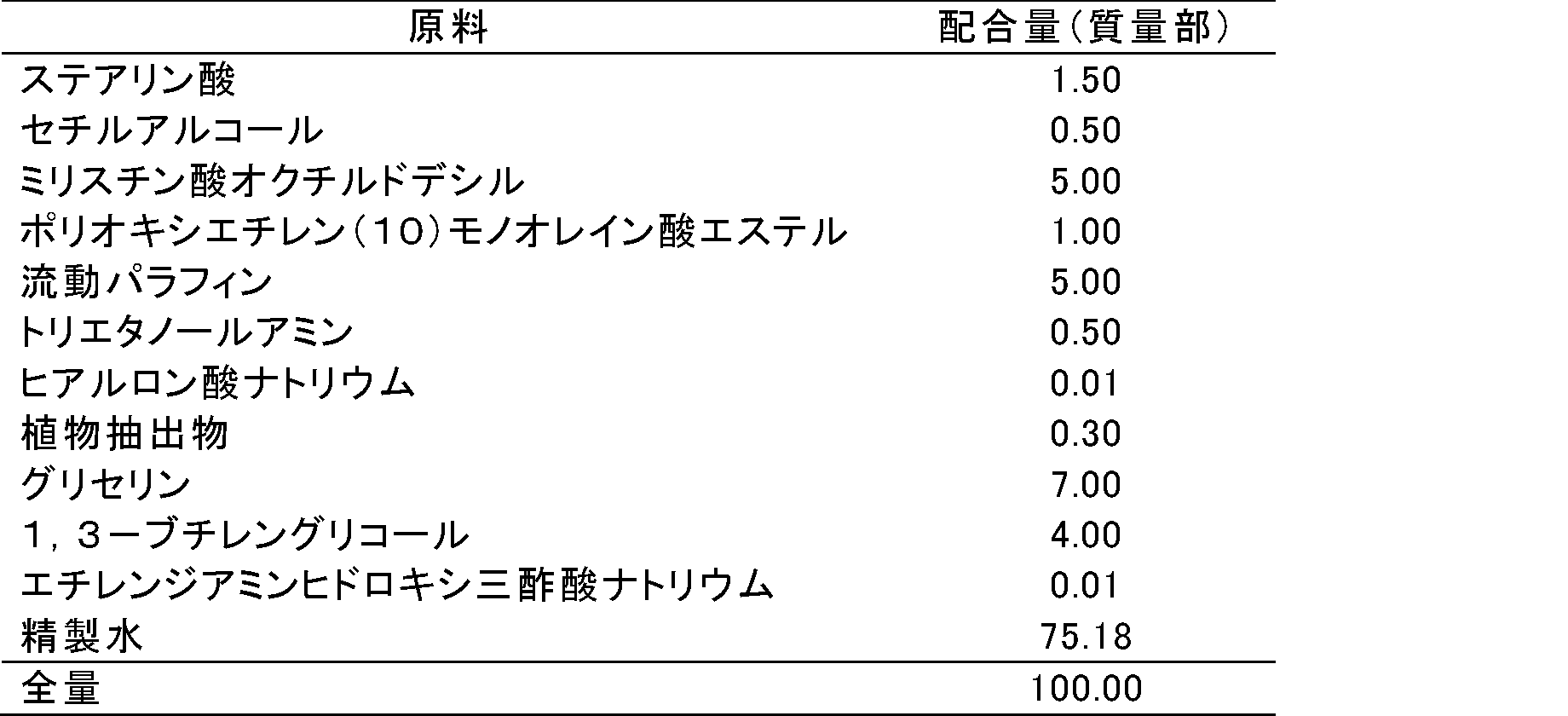
<製造例3>
クリーム
表8に記載の原料を均一に撹拌して、PIMT活性化用クリームを調製した。
クリーム
表8に記載の原料を均一に撹拌して、PIMT活性化用クリームを調製した。
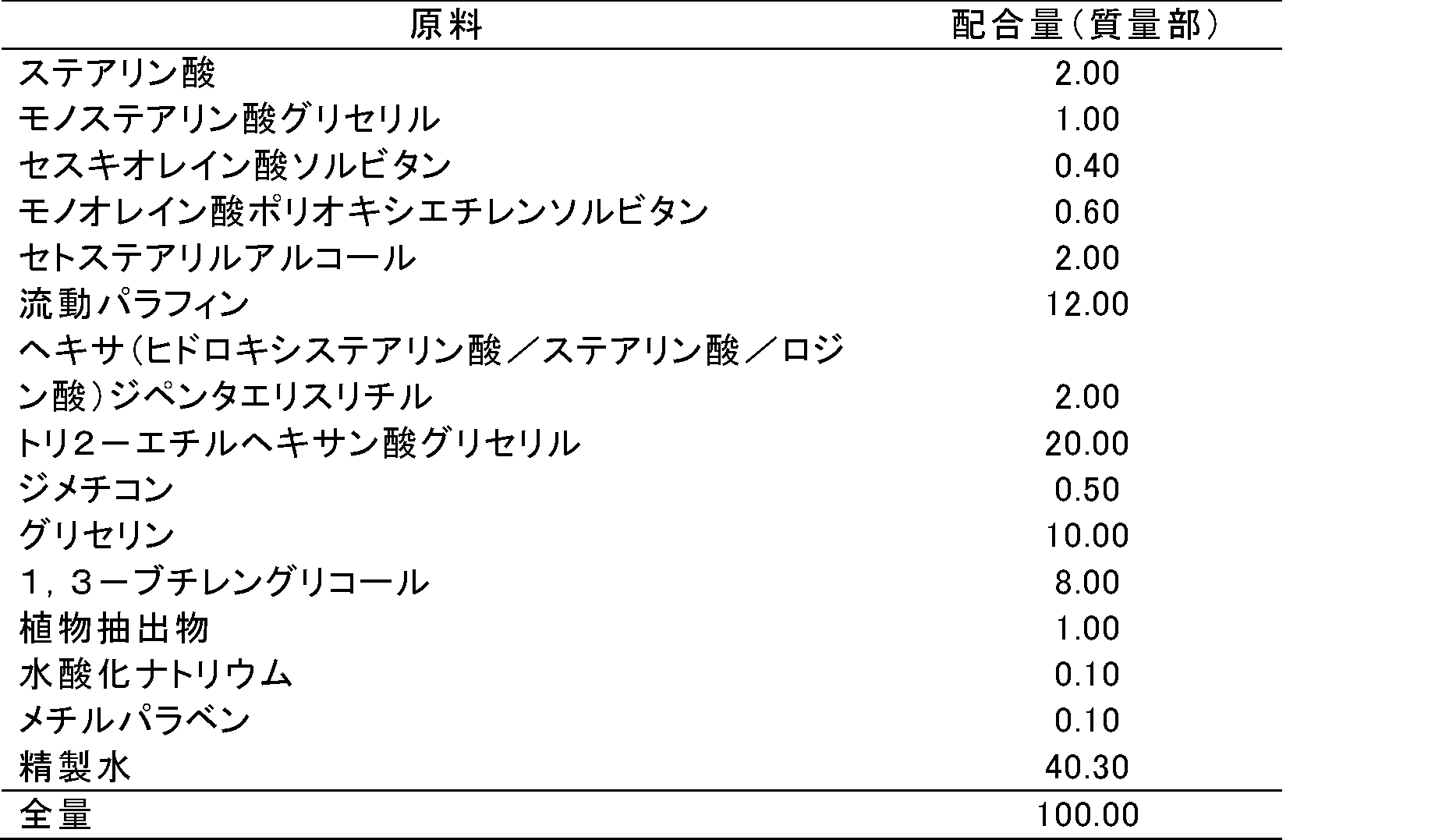
<製造例4>
用時溶解用粉末
表9に記載の原料を均一に撹拌して、PIMT活性化用粉末を調製した。用時溶解用粉末は、例えば、水、コーヒー、紅茶、ジュース等の飲料に溶解させて、又は、ヨーグルト等の食品に混ぜて使用することができる。
用時溶解用粉末
表9に記載の原料を均一に撹拌して、PIMT活性化用粉末を調製した。用時溶解用粉末は、例えば、水、コーヒー、紅茶、ジュース等の飲料に溶解させて、又は、ヨーグルト等の食品に混ぜて使用することができる。
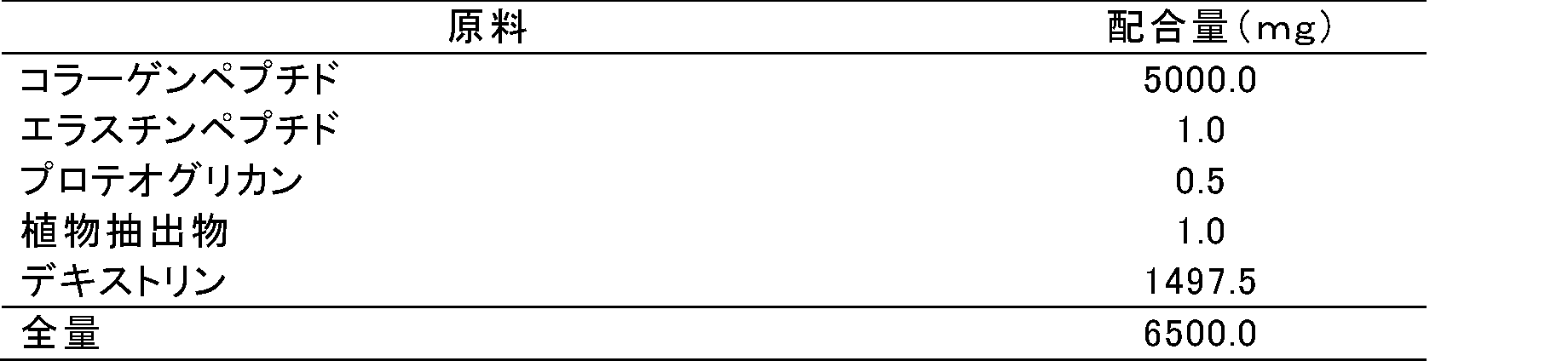
<試験例9>
皮膚細胞におけるPIMTの発現量又は活性を指標として、皮膚に存在するPIMTの活性化作用を有する物質、皮膚の復元若しくは修復促進作用を有する物質、又は、皮膚の抗老化作用を有する物質をスクリーニングすることができる。
試験例5~8のいずれかに記載の評価方法において、植物抽出物の代わりに任意の被験物質を使用して、該被験物質を添加したときの皮膚細胞におけるPIMT発現量について評価する。
被験物質を添加して培養した細胞のPIMT発現量(タンパク質量あたりのPIMT量)が、被験物質を添加せずに培養した細胞(コントロール)のPIMT発現量と比較して多い場合に、該被験物質を有効成分として選択する。有効成分として選択された被験物質は、皮膚に存在するPIMTの活性化、皮膚の復元若しくは修復促進、又は、皮膚の抗老化のための有効成分として使用することができる。
本発明は、医薬品、医薬部外品、化粧品、飲食品等の分野において有用である。
Claims (28)
- カバノキ科カバノキ属植物、ブドウ科ブドウ属植物、マメ科ダイズ属植物、アサ科カラハナソウ属植物、シソ科植物、ミカン科ミカン属植物、ショウブ科ショウブ属植物、キク科アルニカ属植物及びバラ科モモ属植物からなる群より選択される1種以上の植物の抽出物を含む、プロテインL-イソアスパラギン酸メチルトランスフェラーゼ(PIMT)活性化用組成物。
- 皮膚に存在するPIMT活性化用組成物である、請求項1に記載のPIMT活性化用組成物。
- 前記植物の抽出物が、シラカバ、ブドウ、ダイズ、ホップ、ラベンダー、セージ、エンメイソウ、ユズ、シソ、ショウブ、アルニカ及びモモからなる群より選択される1種以上の植物の抽出物である請求項1又は2に記載のPIMT活性化用組成物。
- 前記植物の抽出物が、シラカバ、ブドウ、ダイズ、ラベンダー、セージ及びエンメイソウからなる群より選択される1種以上の植物の抽出物である請求項1~3のいずれに記載のPIMT活性化用組成物。
- 皮膚外用剤である請求項1~4のいずれかに記載のPIMT活性化用組成物。
- 化粧料である請求項1~5のいずれかに記載のPIMT活性化用組成物。
- 飲食品である請求項1~4のいずれかに記載のPIMT活性化用組成物。
- カバノキ科カバノキ属植物、ブドウ科ブドウ属植物、マメ科ダイズ属植物、アサ科カラハナソウ属植物、シソ科植物、ミカン科ミカン属植物、ショウブ科ショウブ属植物、キク科アルニカ属植物及びバラ科モモ属植物からなる群より選択される1種以上の植物の抽出物を含む、異性化したアミノ酸を含むタンパク質の復元又は修復促進用組成物。
- 皮膚における異性化したアミノ酸を含むタンパク質の復元又は修復促進用組成物である、請求項8に記載のタンパク質の復元又は修復促進用組成物。
- 前記植物の抽出物が、シラカバ、ブドウ、ダイズ、ホップ、ラベンダー、セージ、エンメイソウ、ユズ、シソ、ショウブ、アルニカ及びモモからなる群より選択される1種以上の植物の抽出物である請求項8又は9に記載のタンパク質の復元又は修復促進用組成物。
- 前記植物の抽出物が、シラカバ、ブドウ、ダイズ、ラベンダー、セージ及びエンメイソウからなる群より選択される1種以上の植物の抽出物である請求項8~10のいずれかに記載のタンパク質の復元又は修復促進用組成物。
- 皮膚外用剤である請求項8~11のいずれかに記載のタンパク質の復元又は修復促進用組成物。
- 化粧料である請求項8~12のいずれかに記載のタンパク質の復元又は修復促進用組成物。
- 飲食品である請求項8~11のいずれかに記載のタンパク質の復元又は修復促進用組成物。
- カバノキ科カバノキ属植物、ブドウ科ブドウ属植物、マメ科ダイズ属植物、アサ科カラハナソウ属植物、シソ科植物、ミカン科ミカン属植物、ショウブ科ショウブ属植物、キク科アルニカ属植物及びバラ科モモ属植物からなる群より選択される1種以上の植物の抽出物を動物に適用する、プロテインL-イソアスパラギン酸メチルトランスフェラーゼ(PIMT)の活性化方法。
- カバノキ科カバノキ属植物、ブドウ科ブドウ属植物、マメ科ダイズ属植物、アサ科カラハナソウ属植物、シソ科植物、ミカン科ミカン属植物、ショウブ科ショウブ属植物、キク科アルニカ属植物及びバラ科モモ属植物からなる群より選択される1種以上の植物の抽出物を動物に適用する、異性化したアミノ酸を含むタンパク質の復元又は修復促進方法。
- ヒトの皮膚に存在するプロテインL-イソアスパラギン酸メチルトランスフェラーゼ(PIMT)を活性化する、皮膚における異性化したアミノ酸を含むタンパク質の復元又は修復促進方法。
- 皮膚細胞におけるプロテインL-イソアスパラギン酸メチルトランスフェラーゼ(PIMT)の発現量又は活性を指標とする、皮膚の復元又は修復活性の評価方法。
- 前記皮膚細胞が、表皮細胞及び/又は真皮細胞である請求項18に記載の評価方法。
- 前記皮膚の復元又は修復活性が、紫外線及び/又は加齢による皮膚の老化に対する皮膚の復元又は修復活性である請求項18又は19に記載の評価方法。
- 皮膚細胞におけるプロテインL-イソアスパラギン酸メチルトランスフェラーゼ(PIMT)の発現量又は活性を指標とする、皮膚の抗老化活性の評価方法。
- 前記抗老化活性が、紫外線及び/又は加齢による皮膚の老化に対する抗老化活性である請求項21に記載の評価方法。
- 皮膚細胞におけるプロテインL-イソアスパラギン酸メチルトランスフェラーゼ(PIMT)の発現量又は活性を指標とする、皮膚に存在するPIMTの活性化、皮膚の復元若しくは修復促進、又は、皮膚の抗老化のための有効成分のスクリーニング方法。
- 前記皮膚細胞に被験物質を接触させて、前記皮膚細胞におけるPIMTの発現量又は活性を測定する工程、及び、
前記被験物質を接触させた皮膚細胞におけるPIMTの発現量又は活性が、前記被験物質を接触させなかった皮膚細胞におけるPIMTの発現量又は活性と比較して大きい場合に、前記被験物質を有効成分として選択する工程を含む請求項23に記載のスクリーニング方法。 - 前記皮膚細胞が、培養皮膚細胞である請求項23又は24に記載のスクリーニング方法。
- 皮膚細胞におけるプロテインL-イソアスパラギン酸メチルトランスフェラーゼ(PIMT)の発現量又は活性の、皮膚の復元若しくは修復活性又は皮膚の抗老化活性の指標としての使用。
- プロテインL-イソアスパラギン酸メチルトランスフェラーゼ(PIMT)を活性化するための、カバノキ科カバノキ属植物、ブドウ科ブドウ属植物、マメ科ダイズ属植物、アサ科カラハナソウ属植物、シソ科植物、ミカン科ミカン属植物、ショウブ科ショウブ属植物、キク科アルニカ属植物及びバラ科モモ属植物からなる群より選択される1種以上の植物の抽出物の使用。
- 異性化したアミノ酸を含むタンパク質を復元又は修復促進するための、カバノキ科カバノキ属植物、ブドウ科ブドウ属植物、マメ科ダイズ属植物、アサ科カラハナソウ属植物、シソ科植物、ミカン科ミカン属植物、ショウブ科ショウブ属植物、キク科アルニカ属植物及びバラ科モモ属植物からなる群より選択される1種以上の植物の抽出物の使用。
Priority Applications (2)
| Application Number | Priority Date | Filing Date | Title |
|---|---|---|---|
| CN201780074469.1A CN110022853B (zh) | 2016-12-28 | 2017-12-26 | 蛋白质l-异天冬氨酸甲基转移酶活化用组合物 |
| JP2018559479A JP6944957B2 (ja) | 2016-12-28 | 2017-12-26 | プロテインl−イソアスパラギン酸メチルトランスフェラーゼ活性化用組成物 |
Applications Claiming Priority (2)
| Application Number | Priority Date | Filing Date | Title |
|---|---|---|---|
| JP2016-255493 | 2016-12-28 | ||
| JP2016255493 | 2016-12-28 |
Publications (1)
| Publication Number | Publication Date |
|---|---|
| WO2018124002A1 true WO2018124002A1 (ja) | 2018-07-05 |
Family
ID=62710427
Family Applications (1)
| Application Number | Title | Priority Date | Filing Date |
|---|---|---|---|
| PCT/JP2017/046510 Ceased WO2018124002A1 (ja) | 2016-12-28 | 2017-12-26 | プロテインl-イソアスパラギン酸メチルトランスフェラーゼ活性化用組成物 |
Country Status (4)
| Country | Link |
|---|---|
| JP (2) | JP6944957B2 (ja) |
| CN (1) | CN110022853B (ja) |
| TW (1) | TWI776836B (ja) |
| WO (1) | WO2018124002A1 (ja) |
Cited By (3)
| Publication number | Priority date | Publication date | Assignee | Title |
|---|---|---|---|---|
| CN110710682A (zh) * | 2018-07-12 | 2020-01-21 | 大江生医股份有限公司 | 苦荞麦种皮萃取物提升粒线体活性、促进抗老化基因表现、及抑制蛋白质醣化的用途 |
| WO2020091070A1 (ja) * | 2018-11-02 | 2020-05-07 | 株式会社 資生堂 | オルタナティブオートファジー誘導剤を含む紫外線起因性炎症抑制剤 |
| JPWO2020203217A1 (ja) * | 2019-03-29 | 2020-10-08 |
Families Citing this family (1)
| Publication number | Priority date | Publication date | Assignee | Title |
|---|---|---|---|---|
| KR20220151196A (ko) * | 2020-03-10 | 2022-11-14 | 산토리 홀딩스 가부시키가이샤 | 피부 배리어 기능의 저하 억제 또는 개선용 조성물, 4형 콜라겐의 발현의 저하 억제 또는 개선용 조성물 및 피부 배리어 기능의 저하 억제 또는 개선 작용을 갖는 물질의 스크리닝 방법 |
Citations (1)
| Publication number | Priority date | Publication date | Assignee | Title |
|---|---|---|---|---|
| JPH10507919A (ja) * | 1994-10-19 | 1998-08-04 | ザ リージェンツ オブ ザ ユニバーシティ オブ カリフォルニア | ヒト及び植物メチルトランスフェラーゼの製造及び用途 |
Family Cites Families (10)
| Publication number | Priority date | Publication date | Assignee | Title |
|---|---|---|---|---|
| WO1998015647A1 (en) * | 1996-10-08 | 1998-04-16 | Novartis Ag | Modulation of apoptosis |
| WO2002008395A2 (en) * | 2000-07-14 | 2002-01-31 | Millennium Pharmaceuticals, Inc. | Putative human methyltransferase family member and uses thereof |
| JP3759714B2 (ja) * | 2001-12-27 | 2006-03-29 | 株式会社資生堂 | 幹細胞因子の産生・放出の抑制による掻痒、肌荒れ、敏感肌及び美白用薬剤 |
| AU2003285296A1 (en) * | 2002-10-30 | 2004-05-25 | Nordic Bioscience A/S | Coumpounds modulating the activity of gapdh and/or iamt |
| JP2008535892A (ja) * | 2005-04-11 | 2008-09-04 | プロビオドルグ エージー | プロリルエンドペプチダーゼの阻害剤 |
| JP5091660B2 (ja) * | 2007-12-27 | 2012-12-05 | アサヒグループホールディングス株式会社 | プロシアニジン類の定量方法 |
| CA2749750C (en) * | 2008-04-15 | 2014-01-28 | Immanence Integrale Dermo Correction Inc. | Skin care compositions and methods of use thereof |
| FR2939040B1 (fr) * | 2008-12-03 | 2013-08-09 | Laboratoires Inneov Snc | Association de lycopene, polyphenol et vitamines pour le soin des matieres keratiniques |
| WO2010080826A1 (en) * | 2009-01-06 | 2010-07-15 | Hill's Pet Nutrition, Inc. | Compositions and methods for treating disorders associated with overweight animals |
| CN103385832B (zh) * | 2013-07-24 | 2015-09-23 | 云南西草资源开发有限公司 | 一种以薰衣草提取物为主要活性成分的抗衰老化妆品 |
-
2017
- 2017-12-26 CN CN201780074469.1A patent/CN110022853B/zh active Active
- 2017-12-26 JP JP2018559479A patent/JP6944957B2/ja active Active
- 2017-12-26 WO PCT/JP2017/046510 patent/WO2018124002A1/ja not_active Ceased
- 2017-12-27 TW TW106145966A patent/TWI776836B/zh active
-
2021
- 2021-07-06 JP JP2021112160A patent/JP7213307B2/ja active Active
Patent Citations (1)
| Publication number | Priority date | Publication date | Assignee | Title |
|---|---|---|---|---|
| JPH10507919A (ja) * | 1994-10-19 | 1998-08-04 | ザ リージェンツ オブ ザ ユニバーシティ オブ カリフォルニア | ヒト及び植物メチルトランスフェラーゼの製造及び用途 |
Non-Patent Citations (3)
| Title |
|---|
| ITO, C. ET AL.: "Characterisation of proanthocyanidins from black soybeans: Isolation and characterisation of proanthocyanidin oligomers from black soybean seed coats", FOOD CHEMISTRY, vol. 141, no. 3, 21 May 2013 (2013-05-21), pages 2507 - 2512, XP028678893 * |
| KOLODZIEJ, H.: "PROCYANIDINS FROM MEDICINAL BIRCH: BONDING PATTERNS AND SEQUENCE OF UNITS IN TRIFLAVANOIDS OF MIXED STEREOCHEMISTRY", PHYTOCHEMISTRY, vol. 28, no. 12, 1989, pages 3487 - 3492, XP026605013 * |
| LI, X. ET AL.: "PIMT Prevents the Apoptosis of Endothelial Cells in Response to Glycated Low Density Lipoproteins and Protective Effects of Grape Seed Procyanidin B2", PLOS ONE, vol. 8, no. 7, 26 July 2013 (2013-07-26), pages 1 - 14, XP055516946 * |
Cited By (7)
| Publication number | Priority date | Publication date | Assignee | Title |
|---|---|---|---|---|
| CN110710682A (zh) * | 2018-07-12 | 2020-01-21 | 大江生医股份有限公司 | 苦荞麦种皮萃取物提升粒线体活性、促进抗老化基因表现、及抑制蛋白质醣化的用途 |
| WO2020091070A1 (ja) * | 2018-11-02 | 2020-05-07 | 株式会社 資生堂 | オルタナティブオートファジー誘導剤を含む紫外線起因性炎症抑制剤 |
| CN113164604A (zh) * | 2018-11-02 | 2021-07-23 | 株式会社资生堂 | 包含替代性自噬诱导剂的紫外线引发性炎症抑制剂 |
| JPWO2020091070A1 (ja) * | 2018-11-02 | 2021-09-30 | 株式会社 資生堂 | オルタナティブオートファジー誘導剤を含む紫外線起因性炎症抑制剤 |
| JP7516252B2 (ja) | 2018-11-02 | 2024-07-16 | 株式会社 資生堂 | オルタナティブオートファジー誘導剤を含む紫外線起因性炎症抑制剤 |
| JPWO2020203217A1 (ja) * | 2019-03-29 | 2020-10-08 | ||
| WO2020203217A1 (ja) * | 2019-03-29 | 2020-10-08 | サントリーホールディングス株式会社 | Ltbp-1発現促進用組成物及びltbp-1発現促進作用を有する物質のスクリーニング方法 |
Also Published As
| Publication number | Publication date |
|---|---|
| JP2021176855A (ja) | 2021-11-11 |
| TWI776836B (zh) | 2022-09-11 |
| CN110022853A (zh) | 2019-07-16 |
| JPWO2018124002A1 (ja) | 2019-10-31 |
| CN110022853B (zh) | 2022-05-03 |
| TW201828918A (zh) | 2018-08-16 |
| JP7213307B2 (ja) | 2023-01-26 |
| JP6944957B2 (ja) | 2021-10-06 |
Similar Documents
| Publication | Publication Date | Title |
|---|---|---|
| JP7213307B2 (ja) | プロテインl-イソアスパラギン酸メチルトランスフェラーゼ活性化用組成物 | |
| JP5018171B2 (ja) | 植物由来の賦活化剤及び細胞外マトリックス産生促進剤 | |
| JP7658391B2 (ja) | アンチポリューション剤及び皮膚外用組成物 | |
| TWI381834B (zh) | Abnormal protein removal composition | |
| EP3275999B1 (en) | Method for inducing pluripotent stem cells and pluripotent stem cells prepared by said method | |
| JP7643335B2 (ja) | ネムノキ抽出物含有組成物 | |
| WO2007148739A1 (ja) | 植物由来の細胞賦活化剤、抗老化剤及び細胞外マトリックス産生促進剤 | |
| JP4286513B2 (ja) | 抗老化用組成物 | |
| JP7694628B2 (ja) | 抗酸化剤 | |
| JP2004131431A (ja) | 紫外線傷害予防又は改善用組成物 | |
| JP2015027998A (ja) | 保湿剤、皮膚バリア機能改善剤、タイトジャンクション形成促進剤、trpv4発現上昇剤、細胞内カルシウム濃度上昇剤、細胞内カルシウム濃度上昇剤、脂質合成促進剤、血流改善剤及びクマ改善剤 | |
| JP2026035876A (ja) | Mpc1抑制により皮膚幹細胞を活性化する方法および皮膚幹細胞活性化剤 | |
| JP6993076B2 (ja) | 皮下組織構造の改善成分のスクリーニング方法 | |
| JP6765090B2 (ja) | 黒生姜含有組成物 | |
| JP7589988B2 (ja) | プロテアソーム活性化剤 | |
| WO2008035583A1 (fr) | Agent hydratant, agent d'activation cellulaire, agent anti-oxydant, agent renforçant l'activité de la protéase, agent anti-vieillissement, agent blanchissant la peau, agent anti-inflammatoire et agent neutre inhibant l'accumulation de graisse | |
| JP5578160B2 (ja) | 植物由来の賦活化剤及び細胞外マトリックス産生促進剤 | |
| KR101147922B1 (ko) | 화장료 조성물 및 피부 미용 식품 | |
| WO2020203217A1 (ja) | Ltbp-1発現促進用組成物及びltbp-1発現促進作用を有する物質のスクリーニング方法 | |
| HK40011618B (en) | Composition for protein l-isoaspartate methyltransferase activation | |
| HK40011618A (en) | Composition for protein l-isoaspartate methyltransferase activation | |
| JP2019182753A (ja) | Endo180産生促進剤 | |
| WO2024209959A1 (ja) | 真皮抗老化剤 | |
| JP2025067422A (ja) | Trpv4活性化剤 | |
| JP2023102984A (ja) | Endo180産生促進剤 |
Legal Events
| Date | Code | Title | Description |
|---|---|---|---|
| 121 | Ep: the epo has been informed by wipo that ep was designated in this application |
Ref document number: 17886101 Country of ref document: EP Kind code of ref document: A1 |
|
| ENP | Entry into the national phase |
Ref document number: 2018559479 Country of ref document: JP Kind code of ref document: A |
|
| NENP | Non-entry into the national phase |
Ref country code: DE |
|
| 122 | Ep: pct application non-entry in european phase |
Ref document number: 17886101 Country of ref document: EP Kind code of ref document: A1 |