WO2018110033A1 - 無線端末及び基地局切替方法 - Google Patents
無線端末及び基地局切替方法 Download PDFInfo
- Publication number
- WO2018110033A1 WO2018110033A1 PCT/JP2017/035597 JP2017035597W WO2018110033A1 WO 2018110033 A1 WO2018110033 A1 WO 2018110033A1 JP 2017035597 W JP2017035597 W JP 2017035597W WO 2018110033 A1 WO2018110033 A1 WO 2018110033A1
- Authority
- WO
- WIPO (PCT)
- Prior art keywords
- base station
- communication
- connection
- wireless terminal
- unit
- Prior art date
- Legal status (The legal status is an assumption and is not a legal conclusion. Google has not performed a legal analysis and makes no representation as to the accuracy of the status listed.)
- Ceased
Links
Images






Classifications
-
- H—ELECTRICITY
- H04—ELECTRIC COMMUNICATION TECHNIQUE
- H04W—WIRELESS COMMUNICATION NETWORKS
- H04W24/00—Supervisory, monitoring or testing arrangements
- H04W24/08—Testing, supervising or monitoring using real traffic
-
- H—ELECTRICITY
- H04—ELECTRIC COMMUNICATION TECHNIQUE
- H04W—WIRELESS COMMUNICATION NETWORKS
- H04W36/00—Hand-off or reselection arrangements
- H04W36/24—Reselection being triggered by specific parameters
- H04W36/32—Reselection being triggered by specific parameters by location or mobility data, e.g. speed data
- H04W36/322—Reselection being triggered by specific parameters by location or mobility data, e.g. speed data by location data
-
- H—ELECTRICITY
- H04—ELECTRIC COMMUNICATION TECHNIQUE
- H04W—WIRELESS COMMUNICATION NETWORKS
- H04W36/00—Hand-off or reselection arrangements
- H04W36/34—Reselection control
- H04W36/36—Reselection control by user or terminal equipment
-
- H—ELECTRICITY
- H04—ELECTRIC COMMUNICATION TECHNIQUE
- H04W—WIRELESS COMMUNICATION NETWORKS
- H04W48/00—Access restriction; Network selection; Access point selection
- H04W48/16—Discovering, processing access restriction or access information
-
- H—ELECTRICITY
- H04—ELECTRIC COMMUNICATION TECHNIQUE
- H04W—WIRELESS COMMUNICATION NETWORKS
- H04W48/00—Access restriction; Network selection; Access point selection
- H04W48/20—Selecting an access point
-
- H—ELECTRICITY
- H04—ELECTRIC COMMUNICATION TECHNIQUE
- H04W—WIRELESS COMMUNICATION NETWORKS
- H04W72/00—Local resource management
- H04W72/50—Allocation or scheduling criteria for wireless resources
- H04W72/56—Allocation or scheduling criteria for wireless resources based on priority criteria
-
- H—ELECTRICITY
- H04—ELECTRIC COMMUNICATION TECHNIQUE
- H04W—WIRELESS COMMUNICATION NETWORKS
- H04W88/00—Devices specially adapted for wireless communication networks, e.g. terminals, base stations or access point devices
- H04W88/02—Terminal devices
- H04W88/06—Terminal devices adapted for operation in multiple networks or having at least two operational modes, e.g. multi-mode terminals
-
- H—ELECTRICITY
- H04—ELECTRIC COMMUNICATION TECHNIQUE
- H04W—WIRELESS COMMUNICATION NETWORKS
- H04W36/00—Hand-off or reselection arrangements
- H04W36/08—Reselecting an access point
-
- H—ELECTRICITY
- H04—ELECTRIC COMMUNICATION TECHNIQUE
- H04W—WIRELESS COMMUNICATION NETWORKS
- H04W72/00—Local resource management
- H04W72/02—Selection of wireless resources by user or terminal
Definitions
- the present disclosure relates to a radio terminal and a base station switching method that determine and assign a base station that is a communication partner during radio communication.
- a high frequency band for example, a high SHF (Super High Frequency) band of 6 to 30 GHz) or an EHF (Extremely High High Frequency) band of 30 to 300 GHz, which is currently assumed to be allocated to 5G (fifth generation mobile communication system).
- 5G fifth generation mobile communication system
- base station a propagation path between a wireless terminal and a wireless base station
- the received power in the propagation path Greatly reduces communication quality (for example, throughput and packet error rate).
- the wireless terminal When communication with the base station is disconnected due to deterioration in communication quality, the wireless terminal is connected to another base station that can be connected (for example, a base station that handles a low frequency band such as the above-described high frequency band or LTE (Long Term Term Evolution). ) Is searched, but it takes a long time for the wireless terminal to disconnect.
- a base station that handles a low frequency band such as the above-described high frequency band or LTE (Long Term Term Evolution).
- the present disclosure has been devised in view of the above-described conventional circumstances, and can quickly switch to another base station that can continue wireless communication even when a shielding path is generated between the base station and the base station. And a base station switching method that suppresses a reduction in the probability of connection to a cell from which high throughput can be obtained.
- the present disclosure is a wireless terminal capable of communicating with a plurality of base stations, and at least the position information of the wireless terminal and information on the base station at the time of past communication with each of the base stations, A plurality of base stations based on a storage unit that stores communication information as a communication history, an acquisition unit that acquires position information of the wireless terminal, position information of the wireless terminal, and the communication history stored in the storage unit From the connection target base station used for data communication and a connection preparation base station that derives at least a connection preparation base station having the next highest connection priority after the connection target base station, and a connection trial between the connection target base station A base station management unit that switches the connection target base station used for the data communication to the connection preparation base station when communication between the communication unit that performs the data communication and the connection target base station is disconnected when successful. It comprises, providing a wireless terminal.
- the present disclosure is a base station switching method in a wireless terminal capable of communicating with a plurality of base stations, and at least position information of the wireless terminal at the time of past communication with each of the base stations And the information about the base station in a storage unit as a communication history, the step of acquiring the location information of the wireless terminal, the location information of the wireless terminal and the communication history stored in the storage unit Based on at least a connection target base station used for data communication and a connection preparation base station having the next highest connection priority after the connection target base station from the plurality of base stations; and The connection target base station used for the data communication when the communication attempt between the communication target and the connection target base station is disconnected. Having a step of switching the connection preparation base station, to provide a base station switching method.
- the base station can be quickly switched to another base station that can continue wireless communication, and high-speed throughput can be obtained. Reduction of the probability of connection to a cell can be suppressed.
- High frequency band for example, 6-30 GHz high SHF (Super High Frequency) band
- 30-300 GHz EHF (Extremely High High Frequency) band which are assumed to be allocated to 5G (5th generation mobile communication system).
- base station a wireless base station
- Communication quality for example, throughput and packet error rate
- the wireless terminal searches (searches for) another connectable base station (for example, a base station that handles the above-described high frequency band or a low frequency band such as LTE).
- another connectable base station for example, a base station that handles the above-described high frequency band or a low frequency band such as LTE.
- adaptive beam forming technology that generates a radio wave propagation path of a wireless communication path using reflection of surrounding buildings, ceilings, etc. every moment is used. Sometimes used.
- the wireless terminal connects to the base station to which the wireless terminal connects with another base station.
- the base station in the middle it is necessary to search for a base station that can be expected to have a good connection. For this reason, it is necessary for the wireless terminal to perform operations such as searching for neighboring base stations in communication, and this operation increases the power consumption of the wireless terminal.
- millimeter-wave base station when communication between a wireless terminal and a base station that handles, for example, a millimeter-wave frequency band (hereinafter sometimes referred to as “millimeter-wave base station”) causes quality degradation (for example, a significant decrease in throughput). It is also conceivable to connect to a base station (hereinafter, also referred to as “macro base station”) that can provide a macro cell such as LTE (Long Term Term Evolution) instead of the millimeter wave base station. However, in this method, even if another millimeter wave base station exists in the vicinity, the wireless terminal is connected to the macro base station, so the wireless terminal loses the opportunity to connect to the millimeter wave base station. Therefore, the probability that high-speed throughput in the cell that can be provided by the millimeter wave base station is obtained is reduced.
- LTE Long Term Term Evolution
- the base station is quickly switched to another base station capable of continuing wireless communication, and the base station is allocated. It aims at suppressing the reduction of a connection probability.
- FIG. 1 is a schematic diagram illustrating an example of a base station 200 with which the radio terminal 100 according to the present embodiment can communicate and a small cell provided by the base station 200.
- the radio communication system 10 is configured to include at least one radio terminal 100 and a plurality of base stations 200.
- the radio terminal 100 and each base station 200 are connected via a radio communication line.
- FIG. 1 for simplicity of explanation, only one wireless terminal 100 is shown, and the X axis in the horizontal direction of FIG. 1 and the Y axis in the vertical direction of the paper, the Y axis, and the X axis and the Y axis are both perpendicular.
- the Z-axis direction is defined in such a direction.
- the wireless communication system 10 constitutes a network in which each base station 200 that is a communication partner to which the wireless terminal 100 is connected when performing wireless communication can execute wireless communication complying with the same wireless standard system.
- a communication attempt (communication try) with the base station 200
- the wireless terminal 100 starts wireless communication with the base station 200.
- a high frequency band for example, a 28 GHz band or a millimeter wave (that is, 30 GHz to 300 GHz band) being studied for use in 5G (fifth generation mobile communication system)
- 5G fifth generation mobile communication system
- the radio access technology (RAT) includes, for example, radio communication standards and radio frequency information.
- the wireless communication standards are, for example, LTE (Long Term Evolution), wireless LAN (Local Area Network), DECT (Digital Enhanced Cordless Telecommunication), 3G (third generation mobile communication system), 4G (fourth generation mobile communication system). May be.
- the network configured by the wireless communication system 10 may not be a C / U separation type network or a C / U separation type network.
- a network that is not a C / U separation type is illustrated. That is, in the wireless communication system 10, control data communication and user data communication are performed by the same base station 200.
- Each base station 200 is a small cell base station that can provide high-speed throughput based on the above-described 28 GHz band or millimeter wave, and is arranged at high density. Moreover, each base station 200 is arrange
- the radio terminal 100 communicates control data and user data with any small cell base station.
- the control data includes data related to C (Control) -Plane.
- the user data includes data related to U (User) -Plane.
- the user data includes, for example, image data (for example, moving images and still images) and audio data, and may include data with a large data amount.
- C-plane is a communication protocol for communicating control data for call connection and radio resource allocation in radio communication.
- U-plane is a communication protocol for actual communication (for example, video communication, voice communication, data communication) between the radio terminal 100 and the base station 200 using the allocated radio resources.
- the cell radius of the base station (small cell base station) 200 is, for example, 10 to 100 m, which is relatively small compared to the macro cell.
- RATs radio access technologies
- the cell radius may be 100 m or more in a mountainous area, a desert area, or a forest area, or may be larger than the cell radius of a base station (not shown) that can provide a macro cell. That is, the macro cell base station and the small cell base station are not aware of the size of the cell radius.
- SBS indicates the small cell base station (base station 200)
- T indicates the wireless terminal 100.
- a line surrounding the small cell base station (base station 200) indicates a communicable range by the small cell base station.
- the communicable range of each base station 200 is determined according to, for example, the position of the base station 200 and the cell radius, and the communicable ranges of all the base stations 200 may be the same area or different areas.
- the radio terminal 100 and the base station 200 set a radio access technology (RAT) used for radio communication from radio access technologies (RAT, for example, radio communication standards and radio frequencies) that can be adopted by each, and set the radio access technology (RAT) Wireless communication using (RAT).
- RAT radio access technology
- Each radio terminal 100 and base station 200 can employ one or more radio access technologies (RAT).
- Specific information of the radio access technology (RAT) includes, for example, the following RAT1 to RAT5.
- RAT1 is, for example, LTE having a frequency band of 700 MHz to 3 GHz.
- RAT2 is, for example, LTE-Advanced with a frequency band of 15 GHz.
- RAT3 is wireless LAN communication having a frequency band of 5 GHz, for example.
- RAT4 is, for example, a wireless communication system having a frequency band of 15 GHz, and is a fifth generation mobile communication system.
- RAT5 is a wireless communication method (for example, millimeter wave communication) (for example, WiGig) having a frequency band of 60 GHz, for example.
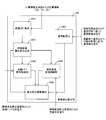
- FIG. 2 is a block diagram showing in detail an example of the internal configuration of the wireless terminal 100 of the present embodiment.
- the wireless terminal 100 includes a processor 150, a memory 160, a GPS (Global Positioning System) antenna 101, a GPS receiving unit 102, a transmitting antenna 108, a receiving antenna 109, a BLE (Bluetooth (registered trademark) Low Low Energy) antenna 121, and a BLE receiving unit 122. It is the structure containing.
- the processor 150 performs various processes and controls in cooperation with the memory 160. Specifically, the processor 150 refers to a program and data held in the memory 160 and executes the program, thereby realizing the functions of the following units. Each unit includes a position information generation unit 103, a radio resource derivation unit 104, a radio resource allocation management unit 105, a transmission packet generation unit 106, a radio transmission unit 107, a radio reception unit 110, and a reception packet decoding unit 111.
- the memory 160 includes, for example, a RAM (Random Access Memory) as a work memory used during processing of the wireless terminal 100, and a ROM (Read Only Memory) that stores programs and data that define the operation of the wireless terminal 100. Various data and information are temporarily stored in the RAM.
- a program that defines the operation of the wireless terminal 100 (for example, processing (step) performed as the base station switching method according to the present embodiment) is written.
- the memory 160 as an example of the storage unit stores a cumulative communication history table T1, a higher communication history table T2, and a base station type management table T3.
- the memory 160 is shown as a separate configuration from the processor 150, but may be built in the processor 150.
- the memory 160 may include a secondary storage device together with the primary storage device.
- the GPS antenna 101 receives a plurality of signals indicating times and positions (coordinates) of the GPS satellites 50 transmitted from a plurality of (for example, three or four) GPS satellites 50 and outputs the signals to the GPS receiver 102.
- Each GPS satellite 50 transmits a signal indicating the time and the position (coordinates) of each GPS satellite 50.
- the GPS receiving unit 102 calculates and acquires position information of the GPS receiving unit 102 (that is, position information of the wireless terminal 100 itself) based on a plurality of signals received by the GPS antenna 101. .
- the position information obtained by this calculation indicates, for example, the current position of the wireless terminal 100 located outdoors, and is specifically information on latitude, longitude, and altitude.
- the GPS receiving unit 102 may be provided in the processor 150.
- the GPS receiver 102 outputs the position information of the wireless terminal 100 obtained by the calculation to the processor 150.
- the calculation of the position information of the GPS receiving unit 102 may be performed by the position information generating unit 103 of the processor 150 instead of the GPS receiving unit 102.
- the position information generating unit 103 is input with information indicating the time and the position of each GPS satellite 50 included in the plurality of signals received by the GPS antenna 101 via the GPS receiving unit 102.
- the wireless terminal 100 when the wireless terminal 100 is located outdoors, the reliability of the position information of the wireless terminal 100 calculated based on signals from the plurality of GPS satellites 50 is considerably high. However, when the wireless terminal 100 is located indoors (for example, in a building or an underground mall, but not limited to the same; the same applies hereinafter) or near the boundary between the outdoors and indoors, signals from a plurality of GPS satellites 50 are used. The position information of the wireless terminal 100 calculated based on this may include a certain error. As described above, when the wireless terminal 100 is located indoors or near the boundary between the outdoor and the indoor, the wireless terminal 100 transmits the time transmitted from the plurality of BLE beacons 60 installed indoors and each BLE beacon 60.
- the current position information of the wireless terminal 100 itself is calculated and acquired. For example, if the wireless terminal 100 determines that the received electric field strength (RSSI: Received Signal Strength Strength Indicator) of the signal from the BLE beacon 60 is larger than a predetermined threshold, the wireless terminal 100 is located indoors or near the boundary between the outdoor and indoor. Based on the signal transmitted from the plurality of BLE beacons 60, its own position information is calculated. Note that the method for determining that the wireless terminal 100 is located indoors or near the boundary between the outdoor and indoor is not limited to the method based on the comparison result between the received electric field strength and a predetermined threshold value.
- RSSI Received Signal Strength Strength Indicator
- the BLE antenna 121 receives a plurality of signals indicating the time transmitted from a plurality of (for example, two) BLE beacons 60 and the position (coordinates) of each BLE beacon 60 and outputs the signals to the BLE receiving unit 122.
- Each BLE beacon 60 transmits a signal indicating the time and the position (coordinates) of each BLE beacon 60.
- the distance between each BLE beacon 60 is known.
- Each wireless terminal 100 may acquire distance information between the respective BLE beacons 60 in advance, or may be directly or via an external device (not illustrated. For example, another wireless terminal, distance information) via a network (not illustrated). You may acquire from a management server.
- the BLE receiving unit 122 as an example of the acquiring unit uses the triangulation method, for example, based on a plurality of signals received by the BLE antenna 121, that is, position information of the BLE receiving unit 122 (that is, position information of the wireless terminal 100 itself). ) Is calculated and acquired. The position information obtained by this calculation indicates the current position of the wireless terminal 100 located indoors or near the boundary between the outdoors and the indoors.
- the BLE receiving unit 122 uses a combination of a plurality of signals received by the BLE antenna 121 and a known method (for example, PDR (Pedestrian DeadeckReckoning) or PMM (Pedestrian Map Matching)), or inside the wireless terminal 100 or Position information in the vicinity of the boundary between the outdoor and indoor may be calculated.
- a known method for example, PDR (Pedestrian DeadeckReckoning) or PMM (Pedestrian Map Matching)
- the wireless terminal 100 is indoors, or outdoors and indoors, as in the case where the wireless terminal 100 is located outdoors. Even when located near the boundary, the outdoor location information acquisition method can be expanded indoors, and location information similar to latitude, longitude, and altitude can be acquired.
- the BLE receiving unit 122 may be provided in the processor 150.
- the BLE receiving unit 122 outputs the position information of the wireless terminal 100 obtained by the calculation to the processor 150. Note that the calculation of the position information of the BLE receiving unit 122 may be performed by the position information generating unit 103 of the processor 150 instead of the BLE receiving unit 122. In this case, the position information generating unit 103 is input with information indicating the time included in the plurality of signals received by the BLE antenna 121 and the position of each BLE beacon 60 via the BLE receiving unit 122.
- FIG. 4 is a schematic diagram illustrating an example of a cumulative communication history table T1 that holds a communication history for each position of the wireless terminal 100.
- the accumulated communication history table T1 is an accumulated communication history when the wireless terminal 100 has performed wireless communication with any one of the plurality of base stations 200 (hereinafter also referred to as “connection target base station”) in the past. Holds (communication performance) information.
- the connection target base station is the base station 200 that is connected to the wireless terminal 100 for communication.
- the accumulated communication history table T1 is held in the memory 160 of each wireless terminal 100.
- the communication history stored in the accumulated communication history table T1 includes, for example, information indicating the order (order i) when the wireless terminal 100 performs wireless communication with the connection target base station, and the position of the wireless terminal 100 during the wireless communication.
- Information indicating (latitude X, longitude Y, altitude Z) and information indicating the identification number m of the connection target base station are associated with each other.
- the wireless terminal 100 exists at the position (X1, Y1, Z1), and performs wireless communication with the connection base station of number 3. Means you have gone.
- the number of the connection target base station is known in each wireless terminal 100 and is stored in advance in the memory 160, for example.
- a communication history for 100 times is shown as the past total.
- the communication history for 300 times may be used, for example.
- the communication history includes the radio access technology (RAT, for example, 5G or millimeter wave) adopted by the connection target base station, the number of communication with the connection target base station (the number of radio connections), and Information on the amount of communication (communication data amount) at the time of communication with the connection target base station may be included.
- RAT radio access technology
- the communication history between the wireless terminal 100 and the connection target base station is managed in the memory 160 as the cumulative communication history table T1. Further, when communication connection with the connection target base station derived by the radio resource deriving unit 104 is tried and succeeded, the communication history is updated by the radio resource allocation management unit 105 as an example of the updating unit.
- the position information generation unit 103 determines the position information of the wireless terminal 100 (that is, the current position information of the wireless terminal 100) based on the information from the GPS receiving unit 102. It is generated and output to the radio resource deriving unit 104. For example, when the wireless terminal 100 is located indoors or near the boundary between the outdoors and the indoors, the position information generation unit 103 uses the information from the BLE receiving unit 122 to determine the position information of the wireless terminal 100 (that is, the current information (Position information of the wireless terminal 100) is generated and output to the wireless resource deriving unit 104.
- the radio resource deriving unit 104 as an example of the deriving unit includes the position information of the wireless terminal 100 generated by the position information generating unit 103 (that is, the current position information of the wireless terminal 100) and the accumulated communication history table T1 of the memory 160.
- a connection target base station hereinafter also referred to as “A base station” as an example of a radio resource used for communication of data (for example, control data and user data) from a plurality of base stations 200
- the connection At least a connection preparation base station hereinafter also referred to as “B base station” as an example of a radio resource having the second highest connection priority after the target base station is derived.
- the radio resource deriving unit 104 is an example of a radio resource having the next highest connection priority after the connection preparation base station (B base station) based on the current location information of the radio terminal 100 and the cumulative communication history table T1.
- One or more connection preparation candidate base stations (hereinafter also referred to as “C base station”) are derived.
- the radio resource deriving unit 104 has a predetermined number (n: a default value that is an integer equal to or greater than 2) with a small distance di based on the current location information of the radio terminal 100 and the location information of the radio terminal 100 in the communication history. ), For example, various base stations (for example, connection target base station, connection preparation base station, connection preparation candidate base station) are derived in descending order of the number of times assigned to wireless communication. Further, when the radio resource deriving unit 104 detects disconnection with the connection target base station (A base station) based on the communication disconnection detection signal from the radio reception unit 110, the radio resource deriving unit 104 performs radio communication before the communication disconnection occurs.
- n a default value that is an integer equal to or greater than 2
- connection target base station (A base station) that has been connected is derived as a shielding occurrence base station (hereinafter also referred to as “D base station”) as an example of a communication disconnection base station.
- the radio resource deriving unit 104 outputs the derived result of the derived radio resource (for example, the identification number of the radio base station) to the radio resource allocation management unit 105.
- FIG. 3 is a block diagram showing in detail an example of the internal configuration of the radio resource deriving unit 104.
- the radio resource derivation unit 104 includes a distance di calculation unit 1041, a connection candidate priority determination unit 1042, a connection trie management control unit 1043, a connection preparation management control unit 1044, a communication monitoring unit 1045, and a base station classification management unit. 1046.
- the distance di calculation unit 1041 refers to the accumulated communication history table T1 of FIG. 4, and the current position (Xk, Yk, Zk) of the wireless terminal 100 output from the position information generation unit 103 and the wireless history of the wireless terminal 100 of the communication history.
- a distance di based on the position (Xi, Yi, Zi) is calculated according to Equation (1).
- i 1 to 100.
- the calculation example of the distance di is not limited to the Hamming distance of Expression (1), and may be the Euclidean distance of Expression (2).
- the distance di calculation unit 1041 may multiply a specific factor (for example, altitude) out of the position (latitude, longitude, altitude) of the wireless terminal 100 when calculating the distance di (see Formula (3)). ).
- is merely an example of a weighting coefficient. Even if the latitude and longitude are the same in the position information of the wireless terminal 100, the communication environment may differ greatly if the altitude is different. In such a case, the radio resource deriving unit 104 can provide a communication environment suitable for the current position of the radio terminal 100 by considering (specifically, multiplying) the above-described weighting coefficient (for example, 10).
- Base station 200 in order, connection target base station (A base station), connection preparation base station (B base station), connection preparation candidate base station (C base station)) can be derived.
- FIG. 5 is a schematic diagram showing an example of the upper communication history table T2 indicating the correspondence between the top n distances di and radio resources (base station numbers).
- the upper communication history table T2 is generated by the connection candidate priority determination unit 1042.
- the upper communication history table T2 is the communication history of the cumulative communication history table T1, and the current wireless terminal 100 position information of the wireless terminal 100 when wireless communication was performed with the connection target base station in the past.
- the upper predetermined number (n) of communication histories having a small distance di with the position information is extracted.
- the upper communication history table T2 is held in the memory 160 of each wireless terminal 100.
- the communication history stored in the upper communication history table T2 includes, for example, information indicating the order (order i) when the wireless terminal 100 performs wireless communication with the connection target base station, and the position of the wireless terminal 100 during the wireless communication.
- Information indicating the distance di between (latitude X, longitude Y, altitude Z) and the current position (latitude X, longitude Y, altitude Z) of the wireless terminal 100, and information indicating the identification number m of the connection target base station Are associated with each other.
- FIG. 5 shows an example in which the predetermined number (n) is “10”.
- the distance di “0.13” is the minimum value (that is, the position closest to the current position of the wireless terminal 100 and has a past communication record), and the distance di “9.89” is the maximum value (that is, Among the top 10 communication histories, it is the position farthest away from the current position of the wireless terminal 100 and the past communication performance). For example, when the distance di is the smallest “0.13”, this means that the wireless terminal 100 has performed wireless communication with the connection target base station of number 8. Similarly, when the distance di is the largest “9.89”, it means that the wireless terminal 100 has performed wireless communication with the connection target base station of number 3.
- the cumulative communication history table T1 and the upper communication history table T2 may be provided separately for the uplink 21 and for the downlink 22, or may be provided in common.
- the radio access technology (RAT) that can be adopted by the base station 200 held in the cumulative communication history table T1 and the upper communication history table T2 is a radio access technology (RAT) that can also be adopted by the radio terminal 100.
- the uplink 21 is a radio link from the radio terminal 100 to the base station 200.
- the downlink 22 is a wireless line that goes from the base station 200 to the wireless terminal 100.
- Wireless lines widely include various public lines, mobile phone lines, wide area wireless lines, and the like.
- the connection candidate priority determination unit 1042 has, for example, the connection priorities in the descending order of the number of allocations in n communication histories (n: a default value that is an integer equal to or larger than 2) having a small distance di in the upper communication history table T2.
- n a default value that is an integer equal to or larger than 2
- the connection candidate priority determination unit 1042 outputs the derivation (selection) result to the connection trie management control unit 1043, the connection preparation management control unit 1044, and the base station classification management unit 1046.
- a derivation example in the connection candidate priority determination unit 1042 will be described later.
- connection candidate priority determination unit 1042 calculates the distance di having a three-dimensional element as in the formulas (1) and (2), but the Z coordinate in the formulas (1) and (2).
- the distance di having a two-dimensional element that does not take into account may be calculated.
- the upper communication history table T2 is generated. The calculation load of the connection candidate priority determination unit 1042 when doing so is reduced.
- the connection candidate priority determination unit 1042 generates the upper communication history table T2 using all the communication histories of the cumulative communication history table T1 in the above-described calculation of the distance di.
- the upper communication history table T2 may be generated using only a number (for example, 100 or 300) of communication histories. Thereby, the calculation load of the connection candidate priority determination unit 1042 when generating the upper communication history table T2 is reduced.
- connection candidate priority determination unit 1042 uses a predetermined number of communication histories from a communication history in the same time zone as the time when a new communication connection request is generated in the wireless terminal 100, and uses an upper communication history table. T2 may be generated. Thereby, the connection candidate priority determination part 1042 can produce
- connection candidate priority determination unit 1042 extracts a predetermined number (n) of communication histories from only communication histories whose distance di is equal to or less than a predetermined threshold value dth (predetermined value), thereby obtaining the upper communication history table T2. It may be generated. This eliminates the communication history in which the distance di is greater than the predetermined threshold value dth (in other words, the communication history when the position of the wireless terminal 100 in the past wireless communication and the current position are far apart) Since the history table T2 can be generated, the wireless terminal 100 can perform more appropriate wireless resource allocation along the network environment provided around the current position.
- connection candidate priority determination unit 1042 gives priority to various connection base stations 200 (connection targets) in preference to a connection target base station with a large number of radio resource (connection base station identification number) assignments in the upper communication history table T2.
- connection base station identification number connection base station identification number
- the connection candidate priority determination unit 1042 described above in the descending order of the communication data amount (in other words, the number of transmission / reception data bytes) when the communication data amount is included in the communication history of the upper communication history table T2.
- Various base stations 200 may be derived.
- the wireless terminal 100 can provide a small cell (in other words, a cell that is likely to have a large amount of communication data) that can obtain high-speed throughput such as 5G (fifth generation mobile communication system) and millimeter waves. Therefore, it is possible to preferentially assign a new base station 200, and it is easy to perform a comfortable amount of communication data.
- the connection trie management control unit 1043 executes a communication trial (communication trie) with the wireless terminal 100 for the connection target base station (A base station) derived (selected) by the connection candidate priority determination unit 1042. Manage. For example, the connection trie management control unit 1043 instructs the radio resource allocation management unit 105 to execute a communication trial (communication trie) with the connection target base station (A base station). The connection trie management control unit 1043 acquires the result (connection try availability signal) of the communication trial (communication try) with the connection target base station (A base station) from the radio resource allocation management unit 105, and The data is output to the station classification management unit 1046.
- the connection preparation management control unit 1044 determines the state of connection preparation (standby) with the wireless terminal 100 for the connection preparation base station (B base station) derived (selected) by the connection candidate priority determination unit 1042. Manage the execution of control signal communication to maintain. For example, the connection preparation management control unit 1044 instructs the radio resource allocation management unit 105 to execute a control signal (see above) with the connection preparation base station (B base station). The connection preparation management control unit 1044 acquires a result of success or failure of communication of the control signal with the connection preparation base station (B base station) (communication availability signal) from the radio resource allocation management unit 105, and performs base station classification management To the unit 1046.
- the communication monitoring unit 1045 as an example of a monitoring unit monitors whether or not communication with the connection target base station (A base station) is disconnected during communication with the connection target base station (A base station).
- the communication monitoring unit 1045 is connected to the connection target base station (the base station ( When the communication with the (A base station) is disconnected, the communication disconnection detection signal output from the wireless reception unit 110 is acquired.
- the communication monitoring unit 1045 outputs the communication disconnection detection signal (that is, the communication disconnection detection signal based on the communication disconnection with the connection target base station (A base station)) to the base station classification management unit 1046.
- the communication monitoring unit 1045 can receive a signal from the shielding occurrence base station (D base station) in the wireless reception unit 110 (for example, when a shielding object such as a person or a vehicle is removed or disappears) ), The communication detection signal output from the wireless reception unit 110 is acquired.
- the communication monitoring unit 1045 outputs the communication detection signal (that is, a communication detection signal based on signal reception from the shielding occurrence base station (D base station)) to the base station classification management unit 1046.
- the base station classification management unit 1046 as an example of the base station management unit obtains the derivation (selection) result of the base station 200 output from the connection candidate priority determination unit 1042, and, as shown in FIG. A station (A base station), a connection preparation base station (B base station), and a connection preparation candidate base station (C base station) are classified and managed.
- the base station classification management unit 1046 stores the classification result in the memory 160 as the base station type management table T3 shown in FIG. Further, the base station classification management unit 1046 is based on the connection try availability signal from the connection trie management control unit 1043, the communication availability signal from the connection preparation management control unit 1044, and the communication disconnection detection signal from the communication monitoring unit 1045. It is updated by switching the classification of the various base stations 200 in the base station type management table T3.
- the base station classification management unit 1046 recognizes that the connection try is successful in the connection try enable / disable signal from the connection try management control unit 1043, the base station classification management unit 1046 designates the base station 200 that is the target of the connection try as the connection target base station (A The base station type management table T3 is updated.
- the base station classification management unit 1046 recognizes that communication has succeeded in the communication availability signal from the connection preparation management control unit 1044, the base station 200 that is the communication target is designated as a connection preparation base station (B base station).
- the base station type management table T3 is updated after classification.
- the base station classification management unit 1046 determines that the connection target base station (A base station) that is currently recognized as the base station that is currently in communication is blocked. (D base station) and the base station type management table T3 is updated.
- FIG. 6 is an explanatory diagram illustrating a classification example of the base station 200 managed by the wireless terminal 100 according to the present embodiment.
- the radio resource deriving unit 104 causes a plurality of base stations 200 to connect to a connection target base station (A base station), a connection preparation base station (B base station), and a connection preparation candidate base station. (C base station) and shielding generation base station (D base station) are derived. That is, the radio resource deriving unit 104 selects a plurality of base stations 200 among the plurality of base stations 200 as a connection target base station (A base station), a connection preparation base station (B base station), and a connection preparation candidate base station ( C base station) and a shielding occurrence base station (D base station).
- a base station connection target base station
- B base station connection preparation base station
- D base station shielding generation base station
- connection target base station is the base station 200 having the highest connection priority with the wireless terminal 100 and is derived (selected) by the wireless resource deriving unit 104.
- “A” used as an abbreviation means ACCESS (access).
- connection preparation base station (B base station) is the base station 200 having the second highest connection priority with the wireless terminal 100 after the connection target base station (A base station).
- connection preparation candidate base station is the base station 200 having the second highest connection priority with the radio terminal 100 after the connection preparation base station (B base station). Derived (selected) above. “C” used as an abbreviation means CANDIDATE (candidate).
- the shielding occurrence base station is the base station 200 having the lowest connection priority with the wireless terminal 100, and due to quality degradation of the propagation path with the connection target base station (A base station), etc. Derived (selected) by the radio resource deriving unit 104 when communication disconnection occurs (for example, when a shield such as a human body or a car enters the propagation path).
- D used for abbreviation means DISCONNECT (cut).
- the radio resource allocation management unit 105 acquires the radio resource derivation result output from the radio resource derivation unit 104.
- the radio resource derivation results include a connection target base station (A base station), a connection preparation base station (B base station), and a connection preparation candidate base station (C base) as radio resources derived by the radio resource deriving unit 104. Station), an identification number indicating a shielding occurrence base station (D base station), for example, information on what wireless communication standard is used between each base station 200 and the wireless terminal 100, and frequency Information regarding the bandwidth may be included.
- the radio resource allocation management unit 105 allocates and manages radio resources used for radio communication with the connection target base station (A base station) and the connection preparation base station (B base station).
- This radio resource includes, for example, a radio frequency used for radio communication and a radio frequency resource block (RB).
- the resource block refers to a unit of radio frequency allocation divided by, for example, a radio frequency (eg, subcarrier frequency) frequency axis and a time axis (eg, time slot).
- the radio resource allocation management unit 105 inquires of the connection target base station (A base station) and the connection preparation base station (B base station) whether or not the radio frequency allocation candidate resource block can be allocated.
- the connection target base station (A base station) and the connection preparation base station (B base station) search the allocation status of the resource block of this radio frequency based on the radio frequency allocation candidates, and whether or not the resource block can be allocated.
- the determination result is transmitted to the wireless terminal 100.
- the radio resource allocation management unit 105 refers to the determination result and determines whether or not a resource block of an allocation candidate radio frequency can be allocated.
- the determination result includes, for example, information on whether or not resource blocks can be allocated, and information on radio frequency resource blocks allocated when resource blocks can be allocated.
- the radio resource allocation management unit 105 allocates unassigned resource blocks of radio frequencies used for communication with the connection target base station (A base station) and the connection preparation base station (B base station) based on the determination result.
- the radio resource allocation management unit 105 may specify AMC (Adaptive Modulation and Coding) while allocating resource blocks.
- AMC Adaptive Modulation and Coding
- the radio resource allocation management unit 105 changes the radio frequency to the one with the next priority, and newly starts the radio frequency from the allocation candidate with the next priority. Select the frequency.
- the radio resource allocation management unit 105 when there is no radio frequency that can allocate resource blocks to the connection target base station (A base station) or the connection preparation base station (B base station), A message to change the station to a base station with the next highest connection priority may be output to the radio resource deriving unit 104.
- the radio resource deriving unit 104 Upon obtaining this message, the radio resource deriving unit 104 newly starts a connection target base station (A base station) or a connection preparation base station (B base) from one of one or more connection preparation candidate base stations (C base station). Station) may be selected.
- the radio resource allocation management unit 105 acquires radio resource usage history information from the transmission packet generation unit 106 or the reception packet decoding unit 111.
- the usage history information includes, for example, information on a connection target base station (A base station) wirelessly communicating with the wireless terminal 100, information on a radio frequency used for communication with the connection target base station (A base station), and , Information on the amount of communication communicated using this radio frequency is included.
- the radio resource allocation management unit 105 as an example of the update unit performs communication included in the usage history information with respect to the radio frequency of the cumulative communication history table T1 that matches the radio frequency included in the acquired usage history information, for example.
- the cumulative communication history table T1 may be updated by adding the amount.
- the radio resource allocation management unit 105 sends the allocated radio resource information, that is, the radio frequency and resource block information used for communication with the connection target base station, to the radio transmission unit 107 or the radio reception unit 110. In this case, the radio resource allocation management unit 105 sends the allocated radio resource information for the uplink 21 to the radio transmission unit 107. Also, the radio resource allocation management unit 105 sends the allocated radio resource information for the downlink 22 to the radio reception unit 110.
- the transmission packet generation unit 106 generates a packet (transmission packet) to be transmitted to the base station 200 using the input uplink data (UL data).
- the transmission packet includes data of the uplink 21.
- Data on the uplink 21 (for example, control data and user data) is obtained from, for example, an external device (not shown) such as the memory 160 and a storage device, and various software processing units (not shown).
- the transmission packet generation unit 106 sends information on the usage history of radio resources related to communication of transmission packets to the radio resource allocation management unit 105.
- the wireless transmission unit 107 uses the transmission resource generated by the transmission packet generation unit 106 (for example, user data) using the radio resource allocated by the radio resource allocation management unit 105 and the transmission antenna 108. Then, the data is transmitted to the connection target base station (A base station) instructed from the radio resource allocation management unit 105 via the uplink 21. Also, the wireless transmission unit 107 transmits the transmission packet generated by the transmission packet generation unit 106 (for example, a control signal for maintaining the connection preparation (standby) state) assigned by the wireless resource allocation management unit 105. The resource is used to transmit to the connection preparation base station (B base station) instructed from the radio resource allocation management unit 105 via the transmission antenna 108 and the uplink 21.
- the transmission resource generated by the transmission packet generation unit 106 for example, user data
- the transmission packet generation unit 106 for example, a control signal for maintaining the connection preparation (standby) state
- the radio reception unit 110 uses a radio resource allocated by the radio resource allocation management unit 105 to transmit a packet (for example, user data) from a connection target base station (A base station) to the downlink. 22 and the reception antenna 109.
- the radio reception unit 110 is assigned by the radio resource allocation management unit 105 a packet from the connection preparation base station (B base station) (for example, a control signal for maintaining the connection preparation (standby) state). Reception is performed via the downlink 22 and the reception antenna 109 using radio resources.
- Received packet decoder 111 decodes the packet received by wireless receiver 110 to obtain decoded data.
- the decoded data includes data on the downlink 22.
- Data on the downlink 22 (for example, control data and user data) is passed to, for example, a memory 160, an external device (not shown) such as a storage device or a display device, and processing units (not shown) of various software.
- the data of the downlink 22 may include information on connection candidate base stations selected by a known method. Information on this connection candidate base station is sent to the radio resource allocation management unit 105.
- the data on the downlink 22 may include control information related to radio resource allocation.
- This control information is sent to the radio resource allocation management unit 105.
- This control information includes, for example, a determination result in which it is determined whether or not a resource block can be allocated by the connecting base station.
- the received packet decoding unit 111 sends information on the usage history of radio resources related to communication of received packets to the radio resource allocation management unit 105.
- FIG. 7 is an explanatory diagram illustrating an example in which the connection priority determined based on the upper communication history table T2 illustrated in FIG. 6 is updated by shielding. According to FIG. 4, it is assumed that the communication history for 100 times is held in the cumulative communication history table T1 in the past, and the 101st communication connection request is issued to the wireless terminal 100 at the position (Xk, Yk, Zk).
- the radio resource deriving unit 104 refers to the cumulative communication history table T1 in FIG. 4 and refers to the current position (Xk, Yk, Zk) of the wireless terminal 100 and the position (Xi, Yi, Zi) of the wireless terminal 100 in the communication history.
- the distance di based on is calculated according to the formula (1), the formula (2), or the formula (3).
- the radio resource for example, the identification number of the connected base station
- the radio resource deriving unit 104 sets the radio resource (8) ⁇ Radio resource (6) ⁇ radio resource (7) ⁇ radio resource (11) ⁇ radio resource (1) is determined (derived).
- the radio resource derivation unit 104 sets the base station 200 of the radio resource (8) as the connection target base station (A base station), the base station 200 of the radio resource (6) as the connection preparation base station (B base station), Base station 200 of radio resource (7) is a connection preparation candidate base station (C base station), base station 200 of radio resource (11) is a connection preparation candidate base station (C base station), and base station of radio resource (1) 200 is derived (selected) as a connection preparation candidate base station (C base station) (see FIG. 7).
- connection target base station A base station
- connection preparation base station B base station
- connection preparation candidate base station C base station
- shielding The generation base station (D base station) and the identification number corresponding to each base station 200 are shown.
- the base station type management table T3 shown on the left side of FIG. 7 is, for example, a propagation path between the radio terminal 100 and the base station 200 of the radio resource (8) (that is, the connection target base station (A base station)). Shows the state before the shield is inserted.
- the wireless terminal 100 first tries to connect (try) the base station 200 of the wireless resource (8), and when the connection attempt is successful, the wireless terminal 100 connects the base station 200 of the wireless resource (6) to the connection preparation base station ( (B base station) communicates with the base station 200 of the radio resource (6) for a control signal for maintaining the connection preparation (standby) state. Also, the radio terminal 100 sets each base station 200 of the radio resource (7), the radio resource (11), and the radio resource (1) as a connection preparation candidate base station (C base station). In addition, when the connection attempt with the base station 200 of the wireless resource (8) fails, the wireless terminal 100 performs a connection attempt with the base station 200 of the wireless resource (6). When this connection attempt is successful, the radio terminal 100 sets the base station of the radio resource (6) as a connection target base station (A base station).
- a base station connection target base station
- the base station type management table T3 shown on the right side of FIG. 7 is, for example, between the wireless terminal 100 and the base station 200 of the wireless resource (8) (that is, the connection target base station (A base station)).
- the state after a shield is inserted into the propagation path is shown.
- the wireless terminal 100 sets the base station 200 of the wireless resource (6) having the next highest connection priority after the wireless resource (8) to be moved up to a new connection target base station (A base station).
- the base station 200 of the radio resource (7) having the next highest connection priority after (6) is set to be moved up to a new connection preparation base station (B base station).
- the radio terminal 100 blocks the base station 200 that has been disconnected due to the insertion of the shielding object (that is, the base station 200 that was the connection target base station (A base station until the communication is disconnected)).
- connection priority of radio resources to be allocated is determined, but it is assumed that the base station 200 of the radio resource (8) is not necessarily the base station 200 of the best radio resource for the current radio terminal 100. Is done. This is because, for example, the wireless resource (8) may be occupied by a plurality of other wireless terminals. What is important is that the connection priority of the base station 200 as a radio resource to be allocated is narrowed down by the radio resource deriving unit 104, and the connection target base station (A base station), the connection preparation base station (B base station), and the connection preparation That is, it can be classified into a candidate base station (C base station) and a shielding generation base station (D base station).
- a base station connection target base station
- B base station connection preparation base station
- D base station shielding generation base station
- the order of the radio resource (8) and the radio resource (6) corresponds to the order of the radio resource (11) and the radio resource (1) in ascending order of the distance di.
- the radio resource deriving unit 104 can allocate base stations in the order in which the past radio communication results of the radio terminal 100 are large, and data communication can be performed comfortably in a more stable communication environment at the current position of the radio terminal 100. Can be easily performed.
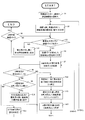
- 8 and 9 are flowcharts illustrating in detail an example of an operation procedure when a communication connection request is generated in the wireless terminal 100 of the present embodiment. 8 and 9, for the sake of simplicity, the case where the wireless terminal 100 is located outdoors will be described as an example. However, the wireless terminal 100 is located indoors or near the boundary between the outdoors and indoors. But the same is true.
- the radio reception unit 110 or the radio transmission unit 107 of the radio terminal 100 determines whether a new connection request has occurred.
- This connection request may be, for example, either a connection request from the wireless terminal 100 to the base station 200 or a connection request from the base station 200 to the wireless terminal 100.
- a connection request from the wireless terminal 100 to the base station 200 is generated.
- a connection request from any one of the base stations 200 to the wireless terminal 100 is generated.
- the GPS receiving unit 102 calculates and acquires position information of the GPS receiving unit 102 (that is, position information of the wireless terminal 100 itself) based on a plurality of signals received by the GPS antenna 101.
- the GPS receiver 102 outputs the position information of the wireless terminal 100 obtained by the calculation to the processor 150.
- the position information generation unit 103 determines the position information of the wireless terminal 100 (that is, the current position information of the wireless terminal 100) based on the information from the GPS receiving unit 102. It is generated and output to the radio resource deriving unit 104.
- the distance di calculation unit 1041 of the radio resource deriving unit 104 refers to the cumulative communication history table T1 of the memory 160, and calculates the distance di based on the current position information of the wireless terminal 100 and the position information of the wireless terminal 100 in the communication history. Calculation is performed according to any one of the formulas (1) to (3) (for example, the formula (1)) (S1). Which mathematical formula is used is preset in each wireless terminal 100.
- the connection candidate priority determination unit 1042 of the radio resource deriving unit 104 has a predetermined number (n: an integer of 2 or more) with a small distance di based on the current location information of the radio terminal 100 and the location information of the radio terminal 100 in the communication history.
- a communication history of a certain default value is extracted and acquired (S1).
- the result extracted in step S1 is, for example, the upper communication history table T2 shown in FIG.
- the connection candidate priority determination unit 1042 of the radio resource deriving unit 104 grasps (recognizes) the radio resources (for example, the identification number of the base station 200 and the number of connections) included in all the top n communication histories extracted in step S1. To do.
- the connection candidate priority determination unit 1042 of the radio resource deriving unit 104 uses a connection target base station (A) used for communication of data (for example, control data and user data) from a plurality of base stations 200 based on the distance di and the radio resource.
- Base station a connection preparation base station (B base station) having the next highest connection priority after the connection target base station, and a connection preparation base station (B base station) having the next highest connection priority.
- the above connection preparation candidate base station (C base station) is derived (determined) (S2).
- connection trie management control unit 1043 of the radio resource deriving unit 104 instructs the radio resource allocation management unit 105 to execute a communication trial (communication trie) with the connection target base station (A base station) derived in step S2. Instruct.
- the radio resource allocation management unit 105 allocates the highest priority radio resource (the identification number of the base station 200) among the connection priorities determined in step S2 to the radio transmission unit 107 and the radio reception unit 110, and the connection target A communication connection to the base station (A base station) is tried (S3).
- the transmission packet generation unit 106 generates a transmission packet including data on the uplink 21.
- the wireless transmission unit 107 transmits a transmission packet to the determined connection target base station (A base station).
- the radio reception unit 110 receives a received packet from the determined connection target base station (A base station).
- Received packet decoding section 111 decodes the received packet and obtains data on downlink 22.
- the radio terminal 100 can assign a radio frequency resource block to the base station 200 that tries communication connection (that is, the connection target base station (A base station)) in radio communication with the radio terminal 100. Inquire whether or not.
- the connection target base station (A base station) determines that the radio frequency resource block can be allocated in response to the inquiry from the radio terminal 100
- the connection base station (A base station) sends a message to the radio terminal 100 indicating that the communication connection is successful.
- the connection trie management control unit 1043 acquires from the radio resource allocation management unit 105 a result of success or failure of the communication trial (communication trie) with the connection target base station (A base station) (connection try availability signal).
- the base station classification management unit 1046 of the radio resource deriving unit 104 when a connection attempt (connection try) with the highest priority base station 200 (that is, a connection target base station (A base station)) fails ( S3, NO), the base station 200 having the next highest connection priority (that is, the base station 200 derived from the connection preparation base station (B base station)) is changed to the base station 200 having the highest priority (that is, the connection target base station ( A base station)) is set (S4). If all the n connection tries extracted in step S1 are made after step S4 (S5, YES), the radio terminal 100 shown in FIG. 8 ends without being connected to any base station 200. .
- the radio resource deriving unit 104 uses a known method to establish a communication connection in the vicinity of itself (the radio terminal 100).
- a candidate for a base station for example, a base station other than 5G or millimeter wave
- the radio resource deriving unit 104 determines a base station that can be a connection candidate based on the search result of the base station 200 located in the vicinity of the radio terminal 100.
- the radio resource deriving unit 104 searches for base stations that use the RATs 1 to 5 in order, and the radio transmitting unit 107 notifies the search result to a predetermined base station.
- the predetermined base station selects a base station that can be a connection candidate according to the notified search result, and transmits information on the base station to the radio terminal 100.
- the radio resource deriving unit 104 acquires information on a base station that can be a connection candidate from the received packet received by the radio receiving unit 110 and decoded by the received packet decoding unit 111, and determines the base station as a connection candidate base station.
- the cell search result is notified to a predetermined base station, and information on the base station that can be a connection candidate of the predetermined base station is transmitted to the wireless terminal 100.
- the radio terminal 100 may itself determine a base station that can be a connection candidate based on the cell search result without notifying the cell search result to a predetermined base station.
- connection trie management control unit 1043 of the radio resource deriving unit 104 sets the new connection set in step S4.
- the radio resource allocation management unit 105 is instructed to execute a communication trial (communication try) with the target base station (A base station).
- the connection trie management control unit 1043 acquires from the radio resource allocation management unit 105 a result of success or failure of the communication trial (communication trie) with the connection target base station (A base station) (connection try availability signal).
- connection try connection attempt
- the base station classification management unit 1046 of the radio resource deriving unit 104 succeeds in a connection attempt (connection try) with the highest priority base station 200 (that is, the connection target base station (A base station)) ( (S3, YES)
- the base station 200 subjected to the connection try is classified as a connection target base station (A base station), and the base station type management table T3 is updated (S6).
- the wireless terminal 100 can perform transmission / reception (communication) of data (for example, control data, user data (for example, video data)) with the connection target base station (A base station), or has already communicated. If so, the communication can be continued (S7).
- the radio resource allocation management unit 105 as an example of the update unit is a communication history (specifically, at least a connection target base station (A base station)) with the base station 200 in which the communication connection try was successful.
- the base station 200 identification number is updated by writing it in the cumulative communication history table T1.
- the communication connection try in step S3 may be either bidirectional communication or transmission or reception. Therefore, the cumulative communication history table T1 may be updated either at the time of transmission or at the time of reception.
- the base station classification management unit 1046 of the radio resource deriving unit 104 refers to the base station type management table T3 stored in the memory 160 and is set as the shielding base station (D base station). It is determined whether or not the base station 200 is present (S8). When there is no base station 200 currently set as a shielding occurrence base station (D base station) (S8, NO), the process of the radio terminal 100 proceeds to step S12.
- the communication monitoring unit 1045 of the radio resource deriving unit 104 is shielded by the radio receiving unit 110. It is monitored whether or not the signal from the generating base station (D base station) has been received (S9). That is, in step S9, the communication monitoring unit 1045 can receive a signal from the base station 200 set as the shielding base station (D base station) based on the communication detection signal from the wireless reception unit 110. (S9, YES), since the communication disconnection based on the shielding is restored and the communication is restored, the shielding occurrence base station (D base station) is likely to become a connection preparation base station (B base station).
- the base station classification management unit 1046 sets the base station 200 set as the shielding occurrence base station (D base station) as the connection preparation base station (B base station) (S10).
- the base station classification management unit 1046 may set the base station 200 set as the shielding occurrence base station (D base station) as a connection preparation candidate base station (C base station) (S10).
- the radio reception unit 110 cannot receive a signal from the shielding occurrence base station (D base station) (S9, NO), it is assumed that the communication disconnection based on shielding is maintained, and the shielding occurrence base The station (D base station) is preferably maintained as it is. Therefore, the base station classification management unit 1046 maintains the setting of the shielding occurrence base station (D base station) (S11).
- connection candidate priority of the radio resource deriving unit 104 selects one connection preparation base station (B base station) having the next highest connection priority after the connection target base station (A base station) (S12). Note that the process of step S12 may be omitted when the connection preparation base station (B base station) is derived in step S2.
- the connection preparation management control unit 1044 of the radio resource deriving unit 104 instructs the radio resource allocation management unit 105 to execute communication of a control signal (see above) with the connection preparation base station (B base station).
- the radio resource allocation management unit 105 allocates the identification number of the connection preparation base station (B base station) selected in step S12 to the radio transmission unit 107 and the radio reception unit 110, and transmits the identification number to the connection preparation base station (B base station).
- Standby for communication preparation that is, communication of control signals
- the transmission packet generation unit 106 generates a transmission packet including control data for the uplink 21.
- the wireless transmission unit 107 transmits a transmission packet to the determined connection preparation base station (B base station).
- the radio reception unit 110 receives a reception packet from the determined connection preparation base station (B base station).
- Received packet decoding section 111 decodes the received packet and obtains control data for downlink 22.
- the wireless terminal 100 performs wireless communication with the wireless terminal 100 to the base station 200 (that is, the connection preparation base station (B base station)) that performs standby for communication connection preparation (that is, communication of control signals). Is inquired as to whether or not radio frequency resource blocks can be allocated. When the connection preparation base station (B base station) determines that the radio frequency resource block can be allocated in response to the inquiry from the wireless terminal 100, a message indicating that the standby for communication connection preparation has been successful. Is transmitted to the wireless terminal 100.
- the connection preparation management control unit 1044 acquires from the radio resource allocation management unit 105 a result of success / failure of standby for connection preparation for communication with the connection preparation base station (B base station) (communication availability signal).
- connection preparation management control unit 1044 acquires from the radio resource allocation management unit 105 the result of success or failure of communication of the control signal with the connection preparation base station (B base station) (communication availability signal). In this embodiment, it is assumed that communication of control signals with the connection preparation base station (B base station) is successful.
- the base station classification management unit 1046 of the radio resource deriving unit 104 succeeds in standby for communication connection preparation with the highest priority base station 200 (that is, the connection preparation base station (B base station)). Then, the target base station 200 is classified as a connection preparation base station (B base station), and the base station type management table T3 is updated (S13). As a result, the wireless terminal 100 can establish a connection preparation base station (B base station) even when communication disconnection occurs due to insertion of a shield in a propagation path with the connection target base station (A base station), for example. Since a standby for communication connection preparation has been established between them, it is possible to secure a backup base station for allocating data (for example, control data, user data (for example, video data)) transmission / reception (communication), and stable Communication continuity can be guaranteed.
- data for example, control data, user data (for example, video data)
- the base station classification management unit 1046 of the radio resource deriving unit 104 has one connection target base station (A base station) and one connection among the n base stations 200 derived in step S2.
- the remaining base station 200 (ie, (n-2)) excluding the preparation base station (B base station) is classified as a connection preparation candidate base station (C base station), and the base station type management table T3 is updated ( S14). Accordingly, the description has been made based on the assumption that the standby in step S13 is successful, but considering that there is a possibility of failure, the wireless terminal 100 may select one of the connection preparation candidate base stations (C base stations).
- One for example, the base station 200 having the shortest distance di and the largest number of connections among the connection preparation candidate base stations (C base stations)
- B base station connection preparation base station
- the communication monitoring unit 1045 of the radio resource deriving unit 104 has a shield (for example, a person or a vehicle) or a propagation path with the connection target base station (A base station) that is currently communicating. It is monitored whether there is a sign of shielding (S15).
- the base station 200 of the present embodiment is a wireless communication using 5G (fifth generation mobile communication system, for example, 28 GHz band) or millimeter wave (for example, fifth generation mobile communication system in the millimeter wave band or WiGig (Wireless Gigabit: registered trademark).
- the radio wave travels straight, and when a shielding object is inserted in the propagation path to the connection target base station (A base station), the communication quality in the propagation path deteriorates rapidly ( For example, the throughput decreases or the packet error rate increases, and communication between the wireless terminal 100 and the connection target base station (A base station) is disconnected.
- the straightness of radio waves may not be as high as that of 5G and millimeter waves, but is shielded in the propagation path between the connection target base station (A base station).
- 5G farth generation mobile communication system
- WiGig registered trademark
- WiGig is a 60 GHz band among millimeter waves.
- the base station classification management unit 1046 of the radio resource deriving unit 104 sets the connection preparation base station (B base station) that is in standby for communication connection preparation in step S13 as a new connection target base station ( (A base station), and further, the connection target base station (A base station) before the occurrence of communication disconnection is switched to the shielding generation base station (D base station) (S16).
- the wireless terminal 100 can switch to the connection target base station (B base station) even if a communication disconnection occurs due to shielding with the connection target base station (A base station) currently communicating.
- wireless communication using a high frequency band such as 5G or millimeter wave can be continued even after switching, loss of an opportunity to connect to a small cell capable of obtaining high-speed throughput can be avoided.
- step S16 when the radio terminal 100 has moved greatly beyond a predetermined distance (default value) from the current position (S17, YES), it is necessary to set again the base station 200 with which the radio terminal 100 communicates. Since there is, the process of the radio
- the wireless terminal 100 has not moved greatly beyond a predetermined distance from the current position, or in step S15, there is a shield in the propagation path with the connection target base station (A base station) currently communicating. If not inserted (S15, NO), the base station classification management unit 1046 of the radio resource deriving unit 104 maintains the setting of the connection target base station (A base station) currently in communication (S18). After step S18, the process of the radio terminal 100 returns to step S7, and the communication with the currently connected base station (A base station) is continued.
- a predetermined distance default value
- radio terminal 100 communicates with a plurality of base stations 200 that handle, for example, 5G (28 GHz band as an example of a fifth generation mobile communication system) or millimeter waves (for example, 30 GHz to 300 GHz). Is possible.
- the radio terminal 100 accumulates at least the position information of the radio terminal 100 and the information related to the base station 200 in the memory 160 at the time of past communication with each base station 200 as a communication history, and the current radio terminal 100 Get location information. Based on the current location information of the wireless terminal 100 and the communication history stored in the memory 160, the wireless terminal 100 is connected to a connection target base station (A base station) used for data communication and a connection target from a plurality of base stations 200.
- a base station connection target base station
- connection preparation base station having the next highest connection priority after the base station (A base station) is derived.
- the wireless terminal 100 performs data communication when a connection attempt with the connection target base station (A base station) is successful, and propagates with the connection target base station (A base station) during the data communication. Deriving the connection target base station (A) used for data communication when communication with the connection target base station (A base station) is cut off due to some sort of shielding (for example, a person or a vehicle) being inserted into the road Switch to the prepared connection preparation base station (B base station).
- some sort of shielding for example, a person or a vehicle
- the wireless terminal 100 can continue the wireless communication even when the propagation path between the wireless terminal 100 and the base station 200 constituting the wireless communication system 10 illustrated in FIG. 1 is shielded or when the sign of the shielding is recognized.
- the base station 200 for data communication can be allocated by quickly switching to another base station 200 that can be made (that is, the base station 200 derived by the wireless terminal 100 as a connection preparation base station (B base station)).
- B base station connection preparation base station
- the radio terminal 100 is connected to a base station that handles the same millimeter wave without connecting to a macro base station that handles LTE that can obtain a throughput lower than that of the millimeter wave because communication with the base station 200 that handles millimeter waves is disconnected.
- the radio terminal 100 can derive any of the base stations 200 as a connection target base station (A base station) or a connection target base station (B base station). There is no need to search. That is, the radio terminal 100 does not need to sequentially scan for adoptable radio access technologies (RAT) and search for the base station 200 located in the vicinity of the radio terminal 100. In this case, the radio terminal 100 does not need to perform the same number of cell searches as the number of radio access technologies (RAT) existing in the network of the radio communication system 10 shown in FIG. Therefore, the radio terminal 100 can reduce the processing load and the processing time for searching for the connection destination base station 200, and can suppress an increase in power consumption.
- RAT radio access technologies
- the wireless terminal 100 assigns the predetermined number (n) of communication histories having a small distance di based on the current position information of the wireless terminal 100 and the position information of the wireless terminal 100 included in the past communication history.
- a connection target base station (A base station) and a connection preparation base station (B base station) are derived in descending order.
- the wireless terminal 100 is connected in the order of the base station 200 having the highest number of uses in the communication history when the distance di is small (in other words, the current position is close to the position at the time of past wireless communication). It can be derived as a base station (A base station) and a connection preparation base station (B base station), and can stably communicate with an appropriate base station 200 having a communication record at the current position.
- the wireless terminal 100 connects the connection target base stations (A) in the order of the base station 200 with the highest number of allocations in the past predetermined number (n) of communication histories.
- Base station and connection preparation base station (B base station).
- the history table T2 can be generated. Therefore, the radio terminal 100 can assign a more appropriate radio resource (for example, the identification number of the base station 200) along the network environment provided around the current position.
- the wireless terminal 100 further accumulates information on the amount of data communication with the connection target base station (A base station) as a communication history, and among the predetermined number (n) of past communication histories having a small distance di.
- the base station for connection (A base station) and the base station for connection preparation (B base station) are derived in the order of the base station 200 with the largest amount of data communication.
- the wireless terminal 100 is able to obtain a small cell (in other words, communication data) such as 5G (28 GHz band as an example of a fifth generation mobile communication system) or a millimeter wave (for example, 30 GHz to 300 GHz). Cells that are likely to be large in quantity) can be preferentially assigned in the order of the base stations 200 that can provide them, and it is easy to perform a comfortable amount of communication data.
- the wireless terminal 100 when the wireless terminal 100 performs data communication with the derived connection target base station (A base station), information on the connection target base station (A base station) related to data communication is obtained. Is updated and stored in the memory 160 as a communication history associated with the position information. As a result, the wireless terminal 100 has a communication history in which the identification number of the connection target base station (A base station) that is the communication partner is associated with the position at the time of communication as a communication result of actually performing the wireless communication. It can be stored in the memory 160 for learning.
- the radio terminal 100 uses the derived connection preparation base station (B base station) for data communication.
- B base station derived connection preparation base station
- the information regarding the base station 200 includes information indicating that it is a shielding base station (D base station) based on disconnection of communication with the wireless terminal 100.
- D base station shielding base station
- the radio terminal 100 can connect the communication-disconnected base station (D base station) to the connection preparation base station (B base station) or the connection preparation base station. It is derived as a connection preparation candidate base station (C base station) having the next highest connection priority after (B base station).
- the wireless terminal 100 can receive a signal from the base station 200 that is set lower than the shielding generation base station (D base station) due to, for example, a shielding object (for example, a person or a vehicle) being instantaneously inserted.
- a shielding object for example, a person or a vehicle
- the wireless terminal 100 is configured to use such a shielding base station (D base station) as a backup base station when communication with the connection target base station (A base station) currently communicating is disconnected.
- the wireless terminal 100 is based on n (n is an integer of 2 or more) communication histories having a small distance (di) based on the position information of the wireless terminal 100 and the position information of the wireless terminals included in the past communication history.
- n is an integer of 2 or more
- one or more connection preparation candidate base stations (C base stations) having the next highest connection priority after the connection preparation base station (B base station) are derived.
- the wireless terminal 100 allows the connection preparation base station (B base station) to connect to a new connection target base station ( A base station 200 that can be a connection preparation base station (B base station) for backup corresponding to the new connection target base station (A base station) can be secured.
- the wireless terminal 100 detects a disconnection with the connection target base station (A base station)
- the wireless terminal 100 determines that the connection target base station (A base station) has a connection priority with the wireless terminal 100.
- D base station shielding occurrence base station
- B base station connection preparation base station
- the radio terminal 100 does not position such a connection target base station (A base station) as a base station that will not be used for communication in the future, but rather a connection preparation base station (B base station) or a connection preparation candidate base station ( C base station) can be set as a shielding generation base station (D base station) as base station 200.
- a base station connection target base station
- B base station connection preparation base station
- C base station connection preparation candidate base station
- D base station shielding generation base station
- the position information of the wireless terminal 100 is, for example, a combination of information (latitude, longitude, altitude) that is effective outdoors, and the wireless terminal 100 sets the distance di by giving priority to, for example, altitude out of latitude, longitude, and altitude. To derive. Even if the latitude and longitude are the same in the position information of the wireless terminal 100, the communication environment may differ greatly if the altitude is different. Accordingly, the wireless terminal 100 calculates a distance di with priority on altitude (see, for example, Equation (3)), and can provide a communication target base station (A base station) that can provide a communication environment suitable for its current position.
- the connection preparation base station (B base station) can be derived.
- the position information of the wireless terminal 100 is relative to a plurality of BLE beacons 60 installed indoors. It may be position information obtained by a simple distance.
- the position can be specified by information (latitude, longitude, altitude) calculated by the GPS receiving unit 102, for example, and on the other hand, indoors or between outdoor and indoor
- the position can be specified by information on the relative distance from the BLE beacon 60 calculated by the BLE receiver 122.
- FIG. 10 is an explanatory diagram illustrating an example of a scene in which shielding frequently occurs in the propagation path of the radio wave EWV between the wireless terminal 100 and the base station 200.
- the base station 200 set as the connection target base station (A base station) communicating with the wireless terminal 100 is on the opposite side across the road PH. Is located.
- Vehicles CR1, CR2, CR3, CR4, and CR5 are vehicles (for example, passenger cars, buses, trucks, sightseeing large buses, tow trucks. Needless to say, they are not limited to these).
- a high frequency band such as 5G (28 GHz band as an example of a fifth generation mobile communication system) and a millimeter wave (for example, 30 GHz to 300 GHz)
- the straightness of the radio wave EWV is very high.
- the connection target base station (A base station) currently in communication see FIG. 10
- the connection target base station ( A base station) is set to be moved down to the shielding base station (D base station) by the radio terminal 100 every time a shielding object such as the vehicles CR1 to CR5 is inserted.
- the radio terminal 100 uses the fact that a shielding object is frequently inserted for priority determination when deriving a connection target base station (A base station). Specifically, the radio terminal 100 writes and holds the set number of times of the shielding occurrence base station (D base station) for each base station 200 in the information regarding the base station 200 included in the communication history. When determining the priority when deriving the connection target base station (A base station), the radio terminal 100 determines the number of times of setting the shielding occurrence base station (D base station) for each base station 200 included in the communication history. Subtract from the number of times set in the connection target base station (A base station) in n communication histories extracted in ascending order of distance di.
- the wireless terminal 100 within a short time (for example, a default value) considered to be the same communication, the shielding base station (D base station) ⁇ connection preparation base station (B base station) ⁇ connection target base station (A base) Station) or shielding occurrence base station (D base station) ⁇ connection preparation candidate base station (C base station) ⁇ connection preparation base station (B base station) ⁇ connection target base station (A base station)
- the communication history includes the connection time as well as the type of the base station 200 as information on the base station 200.
- the wireless terminal 100 includes, for example, the connection time with the base station 200 in the communication history and the number of times of connection when the connection time is less than a predetermined time (for example, 1 second). May be held.
- a predetermined time for example, 1 second.
- the wireless terminal 100 determines the connection priority with respect to the base station 200, the value of the number of times that the connection has become a connection target base station (A base station) whose connection time is less than a predetermined time (for example, 1 second). Is not taken into account (ie zero).
- a predetermined time for example, 1 second
- the wireless terminal 100 further includes, as a communication history, information on the number of occurrences of communication disconnection between the connection target base station (A base station) and the wireless terminal 100. Based on the difference between the number of times of allocation and the number of times of occurrence of communication disconnection in n communication histories with a small distance di, the radio terminal 100 connects to a connection target base station (A base station) and a connection preparation base station (B Base station).
- a base station connection target base station
- B Base station connection preparation base station
- the wireless terminal 100 moves the base station 200 arranged at a position where shielding is frequently repeated for the wireless terminal 100 to the connection target base station (A base Station) or a connection preparation base station (B base station) can be positively excluded, and the possibility of hindering the continuation of stable communication of the wireless terminal 100 can be reduced.
- a base Station connection target base station
- B base station connection preparation base station
- the base station is quickly switched to another base station that can continue wireless communication, and the base station is allocated. This is useful as a radio terminal and base station switching method that suppresses a reduction in connection probability.
- Wireless communication system 21 Uplink (uplink) 22 Downlink (Downlink) 50 GPS satellite 60 BLE beacon 100 Wireless terminal 101 GPS antenna 102 GPS receiver 103 Position information generator 104 Radio resource derivation unit 105 Radio resource allocation manager 106 Transmission packet generator 107 Radio transmitter 108 Transmit antenna 109 Receiver antenna 110 Radio reception Unit 111 received packet decoding unit 121 BLE antenna 122 BLE receiving unit 150 processor 160 memory 200 base station, A base station, B base station, C base station, D base station 1041 distance di calculation unit 1042 connection candidate priority determination unit 1043 connection Trie management control unit 1044 Connection preparation management control unit 1045 Communication monitoring unit 1046 Base station classification management unit T1 Cumulative communication history table T2 Upper communication history table T3 Base station type management table
Landscapes
- Engineering & Computer Science (AREA)
- Computer Networks & Wireless Communication (AREA)
- Signal Processing (AREA)
- Computer Security & Cryptography (AREA)
- Mobile Radio Communication Systems (AREA)
Priority Applications (1)
| Application Number | Priority Date | Filing Date | Title |
|---|---|---|---|
| US16/469,005 US11076332B2 (en) | 2016-12-13 | 2017-09-29 | Wireless terminal and base station switching method |
Applications Claiming Priority (2)
| Application Number | Priority Date | Filing Date | Title |
|---|---|---|---|
| JP2016-241260 | 2016-12-13 | ||
| JP2016241260A JP6634004B2 (ja) | 2016-12-13 | 2016-12-13 | 無線端末及び基地局切替方法 |
Publications (1)
| Publication Number | Publication Date |
|---|---|
| WO2018110033A1 true WO2018110033A1 (ja) | 2018-06-21 |
Family
ID=62558388
Family Applications (1)
| Application Number | Title | Priority Date | Filing Date |
|---|---|---|---|
| PCT/JP2017/035597 Ceased WO2018110033A1 (ja) | 2016-12-13 | 2017-09-29 | 無線端末及び基地局切替方法 |
Country Status (3)
| Country | Link |
|---|---|
| US (1) | US11076332B2 (https=) |
| JP (1) | JP6634004B2 (https=) |
| WO (1) | WO2018110033A1 (https=) |
Cited By (4)
| Publication number | Priority date | Publication date | Assignee | Title |
|---|---|---|---|---|
| CN112715041A (zh) * | 2018-09-30 | 2021-04-27 | 西门子股份公司 | 用于识别设备的方法和装置及计算机可读存储介质和程序 |
| WO2024053529A1 (ja) * | 2022-09-09 | 2024-03-14 | キヤノン株式会社 | 通信ノード装置、通信装置、及び通信システム |
| JP2024075846A (ja) * | 2022-11-24 | 2024-06-05 | 三菱電機株式会社 | 通信システム、通信端末装置および車両とアクセスポイントの通信方法 |
| WO2026047919A1 (ja) * | 2024-08-28 | 2026-03-05 | Ntt株式会社 | 無線通信システム、通信端末、無線通信方法、及びプログラム |
Families Citing this family (4)
| Publication number | Priority date | Publication date | Assignee | Title |
|---|---|---|---|---|
| JP7220374B2 (ja) * | 2018-08-24 | 2023-02-10 | パナソニックIpマネジメント株式会社 | 通信端末および通信方法 |
| JP6694035B2 (ja) * | 2018-10-05 | 2020-05-13 | Hapsモバイル株式会社 | 通信装置、通信方法及び通信プログラム |
| JP7500242B2 (ja) * | 2020-03-27 | 2024-06-17 | キヤノン株式会社 | 通信装置、通信装置の制御方法、プログラム |
| EP4642149A4 (en) * | 2022-12-21 | 2026-04-08 | Sony Group Corp | COMMUNICATION DEVICE AND COMMUNICATION METHOD |
Citations (5)
| Publication number | Priority date | Publication date | Assignee | Title |
|---|---|---|---|---|
| JP2010206543A (ja) * | 2009-03-03 | 2010-09-16 | Toshiba Corp | 通信端末装置 |
| JP2013021516A (ja) * | 2011-07-11 | 2013-01-31 | Toshiba Corp | 使用量測定システム、無線通信用センタ装置および使用量測定システム用プログラム |
| WO2013121670A1 (ja) * | 2012-02-16 | 2013-08-22 | ソニー株式会社 | 無線通信装置、プログラムおよび通信制御方法 |
| JP2014241479A (ja) * | 2013-06-11 | 2014-12-25 | 西日本電信電話株式会社 | 通信装置、通信システム及び通信方法 |
| WO2016170719A1 (ja) * | 2015-04-24 | 2016-10-27 | パナソニックIpマネジメント株式会社 | 無線通信端末及び周波数割当方法 |
Family Cites Families (8)
| Publication number | Priority date | Publication date | Assignee | Title |
|---|---|---|---|---|
| US7213057B2 (en) * | 2004-03-31 | 2007-05-01 | Intel Corporation | Method for configuration of notebook computer based on location |
| JP2010147519A (ja) | 2008-12-16 | 2010-07-01 | Hitachi Ltd | 無線通信システム |
| US20120230305A1 (en) * | 2011-03-08 | 2012-09-13 | Research In Motion Limited | Wi-fi network access and a mobile terminal configured for the same |
| WO2012164854A1 (ja) * | 2011-06-02 | 2012-12-06 | パナソニック株式会社 | 無線端末、無線通信方法および無線通信システム |
| JP5902934B2 (ja) | 2011-12-09 | 2016-04-13 | ニチアス株式会社 | フィン部材、内燃機関及び自動車 |
| JP5657038B2 (ja) * | 2013-01-23 | 2015-01-21 | ヤフー株式会社 | 情報提供システム、情報提供装置および情報提供方法 |
| JP6007804B2 (ja) * | 2013-01-28 | 2016-10-12 | 株式会社ソシオネクスト | 電源の制御回路、電源装置、電子機器及び電源の制御方法 |
| JP2016170719A (ja) | 2015-03-13 | 2016-09-23 | 株式会社リコー | 表示システム、表示方法、情報処理装置、およびプログラム |
-
2016
- 2016-12-13 JP JP2016241260A patent/JP6634004B2/ja active Active
-
2017
- 2017-09-29 WO PCT/JP2017/035597 patent/WO2018110033A1/ja not_active Ceased
- 2017-09-29 US US16/469,005 patent/US11076332B2/en active Active
Patent Citations (5)
| Publication number | Priority date | Publication date | Assignee | Title |
|---|---|---|---|---|
| JP2010206543A (ja) * | 2009-03-03 | 2010-09-16 | Toshiba Corp | 通信端末装置 |
| JP2013021516A (ja) * | 2011-07-11 | 2013-01-31 | Toshiba Corp | 使用量測定システム、無線通信用センタ装置および使用量測定システム用プログラム |
| WO2013121670A1 (ja) * | 2012-02-16 | 2013-08-22 | ソニー株式会社 | 無線通信装置、プログラムおよび通信制御方法 |
| JP2014241479A (ja) * | 2013-06-11 | 2014-12-25 | 西日本電信電話株式会社 | 通信装置、通信システム及び通信方法 |
| WO2016170719A1 (ja) * | 2015-04-24 | 2016-10-27 | パナソニックIpマネジメント株式会社 | 無線通信端末及び周波数割当方法 |
Cited By (6)
| Publication number | Priority date | Publication date | Assignee | Title |
|---|---|---|---|---|
| CN112715041A (zh) * | 2018-09-30 | 2021-04-27 | 西门子股份公司 | 用于识别设备的方法和装置及计算机可读存储介质和程序 |
| CN112715041B (zh) * | 2018-09-30 | 2023-12-19 | 西门子股份公司 | 用于识别设备的方法和装置及计算机可读存储介质和程序 |
| WO2024053529A1 (ja) * | 2022-09-09 | 2024-03-14 | キヤノン株式会社 | 通信ノード装置、通信装置、及び通信システム |
| JP2024075846A (ja) * | 2022-11-24 | 2024-06-05 | 三菱電機株式会社 | 通信システム、通信端末装置および車両とアクセスポイントの通信方法 |
| JP7847531B2 (ja) | 2022-11-24 | 2026-04-17 | 三菱電機株式会社 | 通信システム、通信端末装置および車両とアクセスポイントの通信方法 |
| WO2026047919A1 (ja) * | 2024-08-28 | 2026-03-05 | Ntt株式会社 | 無線通信システム、通信端末、無線通信方法、及びプログラム |
Also Published As
| Publication number | Publication date |
|---|---|
| US20190320374A1 (en) | 2019-10-17 |
| US11076332B2 (en) | 2021-07-27 |
| JP6634004B2 (ja) | 2020-01-22 |
| JP2018098637A (ja) | 2018-06-21 |
Similar Documents
| Publication | Publication Date | Title |
|---|---|---|
| JP6634004B2 (ja) | 無線端末及び基地局切替方法 | |
| US8594033B2 (en) | Frequency band coordination method and radio communication apparatus in cognitive radio system | |
| US10278105B2 (en) | Seamless mobility in wireless networks | |
| US10986635B2 (en) | Wireless terminal and wireless base station allocation method | |
| US20180041889A1 (en) | Wireless communication system | |
| US20180027545A1 (en) | Radio communication terminal and base station assignment method | |
| US10237815B2 (en) | Radio communication terminal and frequency assignment method | |
| EP3772227B1 (en) | Cellular telecommunications network | |
| US10880832B2 (en) | Wireless base station, wireless communication system, and base station allocation method | |
| CN110621048A (zh) | 用于卫星通信的用户设备 | |
| JP7220374B2 (ja) | 通信端末および通信方法 | |
| KR101170004B1 (ko) | 적응성 빔 기반 통신시스템 및 그 멀티홉 릴레이 전송방법 | |
| Firyaguna et al. | Graph-based handover for future aeronautical 6g integrated terrestrial and non-terrestrial networks | |
| EP3970417B1 (en) | Initiation of transfer of user equipment to base station according to visual data | |
| US10448371B2 (en) | Wireless base station and frequency allocation method | |
| CN117295121A (zh) | 通信方法及装置 | |
| JP2022185852A (ja) | 基地局、無線通信方法、及び、無線通信システム | |
| EP3716701A1 (en) | Signaling method for d2d synchronization | |
| WO2025160863A1 (en) | Method, apparatus and system for beam management | |
| WO2022156893A1 (en) | Groupcast master ue re-assignment with beam-domain operation | |
| CN119922516A (zh) | 一种用于感知的通信方法及通信装置 | |
| KR20220136388A (ko) | 동기화된 모바일 디바이스간에 통신하는 방법, 스토리지 매체 및 모바일 디바이스 | |
| GB2588989A (en) | Cellular telecommunications network |
Legal Events
| Date | Code | Title | Description |
|---|---|---|---|
| 121 | Ep: the epo has been informed by wipo that ep was designated in this application |
Ref document number: 17880023 Country of ref document: EP Kind code of ref document: A1 |
|
| NENP | Non-entry into the national phase |
Ref country code: DE |
|
| 122 | Ep: pct application non-entry in european phase |
Ref document number: 17880023 Country of ref document: EP Kind code of ref document: A1 |