WO2018092328A1 - 配線基板及びその製造方法 - Google Patents
配線基板及びその製造方法 Download PDFInfo
- Publication number
- WO2018092328A1 WO2018092328A1 PCT/JP2017/016024 JP2017016024W WO2018092328A1 WO 2018092328 A1 WO2018092328 A1 WO 2018092328A1 JP 2017016024 W JP2017016024 W JP 2017016024W WO 2018092328 A1 WO2018092328 A1 WO 2018092328A1
- Authority
- WO
- WIPO (PCT)
- Prior art keywords
- meth
- acrylate
- rubber
- resin layer
- wiring board
- Prior art date
- Legal status (The legal status is an assumption and is not a legal conclusion. Google has not performed a legal analysis and makes no representation as to the accuracy of the status listed.)
- Ceased
Links
Images

Classifications
-
- B—PERFORMING OPERATIONS; TRANSPORTING
- B32—LAYERED PRODUCTS
- B32B—LAYERED PRODUCTS, i.e. PRODUCTS BUILT-UP OF STRATA OF FLAT OR NON-FLAT, e.g. CELLULAR OR HONEYCOMB, FORM
- B32B15/00—Layered products comprising a layer of metal
- B32B15/04—Layered products comprising a layer of metal comprising metal as the main or only constituent of a layer, which is next to another layer of the same or of a different material
-
- B—PERFORMING OPERATIONS; TRANSPORTING
- B32—LAYERED PRODUCTS
- B32B—LAYERED PRODUCTS, i.e. PRODUCTS BUILT-UP OF STRATA OF FLAT OR NON-FLAT, e.g. CELLULAR OR HONEYCOMB, FORM
- B32B25/00—Layered products comprising a layer of natural or synthetic rubber
- B32B25/04—Layered products comprising a layer of natural or synthetic rubber comprising rubber as the main or only constituent of a layer, which is next to another layer of the same or of a different material
-
- B—PERFORMING OPERATIONS; TRANSPORTING
- B32—LAYERED PRODUCTS
- B32B—LAYERED PRODUCTS, i.e. PRODUCTS BUILT-UP OF STRATA OF FLAT OR NON-FLAT, e.g. CELLULAR OR HONEYCOMB, FORM
- B32B25/00—Layered products comprising a layer of natural or synthetic rubber
- B32B25/14—Layered products comprising a layer of natural or synthetic rubber comprising synthetic rubber copolymers
-
- B—PERFORMING OPERATIONS; TRANSPORTING
- B32—LAYERED PRODUCTS
- B32B—LAYERED PRODUCTS, i.e. PRODUCTS BUILT-UP OF STRATA OF FLAT OR NON-FLAT, e.g. CELLULAR OR HONEYCOMB, FORM
- B32B25/00—Layered products comprising a layer of natural or synthetic rubber
- B32B25/16—Layered products comprising a layer of natural or synthetic rubber comprising polydienes homopolymers or poly-halodienes homopolymers
-
- B—PERFORMING OPERATIONS; TRANSPORTING
- B32—LAYERED PRODUCTS
- B32B—LAYERED PRODUCTS, i.e. PRODUCTS BUILT-UP OF STRATA OF FLAT OR NON-FLAT, e.g. CELLULAR OR HONEYCOMB, FORM
- B32B25/00—Layered products comprising a layer of natural or synthetic rubber
- B32B25/18—Layered products comprising a layer of natural or synthetic rubber comprising butyl or halobutyl rubber
-
- C—CHEMISTRY; METALLURGY
- C08—ORGANIC MACROMOLECULAR COMPOUNDS; THEIR PREPARATION OR CHEMICAL WORKING-UP; COMPOSITIONS BASED THEREON
- C08F—MACROMOLECULAR COMPOUNDS OBTAINED BY REACTIONS ONLY INVOLVING CARBON-TO-CARBON UNSATURATED BONDS
- C08F2/00—Processes of polymerisation
- C08F2/46—Polymerisation initiated by wave energy or particle radiation
-
- C—CHEMISTRY; METALLURGY
- C08—ORGANIC MACROMOLECULAR COMPOUNDS; THEIR PREPARATION OR CHEMICAL WORKING-UP; COMPOSITIONS BASED THEREON
- C08L—COMPOSITIONS OF MACROMOLECULAR COMPOUNDS
- C08L21/00—Compositions of unspecified rubbers
-
- H—ELECTRICITY
- H05—ELECTRIC TECHNIQUES NOT OTHERWISE PROVIDED FOR
- H05K—PRINTED CIRCUITS; CASINGS OR CONSTRUCTIONAL DETAILS OF ELECTRIC APPARATUS; MANUFACTURE OF ASSEMBLAGES OF ELECTRICAL COMPONENTS
- H05K1/00—Printed circuits
- H05K1/02—Details
-
- H—ELECTRICITY
- H05—ELECTRIC TECHNIQUES NOT OTHERWISE PROVIDED FOR
- H05K—PRINTED CIRCUITS; CASINGS OR CONSTRUCTIONAL DETAILS OF ELECTRIC APPARATUS; MANUFACTURE OF ASSEMBLAGES OF ELECTRICAL COMPONENTS
- H05K1/00—Printed circuits
- H05K1/02—Details
- H05K1/03—Use of materials for the substrate
Definitions
- the present invention relates to a wiring board that can have high elasticity, and a method for manufacturing the same.
- Patent Document 1 describes a method of sealing a semiconductor element such as a memory chip using a stretchable resin composition.
- application of a stretchable resin composition to sealing applications is mainly studied.
- a method has also been proposed in which a stretchable wiring is simply formed by printing using a stretchable conductive paste in which conductive particles are dispersed in a stretchable elastomer.
- the wiring made of the conductive paste has a problem that the resistance value at the time of expansion increases in addition to the high resistance value as compared with the metal wiring.
- an object of the present invention is to provide a wiring board which has elasticity and can be easily manufactured with high productivity.
- one aspect of the present invention provides a wiring board having a stretchable resin layer and a conductive foil provided on the stretchable resin layer and forming a wiring pattern.
- the stretchable wiring board according to one aspect of the present invention can be easily manufactured with high productivity.
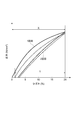
- FIG. 6 is a stress-strain curve showing an example of measurement of recovery rate. It is a top view which shows one Embodiment of a wiring board.
- a wiring board includes a stretchable resin layer and a conductive foil provided on one or both sides of the stretchable resin layer and forming a wiring pattern.
- the elastic modulus of the conductor foil may be 40 to 300 GPa.
- the elastic modulus of the conductor foil may be 50 GPa or more or 280 GPa or more, or 60 GPa or less, or 250 GPa or less.
- the elastic modulus of the conductor foil here can be a value measured by a resonance method.
- the conductor foil can be a metal foil.
- metal foil copper foil, titanium foil, stainless steel foil, nickel foil, permalloy foil, 42 alloy foil, kovar foil, nichrome foil, beryllium copper foil, phosphor bronze foil, brass foil, white foil, aluminum foil, tin foil, Lead foil, zinc foil, solder foil, iron foil, tantalum foil, niobium foil, molybdenum foil, zirconium foil, gold foil, silver foil, palladium foil, monel foil, inconel foil, hastelloy foil and the like.
- the conductor foil is preferably selected from copper foil, gold foil, nickel foil, and iron foil. From the viewpoint of wiring formability, it is preferable to use a copper foil.
- the electrolytic copper foil and rolled copper foil generally used for a copper clad laminated board, a flexible wiring board, etc. can be used.
- Examples of commercially available electrolytic copper foil include F0-WS-18 (Furukawa Electric Co., Ltd., trade name), NC-WS-20 (Furukawa Electric Co., Ltd., trade name), YGP-12 (Nippon Electrolysis ( Product name), GTS-18 (product name, manufactured by Furukawa Electric Co., Ltd.), and F2-WS-12 (product name, manufactured by Furukawa Electric Co., Ltd.).
- Examples of rolled copper foil include TPC foil (manufactured by JX Metals Co., Ltd., trade name), HA foil (manufactured by JX Metals Co., Ltd., trade name), and HA-V2 foil (manufactured by JX Metals Co., Ltd., trade name). , And C1100R (trade name, manufactured by Sumitomo Mitsui Metal Mining Co., Ltd.). From the viewpoint of adhesion to the stretchable resin layer, it is preferable to use a copper foil that has been subjected to a roughening treatment. From the viewpoint of folding resistance, it is preferable to use a rolled copper foil.
- the stretchable resin layer can have stretchability such that the recovery rate after tensile deformation to 20% strain is 80% or more.
- This recovery rate is calculated
- the recovery rate can be measured with X as 20%.
- FIG. 1 is a stress-strain curve showing an example of measuring the recovery rate. If the recovery rate is 80% or more, it can withstand repeated use, and therefore the recovery rate is more preferably 85% or more, and particularly preferably 90% or more.
- the elastic modulus of the stretchable resin layer is preferably from 0.1 MPa to 1000 MPa.
- the elastic modulus is more preferably from 0.3 MPa to 100 MPa, and particularly preferably from 0.5 MPa to 50 MPa.
- the elongation at break of the stretchable resin layer is preferably 100% or more. When the elongation at break is 100% or more, sufficient stretchability tends to be obtained. From this viewpoint, the elongation at break is more preferably 150% or more, and particularly preferably 200% or more. The upper limit of the elongation at break is not particularly limited, but is usually about 1000% or less.
- the stretchable resin layer can contain (A) a rubber component.
- the rubber component easily imparts stretchability to the stretchable resin layer.
- the rubber component content may be 30 to 100% by mass with respect to 100% by mass of the stretchable resin layer.
- Rubber components include, for example, acrylic rubber, isoprene rubber, butyl rubber, styrene butadiene rubber, butadiene rubber, acrylonitrile butadiene rubber, silicone rubber, urethane rubber, chloroprene rubber, ethylene propylene rubber, fluorine rubber, sulfurized rubber, epichlorohydrin rubber, and chlorinated rubber. It may contain at least one selected from the group consisting of butyl rubber. From the viewpoint of protecting the wiring from damage due to moisture absorption or the like, it is preferable that the gas permeability of the rubber component is low. From such a viewpoint, the rubber component may be at least one selected from styrene butadiene rubber, butadiene rubber, and butyl rubber.
- acrylic rubber examples include ZEON Corporation “Nipol AR Series” and Kuraray Co., Ltd. “Clarity Series”.
- Nipol IR Series As a commercial product of isoprene rubber, for example, Nippon Zeon Co., Ltd. “Nipol IR Series” can be mentioned.
- butyl rubber examples include JSR Corporation “BUTYL Series”.
- Examples of commercial products of styrene butadiene rubber include JSR Corporation “Dynalon SEBS Series”, “Dynalon HSBR Series”, Kraton Polymer Japan Co., Ltd. “Clayton D Polymer Series”, and Aron Kasei Co., Ltd. “AR Series”. It is done.
- butadiene rubber examples include ZEON Corporation “Nipol BR Series”.
- Examples of commercially available acrylonitrile butadiene rubber include JSR Corporation “JSR NBR Series”.
- silicone rubber examples include Shin-Etsu Silicone “KMP Series”.
- Examples of commercially available ethylene propylene rubber include JSR Corporation “JSR EP Series”.
- fluoro rubber products examples include Daikin Corporation “DAIEL Series”.
- epichlorohydrin rubber examples include “Hydrin series” of Nippon Zeon Co., Ltd.
- the rubber component can also be produced by synthesis.
- acrylic rubber can be obtained by reacting (meth) acrylic acid, (meth) acrylic acid ester, aromatic vinyl compound, vinyl cyanide compound and the like.
- the stretchable resin layer may further contain (B) a crosslinked polymer as a crosslinking component.
- the crosslinking component is, for example, at least one selected from the group consisting of (meth) acrylic groups, vinyl groups, epoxy groups, styryl groups, amino groups, isocyanurate groups, ureido groups, cyanate groups, isocyanate groups, and mercapto groups.
- the compound which has a reactive group may be sufficient, and a crosslinked polymer can be formed by reaction of these reactive groups. These compounds can be used alone or in combination of two or more.
- (A) (meth) acrylate compound is mentioned as a compound which has a (meth) acryl group.
- the (meth) acrylate compound may be monofunctional, bifunctional, or polyfunctional, and is not particularly limited, but bifunctional or polyfunctional (meth) acrylate is preferable in order to obtain sufficient curability.
- Examples of the monofunctional (meth) acrylate include methyl (meth) acrylate, ethyl (meth) acrylate, butyl (meth) acrylate, isobutyl (meth) acrylate, tert-butyl (meth) acrylate, butoxyethyl (meth) acrylate, Isoamyl (meth) acrylate, hexyl (meth) acrylate, 2-ethylhexyl (meth) acrylate, heptyl (meth) acrylate, octylheptyl (meth) acrylate, nonyl (meth) acrylate, decyl (meth) acrylate, undecyl (meth) acrylate , Lauryl (meth) acrylate, tridecyl (meth) acrylate, tetradecyl (meth) acrylate, pentadecyl (meth) acrylate,
- bifunctional (meth) acrylate examples include ethylene glycol di (meth) acrylate, diethylene glycol di (meth) acrylate, triethylene glycol di (meth) acrylate, tetraethylene glycol di (meth) acrylate, and polyethylene glycol di (meth) acrylate.
- Examples of the trifunctional or higher polyfunctional (meth) acrylate include trimethylolpropane tri (meth) acrylate, ethoxylated trimethylolpropane tri (meth) acrylate, propoxylated trimethylolpropane tri (meth) acrylate, and ethoxylated propoxylated tri Methylolpropane tri (meth) acrylate, pentaerythritol tri (meth) acrylate, ethoxylated pentaerythritol tri (meth) acrylate, propoxylated pentaerythritol tri (meth) acrylate, ethoxylated propoxylated pentaerythritol tri (meth) acrylate, pentaerythritol Tetra (meth) acrylate, ethoxylated pentaerythritol tetra (meth) acrylate, propoxylated pentaerythri
- the compound containing an epoxy group is not particularly limited as long as it has an epoxy group in the molecule, and can be, for example, a general epoxy resin.
- the epoxy resin may be monofunctional, bifunctional or polyfunctional, and is not particularly limited, but a bifunctional or polyfunctional epoxy resin is preferable in order to obtain sufficient curability.
- Examples of the epoxy resin include bisphenol A type, bisphenol F type, phenol novolac type, and cresol novolac type.
- An epoxy resin modified with a fatty chain is preferable because it can impart flexibility.
- Examples of commercially available fatty chain-modified epoxy resins include EXA-4816 manufactured by DIC Corporation.
- the content of the crosslinked polymer formed from the crosslinking component is preferably 10 to 50% by mass based on the mass of the stretchable resin layer. If the content of the cross-linked polymer formed from the cross-linking component is in the above range, the adhesion with the conductor foil tends to be improved while maintaining the properties of the stretchable resin layer. From the above viewpoint, the content of the crosslinked polymer formed from the crosslinking component is more preferably 15 to 40% by mass.
- the stretchable resin layer or the resin composition used to form it can further contain an additive as the component (C).
- C As an additive, a hardening accelerator, a polymerization initiator, etc. are mentioned. These can be appropriately selected according to other components contained in the resin composition.
- a polymerization initiator may be added.
- the polymerization initiator is not particularly limited as long as it initiates polymerization by heating or irradiation with ultraviolet rays or the like.
- a thermal radical polymerization initiator or a photo radical polymerization initiator can be used. If it is a thermal radical initiator, it is preferable at the point that reaction of a resin composition advances uniformly. If it is a photo radical initiator, since normal temperature hardening is possible, it is preferable at the point which prevents the deterioration by the heat
- thermal radical polymerization initiator examples include ketone peroxides such as methyl ethyl ketone peroxide, cyclohexanone peroxide, and methylcyclohexanone peroxide; 1,1-bis (t-butylperoxy) cyclohexane, 1,1-bis (t-Butylperoxy) -2-methylcyclohexane, 1,1-bis (t-butylperoxy) -3,3,5-trimethylcyclohexane, 1,1-bis (t-hexylperoxy) cyclohexane, 1,1- Peroxyketals such as bis (t-hexylperoxy) -3,3,5-trimethylcyclohexane; hydroperoxides such as p-menthane hydroperoxide; ⁇ , ⁇ ′-bis (t-butylperoxy) diisopropylbenzene , Dicumyl peroxide, t-butylcumylpa Dial
- photo radical polymerization initiator examples include benzoin ketals such as 2,2-dimethoxy-1,2-diphenylethane-1-one; 1-hydroxycyclohexyl phenyl ketone, 2-hydroxy-2-methyl-1-phenylpropane- ⁇ -hydroxy ketones such as 1-one, 1- [4- (2-hydroxyethoxy) phenyl] -2-hydroxy-2-methyl-1-propan-1-one; 2-benzyl-2-dimethylamino-1 ⁇ -amino ketones such as-(4-morpholinophenyl) -butan-1-one, 1,2-methyl-1- [4- (methylthio) phenyl] -2-morpholinopropan-1-one; Oxime esters such as (4-phenylthio) phenyl] -1,2-octadion-2- (benzoyl) oxime; bis (2,4, Phosphine oxides such as 6-trimethylbenzoyl) phenylphosphine oxide, bis
- the substituents of the aryl groups at the two triarylimidazole sites may give the same and symmetric compounds or differently asymmetric compounds.
- a thioxanthone compound and a tertiary amine may be combined, such as a combination of diethylthioxanthone and dimethylaminobenzoic acid.
- thermal and photo radical polymerization initiators can be used alone or in combination of two or more. Further, it can be combined with an appropriate sensitizer.
- the content of the polymerization initiator is preferably 0.1 to 10 parts by mass with respect to 100 parts by mass of the total amount of the rubber component and the crosslinking component.
- the content of the polymerization initiator is 0.1 parts by mass or more, sufficient curing tends to be easily obtained.
- the content of the polymerization initiator is 10 parts by mass or less, sufficient light transmittance tends to be easily obtained.
- the content of the polymerization initiator is more preferably 0.3 to 7 parts by mass, and particularly preferably 0.5 to 5 parts by mass.
- a tertiary amine, imidazole, acid anhydride, or phosphine curing accelerator may be added to the resin composition containing an epoxy resin. From the viewpoint of storage stability and curability of the varnish, it is preferable to use imidazole.
- the stretchable resin layer or the resin composition for forming the resin layer may contain an antioxidant, a yellowing inhibitor, an ultraviolet absorber, a visible light absorber, a colorant, a plasticizer, if necessary. Agents, stabilizers, fillers, and the like may be further included within a range that does not significantly impair the effects of the present invention.
- the stretchable resin layer is obtained, for example, by dissolving or dispersing a rubber component and other components as necessary in an organic solvent to obtain a resin varnish, and forming the resin varnish on a conductor foil or a carrier film by a method described later.
- the organic solvent used here is not particularly limited, and examples thereof include aromatic hydrocarbons such as toluene, xylene, mesitylene, cumene and p-cymene; cyclic ethers such as tetrahydrofuran and 1,4-dioxane; acetone, methyl ethyl ketone, Ketones such as methyl isobutyl ketone, cyclohexanone, 4-hydroxy-4-methyl-2-pentanone; esters such as methyl acetate, ethyl acetate, butyl acetate, methyl lactate, ethyl lactate, ⁇ -butyrolactone; ethylene carbonate, propylene carbonate, etc.
- aromatic hydrocarbons such as toluene, xylene, mesitylene, cumene and p-cymene
- cyclic ethers such as tetrahydrofuran and 1,4-dioxane
- Carbonic acid esters such as N, N-dimethylformamide, N, N-dimethylacetamide, N-methylpyrrolidone and the like.
- These organic solvents can be used alone or in combination of two or more.
- the concentration of solids (components other than organic solvents) in the resin varnish is usually preferably 20 to 80% by mass.
- Polyesters such as polyethylene terephthalate (PET), polybutylene terephthalate, polyethylene naphthalate; Polyolefins, such as polyethylene and a polypropylene; Polycarbonate, polyamide, polyimide, polyamideimide, polyetherimide, poly Examples include ether sulfide, polyether sulfone, polyether ketone, polyphenylene ether, polyphenylene sulfide, polyarylate, polysulfone, and liquid crystal polymer.
- polyethylene terephthalate, polybutylene terephthalate, polyethylene naphthalate, polypropylene, polycarbonate, polyamide, polyimide, polyamideimide, polyphenylene ether, polyphenylene sulfide, polyarylate, and polysulfone are preferable from the viewpoints of flexibility and toughness.
- the thickness of the carrier film is not particularly limited, but is preferably 3 to 250 ⁇ m.
- the thickness of the carrier film is 3 ⁇ m or more, the film strength is sufficient, and when the thickness of the carrier film is 250 ⁇ m or less, sufficient flexibility is obtained.
- the thickness is more preferably 5 to 200 ⁇ m, and particularly preferably 7 to 150 ⁇ m.
- a film obtained by subjecting the base film to a release treatment with a silicone compound, a fluorine-containing compound, or the like may be used as necessary.
- a protective film may be attached on the stretchable resin layer to form a laminated film having a three-layer structure including a conductor foil or a carrier film, a stretchable resin layer, and a protective film.
- the protective film is not particularly limited, and examples thereof include polyesters such as polyethylene terephthalate, polybutylene terephthalate, and polyethylene naphthalate; and polyolefins such as polyethylene and polypropylene.
- polyesters such as polyethylene terephthalate and polyolefins such as polyethylene and polypropylene are preferable from the viewpoints of flexibility and toughness.
- a mold release treatment may be performed with a silicone compound, a fluorine-containing compound, or the like.
- the thickness of the protective film may be appropriately changed depending on the intended flexibility, but is preferably 10 to 250 ⁇ m. When the thickness is 10 ⁇ m or more, the film strength tends to be sufficient, and when it is 250 ⁇ m or less, sufficient flexibility tends to be obtained. From the above viewpoint, the thickness is more preferably 15 to 200 ⁇ m, and particularly preferably 20 to 150 ⁇ m.
- the wiring board includes, for example, a step of preparing a laminate having a stretchable resin layer and a conductive foil laminated on the stretchable resin layer, a step of forming an etching resist on the conductive foil, Exposing the etching resist, developing the exposed etching resist to form a resist pattern covering a portion of the conductor foil, removing a portion of the conductor film not covered by the resist pattern, and resist And a step of removing the pattern.
- any method may be used, but a method of coating a conductor foil with a varnish of a resin composition for forming a stretchable resin layer And a method of laminating a conductive foil on a stretchable resin layer formed on a carrier film by a vacuum press or a laminator.
- the resin composition for forming the stretchable resin layer contains a crosslinking component
- the stretchable resin layer is formed by advancing a crosslinking reaction (curing reaction) of the crosslinking component by heating or light irradiation.
- Any method may be used for laminating the stretchable resin layer on the carrier film on the conductor foil, but a roll laminator, a vacuum laminator, a vacuum press, or the like is used. From the viewpoint of production efficiency, it is preferable to mold using a roll laminator or a vacuum laminator.
- the thickness of the stretchable resin layer after drying is not particularly limited, but is usually 5 to 1000 ⁇ m. When the amount is within the above range, sufficient strength of the stretchable substrate can be easily obtained, and since the drying can be sufficiently performed, the amount of residual solvent in the resin film can be reduced.
- a laminate having conductor foils formed on both sides of the stretchable resin layer may be produced by further laminating a conductor foil on the surface of the stretchable resin layer opposite to the conductor foil.
- a technique for forming a wiring pattern on a conductive foil of a laminated board wiring board forming laminated board
- a technique using etching or the like is generally used.
- a mixed solution of concentrated sulfuric acid and hydrogen peroxide solution, a ferric chloride solution, or the like can be used as the etching solution.
- Etching resists used for etching include, for example, Photec H-7005 (trade name, manufactured by Hitachi Chemical), Photech H-7030 (trade name, manufactured by Hitachi Chemical), X-87 (trade name, manufactured by Taiyo Holdings Co., Ltd.) Is mentioned.
- the etching resist is usually removed after the wiring pattern is formed.
- a stretchable device can be obtained by mounting various electronic elements on a wiring board.
- Resin varnish B As component (A), hydrogenated styrene-butadiene rubber (manufactured by JSR Corporation, Dynalon 2324P, trade name) 20 g, as component (B), butanediol acrylate (manufactured by Hitachi Chemical Co., Ltd., FANCL FA-124AS, trade name) ) 5 g and bis (2,4,6-trimethylbenzoyl) phenylphosphine oxide (manufactured by BASF Corp., Irgacure 819, trade name) 0.4 g as component (C), and 15 g of toluene as a solvent are mixed with stirring. Resin varnish B was obtained.
- Resin varnish C (A) Acrylic polymer (manufactured by Kuraray Co., Ltd., Clarity LA2140, trade name) 20 g as component (A), aliphatic chain modified epoxy resin (DIC Corporation, EXA4816, trade name) 5 g as component (B), and (C) Resin varnish C was obtained by mixing 15 g of methyl ethyl ketone as a solvent with 0.5 g of 2-phenylimidazole (manufactured by Shikoku Kasei Co., Ltd., 2PZ, trade name) as a component.
- Laminate with Conductive Layer A release-treated polyethylene terephthalate (PET) film (“Purex A31” manufactured by Teijin DuPont Films Ltd., thickness 25 ⁇ m) was prepared as a carrier film. Resin varnish A was applied onto the release-treated surface of this PET film using a knife coater ("SNC-350” manufactured by Yasui Seiki Co., Ltd.) The coating film was dried ("MSO-80TPS” manufactured by Futaba Kagaku Co., Ltd.). ]) Was dried at 100 ° C. for 20 minutes to form a stretchable resin layer having a thickness of 100 ⁇ m after coating.
- PTT polyethylene terephthalate
- SNC-350 manufactured by Yasui Seiki Co., Ltd.
- MSO-80TPS manufactured by Futaba Kagaku Co., Ltd.
- the same release treatment PET film as the carrier film was formed on the formed stretchable resin layer.
- a laminated film A was obtained by pasting as a protective film in a direction in which the release treatment surface was on the stretchable resin layer side.
- the protective film of the laminated film A was peeled off, and the stretchable resin layer of the laminated film A was laminated on the roughened surface side of a copper foil (manufactured by Nippon Electrolytic Co., Ltd., YGP-12, trade name).
- Example 2 In the same manner as in Example 1, except that the resin varnish A was changed to the resin varnish B and the copper foil was changed to BHY-82F-HA-V2-12 ⁇ m (trade name) manufactured by JX Metals Co., Ltd. A laminate having a cured resin layer was obtained. Thereafter, the resin layer was cured by irradiating 2000 mJ / cm 2 of ultraviolet rays (wavelength 365 nm) with an ultraviolet exposure machine (Mikasa Co., Ltd. “ML-320FSAT”) to obtain a laminate with a conductor layer.
- UV-320FSAT ultraviolet exposure machine
- Example 3 Except having changed the resin varnish A into the resin varnish C, it carried out similarly to Example 1, and obtained the laminated body which has copper foil and an unhardened resin layer. Then, the resin layer was hardened on 180 degreeC 1 hour conditions using the dryer, and the laminated board with a conductor was obtained.
- Comparative Example 1 A laminate having a copper foil and an uncured resin layer was obtained in the same manner as in Example 1 except that the resin varnish A was changed to the resin varnish D. Then, the resin layer was hardened on 180 degreeC 1 hour conditions using the dryer, and the laminated board with a conductor layer was obtained.
- a test wiring board 1 having a stretchable resin layer 3 and a conductive foil 5 having a corrugated pattern formed on the stretchable resin layer 3 as shown in FIG. 2 was produced.
- an etching resist manufactured by Hitachi Chemical Co., Ltd., Photoc RY-5325, product name
- a photo tool having a corrugated pattern formed thereon is provided. Adhered.
- the etching resist was exposed with an energy amount of 50 mJ / cm 2 using an EXM-1201 type exposure machine manufactured by Oak Manufacturing Co., Ltd.
- Table 1 shows the evaluation results of Examples 1 to 3 and Comparative Example 1.
- the stretchable resin layer does not break even when stretched by 10%, and the appearance of the corrugated wiring pattern is also a problem. I found that there was no.
- Comparative Example 1 since the resin layer did not have elasticity, it was found that the resin layer was broken before 10% elongation, and the wiring was also broken at the same time.
Landscapes
- Chemical & Material Sciences (AREA)
- Health & Medical Sciences (AREA)
- Chemical Kinetics & Catalysis (AREA)
- Medicinal Chemistry (AREA)
- Polymers & Plastics (AREA)
- Organic Chemistry (AREA)
- Engineering & Computer Science (AREA)
- Microelectronics & Electronic Packaging (AREA)
- Laminated Bodies (AREA)
Abstract
伸縮性樹脂層3と、伸縮性樹脂層3上に設けられ、配線パターンを形成している導体箔5と、を有する、配線基板1が開示される。
Description
本発明は、高い伸縮性を有することのできる配線基板、及びその製造方法に関する。
近年、ウェアラブル機器及びヘルスケア関連機器等の分野において、例えば身体の曲面または関節部に沿って使用できると共に、脱着しても接続不良が生じにくいためのフレキシブル性及び伸縮性が求められている。このような機器を構成するためには、高い伸縮性を持つ配線基板が求められる。
特許文献1には、伸縮性の樹脂組成物を用いてメモリーチップ等の半導体素子を封止する方法が記載されている。特許文献1では、伸縮性の樹脂組成物の封止用途への適用が主として検討されている。
配線基板に伸縮性を付与する手法として、あらかじめ伸長させた基板に金属薄膜を蒸着し、伸長を緩和することによりシワ状の金属配線を形成するプレストレッチ法が提案されている。しかし、この手法は、金属蒸着により導体を形成する長時間の真空プロセスを必要とするため、生産効率の点で十分でなかった。
伸縮性エラストマ中に導電粒子等が分散している伸縮性導電ペーストを使用した印刷により、伸縮性を有する配線を簡便に形成する手法も提案されている。しかし、導電ペーストによる配線は、金属配線と比較して抵抗値が高いことに加え、伸長時の抵抗値が増加するという問題を有していた。
このような状況において、本発明は、伸縮性を有し、高い生産性で簡便に製造することのできる配線基板を提供することを目的とする。
本発明者らは鋭意検討の結果、伸縮性樹脂層と導体箔とを組み合わせることにより、上記課題を解決できることを見出した。すなわち、本発明の一側面は、伸縮性樹脂層と、伸縮性樹脂層上に設けられ、配線パターンを形成している導体箔と、を有する、配線基板を提供する。
本発明の一側面に係る伸縮性を有する配線基板は、高い生産性で簡便に製造されることができる。
以下、本発明のいくつかの実施形態について詳細に説明する。ただし、本発明は以下の実施形態に限定されるものではない。
一実施形態に係る配線基板は、伸縮性樹脂層と、伸縮性樹脂層の片面上又は両面上に設けられ、配線パターンを形成している導体箔とを有する。
導体箔の弾性率は、40~300GPaであってもよい。導体箔の弾性率が40~300GPaであることにより、配線基板の伸長による導体箔の破断が生じ難い傾向がある。同様の観点から、導体箔の弾性率は50GPa以上又は280GPa以上であってもよく、60GPa以下、又は250GPa以下であってもよい。ここでの導体箔の弾性率は、共振法によって測定される値であることができる。
導体箔は、金属箔であることができる。金属箔としては、銅箔、チタン箔、ステンレス箔、ニッケル箔、パーマロイ箔、42アロイ箔、コバール箔、ニクロム箔、ベリリウム銅箔、燐青銅箔、黄銅箔、洋白箔、アルミニウム箔、錫箔、鉛箔、亜鉛箔、半田箔、鉄箔、タンタル箔、ニオブ箔、モリブデン箔、ジルコニウム箔、金箔、銀箔、パラジウム箔、モネル箔、インコネル箔、ハステロイ箔などが挙げられる。適切な弾性率等の観点から、導体箔は、銅箔、金箔、ニッケル箔、及び鉄箔から選ばれることが好ましい。配線形成性の観点から、銅箔を使用することが好ましい。
銅箔としては、特に制限はなく、例えば銅張積層板及びフレキシブル配線板等に一般的に用いられる電解銅箔及び圧延銅箔を使用できる。市販の電解銅箔としては、例えばF0-WS-18(古河電工(株)製、商品名)、NC-WS-20(古河電工(株)製、商品名)、YGP-12(日本電解(株)製、商品名)、GTS-18(古河電工(株)製、商品名)、及びF2-WS-12(古河電工(株)製、商品名)が挙げられる。圧延銅箔としては、例えばTPC箔(JX金属(株)製、商品名)、HA箔(JX金属(株)製、商品名)、HA-V2箔(JX金属(株)製、商品名)、及びC1100R(三井住友金属鉱山伸銅(株)製、商品名)が挙げられる。伸縮性樹脂層との密着性の観点から、粗化処理を施している銅箔を使用することが好ましい。耐折性の観点から、圧延銅箔を用いることが好ましい。
伸縮性樹脂層は、例えば歪み20%まで引張変形した後の回復率が80%以上であるような、伸縮性を有することができる。この回復率は、伸縮性樹脂層の測定サンプルを用いた引張試験において求められる。1回目の引っ張り試験で加えたひずみ(変位量)をX、次に初期位置に戻し再度引っ張り試験を行ったときに荷重が掛かり始めるときの位置とXとの差をYとし、式:R(%)=(Y/X)×100で計算されるRが、回復率として定義される。回復率は、Xを20%として測定することができる。図1は、回復率の測定例を示す応力-ひずみ曲線である。回復率が80%以上であれば繰り返しの使用に耐えることができるため、回復率は、85%以上であることがさらに好ましく、90%以上であることが特に好ましい。
伸縮性樹脂層の弾性率は、0.1MPa以上1000MPa以下であることが好ましい。弾性率が0.1MPa以上1000MPa以下であると、基材としての取り扱い性及び可撓性が特に優れる傾向がある。この観点から、弾性率が0.3MPa以上100MPa以下であることがさらに好ましく、0.5MPa以上50MPa以下であることが特に好ましい。
伸縮性樹脂層の破断伸び率は、100%以上であることが好ましい。破断伸び率が100%以上であると、十分な伸縮性が得られ易い傾向がある。この観点から、破断伸び率は150%以上であることがさらに好ましく、200%以上であることが特に好ましい。破断伸び率の上限は、特に制限されないが、通常1000%程度以下である。
伸縮性樹脂層は、(A)ゴム成分を含有することができる。主にこのゴム成分によって、伸縮性樹脂層に容易に伸縮性が付与される。ゴム成分の含有量が、伸縮性樹脂層100質量%に対して30~100質量%であってもよい。
ゴム成分は、例えば、アクリルゴム、イソプレンゴム、ブチルゴム、スチレンブタジエンゴム、ブタジエンゴム、アクリロニトリルブタジエンゴム、シリコーンゴム、ウレタンゴム、クロロプレンゴム、エチレンプロピレンゴム、フッ素ゴム、硫化ゴム、エピクロルヒドリンゴム、及び塩素化ブチルゴムからなる群より選ばれる少なくとも1種を含むことができる。吸湿等による配線へのダメージを保護する観点から、ゴム成分のガス透過性が低いことが好ましい。係る観点から、ゴム成分が、スチレンブタジエンゴム、ブタジエンゴム、及びブチルゴムから選ばれる少なくとも1種であってもよい。
アクリルゴムの市販品としては、例えば日本ゼオン(株)「Nipol ARシリーズ」、クラレ(株)「クラリティシリーズ」が挙げられる。
イソプレンゴムの市販品としては、例えば日本ゼオン(株)「Nipol IRシリーズ」が挙げられる。
ブチルゴムの市販品としては、例えばJSR(株)「BUTYLシリーズ」などが挙げられる。
スチレンブタジエンゴムの市販品としては、例えばJSR(株)「ダイナロンSEBSシリーズ」、「ダイナロンHSBRシリーズ」、クレイトンポリマージャパン(株)「クレイトンDポリマーシリーズ」、アロン化成(株)「ARシリーズ」が挙げられる。
ブタジエンゴムの市販品としては、例えば日本ゼオン(株)「Nipol BRシリーズ」 などが挙げられる。
アクリロニトリルブタジエンゴムの市販品としては、例えばJSR(株)「JSR NBRシリーズ」が挙げられる。
シリコーンゴムの市販品としては、例えば信越シリコーン(株)「KMPシリーズ」が挙げられる。
エチレンプロピレンゴムの市販品としては、例えばJSR(株)「JSR EPシリーズ」などが挙げられる。
フッ素ゴムの市販品としては、例えばダイキン(株)「ダイエルシリーズ」などが挙げられる。
エピクロルヒドリンゴムの市販品としては、例えば日本ゼオン(株)「Hydrinシリーズ」が挙げられる。
ゴム成分は、合成により作製することもできる。例えば、アクリルゴムでは、(メタ)アクリル酸、(メタ)アクリル酸エステル、芳香族ビニル化合物、シアン化ビニル化合物等を反応させることにより得られる。
伸縮性樹脂層は、(B)架橋成分の架橋重合体を更に含有していてもよい。架橋成分は、例えば、(メタ)アクリル基、ビニル基、エポキシ基、スチリル基、アミノ基、イソシアヌレート基、ウレイド基、シアネート基、イソシアネート基、及びメルカプト基からなる群より選ばれる少なくとも1種の反応性基を有する化合物であってもよく、これら反応性基の反応によって架橋重合体を形成することができる。これらの化合物は、単独または2種類以上組み合わせることができる。
(メタ)アクリル基を有する化合物としては、(メタ)アクリレート化合物が挙げられる。(メタ)アクリレート化合物としては、単官能、2官能または多官能のいずれでもよく、特に制限はないが、十分な硬化性を得るためには2官能または多官能の(メタ)アクリレートが好ましい。
単官能(メタ)アクリレートとしては、例えば、メチル(メタ)アクリレート、エチル(メタ)アクリレート、ブチル(メタ)アクリレート、イソブチル(メタ)アクリレート、tert-ブチル(メタ)アクリレート、ブトキシエチル(メタ)アクリレート、イソアミル(メタ)アクリレート、ヘキシル(メタ)アクリレート、2-エチルヘキシル(メタ)アクリレート、ヘプチル(メタ)アクリレート、オクチルヘプチル(メタ)アクリレート、ノニル(メタ)アクリレート、デシル(メタ)アクリレート、ウンデシル(メタ)アクリレート、ラウリル(メタ)アクリレート、トリデシル(メタ)アクリレート、テトラデシル(メタ)アクリレート、ペンタデシル(メタ)アクリレート、ヘキサデシル(メタ)アクリレート、ステアリル(メタ)アクリレート、ベヘニル(メタ)アクリレート、2-ヒドロキシエチル(メタ)アクリレート、2-ヒドロキシプロピル(メタ)アクリレート、3-クロロ-2-ヒドロキシプロピル(メタ)アクリレート、2-ヒドロキシブチル(メタ)アクリレート、メトキシポリエチレングリコール(メタ)アクリレート、エトキシポリエチレングリコール(メタ)アクリレート、メトキシポリプロピレングリコール(メタ)アクリレート、エトキシポリプロピレングリコール(メタ)アクリレート、モノ(2-(メタ)アクリロイロキシエチル)スクシネートなどの脂肪族(メタ)アクリレート;シクロペンチル(メタ)アクリレート、シクロヘキシル(メタ)アクリレート、シクロペンチル(メタ)アクリレート、ジシクロペンタニル(メタ)アクリレート、ジシクロペンテニル(メタ)アクリレート、イソボルニル(メタ)アクリレート、モノ(2-(メタ)アクリロイロキシエチル)テトラヒドロフタレート、モノ(2-(メタ)アクリロイロキシエチル)ヘキサヒドロフタレートなどの脂環式(メタ)アクリレート;ベンジル(メタ)アクリレート、フェニル(メタ)アクリレート、o-ビフェニル(メタ)アクリレート、1-ナフチル(メタ)アクリレート、2-ナフチル(メタ)アクリレート、フェノキシエチル(メタ)アクリレート、p-クミルフェノキシエチル(メタ)アクリレート、o-フェニルフェノキシエチル(メタ)アクリレート、1-ナフトキシエチル(メタ)アクリレート、2-ナフトキシエチル(メタ)アクリレート、フェノキシポリエチレングリコール(メタ)アクリレート、ノニルフェノキシポリエチレングリコール(メタ)アクリレート、フェノキシポリプロピレングリコール(メタ)アクリレート、2-ヒドロキシ-3-フェノキシプロピル(メタ)アクリレート、2-ヒドロキシ-3-(o-フェニルフェノキシ)プロピル(メタ)アクリレート、2-ヒドロキシ-3-(1-ナフトキシ)プロピル(メタ)アクリレート、2-ヒドロキシ-3-(2-ナフトキシ)プロピル(メタ)アクリレートなどの芳香族(メタ)アクリレート;2-テトラヒドロフルフリル(メタ)アクリレート、N-(メタ)アクリロイロキシエチルヘキサヒドロフタルイミド、2-(メタ)アクリロイロキシエチル-N-カルバゾールなどの複素環式(メタ)アクリレート、これらのカプロラクトン変性体が挙げられる。これらの中でもスチレン系エラストマとの相溶性、また透明性及び耐熱性の観点から、上記脂肪族(メタ)アクリレート及び上記芳香族(メタ)アクリレートが好ましい。
2官能(メタ)アクリレートとしては、例えばエチレングリコールジ(メタ)アクリレート、ジエチレングリコールジ(メタ)アクリレート、トリエチレングリコールジ(メタ)アクリレート、テトラエチレングリコールジ(メタ)アクリレート、ポリエチレングリコールジ(メタ)アクリレート、プロピレングリコールジ(メタ)アクリレート、ジプロピレングリコールジ(メタ)アクリレート、トリプロピレングリコールジ(メタ)アクリレート、テトラプロピレングリコールジ(メタ)アクリレート、ポリプロピレングリコールジ(メタ)アクリレート、エトキシ化ポリプロピレングリコールジ(メタ)アクリレート、1、3-ブタンジオールジ(メタ)アクリレート、1、4-ブタンジオールジ(メタ)アクリレート、ネオペンチルグリコールジ(メタ)アクリレート、3-メチル-1、5-ペンタンジオールジ(メタ)アクリレート、1、6-ヘキサンジオールジ(メタ)アクリレート、2-ブチル-2-エチル-1、3-プロパンジオールジ(メタ)アクリレート、1、9-ノナンジオールジ(メタ)アクリレート、1、10-デカンジオールジ(メタ)アクリレート、グリセリンジ(メタ)アクリレート、トリシクロデカンジメタノール(メタ)アクリレート、エトキシ化2-メチル-1、3-プロパンジオールジ(メタ)アクリレートなどの脂肪族(メタ)アクリレート;シクロヘキサンジメタノール(メタ)アクリレート、エトキシ化シクロヘキサンジメタノール(メタ)アクリレート、プロポキシ化シクロヘキサンジメタノール(メタ)アクリレート、エトキシ化プロポキシ化シクロヘキサンジメタノール(メタ)アクリレート、トリシクロデカンジメタノール(メタ)アクリレート、エトキシ化トリシクロデカンジメタノール(メタ)アクリレート、プロポキシ化トリシクロデカンジメタノール(メタ)アクリレート、エトキシ化プロポキシ化トリシクロデカンジメタノール(メタ)アクリレート、エトキシ化水添ビスフェノールAジ(メタ)アクリレート、プロポキシ化水添ビスフェノールAジ(メタ)アクリレート、エトキシ化プロポキシ化水添ビスフェノールAジ(メタ)アクリレート、エトキシ化水添ビスフェノールFジ(メタ)アクリレート、プロポキシ化水添ビスフェノールFジ(メタ)アクリレート、エトキシ化プロポキシ化水添ビスフェノールFジ(メタ)アクリレートなどの脂環式(メタ)アクリレート;エトキシ化ビスフェノールAジ(メタ)アクリレート、プロポキシ化ビスフェノールAジ(メタ)アクリレート、エトキシ化プロポキシ化ビスフェノールAジ(メタ)アクリレート、エトキシ化ビスフェノールFジ(メタ)アクリレート、プロポキシ化ビスフェノールFジ(メタ)アクリレート、エトキシ化プロポキシ化ビスフェノールFジ(メタ)アクリレート、エトキシ化ビスフェノールAFジ(メタ)アクリレート、プロポキシ化ビスフェノールAFジ(メタ)アクリレート、エトキシ化プロポキシ化ビスフェノールAFジ(メタ)アクリレート、エトキシ化フルオレン型ジ(メタ)アクリレート、プロポキシ化フルオレン型ジ(メタ)アクリレート、エトキシ化プロポキシ化フルオレン型ジ(メタ)アクリレートなどの芳香族(メタ)アクリレート;エトキシ化イソシアヌル酸ジ(メタ)アクリレート、プロポキシ化イソシアヌル酸ジ(メタ)アクリレート、エトキシ化プロポキシ化イソシアヌル酸ジ(メタ)アクリレートなどの複素環式(メタ)アクリレート;これらのカプロラクトン変性体;ネオペンチルグリコール型エポキシ(メタ)アクリレートなどの脂肪族エポキシ(メタ)アクリレート;シクロヘキサンジメタノール型エポキシ(メタ)アクリレート、水添ビスフェノールA型エポキシ(メタ)アクリレート、水添ビスフェノールF型エポキシ(メタ)アクリレートなどの脂環式エポキシ(メタ)アクリレート;レゾルシノール型エポキシ(メタ)アクリレート、ビスフェノールA型エポキシ(メタ)アクリレート、ビスフェノールF型エポキシ(メタ)アクリレート、ビスフェノールAF型エポキシ(メタ)アクリレート、フルオレン型エポキシ(メタ)アクリレートなどの芳香族エポキシ(メタ)アクリレートなどが挙げられる。これらの中でもスチレン系エラストマとの相溶性、また透明性及び耐熱性の観点から、上記脂肪族(メタ)アクリレート及び上記芳香族(メタ)アクリレートが好ましい。
3官能以上の多官能(メタ)アクリレートとしては、例えばトリメチロールプロパントリ(メタ)アクリレート、エトキシ化トリメチロールプロパントリ(メタ)アクリレート、プロポキシ化トリメチロールプロパントリ(メタ)アクリレート、エトキシ化プロポキシ化トリメチロールプロパントリ(メタ)アクリレート、ペンタエリスリトールトリ(メタ)アクリレート、エトキシ化ペンタエリスリトールトリ(メタ)アクリレート、プロポキシ化ペンタエリスリトールトリ(メタ)アクリレート、エトキシ化プロポキシ化ペンタエリスリトールトリ(メタ)アクリレート、ペンタエリスリトールテトラ(メタ)アクリレート、エトキシ化ペンタエリスリトールテトラ(メタ)アクリレート、プロポキシ化ペンタエリスリトールテトラ(メタ)アクリレート、エトキシ化プロポキシ化ペンタエリスリトールテトラ(メタ)アクリレート、ジトリメチロールプロパンテトラアクリレート、ジペンタエリスリトールヘキサ(メタ)アクリレートなどの脂肪族(メタ)アクリレート;エトキシ化イソシアヌル酸トリ(メタ)アクリレート、プロポキシ化イソシアヌル酸トリ(メタ)アクリレート、エトキシ化プロポキシ化イソシアヌル酸トリ(メタ)アクリレートなどの複素環式(メタ)アクリレート;これらのカプロラクトン変性体;フェノールノボラック型エポキシ(メタ)アクリレート、クレゾールノボラック型エポキシ(メタ)アクリレートなどの芳香族エポキシ(メタ)アクリレートが挙げられる。これらの中でもスチレン系エラストマとの相溶性、また透明性及び耐熱性の観点から、上記脂肪族(メタ)アクリレート及び上記芳香族(メタ)アクリレートが好ましい。
エポキシ基を含有する化合物は、分子内にエポキシ基を有していれば特に制限されず、例えば一般的なエポキシ樹脂であることができる。エポキシ樹脂としては、単官能、2官能または多官能のいずれでもよく、特に制限はないが、十分な硬化性を得るためには2官能または多官能のエポキシ樹脂が好ましい。
エポキシ樹脂としては、ビスフェノールA型、ビスフェノールF型、フェノールノボラック型、クレゾールノボラック型などが挙げられる。脂肪鎖で変性したエポキシ樹脂が、柔軟性を付与できるため、好ましい。市販の脂肪鎖変性エポキシ樹脂としては、例えばDIC(株)製のEXA-4816が挙げられる。
架橋成分から形成された架橋重合体の含有量は、伸縮性樹脂層の質量を基準として、10~50質量%であることが好ましい。架橋成分から形成された架橋重合体の含有量が上記の範囲であれば、伸縮性樹脂層の特性を維持したまま、導体箔との密着力が向上する傾向がある。以上の観点から、架橋成分から形成された架橋重合体の含有量が15~40質量%であることがさらに好ましい。
伸縮性樹脂層、又はこれを形成するために用いられる樹脂組成物は、(C)成分として添加剤を更に含有することもできる。(C)添加剤としては、硬化促進剤、重合開始剤などが挙げられる。これらは樹脂組成物が含有する他の成分に応じて適宜選択できる。例えば、(メタ)アクリレート化合物等を含有する樹脂組成物であれば、重合開始剤を添加してもよい。重合開始剤としては、加熱又は紫外線などの照射によって重合を開始させるものであれば特に制限はなく、例えば熱ラジカル重合開始剤、又は光ラジカル重合開始剤を用いることができる。熱ラジカル開始剤であれば、樹脂組成物の反応が均一に進行するという点で好ましい。光ラジカル開始剤であれば、常温硬化が可能なことから、デバイスの熱による劣化を防止するという点、及び、伸縮性樹脂層の反りを抑制できるという点で好ましい。
熱ラジカル重合開始剤としては、例えば、メチルエチルケトンパーオキシド、シクロヘキサノンパーオキシド、メチルシクロヘキサノンパーオキシドなどのケトンパーオキシド;1、1-ビス(t-ブチルパーオキシ)シクロヘキサン、1、1-ビス(t-ブチルパーオキシ)-2-メチルシクロヘキサン、1、1-ビス(t-ブチルパーオキシ)-3、3、5-トリメチルシクロヘキサン、1、1-ビス(t-ヘキシルパーオキシ)シクロヘキサン、1、1-ビス(t-ヘキシルパーオキシ)-3、3、5-トリメチルシクロヘキサンなどのパーオキシケタール;p-メンタンヒドロパーオキシドなどのヒドロパーオキシド;α、α’-ビス(t-ブチルパーオキシ)ジイソプロピルベンゼン、ジクミルパーオキシド、t-ブチルクミルパーオキシド、ジ-t-ブチルパーオキシドなどのジアルキルパーオキシド;オクタノイルパーオキシド、ラウロイルパーオキシド、ステアリルパーオキシド、ベンゾイルパーオキシドなどのジアシルパーオキシド;ビス(4-t-ブチルシクロヘキシル)パーオキシジカーボネート、ジ-2-エトキシエチルパーオキシジカーボネート、ジ-2-エチルヘキシルパーオキシジカーボネート、ジ-3-メトキシブチルパーオキシカーボネートなどのパーオキシカーボネート;t-ブチルパーオキシピバレート、t-ヘキシルパーオキシピバレート、1、1、3、3-テトラメチルブチルパーオキシ-2-エチルヘキサノエート、2、5-ジメチル-2、5-ビス(2-エチルヘキサノイルパーオキシ)ヘキサン、t-ヘキシルパーオキシ-2-エチルヘキサノエート、t-ブチルパーオキシ-2-エチルヘキサノエート、t-ブチルパーオキシイソブチレート、t-ヘキシルパーオキシイソプロピルモノカーボネート、t-ブチルパーオキシ-3、5、5-トリメチルヘキサノエート、t-ブチルパーオキシラウリレート、t-ブチルパーオキシイソプロピルモノカーボネート、t-ブチルパーオキシ-2-エチルヘキシルモノカーボネート、t-ブチルパーオキシベンゾエート、t-ヘキシルパーオキシベンゾエート、2、5-ジメチル-2、5-ビス(ベンゾイルパーオキシ)ヘキサン、t-ブチルパーオキシアセテートなどのパーオキシエステル;2、2’-アゾビスイソブチロニトリル、2、2’-アゾビス(2、4-ジメチルバレロニトリル)、2、2’-アゾビス(4-メトキシ-2’-ジメチルバレロニトリル)などのアゾ化合物が挙げられる。これらの中で、硬化性、透明性、及び耐熱性の観点から、上記ジアシルパーオキシド、上記パーオキシエステル、及び上記アゾ化合物が好ましい。
光ラジカル重合開始剤としては、例えば2、2-ジメトキシ-1、2-ジフェニルエタン-1-オンなどのベンゾインケタール;1-ヒドロキシシクロヘキシルフェニルケトン、2-ヒドロキシ-2-メチル-1-フェニルプロパン-1-オン、1-[4-(2-ヒドロキシエトキシ)フェニル]-2-ヒドロキシ-2-メチル-1-プロパン-1-オンなどのα-ヒドロキシケトン;2-ベンジル-2-ジメチルアミノ-1-(4-モルフォリノフェニル)-ブタン-1-オン、1、2-メチル-1-[4-(メチルチオ)フェニル]-2-モルフォリノプロパン-1-オンなどのα-アミノケトン;1-[(4-フェニルチオ)フェニル]-1、2-オクタジオン-2-(ベンゾイル)オキシムなどのオキシムエステル;ビス(2、4、6-トリメチルベンゾイル)フェニルホスフィンオキシド、ビス(2、6-ジメトキシベンゾイル)-2、4、4-トリメチルペンチルホスフィンオキシド、2、4、6-トリメチルベンゾイルジフェニルホスフィンオキシドなどのホスフィンオキシド;2-(o-クロロフェニル)-4、5-ジフェニルイミダゾール二量体、2-(o-クロロフェニル)-4、5-ジ(メトキシフェニル)イミダゾール二量体、2-(o-フルオロフェニル)-4、5-ジフェニルイミダゾール二量体、2-(o-メトキシフェニル)-4、5-ジフェニルイミダゾール二量体、2-(p-メトキシフェニル)-4、5-ジフェニルイミダゾール二量体などの2、4、5-トリアリールイミダゾール二量体;ベンゾフェノン、N、N’-テトラメチル-4、4’-ジアミノベンゾフェノン、N、N’-テトラエチル-4、4’-ジアミノベンゾフェノン、4-メトキシ-4’-ジメチルアミノベンゾフェノンなどのベンゾフェノン化合物;2-エチルアントラキノン、フェナントレンキノン、2-tert-ブチルアントラキノン、オクタメチルアントラキノン、1、2-ベンズアントラキノン、2、3-ベンズアントラキノン、2-フェニルアントラキノン、2、3-ジフェニルアントラキノン、1-クロロアントラキノン、2-メチルアントラキノン、1、4-ナフトキノン、9、10-フェナントラキノン、2-メチル-1、4-ナフトキノン、2、3-ジメチルアントラキノンなどのキノン化合物;ベンゾインメチルエーテル、ベンゾインエチルエーテル、ベンゾインフェニルエーテルなどのベンゾインエーテル;ベンゾイン、メチルベンゾイン、エチルベンゾインなどのベンゾイン化合物;ベンジルジメチルケタールなどのベンジル化合物;9-フェニルアクリジン、1、7-ビス(9、9’-アクリジニルヘプタン)などのアクリジン化合物:N-フェニルグリシン、クマリンなどが挙げられる。
2、4、5-トリアリールイミダゾール二量体において、2つのトリアリールイミダゾール部位のアリール基の置換基は、同一で対称な化合物を与えてもよく、相違して非対称な化合物を与えてもよい。ジエチルチオキサントンとジメチルアミノ安息香酸の組み合わせのように、チオキサントン化合物と3級アミンとを組み合わせてもよい。
これらの中で、硬化性、透明性、及び耐熱性の観点から、上記α-ヒドロキシケトン及び上記ホスフィンオキシドが好ましい。これらの熱及び光ラジカル重合開始剤は、単独で又は2種類以上を組み合わせることができる。さらに、適切な増感剤と組み合わせることもできる。
重合開始剤の含有量は、ゴム成分及び架橋成分の合計量100質量部に対して、0.1~10質量部であることが好ましい。重合開始剤の含有量が0.1質量部以上であると、十分な硬化が得られ易い傾向がある。重合開始剤の含有量が10質量部以下であると十分な光透過性が得られ易い傾向がある。以上の観点から、重合開始剤の含有量は0.3~7質量部であることがさらに好ましく、0.5~5質量部であることが特に好ましい。
エポキシ樹脂を含有する樹脂組成物に、三級アミン、イミダゾール、酸無水物、ホスフィン系の硬化促進剤を添加してもよい。ワニスの保存安定性及び硬化性の観点から、イミダゾールを使用することが好ましい。
伸縮性樹脂層、又はこれを形成するための樹脂組成物は、以上の成分の他、必要に応じて、酸化防止剤、黄変防止剤、紫外線吸収剤、可視光吸収剤、着色剤、可塑剤、安定剤、充填剤などを、本発明の効果を著しく損なわない範囲で更に含んでもよい。
伸縮性樹脂層は、例えば、ゴム成分及び必要により他の成分を、有機溶剤に溶解又は分散して樹脂ワニスを得ることと、樹脂ワニスを後述の方法によって導体箔又はキャリアフィルムに上に成膜することとを含む方法により、製造することができる。
ここで用いる有機溶剤としては、特に制限はないが、例えば、トルエン、キシレン、メシチレン、クメン、p-シメンなどの芳香族炭化水素;テトラヒドロフラン、1、4-ジオキサンなどの環状エーテル;アセトン、メチルエチルケトン、メチルイソブチルケトン、シクロヘキサノン、4-ヒドロキシ-4-メチル-2-ペンタノンなどのケトン;酢酸メチル、酢酸エチル、酢酸ブチル、乳酸メチル、乳酸エチル、γ-ブチロラクトンなどのエステル;エチレンカーボネート、プロピレンカーボネートなどの炭酸エステル;N、N-ジメチルホルムアミド、N、N-ジメチルアセトアミド、N-メチルピロリドンなどのアミドなどが挙げられる。これらの有機溶剤は、単独で又は2種類以上を組み合わせて使用することができる。樹脂ワニス中の固形分(有機溶媒以外の成分)濃度は、通常20~80質量%であることが好ましい。
キャリアフィルムとしては、特に制限されないが、例えば、ポリエチレンテレフタレート(PET)、ポリブチレンテレフタレート、ポリエチレンナフタレートなどのポリエステル;ポリエチレン、ポリプロピレンなどのポリオレフィン;ポリカーボネート、ポリアミド、ポリイミド、ポリアミドイミド、ポリエーテルイミド、ポリエーテルスルフィド、ポリエーテルスルホン、ポリエーテルケトン、ポリフェニレンエーテル、ポリフェニレンスルフィド、ポリアリレート、ポリスルホン、液晶ポリマなどが挙げられる。これらの中で、柔軟性及び強靭性の観点から、ポリエチレンテレフタレート、ポリブチレンテレフタレート、ポリエチレンナフタレート、ポリプロピレン、ポリカーボネート、ポリアミド、ポリイミド、ポリアミドイミド、ポリフェニレンエーテル、ポリフェニレンスルフィド、ポリアリレート、ポリスルホンが好ましい。
キャリアフィルムの厚みは、特に制限されないが、3~250μmであることが好ましい。キャリアフィルムの厚みが3μm以上であるとフィルム強度が十分であり、キャリアフィルムの厚みが250μm以下であると十分な柔軟性が得られる。以上の観点から、厚みは5~200μmであることがさらに好ましく、7~150μmであることが特に好ましい。伸縮性樹脂層との剥離性向上の観点から、シリコーン系化合物、含フッ素化合物などにより基材フィルムに離型処理が施されたフィルムを必要に応じて用いてもよい。
必要に応じて、保護フィルムを伸縮性樹脂層上に貼り付け、導体箔又はキャリアフィルム、伸縮性樹脂層及び保護フィルムからなる3層構造の積層フィルムとしてもよい。
保護フィルムとしては、特に制限はなく、例えば、ポリエチレンテレフタレート、ポリブチレンテレフタレート、ポリエチレンナフタレートなどのポリエステル;ポリエチレン、ポリプロピレンなどのポリオレフィンが挙げられる。これらの中で、柔軟性及び強靭性の観点から、ポリエチレンテレフタレートなどのポリエステル、ポリエチレン、ポリプロピレンなどのポリオレフィンが好ましい。伸縮性樹脂層との剥離性向上の観点から、シリコーン系化合物、含フッ素化合物などにより離型処理が施されていてもよい。
保護フィルムの厚みは、目的とする柔軟性により適宜変えてよいが、10~250μmであることが好ましい。厚みが10μm以上であるとフィルム強度が十分である傾向があり、250μm以下であると十分な柔軟性が得られる傾向がある。以上の観点から、厚みは15~200μmであることがさらに好ましく、20~150μmであることが特に好ましい。
一実施形態に係る配線基板は、例えば、伸縮性樹脂層と伸縮性樹脂層上に積層された導体箔とを有する積層板を準備する工程と、導体箔上にエッチングレジストを形成する工程と、エッチングレジストを露光し、露光後の前記エッチングレジストを現像して、導体箔の一部を覆うレジストパターンを形成する工程と、レジストパターンによって覆われていない部分の導体膜を除去する工程と、レジストパターンを除去する工程と、を含む方法により、製造することができる。
伸縮性樹脂層及び導体箔を有する積層板を得る手法としては、どのような手法を用いてもよいが、伸縮性樹脂層を形成するための樹脂組成物のワニスを導体箔に塗工する方法、及び、キャリアフィルム上に形成された伸縮性樹脂層に導体箔を真空プレス又はラミネータ等により積層する方法等がある。伸縮性樹脂層を形成するための樹脂組成物が架橋成分を含有する場合、加熱又は光照射によって架橋成分の架橋反応(硬化反応)を進行させることで、伸縮性樹脂層が形成される。
キャリアフィルム上の伸縮性樹脂層を導体箔に積層する手法としては、どのようなものでもよいが、ロールラミネータ、真空ラミネータ、真空プレス等が用いられる。生産効率の観点から、ロールラミネータまたは真空ラミネータを用いて成型することが好ましい。
伸縮性樹脂層の乾燥後の厚みは、特に限定されないが、通常は5~1000μmである。上記の範囲であると、伸縮性基材の十分な強度が得られ易く、かつ乾燥が十分に行えるため樹脂フィルム中の残留溶媒量を低減できる。
伸縮性樹脂層の導体箔とは反対側の面に更に導体箔を積層することにより、伸縮性樹脂層の両面上に導体箔が形成された積層板を作製してもよい。伸縮性樹脂層の両面上に導体層を設ける形成することにより、硬化時の積層板の反りを抑制することができる。
積層板(配線基板形成用積層板)の導体箔に配線パターンを形成させる手法としては、一般的にエッチング等を用いた手法が用いられる。例えば導体箔として銅箔を用いた場合、エッチング液としては、例えば濃硫酸と過酸化水素水の混合溶液、塩化第二鉄溶液等を使用できる。
エッチングに用いるエッチングレジストとしては、例えばフォテックH-7025(日立化成製、商品名)、及びフォテックH-7030(日立化成製、商品名)、X-87(太陽ホールディングス(株)製、商品名)が挙げられる。エッチングレジストは、配線パターンの形成の後、通常、除去される。
配線基板に各種の電子素子を搭載することにより、ストレッチャブルデバイスを得ることができる。
本発明について以下の実施例を挙げてさらに具体的に説明する。ただし、本発明はこれらの実施例に限定されるものではない。
1.伸縮性樹脂層形成用のワニス調製
[樹脂ワニスA]
(A)成分として水添型スチレンブタジエンゴム(旭化成(株)製、タフテックP1500、商品名)30gに、トルエン70gを攪拌しながら混合し樹脂ワニスAを得た。
[樹脂ワニスB]
(A)成分として水添型スチレンブタジエンゴム(JSR(株)製、ダイナロン2324P、商品名)20g、(B)成分としてブタンジオールアクリレート(日立化成(株)製、ファンクリルFA-124AS、商品名)5g、及び(C)成分としてビス(2、4、6-トリメチルベンゾイル)フェニルホスフィンオキシド(BASF(株)製、イルガキュア819、商品名)0.4gに、溶剤としてトルエン15gを撹拌しながら混合し、樹脂ワニスBを得た。
[樹脂ワニスC]
(A)成分としてアクリルポリマ((株)クラレ製、クラリティLA2140、商品名)20g、(B)成分として脂肪鎖変性エポキシ樹脂(DIC(株)製、EXA4816、商品名)5g、及び(C)成分として2-フェニルイミダゾール(四国化成(株)製、2PZ、商品名)0.5gに、溶剤としてメチルエチルケトン15gを撹拌しながら混合し、樹脂ワニスCを得た。
[樹脂ワニスD]
ビフェニルアラルキル型エポキシ樹脂(日本化薬(株)製、NC-3000H、商品名)50gに、メチルエチルケトン25.0gを混合した。そこにフェノールノボラック型フェノール樹脂(DIC(株)製、TD2131、商品名)20g加え、更に硬化促進剤として2-フェニルイミダゾール(四国化成工業(株)製、2PZ、商品名)0.15gを添加した。その後、メチルエチルケトンで希釈し樹脂ワニスDを得た。
[樹脂ワニスA]
(A)成分として水添型スチレンブタジエンゴム(旭化成(株)製、タフテックP1500、商品名)30gに、トルエン70gを攪拌しながら混合し樹脂ワニスAを得た。
[樹脂ワニスB]
(A)成分として水添型スチレンブタジエンゴム(JSR(株)製、ダイナロン2324P、商品名)20g、(B)成分としてブタンジオールアクリレート(日立化成(株)製、ファンクリルFA-124AS、商品名)5g、及び(C)成分としてビス(2、4、6-トリメチルベンゾイル)フェニルホスフィンオキシド(BASF(株)製、イルガキュア819、商品名)0.4gに、溶剤としてトルエン15gを撹拌しながら混合し、樹脂ワニスBを得た。
[樹脂ワニスC]
(A)成分としてアクリルポリマ((株)クラレ製、クラリティLA2140、商品名)20g、(B)成分として脂肪鎖変性エポキシ樹脂(DIC(株)製、EXA4816、商品名)5g、及び(C)成分として2-フェニルイミダゾール(四国化成(株)製、2PZ、商品名)0.5gに、溶剤としてメチルエチルケトン15gを撹拌しながら混合し、樹脂ワニスCを得た。
[樹脂ワニスD]
ビフェニルアラルキル型エポキシ樹脂(日本化薬(株)製、NC-3000H、商品名)50gに、メチルエチルケトン25.0gを混合した。そこにフェノールノボラック型フェノール樹脂(DIC(株)製、TD2131、商品名)20g加え、更に硬化促進剤として2-フェニルイミダゾール(四国化成工業(株)製、2PZ、商品名)0.15gを添加した。その後、メチルエチルケトンで希釈し樹脂ワニスDを得た。
2.導体層付積層板の作製
実施例1
[伸縮性樹脂層を有する積層フィルム]
キャリアフィルムとして離型処理ポリエチレンテレフタレート(PET)フィルム(帝人デュポンフィルム(株)製「ピューレックスA31」、厚み25μm)を準備した。このPETフィルムの離型処理面上にナイフコータ((株)康井精機製「SNC-350」を用いて樹脂ワニスAを塗布した。塗膜を乾燥機((株)二葉科学製「MSO-80TPS」)中100℃で20分乾燥して、塗工後の厚みが100μmである伸縮性樹脂層を形成させた。形成された伸縮性樹脂層に、キャリアフィルムと同じ離型処理PETフィルムを、離型処理面が伸縮性樹脂層側になる向きで保護フィルムとして貼付けて、積層フィルムAを得た。
[導体層付積層板]
積層フィルムAの保護フィルムを剥離し、銅箔(日本電解(株)製、YGP-12、商品名)の粗化面側に積層フィルムAの伸縮性樹脂層を重ねた。真空加圧式ラミネータ(ニチゴー・モートン(株)「V130」)を用いて、圧力0.5MPa、温度90℃及び加圧時間60秒の条件で圧着して、導体層付積層板を作製した。
実施例1
[伸縮性樹脂層を有する積層フィルム]
キャリアフィルムとして離型処理ポリエチレンテレフタレート(PET)フィルム(帝人デュポンフィルム(株)製「ピューレックスA31」、厚み25μm)を準備した。このPETフィルムの離型処理面上にナイフコータ((株)康井精機製「SNC-350」を用いて樹脂ワニスAを塗布した。塗膜を乾燥機((株)二葉科学製「MSO-80TPS」)中100℃で20分乾燥して、塗工後の厚みが100μmである伸縮性樹脂層を形成させた。形成された伸縮性樹脂層に、キャリアフィルムと同じ離型処理PETフィルムを、離型処理面が伸縮性樹脂層側になる向きで保護フィルムとして貼付けて、積層フィルムAを得た。
[導体層付積層板]
積層フィルムAの保護フィルムを剥離し、銅箔(日本電解(株)製、YGP-12、商品名)の粗化面側に積層フィルムAの伸縮性樹脂層を重ねた。真空加圧式ラミネータ(ニチゴー・モートン(株)「V130」)を用いて、圧力0.5MPa、温度90℃及び加圧時間60秒の条件で圧着して、導体層付積層板を作製した。
実施例2
樹脂ワニスAを樹脂ワニスBに、銅箔を(JX金属株式会社製、BHY-82F-HA―V2-12μm、商品名)に変更したこと以外は実施例1と同様にして、銅箔及び未硬化の樹脂層を有する積層体を得た。その後、紫外線露光機(ミカサ(株)「ML-320FSAT」)によって紫外線(波長365nm)を2000mJ/cm2照射することで樹脂層を硬化させて、導体層付積層板を得た。
樹脂ワニスAを樹脂ワニスBに、銅箔を(JX金属株式会社製、BHY-82F-HA―V2-12μm、商品名)に変更したこと以外は実施例1と同様にして、銅箔及び未硬化の樹脂層を有する積層体を得た。その後、紫外線露光機(ミカサ(株)「ML-320FSAT」)によって紫外線(波長365nm)を2000mJ/cm2照射することで樹脂層を硬化させて、導体層付積層板を得た。
実施例3
樹脂ワニスAを樹脂ワニスCに変更したこと以外は実施例1と同様にして、銅箔及び未硬化の樹脂層を有する積層体を得た。その後、乾燥機を用いて180℃1時間の条件で樹脂層を硬化させて、導体付積層板を得た。
樹脂ワニスAを樹脂ワニスCに変更したこと以外は実施例1と同様にして、銅箔及び未硬化の樹脂層を有する積層体を得た。その後、乾燥機を用いて180℃1時間の条件で樹脂層を硬化させて、導体付積層板を得た。
比較例1
樹脂ワニスAを樹脂ワニスDに変更したこと以外は実施例1と同様にして、銅箔及び未硬化の樹脂層を有する積層体を得た。その後、乾燥機を用いて180℃1時間の条件で樹脂層を硬化させて、導体層付積層板を得た。
樹脂ワニスAを樹脂ワニスDに変更したこと以外は実施例1と同様にして、銅箔及び未硬化の樹脂層を有する積層体を得た。その後、乾燥機を用いて180℃1時間の条件で樹脂層を硬化させて、導体層付積層板を得た。
[配線基板の作製とその評価]
図2に示すような、伸縮性樹脂層3及び伸縮性樹脂層3上に形成された波型パターンを有する導体箔5を有する試験用の配線基板1を作製した。まず、各導体層付積層板の導体層上にエッチングレジスト(日立化成(株)製、Photec RY-5325、商品名)をロールラミネータで貼着し、そこに波型パターンを形成したフォトツールを密着させた。エッチングレジストを、オーク製作所社製EXM-1201型露光機を使用して、50mJ/cm2のエネルギー量で露光した。次いで、30℃の1重量%炭酸ナトリウム水溶液で、240秒間スプレー現像を行い、エッチングレジストの未露光部を溶解させ、波型の開口部を有するレジストパターンを形成した。次いで、エッチング液により、レジストパターンによって覆われていない部分の銅箔を除去した。その後、はく離液によりエッチングレジストを除去し、配線幅が50μmで所定の方向Xに沿って蛇行する波型の配線パターンを形成している導体箔5を伸縮性樹脂層3上に有する配線基板1を得た。
得られた配線基板をXの方向に歪み10%まで引張変形させ、元に戻したときの、伸縮性樹脂層及び波型の配線パターンを観察した。伸縮性樹脂層及び配線パターンについては、伸張時に破断を生じなかった場合を「A」、破断を生じた場合を「C」とした。
図2に示すような、伸縮性樹脂層3及び伸縮性樹脂層3上に形成された波型パターンを有する導体箔5を有する試験用の配線基板1を作製した。まず、各導体層付積層板の導体層上にエッチングレジスト(日立化成(株)製、Photec RY-5325、商品名)をロールラミネータで貼着し、そこに波型パターンを形成したフォトツールを密着させた。エッチングレジストを、オーク製作所社製EXM-1201型露光機を使用して、50mJ/cm2のエネルギー量で露光した。次いで、30℃の1重量%炭酸ナトリウム水溶液で、240秒間スプレー現像を行い、エッチングレジストの未露光部を溶解させ、波型の開口部を有するレジストパターンを形成した。次いで、エッチング液により、レジストパターンによって覆われていない部分の銅箔を除去した。その後、はく離液によりエッチングレジストを除去し、配線幅が50μmで所定の方向Xに沿って蛇行する波型の配線パターンを形成している導体箔5を伸縮性樹脂層3上に有する配線基板1を得た。
得られた配線基板をXの方向に歪み10%まで引張変形させ、元に戻したときの、伸縮性樹脂層及び波型の配線パターンを観察した。伸縮性樹脂層及び配線パターンについては、伸張時に破断を生じなかった場合を「A」、破断を生じた場合を「C」とした。

実施例1~3及び比較例1の評価結果を表1に示す。実施例1~3の導体層付積層板によって形成された波型の配線パターンを有する配線基板においては、10%伸張時も伸縮性樹脂層が破断せず、波型の配線パターンの外観も問題ないことが分かった。一方で、比較例1では、樹脂層が伸縮性を有しないため、10%伸張前に樹脂層が破断してしまい、配線も同時に破断してしまうことがわかった。
1…配線基板、3…伸縮性樹脂層、5…導体箔。
Claims (10)
- 伸縮性樹脂層と、
前記伸縮性樹脂層上に設けられ、配線パターンを形成している導体箔と、を有する、配線基板。 - 前記伸縮性樹脂層を歪み20%まで引張変形した後の回復率が80%以上である、請求項1に記載の配線基板。
- 前記伸縮性樹脂層が、(A)ゴム成分を含有し、
前記ゴム成分が、アクリルゴム、イソプレンゴム、ブチルゴム、スチレンブタジエンゴム、ブタジエンゴム、アクリロニトリルブタジエンゴム、シリコーンゴム、ウレタンゴム、クロロプレンゴム、エチレンプロピレンゴム、フッ素ゴム、硫化ゴム、エピクロルヒドリンゴム、及び塩素化ブチルゴムからなる群より選ばれる少なくとも1種を含む、請求項1又は2に記載の配線基板。 - 前記ゴム成分の含有量が、前記伸縮性樹脂層100質量%に対して30~100質量%である、請求項3に記載の配線基板。
- 前記伸縮性樹脂層が、(B)架橋成分の架橋重合体を更に含有する、請求項1~4のいずれか一項に記載の配線基板。
- 前記架橋成分が、(メタ)アクリル基、ビニル基、エポキシ基、スチリル基、アミノ基、イソシアヌレート基、ウレイド基、シアネート基、イソシアネート基、及びメルカプト基からなる群より選ばれる少なくとも1種の反応性基を有する化合物である、請求項5に記載の配線基板。
- 前記導体箔の弾性率が40~300GPaである、請求項1~6のいずれか一項に記載の配線基板。
- 請求項1~7のいずれか一項に記載の配線基板と、前記配線基板に搭載された電子素子と、を備えるストレッチャブルデバイス。
- 伸縮性樹脂層と、前記伸縮性樹脂層上に設けられた導体箔と、を有し、請求項1~7のいずれか一項に記載の配線基板を形成するために用いられる、配線基板形成用積層板。
- 伸縮性樹脂層と前記伸縮性樹脂層上に積層された導体箔とを有する積層板を準備する工程と、
前記導体箔上にエッチングレジストを形成する工程と、
前記エッチングレジストを露光し、露光後の前記エッチングレジストを現像して、前記導体箔の一部を覆うレジストパターンを形成する工程と、
前記レジストパターンによって覆われていない部分の前記導体箔を除去する工程と、
前記レジストパターンを除去する工程と、を含む、請求項1~7のいずれか一項に記載の配線基板を製造する方法。
Priority Applications (10)
| Application Number | Priority Date | Filing Date | Title |
|---|---|---|---|
| CN201780070452.9A CN109952817A (zh) | 2016-11-15 | 2017-11-14 | 导体基板、布线基板及布线基板的制造方法 |
| CN202310770776.0A CN116614940A (zh) | 2016-11-15 | 2017-11-14 | 导体基板、布线基板及布线基板的制造方法 |
| KR1020247007672A KR102918954B1 (ko) | 2016-11-15 | 2017-11-14 | 도체 기판, 배선 기판 및 배선 기판의 제조 방법 |
| KR1020197012015A KR102646349B1 (ko) | 2016-11-15 | 2017-11-14 | 도체 기판, 배선 기판 및 배선 기판의 제조 방법 |
| US16/349,716 US11259409B2 (en) | 2016-11-15 | 2017-11-14 | Conductor substrate, wiring substrate and method for producing wiring substrate |
| PCT/JP2017/040979 WO2018092778A1 (ja) | 2016-11-15 | 2017-11-14 | 導体基板、配線基板及び配線基板の製造方法 |
| JP2018551647A JP7305958B2 (ja) | 2016-11-15 | 2017-11-14 | 導体基板、配線基板及び配線基板の製造方法 |
| TW106139412A TW201829180A (zh) | 2016-11-15 | 2017-11-15 | 導體基板、配線基板及配線基板的製造方法 |
| JP2023033576A JP7567954B2 (ja) | 2016-11-15 | 2023-03-06 | 導体基板、配線基板及び配線基板の製造方法 |
| JP2024173328A JP2025000932A (ja) | 2016-11-15 | 2024-10-02 | 導体基板、配線基板及び配線基板の製造方法 |
Applications Claiming Priority (2)
| Application Number | Priority Date | Filing Date | Title |
|---|---|---|---|
| JP2016222785 | 2016-11-15 | ||
| JP2016-222785 | 2016-11-15 |
Publications (1)
| Publication Number | Publication Date |
|---|---|
| WO2018092328A1 true WO2018092328A1 (ja) | 2018-05-24 |
Family
ID=62145330
Family Applications (1)
| Application Number | Title | Priority Date | Filing Date |
|---|---|---|---|
| PCT/JP2017/016024 Ceased WO2018092328A1 (ja) | 2016-11-15 | 2017-04-21 | 配線基板及びその製造方法 |
Country Status (1)
| Country | Link |
|---|---|
| WO (1) | WO2018092328A1 (ja) |
Citations (4)
| Publication number | Priority date | Publication date | Assignee | Title |
|---|---|---|---|---|
| JPH0590739A (ja) * | 1991-09-30 | 1993-04-09 | Ibiden Co Ltd | アデイテイブ法による導体回路の形成方法 |
| JP2000151030A (ja) * | 1998-11-18 | 2000-05-30 | Nitto Denko Corp | フレキシブル配線板 |
| JP2013187380A (ja) * | 2012-03-08 | 2013-09-19 | Nippon Mektron Ltd | 伸縮性フレキシブル回路基板およびその製造方法 |
| WO2016080346A1 (ja) * | 2014-11-18 | 2016-05-26 | 日立化成株式会社 | 半導体装置及びその製造方法、並びに可撓性樹脂層形成用樹脂組成物 |
-
2017
- 2017-04-21 WO PCT/JP2017/016024 patent/WO2018092328A1/ja not_active Ceased
Patent Citations (4)
| Publication number | Priority date | Publication date | Assignee | Title |
|---|---|---|---|---|
| JPH0590739A (ja) * | 1991-09-30 | 1993-04-09 | Ibiden Co Ltd | アデイテイブ法による導体回路の形成方法 |
| JP2000151030A (ja) * | 1998-11-18 | 2000-05-30 | Nitto Denko Corp | フレキシブル配線板 |
| JP2013187380A (ja) * | 2012-03-08 | 2013-09-19 | Nippon Mektron Ltd | 伸縮性フレキシブル回路基板およびその製造方法 |
| WO2016080346A1 (ja) * | 2014-11-18 | 2016-05-26 | 日立化成株式会社 | 半導体装置及びその製造方法、並びに可撓性樹脂層形成用樹脂組成物 |
Similar Documents
| Publication | Publication Date | Title |
|---|---|---|
| JP6624065B2 (ja) | 半導体装置及びその製造方法、並びに可撓性樹脂層形成用樹脂組成物 | |
| TWI751251B (zh) | 帶金屬箔的伸縮性構件 | |
| JP7567954B2 (ja) | 導体基板、配線基板及び配線基板の製造方法 | |
| JP6789496B2 (ja) | 硬化性樹脂シート、電気回路用可撓性基材、可撓性電気回路体及び半導体装置 | |
| TW202003665A (zh) | 導體基板、伸縮性配線基板及配線基板用伸縮性樹脂膜 | |
| JP2018116959A (ja) | 回路基板装置 | |
| JP7124711B2 (ja) | 配線基板及びその製造方法、並びにストレッチャブルデバイス | |
| JP6766417B2 (ja) | 硬化性樹脂シート、可撓性電気回路体及び半導体装置 | |
| JP2019197867A (ja) | 導体基板の製造方法、導体基板、伸縮性配線基板及びストレッチャブルデバイス | |
| JP2021027099A (ja) | 導体基板、伸縮性配線基板、及び伸縮性樹脂フィルム | |
| JP7410633B2 (ja) | 配線基板、ストレッチャブルデバイス、配線基板形成用積層板、及び配線基板を製造する方法 | |
| JP2019050333A (ja) | ストレッチャブルデバイス及びその製造方法 | |
| JP2018116958A (ja) | 回路基板装置の製造方法 | |
| WO2018092328A1 (ja) | 配線基板及びその製造方法 | |
| JP7110711B2 (ja) | 導体基板、配線基板、ストレッチャブルデバイス及び配線基板の製造方法 | |
| JP7439815B2 (ja) | 配線基板及びその製造方法 | |
| WO2018092329A1 (ja) | 配線基板及びその製造方法 | |
| JP2019160965A (ja) | 導体基板、配線基板及びそれらの製造方法 | |
| JP2018103524A (ja) | 可撓性樹脂フィルム及び可撓性複合シート | |
| JP2018111746A (ja) | 可撓性樹脂形成用硬化性樹脂組成物、樹脂フィルム、電気回路体及び半導体装置 | |
| JP2018111745A (ja) | 可撓性樹脂形成用硬化性樹脂組成物、樹脂フィルム、電気回路体及び半導体装置 | |
| JP2019043974A (ja) | 可撓性樹脂形成用硬化性樹脂組成物、樹脂フィルム、電気回路体、及び半導体装置 |
Legal Events
| Date | Code | Title | Description |
|---|---|---|---|
| 121 | Ep: the epo has been informed by wipo that ep was designated in this application |
Ref document number: 17872631 Country of ref document: EP Kind code of ref document: A1 |
|
| NENP | Non-entry into the national phase |
Ref country code: DE |
|
| 122 | Ep: pct application non-entry in european phase |
Ref document number: 17872631 Country of ref document: EP Kind code of ref document: A1 |
|
| NENP | Non-entry into the national phase |
Ref country code: JP |