WO2018079832A1 - 血中尿毒症物質の低減剤 - Google Patents
血中尿毒症物質の低減剤 Download PDFInfo
- Publication number
- WO2018079832A1 WO2018079832A1 PCT/JP2017/039334 JP2017039334W WO2018079832A1 WO 2018079832 A1 WO2018079832 A1 WO 2018079832A1 JP 2017039334 W JP2017039334 W JP 2017039334W WO 2018079832 A1 WO2018079832 A1 WO 2018079832A1
- Authority
- WO
- WIPO (PCT)
- Prior art keywords
- tyrosine
- blood
- administration
- sulfate
- aza
- Prior art date
- Legal status (The legal status is an assumption and is not a legal conclusion. Google has not performed a legal analysis and makes no representation as to the accuracy of the status listed.)
- Ceased
Links
Images




Classifications
-
- A—HUMAN NECESSITIES
- A61—MEDICAL OR VETERINARY SCIENCE; HYGIENE
- A61K—PREPARATIONS FOR MEDICAL, DENTAL OR TOILETRY PURPOSES
- A61K31/00—Medicinal preparations containing organic active ingredients
- A61K31/185—Acids; Anhydrides, halides or salts thereof, e.g. sulfur acids, imidic, hydrazonic or hydroximic acids
- A61K31/19—Carboxylic acids, e.g. valproic acid
- A61K31/195—Carboxylic acids, e.g. valproic acid having an amino group
- A61K31/197—Carboxylic acids, e.g. valproic acid having an amino group the amino and the carboxyl groups being attached to the same acyclic carbon chain, e.g. gamma-aminobutyric acid [GABA], beta-alanine, epsilon-aminocaproic acid or pantothenic acid
- A61K31/198—Alpha-amino acids, e.g. alanine or edetic acid [EDTA]
-
- A—HUMAN NECESSITIES
- A61—MEDICAL OR VETERINARY SCIENCE; HYGIENE
- A61K—PREPARATIONS FOR MEDICAL, DENTAL OR TOILETRY PURPOSES
- A61K31/00—Medicinal preparations containing organic active ingredients
- A61K31/33—Heterocyclic compounds
- A61K31/395—Heterocyclic compounds having nitrogen as a ring hetero atom, e.g. guanethidine or rifamycins
- A61K31/435—Heterocyclic compounds having nitrogen as a ring hetero atom, e.g. guanethidine or rifamycins having six-membered rings with one nitrogen as the only ring hetero atom
- A61K31/44—Non condensed pyridines; Hydrogenated derivatives thereof
-
- A—HUMAN NECESSITIES
- A61—MEDICAL OR VETERINARY SCIENCE; HYGIENE
- A61K—PREPARATIONS FOR MEDICAL, DENTAL OR TOILETRY PURPOSES
- A61K31/00—Medicinal preparations containing organic active ingredients
- A61K31/33—Heterocyclic compounds
- A61K31/395—Heterocyclic compounds having nitrogen as a ring hetero atom, e.g. guanethidine or rifamycins
- A61K31/495—Heterocyclic compounds having nitrogen as a ring hetero atom, e.g. guanethidine or rifamycins having six-membered rings with two or more nitrogen atoms as the only ring heteroatoms, e.g. piperazine or tetrazines
- A61K31/4965—Non-condensed pyrazines
-
- A—HUMAN NECESSITIES
- A61—MEDICAL OR VETERINARY SCIENCE; HYGIENE
- A61K—PREPARATIONS FOR MEDICAL, DENTAL OR TOILETRY PURPOSES
- A61K31/00—Medicinal preparations containing organic active ingredients
- A61K31/33—Heterocyclic compounds
- A61K31/395—Heterocyclic compounds having nitrogen as a ring hetero atom, e.g. guanethidine or rifamycins
- A61K31/495—Heterocyclic compounds having nitrogen as a ring hetero atom, e.g. guanethidine or rifamycins having six-membered rings with two or more nitrogen atoms as the only ring heteroatoms, e.g. piperazine or tetrazines
- A61K31/50—Pyridazines; Hydrogenated pyridazines
-
- A—HUMAN NECESSITIES
- A61—MEDICAL OR VETERINARY SCIENCE; HYGIENE
- A61K—PREPARATIONS FOR MEDICAL, DENTAL OR TOILETRY PURPOSES
- A61K31/00—Medicinal preparations containing organic active ingredients
- A61K31/33—Heterocyclic compounds
- A61K31/395—Heterocyclic compounds having nitrogen as a ring hetero atom, e.g. guanethidine or rifamycins
- A61K31/495—Heterocyclic compounds having nitrogen as a ring hetero atom, e.g. guanethidine or rifamycins having six-membered rings with two or more nitrogen atoms as the only ring heteroatoms, e.g. piperazine or tetrazines
- A61K31/505—Pyrimidines; Hydrogenated pyrimidines, e.g. trimethoprim
-
- A—HUMAN NECESSITIES
- A61—MEDICAL OR VETERINARY SCIENCE; HYGIENE
- A61K—PREPARATIONS FOR MEDICAL, DENTAL OR TOILETRY PURPOSES
- A61K31/00—Medicinal preparations containing organic active ingredients
- A61K31/33—Heterocyclic compounds
- A61K31/395—Heterocyclic compounds having nitrogen as a ring hetero atom, e.g. guanethidine or rifamycins
- A61K31/53—Heterocyclic compounds having nitrogen as a ring hetero atom, e.g. guanethidine or rifamycins having six-membered rings with three nitrogens as the only ring hetero atoms, e.g. chlorazanil, melamine
-
- A—HUMAN NECESSITIES
- A61—MEDICAL OR VETERINARY SCIENCE; HYGIENE
- A61P—SPECIFIC THERAPEUTIC ACTIVITY OF CHEMICAL COMPOUNDS OR MEDICINAL PREPARATIONS
- A61P13/00—Drugs for disorders of the urinary system
- A61P13/12—Drugs for disorders of the urinary system of the kidneys
-
- A—HUMAN NECESSITIES
- A61—MEDICAL OR VETERINARY SCIENCE; HYGIENE
- A61P—SPECIFIC THERAPEUTIC ACTIVITY OF CHEMICAL COMPOUNDS OR MEDICINAL PREPARATIONS
- A61P39/00—General protective or antinoxious agents
- A61P39/02—Antidotes
Definitions
- the present invention relates to one or more compounds selected from the group consisting of tyrosine and pharmacologically acceptable salts and esters thereof (hereinafter sometimes collectively referred to as “tyrosines”).
- tyrosines pharmacologically acceptable salts and esters thereof
- the present invention relates to an agent for reducing uremic substances in blood and a preventive or ameliorating agent for uremia, which are contained as active ingredients.
- the kidney is an organ that regulates homeostasis (balance).
- One of the renal functions is to take in waste products and toxins (uremic substances) in the blood, send them into the urine and excrete them outside the body.
- uremic substances waste products and toxins
- uremic substances that should be excreted by the kidneys tend to accumulate in the body, causing symptoms such as nausea and decreased appetite, as well as damage to cells in the kidneys, causing further reduction in renal function.
- a person with impaired renal function has a higher risk of suffering from stroke or myocardial infarction than a healthy person. Therefore, preventing or treating symptoms and diseases (uremia) caused by the accumulation of such uremic substances not only treats symptoms such as nausea and decreased appetite, and worsening of kidney damage, but also stroke and It is also necessary from the viewpoint of preventing heart disease.
- uremia symptoms and diseases caused by the accumulation of such uremic substances not only treats symptoms such as nausea and decreased appetite, and worsening of kidney damage, but also stroke and It is also necessary
- Dialysis is considered the most effective treatment for uremia. In fact, if the uremic substance is discharged out of the body by dialysis, the death of the patient due to the uremic substance can be avoided even if the renal function is abolished.
- complications such as anemia, renal osteodystrophy, renal cancer, epicarditis, aluminum osteopathy, amyloidosis, crystalline arthritis, polycystic kidney disease have become new problems due to long-term dialysis. .
- medical economic problems such as a decrease in quality of life (QOL) of patients who frequently visit dialysis facilities and the occurrence of high costs have arisen.
- QOL quality of life
- Patent Documents 1 and 2 a kind of activated carbon, spherical adsorption charcoal cremedin (registered trademark: Kureha Chemical) is known (Patent Documents 1 and 2).
- Cremedin is a black spherical particle obtained by oxidizing and reducing spherical microporous carbon derived from petroleum hydrocarbons at a high temperature, adsorbing harmful substances present in the digestive tract without being absorbed into the body, It is used for the purpose of eliminating (reducing) blood uremic substances and suppressing lowering of renal function by excretion with feces.
- Patent Document 3 carbon nanotubes (Patent Document 3), uremic substance-specific recognition polymers (Patent Document 4), and the like are known as reducing agents for blood uremic substances having a uremic substance adsorption function.
- Patent Document 4 uremic substance-specific recognition polymers
- Japanese Examined Patent Publication No. 62-29368 Japanese Examined Patent Publication No. 63-60009 JP 2006-8602 A JP 2004-131406 A
- An object of the present invention is to reduce a blood uremic substance concentration effectively, to reduce (decrease) the blood uremic substance, or to reduce uremia effectively and to improve uremia. It is to provide a preventive or ameliorating agent.
- tyrosine has an action of effectively reducing the concentration of the uremic substance in the blood and an action of effectively improving the uremia, and the present invention has been completed. .
- the present invention is as follows.
- a reducing agent for blood uremic substances comprising as an active ingredient one or more compounds selected from the group consisting of tyrosine and pharmacologically acceptable salts and esters thereof .
- the reducing agent according to [1] above which is orally administered.
- the reducing agent according to [1] or [2] above, wherein the compound is Lm-tyrosine or 2-aza-DL-tyrosine.
- [4] One or more uremic substances selected from p-cresyl sulfate, phenyl sulfate, indoxyl sulfate, 1-methyladenosine, creatinine, trimethylamine-N-oxide, p-cresol, phenol, and indole
- the reducing agent according to any one of [1] to [3] above, wherein [5] A preventive or ameliorating agent for uremia, comprising as an active ingredient one or more compounds selected from the group consisting of tyrosine and pharmacologically acceptable salts and esters thereof.
- one or more compounds selected from tyrosine compounds are administered to a patient in need of reduction of blood uremic substances, thereby causing blood uremic substances.
- Tyrosine for use in the reduction of blood uremic substances, or one or more compounds selected from tyrosine compounds for use as a method for reducing blood uremic substances Use of one or more compounds selected from the group, and one or more compounds selected from the tyrosine group for producing a reducing agent for blood uremic substances. .
- uremia is prevented or administered by administering one or more compounds selected from tyrosine to a patient in need of reduction of blood uremic substances.
- a method for improving (treating) one or more compounds selected from tyrosine for use as an agent for preventing or improving (treating) uremia, and in preventing or improving (treating) uremia
- One or more compounds selected from tyrosine for use, or one or more compounds selected from tyrosine for producing a preventive or ameliorating (treating) agent for uremia Mention may be made of the use of compounds.
- an increase (increase) in the concentration of uremic substance in blood can be reduced (suppressed) or prevented, and the concentration of uremic substance in blood can be adjusted to a normal value. Therefore, prevention or improvement of uremia is prevented. Useful for (treatment).
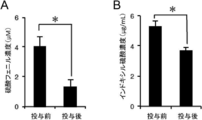
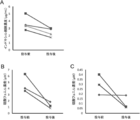
- FIGS. 1A-C show the preparation of plasma samples from obese diabetic model mice (db / db mice) before, after and after administration of L-meta (m) -tyrosine.
- FIG. 2 is a graph showing the results of measuring the concentrations of symptomatic substances (phenyl sulfate [FIG. 1A], para [p] -cresyl sulfate [FIG. 1B], and indoxyl sulfate [FIG. 1C]).
- FIG. 1D is a diagram showing the results of preparing urine samples from db / db mice before administration, after administration of Lm-tyrosine, and after withdrawal, and measuring the concentration of albumin in urine.
- the albumin / creatinine correction value on the vertical axis represents the relative value of the urinary albumin concentration with respect to the urinary creatinine concentration.
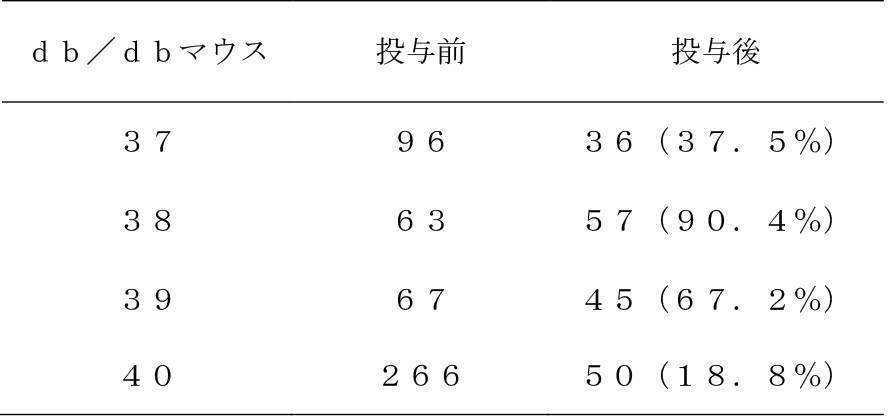
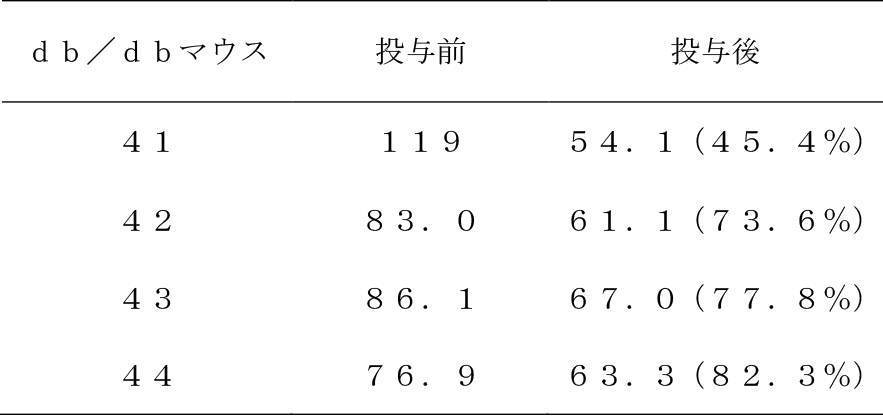
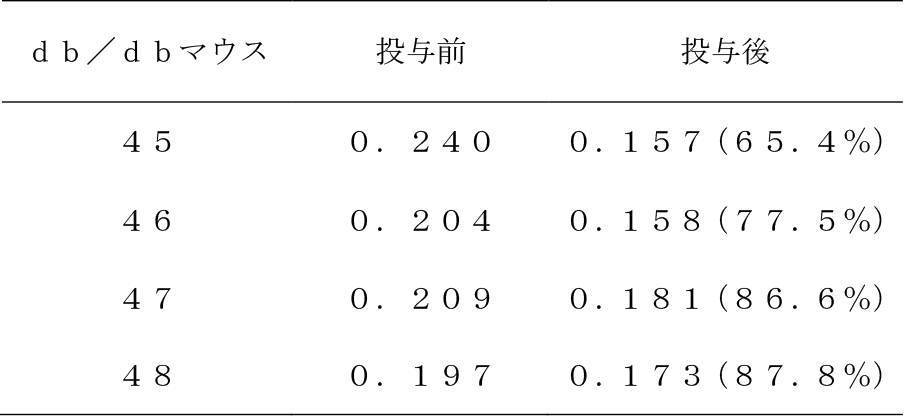
- FIGS. 3A and C show that plasma samples were prepared from db / db mice before and after administration of 2-aza-DL-tyrosine, and the two uremic agents (creatinine [FIG. 3A] and 1-methyl It is a figure which shows the result of having measured the density
- FIGS. 3B and D show that urine samples were prepared from db / db mice before and after 2-aza-DL-tyrosine administration, and the two uremic substances (creatinine [FIG. 3B] and 1-methyl It is a figure which shows the result of having measured the density
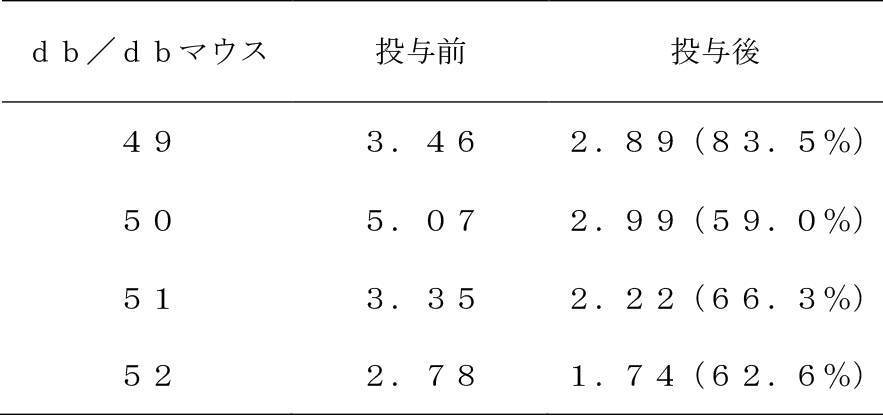
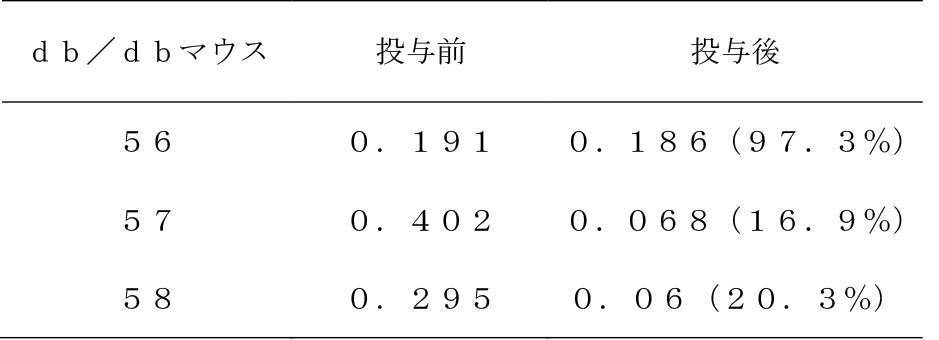
- FIG. 4A and B show the preparation of plasma samples from db / db mice before and after administration of 2-aza-DL-tyrosine, and the two uremic substances (indoxyl sulfate [FIG. 4A] and sulfate in plasma). It is a figure which shows the result of having measured the density
- FIG. 4C is a diagram showing the results of preparing urine samples from db / db mice before and after administration of 2-aza-DL-tyrosine and measuring the concentration of uremic substance (phenyl sulfate) in urine. .
- FIG. 5B is a diagram showing the results of measuring the concentration of creatinine [FIG. 5C]. “*” In the figure indicates that Tukey's test has a statistically significant difference (p ⁇ 0.05).
- FIG. 5D is a graph showing the results of preparing urine samples from db / db mice before and after administration of 2-aza-DL-tyrosine and measuring the concentration of albumin in urine.
- the albumin / creatinine correction value on the vertical axis represents the relative value of the urinary albumin concentration with respect to the urinary creatinine concentration.
- Four types of groups normal rearing group [“NC” in the figure]], 2-aza-DL-tyrosine administration normal rearing group [“NA” in the figure], adenine food rearing group [“CC” in the figure], And 2-aza-DL-tyrosine-administered adenine diet-fed group [“CA” in the figure]), and prepared four types of uremic substances (phenyl sulfate [FIG. 6A], indoxyl sulfate [ FIG. 6B] shows the results of measuring the concentrations of trimethylamine-N-oxide [TMAO] [FIG.
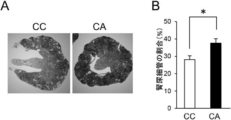
- Kidneys were collected from two types of groups (adenine diet-fed group [“CC” in the figure] and 2-aza-DL-tyrosine-administered adenine diet-fed group [CA] in the figure]), and Masson Trichrome It is a figure which shows the result (FIG. 7B) which measured the microscope image (FIG. 7A) which carried out the tissue staining by the dyeing
- the agent for reducing blood uremic substance according to the present invention comprises, as an active ingredient, one or more compounds selected from tyrosine having a limited use of “to reduce blood uremic substance”. Containing the agent (hereinafter sometimes referred to as “the present reducing agent”), and the preventive or ameliorating agent for uremia of the present invention has a limited use of “to prevent or improve uremia”
- An agent containing one or more compounds selected from tyrosine as an active ingredient hereinafter sometimes referred to as “the present prevention / amelioration agent” (these agents are collectively referred to as “the present agent”) Sometimes).
- this drug has specific functions such as health supplements, health functional foods, and supplements. Also included are pharmaceutical-like (food) compositions and functional foods consumed for the purpose of maintaining health.
- uremic substance also referred to as“ uremic toxin ” is a substance excreted by normal kidneys (such as waste products and toxins) and excreted for some reason such as decreased renal function. It means a substance that increases (accumulates) in the blood and causes uremia symptoms or diseases when the function is reduced.
- “Uremic substances” are generally classified into three categories: water-soluble low-molecular substances (500 daltons or less), medium-molecular substances (greater than 500 daltons), and protein-binding substances (document “Vanholder, R. , Et al: Kidney Int., 63 (5): 1934-1943, 2003 ").
- water-soluble low molecular weight substance examples include 1-methyladenosine, 1-methylguanosine, 1-methylinosine, ADMA (Asymmetric dimethylarginine), ⁇ -keto- ⁇ -guanidinovaleric acid, ⁇ -N-acetylarginine, arabitol, arginic acid, benzyl alcohol ), ⁇ -guanidinopropionic acid, ⁇ -lipotropin, creatine, creatinine, cytidine, dimethylglycine, erythritol, ⁇ -Guanidinobutyric acid, guanidine, guanidinoacetic acid, guanidine Nijinokohaku acid (Guanidonosuccinic acid), hypoxanthine (Hypoxanthine), malondialdehyde (Malondialdehyde), mannitol (Mannitol), methyl guanidine (Methylguanidine), myo-inositol (
- adrenomedullin (Adrenomedullin), atrial natriuretic peptide (Atrial Natriuretic Peptide; ANP), ⁇ 2 - microglobulin ( ⁇ 2 -microglobulin), ⁇ - endorphin (beta- endorphin), cholecystokinin, CC16 (Clara cell protein), complement factor D, cystine C, degranulation inhibiting protein 1, delta sleep-inducing peptide (Delta-sleep inducing peptide), Endothelin, Hyaluronic acid, Interleukin-1 ⁇ , Interleukin-6, ⁇ -Ig light chain ( ⁇ -Ig light chain), ⁇ -Ig light chain, leptin, methionine-enkephalin, nerve pep De (Neuropeptide), parathyroid hormone (Parathyroid hormone), retinol binding protein (Retinol-binding protein), such as tumor
- protein-binding substance examples include 2-methoxyresorcinol, 3-deoxyglucosone, and CMPF (3-Carboxy-4-methyl-5-propyl-2-furanpropionate).
- the uremic substance in the present invention is 1 selected from p-cresyl sulfate, phenyl sulfate, indoxyl sulfate, 1-methyladenosine, creatinine, TMAO, and precursors thereof (p-cresol, phenol, and indole). Or 2 or more types of substances are preferable.
- “reduction of blood uremic substance” means that the production (generation) of the uremic substance or its precursor is suppressed, the discharge of the uremic substance or its precursor is promoted to the outside of the body, and the like. This means that the concentration of uremic substances contained in the substance is reduced (decreased).
- tyrosine means a compound represented by the following general formula (I) and pharmacologically acceptable salts and esters thereof.
- any one of X 1 to X 5 represents C—OH, and the remaining four independently represent C—H or N.
- the compound represented by the above general formula (I) has optical activity, and may be any of DL (racemic), D and L forms, all of which are included in the tyrosine of the present invention.
- any of ortho (o) -tyrosine, meta (m) -tyrosine, and para (p) -tyrosine can be used.
- Specific examples of the tyrosine of the present invention include L-o-tyrosine, Lm-tyrosine, Lp-tyrosine, DL-o-tyrosine, DL-m-tyrosine, DL-p-tyrosine, D- o-tyrosine, Dm-tyrosine, Dp-tyrosine, 2-aza-L-tyrosine, 3-aza-L-tyrosine, 2-aza-DL-tyrosine, 3-aza-DL-tyrosine, 2- Aza-D-tyrosine, 3-aza-D-tyrosine and the like can be mentioned, and Lm-tyrosine and / or 2-aza-DL-tyrosine are preferable.
- the “pharmacologically acceptable salt of the compound represented by the general formula (I)” of the present invention is not particularly limited, and examples thereof include hydrochloride, hydrobromide, hydroiodide, and nitrate. , Sulfates, phosphates and other inorganic acid salts; oxalate, malonate, maleate, fumarate, lactate, malate, citrate, tartrate, benzoate, trifluoroacetic acid Organic salts such as salts, acetates, methanesulfonates, p-toluenesulfonates, trifluoromethanesulfonates; alkali metal salts such as sodium salts and potassium salts; alkaline earth metals such as calcium salts and magnesium salts Salt; ammonium salt; amino acid salts such as aspartate, glutamate, lysine salt, arginine salt, histidine salt and the like.
- the “pharmacologically acceptable ester of the compound represented by the general formula (I)” of the present invention is hydrolyzed in the body such as in the stomach or blood to give the compound represented by the general formula (I). Any tyrosine and ethanol ester, tyrosine and n-propanol ester, tyrosine and i-propanol ester, tyrosine and ethylene glycol ester, tyrosine and glycerin ester And so on.
- the present agent can be used as a pharmaceutically acceptable carrier, binder, stabilizer, excipient, diluent, pH buffer, disintegrant, isotonic agent, additive, coating agent,
- examples may include those in which compounding components such as a solubilizer, a lubricant, a lubricant, a solubilizer, a lubricant, a flavor, a sweetener, a solvent, a gelling agent, and a nutrient are further added.
- ingredients include water, saline, animal fats and oils, vegetable oils, lactose, starch, gelatin, crystalline cellulose, gum, talc, magnesium stearate, hydroxypropyl cellulose, polyalkylene glycol, Polyvinyl alcohol and glycerin can be exemplified.
- the uremic disease that is the disease to be prevented or ameliorated by the present preventive / ameliorating agent includes the above uremic substances (preferably p-cresyl sulfate, phenyl sulfate, indoxyl sulfate, 1-methyladenosine, creatinine, and precursors thereof.
- Any symptom or disease caused by the body is not particularly limited, and examples of the symptom or disease include anorexia and nausea Digestive system abnormalities such as vomiting, bad breath, stomatitis, enteritis; nervousness such as greed, indifference, poor memory, depression, somnolence, coma, polyneuritis, (developmental) coordination movement disorder, anorexia Abnormal; Arteriosclerosis, anemia, erythropoiesis disorder, hypertension, ischemic heart disease, pericarditis, myocarditis, (blood) clotting abnormality, heart failure, cardiovascular disorder, etc .; pigmentation, pruritus ( ), Subcutaneous bleeding, skin atrophy, infection, atopy, hair loss and other skin abnormalities (diseases); albuminuria, acute renal failure, acute tubular necrosis, renal anemia, chronic renal failure, tubulointerstitial disorder, acute nephritis
- Digestive system abnormalities such as vomiting, bad breath, stomatitis
- Or diseases such as ulcerative colitis and Crohn's disease; arteriosclerosis-related diseases; autoimmune diseases such as lupus, scleroderma and rheumatism; obesity; metabolic syndrome; diabetes; autism; Parkinson's disease; Disease; also includes sarcopenia.
- the dosage form of this preparation includes oral administration in the form of powder, granules, tablets, capsules, syrups, suspensions, etc., and injection or spraying of dosage forms such as solutions, emulsions, suspensions, etc.
- Examples of the dosage form include parenteral administration administered intranasally, and oral administration is preferred.
- the dosage of the drug is appropriately determined according to age, body weight, sex, symptoms, sensitivity to the drug, etc., and is, for example, in the range of 0.1 ⁇ g to 200 mg / kg (body weight) / day.
- a dose of 10 to 50 mg / kg / day of Lm-tyrosine or a 3 to 5 mg / kg (body weight) / day of 2-aza-DL- The dosage of tyrosine, ie 3-50 mg / kg / day of tyrosine, is specifically shown.
- the dose of the agent is preferably 0.01 to 100 mg / kg / day, more preferably 0.03 to 60 mg / kg / day, still more preferably 0.06 to 30 mg / kg / day, 1 to 10 mg / kg / day is even more preferred, and 0.2 to 6.0 mg / kg / day is most preferred.
- the agent may be administered once or a plurality of times (for example, 2 to 4 times) per day.
- the subject of administration of this drug is not particularly limited.
- the concentration of the uremic substance in the blood is usually caused by a person who needs to reduce the blood uremic substance, specifically due to a decrease in renal function. Those who have increased (increased) or who have accumulated uremic substances in the body.
- the present reducing agent other than tyrosine, it may contain a component for reducing blood uremic substance, but even tyrosine alone has an excellent effect of reducing blood uremic substance, Those which do not contain components that reduce blood uremic substances (eg, proteins, DNA, RNA, plant-derived extracts, polymers) other than tyrosine are preferable.
- the present preventive / ameliorating agent may contain a component for preventing or improving uremia other than tyrosine, but tyrosine alone alone is effective for preventing or improving uremia.
- those that do not contain components for preventing or improving uremia for example, protein, DNA, RNA, plant-derived extract, polymer are preferable.
- Tyrosines can be produced by any known method such as chemical synthesis, production by microorganisms, production by enzymes, etc., but commercially available products can also be used.
- Lm-tyrosine when Lm-tyrosine is used as the tyrosine, commercially available products such as those manufactured by Santa Cruz (catalog #; sc-358267) and Watanabe Chemical Industries (code number: H00219) can be mentioned.
- m-tyrosine commercially available products such as those manufactured by Santa Cruz (catalog #; sc-207493) and Sigma-Aldrich (product number: T3629) can be used.
- 2-aza-L-tyrosine When 2-aza-L-tyrosine is used as the tyrosine, it can be produced by the method described in the document “J. ⁇ Org. Chem. 1996, 61, 813-815 ”. When 2-aza-DL-tyrosine is used as the tyrosine, it can be produced according to the method described in the literature “Biochemistry 2001, 40, 14862-14868”.
- [Lm-tyrosine] [Method 1] Blood samples and urine samples were collected from 10 tail-bred / individually-bred 9-week-old db / db mice (BKS. Cg Leprdbm / Jcl male, Japan Claire) from the tail vein (pre-dose samples). Thereafter, the amount of water consumed every 24 hours is measured to calculate the average daily amount of water consumed, and Lm-tyrosine (Astatech) is added to the water bottle so that the dose is 50 mg / kg (body weight) / day. It was dissolved in water and administered for 10 days from the age of 10 weeks. After administration for 10 days, the animals were reared with normal water again for 10 days. Blood samples and urine samples (sample after administration) were collected on the 10th day after administration, and blood samples and urine samples (sample after withdrawal) were collected on the 10th day after administration was discontinued.
- Plasma was prepared from blood samples before and after administration and after drug withdrawal according to a conventional method, followed by liquid chromatography-tandem mass spectrometer (LC-MS / MS) (LC: NANOSPACENOSI-2 [manufactured by SHISEIDO), MS / MS: TSQ® Quantum® Ultra (manufactured by Thermo Fisher® Scientific) was used to measure the concentrations of phenyl sulfate, p-cresyl sulfate, and indoxyl sulfate in plasma (FIGS. 1A to 1C, Tables 1 to 3).
- urine albumin concentration was measured by Turbididimetric ImmunoAssay Kit (Levis, albumin-mouse) using urine samples before and after administration and after withdrawal (FIG. 1D, Table 4).
- tyrosine such as Lm-tyrosine reduces uremic substances (phenyl sulfate, p-cresyl sulfate, indoxyl sulfate, etc.) accumulated in the blood due to decreased renal function, and diabetic nephropathy It shows that it has the effect of improving renal dysfunction such as the above, and is effective in improving symptoms and diseases caused by uremic substances, that is, uremia.
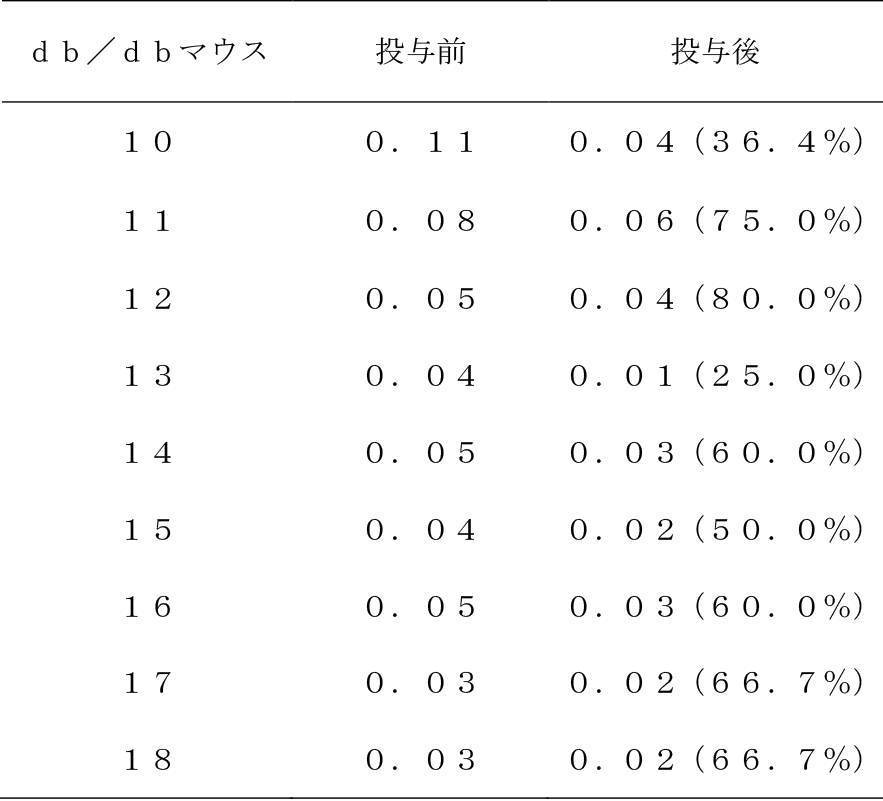
- the table shows the p-cresyl sulfate concentration ( ⁇ g / mL) in plasma.
- the numerical value in parentheses indicates a relative value (%) when the value “before administration” is 100%.
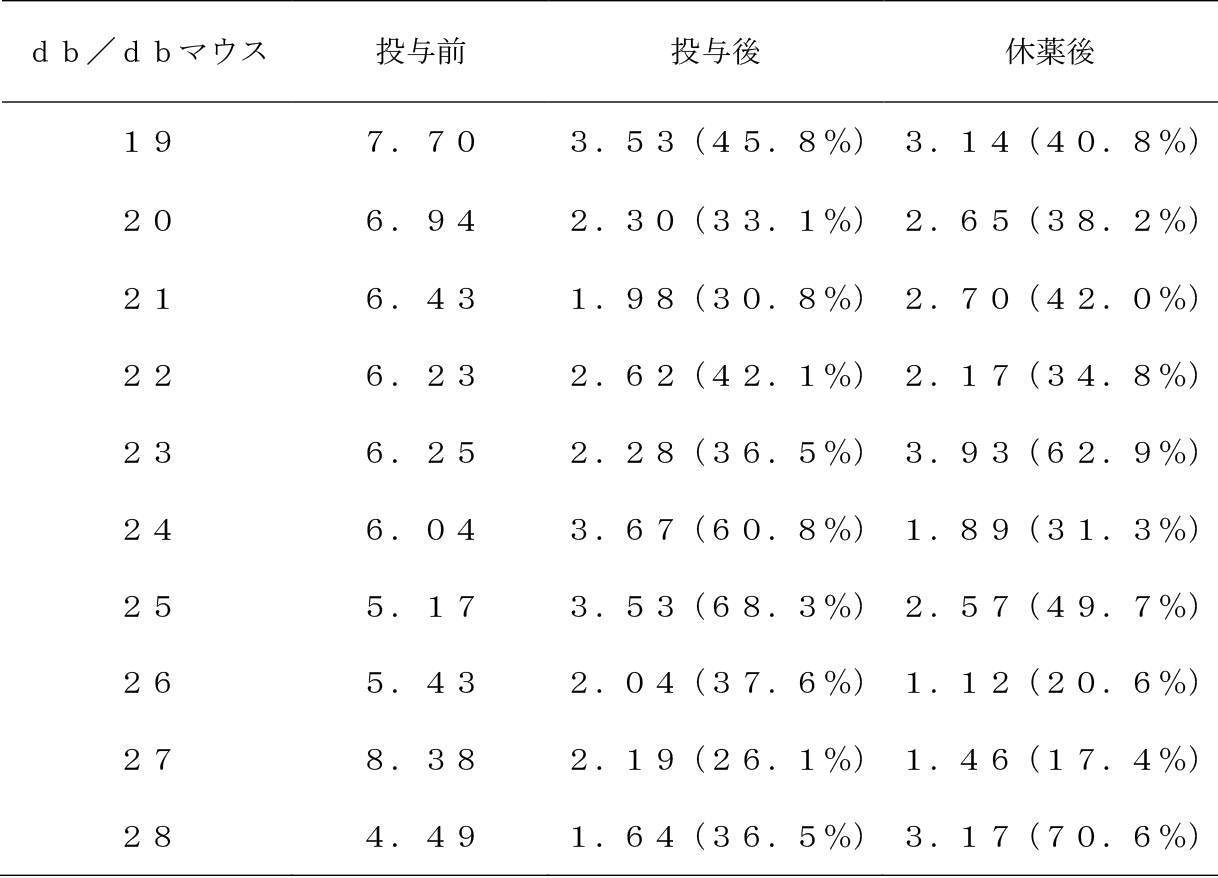
- indoxyl sulfate concentration ( ⁇ g / mL) in plasma is shown.
- the numerical value in parentheses indicates a relative value (%) when the value “before administration” is 100%.
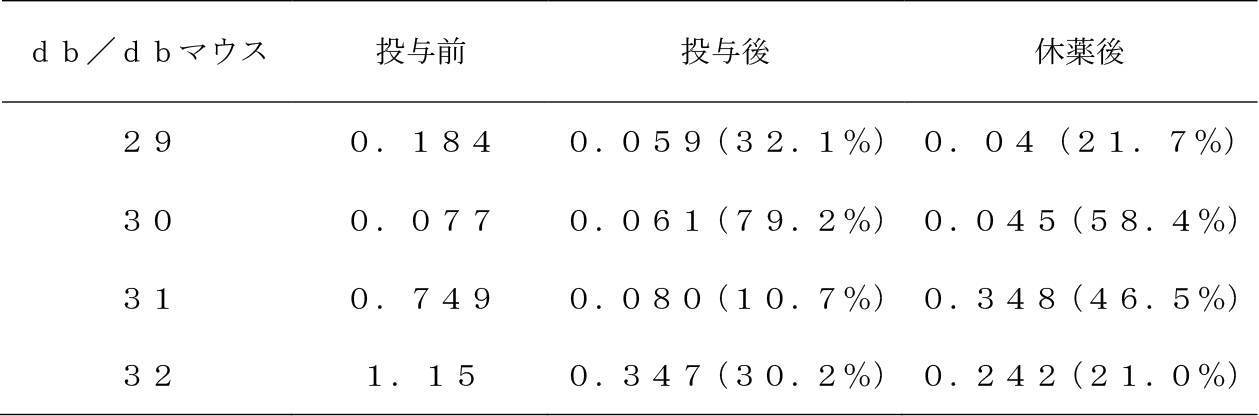
- the table shows the relative value of urinary albumin concentration with respect to urinary creatinine concentration.
- the numerical value in parentheses indicates a relative value (%) when the value “before administration” is 100%.
- [2-aza-DL-tyrosine] [Method 3] Blood samples and urine samples were collected from the tail vein from four 9 to 10-week-old db / db mice (BKS. Cg Leprdb m / Jcl male, Claire, Japan), both normal and individually bred (pre-dose samples). Thereafter, the amount of water consumed every 24 hours is measured to calculate the average daily amount of water consumed, and 2-aza-DL-tyrosine is dissolved in water in the water bottle so that the dose is 5 mg / kg (body weight) / day. Then, it was administered for 10 days from the age of 10 weeks. On day 10 of administration, blood samples and urine samples (samples after administration) were collected. Incidentally, 2-aza-DL-tyrosine was produced according to the method described in the document “Biochemistry 2001, 40, 14862-14868”.
- the concentrations of creatinine, 1-methyladenosine, indoxyl sulfate, and phenyl sulfate in plasma were measured using LC-MS / MS (FIG. 3 and FIG. 3). 4, Tables 5-11).
- urine specimens before and after administration were diluted 10-fold, and then the concentrations of creatinine, 1-methyladenosine, and phenyl sulfate in urine were measured using LC-MS / MS.
- creatinine concentration ( ⁇ M) in plasma is shown.
- the numerical value in parentheses indicates a relative value (%) when the value “before administration” is 100%.
- creatinine concentration in urine ( ⁇ M) is shown.
- the numerical value in parentheses indicates a relative value (%) when the value “before administration” is 100%.
- plasma 1-methyladenosine concentration (ng / mL) is shown.
- the numerical value in parentheses indicates a relative value (%) when the value “before administration” is 100%.
- the table shows the urinary 1-methyladenosine concentration (ng / mL).
- the numerical value in parentheses indicates a relative value (%) when the value “before administration” is 100%.
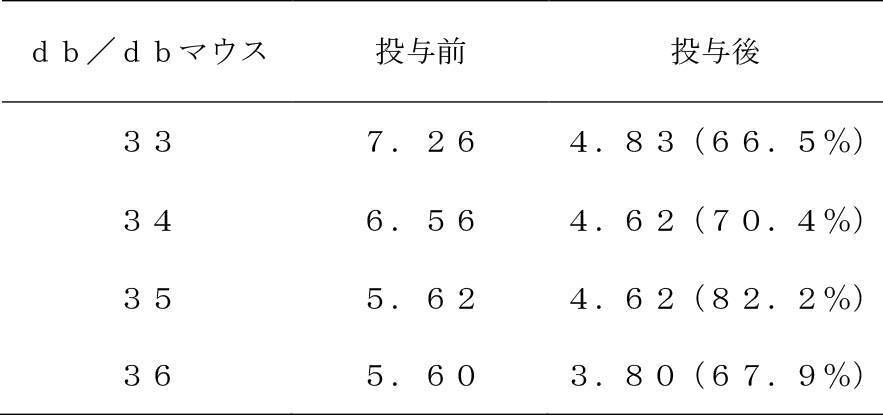
- indoxyl sulfate concentration ( ⁇ g / mL) in plasma is shown.
- the numerical value in parentheses indicates a relative value (%) when the value “before administration” is 100%.
- urine phenyl sulfate concentration ( ⁇ M) is shown.
- the numerical value in parentheses indicates a relative value (%) when the value “before administration” is 100%.
- urinary albumin concentration in db / db mice increased when 2-aza-DL-tyrosine was not administered, whereas such increase was suppressed by administration of 2-aza-DL-tyrosine ( FIG. 5D).
- tyrosine such as 2-aza-DL-tyrosine has an effect of reducing blood uremic substances, and significantly reduces blood creatinine levels, which are indicators of renal function. Because it lowers or suppresses the increase in urinary albumin level, a nephroprotective effect is expected.
- adenine dietary renal failure model mice In order to confirm that tyrosine has the effect of reducing blood uremic substances, model mice that develop chronic renal failure by feeding on adenine (hereinafter referred to as “adenine dietary renal failure model mice”) ) was administered 2-aza-DL-tyrosine, and the concentration of the blood uremic substance was analyzed.
- the adenine-eating renal failure model mouse is a mouse that causes renal damage by crystallization of ingested adenine as insoluble 2,8-dihydroxyadenine in the tubule (Cozzolino, M. et al. Kidney Int 64, 441-450 (2003), Tamagaki, K. et al. Nephrol. Dial. Transplant 21, 651-659 (2006)).
- the normal rearing group is orally administered with normal water
- the 2-aza-DL-tyrosine group is fed with water containing 2-aza-DL-tyrosine and 2-aza-DL-tyrosine.
- a blood sample and the whole kidney were collected on the 11th day, serum was prepared from the blood sample according to a conventional method, and then LC-MS / MS was used.
- the concentrations of four uremic substances (phenyl sulfate, indoxyl sulfate, TMAO, and creatinine) in serum were measured (FIG. 6).
- the collagen fibers of the kidney were tissue stained using the MTS method (FIG. 7).
- the phenyl sulfate concentration is significantly reduced from 14.45 ⁇ M to 10.92 ⁇ M
- the indoxyl sulfate concentration is significantly decreased from 15.09 ⁇ M to 11.55 ⁇ M
- the TMAO concentration is from 27.75 ⁇ M.
- the creatinine concentration was significantly reduced from 39.13 ⁇ M to 30.71 ⁇ M.
- the ratio of renal tubules in the adenine phagocytic failure model mice administered with 2-aza-DL-tyrosine is the ratio of the adenine phagocytic failure model mice not administered with 2-aza-DL-tyrosine (“CC” in FIG. 7).
- tyrosine such as 2-aza-DL-tyrosine has the effect of reducing uremic substances (phenyl sulfate, indoxyl sulfate, TMAO, and creatinine) accumulated in the blood due to decreased renal function. As well as an effect to improve renal dysfunction such as renal failure. For this reason, tyrosine is considered to be effective in improving symptoms and diseases caused by uremic substances, that is, uremia.
- the present invention contributes to prevention or improvement (treatment) of symptoms or diseases caused by accumulation (increase) of uremic substances in blood.
Landscapes
- Health & Medical Sciences (AREA)
- Animal Behavior & Ethology (AREA)
- Chemical & Material Sciences (AREA)
- Life Sciences & Earth Sciences (AREA)
- Veterinary Medicine (AREA)
- Medicinal Chemistry (AREA)
- Public Health (AREA)
- General Health & Medical Sciences (AREA)
- Pharmacology & Pharmacy (AREA)
- Epidemiology (AREA)
- Organic Chemistry (AREA)
- General Chemical & Material Sciences (AREA)
- Nuclear Medicine, Radiotherapy & Molecular Imaging (AREA)
- Chemical Kinetics & Catalysis (AREA)
- Toxicology (AREA)
- Engineering & Computer Science (AREA)
- Bioinformatics & Cheminformatics (AREA)
- Urology & Nephrology (AREA)
- Pharmaceuticals Containing Other Organic And Inorganic Compounds (AREA)
- Acyclic And Carbocyclic Compounds In Medicinal Compositions (AREA)
Abstract
本発明は、血中尿毒症物質の濃度を効果的に低減(減少)させる作用を有する血中尿毒症物質の低減剤や、尿毒症を効果的に改善する作用を有する尿毒症の予防又は改善剤を提供することを課題とする。 チロシン並びにその薬理学的に許容される塩及びエステルから選択される1種又は2種以上の化合物を有効成分として含有する血中尿毒症物質の低減剤や、尿毒症の予防又は改善剤を、経口投与などの方法により投与すると、血中における尿毒症物質の蓄積(増加)に起因する症状若しくは疾患の予防又は改善(治療)を行うことができる。
Description
本発明は、チロシン並びにその薬理学的に許容される塩及びエステル(以下、これらを総称して「チロシン類」ということがある)からなる群から選択される1種又は2種以上の化合物を有効成分として含有する、血中の尿毒症物質の低減剤や、尿毒症の予防又は改善剤に関する。
腎臓は、体内の恒常性(バランス)を調節する臓器である。腎機能の1つとして、血液中の老廃物や毒素(尿毒症物質)を取り込み、尿中に送り出して体外に排泄する作用がある。かかる腎機能が低下すると、本来腎臓で排泄されるべき尿毒症物質は、体内に蓄積されやすくなり、吐き気や食欲低下等の症状の他、腎臓における細胞が傷害され腎機能のさらなる低下を引き起こす。また、腎機能が低下した者は、健常者と較べ、脳卒中や心筋梗塞に罹患するリスクが高いことも知られている。したがって、このような尿毒症物質の蓄積により引き起こされる症状や疾患(尿毒症)を予防又は治療することは、吐き気や食欲低下等の症状や、腎障害の悪化を治療するだけでなく、脳卒中や心臓病を予防する観点からも必要となる。
透析は、尿毒症の最も有効な治療法とされている。実際、透析療法で尿毒症物質を体外に排出すれば、仮に腎機能が廃絶したとしても、尿毒症物質による患者の死は避けられる。しかしながら、長期透析により、貧血、腎性骨異栄養症、腎ガン、心外膜炎、アルミニウム骨症、アミロイド症、結晶性関節炎、多発性嚢胞腎などの合併症が新たな問題となっている。さらに、透析施設に頻回に通う患者の社会生活面でのQOL(quality of life)の低下や高額費用の発生など、医療経済上の問題も生じている。
一方、尿毒症物質吸着機能を有する製剤として、活性炭の一種、球形吸着炭クレメジン(登録商標:呉羽化学)が知られている(特許文献1、2)。クレメジンは、石油系炭化水素由来の球形微多孔質炭素を高温で酸化・還元処理して得た黒色球形の粒子であり、体内に吸収されずに、消化管に存在する有害物質を吸着し、便とともに排泄されることにより血中尿毒症物質の除去(低減)及び腎機能の低下を抑える目的で使用される。その他、尿毒症物質吸着機能を有する血中尿毒症物質の低減剤として、カーボンナノチューブ(特許文献3)、尿毒症物質特異的認識ポリマー(特許文献4)等が知られている。しかしながら、チロシン類と血中尿毒症物質の低減作用との関連性についてはこれまで知られていなかった。
本発明の課題は、血中尿毒症物質の濃度を効果的に低減(減少)させる作用を有する、血中尿毒症物質の低減剤や、尿毒症を効果的に改善する作用を有する、尿毒症の予防又は改善剤を提供することにある。
本発明者は、上記課題を解決すべく鋭意研究を続けている。その過程において、チロシン類が、血中尿毒症物質の濃度を効果的に低減させる作用を有すること、及び尿毒症を効果的に改善する作用を有することを見いだし、本発明を完成するに至った。
すなわち、本発明は、以下のとおりである。
〔1〕チロシン並びにその薬理学的に許容される塩及びエステルからなる群から選択される1種又は2種以上の化合物を有効成分として含有することを特徴とする血中尿毒症物質の低減剤。
〔2〕経口投与することを特徴とする上記〔1〕に記載の低減剤。
〔3〕化合物が、L-m-チロシン又は2-アザ-DL-チロシンであることを特徴とする上記〔1〕又は〔2〕に記載の低減剤。
〔4〕尿毒症物質が、p-クレシル硫酸、硫酸フェニル、インドキシル硫酸、1-メチルアデノシン、クレアチニン、トリメチルアミン-N-オキシド、p-クレゾール、フェノール、及びインドールから選択される1又は2種以上の物質であることを特徴とする上記〔1〕~〔3〕のいずれかに記載の低減剤。
〔5〕チロシン並びにその薬理学的に許容される塩及びエステルからなる群から選択される1種又は2種以上の化合物を有効成分として含有することを特徴とする尿毒症の予防又は改善剤。
〔6〕経口投与することを特徴とする上記〔5〕に記載の予防又は改善剤。
〔7〕化合物が、L-m-チロシン又は2-アザ-DL-チロシンであることを特徴とする上記〔5〕又は〔6〕に記載の予防又は改善剤。
〔8〕尿毒症が、p-クレシル硫酸、硫酸フェニル、インドキシル硫酸、1-メチルアデノシン、クレアチニン、トリメチルアミン-N-オキシド、p-クレゾール、フェノール、及びインドールから選択される1又は2種以上の物質に起因する症状又は疾患であることを特徴とする上記〔5〕~〔7〕のいずれかに記載の予防又は改善剤。
また本発明の実施の他の形態として、チロシン類から選択される1種又は2種以上の化合物を、血中尿毒症物質の低減を必要とする患者に投与することにより、血中尿毒症物質を低減する方法や、血中尿毒症物質の低減剤として使用するための、チロシン類から選択される1種又は2種以上の化合物や、血中尿毒症物質の低減における使用のための、チロシン類から選択される1種又は2種以上の化合物や、血中尿毒症物質の低減剤を製造するための、チロシン類から選択される1種又は2種以上の化合物の使用を挙げることができる。
また本発明の実施の他の形態として、チロシン類から選択される1種又は2種以上の化合物を、血中尿毒症物質の低減を必要とする患者に投与することにより、尿毒症を予防又は改善(治療)する方法や、尿毒症の予防又は改善(治療)剤として使用するための、チロシン類から選択される1種又は2種以上の化合物や、尿毒症の予防又は改善(治療)における使用のための、チロシン類から選択される1種又は2種以上の化合物や、尿毒症の予防又は改善(治療)剤を製造するための、チロシン類から選択される1種又は2種以上の化合物の使用を挙げることができる。
本発明によると、血中の尿毒症物質濃度の増加(上昇)を減少(抑制)又は予防し、血中の尿毒症物質濃度を正常値に調節することができるため、尿毒症の予防又は改善(治療)に有用である。
本発明の血中尿毒症物質の低減剤は、「血中の尿毒症物質を低減するため」という用途が限定された、チロシン類から選択される1種又は2種以上の化合物を有効成分として含有する剤(以下、「本件低減剤」ということがある)であり、また、本発明の尿毒症の予防又は改善剤は、「尿毒症を予防又は改善するため」という用途が限定された、チロシン類から選択される1種又は2種以上の化合物を有効成分として含有する剤(以下、「本件予防/改善剤」ということがある)である(これら剤を総称して、「本件剤」ということがある)。本件剤には、医薬品(血中尿毒症物質の低減用製剤、尿毒症の予防用又は改善[治療]用製剤)の他、健康補助食品、保健機能食品、サプリメント等の特定の機能を有し、健康維持などを目的として摂食される医薬品類似の(食品)組成物や機能性食品も含まれる。
本発明において、「尿毒症物質(「尿毒症性毒素」ともいう)」とは、正常な腎により排泄される物質(老廃物や毒素等)であって、腎機能低下等の何らかの原因により排泄機能が低下したときに、血中に増加(蓄積)して尿毒症の症状又は疾患を引き起こす物質を意味する。「尿毒症物質」は、通常、水溶性低分子型物質(500ダルトン以下)、中分子型物質(500ダルトン超)、及び蛋白結合型物質の3つに分類される(文献「Vanholder, R., et al: Kidney Int., 63 (5): 1934-1943, 2003」)。
上記水溶性低分子型物質としては、具体的に、1-メチルアデノシン(1-methyladenosine)、1-メチルグアノシン(1-methylguanosine)、1-メチルイノシン(1-methylinosine)、ADMA(Asymmetric dimethylarginine)、α-ケト-δ-グアニジノ吉草酸(α-keto-δ-guanidinovaleric acid)、α-N-アセチルアルギニン(α-N-acetylarginine)、アラビトール(Arabitol)、アルギニン酸(Argininic acid)、ベンジルアルコール(Benzylalcohol)、β-グアニジノプロピオン酸(β-guanidinopropionic acid)、β-リポトロピン(β-lipotropin)、クレアチン(Creatine)、クレアチニン(Creatinine)、シチジン(Cytidine)、ジメチルグリシン(Dimethylglycine)、エリスリトール(Erythritol)、γ-グアニジノ酪酸(γ-guanidinobutyric acid)、グアニジン(Guanidine)、グアニジノ酢酸(Guanidinoacetic acid)、グアニジノコハク酸(Guanidonosuccinic acid)、ヒポキサンチン(Hypoxanthine)、マロンジアルデヒド(Malondialdehyde)、マンニトール(Mannitol)、メチルグアニジン(Methylguanidine)、ミオイノシトール(Myoinositol)、N2,N2-ジメチルグアノシン(N2,N2-dimethylguanosine)、N4-アセチルシチジン(N4-acetylcytidine)、N6-メチルアデノシン(N6-methyladenosine)、N6-スレオニルカルバモイルアデノシン(N6-threonylcarbamoyladenosine)、オロト酸(Orotic acid)、オロチジン(Orotidine)、シュウ酸塩(Oxalate)、フェニルアセチルグルタミン(Phenylacetylglutamine)、プソイドウリジン(Pseudouridine)、SDMA(Symmetric dimethylarginine)、ソルビトール(Sorbitol)、タウロシアミン(Taurocyamine)、トレイトール(Threitol)、チミン(Thymine)、ウラシル(Uracil)、尿素(Urea)、尿酸(Uric acid)、ウリジン(Uridine)、キサンチン(Xanthine)、キサントシン(Xanthosine)、トリメチルアミン-N-オキシド(TMAO;trimethylamine-N-oxide)、4-エチルフェニル硫酸(4-ethylphenylsulfate)などを挙げることができる。
上記中分子型物質としては、具体的に、アドレノメジュリン(Adrenomedullin)、心房性ナトリウム利尿ペプチド(Atrial Natriuretic Peptide;ANP)、β2-マイクログロブリン(β2-microglobulin)、β-エンドルフィン(β-endorphin)、コレシストキニン(Cholecystokinin)、CC16(Clara cell protein)、補体D因子(Complement factor D)、システチンC(Cystatin C)、脱顆粒抑制タンパク質1(Degranulation inhibiting protein 1)、デルタ睡眠誘発ペプチド(Delta-sleep inducing peptide)、エンドセリン(Endothelin)、ヒアルロン酸(Hyaluronic acid)、インターロイキン-1β(Interleukin-1β)、インターロイキン-6(Interleukin-6)、κ-Ig軽鎖(κ-Ig light chain)、λ-Ig軽鎖(λ-Ig light chain)、レプチン(Leptin)、メチオニン-エンケファリン(Methionine-enkephalin)、神経ペプチド(Neuropeptide)、副甲状腺ホルモン(Parathyroid hormone)、レチノール結合タンパク質(Retinol-binding protein)、腫瘍壊死因子(TNF)-α(Tumor necrosis factor-α)などを挙げることができる。
上記蛋白結合型物質としては、具体的に、2-メトキシレゾルシノール(2-methoxyresorcinol)、3-デオキシグルコソン(3-deoxyglucosone)、CMPF(3-Carboxy-4-methyl-5-propyl-2-furanpropionate)、フルクトースリジン(Fructoselysine)、グリオキサール(Glyoxal)、馬尿酸(Hippuric acid)、ホモシステイン(Homocysteine)、ヒドロキノン(Hydroquinone)、インドール-3-酢酸(Indole-3-acetic acid)、インドキシル硫酸(Indoxyl sulfate)又はその前駆体(インドール[Indole])、キヌレニン(Kinurenine)、キヌレン酸(Kynurenic acid)、レプチン(Leptin)、メラトニン(Melatonin)、メチルグリオキサール(Methylglyoxal)、N-カルボキシメチルリジン(N-(carboxymethyl)lysine)、p-クレシル硫酸(p-Cresyl sulfate)又はその前駆体(p-クレゾール[p-Cresol])、ペントシジン(Pentosidine)、硫酸フェニル(Phenyl sulfate)又はその前駆体(フェノール[Phenol])、P-OH-馬尿酸(P-OHhippuric axid)、プトレシン(Putrescine)、キノリン酸(Quinolinic acid)、レチノール結合タンパク質(Retinol-binding protein)、スペルミジン(Spermidine)、スペルミン(Spermine)などを挙げることができる。
本発明における尿毒症物質としては、p-クレシル硫酸、硫酸フェニル、インドキシル硫酸、1-メチルアデノシン、クレアチニン、TMAO、及びこれらの前駆体(p-クレゾール、フェノール、及びインドール)から選択される1又は2種以上の物質が好ましい。
本発明において、「血中尿毒症物質の低減」とは、尿毒症物質又はその前駆体の産生(生成)抑制や、尿毒症物質又はその前駆体の体外への排出促進等の作用により、血液中に含まれる尿毒症物質の濃度が低減(減少)することを意味する。
本発明において、チロシン類とは、下記一般式(I)で表される化合物並びにその薬理学的に許容される塩及びエステルを意味する。
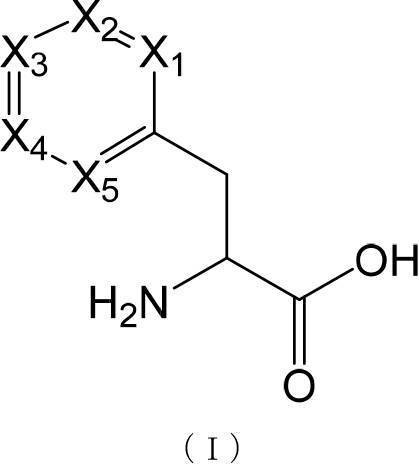
上記一般式(I)で表される化合物は光学活性を有し、DL体(ラセミ体)、D体、L体のいずれであってもよく、すべて本発明のチロシン類に含まれる。
上記式(I)の化合物の-OHの位置として下記の例をあげることができる。

上記3つの式で表される化合物において、置換基を有する環原子を除く4つのすべての環原子がC-Hである化合物(チロシン)及び4個の環原子のうち1つがNを表し、残りの3つはすべてC-Hである化合物(アザチロシン)を以下に例示する。
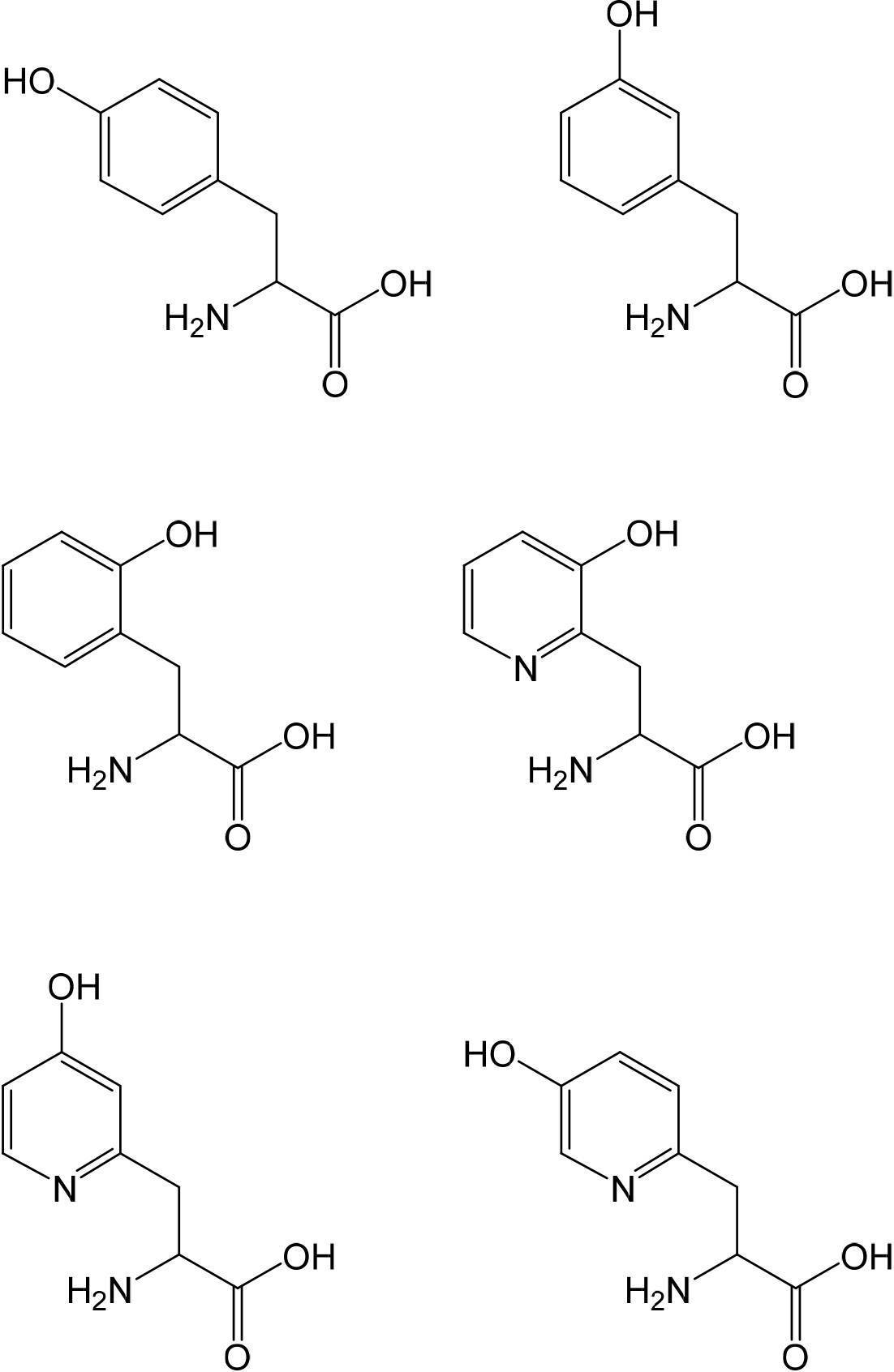
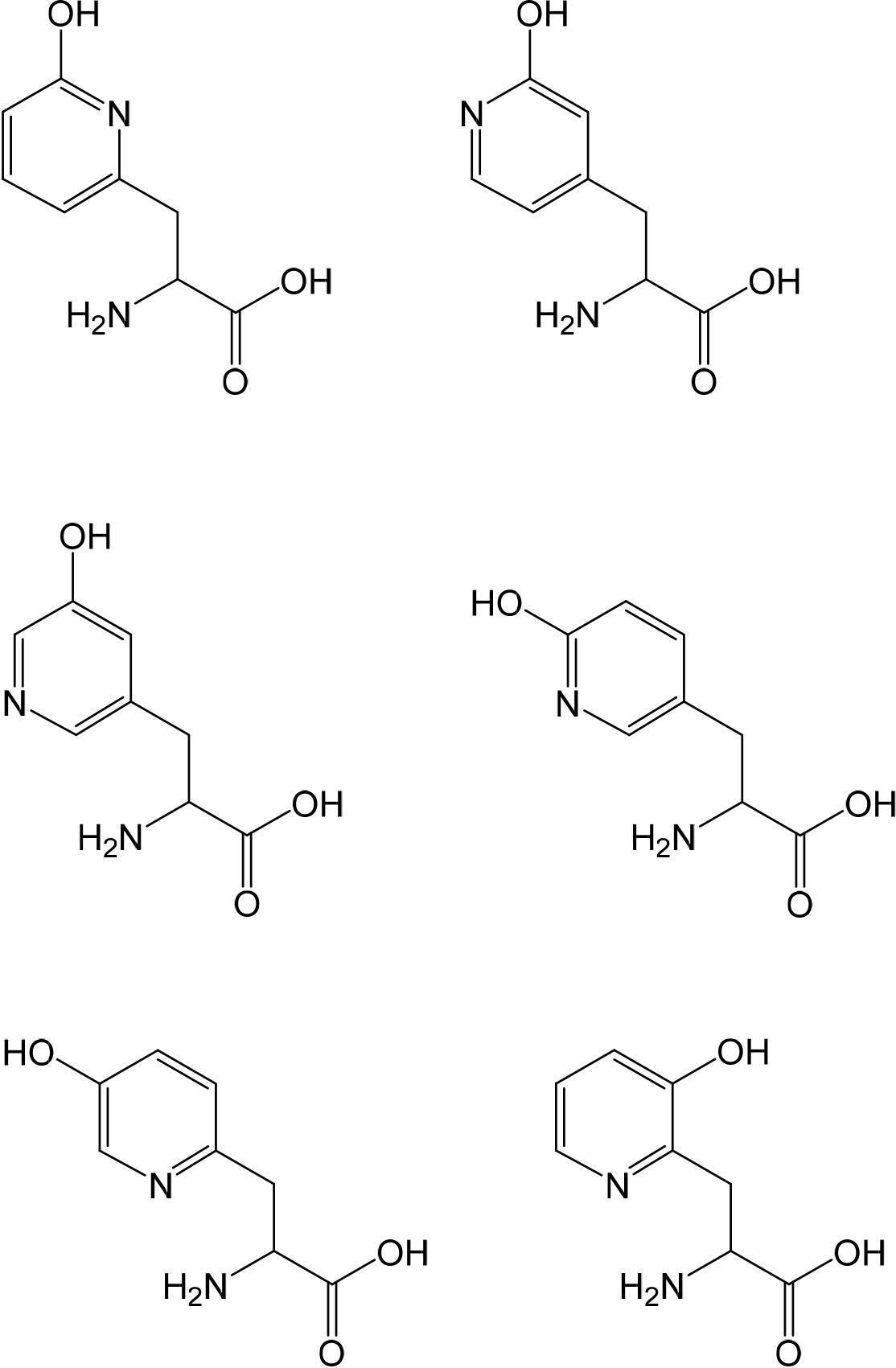
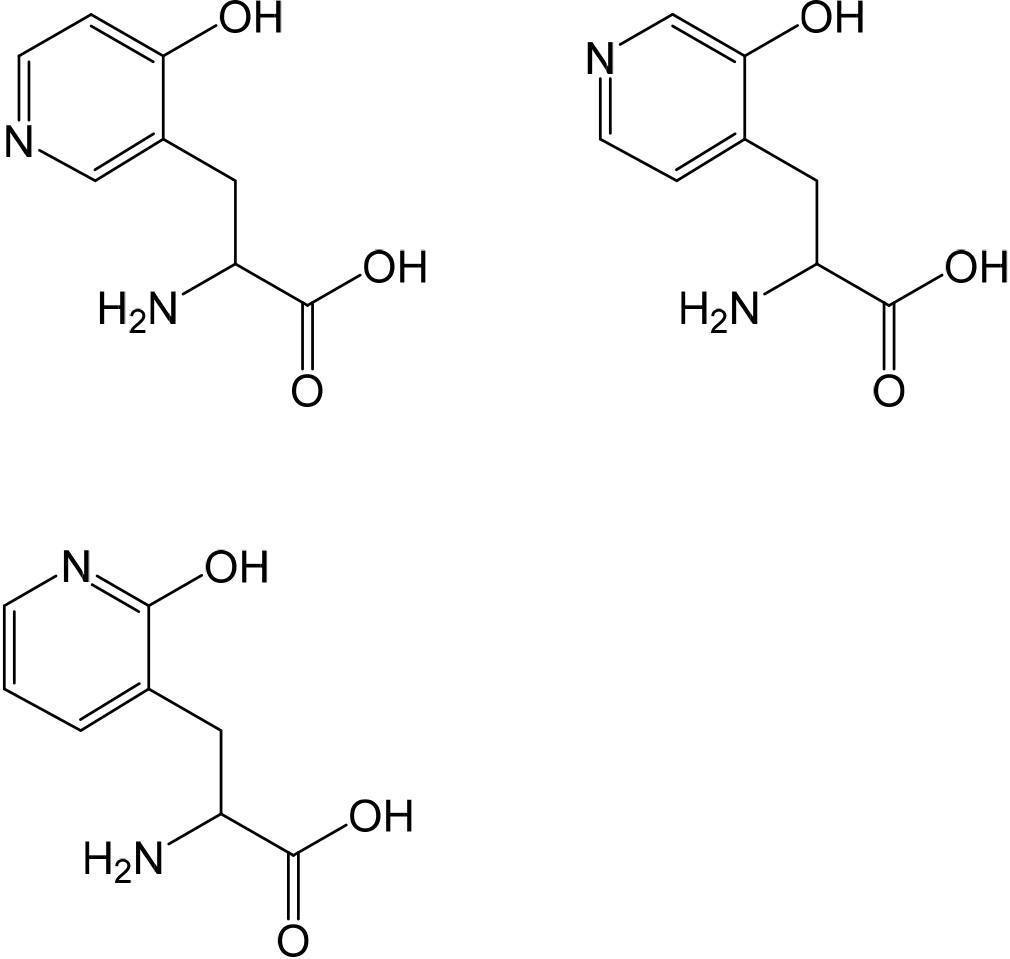
上記化学式から明らかなように、チロシンの場合、オルト(o)-チロシン、メタ(m)-チロシン、パラ(p)-チロシンのいずれも使用することができる。本発明のチロシン類としては、具体的に、L-o-チロシン、L-m-チロシン、L-p-チロシン、DL-o-チロシン、DL-m-チロシン、DL-p-チロシン、D-o-チロシン、D-m-チロシン、D-p-チロシン、2-アザ-L-チロシン、3-アザ-L-チロシン、2-アザ-DL-チロシン、3-アザ-DL-チロシン、2-アザ-D-チロシン、3-アザ-D-チロシン等を挙げることができ、L-m-チロシン及び/又は2-アザ-DL-チロシンが好ましい。
上記以外に、一般式(I)で表される化合物として下記の化合物が例示される。

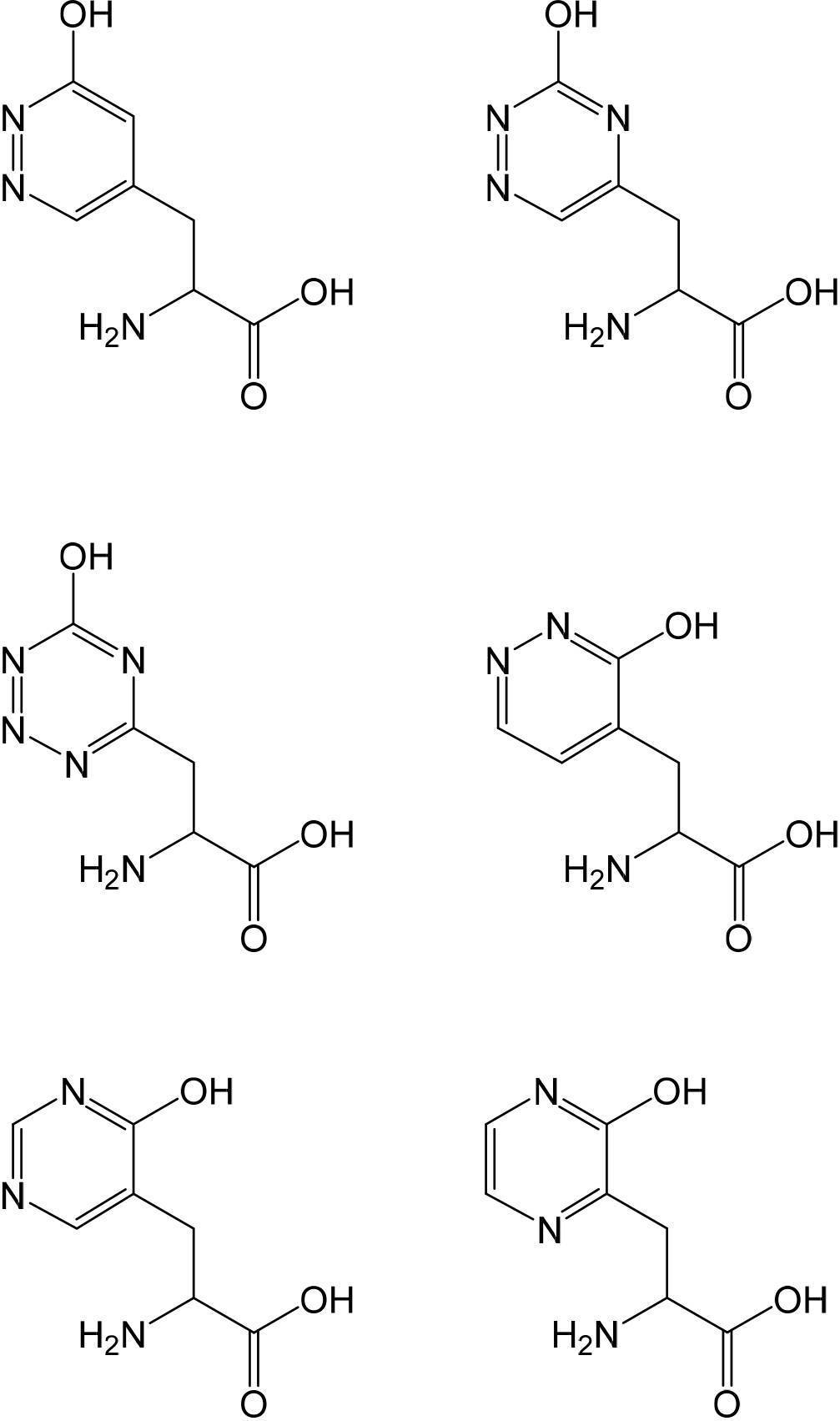
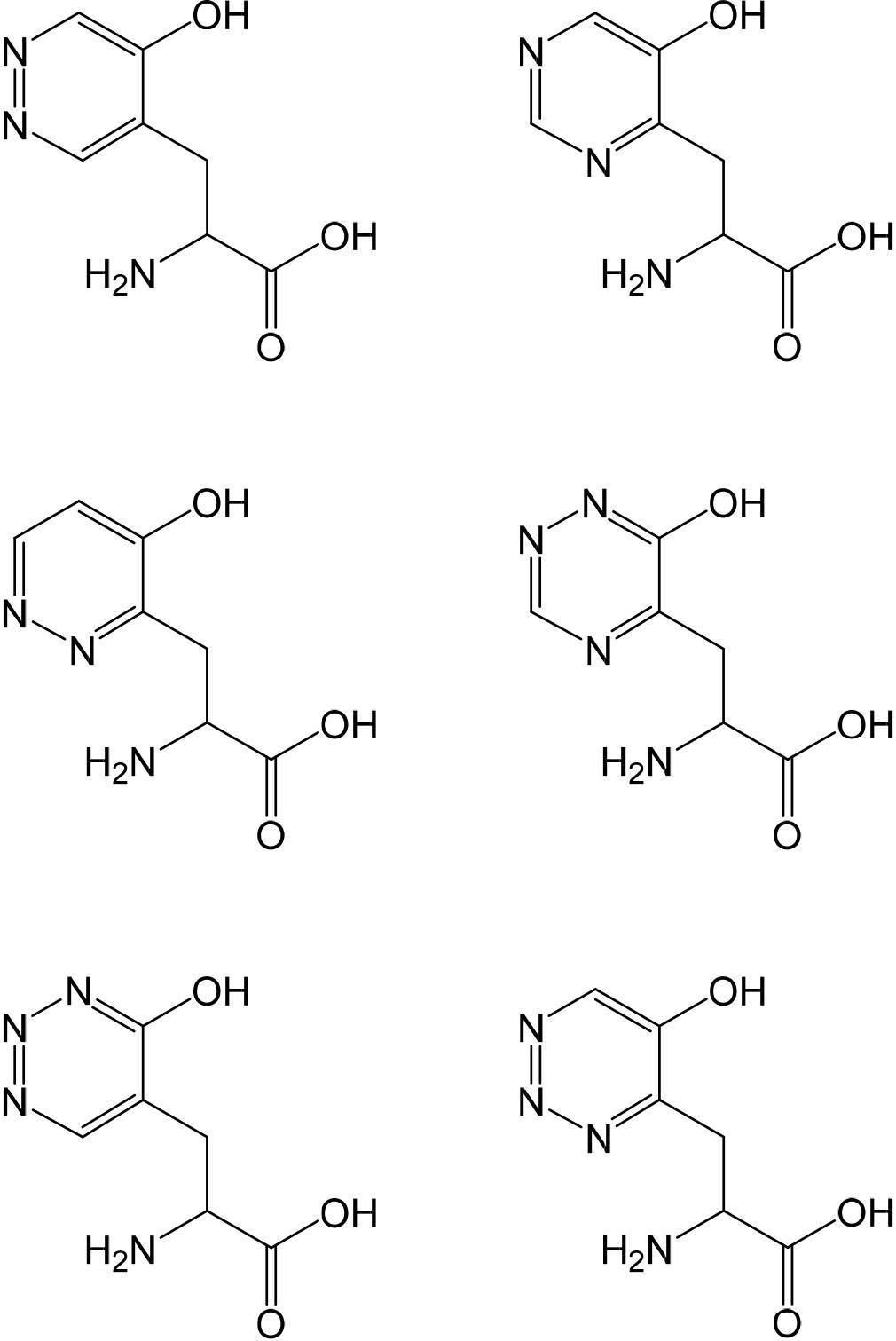
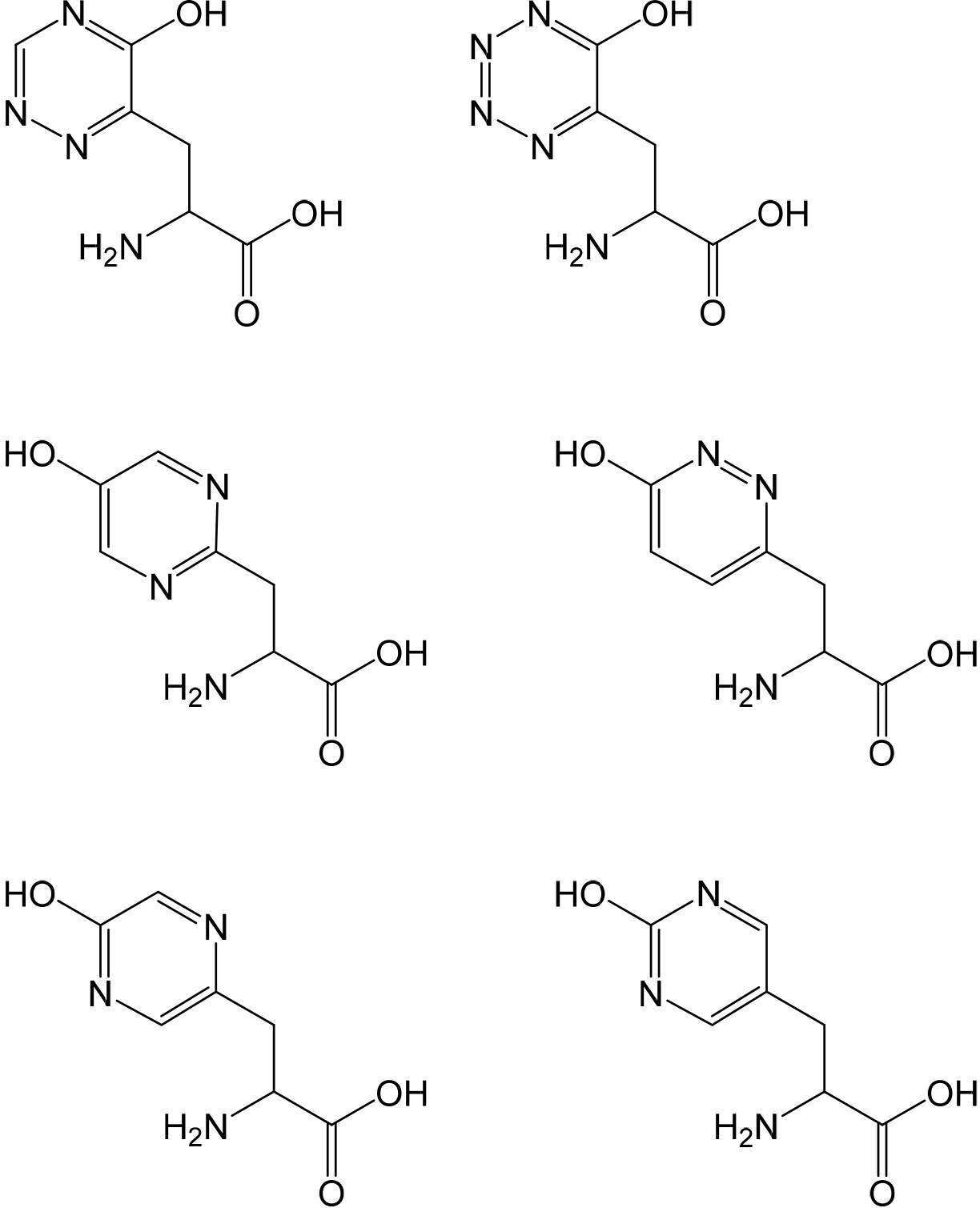
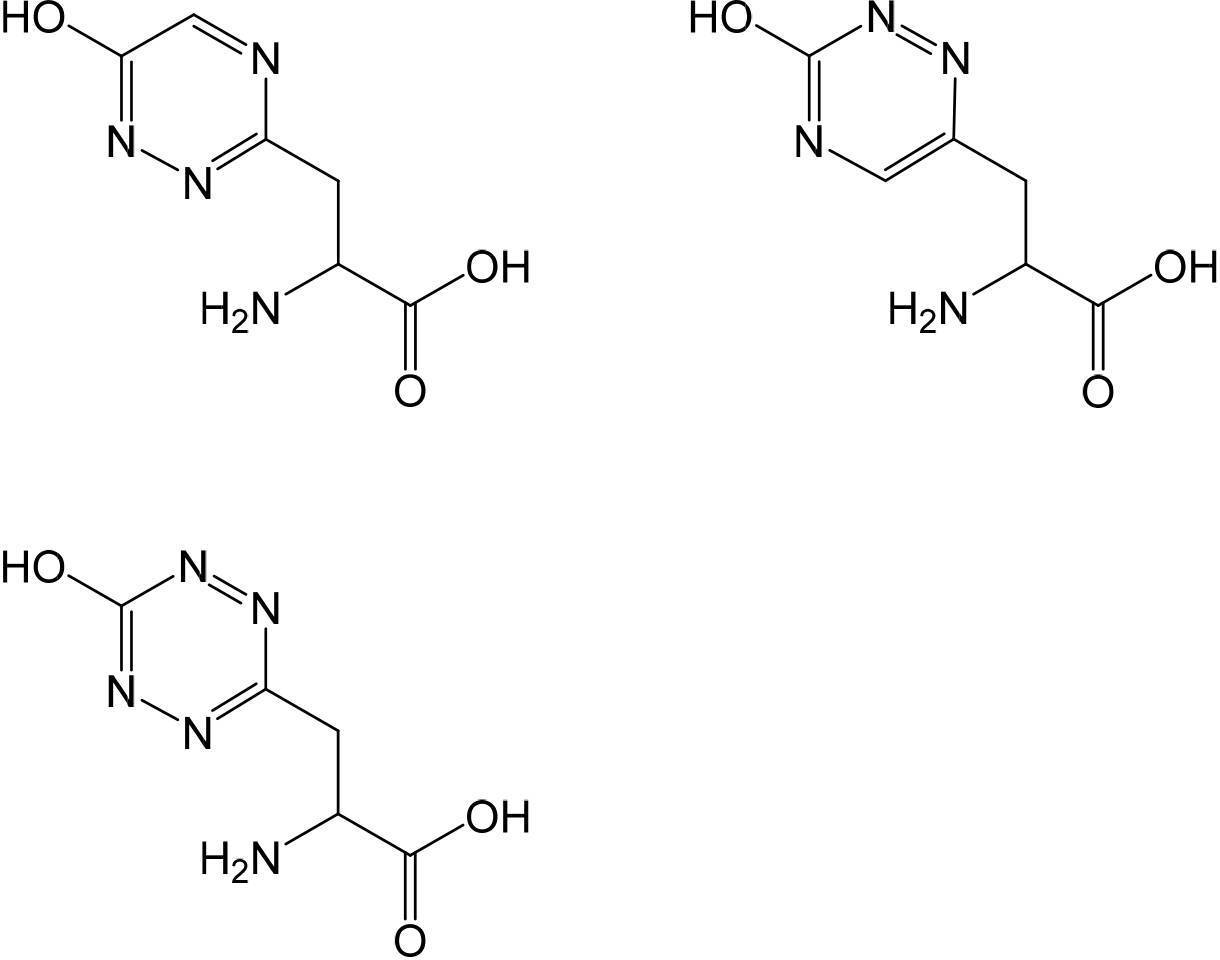
本発明の「一般式(I)で表される化合物の薬理学的に許容される塩」としては、特に制限されず、例えば、塩酸塩、臭化水素酸塩、ヨウ化水素酸塩、硝酸塩、硫酸塩、リン酸塩等の無機酸塩;シュウ酸塩、マロン酸塩、マレイン酸塩、フマル酸塩、乳酸塩、リンゴ酸塩、クエン酸塩、酒石酸塩、安息香酸塩、トリフルオロ酢酸塩、酢酸塩、メタンスルホン酸塩、p-トルエンスルホン酸塩、トリフルオロメタンスルホン酸塩等の有機酸塩;ナトリウム塩、カリウム塩等のアルカリ金属塩;カルシウム塩、マグネシウム塩などのアルカリ土類金属塩;アンモニウム塩;アスパラギン酸塩、グルタミン酸塩、リジン塩、アルギニン塩、ヒスチジン塩等のアミノ酸塩などを挙げることができる。
本発明の「一般式(I)で表される化合物の薬理学的に許容されるエステル」としては、胃や血液中等の体内で加水分解されて一般式(I)で表される化合物を生じるものであれば特に制限されず、例えば、チロシンとエタノールとのエステル、チロシンとn-プロパノールとのエステル、チロシンとi-プロパノールとのエステル、チロシンとエチレングリコールとのエステル、チロシンとグリセリンとのエステルなどを挙げることができる。
本件剤は、必要に応じて、薬学的に許容される通常の担体、結合剤、安定化剤、賦形剤、希釈剤、pH緩衝剤、崩壊剤、等張剤、添加剤、被覆剤、可溶化剤、潤滑剤、滑走剤、溶解補助剤、滑沢剤、風味剤、甘味剤、溶剤、ゲル化剤、栄養剤等の配合成分がさらに添加されたものを例示することができる。かかる配合成分としては、具体的に、水、生理食塩水、動物性脂肪及び油、植物油、乳糖、デンプン、ゼラチン、結晶性セルロース、ガム、タルク、ステアリン酸マグネシウム、ヒドロキシプロピルセルロース、ポリアルキレングリコール、ポリビニルアルコール、グリセリンを例示することができる。
本件予防/改善剤の予防又は改善対象の疾患である尿毒症としては、上記尿毒症物質(好ましくは、p-クレシル硫酸、硫酸フェニル、インドキシル硫酸、1-メチルアデノシン、クレアチニン、及びこれらの前駆体[p-クレゾール、フェノール、及びインドール]から選択される1又は2種以上の物質)に起因する症状又は疾患であれば特に制限されず、かかる症状又は疾患としては、例えば、食欲不振、悪心、嘔吐、口臭、口内炎、腸炎等の消化器系異常;無欲、無関心、記銘力低下、うつ状態、傾眠、昏睡、多発神経炎、(発達性)協調運動障害、食思不振等の神経系異常;動脈硬化、貧血、赤血球造血障害、高血圧、虚血性心疾患、心膜炎、心筋炎、(血液)凝固異常、心不全、心血管障害等の循環器系異常;色素沈着、掻痒(感)、皮下出血、皮膚萎縮、感染、アトピー、脱毛等の皮膚異常(疾患);アルブミン尿、急性腎不全、急性尿細管壊死、腎性貧血、慢性腎不全、尿細管間質障害、急性腎炎、慢性腎炎、ネフローゼ、糖尿病性腎症、動脈硬化性腎症、腎性骨異常症(例えば、腎性骨異栄養症)、溢水等の腎機能障害;脳卒中;心筋梗塞;癌;自閉症;免疫不全;骨異常症;副甲状腺亢進症;インスリン抵抗性;栄養不良;炎症;震戦;などを挙げることができる。また、上記尿毒症には、IgA腎症、嚢胞腎、肝機能障害(例えば、劇症肝炎、脂肪肝、NASH、NAFLD)、癌(例えば、胆汁発がん)等のLPS(Lipopolysaccharide)が関与する症状又は疾患;潰瘍性大腸炎、クローン病等の炎症性腸疾患;動脈硬化関連疾患;ループス、強皮症、リウマチ等の自己免疫疾患;肥満;メタボリックシンドローム;糖尿病;自閉症;パーキンソン病;アルツハイマー病;サルコペニアも含まれる。
本件剤の投与形態としては、粉末、顆粒、錠剤、カプセル剤、シロップ剤、懸濁液などの剤型で投与する経口投与や、溶液、乳剤、懸濁液などの剤型を注射、又はスプレー剤の型で鼻孔内投与する非経口投与を挙げることができ、経口投与が好ましい。
本件剤の投与量は、年齢、体重、性別、症状、薬剤への感受性等に応じて適宜決定され、例えば、0.1μg~200mg/kg(体重)/日の投与量の範囲である。後述する本実施例において、モデルマウスを用いた実験により、10~50mg/kg/日のL-m-チロシンの投与量や、3~5mg/kg(体重)/日の2-アザ-DL-チロシンの投与量、すなわち、3~50mg/kg/日のチロシン類の投与量が具体的に示されている。かかる投与量は、マウスにおけるヒト等価用量(HED)12.3(資料「Guidance for Industry Estimating the Maximum Safe Starting Dose in Initial Clinical Trials for Therapeutics in Adult Healthy Volunteers」参照)を基に、ヒトへの投与量に換算した場合、0.24~4.1mg/kg/日である。このため、本件剤の投与量としては、0.01~100mg/kg/日が好ましく、0.03~60mg/kg/日がより好ましく、0.06~30mg/kg/日がさらに好ましく、0.1~10mg/kg/日がさらにより好ましく、0.2~6.0mg/kg/日が最も好ましい。なお、本件剤は、一日あたり単回又は複数回(例えば、2~4回)に分けて投与してもよい。
本件剤の投与対象としては、特に制限されないが、通常、血中尿毒症物質の低減を必要とする者、具体的には、腎機能低下等が原因で、血中の尿毒症物質の濃度が増加(上昇)した者や、尿毒症物質が体内に蓄積した者である。
本件低減剤としては、チロシン類以外の、血中尿毒症物質の低減作用成分を含むものであってもよいが、チロシン類単独でも優れた、血中尿毒症物質の低減効果を発揮するため、チロシン類以外の、血中尿毒症物質の低減作用成分(例えば、タンパク質、DNA、RNA、植物由来の抽出物、ポリマー)を含まないものが好ましい。また、本件予防/改善剤としては、チロシン類以外の、尿毒症の予防又は改善成分を含むものであってもよいが、チロシン類単独でも優れた、尿毒症の予防又は改善効果を発揮するため、チロシン類以外の、尿毒症の予防又は改善成分(例えば、タンパク質、DNA、RNA、植物由来の抽出物、ポリマー)を含まないものが好ましい。
チロシン類は、化学合成、微生物による生産、酵素による生産等のいずれの公知の方法によっても製造することができるが、市販品を用いることもできる。例えば、チロシン類としてL-m-チロシンを用いる場合、Santa Cruz社製(カタログ#;sc-358267)、渡辺化学工業社製(Code番号;H00219)等の市販品を挙げることができ、DL-m-チロシンを用いる場合、Santa Cruz社製(カタログ#;sc-207493)、Sigma-Aldrich社製(製品番号;T3629)等の市販品を用いることができる。また、チロシン類として2-アザ-L-チロシンを用いる場合、文献「J. Org. Chem. 1996, 61, 813-815」に記載の方法によって製造することができる。また、チロシン類として2-アザ-DL-チロシンを用いる場合、文献「Biochemistry 2001, 40, 14862-14868」に記載の方法に従って製造することができる。
以下、実施例により本発明をより具体的に説明するが、本発明の技術的範囲はこれらの例示に限定されるものではない。
チロシン類が、血中尿毒症物質を低減させる効果を有することを確認するために、糖尿病性腎症を発症する肥満糖尿病モデルマウス(db/dbマウス)を用いた解析を行った。
[L-m-チロシン]
[方法1]
普通食・個別飼育の9週齢のdb/dbマウス(BKS. Cg Leprdb m/Jclオス、日本クレア)10匹から、尾静脈より血液検体及び尿検体を採取した(投与前検体)。その後、24時間毎の飲水量を測定して、1日平均飲水量を算出し、L-m-チロシン(Astatech社製)を投与量50mg/kg(体重)/日になるように給水ボトルの水に溶解し、10週齢時から10日間投与した。10日間投与後、再度通常の水での飼育を10日間行った。投与10日目に血液検体及び尿検体(投与後検体)を採取し、投与中止10日目に血液検体及び尿検体(休薬後検体)を採取した。
[方法1]
普通食・個別飼育の9週齢のdb/dbマウス(BKS. Cg Leprdb m/Jclオス、日本クレア)10匹から、尾静脈より血液検体及び尿検体を採取した(投与前検体)。その後、24時間毎の飲水量を測定して、1日平均飲水量を算出し、L-m-チロシン(Astatech社製)を投与量50mg/kg(体重)/日になるように給水ボトルの水に溶解し、10週齢時から10日間投与した。10日間投与後、再度通常の水での飼育を10日間行った。投与10日目に血液検体及び尿検体(投与後検体)を採取し、投与中止10日目に血液検体及び尿検体(休薬後検体)を採取した。
投与前後及び休薬後の血液検体から、定法に従って血漿を調製した後、液体クロマトグラフ-タンデム型質量分析計(LC-MS/MS)(LC:NANOSPACE SI-2[SHISEIDO社製]、MS/MS:TSQ Quantum Ultra[Thermo Fisher Scientific社製])を用いて、血漿中の硫酸フェニル、p-クレシル硫酸、及びインドキシル硫酸の濃度を測定した(図1A~C、表1~3)。また、投与前後及び休薬後の尿検体を用いて、Turbidimetric Immuno Assay Kit(レビス社製、アルブミン-マウス)により、尿中アルブミン濃度を測定した(図1D、表4)。
[結果1]
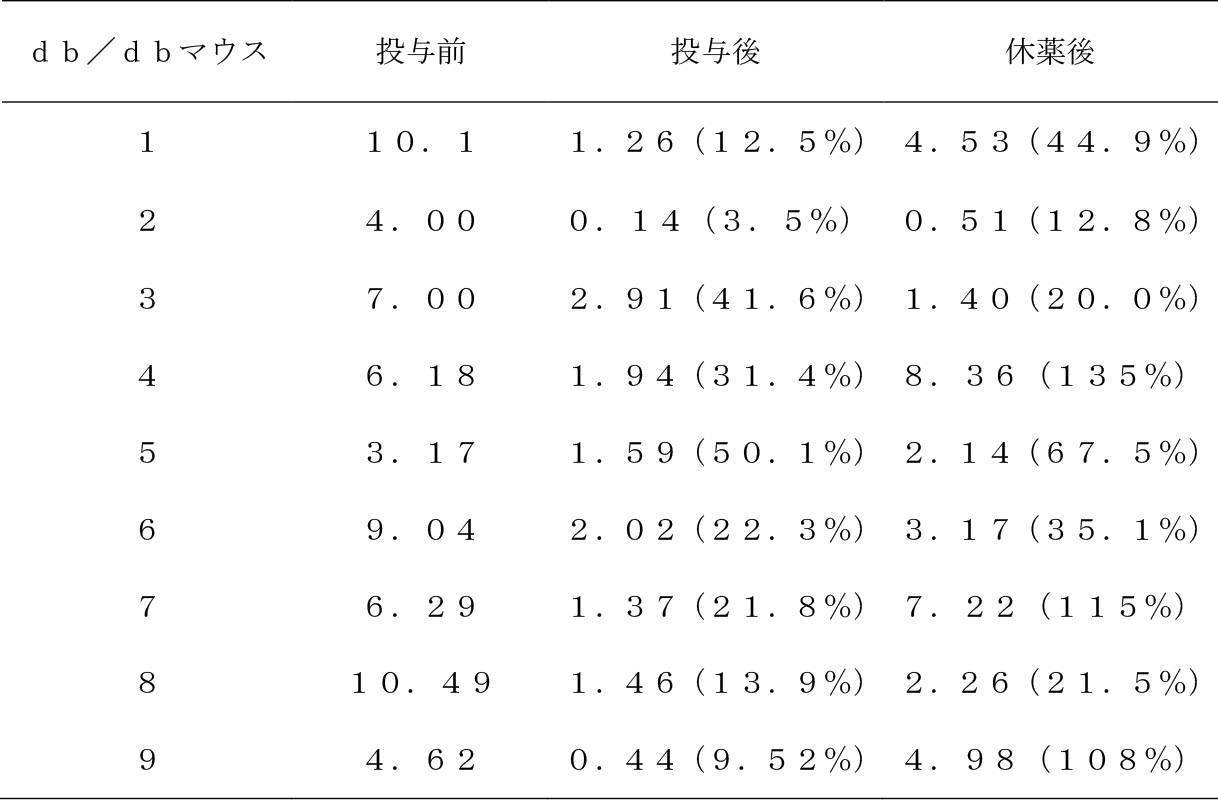
L-m-チロシン投与後のdb/dbマウスにおける血中硫酸フェニル濃度を測定した結果、投与前の3.5~50.1%まで減少していた(図1A、表1の「投与後」と「投与前」との比較)。同様に、L-m-チロシン投与後のdb/dbマウスにおける血中p-クレシル硫酸濃度は、投与前の25.0~80.0%まで減少し(図1B、表2、「投与後」と「投与前」との比較)、また、L-m-チロシン投与後のdb/dbマウスにおける血中インドキシル硫酸の濃度は、投与前の26.1~68.3%まで減少し(図1C、表3、「投与後」と「投与前」との比較)、休薬後においても、投与前の17.4~70.6%まで減少していた(図1C、表3、「休薬後」と「投与前」との比較)。さらに、L-m-チロシン投与後のdb/dbマウスにおける尿中アルブミン濃度を測定した結果、投与前の10.7~79.2%まで減少し(図1D、表4の「投与後」と「投与前」との比較)、休薬後においても、投与前の21.0~58.4%まで減少していた(図1D、表4の「休薬後」と「投与前」との比較)。
これらの結果は、L-m-チロシン等のチロシン類が、腎機能低下により血中に蓄積した尿毒症物質(硫酸フェニル、p-クレシル硫酸、インドキシル硫酸等)を低減させ、糖尿病性腎症等の腎機能障害を改善する効果を有することを示すとともに、尿毒症物質に起因する症状や疾患、すなわち、尿毒症の改善に有効であることを示している。
[方法2]
L-m-チロシンの投与量50mg/kg(体重)/日を、10mg/kg(体重)/日に変更するとともに、L-m-チロシンの投与期間10日を、7日に変更し、上記[方法1]に記載の方法に従って、db/dbマウスにおける血漿中の硫酸フェニル及びインドキシル硫酸濃度を測定した。
L-m-チロシンの投与量50mg/kg(体重)/日を、10mg/kg(体重)/日に変更するとともに、L-m-チロシンの投与期間10日を、7日に変更し、上記[方法1]に記載の方法に従って、db/dbマウスにおける血漿中の硫酸フェニル及びインドキシル硫酸濃度を測定した。
[結果2]
db/dbマウスにおける血中硫酸フェニル濃度4.02μMは、L-m-チロシンの投与により1.33μMへ有意に低下した(図2A)。また、db/dbマウスにおける血中インドキシル硫酸濃度5.28μg/mLは、L-m-チロシンの投与により3.70μg/mLへ有意に低下した(図2B)。この結果からも明らかなとおり、L-m-チロシン等のチロシン類は、血中尿毒症物質の低減効果を有することを示している。
db/dbマウスにおける血中硫酸フェニル濃度4.02μMは、L-m-チロシンの投与により1.33μMへ有意に低下した(図2A)。また、db/dbマウスにおける血中インドキシル硫酸濃度5.28μg/mLは、L-m-チロシンの投与により3.70μg/mLへ有意に低下した(図2B)。この結果からも明らかなとおり、L-m-チロシン等のチロシン類は、血中尿毒症物質の低減効果を有することを示している。
[2-アザ-DL-チロシン]
[方法3]
普通食・個別飼育の9~10週齢のdb/dbマウス(BKS. Cg Leprdb m/Jclオス、日本クレア)4匹から、尾静脈より血液検体及び尿検体を採取した(投与前検体)。その後、24時間毎の飲水量を測定して、1日平均飲水量を算出し、2-アザ-DL-チロシンを投与量5mg/kg(体重)/日になるように給水ボトルの水に溶解し、10週齢時から10日間投与した。投与10日目に血液検体及び尿検体(投与後検体)を採取した。なお、2-アザ-DL-チロシンは、文献「Biochemistry 2001, 40, 14862-14868」に記載の方法に従って製造した。
[方法3]
普通食・個別飼育の9~10週齢のdb/dbマウス(BKS. Cg Leprdb m/Jclオス、日本クレア)4匹から、尾静脈より血液検体及び尿検体を採取した(投与前検体)。その後、24時間毎の飲水量を測定して、1日平均飲水量を算出し、2-アザ-DL-チロシンを投与量5mg/kg(体重)/日になるように給水ボトルの水に溶解し、10週齢時から10日間投与した。投与10日目に血液検体及び尿検体(投与後検体)を採取した。なお、2-アザ-DL-チロシンは、文献「Biochemistry 2001, 40, 14862-14868」に記載の方法に従って製造した。
投与前後の血液検体から、定法に従って血漿を調製した後、LC-MS/MSを用いて、血漿中のクレアチニン、1-メチルアデノシン、インドキシル硫酸、及び硫酸フェニルの濃度を測定した(図3及び4、表5~11)。また、投与前後の尿検体を10倍希釈した後、LC-MS/MSを用いて、尿中のクレアチニン、1-メチルアデノシン、及び硫酸フェニルの濃度を測定した。
[結果3]
2-アザ-DL-チロシン投与後のdb/dbマウスにおける血中クレアチニン濃度を測定した結果、投与前の66.5~82.2%まで減少していた(図3A、表5)。同様に、2-アザ-DL-チロシン投与後のdb/dbマウスにおける尿中クレアチニン濃度は、投与前の18.8~90.4%まで減少した(図3B、表6、P=0.006)。また、2-アザ-DL-チロシン投与後のdb/dbマウスにおける血中1-メチルアデノシン濃度は、投与前の45.4~82.3%まで減少し(図3C、表7)、尿中1-メチルアデノシン濃度は、投与前の65.4~87.8%まで減少した(図3D、表8、P=0.043)。また、2-アザ-DL-チロシン投与後のdb/dbマウスにおける血中インドキシル硫酸濃度は、投与前の59.0~83.5%まで減少した(図4A、表9、P=0.032)。また、2-アザ-DL-チロシン投与後のdb/dbマウスにおける血中硫酸フェニル濃度は、投与前の19.1~45.8%まで減少し(図4B、表10)、尿中硫酸フェニル濃度は、投与前の16.9~97.3%まで減少した(図4C、表11)。
これらの結果は、2-アザ-DL-チロシン等のチロシン類が、腎機能低下により血中に蓄積した尿毒症物質(クレアチニン、1-メチルアデノシン、インドキシル硫酸、硫酸フェニル等)を低減させる効果を有し、尿毒症の改善に有効であることを示している。

[方法4]
2-アザ-DL-チロシンの投与量5mg/kg(体重)/日を、3mg/kg(体重)/日に変更するとともに、2-アザ-DL-チロシンの投与期間10日を、14日に変更し、上記[方法3]に記載の方法に従って、db/dbマウスにおける血漿中の硫酸フェニル、インドキシル硫酸、及びクレアチニン濃度を測定し、上記[方法1]に記載の方法に従って、尿中アルブミン濃度を測定した。
2-アザ-DL-チロシンの投与量5mg/kg(体重)/日を、3mg/kg(体重)/日に変更するとともに、2-アザ-DL-チロシンの投与期間10日を、14日に変更し、上記[方法3]に記載の方法に従って、db/dbマウスにおける血漿中の硫酸フェニル、インドキシル硫酸、及びクレアチニン濃度を測定し、上記[方法1]に記載の方法に従って、尿中アルブミン濃度を測定した。
[結果4]
db/dbマウスにおける血中硫酸フェニル濃度4.15μMは、2-アザ-DL-チロシンの投与により1.64μMへ有意に低下した(図5A)。また、db/dbマウスにおける血中インドキシル硫酸濃度3.66μg/mLは、2-アザ-DL-チロシンの投与により2.46μg/mLへ有意に低下した(図5B)。また、db/dbマウスにおける血中クレアチニン濃度6.25μg/mLは、2-アザ-DL-チロシンの投与により4.43μg/mLへ有意に低下した(図5C)。さらに、db/dbマウスにおける尿中アルブミン濃度は、2-アザ-DL-チロシン未投与の場合、上昇するのに対して、2-アザ-DL-チロシンの投与により、かかる上昇が抑制された(図5D)。
これらの結果からも明らかなとおり、2-アザ-DL-チロシン等のチロシン類は、血中尿毒症物質の低減効果を有することを示すとともに、腎機能の指標である血中クレアチニンレベルを有意に低下させたり、尿中アルブミンレベルの上昇を抑制することから、腎保護効果が期待される。
チロシン類が、血中尿毒症物質を低減させる効果を有することを確認するために、アデニンを摂食させることにより慢性腎不全を発症させたモデルマウス(以下、「アデニン食腎不全モデルマウス」という)に、2-アザ-DL-チロシンを投与し、血中尿毒症物質の濃度を解析した。なお、アデニン食腎不全モデルマウスは、摂食させたアデニンが尿細管で不溶性の2,8-ジヒドロキシアデニンとして結晶化することにより腎障害を生じるマウスである(Cozzolino, M. et al. Kidney Int. 64, 441-450 (2003)、Tamagaki, K. et al. Nephrol. Dial. Transplant 21, 651-659 (2006))。
[方法5]
以下の手順〔1〕~〔4〕に従って、アデニン食腎不全モデルマウスを用いた解析を行った。
〔1〕オスのC57BL/6マウス(日本CLEA株式会社から購入)を、6週齢まで通常飼料(CE-2、日本CLEA社製)にて飼育した。
〔2〕7週齢時に、通常飼料にて飼育した通常飼育群と、0.2%アデニン(Wako社製)を含む通常飼料にて飼育したアデニン食飼育群とに分けた。
〔3〕アデニン食飼育群は、8週間のアデニン食飼育(15週齢)後、飼料を通常飼料に戻し、2種類の群(アデニン食飼育群[n=5]及び2-アザ-DL-チロシン投与アデニン食飼育群[n=5])に分け、アデニン食飼育群には、通常の水を経口投与し、2-アザ-DL-チロシン投与アデニン食飼育群には、2-アザ-DL-チロシンを含む水を、2-アザ-DL-チロシンの投与量が5(mg/kg(体重)/日)になるように経口投与した。
一方、通常飼育群は、8週間の通常飼育(15週齢)後、2種類の群(通常飼育群[n=5]及び2-アザ-DL-チロシン投与通常飼育群[n=5])に分け、通常飼育群には、通常の水を経口投与し、2-アザ-DL-チロシン投与通常飼育群には、2-アザ-DL-チロシンを含む水を、2-アザ-DL-チロシンの投与量が5(mg/kg(体重)/日)になるように経口投与した。
〔4〕上記〔3〕の経口投与を10日間行った後、11日目に血液検体及び腎臓全体を採取し、血液検体から定法に従って血清を調製した後、LC-MS/MSを用いて、血清中の4種類の尿毒症物質(硫酸フェニル、インドキシル硫酸、TMAO、及びクレアチニン)の濃度を測定した(図6)。また、腎臓の膠原線維を、MTS法を用いて組織染色した(図7)。
[結果5]
まず、アデニン食腎不全モデルマウス(図6の「CC」)の血液中の4種類の尿毒症物質(硫酸フェニル、インドキシル硫酸、TMAO、及びクレアチニン)濃度が、通常飼料にて飼育したコントロールマウス(図6の「NC」)と比べ、上昇していることを確認した。次に、アデニン食腎不全モデルマウスに2-アザ-DL-チロシンを投与すると(図6の「CA」)、上昇した上記4種類の尿毒症物質濃度は低下することが示された。具体的には、硫酸フェニル濃度は、14.45μMから10.92μMへ有意に低下し、インドキシル硫酸濃度は、15.09μMから11.55μMへ有意に低下し、TMAO濃度は、27.75μMから23.47μMへ低下し、クレアチニン濃度は、39.13μMから30.71μMへ有意に低下した。さらに、2-アザ-DL-チロシンを投与したアデニン食腎不全モデルマウスの腎尿細管の割合は、2-アザ-DL-チロシン未投与のアデニン食腎不全モデルマウス(図7の「CC」)と比べ増加することが示された。
これらの結果は、2-アザ-DL-チロシン等のチロシン類が、腎機能低下により血中に蓄積した尿毒症物質(硫酸フェニル、インドキシル硫酸、TMAO、及びクレアチニン)を低減させる作用を有することを示すとともに、腎不全等の腎機能障害を改善する効果を有することを示している。このため、チロシン類は、尿毒症物質に起因する症状や疾患、すなわち、尿毒症の改善に有効であると考えられる。
本発明は、血中における尿毒症物質の蓄積(増加)に起因する症状若しくは疾患の予防又は改善(治療)に資するものである。
Claims (8)
- チロシン並びにその薬理学的に許容される塩及びエステルからなる群から選択される1種又は2種以上の化合物を有効成分として含有することを特徴とする血中尿毒症物質の低減剤。
- 経口投与することを特徴とする請求項1に記載の低減剤。
- 化合物が、L-m-チロシン又は2-アザ-DL-チロシンであることを特徴とする請求項1又は2に記載の低減剤。
- 尿毒症物質が、p-クレシル硫酸、硫酸フェニル、インドキシル硫酸、1-メチルアデノシン、クレアチニン、トリメチルアミン-N-オキシド、p-クレゾール、フェノール、及びインドールから選択される1又は2種以上の物質であることを特徴とする請求項1~3のいずれかに記載の低減剤。
- チロシン並びにその薬理学的に許容される塩及びエステルからなる群から選択される1種又は2種以上の化合物を有効成分として含有することを特徴とする尿毒症の予防又は改善剤。
- 経口投与することを特徴とする請求項5に記載の予防又は改善剤。
- 化合物が、L-m-チロシン又は2-アザ-DL-チロシンであることを特徴とする請求項5又は6に記載の予防又は改善剤。
- 尿毒症が、p-クレシル硫酸、硫酸フェニル、インドキシル硫酸、1-メチルアデノシン、クレアチニン、トリメチルアミン-N-オキシド、p-クレゾール、フェノール、及びインドールから選択される1又は2種以上の物質に起因する症状又は疾患であることを特徴とする請求項5~7のいずれかに記載の予防又は改善剤。
Priority Applications (1)
| Application Number | Priority Date | Filing Date | Title |
|---|---|---|---|
| JP2018547856A JP6801894B2 (ja) | 2016-10-31 | 2017-10-31 | 血中尿毒症物質の低減剤 |
Applications Claiming Priority (2)
| Application Number | Priority Date | Filing Date | Title |
|---|---|---|---|
| JP2016213703 | 2016-10-31 | ||
| JP2016-213703 | 2016-10-31 |
Publications (1)
| Publication Number | Publication Date |
|---|---|
| WO2018079832A1 true WO2018079832A1 (ja) | 2018-05-03 |
Family
ID=62025053
Family Applications (1)
| Application Number | Title | Priority Date | Filing Date |
|---|---|---|---|
| PCT/JP2017/039334 Ceased WO2018079832A1 (ja) | 2016-10-31 | 2017-10-31 | 血中尿毒症物質の低減剤 |
Country Status (2)
| Country | Link |
|---|---|
| JP (1) | JP6801894B2 (ja) |
| WO (1) | WO2018079832A1 (ja) |
Cited By (5)
| Publication number | Priority date | Publication date | Assignee | Title |
|---|---|---|---|---|
| JP2020061956A (ja) * | 2018-10-16 | 2020-04-23 | 日本水産株式会社 | 血清中tmao低減用組成物 |
| WO2020194563A1 (ja) * | 2019-03-27 | 2020-10-01 | 国立大学法人東北大学 | フェノール類に起因する症状又は疾患の予防若しくは改善剤 |
| JP2022135978A (ja) * | 2021-03-03 | 2022-09-15 | 国立大学法人東北大学 | チロシンフェノールリアーゼによるフェノール生成及び/又はトリプトファンインドールリアーゼによるインドール生成の阻害剤 |
| WO2023079706A1 (ja) * | 2021-11-05 | 2023-05-11 | 国立大学法人東北大学 | 糖尿病性腎症の判定方法 |
| EP4173494A4 (en) * | 2020-06-30 | 2024-07-03 | Industry-Academic Cooperation Foundation Gyeongsang National University | Composition for preventing, ameliorating, or treating diseases caused by nitration of tyrosine in protein, containing tyrosine as active ingredient |
Citations (4)
| Publication number | Priority date | Publication date | Assignee | Title |
|---|---|---|---|---|
| JPH01110627A (ja) * | 1987-10-22 | 1989-04-27 | Meiji Seika Kaisha Ltd | 抗癌剤および復帰突然変異細胞取得剤 |
| JPH03204814A (ja) * | 1989-10-09 | 1991-09-06 | Otsuka Pharmaceut Factory Inc | 腎不全用経口アミノ酸製剤 |
| JP2012111733A (ja) * | 2010-11-26 | 2012-06-14 | Tohoku Univ | Gata阻害剤を有効成分とする有機イオントランスポーター発現増強剤及びgata発現抑制剤 |
| JP2014148467A (ja) * | 2013-01-31 | 2014-08-21 | Morinaga Milk Ind Co Ltd | 血中クレゾール低下剤 |
-
2017
- 2017-10-31 JP JP2018547856A patent/JP6801894B2/ja active Active
- 2017-10-31 WO PCT/JP2017/039334 patent/WO2018079832A1/ja not_active Ceased
Patent Citations (4)
| Publication number | Priority date | Publication date | Assignee | Title |
|---|---|---|---|---|
| JPH01110627A (ja) * | 1987-10-22 | 1989-04-27 | Meiji Seika Kaisha Ltd | 抗癌剤および復帰突然変異細胞取得剤 |
| JPH03204814A (ja) * | 1989-10-09 | 1991-09-06 | Otsuka Pharmaceut Factory Inc | 腎不全用経口アミノ酸製剤 |
| JP2012111733A (ja) * | 2010-11-26 | 2012-06-14 | Tohoku Univ | Gata阻害剤を有効成分とする有機イオントランスポーター発現増強剤及びgata発現抑制剤 |
| JP2014148467A (ja) * | 2013-01-31 | 2014-08-21 | Morinaga Milk Ind Co Ltd | 血中クレゾール低下剤 |
Non-Patent Citations (1)
| Title |
|---|
| RUBENSON, A.: "Further studies on the mechanism of the central hypotensive effect of L-dopa, DL-m-tyrosine and L-alpha-methyldopa", JOURNAL OF PHARMACY AND PHARMACOLOGY, vol. 23, no. 3, 1971, pages 228 - 230, ISSN: 2042-7158 * |
Cited By (9)
| Publication number | Priority date | Publication date | Assignee | Title |
|---|---|---|---|---|
| JP2020061956A (ja) * | 2018-10-16 | 2020-04-23 | 日本水産株式会社 | 血清中tmao低減用組成物 |
| JP2023055877A (ja) * | 2018-10-16 | 2023-04-18 | 株式会社ニッスイ | 血清中tmao低減用組成物 |
| JP7602315B2 (ja) | 2018-10-16 | 2024-12-18 | 株式会社ニッスイ | 血清中tmao低減用組成物 |
| JP7637708B2 (ja) | 2018-10-16 | 2025-02-28 | 株式会社ニッスイ | 血清中tmao低減用組成物 |
| WO2020194563A1 (ja) * | 2019-03-27 | 2020-10-01 | 国立大学法人東北大学 | フェノール類に起因する症状又は疾患の予防若しくは改善剤 |
| EP4173494A4 (en) * | 2020-06-30 | 2024-07-03 | Industry-Academic Cooperation Foundation Gyeongsang National University | Composition for preventing, ameliorating, or treating diseases caused by nitration of tyrosine in protein, containing tyrosine as active ingredient |
| US12605350B2 (en) | 2020-06-30 | 2026-04-21 | Industry-Academic Cooperation Foundation Gyeongsang National University | Composition for preventing, ameliorating, or treating disease caused by nitration of tyrosine in proteins comprising tyrosine as effective component |
| JP2022135978A (ja) * | 2021-03-03 | 2022-09-15 | 国立大学法人東北大学 | チロシンフェノールリアーゼによるフェノール生成及び/又はトリプトファンインドールリアーゼによるインドール生成の阻害剤 |
| WO2023079706A1 (ja) * | 2021-11-05 | 2023-05-11 | 国立大学法人東北大学 | 糖尿病性腎症の判定方法 |
Also Published As
| Publication number | Publication date |
|---|---|
| JP6801894B2 (ja) | 2020-12-16 |
| JPWO2018079832A1 (ja) | 2019-07-25 |
Similar Documents
| Publication | Publication Date | Title |
|---|---|---|
| JP6801894B2 (ja) | 血中尿毒症物質の低減剤 | |
| JP7256540B2 (ja) | 血中尿毒症物質の低減剤 | |
| JP6986022B2 (ja) | Fxrアゴニストを使用するための方法 | |
| ES2878001T3 (es) | Composiciones del activador de la glucocinasa para el tratamiento de la diabetes | |
| JP7578243B2 (ja) | アルカリ性化剤による血液浄化 | |
| CN111182904A (zh) | 包含acc抑制剂的组合治疗 | |
| CA3163455A1 (en) | Treatment of metabolic disorders in feline animals | |
| JP2023096079A (ja) | 化合物の製剤およびそれらの使用 | |
| TW201908298A (zh) | 胺烷基苯並硫氮呯衍生物之用途 | |
| TW202315608A (zh) | 用於治療肝臟疾病的聯合治療 | |
| CA3114592A1 (en) | Benzimidazole derivative for use in the treatment of inflammatory disorders | |
| CN108201543A (zh) | 水溶性富勒烯结构在制备治疗脂肪肝的药物中的应用 | |
| EP3967302A1 (en) | Composition for preventing or treating liver diseases | |
| WO2015085351A1 (en) | Pharmaconutrient composition | |
| RS63558B1 (sr) | Estri azelainske kiseline u lečenju insulinske rezistencije | |
| MX2007007683A (es) | Composiciones farmaceuticas, terapeuticas y alimenticias derivadas de la planta lagerstroemia speciosa l. | |
| EP4208160A1 (en) | Ionic liquid formulations for treating diabetes | |
| JP2009531379A (ja) | 鉄代謝機能障害を治療するためのストロビルリンの使用 | |
| CN101378745A (zh) | 含格列奈类的预防肝纤维化医药组合物 | |
| KR20060096261A (ko) | 영양실조 또는 높은 혈장 글루코스 상태를 치료하기 위한알파-케토글루타르산의 용도 | |
| CN104619316B (zh) | 用于降低n-氧化三甲胺水平的药物组合物 | |
| JP5158307B2 (ja) | 脂肪減少促進剤及び代謝異常症候群改善薬 | |
| JP2018127435A (ja) | 尿毒症の予防又は改善剤 | |
| JP7616884B2 (ja) | B型肝炎ウイルス感染症の治療におけるシアノバクテリアバイオマスの使用 | |
| JP2019085362A (ja) | 血中尿毒症物質の低減剤 |
Legal Events
| Date | Code | Title | Description |
|---|---|---|---|
| 121 | Ep: the epo has been informed by wipo that ep was designated in this application |
Ref document number: 17865772 Country of ref document: EP Kind code of ref document: A1 |
|
| ENP | Entry into the national phase |
Ref document number: 2018547856 Country of ref document: JP Kind code of ref document: A |
|
| NENP | Non-entry into the national phase |
Ref country code: DE |
|
| 122 | Ep: pct application non-entry in european phase |
Ref document number: 17865772 Country of ref document: EP Kind code of ref document: A1 |