WO2018056018A1 - ヘパリンを含有する生体吸収性高分子からなる多孔質基材の製造方法、ヘパリンを含有する生体吸収性高分子からなる多孔質基材、及び、人工血管 - Google Patents
ヘパリンを含有する生体吸収性高分子からなる多孔質基材の製造方法、ヘパリンを含有する生体吸収性高分子からなる多孔質基材、及び、人工血管 Download PDFInfo
- Publication number
- WO2018056018A1 WO2018056018A1 PCT/JP2017/031406 JP2017031406W WO2018056018A1 WO 2018056018 A1 WO2018056018 A1 WO 2018056018A1 JP 2017031406 W JP2017031406 W JP 2017031406W WO 2018056018 A1 WO2018056018 A1 WO 2018056018A1
- Authority
- WO
- WIPO (PCT)
- Prior art keywords
- heparin
- solvent
- bioabsorbable polymer
- porous substrate
- porous
- Prior art date
- Legal status (The legal status is an assumption and is not a legal conclusion. Google has not performed a legal analysis and makes no representation as to the accuracy of the status listed.)
- Ceased
Links
Images

Classifications
-
- B—PERFORMING OPERATIONS; TRANSPORTING
- B29—WORKING OF PLASTICS; WORKING OF SUBSTANCES IN A PLASTIC STATE IN GENERAL
- B29C—SHAPING OR JOINING OF PLASTICS; SHAPING OF MATERIAL IN A PLASTIC STATE, NOT OTHERWISE PROVIDED FOR; AFTER-TREATMENT OF THE SHAPED PRODUCTS, e.g. REPAIRING
- B29C67/00—Shaping techniques not covered by groups B29C39/00 - B29C65/00, B29C70/00 or B29C73/00
- B29C67/20—Shaping techniques not covered by groups B29C39/00 - B29C65/00, B29C70/00 or B29C73/00 for porous or cellular articles, e.g. of foam plastics, coarse-pored
- B29C67/202—Shaping techniques not covered by groups B29C39/00 - B29C65/00, B29C70/00 or B29C73/00 for porous or cellular articles, e.g. of foam plastics, coarse-pored comprising elimination of a solid or a liquid ingredient
-
- A—HUMAN NECESSITIES
- A61—MEDICAL OR VETERINARY SCIENCE; HYGIENE
- A61L—METHODS OR APPARATUS FOR STERILISING MATERIALS OR OBJECTS IN GENERAL; DISINFECTION, STERILISATION OR DEODORISATION OF AIR; CHEMICAL ASPECTS OF BANDAGES, DRESSINGS, ABSORBENT PADS OR SURGICAL ARTICLES; MATERIALS FOR BANDAGES, DRESSINGS, ABSORBENT PADS OR SURGICAL ARTICLES
- A61L27/00—Materials for grafts or prostheses or for coating grafts or prostheses
- A61L27/14—Macromolecular materials
-
- A—HUMAN NECESSITIES
- A61—MEDICAL OR VETERINARY SCIENCE; HYGIENE
- A61L—METHODS OR APPARATUS FOR STERILISING MATERIALS OR OBJECTS IN GENERAL; DISINFECTION, STERILISATION OR DEODORISATION OF AIR; CHEMICAL ASPECTS OF BANDAGES, DRESSINGS, ABSORBENT PADS OR SURGICAL ARTICLES; MATERIALS FOR BANDAGES, DRESSINGS, ABSORBENT PADS OR SURGICAL ARTICLES
- A61L27/00—Materials for grafts or prostheses or for coating grafts or prostheses
- A61L27/14—Macromolecular materials
- A61L27/26—Mixtures of macromolecular compounds
-
- A—HUMAN NECESSITIES
- A61—MEDICAL OR VETERINARY SCIENCE; HYGIENE
- A61L—METHODS OR APPARATUS FOR STERILISING MATERIALS OR OBJECTS IN GENERAL; DISINFECTION, STERILISATION OR DEODORISATION OF AIR; CHEMICAL ASPECTS OF BANDAGES, DRESSINGS, ABSORBENT PADS OR SURGICAL ARTICLES; MATERIALS FOR BANDAGES, DRESSINGS, ABSORBENT PADS OR SURGICAL ARTICLES
- A61L27/00—Materials for grafts or prostheses or for coating grafts or prostheses
- A61L27/50—Materials characterised by their function or physical properties, e.g. injectable or lubricating compositions, shape-memory materials, surface modified materials
- A61L27/507—Materials characterised by their function or physical properties, e.g. injectable or lubricating compositions, shape-memory materials, surface modified materials for artificial blood vessels
-
- A—HUMAN NECESSITIES
- A61—MEDICAL OR VETERINARY SCIENCE; HYGIENE
- A61L—METHODS OR APPARATUS FOR STERILISING MATERIALS OR OBJECTS IN GENERAL; DISINFECTION, STERILISATION OR DEODORISATION OF AIR; CHEMICAL ASPECTS OF BANDAGES, DRESSINGS, ABSORBENT PADS OR SURGICAL ARTICLES; MATERIALS FOR BANDAGES, DRESSINGS, ABSORBENT PADS OR SURGICAL ARTICLES
- A61L27/00—Materials for grafts or prostheses or for coating grafts or prostheses
- A61L27/50—Materials characterised by their function or physical properties, e.g. injectable or lubricating compositions, shape-memory materials, surface modified materials
- A61L27/54—Biologically active materials, e.g. therapeutic substances
-
- A—HUMAN NECESSITIES
- A61—MEDICAL OR VETERINARY SCIENCE; HYGIENE
- A61L—METHODS OR APPARATUS FOR STERILISING MATERIALS OR OBJECTS IN GENERAL; DISINFECTION, STERILISATION OR DEODORISATION OF AIR; CHEMICAL ASPECTS OF BANDAGES, DRESSINGS, ABSORBENT PADS OR SURGICAL ARTICLES; MATERIALS FOR BANDAGES, DRESSINGS, ABSORBENT PADS OR SURGICAL ARTICLES
- A61L27/00—Materials for grafts or prostheses or for coating grafts or prostheses
- A61L27/50—Materials characterised by their function or physical properties, e.g. injectable or lubricating compositions, shape-memory materials, surface modified materials
- A61L27/56—Porous materials, e.g. foams or sponges
-
- A—HUMAN NECESSITIES
- A61—MEDICAL OR VETERINARY SCIENCE; HYGIENE
- A61L—METHODS OR APPARATUS FOR STERILISING MATERIALS OR OBJECTS IN GENERAL; DISINFECTION, STERILISATION OR DEODORISATION OF AIR; CHEMICAL ASPECTS OF BANDAGES, DRESSINGS, ABSORBENT PADS OR SURGICAL ARTICLES; MATERIALS FOR BANDAGES, DRESSINGS, ABSORBENT PADS OR SURGICAL ARTICLES
- A61L27/00—Materials for grafts or prostheses or for coating grafts or prostheses
- A61L27/50—Materials characterised by their function or physical properties, e.g. injectable or lubricating compositions, shape-memory materials, surface modified materials
- A61L27/58—Materials at least partially resorbable by the body
-
- A—HUMAN NECESSITIES
- A61—MEDICAL OR VETERINARY SCIENCE; HYGIENE
- A61L—METHODS OR APPARATUS FOR STERILISING MATERIALS OR OBJECTS IN GENERAL; DISINFECTION, STERILISATION OR DEODORISATION OF AIR; CHEMICAL ASPECTS OF BANDAGES, DRESSINGS, ABSORBENT PADS OR SURGICAL ARTICLES; MATERIALS FOR BANDAGES, DRESSINGS, ABSORBENT PADS OR SURGICAL ARTICLES
- A61L33/00—Antithrombogenic treatment of surgical articles, e.g. sutures, catheters, prostheses, or of articles for the manipulation or conditioning of blood; Materials for such treatment
- A61L33/0005—Use of materials characterised by their function or physical properties
- A61L33/0011—Anticoagulant, e.g. heparin, platelet aggregation inhibitor, fibrinolytic agent, other than enzymes, attached to the substrate
-
- A—HUMAN NECESSITIES
- A61—MEDICAL OR VETERINARY SCIENCE; HYGIENE
- A61L—METHODS OR APPARATUS FOR STERILISING MATERIALS OR OBJECTS IN GENERAL; DISINFECTION, STERILISATION OR DEODORISATION OF AIR; CHEMICAL ASPECTS OF BANDAGES, DRESSINGS, ABSORBENT PADS OR SURGICAL ARTICLES; MATERIALS FOR BANDAGES, DRESSINGS, ABSORBENT PADS OR SURGICAL ARTICLES
- A61L33/00—Antithrombogenic treatment of surgical articles, e.g. sutures, catheters, prostheses, or of articles for the manipulation or conditioning of blood; Materials for such treatment
- A61L33/06—Use of macromolecular materials
- A61L33/08—Polysaccharides
-
- B—PERFORMING OPERATIONS; TRANSPORTING
- B29—WORKING OF PLASTICS; WORKING OF SUBSTANCES IN A PLASTIC STATE IN GENERAL
- B29C—SHAPING OR JOINING OF PLASTICS; SHAPING OF MATERIAL IN A PLASTIC STATE, NOT OTHERWISE PROVIDED FOR; AFTER-TREATMENT OF THE SHAPED PRODUCTS, e.g. REPAIRING
- B29C67/00—Shaping techniques not covered by groups B29C39/00 - B29C65/00, B29C70/00 or B29C73/00
- B29C67/20—Shaping techniques not covered by groups B29C39/00 - B29C65/00, B29C70/00 or B29C73/00 for porous or cellular articles, e.g. of foam plastics, coarse-pored
-
- A—HUMAN NECESSITIES
- A61—MEDICAL OR VETERINARY SCIENCE; HYGIENE
- A61L—METHODS OR APPARATUS FOR STERILISING MATERIALS OR OBJECTS IN GENERAL; DISINFECTION, STERILISATION OR DEODORISATION OF AIR; CHEMICAL ASPECTS OF BANDAGES, DRESSINGS, ABSORBENT PADS OR SURGICAL ARTICLES; MATERIALS FOR BANDAGES, DRESSINGS, ABSORBENT PADS OR SURGICAL ARTICLES
- A61L2300/00—Biologically active materials used in bandages, wound dressings, absorbent pads or medical devices
- A61L2300/20—Biologically active materials used in bandages, wound dressings, absorbent pads or medical devices containing or releasing organic materials
- A61L2300/23—Carbohydrates
- A61L2300/236—Glycosaminoglycans, e.g. heparin, hyaluronic acid, chondroitin
-
- B—PERFORMING OPERATIONS; TRANSPORTING
- B29—WORKING OF PLASTICS; WORKING OF SUBSTANCES IN A PLASTIC STATE IN GENERAL
- B29K—INDEXING SCHEME ASSOCIATED WITH SUBCLASSES B29B, B29C OR B29D, RELATING TO MOULDING MATERIALS OR TO MATERIALS FOR MOULDS, REINFORCEMENTS, FILLERS OR PREFORMED PARTS, e.g. INSERTS
- B29K2067/00—Use of polyesters or derivatives thereof, as moulding material
- B29K2067/04—Polyesters derived from hydroxycarboxylic acids
-
- B—PERFORMING OPERATIONS; TRANSPORTING
- B29—WORKING OF PLASTICS; WORKING OF SUBSTANCES IN A PLASTIC STATE IN GENERAL
- B29K—INDEXING SCHEME ASSOCIATED WITH SUBCLASSES B29B, B29C OR B29D, RELATING TO MOULDING MATERIALS OR TO MATERIALS FOR MOULDS, REINFORCEMENTS, FILLERS OR PREFORMED PARTS, e.g. INSERTS
- B29K2105/00—Condition, form or state of moulded material or of the material to be shaped
- B29K2105/0005—Condition, form or state of moulded material or of the material to be shaped containing compounding ingredients
- B29K2105/0035—Medical or pharmaceutical agents
-
- B—PERFORMING OPERATIONS; TRANSPORTING
- B29—WORKING OF PLASTICS; WORKING OF SUBSTANCES IN A PLASTIC STATE IN GENERAL
- B29K—INDEXING SCHEME ASSOCIATED WITH SUBCLASSES B29B, B29C OR B29D, RELATING TO MOULDING MATERIALS OR TO MATERIALS FOR MOULDS, REINFORCEMENTS, FILLERS OR PREFORMED PARTS, e.g. INSERTS
- B29K2995/00—Properties of moulding materials, reinforcements, fillers, preformed parts or moulds
- B29K2995/0037—Other properties
- B29K2995/0059—Degradable
- B29K2995/006—Bio-degradable, e.g. bioabsorbable, bioresorbable or bioerodible
-
- B—PERFORMING OPERATIONS; TRANSPORTING
- B29—WORKING OF PLASTICS; WORKING OF SUBSTANCES IN A PLASTIC STATE IN GENERAL
- B29L—INDEXING SCHEME ASSOCIATED WITH SUBCLASS B29C, RELATING TO PARTICULAR ARTICLES
- B29L2031/00—Other particular articles
- B29L2031/753—Medical equipment; Accessories therefor
- B29L2031/7532—Artificial members, protheses
- B29L2031/7534—Cardiovascular protheses
Definitions
- the present invention relates to a method for producing a porous substrate made of a bioabsorbable polymer containing no heparin without using a surfactant, a porous substrate made of a bioabsorbable polymer containing heparin, And an artificial blood vessel.
- a base material is transplanted into a patient's body, and the cells are removed from surrounding tissues or organs.
- a method of regenerating a tissue or an organ by invading into a base material and growing and differentiating is performed.
- a porous base material made of a bioabsorbable polymer has been proposed.
- a porous base material made of a bioabsorbable polymer By using a porous base material made of a bioabsorbable polymer as a base material for regenerative medicine, cells invade and proliferate into the voids, and the tissue is regenerated at an early stage. And since it decomposes
- thrombus formation is also important. Particularly in the regeneration of a vascular tissue having a small diameter, the blood vessel is often clogged due to the formation of a thrombus, and not only normal blood vessels are regenerated but also serious symptoms may be caused.
- a method for preventing the formation of a thrombus a method in which heparin is contained in a porous base material made of a bioabsorbable polymer and heparin is gradually released according to the decomposition of the porous base material has been attempted.
- a porous substrate made of a bioabsorbable polymer containing such heparin for example, in Non-Patent Document 1, heparin sodium aqueous solution and a surfactant are added to an organic solvent in which the bioabsorbable polymer is dissolved.
- a method for producing a blood vessel material comprising nanofibers using a solution that has been micellized is described.
- the porous base material composed of a bioabsorbable polymer containing heparin described in Non-Patent Document 1 contains a highly toxic surfactant, and thus has a problem that regeneration of blood vessel tissue is hindered. It was.
- methods for producing porous substrates made of bioabsorbable polymers containing heparin are being studied, but they are extremely cumbersome or the heparin is denatured during the production process to prevent the expected thrombus formation. There was a problem that the effect could not be obtained.
- the present invention is a method for producing a porous substrate made of a bioabsorbable polymer containing heparin without using a surfactant, and a bioabsorbable polymer containing heparin.
- An object is to provide a porous substrate and an artificial blood vessel.
- the present invention is a bioabsorbable polymer, heparin, solvent 1 which is a poor solvent having low solubility in the bioabsorbable polymer, and a good solvent having high solubility in the bioabsorbable polymer.
- the heparin is uniformly dispersed and the bioabsorbable polymer is dissolved using the solvent 2 that is incompatible with the solvent 1 and the cosolvent 3 that is compatible with the solvent 1 and the solvent 2.
- the present invention is described in detail below.
- a porous substrate made of a bioabsorbable polymer its pore size and bulkiness are in view of mechanical strength and bioabsorption behavior as a scaffold for tissue regeneration, cell invasion, and nutrient supply to the invading cells. Control of density and the like is extremely important.
- a porous substrate composed of such a bioabsorbable polymer a good solvent and a poor solvent for the bioabsorbable polymer are mixed to form a uniform phase, and then cooled to obtain a porous body.
- a phase separation method was known. In the phase separation method, the pore diameter of the obtained porous substrate can be adjusted by the mixing ratio of the good solvent and the poor solvent.
- the bulk density of the obtained porous substrate varies greatly. That is, when trying to obtain a porous substrate having a large pore size, it is necessary to increase the ratio of the poor solvent, but since the ratio of the good solvent is relatively decreased, the bulk density of the obtained porous substrate is large. turn into. Conversely, when trying to obtain a porous substrate having a small pore diameter, the ratio of the good solvent is increased and the ratio of the poor solvent is decreased, so that the bulk density of the obtained porous substrate is decreased. Therefore, there has been a problem that it is extremely difficult to produce porous substrates having the same bulk density and different pore diameters by the phase separation method.
- the good solvent and the poor solvent are required to be compatible.
- the poor solvent When water that is easy to handle is selected as the poor solvent, the good solvent has limited options such as 1,4-dioxane, N-methylpyrrolidone, dimethyl sulfoxide and the like.
- these solvents are highly toxic to living organisms, a process of completely removing the solvent from the porous substrate is essential for clinical application, and there is a problem that it is extremely complicated.
- the inventors of the present invention have developed a porous substrate in which a good solvent and a poor solvent for a bioabsorbable polymer are combined with a cosolvent that is compatible with either the good solvent or the poor solvent.
- a manufacturing method was invented. By combining the co-solvent, compatibility between the good solvent and the poor solvent becomes unnecessary, so that the options for the combination of the good solvent and the poor solvent are greatly expanded.
- a low-toxic organic solvent other than 1,4-dioxane, N-methylpyrrolidone, dimethyl sulfoxide, or the like can be selected as a good solvent.
- the bulk density and the pore diameter of the porous substrate can be easily adjusted by combining two or more co-solvents and adjusting the blending ratio of the two or more co-solvents.
- the inventors of the present invention pay attention to the fact that the poor solvent of the bioabsorbable polymer can dissolve heparin. By dissolving heparin in the poor solvent in advance, it contains heparin very easily without using a surfactant.
- the present inventors have found that a porous substrate made of a bioabsorbable polymer can be produced.
- method for producing a porous substrate composed of a bioabsorbable polymer containing heparin of the present invention first, the bioabsorbable polymer, heparin, Using the solvent 1, the solvent 2 and the co-solvent 3, a solution preparation step of preparing a heparin-bioabsorbable polymer solution in which heparin is uniformly dispersed and the bioabsorbable polymer is dissolved is performed.
- bioabsorbable polymer examples include polyglycolide, polylactide, poly- ⁇ -caprolactone, lactide-glycolic acid copolymer, glycolide- ⁇ -caprolactone copolymer, lactide- ⁇ -caprolactone copolymer, polycitric acid , Polymalic acid, poly- ⁇ -cyanoacrylate, poly- ⁇ -hydroxy acid, polytrimethylene oxalate, polytetramethylene oxalate, polyorthoester, polyorthocarbonate, polyethylene carbonate, poly- ⁇ -benzyl-L-glutamate Synthetic polymers such as poly- ⁇ -methyl-L-glutamate, poly-L-alanine and polyglycol sebastic acid, polysaccharides such as starch, alginic acid, hyaluronic acid, chitin, pectic acid and their derivatives, gelatin , Collagen, albumin Natural polymers such as proteins such as fibrin and the like.
- heparin is a drug known as an anticoagulant that activates antithrombin and suppresses the coagulation system through activation of anticoagulant activity, and conventionally known heparin can be used.
- warfarin which is an anticoagulant
- aspirin dipyridamole, which are antiplatelet drugs, can be used in the same manner as heparin.
- the solvent 1 is a poor solvent having low solubility in the bioabsorbable polymer.
- the poor solvent means that the bioabsorbable polymer is less soluble than the solvent 2, and more specifically, dissolves in 100 g of the solvent 1 at room temperature of 25 ° C. It means that the mass of the bioabsorbable polymer is 0.01 g or less.
- the solvent 1 when the bioabsorbable polymer is a synthetic polymer, for example, water, methanol, n-propanol, isopropanol, n-butanol and the like can be used. Of these, water is preferred because of its excellent handleability and excellent solubility of heparin.
- the solvent 2 is a good solvent having high solubility in the bioabsorbable polymer.
- the good solvent means that the bioabsorbable polymer is more easily dissolved than the solvent 1, and more specifically, dissolves in 100 g of the solvent 2 at room temperature of 25 ° C. It means that the mass of the bioabsorbable polymer is 0.1 g or more.
- the solvent 2 is incompatible with the solvent 1. Here, incompatible means that the phases are separated even when mixed and stirred at room temperature of 25 ° C.
- the solvent 2 when the bioabsorbable polymer is a synthetic polymer and water is selected as the solvent 1, for example, methyl ethyl ketone, diethyl ketone, methyl propyl ketone, methyl isobutyl ketone, methyl amino ketone , Organic solvents such as cyclohesanone, chloroform, ethyl acetate, and toluene can be used. Of these, methyl ethyl ketone, chloroform and the like are preferred because of their relatively low toxicity.
- the co-solvent 3 is compatible with both the solvent 1 and the solvent 2. By combining such a co-solvent 3, it becomes possible to produce a porous substrate by the phase separation method even if the solvent 1 and the solvent 2 are incompatible, and the combination of the solvent 1 and the solvent 2 The choices will expand dramatically. Compatibilization here means that phase separation does not occur even when mixed and stirred at room temperature of 25 ° C.
- the co-solvent 3 when the bioabsorbable polymer is a synthetic polymer and water is selected as the solvent 1 and an organic solvent is selected as the solvent 2, for example, acetone, methanol, ethanol, propanol Isopropanol, n-butanol, 2-butanol, isobutanol, tetrahydrofuran and the like can be used.
- the mixing ratio of the solvent 1 and the solvent 2 is not particularly limited, but the solvent 1 and the solvent 2 are preferably in a range of 1: 1 to 1: 100 by weight. Within this range, a uniform porous substrate can be produced. More preferably, it is in the range of 1:10 to 1:50.
- the blending ratio of the total of the solvent 1 and the solvent 2 and the co-solvent 3 is not particularly limited, but the total ratio of the solvent 1 and the solvent 2 and the co-solvent 3 is 1: 0.01 to 1: 0.5 by weight. It is preferable to be within the range. Within this range, a uniform porous substrate can be produced. More preferably, it is in the range of 1: 0.02 to 1: 0.3.
- the pore diameter of the obtained porous substrate can be controlled by adjusting the blending ratio of the solvent 1 and the solvent 2. Specifically, when the ratio of the solvent 1 is increased, the pore diameter of the porous substrate obtained is increased, and when the ratio of the solvent 2 is increased, the pore diameter of the porous substrate obtained is decreased.
- the bulk density also fluctuates at the same time, and it is difficult to produce a porous substrate having an arbitrary pore size and bulk density.
- the method for producing a porous substrate of the present invention it is preferable to use a combination of two or more of the above co-solvents 3 (hereinafter, the two or more solvents contained in the co-solvent 3 are referred to as “co-solvent 3-1” Also referred to as “Co-solvent 3-2”,.
- the pore size of the porous substrate obtained can be controlled by combining two or more of the cosolvents 3 and adjusting the blending ratio of the cosolvent 3-1 and the cosolvent 3-2, for example. That is, by adjusting the blending ratio of the cosolvent 3-1 and the cosolvent 3-2 contained in the cosolvent 3 while keeping the blending ratio of the solvent 1, the solvent 2 and the cosolvent 3 constant.
- the pore diameter of the porous substrate can be controlled. This means that only the pore diameter can be adjusted with the bulk density of the porous substrate obtained being substantially constant. According to such a method for producing a porous substrate of the present invention, it becomes easy to produce a porous substrate having an arbitrary pore size and bulk density.
- the combination of the bioabsorbable polymer and each solvent is not particularly limited.
- the bioabsorbable polymer is a lactide- ⁇ -caprolactone copolymer
- the solvent 1 is water
- the solvent 2 is methyl ethyl ketone
- the solvent 1 is water
- the solvent 2 is chloroform
- the cosolvent 3-1 is tetrahydrofuran.
- heparin-bioabsorbable in which heparin is uniformly dispersed and bioabsorbable polymer is dissolved using bioabsorbable polymer, heparin, solvent 1, solvent 2, and cosolvent 3.
- a functional polymer solution is prepared. More specifically, as a method for preparing the heparin-bioabsorbable polymer solution, for example, heparin is dissolved in the solvent 1 in advance, and the bioabsorbable polymer and the solvent 1 and solvent 2 in which heparin is dissolved are used. And a mixed solvent containing the co-solvent 3 (hereinafter, also simply referred to as “mixed solvent”) and then heating.
- a method of preparing a heparin-bioabsorbable polymer solution more easily for example, a method of heating the mixed solvent in advance and adding the bioabsorbable polymer to the heated mixed solvent, or a bioabsorbable polymer
- a method of heating the mixed solvent in advance and adding the bioabsorbable polymer to the heated mixed solvent, or a bioabsorbable polymer There is also a method in which the solvent 1 is dissolved in the solvent 2 and then the solvent 1 and the cosolvent 3 in which heparin is dissolved are added while heating.
- the said mixing method is not specifically limited, For example, the well-known mixing method using a stirrer chip
- the bioabsorbable polymer is uniformly dissolved and the heparin is uniformly dispersed.
- heparin is considered to be self-micelle to form stable micelles.
- the heating temperature in the solution preparation step is not particularly limited as long as the bioabsorbable polymer is uniformly dissolved, but at a temperature lower than any boiling point of the solvent 1, the solvent 2 and the cosolvent 3. Preferably there is.
- the blending ratio of each solvent may fluctuate, making it impossible to control the pore diameter and bulk density of the resulting porous substrate.
- a precipitation step is then performed in which the obtained heparin-bioabsorbable polymer solution is cooled to precipitate a porous body composed of a bioabsorbable polymer containing heparin. .
- the insoluble porous body made of the bioabsorbable polymer is deposited. This is because, before the bioabsorbable polymer is crystallized and precipitated, the liquid bioabsorbable polymer and each solvent are first subjected to thermodynamic anxiety above the temperature at which the bioabsorbable polymer crystallizes. This is thought to be due to phase separation (liquid-liquid phase separation) due to qualitative properties.
- the heparin dispersed in the heparin-bioabsorbable polymer solution uniformly adheres to the surface of the porous body made of the deposited bioabsorbable polymer due to van der Waals force or the like.
- the cooling temperature in the precipitation step is not particularly limited as long as it is a temperature at which a porous body made of a bioabsorbable polymer can be precipitated, but it is preferably 4 ° C. or lower, more preferably ⁇ 24 ° C. or lower. preferable.
- the pore diameter of the obtained porous substrate is also affected by the cooling rate. Specifically, when the cooling rate is fast, the hole diameter tends to be small, and when the cooling rate is slow, the hole diameter tends to be large. Therefore, when obtaining a porous substrate having a particularly small pore diameter, it is conceivable that the cooling temperature is set low and the cooling is rapidly performed.
- a freeze-drying step is then performed to obtain a porous substrate containing heparin by freeze-drying the obtained porous body made of a bioabsorbable polymer containing heparin.
- the lyophilization conditions are not particularly limited, and can be performed under conventionally known conditions.
- the lyophilization step may be performed as it is after the cooling step, but for the purpose of removing various organic solvents used as a solvent, the porous body is immersed in ethanol or the like in advance and then lyophilized. May be. At this time, a solvent that does not dissolve heparin is used so that heparin is not eluted from the porous substrate.
- the porous base material which consists of a bioabsorbable polymer containing heparin can be manufactured very simply, without using highly toxic surfactant.
- a porous substrate can be obtained by easily adjusting the bulk density and pore size without using a highly toxic solvent.
- a porous substrate containing heparin produced by the method for producing a porous substrate containing heparin of the present invention is also one aspect of the present invention.
- the porous substrate containing heparin of the present invention does not contain a surfactant, despite containing heparin. Thereby, regeneration of tissues such as blood vessels is not hindered by the toxicity of the surfactant.
- not containing a surfactant means that the content of the surfactant is 0.1 ppm or less.
- the porous substrate made of a bioabsorbable polymer containing heparin of the present invention can be used for, for example, regeneration of blood vessels, nerves, etc., and can be particularly preferably used for regeneration of blood vessels.
- the tube-shaped artificial blood vessel obtained by the method for producing a porous substrate of the present invention can exhibit extremely excellent performance.
- the production of an artificial blood vessel using the method for producing a porous substrate of the present invention will be described in more detail.
- the tube-shaped artificial blood vessel is produced by a solution preparation step ⁇ deposition step ⁇ freeze-drying step in the same manner as the porous substrate production method of the present invention, but after the solution preparation step, before the precipitation step, the tube is prepared.
- molding in a shape is performed. Specifically, after performing the coating step of applying the heparin-bioabsorbable polymer solution obtained in the solution preparation step to the surface of the rod-shaped body, the heparin-bioabsorbable polymer on the surface of the rod-shaped body.
- the molecular solution is cooled to perform a precipitation step of precipitating a tubular porous body made of a bioabsorbable polymer containing heparin around the rod-shaped body.
- the rod-shaped body is a member for forming a porous body into a tube shape, and substantially corresponds to the inner diameter of a tube-shaped artificial blood vessel in which the diameter of the rod-shaped body is obtained when the porous body is extracted from the obtained porous body.
- the rod-shaped body made of a metal such as stainless steel or resin-coated stainless steel is used as the above-mentioned rod-shaped body, when the obtained tube-shaped artificial blood vessel is transplanted, thickening or It has been found that extremely normal blood vessels that are unlikely to undergo calcification are regenerated.
- a porous body made of a bioabsorbable polymer containing heparin around the rod-shaped body.
- the method for coating the heparin-bioabsorbable polymer solution on the surface of the rod-shaped body is not particularly limited.
- a method of dipping the rod-shaped body in the heparin-bioabsorbable polymer solution one or more times For example, a rod-shaped body is disposed in a cylindrical body having an inner diameter larger than the diameter of the rod-shaped body, and the heparin-bioabsorbable polymer solution is poured into a gap between the rod-shaped body and the tubular body.
- the tube-like porous body obtained is slightly shrunk in the precipitation step, so that it is easy to remove the rod-like body or cylindrical body, but the surface of the rod-like body or tubular body is previously subjected to a sliding process such as coating. May be given.
- An artificial blood vessel comprising a porous substrate containing the heparin of the present invention is also one aspect of the present invention.
- the inner diameter of the artificial blood vessel of the present invention is not particularly limited, but the preferable lower limit is about 0.5 mm and the preferable upper limit is about 8.0 mm from the inner diameter of a general blood vessel.
- the outer diameter of the artificial blood vessel is not particularly limited, but the preferable lower limit is about 1.0 mm and the preferable upper limit is about 10.0 mm from the outer diameter of a general blood vessel.
- an artificial blood vessel that can be used for regeneration of a peripheral blood vessel having an inner diameter of about 2.0 to 5.0 mm has been difficult to produce by the conventional method.
- the method for producing a porous substrate of the present invention It can be manufactured easily.
- the artificial blood vessel of the present invention preferably has an ultrafine fiber nonwoven fabric layer made of a bioabsorbable polymer as an outermost layer and made of ultrafine fibers having a fiber diameter of 0.1 to 10 ⁇ m.
- bioabsorbable polymer which comprises the said ultrafine fiber nonwoven fabric layer It does not specifically limit as a bioabsorbable polymer which comprises the said ultrafine fiber nonwoven fabric layer,
- the above-mentioned synthetic polymer, a natural polymer, etc. can be used.
- the ultrafine fiber nonwoven fabric layer is formed by combining polyglycolide having relatively high bioabsorbability and polylactide having relatively low bioabsorbability.
- the ultrafine fiber nonwoven fabric layer is formed by combining polyglycolide having relatively high bioabsorbability and polylactide having relatively low bioabsorbability.
- both of the two types of bioabsorbable polymers exist without being decomposed at a relatively early stage immediately after transplantation, particularly when strength is required, a high strength improvement effect can be exhibited.
- voids are formed in the ultrafine fiber nonwoven fabric layer. This void facilitates cell invasion, promotes vascular regeneration, and prevents calcification.
- the minimum with the preferable thickness of the said ultra-fine fiber nonwoven fabric layer is 10 micrometers, and a preferable upper limit is 1000 micrometers. When the thickness of the ultrafine fiber nonwoven fabric layer is within this range, a sufficient strength improvement effect can be exhibited.
- the method for forming the ultrafine fiber nonwoven fabric layer is not particularly limited, but the electrospinning method is suitable.
- the electrospinning method is a method in which a solution in which a bioabsorbable polymer is dissolved is discharged from a nozzle toward a target while a high voltage is applied between the nozzle and a collector electrode. The solution fired from the nozzle becomes an ultrafine fiber along the electric lines of force and adheres on the target.
- the rod-shaped body can be used as a collector electrode by using a conductive rod-shaped body made of metal as the rod-shaped body.
- the ultrafine fiber nonwoven fabric layer can be formed as the outermost layer of the tube-shaped artificial blood vessel. it can.
- a method for producing a porous substrate made of a bioabsorbable polymer containing heparin without using a surfactant, and a porous group made of a bioabsorbable polymer containing heparin A material and an artificial blood vessel can be provided.
- FIG. 2 is an electron micrograph of a cross section of a porous substrate obtained in Example 1 and Comparative Example 1.
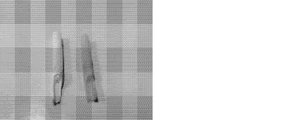
- FIG. It is the photograph after triidine blue dyeing
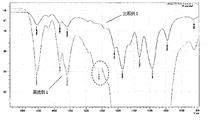
- FIG. 2 is an IR spectrum of the porous substrate obtained in Example 1 and Comparative Example 1.
- Example 1 At room temperature of 25 ° C., 0.25 g of L-lactide- ⁇ -caprolactone copolymer (molar ratio 50:50) and 7200 units / mL of heparin (made by Wako Pure Chemical Industries, Ltd., reagent grade) as solvent 1 The mixture was mixed in a mixed solution containing 0.3 mL of water dissolved at a concentration, 2.0 mL of methyl ethyl ketone as the solvent 2 and 1.0 mL of acetone as the cosolvent 3. A heterogeneous solution that did not dissolve the L-lactide- ⁇ -caprolactone copolymer was obtained. In the heterogeneous solution, heparin formed stable micelles without precipitation.
- Example 2 A porous substrate was obtained in the same manner as in Example 1 except that 0.5 mL of acetone (cosolvent 3-1) and 0.5 mL of ethanol (cosolvent 3-2) were used as the cosolvent 3. In the obtained heterogeneous solution, heparin did not precipitate and formed stable micelles.
- Example 3 At room temperature of 25 ° C., 0.25 g of L-lactide- ⁇ -caprolactone copolymer (molar ratio 50:50) and 7200 units / mL of heparin (made by Wako Pure Chemical Industries, Ltd., reagent grade) as solvent 1 The mixture was mixed in a mixed solution containing 0.2 mL of water dissolved at a concentration, 2.5 mL of methyl ethyl ketone as the solvent 2 and 0.8 mL of acetone and 0.2 mL of ethanol as the cosolvent 3. A heterogeneous solution that did not dissolve the L-lactide- ⁇ -caprolactone copolymer was obtained.
- heterogeneous solution heparin formed stable micelles without precipitation.
- the obtained heterogeneous solution was heated to 60 ° C. to obtain a homogeneous solution in which heparin was uniformly dispersed and the L-lactide- ⁇ -caprolactone copolymer was dissolved.
- a rod-shaped body made of stainless steel with a fluorine coating having a diameter of 0.6 mm was placed in a glass tube having an inner diameter of 1.1 mm, and the obtained uniform solution was poured into the gap between the rod-shaped body and the glass tube. In this state, the mixture was cooled to ⁇ 30 ° C. by placing it in a freezer.
- a porous body composed of an L-lactide- ⁇ -caprolactone copolymer containing heparin was deposited around the rod-shaped body.
- the obtained porous body was immersed in a 50 mL ethanol bath at ⁇ 30 ° C. for 12 hours, and then immersed in a 50 mL water bath at 25 ° C. for 12 hours for washing. Thereafter, freeze-drying was performed at ⁇ 40 ° C. to obtain a tubular porous body.
- Polyglycolide and polylactide were dissolved in hexafluoroisopropanol to prepare hexafluoroisopropanol solutions having a polyglycolide concentration of 10% by weight and a polylactide concentration of 10% by weight, respectively.
- the hexafluoroisopropanol solution was discharged onto the surface of the rod-shaped body using an electrospinning apparatus using the rod-shaped body on which the tubular porous body was formed as a collector electrode. At this time, the rod-shaped body was rotated, and the prepared hexafluoroisopropanol solution was filled in two nozzles, respectively, and discharged while reciprocating multiple times to form an ultrafine fiber nonwoven fabric layer.
- the electrospinning conditions were a voltage of ⁇ 20 kV and a nozzle diameter of 23G.
- the rod-shaped body was pulled out to obtain a tube-shaped artificial blood vessel having an outer diameter of about 1090 ⁇ m and an inner diameter of about 610 ⁇ m.
- Example 1 A porous substrate was obtained in the same manner as in Example 1 except that water that did not dissolve heparin was used as the solvent 1.
- FIG. 1 shows an electron micrograph obtained by cutting the cylindrical porous substrate obtained in Example 1 and Comparative Example 1 and photographing the vicinity of the center of the cross section at a magnification of 10,000 times. Indicated. From FIG. 1 (a), it is confirmed that in the porous substrate obtained in Example 1, particles considered to be heparin are attached to the surface of the porous body made of L-lactide- ⁇ -caprolactone copolymer. did it. Such particles were not observed in the porous substrate obtained in Comparative Example 1 in FIG.
- FIG. 2 shows photographs of the porous substrates obtained in Example 1 and Comparative Example 1 stained with triidine blue. From FIG. 2, no staining was observed in the porous substrate obtained in Comparative Example 1 (left side of the photograph), whereas in the porous substrate obtained in Example 1 (right side of the photograph) was stained deep blue-purple, confirming the presence of heparin.
- FIG. 3 shows the IR spectra of the porous substrates obtained in Example 1 and Comparative Example 1.
- a peak at 1259 cm ⁇ 1 that appears to be due to heparin, which is not in the IR spectrum of the porous substrate obtained in Comparative Example 1 (in dotted line) Surrounded peak) was observed.
- a method for producing a porous substrate made of a bioabsorbable polymer containing heparin without using a surfactant, and a porous group made of a bioabsorbable polymer containing heparin A material and an artificial blood vessel can be provided.
Landscapes
- Health & Medical Sciences (AREA)
- Chemical & Material Sciences (AREA)
- Life Sciences & Earth Sciences (AREA)
- General Health & Medical Sciences (AREA)
- Veterinary Medicine (AREA)
- Public Health (AREA)
- Epidemiology (AREA)
- Animal Behavior & Ethology (AREA)
- Medicinal Chemistry (AREA)
- Oral & Maxillofacial Surgery (AREA)
- Dermatology (AREA)
- Transplantation (AREA)
- Engineering & Computer Science (AREA)
- Dispersion Chemistry (AREA)
- Vascular Medicine (AREA)
- Mechanical Engineering (AREA)
- Surgery (AREA)
- Hematology (AREA)
- Materials Engineering (AREA)
- Biomedical Technology (AREA)
- Molecular Biology (AREA)
- Materials For Medical Uses (AREA)
Abstract
本発明は、界面活性剤を用いず、かつ、簡便なヘパリンを含有する生体吸収性高分子からなる多孔質基材の製造方法、ヘパリンを含有する生体吸収性高分子からなる多孔質基材、及び、人工血管を提供することを目的とする。
本発明は、生体吸収性高分子と、ヘパリンと、前記生体吸収性高分子に対して溶解度の低い貧溶媒である溶媒1と、前記生体吸収性高分子に対して溶解度が高い良溶媒であり、かつ、前記溶媒1と相溶しない溶媒2と、前記溶媒1及び溶媒2と相溶する共溶媒3とを用いて、前記ヘパリンが均一に分散し、かつ、前記生体吸収性高分子を溶解したヘパリン-生体吸収性高分子溶液を調製する溶液調製工程と、前記ヘパリン-生体吸収性高分子溶液を冷却してヘパリンを含有する生体吸収性高分子からなる多孔質体を析出させる析出工程と、前記ヘパリンを含有する生体吸収性高分子からなる多孔質体を凍結乾燥してヘパリンを含有する多孔質基材を得る凍結乾燥工程を有するヘパリンを含有する生体吸収性高分子からなる多孔質基材の製造方法である。
Description
本発明は、界面活性剤を用いず、かつ、簡便なヘパリンを含有する生体吸収性高分子からなる多孔質基材の製造方法、ヘパリンを含有する生体吸収性高分子からなる多孔質基材、及び、人工血管に関する。
近年の細胞工学技術の進展によって、ヒト細胞を含む数々の動物細胞の培養が可能となり、また、それらの細胞を用いてヒトの組織や器官を再構築しようとする、いわゆる再生医療の研究が急速に進んでいる。
例えば、臨床において人工血管として最も使用されているのはゴアテックス等の非吸収性高分子を用いたものであるが、非吸収性高分子を用いた人工血管は、移植後長期にわたって異物が体内に残存することから、継続的に抗凝固剤等を投与しなければならないという問題があり、小児に使用した場合には成長に伴って改めて手術する必要が生じるという問題もあった。これに対して、再生医療による血管組織の再生が試みられている。
例えば、臨床において人工血管として最も使用されているのはゴアテックス等の非吸収性高分子を用いたものであるが、非吸収性高分子を用いた人工血管は、移植後長期にわたって異物が体内に残存することから、継続的に抗凝固剤等を投与しなければならないという問題があり、小児に使用した場合には成長に伴って改めて手術する必要が生じるという問題もあった。これに対して、再生医療による血管組織の再生が試みられている。
再生医療においては、細胞が増殖分化して三次元的な生体組織様の構造物を構築できるかがポイントであり、例えば、基材を患者の体内に移植し、周りの組織又は器官から細胞を基材中に侵入させ増殖分化させて組織又は器官を再生する方法が行われている。
再生医療用の基材として、生体吸収性高分子からなる多孔質基材が提案されている。生体吸収性高分子からなる多孔質基材を再生医療の基材として用いることにより、その空隙部分に細胞が侵入して増殖し、早期に組織が再生される。そして一定期間経過後には分解して生体に吸収されることから、再手術により取り出す必要もない。
再生医療用の基材として、生体吸収性高分子からなる多孔質基材が提案されている。生体吸収性高分子からなる多孔質基材を再生医療の基材として用いることにより、その空隙部分に細胞が侵入して増殖し、早期に組織が再生される。そして一定期間経過後には分解して生体に吸収されることから、再手術により取り出す必要もない。
再生医療による血管組織の再生においては、血栓の形成防止も重要である。特に直径の小さな血管組織の再生では、しばしば血栓の形成により血管が詰まってしまい、正常な血管が再生されないばかりか、更に重篤な症状を招くおそれもある。
血栓の形成を防止する方法として、生体吸収性高分子からなる多孔質基材中にヘパリンを含有させ、多孔質基材の分解に従いヘパリンを徐放させる方法が試みられている。
このようなヘパリンを含有する生体吸収性高分子からなる多孔質基材としては、例えば非特許文献1には、生体吸収性高分子を溶解した有機溶剤中にヘパリンナトリウム水溶液と界面活性剤を添加してミセル化させた溶液を用いてナノファイバーからなる血管用材料を製造する方法が記載されている。
しかしながら、非特許文献1に記載されたヘパリンを含有する生体吸収性高分子からなる多孔質基材は、毒性の強い界面活性剤を含有することから、血管組織の再生が妨げられるという問題があった。その他にもヘパリンを含有する生体吸収性高分子からなる多孔質基材を製造する方法が検討されているが、極めて煩雑であったり、製造過程でヘパリンが変性してしまい所期の血栓形成防止効果が得られなかったりするという問題があった。
このようなヘパリンを含有する生体吸収性高分子からなる多孔質基材としては、例えば非特許文献1には、生体吸収性高分子を溶解した有機溶剤中にヘパリンナトリウム水溶液と界面活性剤を添加してミセル化させた溶液を用いてナノファイバーからなる血管用材料を製造する方法が記載されている。
しかしながら、非特許文献1に記載されたヘパリンを含有する生体吸収性高分子からなる多孔質基材は、毒性の強い界面活性剤を含有することから、血管組織の再生が妨げられるという問題があった。その他にもヘパリンを含有する生体吸収性高分子からなる多孔質基材を製造する方法が検討されているが、極めて煩雑であったり、製造過程でヘパリンが変性してしまい所期の血栓形成防止効果が得られなかったりするという問題があった。
Coloids and Surfaces B:Biointerfaces,128(2015),106-114
本発明は、上記現状に鑑み、界面活性剤を用いず、かつ、簡便なヘパリンを含有する生体吸収性高分子からなる多孔質基材の製造方法、ヘパリンを含有する生体吸収性高分子からなる多孔質基材、及び、人工血管を提供することを目的とする。
本発明は、生体吸収性高分子と、ヘパリンと、前記生体吸収性高分子に対して溶解度の低い貧溶媒である溶媒1と、前記生体吸収性高分子に対して溶解度が高い良溶媒であり、かつ、前記溶媒1と相溶しない溶媒2と、前記溶媒1及び溶媒2と相溶する共溶媒3とを用いて、前記ヘパリンが均一に分散し、かつ、前記生体吸収性高分子を溶解したヘパリン-生体吸収性高分子溶液を調製する溶液調製工程と、前記ヘパリン-生体吸収性高分子溶液を冷却してヘパリンを含有する生体吸収性高分子からなる多孔質体を析出させる析出工程と、前記ヘパリンを含有する生体吸収性高分子からなる多孔質体を凍結乾燥してヘパリンを含有する多孔質基材を得る凍結乾燥工程を有するヘパリンを含有する生体吸収性高分子からなる多孔質基材の製造方法である。
以下に本発明を詳述する。
以下に本発明を詳述する。
生体吸収性高分子からなる多孔質基材においては、組織再生の足場材としての機械的強度や生体吸収挙動、細胞の侵入性、侵入した細胞への栄養の供給等の観点から、その孔径やかさ密度等の制御が極めて重要である。このような生体吸収性高分子からなる多孔質基材として、生体吸収性高分子に対する良溶媒と貧溶媒とを混合して均一相を形成させた後、冷却することにより多孔質体を得る、相分離法が知られていた。相分離法では、良溶媒と貧溶媒との混合比により、得られる多孔質基材の孔径を調整することができる。しかしながら、相分離法で多孔質基材の孔径を調整しようとすると、得られる多孔質基材のかさ密度が大きく変動する。即ち、大孔径の多孔質基材を得ようとすると貧溶媒の比を大きくする必要があるが、相対的に良溶媒の比が小さくなることから、得られる多孔質基材のかさ密度が大きくなってしまう。逆に、小孔径の多孔質基材を得ようとすると、良溶媒の比を大きく、貧溶媒の比を小さくするため、得られる多孔質基材のかさ密度が小さくなってしまう。従って、相分離法により、同一のかさ密度で孔径の異なる多孔質基材を製造することは極めて困難であるという問題があった。また、相分離法では、良溶媒と貧溶媒とが相溶であることが要求される。貧溶媒として取り扱いが容易な水を選択した場合、良溶媒としては1,4-ジオキサン、N-メチルピロリドン、ジメチルスルホキシド等の限られた選択肢しかない。しかしながら、これらの溶媒は生体に対する毒性が高いことから、臨床応用のためには多孔質基材から溶媒を完全に除去する工程が必須となり、極めて煩雑であるという問題もあった。
本発明者らは、鋭意検討の結果、生体吸収性高分子の良溶媒と貧溶媒に、更に該良溶媒と貧溶媒とのいずれもと相溶可能な共溶媒を組み合わせた多孔質基材の製造方法を発明した。共溶媒を組み合わせることにより、良溶媒と貧溶媒との相溶性が不要となることから、良溶媒と貧溶媒との組み合わせの選択肢が大きく広がる。また、この製造方法においては、良溶媒として1,4-ジオキサン、N-メチルピロリドン、ジメチルスルホキシド等以外の、毒性の低い有機溶媒を選択することもできる。更に、共溶媒を2種以上組み合わせて、該2種以上の共溶媒の配合比を調整することにより、容易に多孔質基材のかさ密度と孔径とを調整することができる。
そして本発明者らは、生体吸収性高分子の貧溶媒が、ヘパリンを溶解できることに着目し、貧溶媒に予めヘパリンを溶解させることにより、界面活性剤を用いることなく、極めて簡便にヘパリンを含有する生体吸収性高分子からなる多孔質基材を製造できることを見出し、本発明を完成した。
そして本発明者らは、生体吸収性高分子の貧溶媒が、ヘパリンを溶解できることに着目し、貧溶媒に予めヘパリンを溶解させることにより、界面活性剤を用いることなく、極めて簡便にヘパリンを含有する生体吸収性高分子からなる多孔質基材を製造できることを見出し、本発明を完成した。
本発明のヘパリンを含有する生体吸収性高分子からなる多孔質基材の製造方法(以下、単に「多孔質基材の製造方法」ともいう。)では、まず、生体吸収性高分子とヘパリンと溶媒1と溶媒2と共溶媒3とを用いて、ヘパリンが均一に分散し、かつ、生体吸収性高分子を溶解したヘパリン-生体吸収性高分子溶液を調製する溶液調製工程を行う。
上記生体吸収性高分子としては、例えば、ポリグリコリド、ポリラクチド、ポリ-ε-カプロラクトン、ラクチド-グリコール酸共重合体、グリコリド-ε-カプロラクトン共重合体、ラクチド-ε-カプロラクトン共重合体、ポリクエン酸、ポリリンゴ酸、ポリ-α-シアノアクリレート、ポリ-β-ヒドロキシ酸、ポリトリメチレンオキサレート、ポリテトラメチレンオキサレート、ポリオルソエステル、ポリオルソカーボネート、ポリエチレンカーボネート、ポリ-γ-ベンジル-L-グルタメート、ポリ-γ-メチル-L-グルタメート、ポリ-L-アラニン、ポリグリコールセバスチン酸等の合成高分子や、デンプン、アルギン酸、ヒアルロン酸、キチン、ペクチン酸及びその誘導体等の多糖類や、ゼラチン、コラーゲン、アルブミン、フィブリン等のタンパク質等の天然高分子等が挙げられる。これらの生体吸収性材料は単独で用いてもよく、2種以上を併用してもよい。
上記ヘパリンは、アンチトロンビンを活性化し、抗凝血作用能の賦活を通して凝固系を抑制する抗凝固薬として知られる薬剤であり、従来公知のヘパリンを用いることができる。また、抗凝固薬であるワルファリン、抗血小板薬であるアスピリン、ジピリダモール等もヘパリンと同様に用いることができる。
上記溶媒1は、上記生体吸収性高分子に対して溶解度の低い貧溶媒である。ここで貧溶媒とは、上記溶媒2よりも上記生体吸収性高分子を溶解しにくい性質を有することを意味し、より具体的には、25℃の室温下において上記溶媒1の100gに溶解する上記生体吸収性高分子の質量が0.01g以下であることを意味する。
上記溶媒1としては、上記生体吸収性高分子が合成高分子である場合には、例えば、水、メタノール、n-プロパノール、イソプロパノール、n-ブタノール等を用いることができる。なかでも、取り扱い性に優れ、ヘパリンの溶解性に優れることから、水が好適である。
上記溶媒1としては、上記生体吸収性高分子が合成高分子である場合には、例えば、水、メタノール、n-プロパノール、イソプロパノール、n-ブタノール等を用いることができる。なかでも、取り扱い性に優れ、ヘパリンの溶解性に優れることから、水が好適である。
上記溶媒2は、上記生体吸収性高分子に対して溶解度の高い良溶媒である。ここで良溶媒とは、上記溶媒1よりも上記生体吸収性高分子を溶解しやすい性質を有することを意味し、より具体的には、25℃の室温下において上記溶媒2の100gに溶解する上記生体吸収性高分子の質量が0.1g以上であることを意味する。
上記溶媒2は、上記溶媒1と相溶しないものである。ここで相溶しないとは、25℃の室温下で混合、撹拌しても相分離することを意味する。
上記溶媒2は、上記溶媒1と相溶しないものである。ここで相溶しないとは、25℃の室温下で混合、撹拌しても相分離することを意味する。
上記溶媒2としては、上記生体吸収性高分子が合成高分子であって、上記溶媒1として水を選択した場合には、例えば、メチルエチルケトン、ジエチルケトン、メチルプロピルケトン、メチルイソブチルケトン、メチルアミノケトン、シクロヘサノン、クロロホルム、酢酸エチル、トルエン等の有機溶媒を用いることができる。なかでも、比較的毒性が低いことから、メチルエチルケトン、クロロホルム、等が好適である。
上記共溶媒3は、上記溶媒1と溶媒2とのいずれとも相溶する。このような共溶媒3を組み合わせることにより、上記溶媒1と溶媒2とが非相溶であっても相分離法による多孔質基材を製造することが可能となり、溶媒1と溶媒2との組み合わせの選択肢が飛躍的に広がる。ここで相溶するとは、25℃の室温下で混合、撹拌しても相分離しないことを意味する。
上記共溶媒3としては、上記生体吸収性高分子が合成高分子であって、上記溶媒1として水を、上記溶媒2として有機溶媒を選択した場合には、例えば、アセトン、メタノール、エタノール、プロパノール、イソプロパノール、n-ブタノール、2-ブタノール、イソブタノール、テトラヒドロフラン等を用いることができる。
上記溶媒1と溶媒2との配合比は特に限定されないが、溶媒1と溶媒2とが重量比で1:1~1:100の範囲内であることが好ましい。この範囲内であると、均一な多孔質基材を製造することができる。より好ましくは、1:10~1:50の範囲内である。
上記溶媒1と溶媒2との合計と上記共溶媒3の配合比は特に限定されないが、溶媒1と溶媒2との合計と共溶媒3が重量比で1:0.01~1:0.5の範囲内であることが好ましい。この範囲内であると、均一な多孔質基材を製造することができる。より好ましくは、1:0.02~1:0.3の範囲内である。
上記溶媒1と溶媒2との合計と上記共溶媒3の配合比は特に限定されないが、溶媒1と溶媒2との合計と共溶媒3が重量比で1:0.01~1:0.5の範囲内であることが好ましい。この範囲内であると、均一な多孔質基材を製造することができる。より好ましくは、1:0.02~1:0.3の範囲内である。
得られる多孔質基材の孔径は、上記溶媒1と溶媒2との配合比を調整することにより制御することができる。具体的には、上記溶媒1の比率を高くすると得られる多孔質基材の孔径が大きくなり、上記溶媒2の比率を高くすると得られる多孔質基材の孔径が小さくなる。しかしながら、溶媒1と溶媒2との配合比を調整する方法では、同時にかさ密度も変動してしまい、任意の孔径とかさ密度を有する多孔質基材を製造することは困難である。
そこで本発明の多孔質基材の製造方法では、上記共溶媒3を2種以上組み合わせて用いることが好ましい(以下、共溶媒3に含まれる2種以上の溶媒を「共溶媒3-1」、「共溶媒3-2」、・・・ともいう。)。上記共溶媒3を2種以上組み合わせて、例えば、共溶媒3-1と共溶媒3-2の配合比を調整することにより、得られる多孔質基材の孔径を制御することができる。即ち、上記溶媒1と溶媒2と共溶媒3の配合比を一定としたまま、共溶媒3に含まれる共溶媒3-1と共溶媒3-2の配合比を調整することにより、得られる多孔質基材の孔径を制御することができる。これは、得られる多孔質基材のかさ密度をほぼ一定として、孔径のみを調整可能なことを意味する。このような本発明の多孔質基材の製造方法によれば、任意の孔径とかさ密度を有する多孔質基材を製造することが容易になる。
そこで本発明の多孔質基材の製造方法では、上記共溶媒3を2種以上組み合わせて用いることが好ましい(以下、共溶媒3に含まれる2種以上の溶媒を「共溶媒3-1」、「共溶媒3-2」、・・・ともいう。)。上記共溶媒3を2種以上組み合わせて、例えば、共溶媒3-1と共溶媒3-2の配合比を調整することにより、得られる多孔質基材の孔径を制御することができる。即ち、上記溶媒1と溶媒2と共溶媒3の配合比を一定としたまま、共溶媒3に含まれる共溶媒3-1と共溶媒3-2の配合比を調整することにより、得られる多孔質基材の孔径を制御することができる。これは、得られる多孔質基材のかさ密度をほぼ一定として、孔径のみを調整可能なことを意味する。このような本発明の多孔質基材の製造方法によれば、任意の孔径とかさ密度を有する多孔質基材を製造することが容易になる。
上記生体吸収性高分子と各溶媒の組み合わせとしては特に限定されないが、例えば、上記生体吸収性高分子がラクチド-ε-カプロラクトン共重合体に対して、上記溶媒1が水、溶媒2がメチルエチルケトン、共溶媒3-1がアセトン、共溶媒3-2がエタノールである組み合わせや、上記生体吸収性高分子がポリラクチドに対して、上記溶媒1が水、溶媒2がクロロホルム、共溶媒3-1がテトラヒドロフラン、共溶媒3-2がエタノールである組み合わせや、上記生体吸収性高分子がポリラクチドに対して、上記溶媒1が水、溶媒2がクロロホルム、共溶媒3-1がアセトン、共溶媒3-2がエタノールである組み合わせ等が挙げられる。
上記溶液調製工程においては、生体吸収性高分子とヘパリンと溶媒1と溶媒2と共溶媒3とを用いて、ヘパリンが均一に分散し、かつ、生体吸収性高分子を溶解したヘパリン-生体吸収性高分子溶液を調製する。
より具体的に上記ヘパリン-生体吸収性高分子溶液を調製する方法としては、例えば、予めヘパリンを上記溶媒1に溶解しておき、生体吸収性高分子と、ヘパリンを溶解した溶媒1、溶媒2及び共溶媒3を含む混合溶媒(以下、単に「混合溶媒」ともいう。)を混合した後、加熱する方法が挙げられる。また、より容易にヘパリン-生体吸収性高分子溶液を調製する方法として、例えば、上記混合溶媒を予め加熱し、該加熱した混合溶媒に生体吸収性高分子を加える方法や、生体吸収性高分子をいったん溶媒2に溶解した後、加熱しながらヘパリンを溶解した溶媒1及び共溶媒3を加える方法等も挙げられる。
上記混合方法は特に限定されず、例えば、スターラチップ、撹拌棒等を用いた公知の混合方法を用いることができる。
より具体的に上記ヘパリン-生体吸収性高分子溶液を調製する方法としては、例えば、予めヘパリンを上記溶媒1に溶解しておき、生体吸収性高分子と、ヘパリンを溶解した溶媒1、溶媒2及び共溶媒3を含む混合溶媒(以下、単に「混合溶媒」ともいう。)を混合した後、加熱する方法が挙げられる。また、より容易にヘパリン-生体吸収性高分子溶液を調製する方法として、例えば、上記混合溶媒を予め加熱し、該加熱した混合溶媒に生体吸収性高分子を加える方法や、生体吸収性高分子をいったん溶媒2に溶解した後、加熱しながらヘパリンを溶解した溶媒1及び共溶媒3を加える方法等も挙げられる。
上記混合方法は特に限定されず、例えば、スターラチップ、撹拌棒等を用いた公知の混合方法を用いることができる。
得られたヘパリン-生体吸収性高分子溶液において、上記生体吸収性高分子は均一に溶解し、ヘパリンは均一に分散している。上記ヘパリン-生体吸収性高分子溶液中においては、ヘパリンは自己ミセル化して安定なミセルを形成しているものと考えられる。
上記溶液調製工程における加熱の温度としては、上記生体吸収性高分子が均一に溶解する温度であれば特に限定されないが、上記溶媒1、溶媒2及び共溶媒3のいずれの沸点よりも低い温度であることが好ましい。沸点以上の温度にまで加熱すると、各溶媒の配合比が変動して、得られる多孔質基材の孔径、かさ密度を制御できなくなることがある。
本発明の多孔質基材の製造方法では、次いで、得られたヘパリン-生体吸収性高分子溶液を冷却してヘパリンを含有する生体吸収性高分子からなる多孔質体を析出させる析出工程を行う。冷却することにより、不溶となった上記生体吸収性高分子からなる多孔質体が析出する。これは、上記生体吸収性高分子が結晶化され析出する前に、上記生体吸収性高分子が結晶化する温度以上で、液体状態の生体吸収性高分子と各溶媒とがまず熱力学的不安定性により相分離(液-液相分離)するためと考えられる。この際、ヘパリン-生体吸収性高分子溶液中に分散していたヘパリンは、ファンデルワールス力等により、析出した生体吸収性高分子からなる多孔質体の表面に均一に付着する。
上記析出工程における冷却の温度としては、生体吸収性高分子からなる多孔質体を析出できる温度であれば特に限定されないが、4℃以下であることが好ましく、-24℃以下であることがより好ましい。
なお、得られる多孔質基材の孔径は冷却速度にも影響される。具体的には、冷却速度が早いと孔径が小さくなり、冷却速度が遅いと孔径が大きくなる傾向がある。従って、特に孔径の小さい多孔質基材を得る場合には、冷却温度を低く設定して急速に冷却することが考えられる。
なお、得られる多孔質基材の孔径は冷却速度にも影響される。具体的には、冷却速度が早いと孔径が小さくなり、冷却速度が遅いと孔径が大きくなる傾向がある。従って、特に孔径の小さい多孔質基材を得る場合には、冷却温度を低く設定して急速に冷却することが考えられる。
本発明の多孔質基材の製造方法では、次いで、得られたヘパリンを含有する生体吸収性高分子からなる多孔質体を凍結乾燥してヘパリンを含有する多孔質基材を得る凍結乾燥工程を行う。
上記凍結乾燥の条件としては特に限定されず、従来公知の条件で行うことができる。
上記凍結乾燥工程は、上記冷却工程後にそのまま行ってもよいが、溶媒として用いた各種有機溶媒を除去する目的で、予めエタノール等に多孔質体を浸漬して置換してから、凍結乾燥を行ってもよい。この際、多孔質基材からヘパリンが溶出してしまわないように、ヘパリンを溶解しない溶媒を用いる。
上記凍結乾燥の条件としては特に限定されず、従来公知の条件で行うことができる。
上記凍結乾燥工程は、上記冷却工程後にそのまま行ってもよいが、溶媒として用いた各種有機溶媒を除去する目的で、予めエタノール等に多孔質体を浸漬して置換してから、凍結乾燥を行ってもよい。この際、多孔質基材からヘパリンが溶出してしまわないように、ヘパリンを溶解しない溶媒を用いる。
本発明の多孔質基材の製造方法を用いれば、毒性の高い界面活性剤を用いることなく、極めて簡便にヘパリンを含有する生体吸収性高分子からなる多孔質基材を製造することができる。また、毒性の高い溶媒を用いることなく、容易にかさ密度と孔径とを調整して多孔質基材を得ることができる。
本発明のヘパリンを含有する多孔質基材の製造方法によってなるヘパリンを含有する多孔質基材もまた、本発明の1つである。
本発明のヘパリンを含有する多孔質基材は、ヘパリンを含有するにもかかわらず、界面活性剤を含有しない。これにより、血管等の組織の再生が界面活性剤の毒性により妨げられることがない。
なお、本明細書において界面活性剤を含有しないとは、界面活性剤の含有量が0.1ppm以下であることを意味する。
本発明のヘパリンを含有する多孔質基材は、ヘパリンを含有するにもかかわらず、界面活性剤を含有しない。これにより、血管等の組織の再生が界面活性剤の毒性により妨げられることがない。
なお、本明細書において界面活性剤を含有しないとは、界面活性剤の含有量が0.1ppm以下であることを意味する。
本発明のヘパリンを含有する生体吸収性高分子からなる多孔質基材は、例えば、血管、神経等の再生に用いることができ、特に血管の再生に好適に用いることができる。
なかでも、本発明の多孔質基材の製造方法により得られたチューブ状の人工血管は、極めて優れた性能を発揮することができる。
以下、本発明の多孔質基材の製造方法を用いた人工血管の製造についてより詳しく説明する。
なかでも、本発明の多孔質基材の製造方法により得られたチューブ状の人工血管は、極めて優れた性能を発揮することができる。
以下、本発明の多孔質基材の製造方法を用いた人工血管の製造についてより詳しく説明する。
上記チューブ状の人工血管の製造方法は、本発明の多孔質基材の製造方法と同様に溶液調製工程→析出工程→凍結乾燥工程により行うが、溶液調製工程の後、析出工程の前にチューブ状に成形するための工程を行う。
具体的には、上記溶液調製工程で得られたヘパリン-生体吸収性高分子溶液を、棒状体の表面に塗工する塗工工程を行った後に、棒状体の表面のヘパリン-生体吸収性高分子溶液を冷却して、棒状体の周りにヘパリンを含有する生体吸収性高分子からなるチューブ状の多孔質体を析出させる析出工程を行う。
具体的には、上記溶液調製工程で得られたヘパリン-生体吸収性高分子溶液を、棒状体の表面に塗工する塗工工程を行った後に、棒状体の表面のヘパリン-生体吸収性高分子溶液を冷却して、棒状体の周りにヘパリンを含有する生体吸収性高分子からなるチューブ状の多孔質体を析出させる析出工程を行う。
上記棒状体は、多孔質体をチューブ状に成形するための部材であり、得られた多孔質体から抜き取ったときに棒状体の直径が得られるチューブ状の人工血管の内径に略該当する。
ここで本発明者らは、上記棒状体として、特にステンレスや樹脂被覆ステンレス等の金属からなる棒状体を用いた場合には、得られたチューブ状の人工血管を移植したときに、肥厚化や石灰化の起こりにくい、極めて正常な血管が再生されることを見出した。
これは、上記棒状体の表面のヘパリン-生体吸収性高分子溶液を冷却して、棒状体の周りにヘパリンを含有する生体吸収性高分子からなるチューブ状の多孔質体を析出させる析出工程を行う際に、熱伝導性の高い金属からなる棒状体に接するチューブの内側部分では急速に冷却されるため、その周りの部分(以下、「多孔質層」ともいう。)に比べて相対的に孔径の小さい層(以下、「スキン層」ともいう。)が形成されるためと考えられる。血管が再生されるためには、人工血管全体としては細胞が侵入できる充分な孔径の孔が形成されている必要がある。一方、直接血流と接する内側部分では、肥厚化や石灰化の原因となる血小板の付着を防止することが重要である。チューブ状の人工血管の内側に上記スキン層が形成されることにより、血流と接する内側部分では血小板の付着を防止でき、かつ、その他の部分では細胞が容易に侵入できるため、正常な血管が再生されるものと考えられる。
更に、棒状体の種類や冷却方法を調整することにより、内側にスキン層を有し、かつ、該スキン層の周りの多孔質層の孔径が外側にいくに従い大きくなる形態の人工血管も製造することができる。なお、逆に、外側にスキン層を有し、かつ、該スキン層の内側の多孔質層の孔径が内側にいくに従い大きくなる形態の人工血管も製造することも可能である。
ここで本発明者らは、上記棒状体として、特にステンレスや樹脂被覆ステンレス等の金属からなる棒状体を用いた場合には、得られたチューブ状の人工血管を移植したときに、肥厚化や石灰化の起こりにくい、極めて正常な血管が再生されることを見出した。
これは、上記棒状体の表面のヘパリン-生体吸収性高分子溶液を冷却して、棒状体の周りにヘパリンを含有する生体吸収性高分子からなるチューブ状の多孔質体を析出させる析出工程を行う際に、熱伝導性の高い金属からなる棒状体に接するチューブの内側部分では急速に冷却されるため、その周りの部分(以下、「多孔質層」ともいう。)に比べて相対的に孔径の小さい層(以下、「スキン層」ともいう。)が形成されるためと考えられる。血管が再生されるためには、人工血管全体としては細胞が侵入できる充分な孔径の孔が形成されている必要がある。一方、直接血流と接する内側部分では、肥厚化や石灰化の原因となる血小板の付着を防止することが重要である。チューブ状の人工血管の内側に上記スキン層が形成されることにより、血流と接する内側部分では血小板の付着を防止でき、かつ、その他の部分では細胞が容易に侵入できるため、正常な血管が再生されるものと考えられる。
更に、棒状体の種類や冷却方法を調整することにより、内側にスキン層を有し、かつ、該スキン層の周りの多孔質層の孔径が外側にいくに従い大きくなる形態の人工血管も製造することができる。なお、逆に、外側にスキン層を有し、かつ、該スキン層の内側の多孔質層の孔径が内側にいくに従い大きくなる形態の人工血管も製造することも可能である。
上記ヘパリン-生体吸収性高分子溶液を棒状体の表面に塗工する方法としては特に限定されず、例えば、棒状体をヘパリン-生体吸収性高分子溶液中に1回又は複数回ディップする方法や、上記棒状体の直径よりも内径の大きな筒状体の中に棒状体を配置し、棒状体と筒状体との隙間に上記ヘパリン-生体吸収性高分子溶液を流し込む方法等が挙げられる。
なお、得られるチューブ状の多孔質体は、析出工程において若干収縮することから、棒状体や筒状体の抜き取りは容易であるが、予め棒状体や筒状体の表面にコーティング等の滑り加工を施しておいてもよい。
なお、得られるチューブ状の多孔質体は、析出工程において若干収縮することから、棒状体や筒状体の抜き取りは容易であるが、予め棒状体や筒状体の表面にコーティング等の滑り加工を施しておいてもよい。
本発明のヘパリンを含有する多孔質基材からなる人工血管もまた、本発明の1つである。
本発明の人工血管の内径は特に限定されないが、一般的な血管の内径から、好ましい下限は0.5mm、好ましい上限は8.0mm程度である。また、上記人工血管の外径は特に限定されないが、一般的な血管の外径から、好ましい下限は1.0mm、好ましい上限は10.0mm程度である。
とりわけ内径が2.0~5.0mm程度の抹消血管の再生にも利用可能な人工血管は、従来の方法では製造が困難であったが、本発明の多孔質基材の製造方法によれば容易に製造することができる。
本発明の人工血管の内径は特に限定されないが、一般的な血管の内径から、好ましい下限は0.5mm、好ましい上限は8.0mm程度である。また、上記人工血管の外径は特に限定されないが、一般的な血管の外径から、好ましい下限は1.0mm、好ましい上限は10.0mm程度である。
とりわけ内径が2.0~5.0mm程度の抹消血管の再生にも利用可能な人工血管は、従来の方法では製造が困難であったが、本発明の多孔質基材の製造方法によれば容易に製造することができる。
本発明の人工血管は、最外層として生体吸収性高分子からなり、繊維径0.1~10μmの極細繊維からなる極細繊維不織布層を有することが好ましい。このような極細繊維不織布層を最外層に設けることにより、血流の圧力によって血液が漏れ出すことを防止することができ、また、移植後に外部からの圧迫に対して充分な強度を発揮して、キンキング(折れる現象)によって血管が閉塞するのを防止することができる。
上記極細繊維不織布層を構成する生体吸収性高分子としては特に限定されず、上述の合成高分子や天然高分子等を用いることができる。
なかでも、上記極細繊維不織布層を構成する生体吸収性高分子として生体吸収性の異なる2種以上の生体吸収性高分子を組み合わせて用いることが好ましい。上記極細繊維不織布層を設けることにより人工血管の強度を向上させることができる一方、極細繊維不織布層により細胞の侵入が妨げられ、血管再生が遅延したり、石灰化の原因となったりすることがある。生体吸収性の異なる2種以上の生体吸収性高分子を組み合わせて極細繊維不織布層を構成することにより、この点を著しく改善することができる。
例えば、相対的に生体吸収性の高いポリグリコリドと、相対的に生体吸収性の低いポリラクチドとを組み合わせて極細繊維不織布層を構成する。この場合、特に強度が求められる移植直後の比較的初期においては、2種の生体吸収性高分子のいずれもが分解せずに存在することから、高い強度向上効果を発揮できる。その後、徐々に生体吸収性の高いポリグリコリドが分解され吸収されていくに従って、極細繊維不織布層に空隙が生成する。この空隙により細胞の侵入が容易となり、血管再生が促進され、石灰化を防止することができる。
なかでも、上記極細繊維不織布層を構成する生体吸収性高分子として生体吸収性の異なる2種以上の生体吸収性高分子を組み合わせて用いることが好ましい。上記極細繊維不織布層を設けることにより人工血管の強度を向上させることができる一方、極細繊維不織布層により細胞の侵入が妨げられ、血管再生が遅延したり、石灰化の原因となったりすることがある。生体吸収性の異なる2種以上の生体吸収性高分子を組み合わせて極細繊維不織布層を構成することにより、この点を著しく改善することができる。
例えば、相対的に生体吸収性の高いポリグリコリドと、相対的に生体吸収性の低いポリラクチドとを組み合わせて極細繊維不織布層を構成する。この場合、特に強度が求められる移植直後の比較的初期においては、2種の生体吸収性高分子のいずれもが分解せずに存在することから、高い強度向上効果を発揮できる。その後、徐々に生体吸収性の高いポリグリコリドが分解され吸収されていくに従って、極細繊維不織布層に空隙が生成する。この空隙により細胞の侵入が容易となり、血管再生が促進され、石灰化を防止することができる。
上記極細繊維不織布層の厚みの好ましい下限は10μm、好ましい上限は1000μmである。上記極細繊維不織布層の厚みがこの範囲内であると、充分な強度向上効果を発揮することができる。
上記極細繊維不織布層を形成する方法は特に限定されないが、電界紡糸法が好適である。電界紡糸法は、ノズルとコレクタ電極の間に高電圧をかけた状態で、ノズルから生体吸収性高分子を溶解した溶液をターゲットに向けて吐出する方法である。ノズルから発射された溶液は、電気力線に沿って極細繊維状となり、ターゲット上に付着する。
本発明の人工血管の製造方法では、上記棒状体として金属からなる導電性の棒状体を用いることにより、該棒状体をコレクタ電極とすることができる。このとき、チューブ状の人工血管が形成された棒状体を回転させ、ノズルを複数回往復させながら吐出することにより、上記チューブ状の人工血管の最外層として上記極細繊維不織布層を形成することができる。
本発明によれば、界面活性剤を用いず、かつ、簡便なヘパリンを含有する生体吸収性高分子からなる多孔質基材の製造方法、ヘパリンを含有する生体吸収性高分子からなる多孔質基材、及び、人工血管を提供することができる。
以下に実施例を挙げて本発明の態様を更に詳しく説明するが、本発明はこれら実施例にのみ限定されるものではない。
(実施例1)
25℃の室温下にて、L-ラクチド-ε-カプロラクトン共重合体(モル比50:50)0.25gと、溶媒1としてヘパリン(和光純薬工業社製、試薬特級)を7200units/mLの濃度で溶解させた水0.3mL、溶媒2としてメチルエチルケトン2.0mL、共溶媒3としてアセトン1.0mLを含有する混合溶液に混合した。L-ラクチド-ε-カプロラクトン共重合体を溶解しない不均一溶液が得られた。不均一溶液では、ヘパリンは沈殿することなく安定なミセルを形成していた。
次いで、得られた不均一溶液を直径3.3mmのガラス管に入れて60℃に加熱したところ、ヘパリンが均一に分散し、L-ラクチド-ε-カプロラクトン共重合体が溶解した溶液が得られた。
次いで、得られた溶液を冷凍庫内に入れることにより4℃又は-24℃に冷却したところ、ヘパリンを含有するL-ラクチド-ε-カプロラクトン共重合体からなる多孔質体が析出した。
得られた多孔質体を、50mLのエタノール槽中に4℃又は-24℃、12時間浸漬し、次いで、50mLの水槽中に25℃、12時間浸漬して洗浄を行った。
その後、-40℃の条件で凍結乾燥を行い、直径3.0mm、高さ15mmの円柱状の多孔質基材を得た。
25℃の室温下にて、L-ラクチド-ε-カプロラクトン共重合体(モル比50:50)0.25gと、溶媒1としてヘパリン(和光純薬工業社製、試薬特級)を7200units/mLの濃度で溶解させた水0.3mL、溶媒2としてメチルエチルケトン2.0mL、共溶媒3としてアセトン1.0mLを含有する混合溶液に混合した。L-ラクチド-ε-カプロラクトン共重合体を溶解しない不均一溶液が得られた。不均一溶液では、ヘパリンは沈殿することなく安定なミセルを形成していた。
次いで、得られた不均一溶液を直径3.3mmのガラス管に入れて60℃に加熱したところ、ヘパリンが均一に分散し、L-ラクチド-ε-カプロラクトン共重合体が溶解した溶液が得られた。
次いで、得られた溶液を冷凍庫内に入れることにより4℃又は-24℃に冷却したところ、ヘパリンを含有するL-ラクチド-ε-カプロラクトン共重合体からなる多孔質体が析出した。
得られた多孔質体を、50mLのエタノール槽中に4℃又は-24℃、12時間浸漬し、次いで、50mLの水槽中に25℃、12時間浸漬して洗浄を行った。
その後、-40℃の条件で凍結乾燥を行い、直径3.0mm、高さ15mmの円柱状の多孔質基材を得た。
(実施例2)
共溶媒3としてアセトン(共溶媒3-1)0.5mLとエタノール(共溶媒3-2)0.5mLの混合溶媒を用いた以外は実施例1と同様にして多孔質基材を得た。
なお、得られた不均一溶液では、ヘパリンは沈殿することなく安定なミセルを形成していた。
共溶媒3としてアセトン(共溶媒3-1)0.5mLとエタノール(共溶媒3-2)0.5mLの混合溶媒を用いた以外は実施例1と同様にして多孔質基材を得た。
なお、得られた不均一溶液では、ヘパリンは沈殿することなく安定なミセルを形成していた。
(実施例3)
25℃の室温下にて、L-ラクチド-ε-カプロラクトン共重合体(モル比50:50)0.25gと、溶媒1としてヘパリン(和光純薬工業社製、試薬特級)を7200units/mLの濃度で溶解させた水0.2mL、溶媒2としてメチルエチルケトン2.5mL、共溶媒3としてアセトン0.8mL及びエタノール0.2mLを含有する混合溶液に混合した。L-ラクチド-ε-カプロラクトン共重合体を溶解しない不均一溶液が得られた。不均一溶液では、ヘパリンは沈殿することなく安定なミセルを形成していた。
次いで、得られた不均一溶液を60℃に加熱したところ、ヘパリンが均一に分散し、L-ラクチド-ε-カプロラクトン共重合体が溶解した均一溶液が得られた。
直径0.6mmのフッ素コーティングを施したステンレスからなる棒状体を、内径1.1mmのガラス管の中に配置し、該棒状体とガラス管との隙間に得られた均一溶液を流し込んだ。その状態で、冷凍庫内に入れることにより-30℃に冷却したところ、棒状体の周りにヘパリンを含有するL-ラクチド-ε-カプロラクトン共重合体からなる多孔質体が析出した。得られた多孔質体を、50mLのエタノール槽中に-30℃、12時間浸漬し、次いで、50mLの水槽中に25℃、12時間浸漬して洗浄を行った。
その後、-40℃の条件で凍結乾燥を行い、チューブ状の多孔質体を得た。
25℃の室温下にて、L-ラクチド-ε-カプロラクトン共重合体(モル比50:50)0.25gと、溶媒1としてヘパリン(和光純薬工業社製、試薬特級)を7200units/mLの濃度で溶解させた水0.2mL、溶媒2としてメチルエチルケトン2.5mL、共溶媒3としてアセトン0.8mL及びエタノール0.2mLを含有する混合溶液に混合した。L-ラクチド-ε-カプロラクトン共重合体を溶解しない不均一溶液が得られた。不均一溶液では、ヘパリンは沈殿することなく安定なミセルを形成していた。
次いで、得られた不均一溶液を60℃に加熱したところ、ヘパリンが均一に分散し、L-ラクチド-ε-カプロラクトン共重合体が溶解した均一溶液が得られた。
直径0.6mmのフッ素コーティングを施したステンレスからなる棒状体を、内径1.1mmのガラス管の中に配置し、該棒状体とガラス管との隙間に得られた均一溶液を流し込んだ。その状態で、冷凍庫内に入れることにより-30℃に冷却したところ、棒状体の周りにヘパリンを含有するL-ラクチド-ε-カプロラクトン共重合体からなる多孔質体が析出した。得られた多孔質体を、50mLのエタノール槽中に-30℃、12時間浸漬し、次いで、50mLの水槽中に25℃、12時間浸漬して洗浄を行った。
その後、-40℃の条件で凍結乾燥を行い、チューブ状の多孔質体を得た。
ポリグリコリドとポリラクチドをヘキサフルオロイソプロパノールに溶解して、ポリグリコリド濃度が10重量%、ポリラクチド濃度が10重量%のヘキサフルオロイソプロパノール溶液をそれぞれ調製した。
チューブ状の多孔質体が形成された棒状体をコレクタ電極として、電界紡糸装置を用いて、棒状体の表面に該ヘキサフルオロイソプロパノール溶液を吐出させた。このとき、棒状体を回転させ、調整されたヘキサフルオロイソプロパノール溶液をそれぞれ二つのノズルに充填させ複数回往復させながら吐出することにより極細繊維不織布層を形成した。
なお、電界紡糸の条件は、電圧-20kV、ノズル径23Gとした。
最後に、棒状体を引き抜いて、外径約1090μm、内径約610μmのチューブ状の人工血管を得た。
チューブ状の多孔質体が形成された棒状体をコレクタ電極として、電界紡糸装置を用いて、棒状体の表面に該ヘキサフルオロイソプロパノール溶液を吐出させた。このとき、棒状体を回転させ、調整されたヘキサフルオロイソプロパノール溶液をそれぞれ二つのノズルに充填させ複数回往復させながら吐出することにより極細繊維不織布層を形成した。
なお、電界紡糸の条件は、電圧-20kV、ノズル径23Gとした。
最後に、棒状体を引き抜いて、外径約1090μm、内径約610μmのチューブ状の人工血管を得た。
(比較例1)
溶媒1としてヘパリンを溶解させない水を用いた以外は実施例1と同様にして多孔質基材を得た。
溶媒1としてヘパリンを溶解させない水を用いた以外は実施例1と同様にして多孔質基材を得た。
(評価)
実施例及び比較例で得られた多孔質基材について、以下の方法により評価を行った。
実施例及び比較例で得られた多孔質基材について、以下の方法により評価を行った。
(1)電子顕微鏡によるヘパリンの同定
図1に実施例1及び比較例1で得られた円柱状の多孔質基材を切断し、その断面の中央付近を倍率10000倍で撮影した電子顕微鏡写真を示した。
図1(a)より、実施例1で得られた多孔質基材ではL-ラクチド-ε-カプロラクトン共重合体からなる多孔質体の表面にヘパリンと思われる粒子が付着しているのが確認できた。このような粒子は、図1(b)の比較例1で得られた多孔質基材では認められなかった。
図1に実施例1及び比較例1で得られた円柱状の多孔質基材を切断し、その断面の中央付近を倍率10000倍で撮影した電子顕微鏡写真を示した。
図1(a)より、実施例1で得られた多孔質基材ではL-ラクチド-ε-カプロラクトン共重合体からなる多孔質体の表面にヘパリンと思われる粒子が付着しているのが確認できた。このような粒子は、図1(b)の比較例1で得られた多孔質基材では認められなかった。
(2)トルイジンブルー染色によるヘパリンの同定
図2にトリイジンブルー染色した実施例1及び比較例1で得られた多孔質基材の写真を示した。
図2より、比較例1で得られた多孔質基材(写真左側)では全く染色が認められなかったのに対して、実施例1で得られた多孔質基材(写真右側)では、全体が濃い青紫色に染色され、ヘパリンの存在が確認された。
図2にトリイジンブルー染色した実施例1及び比較例1で得られた多孔質基材の写真を示した。
図2より、比較例1で得られた多孔質基材(写真左側)では全く染色が認められなかったのに対して、実施例1で得られた多孔質基材(写真右側)では、全体が濃い青紫色に染色され、ヘパリンの存在が確認された。
(3)赤外分光法による同定
図3に実施例1及び比較例1で得られた多孔質基材のIRスペクトルを示した。
図3より、実施例1で得られた多孔質基材のIRスペクトルでは、比較例1得られた多孔質基材のIRスペクトルにはない、ヘパリンによると思われる1259cm-1のピーク(点線で囲んだピーク)が認められた。
図3に実施例1及び比較例1で得られた多孔質基材のIRスペクトルを示した。
図3より、実施例1で得られた多孔質基材のIRスペクトルでは、比較例1得られた多孔質基材のIRスペクトルにはない、ヘパリンによると思われる1259cm-1のピーク(点線で囲んだピーク)が認められた。
本発明によれば、界面活性剤を用いず、かつ、簡便なヘパリンを含有する生体吸収性高分子からなる多孔質基材の製造方法、ヘパリンを含有する生体吸収性高分子からなる多孔質基材、及び、人工血管を提供することができる。
Claims (6)
- 生体吸収性高分子と、ヘパリンと、前記生体吸収性高分子に対して溶解度の低い貧溶媒である溶媒1と、前記生体吸収性高分子に対して溶解度が高い良溶媒であり、かつ、前記溶媒1と相溶しない溶媒2と、前記溶媒1及び溶媒2と相溶する共溶媒3とを用いて、前記ヘパリンが均一に分散し、かつ、前記生体吸収性高分子を溶解したヘパリン-生体吸収性高分子溶液を調製する溶液調製工程と、
前記ヘパリン-生体吸収性高分子溶液を冷却してヘパリンを含有する生体吸収性高分子からなる多孔質体を析出させる析出工程と、
前記ヘパリンを含有する生体吸収性高分子からなる多孔質体を凍結乾燥してヘパリンを含有する多孔質基材を得る凍結乾燥工程を有する
ことを特徴とするヘパリンを含有する生体吸収性高分子からなる多孔質基材の製造方法。 - 共溶媒3を2種以上組み合わせて用いるものであって、前記2種以上の共溶媒3の配合比を調整することにより、得られる多孔質体の孔径を制御することを特徴とする請求項1記載のヘパリンを含有する多孔質基材の製造方法。
- 請求項1又は2記載のヘパリンを含有する多孔質基材の製造方法によってなることを特徴とするヘパリンを含有する多孔質基材。
- 請求項3記載のヘパリンを含有する多孔質基材からなることを特徴とする人工血管。
- 最外層に、生体吸収性高分子からなり、繊維径0.1~10μmの極細繊維からなる極細繊維不織布層を有することを特徴とする請求項4記載の人工血管。
- 極細繊維不織布層は、生体吸収性の異なる2種以上の生体吸収性高分子を組み合わせてなることを特徴とする請求項5記載の人工血管。
Priority Applications (3)
| Application Number | Priority Date | Filing Date | Title |
|---|---|---|---|
| US16/334,578 US11273237B2 (en) | 2016-09-21 | 2017-08-31 | Method for producing porous substrate comprising bioabsorbable polymer that contains heparin, porous substrate comprising bioabsorbable polymer that contains heparin, and artificial blood vessel |
| JP2018540943A JP6916193B2 (ja) | 2016-09-21 | 2017-08-31 | ヘパリンを含有する生体吸収性高分子からなる多孔質基材の製造方法、ヘパリンを含有する生体吸収性高分子からなる多孔質基材、及び、人工血管 |
| CN201780056528.2A CN109715225B (zh) | 2016-09-21 | 2017-08-31 | 含有肝素且包含生物吸收性高分子的多孔基材、其制造方法和人工血管 |
Applications Claiming Priority (2)
| Application Number | Priority Date | Filing Date | Title |
|---|---|---|---|
| JP2016-184313 | 2016-09-21 | ||
| JP2016184313 | 2016-09-21 |
Publications (1)
| Publication Number | Publication Date |
|---|---|
| WO2018056018A1 true WO2018056018A1 (ja) | 2018-03-29 |
Family
ID=61689558
Family Applications (1)
| Application Number | Title | Priority Date | Filing Date |
|---|---|---|---|
| PCT/JP2017/031406 Ceased WO2018056018A1 (ja) | 2016-09-21 | 2017-08-31 | ヘパリンを含有する生体吸収性高分子からなる多孔質基材の製造方法、ヘパリンを含有する生体吸収性高分子からなる多孔質基材、及び、人工血管 |
Country Status (4)
| Country | Link |
|---|---|
| US (1) | US11273237B2 (ja) |
| JP (1) | JP6916193B2 (ja) |
| CN (1) | CN109715225B (ja) |
| WO (1) | WO2018056018A1 (ja) |
Cited By (2)
| Publication number | Priority date | Publication date | Assignee | Title |
|---|---|---|---|---|
| JP2018121744A (ja) * | 2017-01-30 | 2018-08-09 | グンゼ株式会社 | ヘパリンを含有する生体吸収性高分子からなる多孔質基材の製造方法、ヘパリンを含有する生体吸収性高分子からなる多孔質基材、及び、人工血管 |
| WO2019235543A1 (ja) * | 2018-06-05 | 2019-12-12 | 国立大学法人東京農工大学 | 多孔質体、及び、医療用材料 |
Citations (3)
| Publication number | Priority date | Publication date | Assignee | Title |
|---|---|---|---|---|
| JPH05184662A (ja) * | 1991-10-09 | 1993-07-27 | Terumo Corp | 人工皮膚およびその製造法 |
| JP2011212437A (ja) * | 2010-03-17 | 2011-10-27 | Gunze Ltd | Danceタンパク質含有徐放基材及び該徐放基材の製造方法 |
| JP2016158765A (ja) * | 2015-02-27 | 2016-09-05 | グンゼ株式会社 | 医療用多層筒状体 |
Family Cites Families (8)
| Publication number | Priority date | Publication date | Assignee | Title |
|---|---|---|---|---|
| GB2329840C (en) * | 1997-10-03 | 2007-10-05 | Johnson & Johnson Medical | Biopolymer sponge tubes |
| CN101068865B (zh) * | 2005-03-18 | 2010-09-01 | 株式会社Jms | 多孔体的制造方法以及使用该方法的多孔体 |
| WO2008045021A2 (en) * | 2005-08-01 | 2008-04-17 | Rensselaer Polytechnic Institute | Blood compatible nanomaterials and methods of making and using the same |
| US8158152B2 (en) | 2005-11-18 | 2012-04-17 | Scidose Llc | Lyophilization process and products obtained thereby |
| BRPI1008628A2 (pt) * | 2009-02-18 | 2016-03-01 | Cormatrix Cardiovascular Inc | método de tratamento ou prevenção de arritmia cardíaca em um indivíduo |
| CN103263672B (zh) * | 2013-05-13 | 2015-07-15 | 杭州普施康生物科技有限公司 | 一种紫杉烷类药物纳米粒的制备方法及应用 |
| US20160215072A1 (en) * | 2013-05-27 | 2016-07-28 | Agency For Science, Technology And Research | Heparan sulphate |
| WO2017214537A1 (en) * | 2016-06-10 | 2017-12-14 | Neograft Technologies, Inc. | System for producing a graft device with a three-dimensional covering |
-
2017
- 2017-08-31 JP JP2018540943A patent/JP6916193B2/ja active Active
- 2017-08-31 CN CN201780056528.2A patent/CN109715225B/zh active Active
- 2017-08-31 WO PCT/JP2017/031406 patent/WO2018056018A1/ja not_active Ceased
- 2017-08-31 US US16/334,578 patent/US11273237B2/en active Active
Patent Citations (3)
| Publication number | Priority date | Publication date | Assignee | Title |
|---|---|---|---|---|
| JPH05184662A (ja) * | 1991-10-09 | 1993-07-27 | Terumo Corp | 人工皮膚およびその製造法 |
| JP2011212437A (ja) * | 2010-03-17 | 2011-10-27 | Gunze Ltd | Danceタンパク質含有徐放基材及び該徐放基材の製造方法 |
| JP2016158765A (ja) * | 2015-02-27 | 2016-09-05 | グンゼ株式会社 | 医療用多層筒状体 |
Cited By (3)
| Publication number | Priority date | Publication date | Assignee | Title |
|---|---|---|---|---|
| JP2018121744A (ja) * | 2017-01-30 | 2018-08-09 | グンゼ株式会社 | ヘパリンを含有する生体吸収性高分子からなる多孔質基材の製造方法、ヘパリンを含有する生体吸収性高分子からなる多孔質基材、及び、人工血管 |
| WO2019235543A1 (ja) * | 2018-06-05 | 2019-12-12 | 国立大学法人東京農工大学 | 多孔質体、及び、医療用材料 |
| US12233634B2 (en) | 2018-06-05 | 2025-02-25 | National University Corporation Tokyo University Of Agriculture And Technology | Porous body and material for medical use |
Also Published As
| Publication number | Publication date |
|---|---|
| JPWO2018056018A1 (ja) | 2019-07-04 |
| CN109715225B (zh) | 2021-06-15 |
| US11273237B2 (en) | 2022-03-15 |
| JP6916193B2 (ja) | 2021-08-11 |
| CN109715225A (zh) | 2019-05-03 |
| US20210283314A1 (en) | 2021-09-16 |
Similar Documents
| Publication | Publication Date | Title |
|---|---|---|
| JP6702979B2 (ja) | 人工血管の製造方法、及び、多孔質組織再生基材の製造方法 | |
| CN104114349B (zh) | 用于制造聚合物纤维的系统、装置和方法 | |
| KR100355563B1 (ko) | 비등성 혼합물을 이용한 조직공학용 생분해성의 다공성고분자 지지체 및 그의 제조방법 | |
| KR101105292B1 (ko) | 생분해성 고분자 미세입자와 그의 제조방법 | |
| JP2020520344A (ja) | フィブロインを含むナノファイバーならびにヒドロゲルおよび前記ナノファイバーを含むシステム | |
| KR101260208B1 (ko) | 상분리법을 이용한 나노섬유 구조 생체고분자의 제조방법 | |
| CN111068110A (zh) | 一种3d打印可降解复合支架、其制备方法及载物复合支架 | |
| JP6916193B2 (ja) | ヘパリンを含有する生体吸収性高分子からなる多孔質基材の製造方法、ヘパリンを含有する生体吸収性高分子からなる多孔質基材、及び、人工血管 | |
| CN112743850B (zh) | 一种低温生物3d打印复合支架的制备方法 | |
| Lai et al. | Study on chitosan-lactate sponges with oriented pores as potential wound dressing | |
| TWI445856B (zh) | 一種靜電輔助纖維紡絲方法及由其製造之超高順向與緊密排列之中空纖維組/膜 | |
| CN103169546A (zh) | 一种生物可吸收高分子神经导管支架及制备方法 | |
| JP6818543B2 (ja) | 多孔質組織再生基材、人工血管、及びそれらの製造方法 | |
| JP6803760B2 (ja) | ヘパリンを含有する生体吸収性高分子からなる多孔質基材の製造方法 | |
| Arbez et al. | Biomaterials preparation by electrospinning of gelatin and sodium hyaluronate/gelatin nanofibers with non-toxic solvents | |
| RU2568848C1 (ru) | Трубчатый имплантат органов человека и животных и способ его получения | |
| JP7498558B2 (ja) | 人工血管及び人工血管の製造方法 | |
| JP3525186B2 (ja) | 高分子多孔質体の製造方法 | |
| US20210162096A1 (en) | Matrices for tissue engineering in the form of foams, fibres and/or membranes formed of polymers, ceramics, polymeric composites and/or ceramic composites containing bixa orellana l. extract and method of production | |
| Casasola | Electrospinning of poly (lactic) acid for biomedical applications: analysis of solution properties and process parameters, drug encapsulation and release | |
| JP2020141855A (ja) | 人工血管及び人工血管の製造方法 | |
| BR102024001943A2 (pt) | Processo de produção de enxerto ósseo e enxerto ósseo assim obtido | |
| CN117618657A (zh) | 一种超多孔水凝胶填充神经导管及其制备方法 | |
| JP2019172985A (ja) | シルクフィブロイン溶液の製造方法およびそれから形成される成形体の製造方法 | |
| WO2018056019A1 (ja) | 徐放性薬剤の製造方法及び徐放性薬剤 |
Legal Events
| Date | Code | Title | Description |
|---|---|---|---|
| 121 | Ep: the epo has been informed by wipo that ep was designated in this application |
Ref document number: 17852797 Country of ref document: EP Kind code of ref document: A1 |
|
| ENP | Entry into the national phase |
Ref document number: 2018540943 Country of ref document: JP Kind code of ref document: A |
|
| NENP | Non-entry into the national phase |
Ref country code: DE |
|
| 122 | Ep: pct application non-entry in european phase |
Ref document number: 17852797 Country of ref document: EP Kind code of ref document: A1 |