WO2018052012A1 - 光学部材形成組成物 - Google Patents
光学部材形成組成物 Download PDFInfo
- Publication number
- WO2018052012A1 WO2018052012A1 PCT/JP2017/033013 JP2017033013W WO2018052012A1 WO 2018052012 A1 WO2018052012 A1 WO 2018052012A1 JP 2017033013 W JP2017033013 W JP 2017033013W WO 2018052012 A1 WO2018052012 A1 WO 2018052012A1
- Authority
- WO
- WIPO (PCT)
- Prior art keywords
- group
- carbon atoms
- acid
- integer
- independently
- Prior art date
- Legal status (The legal status is an assumption and is not a legal conclusion. Google has not performed a legal analysis and makes no representation as to the accuracy of the status listed.)
- Ceased
Links
- 0 CC1(*(*)(*)C(C)=C)C2(C)C(C)=C(C)C1(C)C=CC=C2 Chemical compound CC1(*(*)(*)C(C)=C)C2(C)C(C)=C(C)C1(C)C=CC=C2 0.000 description 57
- JKLGKUCVFGHMPZ-KXFIGUGUSA-N C/C=C1\NCCC1 Chemical compound C/C=C1\NCCC1 JKLGKUCVFGHMPZ-KXFIGUGUSA-N 0.000 description 1
- ZUMGKZLBTVXRAZ-UHFFFAOYSA-N C=CC1NCCC2C1C2 Chemical compound C=CC1NCCC2C1C2 ZUMGKZLBTVXRAZ-UHFFFAOYSA-N 0.000 description 1
- NWFKZFGTUJNRII-UHFFFAOYSA-N CC1(C)C(C2=CCCC=C2)=CC=CC=C1 Chemical compound CC1(C)C(C2=CCCC=C2)=CC=CC=C1 NWFKZFGTUJNRII-UHFFFAOYSA-N 0.000 description 1
- BSGCVBKIPPYEDA-UHFFFAOYSA-N Cc(cc(Cc(cc(cc1Cc(cc2I)cc(I)c2O)-c2ccccc2)c1O)cc1I)c1O Chemical compound Cc(cc(Cc(cc(cc1Cc(cc2I)cc(I)c2O)-c2ccccc2)c1O)cc1I)c1O BSGCVBKIPPYEDA-UHFFFAOYSA-N 0.000 description 1
- KAXPLDKTZIKBCN-UHFFFAOYSA-N Cc1cc(Cc(c(C)c2Cc(cc3I)cc(I)c3O)cc(C)c2O)c(C)c(Cc(cc2I)cc(I)c2O)c1O Chemical compound Cc1cc(Cc(c(C)c2Cc(cc3I)cc(I)c3O)cc(C)c2O)c(C)c(Cc(cc2I)cc(I)c2O)c1O KAXPLDKTZIKBCN-UHFFFAOYSA-N 0.000 description 1
- ODHXBMXNKOYIBV-UHFFFAOYSA-N c(cc1)ccc1N(c1ccccc1)c1ccccc1 Chemical compound c(cc1)ccc1N(c1ccccc1)c1ccccc1 ODHXBMXNKOYIBV-UHFFFAOYSA-N 0.000 description 1
Classifications
-
- C—CHEMISTRY; METALLURGY
- C08—ORGANIC MACROMOLECULAR COMPOUNDS; THEIR PREPARATION OR CHEMICAL WORKING-UP; COMPOSITIONS BASED THEREON
- C08G—MACROMOLECULAR COMPOUNDS OBTAINED OTHERWISE THAN BY REACTIONS ONLY INVOLVING UNSATURATED CARBON-TO-CARBON BONDS
- C08G16/00—Condensation polymers of aldehydes or ketones with monomers not provided for in the groups C08G4/00 - C08G14/00
- C08G16/02—Condensation polymers of aldehydes or ketones with monomers not provided for in the groups C08G4/00 - C08G14/00 of aldehydes
- C08G16/025—Condensation polymers of aldehydes or ketones with monomers not provided for in the groups C08G4/00 - C08G14/00 of aldehydes with heterocyclic organic compounds
- C08G16/0256—Condensation polymers of aldehydes or ketones with monomers not provided for in the groups C08G4/00 - C08G14/00 of aldehydes with heterocyclic organic compounds containing oxygen in the ring
-
- C—CHEMISTRY; METALLURGY
- C07—ORGANIC CHEMISTRY
- C07C—ACYCLIC OR CARBOCYCLIC COMPOUNDS
- C07C39/00—Compounds having at least one hydroxy or O-metal group bound to a carbon atom of a six-membered aromatic ring
- C07C39/12—Compounds having at least one hydroxy or O-metal group bound to a carbon atom of a six-membered aromatic ring polycyclic with no unsaturation outside the aromatic rings
- C07C39/15—Compounds having at least one hydroxy or O-metal group bound to a carbon atom of a six-membered aromatic ring polycyclic with no unsaturation outside the aromatic rings with all hydroxy groups on non-condensed rings, e.g. phenylphenol
-
- C—CHEMISTRY; METALLURGY
- C07—ORGANIC CHEMISTRY
- C07C—ACYCLIC OR CARBOCYCLIC COMPOUNDS
- C07C39/00—Compounds having at least one hydroxy or O-metal group bound to a carbon atom of a six-membered aromatic ring
- C07C39/12—Compounds having at least one hydroxy or O-metal group bound to a carbon atom of a six-membered aromatic ring polycyclic with no unsaturation outside the aromatic rings
- C07C39/17—Compounds having at least one hydroxy or O-metal group bound to a carbon atom of a six-membered aromatic ring polycyclic with no unsaturation outside the aromatic rings containing other rings in addition to the six-membered aromatic rings, e.g. cyclohexylphenol
-
- C—CHEMISTRY; METALLURGY
- C07—ORGANIC CHEMISTRY
- C07D—HETEROCYCLIC COMPOUNDS
- C07D311/00—Heterocyclic compounds containing six-membered rings having one oxygen atom as the only hetero atom, condensed with other rings
- C07D311/02—Heterocyclic compounds containing six-membered rings having one oxygen atom as the only hetero atom, condensed with other rings ortho- or peri-condensed with carbocyclic rings or ring systems
- C07D311/78—Ring systems having three or more relevant rings
-
- C—CHEMISTRY; METALLURGY
- C08—ORGANIC MACROMOLECULAR COMPOUNDS; THEIR PREPARATION OR CHEMICAL WORKING-UP; COMPOSITIONS BASED THEREON
- C08G—MACROMOLECULAR COMPOUNDS OBTAINED OTHERWISE THAN BY REACTIONS ONLY INVOLVING UNSATURATED CARBON-TO-CARBON BONDS
- C08G8/00—Condensation polymers of aldehydes or ketones with phenols only
- C08G8/04—Condensation polymers of aldehydes or ketones with phenols only of aldehydes
-
- C—CHEMISTRY; METALLURGY
- C08—ORGANIC MACROMOLECULAR COMPOUNDS; THEIR PREPARATION OR CHEMICAL WORKING-UP; COMPOSITIONS BASED THEREON
- C08L—COMPOSITIONS OF MACROMOLECULAR COMPOUNDS
- C08L61/00—Compositions of condensation polymers of aldehydes or ketones; Compositions of derivatives of such polymers
- C08L61/04—Condensation polymers of aldehydes or ketones with phenols only
- C08L61/06—Condensation polymers of aldehydes or ketones with phenols only of aldehydes with phenols
-
- G—PHYSICS
- G02—OPTICS
- G02B—OPTICAL ELEMENTS, SYSTEMS OR APPARATUS
- G02B1/00—Optical elements characterised by the material of which they are made; Optical coatings for optical elements
- G02B1/04—Optical elements characterised by the material of which they are made; Optical coatings for optical elements made of organic materials, e.g. plastics
-
- C—CHEMISTRY; METALLURGY
- C07—ORGANIC CHEMISTRY
- C07C—ACYCLIC OR CARBOCYCLIC COMPOUNDS
- C07C2601/00—Systems containing only non-condensed rings
- C07C2601/12—Systems containing only non-condensed rings with a six-membered ring
- C07C2601/14—The ring being saturated
Definitions
- the present invention relates to an optical member forming composition.
- compositions for optical members have been proposed in the past, but none of them has both high heat resistance, transparency, and refractive index, and development of new materials is required.
- An object of the present invention is to provide an optical member forming composition in which heat resistance, transparency and refractive index are compatible at a high level.
- the present inventors have found that the above problems can be solved by using a compound or resin having a specific structure, and have completed the present invention. That is, the present invention is as follows. [1] The optical member formation composition containing the compound represented by following formula (0).
- R Y is a hydrogen atom
- R Z is an N-valent group having 1 to 60 carbon atoms or a single bond
- R T each independently represents an optionally substituted alkyl group having 1 to 30 carbon atoms, an optionally substituted aryl group having 6 to 40 carbon atoms, or a substituent.
- An alkenyl group having 2 to 30 carbon atoms which may have, an alkoxy group having 1 to 30 carbon atoms which may have a substituent, a halogen atom, a nitro group, an amino group, a thiol group, a hydroxyl group or a hydroxyl group.
- a hydrogen atom is a group substituted by an acid crosslinkable group or an acid dissociable group, wherein the alkyl group, the alkenyl group and the aryl group may contain an ether bond, a ketone bond or an ester bond.
- X represents an oxygen atom, a sulfur atom, a single bond or no bridge
- m is each independently an integer of 0 to 9, wherein at least one of m is an integer of 1 to 9, N is an integer of 1 to 4, where, when N is an integer of 2 or more, the structural formulas in N [] may be the same or different
- Each r is independently an integer of 0-2.
- R Y is a hydrogen atom
- R Z is an N-valent group having 1 to 60 carbon atoms or a single bond
- R T ′ each independently has an alkyl group having 1 to 30 carbon atoms which may have a substituent, an aryl group having 6 to 30 carbon atoms which may have a substituent, or a substituent.
- An alkenyl group having 2 to 30 carbon atoms which may be substituted, an alkoxy group having 1 to 30 carbon atoms which may have a substituent, a halogen atom, a thiol group, a hydroxyl group or a hydrogen atom of a hydroxyl group is an acid-crosslinkable group or A group substituted with an acid-dissociable group, wherein the alkyl group, the alkenyl group and the aryl group may include an ether bond, a ketone bond or an ester bond, and at least one of R T ′ Is a group in which a hydroxyl group or a hydrogen atom of a hydroxyl group is substituted with an acid crosslinkable group or an acid dissociable group, X represents an oxygen atom, a sulfur atom, a single bond or no bridge, m is each independently an integer of 0 to 9, wherein at least one of m is an integer of 1 to 9, N is an integer of 1 to 4, where, when N is an
- R 0 has the same meaning as R Y
- R 1 is an n-valent group having 1 to 60 carbon atoms or a single bond
- R 2 to R 5 are each independently an optionally substituted alkyl group having 1 to 30 carbon atoms, an optionally substituted aryl group having 6 to 30 carbon atoms, or a substituent.
- An alkenyl group having 2 to 30 carbon atoms which may have a substituent, an alkoxy group having 1 to 30 carbon atoms which may have a substituent, a halogen atom, a thiol group, a hydroxyl group or a hydrogen atom of a hydroxyl group is acid dissociable.
- the alkyl group, the alkenyl group, and the aryl group may include an ether bond, a ketone bond, or an ester bond
- at least one of R 2 to R 5 is A hydroxyl group or a hydrogen atom of a hydroxyl group is substituted with an acid dissociable group
- m 2 and m 3 are each independently an integer of 0 to 8
- m 4 and m 5 are each independently an integer of 0 to 9
- n is synonymous with the above N, and here, when n is an integer of 2 or more, the structural formulas in the n [] may be the same or different
- p 2 to p 5 have the same meaning as r.
- R 0A has the same meaning as R Y
- R 1A is an n A valent group having 1 to 60 carbon atoms or a single bond
- R 2A each independently has an optionally substituted alkyl group having 1 to 30 carbon atoms, an optionally substituted aryl group having 6 to 30 carbon atoms, or a substituent.
- n A has the same meaning as N above.
- n A is an integer of 2 or more
- the structural formulas in n A [] may be the same or different
- X A represents an oxygen atom, a sulfur atom, a single bond or no bridge
- m 2A is each independently an integer of 0 to 7, provided that at least one m 2A is an integer of 1 to 7
- q A is each independently 0 or 1.
- R 0 , R 1 , R 4 , R 5 , n, p 2 to p 5 , m 4 and m 5 are as defined above.
- R 6 to R 7 are each independently an optionally substituted alkyl group having 1 to 30 carbon atoms, an optionally substituted aryl group having 6 to 30 carbon atoms, or a substituent.
- R 0 , R 1 , R 6 , R 7 , R 10 , R 11 , n, p 2 to p 5 , m 6 and m 7 are as defined above.
- R 8 to R 9 have the same meanings as R 6 to R 7
- R 12 to R 13 have the same meanings as R 10 to R 11
- m 8 and m 9 are each independently an integer of 0 to 8, However, m 6 , m 7 , m 8 and m 9 are not 0 at the same time.
- R 0A , R 1A , n A , q A and X A are as defined above
- R 3A each independently represents a halogen atom, an optionally substituted alkyl group having 1 to 30 carbon atoms, an optionally substituted aryl group having 6 to 30 carbon atoms, or a substituted group.
- An alkenyl group having 2 to 30 carbon atoms which may have a group, wherein the alkyl group, the alkenyl group and the aryl group may include an ether bond, a ketone bond or an ester bond
- R 4A is each independently a hydrogen atom, an acid crosslinkable group or an acid dissociable group
- m 6A is each independently an integer of 0 to 5.
- R Y is a hydrogen atom
- R Z is an N-valent group having 1 to 60 carbon atoms or a single bond
- R T each independently represents an optionally substituted alkyl group having 1 to 30 carbon atoms, an optionally substituted aryl group having 6 to 40 carbon atoms, or a substituent.
- An alkenyl group having 2 to 30 carbon atoms which may have, an alkoxy group having 1 to 30 carbon atoms which may have a substituent, a halogen atom, a nitro group, an amino group, a thiol group, a hydroxyl group or a hydroxyl group.
- a hydrogen atom is a group substituted by an acid crosslinkable group or an acid dissociable group, wherein the alkyl group, the alkenyl group and the aryl group may contain an ether bond, a ketone bond or an ester bond.
- X represents an oxygen atom, a sulfur atom, a single bond or no bridge
- m is each independently an integer of 0 to 9, wherein at least one of m is an integer of 1 to 9, N is an integer of 1 to 4, where, when N is an integer of 2 or more, the structural formulas in N [] may be the same or different
- Each r is independently an integer of 0-2.
- R 0 is a hydrogen atom
- R 1 is an n-valent group having 1 to 60 carbon atoms or a single bond
- R 2 to R 5 are each independently an optionally substituted alkyl group having 1 to 30 carbon atoms, an optionally substituted aryl group having 6 to 30 carbon atoms, or a substituent.
- An alkenyl group having 2 to 30 carbon atoms which may have a substituent, an alkoxy group having 1 to 30 carbon atoms which may have a substituent, a halogen atom, a thiol group, a hydroxyl group or a hydrogen atom of a hydroxyl group is acid dissociable.
- the alkyl group, the alkenyl group, and the aryl group may include an ether bond, a ketone bond, or an ester bond
- at least one of R 2 to R 5 is A hydroxyl group or a hydrogen atom of a hydroxyl group is substituted with an acid dissociable group
- m 2 and m 3 are each independently an integer of 0 to 8
- m 4 and m 5 are each independently an integer of 0 to 9
- m 2 , m 3 , m 4 and m 5 are not 0 at the same time
- n is an integer of 1 to 4, wherein when n is an integer of 2 or more, the structural formulas in the n [] may be the same or different
- p 2 to p 5 are each independently an integer of 0 to 2.
- the optical member forming composition according to the above [9], wherein the resin obtained using the compound represented by the formula (1) as a monomer is a resin having a structure represented by the following formula (3).
- L is a linear or branched alkylene group having 1 to 30 carbon atoms which may have a substituent, or a single bond;
- R 0 is a hydrogen atom,
- R 1 is an n-valent group having 1 to 60 carbon atoms or a single bond,
- R 2 to R 5 are each independently an optionally substituted alkyl group having 1 to 30 carbon atoms, an optionally substituted aryl group having 6 to 30 carbon atoms, or a substituent.
- An alkenyl group having 2 to 30 carbon atoms which may have a substituent, an alkoxy group having 1 to 30 carbon atoms which may have a substituent, a halogen atom, a thiol group, a hydroxyl group or a hydrogen atom of a hydroxyl group is acid dissociable.
- the alkyl group, the alkenyl group, and the aryl group may include an ether bond, a ketone bond, or an ester bond
- at least one of R 2 to R 5 is A hydroxyl group or a hydrogen atom of a hydroxyl group is substituted with an acid dissociable group
- m 2 and m 3 are each independently an integer of 0 to 8
- m 4 and m 5 are each independently an integer of 0 to 9
- m 2 , m 3 , m 4 and m 5 are not 0 at the same time
- n is an integer of 1 to 4, wherein when n is an integer of 2 or more, the structural formulas in the n [] may be the same or different
- p 2 to p 5 are each independently an integer of 0 to 2.
- R 0A is a hydrogen atom
- R 1A is an n A valent group having 1 to 60 carbon atoms or a single bond
- R 2A each independently has an optionally substituted alkyl group having 1 to 30 carbon atoms, an optionally substituted aryl group having 6 to 30 carbon atoms, or a substituent.
- An alkenyl group having 2 to 10 carbon atoms, a halogen atom, a hydroxyl group or a group in which a hydrogen atom of the hydroxyl group is substituted with an acid-crosslinkable group or an acid-dissociable group wherein the alkyl group, the alkenyl group And the aryl group may include an ether bond, a ketone bond, or an ester bond, and at least one of R 2A is a hydroxyl group or a group in which a hydrogen atom of the hydroxyl group is substituted with an acid crosslinkable group or an acid dissociable group.
- n A is an integer of 1 to 4, wherein when n A is an integer of 2 or more, the structural formulas in n A [] may be the same or different, X A represents an oxygen atom, a sulfur atom, a single bond or no bridge, m 2A is each independently an integer of 0 to 7, provided that at least one m 2A is an integer of 1 to 7; q A is each independently 0 or 1. ) [12]
- the optical member forming composition according to the above [11], wherein the resin obtained using the compound represented by the formula (2) as a monomer is a resin having a structure represented by the following formula (4).
- L is a linear or branched alkylene group having 1 to 30 carbon atoms which may have a substituent, or a single bond
- R 0A is a hydrogen atom
- R 1A is an n A valent group having 1 to 30 carbon atoms or a single bond
- R 2A each independently has an optionally substituted alkyl group having 1 to 30 carbon atoms, an optionally substituted aryl group having 6 to 30 carbon atoms, or a substituent.
- An alkenyl group having 2 to 10 carbon atoms, a halogen atom, a hydroxyl group or a group in which a hydrogen atom of the hydroxyl group is substituted with an acid-crosslinkable group or an acid-dissociable group wherein the alkyl group, the alkenyl group And the aryl group may include an ether bond, a ketone bond, or an ester bond, and at least one of R 2A is a hydroxyl group or a group in which a hydrogen atom of the hydroxyl group is substituted with an acid crosslinkable group or an acid dissociable group.
- n A is an integer of 1 to 4, wherein when n A is an integer of 2 or more, the structural formulas in n A [] may be the same or different, X A represents an oxygen atom, a sulfur atom, a single bond or no bridge, m 2A is each independently an integer of 0 to 6, provided that at least one m 2A is an integer of 1 to 6; q A is each independently 0 or 1. ) [13] The optical member forming composition according to any one of the above [1] to [12], further comprising a solvent. [14] The optical member-forming composition as described in any one of [1] to [13], further comprising an acid generator.
- the crosslinking agent is at least one selected from the group consisting of phenol compounds, epoxy compounds, cyanate compounds, amino compounds, benzoxazine compounds, melamine compounds, guanamine compounds, glycoluril compounds, urea compounds, isocyanate compounds, and azide compounds.
- the optical member-forming composition as described in [15] above.
- [17] The optical member forming composition according to [15] or [16] above, wherein the crosslinking agent has at least one allyl group.
- an optical member forming composition in which heat resistance, transparency and refractive index are compatible at a high level.
- the present embodiment a mode for carrying out the present invention (hereinafter also referred to as “the present embodiment”) will be described.
- the following embodiment is an illustration for demonstrating this invention, and this invention is not limited only to the embodiment.
- optical member forming composition contains at least one selected from the group consisting of a compound described below and / or a resin obtained by polymerizing the compound.
- the optical member formation composition in this embodiment contains the compound represented by following formula (0).
- R Y is a hydrogen atom
- R Z is an N-valent group having 1 to 60 carbon atoms or a single bond
- R T each independently represents an optionally substituted alkyl group having 1 to 30 carbon atoms, an optionally substituted aryl group having 6 to 40 carbon atoms, or a substituent.
- An alkenyl group having 2 to 30 carbon atoms which may have, an alkoxy group having 1 to 30 carbon atoms which may have a substituent, a halogen atom, a nitro group, an amino group, a thiol group, a hydroxyl group or a hydroxyl group
- the hydrogen atom is substituted with an acid crosslinkable group or an acid dissociable group, wherein the alkyl group, the alkenyl group and the aryl group may contain an ether bond, a ketone bond or an ester bond.
- X represents an oxygen atom, a sulfur atom, a single bond or no bridge
- m is each independently an integer of 0 to 9, wherein at least one of m is an integer of 1 to 9, N is an integer of 1 to 4, where, when N is an integer of 2 or more, the structural formulas in N [] may be the same or different
- Each r is independently an integer of 0-2.
- R Y is a hydrogen atom
- R Z is an N-valent group having 1 to 60 carbon atoms or a single bond
- R T ′ each independently has an alkyl group having 1 to 30 carbon atoms which may have a substituent, an aryl group having 6 to 30 carbon atoms which may have a substituent, or a substituent.
- An alkenyl group having 2 to 30 carbon atoms which may be substituted, an alkoxy group having 1 to 30 carbon atoms which may have a substituent, a halogen atom, a thiol group, a hydroxyl group or a hydrogen atom of a hydroxyl group is an acid-dissociable group.
- alkyl group, the alkenyl group, and the aryl group may include an ether bond, a ketone bond, or an ester bond
- at least one of R T ′ is a hydroxyl group or a hydroxyl group.
- a hydrogen atom is a group substituted with an acid crosslinkable group or an acid dissociable group
- X represents an oxygen atom, a sulfur atom, a single bond or no bridge
- m is each independently an integer of 0 to 9, wherein at least one of m is an integer of 1 to 9, N is an integer of 1 to 4, where, when N is an integer of 2 or more, the structural formulas in N [] may be the same or different
- Each r is independently an integer of 0-2.
- the compound represented by the formula (0-1) in the present embodiment is preferably a compound represented by the following formula (1) from the viewpoint of heat resistance and solvent solubility.
- R 0 is a hydrogen atom.
- R 1 is an n-valent group having 1 to 60 carbon atoms or a single bond, and each aromatic ring is bonded through R 1 .
- R 2 to R 5 are each independently an optionally substituted alkyl group having 1 to 30 carbon atoms, an optionally substituted aryl group having 6 to 30 carbon atoms, or a substituent.
- An alkenyl group having 2 to 30 carbon atoms which may have a substituent, an alkoxy group having 1 to 30 carbon atoms which may have a substituent, a halogen atom, a thiol group, a hydroxyl group or a hydrogen atom of a hydroxyl group is acid-crosslinkable
- at least one of R 2 to R 5 is a hydroxyl group or a group in which a hydrogen atom of the hydroxyl group is substituted with an acid dissociable group.
- n is synonymous with the above N, and here, when n is an integer of 2 or more, the structural formulas in the n [] may be the same or different, p 2 to p 5 are each independently an integer of 0 to 2.
- An alkanepropyl group having 2 to 60 carbon atoms, and when n 4, an alkanetetrayl group having 3 to 60 carbon atoms.
- Examples of the n-valent group include those having a linear hydrocarbon group, a branched hydrocarbon group, or an alicyclic hydrocarbon group.
- the alicyclic hydrocarbon group includes a bridged alicyclic hydrocarbon group.
- the n-valent group may have an aromatic group having 6 to 60 carbon atoms.
- the n-valent hydrocarbon group may have an alicyclic hydrocarbon group, a double bond, a hetero atom, or an aromatic group having 6 to 60 carbon atoms.
- the alicyclic hydrocarbon group includes a bridged alicyclic hydrocarbon group.
- the compound represented by the above formula (1) has a high refractive index and a relatively low molecular weight, but has high heat resistance due to the rigidity of its structure, and therefore can be used under high temperature baking conditions. Moreover, since the solubility with respect to a safe solvent is high, crystallinity is suppressed, and heat resistance and etching resistance are favorable, the optical member formation composition containing the compound represented by said Formula (1) is a favorable optical member Shape can be given. Further, since coloring is relatively suppressed even by a wide range of heat treatment from low temperature to high temperature, it is useful as various optical member forming compositions.
- Optical parts include film and sheet parts, plastic lenses (prism lenses, lenticular lenses, micro lenses, Fresnel lenses, viewing angle control lenses, contrast enhancement lenses, etc.), retardation films, electromagnetic shielding films, It is useful as a prism, an optical fiber, a solder resist for flexible printed wiring, a plating resist, an interlayer insulating film for multilayer printed wiring boards, and a photosensitive optical waveguide.
- the compound represented by the above formula (1) is preferably a compound represented by the following formula (1-1) from the viewpoint of easy crosslinking and solubility in an organic solvent.
- R 0 , R 1 , R 4 , R 5 , n, p 2 to p 5 , m 4 and m 5 are as defined above, R 6 to R 7 are each independently an optionally substituted alkyl group having 1 to 30 carbon atoms, an optionally substituted aryl group having 6 to 30 carbon atoms, or a substituent.
- alkenyl group having 2 to 30 carbon atoms which may have a substituent an alkoxy group having 1 to 30 carbon atoms which may have a substituent, a halogen atom or a thiol group, wherein the alkyl group,
- the alkenyl group and the aryl group may contain an ether bond, a ketone bond or an ester bond
- R 10 to R 11 are each independently a hydrogen atom
- m 6 and m 7 are each independently an integer of 0 to 7, However, m 4 , m 5 , m 6 and m 7 are not 0 at the same time.
- the compound represented by the above formula (1-1) is preferably a compound represented by the following formula (1-2) from the viewpoint of further crosslinking and solubility in an organic solvent.
- R 0 , R 1 , R 6 , R 7 , R 10 , R 11 , n, p 2 to p 5 , m 6 and m 7 are as defined above
- R 8 to R 9 have the same meanings as R 6 to R 7
- R 12 to R 13 have the same meanings as R 10 to R 11
- m 8 and m 9 are each independently an integer of 0 to 8.
- m 6 , m 7 , m 8 and m 9 are not 0 at the same time.
- the compound represented by the above formula (1-1) is preferably a compound represented by the following formula (1a) from the viewpoint of raw material supply.
- R 0 to R 5 , m 2 to m 5 and n have the same meaning as described in the above formula (1).
- the compound represented by the above formula (1a) is more preferably a compound represented by the following formula (1b) from the viewpoint of solubility in an organic solvent.
- R 0 , R 1 , R 4 , R 5 , m 4 , m 5 , and n are as defined in the above formula (1), and R 6 , R 7 , R 10 , R 11 m 6 and m 7 have the same meaning as described in the above formula (1-1).
- the compound represented by the above formula (1b) is more preferably a compound represented by the following formula (1c) from the viewpoint of solubility in an organic solvent.
- R 0 , R 1 , R 6 to R 13 , m 6 to m 9 , and n are as defined in the above formula (1-2).
- X is the same as those described in the above formula (0)
- R T ' is R T described by the above formula (0-1)' has the same meaning as
- m are each independently An integer from 0 to 9, wherein at least one of m is an integer from 1 to 9.
- At least one of R T ′ is a hydroxyl group or a group in which a hydrogen atom of the hydroxyl group is substituted with an acid crosslinkable group or an acid dissociable group.
- X is the same as those described in the above formula (0)
- R T ' is R T described by the above formula (0-1)' has the same meaning as
- m are each independently An integer from 0 to 9, wherein at least one of m is an integer from 1 to 9.
- At least one of R T ′ is a hydroxyl group or a group in which a hydrogen atom of the hydroxyl group is substituted with an acid crosslinkable group or an acid dissociable group.
- X is the same as those described in the above formula (0)
- R T "is R T described by the above formula (0-1) 'have the same meanings as, m are each independently An integer from 0 to 9, wherein at least one of m is an integer from 1 to 9.
- At least one of R T ′ is a hydroxyl group or a group in which a hydrogen atom of the hydroxyl group is substituted with an acid crosslinkable group or an acid dissociable group.
- X is the same as those described in the above formula (0)
- R T ' is R T described by the above formula (0-1)' has the same meaning as
- m are each independently An integer from 0 to 9, wherein at least one of m is an integer from 1 to 9.
- At least one of R T ′ is a hydroxyl group or a group in which a hydrogen atom of the hydroxyl group is substituted with an acid crosslinkable group or an acid dissociable group.
- X is the same as those described in the above formula (0)
- R T ' is R T described by the above formula (0-1)' has the same meaning as
- m are each independently An integer from 0 to 9, wherein at least one of m is an integer from 1 to 9.
- At least one of R T ′ is a hydroxyl group or a group in which a hydrogen atom of the hydroxyl group is substituted with an acid crosslinkable group or an acid dissociable group.
- X is the same as those described in the above formula (0)
- m are each independently An integer from 0 to 9, wherein at least one of m is an integer from 1 to 9.
- At least one of R T ′ is a hydroxyl group or a group in which a hydrogen atom of the hydroxyl group is substituted with an acid crosslinkable group or an acid dissociable group.
- X is the same as those described in the above formula (0)
- R T ' is R T described by the above formula (0-1)' has the same meaning as
- m are each independently An integer from 0 to 9, wherein at least one of m is an integer from 1 to 9.
- At least one of R T ′ is a hydroxyl group or a group in which a hydrogen atom of the hydroxyl group is substituted with an acid crosslinkable group or an acid dissociable group.
- X is the same as those described in the above formula (0)
- R T ' is R T described by the above formula (0-1)' has the same meaning as
- m are each independently An integer from 0 to 9, wherein at least one of m is an integer from 1 to 9.
- At least one of R T ′ is a hydroxyl group or a group in which a hydrogen atom of the hydroxyl group is substituted with an acid crosslinkable group or an acid dissociable group.
- each R 4A is independently a hydrogen atom, an acid crosslinkable group or an acid dissociable group.
- each R 4A is independently a hydrogen atom, an acid crosslinkable group or an acid dissociable group.
- each R 4A is independently a hydrogen atom, an acid crosslinkable group or an acid dissociable group.
- each R 4A is independently a hydrogen atom, an acid crosslinkable group or an acid dissociable group.
- each R 4A is independently a hydrogen atom, an acid crosslinkable group or an acid dissociable group.
- each R 4A is independently a hydrogen atom, an acid crosslinkable group or an acid dissociable group.
- each R 4A is independently a hydrogen atom, an acid crosslinkable group or an acid dissociable group.
- each R 4A is independently a hydrogen atom, an acid crosslinkable group or an acid dissociable group.
- each R 4A is independently a hydrogen atom, an acid crosslinkable group or an acid dissociable group.
- each R 4A is independently a hydrogen atom, an acid crosslinkable group or an acid dissociable group.
- each R 4A is independently a hydrogen atom, an acid crosslinkable group or an acid dissociable group.
- each R 4A is independently a hydrogen atom, an acid crosslinkable group or an acid dissociable group.
- each R 4A is independently a hydrogen atom, an acid crosslinkable group or an acid dissociable group.
- each R 4A is independently a hydrogen atom, an acid crosslinkable group or an acid dissociable group.
- each R 4A is independently a hydrogen atom, an acid crosslinkable group or an acid dissociable group.
- each R 4A is independently a hydrogen atom, an acid crosslinkable group or an acid dissociable group.
- each R 4A is independently a hydrogen atom, an acid crosslinkable group or an acid dissociable group.
- each R 4A is independently a hydrogen atom, an acid crosslinkable group or an acid dissociable group.
- each R 4A is independently a hydrogen atom, an acid crosslinkable group or an acid dissociable group.
- each R 4A is independently a hydrogen atom, an acid crosslinkable group or an acid dissociable group.
- each R 4A is independently a hydrogen atom, an acid crosslinkable group or an acid dissociable group.
- R 2 , R 3 , R 4 and R 5 have the same meanings as described in the above formula (1), and at least one of R 2 , R 3 , R 4 and R 5 is a hydroxyl group or a hydroxyl group
- a hydrogen atom is a group substituted with an acid dissociable group.
- m 2 and m 3 are each independently an integer of 0 to 8
- m 4 and m 5 are each independently an integer of 0 to 9.
- m 2 , m 3 , m 4 , and m 5 are not 0 simultaneously.
- R 2 , R 3 , R 4 and R 5 have the same meanings as described in the above formula (1), and at least one of R 2 , R 3 , R 4 and R 5 is a hydroxyl group or a hydroxyl group
- a hydrogen atom is a group substituted with an acid dissociable group.
- m 2 and m 3 are each independently an integer of 0 to 8
- m 4 and m 5 are each independently an integer of 0 to 9.
- m 2 , m 3 , m 4 , and m 5 are not 0 simultaneously.
- R 2 , R 3 , R 4 and R 5 have the same meanings as described in the above formula (1), and at least one of R 2 , R 3 , R 4 and R 5 is a hydroxyl group or a hydroxyl group
- a hydrogen atom is a group substituted with an acid dissociable group.
- m 2 and m 3 are each independently an integer of 0 to 8
- m 4 and m 5 are each independently an integer of 0 to 9.
- m 2 , m 3 , m 4 , and m 5 are not 0 simultaneously.
- R 2 , R 3 , R 4 and R 5 have the same meanings as described in the above formula (1), and at least one of R 2 , R 3 , R 4 and R 5 is a hydroxyl group or a hydroxyl group
- a hydrogen atom is a group substituted with an acid dissociable group.
- m 2 and m 3 are each independently an integer of 0 to 8
- m 4 and m 5 are each independently an integer of 0 to 9.
- m 2 , m 3 , m 4 , and m 5 are not 0 simultaneously.
- R 10 , R 11 , R 12 and R 13 have the same meanings as described in the above formula (1-2).
- R 10 , R 11 , R 12 and R 13 have the same meanings as described in the above formula (1-2).
- the compound represented by the formula (1) is particularly preferably a compound represented by the following formulas (BiF-1) to (BiF-10) from the viewpoint of further solubility in an organic solvent (specific examples) R 10 to R 13 therein are as defined above).
- R 6 ′ to R 9 ′ each independently represents a hydrogen atom, an optionally substituted alkyl group having 1 to 30 carbon atoms, An aryl group having 6 to 30 carbon atoms which may have a substituent, an alkenyl group having 2 to 30 carbon atoms which may have a substituent, a halogen atom, a nitro group, an amino group, a carboxylic acid group or a thiol
- at least one of R 6 ′ to R 9 ′ is an alkenyl group having 2 to 30 carbon atoms
- R 10 to R 13 have the same meaning as described in the above formula (1c).
- R 0 , R 1 and n are as defined in the above formula (1-1), and R 10 ′ and R 11 ′ are R 10 and R described in the above formula (1-1).
- 11 and R 4 ′ and R 5 ′ each independently represents an alkyl group having 1 to 30 carbon atoms which may have a substituent, and 6 to 6 carbon atoms which may have a substituent.
- aryl groups an optionally substituted alkenyl group having 2 to 30 carbon atoms, an optionally substituted alkoxy group having 1 to 30 carbon atoms, a halogen atom, a nitro group, an amino group, A carboxylic acid group, a thiol group, a hydroxyl group or a group represented by the formula (0-1), and the alkyl group, the aryl group, the alkenyl group and the alkoxy group include an ether bond, a ketone bond or an ester bond. It may have at least one formula of R 10 'and R 11' Including a group represented by 0-1).
- n 4 ′ and m 5 ′ are integers of 0 to 8
- m 10 ′ and m 11 ′ are integers of 1 to 9
- m 4 ′ + m 10 ′ and m 5 ′ + m 11 ′ are independent of each other. It is an integer from 1 to 9.
- R 0 is, for example, methyl group, ethyl group, propyl group, butyl group, pentyl group, hexyl group, heptyl group, octyl group, nonyl group, decyl group, undecyl group, dodecyl group, triacontyl group, phenyl group, naphthyl group , Anthracene group, pyrenyl group, biphenyl group and heptacene group.
- R 4 ′ and R 5 ′ are, for example, methyl group, ethyl group, propyl group, butyl group, pentyl group, hexyl group, heptyl group, octyl group, nonyl group, decyl group, undecyl group, dodecyl group, triacontyl group, Cyclopropyl group, cyclobutyl group, cyclopentyl group, cyclohexyl group, cycloheptyl group, cyclooctyl group, cyclononyl group, cyclodecyl group, cycloundecyl group, cyclododecyl group, cyclotriacontyl group, norbornyl group, adamantyl group, phenyl group , Naphthyl group, anthracene group, pyrenyl group, biphenyl group, heptacene group, vinyl group
- each of the examples of R 0 , R 4 ′ and R 5 ′ includes an isomer.
- the butyl group includes n-butyl group, isobutyl group, sec-butyl group, and tert-butyl group.
- R 10 to R 13 have the same meanings as described in the formula (1-2),
- R 16 represents a linear, branched or cyclic alkylene group having 1 to 30 carbon atoms, carbon number A bivalent aryl group having 6 to 30 carbon atoms or a divalent alkenyl group having 2 to 30 carbon atoms.
- R 16 is, for example, a methylene group, ethylene group, propene group, butene group, pentene group, hexene group, heptene group, octene group, nonene group, decene group, undecene group, dodecene group, triacontene group, cyclopropene group, Cyclobutene group, cyclopentene group, cyclohexene group, cycloheptene group, cyclooctene group, cyclononene group, cyclodecene group, cycloundecene group, cyclododecene group, cyclotriacontene group, divalent norbornyl group, divalent adamantyl group, divalent Phenyl group, divalent naphthyl group, divalent anthracene group, divalent pyrene group, divalent biphenyl group, divalent heptacene group, divalent
- R 16 includes an isomer.
- the butyl group includes n-butyl group, isobutyl group, sec-butyl group, and tert-butyl group.
- R 10 to R 13 have the same meanings as described in the above formula (1-2), and R 14 each independently represents a linear, branched or cyclic alkyl group having 1 to 30 carbon atoms.
- m 14 ′ is an integer from 0 to 4, and m 14 is an integer from 0 to 5.
- R 14 is, for example, methyl group, ethyl group, propyl group, butyl group, pentyl group, hexyl group, heptyl group, octyl group, nonyl group, decyl group, undecyl group, dodecyl group, triacontyl group, cyclopropyl group, cyclobutyl.
- cyclopentyl group cyclohexyl group, cycloheptyl group, cyclooctyl group, cyclononyl group, cyclodecyl group, cycloundecyl group, cyclododecyl group, cyclotriacontyl group, norbornyl group, adamantyl group, phenyl group, naphthyl group, anthracene Group, pyrenyl group, biphenyl group, heptacene group, vinyl group, allyl group, triacontenyl group, methoxy group, ethoxy group, triacontoxy group, fluorine atom, chlorine atom, bromine atom, iodine atom, thiol group .
- R 14 includes an isomer.
- the butyl group includes n-butyl group, isobutyl group, sec-butyl group, and tert-butyl group.
- R 0 , R 4 ′ , R 5 ′ , m 4 ′ , m 5 ′ , m 10 ′ and m 11 ′ are as defined above, and R 1 ′ is a group having 1 to 60 carbon atoms. is there.
- R 10 to R 13 have the same meanings as described in the above formula (1-2), and R 14 each independently represents a linear, branched or cyclic alkyl group having 1 to 30 carbon atoms.
- m 14 is an integer of 0 to 5
- 14 ′ is an integer from 0 to 4
- m 14 ′′ is an integer from 0 to 3.
- R 14 is, for example, methyl group, ethyl group, propyl group, butyl group, pentyl group, hexyl group, heptyl group, octyl group, nonyl group, decyl group, undecyl group, dodecyl group, triacontyl group, cyclopropyl group, cyclobutyl.
- R 14 includes an isomer.
- the butyl group includes n-butyl group, isobutyl group, sec-butyl group, and tert-butyl
- R 10 to R 13 have the same meanings as described in the formula (1-2),
- R 15 represents a linear, branched or cyclic alkyl group having 1 to 30 carbon atoms, An aryl group having 6 to 30 carbon atoms, an alkenyl group having 2 to 30 carbon atoms, an alkoxy group having 1 to 30 carbon atoms, a halogen atom, and a thiol group.
- R 15 is, for example, methyl group, ethyl group, propyl group, butyl group, pentyl group, hexyl group, heptyl group, octyl group, nonyl group, decyl group, undecyl group, dodecyl group, triacontyl group, cyclopropyl group, cyclobutyl.
- cyclopentyl group cyclohexyl group, cycloheptyl group, cyclooctyl group, cyclononyl group, cyclodecyl group, cycloundecyl group, cyclododecyl group, cyclotriacontyl group, norbornyl group, adamantyl group, phenyl group, naphthyl group, anthracene Group, pyrenyl group, biphenyl group, heptacene group, vinyl group, allyl group, triacontenyl group, methoxy group, ethoxy group, triacontoxy group, fluorine atom, chlorine atom, bromine atom, iodine atom, thiol group .
- R 15 includes an isomer.
- the butyl group includes n-butyl group, isobutyl group, sec-butyl group, and tert-butyl group.
- R 10 to R 13 have the same meanings as described in the formula (1-2).
- R 10 to R 13 have the same meanings as described in the formula (1-2).
- the compound represented by the above formula preferably has the following structure from the viewpoint of etching resistance.
- R 1A ′ has the same meaning as R Z
- R 10 to R 13 have the same meaning as described in the formula (1-2).
- R 10 to R 13 have the same meanings as described in the formula (1-2).
- R 14 each independently represents a linear, branched or cyclic alkyl group having 1 to 30 carbon atoms, an aryl group having 6 to 30 carbon atoms, or an alkenyl group having 2 to 30 carbon atoms, or 1 to 30 carbon atoms.
- An alkoxy group, a halogen atom, and a thiol group, and m 14 is an integer of 0 to 4.
- R 14 is, for example, methyl group, ethyl group, propyl group, butyl group, pentyl group, hexyl group, heptyl group, octyl group, nonyl group, decyl group, undecyl group, dodecyl group, triacontyl group, cyclopropyl group, cyclobutyl.
- R 14 includes an isomer.
- the butyl group includes n-butyl group, isobutyl group, sec-butyl group, and tert-butyl group.
- R 10 to R 13 have the same meanings as described in the formula (1-2),
- R 15 represents a linear, branched or cyclic alkyl group having 1 to 30 carbon atoms, An aryl group having 6 to 30 carbon atoms, an alkenyl group having 2 to 30 carbon atoms, an alkoxy group having 1 to 30 carbon atoms, a halogen atom, and a thiol group.
- R 15 is, for example, methyl group, ethyl group, propyl group, butyl group, pentyl group, hexyl group, heptyl group, octyl group, nonyl group, decyl group, undecyl group, dodecyl group, triacontyl group, cyclopropyl group, cyclobutyl.
- R 15 includes an isomer.
- the butyl group includes n-butyl group, isobutyl group, sec-butyl group, and tert-butyl group.
- R 10 to R 13 have the same meanings as described in the formula (1-2),
- R 16 represents a linear, branched or cyclic alkylene group having 1 to 30 carbon atoms, carbon number A bivalent aryl group having 6 to 30 carbon atoms or a divalent alkenyl group having 2 to 30 carbon atoms.
- R 16 is, for example, a methylene group, ethylene group, propene group, butene group, pentene group, hexene group, heptene group, octene group, nonene group, decene group, undecene group, dodecene group, triacontene group, cyclopropene group, Cyclobutene group, cyclopentene group, cyclohexene group, cycloheptene group, cyclooctene group, cyclononene group, cyclodecene group, cycloundecene group, cyclododecene group, cyclotriacontene group, divalent norbornyl group, divalent adamantyl group, divalent Examples include a phenyl group, a divalent naphthyl group, a divalent anthracene group, a divalent heptacene group, a divalent vinyl group,
- R 10 to R 13 have the same meanings as described in the above formula (1-2), and R 14 each independently represents a linear, branched or cyclic alkyl group having 1 to 30 carbon atoms.
- R 14 each independently represents a linear, branched or cyclic alkyl group having 1 to 30 carbon atoms.
- m 14 ′ is an integer of 0 to 5.
- R 14 is, for example, methyl group, ethyl group, propyl group, butyl group, pentyl group, hexyl group, heptyl group, octyl group, nonyl group, decyl group, undecyl group, dodecyl group, triacontyl group, cyclopropyl group, cyclobutyl.
- R 14 includes an isomer.
- the butyl group includes n-butyl group, isobutyl group, sec-butyl group, and tert-butyl group.
- R 10 to R 13 have the same meanings as described in the formula (1-2).
- the compound represented by the above formula preferably has a dibenzoxanthene skeleton from the viewpoint of heat resistance.
- R 10 to R 13 have the same meanings as described in the formula (1-2).
- the compound represented by the above formula preferably has a dibenzoxanthene skeleton from the viewpoint of heat resistance.
- the compound represented by the above formula preferably has the following structure from the viewpoint of raw material availability. Furthermore, the one having a dibenzoxanthene skeleton is preferable from the viewpoint of heat resistance.
- R 1A ′ has the same meaning as R Z
- R 10 to R 13 have the same meaning as described in the above formula (1-2).
- the compound represented by the above formula preferably has a xanthene skeleton from the viewpoint of heat resistance.
- R 10 to R 13 have the same meanings as described in formula (1-2), and R 14 , R 15 , R 16 , m 14 and m 14 ′ have the same meanings as described above.
- the compound represented by Formula (1) in this embodiment can be appropriately synthesized by applying a known technique, and the synthesis technique is not particularly limited.
- the compound represented by the above formula (1) can be obtained by subjecting biphenols, binaphthols, or bianthraceneol and a corresponding aldehyde to a polycondensation reaction under an acid catalyst under normal pressure.
- an acid dissociable group or an acid crosslinkable group can be introduced into at least one phenolic hydroxyl group of the compound by a known method. Moreover, it can also carry out under pressure as needed.
- biphenols examples include, but are not limited to, biphenol, methyl biphenol, methoxy binaphthol, and the like. These can be used individually by 1 type or in combination of 2 or more types. Among these, it is more preferable to use biphenol from the viewpoint of stable supply of raw materials.
- binaphthols examples include, but are not limited to, binaphthol, methyl binaphthol, methoxy binaphthol, and the like. These can be used alone or in combination of two or more. Among these, it is more preferable to use binaphthol from the viewpoint of increasing the carbon atom concentration and improving the heat resistance.
- aldehydes examples include formaldehyde, trioxane, paraformaldehyde, benzaldehyde, acetaldehyde, propylaldehyde, phenylacetaldehyde, phenylpropylaldehyde, hydroxybenzaldehyde, chlorobenzaldehyde, nitrobenzaldehyde, methylbenzaldehyde, ethylbenzaldehyde, butylbenzaldehyde, biphenylaldehyde, Examples include naphthaldehyde, anthracene carbaldehyde, phenanthrene carbaldehyde, pyrene carbaldehyde, furfural, and the like, but are not limited thereto.
- benzaldehyde phenylacetaldehyde, phenylpropylaldehyde, hydroxybenzaldehyde, chlorobenzaldehyde, nitrobenzaldehyde, methylbenzaldehyde, ethylbenzaldehyde, butylbenzaldehyde, cyclohexylbenzaldehyde, biphenylaldehyde, naphthaldehyde, anthracene Carbaldehyde, phenanthrenecarbaldehyde, pyrenecarbaldehyde and furfural are preferably used.
- benzaldehyde From the viewpoint of improving etching resistance, benzaldehyde, hydroxybenzaldehyde, chlorobenzaldehyde, nitrobenzaldehyde, methylbenzaldehyde, ethylbenzaldehyde, butylbenzaldehyde, Hexyl benzaldehyde, biphenyl aldehyde, naphthaldehyde, anthracene carbaldehyde, phenanthrene carbaldehyde, pyrene carbaldehyde, it is preferable to use a furfural.
- the aldehydes it is preferable to use an aldehyde having an aromatic ring from the viewpoint of having both high heat resistance and high etching resistance.
- the acid catalyst used in the above reaction can be appropriately selected from known ones and is not particularly limited.
- inorganic acids and organic acids are widely known.
- inorganic acids such as hydrochloric acid, sulfuric acid, phosphoric acid, hydrobromic acid, hydrofluoric acid; oxalic acid, malonic acid, succinic acid, Adipic acid, sebacic acid, citric acid, fumaric acid, maleic acid, formic acid, p-toluenesulfonic acid, methanesulfonic acid, trifluoroacetic acid, dichloroacetic acid, trichloroacetic acid, trifluoromethanesulfonic acid, benzenesulfonic acid, naphthalenesulfonic acid, Organic acids such as naphthalenedisulfonic acid; Lewis acids such as zinc chloride, aluminum chloride, iron chloride, and boron trifluoride; solid acids such as silicotungstic acid, phosphotungstic acid,
- organic acids and solid acids are preferred from the viewpoint of production, and hydrochloric acid or sulfuric acid is more preferred from the viewpoint of production such as availability and ease of handling.
- an acid catalyst 1 type can be used individually or in combination of 2 or more types.
- the amount of the acid catalyst used can be appropriately set according to the raw material to be used, the type of catalyst to be used, and further the reaction conditions, and is not particularly limited. It is preferable that it is a mass part.
- a reaction solvent may be used.
- the reaction solvent is not particularly limited as long as the reaction between the aldehyde to be used and the biphenols, binaphthols, or bianthracenediol proceeds, and can be appropriately selected from known ones.
- Examples of the reaction solvent include water, methanol, ethanol, propanol, butanol, tetrahydrofuran, dioxane, ethylene glycol dimethyl ether, ethylene glycol diethyl ether, or a mixed solvent thereof.
- a solvent can be used individually by 1 type or in combination of 2 or more types.
- the amount of these reaction solvents used can be appropriately set according to the types of raw materials and catalysts to be used, reaction conditions, and the like, and is not particularly limited, but is 0 to 2000 parts by mass with respect to 100 parts by mass of the reaction raw materials. A range is preferable.
- the reaction temperature in the above reaction can be appropriately selected according to the reactivity of the reaction raw material, and is not particularly limited, but is usually in the range of 10 to 200 ° C.
- the reaction temperature is preferably high, and specifically, the range of 60 to 200 ° C. is preferable.
- the reaction method can be appropriately selected from known methods, and is not particularly limited. However, the reaction method is a method in which biphenols, binaphthols or bianthracenediol, aldehydes, and a catalyst are charged all together, or biphenols and binaphthols. Or the method of dripping a bianthracenediol and ketones in catalyst presence is mentioned.
- the obtained compound can be isolated according to a conventional method, and is not particularly limited. For example, in order to remove unreacted raw materials, catalysts, etc. existing in the system, a general method such as raising the temperature of the reaction vessel to 130 to 230 ° C. and removing volatile components at about 1 to 50 mmHg is adopted. As a result, the target compound can be isolated.
- Preferable reaction conditions are as follows: 1 mol to an excess of biphenols, binaphthols or bianthracenediol, and 0.001 to 1 mol of an acid catalyst with respect to 1 mol of aldehyde, and 50 to 150 ° C. at normal pressure. For about 20 minutes to 100 hours.
- the target product can be isolated by a known method.
- the reaction solution is concentrated, pure water is added to precipitate the reaction product, cooled to room temperature, filtered and separated, and the resulting solid is filtered and dried, followed by column chromatography.
- the product represented by the above formula (1), which is the target product can be obtained by separating and purifying from the by-product by evaporating, evaporating the solvent, filtering and drying.
- an acid dissociable group or an acid crosslinkable group into at least one phenolic hydroxyl group of a polyphenol compound.
- an acid dissociable group or an acid crosslinkable group can be introduced into at least one phenolic hydroxyl group of the compound as follows.
- a compound for introducing an acid dissociable group can be synthesized or easily obtained by a known method, for example, an active carboxylic acid derivative compound such as acid chloride, acid anhydride, dicarbonate, alkyl halide, vinyl alkyl ether, dihydro Although pyran, halocarboxylic acid alkyl ester, etc. are mentioned, it does not specifically limit.
- an active carboxylic acid derivative compound such as acid chloride, acid anhydride, dicarbonate, alkyl halide, vinyl alkyl ether, dihydro
- pyran halocarboxylic acid alkyl ester, etc.
- the compound is dissolved or suspended in an aprotic solvent such as acetone, tetrahydrofuran (THF), propylene glycol monomethyl ether acetate or the like.
- an aprotic solvent such as acetone, tetrahydrofuran (THF), propylene glycol monomethyl ether acetate or the like.
- a vinyl alkyl ether such as ethyl vinyl ether or dihydropyran is added, and the reaction is carried out at 20 to 60 ° C. for 6 to 72 hours at atmospheric pressure in the presence of an acid catalyst such as pyridinium-p-toluenesulfonate.
- the reaction solution is neutralized with an alkali compound and added to distilled water to precipitate a white solid.
- the separated white solid is washed with distilled water and dried to replace the hydrogen atom of the hydroxyl group with an acid dissociable group. Can be obtained.
- the compound having a hydroxyl group is dissolved or suspended in an aprotic solvent such as acetone, THF, propylene glycol monomethyl ether acetate or the like.
- an alkyl halide such as ethyl chloromethyl ether or a halocarboxylic acid alkyl ester such as methyl adamantyl bromoacetate is added, and the reaction is carried out in the presence of an alkali catalyst such as potassium carbonate at 20 to 110 ° C. for 6 to 72 hours. .
- the reaction solution is neutralized with an acid such as hydrochloric acid and added to distilled water to precipitate a white solid.
- the separated white solid is washed with distilled water and dried, so that the hydrogen atom of the hydroxyl group becomes an acid-dissociable group. Substituted compounds can be obtained.
- transduces an acid dissociable group not only after the condensation reaction of binaphthol and ketones but the stage before a condensation reaction may be sufficient. Moreover, you may carry out after manufacturing resin mentioned later.
- the acid dissociable group refers to a characteristic group that is cleaved in the presence of an acid to generate a functional group that changes the solubility of an alkali-soluble group or the like.
- the alkali-soluble group include a phenolic hydroxyl group, a carboxyl group, a sulfonic acid group, and a hexafluoroisopropanol group.
- a phenolic hydroxyl group and a carboxyl group are preferable, and a phenolic hydroxyl group is particularly preferable from the viewpoint of alkali developability.
- the acid dissociable group preferably has a property of causing a chain cleavage reaction in the presence of an acid from the viewpoint of improving the productivity of optical member formation.
- a compound for introducing an acid crosslinkable group can be synthesized or easily obtained by a known method, and examples thereof include allyl halide, acrylic acid, methacrylic acid, acrylic acid halide, methacrylic acid halide, vinylbenzyl halide, epihalohydrin and the like. However, there is no particular limitation.
- the compound is dissolved or suspended in an aprotic solvent such as acetone, tetrahydrofuran (THF), propylene glycol monomethyl ether acetate or the like.
- an aprotic solvent such as acetone, tetrahydrofuran (THF), propylene glycol monomethyl ether acetate or the like.
- epihalohydrin such as epichlorohydrin or epibromohydrin is added, and the reaction is performed at 0 to 60 ° C. for 6 to 72 hours at normal pressure in the presence of an acid catalyst such as hydrochloric acid.
- the reaction solution is neutralized with an alkali compound and added to distilled water to precipitate a white solid.
- the separated white solid is washed with distilled water and dried, so that the hydrogen atom of the hydroxyl group is replaced with an acid-crosslinkable group. Can be obtained.
- the compound having a hydroxyl group is dissolved or suspended in an aprotic solvent such as acetone, THF, propylene glycol monomethyl ether acetate or the like.
- an aprotic solvent such as acetone, THF, propylene glycol monomethyl ether acetate or the like.
- allyl halides such as allyl chloride and allyl bromide
- acrylic acid halides such as acrylic acid, methacrylic acid, acrylic acid chloride and acrylic acid bromide
- methacrylic acid halides such as methacrylic acid chloride and methacrylic acid bromide
- a vinylbenzyl halide such as benzyl bromide is added, and the reaction is carried out at 0 to 110 ° C.
- the acid crosslinkable group refers to a characteristic group that reacts in the presence of a radical or an acid / alkali, and changes in solubility in an acid, an alkali, or an organic solvent used in a coating solvent or a developer.
- the acid crosslinkable group include an allyl group, a (meth) acryloyl group, a vinyl group, an epoxy group, an alkoxymethyl group, and a cyanato group. If the reaction is performed in the presence of a radical or an acid / alkali, It is not limited.
- the acid crosslinkable group preferably has a property of causing a chain cleavage reaction in the presence of an acid from the viewpoint of improving the productivity in forming the optical member.
- the compound represented by the formula (1) can be used by being contained in an optical member-forming composition.
- a resin obtained using the compound represented by the formula (1) as a monomer can be used by containing it in the optical member-forming composition.
- the resin is obtained, for example, by reacting the compound represented by the formula (1) with a compound having a crosslinking reactivity.
- Examples of the resin obtained using the compound represented by the formula (1) as a monomer include those having a structure represented by the following formula (3). That is, the optical member forming composition in the present embodiment may contain a resin having a structure represented by the following formula (3).
- L is a linear or branched alkylene group having 1 to 30 carbon atoms which may have a substituent, or a single bond.
- R 0 , R 1 , R 2 to R 5 , m 2 and m 3 , m 4 and m 5 , p 2 to p 5 , and n are as defined in the formula (1).
- m 2 , m 3 , m 4 and m 5 are not simultaneously 0, and at least one of R 2 to R 5 is a hydroxyl group or a hydrogen atom of the hydroxyl group substituted with an acid crosslinkable group or an acid dissociable group Group.
- the resin in the present embodiment is obtained by reacting the compound represented by the above formula (1) with a compound having crosslinking reactivity.
- a compound having a crosslinking reactivity a known compound can be used without particular limitation as long as the compound represented by the formula (1) can be oligomerized or polymerized. Specific examples thereof include, but are not limited to, aldehydes, ketones, carboxylic acids, carboxylic acid halides, halogen-containing compounds, amino compounds, imino compounds, isocyanates, unsaturated hydrocarbon group-containing compounds, and the like.
- the resin having the structure represented by the formula (3) include, for example, a condensation reaction of the compound represented by the formula (1) with an aldehyde and / or a ketone having a crosslinking reactivity. And a novolak resin.
- aldehyde for example, formaldehyde, trioxane, paraformaldehyde, benzaldehyde, acetaldehyde, propylaldehyde, phenylacetaldehyde, phenylpropylaldehyde, hydroxybenzaldehyde
- examples thereof include, but are not limited to, chlorobenzaldehyde, nitrobenzaldehyde, methylbenzaldehyde, ethylbenzaldehyde, butylbenzaldehyde, biphenylaldehyde, naphthaldehyde, anthracenecarbaldehyde, phenanthrenecarbaldehyde, pyrenecarbaldehyde, and furfural.
- ketones include the aforementioned ketones. Among these, formaldehyde is more preferable. In addition, these aldehydes and / or ketones can be used individually by 1 type or in combination of 2 or more types.
- the amount of the aldehyde and / or ketone used is not particularly limited, but is preferably 0.2 to 5 moles, more preferably 0.5 moles relative to 1 mole of the compound represented by the formula (1). ⁇ 2 moles.
- an acid catalyst can be used.
- the acid catalyst used here can be appropriately selected from known ones and is not particularly limited.
- As such an acid catalyst inorganic acids and organic acids are widely known.
- inorganic acids such as hydrochloric acid, sulfuric acid, phosphoric acid, hydrobromic acid, hydrofluoric acid; oxalic acid, malonic acid, succinic acid, Adipic acid, sebacic acid, citric acid, fumaric acid, maleic acid, formic acid, p-toluenesulfonic acid, methanesulfonic acid, trifluoroacetic acid, dichloroacetic acid, trichloroacetic acid, trifluoromethanesulfonic acid, benzenesulfonic acid, naphthalenesulfonic acid, Organic acids such as naphthalenedisulfonic acid; Lewis acids such as zinc chloride, aluminum chloride, iron chloride, and boron trifluoride; solid acids such as silicotungstic acid, phosphotungstic acid, silicomolybdic acid, and phosphomolybdic acid However, it is not particularly limited to these.
- an organic acid and a solid acid are preferable from the viewpoint of production, and hydrochloric acid or sulfuric acid is preferable from the viewpoint of production such as availability and ease of handling.
- an acid catalyst 1 type can be used individually or in combination of 2 or more types.
- the amount of the acid catalyst used can be appropriately set according to the raw material to be used, the type of the catalyst, and further the reaction conditions, and is not particularly limited, but is 0.01 to 100 parts by mass with respect to 100 parts by mass of the reaction raw material. It is preferable that However, indene, hydroxyindene, benzofuran, hydroxyanthracene, acenaphthylene, biphenyl, bisphenol, trisphenol, dicyclopentadiene, tetrahydroindene, 4-vinylcyclohexene, norbornadiene, 5-vinylnorborna-2-ene, ⁇ -pinene, ⁇ -pinene In the case of a copolymerization reaction with a compound having a nonconjugated double bond such as limonene, aldehydes are not necessarily required.
- a reaction solvent can be used in the condensation reaction between the compound represented by the formula (1) and the aldehyde and / or ketone.
- the reaction solvent in this polycondensation can be appropriately selected from known solvents and is not particularly limited. Examples thereof include water, methanol, ethanol, propanol, butanol, tetrahydrofuran, dioxane, and mixed solvents thereof. Can be mentioned.
- a solvent can be used individually by 1 type or in combination of 2 or more types.
- the amount of these solvents used can be appropriately set according to the types of raw materials and catalysts used, and further the reaction conditions, and is not particularly limited, but is in the range of 0 to 2000 parts by mass with respect to 100 parts by mass of the reactive raw materials. It is preferable that Furthermore, the reaction temperature can be appropriately selected according to the reactivity of the reaction raw material, and is not particularly limited, but is usually in the range of 10 to 200 ° C.
- the reaction method can be appropriately selected from known methods, and is not particularly limited.
- reaction method may be a method in which the compound represented by the above formula (1), the aldehyde and / or ketone, and a catalyst are charged together, The method of dripping the compound represented by the said Formula (1), an aldehyde, and / or ketones in catalyst presence is mentioned.
- the obtained compound can be isolated according to a conventional method, and is not particularly limited.
- a general method such as raising the temperature of the reaction vessel to 130 to 230 ° C. and removing volatile components at about 1 to 50 mmHg is adopted.
- the novolak resin as the target product can be isolated.
- the resin having the structure represented by the formula (3) may be a homopolymer of the compound represented by the formula (1), but is a copolymer with other phenols. May be.
- the copolymerizable phenols include phenol, cresol, dimethylphenol, trimethylphenol, butylphenol, phenylphenol, diphenylphenol, naphthylphenol, resorcinol, methylresorcinol, catechol, butylcatechol, methoxyphenol, methoxyphenol, Although propylphenol, pyrogallol, thymol, etc. are mentioned, it is not specifically limited to these.
- the resin having the structure represented by the formula (3) may be copolymerized with a polymerizable monomer other than the above-described phenols.
- the copolymerization monomer include naphthol, methylnaphthol, methoxynaphthol, dihydroxynaphthalene, indene, hydroxyindene, benzofuran, hydroxyanthracene, acenaphthylene, biphenyl, bisphenol, trisphenol, dicyclopentadiene, tetrahydroindene, 4-vinylcyclohexene.
- the resin having the structure represented by the formula (3) is a binary or more (for example, a quaternary system) copolymer of the compound represented by the formula (1) and the above-described phenols. Even if it is a binary or more (for example, 2-4 quaternary) copolymer of the compound represented by the formula (1) and the above-mentioned copolymerization monomer, it is represented by the formula (1). It may be a ternary or more (for example, ternary to quaternary) copolymer of the above compound, the above-mentioned phenols, and the above-mentioned copolymerization monomer.
- the molecular weight of the resin having the structure represented by the formula (3) is not particularly limited, but the polystyrene equivalent weight average molecular weight (Mw) is preferably 500 to 30,000, more preferably 750 to 20,000. Further, from the viewpoint of enhancing the crosslinking efficiency and suppressing the volatile components in the baking, the resin having the structure represented by the formula (3) has a dispersity (weight average molecular weight Mw / number average molecular weight Mn) of 1.2. It is preferably within the range of ⁇ 7.
- said Mw and Mn say the weight average molecular weight (Mw) and number average molecular weight (Mn) of polystyrene conversion by gel permeation chromatography (GPC) analysis.
- the resin having the structure represented by the formula (3) is preferably highly soluble in a solvent from the viewpoint of easier application of a wet process. More specifically, when 1-methoxy-2-propanol (PGME) and / or propylene glycol monomethyl ether acetate (PGMEA) is used as a solvent, the solubility in the solvent is preferably 10% by mass or more.
- the solubility in PGM and / or PGMEA is defined as “resin mass ⁇ (resin mass + solvent mass) ⁇ 100 (mass%)”.
- the solubility of the resin in PGMEA is “10 mass% or more”, and when it is not dissolved, it is “less than 10 mass%”.
- the compound represented by the above formula (0), the compound represented by the formula (0-1), and the resin obtained using the compound as a monomer are the compound represented by the above formula (1) and It can manufacture according to the manufacturing method of resin obtained as a monomer.
- the compound (0-1) in the present embodiment is preferably a compound represented by the following formula (2) from the viewpoint of heat resistance and solvent solubility.
- R 0A is a hydrogen atom.
- R 1A is an n A valent group having 1 to 60 carbon atoms or a single bond
- R 2A each independently has an optionally substituted alkyl group having 1 to 30 carbon atoms, an optionally substituted aryl group having 6 to 30 carbon atoms, or a substituent.
- an alkenyl group having 2 to 10 carbon atoms, a halogen atom, a hydroxyl group or a group in which a hydrogen atom of a hydroxyl group is substituted with an acid dissociable group and may be the same or different in the same naphthalene ring or benzene ring. May be.
- the alkyl group, the alkenyl group, and the aryl group may include an ether bond, a ketone bond, or an ester bond.
- at least one of R 2A is a hydroxyl group or a group in which a hydrogen atom of the hydroxyl group is substituted with an acid crosslinkable group or an acid dissociable group.
- n A is an integer of 1 to 4.
- the structural formulas in n A [] may be the same or different.
- X A each independently represents an oxygen atom, a sulfur atom, a single bond or no bridge.
- X A is, because of the tendency to exhibit excellent heat resistance, is preferably an oxygen atom or a sulfur atom, more preferably oxygen atom.
- X A in terms of solubility, it is preferable that the non-crosslinked.
- m 2A is each independently an integer of 0 to 7. However, at least one m 2A is an integer of 1 to 7.
- q A is each independently 0 or 1.
- An alkanepropyl group having 2 to 60 carbon atoms, and when n 4, an alkanetetrayl group having 3 to 60 carbon atoms.
- Examples of the n-valent group include those having a linear hydrocarbon group, a branched hydrocarbon group, or an alicyclic hydrocarbon group.
- the alicyclic hydrocarbon group includes a bridged alicyclic hydrocarbon group.
- the n-valent group may have an aromatic group having 6 to 60 carbon atoms.
- the n-valent hydrocarbon group may have an alicyclic hydrocarbon group, a double bond, a hetero atom, or an aromatic group having 6 to 60 carbon atoms.
- the alicyclic hydrocarbon group includes a bridged alicyclic hydrocarbon group.
- the n-valent hydrocarbon group may have an alicyclic hydrocarbon group, a double bond, a hetero atom, or an aromatic group having 6 to 30 carbon atoms.
- the alicyclic hydrocarbon group includes a bridged alicyclic hydrocarbon group.
- the compound represented by the above formula (2) has a high refractive index and has a relatively low molecular weight, but has high heat resistance due to the rigidity of the structure, and therefore can be used even under high temperature baking conditions. Moreover, since the solubility with respect to a safe solvent is high, crystallinity is suppressed, and heat resistance and etching resistance are favorable, the optical member formation composition containing the compound represented by said Formula (2) is a favorable optical member Shape can be given. Further, since coloring is relatively suppressed even by a wide range of heat treatment from low temperature to high temperature, it is useful as various optical member forming compositions.
- Optical parts include film and sheet parts, plastic lenses (prism lenses, lenticular lenses, micro lenses, Fresnel lenses, viewing angle control lenses, contrast enhancement lenses, etc.), retardation films, electromagnetic shielding films, It is useful as a prism, an optical fiber, a solder resist for flexible printed wiring, a plating resist, an interlayer insulating film for multilayer printed wiring boards, and a photosensitive optical waveguide.
- the compound represented by the above formula (2) is preferably a compound represented by the following formula (2-1) from the viewpoint of easy crosslinking and solubility in an organic solvent.
- R 0A , R 1A , n A and q A and X A have the same meaning as described in the above formula (2).
- R 3A each independently represents a halogen atom, an optionally substituted alkyl group having 1 to 30 carbon atoms, an optionally substituted aryl group having 6 to 30 carbon atoms, or a substituted group.
- An alkenyl group having 2 to 30 carbon atoms which may have a group, and may be the same or different in the same naphthalene ring or benzene ring.
- the alkyl group, the alkenyl group, and the aryl group may include an ether bond, a ketone bond, or an ester bond.
- R 4A is independently a hydrogen atom, an acid crosslinkable group or an acid dissociable group.
- m 6A is each independently an integer of 0 to 5.
- the compound represented by the above formula (2-1) is preferably a compound represented by the following formula (2a) from the viewpoint of raw material supply.
- the compound represented by the formula (2-1) is more preferably a compound represented by the following formula (2b) from the viewpoint of solubility in an organic solvent.
- X A , R 0A , R 1A , R 3A , R 4A , m 6A and n A are as defined in the above formula (2-1).
- the compound represented by the above formula (2-1) is more preferably a compound represented by the following formula (2c) from the viewpoint of solubility in an organic solvent.
- the compound represented by the formula (2) is represented by the following formulas (BiN-1) to (BiN-4) or (XiN-1) to (XiN-3) from the viewpoint of further solubility in an organic solvent. It is particularly preferred that the compound be
- the compound represented by formula (2) in the present embodiment can be appropriately synthesized by applying a known technique, and the synthesis technique is not particularly limited.
- the compound represented by the above formula (2) can be obtained by subjecting phenols, naphthols or anthraceneol and a corresponding aldehyde to a polycondensation reaction under an acid catalyst under normal pressure.
- an acid crosslinkable group or an acid dissociable group can be introduced into at least one phenolic hydroxyl group of the compound by a known method. Moreover, it can also carry out under pressure as needed.
- the phenols are not particularly limited, and examples thereof include phenol, methylphenol, methoxybenzene, catechol, resorcinol, hydroquinone, and trimethylhydroquinone.
- the naphthols are not particularly limited, and examples thereof include naphthol, methyl naphthol, methoxy naphthol, naphthalene diol, etc.
- naphthalene diol is preferably used from the viewpoint that a xanthene structure can be easily formed. .
- aldehydes examples include formaldehyde, trioxane, paraformaldehyde, benzaldehyde, acetaldehyde, propylaldehyde, phenylacetaldehyde, phenylpropylaldehyde, hydroxybenzaldehyde, chlorobenzaldehyde, nitrobenzaldehyde, methylbenzaldehyde, ethylbenzaldehyde, butylbenzaldehyde, biphenylaldehyde, Examples include naphthaldehyde, anthracene carbaldehyde, phenanthrene carbaldehyde, pyrene carbaldehyde, furfural, and the like, but are not limited thereto.
- benzaldehyde phenylacetaldehyde, phenylpropylaldehyde, hydroxybenzaldehyde, chlorobenzaldehyde, nitrobenzaldehyde, methylbenzaldehyde, ethylbenzaldehyde, butylbenzaldehyde, cyclohexylbenzaldehyde, biphenylaldehyde, naphthaldehyde, anthracene Carbaldehyde, phenanthrenecarbaldehyde, pyrenecarbaldehyde and furfural are preferably used.
- benzaldehyde From the viewpoint of improving etching resistance, benzaldehyde, hydroxybenzaldehyde, chlorobenzaldehyde, nitrobenzaldehyde, methylbenzaldehyde, ethylbenzaldehyde, butylbenzaldehyde, Hexyl benzaldehyde, biphenyl aldehyde, naphthaldehyde, anthracene carbaldehyde, phenanthrene carbaldehyde, pyrene carbaldehyde, it is preferable to use a furfural. It is preferable to use an aldehyde having an aromatic ring as the aldehyde from the viewpoint of having both high heat resistance and high etching resistance.
- the acid catalyst used in the above reaction can be appropriately selected from known ones and is not particularly limited.
- the acid catalyst can be appropriately selected from known inorganic acids and organic acids.
- inorganic acids such as hydrochloric acid, sulfuric acid, phosphoric acid, hydrobromic acid and hydrofluoric acid; oxalic acid, formic acid, p-toluenesulfone Acids, organic acids such as methanesulfonic acid, trifluoroacetic acid, trifluoromethanesulfonic acid, benzenesulfonic acid, naphthalenesulfonic acid, naphthalenedisulfonic acid; Lewis acids such as zinc chloride, aluminum chloride, iron chloride, boron trifluoride; or Solid acids such as silicotungstic acid, phosphotungstic acid, silicomolybdic acid or phosphomolybdic acid can be mentioned.
- hydrochloric acid or sulfuric acid from the viewpoint of production such as availability and
- a reaction solvent may be used.
- the reaction solvent is not particularly limited as long as the reaction between the aldehyde to be used and the naphthol proceeds, but for example, water, methanol, ethanol, propanol, butanol, tetrahydrofuran, dioxane, or a mixed solvent thereof can be used.
- the amount of the reaction solvent is not particularly limited and is, for example, in the range of 0 to 2000 parts by mass with respect to 100 parts by mass of the reaction raw material.
- the reaction temperature is not particularly limited and can be appropriately selected according to the reactivity of the reaction raw material, but is preferably in the range of 10 to 200 ° C. From the viewpoint of synthesizing the compound represented by the formula (2) in the present embodiment with good selectivity, the temperature is preferably lower and more preferably in the range of 10 to 60 ° C.
- the reaction method is not particularly limited, and examples thereof include a method in which naphthols and the like, aldehydes and a catalyst are charged at once, and a method in which naphthols and aldehydes are dropped in the presence of a catalyst.
- the temperature of the reaction kettle can be raised to 130-230 ° C., and volatile matter can be removed at about 1-50 mmHg. .
- the amount of the raw material is not particularly limited. For example, 2 mol to excess of naphthol and the like and 0.001 to 1 mol of acid catalyst are used with respect to 1 mol of aldehyde, and 20 to 60 ° C. at normal pressure. For about 20 minutes to 100 hours.
- the target product is isolated by a known method.
- the method for isolating the target product is not particularly limited.
- the reaction solution is concentrated, pure water is added to precipitate the reaction product, and after cooling to room temperature, the product is separated by filtration.
- the product can be filtered and dried, and then separated and purified from by-products by column chromatography, followed by solvent distillation, filtration and drying to isolate the target compound.
- an acid dissociable group or an acid crosslinkable group can be introduced into at least one phenolic hydroxyl group of the compound as follows.
- a compound for introducing an acid dissociable group or an acid crosslinkable group can be synthesized or easily obtained by a known method.
- an active carboxylic acid derivative compound such as an acid chloride, an acid anhydride, or a dicarbonate, an alkyl halide, Vinyl alkyl ether, dihydropyran, halocarboxylic acid alkyl ester and the like can be mentioned, but these are not particularly limited.
- the compound is dissolved or suspended in an aprotic solvent such as acetone, tetrahydrofuran (THF), propylene glycol monomethyl ether acetate or the like.
- an aprotic solvent such as acetone, tetrahydrofuran (THF), propylene glycol monomethyl ether acetate or the like.
- a vinyl alkyl ether such as ethyl vinyl ether or dihydropyran is added, and the reaction is carried out at 20 to 60 ° C. for 6 to 72 hours at atmospheric pressure in the presence of an acid catalyst such as pyridinium-p-toluenesulfonate.
- the reaction solution is neutralized with an alkali compound and added to distilled water to precipitate a white solid.
- the separated white solid is washed with distilled water and dried to replace the hydrogen atom of the hydroxyl group with an acid dissociable group. Can be obtained.
- the compound having a hydroxyl group is dissolved or suspended in an aprotic solvent such as acetone, THF, propylene glycol monomethyl ether acetate or the like.
- an alkyl halide such as ethyl chloromethyl ether or a halocarboxylic acid alkyl ester such as methyl adamantyl bromoacetate is added, and the reaction is carried out in the presence of an alkali catalyst such as potassium carbonate at 20 to 110 ° C. for 6 to 72 hours. .
- the reaction solution is neutralized with an acid such as hydrochloric acid and added to distilled water to precipitate a white solid.
- the acid dissociable group, the acid crosslinkable group, and the compound for introducing them are the same as those described in the compound represented by the formula (1).
- the optical member-forming composition in the present embodiment may contain a compound represented by the formula (2), and contains a resin obtained using the compound represented by the formula (2) as a monomer. It may be.
- the resin is obtained, for example, by reacting the compound represented by the formula (2) with a compound having a crosslinking reactivity.
- Examples of the resin obtained using the compound represented by the formula (2) as a monomer include those having a structure represented by the following formula (4). That is, the optical member forming composition in the present embodiment may contain a resin having a structure represented by the following formula (4).
- L is a linear or branched alkylene group having 1 to 30 carbon atoms which may have a substituent, or a single bond.
- R 0A , R 1A , R 2A , m 2A , n A , q A and X A are the same as those in the formula (2),
- n A is an integer of 2 or more
- the structural formulas in n A [] may be the same or different
- at least one m 2A is an integer of 1 to 6, and at least one of R 2A
- One is a group in which a hydroxyl group or a hydrogen atom of the hydroxyl group is substituted with an acid crosslinkable group or an acid dissociable group.
- the resin in the present embodiment is obtained by reacting the compound represented by the above formula (2) with a compound having crosslinking reactivity.
- a known compound can be used without particular limitation as long as the compound represented by the formula (2) can be oligomerized or polymerized. Specific examples thereof include, but are not limited to, aldehydes, ketones, carboxylic acids, carboxylic acid halides, halogen-containing compounds, amino compounds, imino compounds, isocyanates, unsaturated hydrocarbon group-containing compounds, and the like.
- the resin having the structure represented by the formula (4) include, for example, a condensation reaction of the compound represented by the formula (2) with an aldehyde and / or a ketone having a crosslinking reactivity, and the like. And a novolak resin.
- aldehyde for example, formaldehyde, trioxane, paraformaldehyde, benzaldehyde, acetaldehyde, propylaldehyde, phenylacetaldehyde, phenylpropylaldehyde, hydroxybenzaldehyde
- examples thereof include, but are not limited to, chlorobenzaldehyde, nitrobenzaldehyde, methylbenzaldehyde, ethylbenzaldehyde, butylbenzaldehyde, biphenylaldehyde, naphthaldehyde, anthracenecarbaldehyde, phenanthrenecarbaldehyde, pyrenecarbaldehyde, and furfural.
- ketones include the aforementioned ketones. Among these, formaldehyde is more preferable. In addition, these aldehydes and / or ketones can be used individually by 1 type or in combination of 2 or more types.
- the amount of the aldehyde and / or ketone used is not particularly limited, but is preferably 0.2 to 5 mol, more preferably 1 mol with respect to 1 mol of the compound represented by the formula (2). 0.5 to 2 moles.
- an acid catalyst can be used in the condensation reaction between the compound represented by the formula (2) and the aldehyde and / or ketone.
- the acid catalyst used here can be appropriately selected from known ones and is not particularly limited.
- As such an acid catalyst inorganic acids and organic acids are widely known.
- inorganic acids such as hydrochloric acid, sulfuric acid, phosphoric acid, hydrobromic acid, hydrofluoric acid; oxalic acid, malonic acid, succinic acid, Adipic acid, sebacic acid, citric acid, fumaric acid, maleic acid, formic acid, p-toluenesulfonic acid, methanesulfonic acid, trifluoroacetic acid, dichloroacetic acid, trichloroacetic acid, trifluoromethanesulfonic acid, benzenesulfonic acid, naphthalenesulfonic acid, Organic acids such as naphthalenedisulfonic acid; Lewis acids such as zinc chloride, aluminum chloride, iron chloride, and boron trifluoride; solid acids such as silicotungstic acid, phosphotungstic acid, silicomolybdic acid, and phosphomolybdic acid However, it is not particularly limited to these.
- an organic acid or a solid acid is preferable from the viewpoint of production, and hydrochloric acid or sulfuric acid is preferable from the viewpoint of production such as availability and ease of handling.
- an acid catalyst 1 type can be used individually or in combination of 2 or more types.
- the amount of the acid catalyst used can be appropriately set according to the raw material to be used, the type of catalyst to be used, and further the reaction conditions, and is not particularly limited. It is preferable that it is a mass part.
- aldehydes are not necessarily required.
- a reaction solvent can be used in the condensation reaction between the compound represented by the formula (2) and the aldehyde and / or ketone.
- the reaction solvent in this polycondensation can be appropriately selected from known solvents and is not particularly limited. Examples thereof include water, methanol, ethanol, propanol, butanol, tetrahydrofuran, dioxane, and mixed solvents thereof. Can be mentioned.
- a solvent can be used individually by 1 type or in combination of 2 or more types.
- the amount of these solvents used can be appropriately set according to the raw material used, the type of catalyst used, and the reaction conditions, and is not particularly limited, but is 0 to 2000 parts by mass with respect to 100 parts by mass of the reaction raw material. It is preferable that it is the range of these.
- the reaction temperature can be appropriately selected according to the reactivity of the reaction raw material, and is not particularly limited, but is usually in the range of 10 to 200 ° C.
- the reaction method can be appropriately selected from known methods and is not particularly limited.
- reaction method may be a method in which the compound represented by the above formula (2), the aldehyde and / or ketone, and a catalyst are charged together, The method of dripping the compound represented by the said Formula (2), an aldehyde, and / or ketones in catalyst presence is mentioned.
- the obtained compound can be isolated according to a conventional method, and is not particularly limited.
- a general method such as raising the temperature of the reaction vessel to 130 to 230 ° C. and removing volatile components at about 1 to 50 mmHg is adopted.
- the novolak resin as the target product can be isolated.
- the resin having the structure represented by the formula (4) may be a homopolymer of the compound represented by the formula (2), but is a copolymer with other phenols. May be.
- the copolymerizable phenols include phenol, cresol, dimethylphenol, trimethylphenol, butylphenol, phenylphenol, diphenylphenol, naphthylphenol, resorcinol, methylresorcinol, catechol, butylcatechol, methoxyphenol, methoxyphenol, Although propylphenol, pyrogallol, thymol, etc. are mentioned, it is not specifically limited to these.
- the resin having the structure represented by the formula (4) may be copolymerized with a polymerizable monomer other than the above-described phenols.
- the copolymerization monomer include naphthol, methylnaphthol, methoxynaphthol, dihydroxynaphthalene, indene, hydroxyindene, benzofuran, hydroxyanthracene, acenaphthylene, biphenyl, bisphenol, trisphenol, dicyclopentadiene, tetrahydroindene, 4-vinylcyclohexene.
- the resin having the structure represented by the above formula (4) is a binary or more (for example, 2-4 quaternary) copolymer of the compound represented by the above formula (2) and the above-described phenols. Even in the case of a binary or more (for example, 2-4 quaternary) copolymer of the compound represented by the formula (2) and the above-described copolymerization monomer, it is represented by the formula (2). It may be a ternary or more (for example, ternary to quaternary) copolymer of the above compound, the above-mentioned phenols, and the above-mentioned copolymerization monomer.
- the molecular weight of the resin having the structure represented by the formula (4) is not particularly limited, but the polystyrene-equivalent weight average molecular weight (Mw) is preferably 500 to 30,000, more preferably 750 to 20,000. Further, from the viewpoint of increasing the crosslinking efficiency and suppressing the volatile components in the baking, the resin having the structure represented by the formula (4) has a dispersity (weight average molecular weight Mw / number average molecular weight Mn) of 1.2. It is preferably within the range of ⁇ 7.
- the resin having the structure represented by the formula (4) is preferably highly soluble in a solvent from the viewpoint of easier application of a wet process. More specifically, when 1-methoxy-2-propanol (PGME) and / or propylene glycol monomethyl ether acetate (PGMEA) is used as a solvent, the solubility in the solvent is preferably 10% by mass or more.
- the solubility in PGM and / or PGMEA is defined as “resin mass ⁇ (resin mass + solvent mass) ⁇ 100 (mass%)”.
- the solubility of the resin in PGMEA is “10 mass% or more”, and when it is not dissolved, it is “less than 10 mass%”.
- the optical member-forming composition in this embodiment includes a compound represented by the above formula (0), a compound represented by the formula (0-1), a compound represented by the formula (1), and a formula (2). And at least one selected from the group consisting of resins obtained by using the above compounds as monomers (hereinafter also collectively referred to as “component (A)”).
- optical member-forming composition In addition to containing any one or more of the components (A) as a solid component, the optical member-forming composition of the present embodiment may contain the components described below.
- the optical member forming composition in the present embodiment preferably contains a solvent.
- the solvent include, but are not limited to, ethylene glycol monoalkyl ether acetates such as ethylene glycol monomethyl ether acetate, ethylene glycol monoethyl ether acetate, ethylene glycol mono-n-propyl ether acetate, and ethylene glycol mono-n-butyl ether acetate.
- Ethylene glycol monoalkyl ethers such as ethylene glycol monomethyl ether and ethylene glycol monoethyl ether; propylene glycol monomethyl ether acetate, propylene glycol monoethyl ether acetate (PGMEA), propylene glycol mono-n-propyl ether acetate, propylene glycol mono -Propylene glycol such as n-butyl ether acetate Monoalkyl ether acetates; propylene glycol monoalkyl ethers such as propylene glycol monomethyl ether (PGME) and propylene glycol monoethyl ether; methyl lactate, ethyl lactate, n-propyl lactate, n-butyl lactate, n-amyl lactate, etc.
- Lactate esters aliphatic carboxylic acid esters such as methyl acetate, ethyl acetate, n-propyl acetate, n-butyl acetate, n-amyl acetate, n-hexyl acetate, methyl propionate, ethyl propionate; Methyl propionate, ethyl 3-methoxypropionate, methyl 3-ethoxypropionate, ethyl 3-ethoxypropionate, methyl 3-methoxy-2-methylpropionate, 3-methoxybutyl acetate, 3-methyl-3-methoxybutyl A
- Other esters such as tate, butyl 3-methoxy-3-methylpropionate, butyl 3-methoxy-3-methylbutyrate, methyl acetoacetate, methyl pyruvate, ethyl pyruvate; aromatic hydrocarbons such as toluene, xylene Ketones such as methyl
- the solvent is preferably a safety solvent, more preferably at least one selected from PGMEA, PGME, CHN, CPN, 2-heptanone, anisole, butyl acetate, ethyl propionate and ethyl lactate, and more preferably PGMEA , PGME and CHN.
- the amount of the solid component and the amount of the solvent are not particularly limited, but 1 to 80% by mass of the solid component and 20% of the solvent with respect to 100% by mass of the total mass of the solid component and the solvent. It is preferably ⁇ 99% by mass, more preferably 1 to 50% by mass of the solid component and 50 to 99% by mass of the solvent, further preferably 2 to 40% by mass of the solid component and 60 to 98% by mass of the solvent, and particularly preferably. Is 2 to 10% by mass of the solid component and 90 to 98% by mass of the solvent.
- the optical member forming composition of the present embodiment is selected from the group consisting of an acid generator (C), an acid crosslinking agent (G), an acid diffusion controller (E), and other components (F) as other solid components. It may contain at least one kind.
- solid component refers to a component other than a solvent.
- the content of the component (A) is not particularly limited, but is a solid component (component (A), acid generator (C), acid cross-linking agent (G), acid diffusion control.
- the total amount of solid components optionally used such as the agent (E) and other components (F), the same shall apply hereinafter)) is preferably 50 to 99.4% by mass, more preferably 55 to 90% by mass, More preferably, it is 60 to 80% by mass, and particularly preferably 60 to 70% by mass.
- the content of the component (A) is 50% by mass or more, the refractive index tends to be good, and when it is 99.4% by mass or less, the member tends to be a good shape.
- the said content means the total amount with a compound and resin derived from the compound.
- the optical member-forming composition of the present embodiment preferably contains one or more acid generators (C) that generate an acid directly or indirectly by heat.
- the content of the acid generator (C) is preferably 0.001 to 49% by mass, more preferably 1 to 40% by mass, and more preferably 3 to 30% by mass based on the total mass of the solid component. Is more preferably 10 to 25% by mass.
- the refractive index tends to be higher.
- the acid generation method is not particularly limited as long as the acid is generated in the system. If an excimer laser is used instead of ultraviolet rays such as g-line and i-line, finer processing becomes possible. Further, if electron beams, extreme ultraviolet rays, X-rays, and ion beams are used as high-energy rays, finer processing is possible. Processing becomes possible.
- the acid generator (C) is not particularly limited, and at least one selected from the group consisting of compounds represented by the following formulas (8-1) to (8-8) from the viewpoint of a good amount of acid generated. Preferably it is a seed.
- R 13 s may be the same or different and each independently represents a hydrogen atom, a linear, branched or cyclic alkyl group, a linear, branched or A cyclic alkoxy group, a hydroxyl group, or a halogen atom, and X ⁇ is a sulfonate ion or a halide ion having an alkyl group, an aryl group, a halogen-substituted alkyl group, or a halogen-substituted aryl group.
- the compound represented by the formula (8-1) includes triphenylsulfonium trifluoromethanesulfonate, triphenylsulfonium nonafluoro-n-butanesulfonate, diphenyltolylsulfonium nonafluoro-n-butanesulfonate, triphenylsulfonium perfluoro-n- Octane sulfonate, diphenyl-4-methylphenylsulfonium trifluoromethanesulfonate, di-2,4,6-trimethylphenylsulfonium trifluoromethanesulfonate, diphenyl-4-t-butoxyphenylsulfonium trifluoromethanesulfonate, diphenyl-4-t-butoxyphenyl Sulfonium nonafluoro-n-butanesulfonate, diphenyl-4-hydroxyphenylsulfonium trifluorometa Sulfon
- R 14 s may be the same or different and each independently represents a hydrogen atom, a linear, branched or cyclic alkyl group, a linear, branched or cyclic group. An alkoxy group, a hydroxyl group or a halogen atom is shown.
- X ⁇ has the same meaning as in formula (8-1).
- the compound represented by the formula (8-2) includes bis (4-t-butylphenyl) iodonium trifluoromethanesulfonate, bis (4-t-butylphenyl) iodonium nonafluoro-n-butanesulfonate, bis (4-t -Butylphenyl) iodonium perfluoro-n-octanesulfonate, bis (4-t-butylphenyl) iodonium-p-toluenesulfonate, bis (4-t-butylphenyl) iodoniumbenzenesulfonate, bis (4-t-butylphenyl) ) Iodonium-2-trifluoromethylbenzenesulfonate, bis (4-tert-butylphenyl) iodonium-4-trifluoromethylbenzenesulfonate, bis (4-tert-butylphenyl) iodonium-2,4-
- Q is an alkylene group, an arylene group or an alkoxylene group
- R 15 is an alkyl group, an aryl group, a halogen-substituted alkyl group or a halogen-substituted aryl group.
- the compound represented by the formula (8-3) includes N- (trifluoromethylsulfonyloxy) succinimide, N- (trifluoromethylsulfonyloxy) phthalimide, N- (trifluoromethylsulfonyloxy) diphenylmaleimide, N- ( Trifluoromethylsulfonyloxy) bicyclo [2.2.1] hept-5-ene-2,3-dicarboximide, N- (trifluoromethylsulfonyloxy) naphthylimide, N- (10-camphorsulfonyloxy) Succinimide, N- (10-camphorsulfonyloxy) phthalimide, N- (10-camphorsulfonyloxy) diphenylmaleimide, N- (10-camphorsulfonyloxy) bicyclo [2.2.1] hept-5-ene-2 , 3-Dicarboximide, N (10-camphorsulfonyloxy) naph
- R 16 s may be the same or different and each independently represents an optionally substituted linear, branched or cyclic alkyl group, an optionally substituted aryl group, A heteroaryl group substituted with or an aralkyl group optionally substituted.
- the compound represented by the formula (8-4) is diphenyl disulfone, di (4-methylphenyl) disulfone, dinaphthyl disulfone, di (4-tert-butylphenyl) disulfone, di (4-hydroxyphenyl) disulfone. , Di (3-hydroxynaphthyl) disulfone, di (4-fluorophenyl) disulfone, di (2-fluorophenyl) disulfone and di (4-trifluoromethylphenyl) disulfone It is preferable.
- R 17 may be the same or different and each independently represents an optionally substituted linear, branched or cyclic alkyl group, an optionally substituted aryl group, optionally It is a substituted heteroaryl group or an optionally substituted aralkyl group.
- the compound represented by the formula (8-5) is ⁇ - (methylsulfonyloxyimino) -phenylacetonitrile, ⁇ - (methylsulfonyloxyimino) -4-methoxyphenylacetonitrile, ⁇ - (trifluoromethylsulfonyloxyimino).
- R 18 may be the same or different and each independently represents a halogenated alkyl group having one or more chlorine atoms and one or more bromine atoms.
- the halogenated alkyl group preferably has 1 to 5 carbon atoms.
- R 19 and R 20 each independently represents an alkyl group having 1 to 3 carbon atoms such as a methyl group, an ethyl group, an n-propyl group, or an isopropyl group; A cycloalkyl group such as a cyclopentyl group and a cyclohexyl group; an alkoxyl group having 1 to 3 carbon atoms such as a methoxy group, an ethoxy group and a propoxy group; or an aryl group such as a phenyl group, a toluyl group and a naphthyl group, preferably a carbon number 6 to 10 aryl groups.
- L 19 and L 20 are each independently an organic group having a 1,2-naphthoquinonediazide group.
- Specific examples of the organic group having a 1,2-naphthoquinonediazide group include a 1,2-naphthoquinonediazide-4-sulfonyl group, a 1,2-naphthoquinonediazide-5-sulfonyl group, and a 1,2-naphthoquinonediazide- Preferred examples include 1,2-quinonediazidosulfonyl groups such as 6-sulfonyl group.
- 1,2-naphthoquinonediazido-4-sulfonyl group and 1,2-naphthoquinonediazide-5-sulfonyl group are preferable.
- s 1 is independently an integer of 1 to 3
- s 2 is independently an integer of 0 to 4
- J 19 is a single bond, a polymethylene group having 1 to 4 carbon atoms, a cycloalkylene group, a phenylene group, a group represented by the following formula (8-7-1), a carbonyl group, an ester group, an amide group or an ether group, Y 19 represents a hydrogen atom, an alkyl group or an aryl group, and X 20 each independently represents a group represented by the following formula (8-8-1).
- Z 22 each independently represents an alkyl group, a cycloalkyl group or an aryl group
- R 22 represents an alkyl group, a cycloalkyl group or an alkoxyl group
- r represents 0 to It is an integer of 3.
- Other acid generators include bis (p-toluenesulfonyl) diazomethane, bis (2,4-dimethylphenylsulfonyl) diazomethane, bis (tert-butylsulfonyl) diazomethane, bis (n-butylsulfonyl) diazomethane, bis (isobutyl) Sulfonyl) diazomethane, bis (isopropylsulfonyl) diazomethane, bis (n-propylsulfonyl) diazomethane, bis (cyclohexylsulfonyl) diazomethane, bis (isopropylsulfonyl) diazomethane, 1,3-bis (cyclohexylsulfonylazomethylsulfonyl) propane, 1, 4-bis (phenylsulfonylazomethylsulfonyl) butane, 1,6-bis (phen
- an acid generator having an aromatic ring is preferable from the viewpoint of heat resistance, and an acid generator represented by the formula (8-1) or (8-2) is more preferable.
- X ⁇ in the formula (8-1) or (8-2) is an acid generator having a sulfonate ion having an aryl group or a halogen-substituted aryl group.
- an acid generator having a sulfonate ion having an aryl group More preferred is an acid generator having a sulfonate ion having an aryl group, and more preferred are diphenyltrimethylphenylsulfonium-p-toluenesulfonate, triphenylsulfonium-p-toluenesulfonate, triphenylsulfonium trifluoromethanesulfone. Nato and triphenylsulfonium nonafluoromethanesulfonate are particularly preferred.
- the acid generator (C) may be used alone or in combination of two or more.
- the optical member-forming composition of the present embodiment preferably contains at least one acid crosslinking agent (G) as an additive for increasing the strength of the structure.
- the acid crosslinking agent (G) is a compound capable of crosslinking the component (A) in the molecule or between molecules in the presence of the acid generated from the acid generator (C).
- the acid crosslinking agent (G) is not particularly limited, and examples thereof include compounds having one or more groups (hereinafter referred to as “crosslinkable groups”) capable of crosslinking the component (A). it can.
- crosslinkable group examples are not particularly limited.
- carbonyl groups such as formyl group or carboxy (alkyl groups having 1 to 6 carbon atoms) or derivatives thereof
- a nitrogen-containing group such as a dimethylaminomethyl group, a diethylaminomethyl group, a dimethylolaminomethyl group, a diethylolaminomethyl group, a morpholinomethyl group;
- carbon such as
- the acid crosslinking agent (G) having a crosslinkable group is not particularly limited.
- the acid crosslinking agent (G) compounds having phenolic hydroxyl groups, and compounds and resins imparted with crosslinking properties by introducing the crosslinking groups into acidic functional groups in the alkali-soluble resin can be used.
- the rate of introduction of the crosslinkable group is not particularly limited, and is, for example, 5 to 100 mol%, preferably 10 to 60 mol% based on the total acidic functional group in the compound having a phenolic hydroxyl group and the alkali-soluble resin. It is adjusted to mol%, more preferably 15 to 40 mol%. It is preferable for the introduction rate of the crosslinkable group to be in the above-mentioned range since the crosslinking reaction occurs sufficiently and the remaining film rate tends to decrease, and the phenomenon of pattern swelling and meandering can be avoided.
- the acid crosslinking agent (G) is preferably an alkoxyalkylated urea compound or a resin thereof, or an alkoxyalkylated glycoluril compound or a resin thereof.
- R 7 each independently represents a hydrogen atom, an alkyl group or an acyl group
- R 8 to R 11 each independently represents a hydrogen atom, A hydroxyl group, an alkyl group or an alkoxyl group
- X 2 represents a single bond, a methylene group or an oxygen atom
- the alkyl group represented by R 7 is not particularly limited and preferably has 1 to 6 carbon atoms, more preferably 1 to 3 carbon atoms, and examples thereof include a methyl group, an ethyl group, and a propyl group.
- the acyl group represented by R 7 is not particularly limited, but preferably has 2 to 6 carbon atoms, more preferably 2 to 4 carbon atoms, and examples thereof include an acetyl group and a propionyl group.
- the alkyl group represented by R 8 to R 11 is not particularly limited, preferably 1 to 6 carbon atoms, more preferably 1 to 3 carbon atoms, and examples thereof include a methyl group, an ethyl group, and a propyl group.
- the alkoxyl group represented by R 8 to R 11 is not particularly limited, preferably 1 to 6 carbon atoms, more preferably 1 to 3 carbon atoms, and examples thereof include a methoxy group, an ethoxy group, and a propoxy group.
- X 2 is preferably a single bond or a methylene group.
- R 7 to R 11 and X 2 may be substituted with an alkyl group such as a methyl group or an ethyl group, an alkoxy group such as a methoxy group or an ethoxy group, a hydroxyl group, or a halogen atom.
- the plurality of R 7 and R 8 to R 11 may be the same or different.
- the compound represented by the formula (11-2) is not particularly limited. Specifically, for example, N, N, N, N-tetra (methoxymethyl) glycoluril, N, N, N, N— Tetra (ethoxymethyl) glycoluril, N, N, N, N-tetra (n-propoxymethyl) glycoluril, N, N, N-tetra (isopropoxymethyl) glycoluril, N, N, N, N -Tetra (n-butoxymethyl) glycoluril, N, N, N, N-tetra (t-butoxymethyl) glycoluril and the like can be mentioned. Among these, N, N, N, N-tetra (methoxymethyl) glycoluril is particularly preferable.
- the compound represented by the formula (11-3) is not particularly limited, and specific examples include the compounds represented below.
- the alkoxymethylated melamine compound is not particularly limited. Specifically, for example, N, N, N, N, N, N, N-hexa (methoxymethyl) melamine, N, N, N, N, N, N, N Hexa (ethoxymethyl) melamine, N, N, N, N, N-hexa (n-propoxymethyl) melamine, N, N, N, N, N-hexa (isopropoxymethyl) melamine, N N, N, N, N, N-hexa (n-butoxymethyl) melamine, N, N, N, N, N-hexa (t-butoxymethyl) melamine, and the like. Among these, N, N, N, N, N, N, N-hexa (methoxymethyl) melamine is particularly preferable.
- the acid crosslinking agent (G1) is, for example, an ether compound with a lower alcohol such as methyl alcohol, ethyl alcohol, propyl alcohol, or butyl alcohol after introducing a methylol group by condensation reaction of a urea compound or glycoluril compound and formalin. Then, the reaction solution is cooled and the precipitated compound or its resin is recovered.
- the acid cross-linking agent (G1) can also be obtained as a commercial product such as CYMEL (trade name, manufactured by Mitsui Cyanamid) or Nicarac (manufactured by Sanwa Chemical Co., Ltd.).
- Other acid crosslinking agents (G) include 1 to 6 benzene rings in the molecule, two or more hydroxyalkyl groups and / or alkoxyalkyl groups in the molecule, and the hydroxyalkyl groups and And / or a phenol derivative in which an alkoxyalkyl group is bonded to any one of the benzene rings (hereinafter also referred to as “acid crosslinking agent (G2)”).
- the molecular weight is 1500 or less
- the molecule has 1 to 6 benzene rings, and has a total of 2 or more hydroxyalkyl groups and / or alkoxyalkyl groups.
- a phenol derivative formed by bonding to any one or a plurality of benzene rings is preferable.
- the hydroxyalkyl group bonded to the benzene ring is not particularly limited, and those having 1 to 6 carbon atoms such as hydroxymethyl group, 2-hydroxyethyl group, and 2-hydroxy-1-propyl group are preferable.
- the alkoxyalkyl group bonded to the benzene ring is preferably one having 2 to 6 carbon atoms. Specifically, methoxymethyl group, ethoxymethyl group, n-propoxymethyl group, isopropoxymethyl group, n-butoxymethyl group, isobutoxymethyl group, sec-butoxymethyl group, t-butoxymethyl group, 2-methoxy Examples thereof include an ethyl group and a 2-methoxy-1-propyl group.
- L 1 to L 8 may be the same or different and each independently represents a hydroxymethyl group, a methoxymethyl group or an ethoxymethyl group.
- a phenol derivative having a hydroxymethyl group is obtained by reacting a corresponding phenol compound having no hydroxymethyl group (a compound in which L 1 to L 8 are hydrogen atoms in the above formula) with formaldehyde in the presence of a base catalyst. Can do.
- the reaction temperature is preferably 60 ° C. or lower. Specifically, it can be synthesized according to the methods described in JP-A-6-282067, JP-A-7-64285 and the like.
- a phenol derivative having an alkoxymethyl group can be obtained by reacting a corresponding phenol derivative having a hydroxymethyl group with an alcohol in the presence of an acid catalyst.
- the reaction temperature is preferably 100 ° C. or lower. Specifically, it can be synthesized according to the method described in EP632003A1 and the like.
- the phenol derivative having a hydroxymethyl group and / or alkoxymethyl group synthesized in this manner is preferable from the viewpoint of stability during storage, and a phenol derivative having an alkoxymethyl group is particularly preferable.
- the acid crosslinking agent (G2) may be used alone or in combination of two or more.
- Examples of the other acid crosslinking agent (G) include compounds having at least one ⁇ -hydroxyisopropyl group (hereinafter also referred to as “acid crosslinking agent (G3)”).
- the structure is not particularly limited as long as it has an ⁇ -hydroxyisopropyl group.
- the hydrogen atom of the hydroxyl group in the ⁇ -hydroxyisopropyl group is one or more acid dissociable reactive groups (R—COO— group, R—SO 2 — group, etc., R is a group having 1 to 12 carbon atoms) Linear hydrocarbon group, cyclic hydrocarbon group having 3 to 12 carbon atoms, alkoxy group having 1 to 12 carbon atoms, 1-branched alkyl group having 3 to 12 carbon atoms, and aromatic hydrocarbon group having 6 to 12 carbon atoms It represents a substituent selected from the group consisting of:
- Examples of the compound having an ⁇ -hydroxyisopropyl group include one or two kinds such as a substituted or unsubstituted aromatic compound containing at least one ⁇ -hydroxyisopropyl group, a diphenyl compound, a naphthalene compound, and a furan compound.
- benzene compound (1) a compound represented by the following formula (12-2)
- Diphenyl compound (2) a compound represented by the following formula (12-3)
- naphthalene compound (3) a compound represented by the following formula (12-4).
- furan compound (4) a compound represented by the following formula (12-4).
- each A 2 independently represents an ⁇ -hydroxyisopropyl group or a hydrogen atom, and at least one A 2 represents an ⁇ -hydroxyisopropyl group. is there.
- R 51 represents a hydrogen atom, a hydroxyl group, a linear or branched alkylcarbonyl group having 2 to 6 carbon atoms, or a linear or branched group having 2 to 6 carbon atoms. An alkoxycarbonyl group is shown.
- R 52 represents a single bond, a linear or branched alkylene group having 1 to 5 carbon atoms, —O—, —CO— or —COO—.
- R 53 and R 54 each independently represent a hydrogen atom or a linear or branched alkyl group having 1 to 6 carbon atoms.
- the benzene compound (1) is not particularly limited.
- ⁇ -hydroxyisopropylbenzene, 1,3-bis ( ⁇ -hydroxyisopropyl) benzene, 1,4-bis ( ⁇ -hydroxyisopropyl) benzene, 1, ⁇ -hydroxyisopropylbenzenes such as 2,4-tris ( ⁇ -hydroxyisopropyl) benzene and 1,3,5-tris ( ⁇ -hydroxyisopropyl) benzene; 3- ⁇ -hydroxyisopropylphenol, 4- ⁇ -hydroxyisopropyl ⁇ -hydroxyisopropylphenols such as phenol, 3,5-bis ( ⁇ -hydroxyisopropyl) phenol, 2,4,6-tris ( ⁇ -hydroxyisopropyl) phenol; 3- ⁇ -hydroxyisopropylphenyl methyl ketone, 4- ⁇ -hydroxy isop Pyrphenyl methyl ketone, 4- ⁇ -hydroxyisopropylphenyl ethyl ketone, 4- ⁇ -
- the diphenyl compound (2) is not particularly limited.
- the naphthalene compound (3) is not particularly limited, and examples thereof include 1- ( ⁇ -hydroxyisopropyl) naphthalene, 2- ( ⁇ -hydroxyisopropyl) naphthalene, 1,3-bis ( ⁇ -hydroxyisopropyl) naphthalene, , 4-bis ( ⁇ -hydroxyisopropyl) naphthalene, 1,5-bis ( ⁇ -hydroxyisopropyl) naphthalene, 1,6-bis ( ⁇ -hydroxyisopropyl) naphthalene, 1,7-bis ( ⁇ -hydroxyisopropyl) naphthalene 2,6-bis ( ⁇ -hydroxyisopropyl) naphthalene, 2,7-bis ( ⁇ -hydroxyisopropyl) naphthalene, 1,3,5-tris ( ⁇ -hydroxyisopropyl) naphthalene, 1,3,6-tris ( ⁇ -hydroxyisopropyl) naphthalene, 1,3,7-tris (
- the furan compound (4) is not particularly limited.
- the acid crosslinking agent (G3) a compound having two or more free ⁇ -hydroxyisopropyl groups is preferable, the benzene compound (1) having two or more ⁇ -hydroxyisopropyl groups, and two ⁇ -hydroxyisopropyl groups. More preferably, the diphenyl compound (2) having two or more, and the naphthalene compound (3) having two or more ⁇ -hydroxyisopropyl groups, ⁇ -hydroxyisopropylbiphenyls having two or more ⁇ -hydroxyisopropyl groups, ⁇ A naphthalene compound (3) having at least two hydroxyisopropyl groups is particularly preferred.
- the acid cross-linking agent (G3) is usually obtained by a method in which a acetyl group-containing compound such as 1,3-diacetylbenzene is reacted with a Grignard reagent such as CH 3 MgBr and methylated, followed by hydrolysis. It can be obtained by a method in which an isopropyl group-containing compound such as diisopropylbenzene is oxidized with oxygen or the like to generate a peroxide and then reduced.
- the content of the acid crosslinking agent (G) is preferably 0.5 to 49% by mass, and preferably 0.5 to 40% by mass with respect to the total mass of the solid component. More preferably, the content is 1 to 30% by mass, still more preferably 2 to 20% by mass.
- the content of the acid crosslinking agent (G) is 0.5% by mass or more, the effect of suppressing the solubility of the optical member-forming composition in an organic solvent tends to be improved, and on the other hand, 49% by mass or less. When it is, it exists in the tendency which can suppress the heat resistant fall as an optical member formation composition.
- the content of at least one compound selected from the acid crosslinking agent (G1), the acid crosslinking agent (G2), and the acid crosslinking agent (G3) in the acid crosslinking agent (G) is not particularly limited. Depending on the type of substrate used when forming the composition, it can be in various ranges.
- the content of the alkoxymethylated melamine compound and / or the compounds represented by (12-1) to (12-4) is not particularly limited, and is preferably 50 to 99% by mass.
- the amount is preferably 60 to 99% by mass, more preferably 70 to 98% by mass, and particularly preferably 80 to 97% by mass.
- the resolution can be further improved. If the amount is 99% by mass or less, the shape of the structure tends to be good.
- the optical member forming composition of the present embodiment is an acid diffusion controlling agent (E) having an action of controlling undesired chemical reaction by controlling diffusion of an acid generated from an acid generator in the optical member forming composition. It may contain.
- the acid diffusion controller (E) By using the acid diffusion controller (E), the storage stability of the optical member-forming composition is improved. In addition, the resolution is further improved, and a change in the line width of the structure due to a change in the holding time after heating can be suppressed, so that the process stability is extremely excellent.
- the acid diffusion controller (E) is not particularly limited, and examples thereof include radiolytic decomposable basic compounds such as nitrogen atom-containing basic compounds, basic sulfonium compounds, and basic iodonium compounds.
- the acid diffusion controller (E) may be used alone or in combination of two or more.
- the acid diffusion control agent is not particularly limited, and examples thereof include nitrogen-containing organic compounds and basic compounds that are decomposed by exposure. It does not specifically limit as a nitrogen-containing organic compound, For example, the compound shown by following formula (14) is mentioned.
- nitrogen-containing organic compound examples include a compound represented by the formula (14) (hereinafter referred to as “nitrogen-containing compound (I)”), a diamino compound having two nitrogen atoms in the same molecule (hereinafter referred to as “nitrogen-containing compound”). (II) "), polyamino compounds and polymers having 3 or more nitrogen atoms (hereinafter referred to as” nitrogen-containing compounds (III) "), amide group-containing compounds, urea compounds, and nitrogen-containing heterocyclic compounds. Etc.
- an acid diffusion control agent (E) may be used individually by 1 type, and may use 2 or more types together.
- R61 , R62 and R63 show a hydrogen atom, a linear, branched or cyclic alkyl group, an aryl group, or an aralkyl group mutually independently.
- the alkyl group, aryl group or aralkyl group may be unsubstituted or substituted with a hydroxyl group or the like.
- the linear, branched or cyclic alkyl group is not particularly limited, and examples thereof include those having 1 to 15 carbon atoms, preferably 1 to 10 carbon atoms.
- n-propyl group isopropyl group, n-butyl group, isobutyl group, sec-butyl group, t-butyl group, n-pentyl group, neopentyl group, n-hexyl group, texyl group, n-heptyl group
- Examples include n-octyl group, n-ethylhexyl group, n-nonyl group, n-decyl group and the like.
- aryl group examples include those having 6 to 12 carbon atoms, and specific examples include a phenyl group, a tolyl group, a xylyl group, a cumenyl group, and a 1-naphthyl group.
- the aralkyl group is not particularly limited, and examples thereof include those having 7 to 19 carbon atoms, preferably 7 to 13 carbon atoms, such as benzyl group, ⁇ -methylbenzyl group, phenethyl group, naphthylmethyl group and the like. Is mentioned.
- the nitrogen-containing compound (I) is not particularly limited. Specifically, for example, n-hexylamine, n-heptylamine, n-octylamine, n-nonylamine, n-decylamine, n-dodecylamine, cyclohexyl Mono (cyclo) alkylamines such as amines; di-n-butylamine, di-n-pentylamine, di-n-hexylamine, di-n-heptylamine, di-n-octylamine, di-n-nonylamine Di (cyclo) alkylamines such as di-n-decylamine, methyl-n-dodecylamine, di-n-dodecylmethyl, cyclohexylmethylamine, dicyclohexylamine; triethylamine, tri-n-propylamine, tri-n- Butylamine, tri-n-p
- the nitrogen-containing compound (II) is not particularly limited. Specifically, for example, ethylenediamine, N, N, N ′, N′-tetramethylethylenediamine, N, N, N ′, N′-tetrakis (2 -Hydroxypropyl) ethylenediamine, tetramethylenediamine, hexamethylenediamine, 4,4'-diaminodiphenylmethane, 4,4'-diaminodiphenyl ether, 4,4'-diaminobenzophenone, 4,4'-diaminodiphenylamine, 2,2- Bis (4-aminophenyl) propane, 2- (3-aminophenyl) -2- (4-aminophenyl) propane, 2- (4-aminophenyl) -2- (3-hydroxyphenyl) propane, 2- ( 4-aminophenyl) -2- (4-hydroxyphenyl) propane, 1,4-bis [1- ( - aminophen
- the nitrogen-containing compound (III) is not particularly limited, and specific examples thereof include polyethyleneimine, polyallylamine, N- (2-dimethylaminoethyl) acrylamide polymer, and the like.
- the amide group-containing compound is not particularly limited, and specifically includes, for example, formamide, N-methylformamide, N, N-dimethylformamide, acetamide, N-methylacetamide, N, N-dimethylacetamide, propionamide, Examples thereof include benzamide, pyrrolidone, N-methylpyrrolidone and the like.
- the urea compound is not particularly limited. Specifically, for example, urea, methylurea, 1,1-dimethylurea, 1,3-dimethylurea, 1,1,3,3-tetramethylurea, 1,3 -Diphenylurea, tri-n-butylthiourea and the like can be mentioned.
- the nitrogen-containing heterocyclic compound is not particularly limited, and specific examples thereof include imidazoles such as imidazole, benzimidazole, 4-methylimidazole, 4-methyl-2-phenylimidazole, 2-phenylbenzimidazole; Pyridine, 2-methylpyridine, 4-methylpyridine, 2-ethylpyridine, 4-ethylpyridine, 2-phenylpyridine, 4-phenylpyridine, 2-methyl-4-phenylpyridine, nicotine, nicotinic acid, nicotinamide, Pyridines such as quinoline, 8-oxyquinoline, acridine; and pyrazine, pyrazole, pyridazine, quinosaline, purine, pyrrolidine, piperidine, morpholine, 4-methylmorpholine, piperazine, 1,4-dimethylpiperazine, 1,4-diazabicyclo [2.2 2] octane and the like can be mentioned.
- imidazoles such as
- the radiolytic basic compound is not particularly limited, and examples thereof include a sulfonium compound represented by the following formula (15-1) or an iodonium compound represented by the following formula (15-2).
- R 71 , R 72 , R 73 , R 74 and R 75 are each independently a hydrogen atom, an alkyl group having 1 to 6 carbon atoms, carbon An alkoxyl group, a hydroxyl group or a halogen atom represented by the formula 1-6 is shown.
- Z ⁇ represents HO ⁇ , R—COO ⁇ (wherein R represents an alkyl group having 1 to 6 carbon atoms, an aryl group having 6 to 11 carbon atoms, or an alkaryl group having 7 to 12 carbon atoms) or An anion represented by the formula (15-3) is shown.
- radiolytic decomposable compound examples are not particularly limited.
- the content of the acid diffusion controller (E) is preferably 0.001 to 49% by mass, more preferably 0.01 to 10% by mass, and more preferably 0.01 to 5% by mass of the total mass of the solid component. More preferably, it is more preferably 0.01 to 3% by mass.
- the content of the acid diffusion control agent (E) is within the above range, the deterioration of resolution, pattern shape, dimensional fidelity and the like tend to be further suppressed. Furthermore, even if the holding time from electron beam irradiation to heating after radiation irradiation becomes long, the risk that the shape of the pattern upper layer part deteriorates can be reduced. Moreover, it exists in the tendency which can prevent a fall of a sensitivity, the developability of an unexposed part, etc.
- an acid diffusion control agent (E) is 10 mass% or less.
- content of an acid diffusion control agent (E) is 10 mass% or less.
- an acid diffusion control agent by using an acid diffusion control agent, the storage stability of the optical member-forming composition is improved, the resolution is improved, and due to fluctuations in the holding time before irradiation and the holding time after irradiation.
- the line width change of the optical member-forming composition can be suppressed, and the process stability is extremely excellent.
- optical ingredients (F) In the optical member-forming composition of the present embodiment, as necessary, other components (F) may be used as a dissolution accelerator, a dissolution control agent, a sensitizer, and a surface activity, as long as the purpose of the present embodiment is not impaired.
- additives such as an agent and an organic carboxylic acid or phosphorus oxo acid or a derivative thereof can be added.
- the dissolution accelerator is a component having an action of increasing the solubility of the compound at the time of development by appropriately increasing the solubility when the solubility of the component (A) in the developing solution is too low. It can be used within a range that does not impair the effect.
- the dissolution promoter include low molecular weight phenolic compounds, and examples thereof include bisphenols and tris (hydroxyphenyl) methane. These dissolution promoters can be used alone or in admixture of two or more.
- the content of the dissolution accelerator is appropriately adjusted according to the type of the component (A) to be used, but is preferably 0 to 49% by mass, and preferably 0 to 5% by mass based on the total mass of the solid component. Is more preferably 0 to 1% by mass, and particularly preferably 0% by mass.
- the dissolution control agent is a component having an action of appropriately reducing the dissolution rate during development by controlling the solubility of the component (A) when the solubility in the developer is too high.
- a dissolution controlling agent those that do not chemically change in the steps of baking, heating, developing and the like of the optical component are preferable.
- the dissolution control agent is not particularly limited, and examples thereof include aromatic hydrocarbons such as phenanthrene, anthracene, and acenaphthene; ketones such as acetophenone, benzophenone, and phenylnaphthyl ketone; methylphenylsulfone, diphenylsulfone, dinaphthylsulfone, and the like. Examples include sulfones. These dissolution control agents can be used alone or in combination of two or more.
- the content of the dissolution control agent is not particularly limited and is appropriately adjusted depending on the type of the component (A), but is preferably 0 to 49% by mass, and preferably 0 to 5% by mass based on the total mass of the solid component. Is more preferably 0 to 1% by mass, particularly preferably 0% by mass.
- the sensitizer absorbs the energy of the irradiated radiation and transmits the energy to the acid generator (C), thereby increasing the amount of acid generated and improving the apparent sensitivity of the resist. It is a component to be made.
- a sensitizer is not particularly limited, and examples thereof include benzophenones, biacetyls, pyrenes, phenothiazines, and fluorenes. These sensitizers can be used alone or in combination of two or more.
- the content of the sensitizer is appropriately adjusted according to the type of the component (A), but is preferably 0 to 49% by mass, more preferably 0 to 5% by mass based on the total mass of the solid component. The content is preferably 0 to 1% by mass, more preferably 0% by mass.
- the surfactant is a component having an effect of improving applicability, striation and the like of the optical member forming composition of the present embodiment.
- a surfactant is not particularly limited, and may be anionic, cationic, nonionic or amphoteric.
- a nonionic surfactant is preferable.
- the nonionic surfactant has a good affinity with the solvent used in the production of the optical member-forming composition, and the effect tends to be more remarkable.
- Specific examples of the nonionic surfactant include polyoxyethylene higher alkyl ethers, polyoxyethylene higher alkyl phenyl ethers, and higher fatty acid diesters of polyethylene glycol, but are not particularly limited.
- F-top (manufactured by Gemco), Mega-Fac (manufactured by Dainippon Ink and Chemicals), Florard (manufactured by Sumitomo 3M), Asahi Guard, Surflon (manufactured by Asahi Glass Co., Ltd.)
- Examples include Pepol (manufactured by Toho Chemical Industry Co., Ltd.), KP (manufactured by Shin-Etsu Chemical Co., Ltd.), polyflow (manufactured by Kyoeisha Yushi Chemical Co., Ltd.), and the like.
- the content of the surfactant is not particularly limited and is appropriately adjusted according to the type of the component (A), but is preferably 0 to 49% by mass, and preferably 0 to 5% by mass based on the total mass of the solid component. Is more preferably 0 to 1% by mass, particularly preferably 0% by mass.
- the optical member-forming composition of the present embodiment further contains an organic carboxylic acid or an oxo acid of phosphorus or a derivative thereof as an optional component for the purpose of preventing sensitivity degradation or improving the structure and stability of holding. Also good. These compounds can be used in combination with an acid diffusion controller or may be used alone.
- the organic carboxylic acid is not particularly limited, and for example, malonic acid, citric acid, malic acid, succinic acid, benzoic acid, salicylic acid and the like are suitable.
- Examples of phosphorus oxo acids or derivatives thereof include phosphoric acid, phosphoric acid di-n-butyl ester, phosphoric acid diphenyl ester and other phosphoric acid or derivatives thereof; phosphonic acid, phosphonic acid dimethyl ester, phosphonic acid di- Derivatives such as n-butyl ester, phenylphosphonic acid, phosphonic acid diphenyl ester, phosphonic acid dibenzyl ester, and the like; phosphonic acids such as phosphinic acid and phenylphosphinic acid; and derivatives such as esters thereof Of these, phosphonic acid is particularly preferred.
- Organic carboxylic acids or phosphorus oxo acids or derivatives thereof may be used alone or in combination of two or more.
- the content of the organic carboxylic acid or phosphorus oxo acid or derivative thereof is appropriately adjusted according to the type of resin derived from the component (A), but is 0 to 49% by mass of the total mass of the solid component. Preferably, it is 0 to 5% by mass, more preferably 0 to 1% by mass, and particularly preferably 0% by mass.
- additives In the optical member-forming composition of the present embodiment, one or two additives other than the dissolution controller, the sensitizer, and the surfactant are added as necessary within the range not impairing the object of the present invention. It can be contained above.
- additives are not particularly limited, and examples thereof include dyes, pigments, and adhesion aids. When a dye or pigment is contained, the latent image in the exposed area tends to be visualized and the influence of halation during exposure tends to be reduced. Moreover, when an adhesion assistant is contained, the adhesion to the substrate tends to be improved.
- the optical member forming composition of this embodiment further contains a crosslinking agent.
- the crosslinking agent is at least one selected from the group consisting of phenol compounds, epoxy compounds, cyanate compounds, amino compounds, benzoxazine compounds, melamine compounds, guanamine compounds, glycoluril compounds, urea compounds, isocyanate compounds, and azide compounds. It is preferable. More preferably, the crosslinking agent has at least one allyl group.
- the content of the crosslinking agent is preferably 0.1 to 50% by mass, more preferably 0.1 to 10% by mass, and more preferably 0.1 to 1% by mass with respect to the total mass of the solid component. More preferably.
- the optical member forming composition of the present embodiment preferably further contains a crosslinking accelerator.
- the crosslinking accelerator is preferably at least one selected from the group consisting of amines, imidazoles, organic phosphines, and Lewis acids.
- the content of the crosslinking accelerator is preferably 0.1 to 10% by mass, more preferably 0.1 to 5% by mass, and more preferably 0.1 to 1% by mass with respect to the total mass of the solid component. More preferably it is.
- the optical member-forming composition of the present embodiment preferably further contains a radical polymerization initiator.
- the radical polymerization initiator is preferably at least one selected from the group consisting of a ketone photopolymerization initiator, an organic peroxide polymerization initiator, and an azo polymerization initiator.
- the content of the radical polymerization initiator is preferably 0.1 to 10% by mass, more preferably 0.1 to 5% by mass, and more preferably 0.1 to 1% by mass with respect to the total mass of the solid component. More preferably.
- the total content of the optional component (F) is preferably 0 to 49% by mass of the total mass of the solid component, more preferably 0 to 5% by mass, and further preferably 0 to 1% by mass.
- the content is preferably 0% by mass.
- the content of component (A), acid generator (C), acid diffusion controller (E), and optional component (F) is mass% based on solid matter, preferably 50-99.4 / 0.001-49 / 0.001-49 / 0-49, More preferably 55 to 90/1 to 40 / 0.01 to 10/0 to 5, still more preferably 60 to 80/3 to 30 / 0.01 to 5/0 to 1, particularly preferably 60 to 70/10. 25 / 0.01 to 3/0.
- the content ratio of each component is selected from each range so that the sum is 100% by mass. When the content ratio of each component is within the above range, the performance such as sensitivity, resolution, developability and the like tends to be further improved.
- the method for preparing the optical member forming composition of the present embodiment is not particularly limited.
- each component is dissolved in a solvent at the time of use to form a uniform solution, and then, for example, if necessary, the pore diameter is about 0.2 ⁇ m.
- the method of filtering with a filter etc. is mentioned.
- the optical member forming composition of the present embodiment can contain other resins as long as the object of the present invention is not impaired.
- Other resins are not particularly limited.
- novolak resins polyvinylphenols, polyacrylic acid, polyvinyl alcohol, styrene-maleic anhydride resins, and acrylic acid, vinyl alcohol, or vinylphenol as monomer units. Examples thereof include polymers or derivatives thereof.
- the content of other resins is not particularly limited and is appropriately adjusted according to the type of component (A), but is preferably 30 parts by mass or less, more preferably 100 parts by mass of component (A). It is 10 mass parts or less, More preferably, it is 5 mass parts or less, Most preferably, it is 0 mass part.
- a cured product can be obtained by curing the optical member forming composition of the present embodiment.
- the cured product can be used as various resins.
- cured material can be used for various uses as a highly versatile material which provides various characteristics, such as a high melting point, a high refractive index, and high transparency.
- cured material can be obtained by using well-known methods corresponding to each composition, such as light irradiation and a heating, said composition.
- These cured products are, for example, various synthetic resins such as epoxy resins, polycarbonate resins, acrylic resins, and further, taking advantage of functionality, optical materials such as lenses and optical sheets, hologram recording materials, organic photoreceptors (for example, A light emitting layer of a fluorescent element), a photoresist material, an antireflection film, a multilayer resist material, a highly functional material such as a semiconductor sealing material, and the like.
- various synthetic resins such as epoxy resins, polycarbonate resins, acrylic resins, and further, taking advantage of functionality, optical materials such as lenses and optical sheets, hologram recording materials, organic photoreceptors (for example, A light emitting layer of a fluorescent element), a photoresist material, an antireflection film, a multilayer resist material, a highly functional material such as a semiconductor sealing material, and the like.
- Carbon concentration, oxygen concentration, and molecular weight were measured according to the following. (Carbon concentration and oxygen concentration) Carbon concentration and oxygen concentration (mass%) were measured by organic elemental analysis. Apparatus: CHN coder MT-6 (manufactured by Yanaco Analytical Co., Ltd.)
- the molecular weight of the compound was measured by LC-MS analysis using Water's Acquity UPLC / MALDI-Synapt HDMS.
- Example 2 Synthesis of BiP-2
- the objective represented by the following formula (BiP-2) was the same as in Example 1 except that 4,4'-biphenol was used instead of o-phenylphenol. 2.0 g of compound (BiP-2) was obtained.
- Example 3 Synthesis of XiN-1 An object represented by the following formula (XiN-1) was obtained in the same manner as in Example 1 except that 2,6-dihydroxynaphthalene was used instead of o-phenylphenol. 2.0 g of compound (XiN-1) was obtained.
- Example 4 Synthesis of XiN-3 Performed except that 2,6-dihydroxynaphthalene was used instead of o-phenylphenol and 4,4′-diformylbiphenyl was used instead of 4-biphenylaldehyde.
- XiN-3 represented by the following formula (XiN-3) was obtained.
- Example 5 Synthesis of XBiN-3 Except that 2,7-dihydroxynaphthalene was used instead of o-phenylphenol and 4,4′-diformylbiphenyl was used instead of 4-biphenylaldehyde. In the same manner as in Example 1, 1.5 g of the target compound (XBiN-3) represented by the following formula (XBiN-3) was obtained.
- Example 6 to 13 The starting materials of Example 1 were changed as shown in Table 1 except that o-phenylphenol and 4-biphenylaldehyde were changed as shown in Table 1, and the same procedures as in Example 1 were carried out to obtain each target product. Each structure was identified by 1 H-NMR as shown in Table 2.
- Example 14 to 16 The raw materials of Example 1 were changed to o-phenylphenol and 4-biphenylaldehyde as shown in Table 3, and 1.5 mL of water, 73 mg (0.35 mmol) of dodecyl mercaptan and 2.3 g (22 mmol) of 37% hydrochloric acid were added. The reaction temperature was changed to 55 ° C., and the others were carried out in the same manner as in Example 1 to obtain each target product. Each structure was identified by 1 H-NMR as shown in Table 4.
- Example 17 Synthesis of resin (R1-XiN-1) A four-necked flask having an inner volume of 1 L and equipped with a Dimroth condenser, thermometer, and stirring blade and capable of bottoming out was prepared. In a four-necked flask, 32.6 g (70 mmol, manufactured by Mitsubishi Gas Chemical Co., Ltd.) of the compound (XiN-1) obtained in Example 3 and 21.0 g of a 40 mass% formalin aqueous solution (formaldehyde) were added in a nitrogen stream.
- the obtained resin (R1-XiN-1) had Mn: 1975, Mw: 3650, and Mw / Mn: 1.84.
- Example 18 Synthesis of Resin (R2-XiN-1) A four-necked flask having an inner volume of 1 L and equipped with a Dimroth condenser, thermometer, and stirring blade and capable of bottoming out was prepared. In a four-necked flask, 32.6 g (70 mmol, manufactured by Mitsubishi Gas Chemical Co., Ltd.) of compound (XiN-1) obtained in Example 3 and 50.9 g (280 mmol, 280 mmol, 4-biphenylaldehyde) were obtained in a nitrogen stream.
- the obtained resin (R2-XiN-1) had Mn: 1610, Mw: 2567, and Mw / Mn: 1.59.
- the compound was dissolved in propylene glycol methyl ether so as to be 5% by mass to prepare an optical member forming material.
- these optical member forming materials were spin-coated on a silicon substrate, and then baked at 110 ° C. for 60 seconds to prepare an optical member forming film having a film thickness of 1000 nm.
- a refractive index and a transparency test at a wavelength of 633 nm were conducted using a vacuum ultraviolet multi-incidence angle spectroscopic ellipsometer (VUV-VASE) manufactured by JA Woollam Japan Co., Ltd. Sex was evaluated.
- VUV-VASE vacuum ultraviolet multi-incidence angle spectroscopic ellipsometer
- the optical member-forming composition using the compound in the present embodiment has a high refractive index and a relatively low molecular weight, but has high heat resistance due to the rigidity of the structure. It can also be used under high temperature baking conditions. Moreover, the solubility with respect to a safe solvent is high, crystallinity is suppressed, heat resistance is favorable, and the optical member formation composition of this embodiment gives a favorable optical member shape.
- the present invention is, for example, an electrical insulating material, a resist resin, a semiconductor sealing resin, an adhesive for a printed wiring board, electrical equipment / electronic equipment, which require optical properties such as high refractive index and high transparency, Electrical laminates mounted on industrial equipment, prepreg matrix resins, build-up laminate materials, fiber-reinforced plastic resins, and liquid crystal display panel sealing resins mounted on electrical, electronic, and industrial equipment , Paints, various coating agents, adhesives, semiconductor coating agents, semiconductor resist resins, underlayer film forming resins, films and sheets, as well as plastic lenses (prism lenses, lenticular lenses, microlenses) , Fresnel lens, viewing angle control lens, contrast improving lens, etc.), retardation film, electromagnetic wave shielding film, pre Beam, an optical fiber, a solder resist for a flexible printed circuit, plating resist, multilayer printed wiring boards interlayer insulating film, the optical component such as a photosensitive optical waveguide, it is widely and effectively available.
Landscapes
- Chemical & Material Sciences (AREA)
- Organic Chemistry (AREA)
- Physics & Mathematics (AREA)
- Optics & Photonics (AREA)
- General Physics & Mathematics (AREA)
- Chemical Kinetics & Catalysis (AREA)
- Polymers & Plastics (AREA)
- Medicinal Chemistry (AREA)
- Health & Medical Sciences (AREA)
- Compositions Of Macromolecular Compounds (AREA)
- Materials For Photolithography (AREA)
- Phenolic Resins Or Amino Resins (AREA)
- Eyeglasses (AREA)
- Organic Low-Molecular-Weight Compounds And Preparation Thereof (AREA)
Abstract
Description
すなわち、本発明は、つぎのとおりである。
[1]
下記式(0)で表される化合物を含有する、光学部材形成組成物。
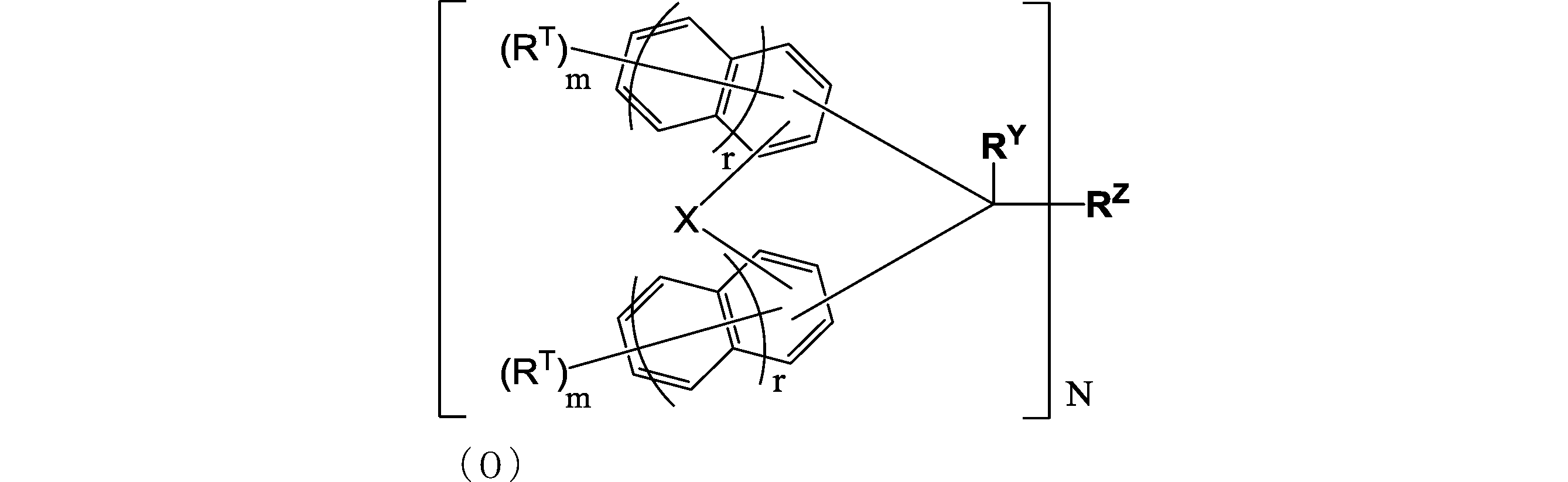
RZは、炭素数1~60のN価の基又は単結合であり、
RTは、各々独立して、置換基を有していてもよい炭素原子数1~30のアルキル基、置換基を有していてもよい炭素原子数6~40のアリール基、置換基を有していてもよい炭素原子数2~30のアルケニル基、置換基を有していてもよい炭素数1~30のアルコキシ基、ハロゲン原子、ニトロ基、アミノ基、チオール基、水酸基または水酸基の水素原子が酸架橋性基または酸解離性基で置換された基であり、ここで、前記アルキル基、前記アルケニル基及び前記アリール基は、エーテル結合、ケトン結合又はエステル結合を含んでいてもよく、
Xは、酸素原子、硫黄原子、単結合又は無架橋であることを示し、
mは、各々独立して0~9の整数であり、ここで、mの少なくとも1つは1~9の整数であり、
Nは、1~4の整数であり、ここで、Nが2以上の整数の場合、N個の[ ]内の構造式は同一であっても異なっていてもよく、
rは、各々独立して0~2の整数である。)
[2]
前記式(0)で表される化合物が下記式(0-1)で表される化合物である、上記[1]に記載の光学部材形成組成物。

RZは、炭素数1~60のN価の基又は単結合であり、
RT’は、各々独立して、置換基を有していてもよい炭素数1~30のアルキル基、置換基を有していてもよい炭素数6~30のアリール基、置換基を有していてもよい炭素数2~30のアルケニル基、置換基を有していてもよい炭素数1~30のアルコキシ基、ハロゲン原子、チオール基、水酸基又は水酸基の水素原子が酸架橋性基または酸解離性基で置換された基であり、ここで、前記アルキル基、前記アルケニル基及び前記アリール基は、エーテル結合、ケトン結合又はエステル結合を含んでいてもよく、RT’の少なくとも1つは水酸基又は水酸基の水素原子が酸架橋性基または酸解離性基で置換された基であり、
Xは、酸素原子、硫黄原子、単結合又は無架橋であることを示し、
mは、各々独立して0~9の整数であり、ここで、mの少なくとも1つは1~9の整数であり、
Nは、1~4の整数であり、ここで、Nが2以上の整数の場合、N個の[ ]内の構造式は同一であっても異なっていてもよく、
rは、各々独立して0~2の整数である。)
前記式(0-1)で表される化合物が下記式(1)で表される化合物である、上記[2]に記載の光学部材形成組成物。

R1は、炭素数1~60のn価の基又は単結合であり、
R2~R5は、各々独立して、置換基を有していてもよい炭素数1~30のアルキル基、置換基を有していてもよい炭素数6~30のアリール基、置換基を有していてもよい炭素数2~30のアルケニル基、置換基を有していてもよい炭素数1~30のアルコキシ基、ハロゲン原子、チオール基、水酸基又は水酸基の水素原子が酸解離性基で置換された基であり、ここで、前記アルキル基、前記アルケニル基及び前記アリール基は、エーテル結合、ケトン結合又はエステル結合を含んでいてもよく、R2~R5の少なくとも1つは水酸基又は水酸基の水素原子が酸解離性基で置換された基であり、
m2及びm3は、各々独立して、0~8の整数であり、
m4及びm5は、各々独立して、0~9の整数であり、
但し、m2、m3、m4及びm5は同時に0になることはなく、
nは前記Nと同義であり、ここで、nが2以上の整数の場合、n個の[ ]内の構造式は同一であっても異なっていてもよく、
p2~p5は、前記rと同義である。)
[4]
前記式(0-1)で表される化合物が下記式(2)で表される化合物である、上記[2]に記載の光学部材形成組成物。
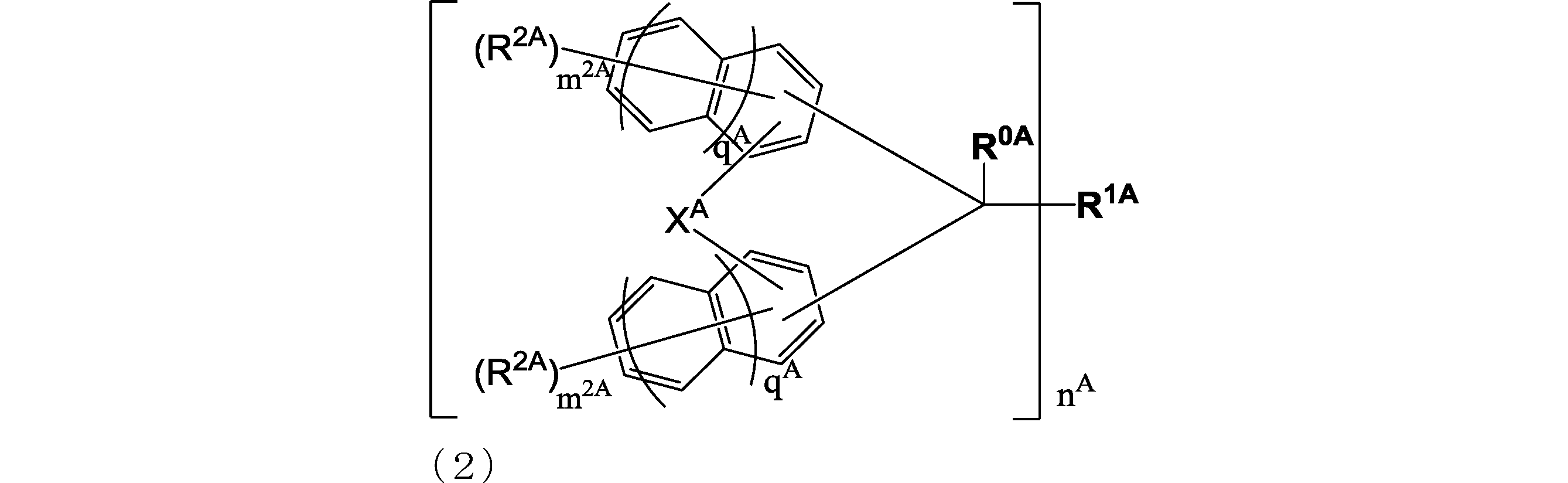
R1Aは、炭素数1~60のnA価の基又は単結合であり、
R2Aは、各々独立して、置換基を有していてもよい炭素数1~30のアルキル基、置換基を有していてもよい炭素数6~30のアリール基、置換基を有していてもよい炭素数2~10のアルケニル基、ハロゲン原子、水酸基又は水酸基の水素原子が酸架橋性基または酸解離性基で置換された基であり、ここで、前記アルキル基、前記アルケニル基及び前記アリール基は、エーテル結合、ケトン結合又はエステル結合を含んでいてもよく、R2Aの少なくとも1つは水酸基又は水酸基の水素原子が酸架橋性基または酸解離性基で置換された基であり、
nAは、前記Nと同義であり、ここで、nAが2以上の整数の場合、nA個の[ ]内の構造式は同一であっても異なっていてもよく、
XAは、酸素原子、硫黄原子、単結合又は無架橋であることを示し、
m2Aは、各々独立して、0~7の整数であり、但し、少なくとも1つのm2Aは1~7の整数であり、
qAは、各々独立して、0又は1である。)
[5]
前記式(1)で表される化合物が下記式(1-1)で表される化合物である、上記[3]に記載の光学部材形成組成物。
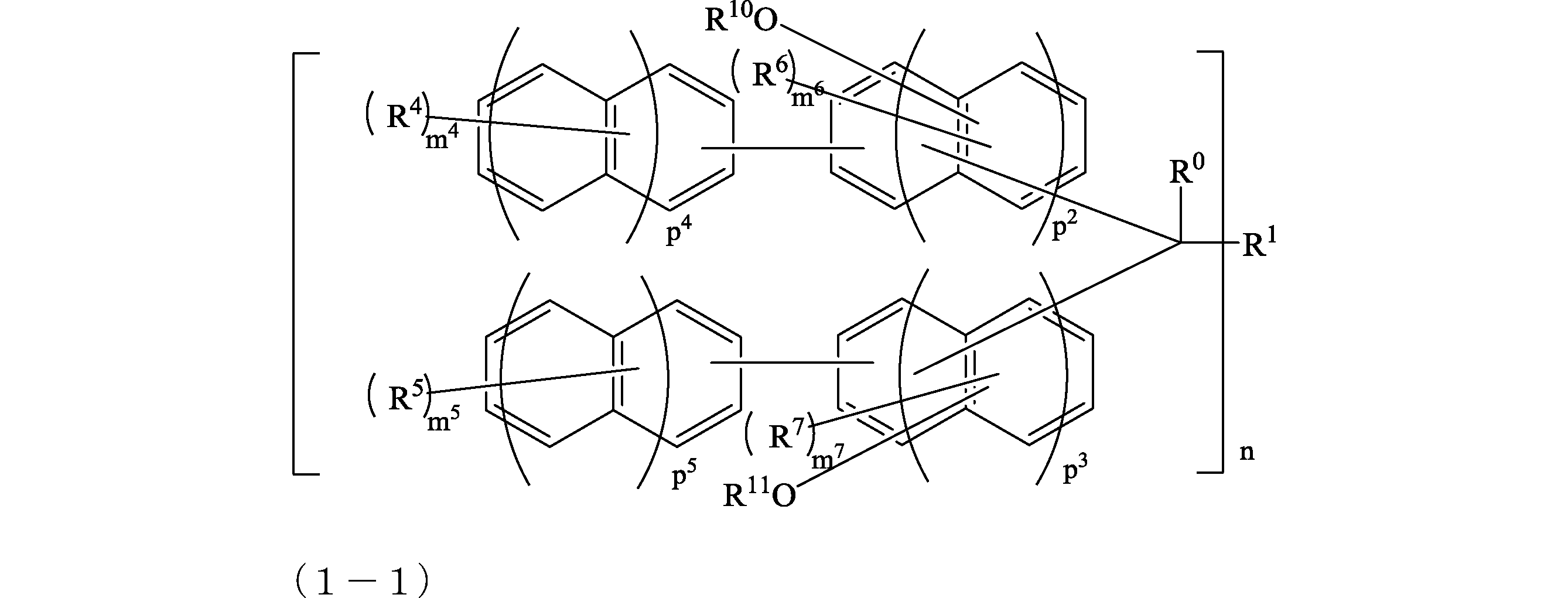
R6~R7は、各々独立して、置換基を有していてもよい炭素数1~30のアルキル基、置換基を有していてもよい炭素数6~30のアリール基、置換基を有していてもよい炭素数2~30のアルケニル基、置換基を有していてもよい炭素数1~30のアルコキシ基、ハロゲン原子、チオール基であり、ここで、前記アルキル基、前記アルケニル基及び前記アリール基は、エーテル結合、ケトン結合又はエステル結合を含んでいてもよく、
R10~R11は、各々独立して、水素原子、酸架橋性基または酸解離性基であり、
m6及びm7は、各々独立して、0~7の整数であり、
但し、m4、m5、m6及びm7は同時に0になることはない。)
[6]
前記式(1-1)で表される化合物が下記式(1-2)で表される化合物である、上記[5]に記載の光学部材形成組成物。

R8~R9は、前記R6~R7と同義であり、
R12~R13は、前記R10~R11と同義であり、
m8及びm9は、各々独立して、0~8の整数であり、
但し、m6、m7、m8及びm9は同時に0になることはない。)
[7]
前記式(2)で表される化合物が下記式(2-1)で表される化合物である、上記[4]に記載の光学部材形成組成物。

R3Aは、各々独立して、ハロゲン原子、置換基を有していてもよい炭素数1~30のアルキル基、置換基を有していてもよい炭素数6~30のアリール基、又は置換基を有していてもよい炭素数2~30のアルケニル基であり、ここで、前記アルキル基、前記アルケニル基及び前記アリール基は、エーテル結合、ケトン結合又はエステル結合を含んでいてもよく、
R4Aは、各々独立して、水素原子、酸架橋性基または酸解離性基であり、
m6Aは、各々独立して、0~5の整数である。)
[8]
下記式(0)で表される化合物をモノマーとして得られる樹脂を含有する、光学部材形成組成物。
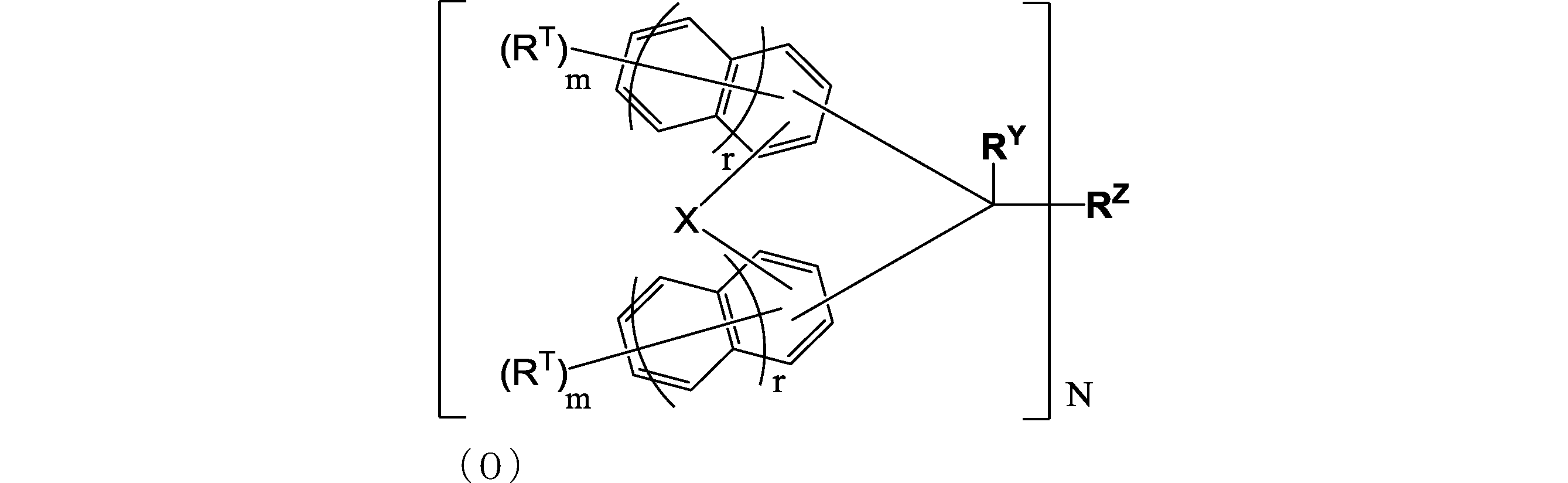
RZは、炭素数1~60のN価の基又は単結合であり、
RTは、各々独立して、置換基を有していてもよい炭素原子数1~30のアルキル基、置換基を有していてもよい炭素原子数6~40のアリール基、置換基を有していてもよい炭素原子数2~30のアルケニル基、置換基を有していてもよい炭素数1~30のアルコキシ基、ハロゲン原子、ニトロ基、アミノ基、チオール基、水酸基または水酸基の水素原子が酸架橋性基または酸解離性基で置換された基であり、ここで、前記アルキル基、前記アルケニル基及び前記アリール基は、エーテル結合、ケトン結合又はエステル結合を含んでいてもよく、
Xは、酸素原子、硫黄原子、単結合又は無架橋であることを示し、
mは、各々独立して0~9の整数であり、ここで、mの少なくとも1つは1~9の整数であり、
Nは、1~4の整数であり、ここで、Nが2以上の整数の場合、N個の[ ]内の構造式は同一であっても異なっていてもよく、
rは、各々独立して0~2の整数である。)
[9]
下記式(1)で表される化合物をモノマーとして得られる樹脂を含有する、光学部材形成組成物。
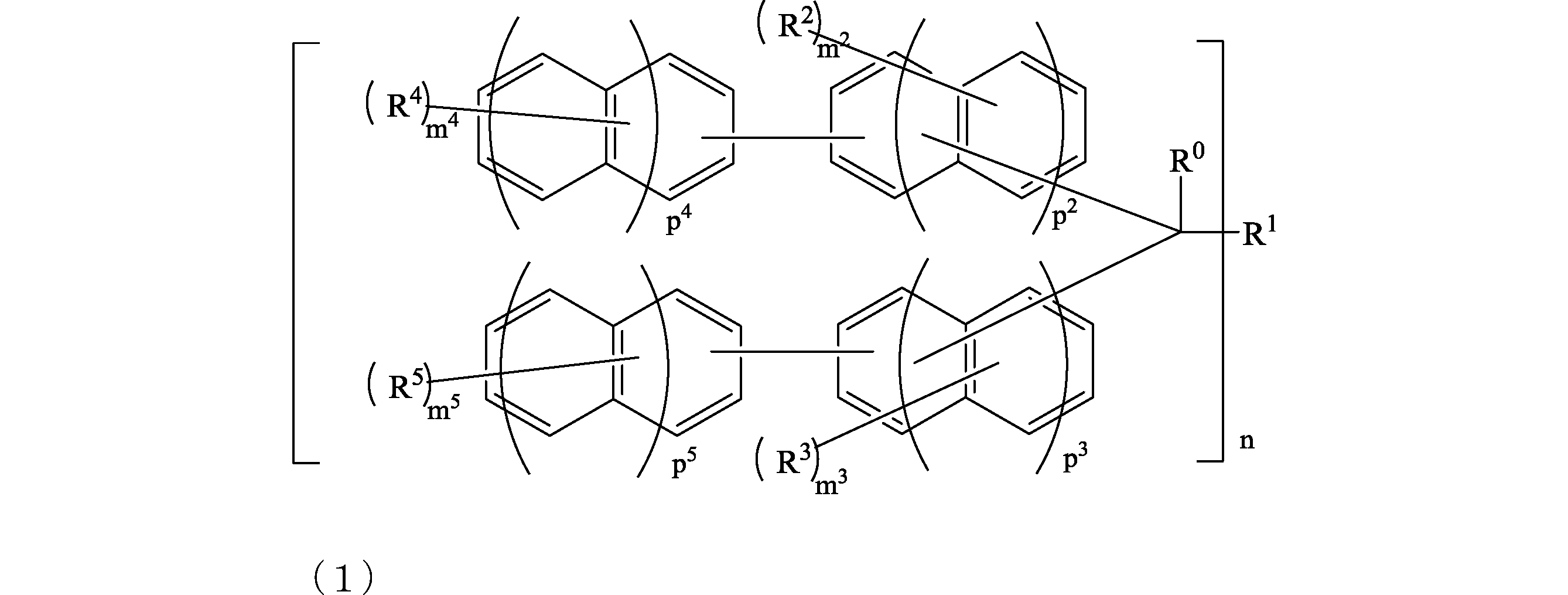
R1は、炭素数1~60のn価の基又は単結合であり、
R2~R5は、各々独立して、置換基を有していてもよい炭素数1~30のアルキル基、置換基を有していてもよい炭素数6~30のアリール基、置換基を有していてもよい炭素数2~30のアルケニル基、置換基を有していてもよい炭素数1~30のアルコキシ基、ハロゲン原子、チオール基、水酸基又は水酸基の水素原子が酸解離性基で置換された基であり、ここで、前記アルキル基、前記アルケニル基及び前記アリール基は、エーテル結合、ケトン結合又はエステル結合を含んでいてもよく、R2~R5の少なくとも1つは水酸基又は水酸基の水素原子が酸解離性基で置換された基であり、
m2及びm3は、各々独立して、0~8の整数であり、
m4及びm5は、各々独立して、0~9の整数であり、
但し、m2、m3、m4及びm5は同時に0になることはなく、
nは、1~4の整数であり、ここで、nが2以上の整数の場合、n個の[ ]内の構造式は同一であっても異なっていてもよく、
p2~p5は、各々独立して0~2の整数である。)
[10]
前記式(1)で表される化合物をモノマーとして得られる樹脂が、下記式(3)で表される構造を有する樹脂である、上記[9]に記載の光学部材形成組成物。

R0は、水素原子であり、
R1は、炭素数1~60のn価の基又は単結合であり、
R2~R5は、各々独立して、置換基を有していてもよい炭素数1~30のアルキル基、置換基を有していてもよい炭素数6~30のアリール基、置換基を有していてもよい炭素数2~30のアルケニル基、置換基を有していてもよい炭素数1~30のアルコキシ基、ハロゲン原子、チオール基、水酸基又は水酸基の水素原子が酸解離性基で置換された基であり、ここで、前記アルキル基、前記アルケニル基及び前記アリール基は、エーテル結合、ケトン結合又はエステル結合を含んでいてもよく、R2~R5の少なくとも1つは水酸基又は水酸基の水素原子が酸解離性基で置換された基であり、
m2及びm3は、各々独立して、0~8の整数であり、
m4及びm5は、各々独立して、0~9の整数であり、
但し、m2、m3、m4及びm5は同時に0になることはなく、
nは、1~4の整数であり、ここで、nが2以上の整数の場合、n個の[ ]内の構造式は同一であっても異なっていてもよく、
p2~p5は、各々独立して0~2の整数である。)
[11]
下記式(2)で表される化合物をモノマーとして得られる樹脂を含有する、光学部材形成組成物。
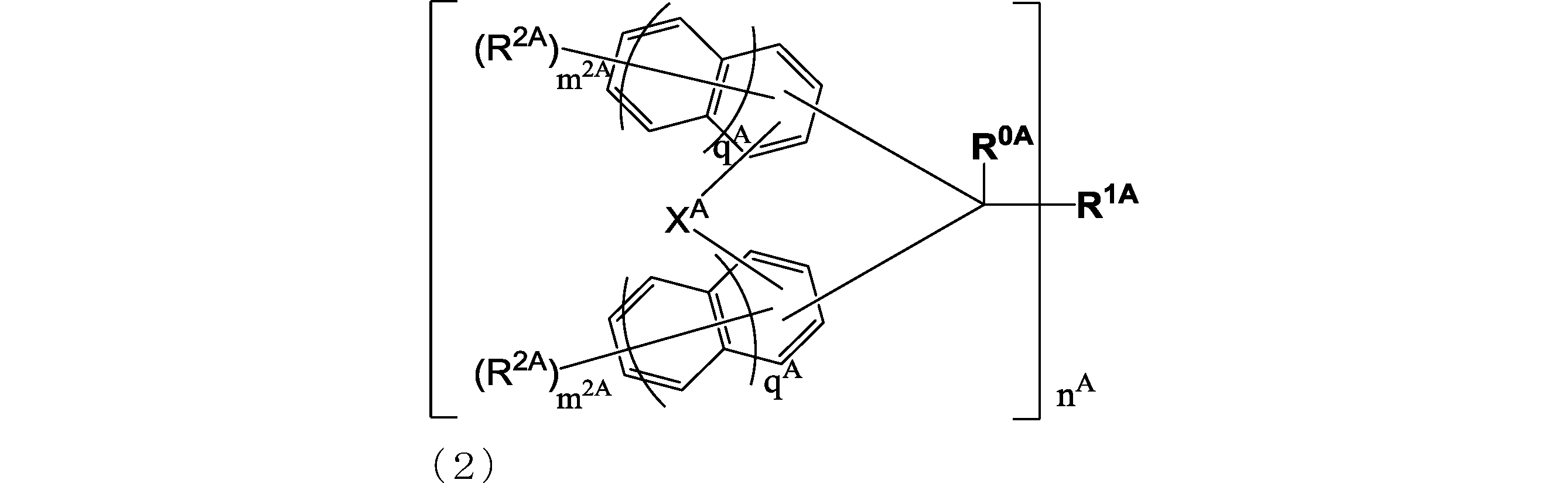
R1Aは、炭素数1~60のnA価の基又は単結合であり、
R2Aは、各々独立して、置換基を有していてもよい炭素数1~30のアルキル基、置換基を有していてもよい炭素数6~30のアリール基、置換基を有していてもよい炭素数2~10のアルケニル基、ハロゲン原子、水酸基又は水酸基の水素原子が酸架橋性基または酸解離性基で置換された基であり、ここで、前記アルキル基、前記アルケニル基及び前記アリール基は、エーテル結合、ケトン結合又はエステル結合を含んでいてもよく、R2Aの少なくとも1つは水酸基又は水酸基の水素原子が酸架橋性基または酸解離性基で置換された基であり、
nAは、1~4の整数であり、ここで、nAが2以上の整数の場合、nA個の[ ]内の構造式は同一であっても異なっていてもよく、
XAは、酸素原子、硫黄原子、単結合又は無架橋であることを示し、
m2Aは、各々独立して、0~7の整数であり、但し、少なくとも1つのm2Aは1~7の整数であり、
qAは、各々独立して、0又は1である。)
[12]
前記式(2)で表される化合物をモノマーとして得られる樹脂が、下記式(4)で表される構造を有する樹脂である、上記[11]記載の光学部材形成組成物。

R0Aは、水素原子であり、
R1Aは、炭素数1~30のnA価の基又は単結合であり、
R2Aは、各々独立して、置換基を有していてもよい炭素数1~30のアルキル基、置換基を有していてもよい炭素数6~30のアリール基、置換基を有していてもよい炭素数2~10のアルケニル基、ハロゲン原子、水酸基又は水酸基の水素原子が酸架橋性基または酸解離性基で置換された基であり、ここで、前記アルキル基、前記アルケニル基及び前記アリール基は、エーテル結合、ケトン結合又はエステル結合を含んでいてもよく、R2Aの少なくとも1つは水酸基又は水酸基の水素原子が酸架橋性基または酸解離性基で置換された基であり、
nAは、1~4の整数であり、ここで、nAが2以上の整数の場合、nA個の[ ]内の構造式は同一であっても異なっていてもよく、
XAは、酸素原子、硫黄原子、単結合又は無架橋であることを示し、
m2Aは、各々独立して、0~6の整数であり、但し、少なくとも1つのm2Aは1~6の整数であり、
qAは、各々独立して、0又は1である。)
[13]
溶媒をさらに含有する、上記[1]~[12]のいずれか記載の光学部材形成組成物。
[14]
酸発生剤をさらに含有する、上記[1]~[13]のいずれか記載の光学部材形成組成物。
[15]
架橋剤をさらに含有する、上記[13]又は[14]に記載の光学部材形成組成物。
[16]
前記架橋剤が、フェノール化合物、エポキシ化合物、シアネート化合物、アミノ化合物、ベンゾオキサジン化合物、メラミン化合物、グアナミン化合物、グリコールウリル化合物、ウレア化合物、イソシアネート化合物及びアジド化合物からなる群より選ばれる少なくとも1種である、上記[15]に記載の光学部材形成組成物。
[17]
前記架橋剤が、少なくとも1つのアリル基を有する、上記[15]又は[16]に記載の光学部材形成組成物。
[18]
前記架橋剤の含有量が、固形成分の全質量の0.1~50質量%である、上記[15]~[17]のいずれか記載の光学部材形成組成物。
[19]
架橋促進剤をさらに含有する、上記[15]~[18]のいずれか記載の光学部材形成組成物。
[20]
前記架橋促進剤が、アミン類、イミダゾール類、有機ホスフィン類、及びルイス酸からなる群より選ばれる少なくとも1種である、上記[19]に記載の光学部材形成組成物。
[21]
前記架橋促進剤の含有量が、固形成分の全質量の0.1~10質量%である、上記[19]又は[20]に記載の光学部材形成組成物。
[22]
ラジカル重合開始剤をさらに含有する、上記[13]~[21]のいずれか記載の光学部材形成組成物。
[23]
前記ラジカル重合開始剤が、ケトン系光重合開始剤、有機過酸化物系重合開始剤及びアゾ系重合開始剤からなる群より選ばれる少なくとも1種である、上記[22]に記載の光学部材形成組成物。
[24]
前記ラジカル重合開始剤の含有量が、固形成分の全質量の0.1~10質量%である、上記[22]又は[23]に記載の光学部材形成組成物。
本実施形態における光学部材形成組成物は、以下に説明する化合物、及び/又は当該化合物を重合して得られる樹脂からなる群より選ばれる少なくとも1種を含有する。
本実施形態における光学部材形成組成物は、下記式(0)で表される化合物を含有する。

RZは、炭素数1~60のN価の基又は単結合であり、
RTは、各々独立して、置換基を有していてもよい炭素原子数1~30のアルキル基、置換基を有していてもよい炭素原子数6~40のアリール基、置換基を有していてもよい炭素原子数2~30のアルケニル基、置換基を有していてもよい炭素原子数1~30のアルコキシ基、ハロゲン原子、ニトロ基、アミノ基、チオール基、水酸基または水酸基の水素原子が酸架橋性基または酸解離性基で置換された基であり、ここで、前記アルキル基、前記アルケニル基及び前記アリール基は、エーテル結合、ケトン結合又はエステル結合を含んでいてもよく、
Xは、酸素原子、硫黄原子、単結合又は無架橋であることを示し、
mは、各々独立して0~9の整数であり、ここで、mの少なくとも1つは1~9の整数であり、
Nは、1~4の整数であり、ここで、Nが2以上の整数の場合、N個の[ ]内の構造式は同一であっても異なっていてもよく、
rは、各々独立して0~2の整数である。)
本実施形態における式(0)で表される化合物は、以下の式(0-1)で表される化合物であることが好ましい。
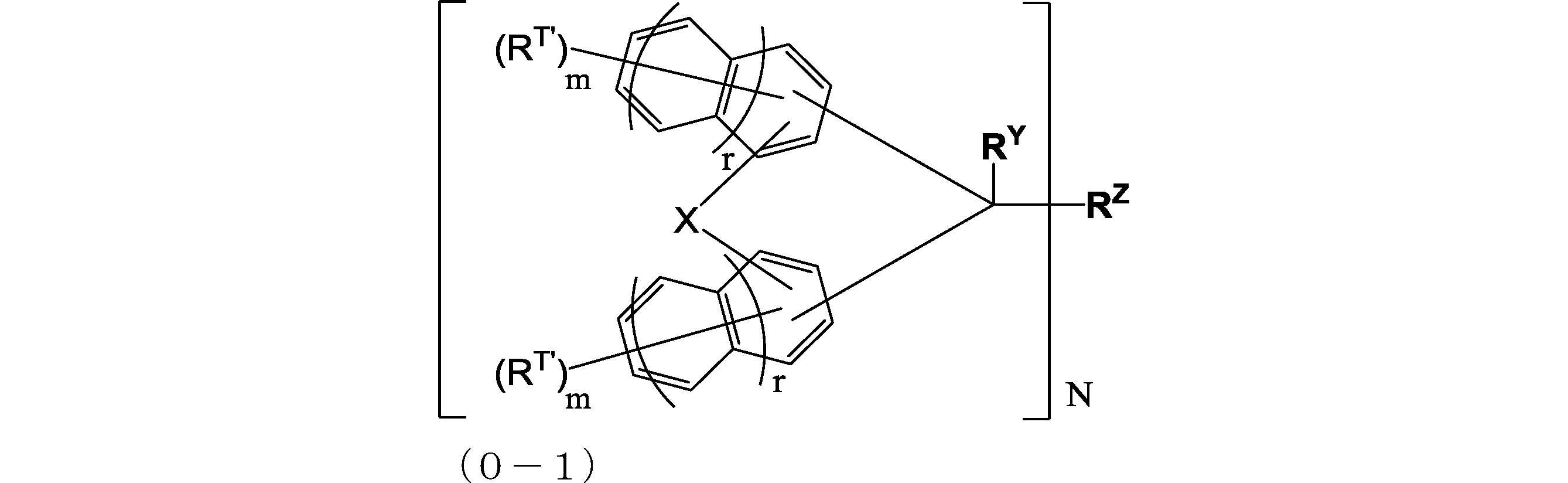
RZは、炭素数1~60のN価の基又は単結合であり、
RT’は、各々独立して、置換基を有していてもよい炭素数1~30のアルキル基、置換基を有していてもよい炭素数6~30のアリール基、置換基を有していてもよい炭素数2~30のアルケニル基、置換基を有していてもよい炭素数1~30のアルコキシ基、ハロゲン原子、チオール基、水酸基又は水酸基の水素原子が酸解離性基で置換された基であり、ここで、前記アルキル基、前記アルケニル基及び前記アリール基は、エーテル結合、ケトン結合又はエステル結合を含んでいてもよく、RT’の少なくとも1つは水酸基又は水酸基の水素原子が酸架橋性基または酸解離性基で置換された基であり、
Xは、酸素原子、硫黄原子、単結合又は無架橋であることを示し、
mは、各々独立して0~9の整数であり、ここで、mの少なくとも1つは1~9の整数であり、
Nは、1~4の整数であり、ここで、Nが2以上の整数の場合、N個の[ ]内の構造式は同一であっても異なっていてもよく、
rは、各々独立して0~2の整数である。)

R1は、炭素数1~60のn価の基又は単結合であり、このR1を介して各々の芳香環が結合している。
R2~R5は、各々独立して、置換基を有していてもよい炭素数1~30のアルキル基、置換基を有していてもよい炭素数6~30のアリール基、置換基を有していてもよい炭素数2~30のアルケニル基、置換基を有していてもよい炭素数1~30のアルコキシ基、ハロゲン原子、チオール基、水酸基又は水酸基の水素原子が酸架橋性基または酸解離性基で置換された基であり、ここで、前記アルキル基、前記アルケニル基及び前記アリール基は、エーテル結合、ケトン結合又はエステル結合を含んでいてもよい。但し、式(1)中、R2~R5の少なくとも1つは、水酸基又は水酸基の水素原子が酸解離性基で置換された基である。
m2及びm3は、各々独立して、0~8の整数である。
m4及びm5は、各々独立して、0~9の整数である。
但し、m2、m3、m4及びm5は同時に0になることはない。
nは前記Nと同義であり、ここで、nが2以上の整数の場合、n個の[ ]内の構造式は同一であっても異なっていてもよく、
p2~p5は各々独立して0~2の整数である。
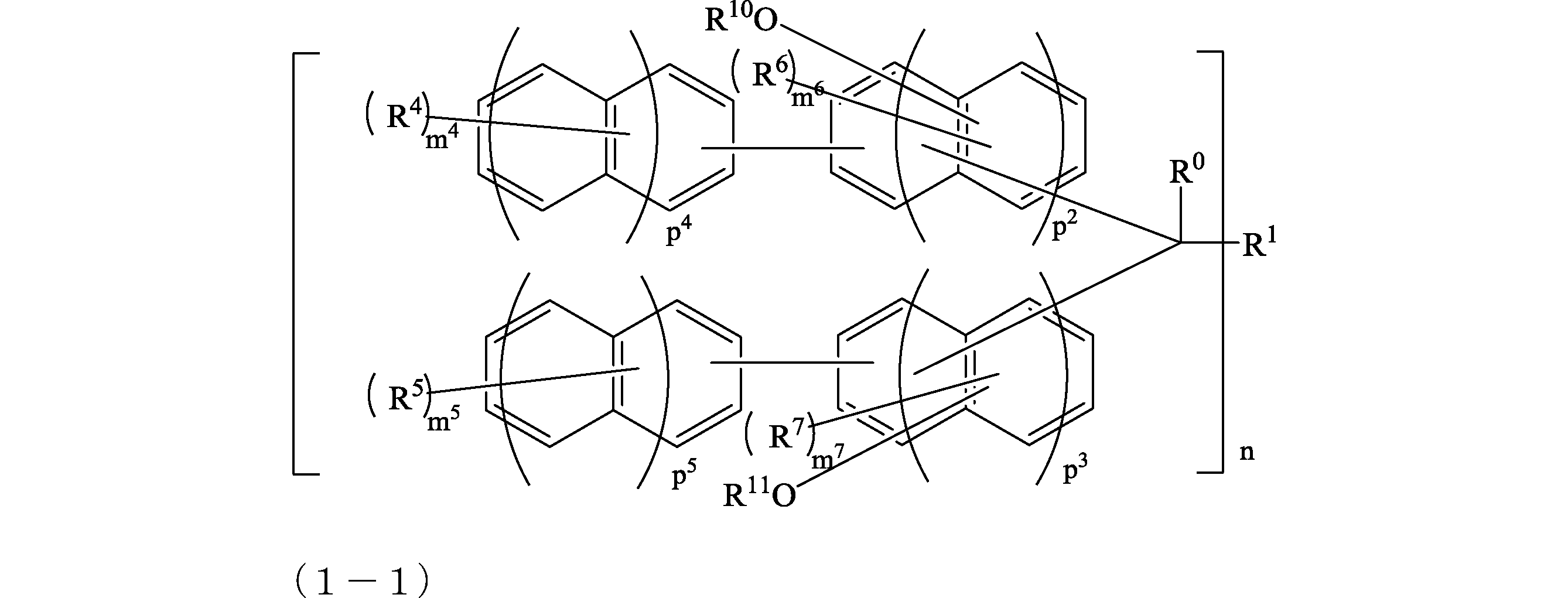
R0、R1、R4、R5、n、p2~p5、m4及びm5は、前記と同義であり、
R6~R7は、各々独立して、置換基を有していてもよい炭素数1~30のアルキル基、置換基を有していてもよい炭素数6~30のアリール基、置換基を有していてもよい炭素数2~30のアルケニル基、置換基を有していてもよい炭素数1~30のアルコキシ基、ハロゲン原子、チオール基であり、ここで、前記アルキル基、前記アルケニル基及び前記アリール基は、エーテル結合、ケトン結合又はエステル結合を含んでいてもよく、
R10~R11は、各々独立して、水素原子又は酸架橋性基または酸解離性基であり、
m6及びm7は、各々独立して0~7の整数であり、
但し、m4、m5、m6及びm7は同時に0になることはない。
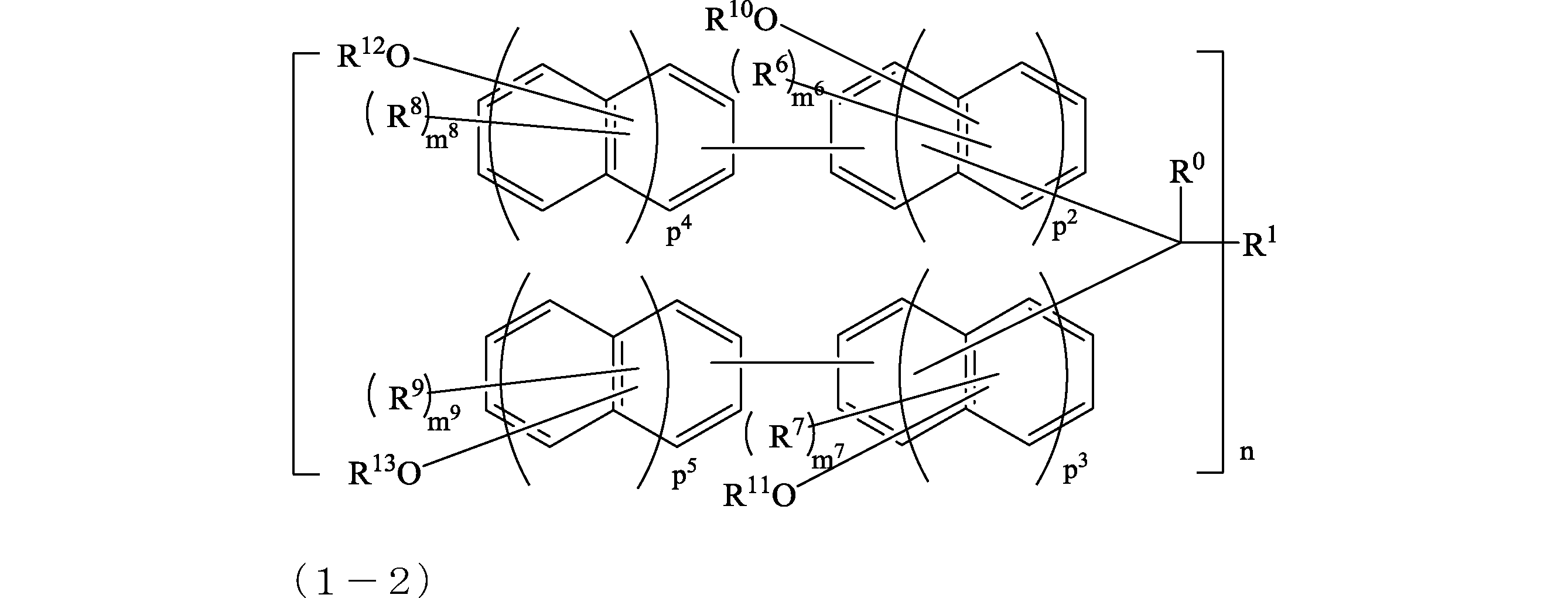
R0、R1、R6、R7、R10、R11、n、p2~p5、m6及びm7は、前記と同義であり、
R8~R9は、前記R6~R7と同義であり、
R12~R13は、前記R10~R11と同義であり、
m8及びm9は、各々独立して、0~8の整数である。
但し、m6、m7、m8及びm9は同時に0になることはない。
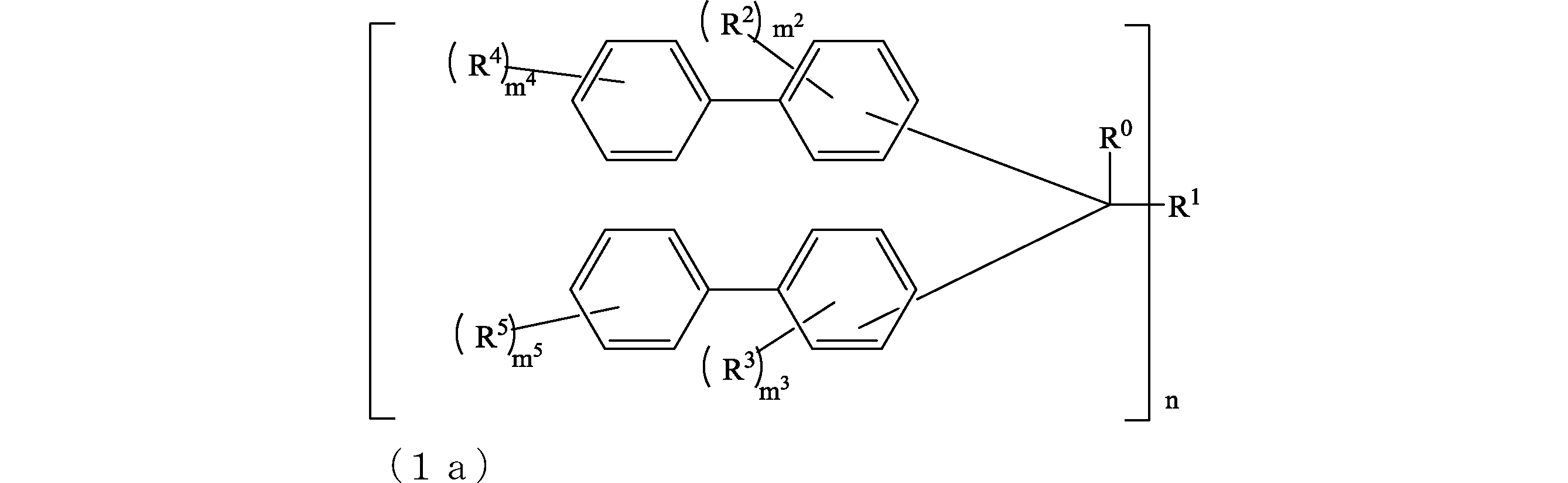

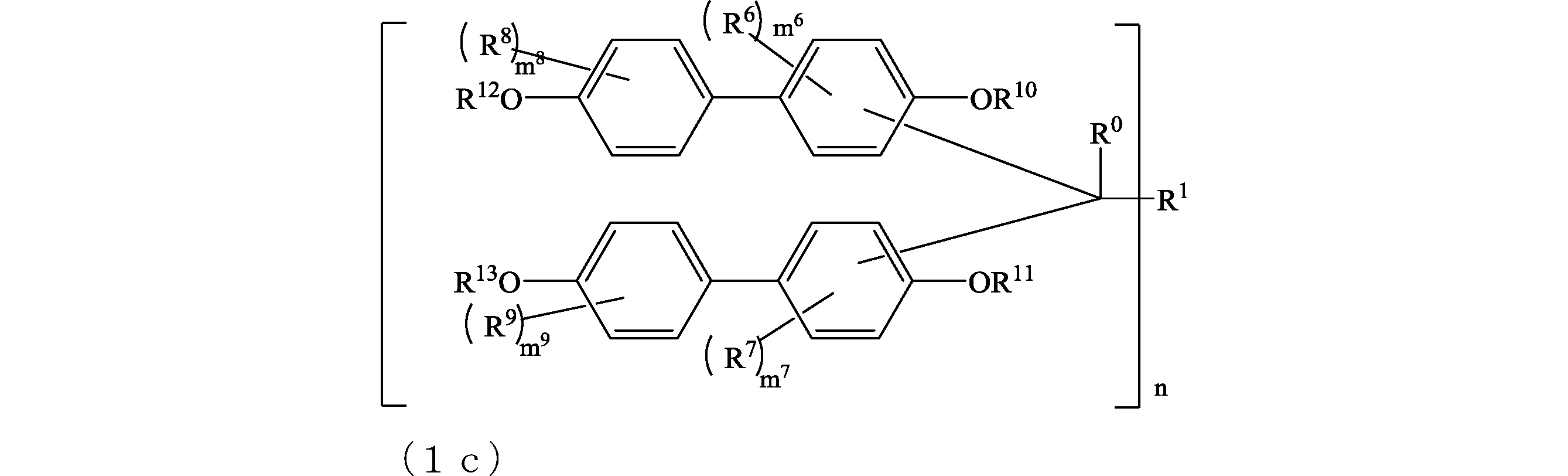

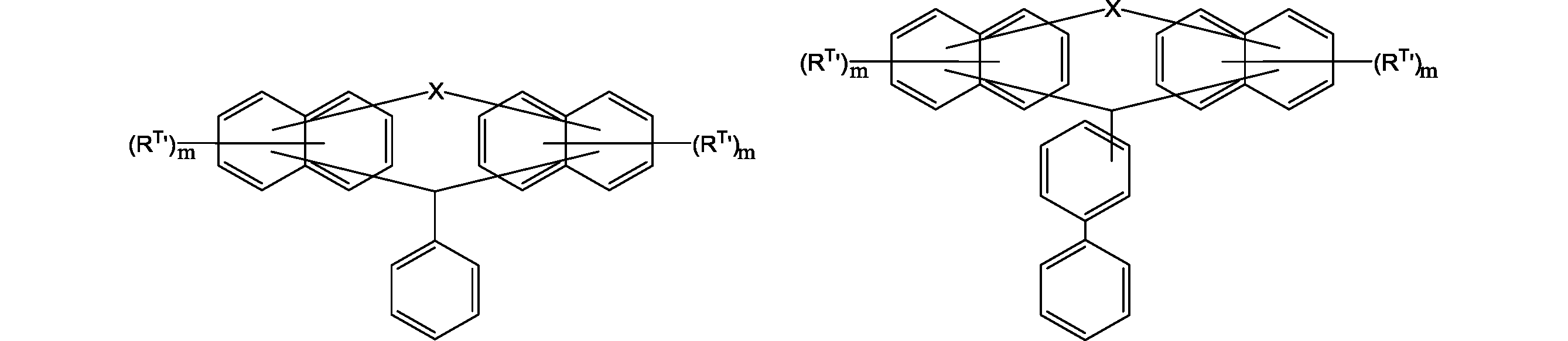
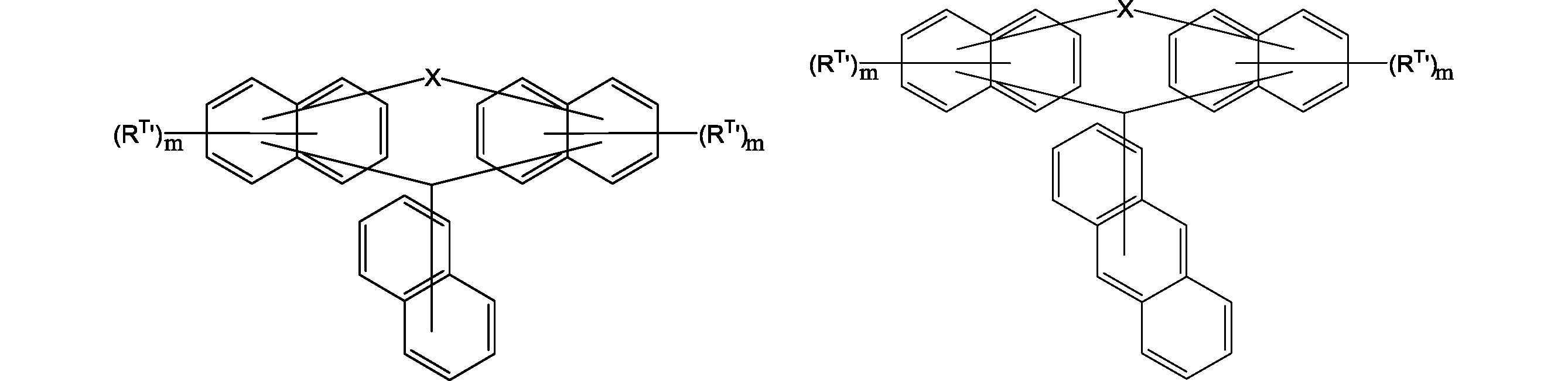
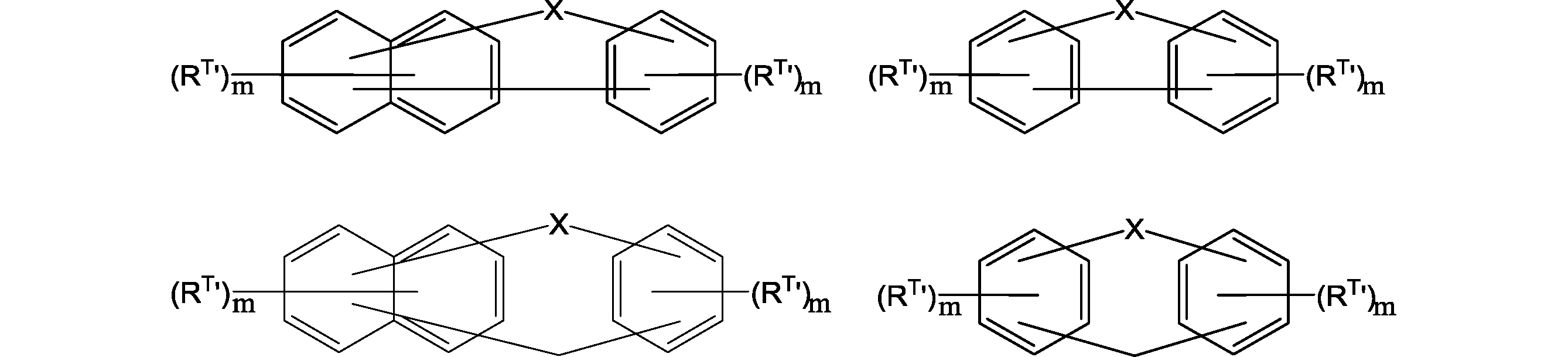

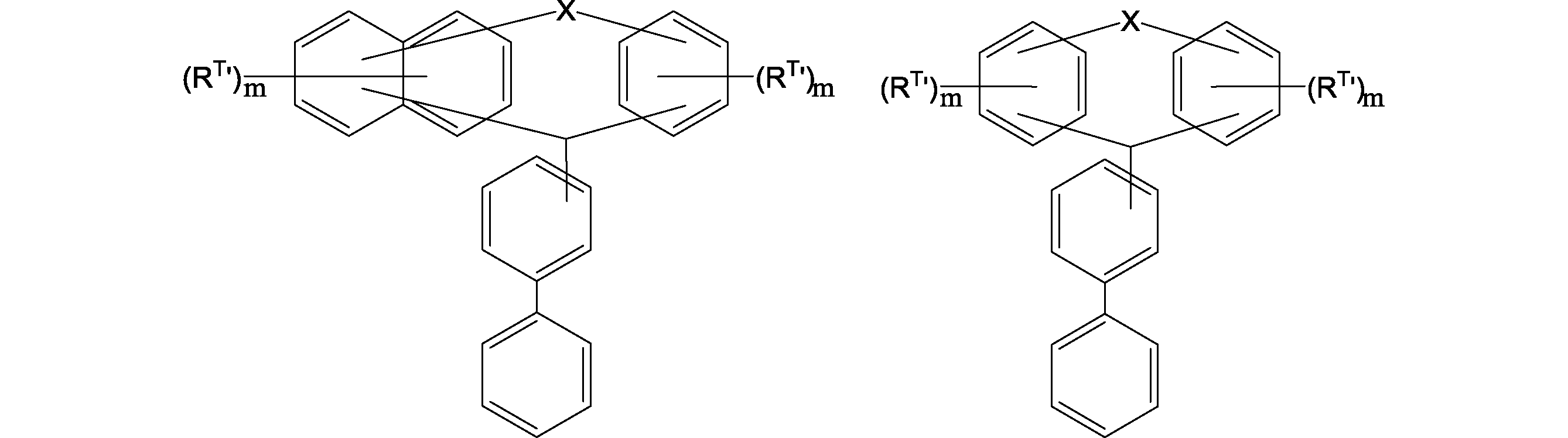

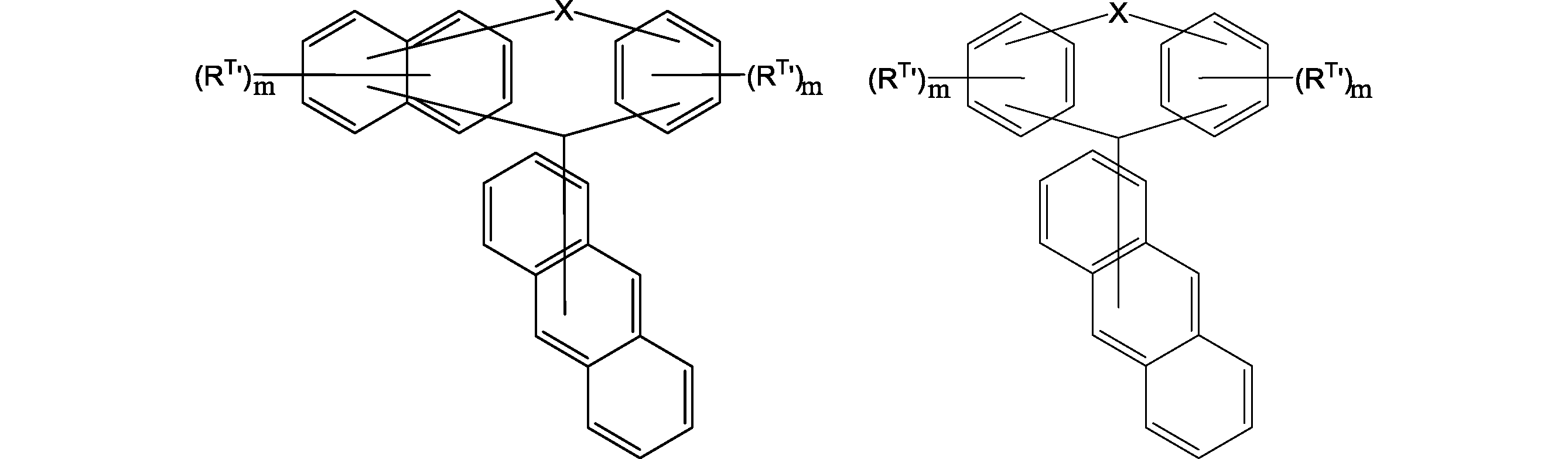
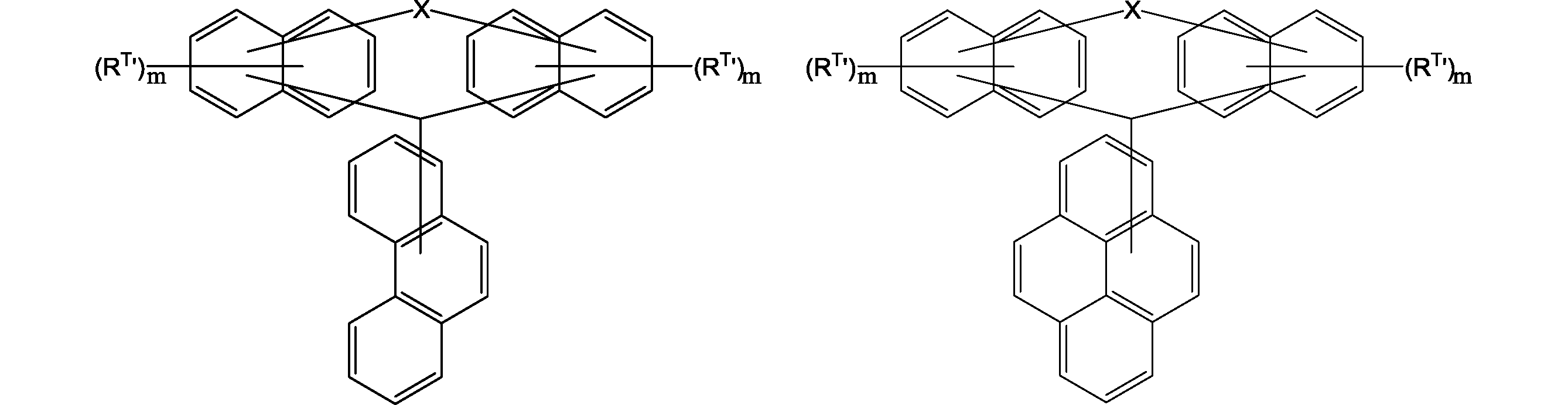

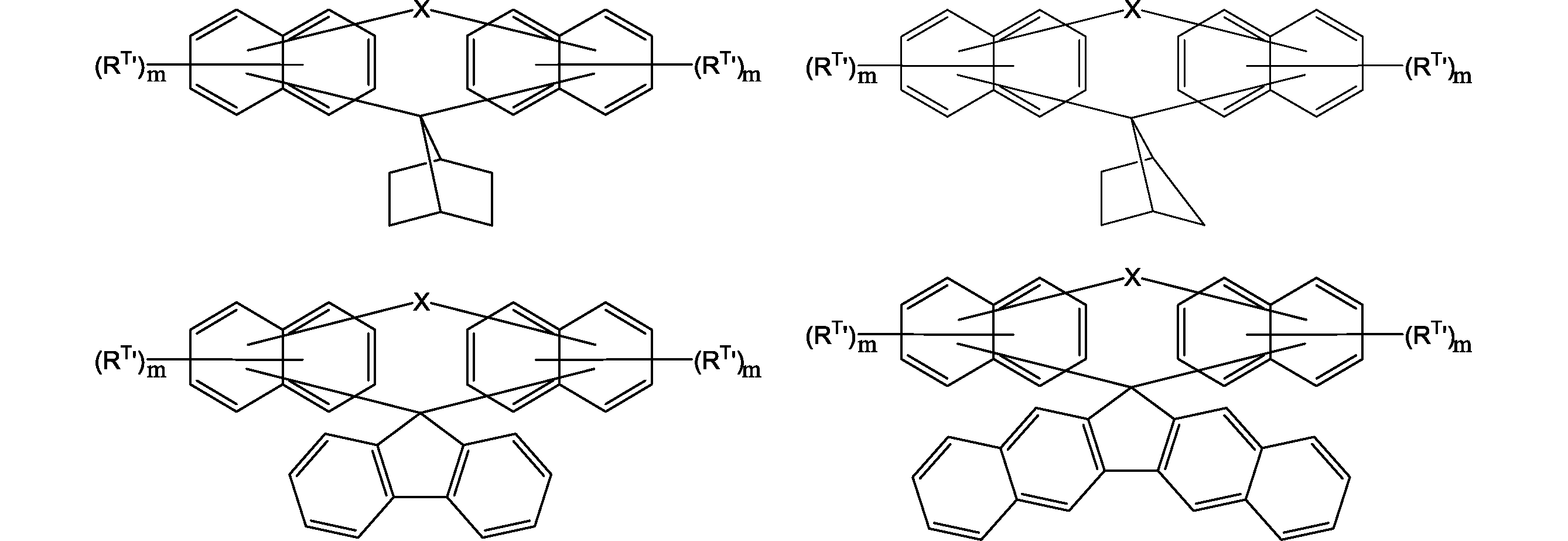
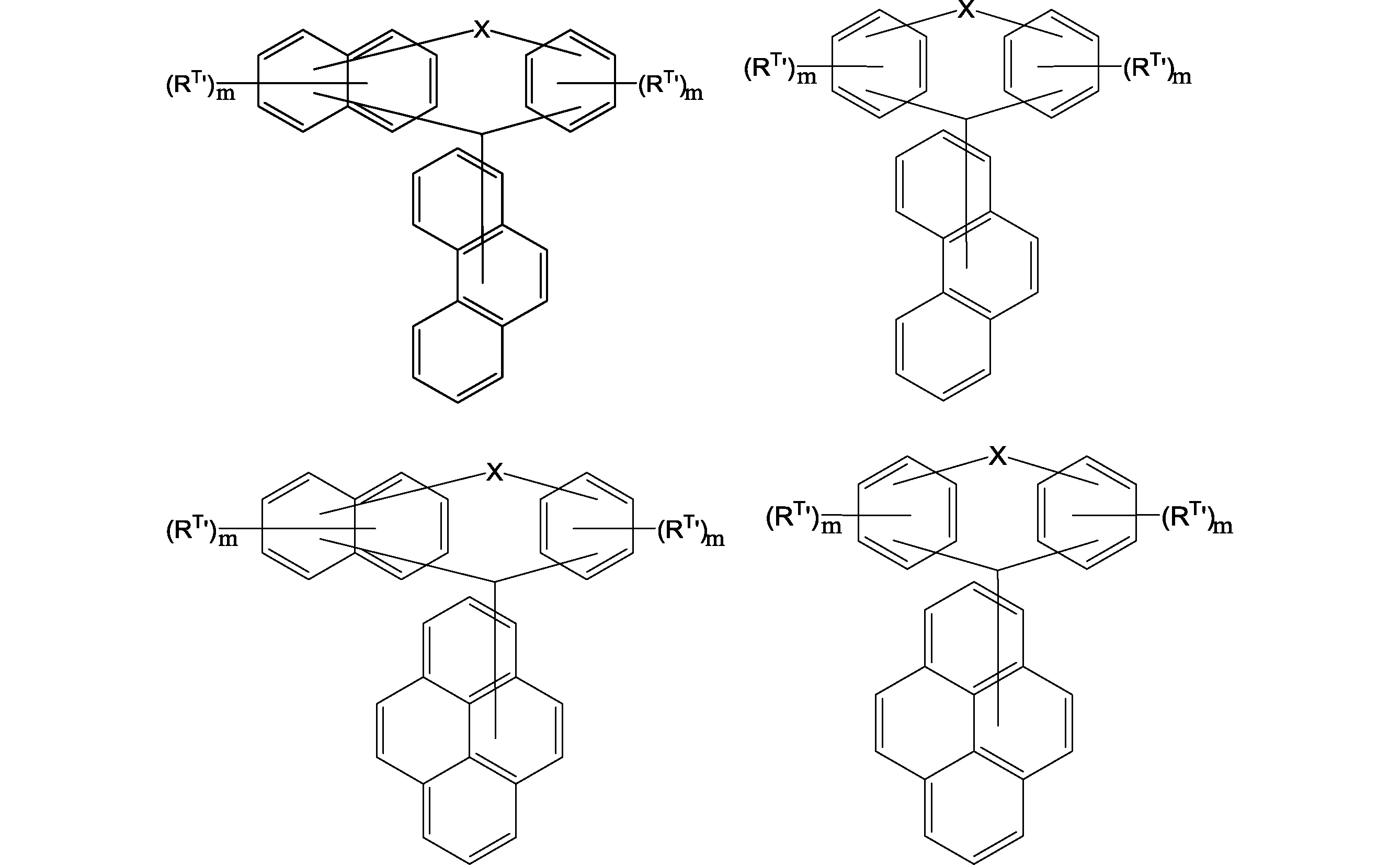
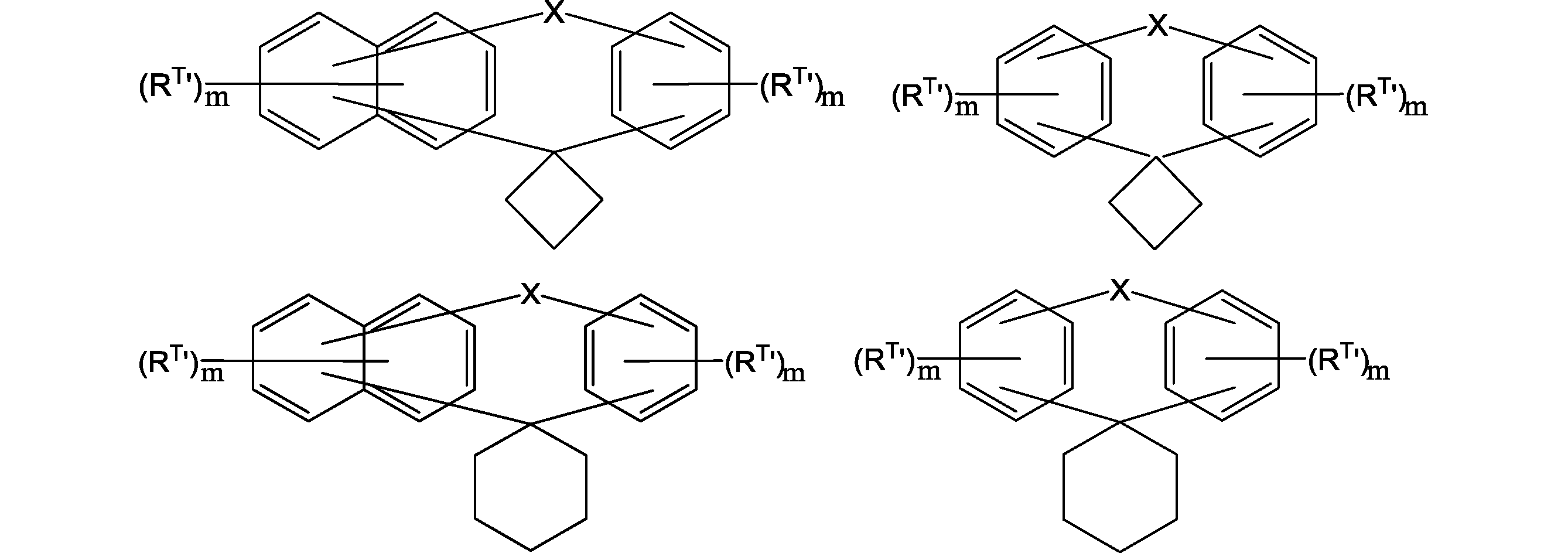
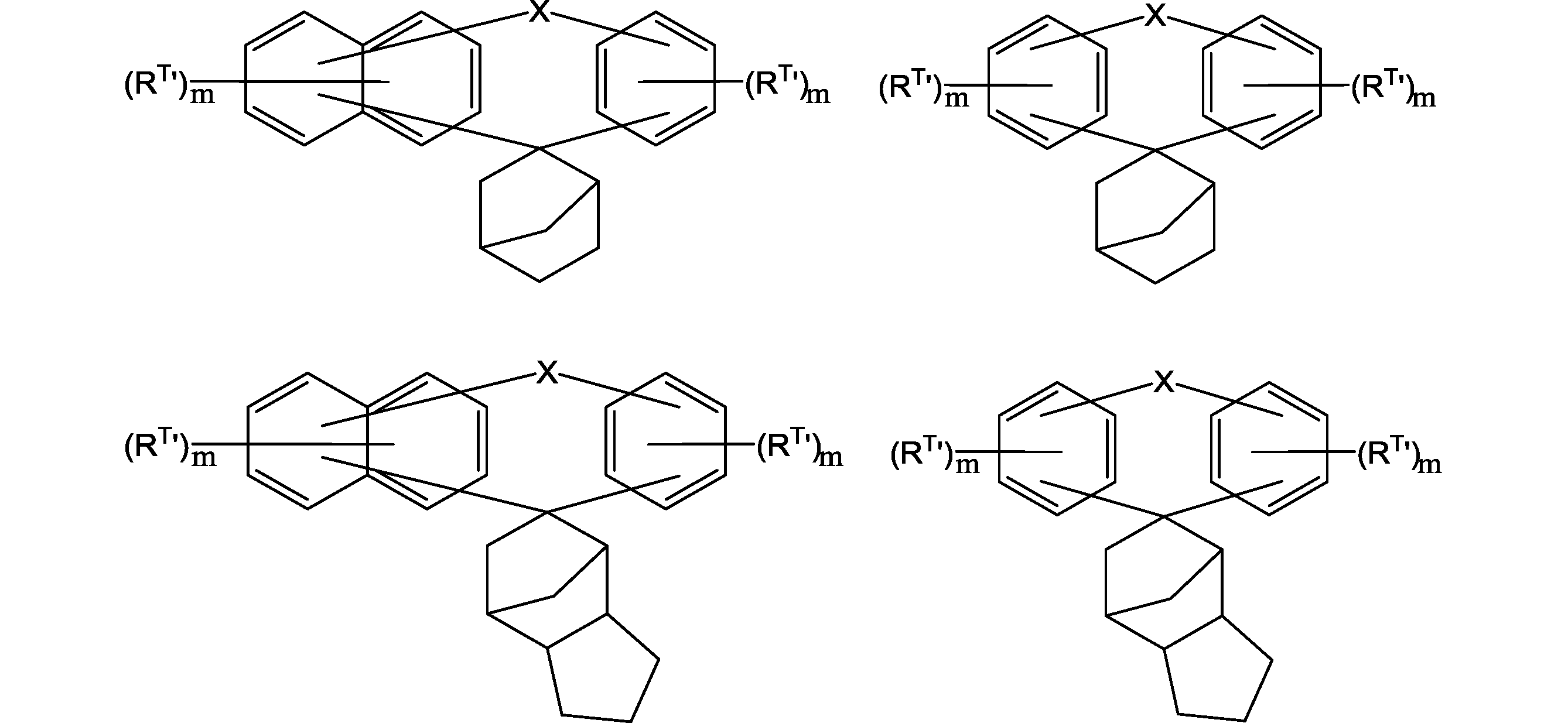


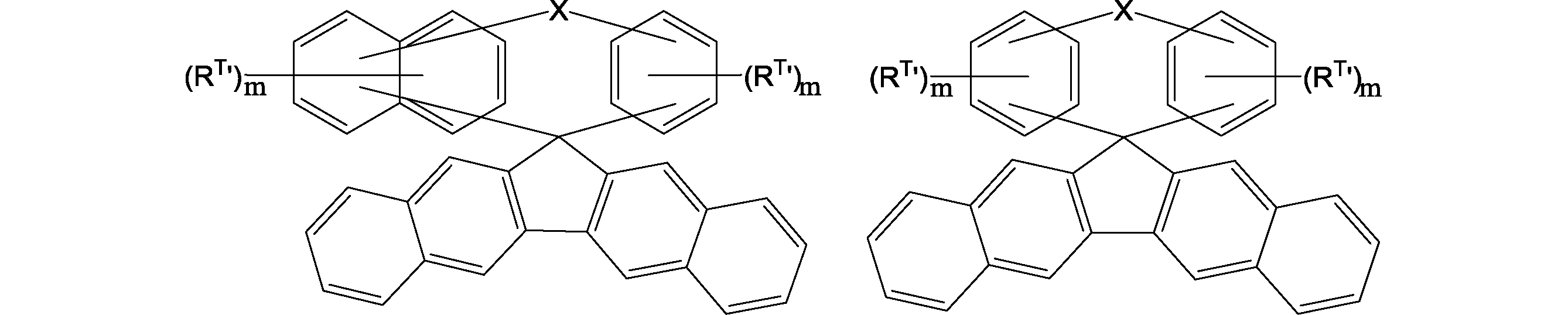



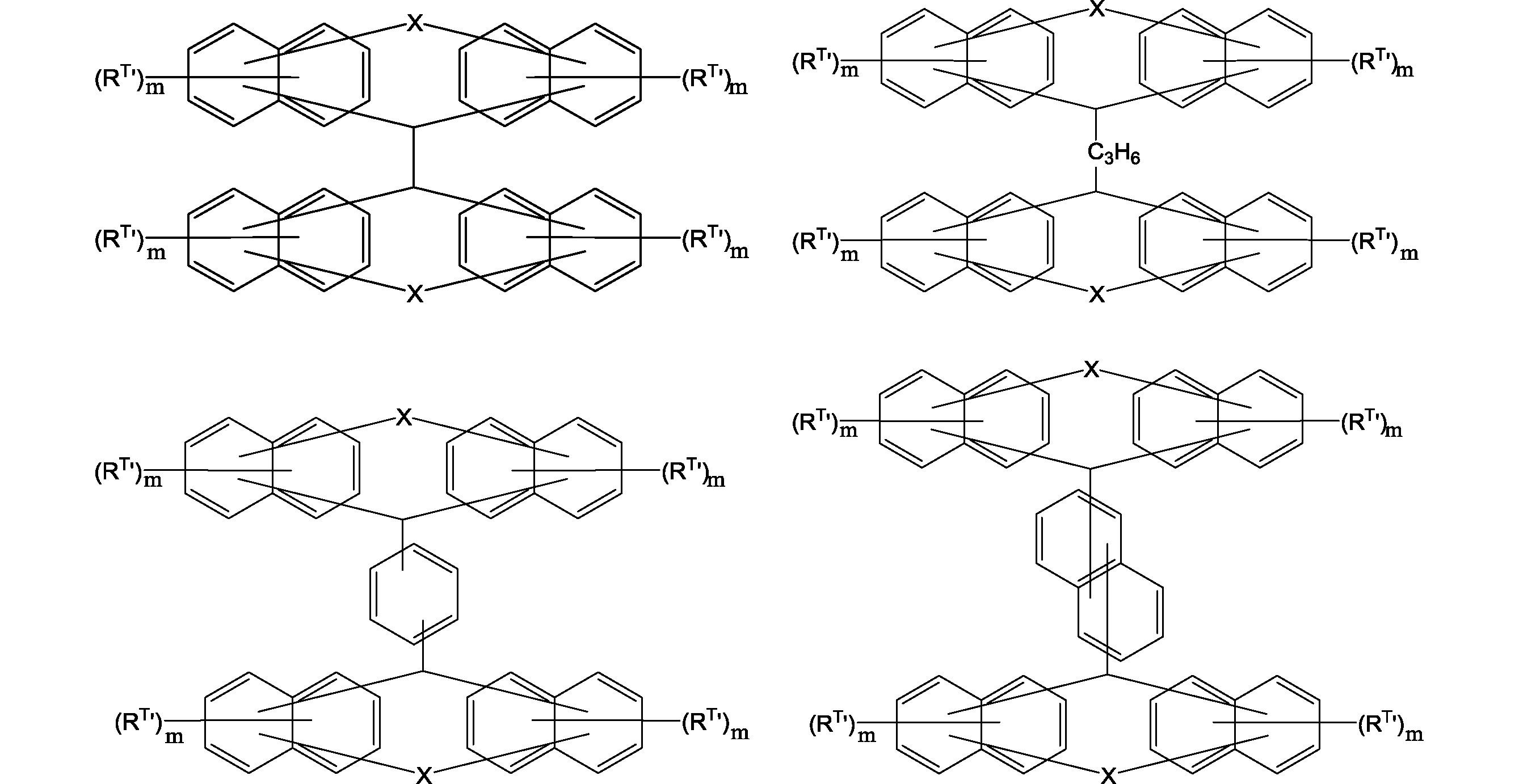

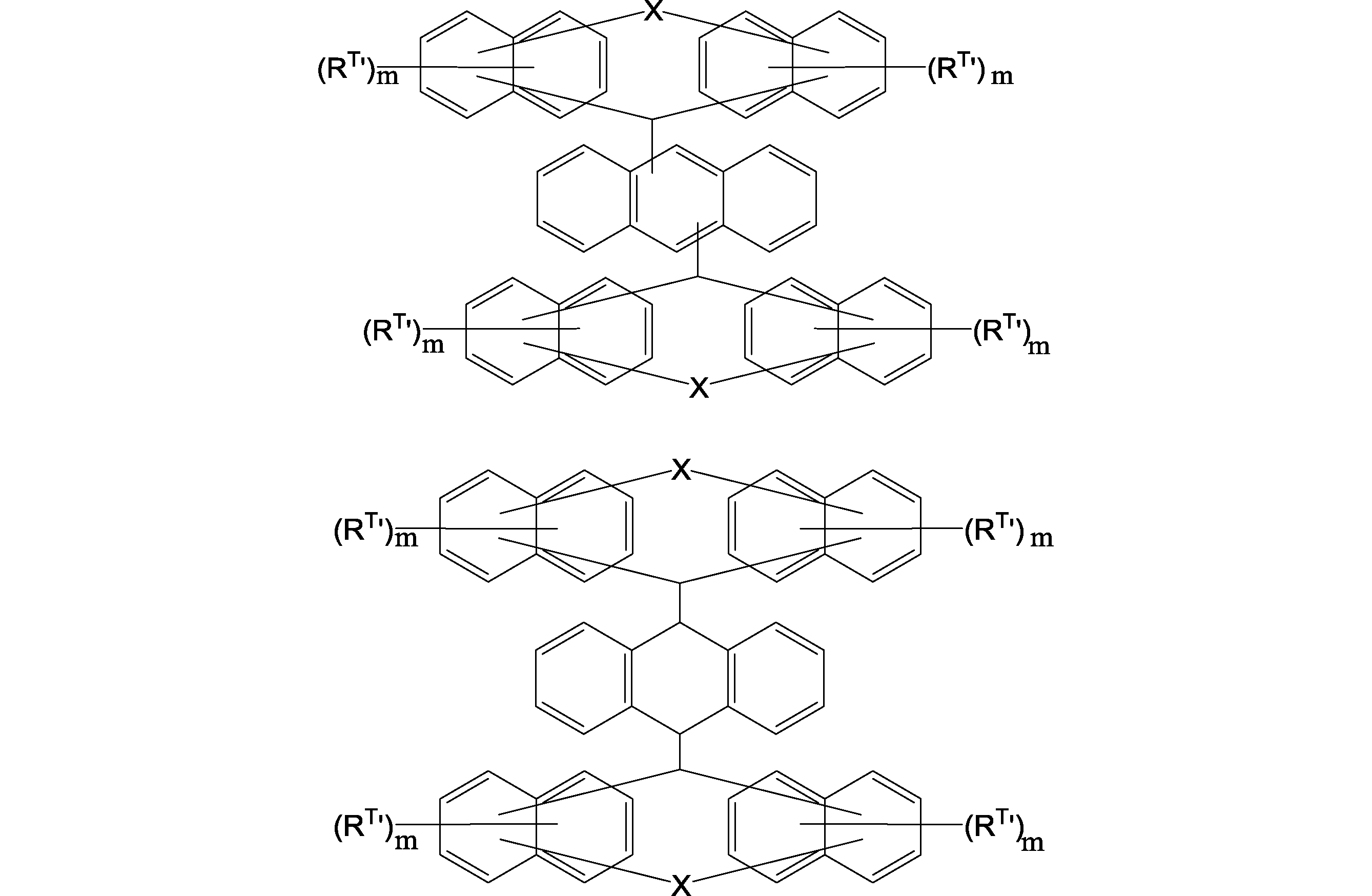
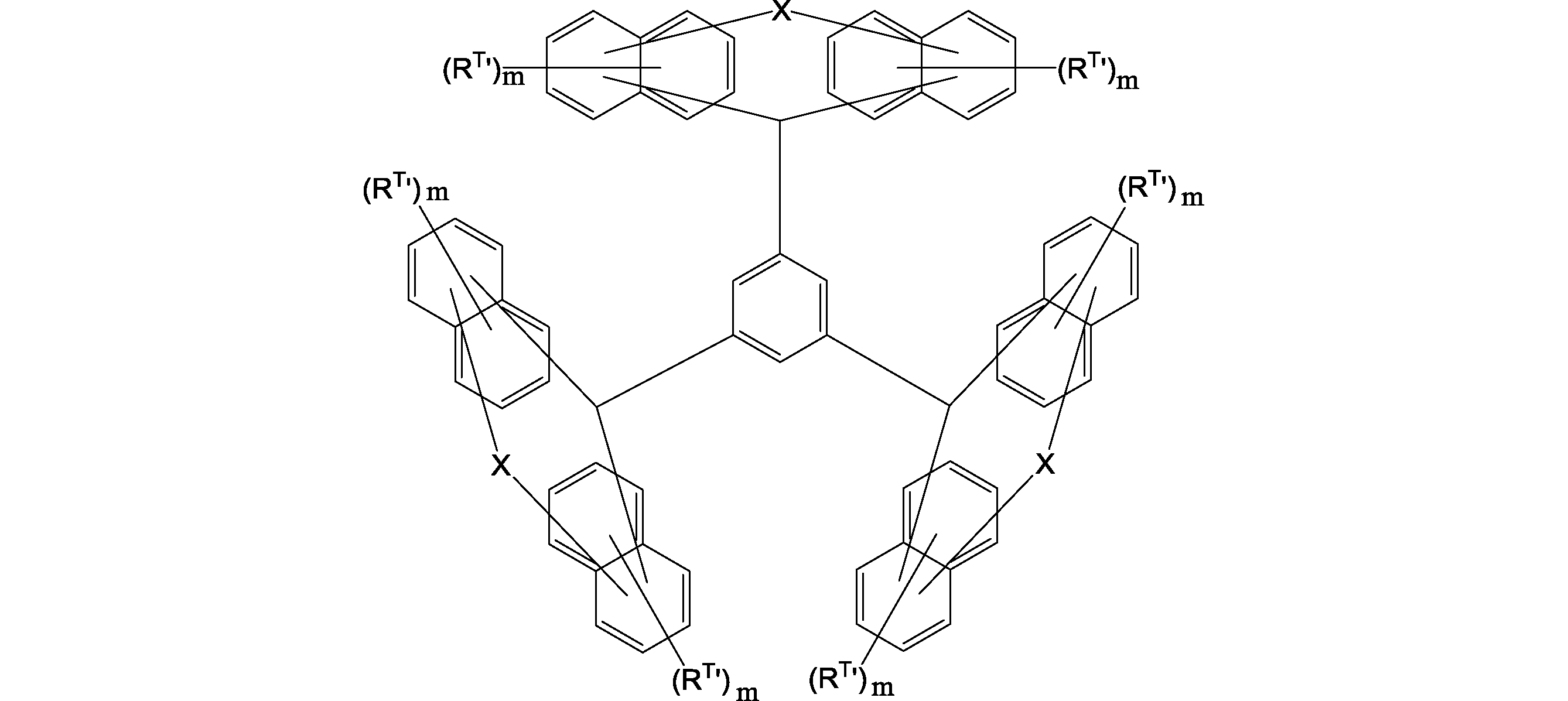
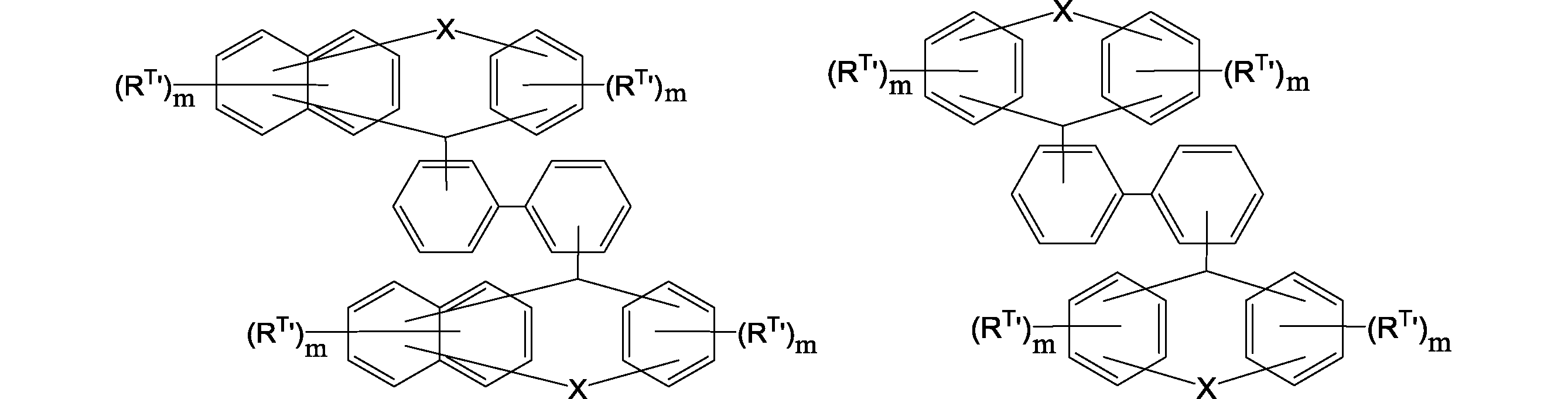

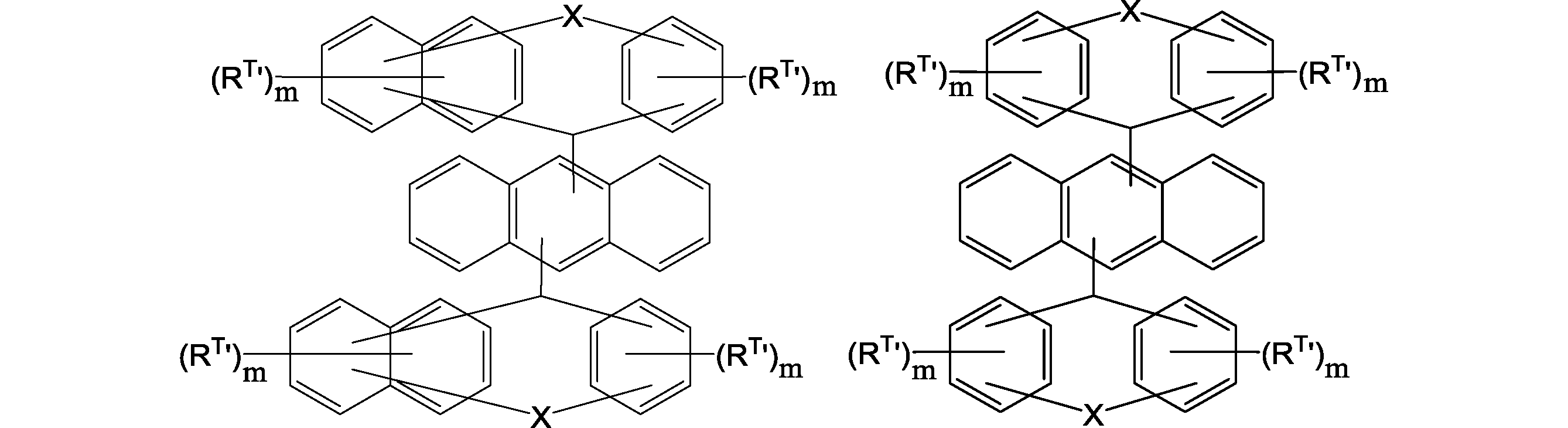

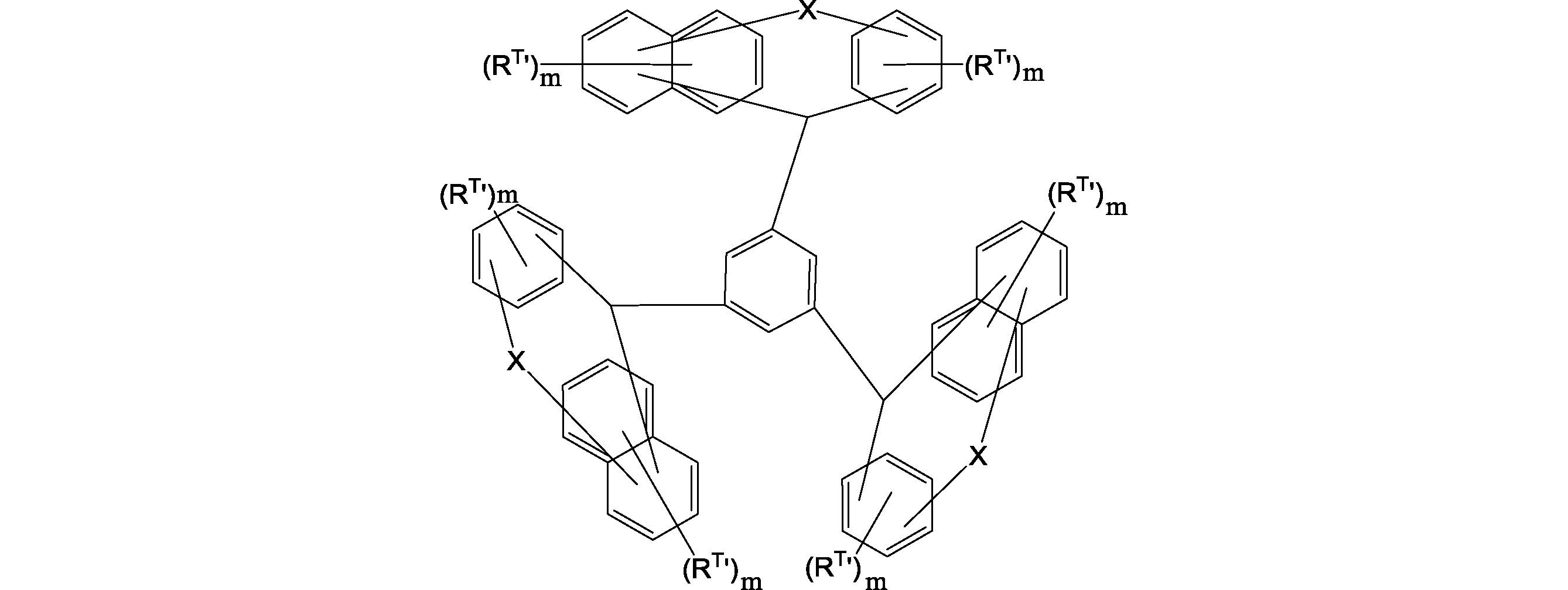
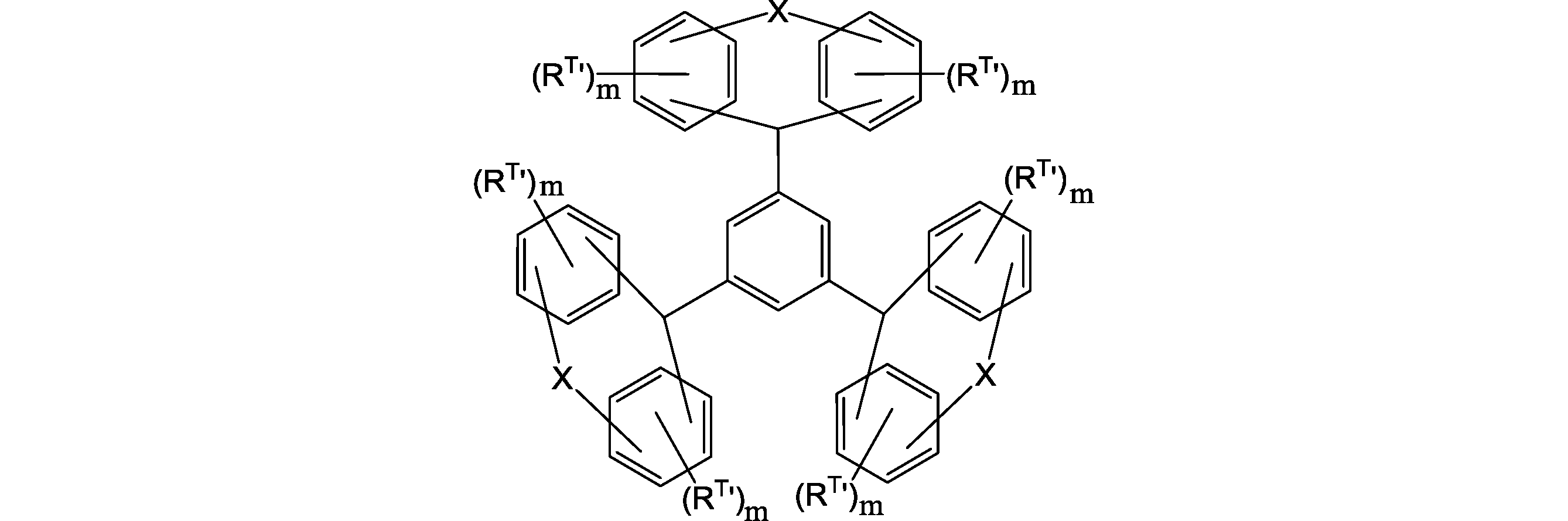

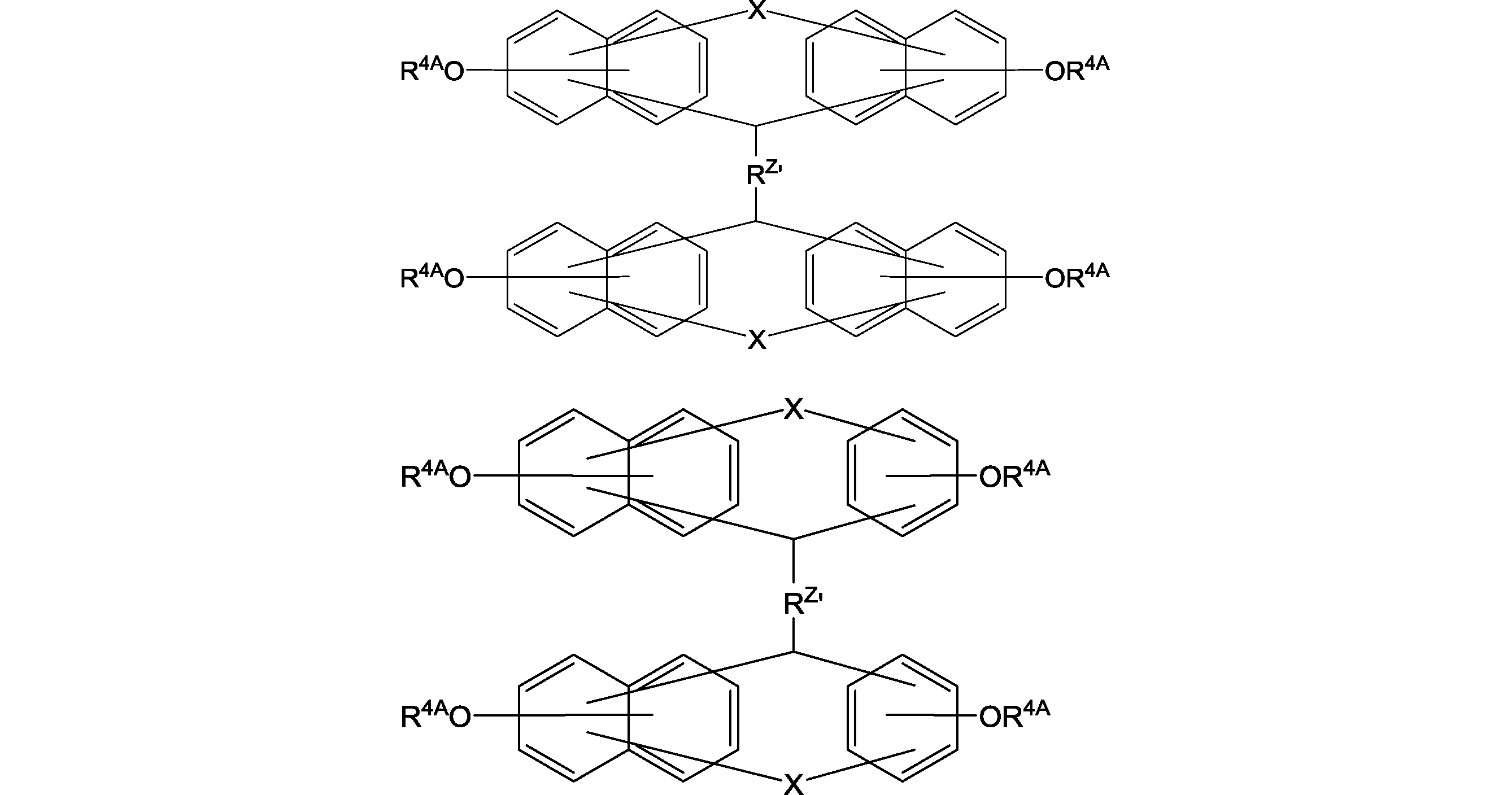




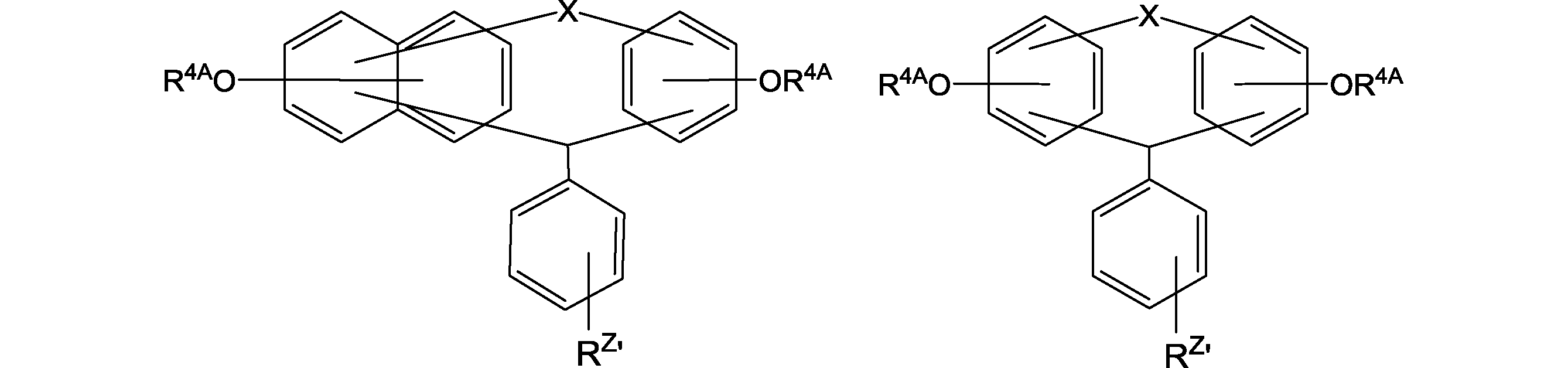

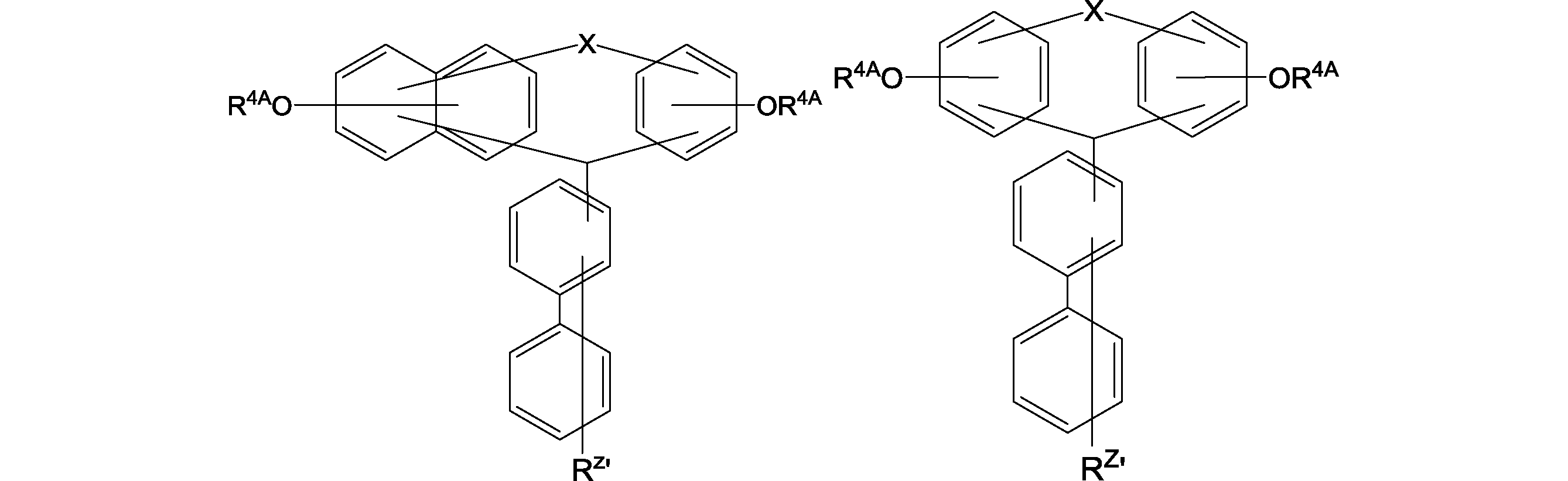
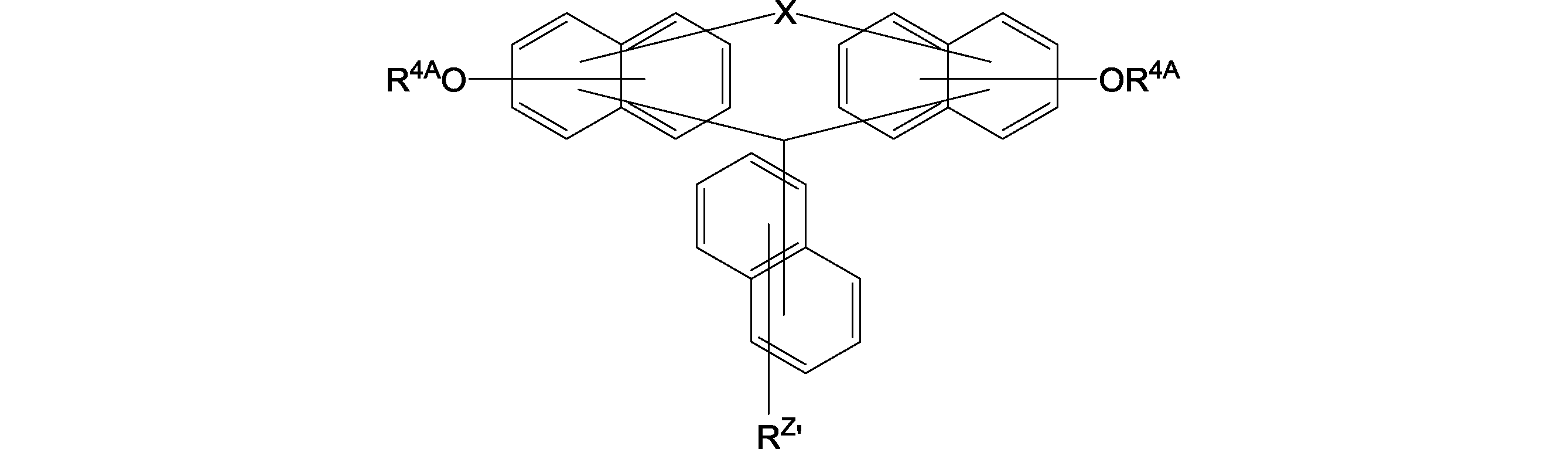
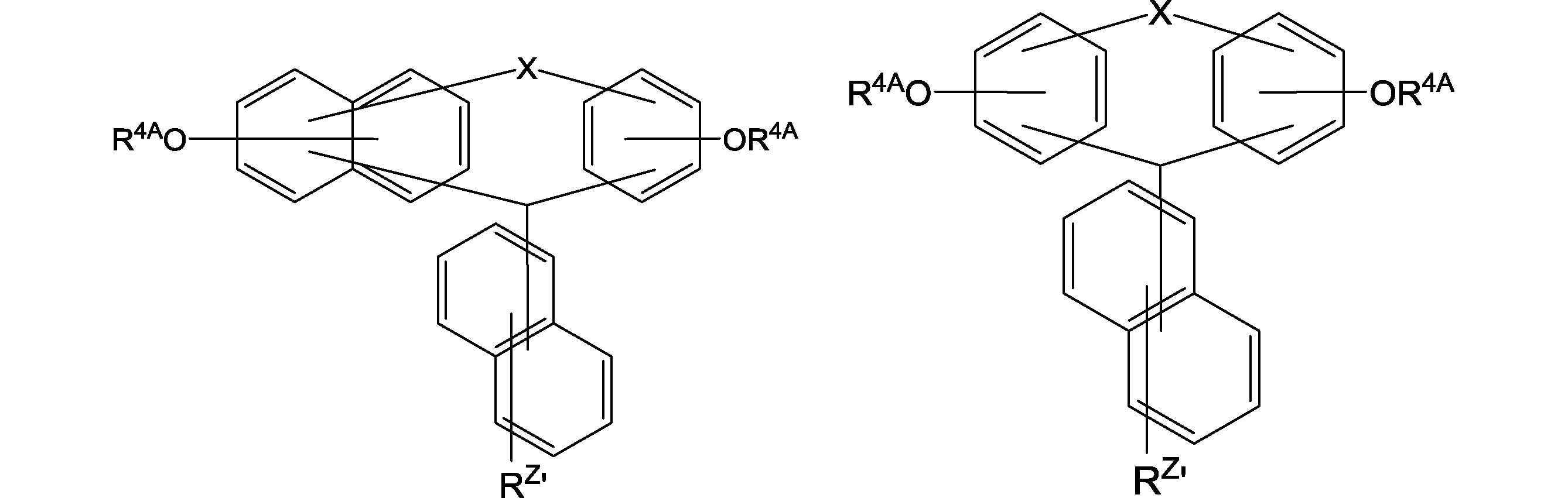
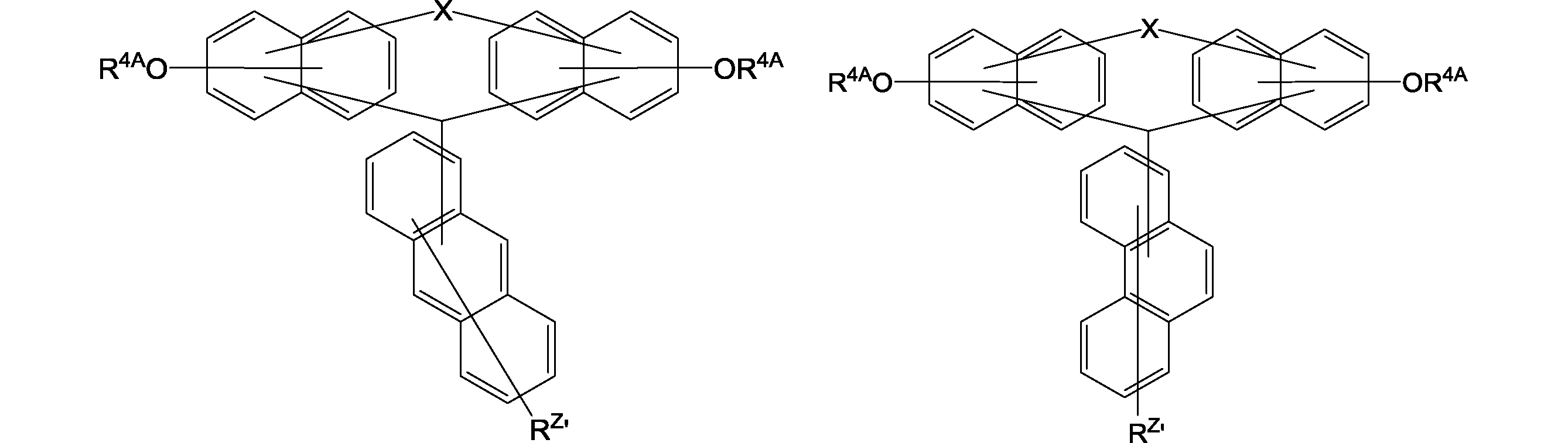
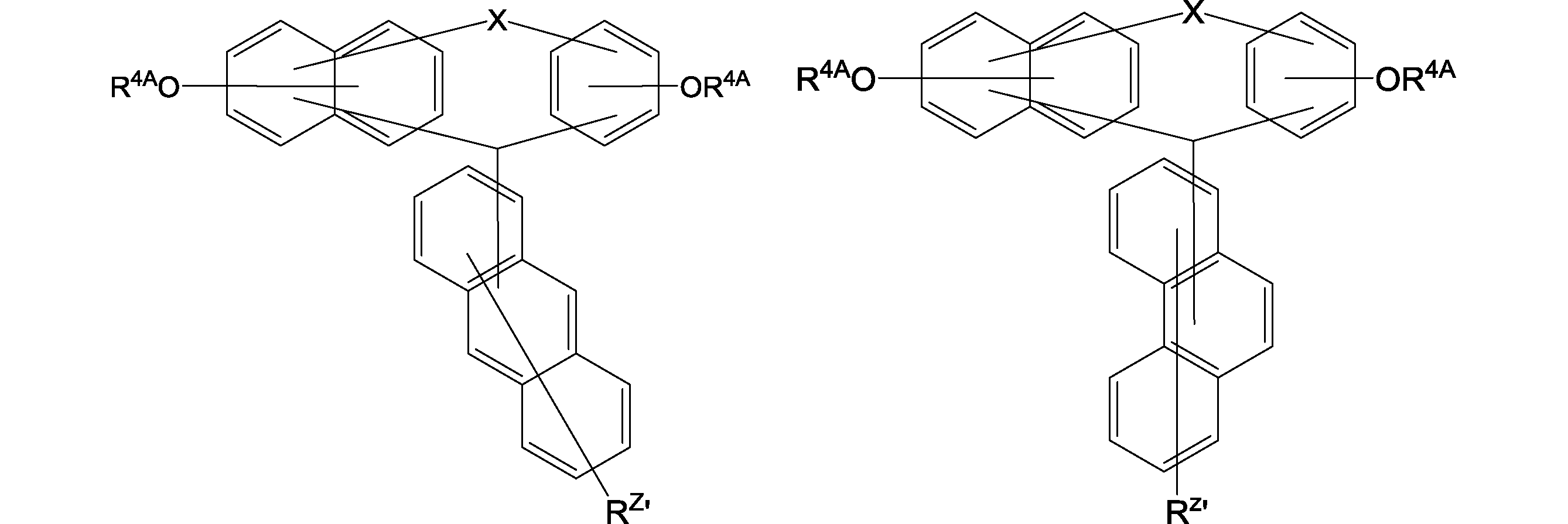
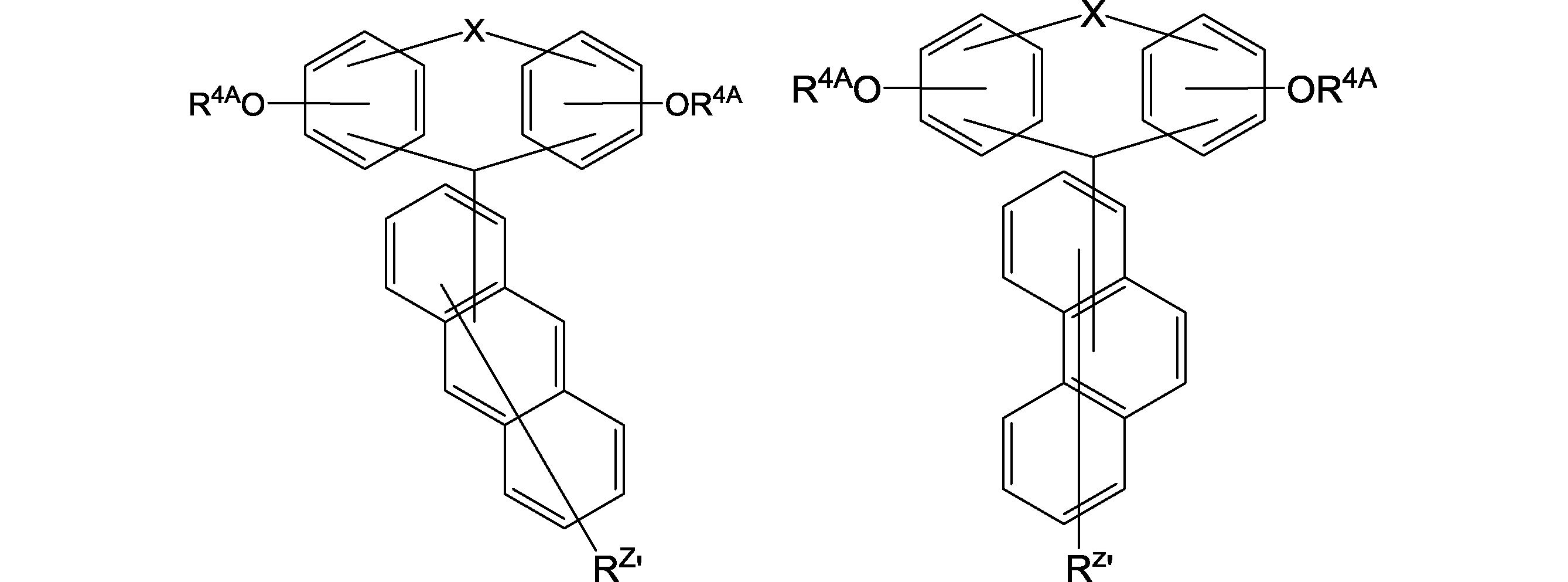

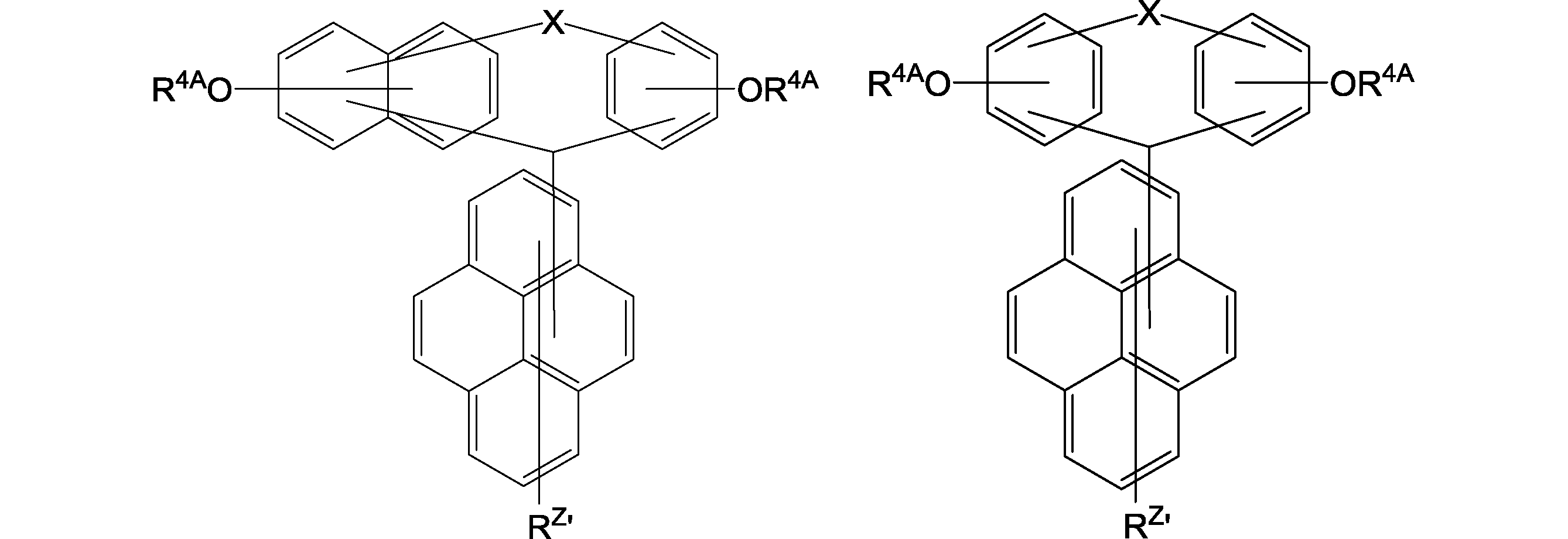
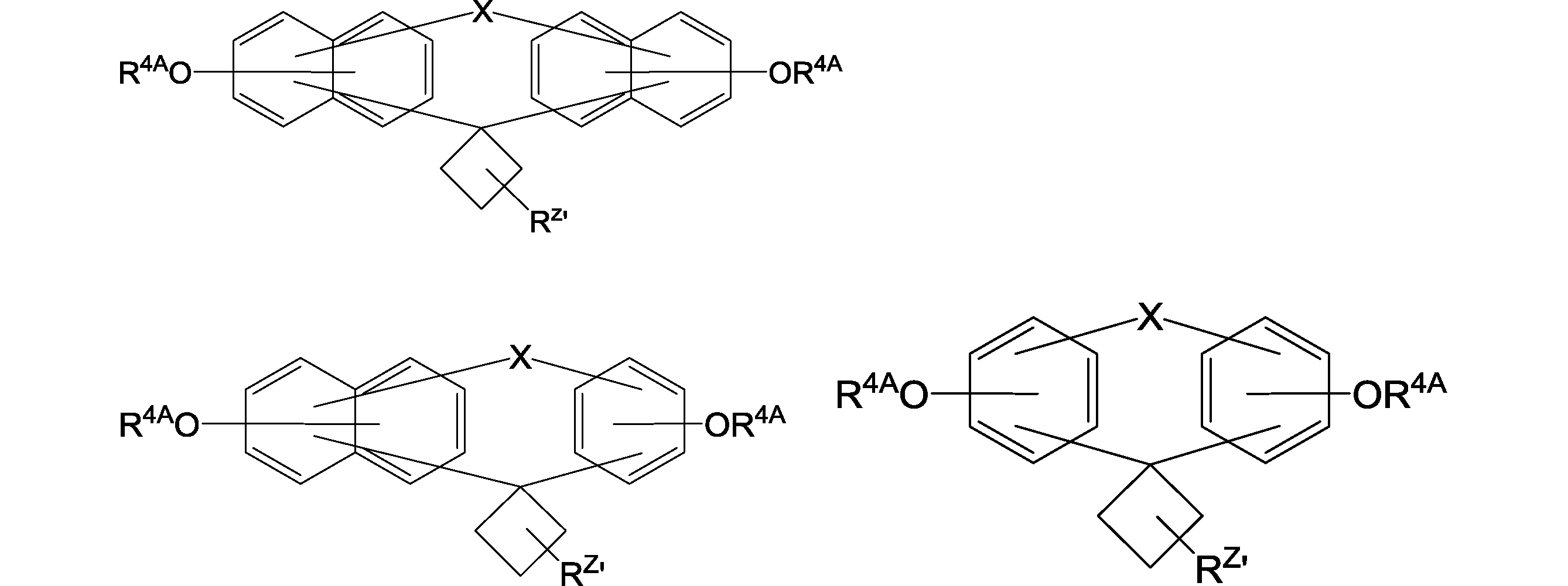
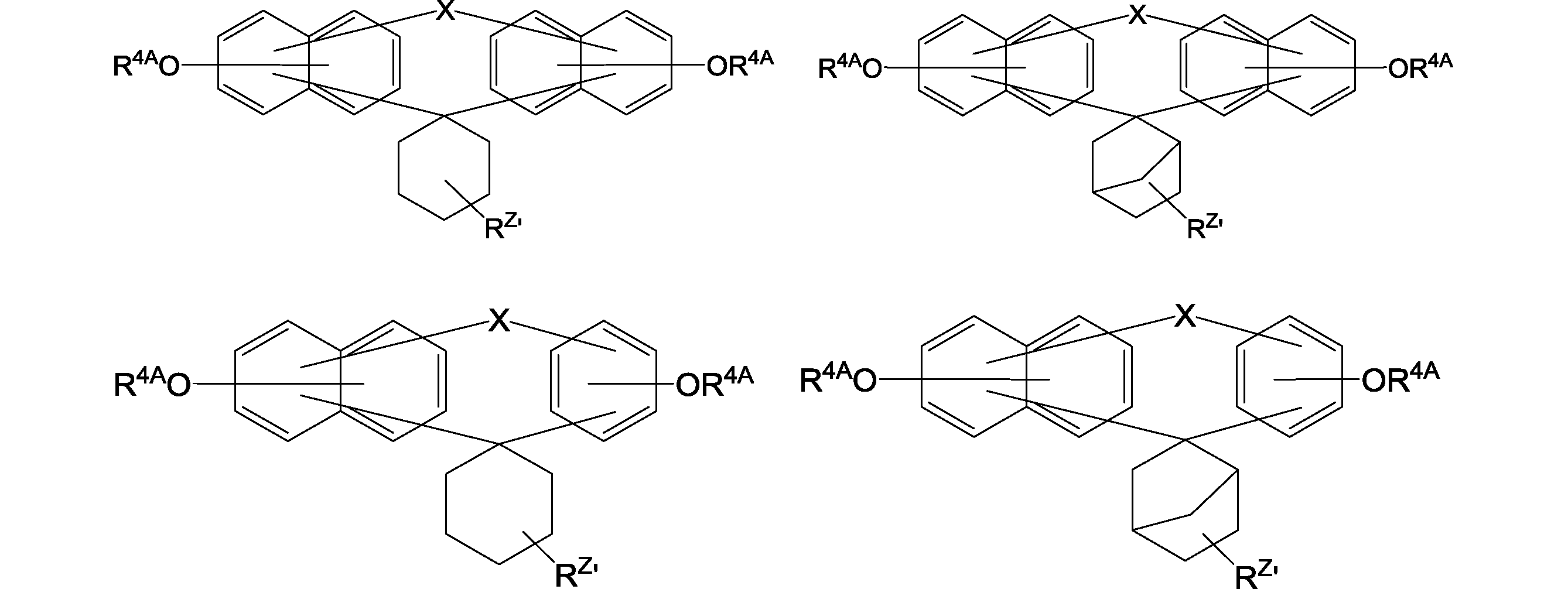
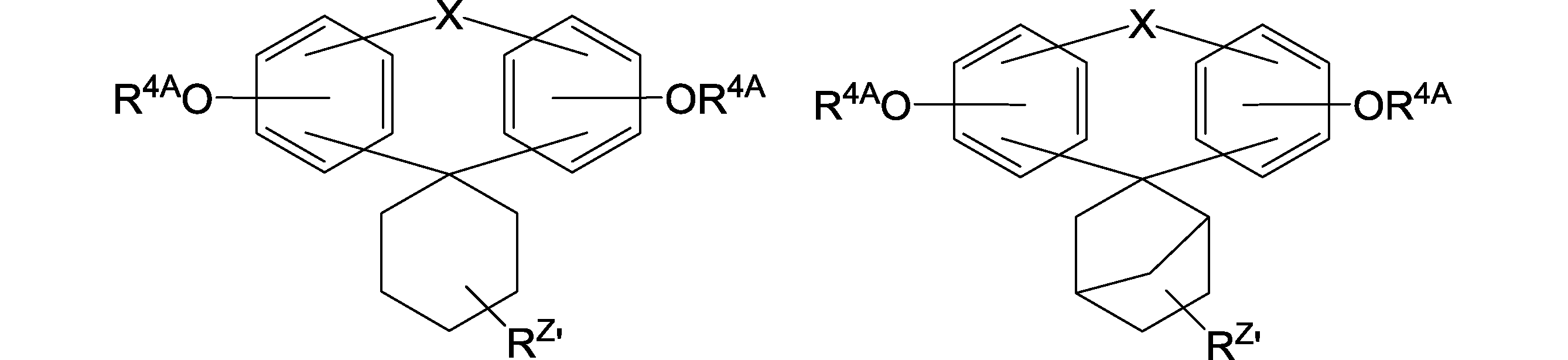


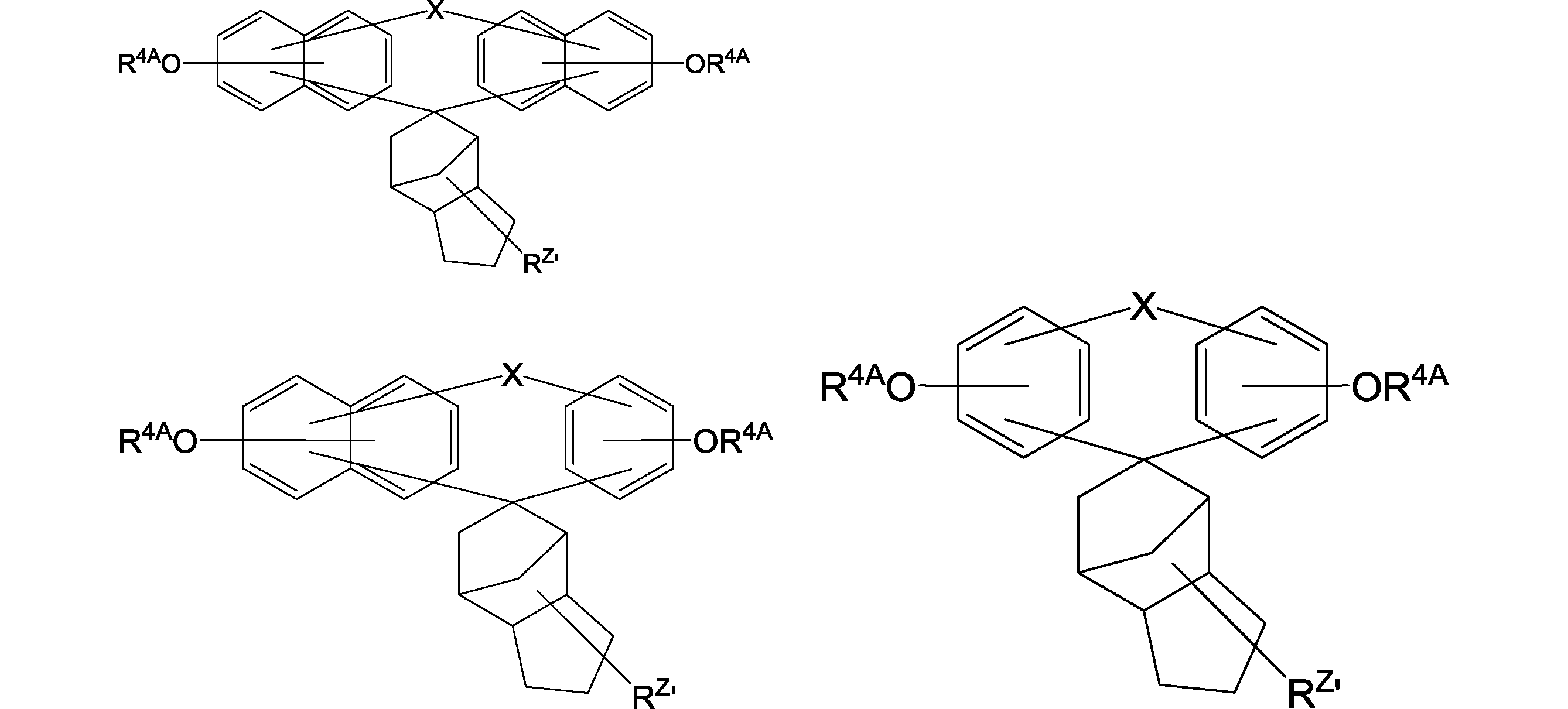



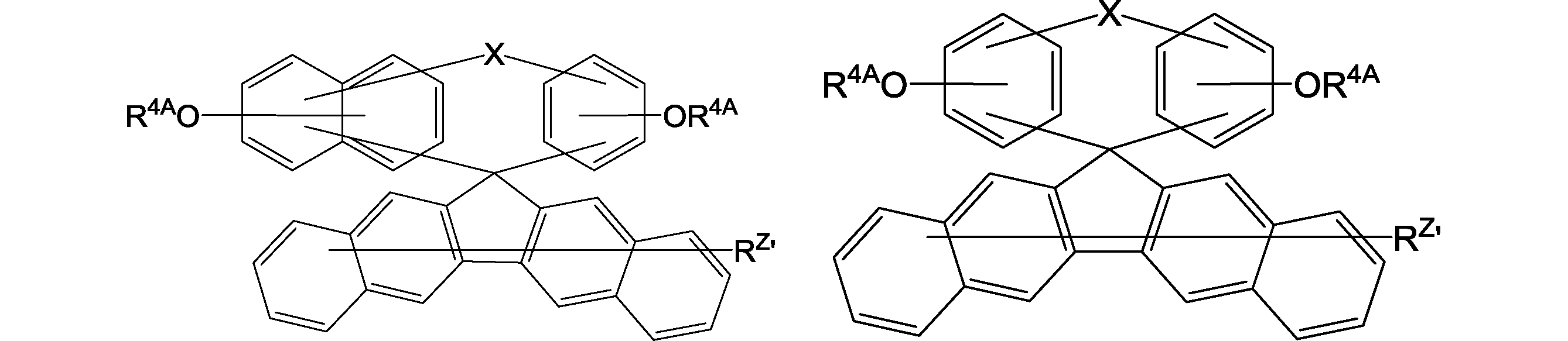

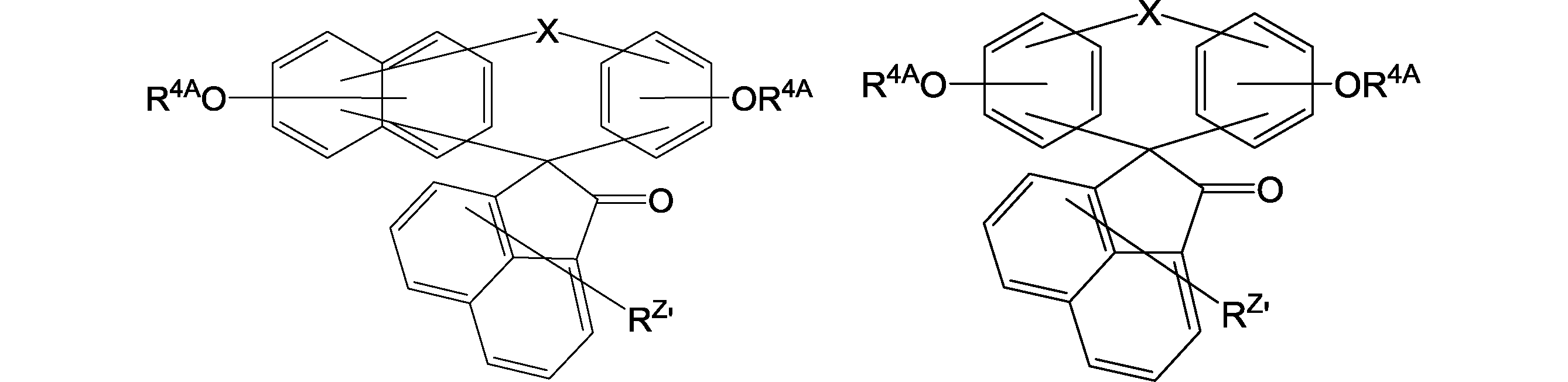

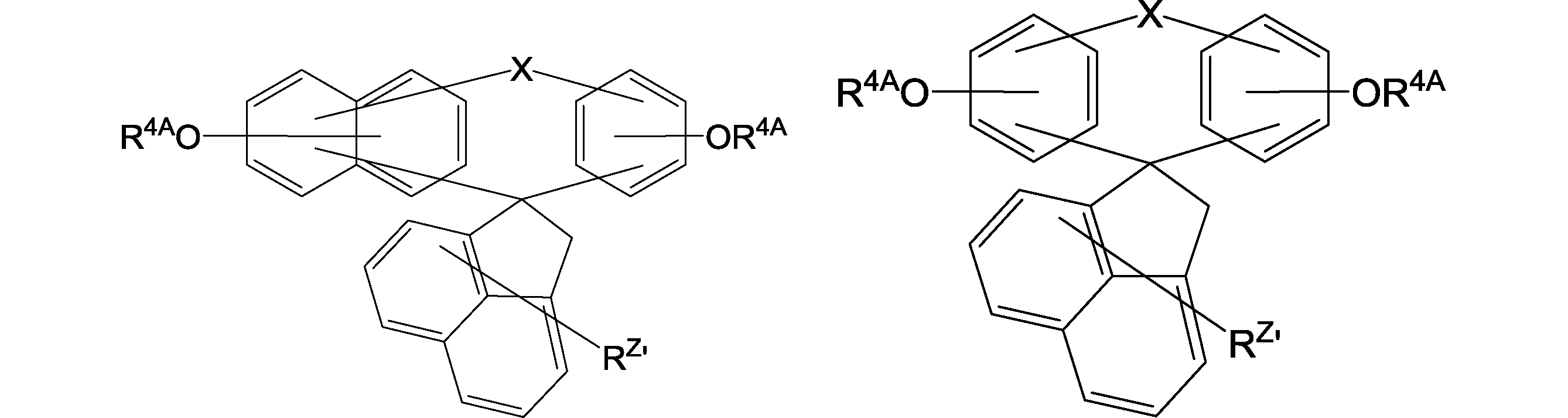







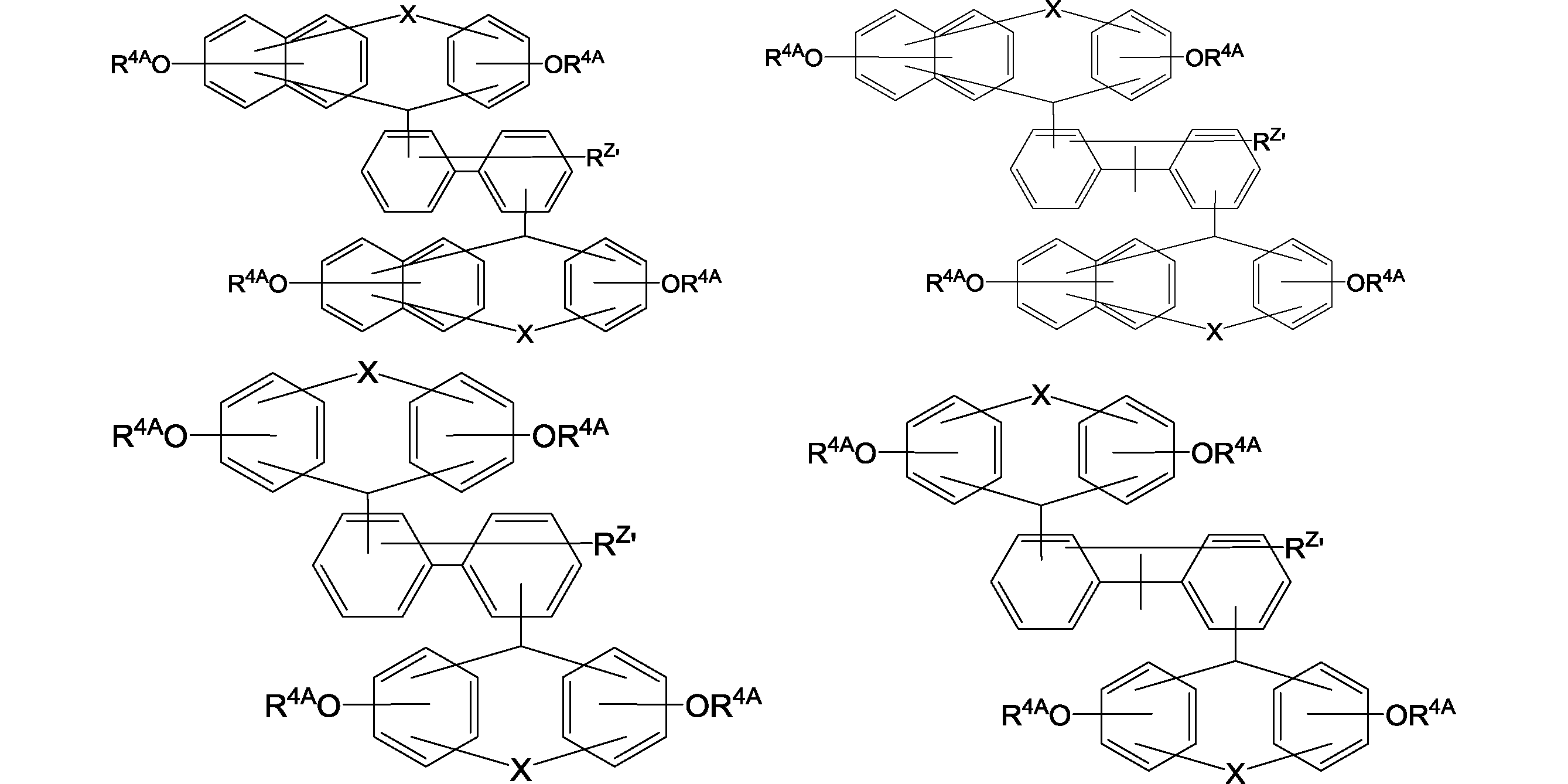
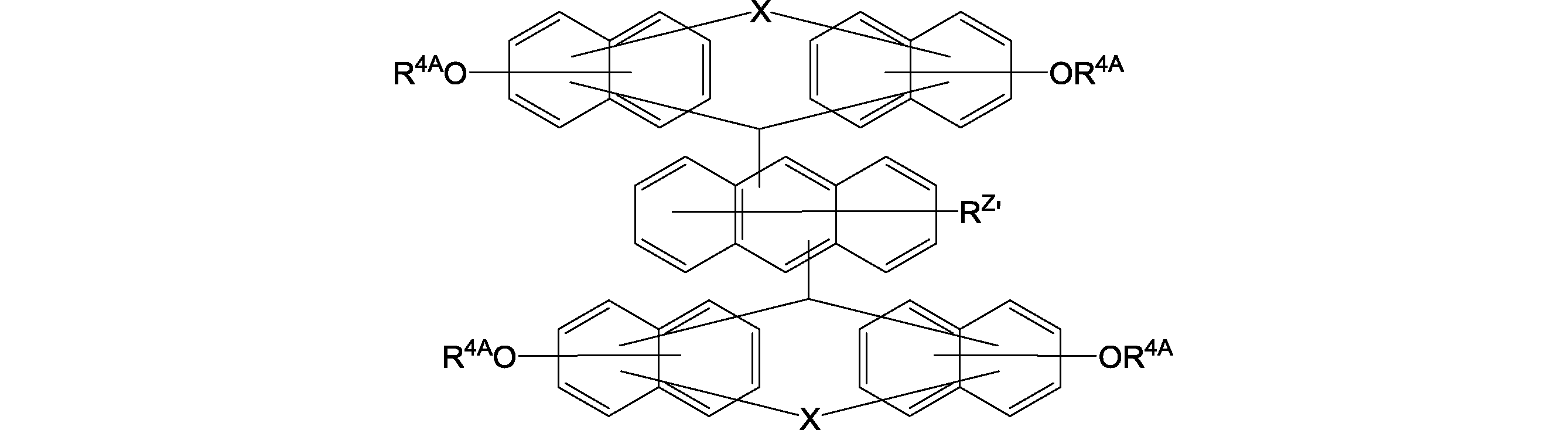


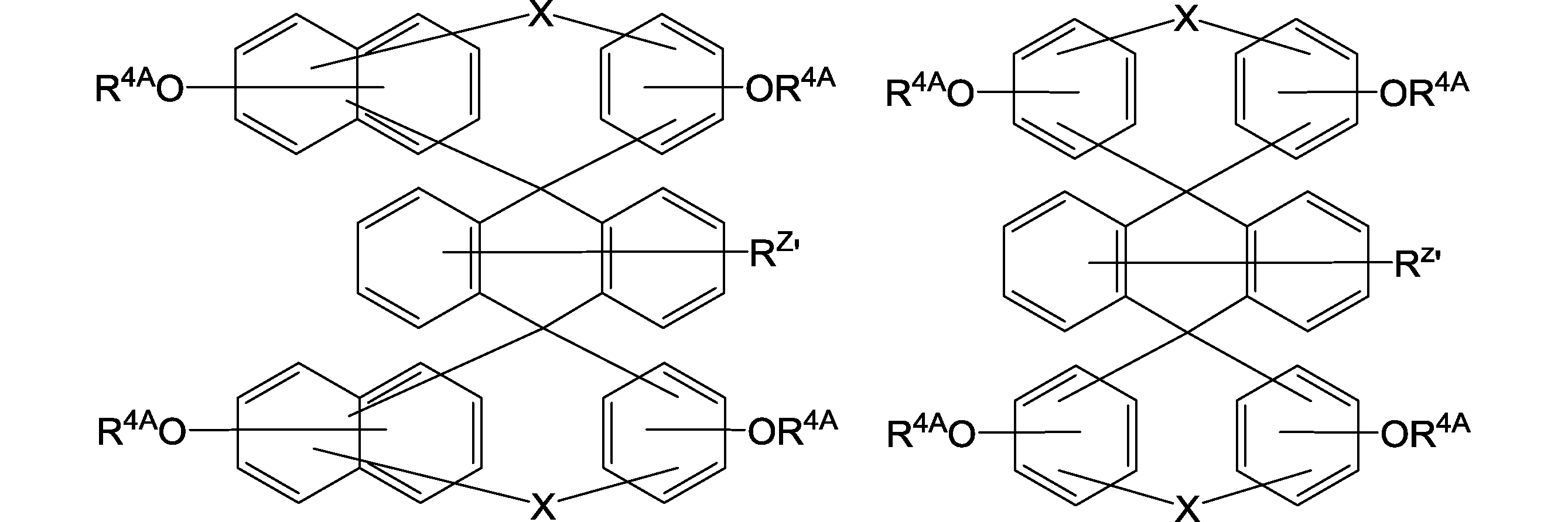
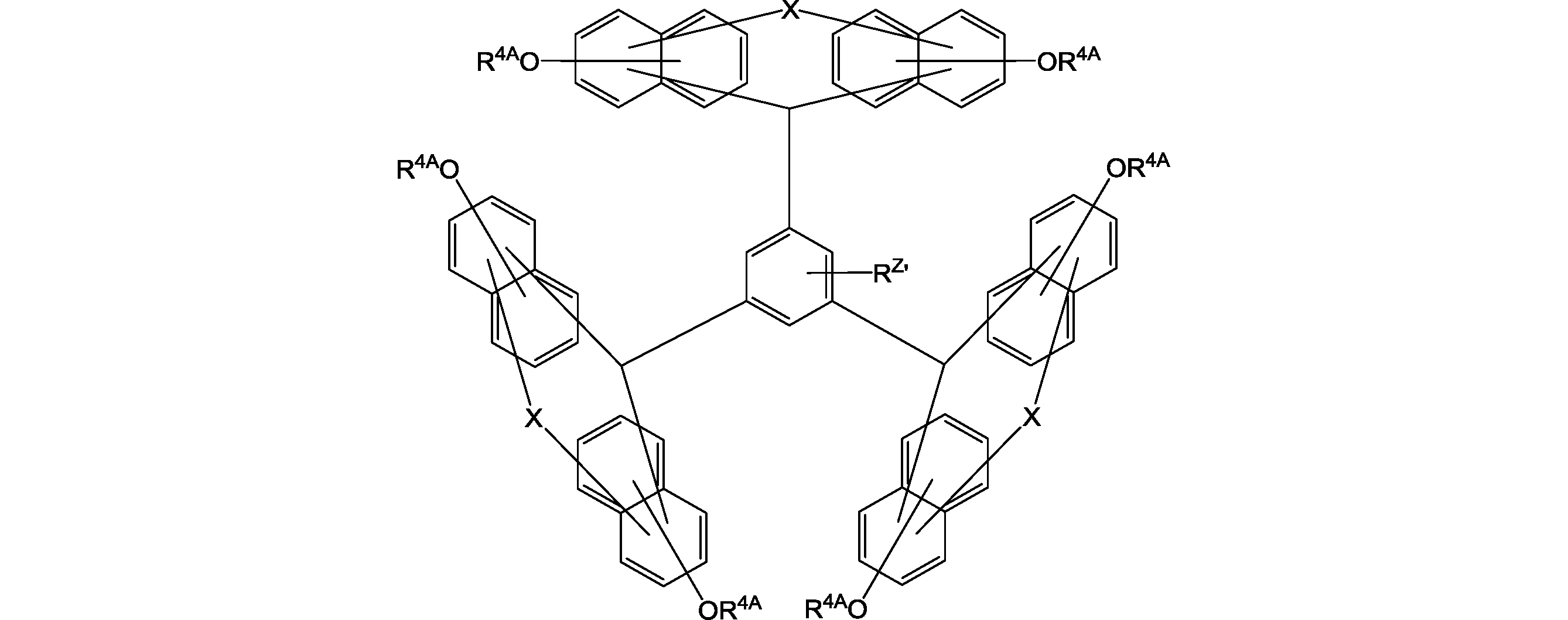
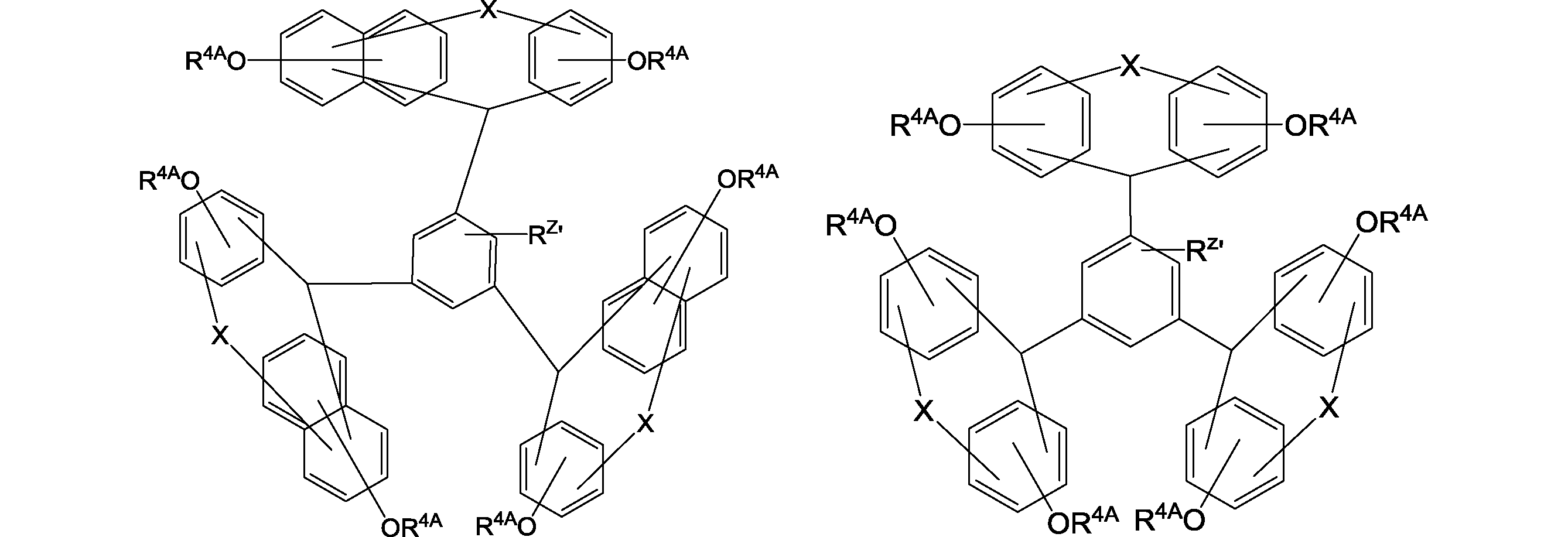
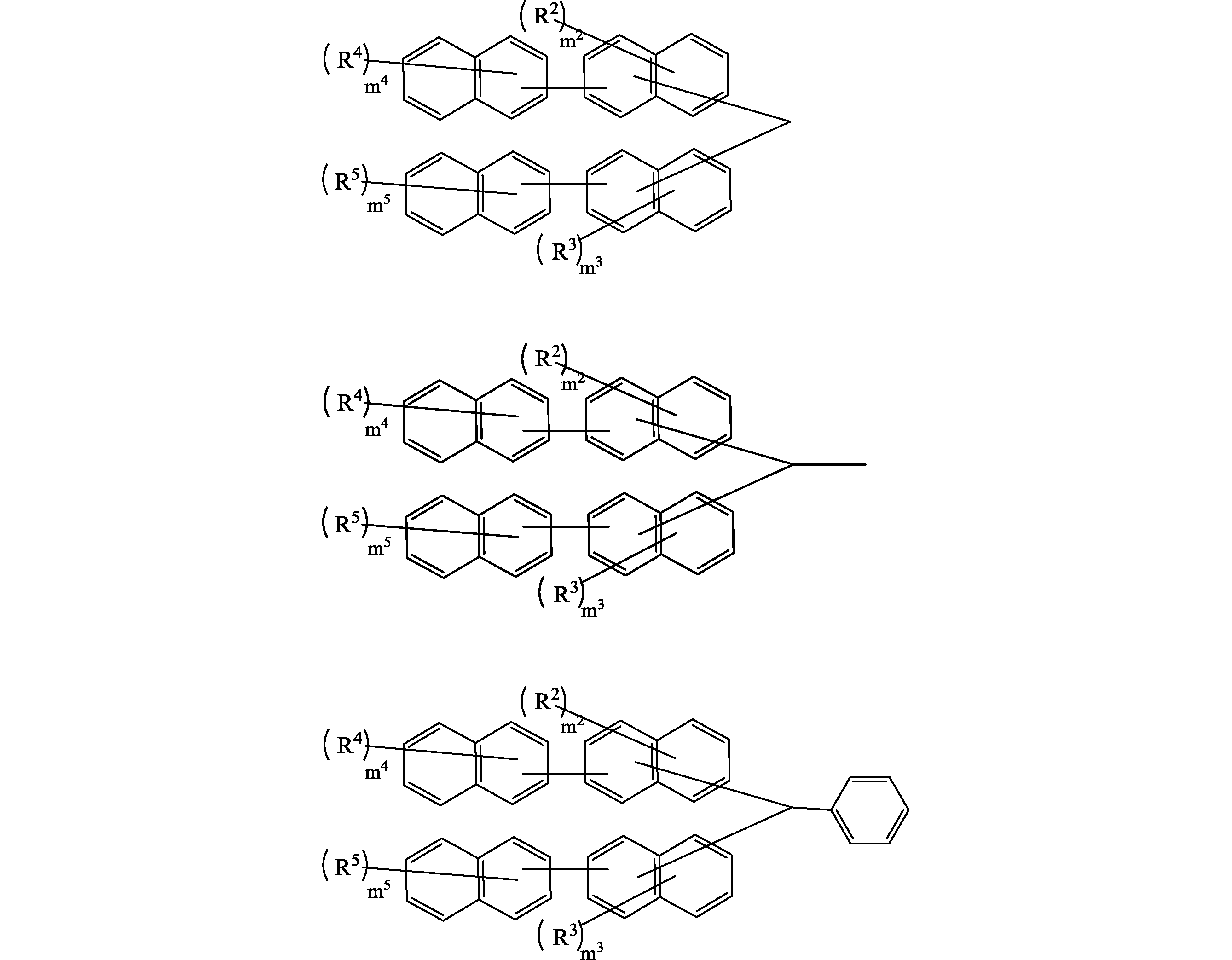


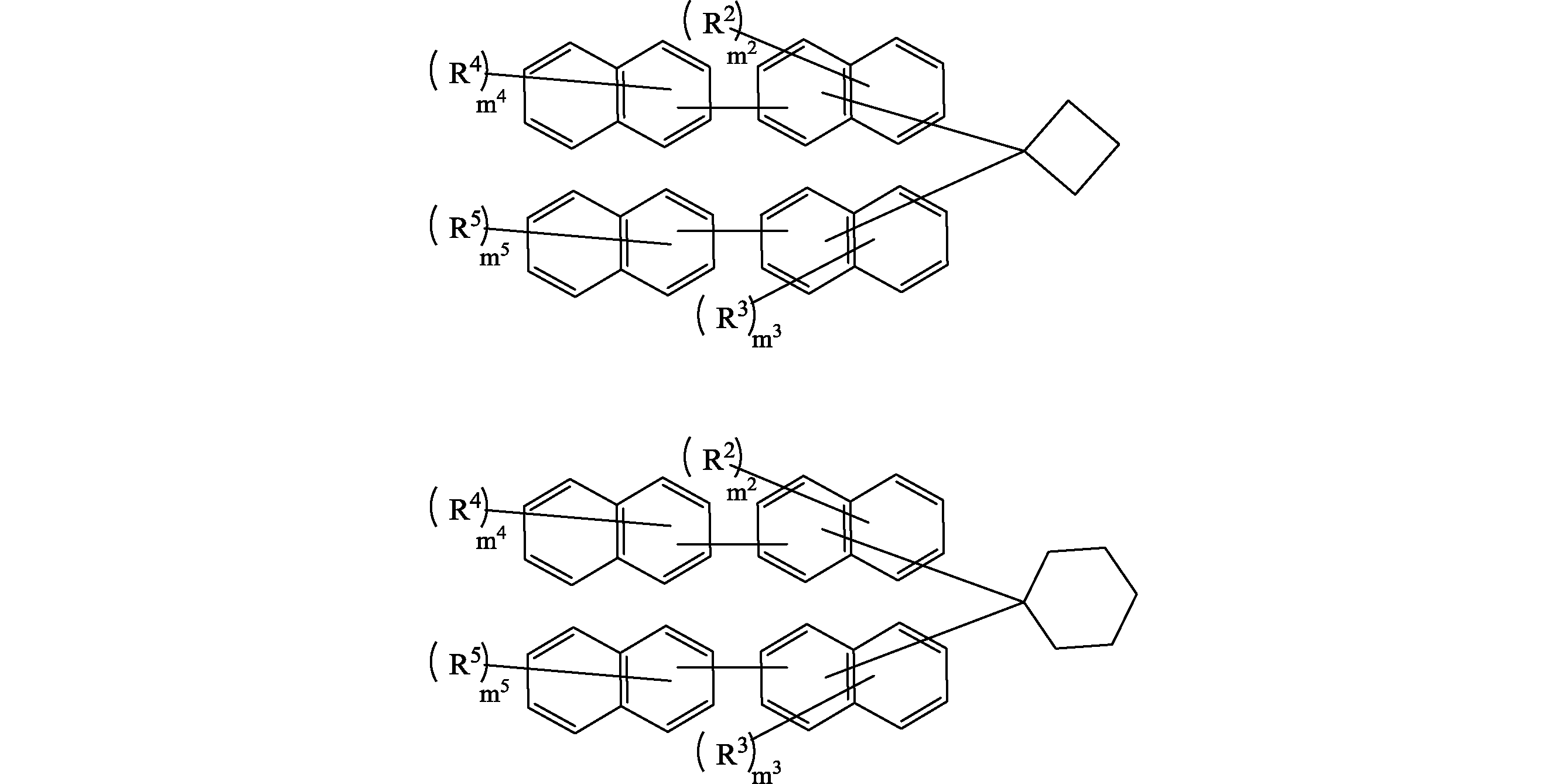
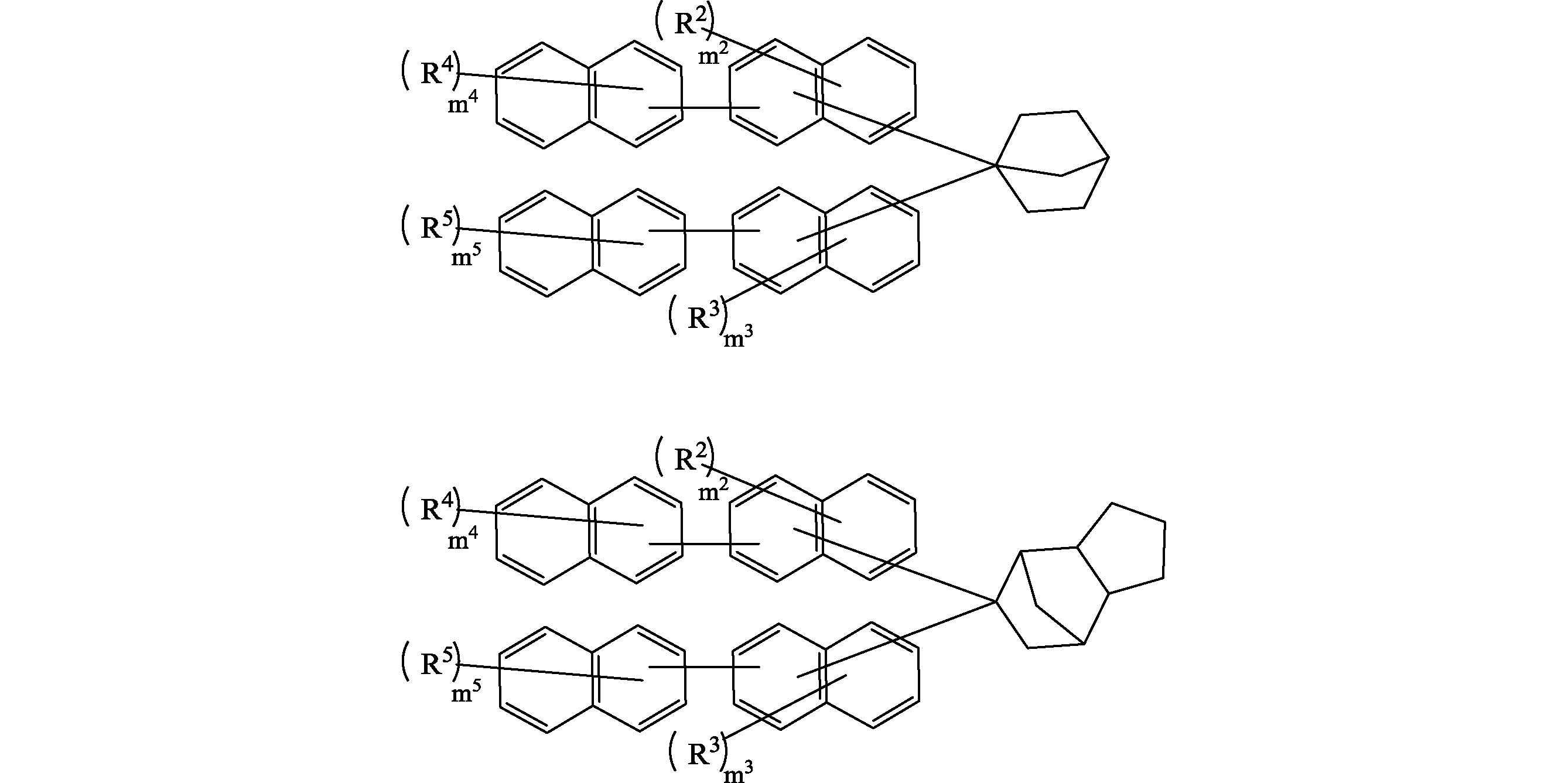

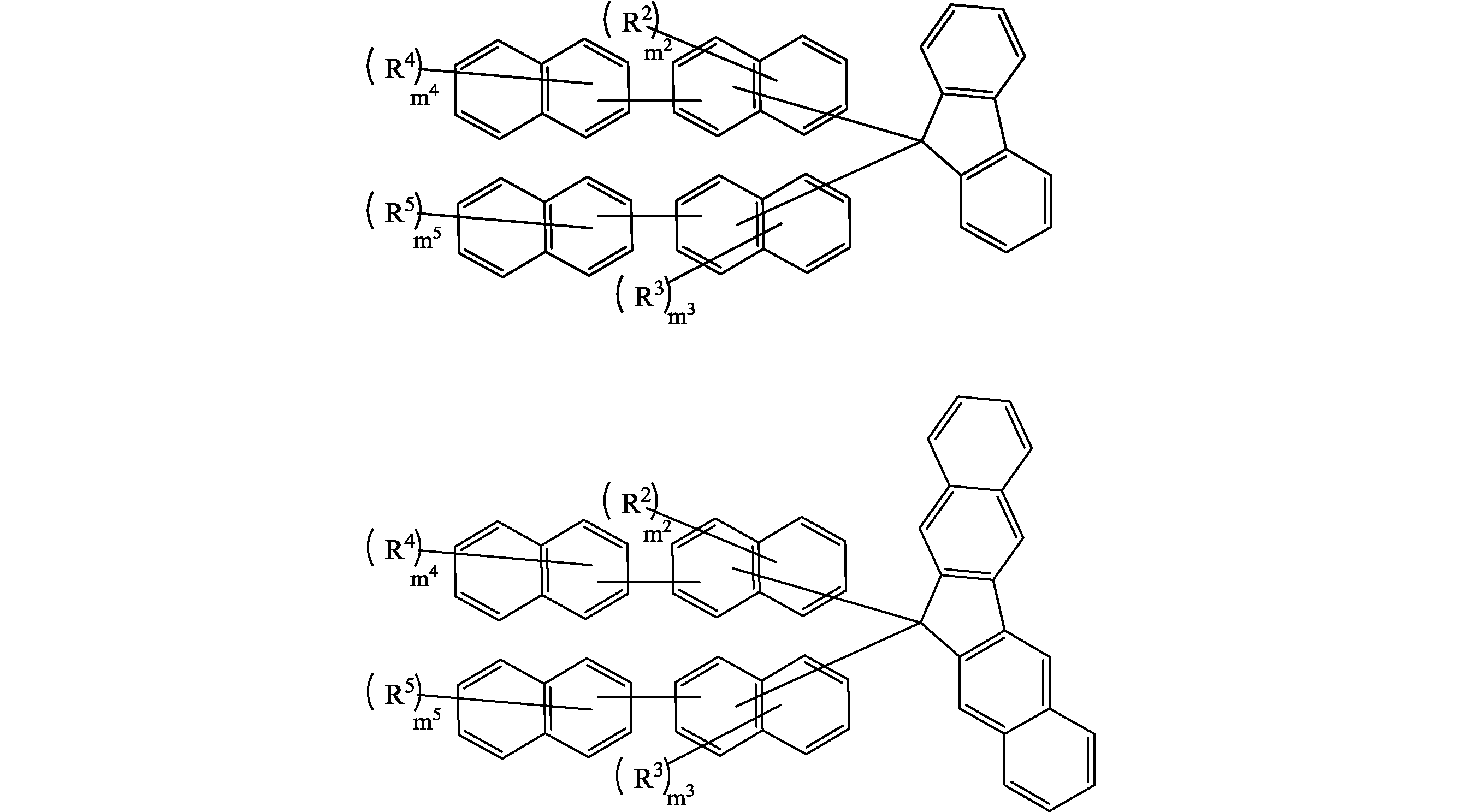
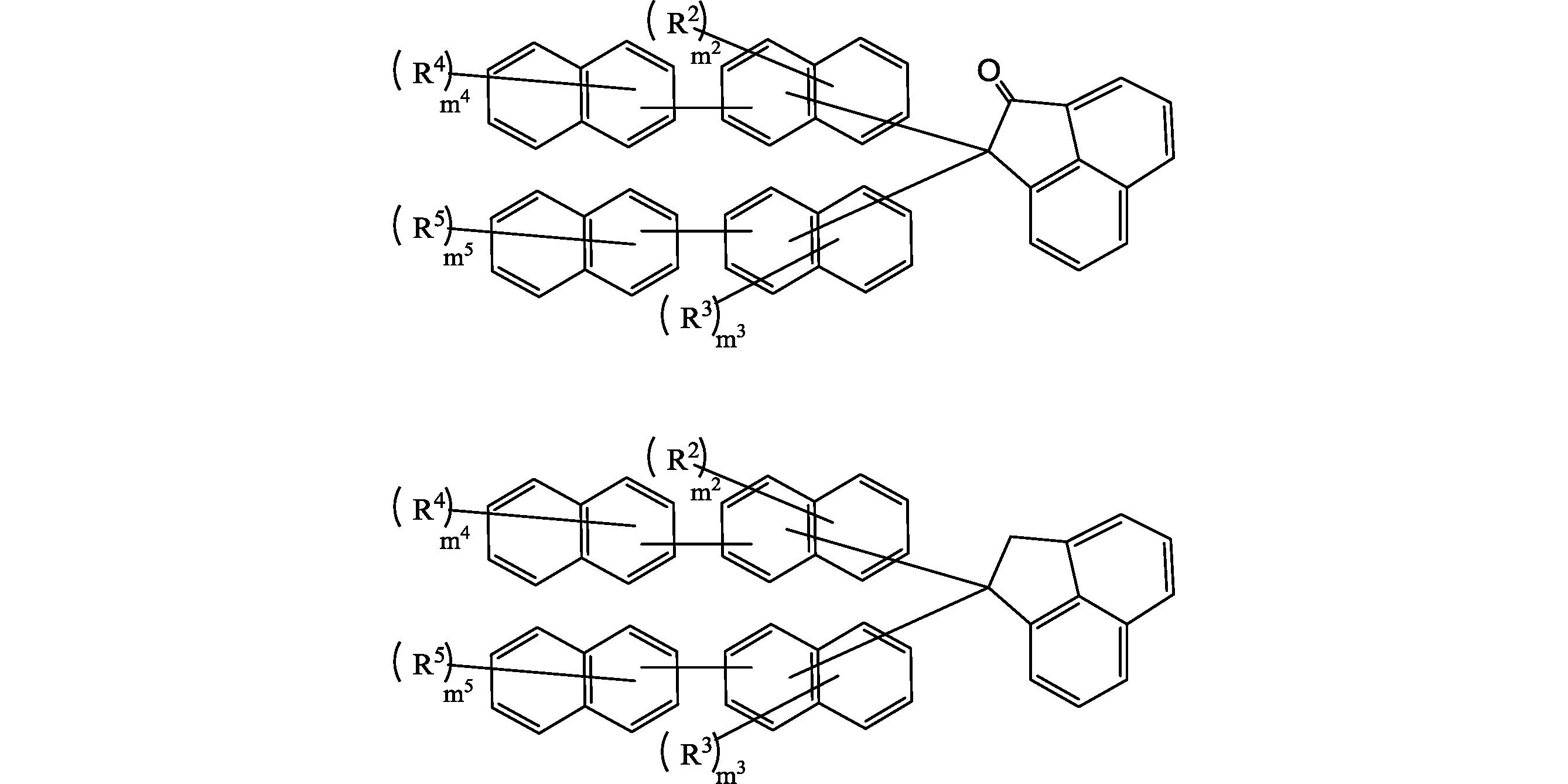
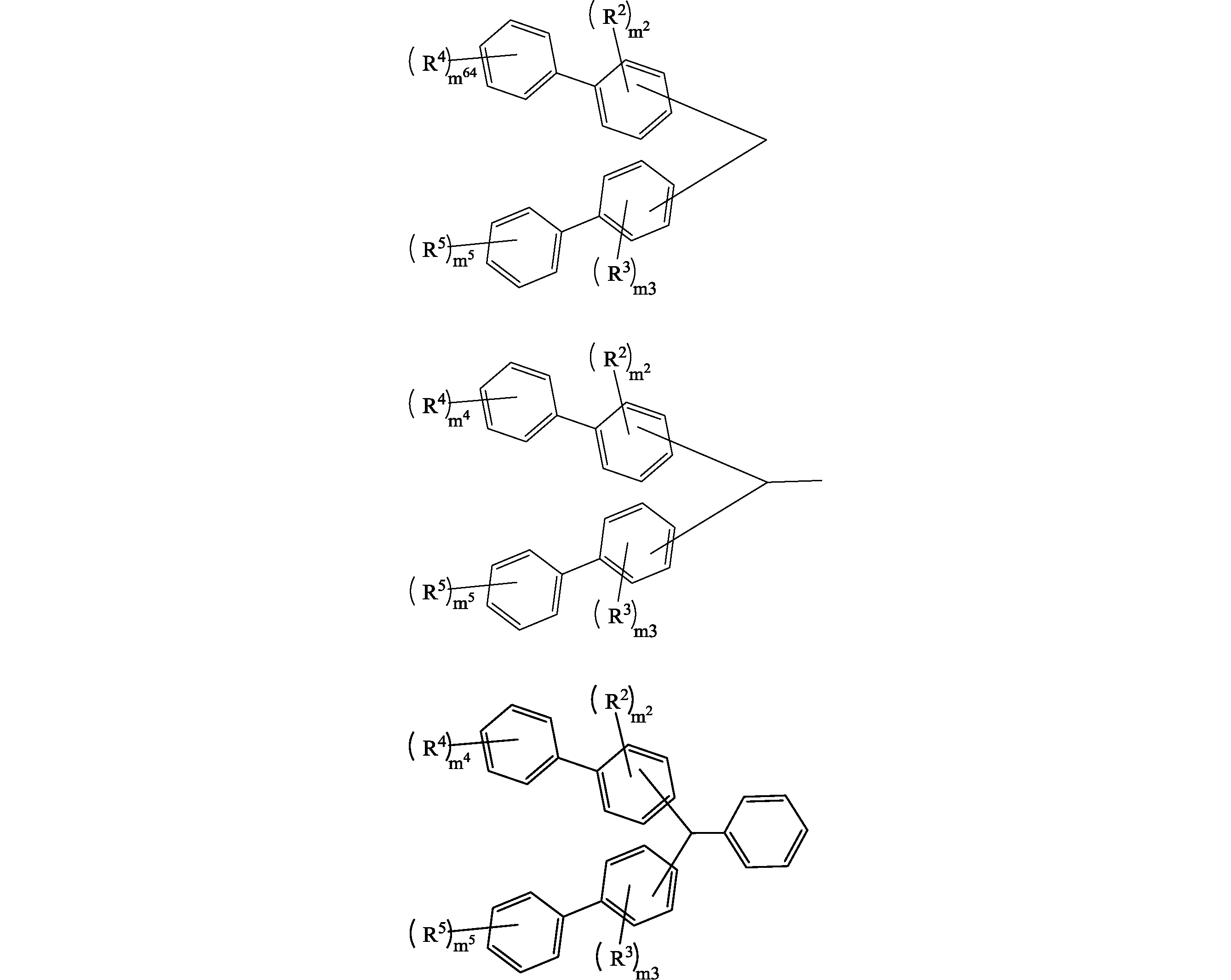


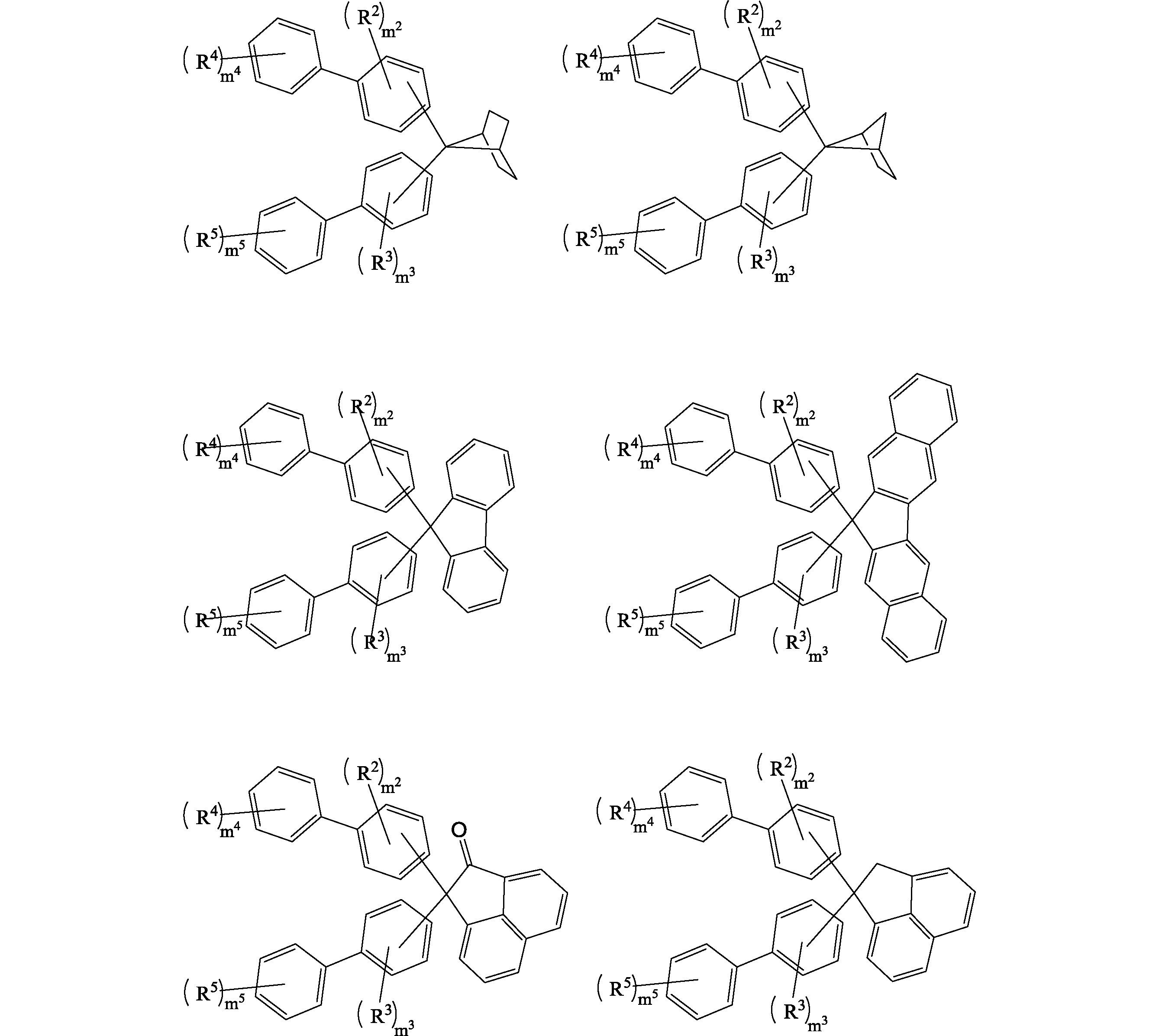

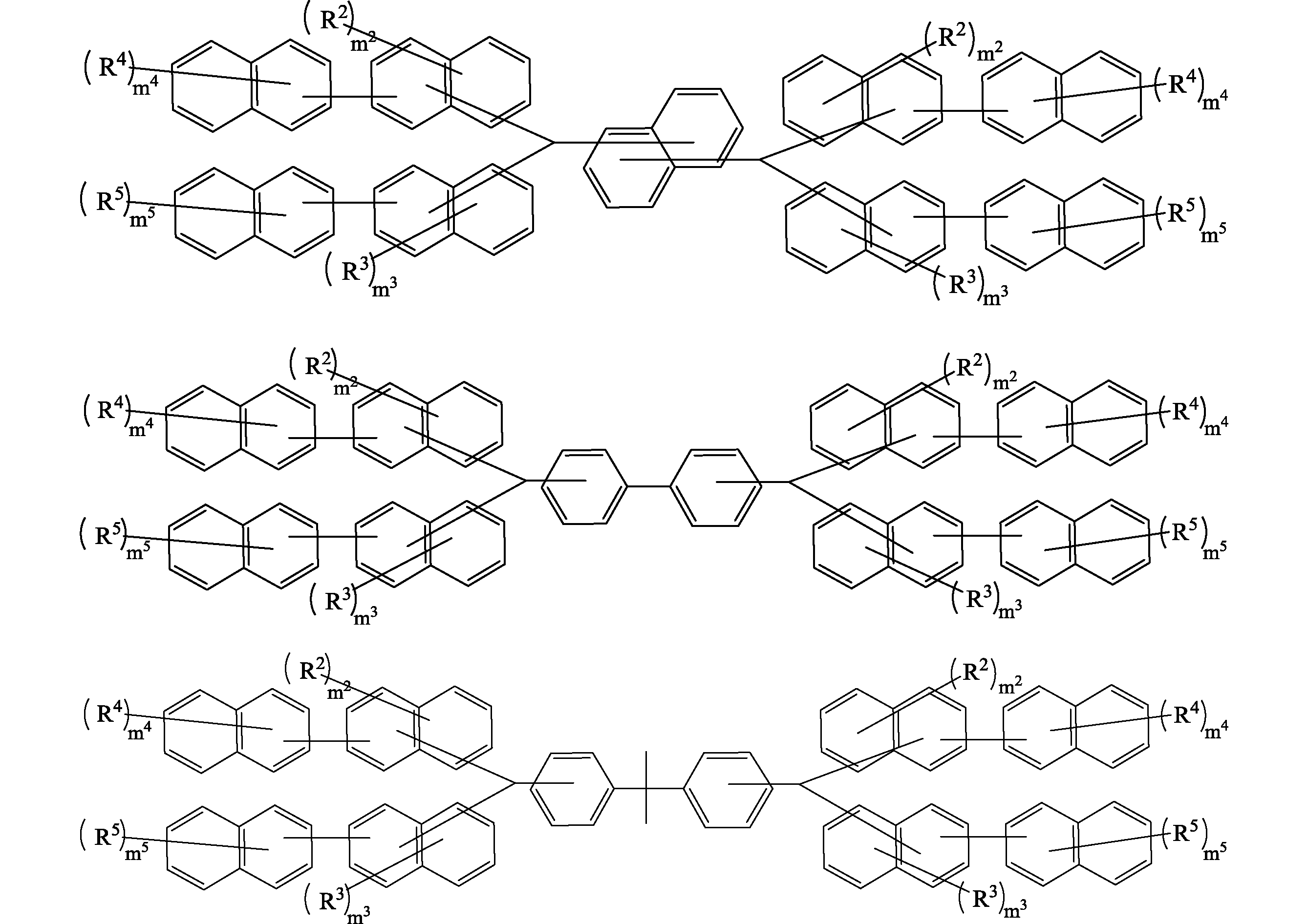


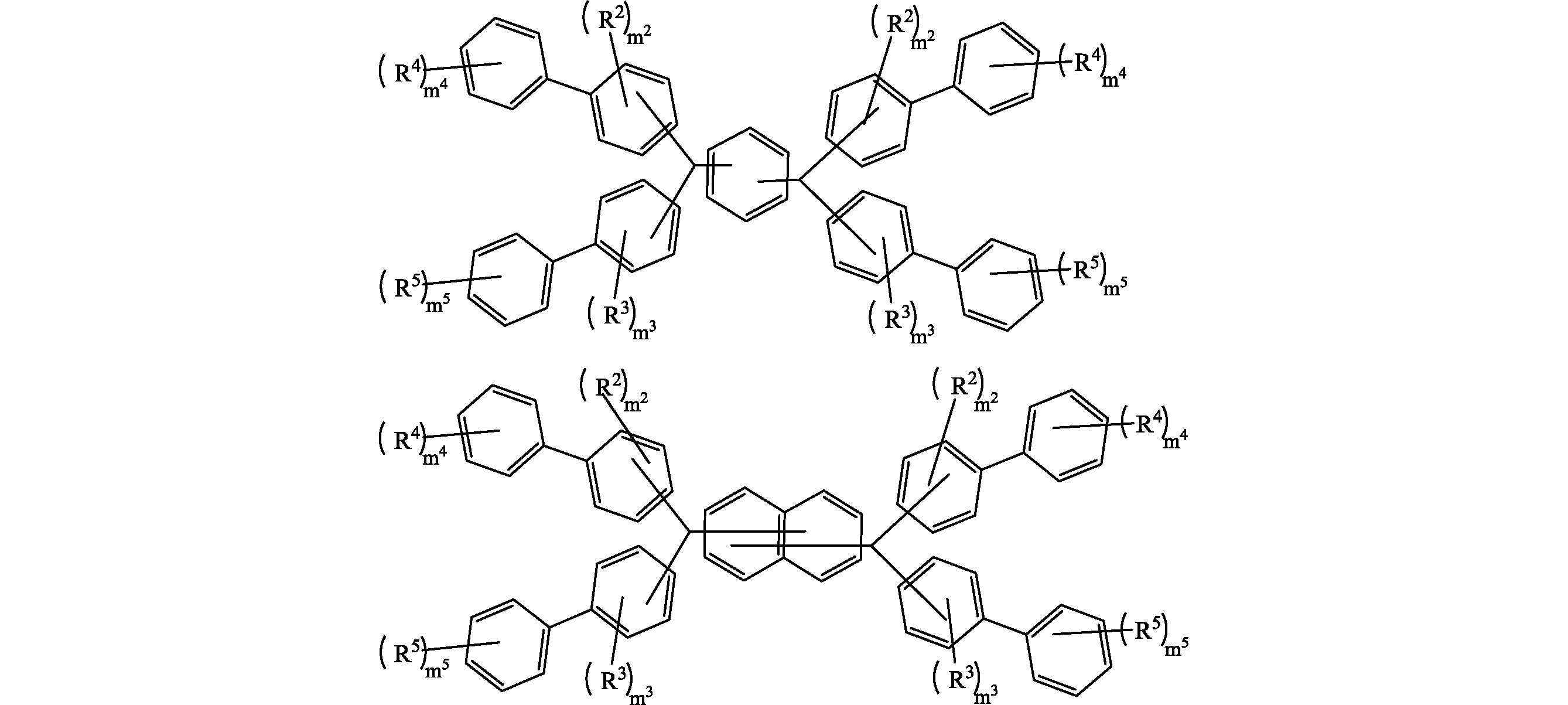
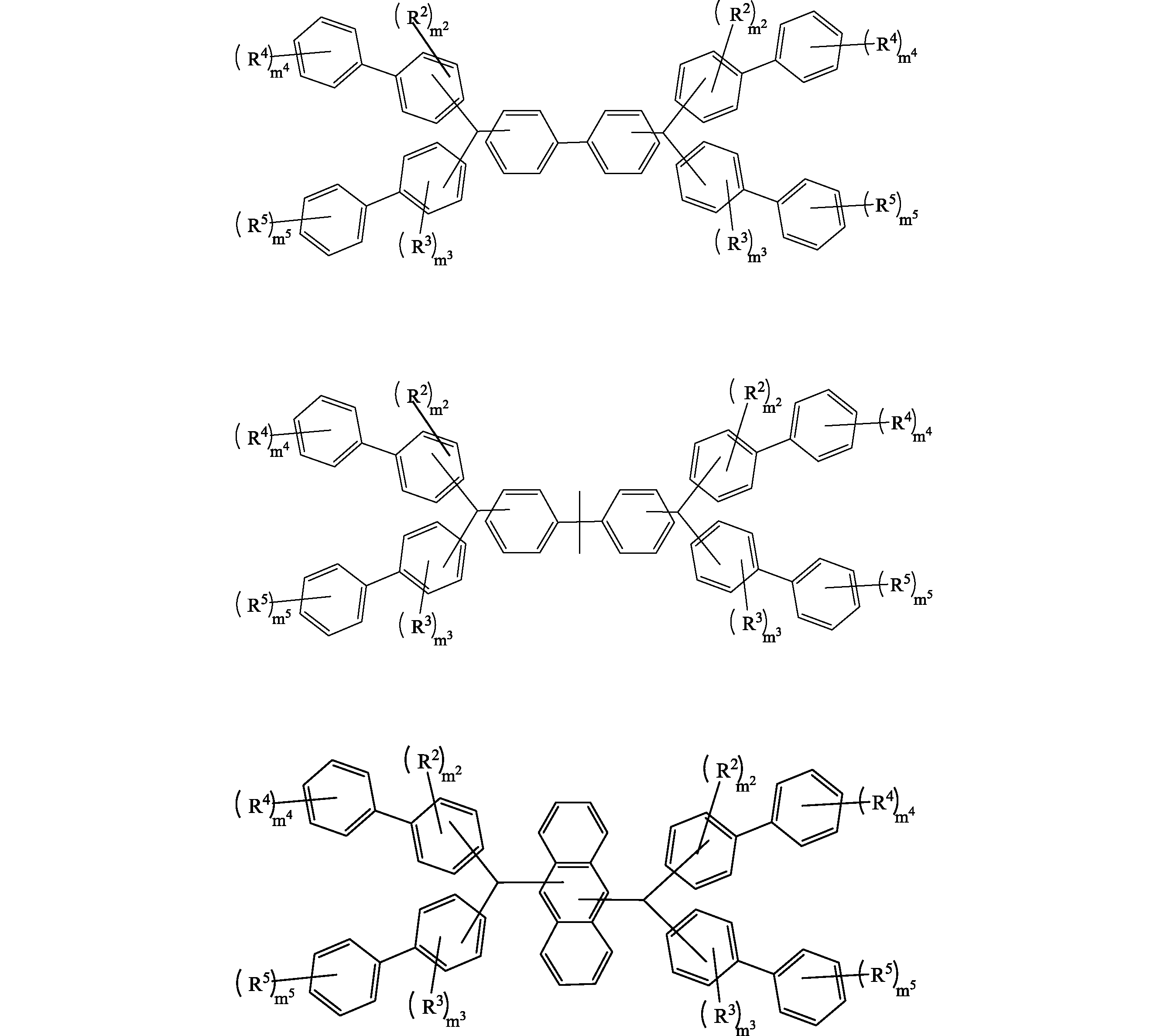

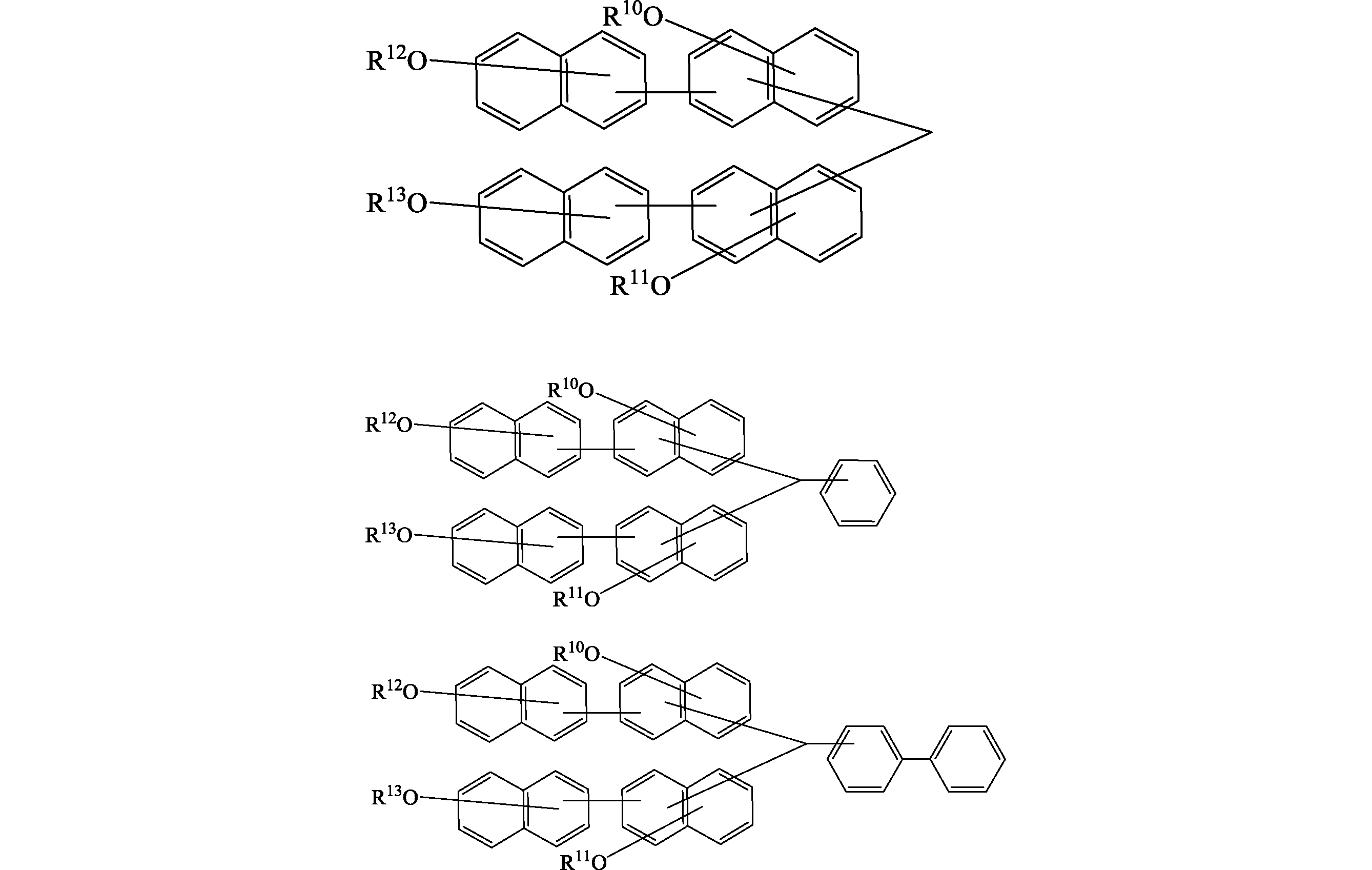
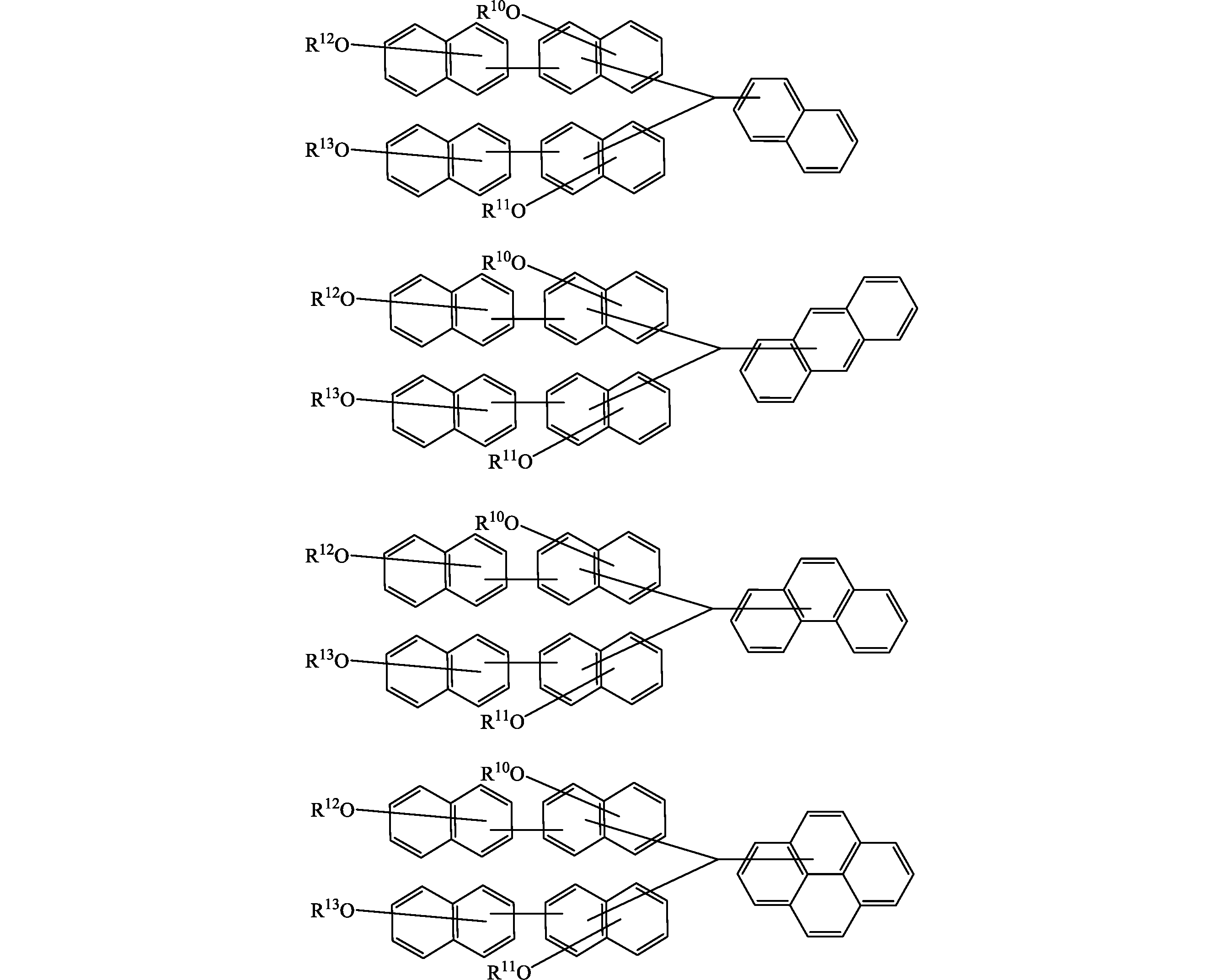

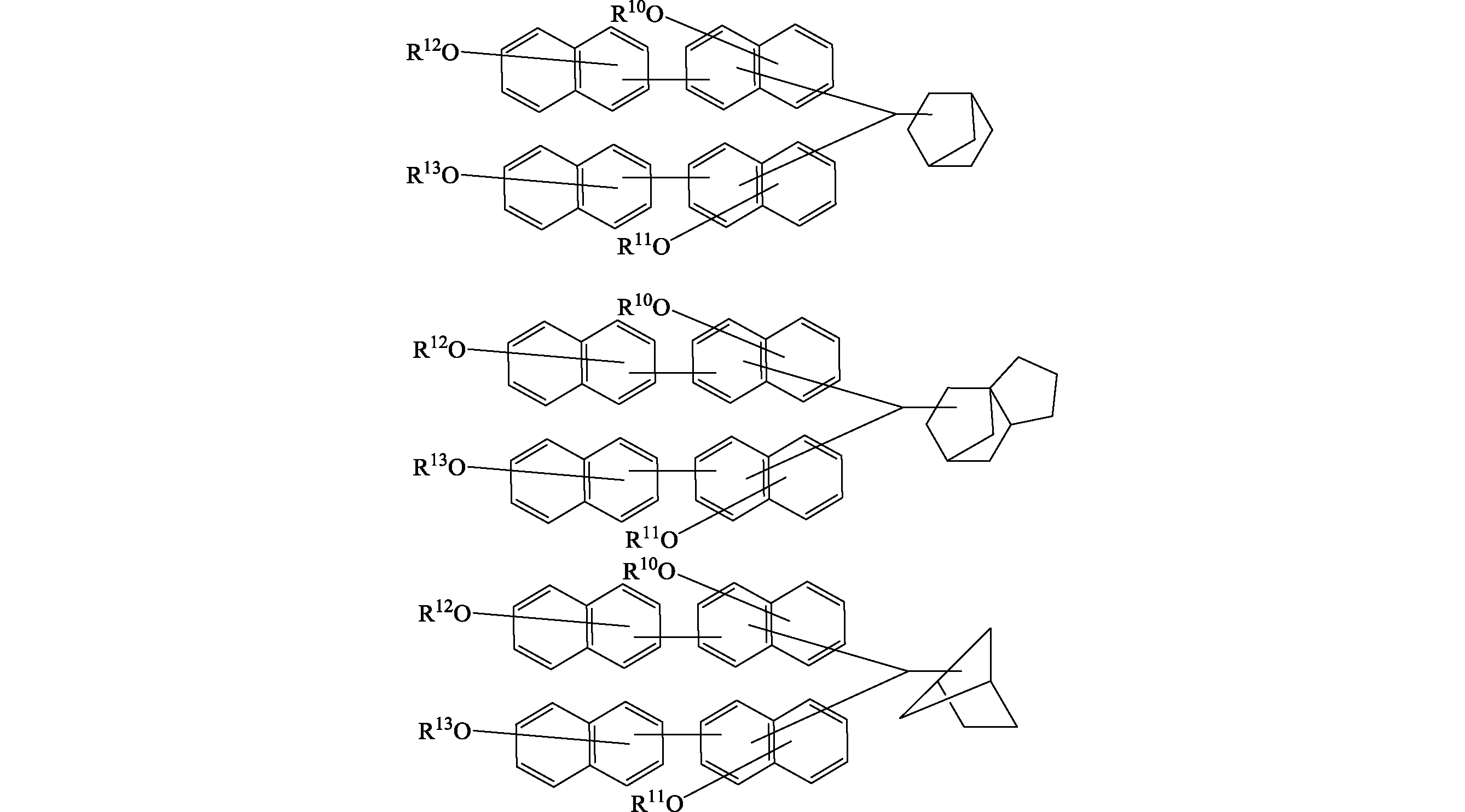
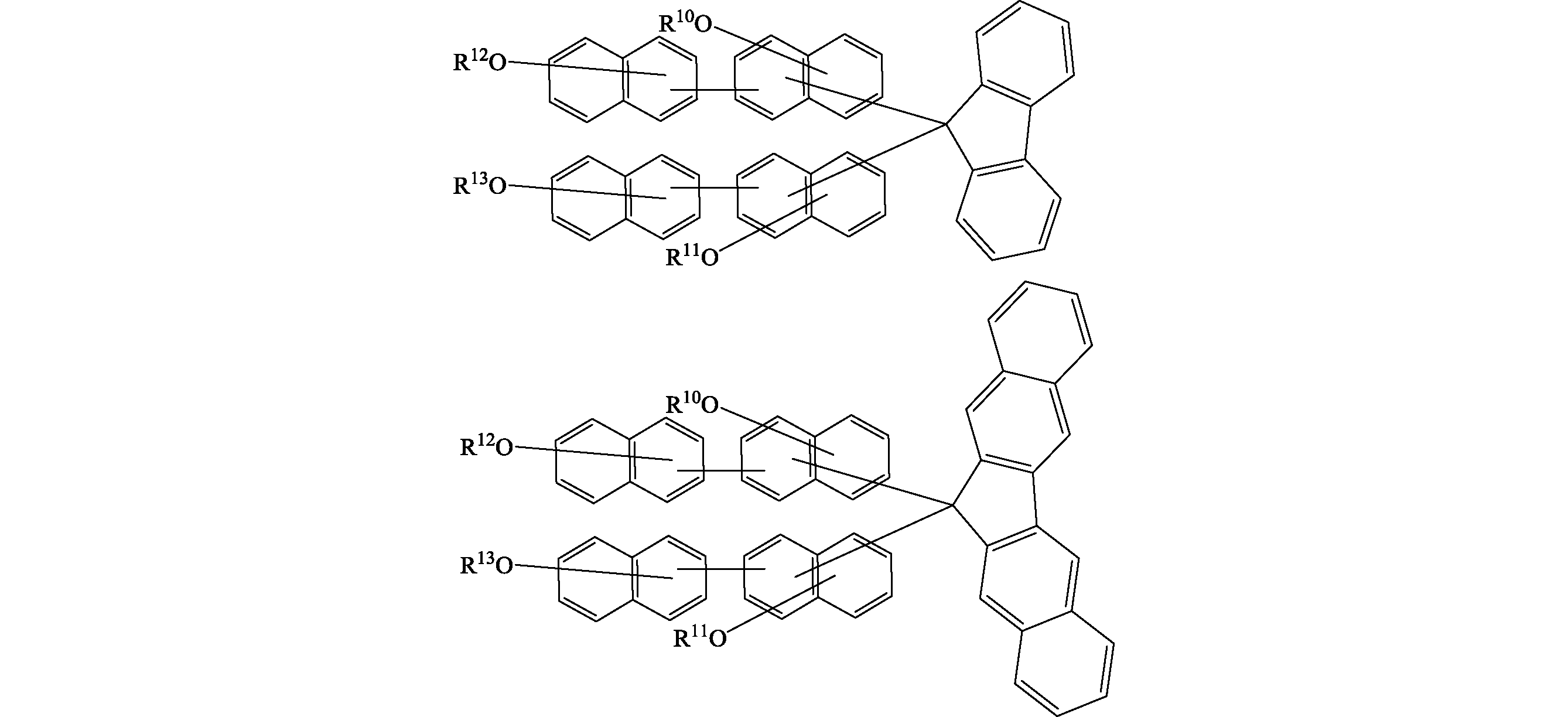
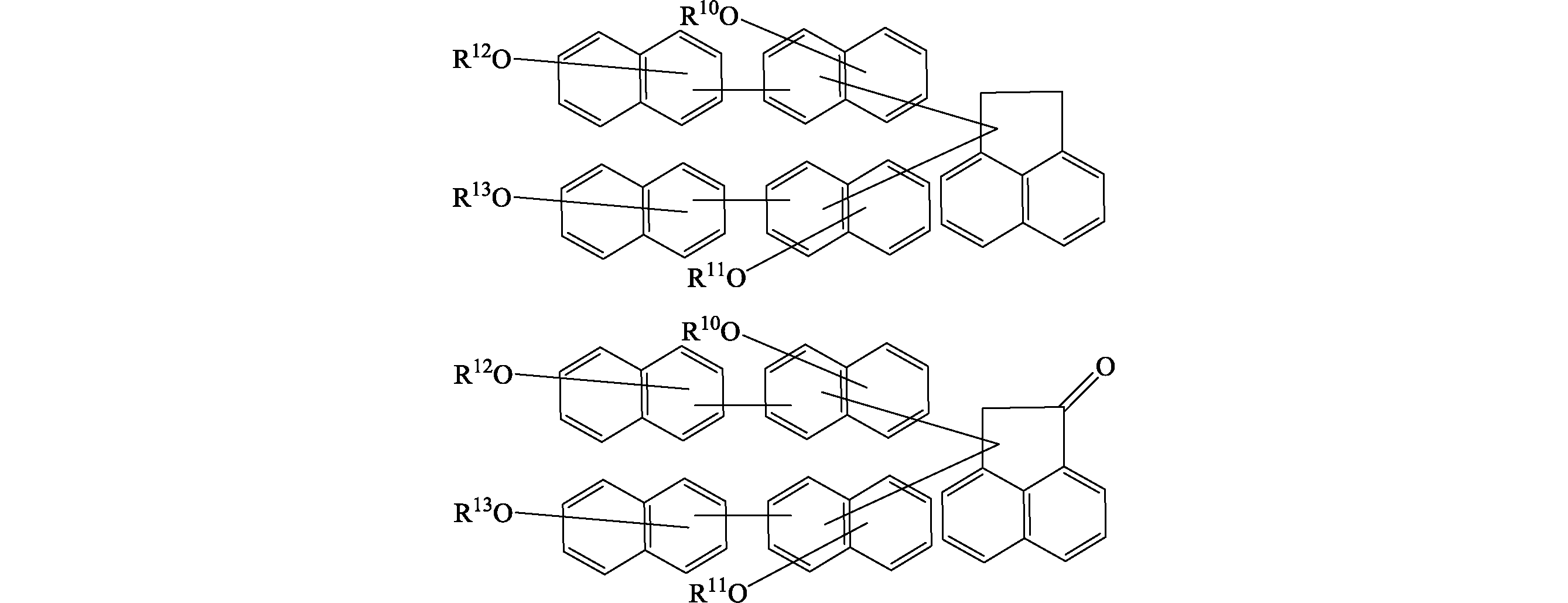

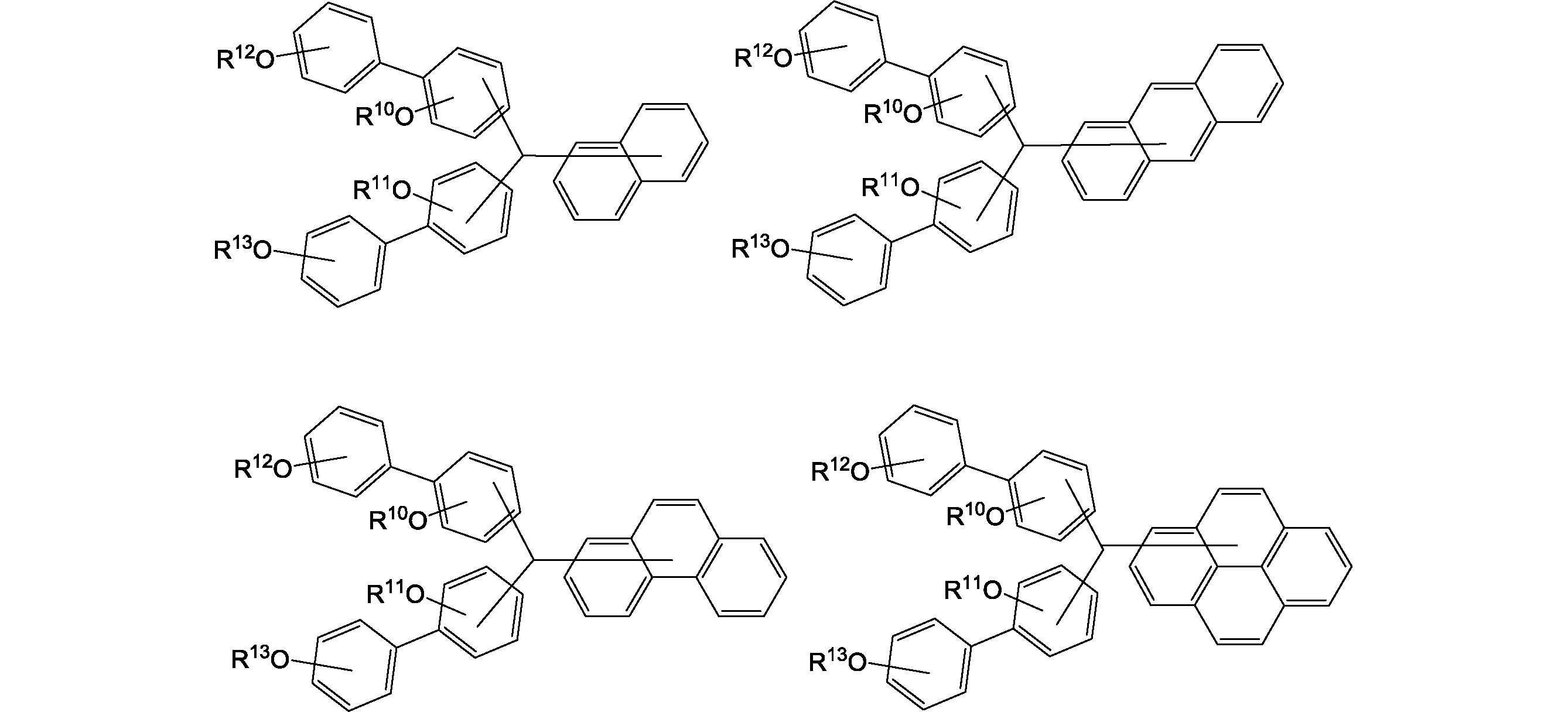
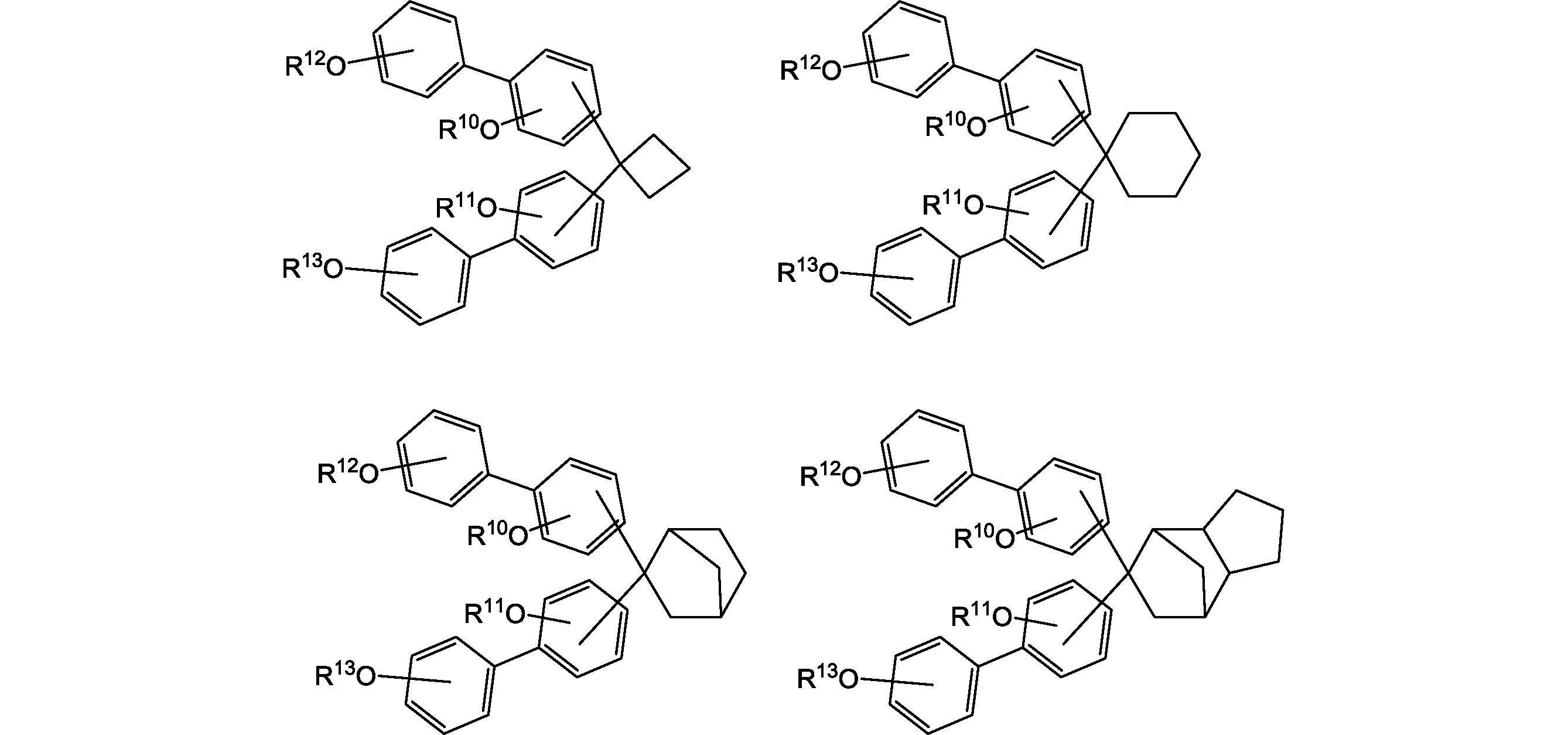

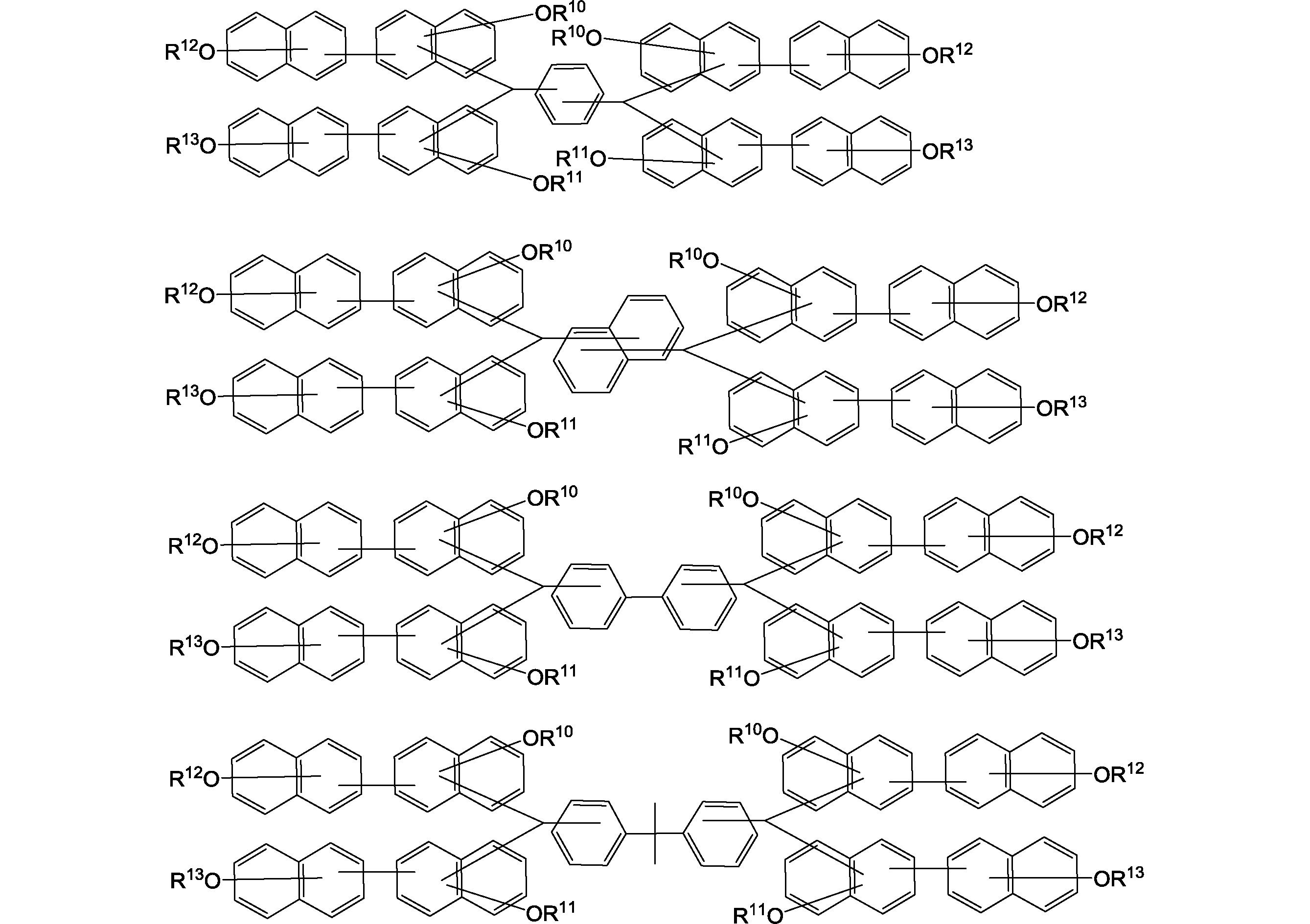



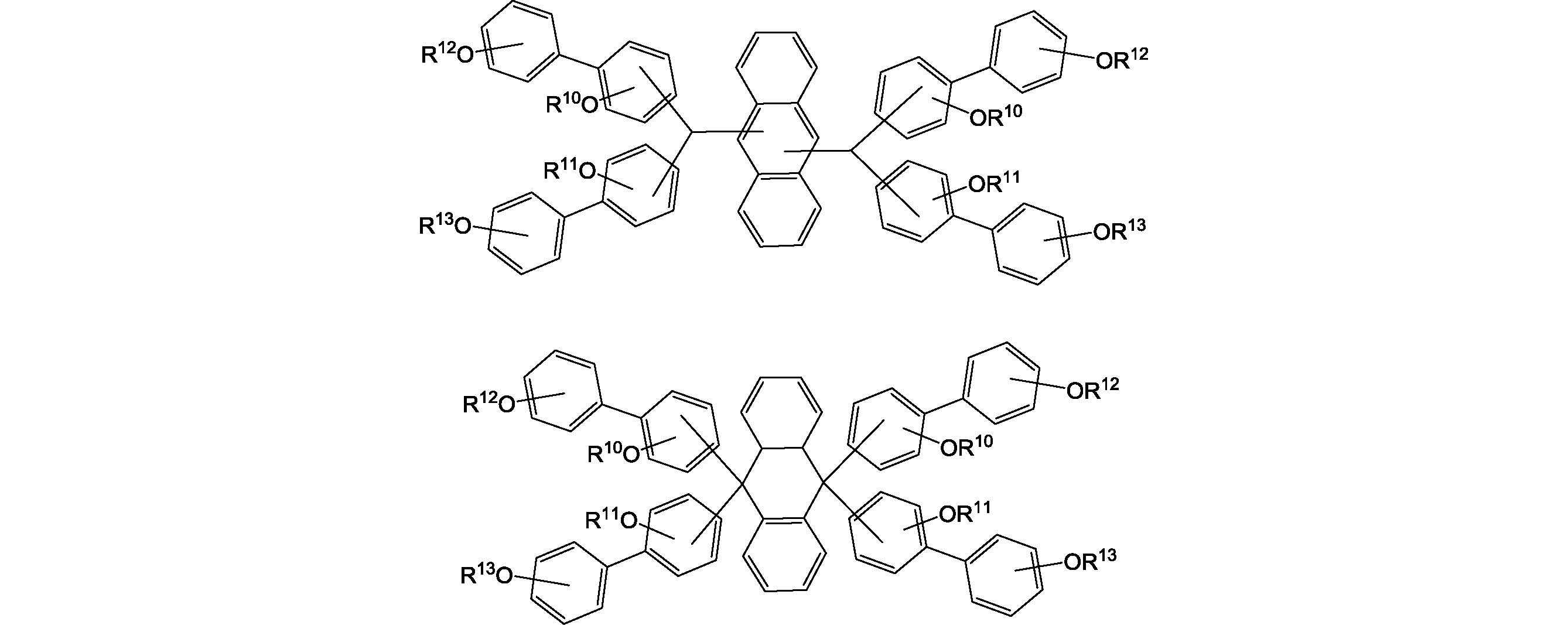

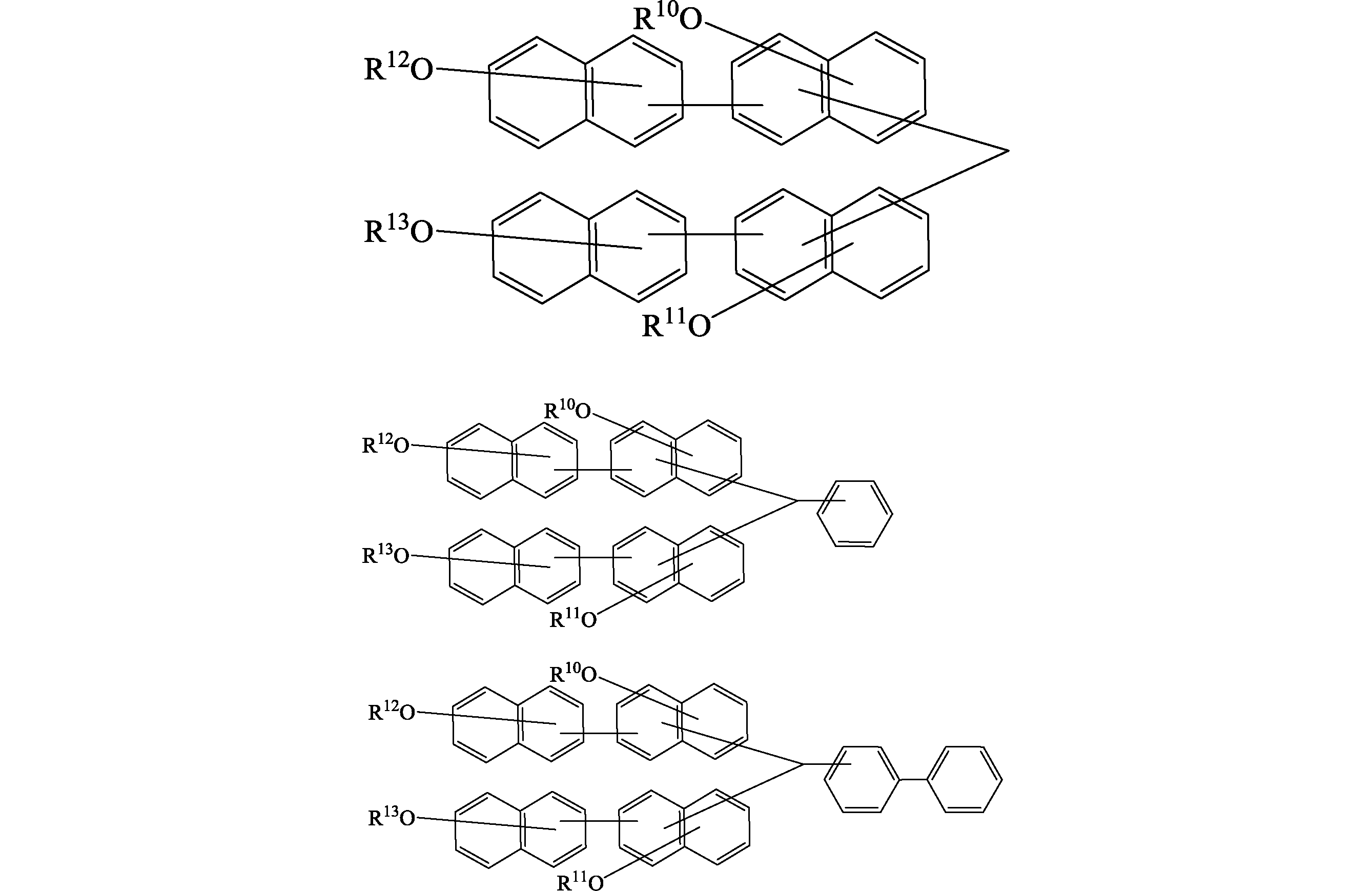
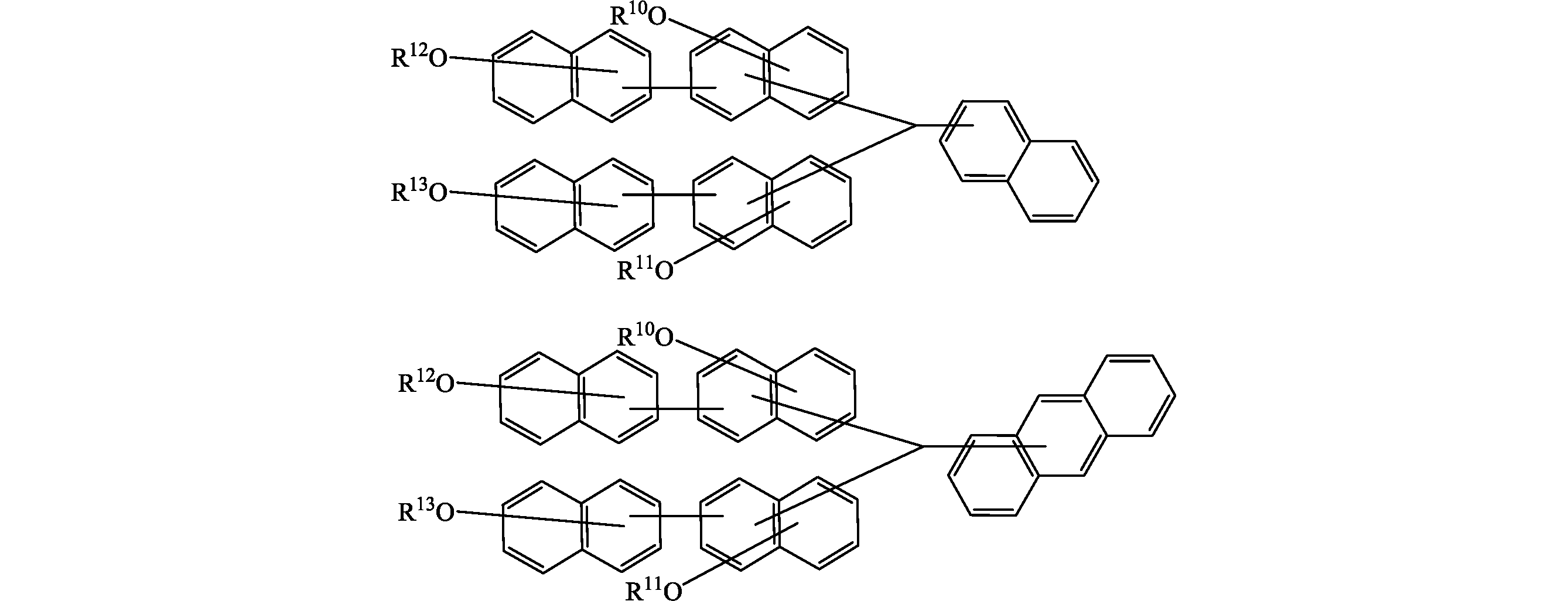

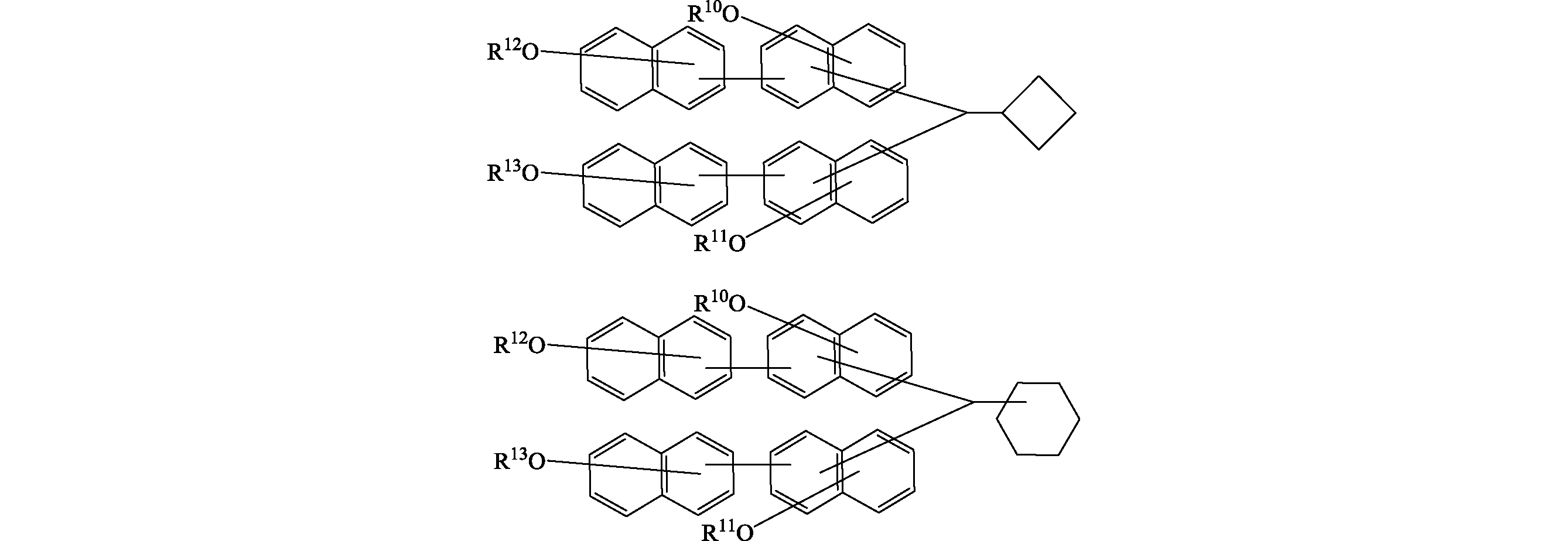
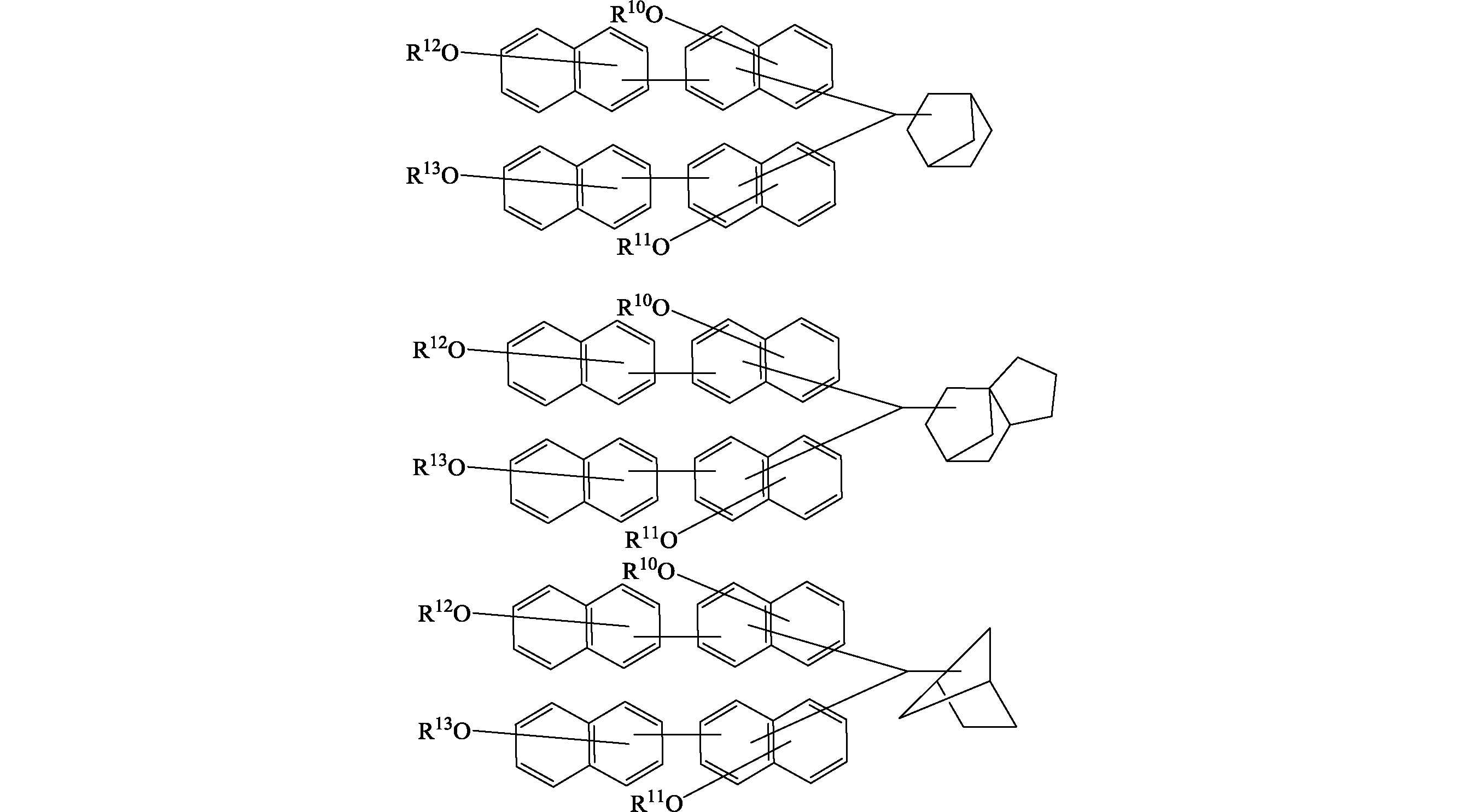

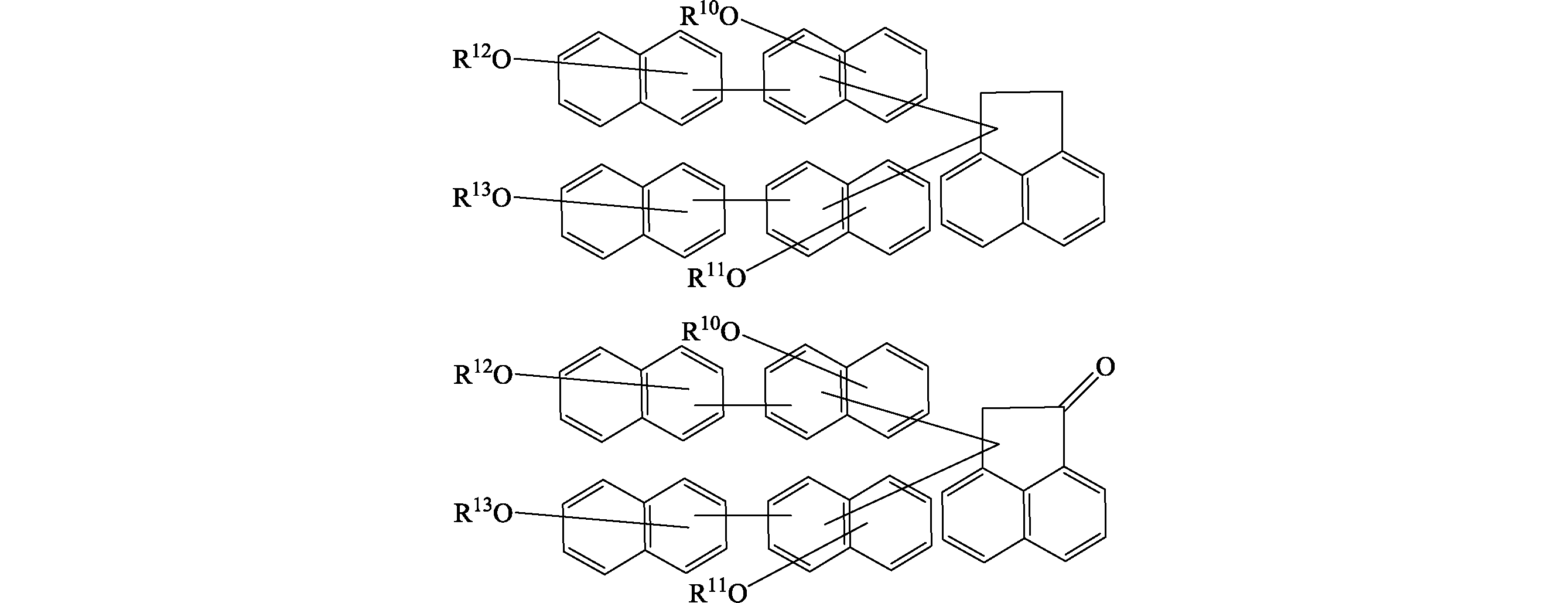
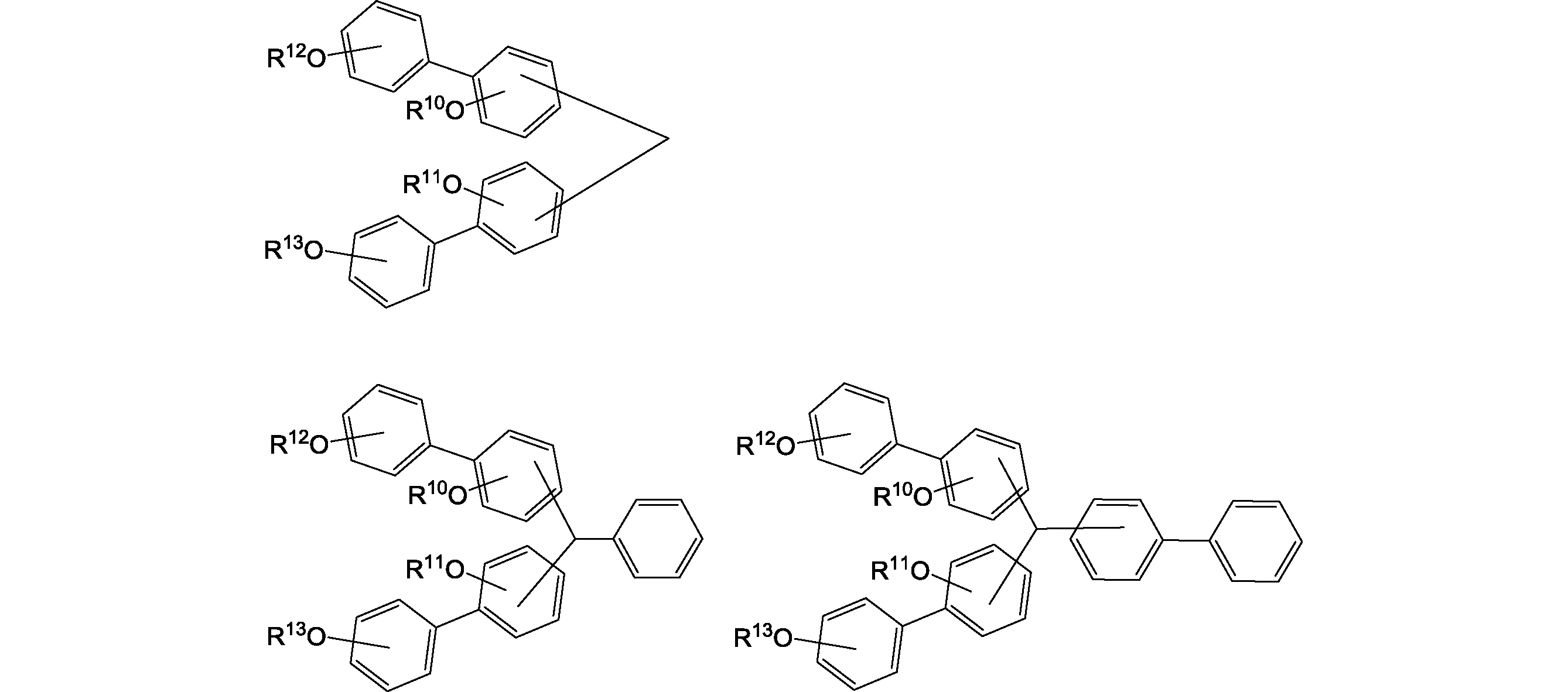
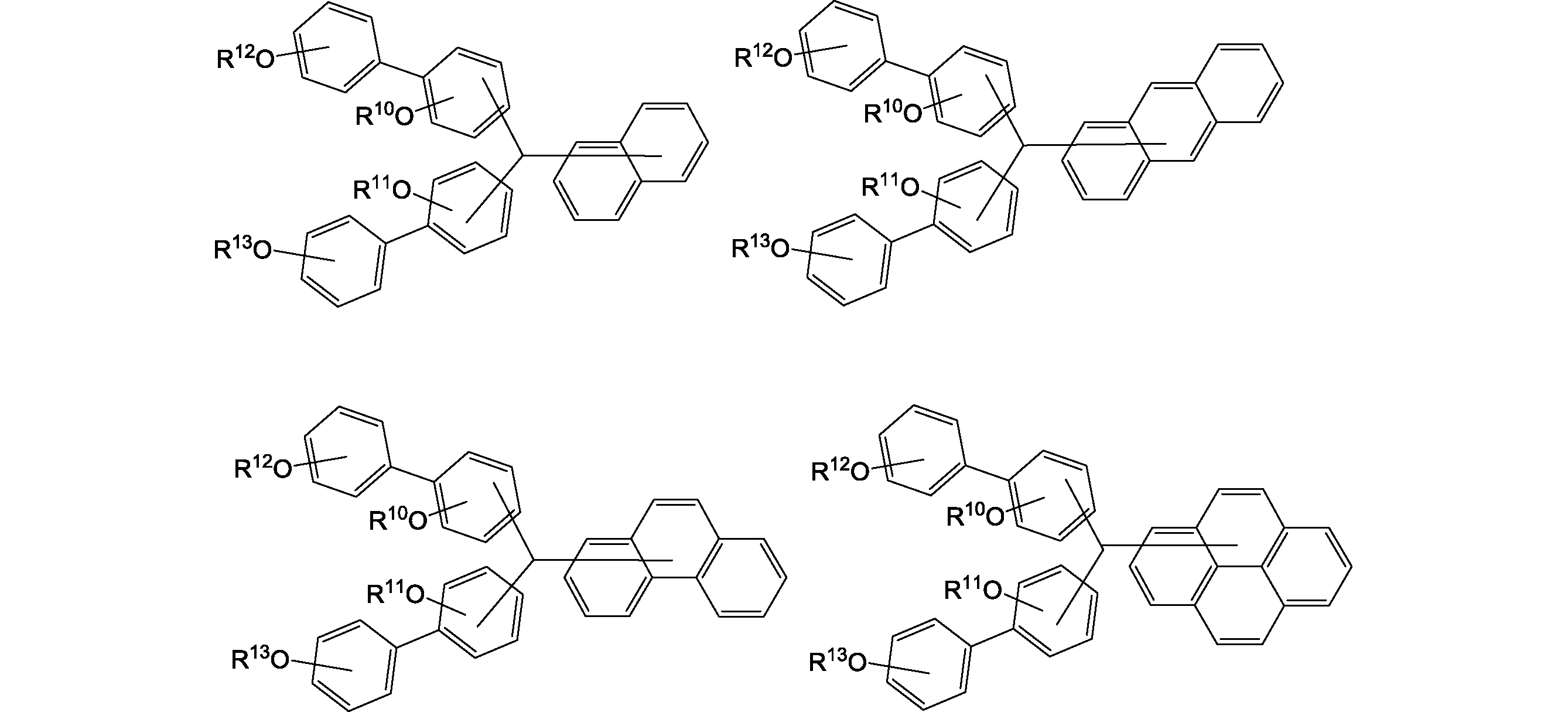


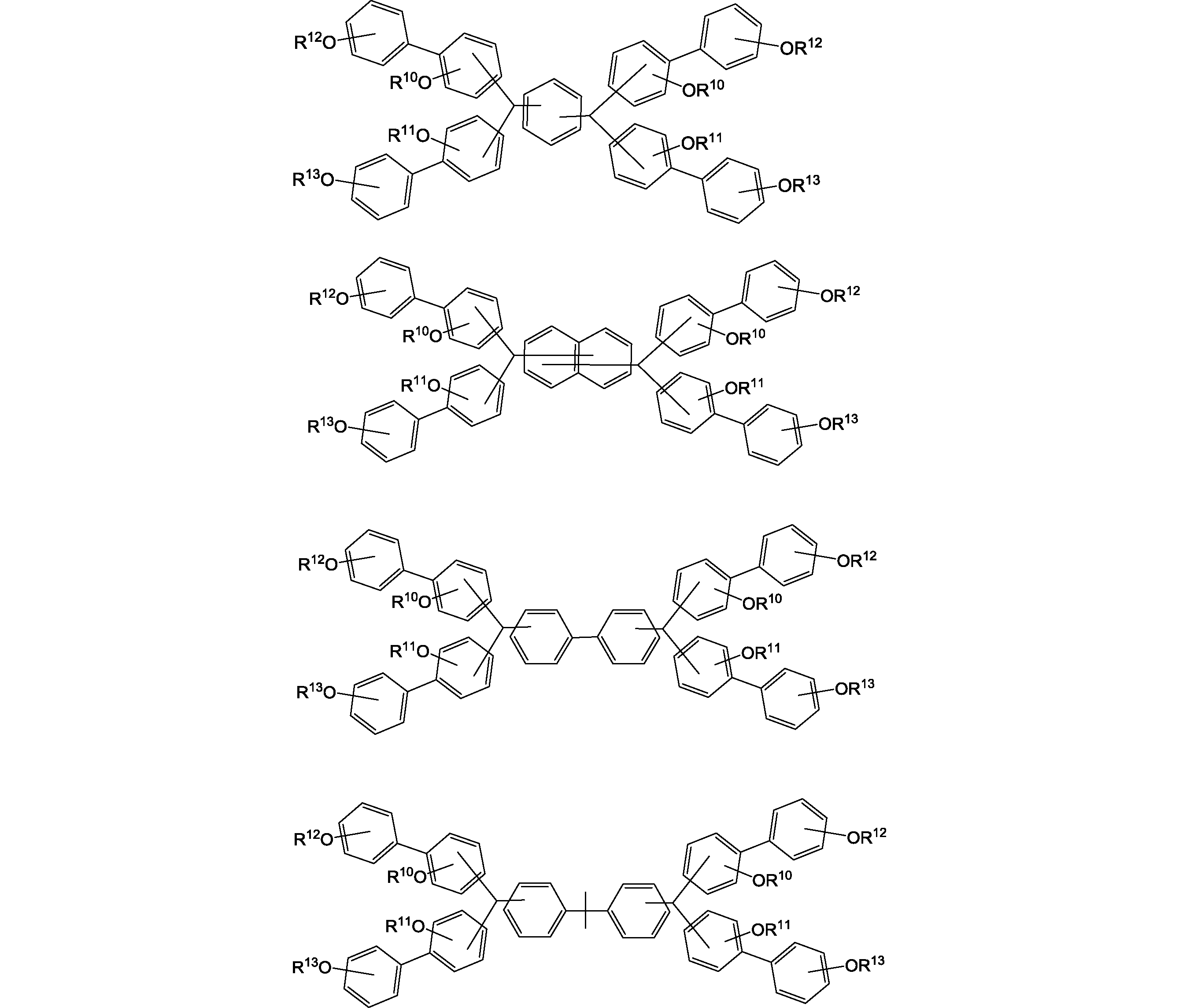


前記式(1)で表される化合物は、さらなる有機溶媒への溶解性の観点から、下記式(BiF-1)~(BiF-10)で表される化合物であることが特に好ましい(具体例中のR10~R13は上述のものと同義である)。


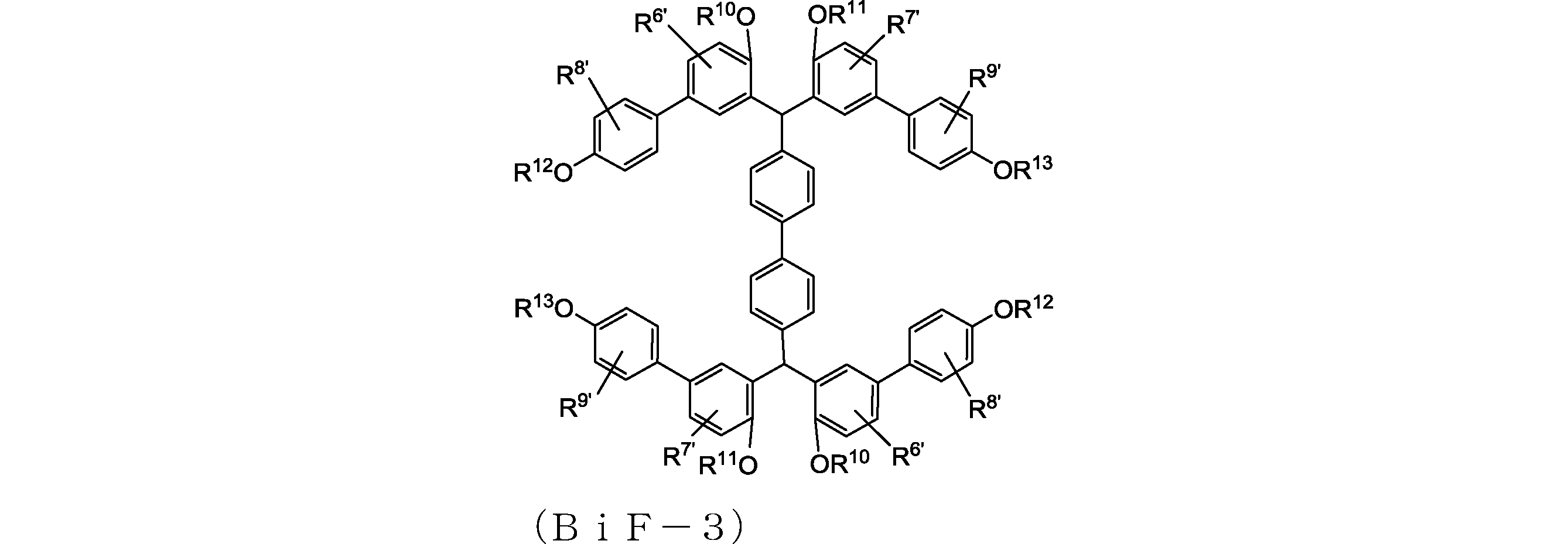

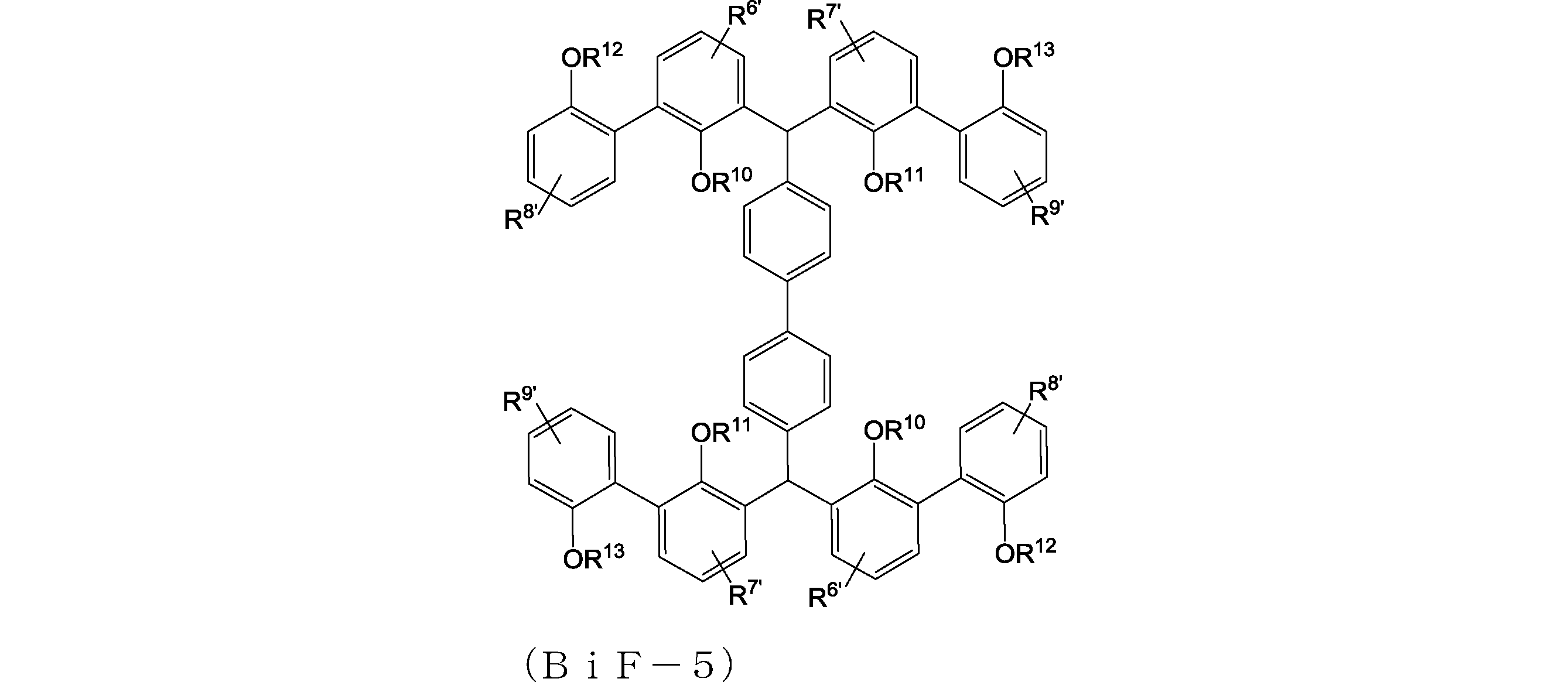


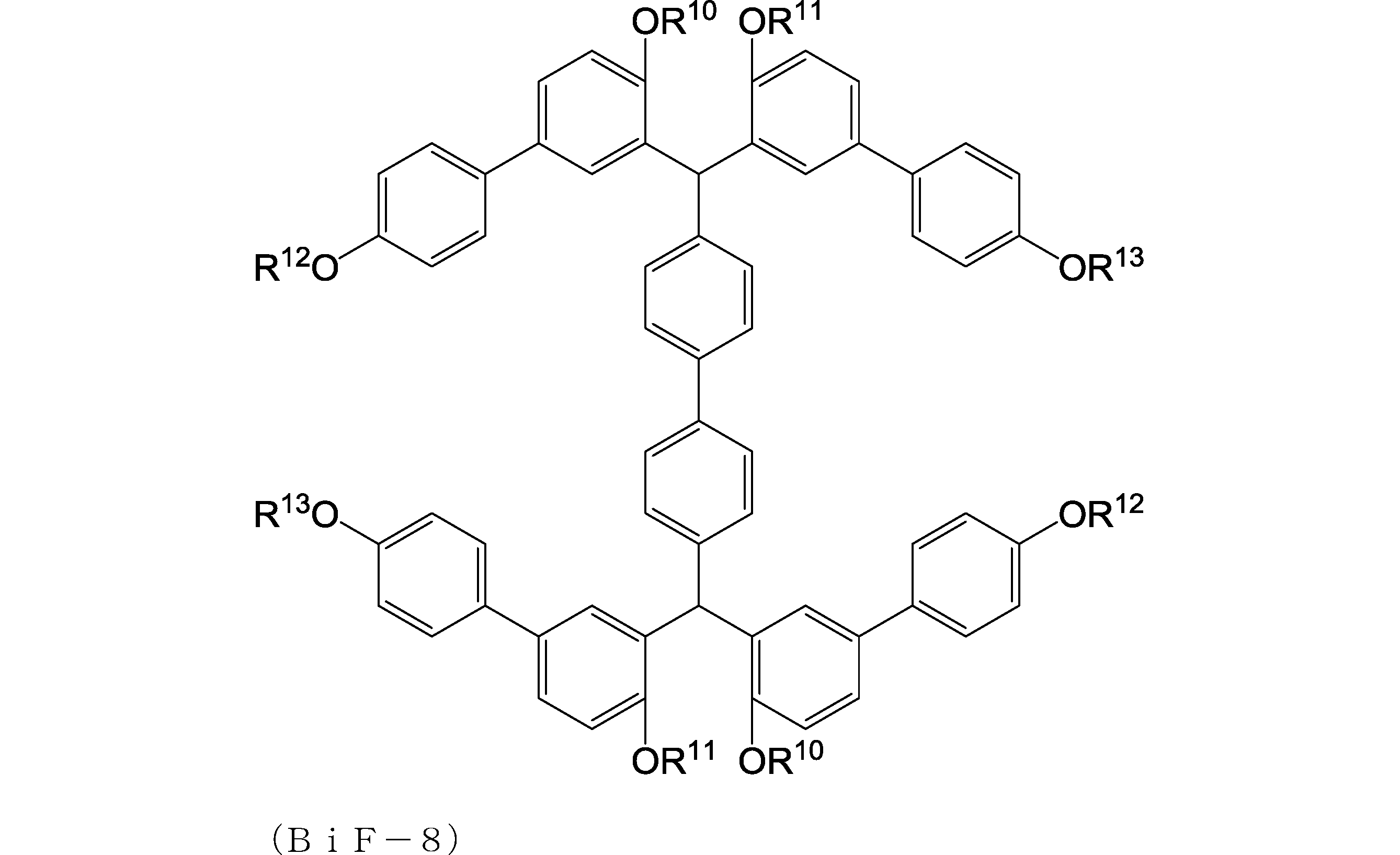

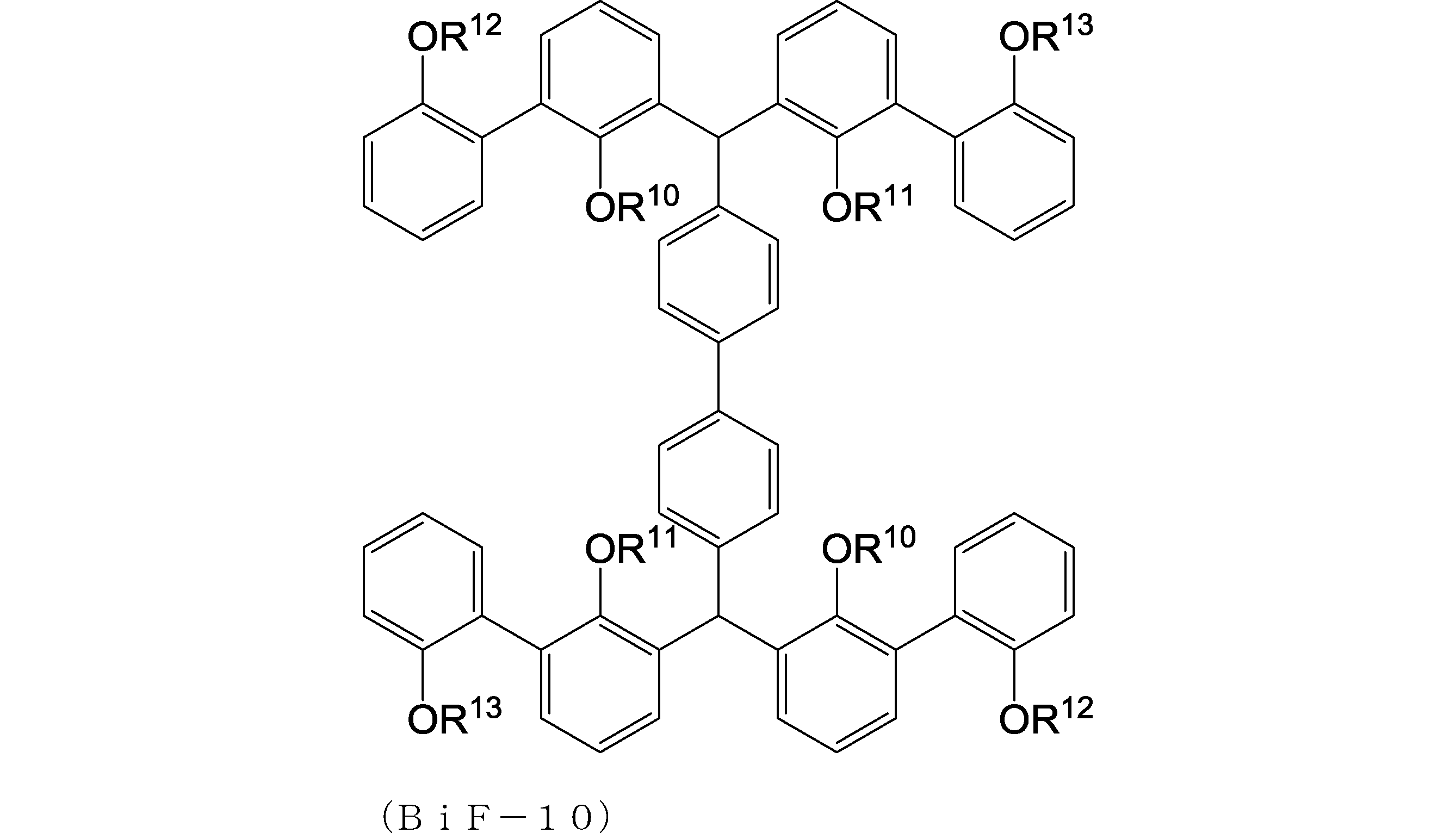

R4’及びR5’は、例えば、メチル基、エチル基、プロピル基、ブチル基、ペンチル基、ヘキシル基、ヘプチル基、オクチル基、ノニル基、デシル基、ウンデシル基、ドデシル基、トリアコンチル基、シクロプロピル基、シクロブチル基、シクロペンチル基、シクロヘキシル基、シクロヘプチル基、シクロオクチル基、シクロノニル基、シクロデシル基、シクロウンデシル基、シクロドデシル基、シクロトリアコンチル基、ノルボルニル基、アダマンチル基、フェニル基、ナフチル基、アントラセン基、ピレニル基、ビフェニル基、ヘプタセン基、ビニル基、アリル基、トリアコンテニル基、メトキシ基、エトキシ基、トリアコンチキシ基、フッ素原子、塩素原子、臭素原子、ヨウ素原子、チオール基が挙げられる。
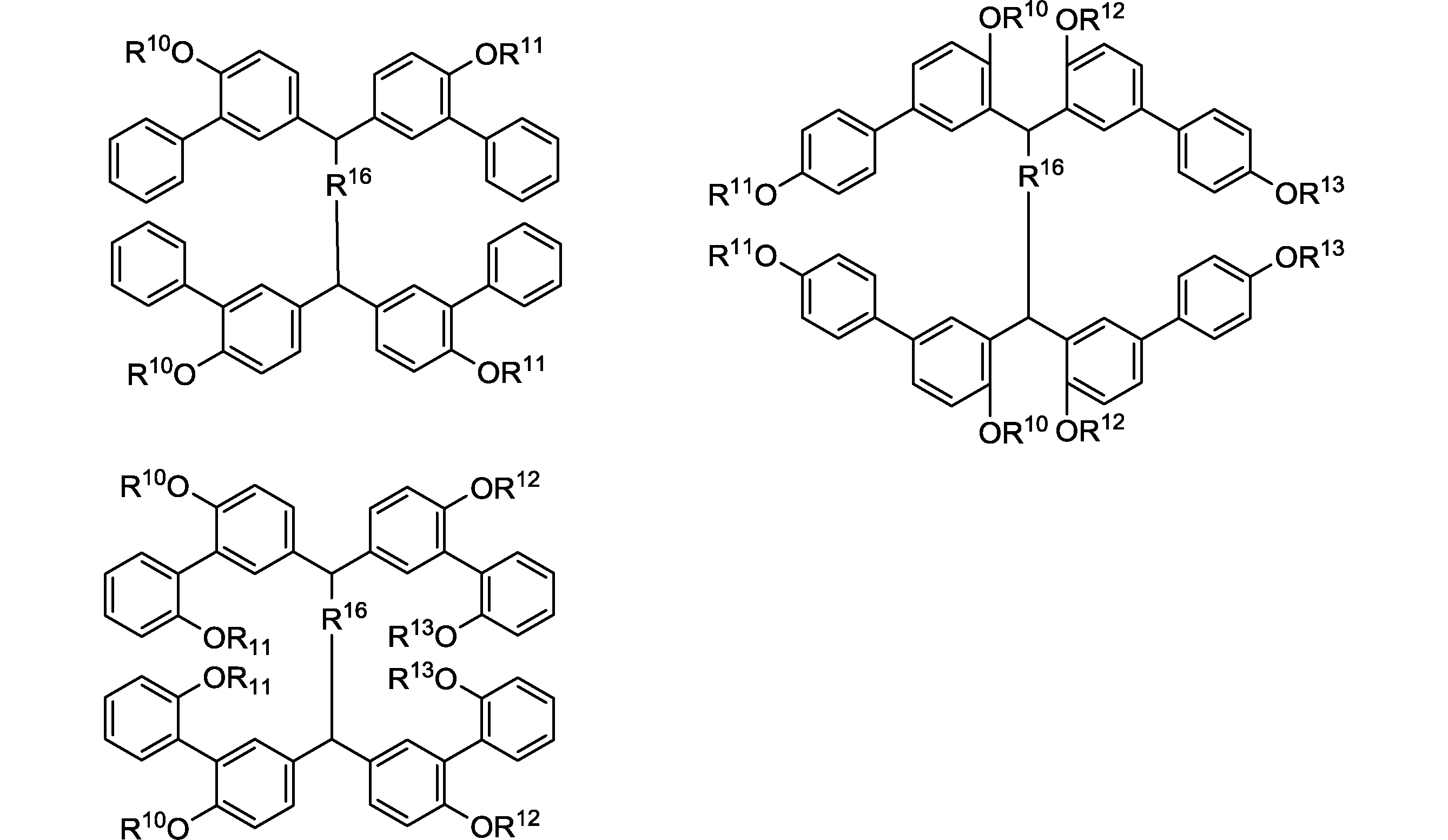
R16は、例えば、メチレン基、エチレン基、プロペン基、ブテン基、ペンテン基、ヘキセン基、ヘプテン基、オクテン基、ノネン基、デセン基、ウンデセン基、ドデセン基、トリアコンテン基、シクロプロペン基、シクロブテン基、シクロペンテン基、シクロヘキセン基、シクロヘプテン基、シクロオクテン基、シクロノネン基、シクロデセン基、シクロウンデセン基、シクロドデセン基、シクロトリアコンテン基、2価のノルボルニル基、2価のアダマンチル基、2価のフェニル基、2価のナフチル基、2価のアントラセン基、2価のピレン基、2価のビフェニル基、2価のヘプタセン基、2価のビニル基、2価のアリル基、2価のトリアコンテニル基が挙げられる。

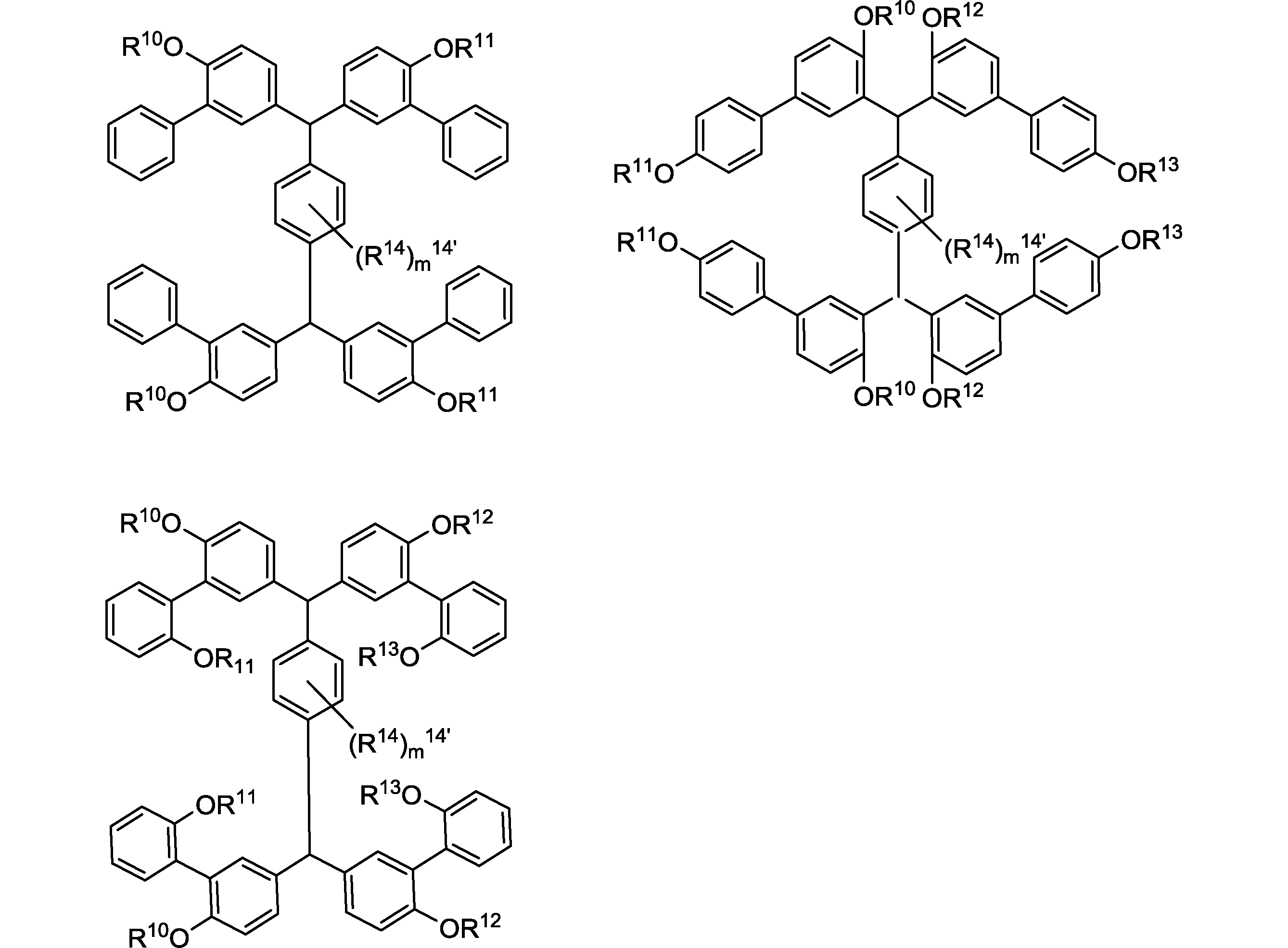
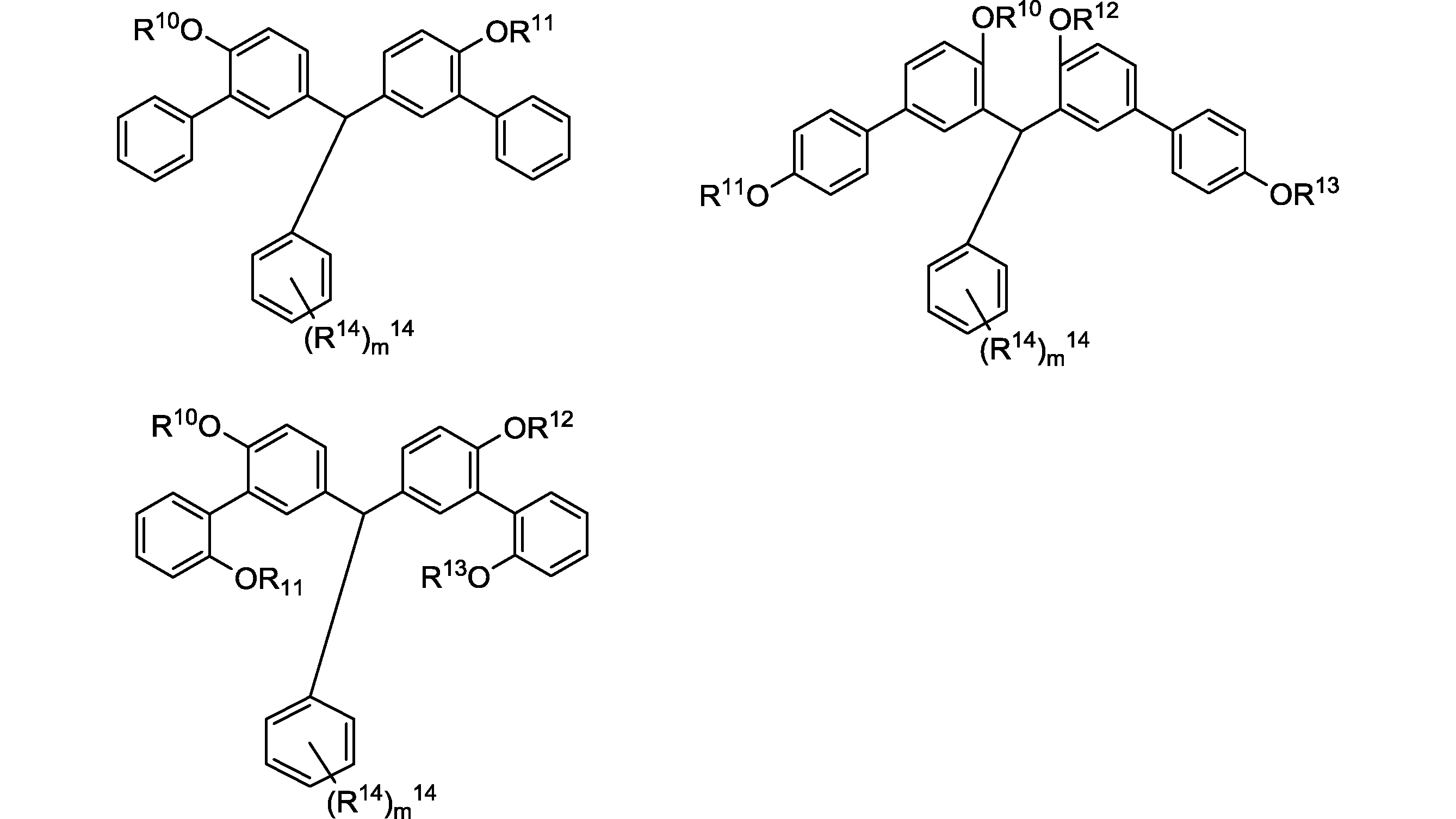


前記R14の各例示は、異性体を含んでいる。例えば、ブチル基には、n-ブチル基、イソブチル基、sec-ブチル基、tert-ブチル基を含んでいる。
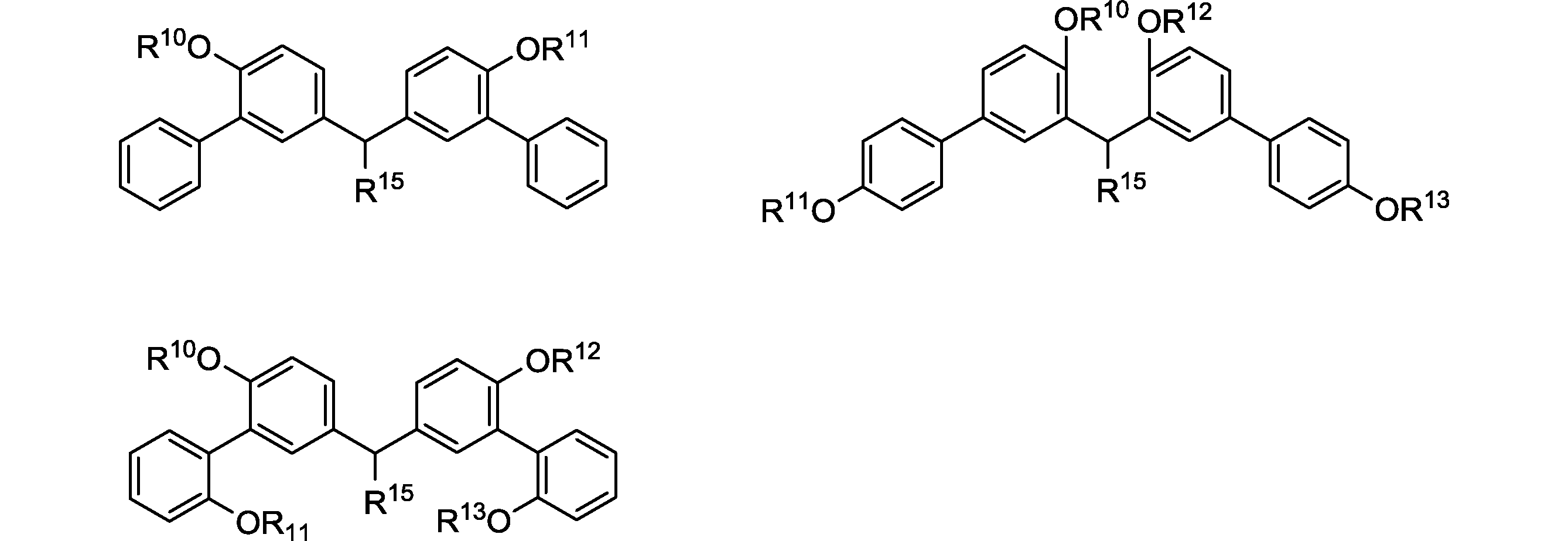


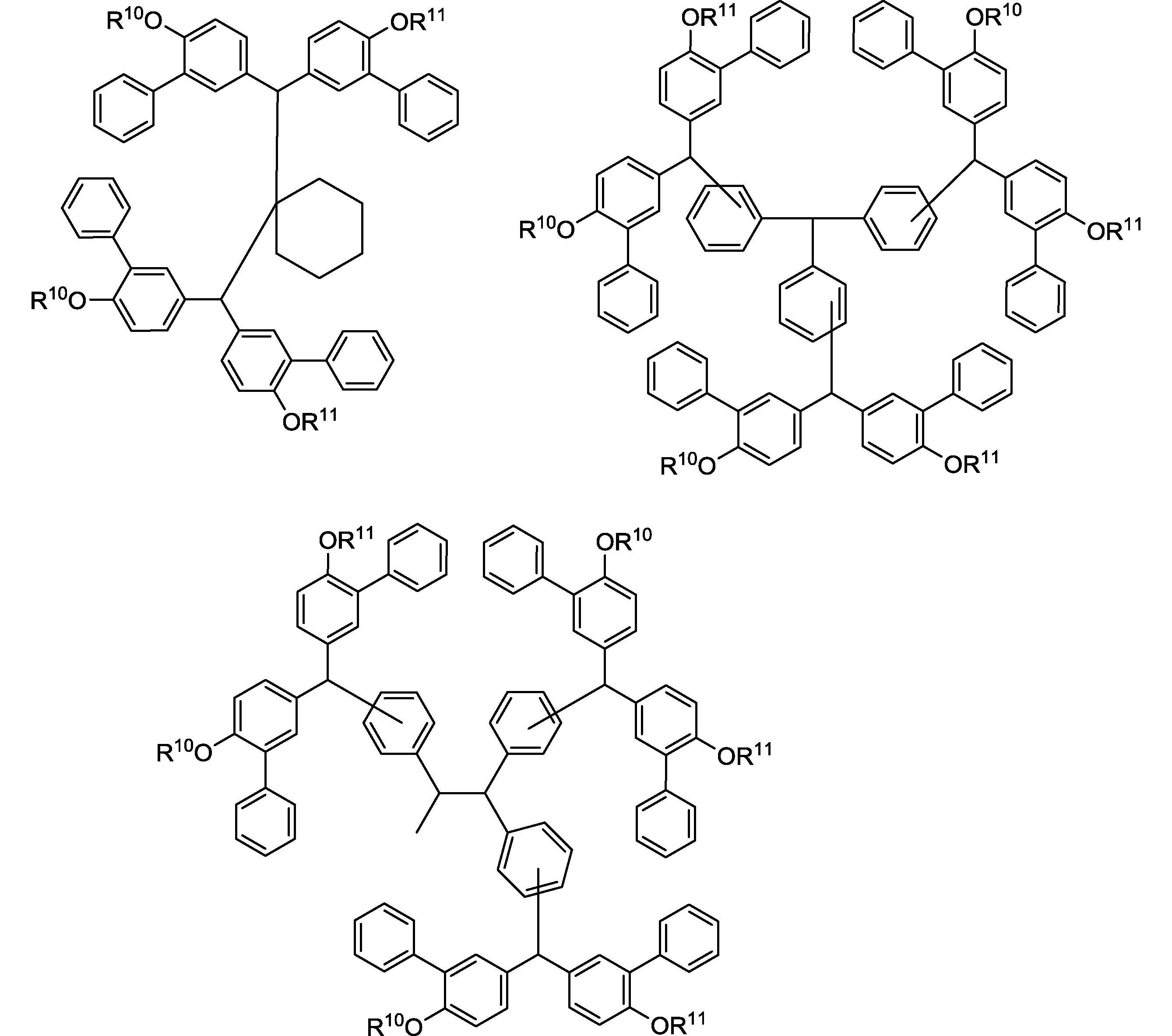


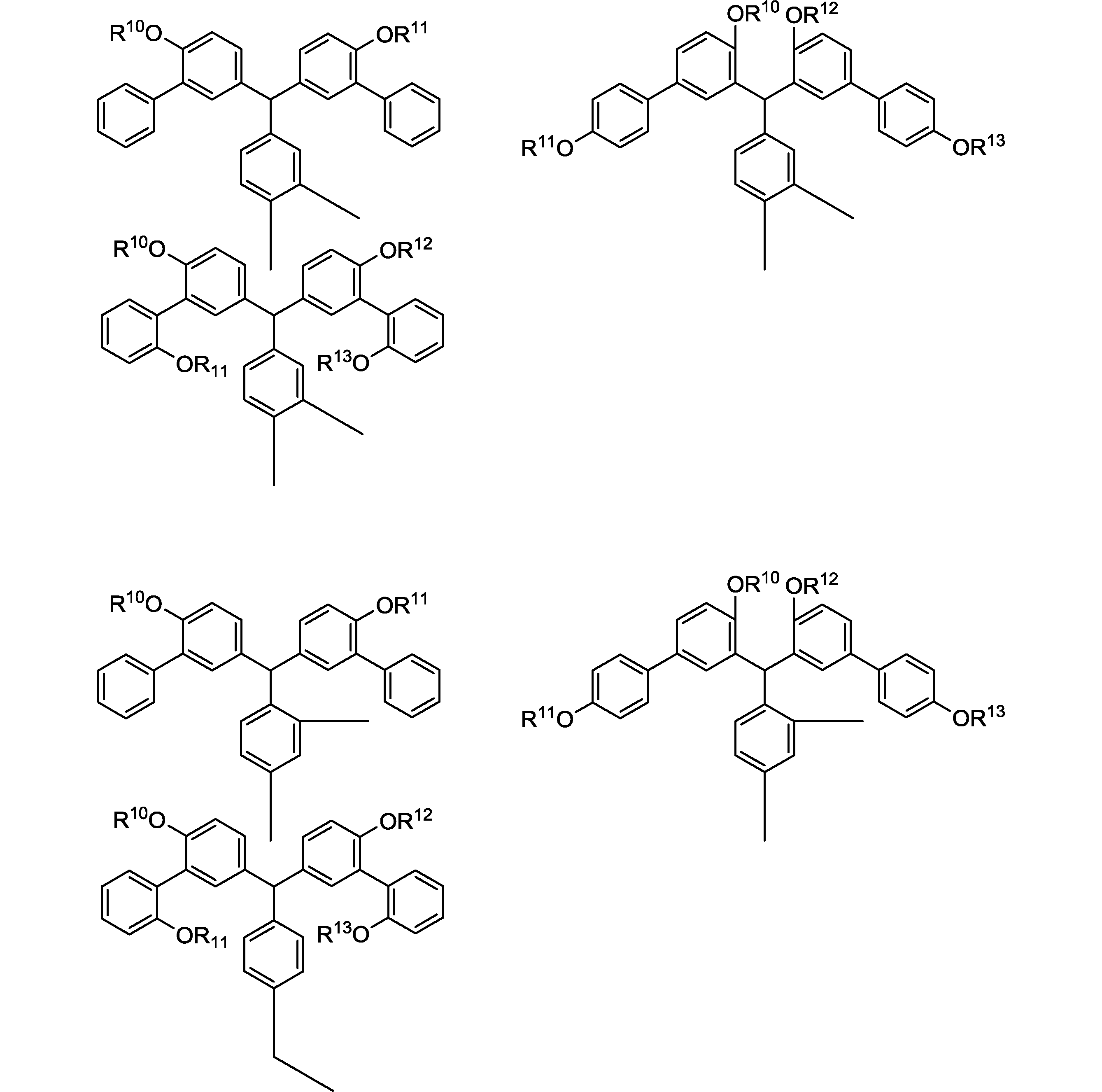

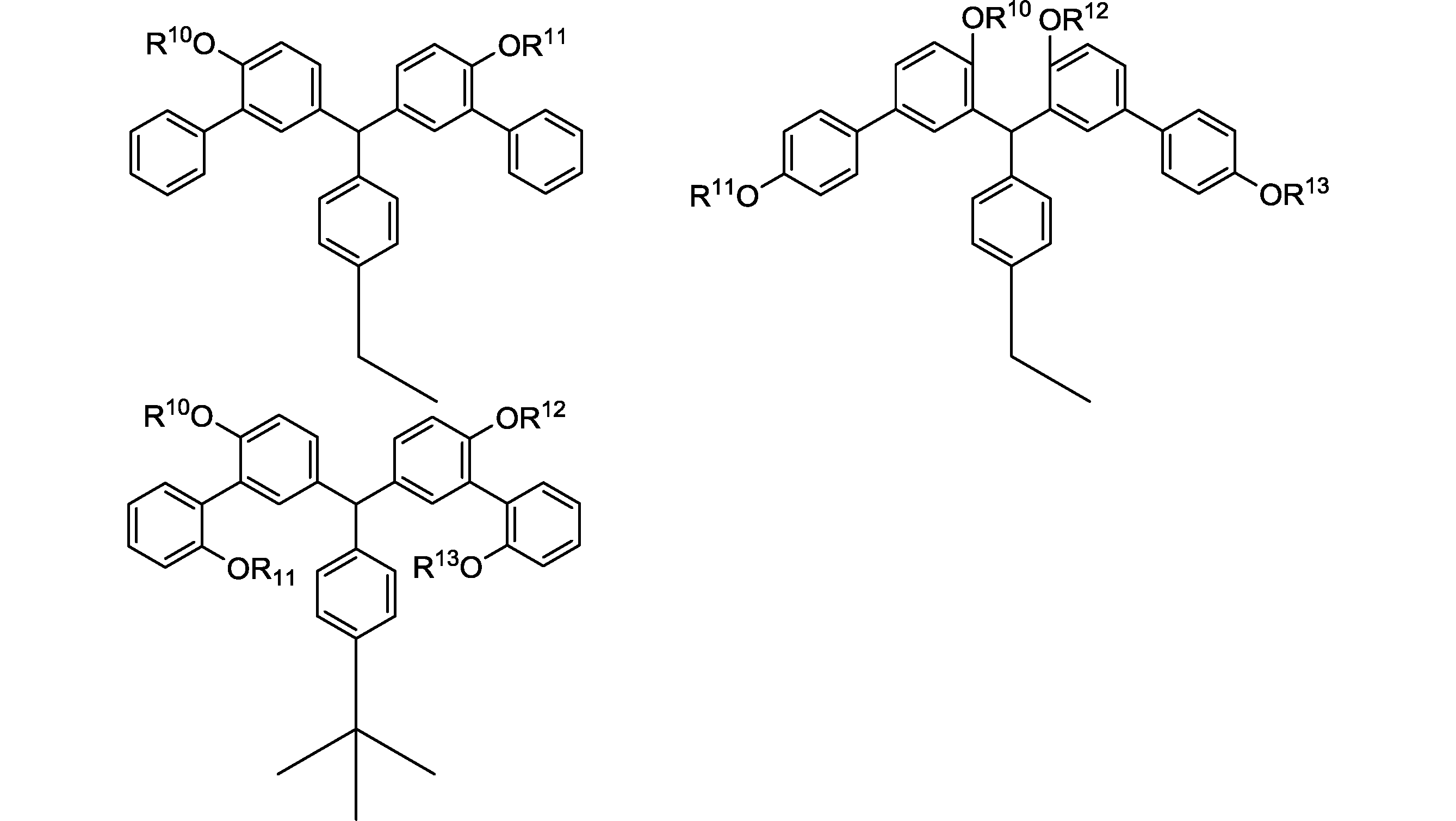
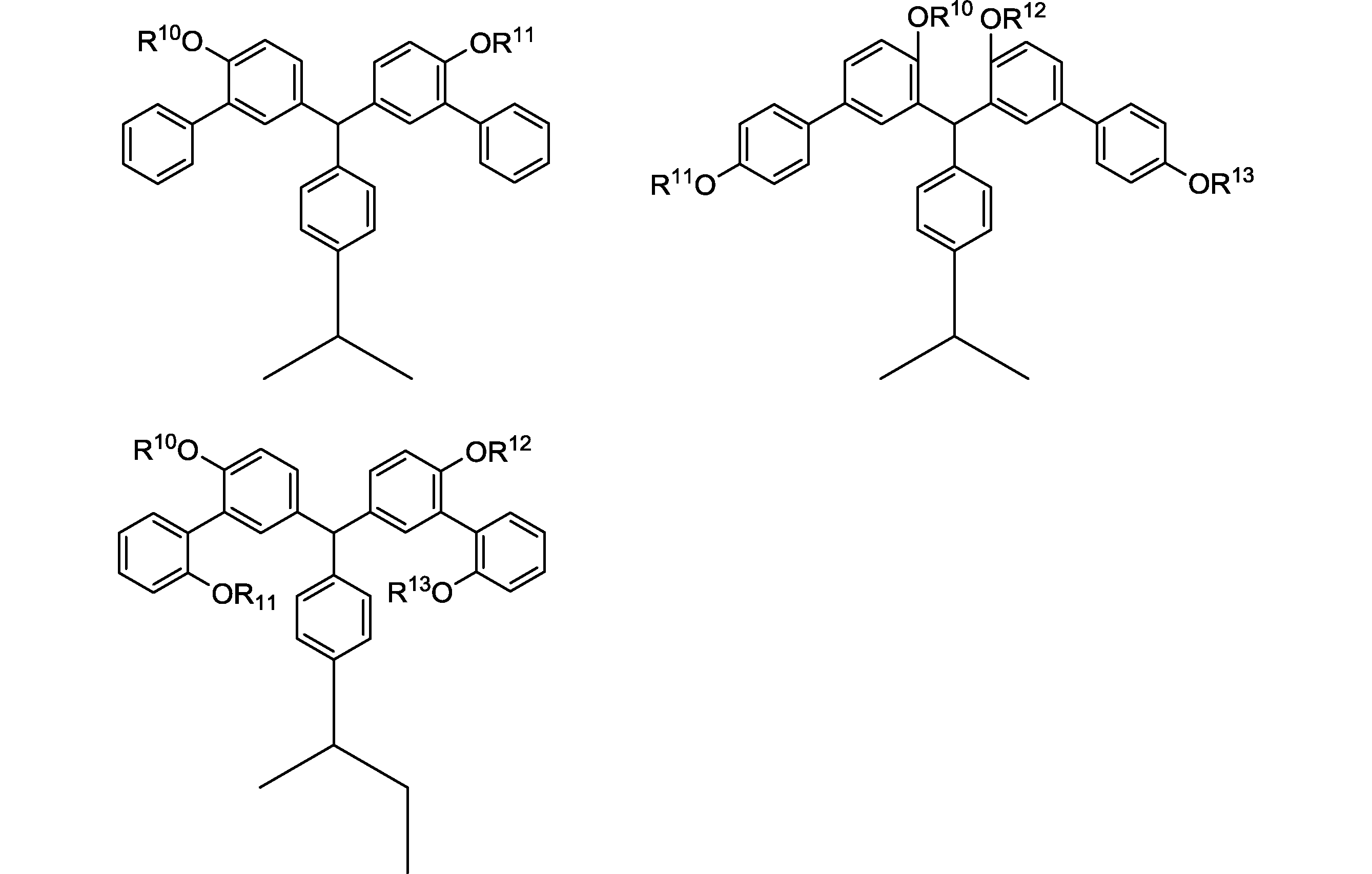
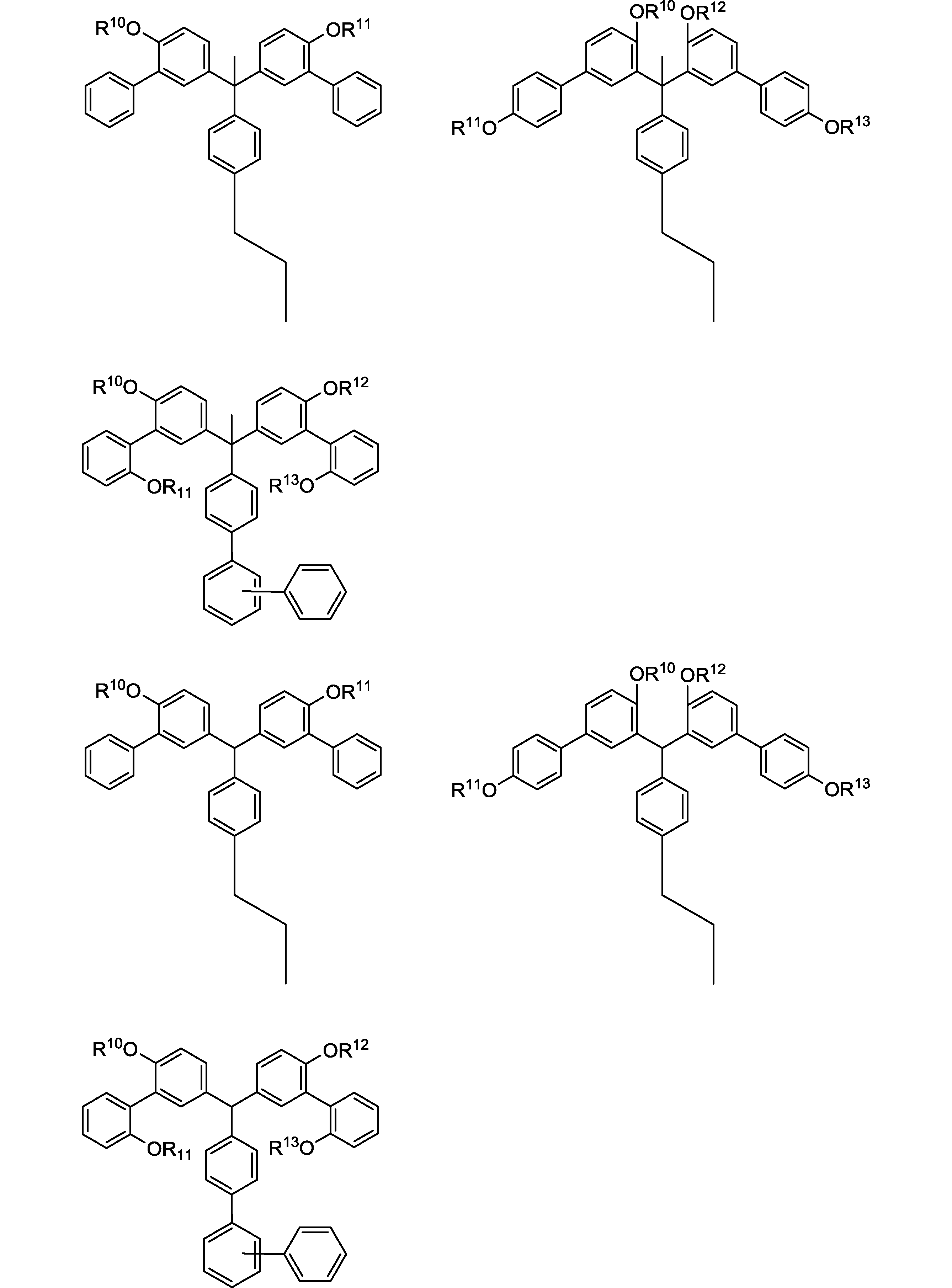
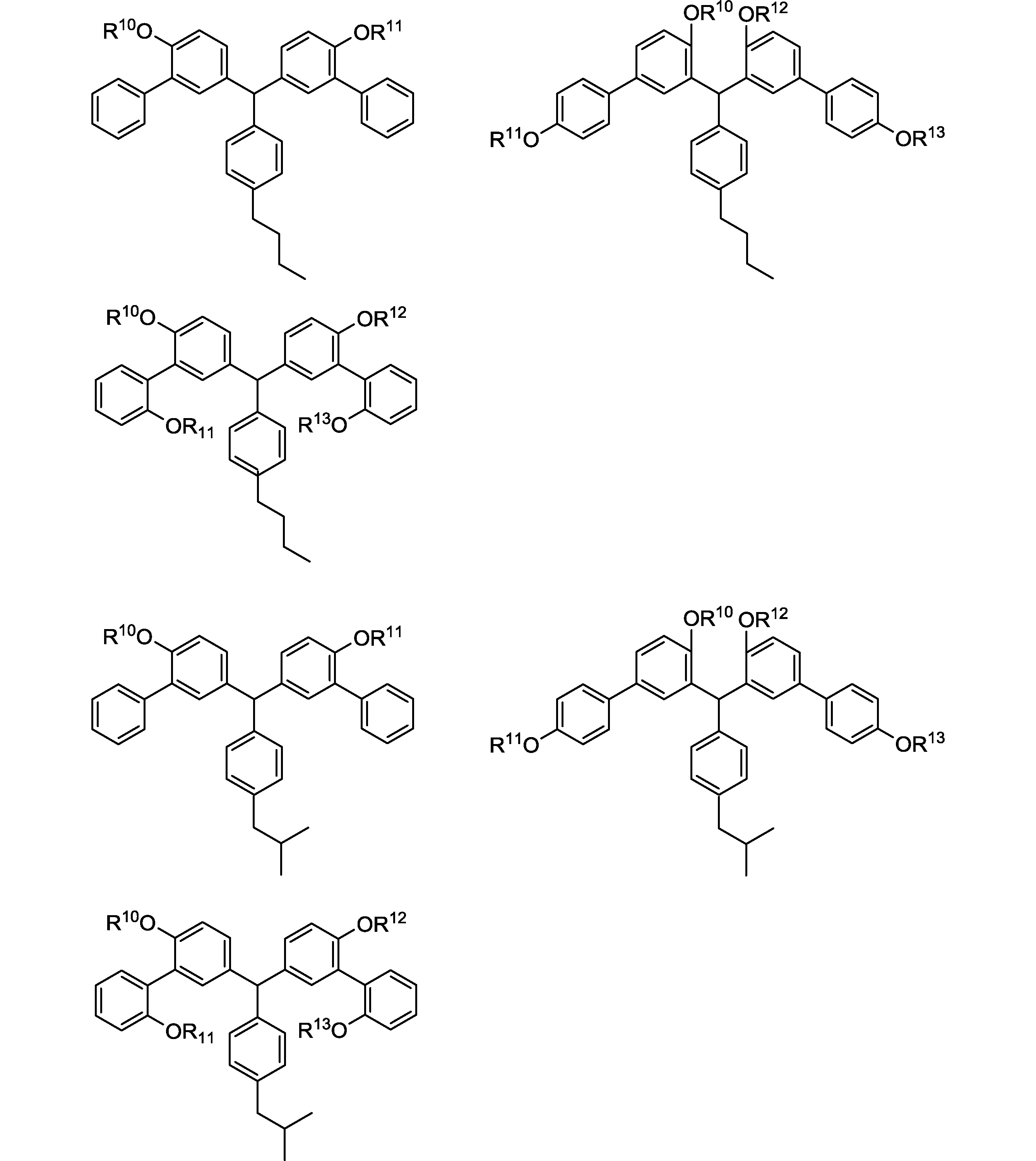
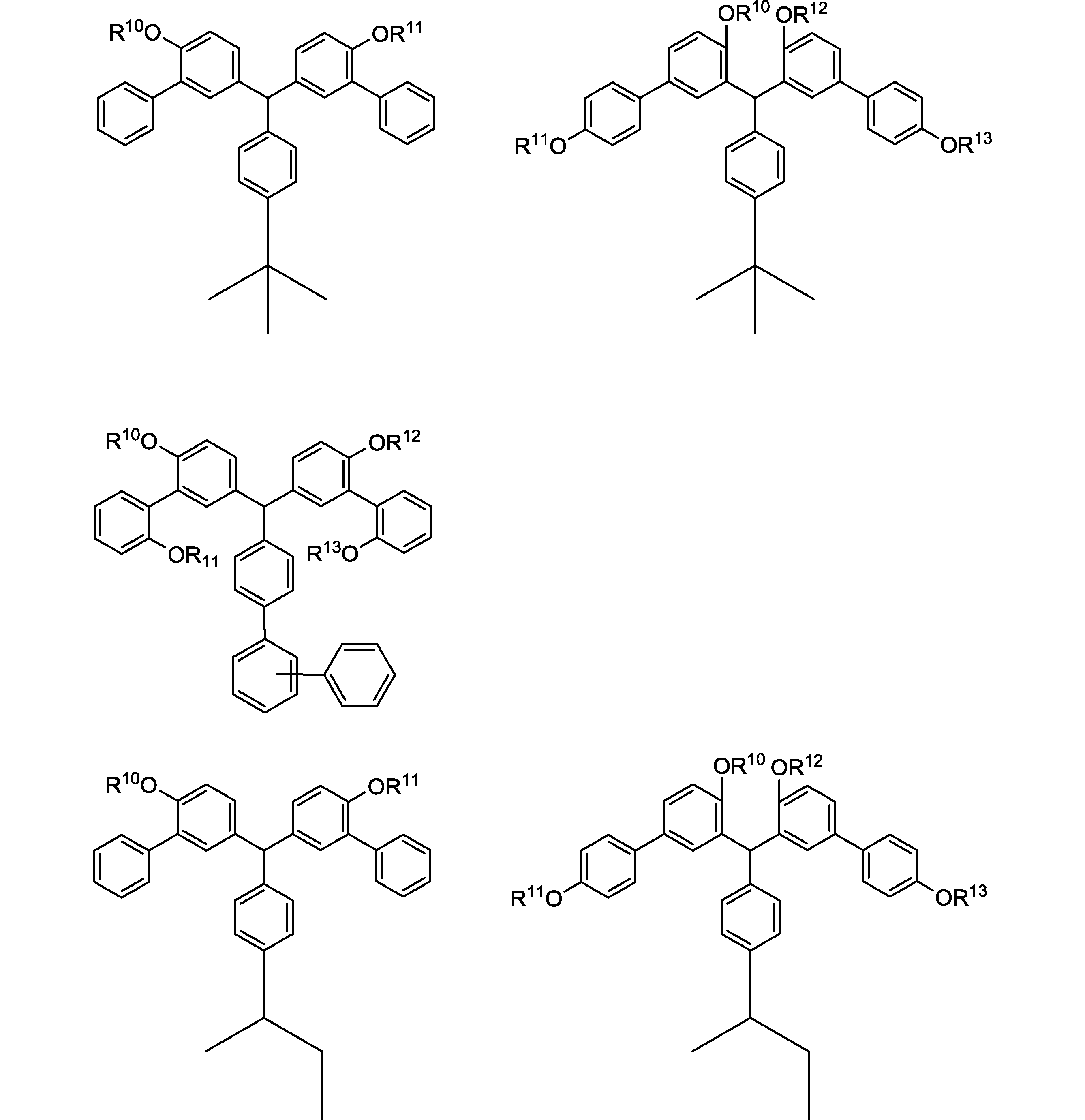

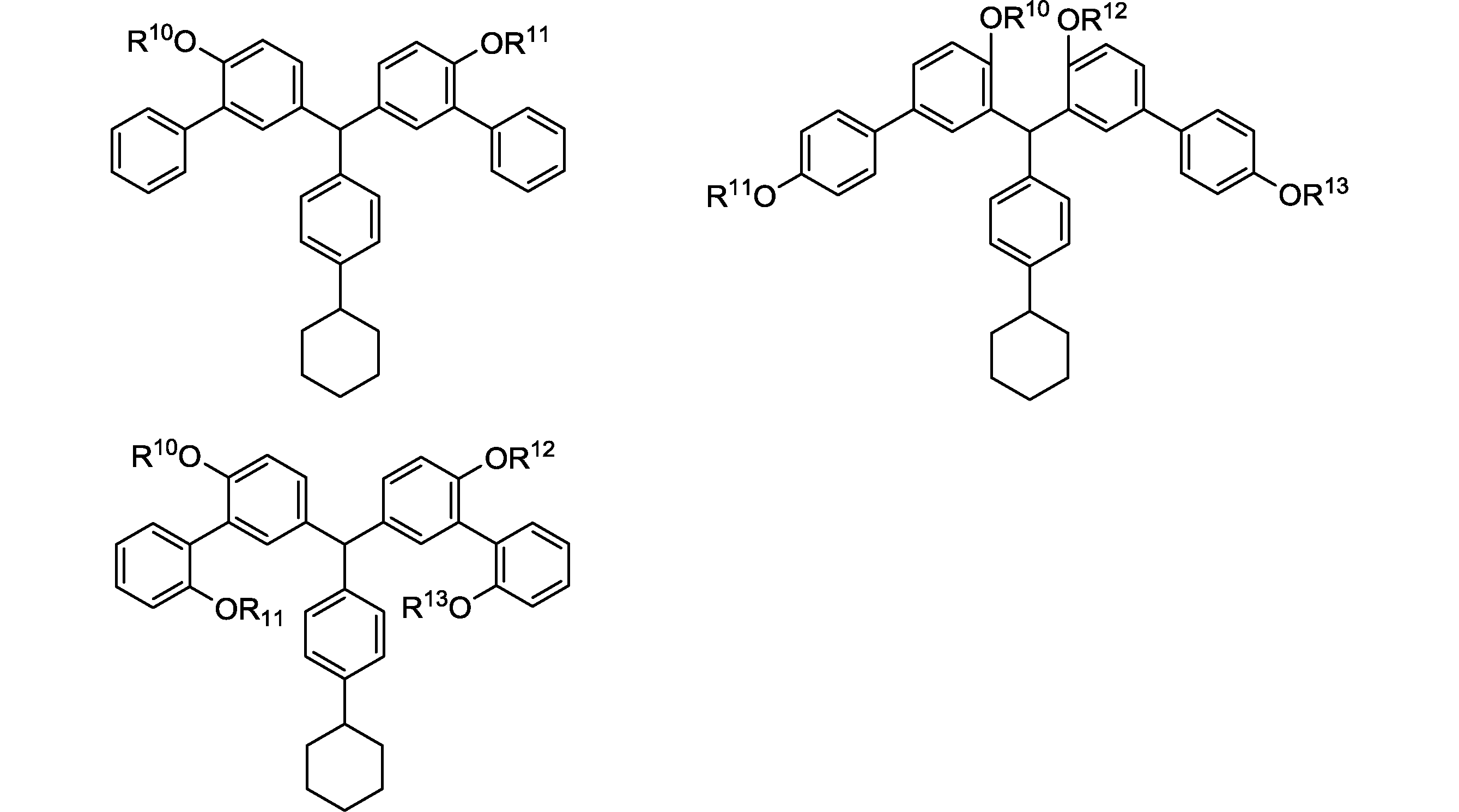

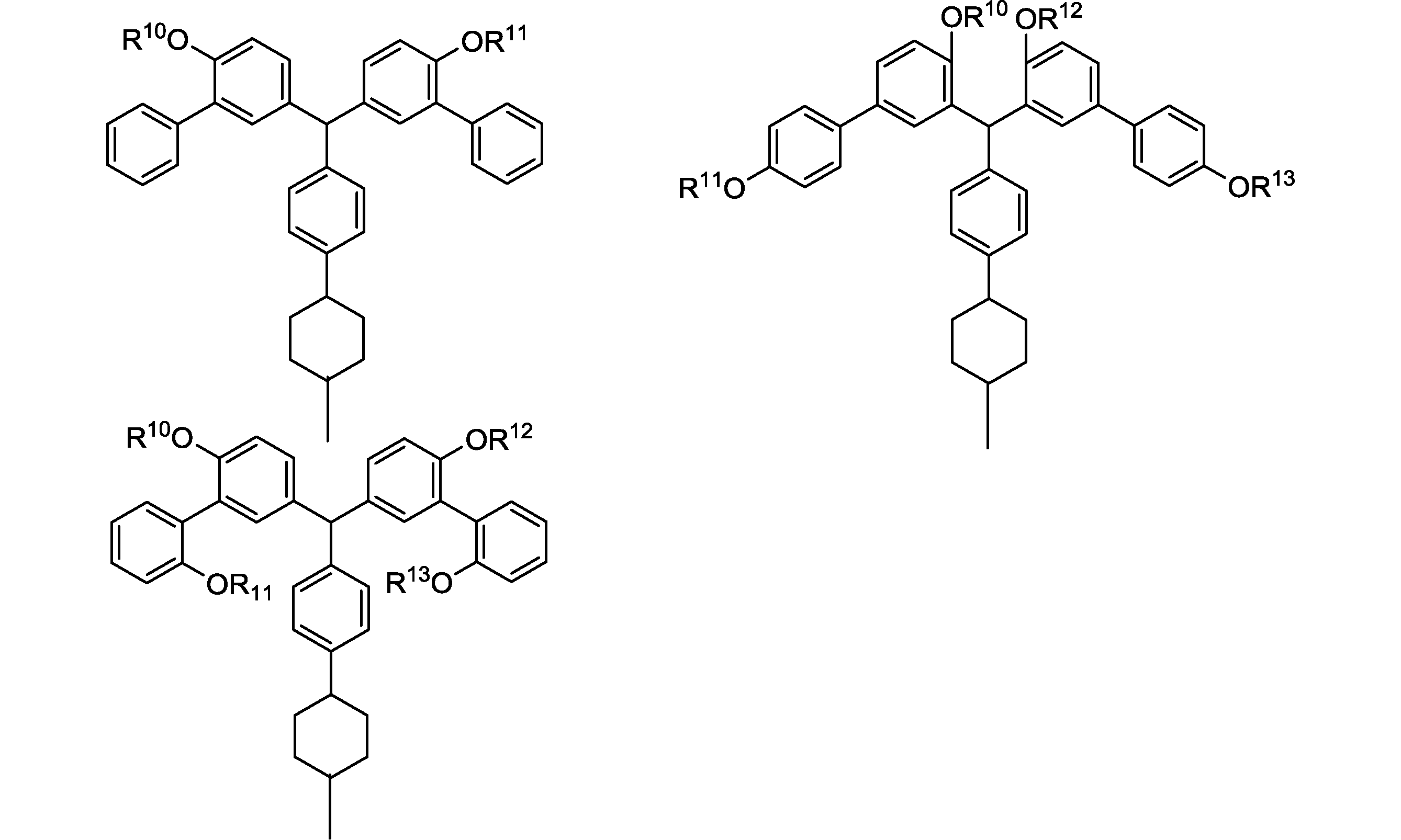
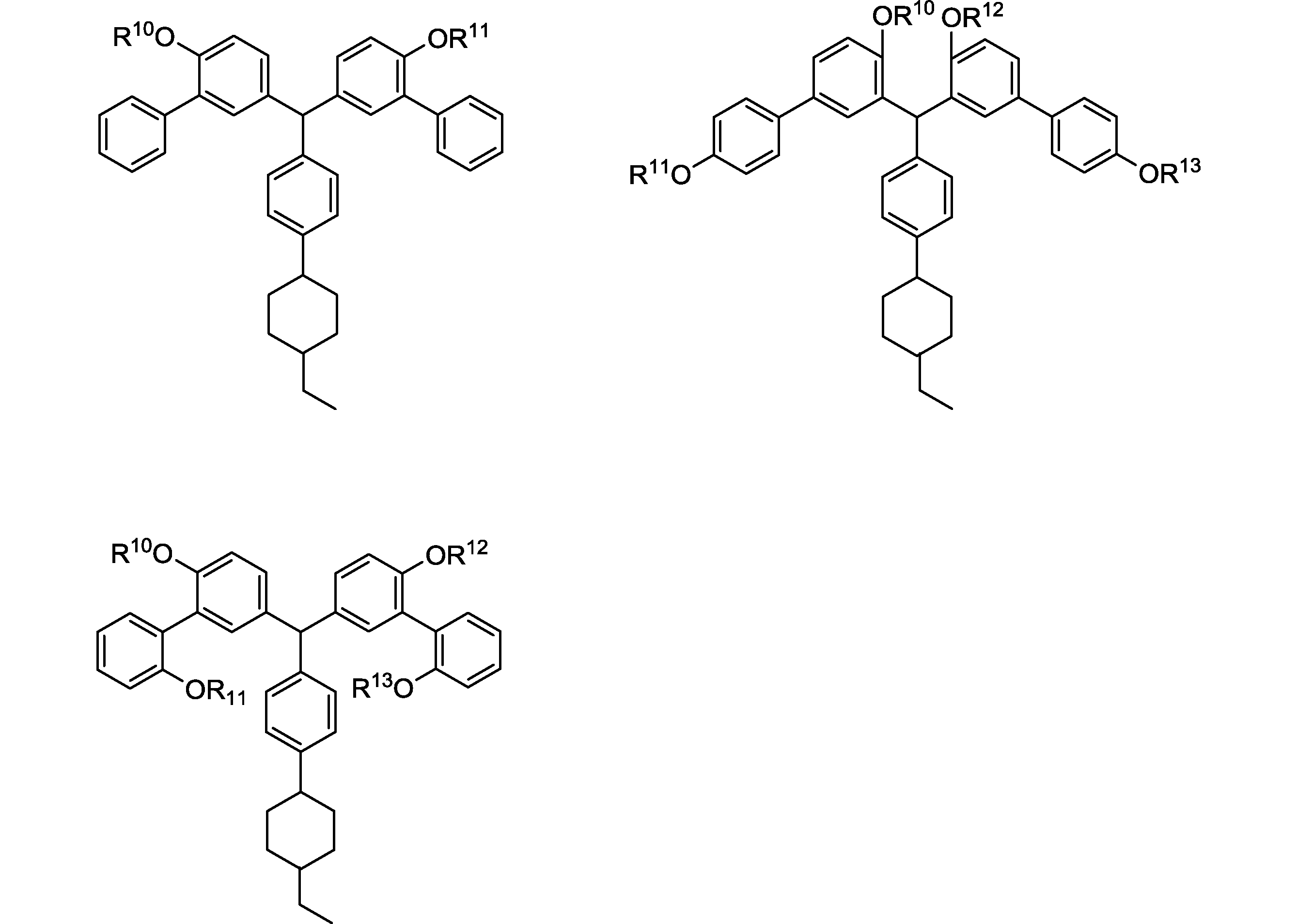

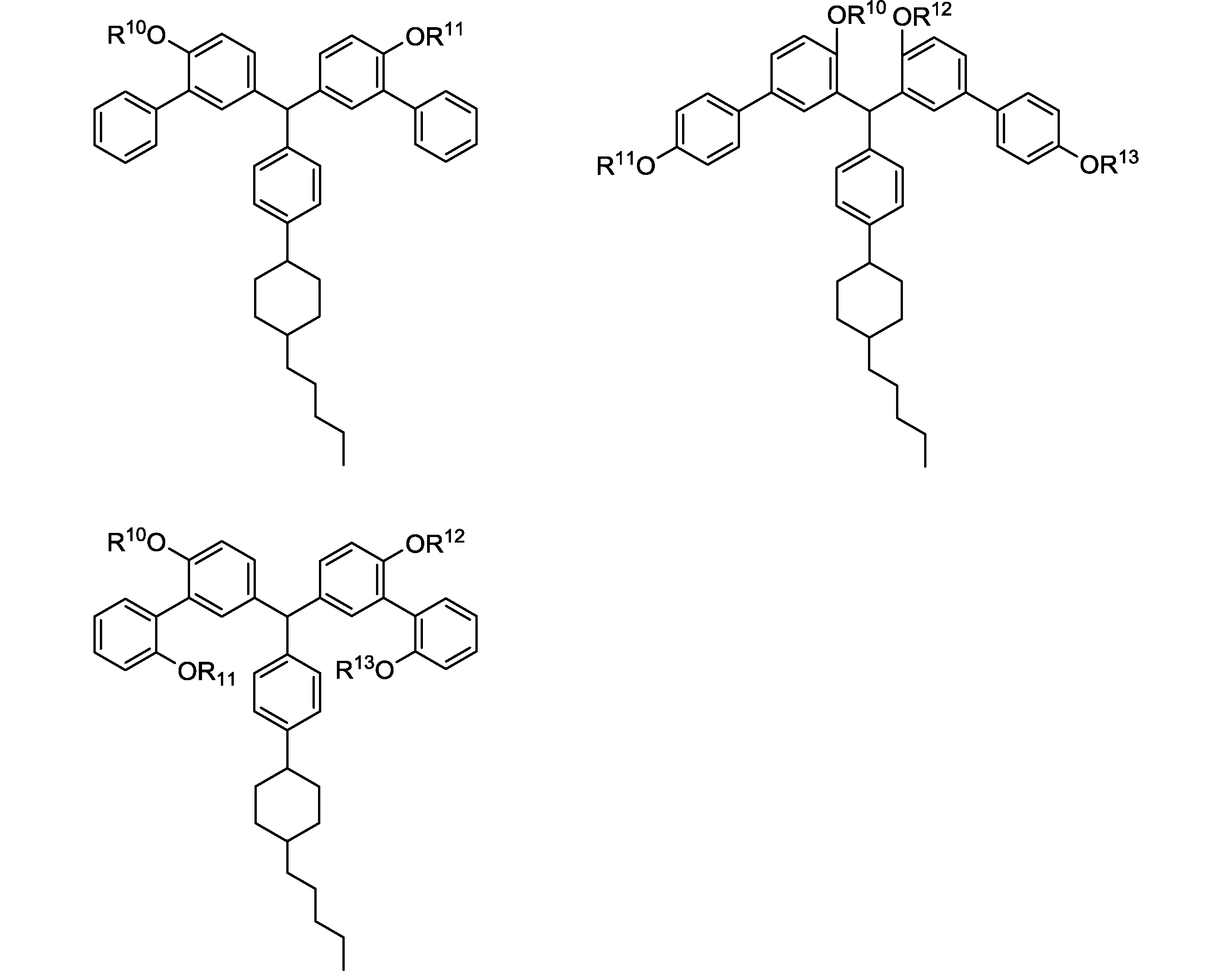
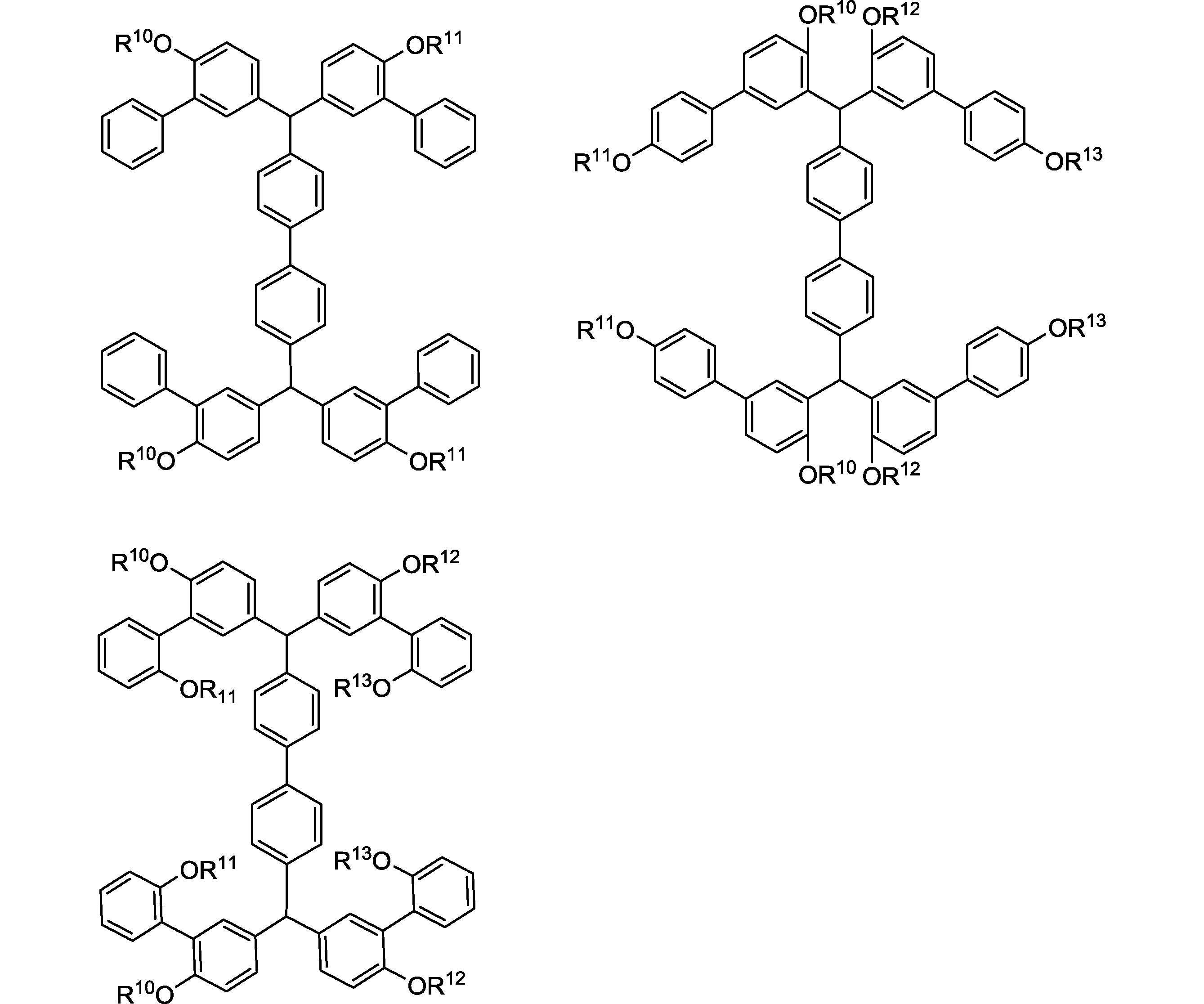
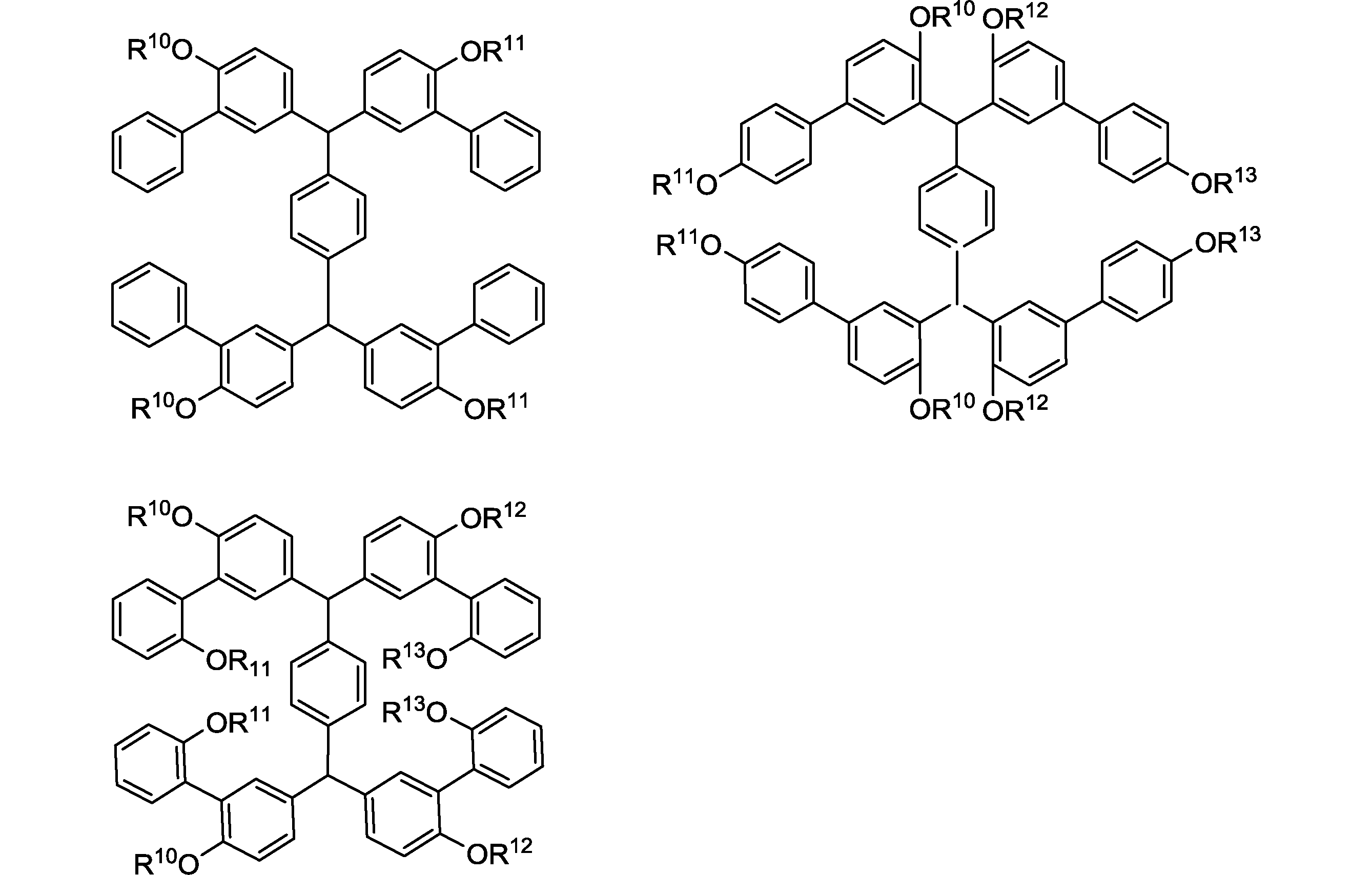

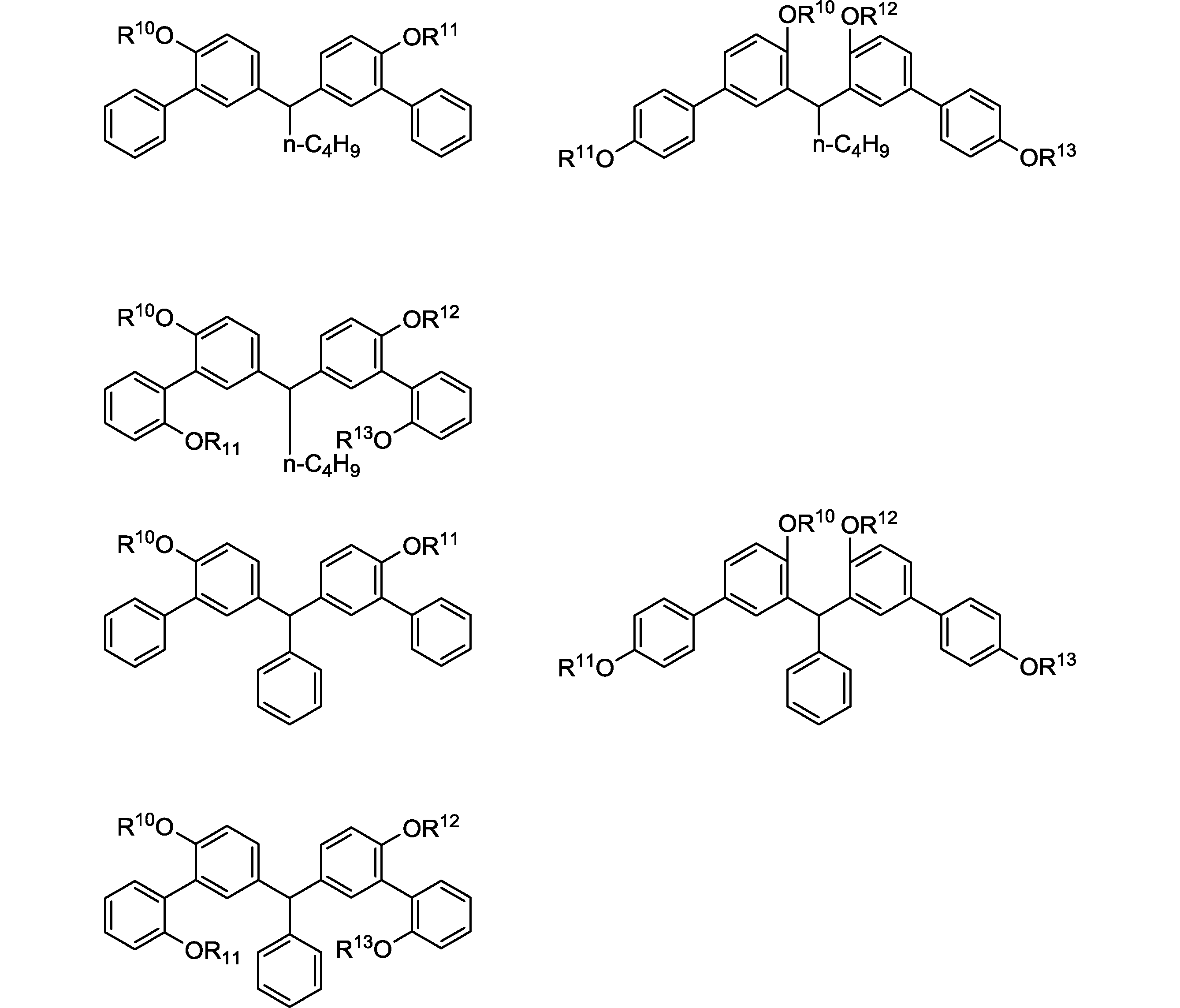


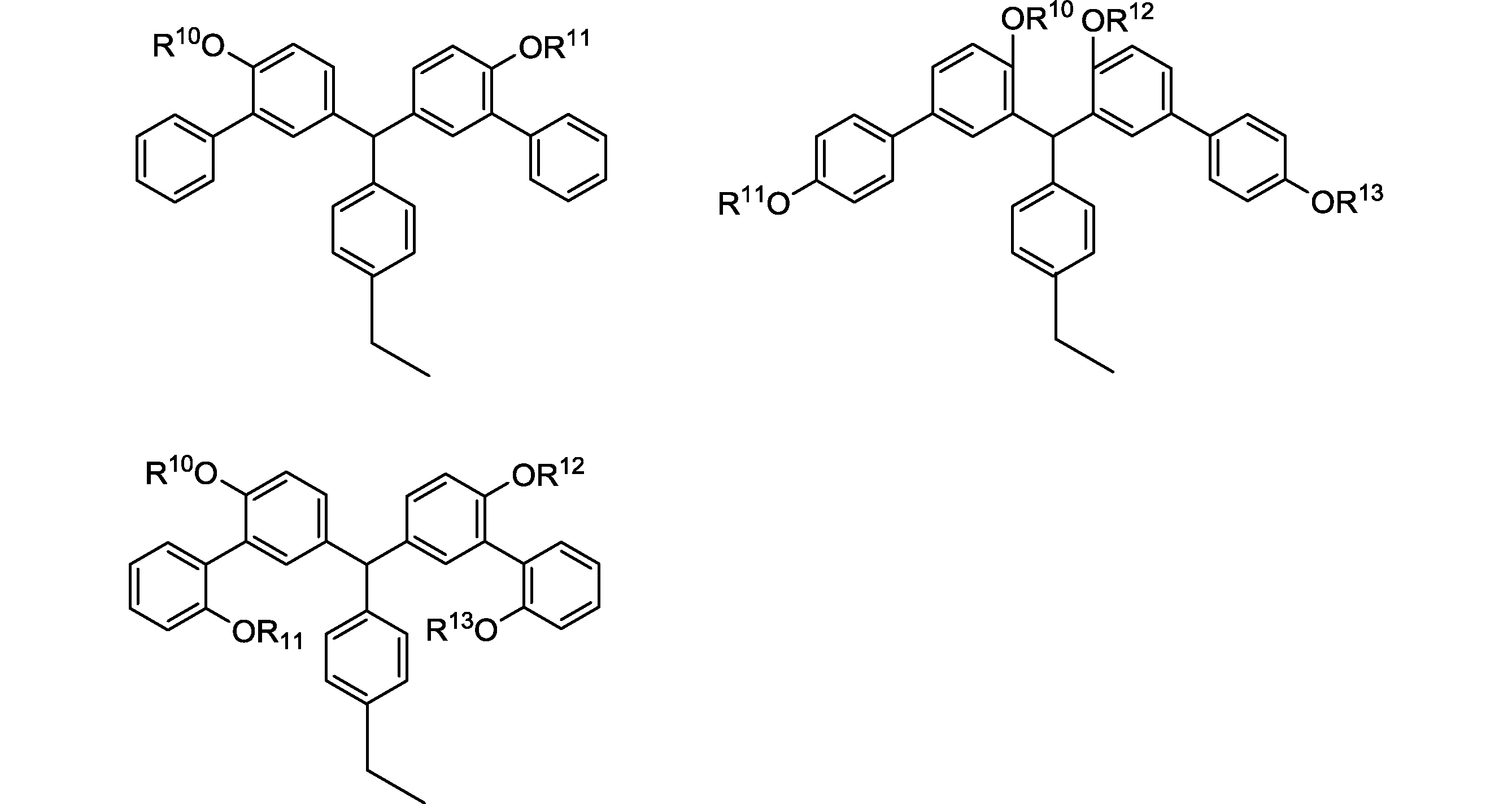

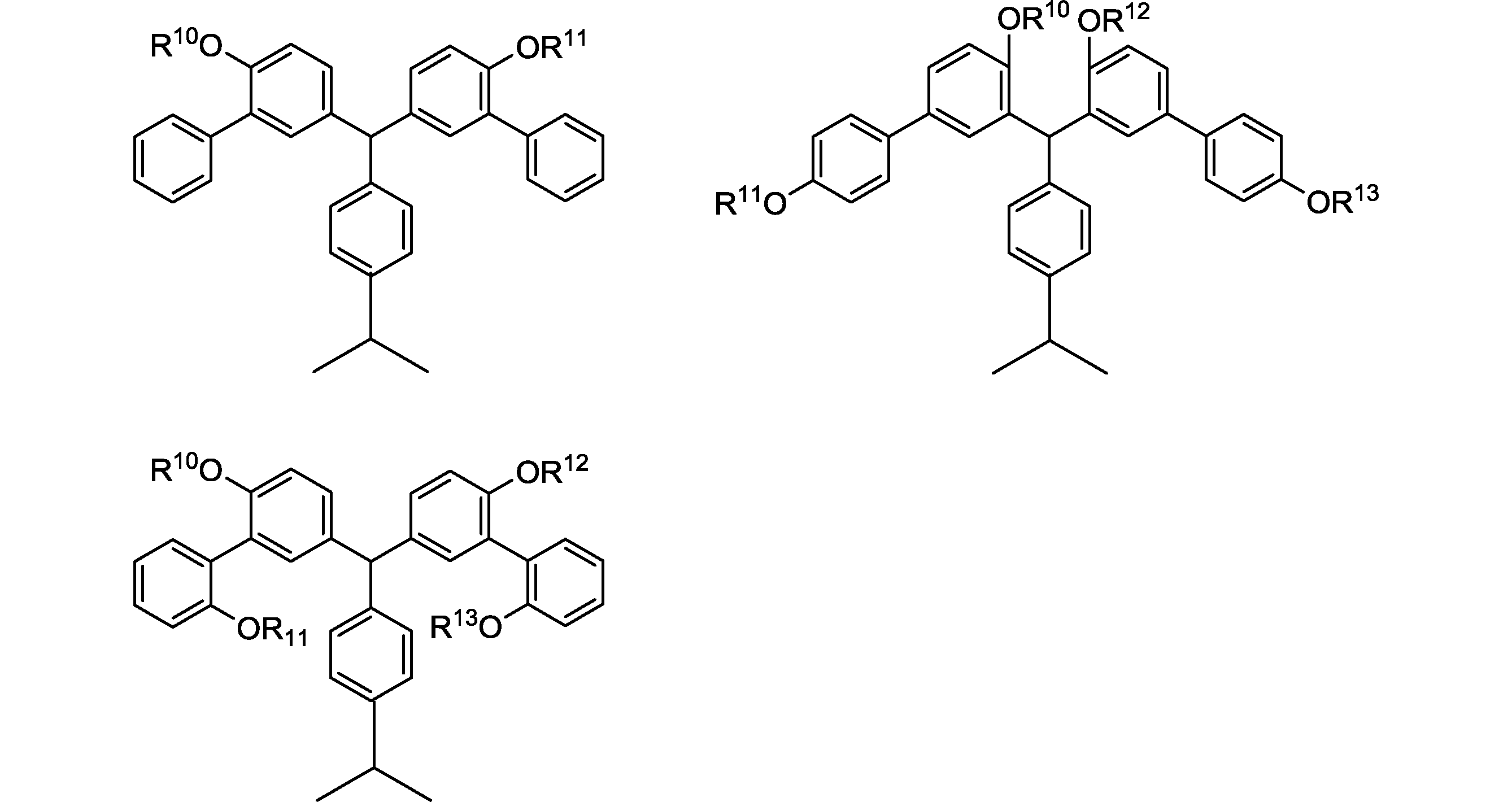
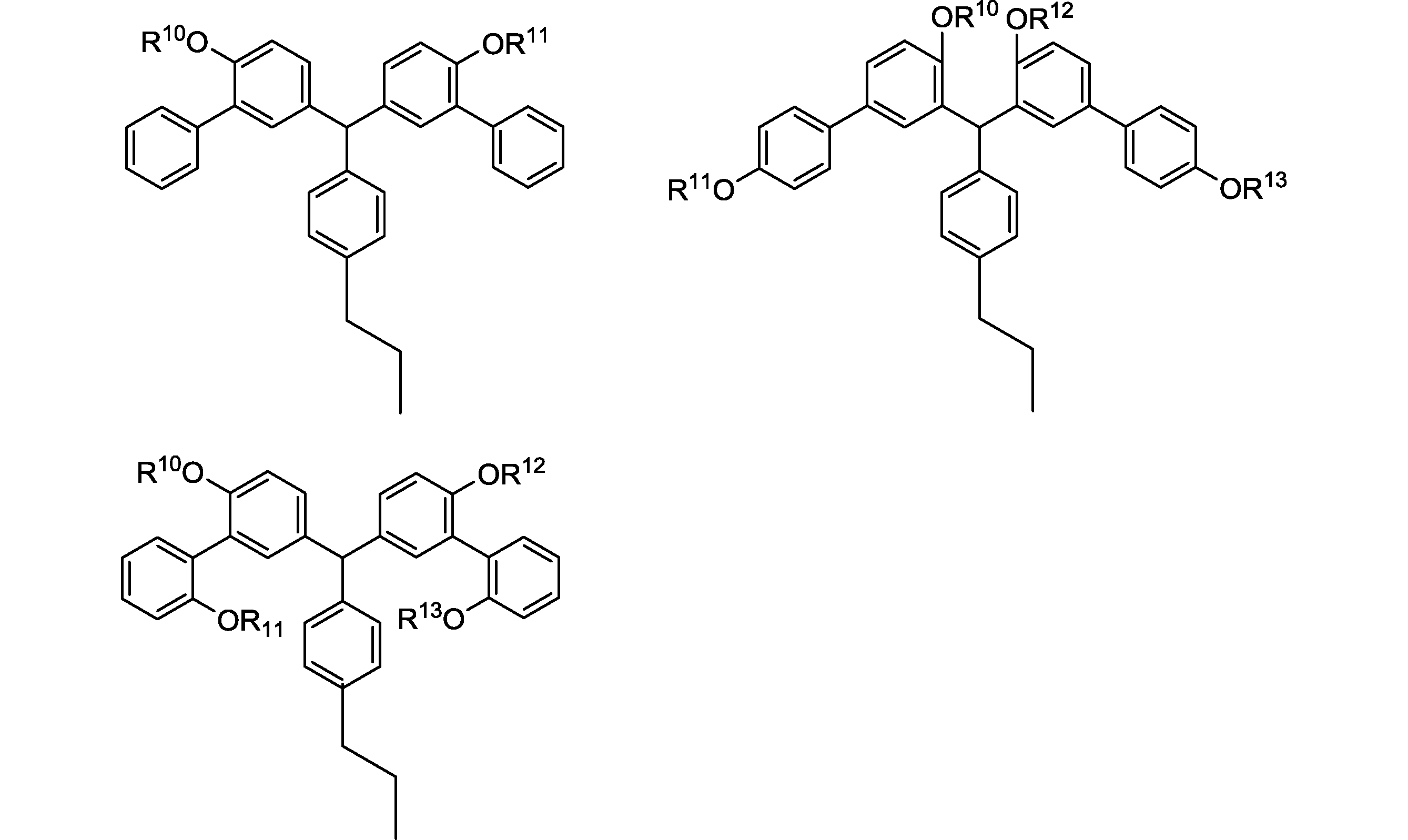
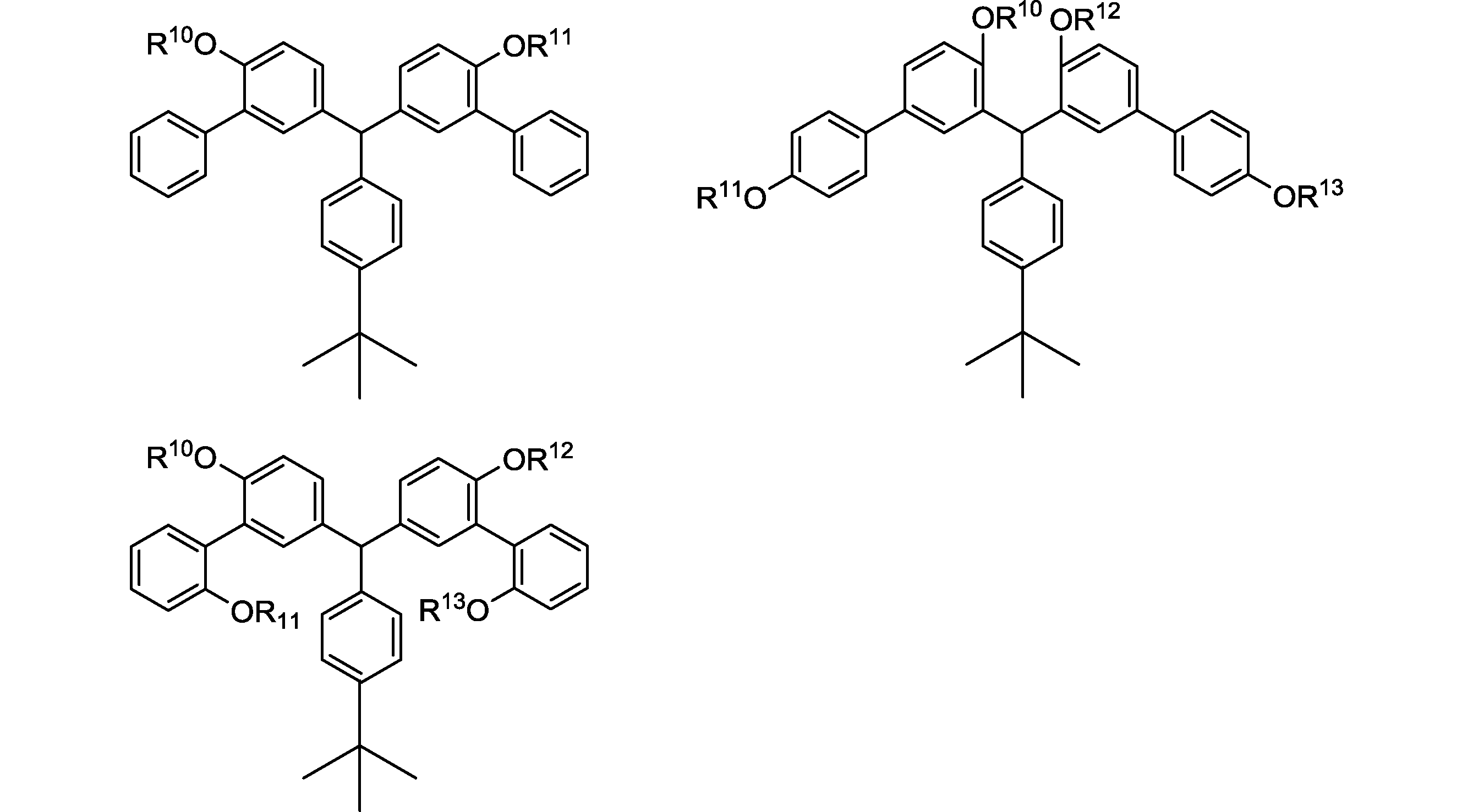
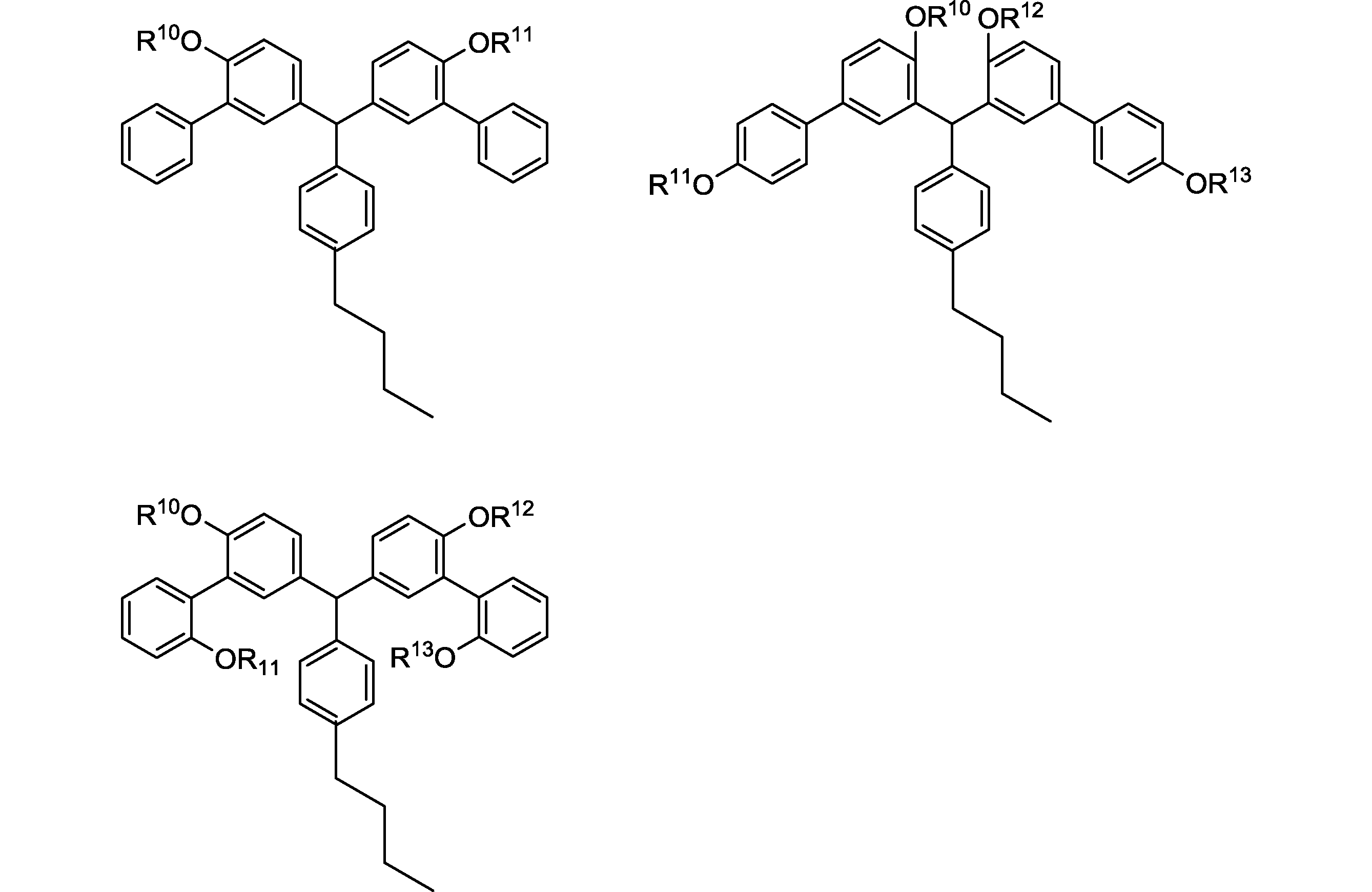
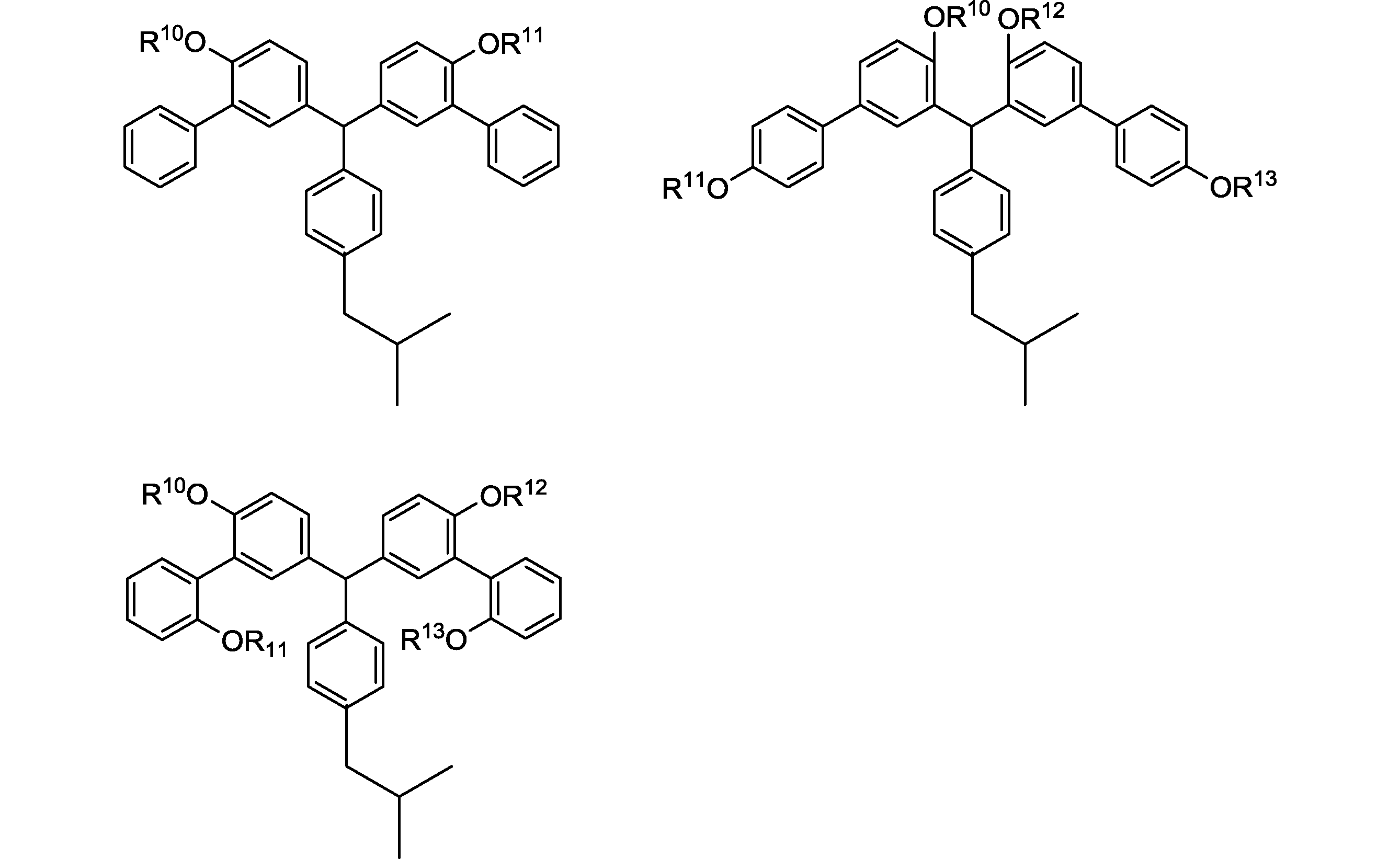

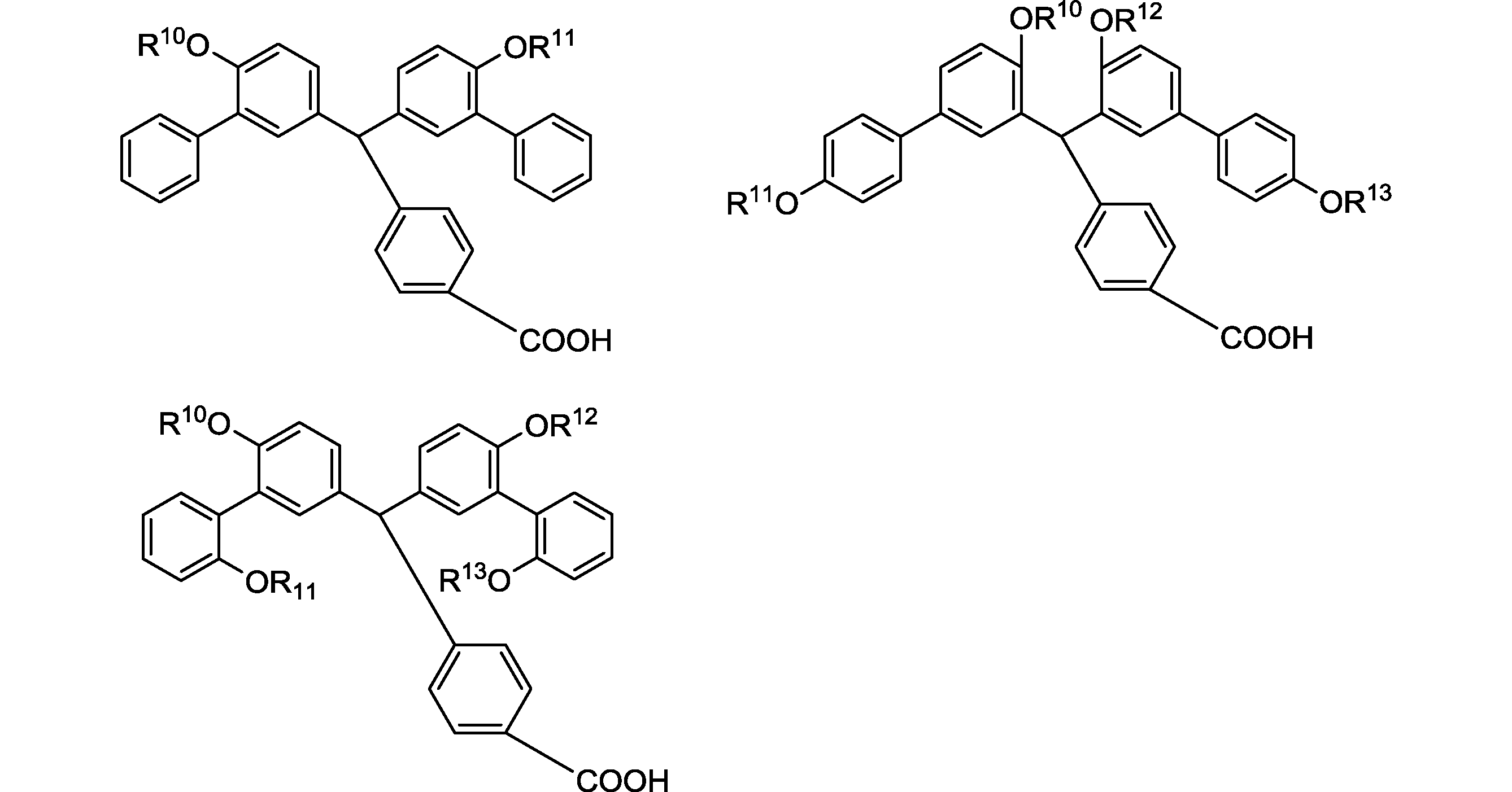

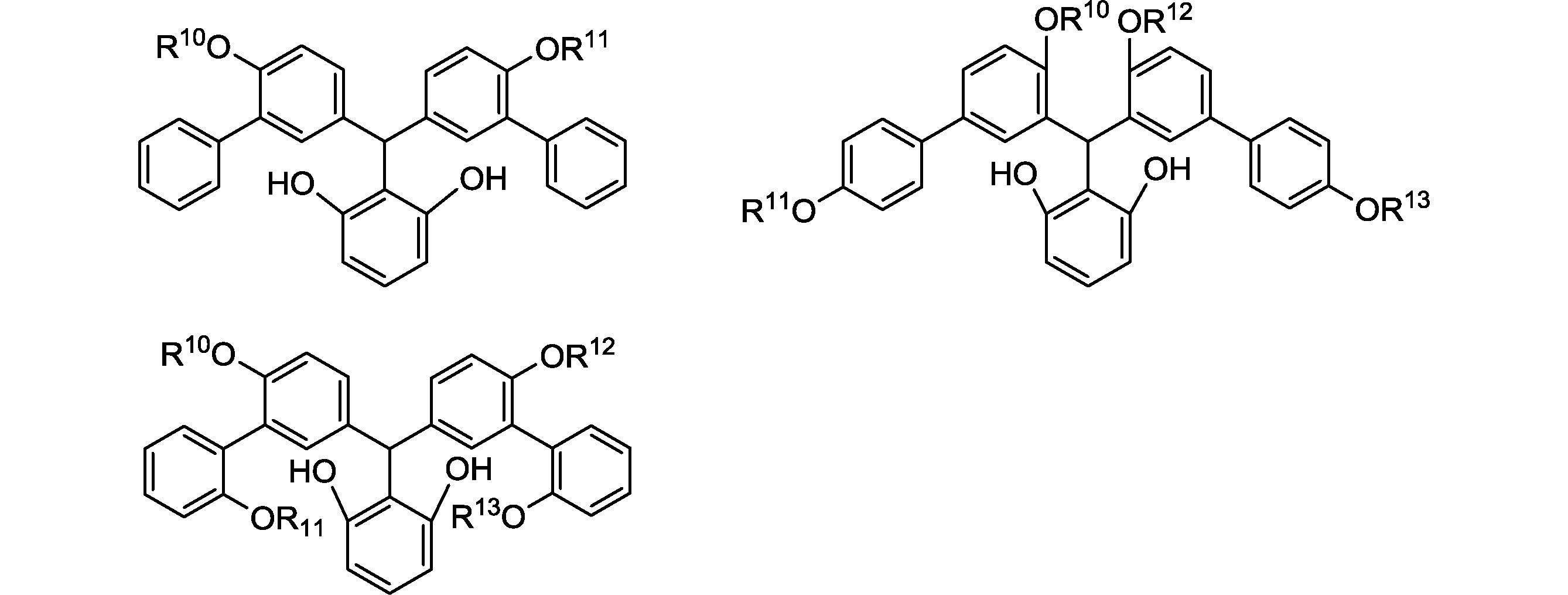
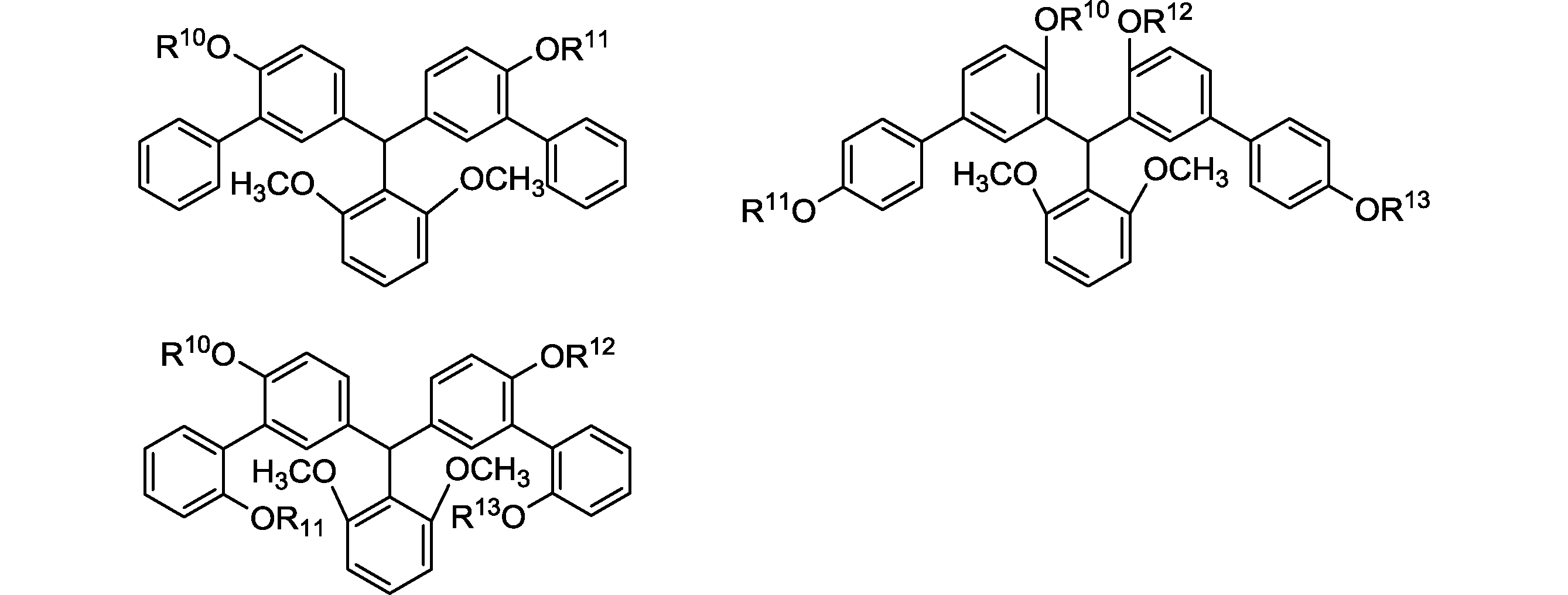
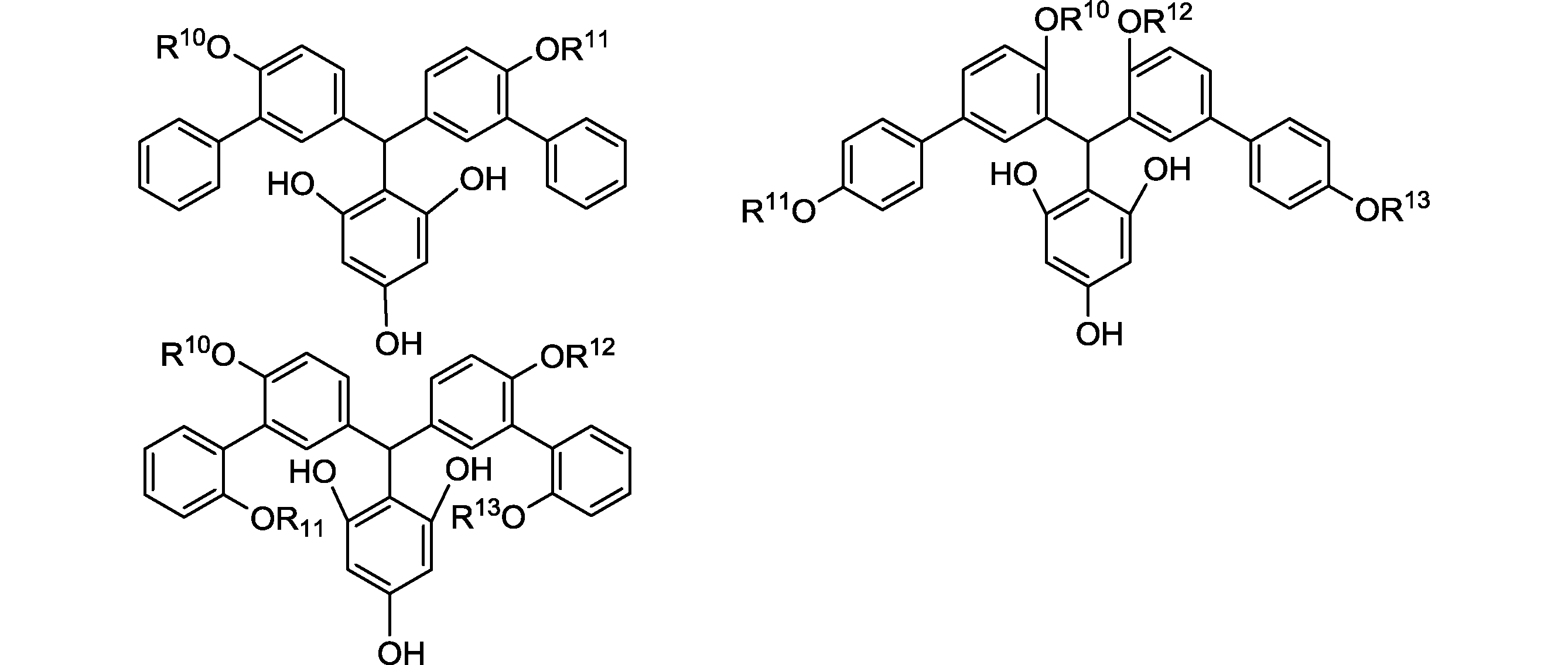

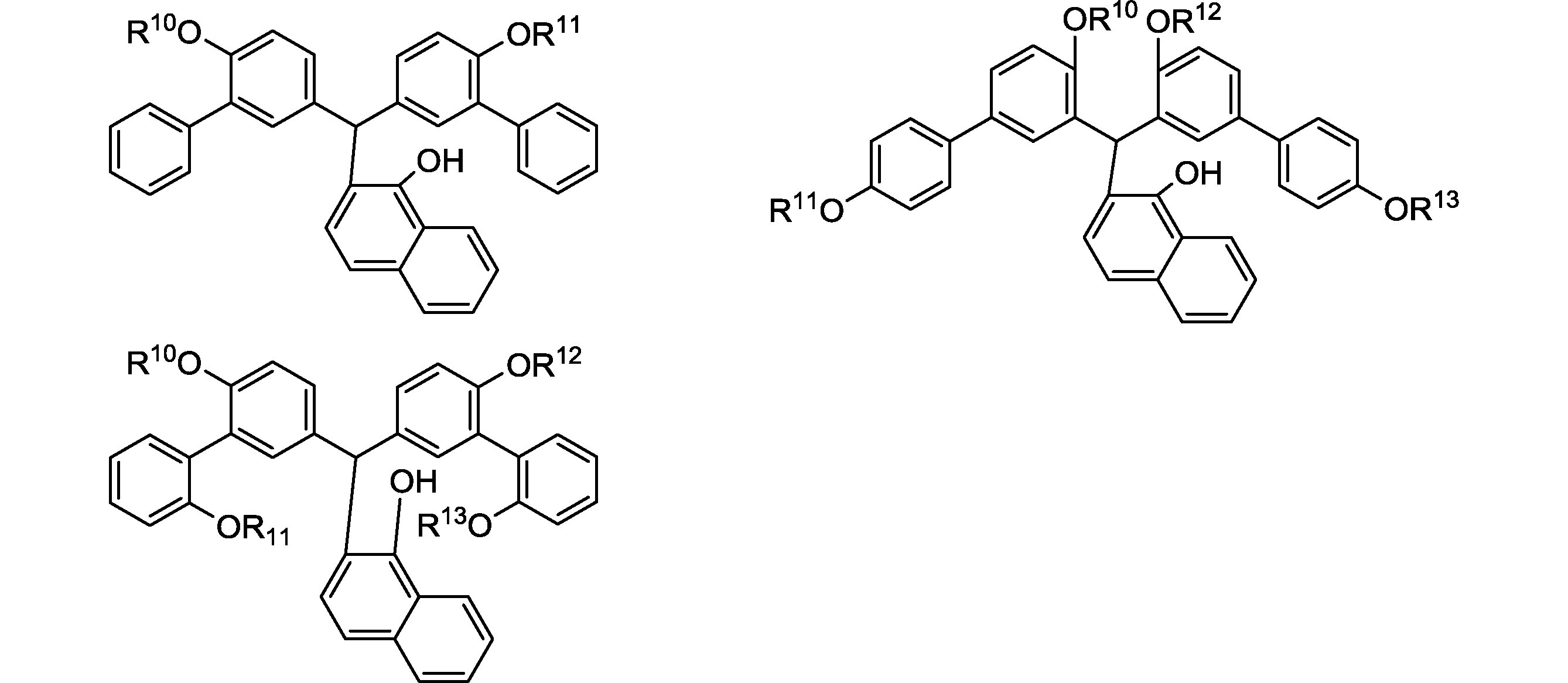


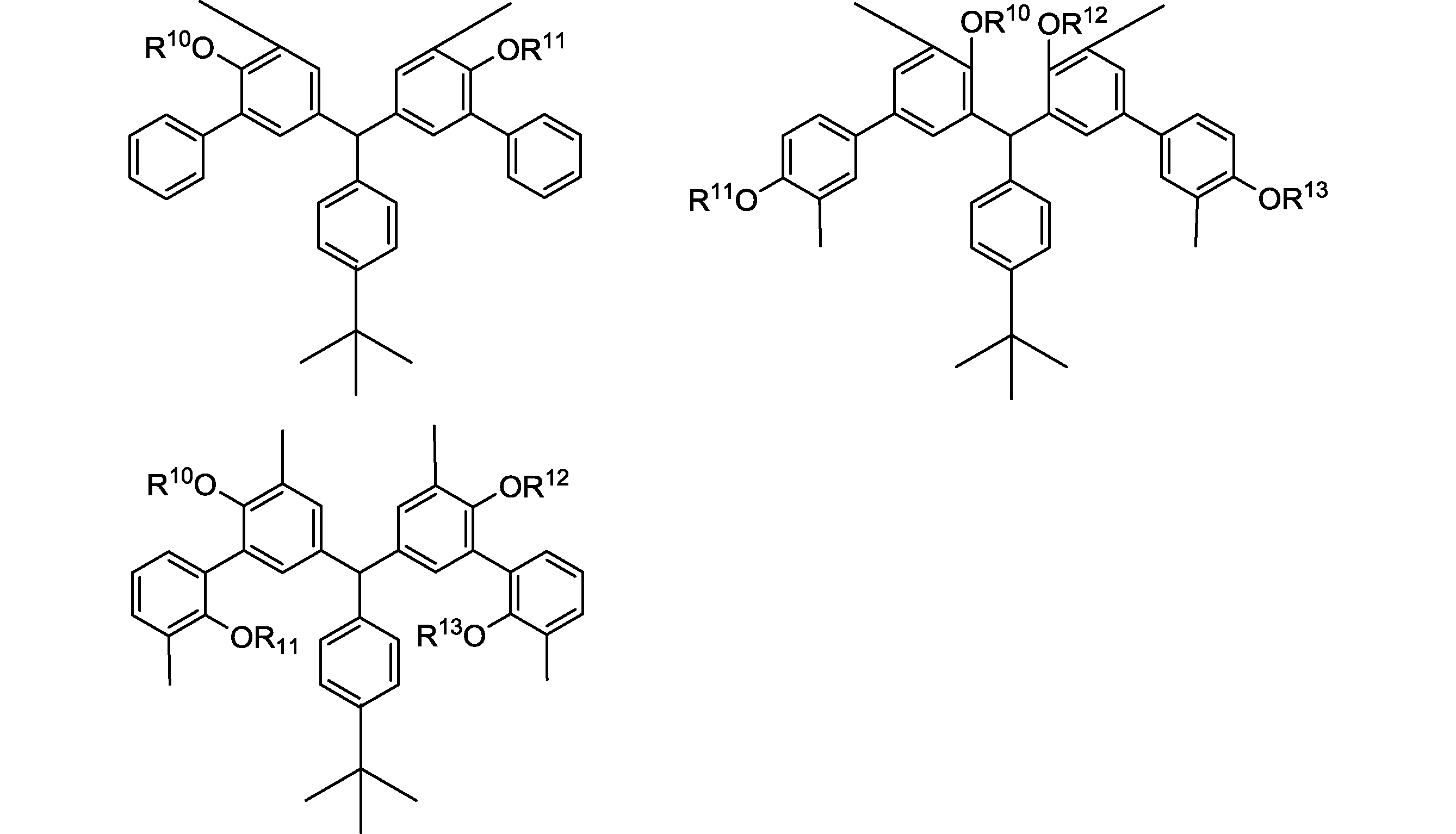
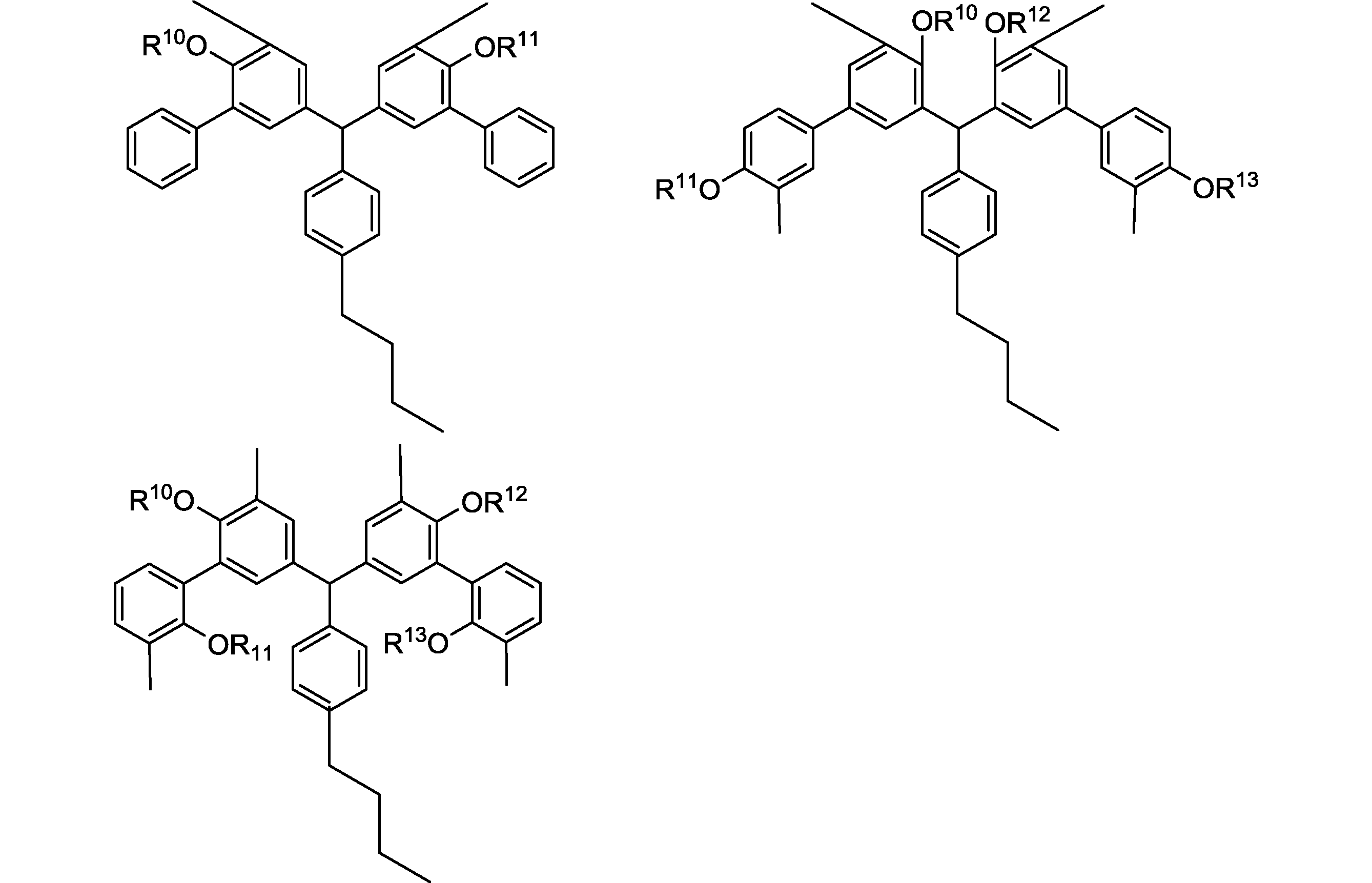

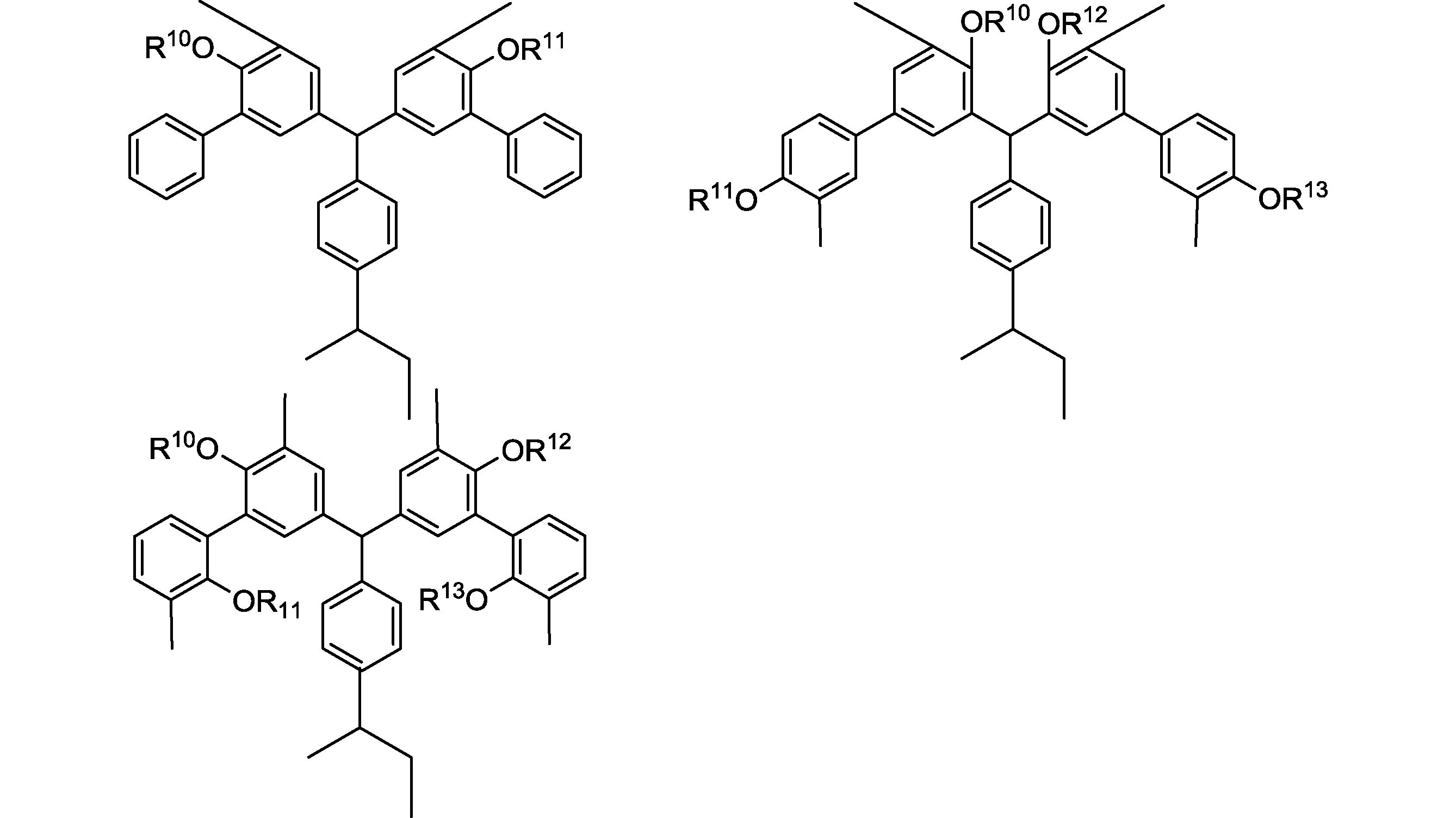
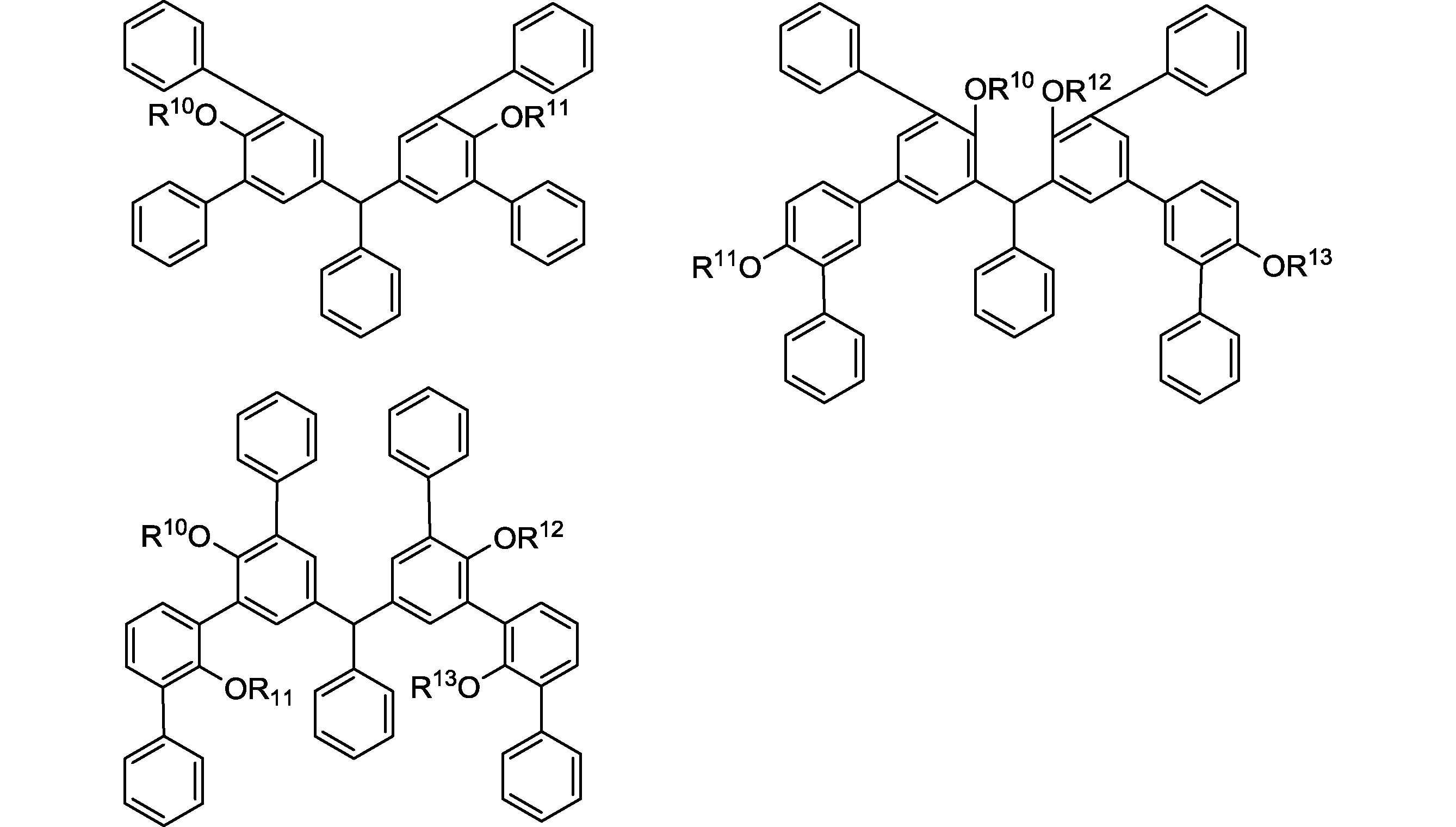

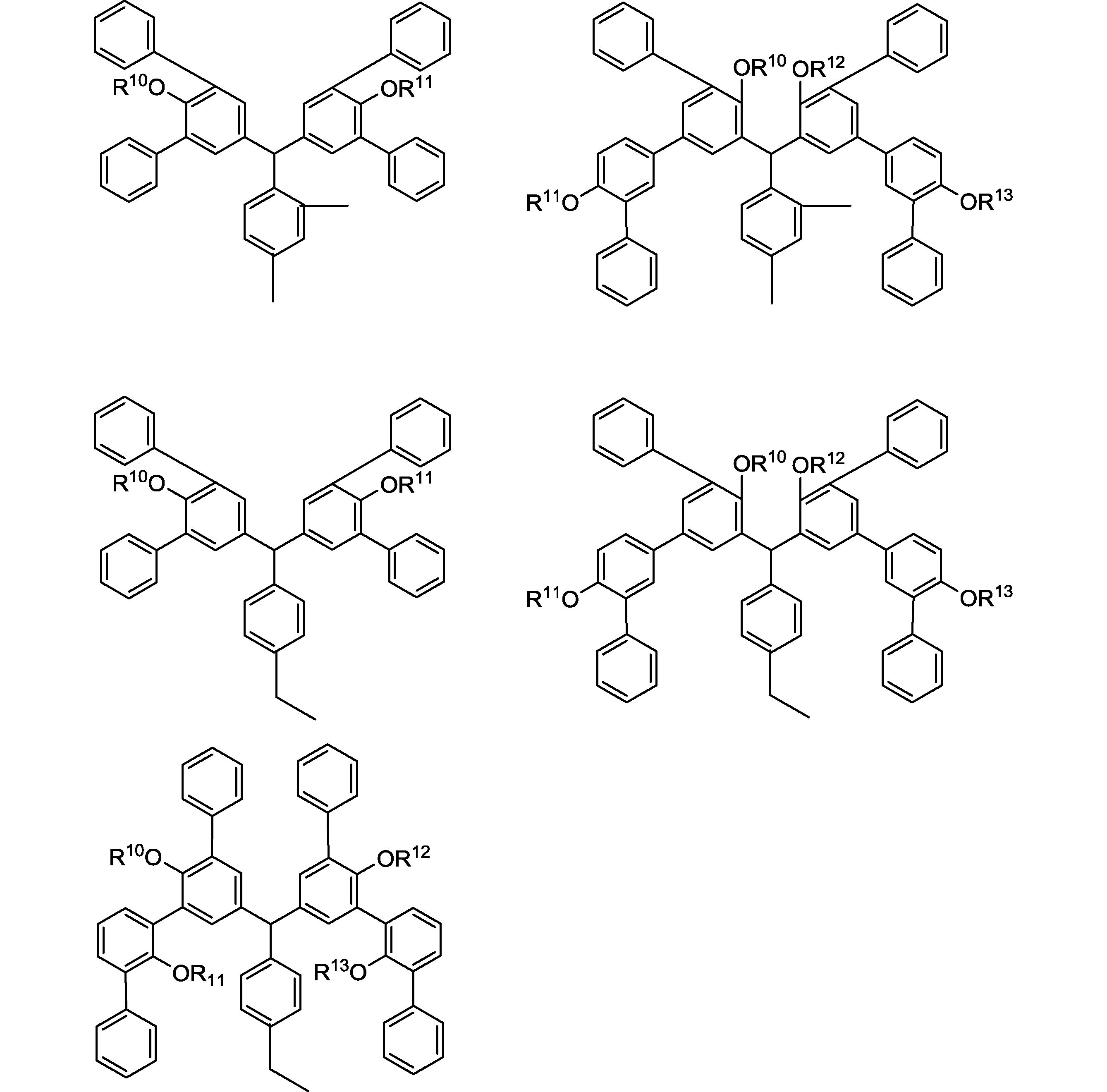

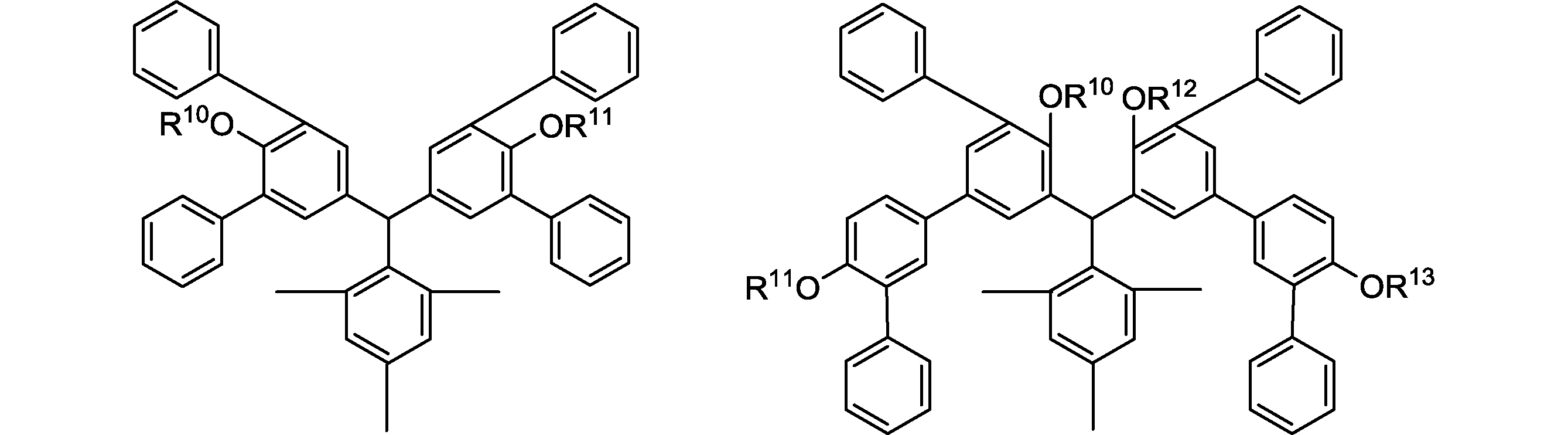


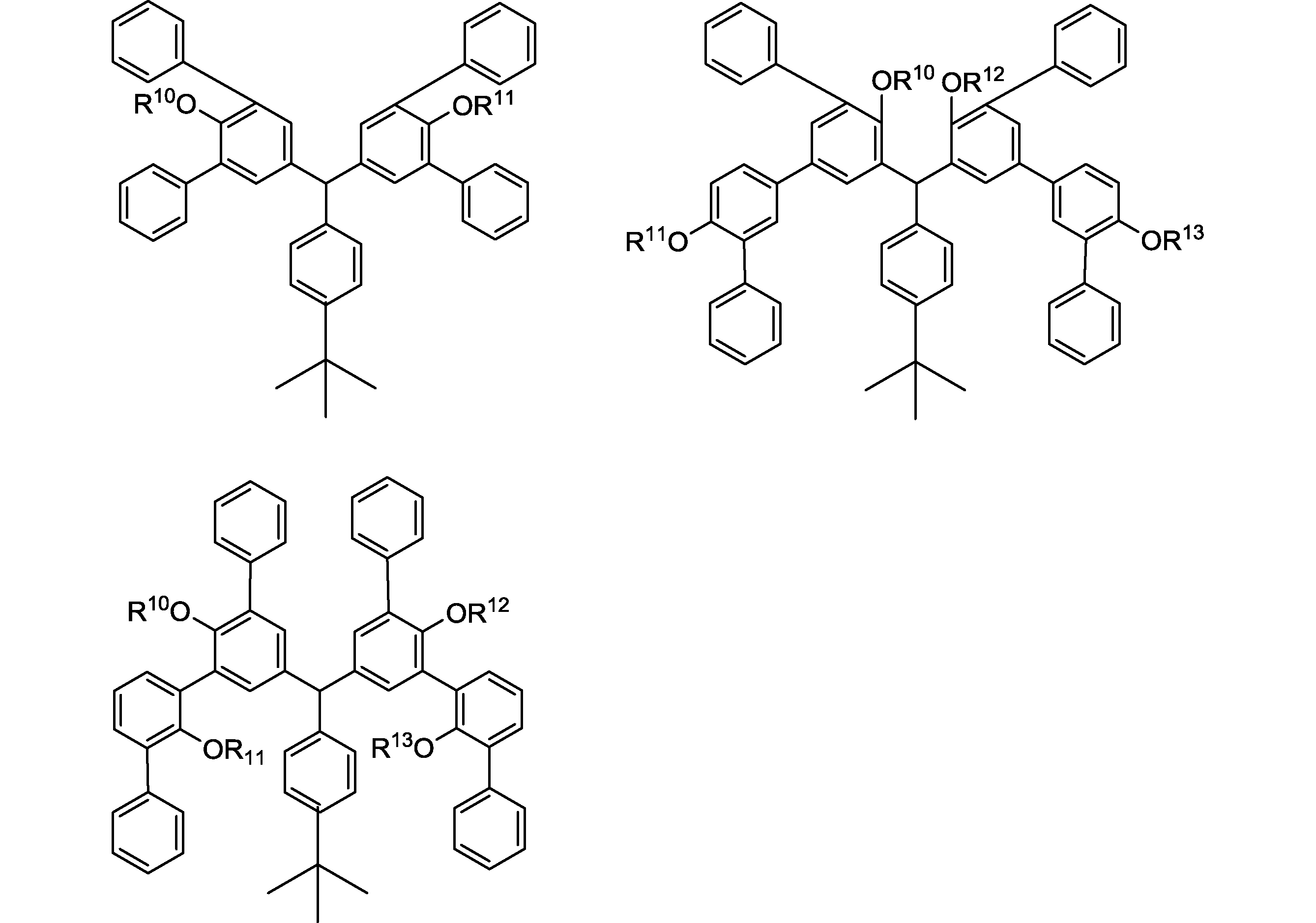
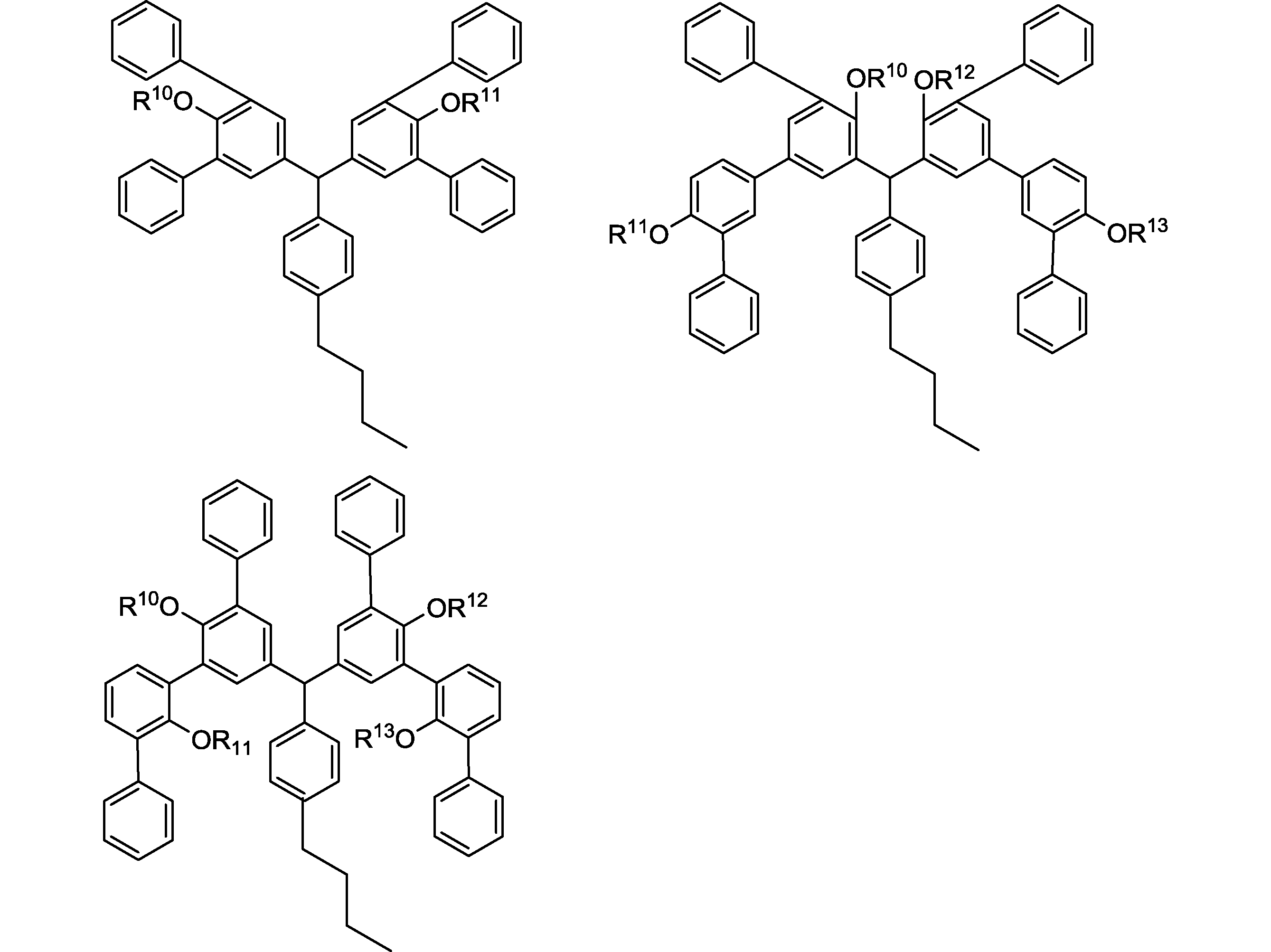
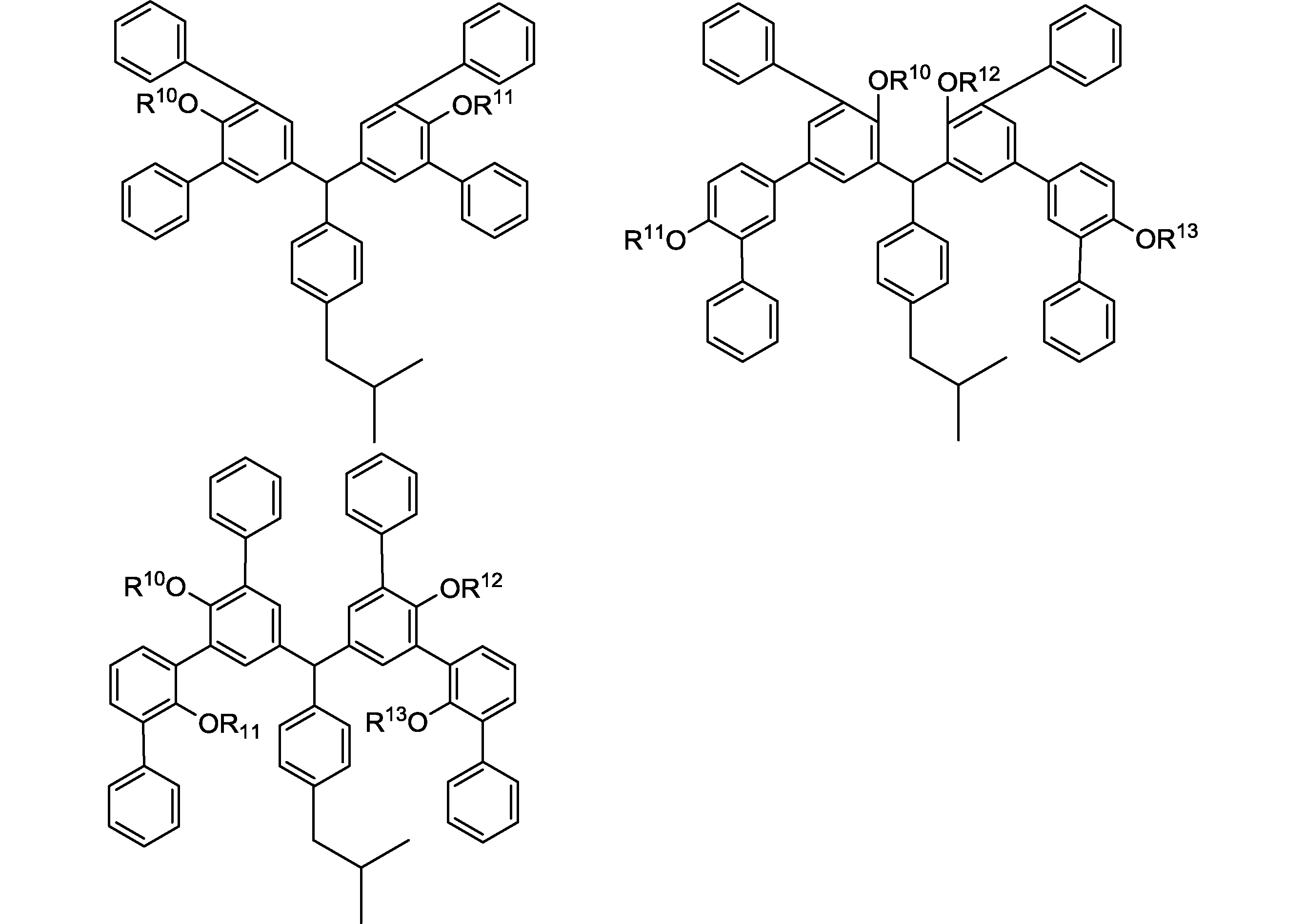
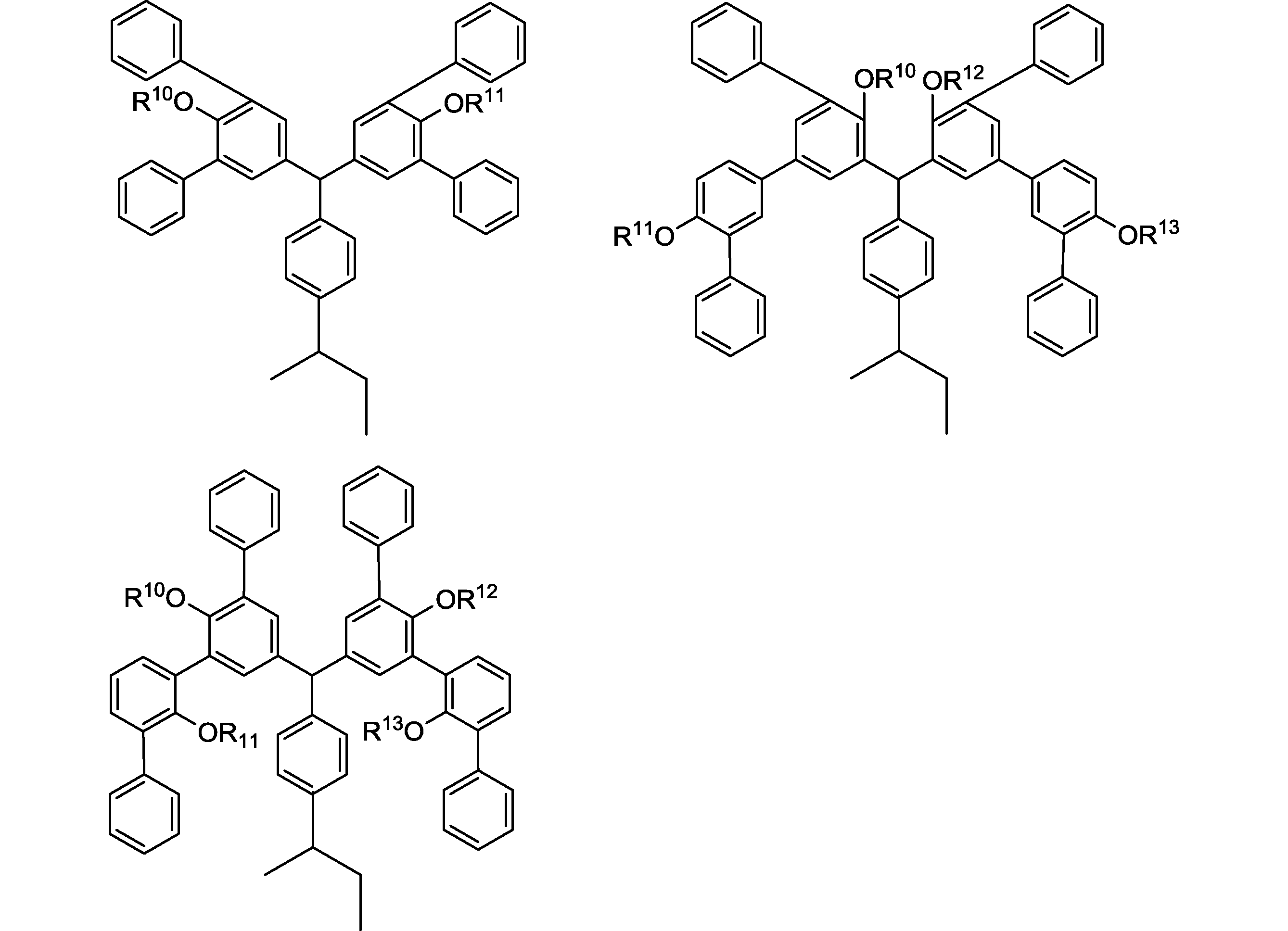


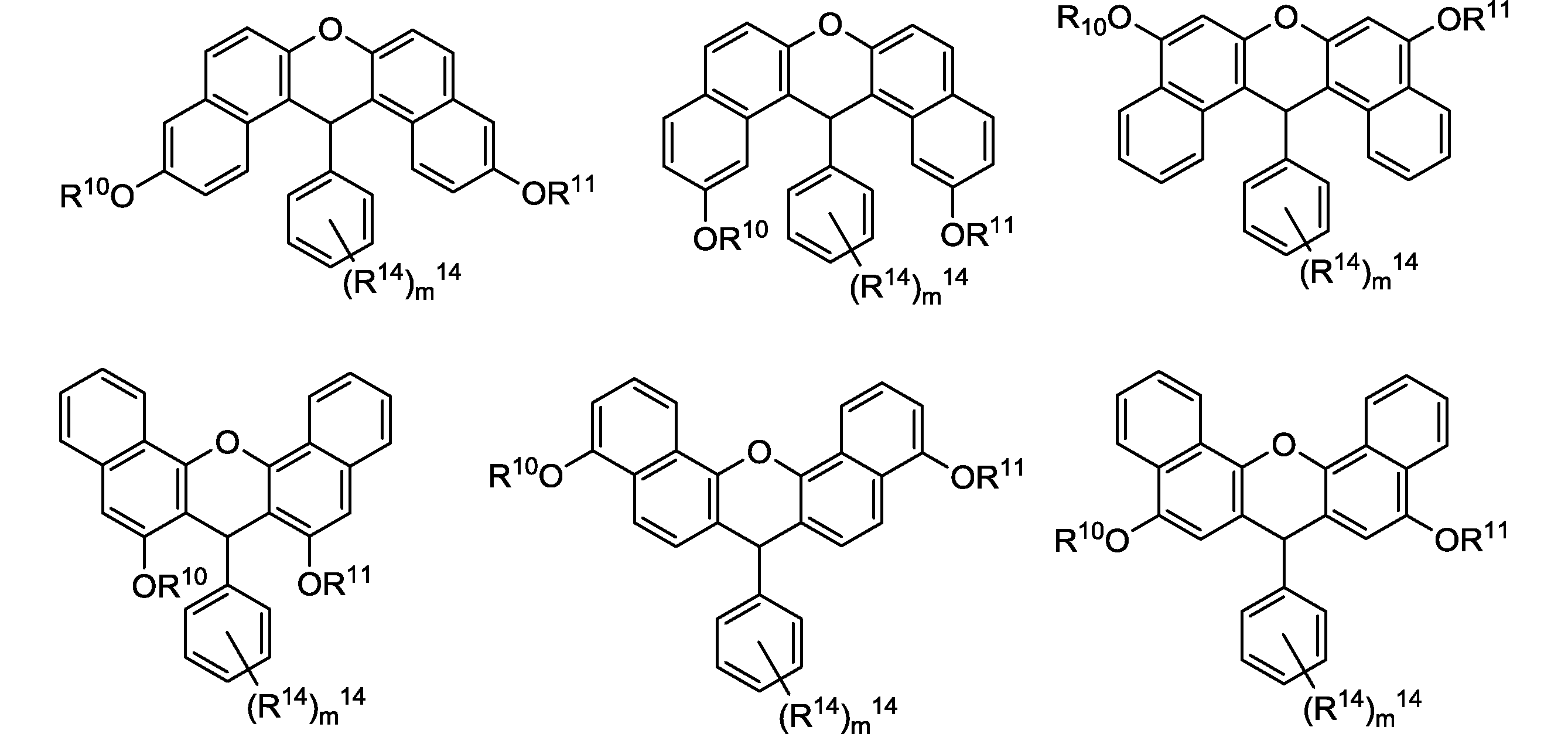
前記R14の各例示は、異性体を含んでいる。例えば、ブチル基には、n-ブチル基、イソブチル基、sec-ブチル基、tert-ブチル基を含んでいる。
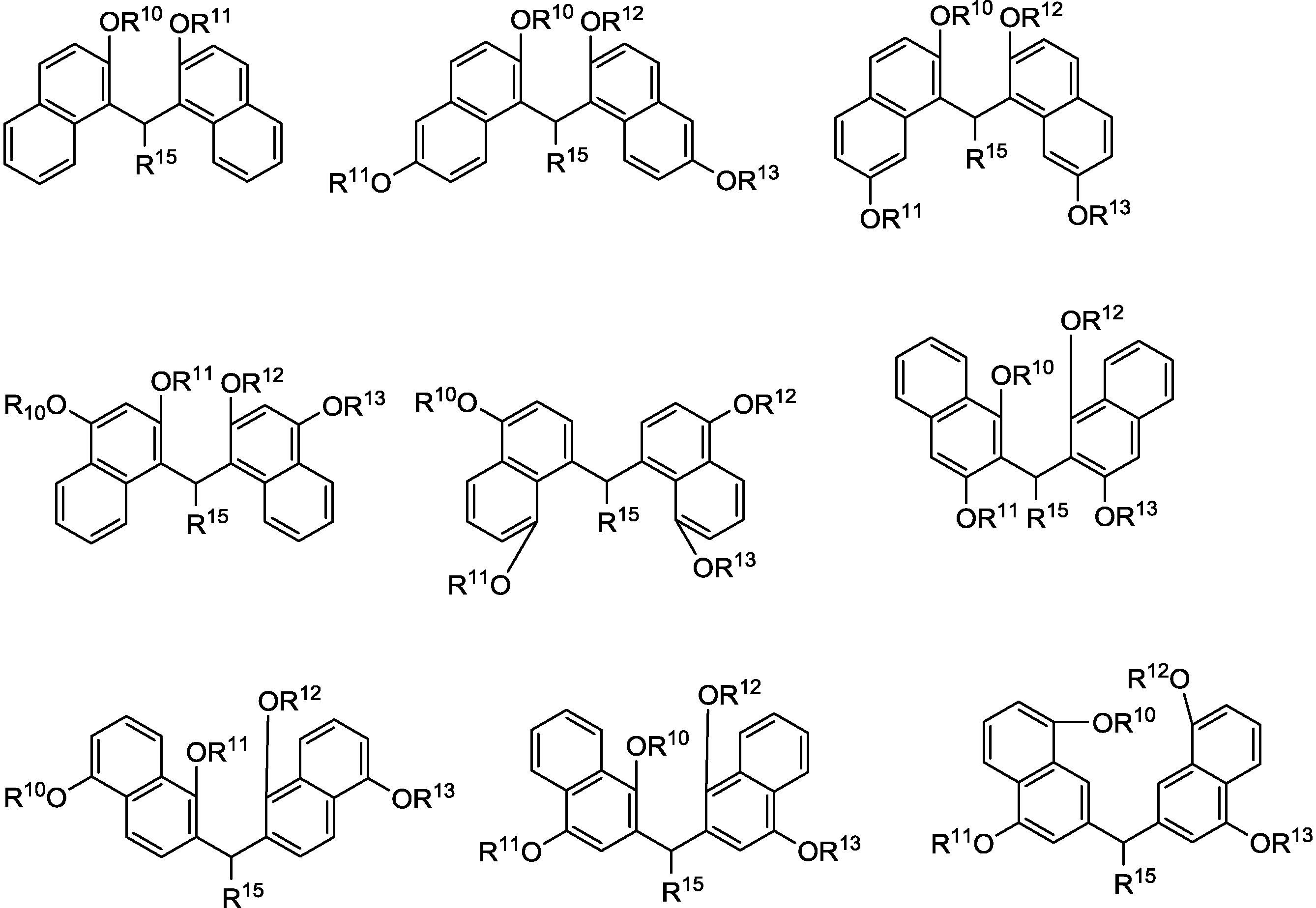

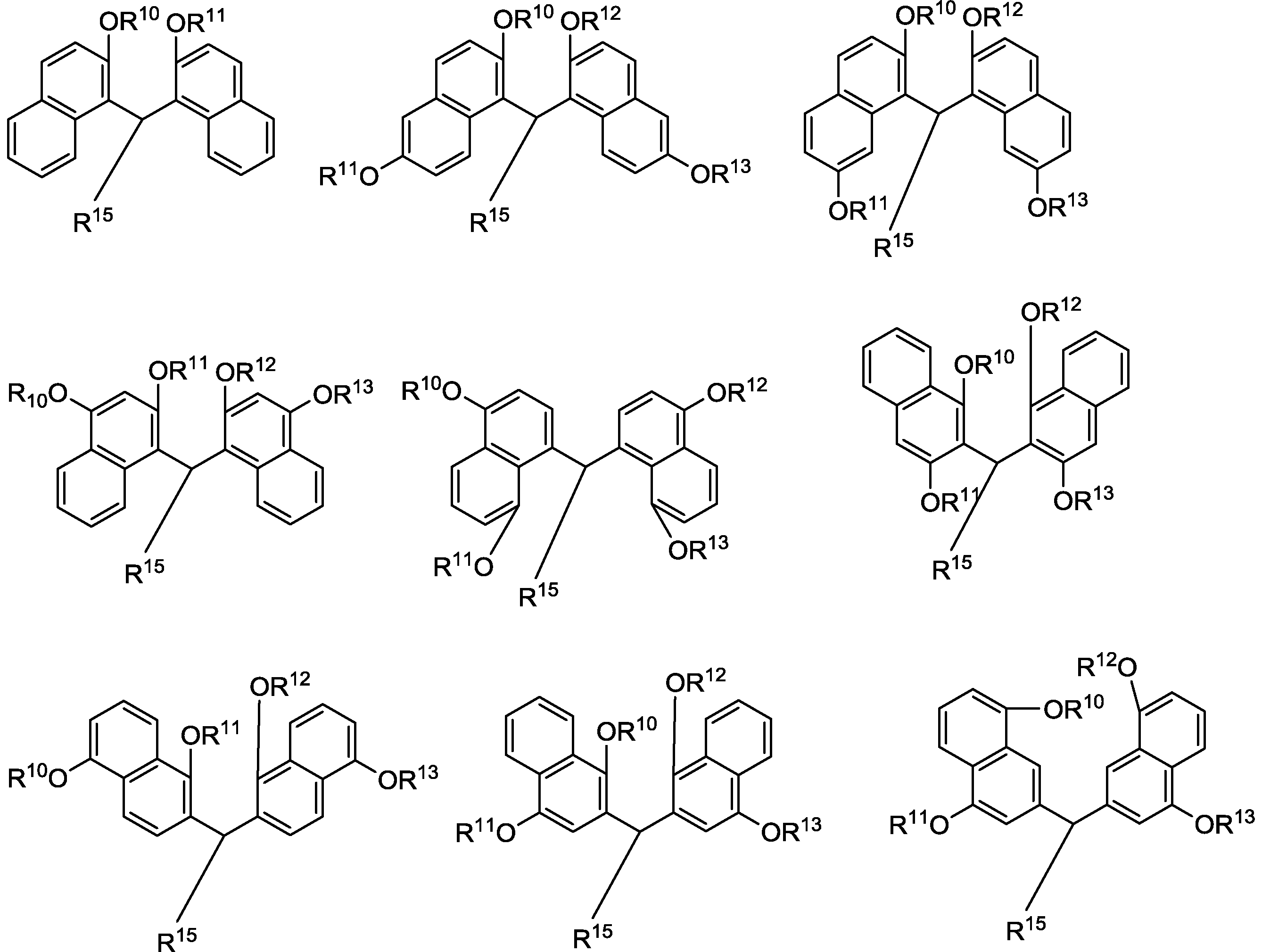

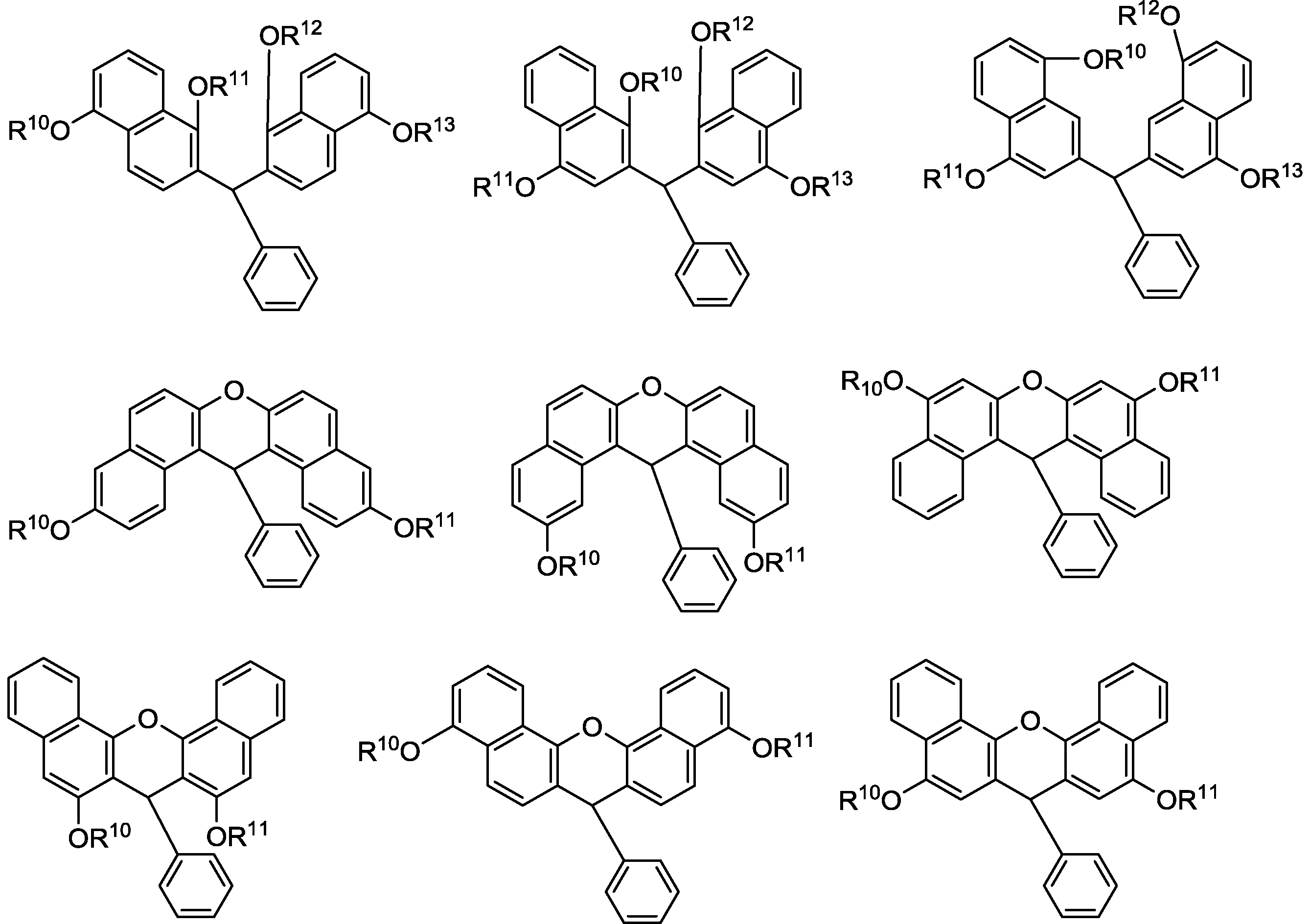
前記R15の各例示は、異性体を含んでいる。例えば、ブチル基には、n-ブチル基、イソブチル基、sec-ブチル基、tert-ブチル基を含んでいる。
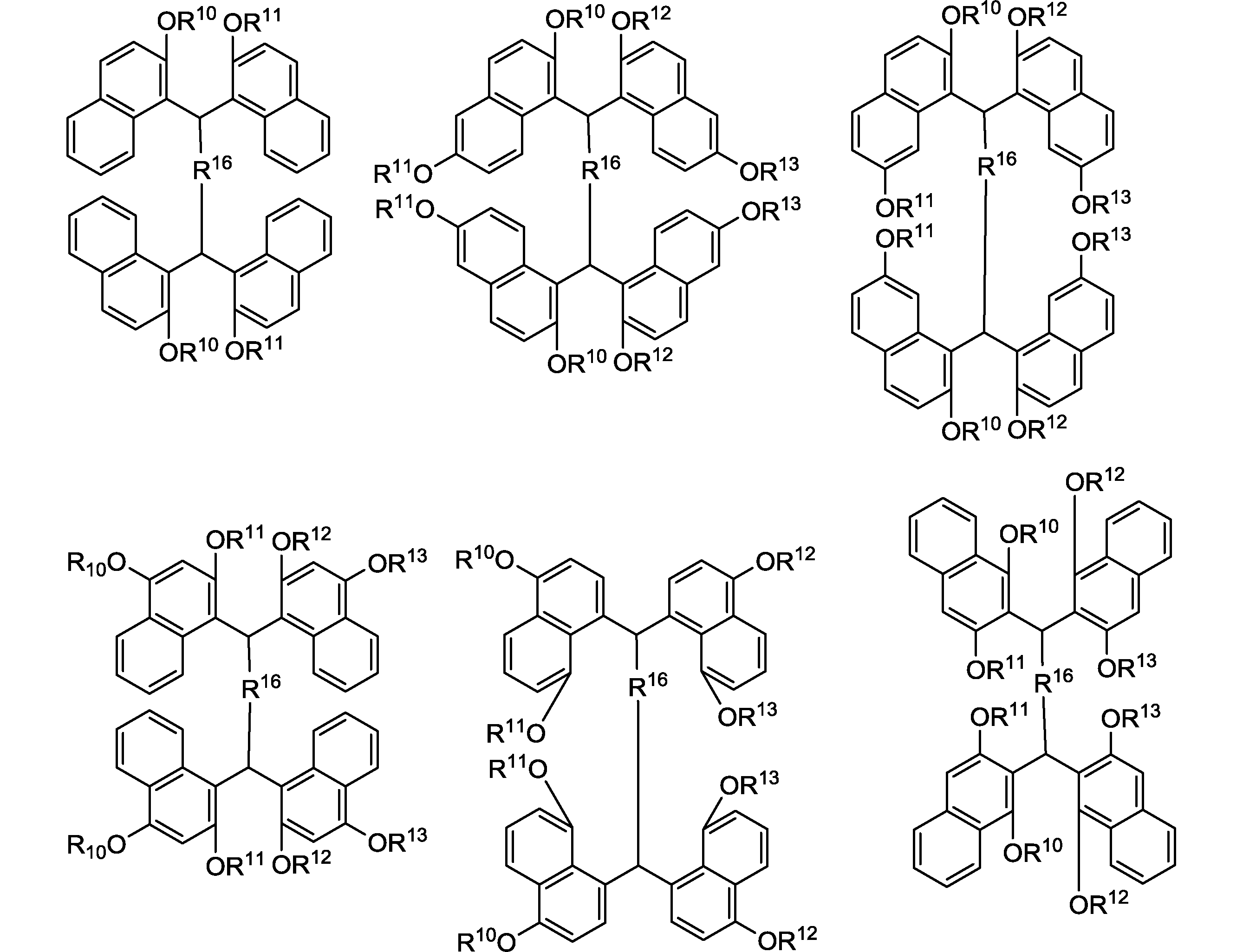
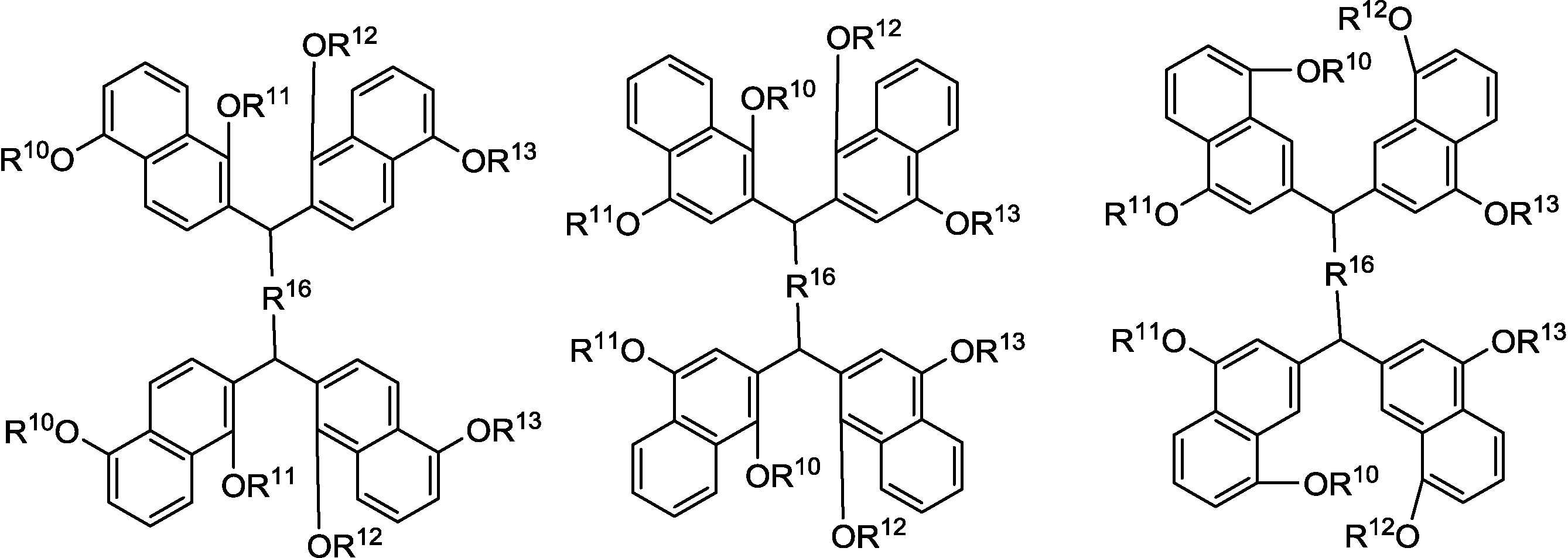
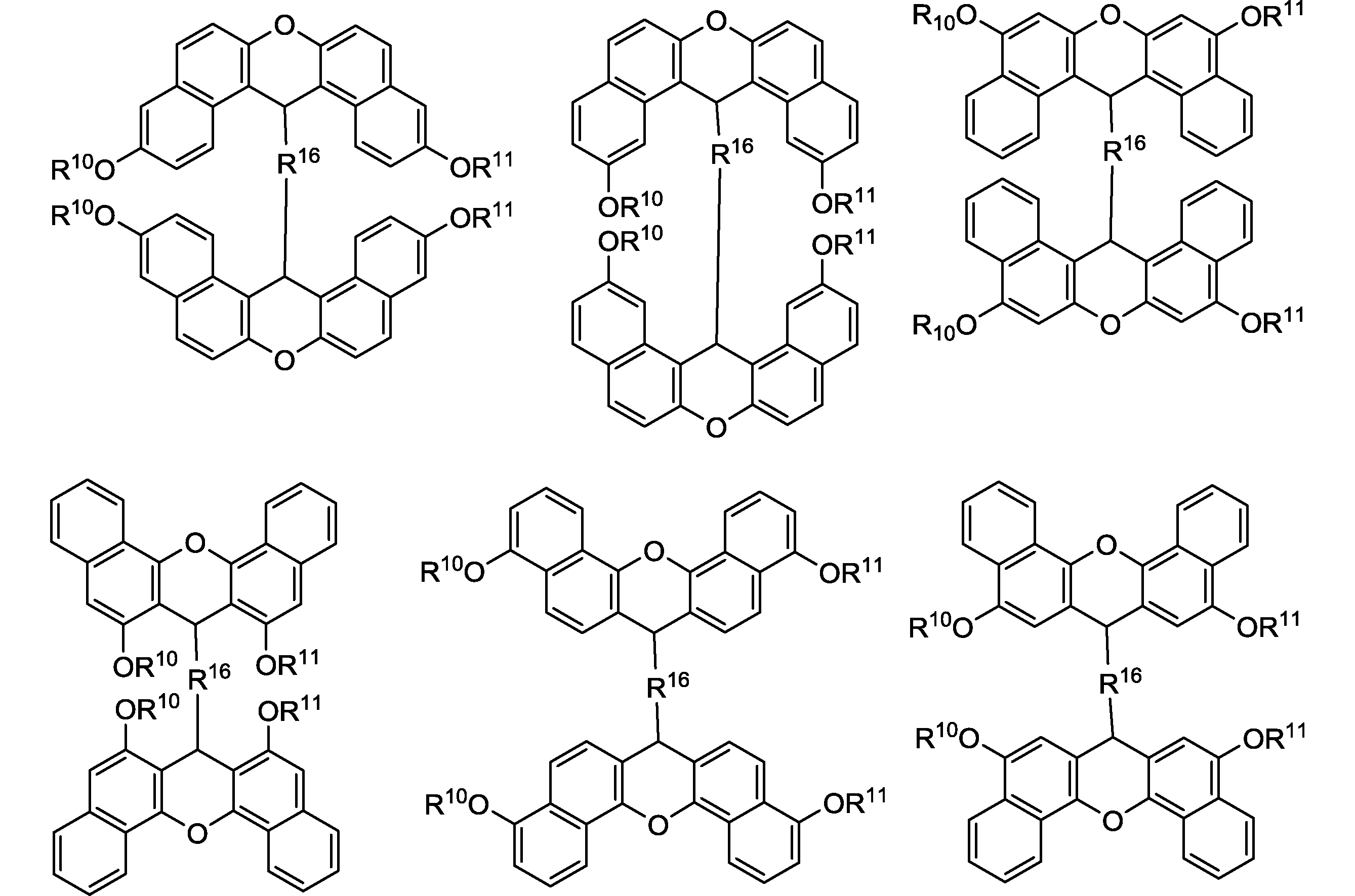
前記R16の各例示は、異性体を含んでいる。例えば、ブチル基には、n-ブチル基、イソブチル基、sec-ブチル基、tert-ブチル基を含んでいる。
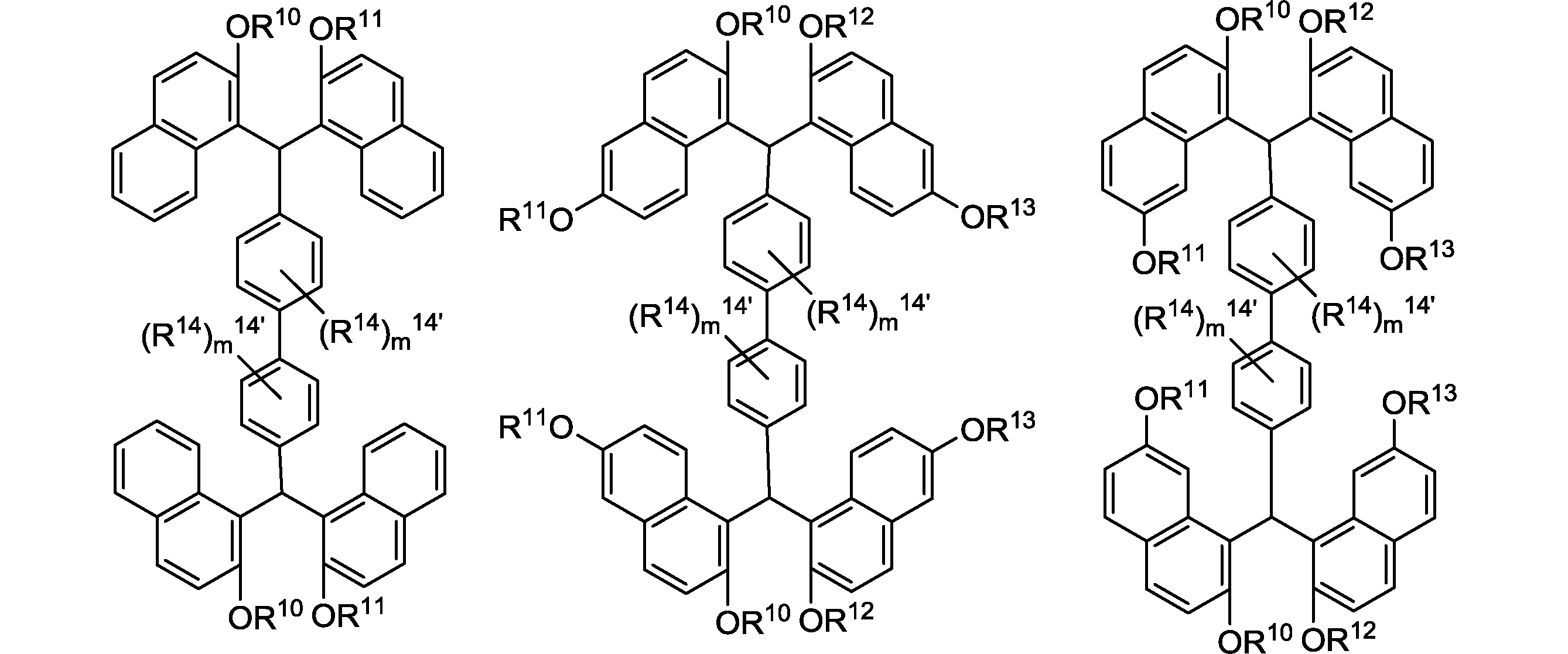

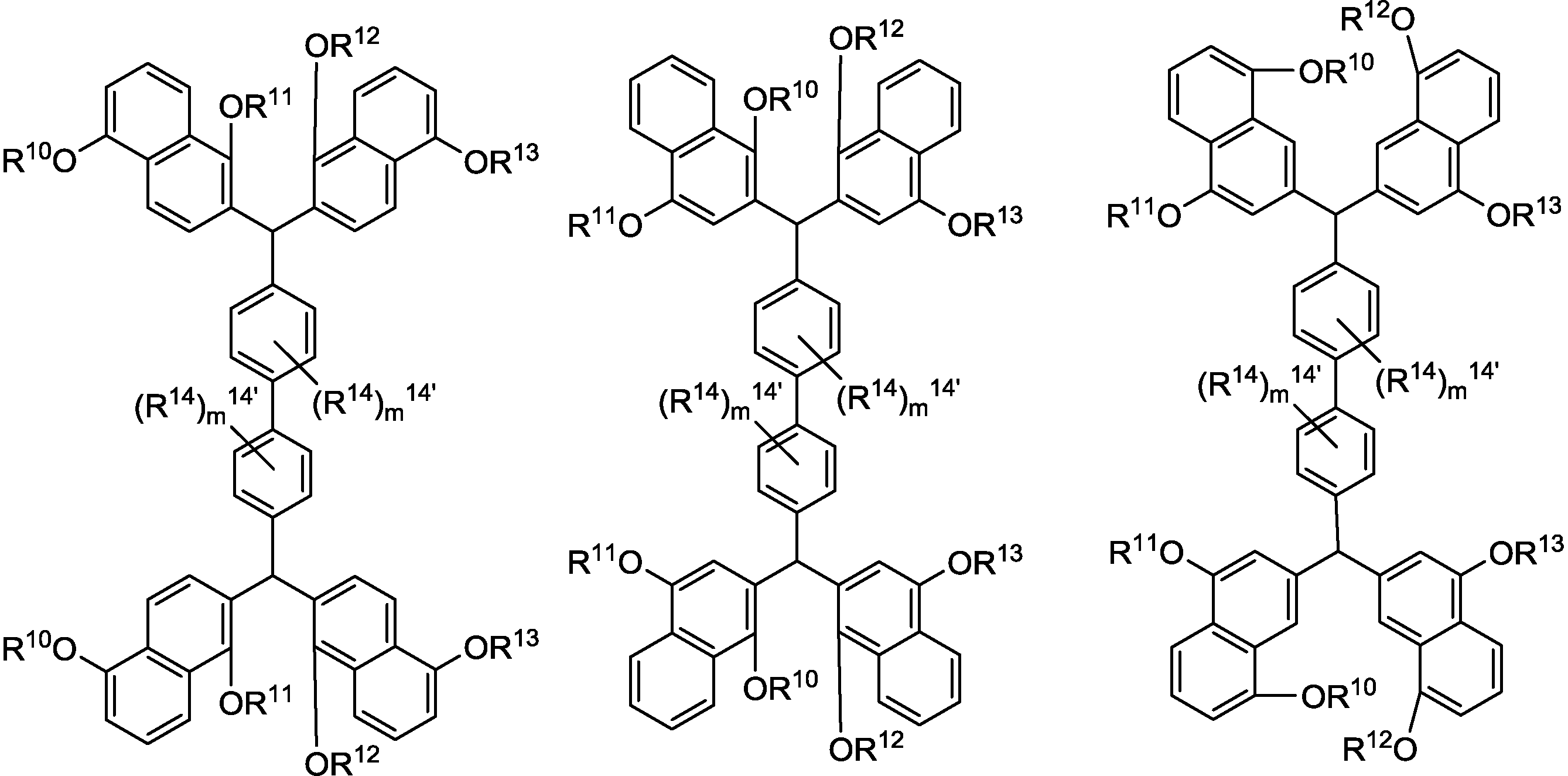
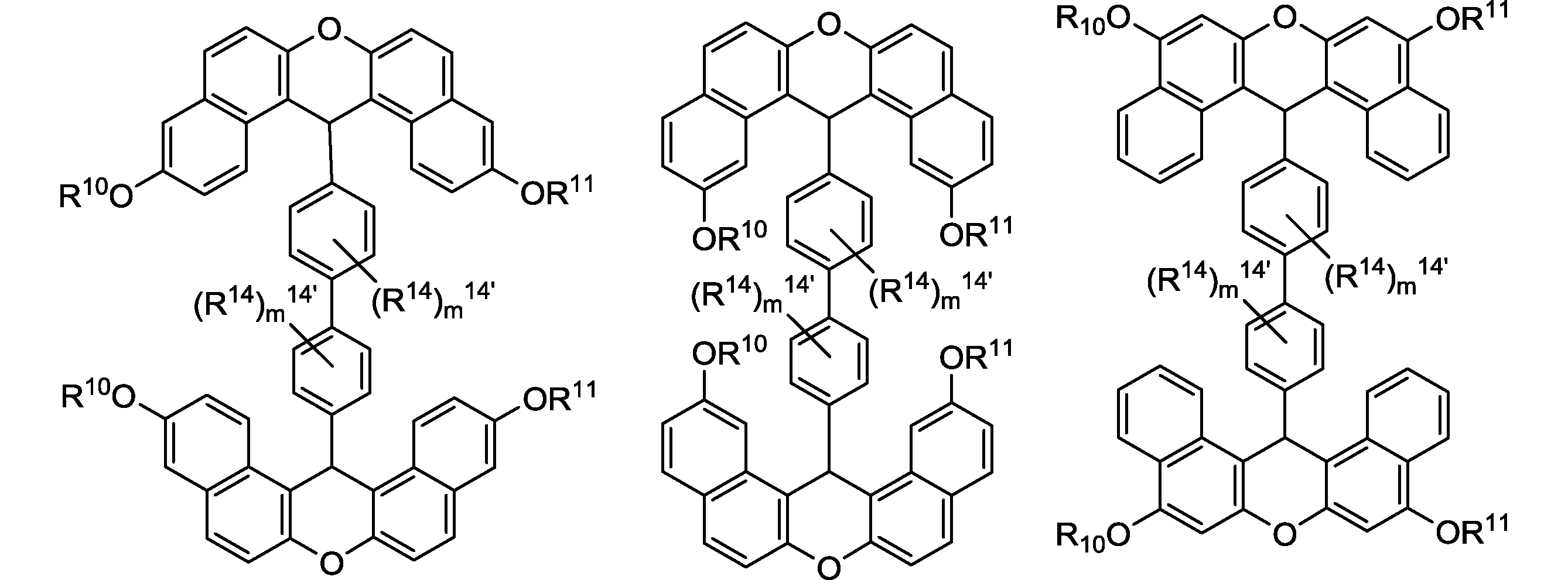
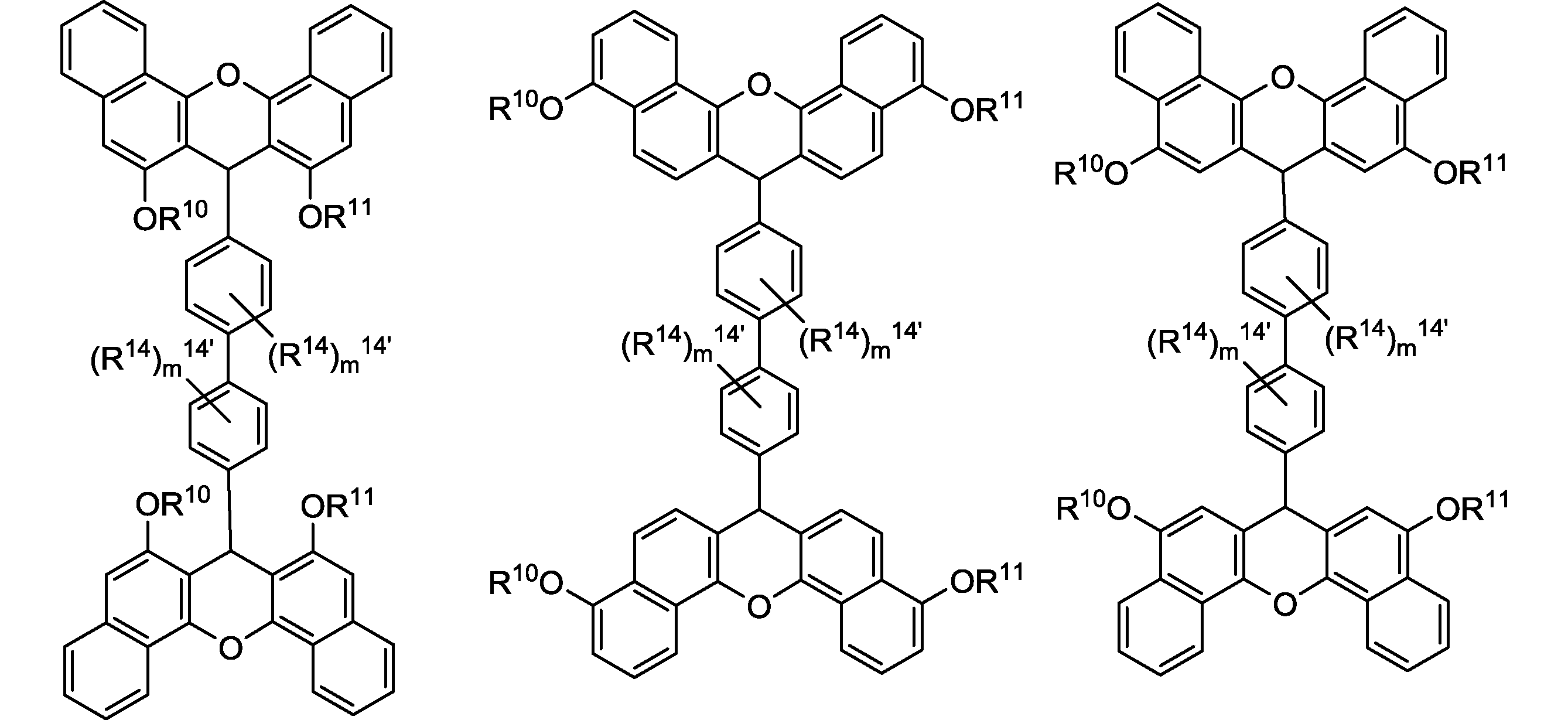


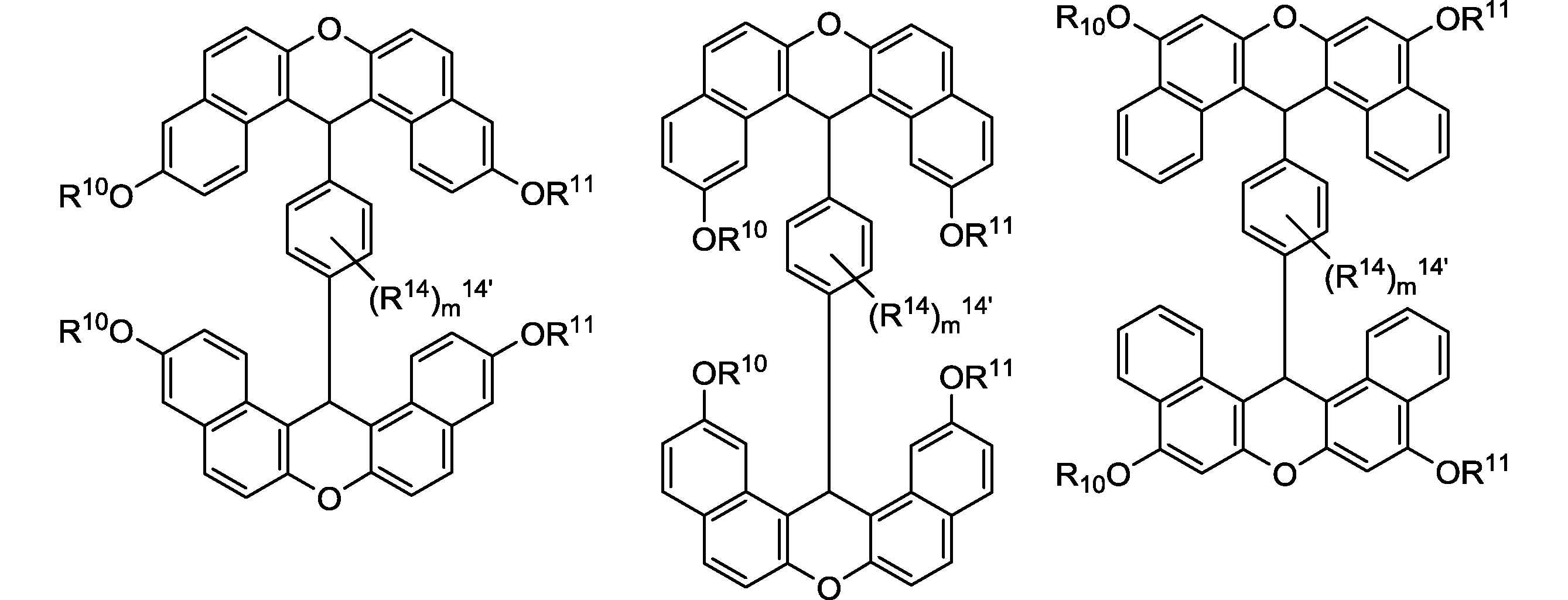
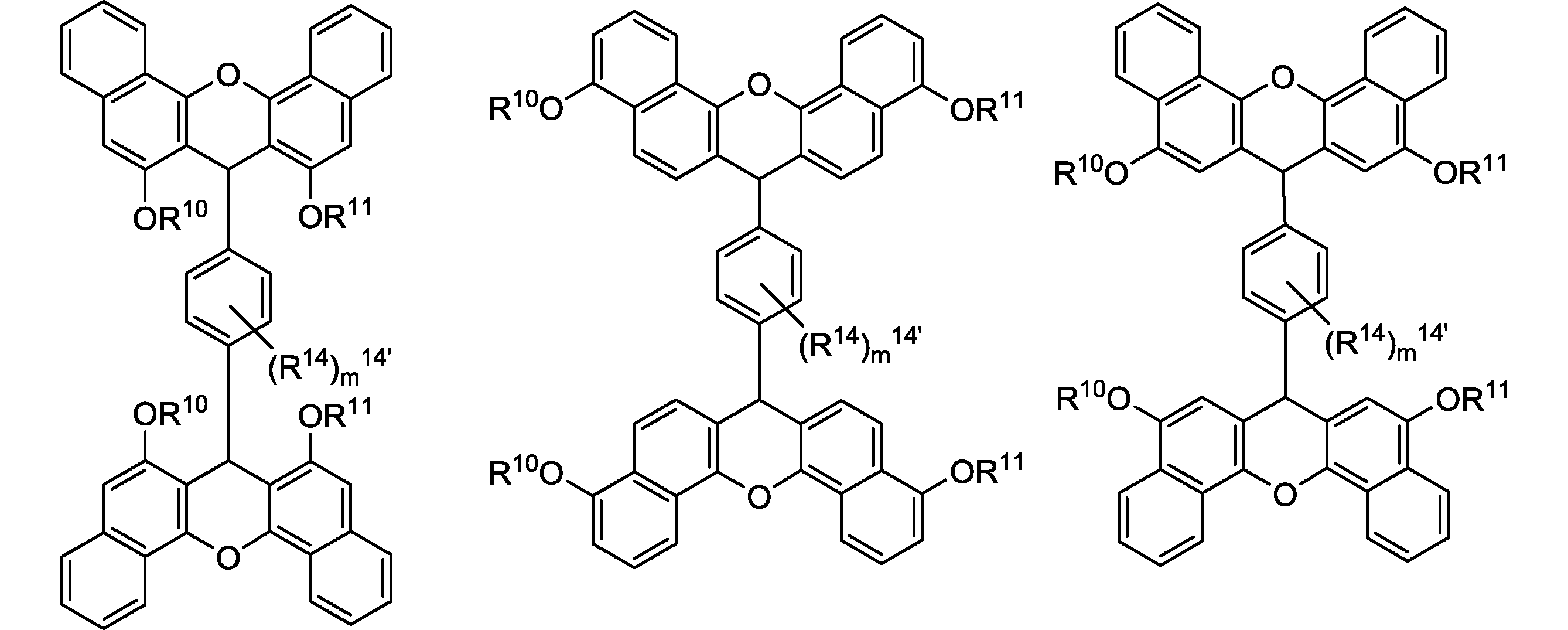
前記R14の各例示は、異性体を含んでいる。例えば、ブチル基には、n-ブチル基、イソブチル基、sec-ブチル基、tert-ブチル基を含んでいる。


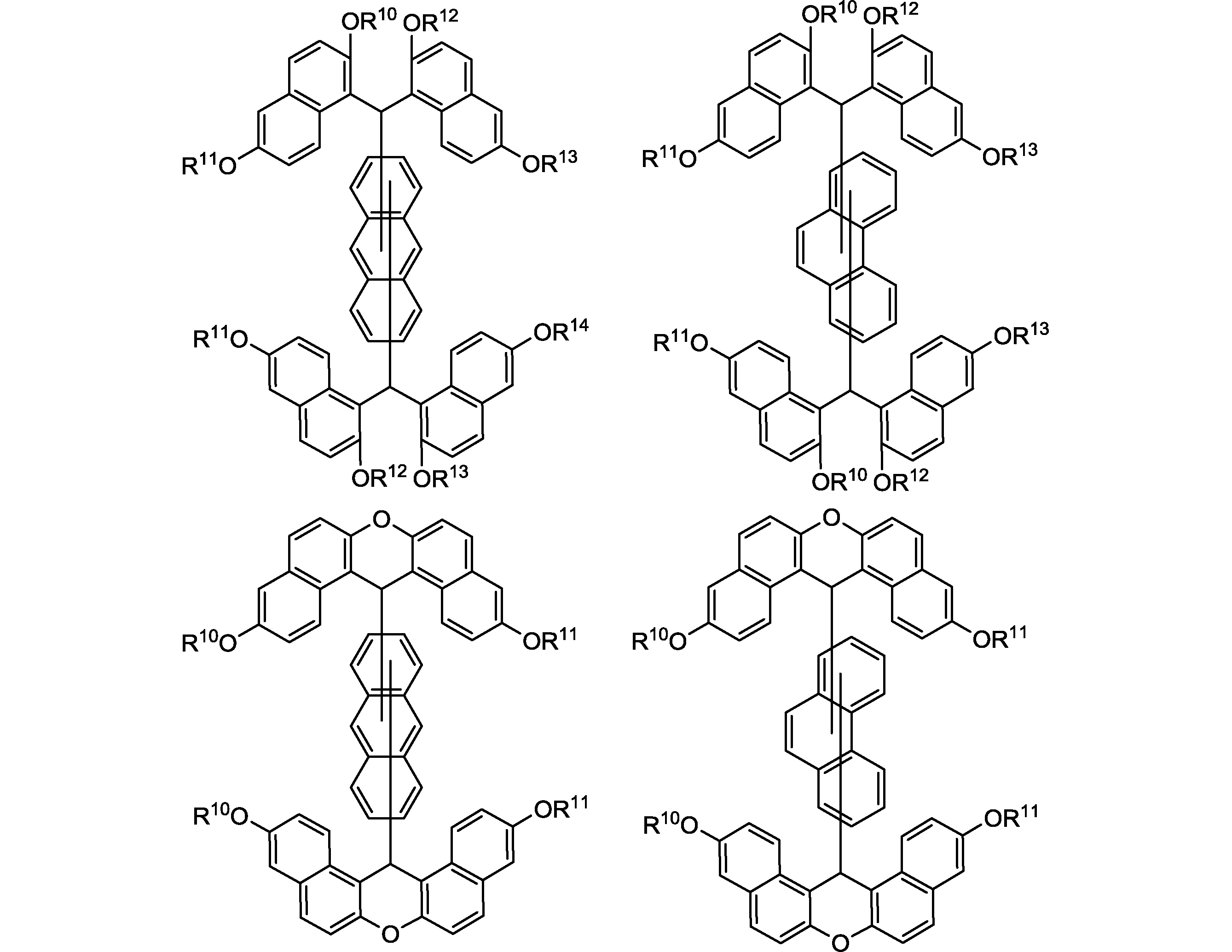
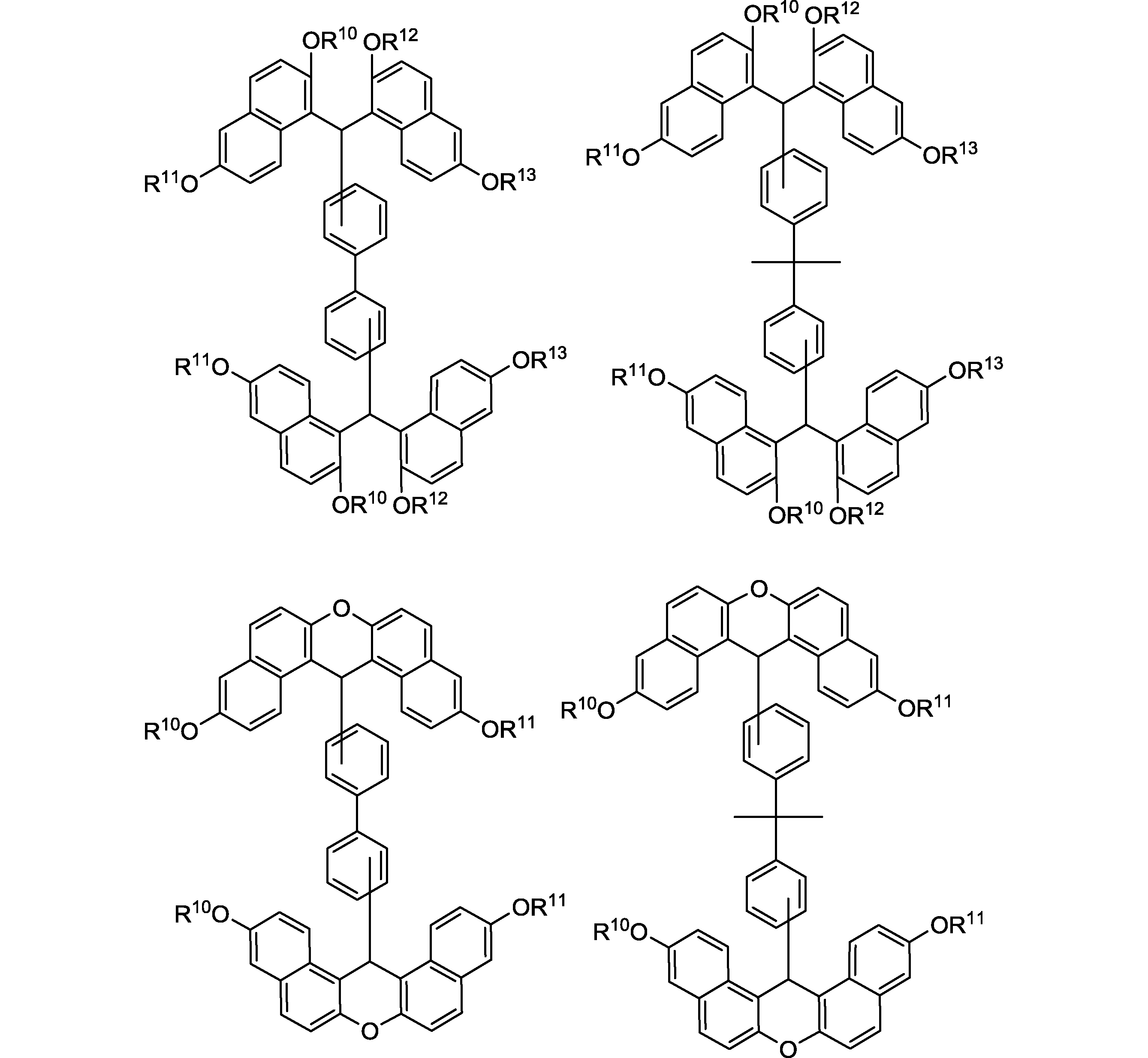

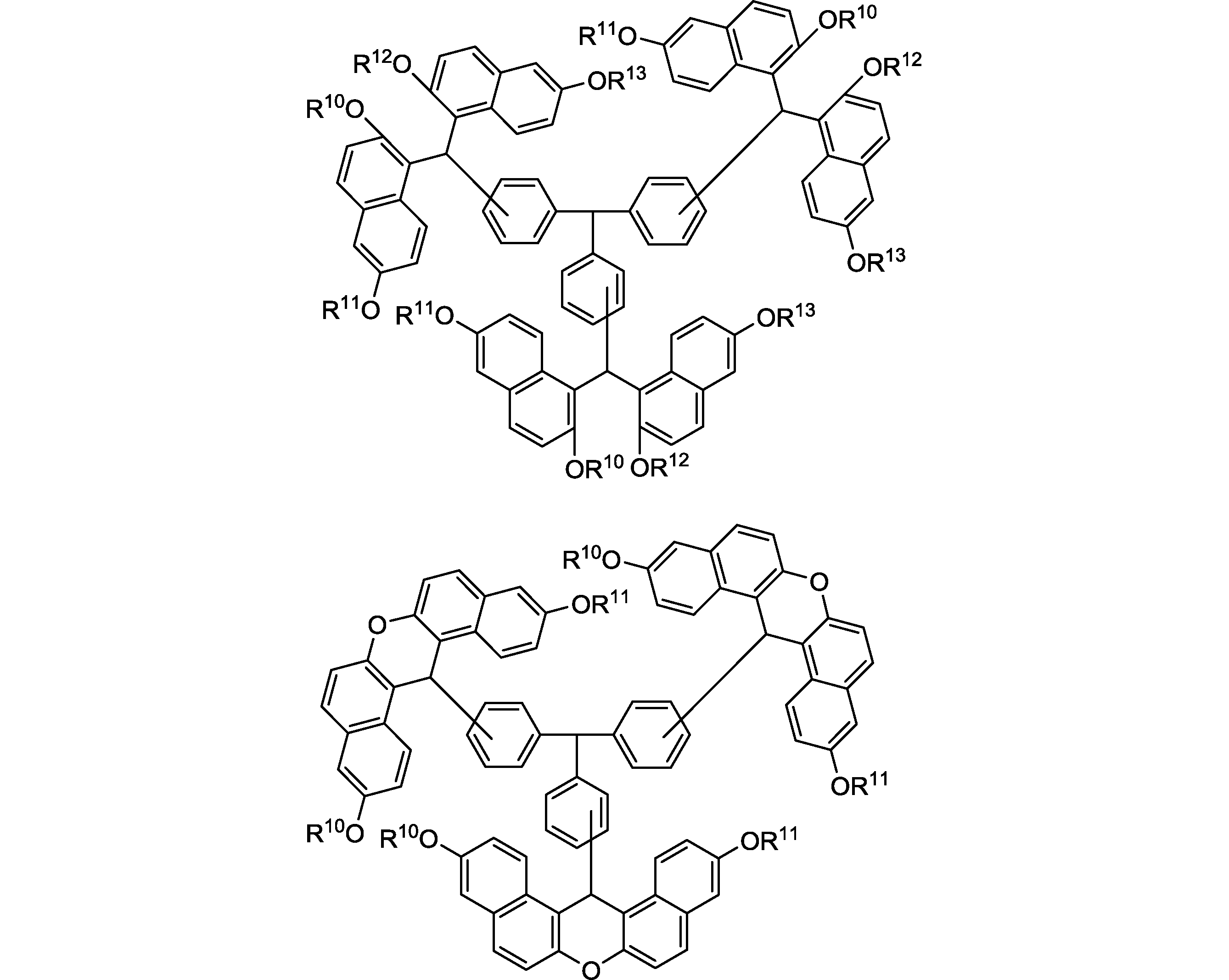
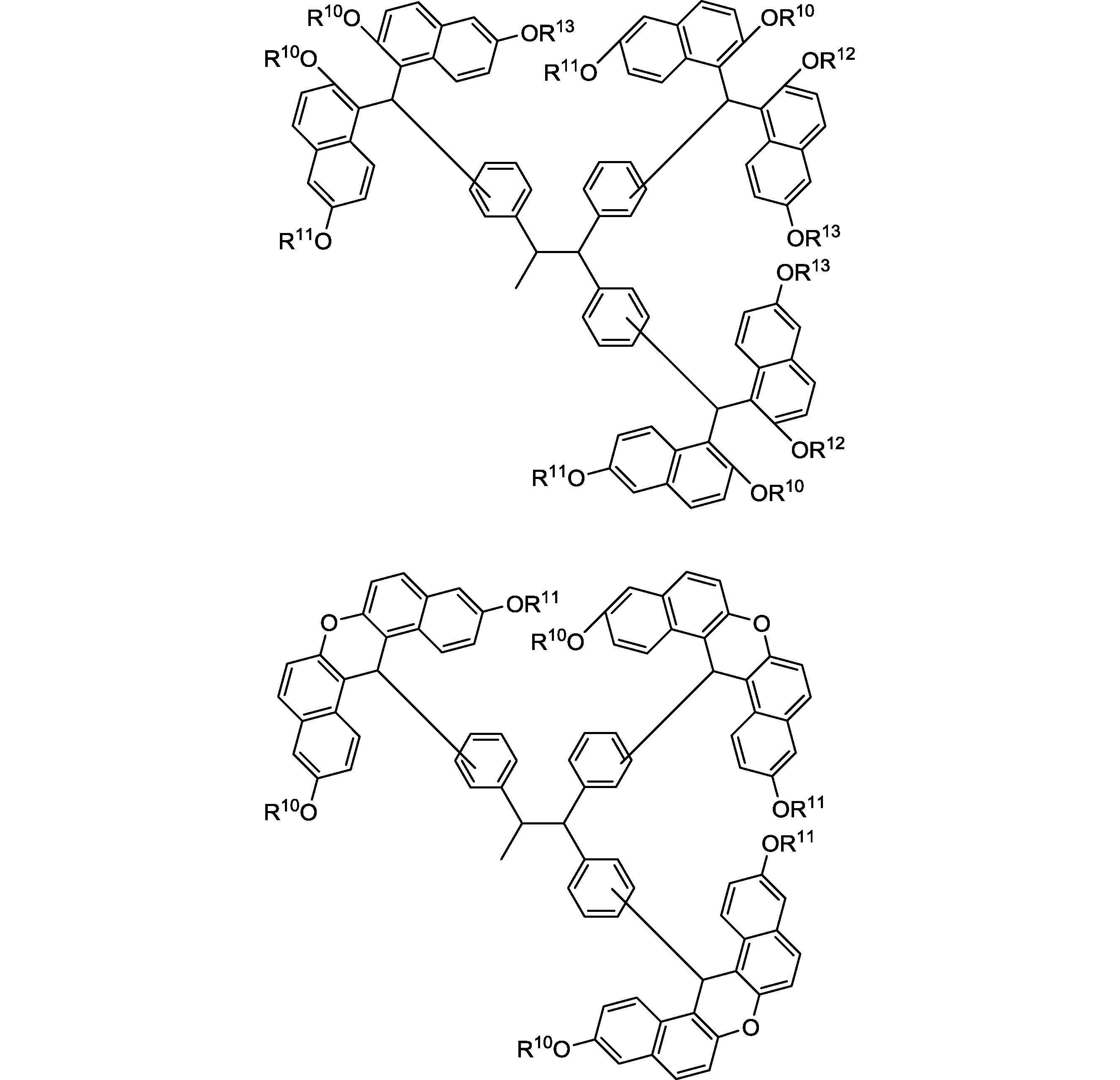
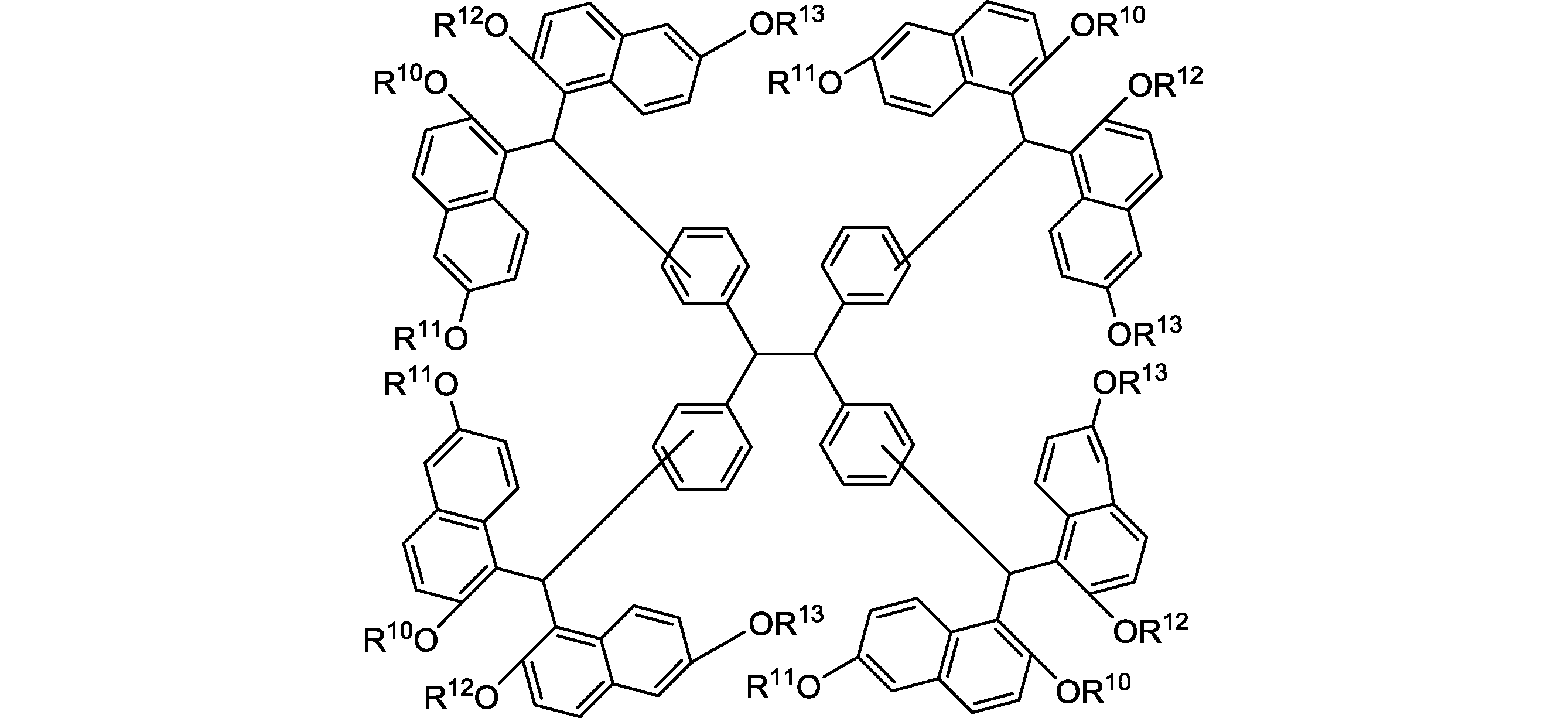
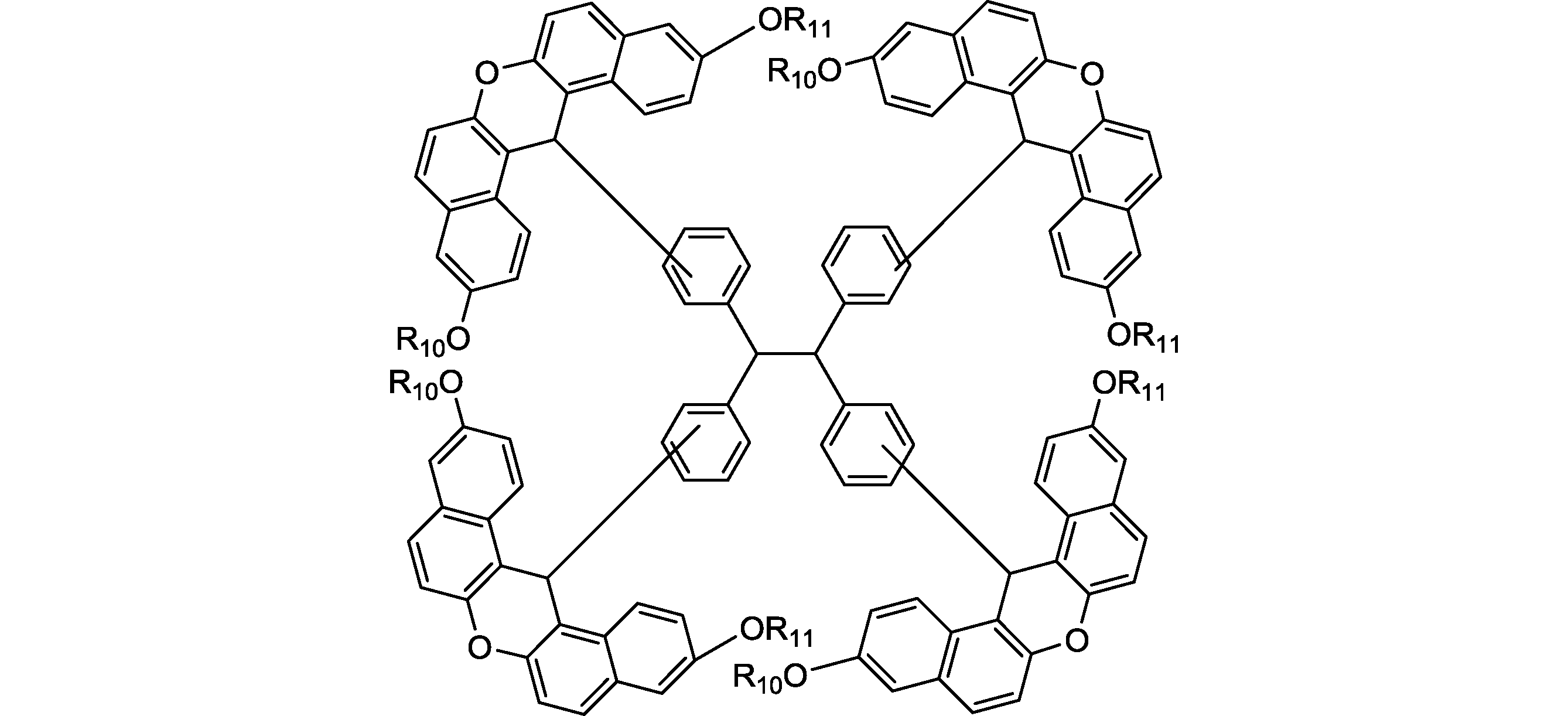

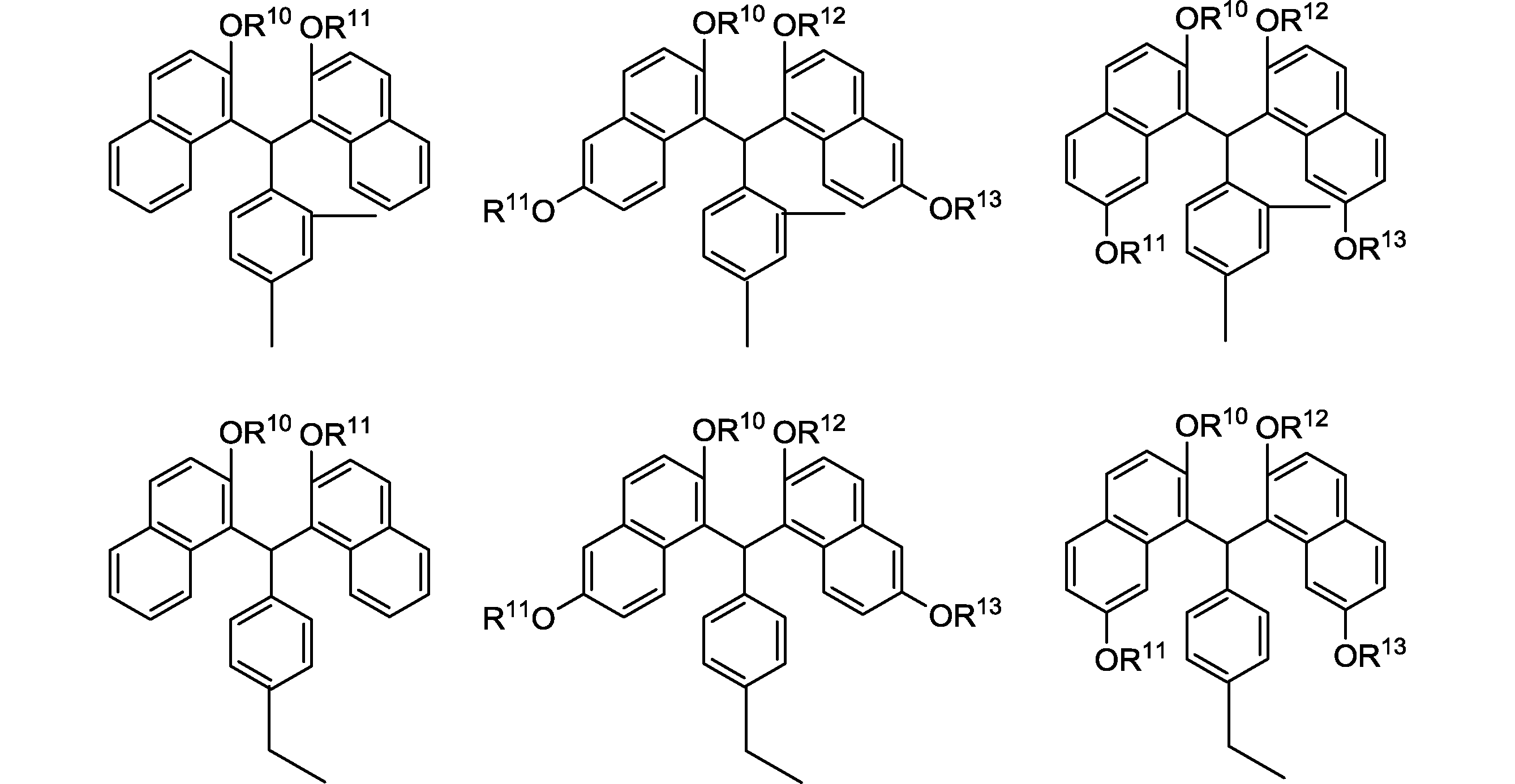


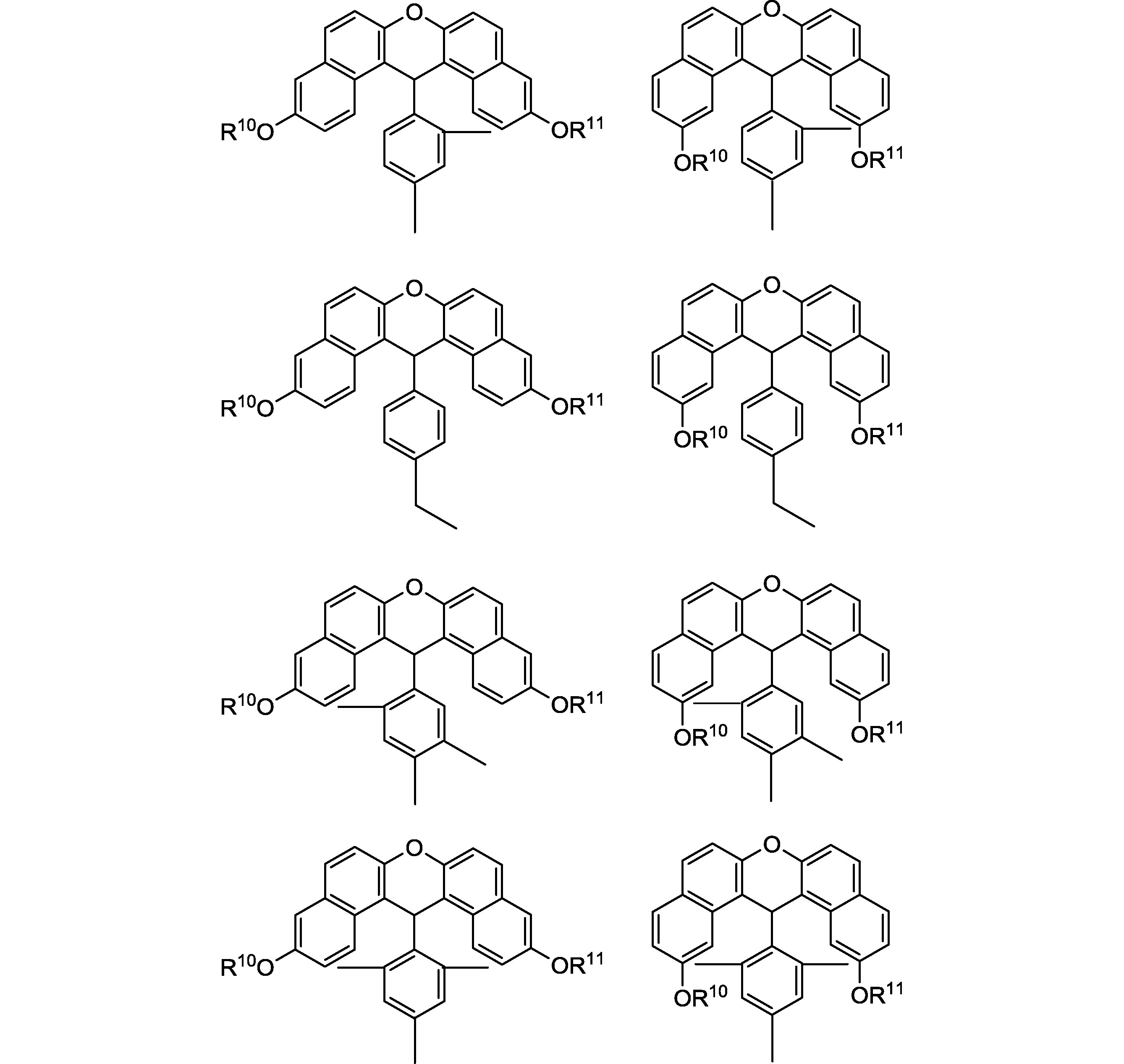
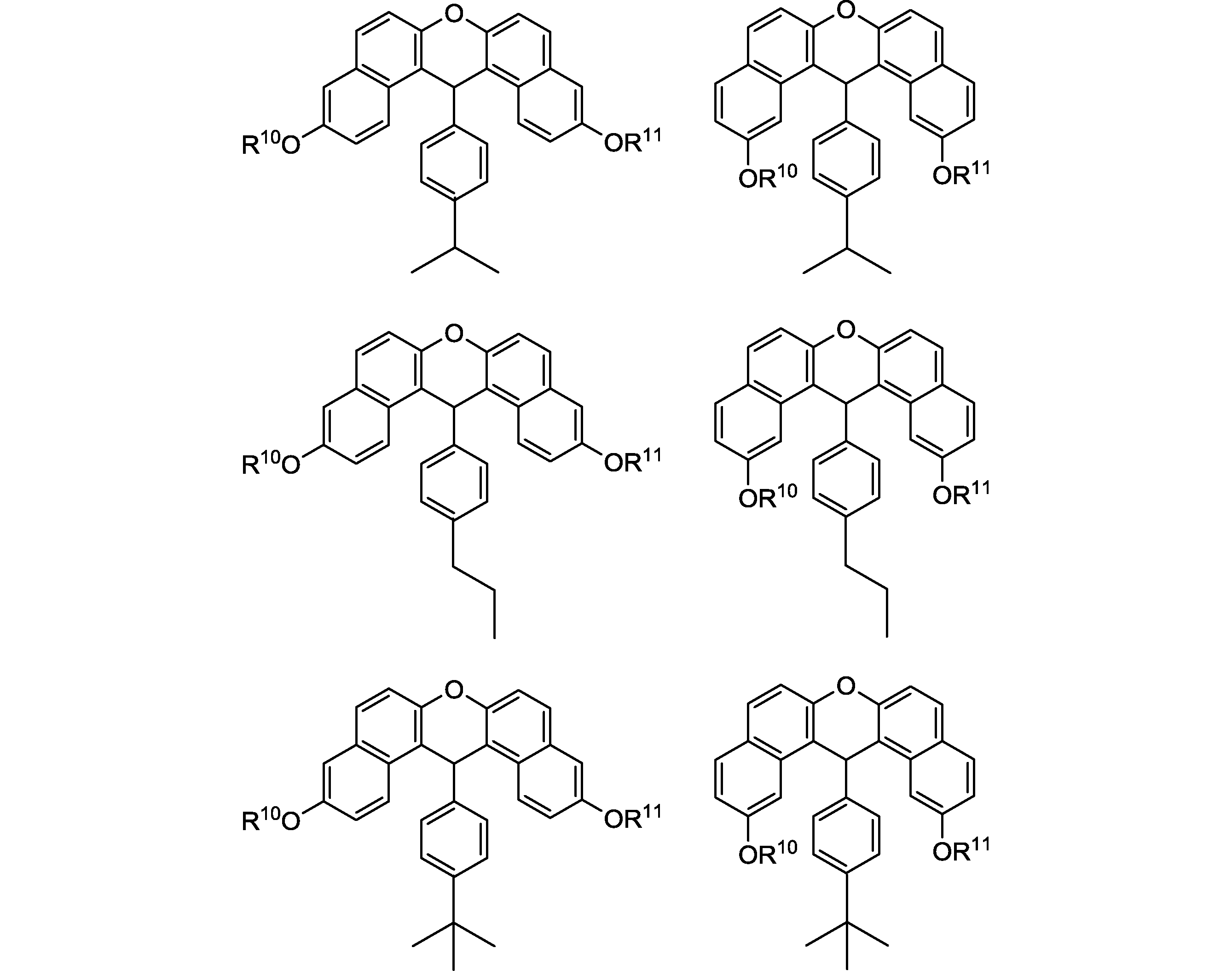
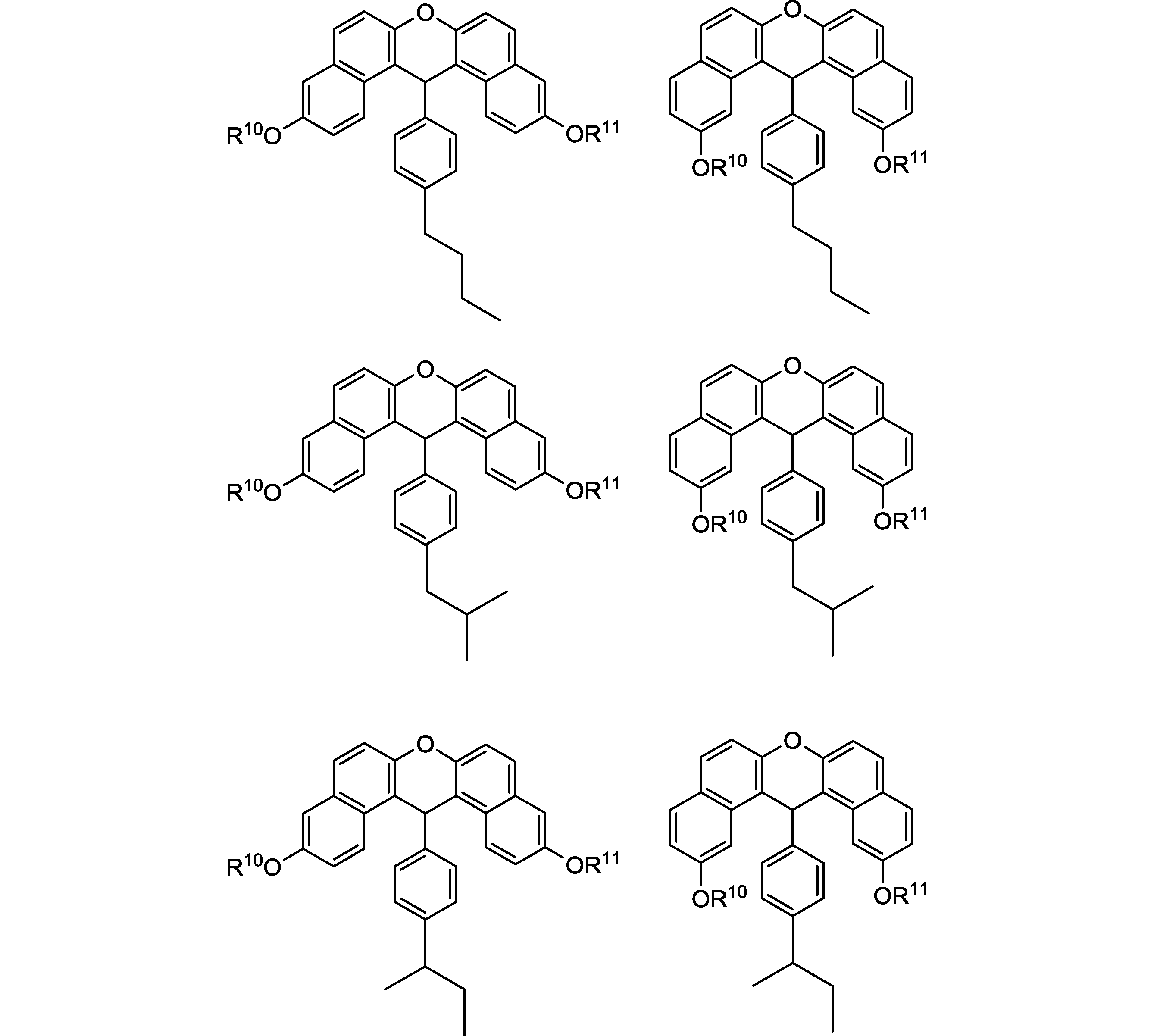


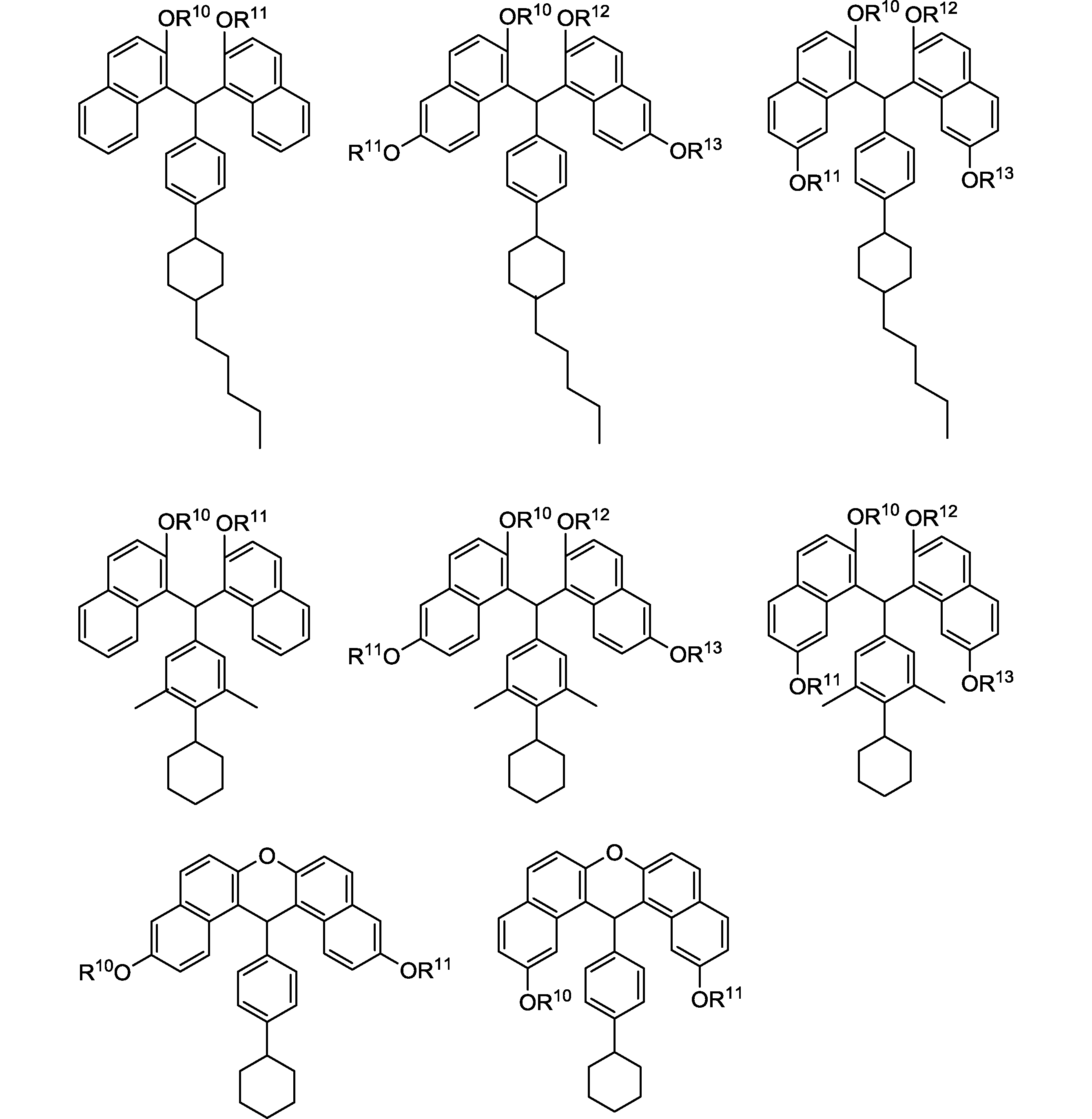
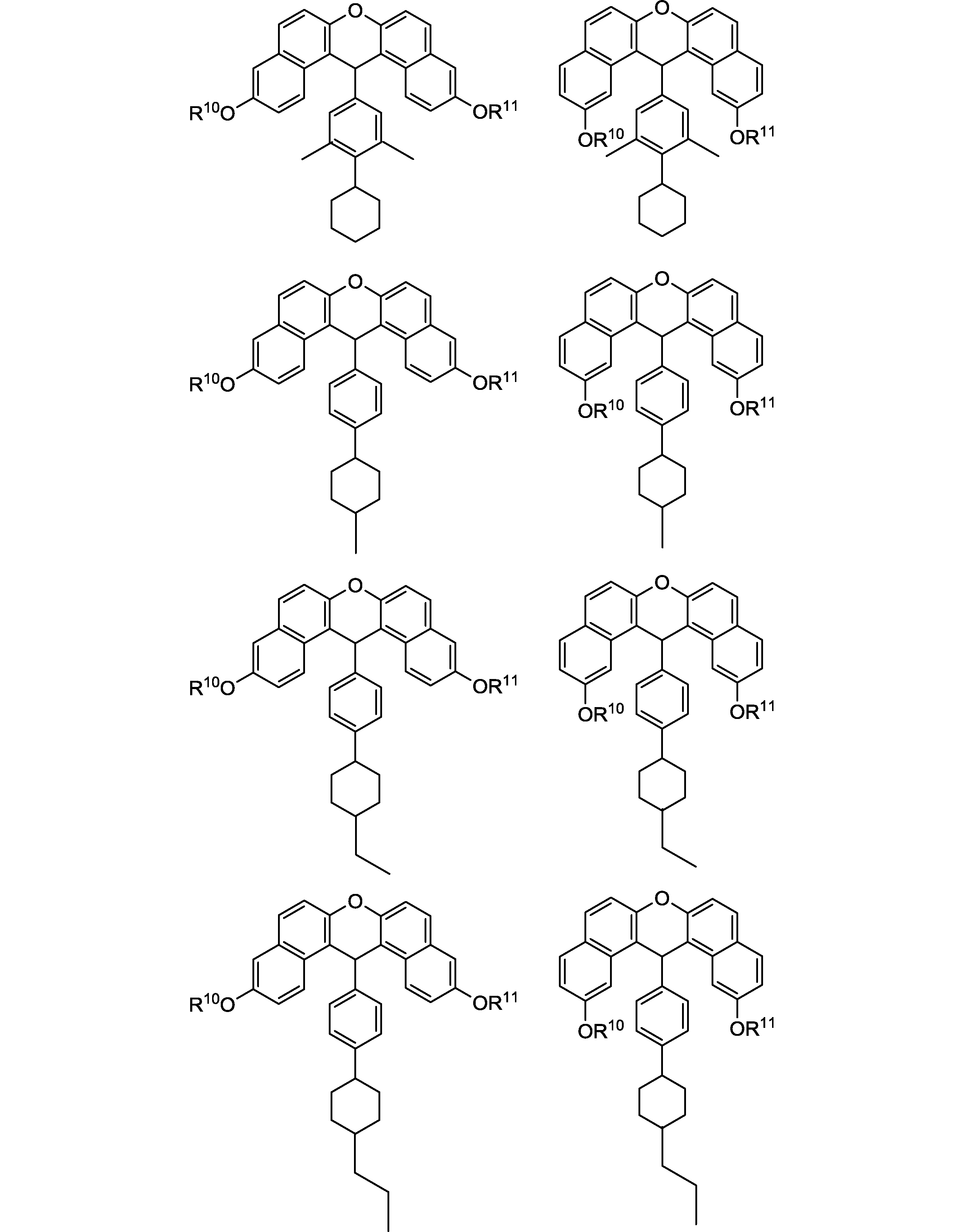
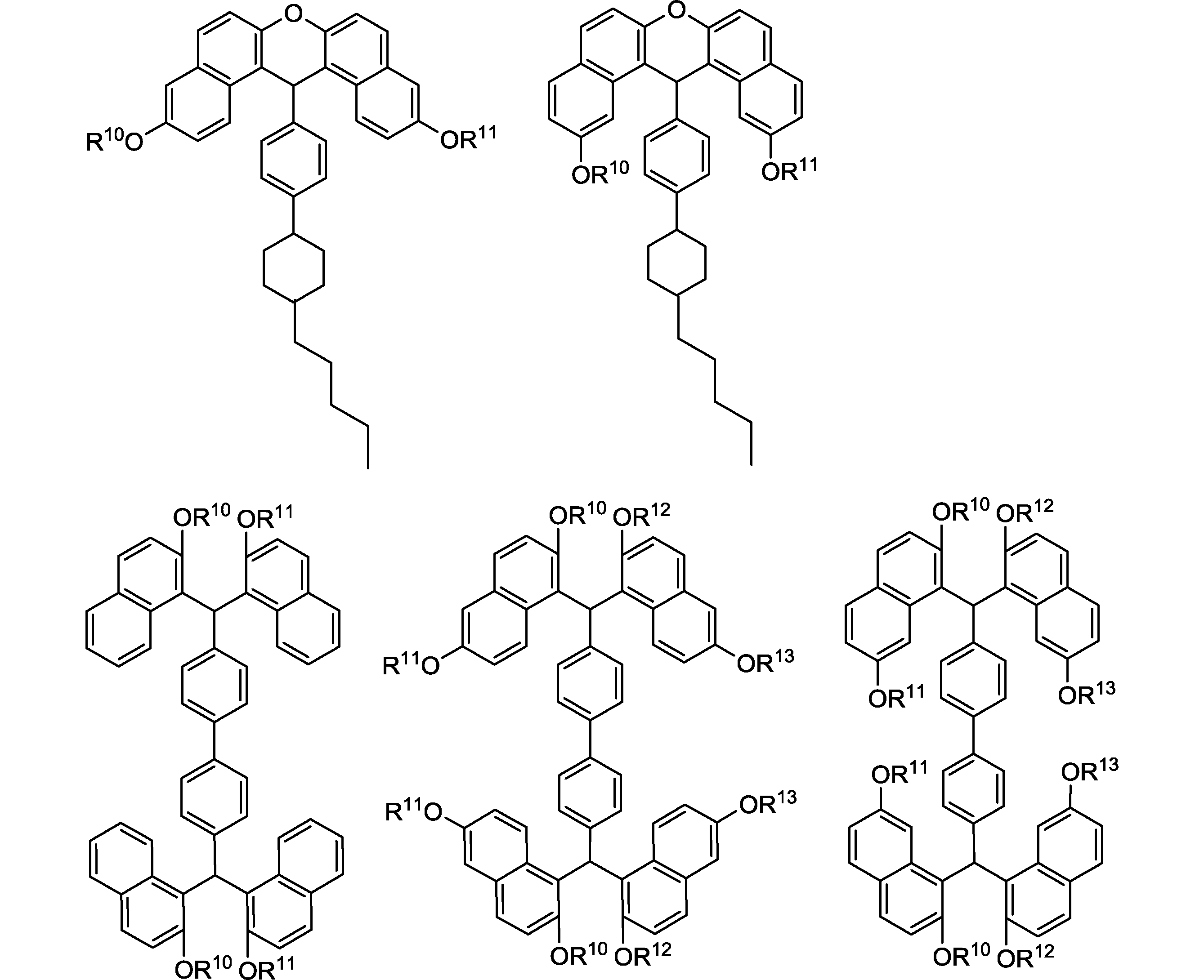
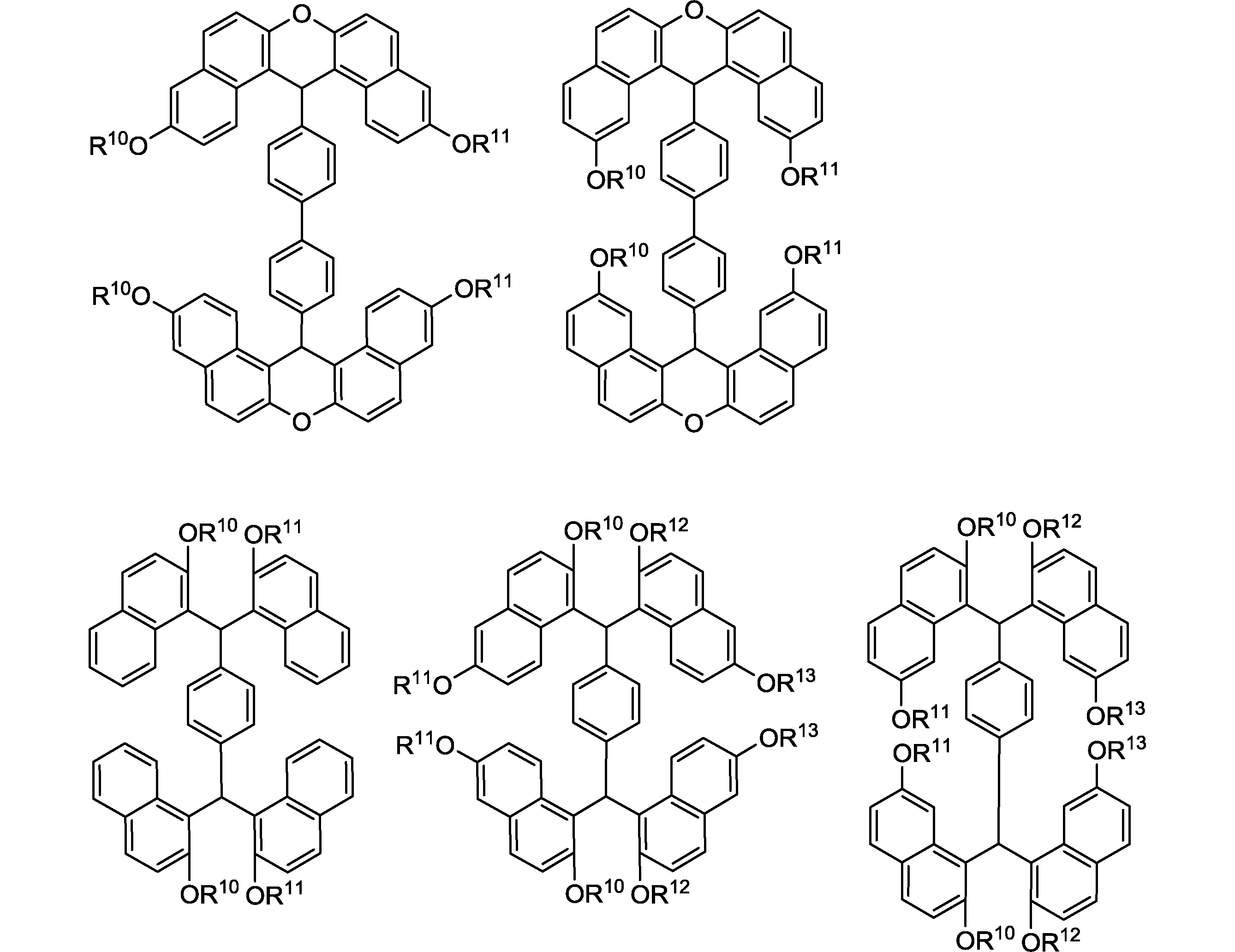
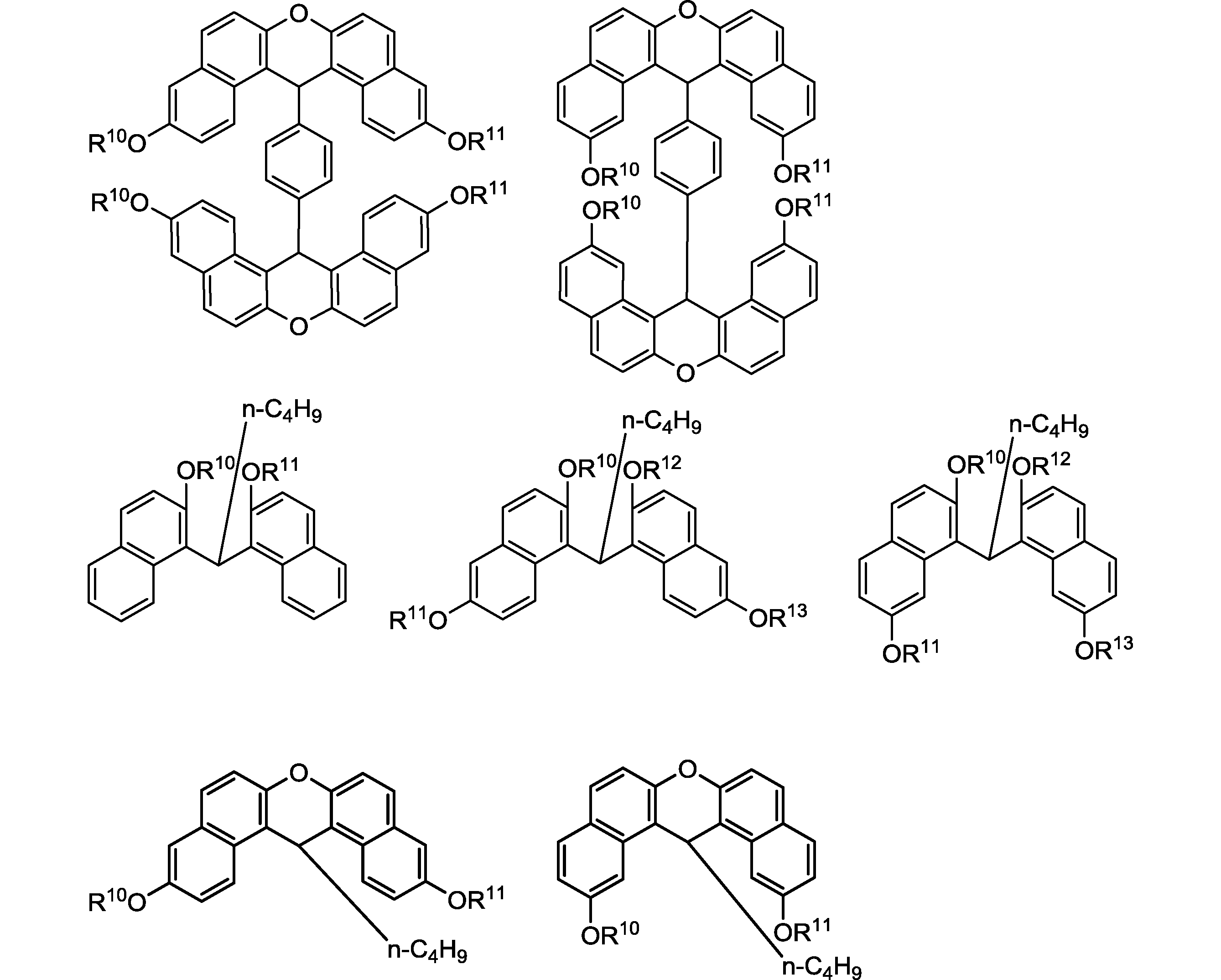


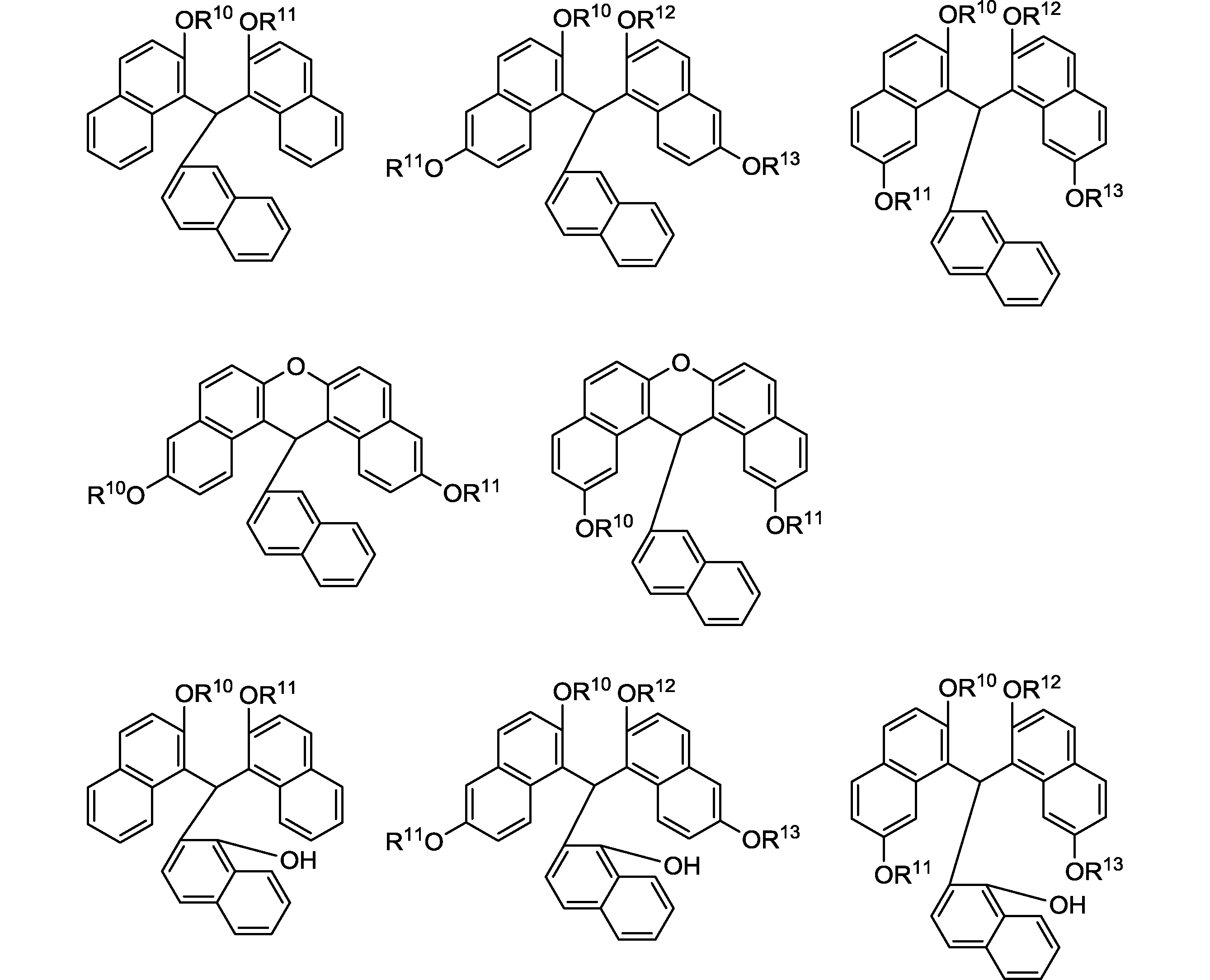
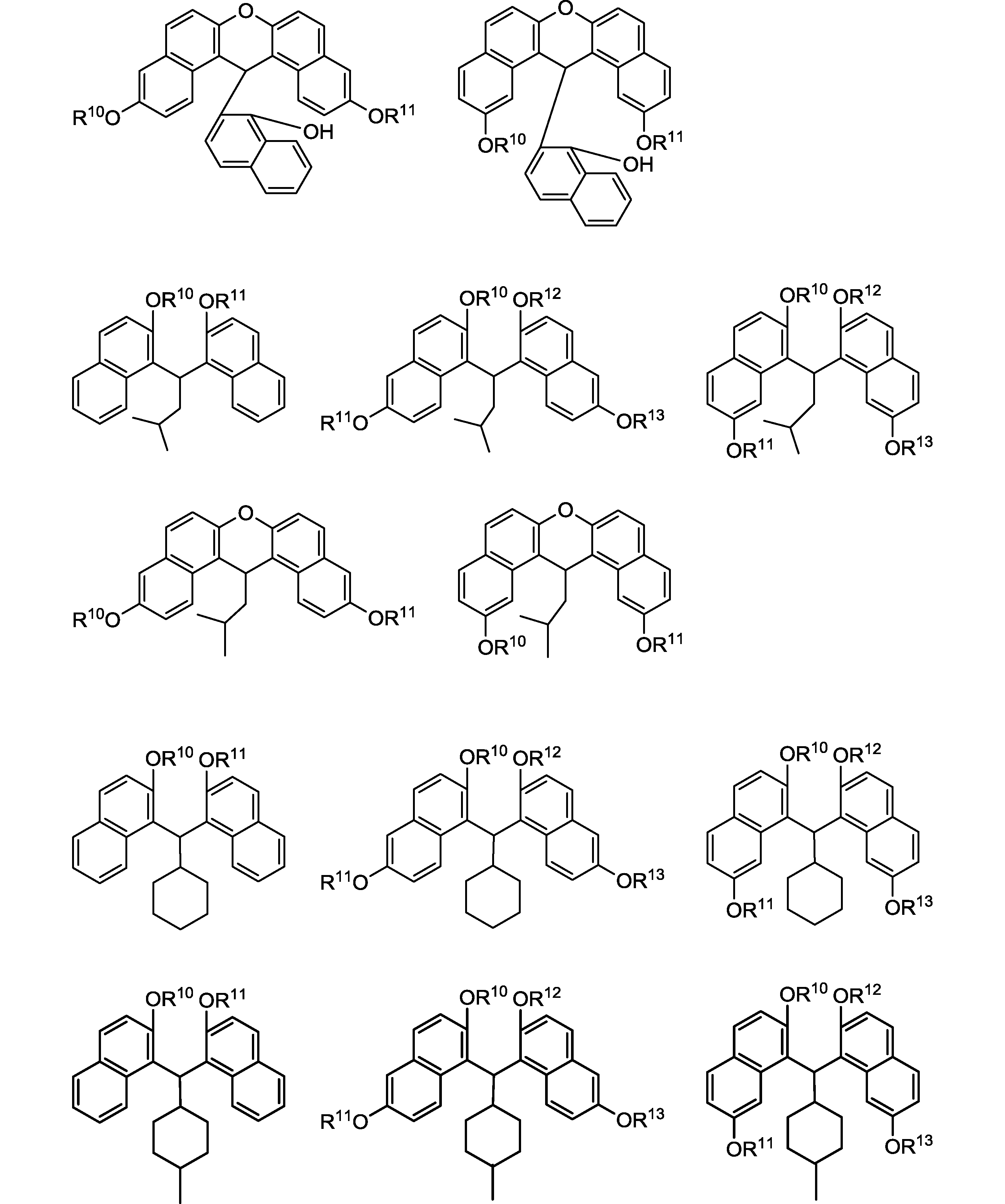
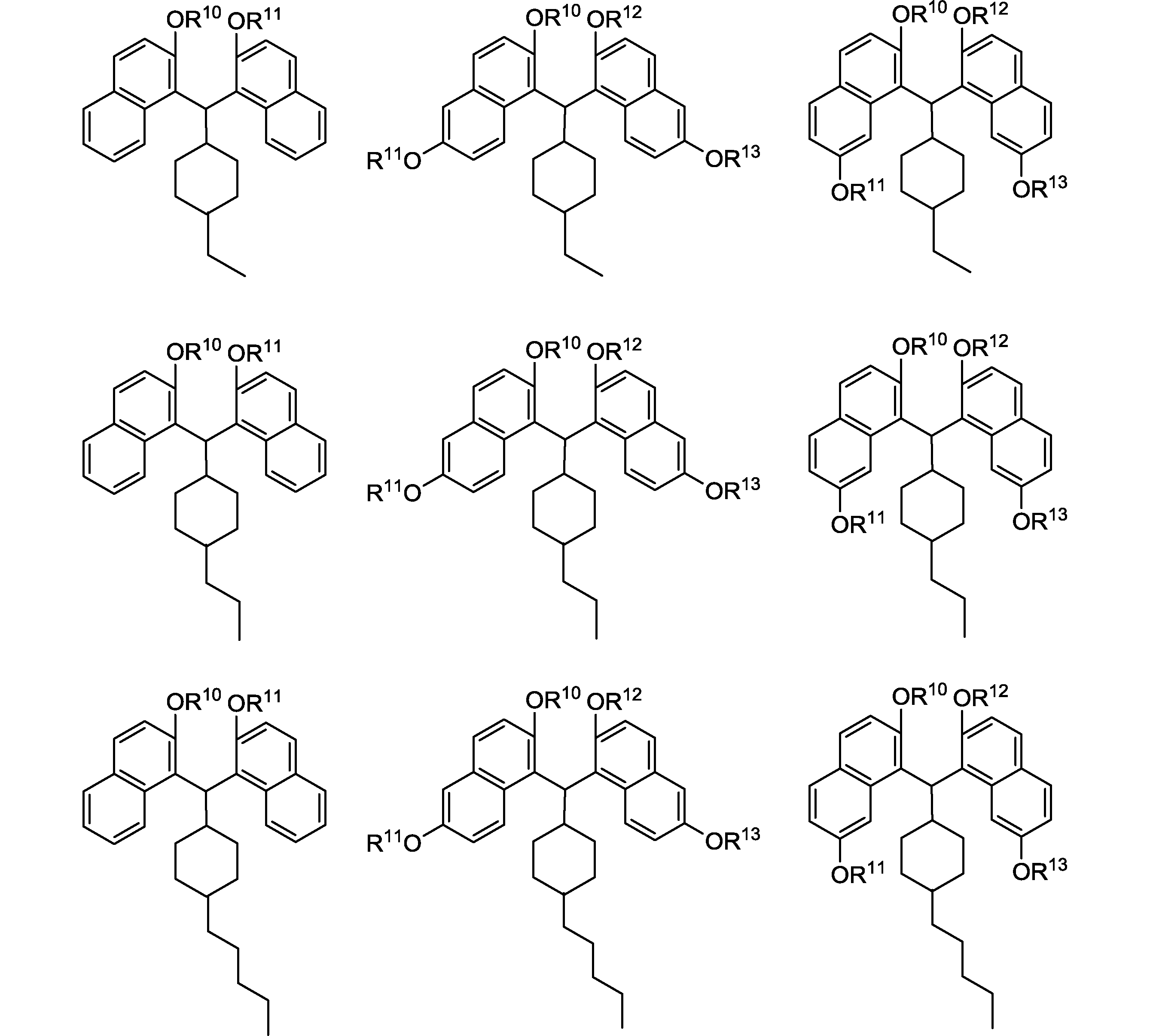


更に、ジベンゾキサンテン骨格を有する方が耐熱性の観点から好ましい。
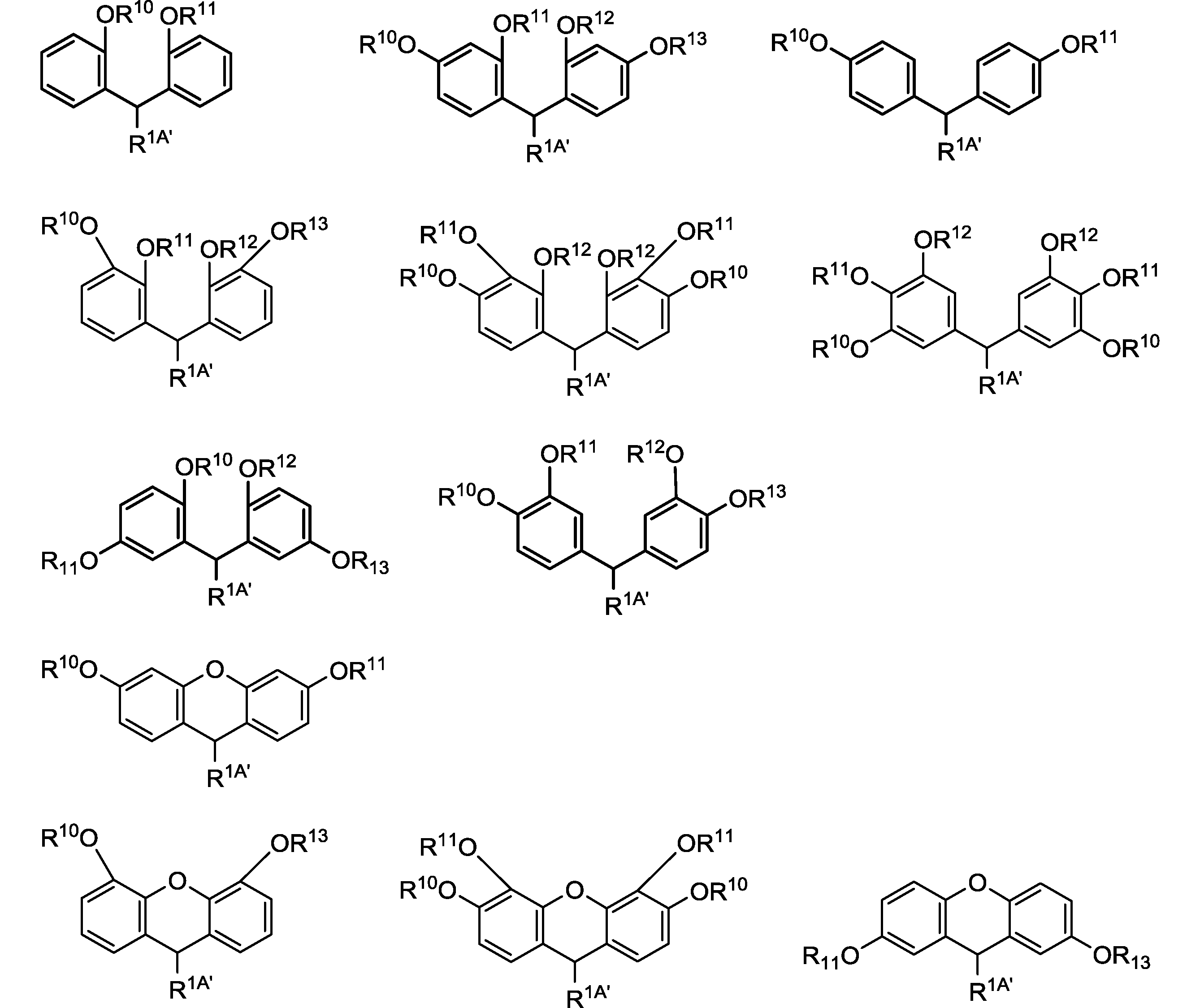
前記式で表される化合物は、キサンテン骨格を有する方が耐熱性の観点から好ましい。
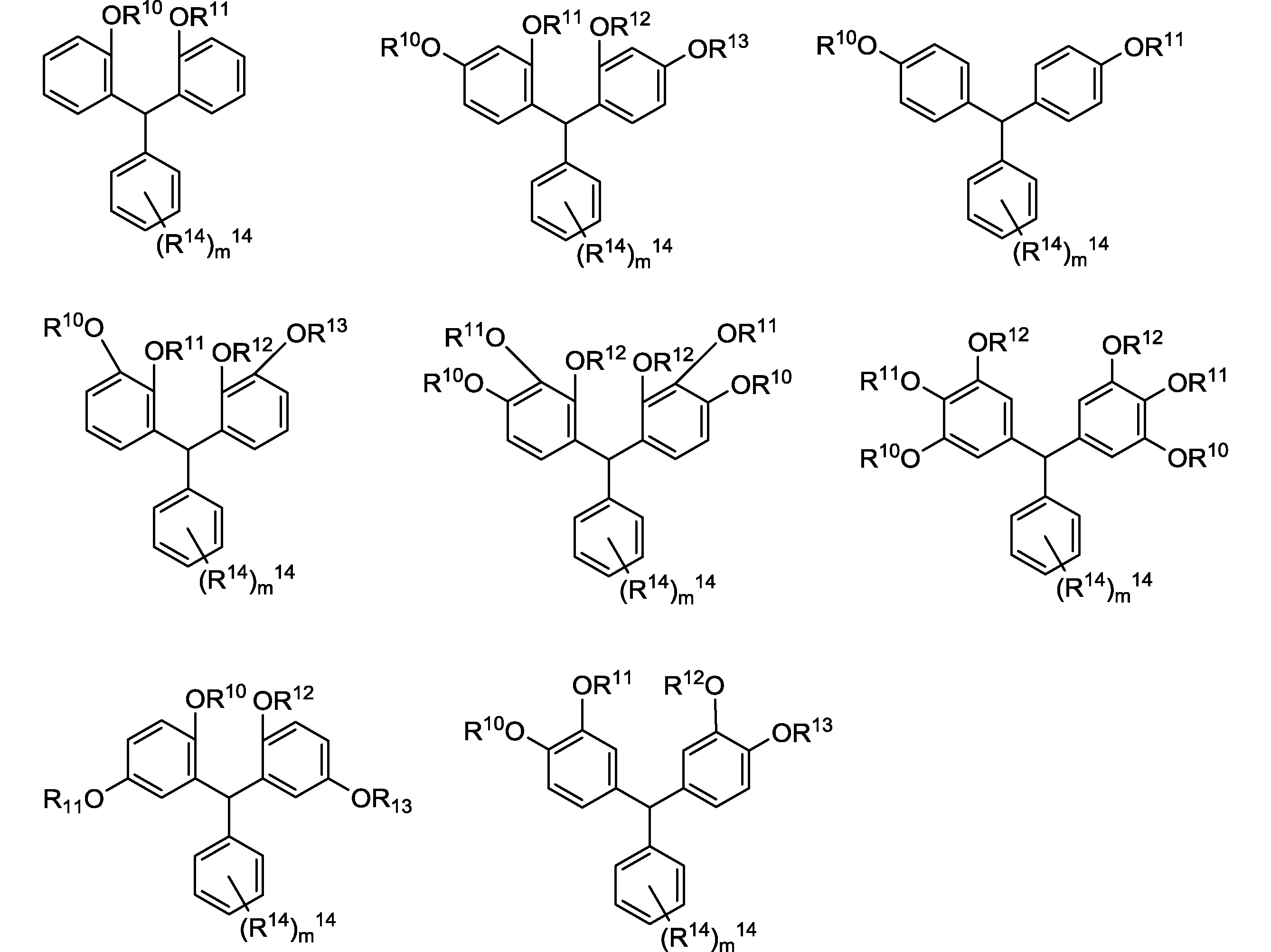
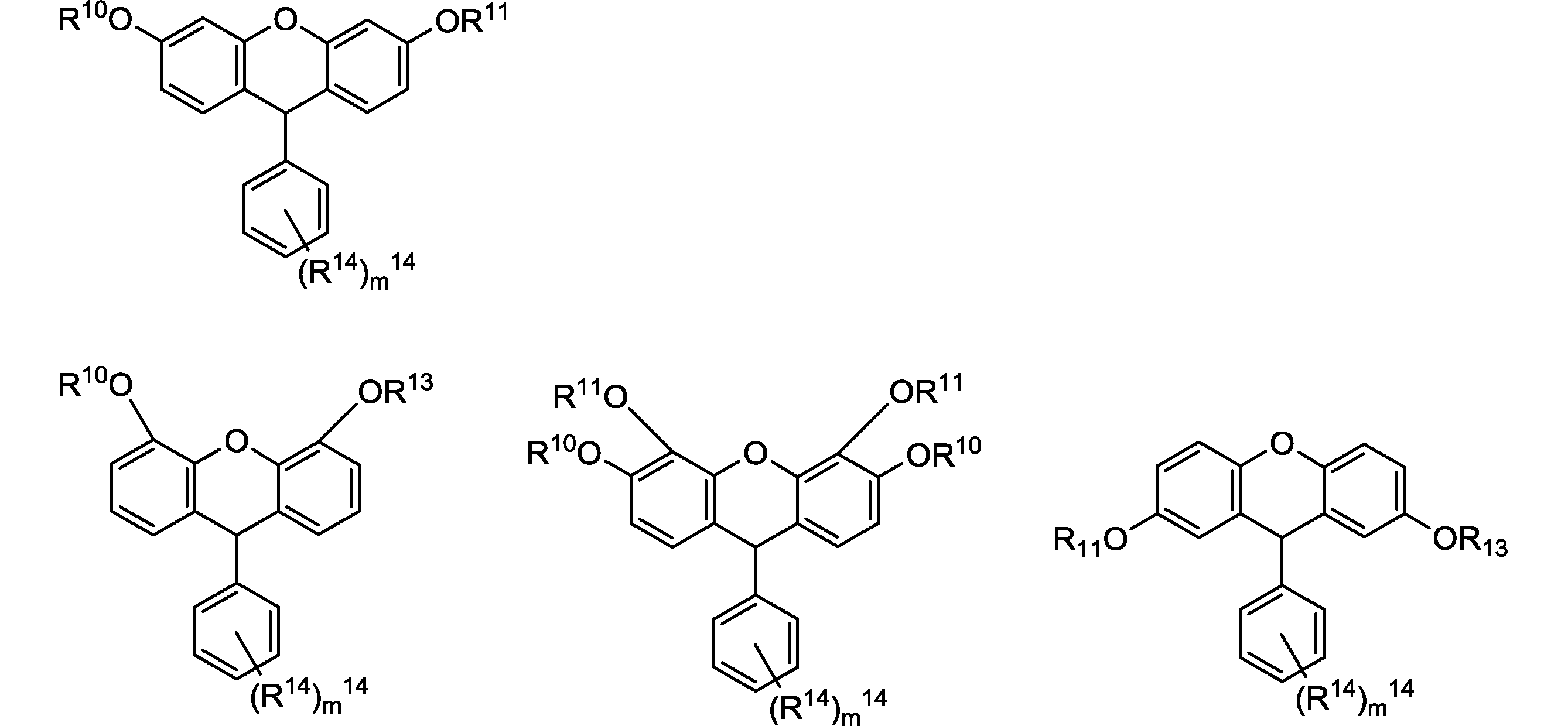

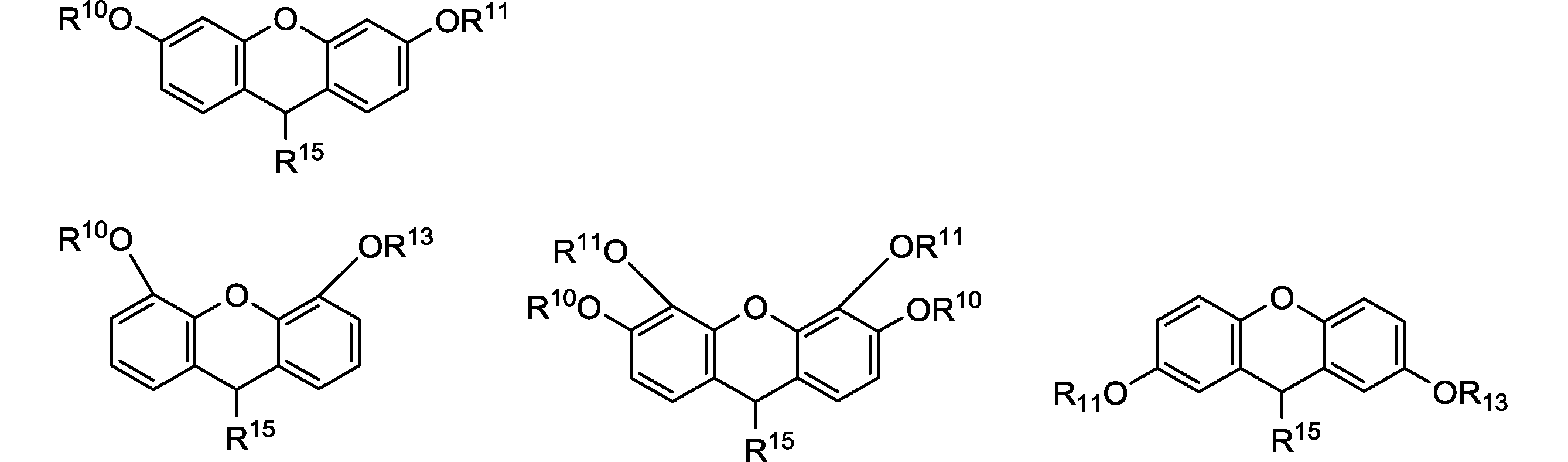
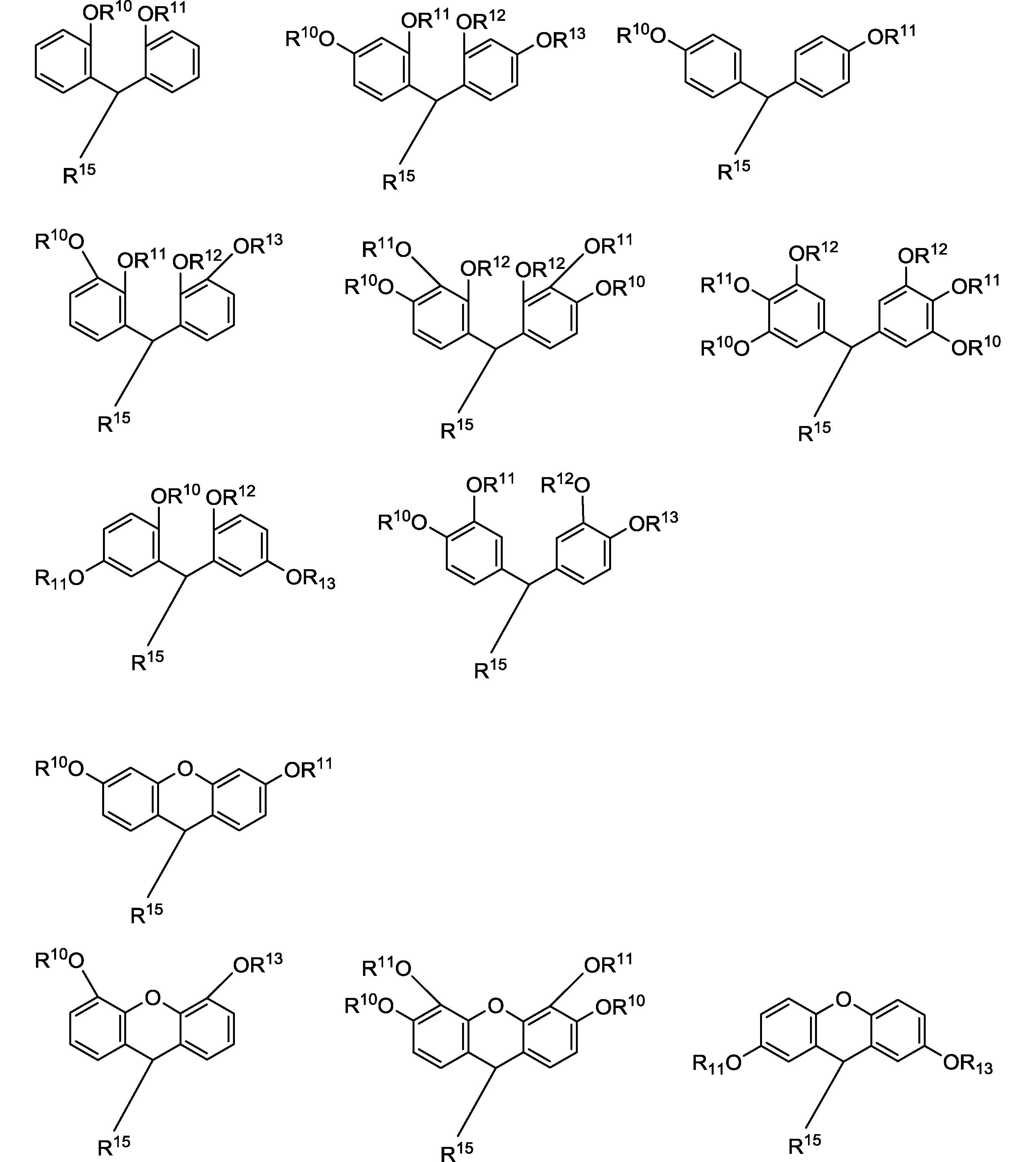
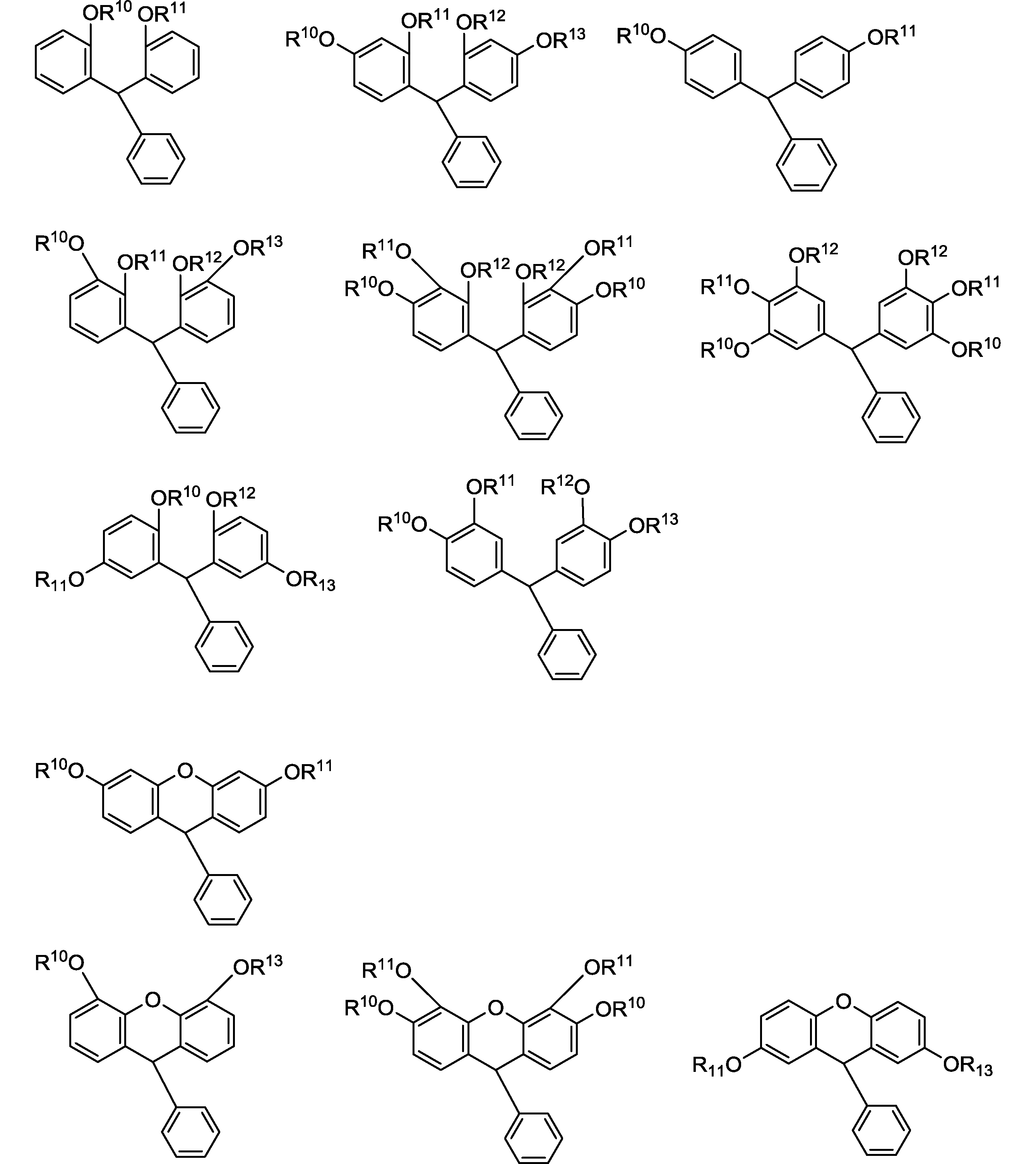

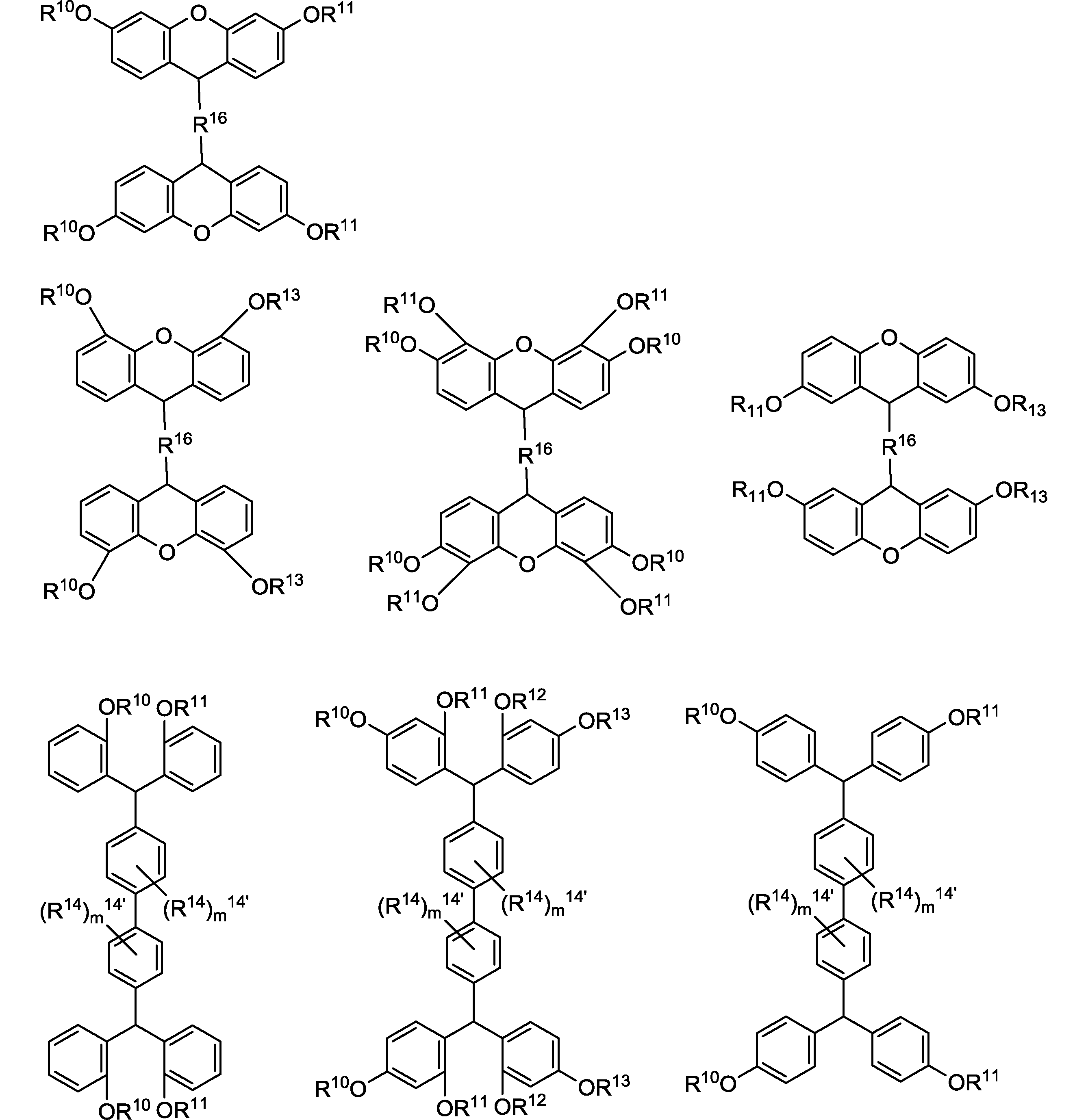


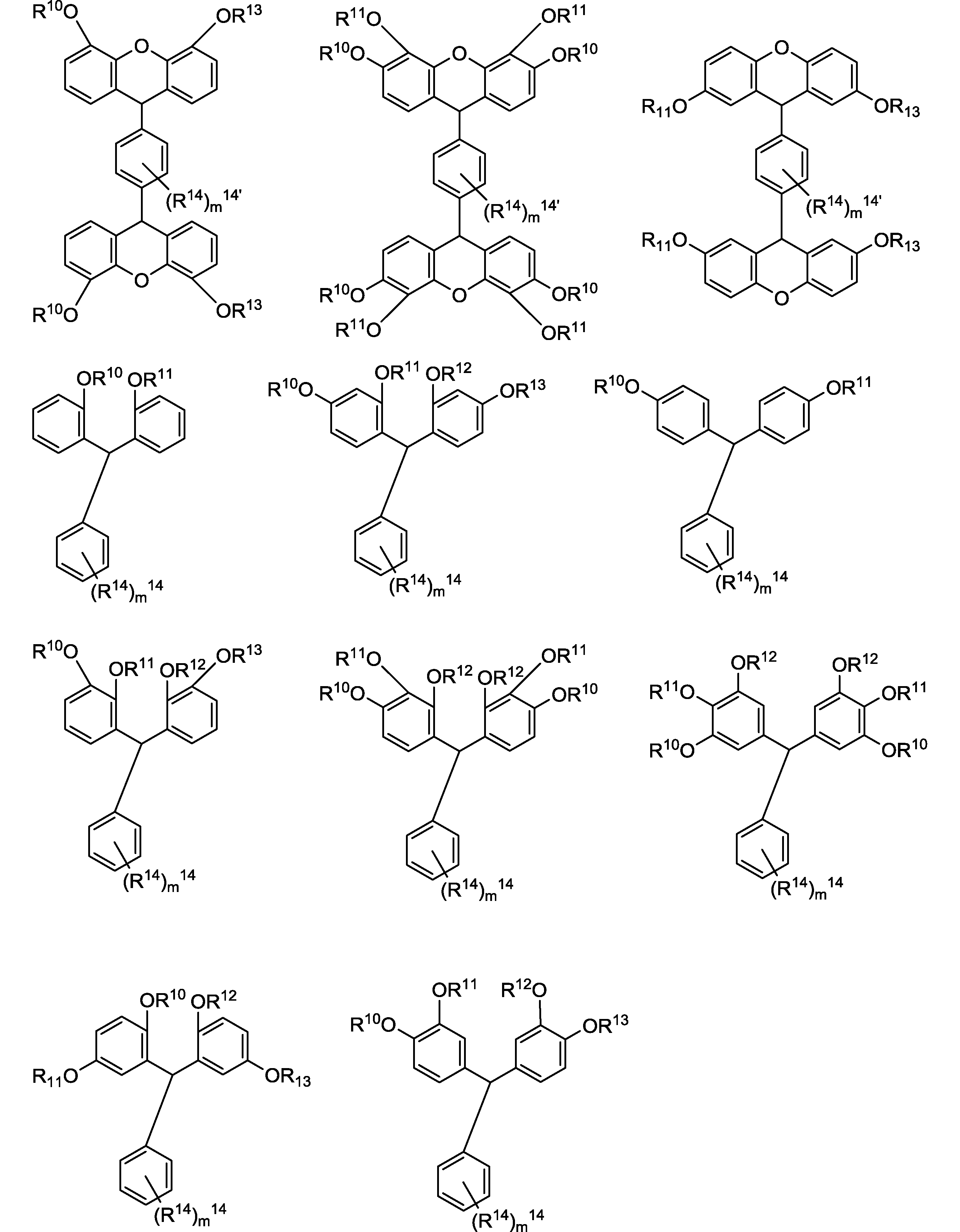

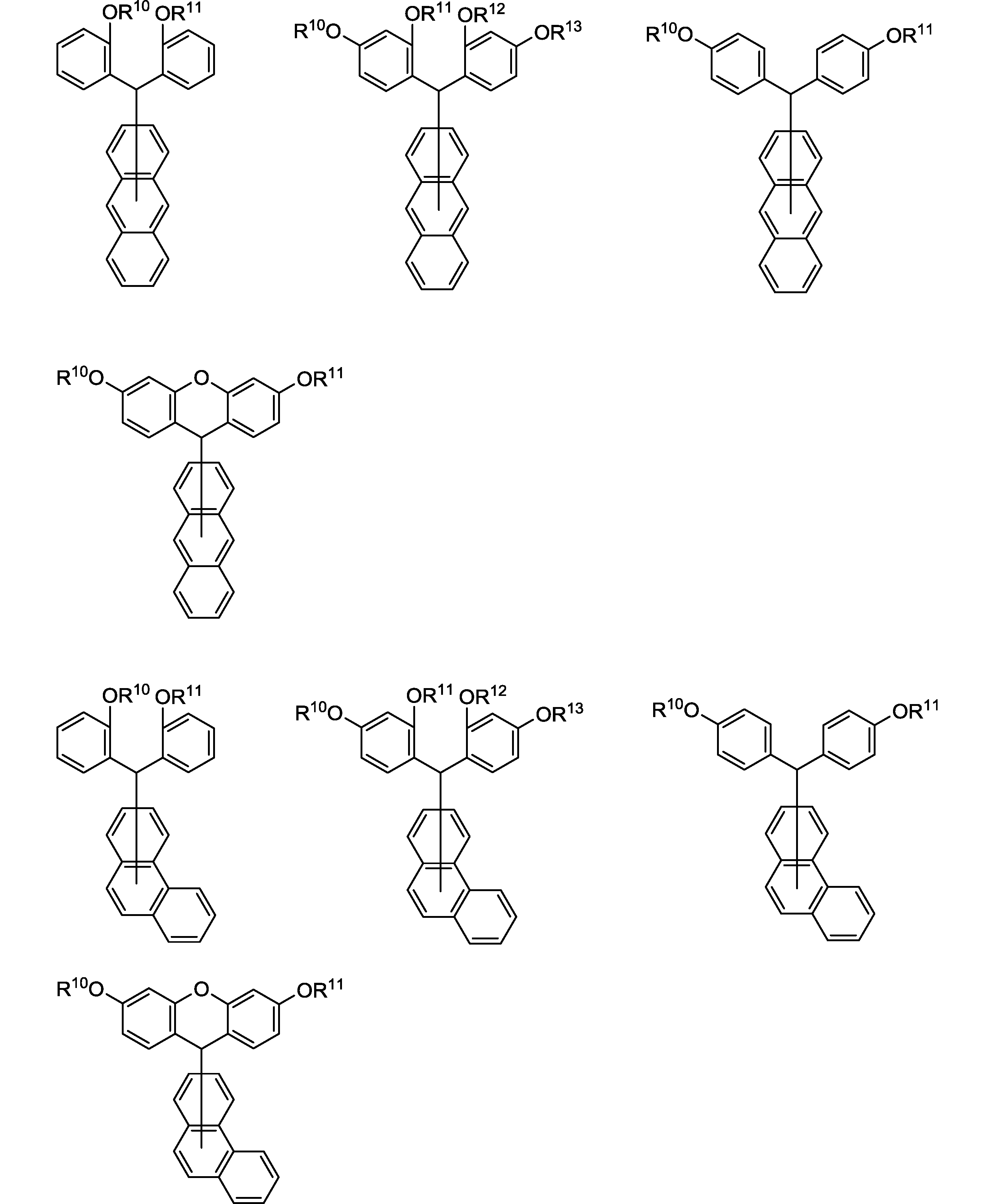
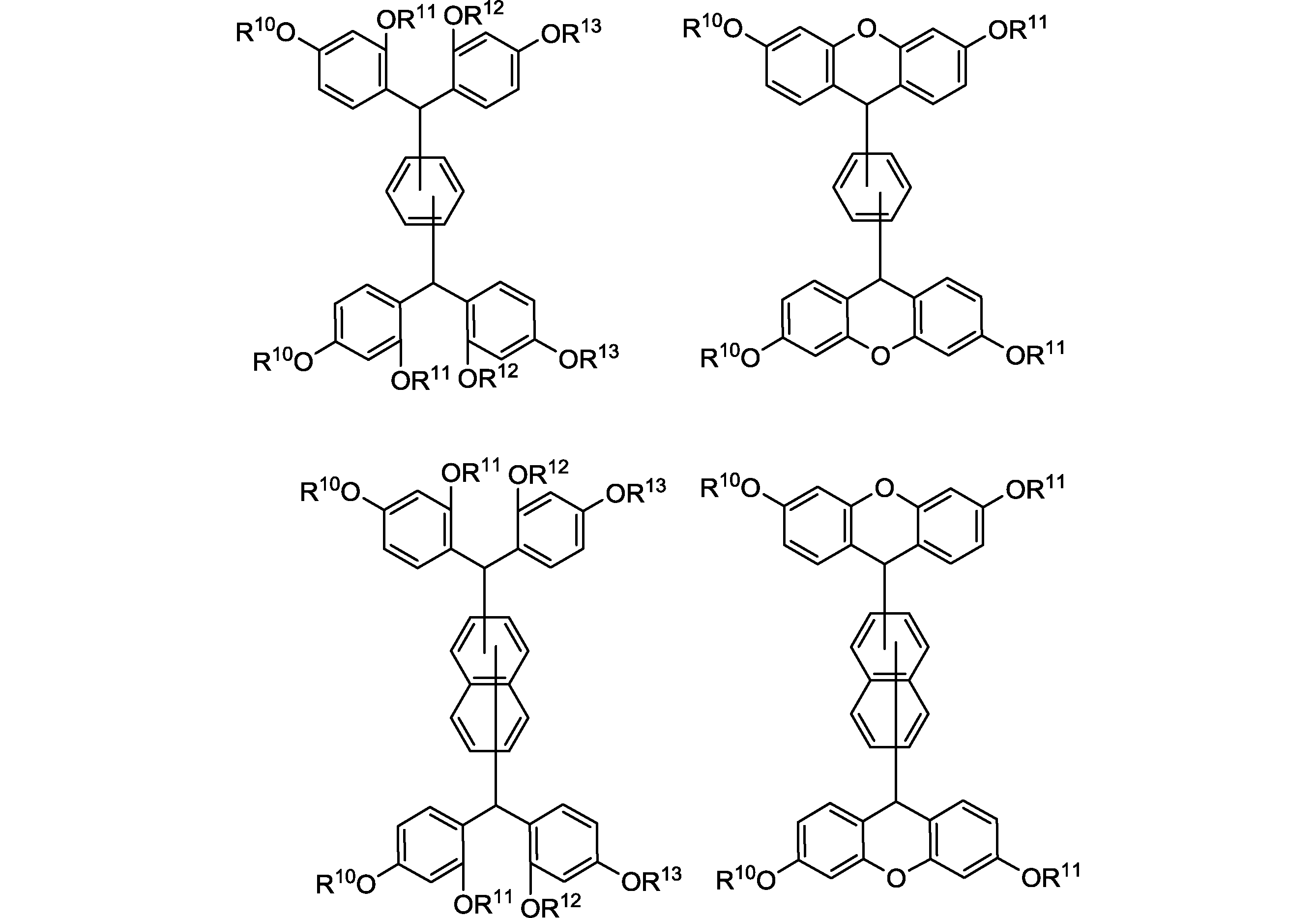


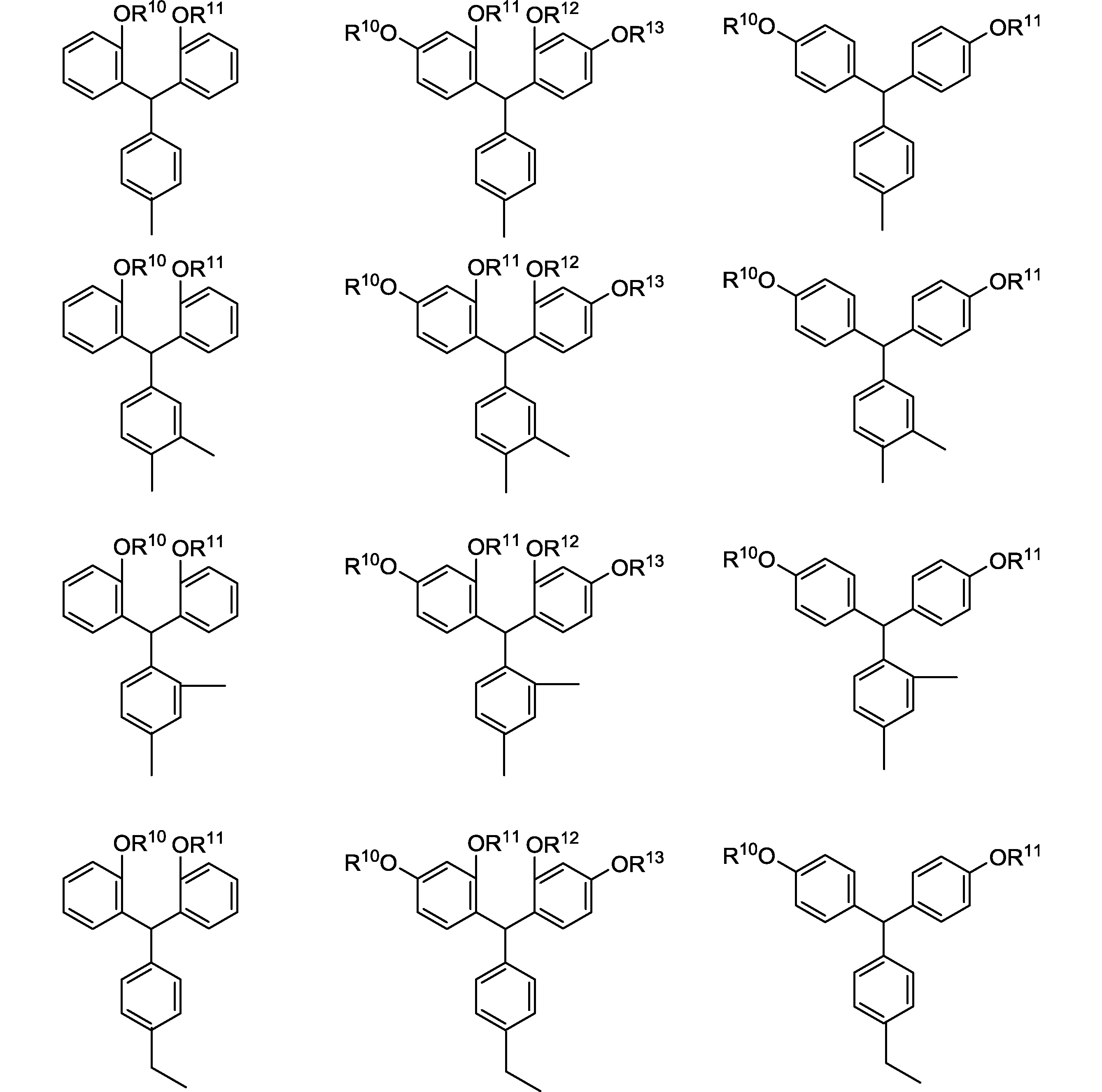
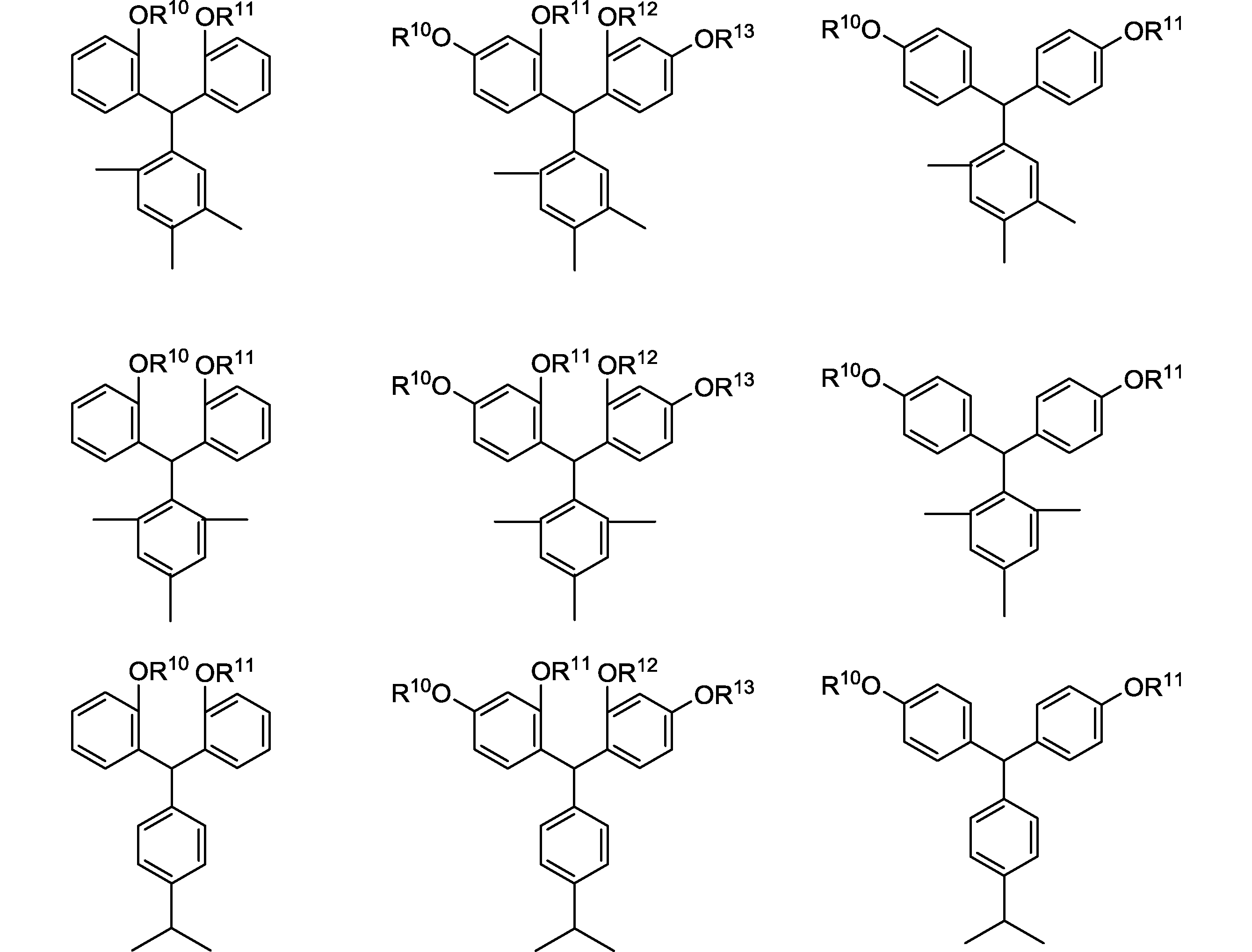
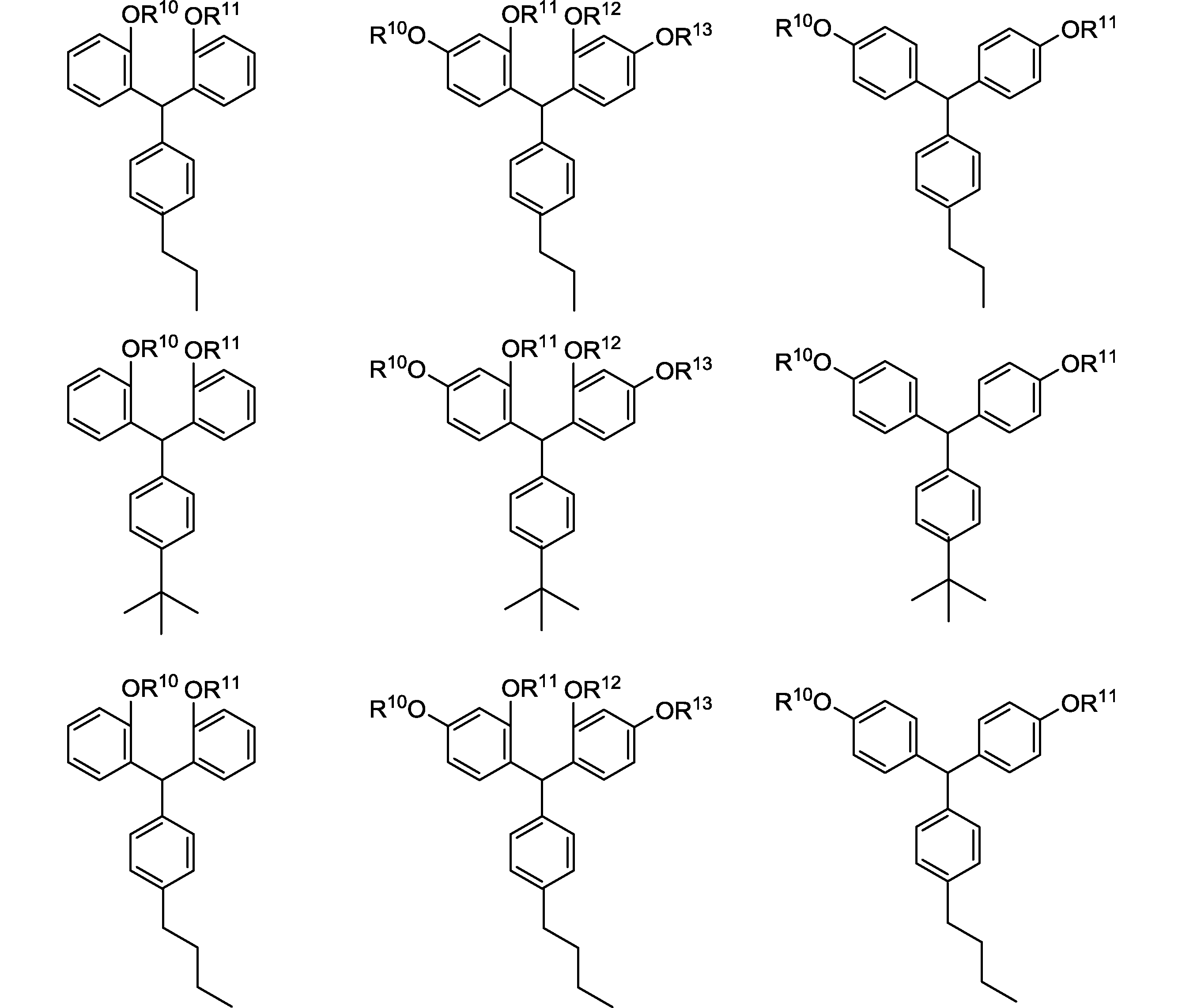
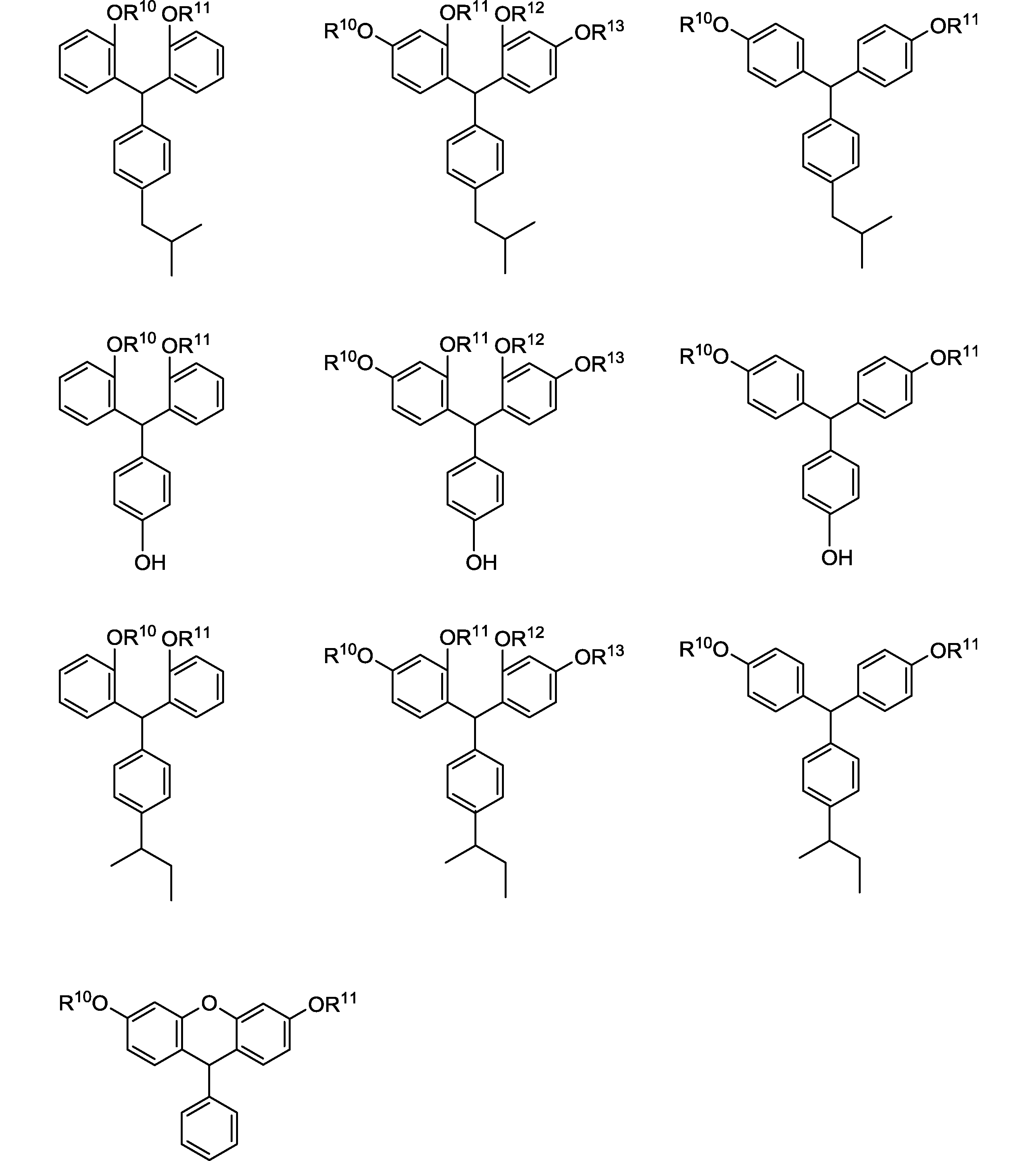

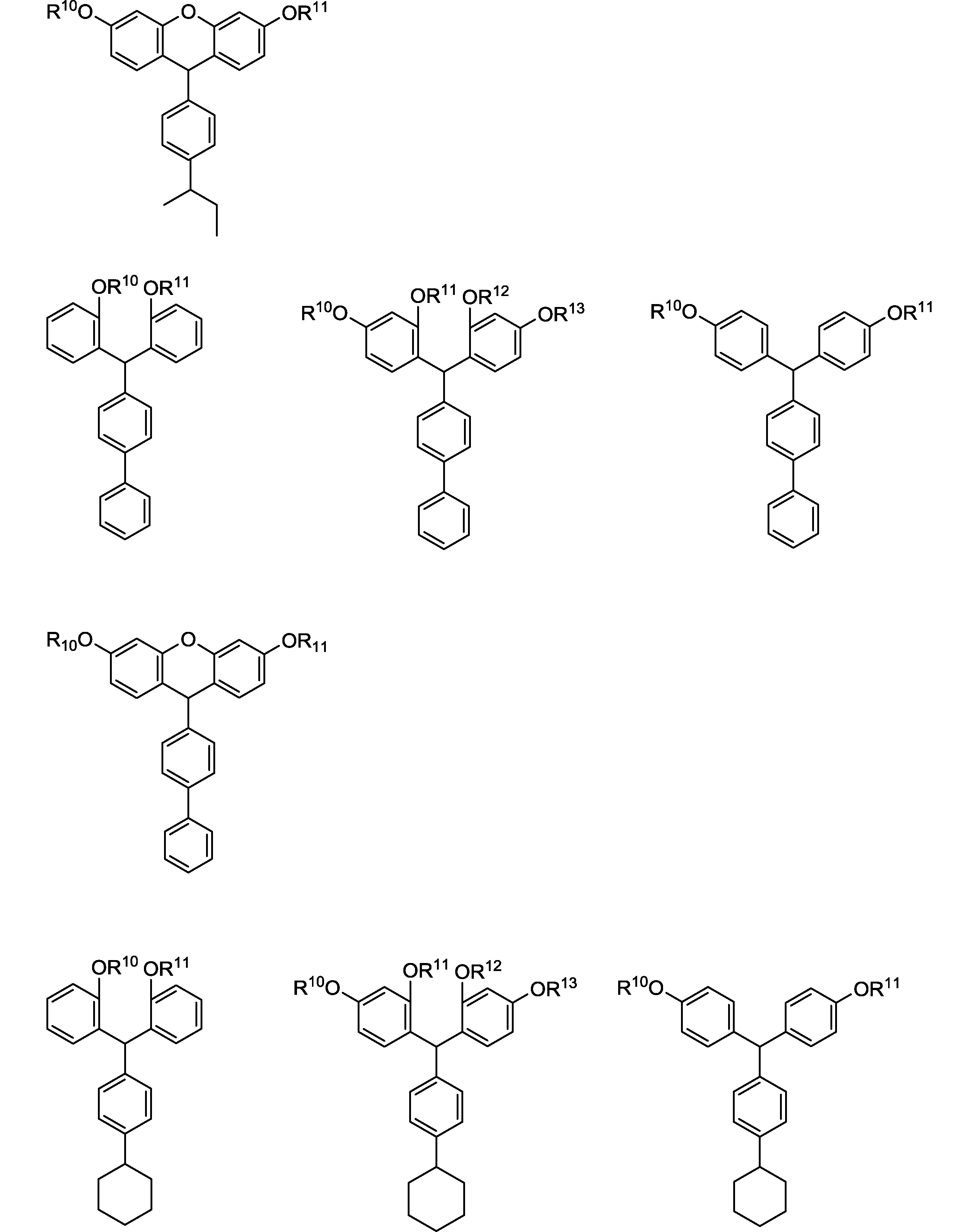


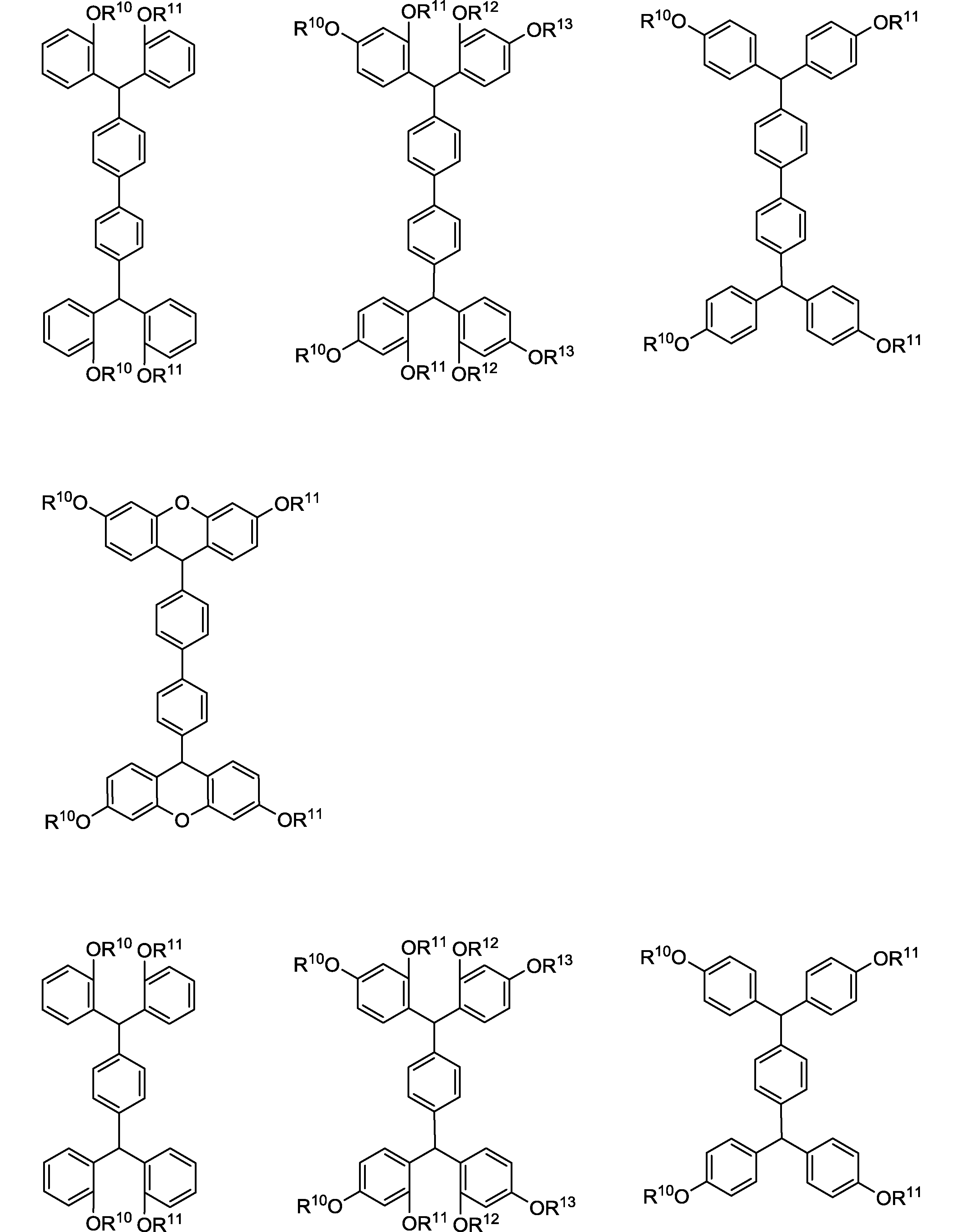

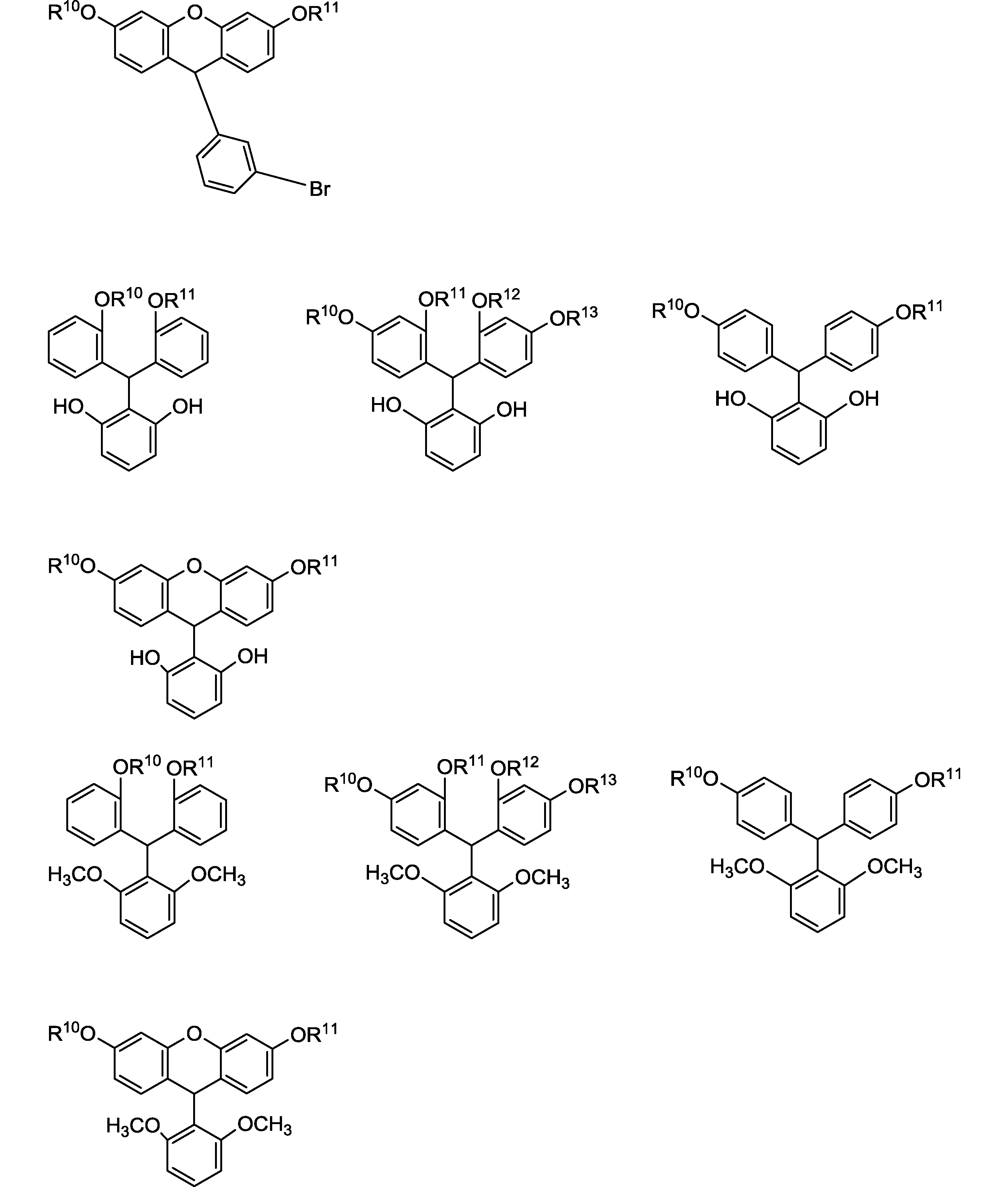
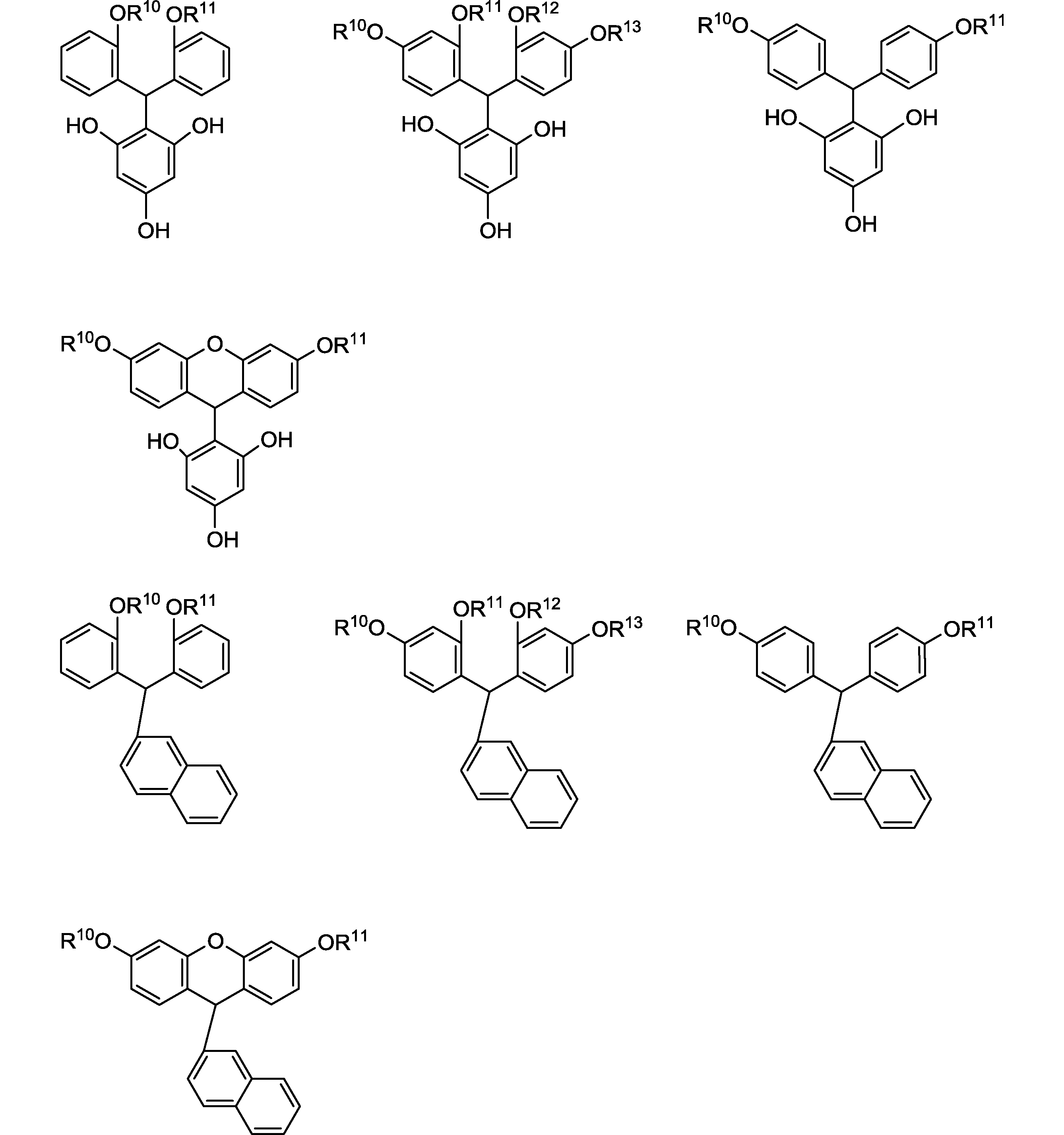
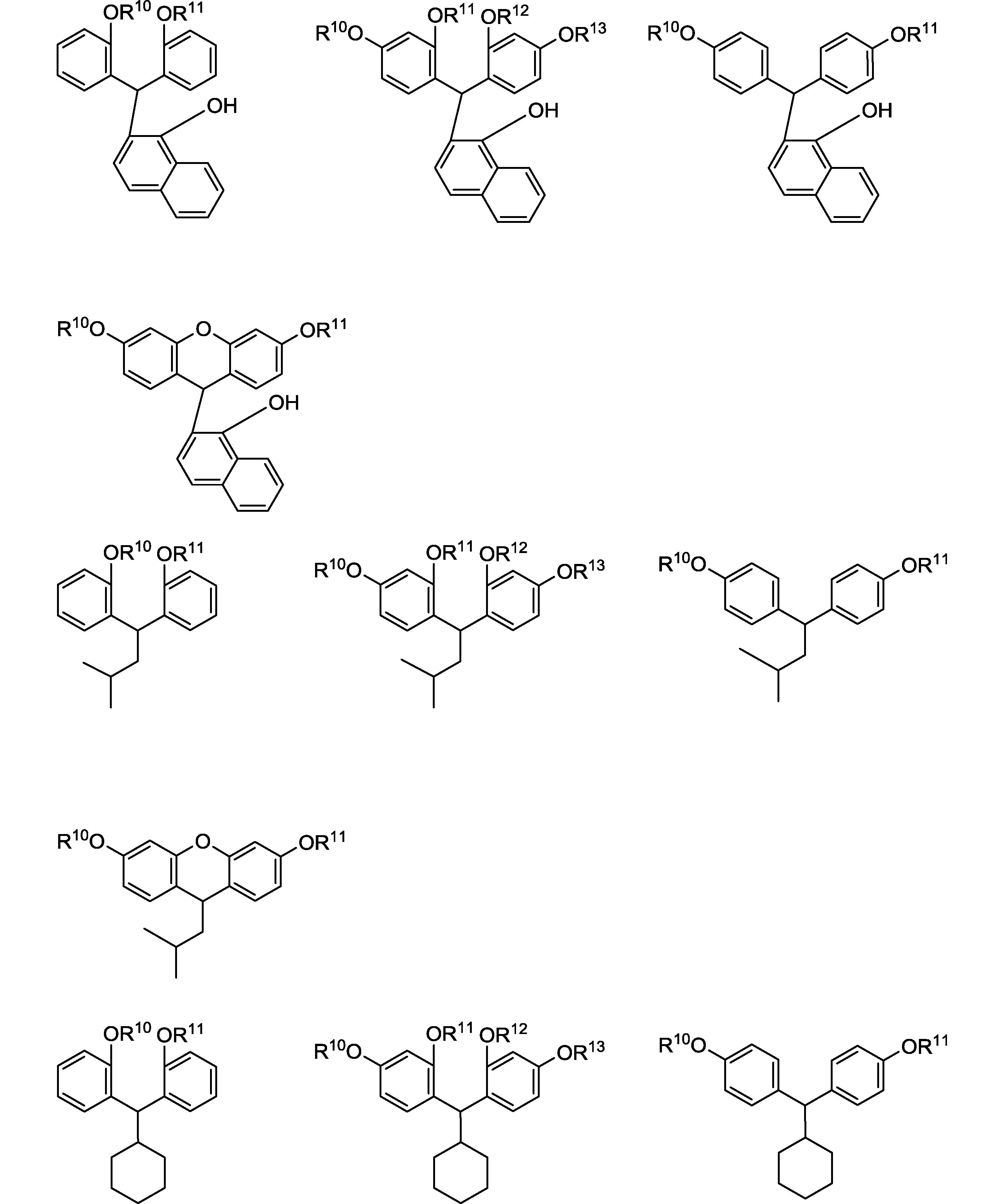
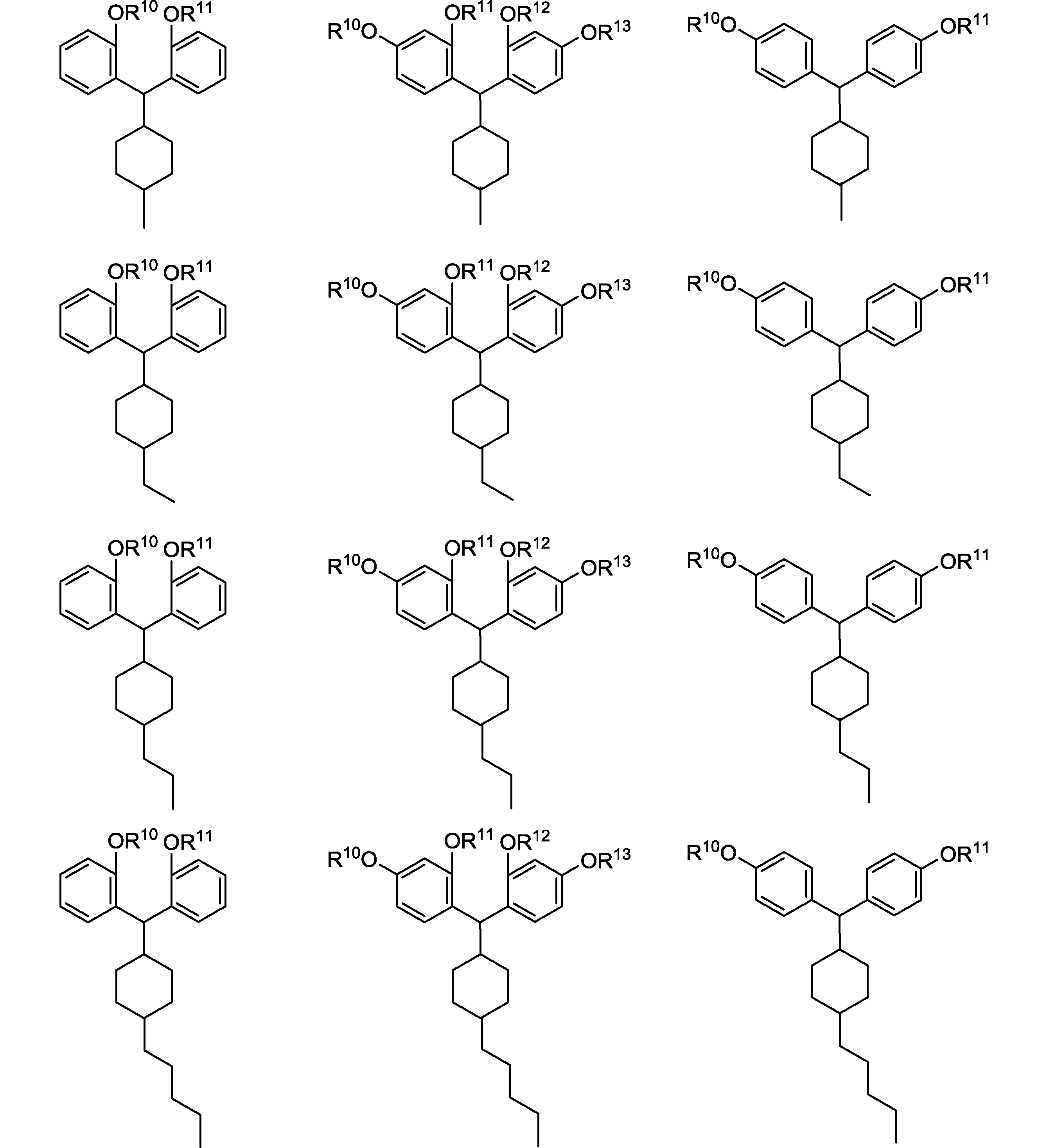

本実施形態における式(1)で表される化合物は、公知の手法を応用して適宜合成することができ、その合成手法は特に限定されない。
例えば、常圧下、ビフェノール類、ビナフトール類又はビアントラセンオールと、対応するアルデヒド類とを酸触媒下にて重縮合反応させることによって、上記式(1)で表される化合物を得ることができる。また、その化合物の少なくとも1つのフェノール性水酸基に、公知の方法により酸解離性基または酸架橋性基を導入できる。また、必要に応じて、加圧下で行うこともできる。
アルデヒド類としては、高い耐熱性及び高いエッチング耐性を兼備するという観点から、芳香環を有するアルデヒドを用いることが好ましい。
なお、酸解離性基を導入するタイミングについては、ビナフトール類とケトン類との縮合反応後のみならず、縮合反応の前段階でもよい。また、後述する樹脂の製造を行った後に行ってもよい。
なお、酸架橋性基を導入するタイミングについては、ビナフトール類とケトン類との縮合反応後のみならず、縮合反応の前段階でもよい。また、後述する樹脂の製造を行った後に行ってもよい。
酸架橋性基としては、例えば、アリル基、(メタ)アクリロイル基、ビニル基、エポキシ基、アルコキシメチル基やシアナト基が挙げられるが、ラジカルまたは酸/アルカリの存在下で反応すれば、これらに限定されない。
酸架橋性基は、光学部材形成の生産性を向上させる観点から、酸の存在下で連鎖的に開裂反応を起こす性質を有することが好ましい。
前記式(1)で表される化合物は、光学部材形成組成物に含有させて使用することができる。また、前記式(1)で表される化合物をモノマーとして得られる樹脂を光学部材形成組成物に含有させて使用することもできる。樹脂は、例えば、前記式(1)で表される化合物と架橋反応性のある化合物とを反応させて得られる。
前記式(1)で表される化合物をモノマーとして得られる樹脂としては、例えば、以下の式(3)で表される構造を有するものが挙げられる。すなわち、本実施形態における光学部材形成組成物は、下記式(3)で表される構造を有する樹脂を含有するものであってもよい。

R0、R1、R2~R5、m2及びm3、m4及びm5、p2~p5、nは前記式(1)におけるものと同義である。
但し、m2、m3、m4及びm5は同時に0になることはなく、R2~R5の少なくとも1つは水酸基又は水酸基の水素原子が酸架橋性基または酸解離性基で置換された基である。
本実施形態における樹脂は、上記式(1)で表される化合物を、架橋反応性のある化合物と反応させることにより得られる。架橋反応性のある化合物としては、前記式(1)で表される化合物をオリゴマー化又はポリマー化し得るものである限り、公知のものを特に制限なく使用することができる。その具体例としては、例えば、アルデヒド、ケトン、カルボン酸、カルボン酸ハライド、ハロゲン含有化合物、アミノ化合物、イミノ化合物、イソシアネート、不飽和炭化水素基含有化合物等が挙げられるが、これらに特に限定されない。
本実施形態における化合物(0-1)は、耐熱性及び溶媒溶解性の観点から、下記式(2)で表される化合物であることが好ましい。

R1Aは、炭素数1~60のnA価の基又は単結合であり、
R2Aは、各々独立して、置換基を有していてもよい炭素数1~30のアルキル基、置換基を有していてもよい炭素数6~30のアリール基、置換基を有していてもよい炭素数2~10のアルケニル基、ハロゲン原子、水酸基又は水酸基の水素原子が酸解離性基で置換された基であり、同一のナフタレン環又はベンゼン環において同一であっても異なっていてもよい。ここで、前記アルキル基、前記アルケニル基及び前記アリール基は、エーテル結合、ケトン結合又はエステル結合を含んでいてもよい。但し、式(2)中、R2Aの少なくとも1つは水酸基又は水酸基の水素原子が酸架橋性基または酸解離性基で置換された基である。
nAは1~4の整数であり、ここで、式(2)中、nAが2以上の整数の場合、nA個の[ ]内の構造式は同一であっても異なっていてもよい。
XAは、各々独立して、酸素原子、硫黄原子、単結合又は無架橋であることを示す。ここで、XAが、優れた耐熱性を発現する傾向にあるため、酸素原子又は硫黄原子であることが好ましく、酸素原子であることがより好ましい。XAは、溶解性の観点からは、無架橋であることが好ましい。
m2Aは、各々独立して、0~7の整数である。但し、少なくとも1つのm2Aは1~7の整数である。
qAは、各々独立して、0又は1である。

R3Aは、各々独立して、ハロゲン原子、置換基を有していてもよい炭素数1~30のアルキル基、置換基を有していてもよい炭素数6~30のアリール基、又は置換基を有していてもよい炭素数2~30のアルケニル基であり、同一のナフタレン環又はベンゼン環において同一であっても異なっていてもよい。ここで、前記アルキル基、前記アルケニル基及び前記アリール基は、エーテル結合、ケトン結合又はエステル結合を含んでいてもよい。
R4Aは、各々独立して、水素原子、酸架橋性基又は酸解離性基である。
m6Aは、各々独立して、0~5の整数である。
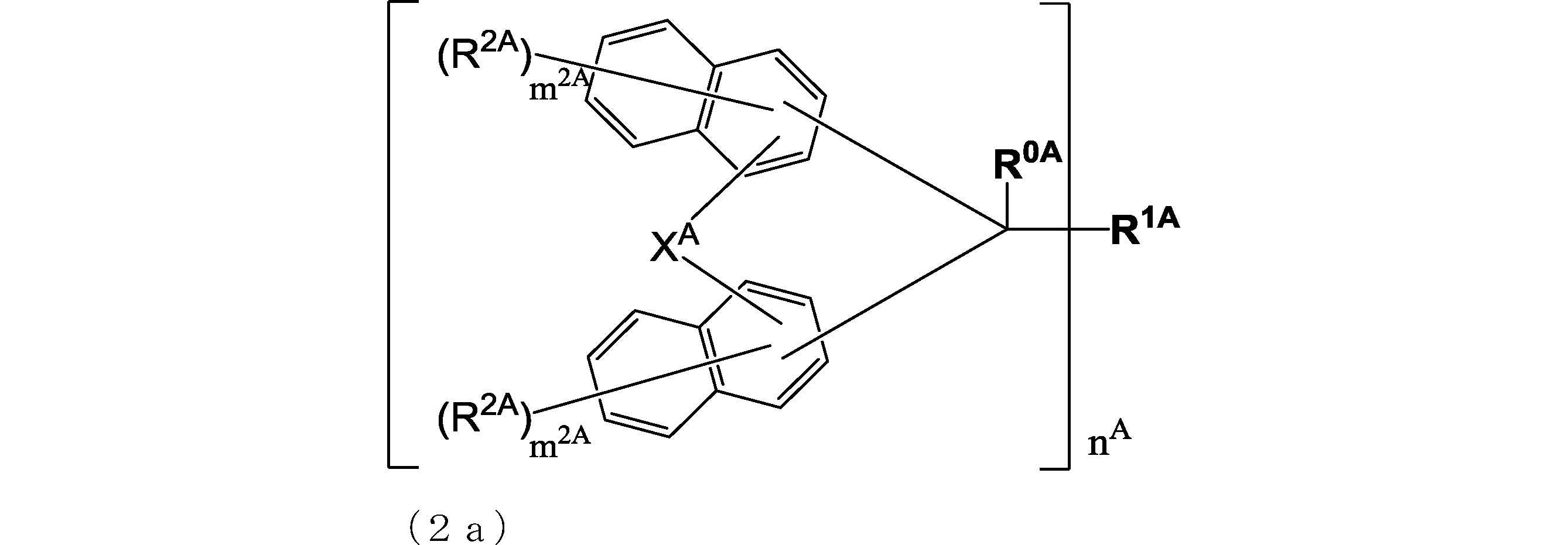







本実施形態における式(2)で表される化合物は、公知の手法を応用して適宜合成することができ、その合成手法は特に限定されない。
例えば、常圧下、フェノール類、ナフトール類又はアントラセンオールと、対応するアルデヒド類とを酸触媒下にて重縮合反応させることによって、上記式(2)で表される化合物を得ることができる。またその化合物の少なくとも1つのフェノール性水酸基に公知の方法により酸架橋性基または酸解離性基を導入できる。また、必要に応じて、加圧下で行うこともできる。
なお、酸解離性基を導入するタイミングについては、ビナフトール類とケトン類との縮合反応後のみならず、縮合反応の前段階でもよい。また、後述する樹脂の製造を行った後に導入してもよい。
本実施形態における光学部材形成組成物は、前記式(2)で表される化合物を含有していてもよく、また、前記式(2)で表される化合物をモノマーとして得られる樹脂を含有していてもよい。樹脂は、例えば、前記式(2)で表される化合物と架橋反応性のある化合物とを反応させて得られる。
前記式(2)で表される化合物をモノマーとして得られる樹脂としては、例えば、以下の式(4)で表される構造を有するものが挙げられる。すなわち、本実施形態における光学部材形成組成物は、下記式(4)で表される構造を有する樹脂を含有するものであってもよい。
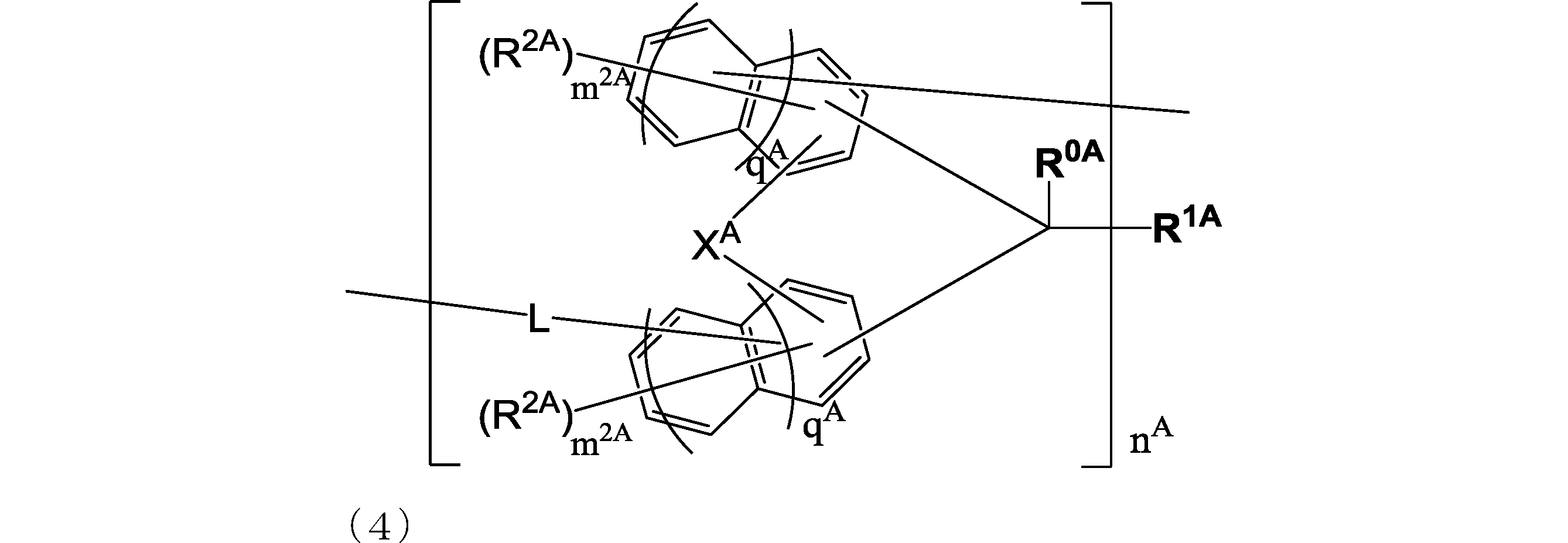
R0A、R1A、R2A、m2A、nA、qA及びXAは前記式(2)におけるものと同義であり、
nAが2以上の整数の場合、nA個の[ ]内の構造式は同一であっても異なっていてもよく、少なくとも1つのm2Aは1~6の整数であり、R2Aの少なくとも1つは水酸基又は水酸基の水素原子が酸架橋性基または酸解離性基で置換された基である。
本実施形態における樹脂は、上記式(2)で表される化合物を、架橋反応性のある化合物と反応させることにより得られる。架橋反応性のある化合物としては、前記式(2)で表される化合物をオリゴマー化又はポリマー化し得るものである限り、公知のものを特に制限なく使用することができる。その具体例としては、例えば、アルデヒド、ケトン、カルボン酸、カルボン酸ハライド、ハロゲン含有化合物、アミノ化合物、イミノ化合物、イソシアネート、不飽和炭化水素基含有化合物等が挙げられるが、これらに特に限定されない。
本実施形態の光学部材形成組成物は、成分(A)のいずれか1種以上を固形成分として含有することに加えて、以下に説明する成分が含まれていてもよい。
なお、化合物及びその化合物に由来する樹脂の両方を含有する場合、前記含有量は、化合物及びその化合物に由来する樹脂との合計量を意味する。
本実施形態の光学部材形成組成物は、熱により直接的又は間接的に酸を発生する酸発生剤(C)を1種以上含有することが好ましい。酸発生剤(C)の含有量は、固形成分の全質量の0.001~49質量%であることが好ましく、1~40質量%であることがより好ましく、3~30質量%であることがさらに好ましく、10~25質量%であることが特に好ましい。酸発生剤(C)の含有量が上記範囲内である場合、屈折率がより一層高くなる傾向にある。










酸発生剤(C)は、単独で用いても、2種以上を併用してもよい。
本実施形態の光学部材形成組成物は、構造体の強度を増すための添加剤として、酸架橋剤(G)を1種以上含むことが好ましい。酸架橋剤(G)とは、酸発生剤(C)から発生した酸の存在下で、成分(A)を分子内又は分子間架橋し得る化合物である。このような酸架橋剤(G)としては、特に限定されないが、例えば、成分(A)を架橋し得る1種以上の基(以下、「架橋性基」という。)を有する化合物を挙げることができる。
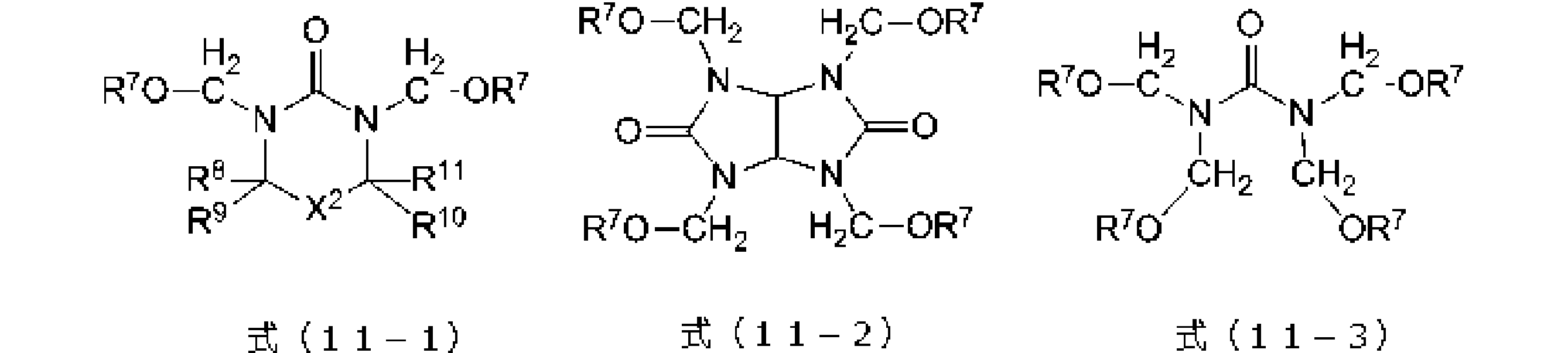

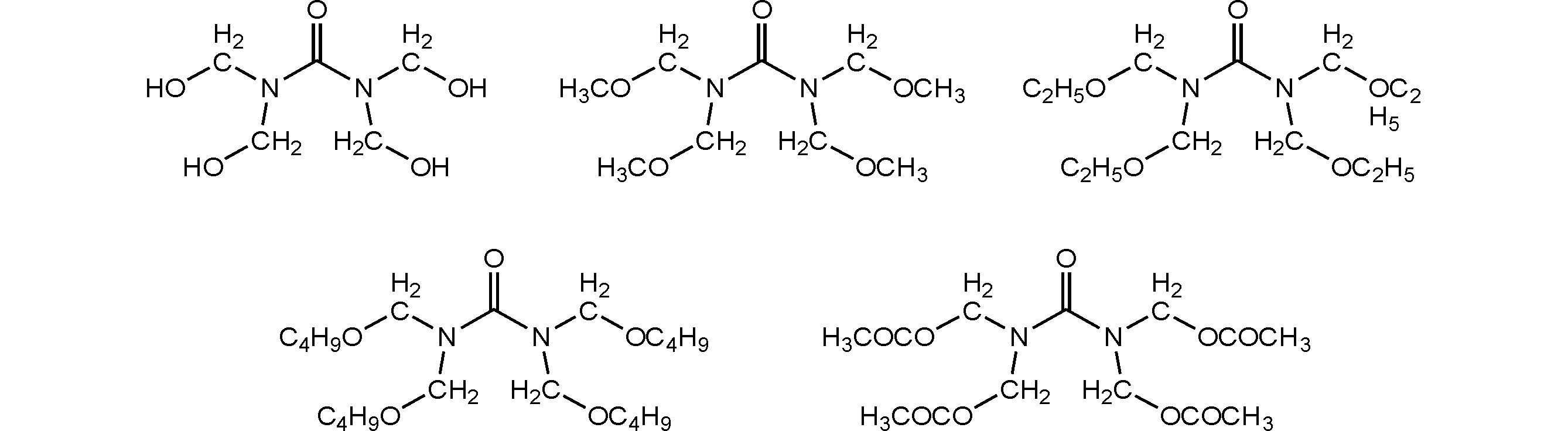
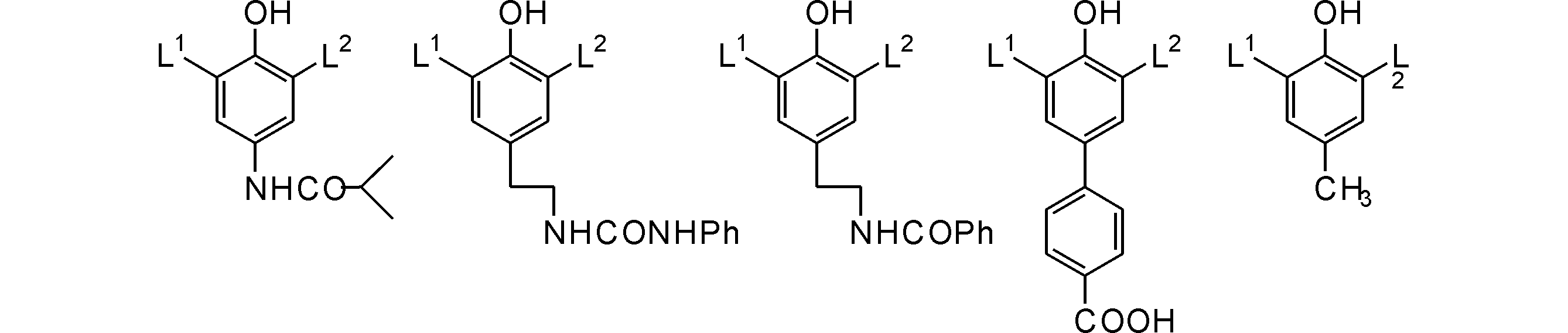

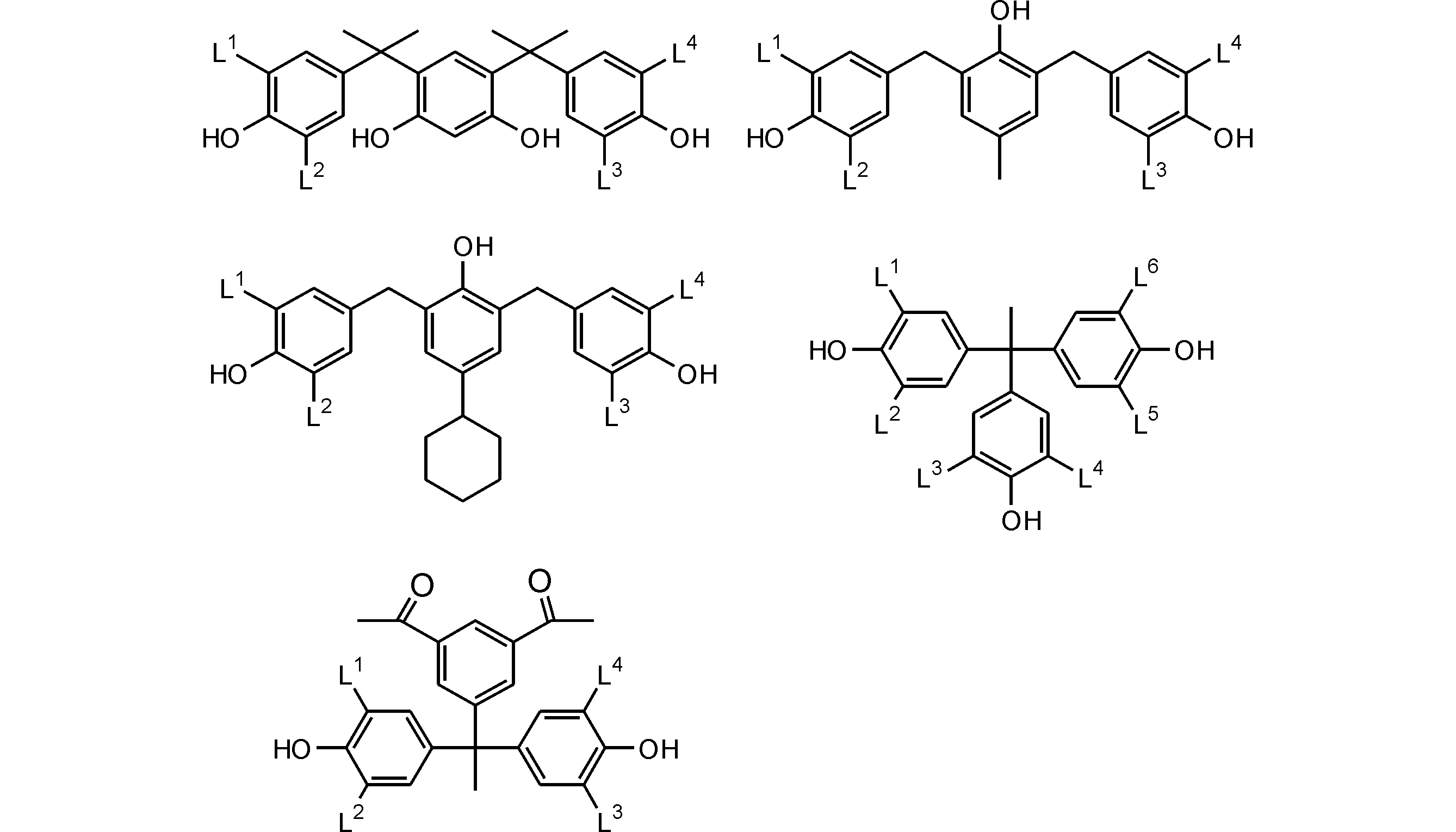


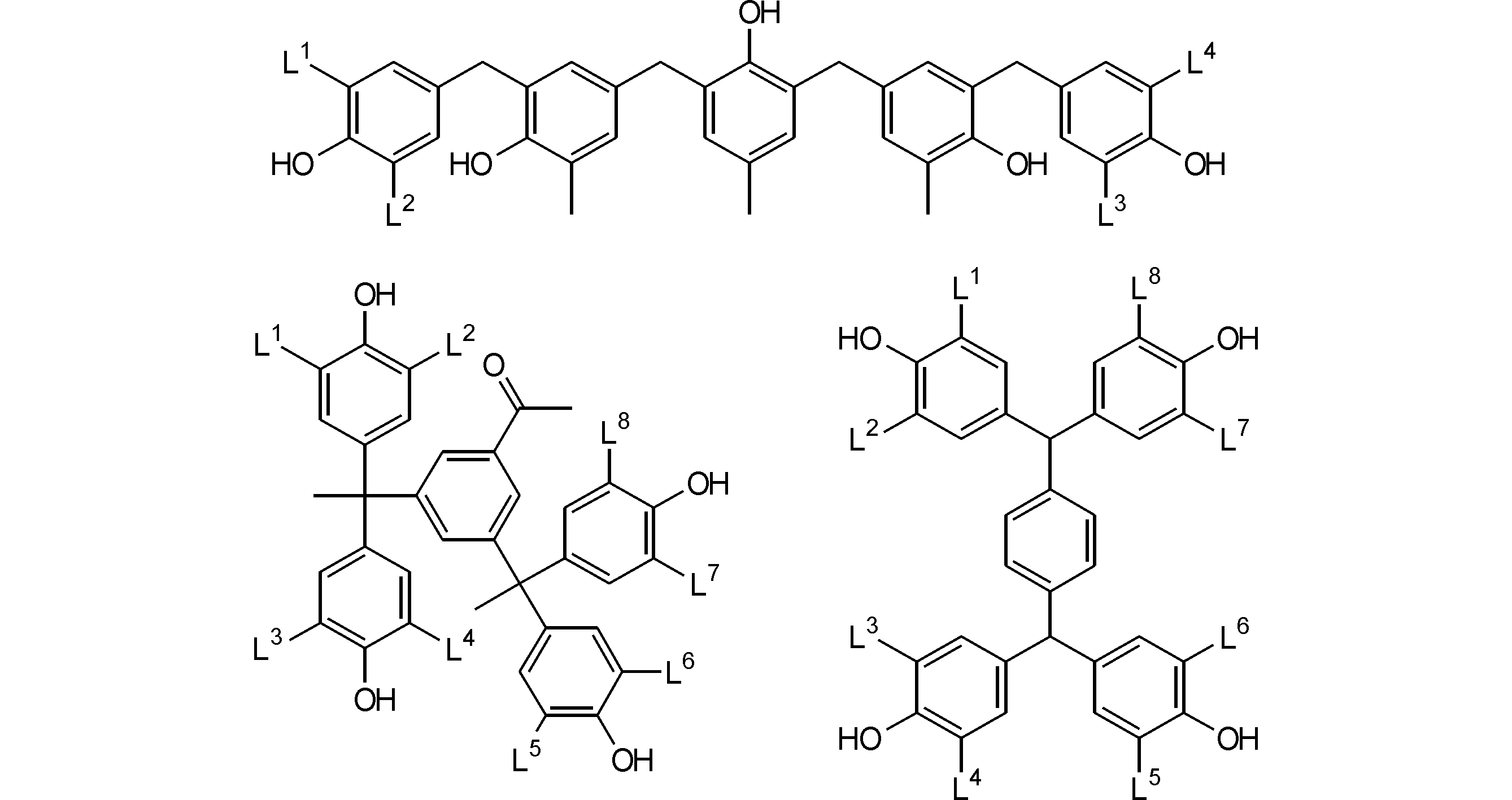
アルコキシメチル基を有するフェノール誘導体は、対応するヒドロキシメチル基を有するフェノール誘導体とアルコールとを酸触媒下で反応させることによって得ることができる。この際、樹脂化やゲル化を防ぐために、反応温度を100℃以下で行うことが好ましい。具体的には、EP632003A1等に記載されている方法に従って合成することができる。
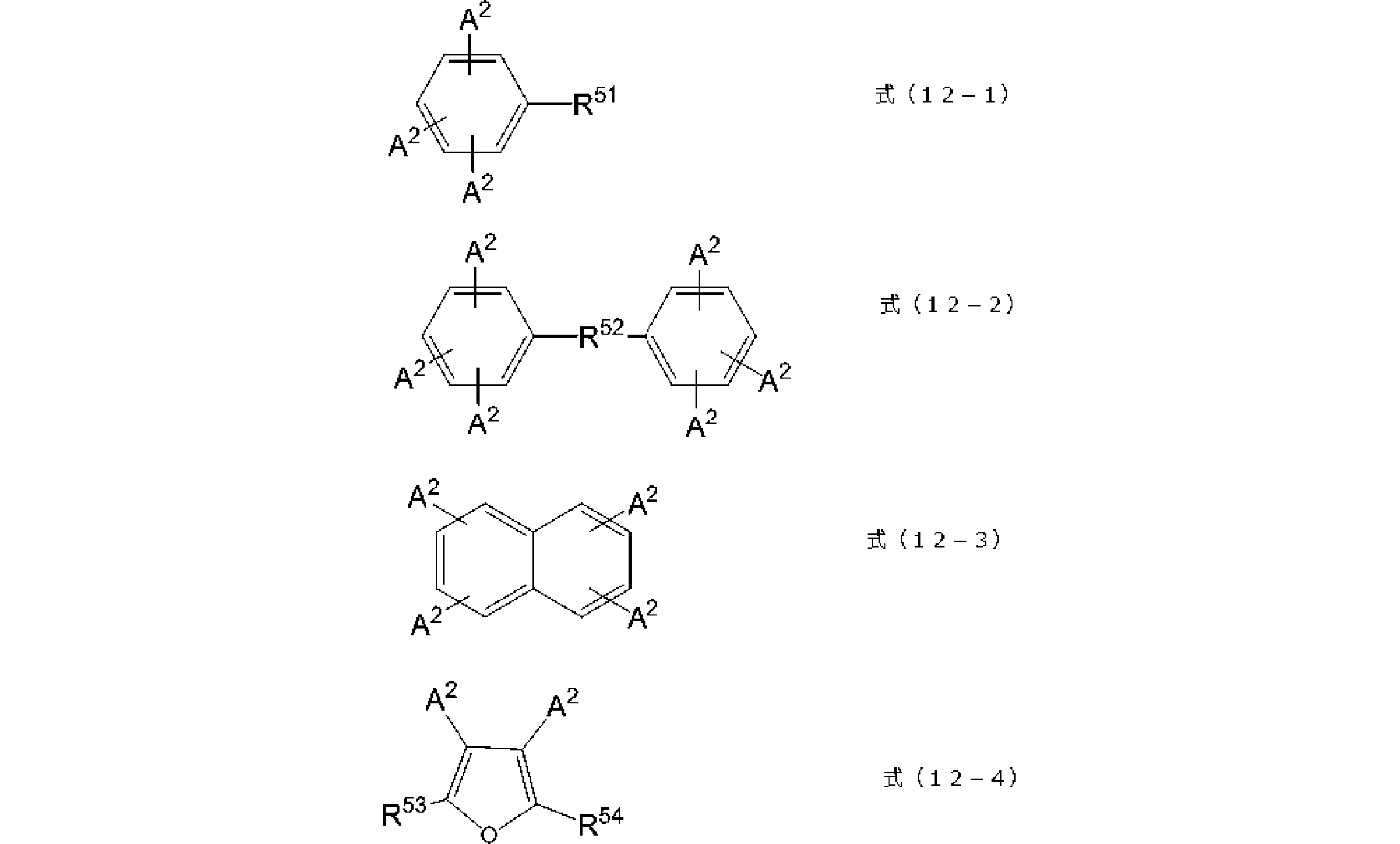
本実施形態の光学部材形成組成物は、酸発生剤から生じた酸の光学部材形成組成物中における拡散を制御して、好ましくない化学反応を阻止する作用等を有する酸拡散制御剤(E)を含有してもよい。酸拡散制御剤(E)を使用することにより、光学部材形成組成物の貯蔵安定性が向上する。また解像度が一層向上するとともに、加熱後の引き置き時間の変動による構造体の線幅変化を抑えることができ、プロセス安定性に極めて優れたものとなる。




本実施形態の光学部材形成組成物には、本実施形態の目的を阻害しない範囲で、必要に応じて、その他の成分(F)として、溶解促進剤、溶解制御剤、増感剤、界面活性剤及び有機カルボン酸又はリンのオキソ酸若しくはその誘導体等の各種添加剤を1種又は2種以上添加することができる。
溶解促進剤は、成分(A)の現像液に対する溶解性が低すぎる場合に、その溶解性を高めて、現像時の前記化合物の溶解速度を適度に増大させる作用を有する成分であり、本発明の効果を損なわない範囲で使用することができる。溶解促進剤としては、例えば、低分子量のフェノール性化合物を挙げることができ、例えば、ビスフェノール類、トリス(ヒドロキシフェニル)メタン等を挙げることができる。これらの溶解促進剤は、単独で又は2種以上を混合して使用することができる。溶解促進剤の含有量は、使用する成分(A)の種類に応じて適宜調節されるが、固形成分の全質量の0~49質量%であることが好ましく、0~5質量%であることがより好ましく、0~1質量%であることがさらに好ましく、0質量%であることが特に好ましい。
溶解制御剤は、成分(A)が現像液に対する溶解性が高すぎる場合に、その溶解性を制御して現像時の溶解速度を適度に減少させる作用を有する成分である。このような溶解制御剤としては、光学部品の焼成、加熱、現像等の工程において化学変化しないものが好ましい。
溶解制御剤の含有量は、特に限定されず、成分(A)の種類に応じて適宜調節されるが、固形成分の全質量の0~49質量%であることが好ましく、0~5質量%であることがより好ましく、0~1質量%であることがさらに好ましく、0質量%であることが特に好ましい。
増感剤は、照射された放射線のエネルギーを吸収して、そのエネルギーを酸発生剤(C)に伝達し、それにより酸の生成量を増加する作用を有し、レジストの見掛けの感度を向上させる成分である。このような増感剤は、特に限定されず、例えば、ベンゾフェノン類、ビアセチル類、ピレン類、フェノチアジン類、フルオレン類等を挙げることができる。これらの増感剤は、単独で又は2種以上を使用することができる。増感剤の含有量は、成分(A)の種類に応じて適宜調節されるが、固形成分の全質量の0~49質量%であることが好ましく、0~5質量%であることがより好ましく、0~1質量%であることがさらに好ましく、0質量%であることが特に好ましい。
界面活性剤は、本実施形態の光学部材形成組成物の塗布性やストリエーション等を改良する作用を有する成分である。このような界面活性剤は、特に限定されず、アニオン系、カチオン系、ノニオン系或いは両性のいずれでもよい。界面活性剤としては、ノニオン系界面活性剤が好ましい。ノニオン系界面活性剤は、光学部材形成組成物の製造に用いる溶媒との親和性がよく、より効果が顕著となる傾向にある。ノニオン系界面活性剤の具体例としては、ポリオキシエチレン高級アルキルエーテル類、ポリオキシエチレン高級アルキルフェニルエーテル類、ポリエチレングリコールの高級脂肪酸ジエステル類等が挙げられるが、特に限定はされない。市販品としては、以下商品名で、エフトップ(ジェムコ社製)、メガファック(大日本インキ化学工業社製)、フロラード(住友スリーエム社製)、アサヒガード、サーフロン(以上、旭硝子社製)、ペポール(東邦化学工業社製)、KP(信越化学工業社製)、ポリフロー(共栄社油脂化学工業社製)等を挙げることができる。界面活性剤の含有量は、特に限定されず、成分(A)の種類に応じて適宜調節されるが、固形成分の全質量の0~49質量%であることが好ましく、0~5質量%であることがより好ましく、0~1質量%であることがさらに好ましく、0質量%であることが特に好ましい。
本実施形態の光学部材形成組成物は、感度劣化防止又は構造体、引き置き安定性等の向上の目的で、任意の成分として、有機カルボン酸又はリンのオキソ酸若しくはその誘導体をさらに含有してもよい。なお、これらの化合物は、酸拡散制御剤と併用することもできるし、単独で用いてもよい。有機カルボン酸としては、特に限定されず、例えば、マロン酸、クエン酸、リンゴ酸、コハク酸、安息香酸、サリチル酸等が好適である。リンのオキソ酸若しくはその誘導体としては、リン酸、リン酸ジ-n-ブチルエステル、リン酸ジフェニルエステルなどのリン酸又はそれらのエステル等の誘導体;ホスホン酸、ホスホン酸ジメチルエステル、ホスホン酸ジ-n-ブチルエステル、フェニルホスホン酸、ホスホン酸ジフェニルエステル、ホスホン酸ジベンジルエステル等のホスホン酸又はそれらのエステルなどの誘導体;ホスフィン酸、フェニルホスフィン酸等のホスフィン酸及びそれらのエステル等の誘導体が挙げられ、これらの中で特にホスホン酸が好ましい。
本実施形態の光学部材形成組成物には、本発明の目的を阻害しない範囲で、必要に応じて、前記溶解制御剤、増感剤、及び界面活性剤以外の添加剤を1種又は2種以上含有できる。そのような添加剤としては、特に限定されず、例えば、染料、顔料、及び接着助剤等が挙げられる。染料又は顔料を含有すると、露光部の潜像を可視化させて、露光時のハレーションの影響を緩和できる傾向にある。また、接着助剤を含有すると、基板との接着性を改善することができる傾向にある。他の添加剤としては、さらに、ハレーション防止剤、保存安定剤、消泡剤、形状改良剤等が挙げられ、具体的には4-ヒドロキシ-4’-メチルカルコン等を挙げることができる。
本実施形態の光学部材形成組成物は、架橋剤をさらに含有することが好ましい。
前記架橋剤は、フェノール化合物、エポキシ化合物、シアネート化合物、アミノ化合物、ベンゾオキサジン化合物、メラミン化合物、グアナミン化合物、グリコールウリル化合物、ウレア化合物、イソシアネート化合物及びアジド化合物からなる群より選ばれる少なくとも1種であることが好ましい。また、前記架橋剤は、少なくとも1つのアリル基を有することがより好ましい。
前記架橋剤の含有量は、固形成分の全質量の0.1~50質量%であることが好ましく、0.1~10質量%であることがより好ましく、0.1~1質量%であることがさらに好ましい。
本実施形態の光学部材形成組成物は、架橋促進剤をさらに含有することが好ましい。
前記架橋促進剤は、アミン類、イミダゾール類、有機ホスフィン類、及びルイス酸からなる群より選ばれる少なくとも1種であることが好ましい。
前記架橋促進剤の含有量は、固形成分の全質量の0.1~10質量%であることが好ましく、0.1~5質量%であることがより好ましく、0.1~1質量%であることがさらに好ましい。
本実施形態の光学部材形成組成物は、ラジカル重合開始剤をさらに含有することが好ましい。
前記ラジカル重合開始剤は、ケトン系光重合開始剤、有機過酸化物系重合開始剤及びアゾ系重合開始剤からなる群より選ばれる少なくとも1種であることが好ましい。
前記ラジカル重合開始剤の含有量は、固形成分の全質量の0.1~10質量%であることが好ましく、0.1~5質量%であることがより好ましく、0.1~1質量%であることがさらに好ましい。
各成分の含有割合は、その総和が100質量%になるように各範囲から選ばれる。各成分の含有割合が上記範囲であると、感度、解像度、現像性等の性能に一層優れる傾向にある。
(炭素濃度及び酸素濃度)
有機元素分析により炭素濃度及び酸素濃度(質量%)を測定した。
装置:CHNコーダーMT-6(ヤナコ分析工業(株)製)
化合物の分子量は、Water社製Acquity UPLC/MALDI-Synapt HDMSを用いて、LC-MS分析により測定した。
攪拌機、冷却管及びビュレットを備えた内容積300mLの容器において、o-フェニルフェノール(シグマ-アルドリッチ社製試薬)12g(69.0mmol)を120℃で溶融後、硫酸0.27gを仕込み、4-ビフェニルアルデヒド(シグマ-アルドリッチ社製試薬)2.7g(13.8mmol)を加えて、内容物を120℃で6時間撹拌して反応を行って反応液を得た。次に反応液にN-メチル-2-ピロリドン(関東化学株式会社製)100mL、純水50mLを加えた後、酢酸エチルにより抽出した。次に純水を加えて中性になるまで分液後、濃縮を行って溶液を得た。
得られた溶液を、カラムクロマトグラフによる分離後、下記式(BiP-1)で表される目的化合物(BiP-1)を5.0g得た。
得られた化合物(BiP-1)について、前記方法により分子量を測定した結果、504であった。また、炭素濃度は88.1質量%、酸素濃度は6.3質量%であった。
得られた化合物(BiP-1)について、前記測定条件で、NMR測定を行ったところ、以下のピークが見出され、下記式(BiP-1)の化学構造を有することを確認した。
δ(ppm)9.48(2H,O-H)、6.88~7.61(25H,Ph-H)、5.54(1H,C-H)

o-フェニルフェノールの代わりに4,4’-ビフェノールを用いたこと以外は実施例1と同様の方法により、下記式(BiP-2)で表される目的化合物(BiP-2)を2.0g得た。

o-フェニルフェノールの代わりに2,6-ジヒドロキシナフタレンを用いたこと以外は実施例1と同様の方法により、下記式(XiN-1)で表される目的化合物(XiN-1)を2.0g得た。

o-フェニルフェノールの代わりに2,6-ジヒドロキシナフタレンを用い、また、4-ビフェニルアルデヒドの代わりに4,4’-ジホルミルビフェニルを用いたこと以外は実施例1と同様の方法により、下記式(XiN-3)で表される目的化合物(XiN-3)1.5gを得た。

o-フェニルフェノールの代わりに2,7-ジヒドロキシナフタレンを用い、また、4-ビフェニルアルデヒドの代わりに4,4’-ジホルミルビフェニルを用いたこと以外は実施例1と同様の方法により、下記式(XBiN-3)で表される目的化合物(XBiN-3)1.5gを得た。

実施例1の原料であるo-フェニルフェノール及び4-ビフェニルアルデヒドを表1のように変更し、その他は実施例1と同様に行い、各目的物を得た。
それぞれ、構造を表2に示すように、1H-NMRで同定した。
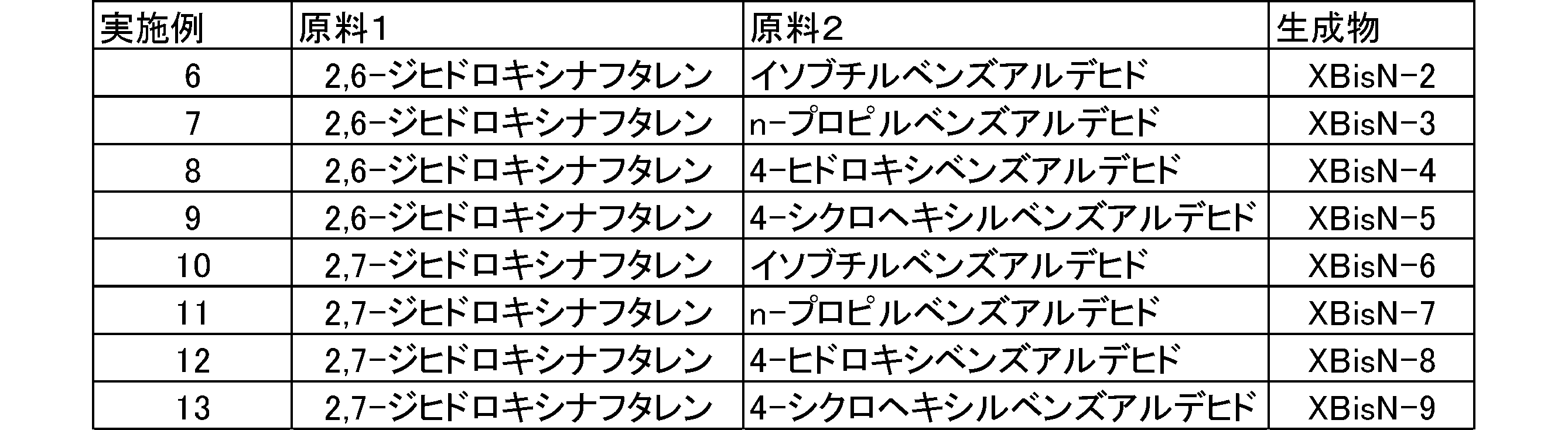

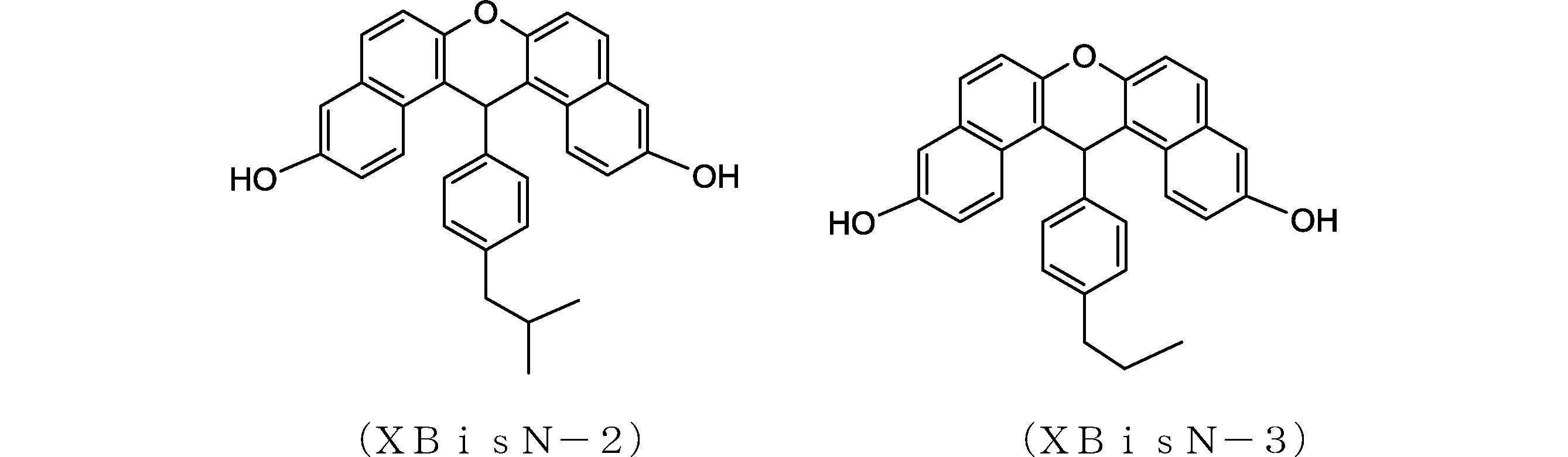

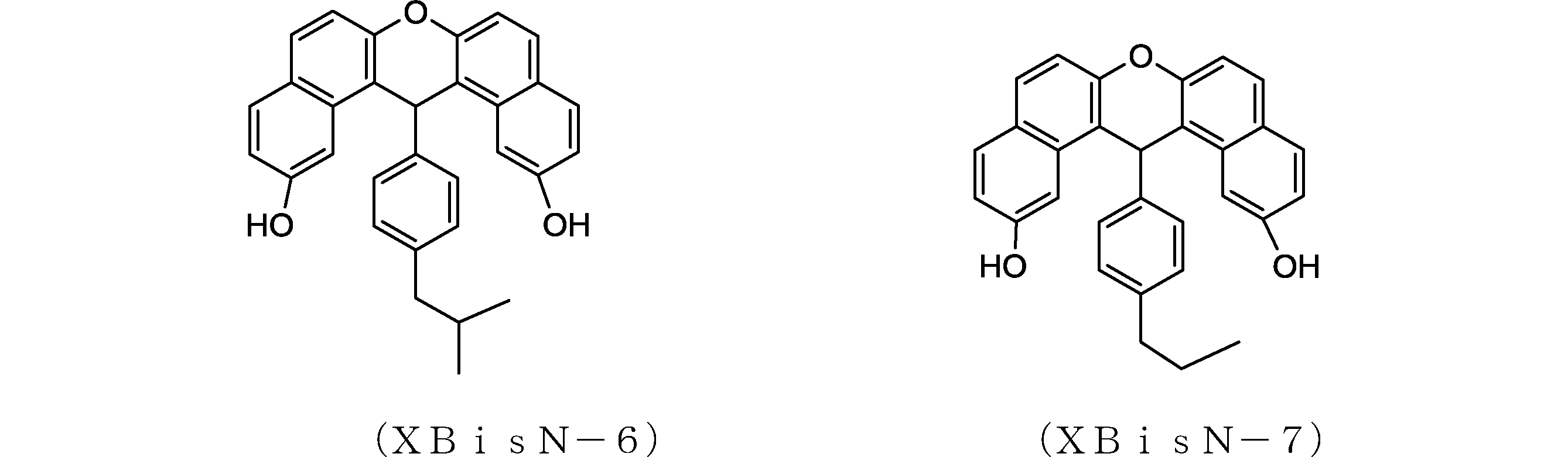
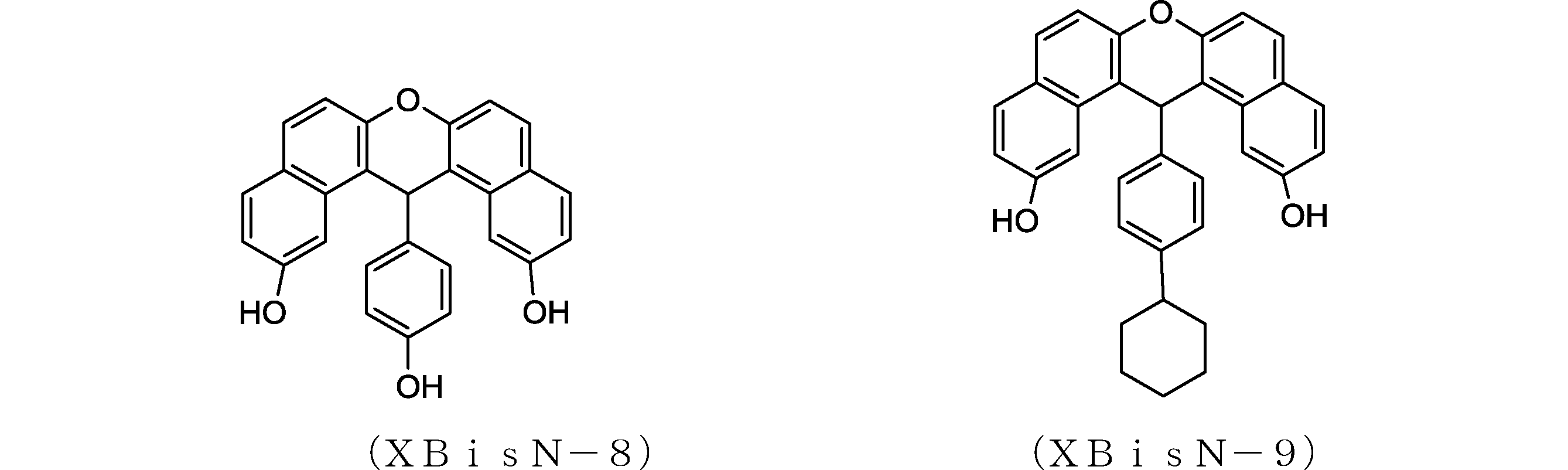
実施例1の原料であるo-フェニルフェノール及び4-ビフェニルアルデヒドを表3のように変更し、水1.5mL、ドデシルメルカプタン73mg(0.35mmol)、37%塩酸2.3g(22mmol)を加え、反応温度を55℃に変更し、その他は実施例1と同様に行い、各目的物を得た。
それぞれ、構造を表4で示すように、1H-NMRで同定した。


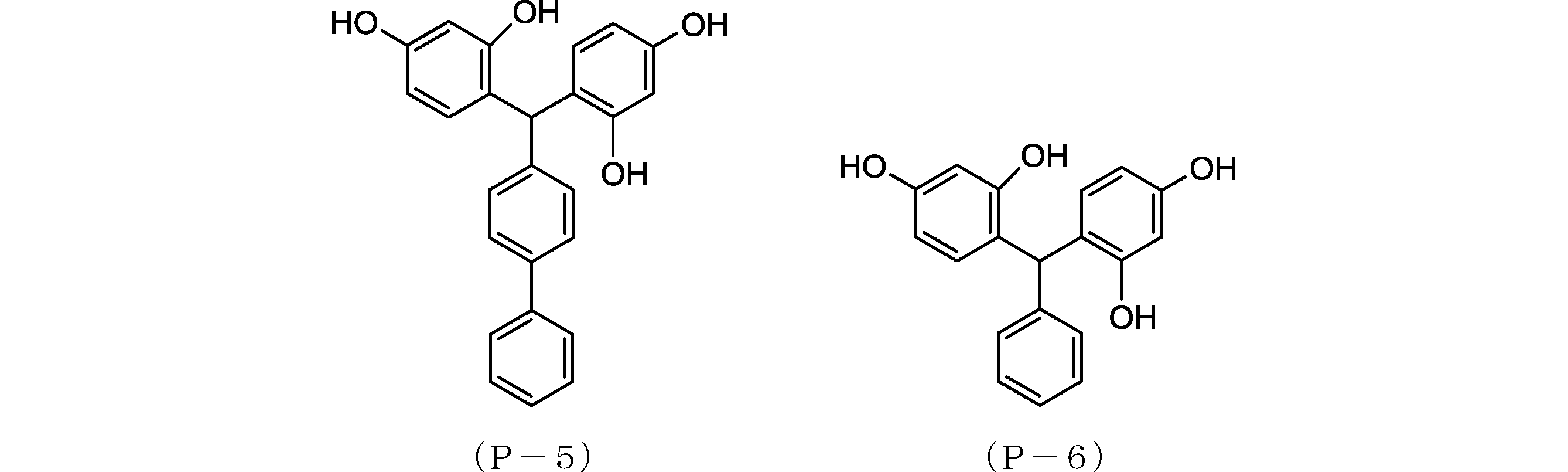

ジムロート冷却管、温度計及び攪拌翼を備えた、底抜きが可能な内容積1Lの四つ口フラスコを準備した。この四つ口フラスコに、窒素気流中、実施例3で得られた化合物(XiN-1)を32.6g(70mmol、三菱ガス化学(株)製)、40質量%ホルマリン水溶液21.0g(ホルムアルデヒドとして280mmol、三菱ガス化学(株)製)及び98質量%硫酸(関東化学(株)製)0.97mLを仕込み、常圧下、100℃で還流させながら7時間反応させた。その後、希釈溶媒としてオルソキシレン(和光純薬工業(株)製試薬特級)180.0gを反応液に加え、静置後、下相の水相を除去した。さらに、中和及び水洗を行い、オルソキシレンを減圧下で留去することにより、褐色固体の樹脂(R1-XiN-1)34.1gを得た。
ジムロート冷却管、温度計及び攪拌翼を備えた、底抜きが可能な内容積1Lの四つ口フラスコを準備した。この四つ口フラスコに、窒素気流中、実施例3で得られた化合物(XiN-1)を32.6g(70mmol、三菱ガス化学(株)製)、4-ビフェニルアルデヒド50.9g(280mmol、三菱ガス化学(株)製)、アニソール(関東化学(株)製)100mL及びシュウ酸二水和物(関東化学(株)製)10mLを仕込み、常圧下、100℃で還流させながら7時間反応させた。その後、希釈溶媒としてオルソキシレン(和光純薬工業(株)製試薬特級)180.0gを反応液に加え、静置後、下相の水相を除去した。さらに、中和及び水洗を行い、有機相の溶媒および未反応の4-ビフェニルアルデヒドを減圧下で留去することにより、褐色固体の樹脂(R2-XiN-1)34.7gを得た。
化合物を試験管に精秤し、23℃でプロピレングリコールモノメチルエーテルアセテートを所定の濃度となるよう加え、超音波洗浄機にて30分間超音波をかけ、その後の液の状態を目視にて観察し、完全に溶解した溶解量の濃度を求め、以下の基準に従って評価した。
[溶解性試験]
A:5.0質量%≦溶解量
B:3.0質量%≦溶解量<5.0質量%
C:溶解量<3.0質量%
化合物をプロピレングリコールメチルエーテルに5質量%となるように溶解させて光学部材形成材料を調製した。次に、これらの光学部材形成材料をシリコン基板上に回転塗布し、その後、110℃で60秒間ベークして、膜厚1000nmの光学部材形成膜を作製した。
次いで、ジェー・エー・ウーラム・ジャパン社製 真空紫外域多入射角分光エリプソメーター(VUV-VASE)を用いて、633nmの波長における屈折率および透明性試験を行い、以下の基準に従って屈折率および透明性を評価した。
[屈折率の評価基準]
A:屈折率が1.65以上
C:屈折率が1.65未満
[透明性の評価基準]
A:吸光定数が0.03未満
B:吸光定数が0.03以上、0.05未満
C:吸光定数が0.05以上
上記で得られた光学部材形成膜を、110℃で5分ベークし、以下の基準に従って膜耐熱性の評価を実施した。
[膜耐熱性の評価基準]
A:目視で膜に欠陥なし
C:目視で膜に欠陥が見られる(膜消失を含む)

Claims (24)
- 下記式(0)で表される化合物を含有する、光学部材形成組成物。
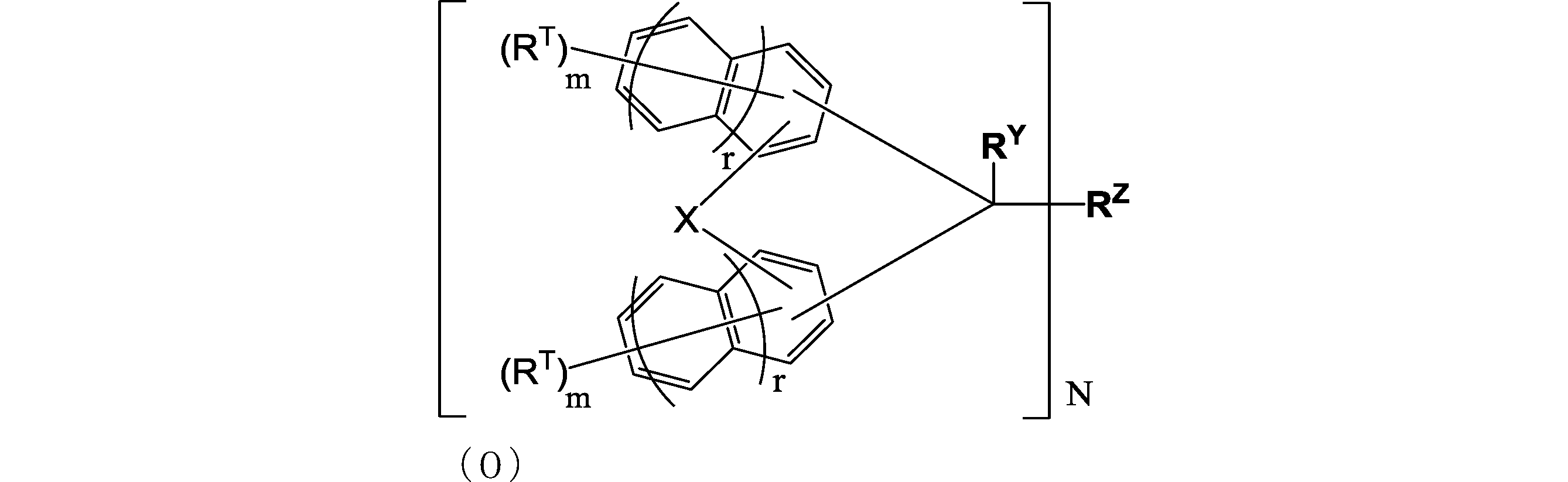
RZは、炭素数1~60のN価の基又は単結合であり、
RTは、各々独立して、置換基を有していてもよい炭素原子数1~30のアルキル基、置換基を有していてもよい炭素原子数6~40のアリール基、置換基を有していてもよい炭素原子数2~30のアルケニル基、置換基を有していてもよい炭素数1~30のアルコキシ基、ハロゲン原子、ニトロ基、アミノ基、チオール基、水酸基または水酸基の水素原子が酸架橋性基または酸解離性基で置換された基であり、ここで、前記アルキル基、前記アルケニル基及び前記アリール基は、エーテル結合、ケトン結合又はエステル結合を含んでいてもよく、
Xは、酸素原子、硫黄原子、単結合又は無架橋であることを示し、
mは、各々独立して0~9の整数であり、ここで、mの少なくとも1つは1~9の整数であり、
Nは、1~4の整数であり、ここで、Nが2以上の整数の場合、N個の[ ]内の構造式は同一であっても異なっていてもよく、
rは、各々独立して0~2の整数である。) - 前記式(0)で表される化合物が下記式(0-1)で表される化合物である、請求項1に記載の光学部材形成組成物。

RZは、炭素数1~60のN価の基又は単結合であり、
RT’は、各々独立して、置換基を有していてもよい炭素数1~30のアルキル基、置換基を有していてもよい炭素数6~30のアリール基、置換基を有していてもよい炭素数2~30のアルケニル基、置換基を有していてもよい炭素数1~30のアルコキシ基、ハロゲン原子、チオール基、水酸基又は水酸基の水素原子が酸架橋性基または酸解離性基で置換された基であり、ここで、前記アルキル基、前記アルケニル基及び前記アリール基は、エーテル結合、ケトン結合又はエステル結合を含んでいてもよく、RT’の少なくとも1つは水酸基又は水酸基の水素原子が酸架橋性基または酸解離性基で置換された基であり、
Xは、酸素原子、硫黄原子、単結合又は無架橋であることを示し、
mは、各々独立して0~9の整数であり、ここで、mの少なくとも1つは1~9の整数であり、
Nは、1~4の整数であり、ここで、Nが2以上の整数の場合、N個の[ ]内の構造式は同一であっても異なっていてもよく、
rは、各々独立して0~2の整数である。) - 前記式(0-1)で表される化合物が下記式(1)で表される化合物である、請求項2に記載の光学部材形成組成物。

R1は、炭素数1~60のn価の基又は単結合であり、
R2~R5は、各々独立して、置換基を有していてもよい炭素数1~30のアルキル基、置換基を有していてもよい炭素数6~30のアリール基、置換基を有していてもよい炭素数2~30のアルケニル基、置換基を有していてもよい炭素数1~30のアルコキシ基、ハロゲン原子、チオール基、水酸基又は水酸基の水素原子が酸解離性基で置換された基であり、ここで、前記アルキル基、前記アルケニル基及び前記アリール基は、エーテル結合、ケトン結合又はエステル結合を含んでいてもよく、R2~R5の少なくとも1つは水酸基又は水酸基の水素原子が酸解離性基で置換された基であり、
m2及びm3は、各々独立して、0~8の整数であり、
m4及びm5は、各々独立して、0~9の整数であり、
但し、m2、m3、m4及びm5は同時に0になることはなく、
nは前記Nと同義であり、ここで、nが2以上の整数の場合、n個の[ ]内の構造式は同一であっても異なっていてもよく、
p2~p5は、前記rと同義である。) - 前記式(0-1)で表される化合物が下記式(2)で表される化合物である、請求項2に記載の光学部材形成組成物。

R1Aは、炭素数1~60のnA価の基又は単結合であり、
R2Aは、各々独立して、置換基を有していてもよい炭素数1~30のアルキル基、置換基を有していてもよい炭素数6~30のアリール基、置換基を有していてもよい炭素数2~10のアルケニル基、ハロゲン原子、水酸基又は水酸基の水素原子が酸架橋性基または酸解離性基で置換された基であり、ここで、前記アルキル基、前記アルケニル基及び前記アリール基は、エーテル結合、ケトン結合又はエステル結合を含んでいてもよく、R2Aの少なくとも1つは水酸基又は水酸基の水素原子が酸架橋性基または酸解離性基で置換された基であり、
nAは、前記Nと同義であり、ここで、nAが2以上の整数の場合、nA個の[ ]内の構造式は同一であっても異なっていてもよく、
XAは、酸素原子、硫黄原子、単結合又は無架橋であることを示し、
m2Aは、各々独立して、0~7の整数であり、但し、少なくとも1つのm2Aは1~7の整数であり、
qAは、各々独立して、0又は1である。) - 前記式(1)で表される化合物が下記式(1-1)で表される化合物である、請求項3に記載の光学部材形成組成物。
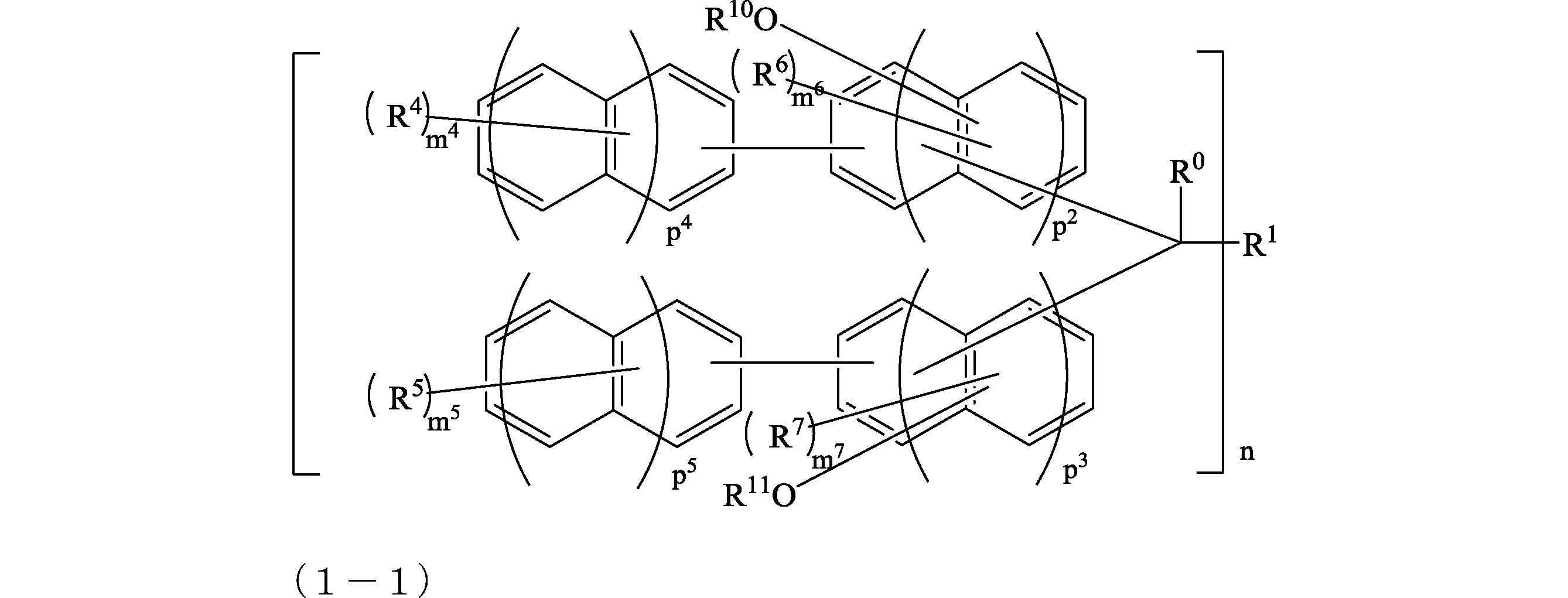
R6~R7は、各々独立して、置換基を有していてもよい炭素数1~30のアルキル基、置換基を有していてもよい炭素数6~30のアリール基、置換基を有していてもよい炭素数2~30のアルケニル基、置換基を有していてもよい炭素数1~30のアルコキシ基、ハロゲン原子、チオール基であり、ここで、前記アルキル基、前記アルケニル基及び前記アリール基は、エーテル結合、ケトン結合又はエステル結合を含んでいてもよく、
R10~R11は、各々独立して、水素原子、酸架橋性基または酸解離性基であり、
m6及びm7は、各々独立して、0~7の整数であり、
但し、m4、m5、m6及びm7は同時に0になることはない。) - 前記式(1-1)で表される化合物が下記式(1-2)で表される化合物である、請求項5に記載の光学部材形成組成物。
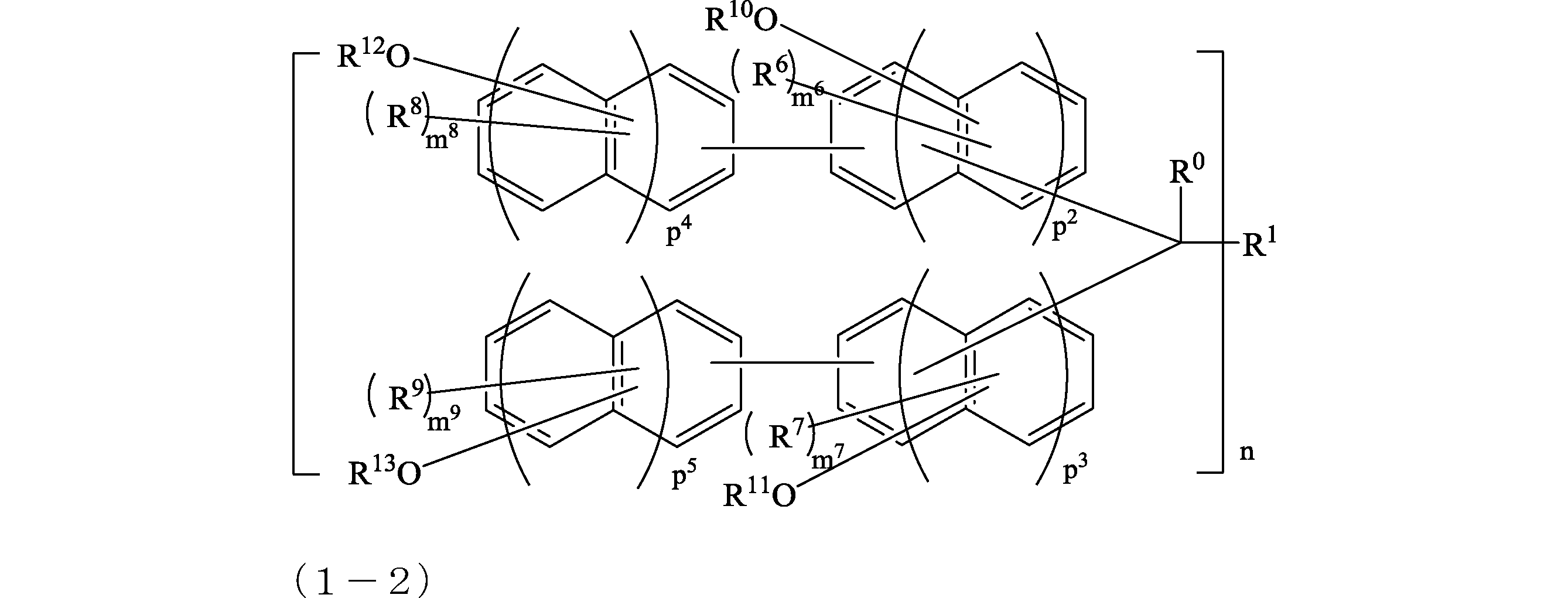
R8~R9は、前記R6~R7と同義であり、
R12~R13は、前記R10~R11と同義であり、
m8及びm9は、各々独立して、0~8の整数であり、
但し、m6、m7、m8及びm9は同時に0になることはない。) - 前記式(2)で表される化合物が下記式(2-1)で表される化合物である、請求項4に記載の光学部材形成組成物。
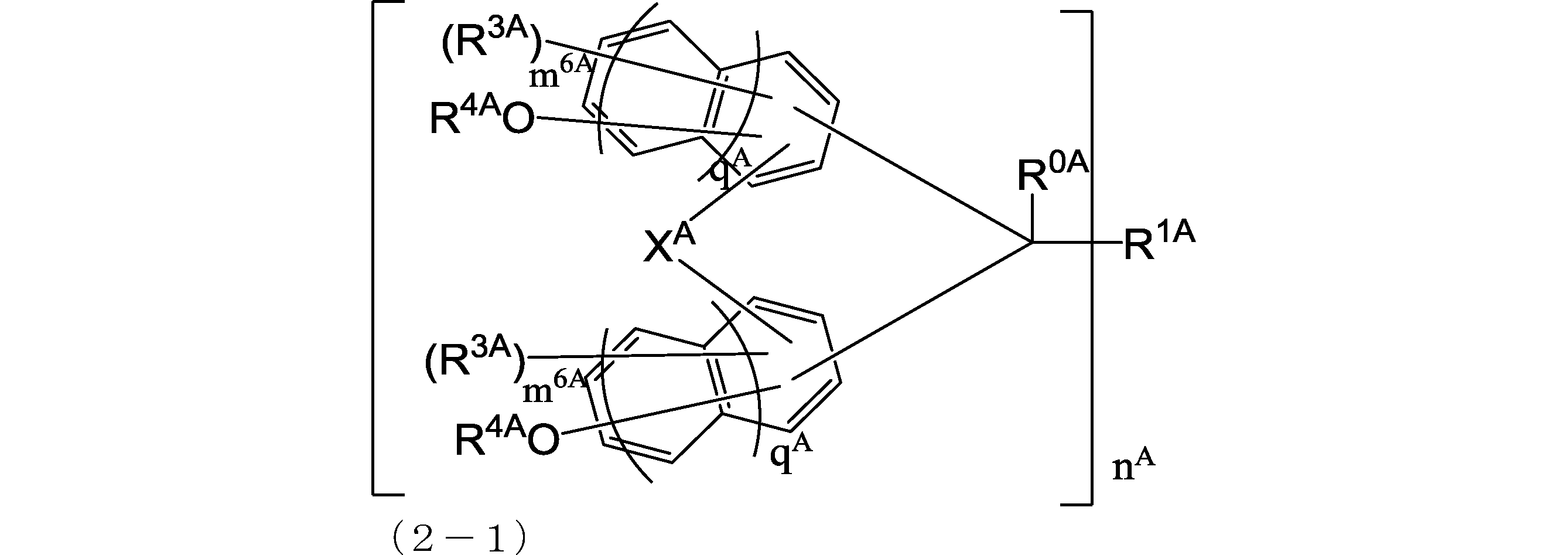
R3Aは、各々独立して、ハロゲン原子、置換基を有していてもよい炭素数1~30のアルキル基、置換基を有していてもよい炭素数6~30のアリール基、又は置換基を有していてもよい炭素数2~30のアルケニル基であり、ここで、前記アルキル基、前記アルケニル基及び前記アリール基は、エーテル結合、ケトン結合又はエステル結合を含んでいてもよく、
R4Aは、各々独立して、水素原子、酸架橋性基または酸解離性基であり、
m6Aは、各々独立して、0~5の整数である。) - 下記式(0)で表される化合物をモノマーとして得られる樹脂を含有する、光学部材形成組成物。
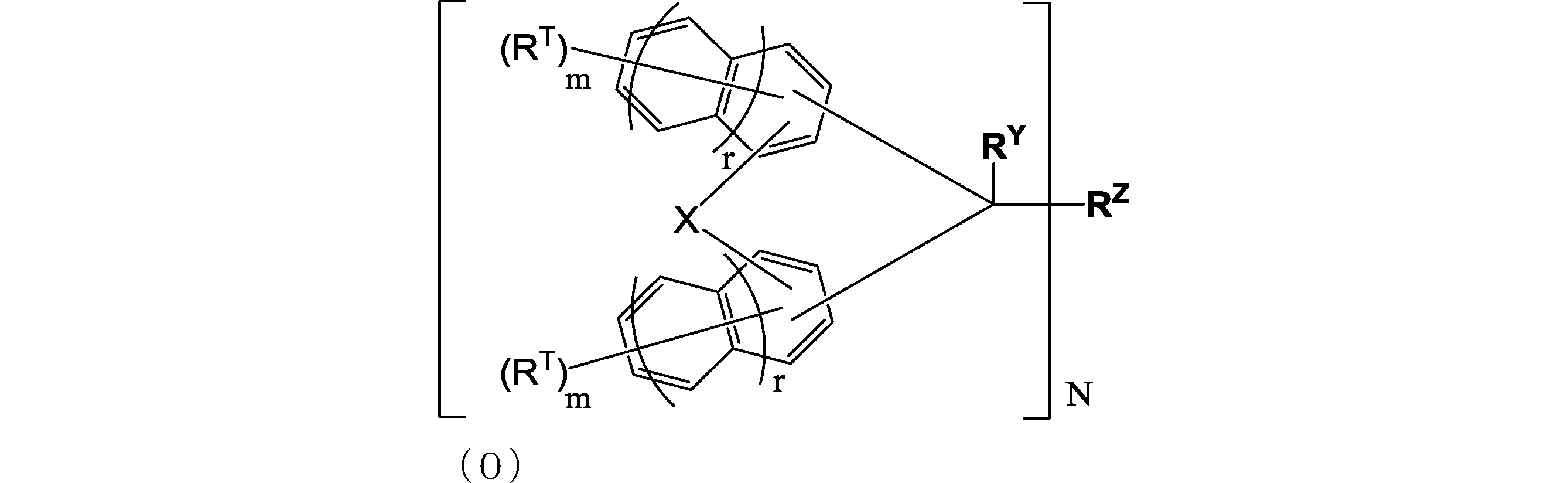
RZは、炭素数1~60のN価の基又は単結合であり、
RTは、各々独立して、置換基を有していてもよい炭素原子数1~30のアルキル基、置換基を有していてもよい炭素原子数6~40のアリール基、置換基を有していてもよい炭素原子数2~30のアルケニル基、置換基を有していてもよい炭素数1~30のアルコキシ基、ハロゲン原子、ニトロ基、アミノ基、チオール基、水酸基または水酸基の水素原子が酸架橋性基または酸解離性基で置換された基であり、ここで、前記アルキル基、前記アルケニル基及び前記アリール基は、エーテル結合、ケトン結合又はエステル結合を含んでいてもよく、
Xは、酸素原子、硫黄原子、単結合又は無架橋であることを示し、
mは、各々独立して0~9の整数であり、ここで、mの少なくとも1つは1~9の整数であり、
Nは、1~4の整数であり、ここで、Nが2以上の整数の場合、N個の[ ]内の構造式は同一であっても異なっていてもよく、
rは、各々独立して0~2の整数である。) - 下記式(1)で表される化合物をモノマーとして得られる樹脂を含有する、光学部材形成組成物。

R1は、炭素数1~60のn価の基又は単結合であり、
R2~R5は、各々独立して、置換基を有していてもよい炭素数1~30のアルキル基、置換基を有していてもよい炭素数6~30のアリール基、置換基を有していてもよい炭素数2~30のアルケニル基、置換基を有していてもよい炭素数1~30のアルコキシ基、ハロゲン原子、チオール基、水酸基又は水酸基の水素原子が酸解離性基で置換された基であり、ここで、前記アルキル基、前記アルケニル基及び前記アリール基は、エーテル結合、ケトン結合又はエステル結合を含んでいてもよく、R2~R5の少なくとも1つは水酸基又は水酸基の水素原子が酸解離性基で置換された基であり、
m2及びm3は、各々独立して、0~8の整数であり、
m4及びm5は、各々独立して、0~9の整数であり、
但し、m2、m3、m4及びm5は同時に0になることはなく、
nは、1~4の整数であり、ここで、nが2以上の整数の場合、n個の[ ]内の構造式は同一であっても異なっていてもよく、
p2~p5は、各々独立して0~2の整数である。) - 前記式(1)で表される化合物をモノマーとして得られる樹脂が、下記式(3)で表される構造を有する樹脂である、請求項9に記載の光学部材形成組成物。
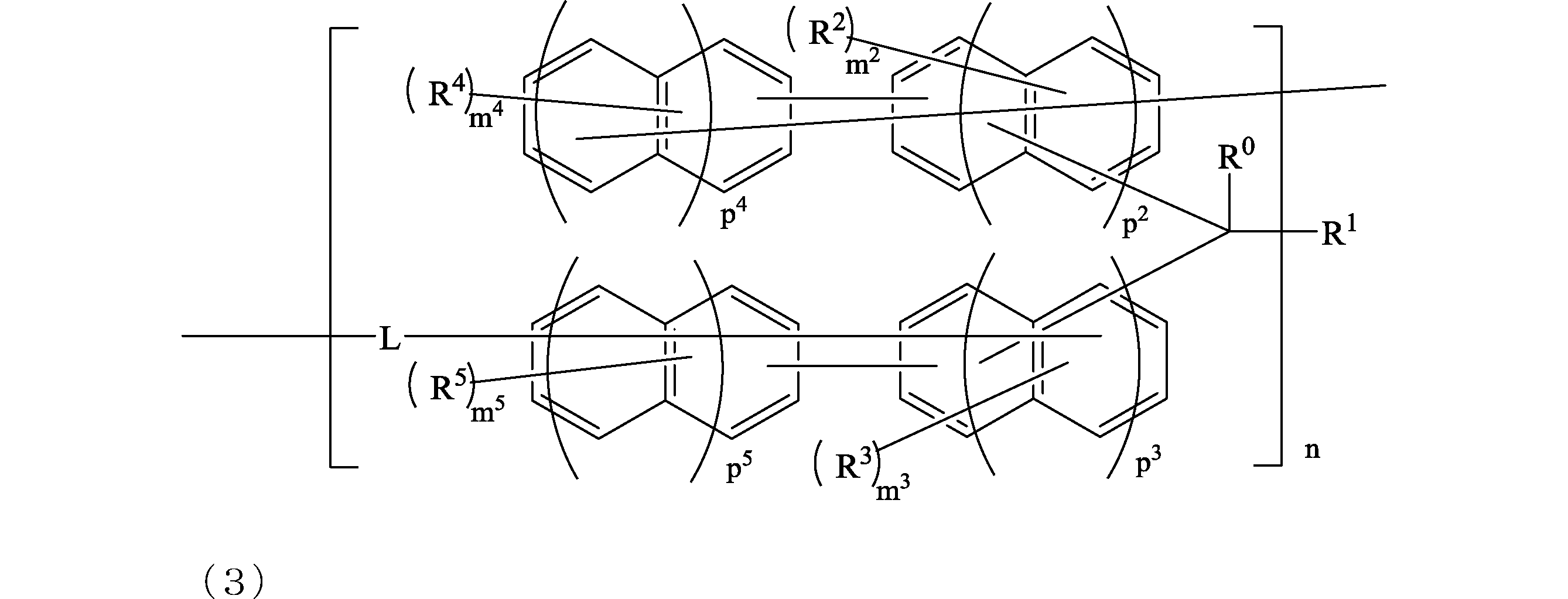
R0は、水素原子であり、
R1は、炭素数1~60のn価の基又は単結合であり、
R2~R5は、各々独立して、置換基を有していてもよい炭素数1~30のアルキル基、置換基を有していてもよい炭素数6~30のアリール基、置換基を有していてもよい炭素数2~30のアルケニル基、置換基を有していてもよい炭素数1~30のアルコキシ基、ハロゲン原子、チオール基、水酸基又は水酸基の水素原子が酸解離性基で置換された基であり、ここで、前記アルキル基、前記アルケニル基及び前記アリール基は、エーテル結合、ケトン結合又はエステル結合を含んでいてもよく、R2~R5の少なくとも1つは水酸基又は水酸基の水素原子が酸解離性基で置換された基であり、
m2及びm3は、各々独立して、0~8の整数であり、
m4及びm5は、各々独立して、0~9の整数であり、
但し、m2、m3、m4及びm5は同時に0になることはなく、
nは、1~4の整数であり、ここで、nが2以上の整数の場合、n個の[ ]内の構造式は同一であっても異なっていてもよく、
p2~p5は、各々独立して0~2の整数である。) - 下記式(2)で表される化合物をモノマーとして得られる樹脂を含有する、光学部材形成組成物。

R1Aは、炭素数1~60のnA価の基又は単結合であり、
R2Aは、各々独立して、置換基を有していてもよい炭素数1~30のアルキル基、置換基を有していてもよい炭素数6~30のアリール基、置換基を有していてもよい炭素数2~10のアルケニル基、ハロゲン原子、水酸基又は水酸基の水素原子が酸架橋性基または酸解離性基で置換された基であり、ここで、前記アルキル基、前記アルケニル基及び前記アリール基は、エーテル結合、ケトン結合又はエステル結合を含んでいてもよく、R2Aの少なくとも1つは水酸基又は水酸基の水素原子が酸架橋性基または酸解離性基で置換された基であり、
nAは、1~4の整数であり、ここで、nAが2以上の整数の場合、nA個の[ ]内の構造式は同一であっても異なっていてもよく、
XAは、酸素原子、硫黄原子、単結合又は無架橋であることを示し、
m2Aは、各々独立して、0~7の整数であり、但し、少なくとも1つのm2Aは1~7の整数であり、
qAは、各々独立して、0又は1である。) - 前記式(2)で表される化合物をモノマーとして得られる樹脂が、下記式(4)で表される構造を有する樹脂である、請求項11に記載の光学部材形成組成物。
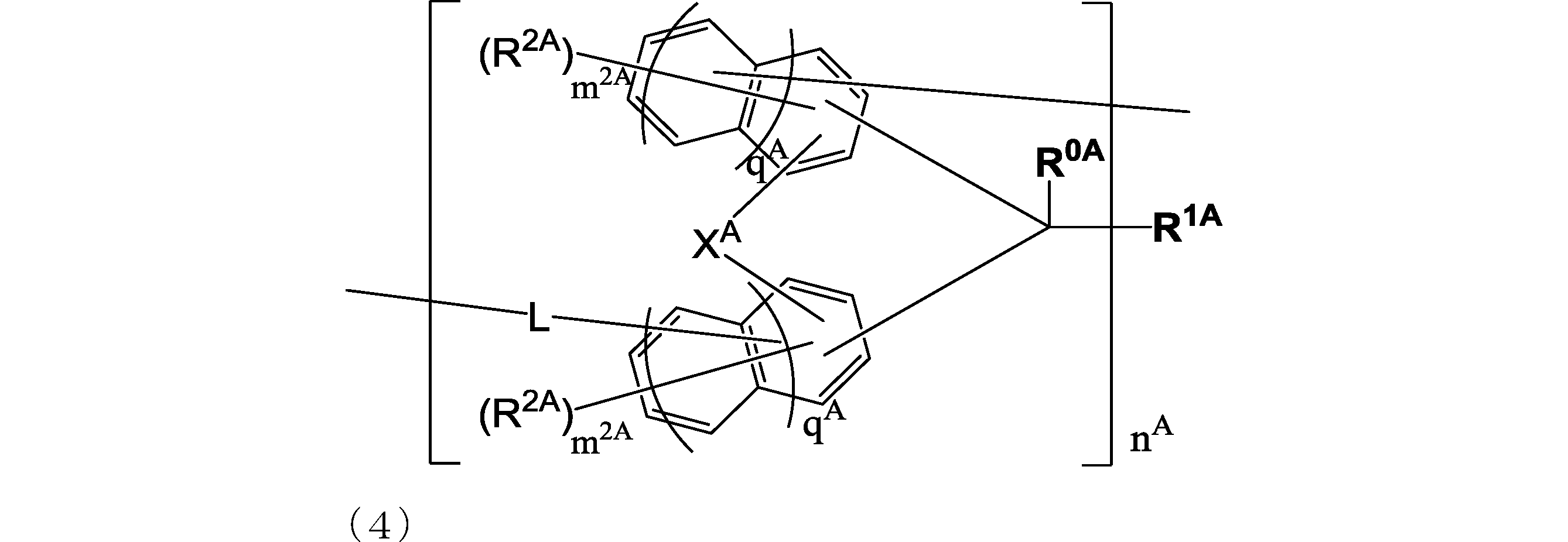
R0Aは、水素原子であり、
R1Aは、炭素数1~30のnA価の基又は単結合であり、
R2Aは、各々独立して、置換基を有していてもよい炭素数1~30のアルキル基、置換基を有していてもよい炭素数6~30のアリール基、置換基を有していてもよい炭素数2~10のアルケニル基、ハロゲン原子、水酸基又は水酸基の水素原子が酸架橋性基または酸解離性基で置換された基であり、ここで、前記アルキル基、前記アルケニル基及び前記アリール基は、エーテル結合、ケトン結合又はエステル結合を含んでいてもよく、R2Aの少なくとも1つは水酸基又は水酸基の水素原子が酸架橋性基または酸解離性基で置換された基であり、
nAは、1~4の整数であり、ここで、nAが2以上の整数の場合、nA個の[ ]内の構造式は同一であっても異なっていてもよく、
XAは、酸素原子、硫黄原子、単結合又は無架橋であることを示し、
m2Aは、各々独立して、0~6の整数であり、但し、少なくとも1つのm2Aは1~6の整数であり、
qAは、各々独立して、0又は1である。) - 溶媒をさらに含有する、請求項1~12のいずれか1項記載の光学部材形成組成物。
- 酸発生剤をさらに含有する、請求項1~13のいずれか1項記載の光学部材形成組成物。
- 架橋剤をさらに含有する、請求項13又は14に記載の光学部材形成組成物。
- 前記架橋剤が、フェノール化合物、エポキシ化合物、シアネート化合物、アミノ化合物、ベンゾオキサジン化合物、メラミン化合物、グアナミン化合物、グリコールウリル化合物、ウレア化合物、イソシアネート化合物及びアジド化合物からなる群より選ばれる少なくとも1種である、請求項15に記載の光学部材形成組成物。
- 前記架橋剤が、少なくとも1つのアリル基を有する、請求項15又は16に記載の光学部材形成組成物。
- 前記架橋剤の含有量が、固形成分の全質量の0.1~50質量%である、請求項15~17のいずれか一項に記載の光学部材形成組成物。
- 架橋促進剤をさらに含有する、請求項15~18のいずれか一項に記載の光学部材形成組成物。
- 前記架橋促進剤が、アミン類、イミダゾール類、有機ホスフィン類、及びルイス酸からなる群より選ばれる少なくとも1種である、請求項19に記載の光学部材形成組成物。
- 前記架橋促進剤の含有量が、固形成分の全質量の0.1~10質量%である、請求項19又は20に記載の光学部材形成組成物。
- ラジカル重合開始剤をさらに含有する、請求項13~21のいずれか一項に記載の光学部材形成組成物。
- 前記ラジカル重合開始剤が、ケトン系光重合開始剤、有機過酸化物系重合開始剤及びアゾ系重合開始剤からなる群より選ばれる少なくとも1種である、請求項22に記載の光学部材形成組成物。
- 前記ラジカル重合開始剤の含有量が、固形成分の全質量の0.1~10質量%である、請求項22又は23に記載の光学部材形成組成物。
Priority Applications (4)
| Application Number | Priority Date | Filing Date | Title |
|---|---|---|---|
| CN201780056093.1A CN109690361A (zh) | 2016-09-13 | 2017-09-13 | 光学构件形成组合物 |
| US16/332,694 US20190359756A1 (en) | 2016-09-13 | 2017-09-13 | Optical member forming composition |
| JP2018539742A JP6896233B2 (ja) | 2016-09-13 | 2017-09-13 | 光学部材形成組成物 |
| KR1020197007282A KR20190046861A (ko) | 2016-09-13 | 2017-09-13 | 광학부재 형성 조성물 |
Applications Claiming Priority (2)
| Application Number | Priority Date | Filing Date | Title |
|---|---|---|---|
| JP2016-178447 | 2016-09-13 | ||
| JP2016178447 | 2016-09-13 |
Publications (1)
| Publication Number | Publication Date |
|---|---|
| WO2018052012A1 true WO2018052012A1 (ja) | 2018-03-22 |
Family
ID=61618849
Family Applications (1)
| Application Number | Title | Priority Date | Filing Date |
|---|---|---|---|
| PCT/JP2017/033013 Ceased WO2018052012A1 (ja) | 2016-09-13 | 2017-09-13 | 光学部材形成組成物 |
Country Status (6)
| Country | Link |
|---|---|
| US (1) | US20190359756A1 (ja) |
| JP (1) | JP6896233B2 (ja) |
| KR (1) | KR20190046861A (ja) |
| CN (1) | CN109690361A (ja) |
| TW (1) | TW201827419A (ja) |
| WO (1) | WO2018052012A1 (ja) |
Cited By (2)
| Publication number | Priority date | Publication date | Assignee | Title |
|---|---|---|---|---|
| WO2020027206A1 (ja) | 2018-07-31 | 2020-02-06 | 三菱瓦斯化学株式会社 | 光学部品形成用組成物及び光学部品、並びに、化合物及び樹脂 |
| JP2021066832A (ja) * | 2019-10-25 | 2021-04-30 | Dic株式会社 | 多官能フェノール樹脂、多官能エポキシ樹脂、それらを含む硬化性樹脂組成物及びその硬化物 |
Families Citing this family (2)
| Publication number | Priority date | Publication date | Assignee | Title |
|---|---|---|---|---|
| WO2017111165A1 (ja) * | 2015-12-25 | 2017-06-29 | 三菱瓦斯化学株式会社 | 化合物、樹脂、組成物、レジストパターン形成方法、及び、回路パターン形成方法 |
| TW201833096A (zh) * | 2016-12-02 | 2018-09-16 | 日商三菱瓦斯化學股份有限公司 | 化合物、樹脂、組成物、圖型形成方法及純化方法 |
Citations (7)
| Publication number | Priority date | Publication date | Assignee | Title |
|---|---|---|---|---|
| JP2005222573A (ja) * | 2004-02-03 | 2005-08-18 | Konica Minolta Opto Inc | プラスチック製光学素子及び光ピックアップ装置 |
| JP2007199653A (ja) * | 2005-12-27 | 2007-08-09 | Shin Etsu Chem Co Ltd | フォトレジスト下層膜形成材料及びパターン形成方法 |
| WO2013024778A1 (ja) * | 2011-08-12 | 2013-02-21 | 三菱瓦斯化学株式会社 | レジスト組成物、レジストパターン形成方法、それに用いるポリフェノール化合物及びそれから誘導され得るアルコール化合物 |
| WO2013024779A1 (ja) * | 2011-08-12 | 2013-02-21 | 三菱瓦斯化学株式会社 | リソグラフィー用下層膜形成材料、リソグラフィー用下層膜及びパターン形成方法 |
| WO2015137486A1 (ja) * | 2014-03-13 | 2015-09-17 | 三菱瓦斯化学株式会社 | 化合物、樹脂、リソグラフィー用下層膜形成材料、リソグラフィー用下層膜、パターン形成方法、及び化合物又は樹脂の精製方法 |
| WO2015165786A1 (en) * | 2014-04-29 | 2015-11-05 | AZ Electronic Materials (Luxembourg) S.à.r.l. | Antireflective coating compositions and processes thereof |
| JP2017088675A (ja) * | 2015-11-05 | 2017-05-25 | Dic株式会社 | ノボラック型フェノール性水酸基含有樹脂及びレジスト材料 |
Family Cites Families (7)
| Publication number | Priority date | Publication date | Assignee | Title |
|---|---|---|---|---|
| JP4247658B2 (ja) * | 2001-07-12 | 2009-04-02 | Dic株式会社 | 新規エポキシ樹脂、エポキシ樹脂組成物及びその硬化物 |
| TWI264440B (en) * | 2002-07-25 | 2006-10-21 | Mitsubishi Gas Chemical Co | (Meth)acrylate compound and cured product thereof |
| JP2010138393A (ja) | 2008-11-13 | 2010-06-24 | Nippon Kayaku Co Ltd | 光学レンズシート用エネルギー線硬化型樹脂組成物及びその硬化物 |
| JP2014073986A (ja) | 2012-10-03 | 2014-04-24 | Asahi Organic Chemicals Industry Co Ltd | アントラセン誘導体及びその製造方法、化合物、組成物、硬化物並びに蛍光素子 |
| CN106133604B (zh) * | 2014-03-13 | 2019-09-06 | 三菱瓦斯化学株式会社 | 保护剂组合物和保护剂图案形成方法 |
| JP2015174877A (ja) | 2014-03-13 | 2015-10-05 | 日産化学工業株式会社 | 特定の硬化促進触媒を含む樹脂組成物 |
| JP6381318B2 (ja) | 2014-06-30 | 2018-08-29 | 新日鉄住金化学株式会社 | 光学レンズ用活性エネルギー線硬化性樹脂組成物 |
-
2017
- 2017-09-13 US US16/332,694 patent/US20190359756A1/en not_active Abandoned
- 2017-09-13 KR KR1020197007282A patent/KR20190046861A/ko not_active Ceased
- 2017-09-13 TW TW106131478A patent/TW201827419A/zh unknown
- 2017-09-13 JP JP2018539742A patent/JP6896233B2/ja active Active
- 2017-09-13 WO PCT/JP2017/033013 patent/WO2018052012A1/ja not_active Ceased
- 2017-09-13 CN CN201780056093.1A patent/CN109690361A/zh not_active Withdrawn
Patent Citations (7)
| Publication number | Priority date | Publication date | Assignee | Title |
|---|---|---|---|---|
| JP2005222573A (ja) * | 2004-02-03 | 2005-08-18 | Konica Minolta Opto Inc | プラスチック製光学素子及び光ピックアップ装置 |
| JP2007199653A (ja) * | 2005-12-27 | 2007-08-09 | Shin Etsu Chem Co Ltd | フォトレジスト下層膜形成材料及びパターン形成方法 |
| WO2013024778A1 (ja) * | 2011-08-12 | 2013-02-21 | 三菱瓦斯化学株式会社 | レジスト組成物、レジストパターン形成方法、それに用いるポリフェノール化合物及びそれから誘導され得るアルコール化合物 |
| WO2013024779A1 (ja) * | 2011-08-12 | 2013-02-21 | 三菱瓦斯化学株式会社 | リソグラフィー用下層膜形成材料、リソグラフィー用下層膜及びパターン形成方法 |
| WO2015137486A1 (ja) * | 2014-03-13 | 2015-09-17 | 三菱瓦斯化学株式会社 | 化合物、樹脂、リソグラフィー用下層膜形成材料、リソグラフィー用下層膜、パターン形成方法、及び化合物又は樹脂の精製方法 |
| WO2015165786A1 (en) * | 2014-04-29 | 2015-11-05 | AZ Electronic Materials (Luxembourg) S.à.r.l. | Antireflective coating compositions and processes thereof |
| JP2017088675A (ja) * | 2015-11-05 | 2017-05-25 | Dic株式会社 | ノボラック型フェノール性水酸基含有樹脂及びレジスト材料 |
Cited By (5)
| Publication number | Priority date | Publication date | Assignee | Title |
|---|---|---|---|---|
| WO2020027206A1 (ja) | 2018-07-31 | 2020-02-06 | 三菱瓦斯化学株式会社 | 光学部品形成用組成物及び光学部品、並びに、化合物及び樹脂 |
| KR20210036866A (ko) | 2018-07-31 | 2021-04-05 | 미쯔비시 가스 케미칼 컴파니, 인코포레이티드 | 광학부품형성용 조성물 및 광학부품, 그리고, 화합물 및 수지 |
| JPWO2020027206A1 (ja) * | 2018-07-31 | 2021-08-12 | 三菱瓦斯化学株式会社 | 光学部品形成用組成物及び光学部品、並びに、化合物及び樹脂 |
| JP2021066832A (ja) * | 2019-10-25 | 2021-04-30 | Dic株式会社 | 多官能フェノール樹脂、多官能エポキシ樹脂、それらを含む硬化性樹脂組成物及びその硬化物 |
| JP7347118B2 (ja) | 2019-10-25 | 2023-09-20 | Dic株式会社 | 多官能フェノール樹脂、多官能エポキシ樹脂、それらを含む硬化性樹脂組成物及びその硬化物 |
Also Published As
| Publication number | Publication date |
|---|---|
| JPWO2018052012A1 (ja) | 2019-06-24 |
| TW201827419A (zh) | 2018-08-01 |
| KR20190046861A (ko) | 2019-05-07 |
| US20190359756A1 (en) | 2019-11-28 |
| CN109690361A (zh) | 2019-04-26 |
| JP6896233B2 (ja) | 2021-06-30 |
Similar Documents
| Publication | Publication Date | Title |
|---|---|---|
| KR102082839B1 (ko) | 레지스트 조성물, 레지스트 패턴 형성방법, 이에 이용되는 폴리페놀 화합물 및 이로부터 유도될 수 있는 알코올 화합물 | |
| CN107428717B (zh) | 抗蚀剂组合物、抗蚀图案形成方法、及用于其的多酚化合物 | |
| US8889919B2 (en) | Cyclic compound, process for production of the cyclic compound, radiation-sensitive composition, and method for formation of resist pattern | |
| KR102527656B1 (ko) | 레지스트 기재, 레지스트 조성물 및 레지스트 패턴 형성방법 | |
| JP7102338B2 (ja) | 光学部品形成組成物及びその硬化物 | |
| JP5786713B2 (ja) | 環状化合物、その製造方法、感放射線性組成物およびレジストパターン形成方法 | |
| US8883937B2 (en) | Cyclic compound, manufacturing method therefor, radiation-sensitive composition, and method for forming a resist pattern | |
| JP6896233B2 (ja) | 光学部材形成組成物 | |
| JP5825104B2 (ja) | 環状化合物、その製造方法、感放射線性組成物およびレジストパターン形成方法 | |
| JP5733211B2 (ja) | 環状化合物、その製造方法、感放射線性組成物およびレジストパターン形成方法 | |
| JP5564883B2 (ja) | 溶解抑止剤、ネガ型感放射線性組成物およびレジストパターン形成方法 | |
| JP5413070B2 (ja) | 感放射線性組成物、その製造方法およびレジストパターン形成方法 | |
| JPWO2011037072A1 (ja) | 環状化合物、感放射線性組成物およびレジストパターン形成法 | |
| JP5493668B2 (ja) | 感放射線性組成物、その製造方法、およびレジストパターン形成方法 | |
| JPWO2011037071A1 (ja) | 環状化合物、感放射線性組成物およびレジストパターン形成法 | |
| JP2011079764A (ja) | 環状化合物、その製造方法、感放射線性組成物およびレジストパターン形成方法 |
Legal Events
| Date | Code | Title | Description |
|---|---|---|---|
| 121 | Ep: the epo has been informed by wipo that ep was designated in this application |
Ref document number: 17850913 Country of ref document: EP Kind code of ref document: A1 |
|
| ENP | Entry into the national phase |
Ref document number: 2018539742 Country of ref document: JP Kind code of ref document: A |
|
| ENP | Entry into the national phase |
Ref document number: 20197007282 Country of ref document: KR Kind code of ref document: A |
|
| NENP | Non-entry into the national phase |
Ref country code: DE |
|
| 122 | Ep: pct application non-entry in european phase |
Ref document number: 17850913 Country of ref document: EP Kind code of ref document: A1 |