WO2018043578A1 - 食品包装用フィルム、食品用容器 - Google Patents
食品包装用フィルム、食品用容器 Download PDFInfo
- Publication number
- WO2018043578A1 WO2018043578A1 PCT/JP2017/031202 JP2017031202W WO2018043578A1 WO 2018043578 A1 WO2018043578 A1 WO 2018043578A1 JP 2017031202 W JP2017031202 W JP 2017031202W WO 2018043578 A1 WO2018043578 A1 WO 2018043578A1
- Authority
- WO
- WIPO (PCT)
- Prior art keywords
- lactic acid
- food
- layer
- container
- acid bacteria
- Prior art date
- Legal status (The legal status is an assumption and is not a legal conclusion. Google has not performed a legal analysis and makes no representation as to the accuracy of the status listed.)
- Ceased
Links
Images





Classifications
-
- A—HUMAN NECESSITIES
- A23—FOODS OR FOODSTUFFS; TREATMENT THEREOF, NOT COVERED BY OTHER CLASSES
- A23L—FOODS, FOODSTUFFS OR NON-ALCOHOLIC BEVERAGES, NOT OTHERWISE PROVIDED FOR; PREPARATION OR TREATMENT THEREOF
- A23L5/00—Preparation or treatment of foods or foodstuffs, in general; Food or foodstuffs obtained thereby; Materials therefor
-
- B—PERFORMING OPERATIONS; TRANSPORTING
- B65—CONVEYING; PACKING; STORING; HANDLING THIN OR FILAMENTARY MATERIAL
- B65D—CONTAINERS FOR STORAGE OR TRANSPORT OF ARTICLES OR MATERIALS, e.g. BAGS, BARRELS, BOTTLES, BOXES, CANS, CARTONS, CRATES, DRUMS, JARS, TANKS, HOPPERS, FORWARDING CONTAINERS; ACCESSORIES, CLOSURES, OR FITTINGS THEREFOR; PACKAGING ELEMENTS; PACKAGES
- B65D65/00—Wrappers or flexible covers; Packaging materials of special type or form
- B65D65/38—Packaging materials of special type or form
- B65D65/40—Applications of laminates for particular packaging purposes
-
- B—PERFORMING OPERATIONS; TRANSPORTING
- B65—CONVEYING; PACKING; STORING; HANDLING THIN OR FILAMENTARY MATERIAL
- B65D—CONTAINERS FOR STORAGE OR TRANSPORT OF ARTICLES OR MATERIALS, e.g. BAGS, BARRELS, BOTTLES, BOXES, CANS, CARTONS, CRATES, DRUMS, JARS, TANKS, HOPPERS, FORWARDING CONTAINERS; ACCESSORIES, CLOSURES, OR FITTINGS THEREFOR; PACKAGING ELEMENTS; PACKAGES
- B65D85/00—Containers, packaging elements or packages, specially adapted for particular articles or materials
- B65D85/50—Containers, packaging elements or packages, specially adapted for particular articles or materials for living organisms, articles or materials sensitive to changes of environment or atmospheric conditions, e.g. land animals, birds, fish, water plants, non-aquatic plants, flower bulbs, cut flowers or foliage
-
- A—HUMAN NECESSITIES
- A23—FOODS OR FOODSTUFFS; TREATMENT THEREOF, NOT COVERED BY OTHER CLASSES
- A23C—DAIRY PRODUCTS, e.g. MILK, BUTTER OR CHEESE; MILK OR CHEESE SUBSTITUTES; PREPARATION THEREOF
- A23C9/00—Milk preparations; Milk powder or milk powder preparations
- A23C9/12—Fermented milk preparations; Treatment using microorganisms or enzymes
- A23C9/123—Fermented milk preparations; Treatment using microorganisms or enzymes using only microorganisms of the genus lactobacteriaceae; Yoghurt
Definitions
- the present invention relates to a food packaging film and a food container.
- Conventional food preservation technologies include fermented foods such as miso and soy sauce using bio-preservation, and dairy products such as cheese and yogurt. They contain safe microorganisms that are friendly to the environment and prevent the growth of various bacteria and antibacterial metabolites. By promoting the action, the preservation of fermented foods and dairy products is enhanced. Lactic acid bacteria, which are one of the environmentally friendly and safe microorganisms, are used as probiotic products in various food and medical fields.
- a sheet for pickles in which a fermented material containing microorganisms extracted from bran pickles and lactic acid bacteria are adsorbed on a water-absorbent sheet such as fiber or nonwoven fabric for example, Patent Document 1
- lactic acid bacteria A yogurt containing a capsule encapsulating is known.
- a condom is known in which a liquid obtained by mixing lactic acid bacteria in a lubricant is applied to a rubber surface as an infection prevention (for example, Patent Document 2).
- lactic acid bacteria are attached to the inner surface of the yogurt container in advance, and by filling the yogurt container with yogurt, the lactic acid bacteria attached to the inner surface of the yogurt container are gradually eluted into the yogurt, and the number of lactic acid bacteria is replenished. A way to do this is considered.
- a method similar to Patent Documents 1 and 2 may be used in which a lactic acid bacteria coating solution in which lactic acid bacteria are suspended is applied to the inner surface of the yogurt container.
- the present invention can guarantee the standard of the number of bacteria in the beverage or the food containing the bacteria by elution in the food by previously laminating the bacteria on the inner surface of the container even if the storage period is long.
- Another object of the present invention is to provide a food packaging film and a food container that can improve the preservability of food by preventing the propagation of other germs by the bacteria laminated on the film surface or the container inner surface.
- a food packaging film is a food packaging film for packaging food, on one surface in the thickness direction of a sheet-shaped film substrate, The fungus layer containing is laminated.
- the thickness of the fungus layer, the pressure-sensitive adhesive, etc. in the present invention is only required to be a thickness that can achieve the purpose, and the thickness is determined visually (or from a thickness that cannot be recognized visually (or tactilely)). Includes thickness that can be recognized by tactile sense.
- the method for producing a film for food packaging is a method for producing a film for food packaging for packaging food, and includes powdered bacteria, an adhesive, water, a volatile solvent, A step of preparing a bacterial suspension by mixing, a step of applying the bacterial suspension to one surface in the thickness direction of the sheet-shaped film substrate, and the step of applying the bacterial suspension Drying the film substrate until the water activity becomes 0.3 to 0.6, and forming a fungus layer on the surface of the film substrate.
- This fungus layer may be either the entire surface or a part.
- This aspect is suitable when using the bacteria which have heat resistance with respect to the said temperature, when heating at a drying process.
- the drying process is a process in which heating is not performed (for example, reduced pressure drying, natural drying, etc.)
- the temperature of heating is lower than the heat-resistant temperature of the microbe to be used, this embodiment can be applied.
- the water activity is 1.0 when all the water is free water and 0.0 when there is no free water at all.
- the relationship with the growth of the microorganism is that the microorganism grows at 0.8 or more. It is said that dry mold grows at 0.6 to 0.8. It is said that all microorganisms do not grow below 0.6, and in the case of freeze-dried food, it is 0.3 or less.
- the bacterium in the method for producing a food packaging film, may be a lactic acid bacterium or a natto bacterium, and the microbial layer may be a lactic acid bacterium layer or a natto bacterium layer.
- an oligosaccharide may be added to the lactic acid bacterium suspension or the natto bacterium suspension.
- trehalose may be added to the lactic acid bacterium suspension or the natto bacterium suspension.
- the method for producing a film for food packaging is a method for producing a film for food packaging for packaging food, on one surface in the thickness direction of the sheet-shaped film substrate, A step of providing a pressure-sensitive adhesive in layers, and a step of spraying and adhering powdery bacteria having non-heat resistance to the pressure-sensitive adhesive provided in layers.
- the lamination may be either the entire surface or a part.
- This embodiment is preferably applied to bacteria that are not heat resistant (non-heat resistant) or not resistant to temperature in the production process, but can also be applied to heat resistant bacteria. is there.
- the bacterium may be a lactic acid bacterium or a natto bacterium.
- the food container according to one embodiment of the present invention is a food container filled with a beverage or food, and a fungus layer containing bacteria is laminated on the inner surface of a container base having at least a cylindrical shape or a truncated cone shape. Has been.
- the method for producing a food container is a method for producing a food container that is filled with a beverage or food, and is a powdered fungus, an adhesive, water, a volatile solvent, To prepare a bacterial suspension, to apply at least the inner surface of a container base having a cylindrical shape or a truncated cone shape, and to apply the bacterial suspension And drying the container base material until the water activity becomes 0.3 to 0.6 to form a fungus layer on the inner surface of the container base material.
- the bacterium may be a lactic acid bacterium or a natto bacterium
- the microbial suspension may be a lactic acid bacterium suspension or a natto bacterium suspension.
- a method for producing a food container is a method for producing a food container filled with a beverage or food, and at least an inner surface of a container base having a cylindrical shape or a truncated cone shape. And a step of providing a pressure-sensitive adhesive in layers, and a step of spraying and attaching powdery bacteria to the pressure-sensitive adhesive provided in layers.
- the bacterium may be a lactic acid bacterium or a natto bacterium
- the microbial suspension may be a lactic acid bacterium suspension or a natto bacterium suspension.
- the food according to the present invention includes fresh food, and includes human food and drinks. It also includes food and drinks for animals (pets, poultry, livestock, etc.).
- what is accommodated in the film and container which concern on this invention contains solid, a semi-solid, a liquid, and those mixtures.
- the bacteria are eluted on the food by previously laminating the bacteria on the film surface, so that the standard of the number of bacteria in the bacteria beverage or bacteria-containing food It can be guaranteed, and the preservability of food can be enhanced by preventing the growth of other germs by the bacteria stacked on the film surface.
- the bacteria are eluted on the food by previously laminating the bacteria on the inner surface of the container, so that the bacteria count of the bacteria beverage or the bacteria-containing food Can be ensured, or the preservability of food can be enhanced by preventing the growth of other germs by the bacteria stacked on the inner surface of the container.
- first to sixth embodiments of the present invention will be described with reference to the drawings.
- the same or similar parts are denoted by the same or similar reference numerals.
- the drawings are schematic, and the relationship between the thickness and the planar dimensions, the ratio of the thickness of each layer, and the like are different from the actual ones. Therefore, specific thicknesses and dimensions should be determined in consideration of the following description. Moreover, it is a matter of course that portions having different dimensional relationships and ratios are included between the drawings.
- the following first to sixth embodiments exemplify apparatuses and methods for embodying the technical idea of the present invention, and the technical idea of the present invention is the material of a component, The shape, structure, arrangement, etc. are not specified below.
- the technical idea of the present invention can be variously modified within the technical scope defined by the claims described in the claims.
- the food in the present invention includes fresh food, and includes human food and drinks. It also includes food and drinks for animals (pets, poultry, livestock, etc.).
- the thickness of the fungus layer, the adhesive, etc. in each of the following embodiments only needs to be a thickness that can achieve the purpose, and the thickness is from a thickness that cannot be recognized visually (or tactilely), Includes thickness that can be recognized visually (or tactilely).
- “bacteria are stacked” is described, but this is synonymous with “bacteria are deposited”, “bacteria are attached”, and “bacteria layers are stacked”.
- the drying process when heating at a drying process, it is suitable when using the microbe which has heat resistance with respect to the said temperature.
- the drying process is a process in which heating and heating are not performed (for example, drying under reduced pressure, natural drying, etc.), it can be applied to bacteria having no heat resistance.
- the temperature of heating is lower than the heat-resistant temperature of the microbe to be used, this embodiment can be applied.
- the water activity is 1.0 when all the water is free water and 0.0 when there is no free water.
- the relationship with the growth of the microorganism is that the microorganism grows at 0.8 or more. It is said that dry mold grows at 0.6 to 0.8. It is said that all microorganisms do not grow below 0.6, and in the case of freeze-dried food, it is 0.3 or less.
- each process described later can be continuously performed by Roll To Roll.
- the thickness of the film can be appropriately selected according to the contents.
- the film (including the film base material) and the container (including the container base material) used in a certain aspect of the present invention may be processed to give various functionalities such as a water vapor barrier property.
- what is accommodated in the below-mentioned film, container, and bag includes solid, semi-solid (for example, jelly-like, gel-like, a solid covered with agar, etc.), liquid, and a mixture thereof.
- the container and bag described below are not particularly limited as long as the container is filled with food or the like, and the user passes when taking the food or the like depending on the application, depending on the purpose.
- a cylindrical (tube-shaped) cartridge used for a tableware such as a straw or an inhaler for medical / health appliances is also included.
- the food container (cylindrical body or frustoconical body) in this embodiment may have a cylindrical shape or frustoconical body in which bacteria are held at least on the inner surface, and may have a bottom surface (bottom) or a ceiling.
- Surfaces are not essential components.
- an inner surface refers to the side (surface, area
- it is a tube shape (cylinder shape)
- the cylindrical body may have the same or different cross-sectional shapes (opening shapes) at one end and the other end.
- shape of the container is very diverse, so that there is no particular limitation as long as bacteria are present on the inner surface, and the shape may be appropriately selected according to the purpose.
- examples of the shape of the container include an aspect in which a bottom portion or a lid portion is provided on at least one of both ends of the cylindrical shape, a cone shape, and a truncated cone shape.
- Other examples of container cross-sectional shapes include circles, ellipses, triangles, squares, polygons, polygons with no corners, curved shapes (for example, the outer edges of cherry blossoms), and cross-sectional diameters.
- the other end has a larger diameter than the one end, etc. is there.
- the other end from one end for example, the top surface (the other end) from the bottom (one end) of the container can be mentioned.
- lactic acid bacteria are described as examples of “bacteria” contained in food packaging films and food containers, but not limited to these as long as they are useful bacteria. It can be selected appropriately. Examples of such bacteria include natto (Bacillus subtilis var. Natto), in addition to lactic acid bacteria.
- natto Bacillus subtilis var. Natto
- FIG. 1 shows a food packaging film 1 according to a first embodiment for packaging food.
- the film 1 for food packaging of 1st Embodiment is a sheet
- PET polyethylene terephthalate
- the lactic acid bacteria layer 3 is formed on the vapor deposition layer 5 of the film substrate 2, and is a living lactic acid bacterium, an adhesive that improves adhesion to the lactic acid bacteria layer 3 with respect to the vapor deposition layer 5, and a nutrient source for the lactic acid bacteria.
- oligosaccharides and trehalose as a protective stabilizer for lactic acid bacteria may be contained. That is, in this embodiment, oligosaccharide, trehalose or the like is not essential. This is not limited to the present embodiment, and the same applies to the following embodiments.
- the lactic acid bacterium contained in the lactic acid bacterium layer 3 is a pediococcus derived from a plant having heat resistance, and contains 10 to 10 5 colonies per 1 cm 2 (10 to 10 5 cfu / cm 2 ). The amount is set. In addition, cfu is a colony forming unit and is called a colony forming unit.
- the adhesive contained in the lactic acid bacteria layer 3 include polysaccharides, dextrins, maltodextrins, starches, pullulans, etc., in addition to monosaccharides such as lactose, sorbitol, mannitol, and glucose. As needed, it contains 1 type of these or these in combination. It should be understood by those skilled in the art that it is desirable to use substances that are approved for use in human bodies, animals, and the like as substances used in certain embodiments of the present invention.
- FIG. 2 (a) live powdered lactic acid bacteria L1, adhesive 8, oligosaccharide 9, trehalose 10, water W and volatile, which are made of heat-resistant plant-derived pediococcus.
- Solvent 6 is mixed to make lactic acid bacteria suspension 7.
- the volatile solvent 6 include alcohols such as ethanol, synthetic alcohol, and IPA (isopropanol) that are not evaporated and remain after drying. If necessary, the volatile solvent 6 is composed of one or a combination of these.
- a lactic acid bacteria suspension 7 is applied on the vapor deposition layer 5 of the film substrate 2.
- the film substrate 2 coated with the lactic acid bacteria suspension 7 is placed in the drying chamber 11, and the drying chamber 11 is set at a drying temperature of room temperature to 80 ° C.
- the drying process of the base material 2 is performed.
- the drying process is finished.
- the timing of the completion of the drying process is appropriately selected according to the purpose in the range of water activity from 0.3 to 0.8, and as described above, the water activity ends in the range of 0.3 to 0.8. It is preferable to finish within the range of 0.3 to 0.4.
- live lactic acid bacteria are held on the film substrate 2 even in a dry state.
- the film substrate 2 has a water activity of 0.3 to 0.6, the film substrate 2 can be wound up in a roll shape, and can be stored in large quantities or provided in large quantities.
- the drying step of FIG. 2 (c) is performed, the water W and the volatile solvent 6 are volatilized, and the volatile solvent 6 does not remain in the lactic acid bacteria suspension 7. Therefore, as shown in FIG.
- a food packaging film 1 is formed in which a lactic acid bacterium layer 3 containing living lactic acid bacteria L1, an adhesive 8, an oligosaccharide 9 and trehalose 10 is laminated.
- the effect of the film 1 for food packaging of 1st Embodiment is demonstrated.
- the lactic acid bacteria L1 in the lactic acid bacteria layer 3 is intended to inhibit the growth of food bacteria and the antibacterial action of metabolites. Storability can be improved.
- the lactic acid bacteria layer 3 contains oligosaccharide 9 as a nutrient source for lactic acid bacteria L1 and trehalose 10 as a protective stabilizer for lactic acid bacteria L1. The decrease in the number of bacteria can be suppressed, and the preservation of food can be enhanced.
- the saccharide pressure-sensitive adhesive 8 contained in the lactic acid bacteria layer 3 maintains the moisture retention of the food, the storage stability of the food can be further enhanced. Further, since the lactic acid bacteria layer 3 containing the lactic acid bacteria L1 is in a dry state with a water activity in the range of 0.3 to 0.6, the food packaging film 1 itself can be stored for a long time. Can do. The water activity is a value measured with a commercially available water activity measuring device.
- the lactic acid bacterium L1 since pediococcus derived from a plant having heat resistance is used as the lactic acid bacterium L1, even if the lactic acid bacterium layer 3 is formed at a drying temperature of room temperature to 80 ° C., the content of the lactic acid bacterium L1 in the lactic acid bacterium layer 3 Can be set in the range of 10 to 10 5 cfu / cm 2 .
- olefinic resins such as polyethylene and polypropylene used for foods
- resins such as polyester, nylon, polystyrene, polyvinyl chloride, polyvinylidene chloride
- biodegradable plastics cellulose, aluminum foil (metal foil), plastic films on which aluminum (alumina) and silica (SiO x ) are deposited, and paper. And what combined these 1 type (s) or 2 or more types is desirable.
- stacked performs surface treatments, such as a corona treatment and a plasma treatment, in addition to the vapor deposition layer 5 mentioned above, of the lactic acid bacteria layer 3 Adhesiveness can be made favorable.
- the film 1 for food packaging of 1st Embodiment was formed as a sheet
- FIG. 3 shows the film 12 for food packaging of 2nd Embodiment which packages a foodstuff.
- symbol is attached
- the film 12 for food packaging of 2nd Embodiment is a sheet
- the film base 13 is made of polyethylene.
- olefinic resins such as polyethylene and polypropylene used for foods, resins such as polyester, nylon, polystyrene, polyvinyl chloride, and polyvinylidene chloride, biodegradable plastics, cellulose , Aluminum foil (metal foil), plastic film on which aluminum (alumina) or silica (SiO x ) is deposited, paper, and the like. And what combined these 1 type (s) or 2 or more types is desirable.
- the lactic acid bacterium layer 14 is composed of a living lactic acid bacterium, an adhesive that improves the adhesion of the lactic acid bacterium layer 14 to the film substrate 13, an oligosaccharide as a nutrient source for the lactic acid bacterium, and trehalose as a protective stabilizer for the lactic acid bacterium. Is contained.
- the lactic acid bacteria contained in the lactic acid bacteria layer 14 are lactic acid bacteria such as Streptococcus, Enterococcus, Leuconostoc, Lactococcus, Pediococcus and Lactobacillus, and are set to a content of 10 to 10 5 cfu / cm 2. Has been.
- Examples of the pressure-sensitive adhesive contained in the lactic acid bacterium layer 14 include polysaccharides, dextrin, maltodextrin, starch, pullulan and the like in addition to monosaccharides such as lactose, sorbitol, and mannitol. As needed, it contains 1 type of these or these in combination.
- the manufacturing method of the film 12 for food packaging of 2nd Embodiment is demonstrated with reference to FIG. First, as shown to Fig.4 (a), the adhesive 8 is provided in layer form in the whole region of the one surface of the thickness direction of the film base material 13.
- FIG. 4B one kind of living powdery lactic acid bacteria L2, oligosaccharide 9 and trehalose among Streptococcus, Enterococcus, Leuconostoc, Lactococcus, Pediococcus and Lactobacillus
- the mixture 16 in which 10 is mixed is sprayed onto the pressure-sensitive adhesive 8 provided in layers.
- FIG. c) As shown in c), a film 12 for food packaging in which a lactic acid bacterium layer 14 containing a living lactic acid bacterium L2, an adhesive 8, an oligosaccharide 9, and trehalose 10 is laminated on a film base 13. Is formed.
- the lactic acid bacteria layer 14 contains oligosaccharide 9 as a nutrient source for lactic acid bacteria L2 and trehalose 10 as a protective stabilizer for lactic acid bacteria L2. The decrease in the number of bacteria can be suppressed, and the preservation of food can be enhanced.
- the lactic acid bacteria layer 14 of the present embodiment is in a dry state in which the water activity is in the range of 0.3 to 0.8 because no bacterial suspension is used.
- the water activity is a value measured with a commercially available water activity measuring device.
- the lactic acid bacteria layer 14 can be provided on one surface in the thickness direction of the film substrate 13, and a drying process is not necessary, so that the manufacturing process can be simplified.
- the film 12 for food packaging of 2nd Embodiment was also formed as a sheet body, even if it forms as a bag body and packages a foodstuff, there can exist an effect similar to 1st Embodiment.
- FIG. 5 shows a food container 20 according to a third embodiment filled with, for example, yogurt containing lactic acid bacteria.
- symbol is attached
- the food container 20 of the third embodiment is a container in which a lactic acid bacteria layer 22 is laminated on the inner surface of a bottomed cylindrical container base 21.
- the inner surface may be an inner surface of the container base material 21, for example, at least one of a bottom surface and a side surface, and may include the top surface (upper surface) and the inner surface of the lid as necessary. Good.
- the inner surface may be the entire surface or a part of each surface constituting the inner surface of the container base 21.
- the container base 21 includes a paper outer layer 23 and an inner layer 24 made of polyethylene laminated on the inner side of the outer layer 23.
- the lactic acid bacterium layer 22 is formed on the bottom surface of the inner layer 24, and is a living lactic acid bacterium, an adhesive that improves adhesion to the lactic acid bacterium layer 22, an oligosaccharide as a nutrient source for the lactic acid bacterium, and the protective stability of the lactic acid bacterium.
- Trehalose as an agent is contained.
- the lactic acid bacteria contained in the lactic acid bacteria layer 22 are plant-derived pediococcus having heat resistance, and are contained in the range of 10 2 to 10 9 cfu / container.
- Examples of the adhesive contained in the lactic acid bacteria layer 22 include polysaccharide dextrin, maltodextrin, starch, pullulan and the like in addition to monosaccharides such as lactose, sorbitol, and mannitol. As needed, it contains 1 type of these or these in combination.
- FIG. 6 (a) living powdery lactic acid bacteria L1, adhesive 8, oligosaccharide 9, trehalose 10, water W and volatile, which are made of heat-resistant plant-derived pediococcus.
- Solvent 6 is mixed to make lactic acid bacteria suspension 7.
- FIG. 6B the lactic acid bacteria suspension 7 is applied to the bottom surface of the inner layer 24 of the container base 21.
- the food container 20 in which the lactic acid bacteria suspension 7 is applied to the bottom surface of the inner layer 24 of the container base material 21 is placed in the drying chamber 11, and the drying chamber 11 is moved from room temperature to 80 ° C.
- the drying process of the food container 20 is performed in a state where the drying temperature is set to ° C.
- the drying process is finished. Note that the timing of the completion of the drying step is appropriately selected according to the purpose within a range of water activity of 0.3 to 0.8, as in the first embodiment.
- a food container 20 is formed by laminating a lactic acid bacterium layer 22 containing living lactic acid bacteria L1, an adhesive 8, an oligosaccharide 9, and trehalose 10 on the bottom surface of the inner layer 24 of the base material 21.
- the effect of the food container 20 of the third embodiment will be described.
- the living lactic acid bacteria L1 in the lactic acid bacteria layer 22 gradually elutes into the yogurt, so that the number of lactic acid bacteria in the filled yogurt is replenished. Can do. Therefore, even if the storage period is long, the standard of the number of lactic acid bacteria in the yogurt can be guaranteed, and the storage stability of the yogurt can be improved.
- the oligosaccharide 9 as a nutrient source of the lactic acid bacteria L1 and the trehalose 10 as a protective stabilizer of the lactic acid bacteria L1 are contained in the lactic acid bacteria layer 22, a decrease in the number of bacteria of the lactic acid bacteria L1 is suppressed. Further, since the lactic acid bacteria layer 22 containing the lactic acid bacteria L1 is in a dry state with a water activity in the range of 0.3 to 0.6, the empty food container 20 can be stored for a long period of time. it can.
- pediococcus derived from a plant having heat resistance is used as the lactic acid bacterium L1
- the range is 10 2 to 10 9 cfu / container.
- Other materials for the inner layer 24 of the container base 21 include olefin resins such as polypropylene and polyester, nylon, polystyrene, cellulose, polyvinyl chloride, polyvinylidene chloride, aluminum foil (metal foil), aluminum (alumina), and silica. Examples thereof include a plastic film and paper on which (SiO x ) is deposited.
- the inner surface of the inner layer 24 of the container substrate 21 can be subjected to a surface treatment such as corona treatment or plasma treatment to improve the adhesion of the lactic acid bacteria layer 22.
- FIG. 7 shows a food container 25 according to a fourth embodiment filled with, for example, yogurt containing lactic acid bacteria.
- the food container 25 of the fourth embodiment is a container in which a lactic acid bacteria layer 26 is laminated on the inner surface of a bottomed cylindrical container base 21.
- the container base 21 includes a paper outer layer 23 and an inner layer 24 made of polyethylene laminated on the inner side of the outer layer 23.
- the lactic acid bacterium layer 26 is formed on the bottom surface of the inner layer 24, and is a living lactic acid bacterium, an adhesive that improves adhesion to the lactic acid bacterium layer 22, an oligosaccharide as a nutrient source for the lactic acid bacterium, and the protective stability of the lactic acid bacterium.
- Trehalose as an agent is contained.
- the lactic acid bacteria contained in the lactic acid bacteria layer 26 are lactic acid bacteria such as Streptococcus, Enterococcus, Leuconostoc, Lactococcus, Pediococcus, Lactobacillus, and are contained in a range of 10 2 to 10 9 cfu / container. ing.
- Examples of the adhesive contained in the lactic acid bacteria layer 26 include polysaccharides, dextrin, maltodextrin, starch, pullulan and the like in addition to monosaccharides such as lactose, sorbitol, and mannitol. As needed, it contains 1 type of these or these in combination.
- the pressure-sensitive adhesive 8 is provided in layers on the bottom surface of the inner layer 24 of the container base 21.
- FIG. 8 (b) one kind of living powdery lactic acid bacteria L2, oligosaccharide 9 and trehalose 10 among Streptococcus, Enterococcus, Leuconostoc, Lactococcus, Pediococcus and Lactobacillus.
- the mixed body 16 is sprayed onto the pressure-sensitive adhesive 8 provided in layers on the bottom surface of the inner layer 24.
- the adhesive 8B is sprayed onto the adhesive 8 provided in a layered manner, the living lactic acid bacteria L2, oligosaccharides 9 and trehalose 10 enter and are held inside the adhesive 8.
- the mixture 16 exists not only inside the pressure-sensitive adhesive 8 but also on the surface thereof.
- the lactic acid bacteria layer 26 in which the living lactic acid bacteria L2, the adhesive 8, the oligosaccharide 9, and the trehalose 10 were contained in the inner surface of the inner layer 24 of the container base material 21 was shown. Is formed.
- the effect of the food container 25 of the fourth embodiment will be described.
- the living lactic acid bacteria L2 in the lactic acid bacteria layer 26 gradually elutes into the yogurt, so that the number of lactic acid bacteria in the filled yogurt is replenished. Can do. Therefore, even when the storage period is long, the standard for the number of lactic acid bacteria in the yogurt can be guaranteed, and the food container 25 that can improve the storage stability of the yogurt can be provided.
- the lactic acid bacteria layer 26 contains oligosaccharide 9 as a nutrient source for lactic acid bacteria L2 and trehalose 10 as a protective stabilizer for lactic acid bacteria L2, a decrease in the number of bacteria of lactic acid bacteria L2 is suppressed.
- the powdery lactic acid bacteria L2 the oligosaccharide 9 and the trehalose 10 are mixed after the adhesive 8 is provided in a layered manner on the bottom surface of the inner layer 24 of the container base material 21.
- the lactic acid bacteria layer 26 can be provided on the bottom surface of the inner layer 24 of the container base 21, and a drying process is not necessary, so that the manufacturing process can be simplified.
- the lactic acid bacteria layer 26 of this embodiment is naturally dried without using a bacterial suspension, the water activity is in a dry state in the range of 0.3 to 0.8. The water activity is a value measured with a commercially available water activity measuring device.
- FIG. 9 shows a food container 27 according to a fifth embodiment filled with, for example, yogurt containing lactic acid bacteria.
- the food container 27 of the fifth embodiment is a container in which a water-soluble film layer 28 containing lactic acid bacteria is laminated on the inner surface of a bottomed cylindrical container base 21.
- the container base 21 includes a paper outer layer 23 and an inner layer 24 made of polyethylene laminated on the inner side of the outer layer 23.
- the water-soluble film 28 containing lactic acid bacteria is produced using a water-soluble film substrate, a plasticizer, and lactic acid bacteria by a general manufacturing method.
- Examples of the material for forming the water-soluble film 28 include hydroxypropylcellulose, hypromellose, water-soluble hydroxyethylcellulose, methylcellulose, carboxymethylcellulose, gelatin, pectin, arabinoxylan, sodium alginate, carrageenan, xandam, guar gum, pullulan, polyvinyl alcohol, polyvinylpyrrolidone, Examples include polyethylene glycol.
- the water-soluble film 28 containing lactic acid bacteria contains, in addition to the water-soluble film base material, plasticizer and lactic acid bacteria L2, oligosaccharide 9 as a nutrient source for lactic acid bacteria L2, and trehalose 10 as a protective stabilizer for lactic acid bacteria L2. Therefore, the decrease in the number of lactic acid bacteria L2 is suppressed.
- the water-soluble film 28 containing lactic acid bacteria is prepared by dissolving lactic acid bacteria L2 in a solution of a water-soluble film base material and processing it into a sheet shape.
- the surface of the inner layer 24 of the container base 21 is surface-treated by corona discharge irradiation, and then the pressure-sensitive adhesive 8 is provided in layers.
- a water-soluble film layer 28 containing lactic acid bacteria cut to an appropriate size is stuck thereon.
- the effect of the food container 27 of the fifth embodiment will be described.
- the inside of the food container 27 is filled with yogurt containing lactic acid bacteria
- the living lactic acid bacteria L2 in the water-soluble film 28 containing lactic acid bacteria gradually elutes into the yogurt, so the lactic acid bacteria of the filled yogurt Number can be replenished. Therefore, even when the storage period is long, the standard for the number of lactic acid bacteria in the yogurt can be guaranteed, and the food container 27 that can improve the storage stability of the yogurt can be provided.
- the water-soluble film 28 containing lactic acid bacteria can contain oligosaccharide 9 as a nutrient source of lactic acid bacteria L2 and trehalose 10 as a protective stabilizer for lactic acid bacteria L2, thereby reducing the number of bacteria of lactic acid bacteria L2. Is suppressed.
- the water activity is in a dry state in the range of 0.3 to 0.8. The water activity is a value measured with a commercially available water activity measuring device.
- FIG. 10 shows a food container 29 according to a sixth embodiment filled with, for example, yogurt containing lactic acid bacteria.
- the same reference numerals are given to the same components as those used in the food packaging film 12 of the second embodiment and the food container 20 of the third embodiment. The description is omitted.
- the food container 29 according to the sixth embodiment is a container in which a capsule 30 containing lactic acid bacteria is attached to the inner surface of a bottomed cylindrical container base 21.
- the container base 21 includes a paper outer layer 23 and an inner layer 24 made of polyethylene laminated on the inner side of the outer layer 23.
- the capsule 30 encapsulating lactic acid bacteria may be water-soluble or fat-soluble, and is appropriately selected according to the use, the mechanism of the encapsulated bacteria, and what is filled in the food container 29.
- the capsule 30 can use a commercial item.
- the film forming agent for the capsule 30 includes, in addition to gelatin, polyhydric alcohols such as glycerin, polyglycerin, polyethylene glycol, propylene glycol, and polypropylene glycol, monosaccharides, oligosaccharides, sugar alcohols, and polysaccharides.
- the manufacturing method of the food container 29 of the sixth embodiment will be described with reference to FIG.
- the surface of the inner layer 24 of the container base 21 is subjected to surface treatment by corona discharge irradiation, and then the adhesive 8 is provided.
- the pressure-sensitive adhesive 8 may be provided in a layered manner, or may be provided in other modes depending on the purpose.
- a capsule 30 containing an appropriate amount of lactic acid bacteria is affixed thereon.
- the effect of the food container 29 of the sixth embodiment will be described.
- the living lactic acid bacteria L2 in the capsule 30 containing the lactic acid bacteria are gradually eluted into the yogurt, so that the number of lactic acid bacteria in the filled yogurt can be supplemented. . Therefore, even if the storage period is long, the standard of the number of lactic acid bacteria in the yogurt can be guaranteed, and the food container 29 that can improve the storage stability of the yogurt can be provided.
- Example 1 After producing a food packaging film by the same method as in the first embodiment, the survival of lactic acid bacteria was confirmed by the following procedure.
- a lactic acid bacteria suspension obtained by suspending 2 g of lactic acid bacteria powder in a 20% w / w ethanol aqueous solution was applied to a film in which a deposited layer of silicon oxide SiO X was deposited on a base material layer made of polyethylene terephthalate (PET).
- PET polyethylene terephthalate
- a part (25 cm 2 ) of the food packaging film dried at 70 ° C. was immersed in 9 mL of a liquid medium for lactic acid bacteria and cultured at 35 ° C. for 2 days.
- % w / w shows weight% of the substance to mix.
- % w / w is the weight percentage of ethanol and water.
- a positive control was obtained by adding 1 mL of a solution obtained by dissolving 0.01 g of lactic acid bacteria powder in 10 mL of physiological saline to 9 mL of a liquid medium for lactic acid bacteria.
- Table 1 since the survival of lactic acid bacteria was detected from the food packaging film prepared in Example 1 and the positive control, it was confirmed that the living lactic acid bacteria were laminated on the food packaging film. confirmed.
- Example 2 a part (25 cm 2 ) of the food packaging film prepared in Example 1 described above and 20 mL of a phosphate buffer solution were added to the beaker (50 mL) and immersed, and extracted by stirring with a magnet (stirrer). . 1 mL of the extracted liquid was used as a sample, diluted by pour plate culture, cultured in a medium for lactic acid bacteria at 35 ° C. for 2 days, and the number of bacteria was measured. As a result, as shown in Table 2, it was confirmed that 10 to 10 5 cfu / cm 2 of lactic acid bacteria were laminated on the film alive.
- Example 3 After producing a food container by the same method as in the third embodiment, the survival of lactic acid bacteria was confirmed. 1 mL of a lactic acid bacteria suspension obtained by suspending 2 g of lactic acid bacteria powder in a 20% w / w aqueous ethanol solution was applied to the bottom surface of paper and the inner layer of polyethylene. Then, the entire bottom surface of the same container dried at 80 ° C. was cut and shredded, and the whole was immersed in 9 mL of a liquid medium for lactic acid bacteria and cultured at 35 ° C. for 2 days.
- a lactic acid bacteria suspension obtained by suspending 2 g of lactic acid bacteria powder in a 20% w / w aqueous ethanol solution was applied to the bottom surface of paper and the inner layer of polyethylene. Then, the entire bottom surface of the same container dried at 80 ° C. was cut and shredded, and the whole was immersed in 9 mL of a liquid medium for lactic acid bacteria and cultured at 35 ° C. for
- a positive control was obtained by adding 1 mL of a solution obtained by dissolving 0.01 g of lactic acid bacteria powder in 10 mL of physiological saline to 9 mL of a liquid medium for lactic acid bacteria.
- Table 3 since the survival of lactic acid bacteria was detected from the food packaging film produced in Example 3 and the positive control, the living lactic acid bacteria were laminated on the bottom surface of the food container. It was confirmed.
- Example 4 Next, 10 mL of phosphate buffer was added to the food container prepared in Example 3, and the mixture was extracted by stirring with a magnet (stirrer). 1 mL of the extracted solution was diluted as a sample by the pour method, and the number of bacteria was measured after culturing in a medium for lactic acid bacteria at 35 ° C. for 2 days. As a result, as shown in Table 4, it was confirmed that the lactic acid bacteria were laminated on the food container in a range of 10 2 to 10 9 cfu / container.
- Example 5 Furthermore, after producing a food container by the same method as in the third embodiment, the drying temperature was changed to confirm the survival of lactic acid bacteria. That is, a plurality of food containers were prepared by applying lactic acid bacteria suspension obtained by suspending 2 g of lactic acid bacteria powder in a 20% w / w ethanol aqueous solution to the bottom layer of paper and the inner layer of polyethylene. Then, the drying temperature was changed from room temperature to 90 ° C. to dry a plurality of food containers. The entire coated surface at the bottom of each container was cut and shredded, and the whole was immersed in 9 mL of a liquid medium for lactic acid bacteria and cultured at 35 ° C. for 2 days.
- a positive control was obtained by adding 1 mL of a solution obtained by dissolving 0.01 g of lactic acid bacteria powder in 10 mL of physiological saline to 9 mL of a liquid medium for lactic acid bacteria.
- Table 5 since the survival of lactic acid bacteria was detected at the bottom of all the containers other than the negative control, when dried at room temperature to 80 ° C. or less, the live lactic acid bacteria were removed from the food container. It confirmed that it laminated
- Example 6 After producing a food packaging film by the same method as in the first embodiment, the survival of lactic acid bacteria was confirmed by the following procedure.
- a lactic acid bacteria coating solution prepared by dissolving 4 g of lactic acid bacteria powder in a 20% w / w pullulan aqueous solution was applied to the surface of a film that had been surface-treated by irradiating the surface of a base material layer made of polyethylene (PE) with corona discharge.
- PE polyethylene
- a part (25 cm 2 ) of the food packaging film dried at 40 ° C. was immersed in 9 mL of a liquid medium for lactic acid bacteria and cultured at 35 ° C. for 2 days.
- % w / w shows weight% of pullulan and water.
- a positive control was obtained by adding 1 mL of a solution obtained by dissolving 0.01 g of lactic acid bacteria powder in 10 mL of physiological saline to 9 mL of a liquid medium for lactic acid bacteria.
- Table 6 since the survival of lactic acid bacteria was detected from the food packaging film produced in Example 1 and the positive control, it was confirmed that the live lactic acid bacteria were laminated on the food packaging film. confirmed.
- Example 7 In order to apply a water-soluble lactic acid bacteria coating solution and adhesive, surface treatment by corona discharge irradiation is carried out as in Example 6 as one of means for hydrophilically processing the inner surface of a plastic film or food container. The improvement of hydrophilicity (wetting property) was evaluated. As an evaluation standard, “ ⁇ ” was evaluated when the surface area to which water adhered was increased according to the irradiation time of corona discharge irradiation based on the initial state (initial), and “x” was evaluated otherwise.
- the distance of corona discharge irradiation (CFA-500 manufactured by Shinko Electric Instrumentation Co., Ltd.) is fixed at a distance of 1 cm from the irradiation surface, and when the irradiation time is sequentially changed from 0 seconds to 5 seconds, the surface area to which water adheres is increased. It was increased from 1.0cm 2 to 1.9cm 2. Therefore, it was confirmed that the hydrophilicity (wetting property) of the base material layer is improved by corona discharge irradiation.
- evaluation criteria a product in which the applied layer was not peeled was evaluated as “ ⁇ ”, and a product in which the phenomenon in which the applied layer was peeled was evaluated as “x”.
- the product that was not surface-treated had a phenomenon that the layer applied to 3 out of 5 peeled off, but all 5 of the 5 coated layers that were surface-treated by corona discharge irradiation (corona discharge treatment) It was confirmed that the attached state could be cleaned without peeling.
- a coating solution S was prepared by adding 1.5 g of oligosaccharide, 0.3 g of trehalose and 10 g of water to a lactic acid bacteria suspension obtained by suspending 2 g of lactic acid bacteria powder in 2.5 g of a 20% w / w ethanol aqueous solution. Moreover, what added only 10 g of water to said lactic-acid-bacteria suspension was used as the coating liquid C.
- Each coating solution was diluted 10-fold with a phosphate buffer (pH 6.8 to 7.2) and cultured at 35 ° C. for 2 days.
- a phosphate buffer pH 6.8 to 7.2
- lactic acid production of metabolites increases and pH is lowered.
- the pH of S was 3.5 when added, and the pH of C was 3.8 when not added. Since the pH of the one to which oligosaccharide and trehalose were added became more acidic, it was confirmed that there was an effect of increasing the growth of lactic acid bacteria.
- Example 8 a food container was produced in the same manner as in the fourth embodiment.
- the inner surface of the food container is subjected to surface treatment by corona discharge irradiation, and after the adhesive is applied, the lactic acid bacteria powder is sprayed and laminated on the inner surface of the food container.
- the culture was carried out under anaerobic conditions at 35 ° C. for 2 days using a medium for lactic acid bacteria. As a result, lactic acid bacteria in 10 10 cfu / container were detected, and it was confirmed that living lactic acid bacteria were laminated on the inside (inner surface) of the food container.
- Example 9 A food container was produced in the same manner as in the fifth embodiment. First, the lactic acid bacteria powder was melt
- the lactic acid bacteria powder was melt
- Example 10 A food container was prepared in the same manner as in the sixth embodiment. After the surface of the food container was irradiated with corona discharge and subjected to surface treatment, a commercially available lactic acid bacteria-containing capsule was applied after applying an adhesive, to prepare a food container. After 40 mL of phosphate buffer was added to the prepared food container and dissolved, 1 mL was collected and the number of lactic acid bacteria was measured by the pour method. The culture was carried out under anaerobic conditions at 35 ° C. for 2 days using a medium for lactic acid bacteria. As a result, 10 6 to 10 10 cfu / container of lactic acid bacteria were detected, and it was confirmed that living lactic acid bacteria were laminated on the inner surface of the food container.
- Example 11 A storage stability test was performed on the food containers of the third to sixth embodiments. Each was placed in a polyethylene bag and stored for 3 months at room temperature in a dark environment, and then the number of viable lactic acid bacteria was measured. To measure the number of viable bacteria, add 10 mL of phosphate buffer (40 mL for food containers of Embodiments 4 and 6) to each container and dissolve, then collect 1 mL of the solution and count the number of lactic acid bacteria by the pour method. It was measured. The culture was carried out under anaerobic conditions at 35 ° C. for 2 days using a medium for lactic acid bacteria. The results are shown in Table 13.
- the number of viable cells stored at room temperature for 3 months was almost the same as the initial number in any embodiment. From this result, it was confirmed that long-term storage was possible at room temperature in a dark environment.
- Example 12 A portion of the method of the third embodiment was replaced with a Bacillus natto coating solution to prepare a food container.
- the Bacillus natto powder 0.1g was melt
- the inner surface of the natto-bacterial coating solution 0.5 mL previously applied to the inner surface of the PE container 20 (see FIG. 5) was applied and dried to prepare a food container coated with natto bacteria.
- Example 13 A food container was produced in the same manner as in the third embodiment.
- the inner surface of the food container was subjected to surface treatment by corona discharge irradiation, and then a lactic acid bacteria suspension prepared by dissolving 4 g of pullulan and 2 g of lactic acid bacteria powder in 14 g of water was applied and dried.
- the food container was placed in a polyethylene bag, and the number of viable lactic acid bacteria was measured after storage for 3 months at room temperature in a dark environment.
- As a method for measuring the number of viable bacteria 10 mL of a phosphate buffer solution was added to a container and dissolved, and then 1 mL was collected and the number of lactic acid bacteria was measured by a pour method.
- the culture was carried out under anaerobic conditions at 35 ° C. for 2 days using a medium for lactic acid bacteria. The results are shown in Table 15.
- the number of viable bacteria at room temperature storage for 3 months was almost the same as the initial number. From this result, it was confirmed that long-term storage was possible at room temperature in a dark environment.
- Example 14 A food container was produced in the same manner as in the third embodiment. The inner surface of the food container was subjected to surface treatment by corona discharge irradiation, and then a lactic acid bacteria suspension prepared by dissolving 4 g of pullulan and 2 g of lactic acid bacteria powder in 14 g of water was applied and dried. About 40 g of commercially available yoghurt (lactic acid bacteria) is put in small portions in this food container (the live lactic acid bacteria are applied to the food container 3.5 ⁇ 10 8 [cfu / container]) and covered with a polyethylene film. Did.
- the yogurt in this food container is stored in the refrigerator (about 10 ° C) until the fifth day after the expiration date, and the number of viable bacteria of each lactic acid bacterium when it is left in a commercial container and when it is put in a food container was measured.
- the viable cell count was measured by thoroughly stirring yoghurt in each container and then suspending about 1 g in 10 mL of phosphate buffer to prepare a sample solution. 1 mL of the liquid was collected and the number of lactic acid bacteria was measured by the pour method.
- the culture was carried out under anaerobic conditions at 35 ° C. for 2 days using a medium for lactic acid bacteria. The results are shown in Table 16.
Landscapes
- Engineering & Computer Science (AREA)
- Life Sciences & Earth Sciences (AREA)
- Mechanical Engineering (AREA)
- Health & Medical Sciences (AREA)
- Evolutionary Biology (AREA)
- Toxicology (AREA)
- Food Science & Technology (AREA)
- Polymers & Plastics (AREA)
- Nutrition Science (AREA)
- General Health & Medical Sciences (AREA)
- Marine Sciences & Fisheries (AREA)
- Chemical & Material Sciences (AREA)
- Zoology (AREA)
- Wrappers (AREA)
- Packging For Living Organisms, Food Or Medicinal Products That Are Sensitive To Environmental Conditiond (AREA)
- Packages (AREA)
- Dairy Products (AREA)
- Coloring Foods And Improving Nutritive Qualities (AREA)
Abstract
保存期間が長くても乳酸菌を予め補充することで乳酸菌数の規格を保証することができ、又フィルムや容器内面に積層した乳酸菌によって他の雑菌の繁殖を防止することで食品の保存性を高めることができる食品包装用フィルム、食品用容器を提供する。そのために、例えば、食品を包装する食品包装用フィルム(1)は、シート形状のフィルム基材(2)の厚さ方向の一方の面に、菌を含有した菌層(3)が積層されている。
Description
本発明は、食品包装用フィルム、食品用容器に関する。
食品保存技術としては従来バイオプリザベーションを利用した味噌やしょう油などの発酵食品、チーズやヨーグルトなどの乳製品があり、環境にやさしい安全な微生物を含有して雑菌の生育抑制作用や代謝物の抗菌作用を促進させることで、発酵食品や乳製品の保存性を高めている。
環境にやさしい安全な微生物の一つである乳酸菌は、プロバイオティクス製品として様々な食品分野、医療分野などで使用されている。
環境にやさしい安全な微生物の一つである乳酸菌は、プロバイオティクス製品として様々な食品分野、医療分野などで使用されている。
乳酸菌を使用した食品分野のプロバイオティクス製品として、ぬか漬けから抽出した微生物を含む発酵材料と乳酸菌とを繊維や不織布などの吸水性シートに吸着した漬物用シート(例えば、特許文献1)、乳酸菌を内包したカプセルを含有したヨーグルトなどが知られている。
また、乳酸菌を使用した医療分野のプロバイオティクス製品としては、感染予防として潤滑剤に乳酸菌を混合した液をゴム表面に塗布したコンドームが知られている(例えば、特許文献2)。
また、乳酸菌を使用した医療分野のプロバイオティクス製品としては、感染予防として潤滑剤に乳酸菌を混合した液をゴム表面に塗布したコンドームが知られている(例えば、特許文献2)。
食品分野のプロバイオティクス製品としての乳酸菌を含有したヨーグルトは、保存期間が長いと、ヨーグルト内の乳酸菌数が減少してしまい、乳酸菌数の規格を保証することができない。
そこで、予め、ヨーグルト容器の内面に乳酸菌を付着させておき、このヨーグルト容器にヨーグルトを充填することで、ヨーグルト容器の内面に付着した乳酸菌をヨーグルト内に徐々に溶出させていき、乳酸菌数を補充する方法が考えられる。
この方法においてヨーグルト容器の内面に乳酸菌を付着させるには、例えば特許文献1、2に類似した方法で、乳酸菌を懸濁させた乳酸菌塗布液を、ヨーグルト容器の内面に塗布する方法が考えられる。
そこで、予め、ヨーグルト容器の内面に乳酸菌を付着させておき、このヨーグルト容器にヨーグルトを充填することで、ヨーグルト容器の内面に付着した乳酸菌をヨーグルト内に徐々に溶出させていき、乳酸菌数を補充する方法が考えられる。
この方法においてヨーグルト容器の内面に乳酸菌を付着させるには、例えば特許文献1、2に類似した方法で、乳酸菌を懸濁させた乳酸菌塗布液を、ヨーグルト容器の内面に塗布する方法が考えられる。
しかし、特許文献1、2に類似した方法では、ヨーグルト容器の内面に液状である乳酸菌塗布液を塗布した状態なので、ヨーグルトを充填すると乳酸菌塗布液の乳酸菌がヨーグルトに直ぐに溶出してしまい、保存期間が長くなると乳酸菌数の規格を保証することができない。
また、食品包装用フィルムの食品に接触する面に乳酸菌塗布液を塗布する場合も、乳酸菌塗布面が乾燥していないと、包装フィルムや容器として長期保存ができない。
そこで、本発明は、保存期間が長くても菌を予め容器内面に積層しておくことでその菌が食品中に溶出して菌飲料又は菌含有食品の菌数の規格を保証することができ、又フィルム表面や容器内面に積層した菌によって他の雑菌の繁殖を防止することで食品の保存性を高めることができる食品包装用フィルム及び食品用容器を提供することを目的としている。
また、食品包装用フィルムの食品に接触する面に乳酸菌塗布液を塗布する場合も、乳酸菌塗布面が乾燥していないと、包装フィルムや容器として長期保存ができない。
そこで、本発明は、保存期間が長くても菌を予め容器内面に積層しておくことでその菌が食品中に溶出して菌飲料又は菌含有食品の菌数の規格を保証することができ、又フィルム表面や容器内面に積層した菌によって他の雑菌の繁殖を防止することで食品の保存性を高めることができる食品包装用フィルム及び食品用容器を提供することを目的としている。
上記目的を達成するために、本発明の一態様に係る食品包装用フィルムは、食品を包装する食品包装用フィルムであって、シート形状のフィルム基材の厚さ方向の一方の面に、菌を含有した菌層が積層されている。なお、本発明における菌層や粘着剤等の厚さは、目的を達成することができる厚さとなっていればよく、厚さは、目視(または触覚)で認識できない厚さから、目視(または触覚)で認識できる厚さまでを含む。
また、本発明の一態様に係る食品包装用フィルムの製造方法は、食品を包装する食品包装用フィルムの製造方法であって、粉末状の菌と、粘着剤と、水と、揮発性溶剤とを混合して菌懸濁液を調製する工程と、シート形状のフィルム基材の厚さ方向の一方の面に、上記菌懸濁液を塗布する工程と、上記菌懸濁液を塗布した上記フィルム基材を水分活性が0.3~0.6となるまで乾燥させて上記フィルム基材の上記面に菌層を形成する工程と、を備えている。この菌層は全面又は部分のいずれでも良い。
また、本発明の一態様に係る食品包装用フィルムの製造方法は、食品を包装する食品包装用フィルムの製造方法であって、粉末状の菌と、粘着剤と、水と、揮発性溶剤とを混合して菌懸濁液を調製する工程と、シート形状のフィルム基材の厚さ方向の一方の面に、上記菌懸濁液を塗布する工程と、上記菌懸濁液を塗布した上記フィルム基材を水分活性が0.3~0.6となるまで乾燥させて上記フィルム基材の上記面に菌層を形成する工程と、を備えている。この菌層は全面又は部分のいずれでも良い。
本態様は、乾燥工程で加温する場合、当該温度に対して耐熱性を有する菌を使用する場合に好適である。しかし乾燥工程が、加温を行わない工程(例えば減圧乾燥、自然乾燥など)の場合、耐熱性のない菌に適用することも可能である。また、加温の温度が、使用する菌の耐熱温度より低ければ、本態様を適用可能である。
水分活性(Water Activity)は、水分すべてが自由水の場合1.0で全く自由水がない場合が0.0である。微生物の生育との関係は、0.8以上で微生物が生育する。0.6~0.8では乾性カビが生育するといわれる。0.6以下ですべての微生物が生育しないといわれ、フリーズドライ食品の場合0.3以下である。
水分活性(Water Activity)は、水分すべてが自由水の場合1.0で全く自由水がない場合が0.0である。微生物の生育との関係は、0.8以上で微生物が生育する。0.6~0.8では乾性カビが生育するといわれる。0.6以下ですべての微生物が生育しないといわれ、フリーズドライ食品の場合0.3以下である。
ここで、食品包装用フィルムの製造方法においては、上記菌が乳酸菌又は納豆菌であり、上記菌層が乳酸菌層又は納豆菌層であってもよい。
また、食品包装用フィルムの製造方法の上記乳酸菌懸濁液又は上記納豆菌懸濁液を調製する工程において、オリゴ糖類を上記乳酸菌懸濁液又は上記納豆菌懸濁液に入れてもよい。
また、食品包装用フィルムの製造方法の上記乳酸菌懸濁液又は上記納豆菌懸濁液を調製する工程において、トレハロースを上記乳酸菌懸濁液又は上記納豆菌懸濁液に入れてもよい。
また、食品包装用フィルムの製造方法の上記乳酸菌懸濁液又は上記納豆菌懸濁液を調製する工程において、オリゴ糖類を上記乳酸菌懸濁液又は上記納豆菌懸濁液に入れてもよい。
また、食品包装用フィルムの製造方法の上記乳酸菌懸濁液又は上記納豆菌懸濁液を調製する工程において、トレハロースを上記乳酸菌懸濁液又は上記納豆菌懸濁液に入れてもよい。
また、本発明の他の態様に係る食品包装用フィルムの製造方法は、食品を包装する食品包装用フィルムの製造方法であって、シート形状のフィルム基材の厚さ方向の一方の面に、粘着剤を層状に設ける工程と、層状に設けた上記粘着剤に、非耐熱性を有する粉末状の菌を吹き付けて付着、固定化させる工程と、を備えている。積層は全面又は部分のいずれでも良い。
本実施形態は、耐熱性のない(非耐熱性である)、または、製造工程での温度に耐性のない菌に適用することが好適であるが、耐熱性の菌に適用することも可能である。
本実施形態は、耐熱性のない(非耐熱性である)、または、製造工程での温度に耐性のない菌に適用することが好適であるが、耐熱性の菌に適用することも可能である。
また、食品包装用フィルムの製造方法においては、上記菌が乳酸菌又は納豆菌であってもよい。
また、食品包装用フィルムの製造方法においては、層状に設けた上記粘着剤に、オリゴ糖類を吹きつけて付着させてもよい。
また、食品包装用フィルムの製造方法においては、層状に設けた上記粘着剤に、トレハロースを吹きつけて付着させてもよい。
また、本発明の一態様に係る食品用容器は、飲料又は食品を充填する食品用容器であって、少なくとも筒形状又は円錐台形を有する容器基材の内面に、菌を含有した菌層が積層されている。
また、食品包装用フィルムの製造方法においては、層状に設けた上記粘着剤に、オリゴ糖類を吹きつけて付着させてもよい。
また、食品包装用フィルムの製造方法においては、層状に設けた上記粘着剤に、トレハロースを吹きつけて付着させてもよい。
また、本発明の一態様に係る食品用容器は、飲料又は食品を充填する食品用容器であって、少なくとも筒形状又は円錐台形を有する容器基材の内面に、菌を含有した菌層が積層されている。
さらに、本発明の一態様に係る食品用容器の製造方法は、飲料又は食品を充填する食品用容器の製造方法であって、粉末状の菌と、粘着剤と、水と、揮発性溶剤とを混合して菌懸濁液を調製する工程と、少なくとも筒形状又は円錐台形を有する形状の容器基材の内面に、上記菌懸濁液を塗布する工程と、上記菌懸濁液を塗布した上記容器基材を水分活性が0.3~0.6となるまで乾燥させて上記容器基材の上記内面に菌層を形成する工程と、を備えている。
ここで、上記食品用容器の製造方法においては、上記菌が乳酸菌又は納豆菌であり、上記菌懸濁液が乳酸菌懸濁液又は納豆菌懸濁液であってもよい。
ここで、上記食品用容器の製造方法においては、上記菌が乳酸菌又は納豆菌であり、上記菌懸濁液が乳酸菌懸濁液又は納豆菌懸濁液であってもよい。
また、上記食品用容器の製造方法の上記乳酸菌懸濁液又は納豆菌懸濁液を調製する工程において、オリゴ糖類を上記乳酸菌懸濁液又は納豆菌懸濁液に入れてもよい。
また、上記食品用容器の製造方法の上記乳酸菌懸濁液又は納豆菌懸濁液を調製する工程において、トレハロースを上記乳酸菌懸濁液又は納豆菌懸濁液に入れてもよい。
また、本発明の他の態様に係る食品用容器の製造方法は、飲料又は食品を充填する食品用容器の製造方法であって、少なくとも筒形状又は円錐台形を有する形状の容器基材の内面に、粘着剤を層状に設ける工程と、層状に設けた上記粘着剤に、粉末状の菌を吹き付けて付着させる工程と、を備えている。
また、上記食品用容器の製造方法の上記乳酸菌懸濁液又は納豆菌懸濁液を調製する工程において、トレハロースを上記乳酸菌懸濁液又は納豆菌懸濁液に入れてもよい。
また、本発明の他の態様に係る食品用容器の製造方法は、飲料又は食品を充填する食品用容器の製造方法であって、少なくとも筒形状又は円錐台形を有する形状の容器基材の内面に、粘着剤を層状に設ける工程と、層状に設けた上記粘着剤に、粉末状の菌を吹き付けて付着させる工程と、を備えている。
ここで、上記食品用容器の製造方法においては、上記菌が乳酸菌又は納豆菌であり、上記菌懸濁液が乳酸菌懸濁液又は納豆菌懸濁液であってもよい。
また、上記食品用容器の製造方法においては、層状に設けた上記粘着剤に、オリゴ糖類を吹きつけて付着させてもよい。
また、上記食品用容器の製造方法においては、層状に設けた上記粘着剤に、トレハロースを吹きつけて付着させてもよい。
ここで、本発明に係る食品とは、生鮮食品を含み、ヒトの食用、飲用物を含む。また、動物(ペット、家禽、家畜など)の食用、飲用物も含む。また、本発明に係るフィルム、容器に収容されるものは、固体、半固体、液体およびそれらの混合物を含む。
また、上記食品用容器の製造方法においては、層状に設けた上記粘着剤に、オリゴ糖類を吹きつけて付着させてもよい。
また、上記食品用容器の製造方法においては、層状に設けた上記粘着剤に、トレハロースを吹きつけて付着させてもよい。
ここで、本発明に係る食品とは、生鮮食品を含み、ヒトの食用、飲用物を含む。また、動物(ペット、家禽、家畜など)の食用、飲用物も含む。また、本発明に係るフィルム、容器に収容されるものは、固体、半固体、液体およびそれらの混合物を含む。
食品包装用フィルムの一態様によれば、保存期間が長くても、菌を予めフィルム表面に積層しておくことでその菌が食品に溶出して菌飲料又は菌含有食品の菌数の規格を保証することができ、又フィルム表面に積層した菌によって他の雑菌の繁殖を防止することで食品の保存性を高めることができる。
また、食品用容器の一態様によれば、保存期間が長くても、菌を予め容器内面に積層しておくことでその菌が食品に溶出して菌飲料又は菌含有食品の菌数の規格を保証することができ、又は容器内面に積層した菌によって他の雑菌の繁殖を防止することで食品の保存性を高めることができる。
また、食品用容器の一態様によれば、保存期間が長くても、菌を予め容器内面に積層しておくことでその菌が食品に溶出して菌飲料又は菌含有食品の菌数の規格を保証することができ、又は容器内面に積層した菌によって他の雑菌の繁殖を防止することで食品の保存性を高めることができる。
次に、図面を参照して、本発明の第1から第6実施形態を説明する。以下の図面の記載において、同一又は類似の部分には同一又は類似の符号を付している。ただし、図面は模式的なものであり、厚みと平面寸法との関係、各層の厚みの比率等は現実のものとは異なることに留意すべきである。したがって、具体的な厚みや寸法は以下の説明を参酌して判断すべきものである。また、図面相互間においても互いの寸法の関係や比率が異なる部分が含まれていることはもちろんである。
また、以下に示す第1から第6実施形態は、本発明の技術的思想を具体化するための装置や方法を例示するものであって、本発明の技術的思想は、構成部品の材質、形状、構造、配置等を下記のものに特定するものでない。本発明の技術的思想は、特許請求の範囲に記載された請求項が規定する技術的範囲内において、種々の変更を加えることができる。
また、以下に示す第1から第6実施形態は、本発明の技術的思想を具体化するための装置や方法を例示するものであって、本発明の技術的思想は、構成部品の材質、形状、構造、配置等を下記のものに特定するものでない。本発明の技術的思想は、特許請求の範囲に記載された請求項が規定する技術的範囲内において、種々の変更を加えることができる。
なお、本発明での食品とは、生鮮食品を含み、ヒトの食用、飲用物を含む。また、動物(ペット、家禽、家畜など)の食用、飲用物も含む。
また、以下の各実施形態における菌層や粘着剤等の厚さは、目的を達成することができる厚さとなっていればよく、厚さは、目視(または触覚)で認識できない厚さから、目視(または触覚)で認識できる厚さまでを含む。
また、以下の各実施形態において、「菌が積層」と記載しているが、これは、「菌が堆積」、「菌が付着」や「菌層が積層」と同義である。
また、以下の各実施形態における菌層や粘着剤等の厚さは、目的を達成することができる厚さとなっていればよく、厚さは、目視(または触覚)で認識できない厚さから、目視(または触覚)で認識できる厚さまでを含む。
また、以下の各実施形態において、「菌が積層」と記載しているが、これは、「菌が堆積」、「菌が付着」や「菌層が積層」と同義である。
また、以下の各実施形態において、乾燥工程で加温する場合、当該温度に対して耐熱性を有する菌を使用する場合に好適である。しかし乾燥工程が、加温、加熱を行わない工程(例えば減圧乾燥、自然乾燥など)の場合、耐熱性のない菌に適用することも可能である。また、加温の温度が、使用する菌の耐熱温度より低ければ、本態様を適用可能である。
また、以下の各実施形態において、水分活性(Water Activity)は、水分すべてが自由水の場合1.0で全く自由水がない場合が0.0である。微生物の生育との関係は、0.8以上で微生物が生育する。0.6~0.8では乾性カビが生育するといわれる。0.6以下ですべての微生物が生育しないといわれ、フリーズドライ食品の場合0.3以下である。
また、以下の各実施形態において、水分活性(Water Activity)は、水分すべてが自由水の場合1.0で全く自由水がない場合が0.0である。微生物の生育との関係は、0.8以上で微生物が生育する。0.6~0.8では乾性カビが生育するといわれる。0.6以下ですべての微生物が生育しないといわれ、フリーズドライ食品の場合0.3以下である。
また、以下の食品を包装する食品包装用フィルムの製造方法のある実施形態においては、シート形状(枚葉状)のフィルム基材の厚さ方向の一方の面に、粘着剤を層状に設ける工程と、層状に設けた上記粘着剤に、非耐熱性を有する粉末状の菌を吹き付けて付着、固定化させる工程と、を備えている。
フィルムに本願発明のある態様における加工を行う場合、後述する各工程をRoll To Rollで連続的に行うことができる。
また、以下の各実施形態においては、耐熱性のない(非耐熱性である)、または、製造工程での温度に耐性のない菌に適用することが好適であるが、耐熱性の菌に適用することも可能である。
フィルムに本願発明のある態様における加工を行う場合、後述する各工程をRoll To Rollで連続的に行うことができる。
また、以下の各実施形態においては、耐熱性のない(非耐熱性である)、または、製造工程での温度に耐性のない菌に適用することが好適であるが、耐熱性の菌に適用することも可能である。
本願発明のある態様ではフィルムを例に説明を行っているものがあるが、このフィルムの厚さは、内容物に応じて適宜選択することができる。
また、本願発明のある態様で使用するフィルム(フィルム基材を含む)や容器(容器基材を含む)は、例えば水蒸気バリア性など各種機能性を付与する加工がなされていても良い。
また、後述のフィルム、容器、袋体に収容されるものは、固体、半固体(例えばゼリー状、ゲル状、寒天などで固形物を覆ったものなど)、液体およびそれらの混合物を含む。
ここで、後述する容器や袋体は、食品等が充填されるものや使用者等が用途に応じてその食品等を摂取する際に通過する態様であれば特に制限はなく、目的に応じて適宜選択される。例えば、ストローなどの食卓用器具や、医療用・健康器具用の吸入機器に用いられる筒形状(管形状)のカートリッジも含まれる。すなわち、本実施形態における食品用容器(筒状体又は円錐台形体)は、その形状として、少なくとも内面に菌が保持された筒形状又は円錐台形体を有すればよく、底面(底部)や天面等は必須の構成ではない。
なお、本願発明のある態様で内面とは、容器において、収容物に接する側(面、領域など)のことを指す。また、管形状(筒形状)のものであれば、当該管形状物に収容する物質または管形状物を通過する物質が接する側(面、領域など)を指す。
また、本願発明のある態様で使用するフィルム(フィルム基材を含む)や容器(容器基材を含む)は、例えば水蒸気バリア性など各種機能性を付与する加工がなされていても良い。
また、後述のフィルム、容器、袋体に収容されるものは、固体、半固体(例えばゼリー状、ゲル状、寒天などで固形物を覆ったものなど)、液体およびそれらの混合物を含む。
ここで、後述する容器や袋体は、食品等が充填されるものや使用者等が用途に応じてその食品等を摂取する際に通過する態様であれば特に制限はなく、目的に応じて適宜選択される。例えば、ストローなどの食卓用器具や、医療用・健康器具用の吸入機器に用いられる筒形状(管形状)のカートリッジも含まれる。すなわち、本実施形態における食品用容器(筒状体又は円錐台形体)は、その形状として、少なくとも内面に菌が保持された筒形状又は円錐台形体を有すればよく、底面(底部)や天面等は必須の構成ではない。
なお、本願発明のある態様で内面とは、容器において、収容物に接する側(面、領域など)のことを指す。また、管形状(筒形状)のものであれば、当該管形状物に収容する物質または管形状物を通過する物質が接する側(面、領域など)を指す。
ここで、上記筒状体は、一端と他端の断面形状(開口形状)が同じ形状であっても異なる形状であってもよい。一方、容器(カップや食品容器、飲料容器)の形状としては、非常にデザインが多様であるため、内面に菌が存すれば特に制限はなく、目的に応じて適宜選択された形状でよい。容器の形状の一例としては筒形状の両端部の少なくとも何れか一方に底部又は蓋部が設けられた態様や、円錐形体、円錐台形体が挙げられる。その他、容器の断面形状の例を挙げると、断面形状が円、楕円、三角、四角、多角形、多角形の角のないものや曲線だけの形状(例えば桜の花の外縁)や、断面の直径(長径、長辺等)が一端から他端まで同じ、一端から他端の間で変わるもの(くびれ形状や一部が凸になっている)、他端が一端よりも径が大きいものなどがある。
一端から他端の例としては例えば、容器の底部(一端)から天面(他端)が挙げられる。
一端から他端の例としては例えば、容器の底部(一端)から天面(他端)が挙げられる。
以下の説明では、その一例として有底筒形状の食品用容器について説明する。
また、以下の説明では、食品包装用フィルムや食品用容器に含まれる「菌」として「乳酸菌」を例に挙げて説明しているが、有用菌であればこれに限られず、目的に応じて適宜選択することができる。このような菌としては、乳酸菌以外に、例えば、納豆菌(Bacillus subtilis var. natto)などが挙げられる。納豆菌が内面に保持された食品用容器を提供することにより、煮上がった大豆を用意することで、自家製の納豆をつくる過程に用いられる容器としても提供することができる。
また、以下の説明では、食品包装用フィルムや食品用容器に含まれる「菌」として「乳酸菌」を例に挙げて説明しているが、有用菌であればこれに限られず、目的に応じて適宜選択することができる。このような菌としては、乳酸菌以外に、例えば、納豆菌(Bacillus subtilis var. natto)などが挙げられる。納豆菌が内面に保持された食品用容器を提供することにより、煮上がった大豆を用意することで、自家製の納豆をつくる過程に用いられる容器としても提供することができる。
[第1実施形態の食品包装用フィルム]
図1は、食品を包装する第1実施形態の食品包装用フィルム1を示すものである。
第1実施形態の食品包装用フィルム1は、フィルム基材2の厚さ方向の一方の面に、乳酸菌層3を積層して形成されたシート体である。
フィルム基材2は、ポリエチレンテレフタレート(PET)からなる基材層4に酸化珪素SiOXの蒸着層5が蒸着により形成されている。
乳酸菌層3は、フィルム基材2の蒸着層5上に形成されており、生きている乳酸菌と、蒸着層5に対する乳酸菌層3への付着性を良好とする粘着剤と、乳酸菌の栄養源としてのオリゴ糖類と、乳酸菌の保護安定剤としてのトレハロースとが含有されてもよい。すなわち、本実施形態ではオリゴ糖類やトレハロースなどは必須のものではない。これは、本実施形態に限らず、以下の実施形態においても同様である。
図1は、食品を包装する第1実施形態の食品包装用フィルム1を示すものである。
第1実施形態の食品包装用フィルム1は、フィルム基材2の厚さ方向の一方の面に、乳酸菌層3を積層して形成されたシート体である。
フィルム基材2は、ポリエチレンテレフタレート(PET)からなる基材層4に酸化珪素SiOXの蒸着層5が蒸着により形成されている。
乳酸菌層3は、フィルム基材2の蒸着層5上に形成されており、生きている乳酸菌と、蒸着層5に対する乳酸菌層3への付着性を良好とする粘着剤と、乳酸菌の栄養源としてのオリゴ糖類と、乳酸菌の保護安定剤としてのトレハロースとが含有されてもよい。すなわち、本実施形態ではオリゴ糖類やトレハロースなどは必須のものではない。これは、本実施形態に限らず、以下の実施形態においても同様である。
乳酸菌層3に含有されている乳酸菌は、耐熱性を有する植物由来のペディオコッカスが使用されており、1cm2当たりコロニー数が10~105個(10~105cfu/cm2)の含有量に設定されている。
なお、cfuとは、colony forming unitのことであり、コロニー形成単位と言われる。
乳酸菌層3に含有されている粘着剤は、乳糖、ソルビトール、マンニトール、グルコースなどの単糖類のほか、多糖質のデキストリン、マルトデキストリン、デンプン、プルランなどを挙げられる。必要に応じて、これらの1種又はこれらを組合せて含有されている。
なお、本願発明のある態様に使用する物質は、人体、動物などに使用が認められているものを利用することが望まれるのは当業者ならば理解できる。
なお、cfuとは、colony forming unitのことであり、コロニー形成単位と言われる。
乳酸菌層3に含有されている粘着剤は、乳糖、ソルビトール、マンニトール、グルコースなどの単糖類のほか、多糖質のデキストリン、マルトデキストリン、デンプン、プルランなどを挙げられる。必要に応じて、これらの1種又はこれらを組合せて含有されている。
なお、本願発明のある態様に使用する物質は、人体、動物などに使用が認められているものを利用することが望まれるのは当業者ならば理解できる。
次に、第1実施形態の食品包装用フィルム1の製造方法について、図2を参照して説明する。なお、図1で示した構成と同一構成部分には同一符号を付して説明は省略する。
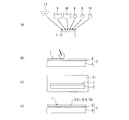
先ず、図2(a)に示すように、耐熱性を有する植物由来のペディオコッカスからなる、生きている粉末状の乳酸菌L1、粘着剤8、オリゴ糖類9、トレハロース10、水W及び揮発性溶剤6を混合して乳酸菌懸濁液7を作る。
揮発性溶剤6は、乾燥で揮発して残留しないエタノール、合成アルコール、IPA(イソプロパノール)などのアルコール類が挙げられる。必要に応じて、これらの1種又はこれらを組合せて揮発性溶剤6が構成されている。
次に、図2(b)に示すように、フィルム基材2の蒸着層5上に乳酸菌懸濁液7を塗布する。
先ず、図2(a)に示すように、耐熱性を有する植物由来のペディオコッカスからなる、生きている粉末状の乳酸菌L1、粘着剤8、オリゴ糖類9、トレハロース10、水W及び揮発性溶剤6を混合して乳酸菌懸濁液7を作る。
揮発性溶剤6は、乾燥で揮発して残留しないエタノール、合成アルコール、IPA(イソプロパノール)などのアルコール類が挙げられる。必要に応じて、これらの1種又はこれらを組合せて揮発性溶剤6が構成されている。
次に、図2(b)に示すように、フィルム基材2の蒸着層5上に乳酸菌懸濁液7を塗布する。
次に、図2(c)に示すように、乳酸菌懸濁液7を塗布したフィルム基材2を乾燥室11内に入れ、乾燥室11を室温から80℃の乾燥温度に設定した状態でフィルム基材2の乾燥工程を行う。そして、乳酸菌懸濁液7の水W及び揮発性溶剤6が揮発して水分活性が0.3~0.6の範囲になったときに乾燥工程を終了する。なお、この乾燥工程の終了の時機は、水分活性が0.3~0.8の範囲で目的に応じて適宜選択され、上述のように水分活性が0.3~0.8の範囲で終了することが好ましく、0.3~0.4の範囲で終了することがより好ましい。つまり、本実施形態では乾燥した状態でも生きた乳酸菌がフィルム基材2に保持されていることになる。また、水分活性が0.3~0.6のフィルム基材2であれば、フィルム基材2をロール状に巻き取ることができ、大量保存や大量提供が可能となる。
図2(c)の乾燥工程を行うと、水W及び揮発性溶剤6が揮発して乳酸菌懸濁液7内に揮発性溶剤6が残留しないので、図2(d)に示すように、フィルム基材2の蒸着層5上に、生きている乳酸菌L1、粘着剤8、オリゴ糖類9及びトレハロース10が含有された乳酸菌層3が積層された食品包装用フィルム1が形成される。
図2(c)の乾燥工程を行うと、水W及び揮発性溶剤6が揮発して乳酸菌懸濁液7内に揮発性溶剤6が残留しないので、図2(d)に示すように、フィルム基材2の蒸着層5上に、生きている乳酸菌L1、粘着剤8、オリゴ糖類9及びトレハロース10が含有された乳酸菌層3が積層された食品包装用フィルム1が形成される。
次に、第1実施形態の食品包装用フィルム1の作用効果について説明する。
乳酸菌層3を食品に接触させた状態で、食品包装用フィルム1により食品を包装すると、乳酸菌層3内の乳酸菌L1が、食品の雑菌の生育抑制作用や代謝物の抗菌作用を図るので、食品の保存性を高めることができる。
また、乳酸菌層3には、乳酸菌L1の栄養源としてのオリゴ糖類9と、乳酸菌L1の保護安定剤としてのトレハロース10が含有されているので、食品を包装する期間が長くても、乳酸菌L1の菌数の減少が抑制され、食品の保存性を高めることができる。
乳酸菌層3を食品に接触させた状態で、食品包装用フィルム1により食品を包装すると、乳酸菌層3内の乳酸菌L1が、食品の雑菌の生育抑制作用や代謝物の抗菌作用を図るので、食品の保存性を高めることができる。
また、乳酸菌層3には、乳酸菌L1の栄養源としてのオリゴ糖類9と、乳酸菌L1の保護安定剤としてのトレハロース10が含有されているので、食品を包装する期間が長くても、乳酸菌L1の菌数の減少が抑制され、食品の保存性を高めることができる。
また、乳酸菌層3に含有されている糖類の粘着剤8は、食品の保湿性を維持するので、食品の保存性をさらに高めることができる。
また、乳酸菌L1を含有している乳酸菌層3は、水分活性が0.3~0.6の範囲とした乾燥状態とされているので、食品包装用フィルム1自体の長期保存を可能とすることができる。
なお、水分活性は市販の水分活性測定装置で測定した値である。
さらに、乳酸菌L1として、耐熱性を有する植物由来のペディオコッカスを使用しているので、室温から80℃の乾燥温度で乳酸菌層3を形成しても、乳酸菌層3内の乳酸菌L1の含有量を10~105cfu/cm2の範囲に設定することができる。
また、乳酸菌L1を含有している乳酸菌層3は、水分活性が0.3~0.6の範囲とした乾燥状態とされているので、食品包装用フィルム1自体の長期保存を可能とすることができる。
なお、水分活性は市販の水分活性測定装置で測定した値である。
さらに、乳酸菌L1として、耐熱性を有する植物由来のペディオコッカスを使用しているので、室温から80℃の乾燥温度で乳酸菌層3を形成しても、乳酸菌層3内の乳酸菌L1の含有量を10~105cfu/cm2の範囲に設定することができる。
なお、食品包装用フィルム1のフィルム基材2の他の材料として、食品向けに使用されるポリエチレン、ポリプロピレンなどのオレフィン系樹脂、ポリエステル、ナイロン、ポリスチレン、ポリ塩化ビニル、ポリ塩化ビニリデンなどの樹脂、生分解性プラスチック、セルロース、アルミ箔(金属箔)、アルミニウム(アルミナ)やシリカ(SiOX)を蒸着したプラスチックフィルム、紙などが挙げられる。そして、これらの1種又は2種以上を組み合わせたものが望ましい。
また、フィルム基材2の乳酸菌層3が積層される厚さ方向の一方の面は、前述した蒸着層5の他に、コロナ処理、プラズマ処理などの表面処理を施すことで、乳酸菌層3の付着性を良好とすることができる。
さらに、第1実施形態の食品包装用フィルム1はシート体として形成したが、袋体として形成して食品を包装しても、同様の効果を奏することができるとともに、食品を包装する動作が袋体に入れる動作に代わるので、簡便に保存容器として利用することができる。
また、フィルム基材2の乳酸菌層3が積層される厚さ方向の一方の面は、前述した蒸着層5の他に、コロナ処理、プラズマ処理などの表面処理を施すことで、乳酸菌層3の付着性を良好とすることができる。
さらに、第1実施形態の食品包装用フィルム1はシート体として形成したが、袋体として形成して食品を包装しても、同様の効果を奏することができるとともに、食品を包装する動作が袋体に入れる動作に代わるので、簡便に保存容器として利用することができる。
[第2実施形態の食品包装用フィルム]
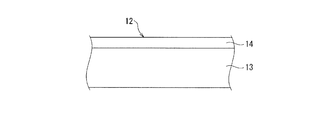
次に、図3は、食品を包装する第2実施形態の食品包装用フィルム12を示すものである。なお、第1実施形態の食品包装用フィルム1で使用した構成と同一構成部分には、同一符号を付して説明を省略する。
第2実施形態の食品包装用フィルム12は、図3に示すように、フィルム基材13の厚さ方向の一方の面に、乳酸菌層14を積層して形成されたシート体である。
フィルム基材13は、ポリエチレンで形成されている。なお、フィルム基材13の他の材料として、食品向けに使用されるポリエチレン、ポリプロピレンなどのオレフィン系樹脂、ポリエステル、ナイロン、ポリスチレン、ポリ塩化ビニル、ポリ塩化ビニリデンなどの樹脂、生分解性プラスチック、セルロース、アルミ箔(金属箔)、アルミニウム(アルミナ)やシリカ(SiOX)を蒸着したプラスチックフィルム、紙などが挙げられる。そして、これらの1種又は2種以上を組み合わせたものが望ましい。
次に、図3は、食品を包装する第2実施形態の食品包装用フィルム12を示すものである。なお、第1実施形態の食品包装用フィルム1で使用した構成と同一構成部分には、同一符号を付して説明を省略する。
第2実施形態の食品包装用フィルム12は、図3に示すように、フィルム基材13の厚さ方向の一方の面に、乳酸菌層14を積層して形成されたシート体である。
フィルム基材13は、ポリエチレンで形成されている。なお、フィルム基材13の他の材料として、食品向けに使用されるポリエチレン、ポリプロピレンなどのオレフィン系樹脂、ポリエステル、ナイロン、ポリスチレン、ポリ塩化ビニル、ポリ塩化ビニリデンなどの樹脂、生分解性プラスチック、セルロース、アルミ箔(金属箔)、アルミニウム(アルミナ)やシリカ(SiOX)を蒸着したプラスチックフィルム、紙などが挙げられる。そして、これらの1種又は2種以上を組み合わせたものが望ましい。
乳酸菌層14は、生きている乳酸菌と、フィルム基材13への乳酸菌層14の付着性を良好とする粘着剤と、乳酸菌の栄養源としてのオリゴ糖類と、乳酸菌の保護安定剤としてのトレハロースとが含有されている。
乳酸菌層14に含有されている乳酸菌は、ストレプトコッカス、エンテロコッカス、ロイコノストック、ラクトコッカス、ペディオコッカス、ラクトバチルスなどの乳酸菌が使用されており、10~105cfu/cm2の含有量に設定されている。
乳酸菌層14に含有されている粘着剤は、乳糖、ソルビトール、マンニトールなどの単糖類のほか、多糖質のデキストリン、マルトデキストリン、デンプン、プルランなどを挙げられる。必要に応じて、これらの1種又はこれらを組合せて含有されている。
乳酸菌層14に含有されている乳酸菌は、ストレプトコッカス、エンテロコッカス、ロイコノストック、ラクトコッカス、ペディオコッカス、ラクトバチルスなどの乳酸菌が使用されており、10~105cfu/cm2の含有量に設定されている。
乳酸菌層14に含有されている粘着剤は、乳糖、ソルビトール、マンニトールなどの単糖類のほか、多糖質のデキストリン、マルトデキストリン、デンプン、プルランなどを挙げられる。必要に応じて、これらの1種又はこれらを組合せて含有されている。
次に、第2実施形態の食品包装用フィルム12の製造方法について、図4を参照して説明する。
先ず、図4(a)に示すように、フィルム基材13の厚さ方向の一方の面の全域に、粘着剤8を層状に設ける。
次に、図4(b)に示すように、ストレプトコッカス、エンテロコッカス、ロイコノストック、ラクトコッカス、ペディオコッカス、ラクトバチルスのうちの一種類の生きている粉末状の乳酸菌L2、オリゴ糖類9及びトレハロース10を混ぜ合わせた混合体16を、層状に設けた粘着剤8に吹き付けていく。
図4(b)の混合体16を層状に設けた粘着剤8に吹き付けていくと、粘着剤8の内部に生きている乳酸菌L2、オリゴ糖類9及びトレハロース10が入り込んで保持され、図4(c)に示すように、フィルム基材13上に、生きている乳酸菌L2と、粘着剤8と、オリゴ糖類9と、トレハロース10とが含有された乳酸菌層14が積層された食品包装用フィルム12が形成される。
先ず、図4(a)に示すように、フィルム基材13の厚さ方向の一方の面の全域に、粘着剤8を層状に設ける。
次に、図4(b)に示すように、ストレプトコッカス、エンテロコッカス、ロイコノストック、ラクトコッカス、ペディオコッカス、ラクトバチルスのうちの一種類の生きている粉末状の乳酸菌L2、オリゴ糖類9及びトレハロース10を混ぜ合わせた混合体16を、層状に設けた粘着剤8に吹き付けていく。
図4(b)の混合体16を層状に設けた粘着剤8に吹き付けていくと、粘着剤8の内部に生きている乳酸菌L2、オリゴ糖類9及びトレハロース10が入り込んで保持され、図4(c)に示すように、フィルム基材13上に、生きている乳酸菌L2と、粘着剤8と、オリゴ糖類9と、トレハロース10とが含有された乳酸菌層14が積層された食品包装用フィルム12が形成される。
次に、第2実施形態の食品包装用フィルム12の作用効果について説明する。
乳酸菌層14を食品に接触させた状態で、食品包装用フィルム12により食品を包装すると、乳酸菌層14内の生きている乳酸菌L2が、食品の雑菌の生育抑制作用や代謝物による抗菌作用を発現して、食品の保存性を高めることができる。
また、乳酸菌層14には、乳酸菌L2の栄養源としてのオリゴ糖類9と、乳酸菌L2の保護安定剤としてのトレハロース10が含有されているので、食品を包装する期間が長くても、乳酸菌L2の菌数の減少が抑制され、食品の保存性を高めることができる。
乳酸菌層14を食品に接触させた状態で、食品包装用フィルム12により食品を包装すると、乳酸菌層14内の生きている乳酸菌L2が、食品の雑菌の生育抑制作用や代謝物による抗菌作用を発現して、食品の保存性を高めることができる。
また、乳酸菌層14には、乳酸菌L2の栄養源としてのオリゴ糖類9と、乳酸菌L2の保護安定剤としてのトレハロース10が含有されているので、食品を包装する期間が長くても、乳酸菌L2の菌数の減少が抑制され、食品の保存性を高めることができる。
また、本実施形態の乳酸菌層14は、菌懸濁液を用いないために、水分活性が0.3~0.8の範囲とした乾燥状態とされている。なお、水分活性は市販の水分活性測定装置で測定した値である。このように、乳酸菌層14に含有されている糖類の粘着剤8は、食品の保湿性を維持するので、食品の保存性をさらに高めることができる。
また、第2実施形態の食品包装用フィルム12を製造する際には、フィルム基材13に粘着剤8を層状に設けた後に、粉末状の乳酸菌L2、オリゴ糖類9及びトレハロース10を混ぜ合わせた混合体16を吹き付けるだけで、フィルム基材13の厚さ方向の一方の面に乳酸菌層14を設けることができ、乾燥工程が不要となるので、製造工程の簡便化を図ることができる。
なお、第2実施形態の食品包装用フィルム12もシート体として形成したが、袋体として形成して食品を包装しても、第1実施形態と同様の効果を奏することができる。
また、第2実施形態の食品包装用フィルム12を製造する際には、フィルム基材13に粘着剤8を層状に設けた後に、粉末状の乳酸菌L2、オリゴ糖類9及びトレハロース10を混ぜ合わせた混合体16を吹き付けるだけで、フィルム基材13の厚さ方向の一方の面に乳酸菌層14を設けることができ、乾燥工程が不要となるので、製造工程の簡便化を図ることができる。
なお、第2実施形態の食品包装用フィルム12もシート体として形成したが、袋体として形成して食品を包装しても、第1実施形態と同様の効果を奏することができる。
[第3実施形態の食品用容器]
次に、図5は、例えば乳酸菌を含有したヨーグルトを充填する第3実施形態の食品用容器20を示すものである。なお、第3実施形態の食品用容器20を説明する場合も、第1実施形態の食品包装用フィルム1で使用した構成と同一構成部分には、同一符号を付して説明を省略する。
第3実施形態の食品用容器20は、有底筒形状の容器基材21の内面に、乳酸菌層22が積層された容器である。ここで、上記内面は、容器基材21の内側の面であればよく、例えば、底面、側面の少なくとも何れかの面であり、必要に応じて天面(上面)や蓋の内面を含んでもよい。また、上記内面は、容器基材21の内面を構成する各面における全面であっても一部であってもよい。
次に、図5は、例えば乳酸菌を含有したヨーグルトを充填する第3実施形態の食品用容器20を示すものである。なお、第3実施形態の食品用容器20を説明する場合も、第1実施形態の食品包装用フィルム1で使用した構成と同一構成部分には、同一符号を付して説明を省略する。
第3実施形態の食品用容器20は、有底筒形状の容器基材21の内面に、乳酸菌層22が積層された容器である。ここで、上記内面は、容器基材21の内側の面であればよく、例えば、底面、側面の少なくとも何れかの面であり、必要に応じて天面(上面)や蓋の内面を含んでもよい。また、上記内面は、容器基材21の内面を構成する各面における全面であっても一部であってもよい。
容器基材21は、紙製の外層23と、外層23の内側に積層されているポリエチレンからなる内層24とで構成されている。
乳酸菌層22は、内層24の底面に形成されており、生きている乳酸菌と、乳酸菌層22への付着性を良好とする粘着剤と、乳酸菌の栄養源としてのオリゴ糖類と、乳酸菌の保護安定剤としてのトレハロースとが含有されている。
乳酸菌層22に含有されている乳酸菌は、耐熱性を有する植物由来のペディオコッカスが使用されており、102~109cfu/容器の範囲で含有されている。
乳酸菌層22に含有されている粘着剤は、乳糖、ソルビトール、マンニトールなどの単糖類のほか、多糖質のデキストリン、マルトデキストリン、デンプン、プルランなどを挙げられる。必要に応じて、これらの1種又はこれらを組合せて含有されている。
乳酸菌層22は、内層24の底面に形成されており、生きている乳酸菌と、乳酸菌層22への付着性を良好とする粘着剤と、乳酸菌の栄養源としてのオリゴ糖類と、乳酸菌の保護安定剤としてのトレハロースとが含有されている。
乳酸菌層22に含有されている乳酸菌は、耐熱性を有する植物由来のペディオコッカスが使用されており、102~109cfu/容器の範囲で含有されている。
乳酸菌層22に含有されている粘着剤は、乳糖、ソルビトール、マンニトールなどの単糖類のほか、多糖質のデキストリン、マルトデキストリン、デンプン、プルランなどを挙げられる。必要に応じて、これらの1種又はこれらを組合せて含有されている。
次に、第3実施形態の食品用容器20の製造方法について、図6を参照して説明する。
先ず、図6(a)に示すように、耐熱性を有する植物由来のペディオコッカスからなる、生きている粉末状の乳酸菌L1、粘着剤8、オリゴ糖類9、トレハロース10、水W及び揮発性溶剤6を混合して乳酸菌懸濁液7を作る。
次に、図6(b)に示すように、容器基材21の内層24の底面に乳酸菌懸濁液7を塗布する。
先ず、図6(a)に示すように、耐熱性を有する植物由来のペディオコッカスからなる、生きている粉末状の乳酸菌L1、粘着剤8、オリゴ糖類9、トレハロース10、水W及び揮発性溶剤6を混合して乳酸菌懸濁液7を作る。
次に、図6(b)に示すように、容器基材21の内層24の底面に乳酸菌懸濁液7を塗布する。
次に、図6(c)に示すように、容器基材21の内層24の底面に乳酸菌懸濁液7を塗布した食品用容器20を乾燥室11内に入れ、乾燥室11を室温から80℃の乾燥温度に設定した状態で食品用容器20の乾燥工程を行う。そして、乳酸菌懸濁液7の水Wと揮発性溶剤6が揮発して水分活性が0.3~0.6の範囲になったときに乾燥工程を終了する。なお、この乾燥工程の終了の時機は、第1実施形態と同様、水分活性が0.3~0.8の範囲で目的に応じて適宜選択され、上述のように水分活性が0.3~0.8の範囲で終了することが好ましく、0.3~0.4の範囲で終了することがより好ましい。つまり、本実施形態では乾燥した状態でも生きた乳酸菌が容器基材21に保持されていることになる。
図6(c)の乾燥工程を行うと、水W及び揮発性溶剤6が揮発して乳酸菌懸濁液7内に揮発性溶剤6が残留しないので、図6(d)に示すように、容器基材21の内層24の底面に、生きている乳酸菌L1と、粘着剤8と、オリゴ糖類9と、トレハロース10とが含有された乳酸菌層22が積層されて食品用容器20が形成される。
図6(c)の乾燥工程を行うと、水W及び揮発性溶剤6が揮発して乳酸菌懸濁液7内に揮発性溶剤6が残留しないので、図6(d)に示すように、容器基材21の内層24の底面に、生きている乳酸菌L1と、粘着剤8と、オリゴ糖類9と、トレハロース10とが含有された乳酸菌層22が積層されて食品用容器20が形成される。
次に、第3実施形態の食品用容器20の作用効果について説明する。
食品用容器20の内部に、乳酸菌を含有したヨーグルトを充填すると、乳酸菌層22内の生きている乳酸菌L1がヨーグルトに徐々に溶出していくので、充填したヨーグルトの乳酸菌の菌数を補充することができる。したがって、保存期間が長くても、ヨーグルト内の乳酸菌数の規格を保証することができ、ヨーグルトの保存性を高めることができる。
また、乳酸菌層22には、乳酸菌L1の栄養源としてのオリゴ糖類9と、乳酸菌L1の保護安定剤としてのトレハロース10が含有されているので、乳酸菌L1の菌数の減少が抑制される。
また、乳酸菌L1を含有している乳酸菌層22は、水分活性が0.3~0.6の範囲で乾燥状態とされているので、空の食品用容器20を長期に渡って保存することができる。
食品用容器20の内部に、乳酸菌を含有したヨーグルトを充填すると、乳酸菌層22内の生きている乳酸菌L1がヨーグルトに徐々に溶出していくので、充填したヨーグルトの乳酸菌の菌数を補充することができる。したがって、保存期間が長くても、ヨーグルト内の乳酸菌数の規格を保証することができ、ヨーグルトの保存性を高めることができる。
また、乳酸菌層22には、乳酸菌L1の栄養源としてのオリゴ糖類9と、乳酸菌L1の保護安定剤としてのトレハロース10が含有されているので、乳酸菌L1の菌数の減少が抑制される。
また、乳酸菌L1を含有している乳酸菌層22は、水分活性が0.3~0.6の範囲で乾燥状態とされているので、空の食品用容器20を長期に渡って保存することができる。
さらに、乳酸菌L1として、耐熱性を有する植物由来のペディオコッカスが使用されているので、室温から80℃の乾燥温度で乳酸菌層22を形成しても、102~109cfu/容器の範囲で乳酸菌L1を含有することができる。
なお、容器基材21の内層24の他の材料として、ポリプロピレン、ポリエステルなどのオレフィン樹脂、ナイロン、ポリスチレン、セルロース、ポリ塩化ビニル、ポリ塩化ビニリデン、アルミ箔(金属箔)、アルミニウム(アルミナ)やシリカ(SiOX)を蒸着したプラスチックフィルム、紙などが挙げられる。そして、これらの1種又は2種以上を組み合わせたものが望ましい。
また、容器基材21の内層24の内面は、コロナ処理、プラズマ処理などの表面処理を施すことで、乳酸菌層22の付着性を良好とすることができる。
なお、容器基材21の内層24の他の材料として、ポリプロピレン、ポリエステルなどのオレフィン樹脂、ナイロン、ポリスチレン、セルロース、ポリ塩化ビニル、ポリ塩化ビニリデン、アルミ箔(金属箔)、アルミニウム(アルミナ)やシリカ(SiOX)を蒸着したプラスチックフィルム、紙などが挙げられる。そして、これらの1種又は2種以上を組み合わせたものが望ましい。
また、容器基材21の内層24の内面は、コロナ処理、プラズマ処理などの表面処理を施すことで、乳酸菌層22の付着性を良好とすることができる。
[第4実施形態の食品用容器]
次に、図7は、例えば乳酸菌を含有したヨーグルトを充填する第4実施形態の食品用容器25を示すものである。なお、第4実施形態の食品用容器25を説明する場合も、第2実施形態の食品包装用フィルム12、第3実施形態の食品用容器20で使用した構成と同一構成部分には、同一符号を付して説明を省略する。
第4実施形態の食品用容器25は、有底筒形状の容器基材21の内面に、乳酸菌層26が積層された容器である。
容器基材21は、紙製の外層23と、外層23の内側に積層されているポリエチレンからなる内層24とで構成されている。
次に、図7は、例えば乳酸菌を含有したヨーグルトを充填する第4実施形態の食品用容器25を示すものである。なお、第4実施形態の食品用容器25を説明する場合も、第2実施形態の食品包装用フィルム12、第3実施形態の食品用容器20で使用した構成と同一構成部分には、同一符号を付して説明を省略する。
第4実施形態の食品用容器25は、有底筒形状の容器基材21の内面に、乳酸菌層26が積層された容器である。
容器基材21は、紙製の外層23と、外層23の内側に積層されているポリエチレンからなる内層24とで構成されている。
乳酸菌層26は、内層24の底面に形成されており、生きている乳酸菌と、乳酸菌層22への付着性を良好とする粘着剤と、乳酸菌の栄養源としてのオリゴ糖類と、乳酸菌の保護安定剤としてのトレハロースとが含有されている。
乳酸菌層26に含有されている乳酸菌は、ストレプトコッカス、エンテロコッカス、ロイコノストック、ラクトコッカス、ペディオコッカス、ラクトバチルスなどの乳酸菌が使用されており、102~109cfu/容器の範囲で含有されている。
乳酸菌層26に含有されている粘着剤は、乳糖、ソルビトール、マンニトールなどの単糖類のほか、多糖質のデキストリン、マルトデキストリン、デンプン、プルランなどを挙げられる。必要に応じて、これらの1種又はこれらを組合せて含有されている。
乳酸菌層26に含有されている乳酸菌は、ストレプトコッカス、エンテロコッカス、ロイコノストック、ラクトコッカス、ペディオコッカス、ラクトバチルスなどの乳酸菌が使用されており、102~109cfu/容器の範囲で含有されている。
乳酸菌層26に含有されている粘着剤は、乳糖、ソルビトール、マンニトールなどの単糖類のほか、多糖質のデキストリン、マルトデキストリン、デンプン、プルランなどを挙げられる。必要に応じて、これらの1種又はこれらを組合せて含有されている。
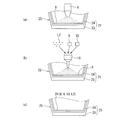
次に、第4実施形態の食品用容器25の製造方法について、図8を参照して説明する。
先ず、図8(a)に示すように、容器基材21の内層24の底面に、粘着剤8を層状に設ける。
次に、図8(b)に示すように、ストレプトコッカス、エンテロコッカス、ロイコノストック、ラクトコッカス、ペディオコッカス、ラクトバチルスのうち一種類の生きている粉末状の乳酸菌L2、オリゴ糖類9及びトレハロース10を混ぜ合わせた混合体16を、内層24の底面に層状に設けた粘着剤8に吹き付けていく。
図8(b)の混合体16を層状に設けた粘着剤8に吹き付けていくと、粘着剤8の内部に生きている乳酸菌L2、オリゴ糖類9及びトレハロース10が入り込んで保持される。なお、混合体16は、粘着剤8の内部だけでなく、その表面にも存在している。そして、図8(c)に示すように、容器基材21の内層24の内面に、生きている乳酸菌L2と、粘着剤8と、オリゴ糖類9と、トレハロース10とが含有された乳酸菌層26が積層された食品用容器25が形成される。
先ず、図8(a)に示すように、容器基材21の内層24の底面に、粘着剤8を層状に設ける。
次に、図8(b)に示すように、ストレプトコッカス、エンテロコッカス、ロイコノストック、ラクトコッカス、ペディオコッカス、ラクトバチルスのうち一種類の生きている粉末状の乳酸菌L2、オリゴ糖類9及びトレハロース10を混ぜ合わせた混合体16を、内層24の底面に層状に設けた粘着剤8に吹き付けていく。
図8(b)の混合体16を層状に設けた粘着剤8に吹き付けていくと、粘着剤8の内部に生きている乳酸菌L2、オリゴ糖類9及びトレハロース10が入り込んで保持される。なお、混合体16は、粘着剤8の内部だけでなく、その表面にも存在している。そして、図8(c)に示すように、容器基材21の内層24の内面に、生きている乳酸菌L2と、粘着剤8と、オリゴ糖類9と、トレハロース10とが含有された乳酸菌層26が積層された食品用容器25が形成される。
次に、第4実施形態の食品用容器25の作用効果について説明する。
食品用容器25の内部に、乳酸菌を含有したヨーグルトを充填すると、乳酸菌層26内の生きている乳酸菌L2がヨーグルトに徐々に溶出していくので、充填したヨーグルトの乳酸菌の菌数を補充することができる。したがって、保存期間が長くても、ヨーグルト内の乳酸菌数の規格を保証することができ、ヨーグルトの保存性を高めることができる食品用容器25を提供することができる。
また、乳酸菌層26には、乳酸菌L2の栄養源としてのオリゴ糖類9と、乳酸菌L2の保護安定剤としてのトレハロース10が含有されているので、乳酸菌L2の菌数の減少が抑制される。
食品用容器25の内部に、乳酸菌を含有したヨーグルトを充填すると、乳酸菌層26内の生きている乳酸菌L2がヨーグルトに徐々に溶出していくので、充填したヨーグルトの乳酸菌の菌数を補充することができる。したがって、保存期間が長くても、ヨーグルト内の乳酸菌数の規格を保証することができ、ヨーグルトの保存性を高めることができる食品用容器25を提供することができる。
また、乳酸菌層26には、乳酸菌L2の栄養源としてのオリゴ糖類9と、乳酸菌L2の保護安定剤としてのトレハロース10が含有されているので、乳酸菌L2の菌数の減少が抑制される。
第4実施形態の食品用容器25を製造する際には、容器基材21の内層24の底面に粘着剤8を層状に設けた後に、粉末状の乳酸菌L2、オリゴ糖類9及びトレハロース10を混ぜ合わせた混合体16を吹き付けることで、容器基材21の内層24の底面に乳酸菌層26を設けることができ、乾燥工程が不要となるので、製造工程の簡便化を図ることができる。なお、本実施形態の乳酸菌層26は、菌懸濁液を用いずに自然乾燥しているため、水分活性が0.3~0.8の範囲とした乾燥状態とされている。なお、水分活性は市販の水分活性測定装置で測定した値である。
[第5実施形態の食品用容器]
図9は、例えば乳酸菌を含有したヨーグルトを充填する第5実施形態の食品用容器27を示すものである。なお、第5実施形態の食品用容器27を説明する場合も、第2実施形態の食品包装用フィルム12、第3実施形態の食品用容器20で使用した構成と同一構成部分には、同一符号を付して説明を省略する。
第5実施形態の食品用容器27は、有底筒形状の容器基材21の内面に、乳酸菌を含有した水溶性フィルム層28が積層された容器である。
容器基材21は、紙製の外層23と、外層23の内側に積層されているポリエチレンからなる内層24とで構成されている。
乳酸菌を含有した水溶性フィルム28は、一般的な製法で水溶性のフィルム基材、可塑剤、と乳酸菌を用いて作られる。
図9は、例えば乳酸菌を含有したヨーグルトを充填する第5実施形態の食品用容器27を示すものである。なお、第5実施形態の食品用容器27を説明する場合も、第2実施形態の食品包装用フィルム12、第3実施形態の食品用容器20で使用した構成と同一構成部分には、同一符号を付して説明を省略する。
第5実施形態の食品用容器27は、有底筒形状の容器基材21の内面に、乳酸菌を含有した水溶性フィルム層28が積層された容器である。
容器基材21は、紙製の外層23と、外層23の内側に積層されているポリエチレンからなる内層24とで構成されている。
乳酸菌を含有した水溶性フィルム28は、一般的な製法で水溶性のフィルム基材、可塑剤、と乳酸菌を用いて作られる。
水溶性フィルム28を形成する材料としては、ヒドロキシプロピルセルロース、ヒプロメロース、水溶性ヒドロキシエチルセルロース、メチルセルロース、カルボキシメチルセルロース、ゼラチン、ペクチン、アラビノキシラン、アルギン酸ナトリウム、カラギーナン、キサンダム、グアーガム、プルラン、ポリビニルアルコール、ポリビニルピロリドン、ポリエチレングリコール等がある。
乳酸菌を含有した水溶性フィルム28は、水溶性のフィルム基材、可塑剤と乳酸菌L2のほかに乳酸菌L2の栄養源としてのオリゴ糖類9と、乳酸菌L2の保護安定剤としてのトレハロース10が含有することができるので、乳酸菌L2の菌数の減少が抑制される。
乳酸菌を含有した水溶性フィルム28は、水溶性のフィルム基材、可塑剤と乳酸菌L2のほかに乳酸菌L2の栄養源としてのオリゴ糖類9と、乳酸菌L2の保護安定剤としてのトレハロース10が含有することができるので、乳酸菌L2の菌数の減少が抑制される。
次に、第5実施形態の食品用容器27の製造方法について、図9を参照して説明する。
先ず、乳酸菌を含有した水溶性フィルム28は、水溶性フィルム基材の溶液に乳酸菌L2を溶解して調製し、シート状に加工して作製する。
この乳酸菌を含有した水溶性フィルム28を図9に示すように容器基材21の内層24の表面をコロナ放電照射により表面処理した後、粘着剤8を層状に設ける。その上に適当な大きさに裁断した乳酸菌を含有した水溶性フィルム層28を貼付する。
先ず、乳酸菌を含有した水溶性フィルム28は、水溶性フィルム基材の溶液に乳酸菌L2を溶解して調製し、シート状に加工して作製する。
この乳酸菌を含有した水溶性フィルム28を図9に示すように容器基材21の内層24の表面をコロナ放電照射により表面処理した後、粘着剤8を層状に設ける。その上に適当な大きさに裁断した乳酸菌を含有した水溶性フィルム層28を貼付する。
次に、第5実施形態の食品用容器27の作用効果について説明する。
食品用容器27の内部に、乳酸菌を含有したヨーグルトを充填すると、乳酸菌を含有した水溶性フィルム28内の生きている乳酸菌L2がヨーグルトに徐々に溶出していくので、充填したヨーグルトの乳酸菌の菌数を補充することができる。したがって、保存期間が長くても、ヨーグルト内の乳酸菌数の規格を保証することができ、ヨーグルトの保存性を高めることができる食品用容器27を提供することができる。
また、乳酸菌を含有した水溶性フィルム28には、乳酸菌L2の栄養源としてのオリゴ糖類9と、乳酸菌L2の保護安定剤としてのトレハロース10が含有することができるので、乳酸菌L2の菌数の減少が抑制される。なお、本実施形態の水溶性フィルム28は、菌懸濁液を用いずに自然乾燥しているため、水分活性が0.3~0.8の範囲とした乾燥状態とされている。なお、水分活性は市販の水分活性測定装置で測定した値である。
食品用容器27の内部に、乳酸菌を含有したヨーグルトを充填すると、乳酸菌を含有した水溶性フィルム28内の生きている乳酸菌L2がヨーグルトに徐々に溶出していくので、充填したヨーグルトの乳酸菌の菌数を補充することができる。したがって、保存期間が長くても、ヨーグルト内の乳酸菌数の規格を保証することができ、ヨーグルトの保存性を高めることができる食品用容器27を提供することができる。
また、乳酸菌を含有した水溶性フィルム28には、乳酸菌L2の栄養源としてのオリゴ糖類9と、乳酸菌L2の保護安定剤としてのトレハロース10が含有することができるので、乳酸菌L2の菌数の減少が抑制される。なお、本実施形態の水溶性フィルム28は、菌懸濁液を用いずに自然乾燥しているため、水分活性が0.3~0.8の範囲とした乾燥状態とされている。なお、水分活性は市販の水分活性測定装置で測定した値である。
[第6実施形態の食品用容器]
図10は、例えば乳酸菌を含有したヨーグルトを充填する第6実施形態の食品用容器29を示すものである。なお、第6実施形態の食品用容器29を説明する場合も、第2実施形態の食品包装用フィルム12、第3実施形態の食品用容器20で使用した構成と同一構成部分には、同一符号を付して説明を省略する。
第6実施形態の食品用容器29は、有底筒形状の容器基材21の内面に、乳酸菌を内包したカプセル30が付着した容器である。
図10は、例えば乳酸菌を含有したヨーグルトを充填する第6実施形態の食品用容器29を示すものである。なお、第6実施形態の食品用容器29を説明する場合も、第2実施形態の食品包装用フィルム12、第3実施形態の食品用容器20で使用した構成と同一構成部分には、同一符号を付して説明を省略する。
第6実施形態の食品用容器29は、有底筒形状の容器基材21の内面に、乳酸菌を内包したカプセル30が付着した容器である。
容器基材21は、紙製の外層23と、外層23の内側に積層されているポリエチレンからなる内層24とで構成されている。乳酸菌を内包したカプセル30は、水溶性でも脂溶性でもよく、用途や、内包される菌の機序、食品用容器29に充填されるものに応じて適宜選択される。カプセル30は市販品を使用することができる。
カプセル30の皮膜形成剤としては、ゼラチンのほかに、グリセリン、ポリグリセリン、ポリエチレングリコール、プロピレングコール、ポリプロピレングコールなどの多価アルコール及び単糖類、オリゴ糖類、糖アルコール、多糖類などを含む。
カプセル30の皮膜形成剤としては、ゼラチンのほかに、グリセリン、ポリグリセリン、ポリエチレングリコール、プロピレングコール、ポリプロピレングコールなどの多価アルコール及び単糖類、オリゴ糖類、糖アルコール、多糖類などを含む。
次に、第6実施形態の食品用容器29の製造方法について、図10を参照して説明する。
先ず、乳酸菌を内包したカプセル30を図10に示すように容器基材21の内層24の表面をコロナ放電照射により表面処理した後、粘着剤8を設ける。この粘着剤8は層状に設けてもよいし、目的に応じて他の態様で設けてもよい。その上に適当な量の乳酸菌を内包したカプセル30を貼付する。
先ず、乳酸菌を内包したカプセル30を図10に示すように容器基材21の内層24の表面をコロナ放電照射により表面処理した後、粘着剤8を設ける。この粘着剤8は層状に設けてもよいし、目的に応じて他の態様で設けてもよい。その上に適当な量の乳酸菌を内包したカプセル30を貼付する。
次に、第6実施形態の食品用容器29の作用効果について説明する。
食品用容器29の内部にヨーグルトを充填すると、乳酸菌を内包したカプセル30内の生きている乳酸菌L2がヨーグルトに徐々に溶出していくので、充填したヨーグルトの乳酸菌の菌数を補充することができる。したがって、保存期間が長くても、ヨーグルト内の乳酸菌数の規格を保証することができ、ヨーグルトの保存性を高めることができる食品用容器29を提供することができる。
食品用容器29の内部にヨーグルトを充填すると、乳酸菌を内包したカプセル30内の生きている乳酸菌L2がヨーグルトに徐々に溶出していくので、充填したヨーグルトの乳酸菌の菌数を補充することができる。したがって、保存期間が長くても、ヨーグルト内の乳酸菌数の規格を保証することができ、ヨーグルトの保存性を高めることができる食品用容器29を提供することができる。
(実施例1)
第1実施形態と同様の方法で食品包装用フィルムを作製した後、次の手順で乳酸菌の生存を確認した。
乳酸菌粉末2gを、20%w/wエタノール水溶液に懸濁した乳酸菌懸濁液を、ポリエチレンテレフタレート(PET)からなる基材層に酸化珪素SiOXの蒸着層が蒸着されたフィルムに塗布した。そして、70℃で乾燥した食品包装用フィルムの一部(25cm2)を乳酸菌用液体培地9mLに浸漬し、35℃で2日間培養した。なお、%w/wは、混合する物質の重量%を示す。例えばエタノールと水を混合する場合では、%w/wは、エタノールと水の重量%となる。
陽性コントロールは、乳酸菌粉末0.01gを生理食塩水10mLに溶解した液1mLを乳酸菌用液体培地9mLに添加したもので、陰性コントロールは、乳酸菌用液体培地のみで、同時に培養して比較した。その結果、表1で示すように、実施例1で作製した食品包装用フィルムと陽性コントロールから、乳酸菌の生存が検出されたことから、生きた乳酸菌が食品包装用フィルムに積層していることを確認した。
第1実施形態と同様の方法で食品包装用フィルムを作製した後、次の手順で乳酸菌の生存を確認した。
乳酸菌粉末2gを、20%w/wエタノール水溶液に懸濁した乳酸菌懸濁液を、ポリエチレンテレフタレート(PET)からなる基材層に酸化珪素SiOXの蒸着層が蒸着されたフィルムに塗布した。そして、70℃で乾燥した食品包装用フィルムの一部(25cm2)を乳酸菌用液体培地9mLに浸漬し、35℃で2日間培養した。なお、%w/wは、混合する物質の重量%を示す。例えばエタノールと水を混合する場合では、%w/wは、エタノールと水の重量%となる。
陽性コントロールは、乳酸菌粉末0.01gを生理食塩水10mLに溶解した液1mLを乳酸菌用液体培地9mLに添加したもので、陰性コントロールは、乳酸菌用液体培地のみで、同時に培養して比較した。その結果、表1で示すように、実施例1で作製した食品包装用フィルムと陽性コントロールから、乳酸菌の生存が検出されたことから、生きた乳酸菌が食品包装用フィルムに積層していることを確認した。

(実施例2)
次に、ビーカー(50mL)に、上述した実施例1で作製した食品包装用フィルムの一部(25cm2)とリン酸緩衝液20mLを加えて浸漬し、マグネット(スターラー)で撹拌して抽出した。
その抽出した液1mLを試料として混釈法(pour plate culture)で希釈し、乳酸菌用培地で、35℃で2日間培養後菌数測定した。その結果、表2に示すように、10~105cfu/cm2の乳酸菌が生きたままフィルムに積層していることを確認した。
次に、ビーカー(50mL)に、上述した実施例1で作製した食品包装用フィルムの一部(25cm2)とリン酸緩衝液20mLを加えて浸漬し、マグネット(スターラー)で撹拌して抽出した。
その抽出した液1mLを試料として混釈法(pour plate culture)で希釈し、乳酸菌用培地で、35℃で2日間培養後菌数測定した。その結果、表2に示すように、10~105cfu/cm2の乳酸菌が生きたままフィルムに積層していることを確認した。

(実施例3)
第3実施形態と同様の方法で食品用容器を作製した後、乳酸菌の生存を確認した。
乳酸菌粉末2gを、20%w/wエタノール水溶液に懸濁した乳酸菌懸濁液を、外層が紙、内層がポリエチレンの底面に1mL塗布した。そして、80℃で乾燥した同容器の底面全部を切り取り細断し、その全部を乳酸菌用液体培地9mLに浸漬し、35℃で2日間培養した。
陽性コントロールは、乳酸菌粉末0.01gを生理食塩水10mLに溶解した液1mLを乳酸菌用液体培地9mLに添加したもので、陰性コントロールは、乳酸菌用液体培地のみで、同時に培養して比較した。その結果、表3で示すように、実施例3で作製した食品包装用フィルムと陽性コントロールから、乳酸菌の生存が検出されたことから、生きた乳酸菌が食品用容器の底面に積層していることを確認した。
第3実施形態と同様の方法で食品用容器を作製した後、乳酸菌の生存を確認した。
乳酸菌粉末2gを、20%w/wエタノール水溶液に懸濁した乳酸菌懸濁液を、外層が紙、内層がポリエチレンの底面に1mL塗布した。そして、80℃で乾燥した同容器の底面全部を切り取り細断し、その全部を乳酸菌用液体培地9mLに浸漬し、35℃で2日間培養した。
陽性コントロールは、乳酸菌粉末0.01gを生理食塩水10mLに溶解した液1mLを乳酸菌用液体培地9mLに添加したもので、陰性コントロールは、乳酸菌用液体培地のみで、同時に培養して比較した。その結果、表3で示すように、実施例3で作製した食品包装用フィルムと陽性コントロールから、乳酸菌の生存が検出されたことから、生きた乳酸菌が食品用容器の底面に積層していることを確認した。

(実施例4)
次に、実施例3で作製した食品用容器にリン酸緩衝液10mLを加え、マグネット(スターラー)で撹拌して抽出した。その抽出した液1mLを試料として混釈法で希釈し、乳酸菌用培地で、35℃で2日間培養後菌数測定した。その結果、表4に示すように、102~109cfu/容器の範囲で乳酸菌が生きたまま食品用容器に積層していることを確認した。
次に、実施例3で作製した食品用容器にリン酸緩衝液10mLを加え、マグネット(スターラー)で撹拌して抽出した。その抽出した液1mLを試料として混釈法で希釈し、乳酸菌用培地で、35℃で2日間培養後菌数測定した。その結果、表4に示すように、102~109cfu/容器の範囲で乳酸菌が生きたまま食品用容器に積層していることを確認した。

(実施例5)
さらに、第3実施形態と同様の方法で食品用容器を作製した後、乾燥温度を変化させて乳酸菌の生存を確認した。
すなわち、乳酸菌粉末2gを、20%w/wエタノール水溶液に懸濁した乳酸菌懸濁液を、外層が紙、内層がポリエチレンの底面に1mL塗布した複数個の食品用容器を作製した。
そして、乾燥温度を室温~90℃に変えて複数個の食品用容器を乾燥した。各容器の底部の塗布面全部を切取り細断し、その全部を乳酸菌用液体培地9mLに浸漬して、35℃で2日間培養した。
陽性コントロールは、乳酸菌粉末0.01gを生理食塩水10mLに溶解した液1mLを乳酸菌用液体培地9mLに添加したもので、陰性コントロールは、乳酸菌用液体培地のみで、同時に培養して比較した。その結果、表5に示すように、陰性コントロール以外のすべての容器の底部に乳酸菌の生存が検出されたことから、室温~80℃以下で乾燥した場合には、生きた乳酸菌が食品用容器の底面に積層していることを確認した。
さらに、第3実施形態と同様の方法で食品用容器を作製した後、乾燥温度を変化させて乳酸菌の生存を確認した。
すなわち、乳酸菌粉末2gを、20%w/wエタノール水溶液に懸濁した乳酸菌懸濁液を、外層が紙、内層がポリエチレンの底面に1mL塗布した複数個の食品用容器を作製した。
そして、乾燥温度を室温~90℃に変えて複数個の食品用容器を乾燥した。各容器の底部の塗布面全部を切取り細断し、その全部を乳酸菌用液体培地9mLに浸漬して、35℃で2日間培養した。
陽性コントロールは、乳酸菌粉末0.01gを生理食塩水10mLに溶解した液1mLを乳酸菌用液体培地9mLに添加したもので、陰性コントロールは、乳酸菌用液体培地のみで、同時に培養して比較した。その結果、表5に示すように、陰性コントロール以外のすべての容器の底部に乳酸菌の生存が検出されたことから、室温~80℃以下で乾燥した場合には、生きた乳酸菌が食品用容器の底面に積層していることを確認した。
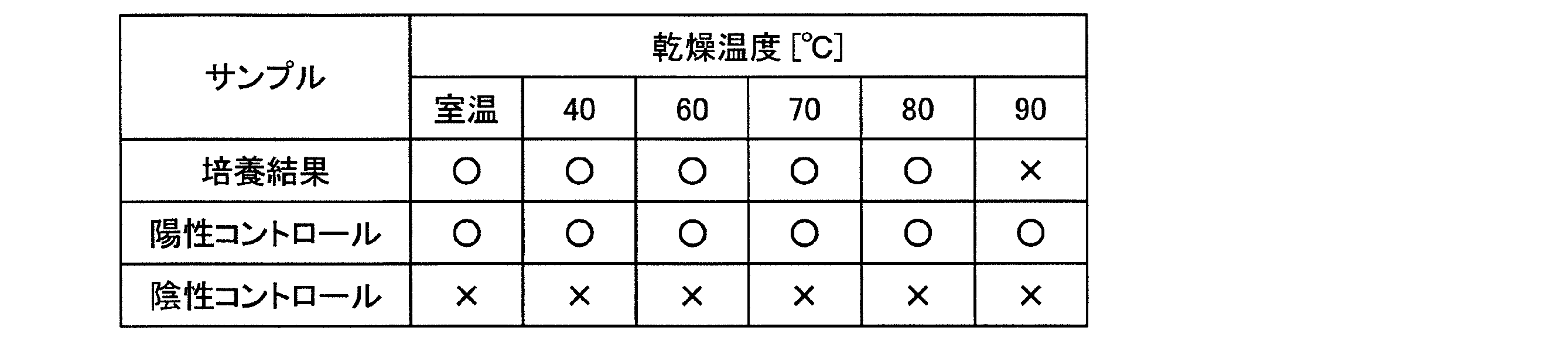
(実施例6)
第1実施形態と同様の方法で食品包装用フィルムを作製した後、次の手順で乳酸菌の生存を確認した。
乳酸菌粉末4gを、20%w/wプルラン水溶液に溶解した乳酸菌塗布液を、ポリエチレン(PE)からなる基材層の表面をコロナ放電照射して表面処理されたフィルム表面に塗布した。そして、40℃で乾燥した食品包装用フィルムの一部(25cm2)を乳酸菌用液体培地9mLに浸漬し、35℃で2日間培養した。なお、%w/wは、プルランと水の重量%を示す。
陽性コントロールは、乳酸菌粉末0.01gを生理食塩水10mLに溶解した液1mLを乳酸菌用液体培地9mLに添加したもので、陰性コントロールは、乳酸菌用液体培地のみで、同時に培養して比較した。その結果、表6で示すように、実施例1で作製した食品包装用フィルムと陽性コントロールから、乳酸菌の生存が検出されたことから、生きた乳酸菌が食品包装用フィルムに積層していることを確認した。
第1実施形態と同様の方法で食品包装用フィルムを作製した後、次の手順で乳酸菌の生存を確認した。
乳酸菌粉末4gを、20%w/wプルラン水溶液に溶解した乳酸菌塗布液を、ポリエチレン(PE)からなる基材層の表面をコロナ放電照射して表面処理されたフィルム表面に塗布した。そして、40℃で乾燥した食品包装用フィルムの一部(25cm2)を乳酸菌用液体培地9mLに浸漬し、35℃で2日間培養した。なお、%w/wは、プルランと水の重量%を示す。
陽性コントロールは、乳酸菌粉末0.01gを生理食塩水10mLに溶解した液1mLを乳酸菌用液体培地9mLに添加したもので、陰性コントロールは、乳酸菌用液体培地のみで、同時に培養して比較した。その結果、表6で示すように、実施例1で作製した食品包装用フィルムと陽性コントロールから、乳酸菌の生存が検出されたことから、生きた乳酸菌が食品包装用フィルムに積層していることを確認した。

(実施例7)
水溶性の乳酸菌塗布液や粘着剤を塗布するために、プラスチックフィルムや食品用容器の内面を親水性に表面加工する手段の一つとして実施例6と同様にコロナ放電照射による表面処理を実施し、親水性(濡れ性)の改善について評価した。評価基準としては、初期状態(イニシャル)を基準としてコロナ放電照射の照射時間に応じた水の付着する表面積が大きくなれば「○」と評価し、そうでない場合は「×」と評価した。具体的には、コロナ放電照射(信光電気計装株式会社製CFA-500)の距離は照射面から1cm離して一定とし、照射時間を0秒から5秒に順次変更すると水の付着する表面積が1.0cm2から1.9cm2に増加した。したがって、コロナ放電照射によって基材層の親水性(濡れ性)が改善されることが確認された。
水溶性の乳酸菌塗布液や粘着剤を塗布するために、プラスチックフィルムや食品用容器の内面を親水性に表面加工する手段の一つとして実施例6と同様にコロナ放電照射による表面処理を実施し、親水性(濡れ性)の改善について評価した。評価基準としては、初期状態(イニシャル)を基準としてコロナ放電照射の照射時間に応じた水の付着する表面積が大きくなれば「○」と評価し、そうでない場合は「×」と評価した。具体的には、コロナ放電照射(信光電気計装株式会社製CFA-500)の距離は照射面から1cm離して一定とし、照射時間を0秒から5秒に順次変更すると水の付着する表面積が1.0cm2から1.9cm2に増加した。したがって、コロナ放電照射によって基材層の親水性(濡れ性)が改善されることが確認された。

また、第3実施形態と同様の方法で作製した表面処理しない製品(コントロール)と食品用容器の内面をコロナ放電照射(信光電気計装株式会社製CFA-500)による表面処理した製品(コロナ放電処理)に、それぞれ5個ずつに乳酸菌塗布液を塗布し乾燥した後付着状態を観察し、評価した。評価基準としては、塗布した層が剥離しなかった製品を「○」、塗布した層が剥離する現象が生じた製品を「×」と評価した。
表面処理しない製品(コントロール)は5個中3個に塗布した層が剥離する現象が見られたが、コロナ放電照射による表面処理した製品(コロナ放電処理)5個中5個全部の塗布層が剥離せず、付着した状態がきれいにできることが確認された。
表面処理しない製品(コントロール)は5個中3個に塗布した層が剥離する現象が見られたが、コロナ放電照射による表面処理した製品(コロナ放電処理)5個中5個全部の塗布層が剥離せず、付着した状態がきれいにできることが確認された。

栄養源としてのオリゴ糖と、乳酸菌L2の保護安定剤としてのトレハロースを添加した場合としない場合での乳酸菌の発育への効果を調べた。
乳酸菌粉末2gを20%w/wエタノール水溶液2.5gに懸濁した乳酸菌懸濁液に、オリゴ糖1.5g及びトレハロース0.3g、水10gを添加したものを塗布液Sとした。また、上記の乳酸菌懸濁液に水10gだけ添加したものを塗布液Cとした。それぞれの塗布液をリン酸緩衝液(pH6.8~7.2)で10倍希釈して、35℃,2日間培養した。乳酸菌の発育効果は、乳酸菌の増殖が強いと代謝物の乳酸産生が増加してpH低下がみられる。培養後のpHの変動を調べた結果、添加した場合SのpHは3.5で添加しない場合CのpHは3.8であった。オリゴ糖とトレハロースを添加した方のpHがより酸性になることから、乳酸菌の増殖を高める効果があることが確認された。
乳酸菌粉末2gを20%w/wエタノール水溶液2.5gに懸濁した乳酸菌懸濁液に、オリゴ糖1.5g及びトレハロース0.3g、水10gを添加したものを塗布液Sとした。また、上記の乳酸菌懸濁液に水10gだけ添加したものを塗布液Cとした。それぞれの塗布液をリン酸緩衝液(pH6.8~7.2)で10倍希釈して、35℃,2日間培養した。乳酸菌の発育効果は、乳酸菌の増殖が強いと代謝物の乳酸産生が増加してpH低下がみられる。培養後のpHの変動を調べた結果、添加した場合SのpHは3.5で添加しない場合CのpHは3.8であった。オリゴ糖とトレハロースを添加した方のpHがより酸性になることから、乳酸菌の増殖を高める効果があることが確認された。

(実施例8)
次に、第4実施形態と同様の方法で食品用容器を作製した。食品用容器の内面をコロナ放電照射して表面処理を施した後、粘着剤を塗布してから乳酸菌粉末を噴霧して食品用容器の内面に積層させる。
この作製した食品用容器にリン酸緩衝液40mLを添加して溶解後、その1mLを採取して、乳酸菌数を混釈法で測定した。培養は乳酸菌用培地を用いて、35℃で2日間嫌気下で行った。その結果、1010cfu/容器の乳酸菌を検出し、生きた乳酸菌が食品用容器の内部(内面)に積層していることを確認した。
次に、第4実施形態と同様の方法で食品用容器を作製した。食品用容器の内面をコロナ放電照射して表面処理を施した後、粘着剤を塗布してから乳酸菌粉末を噴霧して食品用容器の内面に積層させる。
この作製した食品用容器にリン酸緩衝液40mLを添加して溶解後、その1mLを採取して、乳酸菌数を混釈法で測定した。培養は乳酸菌用培地を用いて、35℃で2日間嫌気下で行った。その結果、1010cfu/容器の乳酸菌を検出し、生きた乳酸菌が食品用容器の内部(内面)に積層していることを確認した。

(実施例9)
第5実施形態と同様の方法で食品用容器を作製した。まず、プルラン20%w/w水溶液に乳酸菌粉末を溶解して約10%w/wの乳酸菌含有液とした。この液をPEフィルムに塗布して乾燥後、PEフィルムをはがして乳酸菌含有の水溶性フィルムを作製した。
食品用容器の内面をコロナ放電処理して表面加工を施した後、粘着剤を塗布してから、先に作製した乳酸菌含有の水溶性フィルムを約6~10cm2の大きさに切取って、食品用容器の内面にこれを貼付して、食品用容器を作製した。
この作製した食品用容器にリン酸緩衝液10mLを添加して溶解後、その1mLを採取して、乳酸菌数を混釈法で測定した。培養は乳酸菌用培地を用いて、35℃で2日間嫌気下で行った。その結果、105~106cfu/容器の乳酸菌を検出し、生きた乳酸菌が食品用容器の内部(内面)に積層していることを確認した。
第5実施形態と同様の方法で食品用容器を作製した。まず、プルラン20%w/w水溶液に乳酸菌粉末を溶解して約10%w/wの乳酸菌含有液とした。この液をPEフィルムに塗布して乾燥後、PEフィルムをはがして乳酸菌含有の水溶性フィルムを作製した。
食品用容器の内面をコロナ放電処理して表面加工を施した後、粘着剤を塗布してから、先に作製した乳酸菌含有の水溶性フィルムを約6~10cm2の大きさに切取って、食品用容器の内面にこれを貼付して、食品用容器を作製した。
この作製した食品用容器にリン酸緩衝液10mLを添加して溶解後、その1mLを採取して、乳酸菌数を混釈法で測定した。培養は乳酸菌用培地を用いて、35℃で2日間嫌気下で行った。その結果、105~106cfu/容器の乳酸菌を検出し、生きた乳酸菌が食品用容器の内部(内面)に積層していることを確認した。

(実施例10)
第6実施形態と同様の方法で食品用容器を作製した。食品用容器の内面をコロナ放電照射して表面処理を施した後、粘着剤を塗布してから市販されている乳酸菌含有カプセルを塗布して、食品用容器を作製した。
作製した食品用容器にリン酸緩衝液40mLを添加して溶解後、その1mLを採取して、乳酸菌数を混釈法で測定した。培養は乳酸菌用培地を用いて、35℃で2日間嫌気下で行った。その結果、106~1010cfu/容器の乳酸菌を検出し、生きた乳酸菌が食品用容器の内面に積層していることを確認した。
第6実施形態と同様の方法で食品用容器を作製した。食品用容器の内面をコロナ放電照射して表面処理を施した後、粘着剤を塗布してから市販されている乳酸菌含有カプセルを塗布して、食品用容器を作製した。
作製した食品用容器にリン酸緩衝液40mLを添加して溶解後、その1mLを採取して、乳酸菌数を混釈法で測定した。培養は乳酸菌用培地を用いて、35℃で2日間嫌気下で行った。その結果、106~1010cfu/容器の乳酸菌を検出し、生きた乳酸菌が食品用容器の内面に積層していることを確認した。

(実施例11)
第3~第6実施形態の食品用容器について、保存安定性試験を行った。それぞれポリエチレン袋に入れて、室温、暗所の環境下で3ヶ月保存後に乳酸菌の生菌数を測定した。生菌数の測定法は、それぞれの容器にリン酸緩衝液10mL(実施形態4と6の食品用容器は40mL)を添加して溶解後、その1mLを採取して乳酸菌数を混釈法で測定した。培養は乳酸菌用培地を用いて、35℃で2日間嫌気下で行った。その結果を表13に示した。
第3~第6実施形態の食品用容器について、保存安定性試験を行った。それぞれポリエチレン袋に入れて、室温、暗所の環境下で3ヶ月保存後に乳酸菌の生菌数を測定した。生菌数の測定法は、それぞれの容器にリン酸緩衝液10mL(実施形態4と6の食品用容器は40mL)を添加して溶解後、その1mLを採取して乳酸菌数を混釈法で測定した。培養は乳酸菌用培地を用いて、35℃で2日間嫌気下で行った。その結果を表13に示した。
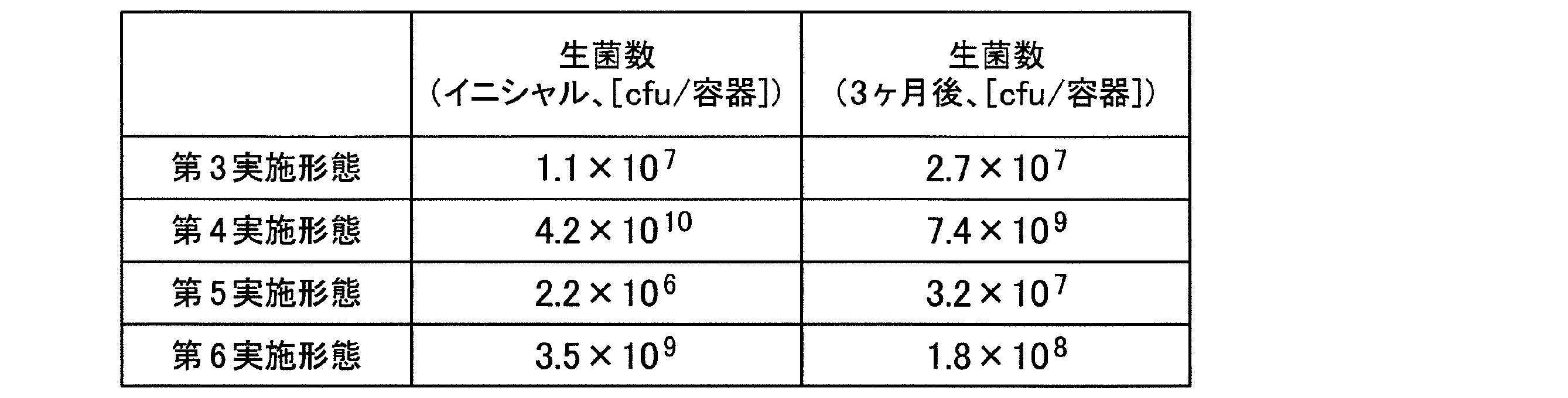
室温保存3ヶ月の生菌数は、いずれの実施形態でイニシャルとほぼ同じ菌数を検出した。この結果から、室温、暗所の環境で長期保存が可能であることを確認した。
(実施例12)
第3実施形態の方法の一部を納豆菌塗布液に代えて食品用容器を作製した。納豆菌粉末0.1gを水10mLに溶解し、プルラン20%w/w水溶液と1:1の割合で混合して納豆菌塗布液を調製した。その納豆菌塗布液0.5mLを予めコロナ放電処理した内面がPE製の容器20(図5参照)の内面に塗布して乾燥し、納豆菌が塗布された食品用容器を作製した。
作製した食品用容器にリン酸緩衝液10mLを添加して溶解後、その1mLを採取して、納豆菌数を混釈法で測定した。培養は一般細菌用培地を用いて、35℃で2日間行った。その結果、104~105cfu/容器の納豆菌を検出し、生きたまま納豆菌が食品用容器に積層していることを確認した。
第3実施形態の方法の一部を納豆菌塗布液に代えて食品用容器を作製した。納豆菌粉末0.1gを水10mLに溶解し、プルラン20%w/w水溶液と1:1の割合で混合して納豆菌塗布液を調製した。その納豆菌塗布液0.5mLを予めコロナ放電処理した内面がPE製の容器20(図5参照)の内面に塗布して乾燥し、納豆菌が塗布された食品用容器を作製した。
作製した食品用容器にリン酸緩衝液10mLを添加して溶解後、その1mLを採取して、納豆菌数を混釈法で測定した。培養は一般細菌用培地を用いて、35℃で2日間行った。その結果、104~105cfu/容器の納豆菌を検出し、生きたまま納豆菌が食品用容器に積層していることを確認した。

(実施例13)
第3実施形態と同様の方法で食品用容器を作製した。食品用容器の内面をコロナ放電照射して表面処理を施した後、プルラン4g、乳酸菌粉末2gを水14gに溶解して調製した乳酸菌懸濁液を塗布後、乾燥して作製した。この食品用容器をポリエチレン袋に入れて、室温、暗所の環境下で3ヶ月保存後に乳酸菌の生菌数を測定した。生菌数の測定法は、容器にリン酸緩衝液10mLを添加して溶解後、その1mLを採取して乳酸菌数を混釈法で測定した。培養は乳酸菌用培地を用いて、35℃で2日間嫌気下で行った。その結果を表15に示した。
第3実施形態と同様の方法で食品用容器を作製した。食品用容器の内面をコロナ放電照射して表面処理を施した後、プルラン4g、乳酸菌粉末2gを水14gに溶解して調製した乳酸菌懸濁液を塗布後、乾燥して作製した。この食品用容器をポリエチレン袋に入れて、室温、暗所の環境下で3ヶ月保存後に乳酸菌の生菌数を測定した。生菌数の測定法は、容器にリン酸緩衝液10mLを添加して溶解後、その1mLを採取して乳酸菌数を混釈法で測定した。培養は乳酸菌用培地を用いて、35℃で2日間嫌気下で行った。その結果を表15に示した。

室温保存3ヶ月の生菌数は、イニシャルとほぼ同じ菌数を検出した。この結果から、室温、暗所の環境で長期保存が可能であることを確認した。
(実施例14)
第3実施形態と同様の方法で食品用容器を作製した。食品用容器の内面をコロナ放電照射して表面処理を施した後、プルラン4g、乳酸菌粉末2gを水14gに溶解して調製した乳酸菌懸濁液を塗布後、乾燥して作製した。
この食品用容器(食品用容器には生きた乳酸菌が3.5×10⁸[cfu/容器]塗布されている。)に市販のヨーグルト(乳酸菌)約40gを小分けして入れ、ポリエチレンフィルムで蓋をした。この食品用容器に入れたヨーグルトを冷蔵庫(約10℃)で賞味期限後5日目まで保存して、市販の容器のままの場合と食品用容器に入れた場合のそれぞれの乳酸菌の生菌数を測定した。
生菌数の測定法は、ヨーグルトをそれぞれの容器内でよく撹拌後、約1gをリン酸緩衝液10mLに懸濁して試料溶液とした。その液1mLを採取して乳酸菌数を混釈法で測定した。培養は乳酸菌用培地を用いて、35℃で2日間嫌気下で行った。その結果を表16に示した。
第3実施形態と同様の方法で食品用容器を作製した。食品用容器の内面をコロナ放電照射して表面処理を施した後、プルラン4g、乳酸菌粉末2gを水14gに溶解して調製した乳酸菌懸濁液を塗布後、乾燥して作製した。
この食品用容器(食品用容器には生きた乳酸菌が3.5×10⁸[cfu/容器]塗布されている。)に市販のヨーグルト(乳酸菌)約40gを小分けして入れ、ポリエチレンフィルムで蓋をした。この食品用容器に入れたヨーグルトを冷蔵庫(約10℃)で賞味期限後5日目まで保存して、市販の容器のままの場合と食品用容器に入れた場合のそれぞれの乳酸菌の生菌数を測定した。
生菌数の測定法は、ヨーグルトをそれぞれの容器内でよく撹拌後、約1gをリン酸緩衝液10mLに懸濁して試料溶液とした。その液1mLを採取して乳酸菌数を混釈法で測定した。培養は乳酸菌用培地を用いて、35℃で2日間嫌気下で行った。その結果を表16に示した。

消費期限前後でヨーグルト中の乳酸菌の生菌数の動向を見ると、市販のヨーグルトの乳酸菌数に対して作製した食品用容器に小分けしたヨーグルトの乳酸菌数はいずれの測定日も多かった。予め食品用容器に塗布された乳酸菌がヨーグルト内に溶け出して乳酸菌の生菌数を増やしていることが確認できた。
1 食品包装用フィルム
2 フィルム基材
3 乳酸菌層
4 基材層
5 蒸着層
6 揮発性溶剤
7 乳酸菌懸濁液
8 粘着剤
9 オリゴ糖類
10 トレハロース
11 乾燥室
12 食品包装用フィルム
13 フィルム基材
14 乳酸菌層
16 混合体
20 食品用容器
21 容器基材
22 乳酸菌層
23 外層
24 内層
25 食品用容器
26 乳酸菌層
27 食品用容器
28 乳酸菌含有水溶性フィルム
29 食品用容器
30 乳酸菌内包カプセル
L1 乳酸菌
L2 乳酸菌
W 水
2 フィルム基材
3 乳酸菌層
4 基材層
5 蒸着層
6 揮発性溶剤
7 乳酸菌懸濁液
8 粘着剤
9 オリゴ糖類
10 トレハロース
11 乾燥室
12 食品包装用フィルム
13 フィルム基材
14 乳酸菌層
16 混合体
20 食品用容器
21 容器基材
22 乳酸菌層
23 外層
24 内層
25 食品用容器
26 乳酸菌層
27 食品用容器
28 乳酸菌含有水溶性フィルム
29 食品用容器
30 乳酸菌内包カプセル
L1 乳酸菌
L2 乳酸菌
W 水
Claims (18)
- 食品を包装する食品包装用フィルムであって、
シート形状のフィルム基材の厚さ方向の一方の面に、菌を含有した菌層が積層されていることを特徴とする食品包装用フィルム。 - 前記菌が乳酸菌又は納豆菌であり、前記菌層が乳酸菌層又は納豆菌層であることを特徴とする請求項1記載の食品包装用フィルム。
- 前記乳酸菌層又は納豆菌層は、水分活性が0.3~0.6の乾燥状態で積層されていることを特徴とする請求項2記載の食品包装用フィルム。
- 前記乳酸菌層又は納豆菌層に、前記フィルム基材への前記乳酸菌層又は前記納豆菌層の付着性を良好とする粘着剤が含有されていることを特徴とする請求項2又は3に記載の食品包装用フィルム。
- 前記乳酸菌層又は納豆菌層に、オリゴ糖類が含有されていることを特徴とする請求項2から請求項4の何れか1項に記載の食品包装用フィルム。
- 前記乳酸菌層又は納豆菌層に、トレハロースが含有されていることを特徴とする請求項2から請求項5の何れか1項に記載の食品包装用フィルム。
- 前記フィルム基材の前記面に、蒸着処理、コロナ処理、或いはプラズマ処理の何れか一つの処理が施されていることを特徴とする請求項2から請求項6の何れか1項に記載の食品包装用フィルム。
- 飲料又は食品を充填する食品用容器であって、
少なくとも筒形状又は円錐台形を有する容器基材の内面に、菌を含有した菌層が積層されていることを特徴とする食品用容器。 - 飲料又は食品を充填する食品用容器であって、少なくとも筒形状又は円錐台形を有する容器基材の内面に、粘着剤を介して菌粉末が全面又は部分的に積層されていることを特徴とする食品用容器。
- 飲料又は食品を充填する食品用容器であって、少なくとも筒形状又は円錐台形を有する容器基材の内面に、菌を含有した水溶性フィルム層が全面又は部分的に積層されていることを特徴とする食品用容器。
- 飲料又は食品を充填する食品用容器であって、少なくとも筒形状又は円錐台形を有する容器基材の内面に、菌を内包したカプセルが粘着剤を塗布した上に又は粘着剤と混合して、全面又は部分的に積層されていることを特徴とする食品用容器。
- 前記容器基材の形状が有底筒形状又は有底円錐台形であることを特徴とする請求項8から請求項11の何れか1項に記載の食品用容器。
- 前記菌が乳酸菌又は納豆菌であり、前記菌層が乳酸菌層又は納豆菌層であることを特徴とする請求項8から請求項12の何れか1項に記載の食品用容器。
- 前記乳酸菌層又は前記納豆菌層は、水分活性が0.3~0.6の乾燥状態で積層されていることを特徴とする請求項13に記載の食品用容器。
- 前記乳酸菌層又は前記納豆菌層に、前記容器基材への前記乳酸菌層又は前記納豆菌層の付着性を良好とする粘着剤が含有されていることを特徴とする請求項13又は14に記載の食品用容器。
- 前記乳酸菌層又は納豆菌層に、オリゴ糖類が含有されていることを特徴とする請求項13から請求項15の何れか1項に記載の食品用容器。
- 前記乳酸菌層又は納豆菌層に、トレハロースが含有されていることを特徴とする請求項13から請求項16の何れか1項に記載の食品用容器。
- 前記容器基材の内面に、蒸着処理、コロナ処理、或いはプラズマ処理の何れか一つの処理が施されていることを特徴とする請求項13から請求項17の何れか1項に記載の食品用容器。
Priority Applications (1)
| Application Number | Priority Date | Filing Date | Title |
|---|---|---|---|
| JP2018537353A JPWO2018043578A1 (ja) | 2016-08-31 | 2017-08-30 | 食品包装用フィルム、食品用容器 |
Applications Claiming Priority (4)
| Application Number | Priority Date | Filing Date | Title |
|---|---|---|---|
| JP2016169825 | 2016-08-31 | ||
| JP2016-169825 | 2016-08-31 | ||
| JP2017072546 | 2017-03-31 | ||
| JP2017-072546 | 2017-03-31 |
Publications (1)
| Publication Number | Publication Date |
|---|---|
| WO2018043578A1 true WO2018043578A1 (ja) | 2018-03-08 |
Family
ID=61300858
Family Applications (1)
| Application Number | Title | Priority Date | Filing Date |
|---|---|---|---|
| PCT/JP2017/031202 Ceased WO2018043578A1 (ja) | 2016-08-31 | 2017-08-30 | 食品包装用フィルム、食品用容器 |
Country Status (2)
| Country | Link |
|---|---|
| JP (1) | JPWO2018043578A1 (ja) |
| WO (1) | WO2018043578A1 (ja) |
Cited By (6)
| Publication number | Priority date | Publication date | Assignee | Title |
|---|---|---|---|---|
| KR20210019823A (ko) * | 2019-08-13 | 2021-02-23 | 서민욱 | 풀루란을 이용한 친환경 빨대 및 그 제조 방법 |
| KR102278611B1 (ko) * | 2020-09-21 | 2021-07-16 | 원주화 | 숙성 식육의 제조 방법 |
| KR102278612B1 (ko) * | 2020-09-21 | 2021-07-16 | 원주화 | 유산균 수가 증가된 숙성 식육 제조 방법 |
| CN114773689A (zh) * | 2021-12-30 | 2022-07-22 | 中国农业大学 | 阿魏酸-阿拉伯木聚糖共聚物抗菌薄膜、制备方法及应用 |
| KR20230125914A (ko) * | 2022-02-22 | 2023-08-29 | 김보경 | 적외선 열처리를 이용한 식품 포장지의 제조방법 |
| JP2024535686A (ja) * | 2022-08-31 | 2024-10-02 | 江▲蘇▼大学 | 3dプリント技術を用いて果物用の静菌・鮮度保持包装材料を調製する方法 |
Citations (4)
| Publication number | Priority date | Publication date | Assignee | Title |
|---|---|---|---|---|
| JPS59163382U (ja) * | 1983-04-19 | 1984-11-01 | 凸版印刷株式会社 | ヨ−グルト製造用容器 |
| JPH10146157A (ja) * | 1996-11-18 | 1998-06-02 | Kao Corp | 食用微生物含有フィルム状食品 |
| JP2008207868A (ja) * | 2007-02-28 | 2008-09-11 | Toppan Printing Co Ltd | 液体スープ包材 |
| JP2010132653A (ja) * | 2008-11-07 | 2010-06-17 | Tsukioka:Kk | 乳酸菌含有フィルム及び乳酸菌含有フィルムの製造方法 |
-
2017
- 2017-08-30 JP JP2018537353A patent/JPWO2018043578A1/ja active Pending
- 2017-08-30 WO PCT/JP2017/031202 patent/WO2018043578A1/ja not_active Ceased
Patent Citations (4)
| Publication number | Priority date | Publication date | Assignee | Title |
|---|---|---|---|---|
| JPS59163382U (ja) * | 1983-04-19 | 1984-11-01 | 凸版印刷株式会社 | ヨ−グルト製造用容器 |
| JPH10146157A (ja) * | 1996-11-18 | 1998-06-02 | Kao Corp | 食用微生物含有フィルム状食品 |
| JP2008207868A (ja) * | 2007-02-28 | 2008-09-11 | Toppan Printing Co Ltd | 液体スープ包材 |
| JP2010132653A (ja) * | 2008-11-07 | 2010-06-17 | Tsukioka:Kk | 乳酸菌含有フィルム及び乳酸菌含有フィルムの製造方法 |
Cited By (9)
| Publication number | Priority date | Publication date | Assignee | Title |
|---|---|---|---|---|
| KR20210019823A (ko) * | 2019-08-13 | 2021-02-23 | 서민욱 | 풀루란을 이용한 친환경 빨대 및 그 제조 방법 |
| KR102262456B1 (ko) * | 2019-08-13 | 2021-06-09 | 서민욱 | 풀루란을 이용한 친환경 빨대 및 그 제조 방법 |
| KR102278611B1 (ko) * | 2020-09-21 | 2021-07-16 | 원주화 | 숙성 식육의 제조 방법 |
| KR102278612B1 (ko) * | 2020-09-21 | 2021-07-16 | 원주화 | 유산균 수가 증가된 숙성 식육 제조 방법 |
| CN114773689A (zh) * | 2021-12-30 | 2022-07-22 | 中国农业大学 | 阿魏酸-阿拉伯木聚糖共聚物抗菌薄膜、制备方法及应用 |
| KR20230125914A (ko) * | 2022-02-22 | 2023-08-29 | 김보경 | 적외선 열처리를 이용한 식품 포장지의 제조방법 |
| KR102610576B1 (ko) * | 2022-02-22 | 2023-12-05 | 김보경 | 적외선 열처리를 이용한 식품 포장지의 제조방법 |
| JP2024535686A (ja) * | 2022-08-31 | 2024-10-02 | 江▲蘇▼大学 | 3dプリント技術を用いて果物用の静菌・鮮度保持包装材料を調製する方法 |
| JP7703258B2 (ja) | 2022-08-31 | 2025-07-07 | 江▲蘇▼大学 | 3dプリント技術を用いて果物用の静菌・鮮度保持包装材料を調製する方法 |
Also Published As
| Publication number | Publication date |
|---|---|
| JPWO2018043578A1 (ja) | 2019-06-24 |
Similar Documents
| Publication | Publication Date | Title |
|---|---|---|
| WO2018043578A1 (ja) | 食品包装用フィルム、食品用容器 | |
| Ceresa et al. | Inhibition of Candida albicans adhesion on medical‐grade silicone by a Lactobacillus‐derived biosurfactant | |
| JP7851238B2 (ja) | 多相生体材料に微生物を装填(loading)する方法 | |
| Nakazato et al. | Use of nanoparticles as a potential antimicrobial for food packaging | |
| JP2014533937A (ja) | スプラウトの成長のための改善された方法及び装置 | |
| CN102940032A (zh) | 一种复合生物涂膜剂及其用于蓝莓保鲜的方法 | |
| KR20190119501A (ko) | 식품 신선도 유지를 위한 항균성 하이드로겔 | |
| TW200911307A (en) | Sanitary article comprising lactobacilli in a hydrophilic carrier | |
| JP2021506270A (ja) | 微生物による液化に耐性のある水で再構成可能な培養培地 | |
| Tiani et al. | Extending viability of Lactobacillus plantarum and Lactobacillus johnsonii by microencapsulation in alginate microgels | |
| Mikiciuk et al. | Antimicrobial potential of commercial silver nanoparticles and the characterization of their physical properties toward probiotic bacteria isolated from fermented milk products | |
| CN105899653B (zh) | 在脱水反应培养基干法浸渗的多孔支持物中检测、鉴别和计数微生物的方法 | |
| Aleixandre et al. | Engineered living biomaterials | |
| Morgan et al. | Development of an antimicrobial coating containing nisin and pectin for deli meat turkey bologna | |
| Park et al. | Fate of biofilm cells of Cronobacter sakazakii under modified atmosphere conditions | |
| KR101550224B1 (ko) | 박토스터 알렉신을 이용한 항균 식품포장재의 제조방법 및 이에 의한 항균 식품포장재 | |
| JP5704913B2 (ja) | リステリア属菌検出用簡易培地 | |
| JP2008068877A (ja) | 抗菌性包装材料およびその包装体もしくは保管方法 | |
| Shulga et al. | Antimicrobial biodegradable packaging for sliced bakery | |
| CN104159548B (zh) | 包装的益生菌组合物及其用途 | |
| CN201052880Y (zh) | 抗菌复合塑料包装膜 | |
| JP2773493B2 (ja) | 高圧殺菌用インジケーター | |
| CN118458093A (zh) | 一种食品用活性陶制抗菌包装加工方法 | |
| JP2004137426A (ja) | 防曇性樹脂シート | |
| CN206674937U (zh) | 一种气相杀菌防霉卡 |
Legal Events
| Date | Code | Title | Description |
|---|---|---|---|
| ENP | Entry into the national phase |
Ref document number: 2018537353 Country of ref document: JP Kind code of ref document: A |
|
| 121 | Ep: the epo has been informed by wipo that ep was designated in this application |
Ref document number: 17846582 Country of ref document: EP Kind code of ref document: A1 |
|
| NENP | Non-entry into the national phase |
Ref country code: DE |
|
| 122 | Ep: pct application non-entry in european phase |
Ref document number: 17846582 Country of ref document: EP Kind code of ref document: A1 |