WO2018025366A1 - クロマトグラフ用入力装置及びクロマトグラフ - Google Patents
クロマトグラフ用入力装置及びクロマトグラフ Download PDFInfo
- Publication number
- WO2018025366A1 WO2018025366A1 PCT/JP2016/072912 JP2016072912W WO2018025366A1 WO 2018025366 A1 WO2018025366 A1 WO 2018025366A1 JP 2016072912 W JP2016072912 W JP 2016072912W WO 2018025366 A1 WO2018025366 A1 WO 2018025366A1
- Authority
- WO
- WIPO (PCT)
- Prior art keywords
- peak
- processing unit
- chromatogram
- information
- input device
- Prior art date
- Legal status (The legal status is an assumption and is not a legal conclusion. Google has not performed a legal analysis and makes no representation as to the accuracy of the status listed.)
- Ceased
Links
Images






Classifications
-
- G—PHYSICS
- G01—MEASURING; TESTING
- G01N—INVESTIGATING OR ANALYSING MATERIALS BY DETERMINING THEIR CHEMICAL OR PHYSICAL PROPERTIES
- G01N30/00—Investigating or analysing materials by separation into components using adsorption, absorption or similar phenomena or using ion-exchange, e.g. chromatography or field flow fractionation
- G01N30/02—Column chromatography
- G01N30/86—Signal analysis
- G01N30/8651—Recording, data aquisition, archiving and storage
-
- G—PHYSICS
- G01—MEASURING; TESTING
- G01N—INVESTIGATING OR ANALYSING MATERIALS BY DETERMINING THEIR CHEMICAL OR PHYSICAL PROPERTIES
- G01N30/00—Investigating or analysing materials by separation into components using adsorption, absorption or similar phenomena or using ion-exchange, e.g. chromatography or field flow fractionation
- G01N30/02—Column chromatography
- G01N30/86—Signal analysis
- G01N30/8624—Detection of slopes or peaks; baseline correction
- G01N30/8631—Peaks
- G01N30/8637—Peak shape
-
- G—PHYSICS
- G01—MEASURING; TESTING
- G01N—INVESTIGATING OR ANALYSING MATERIALS BY DETERMINING THEIR CHEMICAL OR PHYSICAL PROPERTIES
- G01N30/00—Investigating or analysing materials by separation into components using adsorption, absorption or similar phenomena or using ion-exchange, e.g. chromatography or field flow fractionation
- G01N30/02—Column chromatography
- G01N30/86—Signal analysis
-
- G—PHYSICS
- G01—MEASURING; TESTING
- G01N—INVESTIGATING OR ANALYSING MATERIALS BY DETERMINING THEIR CHEMICAL OR PHYSICAL PROPERTIES
- G01N30/00—Investigating or analysing materials by separation into components using adsorption, absorption or similar phenomena or using ion-exchange, e.g. chromatography or field flow fractionation
- G01N30/02—Column chromatography
- G01N30/86—Signal analysis
- G01N30/8624—Detection of slopes or peaks; baseline correction
- G01N30/8641—Baseline
-
- G—PHYSICS
- G06—COMPUTING OR CALCULATING; COUNTING
- G06F—ELECTRIC DIGITAL DATA PROCESSING
- G06F3/00—Input arrangements for transferring data to be processed into a form capable of being handled by the computer; Output arrangements for transferring data from processing unit to output unit, e.g. interface arrangements
- G06F3/01—Input arrangements or combined input and output arrangements for interaction between user and computer
- G06F3/048—Interaction techniques based on graphical user interfaces [GUI]
- G06F3/0484—Interaction techniques based on graphical user interfaces [GUI] for the control of specific functions or operations, e.g. selecting or manipulating an object, an image or a displayed text element, setting a parameter value or selecting a range
- G06F3/04842—Selection of displayed objects or displayed text elements
-
- G—PHYSICS
- G06—COMPUTING OR CALCULATING; COUNTING
- G06F—ELECTRIC DIGITAL DATA PROCESSING
- G06F3/00—Input arrangements for transferring data to be processed into a form capable of being handled by the computer; Output arrangements for transferring data from processing unit to output unit, e.g. interface arrangements
- G06F3/01—Input arrangements or combined input and output arrangements for interaction between user and computer
- G06F3/048—Interaction techniques based on graphical user interfaces [GUI]
- G06F3/0487—Interaction techniques based on graphical user interfaces [GUI] using specific features provided by the input device, e.g. functions controlled by the rotation of a mouse with dual sensing arrangements, or of the nature of the input device, e.g. tap gestures based on pressure sensed by a digitiser
- G06F3/0488—Interaction techniques based on graphical user interfaces [GUI] using specific features provided by the input device, e.g. functions controlled by the rotation of a mouse with dual sensing arrangements, or of the nature of the input device, e.g. tap gestures based on pressure sensed by a digitiser using a touch-screen or digitiser, e.g. input of commands through traced gestures
-
- G—PHYSICS
- G06—COMPUTING OR CALCULATING; COUNTING
- G06F—ELECTRIC DIGITAL DATA PROCESSING
- G06F3/00—Input arrangements for transferring data to be processed into a form capable of being handled by the computer; Output arrangements for transferring data from processing unit to output unit, e.g. interface arrangements
- G06F3/01—Input arrangements or combined input and output arrangements for interaction between user and computer
- G06F3/048—Interaction techniques based on graphical user interfaces [GUI]
- G06F3/0487—Interaction techniques based on graphical user interfaces [GUI] using specific features provided by the input device, e.g. functions controlled by the rotation of a mouse with dual sensing arrangements, or of the nature of the input device, e.g. tap gestures based on pressure sensed by a digitiser
- G06F3/0488—Interaction techniques based on graphical user interfaces [GUI] using specific features provided by the input device, e.g. functions controlled by the rotation of a mouse with dual sensing arrangements, or of the nature of the input device, e.g. tap gestures based on pressure sensed by a digitiser using a touch-screen or digitiser, e.g. input of commands through traced gestures
- G06F3/04883—Interaction techniques based on graphical user interfaces [GUI] using specific features provided by the input device, e.g. functions controlled by the rotation of a mouse with dual sensing arrangements, or of the nature of the input device, e.g. tap gestures based on pressure sensed by a digitiser using a touch-screen or digitiser, e.g. input of commands through traced gestures for inputting data by handwriting, e.g. gesture or text
-
- G—PHYSICS
- G01—MEASURING; TESTING
- G01N—INVESTIGATING OR ANALYSING MATERIALS BY DETERMINING THEIR CHEMICAL OR PHYSICAL PROPERTIES
- G01N30/00—Investigating or analysing materials by separation into components using adsorption, absorption or similar phenomena or using ion-exchange, e.g. chromatography or field flow fractionation
- G01N30/02—Column chromatography
- G01N30/86—Signal analysis
- G01N30/8658—Optimising operation parameters
Definitions
- the present invention relates to a chromatograph input device and a chromatograph for transmitting an input signal related to a chromatogram displayed on a display.
- a chromatograph is provided with a detector, a data processing unit for processing various data, and a display.
- a data processing unit generates a chromatogram based on a detection signal from a detector. Then, the chromatogram is displayed on the display.
- Such a chromatograph includes an input device, and an input signal is transmitted to the data processing unit in accordance with the operation of the input device by an operator. Based on the input signal, various data are processed by the data processing unit (see, for example, Patent Document 1 below).
- the gas chromatograph described in Patent Document 1 includes a mouse and a keyboard as input devices. Then, in a state where the chromatogram is displayed on the display, the operator moves the mouse pointer (cursor) on the display by operating the mouse, and performs necessary input by operating the keyboard.
- the conventional gas chromatograph as described above may not be able to transmit an appropriate input signal according to the input operation depending on the type of input device.
- a touch panel when a touch panel is used as an input device, an operator performs an input operation by selecting and touching a predetermined portion on the touch panel. At this time, the touch portion on the touch panel by the operator is not a point but a region having a certain area.
- a predetermined point included in the touch part (touch area) of the worker is recognized as information selected by the worker. Therefore, there is a possibility that a point different from the point desired by the operator may be recognized on the touch panel. In this case, an input signal having a content different from the desired content is transmitted.
- the present invention has been made in view of the above circumstances, and an object thereof is to provide a chromatograph input device and a chromatograph capable of transmitting an appropriate input signal based on a touch operation on a touch panel.
- a chromatograph input device includes a display, a display processing unit, a storage unit, and a selection processing unit.
- the display has a touch panel display screen.
- the display processing unit displays a chromatogram on the display screen.
- the storage unit stores at least one data of a peak start point, a peak end point, a peak apex, and a continuous peak boundary point and boundary line in the chromatogram as peak information.
- the selection processing unit selects any one of the at least one peak information or any peak included in the chromatogram according to a position of a touch operation on the chromatogram displayed on the display screen. .
- the peak information in the chromatogram or the peak is displayed according to the position of the touch operation. Itself is automatically selected.
- the selected peak information is the peak start point, peak end point, peak apex, or continuous peak boundary point or boundary line in the chromatogram.
- the selection processing unit To select the starting point of the peak.
- the center of the touch portion is slightly shifted from the original position.
- the information can be selected by the selection processing unit.
- the chromatograph input device may further include an arithmetic processing unit.
- the arithmetic processing unit calculates the height or area of the peak when any peak included in the chromatogram is selected by the selection processing unit.
- the peak is appropriately selected by the selection processing unit, and the height or area of the peak is calculated by the arithmetic processing unit. Therefore, even if the operator's operation is a touch operation on the touch panel, the peak height or area can be calculated appropriately.
- the chromatograph input device may further include a baseline creation processing unit.
- the baseline generation processing unit is configured to display the chromatogram displayed on the display screen after the selection processing unit selects the peak information of the peak start point, peak end point, or continuous peak boundary point. Baseline data is created based on the touch operation on.
- the start point of the peak, the end point of the peak, or the boundary point of the continuous peak is appropriately selected by the selection processing unit, and the baseline data is converted based on the subsequent touch operation. Created. Therefore, even if the operation by the operator is a touch operation on the touch panel, an appropriate baseline can be created by the baseline creation processing unit.
- the chromatograph input device may further include an arithmetic processing unit.
- the arithmetic processing unit calculates a peak height or area based on the baseline data created by the baseline creation processing unit.
- an appropriate baseline is created by the baseline creation processing unit, and the peak height or area is calculated by the computation processing unit based on the data of the baseline. Therefore, even if the operator's operation is a touch operation on the touch panel, the peak height or area can be calculated appropriately.
- the chromatograph input device may further include a peak division processing unit.
- the peak division processing unit is configured to select the boundary point based on a touch operation on the chromatogram displayed on the display screen after the peak information of the continuous peak or the boundary line is selected by the selection processing unit. Alternatively, the continuous peak is divided based on the boundary line.
- the selection processing unit appropriately selects a boundary point or boundary line of continuous peaks, and a continuous peak is divided based on the boundary point or boundary line based on a subsequent touch operation. The Therefore, even if the operator's operation is a touch operation on the touch panel, the peak can be appropriately divided by the peak division processing unit.
- the chromatograph input device may further include an arithmetic processing unit.
- the arithmetic processing unit calculates the height or area of the peak divided by the peak division processing unit.
- the peak is appropriately divided by the peak division processing unit, and the height or area of the divided peak is calculated by the arithmetic processing unit. Therefore, even if the operator's operation is a touch operation on the touch panel, the peak height or area can be calculated appropriately.
- the chromatograph input device may further include a peak combination processing unit.
- the peak combination processing unit is configured to select the boundary point based on a touch operation on the chromatogram displayed on the display screen after the boundary information of the continuous peak or the peak information of the boundary line is selected by the selection processing unit. Alternatively, the continuous peaks divided on the basis of the boundary line are combined.
- a continuous peak boundary point or boundary line is appropriately selected by the selection processing unit, and is continuously divided based on the boundary point or boundary line based on a subsequent touch operation. Peaks are combined. Therefore, even if the operator's operation is a touch operation on the touch panel, the peaks can be appropriately combined by the peak combination processing unit.
- the chromatograph input device may further include an arithmetic processing unit.
- the arithmetic processing unit calculates the height or area of the peaks combined by the peak combining processing unit. According to such a configuration, the peaks are appropriately combined by the peak combination processing unit, and the height or area of the combined peaks is calculated by the arithmetic processing unit. Therefore, even if the operator's operation is a touch operation on the touch panel, the peak height or area can be calculated appropriately.
- the chromatograph input device may further include a peak information rewrite processing unit. After the peak information rewrite processing unit has selected the peak start point, peak end point, peak apex, or peak information of continuous peak boundary points or boundary lines by the selection processing unit, the display screen The peak information stored in the storage unit is rewritten based on the touch operation on the chromatogram displayed on the screen.
- the peak information stored in the storage unit can be easily rewritten to desired information by a touch operation on the touch panel.
- the chromatograph input device may further include an arithmetic processing unit.
- the arithmetic processing unit calculates a peak height or area based on the peak information rewritten by the peak information rewriting processing unit.
- the peak information rewrite processing unit rewrites the peak information with desired information, and the arithmetic processing unit calculates the peak height or area based on the rewritten desired peak information. . Therefore, even if the operator's operation is a touch operation on the touch panel, the peak height or area can be calculated appropriately.
- the chromatograph input device may further include a peak information deletion processing unit.
- the peak information deletion processing unit stores the peak in the storage unit based on a touch operation on the chromatogram displayed on the display screen after any peak included in the chromatogram is selected by the selection processing unit. The stored peak information of the peak is deleted.
- any peak included in the chromatogram is appropriately selected by the selection processing unit, and the peak information of the peak is deleted based on the subsequent touch operation. Therefore, even if the operator's operation is a touch operation on the touch panel, the peak information can be appropriately deleted by the peak information deletion processing unit.
- a chromatograph according to the present invention includes a chromatograph input device and a main body.
- the main body is provided with the chromatograph input device.
- the operator performs a touch operation on the touch panel display screen of the chromatograph input device provided in the main body.
- the selection processing unit automatically selects peak information in the chromatogram or the peak itself. Therefore, selection of peak information in the chromatogram or the peak itself can be performed only by an operation on the main body.
- the peak information in the chromatogram or the peak itself is automatically selected by the selection processing unit according to the position of the touch operation on the touch panel display screen on which the chromatogram is displayed. Therefore, it is possible to prevent information other than the information desired by the worker from being recognized. As a result, an appropriate input signal based on a touch operation on the touch panel can be transmitted.
- FIG. 1 is a schematic diagram showing a configuration example of a gas chromatograph according to an embodiment of the present invention.
- This gas chromatograph is for performing an analysis by supplying a sample gas together with a carrier gas into the column 1.
- the column oven 2 the sample introduction unit 3, the detector 4, and these A hollow main body 10 or the like is provided.
- the column 1 is composed of, for example, a capillary column.
- the column 1 is accommodated in a column oven 2 together with a heater and a fan (both not shown).
- the column oven 2 is for heating the column 1 and appropriately drives a heater and a fan during analysis.
- the sample introduction unit 3 is for introducing a carrier gas and a sample gas into the column 1, and a sample vaporizing chamber (not shown) is formed therein. A liquid sample is injected into the sample vaporizing chamber, and the sample vaporized in the sample vaporizing chamber is introduced into the column 1 together with the carrier gas. Further, a gas supply channel 5 and a split channel 6 communicate with the sample vaporizing chamber.
- the gas supply channel 5 is a channel for supplying a carrier gas into the sample vaporization chamber of the sample introduction unit 3.
- the split flow path 6 is configured so that a part of the gas in the sample vaporization chamber (mixed gas of the carrier gas and the sample gas) is externally supplied at a predetermined split ratio. This is a flow path for discharging the water.
- the detector 4 is constituted by, for example, a flame ionization detector (FID) or a flame photometric detector (FPD).
- FID flame ionization detector
- FPD flame photometric detector
- the sample to be analyzed is injected into the sample introduction unit 3.
- the sample is vaporized in the sample vaporization chamber.
- a carrier gas is supplied to the sample vaporization chamber of the sample introduction unit 3 through the gas supply channel 5.
- the sample vaporized in the sample vaporization chamber is introduced into the column 1 together with the carrier gas.
- Each sample component contained in the sample is separated in the process of passing through the column 1 and sequentially introduced into the detector 4.
- the detector 4 sequentially detects each sample component contained in the carrier gas introduced from the column 1. A chromatogram is generated based on the detection result in the detector 4. The generated chromatogram is displayed on a display 11 (described later) provided in the main body 10. Then, the worker confirms the displayed chromatogram and performs various analyses.
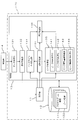
- FIG. 2 is a block diagram showing a specific configuration of the control unit 13 of the gas chromatograph of FIG. 1 and its peripheral members.
- the gas chromatograph includes a display 11, a storage unit 12, and a control unit 13 in addition to the detector 4 described above.
- the display 11, the storage unit 12, and the control unit 13 constitute an input device 20.
- the input device 20 is provided on the main body 10 (see FIG. 1).
- the display unit 11 includes a capacitive touch panel. That is, in the analysis using this gas chromatograph, the operator performs information confirmation and input operation on the display 11.
- the storage unit 12 includes, for example, a ROM (Read Only Memory) and a RAM (Random Access Memory).
- the storage unit 12 stores a plurality of chromatogram information 121 and peak information 122.
- Each chromatogram information 121 is information on a chromatogram generated based on a detection signal from the detector 4 by a data processing unit 131 described later.
- Each peak information 122 is information regarding a peak in each chromatogram information 121.
- the control unit 13 includes, for example, a CPU (Central Processing Unit).
- the control unit 13 can input or output an electrical signal between the detector 4 and the display 11.
- the control unit 13 inputs / outputs data to / from the storage unit 12 as necessary.
- the control unit 13 functions as a data processing unit 131, a display processing unit 132, a selection processing unit 133, a baseline creation processing unit 134, a peak processing unit 135, an arithmetic processing unit 136, and the like when the CPU executes a program.
- the data processing unit 131 obtains a chromatogram based on the detection signal from the detector 4 and detects information about the peak included in the chromatogram.
- Information on the chromatogram generated by the data processing unit 131 is stored in the storage unit 12 as chromatogram information 121. Further, information regarding the peak detected by the data processing unit 131 is stored in the storage unit 12 as the peak information 122. At this time, each chromatogram information 121 and each peak information 122 are stored in the storage unit 12 in association with each other.
- the display processing unit 132 performs processing for displaying the chromatogram on the display 11 based on the chromatogram information 121 of the storage unit 12. In addition, the display processing unit 132 performs processing for displaying information on the peak on the display unit 11 based on the processing results of the selection processing unit 133, the baseline creation processing unit 134, the peak processing unit 135, and the arithmetic processing unit 136 described later. Do.
- the selection processing unit 133 performs processing of selecting and reading predetermined information from the peak information 122 of the storage unit 12 based on an input signal from the display unit 11 by operating the touch panel.
- the baseline creation processing unit 134 creates a baseline to be displayed together with the chromatogram on the display 11 based on an input signal from the display 11 by operating the touch panel.
- the peak processing unit 135 performs various processes on the peak in the chromatogram based on the input signal from the display 11 by operating the touch panel.
- the peak processing unit 135 includes a peak division processing unit 141, a peak combination processing unit 142, a peak information rewriting processing unit 143, and a peak information deletion processing unit 144.
- the peak division processing unit 141 divides the peak of the chromatogram displayed on the display 11 based on the input signal from the display 11 by operating the touch panel.
- the peak combination processing unit 142 combines the peaks of the chromatogram that is divided and displayed on the display 11 based on the input signal from the display 11 by operating the touch panel.
- the peak information rewrite processing unit 143 rewrites the peak information 122 stored in the storage unit 12 based on an input signal from the display unit 11 by operating the touch panel.
- the peak information deletion processing unit 144 deletes the peak information 122 stored in the storage unit 12 based on an input signal from the display unit 11 by operating the touch panel.
- the arithmetic processing unit 136 is based on the processing results of the selection processing unit 133, the baseline creation processing unit 134, the peak division processing unit 141, the peak combination processing unit 142, the peak information rewrite processing unit 143, and the peak information deletion processing unit 144. Calculate the peak height and area in the chromatogram.
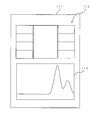
- FIG. 3 is a schematic diagram illustrating an example of a display mode of the display screen 111.
- the display 11 described above includes a touch panel display screen 111.
- the display 11 is provided in the main body 10 (see FIG. 1), and the operator can check the display screen 111 on the main body 10.
- the display device 11 is provided on the front surface of the main body 10 so that an operator can easily operate the display device 11.
- the front surface of the main body 10 is usually provided with a door that can be opened and closed. That is, the display 11 is disposed in a relatively small space on the front surface of the main body 10 so as to secure a space in which a door or the like is disposed.
- the display screen 111 is formed in a substantially rectangular shape.
- the display screen 111 includes an operation display area 112 and a chromatogram area 113.
- the operation display area 112 is arranged on the upper side in the display screen 111.
- the operation display area 112 is an area for displaying operation states of various components in the gas chromatograph.
- the operation display area 112 displays operation states such as the temperature of the column 1, the temperature and pressure in the sample introduction unit 3, the flow rate of the carrier gas supplied into the sample introduction unit 3, and the temperature of the detector 4.
- the chromatogram area 113 is arranged on the lower side in the display screen 111.
- the chromatogram area 113 is an area for displaying a chromatogram generated by the data processing unit 131.
- the chromatogram is displayed in a biaxial display with the horizontal axis representing time and the vertical axis representing signal intensity.
- the chromatogram is displayed in real time on the display screen 111 of the display 11. That is, during analysis, when the data processor 131 generates a chromatogram based on the detection signal from the detector 4, the display processor 132 displays the chromatogram in the chromatogram area 113 of the display screen 111 in real time. Is displayed.
- Detection of Peak Information As described above, when a chromatogram is generated by the data processing unit 131, the information is stored in the storage unit 12 as chromatogram information 121 (see FIG. 2). At this time, the data processing unit 131 detects information regarding the peak in the chromatogram, and stores the information as peak information 122 in the storage unit 12.
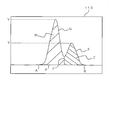
- FIG. 4 is an example of a display mode of the chromatogram area 113 and is a schematic diagram showing chromatogram and peak information.
- a part of the chromatogram corresponding to the predetermined chromatogram information 121 stored in the storage unit 12 is displayed.
- the information stored in the storage unit 12 as the peak information 122 includes the peak start point, peak end point, peak apex, and continuous peak boundary points and boundary lines in the chromatogram information 121.
- Information includes the peak start point, the peak end point, the peak apex, and the boundary points between successive peaks.
- the data processing unit 131 detects the peak information 122 based on the change in signal intensity in the chromatogram.
- peak information 122 information on peak start point A, peak end point B, peak vertices C and D, and continuous peak boundary point E and boundary line F is stored as peak information 122.
- the peak information 122 is selected according to the position of the touch operation on the display 11 by the operator, as will be described later.
- the boundary line F is a straight line passing through the boundary point E and parallel to the vertical axis. However, the boundary point E and the boundary line F may not be included in the peak information 122 depending on the shape of the peak.
- Control Operation by Control Unit and Display Mode of Display Screen In the gas chromatograph, when a predetermined touch operation is performed on the display unit 11 by an operator, the chromatogram information 121 stored in the storage unit 12 is read out. The chromatogram corresponding to the information is displayed in the chromatogram area 113. In this state, the operator can check the height and area of the chromatogram or change the peak information 122 by performing various touch operations on the display device 11.
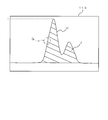
- FIG. 5 is an example of a display mode of the chromatogram region 113, and is a schematic diagram showing a state in which the peak height and area in the chromatogram are calculated as a result of selection of the peak. is there.
- the selection processing unit 133 selects a peak in the chromatogram.
- the region G is touched (tapped) by an operator as shown in FIG. 5 from the state where the chromatogram is displayed in the chromatogram region 113 as shown in FIG. Select peak H in the chromatogram.
- the region G is located between the start point of the peak H and the apex (top) in the chromatogram. That is, when an area that is a certain distance or more away from each singular point and is slightly touched on the chromatogram or the chromatogram, the peak H corresponding to that area is selected.
- the arithmetic processing unit 136 calculates the height I and area J of the peak H. Specifically, the maximum value of the vertical axis with respect to the baseline is calculated as the height I of the peak H, and the area of the region surrounded by the baseline and the peak H is calculated as the area J of the peak H.
- the display processing unit 132 may display the calculated numerical values of the height I and area J of the peak H in the chromatogram region 113 (not shown).
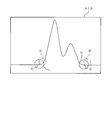
- FIG. 6A is an example of a display mode of the chromatogram region 113 and is a schematic diagram showing a state in which a peak start point and end point in the chromatogram are selected.
- FIG. 6B is an example of a display mode of the chromatogram region 113 and is a schematic diagram showing a state in which the baseline P is created.
- FIG. 6C is an example of a display mode of the chromatogram region 113, and is a schematic diagram illustrating a state in which the peak height and area in the chromatogram are calculated based on the baseline P.
- the selection processing unit 133 determines the position of the touch operation from the peak information 122 stored in the storage unit 12. Select information according to.
- the selection processing unit 133 From the peak information 122 of the storage unit 12, the peak start point A (see FIG. 4) in the chromatogram is selected. Then, the display processing unit 132 causes the chromatogram region 113 to display a graphic L indicating the position of the start point A with a circle or the like.
- the region K is a region on the peak start point A in the chromatogram or less than a certain distance from the start point A.
- the selection processing unit 133 selects the peak end point B (see FIG. 4) in the chromatogram from the peak information 122 of the storage unit 12. Then, the display processing unit 132 displays a graphic N indicating the position of the end point B with a circle or the like in the chromatogram region 113.
- the region M is a region on the end point B of the peak in the chromatogram or less than a certain distance from the end point B.
- the display processing unit 132 may enlarge the area.
- the selection processing unit 133 selects appropriate information (singular point) from the peak information 122 according to the position of the touch operation with respect to the enlarged display area. May be.
- the display processing unit 132 may display information (values) of each time of the start point A and the end point B selected by the selection processing unit 133 in the chromatogram region 113 (not shown). .
- the selection processing unit 133 selects information (singular point) closest to the position touched by the operator from the peak information 122 of the storage unit 12. That is, even when the operator touches a region K that is slightly shifted from the start point A in an attempt to select the start point A, the selection processing unit 133 causes the start point that is the closest singular point from the region K to be selected. A is selected. Even when the operator touches a region M that is slightly shifted from the end point B in an attempt to select the end point B, the selection processing unit 133 causes the end point that is the closest singular point from the region M to be selected. B is selected. Such a singular point is selected not only at the start point A and the end point B but also at other singular points such as peak vertices and boundary points of continuous peaks.
- the arithmetic processing unit 136 calculates the height and area of the peak based on the baseline P as shown in FIG. 6C. Specifically, the arithmetic processing unit 136 calculates the height R and area S of the peak Q located above the baseline P.
- the display processing unit 132 may display the calculated numerical values of the height R and area S of the peak Q in the chromatogram region 113 (not shown). Note that the selection of the peak start point and end point and the creation of the baseline P may be performed based on a touch operation different from the touch operation described above.
- the selection processing unit 133 is selected.
- the peak start point A and end point B may be selected, and the baseline creation processing unit 134 may create a baseline P (see FIG. 6B) connecting the start point A and the end point B.
- a base line connecting the start point A and the boundary point E may be created.
- FIG. 6D is an example of a display mode of the chromatogram region 113 and is a schematic diagram showing a state where the peaks are divided.
- FIG. 6E is an example of a display mode of the chromatogram region 113 and is a schematic diagram showing a state in which the height and area of a peak in a divided state are calculated.
- the operator presses the region T around the boundary point E of the continuous peak for a long time (long touch), and slides further downward from the state.
- the selection processing unit 133 selects a continuous peak boundary line F from the peak information 122 in the storage unit 12. Then, the peak division processing unit 141 divides continuous peaks in the chromatogram based on the boundary line F.
- the display processing unit 132 displays the boundary line F in the chromatogram region 113.
- the peak division processing unit 141 divides the chromatogram even when the operator depresses the part slightly deviated from the region T by a certain distance and then slides downward. To do.
- the arithmetic processing part 136 calculates the height and area of the peak divided
- the operator presses the region O centering on the boundary line F for a long time (long touch), and further slides (drags) downward from that state. Then, the peak combination processing unit 142 combines the divided peaks. Then, the display processing unit 132 deletes the boundary line F from the chromatogram region 113 as shown in FIG. 6B.
- the peak combination processing unit 142 combines the chromatograms even when the operator depresses the position slightly deviated from the region O by a certain distance and then slides downward. To do.
- the arithmetic processing unit 136 calculates the height and area of the combined peaks. Note that the division and combination of peaks may be performed based on a touch operation different from the touch operation described above.
- the peak processing point 133 is selected by the selection processing unit 133 in response to the operator touching (tapping) the region T illustrated in FIG. 6D, and the baseline positioned below the region T is selected.
- the peak may be divided by the peak division processing unit 141 in response to tapping of the P portion.
- the operator touches (tap) the region O shown in FIG. 6D, and further taps the portion of the baseline P located below the region O. Accordingly, the chromatograms may be combined by the peak combination processing unit 142.
- the peak combination processing unit 142 may combine not only the peaks divided by the peak division processing unit 141 but also the peaks divided from the beginning.
- FIG. 7A is an example of a display mode of the chromatogram region 113 and is a schematic diagram showing a state in which peak information in the chromatogram is rewritten.
- FIG. 7B is an example of a display mode of the chromatogram region 113 and is a schematic diagram showing a state in which the peak height and area in the chromatogram are calculated based on the rewritten peak information.
- the operator presses the area AA centering on the peak start point A for a long time (long touch), and further slides along the chromatogram from this state.
- the display processing unit 132 moves the figure L (see FIG. 6A) in accordance with the operator's slide operation.
- the peak information rewriting process part 143 makes the point shown by the figure L after moving the new start point AB, and in the peak information 122 of the memory
- the display processing unit 132 When the operator presses (long touches) the area AC centering on the peak end point B and further slides (drags) along the chromatogram from the state, the display processing unit 132 is displayed.
- the figure N (see FIG. 6A) is moved in accordance with the operator's slide operation.
- the peak information rewriting process part 143 makes the point shown by the figure N after moving the new end point AD, and in the peak information 122 of the memory
- the selection processing unit 133 selects information from the new peak information 122 in the storage unit 12.
- the selection processing unit 133 is rewritten in the peak information 122 of the storage unit 12. A new starting point AB is selected. Even if the area AF that is slightly deviated from the end point AD is tapped by the operator, the selection processing unit 133 selects the rewritten new end point AD from the peak information 122 in the storage unit 12. To do.
- the baseline creation processing unit 134 selects the selected start point AB and end point. Create a baseline AG that connects AD. At this time, the display processing unit 132 displays the created baseline AG in the chromatogram region 113.
- the arithmetic processing unit 136 calculates the height AI and area AJ of the peak AH located above the baseline AG.
- the display processing unit 132 may display the calculated numerical values of the height AI and the area AJ of the peak AH in the chromatogram region 113 (not shown).
- the peak information rewrite processing unit 143 rewrites the information in the peak information 122 of the storage unit 12 in the same manner as described above.
- FIG. 8 is an example of a display mode of the chromatogram region 113 and is a schematic diagram showing a state in which peak information in the chromatogram is deleted.
- the peak information deletion processing unit 144 deletes the peak information 122 of the peak from the storage unit 12. For example, as shown in FIG. 8, when an area AK located between the peak start point and the peak apex (top) is pressed and held for a certain period of time (long touch), the peak information deletion processing unit 144 The peak information 122 of the peak stored in the storage unit 12 is deleted.
- the display processing unit 132 is a screen for confirming whether to delete the peak information 122 from the storage unit 12. (Pop-up screen) is displayed in the chromatogram area 113 (not shown). Then, when a predetermined touch operation for deleting the peak information 122 is performed by the operator on the screen, the peak information deletion processing unit 144 deletes the peak information 122 stored in the storage unit 12.
- the storage unit 12 stores the peak start point, peak end point, peak apex, and continuous peak boundary points and boundary lines in the chromatogram. Is stored as peak information 122.
- the selection processing unit 133 selects the peak information 122 or any peak included in the chromatogram according to the position of the touch operation on the chromatogram displayed on the display screen 111.
- the peak information 122 or the peak itself is automatically selected according to the position of the touch operation.
- the selected peak information 122 is a peak start point, peak end point, peak apex, or continuous peak boundary point or boundary line in the chromatogram.
- the operator performs a touch operation on the touch-panel display screen 111, and touches a region K centered on a point slightly shifted from the peak start point A in the chromatogram. Even in such a case, the selection processing unit 133 can select the peak starting point A. Similarly, when the operator performs a touch operation for selecting other peak information or the peak itself, the center of the touch portion is slightly shifted from the original position. However, the selection processing unit 133 can select these pieces of information.
- the storage unit 12 is not limited to a configuration that stores all of the peak start point, peak end point, peak apex, and continuous peak boundary point and boundary line information in the chromatogram. It is only necessary to store at least one of the peak information 122.
- the selection processing unit 133 appropriately selects a peak, and the arithmetic processing unit 136 calculates the height and area of the peak. Therefore, even if the operator's operation is a touch operation on the touch panel, the peak height and area can be calculated appropriately.
- the configuration is not limited to calculating both the height and area of the peak, and may be configured to calculate only one of them.
- the baseline creation processing unit 134 causes the selection processing unit 133 to use the peak information 122 to include information about peak start points, peak end points, or continuous peak boundary points. Is selected, based on the touch operation on the chromatogram displayed on the display screen 111, the baseline data is created as shown in FIG. 6B.
- the selection processing unit 133 appropriately selects a peak start point, a peak end point, or a continuous peak boundary point, and generates baseline data based on a subsequent touch operation. Therefore, even if the operator's operation is a touch operation on the touch panel, the baseline creation processing unit 134 can create an appropriate baseline.
- the arithmetic processing unit 136 calculates the peak height and area as shown in FIG. 6C based on the baseline data created by the baseline creation processing unit 134. .
- the baseline creation processing unit 134 an appropriate baseline is created by the baseline creation processing unit 134, and the peak height and area are calculated by the arithmetic processing unit 136 based on the baseline data. Therefore, even if the operator's operation is a touch operation on the touch panel, the peak height and area can be calculated appropriately.
- the configuration is not limited to calculating both the height and area of the peak, and may be configured to calculate only one of them.
- the peak division processing unit 141 is displayed on the display screen 111 after the selection processing unit 133 selects information on boundary points of continuous peaks from the peak information 122. Based on the touch operation with respect to the chromatogram, as shown in FIG. 6D, continuous peaks are divided based on the boundary point.
- the selection processing unit 133 appropriately selects boundary points between successive peaks, and the continuous peaks are divided based on the boundary points based on subsequent touch operations. Therefore, even if the operator's operation is a touch operation on the touch panel, the peak division processing unit 141 can appropriately divide the peak.
- the continuous peak may be divided based on the touch operation after the boundary information is selected instead of the boundary point of the continuous peak.
- the arithmetic processing unit 136 calculates the height and area of the peaks divided by the peak dividing processing unit 141 as shown in FIG. 6E.
- the peak division processing unit 141 appropriately divides the peak, and the arithmetic processing unit 136 calculates the height and area of the divided peak. Therefore, even if the operator's operation is a touch operation on the touch panel, the peak height and area can be calculated appropriately.
- the configuration is not limited to calculating both the height and area of the peak, and may be configured to calculate only one of them.
- the peak combination processing unit 142 performs a touch operation on the chromatogram displayed on the display screen 111 after the selection processing unit 133 selects the peak information of the boundary line of the continuous peak. Based on the above, continuous peaks that are divided based on the boundary line are combined.
- the selection processing unit 133 appropriately selects the boundary line between the continuous peaks, and the continuous peaks divided based on the boundary line are combined based on the subsequent touch operation. Therefore, even if the operator's operation is a touch operation on the touch panel, the peaks can be appropriately combined by the peak combination processing unit.
- the continuous peaks may be combined based on the touch operation after the boundary point information is selected instead of the boundary lines of the continuous peaks.
- the arithmetic processing unit 136 calculates the height and area of the peaks combined by the peak combining processing unit 142.
- the peaks are appropriately combined by the peak combination processing unit 142, and the height and area of the combined peaks are calculated by the arithmetic processing unit 136. Therefore, even if the operator's operation is a touch operation on the touch panel, the peak height and area can be calculated appropriately.
- the configuration is not limited to calculating both the height and area of the peak, and may be configured to calculate only one of them.
- the peak information rewrite processing unit 143 uses the selection processing unit 133 to select a peak start point, a peak end point, a peak apex, or a continuous peak from the peak information 122. After the boundary point or boundary line information is selected, the peak information 122 stored in the storage unit 12 is rewritten based on the touch operation on the chromatogram displayed on the display screen 111 as shown in FIG. 7A. .
- the peak information 122 stored in the storage unit 12 can be easily rewritten to desired information by a touch operation on the touch panel.
- the arithmetic processing unit 136 calculates the peak height and area as shown in FIG. 7B based on the peak information rewritten by the peak information rewriting processing unit 143.
- the peak information rewrite processing unit 143 rewrites the peak information 122 with desired information, and the arithmetic processing unit 136 calculates the peak height and area based on the rewritten desired peak information 122. Therefore, even if the operator's operation is a touch operation on the touch panel, the peak height and area can be calculated appropriately.
- the configuration is not limited to calculating both the height and area of the peak, and may be configured to calculate only one of them.
- the peak information deletion processing unit 144 touches the chromatogram displayed on the display screen 111 after any peak included in the chromatogram is selected by the selection processing unit 133. Based on the operation, the peak information 122 of the peak stored in the storage unit 12 is deleted.
- any peak included in the chromatogram is appropriately selected by the selection processing unit 133, and the peak information 122 of the peak is deleted based on the subsequent touch operation. Therefore, even if the operator's operation is a touch operation on the touch panel, the peak information deletion processing unit 144 can appropriately delete the peak information.
- the input device 20 is provided in the main body 10. An operator performs a touch operation on a touch panel display screen 111 provided in the main body 10. Then, the selection processing unit 133 automatically selects the peak information 122 in the storage unit 12 or the peak of the chromatogram itself.
- selection of the peak information 122 of the storage unit 12 or the peak of the chromatogram itself can be performed only by an operation on the main body 10.
- the chromatograph of the present invention is described as being a gas chromatograph, but the chromatograph of the present invention can be applied to a chromatograph other than a gas chromatograph such as a liquid chromatograph.
- the selection of the peak information 122 or the peak itself by the selection processing unit 133 is described based on a specific touch operation on the chromatogram in the chromatogram region 113.
- the specific touch described above is used.
- the peak information 122 may be selected based on a touch operation other than the operation.
- the touch operation after the selection processing unit 133 selects the peak information 122 or the peak itself is not limited to the specific touch operation described above.
- the input device 20 is described as being provided in the main body 10.
- the input device 20 may be a device having a touch panel display screen, and may be a smart device, a display for a personal computer, or the like.
- An apparatus configured separately from the above may be used.
- the chromatogram information 121 and the peak information 122 are not limited to the configuration obtained directly from the input signal from the detector 4, and the storage unit 12 of the input device is not limited to a storage medium or wired or wireless communication. May be stored.
Landscapes
- Engineering & Computer Science (AREA)
- General Physics & Mathematics (AREA)
- Physics & Mathematics (AREA)
- Theoretical Computer Science (AREA)
- General Engineering & Computer Science (AREA)
- Immunology (AREA)
- General Health & Medical Sciences (AREA)
- Biochemistry (AREA)
- Analytical Chemistry (AREA)
- Pathology (AREA)
- Chemical & Material Sciences (AREA)
- Life Sciences & Earth Sciences (AREA)
- Health & Medical Sciences (AREA)
- Human Computer Interaction (AREA)
- Other Investigation Or Analysis Of Materials By Electrical Means (AREA)
- Treatment Of Liquids With Adsorbents In General (AREA)
Abstract
記憶部12は、クロマトグラムにおけるピークの開始点、ピークの終了点、ピークの頂点、並びに、連続するピークの境界点及び境界線の情報をピーク情報122として記憶する。選択処理部133は、表示画面に表示されているクロマトグラムに対するタッチ操作の位置に応じて、ピーク情報122、又は、クロマトグラムに含まれるいずれかのピークを選択する。そのため、作業者によって、クロマトグラムが表示されたタッチパネル式の表示画面に対してタッチ操作が行われた場合に、作業者が所望する情報以外の情報が認識されることを防止できる。その結果、タッチパネル上のタッチ操作に基づく適切な入力信号を送信できる。
Description
本発明は、表示器に表示されるクロマトグラムに関する入力信号を送信するクロマトグラフ用入力装置及びクロマトグラフに関するものである。
通常、クロマトグラフは、検出器と、各種データを処理するデータ処理部と、表示器とを備えている。クロマトグラフでは、検出器からの検出信号に基づいて、データ処理部でクロマトグラムが生成される。そして、表示器には、そのクロマトグラムが表示される。
また、このようなクロマトグラフは、入力装置を備えており、作業者による入力装置の操作に応じて、入力信号がデータ処理部に送信される。そして、入力信号に基づいて、データ処理部で各種データが処理される(例えば、下記特許文献1参照)。
特許文献1に記載のガスクロマトグラフは、入力装置としてマウス及びキーボードを備えている。そして、作業者は、表示器にクロマトグラムが表示された状態で、マウスの操作によって表示器上のマウスポインター(カーソル)を移動させ、キーボードの操作によって必要な入力を行う。
上記のような従来のガスクロマトグラフでは、入力装置の種類によっては、入力操作に応じた適切な入力信号を送信できない可能性がある。
具体的には、従来のガスクロマトグラフにおいて、入力装置としてタッチパネルを用いた場合には、作業者は、タッチパネル上の所定の部分を選択してタッチすることにより、入力操作を行う。このとき、作業者によるタッチパネル上のタッチ部分は、点ではなく、一定の面積からなる領域である。一方、タッチパネルでは、作業者のタッチ部分(タッチ領域)に含まれる所定の点を、作業者が選択した情報として認識する。そのため、タッチパネルにおいて、作業者が所望する点とは異なる点が認識される可能性があり、その場合には、所望する内容とは異なる内容の入力信号が送信されてしまう。
本発明は、上記実情に鑑みてなされたものであり、タッチパネル上のタッチ操作に基づく適切な入力信号を送信できるクロマトグラフ用入力装置及びクロマトグラフを提供することを目的とする。
(1)本発明に係るクロマトグラフ用入力装置は、表示器と、表示処理部と、記憶部と、選択処理部とを備える。前記表示器は、タッチパネル式の表示画面を有する。前記表示処理部は、前記表示画面にクロマトグラムを表示させる。前記記憶部は、前記クロマトグラムにおけるピークの開始点、ピークの終了点、ピークの頂点、並びに、連続するピークの境界点及び境界線の少なくとも1つのデータをピーク情報として記憶する。前記選択処理部は、前記表示画面に表示されているクロマトグラムに対するタッチ操作の位置に応じて、前記少なくとも1つのピーク情報のいずれか、又は、前記クロマトグラムに含まれるいずれかのピークを選択する。
このような構成によれば、クロマトグラムが表示されたタッチパネル式の表示画面に対して、作業者がタッチ操作を行うと、そのタッチ操作の位置に応じて、クロマトグラムにおけるピーク情報、又は、ピーク自体が自動的に選択される。選択されるピーク情報は、クロマトグラムにおけるピークの開始点、ピークの終了点、ピークの頂点、あるいは、連続するピークの境界点又は境界線である。
例えば、作業者によって、タッチパネル式の表示画面に対してタッチ操作が行われ、クロマトグラムにおけるピークの開始点から若干ずれた点を中心とする領域がタッチされた場合であっても、選択処理部によって、ピークの開始点を選択できる。同様に、作業者によって、その他のピーク情報、又は、ピーク自体を選択するためのタッチ操作が行われた場合であって、タッチ部分の中心が本来の位置から若干ずれているような場合であっても、選択処理部によって、これらの情報を選択できる。
すなわち、作業者によって、クロマトグラムが表示されたタッチパネル式の表示画面に対してタッチ操作が行われた場合に、作業者が所望する情報以外の情報が認識されることを防止できる。
その結果、タッチパネル上のタッチ操作に基づく適切な入力信号を送信できる。
その結果、タッチパネル上のタッチ操作に基づく適切な入力信号を送信できる。
(2)また、前記クロマトグラフ用入力装置は、演算処理部をさらに備えてもよい。前記演算処理部は、前記選択処理部により前記クロマトグラムに含まれるいずれかのピークが選択された場合に、当該ピークの高さ又は面積を算出する。
このような構成によれば、選択処理部によって、ピークが適切に選択され、演算処理部によって、そのピークの高さ又は面積が算出される。
そのため、作業者による操作がタッチパネルに対するタッチ操作であっても、ピークの高さ又は面積を適切に算出できる。
そのため、作業者による操作がタッチパネルに対するタッチ操作であっても、ピークの高さ又は面積を適切に算出できる。
(3)また、前記クロマトグラフ用入力装置は、ベースライン作成処理部をさらに備えてもよい。前記ベースライン作成処理部は、前記選択処理部によりピークの開始点、ピークの終了点、又は、連続するピークの境界点のピーク情報が選択された後、前記表示画面に表示されているクロマトグラムに対するタッチ操作に基づいて、ベースラインのデータを作成する。
このような構成によれば、選択処理部によって、ピークの開始点、ピークの終了点、又は、連続するピークの境界点が適切に選択され、その後のタッチ操作に基づいて、ベースラインのデータが作成される。
そのため、作業者による操作がタッチパネルに対するタッチ操作であっても、ベースライン作成処理部によって、適切なベースラインを作成できる。
そのため、作業者による操作がタッチパネルに対するタッチ操作であっても、ベースライン作成処理部によって、適切なベースラインを作成できる。
(4)また、前記クロマトグラフ用入力装置は、演算処理部をさらに備えてもよい。前記演算処理部は、前記ベースライン作成処理部により作成されたベースラインのデータに基づいて、ピークの高さ又は面積を算出する。
このような構成によれば、ベースライン作成処理部によって、適切なベースラインが作成され、演算処理部によって、そのベースラインのデータに基づいて、ピークの高さ又は面積が算出される。
そのため、作業者による操作がタッチパネルに対するタッチ操作であっても、ピークの高さ又は面積を適切に算出できる。
そのため、作業者による操作がタッチパネルに対するタッチ操作であっても、ピークの高さ又は面積を適切に算出できる。
(5)また、前記クロマトグラフ用入力装置は、ピーク分割処理部をさらに備えてもよい。前記ピーク分割処理部は、前記選択処理部により連続するピークの境界点又は境界線のピーク情報が選択された後、前記表示画面に表示されているクロマトグラムに対するタッチ操作に基づいて、当該境界点又は境界線を基準に前記連続するピークを分割する。
このような構成によれば、選択処理部によって、連続するピークの境界点又は境界線が適切に選択され、その後のタッチ操作に基づいて、境界点又は境界線を基準に連続するピークが分割される。
そのため、作業者による操作がタッチパネルに対するタッチ操作であっても、ピーク分割処理部によって、ピークを適切に分割できる。
そのため、作業者による操作がタッチパネルに対するタッチ操作であっても、ピーク分割処理部によって、ピークを適切に分割できる。
(6)また、前記クロマトグラフ用入力装置は、演算処理部をさらに備えてもよい。前記演算処理部は、前記ピーク分割処理部により分割されたピークの高さ又は面積を算出する。
このような構成によれば、ピーク分割処理部によって、ピークが適切に分割され、演算処理部によって、その分割されたピークの高さ又は面積が算出される。
そのため、作業者による操作がタッチパネルに対するタッチ操作であっても、ピークの高さ又は面積を適切に算出できる。
そのため、作業者による操作がタッチパネルに対するタッチ操作であっても、ピークの高さ又は面積を適切に算出できる。
(7)また、前記クロマトグラフ用入力装置は、ピーク結合処理部をさらに備えてもよい。前記ピーク結合処理部は、前記選択処理部により連続するピークの境界点又は境界線のピーク情報が選択された後、前記表示画面に表示されているクロマトグラムに対するタッチ操作に基づいて、当該境界点又は境界線を基準に分割されている前記連続するピークを結合する。
このような構成によれば、選択処理部によって、連続するピークの境界点又は境界線が適切に選択され、その後のタッチ操作に基づいて、境界点又は境界線を基準に分割されている連続するピークが結合される。
そのため、作業者による操作がタッチパネルに対するタッチ操作であっても、ピーク結合処理部によって、ピークを適切に結合できる。
そのため、作業者による操作がタッチパネルに対するタッチ操作であっても、ピーク結合処理部によって、ピークを適切に結合できる。
(8)また、前記クロマトグラフ用入力装置は、演算処理部をさらに備えてもよい。前記演算処理部は、前記ピーク結合処理部により結合されたピークの高さ又は面積を算出する。
このような構成によれば、ピーク結合処理部によって、ピークが適切に結合され、演算処理部によって、その結合されたピークの高さ又は面積が算出される。
そのため、作業者による操作がタッチパネルに対するタッチ操作であっても、ピークの高さ又は面積を適切に算出できる。
このような構成によれば、ピーク結合処理部によって、ピークが適切に結合され、演算処理部によって、その結合されたピークの高さ又は面積が算出される。
そのため、作業者による操作がタッチパネルに対するタッチ操作であっても、ピークの高さ又は面積を適切に算出できる。
(9)また、前記クロマトグラフ用入力装置は、ピーク情報書換処理部をさらに備えてもよい。前記ピーク情報書換処理部は、前記選択処理部によりピークの開始点、ピークの終了点、ピークの頂点、あるいは、連続するピークの境界点又は境界線のピーク情報が選択された後、前記表示画面に表示されているクロマトグラムに対するタッチ操作に基づいて、前記記憶部に記憶されているピーク情報を書き換える。
このような構成によれば、タッチパネルに対するタッチ操作により、記憶部に記憶されているピーク情報を所望の情報に容易に書き換えることができる。
(10)また、前記クロマトグラフ用入力装置は、演算処理部をさらに備えてもよい。前記演算処理部は、前記ピーク情報書換処理部により書き換えられたピーク情報に基づいて、ピークの高さ又は面積を算出する。
このような構成によれば、ピーク情報書換処理部によって、ピーク情報が所望の情報に書き換えられ、演算処理部によって、その書き換えられた所望のピーク情報に基づくピークの高さ又は面積が算出される。
そのため、作業者による操作がタッチパネルに対するタッチ操作であっても、ピークの高さ又は面積を適切に算出できる。
そのため、作業者による操作がタッチパネルに対するタッチ操作であっても、ピークの高さ又は面積を適切に算出できる。
(11)また、前記クロマトグラフ用入力装置は、ピーク情報削除処理部をさらに備えてもよい。前記ピーク情報削除処理部は、前記選択処理部により前記クロマトグラムに含まれるいずれかのピークが選択された後、前記表示画面に表示されているクロマトグラムに対するタッチ操作に基づいて、前記記憶部に記憶されている当該ピークのピーク情報を削除する。
このような構成によれば、選択処理部によって、クロマトグラムに含まれるいずれかのピークが適切に選択され、その後のタッチ操作に基づいて、当該ピークのピーク情報が削除される。
そのため、作業者による操作がタッチパネルに対するタッチ操作であっても、ピーク情報削除処理部によって、ピーク情報を適切に削除できる。
そのため、作業者による操作がタッチパネルに対するタッチ操作であっても、ピーク情報削除処理部によって、ピーク情報を適切に削除できる。
(12)また、本発明に係るクロマトグラフは、クロマトグラフ用入力装置と、本体とを備える。前記本体には、前記クロマトグラフ用入力装置が設けられる。
このような構成によれば、作業者は、本体に設けられたクロマトグラフ用入力装置のタッチパネル式の表示画面に対してタッチ操作を行う。そして、選択処理部は、クロマトグラムにおけるピーク情報、又は、ピーク自体を自動的に選択する。
そのため、クロマトグラムにおけるピーク情報、又は、ピーク自体の選択を、本体に対する操作のみで行うことができる。
そのため、クロマトグラムにおけるピーク情報、又は、ピーク自体の選択を、本体に対する操作のみで行うことができる。
本発明によれば、クロマトグラムが表示されたタッチパネル式の表示画面に対するタッチ操作の位置に応じて、選択処理部によって、クロマトグラムにおけるピーク情報、又は、ピーク自体が自動的に選択される。そのため、作業者が所望する情報以外の情報が認識されることを防止できる。その結果、タッチパネル上のタッチ操作に基づく適切な入力信号を送信できる。
1.ガスクロマトグラフの全体構成
図1は、本発明の一実施形態に係るガスクロマトグラフの構成例を示した概略図である。このガスクロマトグラフは、キャリアガスとともに試料ガスをカラム1内に供給することにより分析を行うためのものであり、上記カラム1以外に、カラムオーブン2、試料導入部3、検出器4、及び、これらを収容する中空状の本体10などを備えている。
カラム1は、例えば、キャピラリカラムからなる。カラム1は、ヒータ及びファンなど(いずれも図示せず)とともにカラムオーブン2内に収容されている。
カラムオーブン2は、カラム1を加熱するためのものであり、分析時にはヒータ及びファンを適宜駆動させる。
図1は、本発明の一実施形態に係るガスクロマトグラフの構成例を示した概略図である。このガスクロマトグラフは、キャリアガスとともに試料ガスをカラム1内に供給することにより分析を行うためのものであり、上記カラム1以外に、カラムオーブン2、試料導入部3、検出器4、及び、これらを収容する中空状の本体10などを備えている。
カラム1は、例えば、キャピラリカラムからなる。カラム1は、ヒータ及びファンなど(いずれも図示せず)とともにカラムオーブン2内に収容されている。
カラムオーブン2は、カラム1を加熱するためのものであり、分析時にはヒータ及びファンを適宜駆動させる。
試料導入部3は、カラム1内にキャリアガス及び試料ガスを導入するためのものであり、その内部に試料気化室(図示せず)が形成されている。この試料気化室には、液体試料が注入され、試料気化室内で気化された試料が、キャリアガスとともにカラム1内に導入される。また、試料気化室には、ガス供給流路5及びスプリット流路6が連通している。
ガス供給流路5は、試料導入部3の試料気化室内にキャリアガスを供給するための流路である。
ガス供給流路5は、試料導入部3の試料気化室内にキャリアガスを供給するための流路である。
スプリット流路6は、スプリット導入法によりカラム1内にキャリアガス及び試料ガスを導入する際に、試料気化室内のガス(キャリアガス及び試料ガスの混合ガス)の一部を所定のスプリット比で外部に排出するための流路である。
検出器4は、例えば、水素炎イオン化検出器(FID)や、炎光光度検出器(FPD)により構成される。検出器4は、カラム1から導入されるキャリアガスに含まれる各試料成分を順次検出する。
このガスクロマトグラフにおいて試料を測定する際は、分析対象となる試料が試料導入部3に注入される。試料は、試料気化室において気化される。また、試料導入部3の試料気化室には、ガス供給流路5を介してキャリアガスが供給される。
試料気化室内で気化された試料は、キャリアガスとともにカラム1内に導入される。試料に含まれる各試料成分は、カラム1内を通過する過程で分離されて、検出器4に順次導入される。
そして、検出器4において、カラム1から導入されるキャリアガスに含まれる各試料成分が順次検出される。また、検出器4における検出結果に基づいて、クロマトグラムが生成される。生成されたクロマトグラムは、本体10に設けられた表示器11(後述する)に表示される。そして、作業者は、表示されたクロマトグラムを確認して、各種分析を行う。
2.制御部及び周辺の部材の具体的構成
図2は、図1のガスクロマトグラフの制御部13、及び、その周辺の部材の具体的構成を示したブロック図である。
図2は、図1のガスクロマトグラフの制御部13、及び、その周辺の部材の具体的構成を示したブロック図である。
ガスクロマトグラフは、上記した検出器4に加えて、表示器11と、記憶部12と、制御部13とを備えている。ガスクロマトグラフでは、表示器11、記憶部12及び制御部13が入力装置20を構成している。そして、入力装置20は、本体10(図1参照)に設けられている。
表示器11は、静電容量式のタッチパネルを含んでいる。すなわち、このガスクロマトグラフを用いた分析では、作業者は、表示器11において情報の確認及び入力操作を行う。
記憶部12は、例えば、ROM(Read Only Memory)及びRAM(Random Access Memory)などにより構成されている。記憶部12は、複数のクロマトグラム情報121及びピーク情報122を記憶している。
各クロマトグラム情報121は、後述するデータ処理部131によって、検出器4からの検出信号に基づいて生成されるクロマトグラムの情報である。
各ピーク情報122は、各クロマトグラム情報121におけるピークに関する情報である。
各クロマトグラム情報121は、後述するデータ処理部131によって、検出器4からの検出信号に基づいて生成されるクロマトグラムの情報である。
各ピーク情報122は、各クロマトグラム情報121におけるピークに関する情報である。
制御部13は、例えば、CPU(Central Processing Unit)を含む構成である。制御部13は、検出器4及び表示器11との間で、電気信号の入力又は出力が可能である。制御部13は、必要に応じて記憶部12に対するデータの入出力を行う。制御部13は、CPUがプログラムを実行することにより、データ処理部131、表示処理部132、選択処理部133、ベースライン作成処理部134、ピーク処理部135及び演算処理部136などとして機能する。
データ処理部131は、検出器4からの検出信号に基づいて、クロマトグラムを得るとともに、当該クロマトグラムに含まれるピークに関する情報を検出する。データ処理部131で生成されたクロマトグラムの情報は、クロマトグラム情報121として記憶部12に格納される。また、データ処理部131で検出されたピークに関する情報は、ピーク情報122として記憶部12に格納される。このとき、各クロマトグラム情報121と各ピーク情報122とは、互いに対応付けられて記憶部12に格納される。
表示処理部132は、記憶部12のクロマトグラム情報121に基づいて、表示器11にクロマトグラムを表示させる処理を行う。また、表示処理部132は、後述する選択処理部133、ベースライン作成処理部134、ピーク処理部135及び演算処理部136による処理結果に基づいて、表示器11にピークに関する情報を表示させる処理を行う。
選択処理部133は、タッチパネルの操作による表示器11からの入力信号に基づいて、記憶部12のピーク情報122から所定の情報を選択して読み出す処理を行う。
ベースライン作成処理部134は、タッチパネルの操作による表示器11からの入力信号に基づいて、表示器11においてクロマトグラムとともに表示させるベースラインを作成する処理を行う。
ピーク処理部135は、タッチパネルの操作による表示器11からの入力信号に基づいて、クロマトグラムにおけるピークに対する各種処理を行う。具体的には、ピーク処理部135には、ピーク分割処理部141と、ピーク結合処理部142と、ピーク情報書換処理部143と、ピーク情報削除処理部144とが含まれており、これらが各種処理を行う。
ピーク分割処理部141は、タッチパネルの操作による表示器11からの入力信号に基づいて、表示器11に表示されるクロマトグラムのピークを分割する。
ピーク分割処理部141は、タッチパネルの操作による表示器11からの入力信号に基づいて、表示器11に表示されるクロマトグラムのピークを分割する。
ピーク結合処理部142は、タッチパネルの操作による表示器11からの入力信号に基づいて、表示器11に分割されて表示されているクロマトグラムのピークを結合する。
ピーク情報書換処理部143は、タッチパネルの操作による表示器11からの入力信号に基づいて、記憶部12に記憶されているピーク情報122を書き換える。
ピーク情報削除処理部144は、タッチパネルの操作による表示器11からの入力信号に基づいて、記憶部12に記憶されているピーク情報122を削除する。
ピーク情報削除処理部144は、タッチパネルの操作による表示器11からの入力信号に基づいて、記憶部12に記憶されているピーク情報122を削除する。
演算処理部136は、選択処理部133、ベースライン作成処理部134、ピーク分割処理部141、ピーク結合処理部142、ピーク情報書換処理部143及びピーク情報削除処理部144の処理結果に基づいて、クロマトグラムにおけるピークの高さ及び面積を算出する。
3.表示画面の画面構成
図3は、表示画面111の表示態様の一例を示した概略図である。
上記した表示器11には、タッチパネル式の表示画面111が含まれている。表示器11は、本体10(図1参照)に備えられており、作業者は、本体10上で表示画面111を確認できる。具体的には、表示器11は、作業者が操作しやすいように、本体10の前面に設けられている。また、本体10の前面には、通常、開閉可能な扉などが設けられている。すなわち、表示器11は、本体10の前面において、扉などが配置されるスペースを確保するように、比較的小さなスペースに配置されている。
図3は、表示画面111の表示態様の一例を示した概略図である。
上記した表示器11には、タッチパネル式の表示画面111が含まれている。表示器11は、本体10(図1参照)に備えられており、作業者は、本体10上で表示画面111を確認できる。具体的には、表示器11は、作業者が操作しやすいように、本体10の前面に設けられている。また、本体10の前面には、通常、開閉可能な扉などが設けられている。すなわち、表示器11は、本体10の前面において、扉などが配置されるスペースを確保するように、比較的小さなスペースに配置されている。
表示画面111は、略矩形状に形成されている。表示画面111には、動作表示領域112と、クロマトグラム領域113とが含まれている。
動作表示領域112は、表示画面111内における上方側に配置されている。動作表示領域112は、ガスクロマトグラフにおける各種部品の動作状態を表示するための領域である。例えば、動作表示領域112には、カラム1の温度、試料導入部3内の温度及び圧力、試料導入部3内に供給されるキャリアガスの流量、検出器4の温度などの動作状態が表示される。
動作表示領域112は、表示画面111内における上方側に配置されている。動作表示領域112は、ガスクロマトグラフにおける各種部品の動作状態を表示するための領域である。例えば、動作表示領域112には、カラム1の温度、試料導入部3内の温度及び圧力、試料導入部3内に供給されるキャリアガスの流量、検出器4の温度などの動作状態が表示される。
クロマトグラム領域113は、表示画面111内における下方側に配置されている。クロマトグラム領域113は、データ処理部131によって生成されたクロマトグラムを表示するための領域である。なお、クロマトグラム領域113では、クロマトグラムは、横軸を時間、縦軸を信号強度とする二軸表示により表示される。
ガスクロマトグラフにおける分析中は、表示器11の表示画面111では、クロマトグラムがリアルタイムで表示される。すなわち、分析中は、データ処理部131によって、検出器4からの検出信号に基づいてクロマトグラムが生成されると、表示処理部132によって、そのクロマトグラムが表示画面111のクロマトグラム領域113にリアルタイムで表示される。
4.ピーク情報の検出
上記したように、データ処理部131によってクロマトグラムが生成されると、その情報は、クロマトグラム情報121(図2参照)として記憶部12に格納される。このとき、データ処理部131は、クロマトグラムにおけるピークに関する情報を検出し、その情報をピーク情報122として記憶部12に格納する。
上記したように、データ処理部131によってクロマトグラムが生成されると、その情報は、クロマトグラム情報121(図2参照)として記憶部12に格納される。このとき、データ処理部131は、クロマトグラムにおけるピークに関する情報を検出し、その情報をピーク情報122として記憶部12に格納する。
図4は、クロマトグラム領域113の表示態様の一例であって、クロマトグラム及びピーク情報を示した概略図である。図4では、記憶部12に記憶されている所定のクロマトグラム情報121に対応するクロマトグラムの一部が表示されている。
具体的には、ピーク情報122として記憶部12で記憶される情報は、クロマトグラム情報121におけるピークの開始点、ピークの終了点、ピークの頂点、並びに、連続するピークの境界点及び境界線の情報である。これらのピーク情報のうち、ピークの開始点、ピークの終了点、ピークの頂点、及び、連続するピークの境界点は、信号強度が急激に変化する点(特異点)である。データ処理部131は、クロマトグラムにおける信号強度の変化に基づいて、ピーク情報122を検出する。
図4に示すクロマトグラムに関しては、ピークの開始点A、ピークの終了点B、ピークの頂点C,D、並びに、連続するピークの境界点E及び境界線Fの情報が、ピーク情報122として記憶部12に記憶されている。そして、これらのピーク情報122は、後述するように、作業者による表示器11に対するタッチ操作の位置に応じて選択される。境界線Fは、境界点Eを通る縦軸に平行な直線である。ただし、境界点E及び境界線Fは、ピークの形状によっては、ピーク情報122に含まれない場合がある。
5.制御部による制御動作、及び、表示画面の表示態様
ガスクロマトグラフでは、作業者によって、表示器11において所定のタッチ操作が行われると、記憶部12に記憶されているクロマトグラム情報121が読み出され、その情報に対応するクロマトグラムがクロマトグラム領域113に表示される。この状態において、作業者は、表示器11に対して種々のタッチ操作を行うことにより、クロマトグラムの高さや面積の確認、又は、ピーク情報122の変更を行うことができる。
ガスクロマトグラフでは、作業者によって、表示器11において所定のタッチ操作が行われると、記憶部12に記憶されているクロマトグラム情報121が読み出され、その情報に対応するクロマトグラムがクロマトグラム領域113に表示される。この状態において、作業者は、表示器11に対して種々のタッチ操作を行うことにより、クロマトグラムの高さや面積の確認、又は、ピーク情報122の変更を行うことができる。
以下では、このようなクロマトグラムの高さや面積の確認、又は、ピーク情報122の変更を行う際の、作業者のタッチ操作、制御部13の制御動作、及び、表示画面111(クロマトグラム領域113)の表示態様について説明する。
(1)ピークの選択
図5は、クロマトグラム領域113の表示態様の一例であって、ピークが選択された結果、クロマトグラムにおけるピークの高さ及び面積が算出される状態を示した概略図である。
図5は、クロマトグラム領域113の表示態様の一例であって、ピークが選択された結果、クロマトグラムにおけるピークの高さ及び面積が算出される状態を示した概略図である。
クロマトグラム領域113にクロマトグラムが表示された状態で、作業者によって、所定のタッチ操作が行われると、選択処理部133は、クロマトグラムにおけるピークを選択する。
例えば、図4に示すように、クロマトグラム領域113にクロマトグラムが表示された状態から、図5に示すように、作業者によって、領域Gがタッチ(タップ)されると、選択処理部133は、クロマトグラムにおけるピークHを選択する。図5では、領域Gは、クロマトグラムにおけるピークHの開始点から頂点(トップ)までの間に位置している。すなわち、各特異点から一定距離以上離れた領域であって、クロマトグラム上又はクロマトグラム上から若干ずれた部分がタッチされた場合に、その領域に対応するピークHが選択される。
そして、演算処理部136は、ピークHの高さI及び面積Jを算出する。具体的には、ベースラインを基準とする縦軸の最大値が、ピークHの高さIとして算出され、ベースラインとピークHで囲まれた領域の面積が、ピークHの面積Jとして算出される。表示処理部132は、算出されたピークHの高さI及び面積Jの数値を、クロマトグラム領域113に表示してもよい(図示せず)。
(2)ピーク情報の選択
図6Aは、クロマトグラム領域113の表示態様の一例であって、クロマトグラムにおけるピークの開始点及び終了点が選択された状態を示した概略図である。図6Bは、クロマトグラム領域113の表示態様の一例であって、ベースラインPが作成された状態を示した概略図である。図6Cは、クロマトグラム領域113の表示態様の一例であって、ベースラインPに基づいて、クロマトグラムにおけるピークの高さ及び面積が算出される状態を示した概略図である。
図6Aは、クロマトグラム領域113の表示態様の一例であって、クロマトグラムにおけるピークの開始点及び終了点が選択された状態を示した概略図である。図6Bは、クロマトグラム領域113の表示態様の一例であって、ベースラインPが作成された状態を示した概略図である。図6Cは、クロマトグラム領域113の表示態様の一例であって、ベースラインPに基づいて、クロマトグラムにおけるピークの高さ及び面積が算出される状態を示した概略図である。
クロマトグラム領域113にクロマトグラムが表示された状態で、作業者によって、所定のタッチ操作が行われると、選択処理部133は、記憶部12に記憶されているピーク情報122から、タッチ操作の位置に応じた情報を選択する。
例えば、図4に示すように、クロマトグラム領域113にクロマトグラムが表示される状態から、図6Aに示すように、作業者によって、領域Kがタッチ(タップ)されると、選択処理部133は、記憶部12のピーク情報122のうち、クロマトグラムにおけるピークの開始点A(図4参照)を選択する。そして、表示処理部132は、開始点Aの位置を円などで示す図形Lをクロマトグラム領域113に表示させる。なお、領域Kは、クロマトグラムにおけるピークの開始点A上、又は、開始点Aから一定距離未満の領域である。
また、作業者によって、領域Mがタッチ(タップ)されると、選択処理部133は、記憶部12のピーク情報122のうち、クロマトグラムにおけるピークの終了点B(図4参照)を選択する。そして、表示処理部132は、終了点Bの位置を円などで示す図形Nをクロマトグラム領域113に表示させる。なお、領域Mは、クロマトグラムにおけるピークの終了点B上、又は、終了点Bから一定距離未満の領域である。
なお、作業者によって、クロマトグラム領域113の所定領域を拡大する操作(ピンチアウト)が行われた場合には、表示処理部132は、当該領域を拡大表示させてもよい。この状態から作業者によってタッチ操作が行われた場合には、選択処理部133は、拡大表示された領域に対するタッチ操作の位置に応じて、ピーク情報122から適切な情報(特異点)を選択してもよい。
このとき、表示処理部132は、選択処理部133によって選択された開始点A及び終了点Bのそれぞれの時間の情報(値)を、クロマトグラム領域113に表示させてもよい(図示せず)。
このように、選択処理部133は、記憶部12のピーク情報122のうち、作業者がタッチした位置から最も近い情報(特異点)を選択する。すなわち、作業者が、開始点Aを選択しようとして、開始点Aから若干ずれた部分である領域Kをタッチ操作した場合でも、選択処理部133によって、領域Kから最も近い特異点である開始点Aが選択される。また、作業者が、終了点Bを選択しようとして、終了点Bから若干ずれた部分である領域Mをタッチ操作した場合でも、選択処理部133によって、領域Mから最も近い特異点である終了点Bが選択される。このような特異点の選択は、開始点A及び終了点Bだけでなく、ピークの頂点や連続するピークの境界点などの他の特異点についても同様に行われる。
(3)ベースラインの作成
ベースラインを作成するためのモードにおいて、上記のような開始点A及び終了点Bを選択するタッチ操作が行われた場合には、ベースライン作成処理部134は、図6Bに示すように、選択された開始点A及び終了点Bを結ぶベースラインPを作成する。このとき、表示処理部132は、作成されたベースラインPをクロマトグラム領域113に表示させる。
ベースラインを作成するためのモードにおいて、上記のような開始点A及び終了点Bを選択するタッチ操作が行われた場合には、ベースライン作成処理部134は、図6Bに示すように、選択された開始点A及び終了点Bを結ぶベースラインPを作成する。このとき、表示処理部132は、作成されたベースラインPをクロマトグラム領域113に表示させる。
また、演算処理部136は、図6Cに示すように、ベースラインPに基づいて、ピークの高さ及び面積を算出する。具体的には、演算処理部136は、ベースラインPの上方に位置するピークQの高さR及び面積Sを算出する。表示処理部132は、算出されたピークQの高さR及び面積Sの数値を、クロマトグラム領域113に表示してもよい(図示せず)。
なお、ピークの開始点及び終了点の選択、並びに、ベースラインPの作成は、上記したタッチ操作と異なるタッチ操作に基づいて行われてもよい。
なお、ピークの開始点及び終了点の選択、並びに、ベースラインPの作成は、上記したタッチ操作と異なるタッチ操作に基づいて行われてもよい。
例えば、作業者によって、領域K(図6A参照)がタッチ(タップ)され、さらに、その状態から、領域Mまで右方に向かってスライド操作(ドラッグ)されることに応じて、選択処理部133によって、ピークの開始点A及び終了点Bが選択され、ベースライン作成処理部134によって、開始点A及び終了点Bを結ぶベースラインP(図6B参照)が作成されてもよい。
また、図示しないが、作業者によって、開始点A(図4参照)の近くの部分がタップされ、その後、ピークの境界点Eの近くの部分がタップされた場合には、ベースライン作成処理部134は、開始点Aと境界点Eとを結ぶベースラインを作成してもよい。
(4)ピークの分割及び結合
図6Dは、クロマトグラム領域113の表示態様の一例であって、ピークが分割された状態を示した概略図である。図6Eは、クロマトグラム領域113の表示態様の一例であって、分割された状態のピークの高さ及び面積が算出される状態を示した概略図である。
図6Dは、クロマトグラム領域113の表示態様の一例であって、ピークが分割された状態を示した概略図である。図6Eは、クロマトグラム領域113の表示態様の一例であって、分割された状態のピークの高さ及び面積が算出される状態を示した概略図である。
図6Bに示す状態から、図6Dに示すように、作業者によって、連続するピークの境界点Eを中心とする領域Tが長押し(ロングタッチ)され、その状態からさらに、下方に向かってスライド操作(ドラッグ)されると、選択処理部133は、記憶部12のピーク情報122のうち、連続するピークの境界線Fを選択する。そして、ピーク分割処理部141は、クロマトグラムにおいて連続するピークを、境界線Fを基準に分割する。また、表示処理部132は、境界線Fをクロマトグラム領域113に表示させる。
このとき、作業者によって、領域Tから一定距離未満で若干ずれた部分が長押しされ、その後、下方に向かってスライド操作された場合であっても、ピーク分割処理部141は、クロマトグラムを分割する。
そして、演算処理部136は、図6Eに示すように、境界線Fによって分割されるピークの高さ及び面積を算出する。具体的には、演算処理部136は、ベースラインPの上方に位置するピークUの高さV及び面積Wを算出するとともに、ベースラインPの上方に位置し、ピークUに隣り合うピークXの高さY及び面積Zを算出する。表示処理部132は、算出されたピークUの高さV及び面積W、並びに、算出されたピークXの高さY及び面積Zの数値をクロマトグラム領域113に表示してもよい(図示せず)。
また、この状態から、図6Dに示すように、作業者によって、境界線Fを中心とする領域Oが長押し(ロングタッチ)され、その状態からさらに、下方に向かってスライド操作(ドラッグ)されると、ピーク結合処理部142は、分割されたピークを結合する。そして、表示処理部132は、図6Bに示すように、境界線Fをクロマトグラム領域113から消去する。
このとき、作業者によって、領域Oから一定距離未満で若干ずれた位置が長押しされ、その後、下方に向かってスライド操作された場合であっても、ピーク結合処理部142は、クロマトグラムを結合する。そして、上記と同様にして、演算処理部136によって、結合された後のピークの高さ及び面積が算出される。
なお、ピークの分割及び結合は、上記したタッチ操作と異なるタッチ操作に基づいて行われてもよい。
なお、ピークの分割及び結合は、上記したタッチ操作と異なるタッチ操作に基づいて行われてもよい。
例えば、作業者によって、図6Dに示す領域Tがタッチ(タップ)されることに応じて、選択処理部133によって、ピークの境界点Eが選択され、さらに、領域Tの下方に位置するベースラインPの部分がタップされることに応じて、ピーク分割処理部141によって、ピークが分割されてもよい。
また、クロマトグラムが境界線Fによって分割された状態から、作業者によって、図6Dに示す領域Oがタッチ(タップ)され、さらに、領域Oの下方に位置するベースラインPの部分がタップされることに応じて、ピーク結合処理部142によってクロマトグラムが結合されてもよい。
また、ピーク結合処理部142は、ピーク分割処理部141によって分割されたピークだけでなく、最初から分割されているピークに対して結合を行ってもよい。
(5)ピーク情報の書き換え
図7Aは、クロマトグラム領域113の表示態様の一例であって、クロマトグラムにおけるピーク情報が書き換えられる状態を示した概略図である。図7Bは、クロマトグラム領域113の表示態様の一例であって、書き換えられたピーク情報に基づいて、クロマトグラムにおけるピークの高さ及び面積が算出される状態を示した概略図である。
図7Aは、クロマトグラム領域113の表示態様の一例であって、クロマトグラムにおけるピーク情報が書き換えられる状態を示した概略図である。図7Bは、クロマトグラム領域113の表示態様の一例であって、書き換えられたピーク情報に基づいて、クロマトグラムにおけるピークの高さ及び面積が算出される状態を示した概略図である。
図6Aに示す状態から、図7Aに示すように、作業者によって、ピークの開始点Aを中心とする領域AAが長押し(ロングタッチ)され、その状態からさらに、クロマトグラムに沿ってスライド操作(ドラッグ)されると、表示処理部132は、作業者のスライド操作にともなって、図形L(図6A参照)を移動させる。
そして、作業者の指がクロマトグラム領域113から離れると、ピーク情報書換処理部143は、移動した後の図形Lで示される点を新たな開始点ABとし、記憶部12のピーク情報122において、開始点Aの情報を開始点ABの情報に書き換える。
また、作業者によって、ピークの終了点Bを中心とする領域ACが長押し(ロングタッチ)され、その状態からさらに、クロマトグラムに沿ってスライド操作(ドラッグ)されると、表示処理部132は、作業者のスライド操作にともなって、図形N(図6A参照)を移動させる。
そして、作業者の指がクロマトグラム領域113から離れると、ピーク情報書換処理部143は、移動した後の図形Nで示される点を新たな終了点ADとし、記憶部12のピーク情報122において、終了点Bの情報を終了点ADの情報に書き換える。
その後は、作業者によって、クロマトグラム領域113のクロマトグラムに対してタッチ操作が行われると、選択処理部133は、記憶部12の新たなピーク情報122から情報を選択する。
すなわち、図7Bに示すように、作業者によって、開始点ABから若干ずれた部分である領域AEがタップされても、選択処理部133は、記憶部12のピーク情報122のうち、書き換えられた新たな開始点ABを選択する。また、作業者によって、終了点ADから若干ずれた部分である領域AFがタップされても、選択処理部133は、記憶部12のピーク情報122のうち、書き換えられた新たな終了点ADを選択する。ベースラインを作成するためのモードにおいて、このような開始点AB及び終了点ADを選択するタッチ操作が行われた場合には、ベースライン作成処理部134は、選択された開始点AB及び終了点ADを結ぶベースラインAGを作成する。このとき、表示処理部132は、作成されたベースラインAGをクロマトグラム領域113に表示させる。
また、演算処理部136は、ベースラインAGの上方に位置するピークAHの高さAI及び面積AJを算出する。表示処理部132は、算出されたピークAHの高さAI及び面積AJの数値を、クロマトグラム領域113に表示してもよい(図示せず)。
また、図示しないが、作業者によって、ピークの頂点、ピークの境界点、又は、ピークの境界線に対して長押し(ロングタッチ)され、その状態からさらに、スライド操作(ドラッグ)されると、ピーク情報書換処理部143は、上記と同様にして、記憶部12のピーク情報122において、これらの情報を書き換える。
(6)ピーク情報の削除
図8は、クロマトグラム領域113の表示態様の一例であって、クロマトグラムにおけるピーク情報が削除される状態を示した概略図である。
図8は、クロマトグラム領域113の表示態様の一例であって、クロマトグラムにおけるピーク情報が削除される状態を示した概略図である。
図5に示すように、ピークが選択された後、作業者によって、ピークの線状の部分(特異点以外の部分)が一定時間以上長押し(ロングタッチ)されると、ピーク情報削除処理部144は、そのピークのピーク情報122を、記憶部12から削除する。例えば、図8に示すように、ピークの開始点からピークの頂点(トップ)までの間に位置する領域AKが一定時間以上長押し(ロングタッチ)されると、ピーク情報削除処理部144は、記憶部12に記憶されている当該ピークのピーク情報122を削除する。
具体的には、作業者によって、領域AKが一定時間以上長押し(ロングタッチ)されると、表示処理部132は、ピーク情報122を記憶部12から削除するか否かを確認するための画面(ポップアップ画面)を、クロマトグラム領域113に表示させる(図示せず)。そして、当該画面上において、作業者によってピーク情報122を削除するための所定のタッチ操作が行われると、ピーク情報削除処理部144は、記憶部12に記憶されているピーク情報122を削除する。
6.作用効果
(1)本実施形態では、図2に示すように、記憶部12は、クロマトグラムにおけるピークの開始点、ピークの終了点、ピークの頂点、並びに、連続するピークの境界点及び境界線の情報をピーク情報122として記憶している。選択処理部133は、表示画面111に表示されているクロマトグラムに対するタッチ操作の位置に応じて、ピーク情報122、又は、クロマトグラムに含まれるいずれかのピークを選択する。
(1)本実施形態では、図2に示すように、記憶部12は、クロマトグラムにおけるピークの開始点、ピークの終了点、ピークの頂点、並びに、連続するピークの境界点及び境界線の情報をピーク情報122として記憶している。選択処理部133は、表示画面111に表示されているクロマトグラムに対するタッチ操作の位置に応じて、ピーク情報122、又は、クロマトグラムに含まれるいずれかのピークを選択する。
すなわち、クロマトグラムが表示されたタッチパネル式の表示画面111に対して、作業者がタッチ操作を行うと、そのタッチ操作の位置に応じて、ピーク情報122又はピーク自体が自動的に選択される。選択されるピーク情報122は、クロマトグラムにおけるピークの開始点、ピークの終了点、ピークの頂点、あるいは、連続するピークの境界点又は境界線である。
例えば、図6Aに示すように、作業者によって、タッチパネル式の表示画面111に対してタッチ操作が行われ、クロマトグラムにおけるピークの開始点Aから若干ずれた点を中心とする領域Kがタッチされた場合であっても、選択処理部133によって、ピークの開始点Aを選択できる。同様に、作業者によって、その他のピーク情報、又は、ピーク自体を選択するためのタッチ操作が行われた場合であって、タッチ部分の中心が本来の位置から若干ずれているような場合であっても、選択処理部133によって、これらの情報を選択できる。
すなわち、作業者によって、クロマトグラムが表示されたタッチパネル式の表示画面111に対してタッチ操作が行われた場合に、作業者が所望する情報以外の情報が認識されることを防止できる。
その結果、タッチパネル上のタッチ操作に基づく適切な入力信号を送信できる。
ただし、記憶部12は、クロマトグラムにおけるピークの開始点、ピークの終了点、ピークの頂点、並びに、連続するピークの境界点及び境界線の情報を全て記憶するような構成に限らず、これらのピーク情報122の少なくとも1つを記憶していればよい。
その結果、タッチパネル上のタッチ操作に基づく適切な入力信号を送信できる。
ただし、記憶部12は、クロマトグラムにおけるピークの開始点、ピークの終了点、ピークの頂点、並びに、連続するピークの境界点及び境界線の情報を全て記憶するような構成に限らず、これらのピーク情報122の少なくとも1つを記憶していればよい。
(2)また、本実施形態では、演算処理部136は、選択処理部133によりクロマトグラムに含まれるいずれかのピークが選択された場合に、図5に示すように、当該ピークの高さ及び面積を算出する。
すなわち、選択処理部133によって、ピークが適切に選択され、演算処理部136によって、そのピークの高さ及び面積が算出される。
そのため、作業者による操作がタッチパネルに対するタッチ操作であっても、ピークの高さ及び面積を適切に算出できる。
ただし、ピークの高さ及び面積の両方を算出するような構成に限らず、いずれか一方のみを算出するような構成であってもよい。
そのため、作業者による操作がタッチパネルに対するタッチ操作であっても、ピークの高さ及び面積を適切に算出できる。
ただし、ピークの高さ及び面積の両方を算出するような構成に限らず、いずれか一方のみを算出するような構成であってもよい。
(3)また、本実施形態では、ベースライン作成処理部134は、選択処理部133により、ピーク情報122のうち、ピークの開始点、ピークの終了点、又は、連続するピークの境界点の情報が選択された後、表示画面111に表示されているクロマトグラムに対するタッチ操作に基づいて、図6Bに示すように、ベースラインのデータを作成する。
すなわち、選択処理部133によって、ピークの開始点、ピークの終了点、又は、連続するピークの境界点が適切に選択され、その後のタッチ操作に基づいて、ベースラインのデータが作成される。
そのため、作業者による操作がタッチパネルに対するタッチ操作であっても、ベースライン作成処理部134によって、適切なベースラインを作成できる。
そのため、作業者による操作がタッチパネルに対するタッチ操作であっても、ベースライン作成処理部134によって、適切なベースラインを作成できる。
(4)また、本実施形態では、演算処理部136は、ベースライン作成処理部134により作成されたベースラインのデータに基づいて、図6Cに示すように、ピークの高さ及び面積を算出する。
すなわち、ベースライン作成処理部134によって、適切なベースラインが作成され、演算処理部136によって、そのベースラインのデータに基づいて、ピークの高さ及び面積が算出される。
そのため、作業者による操作がタッチパネルに対するタッチ操作であっても、ピークの高さ及び面積を適切に算出できる。
ただし、ピークの高さ及び面積の両方を算出するような構成に限らず、いずれか一方のみを算出するような構成であってもよい。
そのため、作業者による操作がタッチパネルに対するタッチ操作であっても、ピークの高さ及び面積を適切に算出できる。
ただし、ピークの高さ及び面積の両方を算出するような構成に限らず、いずれか一方のみを算出するような構成であってもよい。
(5)また、本実施形態では、ピーク分割処理部141は、選択処理部133により、ピーク情報122のうち、連続するピークの境界点の情報が選択された後、表示画面111に表示されているクロマトグラムに対するタッチ操作に基づいて、図6Dに示すように、当該境界点を基準に連続するピークを分割する。
すなわち、選択処理部133によって、連続するピークの境界点が適切に選択され、その後のタッチ操作に基づいて、境界点を基準に連続するピークが分割される。
そのため、作業者による操作がタッチパネルに対するタッチ操作であっても、ピーク分割処理部141によって、ピークを適切に分割できる。
ただし、連続するピークの境界点ではなく、境界線の情報が選択された後のタッチ操作に基づいて、連続するピークが分割されてもよい。
そのため、作業者による操作がタッチパネルに対するタッチ操作であっても、ピーク分割処理部141によって、ピークを適切に分割できる。
ただし、連続するピークの境界点ではなく、境界線の情報が選択された後のタッチ操作に基づいて、連続するピークが分割されてもよい。
(6)また、本実施形態では、演算処理部136は、図6Eに示すように、ピーク分割処理部141により分割されたピークの高さ及び面積を算出する。
すなわち、ピーク分割処理部141によって、ピークが適切に分割され、演算処理部136によって、その分割されたピークの高さ及び面積が算出される。
そのため、作業者による操作がタッチパネルに対するタッチ操作であっても、ピークの高さ及び面積を適切に算出できる。
ただし、ピークの高さ及び面積の両方を算出するような構成に限らず、いずれか一方のみを算出するような構成であってもよい。
そのため、作業者による操作がタッチパネルに対するタッチ操作であっても、ピークの高さ及び面積を適切に算出できる。
ただし、ピークの高さ及び面積の両方を算出するような構成に限らず、いずれか一方のみを算出するような構成であってもよい。
(7)また、本実施形態では、ピーク結合処理部142は、選択処理部133により連続するピークの境界線のピーク情報が選択された後、表示画面111に表示されているクロマトグラムに対するタッチ操作に基づいて、当該境界線を基準に分割されている連続するピークを結合する。
すなわち、選択処理部133によって、連続するピークの境界線が適切に選択され、その後のタッチ操作に基づいて、境界線を基準に分割されている連続するピークが結合される。
そのため、作業者による操作がタッチパネルに対するタッチ操作であっても、ピーク結合処理部によって、ピークを適切に結合できる。
ただし、連続するピークの境界線ではなく、境界点の情報が選択された後のタッチ操作に基づいて、連続するピークが結合されてもよい。
そのため、作業者による操作がタッチパネルに対するタッチ操作であっても、ピーク結合処理部によって、ピークを適切に結合できる。
ただし、連続するピークの境界線ではなく、境界点の情報が選択された後のタッチ操作に基づいて、連続するピークが結合されてもよい。
(8)また、本実施形態では、演算処理部136は、ピーク結合処理部142により結合されたピークの高さ及び面積を算出する。
すなわち、ピーク結合処理部142によって、ピークが適切に結合され、演算処理部136によって、その結合されたピークの高さ及び面積が算出される。
そのため、作業者による操作がタッチパネルに対するタッチ操作であっても、ピークの高さ及び面積を適切に算出できる。
ただし、ピークの高さ及び面積の両方を算出するような構成に限らず、いずれか一方のみを算出するような構成であってもよい。
そのため、作業者による操作がタッチパネルに対するタッチ操作であっても、ピークの高さ及び面積を適切に算出できる。
ただし、ピークの高さ及び面積の両方を算出するような構成に限らず、いずれか一方のみを算出するような構成であってもよい。
(9)また、本実施形態では、ピーク情報書換処理部143は、選択処理部133により、ピーク情報122のうち、ピークの開始点、ピークの終了点、ピークの頂点、あるいは、連続するピークの境界点又は境界線の情報が選択された後、図7Aに示すように、表示画面111に表示されているクロマトグラムに対するタッチ操作に基づいて、記憶部12に記憶されているピーク情報122を書き換える。
そのため、タッチパネルに対するタッチ操作により、記憶部12に記憶されているピーク情報122を所望の情報に容易に書き換えることができる。
(10)また、本実施形態では、演算処理部136は、ピーク情報書換処理部143により書き換えられたピーク情報に基づいて、図7Bに示すように、ピークの高さ及び面積を算出する。
すなわち、ピーク情報書換処理部143によって、ピーク情報122が所望の情報に書き換えられ、演算処理部136によって、その書き換えられた所望のピーク情報122に基づくピークの高さ及び面積が算出される。
そのため、作業者による操作がタッチパネルに対するタッチ操作であっても、ピークの高さ及び面積を適切に算出できる。
ただし、ピークの高さ及び面積の両方を算出するような構成に限らず、いずれか一方のみを算出するような構成であってもよい。
そのため、作業者による操作がタッチパネルに対するタッチ操作であっても、ピークの高さ及び面積を適切に算出できる。
ただし、ピークの高さ及び面積の両方を算出するような構成に限らず、いずれか一方のみを算出するような構成であってもよい。
(11)また、本実施形態では、ピーク情報削除処理部144は、選択処理部133によりクロマトグラムに含まれるいずれかのピークが選択された後、表示画面111に表示されているクロマトグラムに対するタッチ操作に基づいて、記憶部12に記憶されている当該ピークのピーク情報122を削除する。
すなわち、選択処理部133によって、クロマトグラムに含まれるいずれかのピークが適切に選択され、その後のタッチ操作に基づいて、当該ピークのピーク情報122が削除される。
そのため、作業者による操作がタッチパネルに対するタッチ操作であっても、ピーク情報削除処理部144によって、ピーク情報を適切に削除できる。
そのため、作業者による操作がタッチパネルに対するタッチ操作であっても、ピーク情報削除処理部144によって、ピーク情報を適切に削除できる。
(12)また、本実施形態では、入力装置20は、本体10に設けられている。作業者は、本体10に設けられたタッチパネル式の表示画面111に対してタッチ操作を行う。そして、選択処理部133は、記憶部12のピーク情報122、又は、クロマトグラムのピーク自体を自動的に選択する。
そのため、記憶部12のピーク情報122、又は、クロマトグラムのピーク自体の選択を、本体10に対する操作のみで行うことができる。
7.変形例
以上の説明では、本発明のクロマトグラフは、ガスクロマトグラフであるとして説明したが、本発明のクロマトグラフは、液体クロマトグラフなどのガスクロマトグラフ以外のクロマトグラフに適用可能である。
以上の説明では、本発明のクロマトグラフは、ガスクロマトグラフであるとして説明したが、本発明のクロマトグラフは、液体クロマトグラフなどのガスクロマトグラフ以外のクロマトグラフに適用可能である。
また、以上の説明では、選択処理部133によるピーク情報122又はピーク自体の選択は、クロマトグラム領域113内のクロマトグラムに対する特定のタッチ操作に基づいて行われるとして説明したが、上記した特定のタッチ操作以外のタッチ操作に基づいて、ピーク情報122が選択されてもよい。また、選択処理部133によりピーク情報122又はピーク自体が選択された後のタッチ操作も、上記した特定のタッチ操作に限られるものではない。
また、以上の説明では、入力装置20は、本体10に設けられるとして説明したが、入力装置20は、タッチパネル式の表示画面を有する装置であればよく、スマートデバイスやパソコン用ディスプレイなど、本体10とは別に構成される装置であってもよい。この場合、クロマトグラム情報121及びピーク情報122は、検出器4からの入力信号から直接得られるような構成に限らず、記憶媒体、あるいは、有線又は無線の通信などにより、入力装置の記憶部12に記憶されてもよい。
10 本体
11 表示器
12 記憶部
13 制御部
20 入力装置
111 表示画面
122 ピーク情報
132 表示処理部
133 選択処理部
134 ベースライン作成処理部
135 ピーク処理部
136 演算処理部
141 ピーク分割処理部
142 ピーク結合処理部
143 ピーク情報書換処理部
144 ピーク情報削除処理部
11 表示器
12 記憶部
13 制御部
20 入力装置
111 表示画面
122 ピーク情報
132 表示処理部
133 選択処理部
134 ベースライン作成処理部
135 ピーク処理部
136 演算処理部
141 ピーク分割処理部
142 ピーク結合処理部
143 ピーク情報書換処理部
144 ピーク情報削除処理部
Claims (12)
- タッチパネル式の表示画面を有する表示器と、
前記表示画面にクロマトグラムを表示させる表示処理部と、
前記クロマトグラムにおけるピークの開始点、ピークの終了点、ピークの頂点、並びに、連続するピークの境界点及び境界線の少なくとも1つのデータをピーク情報として記憶する記憶部と、
前記表示画面に表示されているクロマトグラムに対するタッチ操作の位置に応じて、前記少なくとも1つのピーク情報のいずれか、又は、前記クロマトグラムに含まれるいずれかのピークを選択する選択処理部とを備えることを特徴とするクロマトグラフ用入力装置。 - 前記選択処理部により前記クロマトグラムに含まれるいずれかのピークが選択された場合に、当該ピークの高さ又は面積を算出する演算処理部をさらに備えることを特徴とする請求項1に記載のクロマトグラフ用入力装置。
- 前記選択処理部によりピークの開始点、ピークの終了点、又は、連続するピークの境界点のピーク情報が選択された後、前記表示画面に表示されているクロマトグラムに対するタッチ操作に基づいて、ベースラインのデータを作成するベースライン作成処理部をさらに備えることを特徴とする請求項1に記載のクロマトグラフ用入力装置。
- 前記ベースライン作成処理部により作成されたベースラインのデータに基づいて、ピークの高さ又は面積を算出する演算処理部をさらに備えることを特徴とする請求項3に記載のクロマトグラフ用入力装置。
- 前記選択処理部により連続するピークの境界点又は境界線のピーク情報が選択された後、前記表示画面に表示されているクロマトグラムに対するタッチ操作に基づいて、当該境界点又は境界線を基準に前記連続するピークを分割するピーク分割処理部をさらに備えることを特徴とする請求項1に記載のクロマトグラフ用入力装置。
- 前記ピーク分割処理部により分割されたピークの高さ又は面積を算出する演算処理部をさらに備えることを特徴とする請求項5に記載のクロマトグラフ用入力装置。
- 前記選択処理部により連続するピークの境界点又は境界線のピーク情報が選択された後、前記表示画面に表示されているクロマトグラムに対するタッチ操作に基づいて、当該境界点又は境界線を基準に分割されている前記連続するピークを結合するピーク結合処理部をさらに備えることを特徴とする請求項1に記載のクロマトグラフ用入力装置。
- 前記ピーク結合処理部により結合されたピークの高さ又は面積を算出する演算処理部をさらに備えることを特徴とする請求項7に記載のクロマトグラフ用入力装置。
- 前記選択処理部によりピークの開始点、ピークの終了点、ピークの頂点、あるいは、連続するピークの境界点又は境界線のピーク情報が選択された後、前記表示画面に表示されているクロマトグラムに対するタッチ操作に基づいて、前記記憶部に記憶されているピーク情報を書き換えるピーク情報書換処理部をさらに備えることを特徴とする請求項1に記載のクロマトグラフ用入力装置。
- 前記ピーク情報書換処理部により書き換えられたピーク情報に基づいて、ピークの高さ又は面積を算出する演算処理部をさらに備えることを特徴とする請求項9に記載のクロマトグラフ用入力装置。
- 前記選択処理部により前記クロマトグラムに含まれるいずれかのピークが選択された後、前記表示画面に表示されているクロマトグラムに対するタッチ操作に基づいて、前記記憶部に記憶されている当該ピークのピーク情報を削除するピーク情報削除処理部をさらに備えることを特徴とする請求項1に記載のクロマトグラフ用入力装置。
- 請求項1~11のいずれかに記載のクロマトグラフ用入力装置と、
前記クロマトグラフ用入力装置が設けられた本体とを備えることを特徴とするクロマトグラフ。
Priority Applications (4)
| Application Number | Priority Date | Filing Date | Title |
|---|---|---|---|
| PCT/JP2016/072912 WO2018025366A1 (ja) | 2016-08-04 | 2016-08-04 | クロマトグラフ用入力装置及びクロマトグラフ |
| JP2018531047A JP6658890B2 (ja) | 2016-08-04 | 2016-08-04 | クロマトグラフ用入力装置及びクロマトグラフ |
| CN201680088309.8A CN109564201A (zh) | 2016-08-04 | 2016-08-04 | 色谱仪用输入装置以及色谱仪 |
| US16/314,456 US20190154644A1 (en) | 2016-08-04 | 2016-08-04 | Chromatograph input device and chromatograph |
Applications Claiming Priority (1)
| Application Number | Priority Date | Filing Date | Title |
|---|---|---|---|
| PCT/JP2016/072912 WO2018025366A1 (ja) | 2016-08-04 | 2016-08-04 | クロマトグラフ用入力装置及びクロマトグラフ |
Publications (1)
| Publication Number | Publication Date |
|---|---|
| WO2018025366A1 true WO2018025366A1 (ja) | 2018-02-08 |
Family
ID=61072827
Family Applications (1)
| Application Number | Title | Priority Date | Filing Date |
|---|---|---|---|
| PCT/JP2016/072912 Ceased WO2018025366A1 (ja) | 2016-08-04 | 2016-08-04 | クロマトグラフ用入力装置及びクロマトグラフ |
Country Status (4)
| Country | Link |
|---|---|
| US (1) | US20190154644A1 (ja) |
| JP (1) | JP6658890B2 (ja) |
| CN (1) | CN109564201A (ja) |
| WO (1) | WO2018025366A1 (ja) |
Families Citing this family (1)
| Publication number | Priority date | Publication date | Assignee | Title |
|---|---|---|---|---|
| CN114157683B (zh) * | 2022-02-10 | 2022-05-13 | 华谱科仪(北京)科技有限公司 | 一种在线色谱仪数据存储方法、装置、存储介质 |
Citations (5)
| Publication number | Priority date | Publication date | Assignee | Title |
|---|---|---|---|---|
| JPS6465449A (en) * | 1987-09-04 | 1989-03-10 | Shimadzu Corp | Data processor for chromatograph |
| WO2013008611A1 (ja) * | 2011-07-08 | 2013-01-17 | 株式会社島津製作所 | クロマトグラフ用データ処理装置 |
| JP2014032093A (ja) * | 2012-08-03 | 2014-02-20 | Hitachi High-Technologies Corp | 分析装置 |
| JP2015059782A (ja) * | 2013-09-18 | 2015-03-30 | 株式会社島津製作所 | 波形処理支援方法および波形処理支援装置 |
| WO2015107671A1 (ja) * | 2014-01-17 | 2015-07-23 | 株式会社島津製作所 | ソフトウェア実行操作補助装置及びソフトウェア実行操作補助方法 |
Family Cites Families (5)
| Publication number | Priority date | Publication date | Assignee | Title |
|---|---|---|---|---|
| CN103677315A (zh) * | 2013-12-03 | 2014-03-26 | 方正国际软件有限公司 | 一种触摸式点选线几何对象的方法及系统 |
| EP2907575A1 (de) * | 2014-02-14 | 2015-08-19 | Eppendorf Ag | Laborgerät mit Benutzereingabefunktion und Verfahren zur Benutzereingabe bei einem Laborgerät |
| GB201408258D0 (en) * | 2014-05-09 | 2014-06-25 | British Sky Broadcasting Ltd | Television display and remote control |
| CN105373326B (zh) * | 2014-09-01 | 2020-11-24 | 深圳富泰宏精密工业有限公司 | 数据处理系统及方法 |
| US9678656B2 (en) * | 2014-12-19 | 2017-06-13 | International Business Machines Corporation | Preventing accidental selection events on a touch screen |
-
2016
- 2016-08-04 JP JP2018531047A patent/JP6658890B2/ja not_active Expired - Fee Related
- 2016-08-04 CN CN201680088309.8A patent/CN109564201A/zh active Pending
- 2016-08-04 WO PCT/JP2016/072912 patent/WO2018025366A1/ja not_active Ceased
- 2016-08-04 US US16/314,456 patent/US20190154644A1/en not_active Abandoned
Patent Citations (5)
| Publication number | Priority date | Publication date | Assignee | Title |
|---|---|---|---|---|
| JPS6465449A (en) * | 1987-09-04 | 1989-03-10 | Shimadzu Corp | Data processor for chromatograph |
| WO2013008611A1 (ja) * | 2011-07-08 | 2013-01-17 | 株式会社島津製作所 | クロマトグラフ用データ処理装置 |
| JP2014032093A (ja) * | 2012-08-03 | 2014-02-20 | Hitachi High-Technologies Corp | 分析装置 |
| JP2015059782A (ja) * | 2013-09-18 | 2015-03-30 | 株式会社島津製作所 | 波形処理支援方法および波形処理支援装置 |
| WO2015107671A1 (ja) * | 2014-01-17 | 2015-07-23 | 株式会社島津製作所 | ソフトウェア実行操作補助装置及びソフトウェア実行操作補助方法 |
Also Published As
| Publication number | Publication date |
|---|---|
| JP6658890B2 (ja) | 2020-03-04 |
| JPWO2018025366A1 (ja) | 2019-03-14 |
| US20190154644A1 (en) | 2019-05-23 |
| CN109564201A (zh) | 2019-04-02 |
Similar Documents
| Publication | Publication Date | Title |
|---|---|---|
| CN103914260B (zh) | 基于触摸屏的操作对象的控制方法及装置 | |
| US20120098743A1 (en) | Input method, input device, and computer system | |
| US20140306897A1 (en) | Virtual keyboard swipe gestures for cursor movement | |
| US9678639B2 (en) | Virtual mouse for a touch screen device | |
| TWI482077B (zh) | 電子裝置、其桌面瀏覽方法與電腦程式產品 | |
| JP6379463B2 (ja) | 波形処理支援方法および波形処理支援装置 | |
| CN112181225A (zh) | 桌面元素调整方法、装置和电子设备 | |
| JP6065728B2 (ja) | 数量選択装置および端末 | |
| US20130187856A1 (en) | Input information processing system, input information processing method, program and computer-readable recording medium | |
| JP2014012040A (ja) | 入力装置および情報処理システム | |
| KR101392936B1 (ko) | 사용자 맞춤형 인터페이스 시스템 및 그 구현 방법 | |
| US20140223350A1 (en) | User interface | |
| JP2009258896A (ja) | カーソル制御システムとその方法 | |
| CN103324420A (zh) | 一种多点触控板输入操作识别方法及电子设备 | |
| JP6508334B2 (ja) | クロマトグラムデータ処理装置及びプログラム | |
| WO2016183912A1 (zh) | 菜单布局方法及装置 | |
| JP6658890B2 (ja) | クロマトグラフ用入力装置及びクロマトグラフ | |
| KR20160018265A (ko) | 표시 제어 장치, 표시 제어 방법 및 이를 컴퓨터에서 실행하기 위한 컴퓨터 프로그램 | |
| KR101553119B1 (ko) | 연속적인 터치를 이용한 사용자 인터페이스 방법 및 장치 | |
| JP4096727B2 (ja) | 電子機器及びその表示制御方法 | |
| Liu et al. | Tilt-scrolling: a comparative study of scrolling techniques for mobile devices | |
| JP5747688B2 (ja) | 計算装置およびプログラム | |
| JP6512308B2 (ja) | クロマトグラフ | |
| KR101610880B1 (ko) | 표시 제어 장치, 표시 제어 방법 및 이를 컴퓨터에서 실행하기 위한 컴퓨터 프로그램 | |
| JP6589641B2 (ja) | 分析装置 |
Legal Events
| Date | Code | Title | Description |
|---|---|---|---|
| ENP | Entry into the national phase |
Ref document number: 2018531047 Country of ref document: JP Kind code of ref document: A |
|
| 121 | Ep: the epo has been informed by wipo that ep was designated in this application |
Ref document number: 16911625 Country of ref document: EP Kind code of ref document: A1 |
|
| NENP | Non-entry into the national phase |
Ref country code: DE |
|
| 122 | Ep: pct application non-entry in european phase |
Ref document number: 16911625 Country of ref document: EP Kind code of ref document: A1 |