WO2017212796A1 - 制御装置、通信装置、制御方法及びプログラム - Google Patents
制御装置、通信装置、制御方法及びプログラム Download PDFInfo
- Publication number
- WO2017212796A1 WO2017212796A1 PCT/JP2017/015588 JP2017015588W WO2017212796A1 WO 2017212796 A1 WO2017212796 A1 WO 2017212796A1 JP 2017015588 W JP2017015588 W JP 2017015588W WO 2017212796 A1 WO2017212796 A1 WO 2017212796A1
- Authority
- WO
- WIPO (PCT)
- Prior art keywords
- control
- change control
- volume
- sound
- change
- Prior art date
- Legal status (The legal status is an assumption and is not a legal conclusion. Google has not performed a legal analysis and makes no representation as to the accuracy of the status listed.)
- Ceased
Links
Images

Classifications
-
- G—PHYSICS
- G03—PHOTOGRAPHY; CINEMATOGRAPHY; ANALOGOUS TECHNIQUES USING WAVES OTHER THAN OPTICAL WAVES; ELECTROGRAPHY; HOLOGRAPHY
- G03B—APPARATUS OR ARRANGEMENTS FOR TAKING PHOTOGRAPHS OR FOR PROJECTING OR VIEWING THEM; APPARATUS OR ARRANGEMENTS EMPLOYING ANALOGOUS TECHNIQUES USING WAVES OTHER THAN OPTICAL WAVES; ACCESSORIES THEREFOR
- G03B17/00—Details of cameras or camera bodies; Accessories therefor
- G03B17/02—Bodies
-
- H—ELECTRICITY
- H04—ELECTRIC COMMUNICATION TECHNIQUE
- H04N—PICTORIAL COMMUNICATION, e.g. TELEVISION
- H04N23/00—Cameras or camera modules comprising electronic image sensors; Control thereof
- H04N23/60—Control of cameras or camera modules
- H04N23/695—Control of camera direction for changing a field of view, e.g. pan, tilt or based on tracking of objects
-
- G—PHYSICS
- G03—PHOTOGRAPHY; CINEMATOGRAPHY; ANALOGOUS TECHNIQUES USING WAVES OTHER THAN OPTICAL WAVES; ELECTROGRAPHY; HOLOGRAPHY
- G03B—APPARATUS OR ARRANGEMENTS FOR TAKING PHOTOGRAPHS OR FOR PROJECTING OR VIEWING THEM; APPARATUS OR ARRANGEMENTS EMPLOYING ANALOGOUS TECHNIQUES USING WAVES OTHER THAN OPTICAL WAVES; ACCESSORIES THEREFOR
- G03B31/00—Associated working of cameras or projectors with sound-recording or sound-reproducing means
-
- G—PHYSICS
- G06—COMPUTING OR CALCULATING; COUNTING
- G06F—ELECTRIC DIGITAL DATA PROCESSING
- G06F3/00—Input arrangements for transferring data to be processed into a form capable of being handled by the computer; Output arrangements for transferring data from processing unit to output unit, e.g. interface arrangements
- G06F3/16—Sound input; Sound output
- G06F3/165—Management of the audio stream, e.g. setting of volume, audio stream path
-
- H—ELECTRICITY
- H04—ELECTRIC COMMUNICATION TECHNIQUE
- H04N—PICTORIAL COMMUNICATION, e.g. TELEVISION
- H04N23/00—Cameras or camera modules comprising electronic image sensors; Control thereof
- H04N23/60—Control of cameras or camera modules
-
- H—ELECTRICITY
- H04—ELECTRIC COMMUNICATION TECHNIQUE
- H04N—PICTORIAL COMMUNICATION, e.g. TELEVISION
- H04N23/00—Cameras or camera modules comprising electronic image sensors; Control thereof
- H04N23/60—Control of cameras or camera modules
- H04N23/66—Remote control of cameras or camera parts, e.g. by remote control devices
- H04N23/661—Transmitting camera control signals through networks, e.g. control via the Internet
-
- H—ELECTRICITY
- H04—ELECTRIC COMMUNICATION TECHNIQUE
- H04R—LOUDSPEAKERS, MICROPHONES, GRAMOPHONE PICK-UPS OR LIKE ACOUSTIC ELECTROMECHANICAL TRANSDUCERS; ELECTRIC HEARING AIDS; PUBLIC ADDRESS SYSTEMS
- H04R29/00—Monitoring arrangements; Testing arrangements
- H04R29/001—Monitoring arrangements; Testing arrangements for loudspeakers
Definitions
- the present invention relates to a control device, a communication device, a control method, and a program.
- the fixed type that captures the entire viewable field of view is fixed, and a plurality of subjects that are important for monitoring within the viewable field of view are switched or taken while traveling.
- Patent Document 1 discloses a configuration in which pan / tilt is controlled to a preset position during preset movement, and zoom and focus are separately controlled by a user.
- Patent Document 2 discloses a method for controlling a shooting direction and a shooting operation by acquiring information from a dedicated device (individual information transmitter) that transmits position information and audio information.
- a dedicated device individual information transmitter
- Some image pickup devices are equipped with a built-in microphone for grasping the sound situation in order to reduce the size. When the built-in microphone is installed, a function for invalidating the volume detection during the pan / tilt operation is known in order to prevent malfunction of the volume detection due to the pan / tilt operation sound.
- the present invention has been made in view of the above problems, and provides a control technique capable of avoiding malfunction due to volume detection and performing stable imaging control.
- a control device has the following configuration. That is, the control device A determination unit that performs a detection process for detecting the volume of the sound acquired by the sound acquisition unit corresponding to the imaging unit, determines whether the volume is equal to or higher than a threshold, and executes a volume determination process that outputs the determination result
- a first change control for changing an imaging direction in the imaging means when the determination result indicates that the volume is equal to or higher than a threshold
- a first change control for changing the imaging direction in the imaging means regardless of the volume.
- Change control means for executing the change control of 2; The first change control is executed by the change control means so that the first change control is not performed in accordance with the execution of the second change control, and the second change control is executed.
- control means for controlling the control related to the sound volume determination process to be different depending on when the change control is executed.
- FIG. 2 is a diagram illustrating a hardware configuration of a camera server and an imaging apparatus in the present embodiment.
- movement which carries out preset movement at the time of the volume detection in 1st Embodiment. 9 is a flowchart at the time of pan / tilt operation in the second embodiment.
- movement in 2nd Embodiment is other than sound volume detection.
- movement in 2 embodiment is sound volume detection.
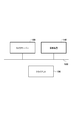
- FIG. 1 is a diagram showing a configuration of an imaging system (monitoring system) of the present embodiment.
- the imaging system (monitoring system) includes a camera server 100, a client 120, and an imaging device 140.
- the camera server 100, the client 120, and the imaging device 140 are connected to each other via the network 130.
- the camera server 100 can distribute the image acquired from the imaging device 140 via the network 130.
- the client 120 can access the camera server 100 and control image quality parameters such as pan / tilt / zoom, focus, and exposure while acquiring images, and can perform preset setting.
- image quality parameters such as pan / tilt / zoom, focus, and exposure while acquiring images, and can perform preset setting.
- one camera server is used for the sake of simplification, but two or more camera servers may be used.
- the network 130 can be composed of a plurality of routers, switches, cables, and the like that satisfy a communication standard such as Ethernet (registered trademark).
- a communication standard such as Ethernet (registered trademark).
- the communication standard, scale, and configuration of the network 130 are not limited as long as communication between the camera server 100 and the client 120 can be performed without any problem.
- the network 130 includes the Internet, a LAN (Local Area Network), a WAN (Wide Area Network), and the like.
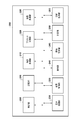
- FIG. 3 is a diagram illustrating a hardware configuration of the camera server 100 and the imaging device 140.
- the camera server 100 includes a CPU (Central Processing Unit) 300, a primary storage device 310, a secondary storage device 320, and a network I / F 305.
- the CPU 300, the primary storage device 310, the secondary storage device 320, and the network I / F (Interface) 305 are connected to the internal bus 302 and can perform data communication with each other.
- the primary storage device 310 is a high-speed writable storage device represented by, for example, a RAM (Random Access Memory), and is loaded with an OS (Operating System), various processing programs, and various data. It can also be used as a work area.
- OS Operating System
- the secondary storage device 320 is a non-volatile storage device represented by a flexible disk device (FDD), a hard disk device (HDD), a flash memory, a CD-ROM drive, etc., and the OS, various programs, and various data are persistent. In addition to being used as a general storage area, it can also be used as a storage area for various short-term data.
- the network I / F 305 functions as a communication unit for connecting to the network 130, and realizes communication with the imaging device 140, the client 120, and the like via a communication medium such as Ethernet (registered trademark).
- an image capture I / F 330, a pan head control I / F 340, a network I / F 360, and an audio input I / F 390 are connected to each other via an internal bus 303.
- the image capture I / F 330 is connected to an image sensor 370 configured by, for example, a CCD or CMOS that functions as an imaging unit.
- the image data acquired from the image sensor 370 via the image capture I / F 330 is processed according to the image quality parameter, converted and compressed into a predetermined format, transferred to the camera server 100 via the network 130, and a primary storage device. Stored in 310.
- the lens / head 380 is connected to the pan head control I / F 340 that controls the change of the photographing position and the photographing angle of view, and the photographing position and the photographing angle of view are changed by controlling the pan / tilt / zoom mechanism.
- the network I / F 360 functions as a communication unit for connecting to the network 130 and realizes communication with the camera server 100, the client 120, and the like via a communication medium such as Ethernet (registered trademark).
- the sound data collected from the sound input device 391 (sound collecting unit) such as a microphone is input to the sound input I / F 390, and the sound input I / F 390 converts the input sound data into digital data.
- the converted audio data is transferred to the camera server 100 via the network 130 and stored in the primary storage device 310.
- control device 200 is configured inside the camera server 100 as an example.
- the gist of the present invention is not limited to this example, and the control device 200 is, for example, a camera.
- the server 100, the client 120, and the imaging device 140 can be arranged inside.
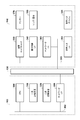
- FIG. 2 is a diagram illustrating a functional configuration of the control device 200.
- an OS which is a basic program for controlling the entire apparatus, and various processing programs are loaded in the storage unit 210
- each functional configuration is realized by executing the OS and the various processing programs by the CPU.
- the imaging processing unit 215 acquires image data captured by the image sensor 370 of the imaging device 140 via the image capture I / F 330, and performs image processing and encoding processing according to the image quality parameter set from the preset control unit 220. I do.
- the preset control unit 220 controls the shooting position via the pan head control I / F 340 in accordance with the preset position, preset tour setting, or preset movement setting by event under the control of the control unit 205.
- the lens / head 380 for changing the shooting angle of view and the pan / tilt / zoom positions are controlled.
- the preset control unit 220 sets image quality parameters such as focus, exposure, white balance, day / night, smart shade correction, noise reduction, sharpness, and color density stored as a preset in the imaging processing unit 215.
- the communication processing unit 225 transmits image data stored in the primary storage unit 113 to various clients via the network 130 in response to requests from various clients. Further, the communication processing unit 225 transfers preset positions and preset patrol settings sent from various clients, preset movement settings by events, pan / tilt / zoom positions and image quality parameters to the preset control unit 220, and also receives the received presets. Settings, preset tour settings, and the like are stored in the secondary storage device 320.
- the voice processing unit 230 acquires the voice data collected from the voice input device 391 and compares it with the threshold value stored in the secondary storage device 320 of the camera server 100. If the acquired audio data is greater than or equal to the threshold value by comparing the audio data with the threshold value, the audio processing unit 230 notifies the preset control unit 220 of a comparison result indicating that the acquired audio data is greater than or equal to the threshold value. By notifying the preset control unit 220 of the comparison result, preset control at the time of sound volume detection is executed. Further, the sound processing unit 230 manages the setting and state of the sound volume detection by holding the sound volume detection setting flag and the sound volume detection state flag in the storage unit 210 or the primary storage device 310 based on the acquired sound data. To do.
- the cooperation between the processing units uses functions provided by the OS as necessary.
- the detection unit 240 detects the volume of sound collected by a sound input device 391 (sound collection unit) such as a microphone.
- the control unit 205 performs first control to change the angle of view in the image sensor 370 (imaging unit) so as to capture an image of a predetermined angle of view when the detection unit 240 detects a volume that is equal to or higher than the threshold, and designation
- an instruction for causing the image sensor 370 (imaging unit) to capture an image of the angle of view that has been input is input, it is possible to execute a second control that changes the angle of view in accordance with the instruction.
- control unit 205 prioritizes the second control over the first control when the volume detection state when the volume higher than the threshold is detected is not changed.
- control can be executed. For example, when the detection unit 240 detects a sound volume equal to or higher than a predetermined threshold, the control unit 205 prioritizes the first control over the second control in a state before the execution of the first control is completed. To do.
- the control unit 205 has not changed the volume detection state in which the detection unit 240 has detected a volume equal to or higher than the threshold before the first control is completed. In this case, the second control is prioritized over the first control.
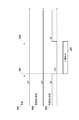
- FIG. 4 is a timing chart of the sound volume and sound processing unit 230.
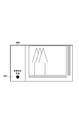
- FIG. 5 is a diagram illustrating an example of a UI screen on the client 120.
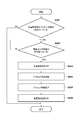
- FIG. 6 is a flowchart showing a flow of processing for performing the preset movement when the volume is detected.
- the horizontal axis represents time
- the vertical axis represents the state corresponding to each item of the volume 401, the volume detection state 402, and the volume detection setting 403 as ON / OFF.
- the state holding unit 255 holds the volume detection state (ON / OFF) of the detection unit 240 based on the detection result of the detection unit 240.
- the detection setting unit 245 performs a valid setting for executing the sound volume detection by the detection unit 240 or an invalid setting for not performing the sound volume detection by the detection unit 240.
- the volume 401 represents the state of the volume rang around the camera server 100. The state where the volume is less than the threshold for detecting the volume is turned off, and the state where the volume is greater than or equal to the threshold for detecting the volume is turned on.
- a sound volume detection state 402 held by the state holding unit 255 represents a sound volume detection state. ON indicates a state where the volume is being detected, and OFF indicates a state where the volume is not being detected.
- the sound processing unit 230 stores a flag indicating the sound volume detection state in the storage unit 210 or the primary storage device 310. The state of volume detection can be managed by a flag stored in the storage unit 210 or the primary storage device 310.
- the communication processing unit 225 can transmit a flag stored in the primary storage unit 113 to various clients via the network 130 in response to requests from various clients.
- the client 120 can control the display of the UI screen based on the flag acquired from the camera server 100.
- an identification display (icon 601) indicating whether or not the volume is being detected is displayed on the UI screen (600) of the client 120.
- the display of the identification display (icon 601) such as the display color and blinking, it is possible to identify and display whether the volume is being detected.
- the volume detection setting 403 set by the detection setting unit 245 indicates the state of volume detection setting. ON indicates that volume detection is performed (valid setting), and OFF indicates that volume detection is not performed even when a volume is received (invalid setting).
- the voice processing unit 230 stores a flag indicating the setting state of the volume detection in the storage unit 210 or the primary storage device 310. The state of the volume detection setting can be managed by the flag stored in the storage unit 210 or the primary storage device 310.
- T0 indicates the time in the initial state
- timing 404 indicates the timing at time T1
- timing 405 indicates the timing at time T2
- timing 406 indicates the timing at time T3.
- 4 shows that the imaging apparatus 140 is in the pan / tilt operation (PT operation) 407 from time T2 to time T3.
- step S ⁇ b> 601 the sound processing unit 230 acquires information from the storage unit 210 or the primary storage device 310 as to whether or not the preset movement at the time of detecting the volume is set.
- the preset movement at the time of detecting the volume is not set (S601-No)
- this process ends.
- the volume detection setting 403 is initially set to ON and the preset movement setting at the time of volume detection is also valid. If preset movement at the time of volume detection is set (S601-Yes), the process proceeds to step S602.
- step S602 the sound processing unit 230 determines whether or not a sound having a volume equal to or higher than a specific threshold is sounding around the camera server 100.
- step S602 when a sound having a volume higher than the threshold is not sounded (S602-No), the process stands by until a sound having a volume higher than the threshold is sounded.
- the volume 401 in the initial state, the volume 401 is in a state (OFF) below the threshold. Therefore, the sound volume detection state 402 is also a state where the sound volume is not detected (OFF).
- the sound processing unit 230 detects a sound volume equal to or higher than the threshold value at the timing 404 in FIG. 4, the sound volume detection state 402 is switched from OFF to ON. In FIG. 4, it is assumed that a sound equal to or higher than the threshold value is sounded at timing 404 and continues to sound after that.
- step S602 when a sound having a volume equal to or higher than the threshold value is sounded (S602-Yes), the voice processing unit 230 notifies the preset control unit 220 of a comparison result indicating that the acquired voice data is equal to or higher than the threshold value.
- the preset control unit 220 performs preset control at the time of volume detection under the control of the control unit 205, and moves the imaging device 140 to a predetermined position.
- the sound volume detection setting 403 is not changed at the timing 404 and remains ON.
- the audio processing unit 230 sets the volume detection setting 403 even if the volume is received from (ON) indicating that volume detection is to be performed. It switches to (OFF) which shows not performing a detection (S603). This is to prevent the built-in microphone from picking up pan and tilt operation sounds and causing the volume detection to malfunction.
- the setting of the volume detection state 402 is also switched from ON to OFF as the setting of the volume detection setting 403 is switched from ON to OFF.
- the sound processing unit 230 when starting the pan / tilt operation, causes the sound volume detection setting 403 to be turned on. Even when switched to OFF, the sound volume detection state 402 is controlled so as not to switch the state.
- the identification display (icon 601) on the UI screen (600) of the client 120 maintains the display indicating that the volume detection state is the ON state. It will be.
- step S604 under the control of the preset control unit 220, a pan / tilt operation (PT operation) is started at timing 405 (time T2), and the preset control unit 220 preset moves the imaging device 140 to a predetermined position. .
- PT operation pan / tilt operation
- the audio processing unit 230 When the pan / tilt operation ends at timing 406 (time T3) in FIG. 4 (S605), the audio processing unit 230 returns the setting of the volume detection setting 403 to ON in step S606.
- the sound processing unit 230 returns from the state (OFF) indicating that the sound volume detection is not performed even when the sound volume is received (ON) to the state (ON) indicating that the sound volume detection is performed, and the processing in FIG.
- the volume detection state 402 is also switched from OFF to ON at the timing when the volume detection setting 403 is switched from OFF to ON. Therefore, the voice processing unit 230 notifies the preset control unit 220 of the preset movement again, and the preset operation has started.
- the preset movement continues while the sound continues to sound, and manual camera control cannot be performed.
- the volume detection state 402 remains ON and the audio processing unit 230 notifies the preset control unit 220 of the preset movement. Not performed. For this reason, even in a situation where sound continues to sound around the camera server 100, the preset movement is not executed continuously after the preset movement is performed for the first time.
- the manual camera Control can be performed. According to the configuration of the present embodiment, it is possible to avoid malfunction due to volume detection and perform stable imaging control.
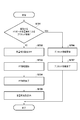
- FIG. 7 is a flowchart for explaining the flow of processing during pan / tilt operation.
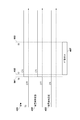
- 8 and 9 are timing charts of the sound volume and sound processing unit 230 in the second embodiment.
- the audio processing unit 230 determines whether the trigger for the pan / tilt operation is due to the preset movement when the volume is detected.
- the determination unit 250 moves the imaging unit to a preset position based on the detection result of the volume by the detection unit 240 and the setting of the detection setting unit 245, and performs the first control. It is determined whether or not to change the angle of view.
- FIG. 8 shows a timing chart of the sound volume and sound processing unit when the pan / tilt operation trigger is other than sound volume detection.
- the horizontal axis represents time
- the vertical axis represents the state corresponding to each item of the volume 401, the volume detection state 402, and the volume detection setting 403. / OFF.
- timing 801 indicates the timing at time T4
- timing 802 indicates the timing at time T5.
- the conditions for pan / tilt operation that are not preset movements based on volume detection are the following three cases.
- the volume detection setting 403 is in a state (ON) indicating that volume detection is performed, and the volume 401 around the camera server 100 is in a state below the threshold (OFF).
- the second case is a case where the sound volume detection setting 403 is in a state (OFF) indicating that sound volume detection is not performed even if a sound volume is received from the beginning.
- the third case is both cases (when the volume detection setting 403 is OFF from the beginning and the volume 401 around the camera server 100 is below the threshold (OFF)).
- the sound volume detection setting 403 is ON indicating that sound volume detection is performed, but the sound volume 401 is in a state indicating a state below the threshold value.
- the case of (OFF) is shown.
- step S701 if the event that triggers the pan / tilt operation is not a preset movement at the time of volume detection (S701-No), the process proceeds to step S702.
- the detection setting unit 245 of the control device 200 performs invalid setting (OFF) in which the volume detection is not performed when the angle of view is changed by the first control without detecting the volume, and the detection setting unit 245 When the change of the angle of view by the first control is completed, the effective setting for executing the sound volume detection is set (ON).
- the state holding unit 255 holds the volume detection state (in FIG. 8, holds the OFF state).
- step S702 the audio processing unit 230 receives the volume from the volume detection setting 403 (ON) indicating that the volume detection is to be performed before starting the pan / tilt operation at the timing 801 (time T4). Is also switched to (OFF) indicating that volume detection is not performed.
- the event that triggers step S702 includes, for example, angle of view control from the client 120.
- step S ⁇ b> 703 the change control unit 235 controls the operation of the lens / head 380 via the head control I / F 340 under the control of the control unit 205.
- a pan / tilt operation PT operation
- the sound volume detection does not malfunction because the sound volume detection setting 403 is OFF.
- step S704 the pan / tilt movement ends at timing 802 (time T5) after timing 801 (time T4).
- step S705 the sound processing unit 230 returns the sound volume detection setting 403 from (OFF) indicating that sound volume detection is not performed even when the sound volume is received to (ON) indicating that sound volume detection is performed, This process ends.
- the sound processing unit 230 since the sound volume 401 is in a state (OFF) indicating a state below the threshold, the sound processing unit 230 does not detect the sound volume. Therefore, the preset movement is not executed again continuously.
- the state where the volume 401 is less than the threshold (OFF) is exemplified. However, when the setting of the volume detection setting 403 is OFF, the sound processing unit 230 does not always detect the volume. Preset movement is not executed.
- step S701 determines whether the pan / tilt operation trigger is a preset movement at the time of volume detection (S701-Yes).
- the process proceeds to step S706.
- the detection setting unit 245 starts the change of the angle of view by the first control and ends the change of the angle of view by the first control.
- the effective setting for executing the volume detection is set (ON).
- the state holding unit 255 holds the volume detection state even when the detection unit 240 continues to detect a volume equal to or higher than the predetermined threshold (in the case of FIG. 9, the state is held ON). Specific processing will be described below.
- FIG. 9 is a timing chart of the sound volume and the sound processing unit when the pan / tilt operation trigger is sound volume detection.
- the horizontal axis represents time
- the vertical axis represents the state corresponding to each item of the volume 401, the volume detection state 402, and the volume detection setting 403. / OFF.
- timing 901 indicates the timing at time T6
- timing 902 indicates the timing at time T7
- timing 903 indicates the timing at time T8.
- the sound processing unit 230 detects a sound volume that is equal to or higher than the threshold value, so the sound volume detection state 402 switches from a sound volume not detected state (OFF) to a sound volume detected state (ON). . Since the volume detection state 402 has been switched from OFF to ON, the audio processing unit 230 notifies the preset control unit 220 of the preset movement.
- the audio processing unit 230 notifies the preset control unit 220 of a comparison result indicating that the acquired audio data is greater than or equal to the threshold value.
- the preset control unit 220 performs preset control at the time of volume detection under the control of the control unit 205, and moves the imaging device 140 to a predetermined position.
- the imaging apparatus 140 starts preset movement to a predetermined position.
- the sound processing unit 230 switches the sound volume detection setting 403 to OFF when starting the pan / tilt operation.
- the sound volume detection setting 403 is set. Is not switched off. Also, the sound volume detection state 402 remains in the ON state.
- the volume detection setting 403 remains ON, so the volume detection state 402 remains ON and remains unchanged. Since there is no change in the state of the sound volume detection state 402, the sound processing unit 230 does not notify the preset control unit 220 of the preset movement. Therefore, even in a situation where sound continues to sound around the camera server 100, the preset movement is not continuously executed after the preset movement is performed for the first time.
- the present invention supplies a program that realizes one or more functions of the above-described embodiments to a system or apparatus via a network or a storage medium, and one or more processors in a computer of the system or apparatus read and execute the program This process can be realized. It can also be realized by a circuit (for example, ASIC) that realizes one or more functions.
- a circuit for example, ASIC
- 215 Imaging processing unit
- 220 Preset control unit
- 225 Communication processing unit
- 230 Audio processing unit
Landscapes
- Engineering & Computer Science (AREA)
- Physics & Mathematics (AREA)
- Multimedia (AREA)
- General Physics & Mathematics (AREA)
- Signal Processing (AREA)
- Theoretical Computer Science (AREA)
- Health & Medical Sciences (AREA)
- General Health & Medical Sciences (AREA)
- Audiology, Speech & Language Pathology (AREA)
- General Engineering & Computer Science (AREA)
- Human Computer Interaction (AREA)
- Otolaryngology (AREA)
- Acoustics & Sound (AREA)
- Studio Devices (AREA)
- Accessories Of Cameras (AREA)
Priority Applications (2)
| Application Number | Priority Date | Filing Date | Title |
|---|---|---|---|
| CN201780036028.2A CN109314747B (zh) | 2016-06-10 | 2017-04-18 | 控制设备、通信设备、控制方法和存储介质 |
| US16/205,818 US10863100B2 (en) | 2016-06-10 | 2018-11-30 | Control apparatus, communication apparatus, control method, and storage medium |
Applications Claiming Priority (2)
| Application Number | Priority Date | Filing Date | Title |
|---|---|---|---|
| JP2016-116458 | 2016-06-10 | ||
| JP2016116458A JP6771959B2 (ja) | 2016-06-10 | 2016-06-10 | 制御装置、通信装置、制御方法及びプログラム |
Related Child Applications (1)
| Application Number | Title | Priority Date | Filing Date |
|---|---|---|---|
| US16/205,818 Continuation US10863100B2 (en) | 2016-06-10 | 2018-11-30 | Control apparatus, communication apparatus, control method, and storage medium |
Publications (1)
| Publication Number | Publication Date |
|---|---|
| WO2017212796A1 true WO2017212796A1 (ja) | 2017-12-14 |
Family
ID=60577719
Family Applications (1)
| Application Number | Title | Priority Date | Filing Date |
|---|---|---|---|
| PCT/JP2017/015588 Ceased WO2017212796A1 (ja) | 2016-06-10 | 2017-04-18 | 制御装置、通信装置、制御方法及びプログラム |
Country Status (4)
| Country | Link |
|---|---|
| US (1) | US10863100B2 (enExample) |
| JP (1) | JP6771959B2 (enExample) |
| CN (1) | CN109314747B (enExample) |
| WO (1) | WO2017212796A1 (enExample) |
Cited By (1)
| Publication number | Priority date | Publication date | Assignee | Title |
|---|---|---|---|---|
| WO2020034207A1 (en) | 2018-08-17 | 2020-02-20 | SZ DJI Technology Co., Ltd. | Photographing control method and controller |
Families Citing this family (1)
| Publication number | Priority date | Publication date | Assignee | Title |
|---|---|---|---|---|
| CN119865697A (zh) * | 2024-11-27 | 2025-04-22 | 荣耀终端股份有限公司 | 一种降噪方法和电子设备 |
Citations (2)
| Publication number | Priority date | Publication date | Assignee | Title |
|---|---|---|---|---|
| JP2004336460A (ja) * | 2003-05-08 | 2004-11-25 | Minolta Co Ltd | 撮像装置およびその制御方法 |
| JP2008219227A (ja) * | 2007-03-01 | 2008-09-18 | Oki Electric Ind Co Ltd | 映像監視システムおよび映像監視方法 |
Family Cites Families (9)
| Publication number | Priority date | Publication date | Assignee | Title |
|---|---|---|---|---|
| JPH0983856A (ja) * | 1995-09-07 | 1997-03-28 | Nippon Telegr & Teleph Corp <Ntt> | インテリジェントカメラ装置 |
| JP2000092368A (ja) * | 1998-09-09 | 2000-03-31 | Canon Inc | カメラ制御装置及びコンピュータ読み取り可能な記憶媒体 |
| TWI235358B (en) * | 2003-11-21 | 2005-07-01 | Acer Inc | Interactive speech method and system thereof |
| JP2005277845A (ja) * | 2004-03-25 | 2005-10-06 | Sony Corp | 撮影制御装置 |
| JP2008124654A (ja) * | 2006-11-09 | 2008-05-29 | Fujinon Corp | リモコン雲台システム |
| JP5495612B2 (ja) * | 2008-04-23 | 2014-05-21 | キヤノン株式会社 | カメラ制御装置及び方法 |
| CN101610360A (zh) * | 2008-06-19 | 2009-12-23 | 鸿富锦精密工业(深圳)有限公司 | 自动追踪声源的摄像装置 |
| CN101771814A (zh) * | 2009-12-29 | 2010-07-07 | 天津市亚安科技电子有限公司 | 具有声音识别定位功能的云台摄像机 |
| CN103901782B (zh) * | 2012-12-25 | 2017-08-29 | 联想(北京)有限公司 | 一种声控方法、电子设备及声控装置 |
-
2016
- 2016-06-10 JP JP2016116458A patent/JP6771959B2/ja active Active
-
2017
- 2017-04-18 WO PCT/JP2017/015588 patent/WO2017212796A1/ja not_active Ceased
- 2017-04-18 CN CN201780036028.2A patent/CN109314747B/zh active Active
-
2018
- 2018-11-30 US US16/205,818 patent/US10863100B2/en active Active
Patent Citations (2)
| Publication number | Priority date | Publication date | Assignee | Title |
|---|---|---|---|---|
| JP2004336460A (ja) * | 2003-05-08 | 2004-11-25 | Minolta Co Ltd | 撮像装置およびその制御方法 |
| JP2008219227A (ja) * | 2007-03-01 | 2008-09-18 | Oki Electric Ind Co Ltd | 映像監視システムおよび映像監視方法 |
Cited By (3)
| Publication number | Priority date | Publication date | Assignee | Title |
|---|---|---|---|---|
| WO2020034207A1 (en) | 2018-08-17 | 2020-02-20 | SZ DJI Technology Co., Ltd. | Photographing control method and controller |
| EP3711284A4 (en) * | 2018-08-17 | 2020-12-16 | SZ DJI Technology Co., Ltd. | PHOTOGRAPHIC CONTROL PROCEDURE AND CONTROL |
| US11388343B2 (en) | 2018-08-17 | 2022-07-12 | SZ DJI Technology Co., Ltd. | Photographing control method and controller with target localization based on sound detectors |
Also Published As
| Publication number | Publication date |
|---|---|
| JP6771959B2 (ja) | 2020-10-21 |
| JP2017220900A (ja) | 2017-12-14 |
| US20190098222A1 (en) | 2019-03-28 |
| CN109314747B (zh) | 2021-07-23 |
| CN109314747A (zh) | 2019-02-05 |
| US10863100B2 (en) | 2020-12-08 |
Similar Documents
| Publication | Publication Date | Title |
|---|---|---|
| CN101415076B (zh) | 构图判定设备、构图判定方法 | |
| JP6786378B2 (ja) | 情報処理装置、情報処理方法及びプログラム | |
| JP5991514B2 (ja) | 撮像装置及び撮像システム | |
| KR102427095B1 (ko) | 화상 처리장치, 정보 처리장치, 정보 처리방법, 및 기록매체 | |
| JP2017212682A (ja) | 画像出力装置、画像出力方法及びプログラム | |
| JP2008219227A (ja) | 映像監視システムおよび映像監視方法 | |
| US10462346B2 (en) | Control apparatus, control method, and recording medium | |
| JP5374080B2 (ja) | 撮影装置、その制御方法及びコンピュータプログラム | |
| JP5703788B2 (ja) | 撮像装置、画像処理装置、画像処理プログラム | |
| JP2016058984A (ja) | 監視システム、及びその制御方法 | |
| JP6771959B2 (ja) | 制御装置、通信装置、制御方法及びプログラム | |
| JP4898407B2 (ja) | 通信装置 | |
| JP2012015660A (ja) | 撮像装置及び撮像方法 | |
| JP7064546B2 (ja) | 制御装置、制御方法及びプログラム | |
| JP2016148832A (ja) | カメラ本体及び撮像装置 | |
| JP7746114B2 (ja) | 画像処理装置、画像処理方法、画像処理システム、およびプログラム | |
| JP2012242970A (ja) | 画像処理装置及びその制御方法 | |
| JP2019149718A (ja) | 撮像装置およびその制御方法、監視システム | |
| JP7471251B2 (ja) | 電動ズームカメラ及びその制御方法 | |
| JP6362090B2 (ja) | ネットワークカメラのプリセット位置の表示方法 | |
| JP7753057B2 (ja) | 撮像装置 | |
| JP2025182072A (ja) | 情報処理装置、撮像装置の制御方法及びプログラム | |
| JP2014007468A (ja) | 監視カメラシステム及び監視カメラ | |
| JP2012085125A (ja) | ネットワークカメラシステム、サーバ及びその制御方法、プログラム | |
| JP2019134210A (ja) | 撮像装置およびその制御方法 |
Legal Events
| Date | Code | Title | Description |
|---|---|---|---|
| 121 | Ep: the epo has been informed by wipo that ep was designated in this application |
Ref document number: 17809978 Country of ref document: EP Kind code of ref document: A1 |
|
| NENP | Non-entry into the national phase |
Ref country code: DE |
|
| 122 | Ep: pct application non-entry in european phase |
Ref document number: 17809978 Country of ref document: EP Kind code of ref document: A1 |