WO2017159100A1 - ニトロキシドラジカルを含有する新規液晶性化合物 - Google Patents
ニトロキシドラジカルを含有する新規液晶性化合物 Download PDFInfo
- Publication number
- WO2017159100A1 WO2017159100A1 PCT/JP2017/003741 JP2017003741W WO2017159100A1 WO 2017159100 A1 WO2017159100 A1 WO 2017159100A1 JP 2017003741 W JP2017003741 W JP 2017003741W WO 2017159100 A1 WO2017159100 A1 WO 2017159100A1
- Authority
- WO
- WIPO (PCT)
- Prior art keywords
- liquid crystal
- mmol
- aqueous solution
- compound
- present
- Prior art date
- Legal status (The legal status is an assumption and is not a legal conclusion. Google has not performed a legal analysis and makes no representation as to the accuracy of the status listed.)
- Ceased
Links
Images



Classifications
-
- A—HUMAN NECESSITIES
- A61—MEDICAL OR VETERINARY SCIENCE; HYGIENE
- A61K—PREPARATIONS FOR MEDICAL, DENTAL OR TOILETRY PURPOSES
- A61K9/00—Medicinal preparations characterised by special physical form
- A61K9/48—Preparations in capsules, e.g. of gelatin, of chocolate
- A61K9/50—Microcapsules having a gas, liquid or semi-solid filling; Solid microparticles or pellets surrounded by a distinct coating layer, e.g. coated microspheres, coated drug crystals
-
- A—HUMAN NECESSITIES
- A61—MEDICAL OR VETERINARY SCIENCE; HYGIENE
- A61K—PREPARATIONS FOR MEDICAL, DENTAL OR TOILETRY PURPOSES
- A61K47/00—Medicinal preparations characterised by the non-active ingredients used, e.g. carriers or inert additives; Targeting or modifying agents chemically bound to the active ingredient
- A61K47/06—Organic compounds, e.g. natural or synthetic hydrocarbons, polyolefins, mineral oil, petrolatum or ozokerite
- A61K47/22—Heterocyclic compounds, e.g. ascorbic acid, tocopherol or pyrrolidones
-
- C—CHEMISTRY; METALLURGY
- C07—ORGANIC CHEMISTRY
- C07D—HETEROCYCLIC COMPOUNDS
- C07D207/00—Heterocyclic compounds containing five-membered rings not condensed with other rings, with one nitrogen atom as the only ring hetero atom
- C07D207/46—Heterocyclic compounds containing five-membered rings not condensed with other rings, with one nitrogen atom as the only ring hetero atom with hetero atoms directly attached to the ring nitrogen atom
-
- G—PHYSICS
- G01—MEASURING; TESTING
- G01K—MEASURING TEMPERATURE; MEASURING QUANTITY OF HEAT; THERMALLY-SENSITIVE ELEMENTS NOT OTHERWISE PROVIDED FOR
- G01K11/00—Measuring temperature based upon physical or chemical changes not covered by groups G01K3/00, G01K5/00, G01K7/00 or G01K9/00
- G01K11/12—Measuring temperature based upon physical or chemical changes not covered by groups G01K3/00, G01K5/00, G01K7/00 or G01K9/00 using changes in colour, translucency or reflectance
Definitions
- the present invention relates to a novel liquid crystal compound, particularly to a novel liquid crystal compound containing a nitroxide radical.
- nitroxide radical is a paramagnetic stable organic compound, it is expected to be applied as a molecular assembly capable of controlling movement (magnetic induction) with a magnet.
- nitroxide radical liquid crystals have been studied for application to drug delivery systems (DDS) due to their high solubility and fluidity (Patent Documents 1 and 2).
- DDS drug delivery systems
- Patent Documents 1 and 2 When applied to a drug delivery system, it is necessary to exhibit a liquid crystal phase in the body temperature range for use in the body.
- the present invention has been made in view of the above circumstances, and an object thereof is to provide a novel compound exhibiting liquid crystallinity in the body temperature range and its use.
- the present invention relates to a novel compound represented by the following formula [I].
- X is a halogen atom or a halogenated methyl group
- n represents an integer of 1 to 4
- p represents an integer of 4 to 18
- q represents an integer of 4 to 18
- m is 0 or 1
- R 1 represents a C1-C4 lower alkyl group
- R 2 represents a C1-C4 lower alkyl group.
- the present invention provides a novel compound, specifically a novel liquid crystalline compound, and more specifically a novel liquid crystalline compound containing a nitroxide radical.
- the novel compound of the present invention exhibits liquid crystallinity even in a low temperature range, particularly in the body temperature range.
- the novel compound of the present invention can be magnetically induced, and can be magnetically induced even in a low temperature range, particularly in the body temperature range.
- the cholesteric liquid crystal formed by the novel compound of the present invention exhibits a temperature-dependent structural color.
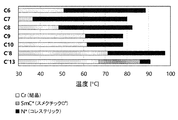
- the phase change with temperature of a liquid crystalline compound is shown.
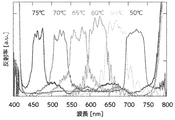
- the optical characteristics of the liquid crystal compound depending on the temperature are shown.
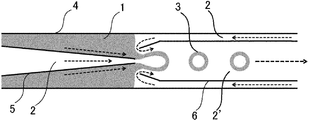
- a schematic sectional view of a microdevice is shown.
- the transmission optical microscope photograph which shows the particle structure of a CLC capsule.
- the graph which shows the relationship between the flow rate at the time of manufacture, and the size of the manufactured CLC capsule.
- the present invention first provides a novel compound represented by the following formula [I].
- the present invention also provides an aggregate exhibiting cholesteric liquid crystal properties comprising a compound containing a nitroxide radical represented by the formula [I].
- X may be the same or different.
- X represents a halogen atom, specifically F, Cl, Br or I.
- Preferred halogen atoms are F, Cl, more preferably F.
- X may be methyl halide.
- the halogen of methyl halide is F, Cl, Br or I. Preferred halogens are F, Cl, more preferably F.
- the methyl halide is preferably a mono-, di- or tri-halogenated, especially a mono-, di- or trifluoromethyl group, in particular a trifluoromethyl group (perfluoromethyl group).
- P represents an integer of 4 to 18, preferably 4 to 14, more preferably 4 to 12, still more preferably 6 to 12, still more preferably 6 to 10, and still more preferably 7 to 9. Particularly preferred p is 8.
- Q represents an integer of 4 to 18, preferably 4 to 14, more preferably 4 to 12, still more preferably 6 to 12, and still more preferably 6 to 10. Particularly preferred q is 7.
- M is 0 or 1, preferably 1.
- the — (O) m C q H 2q + 1 group is in the meta or para position, preferably in the para position.
- R 1 is a C1-C4 lower alkyl group, preferably a C1-C3, more preferably a C1-C2 alkyl group. Particularly preferred R 1 is a methyl group.
- R 2 is a C1-C4 lower alkyl group, preferably a C1-C3, more preferably a C1-C2 alkyl group. Particularly preferred R 2 is a methyl group.
- the phenyl group (or alkyl group) bonded to the two asymmetric centers of the doxyl group (2,5-dimethylpyrrolidyloxy group) is preferably in a trans configuration.
- a phenyl group (or alkyl group) bonded to two asymmetric centers of the doxyl group includes a trans (S, S) isomer, a trans (R, R) isomer, a cis (S, R) isomer, and a cis (R, R, R).
- S Body exists.
- the phenyl group (or alkyl group) bonded to the two asymmetric centers of the doxyl group is a trans ( ⁇ ) isomer, a trans (S, S) isomer, or a trans (R, R) isomer.
- a trans (S, S) isomer or a trans (R, R) isomer is preferable, and a higher ee (enantiomeric excess) is more preferable.
- Each isomer can be fractionated by optical resolution with a chiral fractionation column.
- rod-like liquid crystals may exhibit liquid crystallinity even when a cyclohexane ring is used instead of a benzene ring, in formula [I], — (O) m C q H
- a structure in which a cyclohexane ring is used instead of the benzene ring to which the 2q + 1 group is bonded is also included in the present invention.
- the novel compound containing a nitroxide radical represented by the formula [I] exhibits cholesteric liquid crystallinity at a low temperature range, and particularly exhibits cholesteric liquid crystallinity within a body temperature range.
- Body temperature range means a temperature range of 35 ° C. to 40 ° C.
- “showing cholesteric liquid crystallinity in a low temperature range” means “heating the compound (crystal) represented by the formula [I] of the present invention from 20 ° C. at a heating rate of 5 ° C./min. It starts to show a cholesteric liquid crystal phase in a body temperature range, for example, 36 ° C. ”. “Begin to show a cholesteric liquid crystal phase” can be confirmed by observation with a polarizing microscope and differential scanning calorimetry.
- the “cholesteric liquid crystal phase” means a “nematic liquid crystal phase having a helical structure” that is generally understood.
- q is 6 to 10, preferably 6 to 8, and more preferably 7.
- the following compound Starts showing a cholesteric liquid crystal phase at a temperature of about 36 ° C., and shows a cholesteric liquid crystal phase up to about 80 ° C.
- the novel liquid crystalline compound containing a nitroxide radical represented by the formula [I] has magnetic properties in a liquid crystal state.
- the magnetic characteristic refers to a characteristic that moves with a permanent magnet. This characteristic is not observed in the solid state but appears only in the liquid crystal state.
- the liquid crystalline compound of the present invention can be dispersed as an aggregate of the liquid crystalline compound (including liquid crystal droplets, liquid crystal particles, and liquid crystal capsules) in an aqueous solution in the body temperature range.
- an aqueous medium pure water, physiological saline, a surfactant solution, or the like can be used.
- the characteristics such as the form, particle size, and concentration of the dispersion of the liquid crystal compound aggregate may be appropriately selected according to the application.
- the liquid crystalline compound of the present invention exhibits a cholesteric liquid crystal phase in the body temperature region, it can be used as a carrier for a drug delivery system (DDS) by incorporating a desired drug in the aggregate of liquid crystalline compounds.
- DDS drug delivery system
- the applicable drug is not particularly limited as long as the drug can be dissolved in a solvent in which the liquid crystal compound of the present invention can be dissolved.
- the nitroxide radical has antioxidant and anti-reducing properties, it can be said that the nitroxide radical is suitable for application to drugs for which DDS needs to be protected from oxidation and reduction.
- An assembly of liquid crystal compounds is prepared by dissolving the liquid crystal compound of the present invention in a volatile solvent that does not react with the liquid crystal compound such as ether, lower alcohols such as methanol, ethanol, and the like. It can be obtained by dispersing on or in an insoluble liquid such as infusion or blood and removing the volatile solvent. When used as a carrier for DDS, it may be dissolved together with a liquid crystal compound and other desired compounds (drugs, etc.) and the above procedure is followed to produce an aggregate.
- specific manufacturing conditions, obtained particle diameters, and the like can be referred to the [0026] to [0030] stages in Patent Document 1. This portion is hereby incorporated as a part of this specification.
- the magnetic induction of the liquid crystalline compound of the present invention is possible, and the direct method DDS can be performed.
- the novel liquid crystalline compound containing a nitroxide radical represented by the formula [I] exhibits a temperature-dependent structural color.
- the liquid crystalline compound of the present invention has an asymmetric carbon and forms a liquid crystal phase having a helical structure.
- the liquid crystal phase having a spiral structure has a property of reflecting light corresponding to the period of the spiral and showing a temperature-dependent structural color.
- “Structural color” means light reflected in accordance with the period of the spiral structure.
- the liquid crystalline compound of the present invention can change color in the range of red to blue, for example, in the temperature range of 55 ° C. to 80 ° C. When the temperature is raised, the structural color shifts to the short wavelength side.
- the structural color is determined by adding a chiral agent such as 2,5-bis- [4 ′-(hexyloxy) phenyl-4-carbonyl] -1,4; 3,6-dianhydride-d-sorbitol. , And can be adjusted by changing the concentration, and can function outside the range of 55 ° C to 80 ° C.
- a chiral agent such as 2,5-bis- [4 ′-(hexyloxy) phenyl-4-carbonyl] -1,4; 3,6-dianhydride-d-sorbitol.
- the liquid crystalline compound of the present invention changes in color with temperature, it can be applied as a thermometer or a temperature sensor. For example, it is possible to examine the spatial distribution of the temperature by observing the color by inducing the magnetic field by using the magnetic characteristics together.
- the aggregate of the present invention is characterized by the characteristics of the compound of the present invention described above, that is, cholesteric liquid crystallinity in the low temperature region, particularly in the body temperature region, magnetic properties in the low temperature region, particularly in the body temperature region, and temperature dependence. Indicates the structural color.
- the liquid crystalline compound of the present invention can be formed in the form of a liquid crystal capsule in which water droplets are included in the liquid crystal droplets.
- the liquid crystal capsule means a liquid crystal droplet having a core / shell structure, the core is an aqueous solution, the shell covers the core, and is composed of the liquid crystalline compound of the present invention.
- the liquid crystal capsule of the present invention can exhibit the characteristics of the liquid crystal compound of the present invention and can be developed for the above-described uses. That is, liquid crystal capsules (hereinafter sometimes referred to as “CLC capsules”) can exhibit cholesteric liquid crystal characteristics in the body temperature range, and can be magnetically induced. Using these characteristics, DDS, temperature Applications can be expanded to totals.
- CLC capsules liquid crystal capsules
- DDS temperature Applications
- the CLC capsule of the present invention can be manufactured with a microfluidic device, for example.
- the microfluidic device can be used because the liquid crystalline compound of the present invention can undergo liquid crystal transition at a low body temperature range.
- Various technologies for microfluidic devices are already known, such as A. Rotem, et al. Lab Chip 12, 4263 (2012), A. S. Utada, et al. Science 308, 537 (2005).
- Known techniques, including techniques, can be applied.
- the CLC capsule of the present invention can be manufactured, for example, with a microfluidic device as shown in FIG.
- the microfluidic device shown in FIG. 3 has a configuration in which an injection pipe 5 and a recovery pipe 6 are provided in a square channel inside the prism member 4.
- the prism member 4, the injection tube 5, and the recovery tube 6 can be made of glass, for example.
- the injection tube 5 and the recovery tube 6 can be configured using, for example, a capillary.
- the CLC capsule is prepared by supplying the aqueous solution 2 from the injection tube 5 at a constant flow rate, and the liquid crystal 1 at a constant flow rate from the direction of the injection tube in the square channel, and in the opposite direction to the other injection tube in the square channel.
- the same aqueous solution 2 ′ (outer aqueous phase) is injected at a constant flow rate. Capsules are formed at the interface where the liquid crystal and the aqueous solution meet, and the CLC capsules are recovered in the recovery tube while being dispersed in the aqueous solution.
- the compound or the like can be included in a liquid crystal capsule.
- CLC capsules with different core outer diameters and shell outer diameters can be manufactured by appropriately changing and setting the diameter, flow velocity, etc. of the prism member 4, the injection tube 5 and the recovery tube 6.
- the shell outer diameter (average) can be adjusted within a range of 1 ⁇ m to 1 mm
- the core outer diameter (average) can be adjusted within a range of 1 ⁇ m to 1 mm.
- the diameter (average) is a value represented by a number average particle diameter.
- the desired aqueous solution can be used as the aqueous solution used when producing the CLC capsule.
- the solvent of the aqueous solution is water, and methanol, ethanol, propanol, isopropanol, acetone, tetrahydrofuran, dimethylformamide (DMF), dimethyl sulfoxide (DMSO) and the like can be used at a concentration that does not dissolve the liquid crystal compound of the present invention.
- the aqueous solution can contain a desired substance. For example, when used as DDS, an aqueous solution containing a predetermined amount of a predetermined drug in physiological saline can be used. The obtained dispersion of CLC capsules can be used as a DDS solution as it is.
- the CLC capsule of the present invention can be used in the body temperature range, and in particular, it can be magnetically induced by utilizing the magnetic properties of the liquid crystalline compound of the present invention, and is expected to be applied as a direct DDS to a living body. is there.
- a solvent that does not dissolve the liquid crystal compound of the present invention for example, silicone oil or fluorine oil can be used.
- a liquid crystal compound with a viscosity adjusted by adding a solvent having a low boiling point for example, acetone, propanol, isopropanol, acetone, tetrahydrofuran, etc.
- a solvent having a low boiling point for example, acetone, propanol, isopropanol, acetone, tetrahydrofuran, etc.
- the CLC capsule of the present invention can function as an omnidirectional laser by including a dye in the core or including a dye in the shell.
- the product of each stage was identified by elemental analysis (2400II model; manufactured by PerkinElmer); ESR measurement (JES-FE1XG model; manufactured by JEOL), IR (IRAffinity-1 model; manufactured by SHIMADZU), NMR (JNM -ECS400 model (manufactured by JEOL) and mass spectrum (JMS-700 model; manufactured by JEOL) were used as appropriate.
- dimethylnitrone 2 (20 mmol) that had been thoroughly dried was placed in another two-necked flask filled with N2, added with THF (10 mL), cooled to -98 ° C, and Grignard reagent 4 was added dropwise. did. After slowly raising the temperature, stirring was continued overnight at room temperature. The next day, a saturated aqueous NH 4 Cl solution (100 mL) was poured into the reaction solution, and the mixture was extracted with dichloromethane (50 mL ⁇ 3). After drying over anhydrous MgSO 4 , the solvent was distilled off.
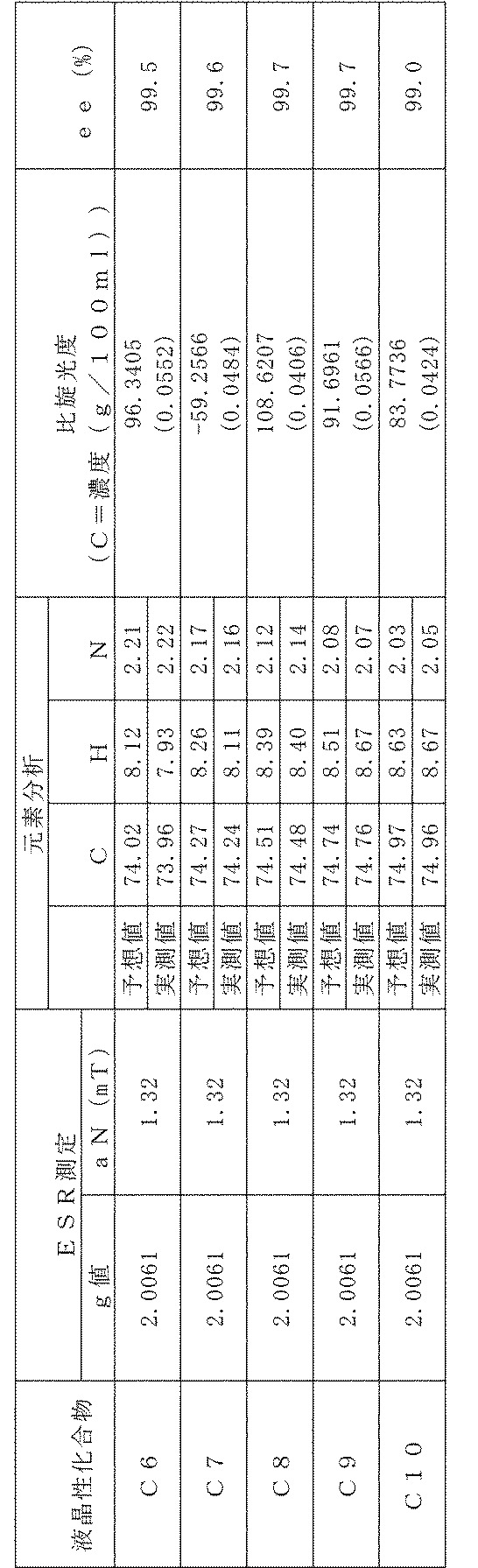
- Table 1 shows the results of elemental analysis, ESR measurement, and specific rotation (g / 100 ml) conducted to identify liquid crystalline compounds C6 to C10.
- Comparative liquid crystalline compounds The following two types of compounds were used as comparative liquid crystalline compounds. These are referred to as comparative liquid crystalline compound C8 ′ and comparative liquid crystalline compound C13 ′, respectively.
- Comparative liquid crystal compound C8 ′ (trans (S, S) form) was prepared by the method described in Angew. Chem. Int. Ed., 43, 3677-3682 (2004). Comparative liquid crystalline compound C13 ′ (trans (S, S) form) was prepared by the method described in Ferroelectrics, 343, 119-125 (2006).
- the liquid crystalline compound of the present invention exhibited a cholesteric phase at a temperature of about 36 ° C. to about 88 ° C.
- the comparative liquid crystalline compound did not exhibit a cholesteric phase unless the temperature exceeded 70 ° C. It can be seen that the liquid crystalline compound of the present invention exhibits a cholesteric phase in the body temperature range.
- Magnetic Properties of the liquid crystalline compounds C6 to C10 of the present invention were evaluated as follows. 0.4 g of each of the liquid crystal compounds C6 to C10 of the present invention was dissolved in 2 mL of ether. The obtained solution was dropped into a container (50 ° C.) filled with warm water to float the liquid crystal solution. The organic liquid crystal molecules were allowed to stand while being kept warm to evaporate the ether, thereby forming a particulate aggregate of liquid crystalline compounds on the water surface. This aggregate of liquid crystal compounds exhibited liquid crystallinity. Under an ambient temperature (20 ° C) environment, a permanent magnet with a maximum magnetic field of 0.5 Tesla was brought close to one of the aggregates dispersed on the water surface, and when the permanent magnet was moved, it was observed that the aggregate moved accordingly. It was.
- the optical properties of the liquid crystal compounds C6 to C10 of the present invention were evaluated as follows. Samples were prepared by enclosing the liquid crystalline compounds C6 to C10 of the present invention in a sandwich cell subjected to horizontal alignment treatment, and using a microscope (BX51: manufactured by Olympus) and a spectroscope (QE65 Pro: manufactured by Ocean Optics), The visible light reflection of the cholesteric liquid crystal phase was observed. The results are shown in FIG. (In the figure, “dc” indicates “° C.”.)
- a CLC capsule having a core part made of PVA polyvinyl alcohol aqueous solution and a shell part made of the liquid crystalline compound of the present invention was produced.
- the prism member 4 uses a square capillary having a square cross section with an outer piece of 1.40 mm and an inner piece of 1.00 mm.
- the injection tube 5 and the collection tube 6 have an outer diameter of 0.97 mm and an inner diameter of 0.1 mm.
- a microfluidic device (made of glass) is formed by processing using a 70 mm round capillary.
- liquid crystal compound having the following structure is used as the liquid crystal compound constituting the shell portion.
- acetone 25 wt% was added to the liquid crystalline compound of the present invention (paramagnetic liquid crystal) for the purpose of adjusting the viscosity.
- acetone By adding acetone, a phase transition to an isotropic phase is induced, and the viscosity can be easily adjusted for capsule formation.
- the added acetone can be removed to the outer aqueous phase that is contacted during capsule formation.
- a pattern derived from a molecular orientation defect structure peculiar to the liquid crystal phase was confirmed, and it was confirmed that acetone was removed (FIG. 4).
- a CLC capsule of approximately 550 ⁇ m could be produced.
- the thickness of the shell portion could be adjusted in the range of about 30 to 60 ⁇ m by adjusting the flow rate.
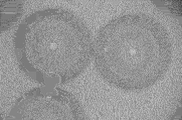
- FIG. 6 is a reflection micrograph of CLC capsules observed in an environment at 60 ° C. As can be seen from FIG. 6, since the center of the particle is colored, the CLC capsule has a structural color that depends on the periodic helical superstructure of the liquid crystal phase, that is, the periodic helical structure of the cholesteric liquid crystal. It can be seen that the selectively reflected light seen in FIG.
- Fig. 7 shows the temperature dependence of the spectrum of reflected light at the center.
- the structural color from the CLC capsule shows temperature dependence. This is due to the temperature dependence of the period of the helical superstructure of the liquid crystal constituting the shell.
- the color of the produced CLC capsule can be adjusted by temperature in the visible light range.
- the term “super” in “helical superstructure” uses the word super in the sense that it is not a molecular structure. If the meaning is understood, the expression “helical superstructure” is simply synonymous with the expression “helical structure”.
- the novel liquid crystalline compound provided by the present invention exhibits cholesteric liquid crystallinity in the body temperature range and is magnetically inducible, and can be used for a drug delivery system utilizing the characteristics. Further, the novel liquid crystalline compound provided by the present invention can be used as a thermometer and a temperature sensor.
- liquid crystal 2 aqueous solution 2 'aqueous solution 3 liquid crystal capsule 4 prismatic member 5 injection tube 6 collection tube
Landscapes
- Chemical & Material Sciences (AREA)
- Health & Medical Sciences (AREA)
- Organic Chemistry (AREA)
- Medicinal Chemistry (AREA)
- Public Health (AREA)
- Pharmacology & Pharmacy (AREA)
- Epidemiology (AREA)
- Life Sciences & Earth Sciences (AREA)
- Animal Behavior & Ethology (AREA)
- General Health & Medical Sciences (AREA)
- Engineering & Computer Science (AREA)
- Veterinary Medicine (AREA)
- Bioinformatics & Cheminformatics (AREA)
- Chemical Kinetics & Catalysis (AREA)
- General Chemical & Material Sciences (AREA)
- Oil, Petroleum & Natural Gas (AREA)
- Physics & Mathematics (AREA)
- General Physics & Mathematics (AREA)
- Organic Low-Molecular-Weight Compounds And Preparation Thereof (AREA)
Abstract
体温域で液晶性を示す下記新規な液晶性化合物およびその用途を提供すること:(式[I]中、Xは、ハロゲン原子またはハロゲン化メチル基である;nは、1~4の整数を表す;pは、4~18の整数を表す;qは、4~18の整数を表す;mは、0または1である;R1は、C1~C4の低級アルキル基を表す;そしてR2は、C1~C4の低級アルキル基を表す。)。
Description
本発明は、新規液晶性化合物、特に、ニトロキシドラジカルを含有する新規液晶性化合物に関する。
ニトロキシドラジカルは常磁性の安定有機化合物であるため、磁石で運動を制御すること(磁気誘導)が可能な分子集合体としての応用が期待される。
特に、ニトロキシドラジカル液晶は、物質の溶解性と流動性の高さから、ドラッグデリバリーシステム(DDS)への応用が検討されている(特許文献1、特許文献2)。ドラッグデリバリーシステムに応用する際には、体内で使用するために、体温域で液晶相を示す必要がある。
しかし、これまでのニトロキシドラジカル液晶では70~80℃以上の温度で液晶相を示すため、体温域では使用することができなかった。
本発明は、上記事情に鑑みなされたものであって、体温域で液晶性を示す新規な化合物およびその用途を提供することを目的とする。
すなわち、本発明は下記式[I]で表される新規化合物に関する。

(式[I]中、Xは、ハロゲン原子またはハロゲン化メチル基である;
nは、1~4の整数を表す;
pは、4~18の整数を表す;
qは、4~18の整数を表す;
mは、0または1である;
R1は、C1~C4の低級アルキル基を表す;そして
R2は、C1~C4の低級アルキル基を表す。)
(式[I]中、Xは、ハロゲン原子またはハロゲン化メチル基である;
nは、1~4の整数を表す;
pは、4~18の整数を表す;
qは、4~18の整数を表す;
mは、0または1である;
R1は、C1~C4の低級アルキル基を表す;そして
R2は、C1~C4の低級アルキル基を表す。)
本発明は、新規化合物、具体的には新規液晶性化合物、さらに具体的にはニトロキシドラジカルを含有する新規液晶性化合物を提供する。
本発明の新規化合物は、低温域、特に、体温域でも液晶性を示す。
本発明の新規化合物は、磁気誘導が可能であり、低温域、特に、体温域でも磁気誘導可能である。
本発明の新規化合物が形成するコレステリック液晶は、温度依存性の構造色を示す。
本発明の新規化合物は、低温域、特に、体温域でも液晶性を示す。
本発明の新規化合物は、磁気誘導が可能であり、低温域、特に、体温域でも磁気誘導可能である。
本発明の新規化合物が形成するコレステリック液晶は、温度依存性の構造色を示す。
本発明は、まず下記式[I]で表される新規化合物を提供する。

本発明は、また式[I]で示されるニトロキシドラジカルを含有する化合物からなるコレステリック液晶性を示す集合体を提供するものである。
上記式[I]中、Xは、同一であっても、異なっていてもよい。
Xはハロゲン原子、具体的にはF、Cl、BrまたはIを表す。好ましいハロゲン原子は、F、Cl、より好ましくはFである。
Xは、ハロゲン化メチルであってもよい。ハロゲン化メチルのハロゲンとしては、F、Cl、BrまたはIである。好ましいハロゲンは、F、Cl、より好ましくはFである。ハロゲン化メチルは、好ましくはモノ―、ジ-またはトリ-ハロゲン化、中でもモノ―、ジ-またはトリ-フルオロメチル基、特にトリフルオロメチル基(パーフルオロメチル基)である。
式中、nは1~4の整数を表す。nは、小さい方が好ましく、4,3,2,1の順で好ましい。最も好ましくは、n=1で、2位のものである。
具体的には、ニトロキシドラジカルに近い位置から、2位、2,3位、2,5位、2,6位、2,3,5位および、2,3,5,6位がXで置換可能である。
具体的には、ニトロキシドラジカルに近い位置から、2位、2,3位、2,5位、2,6位、2,3,5位および、2,3,5,6位がXで置換可能である。
pは、4~18、好ましくは4~14、より好ましくは4~12、さらに好ましくは6~12、さらにより好ましくは6~10、さらに好ましくは7~9の整数を表す。特に好ましいpは8である。
qは、4~18、好ましくは4~14、より好ましくは4~12、さらに好ましくは6~12、さらにより好ましくは6~10の整数を表す。特に好ましいqは7である。
mは、0または1、好ましくは1である。
-(O)mCqH2q+1基は、メタ位またはパラ位、好ましくはパラ位にある。
R1は、C1~C4の低級アルキル基、好ましくはC1~C3、より好ましくはC1~C2のアルキル基である。特に好ましいR1は、メチル基である。
R2は、C1~C4の低級アルキル基、好ましくはC1~C3、より好ましくはC1~C2のアルキル基である。特に好ましいR2は、メチル基である。
ドキシル基(2,5-ジメチルピロリジルオキシ基)の2つの不斉中心に結合したフェニル基(又はアルキル基)はトランスの配置であることが好ましい。
また、ドキシル基の2つの不斉中心に結合したフェニル基(又はアルキル基)は、トランス(S,S)体、トランス(R,R)体、シス(S,R)体およびシス(R,S)体が存在する。
好ましくは、ドキシル基の2つの不斉中心に結合したフェニル基(又はアルキル基)はトランス(±)体、トランス(S,S)体、トランス(R,R)体であり、中でも、相転移の観点からトランス(S,S)体またはトランス(R,R)体が好ましく、ee(鏡像異性体過剰率)が高いほどより好ましい。
キラル分取カラムで光学分割することにより、各異性体を分取することができる。
キラル分取カラムで光学分割することにより、各異性体を分取することができる。
さらに、棒状液晶について、ベンゼン環の代わりにシクロヘキサン環を用いても液晶性を示すことがあるということは一般的に知られているので、式[I]において、-(O)mCqH2q+1基が結合するベンゼン環に変えて、シクロヘキサン環を適用した構造も本発明に含まれる。
上記ドキシル基を持つ分子は、基本的には下記合成反応式[II]を参考にして得られる。

より詳細には、実施例で示した下記化合物(式[III]):

を製造することができる。
その際に、例えばAngew. Chem. Int. Ed., 43, 3677-3682(2004)、Ferroelectrics, 343, 119-125 (2006)、Adv. Mater., 18, 477-480 (2006)などに記載された方法が参考になる。
を製造することができる。
その際に、例えばAngew. Chem. Int. Ed., 43, 3677-3682(2004)、Ferroelectrics, 343, 119-125 (2006)、Adv. Mater., 18, 477-480 (2006)などに記載された方法が参考になる。
式[I]で示されるニトロキシドラジカルを含有する新規化合物は、低温域でコレステリック液晶性を示し、特に、体温域内でコレステリック液晶性を示す。「体温域」は、35℃~40℃の温度範囲を意味している。
本発明において、「低温域でコレステリック液晶性を示す」とは、「本発明の式[I]で表される化合物(結晶)を、20℃から昇温速度5℃/分で加熱し始め、体温域、例えば、36℃でコレステリック液晶相を示し始める」ことを意味している。「コレステリック液晶相を示し始める」ことは、偏光顕微鏡観察、示差走査熱量測定をすることにより確認することができる。なお、「コレステリック液晶相」とは、一般的に理解されている「螺旋構造を有するネマチック液晶相」を意味している。
低温域でコレステリック液晶性を示す」観点からは、上記式において、qが6~10、好ましくは、6~8、より好ましくは7である。
例えば、下記化合物:
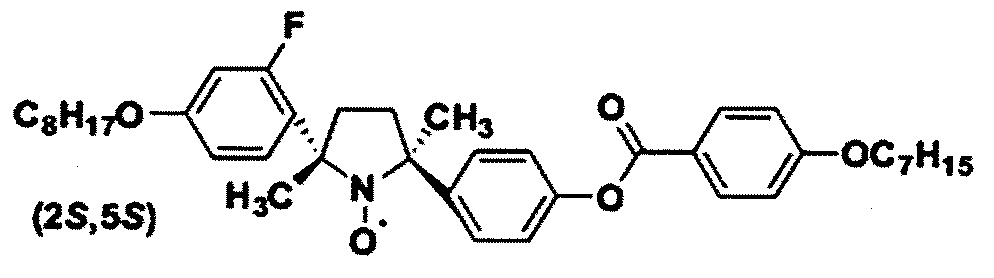
は、温度約36℃でコレステリック液晶相を示し始め、約80℃までコレステリック液晶相を示す。
は、温度約36℃でコレステリック液晶相を示し始め、約80℃までコレステリック液晶相を示す。
式[I]で示されるニトロキシドラジカルを含有する新規液晶性化合物は、液晶状態で磁気的特性を有している。該磁気的特性は、永久磁石に引き連れられて動く特性をいう。この特性は、固体状では観測されず、液晶状態でのみ発現する。
必要な磁石の磁力は0.1テスラ以上である。実用的な0.1から0.5テスラ(1テスラ=10000ガウス=10000エルステッド)の磁力で磁気的特性を発現できる。それより高い磁石の磁力でもよいことは言うまでもない。
本発明の液晶性化合物は、体温域の水溶液中に該液晶性化合物の集合体(液晶滴、液晶粒子、液晶カプセルをも含む)として分散させることができる。水溶液の媒体は、純粋な水、生理食塩水、界面活性剤溶液等が使用可能である。
液晶化合物の集合体の分散体の形態、粒径、濃度等の特性は、用途に合わせて適宜選定するようにすればよい。
液晶化合物の集合体の分散体の形態、粒径、濃度等の特性は、用途に合わせて適宜選定するようにすればよい。
本発明の液晶性化合物は、体温域でのコレステリック液晶相を示すので、液晶性化合物の集合体中に所望の薬剤を含ませることにより、ドラッグデリバリーシステム(DDS)の担体として使用することができる。適用できる薬剤としては、薬剤が本発明の液晶性化合物が溶解できる溶媒に溶解できる限り特に限定されるものではない。ニトロキシドラジカルは抗酸化性と抗還元性を有しているので、酸化や還元からの保護が必要とされる薬剤のDDSへの適用に適しているといえる。
液晶性化合物の集合体は、本発明の液晶性化合物をエーテルや、メタノール、エタノール等の低級アルコール類等の該液晶性化合物と反応しない揮発性溶媒に溶解し、該溶液を水、生理食塩水、輸液、血液等の不溶性液体上又は液体中に分散させ、該揮発性溶媒を除去することで得ることができる。DDSの担体として使用する場合は、液晶性化合物と、その他所望の化合物(薬剤等)とともに、溶解し上記手順を踏み、その集合体を作製するようにすればよい。その他、具体的な作製条件、得られる粒径等は、特許文献1における第[0026]段~第[0030]段を参考にできる。該箇所を本願明細書の一部としてここにそのまま引用するものとする。
本発明の液晶性化合物の磁気的特性を利用すると磁気誘導が可能であり、直接法DDSを実行することが可能となる。
DDS、直接DDS法への適用に関しては、例えば、特許文献1の第0033段~第0035段、特許文献2の第0036段~第0037段を参照することができる。該記載を本明細書の一部とする。
式[I]で示されるニトロキシドラジカルを含有する新規液晶性化合物は、温度依存性の構造色を示す。本発明の液晶性化合物は、不斉炭素を有しており、螺旋構造をとる液晶相を形成する。螺旋構造をとる液晶相は、その螺旋の周期に対応した光を反射し、温度依存性の構造色を示す性質を有している。「構造色」とは、螺旋構造の周期に対応して反射される光のことを意味している。本発明の液晶性化合物は、例えば、温度55℃~80℃の温度範囲で、赤~青の範囲で色を変えることができる。温度を上げると、構造色は短波長側にシフトする。また、構造色は、キラル剤、例えば、2,5-ビス-[4’-(ヘキシルオキシ)フェニル-4-カルボニル]-1,4;3,6-ジアンハイドライド-d-ソルビトール等を加えて、その濃度を変えることにより調整でき、55℃~80℃という範囲以外でも機能させることができる。
本発明の液晶性化合物は、温度によって色が変化するため、温度計または温度センサーとして応用することができる。例えば、上記磁気的特性を併せて利用することにより、磁場誘導することによって、色を観測することで、温度の空間分布を調べることが可能になる。
本発明の集合体は、上記で説明した本発明の化合物の有する特徴、すなわち、低温域、特に、体温域でコレステリック液晶性、低温域、特に、体温域での磁気特性、および温度依存性の構造色を示す。
本発明の液晶性化合物は、該液晶滴の中に水滴を包含した液晶カプセルの形態に形成可能である。本発明において液晶カプセルとは、コア・シェル構造の液晶滴を意味しており、コアは水溶液、シェルは該コアを覆い、本発明の液晶性化合物で構成されている。
本発明の液晶カプセルは、本発明の液晶化合物の有する特性を発揮させることができ、上記した用途への展開が可能である。すなわち、液晶カプセル(以下、「CLCカプセル」ということもある。)は、体温域でコレステリック液晶特性を示すことができ、また、磁気誘導可能であり、それらの特性を利用して、DDS、温度計等へ用途展開することができる。
本発明のCLCカプセルは、例えば、マイクロ流体デバイスで製造することができる。マイクロ流体デバイスの使用は、本発明の液晶性化合物が、体温域の低い温度で液晶転移が可能なために可能となるものである。マイクロ流体デバイスの技術は、A. Rotem, et al. Lab Chip 12, 4263 (2012)や、A. S. Utada, et al. Science 308, 537 (2005)等すでに種々知られており、それらの技術を含め、公知の技術を適用することができる。
本発明のCLCカプセルは、例えば、図3に示したようなマイクロ流体デバイスで製造することができる。図3に示したマイクロ流体デバイスは、角柱部材4内部の角形流路に、注入管5および回収管6を備えた構成をしている。角柱部材4、注入管5および回収管6は、例えばガラスで構成することが可能である。注入管5および回収管6は、例えば、キャピラリーを使用して構成することができる。
CLCカプセルの作製は、注入管5から水溶液2を一定の流速で、角形流路のうち注入管の方向からは液晶1を一定の流速で、角形流路のうちもう一方の注入管と反対方向からは同じ水溶液2’(外水相)を一定の流速で注入する。液晶と水溶液が出会う界面でカプセルが形成され、CLCカプセルが水溶液に中に分散した状態で回収管内部へと回収される。注入管5から注入する水溶液2として、所望の化合物等を溶解、分散させた水溶液を使用すれば、それらの化合物等を液晶カプセルに内包させることができる。また、本発明のCLCカプセルを外水相と共に使用する場合は、外水相に所望の化合物等を溶解、分散させた水溶液を使用するようにしてもよい。
角柱部材4、注入管5および回収管6の径、流速等を適宜変更設定することにより、コア外径、シェル外径の種々異なるCLCカプセルを製造することができる。シェル外径(平均)で1μm~1mmの範囲で、コア外径(平均)で1μm~1mmの範囲で調整可能である。なお、本発明において、径(平均)は、数平均粒径で表した値である。
CLCカプセルを製造する際に使用する水溶液は、所望の水溶液を使用することができる。水溶液の溶媒は、水であり、本発明の液晶化合物を溶解させない濃度でメタノール、エタノール、プロパノール、イソプロパノール、アセトン、テトラヒドロフラン、ジメチルホルムアミド(DMF)、ジメチルスルホキシド(DMSO)等使用可能である。該水溶液には所望の物質を含有させることができる。例えば、DDSとして使用する場合は、生理食塩水中に所定の薬剤を所定の量含有させた水溶液を使用できる。得られたCLCカプセルの分散液は、そのままDDS溶液として使用することができる。薬剤の種類、濃度は適宜設定すればよい。ニトロキシドラジカルは抗酸化性と抗還元性を有しているので、内包薬剤は酸化や還元からの保護が必要とされる薬剤の適用に適しているといえる。本発明のCLCカプセルは、体温域で使用でき、特に、本発明の液晶性化合物の磁気的特性を利用し、磁気誘導が可能であり、生体への直接DDSとしての適用が期待されるものである。
溶媒は、水に代えて、本発明の液晶化合物を溶解しない溶媒、例えば、シリコーンオイルやフッ素オイル等等を使用することもできる。
CLCカプセルを製造する際、液晶化合物は、流動性をよくするために、沸点の低い溶媒、例えば、アセトン、プロパノール、イソプロパノール、アセトン、テトラヒドロフラン等を添加して粘度を調整して使用することが望ましい。このような溶媒は、カプセル形成の際に接触する水溶液へ除去され、得られるCLCカプセルの液晶シェル中には存在しない。
本発明のCLCカプセルは、色素をコアに含ませるか、または色素をシェルに含ませることにより全方位レーザーとして機能させることができる。
以下、具体的に実施例を用いて本発明を説明するが、本発明はそれらの実施例に限定的に解釈されるべきでなく、本発明の概念に接した当業者が想到し、実施可能であると観念するであろうあらゆる技術的思想、その具体的態様が本発明に含まれるものとして理解されるべきものである。
下記式[I’]で表される化合物を、下記反応式[IV]に従って合成した。


溶媒には全て和光純薬工業株式会社から購入したものを用いた。Grignard反応、脱保護に用いるテトラヒドロフラン(THF)は、市販品をナトリウム/ベンゾフェノンから蒸留した後に用いた。
Wako : 和光純薬工業株式会社
TCI : 東京化成工業株式会社
Wako : 和光純薬工業株式会社
TCI : 東京化成工業株式会社
なお、各段階の生成物の同定は、元素分析(2400IIモデル;PerkinElmer社製);ESR測定(JES-FE1XGモデル;JEOL社製)、IR(IRAffinity-1モデル;SHIMADZU社製)、NMR(JNM-ECS400モデル;JEOL社製)、マススペクトル(JMS-700モデル;JEOL社製)により適宜行った。
ニトロケトン1の合成
まず、3-ブテン-2-オン(3-buten-2-one)(TCI)中の安定化剤を蒸留によって取り除いた。3-buten-2-one(400 mmol)とニトロエタン(nitroethane)(440 mmol、TCI)をメタノール(300 mL)に加え、30分間撹拌した。ハイドロタルサイト系固体触媒キョーワード1000(協和化学工業株式会社)を8 g加え、反応完了まで室温で撹拌を続けた。ろ過によって触媒を取り除き、溶媒を留去した後、残渣を減圧蒸留することで、ニトロケトン1を得た(収率 ~80%)。
まず、3-ブテン-2-オン(3-buten-2-one)(TCI)中の安定化剤を蒸留によって取り除いた。3-buten-2-one(400 mmol)とニトロエタン(nitroethane)(440 mmol、TCI)をメタノール(300 mL)に加え、30分間撹拌した。ハイドロタルサイト系固体触媒キョーワード1000(協和化学工業株式会社)を8 g加え、反応完了まで室温で撹拌を続けた。ろ過によって触媒を取り除き、溶媒を留去した後、残渣を減圧蒸留することで、ニトロケトン1を得た(収率 ~80%)。
ジメチルニトロン2の合成
ニトロケトン1(300 mmol)、NH4Cl(300 mmol、Wako)と水(500 mL)をアイスバス中で撹拌し、Zn粉末(1.2 mol、Wako)を反応液温度が10°Cを超えないようにゆっくり加えた。その後、室温までゆっくりと昇温しながら一晩撹拌を続けた。反応液をろ過し、得られたろ液を濃縮した後、クロロホルム(50 mL ×4)で抽出した。抽出液を無水MgSO4で乾燥し、溶媒を留去した。その後さらに減圧蒸留を行い、オイル状のジメチルニトロン2をラセミ体として得た(収率 ~60%)。
ニトロケトン1(300 mmol)、NH4Cl(300 mmol、Wako)と水(500 mL)をアイスバス中で撹拌し、Zn粉末(1.2 mol、Wako)を反応液温度が10°Cを超えないようにゆっくり加えた。その後、室温までゆっくりと昇温しながら一晩撹拌を続けた。反応液をろ過し、得られたろ液を濃縮した後、クロロホルム(50 mL ×4)で抽出した。抽出液を無水MgSO4で乾燥し、溶媒を留去した。その後さらに減圧蒸留を行い、オイル状のジメチルニトロン2をラセミ体として得た(収率 ~60%)。
TBDMS保護ブロモフェノール3の合成
4-ブロモフェノール(4-bromophenol)(100 mmol、Aldrich)とt-ブチルジメチルクロロシラン(tert-butyldimethylchlorosilane)(TBDMS)(99 mmol、TCI)をジメチルホルムアミド(DMF、120 mL)に溶解させ、イミダゾール(Imidazole)(250 mmol、Wako)を加え、室温で撹拌した。3時間後、飽和NaHCO3水溶液(50 mL)を加え、ヘキサンで抽出(75 mL ×1, 50 mL ×2)した。有機相を1N NaOH水溶液(50 mL)、飽和NaCl水溶液(100 mL×4)でそれぞれ洗浄し、無水MgSO4で乾燥後、溶媒を留去し、TBDMS保護ブロモフェノール3を得た(収率90%)。
4-ブロモフェノール(4-bromophenol)(100 mmol、Aldrich)とt-ブチルジメチルクロロシラン(tert-butyldimethylchlorosilane)(TBDMS)(99 mmol、TCI)をジメチルホルムアミド(DMF、120 mL)に溶解させ、イミダゾール(Imidazole)(250 mmol、Wako)を加え、室温で撹拌した。3時間後、飽和NaHCO3水溶液(50 mL)を加え、ヘキサンで抽出(75 mL ×1, 50 mL ×2)した。有機相を1N NaOH水溶液(50 mL)、飽和NaCl水溶液(100 mL×4)でそれぞれ洗浄し、無水MgSO4で乾燥後、溶媒を留去し、TBDMS保護ブロモフェノール3を得た(収率90%)。
4-ブロモ-3-フルオロフェノール(4-bromo-3-fluorophenol)(100 mmol、Wako)とK2CO3(200 mmol、Wako)にDMF(150 mL)を加え、窒素雰囲気下60°Cで60分間撹拌した。1-ヨードオクタン(99 mmol)を加え、60°Cで一晩撹拌を続けた。脱イオン水(300 mL)を加えると、生成物がオイルとして析出した。この溶液をヘキサン(50 mL ×4)で抽出し、抽出液を1N NaOH水溶液(100 mL)、飽和NaCl水溶液(100 mL×4)でそれぞれ洗浄し、有機相を無水MgSO4で乾燥後、溶媒を留去し、5を得た(収率90%)。
アルコキシ安息香酸8の合成
q = 6の場合
4-ヒドロキシ安息香酸メチル(3.0 g、20 mmol、TCI)とK2CO3(5.5 g、40 mmol、Wako)をDMF(30 mL)に溶解させ60°Cで撹拌した。60分後、1-ヨードヘキサン(4.0 g、19 mmol、TCI)を加え、12時間60°Cで撹拌を続けた。脱イオン水(100 mL)を加えると、生成物7が結晶として析出した。これをヘキサン(50 mL ×3)で抽出した後、1N NaOH水溶液(50 mL)と飽和NaCl水溶液(50 mL×3)で洗浄し、溶媒を減圧留去した。得られた白色固体をエタノール(30 mL)に溶解させ、25% KOH水溶液(20 mL)を加え、16時間加熱還流を行った。その後、2N HClを水溶液が酸性になるまで滴下し、室温で6時間撹拌した。溶液をろ過し、白色結晶を減圧加熱下でよく乾燥させ、4-(ヘキシルオキシ)安息香酸8を得た(3.8 g、収率86%)。
q = 6の場合
4-ヒドロキシ安息香酸メチル(3.0 g、20 mmol、TCI)とK2CO3(5.5 g、40 mmol、Wako)をDMF(30 mL)に溶解させ60°Cで撹拌した。60分後、1-ヨードヘキサン(4.0 g、19 mmol、TCI)を加え、12時間60°Cで撹拌を続けた。脱イオン水(100 mL)を加えると、生成物7が結晶として析出した。これをヘキサン(50 mL ×3)で抽出した後、1N NaOH水溶液(50 mL)と飽和NaCl水溶液(50 mL×3)で洗浄し、溶媒を減圧留去した。得られた白色固体をエタノール(30 mL)に溶解させ、25% KOH水溶液(20 mL)を加え、16時間加熱還流を行った。その後、2N HClを水溶液が酸性になるまで滴下し、室温で6時間撹拌した。溶液をろ過し、白色結晶を減圧加熱下でよく乾燥させ、4-(ヘキシルオキシ)安息香酸8を得た(3.8 g、収率86%)。
q = 7の場合
4-ヒドロキシ安息香酸メチル(4.6 g、30 mmol、TCI)とK2CO3(8.3 g、60 mmol、Wako)をDMF(45 mL)に溶解させ60°Cで撹拌した。60分後、1-ヨードヘプタン(6.6 g、29 mmol、Wako)を加え、12時間60°Cで撹拌を続けた。脱イオン水(150 mL)を加えると、生成物7が結晶として析出した。これをヘキサン(50 mL ×3)で抽出した後、1N NaOH水溶液(50 mL)と飽和NaCl水溶液(50 mL×3)で洗浄し、溶媒を減圧留去した。得られた白色固体をエタノール(50 mL)に溶解させ、25% KOH水溶液(30 mL)を加え、16時間加熱還流を行った。その後、2N HClを水溶液が酸性になるまで滴下し、室温で6時間撹拌した。溶液をろ過し、白色結晶を減圧加熱下でよく乾燥させ、4-(ヘプチルオキシ)安息香酸8を得た(6.4 g、収率90%)。
4-ヒドロキシ安息香酸メチル(4.6 g、30 mmol、TCI)とK2CO3(8.3 g、60 mmol、Wako)をDMF(45 mL)に溶解させ60°Cで撹拌した。60分後、1-ヨードヘプタン(6.6 g、29 mmol、Wako)を加え、12時間60°Cで撹拌を続けた。脱イオン水(150 mL)を加えると、生成物7が結晶として析出した。これをヘキサン(50 mL ×3)で抽出した後、1N NaOH水溶液(50 mL)と飽和NaCl水溶液(50 mL×3)で洗浄し、溶媒を減圧留去した。得られた白色固体をエタノール(50 mL)に溶解させ、25% KOH水溶液(30 mL)を加え、16時間加熱還流を行った。その後、2N HClを水溶液が酸性になるまで滴下し、室温で6時間撹拌した。溶液をろ過し、白色結晶を減圧加熱下でよく乾燥させ、4-(ヘプチルオキシ)安息香酸8を得た(6.4 g、収率90%)。
q = 8の場合
4-ヒドロキシ安息香酸メチル(3.0 g、20 mmol、TCI)とK2CO3(5.5 g、20 mmol、Wako)をDMF(30 mL)に溶解させ60°Cで撹拌した。60分後、1-ヨードオクタン(4.8 g、19 mmol、Wako)を加え、12時間60°Cで撹拌を続けた。脱イオン水(100 mL)を加えると、生成物7が結晶として析出した。これをヘキサン(50 mL ×3)で抽出した後、1N NaOH水溶液(50 mL)と飽和NaCl水溶液(50 mL×3)で洗浄し、溶媒を減圧留去した。得られた白色固体をエタノール(20 mL)に溶解させ、25% KOH水溶液(20 mL)を加え、16時間加熱還流を行った。その後、2N HClを水溶液が酸性になるまで滴下し、室温で6時間撹拌した。溶液をろ過し、白色結晶を減圧加熱下でよく乾燥させ、4-(オクチルオキシ)安息香酸8を得た(3.8 g、収率76%)。
4-ヒドロキシ安息香酸メチル(3.0 g、20 mmol、TCI)とK2CO3(5.5 g、20 mmol、Wako)をDMF(30 mL)に溶解させ60°Cで撹拌した。60分後、1-ヨードオクタン(4.8 g、19 mmol、Wako)を加え、12時間60°Cで撹拌を続けた。脱イオン水(100 mL)を加えると、生成物7が結晶として析出した。これをヘキサン(50 mL ×3)で抽出した後、1N NaOH水溶液(50 mL)と飽和NaCl水溶液(50 mL×3)で洗浄し、溶媒を減圧留去した。得られた白色固体をエタノール(20 mL)に溶解させ、25% KOH水溶液(20 mL)を加え、16時間加熱還流を行った。その後、2N HClを水溶液が酸性になるまで滴下し、室温で6時間撹拌した。溶液をろ過し、白色結晶を減圧加熱下でよく乾燥させ、4-(オクチルオキシ)安息香酸8を得た(3.8 g、収率76%)。
q = 9の場合
4-ヒドロキシ安息香酸メチル(1.5 g、10 mmol、TCI)とK2CO3(2.8 g、20 mmol、Wako)をDMF(15 mL)に溶解させ60°Cで撹拌した。60分後、1-ヨードノナン(2.5 g、9.9 mmol、TCI)を加え、12時間60°Cで撹拌を続けた。脱イオン水(50 mL)を加えると、生成物7が結晶として析出した。これをヘキサン(50 mL ×3)で抽出した後、1N NaOH水溶液(50 mL)と飽和NaCl水溶液(50 mL×3)で洗浄し、溶媒を減圧留去した。得られた白色固体をエタノール(20 mL)に溶解させ、25% KOH水溶液(20 mL)を加え、16時間加熱還流を行った。その後、2N HClを水溶液が酸性になるまで滴下し、室温で6時間撹拌した。溶液をろ過し、白色結晶を減圧加熱下でよく乾燥させ、4-(ノニルオキシ)安息香酸8を得た(2.4 g、収率90%)。
4-ヒドロキシ安息香酸メチル(1.5 g、10 mmol、TCI)とK2CO3(2.8 g、20 mmol、Wako)をDMF(15 mL)に溶解させ60°Cで撹拌した。60分後、1-ヨードノナン(2.5 g、9.9 mmol、TCI)を加え、12時間60°Cで撹拌を続けた。脱イオン水(50 mL)を加えると、生成物7が結晶として析出した。これをヘキサン(50 mL ×3)で抽出した後、1N NaOH水溶液(50 mL)と飽和NaCl水溶液(50 mL×3)で洗浄し、溶媒を減圧留去した。得られた白色固体をエタノール(20 mL)に溶解させ、25% KOH水溶液(20 mL)を加え、16時間加熱還流を行った。その後、2N HClを水溶液が酸性になるまで滴下し、室温で6時間撹拌した。溶液をろ過し、白色結晶を減圧加熱下でよく乾燥させ、4-(ノニルオキシ)安息香酸8を得た(2.4 g、収率90%)。
q = 10の場合
4-ヒドロキシ安息香酸メチル(1.5 g、10 mmol、TCI)とK2CO3(2.8 g、20 mmol、Wako)をDMF(15 mL)に溶解させ60°Cで撹拌した。60分後、1-ヨードデカン(2.7 g、9.9 mmol、TCI)を加え、12時間60°Cで撹拌を続けた。脱イオン水(50 mL)を加えると、生成物7が結晶として析出した。これをヘキサン(50 mL ×3)で抽出した後、1N NaOH水溶液(50 mL)と飽和NaCl水溶液(50 mL×3)で洗浄し、溶媒を減圧留去した。得られた白色固体をエタノール(20 mL)に溶解させ、25% KOH水溶液(20 mL)を加え、16時間加熱還流を行った。その後、2N HClを水溶液が酸性になるまで滴下し、室温で6時間撹拌した。溶液をろ過し、白色結晶を減圧加熱下でよく乾燥させ、4-(ドデシルオキシ)安息香酸8を得た(2.2 g、収率80%)。
4-ヒドロキシ安息香酸メチル(1.5 g、10 mmol、TCI)とK2CO3(2.8 g、20 mmol、Wako)をDMF(15 mL)に溶解させ60°Cで撹拌した。60分後、1-ヨードデカン(2.7 g、9.9 mmol、TCI)を加え、12時間60°Cで撹拌を続けた。脱イオン水(50 mL)を加えると、生成物7が結晶として析出した。これをヘキサン(50 mL ×3)で抽出した後、1N NaOH水溶液(50 mL)と飽和NaCl水溶液(50 mL×3)で洗浄し、溶媒を減圧留去した。得られた白色固体をエタノール(20 mL)に溶解させ、25% KOH水溶液(20 mL)を加え、16時間加熱還流を行った。その後、2N HClを水溶液が酸性になるまで滴下し、室温で6時間撹拌した。溶液をろ過し、白色結晶を減圧加熱下でよく乾燥させ、4-(ドデシルオキシ)安息香酸8を得た(2.2 g、収率80%)。
TBDMS保護ジアリールニトロキシド10の合成
グリニャール(Grignard)反応と酸化反応を2度ずつ行うことで10を得た。
Mg(30 mmol、Acros Organics)とLiCl(33 mmol、Wako)を2口フラスコにとり、加熱減圧によって試薬とフラスコを良く乾燥させた後、フラスコをN2で満たした。これにTHF(30 mL)を加え、反応開始の触媒としてヨウ素(関東化学株式会社)を一欠片加えた。よく乾燥させておいた3(30 mmol)をTHF(5 mL)で希釈し、これを加えることで反応を開始させ、0°Cで撹拌を続けることでGrignard試薬4を得た。他方で、よく乾燥させておいたジメチルニトロン2(20 mmol)をN2で満たした別の2口フラスコに入れ、THF(10 mL)を加え、-98°Cに冷却し、Grignard試薬4を滴下した。ゆっくり昇温した後室温で一晩撹拌を続けた。翌日、反応液に飽和NH4Cl水溶液(100 mL)を注ぎ、ジクロロメタン(50 mL ×3)で抽出した。無水MgSO4で乾燥後、溶媒留去を行った。残渣をメタノール(200 mL)に溶解させ、28% NH3水(5 mL、Wako)とCu(OAc)2・H2O(1.0 mmol、関東化学株式会社)を加え、液が濃青色に変化するまで激しく撹拌し、反応液を減圧濃縮し、メタノールを完全に留去した。残渣にジクロロメタン(100 mL)と飽和NaHCO3水溶液(100 mL)を加え、有機相を分離した後、水相をジクロロメタン(50 mL)で抽出した。有機相を無水MgSO4で乾燥後、溶媒を留去しニトロン9を得た。
グリニャール(Grignard)反応と酸化反応を2度ずつ行うことで10を得た。
Mg(30 mmol、Acros Organics)とLiCl(33 mmol、Wako)を2口フラスコにとり、加熱減圧によって試薬とフラスコを良く乾燥させた後、フラスコをN2で満たした。これにTHF(30 mL)を加え、反応開始の触媒としてヨウ素(関東化学株式会社)を一欠片加えた。よく乾燥させておいた3(30 mmol)をTHF(5 mL)で希釈し、これを加えることで反応を開始させ、0°Cで撹拌を続けることでGrignard試薬4を得た。他方で、よく乾燥させておいたジメチルニトロン2(20 mmol)をN2で満たした別の2口フラスコに入れ、THF(10 mL)を加え、-98°Cに冷却し、Grignard試薬4を滴下した。ゆっくり昇温した後室温で一晩撹拌を続けた。翌日、反応液に飽和NH4Cl水溶液(100 mL)を注ぎ、ジクロロメタン(50 mL ×3)で抽出した。無水MgSO4で乾燥後、溶媒留去を行った。残渣をメタノール(200 mL)に溶解させ、28% NH3水(5 mL、Wako)とCu(OAc)2・H2O(1.0 mmol、関東化学株式会社)を加え、液が濃青色に変化するまで激しく撹拌し、反応液を減圧濃縮し、メタノールを完全に留去した。残渣にジクロロメタン(100 mL)と飽和NaHCO3水溶液(100 mL)を加え、有機相を分離した後、水相をジクロロメタン(50 mL)で抽出した。有機相を無水MgSO4で乾燥後、溶媒を留去しニトロン9を得た。
得られたニトロン9に、先と同様の方法で調製したGrignard試薬6を-98°Cで加え、ゆっくり昇温した後、室温で一晩撹拌を続けた。翌日、反応液に飽和NH4Cl水溶液(50 mL)を注ぎ、ジクロロメタン(50 mL ×2)で抽出を行った。無水MgSO4で乾燥後、溶媒を留去し、残渣をメタノール(200 mL)に溶解させ、28% NH3水(5 mL)とCu(OAc)2・H2O(1.0 mmol)を加え、液が濃青色に変化するまで激しく撹拌した後、反応液を減圧濃縮した。残渣にジクロロメタン(100 mL)と飽和NaHCO3(100 mL)水溶液を加え、有機相を分離した後、水相をジクロロメタン(50 mL)で抽出した。有機相を無水MgSO4で乾燥後、溶媒を留去し、残渣をシリカゲルカラムクロマトグラフィー(関東化学株式会社、ヘキサン/ジエチルエーテル=9/1)で精製し、TBDMS保護ジアリールニトロキシド10をラセミ体として得た(粗収率 ニトロン2から ~30%)。
脱保護
TBDMS保護10(5.0 mmol)をTHF(100 mL)に溶解させ、0°Cでテトラブチルアンモニウムフルオライド(Tetrabutylammonium fluoride)(1 mol/L THF溶液、TCI)を7 mL滴下し、20分間撹拌した。反応終結を確認後、この溶液に飽和NH4Cl水溶液(50 mL)を加え、ジエチルエーテルで抽出を行った(50 mL ×2)。有機相を飽和NaCl水溶液で洗浄した後、無水MgSO4で乾燥し、溶媒を留去した。残渣をシリカゲルカラムクロマトグラフィー(ヘキサン/2-プロパノール=9/1)で精製し、フェノール性ジアリールニトロキシド11を得た(収率 ニトロン2から10~20%)。
TBDMS保護10(5.0 mmol)をTHF(100 mL)に溶解させ、0°Cでテトラブチルアンモニウムフルオライド(Tetrabutylammonium fluoride)(1 mol/L THF溶液、TCI)を7 mL滴下し、20分間撹拌した。反応終結を確認後、この溶液に飽和NH4Cl水溶液(50 mL)を加え、ジエチルエーテルで抽出を行った(50 mL ×2)。有機相を飽和NaCl水溶液で洗浄した後、無水MgSO4で乾燥し、溶媒を留去した。残渣をシリカゲルカラムクロマトグラフィー(ヘキサン/2-プロパノール=9/1)で精製し、フェノール性ジアリールニトロキシド11を得た(収率 ニトロン2から10~20%)。
光学分割
キラル分取カラム(CHIRALCEL OD-H, 20 mm x 250 mm、 粒径(Particle size) 5μm、 DAICEL)を用いて、フェノール性ジアリールニトロキシド11をSS体とRR体に光学分割した。カラム温度は40°C、移動相はヘキサン/2-プロパノール=9/1とした。以下のエステル化には、トランス(S,S)体またはトランス(R,R)のいずれかを用いた。いずれも99%ee以上であった。
キラル分取カラム(CHIRALCEL OD-H, 20 mm x 250 mm、 粒径(Particle size) 5μm、 DAICEL)を用いて、フェノール性ジアリールニトロキシド11をSS体とRR体に光学分割した。カラム温度は40°C、移動相はヘキサン/2-プロパノール=9/1とした。以下のエステル化には、トランス(S,S)体またはトランス(R,R)のいずれかを用いた。いずれも99%ee以上であった。
エステル化
q = 6の場合
フェノール性ジアリールニトロキシド11(0.071 g、0.17 mmol)と4-(ヘキシルオキシ)安息香酸8(0.089 g、0.40 mmol)をジクロロメタン(50 mL)に溶解させた。この溶液にカルボジイミド系縮合剤1-エチル -3-(3-ジメチルアミノプロピル)カルボジイミドハイドロクロライド(1-ethyl-3-(3-dimethylaminopropyl)carbodiimide hydrochloride)(EDC・HCl、0.077 g、0.40 mmol、TCI)とN,N-ジメチル-4-アミノピリジン(N,N-dimethyl-4-aminopyridine)(DMAP、0.015 g、0.12 mmol、TCI)を加え、エステル形成させた。飽和NaHCO3水溶液で洗浄した後、シリカゲルカラムクロマトグラフィー(ヘキサン/ジクロロメタン=2/8)と再結晶(ヘキサン/2-プロパノール)によって精製しキラル常磁性液晶12(トランス(R,R)体)を得た(0.056 g、収率52%)。
q = 6の場合
フェノール性ジアリールニトロキシド11(0.071 g、0.17 mmol)と4-(ヘキシルオキシ)安息香酸8(0.089 g、0.40 mmol)をジクロロメタン(50 mL)に溶解させた。この溶液にカルボジイミド系縮合剤1-エチル -3-(3-ジメチルアミノプロピル)カルボジイミドハイドロクロライド(1-ethyl-3-(3-dimethylaminopropyl)carbodiimide hydrochloride)(EDC・HCl、0.077 g、0.40 mmol、TCI)とN,N-ジメチル-4-アミノピリジン(N,N-dimethyl-4-aminopyridine)(DMAP、0.015 g、0.12 mmol、TCI)を加え、エステル形成させた。飽和NaHCO3水溶液で洗浄した後、シリカゲルカラムクロマトグラフィー(ヘキサン/ジクロロメタン=2/8)と再結晶(ヘキサン/2-プロパノール)によって精製しキラル常磁性液晶12(トランス(R,R)体)を得た(0.056 g、収率52%)。
q = 7の場合
フェノール性ジアリールニトロキシド11(0.094 g、0.22 mmol)と4-(ヘプチルオキシ)安息香酸8(0.095 g、0.40 mmol)をジクロロメタン(50 mL)に溶解させた。この溶液にEDC・HCl(0.077 g、0.40 mmol、TCI)とDMAP(0.015 g、0.12 mmol、TCI)を加え、エステル形成させた。飽和NaHCO3水溶液で洗浄した後、シリカゲルカラムクロマトグラフィー(ヘキサン/ジクロロメタン=2/8)と再結晶(ヘキサン/エタノール)によって精製しキラル常磁性液晶12(トランス(S,S)体)を得た(0.063 g、収率44%)。
フェノール性ジアリールニトロキシド11(0.094 g、0.22 mmol)と4-(ヘプチルオキシ)安息香酸8(0.095 g、0.40 mmol)をジクロロメタン(50 mL)に溶解させた。この溶液にEDC・HCl(0.077 g、0.40 mmol、TCI)とDMAP(0.015 g、0.12 mmol、TCI)を加え、エステル形成させた。飽和NaHCO3水溶液で洗浄した後、シリカゲルカラムクロマトグラフィー(ヘキサン/ジクロロメタン=2/8)と再結晶(ヘキサン/エタノール)によって精製しキラル常磁性液晶12(トランス(S,S)体)を得た(0.063 g、収率44%)。
q = 8の場合
フェノール性ジアリールニトロキシド11(0.086 g、0.20 mmol)と4-(オクチルオキシ)安息香酸8(0.060 g、0.24 mmol)をジクロロメタン(40 mL)に溶解させた。この溶液にEDC・HCl(0.046 g、0.24 mmol、TCI)とDMAP(0.012 g、0.1 mmol、TCI)を加え、エステル形成させた。飽和NaHCO3水溶液で洗浄した後、シリカゲルカラムクロマトグラフィー(ヘキサン/ジエチルエーテル=8/2)と再結晶(ヘキサン)によって精製しキラル常磁性液晶12(トランス(R,R)体)を得た(0.062 g、収率47%)。
フェノール性ジアリールニトロキシド11(0.086 g、0.20 mmol)と4-(オクチルオキシ)安息香酸8(0.060 g、0.24 mmol)をジクロロメタン(40 mL)に溶解させた。この溶液にEDC・HCl(0.046 g、0.24 mmol、TCI)とDMAP(0.012 g、0.1 mmol、TCI)を加え、エステル形成させた。飽和NaHCO3水溶液で洗浄した後、シリカゲルカラムクロマトグラフィー(ヘキサン/ジエチルエーテル=8/2)と再結晶(ヘキサン)によって精製しキラル常磁性液晶12(トランス(R,R)体)を得た(0.062 g、収率47%)。
q = 9の場合
フェノール性ジアリールニトロキシド11(0.083 g、0.19 mmol)と4-(ノニルオキシ)安息香酸8(0.054 g、0.20 mmol)をジクロロメタン(5 mL)に溶解させた。この溶液にEDC・HCl(0.045 g、0.23 mmol、TCI)とDMAP(0.0071 g、0.058 mmol、TCI)を加え、エステル形成させた。飽和NaHCO3水溶液で洗浄した後、シリカゲルカラムクロマトグラフィー(ヘキサン/ジエチルエーテル=8/2)と再結晶(ヘキサン/ジエチルエーテル)によって精製しキラル常磁性液晶12(トランス(R,R)体)を得た(0.090 g、収率70%)。
フェノール性ジアリールニトロキシド11(0.083 g、0.19 mmol)と4-(ノニルオキシ)安息香酸8(0.054 g、0.20 mmol)をジクロロメタン(5 mL)に溶解させた。この溶液にEDC・HCl(0.045 g、0.23 mmol、TCI)とDMAP(0.0071 g、0.058 mmol、TCI)を加え、エステル形成させた。飽和NaHCO3水溶液で洗浄した後、シリカゲルカラムクロマトグラフィー(ヘキサン/ジエチルエーテル=8/2)と再結晶(ヘキサン/ジエチルエーテル)によって精製しキラル常磁性液晶12(トランス(R,R)体)を得た(0.090 g、収率70%)。
q = 10の場合
フェノール性ジアリールニトロキシド11(0.065 g、0.15 mmol)と4-(ドデシルオキシ)安息香酸8(0.043 g、0.15 mmol)をジクロロメタン(3 mL)に溶解させた。この溶液にEDC・HCl(0.032 g、0.17 mmol、TCI)とDMAP(0.0037 g、0.03 mmol、TCI)を加え、エステル形成させた。飽和NaHCO3水溶液で洗浄した後、シリカゲルカラムクロマトグラフィー(ヘキサン/ジエチルエーテル=8/2)と再結晶(ヘキサン/2-プロパノール)によって精製しキラル常磁性液晶12(トランス(R,R)体)を得た(0.065 g、収率63%)。
フェノール性ジアリールニトロキシド11(0.065 g、0.15 mmol)と4-(ドデシルオキシ)安息香酸8(0.043 g、0.15 mmol)をジクロロメタン(3 mL)に溶解させた。この溶液にEDC・HCl(0.032 g、0.17 mmol、TCI)とDMAP(0.0037 g、0.03 mmol、TCI)を加え、エステル形成させた。飽和NaHCO3水溶液で洗浄した後、シリカゲルカラムクロマトグラフィー(ヘキサン/ジエチルエーテル=8/2)と再結晶(ヘキサン/2-プロパノール)によって精製しキラル常磁性液晶12(トランス(R,R)体)を得た(0.065 g、収率63%)。
以上得られた液晶性化合物を夫々、
液晶性化合物C6(q=6に対応);
液晶性化合物C7(q=7に対応);
液晶性化合物C8(q=8に対応);
液晶性化合物C9(q=9に対応);
液晶性化合物C10(q=10に対応)
とする。
液晶性化合物C6(q=6に対応);
液晶性化合物C7(q=7に対応);
液晶性化合物C8(q=8に対応);
液晶性化合物C9(q=9に対応);
液晶性化合物C10(q=10に対応)
とする。
下記表1に液晶性化合物C6~C10を同定するために行った元素分析結果、ESR測定、比旋光度(g/100ml)の結果を示した。
比較液晶性化合物
比較液晶性化合物として、以下の2種類の化合物を用いた。それぞれ、比較液晶性化合物C8’、比較液晶性化合物C13’という。
比較液晶性化合物として、以下の2種類の化合物を用いた。それぞれ、比較液晶性化合物C8’、比較液晶性化合物C13’という。


なお、比較液晶性化合物C8’(トランス(S,S)体)は、Angew. Chem. Int. Ed., 43, 3677-3682(2004) に記載の方法により調製した。
比較液晶性化合物C13’(トランス(S,S)体)は、Ferroelectrics, 343, 119-125 (2006) に記載の方法により調製した。
比較液晶性化合物C13’(トランス(S,S)体)は、Ferroelectrics, 343, 119-125 (2006) に記載の方法により調製した。
相の温度変化
本発明の液晶性化合物C6~C10および比較液晶性化合物C8’およびC13’を、偏光顕微鏡(BX51:Olympus社製)と示差走査熱量計(DSC-60:SHIMADZU社製)を使用し、20℃から昇温速度5℃/分で加熱し始め、110℃まで加熱し、相の温度変化を評価した。結果を図1に示す。
本発明の液晶性化合物C6~C10および比較液晶性化合物C8’およびC13’を、偏光顕微鏡(BX51:Olympus社製)と示差走査熱量計(DSC-60:SHIMADZU社製)を使用し、20℃から昇温速度5℃/分で加熱し始め、110℃まで加熱し、相の温度変化を評価した。結果を図1に示す。
図1に示されているように、本発明の液晶性化合物は、温度約36℃~約88℃でコレステリック相を示した。それに対して、比較液晶性化合物は、温度70℃を越えないとコレステリック相を示さなかった。本発明の液晶性化合物は、体温域でコレステリック相を示すことが分る。
磁性特性
本発明の液晶性化合物C6~C10について以下のようにようにして磁性特性を評価した。
本発明の液晶性化合物C6~C10をそれぞれ0.4gをエーテル2mLに溶解した。得られた溶解液を温水を満たした容器(50℃)に滴下し、液晶溶液を浮かべた。有機液晶分子を保温下で放置してエーテルを蒸発除去し、水面に液晶性化合物の粒子状の集合体を形成した。この液晶性化合物の集合体は液晶性を示していた。雰囲気温度(20℃)環境下、水面に分散した集合体の一つに最大磁場0.5テスラの永久磁石を接近させ、永久磁石を動かしたところ、それに伴い、集合体が動くことが観測された。
本発明の液晶性化合物C6~C10について以下のようにようにして磁性特性を評価した。
本発明の液晶性化合物C6~C10をそれぞれ0.4gをエーテル2mLに溶解した。得られた溶解液を温水を満たした容器(50℃)に滴下し、液晶溶液を浮かべた。有機液晶分子を保温下で放置してエーテルを蒸発除去し、水面に液晶性化合物の粒子状の集合体を形成した。この液晶性化合物の集合体は液晶性を示していた。雰囲気温度(20℃)環境下、水面に分散した集合体の一つに最大磁場0.5テスラの永久磁石を接近させ、永久磁石を動かしたところ、それに伴い、集合体が動くことが観測された。
本発明の液晶性化合物C6~C10について以下のようにようにして光学特性を評価した。
本発明の液晶性化合物C6~C10を水平配向処理したサンドイッチセルに封入することによりサンプルを調製し、顕微鏡(BX51:Olympus社製)と分光器(QE65 Pro:Ocean Optics社製)を使用し、コレステリック液晶相の可視光反射を観測した。結果を図2に示す。(図中、「dc」は、「℃」を示す。)
本発明の液晶性化合物C6~C10を水平配向処理したサンドイッチセルに封入することによりサンプルを調製し、顕微鏡(BX51:Olympus社製)と分光器(QE65 Pro:Ocean Optics社製)を使用し、コレステリック液晶相の可視光反射を観測した。結果を図2に示す。(図中、「dc」は、「℃」を示す。)
図2に示されているように、コレステリック液晶相の可視光の選択反射が見られた。測定温度が55℃の時は、赤色であり、測定温度が80℃の時は青色を反射した。また、温度36度では、赤外領域の光を反射した。温度を調整することにより、青色から赤色まで反射光の色を変化させることができる。また、反射光により、環境温度が分ることになる。
CLCカプセルの作製
図3に示した構成のマイクロ流体デバイス(ガラス製)を使用し、PVAポリビニルアルコール水溶液でコア部が、本発明の液晶性化合物でシェル部が構成されているCLCカプセルを製造した。角柱部材4は、外側の一片が1.40mm、内側の一片が1.00mmの断面正方形の角キャピラリーを使用し、注入管5、回収管6は、外径が0.97mm、内径が0.70mmの丸キャピラリーを使用加工し、マイクロ流体デバイス(ガラス製)を構成したものである。
図3に示した構成のマイクロ流体デバイス(ガラス製)を使用し、PVAポリビニルアルコール水溶液でコア部が、本発明の液晶性化合物でシェル部が構成されているCLCカプセルを製造した。角柱部材4は、外側の一片が1.40mm、内側の一片が1.00mmの断面正方形の角キャピラリーを使用し、注入管5、回収管6は、外径が0.97mm、内径が0.70mmの丸キャピラリーを使用加工し、マイクロ流体デバイス(ガラス製)を構成したものである。
流入管からはPVA水溶液を1.5 mL/hrの流速で、角形流路のうち注入管の方向から、本発明の液晶性化合物(常磁性液晶)を1.5~3.0 mL/hrの流速で、もう一方の注入管と反対方向からはPVA水溶液を10 mL/hrの流速で注入した。本発明の液晶性化合物(常磁性液晶)とPVA水溶液が出会う界面でカプセルが形成され、該カプセルは回収管内部へと回収された。
本実施形態では、シェル部を構成する液晶化合物として下記構造を有する液晶性化合物を用いた。

コア部および外水相には、10%PVA水溶液が用いられた。この際、本発明の液晶性化合物(常磁性液晶)にはその粘度を調整する目的で、アセトン(25wt%)を添加した。アセトン添加によって、等方相への相転移が誘起され、カプセル形成に容易な粘度に調整することができる。添加したアセトンはカプセル形成の際に接触する外水相へ除去することが可能である。作製直後のカプセルには、液晶相に特有な分子配向欠陥構造に由来する模様が確認でき、アセトンが除去されていることが確認できた(図4)。
作製したCLCカプセルは、45℃で、10%PVA水溶液に静置することで分子配向を揃えることが可能である。配向を揃えた状態で、カプセルの大きさおよび、シェル部の厚みを、顕微鏡観察することにより測定した。その結果を図5に示す。図5中、「●」は外径、「○」は内径、「×」はシェル部厚み(=(外径-内径)/2))を示している。
図5に示すように、およそ550μmのCLCカプセルを作製することができた。また、流速を調整することで、シェル部の厚みを約30から60μmの範囲で調整することができた。
CLCカプセルの構造色
作製したCLCカプセルの温度依存性の構造色を観察した。観察は、反射型光学顕微鏡に分光器を接続することにより行った。図6は、60℃の環境下で観測されたCLCカプセルの反射顕微鏡写真である。図6からわかるように、粒子の中心部が、呈色していることにより、CLCカプセルは、液晶相の周期的ならせん超構造に依存する構造色、すなわち、コレステリック液晶の周期的ならせん構造に見られる選択反射光を反射していることがわかる。
作製したCLCカプセルの温度依存性の構造色を観察した。観察は、反射型光学顕微鏡に分光器を接続することにより行った。図6は、60℃の環境下で観測されたCLCカプセルの反射顕微鏡写真である。図6からわかるように、粒子の中心部が、呈色していることにより、CLCカプセルは、液晶相の周期的ならせん超構造に依存する構造色、すなわち、コレステリック液晶の周期的ならせん構造に見られる選択反射光を反射していることがわかる。
中心部における反射光のスペクトルの温度依存性を図7に示す。図7から解るように、CLCカプセルからの構造色は温度依存性を示す。このことはシェルを構成している液晶のらせん超構造の周期が温度依存していることに起因するものである。図7に示すように、作製したCLCカプセルの色は、可視光域の範囲で温度によって調整可能である。なお、「らせん超構造」における「超」は、分子構造ではないという意味で超という語を使用している。その意味を理解した上であれば、「らせん超構造」との表現は、単に「らせん構造」と表現と同義である。
CLCカプセルの磁気誘導
作製したCLCカプセルは水中で磁気誘導可能であった。カプセルに磁石を近づけると、カプセルは磁石に引きつけられた。またのその速度は、カプセルが磁石に近づくほど、つまり磁場勾配が大きくなるほど大きくなった。また、この過程においてカプセルの構造は保持されており、磁気誘導下において安定であった。
作製したCLCカプセルは水中で磁気誘導可能であった。カプセルに磁石を近づけると、カプセルは磁石に引きつけられた。またのその速度は、カプセルが磁石に近づくほど、つまり磁場勾配が大きくなるほど大きくなった。また、この過程においてカプセルの構造は保持されており、磁気誘導下において安定であった。
本発明が提供した新規液晶性化合物は、体温域でコレステリック液晶性示し、磁気誘導可能であり、その特徴を利用したドラッグデリバリーシステムへの利用が可能である。
また、本発明が提供した新規液晶性化合物は、温度計、温度センサー利用が可能である。
また、本発明が提供した新規液晶性化合物は、温度計、温度センサー利用が可能である。
1 液晶
2 水溶液
2’ 水溶液
3 液晶カプセル
4 角柱部材
5 注入管
6 回収管
2 水溶液
2’ 水溶液
3 液晶カプセル
4 角柱部材
5 注入管
6 回収管
Claims (11)
- 下記式[I]で表される化合物:

(式[I]中、Xは、ハロゲン原子またはハロゲン化メチル基である;
nは、1~4の整数を表す;
pは、4~18の整数を表す;
qは、4~18の整数を表す;
mは、0または1である;
R1は、C1~C4の低級アルキル基を表す;そして
R2は、C1~C4の低級アルキル基を表す。)。 - ドキシル基の2つの不斉中心に結合したメチル基がトランス(±)体、トランス(S,S)体、またはトランス(R,R)体である、請求項1に記載の化合物。
- qが、6~10の整数である、請求項1または請求項2に記載の化合物。
- pが、7~9の整数である、請求項1~3いずれかに記載の化合物。
- pが8であり、qが、6~10の整数である、請求項1または2に記載の化合物。
- Xが、Fである、請求項1~5いずれかに記載の化合物。
- 請求項1~請求項6いずれかに記載の化合物からなる、集合体。
- 請求項1~請求項6いずれかに記載の化合物を体温域で使用する方法。
- 請求項7に記載の集合体を体温域で使用する方法。
- 請求項1~請求項6いずれかに記載の化合物を構成要素として含む温度センサー。
- コアシェル構造のカプセルであって、コアが水溶液で構成され、シェルが請求項1~請求項6いずれかに記載の化合物を含む液晶で構成されている、液晶カプセル。
Applications Claiming Priority (4)
| Application Number | Priority Date | Filing Date | Title |
|---|---|---|---|
| JP2016-055812 | 2016-03-18 | ||
| JP2016055812 | 2016-03-18 | ||
| JP2016-192021 | 2016-09-29 | ||
| JP2016192021A JP2017171647A (ja) | 2016-03-18 | 2016-09-29 | ニトロキシドラジカルを含有する新規液晶性化合物 |
Publications (1)
| Publication Number | Publication Date |
|---|---|
| WO2017159100A1 true WO2017159100A1 (ja) | 2017-09-21 |
Family
ID=59850840
Family Applications (1)
| Application Number | Title | Priority Date | Filing Date |
|---|---|---|---|
| PCT/JP2017/003741 Ceased WO2017159100A1 (ja) | 2016-03-18 | 2017-02-02 | ニトロキシドラジカルを含有する新規液晶性化合物 |
Country Status (1)
| Country | Link |
|---|---|
| WO (1) | WO2017159100A1 (ja) |
Citations (4)
| Publication number | Priority date | Publication date | Assignee | Title |
|---|---|---|---|---|
| JP2009079020A (ja) * | 2007-09-27 | 2009-04-16 | Toray Fine Chemicals Co Ltd | 分子の集合体の運動を制御する方法 |
| JP2009215187A (ja) * | 2008-03-07 | 2009-09-24 | Toray Fine Chemicals Co Ltd | 新規液晶性化合物及びその分子集合体の移動を制御する方法 |
| JP2012188388A (ja) * | 2011-03-10 | 2012-10-04 | Kyoto Univ | 安定ラジカル構造を有する両親媒性化合物、該両親媒性化合物を用いた界面活性剤、該両親媒性化合物を用いたミセル、及び該両親媒性化合物を用いたエマルション |
| JP2012188389A (ja) * | 2011-03-10 | 2012-10-04 | Kyoto Univ | 安定ラジカル構造を有する化合物及びこれを用いたゾル、ゲル、キセロゲル |
-
2017
- 2017-02-02 WO PCT/JP2017/003741 patent/WO2017159100A1/ja not_active Ceased
Patent Citations (4)
| Publication number | Priority date | Publication date | Assignee | Title |
|---|---|---|---|---|
| JP2009079020A (ja) * | 2007-09-27 | 2009-04-16 | Toray Fine Chemicals Co Ltd | 分子の集合体の運動を制御する方法 |
| JP2009215187A (ja) * | 2008-03-07 | 2009-09-24 | Toray Fine Chemicals Co Ltd | 新規液晶性化合物及びその分子集合体の移動を制御する方法 |
| JP2012188388A (ja) * | 2011-03-10 | 2012-10-04 | Kyoto Univ | 安定ラジカル構造を有する両親媒性化合物、該両親媒性化合物を用いた界面活性剤、該両親媒性化合物を用いたミセル、及び該両親媒性化合物を用いたエマルション |
| JP2012188389A (ja) * | 2011-03-10 | 2012-10-04 | Kyoto Univ | 安定ラジカル構造を有する化合物及びこれを用いたゾル、ゲル、キセロゲル |
Non-Patent Citations (3)
| Title |
|---|
| AKITA, T. ET AL.: "Terminal Fluorinated Nitroxide Radical Liquid Crystalline Compounds", MOLECULAR CRYSTALS AND LIQUID CRYSTALS, vol. 613, 2015, pages 174 - 180, ISSN: 1542-1406 * |
| TAKUYA AKITA ET AL: "Chiral Jojisei Ekis ho 1-11 Zairyo no Gosei to Soten'i Kyodo", 95TH ANNUAL MEETING OF THE CHEMICAL SOCIETY OF JAPAN IN SPRING (2015) KOEN YOKOSHU III,, 11 March 2015 (2015-03-11), pages 640 * |
| UCHIDA, Y. ET AL.: "Size Control of Cholesteric Liquid Crystalline Microcapsules", MOLECULAR CRYSTALS AND LIQUID CRYSTALS, vol. 613, 2015, pages 82 - 87, ISSN: 1542-1406 * |
Similar Documents
| Publication | Publication Date | Title |
|---|---|---|
| JP5635035B2 (ja) | キラルドーパント、それを用いた液晶混合物および液晶ディスプレイ | |
| Devadiga et al. | Recent synthetic advances in pyridine-based thermotropic mesogens | |
| JP6639446B2 (ja) | 液晶混合物の製造方法 | |
| JPH07506368A (ja) | ペルフルオロエーテル末端部分を有する液晶化合物 | |
| US20200239781A1 (en) | Solid Foam Comprising Mesogenic Ligand-Functionalized Nanoparticles and Methods of Making and Using the Same | |
| JP2017171647A (ja) | ニトロキシドラジカルを含有する新規液晶性化合物 | |
| FR2561250A1 (fr) | Compose organique presentant une phase smectique a, melange comprenant ce compose et procede de fabrication | |
| CN109320507B (zh) | 基于喹啉酰胺折叠体的手性荧光化合物及其制备方法与应用 | |
| TWI449772B (zh) | 液晶化合物及包括該化合物之液晶顯示器及光變色指示材料 | |
| CN105056991A (zh) | 基于手性二胺的螺环骨架的手性磷腈催化剂、制备方法及其应用 | |
| JP6919745B2 (ja) | 高純度の1,3−ジアルキルシクロブタン−1,2,3,4−テトラカルボン酸−1,2:3,4−二無水物の製造方法 | |
| EP3166942A1 (en) | Process for prepararing apixaban | |
| KR101140037B1 (ko) | 광응답성 액정 조성물 | |
| CN104030978A (zh) | 具有高稳定性的溴键液晶及其制备方法 | |
| CN102127139A (zh) | 基于四硫富瓦烯结构的液晶化合物及其制备方法 | |
| JP4219696B2 (ja) | 光学活性トランス−1,2−シクロヘキサンジカルボン酸誘導体の製造方法 | |
| JP7079494B2 (ja) | 新規化合物とその合成方法 | |
| CN104402759A (zh) | 一种快速响应光致异构4-氟烷基偶氮苯基丙烯基醚及其制备方法 | |
| CN106588691B (zh) | 一种光响应性偶氮苯类化合物及其合成方法和应用 | |
| CN104926683B (zh) | 快速响应可逆光致异构含全氟醚链偶氮苯及其制备方法 | |
| JP2001500502A (ja) | 液晶化合物 | |
| JPH02111737A (ja) | 錐形液晶 | |
| CN100415850C (zh) | 一种含偶氮苯基团的液晶化合物及其制备方法 | |
| JP2005089371A (ja) | 液晶性分子機械材料及びそれを用いた素子 | |
| JP2009215187A (ja) | 新規液晶性化合物及びその分子集合体の移動を制御する方法 |
Legal Events
| Date | Code | Title | Description |
|---|---|---|---|
| NENP | Non-entry into the national phase |
Ref country code: DE |
|
| 121 | Ep: the epo has been informed by wipo that ep was designated in this application |
Ref document number: 17766108 Country of ref document: EP Kind code of ref document: A1 |
|
| 122 | Ep: pct application non-entry in european phase |
Ref document number: 17766108 Country of ref document: EP Kind code of ref document: A1 |