WO2017150558A1 - 抗酸化油脂組成物 - Google Patents
抗酸化油脂組成物 Download PDFInfo
- Publication number
- WO2017150558A1 WO2017150558A1 PCT/JP2017/007906 JP2017007906W WO2017150558A1 WO 2017150558 A1 WO2017150558 A1 WO 2017150558A1 JP 2017007906 W JP2017007906 W JP 2017007906W WO 2017150558 A1 WO2017150558 A1 WO 2017150558A1
- Authority
- WO
- WIPO (PCT)
- Prior art keywords
- oil
- antioxidant
- water
- fat composition
- weight
- Prior art date
- Legal status (The legal status is an assumption and is not a legal conclusion. Google has not performed a legal analysis and makes no representation as to the accuracy of the status listed.)
- Ceased
Links
Images
Classifications
-
- C—CHEMISTRY; METALLURGY
- C11—ANIMAL OR VEGETABLE OILS, FATS, FATTY SUBSTANCES OR WAXES; FATTY ACIDS THEREFROM; DETERGENTS; CANDLES
- C11B—PRODUCING, e.g. BY PRESSING RAW MATERIALS OR BY EXTRACTION FROM WASTE MATERIALS, REFINING OR PRESERVING FATS, FATTY SUBSTANCES, e.g. LANOLIN, FATTY OILS OR WAXES; ESSENTIAL OILS; PERFUMES
- C11B5/00—Preserving by using additives, e.g. anti-oxidants
- C11B5/0042—Preserving by using additives, e.g. anti-oxidants containing nitrogen
-
- C—CHEMISTRY; METALLURGY
- C11—ANIMAL OR VEGETABLE OILS, FATS, FATTY SUBSTANCES OR WAXES; FATTY ACIDS THEREFROM; DETERGENTS; CANDLES
- C11B—PRODUCING, e.g. BY PRESSING RAW MATERIALS OR BY EXTRACTION FROM WASTE MATERIALS, REFINING OR PRESERVING FATS, FATTY SUBSTANCES, e.g. LANOLIN, FATTY OILS OR WAXES; ESSENTIAL OILS; PERFUMES
- C11B5/00—Preserving by using additives, e.g. anti-oxidants
- C11B5/0007—Organic substances
-
- A—HUMAN NECESSITIES
- A23—FOODS OR FOODSTUFFS; TREATMENT THEREOF, NOT COVERED BY OTHER CLASSES
- A23D—EDIBLE OILS OR FATS, e.g. MARGARINES, SHORTENINGS OR COOKING OILS
- A23D7/00—Edible oil or fat compositions containing an aqueous phase, e.g. margarines
-
- A—HUMAN NECESSITIES
- A23—FOODS OR FOODSTUFFS; TREATMENT THEREOF, NOT COVERED BY OTHER CLASSES
- A23D—EDIBLE OILS OR FATS, e.g. MARGARINES, SHORTENINGS OR COOKING OILS
- A23D7/00—Edible oil or fat compositions containing an aqueous phase, e.g. margarines
- A23D7/005—Edible oil or fat compositions containing an aqueous phase, e.g. margarines characterised by ingredients other than fatty acid triglycerides
- A23D7/0053—Compositions other than spreads
-
- A—HUMAN NECESSITIES
- A23—FOODS OR FOODSTUFFS; TREATMENT THEREOF, NOT COVERED BY OTHER CLASSES
- A23D—EDIBLE OILS OR FATS, e.g. MARGARINES, SHORTENINGS OR COOKING OILS
- A23D7/00—Edible oil or fat compositions containing an aqueous phase, e.g. margarines
- A23D7/01—Other fatty acid esters, e.g. phosphatides
- A23D7/011—Compositions other than spreads
-
- C—CHEMISTRY; METALLURGY
- C09—DYES; PAINTS; POLISHES; NATURAL RESINS; ADHESIVES; COMPOSITIONS NOT OTHERWISE PROVIDED FOR; APPLICATIONS OF MATERIALS NOT OTHERWISE PROVIDED FOR
- C09K—MATERIALS FOR MISCELLANEOUS APPLICATIONS, NOT PROVIDED FOR ELSEWHERE
- C09K15/00—Anti-oxidant compositions; Compositions inhibiting chemical change
-
- C—CHEMISTRY; METALLURGY
- C09—DYES; PAINTS; POLISHES; NATURAL RESINS; ADHESIVES; COMPOSITIONS NOT OTHERWISE PROVIDED FOR; APPLICATIONS OF MATERIALS NOT OTHERWISE PROVIDED FOR
- C09K—MATERIALS FOR MISCELLANEOUS APPLICATIONS, NOT PROVIDED FOR ELSEWHERE
- C09K15/00—Anti-oxidant compositions; Compositions inhibiting chemical change
- C09K15/04—Anti-oxidant compositions; Compositions inhibiting chemical change containing organic compounds
- C09K15/06—Anti-oxidant compositions; Compositions inhibiting chemical change containing organic compounds containing oxygen
- C09K15/08—Anti-oxidant compositions; Compositions inhibiting chemical change containing organic compounds containing oxygen containing a phenol or quinone moiety
-
- C—CHEMISTRY; METALLURGY
- C09—DYES; PAINTS; POLISHES; NATURAL RESINS; ADHESIVES; COMPOSITIONS NOT OTHERWISE PROVIDED FOR; APPLICATIONS OF MATERIALS NOT OTHERWISE PROVIDED FOR
- C09K—MATERIALS FOR MISCELLANEOUS APPLICATIONS, NOT PROVIDED FOR ELSEWHERE
- C09K15/00—Anti-oxidant compositions; Compositions inhibiting chemical change
- C09K15/04—Anti-oxidant compositions; Compositions inhibiting chemical change containing organic compounds
- C09K15/20—Anti-oxidant compositions; Compositions inhibiting chemical change containing organic compounds containing nitrogen and oxygen
-
- C—CHEMISTRY; METALLURGY
- C11—ANIMAL OR VEGETABLE OILS, FATS, FATTY SUBSTANCES OR WAXES; FATTY ACIDS THEREFROM; DETERGENTS; CANDLES
- C11B—PRODUCING, e.g. BY PRESSING RAW MATERIALS OR BY EXTRACTION FROM WASTE MATERIALS, REFINING OR PRESERVING FATS, FATTY SUBSTANCES, e.g. LANOLIN, FATTY OILS OR WAXES; ESSENTIAL OILS; PERFUMES
- C11B5/00—Preserving by using additives, e.g. anti-oxidants
- C11B5/0021—Preserving by using additives, e.g. anti-oxidants containing oxygen
-
- C—CHEMISTRY; METALLURGY
- C11—ANIMAL OR VEGETABLE OILS, FATS, FATTY SUBSTANCES OR WAXES; FATTY ACIDS THEREFROM; DETERGENTS; CANDLES
- C11B—PRODUCING, e.g. BY PRESSING RAW MATERIALS OR BY EXTRACTION FROM WASTE MATERIALS, REFINING OR PRESERVING FATS, FATTY SUBSTANCES, e.g. LANOLIN, FATTY OILS OR WAXES; ESSENTIAL OILS; PERFUMES
- C11B5/00—Preserving by using additives, e.g. anti-oxidants
- C11B5/0021—Preserving by using additives, e.g. anti-oxidants containing oxygen
- C11B5/0028—Carboxylic acids; Their derivates
-
- C—CHEMISTRY; METALLURGY
- C11—ANIMAL OR VEGETABLE OILS, FATS, FATTY SUBSTANCES OR WAXES; FATTY ACIDS THEREFROM; DETERGENTS; CANDLES
- C11B—PRODUCING, e.g. BY PRESSING RAW MATERIALS OR BY EXTRACTION FROM WASTE MATERIALS, REFINING OR PRESERVING FATS, FATTY SUBSTANCES, e.g. LANOLIN, FATTY OILS OR WAXES; ESSENTIAL OILS; PERFUMES
- C11B5/00—Preserving by using additives, e.g. anti-oxidants
- C11B5/0021—Preserving by using additives, e.g. anti-oxidants containing oxygen
- C11B5/0035—Phenols; Their halogenated and aminated derivates, their salts, their esters with carboxylic acids
Definitions
- the present invention relates to an antioxidant oil and fat composition having a strong antioxidant power, comprising a food or a food additive, and a method for producing the same.
- Patent Document 1 It is known that an antioxidant effect can be obtained by adding a water-soluble antioxidant to fats and oils (Patent Document 1).
- Patent Document 2 describes an oil and fat imparted with oxidation stability using a water-soluble tea polyphenol and an emulsifier.
- Patent Document 3 describes that, in the chlorogenic acids having a specific composition, the antioxidant activity is improved by further adding a saccharide.
- Patent Document 4 discloses that “a solid phase containing a tea extract is an oily composition dispersed in an oil phase containing an oily component and an emulsifier having an HLB of 10 or less, and containing the tea extract. Deodorant / antioxidant tea extract-containing oily composition, wherein the solid phase is fine particles having an average particle size of 5 ⁇ m or less, and the water content or alcohol aqueous solution content in the solid phase is 30% by weight or less Is described.
- Patent Document 5 describes “an oil-soluble antioxidant having a mean particle size of 40 to 120 nm that contains a water-soluble antioxidant component derived from a natural product and can be transparently dispersed in fats and oils”.
- Patent Document 6 describes “a lipophilic antioxidant obtained by emulsifying gallic acid, a water-soluble antioxidant and an oil-soluble antioxidant into a water-in-oil type with a lipophilic emulsifier”.
- Patent Document 7 states that “(A) 0.0001 to 1 part by weight of ascorbic acid and / or a salt thereof and (B) citric acid, citrate, malic acid and malate with respect to 100 parts by weight of the fat and oil.
- An oil and fat composition characterized in that at least one kind selected from the group of 0.0001 to 1 part by weight is added.
- Non-patent Document 1 TBHQ (tertiary butylhydroquinone) is a powerful synthetic antioxidant (Non-patent Document 1), and it may be used as an index when screening for a new antioxidant (Non-patent Document 1). Reference 2).
- An object of the present invention is to provide an antioxidant oil / fat composition having unprecedented strong oxidation stability by a simple method.
- Patent Document 1 is the fats and oils used for frying in principle, and the state containing a fixed amount or more of water is not assumed. In the first place, there is no suggestion of an effect on polyunsaturated fatty acid-containing fats and oils that are extremely susceptible to oxidative degradation than frying fats and oils. Also in Patent Document 2, as in Patent Document 1, application to heating and cooking oils and fats such as frying is a preferred use, and a state of containing a certain amount or more of water is not assumed. And it is not suggested about the effect on polyunsaturated fatty acid-containing fats and oils.
- Patent Document 3 the composition of chlorogenic acids must be specified, and the versatility is low. In principle, it is a water-soluble antioxidant and is difficult to use as an antioxidant for fats and oils. And it does not suggest showing extremely strong antioxidant power with respect to fats and oils which this invention makes a subject.
- Patent Document 4 a tea extract that is substantially dehydrated and solid is dispersed in oil, and suggests a strong antioxidant effect that prevents oxidation of PUFA oil. Not what you want.
- Patent Document 5 the description of the examples shows that what can be used as an antioxidant is substantially limited to catechins, and it is necessary to use a water-soluble emulsifier. there were.
- Patent Document 6 it is essential to use gallic acid or an oil-soluble antioxidant, which is complicated in preparation. Moreover, the effect is only evaluated for lard, and the effect on polyunsaturated fatty acid-containing fats and oils having much lower oxidation stability than lard cannot be expected. Note that the use of glucose is also mentioned in some of the examples. However, this only mentions that the effect as a sugar amino reactant was expected, and does not suggest that the presence of the sugar itself enhances the effect of the water-soluble antioxidant. In Patent Document 7, it is essential to use at least one of citric acid, citrate, malic acid and malate, and depending on the amount used, the influence on the flavor is a concern. In addition, although description of sugar alcohol and liquid sugar can be seen in the specification as a solvent for emulsification in a water-in-oil type, these examples are not used in the examples, and there is no disclosure of the effects.
- TBHQ is known to be a powerful antioxidant, but at present, it has not been approved for food use in Japan. Actually, in order to further improve the oxidative stability of fats and oils containing a large amount of polyunsaturated fatty acids, it has been estimated that an antioxidant power exceeding TBHQ is required. Of course it needs to be usable as food.
- the present invention (1) Water containing a water-soluble antioxidant in an amount of 2.5 to 65% by weight in the aqueous phase, and further adding saccharides so that the water-soluble solid content in the aqueous phase is 18 to 79% by weight in total.
- An antioxidant oil and fat composition containing 0.5 to 18% by weight of water, wherein 1 to 38% by weight of the phase is dispersed in the oil phase; (2)
- the oil phase contains 0.7 to 9 times the weight of water of one or more oil-soluble emulsifiers selected from polyglycerin condensed ricinolate, sugar ester, glycerin fatty acid ester and lecithin, (1)
- Antioxidant fat composition according to claim 1 (3)
- the antioxidant oil / fat composition according to (1), wherein the water-soluble antioxidant is one or more selected from vitamin C, amino acids, and catechins, (4)
- the amino acid is one or more selected from glycine, glutamic acid, alanine, proline, lysine, tryptophan, methionine, valine, serine, histidine, isoleucine, le
- the antioxidant fat composition according to (3), (6) The amino acid is one or more selected from glycine, glutamic acid, alanine, proline, lysine, tryptophan, methionine, valine, serine, histidine, isoleucine, leucine, phenylalanine, arginine, threonine, cysteine, aspartic acid, glutamine, asparagine.
- the antioxidant fat composition according to (4), (7) The antioxidant oil / fat composition according to (6), wherein the saccharide is one or more selected from sugar alcohol, glucose, sucrose, dextrin, maltose, and oligosaccharide.
- a method for producing an antioxidant fat composition by the following steps, 1. An aqueous phase containing 2.5 to 65% by weight of a water-soluble antioxidant and further containing a saccharide so that the total amount of water-soluble solids in the aqueous phase is 18 to 79% by weight is prepared. Process, 2.
- the production method according to (9), (11) The production method according to (9), wherein the water-soluble antioxidant is one or more selected from vitamin C, amino acids, and catechins
- (12) The production method according to (10), wherein the water-soluble antioxidant is one or more selected from vitamin C, amino acids, and catechins
- the amino acid is one or more selected from glycine, glutamic acid, alanine, proline, lysine, tryptophan, methionine, valine, serine, histidine, isoleucine, leucine, phenylalanine, arginine, threonine, cysteine, aspartic acid, glutamine, asparagine.
- the production method according to (11), (14) The amino acid is one or more selected from glycine, glutamic acid, alanine, proline, lysine, tryptophan, methionine, valine, serine, histidine, isoleucine, leucine, phenylalanine, arginine, threonine, cysteine, aspartic acid, glutamine, asparagine.
- the production method according to (12), (15) The production method according to (9), wherein the saccharide is one or more selected from sugar alcohol, glucose, sucrose, dextrin, maltose, and oligosaccharide.
- the water-soluble antioxidant is contained in an amount of 2.5 to 65% by weight in the aqueous phase, and the saccharide is further added so that the water-soluble solid content in the aqueous phase is 18 to 79% by weight.
- An antioxidant oil and fat composition containing 0.5 to 18% by weight of water, wherein 1 to 38% by weight of the added aqueous phase is dispersed in the oil phase;
- the oil phase contains one or more oil-soluble emulsifiers selected from polyglycerin condensed ricinolate, sugar ester, glycerin fatty acid ester, and lecithin, 0.7 to 6.8 times the weight of water.
- Antioxidant oil composition according to the above, (33) The antioxidant oil and fat composition according to (31) or (32), wherein the water-soluble antioxidant is one or more selected from vitamin C, amino acids, and catechins, (34) The antioxidant fat composition according to (33), wherein the amino acid is one or more selected from glycine, alanine, valine, threonine, serine, proline, and phenylalanine. (35) The antioxidant fat composition according to any one of (31) to (34), wherein the saccharide is one or more selected from sugar alcohol, glucose, sucrose, dextrin, maltose, oligosaccharide, (36) A method for producing an antioxidant fat composition by the following steps, 1.
- An aqueous phase containing 2.5 to 65% by weight of a water-soluble antioxidant and further containing a saccharide so that the total amount of water-soluble solids in the aqueous phase is 18 to 79% by weight is prepared.
- Process, 2. A step of dispersing the aqueous phase in the oil phase such that the proportion of the aqueous phase is 1 to 38% by weight and the water content in the antioxidant fat composition is 0.5 to 18% by weight; (37)
- One or more oil-soluble emulsifiers selected from polyglycerin condensed ricinolate, sugar ester, glycerin fatty acid ester, and lecithin are added to the oil phase in an amount of 0.7 to 6.
- An unsaturated fatty acid-containing oil / fat composition comprising 0.1 to 100% by weight of the antioxidant oil / fat composition according to any one of (31) to (35), (42) The unsaturated fatty acid-containing oil / fat composition according to (41), comprising a total of 0.1 to 40% by weight of DHA and EPA, (43) Manufacture of an unsaturated fatty acid-containing oil / fat composition, wherein the oil / fat composition according to any one of (31) to (35) is added to the unsaturated fatty acid-containing oil / fat at 0.1 to 99% by weight.
- An oil and fat composition containing 1.9 to 18% by weight of water that satisfies the following requirements: 1. Containing 3 to 65% by weight of a water-soluble antioxidant in the aqueous phase, 2. The aqueous phase contains saccharides as necessary, and contains a total of 18 to 75% by weight of water-soluble solids. 3. 4.3 to 38% by weight of the aqueous phase is dispersed in the oil phase with a particle size of 300 nm or less.
- the oil phase contains at least one oil-soluble emulsifier selected from polyglycerin condensed ricinolate, sugar ester, and glycerin fatty acid ester in an amount of 0.7 to 6.8 times the weight of water.
- the fat and oil composition according to the description (54)
- the oil phase contains at least one oil-soluble emulsifier selected from polyglycerin condensed ricinolate, sugar ester, and glycerin fatty acid ester in an amount of 0.7 to 6.8 times the weight of water.
- the fat and oil composition according to the description (55) The oil-and-fat composition according to (52), wherein the water-soluble antioxidant is one or more selected from vitamin C, amino acids, and catechins, (56) The oil and fat composition according to (53), wherein the water-soluble antioxidant is one or more selected from vitamin C, amino acids and catechins, (57) The oil and fat composition according to (54), wherein the water-soluble antioxidant is one or more selected from vitamin C, amino acids and catechins, (58) The oil and fat composition according to (56), wherein the amino acid is one or more selected from glycine, proline, and serine, (59) The oil and fat composition according to (57), wherein the amino acid is one or more selected from glycine, proline, and serine, (60) A method for producing an oil and fat composition by the following steps, 1.
- the water phase is added to the oil phase so that the water phase is 4.3 to 38% by weight, and the water content in the oil and fat composition is 1.9 to 18% by weight, so that the particle diameter is 300 nm or less.
- a process for making a water-in-oil type oil and fat composition (61) The production method according to (60), wherein the sugar is one or more selected from sugar alcohol, glucose, sucrose, and dextrin, (62)
- the oily phase contains at least one oil-soluble emulsifier selected from polyglycerin condensed ricinolate, sugar ester, and glycerin fatty acid ester in an amount of 0.7 to 6.8 times the weight of water in the oil and fat composition.
- the manufacturing method of description (63) The production method according to (62), wherein the water-soluble antioxidant is one or more selected from vitamin C, amino acids, and catechins, (64) The production method according to (63), wherein the amino acid is one or more selected from glycine, proline, and serine, (65) The production method according to (63), wherein 12 to 76% of the moisture contained in the oil and fat composition is partially dehydrated to obtain 1.9 to 18% by weight of moisture in the oil and fat composition, (66) The water-soluble antioxidant is one or more selected from vitamin C, glycine, proline, serine, and catechin, and 12 to 76% of the water contained in the oil and fat composition is partially dehydrated to obtain an oil and fat composition
- the production method according to (61), wherein water in the product is 1.9 to 18% by weight
- the production method according to (64), wherein 12 to 76% of the moisture contained in the oil and fat composition is partially dehydrated to make the moisture in the oil and fat composition 1.9 to 18% by weight, (68
- the water-soluble antioxidant is at least one selected from vitamin C, glycine, proline, serine and catechin, and 12 to 76% of the water contained in the oil and fat composition is partially dehydrated,
- the production method according to (60), wherein the water content is 1.9 to 18% by weight (69) A method for producing an unsaturated fatty acid-containing fat, wherein the fat composition according to (57) is added to the unsaturated fatty acid-containing fat so as to be 0.1 to 40% by weight, (70) A method for preventing oxidation of an unsaturated fatty acid-containing fat, comprising adding the fat composition according to (57) to an unsaturated fatty acid-containing fat so as to be 0.1 to 40% by weight, It is about.
- an edible edible material that is used for general purposes can be used to provide an anti-oxidant fat composition having a very high anti-oxidation ability. Can be provided.
- the antioxidant fat composition according to the present invention has a high antioxidant power. As a mode of use, this is simply mixed with a subject to be given antioxidant power. Since the antioxidant oil / fat composition according to the present invention is a water-in-oil emulsified oil / fat composition, when used for oil / fat, it can be easily dispersed in the oil / fat. As fats and oils to be used, oils and fats containing unsaturated fatty acids can be widely used. Therefore, it can also be used to improve the stabilization of commonly used oils such as soybean oil and rapeseed oil.
- the performance of the antioxidant fat composition which concerns on this invention is exhibited notably, and a preferable result can be obtained.
- docosahexaenoic acid may be abbreviated as DHA
- eicosapentaenoic acid may be abbreviated as EPA.
- PUFA oil fats and oils containing a large amount of these are sometimes simply referred to as “PUFA oil”.
- the effect on the oxidation stability of the antioxidant fat composition according to the present invention is to measure the peroxide value (POV) when a predetermined amount of the antioxidant fat composition is added to a given fat and stored at a constant temperature. To do. It can be said that the longer the time during which the increase in POV is suppressed, the stronger the oxidation stability.
- POV peroxide value
- stirring is necessary because it is an accelerated test in which the test is performed at a temperature higher than the assumed usage mode.
- the unit of POV is “meq / Kg”, and the unit of what is simply described as POV in the present invention is meq / Kg.
- a certain judgment index can be obtained by a CDM test.
- CDM CONDUCTMETRIC DETERMINATION METHOD
- time indicating the oxidation stability of fats and oils and can be used as an index for evaluating the oxidation stability.
- the CDM test can be performed using “Rancimat” which is a dedicated test device. Although the specific measurement method is described in the examples, this method is also an accelerated test in which the test is performed at a temperature higher than the assumed usage mode, and is a measurement method in which air is bubbled. . Moreover, since the antioxidant fat composition according to the present invention contains certain water, the measurement is performed at 96 ° C. instead of 120 ° C. which is a normal measurement temperature.
- the unit of numerical values obtained as a result of the CDM test is time (hr), and in the present invention, the unit of what is simply expressed as a CDM value or the like is also time (hr).
- the water-soluble antioxidant referred to in the present invention is an antioxidant that is soluble in water.
- vitamin C sometimes abbreviated as VC in the present specification
- More desirable are vitamin C and amino acids.
- amino acids use one or more selected from glycine, glutamic acid, alanine, proline, lysine, tryptophan, methionine, valine, serine, histidine, isoleucine, leucine, phenylalanine, arginine, threonine, cysteine, aspartic acid, glutamine, asparagine.
- glycine glutamic acid, alanine, proline, lysine, tryptophan, methionine, valine, serine, histidine, isoleucine, leucine, phenylalanine, and more preferably glycine, glutamic acid, alanine, One or more selected from proline, lysine, tryptophan, and methionine.
- a water-soluble antioxidant can also be added as a salt.
- sodium glutamate can be added instead of glutamic acid, or sodium aspartate can be added instead of aspartic acid.
- sodium ascorbate can be used in place of vitamin C. In the present invention, it may be simply expressed as “water-soluble antioxidant” or “amino acid”, but these include salts thereof.
- these can be selected suitably and 1 or more can be used.
- a suitable water-soluble antioxidant an antioxidant oil and fat composition exhibiting strong antioxidant power can be obtained.
- the main body of tea extract is catechin. Therefore, also when using a tea extract, it may be described as “catechin”.
- catechins and tea extracts are sometimes collectively referred to as “polyphenols”.
- the water-soluble antioxidants mentioned here are not limited to those conventionally known as water-soluble antioxidants, but also include water-soluble components that have been newly found to have antioxidant power.
- amino acids include those that have been newly found to have antioxidant power by this study.
- the present invention is capable of expressing an antioxidant power exceeding that of a synthetic antioxidant while using vitamin C, which can be said to be used in many countries and has been confirmed to be safe from a long dietary experience. It has the characteristics.
- the amount of the water-soluble antioxidant in the present invention needs to be 2.5 to 65% by weight in the aqueous phase, more preferably 10 to 63% by weight, and still more preferably 13 to 60% by weight. It is. By using an appropriate amount of an appropriate water-soluble antioxidant, an antioxidant oil and fat composition exhibiting strong antioxidant power can be obtained.
- the aqueous phase in the present invention is a mixture of water and a raw material that is soluble in water in the raw material of the antioxidant fat composition.
- the aqueous phase must be contained in an amount of 1 to 38% by weight, and this amount is more preferably 3 to 34% by weight, and further preferably 5 to 30% by weight. It is.
- the antioxidant fat composition according to the present invention exhibits a strong antioxidant power.
- a more preferable antioxidant power is exhibited by containing a large amount of water-soluble solids in the aqueous phase.
- the water-soluble solid content in the aqueous phase is 18 to 79% by weight, and this amount is preferably 30 to 79% by weight, and more preferably 35 to 79% by weight.
- the quantity of water-soluble solid content said here contains the quantity of a water-soluble antioxidant.
- the water-soluble solid content other than the water-soluble antioxidant various materials that can be used as foods or food additives can be used.
- carbohydrates are desirable because they are inexpensive and have the effect of further increasing antioxidant power.
- Alcohol, glucose, sucrose, dextrin, maltose most preferably sucrose or sugar alcohol.
- glycerin, maltitol, sorbitol, erythritol, reduced palatinose, lactitol, xylitol and mannitol are desirable, glycerin, maltitol, sorbitol and erythritol are more desirable, and sorbitol and erythritol are more desirable.
- Anti-oxidant fat composition that uses one or more appropriate saccharides as needed and controls the amount of water-soluble solids in the water phase to prevent precipitation and has a strong antioxidant power. You can get things.
- the oil phase referred to in the present invention refers to an oil-soluble component in the raw material of the antioxidant fat composition according to the present invention dissolved in oil.
- various edible fats and oils such as soybean oil, rapeseed oil, fractionated palm oil, and highly unsaturated fatty acid-containing fats and oils can be used as the oil.
- soybean oil or the like it is more advantageous in terms of the production process to use soybean oil or the like as the fats and oils used at this stage and to mix the prepared antioxidant fat composition with the highly unsaturated fatty acid-containing fats and oils.
- the oil itself is referred to as an oil phase.
- an oil-soluble emulsifier is used as necessary.
- an emulsifier having an HLB of 7 or less and lecithin are defined as oil-soluble emulsifiers.
- the oil-soluble emulsifier is preferably one or more selected from polyglycerin ester, sugar ester, sorbitan ester, monoglycerin fatty acid ester, and lecithin, more preferably polyglycerin ester, sugar ester, distilled monoglyceride, and lecithin, particularly polyglycerin. Esters are preferred, of which polyglycerin condensed ricinoleate is most preferred.
- Polyglycerin condensed ricinolate may be abbreviated as PGPR.
- the amount of the oil-soluble emulsifier is preferably 0.7 to 9 times, more preferably 0.7 to 6.8 times, more preferably 0.7 times the weight of water in the state of the antioxidant fat composition. 0.7 to 5 times. If necessary, an appropriate amount of an appropriate oil-soluble emulsifier can be used to obtain an anti-oxidant oil and fat composition exhibiting strong anti-oxidant power.
- the aqueous phase is desirably dispersed in the oil phase with a particle size of 300 nm or less.
- the particle size is more desirably 160 nm or less, and further desirably 130 nm or less.
- a strong antioxidant power can be stably expressed.
- the particle size is larger than 300 nm. That is, it is necessary that no precipitation occurs visually, and it can be confirmed that the particle diameter is 300 nm or less because no precipitation occurs. Therefore, in the Examples, the particle size of those that did not precipitate visually was displayed as 300 nm or less.
- the particle size was measured with the apparatus and conditions described below.
- Device name Zetasizer Nano S, manufacturer: Malvern 10 ⁇ l of oil composition to be measured was diluted in 2 ml of hexane and measured. (The measurement result on the first day after sample preparation is used as a judgment index.)
- Positioning method Optimal position selection Automatic damping selection: Existence
- the antioxidant fat composition according to the present invention contains 0.5 to 18% by weight of water.
- the water content is more desirably 1 to 15% by weight, and further desirably 1.5 to 13% by weight.
- the unsaturated-fatty-acid containing composition which has antioxidant power can be obtained by mixing the said antioxidant fat-and-oil composition with an unsaturated fatty-acid containing fat.
- the content of the antioxidant fat composition in the unsaturated fatty acid fat composition is preferably 0.1 to 100% by weight, more preferably 3 to 95% by weight, and still more preferably 5 to 91% by weight. is there.
- a preferable antioxidant power can be obtained by containing an appropriate amount of the antioxidant fat composition.
- the fats and oils used at the time of preparation of an antioxidant fat and oil composition can also be made into unsaturated fatty acid containing fats and oils, and in this case, this antioxidant fat and oil composition becomes synonymous with unsaturated fatty acid containing fats and oils composition. That is, the content of the antioxidant fat composition in the unsaturated fatty acid fat composition is 100% by weight.
- the higher the concentration of the water-soluble antioxidant the higher the antioxidant power tends to be.
- the concentration of the water-soluble antioxidant is preferably 1 to 25% by weight, more preferably 2 to 15% by weight, and 3.5 to 7% by weight. Most desirable. By setting the concentration to be desirable, a preferable antioxidant power can be obtained.
- the unsaturated fatty acid-containing oil / fat composition preferably has a DHA and EPA content of 0.1 to 60% by weight. This amount is more desirably 1 to 50% by weight, and further desirably 5 to 40% by weight.
- DHA and EPA an unsaturated fatty acid-containing oil and fat composition that can be expected to have physiological effects and the like can be obtained.
- a water phase is prepared by dissolving a water-soluble antioxidant and a saccharide in water.
- these components need to be substantially dissolved in the aqueous phase.
- dissolving substantially is performed by centrifuging at 3000 G for 1 minute at 20 degreeC, putting 5 ml of an aqueous phase into a 20 ml-volume centrifuge tube. Also by the said process, it judges that it has melt
- the phrase “contained in the aqueous phase” means that it is present in a dissolved state in the aqueous phase as described above.
- precipitation has arisen in the water phase, there may be a case where an antioxidant oil and fat composition having high antioxidant power cannot be obtained.
- the oil phase is prepared by dissolving oil-soluble components in fats and oils.
- an oil-soluble emulsifier is used as necessary as the oil-soluble component.
- the oil phase and the aqueous phase are mixed and emulsified to obtain a water-in-oil type emulsified fat composition.
- a preferred antioxidant fat composition can be easily obtained by using an emulsifier generally used for emulsification. Specifically, a high-pressure homogenizer, an ultrasonic emulsifier, or a two-liquid collision type emulsifying device called a wet jet mill can be used.
- a predetermined antioxidant fat composition can be obtained by using a suitable emulsifying device.
- the general emulsification conditions when using a high-pressure homogenizer are 30 to 40 MPa and 10 to 30 passes.
- the use of a general emulsifier can easily make the particle size finer because the water phase contains a large amount of water-soluble solids in a dissolved state.
- the particle diameter is 300 nm or less.
- the particle size is more desirably 160 nm or less, and further desirably 130 nm or less.
- a preferable antioxidant oil and fat composition can be obtained in terms of antioxidant power and stability.
- the present invention it is desirable to dehydrate part of the water after emulsification.
- a dehydration method it can be carried out by bubbling gas or reducing the pressure, but the method is not limited.
- an antioxidant oil and fat composition exhibiting a strong antioxidant power can be obtained.
- the time until precipitation occurs can be lengthened, and the value of the product can be increased.
- the antioxidant fat composition according to the present invention contains a certain amount of water. Therefore, it may be difficult to use the fats and oils which use this antioxidant fat composition as fats and oils for cooking such as frying oil. That is, the antioxidant fat composition according to the present invention is particularly suitable for uses such as stabilization of fats and oils containing highly unsaturated fatty acids such as PUFA oil. Examples will be described below. During the blending, “fine powdered sugar” was used as “powdered sugar”.
- Table 1-1 -“Sanphenon 90S” manufactured by Taiyo Kagaku Co., Ltd. was used as the catechin.
- -“Soybean white oil” manufactured by Fuji Oil Co., Ltd. was used as soybean oil.
- -A product manufactured by Amalfi (Product Number 3015200) was used for TBHQ. -In all formulations with an aqueous phase, no precipitation was confirmed in the aqueous phase at the time of preparation.
- Study 2 (1) About types of oil-soluble emulsifiers Samples were prepared according to “ ⁇ Preparation method of oil and fat composition (Study 2)” with the formulation shown in Table 2-1. The obtained samples were evaluated according to “Oxidation stability evaluation method using POV (Study 2)”. The results are shown in Table 2-2. In this study, the particle size after the emulsification operation was not actually measured by the apparatus. However, it was confirmed that there was no precipitation or the like for the sample corresponding to the example. The particle diameters were all determined to be 300 nm or less.
- Table 2-1 Composition -“Sanphenon 90S” manufactured by Taiyo Kagaku Co., Ltd. was used as the catechin. -“Soybean white oil” manufactured by Fuji Oil Co., Ltd. was used as soybean oil. “Oil-soluble emulsifier / water” represents the amount of oil-soluble emulsifier in water in the antioxidant fat composition. -A product manufactured by Amalfi (Product Number 3015200) was used for TBHQ. -Precipitation was not confirmed in the water phase at the time of preparation in all the formulations containing the water phase.
- Oxidation stability evaluation method using POV (Study 2) 1. 7.5 g of each sample was diluted 4 times with fat containing 19.8% EPA and 45.4% DHA. The diluted fat of 2.1 was put into a 50 ml glass bottle, covered, put into a 60 ° C. incubator, and stirred at 80 rpm. Sampling was performed on the 3.5th day, and the peroxide value (POV) was measured. The POV was measured according to the standard oil analysis test method. Samples with a POV of 14 or less on the 4.5th day were considered acceptable.
- Table 2-3 Composition ⁇ Fuji Oil Co., Ltd. “soybean white squeezed oil” was used as soybean oil. -For vitamin E, "Emix 70L” manufactured by Eisai Food Chemical Co., Ltd. was used. -Soy lecithin was used for lecithin. As the emulsifier 1, polyglycerin condensed ricinoleic acid ester “CRS-75” manufactured by Sakamoto Pharmaceutical Co., Ltd. was used. -In all the formulations, no precipitation was confirmed in the aqueous phase at the time of preparation.
- “soybean white squeezed oil” was used as soybean oil.
- -“Food additive glycerin” manufactured by Kishida Chemical Co., Ltd. was used for glycerin.
- ⁇ "Particle size (nm) 1st day” is a value obtained by measuring the particle size on the 1st day after the emulsification step. Here, there is no precipitation, but the measurement result is a double peak. In addition, although the particle size was not measured, the sample that was confirmed to be free from precipitation was marked as “no precipitation”. -In all the formulations, no precipitation was confirmed in the aqueous phase at the time of preparation.
- CDM value of each diluted sample obtained in 3.2 was divided by the “CDM value of the control oil / fat”, and 2.9 or more was regarded as acceptable. As a general rule, CDM values were not measured for samples in which precipitation occurred during measurement. (When measuring the CDM value of 3.0 g of soybean oil under the above conditions 2, it was 20 hr).
- Oxidation stability evaluation method using POV (Study 3) 1. 4 parts by weight of koji oil (“DHA22K” manufactured by Maruha Nichiro Foods, Ltd.) was mixed with 1 part by weight of the samples of Example 3-15 and Comparative Example 3-9. 2. 50 ml of the resulting blended oil was put into a 100 ml tall beaker, light-shielded with aluminum foil, and stirred at 80 rpm in an incubator at 60 ° C. in an open system. 3. Sampling was performed over time, and the peroxide value (POV) was measured. POV was measured according to the iodometric titration method. 4. The POV on the 10th day was 5.0 or less. In addition, those having a POV of 1 or more on the third day were rejected. As a control, a mixture of 4 parts by weight of the same oil with 1 part by weight of soybean oil was used.
- DHA22K manufactured by Maruha Nichiro Foods, Ltd.
- Table 3-4 Formulation 2 -“Sanphenon 90S” manufactured by Taiyo Kagaku Co., Ltd. was used as the catechin. -“Soybean white oil” manufactured by Fuji Oil Co., Ltd. was used as soybean oil. -A product manufactured by Amalfi (Product Number 3015200) was used for TBHQ. -In all formulations with an aqueous phase, no precipitation was confirmed in the aqueous phase at the time of preparation.
- Example 3-16 the component classified as an aqueous phase and the component classified as an oil phase were mixed and dissolved. For Comparative Examples 3-10 and 3-11, only the oil phase was prepared and used as samples. 2.
- Example 3-16 the aqueous phase and the oil phase were mixed and substantially emulsified into a water-in-oil type.
- the emulsion of 3.2 was emulsified into a water-in-oil emulsion using a high-pressure homogenizer (37 MPa, 20 passes).
- the antioxidant fat composition according to the present invention exhibited a high antioxidant power that surpassed TBHQ.
- the total amount of DHA and EPA in this evaluation system was 58.7% by weight. That is, it was shown that high stability can be obtained even in an unsaturated fatty acid-containing oil and fat composition containing about 60% by weight of DHA and EPA in total.
- Table 4-1 Composition -“Soybean white oil” manufactured by Fuji Oil Co., Ltd. was used as soybean oil. -Polyglycerin condensed ricinoleic acid ester “CRS-75” manufactured by Sakamoto Pharmaceutical Co., Ltd. was used as the emulsifier. -Kyowa Hakko Bio Co., Ltd. food additive grade was used for glycine and serine. For the other amino acids, food additive grades manufactured by Nichi Kagaku Co., Ltd. were used. -In all the formulations, no precipitation was confirmed in the aqueous phase at the time of preparation.
- Table 4-3 Formulation -“Soybean white oil” manufactured by Fuji Oil Co., Ltd. was used as soybean oil. -Polyglycerin condensed ricinoleic acid ester “CRS-75” manufactured by Sakamoto Pharmaceutical Co., Ltd. was used as the emulsifier. -In all of the examples, no precipitation was confirmed in the aqueous phase at the time of preparation.
- Table 5-1 Composition -“Sanphenon 90S” manufactured by Taiyo Kagaku Co., Ltd. was used as the catechin. -“Soybean white oil” manufactured by Fuji Oil Co., Ltd. was used as soybean oil. -Polyglycerin condensed ricinoleic acid ester “CRS-75” manufactured by Sakamoto Pharmaceutical Co., Ltd. was used as the emulsifier. -In all of the examples, no precipitation was confirmed in the aqueous phase at the time of preparation.
- Table 6-1 Note: The particle size “-” was not measured by an apparatus, but it was confirmed that no precipitation occurred visually.
- -“Sanphenon 90S” manufactured by Taiyo Kagaku Co., Ltd. was used as the catechin.
- -“Soybean white oil” manufactured by Fuji Oil Co., Ltd. was used as soybean oil.
- -Polyglycerin condensed ricinoleic acid ester “CRS-75” manufactured by Sakamoto Pharmaceutical Co., Ltd. was used as the emulsifier. -In all the formulations, no precipitation was confirmed in the aqueous phase at the time of preparation.
- Table 7-1 Composition -“Sanphenon 90S” manufactured by Taiyo Kagaku Co., Ltd. was used as the catechin. ⁇ Fuji Oil Co., Ltd. “soybean white squeezed oil” was used as soybean oil. -Polyglycerin condensed ricinoleic acid ester “CRS-75” manufactured by Sakamoto Pharmaceutical Co., Ltd. was used as the emulsifier.
- the antioxidant oil and fat composition was prepared by changing the concentration of the antioxidant, and finally adjusted so that the amount of the antioxidant was the same, and the CDM value was measured. As shown in Table 7-3, it was shown that if the concentration of the antioxidant in the antioxidant oil / fat composition is a predetermined value, the antioxidant strength is high. It was also confirmed that Example 7-4, in which the concentration of the antioxidant in the antioxidant oil / fat composition was made higher, showed higher antioxidant power.
- Table 8-1 Composition ⁇ Ascorbic acid was used for VC. -“Sanphenon 90S” manufactured by Taiyo Kagaku Co., Ltd. was used as the catechin. ⁇ Fuji Oil Co., Ltd. “soybean white squeezed oil” was used as soybean oil. -Polyglycerin condensed ricinoleic acid ester “CRS-75” manufactured by Sakamoto Pharmaceutical Co., Ltd. was used as the emulsifier. -In all the formulations, no precipitation was confirmed in the aqueous phase at the time of preparation.
- Table 9-1 Sample details -PUFA oil used fats and oils containing EPA 19.8% and DHA 45.4%.
- an off-flavor may be generated before the increase in the value of the peroxide value becomes apparent, and the occurrence of off-flavor has been assumed to have an element other than oxidation.
- an oil and fat composition having an overwhelmingly strong anti-oxidant power it was possible to suppress the generation of off-flavors, so the occurrence of off-flavors such as fish oil is mainly due to oxidation. It has been suggested.
Landscapes
- Chemical & Material Sciences (AREA)
- Engineering & Computer Science (AREA)
- Organic Chemistry (AREA)
- Oil, Petroleum & Natural Gas (AREA)
- Life Sciences & Earth Sciences (AREA)
- Chemical Kinetics & Catalysis (AREA)
- Wood Science & Technology (AREA)
- Materials Engineering (AREA)
- Food Science & Technology (AREA)
- Polymers & Plastics (AREA)
- Emergency Medicine (AREA)
- Health & Medical Sciences (AREA)
- Fats And Perfumes (AREA)
- Edible Oils And Fats (AREA)
- Anti-Oxidant Or Stabilizer Compositions (AREA)
Abstract
Description
特許文献2では、水溶性茶ポリフェノール及び乳化剤を使用した、酸化安定性が付与された油脂について記載されている。
特許文献3には、特定組成のクロロゲン酸類において、更に糖類を添加することにより、抗酸化活性が向上する旨記載されている。
特許文献4には、「茶抽出物を含有してなる固体相が、油性成分及びHLB10以下の乳化剤を含有してなる油相中に分散した油性組成物であって、該茶抽出物を含有する固体相が平均粒子径5μm以下の微粒子で、且つ、該固体相中の水分含有量又はアルコール水溶液含有量が30重量%以下のものである消臭・酸化防止用茶抽出物含有油性組成物。」について記載されている。
特許文献6には、「没食子酸、水溶性抗酸化剤および油溶性抗酸化剤を親油性乳化剤で油中水型に乳化してなる親油性酸化防止剤」について記載されている。
特許文献7には、「油脂100重量部に対し、(A)アスコルビン酸及び/又はその塩0.0001~1重量部と、(B)クエン酸、クエン酸塩、リンゴ酸及びリンゴ酸塩の中から選ばれた少なくとも1種0.0001~1重量部とを添加したことを特徴とする油脂組成物。」について記載されている。
しかし、特許文献1は原則的にフライ用に用いる油脂であり、一定量以上の水分を含有する状態は想定されていない。そもそも、フライ用油脂よりも極めて酸化劣化しやすい多価不飽和脂肪酸含有油脂への効果については、示唆されていない。
特許文献2においても特許文献1同様、フライ等加熱調理用油脂への適用を好ましい用途とし、一定量以上の水分を含有する状態は想定していない。そして、多価不飽和脂肪酸含有油脂への効果についても示唆されていない。
特許文献4においては、実質的に脱水して固体状とした茶抽出物を油中に分散状態としたものであり、また、PUFA油の酸化を防止するような、強力な酸化防止効果を示唆するものではない。
特許文献5においては、実施例の記載を見ると、抗酸化剤として使用できるものは実質的にカテキン類に限定され、かつ、水溶性の乳化剤を使用する必要がある等、制限の多いものであった。また、その抗酸化力は、コントロール油(コーン油)に対して1.5倍に満たないものであり、コーン油に比べて極めて酸化安定性の低い多価不飽和脂肪酸含有油脂において、酸化安定性が付与できるとは考えられないものであった。
なお、実施例の一部にブドウ糖の使用についても言及されている。しかしこれは糖アミノ反応物としての効果を期待したものとの言及があるのみで、糖そのものの存在が水溶性抗酸化剤の効果を高めることを示唆するものではない。
特許文献7においては、クエン酸、クエン酸塩、リンゴ酸及びリンゴ酸塩のうち1以上を使用することが必須であり、使用量によっては風味への影響が危惧される。なお、明細書中に、油中水型に乳化する際の溶剤として糖アルコールや液糖の記述も見られるが、実施例においてこれらの使用はされておらず、その効果についての開示はない。
しかし、本発明者は更に鋭意検討を行った。その結果、水溶性抗酸化剤と糖質を含み、水溶性固形分を一定量以上含む水相を油相中に分散した抗酸化油脂組成物であって、所定の水分を含むものが、極めて強力な酸化安定効果を示すことを見出し本発明を完成させた。
(1)水溶性抗酸化剤を水相中2.5~65重量%含有し、さらに糖質を、水相中の水溶性固形分が合計18~79重量%となるように添加された水相1~38重量%が、油相中に分散されている、水分0.5~18重量%を含有する抗酸化油脂組成物、
(2)該油相が、ポリグリセリン縮合リシノレート、シュガーエステル、グリセリン脂肪酸エステル、レシチンから選ばれる1種以上の油溶性乳化剤を、水の重量に対し0.7~9倍含有する、(1)に記載の抗酸化油脂組成物、
(3)該水溶性抗酸化剤がビタミンC、アミノ酸、カテキンから選ばれる1以上である、(1)に記載の抗酸化油脂組成物、
(4)該水溶性抗酸化剤がビタミンC、アミノ酸、カテキンから選ばれる1以上である、(2)に記載の抗酸化油脂組成物、
(5)該アミノ酸がグリシン、グルタミン酸、アラニン、プロリン、リジン、トリプトファン、メチオニン、バリン、セリン、ヒスチジン、イソロイシン、ロイシン、フェニルアラニン、アルギニン、トレオニン、システイン、アスパラギン酸、グルタミン、アスパラギンから選ばれる1以上である、(3)に記載の抗酸化油脂組成物、
(6)該アミノ酸がグリシン、グルタミン酸、アラニン、プロリン、リジン、トリプトファン、メチオニン、バリン、セリン、ヒスチジン、イソロイシン、ロイシン、フェニルアラニン、アルギニン、トレオニン、システイン、アスパラギン酸、グルタミン、アスパラギンから選ばれる1以上である、(4)に記載の抗酸化油脂組成物、
(7)糖質が、糖アルコール、グルコース、スクロース、デキストリン、マルトース、オリゴ糖から選ばれる1以上である、(6)に記載の抗酸化油脂組成物、
(8)糖質が、糖アルコール、グルコース、スクロース、デキストリン、マルトース、オリゴ糖から選ばれる1以上である、(1)~(5)いずれか1つに記載の抗酸化油脂組成物、
(9)以下の工程による、抗酸化油脂組成物の製造法、
1.水溶性抗酸化剤を水相中2.5~65重量%含有し、さらに糖質を、水相中の水溶性固形分が合計18~79重量%となるように含有する水相を調製する工程、
2.水相の割合が1~38重量%であってかつ、抗酸化油脂組成物中の水分は0.5~18重量%となるように、油相に該水相を分散する工程、
(10)該油相にポリグリセリン縮合リシノレート、シュガーエステル、グリセリン脂肪酸エステル、レシチンから選ばれる1種以上の油溶性乳化剤を、抗酸化油脂組成物中の水の重量に対し0.7~9倍含有させる、(9)に記載の製造法、
(11)該水溶性抗酸化剤がビタミンC、アミノ酸、カテキンから選ばれる1以上である、(9)に記載の製造法、
(12)該水溶性抗酸化剤がビタミンC、アミノ酸、カテキンから選ばれる1以上である、(10)に記載の製造法、
(13)該アミノ酸がグリシン、グルタミン酸、アラニン、プロリン、リジン、トリプトファン、メチオニン、バリン、セリン、ヒスチジン、イソロイシン、ロイシン、フェニルアラニン、アルギニン、トレオニン、システイン、アスパラギン酸、グルタミン、アスパラギンから選ばれる1以上である、(11)に記載の製造法、
(14)該アミノ酸がグリシン、グルタミン酸、アラニン、プロリン、リジン、トリプトファン、メチオニン、バリン、セリン、ヒスチジン、イソロイシン、ロイシン、フェニルアラニン、アルギニン、トレオニン、システイン、アスパラギン酸、グルタミン、アスパラギンから選ばれる1以上である、(12)に記載の製造法、
(15)糖質が、糖アルコール、グルコース、スクロース、デキストリン、マルトース、オリゴ糖から選ばれる1以上である、(9)に記載の製造法、
(16)糖質が、糖アルコール、グルコース、スクロース、デキストリン、マルトース、オリゴ糖から選ばれる1以上である、(10)に記載の製造法、
(17)糖質が、糖アルコール、グルコース、スクロース、デキストリン、マルトース、オリゴ糖から選ばれる1以上である、(11)に記載の製造法、
(18)糖質が、糖アルコール、グルコース、スクロース、デキストリン、マルトース、オリゴ糖から選ばれる1以上である、(12)に記載の製造法、
(19)糖質が、糖アルコール、グルコース、スクロース、デキストリン、マルトース、オリゴ糖から選ばれる1以上である、(13)に記載の製造法。
(20)糖質が、糖アルコール、グルコース、スクロース、デキストリン、マルトース、オリゴ糖から選ばれる1以上である、(14)に記載の製造法、
(21)(9)~(20)いずれか1つに記載の製造法において得られる抗酸化油脂組成物に含まれる水分のうち、12~76重量%を脱水し、該抗酸化油脂組成物中の水分を0.5~18重量%とする、抗酸化油脂組成物の製造法、
(22)(1)~(7)いずれか1つに記載の抗酸化油脂組成物を0.1~100重量%含有する、不飽和脂肪酸含有油脂組成物、
(23)(8)に記載の抗酸化油脂組成物を0.1~100重量%含有する、不飽和脂肪酸含有油脂組成物、
(24)DHAとEPAを合計で0.1~60重量%含有する、(22)に記載の不飽和脂肪酸含有油脂組成物、
(25)DHAとEPAを合計で0.1~60重量%含有する、(23)に記載の不飽和脂肪酸含有油脂組成物、
に関するものである。
(31)水溶性抗酸化剤を水相中2.5~65重量%含有し、さらに糖質を、水相中の水溶性固形分が合計18~79重量%となるように添加された水相1~38重量%が、油相中に分散されている、水分0.5~18重量%を含有する抗酸化油脂組成物、
(32)該油相が、ポリグリセリン縮合リシノレート、シュガーエステル、グリセリン脂肪酸エステル、レシチンから選ばれる1種以上の油溶性乳化剤を、水の重量に対し0.7~6.8倍含有する、(31)に記載の抗酸化油脂組成物、
(33)該水溶性抗酸化剤がビタミンC、アミノ酸、カテキンから選ばれる1以上である、(31)又は(32)に記載の抗酸化油脂組成物、
(34)該アミノ酸がグリシン、アラニン、バリン、スレオニン、セリン、プロリン、フェニルアラニンから選ばれる1以上である、(33)に記載の抗酸化油脂組成物、
(35)糖質が、糖アルコール、グルコース、スクロース、デキストリン、マルトース、オリゴ糖から選ばれる1以上である、(31)~(34)いずれか1つに記載の抗酸化油脂組成物、
(36)以下の工程による、抗酸化油脂組成物の製造法、
1.水溶性抗酸化剤を水相中2.5~65重量%含有し、さらに糖質を、水相中の水溶性固形分が合計18~79重量%となるように含有する水相を調製する工程、
2.水相の割合が1~38重量%であってかつ、抗酸化油脂組成物中の水分は0.5~18重量%となるように、油相に該水相を分散する工程、
(37)該油相にポリグリセリン縮合リシノレート、シュガーエステル、グリセリン脂肪酸エステル、レシチンから選ばれる1種以上の油溶性乳化剤を、抗酸化油脂組成物中の水の重量に対し0.7~6.8倍含有させる、(36)に記載の製造法、
(38)該水溶性抗酸化剤がビタミンC、アミノ酸、カテキンから選ばれる1以上である、(36)又は(37)に記載の製造法、
(39)該アミノ酸がグリシン、アラニン、バリン、スレオニン、セリン、プロリン、フェニルアラニンから選ばれる1以上である、(38)に記載の製造法、
(40)糖質が、糖アルコール、グルコース、スクロース、デキストリン、マルトース、オリゴ糖から選ばれる1以上である、(36)~(39)いずれか1つに記載の製造法、
(41)(31)~(35)いずれか1つに記載の抗酸化油脂組成物を0.1~100重量%含有する、不飽和脂肪酸含有油脂組成物、
(42)DHAとEPAを合計で0.1~40重量%含有する、(41)に記載の不飽和脂肪酸含有油脂組成物、
(43)(31)~(35)いずれか1つに記載の油脂組成物を不飽和脂肪酸含有油脂に0.1~99重量%となるように添加する、不飽和脂肪酸含有油脂組成物の製造法、
(44)(31)~(35)いずれか1つに記載の油脂組成物を不飽和脂肪酸含有油脂に0.1~99重量%となるように添加する、不飽和脂肪酸含有油脂の酸化防止方法、
に関するものである。
(51)以下の要件を満たす、水分1.9~18重量%を含有する油脂組成物、
1.水相中に水溶性抗酸化剤を3~65重量%含有する、
2.水相中に、必要により糖質を含有し、水溶性固形分を合計18~75重量%含有する、
3.該水相4.3~38重量%が、油相中に粒子径300nm以下で分散している、
(52)水相に糖アルコール、グルコース、スクロース、デキストリンから選ばれる1以上の糖質を含む、(51)記載の油脂組成物、
(53)該油相が、ポリグリセリン縮合リシノレート、シュガーエステル、グリセリン脂肪酸エステルから選ばれる1種以上の油溶性乳化剤を、水の重量に対し0.7~6.8倍含有する、(51)記載の油脂組成物、
(54)該油相が、ポリグリセリン縮合リシノレート、シュガーエステル、グリセリン脂肪酸エステルから選ばれる1種以上の油溶性乳化剤を、水の重量に対し0.7~6.8倍含有する、(52)記載の油脂組成物、
(55)該水溶性抗酸化剤がビタミンC、アミノ酸、カテキンから選ばれる1以上である、(52)に記載の油脂組成物、
(56)該水溶性抗酸化剤がビタミンC、アミノ酸、カテキンから選ばれる1以上である、(53)に記載の油脂組成物、
(57)該水溶性抗酸化剤がビタミンC、アミノ酸、カテキンから選ばれる1以上である、(54)に記載の油脂組成物、
(58)該アミノ酸がグリシン、プロリン、セリンから選ばれる1以上である、(56)に記載の油脂組成物、
(59)該アミノ酸がグリシン、プロリン、セリンから選ばれる1以上である、(57)に記載の油脂組成物、
(60)以下の工程による、油脂組成物の製造法、
1.水溶性抗酸化剤を水相中3~65重量%含有し、必要により糖質を含有させ、水溶性固形分として合計で18~75重量%となる水相を調製する工程、
2.油相に該水相が4.3~38重量%であり、かつ油脂組成物中の水分が1.9~18重量%となるように水相を添加し、粒子径が300nm以下になるように油中水型油脂組成物とする工程、
(61)糖質が、糖アルコール、グルコース、スクロース、デキストリンから選ばれる1以上である、(60)記載の製造法、
(62)該油相にポリグリセリン縮合リシノレート、シュガーエステル、グリセリン脂肪酸エステルから選ばれる1種以上の油溶性乳化剤を、油脂組成物中の水の重量に対し0.7~6.8倍含有させる、(61)記載の製造法、
(63)該水溶性抗酸化剤がビタミンC、アミノ酸、カテキンから選ばれる1以上である、(62)に記載の製造法、
(64)該アミノ酸がグリシン、プロリン、セリンから選ばれる1以上である、(63)に記載の製造法、
(65)油脂組成物に含まれる水分のうち、12~76%を部分脱水し、油脂組成物中の水分を1.9~18重量%とする、(63)記載の製造法、
(66)該水溶性抗酸化剤がビタミンC、グリシン、プロリン、セリン、カテキンから選ばれる1以上であって、油脂組成物に含まれる水分のうち、12~76%を部分脱水し、油脂組成物中の水分を1.9~18重量%とする、(61)に記載の製造法、
(67)油脂組成物に含まれる水分のうち、12~76%を部分脱水し、油脂組成物中の水分を1.9~18重量%とする、(64)記載の製造法、
(68)該油相にポリグリセリン縮合リシノレート、シュガーエステル、グリセリン脂肪酸エステルから選ばれる1種以上の油溶性乳化剤を、油脂組成物中の水の重量に対し0.7~6.8倍含有させ、該水溶性抗酸化剤がビタミンC、グリシン、プロリン、セリン、カテキンから選ばれる1以上であって、油脂組成物に含まれる水分のうち、12~76%を部分脱水し、油脂組成物中の水分を1.9~18重量%とする、(60)に記載の製造法、
(69)(57)に記載の油脂組成物を不飽和脂肪酸含有油脂に0.1~40重量%となるように添加する、不飽和脂肪酸含有油脂の製造法、
(70)(57)に記載の油脂組成物を不飽和脂肪酸含有油脂に0.1~40重量%となるように添加する、不飽和脂肪酸含有油脂の酸化防止方法、
に関するものである。
その使用態様としては、これを抗酸化力を付与したい対象に混合するだけである。本発明に係る抗酸化油脂組成物は油中水型乳化油脂組成物となっていることから、油脂に使用する場合、該油脂に容易に分散させることができる。
使用の対象とする油脂としては、不飽和脂肪酸を含有する油脂であれば、広く使用することが出来る。そのため、大豆油や菜種油等一般的に使用されている油脂の安定化向上にも使用することが出来る。また、PUFAと呼ばれる、複数の不飽和結合を有する脂肪酸を含む油脂へ使用した場合は、本発明に係る抗酸化油脂組成物の性能が顕著に発揮され、好ましい結果を得ることが出来る。なお、本発明において、ドコサヘキサエン酸をDHAと、またエイコサペンタエン酸をEPAと略称することがある。そして、これらを多く含む油脂を本発明では単に「PUFA油」と呼ぶことがある。
POVの単位は「meq/Kg」であり、本発明において単にPOVとして記載しているものの単位は、meq/Kgである。
また、簡易的な評価法として、CDM試験によっても、一定の判断指標を得ることが出来る。ここで CDM(CONDUCTMETRIC DETERMINATION METHOD)とは、油脂の酸化安定性を示す値(時間)であり、酸化安定性の評価の指標とすることが出来る。CDM値(時間)の測定値が大きいほど、酸化安定性が優れている。
CDM試験は専用の試験機器である「ランシマット」を用い、行うことが出来る。本方法も、具体的な測定方法は実施例に記載するが、想定される使用態様よりも高い温度で試験する加速試験であり、空気をバブリングする測定法であるため攪拌下での結果となる。また、本発明に係る抗酸化油脂組成物は、一定の水を含むことから、通常の測定温度である120℃ではなく、96℃にて測定を行う。
CDM試験の結果得られる数値の単位は、時間(hr)であり、本発明において、単にCDM値等と表記しているものの単位も、時間(hr)である。
アミノ酸の中ではグリシン、グルタミン酸、アラニン、プロリン、リジン、トリプトファン、メチオニン、バリン、セリン、ヒスチジン、イソロイシン、ロイシン、フェニルアラニン、アルギニン、トレオニン、システイン、アスパラギン酸、グルタミン、アスパラギンから選ばれる1以上を使用することが望ましく、より望ましくは、グリシン、グルタミン酸、アラニン、プロリン、リジン、トリプトファン、メチオニン、バリン、セリン、ヒスチジン、イソロイシン、ロイシン、フェニルアラニンから選ばれる1以上であり、更に望ましくはグリシン、グルタミン酸、アラニン、プロリン、リジン、トリプトファン、メチオニンから選ばれる1以上である。
なお、水溶性抗酸化剤は、塩として添加することもできる。たとえば、グルタミン酸の代わりにグルタミン酸ナトリウムを加えたり、また、アスパラギン酸の代わりにアスパラギン酸ナトリウムを加えることができる。同様に、ビタミンCの代わりにアスコルビン酸ナトリウムを使用することもできる。
本発明においては、単に「水溶性抗酸化剤」や「アミノ酸」と表現する場合もあるが、これらはその塩も含むものである。
ここで茶抽出物は、その作用本体がカテキンであると言われている。そのため、茶抽出物を使用する場合も、「カテキン」と表記する場合がある。また、カテキンや茶抽出物は「ポリフェノール」と総称される場合もある。
なお、ここで言う水溶性抗酸化剤には、従来から水溶性抗酸化剤として知られていたものに限らず、新たに抗酸化力を見出された水溶性成分も含むことは言うまでもない。特にアミノ酸については、本検討により新たに抗酸化力が見出されたものも含まれる。
本発明に係る抗酸化油脂組成物中、水相は1~38重量%含有されている必要があり、この量は、より望ましくは3~34重量%であり、さらに望ましくは5~30重量%である。適当な量の水相を含むことで、本発明に係る抗酸化油脂組成物は強力な抗酸化力を発揮する。
糖アルコールの中では、グリセリン、マルチトール、ソルビトール、エリスリトール、還元パラチノース、ラクチトール、キシリトール、マンニトールが望ましく、より望ましくはグリセリン、マルチトール、ソルビトール、エリスリトールであり、さらに望ましくはソルビトール、エリスリトールである。
必要に応じ適当な糖質を1以上使用し、水相中の水溶性固形分量を適当な量とすることで、沈殿の発生を抑制し、又強力な抗酸化力を示す、抗酸化油脂組成物を得ることができる。
油溶性乳化剤の量は、抗酸化油脂組成物の状態において、水の重量に対し0.7~9倍であることが望ましく、より望ましくは0.7~6.8倍であり、さらに望ましくは0.7~5倍である。必要に応じ、適当な油溶性乳化剤を適当な量使用することで、強力な抗酸化力を示す、抗酸化油脂組成物を得ることができる。
適当な粒子径とすることで、強い抗酸化力を安定的に発現することが出来る。なお、沈殿が生じた場合は、粒子径は300nmよりも大きい。すなわち、目視で沈殿が生じていないことが必要であり、沈殿が生じていないことで、粒子径が300nm以下であることを確認できる。よって実施例において、目視で沈殿が生じていないものについては、粒子径を300nm以下と表示した。
装置名:ゼータサイザーナノS、製造元:マルバーン
測定する油脂組成物10μl をヘキサン2mlに希釈し、測定した。
(サンプル調製後1日目の段階での測定結果を判断指標とする。)
温度: 20.0℃
平衡時間: 240秒
セル:ガラスセル
測定角度: 173°
ポジショニング法:最適ポジション選択
自動減衰の選択:有
適当な水分を含むことで、抗酸化油脂組成物において沈殿が発生することもなく、また、強い抗酸化力を発揮することが出来る。なお言うまでもなく、この水分は水相により持ち込まれる水分である。
抗酸化油脂組成物の不飽和脂肪酸油脂組成物中の含有量は0.1~100重量%であることが望ましく、より望ましくは3~95重量%であり、さらに望ましくは5~91重量%である。適当な量の抗酸化油脂組成物を含有することで、好ましい抗酸化力を得ることができる。
なお、抗酸化油脂組成物の調製時に使用する油脂を不飽和脂肪酸含有油脂とすることもでき、この場合は、該抗酸化油脂組成物が不飽和脂肪酸含有油脂組成物と同義となる。すなわち、不飽和脂肪酸油脂組成物中の抗酸化油脂組成物の含有量が100重量%となる。
本発明に係る抗酸化油脂組成物において、水溶性抗酸化剤の濃度は、1~25重量%であることが望ましく、より望ましくは2~15重量%であり、3.5~7重量%が最も望ましい。望ましいとされる濃度とすることで、好ましい抗酸化力を得ることができる。
適当な量のDHA、EPAを含有することで、生理効果等を期待できる不飽和脂肪酸含有油脂組成物を得ることができる。
本発明においては、水溶性抗酸化剤及び糖質を水に溶解して水相を調製する。ここで、これらの成分は水相に実質的に溶解している必要がある。なお、実質的に溶解していることの判断は、20℃において、水相を20ml容の遠心チューブへ5ml入れ、3000Gにて1分間遠心分離して行う。当該処理によっても、目視で沈殿物を確認できない状態を称して実質的に溶解していると判断する。本発明において、「水相に含有」という場合には、以上のように、水相に溶解状態で存在することを意味する。
なお、水相に沈殿が生じていた場合、高い抗酸化力を有する抗酸化油脂組成物を得る事ができない場合がある。
次に、油相と水相を混合、乳化して、油中水型乳化油脂組成物とする。この際の乳化には一般的に使用される乳化機を使用することで、好ましい抗酸化油脂組成物を容易に得ることができる。具体的には、高圧ホモゲナイザーや超音波乳化機、また、湿式ジェットミルとも言われる2液衝突型の乳化装置を用いることができる。適当な乳化装置を使用することで、所定の抗酸化油脂組成物を得ることができる。なお、高圧ホモゲナイザーを使用する場合の一般的な乳化条件は、30~40MPa、10~30パスである。
一般的な乳化機を用いることで、粒子径を容易に細かく出来るのは、水相において水溶性固形分が溶解状態で多量に存在している事が関係している可能性もある。
なお、沈殿が生じた場合は、該沈殿は抗酸化油脂組成物の作用本体と考えられるため、攪拌を行わないと、その抗酸化力を発揮することができないと考えられる。仮に強い抗酸化力を示しても、攪拌し続ける必要があるとするなら、非常に使用しにくいものとなる。すなわち、本発明に係る抗酸化油脂組成物は、沈殿がないことが望ましい。
すなわち、本発明に係る抗酸化油脂組成物は、PUFA油と呼ばれるような、高度不飽和脂肪酸を含有する油脂の安定化のような用途に特に適したものである。
以下、実施例を記載する。
なお、配合中「粉糖」には微粉化した砂糖を使用した。
表1-1の配合にて、「○抗酸化油脂組成物の調製法(検討1)」に従い、サンプルを調製した。
得られたサンプルを、「○CDM酸化安定性評価法(検討1)」に従い、評価した。結果を表1-2に示した。
なお、本検討においては乳化操作後の粒子径の、装置による実測は行わなかったが、目視で沈殿等の発生がないことを確認しており、粒子径は全て300nm以下と判断された。

・大豆油には、不二製油株式会社製「大豆白絞油」を使用した。
・TBHQにはAmalfi社製製品(Product Number 3015200)を使用した。
・水相のあるすべての配合において、調製時の水相に沈殿は確認されなかった。
1.配合に従い、水相の成分を水に溶解した。
2.配合に従い、油相の成分を油に溶解した。
3.油相に水相を入れ、ホモミキサーにて混合した。
4.さらに、高圧ホモゲナイザー(37MPa、20パス)にて油中水型乳化物に乳化しサンプルとした。
1.DHA 20.0% EPA5.7%を含有する魚油9に対し、各サンプル1を添加し、撹拌した。
2.1の混合液を、CDM測定装置(メトローム社製CDM試験機「ランシマット」)にて、96℃、空気吹込み量20.0L/h、検体仕込み量3.0gの条件で酸化安定性の評価を行った。
3.比較例1-2以上のCDM値が得られたものを合格と判断した。

所定の配合で調製した抗酸化油脂組成物を加えることにより、魚油の酸化安定性を大きく改善できることが明らかとなった。その改善効果は、TBHQを超えるものであった。
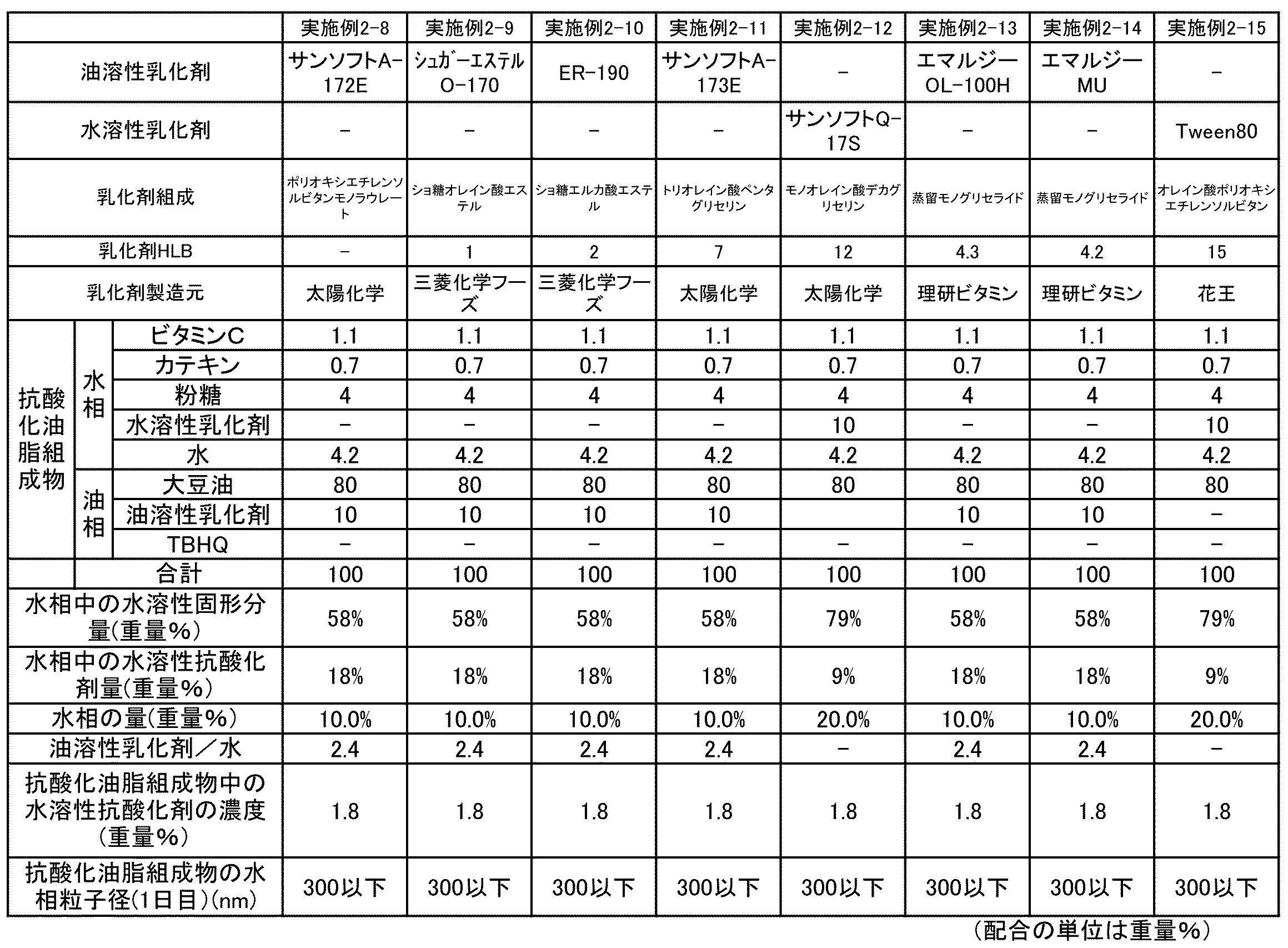
表2-1の配合にて、「○油脂組成物の調製法(検討2)」に従い、サンプルを調製した。
得られたサンプルを「○POVによる酸化安定性評価法(検討2)」に従い、評価した。結果を表2-2に示した。
なお、本検討においても乳化操作後の粒子径の、装置による実測は行わなかったが、実施例に該当するサンフ゜ルにつては目視で沈殿等の発生がないことを確認しており、実施例については粒子径は全て300nm以下と判断された。

・大豆油には、不二製油株式会社製「大豆白絞油」を使用した。
・「油溶性乳化剤/水」は抗酸化油脂組成物における、油溶性乳化剤の水に対する量を示した。
・TBHQにはAmalfi社製製品(Product Number 3015200)を使用した。
・水相の存在するすべての配合において、調製時の水相に沈殿は確認されなかった。
1.水相に分類されている成分、及び油相に分類されている成分をそれぞれ混合し、溶解した。なお、TBHQは油相に溶解した。
2.水相と油相を混合し、油中水型に略乳化した。
3.2の乳化液を高圧ホモゲナイザー(37Mpa、20パス)にて油中水型乳化物に乳化した。
1.各サンプル7.5gをEPA19.8%、DHA45.4%含有する油脂で4倍に希釈した。
2.1の希釈した油脂を50ml容ガラス瓶へ入れ、ふたをして、 60℃インキュベーターに入れ、80rpmで撹拌した。
3.5日目にサンプリングし、過酸化物価(POV)を測定した。なおPOVの測定は基準油脂分析試験法に従った。
4.5日目のPOVが14以下のサンプルを合格とした。

・TBHQは強力な抗酸化剤であり、コントロール(比較例2-1)のPOVが53.1であるのに対し、これを15.2にまで抑えることが出来た。本発明における抗酸化油脂組成物は、さらにPOVの上昇を抑える機能が確認された。また、油溶性乳化剤を併用した場合は、その効果は更に向上した。
・本発明においては、使用する油溶性乳化剤としては、ポリグリセリンエステル、シュガーエステル、蒸留モノグリセリドが好ましく、特にポリグリセリンエステルが好ましく、そのうちポリグリセリン縮合リシノレイン酸エステルが最も好ましかった。
・HLBの高い乳化剤を使用したものは、POVの上昇抑制効果は弱かった。
表2-3の配合にて、「○油脂組成物の調製法(検討2)」に従い、サンプルを調製した。
得られたサンプルを「○CDM酸化安定性評価法(検討2ー2)」に従い、評価した。結果を表2-4に示した。
なお、本検討においても乳化操作後の粒子径の、装置による実測は行わなかったが、実施例に該当するサンフ゜ルにつては目視で沈殿等の発生がないことを確認しており、実施例については粒子径は全て300nm以下と判断された。


・ビタミンEにはエーザイ・フードケミカル(株)社製「イーミックス 70L」を使用した。
・レシチンには大豆レシチンを使用した。
・乳化剤1には、阪本薬品工業株式会社製ポリグリセリン縮合リシノレイン酸エステル「CRS-75」を使用した。
・すべての配合において、調製時の水相に沈殿は確認されなかった。
1.DHA37%、 EPA1.9%を含有するPUFA油8部に対し、各サンプル2部を添加し、撹拌した。
2.1の混合液を、CDM測定装置(メトローム社製CDM試験機「ランシマット」)にて、96℃、空気吹込み量20.0L/h、検体仕込み量3.0gの条件で酸化安定性の評価を行った。
3.比較例2-4以上のCDM値が得られたものを合格と判断した。
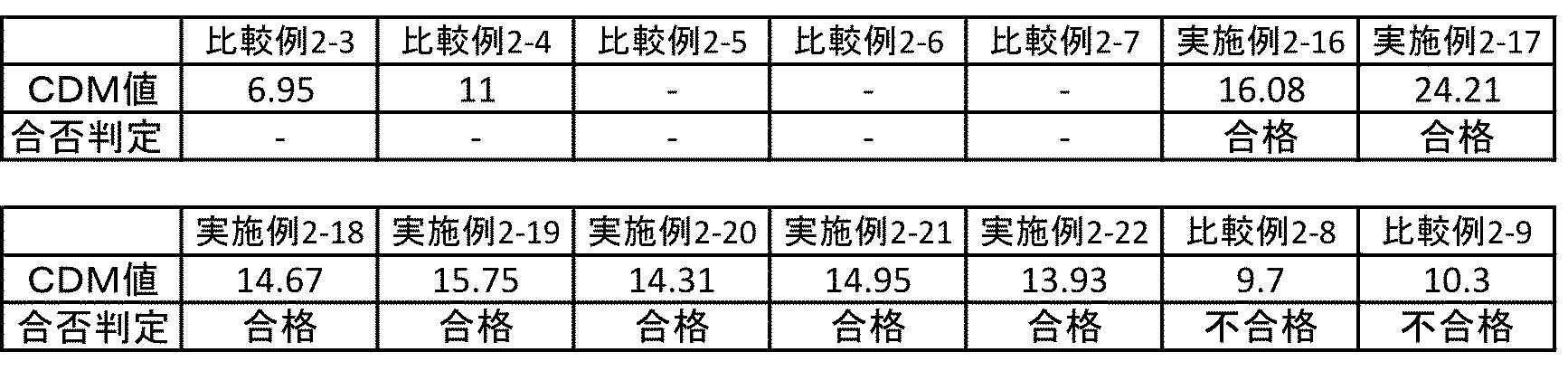
・上記の通り、レシチンを使用した場合でも、良好な抗酸化力が示された。
・試験的に、油溶性抗酸化剤であるビタミンEを添加したが、それによる効果は確認できなかった。
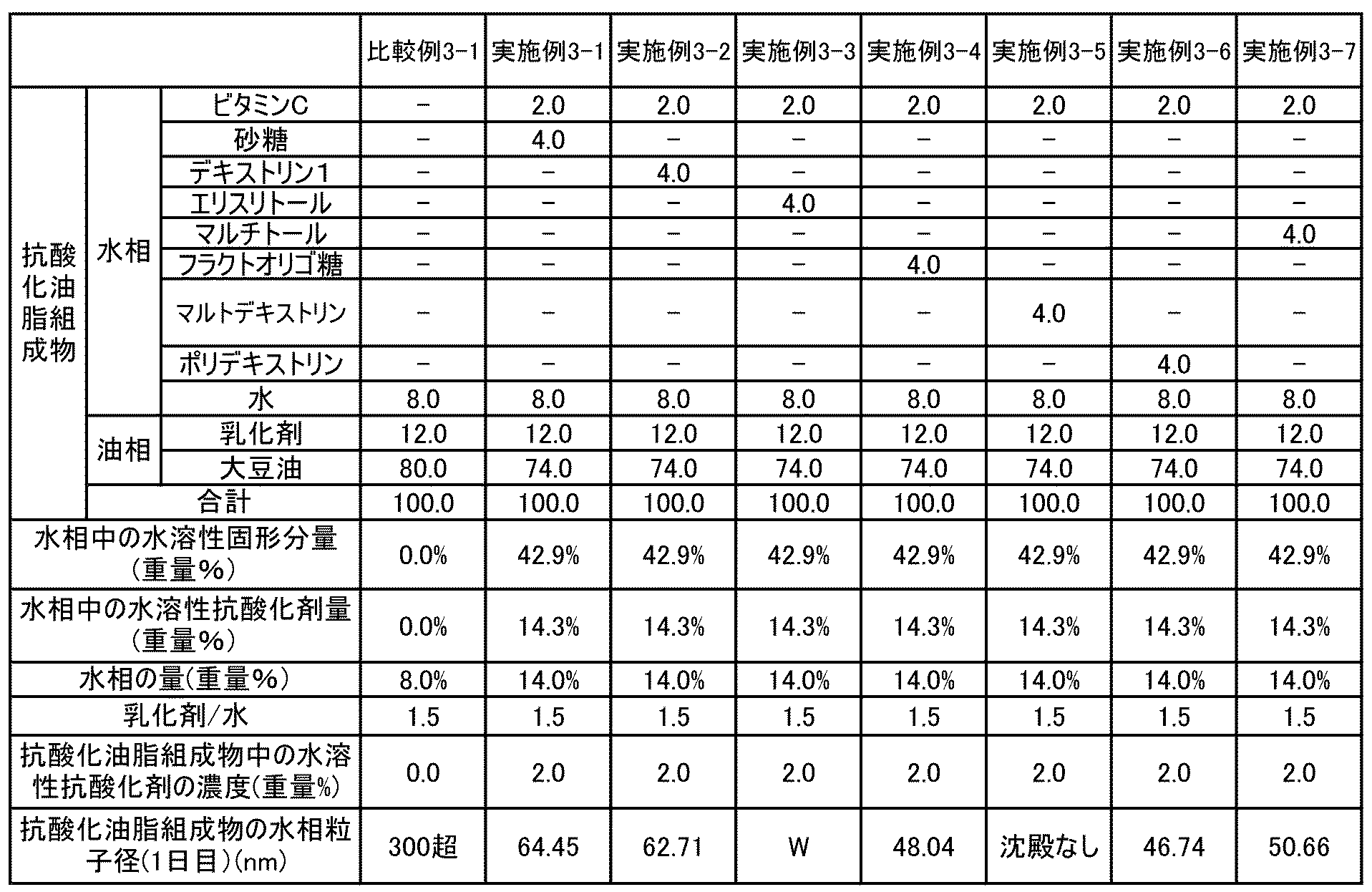
表3-1の配合にて、「○油脂組成物の調製法(検討3)」に従い、サンプルを調製した。得られたサンプルを「○CDM酸化安定性評価法(検討3)」に従い、評価した。結果を表3-2に示した。
なお、実施例3-15、比較例3-9については、○POVによる酸化安定性評価法(検討3)」に記載の方法で行った。結果を表3-3に示した。


・フラクトオリゴ糖には、和光純薬製「フラクトオリゴ糖」を使用した。
・マルトデキストリンには、松谷化学株式会社製「パインデックス#4」を使用した。
・ポリデキストリンにはダニスコ社製「ライテスウルトラ」を使用した。
・乳化剤には阪本薬品工業株式会社製ポリグリセリン縮合リシノレイン酸エステル「CRS-75」を使用した。
・大豆油には不二製油株式会社製「大豆白絞油」を使用した。
・グリセリンにはキシダ化学株式会社製「食品添加物 グリセリン」を使用した。
・「粒子径(nm)1日目)は乳化工程後1日目の粒子径を測定した値を記載した。ここで、沈殿の発生はないが測定結果がダブルピークとなっているものはWと記載した。また、粒子径の測定はしなかったものの、目視で沈殿のないことを確認したサンプルについては「沈殿なし」とした。
・すべての配合において、調製時の水相に沈殿は確認されなかった。
1.水相に分類されている成分、及び油相に分類されている成分をそれぞれ混合し、溶解した。
2.水相と油相を混合し、油中水型に略乳化した。
3.2の乳化液を高圧ホモゲナイザー(37Mpa、20パス)にて油中水型乳化物に乳化した。
1.各サンプルをPUFA油(EPA19.8%、DHA45.4%含有)で4倍に希釈した。
2.1の希釈サンプル3.0gを、CDM測定装置(メトローム社製CDM試験機「ランシマット」)にて、96℃、空気吹込み量20.0L/h、検体仕込み量3.0g、(水の量70ml)の条件で酸化安定性の評価を行った。また、サンプルの代わりに大豆油をPUFA油で4倍に希釈し、同様に測定した値を「コントロール油脂のCDM値」とした。
3.2で得られた各希釈サンプルのCDM値を、「コントロール油脂のCDM値」で割り、2.9以上を合格とした。
なお、測定に際して沈殿が生じているサンフ゜ルについては、原則、CDM値の測定は実施しなかった。
(大豆油3.0gを上記2の条件でCDM値を測定したところ、20hrであった)。
1.実施例3-15、比較例3-9のサンプル1重量部に対し、鮪油(マルハニチロ食品株式会社製「DHA22K」を4重量部混合した。
2.得られた調合油を100ml容トールビーカーへ50ml入れ、アルミ箔で遮光の上、解放系で60℃のインキュベーター内で80rpmにて攪拌した。
3.経時的にサンプリングし、過酸化物価(POV)を測定した。POVの測定はヨウ素滴定法に従った。
4.10日目でのPOVが5.0以下を合格とした。また、3日目でPOVが1以上となるものは不合格とした。
なお、コントロールとして、大豆油1重量部に対して、同鮪油を4重量部混合したものを使用した。
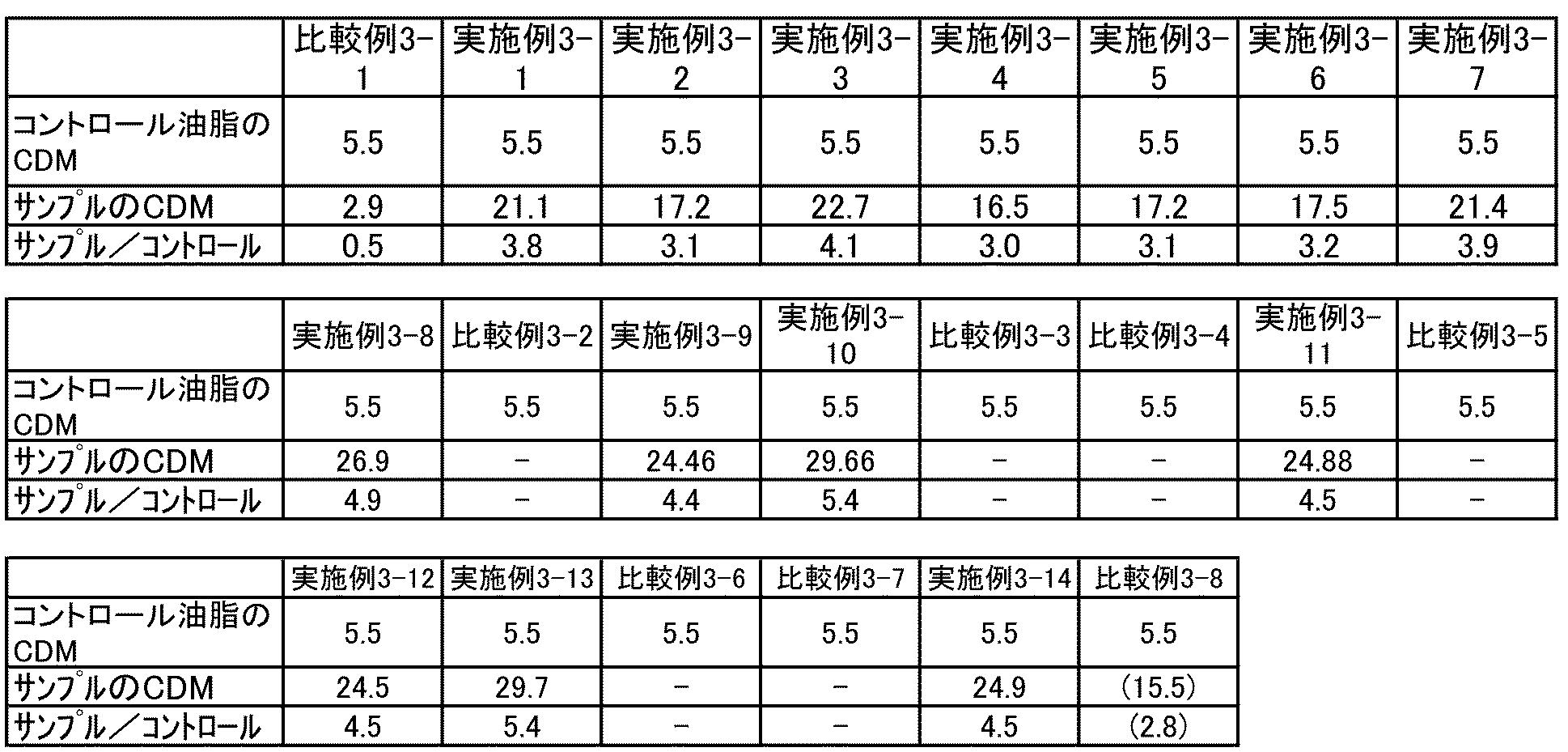

・水溶性固形分として各種糖質を使用した場合、沈殿の発生が抑制されることが確認された。
・比較例3-8は、1日目の段階で沈殿の発生が観察された。沈殿が発生したものは原則、CDM値の測定は行わないが、試験的にCDM値を測定した。その結果、砂糖を添加した実施例3-1及びソルビトールを添加した実施例3-8等の方が、CDM値は勝った。このことから、それ自身は抗酸化力を持たないと考えられる糖質の使用により、乳化の安定性のみならず、抗酸化力が向上していることが確認された。
・なお、CDM値は空気をバブリングすることによる、攪拌下での抗酸化力の測定法で得られる数値であり、静置での保管を原則とする食品への適用においては、沈殿の発生により、抗酸化力はより低くなると推察された。
表3-4の配合にて、「○油脂組成物の調製法(検討3の2)」に従い、サンプルを調製した。得られたサンプルを「○CDM酸化安定性評価法(検討3の2)」に従い、評価した。結果を表3-5に示した。

・大豆油には、不二製油株式会社製「大豆白絞油」を使用した。
・TBHQにはAmalfi社製製品(Product Number 3015200)を使用した。
・水相のあるすべての配合において、調製時の水相に沈殿は確認されなかった。
1.実施例3-16については、水相に分類されている成分、及び油相に分類されている成分をそれぞれ混合し、溶解した。
比較例3-10,3-11については、油相の調製のみ行いサンプルとした。
2.実施例3-16については、水相と油相を混合し、油中水型に略乳化した。
3.2の乳化液を高圧ホモゲナイザー(37Mpa、20パス)にて油中水型乳化物に乳化した。
1.各サンプル1重量部に対し、PUFA油(EPA19.8%、DHA45.4%含有)を9重量部添加し希釈した。
2.1の希釈サンプル3.0gを、CDM測定装置(メトローム社製CDM試験機「ランシマット」)にて、96℃、空気吹込み量20.0L/h、検体仕込み量3.0g、(水の量70ml)の条件で酸化安定性の評価を行った。
3.比較例3-11、実施例3-16のサンプルを用い得られた値を、比較例3-10のサンプルを用い得られた値で割り、2以上となった場合に合格と判断した。
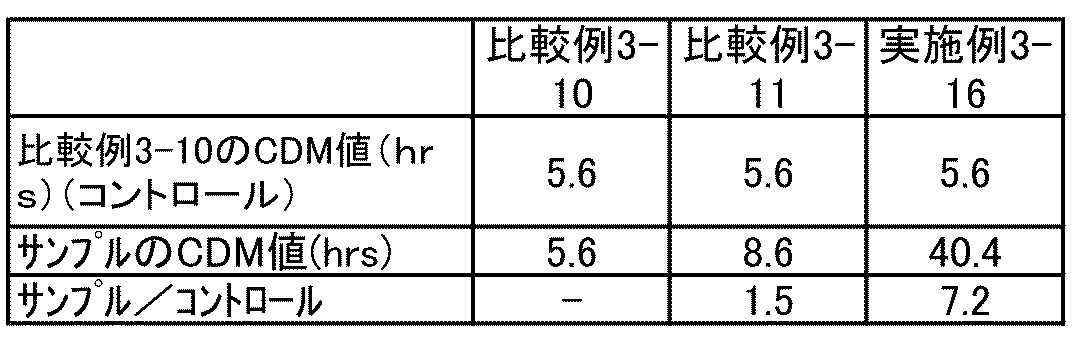
・PUFA油を多く配合した評価系においても、本発明に係る抗酸化油脂組成物は、TBHQをしのぐ高い抗酸化力を示した。なお、本評価系における、DHAとEPAの合計量は、58.7重量%であった。即ち、DHAとEPAを合計60重量%程度含む不飽和脂肪酸含有油脂組成物においても、高い安定性が得られることが示された。
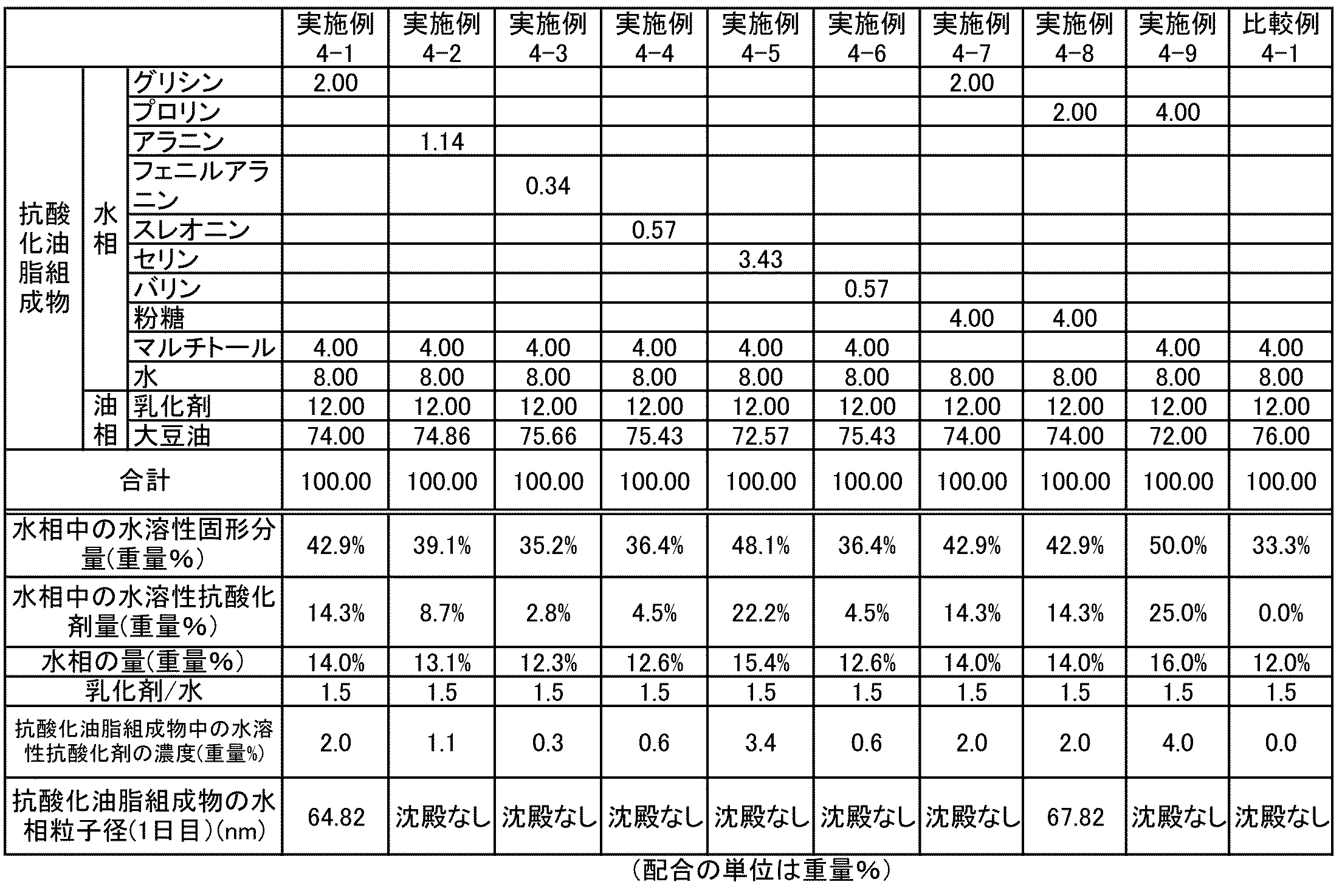
表4-1の配合にて、「○油脂組成物の調製法(検討4)」に従い、サンプルを調製した。得られたサンプルを「○CDM酸化安定性評価法(検討4)」に従い、評価した。結果を表4-2に示した。
・乳化剤には阪本薬品工業株式会社製ポリグリセリン縮合リシノレイン酸エステル「CRS-75」を使用した。
・グリシンとセリンには協和発酵バイオ株式会社製の食品添加物グレードを使用した。それ以外のアミノ酸は日理化学株式会社製の食品添加物グレードを使用した。
・すべての配合において、調製時の水相に沈殿は確認されなかった。
1.水相に分類されている成分、及び油相に分類されている成分をそれぞれ混合し、溶解した。
2.水相と油相を混合し、油中水型に略乳化した。
3.2の乳化液を高圧ホモゲナイザー(37Mpa、20パス)にて油中水型乳化物に乳化した。
1.EPA:19.1%、DHA:37.3%を含有するPUFA油9に対し、各サンプル1を添加し、撹拌した。
2.1の混合液を、CDM測定装置(メトローム社製CDM試験機「ランシマット」)にて、96℃、空気吹込み量20.0L/h、検体仕込み量3.0gの条件で酸化安定性の評価を行った。
3.1のサンプルとして大豆油を使用したコントロールに対し、1.2倍以上のCDM値が得られたものを合格と判断した。

アミノ酸は種類により溶解度が異なり、溶解度の低いアミノ酸は水相へ溶解する量も低くなり、その分抗酸化力も弱くなる傾向がみられた。しかし、いずれのアミノ酸を使用した場合も、抗酸化力が向上する傾向が確認された。
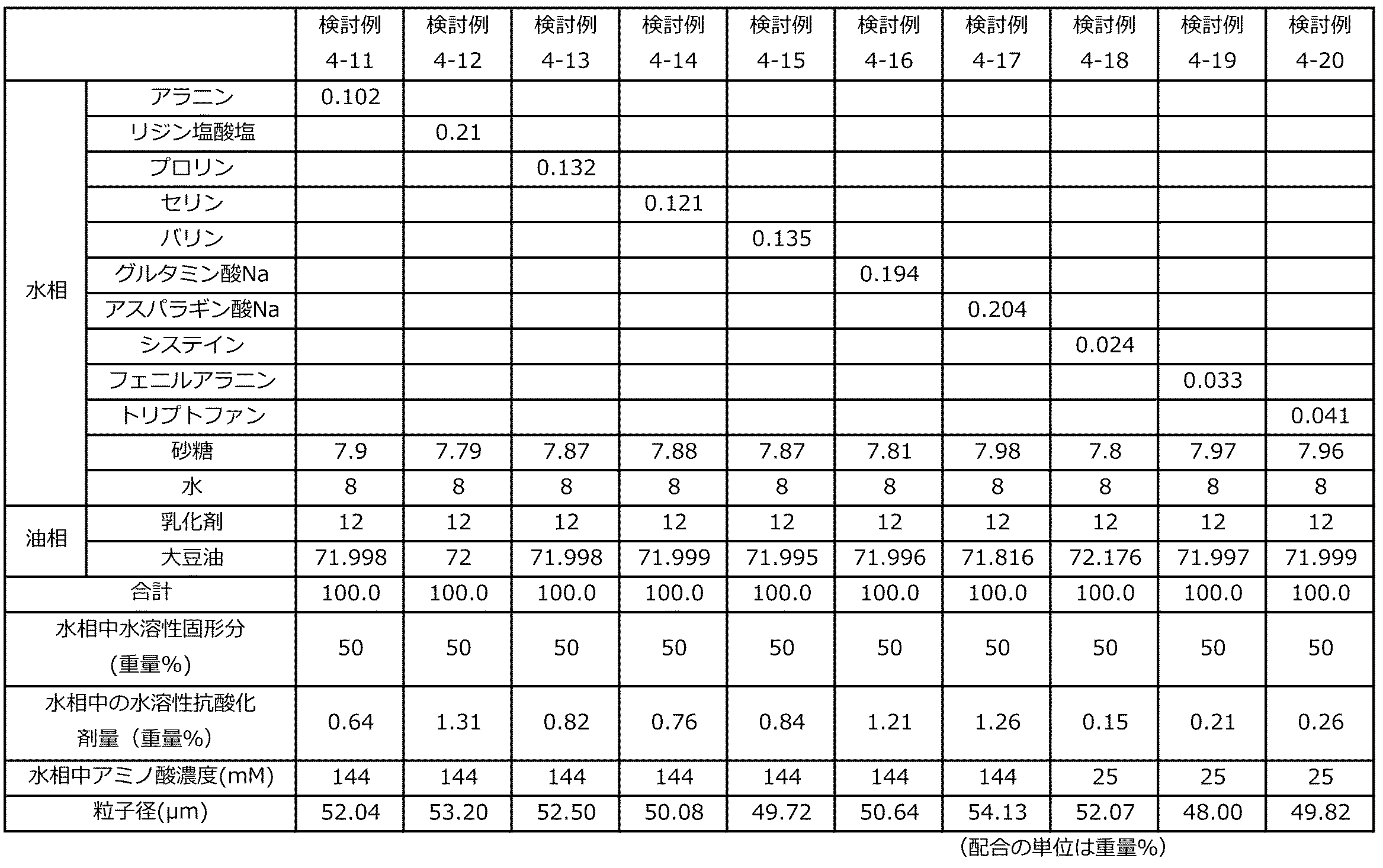
各アミノ酸の抗酸化力を比較するため、水相におけるアミノ酸の濃度を144mMもしくは25mMにあわせ比較検討をおこなった。
表4-3の配合にて、「○油脂組成物の調製法(検討4)」に従い、サンプルを調製した。得られたサンプルを「○CDM酸化安定性評価法(検討4の2)」に従い、評価した。結果を表4-4に示した。

・乳化剤には阪本薬品工業株式会社製ポリグリセリン縮合リシノレイン酸エステル「CRS-75」を使用した。
・すべての実施例配合において、調製時の水相に沈殿は確認されなかった。
1.DHA 20.0% EPA5.7%を含有する魚油9に対し、各サンプル1を添加し、撹拌した。
2.1の混合液を、CDM測定装置(メトローム社製CDM試験機「ランシマット」)にて、96℃、空気吹込み量20.0L/h、検体仕込み量3.0gの条件で酸化安定性の評価を行った。
3.検討例4-1以上のCDM値が得られたものを合格と判断した。

・各アミノ酸のモル濃度あたりの抗酸化力の比較を行うため、比較対象とするアミノ酸が容易に溶解する濃度にそろえ、試験した。
・表4-4に示したように、試験した全てのアミノ酸において、検討例4-1以上のCDM値が得られ、合格と判断された。
・以上の結果より、本発明に係る所定の濃度にて油脂組成物を調製した場合には、十分な抗酸化力を示すことが推定された。
表5-1の配合にて、「○油脂組成物の調製法(検討5)」に従い、サンプルを調製した。得られたサンプルを「○CDM酸化安定性評価法(検討5)」に従い、評価した。結果を表5-2に示した。


・大豆油には、不二製油株式会社製「大豆白絞油」を使用した。
・乳化剤には阪本薬品工業株式会社製ポリグリセリン縮合リシノレイン酸エステル「CRS-75」を使用した。
・すべての実施例配合において、調製時の水相に沈殿は確認されなかった。
1.配合で水相に分類されている原材料を混合、溶解して水相とした。
2.油脂に、配合に従い乳化剤を溶解し、油相とした。
3.油相に水相を入れ、ホモミキサーにて混合し乳化液とした。
4.さらに、高圧ホモゲナイザー(37Mpa、20パス)にて油中水型乳化物に乳化した。
1.DHA37% EPA1.9%を含有するPUFA油8部に対し、各サンプル2部を添加し、撹拌した。
2.1の混合液を、CDM測定装置(メトローム社製CDM試験機「ランシマット」)にて、96℃、空気吹込み量20.0L/h、検体仕込み量3.0gの条件で酸化安定性の評価を行った。
3.1のサンプルの代わりに大豆油を使用したコントロールに対し、1.2倍以上のCDM値が得られたものを合格と判断した。

・水溶性固形分量、水溶性抗酸化剤量を所定量とすることで、高い抗酸化力を有する油脂組成物を得ることが出来た。
表6-1の配合にて、「○油脂組成物の調製法(検討6)」に従い、サンプルを調製した。得られたサンプルを「○CDM酸化安定性評価法(検討6)」に従い、評価した。結果を表6-2に示した。
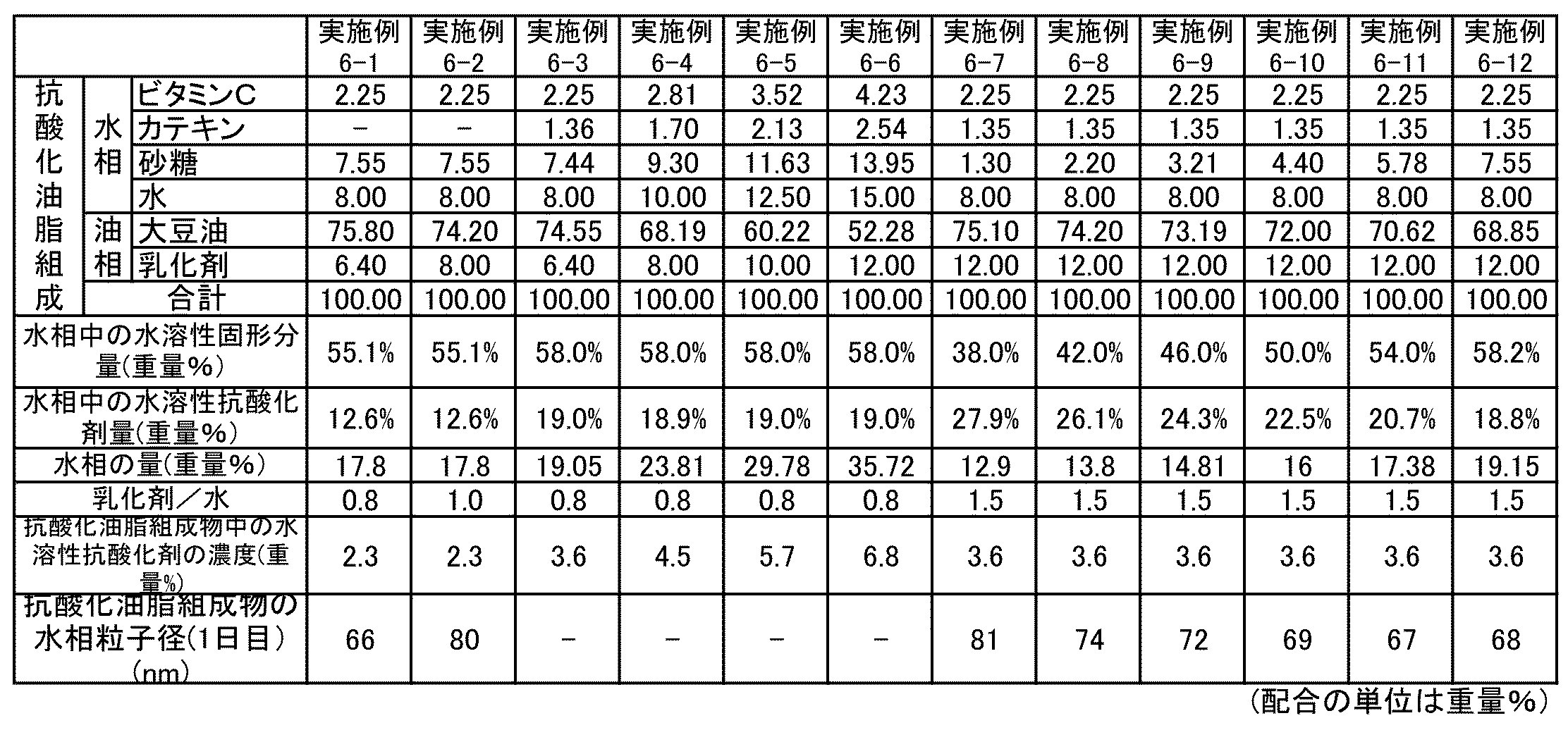
・カテキンには太陽化学株式会社製「サンフェノン90S」を使用した。
・大豆油には、不二製油株式会社製「大豆白絞油」を使用した。
・乳化剤には阪本薬品工業株式会社製ポリグリセリン縮合リシノレイン酸エステル「CRS-75」を使用した。
・すべての配合において、調製時の水相に沈殿は確認されなかった。
1.配合で水相に分類されている原材料を混合、溶解して水相とした。
2.油脂に、配合に従い乳化剤を溶解し、油相とした。
3.油相に水相を入れ、ホモミキサーにて混合し乳化液とした。
4.さらに、高圧ホモゲナイザー(37Mpa、20パス)にて油中水型乳化物に乳化した。
1.DHA37% EPA1.9%を含有するPUFA油8部に対し、各サンプル2部を添加し、撹拌した。
2.1の混合液を、CDM測定装置(メトローム社製CDM試験機「ランシマット」)にて、96℃、空気吹込み量20.0L/h、検体仕込み量3.0gの条件で酸化安定性の評価を行った。
3.1のサンプルの代わりに大豆油を使用したコントロールに対し、1.2倍以上のCDM値が得られたものを合格と判断した。

・配合の相違によらず、水溶性固形分量等が所定の範囲内であれば、強い抗酸化力を示すことが確認された。
製造法の違いによる、抗酸化力の相違について検証した。
表7-1の配合にて、「○油脂組成物の調製法(検討7)」に従い、サンプルを調製した。得られたサンプルを表7-2に従い抗酸化力測定用サンプルを調製し、ランシマットへ供しCDM値を測定した。測定条件は、「96℃、空気吹込み量20.0L/h、検体仕込み量3.0g、(水の量70ml)とした。なお、「抗酸化力測定用サンプル」は、配合に従い混合し、軽く撹拌し均一化し調製した。
CDM値は表7-3に記載した。比較例7-1に対し、1.5倍以上を合格とした。
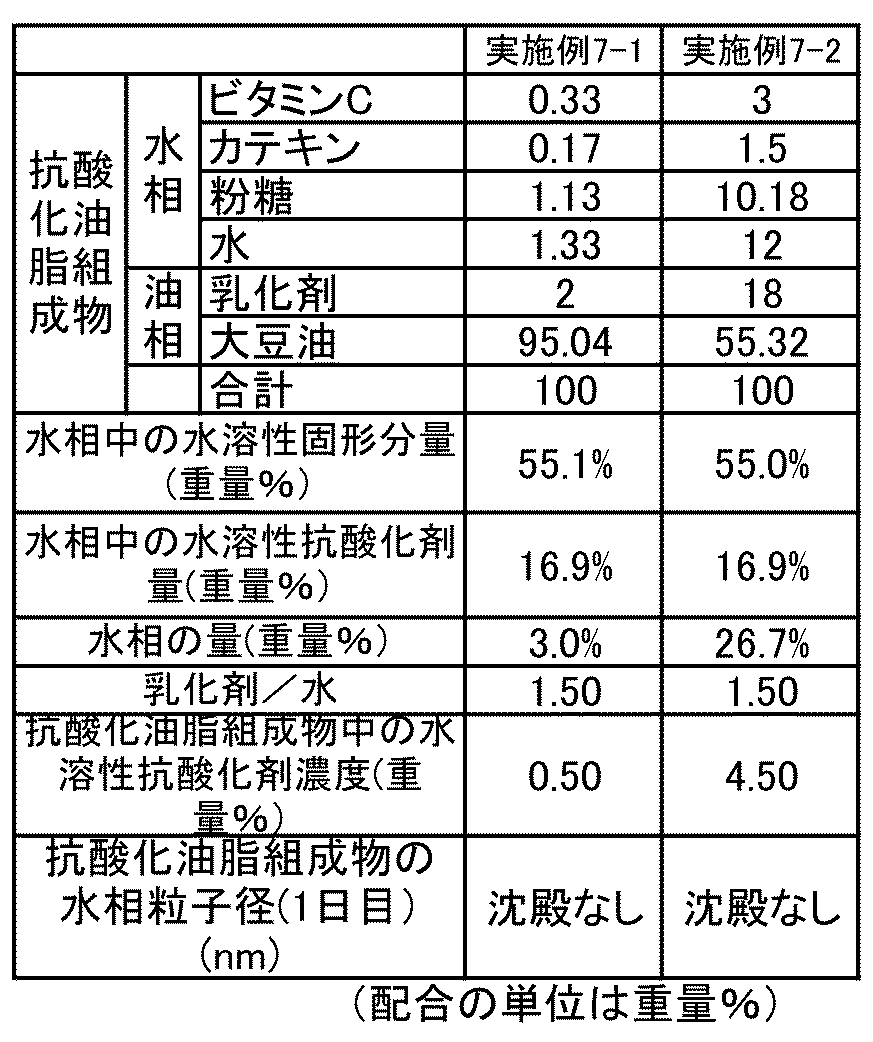
・大豆油には不二製油株式会社製「大豆白絞油」を使用した。
・乳化剤には阪本薬品工業株式会社製ポリグリセリン縮合リシノレイン酸エステル「CRS-75」を使用した。

1.配合で水相に分類されている原材料を混合、溶解して水相とした。
2.油脂に、配合に従い乳化剤を溶解し、油相とした。
3.油相に水相を入れ、ホモミキサーにて混合し乳化液とした。
4.さらに、高圧ホモゲナイザー(37Mpa、20パス)にて油中水型乳化物に乳化した。

抗酸化油脂組成物における抗酸化剤の濃度を変えて調製し、最終的に抗酸化剤が同量となるように調整して、CDM値を測定した。
表7-3に示す通り、抗酸化油脂組成物における抗酸化剤の濃度は所定の値であれば、高い抗酸化力を示すことが示された。
また、抗酸化油脂組成物中の抗酸化剤の濃度を濃く作った実施例7-4の方が、より高い抗酸化力を示すことも確認された。
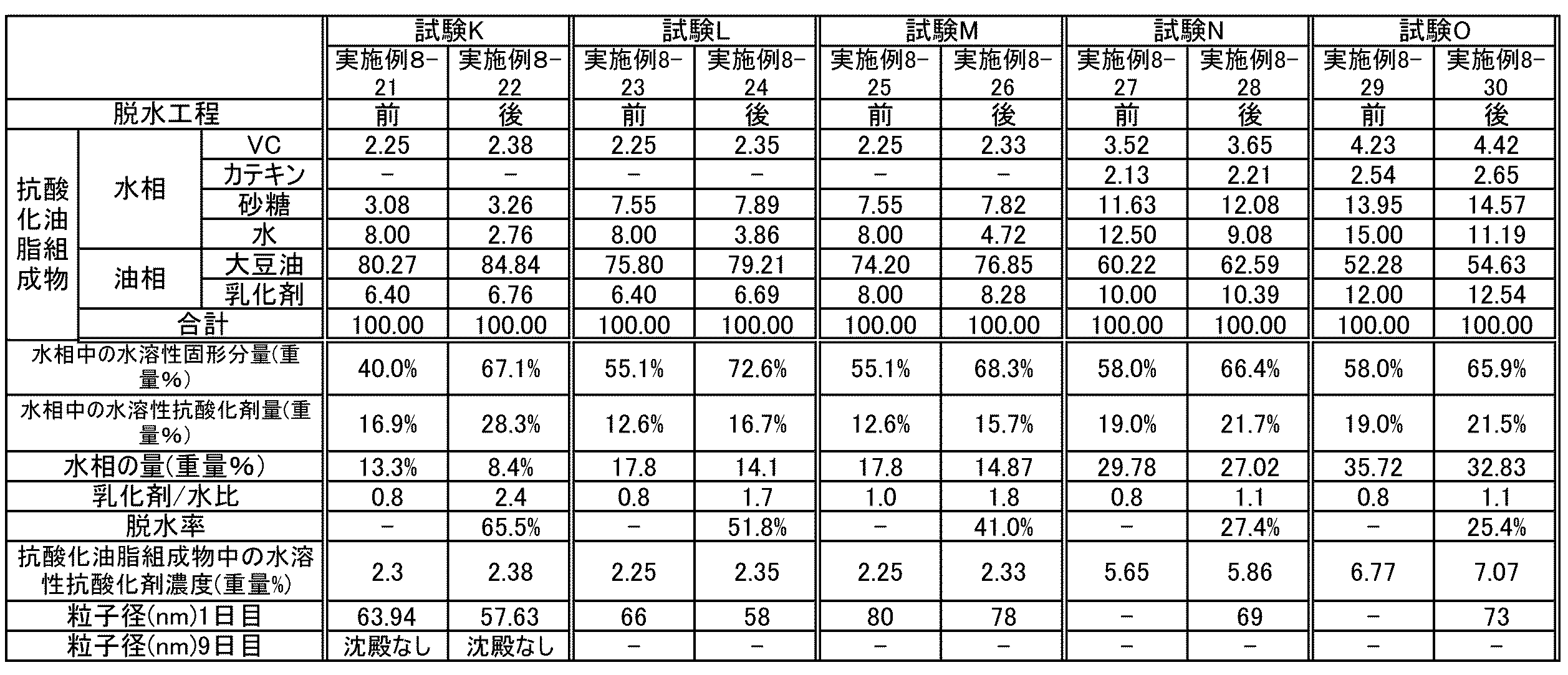
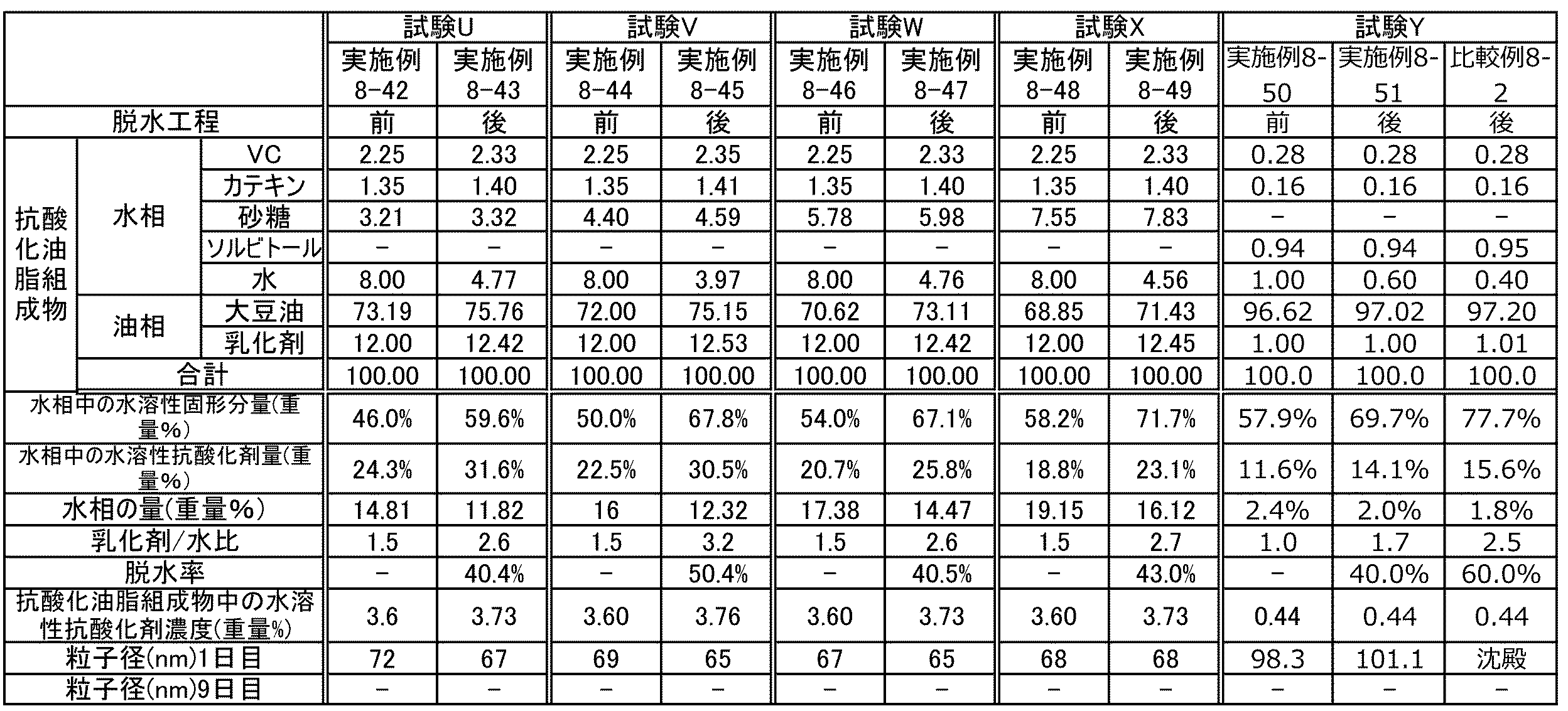
表8-1の試験A~Xにおいて、「脱水工程前」に記載する配合にて「○油脂組成物の調製法(検討8)」に従い、油脂組成物を調製した。その後、窒素を通気することにより部分脱水を行った。表8-1における「脱水工程後」には、脱水操作に伴い減少した質量を脱水された水分とし、脱水後の計算上の組成を記載した。
表8-1には、各サンプルの粒子径を適宜記載した。
得られたサンプルを「○CDM酸化安定性評価法(検討3)」に従い評価した。結果を表8-2に示した。
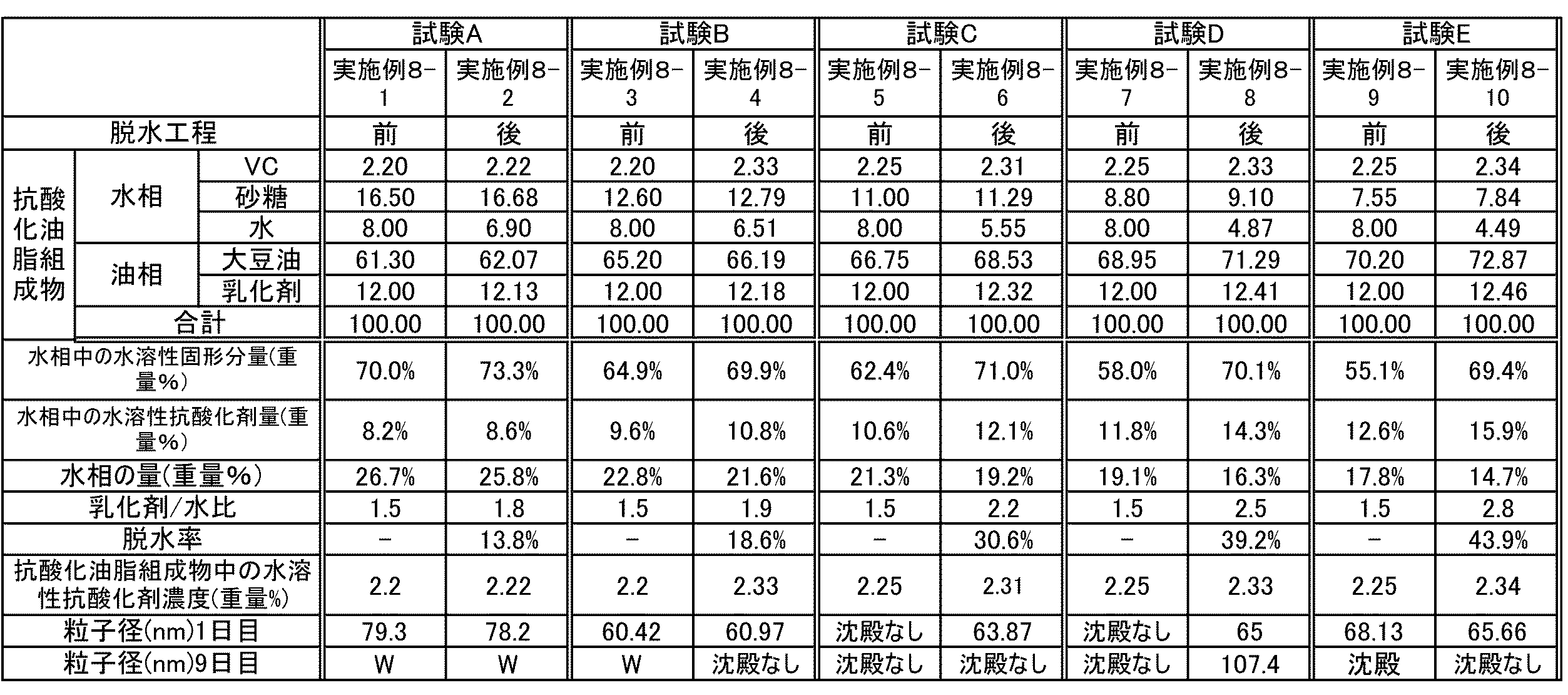
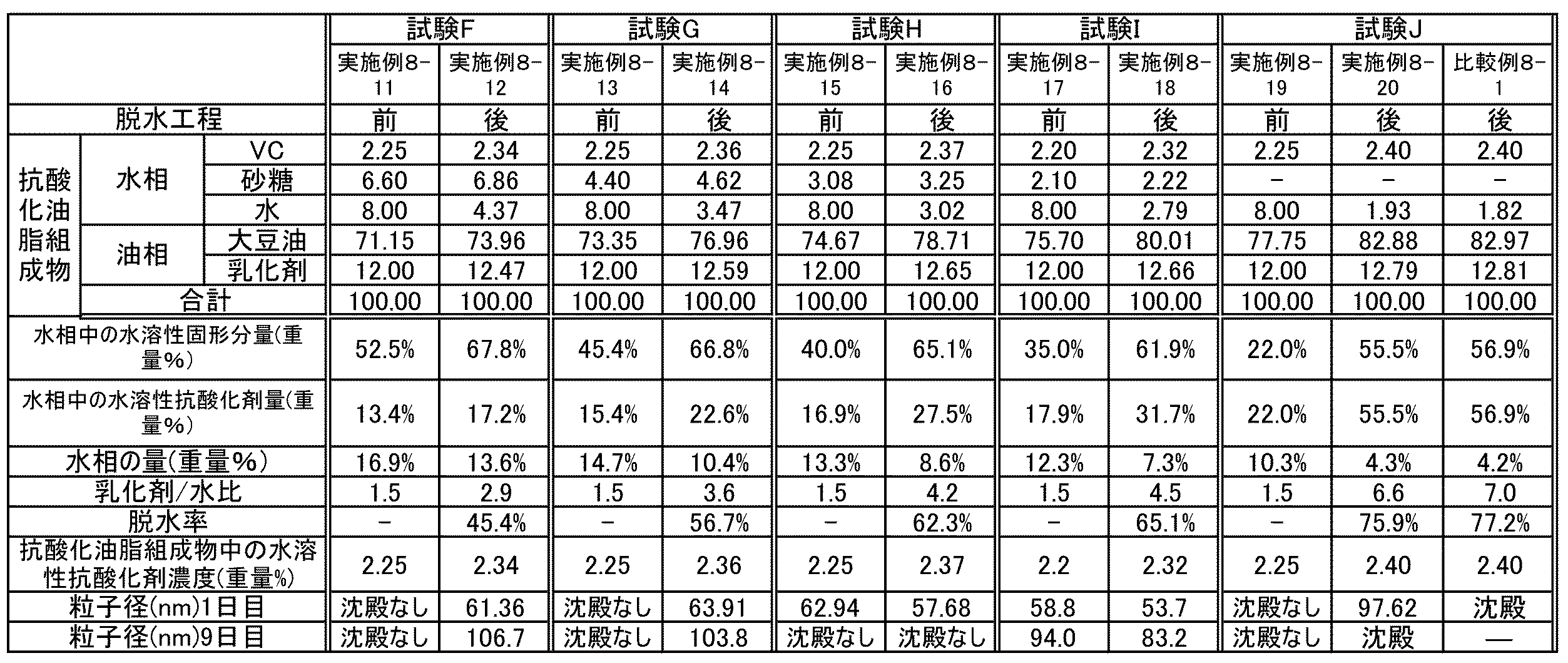


・カテキンには太陽化学株式会社製「サンフェノン90S」を使用した。
・大豆油には不二製油株式会社製「大豆白絞油」を使用した。
・乳化剤には阪本薬品工業株式会社製ポリグリセリン縮合リシノレイン酸エステル「CRS-75」を使用した。
・すべての配合において、調製時の水相に沈殿は確認されなかった。
1.配合で水相に分類されている原材料を混合、溶解して水相とした。
2.油脂に、配合に従い乳化剤を溶解し、油相とした。
3.油相に水相を入れ、ホモミキサーにて混合し乳化液とした。
4.さらに、高圧ホモゲナイザー(37Mpa、20パス)にて油中水型乳化物に乳化した。
5.窒素を通気することにより部分脱水を行った。

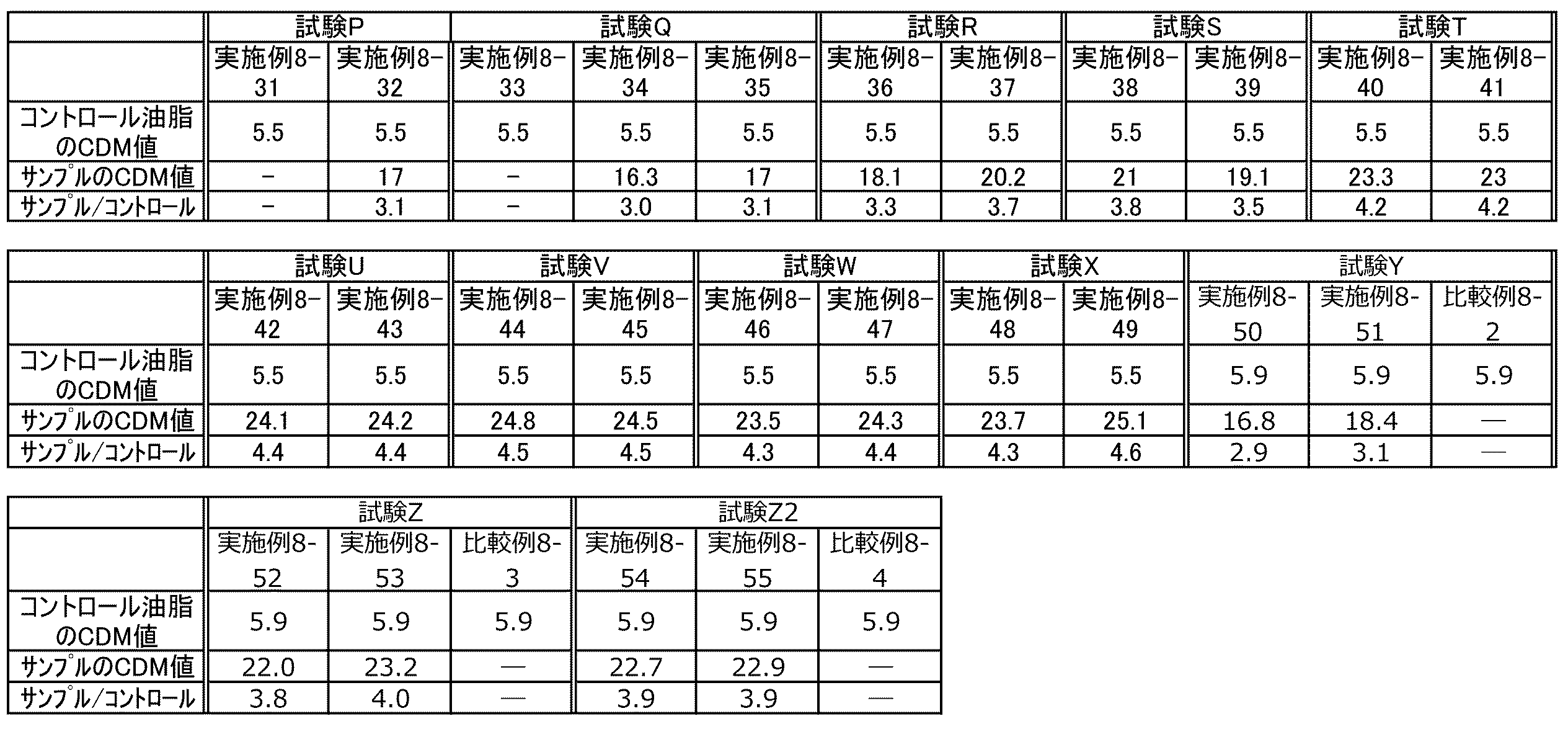
・本検討において、適当な部分脱水を行うことにより、粒子径が縮小したり、また、経時的な沈殿の発生が抑制される等の効果が確認された。また、脱水により抗酸化力が向上する場合もあった。
・一方、過剰な脱水を行った場合は、沈殿の発生については逆効果となる場合もあることが確認された。たとえば、比較例8-2、8-3,8-4のように、抗酸化油脂組成物中の水分が0.5重量%を下回るまで脱水すると、沈殿を生じ不適であった。
本発明で得られる油脂組成物の、抗酸化力の比較確認を行った。
サンプルは表9-1に示した。効果はPOVの測定で行った。評価法の詳細は以下「○POVによる酸化安定性評価法(検討9)」に記載の方法で行った。
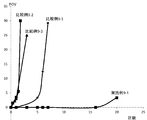
結果を図1に示した。

1.表9-1の配合に従い調製した油脂を、50ml容ガラス瓶へ入れ、ふたをして、 60℃インキュベーターに入れ、80rpmで撹拌した。
2.適時にサンプリングし、過酸化物価(POV)を測定した。なおPOVの測定は基準油脂分析試験法に従った。
図1に示した通り、本発明に係る油脂組成物を使用した場合、PUFA油の酸化安定性が大豆油よりも高い値を示すようになった。その抗酸化力は、合成抗酸化剤であるTBHQを上回るものであった。
PUFA油は、その酸化安定性の低さから、使用態様が制限される場面も多かったが、本発明に係る油脂組成物を使用することで、大豆油のような一般的な油脂と同様に使用することが出来るようになったと推察された。
なお、本検討に際し、併せて臭気を確認する方法での官能評価を行った。ここでも、本発明に係る油脂組成物を使用したPUFA油は、魚臭さ等の異臭の発生が強く抑制され、汎用的な使用が可能なものであった。従来、魚油等においては、過酸化物価の数値上昇が顕在化する前から異臭が発生する場合もあり、異臭の発生には酸化とは別の要素の存在も想定されていた。しかし、本発明において、圧倒的に強力な抗酸化力を有する油脂組成物を用いることで、異臭の発生を抑えることが出来たことから、魚油等の異臭の発生は、酸化が主たる原因であることが示唆された。
Claims (25)
- 水溶性抗酸化剤を水相中2.5~65重量%含有し、さらに糖質を、水相中の水溶性固形分が合計18~79重量%となるように添加された水相1~38重量%が、油相中に分散されている、水分0.5~18重量%を含有する抗酸化油脂組成物。
- 該油相が、ポリグリセリン縮合リシノレート、シュガーエステル、グリセリン脂肪酸エステル、レシチンから選ばれる1種以上の油溶性乳化剤を、水の重量に対し0.7~9倍含有する、請求項1に記載の抗酸化油脂組成物。
- 該水溶性抗酸化剤がビタミンC、アミノ酸、カテキンから選ばれる1以上である、請求項1に記載の抗酸化油脂組成物。
- 該水溶性抗酸化剤がビタミンC、アミノ酸、カテキンから選ばれる1以上である、請求項2に記載の抗酸化油脂組成物。
- 該アミノ酸がグリシン、グルタミン酸、アラニン、プロリン、リジン、トリプトファン、メチオニン、バリン、セリン、ヒスチジン、イソロイシン、ロイシン、フェニルアラニン、アルギニン、トレオニン、システイン、アスパラギン酸、グルタミン、アスパラギンから選ばれる1以上である、請求項3に記載の抗酸化油脂組成物。
- 該アミノ酸がグリシン、グルタミン酸、アラニン、プロリン、リジン、トリプトファン、メチオニン、バリン、セリン、ヒスチジン、イソロイシン、ロイシン、フェニルアラニン、アルギニン、トレオニン、システイン、アスパラギン酸、グルタミン、アスパラギンから選ばれる1以上である、請求項4に記載の抗酸化油脂組成物。
- 糖質が、糖アルコール、グルコース、スクロース、デキストリン、マルトース、オリゴ糖から選ばれる1以上である、請求項6に記載の抗酸化油脂組成物。
- 糖質が、糖アルコール、グルコース、スクロース、デキストリン、マルトース、オリゴ糖から選ばれる1以上である、請求項1~5いずれか1項に記載の抗酸化油脂組成物。
- 以下の工程による、抗酸化油脂組成物の製造法。
1.水溶性抗酸化剤を水相中2.5~65重量%含有し、さらに糖質を、水相中の水溶性固形分が合計18~79重量%となるように含有する水相を調製する工程。
2.水相の割合が1~38重量%であってかつ、抗酸化油脂組成物中の水分は0.5~18重量%となるように、油相に該水相を分散する工程。 - 該油相にポリグリセリン縮合リシノレート、シュガーエステル、グリセリン脂肪酸エステル、レシチンから選ばれる1種以上の油溶性乳化剤を、抗酸化油脂組成物中の水の重量に対し0.7~9倍含有させる、請求項9に記載の製造法。
- 該水溶性抗酸化剤がビタミンC、アミノ酸、カテキンから選ばれる1以上である、請求項9に記載の製造法。
- 該水溶性抗酸化剤がビタミンC、アミノ酸、カテキンから選ばれる1以上である、請求項10に記載の製造法。
- 該アミノ酸がグリシン、グルタミン酸、アラニン、プロリン、リジン、トリプトファン、メチオニン、バリン、セリン、ヒスチジン、イソロイシン、ロイシン、フェニルアラニン、アルギニン、トレオニン、システイン、アスパラギン酸、グルタミン、アスパラギンから選ばれる1以上である、請求項11に記載の製造法。
- 該アミノ酸がグリシン、グルタミン酸、アラニン、プロリン、リジン、トリプトファン、メチオニン、バリン、セリン、ヒスチジン、イソロイシン、ロイシン、フェニルアラニン、アルギニン、トレオニン、システイン、アスパラギン酸、グルタミン、アスパラギンから選ばれる1以上である、請求項12に記載の製造法。
- 糖質が、糖アルコール、グルコース、スクロース、デキストリン、マルトース、オリゴ糖から選ばれる1以上である、請求項9に記載の製造法。
- 糖質が、糖アルコール、グルコース、スクロース、デキストリン、マルトース、オリゴ糖から選ばれる1以上である、請求項10に記載の製造法。
- 糖質が、糖アルコール、グルコース、スクロース、デキストリン、マルトース、オリゴ糖から選ばれる1以上である、請求項11に記載の製造法。
- 糖質が、糖アルコール、グルコース、スクロース、デキストリン、マルトース、オリゴ糖から選ばれる1以上である、請求項12に記載の製造法。
- 糖質が、糖アルコール、グルコース、スクロース、デキストリン、マルトース、オリゴ糖から選ばれる1以上である、請求項13に記載の製造法。
- 糖質が、糖アルコール、グルコース、スクロース、デキストリン、マルトース、オリゴ糖から選ばれる1以上である、請求項14に記載の製造法。
- 請求項9~20いずれか1項に記載の製造法において得られる抗酸化油脂組成物に含まれる水分のうち、12~76重量%を脱水し、該抗酸化油脂組成物中の水分を0.5~18重量%とする、抗酸化油脂組成物の製造法。
- 請求項1~7いずれか1項に記載の抗酸化油脂組成物を0.1~100重量%含有する、不飽和脂肪酸含有油脂組成物。
- 請求項8に記載の抗酸化油脂組成物を0.1~100重量%含有する、不飽和脂肪酸含有油脂組成物。
- DHAとEPAを合計で0.1~60重量%含有する、請求項22に記載の不飽和脂肪酸含有油脂組成物。
- DHAとEPAを合計で0.1~60重量%含有する、請求項23に記載の不飽和脂肪酸含有油脂組成物。
Priority Applications (8)
| Application Number | Priority Date | Filing Date | Title |
|---|---|---|---|
| MYPI2018703050A MY187373A (en) | 2016-03-02 | 2017-02-28 | Fat or oil composition exhibiting anti-oxidation properties |
| KR1020187028168A KR102798083B1 (ko) | 2016-03-02 | 2017-02-28 | 항산화 유지 조성물 |
| JP2018503344A JP7103216B2 (ja) | 2016-03-02 | 2017-02-28 | 抗酸化油脂組成物 |
| EP17760023.6A EP3425033B1 (en) | 2016-03-02 | 2017-02-28 | Fat or oil composition exhibiting anti-oxidation properties |
| SG11201807310QA SG11201807310QA (en) | 2016-03-02 | 2017-02-28 | Fat or oil composition exhibiting anti-oxidation properties |
| BR112018016998-6A BR112018016998B1 (pt) | 2016-03-02 | 2017-02-28 | Composição antioxidante de óleo e gordura e métodos para produzir a mesma |
| CN201780014720.5A CN108713053A (zh) | 2016-03-02 | 2017-02-28 | 抗氧化油脂组合物 |
| US16/082,216 US20200347300A1 (en) | 2016-03-02 | 2017-02-28 | Fat or oil composition exhibiting anti-oxidation properties |
Applications Claiming Priority (4)
| Application Number | Priority Date | Filing Date | Title |
|---|---|---|---|
| JPPCT/JP2016/056457 | 2016-03-02 | ||
| PCT/JP2016/056457 WO2017149701A1 (ja) | 2016-03-02 | 2016-03-02 | 油脂組成物 |
| JP2016-115392 | 2016-06-09 | ||
| JP2016115392 | 2016-06-09 |
Publications (1)
| Publication Number | Publication Date |
|---|---|
| WO2017150558A1 true WO2017150558A1 (ja) | 2017-09-08 |
Family
ID=59743959
Family Applications (1)
| Application Number | Title | Priority Date | Filing Date |
|---|---|---|---|
| PCT/JP2017/007906 Ceased WO2017150558A1 (ja) | 2016-03-02 | 2017-02-28 | 抗酸化油脂組成物 |
Country Status (10)
| Country | Link |
|---|---|
| US (1) | US20200347300A1 (ja) |
| EP (1) | EP3425033B1 (ja) |
| JP (2) | JP7103216B2 (ja) |
| KR (1) | KR102798083B1 (ja) |
| CN (1) | CN108713053A (ja) |
| BR (1) | BR112018016998B1 (ja) |
| MY (1) | MY187373A (ja) |
| SG (1) | SG11201807310QA (ja) |
| TW (1) | TWI726057B (ja) |
| WO (1) | WO2017150558A1 (ja) |
Cited By (10)
| Publication number | Priority date | Publication date | Assignee | Title |
|---|---|---|---|---|
| JP2017225381A (ja) * | 2016-06-21 | 2017-12-28 | 不二製油株式会社 | 高度不飽和脂肪酸含有可塑性油脂組成物 |
| WO2019069636A1 (ja) | 2017-10-05 | 2019-04-11 | 不二製油グループ本社株式会社 | 高度不飽和脂肪酸含有ホワイトチョコレート様食品 |
| WO2019176330A1 (ja) * | 2018-03-16 | 2019-09-19 | 不二製油グループ本社株式会社 | アスコルビン酸製剤 |
| WO2020032107A1 (ja) * | 2018-08-09 | 2020-02-13 | 不二製油グループ本社株式会社 | 油脂組成物 |
| WO2020184548A1 (ja) * | 2019-03-13 | 2020-09-17 | 不二製油グループ本社株式会社 | 油脂組成物 |
| JPWO2019187242A1 (ja) * | 2018-03-28 | 2021-04-01 | 不二製油株式会社 | 油脂組成物 |
| WO2021251097A1 (ja) * | 2020-06-12 | 2021-12-16 | 不二製油グループ本社株式会社 | 油中水型の不飽和脂肪酸含有組成物及びその製造法 |
| WO2023119810A1 (ja) | 2021-12-20 | 2023-06-29 | 不二製油グループ本社株式会社 | 高度不飽和脂肪酸を含有する粉末油脂 |
| US20230345964A1 (en) * | 2020-05-15 | 2023-11-02 | Fuji Oil Holdings Inc. | Grape juice-containing gummy containing polyunsaturated fatty acid |
| JPWO2023219080A1 (ja) * | 2022-05-09 | 2023-11-16 |
Families Citing this family (3)
| Publication number | Priority date | Publication date | Assignee | Title |
|---|---|---|---|---|
| EP3912481A4 (en) | 2019-01-16 | 2022-10-05 | Fuji Oil Holdings Inc. | EDIBLE OIL/FAT COMPOSITION AND PROCESS FOR PRODUCTION THEREOF |
| CN110093207A (zh) * | 2019-04-23 | 2019-08-06 | 广州隽沐生物科技股份有限公司 | 注射用天然橄榄油的处理方法 |
| CN115299502B (zh) * | 2022-07-08 | 2023-08-15 | 宁夏红鑫源食品有限公司 | 一种动、植物调和油及其制备方法 |
Citations (10)
| Publication number | Priority date | Publication date | Assignee | Title |
|---|---|---|---|---|
| JPS62153385A (ja) * | 1985-12-27 | 1987-07-08 | Riken Vitamin Co Ltd | 酸化防止剤 |
| JPS6312697A (ja) * | 1986-07-03 | 1988-01-20 | 日本油脂株式会社 | トコフエロ−ルの変性防止剤 |
| JPH0584436A (ja) * | 1991-09-27 | 1993-04-06 | Marino Forum 21 | 抗酸化能を有するエマルジヨンの製造法 |
| JPH09143465A (ja) | 1995-11-21 | 1997-06-03 | Dainippon Ink & Chem Inc | 抗酸化性組成物 |
| JPH09235584A (ja) | 1996-03-01 | 1997-09-09 | Nof Corp | 油脂組成物及びそれを含む食品 |
| JP2000229118A (ja) | 1999-02-09 | 2000-08-22 | Nisshin Oil Mills Ltd:The | 消臭・酸化防止用茶抽出物含有組成物 |
| WO2001096506A1 (fr) | 2000-06-12 | 2001-12-20 | Fuji Oil Company, Limited | Procede servant a produire de la graisse |
| JP2002142673A (ja) | 2000-11-17 | 2002-05-21 | T Hasegawa Co Ltd | 油脂調理食品の親油性酸化防止剤およびその製造方法 |
| JP2013159730A (ja) | 2012-02-07 | 2013-08-19 | Ogawa & Co Ltd | 油溶性酸化防止剤及びその製造方法 |
| WO2013172348A1 (ja) | 2012-05-16 | 2013-11-21 | 不二製油株式会社 | 食用油脂及びそれを含有する食品並びにその製造方法 |
Family Cites Families (15)
| Publication number | Priority date | Publication date | Assignee | Title |
|---|---|---|---|---|
| KR910004884B1 (ko) * | 1989-02-01 | 1991-07-15 | 한국식품개발연구원 | 유지류의 산화억제방법 |
| JPH0851928A (ja) * | 1994-08-12 | 1996-02-27 | Nippon Suisan Kaisha Ltd | 酸化安定性に優れ、透明感を有する油脂乳化物およびこれを添加した食品 |
| AU1678700A (en) * | 1998-12-24 | 2000-07-31 | Rad International Ltd. | Method for protecting a substance liable to oxidative deterioration |
| US20050175723A1 (en) * | 2002-07-23 | 2005-08-11 | Fuji Oil Company Limited | Antioxidant and process for producing the same |
| KR20050083960A (ko) * | 2002-11-22 | 2005-08-26 | 닛폰 스이산 가부시키가이샤 | 고도 불포화 지방산, 그 염, 또는 그 에스테르를 함유하는외용 조성물 |
| US8628690B2 (en) * | 2004-02-23 | 2014-01-14 | The Texas A&M University System | Nanoemulsion compositions and methods of use thereof |
| US9743680B2 (en) * | 2005-10-14 | 2017-08-29 | Wild Flavors, Inc. | Microemulsions for use in food and beverage products |
| TWI376239B (en) * | 2006-02-01 | 2012-11-11 | Andrew Xian Chen | Vitamin e succinate stabilized pharmaceutical compositions, methods for the preparation and the use thereof |
| WO2009013757A1 (en) * | 2007-07-26 | 2009-01-29 | Frutarom Ltd. | Composition for protecting oils and fat |
| JP2009143465A (ja) | 2007-12-17 | 2009-07-02 | Toray Ind Inc | プロペラシャフト |
| JP2009235584A (ja) | 2008-03-26 | 2009-10-15 | Tokyo Neo Print Kk | プリント生地の製造方法 |
| EP2687103B2 (en) * | 2012-07-20 | 2024-07-24 | Basf Se | Process for manufacturing an aqueous transparent oil-in-water emulsion comprising a carotenoid and emulsion produced |
| JP5624102B2 (ja) | 2012-10-12 | 2014-11-12 | 富士フイルム株式会社 | エマルション組成物およびその製造方法、ならびに化粧品 |
| CN103891922B (zh) * | 2012-12-26 | 2020-02-18 | 丰益(上海)生物技术研发中心有限公司 | 包含水溶性抗氧化剂的食用油组合物及其制备方法 |
| JP2018012697A (ja) * | 2016-07-11 | 2018-01-25 | 大原薬品工業株式会社 | 口腔内崩壊時間が短縮された、塩を含有する錠剤 |
-
2017
- 2017-02-28 MY MYPI2018703050A patent/MY187373A/en unknown
- 2017-02-28 WO PCT/JP2017/007906 patent/WO2017150558A1/ja not_active Ceased
- 2017-02-28 EP EP17760023.6A patent/EP3425033B1/en active Active
- 2017-02-28 SG SG11201807310QA patent/SG11201807310QA/en unknown
- 2017-02-28 CN CN201780014720.5A patent/CN108713053A/zh active Pending
- 2017-02-28 US US16/082,216 patent/US20200347300A1/en not_active Abandoned
- 2017-02-28 BR BR112018016998-6A patent/BR112018016998B1/pt active IP Right Grant
- 2017-02-28 JP JP2018503344A patent/JP7103216B2/ja active Active
- 2017-02-28 KR KR1020187028168A patent/KR102798083B1/ko active Active
- 2017-03-02 TW TW106106808A patent/TWI726057B/zh active
-
2022
- 2022-04-08 JP JP2022064186A patent/JP7343001B2/ja active Active
Patent Citations (10)
| Publication number | Priority date | Publication date | Assignee | Title |
|---|---|---|---|---|
| JPS62153385A (ja) * | 1985-12-27 | 1987-07-08 | Riken Vitamin Co Ltd | 酸化防止剤 |
| JPS6312697A (ja) * | 1986-07-03 | 1988-01-20 | 日本油脂株式会社 | トコフエロ−ルの変性防止剤 |
| JPH0584436A (ja) * | 1991-09-27 | 1993-04-06 | Marino Forum 21 | 抗酸化能を有するエマルジヨンの製造法 |
| JPH09143465A (ja) | 1995-11-21 | 1997-06-03 | Dainippon Ink & Chem Inc | 抗酸化性組成物 |
| JPH09235584A (ja) | 1996-03-01 | 1997-09-09 | Nof Corp | 油脂組成物及びそれを含む食品 |
| JP2000229118A (ja) | 1999-02-09 | 2000-08-22 | Nisshin Oil Mills Ltd:The | 消臭・酸化防止用茶抽出物含有組成物 |
| WO2001096506A1 (fr) | 2000-06-12 | 2001-12-20 | Fuji Oil Company, Limited | Procede servant a produire de la graisse |
| JP2002142673A (ja) | 2000-11-17 | 2002-05-21 | T Hasegawa Co Ltd | 油脂調理食品の親油性酸化防止剤およびその製造方法 |
| JP2013159730A (ja) | 2012-02-07 | 2013-08-19 | Ogawa & Co Ltd | 油溶性酸化防止剤及びその製造方法 |
| WO2013172348A1 (ja) | 2012-05-16 | 2013-11-21 | 不二製油株式会社 | 食用油脂及びそれを含有する食品並びにその製造方法 |
Non-Patent Citations (2)
| Title |
|---|
| J AM OIL CHEM SOC, vol. 58, no. 3, March 1981 (1981-03-01), pages 275 - 278 |
| LWT FOOD SCI TECHNOL, vol. 41, no. 5, June 2008 (2008-06-01), pages 816 - 825 |
Cited By (27)
| Publication number | Priority date | Publication date | Assignee | Title |
|---|---|---|---|---|
| JP2017225381A (ja) * | 2016-06-21 | 2017-12-28 | 不二製油株式会社 | 高度不飽和脂肪酸含有可塑性油脂組成物 |
| WO2019069636A1 (ja) | 2017-10-05 | 2019-04-11 | 不二製油グループ本社株式会社 | 高度不飽和脂肪酸含有ホワイトチョコレート様食品 |
| JP6512380B1 (ja) * | 2017-10-05 | 2019-05-15 | 不二製油株式会社 | 高度不飽和脂肪酸含有ホワイトチョコレート様食品 |
| WO2019176330A1 (ja) * | 2018-03-16 | 2019-09-19 | 不二製油グループ本社株式会社 | アスコルビン酸製剤 |
| CN111836619A (zh) * | 2018-03-16 | 2020-10-27 | 不二制油集团控股株式会社 | 抗坏血酸制剂 |
| US20210361617A1 (en) * | 2018-03-16 | 2021-11-25 | Fuji Oil Holdings Inc. | Ascorbic acid formulation |
| US11839603B2 (en) | 2018-03-16 | 2023-12-12 | Fuji Oil Holdings Inc. | Ascorbic acid formulation |
| CN111836619B (zh) * | 2018-03-16 | 2023-09-29 | 不二制油集团控股株式会社 | 抗坏血酸制剂 |
| JP7342855B2 (ja) | 2018-03-28 | 2023-09-12 | 不二製油株式会社 | 油脂組成物の製造方法 |
| JPWO2019187242A1 (ja) * | 2018-03-28 | 2021-04-01 | 不二製油株式会社 | 油脂組成物 |
| AU2018416590B2 (en) * | 2018-03-28 | 2024-05-23 | Fuji Oil Holdings Inc. | Fat composition |
| EP3777545A4 (en) * | 2018-03-28 | 2021-12-22 | Fuji Oil Holdings Inc. | FAT COMPOSITION |
| WO2020032107A1 (ja) * | 2018-08-09 | 2020-02-13 | 不二製油グループ本社株式会社 | 油脂組成物 |
| AU2019317918C1 (en) * | 2018-08-09 | 2025-06-12 | Fuji Oil Co., Ltd. | Oil-and-fat composition |
| AU2019317918B2 (en) * | 2018-08-09 | 2025-03-06 | Fuji Oil Co., Ltd. | Oil-and-fat composition |
| JP6774045B1 (ja) * | 2019-03-13 | 2020-10-21 | 不二製油株式会社 | 油脂組成物 |
| CN113574155A (zh) * | 2019-03-13 | 2021-10-29 | 不二制油集团控股株式会社 | 油脂组合物 |
| WO2020184548A1 (ja) * | 2019-03-13 | 2020-09-17 | 不二製油グループ本社株式会社 | 油脂組成物 |
| US20230345964A1 (en) * | 2020-05-15 | 2023-11-02 | Fuji Oil Holdings Inc. | Grape juice-containing gummy containing polyunsaturated fatty acid |
| KR20230025390A (ko) | 2020-06-12 | 2023-02-21 | 후지세유 그룹 혼샤 가부시키가이샤 | 유중수형의 불포화 지방산 함유 조성물 및 그 제조법 |
| JP2021193923A (ja) * | 2020-06-12 | 2021-12-27 | 不二製油株式会社 | 油中水型の不飽和脂肪酸含有組成物及びその製造法 |
| WO2021251097A1 (ja) * | 2020-06-12 | 2021-12-16 | 不二製油グループ本社株式会社 | 油中水型の不飽和脂肪酸含有組成物及びその製造法 |
| US12448586B2 (en) | 2020-06-12 | 2025-10-21 | Fuji Oil Holdings Inc. | Unsaturated fatty acid-containing water-in-oil type composition and method for producing same |
| WO2023119810A1 (ja) | 2021-12-20 | 2023-06-29 | 不二製油グループ本社株式会社 | 高度不飽和脂肪酸を含有する粉末油脂 |
| JPWO2023219080A1 (ja) * | 2022-05-09 | 2023-11-16 | ||
| WO2023219080A1 (ja) * | 2022-05-09 | 2023-11-16 | 不二製油グループ本社株式会社 | 加工食品における動物脂様風味の付与方法 |
| JP7601251B2 (ja) | 2022-05-09 | 2024-12-17 | 不二製油株式会社 | 加工食品における動物脂様風味の付与方法 |
Also Published As
| Publication number | Publication date |
|---|---|
| EP3425033C0 (en) | 2026-01-21 |
| EP3425033A4 (en) | 2019-10-23 |
| JPWO2017150558A1 (ja) | 2019-01-17 |
| TWI726057B (zh) | 2021-05-01 |
| TW201733448A (zh) | 2017-10-01 |
| EP3425033B1 (en) | 2026-01-21 |
| BR112018016998A2 (pt) | 2018-12-26 |
| JP7103216B2 (ja) | 2022-07-20 |
| KR102798083B1 (ko) | 2025-04-21 |
| US20200347300A1 (en) | 2020-11-05 |
| KR20180121940A (ko) | 2018-11-09 |
| JP2022093378A (ja) | 2022-06-23 |
| SG11201807310QA (en) | 2018-09-27 |
| CN108713053A (zh) | 2018-10-26 |
| EP3425033A1 (en) | 2019-01-09 |
| JP7343001B2 (ja) | 2023-09-12 |
| BR112018016998B1 (pt) | 2023-10-24 |
| MY187373A (en) | 2021-09-22 |
Similar Documents
| Publication | Publication Date | Title |
|---|---|---|
| JP7343001B2 (ja) | 抗酸化油脂組成物 | |
| Salminen et al. | Influence of surfactant composition on physical and oxidative stability of Quillaja saponin-stabilized lipid particles with encapsulated ω-3 fish oil | |
| WO2017149701A1 (ja) | 油脂組成物 | |
| JP6870220B2 (ja) | 高度不飽和脂肪酸含有可塑性油脂組成物 | |
| JP6889415B2 (ja) | 高度不飽和脂肪酸含有チョコレート様食品 | |
| JP6935818B2 (ja) | 不飽和脂肪酸を含有する油脂組成物 | |
| EP3520620B1 (en) | Premix for preparing emulsion composition, and composition using same | |
| EP3466267A1 (en) | Chocolate-like food containing highly unsaturated fatty acid | |
| JP6704485B1 (ja) | 高度不飽和脂肪酸を含有する冷菓 | |
| JP6969618B2 (ja) | 高度不飽和脂肪酸を含有するアイスクリーム | |
| JP7797784B2 (ja) | Dha,epaを含有する、可塑性油脂組成物及びその製造法 | |
| JP6836226B1 (ja) | 油中水型の不飽和脂肪酸含有組成物及びその製造法 | |
| WO2016129611A1 (ja) | 抗酸化剤組成物およびそれを添加した油脂 | |
| JP7473960B2 (ja) | 高度不飽和脂肪酸含有水溶性製剤 | |
| JP5316160B2 (ja) | 水中油型食用乳化組成物 | |
| JP2025015437A (ja) | 高度不飽和脂肪酸含有乳化製剤 |
Legal Events
| Date | Code | Title | Description |
|---|---|---|---|
| REG | Reference to national code |
Ref country code: BR Ref legal event code: B01A Ref document number: 112018016998 Country of ref document: BR |
|
| WWE | Wipo information: entry into national phase |
Ref document number: 11201807310Q Country of ref document: SG |
|
| WWE | Wipo information: entry into national phase |
Ref document number: 2018503344 Country of ref document: JP |
|
| NENP | Non-entry into the national phase |
Ref country code: DE |
|
| ENP | Entry into the national phase |
Ref document number: 20187028168 Country of ref document: KR Kind code of ref document: A |
|
| WWE | Wipo information: entry into national phase |
Ref document number: 2017760023 Country of ref document: EP |
|
| ENP | Entry into the national phase |
Ref document number: 2017760023 Country of ref document: EP Effective date: 20181002 |
|
| 121 | Ep: the epo has been informed by wipo that ep was designated in this application |
Ref document number: 17760023 Country of ref document: EP Kind code of ref document: A1 |
|
| ENP | Entry into the national phase |
Ref document number: 112018016998 Country of ref document: BR Kind code of ref document: A2 Effective date: 20180820 |
|
| WWG | Wipo information: grant in national office |
Ref document number: 2017760023 Country of ref document: EP |