WO2017142002A1 - C-4"位置換マクロライド化合物フリー体及び塩の結晶形並びにそれらの製造方法 - Google Patents
C-4"位置換マクロライド化合物フリー体及び塩の結晶形並びにそれらの製造方法 Download PDFInfo
- Publication number
- WO2017142002A1 WO2017142002A1 PCT/JP2017/005629 JP2017005629W WO2017142002A1 WO 2017142002 A1 WO2017142002 A1 WO 2017142002A1 JP 2017005629 W JP2017005629 W JP 2017005629W WO 2017142002 A1 WO2017142002 A1 WO 2017142002A1
- Authority
- WO
- WIPO (PCT)
- Prior art keywords
- crystal
- degrees
- compound
- formula
- compound represented
- Prior art date
- Legal status (The legal status is an assumption and is not a legal conclusion. Google has not performed a legal analysis and makes no representation as to the accuracy of the status listed.)
- Ceased
Links
Images







Classifications
-
- C—CHEMISTRY; METALLURGY
- C07—ORGANIC CHEMISTRY
- C07H—SUGARS; DERIVATIVES THEREOF; NUCLEOSIDES; NUCLEOTIDES; NUCLEIC ACIDS
- C07H17/00—Compounds containing heterocyclic radicals directly attached to hetero atoms of saccharide radicals
- C07H17/04—Heterocyclic radicals containing only oxygen as ring hetero atoms
- C07H17/08—Hetero rings containing eight or more ring members, e.g. erythromycins
-
- A—HUMAN NECESSITIES
- A61—MEDICAL OR VETERINARY SCIENCE; HYGIENE
- A61K—PREPARATIONS FOR MEDICAL, DENTAL OR TOILETRY PURPOSES
- A61K31/00—Medicinal preparations containing organic active ingredients
- A61K31/70—Carbohydrates; Sugars; Derivatives thereof
- A61K31/7042—Compounds having saccharide radicals and heterocyclic rings
- A61K31/7048—Compounds having saccharide radicals and heterocyclic rings having oxygen as a ring hetero atom, e.g. leucoglucosan, hesperidin, erythromycin, nystatin, digitoxin or digoxin
Definitions
- the present invention relates to a novel antibiotic having an erythromycin-like skeleton. More specifically, the present invention relates to a crystal form of a macrolide compound having a methyl group substituted with a substituent having a nitrogen atom at the 4 ′′ position of cladinose, a process for producing the same, and a specific form of the macrolide compound. The present invention relates to a crystal form of a salt and a production method thereof.
- Erythromycin A is an antibiotic widely used as a therapeutic agent for infectious diseases caused by Gram-positive bacteria, mycoplasma and the like.
- erythromycin is decomposed by gastric acid, there is a disadvantage that pharmacokinetics is not constant. Accordingly, derivatives having increased stability to acids have been studied, and as a result, macrolide agents with stable pharmacokinetics such as clarithromycin, azithromycin (Patent Documents 1 and 2), and roxithromycin have been developed.
- These macrolide agents for treating external respiratory infections need to have strong antibacterial activity against pneumococci, streptococci and Haemophilus influenzae, which are frequently clinically isolated.
- macrolide-resistant pneumococci are frequently isolated from community-acquired pneumonia, it is important to be effective against resistant pneumococci.
- Patent Document 3 As a result of extensive research in recent years, Agouridas et al. In 1995 as HMR3647 (Terithromycin, Patent Document 3) and Or et al. 1998 as effective macrolides against both erythromycin-resistant pneumococci and erythromycin-resistant streptococci. In the year, ABT-773 (Cesromycin, Patent Document 4) was found one after another. Thereafter, 2-fluoroketolide (Patent Document 5), which is further enhanced in drug efficacy, has been reported.
- the macrolide compound having a methyl group substituted with a substituent having a nitrogen atom at the 4 ′′ position of cladinose is an azalide type having a structural feature of having a nitrogen atom in the lactone ring. Most of the compounds are (Patent Document 6).
- the object of the present invention is effective not only for conventional erythromycin-sensitive bacteria but also for erythromycin-resistant bacteria (for example, resistant pneumococci, resistant streptococci, and mycoplasma), and is reproducible as a single crystal having a certain quality.
- Crystalline forms of novel compounds that are well-obtained and can be stably supplied as crystals of drug substances used in the manufacture of pharmaceuticals and pharmaceutical raw materials, and have physical properties with excellent storage stability and their production It is to provide a method.
- (A) In powder X-ray diffraction (Cu-K ⁇ ), it has peaks at 2 ⁇ 4.1 degrees, 10.0 degrees, 10.6 degrees and 15.1 degrees; or
- another aspect of the present invention is as follows: (2) According to (1), the compound represented by the formula [1] is added with ethyl acetate, hexane or a mixed solution thereof to form a solution, which is then crystallized and the resulting crystal is dried. It is a manufacturing method of the described crystal.
- A) In powder X-ray diffraction (Cu-K ⁇ ), it has peaks at 2 ⁇ 4.0 degrees, 7.1 degrees, 8.1 degrees and 12.1 degrees;
- Another aspect of the present invention is as follows: (4) The compound represented by the formula [1] is added with methanol or a water-methanol mixed solution to form a solution, crystallized, and the obtained crystal is dried. It is a manufacturing method of a crystal.
- (A) In powder X-ray diffraction (Cu-K ⁇ ), it has peaks at 2 ⁇ 3.3 degrees, 4.6 degrees, 11.2 degrees and 15.5 degrees; or
- Another aspect of the present invention is as follows: (6) The production of the crystal according to (5), wherein water is added to the crystal of the compound represented by the formula [1] to form a suspension, and the crystal obtained by stirring is dried. Is the method.
- (A) In powder X-ray diffraction (Cu-K ⁇ ), it has peaks at 2 ⁇ 5.4 °, 6.6 °, 10.9 ° and 16.6 °; or
- Another aspect of the present invention is as follows: (8) The compound represented by the formula [1] is characterized by adding ethanol or a water-ethanol mixed solution to form a solution, followed by crystallization, and drying the obtained crystal under ice-cooling ( 7) A method for producing a crystal as described in 7).
- (A) In powder X-ray diffraction (Cu-K ⁇ ), it has peaks at 2 ⁇ 5.0 degrees, 5.9 degrees, 10.9 degrees and 16.7 degrees; or
- Another aspect of the present invention is as follows: (10) The method for producing a crystal according to (9), characterized in that acetonitrile is added to the compound represented by the formula [1] to form a solution, followed by crystallization, and drying the obtained crystal. .
- (A) In powder X-ray diffraction (Cu-K ⁇ ), it has peaks at 2 ⁇ 11.0 degrees, 11.3 degrees, 13.3 degrees and 16.8 degrees; or
- Another aspect of the present invention is as follows: (12) Water is added to the crystal of the compound represented by the formula [1] shown in claim 3, 5, 7 or 9 to form a suspension, and then the crystal obtained by stirring is dried. (11) The crystal production method according to (11).
- Another aspect of the present invention is as follows: (15) After adding malonic acid to an ethyl acetate solution of the compound represented by the formula [1] and allowing it to act, the resulting crystals are collected by filtration and dried. It is a manufacturing method.
- Another aspect of the present invention is as follows: (16) A methanesulfonate salt of the compound represented by the formula [1].
- another aspect of the present invention is as follows: (17) A crystal of the salt according to (16) having at least one of the following physical properties (a) to (b).
- (A) In powder X-ray diffraction (Cu-K ⁇ ), it has peaks at 2 ⁇ 9.7 °, 11.1 °, 12.9 ° and 13.4 °; or
- Another aspect of the present invention is as follows: (18) After adding methanesulfonic acid to an acetone solution of the compound represented by the formula [1], the resulting crystals are collected by filtration and dried. It is a manufacturing method.
- another aspect of the present invention is as follows: (20) The salt crystal according to (19), which has at least one of the following physical properties (a) to (b).
- (A) In powder X-ray diffraction (Cu-K ⁇ ), it has peaks at 2 ⁇ 8.2 degrees, 10.9 degrees, 12.8 degrees, 14.7 degrees, 16.5 degrees and 19.2 degrees;
- another aspect of the present invention is as follows: (21) After adding benzenesulfonic acid to an acetone solution of the compound represented by the formula [1] and allowing it to act, the resulting crystals are collected by filtration and dried. It is a manufacturing method.
- the present invention it is possible to provide a crystal having excellent physical properties in the production and use environment of a compound represented by the formula [1] (hereinafter referred to as “compound [1]”) as a pharmaceutical product. It was.
- the crystal is in a stable crystal form at a temperature near room temperature and has excellent storage stability.
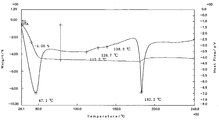
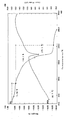
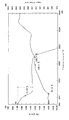
- 2 shows a differential thermal analysis / thermal mass measurement curve of Compound A crystal A.
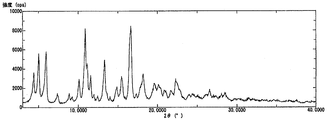
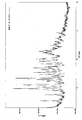
- 1 shows a powder X-ray diffraction pattern of a B-form crystal of Compound [1].
- 2 shows a differential thermal analysis / thermal mass measurement curve of a form B crystal of the compound [1].
- 2 shows an infrared absorption spectrum (ATR method, crystal: diamond) of a B-form crystal of compound [1].
- 1 shows a powder X-ray diffraction pattern of a C-form crystal of Compound [1].
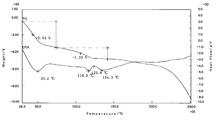
- 2 shows a differential thermal analysis / thermal mass measurement curve of a C-form crystal of compound [1].
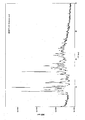
- 1 shows a powder X-ray diffraction pattern of a D-form crystal of Compound [1] hydrate.
- 2 shows a differential thermal analysis / thermal mass measurement curve of Compound [1] D-form crystal.
- 1 shows a powder X-ray diffraction pattern of Form F crystal of Compound [1] hydrate.
- 2 shows a differential thermal analysis / thermal mass measurement curve of Compound [1] hydrate F-form crystal.
- 1 shows a powder X-ray diffraction pattern of Form E crystal of Compound [1] hydrate.
- 2 shows a differential thermal analysis / thermal mass measurement curve of E type crystal of Compound [1] hydrate.
- 1 shows a powder X-ray diffraction pattern of crystals of compound [1] malonate.
- 1 shows a differential thermal analysis / thermal mass measurement curve of a crystal of compound [1] malonate.
- 1 shows a powder X-ray diffraction pattern of crystals of compound [1] methanesulfonate.
- 1 shows a differential thermal analysis / thermal mass measurement curve of a crystal of compound [1] methanesulfonate.
- 1 shows a powder X-ray diffraction pattern of crystals of compound [1] benzenesulfonate.
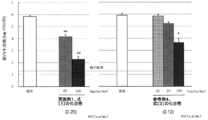
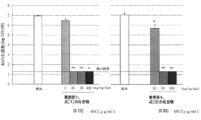
- 1 shows a differential thermal analysis / thermal mass measurement curve of a crystal of compound [1] benzenesulfonate. It is a figure which shows the result of the therapeutic example test in the test example 3 influenza virus infection animal.
- Test Example 4 shows the results of a therapeutic effect test in erythromycin resistant (erm (B) gene possessed) pneumococcal infected animals.
- Test Example 5 shows the results of a therapeutic effect test in erythromycin-resistant (mef (A) gene possessed) pneumococcal-infected animals.
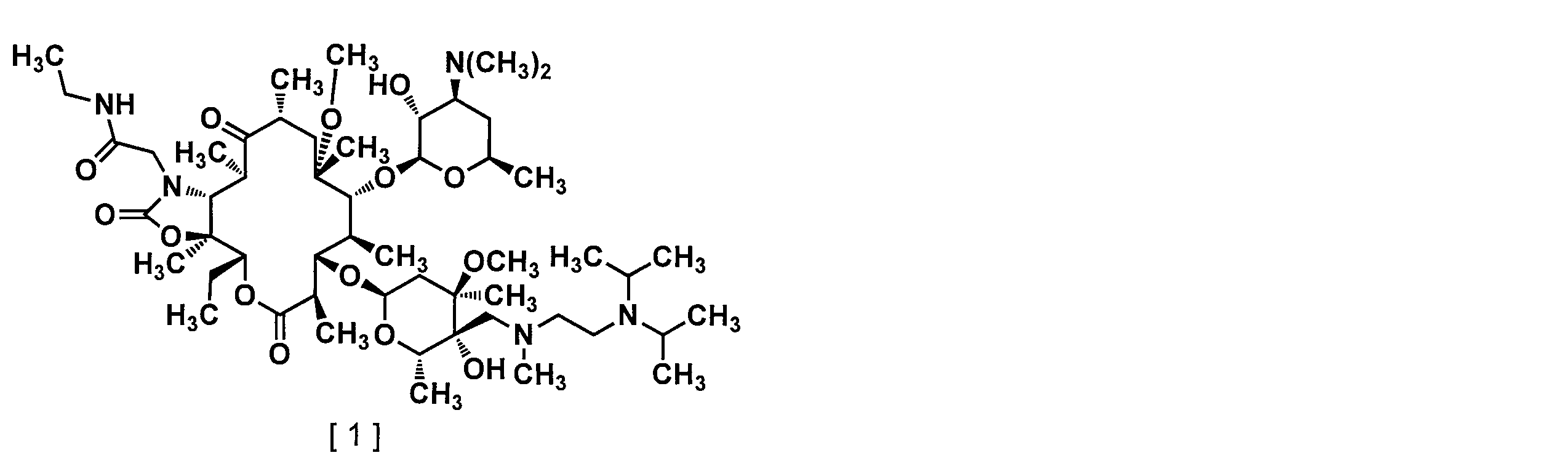
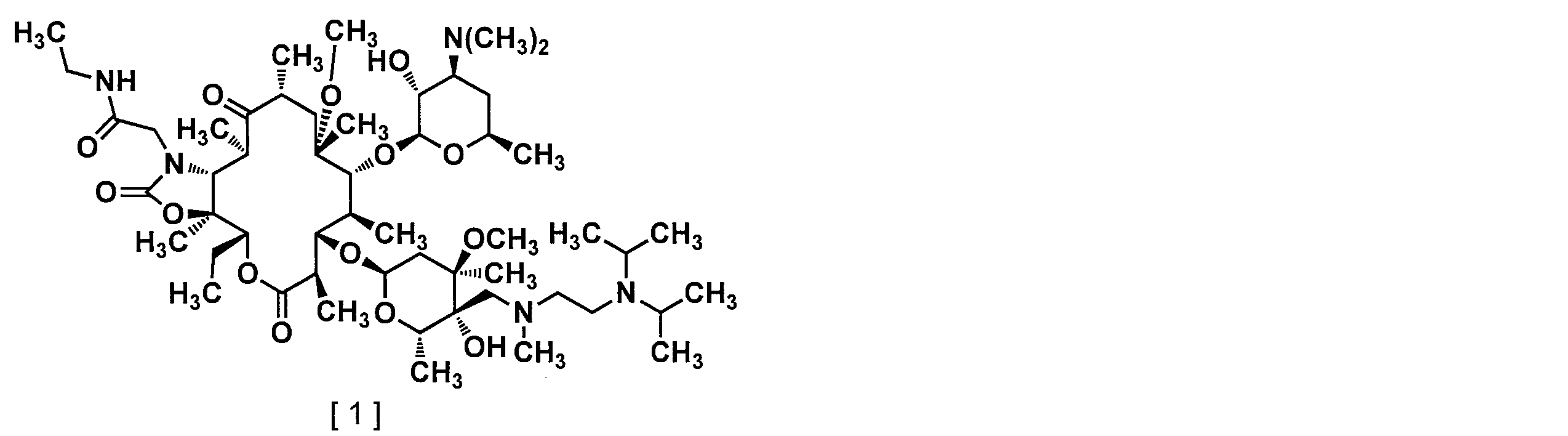
- the compound [1] according to the present invention has the chemical structural formula shown above.
- the crystal of compound [1] (hereinafter sometimes referred to as “the crystal of the present invention”) is obtained as a single crystal having a certain quality with good reproducibility as described above, and is a drug substance used in the manufacture of pharmaceuticals. It can be stably supplied as crystals and has excellent storage stability.
- the crystal of compound [1] can be produced, for example, by the following method.
- room temperature refers to 20 to 30 ° C.
- the compound [1] can be obtained by dissolving the compound [1] in a predetermined solvent, then precipitating crystals, separating the precipitated crystals from the solvent by filtration, centrifugation, or the like, and drying.
- recrystallization may be repeated not only once but twice or more, it is usually recrystallized only once.
- seed crystals can be used for crystallization.
- the seed crystal can be obtained by a method well known to those skilled in the art, such as rubbing the wall of a container containing a solution for crystallization with a spatula.
- Form A crystal of compound [1] will be described below.
- Form A crystals of compound [1] have at least one of the following physical properties (a) to (b).
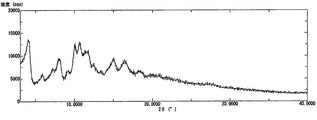
- (A) In powder X-ray diffraction (Cu-K ⁇ ), it has peaks at 2 ⁇ 4.1 degrees, 10.0 degrees, 10.6 degrees and 15.1 degrees; or
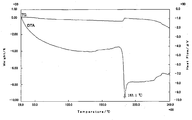
- the powder X-ray diffraction pattern of the form A crystal of the compound [1] is as shown in FIG. 1, and the differential thermal analysis / thermal mass measurement curve is as shown in FIG.
- the characteristic peak by powder X-ray diffraction may change with measurement conditions. Therefore, an error may occur or it may not be clear about the peak of the powder X-ray diffraction of the compound of the present invention.
- the A-form crystal of the compound [1] produced by the production method of the present invention is basically a high-purity crystal. High crystal purity is desirable, and is preferably substantially free of other crystal forms.
- the form A crystal of the compound [1] produced by the production method of the present invention can be obtained as a single crystal having a certain quality with good reproducibility. It can be stably supplied as a drug substance crystal used for the production of raw materials, and has physical properties excellent in storage stability.
- the form A crystal of compound [1] can be produced, for example, by the following method.
- Compound A is obtained by adding ethyl acetate, hexane or a mixture thereof to Compound [1] to form a solution, and then crystallizing and drying the resulting crystal to obtain Form A crystals of Compound [1].
- the starting compound [1] before being dissolved in the solvent is amorphous or crystalline.
- the solvent include ethyl acetate, hexane, or a mixed solution thereof.
- the mixing ratio in the mixed solution of ethyl acetate and hexane can be appropriately changed.
- Crystallization of Form A crystal of Compound [1] is usually performed at 0 ° C. to reflux temperature. Preferably, it is 20 ° C to 30 ° C.
- the precipitated Form A of compound [1] can be separated from the solvent by filtration, centrifugation or the like from the solution. Drying of Form A crystals of Compound [1] is usually performed at 100 ° C. or lower. Preferably, it is 20 ° C to 30 ° C.
- the form B crystal of the compound [1] has at least one of the following physical properties (a) to (c).
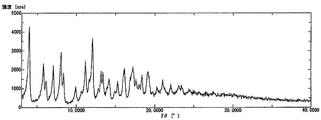
- A) In powder X-ray diffraction (Cu-K ⁇ ), it has peaks at 2 ⁇ 4.0 degrees, 7.1 degrees, 8.1 degrees and 12.1 degrees;
- the powder X-ray diffraction pattern of the B-form crystal of compound [1] is shown in FIG. 3, the differential thermal analysis / thermal mass measurement curve is shown in FIG. 4, and the infrared absorption spectrum (ATR method, crystal: diamond) is shown in FIG. Street.
- the characteristic peak by powder X-ray diffraction may change with measurement conditions. Therefore, an error may occur or it may not be clear about the peak of the powder X-ray diffraction of the compound of the present invention.
- the characteristic peak of the infrared absorption spectrum may vary depending on the measurement conditions. Therefore, an error may occur or the peak of the infrared absorption spectrum of the compound of the present invention may not be clear.
- the form B crystal of the compound [1] produced by the production method of the present invention is basically a high purity crystal. High crystal purity is desirable, and is preferably substantially free of other crystal forms. Further, as shown in the examples described later, the B-form crystal of the compound [1] produced by the production method of the present invention can be obtained as a single crystal having a certain quality with good reproducibility. It can be stably supplied as a drug substance crystal used for the production of raw materials, and has physical properties excellent in storage stability.
- the form B crystal of compound [1] can be produced, for example, by the following method. Methanol or a water-methanol mixture is added to compound [1] to form a solution, which is then crystallized, and the resulting crystals are dried to obtain B-form crystals of compound [1].
- the starting compound [1] before being dissolved in the solvent is amorphous or crystalline.
- the solvent may be methanol or a water-methanol mixed solution as long as the compound [1] is dissolved.
- the mixing ratio in the water-methanol mixture can be changed as appropriate.
- Crystallization of the B-form crystal of compound [1] is usually performed at 0 ° C. to reflux temperature. Preferably, it is 20 ° C to 30 ° C.
- the precipitated B-form crystals of compound [1] can be separated from the solvent by filtration, centrifugation or the like from the solution. Drying of the B-form crystals of compound [1] is usually performed at 100 ° C. or lower. Preferably, it is 20 ° C to 30 ° C.
- the C-type crystal of compound [1] will be described below.
- the form C crystal of the compound [1] has at least one of the following physical properties (a) to (b).
- (A) In powder X-ray diffraction (Cu-K ⁇ ), it has peaks at 2 ⁇ 3.3 degrees, 4.6 degrees, 11.2 degrees and 15.5 degrees; or
- the powder X-ray diffraction pattern of the C-form crystal of compound [1] is as shown in FIG. 6, and the differential thermal analysis / thermal mass measurement curve is as shown in FIG.
- the characteristic peak by powder X-ray diffraction may change with measurement conditions. Therefore, an error may occur or it may not be clear about the peak of the powder X-ray diffraction of the compound of the present invention.
- the C-form crystal of the compound [1] produced by the production method of the present invention is basically a high-purity crystal. High crystal purity is desirable, and is preferably substantially free of other crystal forms. Further, as shown in the examples described later, the C-form crystal of the compound [1] produced by the production method of the present invention can be obtained with good reproducibility as a single crystal having a certain quality, and can be used for pharmaceuticals and pharmaceuticals. It can be stably supplied as a drug substance crystal used for the production of raw materials, and has physical properties excellent in storage stability.
- the C-type crystal of compound [1] can be produced, for example, by the following method. Water is added to form A crystals of compound [1] to form a suspension, and the crystals obtained by stirring are collected by filtration, separated from a solvent by centrifugation, etc., and dried to obtain C of compound [1]. Shape crystals can be obtained.
- the starting compound [1] before being dissolved in the solvent is a crystal.
- Specific examples of the predetermined solvent include water.
- Crystallization of the C-form crystal of compound [1] is usually carried out at 0 ° C to 100 ° C. Preferably, it is 20 ° C to 30 ° C.
- the precipitated C-form crystals of compound [1] can be separated from the solvent by filtration, centrifugation or the like from the solution.
- the C-form crystals of compound [1] are usually dried at 100 ° C. or lower. Preferably, it is 20 ° C to 30 ° C.
- the D form crystal of compound [1] hydrate will be described below.
- the D-form crystal of compound [1] hydrate has at least one of the following physical properties (a) to (b).
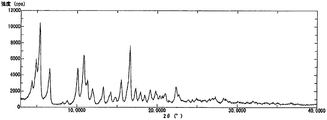
- (A) It has peaks at 2 ⁇ 5.4 degrees, 6.6 degrees, 10.9 degrees, and 16.6 degrees in powder X-ray diffraction (Cu—K ⁇ );
- the powder X-ray diffraction pattern of the D-form crystal of compound [1] hydrate is as shown in FIG. 8, and the differential thermal analysis / thermal mass measurement curve is as shown in FIG.
- the characteristic peak by powder X-ray diffraction may change with measurement conditions. Therefore, an error may occur or it may not be clear about the peak of the powder X-ray diffraction of the compound of the present invention.
- the D-form crystal of the hydrate of compound [1] produced by the production method of the present invention is basically a high-purity crystal. High crystal purity is desirable, and is preferably substantially free of other crystal forms. Further, as shown in the examples described later, the D-form crystal of the compound [1] hydrate produced by the production method of the present invention can be obtained with good reproducibility as a single crystal having a certain quality, It can be stably supplied as a drug substance crystal used in the manufacture of pharmaceuticals and pharmaceutical raw materials, and has physical properties excellent in storage stability.
- Compound [1] hydrate D-form crystals can be produced, for example, by the following method.
- Compound [1] is dissolved in a predetermined solvent, and then crystals are precipitated.
- the precipitated crystals are collected by filtration, separated from the solvent by centrifugation or the like, and then dried to form D crystals of compound [1] hydrate. Can be obtained.
- the starting compound [1] before being dissolved in the solvent is amorphous or crystalline.
- the solvent may be ethanol or a water-ethanol mixed solution as long as the compound [1] is dissolved.
- the mixing ratio in the water-ethanol mixed solution can be appropriately changed.
- Crystallization of D-form crystals of compound [1] hydrate is usually carried out at 0 ° C. to reflux temperature. Preferably, it is 20 ° C to 30 ° C.
- the precipitated D-form crystals of compound [1] hydrate can be separated from the solvent by filtration, centrifugation, or the like.
- the D-form crystals of compound [1] hydrate are usually dried at 100 ° C. or lower. Preferably, it is 20 ° C to 30 ° C.
- Form F crystals of compound [1] hydrate have at least one of the following physical properties (a) to (b).
- (A) In powder X-ray diffraction (Cu-K ⁇ ), it has peaks at 2 ⁇ 5.0 degrees, 5.9 degrees, 10.9 degrees and 16.7 degrees; or
- the powder X-ray diffraction pattern of the F-form crystal of compound [1] hydrate is as shown in FIG. 10, and the differential thermal analysis / thermal mass measurement curve is as shown in FIG.
- the characteristic peak by powder X-ray diffraction may change with measurement conditions. Therefore, an error may occur or it may not be clear about the peak of the powder X-ray diffraction of the compound of the present invention.
- the F-form crystal of the compound [1] hydrate produced by the production method of the present invention is basically a high-purity crystal. High crystal purity is desirable and preferably substantially free of other crystal forms. Further, as shown in the examples described later, the F-form crystal of the compound [1] hydrate produced by the production method of the present invention can be obtained with good reproducibility as a single crystal having a certain quality, It can be stably supplied as a drug substance crystal used in the manufacture of pharmaceuticals and pharmaceutical raw materials, and has physical properties excellent in storage stability.
- the F form crystal of compound [1] hydrate can be produced, for example, by the following method. Acetonitrile is added to compound [1] to form a solution, which is then crystallized. The obtained crystals are collected by filtration, separated from a solvent by centrifugation, etc., and dried to obtain F-form crystals of compound [1]. Can do.
- the starting compound [1] before being dissolved in the solvent is amorphous or crystalline.
- Crystallization of Form F crystals of Compound [1] hydrate is usually carried out at 0 ° C to 100 ° C. Preferably, it is 20 ° C to 30 ° C.
- the precipitated F-form crystals of compound [1] hydrate can be separated from the solvent by filtration, centrifugation, or the like. Drying of the F-form crystals of compound [1] hydrate is usually carried out at 100 ° C. or lower. Preferably, it is 20 ° C to 30 ° C.
- Form E crystals of compound [1] hydrate have at least one of the following physical properties (a) to (b).
- (A) In powder X-ray diffraction (Cu-K ⁇ ), it has peaks at 2 ⁇ 11.0 degrees, 11.3 degrees, 13.3 degrees and 16.8 degrees; or
- the powder X-ray diffraction pattern of the E-form crystal of compound [1] hydrate is as shown in FIG. 12, and the differential thermal analysis / thermal mass measurement curve is as shown in FIG.
- the characteristic peak by powder X-ray diffraction may change with measurement conditions. Therefore, an error may occur or it may not be clear about the peak of the powder X-ray diffraction of the compound of the present invention.
- the E-form crystal of the compound [1] hydrate produced by the production method of the present invention is basically a high-purity crystal. High crystal purity is desirable, and is preferably substantially free of other crystal forms.
- the E-form crystal of the compound [1] hydrate produced by the production method of the present invention can be obtained with good reproducibility as a single crystal having a certain quality, It can be stably supplied as a drug substance crystal used in the manufacture of pharmaceuticals and pharmaceutical raw materials, and has physical properties excellent in storage stability.
- the E-type crystal of compound [1] hydrate can be produced, for example, by the following method. After adding water to the A-form crystal, B-form crystal, C-form crystal, D-form crystal or F-form crystal, which will be described later, to form a suspension, the crystal obtained by stirring is filtered and centrifuged. Form E crystals of compound [1] hydrate can be obtained by separating from a solvent by separation or the like and then drying.
- Crystallization of the E-form crystal of compound [1] hydrate is usually carried out at 0 to 100 ° C. Preferably, it is 20 ° C to 30 ° C.
- the precipitated E-form crystals of compound [1] hydrate can be separated from the solvent by filtration, centrifugation, or the like.
- the E-form crystals of compound [1] hydrate are usually dried at 100 ° C. or lower. Preferably, it is 20 ° C to 30 ° C.
- the salt of the compound [1] according to the present invention is obtained as a single salt having a certain quality with good reproducibility, can be stably supplied as a salt used in the production of pharmaceuticals, and has storage stability. It is an excellent one.
- the salt of compound [1] can be produced, for example, by the following method.
- Compound [1] is dissolved in a predetermined solvent.
- a predetermined acid is added thereto, and the mixture is stirred for 1 hour to overnight, and then the precipitated crystals are collected by filtration, separated from a solvent by centrifugation, and then dried to obtain crystals of various salts of the compound [1]. .
- the predetermined solvent include organic solvents such as ethyl acetate, water and the like.
- organic solvent include ethyl acetate, ethanol, acetone, methyl t-butyl ether and the like.
- the salt of compound [1] is usually produced at 0 to 100 ° C. Preferably, it is 20 ° C to 30 ° C.
- the precipitated crystals of various salts of the compound [1] can be separated from the solvent by filtration, centrifugation, or the like from the solution. Drying of crystals of various salts of compound [1] is usually carried out at 100 ° C. or lower. Preferably, it is 20 ° C to 40 ° C.
- the crystals of compound [1] malonate will be described below.
- the crystal of compound [1] malonate has at least one of the following physical properties (a) to (b).
- (A) In powder X-ray diffraction (Cu-K ⁇ ), it has peaks at 2 ⁇ 8.5 degrees, 10.0 degrees and 15.6 degrees; or
- the powder X-ray diffraction pattern of the crystal of the compound [1] malonate is as shown in FIG. 14, and the differential thermal analysis / thermal mass measurement curve is as shown in FIG. Note that the characteristic peak due to powder X-ray crystal diffraction may vary depending on the measurement conditions. Therefore, an error may occur or it may not be clear about the peak of the powder X-ray crystal diffraction of the compound of the present invention.
- the crystals of the compound [1] malonate produced by the production method of the present invention are basically high-purity crystals.
- the purity of the crystal is desirably high, and is preferably substantially free from other crystal forms.
- the crystal of the compound [1] malonate produced by the production method of the present invention can be obtained with good reproducibility as a single crystal having a certain quality. It can be stably supplied as a drug substance crystal used in the production of pharmaceutical raw materials, and has physical properties excellent in storage stability.
- the crystal of compound [1] methanesulfonate has at least one of the following physical properties (a) to (b).
- (A) In powder X-ray diffraction (Cu-K ⁇ ), it has peaks at 2 ⁇ 9.7 °, 11.1 °, 12.9 ° and 13.4 °; or
- the powder X-ray diffraction pattern of the compound [1] methanesulfonate crystal is as shown in FIG. 16, and the differential thermal analysis / thermal mass measurement curve is as shown in FIG. Note that the characteristic peak due to powder X-ray crystal diffraction may vary depending on the measurement conditions. Therefore, an error may occur or it may not be clear about the peak of the powder X-ray crystal diffraction of the compound of the present invention.
- the crystals of the compound [1] methanesulfonate produced by the production method of the present invention are basically high-purity crystals.
- the purity of the crystal is desirably high, and is preferably substantially free from other crystal forms.
- the crystals of the compound [1] methanesulfonate produced by the production method of the present invention can be obtained as a single crystal having a certain quality with good reproducibility, In addition, it can be stably supplied as a crystal of a drug substance used for manufacturing a pharmaceutical raw material, and has physical characteristics excellent in storage stability.
- the crystal of the compound [1] benzenesulfonate has at least one of the following physical properties (a) to (b).
- (A) In powder X-ray diffraction (Cu-K ⁇ ), it has peaks at 2 ⁇ 8.2 degrees, 10.9 degrees, 12.8 degrees, 14.7 degrees, 16.5 degrees and 19.2 degrees;
- the powder X-ray diffraction pattern of the compound [1] benzenesulfonate crystal is as shown in FIG. 18, and the differential thermal analysis / thermal mass measurement curve is as shown in FIG.
- the crystals of the compound [1] benzenesulfonic acid produced by the production method of the present invention are basically crystals of high purity.
- the purity of the crystal is desirably high, and is preferably substantially free from other crystal forms.
- the crystals of the compound [1] benzenesulfonic acid produced by the production method of the present invention can be obtained with good reproducibility as a single crystal having a certain quality. It can be stably supplied as a drug substance crystal used in the production of pharmaceutical raw materials, and has physical properties excellent in storage stability.
- antibacterial agent means a substance having the ability to act on bacteria such as gram positive bacteria, gram negative bacteria and mycoplasma to suppress or sterilize their growth. It may be something that suppresses the growth of bacteria or kills some bacteria to reduce their number.
- Gram-positive bacteria include, for example, Staphylococcus (S. aureus, Staphylococcus epidermidis, etc.), Streptococcus (S. pyogenes, Group B Streptococcus, Streptococcus pneumoniae, etc.), Enterococcus (Enterococcus faecalis, Enterococcus Fesium etc.).
- Gram-negative bacteria include, for example, Pseudomonas genus (such as Pseudomonas aeruginosa), Escherichia genus (such as Escherichia coli), Klebsiella (such as Klebsiella pneumoniae, Klebsiella oxytoca), Haemophilus (such as Haemophilus influenzae and Parainfluenza), Bordetella genus (Such as Bordetella pertussis and Bacterial sepsis), Serratia (such as Serratia marcescens), Proteus (such as Proteus mirabilis), Enterobacter (such as Enterobacter cloaca), Campylobacter (such as Campylobacter jejuni), Citrobacter Genus, Vibrio (Vibrio parahaemolyticus, Cholera, etc.), Morganella (Morganella, Morgani, etc.), Salmonella (Typhi, Paratyphi, etc.), Shig
- Mycoplasmas include M.Mgallisepticum, M. genitalium, M. hominis, M. hyopneumoniae, M. laboratorium, M. mycoides, M. ovipneumoniae, M.Mpneumonia.
- Compound [1] has excellent antibacterial activity against erythromycin-resistant bacteria (for example, resistant pneumococci, resistant streptococci, and mycoplasma) that have not been able to obtain sufficient antibacterial activity, particularly with conventional macrolide antibiotics. It has the feature of showing.
- erythromycin-resistant bacteria for example, resistant pneumococci, resistant streptococci, and mycoplasma
- Compound [1] may have optical isomers, but compound [1] includes these optical isomers and mixtures of optical isomers.
- the “solvent” of the “solvate” in the present invention includes, for example, water, polar solvents (for example, alcohol solvents such as methanol, ethanol, 1-propanol, 2-propanol, butanol, ethyl acetate, etc. Etc.), inert solvents (for example, halogenated hydrocarbon solvents such as chloroform or methylene chloride, ether solvents such as diethyl ether, tetrahydrofuran or dioxane, amide solvents such as dimethylformamide, dimethylacetamide, dimethyl sulfoxide, acetonitrile, etc.
- polar solvents for example, alcohol solvents such as methanol, ethanol, 1-propanol, 2-propanol, butanol, ethyl acetate, etc. Etc.
- inert solvents for example, halogenated hydrocarbon solvents such as chloroform or methylene chloride, ether solvents such as die
- Aprotic solvents aromatic hydrocarbons such as toluene, or hydrocarbons such as cyclohexane), 2-butanone, hexane, isopropyl ether, acetone, dichloromethane, etc., or a mixed solvent of the solvents exemplified here I mean, And it is not limited to these.
- Compound [1] or a salt thereof, or a hydrate or a solvate thereof exhibits excellent safety.
- the safety is evaluated by various tests, and can be evaluated by, for example, a cytotoxicity test, a hERG test, a cytochrome P450 (CYP) activity inhibition test, and the like.
- Compound [1] or a salt thereof, or a hydrate or a solvate thereof exhibits excellent metabolic stability.
- Metabolic stability is evaluated by various tests, and can be evaluated by, for example, a human liver microsomal metabolic stability test.
- Compound [1] or a salt thereof, or a hydrate or a solvate thereof may be combined with one or more pharmaceutically acceptable carriers, excipients or diluents to form a pharmaceutical preparation. it can.
- Compound [1] or a salt thereof, or a hydrate or a solvate thereof is prepared as a general pharmaceutical preparation.
- a pharmaceutical composition is prepared by mixing, dissolving, and / or dispersing with a pharmaceutically acceptable carrier (excipient, binder, disintegrant, corrigent, emulsifier, diluent, solubilizer, etc.).
- This pharmaceutical composition is suitable for oral or parenteral preparations such as tablets, pills, powders, granules, capsules, solutions, emulsions, suspensions, injections, suppositories, inhalants, and transdermal absorption agents. Administered in the form.
- Oral preparations include solid preparations and liquid preparations.
- the solid preparation in the present invention refers to a preparation having a form in which each element constituting the whole preparation or aggregate has at least a certain shape. Specific examples include tablets, pills, capsules, granules, powders, and powders.
- a capsule whose content is a liquid is included in a solid preparation when one capsule constituting the whole or an aggregate of a plurality of capsules has a certain shape.
- a dry syrup that is dissolved or suspended at the time of use is also included in the solid preparation when the whole preparation or individual particles of powder or granules have a certain shape at the time of storage.
- the liquid preparation in the present invention refers to a preparation that is dissolved or dispersed in a liquid solvent or dispersion medium from the time of storage to the time of administration and is handled as a liquid because it does not have a certain shape.
- excipients, diluents, binders, disintegrants, lubricants, antioxidants, stabilizers, preservatives, solvents, solubilizers, tonicity agents, etc. should be added. Can do.
- Examples of the pharmaceutically acceptable excipient or diluent include lactose, sucrose, glucose, maltose, fructose, mannitol, xylitol, sorbitol, erythritol, starch, starch, sodium carboxymethyl starch, powdered cellulose, crystalline cellulose , Carmellose, crystalline cellulose / carmellose sodium, hydroxypropyl cellulose, hydroxypropyl methylcellulose, calcium hydrogen phosphate, sodium hydrogen phosphate, potassium hydrogen phosphate, potassium dihydrogen phosphate, calcium carbonate, light anhydrous silicic acid, titanium oxide, Examples include magnesium aluminate metasilicate.
- binder examples include hydroxypropylcellulose, hypromellose, starch, starch, pregelatinized starch, partially pregelatinized starch, and polyvinylpyrrolidone.
- disintegrants include powdered cellulose, crystalline cellulose, carmellose, carmellose potassium, carmellose calcium, carmellose sodium, crystalline cellulose / carmellose sodium, croscarmellose sodium, low-substituted hydroxypropylcellulose, starch, and partial alpha. Modified starch, sodium carboxymethyl starch, povidone, crospovidone and the like.
- Examples of the lubricant include stearic acid, magnesium stearate, calcium stearate, polyoxyl stearate, talc, hydrogenated oil, sucrose fatty acid ester, cetanol, beeswax, and white beeswax.
- Examples of the antioxidant include dibutylhydroxytoluene (BHT), propyl gallate, butylhydroxyanisole (BHA), tocopherol, citric acid, edetate and the like.
- Examples of the solvent include water, physiological saline, and ethanol.
- Examples of the solubilizer include isotonic agents such as polyoxyethylene hydrogenated castor oil, polysorbates, sodium lauryl sulfate, macrogol, and sucrose fatty acid ester.
- Examples of the solubilizer include sodium chloride, citric acid, sodium citrate, glycerin, sorbitol, glucose, propylene glycol, macrogols, boric acid, borax, phosphoric acid,
- the dose of compound [1] or a salt thereof, or a hydrate or a solvate thereof is determined based on the results of animal experiments so that it does not exceed a certain amount when administered once and repeatedly. Based on the animal experiment data disclosed in the test examples, 1 to 10000 mg, preferably 5 to 1000 mg as a daily dose is administered to an adult patient once or several times a day orally or parenterally. It is assumed that Furthermore, the appropriate amount and the number of administrations can be determined by a specialist or the like in consideration of various factors such as the administration method, age, weight, sex, sensitivity, and the degree of symptoms of the patient or treated animal. Compound [1] can also be used in combination with other drugs.
- Powder X-ray diffraction was measured with a Rigaku RINT2200 Ultimate.
- Differential thermal analysis / thermal mass measurement was measured by Rigaku Thermo plus EvoTG8120.
- the infrared absorption spectrum was measured with Shimadzu Corporation IRAffinity-1.
- N-chlorosuccinimide 99.7 g was dissolved in chloroform (1 L) and cooled to ⁇ 25 ° C.
- a solution of dimethyl sulfide (210 mL) in chloroform (0.2 L) was added dropwise to the reaction mixture over 20 minutes, and the mixture was stirred for 15 minutes, and then the carbonate form chloroform (1 L) obtained in Reference Example 3- (2) above.
- the solution was added dropwise over 30 minutes and stirred for 15 minutes.
- a solution of triethylamine (136 mL) in chloroform (0.2 L) was added to the reaction solution, and the mixture was stirred for 30 minutes.
- Trimethylsulfoxonium iodide (210 g) was dissolved in a 5: 1 mixed solvent (1.2 L) of dimethylsulfoxide and tetrahydrofuran, 70% sodium hydride (32.6 g) was added little by little, and the mixture was brought to room temperature. And stirred for 1.5 hours. Under ice cooling, a solution of the ketone body (155 g) obtained in Reference Example 3- (3) above in tetrahydrofuran (0.8 L) was added dropwise and stirred at room temperature for 30 minutes. The reaction solution was ice-cooled, distilled water was added, the mixture was extracted with ethyl acetate, and the resulting organic layer was washed with distilled water.
- Ethyl acetate (50 mL) and hexane (600 mL) were added to the resulting crude product, and the mixture was stirred for 30 minutes, and the resulting solid was collected by filtration to obtain a deacetylated product (62.8 g).
- Example 2 Production of Form B Crystal of Compound [1] Methanol (19 mL) was added to and dissolved in the solid (1.0 g) of compound [1] obtained in Example 1- (3), and then water (9 0.5 mL) and stirred at room temperature overnight. The precipitated solid was collected by filtration and dried under reduced pressure to obtain crystals (619 mg) of the compound represented by the formula [1]. The powder X-ray diffraction pattern, differential thermal analysis / thermal mass measurement (TG / DTA), and infrared absorption spectrum of the obtained compound [1] crystal were measured, and it was a B-form crystal.
- Differential thermal analysis / thermal mass measurement (TG / DTA) was increased from room temperature to about 250 ° C. at 10 ° C./min in the atmosphere using a differential thermal balance (Thermo plus EVO TG8120) manufactured by Rigaku and equivalent equipment. Done at speed. As a result, an endothermic peak was observed at 181 to 186 ° C.
- the infrared absorption spectrum was measured using a Fourier transform infrared spectrophotometer (IRAffinity-1) manufactured by Shimadzu Corporation under the total reflection method (ATR method) with 20 integrations and a resolution of 4 cm-1. 1769cm -1, 1685cm -1, 1521cm -1 , 1458cm -1, a peak was observed near 1165 cm -1 and 1111cm -1.
- IRAffinity-1 Fourier transform infrared spectrophotometer manufactured by Shimadzu Corporation under the total reflection method (ATR method) with 20 integrations and a resolution of 4 cm-1. 1769cm -1, 1685cm -1, 1521cm -1 , 1458cm -1, a peak was observed near 1165 cm -1 and 1111cm -1.
- Example 3 Production of Form C Crystal of Compound [1]
- a solid (30 mg) of compound [1] obtained in Example 1- (3) was suspended in water (2 mL) (25 ° C.) for 10 days. Then, the mixture was centrifuged (3000 rpm, 10 minutes) to remove water, and the precipitate was dried at room temperature under reduced pressure.
- TG / DTA Differential thermal analysis / thermal mass measurement
- Example 4 Production of Form D Crystal of Compound [1] Hydrate After dissolving ethanol (6 mL) in the solid (1.0 g) of compound [1] obtained in Example 1- (3), Water (4.5 mL) was added and stirred at room temperature overnight. The precipitated solid was collected by filtration and dried under reduced pressure to obtain Form D crystals (612 mg) of Compound [1].
- TG / DTA Differential thermal analysis / thermal mass measurement
- Example 5 Production of Form E Crystal of Compound [1] Hydrate A solid (105 mg) of compound [1] obtained in Example 4 was suspended in water (10 mL) and stirred at room temperature for 3 days. The solid was collected by filtration and dried under reduced pressure to give Form E crystals (612 mg) of Compound [1].
- TG / DTA Differential thermal analysis / thermal mass measurement
- crystallization of compound [1] hydrate can be obtained also with the following method.
- Example 1 (A-form crystal), Example 2 (B-form crystal) and Example 4 (D-form crystal) (5 mg each) were weighed and mixed, then water (2 mL) was added and 10 days at 25 ° C. Shake and stir. Water was removed by centrifugation (3000 rpm, 10 minutes), and the precipitate was obtained by drying under reduced pressure for 1 day at room temperature.
- the powder X-ray diffraction pattern of the E-form crystal of the obtained compound [1] was measured using a Rigaku powder X-ray diffractometer (Ultima III) and Cu—K ⁇ ray as an X-ray source.
- the E-form crystal of compound [1] hydrate can be obtained by the following method.
- Example 3 (C-form crystals) and Example 4 (D-form crystals) (5 mg each) were weighed and mixed, then water (0.5 mL) was added, and the mixture was shaken and stirred at 25 ° C. for 5 days. Water was removed by centrifugation (3000 rpm, 10 minutes), and the precipitate was obtained by drying under reduced pressure for 1 day at room temperature.
- the powder X-ray diffraction pattern of the E-form crystal of the obtained compound [1] was measured using a Rigaku powder X-ray diffractometer (Ultima III) and Cu—K ⁇ ray as an X-ray source.
- the E-form crystal of compound [1] hydrate can be obtained by the following method.
- the title compounds Example 5 (E-form crystals) and Example 6 (F-form crystals) (5 mg each) were weighed and mixed, then 1 mL of water was added and the mixture was shaken and stirred at 25 ° C. for 3 weeks. Water was removed by centrifugation (3000 rpm, 10 minutes), and the precipitate was obtained by drying under reduced pressure for 1 day at room temperature.
- the powder X-ray diffraction pattern of the E-form crystal of the obtained compound [1] was measured using a Rigaku powder X-ray diffractometer (Ultima III) and Cu—K ⁇ ray as an X-ray source.
- Example 6 Preparation of Form F Crystal of Compound [1] Hydrate 30 ⁇ L of acetonitrile was added to the solid (20 mg) of compound [1] obtained in Example 1- (3) while heating at 80 ° C. to room temperature. And left to stand. The supernatant was removed, and the crystals were dried at room temperature with a vacuum dryer.
- TG / DTA Differential thermal analysis / thermal mass measurement
- Example 7 Production of Compound [1] Malonate Crystals Malonic acid (101 mg) was added to a solution of compound [1] (500 mg) in ethyl acetate (1.5 mL) at room temperature and stirred overnight. The precipitate was collected by filtration and dried at 40 ° C. under reduced pressure to give the title compound as colorless crystals (310 mg).
- the solid powder X-ray diffraction pattern and differential thermal analysis / thermal mass measurement were measured to find malonate crystals.
- Example 8 Production of Crystal of Compound [1] Methanesulfonate Salt methanesulfonic acid (29 ⁇ L) was added to a solution of compound [1] (302 mg) in acetone (4.5 mL) and stirred for 2 hours and 15 minutes. The reaction mixture was filtered, and the resulting residue was washed twice with acetone (2 mL) and dried at 40 ° C. under reduced pressure to give the title compound (213 mg) as colorless crystals.
- the solid powder X-ray diffraction pattern and differential thermal analysis / thermal mass measurement were measured to find crystals of methanesulfonate.
- the solid powder X-ray diffraction pattern and differential thermal analysis / thermal mass measurement were measured to find crystals of benzenesulfonate.
- Differential thermal analysis / thermal mass measurement (TG / DTA) using a differential thermal balance (Thermo plus EVO TG8120) manufactured by Rigaku and an equivalent device, from room temperature to about 250 ° C. in the atmosphere, at a rate of 10 ° C./min. Done at speed. As a result, an endothermic peak was observed at 208 to 214 ° C.
- Test Example 1 In Vitro Antibacterial Activity
- the compound [1] of Example 1 against various test bacteria was measured according to the micro liquid dilution method (CLSI method).
- the compound represented by the formula [3] in Reference Example 4 was also measured in the same manner.
- the test bacteria used are shown in Table 1.
- Table 2 shows the MIC values (microbe growth minimum inhibitory concentration ⁇ g / ml) for the test bacteria having the cell numbers A, B, C, D, E, F, G, H, I, J, K, and L.
- Test Example 2 Haemophilus susceptibility test Using 39 kinds of clinical isolates of Haemophilus influenzae, the drug sensitivity was evaluated using the same method as Test Example 1. Table 3 shows the results.
- Test Example 3 Therapeutic effect test in H. influenzae-infected animals The method shown below was used for evaluation of the pharmacological effect.
- Haemophilus influenzae ATCC43095 strain (cell number A) was used. The cells cultured overnight on a chocolate agar medium were scraped off, suspended in a hemophilus sensitivity test medium or a brain heart infusion medium supplemented with Phils enrichment and cultured overnight. This was diluted with a hemophilus sensitivity test culture medium or a brain heart infusion medium supplemented with Phils enrichment to obtain an inoculum.
- Mice ICR line, male, 4 weeks old) were infected by inoculating 0.05 ml of the inoculum in the respiratory tract.
- the amount of inoculum was 2.25 ⁇ 10 6 CFU / mouse or 9.00 ⁇ 10 5 CFU / mouse.
- the number of viable bacteria in the lung 3 days after the inoculation (6 cases per group, mean ⁇ standard error) is shown in FIG.
- the pulmonary viable count as a test result is expressed as a common logarithm of the pulmonary viable count (CFU / lung) (the common logarithm is hereinafter referred to as log).
- the viable bacterial count in the vehicle administration group was 5.88 ⁇ 0.14 [log (CFU / lung)].
- the number of living bacteria in the lungs of the compound [1] 100 and 200 mg / kg administration groups of Example 1 was 3.54 ⁇ 0.49 [log (CFU / lung)] and 2.83 ⁇ 0.53 [log ( CFU / lung)], which was significantly reduced compared to the vehicle administration group.
- the numbers of viable bacteria in the lungs of the compound 100 and 200 mg / kg administration groups of Reference Example 4 were 4.37 ⁇ 0.27 [log (CFU / lung)] and 2.53 ⁇ 0, respectively. .23 [log (CFU / lung)], which was significantly reduced compared to the vehicle administration group. From the above, the compound [1] of Example 1 showed the same therapeutic effect as the compound represented by Formula [3] of Reference Example 4 against the strain.
- Test Example 4 Treatment Effect Test in Erythromycin-Resistant (Erm (B) Gene Carrying) Pneumococcal Infected Animal
- Erm (B) Gene Carrying
- the evaluation of the pharmacological effect was carried out by the following method.
- Streptococcus pneumoniae 1101 strain (clinical isolate) was used.
- the cryopreservation solution of the strain used was added to Todd Hewitt liquid medium supplemented with 30 vol% inactivated horse serum and cultured until the turbidity (OD600) was about 0.3. This was diluted with Todd Hewitt liquid medium supplemented with 30 vol% inactivated horse serum to obtain an inoculum.
- mice CBA / JN system, male, 5 weeks old were infected with 0.05 mL of the inoculum by nasal inoculation.
- the amount of inoculum was 7.50 ⁇ 10 4 CFU / mouse or 1.65 ⁇ 10 5 CFU / mouse.
- the number of viable bacteria in the lung 3 days after the inoculation (5 to 6 cases per group, mean ⁇ standard error) is shown in FIG.
- the number of living bacteria in the lungs of the sputum medium administration group was 5.83 ⁇ 0.08 [log (CFU / lung)].
- the numbers of viable bacteria in the lungs of the compound [1] 30 and 100 mg / kg administration groups of Example 1 were 4.14 ⁇ 0.19 [log (CFU / lung)] and 2.28 ⁇ 0.24 [log ( CFU / lung)], which was significantly reduced compared to the vehicle administration group.
- Test Example 5 Therapeutic effect test in erythromycin resistant (mef (A) gene possessed) pneumococcal infected animals
- the evaluation of the pharmacological effect was carried out by the following method.
- Streptococcus pneumoniae 1028 strain (clinical isolate) was used.
- the cryopreservation solution of the strain used was added to Todd Hewitt liquid medium supplemented with 30 vol% inactivated horse serum and cultured until the turbidity (OD600) was about 0.3. This was diluted with Todd Hewitt liquid medium supplemented with 30 vol% inactivated horse serum to obtain an inoculum.
- mice CBA / JN system, male, 5 weeks old were infected with 0.05 mL of the inoculum by nasal inoculation.
- the inoculum was 3.45 ⁇ 10 4 CFU / mouse or 3.90 ⁇ 10 4 CFU / mouse.
- the compound [1] of Example 1 (3, 10, 30 and 100 mg / kg) or vehicle (0.1 mol / L lactobionic acid solution and 0.5 w / v% sodium bicarbonate) once a day for 2 days from the day after the inoculation An equal volume of solution) was orally administered.
- the number of viable bacteria in the lung 3 days after inoculation (5 to 6 cases per group, mean ⁇ standard error) is shown in FIG.
- the number of viable bacteria in the group administered with sputum medium was 6.94 ⁇ 0.07 [log (CFU / lung)].
- the numbers of viable bacteria in the lungs of the compound [1] 3, 10, 30 and 100 mg / kg administration groups of Example 1 were 6.45 ⁇ 0.18 [log (CFU / lung)] and 1.30 ⁇ 0. 00 [log (CFU / lung)], 1.30 ⁇ 0.00 [log (CFU / lung)] and 1.30 ⁇ 0.00 [log (CFU / lung)], the compound of Example 1 [ 1]
- the number of viable bacteria in the lungs was below the detection limit value in all cases, and was significantly reduced as compared with the vehicle administration group.
- the compound of the present invention or a pharmaceutically acceptable salt thereof has strong antibacterial activity against gram-positive bacteria, gram-negative bacteria and mycoplasma, and in particular, sufficient antibacterial activity was not obtained with conventional macrolide antibiotics. Since it has excellent antibacterial activity against erythromycin-resistant bacteria (for example, resistant pneumococci, streptococci, and mycoplasma), it can be used as a pharmaceutical product.
- the compound [1] free form or salt crystals provided by the present invention can be obtained as a single crystal having a certain quality with good reproducibility and stable as crystals of the drug substance used in the manufacture of pharmaceuticals and pharmaceutical raw materials. It is useful as a drug substance because it has a physical property that is excellent in storage stability.
Landscapes
- Chemical & Material Sciences (AREA)
- Organic Chemistry (AREA)
- Health & Medical Sciences (AREA)
- Life Sciences & Earth Sciences (AREA)
- Engineering & Computer Science (AREA)
- Biochemistry (AREA)
- Biotechnology (AREA)
- General Health & Medical Sciences (AREA)
- Genetics & Genomics (AREA)
- Molecular Biology (AREA)
- Pharmaceuticals Containing Other Organic And Inorganic Compounds (AREA)
Abstract
例えば下記(a)~(b)の物性を少なくとも1つ有し、医薬品としての製造・使用環境下で優れた物理学的特性を有する、式[1]で表される化合物のA形結晶などが提供される。(a)粉末X線回折(Cu-Kα)において、2θ=4.1度、10.0度、10.6度及び15.1度にピークを有する;又は(b)示差熱分析/熱質量測定(TG/DTA)において、吸熱ピークが143~148℃にある。
Description
本発明は、エリスロマイシン類似骨格を有する新規抗生物質に関する。より具体的には、本発明は、クラジノースの4”位に窒素原子を有する置換基で置換されたメチル基を有するマクロライド化合物の結晶形及びそれらの製造方法、並びに当該マクロライド化合物の特定の塩の結晶形及びそれらの製造方法に関する。
エリスロマイシンAはグラム陽性菌、マイコプラズマなどに起因する感染症の治療薬として広く使用されている抗生物質である。しかし、エリスロマイシンは胃酸で分解されるため、体内動態が一定しないという欠点があった。そこで酸に対する安定性を増した誘導体が検討され、その結果、クラリスロマイシン、アジスロマイシン(特許文献1及び2)、ロキシスロマイシンなどの体内動態の安定したマクロライド剤が開発されてきた。外来の呼吸器感染症を治療領域とするこれらマクロライド剤は、特に臨床分離頻度の高い肺炎球菌、連鎖球菌並びにインフルエンザ菌に対し強い抗菌活性を有する必要がある。さらに、市中肺炎からマクロライド耐性の肺炎球菌が高頻度に分離されていることから耐性肺炎球菌に有効であることも重要となっている。
近年、広範な研究の結果、エリスロマイシン耐性肺炎球菌、エリスロマイシン耐性連鎖球菌のいずれに対しても有効なマクロライドとしてAgouridasらは1995年にHMR3647(テリスロマイシン,特許文献3)を、Orらは1998年にABT-773(セスロマイシン,特許文献4)を相次いで見出した。その後、さらに薬効増強が図られた2-フルオロケトライド(特許文献5)が報告されている。
一方、クラジノースの4”位に窒素原子を有する置換基で置換されたメチル基を有するマクロライド化合物に関しては、ラクトン環内に窒素原子をもつという構造的な特徴を有しているアザライドタイプの化合物がほとんどである(特許文献6)。
更に、エリスロマイシン耐性肺炎球菌、エリスロマイシン耐性連鎖球菌のいずれに対しても有効なマクロライドとして、クラジノースの4”位に窒素原子を有する置換基で置換されたメチル基を有するマクロライド化合物については、出願人らも報告している(特許文献7、8及び9)。特にその中でも特許文献7、8に記載された実施例15が好ましい化合物である。
本発明の課題は、従来のエリスロマイシン感受性菌のみならず、エリスロマイシン耐性菌(例えば耐性肺炎球菌、耐性連鎖球菌、及びマイコプラズマ)に対しても有効で、一定の品質を有する単一の結晶として再現性良く得られ、医薬品及び医薬品原料の製造に用いられる原薬の結晶として安定的に供給することが可能で、保存安定性に優れた物理学的特性を有する新規な化合物の結晶形及びそれらの製造方法を提供することにある。
そこで、本発明者らは新たなマクロライド化合物の研究を鋭意行った結果、下記に示す化合物が優れた抗菌活性を有することを見出し、また医薬品としての製造・使用環境下で物理的特性に優れた式[1]で表される化合物の結晶を提供することができることを発見し、本願発明を完成するに至った。
以下、本願発明の態様を説明する。
本願発明の1つの態様は、
(1)下記(a)~(b)の物性を少なくとも1つ有する、式[1]で表される化合物の結晶である。
(a)粉末X線回折(Cu-Kα)において、2θ=4.1度、10.0度、10.6度及び15.1度にピークを有する;又は
(b)示差熱分析/熱質量測定(TG/DTA)において、吸熱ピークが143~148℃にある。
本願発明の1つの態様は、
(1)下記(a)~(b)の物性を少なくとも1つ有する、式[1]で表される化合物の結晶である。
(a)粉末X線回折(Cu-Kα)において、2θ=4.1度、10.0度、10.6度及び15.1度にピークを有する;又は
(b)示差熱分析/熱質量測定(TG/DTA)において、吸熱ピークが143~148℃にある。
また、本願発明の他の態様は、
(2)式[1]で表される化合物に酢酸エチル、ヘキサン又はこれらの混合液を加えて溶液とした後、結晶化させ、得られた結晶を乾燥させることを特徴とする(1)に記載の結晶の製造方法である。
(2)式[1]で表される化合物に酢酸エチル、ヘキサン又はこれらの混合液を加えて溶液とした後、結晶化させ、得られた結晶を乾燥させることを特徴とする(1)に記載の結晶の製造方法である。
また、本願発明の他の態様は、
(3)下記(a)~(c)の物性を少なくとも1つ有する、式[1]で表される化合物の結晶である。
(a)粉末X線回折(Cu-Kα)において、2θ=4.0度、7.1度、8.1度及び12.1度にピークを有する;
(b)示差熱分析/熱質量測定(TG/DTA)において、吸熱ピークが181~186℃にある;又は
(c)赤外線吸収スペクトル(ATR法)において、特性吸収帯が、1769cm-1,1685cm-1,1521cm-1,1458cm-1,1165cm-1及び1111cm-1にある。
(3)下記(a)~(c)の物性を少なくとも1つ有する、式[1]で表される化合物の結晶である。
(a)粉末X線回折(Cu-Kα)において、2θ=4.0度、7.1度、8.1度及び12.1度にピークを有する;
(b)示差熱分析/熱質量測定(TG/DTA)において、吸熱ピークが181~186℃にある;又は
(c)赤外線吸収スペクトル(ATR法)において、特性吸収帯が、1769cm-1,1685cm-1,1521cm-1,1458cm-1,1165cm-1及び1111cm-1にある。
また、本願発明の他の態様は、
(4)式[1]で表される化合物にメタノール又は水-メタノール混合液を加えて溶液とした後、結晶化させ、得られた結晶を乾燥させることを特徴とする(3)に記載の結晶の製造方法である。
(4)式[1]で表される化合物にメタノール又は水-メタノール混合液を加えて溶液とした後、結晶化させ、得られた結晶を乾燥させることを特徴とする(3)に記載の結晶の製造方法である。
また、本願発明の他の態様は、
(5)下記(a)~(b)の物性を少なくとも1つ有する、式[1]で表される化合物の結晶である。
(a)粉末X線回折(Cu-Kα)において、2θ=3.3度、4.6度、11.2度及び15.5度にピークを有する;又は
(b)示差熱分析/熱質量測定(TG/DTA)において、吸熱ピークが136~141℃にある。
(5)下記(a)~(b)の物性を少なくとも1つ有する、式[1]で表される化合物の結晶である。
(a)粉末X線回折(Cu-Kα)において、2θ=3.3度、4.6度、11.2度及び15.5度にピークを有する;又は
(b)示差熱分析/熱質量測定(TG/DTA)において、吸熱ピークが136~141℃にある。
また、本願発明の他の態様は、
(6)式[1]で表される化合物の結晶に水を加えて懸濁液とした後、攪拌して得られた結晶を乾燥させることを特徴とする(5)に記載の結晶の製造方法である。
(6)式[1]で表される化合物の結晶に水を加えて懸濁液とした後、攪拌して得られた結晶を乾燥させることを特徴とする(5)に記載の結晶の製造方法である。
また、本願発明の他の態様は、
(7)下記(a)~(b)の物性を少なくとも1つ有する、式[1]で表される化合物の水和物の結晶である。
(a)粉末X線回折(Cu-Kα)において、2θ=5.4度、6.6度、10.9度及び16.6度にピークを有する;又は
(b)示差熱分析/熱質量測定(TG/DTA)において、吸熱ピークが45~50℃及び180~185℃にある。
(7)下記(a)~(b)の物性を少なくとも1つ有する、式[1]で表される化合物の水和物の結晶である。
(a)粉末X線回折(Cu-Kα)において、2θ=5.4度、6.6度、10.9度及び16.6度にピークを有する;又は
(b)示差熱分析/熱質量測定(TG/DTA)において、吸熱ピークが45~50℃及び180~185℃にある。
また、本願発明の他の態様は、
(8)式[1]で表される化合物にエタノール又は水-エタノール混合液を加えて溶液とした後、結晶化させ、得られた結晶を氷冷下にて乾燥させることを特徴とする(7)に記載の結晶の製造方法である。
(8)式[1]で表される化合物にエタノール又は水-エタノール混合液を加えて溶液とした後、結晶化させ、得られた結晶を氷冷下にて乾燥させることを特徴とする(7)に記載の結晶の製造方法である。
また、本願発明の他の態様は、
(9)下記(a)~(b)の物性を少なくとも1つ有する、式[1]で表される化合物の水和物の結晶である。
(a)粉末X線回折(Cu-Kα)において、2θ=5.0度、5.9度、10.9度及び16.7度にピークを有する;又は
(b)示差熱分析/熱質量測定(TG/DTA)において、吸熱ピークが48~53℃及び115~120℃にある。
(9)下記(a)~(b)の物性を少なくとも1つ有する、式[1]で表される化合物の水和物の結晶である。
(a)粉末X線回折(Cu-Kα)において、2θ=5.0度、5.9度、10.9度及び16.7度にピークを有する;又は
(b)示差熱分析/熱質量測定(TG/DTA)において、吸熱ピークが48~53℃及び115~120℃にある。
また、本願発明の他の態様は、
(10)式[1]で表される化合物にアセトニトリルを加えて溶液とした後、結晶化させ、得られた結晶を乾燥させることを特徴とする(9)に記載の結晶の製造方法である。
(10)式[1]で表される化合物にアセトニトリルを加えて溶液とした後、結晶化させ、得られた結晶を乾燥させることを特徴とする(9)に記載の結晶の製造方法である。
また、本願発明の他の態様は、
(11)下記(a)~(b)の物性を少なくとも1つ有する、式[1]で表される化合物の水和物の結晶である。
(a)粉末X線回折(Cu-Kα)において、2θ=11.0度、11.3度、13.3度及び16.8度にピークを有する;又は
(b)示差熱分析/熱質量測定(TG/DTA)において、吸熱ピークが75~80℃にある。
(11)下記(a)~(b)の物性を少なくとも1つ有する、式[1]で表される化合物の水和物の結晶である。
(a)粉末X線回折(Cu-Kα)において、2θ=11.0度、11.3度、13.3度及び16.8度にピークを有する;又は
(b)示差熱分析/熱質量測定(TG/DTA)において、吸熱ピークが75~80℃にある。
また、本願発明の他の態様は、
(12)式[1]で表される化合物の請求項3、5、7又は9に示された結晶に水を加えて懸濁液とした後、攪拌して得られた結晶を乾燥させることを特徴とする(11)に記載の結晶の製造方法である。
(12)式[1]で表される化合物の請求項3、5、7又は9に示された結晶に水を加えて懸濁液とした後、攪拌して得られた結晶を乾燥させることを特徴とする(11)に記載の結晶の製造方法である。
また、本願発明の他の態様は、
(13)式[1]で表される化合物のマロン酸塩である。

(13)式[1]で表される化合物のマロン酸塩である。
また、本願発明の他の態様は、
(14)下記(a)~(b)の物性を少なくとも1つ有する(13)に記載の塩の結晶である。
(a)粉末X線回折(Cu-Kα)において、2θ=8.5度、10.0度及び15.6度にピークを有する;又は
(b)示差熱分析/熱質量測定(TG/DTA)において、吸熱ピークが173~177℃にある。
(14)下記(a)~(b)の物性を少なくとも1つ有する(13)に記載の塩の結晶である。
(a)粉末X線回折(Cu-Kα)において、2θ=8.5度、10.0度及び15.6度にピークを有する;又は
(b)示差熱分析/熱質量測定(TG/DTA)において、吸熱ピークが173~177℃にある。
また、本願発明の他の態様は、
(15)式[1]で表される化合物の酢酸エチル溶液にマロン酸を添加し作用させた後、生じた結晶をろ取し、乾燥させることを特徴とする(14)に記載の結晶の製造方法である。
(15)式[1]で表される化合物の酢酸エチル溶液にマロン酸を添加し作用させた後、生じた結晶をろ取し、乾燥させることを特徴とする(14)に記載の結晶の製造方法である。
また、本願発明の他の態様は、
(16)式[1]で表される化合物のメタンスルホン酸塩である。
また、本願発明の他の態様は、
(17)下記(a)~(b)の物性を少なくとも1つ有する(16)に記載の塩の結晶である。
(a)粉末X線回折(Cu-Kα)において、2θ=9.7度、11.1度、12.9度及び13.4度にピークを有する;又は
(b)示差熱分析/熱質量測定(TG/DTA)において、吸熱ピークが57~63℃、及び143~149℃にある。
(16)式[1]で表される化合物のメタンスルホン酸塩である。
また、本願発明の他の態様は、
(17)下記(a)~(b)の物性を少なくとも1つ有する(16)に記載の塩の結晶である。
(a)粉末X線回折(Cu-Kα)において、2θ=9.7度、11.1度、12.9度及び13.4度にピークを有する;又は
(b)示差熱分析/熱質量測定(TG/DTA)において、吸熱ピークが57~63℃、及び143~149℃にある。
また、本願発明の他の態様は、
(18)式[1]で表される化合物のアセトン溶液にメタンスルホン酸を添加し作用させた後、生じた結晶をろ取し、乾燥させることを特徴とする(17)に記載の結晶の製造方法である。
(18)式[1]で表される化合物のアセトン溶液にメタンスルホン酸を添加し作用させた後、生じた結晶をろ取し、乾燥させることを特徴とする(17)に記載の結晶の製造方法である。
また、本願発明の他の態様は、
(19)式[1]で表される化合物のベンゼンスルホン酸塩である。
また、本願発明の他の態様は、
(20)下記(a)~(b)の物性を少なくとも1つ有する(19)に記載の塩の結晶である。
(a)粉末X線回折(Cu-Kα)において、2θ=8.2度、10.9度、12.8度、14.7度、16.5度及び19.2度にピークを有する;又は
(b)示差熱分析/熱質量測定(TG/DTA)において、吸熱ピークが208~214℃にある。
(19)式[1]で表される化合物のベンゼンスルホン酸塩である。
また、本願発明の他の態様は、
(20)下記(a)~(b)の物性を少なくとも1つ有する(19)に記載の塩の結晶である。
(a)粉末X線回折(Cu-Kα)において、2θ=8.2度、10.9度、12.8度、14.7度、16.5度及び19.2度にピークを有する;又は
(b)示差熱分析/熱質量測定(TG/DTA)において、吸熱ピークが208~214℃にある。
また、本願発明の他の態様は、
(21)式[1]で表される化合物のアセトン溶液にベンゼンスルホン酸を添加し作用させた後、生じた結晶をろ取し、乾燥させることを特徴とする(20)に記載の結晶の製造方法である。
(21)式[1]で表される化合物のアセトン溶液にベンゼンスルホン酸を添加し作用させた後、生じた結晶をろ取し、乾燥させることを特徴とする(20)に記載の結晶の製造方法である。
本発明により、式[1]で表される化合物(以下、「化合物[1]」という)の医薬品としての製造・使用環境下で優れた物理的特性を有する結晶を提供することが可能となった。該結晶は、室温付近の温度で安定な結晶形であり、保存安定性に優れている。また、本発明により、上記結晶を、同一品質で安定して得るための新規な製造方法を提供することができた。
以下、本発明を実施するための形態を具体的に説明する。
本発明にかかる化合物[1]は、前記に示した化学構造式を有している。
化合物[1]の結晶(以下、「本発明結晶」ということがある)は、上述のように一定の品質を有する単一の結晶として再現性良く得られ、医薬品の製造に用いられる原薬の結晶として安定的に供給されることが可能で、保存安定性に優れたものである。
本発明にかかる化合物[1]は、前記に示した化学構造式を有している。
化合物[1]の結晶(以下、「本発明結晶」ということがある)は、上述のように一定の品質を有する単一の結晶として再現性良く得られ、医薬品の製造に用いられる原薬の結晶として安定的に供給されることが可能で、保存安定性に優れたものである。
化合物[1]の結晶は、たとえば、以下の方法により製造することができる。
なお、本明細書において、「室温」とは20~30℃を指す。
所定の溶媒に化合物[1]を溶解させた後、結晶を析出させ、析出した結晶をろ過、遠心分離等により溶媒と分離した後に乾燥させることにより化合物[1]の結晶を得ることができる。なお、再結晶は、1度のみならず2度以上繰り返してもよいが、通常は1度のみ再結晶を行う。
なお、本明細書において、「室温」とは20~30℃を指す。
所定の溶媒に化合物[1]を溶解させた後、結晶を析出させ、析出した結晶をろ過、遠心分離等により溶媒と分離した後に乾燥させることにより化合物[1]の結晶を得ることができる。なお、再結晶は、1度のみならず2度以上繰り返してもよいが、通常は1度のみ再結晶を行う。
また、結晶化に際しては種晶を使用することができる。種晶は、晶析のための溶液が入った容器の壁をスパチュラ(Spatula)でこするなど、当業者にとって良く知られた方法で取得しておくことができる。
化合物[1]のA形結晶について、以下に説明する。
化合物[1]のA形結晶は、以下の(a)~(b)の物性を少なくとも1つ有する。
(a)粉末X線回折(Cu-Kα)において、2θ=4.1度、10.0度、10.6度及び15.1度にピークを有する;又は
(b)示差熱分析/熱質量測定(TG/DTA)において、吸熱ピークが143~148℃にある。
化合物[1]のA形結晶は、以下の(a)~(b)の物性を少なくとも1つ有する。
(a)粉末X線回折(Cu-Kα)において、2θ=4.1度、10.0度、10.6度及び15.1度にピークを有する;又は
(b)示差熱分析/熱質量測定(TG/DTA)において、吸熱ピークが143~148℃にある。
化合物[1]のA形結晶の粉末X線回折パターンは図1に、示差熱分析/熱質量測定カーブは図2に示した通りである。
なお、粉末X線回折による特徴的なピークは、測定条件によって変動することがある。そのため、本発明化合物の粉末X線回折のピークについて、誤差が生じたり、明確でなかったりする場合がある。
なお、粉末X線回折による特徴的なピークは、測定条件によって変動することがある。そのため、本発明化合物の粉末X線回折のピークについて、誤差が生じたり、明確でなかったりする場合がある。
図1及び図2から分かるように、本発明の製造方法により製造される化合物[1]のA形結晶は、基本的に純度の高い結晶であることが分かる。結晶の純度は高いものが望ましく、好ましくは他の結晶形のものを実質的に含まないものである。また、後述の実施例に示されるように、本発明の製造方法により製造される化合物[1]のA形結晶は、一定の品質を有する単一の結晶として再現性良く得られ、医薬品及び医薬品原料の製造に用いられる原薬の結晶として安定的に供給されることが可能で、保存安定性に優れた物理学的特性を有する。
次に、化合物[1]のA形結晶の製造方法について説明する。化合物[1]のA形結晶は、たとえば、以下の方法により製造することができる。
化合物[1]に酢酸エチル、ヘキサン又はこれらの混合液を加えて溶液とした後、結晶化させ、得られた結晶を乾燥させることにより化合物[1]のA形結晶を得ることができる。
化合物[1]に酢酸エチル、ヘキサン又はこれらの混合液を加えて溶液とした後、結晶化させ、得られた結晶を乾燥させることにより化合物[1]のA形結晶を得ることができる。
溶媒に溶解する前の、原料の化合物[1]は、非晶質又は結晶である。
溶媒の具体例としては、酢酸エチル、ヘキサン又はこれらの混合液が挙げられる。
酢酸エチルとヘキサンとの混合液における混合比は適宜に変更することができる。
溶媒の具体例としては、酢酸エチル、ヘキサン又はこれらの混合液が挙げられる。
酢酸エチルとヘキサンとの混合液における混合比は適宜に変更することができる。
化合物[1]のA形結晶の結晶化は、通常0℃~還流温度で行う。好ましくは、20℃~30℃である。
析出した化合物[1]のA形結晶は、溶液からろ取、遠心分離などにより溶媒と分離することができる。
化合物[1]のA形結晶の乾燥は、通常100℃以下で行う。好ましくは、20℃~30℃である。
析出した化合物[1]のA形結晶は、溶液からろ取、遠心分離などにより溶媒と分離することができる。
化合物[1]のA形結晶の乾燥は、通常100℃以下で行う。好ましくは、20℃~30℃である。
続いて、化合物[1]のB形結晶について、以下に説明する。
化合物[1]のB形結晶は、以下の(a)~(c)の物性を少なくとも1つ有する。
(a)粉末X線回折(Cu-Kα)において、2θ=4.0度、7.1度、8.1度及び12.1度にピークを有する;
(b)示差熱分析/熱質量測定(TG/DTA)において、吸熱ピークが181~186℃にある;又は
(c)赤外線吸収スペクトル(ATR法)において、特性吸収帯が、1769cm-1,1685cm-1,1521cm-1,1458cm-1,1165cm-1及び1111cm-1にある。
化合物[1]のB形結晶は、以下の(a)~(c)の物性を少なくとも1つ有する。
(a)粉末X線回折(Cu-Kα)において、2θ=4.0度、7.1度、8.1度及び12.1度にピークを有する;
(b)示差熱分析/熱質量測定(TG/DTA)において、吸熱ピークが181~186℃にある;又は
(c)赤外線吸収スペクトル(ATR法)において、特性吸収帯が、1769cm-1,1685cm-1,1521cm-1,1458cm-1,1165cm-1及び1111cm-1にある。
化合物[1]のB形結晶の粉末X線回折パターンは図3に、示差熱分析/熱質量測定カーブは図4に、赤外吸収スペクトル(ATR法、クリスタル:ダイヤモンド)は図5に示した通りである。
なお、粉末X線回折による特徴的なピークは、測定条件によって変動することがある。そのため、本発明化合物の粉末X線回折のピークについて、誤差が生じたり、明確でなかったりする場合がある。
なお、粉末X線回折による特徴的なピークは、測定条件によって変動することがある。そのため、本発明化合物の粉末X線回折のピークについて、誤差が生じたり、明確でなかったりする場合がある。
また、同様に、赤外線吸収スペクトルの特徴的なピークも、測定条件によって変動することがある。そのため、本発明化合物の赤外線吸収スペクトルのピークについて、誤差が生じたり、明確でなかったりする場合がある。
図3、図4及び図5から分かるように、本発明の製造方法により製造される化合物[1]のB形結晶は、基本的に純度の高い結晶であることが分かる。結晶の純度は高いものが望ましく、好ましくは他の結晶形のものを実質的に含まないものである。また、後述の実施例に示されるように、本発明の製造方法により製造される化合物[1]のB形結晶は、一定の品質を有する単一の結晶として再現性良く得られ、医薬品及び医薬品原料の製造に用いられる原薬の結晶として安定的に供給されることが可能で、保存安定性に優れた物理学的特性を有する。
次に、化合物[1]のB形結晶の製造方法について説明する。化合物[1]のB形結晶は、たとえば、以下の方法により製造することができる。
化合物[1]にメタノール又は水-メタノール混合液を加えて溶液とした後、結晶化させ、得られた結晶を乾燥させることにより化合物[1]のB形結晶を得ることができる。
化合物[1]にメタノール又は水-メタノール混合液を加えて溶液とした後、結晶化させ、得られた結晶を乾燥させることにより化合物[1]のB形結晶を得ることができる。
溶媒に溶解する前の、原料の化合物[1]は、非晶質又は結晶である。
溶媒は、化合物[1]が溶解すればメタノールであっても水-メタノール混合液であってもよい。
水-メタノール混合液における混合比は適宜に変更することができる。
溶媒は、化合物[1]が溶解すればメタノールであっても水-メタノール混合液であってもよい。
水-メタノール混合液における混合比は適宜に変更することができる。
化合物[1]のB形結晶の結晶化は、通常0℃~還流温度で行う。好ましくは、20℃~30℃である。
析出した化合物[1]のB形結晶は、溶液からろ取、遠心分離などにより溶媒と分離することができる。
化合物[1]のB形結晶の乾燥は、通常100℃以下で行う。好ましくは、20℃~30℃である。
析出した化合物[1]のB形結晶は、溶液からろ取、遠心分離などにより溶媒と分離することができる。
化合物[1]のB形結晶の乾燥は、通常100℃以下で行う。好ましくは、20℃~30℃である。
化合物[1]のC形結晶について、以下に説明する。
化合物[1]のC形結晶は、以下の(a)~(b)の物性を少なくとも1つ有する。
(a)粉末X線回折(Cu-Kα)において、2θ=3.3度、4.6度、11.2度及び15.5度にピークを有する;又は
(b)示差熱分析/熱質量測定(TG/DTA)において、吸熱ピークが136~141℃にある。
化合物[1]のC形結晶は、以下の(a)~(b)の物性を少なくとも1つ有する。
(a)粉末X線回折(Cu-Kα)において、2θ=3.3度、4.6度、11.2度及び15.5度にピークを有する;又は
(b)示差熱分析/熱質量測定(TG/DTA)において、吸熱ピークが136~141℃にある。
化合物[1]のC形結晶の粉末X線回折パターンは図6に、示差熱分析/熱質量測定カーブは図7に示した通りである。
なお、粉末X線回折による特徴的なピークは、測定条件によって変動することがある。そのため、本発明化合物の粉末X線回折のピークについて、誤差が生じたり、明確でなかったりする場合がある。
なお、粉末X線回折による特徴的なピークは、測定条件によって変動することがある。そのため、本発明化合物の粉末X線回折のピークについて、誤差が生じたり、明確でなかったりする場合がある。
図6及び図7から分かるように、本発明の製造方法により製造される化合物[1]のC形結晶は、基本的に純度の高い結晶であることが分かる。結晶の純度は高いものが望ましく、好ましくは他の結晶形のものを実質的に含まないものである。また、後述の実施例に示されるように、本発明の製造方法により製造される化合物[1]のC形結晶は、一定の品質を有する単一の結晶として再現性良く得られ、医薬品及び医薬品原料の製造に用いられる原薬の結晶として安定的に供給されることが可能で、保存安定性に優れた物理学的特性を有する。
次に、化合物[1]のC形結晶の製造方法について説明する。化合物[1]のC形結晶は、たとえば、以下の方法により製造することができる。
化合物[1]のA形結晶に水を加えて懸濁液とした後、攪拌して得られた結晶をろ取、遠心分離等により溶媒と分離した後に乾燥させることにより化合物[1]のC形結晶を得ることができる。
化合物[1]のA形結晶に水を加えて懸濁液とした後、攪拌して得られた結晶をろ取、遠心分離等により溶媒と分離した後に乾燥させることにより化合物[1]のC形結晶を得ることができる。
溶媒に溶解する前の、原料の化合物[1]は、結晶である。
前記所定の溶媒の具体例としては、水が挙げられる。
前記所定の溶媒の具体例としては、水が挙げられる。
化合物[1]のC形結晶の結晶化は、通常0℃~100℃で行う。好ましくは、20℃~30℃である。
析出した化合物[1]のC形結晶は、溶液からろ取、遠心分離などにより溶媒と分離することができる。
化合物[1]のC形結晶の乾燥は、通常100℃以下で行う。好ましくは、20℃~30℃である。
析出した化合物[1]のC形結晶は、溶液からろ取、遠心分離などにより溶媒と分離することができる。
化合物[1]のC形結晶の乾燥は、通常100℃以下で行う。好ましくは、20℃~30℃である。
化合物[1]水和物のD形結晶について、以下に説明する。
化合物[1]水和物のD形結晶は、以下の(a)~(b)の物性を少なくとも1つ有する。
(a)粉末X線回折(Cu-Kα)において、2θ=5.4度、6.6度、10.9度及び16.6度にピークを有する;
(b)示差熱分析/熱質量測定(TG/DTA)において、吸熱ピークが45~50℃及び180~185℃にある。
化合物[1]水和物のD形結晶は、以下の(a)~(b)の物性を少なくとも1つ有する。
(a)粉末X線回折(Cu-Kα)において、2θ=5.4度、6.6度、10.9度及び16.6度にピークを有する;
(b)示差熱分析/熱質量測定(TG/DTA)において、吸熱ピークが45~50℃及び180~185℃にある。
化合物[1]水和物のD形結晶の粉末X線回折パターンは図8に、示差熱分析/熱質量測定カーブは図9に示した通りである。
なお、粉末X線回折による特徴的なピークは、測定条件によって変動することがある。そのため、本発明化合物の粉末X線回折のピークについて、誤差が生じたり、明確でなかったりする場合がある。
なお、粉末X線回折による特徴的なピークは、測定条件によって変動することがある。そのため、本発明化合物の粉末X線回折のピークについて、誤差が生じたり、明確でなかったりする場合がある。
図8及び図9から分かるように、本発明の製造方法により製造される化合物[1]の水和物のD形結晶は、基本的に純度の高い結晶であることが分かる。結晶の純度は高いものが望ましく、好ましくは他の結晶形のものを実質的に含まないものである。また、後述の実施例に示されるように、本発明の製造方法により製造される化合物[1]水和物のD形結晶は、一定の品質を有する単一の結晶として再現性良く得られ、医薬品及び医薬品原料の製造に用いられる原薬の結晶として安定的に供給されることが可能で、保存安定性に優れた物理学的特性を有する。
次に、化合物[1]水和物のD形結晶の製造方法について説明する。化合物[1]水和物のD形結晶は、たとえば、以下の方法により製造することができる。
所定の溶媒に化合物[1]を溶解させた後、結晶を析出させ、析出した結晶をろ取、遠心分離等により溶媒と分離した後に乾燥させることにより化合物[1]水和物のD形結晶を得ることができる。
所定の溶媒に化合物[1]を溶解させた後、結晶を析出させ、析出した結晶をろ取、遠心分離等により溶媒と分離した後に乾燥させることにより化合物[1]水和物のD形結晶を得ることができる。
溶媒に溶解する前の、原料の化合物[1]は、非晶質又は結晶である。
溶媒は、化合物[1]が溶解すればエタノールであっても水-エタノール混合液であってもよい。
水-エタノール混合液における混合比は適宜に変更することができる。
溶媒は、化合物[1]が溶解すればエタノールであっても水-エタノール混合液であってもよい。
水-エタノール混合液における混合比は適宜に変更することができる。
化合物[1]水和物のD形結晶の結晶化は、通常0℃~還流温度で行う。好ましくは、20℃~30℃である。
析出した化合物[1]水和物のD形結晶は、溶液からろ取、遠心分離などにより溶媒と分離することができる。
化合物[1]水和物のD形結晶の乾燥は、通常100℃以下で行う。好ましくは、20℃~30℃である。
析出した化合物[1]水和物のD形結晶は、溶液からろ取、遠心分離などにより溶媒と分離することができる。
化合物[1]水和物のD形結晶の乾燥は、通常100℃以下で行う。好ましくは、20℃~30℃である。
化合物[1]水和物のF形結晶について、以下に説明する。
化合物[1]水和物のF形結晶は、以下の(a)~(b)の物性を少なくとも1つ有する。
(a)粉末X線回折(Cu-Kα)において、2θ=5.0度、5.9度、10.9度及び16.7度にピークを有する;又は
(b)示差熱分析/熱質量測定(TG/DTA)において、吸熱ピークが48~53℃及び115~120℃にある。
化合物[1]水和物のF形結晶は、以下の(a)~(b)の物性を少なくとも1つ有する。
(a)粉末X線回折(Cu-Kα)において、2θ=5.0度、5.9度、10.9度及び16.7度にピークを有する;又は
(b)示差熱分析/熱質量測定(TG/DTA)において、吸熱ピークが48~53℃及び115~120℃にある。
化合物[1]水和物のF形結晶の粉末X線回折パターンは図10に、示差熱分析/熱質量測定カーブは図11に示した通りである。
なお、粉末X線回折による特徴的なピークは、測定条件によって変動することがある。そのため、本発明化合物の粉末X線回折のピークについて、誤差が生じたり、明確でなかったりする場合がある。
なお、粉末X線回折による特徴的なピークは、測定条件によって変動することがある。そのため、本発明化合物の粉末X線回折のピークについて、誤差が生じたり、明確でなかったりする場合がある。
図10及び図11から分かるように、本発明の製造方法により製造される化合物[1]水和物のF形結晶は、基本的に純度の高い結晶であることが分かる。結晶の純度は高いものが望ましく、好ましくは他の結晶形を実質的に含まないものである。また、後述の実施例に示されるように、本発明の製造方法により製造される化合物[1]水和物のF形結晶は、一定の品質を有する単一の結晶として再現性良く得られ、医薬品及び医薬品原料の製造に用いられる原薬の結晶として安定的に供給されることが可能で、保存安定性に優れた物理学的特性を有する。
次に、化合物[1]水和物のF形結晶の製造方法について説明する。化合物[1]水和物のF形結晶は、たとえば、以下の方法により製造することができる。
化合物[1]にアセトニトリルを加えて溶液とした後、結晶化させ、得られた結晶をろ取、遠心分離等により溶媒と分離した後に乾燥させることにより化合物[1]のF形結晶を得ることができる。
溶媒に溶解する前の、原料の化合物[1]は、非晶質又は結晶である。
化合物[1]にアセトニトリルを加えて溶液とした後、結晶化させ、得られた結晶をろ取、遠心分離等により溶媒と分離した後に乾燥させることにより化合物[1]のF形結晶を得ることができる。
溶媒に溶解する前の、原料の化合物[1]は、非晶質又は結晶である。
化合物[1]水和物のF形結晶の結晶化は、通常0℃~100℃で行う。好ましくは、20℃~30℃である。
析出した化合物[1]水和物のF形結晶は、溶液からろ取、遠心分離などにより溶媒と分離することができる。
化合物[1]水和物のF形結晶の乾燥は、通常100℃以下で行う。好ましくは、20℃~30℃である。
析出した化合物[1]水和物のF形結晶は、溶液からろ取、遠心分離などにより溶媒と分離することができる。
化合物[1]水和物のF形結晶の乾燥は、通常100℃以下で行う。好ましくは、20℃~30℃である。
化合物[1]水和物のE形結晶について、以下に説明する。
化合物[1]水和物のE形結晶は、以下の(a)~(b)の物性を少なくとも1つ有する。
(a)粉末X線回折(Cu-Kα)において、2θ=11.0度、11.3度、13.3度及び16.8度にピークを有する;又は
(b)示差熱分析/熱質量測定(TG/DTA)において、吸熱ピークが75~80℃にある。
化合物[1]水和物のE形結晶は、以下の(a)~(b)の物性を少なくとも1つ有する。
(a)粉末X線回折(Cu-Kα)において、2θ=11.0度、11.3度、13.3度及び16.8度にピークを有する;又は
(b)示差熱分析/熱質量測定(TG/DTA)において、吸熱ピークが75~80℃にある。
化合物[1]水和物のE形結晶の粉末X線回折パターンは図12に、示差熱分析/熱質量測定カーブは図13に示した通りである。
なお、粉末X線回折による特徴的なピークは、測定条件によって変動することがある。そのため、本発明化合物の粉末X線回折のピークについて、誤差が生じたり、明確でなかったりする場合がある。
なお、粉末X線回折による特徴的なピークは、測定条件によって変動することがある。そのため、本発明化合物の粉末X線回折のピークについて、誤差が生じたり、明確でなかったりする場合がある。
図12及び図13から分かるように、本発明の製造方法により製造される化合物[1]水和物のE形結晶は、基本的に純度の高い結晶であることが分かる。結晶の純度は高いものが望ましく、好ましくは他の結晶形のものを実質的に含まないものである。また、後述の実施例に示されるように、本発明の製造方法により製造される化合物[1]水和物のE形結晶は、一定の品質を有する単一の結晶として再現性良く得られ、医薬品及び医薬品原料の製造に用いられる原薬の結晶として安定的に供給されることが可能で、保存安定性に優れた物理学的特性を有する。
次に、化合物[1]水和物のE形結晶の製造方法について説明する。化合物[1]水和物のE形結晶は、たとえば、以下の方法により製造することができる。
化合物[1]のA形結晶、B形結晶、C形結晶、D形結晶又は後述するF形結晶に水を加えて懸濁液とした後、攪拌して得られた結晶をろ取、遠心分離等により溶媒と分離した後に乾燥させることにより化合物[1]水和物のE形結晶を得ることができる。
化合物[1]のA形結晶、B形結晶、C形結晶、D形結晶又は後述するF形結晶に水を加えて懸濁液とした後、攪拌して得られた結晶をろ取、遠心分離等により溶媒と分離した後に乾燥させることにより化合物[1]水和物のE形結晶を得ることができる。
化合物[1]水和物のE形結晶の結晶化は、通常0℃~100℃で行う。好ましくは、20℃~30℃である。
析出した化合物[1]水和物のE形結晶は、溶液からろ取、遠心分離などにより溶媒と分離することができる。
化合物[1]水和物のE形結晶の乾燥は、通常100℃以下で行う。好ましくは、20℃~30℃である。
析出した化合物[1]水和物のE形結晶は、溶液からろ取、遠心分離などにより溶媒と分離することができる。
化合物[1]水和物のE形結晶の乾燥は、通常100℃以下で行う。好ましくは、20℃~30℃である。
本発明にかかる化合物[1]の塩は、一定の品質を有する単一の塩として再現性良く得られ、医薬品の製造に用いられる塩として安定的に供給されることが可能で、保存安定性に優れたものである。
化合物[1]の塩は、たとえば、以下の方法により製造することができる。
所定の溶媒に化合物[1]を溶解させる。ここに所定の酸を加え1時間から終夜攪拌させた後、析出した結晶をろ取、遠心分離等により溶媒と分離した後に乾燥させることにより化合物[1]の各種塩の結晶を得ることができる。
所定の溶媒に化合物[1]を溶解させる。ここに所定の酸を加え1時間から終夜攪拌させた後、析出した結晶をろ取、遠心分離等により溶媒と分離した後に乾燥させることにより化合物[1]の各種塩の結晶を得ることができる。
前記所定の溶媒の具体例としては、酢酸エチルなどの有機溶媒、水等が挙げられる。
有機溶媒としては、酢酸エチル、エタノール、アセトン、メチル-t-ブチルエーテルなどが挙げられる。
有機溶媒としては、酢酸エチル、エタノール、アセトン、メチル-t-ブチルエーテルなどが挙げられる。
化合物[1]の塩の製造は、通常0~100℃で行う。好ましくは、20℃~30℃である。
析出した化合物[1]の各種塩の結晶は、溶液からろ取、遠心分離などにより溶媒と分離することができる。
化合物[1]の各種塩の結晶の乾燥は、通常100℃以下で行う。好ましくは、20℃~40℃である。
析出した化合物[1]の各種塩の結晶は、溶液からろ取、遠心分離などにより溶媒と分離することができる。
化合物[1]の各種塩の結晶の乾燥は、通常100℃以下で行う。好ましくは、20℃~40℃である。
化合物[1]マロン酸塩の結晶について、以下に説明する。
化合物[1]マロン酸塩の結晶は、以下の(a)~(b)の物性を少なくとも1つ有する。
(a)粉末X線回折(Cu-Kα)において、2θ=8.5度、10.0度及び15.6度にピークを有する;又は
(b)示差熱分析/熱質量測定(TG/DTA)において、吸熱ピークが173~177℃にある。
化合物[1]マロン酸塩の結晶は、以下の(a)~(b)の物性を少なくとも1つ有する。
(a)粉末X線回折(Cu-Kα)において、2θ=8.5度、10.0度及び15.6度にピークを有する;又は
(b)示差熱分析/熱質量測定(TG/DTA)において、吸熱ピークが173~177℃にある。
化合物[1]マロン酸塩の結晶の粉末X線回折パターンは図14に、示差熱分析/熱質量測定カーブは図15に示した通りである。
なお、粉末X線結晶回折による特徴的なピークは、測定条件によって変動することがある。そのため、本発明化合物の粉末X線結晶回折のピークについて、誤差が生じたり、明確でなかったりする場合がある。
なお、粉末X線結晶回折による特徴的なピークは、測定条件によって変動することがある。そのため、本発明化合物の粉末X線結晶回折のピークについて、誤差が生じたり、明確でなかったりする場合がある。
図14及び図15から分かるように、本発明の製造方法により製造される化合物[1]マロン酸塩の結晶は、基本的に純度の高い結晶であることが分かる。該結晶の純度は高いものが望ましく、好ましくは他の結晶形のものを実質的に含まないものである。また、後述の実施例に示されるように、本発明の製造方法により製造される化合物[1]マロン酸塩の結晶は、一定の品質を有する単一の結晶として再現性良く得られ、医薬品及び医薬品原料の製造に用いられる原薬の結晶として安定的に供給されることが可能で、保存安定性に優れた物理学的特性を有する。
次に化合物[1]メタンスルホン酸塩の結晶について、以下に説明する。
化合物[1]メタンスルホン酸塩の結晶は、以下の(a)~(b)の物性を少なくとも1つ有する。
(a)粉末X線回折(Cu-Kα)において、2θ=9.7度、11.1度、12.9度及び13.4度にピークを有する;又は
(b)示差熱分析/熱質量測定(TG/DTA)において、吸熱ピークが57~63℃、及び143~149℃にある。
化合物[1]メタンスルホン酸塩の結晶は、以下の(a)~(b)の物性を少なくとも1つ有する。
(a)粉末X線回折(Cu-Kα)において、2θ=9.7度、11.1度、12.9度及び13.4度にピークを有する;又は
(b)示差熱分析/熱質量測定(TG/DTA)において、吸熱ピークが57~63℃、及び143~149℃にある。
化合物[1]メタンスルホン酸塩の結晶の粉末X線回折パターンは図16に、示差熱分析/熱質量測定カーブは図17に示した通りである。
なお、粉末X線結晶回折による特徴的なピークは、測定条件によって変動することがある。そのため、本発明化合物の粉末X線結晶回折のピークについて、誤差が生じたり、明確でなかったりする場合がある。
なお、粉末X線結晶回折による特徴的なピークは、測定条件によって変動することがある。そのため、本発明化合物の粉末X線結晶回折のピークについて、誤差が生じたり、明確でなかったりする場合がある。
図16及び図17から分かるように、本発明の製造方法により製造される化合物[1]メタンスルホン酸塩の結晶は、基本的に純度の高い結晶であることが分かる。該結晶の純度は高いものが望ましく、好ましくは他の結晶形のものを実質的に含まないものである。また、後述の実施例に示されるように、本発明の製造方法により製造される化合物[1]メタンスルホン酸塩の結晶は、一定の品質を有する単一の結晶として再現性良く得られ、医薬品及び医薬品原料の製造に用いられる原薬の結晶として安定的に供給されることが可能で、保存安定性に優れた物理学的特性を有する。
次に化合物[1]ベンゼンスルホン酸塩の結晶について、以下に説明する。
化合物[1]ベンゼンスルホン酸塩の結晶は、以下の(a)~(b)の物性を少なくとも1つ有する。
(a)粉末X線回折(Cu-Kα)において、2θ=8.2度、10.9度、12.8度、14.7度、16.5度及び19.2度にピークを有する;又は
(b)示差熱分析/熱質量測定(TG/DTA)において、吸熱ピークが208~214℃にある。
化合物[1]ベンゼンスルホン酸塩の結晶は、以下の(a)~(b)の物性を少なくとも1つ有する。
(a)粉末X線回折(Cu-Kα)において、2θ=8.2度、10.9度、12.8度、14.7度、16.5度及び19.2度にピークを有する;又は
(b)示差熱分析/熱質量測定(TG/DTA)において、吸熱ピークが208~214℃にある。
化合物[1]ベンゼンスルホン酸塩の結晶の粉末X線回折パターンは図18に、示差熱分析/熱質量測定カーブは図19に示した通りである。
図18及び図19から分かるように、本発明の製造方法により製造される化合物[1]ベンゼンスルホン酸の結晶は、基本的に純度の高い結晶であることが分かる。該結晶の純度は高いものが望ましく、好ましくは他の結晶形のものを実質的に含まないものである。また、後述の実施例に示されるように、本発明の製造方法により製造される化合物[1]ベンゼンスルホン酸の結晶は、一定の品質を有する単一の結晶として再現性良く得られ、医薬品及び医薬品原料の製造に用いられる原薬の結晶として安定的に供給されることが可能で、保存安定性に優れた物理学的特性を有する。
図18及び図19から分かるように、本発明の製造方法により製造される化合物[1]ベンゼンスルホン酸の結晶は、基本的に純度の高い結晶であることが分かる。該結晶の純度は高いものが望ましく、好ましくは他の結晶形のものを実質的に含まないものである。また、後述の実施例に示されるように、本発明の製造方法により製造される化合物[1]ベンゼンスルホン酸の結晶は、一定の品質を有する単一の結晶として再現性良く得られ、医薬品及び医薬品原料の製造に用いられる原薬の結晶として安定的に供給されることが可能で、保存安定性に優れた物理学的特性を有する。
本発明において、「抗菌剤」とはグラム陽性細菌、グラム陰性細菌やマイコプラズマといった細菌に作用してその生育を抑制又は殺菌する能力を持つ物質を意味する。菌の繁殖を抑えたり、一部の菌を殺してその数を減少させたりするようなものでもよい。グラム陽性細菌としては、例えば、ブドウ球菌属(黄色ブドウ球菌、表皮ブドウ球菌など)、連鎖球菌属(化膿連鎖球菌、B群連鎖球菌、肺炎球菌など)、腸球菌属(エンテロコッカス・フェカーリス、エンテロコッカス・フェシウムなど)が挙げられる。グラム陰性菌としては、例えば、シュードモナス属(緑膿菌など)、大腸菌属(大腸菌など)、クレブシエラ属(肺炎桿菌、クレブシエラ・オキシトカなど)、ヘモフィルス属(インフルエンザ菌、パラインフルエンザ菌など)、ボルデテラ属(百日咳菌、気管支敗血症菌など)、セラチア属(セラチア・マルセッセンスなど)、プロテウス属(プロテウス・ミラビリスなど)、エンテロバクター属(エンテロバクター・クロアカなど)、カンピロバクター属(カンピロバクター・ジェジュニなど)、シトロバクター属、ビブリオ属(腸炎ビブリオ、コレラ菌など)、モルガネラ属(モルガネラ・モルガニなど)、サルモネラ属(チフス菌、パラチフス菌など)、シゲラ属(赤痢菌など)、アシネトバクター属(アシネトバクター・バウマニー、アシネトバクター・カルコアセチカスなど)、レジオネラ属(レジオネラ・ニューモフィラなど)、バクテロイデス属(バクテロイデス・フラジリスなど)、ナイセリア属(淋菌、髄膜炎菌など)、モラキセラ属(モラキセラ・カタラーリスなど)、クラミジア属(クラミジア・トラコマティス、クラミジア・シッタシーなど)及びヘリコバクター属(ヘリコバクター・ピロリなど)が挙げられる。マイコプラズマとしては、M. gallisepticum、M. genitalium、M. hominis、M. hyopneumoniae、M. laboratorium、M. mycoides、M. ovipneumoniae、M. pneumonia が挙げられる。
化合物[1]は、特に従来のマクロライド系抗生物質では十分な抗菌活性が得られなかったエリスロマイシン耐性菌(例えば耐性肺炎球菌、耐性連鎖球菌、及びマイコプラズマ)などに対しても優れた抗菌活性を示すという特徴がある。
化合物[1]には光学異性体が存在しうるが、化合物[1]には、それら光学異性体、及び光学異性体の混合物が含まれる。
本発明における「溶媒和物」の「溶媒」とは特に示さない限り、例えば、水、極性溶媒(例えば、メタノール、エタノール、1-プロパノール、2-プロパノール、ブタノール等のアルコール系の溶媒、酢酸エチル等)、不活性溶媒(例えば、クロロホルム若しくは塩化メチレン等のハロゲン化炭化水素系溶媒、ジエチルエーテル、テトラヒドロフラン若しくはジオキサン等のエーテル系溶媒、ジメチルホルムアミド、ジメチルアセトアミド等のアミド系溶媒、ジメチルスルホキシド、アセトニトリル等の非プロトン性溶媒、トルエン等の芳香族炭化水素類、又はシクロヘキサン等の炭化水素類等)、更に2-ブタノン、ヘキサン、イソプロピルエーテル、アセトン、ジクロロメタン等、又はここに例示した溶媒の混合溶媒を意味するが、これらに限定されることはない。
化合物[1]若しくはその塩、又はその水和物若しくはその溶媒和物は、優れた安全性を示す。安全性は、種々の試験によって評価されるが、たとえば、細胞毒性試験、hERG試験、シトクロムP450(CYP)活性阻害試験などで評価することができる。
化合物[1]若しくはその塩、又はその水和物若しくはその溶媒和物は、優れた代謝安定性を示す。代謝安定性は、種々の試験によって評価されるが、たとえば、ヒト肝ミクロソーム代謝安定性試験などで評価することができる。
化合物[1]若しくはその塩、又はその水和物若しくはその溶媒和物は、一つ又は二つ以上の医薬的に許容される担体、賦形剤又は希釈剤と組み合せて医薬製剤とすることができる。化合物[1]若しくはその塩、又はその水和物若しくはその溶媒和物は、一般的な医薬製剤として調製される。例えば、製剤上許容しうる担体(賦形剤、結合剤、崩壊剤、矯味剤、乳化剤、希釈剤、溶解補助剤など)と混合、溶解及び/又は分散して医薬組成物とする。この医薬組成物は、錠剤、丸剤、散剤、顆粒剤、カプセル剤、液剤、乳剤、懸濁剤、注射剤、座剤、吸入剤、経皮吸収剤などの製剤として経口または非経口に適した形態で投与される。経口投与製剤には固形製剤と液状製剤がある。本発明における固形製剤とは、製剤の全体又は集合体を構成する各要素が少なくとも一定の形を有する形態の製剤をいう。具体的には、例えば錠剤、丸剤、カプセル剤、顆粒剤、散剤又は粉剤が挙げられる。本発明において、内容物が液体のカプセル剤は、全体もしくは複数のカプセルの集合体を構成する一つのカプセルが一定の形を有する場合は、固形製剤に含まれる。また、用時溶解又は懸濁して服用するドライシロップ剤も、保存時に製剤全体又は粉末もしくは顆粒の個々の粒子が一定の形を有する場合、固形製剤に含まれる。それに対して、本発明における液状製剤とは、保存時から投与時まで液体の溶媒又は分散媒に溶解又は分散され、一定の形を有しないため液体として取り扱われる形態の製剤をいう。これら製剤を製造するには賦形剤、希釈剤、結合剤、崩壊剤、滑沢剤、抗酸化剤、安定化剤、保存剤、溶剤、可溶化剤、等張化剤などを添加することができる。
医薬的に許容される賦形剤又は希釈剤としては、例えば、乳糖、ショ糖、ブドウ糖、麦芽糖、果糖、マンニトール、キシリトール、ソルビトール、エリスリトール、デンプン、スターチ、カルボキシメチルスターチナトリウム、粉末セルロース、結晶セルロース、カルメロース、結晶セルロース・カルメロースナトリウム、ヒドロキシプロピルセルロース、ヒドロキシプロピルメチルセルロース、リン酸水素カルシウム、リン酸水素ナトリウム、リン酸水素カリウム、リン酸二水素カリウム、炭酸カルシウム、軽質無水ケイ酸、酸化チタン、メタケイ酸アルミン酸マグネシウムなどが挙げられる。結合剤としては、例えば、ヒドロキシプロプルセルロース、ヒプロメロース、デンプン、スターチ、アルファー化デンプン、部分アルファー化デンプン、ポリビニルピロリドンなどが挙げられる。崩壊剤としては、例えば、粉末セルロース、結晶セルロース、カルメロース、カルメロースカリウム、カルメロースカルシウム、カルメロースナトリウム、結晶セルロース・カルメロースナトリウム、クロスカルメロースナトリウム、低置換度ヒドロキシプロピルセルロース、デンプン、部分アルファー化デンプン、カルボキシメチルスターチナトリウム、ポビドン、クロスポビドンなどが挙げられる。滑沢剤としては、例えば、ステアリン酸、ステアリン酸マグネシウム、ステアリン酸カルシウム、ステアリン酸ポリオキシル、タルク、硬化油、ショ糖脂肪酸エステル、セタノール、ミツロウ、サラシミツロウなどが挙げられる。抗酸化剤としては、例えば、ジブチルヒドロキシトルエン(BHT)、没食子酸プロピル、ブチルヒドロキシアニソール(BHA)、トコフェロール、クエン酸、エデト酸塩などが挙げられる。溶剤としては、例えば水、生理食塩水、エタノールなど、可溶化剤としては、例えば、ポリオキシエチレン硬化ヒマシ油、ポリソルベート類、ラウリル硫酸ナトリウム、マクロゴール類、ショ糖脂肪酸エステルなど、等張化剤可溶化剤としては、塩化ナトリウム、クエン酸、クエン酸ナトリウム、グリセリン、ソルビトール、ブドウ糖、プロピレングリコール、マクロゴール類、ホウ酸、ホウ砂、リン酸、リン酸水素塩類などが挙げられる。
化合物[1]若しくはその塩、又はその水和物若しくはその溶媒和物の投与量は、動物実験の結果に基づき、単回および反復投与したときに、一定量を超えないように定められる。試験例に開示した動物実験のデータに基づけば、成人患者に対して1日の投与量として1~10000mg、好ましくは5~1000mgを1日1回又は数回に分けて経口又は非経口で投与することが想定される。さらに、適量と投与回数は、投与方法、年齢、体重、性別、感受性、患者または被処置動物の症状の程度など、種々の要素を勘案し、専門医等によって決定されうる。また、化合物[1]は、他の薬剤との組み合わせで使用することも可能である。
次に、参考例、実施例及び試験例によって本発明をさらに詳細に説明するが、本発明はこれらの内容に限定されるものではない。
粉末X線回折は、Rigaku RINT2200Ultimalllにて測定した。
示差熱分析/熱質量測定(TG/DTA)は、Rigaku Thermo plusEvoTG8120にて測定した。赤外線吸収スペクトルは、島津製作所IRAffinity-1にて測定した。
粉末X線回折は、Rigaku RINT2200Ultimalllにて測定した。
示差熱分析/熱質量測定(TG/DTA)は、Rigaku Thermo plusEvoTG8120にて測定した。赤外線吸収スペクトルは、島津製作所IRAffinity-1にて測定した。
以下の参考例、実施例記載の各機器データは以下の測定機器で測定した。
NMRスペクトル:日本電子JNM-ECA600(600MHz)、日本電子JNM-ECA500(500MHz)
MSスペクトル:島津製作所LCMS-2010EVあるいはmicromass社 Platform LC
NMRスペクトル:日本電子JNM-ECA600(600MHz)、日本電子JNM-ECA500(500MHz)
MSスペクトル:島津製作所LCMS-2010EVあるいはmicromass社 Platform LC
以下の参考例、実施例において、高速液体クロマトグラフィーマススペクトル(LCMS)は以下の条件により測定した。
測定機械:Agilent社 Agilent2900およびAgilent6150
カラム:Waters社 Acquity CSH C18,1.7μm,φ2.1x50mm
溶媒:A液;0.1%ギ酸含有水、B液;0.1%ギ酸含有アセトニトリル
(条件1)
グラジエント:0分(A液/B液=80/20)、1.2-1.4分(A液/B液=1/99)
流速:0.8mL/分、検出法:UV、ELSD
(条件2)
グラジエント:0分(A液/B液=95/5)、1.20分(A液/B液=50/50)、1.0mL/分、1.38分(A液/B液=3/97)
流速:0.8mL/分、検出法:UV、ELSD
イオン化法:ESI
測定機械:Agilent社 Agilent2900およびAgilent6150
カラム:Waters社 Acquity CSH C18,1.7μm,φ2.1x50mm
溶媒:A液;0.1%ギ酸含有水、B液;0.1%ギ酸含有アセトニトリル
(条件1)
グラジエント:0分(A液/B液=80/20)、1.2-1.4分(A液/B液=1/99)
流速:0.8mL/分、検出法:UV、ELSD
(条件2)
グラジエント:0分(A液/B液=95/5)、1.20分(A液/B液=50/50)、1.0mL/分、1.38分(A液/B液=3/97)
流速:0.8mL/分、検出法:UV、ELSD
イオン化法:ESI
参考例、実施例中の略号を以下に示す。
ESI:エレクトロスプレーイオン化法
MS:マススペクトル
CDCl3:重クロロホルム
NMR:核磁気共鳴
s:シングレット
br:幅広いピーク
d:ダブレット
m:マルチプレット
t:トリプレット
q:カルテット
ESI:エレクトロスプレーイオン化法
MS:マススペクトル
CDCl3:重クロロホルム
NMR:核磁気共鳴
s:シングレット
br:幅広いピーク
d:ダブレット
m:マルチプレット
t:トリプレット
q:カルテット
参考例1 N,N-ジイソプロピル-N-メチルエタン-1,2-ジアミンの合成
<スキームA>

<スキームA>
メチルアミンのメタノール溶液(8.9mol/L、135mL)に氷冷下、ジイソプロピルアミノエチルクロリド塩酸塩(24.0g)のメタノール(72mL)溶液を滴下し、室温にて20分間撹拌した。反応液を減圧濃縮して得た残渣をクロロホルムに溶解し、氷冷下2mol/L水酸化ナトリウム水溶液を加えた。反応液をクロロホルムにて2回抽出し、有機層を減圧下濃縮した後に、得られた残渣をアミノシリカゲルカラムクロマトグラフィー(ヘキサン:クロロホルム=5:1からクロロホルムのみ)にて精製し、表題化合物(19.4g)を得た。
MS(ESI) m/z= 159 [M+H]+
1H-NMR (400 MHz, CDCl3) δ(ppm) : 0.99 (d, J=1.71 Hz, 6 H) 1.00 (d, J=1.71 Hz, 6 H) 2.43 (s, 3 H) 2.54 -2.57 (m, 4 H) 2.96 -3.03 (m, 2 H)
MS(ESI) m/z= 159 [M+H]+
1H-NMR (400 MHz, CDCl3) δ(ppm) : 0.99 (d, J=1.71 Hz, 6 H) 1.00 (d, J=1.71 Hz, 6 H) 2.43 (s, 3 H) 2.54 -2.57 (m, 4 H) 2.96 -3.03 (m, 2 H)
参考例2 2-アミノ-N-エチルアセトアミドの合成
<スキームB>

<スキームB>
(1)N-(ベンジルオキシカルボニル)グリシン(209g)のクロロホルム(1.0L)溶液に70%エチルアミン水溶液(108mL)を加え、氷冷下1-エチル-3-(3-ジメチルアミノプロピル)カルボジイミド塩酸塩(249g)を加えた後、室温にて終夜攪拌した。反応液に飽和重曹水を加え、クロロホルムにて抽出した。有機層を減圧下濃縮した後に、得られた残渣を酢酸エチル(400mL)に懸濁し、ヘキサン(200mL)を加え攪拌し、生じた固体をろ取し、アミド体(150g)を得た。
<スキームC>

(2)上記の参考例2-(1)にて得られたアミド体(150g)のメタノール(630mL)溶液に10%パラジウム炭素(15g)を加え、水素雰囲気下、室温にて6日間攪拌した。反応液をろ過した後、ろ液を減圧下濃縮し、表題化合物(64.4g)を得た。
MS(ESI) m/z= 103 [M+H]+
1H-NMR (400 MHz, CDCl3) δ(ppm) : 1.17 (t, J=7.2 Hz, 3 H) 1.38 (brs, 2 H) 3.29 - 3.37 (m, 4 H) 7.20 (brs, 1 H)
MS(ESI) m/z= 103 [M+H]+
1H-NMR (400 MHz, CDCl3) δ(ppm) : 1.17 (t, J=7.2 Hz, 3 H) 1.38 (brs, 2 H) 3.29 - 3.37 (m, 4 H) 7.20 (brs, 1 H)
参考例3 式[2]で示される化合物の製造

<スキームD>

(1)クラリスロマイシン(200g)をアセトン(1.5L)に溶解し、無水酢酸(30.3mL)を滴下して、室温にて終夜攪拌した。反応液を減圧濃縮して得られた残渣に酢酸エチル、ヘキサン、水酸化ナトリウム水溶液を加えた後、飽和重曹水を加えてpH=9に調整した。析出した固体をグラスフィルターにてろ取し、蒸留水で洗浄した後、減圧下乾燥してアセチル体(202g)を得た。
MS(ESI) m/z= 790.6 [M+H]+
MS(ESI) m/z= 790.6 [M+H]+
<スキームE>

(2)上記の参考例3-(1)で得られたアセチル体(202g)をクロロホルム(1.8L)に溶解し、ピリジン(210mL)を加えた後氷冷し、トリホスゲン(77.4g)のクロロホルム(0.8L)溶液を40分間かけて滴下した。反応液を室温まで昇温した後、3時間攪拌した。反応液にピリジン(158mL)を加えて、氷冷下、トリホスゲン(57.9g)のクロロホルム溶液を滴下して、室温にて15分間攪拌した。反応液に蒸留水、飽和重曹水を加えてクロロホルムにて抽出し、有機層を無水硫酸マグネシウムで乾燥してろ過した。ろ液を減圧濃縮して得られた残渣に酢酸エチルとヘキサンの1:1混合溶媒を加えて攪拌し、更にヘキサンを加え室温にて終夜攪拌した。生じた固体をろ取し、酢酸エチルとヘキサンの1:2混合溶媒で洗浄した後、減圧下乾燥してカーボネート体(220g)を得た。
MS(ESI) m/z= 816.5 [M+H]+
MS(ESI) m/z= 816.5 [M+H]+
<スキームF>
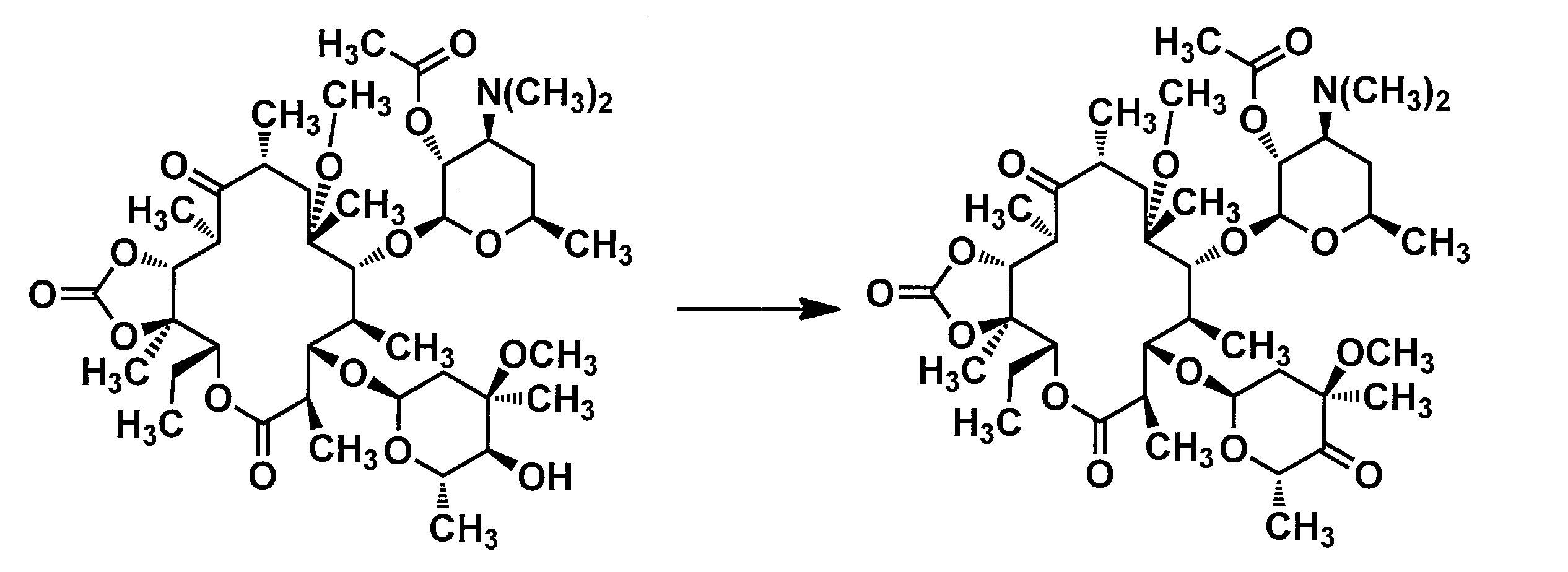
(3)N-クロロコハク酸イミド(99.7g)をクロロホルム(1L)に溶解し、-25℃に冷却した。反応液にジメチルスルフィド(210mL)のクロロホルム(0.2L)溶液を20分間かけて滴下して、15分間攪拌した後、上記参考例3-(2)で得られたカーボネート体のクロロホルム(1L)溶液を30分間かけて滴下して、15分間攪拌した。反応液にトリエチルアミン(136mL)のクロロホルム(0.2L)溶液を加えて、30分間攪拌した。反応液に飽和重曹水を加えて室温まで昇温し、クロロホルムにて抽出した。有機層を無水硫酸マグネシウムで乾燥してろ過した後、ろ液を減圧濃縮して得られた残渣に酢酸エチルとヘキサンの1:5の混合溶媒を加え室温にて終夜攪拌した。生じた固体をろ取し、酢酸エチルとヘキサンの1:2混合溶媒で洗浄してケトン体(109g)を得た。ろ液を減圧濃縮して得られた残渣をシリカゲルカラムクロマトグラフィー(酢酸エチル:ヘキサン=1:1からアセトン:ヘキサン:トリエチルアミン=10:10:0.2)にて精製した後、上記と同様の方法にて結晶化してケトン体(59.5g)を得た。
MS(ESI) m/z= 814.5 [M+H]+
MS(ESI) m/z= 814.5 [M+H]+
<スキームG>

(4)トリメチルスルホキソニウムヨージド(210g)をジメチルスルホキシドとテトラヒドロフランの5:1混合溶媒(1.2L)に溶解し、70%水素化ナトリウム(32.6g)を少量ずつ加えて、室温にて1.5時間攪拌した。氷冷下、上記参考例3-(3)で得られたケトン体(155g)のテトラヒドロフラン(0.8L)溶液を滴下して、室温にて30分間攪拌した。反応液を氷冷し、蒸留水を加え、酢酸エチルにて抽出し、得られた有機層を蒸留水で洗浄した。水層を酢酸エチルにて抽出し、有機層を蒸留水で洗浄した。有機層を合わせて無水硫酸マグネシウムで乾燥してろ過した。ろ液を減圧濃縮してエポキシ体(146g)を得た。
MS(ESI) m/z= 784.5 [M+H]+
1H-NMR (600 MHz, CDCl3) δ(ppm) : 0.90 (t, J=7.57 Hz, 3 H) 0.97 (d, J=7.34 Hz, 3 H) 1.04 (d, J=6.88 Hz, 3 H) 1.07 (s, 3 H) 1.14 (d, J=6.88 Hz, 3 H) 1.18 (d, J=5.96 Hz, 3 H) 1.21 - 1.36 (m, 7 H) 1.42 (s, 3 H) 1.47 - 1.55 (m, 1 H) 1.67 - 1.73
(m, 1 H) 1.83 - 1.98 (m, 5 H) 2.02 (d, J=1.83 Hz, 6 H) 2.18 - 2.29 (m, 1 H) 2.25 (s, 6 H) 2.58 - 2.69 (m, 1 H) 2.63 (d, J=4.13 Hz, 1 H) 2.80 - 2.89 (m, 1 H) 2.94 (d, J=4.13 Hz, 1 H) 3.12 - 3.26 (m, 1 H) 3.17 (s, 3 H) 3.34 (s, 3 H) 3.43 - 3.51 (m, 1 H) 3.66 (d, J=6.42 Hz, 1 H) 3.94 (brs, 1 H) 4.57 (d, J=7.34 Hz, 1 H) 4.73 (dd, J=10.55, 7.34 Hz, 1 H) 4.80 (q, J=6.42 Hz, 1 H) 4.98 - 5.06 (m, 2 H) 6.50 (s, 1 H)
MS(ESI) m/z= 784.5 [M+H]+
1H-NMR (600 MHz, CDCl3) δ(ppm) : 0.90 (t, J=7.57 Hz, 3 H) 0.97 (d, J=7.34 Hz, 3 H) 1.04 (d, J=6.88 Hz, 3 H) 1.07 (s, 3 H) 1.14 (d, J=6.88 Hz, 3 H) 1.18 (d, J=5.96 Hz, 3 H) 1.21 - 1.36 (m, 7 H) 1.42 (s, 3 H) 1.47 - 1.55 (m, 1 H) 1.67 - 1.73
(m, 1 H) 1.83 - 1.98 (m, 5 H) 2.02 (d, J=1.83 Hz, 6 H) 2.18 - 2.29 (m, 1 H) 2.25 (s, 6 H) 2.58 - 2.69 (m, 1 H) 2.63 (d, J=4.13 Hz, 1 H) 2.80 - 2.89 (m, 1 H) 2.94 (d, J=4.13 Hz, 1 H) 3.12 - 3.26 (m, 1 H) 3.17 (s, 3 H) 3.34 (s, 3 H) 3.43 - 3.51 (m, 1 H) 3.66 (d, J=6.42 Hz, 1 H) 3.94 (brs, 1 H) 4.57 (d, J=7.34 Hz, 1 H) 4.73 (dd, J=10.55, 7.34 Hz, 1 H) 4.80 (q, J=6.42 Hz, 1 H) 4.98 - 5.06 (m, 2 H) 6.50 (s, 1 H)
<スキームH>
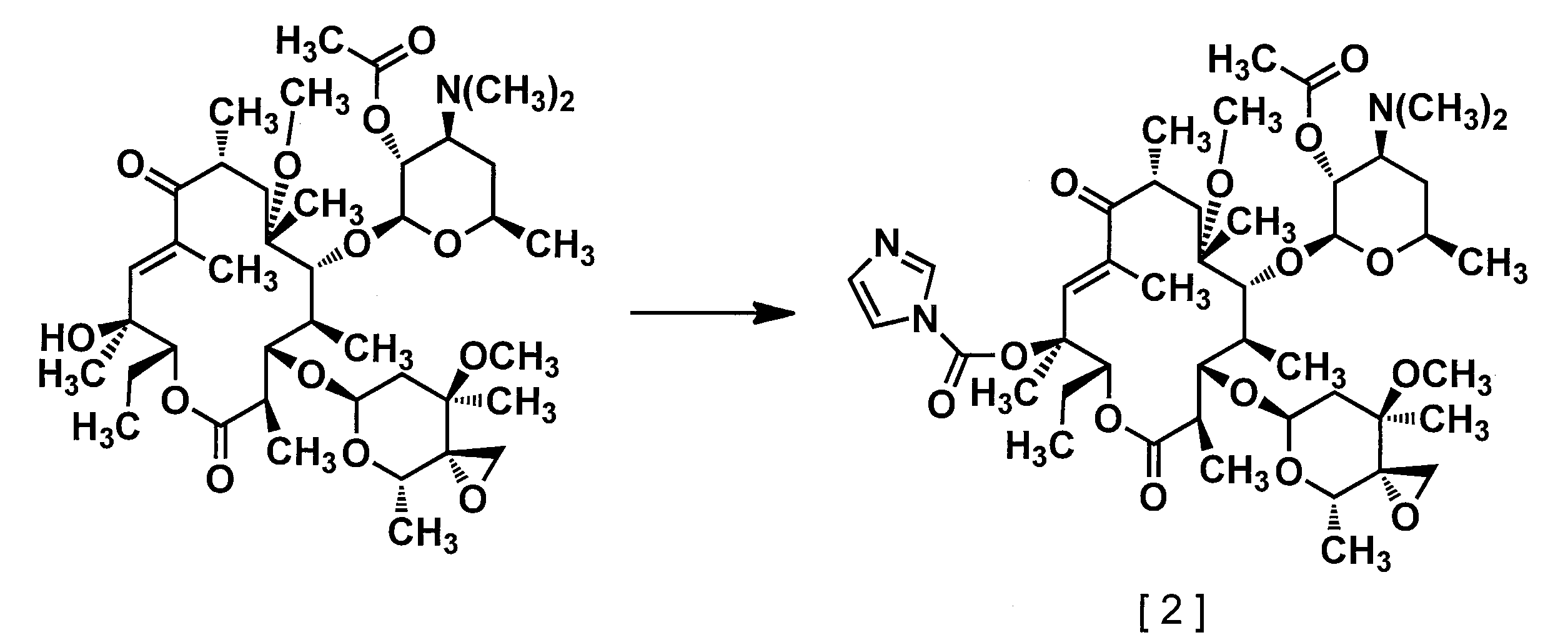
(5)上記参考例3-(4)で得られたエポキシ体(138g)をテトラヒドロフランとジメチルホルムアミドの1:1混合溶媒(1.4L)に溶解し、1,1’-カルボニルジイミダゾール(85.6g)を加えた。氷冷下、70%水素化ナトリウム(18.1g)を40分間かけて加えて、室温にて0.5時間攪拌した。反応液を氷冷し、蒸留水を加え、酢酸エチルにて抽出し、有機層を蒸留水で2回洗浄した。水層を酢酸エチルにて抽出し、有機層を蒸留水で2回洗浄した。有機層を合わせて、無水硫酸マグネシウムで乾燥してろ過した。ろ液を減圧濃縮して得られた残渣をシリカゲルカラムクロマトグラフィー(ヘキサンからヘキサン:酢酸エチル=1:1からアセトン:ヘキサン:トリエチルアミン=10:10:0.2) にて精製した。得られた精製物に酢酸エチル、ヘキサン(1:1)を加えて、室温にて終夜攪拌した。生じた固体をろ取し、酢酸エチルとヘキサンの1:4混合溶媒にて洗浄し、式[2]で示される化合物(87.1g)を得た。
MS(ESI) m/z= 878.6 [M+H]+
1H-NMR (600 MHz, CDCl3) δ(ppm) : 0.85 - 1.41 (m, 25 H) 1.64 - 1.78 (m, 3 H) 1.79 (s, 3 H) 1.90 (dd, J=14.67, 5.04 Hz, 4 H) 1.86 (s, 3 H) 2.04 (s, 3 H) 2.19 - 2.28 (m, 1 H) 2.25 (s, 6 H) 2.60 - 2.68 (m, 1 H) 2.65 (d, J=4.13 Hz, 1 H) 2.86 - 2.97 (m, 1 H) 2.95 (d, J=4.13 Hz, 1 H) 3.15 (s, 3 H) 3.22 - 3.29 (m, 1 H) 3.35 (s, 3 H) 3.38 - 3.47 (m, 1 H) 3.66 (d, J=6.42 Hz, 1 H) 3.79 - 3.88 (m, 1 H) 4.56 (d, J=6.88 Hz, 1 H) 4.72 (dd, J=10.32, 7.57 Hz, 1 H) 4.79 (q, J=6.27 Hz, 1 H) 5.01 - 5.09 (m, 1 H) 5.83 (dd, J=10.55, 2.75 Hz, 1 H) 6.66 (s, 1 H) 7.07 (s, 1 H) 7.34 - 7.38 (m, 1 H) 8.08 (s, 1 H)
MS(ESI) m/z= 878.6 [M+H]+
1H-NMR (600 MHz, CDCl3) δ(ppm) : 0.85 - 1.41 (m, 25 H) 1.64 - 1.78 (m, 3 H) 1.79 (s, 3 H) 1.90 (dd, J=14.67, 5.04 Hz, 4 H) 1.86 (s, 3 H) 2.04 (s, 3 H) 2.19 - 2.28 (m, 1 H) 2.25 (s, 6 H) 2.60 - 2.68 (m, 1 H) 2.65 (d, J=4.13 Hz, 1 H) 2.86 - 2.97 (m, 1 H) 2.95 (d, J=4.13 Hz, 1 H) 3.15 (s, 3 H) 3.22 - 3.29 (m, 1 H) 3.35 (s, 3 H) 3.38 - 3.47 (m, 1 H) 3.66 (d, J=6.42 Hz, 1 H) 3.79 - 3.88 (m, 1 H) 4.56 (d, J=6.88 Hz, 1 H) 4.72 (dd, J=10.32, 7.57 Hz, 1 H) 4.79 (q, J=6.27 Hz, 1 H) 5.01 - 5.09 (m, 1 H) 5.83 (dd, J=10.55, 2.75 Hz, 1 H) 6.66 (s, 1 H) 7.07 (s, 1 H) 7.34 - 7.38 (m, 1 H) 8.08 (s, 1 H)
参考例4 式[3]で示される化合物の製造

<スキームI>

(1)参考例3で得られた式[2]で示される化合物(360mg)をアセトニトリル(1.5mL)に溶解し、1,8-ジアザビシクロ[5,4,0]-7-ウンデセン(280μL)、3-メタンスルホニルプロピルアミン塩酸塩(273mg)を加えて、室温にて1日間攪拌した。反応液に酢酸エチル、飽和塩化アンモニウム水溶液を加えて分液した。有機層を無水硫酸マグネシウムで乾燥してろ過し、ろ液を減圧濃縮して得られた残渣をシリカゲルカラムクロマトグラフィー(クロロホルムからクロロホルム:メタノール:28%アンモニア水=25:1:0.1から15:1:0.1)にて精製してカーバメート体(117mg)を得た。
<スキームJ>

(2)上記の参考例4-(1)で得られたカーバメート体(115mg)をエタノール(1mL)に溶解し、N,N-ジエチル-N’-メチルエタン-1,2-ジアミン(195μL)を加えて、封管中100℃にて1日間攪拌した。反応液に酢酸エチル、飽和塩化アンモニウム水溶液を加えて分液した。有機層を無水硫酸マグネシウムで乾燥してろ過し、ろ液を減圧濃縮して得られた残渣をシリカゲルカラムクロマトグラフィー(クロロホルムからクロロホルム:メタノール:28%アンモニア水=12:1:0.1)、分取用薄層クロマトグラフィー(クロロホルム:メタノール:28%アンモニア水=20:1:0.1)にて精製し、式[3]で示される化合物(62.7mg)を得た。
なお、式[3]で示される化合物は、特許文献7及び8において実施例15として記載された化合物である。
なお、式[3]で示される化合物は、特許文献7及び8において実施例15として記載された化合物である。
実施例1 化合物[1]のA形結晶の製造

<スキームK>

(1)参考例3で得られた化合物[2](277g)をアセトニトリル(315mL)に溶解し、参考例2で得られた化合物(64.4g)および1,8-ジアザビシクロ[5,4,0]-7-ウンデセン(191mL)を加え、室温にて1.5時間攪拌した。反応液に水(500mL)を加え、酢酸エチル(400mL)にて抽出した。有機層を飽和食塩水で洗浄、硫酸マグネシウムにて乾燥ろ過後、減圧下濃縮した。残渣を酢酸エチル(300mL)とヘキサン(300mL)より再結晶し、カーバメート体(83.5g)を得た。ろ液を減圧下濃縮後、再結晶(酢酸エチル(200mL)、ヘキサン(200mL))することでカーバメート体(34.4g)を得た。さらにろ液を減圧下濃縮し、残渣をシリカゲルカラムクロマトグラフィー(クロロホルム:メタノール:28%アンモニア水=99:1:0.1から85:15:1.5)で精製した後に、酢酸エチル(100mL)とヘキサン(100mL)より再結晶し、カーバメート体(16.3g)を得た。ろ液と前記カラムで得られた一部のフラクションを併せて、アミノシリカゲルカラムクロマトグラフィー(酢酸エチル:ヘキサン=20:80から酢酸エチルのみ)で精製した後に、酢酸エチル(200mL)とヘキサン(200mL)より再結晶することでカーバメート体(55.3g)を得た。これらカーバメート体を合わせて189.5g得た。
MS(ESI) m/z= 912.6 [M+H]+
1H-NMR (499 MHz, CDCl3) δ(ppm) : 0.85 - 0.90 (m, 6 H) 0.95 (d, J=7.55 Hz, 3 H) 0.99 - 1.29 (m, 19 H) 1.33 (s, 3 H) 1.44 (s, 3 H) 1.50 - 1.65 (m, 3 H) 1.68 - 1.73 (m, 1 H) 1.84 - 2.00 (m, 3 H) 2.05 (s, 3 H) 2.21 (dd, J=14.75, 3.09 Hz, 1 H) 2.26 (s, 6 H) 2.53 - 2.60 (m, 1 H) 2.62 (d, J=4.12 Hz, 1 H) 2.63 - 2.70 (m, 1 H) 2.86 - 2.91 (m, 1 H) 2.93 (s, 3 H) 2.94 (d, J=4.12 Hz, 1 H) 3.06 (q, J=6.86 Hz, 1 H) 3.27 - 3.36 (m, 2 H) 3.34 (s, 3 H) 3.41 - 3.50 (m, 1 H) 3.68 (d, J=6.17 Hz, 1 H) 3.73 (d, J=10.29 Hz, 1 H) 3.76 (s, 1 H) 4.20 (d, J=16.81 Hz, 1 H) 4.49 (d, J=16.81 Hz, 1 H) 4.63 (d, J=7.55 Hz, 1 H) 4.68 - 4.77 (m, 2 H) 5.04 (dd, J=4.63, 3.26 Hz, 1 H) 5.25 (dd, J=10.63, 2.40 Hz, 1 H) 6.17 (t, J=5.66 Hz, 1 H)
MS(ESI) m/z= 912.6 [M+H]+
1H-NMR (499 MHz, CDCl3) δ(ppm) : 0.85 - 0.90 (m, 6 H) 0.95 (d, J=7.55 Hz, 3 H) 0.99 - 1.29 (m, 19 H) 1.33 (s, 3 H) 1.44 (s, 3 H) 1.50 - 1.65 (m, 3 H) 1.68 - 1.73 (m, 1 H) 1.84 - 2.00 (m, 3 H) 2.05 (s, 3 H) 2.21 (dd, J=14.75, 3.09 Hz, 1 H) 2.26 (s, 6 H) 2.53 - 2.60 (m, 1 H) 2.62 (d, J=4.12 Hz, 1 H) 2.63 - 2.70 (m, 1 H) 2.86 - 2.91 (m, 1 H) 2.93 (s, 3 H) 2.94 (d, J=4.12 Hz, 1 H) 3.06 (q, J=6.86 Hz, 1 H) 3.27 - 3.36 (m, 2 H) 3.34 (s, 3 H) 3.41 - 3.50 (m, 1 H) 3.68 (d, J=6.17 Hz, 1 H) 3.73 (d, J=10.29 Hz, 1 H) 3.76 (s, 1 H) 4.20 (d, J=16.81 Hz, 1 H) 4.49 (d, J=16.81 Hz, 1 H) 4.63 (d, J=7.55 Hz, 1 H) 4.68 - 4.77 (m, 2 H) 5.04 (dd, J=4.63, 3.26 Hz, 1 H) 5.25 (dd, J=10.63, 2.40 Hz, 1 H) 6.17 (t, J=5.66 Hz, 1 H)
<スキームL>
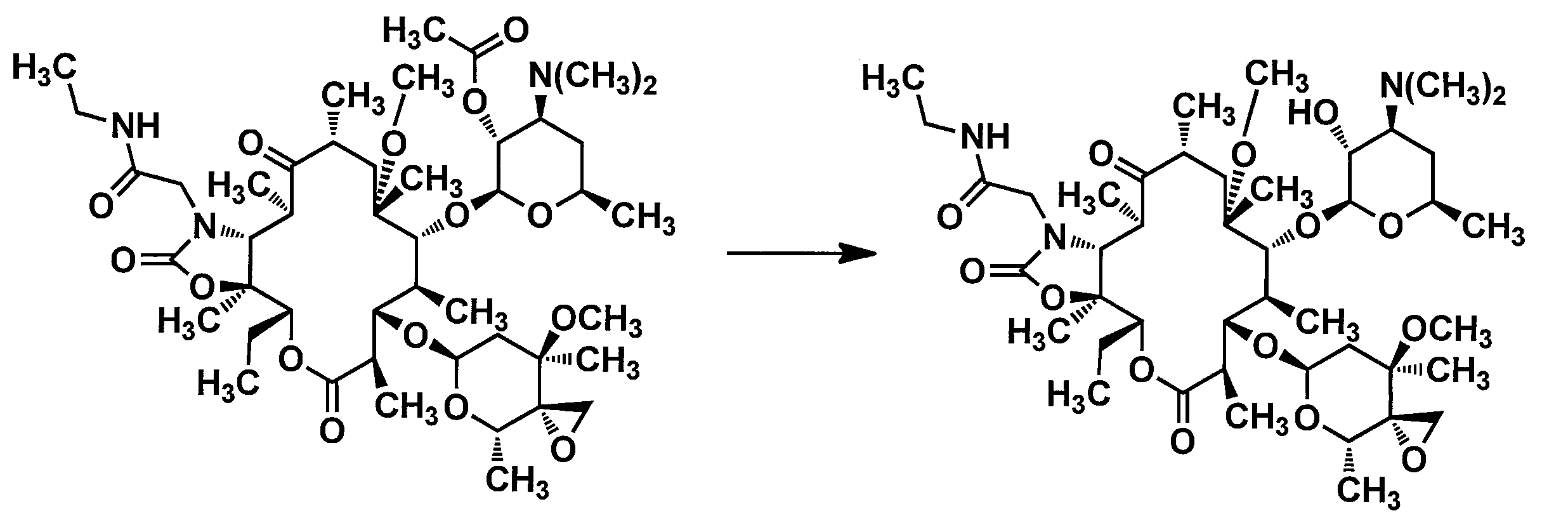
(2)上記の実施例1-(1)で得られたカーバメート体(189g)をメタノール(410mL)に溶解し、4時間加熱還流した後、室温にて一昼夜攪拌した。反応液を減圧下濃縮した。残渣に酢酸エチル(50mL)およびヘキサン(300mL)を加え、30分間攪拌し、生じた固体をろ取し、脱アセチル体(41.2g)を得た。ろ液をアミノシリカゲルカラムクロマトグラフィー(酢酸エチル:ヘキサン=20:80から100:0)およびシリカゲルカラムクロマトグラフィー(クロロホルム:メタノール:28%アンモニア水=99:1:0.1から85:15:1.5)で3回精製した。得られた粗精製物に酢酸エチル(50mL)およびヘキサン(600mL)を加え、30分間攪拌し、生じた固体をろ取し、脱アセチル体(62.8g)を得た。ろ液をさらにシリカゲルカラムクロマトグラフィー(クロロホルム:メタノール:28%アンモニア水=99:1:0.1から85:15:1.5)で精製し、同様に酢酸エチル(20mL)とヘキサン(50mL)より再結晶し、脱アセチル体(2.99g)を得た。
MS(ESI) m/z= 870.6 [M+H]+
1H-NMR (499 MHz, CDCl3) δ(ppm) : 0.88 (t, J=7.38 Hz, 3 H) 1.00 - 1.08 (m, 9 H) 1.09 - 1.27 (m, 1 H) 1.10 - 1.15 (m, 9 H) 1.18 (d, J=6.17 Hz, 3 H) 1.24 (d, J=7.20 Hz, 3 H) 1.36 (s, 3 H) 1.43 (s, 3 H) 1.58 (ddd, J=14.24, 10.46, 7.20 Hz, 1 H) 1.62 - 1.78 (m, 3 H) 1.88 (dd, J=14.92, 4.97 Hz, 1 H) 1.91 - 2.00 (m, 2 H) 2.23 (dd, J=14.75, 2.74 Hz, 1 H) 2.28 (s, 6 H) 2.42 - 2.50 (m, 1 H) 2.59 (dd, J=7.03, 4.29 Hz, 1 H) 2.62 (d, J=4.12 Hz, 1 H) 2.89 - 2.96 (m, 1 H) 2.93 (d, J=4.12 Hz, 1 H) 2.95 (s, 3 H) 3.08 (q, J=6.86 Hz, 1 H) 3.18 (dd, J=10.29, 7.20 Hz, 1 H) 3.27 - 3.39 (m, 2 H) 3.32 (s, 3 H) 3.42 - 3.50 (m, 1 H) 3.71 (d, J=6.52 Hz, 1 H) 3.76 (d, J=9.95 Hz, 1 H) 3.77 (s, 1 H) 4.21 (d, J=16.81 Hz, 1 H) 4.50 (d, J=10.63 Hz, 1 H) 4.52 (s, 1 H) 4.76 (q, J=6.52 Hz, 1 H) 5.04 (dd, J=4.80, 2.74 Hz, 1 H) 5.21 (dd, J=10.63, 2.40 Hz, 1 H) 6.25 (t, J=5.66 Hz, 1 H)
MS(ESI) m/z= 870.6 [M+H]+
1H-NMR (499 MHz, CDCl3) δ(ppm) : 0.88 (t, J=7.38 Hz, 3 H) 1.00 - 1.08 (m, 9 H) 1.09 - 1.27 (m, 1 H) 1.10 - 1.15 (m, 9 H) 1.18 (d, J=6.17 Hz, 3 H) 1.24 (d, J=7.20 Hz, 3 H) 1.36 (s, 3 H) 1.43 (s, 3 H) 1.58 (ddd, J=14.24, 10.46, 7.20 Hz, 1 H) 1.62 - 1.78 (m, 3 H) 1.88 (dd, J=14.92, 4.97 Hz, 1 H) 1.91 - 2.00 (m, 2 H) 2.23 (dd, J=14.75, 2.74 Hz, 1 H) 2.28 (s, 6 H) 2.42 - 2.50 (m, 1 H) 2.59 (dd, J=7.03, 4.29 Hz, 1 H) 2.62 (d, J=4.12 Hz, 1 H) 2.89 - 2.96 (m, 1 H) 2.93 (d, J=4.12 Hz, 1 H) 2.95 (s, 3 H) 3.08 (q, J=6.86 Hz, 1 H) 3.18 (dd, J=10.29, 7.20 Hz, 1 H) 3.27 - 3.39 (m, 2 H) 3.32 (s, 3 H) 3.42 - 3.50 (m, 1 H) 3.71 (d, J=6.52 Hz, 1 H) 3.76 (d, J=9.95 Hz, 1 H) 3.77 (s, 1 H) 4.21 (d, J=16.81 Hz, 1 H) 4.50 (d, J=10.63 Hz, 1 H) 4.52 (s, 1 H) 4.76 (q, J=6.52 Hz, 1 H) 5.04 (dd, J=4.80, 2.74 Hz, 1 H) 5.21 (dd, J=10.63, 2.40 Hz, 1 H) 6.25 (t, J=5.66 Hz, 1 H)
<スキームM>

(3)上記の実施例1-(2)で得られた脱アセチル体(104g)をエタノール(120mL)に溶解し、参考例1で得られた化合物(56.5g)を加え、2時間加熱還流した。反応液を減圧下濃縮した。残渣を酢酸エチルに溶解させ、飽和炭酸水素ナトリウム水溶液にて3回洗浄した後、水を加え分液した。水層を酢酸エチルで再度抽出し、水で洗浄した。有機層を合わせ、飽和食塩水で洗浄、硫酸マグネシウムにて乾燥ろ過後、減圧下濃縮した。残渣を酢酸エチル(100mL)とヘキサン(600mL)より再結晶し、化合物[1](41.4g)を得た。
MS(ESI) m/z= 1028.8 [M+H]+
1H-NMR (499 MHz, CDCl3) δ(ppm) : 0.87 (t, J=7.20 Hz, 3 H) 1.00 (m, J=10.60, 6.50 Hz, 15 H) 1.06 - 1.26 (m, 22 H) 1.38 (s, 3 H) 1.42 (s, 3 H) 1.52 - 1.79 (m, 4 H) 1.84 - 2.07 (m, 5 H) 2.29 (s, 6 H) 2.35 (s, 3 H) 2.39 - 2.55 (m, 5 H) 2.57 - 2.64 (m, 1 H) 2.83 (d, J=14.75 Hz, 1 H) 2.89 (dd, J=9.26, 7.20 Hz, 1 H) 2.94 (s, 3 H) 2.95-3.03 (m, 2 H) 3.08 (q, J=7.09 Hz, 1 H) 3.17 (dd, J=10.12, 7.38 Hz, 1 H) 3.22 - 3.32 (m, 1 H) 3.28 (s, 3 H) 3.34 - 3.48 (m, 3 H) 3.64 (d, J=7.55 Hz, 1 H) 3.73 (d, J=9.61 Hz, 1 H) 3.78 (s, 1 H) 4.08 (q, J=6.40 Hz, 1 H) 4.21 (d, J=17.15 Hz, 1 H) 4.40 (d, J=7.20 Hz, 1 H) 4.57 (d, J=16.81 Hz, 1 H) 4.95 (brs, 1 H) 4.99 (d, J=4.80 Hz, 1 H) 5.11 (dd, J=10.63, 2.06 Hz, 1 H) 6.39 (t, J=5.66 Hz, 1 H)
MS(ESI) m/z= 1028.8 [M+H]+
1H-NMR (499 MHz, CDCl3) δ(ppm) : 0.87 (t, J=7.20 Hz, 3 H) 1.00 (m, J=10.60, 6.50 Hz, 15 H) 1.06 - 1.26 (m, 22 H) 1.38 (s, 3 H) 1.42 (s, 3 H) 1.52 - 1.79 (m, 4 H) 1.84 - 2.07 (m, 5 H) 2.29 (s, 6 H) 2.35 (s, 3 H) 2.39 - 2.55 (m, 5 H) 2.57 - 2.64 (m, 1 H) 2.83 (d, J=14.75 Hz, 1 H) 2.89 (dd, J=9.26, 7.20 Hz, 1 H) 2.94 (s, 3 H) 2.95-3.03 (m, 2 H) 3.08 (q, J=7.09 Hz, 1 H) 3.17 (dd, J=10.12, 7.38 Hz, 1 H) 3.22 - 3.32 (m, 1 H) 3.28 (s, 3 H) 3.34 - 3.48 (m, 3 H) 3.64 (d, J=7.55 Hz, 1 H) 3.73 (d, J=9.61 Hz, 1 H) 3.78 (s, 1 H) 4.08 (q, J=6.40 Hz, 1 H) 4.21 (d, J=17.15 Hz, 1 H) 4.40 (d, J=7.20 Hz, 1 H) 4.57 (d, J=16.81 Hz, 1 H) 4.95 (brs, 1 H) 4.99 (d, J=4.80 Hz, 1 H) 5.11 (dd, J=10.63, 2.06 Hz, 1 H) 6.39 (t, J=5.66 Hz, 1 H)
上記結晶の粉末X線回折パターン及び示差熱分析/熱質量測定(TG/DTA)を測定したところ、A形結晶であった。粉末X線回折パターンをリガク製の粉末X線回折装置(Ultima III)を用い、Cu―Kα線をX線源として測定した。2θ=4.1度、10.0度,10.6度及び15.1度付近にピークが認められた。示差熱分析/熱質量測定(TG/DTA)をリガク製の示差熱天秤(Thermo plus EVO TG8120)及び同等の装置を用い、大気下にて、室温から約250℃まで10℃/分の昇温速度で行った。その結果、143~148℃に吸熱ピークが認められた。
実施例2 化合物[1]のB形結晶の製造
実施例1-(3)で得られた化合物[1]の固体(1.0g)にメタノール(19mL)を加え溶解させた後、水(9.5mL)を加え、室温にて一晩撹拌した。析出した固体をろ取後、減圧下乾燥することにより、式[1]で示される化合物の結晶(619mg)を得た。得られた化合物[1]の結晶の粉末X線回折パターン、示差熱分析/熱質量測定(TG/DTA)及び赤外線吸収スペクトルを測定したところ、B形結晶であった。粉末X線回折パターンをリガク製の粉末X線回折装置(Ultima III)を用い、Cu―Kα線をX線源として測定した。2θ=4.0度、7.1度,8.1度及び12.1度付近にピークが認められた。示差熱分析/熱質量測定(TG/DTA)をリガク製の示差熱天秤(Thermo plus EVO TG8120)及び同等の装置を用い、大気下にて、室温から約250℃まで10℃/分の昇温速度で行った。その結果、181~186℃に吸熱ピークが認められた。赤外線吸収スペクトルを島津製作所製のフーリエ変換赤外分光光度計(IRAffinity-1)を用い、全反射法(ATR法)にて積算回数20回、分解能:4cm-1の条件で測定した。1769cm-1,1685cm-1,1521cm-1,1458cm-1,1165cm-1及び1111cm-1付近にピークが認められた。
実施例1-(3)で得られた化合物[1]の固体(1.0g)にメタノール(19mL)を加え溶解させた後、水(9.5mL)を加え、室温にて一晩撹拌した。析出した固体をろ取後、減圧下乾燥することにより、式[1]で示される化合物の結晶(619mg)を得た。得られた化合物[1]の結晶の粉末X線回折パターン、示差熱分析/熱質量測定(TG/DTA)及び赤外線吸収スペクトルを測定したところ、B形結晶であった。粉末X線回折パターンをリガク製の粉末X線回折装置(Ultima III)を用い、Cu―Kα線をX線源として測定した。2θ=4.0度、7.1度,8.1度及び12.1度付近にピークが認められた。示差熱分析/熱質量測定(TG/DTA)をリガク製の示差熱天秤(Thermo plus EVO TG8120)及び同等の装置を用い、大気下にて、室温から約250℃まで10℃/分の昇温速度で行った。その結果、181~186℃に吸熱ピークが認められた。赤外線吸収スペクトルを島津製作所製のフーリエ変換赤外分光光度計(IRAffinity-1)を用い、全反射法(ATR法)にて積算回数20回、分解能:4cm-1の条件で測定した。1769cm-1,1685cm-1,1521cm-1,1458cm-1,1165cm-1及び1111cm-1付近にピークが認められた。
実施例3 化合物[1]のC形結晶の製造
実施例1-(3)で得られた化合物[1]の固体(30mg)を水(2mL)中(25℃)にて10日間懸濁状態で振とう後、遠心分離(3000rpm,10分間)して水を除去し、沈殿物を室温にて減圧乾燥することにより得た。得られた化合物[1]のC形結晶の粉末X線回折パターンをリガク製の粉末X線回折装置(Ultima III)を用い、Cu―Kα線をX線源として測定した。2θ=3.3度、4.6度,11.2度及び15.5度付近にピークが認められた。示差熱分析/熱質量測定(TG/DTA)をリガク製の示差熱天秤(Thermo plus EVO TG8120)及び同等の装置を用い、大気下にて、室温から約250℃まで10℃/分の昇温速度で行った。その結果、136~141℃に吸熱ピークが認められた。
実施例1-(3)で得られた化合物[1]の固体(30mg)を水(2mL)中(25℃)にて10日間懸濁状態で振とう後、遠心分離(3000rpm,10分間)して水を除去し、沈殿物を室温にて減圧乾燥することにより得た。得られた化合物[1]のC形結晶の粉末X線回折パターンをリガク製の粉末X線回折装置(Ultima III)を用い、Cu―Kα線をX線源として測定した。2θ=3.3度、4.6度,11.2度及び15.5度付近にピークが認められた。示差熱分析/熱質量測定(TG/DTA)をリガク製の示差熱天秤(Thermo plus EVO TG8120)及び同等の装置を用い、大気下にて、室温から約250℃まで10℃/分の昇温速度で行った。その結果、136~141℃に吸熱ピークが認められた。
実施例4 化合物[1]水和物のD形結晶の製造
実施例1-(3)で得られた化合物[1]の固体(1.0g)にエタノール(6mL)を加え溶解させた後、水(4.5mL)を加え、室温にて一晩撹拌した。析出した固体をろ取後、減圧下乾燥することにより、化合物[1]のD形結晶(612mg)を得た。得られた化合物[1]のD形結晶の粉末X線回折パターンをリガク製の粉末X線回折装置(Ultima III)を用い、Cu―Kα線をX線源として測定した。2θ=5.4度、6.6度,10.9度及び16.6度付近にピークが認められた。示差熱分析/熱質量測定(TG/DTA)をリガク製の示差熱天秤(Thermo plus EVO TG8120)及び同等の装置を用い、大気下にて、室温から約250℃まで10℃/分の昇温速度で行った。その結果、37~57℃及び180~185℃に吸熱ピークが認められた。
実施例1-(3)で得られた化合物[1]の固体(1.0g)にエタノール(6mL)を加え溶解させた後、水(4.5mL)を加え、室温にて一晩撹拌した。析出した固体をろ取後、減圧下乾燥することにより、化合物[1]のD形結晶(612mg)を得た。得られた化合物[1]のD形結晶の粉末X線回折パターンをリガク製の粉末X線回折装置(Ultima III)を用い、Cu―Kα線をX線源として測定した。2θ=5.4度、6.6度,10.9度及び16.6度付近にピークが認められた。示差熱分析/熱質量測定(TG/DTA)をリガク製の示差熱天秤(Thermo plus EVO TG8120)及び同等の装置を用い、大気下にて、室温から約250℃まで10℃/分の昇温速度で行った。その結果、37~57℃及び180~185℃に吸熱ピークが認められた。
実施例5 化合物[1]水和物のE形結晶の製造
実施例4で得られた化合物[1]の固体(105mg)を水(10mL)に懸濁させ、室温にて3日間撹拌した。固体をろ取後、減圧下乾燥することにより、化合物[1]のE形結晶(612mg)を得た。得られた化合物[1]のE形結晶の粉末X線回折パターンをリガク製の粉末X線回折装置(Ultima III)を用い、Cu―Kα線をX線源として測定した。2θ=11.0度、11.3度,13.3度及び16.8度付近にピークが認められた。示差熱分析/熱質量測定(TG/DTA)をリガク製の示差熱天秤(Thermo plus EVO TG8120)及び同等の装置を用い、大気下にて、室温から約250℃まで10℃/分の昇温速度で行った。その結果、75~80℃に吸熱ピークが認められた。
実施例4で得られた化合物[1]の固体(105mg)を水(10mL)に懸濁させ、室温にて3日間撹拌した。固体をろ取後、減圧下乾燥することにより、化合物[1]のE形結晶(612mg)を得た。得られた化合物[1]のE形結晶の粉末X線回折パターンをリガク製の粉末X線回折装置(Ultima III)を用い、Cu―Kα線をX線源として測定した。2θ=11.0度、11.3度,13.3度及び16.8度付近にピークが認められた。示差熱分析/熱質量測定(TG/DTA)をリガク製の示差熱天秤(Thermo plus EVO TG8120)及び同等の装置を用い、大気下にて、室温から約250℃まで10℃/分の昇温速度で行った。その結果、75~80℃に吸熱ピークが認められた。
なお、化合物[1]水和物のE形結晶は次の手法でも得ることができる。実施例1(A形結晶)、実施例2(B形結晶)および実施例4(D形結晶)を(各5mg)はかりとり、混合した後、水(2mL)を加え10日間25℃にて振とう攪拌した。遠心分離(3000rpm,10分間)して水を除去し、沈殿物を室温にて1日間減圧乾燥することにより得た。得られた化合物[1]のE形結晶の粉末X線回折パターンをリガク製の粉末X線回折装置(Ultima III)を用い、Cu―Kα線をX線源として測定した。2θ=11.0度、11.3度,13.3度及び16.8度付近にピークが認められた。示差熱分析/熱質量測定(TG/DTA)をリガク製の示差熱天秤(Thermo plus EVO TG8120)及び同等の装置を用い、大気下にて、室温から約250℃まで10℃/分の昇温速度で行った。その結果、75~80℃に吸熱ピークが認められた。
また、化合物[1]水和物のE形結晶は次の手法でも得ることができる。実施例3(C形結晶)および実施例4(D形結晶)を(各5mg)はかりとり、混合した後、水(0.5mL)を加え5日間25℃にて振とう攪拌した。遠心分離(3000rpm,10分間)して水を除去し、沈殿物を室温にて1日間減圧乾燥することにより得た。得られた化合物[1]のE形結晶の粉末X線回折パターンをリガク製の粉末X線回折装置(Ultima III)を用い、Cu―Kα線をX線源として測定した。2θ=11.0度、11.3度,13.3度及び16.8度付近にピークが認められた。示差熱分析/熱質量測定(TG/DTA)をリガク製の示差熱天秤(Thermo plus EVO TG8120)及び同等の装置を用い、大気下にて、室温から約250℃まで10℃/分の昇温速度で行った。その結果、75~80℃に吸熱ピークが認められた。
また、化合物[1]水和物のE形結晶は次の手法でも得ることができる。表題化合物である実施例5(E形結晶)および実施例6(F形結晶)を(各5mg)はかりとり、混合した後、水1mLを加え3週間25℃にて振とう攪拌した。遠心分離(3000rpm,10分間)して水を除去し、沈殿物を室温にて1日間減圧乾燥することにより得た。得られた化合物[1]のE形結晶の粉末X線回折パターンをリガク製の粉末X線回折装置(Ultima III)を用い、Cu―Kα線をX線源として測定した。2θ=11.0度、11.3度,13.3度及び16.8度付近にピークが認められた。示差熱分析/熱質量測定(TG/DTA)をリガク製の示差熱天秤(Thermo plus EVO TG8120)及び同等の装置を用い、大気下にて、室温から約250℃まで10℃/分の昇温速度で行った。その結果、75~80℃に吸熱ピークが認められた。
実施例6 化合物[1]水和物のF形結晶の製造
実施例1-(3)で得られた化合物[1]の固体(20mg)に80℃で加温しながらアセトニトリル 30μLを加え室温にて静置した。上清を取り除き、結晶を減圧乾燥機で室温にて乾燥した。得られた化合物[1]のF形結晶の粉末X線回折パターンをリガク製の粉末X線回折装置(Ultima III)を用い、Cu―Kα線をX線源として測定した。2θ=5.0度、5.9度,10.9度及び16.7度付近にピークが認められた。示差熱分析/熱質量測定(TG/DTA)をリガク製の示差熱天秤(Thermo plus EVO TG8120)及び同等の装置を用い、大気下にて、室温から約250℃まで10℃/分の昇温速度で行った。その結果、48~53℃及び115~120℃に吸熱ピークが認められた。
実施例1-(3)で得られた化合物[1]の固体(20mg)に80℃で加温しながらアセトニトリル 30μLを加え室温にて静置した。上清を取り除き、結晶を減圧乾燥機で室温にて乾燥した。得られた化合物[1]のF形結晶の粉末X線回折パターンをリガク製の粉末X線回折装置(Ultima III)を用い、Cu―Kα線をX線源として測定した。2θ=5.0度、5.9度,10.9度及び16.7度付近にピークが認められた。示差熱分析/熱質量測定(TG/DTA)をリガク製の示差熱天秤(Thermo plus EVO TG8120)及び同等の装置を用い、大気下にて、室温から約250℃まで10℃/分の昇温速度で行った。その結果、48~53℃及び115~120℃に吸熱ピークが認められた。
実施例7 化合物[1]マロン酸塩の結晶の製造
化合物[1](500mg)の酢酸エチル(1.5mL)溶液にマロン酸(101mg)を室温で加え、終夜攪拌した。沈殿物をろ取した後、減圧下40℃にて乾燥し表題化合物を無色の結晶(310mg)として得た。
1H-NMR(600MHz, DMSO-d6)δ ppm 0.83 (t, J=7.4 Hz, 3 H) 0.90 (d, J=7.0 Hz, 3 H) 0.94 - 1.00 (m, 6 H) 1.07 - 1.22 (m, 27 H) 1.24 (s, 3 H), 1.33-1.40 (m, 1 H), 1.41, (s, 3 H) 1.43-1.49 (m, 1 H) 1.60 - 1.65 (m, 1 H) 1.69-1.78 (m, 2 H) 1.80-1.91 (m, 3 H), 1.99-2.06 (m, 2H) 2.28 (s, 3 H) 2.42-2.52 (m, 7H) 2.56 - 2.63 (m, 4 H) 2.68 2.77(m, 6 H) 2.82 (brs, 4 H) 2.95 - 3.11 (m, 5 H) 3.21(m, 3 H) 3.22-3.28 (m, 2H) 3.38 - 3.43 (m, 2 H) 3.50 (d, J=7.43 Hz, 1 H) 3.56 (s, 1 H) 3.59 - 3.67 (d, J=7.02 Hz, 1 H) 3.96 (d, J=17.34 Hz, 1 H) 4.00 - 4.07 (m, 1 H) 4.24 (d, J=7.02 Hz, 1 H) 4.32 (d, J=16.93 Hz, 1 H) 4.75 (d, J=5.37 Hz, 1 H) 5.52 (dd, J=8.88, 3.92 Hz, 1 H) 7.87 (t, J=5.57 Hz, 1 H)
化合物[1](500mg)の酢酸エチル(1.5mL)溶液にマロン酸(101mg)を室温で加え、終夜攪拌した。沈殿物をろ取した後、減圧下40℃にて乾燥し表題化合物を無色の結晶(310mg)として得た。
1H-NMR(600MHz, DMSO-d6)δ ppm 0.83 (t, J=7.4 Hz, 3 H) 0.90 (d, J=7.0 Hz, 3 H) 0.94 - 1.00 (m, 6 H) 1.07 - 1.22 (m, 27 H) 1.24 (s, 3 H), 1.33-1.40 (m, 1 H), 1.41, (s, 3 H) 1.43-1.49 (m, 1 H) 1.60 - 1.65 (m, 1 H) 1.69-1.78 (m, 2 H) 1.80-1.91 (m, 3 H), 1.99-2.06 (m, 2H) 2.28 (s, 3 H) 2.42-2.52 (m, 7H) 2.56 - 2.63 (m, 4 H) 2.68 2.77(m, 6 H) 2.82 (brs, 4 H) 2.95 - 3.11 (m, 5 H) 3.21(m, 3 H) 3.22-3.28 (m, 2H) 3.38 - 3.43 (m, 2 H) 3.50 (d, J=7.43 Hz, 1 H) 3.56 (s, 1 H) 3.59 - 3.67 (d, J=7.02 Hz, 1 H) 3.96 (d, J=17.34 Hz, 1 H) 4.00 - 4.07 (m, 1 H) 4.24 (d, J=7.02 Hz, 1 H) 4.32 (d, J=16.93 Hz, 1 H) 4.75 (d, J=5.37 Hz, 1 H) 5.52 (dd, J=8.88, 3.92 Hz, 1 H) 7.87 (t, J=5.57 Hz, 1 H)
上記固体の粉末X線回析パターン及び示差熱分析/熱質量測定(TG/DTA)を測定したところマロン酸塩の結晶であった。粉末X線回折パターンをリガク製の粉末X線回折装置(Ultima III)を用い、Cu―Kα線をX線源として測定した。2θ=8.5度、10.0度、及び15.6付近にピークが認められた。示差熱分析/熱質量測定(TG/DTA)をリガク製の示差熱天秤(Thermo plus EVO TG8120)及び同等の装置を用い、大気下にて、室温から約250℃まで10℃/分の昇温速度で行った。その結果、173~177℃に吸熱ピークが認められた。
実施例8 化合物[1]メタンスルホン酸塩の結晶の製造
化合物[1](302mg)のアセトン(4.5mL)溶液にメタンスルホン酸(29μL)を加え、2時間15分攪拌した。反応液をろ過し、得られた残渣をアセトン(2mL)で2回洗浄後、減圧下40℃にて乾燥して表題化合物(213mg)を無色の結晶として得た。
1H-NMR(600MHz, DMSO-d6)δ ppm 0.84 (t, J=7.4 Hz, 3 H) 0.91 (d, J=7.0 Hz, 3 H) 0.94 - 1.02 (m, 6 H) 1.08 - 1.15 (m, 12 H) 1.21 (d, J=6.2 Hz, 3 H) 1.23 - 1.32 (m, 13 H) 1.37 - 1.53 (m, 5 H) 1.63 - 1.68 (m, 1 H) 1.70 - 1.80 (m, 2 H) 1.83 - 2.12 (m, 5 H) 2.29 (s, 3 H) 2.31 (s, 6 H) 2.44 - 2.49 (m, 1 H) 2.53 - 2.59 (m, 1 H) 2.66 - 2.84 (m, 12 H) 2.97 - 3.24 (m, 9 H) 3.40 - 3.46 (m, 1 H) 3.51 (br d, J=7.8 Hz, 1 H) 3.57 (s, 1 H) 3.59 - 3.67 (m, 3 H) 3.97 (d, J=16.9 Hz, 1 H) 4.06 (br q, J=6.1 Hz, 1 H) 4.24 (d, J=7.0 Hz, 1 H) 4.33 (d, J=17.3 Hz, 1 H) 4.77 (br d, J=5.4 Hz, 1 H) 4.97 (br s, 1 H) 5.48 - 5.55 (m, 1 H) 6.09 (br s, 1 H) 7.87 (t, J=5.6 Hz, 1 H) 9.30 (br s, 1 H)
化合物[1](302mg)のアセトン(4.5mL)溶液にメタンスルホン酸(29μL)を加え、2時間15分攪拌した。反応液をろ過し、得られた残渣をアセトン(2mL)で2回洗浄後、減圧下40℃にて乾燥して表題化合物(213mg)を無色の結晶として得た。
1H-NMR(600MHz, DMSO-d6)δ ppm 0.84 (t, J=7.4 Hz, 3 H) 0.91 (d, J=7.0 Hz, 3 H) 0.94 - 1.02 (m, 6 H) 1.08 - 1.15 (m, 12 H) 1.21 (d, J=6.2 Hz, 3 H) 1.23 - 1.32 (m, 13 H) 1.37 - 1.53 (m, 5 H) 1.63 - 1.68 (m, 1 H) 1.70 - 1.80 (m, 2 H) 1.83 - 2.12 (m, 5 H) 2.29 (s, 3 H) 2.31 (s, 6 H) 2.44 - 2.49 (m, 1 H) 2.53 - 2.59 (m, 1 H) 2.66 - 2.84 (m, 12 H) 2.97 - 3.24 (m, 9 H) 3.40 - 3.46 (m, 1 H) 3.51 (br d, J=7.8 Hz, 1 H) 3.57 (s, 1 H) 3.59 - 3.67 (m, 3 H) 3.97 (d, J=16.9 Hz, 1 H) 4.06 (br q, J=6.1 Hz, 1 H) 4.24 (d, J=7.0 Hz, 1 H) 4.33 (d, J=17.3 Hz, 1 H) 4.77 (br d, J=5.4 Hz, 1 H) 4.97 (br s, 1 H) 5.48 - 5.55 (m, 1 H) 6.09 (br s, 1 H) 7.87 (t, J=5.6 Hz, 1 H) 9.30 (br s, 1 H)
上記固体の粉末X線回析パターン及び示差熱分析/熱質量測定(TG/DTA)を測定したところメタンスルホン酸塩の結晶であった。粉末X線回折パターンをリガク製の粉末X線回折装置(Ultima III)を用い、Cu―Kα線をX線源として測定した。2θ=9.7度、11.1度、12.9度、及び13.4度付近にピークが認められた。示差熱分析/熱質量測定(TG/DTA)をリガク製の示差熱天秤(Thermo plus EVO TG8120)及び同等の装置を用い、大気下にて、室温から約250℃まで10℃/分の昇温速度で行った。その結果、57~63℃、及び143~149℃に吸熱ピークが認められた。
実施例9 化合物[1]ベンゼンスルホン酸塩の結晶の製造
化合物[1](300mg)のアセトン(5.4mL)にベンゼンスルホン酸(52mg)のアセトン(0.5mL)溶液を加え、3時間攪拌した。反応液をろ過し、得られた残渣をアセトン(5mL)で2回洗浄後、減圧下40℃にて乾燥して表題化合物(135mg)を無色の結晶として得た。
1H-NMR(600MHz, DMSO-d6)δ ppm 0.84 (t, J=7.4 Hz, 3 H) 0.88 - 1.01 (m, 9 H) 1.08 - 1.15 (m, 12 H) 1.16 - 1.32 (m, 17 H) 1.38 - 1.53 (m, 5 H) 1.61 - 2.11 (m, 8 H) 2.28 (s, 3 H) 2.52 - 2.57 (m, 1 H) 2.62 - 2.84 (m, 12 H) 2.95 - 3.24 (m, 9 H) 3.31 (br s, 4 H) 3.40 - 3.47 (m, 1 H) 3.48 - 3.54 (m, 1 H) 3.56 - 3.67 (m, 3 H) 3.97 (br d, J=17.3 Hz, 1 H) 4.02 - 4.10 (m, 1 H) 4.24 (d, J=7.0 Hz, 1 H) 4.33 (br d, J=16.9 Hz, 1 H) 4.74 - 4.81 (m, 1 H) 4.96 - 5.04 (m, 1 H) 5.48 - 5.55 (m, 1 H) 6.09 (br s, 1 H) 7.26 - 7.35 (m, 6 H) 7.55 - 7.64 (m, 4 H) 7.74 (br s, 1 H) 7.83 - 7.91 (m, 1 H) 9.28 (br s, 1 H)
化合物[1](300mg)のアセトン(5.4mL)にベンゼンスルホン酸(52mg)のアセトン(0.5mL)溶液を加え、3時間攪拌した。反応液をろ過し、得られた残渣をアセトン(5mL)で2回洗浄後、減圧下40℃にて乾燥して表題化合物(135mg)を無色の結晶として得た。
1H-NMR(600MHz, DMSO-d6)δ ppm 0.84 (t, J=7.4 Hz, 3 H) 0.88 - 1.01 (m, 9 H) 1.08 - 1.15 (m, 12 H) 1.16 - 1.32 (m, 17 H) 1.38 - 1.53 (m, 5 H) 1.61 - 2.11 (m, 8 H) 2.28 (s, 3 H) 2.52 - 2.57 (m, 1 H) 2.62 - 2.84 (m, 12 H) 2.95 - 3.24 (m, 9 H) 3.31 (br s, 4 H) 3.40 - 3.47 (m, 1 H) 3.48 - 3.54 (m, 1 H) 3.56 - 3.67 (m, 3 H) 3.97 (br d, J=17.3 Hz, 1 H) 4.02 - 4.10 (m, 1 H) 4.24 (d, J=7.0 Hz, 1 H) 4.33 (br d, J=16.9 Hz, 1 H) 4.74 - 4.81 (m, 1 H) 4.96 - 5.04 (m, 1 H) 5.48 - 5.55 (m, 1 H) 6.09 (br s, 1 H) 7.26 - 7.35 (m, 6 H) 7.55 - 7.64 (m, 4 H) 7.74 (br s, 1 H) 7.83 - 7.91 (m, 1 H) 9.28 (br s, 1 H)
上記固体の粉末X線回析パターン及び示差熱分析/熱質量測定(TG/DTA)を測定したところベンゼンスルホン酸塩の結晶であった。粉末X線回折パターンをリガク製の粉末X線回折装置(Ultima III)を用い、Cu―Kα線をX線源として測定した。2θ=8.2度、10.9度、12.8度、14.7度、16.5度、及び19.2度付近にピークが認められた。示差熱分析/熱質量測定(TG/DTA)をリガク製の示差熱天秤(Thermo plus EVO TG8120)及び同等の装置を用い、大気下にて、室温から約250℃まで10℃/分の昇温速度で行った。その結果、208~214℃に吸熱ピークが認められた。
本発明化合物の作用は以下の薬理試験により確認された。
試験例1 インビトロ抗菌活性
本発明品、実施例1の化合物[1]の各種試験菌に対するインビトロ抗菌力は、微量液体希釈法(CLSI法)に準じて測定した。また、参考例4の式[3]で表される化合物も同様に測定した。使用した試験菌を表1に示した。菌体番号A、B、C、D、E、F、G、H、I、J、K及びLの試験菌に対するMIC値(微生物生育最小阻止濃度μg/ml)を表2に示した。
本発明品、実施例1の化合物[1]の各種試験菌に対するインビトロ抗菌力は、微量液体希釈法(CLSI法)に準じて測定した。また、参考例4の式[3]で表される化合物も同様に測定した。使用した試験菌を表1に示した。菌体番号A、B、C、D、E、F、G、H、I、J、K及びLの試験菌に対するMIC値(微生物生育最小阻止濃度μg/ml)を表2に示した。


試験例2 インフルエンザ菌感受性試験
インフルエンザ菌(Haemophilus influenzae)39種類の臨床分離株を用い、試験例1と同様の手法を用いて、薬剤感受性について評価を実施した。表3に結果を示した。
インフルエンザ菌(Haemophilus influenzae)39種類の臨床分離株を用い、試験例1と同様の手法を用いて、薬剤感受性について評価を実施した。表3に結果を示した。

試験例3 インフルエンザ菌感染動物における治療効果試験
薬理効果の評価は下記に示す方法を用いた。
細菌として、Haemophilus influenzae ATCC43095株(菌体番号A)を用いた。チョコレート寒天培地で1晩培養した菌体を掻き取り、ヘモフィルス感受性試験培地またはフィルズエンリッチメント添加ブレインハートインフュージョン培地に懸濁後、1晩培養した。これをヘモフィルス感受性試験培地またはフィルズエンリッチメント添加ブレインハートインフュージョン培地で希釈し、接種菌液とした。マウス(ICR系、雄性、4週齢)に接種菌液0.05mLを気道内接種して感染させた。接種菌量は2.25x10⁶CFU/マウスまたは9.00x105CFU/マウスであった。接種翌日から1日1回2日間、実施例1の化合物[1](100および200mg/kg)または媒体(0.1mol/Lラクトビオン酸溶液および0.5w/v%炭酸水素ナトリウム溶液の等量混液)を経口投与した。接種3日後の肺内生菌数(1群6例、平均値±標準誤差)を図20に示した。
薬理効果の評価は下記に示す方法を用いた。
細菌として、Haemophilus influenzae ATCC43095株(菌体番号A)を用いた。チョコレート寒天培地で1晩培養した菌体を掻き取り、ヘモフィルス感受性試験培地またはフィルズエンリッチメント添加ブレインハートインフュージョン培地に懸濁後、1晩培養した。これをヘモフィルス感受性試験培地またはフィルズエンリッチメント添加ブレインハートインフュージョン培地で希釈し、接種菌液とした。マウス(ICR系、雄性、4週齢)に接種菌液0.05mLを気道内接種して感染させた。接種菌量は2.25x10⁶CFU/マウスまたは9.00x105CFU/マウスであった。接種翌日から1日1回2日間、実施例1の化合物[1](100および200mg/kg)または媒体(0.1mol/Lラクトビオン酸溶液および0.5w/v%炭酸水素ナトリウム溶液の等量混液)を経口投与した。接種3日後の肺内生菌数(1群6例、平均値±標準誤差)を図20に示した。
なお、図20についての備考は以下の通りである。媒体との有意差:Steel検定 *:p<0.05、**:p<0.01 実施例1、式[1]の化合物MIC値は4μg/mL、参考例4、式[3]の化合物MIC値は4μg/mL
以下において、試験結果としての肺内生菌数は、肺内生菌数(CFU/肺)の常用対数(常用対数は以下logと記載する)として表すこととする。
媒体投与群の肺内生菌数は5.88±0.14[log(CFU/肺)]であった。実施例1の化合物[1] 100および200mg/kg投与群の肺内生菌数は、それぞれ3.54±0.49[log(CFU/肺)]および2.83±0.53[log(CFU/肺)]であり、媒体投与群と比較して有意に減少した。同様に、参考例4の式[3]で表される化合物(100および200mg/kg)または媒体(0.1mol/Lラクトビオン酸溶液および0.5w/v%炭酸水素ナトリウム溶液の等量混液)を経口投与した。結果を、肺内生菌数(CFU/肺)の常用対数(常用対数は以下logと記載する)として表すこととすると、接種3日後の肺内生菌数は、媒体投与群で5.67±0.32[log(CFU/肺)]であった。参考例4の式[3]で表される化合物 100および200mg/kg投与群の肺内生菌数は、それぞれ4.37±0.27[log(CFU/肺)]および2.53±0.23[log(CFU/肺)]であり、媒体投与群と比較して有意に減少した。以上より、実施例1の化合物[1]は、当該菌株に対して参考例4の式[3]で表される化合物と同程度の治療効果を示した。
媒体投与群の肺内生菌数は5.88±0.14[log(CFU/肺)]であった。実施例1の化合物[1] 100および200mg/kg投与群の肺内生菌数は、それぞれ3.54±0.49[log(CFU/肺)]および2.83±0.53[log(CFU/肺)]であり、媒体投与群と比較して有意に減少した。同様に、参考例4の式[3]で表される化合物(100および200mg/kg)または媒体(0.1mol/Lラクトビオン酸溶液および0.5w/v%炭酸水素ナトリウム溶液の等量混液)を経口投与した。結果を、肺内生菌数(CFU/肺)の常用対数(常用対数は以下logと記載する)として表すこととすると、接種3日後の肺内生菌数は、媒体投与群で5.67±0.32[log(CFU/肺)]であった。参考例4の式[3]で表される化合物 100および200mg/kg投与群の肺内生菌数は、それぞれ4.37±0.27[log(CFU/肺)]および2.53±0.23[log(CFU/肺)]であり、媒体投与群と比較して有意に減少した。以上より、実施例1の化合物[1]は、当該菌株に対して参考例4の式[3]で表される化合物と同程度の治療効果を示した。
試験例4 エリスロマイシン耐性(erm(B)遺伝子保有)肺炎球菌感染動物における治療効果試験
薬理効果の評価は下記に示す方法を用いた。
細菌として、 Streptococcus pneumoniae 1101 株(臨床分離株)を用いた。使用菌株の凍結保存液を30vol%非働化ウマ血清添加トッドヒューイット液体培地に添加し、濁度(OD600)が約0.3となるまで培養した。これを30vol%非働化ウマ血清添加トッドヒューイット液体培地で希釈し、接種菌液とした。マウス(CBA/JN系、雄性、5週齢)に接種菌液0.05mLを経鼻接種して感染させた。接種菌量は7.50x104CFU/マウスまたは1.65x105CFU/マウスであった。接種翌日から1日1回2日間、実施例1の化合物[1](30および100mg/kg)または媒体(0.1mol/Lラクトビオン酸溶液および0.5w/v%炭酸水素ナトリウム溶液の等量混液)を経口投与した。接種3日後の肺内生菌数(1群5~6例、平均値±標準誤差)を図21に示した。
薬理効果の評価は下記に示す方法を用いた。
細菌として、 Streptococcus pneumoniae 1101 株(臨床分離株)を用いた。使用菌株の凍結保存液を30vol%非働化ウマ血清添加トッドヒューイット液体培地に添加し、濁度(OD600)が約0.3となるまで培養した。これを30vol%非働化ウマ血清添加トッドヒューイット液体培地で希釈し、接種菌液とした。マウス(CBA/JN系、雄性、5週齢)に接種菌液0.05mLを経鼻接種して感染させた。接種菌量は7.50x104CFU/マウスまたは1.65x105CFU/マウスであった。接種翌日から1日1回2日間、実施例1の化合物[1](30および100mg/kg)または媒体(0.1mol/Lラクトビオン酸溶液および0.5w/v%炭酸水素ナトリウム溶液の等量混液)を経口投与した。接種3日後の肺内生菌数(1群5~6例、平均値±標準誤差)を図21に示した。
なお、図21についての備考は以下の通りである。媒体との有意差:Steel検定 *:p<0.05、**:p<0.01 実施例1、式[1]の化合物MIC値は0.25μg/mL、参考例4、式[3]の化合物MIC値は0.12μg/mL
媒体投与群の肺内生菌数は5.83±0.08[log(CFU/肺)]であった。実施例1の化合物[1] 30および100mg/kg投与群の肺内生菌数は、それぞれ4.14±0.19[log(CFU/肺)]および2.28±0.24[log(CFU/肺)]であり、媒体投与群と比較して有意に減少した。同様に、参考例4の式[3]で表される化合物(10、30および100mg/kg)または媒体(0.1mol/Lラクトビオン酸溶液および0.5w/v%炭酸水素ナトリウム溶液の等量混液)を経口投与した結果、接種3日後の肺内生菌数は、媒体投与群で5.91±0.18[log(CFU/肺)]であった。参考例4の式[3]で表される化合物 10、30および100mg/kg投与群の肺内生菌数は、それぞれ5.86±0.12[log(CFU/肺)]、5.22±0.16[log(CFU/肺)]および3.65±0.36[log(CFU/肺)]であり、参考例4の式[3]で表される化合物 100mg/kg投与群で媒体投与群と比較して有意に減少した。以上より、実施例1の化合物[1]は参考例4の式[3]で表される化合物より優れた治療効果を示した。
試験例5 エリスロマイシン耐性(mef(A)遺伝子保有)肺炎球菌感染動物における治療効果試験
薬理効果の評価は下記に示す方法を用いた。
細菌として、 Streptococcus pneumoniae 1028 株(臨床分離株)を用いた。使用菌株の凍結保存液を30vol%非働化ウマ血清添加トッドヒューイット液体培地に添加し、濁度(OD600)が約0.3となるまで培養した。これを30vol%非働化ウマ血清添加トッドヒューイット液体培地で希釈し、接種菌液とした。マウス(CBA/JN系、雄性、5週齢)に接種菌液0.05mLを経鼻接種して感染させた。接種菌量は3.45x104CFU/マウスまたは3.90x104CFU/マウスであった。接種翌日から1日1回2日間、実施例1の化合物[1](3、10、30および100mg/kg)または媒体(0.1mol/Lラクトビオン酸溶液および0.5w/v%炭酸水素ナトリウム溶液の等量混液)を経口投与した。接種3日後の肺内生菌数(1群5~6例、平均値±標準誤差)を図22に示した。
薬理効果の評価は下記に示す方法を用いた。
細菌として、 Streptococcus pneumoniae 1028 株(臨床分離株)を用いた。使用菌株の凍結保存液を30vol%非働化ウマ血清添加トッドヒューイット液体培地に添加し、濁度(OD600)が約0.3となるまで培養した。これを30vol%非働化ウマ血清添加トッドヒューイット液体培地で希釈し、接種菌液とした。マウス(CBA/JN系、雄性、5週齢)に接種菌液0.05mLを経鼻接種して感染させた。接種菌量は3.45x104CFU/マウスまたは3.90x104CFU/マウスであった。接種翌日から1日1回2日間、実施例1の化合物[1](3、10、30および100mg/kg)または媒体(0.1mol/Lラクトビオン酸溶液および0.5w/v%炭酸水素ナトリウム溶液の等量混液)を経口投与した。接種3日後の肺内生菌数(1群5~6例、平均値±標準誤差)を図22に示した。
なお、図22についての備考は以下の通りである。媒体との有意差:Steel検定 *:p<0.05、**:p<0.01 実施例1、式[1]の化合物MIC値は0.12μg/mL、参考例4、式[3]の化合物MIC値は0.03μg/mL
媒体投与群の肺内生菌数は6.94±0.07[log(CFU/肺)]であった。実施例1の化合物[1]3、10、30および100mg/kg投与群の肺内生菌数は、それぞれ6.45±0.18[log(CFU/肺)]、1.30±0.00[log(CFU/肺)]、1.30±0.00[log(CFU/肺)]および1.30±0.00[log(CFU/肺)]であり、実施例1の化合物[1]10、30および100mg/kg投与群で肺内生菌数は全例検出限界値以下を示し、媒体投与群と比較して有意に減少した。同様に、参考例4の式[3]で表される化合物(10、30および100mg/kg)または媒体(0.1mol/Lラクトビオン酸溶液および0.5w/v%炭酸水素ナトリウム溶液の等量混液)を経口投与した結果、接種3日後の肺内生菌数は、媒体投与群で7.03±0.22[log(CFU/肺)]であった。参考例4の式[3]で表される化合物 10、30および100mg/kg投与群の肺内生菌数は、それぞれ5.67±0.38[log(CFU/肺)]、1.30±0.00[log(CFU/肺)]および1.30±0.00[log(CFU/肺)]であり、参考例4の式[3]で表される化合物 10、30および100mg/kg投与群で媒体投与群と比較して有意に減少した。ただし全例で検出限界値以下を示したのは参考例4の式[3]で表される化合物30および100mg/kg投与群のみであった。以上より、実施例1の化合物[1]は参考例4の式[3]で表される化合物より優れた治療効果を示した。
本発明の化合物又はその薬学的に許容される塩は、グラム陽性細菌、グラム陰性細菌やマイコプラズマに強い抗菌活性を有し、特に従来のマクロライド系抗生物質では十分な抗菌活性が得られなかったエリスロマイシン耐性菌(例えば耐性肺炎球菌、連鎖球菌、及びマイコプラズマ)などに対しても優れた抗菌活性を有するため、医薬品として利用することができる。また、本発明が提供する化合物[1]フリー体又は塩の結晶は、一定の品質を有する単一の結晶として再現性良く得られ、医薬品及び医薬品原料の製造に用いられる原薬の結晶として安定的に供給することが可能で、保存安定性に優れた物理学的特性を有するため、医薬品原体として有用である。
Claims (21)
- 下記(a)~(b)の物性を少なくとも1つ有する、式[1]で表される化合物の結晶。
(a)粉末X線回折(Cu-Kα)において、2θ=4.1度、10.0度、10.6度及び15.1度にピークを有する;又は
(b)示差熱分析/熱質量測定(TG/DTA)において、吸熱ピークが143~148℃にある。

- 式[1]で表される化合物に酢酸エチル、ヘキサン又はこれらの混合液を加えて溶液とした後、結晶化させ、得られた結晶を乾燥させることを特徴とする請求項1に記載の結晶の製造方法。
- 下記(a)~(c)の物性を少なくとも1つ有する、式[1]で表される化合物の結晶。
(a)粉末X線回折(Cu-Kα)において、2θ=4.0度、7.1度、8.1度及び12.1度にピークを有する;
(b)示差熱分析/熱質量測定(TG/DTA)において、吸熱ピークが181~186℃にある;又は
(c)赤外線吸収スペクトル(ATR法)において、特性吸収帯が、1769cm-1,1685cm-1,1521cm-1,1458cm-1,1165cm-1及び1111cm-1にある。 - 式[1]で表される化合物にメタノール又は水-メタノール混合液を加えて溶液とした後、結晶化させ、得られた結晶を乾燥させることを特徴とする請求項3に記載の結晶の製造方法。
- 下記(a)~(b)の物性を少なくとも1つ有する、式[1]で表される化合物の結晶。
(a)粉末X線回折(Cu-Kα)において、2θ=3.3度、4.6度、11.2度及び15.5度にピークを有する;又は
(b)示差熱分析/熱質量測定(TG/DTA)において、吸熱ピークが136~141℃にある。 - 式[1]で表される化合物の結晶に水を加えて懸濁液とした後、攪拌して得られた結晶を乾燥させることを特徴とする請求項5に記載の結晶の製造方法。
- 下記(a)~(b)の物性を少なくとも1つ有する、式[1]で表される化合物の水和物の結晶。
(a)粉末X線回折(Cu-Kα)において、2θ=5.4度、6.6度、10.9度及び16.6度にピークを有する;又は
(b)示差熱分析/熱質量測定(TG/DTA)において、吸熱ピークが45~50℃及び180~185℃にある。 - 式[1]で表される化合物にエタノール又は水-エタノール混合液を加えて溶液とした後、結晶化させ、得られた結晶を氷冷下にて乾燥させることを特徴とする請求項7に記載の結晶の製造方法。
- 下記(a)~(b)の物性を少なくとも1つ有する、式[1]で表される化合物の水和物の結晶。
(a)粉末X線回折(Cu-Kα)において、2θ=5.0度、5.9度、10.9度及び16.7度にピークを有する;又は
(b)示差熱分析/熱質量測定(TG/DTA)において、吸熱ピークが48~53℃及び115~120℃にある。 - 式[1]で表される化合物にアセトニトリルを加えて溶液とした後、結晶化させ、得られた結晶を乾燥させることを特徴とする請求項9に記載の結晶の製造方法。
- 下記(a)~(b)の物性を少なくとも1つ有する、式[1]で表される化合物の水和物の結晶。
(a)粉末X線回折(Cu-Kα)において、2θ=11.0度、11.3度、13.3度及び16.8度にピークを有する;又は
(b)示差熱分析/熱質量測定(TG/DTA)において、吸熱ピークが75~80℃にある。 - 式[1]で表される化合物の請求項3、5、7又は9に示された結晶に水を加えて懸濁液とした後、攪拌して得られた結晶を乾燥させることを特徴とする請求項11に記載の結晶の製造方法。
- 式[1]で表される化合物のマロン酸塩。
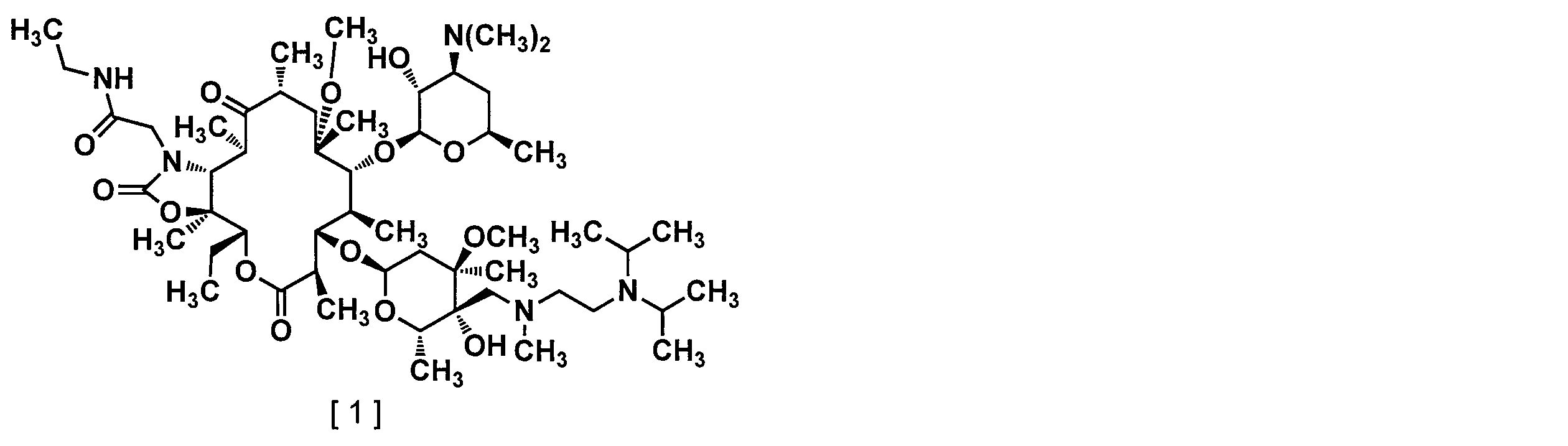
- 下記(a)~(b)の物性を少なくとも1つ有する請求項13に記載の塩の結晶。
(a)粉末X線回折(Cu-Kα)において、2θ=8.5度、10.0度及び15.6度にピークを有する;又は
(b)示差熱分析/熱質量測定(TG/DTA)において、吸熱ピークが173~177℃にある。 - 式[1]で表される化合物の酢酸エチル溶液にマロン酸を添加し作用させた後、生じた結晶をろ取し、乾燥させることを特徴とする請求項14に記載の結晶の製造方法。
- 式[1]で表される化合物のメタンスルホン酸塩。
- 下記(a)~(b)の物性を少なくとも1つ有する請求項16に記載の塩の結晶。
(a)粉末X線回折(Cu-Kα)において、2θ=9.7度、11.1度、12.9度及び13.4度にピークを有する;又は
(b)示差熱分析/熱質量測定(TG/DTA)において、吸熱ピークが57~63℃、及び143~149℃にある。 - 式[1]で表される化合物のアセトン溶液にメタンスルホン酸を添加し作用させた後、生じた結晶をろ取し、乾燥させることを特徴とする請求項17に記載の結晶の製造方法。
- 式[1]で表される化合物のベンゼンスルホン酸塩。
- 下記(a)~(b)の物性を少なくとも1つ有する請求項19に記載の塩の結晶。
(a)粉末X線回折(Cu-Kα)において、2θ=8.2度、10.9度、12.8度、14.7度、16.5度及び19.2度にピークを有する;又は
(b)示差熱分析/熱質量測定(TG/DTA)において、吸熱ピークが208~214℃にある。 - 式[1]で表される化合物のアセトン溶液にベンゼンスルホン酸を添加し作用させた後、生じた結晶をろ取し、乾燥させることを特徴とする請求項20に記載の結晶の製造方法。
Applications Claiming Priority (4)
| Application Number | Priority Date | Filing Date | Title |
|---|---|---|---|
| JP2016027740A JP2019064922A (ja) | 2016-02-17 | 2016-02-17 | C−4”位置換マクロライド化合物の塩、それらの結晶形及びそれらの製造方法 |
| JP2016-027737 | 2016-02-17 | ||
| JP2016027737A JP2019064921A (ja) | 2016-02-17 | 2016-02-17 | C−4”位置換マクロライド化合物の結晶形及びそれらの製造方法 |
| JP2016-027740 | 2016-02-17 |
Publications (1)
| Publication Number | Publication Date |
|---|---|
| WO2017142002A1 true WO2017142002A1 (ja) | 2017-08-24 |
Family
ID=59625119
Family Applications (1)
| Application Number | Title | Priority Date | Filing Date |
|---|---|---|---|
| PCT/JP2017/005629 Ceased WO2017142002A1 (ja) | 2016-02-17 | 2017-02-16 | C-4"位置換マクロライド化合物フリー体及び塩の結晶形並びにそれらの製造方法 |
Country Status (1)
| Country | Link |
|---|---|
| WO (1) | WO2017142002A1 (ja) |
Citations (7)
| Publication number | Priority date | Publication date | Assignee | Title |
|---|---|---|---|---|
| WO2007019255A2 (en) * | 2005-08-04 | 2007-02-15 | Novartis Ag | Salts of vildagliptin |
| WO2007141283A2 (en) * | 2006-06-08 | 2007-12-13 | Boehringer Ingelheim International Gmbh | Salts and crystalline salt forms of an 2-indolinone derivative |
| WO2010072776A1 (en) * | 2008-12-23 | 2010-07-01 | Boehringer Ingelheim International Gmbh | Salt forms of organic compound |
| WO2010079045A2 (en) * | 2008-12-15 | 2010-07-15 | Boehringer Ingelheim International Gmbh | New salts |
| JP2014058509A (ja) * | 2012-08-20 | 2014-04-03 | Taisho Pharmaceutical Co Ltd | C−4”位置換マクロライド誘導体を含有する医薬 |
| US9139609B2 (en) * | 2011-02-21 | 2015-09-22 | Taisho Pharmaceutical Co., Ltd. | C-4″ position substituted macrolide derivative |
| WO2016027755A1 (ja) * | 2014-08-18 | 2016-02-25 | 大正製薬株式会社 | C-4"位置換マクロライド化合物 |
-
2017
- 2017-02-16 WO PCT/JP2017/005629 patent/WO2017142002A1/ja not_active Ceased
Patent Citations (7)
| Publication number | Priority date | Publication date | Assignee | Title |
|---|---|---|---|---|
| WO2007019255A2 (en) * | 2005-08-04 | 2007-02-15 | Novartis Ag | Salts of vildagliptin |
| WO2007141283A2 (en) * | 2006-06-08 | 2007-12-13 | Boehringer Ingelheim International Gmbh | Salts and crystalline salt forms of an 2-indolinone derivative |
| WO2010079045A2 (en) * | 2008-12-15 | 2010-07-15 | Boehringer Ingelheim International Gmbh | New salts |
| WO2010072776A1 (en) * | 2008-12-23 | 2010-07-01 | Boehringer Ingelheim International Gmbh | Salt forms of organic compound |
| US9139609B2 (en) * | 2011-02-21 | 2015-09-22 | Taisho Pharmaceutical Co., Ltd. | C-4″ position substituted macrolide derivative |
| JP2014058509A (ja) * | 2012-08-20 | 2014-04-03 | Taisho Pharmaceutical Co Ltd | C−4”位置換マクロライド誘導体を含有する医薬 |
| WO2016027755A1 (ja) * | 2014-08-18 | 2016-02-25 | 大正製薬株式会社 | C-4"位置換マクロライド化合物 |
Non-Patent Citations (1)
| Title |
|---|
| KAZUHIDE ASHIZAWA ET AL.: "Polymorphism and crystallization of the pharmaceutical drugs", 20 September 2002 (2002-09-20), pages 272 - 317 * |
Similar Documents
| Publication | Publication Date | Title |
|---|---|---|
| EP0581552B1 (en) | Triazolylthiomethylthio cephalosporin hyrochloride, its crystalline hydrate and the production of the same | |
| KR20150006082A (ko) | 거대고리 다형체, 이런 다형체를 포함하는 조성물, 및 이의 사용 및 제조방법 | |
| JPH09176182A (ja) | 新規なエリスロマイシン、それらの製造法及び薬剤としての用途 | |
| BRPI0702875A2 (pt) | formas cristalinas de tigeciclina e seus processos de preparação | |
| EP3448375B1 (en) | Benzoylglycine derivatives and methods of making and using same | |
| EP3037428B1 (en) | Macrolide compound | |
| US20160031925A1 (en) | Azithromycin antimicrobial derivatives with non-antibiotic pharmaceutical effect | |
| JP5874871B1 (ja) | C−4”位置換マクロライド化合物 | |
| WO2015056799A1 (ja) | ヒドロキサム酸誘導体 | |
| WO2015056800A1 (ja) | ヒドロキサム酸誘導体 | |
| CN116514775B (zh) | 一种徳拉沙星葡甲胺盐新晶型及其制备方法 | |
| JP2017145247A (ja) | C−4”位置換マクロライド誘導体を含有する感染症の予防および/又は治療剤 | |
| JP2019064921A (ja) | C−4”位置換マクロライド化合物の結晶形及びそれらの製造方法 | |
| JP2009516704A (ja) | 新規なプリューロムチリン誘導体およびその使用 | |
| CN100427499C (zh) | 一种阿奇霉素的可溶性盐及其制备方法 | |
| JP2019064922A (ja) | C−4”位置換マクロライド化合物の塩、それらの結晶形及びそれらの製造方法 | |
| JP2016199499A (ja) | (2s)−2−メチルアミノ−n−ヒドロキシ−n’,2−ジメチルプロパンジアミドを有する化合物の結晶形及びそれらの製造方法 | |
| EA017878B1 (ru) | Макролидные соединения, обладающие противовоспалительной активностью | |
| CN101233141A (zh) | 子囊霉素晶形及其制备 | |
| CN117466958A (zh) | 假三糖氨基糖苷及其中间体的大规模制备 | |
| WO2006121151A1 (ja) | 1-メチルカルバペネム化合物の結晶 | |
| WO2015056798A1 (ja) | ヒドロキサム酸誘導体 | |
| TW201811338A (zh) | 奧利萬星二磷酸鹽的晶型、其製備方法、包含其之藥物組合物及用途 | |
| HK1233650A1 (en) | C-4''-substituted macrolide compound | |
| JP2005519070A (ja) | 7−(((5−アミノ−1,2,4−チアジアゾール−3−イル)(フルオロメトキシイミノ)アセチル)アミノ)−3−((イミノ−1−ピペラジニルメチル)メチルヒドラゾノ)−メチル−3−セフェム−4−カルボン酸の結晶質塩酸塩 |
Legal Events
| Date | Code | Title | Description |
|---|---|---|---|
| 121 | Ep: the epo has been informed by wipo that ep was designated in this application |
Ref document number: 17753258 Country of ref document: EP Kind code of ref document: A1 |
|
| NENP | Non-entry into the national phase |
Ref country code: DE |
|
| 122 | Ep: pct application non-entry in european phase |
Ref document number: 17753258 Country of ref document: EP Kind code of ref document: A1 |
|
| NENP | Non-entry into the national phase |
Ref country code: JP |