WO2017130398A1 - 道路区分推定装置及び道路区分推定方法 - Google Patents
道路区分推定装置及び道路区分推定方法 Download PDFInfo
- Publication number
- WO2017130398A1 WO2017130398A1 PCT/JP2016/052760 JP2016052760W WO2017130398A1 WO 2017130398 A1 WO2017130398 A1 WO 2017130398A1 JP 2016052760 W JP2016052760 W JP 2016052760W WO 2017130398 A1 WO2017130398 A1 WO 2017130398A1
- Authority
- WO
- WIPO (PCT)
- Prior art keywords
- road segment
- road
- vehicle
- speed
- estimation
- Prior art date
- Legal status (The legal status is an assumption and is not a legal conclusion. Google has not performed a legal analysis and makes no representation as to the accuracy of the status listed.)
- Ceased
Links
Images




Classifications
-
- G—PHYSICS
- G01—MEASURING; TESTING
- G01C—MEASURING DISTANCES, LEVELS OR BEARINGS; SURVEYING; NAVIGATION; GYROSCOPIC INSTRUMENTS; PHOTOGRAMMETRY OR VIDEOGRAMMETRY
- G01C21/00—Navigation; Navigational instruments not provided for in groups G01C1/00 - G01C19/00
- G01C21/26—Navigation; Navigational instruments not provided for in groups G01C1/00 - G01C19/00 specially adapted for navigation in a road network
Definitions
- the present invention relates to a road segment estimation device and a road segment estimation method for estimating a road segment on which a vehicle is currently traveling.
- the present invention has an object to provide a road segment estimation apparatus and a road segment estimation method that can estimate a road segment on which a vehicle is currently traveling without depending on an input operation of an HMI and an on-board ETC device.
- the road segment estimation device includes a vehicle speed sensor that detects a vehicle speed and a control device mounted on the vehicle. Then, the control device calculates an average speed and a maximum speed over a predetermined time based on the vehicle speed, and estimates a road segment on which the vehicle is traveling based on the average speed and the maximum speed.
- the present invention it is possible to estimate the road segment on which the vehicle is currently traveling without depending on the input operation of the HMI and the ETC on-board unit.
- FIG. 1 shows an example of a driving evaluation system to which a road segment estimation device is applied.
- the driving evaluation system 100 evaluates the driving technology of the vehicle. Specifically, the driving evaluation system 100 is installed in an in-vehicle device 300 mounted on a vehicle 200 such as a truck, a server computer 400 installed in a service center of an application provider, and a business office such as a transportation company. And a personal computer 500.
- a vehicle 200 such as a truck
- server computer 400 installed in a service center of an application provider
- a business office such as a transportation company.
- a personal computer 500 a personal computer 500.
- the in-vehicle device 300 includes a telematics unit 310 for using a telematics service, and an HMI 320 that provides an input / output function for the telematics unit 310.
- the telematics unit 310 includes a GPS antenna 312 that receives a signal from a GPS (Global Positioning System) satellite 600 and a mobile communication antenna 314 that communicates wirelessly with the server computer 400.
- the telematics unit 310 includes a processor 310A such as a CPU (Central Processing Unit), a ROM (Read Only Memory) 310B storing a control program, and a RAM serving as a temporary storage area.
- a processor 310A such as a CPU (Central Processing Unit), a ROM (Read Only Memory) 310B storing a control program, and a RAM serving as a temporary storage area.
- (Random Access Memory) 310C a GPS processing circuit 310D, an input / output circuit 310E, a mobile communication circuit 310F, and a bus 310G for interconnecting them are incorporated.
- GPS processing circuit 310D and the mobile communication circuit 310F may be connected to each other via the input / output circuit 310E instead of being built in the telematics unit 310.
- a microcomputer including the processor 310A, the ROM 310B, the RAM 310C, the input / output circuit 310E, and the bus 310G is an example of the control device.
- the GPS processing circuit 310 ⁇ / b> D measures the current position of the vehicle 200 by processing the signal received by the GPS antenna 312.
- the input / output circuit 310E inputs digital signals or analog signals from various sensors and switches, and outputs digital or analog drive signals to external devices.
- the mobile communication circuit 310F communicates wirelessly with the server computer 400 via the mobile communication antenna 314.
- the HMI 320 includes an input device 322 such as a switch or button operated by a driver or the like, and a display device 324 such as a liquid crystal monitor that displays information to the driver or the like.
- driver information for specifying the driver of the vehicle 200, the weight of the vehicle 200 (loading state, etc.), and the like can be set.
- the HMI 320 may include a touch screen having both functions. The HMI 320 can also notify various information by voice.
- the telematics unit 310 and the HMI 320 are mounted in a set position of the vehicle 200 in a state where they are electrically connected.
- a GPS antenna 312 and a mobile communication antenna 314 are attached to the upper portion of the vehicle 200, for example, the upper surface of the cabin, in a state of being electrically connected to the telematics unit 310.
- the telematics unit 310 is connected to a CAN (Controller Area Network) 330 as an example of an in-vehicle network so that signals such as various sensors and switches can be indirectly input via the input / output circuit 310E. Accordingly, the telematics unit 310 can read various signals flowing through the CAN 330 at an arbitrary time.
- CAN Controller Area Network
- Examples of the various sensors and switches include a vehicle speed sensor 340 that detects the vehicle speed, a brake switch (not shown), and an ignition switch (not shown).
- the telematics unit 310 can also read the information from the vehicle speed sensor 340 directly without passing through the CAN 330.
- the server computer 400 incorporates a CPU (such as a telematics unit 310), a ROM, a RAM, an input / output circuit, and a bus for interconnecting them, and a storage (not shown) such as a hard disk drive.
- a hard disk drive a database that stores at least driver information, vehicle travel information, road segment information, and the like is constructed.
- the personal computer 500 is communicably connected to the server computer 400 via the Internet 700, which is an example of a computer network, in order to use a service provided by an application provider.
- a web browser is installed in the personal computer 500 in advance so as to enable various settings regarding the service provided by the application provider.
- the driver information, vehicle travel information, road segment information, and the like stored in the server computer 400 are used for evaluation of driving technology.
- the telematics unit 310 of the in-vehicle device 300 estimates the road segment on which the vehicle 200 is traveling every predetermined time based on the vehicle speed detected by the vehicle speed sensor 340. In addition, the telematics unit 310 transmits the road segment estimation result to the server computer 400 via the mobile communication circuit 310F.
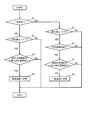
- FIG. 5 is a flowchart showing a process for estimating a road segment executed by the telematics unit 310. This process is periodically executed every predetermined time (for example, 120 seconds) from the time when the vehicle starts to travel. However, the present invention is not limited to this, and this process may be executed from the time when the ignition switch is turned on.
- the road classification is initially set to a general road when the vehicle 200 is manufactured.
- step S1 the processor 310A determines whether or not the currently set road segment is a general road. If processor 310A determines that the road segment is a general road, it proceeds to step S2 (YES). On the other hand, when the processor 310A determines that the road segment is not a general road, the processor 310A determines that the currently set road segment is an expressway, and proceeds to step S5 (NO).
- step S2 the processor 310A calculates an average speed over a predetermined time based on the vehicle speed detected by the vehicle speed sensor 340, and whether or not the average speed exceeds a first threshold value V1 (for example, 75 km / h). Determine whether.
- the first threshold value V1 is set to a speed that is equal to or higher than the legal speed of the general road on which the vehicle 200 travels and is predicted that the vehicle 200 travels on the highway. That is, the first threshold V1 is a threshold for highway estimation.
- step S2 if the processor 310A determines that the average speed exceeds the first threshold value V1, the process proceeds to step S3 (YES). On the other hand, if the processor 310A determines that the average speed is equal to or lower than the first threshold value V1, the processor 310A ends this process (NO) without switching the road segment (maintaining on a general road).
- step S3 the processor 310A determines whether or not the previous road segment estimation result is equal to the previous road segment estimation result. If processor 310A determines that the previous road segment estimation result is equal to the previous road segment estimation result, processing proceeds to step S4 (YES). On the other hand, if processor 310A determines that the previous estimation result of the road segment is different from the previous estimation result of the road segment, the processor 310A terminates this process without switching the road segment (maintaining on a general road) (NO ).
- step S4 the processor 310A switches the road segment from the general road to the highway, and thereafter ends this processing.
- step S5 the processor 310A calculates the maximum speed of the vehicle 200 over a predetermined time based on the vehicle speed detected by the vehicle speed sensor 340, and the maximum speed is less than a second threshold value V2 (for example, 70 km / h). It is determined whether or not.
- the second threshold value V2 is set to a speed at which the vehicle 200 is predicted to travel on the general road according to the legal speed of the general road on which the vehicle 200 travels. That is, the second threshold value V2 is smaller than the first threshold value V1, and is a threshold value for general road estimation (V1> V2).
- step S5 if the processor 310A determines that the maximum speed is less than the second threshold value V2, the process proceeds to step S6 (YES). On the other hand, when the processor 310A determines that the maximum speed is equal to or higher than the second threshold value V2, the processor 310A terminates this process without switching the road segment (maintaining on the highway) (NO).
- step S6 the processor 310A determines whether traveling in a state where the maximum speed is less than the second threshold value V2 has continued for a predetermined time. If processor 310A determines that traveling in a state where the maximum speed is less than second threshold value V2 has continued for a predetermined time, it proceeds to step S7 (YES). On the other hand, if the processor 310A determines that traveling in a state where the maximum speed is less than the second threshold value V2 has not continued for a predetermined time, this processing is performed without switching the road segment (maintaining on the highway). (NO).
- step S7 the processor 310A determines whether or not the previous road segment estimation result is equal to the previous road segment estimation result. If processor 310A determines that the previous road segment estimation result is equal to the previous road segment estimation result, processing proceeds to step S8 (YES). On the other hand, when it is determined that the estimation result of the previous road segment is different from the previous estimation result of the road segment, the processor 310A ends this processing without switching the road segment (maintaining on the expressway) (NO ).
- step S8 the processor 310A switches the road segment from the expressway to the general road, and then ends this process.
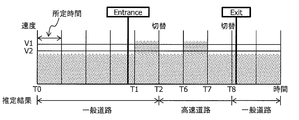
- FIGS. 6A to 6C A specific example of the process for estimating the road segment described above will be described with reference to FIGS. 6A to 6C.
- the vertical axis indicates the vehicle speed
- the horizontal axis indicates time
- “Entrance” indicates the entrance to the highway
- “Exit” indicates the exit of the highway.
- the process of estimating the road segment is periodically executed every predetermined time from the general road to the general road through the expressway.
- the vehicle 200 is traveling on a general road in a state where the maximum speed is less than the second threshold value V2 up to the vicinity of the entrance of the expressway (time T0 ⁇ T1).
- the processor 310A maintains the road segment as a general road.
- processor 310A determines that the previous road segment estimation result (time T1) is equal to the previous road segment estimation result.
- processor 310A switches the road segment from a general road to a highway. That is, when the average speed exceeds the first threshold value V1 when the estimation result of the road segment at a predetermined time (time T1) preceding in time is a general road, the telematics unit 310 sets the road segment as a general road. Switch from highway to highway.
- processor 310A maintains the road segment on the highway.
- the vehicle 200 keeps traveling at a maximum speed less than the second threshold value V2 for a predetermined time (time T4 ⁇ T5).
- time T5 the estimation result that the road section is an expressway is continuous a plurality of times. Therefore, processor 310A determines that the estimation result of the previous road segment (time T4) is equal to the estimation result of the previous time (time T3). Then, at time T5, the processor 310A switches the road segment from the highway to a general road. That is, when the road segment estimation result at a predetermined time (time T4) preceding in time is a highway, the telematics unit 310 has continued to travel for a predetermined time when the maximum speed is less than the second threshold value V2. Sometimes, the road segment is switched from a highway to a general road.
- the vehicle 200 continues traveling for a predetermined time at the maximum speed less than the second threshold V2 (time T2). ⁇ T6 or T9).
- time T6 or T9 the estimation result that the road segment is an expressway is only once. Therefore, the processor 310A determines that the estimation result of the previous road segment (time T2) is different from the estimation result of the previous road segment (T1). Then, at time T6 or T9, the processor 310A maintains the road section on the highway. That is, the telematics unit 310 estimates (switches) the road segment at a predetermined time (time T6 or T9) that follows when the estimation result of the road segment changes at a predetermined time (time T2) that precedes in time. Ban.
- the vehicle 200 is actually There is a high possibility that the road segment traveling on the road is a general road.
- the road segment on which the vehicle 200 actually travels may be a highway.
- it is unlikely that the vehicle 200 returns from the highway to the general road again at a relatively short time interval. Examples of such a situation include a situation where the vehicle is traveling at a relatively low speed due to traffic congestion on an expressway. Therefore, continuous switching of road sections in such a situation is a factor that impairs the reliability of evaluation of driving technology using road section information.
- the telematics unit 310A compares the estimation result of the previous road segment with the estimation result of the previous road segment. It is determined whether or not to permit switching of the road segment from the expressway to the general road. In other words, the frequency of switching road sections can be reduced by trusting the estimation result of road sections that have been switched once.
- the vehicle 200 travels with the average speed exceeding the first threshold value V1 (time T6 ⁇ T7). Therefore, at time T7, the processor 310A maintains the road segment on the highway.
- the vehicle 200 keeps traveling at a maximum speed less than the second threshold value V2 for a predetermined time until the vicinity of the exit of the expressway (time T7 ⁇ T8).
- time T7 the estimation result that the road segment is an expressway is continuous a plurality of times. Therefore, processor 310A determines that the estimation result of the road segment at the previous time (time T7) and the estimation result of the road segment at the previous time (T6) are equal. Then, at time T8, the processor 310A switches the road segment from the highway to a general road.
- the vehicle 200 continues traveling for a predetermined time (time T9 ⁇ ) when the maximum speed is less than the second threshold value V2. T10).
- time T10 the estimation result that the road section is an expressway is continued a plurality of times. Therefore, processor 310A determines that the estimation result of the previous road segment (time T9) and the estimation result of the previous road segment (T2) are equal. At time T10, the processor 310A switches the road segment from the expressway to the general road.
- the road segment on which the vehicle 200 is currently traveling can be estimated based on the vehicle speed, the ETC equipment is not installed, the ETC on-board device is not installed, or the driver When the input operation of the HMI 320 is forgotten, road segment information necessary for driving evaluation can be acquired as much as possible.
- step S3 shown in FIG. 5 aims at reducing the switching frequency of a road segment similarly to step S7.
- the determination in step S3 is executed when the result of S2 is YES, that is, when the currently set road segment is a general road and the average speed exceeds the first threshold value V1. .
- Such a situation includes a situation where the vehicle 200 enters a highway from a general road. In such a situation, it is sufficient to confirm that the average speed of the vehicle 200 has exceeded the first threshold value V1 in order to switch the road segment to the highway. Therefore, the determination in step S3 may be omitted in the process of estimating the road segment.
Landscapes
- Engineering & Computer Science (AREA)
- Radar, Positioning & Navigation (AREA)
- Remote Sensing (AREA)
- Automation & Control Theory (AREA)
- Physics & Mathematics (AREA)
- General Physics & Mathematics (AREA)
- Traffic Control Systems (AREA)
- Navigation (AREA)
Abstract
道路区分推定装置は、車速を検出する車速センサと、車両に搭載される制御装置と、を含む。そして、前記制御装置は、車速に基づいて所定時間に亘る平均速度及び最大速度を算出し、平均速度及び最大速度に基づいて、前記車両が走行している道路区分を推定する。
Description
本発明は、車両が現在走行している道路区分を推定する道路区分推定装置及び道路区分推定方法に関する。
車両が現在走行している道路区分を識別するために、車両に搭載されたETC(Electronic Toll Collection)車載器が、高速道路に設置されたETC設備と通信したことを検知することにより、道路区分が高速道路であると識別する技術が知られている(特許文献1)。
しかしながら、ETC設備が設置されていない場合や、ETC車載器を搭載していない場合には、道路区分を識別できない。また、道路区分を識別する手段として、運転者によるHMI(Human Machine Interface)の入力操作が挙げられるが、運転者がHMIの入力操作を忘れた場合にも、道路区分を識別できない。
そこで、本発明は、HMIの入力操作及びETC車載器に依存することなく、車両が現在走行している道路区分を推定することのできる道路区分推定装置及び道路区分推定方法を提供することを目的とする。
本発明の一側面によると、道路区分推定装置は、車速を検出する車速センサと、車両に搭載される制御装置と、を含む。そして、前記制御装置は、前記車速に基づいて所定時間に亘る平均速度及び最大速度を算出し、前記平均速度及び前記最大速度に基づいて、前記車両が走行している道路区分を推定する。
本発明によれば、HMIの入力操作及びETC車載器に依存することなく、車両が現在走行している道路区分を推定することができる。
以下、添付図面を参照しつつ本発明を実施するための実施形態について説明する。
図1は、道路区分推定装置が適用される運転評価システムの一例を示す。
図1は、道路区分推定装置が適用される運転評価システムの一例を示す。
運転評価システム100は、車両の運転技術を評価する。具体的には、運転評価システム100は、トラックなどの車両200に搭載された車載装置300と、アプリケーションプロバイダのサービスセンタなどに設置されたサーバコンピュータ400と、運輸会社などの事業所に設置されたパーソナルコンピュータ500と、を有する。
車載装置300は、テレマティクスサービスを利用するためのテレマティクスユニット310と、テレマティクスユニット310に対する入出力機能を提供するHMI320と、を含む。
テレマティクスユニット310は、GPS(Global Positioning System)衛星600の信号を受信するGPSアンテナ312と、サーバコンピュータ400と無線通信するためのモバイル通信アンテナ314と、を備える。また、テレマティクスユニット310は、図2に示すように、CPU(Central Processing Unit)などのプロセッサ310Aと、制御プログラムなどが格納されるROM(Read Only Memory)310Bと、一時的な記憶領域となるRAM(Random Access Memory)310Cと、GPS処理回路310Dと、入出力回路310Eと、モバイル通信回路310Fと、これらを相互に接続するバス310Gと、を内蔵する。なお、GPS処理回路310D及びモバイル通信回路310Fは、テレマティクスユニット310に内蔵される代わりに、入出力回路310Eを介して、夫々接続されていてもよい。ここで、プロセッサ310A、ROM310B、RAM310C、入出力回路310E及びバス310Gを含むマイクロコンピュータが、制御装置の一例として挙げられる。
GPS処理回路310Dは、GPSアンテナ312で受信した信号を処理することで、車両200の現在位置を測位する。入出力回路310Eは、各種センサ、スイッチなどのデジタル信号又はアナログ信号を入力すると共に、外部機器などへのデジタル又はアナログの駆動信号を出力する。モバイル通信回路310Fは、モバイル通信アンテナ314を介して、サーバコンピュータ400と無線通信する。
HMI320は、図3に示すように、運転者などが操作するスイッチ、ボタンなどの入力装置322と、運転者などに情報を表示する液晶モニタなどの表示装置324と、を備えている。入力装置322では、車両200の運転者を特定するための運転者情報、及び車両200の重量(積載状態など)などを設定することができる。ここで、HMI320は、入力装置322及び表示装置324に代えて、両者の機能を兼備するタッチスクリーンなどを備えていてもよい。また、HMI320は、音声によって各種情報を知らせることもできる。
そして、車両200の設定箇所には、図4に示すように、テレマティクスユニット310とHMI320とが電気的に接続された状態で搭載される。また、車両200の上部、例えば、キャビンの上面には、テレマティクスユニット310と電気的に接続された状態で、GPSアンテナ312及びモバイル通信アンテナ314が夫々取り付けられる。さらに、テレマティクスユニット310は、入出力回路310Eを介して、各種センサ及びスイッチなどの信号を間接的に入力可能とすべく、車載ネットワークの一例としてCAN(Controller Area Network)330に接続されている。したがって、テレマティクスユニット310は、任意の時点において、CAN330を流れている各種信号を読み込むことができる。各種センサ及びスイッチとしては、車速を検出する車速センサ340、ブレーキスイッチ(図示省略)及びイグニッションスイッチ(図示省略)などが挙げられる。ここで、テレマティクスユニット310は、車速センサ340からの情報を、CAN330を経由せず直接読み込むこともできる。
サーバコンピュータ400は、テレマティクスユニット310と同様のCPU、ROM、RAM、入出力回路、及びこれらを相互に接続するバスを内蔵する他、ハードディスクドライブなどのストレージ(図示省略)を内蔵する。このハードディスクドライブには、少なくとも、運転者情報、車両の走行情報、及び道路区分情報などを格納するデータベースが構築されている。
パーソナルコンピュータ500は、アプリケーションプロバイダにより提供されるサービスを利用するために、例えば、コンピュータネットワークの一例として挙げられるインターネット700を介して、サーバコンピュータ400に通信可能に接続されている。ここで、アプリケーションプロバイダから提供されるサービスに関する各種設定を可能とすべく、パーソナルコンピュータ500には、例えば、ウェブブラウザが予めインストールされている。また、パーソナルコンピュータ500では、サーバコンピュータ400に格納された運転者情報、車両の走行情報、及び道路区分情報などを、運転技術の評価に利用する。
かかる運転評価システム100において、車載装置300のテレマティクスユニット310は、車速センサ340によって検出された車速に基づいて、所定時間ごとに車両200が走行している道路区分を推定する。また、テレマティクスユニット310は、道路区分の推定結果を、モバイル通信回路310Fを介して、サーバコンピュータ400に送信する。
図5は、テレマティクスユニット310によって実行される、道路区分を推定する処理を示すフローチャートである。この処理は、車両が走行を開始した時点から所定時間(例えば120秒)毎に周期的に実行される。但し、これに限るものではなく、この処理は、イグニッションスイッチがオンとなった時点から実行されてもよい。なお、道路区分は、車両200の製造時などにおいて、一般道路に初期設定されている。
ステップS1において、プロセッサ310Aは、現在設定されている道路区分が一般道路であるか否かを判定する。そして、プロセッサ310Aは、道路区分が一般道路であると判定した場合には、ステップS2に進める(YES)。一方、プロセッサ310Aは、道路区分が一般道路でないと判定した場合には、現在設定されている道路区分は高速道路であると判定し、ステップS5に進める(NO)。
ステップS2において、プロセッサ310Aは、車速センサ340によって検出された車速に基づいて、所定時間に亘る平均速度を算出し、この平均速度が第1の閾値V1(例えば、75km/h)を超えたか否かを判定する。第1の閾値V1は、車両200が走行する一般道路の法定速度以上であって、車両200が高速道路を走行していると予測される速度に設定されている。すなわち、第1の閾値V1は、高速道路推定用の閾値である。
ステップS2において、プロセッサ310Aは、平均速度が第1の閾値V1を超えていると判定した場合には、ステップS3に進める(YES)。一方、プロセッサ310Aは、平均速度が第1の閾値V1以下であると判定した場合には、道路区分を切り替えることなく(一般道路に維持)、この処理を終了させる(NO)。
ステップS3において、プロセッサ310Aは、前回の道路区分の推定結果が前々回の道路区分の推定結果と等しいか否かを判定する。そして、プロセッサ310Aは、前回の道路区分の推定結果が前々回の道路区分の推定結果と等しいと判定した場合には、ステップS4に進める(YES)。一方、プロセッサ310Aは、前回の道路区分の推定結果が前々回の道路区分の推定結果と異なると判定した場合には、道路区分を切り替えることなく(一般道路に維持)、この処理を終了させる(NO)。
ステップS4において、プロセッサ310Aは、道路区分を一般道路から高速道路に切り替え、その後、この処理を終了させる。
ステップS5において、プロセッサ310Aは、車速センサ340によって検出された車速に基づいて、所定時間に亘る車両200の最高速度を算出し、この最高速度が第2の閾値V2(例えば、70km/h)未満であるか否かを判定する。第2の閾値V2は、車両200が走行する一般道路の法定速度に応じて、車両200が一般道路を走行していると予測される速度に設定されている。すなわち、第2の閾値V2は、第1の閾値V1よりも小さい値であって、一般道路推定用の閾値である(V1>V2)。
ステップS5において、プロセッサ310Aは、最高速度が第2の閾値V2未満であると判定した場合には、ステップS6に進める(YES)。一方、プロセッサ310Aは、最高速度が第2の閾値V2以上であると判定した場合には、道路区分を切り替えることなく(高速道路に維持)、この処理を終了させる(NO)。
ステップS6において、プロセッサ310Aは、最高速度が第2の閾値V2未満である状態での走行が所定時間持続したか否かを判定する。そして、プロセッサ310Aは、最高速度が第2の閾値V2未満である状態での走行が所定時間持続したと判定した場合には、ステップS7に進める(YES)。一方、プロセッサ310Aは、最高速度が第2の閾値V2未満である状態での走行が所定時間持続していないと判定した場合には、道路区分を切り替えることなく(高速道路に維持)、この処理を終了させる(NO)。
ステップS7において、プロセッサ310Aは、前回の道路区分の推定結果が前々回の道路区分の推定結果と等しいか否かを判定する。そして、プロセッサ310Aは、前回の道路区分の推定結果が前々回の道路区分の推定結果と等しいと判定した場合には、ステップS8に進める(YES)。一方、プロセッサ310Aは、前回の道路区分の推定結果が前々回の道路区分の推定結果と異なると判定した場合には、道路区分を切り替えることなく(高速道路に維持)、この処理を終了させる(NO)。
ステップS8において、プロセッサ310Aは、道路区分を高速道路から一般道路に切り替え、その後、この処理を終了させる。
以上説明した道路区分を推定する処理の具体例について、図6A~図6Cを参照して説明する。図6A~図6Cにおいて、縦軸は車速を示し、横軸は時間を示し、「Entrance」は、高速道路への入口を示し、「Exit」は、高速道路の出口を示している。また、図6A~図6Cに示す例において、道路区分を推定する処理は、一般道路から高速道路を通過して一般道路に至るまでに、所定時間ごとに周期的に実行される。
図6A~図6Cに示す例では、車両200は、一般道路を、高速道路の入口付近まで最高速度が第2の閾値V2未満である状態で走行している(時刻T0→T1)。この場合、プロセッサ310Aは、道路区分を一般道路に維持する。
その後、車両200は、高速道路の入口を通過すると、所定時間に亘る平均速度が第1の閾値V1を超えた状態で走行する(時刻T1→T2)。ここで、時刻T2となるまでに、道路区分が一般道路であるとの推定結果は複数回連続している。したがって、プロセッサ310Aは、前回(時刻T1)の道路区分の推定結果が前々回の道路区分の推定結果と等しいと判定する。そして、時刻T2において、プロセッサ310Aは、道路区分を一般道路から高速道路に切り替える。すなわち、テレマティクスユニット310は、時間的に先行する所定時間(時刻T1)における道路区分の推定結果が一般道路である場合に、平均速度が第1の閾値V1を超えたときには、道路区分を一般道路から高速道路に切り替える。
また、図6Aに示す例では、道路区分が高速道路に切り替わった後、車両200は、高速道路の出口付近まで第1の閾値V1を超える平均速度で走行する(時刻T2→T4)。この場合、プロセッサ310Aは、道路区分を高速道路に維持する。
その後、車両200は、最高速度が第2の閾値V2未満での走行を所定時間持続させる(時刻T4→T5)。ここで、時刻T5となるまでに、道路区分が高速道路であるとの推定結果は複数回連続している。したがって、プロセッサ310Aは、前回(時刻T4)の道路区分の推定結果が前々回(時刻T3)の推定結果と等しいと判定する。そして、時刻T5において、プロセッサ310Aは、道路区分を高速道路から一般道路に切り替える。すなわち、テレマティクスユニット310は、時間的に先行する所定時間(時刻T4)における道路区分の推定結果が高速道路である場合に、最大速度が第2の閾値V2未満である走行状態が所定時間持続したときには、道路区分を高速道路から一般道路に切り替える。
一方、図6B、図6Cに示す例では、時刻T2にて道路区分が高速道路に切り替わった後、車両200は、最高速度が第2の閾値V2未満での走行を所定時間持続させる(時刻T2→T6又はT9)。ここで、時刻T6又はT9となるまでに、道路区分が高速道路であるとの推定結果は1回のみである。したがって、プロセッサ310Aは、前回(時刻T2)の道路区分の推定結果と前々回(T1)の道路区分の推定結果とが異なると判定する。そして、時刻T6又はT9において、プロセッサ310Aは、道路区分を高速道路に維持する。すなわち、テレマティクスユニット310は、時間的に先行する所定時間(時刻T2)において、道路区分の推定結果が変化したときに、それに続く所定時間(時刻T6又はT9)の道路区分の推定(切り替え)を禁止する。
ここで、現在設定されている道路区分が高速道路であって、プロセッサ310Aによって最高速度が第2の閾値V2未満である状態での走行が所定時間持続したと判定された場合、車両200が実際に走行している道路区分は、一般道路である可能性が高い。しかしながら、図6B、図6Cに示すように、車両200が実際に走行している道路区分は、高速道路である場合もある。また、比較的短い時間間隔において、車両200が高速道路から再び一般道路に戻ることは考えにくい。このような状況としては、高速道路での交通渋滞により比較的低い速度で走行している状況などが挙げられる。したがって、このような状況において道路区分を連続して切り替えることは、道路区分情報を利用する、運転技術の評価の信頼性を損なう要因となる。
そこで、道路区分を推定する処理において、道路区分を連続して切り替えることを抑制するために、テレマティクスユニット310Aは、前回の道路区分の推定結果と前々回の道路区分の推定結果とを比較することにより、高速道路から一般道路への道路区分の切り替えを許可するか否かを判定している。すなわち、一度切り替えられた道路区分の推定結果を信頼することにより、道路区分の切り替え頻度を減らすことができる。
また、図6Bに示す例では、時刻T6にて道路区分が高速道路に維持された後、車両200は、平均速度が第1の閾値V1を超えた状態で走行する(時刻T6→T7)。したがって、時刻T7において、プロセッサ310Aは、道路区分を高速道路に維持する。
その後、車両200は、高速道路の出口付近まで、最高速度が第2の閾値V2未満での走行を所定時間持続させる(時刻T7→T8)。このような状況としては、高速道路の出口付近での交通渋滞が挙げられる。ここで、時刻T8となるまでに、道路区分が高速道路であるとの推定結果は複数回連続している。したがって、プロセッサ310Aは、前回(時刻T7)の道路区分の推定結果と前々回(T6)の道路区分の推定結果とが等しいと判定する。そして、時刻T8において、プロセッサ310Aは、道路区分を高速道路から一般道路に切り替える。
また、図6Cに示す例では、時刻T9で道路区分が高速道路に維持された後、車両200は、最高速度が第2の閾値V2未満の状態での走行を所定時間持続させる(時刻T9→T10)。ここで、時刻T10となるまでに、道路区分が高速道路であるとの推定結果は複数回連続している。したがって、プロセッサ310Aは、前回(時刻T9)の道路区分の推定結果と前々回(T2)の道路区分の推定結果とが等しいと判定する。そして、時刻T10において、プロセッサ310Aは、道路区分を高速道路から一般道路に切り替える。
このように、車速に基づいて、車両200が現在走行している道路区分を推定することができるので、ETC設備が設置されていない場合、ETC車載器を搭載していない場合、又は運転者がHMI320の入力操作を忘れた場合において、運転評価に必要な道路区分情報を可能な限り取得することができる。
なお、図5に示すステップS3の判定は、ステップS7と同様に道路区分の切り替え頻度を減らすことを目的とする。また、ステップS3の判定は、S2の処理でYESとなったとき、すなわち、現在設定されている道路区分が一般道路であって、平均速度が第1の閾値V1を超えたときに実行される。このような状況としては、車両200が一般道路から高速道路に進入するような状況が挙げられる。このような状況において、道路区分を高速道路に切り替えるためには、車両200の平均速度が第1の閾値V1を超えたことを確認すれば十分である。したがって、道路区分を推定する処理において、ステップS3の判定を省略してもよい。
200…車両
300…車載装置
310…テレマティクスユニット
310A…プロセッサ
310B…ROM
310C…RAM
310E…入出力回路
310G…バス
330…CAN
340…車速センサ
300…車載装置
310…テレマティクスユニット
310A…プロセッサ
310B…ROM
310C…RAM
310E…入出力回路
310G…バス
330…CAN
340…車速センサ
Claims (10)
- 車速を検出する車速センサと、車両に搭載される制御装置と、を含み、
前記制御装置は、前記車速に基づいて所定時間に亘る平均速度及び最大速度を算出し、前記平均速度及び前記最大速度に基づいて、前記車両が走行している道路区分を推定するように構成されている、道路区分推定装置。 - 前記制御装置は、時間的に先行する所定時間において、前記道路区分の推定結果が変化したときに、それに続く所定時間の道路区分の推定を禁止するように構成されている、請求項1に記載の道路区分推定装置。
- 前記制御装置は、
時間的に先行する所定時間における道路区分の推定結果が一般道路である場合に、前記平均速度が高速道路推定用の閾値を超えたときには、前記道路区分を一般道路から高速道路に切り替え、
時間的に先行する所定時間における道路区分の推定結果が高速道路である場合に、前記最大速度が一般道路推定用の閾値未満である走行状態が所定時間持続したときには、前記道路区分を高速道路から一般道路に切り替えるように構成されている、請求項1又は請求項2に記載の道路区分推定装置。 - 前記高速道路推定用の閾値は、前記車両が走行する一般道路の法定速度以上であって、前記車両が前記高速道路を走行していると予測される速度に設定されている、請求項3に記載の道路区分推定装置。
- 前記一般道路推定用の閾値は、前記車両が走行する一般道路の法定速度に応じて、前記車両が前記一般道路を走行していると予測される速度に設定されている、請求項3又は請求項4に記載の道路区分推定装置。
- 車両に搭載される制御装置が、
車速に基づいて所定時間に亘る車両の平均速度及び最大速度を算出し、
前記平均速度及び前記最大速度に基づいて、前記車両が走行している道路区分を推定する、道路区分推定方法。 - 前記制御装置が、
時間的に先行する所定時間において、前記道路区分の推定結果が変化したときに、それに続く所定時間の道路区分の推定を禁止する、請求項6に記載の道路区分推定方法。 - 前記制御装置が、
時間的に先行する所定時間における道路区分の推定結果が一般道路である場合に、前記平均速度が高速道路推定用の閾値を超えたときには、前記道路区分を一般道路から高速道路に切り替え、
時間的に先行する所定時間における道路区分の推定結果が高速道路である場合に、前記最大速度が一般道路推定用の閾値未満である走行状態が所定時間持続したときには、前記道路区分を高速道路から一般道路に切り替える、請求項6又は請求項7に記載の道路区分推定方法。 - 前記高速道路推定用の閾値は、前記車両が走行する一般道路の法定速度以上であって、前記車両が前記高速道路を走行していると予測される速度に設定されている、請求項8に記載の道路区分推定方法。
- 前記一般道路推定用の閾値は、前記車両が走行する一般道路の法定速度に応じて、前記車両が前記一般道路を走行していると予測される速度に設定されている、請求項8又は請求項9に記載の道路区分推定方法。
Priority Applications (1)
| Application Number | Priority Date | Filing Date | Title |
|---|---|---|---|
| PCT/JP2016/052760 WO2017130398A1 (ja) | 2016-01-29 | 2016-01-29 | 道路区分推定装置及び道路区分推定方法 |
Applications Claiming Priority (1)
| Application Number | Priority Date | Filing Date | Title |
|---|---|---|---|
| PCT/JP2016/052760 WO2017130398A1 (ja) | 2016-01-29 | 2016-01-29 | 道路区分推定装置及び道路区分推定方法 |
Publications (1)
| Publication Number | Publication Date |
|---|---|
| WO2017130398A1 true WO2017130398A1 (ja) | 2017-08-03 |
Family
ID=59397659
Family Applications (1)
| Application Number | Title | Priority Date | Filing Date |
|---|---|---|---|
| PCT/JP2016/052760 Ceased WO2017130398A1 (ja) | 2016-01-29 | 2016-01-29 | 道路区分推定装置及び道路区分推定方法 |
Country Status (1)
| Country | Link |
|---|---|
| WO (1) | WO2017130398A1 (ja) |
Cited By (2)
| Publication number | Priority date | Publication date | Assignee | Title |
|---|---|---|---|---|
| CN112584310A (zh) * | 2020-12-15 | 2021-03-30 | 中国联合网络通信集团有限公司 | 基站控制方法和装置 |
| CN117124860A (zh) * | 2023-09-28 | 2023-11-28 | 东风汽车集团股份有限公司 | 能耗预测方法、装置、设备和存储介质 |
Citations (5)
| Publication number | Priority date | Publication date | Assignee | Title |
|---|---|---|---|---|
| JPH02137096A (ja) * | 1988-11-18 | 1990-05-25 | Nissan Motor Co Ltd | 高速道路走行認識装置 |
| JPH04105012A (ja) * | 1990-08-27 | 1992-04-07 | Suzuki Motor Corp | 自動車用ナビゲーション装置 |
| JPH05157575A (ja) * | 1991-12-07 | 1993-06-22 | Zexel Corp | 車両用ナビゲーション装置における現在位置補正方法 |
| JPH07128081A (ja) * | 1993-10-29 | 1995-05-19 | Mazda Motor Corp | 車両用画像表示装置 |
| US20110077862A1 (en) * | 2009-09-29 | 2011-03-31 | Ronald Keryuan Huang | Snap-to-Road Using Wireless Access Point Data |
-
2016
- 2016-01-29 WO PCT/JP2016/052760 patent/WO2017130398A1/ja not_active Ceased
Patent Citations (5)
| Publication number | Priority date | Publication date | Assignee | Title |
|---|---|---|---|---|
| JPH02137096A (ja) * | 1988-11-18 | 1990-05-25 | Nissan Motor Co Ltd | 高速道路走行認識装置 |
| JPH04105012A (ja) * | 1990-08-27 | 1992-04-07 | Suzuki Motor Corp | 自動車用ナビゲーション装置 |
| JPH05157575A (ja) * | 1991-12-07 | 1993-06-22 | Zexel Corp | 車両用ナビゲーション装置における現在位置補正方法 |
| JPH07128081A (ja) * | 1993-10-29 | 1995-05-19 | Mazda Motor Corp | 車両用画像表示装置 |
| US20110077862A1 (en) * | 2009-09-29 | 2011-03-31 | Ronald Keryuan Huang | Snap-to-Road Using Wireless Access Point Data |
Cited By (3)
| Publication number | Priority date | Publication date | Assignee | Title |
|---|---|---|---|---|
| CN112584310A (zh) * | 2020-12-15 | 2021-03-30 | 中国联合网络通信集团有限公司 | 基站控制方法和装置 |
| CN112584310B (zh) * | 2020-12-15 | 2023-07-07 | 中国联合网络通信集团有限公司 | 基站控制方法和装置 |
| CN117124860A (zh) * | 2023-09-28 | 2023-11-28 | 东风汽车集团股份有限公司 | 能耗预测方法、装置、设备和存储介质 |
Similar Documents
| Publication | Publication Date | Title |
|---|---|---|
| US20250166519A1 (en) | Determining abnormal traffic conditions from a broadcast of telematics data originating from another vehicle | |
| JP6266491B2 (ja) | 自動運転制御装置 | |
| CN105564441B (zh) | 警报装置、警报系统、警报方法及便携终端 | |
| US9791864B2 (en) | Systems and methods for driving risk index estimation | |
| JP4760794B2 (ja) | 駐車場出車管理システム | |
| KR20190017171A (ko) | 보행자의 안전과 연관된 통신 신호를 송신하는 전자 장치 및 그 동작 방법 | |
| US10640037B1 (en) | Empathy-based speed alert | |
| US10486591B1 (en) | Fleet alert system | |
| US20230048622A1 (en) | Providing insurance discounts based upon usage of telematics data-based risk mitigation and prevention functionality | |
| US10633026B2 (en) | Vehicle system and vehicle controller for controlling vehicle | |
| US20220057796A1 (en) | Device and method for controlling autonomous driving | |
| JP2010054673A (ja) | 広告車両用制御装置 | |
| JP6400821B2 (ja) | 自動運転制御装置 | |
| JP6341042B2 (ja) | 逆走判断装置 | |
| JP2010055403A (ja) | 運転支援装置、運転支援プログラムおよび車載システム | |
| KR102362452B1 (ko) | 카메라 제어 장치 및 그것의 제어 방법 | |
| WO2018158862A1 (ja) | 車両用事故予測システム、および車両用事故予測方法 | |
| JP7818879B2 (ja) | 情報処理装置および情報処理方法 | |
| JP2016188053A (ja) | 走行制御装置 | |
| JP5685912B2 (ja) | 情報通知装置、情報通知方法、プログラム及び媒体 | |
| JP2018190033A (ja) | 情報処理装置 | |
| JP2024021214A (ja) | 情報処理装置、車両、およびプログラム | |
| JP2012032911A (ja) | 歩行者端末 |
Legal Events
| Date | Code | Title | Description |
|---|---|---|---|
| 121 | Ep: the epo has been informed by wipo that ep was designated in this application |
Ref document number: 16887984 Country of ref document: EP Kind code of ref document: A1 |
|
| NENP | Non-entry into the national phase |
Ref country code: DE |
|
| 122 | Ep: pct application non-entry in european phase |
Ref document number: 16887984 Country of ref document: EP Kind code of ref document: A1 |