WO2017115481A1 - ゲームシステム、それに用いられるコンピュータプログラム及びサーバ装置 - Google Patents
ゲームシステム、それに用いられるコンピュータプログラム及びサーバ装置 Download PDFInfo
- Publication number
- WO2017115481A1 WO2017115481A1 PCT/JP2016/069341 JP2016069341W WO2017115481A1 WO 2017115481 A1 WO2017115481 A1 WO 2017115481A1 JP 2016069341 W JP2016069341 W JP 2016069341W WO 2017115481 A1 WO2017115481 A1 WO 2017115481A1
- Authority
- WO
- WIPO (PCT)
- Prior art keywords
- change
- game
- character
- individuality
- route
- Prior art date
- Legal status (The legal status is an assumption and is not a legal conclusion. Google has not performed a legal analysis and makes no representation as to the accuracy of the status listed.)
- Ceased
Links
Images






Classifications
-
- A—HUMAN NECESSITIES
- A63—SPORTS; GAMES; AMUSEMENTS
- A63F—CARD, BOARD, OR ROULETTE GAMES; INDOOR GAMES USING SMALL MOVING PLAYING BODIES; VIDEO GAMES; GAMES NOT OTHERWISE PROVIDED FOR
- A63F13/00—Video games, i.e. games using an electronically generated display having two or more dimensions
- A63F13/30—Interconnection arrangements between game servers and game devices; Interconnection arrangements between game devices; Interconnection arrangements between game servers
-
- A—HUMAN NECESSITIES
- A63—SPORTS; GAMES; AMUSEMENTS
- A63F—CARD, BOARD, OR ROULETTE GAMES; INDOOR GAMES USING SMALL MOVING PLAYING BODIES; VIDEO GAMES; GAMES NOT OTHERWISE PROVIDED FOR
- A63F13/00—Video games, i.e. games using an electronically generated display having two or more dimensions
- A63F13/40—Processing input control signals of video game devices, e.g. signals generated by the player or derived from the environment
- A63F13/44—Processing input control signals of video game devices, e.g. signals generated by the player or derived from the environment involving timing of operations, e.g. performing an action within a time slot
-
- A—HUMAN NECESSITIES
- A63—SPORTS; GAMES; AMUSEMENTS
- A63F—CARD, BOARD, OR ROULETTE GAMES; INDOOR GAMES USING SMALL MOVING PLAYING BODIES; VIDEO GAMES; GAMES NOT OTHERWISE PROVIDED FOR
- A63F13/00—Video games, i.e. games using an electronically generated display having two or more dimensions
- A63F13/50—Controlling the output signals based on the game progress
- A63F13/52—Controlling the output signals based on the game progress involving aspects of the displayed game scene
-
- A—HUMAN NECESSITIES
- A63—SPORTS; GAMES; AMUSEMENTS
- A63F—CARD, BOARD, OR ROULETTE GAMES; INDOOR GAMES USING SMALL MOVING PLAYING BODIES; VIDEO GAMES; GAMES NOT OTHERWISE PROVIDED FOR
- A63F13/00—Video games, i.e. games using an electronically generated display having two or more dimensions
- A63F13/50—Controlling the output signals based on the game progress
- A63F13/52—Controlling the output signals based on the game progress involving aspects of the displayed game scene
- A63F13/525—Changing parameters of virtual cameras
-
- A—HUMAN NECESSITIES
- A63—SPORTS; GAMES; AMUSEMENTS
- A63F—CARD, BOARD, OR ROULETTE GAMES; INDOOR GAMES USING SMALL MOVING PLAYING BODIES; VIDEO GAMES; GAMES NOT OTHERWISE PROVIDED FOR
- A63F13/00—Video games, i.e. games using an electronically generated display having two or more dimensions
- A63F13/80—Special adaptations for executing a specific game genre or game mode
- A63F13/814—Musical performances, e.g. by evaluating the player's ability to follow a notation
Definitions
- the present invention includes a display device for displaying a game screen including an instruction sign for indicating an execution time when a play action is to be performed and a reference sign that functions as a reference for the current time, and the position of the instruction sign and the reference sign is
- the present invention relates to a game system or the like that provides a music game that guides the execution time through a game screen by causing a relative displacement along a route between them to coincide.
- a display device for displaying a game screen including an instruction sign for indicating an execution time when the play action should be performed and a reference sign that functions as a reference for the current time, so that the position of the instruction sign and the reference sign coincide
- a music game that guides the execution time through the game screen by causing a relative displacement along the route between them.
- a game machine is known that provides a music game that uses an icon as an instruction mark and movement of the icon as a relative displacement (see, for example, Patent Document 1).
- Patent Document 2 is a prior art document related to the present invention.
- an object of the present invention is to provide a game system or the like that can reflect a user's selection result in a route display mode.
- the position of the instruction mark and the reference mark is determined through the game screen including an instruction mark for indicating an execution time when the play action should be performed and a reference mark that functions as a reference for the current time.
- a game system for providing a music game that guides the execution time by causing a relative displacement along a route between the instruction sign and the reference sign so as to coincide with each other, wherein the display of the route
- a change imparting means for imparting a change corresponding to the use change option to the display mode of the route.
- the computer program of the present invention is configured to cause a computer to function as each means of the above-described game system.
- the server device of the present invention is connected to a display device that displays the game screen via a network and functions as each unit of the above-described game system.
- the figure which shows an example of the game screen for playing a music game typically.
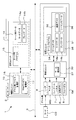
- FIG. 1 is a diagram showing an outline of the overall configuration of a game system according to an embodiment of the present invention.
- the game system 1 includes a center server 2 and a game machine GM.
- the game machine GM is connected to the center server 2 via the network 3.
- the game machine GM is configured as a business (commercial) game machine.
- Commercial game machines are game machines that allow a predetermined range of games to be played for a fee or free of charge.
- the game machine GM provides a music game for a fee.
- the game machine GM for example, provides a music game in a range corresponding to the price in exchange for consumption of a predetermined price.
- An appropriate number of game machines GM are installed in a commercial facility such as the store 4.
- the center server 2 is not limited to an example constituted by a single physical device.
- one logical center server 2 may be configured by a server group as a plurality of physical devices.
- the center server 2 may be logically configured using cloud computing.
- the game machine GM may function as the center server 2.
- the user terminal 5 is connected to the center server 2 via the network 3.
- the user terminal 5 is a type of network terminal device that exhibits various functions by executing software distributed from the center server 2.
- a mobile phone including a smartphone
- various network terminal devices that can be connected to the network and are used for personal use of the user, such as a personal computer, a portable game machine, and a portable tablet terminal device, are used. Good.
- the network 3 may be configured to realize network communication using a TCP / IP protocol.
- the network 3 may be configured by combining the Internet as a WAN and an intranet as a LAN.
- the center server 2 and the game machine GM are connected to the network 3 via the router 3a, and the user terminal 5 is connected to the network 3 via the access point 3b.
- the network 3 is not limited to a form using the TCP / IP protocol.
- various forms using a wired line for communication or a wireless line may be used.
- the communication between the user terminal 5 and the game machine GM or the like conforms to a predetermined standard so as to include various information such as a two-dimensional code without using a communication line (including wired and wireless), for example. It may be realized using a code (for example, a two-dimensional code) generated in this way. Therefore, the term “network (or communication line)” includes a form of transmitting and receiving information without using a line, such as a communication method using such a code.
- the center server 2 provides various game machine services to the game machine GM or its user.
- a service for receiving user identification information from the game machine GM and authenticating the user may be provided as the game machine service.
- a service may be provided in which the play data of the authenticated user is received from the game machine GM and stored, or the play data to be stored is provided to the game machine GM.
- the game machine service distributes and updates the game machine GM program or data via the network 3, and matches users when a plurality of users play a common game via the network 3.
- a matching service or the like may be included.
- the center server 2 provides various Web services to the user of the user terminal 5 via the network 3.
- the web service may include, for example, a game information service that provides various types of information related to a game provided by the game machine GM.
- the web service may include a distribution service that distributes various data or software to each user terminal 5 (including updates of data and the like).
- the Web service may include other services such as a community service that provides a place for information exchange, exchange, and sharing by users, and a service that provides a user ID for identifying each user.
- FIG. 2 is a diagram illustrating a configuration of a main part of the control system of the game system 1.
- the center server 2 includes a control unit 10 and a storage unit 11.
- the control unit 10 is configured as a computer unit combining a microprocessor and various peripheral devices such as an internal storage device (for example, ROM and RAM) necessary for the operation of the microprocessor.
- an input device such as a keyboard and an output device such as a monitor can be connected to the control unit 10.
- those illustrations are omitted.
- the storage unit 11 is connected to the control unit 10.
- the storage unit 11 is configured by a large-capacity storage medium such as a magnetic tape, for example, so that the storage can be held without power supply.
- the storage unit 11 stores server data 14 and a server program 15.
- the server program 15 is a computer program necessary for the center server 2 to provide various services to the game machine GM and the user terminal 5.
- a game machine service management unit 16 and a web service management unit 17 are provided inside the control unit 10.
- the game machine service management unit 16 executes a process for providing the game machine service described above.
- the web service management unit 17 executes processing necessary to provide the above-described web service.
- the game machine service management unit 16 and the web service management unit 17 are logical devices realized by a combination of computer hardware and a computer program. Various other logical devices may be provided inside the control unit 10. However, those illustrations are omitted.
- the server data 14 is data that is referred to when the server program 15 is executed.
- the server data 14 may include card data 14a and play data 14b as character data.
- the card data 14a is data for defining a character to be described later.
- the play data 14b is data in which information related to past play results of each user is described.
- the play data 14b is used, for example, to take over the previous play results (past results) from the next time onward, or to take over the settings specific to each user. Details of the card data 14a and the play data 14b will be described later.
- the server data 14 may include various data for realizing a music game.
- data may include ID management data.
- the ID management data is data for managing various IDs such as user IDs. However, those illustrations are omitted.
- the game machine GM is provided with a control unit 30 as a computer, a storage unit 31, a control panel 7, a foot pedal 8, a monitor MO as a display device, and a reader 9.
- the storage unit 31, the control panel 7, the foot pedal 8, the monitor MO, and the reader 9 are all connected to the control unit 30.
- the control unit 30 is configured as a computer unit in which a microprocessor and various peripheral devices such as an internal storage device (for example, ROM and RAM) necessary for the operation of the microprocessor are combined.
- various devices can be connected to the control unit 30 in the same manner as other known game machines, for example.
- Such devices may include, for example, various output devices such as speakers or various input devices.
- such an input device may include a known device for collecting a predetermined value such as a coin authentication device. For example, coins or the like as a predetermined price may be collected through such a device.
- the various output devices may include, for example, a printer. For example, when a character card, which will be described later, is printed on a physical medium (for example, paper) and discharged, the printer may be used for the printing. That is, the game machine GM may generate such a character card.
- those illustrations are omitted.
- the control panel 7 outputs various signals to the control unit 30.
- the control panel 7 may include a rotation button B.
- the rotation button B may be configured to be used for both a push-in operation and a rotation operation.
- the control panel 7 may output the signal corresponding to the operation result to the rotation button B to the control unit 30 as an example.
- a signal corresponding to a push operation and a rotation operation on the rotation button B may be output to the control unit 30.
- the foot pedal 8 is a type of input device operated by the user.
- the foot pedal 8 may be used to cause a special effect (for example, an effect associated with various characteristics of the character such as a skill described later) during the play of a music game.
- the foot pedal 8 may be configured to be operated by a foot. More specifically, the foot pedal 8 may be used, for example, for inputting a stepping operation by a user.
- the foot pedal 8 may output a signal corresponding to the depression operation to the control unit 30.
- the monitor MO is a known display device for displaying various images based on an output signal from the control unit 30.
- the monitor MO displays a game screen for playing a music game in accordance with an output signal from the control unit 30.
- the reader 9 is a known device that reads various information recorded in a storage medium in a non-contact state using, for example, short-range wireless communication.
- the reader 9 may be used for reading information on a card CD as an example of a storage medium.
- the reader 9 may read information on the card CD possessed by each user and output a signal corresponding to the information to the control unit 30.
- the game machine GM when the game machine GM generates a character card in which character information (for example, parameters, etc.) is recorded through various codes such as a two-dimensional code, a code that can read such a code.
- the reader 9 may be configured to be able to read such a code, for example, by including the reader. That is, the reader 9 may be used for reading such a code.
- the card CD may be provided with a non-volatile storage medium (not shown) such as an IC chip or a magnetic stripe.
- a nonvolatile storage medium such as an IC chip or a magnetic stripe.
- Various types of information may be recorded on the card CD via such a nonvolatile storage medium.
- various types of information may include user ID information (including information that can identify the user ID). That is, the card CD may be used for specifying each user corresponding to the ID card, for example, as an ID card.
- the various types of information may include, for example, information on the amount of value used as a predetermined consideration (including information for specifying the amount of value). Then, a predetermined consideration may be collected by consuming the value amount. That is, the card CD may be used for payment of a predetermined price as an example.
- the storage unit 31 is configured by, for example, a magnetic recording medium, an optical recording medium, a flash SSD (Solid State Drive), or the like so that the storage can be held without supplying power.
- the storage unit 31 stores a game program 34 and game data 35.
- the game program 34 is a computer program necessary for the game machine GM to provide a music game.
- a game providing unit 37 is provided inside the control unit 30.
- the game providing unit 37 executes various processes necessary for providing a music game.
- the game providing unit 37 is a logical device realized by a combination of computer hardware and a computer program. Various other logical devices may be provided inside the control unit 30. However, those illustrations are omitted.
- the game data 35 is data that is referred to when the game program 34 is executed.
- the game data 35 includes music data 36 and sequence data 38, for example.
- the music data 36 is data necessary for causing the speaker to reproduce various sounds such as music used in the music game.
- the sequence data 38 is data necessary for guiding the user when to perform an appropriate play action in the music game.
- the sequence data 38 may describe in advance an operation time when the rotation button B should be appropriately operated.
- an appropriate operation on the rotation button B may be requested at each operation time described in the sequence data 38.
- the game data 35 includes, for example, the above-described card data 14a and play data 14b.
- the card data 14a and the play data 14b may be provided from the center server 2 so that a necessary part is included.
- the game data 35 may include various data for executing a music game.
- such data may include image data and the above-described ID management data.
- the image data is data for displaying various images necessary for the game. However, those illustrations are omitted.
- a music game is a type of timing game.
- the music game is a type of game that evaluates the execution time of an appropriate play action.
- the execution time when an appropriate play action is to be executed is provided together with the music through a game screen, for example.
- the time coincident with the rhythm of the music is used as the execution time.
- the music game is a type of game that guides the user when an appropriate play action should be performed in accordance with the rhythm of the music and evaluates the time when the play action is actually executed.
- a plurality of music pieces may be prepared for play in a music game, and a music piece selected from them may be used for actual play.
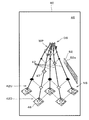
- FIG. 3 is a diagram schematically showing an example of a game screen for playing a music game.
- the game screen 40 may be displayed as a two-dimensional image based on a result of photographing a virtual three-dimensional space with a virtual camera so as to produce a virtual three-dimensional space.
- the game screen 40 includes a game area 45, for example.
- five lane images 42 as routes may be displayed in the game area 45.
- the five lane images 42 may extend from the back side DS toward the near side NS so as to produce a virtual three-dimensional space.
- the five lane images 42 may be arranged in a staggered pattern so as to form, for example, “W”. Specifically, the five lane images 42 may be classified into, for example, an upper lane image group 42U including three lane images 42 and a lower lane image group 42D including two lane images 42.
- the upper lane image group 42U and the lower lane image group 42D may be arranged vertically so as to form a height difference in the virtual three-dimensional space. That is, the five lane images 42 may be arranged so as to be positioned at the same height in units of the upper lane image group 42U and the lower lane image group 42D in the virtual three-dimensional space.
- the three lane images 42 of the upper lane image group 42U are positioned so as to extend in parallel to each other, and the two lane images 42 of the lower lane image group 42D are parallel to each other at a position below that. It may be located to extend.
- the five lane images 42 may form two layers by, for example, the upper lane image group 42U and the lower lane image group 42D. That is, the five lane images 42 are divided into two layers positioned so as to form a height difference in the virtual three-dimensional space, and are arranged respectively.
- each lane image 42 for example, a determination sign image 46 as a reference sign may be arranged for each lane image 42.
- Each determination sign image 46 is an image that functions as a sign of the current time in the game.
- the object image 47 may be arranged at an appropriate position.
- each object image 47 may function as an instruction mark for indicating (guidance) an operation time (described in the sequence data 38) when the rotation button B should be operated. Then, when the object image 47 and the determination mark image 46 coincide with each other, the operation time when the rotation button B should be operated may be guided.
- each determination marker image 46 may sequentially moves toward the inner side DS of the lane image 42 while passing through the object image 47 at an appropriate position. That is, each determination mark image 46 may move along each lane image 42 with the passage of time so as to coincide with the position of the object image 47 at a time when an appropriate operation should be requested from the user.
- the user may be required to perform an appropriate play action in accordance with the coincidence between the position of the determination sign image 46 and the position of the object image 47. For example, in the case where five rotation buttons B corresponding to the five lane images 42 are provided, the user is prompted to match each of the determination mark image 46 and the object image 47 on each lane image 42. A push operation or a rotation operation for the rotation button B corresponding to the lane image 42 may be requested.
- the object image 47 a plurality of types of object images 47 may be displayed. And the appropriate play action requested
- This evaluation is performed, for example, for a deviation time between the actual operation time of the operation and the request time (the coincidence time between the object image 47 and the determination mark image 46) when an appropriate operation is performed. May be. And evaluation may become high, so that the shift
- the various object images 47 may include, for example, a type for instructing a combination of a rotation operation and a push-in operation.
- the object image 47 may include a type for instructing the operation timing of the foot pedal 8. Then, as an appropriate play act, the period and time of various operations may be appropriately evaluated.
- a LIFE gauge 52 may be displayed in the game area 45.
- the LIFE gauge 52 is a gauge for allowing the user to grasp the remaining amount of the LIFE 52a.
- the LIFE 52a may be used to determine whether play can be continued. Specifically, while the music game continues to be played while the remaining amount of the LIFE 52a is not zero, when the remaining amount of the LIFE 52a becomes zero (when it is completely consumed), the music is being played. However, the music game may be ended. For example, the remaining amount of the LIFE 52a may decrease by a predetermined value every time a mistake operation is performed. That is, the play time may be reduced every time a miss operation is performed. In other words, as long as an appropriate operation is performed, the music game may be played continuously.
- the initial amount of the LIFE 52a may be set as appropriate. For example, each character used selectively may be prepared in the music game. The initial amount of LIFE 52a may be set according to the character selected for play. The character will be further described later.
- a curved portion WP is formed on the back side DS of each lane image 42.
- the curved portion WP is a portion that is curved so as to change the traveling direction of the object image 47. Specifically, the travel direction of the object image 47 that travels from the back side DS toward the near side NS is changed to the left and right in the back side DS of each lane image 42 (more specifically, left and right in the travel direction).
- a curved portion WP that is curved to the left and right is formed so as to be changed diagonally to the left and right.
- each lane image 42 may be configured as a curve having such a curved portion WP.
- a music game may be provided through such a game screen 40, for example.
- the curved portion WP of each lane image 42 is not limited to the left-right direction.
- the bending portion WP may be bent in the vertical direction so that the progress of the object image 47 is up and down.
- the curved portion WP may be formed by appropriately combining these left and right and top and bottom so as to produce a virtual three-dimensional space.
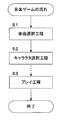
- FIG. 4 is an explanatory diagram for explaining the flow of the music game.
- the music game may include, for example, a music selection step (S1), a character selection step (S2), and a play step (S3) in this order.
- the song selection step is a step for selecting a song to be used for playing the music game (S1).
- the play process is a process in which the music game is actually played by the user (S3). Specifically, for example, a music game play may be actually provided through the game screen 40.
- the selection result of the music selection process is reflected in the play process. That is, in the play process, for example, a music game using the music selected in the music selection process may be provided through the game screen 40.
- the selection result of the character selection step is also reflected in the play step.
- the character selection step is a step for selecting a character to be used for playing the music game (S2).
- a music game may include a plurality of characters, and a selected character among them may be used for play.
- FIG. 5 is an explanatory diagram for explaining an example of the contents of the character selection process.
- a plurality of character cards 60 may be prepared as a selection candidate character card group 60F.
- Each character card 60 is a card corresponding to a character used in a music game. That is, a plurality of characters corresponding to a plurality of character cards 60 may be prepared in the music game.
- each character card 60 may function as a card electronically present in a music game, that is, an electronically defined card.
- various physical cards such as a paper or plastic medium, an electronic recording medium (for example, an IC card) may be used. Further, for example, in these cases, various codes such as a two-dimensional code may be used for recording the parameter information of each character.
- Each character may have a parameter, for example.
- each character card 60 may be set with parameters of the character.
- the content of the parameter may be different depending on each character as an example. That is, as an example, each character is defined by a parameter, and various personalities may be given.
- the parameter may include, for example, image information (not shown) for specifying the character image 60I.
- Character image 60I is an image (information for visually identifying) showing each character.
- the parameter may include items of “name”, “LIFE”, “skill”, and “individuality” as a change option.
- “Name” is information indicating the name of each character.
- “LIFE” is information on the amount of LIFE each character has.
- “skill” and “individuality” are both information indicating one type of characteristic of each character. Specifically, “skill” and “individuality” may be used, for example, to impart various changes (effects) to the music game. On the other hand, between “skill” and “individuality”, for example, the content of change and the conditions for giving change may be different.
- each lane image 42 may include a specific section. Since each lane image 42 is used as a path of a displacement that occurs between the object image 47 and the determination marker image 46 (for example, a displacement that occurs as the determination marker image 46 moves), it functions as a time axis for this displacement. . That is, the section functions as a period.
- the specific section included in each lane image 42 may function as a predetermined period.
- a change corresponding to “individuality” may be given.
- the criteria for starting the grant differ depending on the user's operation or the arrival of the predetermined period, and the change grant period is different. Also good. As an example, “skill” and “individuality” may be distinguished in this way.
- the specific section may be visually distinguished (guided) through, for example, a difference in color scheme or various indicators. Or you may guide by other various methods, such as an auditory method, for example. Further, the specific section may not be distinguished from other sections (that is, guidance for the specific section may be omitted).
- Each character card 60 may be given to each user as a privilege etc. according to the play situation of a music game, for example. Such a grant result may be reflected in the play data 14b, for example. That is, as an example, each character card 60 may be owned by each user, and the character card 60 owned by each user may be managed by the play data 14b using the user ID as a key. Then, along with the use of each card CD, play data 14b corresponding to each user is acquired based on the user ID recorded on each card CD, and each user owns based on the play data 14b (each user ID Each character card 60 (associated with) may be provided as an option in the character selection process.
- a predetermined (for example, first time) character card 60 may be provided as an option in the character selection step.
- the character selection process may function as a selection opportunity of the present invention.
- the “individuality” of the character card 60 selected in the character selection step functions as a use change option of the present invention.
- each character card 60 is not limited to the form given according to the play condition of a music game.
- each character card 60 may be given in exchange for consumption of a predetermined price, or may be owned by transfer from another user or the like. Further, for example, these grants and assignments may be provided through a website as one of the web services.
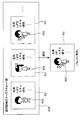
- FIG. 6 is a diagram schematically illustrating an example of a card screen for displaying the contents of the character card 60.
- the card screen 61 includes, for example, a parameter related area 62, a play information area 63, an option area 64, an individuality display area 65, and the character image 60I described above.
- the parameter related area 62 and the play information area 63 are surrounded by broken lines, but the broken line may be omitted in the actual card screen 61.
- the play information area 63 is an area for displaying information related to the play of the music game.
- the play information area 63 may include, for example, a LIFE bar 63a and a score bar 63b.
- the LIFE bar 63a may indicate the amount of LIFE (“+460”)
- the score bar 63b may indicate a score value (“+31864”).
- the value of the score may be used as the maximum value of the score that can be added to the score acquired by the user through play depending on the play situation.
- the total amount of LIFE amounts of the plurality of characters may be displayed on the LIFE bar 63a (including information indicating the amount of LIFE such as “+460”).
- the display of the LIFE bar 63a may correspond to the display of the amount of the LIFE 52a by the LIFE gauge 52.
- the total value of LIFE of the plurality of character cards may be displayed through the LIFE gauge 52 or the like as the initial remaining amount of LIFE.
- the total value of the maximum score values may be used.
- it is not limited to such a total value For example, an average value, a value set for a specific character, or the like may be used as these values.
- the option area 64 is an area for displaying options that can be selected when each character card is used.
- the option area 64 may be used as a button that is selected in order to actually give a change according to the content of the option to the game.
- the option area 64 may include, for example, a button (for example, “set to frame 1”) for setting a character group used for playing the game. Further, such a button sets, for example, the position (frame) of a deck when a play character is managed in units of character groups (hereinafter sometimes referred to as decks). May be used for
- the parameter related area 62 is an area for indicating the contents of parameters for defining each character.
- a parameter gauge 62a and a skill slot 62b may be displayed in the parameter related area 62.
- the parameter gauge 62a is a gauge for showing the contents of parameters unique to each character.
- the parameter gauge 62a may be configured to indicate the contents of a plurality of items (for example, values of “LIFE SUPPORT”, “SCORE GAIN”, “PLAY RISK”, and “ITEM COLLECT”).
- these items affect, for example, the effects related to LIFE (the increase or recovery of the upper limit of the LIFE), the magnitude of the score increase value, the risk when playing (the LIFE when making a mistake) May be affected, and item acquisition (such as the type of item and the amount of acquisition at the time of acquisition) may be affected.
- the skill slot 62b for example, the contents of “skill” possessed by each character (for example, a simple name for distinguishing the contents of “skill”) and presence / absence (for example, blank is not owned, black is owned) Etc.). Further, for example, when a plurality of skills corresponding to the contents of a plurality of “skills” are prepared, the skill slot 62b determines the number of skills (limit number) that can be owned through the number of skill slots 62b. May be shown.
- the individuality display area 65 is an area for displaying the contents of the “individuality” of each character.
- an effect image 66 as a route image may be displayed in the individuality display area 65.
- the effect image 66 is an image visually showing the content of “individuality” of each character.
- a change corresponding to “individuality” may occur in the display mode of the lane image 42.
- the effect image 66 may be configured to show the lane image 42 that has changed according to the content of “individuality”, for example, by simplifying the display mode of the changed lane image 42. Good.
- a character to be used in the music game may be selected from the character card group 60F through the card screen 61 or the like.
- the card screen 61 may include various other information.
- such information may include information indicating the name of the character (“Recure”), the attribute (“Magic”), the type of the character image 60I (“Cocktail Magic”), and the like. .
- “individuality” may include a plurality of contents. And they may be classified into a plurality of types.
- FIG. 7 is an explanatory diagram for explaining an example of types and contents of “individuality”.
- “individuality” refers to the individuality of the shape system as a choice of shape system, the individuality of the imaging condition system as an option of the imaging condition system, the individuality of the arrangement system as an option of the arrangement system, and It may include four types of labeling system personality. Each of these types may belong to a plurality of individualities whose contents are different from each other.
- the effect image 66 which shows simply the effect corresponding to the individuality may be set to each individuality. On the card screen 61, the contents of each “individuality” may be visually guided by the effect image 66 corresponding to the difference in effect.
- the individuality of the shape system is an individuality for changing the display mode by changing the shape of the lane image 42.
- the individuality of the shape system may include individuality of “normal”, “NO CURVE”, and “CURVE +”. “Normal” is an individuality that does not change the shape of the lane image 42 (does not give a change). As a result, when the character card 60 corresponding to this individuality is used for play, the effect of individuality is not visually recognized.
- the shape of the lane image 42 may be changed by changing the bending state (bending state) of the bending portion WP.
- “NO CURVE” is an individuality that changes the curved portion WP to a straight line when the lane image 42 includes the curved portion WP.
- the personality of the shooting condition system is a personality that changes the display mode by changing the shooting conditions of the virtual camera in the virtual three-dimensional space (if a change corresponding to the change of the shooting conditions of the virtual camera occurs, for example, in advance A display mode corresponding to the change of the photographing condition may be prepared).
- the shooting conditions may include conditions such as the position of the virtual camera, the shooting direction, the shooting angle, and the angle of view.
- the individuality of the imaging condition system may include, for example, individuality of “viewpoint change” and “upside down”.
- Viewpoint change may change the position of the virtual camera in the viewpoint, that is, the shooting conditions, for example. More specifically, “viewpoint change” refers to, for example, the upper lane image group 42U and the lower lane image group 42U and the lower position of the virtual camera that captures the lane corresponding to the lane image 42 obliquely from above in the virtual three-dimensional space. You may change so that it may be located between side lane image groups 42D (for example, center vicinity).
- “upside down” may turn the viewpoint upside down. That is, “upside down” may change both the shooting position and direction of the virtual camera in the shooting conditions.
- “upside down” is, for example, virtual so that the lane corresponding to the lane image 42 in the virtual three-dimensional space is photographed from the lower side opposite to the normal camera position as described above.
- the shooting position and direction (orientation) of the camera may be changed.
- the individuality of the arrangement system is an individuality that changes the display mode by changing the arrangement of the lane images 42.
- the individuality of the arrangement system may include “FLAT” and “upper and lower width” individuality.
- FLAT is an individuality that changes the position of each lane image 42 so that the positions of all the lane images 42 are positioned in parallel at the same height.
- “Large vertical width” is an individuality that changes the interval between the upper lane image group 42U and the lower lane image group 42D so that the width between the two layers changes. More specifically, in “large vertical width”, for example, the interval between the upper lane image group 42U and the lower lane image group 42D may be enlarged so that the width between the two layers is enlarged. That is, “large vertical width” may change the arrangement of the upper lane image group 42U and the lower lane image group 42D so that the width of the height difference in the virtual three-dimensional space is enlarged.
- the individuality of the sign system is an individuality that causes a change in an image having a sign function, such as the object image 47 or each judgment sign image 46.
- the individuality of the labeling system may include the “SUDDEN” individuality.
- “SUDDEN” is an individuality for changing the appearance position of the object image 47. More specifically, “SUDDEN” may change the appearance position of the object image 47 to the near side NS, that is, the side closer to each determination mark image 46. For example, such a change of the appearance position may be realized by hiding the display of the object image 47 from the original application position to the changed appearance position.
- the individuality of the sign system may include the individuality that hides the display of the object image 47 on the near side NS, contrary to “SUDDEN”.
- the “individuality” of each character may include such kind and content.
- Each character may have one individual character or a plurality of individual characters.
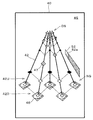
- FIG. 8 is an explanatory diagram for explaining the contents of individuality of “NO CURVE”. More specifically, FIG. 8 is a diagram schematically showing an example of the game screen 40 when a change corresponding to the individuality of “NO CURVE” is given to the display mode of the lane image 42 of FIG.
- each lane image 42 may be displayed so as not to include the curved portion WP that should originally be included. That is, the display mode (shape) of each lane image 42 may be changed so that the curved portion WP formed on the back side DS in the game screen 40 in the example of FIG. 3 disappears. In this case, each lane image 42 is displayed in a straight line. For example, a change corresponding to the individuality of “NO CURVE” may be given in this way.
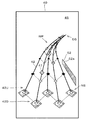
- FIG. 9 is an explanatory diagram for explaining the contents of the individuality of “CURVE +”. More specifically, FIG. 9 is a diagram schematically showing an example of the game screen 40 when a change corresponding to the individuality of “CURVE +” is given to the display mode of the lane image 42 of FIG. As shown in FIG. 9, for example, when a change corresponding to the individuality of “CURVE +” is given, each lane image 42 may be displayed with a curvature higher than the curvature (specific bending) of the original curved portion WP. . More specifically, for example, in the game screen 40 in the example of FIG.
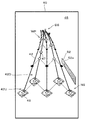
- FIG. 10 is an explanatory diagram for explaining the contents of the individuality of “viewpoint change”. More specifically, FIG. 10 is a diagram schematically showing an example of the game screen 40 when a change corresponding to the individuality of “viewpoint change” is given to the display mode of the lane image 42 of FIG. As shown in FIG. 10, for example, when a change corresponding to the individuality of “viewpoint change” is given, each lane image 42 corresponds to the imaging result of the virtual camera from the upper and lower steps in the virtual three-dimensional space. May be displayed. More specifically, in the game screen 40 in the example of FIG. 3, it corresponds to each lane image 42 when viewed from a little near the center between the upper lane image group 42U and the lower lane image group 42D.
- each lane image 42 may change.
- both the upper lane image group 42U and the lower lane image group 42D are located below the center of the game area 45, whereas FIG.
- the upper lane image group 42U and the lower lane image group 42D are changed so as to be located above and below the center of the game area 45, respectively. That is, three lane images 42 of the upper lane image group 42U are arranged above and two lane images 42 of the lower lane image group 42D are arranged below so as to sandwich the vicinity of the center of the game area 45, respectively.
- the change corresponding to the individuality of the “viewpoint change” may be given in this way, for example.
- FIG. 11 is an explanatory diagram for explaining the content of the individuality of “upside down”. More specifically, FIG. 11 is a diagram schematically showing an example of the game screen 40 when a change corresponding to the individuality of “upside down” is given to the display mode of the lane image 42 of FIG. 3. As shown in FIG. 11, for example, when a change corresponding to the individuality of “upside down” is given, each lane image corresponds to a shooting result in a state where the orientation of the virtual camera in the virtual three-dimensional space is turned upside down. 42 may be displayed. More specifically, each lane image 42 corresponds to the result taken by the virtual camera in a state where the position is moved downward compared to the game screen 40 in the example of FIG. 3 and the direction is turned upside down.
- the display mode may be changed.
- the upper lane image group 42U is positioned below the lower lane image group 42D and the upper and lower arrangements are reversed as compared with the example of FIG. That is, the arrangement of the upper lane image group 42U and the lower lane image group 42D may be reversed so as to be arranged in a zigzag pattern forming “M” (inverse of “W”). Further, in this case, the bending direction (left direction) of the bending portion WP formed on the back side DS of each lane image 42 in the example of FIG. 3 may be reversed to the right direction. A change corresponding to the individuality of “upside down” may be given in this way, for example.
- the individuality of “upside down” is not limited to the example realized by changing the shooting conditions (shooting position and orientation) as described above.
- it may be realized by changing the arrangement of the lane images 42.
- it may be realized by reversing the upper and lower arrangements of the upper lane image group 42U and the lower lane image group 42D.
- the bending direction of the bending portion WP may be displayed in the same manner as before the change (for example, the left direction), unlike when the shooting direction is changed.
- “upside down” may be categorized as individuality of the arrangement system rather than individuality of the photographing condition system.
- FIG. 12 is an explanatory diagram for explaining the contents of the individuality of “FLAT”. More specifically, FIG. 12 is a diagram schematically illustrating an example of the game screen 40 when a change corresponding to the individuality of “FLAT” is given to the display mode of the lane image 42 of FIG. 3. As shown in FIG. 12, for example, when a change corresponding to the individuality of “FLAT” is given, each lane image 42 may be displayed so as to be positioned in parallel at the same height. That is, compared with the game screen 40 in the example of FIG. 3, the upper lane image group 42U and the lower lane image group 42D are both arranged at the same height so that they are not distinguished from each other. The effect of the step between the lane image group 42D may be eliminated.
- each lane image 42 may be changed so as to be located on the same plane having the same height in the virtual three-dimensional space.
- the lane images 42 may be displayed in parallel so that they are all located on the same layer.
- the change corresponding to the individuality of “FLAT” may be given in this way, for example.
- FIG. 13 is an explanatory diagram for explaining the contents of the individuality of “large vertical width”. More specifically, FIG. 13 is a diagram schematically showing an example of the game screen 40 in the case where a change corresponding to the individuality of “large vertical” is given to the display mode of the lane image 42 of FIG. . As illustrated in FIG. 13, for example, when a change corresponding to the individuality of “high vertical width” is given, each lane image 42 may be displayed so that a step in the virtual three-dimensional space is enlarged. More specifically, as compared with the game screen 40 of the example of FIG. 3, each lane image 42 is expanded so that the width between the upper lane image group 42U and the lower lane image group 42D, that is, the width between the two layers is enlarged. The display mode may be changed. The change corresponding to the individuality of “large vertical” may be given, for example.
- the card data 14a is data for defining each character card 60.
- FIG. 14 is an explanatory diagram for explaining an example of the contents of the card data 14a.
- the card data 14a includes, for example, information on “card ID” and “parameter”.
- Card ID is information of a unique ID (hereinafter also referred to as a card ID) for each character card 60 (character).
- the card ID is used for identifying and specifying each character card 60, for example.
- “Parameter” is information of a parameter that defines each character. As described above, for example, the parameter may include items such as “name”, “LIFE”, “skill”, and “individuality”. For this reason, for example, the “parameter” may also include “name”, “LIFE”, “skill”, and “individuality” information corresponding to these.
- information indicating the name of each character as “name”, and information indicating the amount of “LIFE” individually set for each character as “LIFE” are currently owned by the character as “skill”.
- Information indicating a skill to be played (for example, information such as a skill ID for identifying each skill) may be used.
- information indicating individuality such as “NO CURVE” possessed by each character (for example, information such as individuality ID for identifying each individuality) may be used.
- the card data 14a may be configured as a set of records described so that these pieces of information are associated with each other.
- the play data 14b is data for realizing the inheritance of past results.
- FIG. 15 is an explanatory diagram for explaining an example of the contents of the play data 14b.
- the play data 14b includes, for example, information on “user ID”, “result data”, “card ID”, and “item”.
- “User ID” is information of the above-described user ID (ID for identifying each user).
- “Result data” is information for passing on past results in subsequent play. For example, “result data” includes information such as “play music”, “play date”, “score”, and the like.
- “Play music” is information indicating the music played.
- “Play date” and “score” are information indicating the date and time at which the music game was played and the score at that time (for example, an acquired score).
- Card ID is information indicating the above-mentioned card ID.
- card ID information indicating the character card 60 owned by the user of “user ID” associated with this “card ID” may be described. That is, the “card ID” may be used to identify each character card 60 owned by each user and its contents via the card data 14a.
- Identity is information indicating the content of an item currently owned. For example, information that can identify each item included in the music game, such as an item ID, may be used as the “item” information.
- the play data 14b may be configured as a set of records described so that these pieces of information are associated with each other, for example.
- the card determination process is a process for providing a character selection step (S2).
- the card determination process is a process for giving a selection opportunity to select the character card 60 used for play.
- the lane presentation process is a process for displaying (presenting) each lane image 42 in the game area 45.
- the card determination process is realized by the control unit 30 of the game machine GM through the routine of FIG. 16, and the lane presentation process is realized through the routine of FIG. More specifically, the routines of FIGS. 16 and 17 are executed through the game providing unit 37 of the control unit 30 as an example.
- the control unit 30 of the game machine GM and the control unit 10 of the center server 2 have, for example, a sequence process for arranging each object image 47 and an operation evaluation process for evaluating various operations in addition to these processes.
- Various known processes such as these are executed independently or in cooperation with each other. However, detailed description thereof will be omitted.
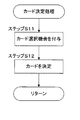
- FIG. 16 is a diagram showing an example of a flowchart of a card determination process routine for realizing the card determination process.
- the routine of FIG. 16 may be executed after the start operation every time a start operation (including collection of a predetermined price) for starting a music game is executed, for example. For example, if the music selection step (S1) is executed before the character selection step (S2), the routine of FIG. 16 selects the music selection provided following the start operation (or as part of the start operation). It may be executed along with the end of the step (S1).
- the game providing unit 37 first gives a card selection opportunity in step S11.
- a card selection opportunity is an opportunity for selecting the character card 60 which should be used in a music game as an example.
- the game providing unit 37 may provide a card selection opportunity as follows.
- the game providing unit 37 first acquires the play data 14b corresponding to the user ID of the card ID from the center server 2. Further, selection options (character card group 60F) are presented based on the acquired play data 14b. This presentation may be executed through the card screen 61 described above, for example. And the selection with respect to these choices may be performed through this card
- the game providing unit 37 uses information recorded on each character card 60 as a card selection opportunity in step S11 (for example, a code such as a two-dimensional code or a non-volatile property).
- a card selection opportunity in step S11 for example, a code such as a two-dimensional code or a non-volatile property.
- An opportunity (time) for simply obtaining (reading) a recording medium or the like (which may be recorded in the same manner as the card CD) may be given.
- the game providing unit 37 determines the character card 60 to be used in the music game, that is, the play step (S3) based on the selection result in step S11.
- the game providing unit 37 may determine the plurality of character cards 60 as character cards 60 to be used in the play step in step S12.
- the game providing unit 37 may determine the order of the character cards 60 used in the playing step (S3) based on the order setting result in step S11.
- the game provision part 37 complete finishes this routine, after finishing the process of step S12.
- the character selection step (S2) is realized by the routine of FIG. Specifically, a selection opportunity for selecting each character card 60 included in the selection candidate character card group 60 ⁇ / b> F is provided through the card screen 61.
- the plurality of character cards 60 are determined as play character cards 60 through the card screen 61.
- the order of the several character card 60 used by a play process (S3) is also determined.
- the character card 60 (single or plural) selected there is used in the play step (S3) (according to the order when the order is set).
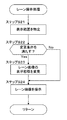
- FIG. 17 is a diagram illustrating an example of a flowchart of a lane presentation processing routine for realizing the lane presentation processing.
- the routine of FIG. 17 is repeatedly executed at a predetermined cycle in the play process (S3), for example.
- the game providing unit 37 When the routine of FIG. 17 is started, the game providing unit 37 first sets the display range of each lane image 42 to be displayed in the game area 45 based on the current time (position of the determination marker image 46) in step S21. Identify. Since each lane image 42 functions as a time axis, the display range can be specified as a time length. For this reason, for example, the game providing unit 37 may specify a range corresponding to a predetermined time length (for example, a time length corresponding to four measures of the music from the current time) as the display range in step S21.
- a predetermined time length for example, a time length corresponding to four measures of the music from the current time
- each lane image 42 in a predetermined range is prepared in advance (for example, when prepared as image data, or prepared by drawing a predetermined range in advance), for example, It may be realized by specifying a display range from such a predetermined range. Further, each lane image 42 in the predetermined range may change according to each music piece or the difficulty level. For example, the predetermined range may be the entire period of each piece of music or a partial period (a range that is greater than or equal to the display range). On the other hand, when each lane image 42 in the predetermined range is not prepared in advance, the game providing unit 37 may draw each lane image 42 corresponding to the display range specified in step S21.
- the display range may be set according to shooting conditions such as a shooting position, a shooting angle, or a field angle. For example, as the virtual camera is set to a higher shooting position (a position farther from the lane image 42), the longer lane image 42 can be displayed, so the display range is set to a longer range (for example, six bars). May be. Alternatively, the display range may be set to a shorter range (for example, two bars) as the virtual camera is set to a lower position (position closer to the lane image 42). The shooting angle and the angle of view may similarly affect the display range. Further, when the predetermined range is a partial range, the same applies to the predetermined range.
- the game providing unit 37 determines whether or not the change condition is satisfied.
- the individuality of each character card 60 may be given to the display mode of each lane image 42. Each individuality is given, for example, for a predetermined period.
- the change condition may include, for example, a temporal condition and an individuality condition.
- the time condition may be satisfied when the current time corresponds to a predetermined period. More specifically, for example, the time condition is satisfied when each lane image 42 in the display range includes a specific section and the determination mark image 46 (corresponding to the current time) is located within the specific section. Good.
- the individuality condition may be satisfied when the individuality to be changed in the specific section corresponds to the individuality of the type (lane related type) that causes the display mode of each lane image 42 to change.
- the individuality condition may be satisfied when the type of individuality to be changed in the specific section corresponds to, for example, the individuality of the shape system, the individuality of the imaging condition system, and the individuality of the arrangement system. .
- the individuality condition may be satisfied when at least one of the plurality of character cards 60 for play corresponds to a lane-related type of individuality.
- a change corresponding to a part of the individuality of the character cards 60 may be given.
- the character card 60 to be used for giving the change may be specified based on a specific condition for specifying the part.
- the individuality condition may be satisfied when the individuality of the identified character card 60 corresponds to a lane-related type of individuality.
- a predetermined order may be used as the specific condition. That is, the character card 60 used for giving a change may be specified in a predetermined order.
- the order of the character cards 60 set in the character selection step (S2) may be used as such a predetermined order.
- the individuality of each character card 60 may be used in the specific sections in the order corresponding to the selection result of the character selection step (S2).
- the plurality of specific sections and the order set in the character selection step (S2) may be appropriately associated. Specifically, for example, each specific section is associated with the order in the order of “2”, “5”, “1”, etc., and the second, fifth, and first character cards set in the character selection step (S2). 60 may be used in sequence with the arrival of each specific section.
- lottery may be used as a specific condition. That is, the individuality to be used in the specific section may be determined by lottery. For example, when there are a plurality of specific sections and a plurality of character cards 60, a change corresponding to each individuality may be given in each specific section in the order based on the lottery result. When a change corresponding to some personality is given, for example, the personality (character card 60) to which a change should be given in the specific section may be specified based on such a specific condition.
- the change condition may be satisfied when both of these temporal conditions and individuality conditions are satisfied. That is, the change condition is, for example, that the determination mark image 46 is located in a specific section, and the individuality (character card 60) to which a change is to be given in the specific section is the shape system personality, the shooting condition system personality, and the arrangement system It may be satisfied if it falls into one of the personalities. If the determination result is a negative result, that is, the change condition is not satisfied (for example, the individuality to be given a change in the specific section where the determination mark image 46 is not located in the specific section or where the determination mark image 46 is positioned is related to the lane. If it does not fall under this type), the game providing unit 37 skips step S23 and proceeds to step S24. For example, if there are other skills that affect the display of each lane image 42, a condition for giving a change for giving the skill may be used as the change condition.
- step S22 when the determination result of step S22 is a positive result, that is, when the change condition is satisfied (for example, the individuality to which a change should be given in the specific section where the determination mark image 46 is located corresponds to the lane-related type).
- the game providing unit 37 proceeds to step S23.
- step S23 the game providing unit 37 changes the display mode of each lane image 42. Specifically, the game providing unit 37, for example, sets each lane image so that a change corresponding to each individuality of the lane-related type to which a change should be given within the specific section where the determination mark image 46 is located as described above. The display mode of 42 is changed.
- step S24 the game providing unit 37 presents each lane image 42 corresponding to the display range specified in step S21 in the game area 45. Specifically, for example, when the process of step S23 is not executed, the game providing unit 37 presents each lane image 42 corresponding to the display range specified in step S21 to the game area 45 as it is. On the other hand, when the process of step S23 is performed, the game providing unit 37 presents each lane image 42 after the display mode is changed based on the change result of step S23 in the game area 45. As an example, the game providing unit 37 presents each lane image 42 corresponding to the display range specified in step S21 in this way in the game area 45. And the game provision part 37 complete
- each lane image 42 in a range corresponding to the passage of time is displayed in the game area 45 at any time.
- the individuality of each character card 60 is reflected in the display mode of each lane image 42, for example. Specifically, as an example, a change corresponding to the individuality of the character card 60 selected by the user is given in a specific section of each lane image 42.
- the character corresponding to the character card 60 selected in the character selection step is used in the play step, and each character has various individualities.
- the various individualities include lane-related types that cause a change in the display form of the lane image 42. For this reason, for example, during the grant period in which a change corresponding to individuality such as a specific section is given, a change based on the character card 60 selected in the character selection step is given to the lane image 42. That is, in the grant period, a change is given to the display mode of each lane image 42 based on the selection result in the character selection step.
- a change corresponding to the individuality of the character card 60 selected in the character selection step is given to the display mode of each lane image 42 during the grant period. Thereby, a user's selection result can be reflected in the display mode of each lane image 42.
- the display mode change accompanying the change of the shape of each lane image 42 the display mode accompanying the change of the shooting condition of the virtual camera
- the user's selection results can be reflected in the display mode of the lane images 42, respectively.
- each lane image is selected according to the user's selection result.
- a difference can be caused in the display mode of 42, that is, the mode of displacement between the object image 47 and the determination mark image 46 (mode of operation time guidance).
- the kind (variation) of the display mode of each lane image 42 can be increased according to the contents of each individuality.
- each lane image 42 having a display mode with high uniqueness can be provided for each user.
- user familiarity can be suppressed.
- user fatigue can be suppressed.
- the grant period is limited to a specific period such as a specific section
- sharpness inflection
- a plurality of character cards 60 for play give a plurality of changes corresponding to a plurality of individualities in order based on the setting of the user in a plurality of grant periods such as a plurality of specific sections
- the user's selection The result can be reflected as a change in the display mode of each lane image 42 given in order in a plurality of specific sections.
- the overall mode of each lane image 42 can be made different according to the order set for them. Thereby, the range (type) of change of the display mode of each lane image 42 can be further increased.
- the selection result may be reflected in the range of change in the display mode of each lane image 42.
- each individuality when used can be randomized. Thereby, unexpectedness can be given to progress of a music game.
- each character card 60 the content of individuality for giving a change to each lane image 42 is associated with each character card 60.
- each individuality is selected through selection of the character card 60, that is, through the character card 60. Thereby, the content of individuality can be recognized by the user through each character card 60.
- each character card 60 the contents of each character card 60 are provided through the card screen 61.
- the card screen 61 includes an effect image 66, and the effect image 66 is configured to simply show each lane image 42 after a change corresponding to each individuality is given. Thereby, the user can be notified of the effect on the display mode of each lane image 42 accompanying each character card 60 through the effect image 66. For this reason, a user's selection can be assisted. As a result, it is possible to improve the fun of the game.
- control unit 30 of the game machine GM functions as an opportunity giving means of the present invention by executing the routine of FIG.
- control unit 30 of the game machine GM functions as a change providing unit of the present invention by executing the routine of FIG.
- storage unit 31 of the game machine GM functions as a data storage device of the present invention by storing the card data 14a.
- the present invention is not limited to the above-described form, and can be implemented in an appropriate form.
- a change corresponding to each individuality is automatically given in a specific section.
- the present invention is not limited to such an example.
- the specific section may occur based on various play situations such as a user operation or use of an item.
- the provision of the change corresponding to each individuality is not limited to the form limited to the specific section.
- a change corresponding to each individuality may be given in all sections of each lane image 42, that is, in all play times of the music game.
- a change corresponding to the individuality of the character card 60 set in a specific frame (that is, a specific order) of the decks among them is shown in all sections. It may be granted.
- changes corresponding to a plurality of individualities of the character cards 60 may be given simultaneously (that is, a plurality of changes are combined), for example, at predetermined intervals. You may give so that it may switch automatically.
- an anthropomorphic character is used as the character.
- the character is not limited to such a form.
- various elements used in the game such as objects and items may be employed.
- the character has characteristics such as being fixed in play units, requiring selection before play, being unable to change during play, and having a function as an avatar for each user.
- individuality an example of “change option”
- each individuality is associated with the character.
- the present invention is not limited to such a form.
- such kind of personality that changes the display form of the lane image 42 may be set separately from the character. That is, each individuality may be selected by itself regardless of the character. In this case, for example, the character may be omitted.
- the individuality of expanding / reducing (changing the position) the interval between the upper lane image group 42U and the lower lane image group 42D has been described, but a specific lane image 42 (for example, the upper lane image group 42) Even if two or more lane images 42 among the three lane images belonging to 42U, one lane image 42 belonging to the lower lane image group 42D, or the like is used, a change in position or shape is applied. Good. Furthermore, the individuality which combined these and the above-mentioned individuality may be employ
- relative displacement for guiding the operation time occurs between the object image 47 and the determination sign image 46 due to the movement of the determination sign image 46 toward the object image 47.
- the present invention is not limited to such an example.
- such a relative displacement may be caused by a movement of the object image 47 toward the determination sign image 46. That is, as long as the operation time is guided by the movement of the object image 47 and the determination sign image 46 along the lane image 42, relative displacement may occur in an appropriate form.
- the game machine GM is not limited to a commercial game machine.
- a home-use game machine including a stationary personal computer capable of executing a game
- a portable game machine a smartphone, tablet PC, portable personal computer capable of executing a game
- the control unit 30 and the storage unit 31 are provided in the game machine GM.
- the game machine of the present invention is not limited to such a form.
- the control unit 30 and the storage unit 31 may be logically provided on a network (for example, the center server 2 etc.) using cloud computing. That is, the game machine GM may be configured as a terminal that displays and provides the processing result of the control unit 30 through the network 3.
- the game system of the present invention may be realized by a single game machine GM without the center server 2.
- the game system is configured such that the instruction sign and the instruction sign are displayed through a game screen (40) including an instruction sign (47) for indicating an execution time when the play action is to be performed and a reference sign (46) that functions as a reference for the current time.
- a music game that guides the execution time by causing a relative displacement along a path (42) between the instruction mark and the reference mark so that the position of the reference mark coincides with the execution time.
- a change application device which applies the display mode of the route (30), and a.
- the route display mode is changed based on the selection result at the selection opportunity. More specifically, a change corresponding to the change option selected at the selection opportunity is given to the route display mode. Thereby, a user's selection result can be reflected in the display mode of a course. As a result, for example, even when the same music is selected, it is possible to cause a difference in the display mode of the route, that is, the mode of relative displacement between the indication sign and the reference sign according to the selection result of the user. Also, the types (variations) of route display modes can be increased in accordance with the types of change options. As a result, for example, a route with a highly unique display mode can be provided for each user. As a result, user familiarity can be suppressed. As a result, user fatigue can be suppressed.
- a data storage for storing character data (14a) described so that a plurality of characters (60F) used for playing the music game and the plurality of change options are associated with each other.
- the aspect to provide may be employ
- the change corresponding to the change option may be given in various modes based on, for example, the whole period or a part of the play period, or the play situation or user selection.
- the path includes a specific section to which the change is to be applied, and the change providing means is configured to perform the change when the relative displacement occurs in the specific section. Changes may be imparted.
- the change can be limited to a specific section of the route. Thereby, it is possible to add sharpness (inflection) to the progress of the music game.
- the route may include an appropriate number of specific sections, for example. Similarly, a single and a plurality of suitable numbers of change options may be selected at a selection opportunity.
- the specific section includes a plurality of specific sections
- the use change option includes a plurality of use change options
- the change providing means includes: The changes corresponding to the plurality of usage change options in the plurality of specific sections may be respectively given in a predetermined order.
- the selection opportunity includes an opportunity for setting the order for associating with the plurality of specific sections to the plurality of use change options, respectively.
- the change giving means uses the order of each use change option as the predetermined order, and the change corresponding to the use change option in the order associated with each of the plurality of specific sections in the plurality of specific sections. It may be given.
- a user's selection result can be reflected as a change in the display mode of the route given in order in a plurality of specific sections.
- the overall display mode of the route can be made different according to the order set for them. Thereby, the range (type) of change in the display mode of the route can be increased.
- the change giving means uses the order set by lottery as the predetermined order, and is set by lottery in each specific section
- the change corresponding to the use change option to be performed may be given.
- the selection result can be reflected in the range of change in the display mode of the route, while the time of each change can be made random. Thereby, unexpectedness can be given to progress of a game.
- each change option may change the display mode of the route in various modes.
- the path may be displayed so as to correspond to a two-dimensional image based on a photographing result obtained by photographing a virtual three-dimensional space with a virtual camera.
- the plurality of change options may be a shooting condition that causes a change in the display mode of the route by causing a change corresponding to a change that occurs based on a change in the shooting condition of the virtual camera in the route.
- System options may be included.
- the route includes a plurality of routes respectively arranged in two layers (42U, 42D) positioned so as to form a height difference in the virtual three-dimensional space, and the plurality of change options are the virtual 3D.
- An arrangement system option that causes a change in the display mode of the route by causing a change corresponding to the change in the width of the height difference in the dimensional space between the two layers may be included.
- the plurality of options may include shape type options that cause a change in the display mode of the route by changing the shape of the route.
- the path includes a curved portion (WP) in which the direction of the relative displacement changes, and the shape system option is a display mode of the path by changing a curved state of the curved portion. Changes may be made to Thus, for example, the user's selection result can be reflected in the route display mode as the imaging condition of the virtual camera, the route arrangement, or the shape change.
- the opportunity giving means includes a notification screen including a route image (66) showing a route after the route display mode has changed in order to notify a change caused by each change option. (61) may be displayed on the display device at the selection opportunity. In this case, the influence of each change option can be notified through the route screen. Thereby, a user's selection can be assisted.
- the computer program of the present invention is configured to cause the computer (30) to function as each means of the above-described game system.
- the server device of the present invention is connected to a display device that displays the game screen via a network and functions as each unit of the above-described game system.
- the game system according to the present invention can be realized by the computer program or the server device according to the present invention.
- Game system 2 Center server (server device) 30 Control unit (computer, opportunity giving means, change giving means) 31 Storage unit (data storage device) 40 game screen 42 lane image (route) 46 Judgment sign image (reference sign) 47 Object image (indicator sign) 60 Character card (character, change option) 61 Card screen (notification screen) 66 Effect image (route image) 14a Card data (character data) GM game machine MO monitor (display device) WP curved part
Landscapes
- Engineering & Computer Science (AREA)
- Multimedia (AREA)
- User Interface Of Digital Computer (AREA)
Abstract
ユーザの選択結果を経路の表示態様に反映することができるゲームシステムを提供する。ゲームシステム(1)は、オブジェクト画像(47)及び判定標識画像(46)を含むゲーム画面(40)を表示するモニタ(MO)と、回転ボタン(B)と、を備え、オブジェクト画像(47)と判定標識画像(46)との位置が回転ボタン(B)への操作時期において一致するように判定標識画像(46)が各レーン画像(42)に沿ってオブジェクト画像(47)に向かう移動を生じさせることによりゲーム画面(40)を通じて操作時期を案内する音楽ゲームを提供する。そして、ゲームシステム(1)は、キャラクタカード群(60F)のうちから音楽ゲームのプレイに使用されるキャラクタカード(60)を選択するためのキャラクタ選択工程を付与し、その選択結果に基づいて、キャラクタカード(60)に対応する変化を各レーン画像(42)の表示態様に付与する。
Description
本発明は、プレイ行為を実行すべき実行時期を示すための指示標識及び現在時刻の基準として機能する基準標識を含むゲーム画面を表示する表示装置を備え、その指示標識と基準標識との位置が一致するようにそれらの間に経路に沿った相対的変位を生じさせることによりゲーム画面を通じて実行時期を案内する音楽ゲームを提供するゲームシステム等に関する。
プレイ行為を実行すべき実行時期を示すための指示標識及び現在時刻の基準として機能する基準標識を含むゲーム画面を表示する表示装置を備え、その指示標識と基準標識との位置が一致するようにそれらの間に経路に沿った相対的変位を生じさせることによりゲーム画面を通じて実行時期を案内する音楽ゲームが存在する。例えば、指示標識としてアイコンを、相対的変位としてそのアイコンの移動を、それぞれ使用する音楽ゲームを提供するゲーム機が知られている(例えば、特許文献1参照)。また、その他本発明に関連する先行技術文献として特許文献2が存在する。
特許文献1の音楽ゲームでは、アイコンの移動方向は一定である。このため、ユーザの慣れを招く可能性がある。結果として、ユーザの飽きにつながってしまう可能性もある。一方で、例えば、アイコン等の指示標識の経路の形状を変更することによりプレイに使用される楽曲に応じて指示標識の進行方向に差が生じる音楽ゲームも存在する。しかし、このような音楽ゲームでも、同じ楽曲が選択される場合には指示標識の進行方向に差は生じないケースが多い。このため、やはりユーザの慣れを招く余地がある。
そこで、本発明は、ユーザの選択結果を経路の表示態様に反映することができるゲームシステム等を提供することを目的とする。
本発明のゲームシステムは、プレイ行為を実行すべき実行時期を示すための指示標識及び現在時刻の基準として機能する基準標識を含むゲーム画面を通じて、前記指示標識と前記基準標識との位置が前記実行時期において一致するように前記指示標識と前記基準標識との間に経路に沿った相対的変位を生じさせることにより前記実行時期を案内する音楽ゲームを提供するゲームシステムであって、前記経路の表示態様に変化を生じさせるための複数の変更選択肢のうちから前記音楽ゲームのプレイに使用される使用変更選択肢を選択するための選択機会を付与する機会付与手段と、前記選択機会の選択結果に基づいて、前記使用変更選択肢に対応する変化を前記経路の表示態様に付与する変化付与手段と、を備えている。
一方、本発明のコンピュータプログラムは、コンピュータを、上述のゲームシステムの各手段として機能させるように構成されたものである。また、本発明のサーバ装置は、前記ゲーム画面を表示する表示装置にネットワークを介して接続され、上述のゲームシステムの各手段として機能するものである。
以下、本発明の一形態に係るゲームシステムについて説明する。図1は、本発明の一形態に係るゲームシステムの全体構成の概要を示す図である。図1に示すように、ゲームシステム1は、センターサーバ2及びゲーム機GMを含んでいる。ゲーム機GMは、ネットワーク3を介してセンターサーバ2に接続されている。一例として、ゲーム機GMは、業務用(商業用)のゲーム機として構成されている。業務用のゲーム機は、有料或いは無料で所定範囲のゲームをプレイさせるゲーム機である。一例として、ゲーム機GMは、有料で音楽ゲームを提供する。具体的には、ゲーム機GMは、例えば、所定の対価の消費と引き換えに、その対価に応じた範囲で音楽ゲームを提供する。ゲーム機GMは、店舗4等の商業施設に適当な台数ずつ設置される。
センターサーバ2は、一台の物理的装置によって構成される例に限らない。例えば、複数の物理的装置としてのサーバ群によって一台の論理的なセンターサーバ2が構成されてもよい。また、クラウドコンピューティングを利用して論理的にセンターサーバ2が構成されてもよい。さらに、ゲーム機GMがセンターサーバ2として機能してもよい。
また、センターサーバ2には、ネットワーク3を介して、ユーザ端末5が接続される。ユーザ端末5は、センターサーバ2から配信されるソフトウェアを実行することにより、各種の機能を発揮するネットワーク端末装置の一種である。図1の例では、ユーザ端末5の一例として、携帯電話(スマートフォンを含む)が利用されている。また、ユーザ端末5として、例えば、その他にもパーソナルコンピュータ、携帯型ゲーム機、携帯型タブレット端末装置といった、ネットワーク接続が可能でかつユーザの個人用途に供される各種のネットワーク端末装置が利用されてよい。
ネットワーク3は、一例として、TCP/IPプロトコルを利用してネットワーク通信を実現するように構成されてよい。典型的には、WANとしてのインターネットと、LANとしてのイントラネットと、を組み合わせてネットワーク3が構成されてよい。図1の例では、センターサーバ2及びゲーム機GMはルータ3aを介して、ユーザ端末5はアクセスポイント3bを介して、それぞれネットワーク3に接続されている。
なお、ネットワーク3は、TCP/IPプロトコルを利用する形態に限定されない。ネットワーク3として、通信用の有線回線、或いは無線回線(赤外線通信、近距離無線通信等を含む)等を利用する各種の形態が利用されてよい。或いは、ユーザ端末5とゲーム機GM等との通信は、例えば、通信用の回線(有線及び無線を含む)を利用せずに、二次元コード等、各種情報を含むように所定の規格に準拠して生成されるコード(例えば、二次元コード)を利用して実現されてよい。したがって、ネットワーク(或いは通信回線)の用語は、このようなコードを利用する通信方法等、回線を利用せずに情報の送受信をする形態を含んでいる。
センターサーバ2は、ゲーム機GM又はそのユーザに対して各種のゲーム機用サービスを提供する。ゲーム機用サービスとして、例えば、ゲーム機GMからユーザの識別情報を受け取って、そのユーザを認証するサービスが提供されてよい。また、認証したユーザのプレイデータをゲーム機GMから受け取って保存し、或いは保存するプレイデータをゲーム機GMに提供するサービスが提供されてもよい。さらに、ゲーム機用サービスには、ネットワーク3を介してゲーム機GMのプログラム或いはデータを配信し、更新するサービス、ネットワーク3を介して複数のユーザが共通のゲームをプレイする際にユーザ同士をマッチングするマッチングサービス等が含まれていてもよい。
また、センターサーバ2は、ネットワーク3を介してユーザ端末5のユーザに各種のWebサービスを提供する。Webサービスには、例えば、ゲーム機GMが提供するゲームに関する各種の情報を提供するゲーム用情報サービスが含まれてよい。また、例えば、Webサービスには、各ユーザ端末5に各種データ或いはソフトウェアを配信(データ等のアップデートを含む)する配信サービスが含まれてもよい。さらに、Webサービスには、その他にもユーザによる情報発信、交換、共有といった交流の場を提供するコミュニティサービス、各ユーザを識別するためのユーザIDを付与するサービス等のサービスが含まれてよい。
次に、音楽ゲームを実現するためのゲームシステム1の制御系の要部について説明する。図2は、ゲームシステム1の制御系の要部の構成を示す図である。図2に示すように、センターサーバ2は、制御ユニット10と、記憶ユニット11と、を備えている。制御ユニット10は、マイクロプロセッサと、そのマイクロプロセッサの動作に必要な内部記憶装置(一例としてROM及びRAM)等の各種周辺装置とを組み合わせたコンピュータユニットとして構成されている。なお、制御ユニット10には、キーボード等の入力装置、モニタ等の出力装置等が接続され得る。しかし、それらの図示は省略した。
記憶ユニット11は、制御ユニット10に接続されている。記憶ユニット11は、電源の供給がなくても記憶を保持可能なように、例えば、磁気テープ等の大容量記憶媒体により構成されている。記憶ユニット11には、サーバ用データ14及びサーバ用プログラム15が記憶されている。サーバ用プログラム15は、センターサーバ2がゲーム機GM及びユーザ端末5に各種のサービスを提供するために必要なコンピュータプログラムである。制御ユニット10がサーバ用プログラム15を読み取って実行することにより、制御ユニット10の内部には、ゲーム機サービス管理部16及びWebサービス管理部17が設けられる。
ゲーム機サービス管理部16は、上述のゲーム機用サービスを提供するための処理を実行する。一方、Webサービス管理部17は、上述のWebサービスを提供するために必要な処理を実行する。ゲーム機サービス管理部16及びWebサービス管理部17は、コンピュータハードウェアとコンピュータプログラムとの組み合わせにより実現される論理的装置である。なお、制御ユニット10の内部には、その他にも各種の論理的装置が設けられ得る。しかし、それらの図示は省略した。
サーバ用データ14は、サーバ用プログラム15の実行に伴って参照されるデータである。例えば、サーバ用データ14は、キャラクタデータとしてのカードデータ14a及びプレイデータ14bを含んでいてよい。カードデータ14aは、後述のキャラクタを定義するためのデータである。プレイデータ14bは、各ユーザの過去のプレイ実績に関する情報が記述されたデータである。プレイデータ14bは、例えば、前回までのプレイ結果(過去の実績)を次回以降に引き継ぐため、或いは各ユーザに固有の設定内容を引き継ぐために使用される。カードデータ14a及びプレイデータ14bの詳細は後述する。
また、サーバ用データ14は、その他にも音楽ゲームを実現するための各種のデータを含み得る。例えば、そのようなデータにはID管理データが含まれていてもよい。ID管理データは、ユーザID等の各種IDを管理するためのデータである。しかし、それらの図示は省略した。
一方、ゲーム機GMには、コンピュータとしての制御ユニット30と、記憶ユニット31と、コントロールパネル7と、フットペダル8と、表示装置としてのモニタMOと、リーダ9と、が設けられている。記憶ユニット31、コントロールパネル7、フットペダル8、モニタMO、及びリーダ9は、いずれも制御ユニット30に接続されている。制御ユニット30は、マイクロプロセッサと、そのマイクロプロセッサの動作に必要な内部記憶装置(一例としてROM及びRAM)等の各種周辺装置とを組み合わせたコンピュータユニットとして構成されている。
なお、制御ユニット30には、例えば、その他にも公知のゲーム機と同様に各種の装置が接続され得る。そのような装置には、例えば、スピーカ等の各種の出力装置或いは各種の入力装置が含まれてよい。また、例えば、そのような入力装置には、コイン認証装置等の所定の対価を徴収するための周知の装置が含まれてもよい。そして、例えば、そのような装置を通じて、所定の対価としてのコイン等が徴収されてよい。或いは、各種の出力装置には、例えば、プリンタが含まれていてもよい。そして、例えば、後述のキャラクタカードが物理的媒体(例えば紙等)に印刷されて排出される場合には、プリンタはその印刷に使用されてよい。つまり、ゲーム機GMがそのようなキャラクタカードを生成してもよい。しかし、それらの図示は省略した。
コントロールパネル7は、各種の信号を制御ユニット30に出力する。例えば、コントロールパネル7は、回転ボタンBを含んでいてよい。回転ボタンBは、例えば、押し込み操作及び回転操作の両方に使用されるように構成されていてもよい。そして、コントロールパネル7は、一例として、回転ボタンBへの操作結果に対応する信号を制御ユニット30に出力してよい。具体的には、例えば、回転ボタンBに対する押し込み操作及び回転操作に対応する信号を制御ユニット30に出力してよい。
フットペダル8は、ユーザによって操作される入力装置の一種である。例えば、フットペダル8は、音楽ゲームのプレイ中に特別な効果(例えば、後述のスキル等、キャラクタの各種の特性に伴う効果等)を生じさせるために使用されてよい。例えば、フットペダル8は、足によって操作されるように構成されていてよい。より具体的には、フットペダル8は、例えば、ユーザによる踏み込み操作の入力に使用されてよい。そして、フットペダル8は、踏み込み操作に対応する信号を制御ユニット30に出力してよい。
モニタMOは、制御ユニット30からの出力信号に基づいて各種の画像等を表示するための周知の表示装置である。一例として、モニタMOは、制御ユニット30からの出力信号に応じて、音楽ゲームをプレイするためのゲーム画面を表示する。
リーダ9は、例えば、近距離無線通信を利用し、記憶媒体に記録された各種の情報を非接触状態で読み取る周知の装置である。リーダ9は、記憶媒体の一例としてカードCDの情報の読み取りに使用されてよい。具体的には、リーダ9は、一例として、各ユーザが所持するカードCDの情報を読み取ってその情報に対応した信号を制御ユニット30に出力してよい。なお、例えば、キャラクタの情報(例えばパラメータ等)が二次元コード等の各種のコードを介して記録するキャラクタカードをゲーム機GMがプリンタを通じて生成する場合には、そのようなコードを読み取り可能なコードリーダを含む等によりリーダ9はそのようなコードを読み取り可能に構成されていてよい。つまり、リーダ9は、そのようなコードの読み取りに使用されてもよい。
また、カードCDには、例えば、ICチップ、磁気ストライプといった不揮発性記憶媒体(不図示)が設けられていてよい。そして、カードCDには、このような不揮発性記憶媒体等を介して、各種の情報が記録されてよい。また、例えば、各種の情報には、ユーザIDの情報(ユーザIDを特定可能な情報を含む)が含まれてよい。つまり、カードCDは、例えば、IDカードとして、IDカードに対応する各ユーザの特定に使用されてよい。さらに、各種の情報には、例えば、その他にも所定の対価として使用される価値の量の情報(価値の量を特定するための情報を含む)が含まれてもよい。そして、その価値の量を消費することにより所定の対価が徴収されてもよい。つまり、カードCDは、一例として、所定の対価の支払いに使用されてもよい。
一方、記憶ユニット31は、電源の供給がなくても記憶を保持可能なように、例えば、磁気記録媒体や光記録媒体、フラッシュSSD(Solid State Drive)などにより構成されている。記憶ユニット31には、ゲームプログラム34及びゲームデータ35が記憶されている。ゲームプログラム34は、ゲーム機GMが音楽ゲームを提供するために必要なコンピュータプログラムである。ゲームプログラム34の実行に伴って、制御ユニット30の内部には、ゲーム提供部37が設けられる。ゲーム提供部37は、音楽ゲームを提供するために必要な各種処理を実行する。ゲーム提供部37は、コンピュータハードウェアとコンピュータプログラムとの組み合わせにより実現される論理的装置である。なお、制御ユニット30の内部には、その他にも各種の論理的装置が設けられ得る。しかし、それらの図示は省略した。
ゲームデータ35は、ゲームプログラム34の実行に伴って参照されるデータである。ゲームデータ35は、例えば、楽曲データ36及びシーケンスデータ38を含んでいる。楽曲データ36は、音楽ゲームで使用される楽曲等の各種の音声をスピーカに再生させるために必要なデータである。シーケンスデータ38は、音楽ゲームにおいて適切なプレイ行為を実行すべき時期をユーザに案内するために必要なデータである。例えば、シーケンスデータ38には、回転ボタンBを適切に操作すべき操作時期が予め記述されていてよい。そして、例えば、音楽ゲームでは、シーケンスデータ38に記述された各操作時期に回転ボタンBに対する適切な操作が要求されてよい。
さらに、ゲームデータ35は、例えば、上述のカードデータ14a及びプレイデータ14bを含んでいる。カードデータ14a及びプレイデータ14bは、一例として、必要な部分が含まれるように、少なくとも一部がセンターサーバ2から提供されてよい。同様に、ゲームデータ35は、その他にも音楽ゲームを実行するための各種のデータを含んでいてよい。例えば、そのようなデータには、画像データや上述のID管理データが含まれてよい。画像データは、ゲームに必要な各種画像を表示するためのデータである。しかし、それらの図示は省略した。
次に、ゲーム機GMが提供する音楽ゲームについて説明する。音楽ゲームは、タイミングゲームの一種である。具体的には、音楽ゲームは、適切なプレイ行為の実行時期を評価するタイプのゲームである。適切なプレイ行為を実行すべき実行時期は、例えば、ゲーム画面を通じて楽曲とともに提供される。また、音楽ゲームでは、楽曲のリズムと一致する時期が実行時期として利用される。つまり、音楽ゲームは、適切なプレイ行為を実行すべき時期を楽曲のリズムに合わせてユーザに案内し、実際にプレイ行為が実行された時期を評価するタイプのゲームである。また、例えば、音楽ゲームにはプレイ用に複数の楽曲が用意され、そこから選択された楽曲が実際のプレイに使用されてよい。
図3は、音楽ゲームをプレイするためのゲーム画面の一例を模式的に示す図である。図3に示すように、例えば、ゲーム画面40は、仮想3次元空間を演出するように、仮想3次元空間を仮想カメラで撮影した撮影結果に基づく2次元画像として表示されてよい。具体的には、ゲーム画面40は、例えば、ゲーム領域45を含んでいる。ゲーム領域45には、例えば、経路としての5つのレーン画像42が表示されてよい。5つのレーン画像42は、一例として、仮想3次元空間を演出するように、奥側DSから手前側NSに向かって延びていてよい。
また、5つのレーン画像42は、例えば、「W」を形成するように千鳥状に配置されてよい。具体的には、5つのレーン画像42は、例えば、3つのレーン画像42を含む上側レーン画像群42U及び2つのレーン画像42を含む下側レーン画像群42Dに分類されてよい。そして、例えば、上側レーン画像群42U及び下側レーン画像群42Dは、仮想3次元空間において高低差を形成するように上下に配置されてよい。つまり、5つのレーン画像42は、仮想3次元空間において上側レーン画像群42U及び下側レーン画像群42Dの単位で同じ高さに位置するように配置されてよい。より具体的には、上側レーン画像群42Uの3つのレーン画像42は互いに並行に延びるように位置し、下側レーン画像群42Dの2つのレーン画像42はそれよりも下の位置で互いに並行に延びるように位置してよい。そして、5つのレーン画像42は、例えば、これらの上側レーン画像群42U及び下側レーン画像群42Dにより2層を形成してよい。つまり、5つのレーン画像42は、仮想3次元空間において高低差を形成するように位置する2層に分けられてそれぞれ配置される。
各レーン画像42には、例えば、基準標識としての判定標識画像46がレーン画像42毎に配置されてよい。各判定標識画像46は、ゲームにおいて現在時刻の標識として機能する画像である。また、各レーン画像42には、オブジェクト画像47が適宜な位置に配置されてよい。各オブジェクト画像47は、一例として、回転ボタンBを操作すべき操作時期(シーケンスデータ38に記述される)を示す(案内する)ための指示標識として機能してよい。そして、オブジェクト画像47と判定標識画像46との一致により、回転ボタンBを操作すべき操作時期が案内されてよい。
具体的には、例えば、各判定標識画像46が順次適宜の位置のオブジェクト画像47を通過しつつレーン画像42の奥側DSに向かって移動するようにゲーム領域45の表示が変化してよい。つまり、各判定標識画像46は、ユーザに適切な操作を要求すべき時期にオブジェクト画像47の位置と一致するように時間経過に従って各レーン画像42に沿って移動してよい。そして、判定標識画像46の位置とオブジェクト画像47の位置との一致に合わせて、ユーザには適切なプレイ行為の実行が要求されてよい。例えば、5つのレーン画像42にそれぞれ対応する5つの回転ボタンBが設けられている場合には、各レーン画像42上の判定標識画像46とオブジェクト画像47との一致に合わせて、ユーザには各レーン画像42に対応する回転ボタンBに対する押し込み操作或いは回転操作が要求されてよい。
例えば、オブジェクト画像47として、複数種類のオブジェクト画像47が表示されてよい。そして、ユーザに要求される適切なプレイ行為は、オブジェクト画像47の種類に応じて相違してよい。具体的には、オブジェクト画像47は、例えば、適切なプレイ行為として各回転ボタンBを押し込む押し込み操作(期間の長短に応じて種類が相違してもよい)を指示(要求)する種類、及び適切なプレイ行為として各レーン画像42に対応する回転ボタンBに対する回転操作(期間の長短に応じて種類が相違してもよい)を指示する種類を含んでいてよい。そして、各種のオブジェクト画像47に対する適切な操作及びその操作時期が評価されてよい。この評価は、例えば、適切な操作が実行された場合に、その操作の実際の操作時期と要求時期(オブジェクト画像47と判定標識画像46との一致時期)との間のずれ時間に対して実行されてよい。そして、そのずれ時間は小さいほど評価が高くなってよい。一方、ずれ時間が所定期間よりも大きい、或いは適切な操作が実行されていない場合にはミス操作として評価されてもよい。
なお、各種のオブジェクト画像47には、例えば、その他にも回転操作及び押し込み操作の組み合わせを指示する種類等が含まれていてよい。或いは、オブジェクト画像47には、フットペダル8の操作時期を指示する種類が含まれていてもよい。そして、適切なプレイ行為として、各種操作の期間や時期等が適宜評価されてもよい。
さらに、ゲーム領域45には、例えば、LIFEゲージ52が表示されてもよい。LIFEゲージ52は、LIFE(ライフ)52aの残量をユーザに把握させるためのゲージである。LIFE52aは、一例として、プレイの継続の可否を判断するために使用されてよい。具体的には、LIFE52aの残量がゼロでない間は音楽ゲームのプレイが継続される一方で、LIFE52aの残量がゼロになった場合(全消費された場合)には楽曲の演奏途中であっても音楽ゲームが終了されてよい。LIFE52aの残量は、例えば、ミス操作が実行される毎に所定値減少してよい。つまり、ミス操作が実行される毎にプレイ時間が減少してよい。換言すれば、適切な操作が実行されている限り、音楽ゲームは継続的にプレイされてよい。
LIFE52aの初期量は、適宜に設定されてよい。例えば、音楽ゲームには、選択的に使用される各キャラクタが用意されていてもよい。そして、LIFE52aの初期量は、プレイ用に選択されたキャラクタに応じて設定されてもよい。キャラクタについては更に後述する。
図3の例では、各レーン画像42の奥側DSには、湾曲部WPが形成されている。湾曲部WPは、オブジェクト画像47の進行方向を変更させるように湾曲する部分である。具体的には、各レーン画像42の奥側DSには、奥側DSから手前側NSに向かって進行するオブジェクト画像47の進行方向を左右に変更する(より具体的には、進行方向に左右の要素を加えて左右斜め方向に変更する)ように左右に湾曲する湾曲部WPが形成されている。一例として、各レーン画像42は、このような湾曲部WPを有する曲線として構成されていてもよい。そして、音楽ゲームは、例えば、このようなゲーム画面40を通じて提供されてよい。なお、各レーン画像42の湾曲部WPは、左右方向に限定されない。例えば、オブジェクト画像47の進行がアップダウンするように、湾曲部WPは上下方向に湾曲していてもよい。そして、各レーン画像42には、仮想3次元空間を演出するように、これらの左右及び上下が適宜組み合わされて湾曲部WPが形成されてもよい。
図4は、音楽ゲームの流れを説明するための説明図である。図4に示すように、音楽ゲームは、例えば、楽曲選択工程(S1)、キャラクタ選択工程(S2)及びプレイ工程(S3)を順に含んでいてよい。楽曲選択工程は、音楽ゲームのプレイに使用する楽曲を選択するための工程である(S1)。プレイ工程は、ユーザによって音楽ゲームが実際にプレイされる工程である(S3)。具体的には、例えば、ゲーム画面40を通じて実際に音楽ゲームのプレイが提供されてよい。また、プレイ工程には、楽曲選択工程の選択結果が反映される。つまり、プレイ工程では、一例として、ゲーム画面40を通じて、楽曲選択工程で選択された楽曲を利用する音楽ゲームが提供されてよい。同様に、プレイ工程には、キャラクタ選択工程の選択結果も反映される。
キャラクタ選択工程は、音楽ゲームのプレイに使用するキャラクタを選択するための工程である(S2)。例えば、音楽ゲームは複数のキャラクタを含み、それらのうちの選択されたキャラクタがプレイに使用されてよい。
図5は、キャラクタ選択工程の内容の一例を説明するための説明図である。図5に示すように、音楽ゲームには、例えば、複数のキャラクタカード60が選択候補のキャラクタカード群60Fとして用意されていてよい。各キャラクタカード60は、音楽ゲームで使用されるキャラクタに対応するカードである。つまり、音楽ゲームには、複数のキャラクタカード60に対応する複数のキャラクタが用意されていてよい。また、一例として、各キャラクタカード60は、音楽ゲームに電子的に存在するカード、つまり電子的に定義されるカードとして機能してよい。なお、各キャラクタカード60として、紙やプラスチックの媒体、電子的記録媒体(例えばICカードを含む)等の各種の物理的カードが使用されてもよい。また、例えば、これらの場合において、各キャラクタのパラメータの情報等の記録には、二次元コード等の各種のコードが利用されてもよい。
各キャラクタは、例えば、パラメータを有していてよい。このため、各キャラクタカード60には、キャラクタが持つパラメータが設定されてよい。パラメータの内容は、一例として、各キャラクタに応じて相違してよい。つまり、一例として、各キャラクタはパラメータによって定義され、各種の個性が与えられてよい。パラメータは、例えば、キャラクタ画像60Iを特定するための画像情報(不図示)を含んでいてよい。キャラクタ画像60Iは、各キャラクタを示す画像(視覚的に識別するための情報)である。さらに、パラメータは、“名称”、“LIFE”、“スキル”、及び変更選択肢としての“個性”の項目を含んでいてよい。
“名称”は、各キャラクタの名称を示す情報である。“LIFE”は、各キャラクタが有するLIFEの量の情報である。また、“スキル”及び“個性”は、いずれも各キャラクタが有する特性の一種を示す情報である。具体的には、“スキル”及び“個性”は、例えば、いずれも各種の変化(効果)を音楽ゲームに付与するために使用されてよい。一方で、“スキル”及び“個性”の間では、例えば、変化の内容や変化付与の条件が相違していてよい。
例えば、“スキル”に対応する変化は、フットペダル8に対する操作が実行された場合に所定時間付与されてよい。一方、“個性”に対応する変化は、所定の期間の到来に合わせて期間中自動的に付与されてよい。より具体的には、例えば、各レーン画像42は特定区間を含んでいてよい。各レーン画像42は、オブジェクト画像47と判定標識画像46との間に生じる変位(例えば、判定標識画像46の移動に伴い生じる変位)の経路として使用されるため、この変位の時間軸として機能する。つまり、区間は期間として機能する。そして、各レーン画像42に含まれる特定区間が所定の期間として機能してよい。また、例えば、判定標識画像46が各レーン画像42のその特定区間内に位置している場合に“個性”に対応する変化が付与されてよい。つまり、“スキル”と“個性”との間では、変化の内容とは別に、ユーザの操作或いは所定の期間の到来とった具合に付与開始の基準が相違し、変化付与の期間が相違してもよい。一例として、このように“スキル”と“個性”とは区別されてよい。
なお、特定区間は、例えば、配色の相違や各種の指標等を通じて視覚的に区別(案内)されてよい。或いは、例えば、聴覚的手法等、その他の各種の手法で案内されてもよい。また、特定区間は他の区間と区別されていなくてもよい(つまり特定区間の案内は省略されてもよい)。
各キャラクタカード60は、例えば、音楽ゲームのプレイ状況に応じて特典等として各ユーザに付与されてよい。このような付与結果は、例えば、プレイデータ14bに反映されてよい。つまり、一例として、各キャラクタカード60は各ユーザによって所有され、各ユーザが所有するキャラクタカード60はユーザIDをキーとしてプレイデータ14bによって管理されてよい。そして、各カードCDの使用に伴い、各カードCDに記録されるユーザIDを基準に各ユーザに対応するプレイデータ14bが取得され、そのプレイデータ14bに基づいて各ユーザが所有する(各ユーザIDに関連付けられている)各キャラクタカード60がキャラクタ選択工程において選択肢として提供されてよい。一方、キャラクタカード60を所有していないユーザ(初回のユーザ等)には、例えば、キャラクタ選択工程において所定(例えば初回用等)のキャラクタカード60が選択肢として提供されてよい。これらの場合、キャラクタ選択工程が本発明の選択機会として機能してよい。また、キャラクタ選択工程で選択されたキャラクタカード60の“個性”が本発明の使用変更選択肢として機能する。
なお、各キャラクタカード60は、音楽ゲームのプレイ状況に応じて付与される形態に限定されない。例えば、各キャラクタカード60は、所定の対価の消費と引き換えに付与されてもよいし、他のユーザ等からの譲渡等によって所有されてもよい。また、例えば、これらの付与や譲渡等は、Webサービスの一つとしてWebサイト等を通じて提供されてもよい。
また、キャラクタカード60の内容の詳細は、例えば、通知画面としてのカード画面を通じて表示されてもよい。図6は、キャラクタカード60の内容を表示するためのカード画面の一例を模式的に示す図である。図6に示すように、カード画面61は、例えば、パラメータ関連領域62、プレイ情報領域63、選択肢領域64、個性表示領域65及び上述のキャラクタ画像60Iを含んでいる。なお、図6の例では、説明の便宜のため、パラメータ関連領域62及びプレイ情報領域63が破線で囲まれているが、実際のカード画面61では破線は省略されてよい。
プレイ情報領域63は、音楽ゲームのプレイに関連する情報を表示するための領域である。プレイ情報領域63は、例えば、LIFEバー63a及びスコアバー63bを含んでいてよい。一例として、LIFEバー63aはLIFEの量(“+460”)を、スコアバー63bはスコアの値(“+31864”)を、それぞれ示してよい。例えば、スコアの値は、プレイを通じてユーザが獲得するスコアにプレイ状況に応じて加算され得るスコアの最大値として使用されてよい。
なお、音楽ゲームのプレイには、複数のキャラクタカードが使用されてよい。このような場合、LIFEバー63a(“+460”等のLIFEの量を示す情報を含む)には、それらの複数のキャラクタのLIFEの量の合計量が表示されてもよい。また、LIFEバー63aの表示とLIFEゲージ52によるLIFE52aの量の表示とは対応していてよい。このため、複数のキャラクタカードが使用される場合には、複数のキャラクタカードのLIFEの合計値がLIFEの初期残量としてLIFEゲージ52等を通じて表示されてよい。マックススコアの値も、同様に複数のキャラクタが使用された場合にはそれらの合計値が使用されてよい。なお、このような合計値に限定されず、これらの値として、例えば平均値や特定のキャラクタに設定された値等が使用されてもよい。
また、選択肢領域64は、各キャラクタカードの使用時に選択可能な選択肢を表示するための領域である。例えば、選択肢領域64は、選択肢の内容に応じた変化を実際にゲームに付与するために選択されるボタンとして使用されてよい。選択肢領域64は、例えば、ゲームのプレイに使用されるキャラクタ群を設定するためのボタン(例えば、“フレーム1にセット”)を含んでいてよい。また、このようなボタンは、例えばプレイ用のキャラクタがキャラクタ群(以下、デッキと呼ぶ場合がある)単位で管理される場合にそのデッキの何番目の位置(フレーム)に配置されるか設定するために使用されてもよい。
パラメータ関連領域62は、各キャラクタを定義するためのパラメータの内容を示すための領域である。例えば、パラメータ関連領域62には、パラメータゲージ62a及びスキルスロット62bが表示されてよい。パラメータゲージ62aは、各キャラクタに固有のパラメータの内容を示すためのゲージである。パラメータゲージ62aは、例えば、複数の項目の内容(例えば、“LIFE SUPPORT”、“SCORE GAIN”、“PLAY RISK”、及び“ITEM COLLECT”の値)を示すように構成されてよい。また、これらの項目は、例えば、LIFEに関わる効果(LIFEの上限の上昇や回復等)に影響を与えたり、スコア上昇値の大小に影響を与えたり、プレイに際してのリスク(ミスした際のLIFEの減少値等)の大小に影響を与えたり、アイテムの取得(取得時のアイテムの種類や取得量の大小等)に影響を与えたりしてよい。
一方、スキルスロット62bは、例えば、各キャラクタが所有する“スキル”の内容(例えば、“スキル”の内容を区別するための簡略名称等)及び有無(例えば、空白は非所有、黒塗りは所有等)を示すボックスとして機能してよい。また、例えば、複数の“スキル”の内容にそれぞれ対応する複数のスキルが用意されている場合には、スキルスロット62bは、スキルスロット62bの数を通じて、所有可能なスキルの数(限界数)を示してもよい。
個性表示領域65は、各キャラクタの“個性”の内容を表示するための領域である。例えば、個性表示領域65には、経路画像としての効果画像66が表示されてもよい。効果画像66は、各キャラクタの“個性”の内容を視覚的に示す画像である。例えば、“個性”に対応する変化は、レーン画像42の表示態様に生じてよい。この場合、効果画像66は、例えば変化後のレーン画像42の表示態様を簡略化して表示する等により、“個性”の内容に応じて変化した後のレーン画像42を示すように構成されてもよい。
キャラクタ選択工程では、例えば、このようなカード画面61等を通じて、キャラクタカード群60Fから音楽ゲームで使用されるべきキャラクタが選択されてよい。なお、カード画面61は、その他にも各種の情報を含んでいてよい。例えば、そのような情報には、キャラクタの名称(“リキュア”)や属性(“魔”)、キャラクタ画像60Iのバージョン等の種類(“カクテルマジック”)等を示す情報が含まれていてもよい。
次に、各キャラクタの“個性”の内容について説明する。例えば、“個性”は、複数の内容を含んでいてよい。そして、それらは複数の種類に分類されていてよい。図7は、“個性”の種類及び内容の一例を説明するための説明図である。図7に示すように、例えば、“個性”は、形状系の選択肢としての形状系の個性、撮影条件系の選択肢としての撮影条件系の個性、配置系の選択肢としての配置系の個性、及び標識系の個性の4種類を含んでいてよい。そして、これらの各種類には、互いに内容が相違する複数の個性が属していてよい。また、それらの各個性には、その個性に対応する効果を簡易的に示す効果画像66が設定されていてよい。そして、カード画面61では、このような効果の相違に応じた効果画像66によって視覚的に各“個性”の内容が案内されてよい。
具体的には、形状系の個性は、レーン画像42の形状を変更することにより表示態様を変更するための個性である。例えば、形状系の個性は、“ノーマル”、“NO CURVE”、及び“CURVE+”の個性を含んでいてよい。“ノーマル”は、レーン画像42の形状を変更しない(変化を付与しない)個性である。結果として、この個性に対応するキャラクタカード60がプレイに使用されている場合、個性の効果は視覚的には認識されない。
一方、“NO CURVE”及び“CURVE+”の個性は、例えば、いずれも湾曲部WPの湾曲状態(曲がり具合)を変更することによりレーン画像42の形状を変更してよい。具体的には、“NO CURVE”は、レーン画像42が湾曲部WPを含む場合にその湾曲部WPを直線に変更する個性である。また、“CURVE+”は、“NO CURVE”と反対に、レーン画像42が湾曲部WPを含む場合にその湾曲部WPの湾曲程度(曲がり具合)をきつくする、つまり湾曲率を増加(例えば、3倍等)させる個性である。
撮影条件系の個性は、仮想3次元空間において仮想カメラの撮影条件を変更することにより表示態様を変更する個性である(仮想カメラの撮影条件の変更に対応する変化が生じていれば、例えば予め撮影条件の変更に対応する表示態様が用意されていてもよい)。撮影条件は、例えば、仮想カメラの位置、撮影方向、撮影角度、画角等の条件を含んでいてよい。
また、撮影条件系の個性は、例えば、“視点変化”及び“上下逆転”の個性を含んでいてよい。“視点変化”は、例えば、視点、つまり撮影条件のうち仮想カメラの位置を変更してよい。より具体的には、“視点変化”は、例えば仮想3次元空間においてレーン画像42に対応するレーンを斜め上方から撮影する仮想カメラの位置(通常の位置の一例)を上側レーン画像群42U及び下側レーン画像群42Dの間(例えば中央付近)に位置するように変更してよい。一方、“上下逆転”は、視点を上下逆転させてよい。つまり、“上下逆転”は、撮影条件のうち仮想カメラの撮影位置及び方向の両方を変更してよい。より具体的には、“上下逆転”は、例えば仮想3次元空間のレーン画像42に対応するレーンを上述のような通常のカメラの位置とは反対の下方から逆さの向きに撮影するように仮想カメラの撮影位置及び方向(向き)を変更してよい。
配置系の個性は、各レーン画像42の配置を変更することにより表示態様を変更する個性である。例えば、配置系の個性は、“FLAT”及び“上下幅大”の個性を含んでいてよい。“FLAT”は、全レーン画像42の位置が同じ高さに並行に位置するように各レーン画像42の位置を変更する個性である。“上下幅大”は、2層間の幅に変化が生じるように上側レーン画像群42U及び下側レーン画像群42D間の間隔を変化させる個性である。より具体的には、“上下幅大”は、例えば、2層間の幅が拡大されるように上側レーン画像群42U及び下側レーン画像群42D間の間隔を拡大させてよい。つまり、“上下幅大”は、仮想3次元空間における高低差の幅が拡大されるように、上側レーン画像群42U及び下側レーン画像群42Dの配置を変更してよい。
標識系の個性は、オブジェクト画像47或いは各判定標識画像46等の標識機能を有する画像に変化を生じさせる個性である。例えば、標識系の個性は、“SUDDEN”の個性を含んでいてよい。“SUDDEN”は、オブジェクト画像47の出現位置を変更する個性である。より具体的には、“SUDDEN”は、オブジェクト画像47の出現位置を手前側NS、つまり各判定標識画像46に近づく側に変更してよい。例えば、このような出現位置の変更は、本来の出願位置から変更後の出現位置までオブジェクト画像47の表示を隠すことにより実現されてよい。また、例えば、標識系の個性は、“SUDDEN”と反対に、手前側NSのオブジェクト画像47の表示を隠す個性を含んでいてもよい。一例として、各キャラクタの“個性”は、このような種類及び内容を含んでいてよい。なお、各キャラクタには、各個性が一つ設定されてもよいし、複数設定されてもよい。
次に、図8~図13を参照して、“個性”のうち、レーン画像42の表示態様に変化を生じさせる個性の内容の一例を更に説明する。より具体的には、形状系の個性、撮影条件系の個性、及び配置系の個性の各個性(“ノーマル”を除く)の内容の一例を更に説明する。
図8は、“NO CURVE”の個性の内容を説明するための説明図である。より具体的には、図8は、図3のレーン画像42の表示態様に“NO CURVE”の個性に対応する変化が付与された場合のゲーム画面40の一例を模式的に示す図である。図8に示すように、例えば、“NO CURVE”の個性に対応する変化が付与された場合、各レーン画像42は、本来形含まれるべき湾曲部WPを含まないように表示されてよい。つまり、図3の例のゲーム画面40において奥側DSに形成されていた湾曲部WPを消滅させるように各レーン画像42の表示態様(形状)を変更してよい。この場合、各レーン画像42は直線状に表示される。例えば、“NO CURVE”の個性に対応する変化は、このように付与されてよい。
図9は、“CURVE+”の個性の内容を説明するための説明図である。より具体的には、図9は、図3のレーン画像42の表示態様に“CURVE+”の個性に対応する変化が付与された場合のゲーム画面40の一例を模式的に示す図である。図9に示すように、例えば、“CURVE+”の個性に対応する変化が付与された場合、各レーン画像42は、本来の湾曲部WPの曲率(曲がり具体)よりも高い曲率で表示されてよい。より具体的には、例えば、図3の例のゲーム画面40において少し左斜め方向に湾曲している奥側DSの湾曲部WPの形状が大きく左に湾曲するように(例えば3倍の曲率に)変化してよい。 “CURVE+”の個性に対応する変化は、例えば、このように付与されてよい。
図10は、“視点変化”の個性の内容を説明するための説明図である。より具体的には、図10は、図3のレーン画像42の表示態様に“視点変化”の個性に対応する変化が付与された場合のゲーム画面40の一例を模式的に示す図である。図10に示すように、例えば、“視点変化”の個性に対応する変化が付与された場合、仮想3次元空間の上下の段差間からの仮想カメラの撮影結果に対応するように各レーン画像42が表示されてよい。より具体的には、図3の例のゲーム画面40において上側レーン画像群42Uと下側レーン画像群42Dとの間の中央付近のやや後方から見た場合の各レーン画像42に対応するように、各レーン画像42の表示態様が変化してよい。結果として、例えば、図3の例のゲーム画面40において上側レーン画像群42U及び下側レーン画像群42Dのいずれもがゲーム領域45の中央付近よりも下方に位置していたのに対し、図10の例ではゲーム領域45の中央付近よりも上側レーン画像群42Uが上方に、下側レーン画像群42Dが下方に、それぞれ位置するように変化している。つまり、ゲーム領域45の中央付近を挟むように、上方に上側レーン画像群42Uの3本のレーン画像42が、下方に下側レーン画像群42Dの2本のレーン画像42が、それぞれ配置されてよい。“視点変化”の個性に対応する変化は、例えば、このように付与されてよい。
図11は、“上下逆転”の個性の内容を説明するための説明図である。より具体的には、図11は、図3のレーン画像42の表示態様に“上下逆転”の個性に対応する変化が付与された場合のゲーム画面40の一例を模式的に示す図である。図11に示すように、例えば、“上下逆転”の個性に対応する変化が付与された場合、仮想3次元空間の仮想カメラの向きが上下逆転した状態の撮影結果に対応するように各レーン画像42が表示されてよい。より具体的には、図3の例のゲーム画面40に比べて位置が下方に移動し、かつ上下逆さに向きを変えた状態で仮想カメラが撮影した結果に対応するように、各レーン画像42の表示態様が変化してよい。この場合、図3の例に比べて、上側レーン画像群42Uが下側レーン画像群42Dの下方に位置し、上下の配置が逆転する。つまり、あたかも「M」(「W」の逆さ)を形成する千鳥状に配置されるように上側レーン画像群42U及び下側レーン画像群42Dの配置が逆転してよい。さらに、この場合、図3の例において各レーン画像42の奥側DSに形成されていた湾曲部WPの湾曲方向(左方向)が右方向に反転してよい。“上下逆転”の個性に対応する変化は、例えば、このように付与されてよい。
なお、“上下逆転”の個性は、上述のように撮影条件(撮影位置及び向き)の変更によって実現される例に限定されない。例えば、各レーン画像42の配置の変更によって実現されてよい。具体的には、例えば、上側レーン画像群42U及び下側レーン画像群42Dの上下の配置の逆転により実現されてよい。この場合、湾曲部WPの湾曲方向は、撮影方向が変更される場合と異なり変化前(例えば左方向)と同様に表示されてよい。また、この場合、“上下逆転”は撮影条件系の個性ではなく配置系の個性に分類されてよい。
図12は、“FLAT”の個性の内容を説明するための説明図である。より具体的には、図12は、図3のレーン画像42の表示態様に“FLAT”の個性に対応する変化が付与された場合のゲーム画面40の一例を模式的に示す図である。図12に示すように、例えば、“FLAT”の個性に対応する変化が付与された場合、全て同じ高さに並行に位置するように各レーン画像42が表示されてよい。つまり、図3の例のゲーム画面40に比べて、互いに区別がなくなるように上側レーン画像群42U及び下側レーン画像群42Dがいずれも同じ高さに配置され、上側レーン画像群42Uと下側レーン画像群42Dとの間の段差の演出が解消されてよい。より具体的には、あたかも仮想3次元空間において全て同じ高さの同じ平面に位置するように各レーン画像42の表示態様が変化してよい。結果として、各レーン画像42は全て同じ層に位置するように並行に表示されてよい。“FLAT”の個性に対応する変化は、例えば、このように付与されてよい。
図13は、“上下幅大”の個性の内容を説明するための説明図である。より具体的には、図13は、図3のレーン画像42の表示態様に“上下幅大”の個性に対応する変化が付与された場合のゲーム画面40の一例を模式的に示す図である。図13に示すように、例えば、“上下幅大”の個性に対応する変化が付与された場合、仮想3次元空間における段差が拡大するように各レーン画像42が表示されてよい。より具体的には、図3の例のゲーム画面40に比べて、上側レーン画像群42Uと下側レーン画像群42Dとの間の幅、つまり2層間の幅が拡大するように各レーン画像42の表示態様が変化してよい。“上下幅大”の個性に対応する変化は、例えば、このように付与されてよい。
次に、カードデータ14a及びプレイデータ14bの詳細について説明する。カードデータ14aは、各キャラクタカード60を定義するためのデータである。図14は、カードデータ14aの内容の一例を説明するための説明図である。図14に示すように、カードデータ14aは、例えば、“カードID”、及び“パラメータ”の情報を含んでいる。
“カードID”は、キャラクタカード60(キャラクタ)毎にユニークなID(以下、カードIDと呼ぶ場合がある)の情報である。カードIDは、例えば、各キャラクタカード60の識別及び特定に使用される。また、“パラメータ”は、各キャラクタを定義するパラメータの情報である。上述のように、例えば、パラメータは、“名称”、“LIFE”、“スキル”及び“個性”等の項目を含んでいてよい。このため、例えば、“パラメータ”も、これらに対応する“名称”、“LIFE”、“スキル”及び“個性”の情報を含んでいてよい。
具体的には、例えば、“名称”として各キャラクタの名称を示す情報が、“LIFE”として各キャラクタに個別に設定される“LIFE”の量を示す情報が、“スキル”としてキャラクタが現在所有するスキルを示す情報(例えば、各スキルを識別するためのスキルID等の情報)が、それぞれ使用されてよい。同様に、“個性”として、例えば各キャラクタが持つ“NO CURVE”等の各個性を示す情報(例えば、各個性を識別するための個性ID等の情報)が使用されてよい。このようにカードデータ14aは、例えば、これらの情報が互いに関連付けられるように記述されたレコードの集合として構成されてよい。
一方、プレイデータ14bは、上述の通り、過去の実績の引き継ぎ等を実現するためのデータである。図15は、プレイデータ14bの内容の一例を説明するための説明図である。図15に示すように、プレイデータ14bは、例えば、“ユーザID”、“実績データ”、“カードID”及び“アイテム”の情報を含んでいる。
“ユーザID”は、上述のユーザID(各ユーザを識別するためのID)の情報である。“実績データ”は、過去の実績を次回以降のプレイにおいて引き継ぐための情報である。例えば、“実績データ”は、“プレイ楽曲”、“プレイ日時”、“成績”等の情報を含んでいる。“プレイ楽曲”は、プレイした楽曲を示す情報である。“プレイ日時”及び“成績”は、それぞれ音楽ゲームをプレイした日時、及びそのときの成績(例えば、獲得スコア等)を示す情報である。
また、“カードID”は、上述のカードIDを示す情報である。“カードID”の情報には、例えば、この“カードID”に関連付けられる“ユーザID”のユーザが所有するキャラクタカード60を示すカードIDの情報が記述されてよい。つまり、“カードID”は、カードデータ14aを介して、各ユーザが所有する各キャラクタカード60及びその内容を特定するために使用されてよい。“アイテム”は、現在所有するアイテムの内容を示す情報である。例えば、アイテムID等、音楽ゲームに含まれる各アイテムを識別可能な情報が“アイテム”の情報として使用されてよい。このようにプレイデータ14bは、例えば、これらの情報が互いに関連付けられるように記述されたレコードの集合として構成されてよい。
次に、カード決定処理及びレーン提示処理について説明する。カード決定処理は、キャラクタ選択工程(S2)を提供するための処理である。換言すれば、カード決定処理は、プレイに使用するキャラクタカード60を選択する選択機会を付与するための処理である。レーン提示処理は、ゲーム領域45に各レーン画像42を表示(提示)するための処理である。
例えば、カード決定処理は図16のルーチンを通じて、レーン提示処理は図17のルーチンを通じて、それぞれゲーム機GMの制御ユニット30によって実現される。より具体的には、図16及び図17のルーチンは、一例として制御ユニット30のゲーム提供部37を通じて実行される。なお、ゲーム機GMの制御ユニット30及びセンターサーバ2の制御ユニット10は、例えば、これらの処理の他にも各オブジェクト画像47を配置するためのシーケンス処理や各種操作を評価するための操作評価処理等の各種の周知な処理等を、それぞれ単独で或いは互いに協働して実行する。しかし、それらの詳細な説明は省略する。
図16は、カード決定処理を実現するためのカード決定処理ルーチンのフローチャートの一例を示す図である。図16のルーチンは、例えば、音楽ゲームを開始するための開始操作(所定の対価の徴収を含む)が実行される毎に、その開始操作の後に実行されてよい。例えば、キャラクタ選択工程(S2)よりも前に楽曲選択工程(S1)が実行される場合には、図16のルーチンは開始操作に続いて(或いは開始操作の一部として)提供される楽曲選択工程(S1)の終了に伴い実行されてよい。
図16のルーチンが開始されると、ゲーム提供部37は、まずステップS11においてカード選択機会を付与する。カード選択機会は、一例として、音楽ゲームにおいて使用されるべきキャラクタカード60を選択するための機会である。ゲーム提供部37は、例えば、次のようにカード選択機会を提供してよい。
具体的には、ゲーム提供部37は、まずカードIDのユーザIDに対応するプレイデータ14bをセンターサーバ2から取得する。また、その取得したプレイデータ14bに基づいて選択候補の選択肢(キャラクタカード群60F)を提示する。この提示は、例えば、上述のカード画面61を通じて実行されてよい。そして、このカード画面61を通じて、それらの選択肢に対する選択が実行されてよい。また、この選択は、複数のキャラクタカード60がプレイに使用される場合には、複数のキャラクタの選択を許容するように実行されてよい。この場合、各キャラクタカード60が使用される順番の設定が更に実行されてもよい。より具体的には、このような選択操作及び順番の設定は、例えば、カード画面61に表示される選択肢領域64(“フレーム1にセット”)への操作を通じて実行されてよい。つまり、カード選択機会は、各キャラクタカード60に順番を設定するための機会を含んでいてよい。一例として、ゲーム提供部37は、このようにしてカード選択機会を提供してよい。
なお、各キャラクタカード60が物理的カードの場合には、ゲーム提供部37は、ステップS11においてカード選択機会として、各キャラクタカード60に記録される情報(例えば、二次元コード等のコードや不揮発性記憶媒体等、カードCDと同様の手法で記録されていてよい)を単に取得する(読み取る)ための機会(時間)を付与してもよい。
次のステップS12において、ゲーム提供部37は、ステップS11の選択結果に基づいて音楽ゲーム、つまりプレイ工程(S3)で使用されるべきキャラクタカード60を決定する。プレイ工程(S3)において複数のキャラクタカード60が使用される場合には、ゲーム提供部37は、ステップS12において複数のキャラクタカード60をプレイ工程で使用されるべきキャラクタカード60として決定してよい。同様に、この場合、ゲーム提供部37は、ステップS11の順番の設定結果に基づいてプレイ工程(S3)で使用される各キャラクタカード60の順番を決定してよい。そして、ゲーム提供部37は、ステップS12の処理を終えると、今回のルーチンを終了する。
図16のルーチンにより、キャラクタ選択工程(S2)が実現される。具体的には、選択候補のキャラクタカード群60Fに含まれる各キャラクタカード60を選択するための選択機会がカード画面61を通じて提供される。また、プレイ工程(S3)において複数のキャラクタカード60が使用される場合には、カード画面61を通じて複数のキャラクタカード60がプレイ用のキャラクタカード60として決定される。さらに、各キャラクタカード60の使用順が設定されている場合には、プレイ工程(S3)で使用される複数のキャラクタカード60の順番も決定される。そして、そこで選択されたキャラクタカード60(単数或いは複数)が(順番が設定されている場合はその順番に応じて)プレイ工程(S3)で使用される。
図17は、レーン提示処理を実現するためのレーン提示処理ルーチンのフローチャートの一例を示す図である。図17のルーチンは、例えば、プレイ工程(S3)において所定の周期で繰り返し実行される。
図17のルーチンが開始されると、ゲーム提供部37は、まずステップS21において、現在時刻(判定標識画像46の位置)を基準にゲーム領域45に表示されるべき各レーン画像42の表示範囲を特定する。各レーン画像42は時間軸として機能するため、表示範囲は時間長として特定可能である。このため、ゲーム提供部37は、例えば、ステップS21において所定の時間長(例えば、現在時刻から楽曲の4小節相当の時間長)に対応する範囲を表示範囲として特定してよい。この特定は、例えば、所定範囲の各レーン画像42が予め用意されている場合(例えば画像データとして用意されている場合、或いは事前に所定範囲を描画することにより用意されている場合)には、このような所定範囲から表示範囲を特定することにより実現されてよい。また、この所定範囲の各レーン画像42は各楽曲或いは難易度に応じて変化してもよい。例えば、所定範囲は各楽曲の全期間でもよいし、一部期間(表示範囲以上の範囲)であってもよい。一方、所定範囲の各レーン画像42が予め用意されていない場合には、ゲーム提供部37はステップS21において特定した表示範囲に対応する各レーン画像42を都度描画してもよい。
なお、表示範囲は、例えば、撮影位置、撮影角度或いは画角等の撮影条件に応じて設定されてよい。例えば、仮想カメラが高い撮影位置(レーン画像42から離れた位置)に設定されるほど、より長いレーン画像42が表示され得るので、表示範囲はより長い範囲(例えば、6小節等)に設定されてもよい。或いは、反対に仮想カメラが低い位置(レーン画像42に近い位置)に設定されるほど、表示範囲はより短い範囲(例えば、2小節等)に設定されてよい。撮影角度及び画角についても同様に表示範囲に影響を与えてよい。また、所定範囲が一部範囲の場合、所定範囲についても同様である。
続くステップS22において、ゲーム提供部37は変更条件を満たすか否か判別する。例えば、各キャラクタカード60の個性は各レーン画像42の表示態様に与える場合がある。また、各個性は、例えば、所定の期間に付与される。このような個性に対応する変化を付与するために、変更条件は、例えば、時期的条件及び個性条件を含んでいてよい。例えば、時期的条件は、現在時刻が所定の期間に該当する場合に満たされてよい。より具体的には、例えば、時期的条件は、表示範囲の各レーン画像42が特定区間を含み、かつ判定標識画像46(現在時刻に対応)がその特定区間内に位置する場合に満たされてよい。
一方、個性条件は、その特定区間において変化を付与すべき個性が各レーン画像42の表示態様に変更を生じさせる種類(レーン関連の種類)の個性に該当する場合に満たされてよい。具体的には、その特定区間において変化を付与すべき個性の種類が、例えば、形状系の個性、撮影条件系の個性及び配置系の個性の場合に該当する場合に個性条件が満たされてよい。また、プレイ用に複数のキャラクタカード60が選択されている場合には、その特定区間においてそれらのキャラクタカード60の個性に対応する変化が同時に全て付与されてもよい。この場合、プレイ用に複数のキャラクタカード60の少なくとも一つがレーン関連の種類の個性に該当する場合に個性条件が満たされてよい。
或いは、判定標識画像46が位置する特定区間では、それらのキャラクタカード60のうちの一部の個性に対応する変化が付与されてもよい。一部の個性に対応する変化が付与される場合、例えば、その一部を特定するための特定条件に基づいて変化の付与に使用されるべきキャラクタカード60が特定されてよい。そして、その特定されたキャラクタカード60の個性がレーン関連の種類の個性に該当する場合に個性条件が満たされてよい。
例えば、特定条件として所定の順番が使用されてよい。つまり、変化の付与に使用されるキャラクタカード60は所定の順番で特定されてよい。例えば、このような所定の順番としてキャラクタ選択工程(S2)において設定される各キャラクタカード60の順番が使用されてよい。また、例えば、各レーン画像42が複数の特定区間を含む場合、その各特定区間にはキャラクタ選択工程(S2)の選択結果に対応する順番で各キャラクタカード60の個性が順に使用されてよい。また、複数の特定区間とキャラクタ選択工程(S2)で設定される順番とは適宜に関連付けられていてよい。具体的には、例えば、各特定区間は“2”“5”“1”等の順に順番と関連付けられ、キャラクタ選択工程(S2)で設定される2番目、5番目、1番目の各キャラクタカード60が順に各特定区間の到来とともに使用されてよい。
或いは、特定条件として抽選が使用されてもよい。つまり、特定区間において使用されるべき個性は抽選で決定されてもよい。そして、例えば、複数の特定区間及び複数のキャラクタカード60が存在している場合には、抽選結果に基づく順番で各特定区間において各個性に対応する変化が付与されてよい。一部の個性に対応する変化が付与される場合、例えば、このような特定条件に基づいてその特定区間において変化を付与すべき個性(キャラクタカード60)が特定されてよい。
そして、変更条件は、これらの時期的条件及び個性条件の両方が満たされる場合に満たされてよい。つまり、変更条件は、例えば、判定標識画像46が特定区間内に位置し、その特定区間において変化を付与すべき個性(キャラクタカード60)が形状系の個性、撮影条件系の個性及び配置系の個性にいずれかに該当する場合に満たされてよい。この判別結果が否定的結果の場合、つまり変更条件が満たされない(例えば、判定標識画像46が特定区間内に位置しない或いは判定標識画像46が位置する特定区間において変化を付与すべき個性がレーン関連の種類に該当しない)場合、ゲーム提供部37はステップS23をスキップして、ステップS24に進む。なお、例えば、その他にも各レーン画像42の表示に影響を与えるスキル等が存在する場合には、そのスキルを付与するための変化付与の条件が変更条件として使用されてもよい。
一方、ステップS22の判別結果が肯定的結果の場合、つまり変更条件が満たされる場合(例えば、判定標識画像46が位置する特定区間内において変化を付与すべき個性がレーン関連の種類に該当する)場合、ゲーム提供部37はステップS23に進む。ステップS23においてゲーム提供部37は各レーン画像42の表示態様を変更する。具体的には、ゲーム提供部37は、例えば、上述の通り判定標識画像46が位置する特定区間内において変化を付与すべきレーン関連の種類の各個性に対応する変化が生じるように各レーン画像42の表示態様を変更する。
続くステップS24において、ゲーム提供部37はステップS21で特定した表示範囲に対応する各レーン画像42をゲーム領域45に提示する。具体的には、例えば、ステップS23の処理が実行されていない場合には、ゲーム提供部37はステップS21で特定した表示範囲に対応する各レーン画像42をそのままゲーム領域45に提示する。一方、ステップS23の処理が実行されている場合、ゲーム提供部37はステップS23の変更結果に基づいて表示態様が変更された後の各レーン画像42をゲーム領域45に提示する。一例として、ゲーム提供部37は、ステップS21で特定した表示範囲に対応する各レーン画像42をこのようにゲーム領域45に提示する。そして、ゲーム提供部37は、ステップS24の処理を終えると、今回のルーチンを終了する。
図17のルーチンにより、時間の経過に対応する範囲の各レーン画像42がゲーム領域45に随時表示される。また、各レーン画像42の表示態様には、例えば、各キャラクタカード60の個性が反映される。具体的には、一例として、ユーザによって選択されたキャラクタカード60の個性に対応する変化が各レーン画像42の特定区間において付与される。
以上に説明したように、この形態によれば、プレイ工程ではキャラクタ選択工程において選択されたキャラクタカード60に対応するキャラクタが使用され、各キャラクタは各種の個性を有している。また、その各種の個性は、レーン画像42の表示形態に変化を生じさせるレーン関連の種類を含んでいる。このため、例えば、特定区間等の個性に対応する変化が付与される付与期間には、キャラクタ選択工程で選択されたキャラクタカード60に基づく変化がレーン画像42に付与される。つまり、付与期間には、キャラクタ選択工程における選択結果に基づいて各レーン画像42の表示態様に変化が付与される。より具体的には、キャラクタ選択工程で選択されたキャラクタカード60の個性に対応する変化が付与期間に各レーン画像42の表示態様に付与される。これにより、ユーザの選択結果を各レーン画像42の表示態様に反映することができる。
具体的には、例えば、形状系の個性、撮影条件系の個性及び配置系の個性を通じて、各レーン画像42の形状の変更に伴う表示態様の変化、仮想カメラの撮影条件の変更に伴う表示態様の変化、或いは各レーン画像42の配置の変更に伴う表示態様の変化として、それぞれユーザの選択結果を各レーン画像42の表示態様に反映することができる。結果として、例えば、同じ楽曲が選択された場合等、共通の各レーン画像42の表示態様を使用する同じプレイ工程が本来提供される場合であっても、ユーザの選択結果に応じて各レーン画像42の表示態様、つまりオブジェクト画像47と判定標識画像46との間の変位の態様(操作時期の案内の態様)に差を生じさせることができる。これにより、各個性の内容に応じて各レーン画像42の表示態様の種類(バリエーション)を増やすことができる。結果として、例えば、ユーザ毎にユニーク性の高い表示態様の各レーン画像42を提供することもできる。これらにより、ユーザの慣れを抑制することができる。また、ユーザの飽きを抑制することもできる。
また、例えば、付与期間が特定区間等の特定の期間に制限される場合には、各個性に対応する変化の付与を特定区間等の特定の期間に限定することができる。これにより、音楽ゲームの進行にメリハリ(抑揚)を付けることができる。
さらに、複数の特定区間等の複数の付与期間においてプレイ用の複数のキャラクタカード60がユーザの設定に基づく順番で順に複数の個性に対応する複数の変化をそれぞれ付与する場合には、ユーザの選択結果を複数の特定区間において順番に付与される各レーン画像42の表示態様の変化として反映することができる。結果として、例えば、同じ複数のキャラクタカード60がプレイに使用される場合でも、それらに設定される順番に応じて各レーン画像42の全体態様を相違させることができる。これにより、各レーン画像42の表示態様の変化の範囲(種類)を更に増やすことができる。同様に、各特定区間において抽選結果に基づく順番で順にキャラクタカード60の個性に対応する変化が付与される場合には、各レーン画像42の表示態様の変化の範囲に選択結果を反映することができる一方で、各個性が使用される時期をランダムにすることができる。これにより、音楽ゲームの進行に意外性を付与することができる。
また、各レーン画像42に変化を付与するための個性の内容は各キャラクタカード60と関連付けられている。そして、キャラクタ選択工程では、キャラクタカード60の選択を通じて、つまりキャラクタカード60を介して各個性が選択される。これにより、各キャラクタカード60を通じて個性の内容をユーザに認識させることができる。
さらに、キャラクタ選択工程では、各キャラクタカード60の内容がカード画面61を通じて提供される。また、カード画面61は、効果画像66を含み、効果画像66は各個性に対応する変化が付与された後の各レーン画像42を簡易的に示すように構成されている。これにより、効果画像66を通じて各キャラクタカード60に伴う各レーン画像42の表示態様への影響をユーザの通知することができる。このため、ユーザの選択を補助することができる。結果として、これらによりゲームの興趣性を向上させることができる。
以上の形態において、ゲーム機GMの制御ユニット30が、図16のルーチンを実行することにより本発明の機会付与手段として機能する。同様に、ゲーム機GMの制御ユニット30が、図17のルーチンを実行することにより本発明の変化付与手段として機能する。一方、ゲーム機GMの記憶ユニット31が、カードデータ14aを記憶することにより本発明のデータ記憶装置として機能する。
本発明は上述の形態に限定されず、適宜の形態にて実施することができる。例えば、上述の形態では、各個性に対応する変化が特定区間において自動的に付与される例が説明されている。しかし、本発明は、このような例に限定されない。例えば、特定区間はユーザの操作、或いはアイテムの使用等の各種のプレイ状況に基づいて生じてもよい。また、各個性に対応する変化の付与は特定区間に制限される形態にも限定されない。例えば、各レーン画像42の全区間、つまり音楽ゲームの全プレイ時間において各個性に対応する変化が付与されてもよい。この場合においてプレイ用に複数のキャラクタカード60が選択されているときには、それらのうちのデッキの特定のフレーム(つまり特定の順番)に設定されたキャラクタカード60の個性に対応する変化が全区間に付与されてもよい。或いは、それらのキャラクタカード60(全部或いは特定条件等に基づく一部)の複数の個性に対応する変化が同時に(つまり複数の変化が組み合わされて)付与されてもよいし、例えば所定間隔毎に自動的に切り替わるように付与されてもよい。
また、上述の形態では、キャラクタとして、擬人的なキャラクタが利用される例が説明されている。しかし、キャラクタは、このような形態に限定されない。キャラクタとして、例えば、その他にも物やアイテム等のゲーム内で使用される各種の要素が採用されてよい。なお、キャラクタは、プレイ単位で固定されている、プレイ前に選択が必要、プレイ中の変更はできない、各ユーザのアバターとしての機能を持っている、等の特徴を有することが好ましい。一方、上述の形態では、個性(「変更選択肢」の一例)はキャラクタに設定されている。つまり、各個性は、キャラクタに付随している。しかし、本発明は、このような形態に限定されない。例えば、このようなレーン画像42の表示形態に変化を与える種類の個性は、キャラクタと切離して設定されてもよい。つまり、各個性は、キャラクタとは無関係にそれだけで選択されてもよい。また、この場合、例えば、キャラクタは省略されてもよい。
また、上述の形態では、レーン画像42の形状を変更する個性の一例として、“NO CURVE”や“CURVE+”等が例示されている。しかし、本発明は、このような例に限定されない。例えば、上述の例の他にも“CURVE-(マイナス)”など湾曲の度合いを緩和する個性や、レーン画像42を上下に波打つように変化させる個性など、左右方向だけでなく上下方向への形状の変更を付与する個性が本発明の個性として採用されてよい。同様に、湾曲の度合いではなく湾曲の回数を増減させる変更を付与する個性が採用されてもよい。また、上述の形態では、上側レーン画像群42Uと下側レーン画像群42Dとの間隔を拡縮する(位置を変更する)個性が説明されているが、特定のレーン画像42(例えば上側レーン画像群42Uに属する3つのレーン画像のうち2つのレーン画像42や、下側レーン画像群42Dに属するうちの1つのレーン画像42等)だけに位置や形状の変更が付与される個性が採用されてもよい。さらに、これらと上述の個性とを組み合わせた個性が採用されてもよい。
上述の形態では、オブジェクト画像47と判定標識画像46との間には判定標識画像46のオブジェクト画像47に向かう移動により操作時期を案内するための相対的変位が生じる例が説明されている。しかし、本発明は、このような例に限定されない。例えば、このような相対的変位は、オブジェクト画像47の判定標識画像46に向かう移動により生じてもよい。つまり、オブジェクト画像47及び判定標識画像46のレーン画像42に沿った移動により操作時期が案内される限り、適宜の形態で相対的変位が生じてよい。
さらに、ゲーム機GMは、業務用のゲーム機に限定されない。ゲーム機GMとして、例えば、家庭用の据置型ゲーム機(ゲームを実行可能な据置型のパーソナルコンピュータを含む)、携帯型のゲーム機(ゲームを実行可能なスマートフォン、タブレットPC、携帯型のパーソナルコンピュータ等の携帯端末を含む)等、適宜の形態が採用されてよい。また、上述の形態では、制御ユニット30及び記憶ユニット31がゲーム機GMに設けられている。しかし、本発明のゲーム機は、このような形態に限定されない。例えば、クラウドコンピューティングを利用してネットワーク上(例えば、センターサーバ2等)に論理的に制御ユニット30及び記憶ユニット31が設けられてもよい。つまり、ゲーム機GMは、ネットワーク3を通じて制御ユニット30の処理結果を表示して提供する端末として構成されていてもよい。さらに、本発明のゲームシステムは、センターサーバ2が省略され、一台のゲーム機GMによって実現されてもよい。
以下に、上述の内容から得られる本発明の一例を記載する。なお、以下の説明では本発明の理解を容易にするために添付図面の参照符号を括弧書きにて付記したが、それにより本発明が図示の形態に限定されるものではない。
本発明のゲームシステムは、プレイ行為を実行すべき実行時期を示すための指示標識(47)及び現在時刻の基準として機能する基準標識(46)を含むゲーム画面(40)を通じて、前記指示標識と前記基準標識との位置が前記実行時期において一致するように前記指示標識と前記基準標識との間に経路(42)に沿った相対的変位を生じさせることにより前記実行時期を案内する音楽ゲームを提供するゲームシステム(1)であって、前記経路の表示態様に変化を生じさせるための複数の変更選択肢(60F)のうちから前記音楽ゲームのプレイに使用される使用変更選択肢(60)を選択するための選択機会(S2)を付与する機会付与手段(30)と、前記選択機会の選択結果に基づいて、前記使用変更選択肢に対応する変化を前記経路の表示態様に付与する変化付与手段(30)と、を備えている。
本発明によれば、選択機会における選択結果に基づいて経路の表示態様に変化が付与される。より具体的には、選択機会で選択された変更選択肢に対応する変化が経路の表示態様に付与される。これにより、ユーザの選択結果を経路の表示態様に反映することができる。結果として、例えば、同じ楽曲が選択された場合でも、ユーザの選択結果に応じて経路の表示態様、つまり指示標識と基準標識との間の相対的変位の態様に差を生じさせることができる。また、変更選択肢の種類に応じて経路の表示態様の種類(バリエーション)を増やすことができる。結果として、例えば、ユーザ毎にユニーク性の高い表示態様の経路を提供することもできる。これらにより、ユーザの慣れを抑制することができる。結果として、ユーザの飽きも抑制することができる。
本発明のゲームシステムの一態様として、前記音楽ゲームのプレイに使用される複数のキャラクタ(60F)と前記複数の変更選択肢とが関連付けられるように記述されたキャラクタデータ(14a)を記憶するデータ記憶装置(31)を備え、前記機会付与手段は、前記キャラクタデータを介して各キャラクタに対応する変更選択肢を特定することにより各キャラクタの選択を通じて前記使用変更選択肢が選択されるように前記選択機会を付与する態様が採用されてもよい。この場合、キャラクタを通じて変更選択肢をユーザに認識させることができる。
変更選択肢に対応する変化は、例えば、プレイ中の全期間或いは一部期間、又はプレイ状況やユーザの選択等に基づいて各種の態様で付与されてよい。例えば、本発明のゲームシステムの一態様において、前記経路は、前記変化が付与されるべき特定区間を含み、前記変化付与手段は、前記相対的変位が前記特定区間で生じている場合に、前記変化を付与してもよい。この場合、変化の付与を経路の特定区間に限定することができる。これにより、音楽ゲームの進行にメリハリ(抑揚)を付けることができる。
経路は、例えば単数複数の適宜の数の特定区間を含んでいてよい。同様に、単数及び複数の適宜の数の変更選択肢が選択機会において選択されてよい。例えば、変更選択肢に対応する変化が特定区間で付与される態様において、前記特定区間は、複数の特定区間を含み、前記使用変更選択肢は、複数の使用変更選択肢を含み、前記変化付与手段は、前記複数の特定区間において前記複数の使用変更選択肢に対応する前記変化を所定の順番でそれぞれ付与してもよい。
また、例えば、各特定区間に所定の順番で変化が付与される態様において、前記選択機会は、前記複数の特定区間と関連付けるための順番を前記複数の使用変更選択肢にそれぞれ設定するための機会を含み、前記変化付与手段は、前記所定の順番として各使用変更選択肢の順番を使用し、前記複数の特定区間において前記複数の特定区間のそれぞれに関連付けられる順番の使用変更選択肢に対応する前記変化を付与してもよい。この場合、ユーザの選択結果を複数の特定区間において順番に付与される経路の表示態様の変化として反映することができる。結果として、例えば同じ複数の変更選択肢が選択される場合でも、それらに設定される順番に応じて経路の全体の表示態様を相違させることができる。これにより、経路の表示態様の変化の範囲(種類)を増やすことができる。
同様に、例えば、各特定区間に所定の順番で変化が付与される態様において、前記変化付与手段は、前記所定の順番として抽選により設定される順番を使用し、各特定区間において前記抽選によって設定される使用変更選択肢に対応する前記変化を付与してもよい。この場合、経路の表示態様の変化の範囲に選択の結果を反映することができる一方で、各変化の時期をランダムにすることできる。これにより、ゲームの進行に意外性を付与することができる。
経路は、各種の態様で表示されてよい。同様に、各変更選択肢は各種の態様で経路の表示態様を変更してよい。例えば、前記経路は、仮想3次元空間を仮想カメラで撮影した撮影結果に基づく2次元画像に対応するように表示されてもよい。また、この態様において、前記複数の変更選択肢は、前記仮想カメラの撮影条件の変更に基づいて生じる変化に対応する変化を前記経路に生じさせることにより前記経路の表示態様に変化を生じさせる撮影条件系の選択肢を含んでいてよい。同様に、前記経路は、前記仮想3次元空間において高低差を形成するように位置する2層(42U、42D)にそれぞれ配置される複数の経路を含み、前記複数の変更選択肢は、前記仮想3次元空間における前記高低差の幅の変更に対応する変化を前記2層の間に生じさせることにより前記経路の表示態様に変化を生じさせる配置系の選択肢を含んでいてもよい。或いは、前記複数の選択肢は、前記経路の形状を変更することにより前記経路の表示態様に変化を生じさせる形状系の選択肢を含んでいてもよい。また、この態様において、前記経路は、前記相対的変位の方向が変化する湾曲部(WP)を含み、前記形状系の選択肢は、前記湾曲部の湾曲状態を変更することにより前記経路の表示態様に変化を生じさせてもよい。これらにより、例えば、仮想カメラの撮影条件、経路の配置、或いは形状の変化としてユーザの選択結果を経路の表示態様に反映することができる。
本発明のゲームシステムの一態様において、前記機会付与手段は、各変更選択肢が生じさせる変化を通知するために前記経路の表示態様が変化した後の経路を示す経路画像(66)を含む通知画面(61)を前記選択機会において前記表示装置に表示させてもよい。この場合、経路画面を通じて各変更選択肢の影響を通知することができる。これにより、ユーザの選択を補助することができる。
一方、本発明のコンピュータプログラムは、コンピュータ(30)を、上述のゲームシステムの各手段として機能させるように構成されたものである。また、本発明のサーバ装置は、前記ゲーム画面を表示する表示装置にネットワークを介して接続され、上述のゲームシステムの各手段として機能するものである。本発明に係るコンピュータプログラム或いはサーバ装置により、本発明に係るゲームシステムを実現することができる。
1 ゲームシステム
2 センターサーバ(サーバ装置)
30 制御ユニット(コンピュータ、機会付与手段、変化付与手段)
31 記憶ユニット(データ記憶装置)
40 ゲーム画面
42 レーン画像(経路)
46 判定標識画像(基準標識)
47 オブジェクト画像(指示標識)
60 キャラクタカード(キャラクタ、変更選択肢)
61 カード画面(通知画面)
66 効果画像(経路画像)
14a カードデータ(キャラクタデータ)
GM ゲーム機
MO モニタ(表示装置)
WP 湾曲部
2 センターサーバ(サーバ装置)
30 制御ユニット(コンピュータ、機会付与手段、変化付与手段)
31 記憶ユニット(データ記憶装置)
40 ゲーム画面
42 レーン画像(経路)
46 判定標識画像(基準標識)
47 オブジェクト画像(指示標識)
60 キャラクタカード(キャラクタ、変更選択肢)
61 カード画面(通知画面)
66 効果画像(経路画像)
14a カードデータ(キャラクタデータ)
GM ゲーム機
MO モニタ(表示装置)
WP 湾曲部
Claims (14)
- プレイ行為を実行すべき実行時期を示すための指示標識及び現在時刻の基準として機能する基準標識を含むゲーム画面を通じて、前記指示標識と前記基準標識との位置が前記実行時期において一致するように前記指示標識と前記基準標識との間に経路に沿った相対的変位を生じさせることにより前記実行時期を案内する音楽ゲームを提供するゲームシステムであって、
前記経路の表示態様に変化を生じさせるための複数の変更選択肢のうちから前記音楽ゲームのプレイに使用される使用変更選択肢を選択するための選択機会を付与する機会付与手段と、
前記選択機会の選択結果に基づいて、前記使用変更選択肢に対応する変化を前記経路の表示態様に付与する変化付与手段と、
を備える、ゲームシステム。 - 前記音楽ゲームのプレイに使用される複数のキャラクタと前記複数の変更選択肢とが関連付けられるように記述されたキャラクタデータを記憶するデータ記憶装置を備え、
前記機会付与手段は、前記キャラクタデータを介して各キャラクタに対応する変更選択肢を特定することにより各キャラクタの選択を通じて前記使用変更選択肢が選択されるように前記選択機会を付与する、請求項1のゲームシステム。 - 前記経路は、前記変化が付与されるべき特定区間を含み、
前記変化付与手段は、前記相対的変位が前記特定区間で生じている場合に、前記変化を付与する、請求項1又は2のゲームシステム。 - 前記特定区間は、複数の特定区間を含み、
前記使用変更選択肢は、複数の使用変更選択肢を含み、
前記変化付与手段は、前記複数の特定区間において前記複数の使用変更選択肢に対応する前記変化を所定の順番でそれぞれ付与する、請求項3のゲームシステム。 - 前記選択機会は、前記複数の特定区間と関連付けるための順番を前記複数の使用変更選択肢にそれぞれ設定するための機会を含み、
前記変化付与手段は、前記所定の順番として各使用変更選択肢の順番を使用し、前記複数の特定区間において前記複数の特定区間のそれぞれに関連付けられる順番の使用変更選択肢に対応する前記変化を付与する、請求項4のゲームシステム。 - 前記変化付与手段は、前記所定の順番として抽選により設定される順番を使用し、各特定区間において前記抽選によって設定される使用変更選択肢に対応する前記変化を付与する、請求項4のゲームシステム。
- 前記経路は、仮想3次元空間を仮想カメラで撮影した撮影結果に基づく2次元画像に対応するように表示される、請求項1~6のいずれか一項のゲームシステム。
- 前記複数の変更選択肢は、前記仮想カメラの撮影条件の変更に基づいて生じる変化に対応する変化を前記経路に生じさせることにより前記経路の表示態様に変化を生じさせる撮影条件系の選択肢を含んでいる、請求項7のゲームシステム。
- 前記経路は、前記仮想3次元空間において高低差を形成するように位置する2層にそれぞれ配置される複数の経路を含み、
前記複数の変更選択肢は、前記仮想3次元空間における前記高低差の幅の変更に対応する変化を前記2層の間に生じさせることにより前記経路の表示態様に変化を生じさせる配置系の選択肢を含んでいる、請求項8のゲームシステム。 - 前記複数の選択肢は、前記経路の形状を変更することにより前記経路の表示態様に変化を生じさせる形状系の選択肢を含んでいる、請求項1~9のいずれか一項のゲームシステム。
- 前記経路は、前記相対的変位の方向が変化する湾曲部を含み、
前記形状系の選択肢は、前記湾曲部の湾曲状態を変更することにより前記経路の表示態様に変化を生じさせる、請求項10のゲームシステム。 - 前記機会付与手段は、各変更選択肢が生じさせる変化を通知するために前記経路の表示態様が変化した後の経路を示す経路画像を含む通知画面を前記選択機会において前記表示装置に表示させる、請求項1~11のいずれか一項のゲームシステム。
- コンピュータを、請求項1~12のいずれか一項のゲームシステムの各手段として機能させるように構成されたコンピュータプログラム。
- 前記ゲーム画面を表示する表示装置にネットワークを介して接続され、請求項1~12のいずれか一項のゲームシステムの各手段として機能するサーバ装置。
Priority Applications (1)
| Application Number | Priority Date | Filing Date | Title |
|---|---|---|---|
| KR1020187018149A KR102032242B1 (ko) | 2015-12-28 | 2016-06-29 | 게임 시스템, 그것에 사용되는 컴퓨터 프로그램 및 서버 장치 |
Applications Claiming Priority (2)
| Application Number | Priority Date | Filing Date | Title |
|---|---|---|---|
| JP2015256963A JP6296511B2 (ja) | 2015-12-28 | 2015-12-28 | ゲームシステム、それに用いられるコンピュータプログラム及びサーバ装置 |
| JP2015-256963 | 2015-12-28 |
Publications (1)
| Publication Number | Publication Date |
|---|---|
| WO2017115481A1 true WO2017115481A1 (ja) | 2017-07-06 |
Family
ID=59225229
Family Applications (1)
| Application Number | Title | Priority Date | Filing Date |
|---|---|---|---|
| PCT/JP2016/069341 Ceased WO2017115481A1 (ja) | 2015-12-28 | 2016-06-29 | ゲームシステム、それに用いられるコンピュータプログラム及びサーバ装置 |
Country Status (3)
| Country | Link |
|---|---|
| JP (1) | JP6296511B2 (ja) |
| KR (1) | KR102032242B1 (ja) |
| WO (1) | WO2017115481A1 (ja) |
Families Citing this family (2)
| Publication number | Priority date | Publication date | Assignee | Title |
|---|---|---|---|---|
| WO2019117672A1 (ko) | 2017-12-15 | 2019-06-20 | 주식회사 엘지화학 | 장식 부재 |
| JP7535339B1 (ja) | 2023-07-12 | 2024-08-16 | 株式会社コナミアミューズメント | ゲーム装置、プログラム、及び制御方法 |
Citations (4)
| Publication number | Priority date | Publication date | Assignee | Title |
|---|---|---|---|---|
| JP5427659B2 (ja) * | 2010-03-16 | 2014-02-26 | 株式会社コナミデジタルエンタテインメント | ゲームシステム及びそのコンピュータプログラム並びにゲームシステムの制御方法 |
| JP2015043832A (ja) * | 2013-08-27 | 2015-03-12 | 株式会社タイトー | ゲーム装置 |
| JP2015100481A (ja) * | 2013-11-22 | 2015-06-04 | 株式会社コナミデジタルエンタテインメント | ゲーム機、並びにそれに用いる制御方法及びコンピュータプログラム |
| JP2015157102A (ja) * | 2015-04-28 | 2015-09-03 | 株式会社コナミデジタルエンタテインメント | ゲーム機、及びそれに用いるコンピュータプログラム |
Family Cites Families (4)
| Publication number | Priority date | Publication date | Assignee | Title |
|---|---|---|---|---|
| JP2922509B2 (ja) | 1997-09-17 | 1999-07-26 | コナミ株式会社 | 音楽演出ゲーム機、音楽演出ゲーム用の演出操作指示システムおよびゲーム用のプログラムが記録されたコンピュータ読み取り可能な記憶媒体 |
| JP2001212369A (ja) * | 2000-02-01 | 2001-08-07 | Konami Co Ltd | タイプ練習機能を有するアミューズメントシステム、タイプ練習システムおよびコンピュータ読み取り可能な記憶媒体 |
| JP5270726B2 (ja) * | 2011-07-15 | 2013-08-21 | 株式会社コナミデジタルエンタテインメント | ゲーム機、それに用いるコンピュータプログラム及び、制御方法 |
| JP5681774B2 (ja) | 2013-09-26 | 2015-03-11 | 株式会社バンダイナムコゲームス | プログラム、ゲームシステム |
-
2015
- 2015-12-28 JP JP2015256963A patent/JP6296511B2/ja active Active
-
2016
- 2016-06-29 KR KR1020187018149A patent/KR102032242B1/ko active Active
- 2016-06-29 WO PCT/JP2016/069341 patent/WO2017115481A1/ja not_active Ceased
Patent Citations (4)
| Publication number | Priority date | Publication date | Assignee | Title |
|---|---|---|---|---|
| JP5427659B2 (ja) * | 2010-03-16 | 2014-02-26 | 株式会社コナミデジタルエンタテインメント | ゲームシステム及びそのコンピュータプログラム並びにゲームシステムの制御方法 |
| JP2015043832A (ja) * | 2013-08-27 | 2015-03-12 | 株式会社タイトー | ゲーム装置 |
| JP2015100481A (ja) * | 2013-11-22 | 2015-06-04 | 株式会社コナミデジタルエンタテインメント | ゲーム機、並びにそれに用いる制御方法及びコンピュータプログラム |
| JP2015157102A (ja) * | 2015-04-28 | 2015-09-03 | 株式会社コナミデジタルエンタテインメント | ゲーム機、及びそれに用いるコンピュータプログラム |
Non-Patent Citations (4)
| Title |
|---|
| "Love Live! School Idol Festival", FAMITSU APP IPHONE, 17 October 2013 (2013-10-17), pages 42 - 47 * |
| "MUSECA Roke Test Report", BEMANI FAN SITE, 25 June 2015 (2015-06-25), XP055395740, Retrieved from the Internet <URL:http://p.eagate.573.jp/game/bemani/fansite/p/report/2015su/report01.html> [retrieved on 20160906] * |
| CHUNIZUMU, DENGEKI ARCADE GAME, vol. 21, no. 21, 30 June 2015 (2015-06-30), pages 100 - 101 * |
| KAZUHIRO SENDAGI: "BEMANI Series Saishinsaku 'MUSECA' Roke Test Report. Itsutsu no ''Spinner'' to Foot Pedal de Sosa suru, Graphical na Shinkankaku Rhythm Game", 4GAMER.NET, 20 June 2015 (2015-06-20), XP055395743, Retrieved from the Internet <URL:http://www.4gamer.net/games/307/G030721/20150620013> [retrieved on 20160906] * |
Also Published As
| Publication number | Publication date |
|---|---|
| KR102032242B1 (ko) | 2019-10-16 |
| JP6296511B2 (ja) | 2018-03-20 |
| KR20180088855A (ko) | 2018-08-07 |
| JP2017118978A (ja) | 2017-07-06 |
Similar Documents
| Publication | Publication Date | Title |
|---|---|---|
| US10434407B2 (en) | Game system, and storage medium used in same | |
| US10434421B2 (en) | Game system, and storage medium used in same | |
| JP6023279B1 (ja) | ゲームシステム、及びそれに用いられるコンピュータプログラム | |
| CN107683168B (zh) | 游戏系统以及计算机程序的记录介质 | |
| JP6060415B2 (ja) | 選択候補記録媒体、それに用いられるゲームシステム、制御方法及びコンピュータプログラム | |
| JP6296511B2 (ja) | ゲームシステム、それに用いられるコンピュータプログラム及びサーバ装置 | |
| JP2021122526A (ja) | ゲームシステム、それに用いるコンピュータプログラム、及び制御方法 | |
| JP5807053B2 (ja) | ゲームシステム、それに用いられる制御方法及びコンピュータプログラム | |
| JP6761154B2 (ja) | ゲームシステム、及びそれに用いられるコンピュータプログラム | |
| JP2017143989A (ja) | ゲームシステム、それに用いられるコンピュータプログラム、及びサーバ装置 | |
| JP6727507B2 (ja) | ゲームシステム | |
| JP6296520B1 (ja) | ゲームシステム、及びそれに用いられるコンピュータプログラム | |
| JP6600799B2 (ja) | ゲームシステム、及びそれに用いられるコンピュータプログラム | |
| JP6304780B1 (ja) | ゲームシステム、及びそれに用いられるコンピュータプログラム | |
| JP6807602B2 (ja) | ゲームシステム、及びそれに用いられるコンピュータプログラム | |
| JP2017158893A (ja) | ゲームシステム、それに用いられるコンピュータプログラム、及びサーバ装置 |
Legal Events
| Date | Code | Title | Description |
|---|---|---|---|
| 121 | Ep: the epo has been informed by wipo that ep was designated in this application |
Ref document number: 16881461 Country of ref document: EP Kind code of ref document: A1 |
|
| ENP | Entry into the national phase |
Ref document number: 20187018149 Country of ref document: KR Kind code of ref document: A |
|
| NENP | Non-entry into the national phase |
Ref country code: DE |
|
| 122 | Ep: pct application non-entry in european phase |
Ref document number: 16881461 Country of ref document: EP Kind code of ref document: A1 |