WO2016186269A1 - 유기광전자소자용 도펀트, 유기광전자소자 및 표시장치 - Google Patents
유기광전자소자용 도펀트, 유기광전자소자 및 표시장치 Download PDFInfo
- Publication number
- WO2016186269A1 WO2016186269A1 PCT/KR2015/011321 KR2015011321W WO2016186269A1 WO 2016186269 A1 WO2016186269 A1 WO 2016186269A1 KR 2015011321 W KR2015011321 W KR 2015011321W WO 2016186269 A1 WO2016186269 A1 WO 2016186269A1
- Authority
- WO
- WIPO (PCT)
- Prior art keywords
- group
- substituted
- unsubstituted
- dopant
- halogen
- Prior art date
- Legal status (The legal status is an assumption and is not a legal conclusion. Google has not performed a legal analysis and makes no representation as to the accuracy of the status listed.)
- Ceased
Links
- 0 C*C(C(C)S)N*C*C* Chemical compound C*C(C(C)S)N*C*C* 0.000 description 5
- AYHGAQGOMUQMTR-UHFFFAOYSA-N Brc(cc1)ccc1-c1nc(-c2ccccc2)nc(-c2ccccc2)n1 Chemical compound Brc(cc1)ccc1-c1nc(-c2ccccc2)nc(-c2ccccc2)n1 AYHGAQGOMUQMTR-UHFFFAOYSA-N 0.000 description 1
- XYIMUBFDKHDFTL-UHFFFAOYSA-N C(C12)C=CC=C1c(c(-c(cc1)cc(c3ccccc33)c1[n]3-c(cc1)ccc1-c1nc(-c3ccccc3)nc(-c3ccccc3)n1)ccc1)c1N2c(cc1)ccc1-c1nc(-c2ccccc2)nc(-c2ccccc2)n1 Chemical compound C(C12)C=CC=C1c(c(-c(cc1)cc(c3ccccc33)c1[n]3-c(cc1)ccc1-c1nc(-c3ccccc3)nc(-c3ccccc3)n1)ccc1)c1N2c(cc1)ccc1-c1nc(-c2ccccc2)nc(-c2ccccc2)n1 XYIMUBFDKHDFTL-UHFFFAOYSA-N 0.000 description 1
- XDTMQSROBMDMFD-UHFFFAOYSA-N C1CCCCC1 Chemical compound C1CCCCC1 XDTMQSROBMDMFD-UHFFFAOYSA-N 0.000 description 1
- PDUHXEBGJVQCSM-UHFFFAOYSA-N N#Cc(c(N1c2ccccc2C2C1=CC=CC2)c1)cc(C#N)c1-[n](c1ccccc11)c2c1c(C1C=C(c(cccc3)c3N3c(cc(c(C#N)c4)-[n]5c6ccccc6c6c5cccc6)c4C#N)C3=CC1)ccc2 Chemical compound N#Cc(c(N1c2ccccc2C2C1=CC=CC2)c1)cc(C#N)c1-[n](c1ccccc11)c2c1c(C1C=C(c(cccc3)c3N3c(cc(c(C#N)c4)-[n]5c6ccccc6c6c5cccc6)c4C#N)C3=CC1)ccc2 PDUHXEBGJVQCSM-UHFFFAOYSA-N 0.000 description 1
Classifications
-
- C—CHEMISTRY; METALLURGY
- C09—DYES; PAINTS; POLISHES; NATURAL RESINS; ADHESIVES; COMPOSITIONS NOT OTHERWISE PROVIDED FOR; APPLICATIONS OF MATERIALS NOT OTHERWISE PROVIDED FOR
- C09K—MATERIALS FOR MISCELLANEOUS APPLICATIONS, NOT PROVIDED FOR ELSEWHERE
- C09K11/00—Luminescent materials, e.g. electroluminescent or chemiluminescent
- C09K11/06—Luminescent materials, e.g. electroluminescent or chemiluminescent containing organic luminescent materials
-
- C—CHEMISTRY; METALLURGY
- C07—ORGANIC CHEMISTRY
- C07D—HETEROCYCLIC COMPOUNDS
- C07D209/00—Heterocyclic compounds containing five-membered rings, condensed with other rings, with one nitrogen atom as the only ring hetero atom
- C07D209/56—Ring systems containing three or more rings
- C07D209/58—[b]- or [c]-condensed
- C07D209/62—Naphtho [c] pyrroles; Hydrogenated naphtho [c] pyrroles
-
- C—CHEMISTRY; METALLURGY
- C07—ORGANIC CHEMISTRY
- C07D—HETEROCYCLIC COMPOUNDS
- C07D265/00—Heterocyclic compounds containing six-membered rings having one nitrogen atom and one oxygen atom as the only ring hetero atoms
- C07D265/28—1,4-Oxazines; Hydrogenated 1,4-oxazines
- C07D265/34—1,4-Oxazines; Hydrogenated 1,4-oxazines condensed with carbocyclic rings
- C07D265/38—[b, e]-condensed with two six-membered rings
-
- C—CHEMISTRY; METALLURGY
- C07—ORGANIC CHEMISTRY
- C07D—HETEROCYCLIC COMPOUNDS
- C07D403/00—Heterocyclic compounds containing two or more hetero rings, having nitrogen atoms as the only ring hetero atoms, not provided for by group C07D401/00
- C07D403/14—Heterocyclic compounds containing two or more hetero rings, having nitrogen atoms as the only ring hetero atoms, not provided for by group C07D401/00 containing three or more hetero rings
-
- C—CHEMISTRY; METALLURGY
- C07—ORGANIC CHEMISTRY
- C07D—HETEROCYCLIC COMPOUNDS
- C07D413/00—Heterocyclic compounds containing two or more hetero rings, at least one ring having nitrogen and oxygen atoms as the only ring hetero atoms
- C07D413/14—Heterocyclic compounds containing two or more hetero rings, at least one ring having nitrogen and oxygen atoms as the only ring hetero atoms containing three or more hetero rings
-
- H—ELECTRICITY
- H10—SEMICONDUCTOR DEVICES; ELECTRIC SOLID-STATE DEVICES NOT OTHERWISE PROVIDED FOR
- H10K—ORGANIC ELECTRIC SOLID-STATE DEVICES
- H10K85/00—Organic materials used in the body or electrodes of devices covered by this subclass
- H10K85/60—Organic compounds having low molecular weight
- H10K85/649—Aromatic compounds comprising a hetero atom
- H10K85/654—Aromatic compounds comprising a hetero atom comprising only nitrogen as heteroatom
-
- H—ELECTRICITY
- H10—SEMICONDUCTOR DEVICES; ELECTRIC SOLID-STATE DEVICES NOT OTHERWISE PROVIDED FOR
- H10K—ORGANIC ELECTRIC SOLID-STATE DEVICES
- H10K85/00—Organic materials used in the body or electrodes of devices covered by this subclass
- H10K85/60—Organic compounds having low molecular weight
- H10K85/649—Aromatic compounds comprising a hetero atom
- H10K85/657—Polycyclic condensed heteroaromatic hydrocarbons
- H10K85/6572—Polycyclic condensed heteroaromatic hydrocarbons comprising only nitrogen in the heteroaromatic polycondensed ring system, e.g. phenanthroline or carbazole
-
- C—CHEMISTRY; METALLURGY
- C09—DYES; PAINTS; POLISHES; NATURAL RESINS; ADHESIVES; COMPOSITIONS NOT OTHERWISE PROVIDED FOR; APPLICATIONS OF MATERIALS NOT OTHERWISE PROVIDED FOR
- C09K—MATERIALS FOR MISCELLANEOUS APPLICATIONS, NOT PROVIDED FOR ELSEWHERE
- C09K2211/00—Chemical nature of organic luminescent or tenebrescent compounds
- C09K2211/10—Non-macromolecular compounds
- C09K2211/1003—Carbocyclic compounds
- C09K2211/1007—Non-condensed systems
-
- C—CHEMISTRY; METALLURGY
- C09—DYES; PAINTS; POLISHES; NATURAL RESINS; ADHESIVES; COMPOSITIONS NOT OTHERWISE PROVIDED FOR; APPLICATIONS OF MATERIALS NOT OTHERWISE PROVIDED FOR
- C09K—MATERIALS FOR MISCELLANEOUS APPLICATIONS, NOT PROVIDED FOR ELSEWHERE
- C09K2211/00—Chemical nature of organic luminescent or tenebrescent compounds
- C09K2211/10—Non-macromolecular compounds
- C09K2211/1018—Heterocyclic compounds
-
- H—ELECTRICITY
- H10—SEMICONDUCTOR DEVICES; ELECTRIC SOLID-STATE DEVICES NOT OTHERWISE PROVIDED FOR
- H10K—ORGANIC ELECTRIC SOLID-STATE DEVICES
- H10K50/00—Organic light-emitting devices
- H10K50/10—OLEDs or polymer light-emitting diodes [PLED]
- H10K50/11—OLEDs or polymer light-emitting diodes [PLED] characterised by the electroluminescent [EL] layers
Definitions
- a dopant for an organic optoelectronic device, an organic optoelectronic device, and a display device are provided.
- An organic optoelectric diode is a device capable of converting electrical energy and light energy.
- Organic optoelectronic devices can be divided into two types according to the principle of operation.
- One is an optoelectronic device in which an exciton formed by light energy is separated into electrons and holes, and the electrons and holes are transferred to other electrodes, respectively, to generate electrical energy.
- It is a light emitting device that generates light energy from electrical energy.
- Examples of the organic optoelectronic device may be an organic photoelectric device, an organic light emitting device, an organic solar cell and an organic photo conductor drum.
- organic light emitting diodes have recently attracted much attention as demand for flat panel displays increases.
- An organic light emitting device converts electrical energy into light by applying a current to an organic light emitting material, and has an organic layer interposed between an anode and a cathode.
- the performance of the organic light emitting device is greatly influenced by the characteristics of the organic layer, and in particular, is affected by the organic material included in the organic layer.
- high efficiency light emitting materials are important for the development of large organic light emitting devices, and thus phosphorescent dopants have been frequently used.
- Phosphorescent dopants are not suitable for the use of complexes containing metals or heavy metals such as iridium, platinum, copper or beryllium.
- a dopant for an organic optoelectronic device which can replace a complex compound including a metal or a heavy metal and has high efficiency is provided.
- a display device including the organic optoelectronic device is provided.
- a dopant for an organic optoelectronic device represented by Chemical Formula 1 is provided.
- W 1 and W 2 are each independently a cyano group; Nitro group; Amide group; Sulfonyl group; Phosphine groups; Phosphoryl group; halogen; C1 to C10 alkyl group substituted with cyano group, nitro group, amide group, sulfonyl group, phosphine group, phosphoryl group or halogen; C6 to C30 aryl groups substituted with cyano, nitro, amide, sulfonyl, phosphine, phosphoryl or halogen; Cyano, nitro, amide, sulfonyl, phosphine, phosphoryl or. C3 to C30 heterocyclic group substituted with halogen; Substituted or unsubstituted aromatic heterocyclic group having at least one nitrogen; Or a combination thereof,
- L 1 and L 2 are each independently a substituted or unsubstituted C6 to C30 arylene group or a substituted or unsubstituted pyridinyl group,
- X 1 to X 16 are each independently N or CR a ,
- Z 1 and Z 2 are each independently N, B, CR b or SiR c ,
- M 1 and M 2 are each independently a single bond, CR d R e , SiR f R g , NR h , 0 or S,
- R a is hydrogen, deuterium, a substituted or unsubstituted C1 to C10 alkyl group, a substituted or unsubstituted C1 to C10 alkenyl group, a substituted or unsubstituted C1 to C10 alkoxy group, a substituted or unsubstituted C6 to C30 aryl group, or Substituted or unsubstituted C3 to C30
- R b to R h are each independently hydrogen, deuterium, substituted or unsubstituted C1 to C30 alkyl group, substituted or unsubstituted C3 to C30 cycloalkyl group, substituted or unsubstituted C6 to C30 aryl group, substituted or unsubstituted Substituted C3 to C30 heterocyclic group, substituted or unsubstituted amine group, substituted or unsubstituted C1 to C30 alkoxy group, substituted or unsubstituted C1 to C30 carbonyl group, substituted or unsubstituted C1 to C30 carbonylamino group, substituted Or an unsubstituted C1 to C30 sulfamoylamino group, a substituted or unsubstituted C2 to C30 alkenyl group, a substituted or unsubstituted C2 to C30 alkynyl group, a substituted
- an anode and a cathode facing each other an organic layer positioned between the anode and the cathode, the organic layer provides an organic optoelectronic device comprising the dopant.
- a display device including the organic optoelectronic device is provided.
- It provides a dopant for an organic optoelectronic device which can replace a complex compound containing a metal or heavy metal and has a high efficiency.
- FIG. 1 is a cross-sectional view illustrating an organic light emitting diode according to an embodiment
- FIG. 2 is a cross-sectional view showing an organic light emitting diode according to another embodiment
- FIG. 3 is a graph showing quantum efficiency according to luminance of the organic light emitting diode according to device examples 1-1 to 1-3,
- 5 is a graph showing quantum efficiency according to luminance of organic light emitting diodes according to Example 3-1 to 3-4
- 6 is a graph showing quantum efficiency according to luminance of organic light emitting diodes according to device examples 4-1 to 4-3,
- 7 is a graph showing quantum efficiency according to luminance of organic light emitting diodes according to device examples 5-1 to 5-3.
- substituted means that at least one hydrogen in a substituent or compound is deuterium, a halogen group, a hydroxy group, an amino group, a C1 to C30 amine group, a nitro group, a C1 to C40 silyl group, C1 to C30 Alkyl group, C1 to C10 alkylsilyl group, C6 to C30 aryl group, C2 to C30 heterocyclic group, C1 to C20 alkoxy group,
- substituted halogen group hydroxy group, amino group, C1 to C20 amine group, nitro group, C3 to C40 silyl group, C1 to C30 alkyl group, C1 to C10 alkylsilyl group, C6 to C30 aryl group, C3 to C30 heterocyclic group , C1 to C20 alkoxy group,
- Two adjacent substituents of a C1 to C10 trifluoroalkyl group or a cyano group such as a trifluoromethyl group may be fused to form a ring.
- the substituted C6 to C30 aryl group may be fused to another adjacent substituted C6 to C30 aryl group to form a substituted or unsubstituted fluorene ring.
- hetero means including at least one heteroatom in a functional group and the remainder being carbon.
- the hetero atom may be selected from N, 0, S, P and Si.
- aryl group refers to a group having one or more hydrocarbon aromatic moieties and is broadly a form in which hydrocarbon aromatic moieties are connected in a single bond and non-aromatic in which the hydrocarbon aromatic moieties are fused directly or indirectly. Also included are fused rings. Aryl groups are monocyclic, polycyclic or fused
- heterocyclic group includes a heteroaryl group. In addition to at least one hetero atom selected from N, 0, S, P and Si in place of carbon (C) in a ring compound such as an aryl group, a cycloalkyl group, a fused ring thereof or a combination thereof It means to contain.
- a ring compound such as an aryl group, a cycloalkyl group, a fused ring thereof or a combination thereof It means to contain.
- the heterocyclic group is a fused ring, the heterocyclic group may include one or more heteroatoms for all or each ring.
- the substituted or unsubstituted aryl group and / or the substituted or unsubstituted heterocyclic group is substituted or unsubstituted phenyl group, substituted or unsubstituted naphthyl group, substituted or unsubstituted anthracenyl group, substituted or unsubstituted Substituted phenanthryl groups, substituted or unsubstituted naphthacenyl groups, substituted or unsubstituted pyrenyl groups, substituted or unsubstituted biphenyl groups, substituted or unsubstituted terphenyl groups, substituted or unsubstituted quarterphenyl groups, substituted or unsubstituted A substituted crysenyl group, a substituted or unsubstituted triphenylenyl group, a substituted or unsubstituted peryleneyl group, a substituted or unsubstituted inden
- Benzoxazineyl group substituted or unsubstituted benzthiazinyl group, substituted or unsubstituted acridinyl group, substituted or unsubstituted phenazineyl group, substituted or unsubstituted phenothiazineyl group substituted or unsubstituted phenoxazineyl group ,
- a substituted or unsubstituted arylene group or a substituted or unsubstituted heteroarylene group or a substituted or unsubstituted divalent heterocyclic group is defined above.
- the linking group is
- a substituted or unsubstituted phenylene group a substituted or unsubstituted naphthalene group, a substituted or unsubstituted anthracenylene group, a substituted or unsubstituted phenanthryl group, a substituted or unsubstituted Substituted naphthacelene group, substituted or unsubstituted pyrenylene group, substituted or unsubstituted biphenylene group, substituted or unsubstituted terphenylene group, substituted or unsubstituted quarterphenylene group, substituted or unsubstituted chrysenylene group, Substituted or unsubstituted triphenylenylene group, substituted or unsubstituted perenylene group, substituted or unsubstituted indenylene group, substituted or unsubstituted furanylene group, substituted or un
- Oxadiazolylene group substituted or unsubstituted thiadiazolylene group, substituted or unsubstituted pyridinylene group, substituted or unsubstituted pyrimidinylene group, substituted or unsubstituted
- Benzofuranylene group substituted or unsubstituted benzothiophenylene group, substituted or unsubstituted benzimidazolylene group, substituted or unsubstituted indolylene group, substituted or unsubstituted quinolinylene group, substituted or unsubstituted Isoquinolinyl group, substituted or unsubstituted
- Naphthyridinylene group substituted or unsubstituted benzoxazinylene group, substituted or unsubstituted benzthiazinylene group, substituted or unsubstituted acridinylene group, substituted or unsubstituted phenazineylene group, substituted or unsubstituted Phenothiazineylene groups, substituted or unsubstituted
- Phenoxazineylene group substituted or unsubstituted polorenylene group, substituted or unsubstituted
- a dibenzofuranylene group, a substituted or unsubstituted dibenzothiophenylene group, a substituted or unsubstituted carbazolene group, a combination thereof, or a combination thereof may be in a fused form, but is not limited thereto.
- a substituted or unsubstituted arylene group or a substituted or unsubstituted heteroarylene group or a substituted or unsubstituted bivalent heterocyclic group is a substituted or unsubstituted phenylene group, a substituted or unsubstituted biphenylene group , A substituted or unsubstituted terphenylene group, a substituted or unsubstituted quarterphenylene group, a substituted or unsubstituted naphthalene group, a substituted or unsubstituted pyrimidineene group, or a combination thereof.
- the hole characteristic refers to a characteristic capable of forming holes by donating electrons when an electric field is added, and injecting a hole formed at an anode into a light emitting layer having conductive properties along the HOMO level, and emitting layer. It refers to a property that facilitates the movement of the hole formed in the anode and movement in the light emitting layer.
- the electron characteristic refers to a characteristic that can receive electrons when an electric field is applied, and has conductivity characteristics along the LUMO level, injects electrons formed in the cathode into the light emitting layer, moves electrons formed in the light emitting layer to the cathode, and It means a property that facilitates movement.
- a dopant is doped to a host
- a self-luminous material that receives energy or carriers from a host and emits light in a specific wavelength region, which is different from a host that is an energy or carrier source.
- Dopant for an organic optoelectronic device according to an embodiment is represented by the formula (1). [
- W 1 and W 2 are each independently an electron withdrawing group, such as a cyano group; Nitro group; Amide group; Sulfonyl group; Phosphine groups; Phosphoryl group; halogen; C1 to C10 alkyl group substituted with cyano group, nitro group, amide group, sulfonyl group, phosphine group, phosphoryl group or halogen; C6 to C30 aryl groups substituted with cyano, nitro, amide, sulfonyl, phosphine, phosphoryl or halogen; C3 to C30 heterocyclic group substituted with a cyano group, nitro group, amide group, sulfonyl group, phosphine group, phosphoryl group or halogen; Substituted or unsubstituted aromatics with at least one nitrogen
- L 1 and L 2 are each independently a substituted or unsubstituted C6 to C30 arylene group or a substituted or unsubstituted pyridinyl group,
- X 1 to X 16 are each independently N or CR a ,
- Z 1 and Z 2 are each independently N, B, CR b or SiR c ,
- M 1 and M 2 are each independently a single bond, CR d R e , SiR f R g , NR h , 0 or S,
- R a is hydrogen, hydrogen, substituted or unsubstituted C 1 to C 10 alkyl group, substituted or unsubstituted C 1 to C 10 alkenyl group, substituted or unsubstituted C 1 to C 10 alkoxy group, substituted or unsubstituted C6 to C30 aryl group or substituted or unsubstituted C3 to C30
- R b to R h are each independently hydrogen, deuterium, substituted or unsubstituted C 1 to
- C30 alkyl group substituted or unsubstituted C3 to C30 cycloalkyl group, substituted or unsubstituted C6 to C30 aryl group, substituted or unsubstituted C3 to C30 heterocyclic group, substituted or unsubstituted amine group, substituted or unsubstituted C 1 to C30 alkoxy group, substituted or unsubstituted C 1 to C30 carbonyl group, substituted or unsubstituted C1 to C30 carbonylamino group, substituted or unsubstituted C1 to C30 sulfamoylamino group, substituted or unsubstituted C2 to C30 Alkenyl group, substituted or unsubstituted C2 to C30 alkynyl group, substituted or unsubstituted silyl group, substituted or unsubstituted silyloxy group, substituted or unsubstituted C 1 to C30 acyl group, substitute
- the dopant represented by Chemical Formula 1 has a chromophore having a structure in which an electron accepting group is substituted in an electron donating core, thereby facilitating HOMO-LUMO separation, singlet energy (S 1 ) and triplet energy ( The energy gap between triplet energy, T 1 ) can be effectively reduced.
- RIC reverse intersystem crossing
- the dopant represented by Chemical Formula 1 may have a singlet of about 0.35 eV or less. It may have an energy gap (I S'-T 'I) of energy and triplet energy.
- the dopant represented by Chemical Formula 1 may have an energy gap between singlet energy and triplet energy of about 0.01 eV to 0.35 eV.
- the dopant represented by Chemical Formula 1 has two chromophores.
- the color wavelength range can be adjusted according to the coupling position and number of electron donor cores and electron acceptors, so that various colors from short wavelength to long wavelength can be realized and full width at half maximum (FWHM) of the wavelength range.
- FWHM half maximum
- the half width is a width of a wavelength that is half of the maximum light emission point.
- the half width means that light of a narrow wavelength region can be selectively emitted, so that the wavelength selectivity is high and the color purity is high.
- the dual chromophore may realize higher external quantum efficiency. Therefore, the dopant represented by Chemical Formula 1 may be used as a highly efficient high-purity fluorescent dopant capable of replacing phosphorescent dopants including heavy metals such as rhythm, platinum, or copper.
- L 1 and L 2 of Chemical Formula 1 may be each independently a substituted or unsubstituted C6 to C30 arylene group, or a substituted or unsubstituted pyridinyl group, wherein 'substituted, for example, cyano group, halogen group , Carbazolyl group, C1 to C5 trifluoroalkyl group or a combination thereof may be substituted.
- At least one of X 1 to ⁇ ⁇ , ⁇ ', ⁇ ⁇ ⁇ 1 and ⁇ 2 of Formula 1 may include nitrogen ( ⁇ ).
- at least one of , 1 and ⁇ 2 of Formula 1 may include nitrogen ( ⁇ ).
- X 1 and X 2 in Chemical Formula 1 may be nitrogen ( ⁇ ).
- the substituted or unsubstituted aromatic heterocyclic group having at least one nitrogen may be, for example, a substituted or unsubstituted triazinyl group; Substituted or unsubstituted pyrimidinyl group; Substituted or unsubstituted pyridinyl group; Substituted or unsubstituted quinazolinyl group; Substituted or unsubstituted quinoxalinyl group; Or a combination thereof.
- Heterocyclic groups are substituted with a C6 to C30 aryl group or a C3 to C30 heterocyclic group Triazinyl group; A pyrimidinyl group substituted with a C6 to C30 aryl group or a C3 to C30 heterocyclic group; Pyridinyl groups substituted with a C6 to C30 aryl group or a C3 to C30 heterocyclic group; A quinazolinyl group substituted with a C6 to C30 aryl group or a C3 to C30 heterocyclic group; A quinoxalinyl group substituted with a C6 to C30 aryl group or a C3 to C30 heterocyclic group; Or a combination thereof.
- the heterocyclic group may be a group represented by the following formula (A).
- Each Q is independently N, C or CRi,
- At least one of Q is N,
- R 5 to R 8 and R 1 are each independently hydrogen, deuterium, a substituted or unsubstituted C1 to C10 alkyl group, a substituted or unsubstituted C6 to C30 aryl group or a substituted or unsubstituted C3 to C30 heterocyclic group or these Is a combination of
- R 5 and R 6 are independently present or linked together to form a ring
- R 7 and R 8 are independently present or linked together to form a ring, nl and n2 are each independently 0 or 1,
- R 5 to R 8 may be each hydrogen, for example.
- nl and n2 may each be 1, and for example, R 5 to R 8 may each be hydrogen.
- 1 to 5 of Q may be N, and the rest may be CRi.
- the chemical formula A is represented by the chemical formula A-1 according to the position and number of nitrogen. n
- R 1 to R 8 , !! 1 and ⁇ 2 are as described above.
- R 5 to R 8 may be each hydrogen, for example.
- ⁇ and ⁇ 2 may be each 1, for example, and R 5 to R 8 may be each hydrogen, for example.
- W 1 and W 2 of Formula 1 may each independently be a cyano group; halogen; C1 to C10 alkyl group substituted with a cyano group or halogen; C6 internal C30 aryl group substituted with a cyano group or a halogen; C3 to C30 heterocyclic group substituted with a cyano group or a halogen; Triazinyl groups substituted with a C6 to C30 aryl group or a C3 to C30 heterocyclic group; A pyrimidinyl group substituted with a C6 to C30 aryl group or a C3 to C30 heterocyclic group; Pyridinyl groups substituted with a C6 to C30 aryl group or a C3 to C30 heterocyclic group; A quinazolinyl group substituted with a C6 to C30 aryl group or a C3 to C30 heterocyclic group; A quinoxalinyl group substituted with a C6 to C30 ,
- W 1 and W 2 of Formula 1 may each independently be a cyano group; halogen; C1 to C10 alkyl group substituted with a cyano group or halogen; C6 to C30 aryl group substituted with a cyano group or halogen; C3 to C30 heterocyclic group substituted with a cyano group or a halogen; A group represented by formula ( ⁇ ); Carbazolyl groups; Or a combination thereof.
- the dopant may be, for example, represented by Chemical Formula 1-1. i -i]
- R 1 to R 4 are each independently hydrogen; heavy hydrogen; Cyano group; Nitro group; Amide group; Sulfonyl group; Phosphine groups; Phosphoryl group; halogen; C1 to C10 alkyl group substituted with cyano group, nitro group, amide group, sulfonyl group, phosphine group, phosphoryl group or halogen; C6 to C30 aryl groups substituted with cyano, nitro, amide, sulfonyl, phosphine, phosphoryl or halogen; C3 to C30 heterocyclic group substituted with a cyano group, nitro group, amide group, sulfonyl group, phosphine group, phosphoryl group or halogen; Substituted or unsubstituted aromatic heterocyclic group having at least one nitrogen; Or a group represented by the following formula ⁇ .
- X 17 to X 24 are each independently ⁇ or CR J ,
- L 3 is N, B, CR k or SiR 1 ,
- M 3 is a single bond, CR m R n , SiR ° R p , NR q , 0 or S,
- R k to R q are each independently hydrogen, deuterium, a substituted or unsubstituted C1 to C30 alkyl group, a substituted or unsubstituted C3 to C30 cycloalkyl group, a substituted or unsubstituted C6 to C30 aryl group, a substituted or unsubstituted Substituted C3 to C30 heterocyclic group, substituted or unsubstituted amine group, substituted or unsubstituted C1 to C30 alkoxy group, substituted or unsubstituted C1 to C30 carbonyl group, substituted or unsubstituted C1 to C30 carbonylamino group, substituted Or an unsubstituted C1 to C30 sulfamoylamino group, a substituted or unsubstituted C2 to C30 alkenyl group, a substituted or unsubstituted C2 to C30 alkynyl group, a
- R 1 may be hydrogen or the same as W 1 and R 3 may be hydrogen or the same as W 2 .
- R 2 may be hydrogen or a group represented by Formula B
- R 4 may be hydrogen or a group represented by Formula B.
- 1 2 , 11 3 and R 4 may each be hydrogen, and W 1 and W 2 may each independently be a group represented by Chemical Formula A.
- R 1 and R 3 may be the same as W 1 and W 2 , respectively, and R 2 and R 4 may be groups represented by Formula B.
- R 1 and R 3 are each a cyano group; halogen; C1 to C10 alkyl group substituted with a cyano group or halogen; C6 to C30 aryl group substituted with a cyano group or halogen; It may be selected from a C3 'to C30 heterocyclic group substituted with a cyano group or a halogen and R 2 and R 4 may be a group represented by the formula (B).
- Formula B may be one of Formulas B-1 to B-6. [Formula B-1] [Formula B-2] [Formula B-3]
- Chemical Formulas B-1 to ⁇ -6 X 17 to X 24 , R k , R m and R n are the same as described above.
- the dopant represented by Chemical Formula 1 may be, for example represented by any one of the following Chemical Formulas 2 to 7.
- W ⁇ W ⁇ llX 1 to X 16 , R b , R d and R e are as described above.
- X 1 to X 16 may be C or CH.
- any one of X 1 to X 16 may be N and the other may be CH.
- X 1 to X 16 may be CH, and L 1 and L 2 may be substituted or unsubstituted phenylene groups.
- one of X 1 to X 16 may be N, the other may be CH, and L 2 may be a substituted or unsubstituted phenylene group.
- X 1 to X 16 may be CH and L 1 and L 2 may be a substituted or unsubstituted phenylene group, wherein 'substituted, is cyano group; Carbazolyl groups; Halogen group; Or a C1 to C5 alkyl group substituted with halogen.
- one of X 1 to X 16 may be N, the other may be CH, and L 1 and L 2 may be a substituted or unsubstituted phenylene group, wherein 'substituted, Cyano group; Carbazolyl groups; Halogen group; Or a C1 to C5 alkyl group substituted with halogen.
- X 1 to X 16 may be CH, L 1 and L 2 may be a substituted or unsubstituted phenylene group, wherein 'substituted, is cyano group; Carbazolyl groups; Halogen group; Or substituted with two selected from C1 to C5 alkyl groups substituted with halogen.
- one of X 1 to X may be N
- the remainder may be CH and L 1 and L 2 may be a substituted or unsubstituted phenylene group, wherein the substituted, cyano group; Carbazolyl groups; Halogen group; Or substituted with two selected from C1 to C5 alkyl groups substituted with halogen.
- the dopant may be, for example, one of the compounds listed in Group 1, but is not limited thereto.
- the organic optoelectronic device is not particularly limited as long as it is a device capable of converting electrical energy and light energy, and examples thereof include organic photoelectric devices, organic light emitting devices, organic solar cells, and organic photosensitive drums.
- the organic optoelectronic device may include an anode and a cathode facing each other, and an organic layer positioned between the anode and the cathode, and the organic layer may include at least one host and the aforementioned dopant.
- an organic light emitting diode as an example of an organic optoelectronic device will be described with reference to the drawings.
- 1 is a cross-sectional view illustrating an organic light emitting diode according to an embodiment.
- an organic light emitting diode 100 according to an embodiment includes an anode 1 10 and a cathode 120 facing each other, and an organic layer 105 positioned between the anode 1 10 and the cathode 120. ).
- the anode 110 may be made of a high work function conductor, for example, to facilitate hole injection, and may be made of metal, metal oxide and / or conductive polymer, for example.
- the anode (no) is, for example, a metal such as nickel, platinum, vanadium, crumb, copper, zinc, gold or an alloy thereof; Zinc oxide, indium oxide, indium tin oxide ( ⁇ ),
- Metal oxides such as indium zinc oxide (IZO); A combination of metal and oxide, such as ⁇ and A1 or Sn0 2 and Sb; Conductive polymers such as poly (3-methylthiophene), poly (3,4- (ethylene-1,2-dioxy) thiophene) (polyehtylenedioxythiophene: PEDOT), polypyrene and polyaniline, and the like. It is not limited.
- the cathode 120 may be made of a low work function conductor, for example, to facilitate electron injection, and may be made of metal, metal oxide and / or conductive polymer, for example.
- the cathode 120 is, for example, a metal such as magnesium, calcium, sodium, potassium, titanium, indium, yttrium, lithium, gadolinium, aluminum, silver, tin, lead, cesium, barium, or an alloy thereof; Multilayer structure materials such as LiF / Al, Li0 2 / Al, LiF / Ca, LiF / Al, and BaF 2 / Ca, but are not limited thereto.
- the organic layer 105 comprises at least one host and the aforementioned dopant.
- the host may be a single host or a mixture of two or more kinds
- the host may be selected from a material having a larger energy bandgap than the dopant.
- the dopant is as described above, and may be mixed with the host to receive energy from the host to emit light in a specific wavelength region.
- the dopant may be a highly efficient high-purity fluorescent dopant that may replace the phosphorescent dopant including the heavy metal.
- the dopant may be included in a smaller amount than the host.
- the dopant may be included at about 0.01 to 40 parts by weight 0/0 with respect to the total amount of the host and the dopant, may be included within the range of about 0.01 to 30% by weight, the It may be included in the range of about o.Ol to 20% by weight.
- the organic layer 105 may be formed by a dry film forming method or a solution process.
- the dry film forming method may be, for example, chemical vapor deposition, sputtering, plasma plating, and ion plating, and two or more compounds may be simultaneously formed or a compound having the same deposition temperature may be mixed and formed together.
- the solution process can be, for example, inkjet printing, spin coating, slit coating, bar coating and / or dip coating.
- FIG. 2 is a cross-sectional view illustrating an organic light emitting device according to another embodiment.
- the organic light emitting diode 200 may have an anode 1 10, a cathode 120, and an anode 1 10 facing each other as in the above-described embodiment.
- An organic layer 105 positioned between the cathode 120.
- the organic layer 105 includes an emission layer 130 and an auxiliary layer 140 positioned between the emission layer 130 and the cathode 120.
- the auxiliary layer 140 may facilitate charge injection and movement between the cathode 120 and the light emitting layer 130.
- the auxiliary layer 140 may be, for example, an electron transport layer, an electron injection layer, and / or an electron transport auxiliary layer.
- the organic layer 105 may further include at least one auxiliary layer positioned between the anode 1 10 and the light emitting layer 130.
- the organic light emitting diode described above may be applied to an organic light emitting diode display.
- the precipitated solution was filtered to remove water with magnesium sulfate using dichloromethane, and then wet purified using a column to obtain 2.5 g of intermediate 1-3ol.
- Tetrakis (triphenylphosphine) palladium (0) (0.65g, 0.6mmol) was added thereto, heated to reflux for 3 hours, and then lowered to room temperature. The precipitate was then filtered off. The filtered precipitate was washed with dichloromethane and nucleic acid and then sublimed and purified to obtain 3.7 g of intermediate 1-5. Yield 51%.
- Synthesis was carried out in the same manner as in Synthesis Example 1, except that phenoxazine was used instead of carbazole.
- Dopant 4 Mass Spectrometry (FAB) m / z 915 [( ⁇ + ⁇ ) + ].
- MR NMR (400 MHz, CDC1 3 ): ⁇ 8.40 (s, 1 H), 8.34 (t, 3H, J 14.8 Hz), 7.83-7.72 (m, 5H), 7.24-6.89 (m, 25H).
- Dopant 48 was synthesized in the same manner as in Synthesis Example 6, using Intermediate 1-8 and Intermediate 1-5.
- Dopant 48 Mass Spectrometry (FAB) m / z 980 [(M + H) < + >]
- Dopant level measurement is performed using a cyclic voltage current method using an IVIUM instrument.
- Tetrabutyl ammonium perchloride was dissolved in acetonitrile solution to adjust the concentration to 1 mol, and then the sample was coated on a carbon electrode to measure the edge (1) of the graph obtained by converting the voltage in the order of 0V ⁇ 3V ⁇ 0V. Then, the edge 2 of the graph obtained by converting the voltage back to 0 V ⁇ -4 V ⁇ 0 V was measured.
- mCP was subtracted from the mcp measurement value, and after adding (1) to confirm the HOMO energy (3), the bandgap energy (4) was measured by (1) + (2). . After that, LUMO energy (5) was identified by the values (3)-(4).
- Silver (Ag) was used as the reference electrode
- platinum (Pt) was used as the counter electrode
- carbon electrode was used as the working electrode.
- the luminescent material was dispersed in polystyrene to determine the singlet energy from the PL emission spectrum of the luminescent material, and the triplet energy was determined from the first phosphorescent peak of the low temperature PL.
- each thin film was vacuum deposited at a vacuum degree of 5.0> ⁇ 1 ( ⁇ 4 Pa.
- PEDOT PSS (Sigma aldrich, 60 nm)
- TAPC 4,4'-Cyclohexylidenebis
- ITO ITO
- N-bis (4-methylphenyl) benzenamine EM INDEX, lOnm
- TCTA 4,4 ', 4 "-Tris (carbazol-9-yl) -triphenylamine, EM INDEX, lOnm)
- mCP l
- 3-Bis (N-carbazolyl) benzene, EM INDEX, lOnm) were formed in turn, and then obtained in Synthesis Example 1 with the mixed hosts mCP and DPEPO (bis (2- (diphenylphosphino) phenyl) ether oxide, 25nm).
- dopyeon bit 1 were co-deposited dopyeon bit 1 to form a light emitting layer of 25nm thickness.
- the dopant 1 was fixed to 10 parts by weight 0/0 with respect to the entirety of the light-emitting layer.
- TSP01 Diphenyl-4- triphenylsilylphenyl-phosphine oxide, P & H Tech, 20- 40 nm
- TPBi 3,5-Tris (l-phenyl-lH-benzimidazol-2-yl) benzene, EM INDEX, 30nm
- Lithium fluoride (LiF) was vacuum deposited to 0.8 mn, and then an aluminum (A1) cathode was formed to a thickness of 100 nm to manufacture an organic light emitting device.
- the first dopant was produced in the organic light emitting device in the same manner and with the device of Example 1-1 except that 15 parts by weight, including a 0 /., Based on the total light-emitting layer.
- Dopyeon agent was used instead of the 1 bit dopyeon 2 obtained in Synthesis Example 2 and making an organic light-emitting device and in the same manner as the device of Example 1-1 except that including dopyeon bit 2 to 5 parts by weight 0/0 with respect to the entirety of the light-emitting layer .
- Dopyeon the bit 2 and the organic light emitting device was produced in the same manner as the device of Example 2-1 except that 10 parts by weight, including a 0/0 with respect to the entirety of the light-emitting layer.
- An organic light emitting device was manufactured in the same manner and with the device in Example 2-1 except that 15 parts by weight, including a 0 /. For the second dopant to the entire light emitting layer.
- An organic light emitting diode was manufactured according to the same method as Device Example 1-1 except for using Dopant 3 according to Synthesis Example 3 instead of Dopant 1.
- An organic light emitting diode was manufactured according to the same method as Example 3-1 except for including Dopant 3 in an amount of 15% by weight based on the entire emission layer.
- the dopyeon agent 3 was produced in the organic light-emitting device and in the same manner as the device of Example 3-1 except that 20 parts by weight, including a 0 /., Based on the total balgwangchung.
- An organic light emitting diode was manufactured according to the same method as Example 3-1 except that Dopant 3 was included in an amount of 30 wt% based on the whole of the emission layer.
- An organic light emitting diode was manufactured according to the same method as Device Example 1-1 except for using the dopant 4 obtained in Synthesis Example 4 instead of the dopant 1.
- An organic light emitting diode was manufactured according to the same method as Example 1-1 except that Dopant 4 was included in an amount of 13 wt% based on the whole of the emission layer.
- Example 4-3 An organic light emitting diode was manufactured according to the same method as Example 4-1 except for including dopant 4 in an amount of 16 wt% based on the entire emission layer.
- An organic light emitting diode was manufactured according to the same method as Device Example 1-1 except for using Dopant 5 obtained in Synthesis Example 5 instead of Dopant 1.
- Dopyeon agent 5 to the organic light emitting device was manufactured in the same manner and with the device in Example 5-1 except that 20 parts by weight, including a 0 /., Based on the total light-emitting layer.
- An organic light emitting device was manufactured in the same manner and with the device in Example 5-1, except that the dopant contains 5 to 30 parts by weight 0 /., Based on the total light-emitting layer.
- FIG. 3 is a graph showing quantum efficiency according to luminance of organic light emitting diodes according to device examples 1-1 to 1-3, and FIG. 4 according to device embodiments 2-1 to 2-3.
- FIG. 5 is a graph illustrating quantum efficiency according to luminance of an organic light emitting diode
- FIG. 5 is a graph illustrating quantum efficiency according to luminance of organic light emitting diodes according to device embodiments 3-1 to 3-4
- FIG. Fig. 7 is a graph showing the quantum efficiency according to the luminance of the organic light emitting device according to -1 to 4-3, and FIG. .
- the organic light emitting device according to Device Examples 1-1 to 5-3 shows good efficiency characteristics. You can see that.
- the present invention is not limited to the above embodiments, but may be manufactured in various forms, and a person skilled in the art to which the present invention pertains has another specific form without changing the technical spirit or essential features of the present invention. It will be appreciated that the present invention may be practiced as. Therefore, it should be understood that the embodiments described above are exemplary in all respects and not restrictive. [Explanation of code]
Landscapes
- Chemical & Material Sciences (AREA)
- Organic Chemistry (AREA)
- Engineering & Computer Science (AREA)
- Materials Engineering (AREA)
- Physics & Mathematics (AREA)
- Spectroscopy & Molecular Physics (AREA)
- Electroluminescent Light Sources (AREA)
Abstract
화학식 1로 표현되는 유기광전자소자용 도펀트, 상기 도펀트를 포함하는 유기광전자소자 및 표시 장치에 관한 것이다.
Description
【발명의 설명】
【발명의 명칭】
유기광전자소자용 도편트, 유기광전자소자 및 표시장치
【기술분야】
유기광전자소자용 도편트, 유기광전자소자 및 표시장치에 관한 것이다.
【배경기술】
유기 광전자 소자 (organic optoelectric diode)는 전기 에너지와 광 에너지를 상호 전환할 수 있는 소자이다.
유기 광전자 소자는 동작 원리에 따라 크게 두 가지로 나눌 수 있다. 하나는 광 에너지에 의해 형성된 액시톤 (exciton)이 전자와 정공으로 분리되고 상기 전자와 정공이 각각 다른 전극으로 전달되면서 전기 에너지를 발생하는 광전 소자이고, 다른 하나는 전극에 전압 또는 전류를 공급하여 전기 에너지로부터 광 에너지를 발생하는 발광 소자이다. ,
유기 광전자 소자의 예로는 유기 광전 소자, 유기 발광 소자, 유기 태양 전지 및 유기 감광체 드럼 (organic photo conductor drum) 등을 들 수 있다.
이 중, 유기 발광 소자 (organic light emitting diode, OLED)는 근래 평판 표시 장치 (flat panel display device)의 수요 증가에 따라 크게 주목 받고 있다. 유기 발광 소자는 유기 발광 재료에 전류를 가하여 전기 에너지를 빛으로 전환시키는 소자로서, 통상 애노드와 캐소드 사이에 유기 층이 삽입된 구조로 이루어져 있다. 유기 발광 소자의 성능은 상기 유기 층의 특성에 의해 영향을 많이 받으며, 그 중에서도 상기 유기 층에 포함된 유기 재료에 의해 영향을 많이 받는다. 특히 대형 유기 발광 소자의 개발을 위해서는 고효율 발광 재료가 중요하고 그에 따라 인광 도편트가 많이 사용되고 있다. 그러나 인광 도편트는 예컨대 이리듐, 백금, 구리 또는 베릴륨 등의 금속 또는 중금속을 포함하는 착화합물의 사용이
불가피하며 제조 원가가 높다.
【발명의 내용】
【해결하려는 과제】
일 구현예에 따르면, 금속 또는 중금속을 포함하는 착화합물을 대체할 수 있고 높은 효율을 가지는 유기광전자소자용 도편트를 제공한다.
상기 도편트를 포함하는 유기광전자소자를 제공한다.
또 다른 구현예에 따르면, 상기 유기광전자소자를 포함하는 표시 장치를 제공한다.
【과제의 해결 수단】
일 구현예에 따르면, 하기 화학식 1로 표현되는 유기광전자소자용 도편트를 제공한다.
[화학식 1]

상기 화학식 1에서,
W1 및 W2는 각각 독립적으로 시아노기; 니트로기; 아미드기; 설포닐기; 포스핀기; 포스포릴기; 할로겐; 시아노기, 니트로기, 아미드기, 설포닐기, 포스핀기, 포스포릴기 또는 할로겐으로 치환된 C1 내지 C10 알킬기; 시아노기, 니트로기, 아미드기, 설포닐기, 포스핀기, 포스포릴기 또는 할로겐으로 치환된 C6 내지 C30 아릴기; 시아노기, 니트로기, 아미드기, 설포닐기, 포스핀기, 포스포릴기 또는 . 할로겐으로 치환된 C3 내지 C30 헤테로고리기; 적어도 하나의 질소를 가지는 치환 또는 비치환된 방향족 헤테로고리기; 또는 이들의 조합이고,
L1 및 L2는 각각 독립적으로 치환 또는 비치환된 C6 내지 C30 아릴렌기 또는 치환 또는 비치환된 피리디닐기이고,
X1 내지 X16은 각각 독립적으로 N 또는 CRa이고,
Z1 및 Z2는 각각 독립적으로 N, B, CRb 또는 SiRc이고,
M1 및 M2는 각각 독립적으로 단일결합, CRdRe, SiRfRg, NRh, 0 또는 S이고,
Ra는 수소, 중수소, 치환 또는 비치환된 C1 내지 C10 알킬기, 치환 또는 비치환된 C1 내지 C10 알케닐기, 치환 또는 비치환된 C1 내지 C10 알콕시기, 치환 또는 비치환된 C6 내지 C30 아릴기 또는 치환 또는 비치환된 C3 내지 C30
헤테로고리기이고,
Rb 내지 Rh는 각각 독립적으로, 수소, 중수소, 치환 또는 비치환된 C1 내지 C30 알킬기, 치환 또는 비치환된 C3 내지 C30 사이클로알킬기, 치환 또는 비치환된 C6 내지 C30 아릴기, 치환 또는 비치환된 C3 내지 C30 헤테로고리기, 치환 또는 비치환된 아민기, 치환 또는 비치환된 C1 내지 C30 알콕시기, 치환 또는 비치환된 C1 내지 C30 카르보닐기, 치환 또는 비치환된 C1 내지 C30 카르보닐아미노기 , 치환 또는 비치환된 C1 내지 C30 술파모일아미노기, 치환 또는 비치환된 C2 내지 C30 알케닐기, 치환 또는 비치환된 C2 내지 C30 알키닐기, 치환 또는 비치환된 실릴기, 치환 또는 비치환된 실릴옥시기, 치환 또는 비치환된 C1 내지 C30 아실기, 치환 또는 비치환된 C1 내지 C20 아실옥시기, 치환 또는 비치환된 C1 내지 C20 아실아미노기 , 치환 또는 비치환된 C1 내지 C30 술포닐기, 치환 또는 비치환된 C1 내지 C30 알킬티을기, 치환 또는 비치환된 C1 내지 C30 헤테로사이클로티을기, 치환 또는 비치환된 C1 내지 C30 우레이드기 , 할로겐, 시아노기, 히드록실기, 아미노기, 니트로기, 키:르복실기 또는 이들의 조합이다.
다른 구현예에 따르면, 서로 마주하는 애노드와 캐소드, 상기 애노드와 상기 캐소드 사이에 위치하는 유기층을 포함하고, 상기 유기층은 상기 도펀트를 포함하는 유기광전자소자를 제공한다.
또 다른 구현예에 따르면, 상기 유기광전자소자를 포함하는 표시 장치를 제공한다.
【발명의 효과】
금속 또는 중금속을 포함하는 착화합물을 대체할 수 있고 높은 효율을 가지는 유기광전자소자용 도펀트를 제공한다.
【도면의 간단한 설명】
도 1은 일 구현예에 따른 유기 발광 소자를 보여주는 단면도이고,
도 2는 다른 구현예에 따른 유기 발광 소자를 보여주는 단면도이고, 도 3은 소자 실시예 1-1 내지 1-3에 따른 유기발광소자의 휘도에 따른 양자효율올 보여주는 그래프이고,
도 4는 소자 실시예 2-1 내지 2-3에 따른 유기발광소자의 휘도에 따른 양자효율을 보여주는 그래프이고,
도 5는 소자 실시예 3-1 내지 3-4에 따른 유기발광소자의 휘도에 따른 양자효율을 보여주는 그래프이고,
도 6은 소자 실시예 4-1 내지 4-3에 따른 유기발광소자의 휘도에 따른 양자효율을 보여주는 그래프이고,
도 7은 소자 실시예 5-1 내지 5-3에 따른 유기발광소자의 휘도에 따른 양자효율을 보여주는 그래프이다.
【발명을 실시하기 위한 구체적인 내용】
이하, 본 발명의 구현예를 상세히 설명하기로 한다ᅳ 다만, 이는 예시로서 제시되는 것으로, 이에 의해 본 발명이 제한되지는 않으며 본 발명은 후술할 청구범위의 범주에 의해 정의될 뿐이다.
본 명세서에서 "치환 "이란 별도의 정의가 없는 한, 치환기 또는 화합물 중의 적어도 하나의 수소가 중수소, 할로겐기, 히드록시기, 아미노기, C1 내지 C30 아민기, 니트로기, C1 내지 C40 실릴기, C1 내지 C30 알킬기, C1 내지 C10 알킬실릴기, C6 내지 C30 아릴기, C2 내지 C30 해테로고리기, C1 내지 C20 알콕시기,
트리플루오로메틸기 등의 C1 내지 C10 트리플루오로알킬기 또는 시아노기로 치환된 것을 의미한다.
또한 상기 치환된 할로겐기, 히드록시기, 아미노기, C1 내지 C20 아민기, 니트로기, C3 내지 C40 실릴기, C1 내지 C30 알킬기, C1 내지 C10 알킬실릴기, C6 내지 C30 아릴기, C3 내지 C30 헤테로고리기, C1 내지 C20 알콕시기,
트리플루오로메틸기 등의 C1 내지 C10 트리플루오로알킬기 또는 시아노기 중 인접한 두 개의 치환기가 융합되어 고리를 형성할 수도 있다. 예를 들어, 상기 치환된 C6 내지 C30 아릴기는 인접한 또 다른 치환된 C6 내지 C30 아릴기와 융합되어 치환 또는 비치환된 플루오렌 고리를 형성할 수 있다.
본 명세서에서 "헤테로 "란 별도의 정의가 없는 한, 하나와작용기 내에 적어도 하나의 헤테로 원자를 포함하고 나머지는 탄소인 것을 의미한다. 상기 헤테로 원자는 N, 0, S, P 및 Si 에서 선택될 수 있다.
본 명세서에서 "아릴기 (aryl group)"는 탄화수소 방향족 모이어티를 하나 이상 갖는 그룹을 의미하며 넓게는 탄화수소 방향족 모이어티들이 단일 결합으로 연결된 형태 및 탄화수소 방향족 모이어티들이 직접 또는 간접적으로 융합된 비방향족 융합 고리 또한 포함한다. 아릴기는 모노시클릭, 폴리시클릭 또는 융합된
폴리시클릭 (즉, 탄소원자들의 인접한 쌍들을 나눠 가지는 고리) 작용기를 포함한다. 본 명세서에서 "헤테로고리기 (heterocyclic group)"는 헤테로아릴기를 포함하는
개념이며, 이에 추가하여 아릴기, 사이클로알킬기, 이들의 융합고리 또는 이들의 조합과 같은 고리 화합물 내에서 탄소 (C) 대신에 N, 0, S, P 및 Si에서 선택되는 헤테로 원자를 적어도 한 개를 함유하는 것올 의미한다. 상기 해테로고리기가 융합고리인 경우, 상기 헤테로고리기 전체 또는 각각의 고리마다 헤테로 원자를 한 개 이상 포함할 수 있다.
보다 구체적으로, 치환 또는 비치환된 아릴기 및 /또는 치환 또는 비치환된 헤테로 고리기는, 치환 또는 비치환된 페닐기, 치환 또는 비치환된 나프틸기, 치환 또는 비치환된 안트라세닐기, 치환 또는 비치환된 페난트릴기, 치환 또는 비치환된 나프타세닐기, 치환 또는 비치환된 피레닐기, 치환 또는 비치환된 바이페닐기, 치환 또는 비치환된 터페닐기, 치환 또는 비치환된 쿼터페닐기, 치환 또는 비치환된 크리세닐기, 치환 또는 비치환된 트리페닐레닐기, 치환 또는 비치환된 페릴레닐기, 치환 또는 비치환된 인데닐기, 치환 또는 비치환된 퓨라닐기, 치환 또는 비치환된 티오페닐기, 치환 또는 비치환된 피를릴기, 치환 또는 비치환된 피하졸릴기, 치환 또는 비치환된 이미다졸일기, 치환 또는 비치환된 트리아졸일기, 치환 또는 비치환된 옥사졸일기, 치환 또는 비치환된 티아졸일기, 치환 또는 비치환된 옥사디아졸일기, 치환 또는 비치환된 티아디아졸일기, 치환 또는 비치환된 피리디닐기, 치환 또는 비치환된 피리미디닐기, 치환 또는 비치환된 피라지닐기, 치환 또는 비치환된 트리아지닐기, 치환 또는 비치환된 벤조퓨라닐기, 치환 또는 비치환된 벤조티오페닐기, 치환 또는 비치환된 벤즈이미다졸일기, 치환 또는 비치환된 인돌일기, 치환 또는 비치환된 퀴놀리닐기, 치환 또는 비치환된
이소퀴놀리닐기, 치환 또는 비치환된 퀴나졸리닐기, 치환 또는 비치환된
퀴녹살리닐기, 치환 또는 비치환된 나프티리디닐기, 치환 또는 비치환된
벤즈옥사진일기, 치환 또는 비치환된 벤즈티아진일기, 치환 또는 비치환된 아크리디닐기, 치환 또는 비치환된 페나진일기, 치환 또는 비치환된 페노티아진일기 치환 또는 비치환된 페녹사진일기, 치환 또는 비치환된 플루오레닐기, 치환 또는 비치환된 디벤조퓨란일기, 치환 또는 비치환된 디벤조티오폐닐기, 치환 또는 비치환된 카바졸릴기, 이들의 조합 또는 이들의 조합이 융합된 형태일 수 있으나, 이에 제한되지는 않는다.
본 명세서에서, 치환 또는 비치환된 아릴렌기 또는 치환 또는 비치환된 헤테로아릴렌기 또는 치환 또는 비치환된 2가의 헤테로고리기는 위에서 정의한
치환 또는 비치환된 아릴기 또는 치환 또는 비치환된 헤테로고리기에서 연결기가
2개 있는 것을 의미하는 것이며, 예를 들어, 치환 또는 비치환된 페닐렌기, 치환 또는 비치환된 나프탈렌기, 치환 또는 비치환된 안트라세닐렌기, 치환 또는 비치환된 페난트릴렌기, 치환 또는 비치환된 나프타세닐렌기, 치환또는 비치환된 피레닐렌기, 치환 또는 비치환된 바이페닐렌기, 치환 또는 비치환된 터페닐렌기, 치환 또는 비치환된 쿼터페닐렌기, 치환 또는 비치환된 크리세닐렌기, 치환 또는 비치환된 트리페닐레닐렌기, 치환 또는 비치환된 페릴레닐렌기, 치환 또는 비치환된 인데닐렌기, 치환 또는 비치환된 퓨라닐렌기, 치환 또는 비치환된 티오페닐렌기, 치환 또는 비치환된 피를릴렌기, 치환 또는 비치환된 피라졸릴렌기, 치환 또는 비치환된 이미다졸일렌기, 치환 또는 비치환된 트리아졸일렌기, 치환 또는 비치환된 옥사졸일렌기, 치환 또는 비치환된 티아졸일렌기, 치환 또는 비치환된
옥사디아졸일렌기, 치환 또는 비치환된 티아디아졸일렌기, 치환 또는 비치환된 피리디닐렌기, 치환 또는 비치환된 피리미디닐렌기, 치환 또는 비치환된
피라지닐렌기, 치환 또는 비치환된 트리아지닐렌기, 치환 또는 비치환된
벤조퓨라닐렌기 , 치환 또는 비치환된 벤조티오페닐렌기 , 치환 또는 비치환된 벤즈이미다졸일렌기, 치환 또는 비치환된 인돌일렌기, 치환 또는 비치환된 퀴놀리닐렌기, 치환 또는 비치환된 이소퀴놀리닐렌기, 치환 또는 비치환된
퀴나졸리닐렌기, 치환 또는 비치환된 퀴녹살리닐렌기, 치환 또는 비치환된
나프티리디닐렌기, 치환 또는 비치환된 벤즈옥사진일렌기, 치환 또는 비치환된 벤즈티아진일렌기 , 치환 또는 비치환된 아크리디닐렌기, 치환 또는 비치환된 페나진일렌기 , 치환 또는 비치환된 페노티아진일렌기, 치환 또는 비치환된
페녹사진일렌기, 치환 또는 비치환된 폴루오레닐렌기, 치환 또는 비치환된
디벤조퓨란일렌기 , 치환 또는 비치환된 디벤조티오페닐렌기 , 치환 또는 비치환된 카바졸렌기, 이들의 조합 또는 이들의 조합이 융합된 형태일 수 있으나, 이에 제한되지는 않는다.
본 발명의 일 예에서, 치환 또는 비치환된 아릴렌기 또는 치환 또는 비치환된 헤테로아릴렌기 또는 치환 또는 비치환된 2가의 헤테로고리기는 치환 또는 비치환된 페닐렌기, 치환 또는 비치환된 바이페닐렌기, 치환 또는 비치환된 터페닐렌기, 치환 또는 비치환된 쿼터페닐렌기, 치환 또는 비치환된 나프탈렌기, 치환 또는 비치환된 피리미딘렌기 중 어느 하나 또는 이들의 조합일 수 있다.
본 명세서에서, 정공 특성이란, 전기장 (electric field)올 가했을 때 전자를 공여하여 정공을 형성할 수 있는 특성을 말하는 것으로, HOMO 준위를 따라 전도 특성을 가져 양극에서 형성된 정공의 발광층으로의 주입, 발광층에서 형성된 정공의 양극으로의 이동 및 발광층에서의 이동을 용이하게 하는 특성을 의미한다.
또한 전자 특성이란, 전기장을 가했을 때 전자를 받을 수 있는 특성을 말하는 것으로, LUMO 준위를 따라 전도 특성을 가져 음극에서 형성된 전자의 발광층으로의 주입, 발광층에서 형성된 전자의 음극으로의 이동 및 발광층에서의 이동을 용이하게 하는 특성을 의미한다.
본 명세서에서, 도편트 (dopant)는 호스트 (host)에 도핑 (dopping)되어
호스트로부터 에너지 또는 캐리어를 받아 특정 파장 영역의 빛을 내는 자체 발광물질로, 에너지 또는 캐리어 공급원인 호스트와는 상이한 개념이다.
이하 일 구현예에 따른 유기광전자소자용 도펀트를 설명한다.
일 구현예에 따른 유기광전자소자용 도편트는 하기 화학식 1로 표현된다. [

W1 및 W2는 각각 독립적으로 전자 수용기 (electron withdrawing group)로, 예컨대 시아노기; 니트로기; 아미드기; 설포닐기; 포스핀기; 포스포릴기; 할로겐; 시아노기, 니트로기, 아미드기, 설포닐기, 포스핀기, 포스포릴기 또는 할로겐으로 치환된 C1 내지 C10 알킬기; 시아노기, 니트로기, 아미드기, 설포닐기, 포스핀기, 포스포릴기 또는 할로겐으로 치환된 C6 내지 C30 아릴기; 시아노기, 니트로기, 아미드기, 설포닐기, 포스핀기, 포스포릴기 또는 할로겐으로 치환된 C3 내지 C30 해테로고리기; 적어도 하나의 질소를 가지는 치환 또는 비치환된 방향족
헤테로고리기; 또는 이들의 조합이고,
L1 및 L2는 각각 독립적으로 치환 또는 비치환된 C6 내지 C30 아릴렌기 또는 치환 또는 비치환된 피리디닐기이고,
X1 내지 X16은 각각 독립적으로 N 또는 CRa이고,
Z1 및 Z2는 각각 독립적으로 N, B, CRb 또는 SiRc이고,
M1 및 M2는 각각 독립적으로 단일결합, CRdRe, SiRfRg, NRh, 0 또는 S이고,
Ra는 수소, 증수소, 치환 또는 비치환된 C 1 내지 C 10 알킬기, 치환 또는 비치환된 C 1 내지 C 10 알케닐기, 치환 또는 비치환된 C 1 내지 C 10 알콕시기, 치환 또는 비치환된 C6 내지 C30 아릴기 또는 치환 또는 비치환된 C3 내지 C30
헤테로고리기이고,
Rb 내지 Rh는 각각 독립적으로, 수소, 중수소, 치환 또는 비치환된 C 1 내지
C30 알킬기, 치환 또는 비치환된 C3 내지 C30 사이클로알킬기, 치환 또는 비치환된 C6 내지 C30 아릴기, 치환 또는 비치환된 C3 내지 C30 헤테로고리기, 치환 또는 비치환된 아민기, 치환 또는 비치환된 C 1 내지 C30 알콕시기, 치환 또는 비치환된 C 1 내지 C30 카르보닐기, 치환 또는 비치환된 C1 내지 C30 카르보닐아미노기, 치환 또는 비치환된 C1 내지 C30 술파모일아미노기, 치환 또는 비치환된 C2 내지 C30 알케닐기, 치환 또는 비치환된 C2 내지 C30 알키닐기, 치환 또는 비치환된 실릴기, 치환 또는 비치환된 실릴옥시기, 치환 또는 비치환된 C 1 내지 C30 아실기, 치환 또는 비치환된 C 1 내지 C20 아실옥시기, 치환 또는 비치환된 C 1 내지 C20
아실아미노기, 치환 또는 비치환된 C1 내지 C30 술포닐기, 치환 또는 비치환된 C 1 내지 C30 알킬티을기, 치환 또는 비치환된 C1 내지 C30 헤테로사이클로티을기, 치환 또는 비치환된 C 1 내지 C30 우레이드기, 할로겐, 시아노기, 히드록실기, 아미노기, 니트로기, 카르복실기 또는 이들의 조합이다.
상기 화학식 1로 표현되는 도펀트는 전자 공여 코어 (electron donating core)에 전자 수용기가 치환된 구조의 발색단을 가짐으로써 HOMO-LUMO 분리가 용이하고 일중항 에너지 (singlet energy, S1)와 삼중항 에너지 (triplet energy, T1) 사이의 에너지 갭을 효과적으로 줄일 수 있다. 이에 따라 삼중항 여기 상태로부터 일중항 여기 상태로의 역계간 전이 (reverse intersystem crossing, RIC)가 용이해질 수 있으므로 일중항 여기 상태의 형광과 함께 삼중항 여기 상태로부터 일중항 여기 상태로 역계간전이된 형광까지 활용할 수 있어 효율을 높일 수 있다.
일 예로, 상기 화학식 1로 표현되는 도펀트는 약 0.35 eV 이하의 일중항
에너지와 삼증항 에너지의 에너지 갭 ( I S'-T' I )을 가질 수 있다. 일 예로, 상기 화학식 1로 표현되는 도편트는 약 0.01 eV 내지 0.35 eV의 일중항 에너지와 삼중항 에너지의 에너지 갭을 가질 수 있다.
더구나 상기 화학식 1로 표현되는 도펀트는 상기 발색단을 두 개
포함함으로써 이중 발색단의 다양한 설계를 활용할 수 있다. 따라서 전자 공여 코어와 전자 수용기의 결합 위치 및 개수에 따라 발색 파장 영역을 조절할 수 있어서 단파장부터 장파장에 이르는 다양한 색의 구현이 가능할 뿐만 아니라 발색 파장 영역의 반치폭 (full width at half maximum, FWHM)을 조절함으로써 높은 색 순도의 발색 또한 가능하다. 여기서 반치폭이란 최대 발광 지점의 반 (half)에 대웅하는 파장의 폭 (width)으로, 반치폭이 작으면 좁은 파장 영역의 빛을 선택적으로 발광할 수 있어서 파장 선택성이 높고 색 순도가 높은 것을 의미한다.
또한 상기 이중 발색단에 의해 더욱 높은 외부 양자 효율을 구현할 수 있다. 따라서 상기 화학식 1로 표현되는 도편트는 기존의 이리듬, 백금 또는 구리 등의 중금속을 포함하는 인광 도펀트를 대체할 수 있는 고효율 고 색순도의 형광 도펀트로 사용될 수 있다.
일 예로, 상기 화학식 1의 L1 및 L2는 각각 독립적으로 치환 또는 비치환된 C6 내지 C30 아릴렌기, 또는 치환 또는 비치환된 피리디닐기일 수 있고, 여기서 '치환,은 예컨대 시아노기, 할로겐기, 카바졸일기, C1 내지 C5 트리플루오로알킬기 또는 이들이 조합으로 치환된 것일 수 있다.
일 예로, 상기 화학식 1의 X1 내지 Χ^, Ζ', Ζ^ Μ1 및 Μ2중 적어도 하나는 질소 (Ν)를 포함할 수 있다. 일 예로, 상기 화학식 1의 , , 1 및 Μ2중 적어도 하나는 질소 (Ν)를 포함할 수 있다. 일 예로, 상기 화학식 1의 Ζ1 및 Ζ2는 질소 (Ν)일 수 있다.
일 예로, 상기 화학식 1의 W1 및 W2의 정의에서, 적어도 하나의 질소를 가지는 치환 또는 비치환된 방향족 헤테로고리기는 예컨대 치환 또는 비치환된 트리아지닐기; 치환 또는 비치환돤피리미디닐기; 치환 또는 비치환된 피리디닐기; 치환 또는 비치환된 퀴나졸리닐기; 치환 또는 비치환된 퀴녹살리닐기; 또는 이들의 조합에서 선택될 수 있다.
일 예로, 적어도 하나의 질소를 가지는 치환 또는 비치환된 방향족
헤테로고리기는 C6 내지 C30 아릴기 또는 C3 내지 C30 헤테로고리기로 치환된
트리아지닐기; C6 내지 C30 아릴기 또는 C3 내지 C30 헤테로고리기로 치환된 피리미디닐기; C6 내지 C30 아릴기 또는 C3 내지 C30 헤테로고리기로 치환된 피리디닐기; C6 내지 C30 아릴기 또는 C3 내지 C30 헤테로고리기로 치환된 퀴나졸리닐기 ; C6 내지 C30 아릴기 또는 C3 내지 C30 헤테로고리기로 치환된 퀴녹살리닐기; 또는 이들의 조합에서 선택될 수 있다.
일 예로, 적어도 하나의 질소를 가지는 치환 또는 비치환된 방향족
헤테로고리기는 하기 화학식 A로 표현되는 기일 수 있다.
[ 학식 A]

상기 화학식 Λ에서,
Q는 각각 독립적으로 N, C 또는 CRi이고,
Q 중 적어도 하나는 N이고,
R5 내지 R8 및 R1는 각각 독립적으로 수소, 중수소, 치환 또는 비치환된 C1 내지 C10 알킬기, 치환 또는 비치환된 C6 내지 C30 아릴기 또는 치환 또는 비치환된 C3 내지 C30 헤테로고리기 또는 이들의 조합이고,
R5 및 R6은 독립적으로 존재하거나 서로 연결되어 고리를 형성하고,
R7 및 R8은 독립적으로 존재하거나 서로 연결되어 고리를 형성하고, nl 및 n2는 각각 독립적으로 0 또는 1이고,
*는 화학식 1의 L1 또는 L2와의 연결 지점이다.
상기 화학식 A에서, R5 내지 R8은 예컨대 각각 수소일 수 있다.
상기 화학식 A에서, 예컨대 nl과 n2는 각각 1일 수 있고 예컨대 R5 내지 R8은 각각 수소일 수 있다.
일 예로, 상기 화학식 A에서, Q 중 1개 내지 5개는 N이고 나머지는 CRi일 수 있다.
일 예로, 상기 화학식 A는 질소의 위치 및 개수에 따라 하기 화학식 A-1로
n
표현될 수 있다.
[ -1]

상기 화학식 A-1에서, R1 내지 R8, !!1 및 η2는 전술한 바와 같다.
상기 화학식 A-1에서, R5 내지 R8은 예컨대 각각 수소일 수 있다.
상기 화학식 A-1에서 , ηΐ과 η2는 예컨대 각각 1일 수 있고 R5 내지 R8은 예컨대 각각 수소일 수 있다.
일 예로, 상기 화학식 1의 W1 및 W2는 각각 독립적으로 시아노기; 할로겐; 시아노기 또는 할로겐으로 치환된 C1 내지 C10 알킬기; 시아노기 또는 할로겐으로 치환된 C6 내자 C30 아릴기; 시아노기 또는 할로겐으로 치환된 C3 내지 C30 헤테로고리기; C6 내지 C30 아릴기 또는 C3 내지 C30 헤테로고리기로 치환된 트리아지닐기; C6 내지 C30 아릴기 또는 C3 내지 C30 헤테로고리기로 치환된 피리미디닐기; C6 내지 C30 아릴기 또는 C3 내지 C30 헤테로고리기로 치환된 피리디닐기; C6 내지 C30 아릴기 또는 C3 내지 C30 헤테로고리기로 치환된 퀴나졸리닐기; C6 내지 C30 아릴기 또는 C3 내지 C30 헤테로고리기로 치환된 퀴녹살리닐기; 또는 이들의 조합에서 선택될 수 있다.
일 예로, 상기 화학식 1의 W1 및 W2는 각각 독립적으로 시아노기; 할로겐; 시아노기 또는 할로겐으로 치환된 C1 내지 C10 알킬기; 시아노기 또는 할로겐으로 치환된 C6 내지 C30 아릴기; 시아노기 또는 할로겐으로 치환된 C3 내지 C30 헤테로고리기; 상기 화학식 Α로 표현되는 기; 카바졸일기; 또는 이들의 조합에서 선택될 수 있다.
상기 도펀트는 예컨대 하기 화학식 1-1로 표현될 수 있다.
i -i]

상기 화학식 1-1에서,
W1, W2, X1 내지 Χ^, Ζ', Ζ^ Μ1 및 Μ2는 전술한 바와 같고,
R1 내지 R4는 각각 독립적으로 수소; 중수소; 시아노기; 니트로기; 아미드기; 설포닐기; 포스핀기; 포스포릴기; 할로겐; 시아노기, 니트로기, 아미드기, 설포닐기, 포스핀기, 포스포릴기 또는 할로겐으로 치환된 C1 내지 C10 알킬기; 시아노기, 니트로기, 아미드기, 설포닐기, 포스핀기, 포스포릴기 또는 할로겐으로 치환된 C6 내지 C30 아릴기; 시아노기, 니트로기, 아미드기, 설포닐기, 포스핀기, 포스포릴기 또는 할로겐으로 치환된 C3 내지 C30 헤테로고리기; 적어도 하나의 질소를 가지는 치환 또는 비치환된 방향족 헤테로고리기; 또는 하기 화학식 Β로 표현되는 기일 수 있다.

상기 화학식 Β에서,
X17 내지 X24는 각각 독립적으로 Ν 또는 CRJ이고,
L3은 N, B, CRk 또는 SiR1이고,
M3은 단일결합, CRmRn, SiR°Rp, NRq, 0 또는 S이고,
^는 수소, 중수소, 치환 또는 비치환된 C1 내지 C10 알킬기, 치환 또는 비치환된 C1 내지 C10 알케닐기, 치환 또는 비치환된 C1 내지 C10 알콕시기, 또는 바치환된 C6 내지 C30 아릴기 또는 치환 또는 비치환된 C3 내지 C30
헤테로고리기이고,
Rk 내지 Rq는 각각 독립적으로, 수소, 중수소, 치환 또는 비치환된 C1 내지 C30 알킬기, 치환 또는 비치환된 C3 내지 C30 사이클로알킬기, 치환 또는 비치환된 C6 내지 C30 아릴기, 치환 또는 비치환된 C3 내지 C30 헤테로고리기, 치환 또는 비치환된 아민기, 치환 또는비치환된 C1 내지 C30 알콕시기, 치환 또는 비치환된 C1 내지 C30 카르보닐기, 치환 또는 비치환된 C1 내지 C30 카르보닐아미노기, 치환 또는 비치환된 C1 내지 C30 술파모일아미노기 , 치환 또는 비치환된 C2 내지 C30 알케닐기, 치환 또는 비치환된 C2 내지 C30 알키닐기, 치환 또는 비치환된 실릴기, 치환 또는 비치환된 실릴옥시기, 치환 또는 비치환된 C1 내지 C30 아실기, 치환 또는 비치환된 C1 내지 C20 아실옥시기, 치환 또는 비치환된 C1 내지 C20 아실아미노기, 치환 또는 비치환된 C1 내지 C30 술포닐기, 치환 또는 비치환된 C1 내지 C30 알킬티올기, 치환 또는 비치환된 C1 내지 C30 헤테로사이클로티올기, 치환 또는 비치환된 C1 내지 C30 우레이드기, 할로겐, 시아노기, 히드록실기, 아미노기, 니트로기, 카르복실기 또는 이들의 조합이고,
*는 화학식 1-1과의 연결 지점이다.
일 예로, 상기 화학식 1-1에서, R1은 수소이거나 W1과 동일할 수 있고 R3는 수소이거나 W2와 동일할 수 있다.
일 예로, 상기 화학식 1-1에서, R2는 수소이거나 상기 화학식 B로 표현되는 기일 수 있고 R4는 수소이거나 상기 화학식 B로 표현되는 기일 수 있다.
일 예로, 상기 화학식 1-1에서, ,1 2, 1 3 및 R4는 각각 수소일 수 있다.
일 예로, 상기 화학식 1-1에서, , 1 2,113 및 R4는 각각 수소이고 W1 및 W2는 각각 독립적으로 상기 화학식 A로 표현되는 기일 수 있다.
일 예로, 상기 화학식 1-1에서, R1 및 R3는 각각 W1 및 W2와 동일할 수 있고 R2 및 R4는 상기 화학식 B로 표현되는 기일 수 있다.
일 예로, 상기 화학식 1-1에서, R1 및 R3는 각각 시아노기; 할로겐; 시아노기 또는 할로겐으로 치환된 C1 내지 C10 알킬기; 시아노기 또는 할로겐으로 치환된 C6 내지 C30 아릴기; 시아노기 또는 할로겐으로 치환된 C3 '내지 C30 헤테로고리기에서 선택될 수 있고 R2 및 R4는 상기 화학식 B로 표현되는 기일 수 있다.
일 예로, 상기 화학식 B는 하기 화학식 B-1 내지 B-6 중 하나일 수 있다.
[화학식 B-1] [화학식 B-2] [화학식 B-3]

[화학식 B-4] [화학식 B-5] -6]

상기 화학식 B-1 내지 Β-6에서, X17 내지 X24, Rk, Rm 및 Rn은 전술한 바와 같다. 상기 화학식 1로 표현되는 도편트는 예컨대 하기 화학식 2 내지 7 중 어느 하나로 표현될 수 있다.
[화학식 2] 3]

[화학식 4] [화학식 5]

w2
6] [화학식 7]

상기 화학식 2 내지 7에서, W^ W^ l l X1 내지 X16, Rb, Rd및 Re는 전술한 바와 같다.
일 예로, 상기 화학식 2 내지 7에서, X1 내지 X16은 C 또는 CH 일 수 밌다. 일 예로, 상기 화학식 2 내지 7에서, X1 내지 X16 중 어느 하나는 N일 수 있고 나머지는 CH 일 수 있다.
일 예로, 상기 화학식 2 내지 7에서, X1 내지 X16은 CH 일 수 있고 L1및 L2는 치환되거나 비치환된 페닐렌기일 수 있다.
일 예로, 상기 화학식 2 내지 7에서, X1 내지 X16 중 하나는 N일 수 있고 나머지는 CH일 수 있고 및 L2는 치환되거나 비치환된 페닐렌기일 수 있다. 일 예로, 상기 화학식 2 내지 7에서, X1 내지 X16은 CH 일 수 있고 L1및 L2는 치환되거나 비치환된 페닐렌기일 수 있고 여기서 '치환,은 시아노기; 카바졸일기; 할로겐기; 또는 할로겐으로 치환된 C1 내지 C5 알킬기 중에서 선택된 하나로 치환된 것일 수 있다. - 일 예로, 상기 화학식 2 내지 7에서, X1 내지 X16 중 하나는 N일 수 있고 나머지는 CH일 수 있고 L1 및 L2는 치환되거나 비치환된 페닐렌기일 수 있고 여기서 '치환,은 시아노기; 카바졸일기; 할로겐기; 또는 할로겐으로 치환된 C1 내지 C5 알킬기 중에서 선택된 하나로 치환된 것일 수 있다.
일 예로, 상기 화학식 2 내지 7에서, X1 내지 X16은 CH 일 수 있고 L1및 L2는 치환되거나 비치환된 페닐렌기일 수 있고 여기서 '치환,은 시아노기; 카바졸일기; 할로겐기; 또는 할로겐으로 치환된 C1 내지 C5 알킬기 중에서 선택된 두 개로 치환된 것일 수 있다.
일 예로, 상기 화학식 2 내지 7에서, X1 내지 X 중 하나는 N일 수 있고
나머지는 CH일 수 있고 L1 및 L2는 치환되거나 비치환된 페닐렌기일 수 있고 여기서 치환,은 시아노기; 카바졸일기; 할로겐기; 또는 할로겐으로 치환된 C1 내지 C5 알킬기 중에서 선택된 두 개로 치환된 것일 수 있다.
상기 도편트는 예컨대 하기 그룹 1에 나열된 화합물 중 하나일 수 있으나, 이에 한정되는 것은 아니다.
[그룹 1]


TZCllO/SlOZaM/X3d LI 69Ζ98Ϊ/9Ϊ0Ζ OAV

TZCllO/SlOZaM/X3d 81 69Ζ98Ϊ/9Ϊ0Ζ OAV

TZCllO/SlOZaM/X3d 61 69Ζ98Ϊ/9Ϊ0Ζ OAV

TZCllO/SlOZaM/X3d oz 69Ζ98Ϊ/9Ϊ0Ζ OAV
W
21

이하 상기 도편트를 적용한 유기광전자소자에 대하여 설명한다.
상기 유기 광전자 소자는 전기 에너지와 광 에너지를 상호 전환할 수 있는 소자이면 특별히 한정되지 않으며, 예컨대 유기 광전 소자, 유기 발광 소자, 유기 태양 전지 및 유기 감광체 드럼 등을 들 수 있다.
상기 유기 광전자 소자는 서로 마주하는 애노드와 캐소드, 그리고 상기 애노드와 상기 캐소드 사이에 위치하는 유기층을 포함할 수 있고, 상기 유기층은 적어도 1종의 호스트와 전술한 도펀트를 포함할 수 있다.
여기서는 유기 광전자 소자의 일 예인 유기 발광 소자를 도면을 참고하여 설명한다.
도 1은 일 구현예에 따른 유기 발광 소자를 보여주는 단면도이다. 도 1을 참고하면, 일 구현예에 따른 유기 발광 소자 (100)는 서로 마주하는 애노드 (1 10)와 캐소드 (120), 그리고 애노드 (1 10)와 캐소드 (120) 사이에 위치하는 유기층 (105)을 포함한다.
애노드 (110)는 예컨대.정공 주입이 원활하도록 일 함수가 높은 도전체로 만들어질 수 있으며, 예컨대 금속, 금속 산화물 및 /또는 도전성 고분자로 만들어질 수 있다. 애노드 (no)는 예컨대 니켈, 백금, 바나듐, 크름, 구리, 아연, 금과 같은 금속 또는 이들의 합금; 아연산화물, 인듐산화물, 인듐주석산화물 (ΠΌ),
인듐아연산화물 (IZO)과 같은 금속 산화물; ΖηΟ와 A1 또는 Sn02와 Sb와 같은 금속과 산화물의 조합; 폴리 (3-메틸티오펜), 폴리 (3,4- (에틸렌 -1,2- 디옥시)티오펜) (polyehtylenedioxythiophene: PEDOT), 폴리피를 및 폴리아닐린과 같은 도전성 고분자 등을 들 수 있으나, 이에 한정되는 것은 아니다.
캐소드 (120)는 예컨대 전자 주입이 원활하도록 일 함수가 낮은 도전체로 만들어질 수 있으며, 예컨대 금속, 금속 산화물 및 /또는 도전성 고분자로 만들어질 수 있다. 캐소드 (120)는 예컨대 마그네슴, 칼슘, 나트륨, 칼륨, 타이타늄, 인듐, 이트륨, 리튬, 가돌리늄, 알루미늄, 은, 주석, 납, 세슘, 바륨 등과 같은 금속 또는 이들의 합금; LiF/Al, Li02/Al, LiF/Ca, LiF/Al 및 BaF2/Ca과 같은 다층 구조 물질을 들 수 있으나, 이에 한정되는 것은 아니다.
유기층 (105)은 적어도 1종의 호스트와 전술한 도편트를 포함하는
발광층 (130)을 포함한다. '
호스트는 단독 호스트일 수도 있고 2종 이상이 흔합되어 있는 흔합
호스트 (mixed host)일 수도 있다. 호스트는 도편트보다 에너지 밴드갭이 큰 물질에서 선택될 수 있다.
도펀트는 전술한 바와 같으며, 호스트와 흔합되어 호스트로부터 에너지를 받아 특정 파장 영역의 빛을 낼 수 있다. 전술한 바와 같이, 상기 도펀트는 중금속을 포함하는 인광 도편트를 대체할 수 있는 고효율 고 색순도의 형광 도편트일 수 있다.
상기 도편트는 상기 호스트보다 적은 함량으로 포함될 수 있다. 예컨대 상기 도펀트는 상기 호스트와 상기 도펀트의 총 함량에 대하여 약 0.01 내지 40중량0 /0로 포함될 수 있고, 상기 범위 내에서 약 0.01 내지 30중량%로 포함될 수 있고, 상기
범위 내에서 약 o.Ol 내지 20중량 %로 포함될 수 있다.
유기층 (105)은 건식 성막법 또는 용액 공정으로 형성될 수 있다. 상기 건식 성막법은 예컨대 화학기상증착법, 스퍼터링, 플라즈마 도금 및 이온도금 일 수 있고, 둘 이상의 화합물을 동시에 성막하거나 증착 온도가 같은 화합물을 흔합하여 같이 성막할 수 있다. 상기 용액 공정은 예컨대 잉크젯 인쇄법, 스핀 코팅, 슬릿 코팅, 바 코팅 및 /또는 딥 코팅일 수 있다.
도 2는 다른 구현예에 따른 유기 발광 소자를 보여주는 단면도이다.
도 2를 참고하면, 본 구현예에 따른 유기 발광 소자 (200)는 전술한 구현예와 마찬가지로 서로 마주하는 애노드 (1 10)와 캐소드 (120), 그리고 애노드 (1 10)와
캐소드 (120) 사이에 위치하는 유기층 (105)을 포함한다.
유기층 (105)은 발광층 (130) 및 발광층 (130)과 캐소드 (120) 사이에 위치하는 보조층 (140)을 포함한다. 보조층 (140)은 캐소드 (120)와 발광층 (130) 사이의 전하 주입 및 이동을 용이하게 할 수 있다. 보조층 (140)은 예컨대 전자수송층, 전자주입층 및 /또는 전자수송보조층일 수 있다.
도 1 및 도 2에서, 유기층 (105)으로서 추가로 애노드 (1 10)와 발광층 (130) 사이에 위치하는 적어도 1층의 보조층을 더 포함할 수 있다.
상술한 유기 발광 소자는 유기 발광 표시 장치에 적용될 수 있다.
이하에서는 본 발명의 구체적인 실시예들을 제시한다. 다만, 하기에 기재된 실시예들은 본 발명을 구체적으로 예시하거나 설명하기 위한 것에 불과하며, 이로서 본 발명이 제한되어서는 아니된다.
중간체의 합성
중간체 1-1의 합성
[반웅식 1]

1,5-다이브로모 -2,4-다이플로로벤젠 (5g, 18.4mmol), 쿠퍼 (I)사이아나이드 (CuCN)
(4.9g, 55.2mmol)을 90ml의 다이메틸포름아마이드에 넣고 질소 기류 하에 교반하였다. 이어서 용액을 승온하여 14시간 환류 교반한 후 상온으로 낮추고 침전물을 여과한
용액을 다이클로로메탄올 이용하여 황산마그네슘으로 수분을 제거한 후, 컬럼을 이용하여 습식 정제하여 중간체 1-1을 2.4g 얻었다. 수율은 80%였다.
중간체 1-2의 합성
[반응식 2]

소듬 하이드라이드 (0.29 g, 7.2 mmol)를 3번 핵산으로 세정한 후 진공 하에서 2시간 동안 건조하였다. 이어서 테트라하이드로퓨란 30ml를 넣고 30분 후 9H- 카바졸 (l g, 6.0mmol)을 넣어주었다. 10분 후 중간체 1-1 (0.98g, 6.0mmol)을
넣어주었다. 상기 용액을 상온에서 10시간을 교반한 후 다이클로로메탄을 이용하여 황산마그네슘으로 수분을 제거한 후, 컬럼을 이용하여 습식 정제하여 중간체 1-2를 0.7g 얻었다. 수율은 37%였다.
중간체 1-3의 합성
[반웅식 3]

1 ,2-다이브로모 -4,5-다이플로로벤젠 (5g, 18.4mmol), 쿠퍼 (I)사이아나이드 (CuCN)
(4.9g, 55.2mmol)을 90ml의 다이메틸포름아마이드에 질소 기류 하에 교반하였다. 이어서 상기 용액을 승온하여 14시간 동안 환류 교반한 후 상온으로 낮춘다.
이어서 침전물을 여과한 용액을 다이클로로메탄을 이용하여 황산 마그네슴으로 수분을 제거한 후, 컬럼을 이용하여 습식 정제하여 중간체 1-3올 2.5g 얻었다.
수율은 83%였다.
중간체 1_4의 합성
[반응식 4]

소듬 하이드라이드 (0.29 g, 7.2 mmol)를 3번 헥산으로 세정한 후 진공에서 2시간 동안 건조하였다. 이어서 테트라하이드로퓨란 30ml를 넣고 30분 후 9H- 카바졸 (lg, 6.0mmol)을 넣어준다. 이어서 10분 후 중간체 1-3 (0.98g, 6.0mmol)을 넣어준다. 이어서 상기 용액을 상온에서 10시간 동안 교반한 후
다이클로로메탄을 이용하여 황산 마그네슘으로 수분을 제거한 후, 컬럼을 이용하여 습식 정제하여 중간체 1-4를 0.6g 얻었다. 수율은 33%였다.
중간체 1-5의 합성
[반응식 5]

2-클로로 -4,6-다이페닐 -1 ,3,5-트리아진 (5g, 18.6mmol)와 (4- 브로모페닐)보로닉엑시드 (4.88g, 24.3mmoI)을 80ml의 테트라하이드로퓨란에 넣은 후 2M 포타슘카보네이트 (40ml)를 넣어주었다. 이어서
테트라키스 (트리페닐포스핀)팔라듐 (0) (0.65g, 0.6mmol)을 넣어주고 승온하여 3시간 환류 교반한 후 상온으로 낮추었다. 이어서 침전물을 여과하였다. 여과된 침전물을 다이클로로메탄 및 핵산을 이용하여 세척 후 승화 정제하여 중간체 1-5를 3.7g 얻었다. 수율은 51%였다.
중간체 1-6의 합성
[반웅식 6]

1-6
페녹사진 (20g, 109.16mmol)을 클로로포름 200ml, 디메틸포름아마이드 50ml 흔합용액에 넣었다. 상기 흔합용액에 N-브로모석신이미드 1 당량을 첨가하고, 상온에서 18 시간 동안 교반하였다. 이어서 반응액에 소듐티오설페이트 1M 용액 l OOmL 를 첨가하고 층분리시킨 후 유기층을 분리하였다. 이어서 상기 유기층을 농축하고 농축된 잔사를 핵산과 에틸아세테이트를 전개용매로 실리카겔 컬럼 정제하여 중간체 1-6을 12.8g 얻었다.
중간체 1-7의 합성
[반웅식 7]

4-클로로페녹사진 (20g, 91.89mmol), 비스피나콜라토 다이보론 1.2 당량, 디클로로디페닐포스핀 팔라듐 0.05 당량 및 초산칼륨 2 당량을 넣고 19시간 동안 가열 환류하였다. 반웅액을 냉각시킨 후 물 1.5L에 첨가하여 고체화시키고, 석출된 고체를 여과하였다. 상기 고체를 물 500mL와 메탄올 500mL로 씻었다. 얻어진 고체를 모아 를루엔 에틸아세테이트 용매로 재결정하여 중간체 44-3을 24g 얻었다. 중간체 1-8의 합성
[반응식 8]

중간체 I-6 (10g, 38.15mmol)을 테트라하이드로퓨란 용매 lOOmL과 증류수 20mL에 녹이고, 여기에 중간체 1-7 L1 당량, 테트라키스트리페닐포스핀 팔라듐 0.03 당량 및 탄산칼륨 3 당량을 넣고 18시간 동안 가열 환류하였다. 이어서 반응액을 넁각시키고 층분리한 후 유기층을 분리하였다. 이어서 물층을 에틸아세테이트 50mL로 두 번 추출하고 유기층을 모아 무수 황산마그네슘을 넣어 건조한 후 농축하였다. 농축된 잔사를 핵산 및 에틸아세테이트를 전개용매로 사용하여 실리카겔 컬럼 정제하여 중간체 1-8을 1 1.5g 얻었다.
중간체 1-9의 합성
반응식 9]

반응물질로 카바졸 대신 페녹사진을 사용한 것을 제외하고 중간체 1-2의 합성실시예와 동일한 방법으로 합성하여 중간체 1-9를 얻었다ᅳ
도펀트의 합성
합성실시예 1: 도편트 1
[반웅식 10]

도펀트 1 : 질량분석 (FAB) /z 915 [(M+H)+]. 1H NMR (400 MHz, CDC13): S 8.52 (s: 2H), 8.41 (s, 2H), 8.22 (d, 2H, J=8.0Hz), 8.14 (d, 4H, J=8.0Hz), 8.02 (s, 2H), 7.81 (d, 2H, J=6.8Hz), 7.54-7.38 (m, 20H). 합성실시예 2: 도편트 2

소듐 하이드라이드 (0.07 g, 1.8 mmol)를 3번 핵산으로 세정한 후 진공에서 2시간 동안 건조한다. 이어서 테트라하이드로퓨란 20ml를 넣고 30분 후 9H, 9Ή- 3 ,4'-바이카바졸 (0.25g, 0.8mmol)을 넣어준다. 이어서 10분 후 중간체 1-2 (0.54g, 1.7mmol)을 넣어준다. 이어서 상기 용액을 상온에서 10시간 동안 교반한 후 에틸아세테이트를 이용하여 황산 마그네슘으로 수분을 제거한 후, 컬럼을 이용하여 습식 정제하고 승화정제하여 도편트 2를 0.19g 얻었다. 수율은 45%였다.
도편트 2: 질량분석 (FAB) m/z 915 [(M+H)+]. 1H NMR (400 MHz, CDC13): δ 8.52 (d
2H, J=5.2Hz), 8.13 (d, 6H, J=7.2Hz), 7.99 (s, 1 H), 7.54-7.32 (m, 25H). 합성실시예 3: 도펀트 3
[반웅식 12]

소듐 하이드라이드 (0.07 g, 1.8 mmol)를 3번 핵산으로 세정한 후 진공에서 2시간 동안 건조한다. 이어서 테트라하이드로퓨란 20ml를 넣고 30분 후 9H, 9Ή- 4,4'-바이카바졸 (0.25g, 0.8mmol)을 넣어준다. 이어서 10분 후 증간체 1-2 (0.54g, 1.7mmol)을 넣어준다. 이어서 상기 용액을 상온에서 10시간 동안 교반한 후
에틸아세테이트를 이용하여 황산 마그네슘으로 수분을 제거한 후, 컬럼을 이용하여 습식 정제하고 승화정제하여 도편트 3을 0.22g 얻었다ᅳ 수율은 52%였다.
도편트 3 : 질량분석 (FAB) m/z 915 [(M+H)+]. 1H NMR (400 MHz, CDC13): δ 8.54 (s, 2H), 8.18-8.15 (m, 4H), 8.10 (d, IH, J=4.0Hz), 8.05 (d, IH, J=4.0Hz), 7.69-7.28 (m, 22H), 7.00- 6.78 (m, 4H). 합성실시예 4: 도편트 4
[ 13]

에틸아세테이트를 이용하여 황산 마그네슘으로 수분을 제거한 후, 컬럼을
이용하여 습식 정제하고 승화정제하여 도편트 4를 0.16g 얻었다. 수율은 31%였다. 도편트 4: 질량분석 (FAB) m/z 915 [(Μ+Η)+]. Ή NMR (400 MHz, CDC13): δ 8.40 (s,
1 H), 8.34 (t, 3H, J=14.8Hz), 7.83-7.72 (m, 5H), 7.24-6.89 (m, 25H).
실시예 5: 도펀트 5

1-5 중간체 I-5 (0.75g, L9mmol), 9H,9H'-3,3 '-바이카바졸 (0.28g, 0.8mmol),
쿠퍼아이오다이드 (0.19g, l .Ommol) 및 포타슘포스페이트 (1 .07g, 5.1mmol)을 진공에서 2시간 동안 건조한 후 40ml의 1 ,4-다이옥산을 넣어준다. 이어서 (±)-트랜스 : 1 ,2- 다이아미노 사이클로핵산 (0.1 lg, l .Ommol) 넣어주고 승온하여 12시간 환류 교반한 후 상온으로 낮추고 침전물을 여과한다. 여과된 침전물을 에될아세테이트,
다이클로로 메탄 및 핵산을 이용하여 세척 후 승화 정제하여 도편트 5를 0.6g 얻었다. 수율은 79%였다.
도편트 5 : 질량분석 (FAB) m/z 948 [(Μ+Η)+]. Ή NMR (400 MHz, CDC13): δ 9.07 (d, 4H, J=8.8Hz), 8.84 (d, 8H, J=8.4Hz), 8.51 (s, 2H), 8.28 (d, 2H, J=7.6Hz), 7.90-7.84 (m, 6H), 7.69-7.60 (m, 16H), 7.49 (t, 2H, J=15.6Hz), 7.38 (t, 2H, J=15.2Hz).
합성실시예 6: 도편트 6
[반응식 15]

6
중간체 I-5(0.40g, l .Ommol), 9H, 9Η'-3,4'-바이카바졸 (0.15g, 0.5mmol),
쿠퍼아이오다이드 (0.1 Og, 0.5mmol) 및 포타슘포스페이트 (0.57g, 2.7mmol)을 진공에서 2시간 동안 건조한 후 40ml의 1 ,4-다이옥산을 넣어준다. 이어서 (±)-트랜스 - 1 ,2-
다이아미노 사이클로핵산 (0.06g, 0.5mmol)을 넣어주고 승온하여 12시간 환류 교반한 후 상온으로 낮추고 침전물을 여과한다. 여과된 침전물을 에틸아세테이트,
다이클로로 메탄 및 핵산을 이용하여 세척 후 승화 정제하여 도펀트 6을 0.3g 얻었다. 수율은 70%였다ᅳ
도펀트 6: 질량분석 (FAB) m/z 948 [(Μ+Η)+]. Ή NMR (400 MHz, CDC13) : 5 9.1 1- 9.06 (m, 4H), 8.86-8.83 (m, 8H), 8.48 (s, 1H), 8.19 (d, 2H, J=7.6Hz), 7.96 (d, 2H, J=8.4Hz), 7.87 (d, 2H, J=6.8Hz), 7.81-7.74 (m, 2H), 7.68-7.49 (m, 18H), 7.39-7.33 (m, 3H), 7.02 (t, 1H,
J=14.8Hz).
합성실시예 7: 도펀트 7
[반응식 16]

중간체 1-5 (0.67g, 1.7mmol), 9H, 9Η'-2,2'-바이카바졸 (0.25g, 0.7匪 ol),
쿠퍼아이오다이드 (0.17g, 0.9mmol) 및 포타슘포스페이트 (0.96g, 4.5mmol)을 진공에서 2시간 동안 건조한 후 40ml의 1 ,4-다이옥산을 넣어준다. 이어서 (士) -트랜스 -1 ,2- 다이아미노 사이클로핵산 (0.10g, 0.9mmol)을 넣어주고 승온하여 12시간 환류 교반한 후 상은으로 낮추고 침전물을 여과한다. 여과된 침전물을 에틸아세테이트,
다이클로로 메탄 및 핵산을 이용하여 세척 후 승화 정제하여 도편트 7을 0.2g 얻었다. 수율은 34%였다.
도펀트 7: 질량분석 (FAB) m/z 948 [(M+H)+]. 'H NMR (400 MHz, DMSO): δ 9.02 (d, 1 H, J=8.4Hz), 8.78 (d, 1 H, J=7.2Hz), 8.72-8.69 (m, 4H), 8.55-8.53 (m, 5H), 8.39-8.29 (m, 4H), 8.14 (d, 2H, J=8.8Hz), 8.07-8.01 (m, 3H), 7.93-7.88 (m, 3H), 7.83-7.69 (m, 5H), 7.65-7.48 (m, 12H), 7.38-7.34 (m, 2H).
합성실시예 8: 도펀트 8
[반웅식 17]

중간체 1-5 (0.67g, 1.7mmol), 9H, 9Η'-2,3'-바이카바졸 (0.25g, OJmmol), 쿠퍼아이오다이드 (0.17g, 0.9mmol) 및 포타슘포스페이트 (0.96g, 4.5mmol)올 진공에서 2시간 동안 건조한 후 40ml의 1,4-다이옥산을 넣어준다. 이어서 (±)-트랜스 -1,2- 다이아미노 사이클로핵산 (0.10g, 0.9mmol) 넣어주고 승은하여 12시간 환류 교반한 후 상온으로 낮추고 침전물을 여과한다. 여과된 침전물을 에틸아세테이트,
다이클로로 메탄 및 핵산을 이용하여 세척 후 승화 정제하여 도펀트 8을 0.48g 얻었다. 수율은 68%였다.
도편트 8: 질량분석 (FAB) m/z 948 [(M+H ^H NMR (400 MHz, ΟΧ¾) : δ 9.07 (d, 2Η, J=8.8Hz), 9.03 (d, 2H, J=8.0Hz), 8.84-8.81 (m, 8H), 8.43 (s, 1H), 8.28-8.20 (m, 3H), 7.91 (d: 2H, J=8.8Hz), 7.87-7.83 (m, 3H), 7.79-7.73 (m, 2H), 7.66-7.31 (m, 19H).
합성실시예 9: 도편트 44

44를 합성하였다.
도편트 44: 질량분석 (FAB) w/z 980 [(M+H)+]
합성실시예 10: 도편트 48
[반웅식 19

중간체 1-8과 중간체 1-5를 사용하여 합성 실시예 6과 동일한 방법으로 도펀트 48을 합성하였다.
도펀트 48: 질량분석 (FAB) m/z 980 [(M+H)+]
평가 1
합성실시예 1 내지 6에서 얻은 도편트의 에너지 준위를 평가한다.
도판트 준위 측정은 IVIUM 기기를 사용하여 순환 전압 전류방식을
이용하였다. 테트라부틸 암모늄퍼클로라이드를 아세토나이트릴 용액에 녹여 으1몰 농도로 맞춘 후 카본 전극에 샘플을 코팅하여 전압을 0V ^ 3V ^ 0V 순으로 변환하여 나온 그래프의 엣지 (1) 를 측정하였다. 그리고, 전압을 다시 0V ^ -4V ^ 0V 순으로 변환하여 나온 그래프의 엣지 (2) 를 측정하였다. 각 측정값을 mCP를 기준값으로 사용하고, 6.1에 mcp 측정값을 뺀 후 (1)을 더하여 HOMO 에너지 (3)를 확안하였고, (1)+(2) 로 밴드갭에너지 (4)를 측정하였다. 그 후 (3)-(4) 값으로 LUMO 에너지 (5)를 확인하였다. 은 (Ag)을 기준 전극으로, 백금 (Pt)을 카운터 전극으로, 그리고 카본 전극을 워킹 전극으로 사용하였다.
일중항 에너지의 경우는 발광 물질을 폴리스티렌 (polystyrene)에 분산하여 발광물질의 PL 발광 스펙트럼으로부터일중항 에너지를 결정하고, 저온 PL의 첫번째 인광 피크로부터 삼증항 에너지를 결정하였다.
그 결과는 표 1과'같다.
[표 1]
HOMO LUMO 에너지밴드갭 (eV) S'(eV) T'(eV) 도편트 1 -6.38 -3.39 2.99 2.79 2.71 도펀트 2 . -6.30 -3.32 2.98 2.76 2.68 도편트 3 -6.1 1 -3.23 2.88 2.64 2.54
도펀트 4 -6.22 -3.38 2.84 2.67 2.65 도펀트 5 -6.01 -3.39 2.94 2.84 2.58 도편트 6 -6.25 -3.39 3.06 2.95 2.64 표 1을 참고하면, 합성실시예 1 내지 6에서 얻은 도편트의 일중항에너지 (S1) 값이 약 2.60 내지 3.00 eV의 높은 에너지 값으로 측정되며, 약 2.80 내지 3.10 eV의 에너지 밴드갭 및 약 0.01 내지 으 35 eV의 일중항 에너지와 삼중항 에너지의 에너지 갭 ( I S'-T1 ᅵ )을 가지는 것을 확인할 수 있다. 이로부터 합성실시예 1 내지 6에서 얻은 도편트는 청색 형광 발광으로 액시톤의 역계간 전이에 유리할 수 있음을 알 수 있다. 유기발광소자의 제작
소자실시예 1-1
lOOnm 두께의 ITO가 적층된 유리 기판 위에, 각 박막을 진공도 5.0>< 1(Τ 4Pa에서 진공 증착하였다. 우선, ITO 위에 PEDOT:PSS (Sigma aldrich, 60nm), TAPC (4,4'-Cyclohexylidenebis[N,N-bis(4-methylphenyl)benzenamine] , EM INDEX, lOnm), TCTA (4,4',4"-Tris(carbazol-9-yl)-triphenylamine, EM INDEX, lOnm) 및 mCP(l ,3-Bis(N- carbazolyl)benzene, EM INDEX, lOnm)를 차례로 형성하였다. 이어서 흔합 호스트인 mCP 및 DPEPO(bis(2-(diphenylphosphino)phenyl)ether oxide, 25nm)와 합성실시예 1에서 얻은 도편트 1을 공증착하여 25nm두께의 발광층을 형성하였다. 이때, 도펀트 1은 발광층 전체에 대하여 10중량0 /0로 고정하였다. 이어서 TSP01(Diphenyl-4- triphenylsilylphenyl-phosphine oxide, P&H Tech, 20-40nm), TPBi(l ,3,5-Tris(l-phenyl-lH- benzimidazol-2-yl)benzene, EM INDEX, 30nm)를 차례로 형성하고, 그 위에
불화리튬 (LiF)을 0.8 mn 진공 증착한 다음, 알루미늄 (A1) 음극을 lOOnm의 두께로 형성하여 유기발광소자를 제작하였다.
소자실시예 1-2
도펀트 1을 발광층 전체에 대하여 15중량0 /。로 포함한 것을 제외하고 소자 실시예 1-1과 동일한 방법으로 유기발광소자를 제작하였다.
소자 실시예 1-3
도편트 1을 발광층 전체에 대하여 20중량0 /。로 포함한 것을 제외하고 소자
실시예 1-1과 동일한 방법으로 유기발광소자를 제작하였다.
소자실시예 2-1
도편트 1 대신 합성실시예 2에서 얻은 도편트 2를 사용하고 도편트 2를 발광층 전체에 대하여 5중량0 /0로 포함한 것을 제외하고 소자 실시예 1-1과 동일한 방법으로 유기발광소자를 제작하였다.
소자 실시예 2-2
도편트 2를 발광층 전체에 대하여 10중량0 /0로 포함한 것을 제외하고 소자 실시예 2-1과 동일한 방법으로 유기발광소자를 제작하였다.
소자 실시예 2-3
도펀트 2를 발광층 전체에 대하여 15중량0 /。로 포함한 것을 제외하고 소자 실시예 2-1과 동일한 방법으로 유기발광소자를 제작하였다.
소자 실시예 3-1
도편트 1 대신 합성실시예 3에서 얻은 도펀트 3을 사용한 것을 제외하고 소자 실시예 1-1과 동일한 방법으로 유기발광소자를 제작하였다.
소자 실시예 3-2
도펀트 3을 발광층 전체에 대하여 15중량%로 포함한 것을 제외하고 소자 실시예 3-1과 동일한 방법으로 유기발광소자를 제작하였다.
소자 실시예 3-3
도편트 3을 발광충 전체에 대하여 20중량0 /。로 포함한 것을 제외하고 소자 실시예 3-1과 동일한 방법으로 유기발광소자를 제작하였다.
소자 실시예 3-4
도편트 3을 발광층 전체에 대하여 30중량 %로 포함한 것을 제외하고 소자 실시예 3-1과 동일한 방법으로 유기발광소자를 제작하였다.
소자 실시예 4-1
도펀트 1 대신 합성실시예 4에서 얻은 도펀트 4를 사용한 것을 제외하고 소자 실시예 1-1과 동일한 방법으로 유기발광소자를 제작하였다.
소자 실시예 4-2
도편트 4를 발광층 전체에 대하여 13중량 %로 포함한 것을 제외하고 소자 실시예 4-1과 동일한 방법으로 유기발광소자를 제작하였다.
소자 실시예 4-3
도펀트 4를 발광층 전체에 대하여 16중량%로 포함한 것을 제외하고 소자 실시예 4-1과 동일한 방법으로 유기발광소자를 제작하였다.
소자 실시예 5-1
도펀트 1 대신 합성실시예 5에서 얻은 도펀트 5를 사용한 것을 제외하고 소자 실시예 1-1과 동일한 방법으로 유기발광소자를 제작하였다.
소자 실시예 5-2
도편트 5를 발광층 전체에 대하여 20중량0 /。로 포함한 것을 제외하고 소자 실시예 5-1과 동일한 방법으로 유기발광소자를 제작하였다.
소자실시예 5-3
도펀트 5를 발광층 전체에 대하여 30중량0 /。로 포함한 것을 제외하고 소자 실시예 5-1과 동일한 방법으로 유기발광소자를 제작하였다.
평가 2
소자 실시예 1-1 내지 5-3에 따른 유기발광소자의 색좌표 및 효율을
평가하였다.
그 결과는 표 2 및 도 3 내지 7과 같다.
도 3은 소자 실시예 1-1 내지 1-3에 따른 유기발광소자의 휘도에 따른 양자효율을 보여주는 그래프이고, 도 4는 소자 실시예 2-1 내지 2-3에 따른
유기발광소자의 휘도에 따른 양자효율을 보여주는 그래프이고, 도 5는 소자 실시예 3-1 내지 3-4에 따른 유기발광소자의 휘도에 따른 양자효율을 보여주는 그래프이고, 도 6은 소자 실시예 4-1 내지 4-3에 따른 유기발광소자의 휘도에 따른 양자효율을 보여주는 그래프이고, 도 7은 소자 실시예 5- 1 내지 5-3에 따른 유기발광소자의 휘도에 따른 양자효율을 보여주는 그래프이다.
[표 2]
최대 양자 최대 전력 최대 전류
No. 색좌표 (x,y)
효율 (%) 효율 (lm/W) 효율 (cd/A) 소자실시예 1-1 (0.25 , 0.46) 15.4 23.9 40.4 소자실시예 1-2 (0.26 , 0.48) 17.3 30.6 47.0 소자실시예 1-3 (0.29 , 0.52) 17.9 38.0 51.7 소자실시예 2-1 (0.17 , 0.26) 18.4 18.2 29.0
소자실시예 2-2 (0.17 , 0.29) 20.5 25.9 37.1 소자실시예 2-3 (0.18 , 0.31) 18.1 28.8 37.1 소자실시예 3-1 (0.16 , 0.23) 19.5 23.0 32.9 소자실시예 3-2 (0.16 , 0.24) 19.0 23.0 33.0 소자실시예 3-3 (0.17 , 0.28) 18.5 24.9 35.6 소자실시예 3-4 (0.18 , 0.31) 17.6 27.7 35.3 소자실시예 4-1 (0.21 , 0.41) 18.0 24.2 42.4 소자실시예 4-2 (0.22 , 0.43) 19.8 31.3 49.2 소자실시예 4-3 (0.23, 0.45) 19.3 35.0 50.1 소자실시예 5-1 (0.20 , 0.33) 20.6 39.1 45.7 소자실시예 5-2 (0.23 , 0.42) 25.0 57.7 64.3 소자실시예 5-3 (0.25 , 0.47) 21.1 46.9 57.3 표 2 및 도 3 내지 7을 참고하면, 소자 실시예 1-1 내지 5-3에 따른 유기발광소자는 양호한 효율 특성을 나타내는 것을 확인할 수 있다. 본 발명은 상기 실시예들에 한정되는 것이 아니라 서로 다른 다양한 형태로 제조될 수 있으며, 본 발명이 속하는 기술분야에서 통상의 지식을 가진 자는 본 발명의 기술적 사상이나 필수적인 특징을 변경하지 않고서 다른 구체적인 형태로 실시될 수 있다는 것을 이해할 수 있을 것이다. 그러므로 이상에서 기술한 실시예들은 모든 면에서 예시적인 것이며 한정적이 아닌 것으로 이해해야만 한다. 【부호의 설명】
100, 200: 유기발광소자
105: 유기층
1 10: 애노드
120: 캐소드
130: 발광층
140: 보조층
Claims
[화학식 1]
w'

상기 화학식 1에서,
W1 및 W2는 각각 독립적으로 시아노기; 니트로기; 아미드기; 설포닐기; 포스핀기; 포스포릴기; 할로겐; 시아노기, 니트로기, 아미드기, 설포닐기, 포스핀기, 포스포릴기 또는 할로겐으로 치환된 C1 내지 C10 알킬기; 시아노기, 니트로기, 아미드기, 설포닐기, 포스핀기, 포스포릴기 또는 할로겐으로 치환된 C6 내지 C30 아릴기; 시아노기, 니트로기, 아미드기, 설포닐기, 포스핀기, 포스포릴기 또는 할로겐으로 치환된 C3 내지 C30 헤테로고리기; 적어도 하나의 질소를 가지는 치환 또는 비치환된 방향족 헤테로고리기; 또는 이들의 조합이고,
L1 및 L2는 각각 독립적으로 치환 또는 비치환된 C6 내지 C30 아릴렌기 또는 치환 또는 비치환된 피리디닐기이고,
X' 내지 X16은 각각 독립적으로 Ν 또는 CRa이고,
Z1 및 Z2는 각각 독립적으로 N, B, CRb 또는 SiRc이고,
M1 및 M2는 각각 독립적으로 단일결합, CRdRe, SiRfRg, NRh,ᄋ 또는 S이고, Ra는 수소, 중수소, 치환 또는 비치환된 C1 내지 C10 알킬기, 치환 또는 비치환된 C1 내지 C10 알케닐기, 치환 또는 비치환된 C1 내지 C10 알콕시기, 치환 또는 비치환된 C6 내지 C30 아릴기 또는 치환 또는 비치환된 C3 내지 C30 헤테로고리기이고,
Rb 내지 Rh는 각각 독립적으로 수소, 중수소, 치환 또는 비치환된 C1 내지 C30 알킬기, 치환 또는 비치환된 C3 내지 C30 사이클로알킬기, 치환 또는 비치환된
C6 내지 C30 아릴기, 치환 또는 비치환된 C3 내지 C30,헤테로고리기, 치환 또는 비치환된 아민기, 치환 또는 비치환된 C1 내지 C30 알콕시기, 치환 또는 비치환된 C1 내지 C30 카르보닐기, 치환 또는 비치환된 C 1 내지 C30 카르보닐아미노기 , 치환 또는 비치환된 C1 내지 C30 술파모일아미노기, 치환 또는 비치환된 C2 내지 C30 알케닐기, 치환 또는 비치환된 C2 내지 C30 알키닐기, 치환 또는 비치환된 실릴기, 치환 또는 비치환된 실릴옥시기, 치환 또는 비치환된 C1 내지 C30 아실기, 치환 또는 비치환된 C1 내지 C20 아실옥시기, 치환 또는 비치환된 C1 내지 C20 아실아미노기, 치환 또는 비치환된 C1 내지 C30 술포닐기, 치환또는 비치환된 C1 내지 C30 알킬티올기, 치환 또는 비치환된 C 1 내지 C30 헤테로사이클로티올기, 치환 또는 비치환된 C1 내지 C30 우레이드기, 할로겐, 시아노기, 히드록실기, 아미노기, 니트로기, 카르복실기 또는 이들의 조합이다.
【청구항 2】
제 1항에서,
적어도 하나의 질소를 가지는 치환 또는 비치환된 방향족 헤테로고리기는 치환 또는 비치환된 트리아지닐기; 치환 또는 비치환된 피리미디닐기; 치환 또는 비치환된 피리디닐기; 치환 또는 비치환된 퀴나졸리닐기; 치환 또는 비치환된 퀴녹살리닐기; 또는 이들의 조합에서 선택되는 유기광전자소자용 도편트.
【청구항 3 ]
게 2항에서,
적어도 하나의 질소를 가지는 치환 또는 비치환된 방향족 헤테로고리기는 C6 내지 C30 아릴기 또는 C3 내지 C30 헤테로고리기로 치환된 트리아지닐기; C6 내지 C30 아릴기 또는 C3 내지 C30 헤테로고리기로 치환된 피리미디닐기; C6 내지 C30 아릴기 또는 C3 내지 C30 헤테로고리기로 치환된 피리디닐기; C6 내지 C30 아릴기 또는 C3 내지 C30 헤테로고리기로 치환된 퀴나졸리닐기 ; C6 내지 C30 아릴기 또는 C3 내지 C30 헤테로고리기로 치환된 퀴녹살리닐기; 또는 이들의 조합에서 선택되는 유기광전자소자용 도편트ᅳ
【청구항 4】
제 1항에서,
적어도 하나의 질소를 가지는 치환 또는 비치환된 방향족 헤테로고리기는 하기 화학식 A로 표현되는 기인 유기광전자소자용 도펀트:
[ A]

상기 화학식 A에서,
: Q는 각각 독립적으로 N, C 또는 CR'이고,
Q 중 적어도 하나는 N이고,
R5 내지 R8 및 R1는 각각 독립적으로 수소, 중수소, 치환 또는 비치환된 C1 내지 C10 알킬기, 치환 또는 비치환된 C6 내지 C30 아릴기 또는 치환 또는 비치환된 C3 내지 C30 해테로고리기 또는 이들의 조합이고, '
R5 및 R6은 독립적으로 존재하거나 서로 연결되어 고리를 형성하고, ( R7 및 R8은 독립적으로 존재하거나 서로 연결되어 고리를 형성하고,
.nl 및 n2는 각각 독립적으로 0 또는 1이고,
*는 화학식 1의 L1 또는 L2와의 연결 지점이다.
【청구항 5】
제 1항에서,
하기 화학식 1-1로 표현되는 유기광전자소자용 도편트:
[화학식 1-1

상기 확학식 1-1에서
w' 및 w2는 각각 독립적으로 시아노기; 니트로기; 아미드기; 설포닐기;
포스핀기; 포스포릴기; 할로겐; 시아노기, 니트로기, 아미드기, 설포닐기, 포스핀기, 포스포릴기 또는 할로겐으로 치환된 C1 내지 C10 알킬기; 시아노기, 니트로기, 아미드기, 설포닐기, 포스핀기, 포스포릴기 또는 할로겐으로 치환된 C6 내지 C30 아릴기; 시아노기, 니트로기, 아미드기, 설포닐기, 포스핀기, 포스포릴기 또는 할로겐으로 치환된 C3 내지 C30 헤테로고리기; 적어도 하나의 질소를 가지는 치환 또는 비치환된 방향족 헤테로고리기; 또는 이들의 조합이고,
X1 내지 X16은 각각 독립적으로 N 또는 CRa이고,
Z1 및 Z2는 각각 독립적으로 N, B, CRb 또는 SiRc이고,
M1 및 M2는 각각 독립적으로 단일결합, CRdRe, SiRfRg, NRh, 0 또는 S이고, Ra는 수소, 중수소, 치환 또는 비치환된 C1 내지 C10 알킬기, 치환 또는 비치환된 C1 내지 C10 알케닐기, 치환 또는 비치환된 C1 내지 C10 알콕시기, 치환 또는 비치환된 C6 내지 C30 아릴기 또는 치환 또는 비치환된 C3 내지 C30 헤테로고리기이고,
Rb 내지 Rh는 각각 독립적으로, 수소, 중수소, 치환 또는 비치환된 C1 내지 C30 알킬기, 치환 또는 비치환된 C3 내지 C30 사이클로알킬기, 치환 또는 비치환된 C6 내지 C30 아릴기, 치환 또는 비치환된 C3 내지 C30 헤테로고리기, 치환 또는 비치환된 아민기, 치환 또는 비치환된 C1 내지 C30 알콕시기, 치환 또는 비치환된 C1 내지 C30 카르보닐기, 치환 또는 비치환된 C1 내지 C30 .카르보닐아미노기, 치환 또는 비치환된 C1 내지 C30 술파모일아미노기, 치환 또는 비치환된 C2 내지 C30 알케닐기, 치환 또는 비치환된 C2 내지 C30 알키닐기, 치환 또는 비치환된 실릴기, 치환 또는 비치환된 실릴옥시기, 치환 또는 비치환된 C1 내지 C30 아실기, 치환 또는 비치환된 C1 내지 C20 아실옥시기, 치환 또는 비치환된 C1 내지 C20 아실아미노기, 치환 또는 비치환된 C1 내지 C30 술포닐기, 치환 또는 비치환된 C1 내지 C30 알킬티을기, 치환 또는 비치환된 C1 내지 C30 헤테로사이클로티올기, 치환 또는 비치환된 C1 내지 C30 우레이드기, 할로겐, 시아노기, 히드록실기, 아미노기, 니트로기, 카르복실기 또는 이들의 조합이고,
R1 내지 R4는 각각 독립적으로 수소; 중수소; 시아노기; 니트로기; 아미드기; 설포닐기; 포스핀기; 포스포릴기; 할로겐; 시아노기, 니트로기, 아미드기, 설포닐기, 포스핀기, 포스포릴기 또는 할로겐으로 치환된 C1 내지 C10 알킬기; 시아노기,
니트로기, 아미드기, 설포닐기, 포스핀기, 포스포릴기 또는 할로겐으로 치환된 C6 내지 C30 아릴기; 시아노기, 니트로기, 아미드기, 설포닐기, 포스핀기, 포스포릴기 또는 할로겐으로 치환된 C3 내지 C30 헤테로고리기; 적어도 하나의 질소를 가지는 치환 또는 비치환된 방향족 헤테로고리기; 또는 하기 화학식 B로 표현되는 기이고,
[화학식 B]

상기 화학식 Β에서,
X17 내지 X24는 각각 독립적으로 Ν 또는 CRJ이고,
L3은 N, B, CRk 또는 SiR1이고,
M3은 단일결합, CRmRn, SiR0Rp, NRq, 0 또는 S이고,
Rj는 수소, 중수소, 치환 또는 비치환된 C1 내지 C10 알킬기, 치환 또는 비치환된 C1 내지 C10 알케닐기, 치환 또는 비치환된 C1 내지 C10 알콕시기, 치환 또는 비치환된 C6 내자 C30 아릴기 또는 치환 또는 비치환된 C3 내지 C30 헤테로고리기이고,
Rk 내지 Rq는 각각 독립적으로, 수소, 중수소, 치환 또는 비치환된 C1 내지 C30 알킬기, 치환 또는 비치환된 C3 내지 C30 사이클로알킬기, 치환 또는 비치환된 C6 내지 C30 아릴기, 치환 또는 비치환된 C3 내지 C30 헤테로고리기, 치환 또는 비치환된 아민기, 치환 또는 비치환된 C1 내지 C30 알콕시기, 치환 또는 비치환된 C1 내지 C30 카르보닐기, 치환 또는 비치환된 C1 내지 C30 카르보닐아미노기, 치환 또는 비치환된 C1 내지 C30 술파모일아미노기 , 치환 또는 비치환된 C2 내지 C30 알케닐기, 치환 또는 비치환된 C2 내지 C30 알키닐기, 치환 또는 비치환된 실릴기, 치환 또는 비치환된 실릴옥시기, 치환 또는 비치환된 C1 내지 C30 아실기, 치환 또는 비치환된 C1 내지 C20 아실옥시기, 치환 또는 비치환된 C1 내지 C20 아실아미노기, 치환 또는 비치환된 C1 내지 C30 술포닐기, 치환 또는 비치환된 C1 내지 C30 알킬티을기 , 치환 또는 비치환된 C1 내지 C30 헤테로사이클로티을기 , 치환 또는 비치환된 C1 내지 C30 우레이드기, 할로겐, 시아노기, 히드록실기, 아미노기, 니트로기, 카르복실기 또는 이들의 조합이고,
*는 화학식 1-1과의 연결 지점이다.
【청구항 6】 .
제 5항에서,
R1은 수소이거나 W1과 동일하고 R3는 수소이거나 W2와 동일한
유기광전자소자용 도펀트.
【청구항 7]
제 6항에서,
R2는 수소이거나 상기 화학식 B로 표현되는 기이고,
R4는 수소이거나 상기 화학식 B로 표현되는 기인
유기광전자소자용 도편트.
【청구항 8]
제 5항에서,
상기 화학식 B는 하기 화학식 B-1 내지 B-6 중 어느 하나인
유기광전자소자용 도편트:
[화학식 B-1] [화학식 B-2] [화학식 B-3]

[화학식 Β-4] [화학식 Β-5] -6]

상기 화학식 Β-1 내지 B-6에서,
X17 내지 X24는 각각 독립적으로 N 또는 CRj이고,
Rj는 수소, 중수소, 치환 또는 비치환된 C1 내지 C10 알킬기, 치환 또는 비치환된 C1 내지 C10 알케닐기, 치환 또는 비치환된 C1 내지 C10 알콕시기, 치환 또는 비치환된 C6 내지 C30 아릴기 또는 치환 또는 비치환된 C3 내지 C30 헤테로고리기이고,
Rk, Rm 및 Rn은 각각 독립적으로, 수소, 중수소, 치환 또는 비치환된 C1 내지 C30 알킬기, 치환 또는 비치환된 C3 내지 C30 사이클로알킬기, 치환 또는 비치환된 C6 내지 C30 아릴기, 치환 또는 비치환된 C3 내지 C30 헤테로고리기, 치환 또는 비치환된 아민기, 치환 또는 비치환된 C1 내지 C30 알콕시기, 치환 또는 비치환된 C1 내지 C30 카르보닐기, 치환 또는 비치환된 C1 내지 C30 카르보닐아미노기, 치환 또는 비치환된 C1 내지 C30 술파모일아미노기, 치환 또는 비치환된 C2 내지 C30 알케닐기, 치환 또는 비치환된 C2 내지 C30 알키닐기, 치환 또는 비치환된 실릴기, 치환 또는 비치환된 실릴옥시기, 치환 또는 비치환된 C1 내지 C30 아실기, 치환 또는 비치환된 C1 내지 C20 아실옥시기, 치환 또는 비치환된 C1 내지 C20 아실아미노기, 치환 또는 비치환된 C1 내지 C30 술포닐기, 치환 또는 비치환된 C1 내지 C30 알킬티을기, 치환 또는 비치환된 C1 내지 C30 헤테로사이클로티올기, 치환 또는 비치환된 C1 내지 C30 우레이드기, 할로겐, 시아노기, 히드록실기, 아미노기, 니트로기, 카르복실기 또는 이들의 조합이고,
*는 화학식 1-1과의 연결 지점이다.
【청구항 9】
제 1항에서,
상기 화학식 1로 표현되는 도편트는 하기 화학식 2 내지 7 중 어느 하나로 표현되는 유기광전자소자용 도편트:
[화학식 2] [화학식 3]


상기 화학식 2 내지 7에서
W1 및 W2는 각각 독립적으로 시아노기; 니트로기; 아미드기; 설포닐기; 포스핀기; 포스포릴기; 할로겐; 시아노기, 니트로기, 아미드기, 설포닐기, 포스핀기, 포스포릴기 또는 할로겐으로 치환된 C1 내지 C10 알킬기; 시아노기, 니트로기, 아미드기, 설포닐기, 포스핀기, 포스포릴기 또는 할로겐으로 치환된 C6 내지 C30 아릴기; 시아노기, 니트로기, 아미드기, 설포닐기, 포스핀기, 포스포릴기 또는 할로겐으로 치환된 C3 내지 C30 헤테로고리기; 적어도 하나의 질소를 가지는 치환 또는 비치환된 방향족 헤테로고리기; 또는 이들의 조합이고,
L1 및 L2는 각각 독립적으로 치환 또는 비치환된 C6 내지 C30 아릴렌기 또는 치환 또는 비치환된 피리디닐기이고,
X1 내지 X16은 각각 독립적으로 N 또는 CRa이고,
Ra는 수소, 중수소, 치환 또는 비치환된 C1 내지 C10 알킬기, 치환 또는 비치환된 C1 내지 C10 알케닐기, 치환 또는 비치환된 C1 내지 C10 알콕시기, 치환 또는 비치환된 C6 내지 C30 아릴기 또는 치환 또는 비치환된 C3 내지 C30 헤테로고리기이고,
Rb, Rd및 Re는 각각 독립적으로, 수소, 중수소, 치환 또는 비치환된 C1 내지 C30 알킬기, 치환 또는 비치환된 C3 내지 C30 사이클로알킬기, 치환 또는 비치환된 C6 내지 C30 아릴기, 치환 또는 비치환된 C3 내지 C30 헤테로고리기, 치환 또는 비치환된 아민기, 치환 또는 비치환된 C1 내지 C30 알콕시기, 치환 또는 비치환된 C1 내지 C30 카르보닐기, 치환 또는 비치환된 C1 내지 C30 카르보닐아미노기, 치환 또는 비치환된 C 1 내지 C30 술파모일아미노기, 치환 또는 비치환된 C2 내지 C30 알케닐기, 치환 또는 비치환된 C2 내지 C30 알키닐기, 치환 또는 비치환된 실릴기, 치환 또는 비치환된 실릴옥시기, 치환 또는 비치환된 C1 내지 C30 아실기, 치환 또는 비치환된 C1 내지 C20 아실옥시기, 치환 또는 비치환된 C1 내지 C20 아실아미노기, 치환 또는 비치환된 C1 내지 C30 술포닐기, 치환 또는 비치환된 C1 내지 C30 알킬티을기, 치환 또는 비치환된 C1 내지 C30 헤테로사이클로티올기, 치환 또는 비치환된 C1 내지 C30 우레이드기, 할로겐, 시아노기, 히드록실기, 아미노기, 니트로기, 카르복실기 또는 이들의 조합이다.
【청구항 10】
제 1항에서,
상기 도펀트는 35eV 이하의 일중항 에너지와 삼중항 에너지의 에너지 갭을 가지는 형광 도펀트인 유기광전자소자용 도편트.
【청구항 1 11
게 1항에서,
하기 그룹 1에 나열된 화합물 중 하나인 유기광전자소자용 도편트:
[그룹 1]


TZCllO/SlOZaM/X3d 69Ζ98Ϊ/9Ϊ0Ζ OA

8
TZCllO/SlOZaM/X3d 69Ζ98Ϊ/9Ϊ0Ζ OAV

6^
TZCllO/SlOZaM/X3d 69Ζ98Ϊ/9Ϊ0Ζ OAV

TZCllO/SlOZaM/X3d OS 69Ζ98Ϊ/9Ϊ0Ζ OAV

IS
TZCllO/SlOZaM/X3d 69Ζ98Ϊ/9Ϊ0Ζ OAV
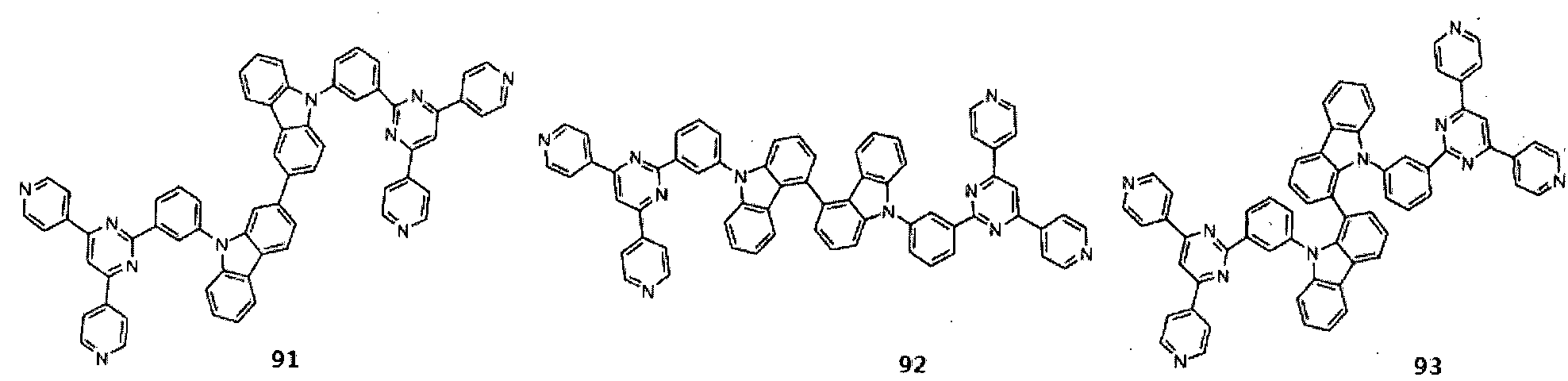
【청구항 12】
서로 마주하는 애노드와 캐소드, 그리고
상기 애노드와 상기 캐소드 사이에 위치하는 유기층
을 포함하고,
상기 유기층은
적어도 1종의 호스트, 그리고
게 1항 내지 제 1 1항 중 어느 한 항에 따른 도펀트
를 포함하는 유기광전자소자.
【청구항 13】
제 12항에서,
상기 호스트는 상기 도편트보다 에너지 밴드갭이 큰 화합물에서 선택되는 유기광전자소자.
【청구항 14】
제 12항에서,
상기 도편트는 상기 호스트와 상기 도펀트의 총 함량에 대하여 0.01 내지 40중량0 /。로 포함되어 있는 유기광전자소자.
【청구항 15】
제 12항에 따른 유기광전자소자를 포함하는 표시 장치.
Priority Applications (1)
| Application Number | Priority Date | Filing Date | Title |
|---|---|---|---|
| US15/573,977 US12077699B2 (en) | 2015-05-15 | 2015-10-26 | Dopant for organic optoelectronic device, organic optoelectronic device, and display device |
Applications Claiming Priority (2)
| Application Number | Priority Date | Filing Date | Title |
|---|---|---|---|
| KR10-2015-0068121 | 2015-05-15 | ||
| KR1020150068121A KR101929860B1 (ko) | 2015-05-15 | 2015-05-15 | 유기광전자소자 및 표시장치 |
Publications (1)
| Publication Number | Publication Date |
|---|---|
| WO2016186269A1 true WO2016186269A1 (ko) | 2016-11-24 |
Family
ID=57320315
Family Applications (1)
| Application Number | Title | Priority Date | Filing Date |
|---|---|---|---|
| PCT/KR2015/011321 Ceased WO2016186269A1 (ko) | 2015-05-15 | 2015-10-26 | 유기광전자소자용 도펀트, 유기광전자소자 및 표시장치 |
Country Status (3)
| Country | Link |
|---|---|
| US (1) | US12077699B2 (ko) |
| KR (1) | KR101929860B1 (ko) |
| WO (1) | WO2016186269A1 (ko) |
Cited By (3)
| Publication number | Priority date | Publication date | Assignee | Title |
|---|---|---|---|---|
| US20190312210A1 (en) * | 2018-04-05 | 2019-10-10 | Samsung Display Co., Ltd. | Organic electroluminescence device and polycyclic compound for organic electroluminescence device |
| CN112707807A (zh) * | 2020-12-09 | 2021-04-27 | 苏州金蚕新材料科技有限公司 | 4,5-二氟邻苯二甲酸的制备方法 |
| CN115197120A (zh) * | 2021-04-02 | 2022-10-18 | 三星显示有限公司 | 杂环化合物、包含其的发光装置及包括该装置的电子设备 |
Families Citing this family (4)
| Publication number | Priority date | Publication date | Assignee | Title |
|---|---|---|---|---|
| WO2017159797A1 (ja) * | 2016-03-18 | 2017-09-21 | シャープ株式会社 | El素子及びel素子の製造方法 |
| US11205756B2 (en) | 2018-12-05 | 2021-12-21 | Wuhan China Star Optoelectronics Semiconductor Display Technology Co., Ltd. | Green light thermally activated delayed fluorescence (TADF) material and application thereof |
| CN109369616A (zh) * | 2018-12-05 | 2019-02-22 | 武汉华星光电半导体显示技术有限公司 | 绿光热活化延迟荧光材料及其合成方法、电致发光器件 |
| KR102671951B1 (ko) * | 2019-06-14 | 2024-06-03 | 고쿠리쓰다이가쿠호진 규슈다이가쿠 | 이소프탈로니트릴 화합물, 발광 재료 및 그것을 사용한 발광 소자 |
Citations (4)
| Publication number | Priority date | Publication date | Assignee | Title |
|---|---|---|---|---|
| WO2012023947A1 (en) * | 2010-08-20 | 2012-02-23 | Universal Display Corporation | Bicarbazole compounds for oleds |
| WO2012108881A1 (en) * | 2011-02-11 | 2012-08-16 | Universal Display Corporation | Organic light emitting device and materials for use in same |
| JP2013035752A (ja) * | 2011-08-03 | 2013-02-21 | Idemitsu Kosan Co Ltd | ビスカルバゾール誘導体およびこれを用いた有機エレクトロルミネッセンス素子 |
| CN103664909A (zh) * | 2013-12-10 | 2014-03-26 | 京东方科技集团股份有限公司 | 联咔唑类衍生物及制备方法、应用和有机发光器件 |
Family Cites Families (25)
| Publication number | Priority date | Publication date | Assignee | Title |
|---|---|---|---|---|
| JP4707082B2 (ja) * | 2002-11-26 | 2011-06-22 | コニカミノルタホールディングス株式会社 | 有機エレクトロルミネッセンス素子および表示装置 |
| JP5396997B2 (ja) | 2009-05-07 | 2014-01-22 | コニカミノルタ株式会社 | 含窒素縮合複素環化合物の製造方法 |
| JP5620125B2 (ja) | 2010-01-28 | 2014-11-05 | ユー・ディー・シー アイルランド リミテッド | 有機電界発光素子 |
| JP5590897B2 (ja) | 2010-01-28 | 2014-09-17 | ユー・ディー・シー アイルランド リミテッド | 有機電界発光素子 |
| WO2011132683A1 (ja) * | 2010-04-20 | 2011-10-27 | 出光興産株式会社 | ビスカルバゾール誘導体、有機エレクトロルミネッセンス素子用材料及びそれを用いた有機エレクトロルミネッセンス素子 |
| JP5719125B2 (ja) | 2010-06-10 | 2015-05-13 | ユー・ディー・シー アイルランド リミテッド | 特定構造のカルバゾール系化合物、並びにそれを用いた電荷輸送材料及び有機電界発光素子 |
| JP5951939B2 (ja) | 2010-06-30 | 2016-07-13 | ユー・ディー・シー アイルランド リミテッド | 発光素子用材料、発光素子、表示装置、照明装置、及び発光素子の製造方法。 |
| KR20120031684A (ko) * | 2010-09-27 | 2012-04-04 | 롬엔드하스전자재료코리아유한회사 | 신규한 유기 발광 화합물 및 이를 채용하고 있는 유기 전계 발광 소자 |
| EP2674429B1 (en) | 2011-02-07 | 2020-12-23 | Idemitsu Kosan Co., Ltd. | Biscarbazole derivative and organic electroluminescent element using same |
| WO2012173073A1 (ja) * | 2011-06-15 | 2012-12-20 | 東レ株式会社 | 発光素子材料および発光素子 |
| KR101912951B1 (ko) * | 2011-12-28 | 2018-10-30 | 주식회사 두산 | 유기발광 화합물 및 이를 이용한 유기 전계 발광 소자 |
| JP2014135466A (ja) * | 2012-04-09 | 2014-07-24 | Kyushu Univ | 有機発光素子ならびにそれに用いる発光材料および化合物 |
| US20150194622A1 (en) | 2012-06-14 | 2015-07-09 | Idemitsu Kosan Co., Ltd. | Biscarbazole derivative host materials and red emitter for oled emissive region |
| WO2014013936A1 (ja) | 2012-07-19 | 2014-01-23 | 新日鉄住金化学株式会社 | 有機電界発光素子 |
| CN104488105B (zh) | 2012-07-25 | 2017-03-22 | 东丽株式会社 | 发光元件材料和发光元件 |
| US9190623B2 (en) | 2012-11-20 | 2015-11-17 | Universal Display Corporation | Organic electroluminescent materials and devices |
| KR101571592B1 (ko) * | 2012-12-13 | 2015-11-25 | 주식회사 두산 | 유기 화합물 및 이를 포함하는 유기 전계 발광 소자 |
| EP2976329B1 (de) * | 2013-03-22 | 2018-06-27 | Merck Patent GmbH | Materialien für elektronische vorrichtungen |
| TWI645014B (zh) * | 2013-07-16 | 2018-12-21 | 國立大學法人九州大學 | 化合物、發光材料及有機發光元件 |
| KR102116496B1 (ko) * | 2013-08-26 | 2020-05-29 | 삼성디스플레이 주식회사 | 유기 발광 소자 |
| KR20150035317A (ko) | 2013-09-27 | 2015-04-06 | 삼성디스플레이 주식회사 | 유기 발광 소자 |
| KR20150037093A (ko) | 2013-09-30 | 2015-04-08 | 주식회사 엘지화학 | 카바졸 유도체 및 이를 포함하는 유기 발광 소자 |
| JP6088995B2 (ja) * | 2013-10-24 | 2017-03-01 | 出光興産株式会社 | 有機エレクトロルミネッセンス素子および電子機器 |
| KR102177213B1 (ko) * | 2014-01-20 | 2020-11-11 | 삼성디스플레이 주식회사 | 유기 발광 소자 |
| KR102255197B1 (ko) * | 2014-05-02 | 2021-05-25 | 삼성디스플레이 주식회사 | 유기 발광 소자 |
-
2015
- 2015-05-15 KR KR1020150068121A patent/KR101929860B1/ko active Active
- 2015-10-26 US US15/573,977 patent/US12077699B2/en active Active
- 2015-10-26 WO PCT/KR2015/011321 patent/WO2016186269A1/ko not_active Ceased
Patent Citations (4)
| Publication number | Priority date | Publication date | Assignee | Title |
|---|---|---|---|---|
| WO2012023947A1 (en) * | 2010-08-20 | 2012-02-23 | Universal Display Corporation | Bicarbazole compounds for oleds |
| WO2012108881A1 (en) * | 2011-02-11 | 2012-08-16 | Universal Display Corporation | Organic light emitting device and materials for use in same |
| JP2013035752A (ja) * | 2011-08-03 | 2013-02-21 | Idemitsu Kosan Co Ltd | ビスカルバゾール誘導体およびこれを用いた有機エレクトロルミネッセンス素子 |
| CN103664909A (zh) * | 2013-12-10 | 2014-03-26 | 京东方科技集团股份有限公司 | 联咔唑类衍生物及制备方法、应用和有机发光器件 |
Cited By (4)
| Publication number | Priority date | Publication date | Assignee | Title |
|---|---|---|---|---|
| US20190312210A1 (en) * | 2018-04-05 | 2019-10-10 | Samsung Display Co., Ltd. | Organic electroluminescence device and polycyclic compound for organic electroluminescence device |
| CN112707807A (zh) * | 2020-12-09 | 2021-04-27 | 苏州金蚕新材料科技有限公司 | 4,5-二氟邻苯二甲酸的制备方法 |
| CN112707807B (zh) * | 2020-12-09 | 2022-06-07 | 苏州当量生物医药有限公司 | 4,5-二氟邻苯二甲酸的制备方法 |
| CN115197120A (zh) * | 2021-04-02 | 2022-10-18 | 三星显示有限公司 | 杂环化合物、包含其的发光装置及包括该装置的电子设备 |
Also Published As
| Publication number | Publication date |
|---|---|
| KR101929860B1 (ko) | 2018-12-17 |
| KR20160134291A (ko) | 2016-11-23 |
| US12077699B2 (en) | 2024-09-03 |
| US20180291264A1 (en) | 2018-10-11 |
Similar Documents
| Publication | Publication Date | Title |
|---|---|---|
| KR102886704B1 (ko) | 유기 광전자 소자용 조성물, 유기 광전자 소자 및 표시 장치 | |
| US10131632B2 (en) | Dopant for organic optoelectronic device, organic optoelectronic device and display device | |
| CN111149231B (zh) | 用于有机光电二极管的化合物、有机光电二极管和显示装置 | |
| CN112661714B (zh) | 一种杂环化合物和包含该杂环化合物的有机电致发光器件 | |
| KR101929860B1 (ko) | 유기광전자소자 및 표시장치 | |
| WO2017043757A1 (ko) | 유기 화합물, 유기 광전자 소자 및 표시 장치 | |
| CN103608429A (zh) | 新化合物及使用所述化合物的有机电子器件 | |
| WO2014104535A1 (ko) | 유기광전자소자용 화합물, 이를 포함하는 유기발광소자 및 상기 유기발광소자를 포함하는 표시장치 | |
| CN103333167A (zh) | 新的含氮杂环化合物及使用该化合物的有机电子器件 | |
| CN113527280B (zh) | 一种杂环类化合物及其有机电致发光器件 | |
| CN112239452B (zh) | 一种电子传输型杂蒽衍生物及其有机电致发光器件 | |
| CN112574210B (zh) | 用于有机光电装置的化合物、用于有机光电装置的组合物、有机光电装置及显示装置 | |
| CN113336771B (zh) | 一种稠环咔唑衍生物及其有机电致发光器件 | |
| CN116554218B (zh) | 一种三芳胺衍生物及其有机电致发光器件 | |
| KR20120061056A (ko) | 신규한 질소 함유 헤테로환 화합물 및 이를 이용한 유기 전자 소자 | |
| KR20170022438A (ko) | 유기 광전자 소자용 화합물, 유기 광전자 소자 및 표시 장치 | |
| CN114805318B (zh) | 一种以三嗪衍生物为核心的有机化合物及其应用 | |
| KR102339410B1 (ko) | 4,6-디페닐 설폰 디벤조퓨란의 양극성 물질을 함유하는 소자 | |
| KR102350371B1 (ko) | 4,6-디페닐 설폰 디벤조퓨란계 양극성 호스트 물질 및 응용 | |
| WO2015174639A1 (ko) | 유기 화합물, 유기 광전자 소자 및 표시 장치 | |
| CN117088859A (zh) | 一种三芳胺衍生物及其有机电致发光器件 | |
| CN116903600A (zh) | 一种稠环化合物及其有机电致发光器件 | |
| KR20170129468A (ko) | 유기 화합물, 조성물, 유기 광전자 소자 및 표시 장치 | |
| CN113889585B (zh) | 用于有机光电器件的组合物、有机光电器件及显示器件 | |
| CN117924268A (zh) | 一种杂环化合物及其有机电致发光器件 |
Legal Events
| Date | Code | Title | Description |
|---|---|---|---|
| 121 | Ep: the epo has been informed by wipo that ep was designated in this application |
Ref document number: 15892680 Country of ref document: EP Kind code of ref document: A1 |
|
| WWE | Wipo information: entry into national phase |
Ref document number: 15573977 Country of ref document: US |
|
| NENP | Non-entry into the national phase |
Ref country code: DE |
|
| 122 | Ep: pct application non-entry in european phase |
Ref document number: 15892680 Country of ref document: EP Kind code of ref document: A1 |