WO2016175465A1 - 웨어러블 밴드 - Google Patents
웨어러블 밴드 Download PDFInfo
- Publication number
- WO2016175465A1 WO2016175465A1 PCT/KR2016/003272 KR2016003272W WO2016175465A1 WO 2016175465 A1 WO2016175465 A1 WO 2016175465A1 KR 2016003272 W KR2016003272 W KR 2016003272W WO 2016175465 A1 WO2016175465 A1 WO 2016175465A1
- Authority
- WO
- WIPO (PCT)
- Prior art keywords
- tissue
- wearable band
- picket
- rib
- band
- Prior art date
- Legal status (The legal status is an assumption and is not a legal conclusion. Google has not performed a legal analysis and makes no representation as to the accuracy of the status listed.)
- Ceased
Links
Images
Classifications
-
- A—HUMAN NECESSITIES
- A44—HABERDASHERY; JEWELLERY
- A44C—PERSONAL ADORNMENTS, e.g. JEWELLERY; COINS
- A44C5/00—Bracelets; Wrist-watch straps; Fastenings for bracelets or wrist-watch straps
Definitions
- the present invention relates to a wearable band, and relates to a wearable band having excellent elasticity and excellent fit.
- An object of the present invention is to solve the problems of the prior art, to provide a wearable band excellent in elasticity and comfortable to wear.
- the wearable band of the present invention includes a knitted tissue divided into a piqued tissue region and a rib tissue region.
- the rib tissue region may be connected to both ends of the picket tissue.
- the rib tissue region may have greater elasticity than the piqué tissue region.
- a sensing module may be seated in the pickled region.
- a sensing module may be seated in the picket tissue region.
- a stitch may be formed on the edge of the sensing module.
- the wearable band including the pickle tissue region and the rib tissue region, the elastic pressure per unit area of the band body may be in the range of 2.5 to 5kg / cm 2 .
- the picket structure and the rib structure may include polyester fibers and polyurethane elastic yarn.
- the polyurethane elastic yarn may be a bicomponent composite yarn.
- the bicomponent conjugate yarn may be formed by mixing and spinning two fibers having different heat shrinkage properties.
- the polyurethane elastic yarn may be in the range of 35 to 60 parts by weight relative to 100 parts by weight of the polyester fiber.
- the polyester fiber and the polyurethane elastic yarn may further include a polyester sewing thread.
- the polyester sewing thread may be in the range of 2 to 5 parts by weight based on 100 parts by weight of the polyester fiber.
- the present invention derived to solve the problems of the prior art as described above, can form a wearable band with a knitted fabric tissue can have excellent elasticity and comfortable fit.
- the knitted fabric tissue is divided into pickle tissue and rib tissue to control the elasticity of the wearable band according to the use, and enables the uniform and accurate sensing of pressure, temperature, etc. when the sensor is applied.
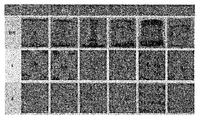
- FIG. 1 is a photograph showing a front surface of a wearable band and a knitted tissue thereof of the present invention.
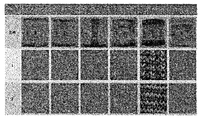
- Figure 2 is a picture showing the back of the wearable band and the tissue tissue thereof of the present invention.
- the wearable band has a cavity implemented inside the band body, and forms a structure in which one side and the other side facing each other communicate with each other.
- the elasticity of the pickle tissue region and the rib tissue region can be implemented in a different structure.
- the wearable band according to the invention arranges the picket tissue area (2) having a stretch in one area, the picket structure It is possible to implement the rib tissue region (1) having a higher elasticity than the elasticity of the picket tissue region to implement the annular band structure in the structure extending with the region (2).
- the elasticity of the wearable band including the pickle tissue region and the rib tissue region, the elastic pressure per unit area of the band body can satisfy the range of 2.5 to 5kg / cm 2 .
- the sensing module can be mounted on the singing picket tissue region (2).
- the wearable band of the present invention is made of knitted tissue of fibers.
- the fibers can be artificial fibers and can be made into mechanical knits.
- such a knitted fabric can be divided into piqué tissue and rib tissue.
- the piqué In the piqué tissue, the piqué is derived from a word meaning embroidered in French. It is a kind of double weave, a honeycomb tissue with a small net in the transverse direction, or a small rhombus pattern. Have It is mainly used in summer and sports T-shirts because of its excellent breathability, scratch resistance, washability and deformation resistance.
- the description of the picket tissue should not be construed as limiting the scope of the present invention, but includes all that are recognized and commonly used by those skilled in the art regardless of the term.
- the picket tissue may have a shape indicated by "2" in the picture of FIGS. 1 and 2.
- the picket tissue may be formed separately from the rib tissue, and may include a sensing module in the picket tissue region. Since the picket tissue includes a sensing module, it should be less elastic than the rib tissue. That is, in order to uniformly sense the pressure or temperature of the wrist part, the variation of the area supporting the wrist should be small.
- Lockstitch refers to those commonly used in the art, such as embroidery and machine needlework. Such stitches can be applied to form logos, such as trademarks, in the picket tissue region as well as in the border region of the picket tissue. logos, such as trademarks, can control the stretch within the area of the pickle tissue without compromising the aesthetics.
- the rib tissue may have a shape indicated by "1" in the photographs of FIGS. 1 and 2.
- Such rib tissue may be formed separately from the piqué tissue.
- the rib tissue may be enveloping the wrist periphery other than the piqué tissue formed on the wrist. Rib tissue may be more elastic than picket tissue.
- Ribbed tissue is also called rubber hem, and it is divided into 1 ⁇ 1, 2 ⁇ 1, 2 ⁇ 2, etc. according to the arrangement of needles. It has excellent elasticity and is mainly used for waist, sleeve and elastic T-shirt.
- the elasticity can be controlled by adjusting the density in the tissue of the piqué tissue or rib tissue. Depending on the application and the sensing range, this flexibility can be controlled.
- the tissue of the picket tissue and / or rib tissue can be adjusted to have a pressure of 2.5 to 5kg / cm 2 .
- a pressure of 2.5 to 5kg / cm 2 As a result of testing the wearable band of the present invention with a wrist band, it was confirmed that at least 2.5 kg / cm 2 of pressure should be transmitted to the wrist to measure uniform body temperature. In addition, when the pressure exceeds 5kg / cm 2 it was confirmed that the feeling of pressure on the wrist is severely felt.
- the description of the rib structure should not be construed as limiting the scope of the present invention, but includes all that is recognized and commonly used by those skilled in the art regardless of the term.
- the elasticity can be controlled by controlling the yarn mixing rate of the picket tissue or rib tissue.
- Yarns used in the picket tissue and / or rib tissue may be polyester fibers.
- the average molecular weight of the polyether portion is preferably 500 to 5,000, more preferably 1,000 to 3,000. If the molecular weight is less than 500, it is difficult to exhibit a sufficient elastic recovery rate. If the molecular weight exceeds 5,000, the compatibility with the hard segment is poor and the soft segment itself crystallizes, which is not good.
- Polyester fibers can be made from synthetic polymers containing at least 85% of esters of dihydric alcohols and terephthalic acid. Polyester fibers can be made from linear polymer, polyethylene terephthalate (poly).
- PET fibers may be subjected to a melt spinning process in which PET, which is generally thermoplastic polymer, is extruded through spinnerets at a temperature above the melting point, cooled, and then wound.
- the unstretched yarn thus melt-spun is manufactured as a final yarn through an stretching process for expressing the culture and crystallization in the fiber structure in order to give strength to have as the final fiber.
- the molecular orientation is done in the spinning process because the winding speed is large, it is possible to manufacture a yarn having the desired physical properties only by the spinning process without the need for a separate stretching process.
- PET has a glass transition temperature (Tg) of about 80 ° C, a cold crystallization temperature (Tcc) of about 125 ° C, and a melting point (Tm) of about 260 ° C and excellent thermal stability. PET is also sticky at 205 ° C, so the ironing temperature is preferably around 135 ° C, which is much lower than this.
- PET can be heat treated under tension during the stretching process to maximize thermal shrinkage to increase the degree of crystallinity and to sufficiently relax the amorphous region to improve the shape stability.
- PET fabrics and knitted fabrics are preheated using a tenter prior to the wet process to minimize the occurrence of deformation or wrinkles due to mechanical forces and heat during wet processes such as refining, bleaching, dyeing and processing.
- the final heat treatment (final set) can be performed.
- PET fibers do not have an acidic or basic hydrophilic ionic structure and are dense in structure, they can be dyed mainly with nonionic dispersion dyes and a few azo and bat dyes.
- a method of dyeing PET fibers with a disperse dye there are carrier dyeing, high temperature and high pressure dyeing, and thermosol dyeing.
- Carrier dyeing method is a method of dyeing at 80 ⁇ 100 °C by using an organic compound having small solubility in water and high solubility in disperse dyes as plasticizer while plasticizing PET fibers.
- thermosol dyeing method is a method of dyeing and spreading dye inside the fiber by padding and drying the PET fiber in a disperse dye solution and then heat-processing it for several tens of seconds or several minutes at a high temperature of 180-220 ° C. Way.
- polyester fibers such as polybuthylene terephthalate (PBT), polytrimethylene terephalate (PTT), polydihydroxymethylcyclohexyl terephthalate (Kodel Type) It should not be construed as.
- PBT polybuthylene terephthalate
- PTT polytrimethylene terephalate
- Kodel Type polydihydroxymethylcyclohexyl terephthalate
- the picket structure or the rib structure may be used by mixing polyurethane elastic yarn.
- Polyurethane elastic yarn may be formed as a latent crimp yarn or the like to impart a crimp by mixing the two fibers of different heat shrinkability by a two-component composite spinning method.
- Polyurethane elastic yarn is preferably in the range of 35 to 60 parts by weight relative to 100 parts by weight of polyester fiber. If it is less than 35 parts by weight, the elasticity is inferior, and when it exceeds 60 parts by weight, there is a problem that the uniformity of the sensing is inferior.
- the present invention may further include a polyester sewing thread.
- Polyester sewing thread is advantageous in terms of cost than polyamide fiber (nylon 66, nylon 46) sewing thread and aramid (p-aramid) sewing yarn, and has the advantage of excellent yarn rigidity and heat resistance.
- Polyester sewing thread can be used to finish the wearable band.
- the sewing thread treatment improves the durability of the wearable band and enables various pressure adjustments in terms of elasticity control.
- Polyester sewing thread may be used in the range of 2 to 5 parts by weight relative to 100 parts by weight of polyester fiber.
- the width and length of the wearable band of the present invention can be adjusted using a general circular knitting machine and a seamless band knitting machine.
- the elasticity can be controlled by changing the types of the general circular knitting machine and the seamless flat knitting machine.
- the wearable band that can be formed as described above may be used for smart bands for the purpose of sensing temperature and pressure, as well as electronic products to which electronic functions such as smart watches are given.
- the usage is not limited thereto, and may be applied to various smart wearable devices.
Landscapes
- Knitting Of Fabric (AREA)
- Woven Fabrics (AREA)
Abstract
본 발명은 피부와의 밀착력을 향상시키고 우수한 신축성 및 편안한 착용감을 가지는 웨어러블 밴드로, 편성물 조직으로 피케조직 영역 및 리브조직 영역이 구분되어 형성되는 것을 특징으로 한다.
Description
본 발명은 웨어러블 밴드에 대한 것으로, 신축성이 우수하고 착용감이 우수한 웨어러블 밴드와 관련된 것이다.
최근들어 스마트워치, 스마트밴드스마트안경 등 웨어러블 디바이스에 대한 관심이 높아지고 있다. 특히, 스마트폰과 상용하기 위한 스마트 워치가 많은 주목을 받고 실정이다.
기존 상용화된 '스마트워치' 또는 '스마트밴드' 등에 적용되는 밴드는 대부분 고분자 재질로 되어 있다. 이러한 고분자 재질의 밴드는 외부의 충격에 의해 쉽게 긁힘 자국등이 남게되는 문제가 있으며, 신축성이 없어 온도나 압력등의 센싱 모듈의 적용시 균일한 센싱을 어렵게 만드는 문제가 있다. 또한, 착용 또는 탈착시 체결 도구를 필요로 하여, 사용상의 불편함을 야기한다.
본 발명의 목적은 상기의 종래기술의 문제점을 해결하는 것으로, 신축성이 우수하고 착용감이 편안한 웨어러블 밴드를 제공하는데 있다.
다만, 본 발명이 해결하고자 하는 기술적 과제는 이상에서 언급한 기술적 과제로 제한되지 않으며, 언급되지 않은 또 다른 기술적 과제들은 아래의 기재로부터 본 발명이 속하는 기술분야에서 통상의 지식을 가진 자에게 명확하게 이해될 수 있을 것이다.
상기 목적 달성을 위해 본 발명의 웨어러블 밴드는 피케조직 영역 및 리브조직 영역으로 구분되는 편성물 조직을 포함한다.
일 실시예로, 상기 리브조직 영역은 상기 피케조직 양측 말단에 연결되어 형성될 수 있다.
다른 일 실시예로, 상기 리브조직 영역은 상기 피케조직 영역보다 신축성이 클 수 있다.
또 다른 일 실시예로, 상기 피케조식 영역에 센싱 모듈 안착 될 수 있다.
또 다른 일 실시예로, 상기 피케조직 영역 내에는 센싱 모듈이 안착되어 형성될 수 있다.
또 다른 일 실시예로, 상기 센싱 모듈 테두리에 박음질이 형성될 수 있다.
또 다른 일 실시예로, 상기 피케조직영역 및 상기 리브조직영역을 포함하는 웨어러블밴드는, 상기 밴드몸체의 단위면적당 신축압력이 2.5 내지 5kg/cm2 범위일 수 있다.
또 다른 일 실시예로, 상기 피케조직 및 상기 리브조직은 폴리에스터 섬유 및 폴리우레탄 탄성사를 포함할 수 있다.
또 다른 일 실시예로, 상기 폴리우레탄 탄성사는 이성분 복합사일 수 있다.
또 다른 일 실시예로, 상기 이성분 복합사는 열수축성이 다른 두 섬유를 혼합방사하여 형성될 수 있다.
또 다른 일 실시예로, 상기 폴리우레탄 탄성사는 상기 폴리에스터 섬유 100중량부 대비 35 내지 60중량부의 범위일 수 있다.
또 다른 일 실시예로, 상기 폴리에스터 섬유 및 상기 폴리우레탄 탄성사에 폴리에스터 봉재사를 더 포함할 수 있다.
또 다른 일 실시예로, 상기 폴리에스터 봉재사는 상기 폴리에스터 섬유 100중량부 대비 2 내지 5중량부의 범위일 수 있다.
상기와 같이 종래 기술의 문제점을 해결하기 위해 도출된 본 발명은, 편성물 섬유조직으로 웨어러블 밴드를 형성하여 우수한 신축성 및 편안한 착용감을 가질 수 있다.
또한, 편성물 섬유조직은 피케조직과 리브조직으로 구분 형성되어 용도에 따라 웨어러블 밴드의 신축성을 제어할 수 있으며, 압력, 온도 등을 센서의 적용시 균일하고 정확한 센싱을 가능하게 한다.
도 1은 본 발명의 웨어러블 밴드 및 이의 편성물 조직 앞면을 나타낸 사진이다.
도 2는 본 발명의 웨어러블 밴드 및 이의 편성물 조직 뒷면을 나타낸 사진이다.
본 발명은 다양한 변환을 가할 수 있고 여러 가지 실시예를 가질 수 있는 바, 특정 실시예들을 도면에 예시하고 상세한 설명에 상세하게 설명하고자 한다. 그러나, 이는 본 발명을 특정한 실시 형태에 대해 한정하려는 것이 아니며, 본 발명의 사상 및 기술 범위에 포함되는 모든 변환, 균등물 내지 대체물을 포함하는 것으로 이해되어야 한다. 본 발명을 설명함에 있어서 관련된 공지 기술에 대한 구체적인 설명이 본 발명의 요지를 흐릴 수 있다고 판단되는 경우 그 상세한 설명을 생략한다.
본 출원에서 사용한 용어는 단지 특정한 실시예를 설명하기 위해 사용된 것으로, 본 발명을 한정하려는 의도가 아니다. 단수의 표현은 문맥상 명백하게 다르게 뜻하지 않는 한, 복수의 표현을 포함한다. 본 출원에서, "특징으로 한다", "포함하다" 또는 "가지다" 등의 용어는 명세서상에 기재된 특징, 숫자, 단계, 동작, 구성요소, 부품 또는 이들을 조합한 것이 존재함을 지정하려는 것이지, 하나 또는 그 이상의 다른 특징들이나 숫자, 단계, 동작, 구성요소, 부품 또는 이들을 조합한 것들의 존재 또는 부가 가능성을 미리 배제하지 않는 것으로 이해되어야 한다.
이하, 첨부된 도면을 참조하여 본 발명의 바람직한 실시예들을 상세하게 설명하면 다음과 같다. 다만, 본 발명을 설명함에 있어서, 이미 공지된 기능 혹은 구성에 대한 설명은, 본 발명의 요지를 명료하게 하기 위하여 생략하기로 한다.
도 1은 본 발명의 실시예에 다른 웨어러블밴드의 구현예시도로, 구체적으로 상기 웨어러블밴드는 상기 밴드몸체의 내부에 공동부가 구현되며, 일측과 상기 일측에 대향하는 타측이 연통되는 구조를 이루며, 단면이 환형인 밴드몸체와 상기 밴드몸체의 일영역에 배치되는 편성물조직으로 구현되는 피케조직영역(1)과 상기 피케조직영역과 연결되며, 환형의 밴드몸체를 구현하는 편성물조직으로 구현되는 리브조직영역(2)을 포함하여 구성된다. 특히, 본 발명의 실시예에서는, 상기 피케조직영역과 상기 리브조직영역의 신축도가 상이한 구조로 구현될 수 있도록 한다.
특히, 도 1의 도시된 비교 표에 제시된 A~E의 구현 실시예의 이미지를 살펴보면, 본 발명에 따른 웨어러블밴드는, 일영역에 신축도가 있는 피케조직영역(2)을 배치하고, 상기 피케조직영역(2)과 연장되는 구조로 환형의 밴드 구조를 구현하는 상대적으로 피케조직영역의 신축도보다는 높은 탄성도를 가지는 리브조직영역(1)을 구현할 수 있도록 한다.
이 경우, 상기 피케조직영역 및 상기 리브조직영역을 포함하는 웨어러블밴드의 신축도는, 상기 밴드몸체의 단위면적당 신축압력이 2.5 내지 5kg/cm2 범위를 충족할 수 있도록 한다. 나아가, 싱기 피케조직영역(2) 부분에는 센싱 모듈이 안착될 수 있도록 할 수 있다.
본 발명의 웨어러블 밴드는 섬유의 편성물 조직으로 제조된다. 섬유는 인조섬유일 수 있으며, 기계적인 편성물로 제조될 수 있다. 본 발명에서는 이러한 편성물을 피케조직 및 리브조직으로 구분 형성할 수 있다.
피케조직에서, 피케는 프랑스어로 수를 놓는다는 뜻을 가진 말에서 유래된 것으로, 이중직의 일종이며 가로방향으로 표면이 아주 작은 그물모양이나,마름모 모양의 작은 무늬가 반복적으로 되는 벌집형태의 조직을 가진다. 통기성, 흠습성, 세탁성 및 변형저항성이 우수하여 여름 및 스포츠용 티셔츠 등에 주로 사용된다. 본 피케조직의 설명은 본 발명의 권리범위를 제한하는 것으로 해석되어서는 아니되고, 용어를 불문하고 당업자에게 피케조직으로 인식하고 통용되는 것을 모두 포함한다.
본 발명에서 피케조직은 도 1 및 도 2의 사진에서 "2"로 표시된 모양일 수 있다. 이러한 피케조직은 리브조직과 구분되어 형성될 수 있으며, 피케조직 영역내에 센싱 모듈을 포함할 수 있다. 피케조직은 센싱모듈 등을 포함하기 때문에 리브조직보다는 신축성이 적어야 한다. 즉, 손목 부분의 압력이나 온도등을 균일하게 센싱하기 위해서는 이를 지지 하는 영역의 변동이 적어야 한다.
또한, 피케조직 영역에서의 변형률을 줄이기 위해서, 센싱 모듈 테두리에 박음질을 형성될 수 있다. 박음질이란, 자수, 기계 바늘질 등의 당업계에서 통용되는 것을 말한다. 이러한 박음질은 피케조직의 테두리 영역 뿐만 아니라, 피케조직 영역내에 상표등의 로고를 형성하는데 적용될 수 있다. 상표 등의 로고로 인해 미관을 해치지 않으면서, 피케조직 영역내의 신축성을 제어할 수 있다.
본 발명에서 리브조직은 도 1 및 도 2의 사진에서 "1"로 표시된 모양일 수 있다. 이러한 리브조직은 피케조직과 구분되어 형성될 수 있다. 리브조직은 손목 상단에 형성되는 피케 조직 이외의 손목 주변부를 감싸는 영영일 수 있다. 리브조직은 피케조직보다 신축성이 클 수 있다.
리브조직이란 고무단이라고도 부르며, 양면으로 편성되는 조직으로 바늘배열에 따라 1×1, 2×1, 2×2 등으로 나뉘며 신축성이 매우 우수하여 허리, 소매단 및 신축성 T셔츠 등에 주로 사용된다.
상기 피케조직 또는 리브조직의 조직내의 밀도를 조절하여 신축성을 제어할 수 있다. 용도 및 센싱 범위에 따라 이러한 신축성은 제어 될 수 있다. 바람직하게는 피케조직 및/또는 리브조직의 조직은 2.5 내지 5kg/cm2 의 압력을 가질 수 있게 조절 될 수 있다. 본 발명의 웨어러블 밴드를 손목형 밴드로 테스트한 결과, 최소 2.5 kg/cm2 의 압력이 손목에 전달 되어야 균일한 체온 측정이 가능함을 확인 하였다. 또한, 5kg/cm2 의 압력을 초과할 경우에는 손목의 압박감이 심하게 느껴짐을 확인 하였다. 본 리브조직의 설명은 본 발명의 권리범위를 제한하는 것으로 해석되어서는 아니되고, 용어를 불문하고 당업자에게 리브조직으로 인식되고 통용되는 것을 모두 포함한다.
또한, 피케조직 또는 리브조직의 원사 혼용률을 제어하여 신축성을 제어할 있다. 피케조직 및/또는 리브조직에 사용되는 원사는 폴리에스터 섬유일 수 있다. 폴리에테르 부분의 평균분자량은 500 ~ 5,000, 더욱 바람직하게는 1,000 ~ 3,000인 것이 좋다. 분자량이 500미만이면 충분한 탄성회복율을 발휘하기 어렵고 5,000을 초과하면 경질 세그먼트와의 상용성이 나쁘며 연질 세그먼트 자체의 결정화가 생기기 때문에 좋지않다.
폴리에스터 섬유는 2가 알코올과 테레프탈산의 에스테르를 적어도 85% 함유하는 합성고분자로부터 제조될 수 있다. 폴리에스터 섬유는 선상고분자인 폴리에틸렌테레프탈레이트[poly(ethylene terephthalate), PET]로부터 만들어질 수 있다.
PET 섬유는 일반적으로 열가소성 고분자인 PET를 용융점 이상의 온도에서 방사구금을 통하여 압출하여 냉각화시킨 다음 권취하는 용융방사공정을 거칠 수 있다. 이렇게 용융방사된 미연신사는 최종 섬유로서 가져야 할 강도를 부여하기 위해 배양화와 결정화를 섬유구조에 발현시키는 연신공정을 거쳐 최종 원사로 제조된다. 또한 권취속도가 커서 분자배향이 방사공정에서 다 이루어지는 경우에는 별도의 연신공정이 필요 없이 방사공정만으로 원하는 물성을 갖는 원사를 제조할 수 있다.
PET는 유리전이온도(Tg)가 80℃ 전후, 냉결정화온도(Tcc)가 125℃ 전후, 용융점(Tm)이 260℃ 전후이며 열안정성이 우수하다. 또한 PET는 205℃에서 점착성이 생기므로 다림질 온도는 이보다 훨씬 낮은 135℃ 근처가 바람직하다.
PET사는 열수축을 최대한 억제하기 위해 연신공정 중에 장력하에서 열처리를 행하여 결정화도를 증가시키고 비결정영역을 충분히 완화시켜 형태안정성을 좋게 할 수 있다. PET 직물, 편물은 정련, 표백, 염색, 가공 등의 습식공정 중에 받는 기계적 힘과 열에 의한 변형이나 주름의 발생을 최대한 줄이기 위해 습식공정 전에 텐터 등을 이용하여 예비열고정(preset)을 행하며, 최종 공정이 끝난 후에도 최종 열처리(final set)를 할 수 있다.
PET 섬유는 산성이나 염기성을 띠는 친수성 이온구조를 갖지 않고 구조가 치밀하기 때문에 주로 이온성이 없는 분산염료와 소수의 아조염료와 배트염료에 의해서 염색될 수 있다. PET 섬유를 분산염료로 염색하는 방법으로는 캐리어(carrier) 염색법, 고온고압 염색법, 서모졸(thermosol) 염색법 등이 있다. 캐리어 염색법은 PET 섬유를 가소화하시키면서 물에 대한 용해도는 작고 분산염료에 대한 용해도가 큰 유기화합물을 분산염료의 캐리어로 사용하여 80~100℃에서 염색하는 방법이며, 고온고압 염색법은 고온고압 염색기를 이용하여 125~130℃에서 염색 하는 방법이고, 서모졸 염색법은 PET 섬유를 분산염료 용액에 패딩, 건조한 후 180~220℃의 고온으로 수십초 내지는 수분간 열처리하여 염료를 섬유 내부로 확산, 고착시키는 방법이다.
상기 폴리에스터 섬유의 PET 섬유의 예는 실시의 일예일뿐, PBT(polybuthylene terephthalate), PTT(polytrimethylene terephalate), 폴리디히드록시메틸사이클로 헥실 테레프탈레이트(Kodel Type) 등의 폴리에스터 섬유의 사용을 제한하는 것으로 해석 되어서는 아니된다.
본 발명에서 피케조직 또는 리브조직은 폴리우레탄 탄성사를 혼용하여 사용할 수 있다. 폴리우레탄 탄성사는 이성분 복합방사법에 의해 열수축성이 다른 두 섬유를 혼합방사하여 크림프(crimp)를 부여하는 잠재권축사 등으로 형성될 수 있다.
폴리에스터 섬유 및 폴리우레탄 탄성사의 혼용율 조절에 의해 신축성, 즉 손목용 밴드에서 전달되는 압력을 조절 할 수 있다. 폴리우레탄 탄성사는 폴리에스터 섬유 100중량부 대비 35 내지 60중량부의 범위가 바람직하다. 35중량부 미만일 경우에는 신축성이 떨어지며, 60중량부를 초과할 때에는 센싱의 균일성이 떨어지는 문제점이 있다.
본 발명은 폴리에스터 봉제사를 더 포함될 수 있다. 폴리에스터 봉제사는 폴리아미드 섬유(nylon 66, nylon 46) 봉제사 및 아라미드(p-aramid) 봉제사보다 원가적인 측면에서 유리하며, 원사의 강성 및 내열성이 우수한 장점을 가지고 있다.
폴리에스터 봉제사는 웨어러블 밴드의 마감처리를 위해서 사용될 수 있다. 이러한 봉제사 처리에 의해 웨어러블 밴드의 내구성이 향상되며, 신축성의 조절 측면에서도 다양한 압력조절을 가능하게 한다. 폴리에스터 봉제사는 폴리에스터 섬유 100중량부 대비 2 내지 5중량부의 범위로 사용될 수 있다.
본 발명의 웨어러블 밴드의 폭과 길이는 일반 환편기와 심리스(seamless) 아대편기를 사용하여 조절될 수 있다. 또한, 일반 환편기 및 심리스 아대편기의 종류를 변경하여 신축성을 제어할 수 있다.
상기와 같이 형성될 수 있는 웨어러블 밴드는 스마트워치등의 전자적 기능이 부여된 전자제품뿐만 아니라, 온도, 압력 등의 센싱을 목적으로 하는 스마트 밴드등에 사용될 수 있다. 사용 용도는 이에 한정하는 것은 아니고, 다양한 스마트 웨어러블 기기에 적용될 수 있다.
앞에서, 본 발명의 특정한 실시예가 설명되고 도시되었지만 본 발명은 기재된 실시예에 한정되는 것이 아니고, 본 발명의 사상 및 범위를 벗어나지 않고 다양하게 수정 및 변형할 수 있음은 이 기술의 분야에서 통상의 지식을 가진 자에게 자명한 일이다.
Claims (12)
- 피케조직 영역 및 리브조직 영역으로 구분되는 편성물 조직을 포함하는 것을 특징으로 하는 웨어러블밴드.
- 제 1항에 있어서,상기 리브조직 영역은 상기 피케조직 양측 말단에 연결되어 형성되는 것을 특징으로 하는 웨어러블밴드.
- 제 1항에 있어서,상기 리브조직 영역은 상기 피케조직 영역보다 신축성이 큰 것을 특징으로 하는 웨어러블밴드.
- 제 1항에 있어서,상기 피케조직 영역 내에는 센싱모듈이 안착되어 있는 것을 특징으로 하는 웨어러블밴드.
- 제 4항에 있어서,상기 센싱 모듈 테두리에 박음질이 형성되는 것을 특징으로 하는 웨어러블밴드.
- 제 1항에 있어서,상기 피케조직영역 및 상기 리브조직영역을 포함하는 웨어러블밴드는,상기 밴드몸체의 단위면적당 신축압력이 2.5 내지 5kg/cm2 범위인 것을 특징으로 하는 웨어러블밴드.
- 제 1항에 있어서,상기 피케조직 및 상기 리브조직은 폴리에스터 섬유 및 폴리우레탄 탄성사를 포함하는 것을 특징으로 하는 웨어러블밴드.
- 제 7항에 있어서,상기 폴리우레탄 탄성사는 이성분 복합사인 것을 특징으로 하는 웨어러블밴드.
- 제 8항에 있어서,상기 이성분 복합사는 열수축성이 다른 두 섬유를 혼합방사하여 형성되는 것을 특징으로 하는 웨어러블밴드.
- 제 7항에 있어서,상기 폴리우레탄 탄성사는 상기 폴리에스터 섬유 100중량부 대비 35 내지 60중량부의 범위인 것을 특징으로 하는 웨어러블밴드.
- 제 7항에 있어서,상기 폴리에스터 섬유 및 상기 폴리우레탄 탄성사에 폴리에스터 봉재사를 더 포함하는 것을 특징으로 하는 웨어러블밴드.
- 제 11항에 있어서,상기 폴리에스터 봉재사는 상기 폴리에스터 섬유 100중량부 대비 2 내지 5중량부의 범위인 것을 특징으로 하는 웨어러블밴드.
Applications Claiming Priority (2)
| Application Number | Priority Date | Filing Date | Title |
|---|---|---|---|
| KR10-2015-0058946 | 2015-04-27 | ||
| KR1020150058946A KR101612123B1 (ko) | 2015-04-27 | 2015-04-27 | 웨어러블 밴드 |
Publications (1)
| Publication Number | Publication Date |
|---|---|
| WO2016175465A1 true WO2016175465A1 (ko) | 2016-11-03 |
Family
ID=55801822
Family Applications (1)
| Application Number | Title | Priority Date | Filing Date |
|---|---|---|---|
| PCT/KR2016/003272 Ceased WO2016175465A1 (ko) | 2015-04-27 | 2016-03-30 | 웨어러블 밴드 |
Country Status (2)
| Country | Link |
|---|---|
| KR (1) | KR101612123B1 (ko) |
| WO (1) | WO2016175465A1 (ko) |
Citations (5)
| Publication number | Priority date | Publication date | Assignee | Title |
|---|---|---|---|---|
| JP2003154046A (ja) * | 2001-11-21 | 2003-05-27 | Sedaa Japan Kk | 水中用サポータ |
| KR20050025127A (ko) * | 2002-07-22 | 2005-03-11 | 데이진 화이바 가부시키가이샤 | 편평 멀티 필라멘트 사조 편물 |
| KR20060019869A (ko) * | 2004-08-30 | 2006-03-06 | 삼성전자주식회사 | 필름형 압박 센서를 통한 운동량 측정 장치 및 그 방법 |
| KR20090011479A (ko) * | 2007-07-26 | 2009-02-02 | 삼성전자주식회사 | 혈압측정장치 |
| JP2010099201A (ja) * | 2008-10-22 | 2010-05-06 | Keiso:Kk | 輪仕立伸縮性腕章 |
Family Cites Families (1)
| Publication number | Priority date | Publication date | Assignee | Title |
|---|---|---|---|---|
| US6529754B2 (en) | 1998-02-16 | 2003-03-04 | Seiko Epson Corporation | Biometric measuring device |
-
2015
- 2015-04-27 KR KR1020150058946A patent/KR101612123B1/ko active Active
-
2016
- 2016-03-30 WO PCT/KR2016/003272 patent/WO2016175465A1/ko not_active Ceased
Patent Citations (5)
| Publication number | Priority date | Publication date | Assignee | Title |
|---|---|---|---|---|
| JP2003154046A (ja) * | 2001-11-21 | 2003-05-27 | Sedaa Japan Kk | 水中用サポータ |
| KR20050025127A (ko) * | 2002-07-22 | 2005-03-11 | 데이진 화이바 가부시키가이샤 | 편평 멀티 필라멘트 사조 편물 |
| KR20060019869A (ko) * | 2004-08-30 | 2006-03-06 | 삼성전자주식회사 | 필름형 압박 센서를 통한 운동량 측정 장치 및 그 방법 |
| KR20090011479A (ko) * | 2007-07-26 | 2009-02-02 | 삼성전자주식회사 | 혈압측정장치 |
| JP2010099201A (ja) * | 2008-10-22 | 2010-05-06 | Keiso:Kk | 輪仕立伸縮性腕章 |
Also Published As
| Publication number | Publication date |
|---|---|
| KR101612123B1 (ko) | 2016-04-15 |
Similar Documents
| Publication | Publication Date | Title |
|---|---|---|
| US9222203B2 (en) | Items of clothing having shape memory | |
| WO2016159508A1 (ko) | 밴드부가 커버링사로 형성된 양말 | |
| WO2010140853A2 (ko) | 해도형 섬유와 인공피혁 및 그들의 제조방법 | |
| WO2021096008A1 (ko) | 복합 탄성사, 신축성 직물, 및 복합 탄성사의 제조방법 | |
| WO2017115928A1 (ko) | 웨어러블 밴드 | |
| JP2011132644A (ja) | 織編物 | |
| WO2018124524A1 (ko) | 원착 폴리에스테르 섬유로 이루어진 인공피혁 및 이의 제조방법 | |
| JP5462497B2 (ja) | 弾性経編地 | |
| WO2019240321A1 (ko) | 폴리에스테르-에테르 블록공중합체의 원사를 이용한 투명성이 강화된 원단 및 그 제조방법 | |
| WO2016175465A1 (ko) | 웨어러블 밴드 | |
| WO2016175463A1 (ko) | 손목형 밴드 | |
| CN113445188A (zh) | 一种活性可染氨纶针织面料 | |
| JP2002088577A (ja) | ポリアミド繊維およびその製造方法ならびにその用途 | |
| CN101255632A (zh) | 一种ptt与pet纤维的复合经编面料及其生产方法 | |
| JP2016000870A (ja) | 起毛編地 | |
| KR101550707B1 (ko) | 보풀 발생 및 형태 변형을 방지하는 니트의 제조 방법 및 이를 이용한 니트 의류 | |
| CN108823740B (zh) | 含ptt纤维的中高回弹舒适型面料及其制备方法 | |
| KR100825886B1 (ko) | 심지 및 직물제품과 이러한 심지를 직물제품에 장착하는방법 | |
| KR200224598Y1 (ko) | 탄성이 우수한 커트파일 경편직물 | |
| WO2013180346A1 (ko) | 보풀 방지용 니트웨어 및 편직 방법 | |
| CN216733345U (zh) | 一种针织染色布料 | |
| KR101115353B1 (ko) | 나일론 고신축성편지의 제조방법 | |
| CN110604362A (zh) | 一种智能衣的制作方法 | |
| WO2018026064A1 (ko) | 정형외과용 부목 | |
| JPH0874102A (ja) | ストッキング及びその製造方法 |
Legal Events
| Date | Code | Title | Description |
|---|---|---|---|
| 121 | Ep: the epo has been informed by wipo that ep was designated in this application |
Ref document number: 16786651 Country of ref document: EP Kind code of ref document: A1 |
|
| NENP | Non-entry into the national phase |
Ref country code: DE |
|
| 122 | Ep: pct application non-entry in european phase |
Ref document number: 16786651 Country of ref document: EP Kind code of ref document: A1 |