WO2016153059A1 - 電池用包装材料及び電池 - Google Patents
電池用包装材料及び電池 Download PDFInfo
- Publication number
- WO2016153059A1 WO2016153059A1 PCT/JP2016/059742 JP2016059742W WO2016153059A1 WO 2016153059 A1 WO2016153059 A1 WO 2016153059A1 JP 2016059742 W JP2016059742 W JP 2016059742W WO 2016153059 A1 WO2016153059 A1 WO 2016153059A1
- Authority
- WO
- WIPO (PCT)
- Prior art keywords
- layer
- packaging material
- base material
- battery packaging
- battery
- Prior art date
- Legal status (The legal status is an assumption and is not a legal conclusion. Google has not performed a legal analysis and makes no representation as to the accuracy of the status listed.)
- Ceased
Links
Images

Classifications
-
- B—PERFORMING OPERATIONS; TRANSPORTING
- B29—WORKING OF PLASTICS; WORKING OF SUBSTANCES IN A PLASTIC STATE IN GENERAL
- B29C—SHAPING OR JOINING OF PLASTICS; SHAPING OF MATERIAL IN A PLASTIC STATE, NOT OTHERWISE PROVIDED FOR; AFTER-TREATMENT OF THE SHAPED PRODUCTS, e.g. REPAIRING
- B29C55/00—Shaping by stretching, e.g. drawing through a die; Apparatus therefor
- B29C55/02—Shaping by stretching, e.g. drawing through a die; Apparatus therefor of plates or sheets
- B29C55/10—Shaping by stretching, e.g. drawing through a die; Apparatus therefor of plates or sheets multiaxial
- B29C55/12—Shaping by stretching, e.g. drawing through a die; Apparatus therefor of plates or sheets multiaxial biaxial
-
- B—PERFORMING OPERATIONS; TRANSPORTING
- B32—LAYERED PRODUCTS
- B32B—LAYERED PRODUCTS, i.e. PRODUCTS BUILT-UP OF STRATA OF FLAT OR NON-FLAT, e.g. CELLULAR OR HONEYCOMB, FORM
- B32B15/00—Layered products comprising a layer of metal
- B32B15/04—Layered products comprising a layer of metal comprising metal as the main or only constituent of a layer, which is next to another layer of the same or of a different material
- B32B15/06—Layered products comprising a layer of metal comprising metal as the main or only constituent of a layer, which is next to another layer of the same or of a different material of natural rubber or synthetic rubber
-
- B—PERFORMING OPERATIONS; TRANSPORTING
- B32—LAYERED PRODUCTS
- B32B—LAYERED PRODUCTS, i.e. PRODUCTS BUILT-UP OF STRATA OF FLAT OR NON-FLAT, e.g. CELLULAR OR HONEYCOMB, FORM
- B32B15/00—Layered products comprising a layer of metal
- B32B15/04—Layered products comprising a layer of metal comprising metal as the main or only constituent of a layer, which is next to another layer of the same or of a different material
- B32B15/08—Layered products comprising a layer of metal comprising metal as the main or only constituent of a layer, which is next to another layer of the same or of a different material of synthetic resin
-
- B—PERFORMING OPERATIONS; TRANSPORTING
- B32—LAYERED PRODUCTS
- B32B—LAYERED PRODUCTS, i.e. PRODUCTS BUILT-UP OF STRATA OF FLAT OR NON-FLAT, e.g. CELLULAR OR HONEYCOMB, FORM
- B32B15/00—Layered products comprising a layer of metal
- B32B15/04—Layered products comprising a layer of metal comprising metal as the main or only constituent of a layer, which is next to another layer of the same or of a different material
- B32B15/08—Layered products comprising a layer of metal comprising metal as the main or only constituent of a layer, which is next to another layer of the same or of a different material of synthetic resin
- B32B15/085—Layered products comprising a layer of metal comprising metal as the main or only constituent of a layer, which is next to another layer of the same or of a different material of synthetic resin comprising polyolefins
-
- B—PERFORMING OPERATIONS; TRANSPORTING
- B32—LAYERED PRODUCTS
- B32B—LAYERED PRODUCTS, i.e. PRODUCTS BUILT-UP OF STRATA OF FLAT OR NON-FLAT, e.g. CELLULAR OR HONEYCOMB, FORM
- B32B15/00—Layered products comprising a layer of metal
- B32B15/04—Layered products comprising a layer of metal comprising metal as the main or only constituent of a layer, which is next to another layer of the same or of a different material
- B32B15/08—Layered products comprising a layer of metal comprising metal as the main or only constituent of a layer, which is next to another layer of the same or of a different material of synthetic resin
- B32B15/088—Layered products comprising a layer of metal comprising metal as the main or only constituent of a layer, which is next to another layer of the same or of a different material of synthetic resin comprising polyamides
-
- B—PERFORMING OPERATIONS; TRANSPORTING
- B32—LAYERED PRODUCTS
- B32B—LAYERED PRODUCTS, i.e. PRODUCTS BUILT-UP OF STRATA OF FLAT OR NON-FLAT, e.g. CELLULAR OR HONEYCOMB, FORM
- B32B15/00—Layered products comprising a layer of metal
- B32B15/04—Layered products comprising a layer of metal comprising metal as the main or only constituent of a layer, which is next to another layer of the same or of a different material
- B32B15/08—Layered products comprising a layer of metal comprising metal as the main or only constituent of a layer, which is next to another layer of the same or of a different material of synthetic resin
- B32B15/09—Layered products comprising a layer of metal comprising metal as the main or only constituent of a layer, which is next to another layer of the same or of a different material of synthetic resin comprising polyesters
-
- B—PERFORMING OPERATIONS; TRANSPORTING
- B32—LAYERED PRODUCTS
- B32B—LAYERED PRODUCTS, i.e. PRODUCTS BUILT-UP OF STRATA OF FLAT OR NON-FLAT, e.g. CELLULAR OR HONEYCOMB, FORM
- B32B15/00—Layered products comprising a layer of metal
- B32B15/04—Layered products comprising a layer of metal comprising metal as the main or only constituent of a layer, which is next to another layer of the same or of a different material
- B32B15/08—Layered products comprising a layer of metal comprising metal as the main or only constituent of a layer, which is next to another layer of the same or of a different material of synthetic resin
- B32B15/092—Layered products comprising a layer of metal comprising metal as the main or only constituent of a layer, which is next to another layer of the same or of a different material of synthetic resin comprising epoxy resins
-
- B—PERFORMING OPERATIONS; TRANSPORTING
- B32—LAYERED PRODUCTS
- B32B—LAYERED PRODUCTS, i.e. PRODUCTS BUILT-UP OF STRATA OF FLAT OR NON-FLAT, e.g. CELLULAR OR HONEYCOMB, FORM
- B32B15/00—Layered products comprising a layer of metal
- B32B15/04—Layered products comprising a layer of metal comprising metal as the main or only constituent of a layer, which is next to another layer of the same or of a different material
- B32B15/08—Layered products comprising a layer of metal comprising metal as the main or only constituent of a layer, which is next to another layer of the same or of a different material of synthetic resin
- B32B15/095—Layered products comprising a layer of metal comprising metal as the main or only constituent of a layer, which is next to another layer of the same or of a different material of synthetic resin comprising polyurethanes
-
- B—PERFORMING OPERATIONS; TRANSPORTING
- B32—LAYERED PRODUCTS
- B32B—LAYERED PRODUCTS, i.e. PRODUCTS BUILT-UP OF STRATA OF FLAT OR NON-FLAT, e.g. CELLULAR OR HONEYCOMB, FORM
- B32B15/00—Layered products comprising a layer of metal
- B32B15/04—Layered products comprising a layer of metal comprising metal as the main or only constituent of a layer, which is next to another layer of the same or of a different material
- B32B15/08—Layered products comprising a layer of metal comprising metal as the main or only constituent of a layer, which is next to another layer of the same or of a different material of synthetic resin
- B32B15/098—Layered products comprising a layer of metal comprising metal as the main or only constituent of a layer, which is next to another layer of the same or of a different material of synthetic resin comprising condensation resins of aldehydes, e.g. with phenols, ureas or melamines
-
- B—PERFORMING OPERATIONS; TRANSPORTING
- B32—LAYERED PRODUCTS
- B32B—LAYERED PRODUCTS, i.e. PRODUCTS BUILT-UP OF STRATA OF FLAT OR NON-FLAT, e.g. CELLULAR OR HONEYCOMB, FORM
- B32B15/00—Layered products comprising a layer of metal
- B32B15/18—Layered products comprising a layer of metal comprising iron or steel
-
- B—PERFORMING OPERATIONS; TRANSPORTING
- B32—LAYERED PRODUCTS
- B32B—LAYERED PRODUCTS, i.e. PRODUCTS BUILT-UP OF STRATA OF FLAT OR NON-FLAT, e.g. CELLULAR OR HONEYCOMB, FORM
- B32B15/00—Layered products comprising a layer of metal
- B32B15/20—Layered products comprising a layer of metal comprising aluminium or copper
-
- B—PERFORMING OPERATIONS; TRANSPORTING
- B32—LAYERED PRODUCTS
- B32B—LAYERED PRODUCTS, i.e. PRODUCTS BUILT-UP OF STRATA OF FLAT OR NON-FLAT, e.g. CELLULAR OR HONEYCOMB, FORM
- B32B23/00—Layered products comprising a layer of cellulosic plastic substances, i.e. substances obtained by chemical modification of cellulose, e.g. cellulose ethers, cellulose esters, viscose
- B32B23/04—Layered products comprising a layer of cellulosic plastic substances, i.e. substances obtained by chemical modification of cellulose, e.g. cellulose ethers, cellulose esters, viscose comprising such cellulosic plastic substance as the main or only constituent of a layer, which is next to another layer of the same or of a different material
- B32B23/042—Layered products comprising a layer of cellulosic plastic substances, i.e. substances obtained by chemical modification of cellulose, e.g. cellulose ethers, cellulose esters, viscose comprising such cellulosic plastic substance as the main or only constituent of a layer, which is next to another layer of the same or of a different material of metal
-
- B—PERFORMING OPERATIONS; TRANSPORTING
- B32—LAYERED PRODUCTS
- B32B—LAYERED PRODUCTS, i.e. PRODUCTS BUILT-UP OF STRATA OF FLAT OR NON-FLAT, e.g. CELLULAR OR HONEYCOMB, FORM
- B32B23/00—Layered products comprising a layer of cellulosic plastic substances, i.e. substances obtained by chemical modification of cellulose, e.g. cellulose ethers, cellulose esters, viscose
- B32B23/04—Layered products comprising a layer of cellulosic plastic substances, i.e. substances obtained by chemical modification of cellulose, e.g. cellulose ethers, cellulose esters, viscose comprising such cellulosic plastic substance as the main or only constituent of a layer, which is next to another layer of the same or of a different material
- B32B23/046—Layered products comprising a layer of cellulosic plastic substances, i.e. substances obtained by chemical modification of cellulose, e.g. cellulose ethers, cellulose esters, viscose comprising such cellulosic plastic substance as the main or only constituent of a layer, which is next to another layer of the same or of a different material of natural rubber or synthetic rubber
-
- B—PERFORMING OPERATIONS; TRANSPORTING
- B32—LAYERED PRODUCTS
- B32B—LAYERED PRODUCTS, i.e. PRODUCTS BUILT-UP OF STRATA OF FLAT OR NON-FLAT, e.g. CELLULAR OR HONEYCOMB, FORM
- B32B23/00—Layered products comprising a layer of cellulosic plastic substances, i.e. substances obtained by chemical modification of cellulose, e.g. cellulose ethers, cellulose esters, viscose
- B32B23/04—Layered products comprising a layer of cellulosic plastic substances, i.e. substances obtained by chemical modification of cellulose, e.g. cellulose ethers, cellulose esters, viscose comprising such cellulosic plastic substance as the main or only constituent of a layer, which is next to another layer of the same or of a different material
- B32B23/08—Layered products comprising a layer of cellulosic plastic substances, i.e. substances obtained by chemical modification of cellulose, e.g. cellulose ethers, cellulose esters, viscose comprising such cellulosic plastic substance as the main or only constituent of a layer, which is next to another layer of the same or of a different material of synthetic resin
-
- B—PERFORMING OPERATIONS; TRANSPORTING
- B32—LAYERED PRODUCTS
- B32B—LAYERED PRODUCTS, i.e. PRODUCTS BUILT-UP OF STRATA OF FLAT OR NON-FLAT, e.g. CELLULAR OR HONEYCOMB, FORM
- B32B25/00—Layered products comprising a layer of natural or synthetic rubber
- B32B25/04—Layered products comprising a layer of natural or synthetic rubber comprising rubber as the main or only constituent of a layer, which is next to another layer of the same or of a different material
- B32B25/042—Layered products comprising a layer of natural or synthetic rubber comprising rubber as the main or only constituent of a layer, which is next to another layer of the same or of a different material of natural rubber or synthetic rubber
-
- B—PERFORMING OPERATIONS; TRANSPORTING
- B32—LAYERED PRODUCTS
- B32B—LAYERED PRODUCTS, i.e. PRODUCTS BUILT-UP OF STRATA OF FLAT OR NON-FLAT, e.g. CELLULAR OR HONEYCOMB, FORM
- B32B25/00—Layered products comprising a layer of natural or synthetic rubber
- B32B25/04—Layered products comprising a layer of natural or synthetic rubber comprising rubber as the main or only constituent of a layer, which is next to another layer of the same or of a different material
- B32B25/08—Layered products comprising a layer of natural or synthetic rubber comprising rubber as the main or only constituent of a layer, which is next to another layer of the same or of a different material of synthetic resin
-
- B—PERFORMING OPERATIONS; TRANSPORTING
- B32—LAYERED PRODUCTS
- B32B—LAYERED PRODUCTS, i.e. PRODUCTS BUILT-UP OF STRATA OF FLAT OR NON-FLAT, e.g. CELLULAR OR HONEYCOMB, FORM
- B32B25/00—Layered products comprising a layer of natural or synthetic rubber
- B32B25/14—Layered products comprising a layer of natural or synthetic rubber comprising synthetic rubber copolymers
-
- B—PERFORMING OPERATIONS; TRANSPORTING
- B32—LAYERED PRODUCTS
- B32B—LAYERED PRODUCTS, i.e. PRODUCTS BUILT-UP OF STRATA OF FLAT OR NON-FLAT, e.g. CELLULAR OR HONEYCOMB, FORM
- B32B25/00—Layered products comprising a layer of natural or synthetic rubber
- B32B25/16—Layered products comprising a layer of natural or synthetic rubber comprising polydienes homopolymers or poly-halodienes homopolymers
-
- B—PERFORMING OPERATIONS; TRANSPORTING
- B32—LAYERED PRODUCTS
- B32B—LAYERED PRODUCTS, i.e. PRODUCTS BUILT-UP OF STRATA OF FLAT OR NON-FLAT, e.g. CELLULAR OR HONEYCOMB, FORM
- B32B27/00—Layered products comprising a layer of synthetic resin
- B32B27/06—Layered products comprising a layer of synthetic resin as the main or only constituent of a layer, which is next to another layer of the same or of a different material
- B32B27/08—Layered products comprising a layer of synthetic resin as the main or only constituent of a layer, which is next to another layer of the same or of a different material of synthetic resin
-
- B—PERFORMING OPERATIONS; TRANSPORTING
- B32—LAYERED PRODUCTS
- B32B—LAYERED PRODUCTS, i.e. PRODUCTS BUILT-UP OF STRATA OF FLAT OR NON-FLAT, e.g. CELLULAR OR HONEYCOMB, FORM
- B32B27/00—Layered products comprising a layer of synthetic resin
- B32B27/28—Layered products comprising a layer of synthetic resin comprising synthetic resins not wholly covered by any one of the sub-groups B32B27/30 - B32B27/42
- B32B27/281—Layered products comprising a layer of synthetic resin comprising synthetic resins not wholly covered by any one of the sub-groups B32B27/30 - B32B27/42 comprising polyimides
-
- B—PERFORMING OPERATIONS; TRANSPORTING
- B32—LAYERED PRODUCTS
- B32B—LAYERED PRODUCTS, i.e. PRODUCTS BUILT-UP OF STRATA OF FLAT OR NON-FLAT, e.g. CELLULAR OR HONEYCOMB, FORM
- B32B27/00—Layered products comprising a layer of synthetic resin
- B32B27/28—Layered products comprising a layer of synthetic resin comprising synthetic resins not wholly covered by any one of the sub-groups B32B27/30 - B32B27/42
- B32B27/283—Layered products comprising a layer of synthetic resin comprising synthetic resins not wholly covered by any one of the sub-groups B32B27/30 - B32B27/42 comprising polysiloxanes
-
- B—PERFORMING OPERATIONS; TRANSPORTING
- B32—LAYERED PRODUCTS
- B32B—LAYERED PRODUCTS, i.e. PRODUCTS BUILT-UP OF STRATA OF FLAT OR NON-FLAT, e.g. CELLULAR OR HONEYCOMB, FORM
- B32B27/00—Layered products comprising a layer of synthetic resin
- B32B27/28—Layered products comprising a layer of synthetic resin comprising synthetic resins not wholly covered by any one of the sub-groups B32B27/30 - B32B27/42
- B32B27/285—Layered products comprising a layer of synthetic resin comprising synthetic resins not wholly covered by any one of the sub-groups B32B27/30 - B32B27/42 comprising polyethers
-
- B—PERFORMING OPERATIONS; TRANSPORTING
- B32—LAYERED PRODUCTS
- B32B—LAYERED PRODUCTS, i.e. PRODUCTS BUILT-UP OF STRATA OF FLAT OR NON-FLAT, e.g. CELLULAR OR HONEYCOMB, FORM
- B32B27/00—Layered products comprising a layer of synthetic resin
- B32B27/30—Layered products comprising a layer of synthetic resin comprising vinyl (co)polymers; comprising acrylic (co)polymers
- B32B27/306—Layered products comprising a layer of synthetic resin comprising vinyl (co)polymers; comprising acrylic (co)polymers comprising vinyl acetate or vinyl alcohol (co)polymers
-
- B—PERFORMING OPERATIONS; TRANSPORTING
- B32—LAYERED PRODUCTS
- B32B—LAYERED PRODUCTS, i.e. PRODUCTS BUILT-UP OF STRATA OF FLAT OR NON-FLAT, e.g. CELLULAR OR HONEYCOMB, FORM
- B32B27/00—Layered products comprising a layer of synthetic resin
- B32B27/32—Layered products comprising a layer of synthetic resin comprising polyolefins
-
- B—PERFORMING OPERATIONS; TRANSPORTING
- B32—LAYERED PRODUCTS
- B32B—LAYERED PRODUCTS, i.e. PRODUCTS BUILT-UP OF STRATA OF FLAT OR NON-FLAT, e.g. CELLULAR OR HONEYCOMB, FORM
- B32B27/00—Layered products comprising a layer of synthetic resin
- B32B27/32—Layered products comprising a layer of synthetic resin comprising polyolefins
- B32B27/322—Layered products comprising a layer of synthetic resin comprising polyolefins comprising halogenated polyolefins, e.g. PTFE
-
- B—PERFORMING OPERATIONS; TRANSPORTING
- B32—LAYERED PRODUCTS
- B32B—LAYERED PRODUCTS, i.e. PRODUCTS BUILT-UP OF STRATA OF FLAT OR NON-FLAT, e.g. CELLULAR OR HONEYCOMB, FORM
- B32B27/00—Layered products comprising a layer of synthetic resin
- B32B27/32—Layered products comprising a layer of synthetic resin comprising polyolefins
- B32B27/325—Layered products comprising a layer of synthetic resin comprising polyolefins comprising polycycloolefins
-
- B—PERFORMING OPERATIONS; TRANSPORTING
- B32—LAYERED PRODUCTS
- B32B—LAYERED PRODUCTS, i.e. PRODUCTS BUILT-UP OF STRATA OF FLAT OR NON-FLAT, e.g. CELLULAR OR HONEYCOMB, FORM
- B32B27/00—Layered products comprising a layer of synthetic resin
- B32B27/34—Layered products comprising a layer of synthetic resin comprising polyamides
-
- B—PERFORMING OPERATIONS; TRANSPORTING
- B32—LAYERED PRODUCTS
- B32B—LAYERED PRODUCTS, i.e. PRODUCTS BUILT-UP OF STRATA OF FLAT OR NON-FLAT, e.g. CELLULAR OR HONEYCOMB, FORM
- B32B27/00—Layered products comprising a layer of synthetic resin
- B32B27/36—Layered products comprising a layer of synthetic resin comprising polyesters
-
- B—PERFORMING OPERATIONS; TRANSPORTING
- B32—LAYERED PRODUCTS
- B32B—LAYERED PRODUCTS, i.e. PRODUCTS BUILT-UP OF STRATA OF FLAT OR NON-FLAT, e.g. CELLULAR OR HONEYCOMB, FORM
- B32B27/00—Layered products comprising a layer of synthetic resin
- B32B27/38—Layered products comprising a layer of synthetic resin comprising epoxy resins
-
- B—PERFORMING OPERATIONS; TRANSPORTING
- B32—LAYERED PRODUCTS
- B32B—LAYERED PRODUCTS, i.e. PRODUCTS BUILT-UP OF STRATA OF FLAT OR NON-FLAT, e.g. CELLULAR OR HONEYCOMB, FORM
- B32B27/00—Layered products comprising a layer of synthetic resin
- B32B27/40—Layered products comprising a layer of synthetic resin comprising polyurethanes
-
- B—PERFORMING OPERATIONS; TRANSPORTING
- B32—LAYERED PRODUCTS
- B32B—LAYERED PRODUCTS, i.e. PRODUCTS BUILT-UP OF STRATA OF FLAT OR NON-FLAT, e.g. CELLULAR OR HONEYCOMB, FORM
- B32B27/00—Layered products comprising a layer of synthetic resin
- B32B27/42—Layered products comprising a layer of synthetic resin comprising condensation resins of aldehydes, e.g. with phenols, ureas or melamines
-
- B—PERFORMING OPERATIONS; TRANSPORTING
- B32—LAYERED PRODUCTS
- B32B—LAYERED PRODUCTS, i.e. PRODUCTS BUILT-UP OF STRATA OF FLAT OR NON-FLAT, e.g. CELLULAR OR HONEYCOMB, FORM
- B32B7/00—Layered products characterised by the relation between layers; Layered products characterised by the relative orientation of features between layers, or by the relative values of a measurable parameter between layers, i.e. products comprising layers having different physical, chemical or physicochemical properties; Layered products characterised by the interconnection of layers
- B32B7/04—Interconnection of layers
-
- B—PERFORMING OPERATIONS; TRANSPORTING
- B32—LAYERED PRODUCTS
- B32B—LAYERED PRODUCTS, i.e. PRODUCTS BUILT-UP OF STRATA OF FLAT OR NON-FLAT, e.g. CELLULAR OR HONEYCOMB, FORM
- B32B7/00—Layered products characterised by the relation between layers; Layered products characterised by the relative orientation of features between layers, or by the relative values of a measurable parameter between layers, i.e. products comprising layers having different physical, chemical or physicochemical properties; Layered products characterised by the interconnection of layers
- B32B7/04—Interconnection of layers
- B32B7/12—Interconnection of layers using interposed adhesives or interposed materials with bonding properties
-
- H—ELECTRICITY
- H01—ELECTRIC ELEMENTS
- H01M—PROCESSES OR MEANS, e.g. BATTERIES, FOR THE DIRECT CONVERSION OF CHEMICAL ENERGY INTO ELECTRICAL ENERGY
- H01M50/00—Constructional details or processes of manufacture of the non-active parts of electrochemical cells other than fuel cells, e.g. hybrid cells
- H01M50/10—Primary casings; Jackets or wrappings
- H01M50/116—Primary casings; Jackets or wrappings characterised by the material
- H01M50/117—Inorganic material
- H01M50/119—Metals
-
- H—ELECTRICITY
- H01—ELECTRIC ELEMENTS
- H01M—PROCESSES OR MEANS, e.g. BATTERIES, FOR THE DIRECT CONVERSION OF CHEMICAL ENERGY INTO ELECTRICAL ENERGY
- H01M50/00—Constructional details or processes of manufacture of the non-active parts of electrochemical cells other than fuel cells, e.g. hybrid cells
- H01M50/10—Primary casings; Jackets or wrappings
- H01M50/116—Primary casings; Jackets or wrappings characterised by the material
- H01M50/121—Organic material
-
- H—ELECTRICITY
- H01—ELECTRIC ELEMENTS
- H01M—PROCESSES OR MEANS, e.g. BATTERIES, FOR THE DIRECT CONVERSION OF CHEMICAL ENERGY INTO ELECTRICAL ENERGY
- H01M50/00—Constructional details or processes of manufacture of the non-active parts of electrochemical cells other than fuel cells, e.g. hybrid cells
- H01M50/10—Primary casings; Jackets or wrappings
- H01M50/116—Primary casings; Jackets or wrappings characterised by the material
- H01M50/124—Primary casings; Jackets or wrappings characterised by the material having a layered structure
-
- H—ELECTRICITY
- H01—ELECTRIC ELEMENTS
- H01M—PROCESSES OR MEANS, e.g. BATTERIES, FOR THE DIRECT CONVERSION OF CHEMICAL ENERGY INTO ELECTRICAL ENERGY
- H01M50/00—Constructional details or processes of manufacture of the non-active parts of electrochemical cells other than fuel cells, e.g. hybrid cells
- H01M50/10—Primary casings; Jackets or wrappings
- H01M50/116—Primary casings; Jackets or wrappings characterised by the material
- H01M50/124—Primary casings; Jackets or wrappings characterised by the material having a layered structure
- H01M50/1245—Primary casings; Jackets or wrappings characterised by the material having a layered structure characterised by the external coating on the casing
-
- H—ELECTRICITY
- H01—ELECTRIC ELEMENTS
- H01M—PROCESSES OR MEANS, e.g. BATTERIES, FOR THE DIRECT CONVERSION OF CHEMICAL ENERGY INTO ELECTRICAL ENERGY
- H01M50/00—Constructional details or processes of manufacture of the non-active parts of electrochemical cells other than fuel cells, e.g. hybrid cells
- H01M50/10—Primary casings; Jackets or wrappings
- H01M50/116—Primary casings; Jackets or wrappings characterised by the material
- H01M50/124—Primary casings; Jackets or wrappings characterised by the material having a layered structure
- H01M50/126—Primary casings; Jackets or wrappings characterised by the material having a layered structure comprising three or more layers
- H01M50/129—Primary casings; Jackets or wrappings characterised by the material having a layered structure comprising three or more layers with two or more layers of only organic material
-
- H—ELECTRICITY
- H01—ELECTRIC ELEMENTS
- H01M—PROCESSES OR MEANS, e.g. BATTERIES, FOR THE DIRECT CONVERSION OF CHEMICAL ENERGY INTO ELECTRICAL ENERGY
- H01M50/00—Constructional details or processes of manufacture of the non-active parts of electrochemical cells other than fuel cells, e.g. hybrid cells
- H01M50/10—Primary casings; Jackets or wrappings
- H01M50/131—Primary casings; Jackets or wrappings characterised by physical properties, e.g. gas permeability, size or heat resistance
- H01M50/133—Thickness
-
- H—ELECTRICITY
- H01—ELECTRIC ELEMENTS
- H01M—PROCESSES OR MEANS, e.g. BATTERIES, FOR THE DIRECT CONVERSION OF CHEMICAL ENERGY INTO ELECTRICAL ENERGY
- H01M50/00—Constructional details or processes of manufacture of the non-active parts of electrochemical cells other than fuel cells, e.g. hybrid cells
- H01M50/10—Primary casings; Jackets or wrappings
- H01M50/14—Primary casings; Jackets or wrappings for protecting against damage caused by external factors
- H01M50/141—Primary casings; Jackets or wrappings for protecting against damage caused by external factors for protecting against humidity
-
- B—PERFORMING OPERATIONS; TRANSPORTING
- B29—WORKING OF PLASTICS; WORKING OF SUBSTANCES IN A PLASTIC STATE IN GENERAL
- B29C—SHAPING OR JOINING OF PLASTICS; SHAPING OF MATERIAL IN A PLASTIC STATE, NOT OTHERWISE PROVIDED FOR; AFTER-TREATMENT OF THE SHAPED PRODUCTS, e.g. REPAIRING
- B29C55/00—Shaping by stretching, e.g. drawing through a die; Apparatus therefor
- B29C55/005—Shaping by stretching, e.g. drawing through a die; Apparatus therefor characterised by the choice of materials
-
- B—PERFORMING OPERATIONS; TRANSPORTING
- B29—WORKING OF PLASTICS; WORKING OF SUBSTANCES IN A PLASTIC STATE IN GENERAL
- B29K—INDEXING SCHEME ASSOCIATED WITH SUBCLASSES B29B, B29C OR B29D, RELATING TO MOULDING MATERIALS OR TO MATERIALS FOR MOULDS, REINFORCEMENTS, FILLERS OR PREFORMED PARTS, e.g. INSERTS
- B29K2077/00—Use of PA, i.e. polyamides, e.g. polyesteramides or derivatives thereof, as moulding material
-
- B—PERFORMING OPERATIONS; TRANSPORTING
- B29—WORKING OF PLASTICS; WORKING OF SUBSTANCES IN A PLASTIC STATE IN GENERAL
- B29L—INDEXING SCHEME ASSOCIATED WITH SUBCLASS B29C, RELATING TO PARTICULAR ARTICLES
- B29L2031/00—Other particular articles
- B29L2031/712—Containers; Packaging elements or accessories, Packages
- B29L2031/7146—Battery-cases
-
- B—PERFORMING OPERATIONS; TRANSPORTING
- B32—LAYERED PRODUCTS
- B32B—LAYERED PRODUCTS, i.e. PRODUCTS BUILT-UP OF STRATA OF FLAT OR NON-FLAT, e.g. CELLULAR OR HONEYCOMB, FORM
- B32B2255/00—Coating on the layer surface
- B32B2255/06—Coating on the layer surface on metal layer
-
- B—PERFORMING OPERATIONS; TRANSPORTING
- B32—LAYERED PRODUCTS
- B32B—LAYERED PRODUCTS, i.e. PRODUCTS BUILT-UP OF STRATA OF FLAT OR NON-FLAT, e.g. CELLULAR OR HONEYCOMB, FORM
- B32B2255/00—Coating on the layer surface
- B32B2255/10—Coating on the layer surface on synthetic resin layer or on natural or synthetic rubber layer
-
- B—PERFORMING OPERATIONS; TRANSPORTING
- B32—LAYERED PRODUCTS
- B32B—LAYERED PRODUCTS, i.e. PRODUCTS BUILT-UP OF STRATA OF FLAT OR NON-FLAT, e.g. CELLULAR OR HONEYCOMB, FORM
- B32B2255/00—Coating on the layer surface
- B32B2255/20—Inorganic coating
-
- B—PERFORMING OPERATIONS; TRANSPORTING
- B32—LAYERED PRODUCTS
- B32B—LAYERED PRODUCTS, i.e. PRODUCTS BUILT-UP OF STRATA OF FLAT OR NON-FLAT, e.g. CELLULAR OR HONEYCOMB, FORM
- B32B2270/00—Resin or rubber layer containing a blend of at least two different polymers
-
- B—PERFORMING OPERATIONS; TRANSPORTING
- B32—LAYERED PRODUCTS
- B32B—LAYERED PRODUCTS, i.e. PRODUCTS BUILT-UP OF STRATA OF FLAT OR NON-FLAT, e.g. CELLULAR OR HONEYCOMB, FORM
- B32B2307/00—Properties of the layers or laminate
- B32B2307/30—Properties of the layers or laminate having particular thermal properties
- B32B2307/306—Resistant to heat
-
- B—PERFORMING OPERATIONS; TRANSPORTING
- B32—LAYERED PRODUCTS
- B32B—LAYERED PRODUCTS, i.e. PRODUCTS BUILT-UP OF STRATA OF FLAT OR NON-FLAT, e.g. CELLULAR OR HONEYCOMB, FORM
- B32B2307/00—Properties of the layers or laminate
- B32B2307/30—Properties of the layers or laminate having particular thermal properties
- B32B2307/31—Heat sealable
-
- B—PERFORMING OPERATIONS; TRANSPORTING
- B32—LAYERED PRODUCTS
- B32B—LAYERED PRODUCTS, i.e. PRODUCTS BUILT-UP OF STRATA OF FLAT OR NON-FLAT, e.g. CELLULAR OR HONEYCOMB, FORM
- B32B2307/00—Properties of the layers or laminate
- B32B2307/50—Properties of the layers or laminate having particular mechanical properties
- B32B2307/514—Oriented
- B32B2307/516—Oriented mono-axially
-
- B—PERFORMING OPERATIONS; TRANSPORTING
- B32—LAYERED PRODUCTS
- B32B—LAYERED PRODUCTS, i.e. PRODUCTS BUILT-UP OF STRATA OF FLAT OR NON-FLAT, e.g. CELLULAR OR HONEYCOMB, FORM
- B32B2307/00—Properties of the layers or laminate
- B32B2307/50—Properties of the layers or laminate having particular mechanical properties
- B32B2307/514—Oriented
- B32B2307/518—Oriented bi-axially
-
- B—PERFORMING OPERATIONS; TRANSPORTING
- B32—LAYERED PRODUCTS
- B32B—LAYERED PRODUCTS, i.e. PRODUCTS BUILT-UP OF STRATA OF FLAT OR NON-FLAT, e.g. CELLULAR OR HONEYCOMB, FORM
- B32B2307/00—Properties of the layers or laminate
- B32B2307/70—Other properties
- B32B2307/71—Resistive to light or to UV
-
- B—PERFORMING OPERATIONS; TRANSPORTING
- B32—LAYERED PRODUCTS
- B32B—LAYERED PRODUCTS, i.e. PRODUCTS BUILT-UP OF STRATA OF FLAT OR NON-FLAT, e.g. CELLULAR OR HONEYCOMB, FORM
- B32B2307/00—Properties of the layers or laminate
- B32B2307/70—Other properties
- B32B2307/714—Inert, i.e. inert to chemical degradation, corrosion
-
- B—PERFORMING OPERATIONS; TRANSPORTING
- B32—LAYERED PRODUCTS
- B32B—LAYERED PRODUCTS, i.e. PRODUCTS BUILT-UP OF STRATA OF FLAT OR NON-FLAT, e.g. CELLULAR OR HONEYCOMB, FORM
- B32B2307/00—Properties of the layers or laminate
- B32B2307/70—Other properties
- B32B2307/724—Permeability to gases, adsorption
- B32B2307/7242—Non-permeable
- B32B2307/7244—Oxygen barrier
-
- B—PERFORMING OPERATIONS; TRANSPORTING
- B32—LAYERED PRODUCTS
- B32B—LAYERED PRODUCTS, i.e. PRODUCTS BUILT-UP OF STRATA OF FLAT OR NON-FLAT, e.g. CELLULAR OR HONEYCOMB, FORM
- B32B2307/00—Properties of the layers or laminate
- B32B2307/70—Other properties
- B32B2307/724—Permeability to gases, adsorption
- B32B2307/7242—Non-permeable
- B32B2307/7246—Water vapor barrier
-
- B—PERFORMING OPERATIONS; TRANSPORTING
- B32—LAYERED PRODUCTS
- B32B—LAYERED PRODUCTS, i.e. PRODUCTS BUILT-UP OF STRATA OF FLAT OR NON-FLAT, e.g. CELLULAR OR HONEYCOMB, FORM
- B32B2307/00—Properties of the layers or laminate
- B32B2307/70—Other properties
- B32B2307/732—Dimensional properties
-
- B—PERFORMING OPERATIONS; TRANSPORTING
- B32—LAYERED PRODUCTS
- B32B—LAYERED PRODUCTS, i.e. PRODUCTS BUILT-UP OF STRATA OF FLAT OR NON-FLAT, e.g. CELLULAR OR HONEYCOMB, FORM
- B32B2457/00—Electrical equipment
- B32B2457/10—Batteries
-
- B—PERFORMING OPERATIONS; TRANSPORTING
- B32—LAYERED PRODUCTS
- B32B—LAYERED PRODUCTS, i.e. PRODUCTS BUILT-UP OF STRATA OF FLAT OR NON-FLAT, e.g. CELLULAR OR HONEYCOMB, FORM
- B32B2571/00—Protective equipment
-
- C—CHEMISTRY; METALLURGY
- C08—ORGANIC MACROMOLECULAR COMPOUNDS; THEIR PREPARATION OR CHEMICAL WORKING-UP; COMPOSITIONS BASED THEREON
- C08J—WORKING-UP; GENERAL PROCESSES OF COMPOUNDING; AFTER-TREATMENT NOT COVERED BY SUBCLASSES C08B, C08C, C08F, C08G or C08H
- C08J5/00—Manufacture of articles or shaped materials containing macromolecular substances
- C08J5/18—Manufacture of films or sheets
-
- C—CHEMISTRY; METALLURGY
- C08—ORGANIC MACROMOLECULAR COMPOUNDS; THEIR PREPARATION OR CHEMICAL WORKING-UP; COMPOSITIONS BASED THEREON
- C08K—Use of inorganic or non-macromolecular organic substances as compounding ingredients
- C08K5/00—Use of organic ingredients
- C08K5/16—Nitrogen-containing compounds
- C08K5/20—Carboxylic acid amides
-
- C—CHEMISTRY; METALLURGY
- C08—ORGANIC MACROMOLECULAR COMPOUNDS; THEIR PREPARATION OR CHEMICAL WORKING-UP; COMPOSITIONS BASED THEREON
- C08L—COMPOSITIONS OF MACROMOLECULAR COMPOUNDS
- C08L77/00—Compositions of polyamides obtained by reactions forming a carboxylic amide link in the main chain; Compositions of derivatives of such polymers
-
- Y—GENERAL TAGGING OF NEW TECHNOLOGICAL DEVELOPMENTS; GENERAL TAGGING OF CROSS-SECTIONAL TECHNOLOGIES SPANNING OVER SEVERAL SECTIONS OF THE IPC; TECHNICAL SUBJECTS COVERED BY FORMER USPC CROSS-REFERENCE ART COLLECTIONS [XRACs] AND DIGESTS
- Y02—TECHNOLOGIES OR APPLICATIONS FOR MITIGATION OR ADAPTATION AGAINST CLIMATE CHANGE
- Y02E—REDUCTION OF GREENHOUSE GAS [GHG] EMISSIONS, RELATED TO ENERGY GENERATION, TRANSMISSION OR DISTRIBUTION
- Y02E60/00—Enabling technologies; Technologies with a potential or indirect contribution to GHG emissions mitigation
- Y02E60/10—Energy storage using batteries
Definitions
- the present invention relates to a battery packaging material and a battery.
- a battery packaging material that can be easily processed into various shapes and can be made thinner and lighter, it is a film-like material in which a base material layer / adhesive layer / metal layer / heat-sealable resin layer are sequentially laminated.
- a laminated body has been proposed (see, for example, Patent Document 1).
- Such a film-shaped battery packaging material is formed so that the battery element can be sealed by causing the heat-fusible resin layers to face each other and heat-sealing the peripheral edge portion by heat sealing.
- ink is printed on the surface of the base material layer to form barcodes, patterns, characters, etc., and then bonded onto the base material layer on the printed side
- a method of printing on a packaging material (generally referred to as back printing) by a method of laminating an agent and a metal foil is widely adopted.
- back printing a method of laminating an agent and a metal foil
- the adhesion between the base material layer and the metal layer is lowered, and delamination is likely to occur between the layers.
- a method of printing by back-printing is avoided in the battery packaging material. Therefore, conventionally, when printing a barcode or the like on a battery packaging material, a method of sticking a seal on which a print is formed on the surface of a base material layer is generally employed.
- Pad printing is a printing method as follows. First, ink is poured into a concave portion of a flat plate in which a pattern to be printed is etched. Next, the silicon pad is pressed from above the concave portion to transfer the ink to the silicon pad. Next, the ink transferred to the silicon pad surface is transferred to the printing object, and the ink is applied to the printing object. In such pad printing, the ink is transferred to the object to be printed using an elastic silicon pad or the like. Therefore, it is easy to print on the surface of the battery packaging material after molding, and the battery element is made of the battery packaging material. It has the advantage that it can be printed on the battery after sealing.
- a polyamide resin film such as nylon is generally used for the base material layer of the battery packaging material, and the polyamide resin film generally contains ethylenebisoleic acid amide as a water repellent.
- ethylenebisoleic acid amide as a water repellent.
- the wettability of the molten resin to water can be adjusted during film production, and appropriate irregularities (surface roughness) can be formed on the surface of the original film. This stretched shape remains even after stretching, and a polyamide resin film having a controlled surface slipperiness can be obtained.
- the main object of the present invention is to provide a battery packaging material having excellent ink printing characteristics on the surface of a base material layer formed of a polyamide resin film. Furthermore, this invention also aims at providing the manufacturing method of the said packaging material for batteries, and the battery using the said packaging material for batteries.
- the present inventors have intensively studied to solve the above problems.
- the base material layer is made of a polyamide resin containing ethylene bis stearamide. It has been found that the printing properties of the ink on the surface of the base material layer can be effectively improved by being formed.
- the first invention of the present invention has been completed by further studies based on these findings.
- the present inventors have further studied earnestly to solve the above problems.
- the base material layer is formed of a polyamide resin containing ethylene bisoleic acid amide.
- the printing characteristic of the ink in the base material layer surface could be improved effectively by setting content of ethylenebisoleic acid amide in the said base material layer to 400 ppm or less.
- the second invention of the present invention has been completed by further studies based on these findings.
- this invention provides the invention of the aspect hung up below.
- Item 1. At least a base material layer, a metal layer, and a laminate comprising a heat-fusible resin layer in this order, A battery packaging material, wherein the base material layer is formed of a polyamide resin containing ethylenebisstearic acid amide.
- Item 2. Item 1. The battery packaging material is allowed to stand in a constant temperature bath at 100 ° C. for 24 hours, and then the amount of ethylenebisstearic acid amide present on the surface of the base material layer in a range of 210 mm ⁇ 297 mm is 30 ⁇ g or less.
- At least a laminate comprising a base material layer, a metal layer, and a sealant layer in this order,
- the base material layer is formed of a polyamide resin containing ethylenebisoleic acid amide;
- the battery packaging material wherein the content of ethylenebisoleic acid amide in the base material layer is 400 ppm or less.
- Item 4. Item 4. The battery packaging material is allowed to stand in a constant temperature bath at 100 ° C. for 24 hours, and then ethylene bisoleic acid amide present on the surface of the base material layer in a range of 210 mm ⁇ 297 mm is 380 ⁇ g or less. Battery packaging material.
- Item 5. Item 5.
- Item 6. Item 5. The battery packaging material according to any one of Items 1 to 4, further comprising a printed layer made of ink on at least a part of the surface of the base material layer.
- Item Item 7. Item 7. The battery packaging material according to any one of Items 1 to 6, wherein the substrate layer surface has a wetting tension of 32 mN / m or more.
- Item 9. Item 9. The battery packaging material according to any one of Items 1 to 8, further comprising an adhesive layer between the base material layer and the metal layer.
- Item 10 The battery packaging material according to any one of Items 1 to 9, further comprising an adhesive layer between the metal layer and the heat-fusible resin layer. Item 11. Item 11. The battery packaging material according to any one of Items 1 to 10, wherein the metal layer is an aluminum foil or a stainless steel foil. Item 12. A battery, wherein a battery element comprising at least a positive electrode, a negative electrode, and an electrolyte is housed in a package formed of the battery packaging material according to any one of Items 1 to 11.
- the present invention it is possible to provide a battery packaging material having excellent ink printing characteristics on the surface of the base material layer. Furthermore, according to this invention, the battery using the said packaging material for batteries can also be provided.
- the battery packaging material of the first invention is composed of a laminate including at least a base material layer, a metal layer, and a heat-fusible resin layer in this order, and the base material layer contains ethylenebisstearic acid amide. It is formed of a polyamide resin.
- the battery packaging material of the first invention, the method for producing the battery packaging material, and the battery using the battery packaging material will be described in detail.
- the battery packaging material of the second invention comprises a laminate comprising at least a base material layer, a metal layer, and a heat fusion resin layer in this order, and the base material layer includes a polyamide resin containing ethylenebisoleic acid amide. And the content of ethylenebisoleic acid amide in the base material layer is set to 400 ppm or less.
- the battery packaging material of the second invention the method for producing the battery packaging material, and the battery using the battery packaging material will be described in detail.
- the first invention and the second invention are common in the configuration other than the configuration of the base material layer 1.
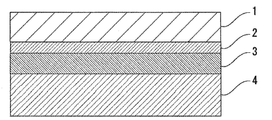
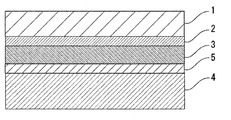
- the battery packaging material of the present invention comprises a laminate comprising at least a base material layer 1, a metal layer 3, and a heat-fusible resin layer 4 in this order.
- the base material layer 1 is the outermost layer
- the heat-fusible resin layer 4 is the innermost layer. That is, at the time of battery assembly, the heat-fusible resin layers 4 positioned at the periphery of the battery element are thermally welded to seal the battery element, thereby sealing the battery element.
- the battery packaging material of the present invention is provided with an adhesive layer 2 between the base material layer 1 and the metal layer 3 as necessary for the purpose of enhancing the adhesion between them. May be.
- an adhesive layer 5 may be provided between the metal layer 3 and the heat-fusible resin layer 4 as necessary for the purpose of improving the adhesion.
- the base material layer 1 is a layer located in the outermost layer.
- the base material layer 1 is formed of a polyamide resin containing ethylene bis stearamide.
- the base material layer 1 is a layer located in the outermost layer.
- the base material layer 1 is formed of a polyamide resin containing the ethylene bisoleic acid amide, and the content of the ethylene bis oleic acid amide in the base material layer 1 is 400 ppm or less. Is set to
- nylon is preferable.
- Specific examples of the polyamide resin include aliphatic polyamides such as nylon 6, nylon 66, nylon 610, nylon 12, nylon 46, a copolymer of nylon 6 and nylon 6,6; terephthalic acid and / or isophthalic acid.
- Nylon 6I, Nylon 6T, Nylon 6IT, Nylon 6I6T (I represents isophthalic acid, T represents terephthalic acid) and the like
- Polyamide containing aromatics such as amide (MXD6); Alicyclic polyamide such as polyaminomethylcyclohexyl adipamide (PACM6); and lactam component and isocyanate components such as 4,4′-diphenylmethane-diisocyanate were copolymerized Polyamide, copolymerized poly Polyester amide copolymer and polyether ester amide copolymer is a copolymer of a bromide and the polyester and polyalkylene ether glycol; copolymers thereof, and the like.
- These polyamide resins may be used individually by 1 type, and may be used in combination of 2 or more type.
- the base material layer 1 may be formed of a uniaxially or biaxially stretched polyamide resin film, or may be formed of an unstretched polyamide resin film.
- the stretched polyamide resin film is excellent in stretchability, can prevent whitening due to resin cracking of the base material layer 1 during molding, and is suitably used as a material for forming the base material layer 1.
- stretched polyamide resin films uniaxially or biaxially stretched polyamide resin films, especially biaxially stretched polyamide resin films (particularly biaxially stretched nylon), have improved heat resistance by orientation crystallization. Therefore, it is preferably used as the base material layer 1.
- the polyamide resin contains ethylene bis stearamide.
- Ethylene bis-stearic acid amide suitably functions as a water repellent in the polyamide resin forming the base material layer 1.
- the polyamide resin contains ethylenebisstearic acid amide, the wettability of the molten resin with respect to water is adjusted during the production of the polyamide resin film, and moderate unevenness (surface roughness) is formed on the surface of the raw film. This uneven shape remains even after the raw film is stretched, and a polyamide resin film with adjusted surface slipperiness can be obtained.
- the polyamide resin forming the base layer 1 may contain ethylene bisoleic acid amide conventionally used as a water repellent, but from the viewpoint of improving the printability of the base layer surface, In particular, it is preferable not to contain ethylenebisoleic acid amide.
- the content of ethylenebisstearic acid amide is not particularly limited, but is preferably about 1 ppm to 600 ppm, more preferably about 50 ppm to 500 ppm, Preferably about 100 ppm or more and 400 ppm or less is mentioned.
- the content of ethylene bis-stearic acid amide in the polyamide resin forming the base material layer 1 is the total amount of ethylene bis-stearic acid amide present inside and on the surface of the polyamide resin.
- the content of ethylenebisstearic acid amide in the polyamide resin constituting the base material layer 1 of the battery packaging material is obtained by peeling the base material layer 1 from the battery packaging material and dissolving the base material layer 1 in hexafluoroisopropyl alcohol. Thereafter, dimethylethane is added to cause solvent precipitation, the resin component is separated to prepare an extraction solution of ethylenebisoleic acid amide, and the extraction solution can be quantified by GC-MS analysis.
- the battery packaging material of the first invention is left on the surface of the base material layer in a range of 210 mm ⁇ 297 mm (A4 size) after standing in a thermostat at 100 ° C. for 24 hours. It is preferable that the amount of ethylene bis stearamide to be 30 ⁇ g or less.
- the battery packaging material is allowed to stand in a constant temperature bath at 100 ° C. for 24 hours in a process simulating a baking process at the time of manufacturing the battery cell.
- the amount of acid amide to 30 ⁇ g / A4 size or less, it is possible to provide a battery packaging material that is less likely to be repelled on the surface of the base material layer 1 and that is further excellent in printability.
- ethylene bis-stearic acid amide is less likely to bleed out by heating than ethylene bis-oleic acid amide, for example, when the content of ethylene bis-stearic acid amide in the polyamide resin is in the above range,
- the amount of ethylene bis-stearic acid amide that bleeds out to the surface of the base material layer 1 by the baking treatment can be suitably adjusted to 30 ⁇ g / A4 size or less.
- the amount of the ethylene bis stearamide in the battery packaging material is specifically a value measured by the method described in Examples described later.
- the polyamide resin contains ethylenebisoleic acid amide.
- the content of ethylene bisoleic acid amide in the polyamide resin is 400 ppm or less.
- Ethylene bisoleic acid amide functions suitably as a water repellent in the polyamide resin forming the base material layer 1.
- the polyamide resin contains 400 ppm or less of ethylene bisoleic acid amide, the wettability of the molten resin with respect to water is adjusted during the production of the polyamide resin film, and the surface of the raw film is moderately uneven. (Surface roughness) can be formed, and this uneven shape remains even after the raw film is stretched, and a polyamide resin film having a controlled surface slipperiness can be obtained.
- the content of ethylene bisoleic acid amide is not particularly limited, but is preferably about 1 ppm to 400 ppm, more preferably about 50 ppm to 350 ppm, Preferably about 100 ppm or more and 300 ppm or less is mentioned.
- the content of ethylene bisoleic acid amide in the polyamide resin forming the base material layer 1 is the total amount of ethylene bisoleic acid amide present inside and on the surface of the polyamide resin.
- the content of ethylenebisoleic acid amide in the polyamide resin constituting the base material layer 1 of the battery packaging material is such that the base material layer 1 is peeled off from the battery packaging material and the base material layer 1 is changed to hexafluoroisopropyl alcohol. After dissolution, dimethylethane is added to cause solvent precipitation, the resin component is separated to prepare an extraction solution of ethylenebisoleic acid amide, and the extraction solution can be quantified by GC-MS analysis.
- the battery packaging material of the second invention is left on the surface of the base material layer in a range of 210 mm ⁇ 297 mm (A4 size) after standing in a constant temperature bath at 100 ° C. for 24 hours.
- the amount of ethylene bisoleic acid amide is preferably 380 ⁇ g or less.
- the battery packaging material is allowed to stand in a constant temperature bath at 100 ° C. for 24 hours in a process simulating a baking process at the time of manufacturing the battery cell, and ethylene bisolein that bleeds out to the surface of the base material layer 1 by the process.
- the amount of acid amide is 380 ⁇ g / A4 size or less, it is possible to obtain a battery packaging material that is less likely to be repelled on the surface of the base material layer 1 and that is further excellent in printability.
- the amount of ethylene bisoleic acid amide in the battery packaging material of the second invention is specifically a value measured by the method described in Examples described later.
- the base material layer 1 includes a resin different from the polyamide resin and a polyamide resin in order to improve pinhole resistance and insulation when used as a battery package.
- stacked biaxially-stretched polyester and biaxially-stretched nylon, etc. are mentioned.
- a polyamide resin is arrange
- each resin film may adhere
- a method of bonding in a hot melt state such as a co-extrusion method, a sand lamination method, or a thermal laminating method can be mentioned.
- the adhesive agent to be used may be a two-component curable adhesive, or a one-component curable adhesive.
- the bonding mechanism of the adhesive is not particularly limited, and may be any of a chemical reaction type, a solvent volatilization type, a heat melting type, a hot pressure type, an electron beam curing type such as UV and EB, and the like.
- an adhesive component polyester resin, polyether resin, polyurethane resin, epoxy resin, phenol resin resin, polyamide resin, polyolefin resin, polyvinyl acetate resin, cellulose resin, (meth) acrylic resin Resins, polyimide resins, amino resins, rubbers, and silicon resins can be used.
- the surface tension of the base material layer 1 is preferably 32 mN / m or more.
- the wetting tension of the surface of the base material layer 1 is 32 mN / m or more, the ink is hardly repelled on the surface of the base material layer 1 and the printability can be further improved.
- ink is printed on the surface of the base material layer 1 by using pad printing on a battery packaging material that has a lubricant on the surface of the base material layer to improve moldability, printing failure occurs.
- the base material layer 1 is formed of a polyamide resin containing ethylenebisstearic acid amide, and the wetting tension of the surface of the base material layer 1 is 32 mN / m or more. And is particularly suitable as a battery packaging material in which printing is formed on the surface of the base material layer by pad printing.
- the surface of the base material layer 1 can be an ink receiving surface.
- the wetting tension of the surface of the base material layer 1 is 32 mN / m or more.
- the wetting tension of the surface of the base material layer 1 is 32 mN / m or more, the ink is hardly repelled on the surface of the base material layer 1 and the printability can be further improved.
- ink is printed on the surface of the base material layer 1 by using pad printing on a battery packaging material that has a lubricant on the surface of the base material layer to improve moldability, printing failure occurs.
- the base material layer 1 is formed of a polyamide resin containing ethylenebisoleic acid amide in a predetermined amount or less, and the wetting tension of the surface of the base material layer 1 is 32 mN / When it is m or more, the ink is not easily repelled, and is particularly suitable as a battery packaging material in which printing or the like is formed on the surface of the base material layer by pad printing.
- the wetting tension of the surface of the base material layer 1 is more preferably 32 mN / m or more and 50 mN / m from the viewpoint of improving the printability while improving the moldability. m or less, more preferably 35 mN / m or more and 45 mN / m or less.
- the wetting tension of the battery packaging material is a value measured by a method in accordance with JIS K6768: 1999, and the specific method is as described in the examples. It is.
- the thickness of the base material layer 1 is, for example, about 10 ⁇ m to 50 ⁇ m, preferably about 12 ⁇ m to 30 ⁇ m.
- ink can be suitably printed on at least part of the surface of the base material layer 1. That is, in the present invention, the battery packaging material in which the ink is printed on the surface of the base material layer 1 exposes the ink printed on the surface of the base material layer 1 (cured ink, dried product, etc.). .
- the printed ink can form, for example, printing of barcodes, patterns, characters, and the like.
- the ink used for printing is not particularly limited, and a known ink can be used. For example, a photocurable ink that is cured by irradiation with ultraviolet rays or the like can be used.
- the adhesive layer 2 is a layer provided as necessary in order to adhere the base material layer 1 and the metal layer 3.
- the adhesive layer 2 is formed of an adhesive capable of bonding the base material layer 1 and the metal layer 3 together.
- the adhesive used for forming the adhesive layer 2 may be a two-component curable adhesive or a one-component curable adhesive.
- the bonding mechanism of the adhesive used for forming the adhesive layer 2 is not particularly limited, and may be any of a chemical reaction type, a solvent volatilization type, a heat melting type, a hot pressure type, and the like.
- polyesters such as polyethylene terephthalate, polybutylene terephthalate, polyethylene naphthalate, polybutylene naphthalate, polyethylene isophthalate, polycarbonate, and copolyester.
- Polyether adhesive Polyurethane adhesive; Epoxy resin; Phenol resin resin; Polyamide resin such as nylon 6, nylon 66, nylon 12, copolymer polyamide; polyolefin, acid-modified polyolefin, metal-modified polyolefin
- Polyolefin resins such as: polyvinyl acetate resins; cellulose adhesives; (meth) acrylic resins; polyimide resins; amino resins such as urea resins and melamine resins; chloroprene rubber, nitrile rubber, Silicone resin; - Len rubber such as butadiene rubber fluorinated ethylene propylene copolymer, and the like.
- These adhesive components may be used individually by 1 type, and may be used in combination of 2 or more type.
- the combination mode of two or more kinds of adhesive components is not particularly limited.
- a mixed resin of polyamide and acid-modified polyolefin, a mixed resin of polyamide and metal-modified polyolefin, polyamide and polyester examples thereof include a mixed resin of polyester and acid-modified polyolefin, and a mixed resin of polyester and metal-modified polyolefin.
- extensibility, durability under high-humidity conditions, anti-hypertensive action, thermal deterioration-preventing action during heat sealing, etc. are excellent, and a decrease in lamination strength between the base material layer 1 and the metal layer 3 is suppressed.
- a polyurethane two-component curable adhesive; polyamide, polyester, or a blended resin of these with a modified polyolefin is preferable.
- the adhesive layer 2 may be multilayered with different adhesive components.
- the adhesive component disposed on the base material layer 1 side is used as the base material layer. It is preferable to select a resin excellent in adhesiveness to 1, and to select an adhesive component excellent in adhesiveness to the metal layer 3 as an adhesive component disposed on the metal layer 3 side.
- the adhesive component disposed on the metal layer 3 side is preferably acid-modified polyolefin, metal-modified polyolefin, polyester and acid-modified polyolefin. And mixed resins, resins containing copolymerized polyesters, and the like.
- the thickness of the adhesive layer 2 is, for example, about 2 ⁇ m to 50 ⁇ m, preferably about 3 ⁇ m to 25 ⁇ m.
- the metal layer 3 is a layer that functions as a barrier layer for preventing the penetration of water vapor, oxygen, light, etc. into the battery, in addition to improving the strength of the packaging material.
- the metal forming the metal layer 3 include metal foils such as aluminum (aluminum alloy), stainless steel, and titanium. Among these, aluminum or stainless steel is preferably used.
- soft aluminum for example, annealed aluminum (JIS A8021P-O) or (JIS A8079P-O) is used as the metal layer 3 in the present invention. Is preferred.
- the thickness of the metal layer 3 is, for example, about 10 ⁇ m to 200 ⁇ m, preferably about 20 ⁇ m to 100 ⁇ m.
- the metal layer 3 is subjected to chemical conversion treatment on at least one surface, preferably at least the surface on the side of the heat-fusible resin layer 4, more preferably both surfaces in order to stabilize adhesion, prevent dissolution and corrosion, and the like.
- the chemical conversion treatment is a treatment for forming an acid-resistant film on the surface of the metal layer 3.
- Chemical conversion treatment is, for example, chromate chromate treatment using a chromic acid compound such as chromium nitrate, chromium fluoride, chromium sulfate, chromium acetate, chromium oxalate, chromium biphosphate, chromic acetyl acetate, chromium chloride, potassium sulfate chromium, etc. ; Phosphoric acid chromate treatment using a phosphoric acid compound such as sodium phosphate, potassium phosphate, ammonium phosphate, polyphosphoric acid; aminated phenol heavy consisting of repeating units represented by the following general formulas (1) to (4) Examples thereof include chromate treatment using a coalescence. In the aminated phenol polymer, the repeating units represented by the following general formulas (1) to (4) may be included singly or in any combination of two or more. Also good.
- a chromic acid compound such as chromium nitrate, chrom
- X represents a hydrogen atom, a hydroxyl group, an alkyl group, a hydroxyalkyl group, an allyl group or a benzyl group.
- R 1 and R 2 are the same or different and represent a hydroxyl group, an alkyl group, or a hydroxyalkyl group.
- examples of the alkyl group represented by X, R 1 and R 2 include a methyl group, ethyl group, n-propyl group, isopropyl group, n-butyl group, isobutyl group, Examples thereof include straight-chain or branched alkyl groups having 1 to 4 carbon atoms such as a tert-butyl group.
- Examples of the hydroxyalkyl group represented by X, R 1 and R 2 include a hydroxymethyl group, a 1-hydroxyethyl group, a 2-hydroxyethyl group, a 1-hydroxypropyl group, a 2-hydroxypropyl group, 3- A straight or branched chain having 1 to 4 carbon atoms substituted with one hydroxy group such as hydroxypropyl group, 1-hydroxybutyl group, 2-hydroxybutyl group, 3-hydroxybutyl group, 4-hydroxybutyl group, etc.
- An alkyl group is mentioned.
- X is preferably any one of a hydrogen atom, a hydroxyl group, and a droxyalkyl group.
- the number average molecular weight of the aminated phenol polymer comprising the repeating units represented by the general formulas (1) to (4) is, for example, about 500 or more and about 1,000,000 or less, preferably about 1000 or more and about 20,000 or less. .
- a metal oxide such as aluminum oxide, titanium oxide, cerium oxide, tin oxide, or barium sulfate fine particles dispersed in phosphoric acid is coated.
- a method of forming a corrosion-resistant treatment layer on the surface of the metal layer 3 by performing a baking treatment at 150 ° C. or higher can be mentioned.
- the cationic polymer for example, polyethyleneimine, an ionic polymer complex composed of a polymer having polyethyleneimine and a carboxylic acid, a primary amine-grafted acrylic resin in which a primary amine is grafted on an acrylic main skeleton, polyallylamine, or Examples thereof include aminophenols and derivatives thereof.
- These cationic polymers may be used individually by 1 type, and may be used in combination of 2 or more type.
- the crosslinking agent include compounds having at least one functional group selected from the group consisting of isocyanate groups, glycidyl groups, carboxyl groups, and oxazoline groups, silane coupling agents, and the like. These crosslinking agents may be used alone or in combination of two or more.
- These chemical conversion treatments may be performed alone or in combination of two or more chemical conversion treatments. Furthermore, these chemical conversion treatments may be carried out using one kind of compound alone, or may be carried out using a combination of two or more kinds of compounds. Among these, chromic acid chromate treatment is preferable, and chromate treatment in which a chromic acid compound, a phosphoric acid compound, and an aminated phenol polymer are combined is more preferable.
- the amount of the acid-resistant film formed on the surface of the metal layer 3 in the chemical conversion treatment is not particularly limited.
- the chromate treatment is performed by combining a chromic acid compound, a phosphoric acid compound, and an aminated phenol polymer.
- the chromic acid compound is about 0.5 mg or more and about 50 mg or less, preferably about 1.0 mg or more and about 40 mg or less
- the phosphorus compound is about 0.5 mg or more and about 50 mg in terms of phosphorus per 1 m 2 of the surface of the metal layer 3.
- the aminated phenol polymer is contained in a proportion of preferably about 1.0 mg to about 40 mg and preferably about 1 mg to about 200 mg, preferably about 5.0 mg to 150 mg.
- a solution containing a compound used for forming an acid-resistant film is applied to the surface of the metal layer 3 by a bar coating method, a roll coating method, a gravure coating method, a dipping method or the like, and then the temperature of the metal layer 3 is reached. Is carried out by heating so as to be about 70 ° C. or higher and 200 ° C. or lower.
- the metal layer 3 may be subjected to a degreasing treatment by an alkali dipping method, an electrolytic cleaning method, an acid cleaning method, an electrolytic acid cleaning method, or the like in advance. By performing the degreasing treatment in this way, it becomes possible to more efficiently perform the chemical conversion treatment on the surface of the metal layer 3.
- the heat-fusible resin layer 4 corresponds to the innermost layer, and is a layer that heat-welds the heat-fusible resin layers together to seal the battery element when the battery is assembled.
- the resin component used for the heat-fusible resin layer 4 is not particularly limited as long as it can be heat-welded, and examples thereof include polyolefin, cyclic polyolefin, carboxylic acid-modified polyolefin, and carboxylic acid-modified cyclic polyolefin. .
- polystyrene resin examples include polyethylene such as low density polyethylene, medium density polyethylene, high density polyethylene, and linear low density polyethylene; homopolypropylene, polypropylene block copolymer (for example, block copolymer of propylene and ethylene), polypropylene And a random copolymer (eg, a random copolymer of propylene and ethylene); an ethylene-butene-propylene terpolymer; and the like.
- polyethylene and polypropylene are preferable.
- the cyclic polyolefin is a copolymer of an olefin and a cyclic monomer
- examples of the olefin that is a constituent monomer of the cyclic polyolefin include ethylene, propylene, 4-methyl-1-pentene, styrene, butadiene, and isoprene. Is mentioned.
- Examples of the cyclic monomer that is a constituent monomer of the cyclic polyolefin include cyclic alkenes such as norbornene; specifically, cyclic dienes such as cyclopentadiene, dicyclopentadiene, cyclohexadiene, and norbornadiene.
- cyclic alkene is preferable, and norbornene is more preferable.
- the carboxylic acid-modified polyolefin is a polymer modified by block polymerization or graft polymerization of the polyolefin with carboxylic acid.
- Examples of the carboxylic acid used for modification include maleic acid, acrylic acid, itaconic acid, crotonic acid, maleic anhydride, itaconic anhydride and the like.
- the carboxylic acid-modified cyclic polyolefin is obtained by copolymerizing a part of the monomer constituting the cyclic polyolefin in place of the ⁇ , ⁇ -unsaturated carboxylic acid or its anhydride, or ⁇ , ⁇ with respect to the cyclic polyolefin.
- -A polymer obtained by block polymerization or graft polymerization of an unsaturated carboxylic acid or its anhydride.
- the cyclic polyolefin to be modified with carboxylic acid is the same as described above.
- the carboxylic acid used for modification is the same as that used for modification of the acid-modified cycloolefin copolymer.
- carboxylic acid-modified polyolefin is preferable; carboxylic acid-modified polypropylene is more preferable.
- the heat-fusible resin layer 4 may be formed of one kind of resin component alone or may be formed of a blend polymer in which two or more kinds of resin components are combined. Furthermore, the heat-fusible resin layer 4 may be formed of only one layer, but may be formed of two or more layers using the same or different resin components.
- the heat-fusible resin layer 4 may contain a lubricant.
- the type of lubricant is not particularly limited, and examples thereof include those exemplified in the above item [Base Material Layer 1].
- the content thereof may be selected as appropriate, but it is preferably about 700 ppm to 1200 ppm, more preferably about 800 ppm to 1100 ppm.
- the content of the lubricant in the heat-fusible resin layer 4 is determined between the lubricant present inside the heat-fusible resin layer 4 and the lubricant present on the surface of the heat-fusible resin layer 4. Total amount.
- the thickness of the heat-fusible resin layer 4 can be selected as appropriate, and is about 10 ⁇ m to 100 ⁇ m, preferably about 15 ⁇ m to 50 ⁇ m.
- the adhesive layer 5 is a layer provided between the metal layer 3 and the heat-fusible resin layer 4 as necessary in order to firmly bond the metal layer 3 and the heat-fusible resin layer 4.
- the adhesive layer 5 is formed of an adhesive capable of bonding the metal layer 3 and the heat-fusible resin layer 4. With respect to the adhesive used for forming the adhesive layer 5, the adhesive mechanism, the types of adhesive components, and the like are the same as those of the adhesive layer 2.
- the adhesive component used for the adhesive layer 5 is preferably a polyolefin resin, more preferably a carboxylic acid-modified polyolefin, particularly preferably a carboxylic acid-modified polypropylene.
- the thickness of the adhesive layer 5 is, for example, 2 ⁇ m or more and 50 ⁇ m or less, preferably 15 ⁇ m or more and 30 ⁇ m or less.
- the method for producing the battery packaging material of the present invention is not particularly limited as long as a laminate in which layers having a predetermined composition are laminated is obtained.
- the following method is exemplified. .
- a laminate including the base material layer 1, the adhesive layer 2, and the metal layer 3 in this order (hereinafter also referred to as “laminate A”) is formed.
- the layered product A is formed by applying an adhesive used for forming the adhesive layer 2 on the base layer 1 or the metal layer 3 whose surface is subjected to a chemical conversion treatment, if necessary, by an extrusion method, gravure. After applying and drying by a coating method such as a coating method or a roll coating method, the metal layer 3 or the base material layer 1 can be laminated to dry the adhesive layer 2.
- the heat-fusible resin layer 4 is laminated on the metal layer 3 of the laminate A.
- the resin component constituting the heat-fusible resin layer 4 is applied to the metal layer 3 of the laminate A by a gravure coating method or a roll coating method. What is necessary is just to apply
- the adhesive layer 5 is provided between the metal layer 3 and the heat-fusible resin layer 4, for example, (1) the adhesive layer 5 and the heat-fusible resin layer on the metal layer 3 of the laminate A 4 by co-extrusion (coextrusion lamination method), (2) Separately, a laminated body in which the adhesive layer 5 and the heat-fusible resin layer 4 are laminated is formed, and this is formed into a metal layer of the laminated body A 3.
- Laminate on layer 3 by thermal lamination method (3) Extrude method or adhesive coating for forming adhesive layer 5 on metal layer 3 of laminate A, dry or bake at high temperature A method of laminating and laminating the heat-fusible resin layer 4 previously formed into a sheet on the adhesive layer 5 by a thermal lamination method, and (4) forming the metal layer 3 of the laminate A and a sheet in advance. Do not pour the melted adhesive layer 5 between the heat-sealable resin layer 4. Et al, and a method of bonding a laminate A and the heat-welding resin layer 4 through the adhesive layer 5 (sandwich lamination method).
- the adhesive layer 2 and the adhesive layer 5 may be further subjected to a heat treatment such as a hot roll contact type, a hot air type, a near or far infrared type.
- a heat treatment such as a hot roll contact type, a hot air type, a near or far infrared type.
- Examples of such heat treatment conditions include 150 ° C. or more and 250 ° C. or less and 1 minute or more and 5 minutes or less.
- each layer constituting the laminate improves or stabilizes film forming properties, lamination processing, suitability for final processing (pouching, embossing), etc., as necessary. Therefore, surface activation treatment such as corona treatment, blast treatment, oxidation treatment, ozone treatment may be performed.
- the printing method when printing ink on the surface of the battery packaging material, is not particularly limited. However, when printing is performed on the molded battery packaging material, pad printing is preferable. .
- the base layer is formed of a polyamide resin containing ethylene bis-stearic acid amide, the ink is not easily repelled, and the ink printing is suitably performed even by pad printing. It can be performed. Therefore, for example, printing of barcodes, patterns, characters, and the like can be suitably formed on at least a part of the surface of the base material layer 1.
- the ink used for printing is as described above.
- the printing method when printing ink on the surface of the battery packaging material, is not particularly limited. However, when printing is performed on the molded battery packaging material, pad printing is preferable. .
- the base material layer is formed of a polyamide resin containing ethylene bisoleic acid amide, and the content of ethylene bisoleic acid amide in the base material layer is , 400 ppm or less, it is difficult for the ink to be repelled, and the ink can be suitably printed by pad printing. Therefore, for example, printing of barcodes, patterns, characters, and the like can be suitably formed on at least a part of the surface of the base material layer 1.
- the ink used for printing is as described above.
- the battery packaging material of the present invention is used as a packaging material for sealing and housing battery elements such as a positive electrode, a negative electrode, and an electrolyte.
- a battery element including at least a positive electrode, a negative electrode, and an electrolyte is formed using the battery packaging material of the present invention, with the metal terminals connected to each of the positive electrode and the negative electrode protruding outward.
- a flange portion region where the heat-fusible resin layers are in contact with each other
- heat-sealing the heat-fusible resin layers of the flange portion to seal the battery
- the battery packaging material of the present invention is used such that the sealant portion is on the inner side (surface in contact with the battery element).
- the ink is suitably printed on the surface of the battery after the battery packaging material is molded and the battery element is sealed.
- the base material layer of the battery packaging material is formed of a polyamide resin containing ethylenebisstearic acid amide.
- barcodes, patterns, characters and the like can be suitably formed on at least a part of the surface of the battery.
- the battery packaging material of the present invention may be used for either a primary battery or a secondary battery, but is preferably a secondary battery.
- the type of secondary battery to which the battery packaging material of the present invention is applied is not particularly limited.
- a lithium ion battery, a lithium ion polymer battery, a lead battery, a nickel / hydrogen battery, a nickel / cadmium battery , Nickel / iron livestock batteries, nickel / zinc livestock batteries, silver oxide / zinc livestock batteries, metal-air batteries, polyvalent cation batteries, capacitors, capacitors and the like are suitable applications for the battery packaging material of the present invention.
- Examples 1A-5A and Comparative Example 1A Manufacture of battery packaging materials>
- the base material layer 1 / adhesion A battery packaging material comprising a laminate comprising the agent layer 2 / the metal layer 3 / the adhesive layer 5 / the heat-fusible resin layer 4 in this order was produced.
- Specific production conditions for the battery packaging material are as follows.
- Example 1A-5A and Comparative Example 1A the biaxially stretched nylon film (thickness 15 ⁇ m) constituting the base layer 1 and the aluminum foil (aluminum alloy) or stainless steel foil (each 35 ⁇ m) constituting the metal layer 2, respectively. ) was used.
- Each of the biaxially stretched nylon films constituting the base material layer 1 is blended with ethylenebisstearic acid amide or ethylenebisoleic acid amide having a content shown in Table 1A as a water repellent.
- Aluminum foil and stainless steel foil are roll-coated with a treatment solution consisting of a phenol resin, a chromium fluoride compound (trivalent), and phosphoric acid so that the coating amount of chromium is 10 mg / m 2 (dry weight).
- the coating was applied to both surfaces of the metal layer by the method, followed by chemical conversion treatment by baking for 20 seconds under the condition that the film temperature was 180 ° C. or higher.
- a laminate including a base layer 1 / adhesive layer 2 / metal layer 3 in this order was prepared. Specifically, on one surface (corona-treated surface) of the base material layer 1, an adhesive layer 2 composed of a polyester-based main agent and an isocyanate-based curing agent two-component urethane adhesive is formed to be 3 ⁇ m, This was laminated with the metal layer 3 by a dry laminating method to prepare a laminate including the base material layer 1 / adhesive layer 2 / metal layer 3 in this order.
- an acid-modified polypropylene resin [unsaturated carboxylic acid graft-modified random polypropylene grafted with an unsaturated carboxylic acid (acid-modified PP)] or an acid-modified polyethylene resin [ Unsaturated carboxylic acid graft-modified random polyethylene (acid-modified PE) graft-modified with unsaturated carboxylic acid] and polypropylene [random copolymer (PP)] or polyethylene (PE) constituting heat-fusible resin layer 4 are melted.
- GC-MS (QP2010, manufactured by Shimadzu Corporation, ionization method: electron impact ionization method (EI method), detector: quadrupole detector, Column: Inert Cap 5MS), the amount of water repellent (ethylene bis stearamide or ethylene bis oleate amide) was measured. The results are shown in Table 1A (surface bleed amount). The detection limit of the water repellent is 30 ⁇ g / A4 size.
- EBS means ethylene bis stearic acid amide
- EBO means ethylene bis oleic acid amide
- Example 1A-5A in which ethylenebisstearic acid amide was used as the water repellent for the nylon forming the base layer, the surface bleed of the water repellent was suppressed, and the ink of pad printing was used. Excellent printing characteristics. In particular, Examples 1A-2A were very excellent. On the other hand, in Comparative Example 1A in which ethylene bisoleic acid amide was used as the water repellent for the nylon forming the base material layer, the water repellent was bleed out in a large amount and the printing characteristics of the ink by pad printing were inferior. All the battery packaging materials had good moldability.
- Examples 1B-5B and Comparative Example 1B Manufacture of battery packaging materials>
- the base material layer 1 / adhesive layer 2 A battery packaging material composed of a laminate including / metal layer 3 / adhesive layer 5 / heat-sealing resin layer 4 in this order was produced.
- Specific production conditions for the battery packaging material are as follows.
- Example 1B-5B and Comparative Example 1B the biaxially stretched nylon film (thickness 15 ⁇ m) constituting the base layer 1 and the aluminum foil (aluminum alloy) or stainless steel foil (35 ⁇ m each) constituting the metal layer 2 respectively. ) was used.
- Each of the biaxially stretched nylon films constituting the base material layer 1 is blended with ethylenebisoleic acid amide having a content shown in Table 1B as a water repellent.
- Aluminum foil and stainless steel foil are roll-coated with a treatment solution consisting of a phenol resin, a chromium fluoride compound (trivalent), and phosphoric acid so that the coating amount of chromium is 10 mg / m 2 (dry weight). The coating was applied to both surfaces of the metal layer by the method, followed by chemical conversion treatment by baking for 20 seconds under the condition that the film temperature was 180 ° C. or higher.
- a laminate including a base material layer 1 / an adhesive layer 2 / a metal layer 3 in this order was prepared.
- an adhesive layer 2 composed of a polyester main agent and an isocyanate curing agent two-component urethane adhesive is formed on one surface (corona-treated surface) of the base material layer 1 so as to have a thickness of 3 ⁇ m.
- an acid-modified polypropylene resin [unsaturated carboxylic acid graft-modified random polypropylene grafted with an unsaturated carboxylic acid (acid-modified PP)] or an acid-modified polyethylene resin [ Unsaturated carboxylic acid graft-modified random polyethylene (acid-modified PE) graft-modified with unsaturated carboxylic acid] and polypropylene [random copolymer (PP)] or polyethylene (PE) constituting heat-sealing resin layer 4 are melted.
- the adhesive layer 5 having a thickness of 20 ⁇ m and the heat-sealing resin layer 4 having a thickness of 15 ⁇ m were laminated by coextrusion on the surface of the metal layer 3 of the laminate. As described above, a laminate including the base material layer 1 / adhesive layer 2 / metal layer 3 / adhesive layer 5 / heat-sealing resin layer 4 in this order was obtained. After cooling the obtained laminated body once, it heated until it became 180 degreeC, the packaging material for batteries was obtained by hold
- EBO means ethylene bisoleic acid amide.
- Example 1B-5B which contains 400 ppm or less of ethylenebisoleic acid amide as a water repellent in the nylon forming the base layer, was excellent in ink printing characteristics by pad printing. In particular, Example 1B-2B was very excellent. On the other hand, in Comparative Example 1B in which nylon forming the base material layer contains ethylenebisoleic acid amide exceeding 400 ppm as a water repellent, the printing characteristics of the ink by pad printing were inferior. All the battery packaging materials had good moldability.
Landscapes
- Chemical & Material Sciences (AREA)
- Chemical Kinetics & Catalysis (AREA)
- Electrochemistry (AREA)
- General Chemical & Material Sciences (AREA)
- Mechanical Engineering (AREA)
- Engineering & Computer Science (AREA)
- Inorganic Chemistry (AREA)
- Health & Medical Sciences (AREA)
- Medicinal Chemistry (AREA)
- Polymers & Plastics (AREA)
- Organic Chemistry (AREA)
- Sealing Battery Cases Or Jackets (AREA)
- Laminated Bodies (AREA)
Abstract
基材層表面におけるインキの印刷特性に優れた電池用包装材料を提供する。 少なくとも、基材層と、金属層と、熱融着性樹脂層をこの順に備える積層体からなり、前記基材層が、エチレンビスステアリン酸アミドやエチレンビスオレイン酸アミドを含むポリアミド樹脂により形成されている、電池用包装材料。
Description
本発明は、電池用包装材料及び電池に関する。
従来、様々なタイプの電池が開発されているが、あらゆる電池において、電極や電解質等の電池素子を封止するために包装材料が不可欠な部材になっている。従来、電池用包装として金属製の包装材料が多用されていたが、近年、電気自動車、ハイブリッド電気自動車、パソコン、カメラ、携帯電話等の高性能化に伴い、電池には、多様な形状が要求されると共に、薄型化や軽量化が求められている。しかしながら、従来多用されていた金属製の電池用包装材料では、形状の多様化に追従することが困難であり、しかも軽量化にも限界があるという欠点がある。
そこで、多様な形状に加工が容易で、薄型化や軽量化を実現し得る電池用包装材料として、基材層/接着層/金属層/熱融着性樹脂層が順次積層されたフィルム状の積層体が提案されている(例えば、特許文献1参照)。このようなフィルム状の電池用包装材料では、熱融着性樹脂層同士を対向させて周縁部をヒートシールにて熱溶着させることにより電池素子を封止できるように形成されている。
上記のような積層体により形成された種々の包装材料において、基材層の表面にインキを印刷して、バーコード、柄、文字などを形成し、印刷した側の基材層の上に接着剤、金属箔を積層する方法により、包装材料に印字する方法(一般に裏刷りと称される)が広く採用されている。しかしながら、基材層と金属層との間にこのような印刷面が存在すると、基材層と金属層との密着性が低下して、層間においてデラミネーションが生じやすくなる。特に、電池用包装材料が適用される電池には、高い安全性が要求されるため、このような裏刷りによって印字する方法は、電池用包装材料においては敬遠されている。したがって、従来、電池用包装材料にバーコードなどの印字を形成する場合には、一般に、印字が形成されたシールを基材層の表面に貼り付ける方法が採用されている。
しかしながら、印字が形成されたシールを基材層の表面に貼り付けると、電池用包装材料の厚みや重さが増大する。よって、電池用包装材料に対する近年の更なる薄型化や軽量化の傾向から、電池用包装材料の基材層の表面に直接インキの印刷により印字する方法が検討されている。
電池用包装材料の基材層の表面に直接インキを印刷する方法としては、パッド印刷(タンポ印刷とも称される)が知られている。パッド印刷とは、次のような印刷方法である。まず、印刷したいパターンがエッチングされた平板の凹部にインキを流し込む。次に、当該凹部の上からシリコンパッドを押し当てて、シリコンパッドにインキを転移させる。次に、シリコンパッド表面に転移されたインキを印刷対象物に転写して、印刷対象物にインキを塗布する。このようなパッド印刷は、弾性のあるシリコンパッドなどを用いてインキが印刷対象物に転写されるため、成形後の電池用包装材料の表面にも印刷しやすく、電池素子を電池用包装材料で封止した後に、電池に印刷することができるという利点を有する。
ところで、電池用包装材料の基材層には、ナイロンなどのポリアミド樹脂フィルムが汎用されており、ポリアミド樹脂フィルムには、一般に、撥水剤としてエチレンビスオレイン酸アミドが含まれている。撥水剤を含むことにより、フィルムの製造の際に、溶融樹脂の水に対する濡れ性が調整され、原反フィルムの表面に適度な凹凸(表面粗さ)を形成することができ、原反フィルムの延伸後にもこの凹凸形状が残り、表面の滑り性が調整されたポリアミド樹脂フィルムとすることができる。
ところが、本発明者らが検討したところ、撥水剤としてエチレンビスオレイン酸アミドを含むポリアミド樹脂フィルムを基材層に用いた場合、電池用包装材料に電解液などの電池素子を封入した後のベーキング工程等で熱が加えられることにより、エチレンビスオレイン酸アミドが基材層表面にブリードアウトし、パッド印刷等によって基材層表面にインキを印刷した場合、基材層表面においてインキが弾かれて、インキが定着しにくくなり、インキが形成されない抜け部分が生じ得ることが明らかとなった。特に、パッド印刷によって印刷した場合の印刷適性が不十分になる傾向があることが明らかとなった。
このような状況下、本発明は、ポリアミド樹脂フィルムによって形成された基材層表面におけるインキの印刷特性に優れた電池用包装材料を提供することを主な目的とする。さらに、本発明は、当該電池用包装材料の製造方法、及び当該電池用包装材料用いた電池を提供することも目的とする。
このような状況下、本発明は、ポリアミド樹脂フィルムによって形成された基材層表面におけるインキの印刷特性に優れた電池用包装材料を提供することを主な目的とする。さらに、本発明は、当該電池用包装材料の製造方法、及び当該電池用包装材料用いた電池を提供することも目的とする。
本発明者らは、前記課題を解決すべく鋭意検討を行った。その結果、少なくとも、基材層と、金属層と、熱融着性樹脂層とをこの順に備える積層体からなる電池用包装材料において、基材層が、エチレンビスステアリン酸アミドを含むポリアミド樹脂により形成されていることにより、基材層表面におけるインキの印刷特性を効果的に高めることができることを見出した。本発明の第1の発明は、これらの知見に基づいて、更に検討を重ねることにより完成したものである。
また、本発明者らは、前記課題を解決すべくさらに鋭意検討を行った。その結果、少なくとも、基材層と、金属層と、熱融着樹脂層とをこの順に備える積層体からなる電池用包装材料において、基材層がエチレンビスオレイン酸アミドを含むポリアミド樹脂により形成し、かつ、当該基材層におけるエチレンビスオレイン酸アミドの含有量を400ppm以下に設定することにより、基材層表面におけるインキの印刷特性を効果的に高めることができることを見出した。本発明の第2の発明は、これらの知見に基づいて、更に検討を重ねることにより完成したものである。
即ち、本発明は、下記に掲げる態様の発明を提供する。
項1. 少なくとも、基材層と、金属層と、熱融着性樹脂層とをこの順に備える積層体からなり、
前記基材層が、エチレンビスステアリン酸アミドを含むポリアミド樹脂により形成されている、電池用包装材料。
項2. 前記電池用包装材料を100℃の恒温槽中に24時間静置した後、210mm×297mmの範囲の前記基材層表面に存在するエチレンビスステアリン酸アミドの量が、30μg以下である、項1に記載の電池用包装材料。
項3. 少なくとも、基材層と、金属層と、シーラント層とをこの順に備える積層体からなり、
前記基材層が、エチレンビスオレイン酸アミドを含むポリアミド樹脂により形成されており、
前記基材層におけるエチレンビスオレイン酸アミドの含有量が、400ppm以下である、電池用包装材料。
項4. 前記電池用包装材料を100℃の恒温槽中に24時間静置した後、210mm×297mmの範囲の前記基材層表面に存在するエチレンビスオレイン酸アミドが、380μg以下である、項3に記載の電池用包装材料。
項5. 前記基材層表面の少なくとも一部が、インキ受容面である、項1~4のいずれかに記載の電池用包装材料。
項6. 前記基材層表面の少なくとも一部に、インキから構成される印刷層を備える、項1~4のいずれかに記載の電池用包装材料。
項項項7. 前記基材層表面のぬれ張力が、32mN/m以上である、項1~6のいずれかに記載の電池用包装材料。
項8. 前記ポリアミド樹脂が、2軸延伸ナイロンである、項1~7のいずれかに記載の電池用包装材料。
項9. 前記基材層と前記金属層との間に接着層を備える、項1~8のいずれかに記載の電池用包装材料。
項10. 前記金属層と前記熱融着性樹脂層との間に接着層を備える、項1~9のいずれかに記載の電池用包装材料。
項11. 前記金属層が、アルミニウム箔またはステンレス鋼箔である、項1~10のいずれかに記載の電池用包装材料。
項12. 少なくとも正極、負極、及び電解質を備えた電池素子が、項1~11のいずれかに記載の電池用包装材料により形成された包装体中に収容されている、電池。
項1. 少なくとも、基材層と、金属層と、熱融着性樹脂層とをこの順に備える積層体からなり、
前記基材層が、エチレンビスステアリン酸アミドを含むポリアミド樹脂により形成されている、電池用包装材料。
項2. 前記電池用包装材料を100℃の恒温槽中に24時間静置した後、210mm×297mmの範囲の前記基材層表面に存在するエチレンビスステアリン酸アミドの量が、30μg以下である、項1に記載の電池用包装材料。
項3. 少なくとも、基材層と、金属層と、シーラント層とをこの順に備える積層体からなり、
前記基材層が、エチレンビスオレイン酸アミドを含むポリアミド樹脂により形成されており、
前記基材層におけるエチレンビスオレイン酸アミドの含有量が、400ppm以下である、電池用包装材料。
項4. 前記電池用包装材料を100℃の恒温槽中に24時間静置した後、210mm×297mmの範囲の前記基材層表面に存在するエチレンビスオレイン酸アミドが、380μg以下である、項3に記載の電池用包装材料。
項5. 前記基材層表面の少なくとも一部が、インキ受容面である、項1~4のいずれかに記載の電池用包装材料。
項6. 前記基材層表面の少なくとも一部に、インキから構成される印刷層を備える、項1~4のいずれかに記載の電池用包装材料。
項項項7. 前記基材層表面のぬれ張力が、32mN/m以上である、項1~6のいずれかに記載の電池用包装材料。
項8. 前記ポリアミド樹脂が、2軸延伸ナイロンである、項1~7のいずれかに記載の電池用包装材料。
項9. 前記基材層と前記金属層との間に接着層を備える、項1~8のいずれかに記載の電池用包装材料。
項10. 前記金属層と前記熱融着性樹脂層との間に接着層を備える、項1~9のいずれかに記載の電池用包装材料。
項11. 前記金属層が、アルミニウム箔またはステンレス鋼箔である、項1~10のいずれかに記載の電池用包装材料。
項12. 少なくとも正極、負極、及び電解質を備えた電池素子が、項1~11のいずれかに記載の電池用包装材料により形成された包装体中に収容されている、電池。
本発明によれば、基材層表面におけるインキの印刷特性に優れた電池用包装材料を提供することができる。さらに、本発明によれば、当該電池用包装材料を用いた電池を提供することもできる。
第1の発明の電池用包装材料は、少なくとも、基材層と、金属層と、熱融着性樹脂層とをこの順に備える積層体からなり、基材層が、エチレンビスステアリン酸アミドを含むポリアミド樹脂により形成されていることを特徴とする。以下、第1の発明の電池用包装材料、当該電池用包装材料の製造方法、当該電池用包装材料を用いた電池について詳述する。
第2の発明の電池用包装材料は、少なくとも、基材層と、金属層と、熱融着樹脂層とをこの順に備える積層体からなり、基材層がエチレンビスオレイン酸アミドを含むポリアミド樹脂により形成されており、かつ、当該基材層におけるエチレンビスオレイン酸アミドの含有量が400ppm以下に設定されていることを特徴とする。以下、第2の発明の電池用包装材料、当該電池用包装材料の製造方法、当該電池用包装材料を用いた電池について詳述する。
なお、第1の発明及び第2の発明は、基材層1の構成以外の構成については、共通している。
1.電池用包装材料の積層構造
本発明の電池用包装材料は、図1に示すように、少なくとも、基材層1、金属層3、及び熱融着性樹脂層4をこの順に備える積層体からなる。本発明の電池用包装材料において、基材層1が最外層になり、熱融着性樹脂層4は最内層になる。即ち、電池の組み立て時に、電池素子の周縁に位置する熱融着性樹脂層4同士が熱溶着して電池素子を密封することにより、電池素子が封止される。
本発明の電池用包装材料は、図1に示すように、少なくとも、基材層1、金属層3、及び熱融着性樹脂層4をこの順に備える積層体からなる。本発明の電池用包装材料において、基材層1が最外層になり、熱融着性樹脂層4は最内層になる。即ち、電池の組み立て時に、電池素子の周縁に位置する熱融着性樹脂層4同士が熱溶着して電池素子を密封することにより、電池素子が封止される。
本発明の電池用包装材料は、図2に示すように、基材層1と金属層3との間に、これらの接着性を高める目的で、必要に応じて接着剤層2が設けられていてもよい。また、図3に示すように、金属層3と熱融着性樹脂層4との間に、これらの接着性を高める目的で、必要に応じて接着層5が設けられていてもよい。
2.電池用包装材料を形成する各層の組成
[基材層1]
第1の発明の電池用包装材料において、基材層1は、最外層に位置する層である。第1の発明において、基材層1は、エチレンビスステアリン酸アミドを含むポリアミド樹脂により形成されている。
[基材層1]
第1の発明の電池用包装材料において、基材層1は、最外層に位置する層である。第1の発明において、基材層1は、エチレンビスステアリン酸アミドを含むポリアミド樹脂により形成されている。
一方、第2の発明の電池用包装材料においても、基材層1は、最外層に位置する層である。第2の発明において、基材層1は、基材層1がエチレンビスオレイン酸アミドを含むポリアミド樹脂により形成されており、かつ、基材層1におけるエチレンビスオレイン酸アミドの含有量が400ppm以下に設定されている。
ポリアミド樹脂としては、好ましくはナイロンが挙げられる。ポリアミド樹脂の具体例としては、ナイロン6、ナイロン66、ナイロン610、ナイロン12、ナイロン46、ナイロン6とナイロン6,6との共重合体等の脂肪族系ポリアミド;テレフタル酸及び/又はイソフタル酸に由来する構成単位を含むナイロン6I、ナイロン6T、ナイロン6IT、ナイロン6I6T(Iはイソフタル酸、Tはテレフタル酸を表す)等のヘキサメチレンジアミン-イソフタル酸-テレフタル酸共重合ポリアミド、ポリメタキシリレンアジパミド(MXD6)等の芳香族を含むポリアミド;ポリアミノメチルシクロヘキシルアジパミド(PACM6)等の脂環系ポリアミド;さらにラクタム成分や、4,4’-ジフェニルメタン-ジイソシアネート等のイソシアネート成分を共重合させたポリアミド、共重合ポリアミドとポリエステルやポリアルキレンエーテルグリコールとの共重合体であるポリエステルアミド共重合体やポリエーテルエステルアミド共重合体;これらの共重合体等が挙げられる。これらのポリアミド樹脂は、1種単独で使用してもよく、また2種以上を組み合わせて使用してもよい。
基材層1は、1軸又は2軸延伸されたポリアミド樹脂フィルムで形成されていてもよく、また未延伸のポリアミド樹脂フィルムで形成してもよい。延伸ポリアミド樹脂フィルムは延伸性に優れており、成形時の基材層1の樹脂割れによる白化の発生を防ぐことができ、基材層1の形成素材として好適に使用される。延伸ポリアミド樹脂フィルムの中でも、1軸又は2軸延伸されたポリアミド樹脂フィルム、とりわけ2軸延伸されたポリアミド樹脂フィルム(特に、2軸延伸ナイロン)は、配向結晶化することにより耐熱性が向上しているので、基材層1として好適に使用される。
第1の発明において、ポリアミド樹脂は、エチレンビスステアリン酸アミドを含む。エチレンビスステアリン酸アミドは、基材層1を形成するポリアミド樹脂中において、撥水剤として好適に機能する。具体的には、ポリアミド樹脂がエチレンビスステアリン酸アミドを含むことにより、ポリアミド樹脂フィルムの製造の際に、溶融樹脂の水に対する濡れ性が調整され、原反フィルムの表面に適度な凹凸(表面粗さ)を形成することができ、原反フィルムの延伸後にもこの凹凸形状が残り、表面の滑り性が調整されたポリアミド樹脂フィルムとすることができる。なお、基材層1を形成するポリアミド樹脂は、撥水剤として従来汎用されているエチレンビスオレイン酸アミドを含んでいてもよいが、基材層表面の印刷適性を向上させる観点からは、実質的にエチレンビスオレイン酸アミドを含まないことが好ましい。
第1の発明の基材層1を形成するポリアミド樹脂において、エチレンビスステアリン酸アミドの含有量としては、特に制限されないが、好ましくは1ppm以上600ppm以下程度、より好ましくは50ppm以上500ppm以下程度、さらに好ましくは100ppm以上400ppm以下程度が挙げられる。なお、第1の発明において、基材層1を形成するポリアミド樹脂中のエチレンビスステアリン酸アミドの含有量は、ポリアミド樹脂の内部及び表面に存在するエチレンビスステアリン酸アミドの合計量である。電池用包装材料の基材層1を構成するポリアミド樹脂中のエチレンビスステアリン酸アミドの含有量は、電池用包装材料から基材層1を剥がし、基材層1をヘキサフルオロイソプロピルアルコールに溶解させた後、ジメチルエタンを加えて溶媒沈殿させ、樹脂成分を分離させてエチレンビスオレイン酸アミドの抽出溶液を作製し、当該抽出溶液をGC-MS分析することにより定量することができる。
また、第1の発明の電池用包装材料においては、電池用包装材料を100℃の恒温槽中に24時間静置した後、210mm×297mmの範囲(A4サイズ)の前記基材層表面に存在するエチレンビスステアリン酸アミドの量が、30μg以下であることが好ましい。電池用包装材料を100℃の恒温槽中に24時間静置するのは、電池セルの製造時におけるベーキング工程を模した処理であり、当該処理によって基材層1表面にブリードアウトするエチレンビスステアリン酸アミドの量を30μg/A4サイズ以下にすることにより、基材層1の表面においてインキが弾かれにくく、印刷適性がより一層優れた電池用包装材料とすることができる。エチレンビスステアリン酸アミドは、エチレンビスオレイン酸アミドに比して、加熱によるブリードアウトが生じにくいため、例えば、ポリアミド樹脂中のエチレンビスステアリン酸アミドの含有量が上記のような範囲にある場合、上記のベーキング処理によって基材層1表面にブリードアウトするエチレンビスステアリン酸アミドの量を好適に30μg/A4サイズ以下とすることができる。なお、電池用包装材料における当該エチレンビスステアリン酸アミド量は、具体的には、後述の実施例に記載の方法により測定した値である。
第2の発明において、ポリアミド樹脂は、エチレンビスオレイン酸アミドを含む。また、ポリアミド樹脂におけるエチレンビスオレイン酸アミドの含有量は、400ppm以下である。エチレンビスオレイン酸アミドは、基材層1を形成するポリアミド樹脂中において、撥水剤として好適に機能する。具体的には、ポリアミド樹脂が400ppm以下のエチレンビスオレイン酸アミドを含むことにより、ポリアミド樹脂フィルムの製造の際に、溶融樹脂の水に対する濡れ性が調整され、原反フィルムの表面に適度な凹凸(表面粗さ)を形成することができ、原反フィルムの延伸後にもこの凹凸形状が残り、表面の滑り性が調整されたポリアミド樹脂フィルムとすることができる。
第2の発明の基材層1を形成するポリアミド樹脂において、エチレンビスオレイン酸アミドの含有量としては、特に制限されないが、好ましくは1ppm以上400ppm以下程度、より好ましくは50ppm以上350ppm以下程度、さらに好ましくは100ppm以上300ppm以下程度が挙げられる。なお、第2の発明において、基材層1を形成するポリアミド樹脂中のエチレンビスオレイン酸アミドの含有量は、ポリアミド樹脂の内部及び表面に存在するエチレンビスオレイン酸アミドの合計量である。また、電池用包装材料の基材層1を構成するポリアミド樹脂中のエチレンビスオレイン酸アミドの含有量は、電池用包装材料から基材層1を剥がし、基材層1をヘキサフルオロイソプロピルアルコールに溶解させた後、ジメチルエタンを加えて溶媒沈殿させ、樹脂成分を分離させてエチレンビスオレイン酸アミドの抽出溶液を作製し、当該抽出溶液をGC-MS分析することにより定量することができる。
また、第2の発明の電池用包装材料においては、電池用包装材料を100℃の恒温槽中に24時間静置した後、210mm×297mmの範囲(A4サイズ)の前記基材層表面に存在するエチレンビスオレイン酸アミドの量が、380μg以下であることが好ましい。電池用包装材料を100℃の恒温槽中に24時間静置するのは、電池セルの製造時におけるベーキング工程を模した処理であり、当該処理によって基材層1表面にブリードアウトするエチレンビスオレイン酸アミドの量を380μg/A4サイズ以下にすることにより、基材層1の表面においてインキが弾かれにくく、印刷適性がより一層優れた電池用包装材料とすることができる。なお、第2の発明の電池用包装材料における当該エチレンビスオレイン酸アミド量は、具体的には、後述の実施例に記載の方法により測定した値である。
本発明(第1及び第2の発明)において、基材層1は、耐ピンホール性及び電池の包装体とした時の絶縁性を向上させるために、ポリアミド樹脂とは異なる樹脂と、ポリアミド樹脂とを積層化することも可能である。例えば、ポリエステルフィルムとナイロンフィルムとを積層させた多層構造や、2軸延伸ポリエステルと2軸延伸ナイロンとを積層させた多層構造等が挙げられる。なお、本発明において、基材層1を多層構造にする場合、最表面側(金属層3とは反対側)にポリアミド樹脂を配置する。また、基材層1を多層構造にする場合、各樹脂フィルムは接着剤を介して接着してもよく、接着剤を介さず直接積層させてもよい。接着剤を介さず接着させる場合には、例えば、共押出し法、サンドラミ法、サーマルラミネート法等の熱溶融状態で接着させる方法が挙げられる。また、接着剤を介して接着させる場合、使用する接着剤は、2液硬化型接着剤であってもよく、また1液硬化型接着剤であってもよい。更に、接着剤の接着機構についても、特に制限されず、化学反応型、溶剤揮発型、熱溶融型、熱圧型、UVやEBなどの電子線硬化型等のいずれであってもよい。接着剤の成分としてポリエステル系樹脂、ポリエーテル系樹脂、ポリウレタン系樹脂、エポキシ系樹脂、フェノール樹脂系樹脂、ポリアミド系樹脂、ポリオレフィン系樹脂、ポリ酢酸ビニル系樹脂、セルロース系樹脂、(メタ)アクリル系樹脂、ポリイミド系樹脂、アミノ樹脂、ゴム、シリコン系樹脂が挙げられる。
第1の発明の電池用包装材料においては、基材層1の表面のぬれ張力が、32mN/m以上であることが好ましい。基材層1の表面のぬれ張力が32mN/m以上であることにより、基材層1の表面においてインキが弾かれにくく、印刷適性をより一層向上することができる。特に、基材層表面に滑剤を存在させて成形性を高めた電池用包装材料に対して、パッド印刷によってインキを印刷すると、基材層1の表面でインキが弾かれ、印刷不良が生じる場合があるが、このような場合においても、基材層1がエチレンビスステアリン酸アミドを含むポリアミド樹脂により形成されており、かつ、基材層1の表面のぬれ張力が、32mN/m以上であると、インキが弾かれにくく、パッド印刷によって基材層表面に印字などが形成される電池用包装材料として、特に好適である。このように、本発明においては、基材層1表面の少なくとも一部がインキ受容面となり得る。
第2の発明の電池用包装材料においては、基材層1の表面のぬれ張力が、32mN/m以上であることが好ましい。基材層1の表面のぬれ張力が32mN/m以上であることにより、基材層1の表面においてインキが弾かれにくく、印刷適性をより一層向上することができる。特に、基材層表面に滑剤を存在させて成形性を高めた電池用包装材料に対して、パッド印刷によってインキを印刷すると、基材層1の表面でインキが弾かれ、印刷不良が生じる場合があるが、このような場合においても、基材層1が所定量以下のエチレンビスオレイン酸アミドを含むポリアミド樹脂により形成されており、かつ、基材層1の表面のぬれ張力が、32mN/m以上であると、インキが弾かれにくく、パッド印刷によって基材層表面に印字などが形成される電池用包装材料として、特に好適である。
第1及び第2の発明の電池用包装材料において、基材層1の表面のぬれ張力としては、成形性を高めつつ、印刷適性を向上させる観点からは、より好ましくは32mN/m以上50mN/m以下程度、さらに好ましくは35mN/m以上45mN/m以下程度が挙げられる。
なお、第1及び第2の発明において、電池用包装材料のぬれ張力は、JIS K6768:1999の規定に準拠した方法により測定される値であり、具体的な方法は、実施例に記載の通りである。
第1及び第2の発明において、基材層1の厚さとしては、例えば、10μm以上50μm以下程度、好ましくは12μm以上30μm以下程度が挙げられる。
第1及び第2の発明の電池用包装材料においては、基材層1の表面の少なくとも一部にインキを好適に印刷することができる。すなわち、本発明において、基材層1の表面にインキが印刷された電池用包装材料は、基材層1の表面に印刷されたインキ(インキの硬化物、乾燥物など)が露出している。印刷されたインキは、例えば、バーコード、柄、文字などの印字を形成することができる。印刷に用いるインキとしては、特に制限されず、公知のものを使用することができ、例えば、紫外線などを照射することにより硬化する光硬化性インキなどを用いることができる。
[接着剤層2]
本発明の電池用包装材料において、接着剤層2は、基材層1と金属層3とを接着させるために、必要に応じて設けられる層である。
本発明の電池用包装材料において、接着剤層2は、基材層1と金属層3とを接着させるために、必要に応じて設けられる層である。
接着剤層2は、基材層1と金属層3とを接着可能である接着剤によって形成される。接着剤層2の形成に使用される接着剤は、2液硬化型接着剤であってもよく、また1液硬化型接着剤であってもよい。更に、接着剤層2の形成に使用される接着剤の接着機構についても、特に制限されず、化学反応型、溶剤揮発型、熱溶融型、熱圧型等のいずれであってもよい。
接着剤層2の形成に使用できる接着剤の樹脂成分としては、具体的には、ポリエチレンテレフタレート、ポリブチレンテレフタレート、ポリエチレンナフタレート、ポリブチレンナフタレート、ポリエチレンイソフタレート、ポリカーボネート、共重合ポリエステル等のポリエステル系樹脂;ポリエーテル系接着剤;ポリウレタン系接着剤;エポキシ系樹脂;フェノール樹脂系樹脂;ナイロン6、ナイロン66、ナイロン12、共重合ポリアミド等のポリアミド系樹脂;ポリオレフィン、酸変性ポリオレフィン、金属変性ポリオレフィン等のポリオレフィン系樹脂;ポリ酢酸ビニル系樹脂;セルロース系接着剤;(メタ)アクリル系樹脂;ポリイミド系樹脂;尿素樹脂、メラミン樹脂等のアミノ樹脂;クロロプレンゴム、ニトリルゴム、スチレン-ブタジエンゴム等のゴム;シリコーン系樹脂;フッ化エチレンプロピレン共重合体等が挙げられる。これらの接着剤成分は1種単独で使用してもよく、また2種以上を組み合わせて使用してもよい。2種以上の接着剤成分の組み合わせ態様については、特に制限されないが、例えば、その接着剤成分として、ポリアミドと酸変性ポリオレフィンとの混合樹脂、ポリアミドと金属変性ポリオレフィンとの混合樹脂、ポリアミドとポリエステル、ポリエステルと酸変性ポリオレフィンとの混合樹脂、ポリエステルと金属変性ポリオレフィンとの混合樹脂等が挙げられる。これらの中でも、展延性、高湿度条件下における耐久性や応変抑制作用、ヒートシール時の熱劣化抑制作用等が優れ、基材層1と金属層3との間のラミネーション強度の低下を抑えてデラミネーションの発生を効果的に抑制するという観点から、好ましくはポリウレタン系2液硬化型接着剤;ポリアミド、ポリエステル、又はこれらと変性ポリオレフィンとのブレンド樹脂が挙げられる。
また、接着剤層2は異なる接着剤成分で多層化してもよい。接着剤層2を異なる接着剤成分で多層化する場合、基材層1と金属層3とのラミネーション強度を向上させるという観点から、基材層1側に配される接着剤成分を基材層1との接着性に優れる樹脂を選択し、金属層3側に配される接着剤成分を金属層3との接着性に優れる接着剤成分を選択することが好ましい。接着剤層2は異なる接着剤成分で多層化する場合、具体的には、金属層3側に配置される接着剤成分としては、好ましくは、酸変性ポリオレフィン、金属変性ポリオレフィン、ポリエステルと酸変性ポリオレフィンとの混合樹脂、共重合ポリエステルを含む樹脂等が挙げられる。
接着剤層2の厚さについては、例えば、2μm以上50μm以下程度、好ましくは3μm以上25μm以下程度が挙げられる。
[金属層3]
本発明の電池用包装材料において、金属層3は、包装材料の強度向上の他、電池内部に水蒸気、酸素、光等が侵入するのを防止するためのバリア層として機能する層である。金属層3を形成する金属としては、具体的には、アルミニウム(アルミニウム合金)、ステンレス、チタン等の金属箔が挙げられる。これらの中でも、アルミニウムまたはステンレス鋼が好適に使用される。包装材料の製造時にしわやピンホールを防止するために、本発明において金属層3として、軟質アルミニウム、例えば、焼きなまし処理済みのアルミニウム(JIS A8021P-O)又は(JIS A8079P-O)等を用いることが好ましい。
本発明の電池用包装材料において、金属層3は、包装材料の強度向上の他、電池内部に水蒸気、酸素、光等が侵入するのを防止するためのバリア層として機能する層である。金属層3を形成する金属としては、具体的には、アルミニウム(アルミニウム合金)、ステンレス、チタン等の金属箔が挙げられる。これらの中でも、アルミニウムまたはステンレス鋼が好適に使用される。包装材料の製造時にしわやピンホールを防止するために、本発明において金属層3として、軟質アルミニウム、例えば、焼きなまし処理済みのアルミニウム(JIS A8021P-O)又は(JIS A8079P-O)等を用いることが好ましい。
金属層3の厚さについては、例えば、10μm以上200μm以下程度、好ましくは20μm以上100μm以下程度が挙げられる。
また、金属層3は、接着の安定化、溶解や腐食の防止等のために、少なくとも一方の面、好ましくは少なくとも熱融着性樹脂層4側の面、更に好ましくは両面が化成処理されていることが好ましい。ここで、化成処理とは、金属層3の表面に耐酸性皮膜を形成する処理である。化成処理は、例えば、硝酸クロム、フッ化クロム、硫酸クロム、酢酸クロム、蓚酸クロム、重リン酸クロム、クロム酸アセチルアセテート、塩化クロム、硫酸カリウムクロム等のクロム酸化合物を用いたクロム酸クロメート処理;リン酸ナトリウム、リン酸カリウム、リン酸アンモニウム、ポリリン酸等のリン酸化合物を用いたリン酸クロメート処理;下記一般式(1)から(4)で表される繰り返し単位からなるアミノ化フェノール重合体を用いたクロメート処理等が挙げられる。なお、当該アミノ化フェノール重合体において、下記一般式(1)から(4)で表される繰り返し単位は、1種類単独で含まれていてもよいし、2種類以上の任意の組み合わせであってもよい。

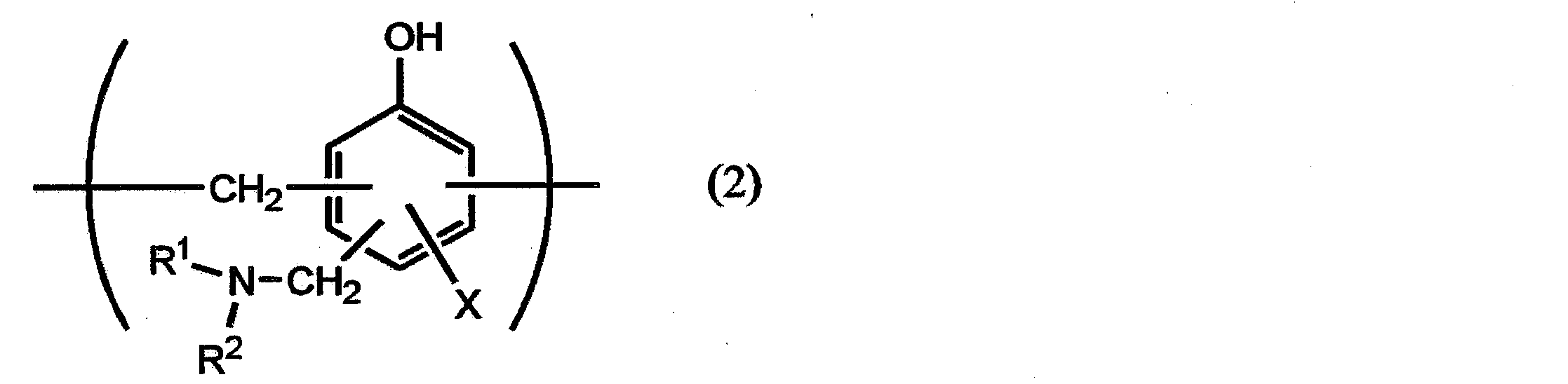


一般式(1)から(4)中、Xは水素原子、ヒドロキシル基、アルキル基、ヒドロキシアルキル基、アリル基又はベンジル基を示す。また、R1及びR2は、同一又は異なって、ヒドロキシル基、アルキル基、又はヒドロキシアルキル基を示す。一般式(1)から(4)において、X、R1、R2で示されるアルキル基としては、例えば、メチル基、エチル基、n-プロピル基、イソプロピル基、n-ブチル基、イソブチル基、tert-ブチル基等の炭素数1から4の直鎖又は分枝鎖状アルキル基が挙げられる。また、X、R1、R2で示されるヒドロキシアルキル基としては、例えば、ヒドロキシメチル基、1-ヒドロキシエチル基、2-ヒドロキシエチル基、1-ヒドロキシプロピル基、2-ヒドロキシプロピル基、3-ヒドロキシプロピル基、1-ヒドロキシブチル基、2-ヒドロキシブチル基、3-ヒドロキシブチル基、4-ヒドロキシブチル基等のヒドロキシ基が1個置換された炭素数1から4の直鎖又は分枝鎖状アルキル基が挙げられる。一般式(1)から(4)において、Xは、水素原子、ヒドロキシル基、及び、ドロキシアルキル基のいずれかであることが好ましい。一般式(1)から(4)で表される繰り返し単位からなるアミノ化フェノール重合体の数平均分子量は、例えば、約500以上約100万以下、好ましくは約1000以上約2万以下が挙げられる。
また、金属層3に耐食性を付与する化成処理方法として、リン酸中に、酸化アルミ、酸化チタン、酸化セリウム、酸化スズ等の金属酸化物や硫酸バリウムの微粒子を分散させたものをコーティングし、150℃以上で焼付け処理を行うことにより、金属層3の表面に耐食処理層を形成する方法が挙げられる。また、耐食処理層の上には、カチオン性ポリマーを架橋剤で架橋させた樹脂層を形成してもよい。ここで、カチオン性ポリマーとしては、例えば、ポリエチレンイミン、ポリエチレンイミンとカルボン酸を有するポリマーからなるイオン高分子錯体、アクリル主骨格に1級アミンをグラフトさせた1級アミングラフトアクリル樹脂、ポリアリルアミンまたはその誘導体、アミノフェノール等が挙げられる。これらのカチオン性ポリマーは1種単独で使用してもよく、また2種以上を組み合わせて使用してもよい。また、架橋剤としては、例えば、イソシアネート基、グリシジル基、カルボキシル基、及びオキサゾリン基よりなる群から選ばれる少なくとも1種の官能基を有する化合物、シランカップリング剤等が挙げられる。これらの架橋剤は1種単独で使用してもよく、また2種以上を組み合わせて使用してもよい。
これらの化成処理は、1種の化成処理を単独で行ってもよく、2種以上の化成処理を組み合わせて行ってもよい。更に、これらの化成処理は、1種の化合物を単独で使用して行ってもよく、また2種以上の化合物を組み合わせて使用して行ってもよい。これらの中でも、好ましくはクロム酸クロメート処理、更に好ましくはクロム酸化合物、リン酸化合物、及びアミノ化フェノール重合体を組み合わせたクロメート処理が挙げられる。
化成処理において金属層3の表面に形成させる耐酸性皮膜の量については、特に制限されないが、例えばクロム酸化合物、リン酸化合物、及びアミノ化フェノール重合体を組み合わせてクロメート処理を行う場合であれば、金属層3の表面1m2当たり、クロム酸化合物がクロム換算で約0.5mg以上約50mg以下、好ましくは約1.0mg以上約40mg以下、リン化合物がリン換算で約0.5mg以上約50mg以下、好ましくは約1.0mg以上約40mg以下、及びアミノ化フェノール重合体が約1mg以上約200mg以下、好ましくは約5.0mg以上150mg以下の割合で含有されていることが望ましい。
化成処理は、耐酸性皮膜の形成に使用する化合物を含む溶液を、バーコート法、ロールコート法、グラビアコート法、浸漬法等によって、金属層3の表面に塗布した後に、金属層3の温度が70℃以上200℃以下程度になるように加熱することにより行われる。また、金属層3に化成処理を施す前に、予め金属層3を、アルカリ浸漬法、電解洗浄法、酸洗浄法、電解酸洗浄法等による脱脂処理に供してもよい。このように脱脂処理を行うことにより、金属層3の表面の化成処理を一層効率的に行うことが可能になる。
[熱融着性樹脂層4]
本発明の電池用包装材料において、熱融着性樹脂層4は、最内層に該当し、電池の組み立て時に熱融着性樹脂層同士が熱溶着して電池素子を密封する層である。
本発明の電池用包装材料において、熱融着性樹脂層4は、最内層に該当し、電池の組み立て時に熱融着性樹脂層同士が熱溶着して電池素子を密封する層である。
熱融着性樹脂層4に使用される樹脂成分については、熱溶着可能であることを限度として特に制限されないが、例えば、ポリオレフィン、環状ポリオレフィン、カルボン酸変性ポリオレフィン、カルボン酸変性環状ポリオレフィンが挙げられる。
前記ポリオレフィンとしては、具体的には、低密度ポリエチレン、中密度ポリエチレン、高密度ポリエチレン、線状低密度ポリエチレン等のポリエチレン;ホモポリプロピレン、ポリプロピレンのブロックコポリマー(例えば、プロピレンとエチレンのブロックコポリマー)、ポリプロピレンのランダムコポリマー(例えば、プロピレンとエチレンのランダムコポリマー)等のポリプロピレン;エチレン-ブテン-プロピレンのターポリマー;等が挙げられる。これらのポリオレフィンの中でも、好ましくはポリエチレン及びポリプロピレンが挙げられる。
前記環状ポリオレフィンは、オレフィンと環状モノマーとの共重合体であり、前記環状ポリオレフィンの構成モノマーであるオレフィンとしては、例えば、エチレン、プロピレン、4-メチル-1-ペンテン、スチレン、ブタジエン、イソプレン、等が挙げられる。また、前記環状ポリオレフィンの構成モノマーである環状モノマーとしては、例えば、ノルボルネン等の環状アルケン;具体的には、シクロペンタジエン、ジシクロペンタジエン、シクロヘキサジエン、ノルボルナジエン等の環状ジエン等が挙げられる。これらのポリオレフィンの中でも、好ましくは環状アルケン、更に好ましくはノルボルネンが挙げられる。
前記カルボン酸変性ポリオレフィンとは、前記ポリオレフィンをカルボン酸でブロック重合又はグラフト重合することにより変性したポリマーである。変性に使用されるカルボン酸としては、例えば、マレイン酸、アクリル酸、イタコン酸、クロトン酸、無水マレイン酸、無水イタコン酸等が挙げられる。
前記カルボン酸変性環状ポリオレフィンとは、環状ポリオレフィンを構成するモノマーの一部を、α,β―不飽和カルボン酸又はその無水物に代えて共重合することにより、或いは環状ポリオレフィンに対してα,β―不飽和カルボン酸又はその無水物をブロック重合又はグラフト重合することにより得られるポリマーである。カルボン酸変性される環状ポリオレフィンについては、前記と同様である。また、変性に使用されるカルボン酸としては、前記酸変性シクロオレフィンコポリマーの変性に使用されるものと同様である。
これらの樹脂成分の中でも、好ましくはカルボン酸変性ポリオレフィン;更に好ましくはカルボン酸変性ポリプロピレンが挙げられる。
熱融着性樹脂層4は、1種の樹脂成分単独で形成してもよく、また2種以上の樹脂成分を組み合わせたブレンドポリマーにより形成してもよい。更に、熱融着性樹脂層4は、1層のみで成されていてもよいが、同一又は異なる樹脂成分によって2層以上で形成されていてもよい。
本発明の電池用包装材料において、熱融着性樹脂層4は滑剤を含んでいてもよい。滑剤の種類としては、特に制限されず、例えば、上記の[基材層1]の項目で例示したものが挙げられる。熱融着性樹脂層4が滑剤を含む場合、その含有量は、適宜選択すればよいが、好ましくは700ppm以上1200ppm以下程度、より好ましくは800ppm以上1100ppm以下程度が挙げられる。なお、本発明において、熱融着性樹脂層4における滑剤の含有量は、熱融着性樹脂層4の内部に存在する滑剤と、熱融着性樹脂層4の表面に存在する滑剤との合計量である。
また、熱融着性樹脂層4の厚さとしては、適宜選定することができるが、10μm以上100μm以下程度、好ましくは15μm以上50μm以下程度が挙げられる。
[接着層5]
本発明の電池用包装材料において、接着層5は、金属層3と熱融着性樹脂層4を強固に接着させるために、これらの間に必要に応じて設けられる層である。
本発明の電池用包装材料において、接着層5は、金属層3と熱融着性樹脂層4を強固に接着させるために、これらの間に必要に応じて設けられる層である。
接着層5は、金属層3と熱融着性樹脂層4とを接着可能である接着剤によって形成される。接着層5の形成に使用される接着剤について、その接着機構、接着剤成分の種類等は、前記接着剤層2の場合と同様である。接着層5に使用される接着剤成分として、好ましくはポリオレフィン系樹脂、更に好ましくはカルボン酸変性ポリオレフィン、特に好ましくはカルボン酸変性ポリプロピレンが挙げられる。
接着層5の厚さについては、例えば、2μm以上50μm以下、好ましくは15μm以上30μm以下が挙げられる。
3.電池用包装材料の製造方法
本発明の電池用包装材料の製造方法については、所定の組成の各層を積層させた積層体が得られる限り、特に制限されないが、例えば、以下の方法が例示される。
本発明の電池用包装材料の製造方法については、所定の組成の各層を積層させた積層体が得られる限り、特に制限されないが、例えば、以下の方法が例示される。
まず、基材層1、接着剤層2、金属層3をこの順に備える積層体(以下、「積層体A」と表記することもある)を形成する。積層体Aの形成は、具体的には、基材層1上又は必要に応じて表面が化成処理された金属層3に接着剤層2の形成に使用される接着剤を、押出し法、グラビアコート法、ロールコート法等の塗布方法で塗布・乾燥した後に、当該金属層3又は基材層1を積層させて接着剤層2を硬化させるドライラミネート法によって行うことができる。
次いで、積層体Aの金属層3上に、熱融着性樹脂層4を積層させる。金属層3上に熱融着性樹脂層4を直接積層させる場合には、積層体Aの金属層3上に、熱融着性樹脂層4を構成する樹脂成分をグラビアコート法、ロールコート法等の方法により塗布すればよい。また、金属層3と熱融着性樹脂層4の間に接着層5を設ける場合には、例えば、(1)積層体Aの金属層3上に、接着層5及び熱融着性樹脂層4を共押出しすることにより積層する方法(共押出しラミネーション法)、(2)別途、接着層5と熱融着性樹脂層4が積層した積層体を形成し、これを積層体Aの金属層3上にサーマルラミネーション法により積層する方法、(3)積層体Aの金属層3上に、接着層5を形成させるための接着剤を押出し法や溶液コーティングした高温で乾燥さらには焼き付ける方法等により積層させ、この接着層5上に予めシート状に製膜した熱融着性樹脂層4をサーマルラミネーション法により積層する方法、(4)積層体Aの金属層3と、予めシート状に製膜した熱融着性樹脂層4との間に、溶融させた接着層5を流し込みながら、接着層5を介して積層体Aと熱融着性樹脂層4を貼り合せる方法(サンドイッチラミネート法)等が挙げられる。なお、接着剤層2及び必要に応じて設けられる接着層5の接着性を強固にするために、更に、熱ロール接触式、熱風式、近又は遠赤外線式等の加熱処理に供してもよい。このような加熱処理の条件としては、例えば150℃以上250℃以下で1分間以上5分間以下が挙げられる。
本発明の電池用包装材料において、積層体を構成する各層は、必要に応じて、製膜性、積層化加工、最終製品2次加工(パウチ化、エンボス成形)適性等を向上又は安定化するために、コロナ処理、ブラスト処理、酸化処理、オゾン処理等の表面活性化処理を施していてもよい。
また、第1の発明において、電池用包装材料の表面にインキを印刷する場合、印刷方法としては、特に制限されないが、成型後の電池用包装材料に印刷を行う場合には、パッド印刷が好ましい。本発明の製造方法によって得られる電池用包装材料は、基材層がエチレンビスステアリン酸アミドを含むポリアミド樹脂により形成されているため、インキが弾かれ難く、パッド印刷によっても、好適にインキの印刷を行うことができる。従って、基材層1の表面の少なくも一部に、例えば、バーコード、柄、文字などの印字を好適に形成することができる。印刷に用いられるインキとしては、上記の通りである。
また、第2の発明において、電池用包装材料の表面にインキを印刷する場合、印刷方法としては、特に制限されないが、成型後の電池用包装材料に印刷を行う場合には、パッド印刷が好ましい。第2の発明の製造方法によって得られる電池用包装材料は、基材層がエチレンビスオレイン酸アミドを含むポリアミド樹脂により形成されており、かつ、基材層におけるエチレンビスオレイン酸アミドの含有量が、400ppm以下であるため、インキが弾かれ難く、パッド印刷によっても、好適にインキの印刷を行うことができる。従って、基材層1の表面の少なくも一部に、例えば、バーコード、柄、文字などの印字を好適に形成することができる。印刷に用いられるインキとしては、上記の通りである。
4.電池用包装材料の用途
本発明の電池用包装材料は、正極、負極、電解質等の電池素子を密封して収容するための包装材料として使用される。
本発明の電池用包装材料は、正極、負極、電解質等の電池素子を密封して収容するための包装材料として使用される。
具体的には、少なくとも正極、負極、及び電解質を備えた電池素子を、本発明の電池用包装材料で、前記正極及び負極の各々に接続された金属端子が外側に突出させた状態で、電池素子の周縁にフランジ部(熱融着性樹脂層同士が接触する領域)が形成できるようにして被覆し、前記フランジ部の熱融着性樹脂層同士をヒートシールして密封させることによって、電池用包装材料を使用した電池が提供される。なお、本発明の電池用包装材料を用いて電池素子を収容する場合、本発明の電池用包装材料のシーラント部分が内側(電池素子と接する面)になるようにして用いられる。
本発明の電池には、上記本発明の電池用包装材料が用いられているため、電池用包装材料が成型され、電池素子が封止された後の電池の表面に好適にインキを印刷することができる。すなわち、本発明の電池は、電池用包装材料の基材層がエチレンビスステアリン酸アミドを含むポリアミド樹脂により形成されているため、通常、インキが弾かれやすいパッド印刷によっても、好適にインキの印刷を行うことができ、電池の表面の少なくとも一部に、例えば、バーコード、柄、文字などの印字を好適に形成することができる。
本発明の電池用包装材料は、一次電池、二次電池のいずれに使用してもよいが、好ましくは二次電池である。本発明の電池用包装材料が適用される二次電池の種類については、特に制限されず、例えば、リチウムイオン電池、リチウムイオンポリマー電池、鉛畜電池、ニッケル・水素畜電池、ニッケル・カドミウム畜電池、ニッケル・鉄畜電池、ニッケル・亜鉛畜電池、酸化銀・亜鉛畜電池、金属空気電池、多価カチオン電池、コンデンサー、キャパシター等が挙げられる。これらの二次電池の中でも、本発明の電池用包装材料の好適な適用対象として、リチウムイオン電池及びリチウムイオンポリマー電池が挙げられる。
以下に実施例及び比較例を示して本発明を詳細に説明する。但し本発明は実施例に限定されるものではない。
実施例1A-5A及び比較例1A
<電池用包装材料の製造>
基材層1/接着剤層2/金属層3をこの順に備える積層体に対して、共押出法で接着層5及び熱融着性樹脂層4を積層させることにより、基材層1/接着剤層2/金属層3/接着層5/熱融着性樹脂層4をこの順に備える積層体からなる電池用包装材料を製造した。電池用包装材料の具体的な製造条件は、以下に示す通りである。
<電池用包装材料の製造>
基材層1/接着剤層2/金属層3をこの順に備える積層体に対して、共押出法で接着層5及び熱融着性樹脂層4を積層させることにより、基材層1/接着剤層2/金属層3/接着層5/熱融着性樹脂層4をこの順に備える積層体からなる電池用包装材料を製造した。電池用包装材料の具体的な製造条件は、以下に示す通りである。
実施例1A-5A及び比較例1Aにおいては、それぞれ、基材層1を構成する2軸延伸ナイロンフィルム(厚み15μm)及び金属層2を構成するアルミニウム箔(アルミニウム合金)またはステンレス鋼箔(それぞれ35μm)を用いた。基材層1を構成する2軸延伸ナイロンフィルムには、それぞれ、撥水剤として、表1Aに記載の含有量のエチレンビスステアリン酸アミドまたはエチレンビスオレイン酸アミドが配合してある。また、アルミニウム箔及びステンレス鋼箔は、フェノール樹脂、フッ化クロム化合物(三価)、及びリン酸からなる処理液をクロムの塗布量が10mg/m2(乾燥重量)となるように、ロールコート法により金属層の両面に塗布し、皮膜温度が180℃以上となる条件で20秒間焼付けすることにより化成処理した。
まず、基材層1/接着剤層2/金属層3をこの順に備える積層体を作製した。具体的には、基材層1の一方面(コロナ処理面)に、ポリエステル系の主剤とイソシアネート系硬化剤の2液型ウレタン接着剤からなる接着剤層2を3μmとなるように形成し、これをドライラミネート法により金属層3と積層して、基材層1/接着剤層2/金属層3をこの順に備える積層体を作製した。
次に、表1Aに示されるように、接着層5を構成する酸変性ポリプロピレン樹脂〔不飽和カルボン酸でグラフト変性した不飽和カルボン酸グラフト変性ランダムポリプロピレン(酸変性PP)〕または酸変性ポリエチレン樹脂〔不飽和カルボン酸でグラフト変性した不飽和カルボン酸グラフト変性ランダムポリエチレン(酸変性PE)〕と、熱融着性樹脂層4を構成するポリプロピレン〔ランダムコポリマー(PP)〕またはポリエチレン(PE)とを溶融し、前記積層体の金属層3の表面に共押出しして、厚さ20μmの接着層5と厚さ15μmの熱融着性樹脂層4を積層した。以上のようにして、基材層1/接着剤層2/金属層3/接着層5/熱融着性樹脂層4をこの順に備える積層体を得た。得られた積層体を一旦冷却した後に、180℃になるまで加熱し、1分間その温度を保持して熱処理を施すことにより、電池用包装材料を得た。
<電池セルの製造時におけるベーキング工程を模した処理によって基材層表面にブリードアウトする撥水剤の量の測定>
電池セルの製造時における100℃でのベーキング工程を模倣し、実施例1A-5A及び比較例1Aで得られた電池用包装材料を100℃の恒温槽中に24時間静置し、基材層表面(A4サイズ:210mm×297mm)を30mlのメタノールで洗浄し、洗浄後のメタノールを窒素ブローにて揮発・乾燥させる。次に、乾固分にメタノールを1.5ml加えて再溶解し、GC-MS(島津製作所製のQP2010、イオン化法:電子衝突イオン化法(EI法)、検出器:四重極型検出器、カラム :Inert Cap 5MS)で撥水剤(エチレンビスステアリン酸アミドまたはエチレンビスオレイン酸アミド)の量を測定した。結果を表1Aに示す(表面ブリード量)。なお、撥水剤の検出限界は、30μg/A4サイズである。
電池セルの製造時における100℃でのベーキング工程を模倣し、実施例1A-5A及び比較例1Aで得られた電池用包装材料を100℃の恒温槽中に24時間静置し、基材層表面(A4サイズ:210mm×297mm)を30mlのメタノールで洗浄し、洗浄後のメタノールを窒素ブローにて揮発・乾燥させる。次に、乾固分にメタノールを1.5ml加えて再溶解し、GC-MS(島津製作所製のQP2010、イオン化法:電子衝突イオン化法(EI法)、検出器:四重極型検出器、カラム :Inert Cap 5MS)で撥水剤(エチレンビスステアリン酸アミドまたはエチレンビスオレイン酸アミド)の量を測定した。結果を表1Aに示す(表面ブリード量)。なお、撥水剤の検出限界は、30μg/A4サイズである。
<印字性評価>
前述のベーキング工程を模した処理を行った実施例1A-5A及び比較例1Aの電池用包装材料について、基材層表面にパッド印刷で図柄を印刷した。パッド印刷機は、ミシマ株式会社製SPACE PAD 6GXを使用し、インキはナビタス株式会社製のUVインキPJU-A黒色を使用した。また、アズワン製のハンディーUVランプ SUVー4で紫外線波長:254nmにて10cmの距離からUVを30秒間照射してインキを硬化させた。以下の基準により印字性を評価した。なお、印字適性測定は24℃で相対湿度50%の環境下にて行った。結果を表1Aに示す。
5:印字の抜けが全く無い
4:印字の抜けが2.5%以下である
3:印字の抜けが2.5%超、5.0%以下である
2:印字の抜けが5.0%超、10%以下である
1:印字の抜けが10%超である
前述のベーキング工程を模した処理を行った実施例1A-5A及び比較例1Aの電池用包装材料について、基材層表面にパッド印刷で図柄を印刷した。パッド印刷機は、ミシマ株式会社製SPACE PAD 6GXを使用し、インキはナビタス株式会社製のUVインキPJU-A黒色を使用した。また、アズワン製のハンディーUVランプ SUVー4で紫外線波長:254nmにて10cmの距離からUVを30秒間照射してインキを硬化させた。以下の基準により印字性を評価した。なお、印字適性測定は24℃で相対湿度50%の環境下にて行った。結果を表1Aに示す。
5:印字の抜けが全く無い
4:印字の抜けが2.5%以下である
3:印字の抜けが2.5%超、5.0%以下である
2:印字の抜けが5.0%超、10%以下である
1:印字の抜けが10%超である
<濡れ性評価>
前述のベーキング工程を模した処理を行った実施例1A-5A及び比較例1の電池用包装材料について、印字適正の比較検証を目的とし、JIS規格に準拠したぬれ試薬による電池用包装材料外装材の基材面のダイン値判定を実施した。試験方法は、「JIS K6768 プラスチック-フィルム及びシート-ぬれ張力試験法」に準拠した。ナカライテスク社製のぬれ張力試験用混合液を使用し、球状の脱脂綿に含ませた試薬を、電池用包装材料外装材の基材面に5cmほど線状に塗布し、2秒後に液膜が破れるか否かで判定し、破れなかったダイン値をその基材の濡れ性とした。なお、ぬれ張力の測定は、24℃で相対湿度50%の環境下に行った。結果を表1Aに示す。
前述のベーキング工程を模した処理を行った実施例1A-5A及び比較例1の電池用包装材料について、印字適正の比較検証を目的とし、JIS規格に準拠したぬれ試薬による電池用包装材料外装材の基材面のダイン値判定を実施した。試験方法は、「JIS K6768 プラスチック-フィルム及びシート-ぬれ張力試験法」に準拠した。ナカライテスク社製のぬれ張力試験用混合液を使用し、球状の脱脂綿に含ませた試薬を、電池用包装材料外装材の基材面に5cmほど線状に塗布し、2秒後に液膜が破れるか否かで判定し、破れなかったダイン値をその基材の濡れ性とした。なお、ぬれ張力の測定は、24℃で相対湿度50%の環境下に行った。結果を表1Aに示す。
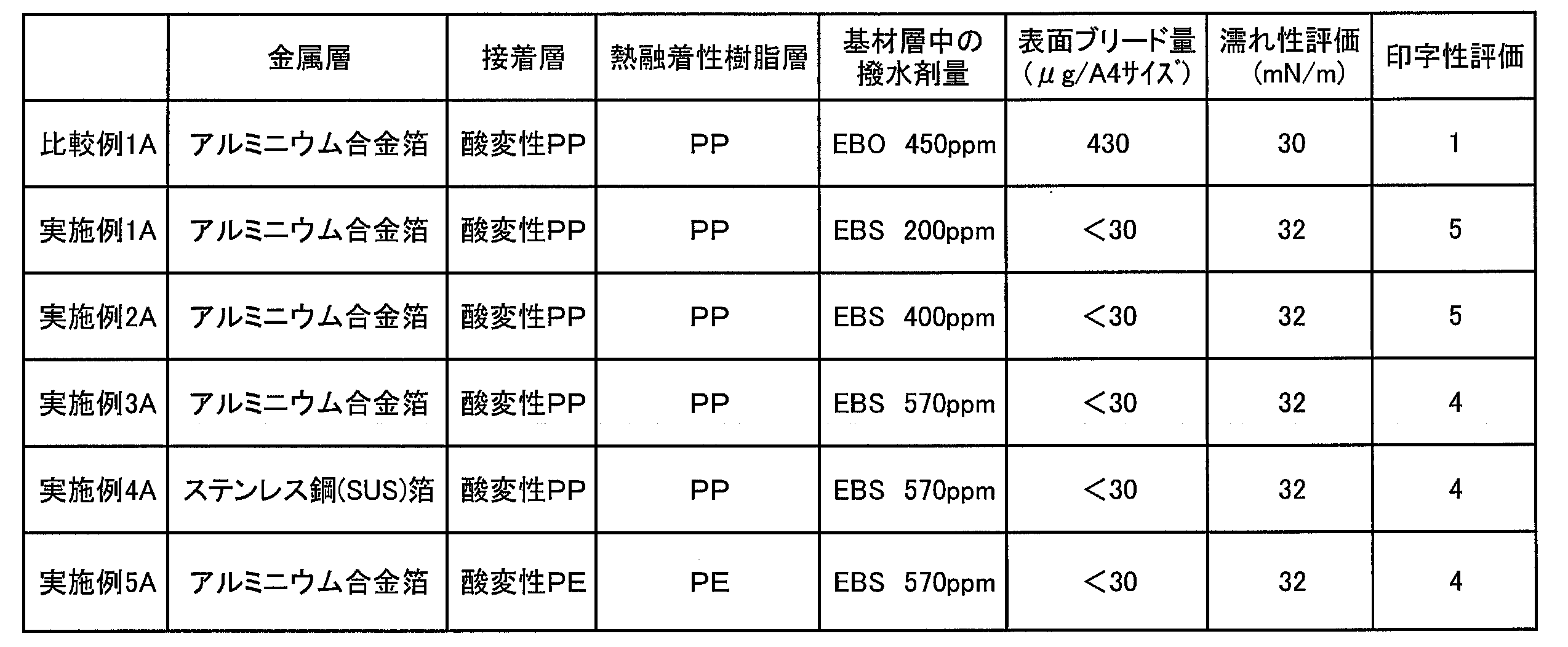
表1A中、EBSは、エチレンビスステアリン酸アミド、EBOは、エチレンビスオレイン酸アミドを意味する。
表1Aに示されるように、基材層を形成するナイロンに撥水剤としてエチレンビスステアリン酸アミドを用いた実施例1A-5Aでは、撥水剤の表面ブリードが抑制され、パッド印刷によるインキの印刷特性に優れていた。特に、実施例1A-2Aは、非常に優れていた。一方、基材層を形成するナイロンに撥水剤としてエチレンビスオレイン酸アミドを用いた比較例1Aでは、撥水剤が多量にブリードアウトして、パッド印刷によるインキの印刷特性が劣っていた。なお、いずれの電池用包装材料も、成形性は良好であった。
実施例1B-5B及び比較例1B
<電池用包装材料の製造>
基材層1/接着層2/金属層3をこの順に備える積層体に対して、共押出法で接着層5及び熱融着樹脂層4を積層させることにより、基材層1/接着層2/金属層3/接着層5/熱融着樹脂層4をこの順に備える積層体からなる電池用包装材料を製造した。電池用包装材料の具体的な製造条件は、以下に示す通りである。
<電池用包装材料の製造>
基材層1/接着層2/金属層3をこの順に備える積層体に対して、共押出法で接着層5及び熱融着樹脂層4を積層させることにより、基材層1/接着層2/金属層3/接着層5/熱融着樹脂層4をこの順に備える積層体からなる電池用包装材料を製造した。電池用包装材料の具体的な製造条件は、以下に示す通りである。
実施例1B-5B及び比較例1Bにおいては、それぞれ、基材層1を構成する2軸延伸ナイロンフィルム(厚み15μm)及び金属層2を構成するアルミニウム箔(アルミニウム合金)またはステンレス鋼箔(それぞれ35μm)を用いた。基材層1を構成する2軸延伸ナイロンフィルムには、それぞれ、撥水剤として、表1Bに記載の含有量のエチレンビスオレイン酸アミドが配合してある。また、アルミニウム箔及びステンレス鋼箔は、フェノール樹脂、フッ化クロム化合物(三価)、及びリン酸からなる処理液をクロムの塗布量が10mg/m2(乾燥重量)となるように、ロールコート法により金属層の両面に塗布し、皮膜温度が180℃以上となる条件で20秒間焼付けすることにより化成処理した。
まず、基材層1/接着層2/金属層3をこの順に備える積層体を作製した。具体的には、基材層1の一方面(コロナ処理面)に、ポリエステル系の主剤とイソシアネート系硬化剤の2液型ウレタン接着剤からなる接着層2を3μmとなるように形成し、これをドライラミネート法により金属層3と積層して、基材層1/接着層2/金属層3をこの順に備える積層体を作製した。
次に、表1Bに示されるように、接着層5を構成する酸変性ポリプロピレン樹脂〔不飽和カルボン酸でグラフト変性した不飽和カルボン酸グラフト変性ランダムポリプロピレン(酸変性PP)〕または酸変性ポリエチレン樹脂〔不飽和カルボン酸でグラフト変性した不飽和カルボン酸グラフト変性ランダムポリエチレン(酸変性PE)〕と、熱融着樹脂層4を構成するポリプロピレン〔ランダムコポリマー(PP)〕またはポリエチレン(PE)とを溶融し、前記積層体の金属層3の表面に共押出しして、厚さ20μmの接着層5と厚さ15μmの熱融着樹脂層4を積層した。以上のようにして、基材層1/接着層2/金属層3/接着層5/熱融着樹脂層4をこの順に備える積層体を得た。得られた積層体を一旦冷却した後に、180℃になるまで加熱し、1分間その温度を保持して熱処理を施すことにより、電池用包装材料を得た。
<電池セルの製造時におけるベーキング工程を模した処理によって基材層表面にブリードアウトする撥水剤の量の測定>
電池セルの製造時における100℃でのベーキング工程を模倣し、実施例1B-5B及び比較例1Bで得られた電池用包装材料を100℃の恒温槽中に24時間静置し、基材層表面(A4サイズ:210mm×297mm)を30mlのメタノールで洗浄し、洗浄後のメタノールを窒素ブローにて揮発・乾燥させる。次に、乾固分にメタノールを1.5ml加えて再溶解し、(GC-MS島津製作所製のQP2010、イオン化法:電子衝突イオン化法(EI法)、検出器:四重極型検出器、カラム :Inert Cap 5MS)で撥水剤(エチレンビスオレイン酸アミド)の量を測定した。その結果、実施例1B-5Bにおいては、ブリードアウトする撥水剤の量が、いずれも380μg/A4サイズ以下に抑制されていた。一方、比較例1Bでは、380μg/A4サイズを大きく超えていた。
電池セルの製造時における100℃でのベーキング工程を模倣し、実施例1B-5B及び比較例1Bで得られた電池用包装材料を100℃の恒温槽中に24時間静置し、基材層表面(A4サイズ:210mm×297mm)を30mlのメタノールで洗浄し、洗浄後のメタノールを窒素ブローにて揮発・乾燥させる。次に、乾固分にメタノールを1.5ml加えて再溶解し、(GC-MS島津製作所製のQP2010、イオン化法:電子衝突イオン化法(EI法)、検出器:四重極型検出器、カラム :Inert Cap 5MS)で撥水剤(エチレンビスオレイン酸アミド)の量を測定した。その結果、実施例1B-5Bにおいては、ブリードアウトする撥水剤の量が、いずれも380μg/A4サイズ以下に抑制されていた。一方、比較例1Bでは、380μg/A4サイズを大きく超えていた。
<印字性評価>
前述のベーキング工程を模した処理を行った実施例1B-5B及び比較例1Bの電池用包装材料について、基材層表面にパッド印刷で図柄を印刷した。パッド印刷機は、ミシマ株式会社製SPACE PAD 6GXを使用し、インキはナビタス株式会社製のUVインキPJU-A黒色を使用した。また、アズワン製のハンディーUVランプ SUVー4で紫外線波長:254nmにて10cmの距離からUVを30秒間照射してインキを硬化させた。以下の基準により印字性を評価した。なお、印字適性測定は24℃で相対湿度50%の環境下にて行った。結果を表1Bに示す。
5:印字の抜けが全く無い
4:印字の抜けが2.5%以下である
3:印字の抜けが2.5%超、5.0%以下である
2:印字の抜けが5.0%超、10%以下である
1:印字の抜けが10%超である
前述のベーキング工程を模した処理を行った実施例1B-5B及び比較例1Bの電池用包装材料について、基材層表面にパッド印刷で図柄を印刷した。パッド印刷機は、ミシマ株式会社製SPACE PAD 6GXを使用し、インキはナビタス株式会社製のUVインキPJU-A黒色を使用した。また、アズワン製のハンディーUVランプ SUVー4で紫外線波長:254nmにて10cmの距離からUVを30秒間照射してインキを硬化させた。以下の基準により印字性を評価した。なお、印字適性測定は24℃で相対湿度50%の環境下にて行った。結果を表1Bに示す。
5:印字の抜けが全く無い
4:印字の抜けが2.5%以下である
3:印字の抜けが2.5%超、5.0%以下である
2:印字の抜けが5.0%超、10%以下である
1:印字の抜けが10%超である
<濡れ性評価>
前述のベーキング工程を模した処理を行った実施例1B-5B及び比較例1Bの電池用包装材料について、印字適正の比較検証を目的とし、JIS規格に準拠したぬれ試薬による電池用包装材料外装材の基材面のダイン値判定を実施した。試験方法は、「JIS K6768 プラスチック-フィルム及びシート-ぬれ張力試験法」に準拠した。ナカライテスク社製のぬれ張力試験用混合液を使用し、球状の脱脂綿に含ませた試薬を、電池用包装材料外装材の基材面に5cmほど線状に塗布し、2秒後に液膜が破れるか否かで判定し、破れなかったダイン値をその基材の濡れ性とした。なお、ぬれ張力の測定は、24℃で相対湿度50%の環境下に行った。結果を表1Bに示す。
前述のベーキング工程を模した処理を行った実施例1B-5B及び比較例1Bの電池用包装材料について、印字適正の比較検証を目的とし、JIS規格に準拠したぬれ試薬による電池用包装材料外装材の基材面のダイン値判定を実施した。試験方法は、「JIS K6768 プラスチック-フィルム及びシート-ぬれ張力試験法」に準拠した。ナカライテスク社製のぬれ張力試験用混合液を使用し、球状の脱脂綿に含ませた試薬を、電池用包装材料外装材の基材面に5cmほど線状に塗布し、2秒後に液膜が破れるか否かで判定し、破れなかったダイン値をその基材の濡れ性とした。なお、ぬれ張力の測定は、24℃で相対湿度50%の環境下に行った。結果を表1Bに示す。
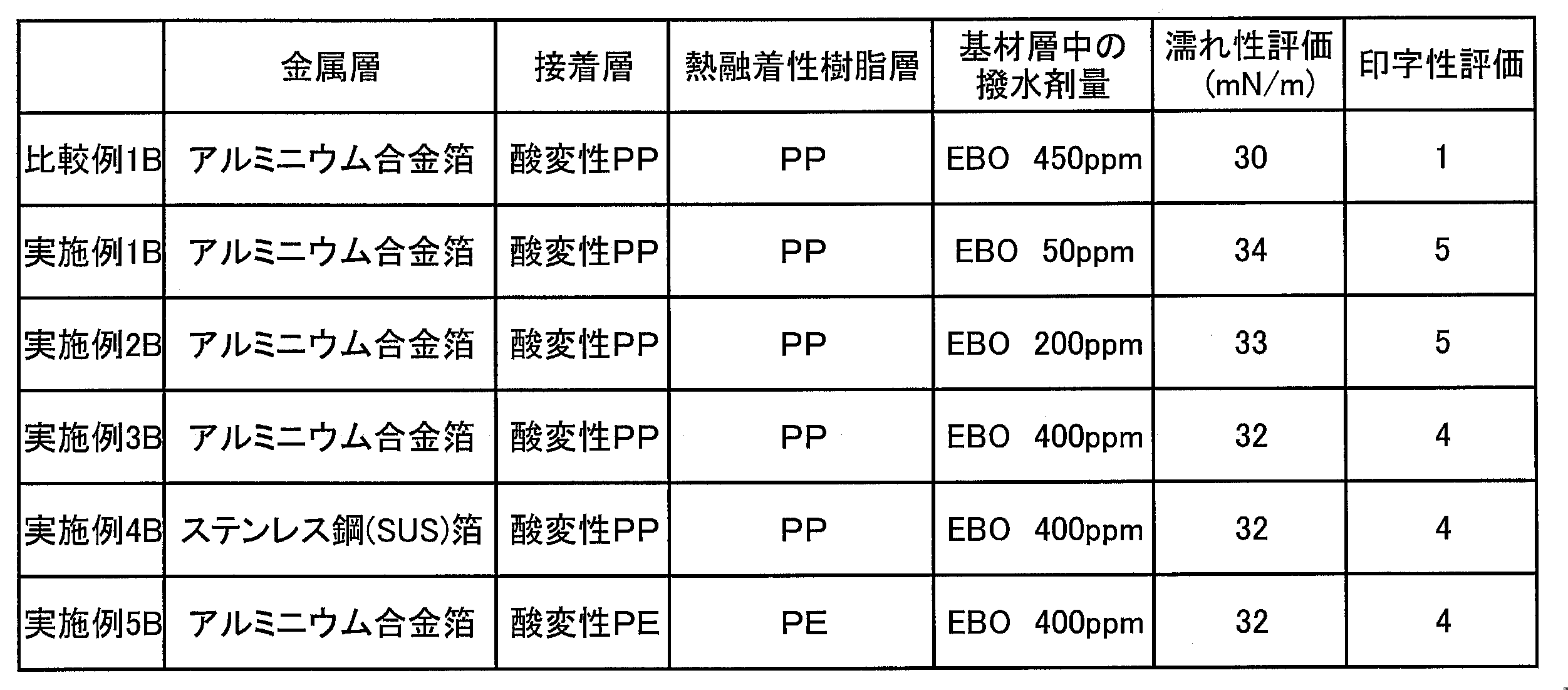
表1B中、EBOは、エチレンビスオレイン酸アミドを意味する。
表1Bに示されるように、基材層を形成するナイロンに撥水剤として400ppm以下のエチレンビスオレイン酸アミドを含む実施例1B-5Bでは、パッド印刷によるインキの印刷特性に優れていた。特に、実施例1B-2Bは、非常に優れていた。一方、基材層を形成するナイロンに撥水剤として400ppmを超えるエチレンビスオレイン酸アミドを含む比較例1Bでは、パッド印刷によるインキの印刷特性が劣っていた。なお、いずれの電池用包装材料も、成形性は良好であった。
1 基材層
2 接着剤層
3 金属層
4 熱融着性樹脂層
5 接着層
2 接着剤層
3 金属層
4 熱融着性樹脂層
5 接着層
Claims (12)
- 少なくとも、基材層と、金属層と、熱融着性樹脂層とをこの順に備える積層体からなり、
前記基材層が、エチレンビスステアリン酸アミドを含むポリアミド樹脂により形成されている、電池用包装材料。 - 前記電池用包装材料を100℃の恒温槽中に24時間静置した後、210mm×297mmの範囲の前記基材層表面に存在するエチレンビスステアリン酸アミドの量が、30μg以下である、請求項1に記載の電池用包装材料。
- 少なくとも、基材層と、金属層と、シーラント層とをこの順に備える積層体からなり、
前記基材層が、エチレンビスオレイン酸アミドを含むポリアミド樹脂により形成されており、
前記基材層におけるエチレンビスオレイン酸アミドの含有量が、400ppm以下である、電池用包装材料。 - 前記電池用包装材料を100℃の恒温槽中に24時間静置した後、210mm×297mmの範囲の前記基材層表面に存在するエチレンビスオレイン酸アミドが、380μg以下である、請求項3に記載の電池用包装材料。
- 前記基材層表面の少なくとも一部が、インキ受容面である、請求項1~4のいずれかに記載の電池用包装材料。
- 前記基材層表面の少なくとも一部に、インキから構成される印刷層を備える、請求項1~4のいずれかに記載の電池用包装材料。
- 前記基材層表面のぬれ張力が、32mN/m以上である、請求項1~6のいずれかに記載の電池用包装材料。
- 前記ポリアミド樹脂が、2軸延伸ナイロンである、請求項1~7のいずれかに記載の電池用包装材料。
- 前記基材層と前記金属層との間に接着層を備える、請求項1~8のいずれかに記載の電池用包装材料。
- 前記金属層と前記熱融着性樹脂層との間に接着層を備える、請求項1~9のいずれかに記載の電池用包装材料。
- 前記金属層が、アルミニウム箔またはステンレス鋼箔である、請求項1~10のいずれかに記載の電池用包装材料。
- 少なくとも正極、負極、及び電解質を備えた電池素子が、請求項1~11のいずれかに記載の電池用包装材料により形成された包装体中に収容されている、電池。
Priority Applications (2)
| Application Number | Priority Date | Filing Date | Title |
|---|---|---|---|
| CN201680018029.XA CN107408644B (zh) | 2015-03-25 | 2016-03-25 | 电池用包装材料和电池 |
| US15/557,777 US10396316B2 (en) | 2015-03-25 | 2016-03-25 | Cell packaging material and cell |
Applications Claiming Priority (4)
| Application Number | Priority Date | Filing Date | Title |
|---|---|---|---|
| JP2015063402A JP6710894B2 (ja) | 2015-03-25 | 2015-03-25 | 電池用包装材料 |
| JP2015-063402 | 2015-03-25 | ||
| JP2015063403A JP6710895B2 (ja) | 2015-03-25 | 2015-03-25 | 電池用包装材料 |
| JP2015-063403 | 2015-03-25 |
Publications (1)
| Publication Number | Publication Date |
|---|---|
| WO2016153059A1 true WO2016153059A1 (ja) | 2016-09-29 |
Family
ID=56977528
Family Applications (1)
| Application Number | Title | Priority Date | Filing Date |
|---|---|---|---|
| PCT/JP2016/059742 Ceased WO2016153059A1 (ja) | 2015-03-25 | 2016-03-25 | 電池用包装材料及び電池 |
Country Status (3)
| Country | Link |
|---|---|
| US (1) | US10396316B2 (ja) |
| CN (1) | CN107408644B (ja) |
| WO (1) | WO2016153059A1 (ja) |
Cited By (3)
| Publication number | Priority date | Publication date | Assignee | Title |
|---|---|---|---|---|
| JP2018060674A (ja) * | 2016-10-05 | 2018-04-12 | 大日本印刷株式会社 | 電池用包装材料、その製造方法、及び電池 |
| CN109715392A (zh) * | 2016-10-03 | 2019-05-03 | 昭和电工包装株式会社 | 包装材料的制造方法 |
| JP6809657B1 (ja) * | 2019-05-17 | 2021-01-06 | 大日本印刷株式会社 | 蓄電デバイス用外装材、その製造方法、蓄電デバイス、及びポリアミドフィルム |
Families Citing this family (4)
| Publication number | Priority date | Publication date | Assignee | Title |
|---|---|---|---|---|
| KR102562335B1 (ko) * | 2015-11-23 | 2023-07-31 | 삼성에스디아이 주식회사 | 이차 전지용 외장재 및 이를 포함하는 이차 전지 |
| ES2646237B2 (es) * | 2017-09-28 | 2018-07-27 | Avanzare Innovacion Tecnologica S.L. | Formulación para el mordentado de materiales poliméricos previo al recubrimiento de los mismos |
| CN115003735B (zh) | 2020-01-24 | 2024-10-01 | 尤尼吉可股份有限公司 | 聚酰胺树脂膜的制造方法 |
| JP7647141B2 (ja) * | 2021-02-10 | 2025-03-18 | Toppanホールディングス株式会社 | 高耐性包材用積層体 |
Citations (7)
| Publication number | Priority date | Publication date | Assignee | Title |
|---|---|---|---|---|
| JP2007069569A (ja) * | 2005-09-09 | 2007-03-22 | Idemitsu Unitech Co Ltd | 延伸ナイロンフィルム、及びその製造方法 |
| WO2012050182A1 (ja) * | 2010-10-14 | 2012-04-19 | 凸版印刷株式会社 | リチウムイオン電池用外装材 |
| JP2012124068A (ja) * | 2010-12-09 | 2012-06-28 | Toppan Printing Co Ltd | リチウムイオン電池用外装材 |
| JP2014054797A (ja) * | 2012-09-13 | 2014-03-27 | Idemitsu Unitech Co Ltd | 二軸延伸ナイロンフィルム、ラミネートフィルム、ラミネート包材、および二軸延伸ナイロンフィルムの製造方法 |
| JP2014199761A (ja) * | 2013-03-29 | 2014-10-23 | 凸版印刷株式会社 | 外装材、蓄電池、及び外装材の製造方法 |
| JP2015065159A (ja) * | 2013-08-30 | 2015-04-09 | 凸版印刷株式会社 | リチウムイオン電池用外装材 |
| JP2016072211A (ja) * | 2014-09-26 | 2016-05-09 | 大日本印刷株式会社 | 電池用包装材料 |
Family Cites Families (3)
| Publication number | Priority date | Publication date | Assignee | Title |
|---|---|---|---|---|
| JP4380728B2 (ja) | 2007-05-16 | 2009-12-09 | ソニー株式会社 | 積層型包装材料、電池用外装部材および電池 |
| JP5147292B2 (ja) | 2007-05-31 | 2013-02-20 | ユニチカ宇治プロダクツ株式会社 | 表面改質されたポリアミドフィルムおよびその製造方法 |
| WO2014123164A1 (ja) * | 2013-02-06 | 2014-08-14 | 大日本印刷株式会社 | 電池用包装材料 |
-
2016
- 2016-03-25 US US15/557,777 patent/US10396316B2/en active Active
- 2016-03-25 CN CN201680018029.XA patent/CN107408644B/zh active Active
- 2016-03-25 WO PCT/JP2016/059742 patent/WO2016153059A1/ja not_active Ceased
Patent Citations (7)
| Publication number | Priority date | Publication date | Assignee | Title |
|---|---|---|---|---|
| JP2007069569A (ja) * | 2005-09-09 | 2007-03-22 | Idemitsu Unitech Co Ltd | 延伸ナイロンフィルム、及びその製造方法 |
| WO2012050182A1 (ja) * | 2010-10-14 | 2012-04-19 | 凸版印刷株式会社 | リチウムイオン電池用外装材 |
| JP2012124068A (ja) * | 2010-12-09 | 2012-06-28 | Toppan Printing Co Ltd | リチウムイオン電池用外装材 |
| JP2014054797A (ja) * | 2012-09-13 | 2014-03-27 | Idemitsu Unitech Co Ltd | 二軸延伸ナイロンフィルム、ラミネートフィルム、ラミネート包材、および二軸延伸ナイロンフィルムの製造方法 |
| JP2014199761A (ja) * | 2013-03-29 | 2014-10-23 | 凸版印刷株式会社 | 外装材、蓄電池、及び外装材の製造方法 |
| JP2015065159A (ja) * | 2013-08-30 | 2015-04-09 | 凸版印刷株式会社 | リチウムイオン電池用外装材 |
| JP2016072211A (ja) * | 2014-09-26 | 2016-05-09 | 大日本印刷株式会社 | 電池用包装材料 |
Cited By (3)
| Publication number | Priority date | Publication date | Assignee | Title |
|---|---|---|---|---|
| CN109715392A (zh) * | 2016-10-03 | 2019-05-03 | 昭和电工包装株式会社 | 包装材料的制造方法 |
| JP2018060674A (ja) * | 2016-10-05 | 2018-04-12 | 大日本印刷株式会社 | 電池用包装材料、その製造方法、及び電池 |
| JP6809657B1 (ja) * | 2019-05-17 | 2021-01-06 | 大日本印刷株式会社 | 蓄電デバイス用外装材、その製造方法、蓄電デバイス、及びポリアミドフィルム |
Also Published As
| Publication number | Publication date |
|---|---|
| CN107408644B (zh) | 2021-03-30 |
| CN107408644A (zh) | 2017-11-28 |
| US10396316B2 (en) | 2019-08-27 |
| US20180076422A1 (en) | 2018-03-15 |
Similar Documents
| Publication | Publication Date | Title |
|---|---|---|
| US10396316B2 (en) | Cell packaging material and cell | |
| JP6446950B2 (ja) | 電池用包装材料 | |
| JP6566133B2 (ja) | 電池用包装材料、その製造方法、電池、及びポリエステルフィルム | |
| JP6519715B2 (ja) | 電池用包装材料、その製造方法、電池及びその製造方法 | |
| JP2020098794A (ja) | 電池用包装材料 | |
| JP7010333B2 (ja) | 電池用包装材料、その製造方法及び電池 | |
| CN115133185B (zh) | 电池用包装材料、电池、它们的制造方法和聚酯膜 | |
| WO2017209218A1 (ja) | 電池用包装材料、その製造方法、電池、及びポリエステルフィルム | |
| JP6710896B2 (ja) | 電池用包装材料 | |
| CN107078235B (zh) | 电池用包装材料 | |
| CN108431987A (zh) | 电池用包装材料、其制造方法和电池 | |
| JP6780230B2 (ja) | 接着性保護フィルム | |
| JP2016072211A5 (ja) | ||
| JPWO2017188445A1 (ja) | 電池用包装材料及び電池 | |
| JPWO2017179636A1 (ja) | 電池用包装材料、その製造方法、及び電池 | |
| JP6721870B2 (ja) | 電池用包装材料 | |
| JP6710897B2 (ja) | 電池用包装材料 | |
| WO2016047416A1 (ja) | 電池用包装材料 | |
| JP6503826B2 (ja) | 電池用包装材料の巻取体 | |
| JP6596870B2 (ja) | 電池用包装材料成形体の製造方法 | |
| JP6710894B2 (ja) | 電池用包装材料 | |
| JP6592938B2 (ja) | 電池用包装材料 | |
| JP7694544B2 (ja) | 電池用包装材料 | |
| JP6710895B2 (ja) | 電池用包装材料 | |
| JP6707315B2 (ja) | 電池用包装材料 |
Legal Events
| Date | Code | Title | Description |
|---|---|---|---|
| 121 | Ep: the epo has been informed by wipo that ep was designated in this application |
Ref document number: 16768962 Country of ref document: EP Kind code of ref document: A1 |
|
| WWE | Wipo information: entry into national phase |
Ref document number: 15557777 Country of ref document: US |
|
| NENP | Non-entry into the national phase |
Ref country code: DE |
|
| 122 | Ep: pct application non-entry in european phase |
Ref document number: 16768962 Country of ref document: EP Kind code of ref document: A1 |