WO2016152678A1 - 冷間圧延用圧延板の製造方法、及び純チタン板の製造方法 - Google Patents
冷間圧延用圧延板の製造方法、及び純チタン板の製造方法 Download PDFInfo
- Publication number
- WO2016152678A1 WO2016152678A1 PCT/JP2016/058330 JP2016058330W WO2016152678A1 WO 2016152678 A1 WO2016152678 A1 WO 2016152678A1 JP 2016058330 W JP2016058330 W JP 2016058330W WO 2016152678 A1 WO2016152678 A1 WO 2016152678A1
- Authority
- WO
- WIPO (PCT)
- Prior art keywords
- rolled sheet
- rolled
- cold rolling
- annealing
- rolling
- Prior art date
- Legal status (The legal status is an assumption and is not a legal conclusion. Google has not performed a legal analysis and makes no representation as to the accuracy of the status listed.)
- Ceased
Links
Images

Classifications
-
- C—CHEMISTRY; METALLURGY
- C22—METALLURGY; FERROUS OR NON-FERROUS ALLOYS; TREATMENT OF ALLOYS OR NON-FERROUS METALS
- C22F—CHANGING THE PHYSICAL STRUCTURE OF NON-FERROUS METALS AND NON-FERROUS ALLOYS
- C22F1/00—Changing the physical structure of non-ferrous metals or alloys by heat treatment or by hot or cold working
- C22F1/16—Changing the physical structure of non-ferrous metals or alloys by heat treatment or by hot or cold working of other metals or alloys based thereon
- C22F1/18—High-melting or refractory metals or alloys based thereon
- C22F1/183—High-melting or refractory metals or alloys based thereon of titanium or alloys based thereon
-
- B—PERFORMING OPERATIONS; TRANSPORTING
- B21—MECHANICAL METAL-WORKING WITHOUT ESSENTIALLY REMOVING MATERIAL; PUNCHING METAL
- B21B—ROLLING OF METAL
- B21B1/00—Metal-rolling methods or mills for making semi-finished products of solid or profiled cross-section; Sequence of operations in milling trains; Layout of rolling-mill plant, e.g. grouping of stands; Succession of passes or of sectional pass alternations
- B21B1/22—Metal-rolling methods or mills for making semi-finished products of solid or profiled cross-section; Sequence of operations in milling trains; Layout of rolling-mill plant, e.g. grouping of stands; Succession of passes or of sectional pass alternations for rolling plates, strips, bands or sheets of indefinite length
-
- B—PERFORMING OPERATIONS; TRANSPORTING
- B21—MECHANICAL METAL-WORKING WITHOUT ESSENTIALLY REMOVING MATERIAL; PUNCHING METAL
- B21B—ROLLING OF METAL
- B21B3/00—Rolling materials of special alloys so far as the composition of the alloy requires or permits special rolling methods or sequences ; Rolling of aluminium, copper, zinc or other non-ferrous metals
-
- C—CHEMISTRY; METALLURGY
- C22—METALLURGY; FERROUS OR NON-FERROUS ALLOYS; TREATMENT OF ALLOYS OR NON-FERROUS METALS
- C22C—ALLOYS
- C22C14/00—Alloys based on titanium
-
- C—CHEMISTRY; METALLURGY
- C22—METALLURGY; FERROUS OR NON-FERROUS ALLOYS; TREATMENT OF ALLOYS OR NON-FERROUS METALS
- C22F—CHANGING THE PHYSICAL STRUCTURE OF NON-FERROUS METALS AND NON-FERROUS ALLOYS
- C22F1/00—Changing the physical structure of non-ferrous metals or alloys by heat treatment or by hot or cold working
- C22F1/16—Changing the physical structure of non-ferrous metals or alloys by heat treatment or by hot or cold working of other metals or alloys based thereon
- C22F1/18—High-melting or refractory metals or alloys based thereon
-
- B—PERFORMING OPERATIONS; TRANSPORTING
- B21—MECHANICAL METAL-WORKING WITHOUT ESSENTIALLY REMOVING MATERIAL; PUNCHING METAL
- B21B—ROLLING OF METAL
- B21B1/00—Metal-rolling methods or mills for making semi-finished products of solid or profiled cross-section; Sequence of operations in milling trains; Layout of rolling-mill plant, e.g. grouping of stands; Succession of passes or of sectional pass alternations
- B21B1/22—Metal-rolling methods or mills for making semi-finished products of solid or profiled cross-section; Sequence of operations in milling trains; Layout of rolling-mill plant, e.g. grouping of stands; Succession of passes or of sectional pass alternations for rolling plates, strips, bands or sheets of indefinite length
- B21B2001/225—Metal-rolling methods or mills for making semi-finished products of solid or profiled cross-section; Sequence of operations in milling trains; Layout of rolling-mill plant, e.g. grouping of stands; Succession of passes or of sectional pass alternations for rolling plates, strips, bands or sheets of indefinite length by hot-rolling
Definitions
- the present invention relates to a method for producing a cold rolled sheet and a method for producing a pure titanium sheet.
- a cold rolling method is known as a manufacturing method of an industrial pure titanium plate that can suppress surface oxidation and thermal shrinkage and obtain a highly accurate product.
- This cold rolling method generally includes a hot rolling process, an annealing process, a first cold rolling process, an intermediate annealing process, a second cold rolling process, and a finish annealing process.
- the rolled body obtained in the hot rolling step and the annealing step is once rolled to an intermediate thickness in the first cold rolling step, and after the intermediate annealing step, cold rolling is performed again.
- the rolled sheet rolled to an intermediate thickness is rolled to the product thickness.
- the rolled sheet is gradually thinned by repeatedly performing a cold rolling process and an annealing process.
- This cold rolling method prevents cracks and breaks of the rolled sheet by reducing the total rolling reduction in the first cold rolling process and the second cold rolling process.
- the omission of this step for example, the omission of the first cold rolling step and the intermediate annealing step has been studied.
- the first cold rolling process and the intermediate annealing process are omitted, it is necessary to significantly increase the total rolling reduction in the second cold rolling process.
- the ductility of the rolled sheet cannot be sufficiently maintained during the cold rolling in the second cold rolling process, and there is a risk of causing end cracks and breakage of the rolled sheet during the cold rolling. There is.
- Patent Document 1 As an omission method of another process different from the omission of the first cold rolling process and the intermediate annealing process (a method of omitting processes other than the first cold rolling process and the intermediate annealing process), for example, Patent Document 1 And the method described in Patent Document 2.
- Patent Document 1 describes a method for producing a high-strength pure titanium plate that is not annealed after hot rolling with a heating temperature of 840 ° C. or more and less than 920 ° C. and a rolling reduction of 95% or more in one direction. Yes.
- Patent Document 2 describes a method for manufacturing a titanium hot rolled sheet in which a titanium sheet after hot rolling is forcibly cooled and wound at a temperature of 500 ° C. or lower. According to this method, it is disclosed that it can be used as a raw material for cold rolling as it is without annealing. That is, a method for manufacturing a titanium hot-rolled sheet that can omit the annealing step between the hot rolling step and the first cold rolling step has been proposed. Moreover, this manufacturing method can make the material of a product uniform even if it does not pass through an annealing process by rapidly cooling a titanium plate after completion
- the present invention provides a method for producing a cold rolled sheet for cold rolling and a method for producing a pure titanium sheet that can sufficiently suppress end cracking during cold rolling without performing an intermediate annealing step performed between the cold rolling steps.
- the purpose is to provide.
- One aspect of the present invention is a hot rolling process for rolling a pure titanium material and winding it into a coil shape, and an annealing process for annealing the rolled sheet after the hot rolling process.
- the coiling temperature in the hot rolling step is 500 ° C. or less
- the annealing step has an area ratio of recrystallized grains in the microstructure of the rolled sheet after annealing of 90% or more
- An average grain size is controlled to be 5 ⁇ m or more and 10 ⁇ m or less.
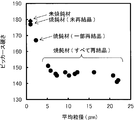
- FIG. 1 is a diagram showing the relationship between the average grain size of crystal grains and recrystallized grains in the microstructure of the rolled sheet after annealing and the Vickers hardness of the rolled sheet.
- FIG. 2 is a photomicrograph showing the end cracks of the rolled sheet produced during cold rolling.
- Patent Document 1 Since the manufacturing method described in Patent Document 1 has a high heating temperature in the hot rolling process, a relatively thick oxide layer tends to be formed on the surface of the rolled plate by this heating. For this reason, according to this manufacturing method, a possibility that wrinkles will arise on the surface of a rolled sheet is high. Moreover, since this manufacturing method does not anneal after a hot rolling process, a rolled sheet does not have sufficient ductility, and there exists a possibility that an edge part crack may arise when it cold-rolls.
- Patent Document 2 since the manufacturing method described in Patent Document 2 rapidly cools the titanium plate after hot rolling, the crystal grain size of the microstructure of the titanium plate is extremely fine. For this reason, the titanium plate obtained by this manufacturing method does not have sufficient ductility. Therefore, if cold rolling is directly performed without annealing such a titanium plate, cracks at both ends may occur.
- the present inventors have found that adjusting the conditions of the hot rolling process and the annealing process affects the occurrence of end cracks during the subsequent cold rolling process.
- the present inventors have omitted the process for reducing the manufacturing cost, and performed an intermediate annealing process between the first cold rolling process and the second cold rolling process (between the cold rolling processes). Focusing on omitting the intermediate annealing step), the inventors have arrived at the following present invention.
- a method for manufacturing a cold rolled rolled sheet according to an embodiment of the present invention includes a hot rolling step in which a pure titanium material is hot rolled and wound into a coil shape to form a rolled sheet, And an annealing step for annealing the rolled sheet after the rolling step.
- the coiling temperature is 500 ° C. or less.
- the annealing step is controlled so that the area ratio of recrystallized grains in the microstructure of the rolled sheet after annealing is 90% or more and the average grain size of the recrystallized grains is 5 ⁇ m or more and 10 ⁇ m or less.
- the temperature (winding temperature) at which the hot-rolled rolled plate is wound into a coil shape is within the above range, so the microstructure of the rolled plate obtained by the hot rolling step
- the crystal grain size in is likely to be fine and substantially uniform.
- the manufacturing method of the said rolled sheet for cold rolling tends to control the area ratio of the recrystallized grain in the microstructure of the rolled sheet after annealing, and the average grain diameter of the recrystallized grain within the above range.
- the present inventors have found that as the crystal grain size becomes smaller, the crystal grain boundary increases, and this crystal grain boundary suppresses end cracking of the rolled plate during cold rolling. Although the reason for this is not clear, it is conceivable that the fine cracks generated by the crystal grain boundaries become an obstacle for the spread of cracks inside the rolled sheet during cold rolling. For this reason, the manufacturing method of the said rolled sheet for cold rolling makes the area ratio and average particle diameter of the recrystallized grain in the microstructure of the rolled sheet after annealing into the said range, and a rolled sheet is at the time of cold rolling. In addition to having sufficient ductility, it is possible to accurately prevent end cracking during cold rolling.
- the manufacturing method of the pure titanium plate which concerns on other one Embodiment of this invention is a cold rolling plate obtained by the manufacturing method of the said rolling plate for cold rolling, without performing intermediate annealing.
- a cold rolling process for rolling is provided. That is, the manufacturing method of the said pure titanium plate is equipped with the said hot rolling process, the said annealing process, and the said cold rolling process.
- a pure titanium plate in which end cracking during cold rolling is sufficiently suppressed can be obtained without performing intermediate annealing in the cold rolling step.
- the manufacturing method of the said pure titanium plate is the end part crack at the time of cold rolling by cold-rolling the said rolled sheet for cold rolling (rolled sheet obtained by the said annealing process) without performing intermediate annealing.
- the suppressed pure titanium plate can be manufactured easily and reliably. Further, when the annealing process between the hot rolling process and the first cold rolling process is omitted as in the conventional manufacturing method, the oxide layer formed on the surface of the rolled plate is removed by the hot rolling process. Therefore, pickling treatment is required.
- the manufacturing method of the pure titanium plate has a higher cost reduction effect than the conventional manufacturing method.
- the method for producing a pure titanium plate is used as a method for producing a pure titanium plate by a cold rolling method.
- the manufacturing method of the said pure titanium plate is equipped with the said hot rolling process, the said annealing process, and the said cold rolling process.
- the manufacturing method of the said rolled sheet for cold rolling is equipped with the said hot rolling process and the said annealing process among these.
- a pure titanium material is hot rolled.
- This pure titanium material becomes cheaper as the grade number increases.
- this pure titanium material becomes harder because the content of Fe, O, etc. increases and the solid solution strengthening ability increases.
- the ductility of such a pure titanium material decreases as the number of grades increases, and end cracks tend to occur during cold rolling.
- the method for manufacturing a pure titanium plate according to the present embodiment can suppress end cracking during cold rolling even when using a relatively hard second or higher grade pure titanium material. For this reason, a relatively inexpensive pure titanium material other than the first type can be used.
- the second type is particularly preferable from the viewpoint that end cracking during cold rolling can be accurately prevented.
- pure titanium material refers to 1 to 4 types of pure titanium materials specified in JIS-H4600 (1964), and those containing trace amounts of impurities such as Fe and O. Including.
- the pure titanium slab is heated in a heating furnace.
- this heating temperature 750 ° C is preferred and 780 ° C is more preferred.
- the upper limit of the heating temperature is preferably 830 ° C, more preferably 810 ° C. If the heating temperature is less than the lower limit, the slab is insufficiently softened and may be difficult to roll. Conversely, if the heating temperature exceeds the upper limit, the oxide layer formed on the surface of the slab becomes thick, and surface flaws may occur during rolling.
- the heated slab is roughly rolled at the heating temperature, and then the roughly rolled slab is finish-rolled.
- the finish rolling temperature 650 ° C is preferred and 670 ° C is more preferred.
- the upper limit of the finish rolling temperature is preferably 750 ° C, and more preferably 730 ° C. If the finish rolling temperature is less than the lower limit, the rolled sheet may be insufficiently softened and may be difficult to roll. On the contrary, if the finish rolling temperature exceeds the upper limit, the oxide layer formed on the surface of the rolled sheet becomes thick, and there is a possibility that surface defects occur during rolling.
- a rough rolling mill used for the said rough rolling and a finish rolling mill used for finish rolling a well-known multistage type rolling mill can be used.
- the average thickness of the rolled sheet after the finish rolling can be, for example, 3 mm or more and 4 mm or less. If the average thickness of the rolled sheet after the finish rolling is less than the lower limit, misroll may occur in the hot rolling process. Moreover, there is a possibility that the pickling yield in the annealing step to be described later is deteriorated. Conversely, if the average thickness of the rolled sheet after the finish rolling exceeds the upper limit, it may be difficult to sufficiently thin the pure titanium sheet obtained by the method for producing the pure titanium sheet.
- the rolled plate obtained by the finish rolling is cooled and wound into a coil shape.
- the rolled sheet after the hot rolling step thus obtained is a hot rolled coil wound up in a coil shape.
- the lower limit of the cooling rate when the rolled plate is cooled before being wound into a coil is preferably 20 ° C./second, more preferably 50 ° C./second. If the cooling rate is less than the lower limit, coarse crystal grains may be formed in the rolled sheet due to the longer cooling time, and as a result, end cracks occur during cold rolling described later. There is a fear.
- the upper limit is not specifically limited, As an upper limit of the said cooling rate, it can be 200 degreeC / sec, for example.
- water cooling is mentioned, for example.
- the upper limit of the temperature at which the rolled material is wound after the hot rolling step is 500 ° C, more preferably 450 ° C, and further preferably 400 ° C. If the coiling temperature of the hot rolled coil exceeds the upper limit, the microstructure of the rolled sheet may be recrystallized and coarsened after coiling. This also makes it difficult for the microstructure of the rolled sheet to be recrystallized in the annealing process described later, and the grain size may further become coarse even if recrystallized.
- the lower the coiling temperature of the hot rolled coil the more uniform the microstructure of the rolled sheet can be promoted. Therefore, the lower limit is not particularly limited, but prevents the cooling time from becoming longer. From the point, for example, the temperature can be set to 100 ° C.
- the microstructure of the rolled plate after winding the coil is preferably not recrystallized.
- the upper limit of the area ratio of the recrystallized grains in the microstructure of the rolled sheet after winding the coil is preferably 5%, more preferably 3%, and even more preferably 1%.
- the grains after annealing may be coarsened.
- the lower limit can be 0%.
- the “area ratio of recrystallized grains in the microstructure” means the ratio of the area of recrystallized grains to the area of all microstructures observed with a scanning electron microscope (SEM) (area of recrystallized grains / Area of the entire microstructure).
- the upper limit of the average grain size of the crystal grains in the microstructure of the rolled plate after coil winding is preferably 5 ⁇ m, and more preferably 3 ⁇ m.
- the average grain size of the crystal grains in the microstructure of the rolled sheet after coil winding exceeds the upper limit, the recrystallized grains after annealing may be coarsened.
- the average particle diameter of the crystal grain in the microstructure of the rolled sheet after coil winding it is not specifically limited, For example, it can be 0.5 micrometer.
- the “average particle diameter” means an average diameter of a plurality of particles corresponding to a perfect circle observed in an observation field using a scanning electron microscope (SEM).
- the rolled plate after the hot rolling step is annealed.
- the area ratio of recrystallized grains in the microstructure of the rolled sheet after annealing is controlled to be 90% or more and the average grain size of the recrystallized grains is 5 ⁇ m or more and 10 ⁇ m or less.
- the annealing step includes a temperature raising step for raising the temperature of the rolled sheet after the hot rolling step, and a temperature rising state in the temperature raising step (a temperature rise in the temperature raising step). Holding step of holding at a high temperature).
- a continuous annealing furnace As described later, it is necessary to perform annealing in a relatively short time. Therefore, it is preferable to use a continuous annealing furnace.
- the heating method of the annealing furnace is not particularly limited, and for example, a direct burner furnace can be used.
- Temperature raising process it is preferable to raise the temperature of the rolled plate after coil winding (after the hot rolling step) to 650 ° C. or higher and 750 ° C. or lower. As a minimum of the said temperature rising temperature, 670 degreeC is more preferable. On the other hand, the upper limit of the temperature elevation temperature is more preferably 730 ° C. In the method for producing the pure titanium plate, the distortion generated in the rolled plate by the rough rolling and finish rolling is almost recovered by winding the coil. Therefore, almost no distortion due to rolling remains in the microstructure of the rolled sheet after coil winding.
- the temperature rising temperature exceeds the upper limit, the grain size of recrystallized grains in the microstructure of the rolled sheet after annealing may be too large.
- the said temperature in the said temperature rising process says the value obtained by measuring the temperature of a rolled sheet.
- the holding step is a step of holding the rolled plate in a temperature rising state after the temperature raising step. That is, in the holding step, the rolled plate after the temperature raising step is held at the temperature rising temperature in the temperature raising step.
- the holding time t [second] in the holding step is preferably 160 seconds or shorter and 200 seconds or shorter, and more than 160 seconds and 200 seconds or shorter when the temperature rise temperature T [° C.] is 650 ° C. or higher and lower than 680 ° C. It is more preferable.
- the holding time t [seconds] is preferably 80 seconds or longer and 160 seconds or shorter when the temperature rise temperature T [° C.] is 680 ° C. or higher and lower than 720 ° C.
- the holding time t [second] is preferably 40 seconds or more and 80 seconds or less, and preferably 40 seconds or more and less than 80 seconds, when the temperature rising temperature T [° C.] is more than 720 ° C. and 750 ° C. or less. Is more preferable. That is, the holding time t [second] in the holding step preferably satisfies the following conditions (1) to (3), and more preferably satisfies the conditions (2), (4), and (5). .
- T represents the temperature rise [° C.] in the temperature raising step.
- the holding time t in the holding step is less than the lower limit, the crystals in the microstructure of the rolled plate obtained in the hot rolling step may not be recrystallized. Conversely, if the holding time t in the holding step exceeds the upper limit, the grain size of recrystallized grains in the microstructure of the rolled sheet after annealing may be too large.
- the temperature of the rolled plate is raised to a temperature within the range in the annealing step, and then the rolled plate is heated at the temperature and time by rolling. The area ratio of recrystallized grains and the recrystallized grains in the microstructure of the plate can be controlled within the above range.
- the temperature rise temperature T and the holding time t in the holding step satisfy the condition (2).
- the holding time t in the holding step can be adjusted to a relatively wide range.
- a method for measuring the temperature of the rolled sheet is not particularly limited, but a radiation thermometer that can continuously and accurately measure the entire length of the rolled sheet after coil winding is preferable.
- the lower limit of the area ratio of recrystallized grains in the microstructure after annealing is more preferably 95%, further preferably 98%, and particularly preferably 100%.
- the area ratio of the recrystallized grains in the microstructure after the annealing is within the above range, end cracking during cold rolling can be easily and reliably prevented.
- the upper limit can be made into 100%.
- the lower limit of the average grain size of recrystallized grains in the microstructure after annealing is more preferably 6 ⁇ m.
- the upper limit of the average grain size of recrystallized grains in the microstructure after annealing is more preferably 8 ⁇ m.
- the manufacturing method of the said pure titanium plate has the pickling process which removes the oxide layer formed in the rolled sheet surface by the said hot rolling process and the said annealing process after the said annealing process.
- This removal of the oxide layer can be performed by, for example, a descaler.
- the Vickers hardness of the rolled sheet becomes extremely high due to the small average grain size of the crystal grains.
- an end crack is caused due to low ductility of the rolled sheet as shown in FIG. 2 (note that the upper side of FIG. 2 is a rolled sheet before cold rolling)
- the lower side is a rolled sheet after cold rolling.)
- Vickers hardness refers to a value measured with a test force of 9.8 N in accordance with “Vickers hardness test—test method” described in JIS-Z2244 (2009).
- the rolled plate after the annealing step (the cold rolled plate) is cold rolled.
- intermediate annealing is not performed.
- the total rolling reduction is more than 85% in the cold rolling step. That is, in this cold rolling process, it is preferable that intermediate annealing is not performed and the total rolling reduction is more than 85%.
- the cold-rolled rolled plate obtained by the method for producing the cold-rolled rolled plate (the rolled plate after the annealing step) can be cooled without performing the intermediate annealing step performed between the cold-rolled steps. Since end cracking during cold rolling can be suppressed, in the cold rolling step, it is preferable to cold-roll until the total rolling reduction exceeds 85% without performing intermediate annealing.
- a rolling mill used for the said cold rolling a well-known rolling mill can be used,
- the reverse rolling mill repeatedly rolled with one mill can be used.
- the lower limit of the total rolling reduction in the cold rolling step is more preferably 86% and even more preferably 88%.
- the upper limit of the total rolling reduction in the cold rolling step is not particularly limited. However, for example, 90% may be used from the viewpoint of preventing end cracking of the obtained pure titanium plate. it can.
- the average thickness of the pure titanium plate after the cold rolling step is preferably less than 1 mm. Moreover, as an upper limit of the average thickness of the pure titanium plate after the said cold rolling process, 0.8 mm is more preferable. In the method for producing the pure titanium plate, even if the average thickness of the pure titanium plate after the cold rolling step is sufficiently thin so as to be within the above range, it is possible to prevent cracking of the pure titanium plate. In addition, although it does not specifically limit as a minimum of the average thickness of the pure titanium plate after the said cold rolling process, For example, it can be 0.5 mm.
- the manufacturing method of the rolled sheet for cold rolling since the coiling temperature of the hot rolled coil in the hot rolling process is within the range, in the microstructure of the rolled sheet obtained by the hot rolling process The crystal grain size tends to be fine and substantially uniform. For this reason, the manufacturing method of the said rolled sheet for cold rolling tends to control the area ratio of the recrystallized grain in the microstructure of the rolled sheet after annealing, and the average grain diameter of the recrystallized grain within the above range.
- the present inventors have found that as the crystal grain size becomes smaller, the crystal grain boundary increases, and this crystal grain boundary suppresses end cracking of the rolled plate during cold rolling. Although the reason for this is not clear, it is conceivable that the fine cracks generated by the crystal grain boundaries become an obstacle for the spread of cracks inside the rolled sheet during cold rolling. For this reason, the manufacturing method of the said rolled sheet for cold rolling makes the area ratio and average particle diameter of the recrystallized grain in the microstructure of the rolled sheet after annealing into the said range, and a rolled sheet is at the time of cold rolling. In addition to having sufficient ductility, it is possible to accurately prevent end cracking during cold rolling.
- the manufacturing method of the said cold rolled rolled sheet even if it does not perform the conventional intermediate annealing process (intermediate annealing process performed between cold rolling processes), the edge part crack at the time of cold rolling is enough It is possible to produce a rolled sheet for cold rolling that can be suppressed to a low level. That is, according to the method for manufacturing a rolled sheet for cold rolling, the conventional intermediate annealing step is omitted to perform cold rolling, thereby suppressing the end crack of the rolled sheet during cold rolling, while reducing the manufacturing cost. Can be reduced.
- the method for producing a pure titanium plate is a method for producing a pure titanium plate using the method for producing a cold rolled sheet.
- the manufacturing method of the said pure titanium plate cold-rolls the rolling plate obtained by the manufacturing method of the said rolling plate for cold rolling (rolled plate obtained by the said annealing process), without performing intermediate annealing. By doing so, a pure titanium plate in which end cracking during cold rolling is suppressed can be easily and reliably manufactured. Further, when the annealing process between the hot rolling process and the first cold rolling process is omitted as in the conventional manufacturing method, the oxide layer formed on the surface of the rolled plate is removed by the hot rolling process. Therefore, pickling treatment is required.
- the pickling treatment after the intermediate annealing can be omitted at the same time. Compared with the manufacturing method, the cost reduction effect is high.
- the method for producing the pure titanium plate can be used in the cold rolling process even if the average thickness of the rolled plate after finish rolling is relatively large.
- the thickness of the pure titanium plate obtained by increasing the total rolling reduction can be sufficiently reduced.
- the manufacturing method of the pure titanium plate performs trimming on the rolled plate after coil winding, and removes unevenness at the end of the rolled plate, thereby reducing the end cracking during cold rolling compared to the case without trimming. Furthermore, it becomes easy to suppress. This trimming is preferably performed before the annealing step.
- One aspect of the present invention includes a hot rolling step in which a pure titanium material is hot-rolled and wound into a coil shape to form a rolled plate, and an annealing step in which the rolled plate after the hot-rolling step is annealed.
- the coiling temperature in the hot rolling step is 500 ° C. or lower
- the annealing step has an area ratio of recrystallized grains of 90% or more in the microstructure of the rolled sheet after annealing, and the average grain size of the recrystallized grains is It is a manufacturing method of the rolled sheet for cold rolling characterized by controlling so that it may be set to 5 micrometers or more and 10 micrometers or less.
- the manufacturing method of the cold-rolled rolled sheet since the coiling temperature of the hot-rolled coil in the hot rolling process is within the above range, the crystal grains in the microstructure of the rolled sheet obtained by the hot rolling process The diameter tends to be fine and substantially uniform. For this reason, the manufacturing method of the said rolled sheet for cold rolling tends to control the area ratio of the recrystallized grain in the microstructure of the rolled sheet after annealing, and the average grain diameter of the recrystallized grain within the above range. In addition, according to conventional knowledge, it is preferable to increase the crystal grain size as much as possible in the annealing process performed before cold rolling.
- the present inventors have found that the crystal grain boundary increases as the crystal grain size becomes smaller, and this crystal grain boundary suppresses end cracking of the rolled sheet during cold rolling. Although the reason for this is not clear, it is conceivable that the fine cracks generated by the crystal grain boundaries become an obstacle for the spread of cracks inside the rolled sheet during cold rolling. Therefore, the manufacturing method of the rolled sheet for cold rolling is sufficient when the rolled sheet is cold-rolled by setting the area ratio and the average grain size of the recrystallized grains in the microstructure of the rolled sheet after annealing within the above range. In addition to having excellent ductility, it is possible to accurately prevent end cracks during cold rolling.
- the manufacturing method of the said cold rolled rolled sheet even if it does not perform the conventional intermediate annealing process (intermediate annealing process performed between cold rolling processes), the edge part crack at the time of cold rolling is enough It is possible to produce a rolled sheet for cold rolling that can be suppressed to a low level. That is, according to the method for manufacturing a rolled sheet for cold rolling, the conventional intermediate annealing step is omitted to perform cold rolling, thereby suppressing the end crack of the rolled sheet during cold rolling, while reducing the manufacturing cost. Can be reduced.
- the said annealing process WHEREIN The temperature rising process which heats up the rolled sheet after the said hot rolling process to 650 degreeC or more and 750 degrees C or less, and after the said temperature rising process A holding step of holding the rolled plate at a temperature rising temperature in the temperature rising step, and the holding time t [second] in the holding step preferably satisfies the following conditions (1) to (3): .
- the rolled sheet after the temperature rise is held at the temperature for a time within the range. Therefore, it is possible to manufacture a cold rolled sheet for cold rolling that can further suppress edge cracking during cold rolling without performing a conventional intermediate annealing process (intermediate annealing process performed between cold rolling processes). it can. This is considered to be because the area ratio of recrystallized grains and the recrystallized grains in the microstructure of the rolled sheet can be controlled accurately.
- Another aspect of the present invention includes a cold rolling step of cold rolling a cold rolled sheet obtained by the method for producing a cold rolled sheet, without performing intermediate annealing.
- This is a method for producing a pure titanium plate.
- another aspect of the present invention is a method for producing a pure titanium plate using the method for producing a cold rolled sheet, further comprising a step of cold rolling the rolled sheet after the annealing step.
- intermediate annealing is not performed in the cold rolling step.
- the method for producing the pure titanium plate is an easy and easy way to obtain a pure titanium plate in which end cracking during cold rolling is suppressed by cold rolling the rolled plate obtained by the annealing step without performing intermediate annealing. It can be manufactured reliably. Further, when the annealing process between the hot rolling process and the first cold rolling process is omitted as in the conventional manufacturing method, the oxide layer formed on the surface of the rolled plate is removed by the hot rolling process. Therefore, pickling treatment is required. On the other hand, if the intermediate annealing step is omitted, since an oxide layer is not formed in the intermediate annealing step, the pickling treatment after the intermediate annealing can be omitted at the same time. Compared with the manufacturing method, the cost reduction effect is high.
- the total rolling reduction is greater than 85% in the cold rolling step.
- the total rolling reduction in the cold rolling step is within the above range. The end cracking of the rolled sheet during cold rolling can be sufficiently suppressed.
- the method for producing a cold rolled sheet and the method for producing a pure titanium sheet according to the present invention can reduce the production cost while suppressing end cracking during cold rolling.
- hot rolling coils A and B having an average thickness of 3.6 mm were manufactured by hot rolling the pure titanium slabs under the conditions shown in Table 1.
- the hot rolled coils were divided in the longitudinal direction.
- each divided piece was annealed under the conditions shown in Table 2, and then pickling treatment was performed to remove the oxide layer formed on the surface.
- the annealing was performed in a direct furnace using a coke oven gas (COG) burner. The flame of the COG burner was not touched with the rolled plate, and consideration was given so that the temperature deviation in the width direction of the rolled plate was reduced.
- COG coke oven gas
- the surface of the test material is polished, and a 0.5 mm square (0.5 mm each in the rolling direction and the plate width direction) region in each rolling surface of the surface layer portion, the plate thickness 1 ⁇ 4 portion, and the plate thickness center portion was subjected to a structure observation by a back-scattered electron diffraction image (EBSP) using a field emission scanning microscope (FESEM), thereby measuring the equivalent circle diameter of each recrystallized grain and calculating the average. Also, by measuring the microstructure, the area of the entire microstructure and the area of the recrystallized grains are measured, and the ratio of the area of the recrystallized grains to the area of the entire microstructure (area of the recrystallized grains / area of the entire microstructure) did.
- EBSP back-scattered electron diffraction image
- FESEM field emission scanning microscope
- the rolled plate of each example and each comparative example was converted into a single-stand reversible cold rolling mill (6-stage mill consisting of a work roll, an intermediate roll and a backup roll, a work roll diameter: 145 mm, a work roll skin: Cold rolled in a dull finish).
- the target thickness of this cold rolling was 0.50 mm (total reduction ratio 86%).
- the number of cold rolling passes was 21 to 25 times. It was observed whether or not end cracks occurred by the cold rolling until the target thickness was reached. At the same time, the occurrence timing of the end crack was observed by visual observation from the coil side. The observation results are shown in Table 3.
- the rolled plates of Comparative Examples 1 to 4 and 6 have a low area ratio of recrystallized grains in the microstructure after annealing because the temperature rise temperature is too low or the holding time is too short. The resulting particle size is also small. For this reason, the rolled sheet did not have sufficient ductility, and as shown in Table 3, end cracks occurred before reaching the target thickness in cold rolling.
- the rolled plates of Comparative Examples 5, 7, and 8 have too high temperature rise temperature or too long holding time, so the average grain size of recrystallized grains in the microstructure after annealing is coarse. It has become. For this reason, as shown in Table 3, edge cracks occurred before reaching the target thickness in cold rolling.
- the rolled sheets of Examples 1 to 8 were able to complete the cold rolling without causing end cracks by appropriately adjusting the temperature rise temperature, holding time, and the like.
- a method for manufacturing a cold-rolled sheet for cold rolling that can reduce the manufacturing cost while suppressing end cracking during cold rolling. Moreover, according to this invention, the manufacturing method of a pure titanium plate suitable for manufacturing a cheap and high quality pure titanium plate is provided.
Landscapes
- Chemical & Material Sciences (AREA)
- Engineering & Computer Science (AREA)
- Mechanical Engineering (AREA)
- Materials Engineering (AREA)
- Metallurgy (AREA)
- Organic Chemistry (AREA)
- Physics & Mathematics (AREA)
- Thermal Sciences (AREA)
- Crystallography & Structural Chemistry (AREA)
- Metal Rolling (AREA)
- Heat Treatment Of Sheet Steel (AREA)
Abstract
Description
前記熱間圧延工程では、まず、純チタン素材を熱間圧延する。この純チタン素材は、等級数が大きくなるほど、安価になる。一方、この純チタン素材は、等級数が大きくなるほど、Fe、O等の含有量が多くなり固溶強化能が増すため、硬くなる。このため、このような純チタン素材は、等級数が大きくなるほど、延性が低下し、冷間圧延時に端部割れが生じやすい。これに対し、本実施形態に係る純チタン板の製造方法は、比較的硬い第2種以上の等級の純チタン素材を用いても、冷間圧延時の端部割れを抑制することができる。このことから、第1種以外の比較的安価な純チタン素材を用いることができる。中でも、前記純チタン素材の等級としては、冷間圧延時の端部割れを的確に防止できる点から、第2種が、特に好ましい。
前記焼鈍工程では、前記熱間圧延工程後の圧延板を焼鈍する。前記焼鈍工程では、焼鈍後の圧延板のミクロ組織における再結晶粒の面積率が90%以上、かつ再結晶粒の平均粒径が5μm以上10μm以下になるように制御する。前記焼鈍工程は、前記熱間圧延工程後の圧延板を昇温する昇温工程と、前記昇温工程後の圧延板を、前記昇温工程での昇温状態(前記昇温工程での昇温温度)で保持する保持工程とを有する。前記焼鈍工程では、後述するように、比較的短時間で焼鈍する必要があるため、連続焼鈍炉を用いることが好ましい。この焼鈍炉の加熱方式としては、特に限定されるものではなく、例えば、直下バーナー炉を用いることができる。
前記昇温工程では、コイル巻き取り後(前記熱間圧延工程後)の圧延板を650℃以上750℃以下に昇温することが好ましい。前記昇温温度の下限としては、670℃がより好ましい。一方、前記昇温温度の上限としては、730℃がより好ましい。前記純チタン板の製造方法においては、前記粗圧延及び仕上げ圧延で圧延板に生じた歪みは、コイルの巻き取りまでにほとんど回復する。そのため、コイル巻き取り後の圧延板のミクロ組織には圧延による歪みはほとんど残存しない。従って、このような圧延板を前記温度未満で昇温してもこのミクロ組織における結晶を再結晶化することはできないおそれがある。逆に、前記昇温温度が前記上限を超えると、焼鈍後の圧延板のミクロ組織における再結晶粒の粒径が大きくなりすぎるおそれがある。なお、前記昇温工程における前記温度は、圧延板の温度を測定することで得られる値をいう。
前記保持工程は、前記昇温工程後に圧延板を昇温状態で保持する工程である。すなわち、前記保持工程は、前記昇温工程後の圧延板を、前記昇温工程での昇温温度で保持する。前記保持工程における保持時間t[秒]は、前記昇温温度T[℃]が650℃以上680℃未満の場合、160秒間以下200秒間以下であることが好ましく、160秒間超200秒間以下であることがより好ましい。また、前記保持時間t[秒]は、前記昇温温度T[℃]が680℃以上720℃未満の場合、80秒間以上160秒間以下であることが好ましい。また、前記保持時間t[秒]は、前記昇温温度T[℃]が720℃超750℃以下の場合、40秒間以上80秒間以下であることが好ましく、40秒間以上80秒間未満であることがより好ましい。すなわち、前記保持工程における保持時間t[秒]は、下記(1)~(3)の条件を満たすことが好ましく、(2)、(4)、及び(5)の条件を満たすことがより好ましい。
(2)680℃≦T≦720℃の場合、80秒≦t≦160秒
(3)720℃<T≦750℃の場合、40秒≦t≦80秒
(4)650℃≦T<680℃の場合、160秒<t≦200秒
(5)720℃<T≦750℃の場合、40秒≦t<80秒
但し、前記Tは、昇温工程での昇温温度[℃]を示す。
ここで、図1を参照して、焼鈍後のミクロ組織における結晶粒及び再結晶粒の平均粒径と圧延板の硬さとの関係について説明する。図1に示すように、熱間圧延工程後に焼鈍を行わない場合(図1の「未焼鈍材」)、及び熱間圧延工程後に焼鈍を行っても焼鈍後のミクロ組織が再結晶化されていない場合(図1の「焼鈍材(未再結晶)」)には、結晶粒の平均粒径は熱間圧延工程後のままである。このため、結晶粒の平均粒径が小さいことに起因して圧延板のビッカース硬さが極めて高くなる。この結果、このような圧延板を冷間圧延すると、図2に示すように圧延板の延性が低いことに起因する端部割れが生じる(なお、図2の上側が冷間圧延前の圧延板、下側が冷間圧延後の圧延板である。)。また、焼鈍後のミクロ組織における再結晶粒の面積率が低い場合(図1の「焼鈍材(一部再結晶)」)にも、ビッカース硬さは充分に低くならない。このため、このような圧延板を冷間圧延すると端部割れが生じる。
前記冷間圧延工程では、前記焼鈍工程後の圧延板(前記冷間圧延用圧延板)を冷間圧延する。この冷間圧延工程では、中間焼鈍を行わない。また、前記冷間圧延工程で、総圧下率を85%超とすることが好ましい。すなわち、この冷間圧延工程では、中間焼鈍を行わず、かつ、総圧下率を85%超とすることが好ましい。前記冷間圧延用圧延板の製造方法により得られた冷間圧延用圧延板(前記前記焼鈍工程後の圧延板)は、冷間圧延工程間に行われる中間焼鈍工程を行わなくても、冷間圧延時の端部割れを抑制できるので、前記冷間圧延工程では、中間焼鈍を行わずに、総圧下率を85%超となるまで冷間圧延することが好ましい。
前記冷間圧延用圧延板の製造方法は、前記熱間圧延工程における熱間圧延コイルの巻取り温度が前記範囲内とされているので、前記熱間圧延工程によって得られる圧延板のミクロ組織における結晶粒径は微細かつ略均一となりやすい。このため、前記冷間圧延用圧延板の製造方法は、焼鈍後の圧延板のミクロ組織における再結晶粒の面積率及び再結晶粒の平均粒径を前記範囲内に制御しやすい。
(2)680℃≦T≦720℃の場合、80秒≦t≦160秒
(3)720℃<T≦750℃の場合、40秒≦t≦80秒
但し、前記T[℃]は、昇温工程での昇温温度を示す。

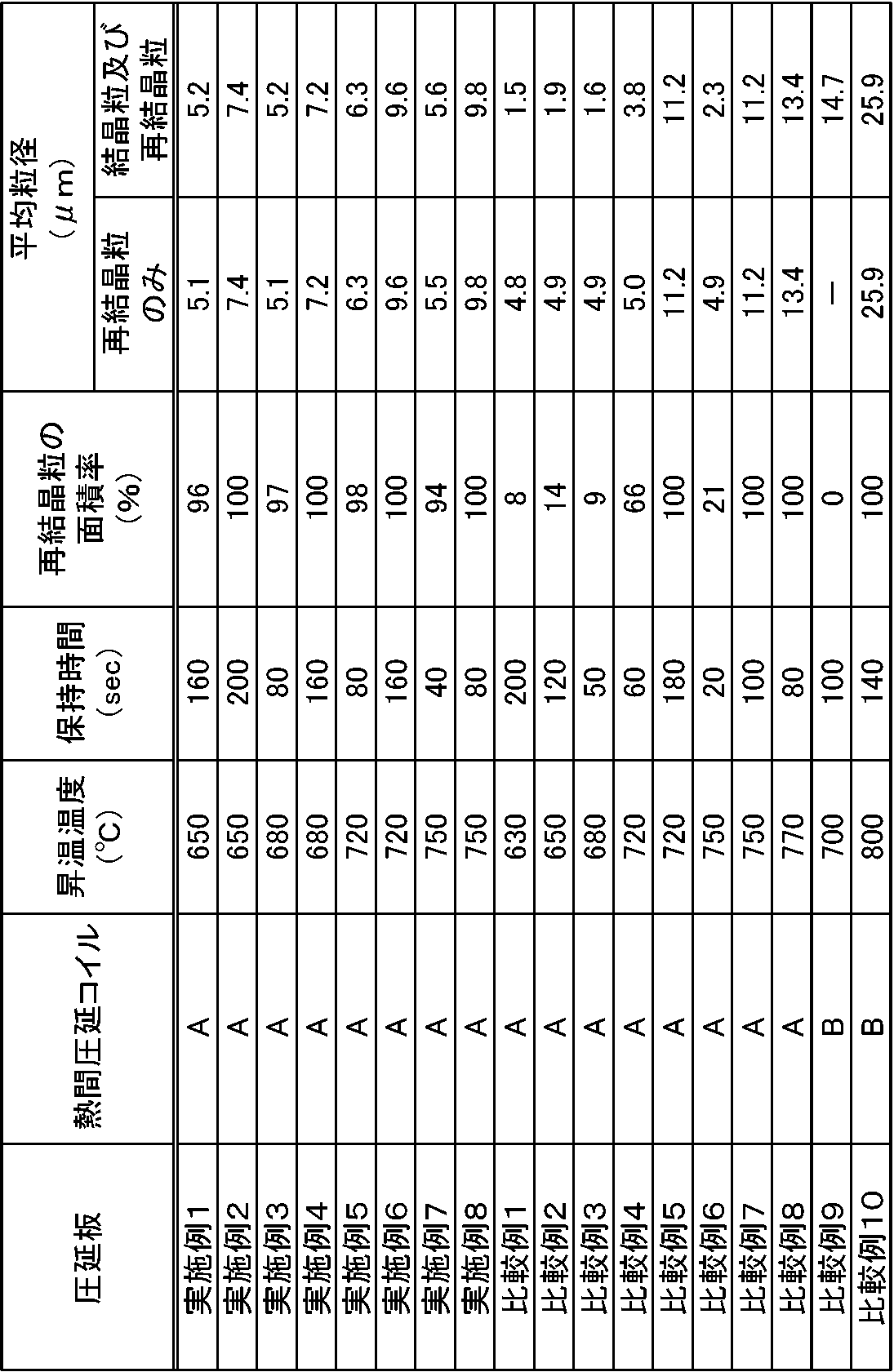
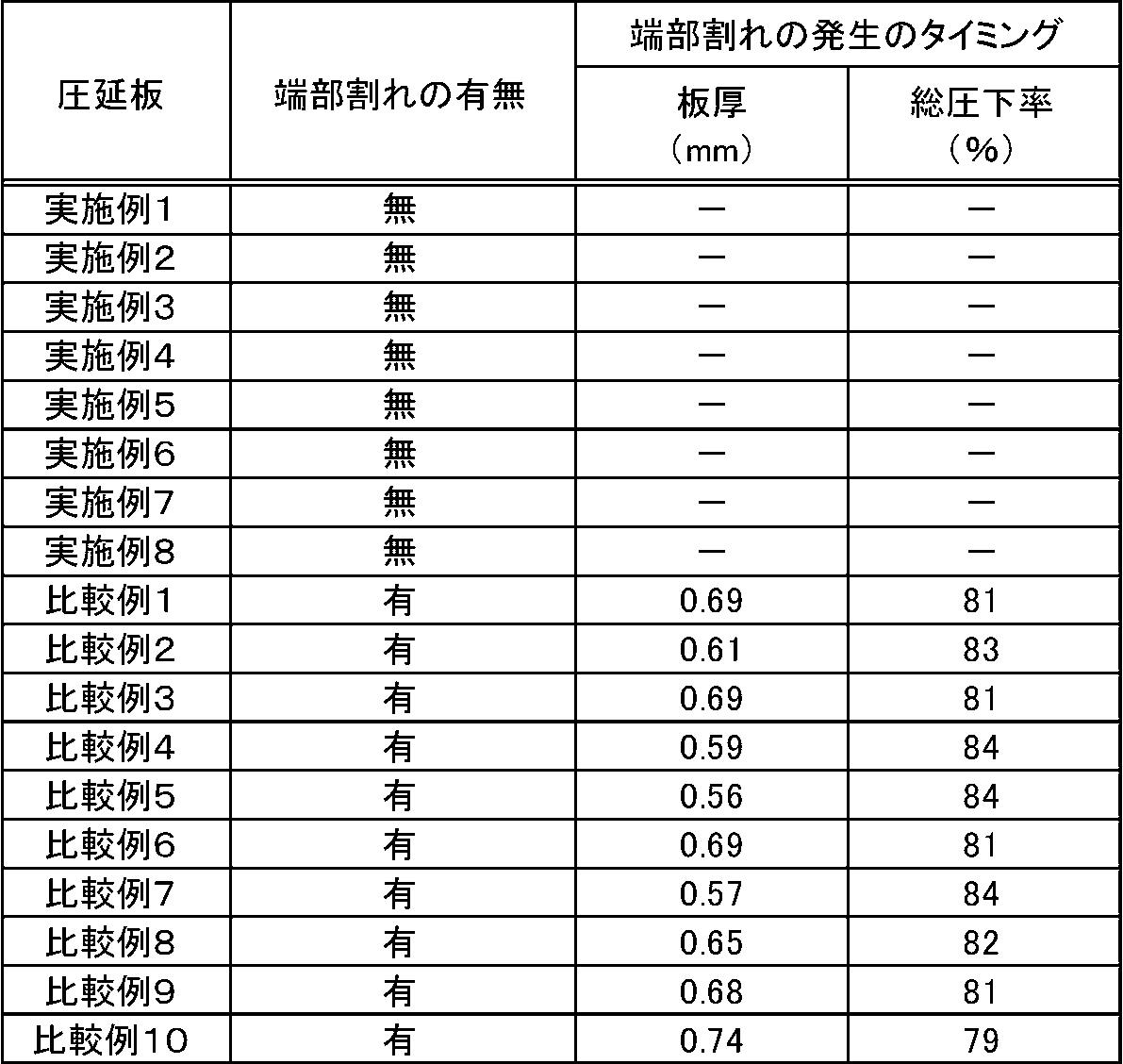
表1に示すように、Bの熱間圧延コイルは、コイルの巻取り温度が高すぎるため、コイルの巻き取り後にミクロ組織における結晶粒が再結晶化及び粗大化している。このため、このBの熱間圧延コイルを用いた比較例9,10の圧延板は、表2に示すように焼鈍後の結晶粒及び再結晶粒が粗大となった。この結果、表3に示すように冷間圧延における狙い厚に達する前に端部割れが発生した。
Claims (4)
- 純チタン素材を熱間圧延し、コイル状に巻き取ることにより、圧延板とする熱間圧延工程と、前記熱間圧延工程後の圧延板を焼鈍する焼鈍工程とを備え、
前記熱間圧延工程における巻取り温度が、500℃以下であり、
前記焼鈍工程は、焼鈍後の圧延板のミクロ組織における再結晶粒の面積率が90%以上、かつ前記再結晶粒の平均粒径が5μm以上10μm以下になるように制御することを特徴とする冷間圧延用圧延板の製造方法。 - 前記焼鈍工程が、
前記熱間圧延工程後の圧延板を650℃以上750℃以下に昇温する昇温工程と、
前記昇温工程後の圧延板を、前記昇温工程での昇温温度で保持する保持工程とを有し、
前記保持工程における保持時間t[秒]が、下記(1)~(3)の条件を満たす請求項1に記載の冷間圧延用圧延板の製造方法。
(1) 650℃≦T<680℃の場合、160秒≦t≦200秒
(2) 680℃≦T≦720℃の場合、80秒≦t≦160秒
(3) 720℃<T≦750℃の場合、40秒≦t≦80秒
上記(1)~(3)中、前記Tは、昇温工程での昇温温度[℃]を示す。 - 請求項1又は請求項2に記載の冷間圧延用圧延板の製造方法により得られた冷間圧延用圧延板を、中間焼鈍を行わずに冷間圧延する冷間圧延工程を備えることを特徴とする純チタン板の製造方法。
- 前記冷間圧延工程で、総圧下率を85%超とする請求項3に記載の純チタン板の製造方法。
Priority Applications (4)
| Application Number | Priority Date | Filing Date | Title |
|---|---|---|---|
| CN201680015056.1A CN107429373B (zh) | 2015-03-25 | 2016-03-16 | 冷轧用轧制板的制造方法及纯钛板的制造方法 |
| RU2017134820A RU2682737C1 (ru) | 2015-03-25 | 2016-03-16 | Способ изготовления прокатанного листа для холодной прокатки и способ получения листа из чистого титана |
| US15/558,043 US10640859B2 (en) | 2015-03-25 | 2016-03-16 | Production method of rolled sheet for cold-rolling, and production method of pure titanium sheet |
| KR1020177030416A KR102001755B1 (ko) | 2015-03-25 | 2016-03-16 | 냉간 압연용 압연판의 제조 방법, 및 순타이타늄판의 제조 방법 |
Applications Claiming Priority (2)
| Application Number | Priority Date | Filing Date | Title |
|---|---|---|---|
| JP2015-063256 | 2015-03-25 | ||
| JP2015063256A JP6356084B2 (ja) | 2015-03-25 | 2015-03-25 | 冷間圧延用圧延板の製造方法及び純チタン板の製造方法 |
Publications (1)
| Publication Number | Publication Date |
|---|---|
| WO2016152678A1 true WO2016152678A1 (ja) | 2016-09-29 |
Family
ID=56978533
Family Applications (1)
| Application Number | Title | Priority Date | Filing Date |
|---|---|---|---|
| PCT/JP2016/058330 Ceased WO2016152678A1 (ja) | 2015-03-25 | 2016-03-16 | 冷間圧延用圧延板の製造方法、及び純チタン板の製造方法 |
Country Status (6)
| Country | Link |
|---|---|
| US (1) | US10640859B2 (ja) |
| JP (1) | JP6356084B2 (ja) |
| KR (1) | KR102001755B1 (ja) |
| CN (1) | CN107429373B (ja) |
| RU (1) | RU2682737C1 (ja) |
| WO (1) | WO2016152678A1 (ja) |
Cited By (3)
| Publication number | Priority date | Publication date | Assignee | Title |
|---|---|---|---|---|
| CN106881564A (zh) * | 2017-01-09 | 2017-06-23 | 洛阳双瑞精铸钛业有限公司 | 一种利用薄壁大直径钛焊管生产钛质杯/壶的方法 |
| CN111922075A (zh) * | 2020-10-15 | 2020-11-13 | 西安圣泰金属材料有限公司 | 一种高强度ta4纯钛板材及其制备方法 |
| CN114515758A (zh) * | 2022-01-27 | 2022-05-20 | 新疆湘润新材料科技有限公司 | 一种阴极辊用纯钛宽幅细晶板材的制备方法 |
Families Citing this family (3)
| Publication number | Priority date | Publication date | Assignee | Title |
|---|---|---|---|---|
| CN113458144A (zh) * | 2021-07-01 | 2021-10-01 | 西安庄信新材料科技有限公司 | 一种保温杯胀形用钛带的制备方法 |
| CN116020896A (zh) * | 2023-02-03 | 2023-04-28 | 湖南湘投金天钛金属股份有限公司 | 一种改善钛带卷表面显微形貌的方法 |
| CN116422702A (zh) * | 2023-04-19 | 2023-07-14 | 本钢不锈钢冷轧丹东有限责任公司 | 一种高性能带材的冷轧轧制方法 |
Citations (3)
| Publication number | Priority date | Publication date | Assignee | Title |
|---|---|---|---|---|
| JPS63114952A (ja) * | 1986-11-04 | 1988-05-19 | Sumitomo Metal Ind Ltd | 冷延性に優れるチタン板の製造方法 |
| JPH0867955A (ja) * | 1994-08-29 | 1996-03-12 | Sumitomo Metal Ind Ltd | 酸洗性に優れたチタン熱延板の製造方法 |
| JP2004285457A (ja) * | 2003-01-31 | 2004-10-14 | Kobe Steel Ltd | 成形性に優れたチタン板及びその製造方法 |
Family Cites Families (5)
| Publication number | Priority date | Publication date | Assignee | Title |
|---|---|---|---|---|
| JPS5941508B2 (ja) * | 1980-12-24 | 1984-10-08 | 株式会社神戸製鋼所 | チタン熱延板の製造方法 |
| US20130164166A1 (en) * | 2010-09-08 | 2013-06-27 | Nippon Steel & Sumitomo Metal Corporation | Titanium material |
| JP5700650B2 (ja) * | 2011-01-28 | 2015-04-15 | 株式会社神戸製鋼所 | プレス成形性と強度のバランスに優れた純チタン板 |
| JP5668712B2 (ja) | 2012-03-05 | 2015-02-12 | 新日鐵住金株式会社 | 耐衝撃性に優れた硬質純チタン板及びその製造方法。 |
| CN103409642B (zh) * | 2013-05-27 | 2015-06-24 | 洛阳双瑞精铸钛业有限公司 | 一种低屈强比的高强度换热器用钛卷板的加工方法 |
-
2015
- 2015-03-25 JP JP2015063256A patent/JP6356084B2/ja active Active
-
2016
- 2016-03-16 US US15/558,043 patent/US10640859B2/en active Active
- 2016-03-16 RU RU2017134820A patent/RU2682737C1/ru active
- 2016-03-16 WO PCT/JP2016/058330 patent/WO2016152678A1/ja not_active Ceased
- 2016-03-16 KR KR1020177030416A patent/KR102001755B1/ko active Active
- 2016-03-16 CN CN201680015056.1A patent/CN107429373B/zh active Active
Patent Citations (3)
| Publication number | Priority date | Publication date | Assignee | Title |
|---|---|---|---|---|
| JPS63114952A (ja) * | 1986-11-04 | 1988-05-19 | Sumitomo Metal Ind Ltd | 冷延性に優れるチタン板の製造方法 |
| JPH0867955A (ja) * | 1994-08-29 | 1996-03-12 | Sumitomo Metal Ind Ltd | 酸洗性に優れたチタン熱延板の製造方法 |
| JP2004285457A (ja) * | 2003-01-31 | 2004-10-14 | Kobe Steel Ltd | 成形性に優れたチタン板及びその製造方法 |
Cited By (4)
| Publication number | Priority date | Publication date | Assignee | Title |
|---|---|---|---|---|
| CN106881564A (zh) * | 2017-01-09 | 2017-06-23 | 洛阳双瑞精铸钛业有限公司 | 一种利用薄壁大直径钛焊管生产钛质杯/壶的方法 |
| CN111922075A (zh) * | 2020-10-15 | 2020-11-13 | 西安圣泰金属材料有限公司 | 一种高强度ta4纯钛板材及其制备方法 |
| CN114515758A (zh) * | 2022-01-27 | 2022-05-20 | 新疆湘润新材料科技有限公司 | 一种阴极辊用纯钛宽幅细晶板材的制备方法 |
| CN114515758B (zh) * | 2022-01-27 | 2023-11-17 | 新疆湘润新材料科技有限公司 | 一种阴极辊用纯钛宽幅细晶板材的制备方法 |
Also Published As
| Publication number | Publication date |
|---|---|
| KR20170130524A (ko) | 2017-11-28 |
| RU2682737C1 (ru) | 2019-03-21 |
| US20180298479A1 (en) | 2018-10-18 |
| CN107429373A (zh) | 2017-12-01 |
| US10640859B2 (en) | 2020-05-05 |
| CN107429373B (zh) | 2019-04-12 |
| KR102001755B1 (ko) | 2019-07-18 |
| JP2016183369A (ja) | 2016-10-20 |
| JP6356084B2 (ja) | 2018-07-11 |
Similar Documents
| Publication | Publication Date | Title |
|---|---|---|
| EP2982777B1 (en) | Titanium slab for hot rolling and method for manufacturing same | |
| WO2016152678A1 (ja) | 冷間圧延用圧延板の製造方法、及び純チタン板の製造方法 | |
| CN105834215B (zh) | 热轧用钛坯料及其制造方法 | |
| US10633730B2 (en) | Material for cold-rolled stainless steel sheet | |
| CN102307685B (zh) | 热轧用钛板坯、其熔炼方法以及轧制方法 | |
| KR101953042B1 (ko) | 분괴 공정이나 정정 공정을 생략하여도 열간 압연 후의 표면 성상이 우수한 열간 압연용 티타늄 주조편 및 그 제조 방법 | |
| CN111278581B (zh) | 钛热轧板的制造方法 | |
| JP6540769B2 (ja) | 高強度極薄鋼板およびその製造方法 | |
| JP6070616B2 (ja) | 熱延鋼板の製造方法 | |
| KR102823994B1 (ko) | 가공 티타늄재의 제조 방법 | |
| TW201916947A (zh) | 鈦熱軋板的製造方法 | |
| JP4305207B2 (ja) | 微細フェライト組織を有する熱延鋼板の製造方法 | |
| CN106102939A (zh) | 高碳素钢的热轧方法 | |
| JPH07251202A (ja) | 純チタン熱間圧延板材の製造方法 | |
| RU2318913C1 (ru) | СПОСОБ ИЗГОТОВЛЕНИЯ ЛИСТОВ ИЗ β-ТИТАНОВЫХ СПЛАВОВ | |
| JP2007331017A (ja) | 熱延鋼板の製造方法および製造装置 | |
| JP5928396B2 (ja) | 冷間圧延用高炭素熱延鋼板の製造方法 | |
| JP2009120926A (ja) | アルミニウム圧延板およびその製造方法 | |
| JP2011089144A (ja) | 曲げ性及び延性に優れた成形加工用アルミニウム合金板及びその製造方法 | |
| JP2002220626A (ja) | 表面微小窪みの少ないオーステナイト系ステンレス鋼帯の製造方法 | |
| JPS61246324A (ja) | オ−ステナイト系ステンレス鋼板又は鋼帯の製造方法 | |
| WO2016051482A1 (ja) | 熱間圧延用チタン鋳片およびその製造方法 |
Legal Events
| Date | Code | Title | Description |
|---|---|---|---|
| 121 | Ep: the epo has been informed by wipo that ep was designated in this application |
Ref document number: 16768581 Country of ref document: EP Kind code of ref document: A1 |
|
| WWE | Wipo information: entry into national phase |
Ref document number: 15558043 Country of ref document: US |
|
| NENP | Non-entry into the national phase |
Ref country code: DE |
|
| WWE | Wipo information: entry into national phase |
Ref document number: 2017134820 Country of ref document: RU |
|
| ENP | Entry into the national phase |
Ref document number: 20177030416 Country of ref document: KR Kind code of ref document: A |
|
| 122 | Ep: pct application non-entry in european phase |
Ref document number: 16768581 Country of ref document: EP Kind code of ref document: A1 |