WO2016143461A1 - 透明バリアフィルムの製造法 - Google Patents
透明バリアフィルムの製造法 Download PDFInfo
- Publication number
- WO2016143461A1 WO2016143461A1 PCT/JP2016/054249 JP2016054249W WO2016143461A1 WO 2016143461 A1 WO2016143461 A1 WO 2016143461A1 JP 2016054249 W JP2016054249 W JP 2016054249W WO 2016143461 A1 WO2016143461 A1 WO 2016143461A1
- Authority
- WO
- WIPO (PCT)
- Prior art keywords
- compound
- layer
- organic layer
- barrier film
- transparent barrier
- Prior art date
- Legal status (The legal status is an assumption and is not a legal conclusion. Google has not performed a legal analysis and makes no representation as to the accuracy of the status listed.)
- Ceased
Links
Images

Classifications
-
- B—PERFORMING OPERATIONS; TRANSPORTING
- B32—LAYERED PRODUCTS
- B32B—LAYERED PRODUCTS, i.e. PRODUCTS BUILT-UP OF STRATA OF FLAT OR NON-FLAT, e.g. CELLULAR OR HONEYCOMB, FORM
- B32B9/00—Layered products comprising a layer of a particular substance not covered by groups B32B11/00 - B32B29/00
-
- C—CHEMISTRY; METALLURGY
- C23—COATING METALLIC MATERIAL; COATING MATERIAL WITH METALLIC MATERIAL; CHEMICAL SURFACE TREATMENT; DIFFUSION TREATMENT OF METALLIC MATERIAL; COATING BY VACUUM EVAPORATION, BY SPUTTERING, BY ION IMPLANTATION OR BY CHEMICAL VAPOUR DEPOSITION, IN GENERAL; INHIBITING CORROSION OF METALLIC MATERIAL OR INCRUSTATION IN GENERAL
- C23C—COATING METALLIC MATERIAL; COATING MATERIAL WITH METALLIC MATERIAL; SURFACE TREATMENT OF METALLIC MATERIAL BY DIFFUSION INTO THE SURFACE, BY CHEMICAL CONVERSION OR SUBSTITUTION; COATING BY VACUUM EVAPORATION, BY SPUTTERING, BY ION IMPLANTATION OR BY CHEMICAL VAPOUR DEPOSITION, IN GENERAL
- C23C14/00—Coating by vacuum evaporation, by sputtering or by ion implantation of the coating forming material
- C23C14/06—Coating by vacuum evaporation, by sputtering or by ion implantation of the coating forming material characterised by the coating material
- C23C14/12—Organic material
Definitions
- the present invention relates to a transparent barrier film used as a packaging material that requires airtightness such as foods, pharmaceuticals, and electronic parts having excellent gas barrier properties, or a gas barrier material.
- a film having excellent gas barrier properties a film obtained by laminating an aluminum foil on a plastic film and a film coated with vinylidene chloride or an ethylene vinyl alcohol copolymer are known.
- a thing using an inorganic thin film what laminated
- gas barrier properties may be lowered. For example, in the printing process, the inorganic thin film layer may be damaged and the barrier property may be reduced due to rubbing with the gravure roll or pigment particles contained in the printing ink.
- the present invention solves the above problems, and provides a transparent barrier film having excellent barrier properties in which an inorganic layer is provided on one side of a plastic film and an organic layer is laminated on the inorganic layer with stable quality. It is.
- the present invention is a method for producing a transparent barrier film having an inorganic layer and an organic layer in this order on at least one side of a plastic film, the compound having an acryloyl group and / or methacryloyl group and the acryloyl group and / or methacryloyl.
- It is a manufacturing method of the transparent barrier film characterized by including the vacuum evaporation process to form.
- the vapor pressure of the polymerization inhibitor at 150 ° C. is 2 kPa or less.
- the polymerization inhibitor is a compound that exhibits a polymerization inhibition effect even in a situation where oxygen does not coexist.
- the liquid mixture is evaporated by flash vapor deposition to form a liquid organic layer on the surface of the inorganic layer and then cured by electron beam irradiation to form the organic layer.
- a transparent barrier film having an inorganic layer and an organic layer can be formed efficiently and consistently using a vacuum process. Moreover, it can be formed stably for a long time.
- the transparent barrier film formed in the present invention can be used as a packaging material or a gas barrier material that requires high airtightness without deterioration of barrier properties even after processing such as printing or laminating with other films. it can.
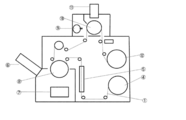
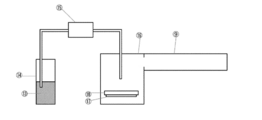
- Schematic of transparent barrier film produced by the production method of the present invention Schematic of an example of an apparatus used in the production method of the present invention
- FIG. 1 shows a laminate of the transparent gas barrier film of the present invention
- FIGS. 2 and 3 show a manufacturing apparatus as an example.
- the plastic film (1) referred to in the present invention is a film obtained by melt-extrusion of an organic polymer and stretching, cooling, and heat setting in the longitudinal direction and / or the width direction as necessary.
- an organic polymer polypropylene, polyethylene terephthalate, polyethylene-2,6-naphthalate, nylon 6, nylon 4, nylon 66, nylon 12, polyvinyl chloride, polyvinylidene chloride, polyvinyl alcohol, wholly aromatic polyamide, polyamideimide, Examples thereof include polyimide, polyetherimide, polysulfone, polyphenylene sulfide, and polyphenylene oxide.
- organic polymers organic polymers may be copolymerized or blended with a small amount of other organic polymers.
- known additives such as ultraviolet absorbers, antistatic agents, plasticizers, lubricants, colorants and the like may be added to the organic polymer, and the transparency thereof is not particularly limited.
- a transparent gas barrier film those having a transmittance of 50% or more are preferred.
- the plastic film (1) of the present invention is subjected to corona discharge treatment, glow discharge treatment and other surface roughening treatment prior to laminating the thin film layer.
- a known anchor coat treatment, printing, or decoration may be applied.
- the thickness of the plastic film (1) in the present invention is preferably in the range of 1 ⁇ m to 300 ⁇ m, more preferably in the range of 9 ⁇ m to 25 ⁇ m.
- the inorganic layer (2) may be a single layer or a laminate of two or more layers.
- a particularly preferable inorganic layer (2) is preferably a composite oxide layer prepared by vapor deposition of aluminum oxide and silicon oxide or a composite oxide layer prepared by vapor deposition of aluminum oxide and magnesium oxide.
- the weight ratio of aluminum oxide contained in the inorganic compound thin film is not particularly limited, but aluminum oxide and silicon oxide (oxidized) contained in the inorganic compound thin film are not limited.
- the ratio of aluminum oxide is preferably 10% by weight or more, more preferably 20% by weight or more, and further preferably 30% by weight or more with respect to 100% by weight of the total (magnesium).
- the aluminum oxide ratio is preferably 90% by weight or less, more preferably 75% by weight or less, and further preferably 65% by weight or less. If the ratio of aluminum oxide exceeds 75% by weight, the flexibility tends to be poor, so that cracking due to handling is likely to occur, and stable barrier properties may be difficult to obtain. On the other hand, when the ratio of aluminum oxide is less than 30% by weight, the barrier property tends to be lowered.
- the film thickness of the inorganic layer (2) of the present invention is not particularly limited, but is preferably 5 to 500 nm, more preferably 8 nm or more and 100 nm or less, and the inorganic layer (2) having a film thickness of less than 5 nm is satisfactory. However, even if the thickness exceeds 500 nm, the corresponding effect of improving the gas barrier property cannot be obtained, which is disadvantageous in terms of bending resistance and manufacturing cost. It becomes.
- a known method such as a physical vapor deposition method such as a vacuum vapor deposition method, a sputtering method or an ion plating method, a chemical vapor deposition method such as PECVD, or the like is employed.
- the heating method resistance heating, induction heating, electron beam heating or the like is employed.
- the organic layer (3) referred to in the present invention is formed by curing a compound having an acryloyl group and / or a methacryloyl group.
- the compound having an acryloyl group and / or a methacryloyl group may be used alone or in combination of two or more. It is preferable to use at least a compound having an acryloyl group and / or a methacryloyl group and not a silane coupling agent and a compound having an acryloyl group and / or a methacryloyl group and a silane coupling agent.
- the compound having an acryloyl group and / or a methacryloyl group and not a silane coupling agent is not particularly limited.
- the silane coupling agent having an acryloyl group and / or a methacryloyl group refers to an organosilicon compound having at least an acryloyl group and / or a methacryloyl group and a hydrolyzable group. For example, raising 3-methacryloxypropylmethyldimethoxysilane, 3-methacryloxypropyltrimethoxysilane, 3-methacryloxypropylmethyldiethoxysilane, 3-methacryloxypropyltriethoxysilane, 3-acryloxypropyltrimethoxysilane, etc. Can do.
- the organic layer obtained by cross-linking copolymerization of a compound having an acryloyl group and / or methacryloyl group and not a silane coupling agent and a compound having an acryloyl group and / or methacryloyl group and a silane coupling agent is preferably 5% by weight or more.
- Silane coupling agent having acryloyl group and / or methacryloyl group with respect to the total weight of the compound having acryloyl group and / or methacryloyl group and not silane coupling agent and compound having acryloyl group and / or methacryloyl group and silane coupling agent The weight ratio of the compound can be calculated by measuring the amount of silicon atoms contained in the organic layer.
- the compound having an acryloyl group and / or a methacryloyl group and being a silane coupling agent contributes to improving the adhesion between the inorganic layer and the organic layer, but the content is preferably 5% by weight or more. More preferably, it is 10 weight% or more.
- the content of the compound having an acryloyl group and / or methacryloyl group and being a silane coupling agent increases, the adhesion is improved, but the compound having an acryloyl group and / or methacryloyl group and being a silane coupling agent is expensive and Moreover, since the excess which cannot react at the interface with the inorganic layer also increases, 50% by weight or less is preferable. It is more preferably 40% by weight or less, and most preferably 30% by weight or less.
- the organic layer has a protective function for the inorganic layer and a function for improving the adhesion when pasted with a sealant and an adhesive.
- the organic layer is preferably 50 nm or more. If the thickness is 50 nm or less, the inorganic layer cannot be protected from pigment particles contained in the printing ink. Further, when the film thickness is 150 nm or more, the protective function is increased, but the adhesion force is reduced because the stress of the organic layer and the included defects are increased.
- the polymerization inhibitor in the present invention is a compound that prevents a compound having an acryloyl group and / or a methacryloyl group from being crosslinked by light or heat.
- Polymerization inhibitors include quinone polymerization inhibitors such as hydroquinone, phenol polymerization inhibitors such as 4-methoxyphenol, nitroso such as phenyl-t-butylnitrone, or nitrone polymerization inhibitors, 4-methoxy-1- Examples thereof include a polymerization inhibitor having a condensed polycyclic aromatic skeleton such as naphthol and 1,4-diethoxynaphthalene (for example, JP 2012-111741 A).
- the polymerization inhibitor is used by mixing with a compound having an acryloyl group and / or a methacryloyl group.
- a compound having an acryloyl group and / or a methacryloyl group is heated under vacuum at the time of vapor deposition, It is preferable to use a polymerization inhibitor that exhibits a polymerization inhibiting effect even in a situation where it does not coexist.
- Polymerization inhibitors that exhibit a polymerization inhibition effect even in the absence of oxygen include polymerization inhibitors having a condensed polycyclic aromatic skeleton such as 4-methoxy-1-naphthol and 1,4-diethoxynaphthalene. Can be mentioned.
- At least one of the polymerization inhibitors to be used is a polymerization inhibitor having a vapor pressure at 150 ° C. of 2 kPa or less.
- the polymerization inhibitor having a vapor pressure of 2 kPa or less at 150 ° C. include 4-methoxy-1-naphthol having a condensed polycyclic aromatic skeleton (vapor pressure 0.82 kPa: 175 ° C.), 1,4-diethoxy. There is naphthalene (vapor pressure 1.3 kPa: 175 ° C.).
- a polymerization inhibitor having a vapor pressure at 150 ° C. higher than 2 kPa evaporates before a compound having an acryloyl group and / or a methacryloyl group when heated at the time of vapor deposition. It is easy to form a gel and solid matter.
- the addition amount of the polymerization inhibitor referred to in the present invention is preferably 100 ppm or more and 5000 ppm or less with respect to the compound having an acryloyl group and / or a methacryloyl group.
- concentration 100 ppm or less
- the compound having an acryloyl group and / or a methacryloyl group is gelled and cured before evaporation. Too much is useless.
- they are 200 ppm or more and 5000 ppm or less, More preferably, they are 500 ppm or more and 5000 ppm or less, More preferably, they are 800 ppm or more and 5000 ppm.
- ppm means mg / kg unless otherwise specified.
- a vapor deposition method which is a vacuum process is suitable.
- a compound having an acryloyl group and / or a methacryloyl group is placed in a container, heated and evaporated to form a mixed liquid compound layer on the inorganic layer.
- the compound layer of the mixed liquid is cured by applying an electron beam or ultraviolet rays to form an organic layer.
- an electron beam or ultraviolet rays it is necessary to add a photopolymerization initiator to the compound.
- curing with an electron beam is preferred.
- the vapor deposition method since the compound is maintained in a heated state for a long time, it is necessary to add a large amount of the polymerization inhibitor in the present invention.
- the vapor deposition method is preferably a flash vapor deposition method in which a compound having an acryloyl group and / or a methacryloyl group is dropped little by little on a sufficiently heated plate or the like and evaporated instantaneously.
- a flash vapor deposition method when a material in which two or more kinds of compounds are mixed is evaporated, the ratio of each compound at the time of mixing and the ratio of each compound in the mixed liquid formed on the inorganic layer are shifted.
- flash vapor deposition the deviation is small.
- it is not necessary to leave the compound which has an acryloyl group and / or a methacryloyl group in the state heated for a long time the point that a gel thing is hard to produce
- FIGS. 1-10 Schematic diagram of the method for producing a transparent barrier film of the present invention will be described with reference to FIGS.
- the plastic film roll of the substrate is set on the unwinding roll (4).
- the unrolled plastic film (1) passes through the plasma processor (5) to treat the surface.
- the ceramic contained in the crucible (7) is heated and evaporated by the electron gun (6) to form an inorganic layer on the plastic film running on the inorganic coating roll (8).
- Compound (13) of a mixed liquid of a compound having a acryloyl group and / or methacryloyl group and a polymerization inhibitor is placed in a liquid container (14).
- the compound (13) is transferred into the organic vapor deposition source (16) by the liquid pump (15).
- the transferred compound (13) comes into contact with the heating plate (18) heated by the heating wire (17) and becomes steam.
- the vapor moves in the organic vapor deposition source (16) heated so as not to condense until reaching the organic nozzle (9) and reaches the organic nozzle (9).
- the vapor of the compound (13) coming out of the heated organic nozzle (9) is deposited on a plastic film in which an inorganic layer running on the organic coating roll (10) is laminated.
- an organic layer of a mixed liquid compound of a compound having an acryloyl group and / or a methacryloyl group and a polymerization inhibitor is formed on the inorganic layer.
- the compound layer of the formed mixed liquid is irradiated with an electron beam using an electron beam irradiation device (11) and cured by crosslinking. In this way, an organic layer is formed on the inorganic layer and wound around a winding roll (12).
- Example 1 A transparent vapor-deposited film (Toyobo Co., Ltd. VE100 thickness 12 ⁇ m) was used as the substrate film.
- VE100 is obtained by depositing a composite oxide of alumina-silica on a polyethylene terephthalate film.
- PEG200 # diacrylate produced by Kyoeisha Chemical Co., Ltd., light ester 4EG containing 4-ppm of 4-methoxyphenol as a polymerization inhibitor
- a polymerization inhibitor 1,4-diethoxynaphthalene produced by Kawasaki Kasei Kogyo Co., Ltd.
- QS-40 vapor pressure 1.33 kPa (175 ° C.)
- 0.5 ml of a mixed liquid compound prepared on a copper plate heated to 150 ° C. by a heater was dropped and evaporated to form a liquid phase compound layer on the substrate film.
- the vacuum chamber was heated to 80 ° C. to reduce the adhesion of the compound. Further, the liquid phase compound layer was irradiated for 10 sec with an electron gun (OME-0202PE manufactured by OMEGATRON Co., Ltd.) with an acceleration voltage of 3 kV and an irradiation current of 2 mA to be cured. After waiting for the temperature of the heating plate to drop, the film was taken out and the thickness of the organic layer was confirmed to be 96 nm. Moreover, although the liquid compound adhered to the heating plate in the vacuum chamber, it could be removed by simple wiping.
- OME-0202PE manufactured by OMEGATRON Co., Ltd.
- Example 1 (Comparative Example 1) In Example 1, vapor deposition was carried out in the same manner as in Example 1 except that 1,4-diethoxynaphthalene (Kinopower QS-40, vapor pressure 1.33 kPa (175 ° C.) manufactured by Kawasaki Kasei Kogyo Co., Ltd.) was not added as a polymerization inhibitor. Went. An organic layer having a thickness of 92 nm was formed. There was a gel-like deposit on the heating plate. It did not dissolve in alcohol.
Landscapes
- Chemical & Material Sciences (AREA)
- Chemical Kinetics & Catalysis (AREA)
- Engineering & Computer Science (AREA)
- Materials Engineering (AREA)
- Mechanical Engineering (AREA)
- Metallurgy (AREA)
- Organic Chemistry (AREA)
- Laminated Bodies (AREA)
- Physical Vapour Deposition (AREA)
- Application Of Or Painting With Fluid Materials (AREA)
Abstract
【課題】耐印刷性に優れて真空を利用して作成した有機層、無機層を有した透明バリアフィルムを安定した品質で提供すること。 【解決手段】少なくともプラスチックフィルムの片面に無機層と有機層とをこの順に有する透明バリアフィルムの製造方法であって、アクリロイル基および/またはメタクリロイル基と前記アクリロイル基および/またはメタクリロイル基を持つ化合物に対して50ppm以上の重合禁止剤とを含む混合液を用いて、前記無機層表面に混合液体有機層を形成する工程、前記混合液体有機層を硬化し前記有機層を形成する工程を含むことを特徴とする透明バリアフィルムの製造法。
Description
本発明は、ガスバリア性に優れた食品、医薬品、電子部品等の気密性を要求される包装材料、または、ガス遮断材料として使用される透明バリアフィルムに関するものである。
ガスバリア性のすぐれたフィルムとしては、プラスチックフィルム上にアルミニウム箔を積層したもの、塩化ビニリデンやエチレンビニールアルコール共重合体をコーティングしたものが知られている。また、無機薄膜を利用したものとしては、酸化珪素薄膜、酸化アルミニウム薄膜等を積層したものが知られている(例えば、特許文献1参照。)。
しかし、プラスチックフィルム上に形成した無機薄膜層は非常に薄いため無機薄膜層に印刷加工などの後加工を行うとガスバリア性が低化することがある。たとえば印刷工程ではグラビアロールや印刷インクに含まれる顔料粒子との擦れのため、無機薄膜層が傷付きバリア性が低下することがある。
この改良のために、無機薄膜層を保護するための有機層を無機層上にコーティングする方法がある。その一つに、溶剤に有機物を溶かしたものを大気中で塗布し乾燥し有機層を形成する方法がある。
しかし、この方法では真空中で無機薄膜層を形成した後、改めて大気中で有機層を形成するというプロセスを要し、効率が悪い。
しかし、プラスチックフィルム上に形成した無機薄膜層は非常に薄いため無機薄膜層に印刷加工などの後加工を行うとガスバリア性が低化することがある。たとえば印刷工程ではグラビアロールや印刷インクに含まれる顔料粒子との擦れのため、無機薄膜層が傷付きバリア性が低下することがある。
この改良のために、無機薄膜層を保護するための有機層を無機層上にコーティングする方法がある。その一つに、溶剤に有機物を溶かしたものを大気中で塗布し乾燥し有機層を形成する方法がある。
しかし、この方法では真空中で無機薄膜層を形成した後、改めて大気中で有機層を形成するというプロセスを要し、効率が悪い。
一方、真空プロセスを利用した方法では、アクリル化合物を加熱・蒸発させ形成した液体層に放射線を当てて重合し硬化させた有機層を形成する方法がある(例えば、特許文献2参照。)。
しかし、この方法ではアクリル化合物を加熱・蒸発させる加熱源の周辺部で熱によりアクリル化合物の重合反応が起こり、ゲル状あるいは固化したアクリル由来の有機物が付着する。長時間の蒸着ではこれらが多量に堆積し、アクリル化合物の加熱・蒸発を妨げたり蒸発したアクリル蒸気の流れを妨げたりする。したがって、ゲル状あるいは固化したアクリル由来の有機物を定期的に除去する必要がある。ゲル或は固体の有機物の除去は時間がかかり蒸着装置の稼働効率を下げる。
しかし、この方法ではアクリル化合物を加熱・蒸発させる加熱源の周辺部で熱によりアクリル化合物の重合反応が起こり、ゲル状あるいは固化したアクリル由来の有機物が付着する。長時間の蒸着ではこれらが多量に堆積し、アクリル化合物の加熱・蒸発を妨げたり蒸発したアクリル蒸気の流れを妨げたりする。したがって、ゲル状あるいは固化したアクリル由来の有機物を定期的に除去する必要がある。ゲル或は固体の有機物の除去は時間がかかり蒸着装置の稼働効率を下げる。
本発明は、前記問題点を解決するものであり、プラスチックフィルムの片面に無機層を設け、無機層上に有機層を積層した優れたバリア性をもつ透明バリアフィルムを安定した品質で提供するものである。
すなわち、本発明は、少なくともプラスチックフィルムの片面に無機層と有機層とをこの順に有する透明バリアフィルムの製造方法であって、アクリロイル基および/またはメタクリロイル基を持つ化合物と前記アクリロイル基および/またはメタクリロイル基を持つ化合物に対して100ppm以上の重合禁止剤とを含む混合液を用いて、前記無機層表面に混合液体の化合物層を形成する工程、前記混合液体の化合物層を硬化し前記有機層を形成する真空蒸着工程を含むことを特徴とする透明バリアフィルムの製造法である。
さらにまた、この場合において、前記重合禁止剤の150℃での蒸気圧が2kPa以下であることが好適である。
さらにまた、この場合において、前記重合禁止剤が酸素が共存していない状況においても重合禁止効果を発揮する化合物であることが好適である。
さらにまた、この場合において、前記混合液をフラッシュ蒸着法により蒸発させ前記無機層表面に液体有機層を形成した後に、電子線照射により硬化し前記有機層を形成させることが好適である。
本発明により、無機層と有機層とを有する透明バリアフィルムを真空プロセスを利用して効率よく一貫した工程で形成できる。しかも、長時間安定して形成できる。
また、本発明で形成される透明バリアフィルムは印刷や他フィルムとのラミネートなど加工後もバリア性が劣化することなく高い気密性を要求される包装材料、または、ガス遮断材料として使用することができる。
また、本発明で形成される透明バリアフィルムは印刷や他フィルムとのラミネートなど加工後もバリア性が劣化することなく高い気密性を要求される包装材料、または、ガス遮断材料として使用することができる。
本発明の積層体である透明バリアフィルムの一例をあげて説明する。図1に本発明の透明ガスバリアフィルムの積層体を示し、図2及び図3に一例としての製造装置を示す。
(プラスチックフィルム)
本発明でいうプラスチックフィルム(1)とは、有機高分子を溶融押出して、必要に応じ、長手方向、および、または、幅方向に延伸、冷却、熱固定を施したフィルムであり、有機高分子としては、ポリエチレン、ポリプロピレン、ポリエチレンテレフタレート、ポリエチレン-2,6-ナフタレート、ナイロン6、ナイロン4、ナイロン66、ナイロン12、ポリ塩化ビニール、ポリ塩化ビニリデン、ポリビニールアルコール、全芳香族ポリアミド、ポリアミドイミド、ポリイミド、ポリエーテルイミド、ポリスルフォン、ポリフェニレンスルフィド、ポリフェニレンオキサイドなどがあげられる。また、これらの(有機重合体)有機高分子は他の有機重合体を少量共重合したり、ブレンドしたりしてもよい。
本発明でいうプラスチックフィルム(1)とは、有機高分子を溶融押出して、必要に応じ、長手方向、および、または、幅方向に延伸、冷却、熱固定を施したフィルムであり、有機高分子としては、ポリエチレン、ポリプロピレン、ポリエチレンテレフタレート、ポリエチレン-2,6-ナフタレート、ナイロン6、ナイロン4、ナイロン66、ナイロン12、ポリ塩化ビニール、ポリ塩化ビニリデン、ポリビニールアルコール、全芳香族ポリアミド、ポリアミドイミド、ポリイミド、ポリエーテルイミド、ポリスルフォン、ポリフェニレンスルフィド、ポリフェニレンオキサイドなどがあげられる。また、これらの(有機重合体)有機高分子は他の有機重合体を少量共重合したり、ブレンドしたりしてもよい。
さらにこの有機高分子には、公知の添加剤、例えば、紫外線吸収剤、帯電防止剤、可塑剤、滑剤、着色剤などが添加されていてもよく、その透明度は特に限定するものではないが、透明ガスバリアフィルムとして使用する場合には、50%以上の透過率をもつものが好ましい。
本発明のプラスチックフィルム(1)は、本発明の目的を損なわない限りにおいて、薄膜層を積層するに先行して、該フィルムをコロナ放電処理、グロー放電処理、その他の表面粗面化処理を施してもよく、また、公知のアンカーコート処理、印刷、装飾が施されていてもよい。
本発明のプラスチックフィルム(1)は、本発明の目的を損なわない限りにおいて、薄膜層を積層するに先行して、該フィルムをコロナ放電処理、グロー放電処理、その他の表面粗面化処理を施してもよく、また、公知のアンカーコート処理、印刷、装飾が施されていてもよい。
本発明におけるプラスチックフィルム(1)は、その厚さが1μm以上300μm以下の範囲であることが好ましく、さらに好ましくは9μm以上25μm以下の範囲である。
(無機層)
本発明でいう無機層(2)は、物質としては、Al、Si、Ti、Zn、Zr、Mg、Sn、Cu、Fe等の金属や、これら金属の酸化物、窒化物、フッ素物、硫化物等が挙げられ、具体的には、SiOx(x=1.0~2.0)、アルミナ、マグネシア、硫化亜鉛、チタニア、ジルコニア、酸化セリウム、あるいはこれらの混合物が例示される。無機層(2)は1層でもあるいは2層以上の積層体であってもよい。
本発明でいう無機層(2)は、物質としては、Al、Si、Ti、Zn、Zr、Mg、Sn、Cu、Fe等の金属や、これら金属の酸化物、窒化物、フッ素物、硫化物等が挙げられ、具体的には、SiOx(x=1.0~2.0)、アルミナ、マグネシア、硫化亜鉛、チタニア、ジルコニア、酸化セリウム、あるいはこれらの混合物が例示される。無機層(2)は1層でもあるいは2層以上の積層体であってもよい。
本発明では、特に好ましい無機層(2)としては酸化アルミニウムと酸化ケイ素とを蒸着して作成した複合酸化物層や酸化アルミニウムと酸化マグネシウムとを蒸着して作成した複合酸化物層が好ましい。
酸化アルミニウムと酸化ケイ素とを蒸着して作成した複合酸化物の場合、無機化合物薄膜中に含まれる酸化アルミニウムの重量比率は特に限定されないが、無機化合物薄膜中に含まれる酸化アルミニウムおよび酸化ケイ素(酸化マグシウム)の合計100重量%に対し、酸化アルミニウムの比率が10重量%以上が好ましく、さらに20重量%以上が好ましく、さらに30重量%以上が好ましい。
また酸化アルミニウムの比率が90重量%以下が好ましく、さらに75重量%以下が好ましく、さらに65重量%以下であることが好ましい。
酸化アルミニウムの比率が75重量%を超えると、柔軟性が乏しくなる傾向があるためハンドリングによる割れが生じ易く、安定したバリア性が得られ難くなる場合がある。一方、酸化アルミニウムの比率が30重量%未満であるとバリア性が低下する傾向にある。
酸化アルミニウムと酸化ケイ素とを蒸着して作成した複合酸化物の場合、無機化合物薄膜中に含まれる酸化アルミニウムの重量比率は特に限定されないが、無機化合物薄膜中に含まれる酸化アルミニウムおよび酸化ケイ素(酸化マグシウム)の合計100重量%に対し、酸化アルミニウムの比率が10重量%以上が好ましく、さらに20重量%以上が好ましく、さらに30重量%以上が好ましい。
また酸化アルミニウムの比率が90重量%以下が好ましく、さらに75重量%以下が好ましく、さらに65重量%以下であることが好ましい。
酸化アルミニウムの比率が75重量%を超えると、柔軟性が乏しくなる傾向があるためハンドリングによる割れが生じ易く、安定したバリア性が得られ難くなる場合がある。一方、酸化アルミニウムの比率が30重量%未満であるとバリア性が低下する傾向にある。
本発明の無機層(2)の膜厚は、特に限定されないが、5~500nmが好ましく、さらに好ましくは8nm以上、100nm以下であり、無機層(2)の膜厚が5nm未満では、満足のいくガスバリア性が得られ難くなる場合があり、一方、500nmを超えて過度に厚くしても、それに相当するガスバリア性の向上の効果は得られず、耐屈曲性や製造コストの点でかえって不利となる。
本発明の無機層(2)の形成方法としては、公知の方法、例えば、真空蒸着法、スパッタリング法、イオンプレーティング法等の物理蒸着法や、PECVD等の化学蒸着法等が採用される。
真空蒸着法においては、蒸着材料としてアルミニウム、珪素、チタン、マグネシウム、ジルコニウム、セリウム、亜鉛等の金属、また、SiOx(x=1.0~2.0)、アルミナ、マグネシア、硫化亜鉛、チタニア、ジルコニア等の化合物およびそれらの混合物が用いられる。加熱方法としては抵抗加熱、誘導加熱、電子線加熱等が採用される。また、反応ガスとして、酸素等を導入したり、オゾン添加、イオンアシスト等の手段を用いたりした反応性蒸着法を採用してもよい。
(有機層)
本発明で言う有機層(3)は、アクリロイル基および/またはメタクリロイル基を持つ化合物を硬化して形成される。アクリロイル基および/またはメタクリロイル基を持つ化合物は、単独種類を使用してもよいし、複種類を混合して使用してもよい。
好ましいのは少なくとも、アクリロイル基および/またはメタクリロイル基を持ちシランカップリング剤ではない化合物とアクリロイル基および/またはメタクリロイル基を持ちシランカップリング剤である化合物を使用することである。
本発明で言う有機層(3)は、アクリロイル基および/またはメタクリロイル基を持つ化合物を硬化して形成される。アクリロイル基および/またはメタクリロイル基を持つ化合物は、単独種類を使用してもよいし、複種類を混合して使用してもよい。
好ましいのは少なくとも、アクリロイル基および/またはメタクリロイル基を持ちシランカップリング剤ではない化合物とアクリロイル基および/またはメタクリロイル基を持ちシランカップリング剤である化合物を使用することである。
アクリロイル基および/またはメタクリロイル基を持ちシランカップリング剤ではない化合物とは特に限定されるものではないが、例えばフェノキシエチルメタクリレート、2-ヒドロキシプロピルメタクリレート、2-ヒドロキシエチルアクリレート、2-ヒドロキシプロピルアクリレート、2-ヒドロキシブチルメタクリレート、メタクリル酸、グリシジルメタクリレート、2-メタクリロイロキシエチルアシッドホスフェート、ジエチレングリコールジメタクリレート、ジエチレングリコールジメタクリレート、1.4-ブタンジオールジメタクリレート、2-ヒドロキシ-3-アクリロイロキシプロピルメタクリレート、トリエチレングリコールジメタクリレート、PEG#200ジメタクリレート、PEG#400ジメタクリレート、メトキシポリエチレングリコールメタクリレート、エトキシ-ジエチレングリコールアクリレート、メトキシ-トリエチレングリコールアクリレート、メトキシジプロピレングリコールアクリレート、2-ヒドロキシブチルアクリレート、2-ヒドロキシ-3フェノキシプロピルアクリレート、2-アクリロイロキシエチルコハク酸、2-アクリロイロキシエチルヘキサヒドロフタル酸、2-アクリロイロキシエチル-フタル酸、2-アクリロイルオキシエチルアシッドフォスフェート、トリエチレングリコールジアクリレート、PEG200#ジアクリレート、PEG400#ジアクリレート、PEG600#ジアクリレート、ポリテトラメチレングリコールジアクリレート、ネオペンチルグリコールジアクリレート、ヒドロキシピバリン酸ネオペンチルグリコールアクリル酸付加物、トリメチロールプロパントリアクリレート、EO変性トリメチロールプロパントリアクリレート、ペンタエリスリトールトリアクリレートなどを上げることができる。
このとき、アクリロイル基および/またはメタクリロイル基を1分子あたり2個以上を有するものが好ましい。
このとき、アクリロイル基および/またはメタクリロイル基を1分子あたり2個以上を有するものが好ましい。
アクリロイル基および/またはメタクリロイル基を持つシランカップリング剤とは、少なくともアクリロイル基および/またはメタクリロイル基と加水分解性基とを持つ有機珪素化合物を言う。例えば3-メタクリロキシプロピルメチルジメトキシシラン、3-メタクリロキシプロピルトリメトキシシラン、3-メタクリロキシプロピルメチルジエトキシシラン、3-メタクリロキシプロピルトリエトキシシラン、3-アクリロキシプロピルトリメトキシシランなどを上げることができる。
本発明においては、アクリロイル基および/またはメタクリロイル基を持ちシランカップリング剤ではない化合物とアクリロイル基および/またはメタクリロイル基を持ちシランカップリング剤である化合物とが架橋共重合して得られる有機層中におけるアクリロイル基および/またはメタクリロイル基を持ちシランカップリング剤である化合物の重量割合は5重量%以上が好ましい。
アクリロイル基および/またはメタクリロイル基を持ちシランカップリング剤ではない化合物とアクリロイル基および/またはメタクリロイル基を持ちシランカップリング剤である化合物の合計重量に対するアクリロイル基および/またはメタクリロイル基を持ちシランカップリング剤である化合物の重量割合は、有機層に含まれる珪素原子の量を測定することにより、算出することができる。
アクリロイル基および/またはメタクリロイル基を持ちシランカップリング剤である化合物は、無機層と有機層との密着力の改善に寄与するが、含有量は5重量%以上が好ましい。さらに好ましくは10重量%以上である。アクリロイル基および/またはメタクリロイル基を持ちシランカップリング剤である化合物の含有率が増えると密着力は向上するが、アクリロイル基および/またはメタクリロイル基を持ちシランカップリング剤である化合物は高価でありまた、無機層との界面で反応できない過剰のものも増えるので50重量%以下が好ましい。40重量%以下がより好ましく、30重量%以下が最も好ましい。
有機層は、無機層の保護機能とシーラントなどと接着剤で張り付ける際の密着力改善の機能がある。保護機能を満足するためには、有機層は50nm以上が好ましい。50nm以下であると印刷インキに含まれる顔料粒子等から無機層を保護できない。また、150nm以上の膜厚があると保護機能は増すが、有機層の応力や含まれる欠陥が増すため密着力が低下する。
(重合禁止剤)
本発明における重合禁止剤とはアクリロイル基および/またはメタクリロイル基を持つ化合物が、光や熱で架橋するのを防ぐ化合物である。重合禁止剤には、ヒドロキノンなどのキノン系重合禁止剤、4-メトキシフェノールなどのフェノール系重合禁止剤、フェニル-t-ブチルニトロンなどのニトロソ、またはニトロン系重合禁止剤、4-メトキシ-1-ナフトール、1,4-ジエトキシナフタレンなどの縮合多環芳香族骨格を有する重合禁止剤(例えば、特開2012-111741)等々が挙げられる。
本発明における重合禁止剤とはアクリロイル基および/またはメタクリロイル基を持つ化合物が、光や熱で架橋するのを防ぐ化合物である。重合禁止剤には、ヒドロキノンなどのキノン系重合禁止剤、4-メトキシフェノールなどのフェノール系重合禁止剤、フェニル-t-ブチルニトロンなどのニトロソ、またはニトロン系重合禁止剤、4-メトキシ-1-ナフトール、1,4-ジエトキシナフタレンなどの縮合多環芳香族骨格を有する重合禁止剤(例えば、特開2012-111741)等々が挙げられる。
本発明では、重合禁止剤はアクリロイル基および/またはメタクリロイル基を持つ化合物と混合して使用されるが、アクリロイル基および/またはメタクリロイル基を持つ化合物は蒸着時には真空下で加熱されるため、酸素が共存していない状況においても重合禁止効果を発揮する重合禁止剤を使用するのが好ましい。酸素が共存していない状況においても重合禁止効果を発揮する重合禁止剤には、4-メトキシ-1-ナフトール、1,4-ジエトキシナフタレンなどの縮合多環芳香族骨格を有する重合禁止剤が挙げられる。
また、本発明では、使用する重合禁止剤のうち少なくとも1種類は、150℃での蒸気圧が2kPa以下である重合禁止剤を使用することが好適である。150℃での蒸気圧が2kPa以下である重合禁止剤には、例えば縮合多環芳香族骨格をもつ4-メトキシ-1-ナフトール(蒸気圧0.82kPa:175℃)、1,4-ジエトキシナフタレン(蒸気圧1.3kPa:175℃)がある。
150℃での蒸気圧が2kPaより高い重合禁止剤は、蒸着時に加熱されたときにアクリロイル基および/またはメタクリロイル基を持つ化合物より先に蒸発しアクリロイル基および/またはメタクリロイル基を持つ化合物が蒸発前に重合してしまいゲル物や固形物を形成しやすい。
150℃での蒸気圧が2kPaより高い重合禁止剤は、蒸着時に加熱されたときにアクリロイル基および/またはメタクリロイル基を持つ化合物より先に蒸発しアクリロイル基および/またはメタクリロイル基を持つ化合物が蒸発前に重合してしまいゲル物や固形物を形成しやすい。
本発明で言う重合禁止剤の添加量としては、アクリロイル基および/またはメタクリロイル基を持つ化合物に対して、100ppm以上で5000ppm以下が好ましい。100ppm以下であると蒸発前にアクリロイル基および/またはメタクリロイル基を持つ化合物がゲル化、硬化してしまい。多すぎると無駄になる。好ましくは200ppm以上、5000ppm以下であり、より好ましくは500ppm以上5000ppm以下であり、さらに好ましくは800ppm以上5000ppmである。
本発明においてppmは特にことわりがない限りmg/kgを意味することとする。
本発明においてppmは特にことわりがない限りmg/kgを意味することとする。
有機層を形成する方法としては、真空プロセスである蒸着法が適している。アクリロイル基および/またはメタクリロイル基を持つ化合物を容器に入れて加熱し蒸発させ、無機層上に混合液体の化合物層を形成する。混合液体の化合物層に電子線或は紫外線を当てて硬化させて有機層を形成する。紫外線を使って硬化する場合は、化合物に光重合開始剤を添加する必要がある。本発明には電子線による硬化の方が好ましい。
また、該蒸着法では、化合物が長時間加熱された状態で保持されるため、本願発明において重合禁止剤の添加量を多めに添加する必要がある。
本願発明においては、蒸着法は、十分に加熱した板等の上に少量ずつアクリロイル基および/またはメタクリロイル基を持つ化合物を滴下して、瞬間に蒸発させるフラッシュ蒸着法が好ましい。通常の蒸着法でのように、2種類以上の化合物を混合した材料を蒸発させようとすると混合時のそれぞれの化合物の割合と無機層上に形成された混合液体におけるそれぞれの化合物の割合がずれるが、フラッシュ蒸着では、そのずれが少ない。また、アクリロイル基および/またはメタクリロイル基を持つ化合物を長時間加熱した状態に置かなくて良いため、ゲル物が生成しにくいという点も好ましい。
また、該蒸着法では、化合物が長時間加熱された状態で保持されるため、本願発明において重合禁止剤の添加量を多めに添加する必要がある。
本願発明においては、蒸着法は、十分に加熱した板等の上に少量ずつアクリロイル基および/またはメタクリロイル基を持つ化合物を滴下して、瞬間に蒸発させるフラッシュ蒸着法が好ましい。通常の蒸着法でのように、2種類以上の化合物を混合した材料を蒸発させようとすると混合時のそれぞれの化合物の割合と無機層上に形成された混合液体におけるそれぞれの化合物の割合がずれるが、フラッシュ蒸着では、そのずれが少ない。また、アクリロイル基および/またはメタクリロイル基を持つ化合物を長時間加熱した状態に置かなくて良いため、ゲル物が生成しにくいという点も好ましい。
本発明の透明バリアフィルム製造法を概略図 図2、図3を使い説明する。基板のプラスチックフィルムのロールを巻出しロール(4)にセットする。巻き出されたプラスチックフィルム(1)はプラズマ処理器(5)を通過して表面を処理する。電子銃(6)により坩堝(7)内に入っているセラミックを加熱して蒸発させ、無機コーティングロール(8)上を走行しているプラスチックフィルムに無機層を形成する。
アクリロイル基および/またはメタクリロイル基を持つ化合物と重合禁止剤との混合液体の化合物(13)を、液体容器(14)に入れる。化合物(13)は液体ポンプ(15)により有機蒸着源(16)内部に移送される。移送した化合物(13)は、電熱線(17)により加熱した加熱板(18)に接触し蒸気となる。蒸気は有機ノズル(9)の達するまでに凝縮しないように加熱してある有機蒸着源(16)内を移動し有機ノズル(9)に達する。
加熱された有機ノズル(9)からでてきた化合物(13)の蒸気は有機コーティングロール(10)上を走行する無機層を積層したプラスチックフィルムに蒸着する。無機層上にはアクリロイル基および/またはメタクリロイル基を持つ化合物と重合禁止剤との混合液体の化合物の有機層が形成される。形成された混合液体の化合物層に電子線照射装置(11)を使い電子線を照射して、架橋硬化する。このようにして無機層上に有機層を形成して巻取ロール(12)に巻き取る。
以下に実施例を示して本発明を具体的に説明するが、本発明は実施例に限定されるものではない。
(実施例1)
基板フィルムとして透明蒸着フィルム(東洋紡株式会社製 VE100 厚み12μm)を使った。VE100はポリエチレンテレフタレートフィルム上にアルミナ-シリカの複合酸化物を蒸着したものである。
メタクリロイル基を持つ化合物としてPEG200#ジアクリレート(共栄社化学株式会社製 ライトエステル4EG 重合禁止剤として4-メトキシフェノール 100ppm含有)に、重合禁止剤1,4-ジエトキシナフタレン(川崎化成工業株式会社製 キノパワー QS-40 蒸気圧1.33kPa(175℃))を0.1重量%添加して、混合液体の化合物を調製した。
次に、蒸着はヒーターにより150℃に加熱した銅板の上に調製した混合液体の化合物を0.5ml滴下して蒸発させ、基板フィルムに液相の化合物層を形成した。
このとき、真空チャンバーは化合物の付着を低減するため80℃に加熱した。
さらに、電子銃(株式会社 オメガトロン製 OME-0202PE)で加速度電圧3kV、照射電流2mAで電子ビームを液相の化合物層に10sec照射し硬化させた。
加熱板の温度が下がるのを待ち、フィルムを取り出し有機層の膜厚を確認すると96nmであることが確認できた。
また、真空チャンバー内の加熱板には液体の化合物が付着していたが簡易なふき取りで除去できた。
基板フィルムとして透明蒸着フィルム(東洋紡株式会社製 VE100 厚み12μm)を使った。VE100はポリエチレンテレフタレートフィルム上にアルミナ-シリカの複合酸化物を蒸着したものである。
メタクリロイル基を持つ化合物としてPEG200#ジアクリレート(共栄社化学株式会社製 ライトエステル4EG 重合禁止剤として4-メトキシフェノール 100ppm含有)に、重合禁止剤1,4-ジエトキシナフタレン(川崎化成工業株式会社製 キノパワー QS-40 蒸気圧1.33kPa(175℃))を0.1重量%添加して、混合液体の化合物を調製した。
次に、蒸着はヒーターにより150℃に加熱した銅板の上に調製した混合液体の化合物を0.5ml滴下して蒸発させ、基板フィルムに液相の化合物層を形成した。
このとき、真空チャンバーは化合物の付着を低減するため80℃に加熱した。
さらに、電子銃(株式会社 オメガトロン製 OME-0202PE)で加速度電圧3kV、照射電流2mAで電子ビームを液相の化合物層に10sec照射し硬化させた。
加熱板の温度が下がるのを待ち、フィルムを取り出し有機層の膜厚を確認すると96nmであることが確認できた。
また、真空チャンバー内の加熱板には液体の化合物が付着していたが簡易なふき取りで除去できた。
(比較例1)
実施例1において、重合禁止剤として1,4-ジエトキシナフタレン(川崎化成工業株式会社製 キノパワー QS-40 蒸気圧1.33kPa(175℃))を添加しない以外は、実施例1と同様に蒸着を行った。92nmの膜厚の有機層が形成された。
加熱板には、ゲル状の付着物があった。アルコールでは溶解しなかった。
実施例1において、重合禁止剤として1,4-ジエトキシナフタレン(川崎化成工業株式会社製 キノパワー QS-40 蒸気圧1.33kPa(175℃))を添加しない以外は、実施例1と同様に蒸着を行った。92nmの膜厚の有機層が形成された。
加熱板には、ゲル状の付着物があった。アルコールでは溶解しなかった。
本発明により、蒸着源の加熱部の汚れを防ぎ、安定した化合物の蒸発が実現できる。これにより品質の安定した耐印刷性に優れて優れた透明バリアフィルムを提供できる。
1 :プラスチックフィルム
2 :無機層
3 :有機層
4 :巻出しロール
5 :プラズマ処理器
6 :電子銃
7 :坩堝
8 :無機コーティングロール
9 :有機ノズル
10:有機コーティングロール
11:電子線照射装置
12:巻取ロール
13:化合物
14:液体容器
15:液体ポンプ
16:有機蒸着源
17:電熱線
18:加熱板
2 :無機層
3 :有機層
4 :巻出しロール
5 :プラズマ処理器
6 :電子銃
7 :坩堝
8 :無機コーティングロール
9 :有機ノズル
10:有機コーティングロール
11:電子線照射装置
12:巻取ロール
13:化合物
14:液体容器
15:液体ポンプ
16:有機蒸着源
17:電熱線
18:加熱板
Claims (4)
- 少なくともプラスチックフィルムの片面に無機層と有機層とをこの順に有する透明バリアフィルムの製造方法であって、アクリロイル基および/またはメタクリロイル基を持つ化合物と前記アクリロイル基および/またはメタクリロイル基を持つ化合物に対して100ppm以上の重合禁止剤とを含む混合液を用いて、前記無機層表面に混合液体の化合物層を形成する真空蒸着工程、前記混合液体の化合物層を硬化し前記有機層を形成する工程を含むことを特徴とする透明バリアフィルムの製造法。
- 前記重合禁止剤の150℃での蒸気圧が2kPa以下である請求項1に記載の透明バリアフィルムの製造法。
- 前記重合禁止剤が酸素が共存していない状況においても重合禁止効果を発揮する化合物である請求項1~2のいずれかに記載の透明バリアフィルムの製造法。
- 前記混合液をフラッシュ蒸着法により蒸発させ前記プラスチックフィルム表面に混合液体有機層を形成した後に、電子線照射により硬化し、前記有機層を形成する請求項1から3に記載の透明バリアフィルムの製造法。
Priority Applications (1)
| Application Number | Priority Date | Filing Date | Title |
|---|---|---|---|
| JP2016509186A JP6938913B2 (ja) | 2015-03-10 | 2016-02-15 | 透明バリアフィルムの製造法 |
Applications Claiming Priority (4)
| Application Number | Priority Date | Filing Date | Title |
|---|---|---|---|
| JP2015047210 | 2015-03-10 | ||
| JP2015-047210 | 2015-03-10 | ||
| JP2015170548 | 2015-08-31 | ||
| JP2015-170548 | 2015-08-31 |
Publications (1)
| Publication Number | Publication Date |
|---|---|
| WO2016143461A1 true WO2016143461A1 (ja) | 2016-09-15 |
Family
ID=56879541
Family Applications (1)
| Application Number | Title | Priority Date | Filing Date |
|---|---|---|---|
| PCT/JP2016/054249 Ceased WO2016143461A1 (ja) | 2015-03-10 | 2016-02-15 | 透明バリアフィルムの製造法 |
Country Status (2)
| Country | Link |
|---|---|
| JP (1) | JP6938913B2 (ja) |
| WO (1) | WO2016143461A1 (ja) |
Cited By (1)
| Publication number | Priority date | Publication date | Assignee | Title |
|---|---|---|---|---|
| WO2025134926A1 (ja) * | 2023-12-21 | 2025-06-26 | Toppanホールディングス株式会社 | ガスバリア性フィルムの製造方法、ガスバリア性フィルム、包装材フィルム、及び包装材料 |
Citations (7)
| Publication number | Priority date | Publication date | Assignee | Title |
|---|---|---|---|---|
| US6040017A (en) * | 1998-10-02 | 2000-03-21 | Sigma Laboratories, Inc. | Formation of multilayered photonic polymer composites |
| JP2006095932A (ja) * | 2004-09-30 | 2006-04-13 | Toppan Printing Co Ltd | 積層体の製造方法 |
| JP2007113043A (ja) * | 2005-10-19 | 2007-05-10 | Konica Minolta Holdings Inc | ガスバリア性薄膜積層体、ガスバリア性樹脂基材とそれを用いた有機エレクトロルミネッセンスデバイス |
| JP2009071301A (ja) * | 2007-09-11 | 2009-04-02 | Asm Japan Kk | プラズマcvd装置を用いて炭素重合体膜を形成する方法 |
| JP2012111741A (ja) * | 2010-11-06 | 2012-06-14 | Kawasaki Kasei Chem Ltd | 縮合多環芳香族骨格を有する重合禁止剤及びその組成物 |
| JP2014143195A (ja) * | 2012-12-27 | 2014-08-07 | Sekisui Chem Co Ltd | 有機薄膜素子保護用蒸着材料、樹脂保護膜、及び、有機光デバイス |
| JP2014521839A (ja) * | 2011-08-05 | 2014-08-28 | スリーエム イノベイティブ プロパティズ カンパニー | 蒸気を処理するためのシステム及び方法 |
Family Cites Families (3)
| Publication number | Priority date | Publication date | Assignee | Title |
|---|---|---|---|---|
| ATE233939T1 (de) * | 1993-10-04 | 2003-03-15 | 3M Innovative Properties Co | Vernetztes acrylatbeschichtungsmaterial zur herstellung von kondensatordielektrika und sauerstoffbarrieren |
| US5440446A (en) * | 1993-10-04 | 1995-08-08 | Catalina Coatings, Inc. | Acrylate coating material |
| JP2010247369A (ja) * | 2009-04-13 | 2010-11-04 | Fujifilm Corp | ガスバリア積層体の製造方法およびガスバリア積層体 |
-
2016
- 2016-02-15 WO PCT/JP2016/054249 patent/WO2016143461A1/ja not_active Ceased
- 2016-02-15 JP JP2016509186A patent/JP6938913B2/ja active Active
Patent Citations (7)
| Publication number | Priority date | Publication date | Assignee | Title |
|---|---|---|---|---|
| US6040017A (en) * | 1998-10-02 | 2000-03-21 | Sigma Laboratories, Inc. | Formation of multilayered photonic polymer composites |
| JP2006095932A (ja) * | 2004-09-30 | 2006-04-13 | Toppan Printing Co Ltd | 積層体の製造方法 |
| JP2007113043A (ja) * | 2005-10-19 | 2007-05-10 | Konica Minolta Holdings Inc | ガスバリア性薄膜積層体、ガスバリア性樹脂基材とそれを用いた有機エレクトロルミネッセンスデバイス |
| JP2009071301A (ja) * | 2007-09-11 | 2009-04-02 | Asm Japan Kk | プラズマcvd装置を用いて炭素重合体膜を形成する方法 |
| JP2012111741A (ja) * | 2010-11-06 | 2012-06-14 | Kawasaki Kasei Chem Ltd | 縮合多環芳香族骨格を有する重合禁止剤及びその組成物 |
| JP2014521839A (ja) * | 2011-08-05 | 2014-08-28 | スリーエム イノベイティブ プロパティズ カンパニー | 蒸気を処理するためのシステム及び方法 |
| JP2014143195A (ja) * | 2012-12-27 | 2014-08-07 | Sekisui Chem Co Ltd | 有機薄膜素子保護用蒸着材料、樹脂保護膜、及び、有機光デバイス |
Cited By (1)
| Publication number | Priority date | Publication date | Assignee | Title |
|---|---|---|---|---|
| WO2025134926A1 (ja) * | 2023-12-21 | 2025-06-26 | Toppanホールディングス株式会社 | ガスバリア性フィルムの製造方法、ガスバリア性フィルム、包装材フィルム、及び包装材料 |
Also Published As
| Publication number | Publication date |
|---|---|
| JPWO2016143461A1 (ja) | 2017-12-21 |
| JP6938913B2 (ja) | 2021-09-22 |
Similar Documents
| Publication | Publication Date | Title |
|---|---|---|
| JP4677692B2 (ja) | 透明ガスバリア材およびその製造方法 | |
| JP5713936B2 (ja) | 機能性フィルムの製造方法 | |
| JP5966821B2 (ja) | ガスバリア積層フィルム | |
| CN101573471A (zh) | 固化含有金属烷氧化物的膜的方法 | |
| CN101573468A (zh) | 制备无机或无机/有机复合膜的方法 | |
| EP3390507B1 (en) | Extensible barrier films, articles employing same and methods of making same | |
| TWI733777B (zh) | 底漆層形成用固化性組合物、阻氣性積層膜及阻氣性積層體 | |
| JP6411707B2 (ja) | ガスバリア性積層体 | |
| TW202332936A (zh) | 附防污層之光學膜及其製造方法 | |
| JP2002264274A (ja) | 透明ガスバリア性積層フィルム | |
| KR101819402B1 (ko) | 기능성 필름 및 기능성 필름의 제조 방법 | |
| JP7115501B2 (ja) | 積層バリアフィルム。 | |
| JP6938913B2 (ja) | 透明バリアフィルムの製造法 | |
| TW201315606A (zh) | 硬塗膜及製造硬塗膜之方法 | |
| JP5311028B2 (ja) | ガスバリア性積層フィルムの製造方法 | |
| JP4046155B2 (ja) | ガスバリア性フィルム | |
| TWI791502B (zh) | 功能性薄膜及裝置 | |
| JP6614134B2 (ja) | 透明バリアフィルムの製造法 | |
| JP2008272968A (ja) | 積層体の製造方法およびそのガスバリアフィルム | |
| JP4992252B2 (ja) | 積層体の形成方法およびその積層体 | |
| JP4321396B2 (ja) | 保護フィルムの製造方法およびその製造方法で製造された保護フィルム | |
| JP6900191B2 (ja) | 透明バリアフィルムおよびその製法 | |
| JP2006095932A (ja) | 積層体の製造方法 | |
| CN119805646A (zh) | 阻隔膜和带有阻隔膜的偏振板 | |
| JP4736869B2 (ja) | ポリプロピレンフィルム |
Legal Events
| Date | Code | Title | Description |
|---|---|---|---|
| ENP | Entry into the national phase |
Ref document number: 2016509186 Country of ref document: JP Kind code of ref document: A |
|
| 121 | Ep: the epo has been informed by wipo that ep was designated in this application |
Ref document number: 16761433 Country of ref document: EP Kind code of ref document: A1 |
|
| NENP | Non-entry into the national phase |
Ref country code: DE |
|
| 122 | Ep: pct application non-entry in european phase |
Ref document number: 16761433 Country of ref document: EP Kind code of ref document: A1 |