WO2016129677A1 - 水系ナトリウムイオン二次電池 - Google Patents
水系ナトリウムイオン二次電池 Download PDFInfo
- Publication number
- WO2016129677A1 WO2016129677A1 PCT/JP2016/054148 JP2016054148W WO2016129677A1 WO 2016129677 A1 WO2016129677 A1 WO 2016129677A1 JP 2016054148 W JP2016054148 W JP 2016054148W WO 2016129677 A1 WO2016129677 A1 WO 2016129677A1
- Authority
- WO
- WIPO (PCT)
- Prior art keywords
- ion secondary
- secondary battery
- aqueous sodium
- sodium ion
- copolymer
- Prior art date
- Legal status (The legal status is an assumption and is not a legal conclusion. Google has not performed a legal analysis and makes no representation as to the accuracy of the status listed.)
- Ceased
Links
Images


Classifications
-
- H—ELECTRICITY
- H01—ELECTRIC ELEMENTS
- H01M—PROCESSES OR MEANS, e.g. BATTERIES, FOR THE DIRECT CONVERSION OF CHEMICAL ENERGY INTO ELECTRICAL ENERGY
- H01M4/00—Electrodes
- H01M4/02—Electrodes composed of, or comprising, active material
-
- H—ELECTRICITY
- H01—ELECTRIC ELEMENTS
- H01M—PROCESSES OR MEANS, e.g. BATTERIES, FOR THE DIRECT CONVERSION OF CHEMICAL ENERGY INTO ELECTRICAL ENERGY
- H01M10/00—Secondary cells; Manufacture thereof
- H01M10/36—Accumulators not provided for in groups H01M10/05-H01M10/34
-
- H—ELECTRICITY
- H01—ELECTRIC ELEMENTS
- H01M—PROCESSES OR MEANS, e.g. BATTERIES, FOR THE DIRECT CONVERSION OF CHEMICAL ENERGY INTO ELECTRICAL ENERGY
- H01M4/00—Electrodes
- H01M4/02—Electrodes composed of, or comprising, active material
- H01M4/36—Selection of substances as active materials, active masses, active liquids
- H01M4/48—Selection of substances as active materials, active masses, active liquids of inorganic oxides or hydroxides
- H01M4/485—Selection of substances as active materials, active masses, active liquids of inorganic oxides or hydroxides of mixed oxides or hydroxides for inserting or intercalating light metals, e.g. LiTi2O4 or LiTi2OxFy
-
- H—ELECTRICITY
- H01—ELECTRIC ELEMENTS
- H01M—PROCESSES OR MEANS, e.g. BATTERIES, FOR THE DIRECT CONVERSION OF CHEMICAL ENERGY INTO ELECTRICAL ENERGY
- H01M4/00—Electrodes
- H01M4/02—Electrodes composed of, or comprising, active material
- H01M4/36—Selection of substances as active materials, active masses, active liquids
- H01M4/58—Selection of substances as active materials, active masses, active liquids of inorganic compounds other than oxides or hydroxides, e.g. sulfides, selenides, tellurides, halogenides or LiCoFy; of polyanionic structures, e.g. phosphates, silicates or borates
-
- H—ELECTRICITY
- H01—ELECTRIC ELEMENTS
- H01M—PROCESSES OR MEANS, e.g. BATTERIES, FOR THE DIRECT CONVERSION OF CHEMICAL ENERGY INTO ELECTRICAL ENERGY
- H01M4/00—Electrodes
- H01M4/02—Electrodes composed of, or comprising, active material
- H01M4/62—Selection of inactive substances as ingredients for active masses, e.g. binders, fillers
-
- Y—GENERAL TAGGING OF NEW TECHNOLOGICAL DEVELOPMENTS; GENERAL TAGGING OF CROSS-SECTIONAL TECHNOLOGIES SPANNING OVER SEVERAL SECTIONS OF THE IPC; TECHNICAL SUBJECTS COVERED BY FORMER USPC CROSS-REFERENCE ART COLLECTIONS [XRACs] AND DIGESTS
- Y02—TECHNOLOGIES OR APPLICATIONS FOR MITIGATION OR ADAPTATION AGAINST CLIMATE CHANGE
- Y02E—REDUCTION OF GREENHOUSE GAS [GHG] EMISSIONS, RELATED TO ENERGY GENERATION, TRANSMISSION OR DISTRIBUTION
- Y02E60/00—Enabling technologies; Technologies with a potential or indirect contribution to GHG emissions mitigation
- Y02E60/10—Energy storage using batteries
Definitions
- the present invention relates to an aqueous sodium ion secondary battery, and more particularly, to an aqueous sodium ion secondary battery provided with an ion-conducting electrolyte that does not become a gel, using a specific organic acid derivative.
- non-aqueous electrolyte secondary batteries have the advantages of high voltage and high energy density and low self-discharge rate. It has been ordered and some of them have already been commercialized. For example, more than half of notebook computers and mobile phones are driven by non-aqueous electrolyte secondary batteries.
- laminate batteries that use laminate films instead of conventional metal cases are lighter, thinner, and more flexible in shape.
- laminated batteries are weak in resistance to internal stimuli such as an increase in internal pressure and external stimuli such as tearing, and there is a high risk of rupture and ignition due to deformation or breakage. It is often used by being stored in a pack case, and the weight reduction has not been achieved.
- the laminate battery like other non-aqueous electrolyte batteries, generally uses a flammable organic solvent such as an ester compound and an ether compound as an electrolyte, and the flammable organic solvent is used to rupture the battery. This is one of the major causes of problems such as ignition.
- a polymer solid electrolyte having a form in which a solid electrolyte is uniformly dissolved in a polymer has been proposed.
- the polymer solid electrolyte has a higher ionic conductivity than a liquid electrolyte. Therefore, there is a problem in practical use because it is extremely low.
- a polymer gel electrolyte obtained by impregnating the above polymer with a liquid electrolyte conventionally used has been proposed as a technique for solving the problem of electrolyte ignition due to liquid leakage to the outside of the battery.
- the battery using the polymer gel electrolyte has the same problems as conventional batteries using non-aqueous electrolytes (for example, short circuit, overcharge, etc. when the battery is abnormal) in terms of ensuring safety against liquid leakage. ) And the battery itself is not fundamentally safe.
- Patent Document 1 a water-based lithium ion battery in which 1M Li 2 SO 4 is gelled with a water-soluble polymer polyvinyl acetamide to form a gel electrolyte has been reported.
- the above-described water-based lithium ion secondary battery does not use an organic solvent in the electrolyte, and therefore basically does not burn or ignite, and avoids the problem of ignition in the conventionally proposed secondary battery. It is expected that Furthermore, since manufacturing process does not require moisture management, the manufacturing cost can be greatly reduced.
- the aqueous electrolyte generally has higher conductivity than the non-aqueous electrolyte, an advantage that the internal resistance can be lowered as compared with the non-aqueous lithium ion secondary battery is also expected.
- Lithium polymer gel batteries in which non-aqueous electrolytes are gelled avoid the risk of leakage, but basically use non-aqueous solvents so that ignition and explosion can be completely avoided. Yes, not.
- aqueous lithium polymer gel battery proposed so far is due to the presence of the gelling agent and the increased viscosity of the solution compared to the battery of the aqueous electrolyte without using the gelling agent. Lithium ion migration is reduced, which leads to a decrease in electrical conductivity and deterioration of charge / discharge capacity, and there is a concern that another problem of deterioration of battery characteristics due to gelation of the electrolytic solution may occur. . Furthermore, a large-sized secondary battery using metallic lithium as a raw material still has a fundamental problem for widespread use in terms of cost, reserves and supply.
- the present invention has been made on the basis of the above circumstances, and the problem to be solved is to solve the problem of safety anxiety associated with a battery using a conventionally proposed non-aqueous solvent, And it is providing the novel water-system sodium ion secondary battery provided with the electrolyte solution which does not become a gel form which can also solve the problem of a fall of a battery characteristic and a charging / discharging cycle.
- the present inventors have conducted electrolysis that does not form a gel containing a specific organic acid derivative, an electrolyte salt, and water as an electrolyte of an aqueous sodium ion secondary battery.
- the solution of the problem of ensuring safety in the use of the organic solvent which has been a problem in the conventional electrolyte solution, is solved, and it has good ionic conductivity and uses the conventional liquid electrolyte solution.
- the present inventors have found that charge / discharge characteristics superior to those of conventional batteries can be obtained.
- the first aspect of the present invention is a water-based sodium ion secondary battery including a positive electrode, a negative electrode, and an electrolytic solution, and the electrolytic solution includes: a) electrolyte salt
- the present invention relates to an aqueous sodium ion secondary battery comprising b) water and c) an aldobionic acid derivative, an aldonic acid derivative or a uronic acid derivative.
- the aldobionic acid derivative is represented by the following formula (1): (Wherein Z 1 represents an alkali metal or an alkaline earth metal, and X 1 to X 8 each independently represents a hydrogen atom or an alkyl group having 1 to 23 carbon atoms).
- a compound, The aldonic acid derivative is represented by the following formula (2): (Wherein Z 2 represents a hydrogen atom, an alkali metal or an alkaline earth metal, and X 9 to X 13 each independently represents a hydrogen atom or an alkyl group having 1 to 23 carbon atoms).
- a compound represented by The uronic acid derivative is represented by the following formula (3): (Wherein Z 3 represents a hydrogen atom, an alkali metal or an alkaline earth metal, and X 14 to X 17 each independently represents a hydrogen atom or an alkyl group having 1 to 23 carbon atoms). It is related with the water-system sodium ion secondary battery as described in a 1st viewpoint which is a compound represented.
- the positive electrode includes a positive electrode active material, a conductive auxiliary material and a binder
- the negative electrode includes a negative electrode active material, a conductive auxiliary material and a binder.
- the present invention relates to the aqueous sodium ion secondary battery described.
- the positive electrode active material and the negative electrode active material are both composed of a sodium-transition metal composite oxide capable of inserting and desorbing sodium ions, but the two active materials are different from each other.
- the present invention relates to the aqueous sodium ion secondary battery according to the third aspect.
- the positive electrode active material is composed of a sodium-transition metal complex oxide containing one or more transition metal elements selected from Co, Ni, Mn, Cr, V, Ti, and Fe. It is related with the water-system sodium ion secondary battery as described in a 4th viewpoint.
- the present invention relates to the aqueous sodium ion secondary battery according to the fifth aspect, wherein the positive electrode active material is olivine-type NaFePO 4 or olivine-type NaMnPO 4 .
- the negative electrode active material is composed of a sodium-transition metal complex oxide containing one or more transition metal elements selected from V, Ti, and Fe.
- the present invention relates to an aqueous sodium ion secondary battery.
- the present invention relates to the aqueous sodium ion secondary battery according to the seventh aspect, wherein the negative electrode active material is NASICON type NaTi 2 (PO 4 ) 3 .
- the conductive auxiliary material is carbon black, ketjen black, acetylene black, carbon whisker, carbon fiber, natural graphite, artificial graphite, carbon nanoparticle, carbon nanotube, titanium oxide, ruthenium oxide, aluminum, nickel and
- the aqueous sodium ion secondary battery according to the third aspect which is selected from the group consisting of these mixtures.
- the present invention relates to the aqueous sodium ion secondary battery according to the ninth aspect, wherein the conductive auxiliary material is acetylene black.
- the binder is polyethylene, polypropylene, polytetrafluoroethylene (PTFE), polyvinylidene fluoride (PVDF), styrene butadiene rubber, fluoro rubber, tetrafluoroethylene-hexafluoroethylene copolymer, tetrafluoroethylene- Hexafluoropropylene copolymer (FEP), tetrafluoroethylene-perfluoroalkyl vinyl ether copolymer (PFA), vinylidene fluoride-hexafluoropropylene copolymer, vinylidene fluoride-chlorotrifluoroethylene copolymer, ethylene- Tetrafluoroethylene copolymer (ETFE resin), polychlorotrifluoroethylene (PCT)
- the aqueous sodium ion secondary battery according to the eleventh aspect is characterized in that the binder is polytetrafluoroethylene (PTFE).
- the electrolyte salt is NaNO 3 , NaOH, NaF, NaCl, NaBr, NaI, NaClO 4 , Na 2 SO 4 , Na (CH 3 COO), NaBF 4 , NaPF 6 , NaN (CF 3 SO 2 ) 2 , NaN (C 2 F 5 SO 2 ) 2 , Na 2 O, Na 2 CO 3 and a mixture thereof, any one of the first to twelfth aspects
- the present invention relates to the aqueous sodium ion secondary battery described in item 1.
- the present invention relates to the aqueous sodium ion secondary battery according to the thirteenth aspect, wherein the electrolyte salt is NaClO 4 or Na 2 SO 4 .
- the electrolytic solution relates to the aqueous sodium ion secondary battery according to any one of the first aspect to the fourteenth aspect, further including a water-soluble polymer.
- the water-soluble polymer is gelatin, polyvinyl alcohol (PVA), polyvinyl pyrrolidone (PVP), starch, cellulose and derivatives thereof, polyethylene oxide, polysaccharide, polyvinylamine, chitosan, polylysine, polyacrylic acid, poly
- PVA polyvinyl alcohol
- PVP polyvinyl pyrrolidone
- starch cellulose and derivatives thereof, polyethylene oxide, polysaccharide, polyvinylamine, chitosan, polylysine, polyacrylic acid
- poly The aqueous sodium ion secondary battery according to the fifteenth aspect which is selected from the group consisting of alginic acid, polyhyaluronic acid, carboxycellulose, and a mixture thereof.
- the water-based sodium ion secondary battery of the present invention uses water, which is a water-based solvent, as a solvent, thereby avoiding the risk of ignition or explosion due to liquid leakage due to battery damage. For this reason, compared with the battery which gelatinizes and uses the electrolyte solution of a general sodium ion battery and a nonaqueous solvent, safety
- security can be improved significantly.
- the aqueous sodium ion secondary battery of the present invention suppresses the deterioration of battery performance seen in the conventionally proposed aqueous sodium ion battery, and obtains charge / discharge characteristics similar to those of a battery using a conventional liquid electrolyte. be able to.
- the following two possibilities are assumed as the reason why the effect of improving the cycle characteristics was observed even with an additive that does not gel.
- Buffer effect The NASICON negative electrode is weak against alkali, and the additive may relax the negative electrode surface during the charge / discharge cycle.
- Effect of counter electrode zinc Possibility of preventing zinc corrosion.
- 1 is an X-ray diffraction pattern of an active material Na 2 FeP 2 O 7 synthesized in an example of the present invention.
- 1 is an X-ray diffraction pattern of an active material NaTi 2 (PO 4 ) 3 synthesized in an example of the present invention.
- Positive Na 2 FeP 2 O 7 was synthesized in Examples of the present invention, the negative electrode NaTi 2 (PO 4) is a schematic diagram of a 3 rating beaker type full cell.
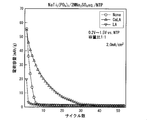
- Positive Na 2 FeP 2 O 7 was synthesized in Examples of the present invention, is a graph showing the cycle characteristics of the negative electrode NaTi 2 (PO 4) 3 current density rating for a beaker-type full cell 2.0 mA / cm 2.
- the present invention relates to an aqueous sodium ion secondary battery comprising at least a positive electrode and a negative electrode made of a substance capable of inserting and removing sodium ions, respectively, and an electrolyte solution that does not become a gel containing an aqueous solution in which a sodium salt is dissolved.
- This electrolytic solution is an electrolytic solution composed of an electrolyte salt (sodium salt), water, and a compound represented by the formula (1).
- the present invention is characterized in that an electrolytic solution containing no aldobionic acid derivative, aldonic acid derivative or uronic acid derivative is used as the electrolytic solution of the aqueous sodium ion secondary battery.
- each component will be described.
- the positive electrode As a positive electrode used in the aqueous sodium ion secondary battery of the present invention, a positive electrode conventionally proposed as a positive electrode of a sodium ion secondary battery can be used, and among them, one having a flat discharge portion of 4 V or less with respect to sodium. Is preferred.
- the positive electrode is composed of a positive electrode active material, a conductive auxiliary material, and a binder, and specifically, a positive electrode material obtained by adding a binder to the positive electrode active material and the conductive auxiliary material is formed by pressure bonding to a current collector. Is done.
- the positive electrode active material is a sodium-transition metal composite oxide capable of inserting and desorbing sodium ions, and specifically, as a transition metal element whose valence changes with insertion or desorption of sodium ions. It consists of a sodium-transition metal composite oxide containing at least one selected from Co, Ni, Mn, Cr, V, Ti, and Fe.
- olivine-type NaFePO 4 olivine-type NaMnPO 4 , Na 2 FePO 4 F , O3 type NaFeO 2 , O3 type NaCrO 2 , O3 type NaFe 0.5 Co 0.5 O 2 , P2 type Na 2/3 Fe 0.5 Mn 0.5 O 2 , Na 3 V 2 (PO 4 ) 3 , Na 3 V 2 (PO 4 ) 2 F 3 , Na 4 Co 3 (PO 4 ) 2 P 2 O 7, and the like.
- the positive electrode active material is preferably a composite oxide different from a sodium-transition metal composite oxide contained in the negative electrode described later.
- binder examples include polyethylene, polypropylene, polytetrafluoroethylene (PTFE), polyvinylidene fluoride (PVDF), styrene butadiene rubber, fluoro rubber, tetrafluoroethylene-hexafluoroethylene copolymer, and tetrafluoroethylene-hexafluoropropylene copolymer.
- PTFE polytetrafluoroethylene
- PVDF polyvinylidene fluoride
- styrene butadiene rubber examples include polyethylene, polypropylene, polytetrafluoroethylene (PTFE), polyvinylidene fluoride (PVDF), styrene butadiene rubber, fluoro rubber, tetrafluoroethylene-hexafluoroethylene copolymer, and tetrafluoroethylene-hexafluoropropylene copolymer.
- FEP tetrafluoroethylene-perfluoroalkyl vinyl ether copolymer
- PFA tetrafluoroethylene-perfluoroalkyl vinyl ether copolymer
- EFT resin tetrafluoroethylene-perfluoroalkyl vinyl ether copolymer
- PCTFE polychlorotrifluoroethylene
- ECTFE Ethylene-chlorotrifluoroethylene copolymer
- ECTFE vinylidene fluoride-hexafluoropropylene-tetrafluoroethylene copolymer
- vinylidene fluoride-perfluoromethyl vinyl ether-tetrafluoroethylene copolymer or ethylene-acrylic acid Copolymers can be used.
- ECTFE Ethylene-chlorotrifluoroethylene copolymer
- ECTFE vinylidene fluoride-hexafluoropropylene-tetrafluoroethylene copolymer
- the conductive auxiliary material carbon black, ketjen black, acetylene black, carbon whisker, carbon fiber, natural graphite, artificial graphite, carbon nanoparticles, carbon nanotubes and other carbon materials, or titanium oxide, ruthenium oxide, aluminum, Metals such as nickel or metal oxides can be used.
- the shape of these conductive auxiliary materials a shape selected from powder, sphere, flake, filament, fiber, spike, needle and the like can be adopted.
- the conductive auxiliary material used is preferably acetylene black.
- stainless steel mesh nickel mesh, gold mesh or the like can be used as the current collector.
- a negative electrode As the negative electrode used in the aqueous sodium ion secondary battery of the present invention, a negative electrode conventionally proposed as a negative electrode for sodium ion secondary batteries can be used.
- a negative electrode is composed of a negative electrode active material, a conductive auxiliary material, and a binder. Specifically, a negative electrode material obtained by adding a binder to the negative electrode active material, a conductive auxiliary material, and a current collector are formed on the current collector. Is done.
- the conductive auxiliary material, the binder, and the current collector used for the negative electrode those mentioned in the above [Positive electrode] can be preferably used.
- the negative electrode active material is a sodium-transition metal composite oxide capable of inserting and desorbing sodium ions, and specifically, V as a transition metal element whose valence changes with the insertion and desorption of sodium ions. It consists of a sodium-transition metal composite oxide containing at least one selected from Ti, Ti, and Fe, and examples include composite oxides such as NaTi 2 (PO 4 ) 3 and NaV 2 (PO 4 ) 3. . However, the negative electrode active material is preferably a composite oxide different from the sodium-transition metal composite oxide contained in the positive electrode described above. Among the negative electrode active materials, it is more preferable to use NaTi 2 (PO 4 ) 3 .
- Examples of the alkali metal include lithium, sodium, and potassium, and examples of the alkaline earth metal include magnesium, calcium, and barium. Alkaline earth metals are preferred, and calcium is preferred as the alkaline earth metal.
- Preferred examples of Z 1 include 1 / 2Ca.
- Examples of the alkyl group having 1 to 23 carbon atoms include a methyl group, an ethyl group, a normal propyl group, an isopropyl group, a normal butyl group, an isobutyl group, a secondary butyl group, a tertiary butyl group, a normal pentyl group, and a normal decyl group.
- Preferred examples of X 1 to X 8 include a hydrogen atom.
- a preferred aldobionic acid derivative is calcium lactobionate.
- aldonic acid derivative used in an electrolyte solution that does not become a gel
- formula (2) (Wherein Z 2 represents a hydrogen atom, an alkali metal or an alkaline earth metal, and X 9 to X 13 each independently represents a hydrogen atom or an alkyl group having 1 to 23 carbon atoms). And the compounds represented.
- Examples of the alkali metal include lithium, sodium, and potassium, and examples of the alkaline earth metal include magnesium, calcium, and barium. Alkaline earth metals are preferred, and calcium is preferred as the alkaline earth metal.
- Preferred examples of Z 2 include a hydrogen atom and 1 / 2Ca.
- Examples of the alkyl group having 1 to 23 carbon atoms include a methyl group, an ethyl group, a normal propyl group, an isopropyl group, a normal butyl group, an isobutyl group, a secondary butyl group, a tertiary butyl group, a normal pentyl group, and a normal decyl group. Etc.
- Preferred examples of X 9 to X 13 include a hydrogen atom.
- Preferable aldonic acid derivatives include gluconic acid, calcium gluconate, galactonic acid, calcium galactonate, mannonic acid, calcium mannonic acid and the like.
- the uronic acid derivative used in the electrolyte solution that does not become a gel is represented by the following formula (3): (Wherein Z 3 represents a hydrogen atom, an alkali metal or an alkaline earth metal, and X 14 to X 17 each independently represents a hydrogen atom or an alkyl group having 1 to 23 carbon atoms). And the compounds represented.
- Examples of the alkali metal include lithium, sodium, and potassium, and examples of the alkaline earth metal include magnesium, calcium, and barium. Alkaline earth metals are preferred, and calcium is preferred as the alkaline earth metal.
- Preferred examples of Z 3 include a hydrogen atom and 1 / 2Ca.
- Examples of the alkyl group having 1 to 23 carbon atoms include a methyl group, an ethyl group, a normal propyl group, an isopropyl group, a normal butyl group, an isobutyl group, a secondary butyl group, a tertiary butyl group, a normal pentyl group, and a normal decyl group. Etc.
- Preferred examples of X 14 to X 17 include a hydrogen atom.
- Preferable uronic acid derivatives include glucuronic acid, calcium glucuronic acid, galacturonic acid, calcium galacturonic acid, mannuronic acid, calcium mannuronic acid and the like.
- the ratio of the aldobionic acid derivative, aldonic acid derivative or uronic acid derivative is 0.1 to 30% by mass of the total mass of the obtained electrolytic solution, preferably 0.5 to 20% by mass, more preferably 1 to 5% by mass.
- an electrolyte salt that has been proposed as being usable for a sodium ion secondary battery can be used.
- Specific examples include, for example, NaNO 3 , NaOH, NaF, NaCl, NaBr, NaI, NaClO 4 , Na 2 SO 4 , Na (CH 3 COO), NaBF 4 , NaPF 6 , NaN (CF 3 SO 2 ) 2 , Examples thereof include sodium salts such as NaN (C 2 F 5 SO 2 ) 2 , Na 2 O, Na 2 CO 3 and mixtures thereof.
- electrolyte salt used in the electrolytic solution in the present invention (sodium salt), particularly preferably NaClO 4 or Na 2 SO 4.
- the electrolyte salt is used in the obtained electrolytic solution at a concentration of 0.01 to 5 mol / kg, preferably 1 to 3 mol / kg.
- the electrolyte solution may contain a water-soluble polymer as long as it is not gelled.
- a water-soluble polymer By using a water-soluble polymer, the mechanical strength of the gel electrolyte can be increased, and the gel can also serve as a water separation inhibitor.
- the water-soluble polymer include gelatin, polyvinyl alcohol (PVA), polyvinyl pyrrolidone (PVP), starch and other polysaccharides, cellulose and derivatives thereof, polyethylene oxide, polysaccharides, polyvinylamine, chitosan, polylysine, polyacrylic acid, Examples include polyalginic acid, polyhyaluronic acid, carboxycellulose, and the like.
- polyvinyl alcohol (PVA) and polyvinyl pyrrolidone are preferable, and polyvinyl alcohol (PVA) is particularly preferable.
- the proportion when the water-soluble polymer is used is 0.1 to 30% by mass, preferably 0. 5 to 20% by mass, more preferably 1 to 5% by mass.
- Na 2 FeP 2 O 7 to be a positive electrode was synthesized by a solid phase method.
- NaH 2 PO 4 and Fe (COO) 2 .2H 2 O were mixed at a stoichiometric ratio, and Na 2 FeP 2 O 7 was obtained by firing at 600 ° C. for 6 hours in an Ar atmosphere (FIG. 1). From the XRD pattern of the figure, the main phase was identified as Na 2 FeP 2 O 7 .
- the synthesized active material and acetylene black (AB) were mixed at a weight ratio of 70:25 and subjected to carbon coating treatment at 300 rpm for 10 hours using a planetary ball mill.
- the obtained powder (active material and AB) was heat-treated in an Ar atmosphere at 600 ° C. for 10 hours.
- the obtained powder and PTFE were mixed at a weight ratio of 95: 5 and molded into pellets to make a positive electrode.
- NaTi 2 (PO 4 ) 3 serving as the negative electrode was synthesized by the Pechini method. To 40 mL of a solution of Ti (OCH 2 CH 2 CH 2 CH 3 ) 4 dissolved in a 30% hydrogen peroxide solution, 15 mL of 28% aqueous ammonia and 2-fold molar amount of citric acid of Ti were added, and Na 2 CO 3 was further added.
- the main phase coincided with ICDD # 33-1296, and it was identified as a NASICON type NaTi 2 (PO 4 ) 3 single phase.
- the synthesized active material and acetylene black (AB) were mixed at a weight ratio of 70:25, and subjected to carbon coating treatment at 400 rpm for 1 hour using a planetary ball mill.
- the obtained powder (active material and AB) was heat-treated at 800 ° C. for 1 hour in a nitrogen atmosphere.
- the obtained powder and PTFE were mixed at a weight ratio of 95: 5 and molded into pellets to make a negative electrode.
- Pellets were prepared for the annealed products of Na 2 FeP 2 O 7 and NaTi 2 (PO 4 ) 3 obtained in the examples, and used as a positive electrode and a negative electrode, respectively, and electrolyte Na 2 SO 4 was used as ultrapure water as an electrolyte.
- a beaker-type full cell was prepared using a melted 2M Na 2 SO 4 aqueous electrolyte and a solution prepared by adding 3 wt% of CaLA and LA to the prepared electrolyte (FIG. 3).
- FIG. 4 shows the sodium full cell cycle characteristics obtained above at a current density of 2.0 mA / cm 2 .
- the cycle characteristics are improved compared to the electrolyte solution with no additive and other additives. This is because the alkalinity of the electrolyte caused by the hydrogen generation reaction due to the occurrence of an irreversible reaction between the positive and negative electrodes, which is considered to be the cause of cycle deterioration when no additive is added, is mitigated by the additive becoming a buffer. This is probably because of this.
- the reason why the cycle characteristics were not improved when LA was added is considered to be because the positive electrode weak against acid was deteriorated by the electrolytic solution that became an acidic environment by LA.
- CaLA showed excellent characteristics.
Landscapes
- Chemical & Material Sciences (AREA)
- Chemical Kinetics & Catalysis (AREA)
- Electrochemistry (AREA)
- General Chemical & Material Sciences (AREA)
- Inorganic Chemistry (AREA)
- Engineering & Computer Science (AREA)
- Manufacturing & Machinery (AREA)
- Secondary Cells (AREA)
- Battery Electrode And Active Subsutance (AREA)
- Saccharide Compounds (AREA)
Abstract
【課題】従来提案された非水系の溶媒を使用した電池につきまとう安全性への不安の問題の解決を図り、且つ、電池特性の低下、充放電サイクルという問題をも解決できる、ゲル状とならない電解液を備えた新規な水系ナトリウムイオン二次電池を提供する。 【解決手段】正極および負極と電解液とを備える水系ナトリウムイオン二次電池であって、前記電解液は、 a)電解質塩、 b)水、及び c)アルドビオン酸誘導体、アルドン酸誘導体又はウロン酸誘導体 を含むことを特徴とする水系ナトリウムイオン二次電池。
Description
本発明は、水系ナトリウムイオン二次電池に関し、詳細には、特定の有機酸誘導体を用いたイオン伝導性の、ゲル状とならない電解液を備えた水系ナトリウムイオン二次電池に関する。
近年、高電圧・高エネルギー密度という利点を有し、かつ、自己放電率も低いことから、鉛電池、ニッケルカドミウム電池等の水溶液系二次電池に代わるものとして、非水電解液二次電池が注日されており、その一部は既に商品化されている。例えば、ノート型パソコンや携帯電話等は、その半数以上が非水電解液二次電池によって駆動している。
また、近年の電子機器等の小型化、軽量化の要求に対し、最近では電池ケースとして従来の金属ケースの代わりにラミネートフィルムを用いたラミネート電池が、より軽く、薄く、形状自由度が高いことから注目されている。しかしながら、ラミネート電池は、その構造から、内圧上昇等の内的刺激や、引き裂き等の外的刺激に対する抵抗力が弱く、変形や破損等による破裂、発火等の危険性も高く、結局のところ電池パックケースに格納して用いられることが多く、軽量化の達成にいたっていない。また該ラミネート電池も、他の非水電解液電池と同様に、電解液としてエステル系化合物及びエーテル系化合物等の可燃性有機溶媒が一般に用いられており、該可燃性有機溶媒が電池の破裂、発火等の問題を引き起こす大きな原因の一つとなっている。
このような問題を解決する一例として、高分子中に電解質が均一固溶した形態をとった高分子固体電解質が提案されているが、該高分子固体電解質は、イオン伝導度が液状電解質に比較して著しく低いために実用上問題がある。また、最近では、上記高分子に従来用いられている液状の電解質を含浸させたポリマーゲル電解質が、電池外部への液漏れによる電解液の着火の問題を解決する手法として提案されている。しかしながら、該ポリマーゲル電解質を用いた電池は、液漏れ以外に対する安全性の確保という点では、これまでの非水系電解質を用いた電池と同様の問題(例えば、電池異常時の短絡・過充電等)を抱えており、電池そのものが根本的に安全であるわけではない。
近年、新たな様式の電池としては、1MのLi2SO4を水溶性ポリマーであるポリビニルアセトアミドでゲル化させ、ゲル電解質とした水系リチウムイオン電池が報告されている(特許文献1)。上述のような水系リチウムイオン二次電池は、電解液に有機溶媒を用いることがないため基本的には燃焼・発火することがなく、従来提案された二次電池における発火という問題を回避することが出来ることが期待される。さらに、製造工程において水分管理を必要としないため、製造コストを大幅に低減できる。また、水溶液系の電解液は非水系電解液に比べて一般的に伝導度が高いため、非水系リチウムイオン二次電池に比べて内部抵抗を低くできるという利点も期待される。
また、一方でノート型パソコンや携帯電話等の小型端末向けモバイル機器の用途以外に大型化された蓄電池のニーズも高まっている。これは、近年の停電や電力不足リスクの回避のために、各家庭や商工業施設において大型化された蓄電池の需要が急速に高まっているためである。しかし、上記したリチウムイオン二次電池は、その原料となる金属リチウムはレアメタルであり、高コストであるとともに、資源の埋蔵量と供給量バランスの観点から大型化された二次電池の普及には抜本的な課題が残されている。
この観点から、金属リチウムと比較して安価で埋蔵量の豊富なナトリウムを用いた水系ナトリウムイオン二次電池に関心が集まっている。これまでに、ナトリウムイオン二次電池を構成する電極活物質に関する文献や特許がいくつか報告されており、例えば、層状岩塩型構造を有する結晶NaFeO2からなるもの(非特許文献1)や、ナシコン型構造を有する結晶Na3V2(PO4)3から成るもの(非特許文献2)がある。一方、負極に関しての知見は少なく、正極活物質との最適な組み合わせにおける負極活物質の報告が一部ある(例えば、特許文献2)。しかしながら、未だ実用化に耐え得るだけの十分な放電電圧や放電容量、充放電サイクルは得られていない。
S.Okada,Y.Takahashi,T.Kiyabu,T.Doi,J.YamakiandT.Nishida,Abstract of 210th ECS Meeting, B2,#201,(2006).
野口良典、小林栄次、L.S.Plashnitsa、土井貴之、岡田重人、山木準一、第49回電池討論会,2E07(2008).
上述したように、一般のリチウムイオン電池は電解液に非水系の溶媒が使用されているため、電池の破損による液漏れ等が起こった場合、引火・爆発の危険があり、電池の製造及び使用に際し安全性に大きな問題を抱えている。非水系の電解液をゲル化させたリチウムポリマーゲル電池では液漏れの危険性は回避されるが、基本的に非水系の溶媒を使用しているため、引火・爆発を完全に回避するまでにはいたっていない。
一方、水系のリチウムイオン電池については、電解液に非水系の溶媒を使用しないため、引火・爆発の危険性は回避できるものの、水溶液を用いた場合には電池の破損による液漏れは回避することができず、また、これまで提案された水系リチウムポリマーゲル電池は、ゲル化剤を使用していない水系電解液の電池と比較して、ゲル化剤の存在及び溶液の高粘度化に起因してリチウムイオンの移動が低下し、これによる電気伝導度の低下や充放電容量の劣化がみられ、電解液をゲル化させることによる電池特性の低下という別の問題が生じることが懸念されている。更には、金属リチウムを原料とした大型化された二次電池では、コスト、埋蔵量と供給量の観点から汎用的に普及するには抜本的な課題が残されている。
本発明は、上記の事情に基づいてなされたものであり、その解決しようとする課題は、従来提案された非水系の溶媒を使用した電池につきまとう安全性への不安の問題の解決を図り、且つ、電池特性の低下、充放電サイクルという問題をも解決できる、ゲル状とならない電解液を備えた新規な水系ナトリウムイオン二次電池を提供することにある。
本発明者らは、上記の課題を解決すべく鋭意研究を行った結果、水系ナトリウムイオン二次電池の電解液として、特定の有機酸誘導体、電解質塩及び水とを含むゲル状とはならない電解液を採用することにより、従来の電解液において問題とされた有機溶媒の使用における安全性確保の問題の解決を図り、且つ、良好なイオン伝導性を有し、従来の液状の電解液を用いた電池以上の充放電特性が得られることを見出し、本発明を完成させた。
すなわち、本発明は第1観点として、正極および負極と電解液とを備える水系ナトリウムイオン二次電池であって、前記電解液は、
a)電解質塩、
b)水、及び
c)アルドビオン酸誘導体、アルドン酸誘導体又はウロン酸誘導体
を含むことを特徴とする水系ナトリウムイオン二次電池に関する。
第2観点として、前記アルドビオン酸誘導体が、下記式(1):
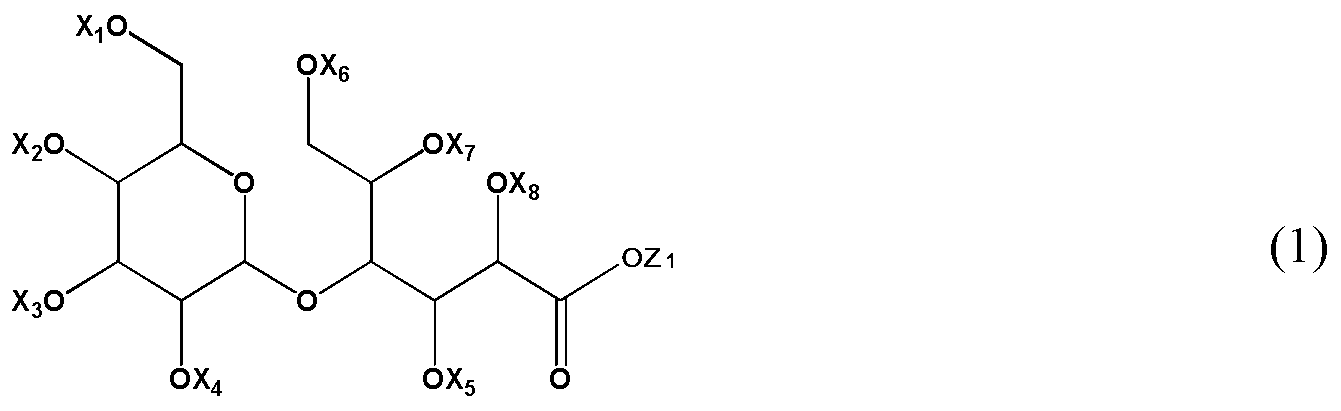
(式中、Z1は、アルカリ金属又はアルカリ土類金属を表し、X1~X8は、それぞれ独立して、水素原子又は炭素原子数1乃至23のアルキル基を表す。)で表される化合物であり、
前記アルドン酸誘導体が、下記式(2):

(式中、Z2は、水素原子、アルカリ金属又はアルカリ土類金属を表し、X9~X13は、それぞれ独立して、水素原子又は炭素原子数1乃至23のアルキル基を表す。)で表される化合物であり、
前記ウロン酸誘導体が、下記式(3):

(式中、Z3は、水素原子、アルカリ金属又はアルカリ土類金属を表し、X14~X17は、それぞれ独立して、水素原子又は炭素原子数1乃至23のアルキル基を表す。]で表される化合物である、第1観点に記載の水系ナトリウムイオン二次電池に関する。
第3観点として、前記正極が、正極活物質、導電補助材及びバインダーを含み、前記負極が、負極活物質、導電補助材及びバインダーを含むことを特徴とする、第1観点又は第2観点に記載の水系ナトリウムイオン二次電池に関する。
第4観点として、前記正極活物質及び前記負極活物質はともに、ナトリウムイオンを挿入および脱離可能なナトリウム-遷移金属複合酸化物からなるが、両活物質は相異なるものであることを特徴とする、第3観点に記載の水系ナトリウムイオン二次電池に関する。
第5観点として、前記正極活物質が、Co、Ni、Mn、Cr、V、Ti、及びFeから選ばれる1種以上の遷移金属元素を含有するナトリウム-遷移金属複合酸化物からなることを特徴とする、第4観点に記載の水系ナトリウムイオン二次電池に関する。
第6観点として、前記正極活物質がオリビン型NaFePO4、もしくはオリビン型NaMnPO4であることを特徴とする、第5観点に記載の水系ナトリウムイオン二次電池に関する。
第7観点として、前記負極活物質が、V、Ti、及びFeから選ばれる1種以上の遷移金属元素を含有するナトリウム-遷移金属複合酸化物からなることを特徴とする、第6観点に記載の水系ナトリウムイオン二次電池に関する。
第8観点として、前記負極活物質が、ナシコン型NaTi2(PO4)3であることを特徴とする、第7観点に記載の水系ナトリウムイオン二次電池に関する。
第9観点として、前記導電補助材が、カーボンブラック、ケッチェンブラック、アセチレンブラック、カーボンウィスカー、炭素繊維、天然黒鉛、人造黒鉛、カーボンナノ粒子、カーボンナノチューブ、酸化チタン、酸化ルテニウム、アルミニウム、ニッケル及びこれらの混合物からなる群から選択されることを特徴とする、第3観点に記載の水系ナトリウムイオン二次電池に関する。
第10観点として、前記導電補助材が、アセチレンブラックであることを特徴とする、第9観点に記載の水系ナトリウムイオン二次電池に関する。
第11観点として、前記バインダーが、ポリエチレン、ポリプロピレン、ポリテトラフルオロエチレン(PTFE)、ポリフッ化ビニリデン(PVDF)、スチレンブタジエンゴム、フッ素ゴム、テトラフルオロエチレン-ヘキサフルオロエチレン共重合体、テトラフルオロエチレン-ヘキサフルオロプロピレン共重合体(FEP)、テトラフルオロエチレン-パーフルオロアルキルビニルエーテル共重合体(PFA)、フッ化ビニリデン-ヘキサフルオロプロピレン共重合体、フッ化ビニリデン-クロロトリフルオロエチレン共重合体、エチレン-テトラフルオロエチレン共重合体(ETFE樹脂)、ポリクロロトリフルオロエチレン(PCTFE)、フッ化ビニリデン-ペンタフルオロプロピレン共重合体、プロピレン-テトラフルオロエチレン共重合体、エチレン-クロロトリフルオロエチレン共重合体(ECTFE)、フッ化ビニリデン-ヘキサフルオロプロピレン-テトラフルオロエチレン共重合体、フッ化ビニリデン-パーフルオロメチルビニルエーテル-テトラフルオロエチレン共重合体及びエチレン-アクリル酸共重合体からなる群から選択されることを特徴とする、第3観点に記載の水系ナトリウムイオン二次電池に関する。
第12観点として、前記バインダーが、ポリテトラフルオロエチレン(PTFE)であることを特徴とする、第11観点に記載の水系ナトリウムイオン二次電池に関する。
第13観点として、前記電解質塩が、NaNO3、NaOH、NaF、NaCl、NaBr、NaI、NaClO4、Na2SO4、Na(CH3COO)、NaBF4、NaPF6、NaN(CF3SO2)2、NaN(C2F5SO2)2、Na2O、Na2CO3及びこれらの混合物からなる群から選択されることを特徴とする、第1観点乃至第12観点のうち何れか1項に記載の水系ナトリウムイオン二次電池に関する。
第14観点として、前記電解質塩がNaClO4又はNa2SO4であることを特徴とする、第13観点に記載の水系ナトリウムイオン二次電池に関する。
第15観点として、前記電解液は、更に水溶性のポリマーを含む第1観点乃至第14観点のうち何れか1項に記載の水系ナトリウムイオン二次電池に関する。
第16観点として、前記水溶性ポリマーが、ゼラチン、ポリビニルアルコール(PVA)、ポリビニルピロリドン(PVP)、澱粉、セルロース及びその誘導体、ポリエチレンオキサイド、ポリサッカライド、ポリビニルアミン、キトサン、ポリリジン、ポリアクリル酸、ポリアルギン酸、ポリヒアルロン酸、カルボキシセルロース及びこれらの混合物からなる群から選択されることを特徴とする、第15観点に記載の水系ナトリウムイオン二次電池に関する。
a)電解質塩、
b)水、及び
c)アルドビオン酸誘導体、アルドン酸誘導体又はウロン酸誘導体
を含むことを特徴とする水系ナトリウムイオン二次電池に関する。
第2観点として、前記アルドビオン酸誘導体が、下記式(1):
(式中、Z1は、アルカリ金属又はアルカリ土類金属を表し、X1~X8は、それぞれ独立して、水素原子又は炭素原子数1乃至23のアルキル基を表す。)で表される化合物であり、
前記アルドン酸誘導体が、下記式(2):
(式中、Z2は、水素原子、アルカリ金属又はアルカリ土類金属を表し、X9~X13は、それぞれ独立して、水素原子又は炭素原子数1乃至23のアルキル基を表す。)で表される化合物であり、
前記ウロン酸誘導体が、下記式(3):
(式中、Z3は、水素原子、アルカリ金属又はアルカリ土類金属を表し、X14~X17は、それぞれ独立して、水素原子又は炭素原子数1乃至23のアルキル基を表す。]で表される化合物である、第1観点に記載の水系ナトリウムイオン二次電池に関する。
第3観点として、前記正極が、正極活物質、導電補助材及びバインダーを含み、前記負極が、負極活物質、導電補助材及びバインダーを含むことを特徴とする、第1観点又は第2観点に記載の水系ナトリウムイオン二次電池に関する。
第4観点として、前記正極活物質及び前記負極活物質はともに、ナトリウムイオンを挿入および脱離可能なナトリウム-遷移金属複合酸化物からなるが、両活物質は相異なるものであることを特徴とする、第3観点に記載の水系ナトリウムイオン二次電池に関する。
第5観点として、前記正極活物質が、Co、Ni、Mn、Cr、V、Ti、及びFeから選ばれる1種以上の遷移金属元素を含有するナトリウム-遷移金属複合酸化物からなることを特徴とする、第4観点に記載の水系ナトリウムイオン二次電池に関する。
第6観点として、前記正極活物質がオリビン型NaFePO4、もしくはオリビン型NaMnPO4であることを特徴とする、第5観点に記載の水系ナトリウムイオン二次電池に関する。
第7観点として、前記負極活物質が、V、Ti、及びFeから選ばれる1種以上の遷移金属元素を含有するナトリウム-遷移金属複合酸化物からなることを特徴とする、第6観点に記載の水系ナトリウムイオン二次電池に関する。
第8観点として、前記負極活物質が、ナシコン型NaTi2(PO4)3であることを特徴とする、第7観点に記載の水系ナトリウムイオン二次電池に関する。
第9観点として、前記導電補助材が、カーボンブラック、ケッチェンブラック、アセチレンブラック、カーボンウィスカー、炭素繊維、天然黒鉛、人造黒鉛、カーボンナノ粒子、カーボンナノチューブ、酸化チタン、酸化ルテニウム、アルミニウム、ニッケル及びこれらの混合物からなる群から選択されることを特徴とする、第3観点に記載の水系ナトリウムイオン二次電池に関する。
第10観点として、前記導電補助材が、アセチレンブラックであることを特徴とする、第9観点に記載の水系ナトリウムイオン二次電池に関する。
第11観点として、前記バインダーが、ポリエチレン、ポリプロピレン、ポリテトラフルオロエチレン(PTFE)、ポリフッ化ビニリデン(PVDF)、スチレンブタジエンゴム、フッ素ゴム、テトラフルオロエチレン-ヘキサフルオロエチレン共重合体、テトラフルオロエチレン-ヘキサフルオロプロピレン共重合体(FEP)、テトラフルオロエチレン-パーフルオロアルキルビニルエーテル共重合体(PFA)、フッ化ビニリデン-ヘキサフルオロプロピレン共重合体、フッ化ビニリデン-クロロトリフルオロエチレン共重合体、エチレン-テトラフルオロエチレン共重合体(ETFE樹脂)、ポリクロロトリフルオロエチレン(PCTFE)、フッ化ビニリデン-ペンタフルオロプロピレン共重合体、プロピレン-テトラフルオロエチレン共重合体、エチレン-クロロトリフルオロエチレン共重合体(ECTFE)、フッ化ビニリデン-ヘキサフルオロプロピレン-テトラフルオロエチレン共重合体、フッ化ビニリデン-パーフルオロメチルビニルエーテル-テトラフルオロエチレン共重合体及びエチレン-アクリル酸共重合体からなる群から選択されることを特徴とする、第3観点に記載の水系ナトリウムイオン二次電池に関する。
第12観点として、前記バインダーが、ポリテトラフルオロエチレン(PTFE)であることを特徴とする、第11観点に記載の水系ナトリウムイオン二次電池に関する。
第13観点として、前記電解質塩が、NaNO3、NaOH、NaF、NaCl、NaBr、NaI、NaClO4、Na2SO4、Na(CH3COO)、NaBF4、NaPF6、NaN(CF3SO2)2、NaN(C2F5SO2)2、Na2O、Na2CO3及びこれらの混合物からなる群から選択されることを特徴とする、第1観点乃至第12観点のうち何れか1項に記載の水系ナトリウムイオン二次電池に関する。
第14観点として、前記電解質塩がNaClO4又はNa2SO4であることを特徴とする、第13観点に記載の水系ナトリウムイオン二次電池に関する。
第15観点として、前記電解液は、更に水溶性のポリマーを含む第1観点乃至第14観点のうち何れか1項に記載の水系ナトリウムイオン二次電池に関する。
第16観点として、前記水溶性ポリマーが、ゼラチン、ポリビニルアルコール(PVA)、ポリビニルピロリドン(PVP)、澱粉、セルロース及びその誘導体、ポリエチレンオキサイド、ポリサッカライド、ポリビニルアミン、キトサン、ポリリジン、ポリアクリル酸、ポリアルギン酸、ポリヒアルロン酸、カルボキシセルロース及びこれらの混合物からなる群から選択されることを特徴とする、第15観点に記載の水系ナトリウムイオン二次電池に関する。
本発明の水系ナトリウムイオン二次電池は、溶媒として水系の溶媒である水を用いていることにより、電池の破損による液漏れ等が原因による引火や爆発の危険性を回避できる。このため、一般のナトリウムイオン電池や非水系溶媒の電解液をゲル化させて用いている電池と比較すると安全性を大幅に向上させることができる。
また本発明の水系ナトリウムイオン二次電池は、従来提案された水系ナトリウムイオン電池でみられた電池性能の劣化が抑制され、従来の液状の電解液を用いた電池と同様の充放電特性を得ることができる。
このように、ゲル化しない添加剤でもサイクル特性の改善効果が観られた理由としては、以下の二点の可能性が想定される。
(1)緩衝効果:ナシコン負極はアルカリに弱く、充放電サイクル途中で負極表面がアルカリ性になるのを添加剤が緩和している可能性。
(2)対極亜鉛の影響:亜鉛腐食を防止している可能性。
このように、ゲル化しない添加剤でもサイクル特性の改善効果が観られた理由としては、以下の二点の可能性が想定される。
(1)緩衝効果:ナシコン負極はアルカリに弱く、充放電サイクル途中で負極表面がアルカリ性になるのを添加剤が緩和している可能性。
(2)対極亜鉛の影響:亜鉛腐食を防止している可能性。
本発明は、それぞれナトリウムイオンの挿入および脱離が可能である物質からなる正極および負極と、ナトリウム塩が溶解した水溶液を含むゲル状とならない電解液とを少なくとも備えた水系ナトリウムイオン二次電池に関する。この電解液は、電解質塩(ナトリウム塩)と、水と、前記式(1)で表される化合物からなる電解液である。
特に本発明は、水系ナトリウムイオン二次電池の電解液として、アルドビオン酸誘導体、アルドン酸誘導体又はウロン酸誘導体を含むゲル状とならない電解液を用いていることを大きな特徴とする。
以下、各構成成分について説明する。
特に本発明は、水系ナトリウムイオン二次電池の電解液として、アルドビオン酸誘導体、アルドン酸誘導体又はウロン酸誘導体を含むゲル状とならない電解液を用いていることを大きな特徴とする。
以下、各構成成分について説明する。
[正極]
本発明の水系ナトリウムイオン二次電池において用いる正極としては、従来よりナトリウムイオン二次電池の正極として提案されている正極を使用可能で、中でもナトリウムに対して4V以下の放電平坦部をもつものが好適である。
例えば正極は、正極活物質と導電補助材とバインダーとを含むものから構成され、具体的には、該正極活物質と導電補助材にバインダーを加えた正極材料を集電体に圧着させて形成される。
本発明の水系ナトリウムイオン二次電池において用いる正極としては、従来よりナトリウムイオン二次電池の正極として提案されている正極を使用可能で、中でもナトリウムに対して4V以下の放電平坦部をもつものが好適である。
例えば正極は、正極活物質と導電補助材とバインダーとを含むものから構成され、具体的には、該正極活物質と導電補助材にバインダーを加えた正極材料を集電体に圧着させて形成される。
前記正極活物質としては、ナトリウムイオンを挿入および脱離可能なナトリウム-遷移金属複合酸化物からなり、具体的には、ナトリウムイオンの挿入又は脱離に伴って価数が変化する遷移金属元素としてCo、Ni、Mn、Cr、V、Ti、及びFeから選ばれる1種以上を含有するナトリウム-遷移金属複合酸化物からなり、例えば、オリビン型NaFePO4、オリビン型NaMnPO4、Na2FePO4F、O3型NaFeO2、O3型NaCrO2、O3型NaFe0.5Co0.5O2、P2型Na2/3Fe0.5Mn0.5O2、Na3V2(PO4)3、Na3V2(PO4)2F3、Na4Co3(PO4)2P2O7等の複合酸化物を挙げることができる。
但し、正極活物質は、後述する負極に含まれるナトリウム-遷移金属複合酸化物とは異なる複合酸化物であることが好ましい。
前記正極活物質の中でも、NaFePO4もしくは、NaMnPO4と用いることがより好ましい。
但し、正極活物質は、後述する負極に含まれるナトリウム-遷移金属複合酸化物とは異なる複合酸化物であることが好ましい。
前記正極活物質の中でも、NaFePO4もしくは、NaMnPO4と用いることがより好ましい。
前記バインダーとしては、ポリエチレン、ポリプロピレン、ポリテトラフルオロエチレン(PTFE)、ポリフッ化ビニリデン(PVDF)、スチレンブタジエンゴム、フッ素ゴム、テトラフルオロエチレン-ヘキサフルオロエチレン共重合体、テトラフルオロエチレン-ヘキサフルオロプロピレン共重合体(FEP)、テトラフルオロエチレン-パーフルオロアルキルビニルエーテル共重合体(PFA)、フッ化ビニリデン-ヘキサフルオロプロピレン共重合体、フッ化ビニリデン-クロロトリフルオロエチレン共重合体、エチレン-テトラフルオロエチレン共重合体(ETFE樹脂)、ポリクロロトリフルオロエチレン(PCTFE)、フッ化ビニリデン-ペンタフルオロプロピレン共重合体、プロピレン-テトラフルオロエチレン共重合体、エチレン-クロロトリフルオロエチレン共重合体(ECTFE)、フッ化ビニリデン-ヘキサフルオロプロピレン-テトラフルオロエチレン共重合体、フッ化ビニリデン-パーフルオロメチルビニルエーテル-テトラフルオロエチレン共重合体又はエチレン-アクリル酸共重合体を用いることが可能である。
中でも、本発明において、使用するバインダーとしてはポリテトラフルオロエチレン(PTFE)を用いることが好ましい。
中でも、本発明において、使用するバインダーとしてはポリテトラフルオロエチレン(PTFE)を用いることが好ましい。
前記導電補助材としては、カーボンブラック、ケッチェンブラック、アセチレンブラック、カーボンウィスカー、炭素繊維、天然黒鉛、人造黒鉛、カーボンナノ粒子、カーボンナノチューブなどの炭素材料、或いは、酸化チタン、酸化ルテニウム、アルミニウム、ニッケルなどの金属又は金属酸化物を使用することが可能である。これら導電補助材の形状としては、粉状、球状、フレーク状、フィラメント状、繊維状、スパイク状、針状などから選択される形状を採用することができる。
本発明において、使用する導電補助材としては、アセチレンブラックであることが好ましい。
本発明において、使用する導電補助材としては、アセチレンブラックであることが好ましい。
さらに、前記集電体としては、ステンレスメッシュ、ニッケルメッシュ、金メッシュ等を用いることができる。
[負極]
本発明の水系ナトリウムイオン二次電池において用いる負極としては、従来よりナトリウムイオン二次電池の負極として提案されている負極を使用可能である。
例えば負極は、負極活物質と導電補助材とバインダーとを含むものから構成され、具体的には、該負極活物質と導電補助材にバインダーを加えた負極材料を集電体に圧着させて形成される。
ここで負極に用いられる導電補助材、バインダー及び集電体は、前述の[正極]において挙げたものを好適に使用できる。
本発明の水系ナトリウムイオン二次電池において用いる負極としては、従来よりナトリウムイオン二次電池の負極として提案されている負極を使用可能である。
例えば負極は、負極活物質と導電補助材とバインダーとを含むものから構成され、具体的には、該負極活物質と導電補助材にバインダーを加えた負極材料を集電体に圧着させて形成される。
ここで負極に用いられる導電補助材、バインダー及び集電体は、前述の[正極]において挙げたものを好適に使用できる。
前記負極活物質としては、ナトリウムイオンを挿入および脱離可能なナトリウム-遷移金属複合酸化物からなり、具体的にはナトリウムイオンの挿入および脱離に伴って価数が変化する遷移金属元素としてV、Ti、及びFeから選ばれる1種以上を含有するナトリウム-遷移金属複合酸化物からなり、例えばNaTi2(PO4)3、NaV2(PO4)3等の複合酸化物を挙げることができる。
但し負極活物質は、前述した正極に含まれるナトリウム-遷移金属複合酸化物とは異なる複合酸化物であることが好ましい。
前記負極活物質の中でも、NaTi2(PO4)3を使用することがより好ましい。
但し負極活物質は、前述した正極に含まれるナトリウム-遷移金属複合酸化物とは異なる複合酸化物であることが好ましい。
前記負極活物質の中でも、NaTi2(PO4)3を使用することがより好ましい。
[電解液]
<アルドビオン酸誘導体>
本発明において、ゲル状とならない電解液に用いられるアルドビオン酸誘導体としては、下記式(1):
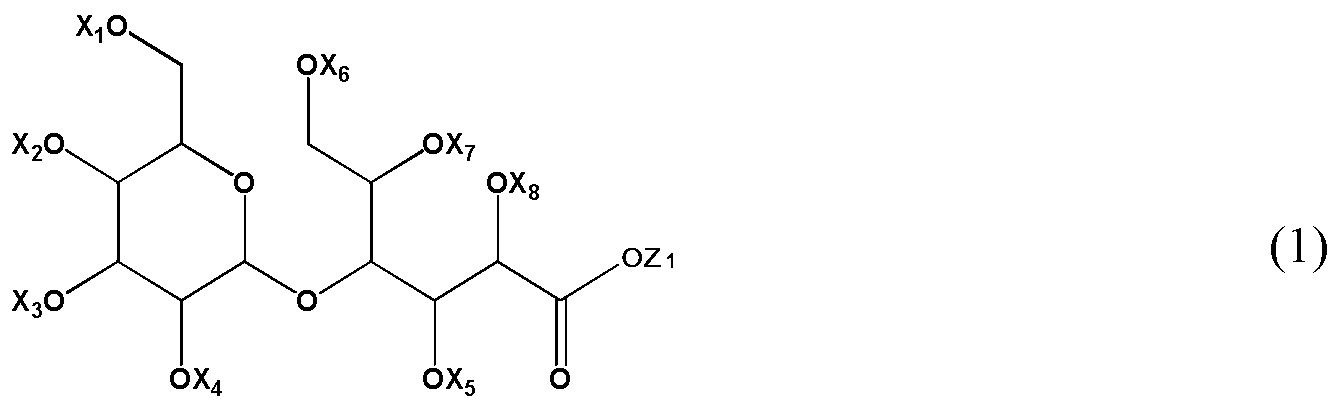
(式中、Z1は、アルカリ金属又はアルカリ土類金属を表し、X1~X8は、それぞれ独立して、水素原子又は炭素原子数1乃至23のアルキル基を表す。)で表される化合物が挙げられる。
<アルドビオン酸誘導体>
本発明において、ゲル状とならない電解液に用いられるアルドビオン酸誘導体としては、下記式(1):
(式中、Z1は、アルカリ金属又はアルカリ土類金属を表し、X1~X8は、それぞれ独立して、水素原子又は炭素原子数1乃至23のアルキル基を表す。)で表される化合物が挙げられる。
アルカリ金属としては、リチウム、ナトリウム及びカリウム等が挙げられ、アルカリ土類金属としては、マグネシウム、カルシウム及びバリウム等が挙げられる。
アルカリ土類金属が好ましく、また、アルカリ土類金属としては、カルシウムが好ましい。
好ましいZ1としては、1/2Ca等が挙げられる。
炭素原子数1乃至23のアルキル基としては、例えば、メチル基、エチル基、ノルマルプロピル基、イソプロピル基、ノルマルブチル基、イソブチル基、セカンダリーブチル基、ターシャリーブチル基、ノルマルペンチル基、ノルマルデシル基等が挙げられる。
好ましいX1~X8としては、水素原子が挙げられる。
好ましいアルドビオン酸誘導体としてはラクトビオン酸カルシウムが挙げられる。
アルカリ土類金属が好ましく、また、アルカリ土類金属としては、カルシウムが好ましい。
好ましいZ1としては、1/2Ca等が挙げられる。
炭素原子数1乃至23のアルキル基としては、例えば、メチル基、エチル基、ノルマルプロピル基、イソプロピル基、ノルマルブチル基、イソブチル基、セカンダリーブチル基、ターシャリーブチル基、ノルマルペンチル基、ノルマルデシル基等が挙げられる。
好ましいX1~X8としては、水素原子が挙げられる。
好ましいアルドビオン酸誘導体としてはラクトビオン酸カルシウムが挙げられる。
<アルドン酸誘導体>
本発明において、ゲル状とならない電解液に用いられるアルドン酸誘導体としては、下記式(2):

(式中、Z2は、水素原子、アルカリ金属又はアルカリ土類金属を表し、X9~X13は、それぞれ独立して、水素原子又は炭素原子数1乃至23のアルキル基を表す。)で表される化合物が挙げられる。
本発明において、ゲル状とならない電解液に用いられるアルドン酸誘導体としては、下記式(2):
(式中、Z2は、水素原子、アルカリ金属又はアルカリ土類金属を表し、X9~X13は、それぞれ独立して、水素原子又は炭素原子数1乃至23のアルキル基を表す。)で表される化合物が挙げられる。
アルカリ金属としては、リチウム、ナトリウム及びカリウム等が挙げられ、アルカリ土類金属としては、マグネシウム、カルシウム及びバリウム等が挙げられる。
アルカリ土類金属が好ましく、また、アルカリ土類金属としては、カルシウムが好ましい。
好ましいZ2としては、水素原子、1/2Ca等が挙げられる。
炭素原子数1乃至23のアルキル基としては、例えば、メチル基、エチル基、ノルマルプロピル基、イソプロピル基、ノルマルブチル基、イソブチル基、セカンダリーブチル基、ターシャリーブチル基、ノルマルペンチル基、ノルマルデシル基等が挙げられる。
好ましいX9~X13としては、水素原子が挙げられる。
好ましいアルドン酸誘導体としてはグルコン酸、グルコン酸カルシウム、ガラクトン酸、ガラクトン酸カルシウム、マンノン酸、マンノン酸カルシウム等が挙げられる。
アルカリ土類金属が好ましく、また、アルカリ土類金属としては、カルシウムが好ましい。
好ましいZ2としては、水素原子、1/2Ca等が挙げられる。
炭素原子数1乃至23のアルキル基としては、例えば、メチル基、エチル基、ノルマルプロピル基、イソプロピル基、ノルマルブチル基、イソブチル基、セカンダリーブチル基、ターシャリーブチル基、ノルマルペンチル基、ノルマルデシル基等が挙げられる。
好ましいX9~X13としては、水素原子が挙げられる。
好ましいアルドン酸誘導体としてはグルコン酸、グルコン酸カルシウム、ガラクトン酸、ガラクトン酸カルシウム、マンノン酸、マンノン酸カルシウム等が挙げられる。
<ウロン酸誘導体>
本発明において、ゲル状とならない電解液に用いられるウロン酸誘導体としては、下記式(3):

(式中、Z3は、水素原子、アルカリ金属又はアルカリ土類金属を表し、X14~X17は、それぞれ独立して、水素原子又は炭素原子数1乃至23のアルキル基を表す。)で表される化合物が挙げられる。
本発明において、ゲル状とならない電解液に用いられるウロン酸誘導体としては、下記式(3):
(式中、Z3は、水素原子、アルカリ金属又はアルカリ土類金属を表し、X14~X17は、それぞれ独立して、水素原子又は炭素原子数1乃至23のアルキル基を表す。)で表される化合物が挙げられる。
アルカリ金属としては、リチウム、ナトリウム及びカリウム等が挙げられ、アルカリ土類金属としては、マグネシウム、カルシウム及びバリウム等が挙げられる。
アルカリ土類金属が好ましく、また、アルカリ土類金属としては、カルシウムが好ましい。
好ましいZ3としては、水素原子、1/2Ca等が挙げられる。
炭素原子数1乃至23のアルキル基としては、例えば、メチル基、エチル基、ノルマルプロピル基、イソプロピル基、ノルマルブチル基、イソブチル基、セカンダリーブチル基、ターシャリーブチル基、ノルマルペンチル基、ノルマルデシル基等が挙げられる。
好ましいX14~X17としては、水素原子が挙げられる。
好ましいウロン酸誘導体としてはグルクロン酸、グルクロン酸カルシウム、ガラクツロン酸、ガラクツロン酸カルシウム、マンヌロン酸、マンヌロン酸カルシウム等が挙げられる。
アルカリ土類金属が好ましく、また、アルカリ土類金属としては、カルシウムが好ましい。
好ましいZ3としては、水素原子、1/2Ca等が挙げられる。
炭素原子数1乃至23のアルキル基としては、例えば、メチル基、エチル基、ノルマルプロピル基、イソプロピル基、ノルマルブチル基、イソブチル基、セカンダリーブチル基、ターシャリーブチル基、ノルマルペンチル基、ノルマルデシル基等が挙げられる。
好ましいX14~X17としては、水素原子が挙げられる。
好ましいウロン酸誘導体としてはグルクロン酸、グルクロン酸カルシウム、ガラクツロン酸、ガラクツロン酸カルシウム、マンヌロン酸、マンヌロン酸カルシウム等が挙げられる。
本発明における水系ナトリウムイオン二次電池に用いる電解液において、前記アルドビオン酸誘導体、アルドン酸誘導体又はウロン酸誘導体の割合は、得られる電解液の総質量の0.1乃至30質量%、好ましくは、0.5乃至20質量%、より好ましくは、1乃至5質量%である。
<電解質塩>
本発明における電解液に用いられる電解質塩としては、従来よりナトリウムイオン二次電池に使用可能であるとして提案されている電解質塩が使用できる。具体例としては、例えば、NaNO3、NaOH、NaF、NaCl、NaBr、NaI、NaClO4、Na2SO4、Na(CH3COO)、NaBF4、NaPF6、NaN(CF3SO2)2、NaN(C2F5SO2)2、Na2O、Na2CO3等のナトリウム塩及びこれらの混合物が挙げられる。
本発明における電解液に用いられる電解質塩としては、従来よりナトリウムイオン二次電池に使用可能であるとして提案されている電解質塩が使用できる。具体例としては、例えば、NaNO3、NaOH、NaF、NaCl、NaBr、NaI、NaClO4、Na2SO4、Na(CH3COO)、NaBF4、NaPF6、NaN(CF3SO2)2、NaN(C2F5SO2)2、Na2O、Na2CO3等のナトリウム塩及びこれらの混合物が挙げられる。
本発明における電解液に用いられる電解質塩(ナトリウム塩)としては、特にNaClO4又はNa2SO4であることが好ましい。
本発明における電解液において、電解質塩は、得られる電解液に0.01乃至5mol/kg、好ましくは、1乃至3mol/kgの濃度で用いられる。
<水溶性ポリマー>
上記電解液にはゲル状とならない限りにおいて水溶性のポリマーを含んでいてもよい。水溶性ポリマーを使用することにより、ゲル状の電解液の機械的強度を高めることができ、またゲルの離水防止剤としての役割を担うこともできる。
前記水溶性ポリマーとしては例えば、ゼラチン、ポリビニルアルコール(PVA)、ポリビニルピロリドン(PVP)、澱粉等の多糖類、セルロース及びその誘導体、ポリエチレンオキサイド、ポリサッカライド、ポリビニルアミン、キトサン、ポリリジン、ポリアクリル酸、ポリアルギン酸、ポリヒアルロン酸、カルボキシセルロース等が挙げられる。
上記電解液にはゲル状とならない限りにおいて水溶性のポリマーを含んでいてもよい。水溶性ポリマーを使用することにより、ゲル状の電解液の機械的強度を高めることができ、またゲルの離水防止剤としての役割を担うこともできる。
前記水溶性ポリマーとしては例えば、ゼラチン、ポリビニルアルコール(PVA)、ポリビニルピロリドン(PVP)、澱粉等の多糖類、セルロース及びその誘導体、ポリエチレンオキサイド、ポリサッカライド、ポリビニルアミン、キトサン、ポリリジン、ポリアクリル酸、ポリアルギン酸、ポリヒアルロン酸、カルボキシセルロース等が挙げられる。
前記水溶性ポリマーの中でも、ポリビニルアルコール(PVA)及びポリビニルピロリドンであることが好ましく、特にポリビニルアルコール(PVA)が好ましい。
本発明における水系ナトリウムイオン二次電池に用いる電解液において、前記水溶性ポリマーが使用される場合のその割合は、得られる電解液の総質量の0.1乃至30質量%、好ましくは、0.5乃至20質量%、より好ましくは、1乃至5質量%である。
以下、実施例を挙げて本発明をより具体的に記載するが、本発明は以下の記述によって限定されるものではない。
なお、実施例で用いた略記号は以下の通りである。
LA:ラクトビオン酸(東京化成工業(株)製)
化学構造式:

CaLA:ラクトビオン酸カルシウム(東京化成工業(株)製)
化学構造式:

なお、実施例で用いた略記号は以下の通りである。
LA:ラクトビオン酸(東京化成工業(株)製)
化学構造式:
CaLA:ラクトビオン酸カルシウム(東京化成工業(株)製)
化学構造式:
〔活物質Na2FeP2O7の合成〕
正極となるNa2FeP2O7は固相法にて合成した。NaH2PO4とFe(COO)2・2H2Oを化学量論比で混合し、Ar雰囲気下で600℃、6時間焼成することでNa2FeP2O7を得た(図1)。同図のXRDパターンから、主相はNa2FeP2O7と同定された。合成した活物質とアセチレンブラック(AB)を70:25の重量比で混合し、遊星ボールミルを用いて300rpm、10時間カーボンコート処理を行った。得られた粉末(活物質およびAB)を600℃、10時間、Ar雰囲気下で熱処理した。得られた粉末とPTFEを重量比95:5で混合し、ペレットに成形したものを正極とした。
正極となるNa2FeP2O7は固相法にて合成した。NaH2PO4とFe(COO)2・2H2Oを化学量論比で混合し、Ar雰囲気下で600℃、6時間焼成することでNa2FeP2O7を得た(図1)。同図のXRDパターンから、主相はNa2FeP2O7と同定された。合成した活物質とアセチレンブラック(AB)を70:25の重量比で混合し、遊星ボールミルを用いて300rpm、10時間カーボンコート処理を行った。得られた粉末(活物質およびAB)を600℃、10時間、Ar雰囲気下で熱処理した。得られた粉末とPTFEを重量比95:5で混合し、ペレットに成形したものを正極とした。
〔活物質NaTi2(PO4)3の合成〕
負極となるNaTi2(PO4)3はPechini法にて合成した。過酸化水素30%溶液にTi(OCH2CH2CH2CH3)4を溶かした40mLの溶液に28%のアンモニア水15mLおよびTiの2倍モル量のクエン酸を加え、さらにNa2CO3を溶かし0.25mol/Lに調製した水溶液10mLとNH4H2PO4を溶かし1.5mol/Lに調製した水溶液10mL、エチレングリコール0.02molを加えて80℃で1-2時間で蒸発乾固させた後、140℃でさらに2-4時間加熱して橙色のゲルを得る。これを350℃および800℃でそれぞれ大気中焼成することでNaTi2(PO4)3を得た(図2)。同図のXRDパターンから、主相はICDD#33-1296と一致し、ナシコン型NaTi2(PO4)3単相と同定された。合成した活物質とアセチレンブラック(AB)を70:25の重量比で混合し、遊星ボールミルを用いて400rpm、1時間カーボンコート処理を行った。得られた粉末(活物質およびAB)を800℃、1時間、窒素雰囲気下で熱処理した。得られた粉末とPTFEを重量比95:5で混合し、ペレットに成形したものを負極とした。
負極となるNaTi2(PO4)3はPechini法にて合成した。過酸化水素30%溶液にTi(OCH2CH2CH2CH3)4を溶かした40mLの溶液に28%のアンモニア水15mLおよびTiの2倍モル量のクエン酸を加え、さらにNa2CO3を溶かし0.25mol/Lに調製した水溶液10mLとNH4H2PO4を溶かし1.5mol/Lに調製した水溶液10mL、エチレングリコール0.02molを加えて80℃で1-2時間で蒸発乾固させた後、140℃でさらに2-4時間加熱して橙色のゲルを得る。これを350℃および800℃でそれぞれ大気中焼成することでNaTi2(PO4)3を得た(図2)。同図のXRDパターンから、主相はICDD#33-1296と一致し、ナシコン型NaTi2(PO4)3単相と同定された。合成した活物質とアセチレンブラック(AB)を70:25の重量比で混合し、遊星ボールミルを用いて400rpm、1時間カーボンコート処理を行った。得られた粉末(活物質およびAB)を800℃、1時間、窒素雰囲気下で熱処理した。得られた粉末とPTFEを重量比95:5で混合し、ペレットに成形したものを負極とした。
〔水系ナトリウムフルセルの作製〕
実施例で得られた上記Na2FeP2O7、NaTi2(PO4)3のアニール品についてペレットを作製しそれぞれ正極、負極とし、電解液として、電解質のNa2SO4を超純水に溶かし作製した2M Na2SO4水系電解液と、作製した電解液にCaLA、LAをそれぞれ3wt%添加したものを使用し、ビーカー型のフルセルを作製した(図3)。
実施例で得られた上記Na2FeP2O7、NaTi2(PO4)3のアニール品についてペレットを作製しそれぞれ正極、負極とし、電解液として、電解質のNa2SO4を超純水に溶かし作製した2M Na2SO4水系電解液と、作製した電解液にCaLA、LAをそれぞれ3wt%添加したものを使用し、ビーカー型のフルセルを作製した(図3)。
図4に電流密度2.0mA/cm2 における上記で得られたナトリウムフルセルサイクル特性を示す。CaLAを添加した場合に、無添加の電解液および他の添加剤を添加した電解液よりサイクル特性が改善している。これは、無添加の場合のサイクル劣化原因であると考えられる正負極間での不可逆反応の発生による水素発生反応に引き起こされる電解液のアルカリ性化が、添加剤が緩衝剤となることで和らいだためではないかと考えられる。また、LAを添加した場合にサイクル特性が改善されなかった理由は、LAにより酸性環境となった電解液により酸に弱い正極が劣化したためと考えられる。添加剤の中でCaLAが優れた特性を示した。
Claims (16)
- 正極および負極と電解液とを備える水系ナトリウムイオン二次電池であって、前記電解液は、
a)電解質塩、
b)水、及び
c)アルドビオン酸誘導体、アルドン酸誘導体又はウロン酸誘導体
を含むことを特徴とする水系ナトリウムイオン二次電池。 - 前記アルドビオン酸誘導体が、下記式(1):

(式中、Z1は、アルカリ金属又はアルカリ土類金属を表し、X1~X8は、それぞれ独立して、水素原子又は炭素原子数1乃至23のアルキル基を表す。)で表される化合物であり、
前記アルドン酸誘導体が、下記式(2):

(式中、Z2は、水素原子、アルカリ金属又はアルカリ土類金属を表し、X9~X13は、それぞれ独立して、水素原子又は炭素原子数1乃至23のアルキル基を表す。)で表される化合物であり、
前記ウロン酸誘導体が、下記式(3):

(式中、Z3は、水素原子、アルカリ金属又はアルカリ土類金属を表し、X14~X17は、それぞれ独立して、水素原子又は炭素原子数1乃至23のアルキル基を表す。)で表される化合物である、請求項1記載の水系ナトリウムイオン二次電池。 - 前記正極が、正極活物質、導電補助材及びバインダーを含み、前記負極が、負極活物質、導電補助材及びバインダーを含むことを特徴とする、請求項1又は2記載の水系ナトリウムイオン二次電池。
- 前記正極活物質及び前記負極活物質はともに、ナトリウムイオンを挿入および脱離可能なナトリウム-遷移金属複合酸化物からなるが、両活物質は相異なるものであることを特徴とする、請求項3記載の水系ナトリウムイオン二次電池。
- 前記正極活物質が、Co、Ni、Mn、Cr、V、Ti、及びFeから選ばれる1種以上の遷移金属元素を含有するナトリウム-遷移金属複合酸化物からなることを特徴とする、請求項4記載の水系ナトリウムイオン二次電池。
- 前記正極活物質がオリビン型NaFePO4、もしくはオリビン型NaMnPO4であることを特徴とする、請求項5記載の水系ナトリウムイオン二次電池。
- 前記負極活物質が、V、Ti、及びFeから選ばれる1種以上の遷移金属元素を含有するナトリウム-遷移金属複合酸化物からなることを特徴とする、請求項6記載の水系ナトリウムイオン二次電池。
- 前記負極活物質が、ナシコン型NaTi2(PO4)3であることを特徴とする、請求項7記載の水系ナトリウムイオン二次電池。
- 前記導電補助材が、カーボンブラック、ケッチェンブラック、アセチレンブラック、カーボンウィスカー、炭素繊維、天然黒鉛、人造黒鉛、カーボンナノ粒子、カーボンナノチューブ、酸化チタン、酸化ルテニウム、アルミニウム、ニッケル及びこれらの混合物からなる群から選択されることを特徴とする、請求項3記載の水系ナトリウムイオン二次電池。
- 前記導電補助材が、アセチレンブラックであることを特徴とする、請求項9記載の水系ナトリウムイオン二次電池。
- 前記バインダーが、ポリエチレン、ポリプロピレン、ポリテトラフルオロエチレン(PTFE)、ポリフッ化ビニリデン(PVDF)、スチレンブタジエンゴム、フッ素ゴム、テトラフルオロエチレン-ヘキサフルオロエチレン共重合体、テトラフルオロエチレン-ヘキサフルオロプロピレン共重合体(FEP)、テトラフルオロエチレン-パーフルオロアルキルビニルエーテル共重合体(PFA)、フッ化ビニリデン-ヘキサフルオロプロピレン共重合体、フッ化ビニリデン-クロロトリフルオロエチレン共重合体、エチレン-テトラフルオロエチレン共重合体(ETFE樹脂)、ポリクロロトリフルオロエチレン(PCTFE)、フッ化ビニリデン-ペンタフルオロプロピレン共重合体、プロピレン-テトラフルオロエチレン共重合体、エチレン-クロロトリフルオロエチレン共重合体(ECTFE)、フッ化ビニリデン-ヘキサフルオロプロピレン-テトラフルオロエチレン共重合体、フッ化ビニリデン-パーフルオロメチルビニルエーテル-テトラフルオロエチレン共重合体及びエチレン-アクリル酸共重合体からなる群から選択されることを特徴とする、請求項3記載の水系ナトリウムイオン二次電池。
- 前記バインダーが、ポリテトラフルオロエチレン(PTFE)であることを特徴とする、請求項11記載の水系ナトリウムイオン二次電池。
- 前記電解質塩が、NaNO3、NaOH、NaF、NaCl、NaBr、NaI、NaClO4、Na2SO4、Na(CH3COO)、NaBF4、NaPF6、NaN(CF3SO2)2、NaN(C2F5SO2)2、Na2O、Na2CO3及びこれらの混合物からなる群から選択されることを特徴とする、請求項1乃至請求項12のうち何れか1項に記載の水系ナトリウムイオン二次電池。
- 前記電解質塩がNaClO4又はNa2SO4であることを特徴とする、請求項13記載の水系ナトリウムイオン二次電池。
- 前記電解液は、更に水溶性のポリマーを含む請求項1乃至14のうち何れか1項に記載の水系ナトリウムイオン二次電池。
- 前記水溶性ポリマーが、ゼラチン、ポリビニルアルコール(PVA)、ポリビニルピロリドン(PVP)、澱粉、セルロース及びその誘導体、ポリエチレンオキサイド、ポリサッカライド、ポリビニルアミン、キトサン、ポリリジン、ポリアクリル酸、ポリアルギン酸、ポリヒアルロン酸、カルボキシセルロース及びこれらの混合物からなる群から選択されることを特徴とする、請求項15記載の水系ナトリウムイオン二次電池。
Priority Applications (1)
| Application Number | Priority Date | Filing Date | Title |
|---|---|---|---|
| JP2016574861A JP6695287B2 (ja) | 2015-02-12 | 2016-02-12 | 水系ナトリウムイオン二次電池 |
Applications Claiming Priority (2)
| Application Number | Priority Date | Filing Date | Title |
|---|---|---|---|
| JP2015025839 | 2015-02-12 | ||
| JP2015-025839 | 2015-02-12 |
Publications (1)
| Publication Number | Publication Date |
|---|---|
| WO2016129677A1 true WO2016129677A1 (ja) | 2016-08-18 |
Family
ID=56614386
Family Applications (1)
| Application Number | Title | Priority Date | Filing Date |
|---|---|---|---|
| PCT/JP2016/054148 Ceased WO2016129677A1 (ja) | 2015-02-12 | 2016-02-12 | 水系ナトリウムイオン二次電池 |
Country Status (2)
| Country | Link |
|---|---|
| JP (1) | JP6695287B2 (ja) |
| WO (1) | WO2016129677A1 (ja) |
Cited By (8)
| Publication number | Priority date | Publication date | Assignee | Title |
|---|---|---|---|---|
| CN109599547A (zh) * | 2018-12-07 | 2019-04-09 | 贝特瑞(天津)纳米材料制造有限公司 | 一种NaTi2(PO4)3-TiO2/C复合电极材料的制备方法和应用 |
| JP2020027796A (ja) * | 2018-08-13 | 2020-02-20 | トヨタ自動車株式会社 | リチウム/ナトリウムイオン電池用水系電解液及び当該電解液を含むリチウム/ナトリウムイオン電池 |
| CN110862075A (zh) * | 2019-10-15 | 2020-03-06 | 扬州扬达新能源有限公司 | 一种水系钠离子电池负极材料的制备方法 |
| JPWO2020241713A1 (ja) * | 2019-05-27 | 2020-12-03 | ||
| JP2021158115A (ja) * | 2020-03-26 | 2021-10-07 | Muアイオニックソリューションズ株式会社 | 非水電解液およびそれを用いた蓄電デバイス |
| CN117096268A (zh) * | 2023-10-18 | 2023-11-21 | 瑞浦兰钧能源股份有限公司 | 一种钠离子电池负极、负极浆料及负极浆料制备方法 |
| CN119660724A (zh) * | 2025-02-18 | 2025-03-21 | 湖南先钠科技有限公司 | 一种仙人球状钠离子电池正极材料的制备方法 |
| EP4181231A4 (en) * | 2020-07-09 | 2025-06-11 | Nippon Electric Glass Co., Ltd. | SINTERED BODY ELECTRODE, BATTERY CELL, METHODS FOR MANUFACTURING SINTERED BODY ELECTRODE AND BATTERY CELL, SOLID ELECTROLYTE PRECURSOR SOLUTION, SOLID ELECTROLYTE PRECURSOR AND SOLID ELECTROLYTE |
Citations (4)
| Publication number | Priority date | Publication date | Assignee | Title |
|---|---|---|---|---|
| JP2011086402A (ja) * | 2009-10-13 | 2011-04-28 | Toyota Central R&D Labs Inc | 水溶液系二次電池 |
| JP2011519122A (ja) * | 2008-04-07 | 2011-06-30 | カーネギー メロン ユニバーシティ | ナトリウムイオンを用いた水性電解質系電気化学的二次エネルギー貯蔵装置 |
| WO2012133527A1 (ja) * | 2011-03-28 | 2012-10-04 | 国立大学法人九州大学 | ナトリウムイオン二次電池 |
| JP2015050128A (ja) * | 2013-09-03 | 2015-03-16 | 一徳 清家 | 半導体二次電池 |
Family Cites Families (4)
| Publication number | Priority date | Publication date | Assignee | Title |
|---|---|---|---|---|
| JP2005220052A (ja) * | 2004-02-04 | 2005-08-18 | Junkanki Kenkyusho:Kk | 性機能障害治療用外用剤 |
| JP4291214B2 (ja) * | 2004-05-27 | 2009-07-08 | 三明電機株式会社 | 生きた植物体を封入した装飾要素 |
| JP2013063924A (ja) * | 2011-09-16 | 2013-04-11 | Kyocera Medical Corp | 多血小板血漿および/または少血小板血漿のゲル化促進方法、並びにそれに使用するキット、凝固促進材および骨補填材 |
| CN105792810A (zh) * | 2013-07-25 | 2016-07-20 | 绮丽儿·李·艾柏汀 | 用于表皮修复的配方 |
-
2016
- 2016-02-12 WO PCT/JP2016/054148 patent/WO2016129677A1/ja not_active Ceased
- 2016-02-12 JP JP2016574861A patent/JP6695287B2/ja active Active
Patent Citations (4)
| Publication number | Priority date | Publication date | Assignee | Title |
|---|---|---|---|---|
| JP2011519122A (ja) * | 2008-04-07 | 2011-06-30 | カーネギー メロン ユニバーシティ | ナトリウムイオンを用いた水性電解質系電気化学的二次エネルギー貯蔵装置 |
| JP2011086402A (ja) * | 2009-10-13 | 2011-04-28 | Toyota Central R&D Labs Inc | 水溶液系二次電池 |
| WO2012133527A1 (ja) * | 2011-03-28 | 2012-10-04 | 国立大学法人九州大学 | ナトリウムイオン二次電池 |
| JP2015050128A (ja) * | 2013-09-03 | 2015-03-16 | 一徳 清家 | 半導体二次電池 |
Non-Patent Citations (1)
| Title |
|---|
| YUSUKE KANO ET AL.: "NaMP04(M=Fe,Mn) Seikyoku o Mochiita Suikei Natoriumu Ion Denchi Tokusei", ABSTRACTS, BATTERY SYMPOSIUM IN JAPAN, vol. 54, 6 October 2013 (2013-10-06), pages 403 * |
Cited By (13)
| Publication number | Priority date | Publication date | Assignee | Title |
|---|---|---|---|---|
| JP2020027796A (ja) * | 2018-08-13 | 2020-02-20 | トヨタ自動車株式会社 | リチウム/ナトリウムイオン電池用水系電解液及び当該電解液を含むリチウム/ナトリウムイオン電池 |
| CN109599547B (zh) * | 2018-12-07 | 2022-05-13 | 天津市贝特瑞新能源科技有限公司 | 一种NaTi2(PO4)3-TiO2/C复合电极材料的制备方法和应用 |
| CN109599547A (zh) * | 2018-12-07 | 2019-04-09 | 贝特瑞(天津)纳米材料制造有限公司 | 一种NaTi2(PO4)3-TiO2/C复合电极材料的制备方法和应用 |
| US12322761B2 (en) | 2019-05-27 | 2025-06-03 | Kyushu University, National University Corporation | Aqueous sodium ion secondary battery |
| JPWO2020241713A1 (ja) * | 2019-05-27 | 2020-12-03 | ||
| JP7699049B2 (ja) | 2019-05-27 | 2025-06-26 | 国立大学法人九州大学 | 水系ナトリウムイオン二次電池 |
| CN110862075A (zh) * | 2019-10-15 | 2020-03-06 | 扬州扬达新能源有限公司 | 一种水系钠离子电池负极材料的制备方法 |
| JP2021158115A (ja) * | 2020-03-26 | 2021-10-07 | Muアイオニックソリューションズ株式会社 | 非水電解液およびそれを用いた蓄電デバイス |
| JP7544641B2 (ja) | 2020-03-26 | 2024-09-03 | Muアイオニックソリューションズ株式会社 | 非水電解液およびそれを用いた蓄電デバイス |
| EP4181231A4 (en) * | 2020-07-09 | 2025-06-11 | Nippon Electric Glass Co., Ltd. | SINTERED BODY ELECTRODE, BATTERY CELL, METHODS FOR MANUFACTURING SINTERED BODY ELECTRODE AND BATTERY CELL, SOLID ELECTROLYTE PRECURSOR SOLUTION, SOLID ELECTROLYTE PRECURSOR AND SOLID ELECTROLYTE |
| CN117096268A (zh) * | 2023-10-18 | 2023-11-21 | 瑞浦兰钧能源股份有限公司 | 一种钠离子电池负极、负极浆料及负极浆料制备方法 |
| CN117096268B (zh) * | 2023-10-18 | 2024-02-06 | 瑞浦兰钧能源股份有限公司 | 一种钠离子电池负极、负极浆料及负极浆料制备方法 |
| CN119660724A (zh) * | 2025-02-18 | 2025-03-21 | 湖南先钠科技有限公司 | 一种仙人球状钠离子电池正极材料的制备方法 |
Also Published As
| Publication number | Publication date |
|---|---|
| JP6695287B2 (ja) | 2020-05-20 |
| JPWO2016129677A1 (ja) | 2017-11-24 |
Similar Documents
| Publication | Publication Date | Title |
|---|---|---|
| JP6695287B2 (ja) | 水系ナトリウムイオン二次電池 | |
| Lu et al. | Recent progress in quasi-solid and solid polymer electrolytes for multivalent metal-ion batteries | |
| Chang et al. | Green energy storage chemistries based on neutral aqueous electrolytes | |
| JP6143945B2 (ja) | 亜鉛イオン二次電池及びその製造方法 | |
| JP6683370B2 (ja) | カリウムイオン二次電池用負極又はカリウムイオンキャパシタ用負極、カリウムイオン二次電池又はカリウムイオンキャパシタ及びカリウムイオン二次電池負極用又はカリウムイオンキャパシタ負極用の結着剤 | |
| JP5454426B2 (ja) | 水溶液系二次電池 | |
| US20180358620A1 (en) | Anode electrode including doped electrode active material and energy storage device including same | |
| JP5347522B2 (ja) | 活物質及び電極の製造方法、活物質及び電極 | |
| US9843042B2 (en) | Cathode active material composition and lithium secondary battery including the same | |
| CA2892388A1 (en) | Composite anode structure for aqueous electrolyte energy storage and device containing same | |
| KR20140025349A (ko) | 나트륨 이차 전지 전극 및 나트륨 이차 전지 | |
| KR20170095324A (ko) | 플루오르화 카보네이트를 포함하는 전해질 조성물 및 이를 포함하는 배터리 | |
| KR101759323B1 (ko) | 나트륨 이차전지용 양극 활물질의 제조 방법 및 이를 포함하는 나트륨 이차전지 | |
| WO2013099279A1 (ja) | 非水電解質二次電池用負極および非水電解質二次電池用負極を有する非水電解質二次電池 | |
| CN106941192A (zh) | 锂离子二次电池 | |
| JP2011086402A (ja) | 水溶液系二次電池 | |
| WO2023123054A1 (zh) | 钠离子电池用正极活性材料、其制备方法、以及包含其的正极极片、钠离子电池及用电装置 | |
| JP5510002B2 (ja) | 活物質の製造方法、及び電極の製造方法 | |
| JP5493330B2 (ja) | 水系リチウム二次電池 | |
| JP2014007117A (ja) | Li系二次電池 | |
| JP6747986B2 (ja) | 水系アルカリイオン二次電池 | |
| JP2014022321A (ja) | 捕捉剤を含む非水電解質二次電池 | |
| KR101666796B1 (ko) | 리튬 이차 전지용 양극 활물질, 이의 제조 방법, 및 이를 포함하는 리튬 이차 전지 | |
| JP2015002167A (ja) | 二次電池 | |
| JP2014006971A (ja) | 非水電解質二次電池及びそれを用いた組電池 |
Legal Events
| Date | Code | Title | Description |
|---|---|---|---|
| 121 | Ep: the epo has been informed by wipo that ep was designated in this application |
Ref document number: 16749320 Country of ref document: EP Kind code of ref document: A1 |
|
| ENP | Entry into the national phase |
Ref document number: 2016574861 Country of ref document: JP Kind code of ref document: A |
|
| NENP | Non-entry into the national phase |
Ref country code: DE |
|
| 122 | Ep: pct application non-entry in european phase |
Ref document number: 16749320 Country of ref document: EP Kind code of ref document: A1 |