WO2016129297A1 - 炭化珪素単結晶の製造方法 - Google Patents
炭化珪素単結晶の製造方法 Download PDFInfo
- Publication number
- WO2016129297A1 WO2016129297A1 PCT/JP2016/050119 JP2016050119W WO2016129297A1 WO 2016129297 A1 WO2016129297 A1 WO 2016129297A1 JP 2016050119 W JP2016050119 W JP 2016050119W WO 2016129297 A1 WO2016129297 A1 WO 2016129297A1
- Authority
- WO
- WIPO (PCT)
- Prior art keywords
- silicon carbide
- raw material
- single crystal
- powder
- carbide single
- Prior art date
- Legal status (The legal status is an assumption and is not a legal conclusion. Google has not performed a legal analysis and makes no representation as to the accuracy of the status listed.)
- Ceased
Links
Images

Classifications
-
- C—CHEMISTRY; METALLURGY
- C30—CRYSTAL GROWTH
- C30B—SINGLE-CRYSTAL GROWTH; UNIDIRECTIONAL SOLIDIFICATION OF EUTECTIC MATERIAL OR UNIDIRECTIONAL DEMIXING OF EUTECTOID MATERIAL; REFINING BY ZONE-MELTING OF MATERIAL; PRODUCTION OF A HOMOGENEOUS POLYCRYSTALLINE MATERIAL WITH DEFINED STRUCTURE; SINGLE CRYSTALS OR HOMOGENEOUS POLYCRYSTALLINE MATERIAL WITH DEFINED STRUCTURE; AFTER-TREATMENT OF SINGLE CRYSTALS OR A HOMOGENEOUS POLYCRYSTALLINE MATERIAL WITH DEFINED STRUCTURE; APPARATUS THEREFOR
- C30B29/00—Single crystals or homogeneous polycrystalline material with defined structure characterised by the material or by their shape
- C30B29/10—Inorganic compounds or compositions
- C30B29/36—Carbides
-
- C—CHEMISTRY; METALLURGY
- C30—CRYSTAL GROWTH
- C30B—SINGLE-CRYSTAL GROWTH; UNIDIRECTIONAL SOLIDIFICATION OF EUTECTIC MATERIAL OR UNIDIRECTIONAL DEMIXING OF EUTECTOID MATERIAL; REFINING BY ZONE-MELTING OF MATERIAL; PRODUCTION OF A HOMOGENEOUS POLYCRYSTALLINE MATERIAL WITH DEFINED STRUCTURE; SINGLE CRYSTALS OR HOMOGENEOUS POLYCRYSTALLINE MATERIAL WITH DEFINED STRUCTURE; AFTER-TREATMENT OF SINGLE CRYSTALS OR A HOMOGENEOUS POLYCRYSTALLINE MATERIAL WITH DEFINED STRUCTURE; APPARATUS THEREFOR
- C30B23/00—Single-crystal growth by condensing evaporated or sublimed materials
- C30B23/02—Epitaxial-layer growth
- C30B23/06—Heating of the deposition chamber, the substrate or the materials to be evaporated
- C30B23/066—Heating of the material to be evaporated
-
- C—CHEMISTRY; METALLURGY
- C30—CRYSTAL GROWTH
- C30B—SINGLE-CRYSTAL GROWTH; UNIDIRECTIONAL SOLIDIFICATION OF EUTECTIC MATERIAL OR UNIDIRECTIONAL DEMIXING OF EUTECTOID MATERIAL; REFINING BY ZONE-MELTING OF MATERIAL; PRODUCTION OF A HOMOGENEOUS POLYCRYSTALLINE MATERIAL WITH DEFINED STRUCTURE; SINGLE CRYSTALS OR HOMOGENEOUS POLYCRYSTALLINE MATERIAL WITH DEFINED STRUCTURE; AFTER-TREATMENT OF SINGLE CRYSTALS OR A HOMOGENEOUS POLYCRYSTALLINE MATERIAL WITH DEFINED STRUCTURE; APPARATUS THEREFOR
- C30B29/00—Single crystals or homogeneous polycrystalline material with defined structure characterised by the material or by their shape
- C30B29/02—Elements
- C30B29/06—Silicon
-
- C—CHEMISTRY; METALLURGY
- C30—CRYSTAL GROWTH
- C30B—SINGLE-CRYSTAL GROWTH; UNIDIRECTIONAL SOLIDIFICATION OF EUTECTIC MATERIAL OR UNIDIRECTIONAL DEMIXING OF EUTECTOID MATERIAL; REFINING BY ZONE-MELTING OF MATERIAL; PRODUCTION OF A HOMOGENEOUS POLYCRYSTALLINE MATERIAL WITH DEFINED STRUCTURE; SINGLE CRYSTALS OR HOMOGENEOUS POLYCRYSTALLINE MATERIAL WITH DEFINED STRUCTURE; AFTER-TREATMENT OF SINGLE CRYSTALS OR A HOMOGENEOUS POLYCRYSTALLINE MATERIAL WITH DEFINED STRUCTURE; APPARATUS THEREFOR
- C30B33/00—After-treatment of single crystals or homogeneous polycrystalline material with defined structure
- C30B33/02—Heat treatment
-
- C—CHEMISTRY; METALLURGY
- C30—CRYSTAL GROWTH
- C30B—SINGLE-CRYSTAL GROWTH; UNIDIRECTIONAL SOLIDIFICATION OF EUTECTIC MATERIAL OR UNIDIRECTIONAL DEMIXING OF EUTECTOID MATERIAL; REFINING BY ZONE-MELTING OF MATERIAL; PRODUCTION OF A HOMOGENEOUS POLYCRYSTALLINE MATERIAL WITH DEFINED STRUCTURE; SINGLE CRYSTALS OR HOMOGENEOUS POLYCRYSTALLINE MATERIAL WITH DEFINED STRUCTURE; AFTER-TREATMENT OF SINGLE CRYSTALS OR A HOMOGENEOUS POLYCRYSTALLINE MATERIAL WITH DEFINED STRUCTURE; APPARATUS THEREFOR
- C30B35/00—Apparatus not otherwise provided for, specially adapted for the growth, production or after-treatment of single crystals or of a homogeneous polycrystalline material with defined structure
- C30B35/002—Crucibles or containers
-
- C—CHEMISTRY; METALLURGY
- C30—CRYSTAL GROWTH
- C30B—SINGLE-CRYSTAL GROWTH; UNIDIRECTIONAL SOLIDIFICATION OF EUTECTIC MATERIAL OR UNIDIRECTIONAL DEMIXING OF EUTECTOID MATERIAL; REFINING BY ZONE-MELTING OF MATERIAL; PRODUCTION OF A HOMOGENEOUS POLYCRYSTALLINE MATERIAL WITH DEFINED STRUCTURE; SINGLE CRYSTALS OR HOMOGENEOUS POLYCRYSTALLINE MATERIAL WITH DEFINED STRUCTURE; AFTER-TREATMENT OF SINGLE CRYSTALS OR A HOMOGENEOUS POLYCRYSTALLINE MATERIAL WITH DEFINED STRUCTURE; APPARATUS THEREFOR
- C30B35/00—Apparatus not otherwise provided for, specially adapted for the growth, production or after-treatment of single crystals or of a homogeneous polycrystalline material with defined structure
- C30B35/007—Apparatus for preparing, pre-treating the source material to be used for crystal growth
Definitions
- the present disclosure relates to a method for manufacturing a silicon carbide single crystal.
- Patent Document 1 JP 2012-510951 A discloses a method for producing a silicon carbide single crystal by a sublimation method.
- An object of the present disclosure is to provide a silicon carbide single crystal in which mixing of different polytypes is suppressed.
- a method for producing a silicon carbide single crystal according to the present disclosure includes a step of filling a crucible with a silicon carbide raw material having a fluidity index of 70 to 100 and a step of sublimating the silicon carbide raw material by heating the silicon carbide raw material. And comprising.
- the method for producing a silicon carbide single crystal according to the present disclosure includes a step of filling a crucible with a silicon carbide raw material having a fluidity index of 70 or more and 100 or less, and heating the silicon carbide raw material, Sublimating.
- a silicon carbide single crystal is grown by a sublimation method.
- the sublimation method is a crystal growth method in which raw material powder filled in the bottom of a crucible is sublimated at a high temperature, and the sublimated raw material is reprecipitated on a seed crystal disposed on the top of the crucible.
- the sublimation method is used for manufacturing a bulk single crystal of silicon carbide.
- the present inventor has now elucidated one of the causes of the occurrence of different polytypes, and has completed the production method [1]. That is, in the production method [1], a silicon carbide raw material having a fluidity index of 70 or more and 100 or less is used.
- one of the causes of the occurrence of different polytypes is the fluidity of the raw material powder.
- the flowability of the raw material powder has not been taken into account, so when pouring the raw material powder into the crucible and filling it, the raw material powder cannot be uniformly filled, and the raw material powder is partially biased. Sometimes occurred.
- the in-plane composition of the generated sublimation gas becomes non-uniform, and it is considered that different polytypes are generated.
- the particles are bonded to each other in the portion. Such a phenomenon is also expected to lead to non-uniform composition of the sublimation gas.
- the raw material powder can be uniformly filled in the crucible. Thereby, a sublimation gas having a uniform in-plane composition is generated, and a silicon carbide single crystal in which mixing of different polytypes is suppressed can be manufactured.
- the liquidity index L. Let us denote the liquidity index proposed by Carr, the so-called “Carr's liquidity index”.
- the fluidity index is an index representing the ease of flow of the powder, and can take a value from 0 to 100. The better the fluidity, the larger the fluidity index.
- the fluidity index the following four powder physical properties are used: (a) angle of repose, (b) degree of compression, (c) spatula angle, (d) uniformity or cohesion.
- the fluidity index is obtained by measuring the physical properties of each of the four types of powders, setting the measurement results to indices of 0 to 25 based on Carr's theory, and summing them.
- the fluidity index can be measured by, for example, “Powder Tester” manufactured by Hosokawa Micron. According to the “powder tester”, it is possible to measure all four types of powder physical properties and calculate a fluidity index. Of course, a measuring device having the same function and accuracy as the “powder tester” may be used.
- the angle of repose [unit: °] represents an angle (elevation angle) formed by a conical slope formed when a powder is naturally dropped and a horizontal plane.
- the cone indicates a pile of powder.
- the pile of powder is formed by, for example, an injection method.
- the injection method is a method in which a powder sample is dropped through a funnel to form a powder pile.
- (B) Compressibility The compressibility [unit:%] is calculated by (PA) ⁇ P ⁇ 100, where A is the loose bulk density and P is the firm bulk density.
- the “loose bulk density” is a bulk density in a state where the powder is naturally dropped. The loose bulk density is measured by filling a powder sample in a cup with a specified capacity and weighing it.
- the “solidified bulk density” is a bulk density in a state where the loose bulk density is measured and then the cup is tapped to degas the air contained between the particles and the powder is tightly packed. The bulk density is sometimes expressed as an apparent specific gravity.
- (C) Spatula angle Spatula angle [unit: °] is an angle formed by a conical slope formed by pulling up the spatula after the powder is put on the spatula and a horizontal plane. Specifically, the spatula angle is measured as follows. First, the powder is put on a spatula, and then the spatula is gently raised vertically upward, and the angle formed by the conical slope remaining on the spatula and the horizontal plane is measured. Next, after giving a predetermined impact, the angle formed by the conical slope and the horizontal plane is measured again. The average angle formed before and after the impact is adopted as the spatula angle.
- (D) Uniformity or cohesion When the particle size of the raw material powder is approximately 300 ⁇ m or more, the uniformity is measured as the fourth item.
- the uniformity [unit: dimensionless number] is obtained from the particle size distribution measured by sieving. The uniformity is calculated by dividing the particle size (d 60 ) at a cumulative value of 60 % by the particle size (d 10 ) at a cumulative value of 10% in the particle size distribution.
- the degree of aggregation may be adopted as the fourth item.
- the agglomeration degree [unit:%] is obtained from the amount of the powder sample that has passed through the sieve after the powder sample is deposited on the standard sieve and then vibrated at a predetermined strength for a predetermined time.
- a notation such as “ ⁇ 25” indicates a value smaller than 25.
- a notation such as “45 ⁇ ” indicates a value larger than 45.
- a notation such as “26-29” indicates a value from 26 to 29.
- the fluidity index of the silicon carbide raw material may be 80 or more and 100 or less.
- the fluidity index of the silicon carbide raw material may be 90 or more and 100 or less.
- a method for producing a silicon carbide single crystal of the present disclosure includes a step of filling a crucible with a silicon carbide raw material having a fluidity index of 90 or more and 100 or less, and heating the silicon carbide raw material, Sublimating.
- the present embodiment will be described in detail, but the present embodiment is not limited thereto.
- the same or corresponding elements are denoted by the same reference numerals, and the same description is not repeated.
- FIG. 1 is a flowchart showing an outline of a method for manufacturing a silicon carbide single crystal according to the present embodiment. As shown in FIG. 1, the manufacturing method includes a raw material filling step (S01) and a raw material sublimation step (S02). Hereinafter, each step will be described.
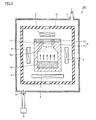
- FIG. 2 is a schematic cross-sectional view illustrating a method for manufacturing a silicon carbide single crystal according to this embodiment.
- the crystal growth apparatus 100 shown in FIG. The chamber 6 is provided with a gas introduction port 7 and a gas exhaust port 8.
- the gas exhaust port 8 is connected to an exhaust pump 9.
- a crucible 5, a resistance heater 2, and a heat insulating material 10 are arranged.
- the crucible 5, the resistance heater 2, and the heat insulating material 10 are made of, for example, graphite.
- the crucible 5 is composed of a pedestal 3 and a housing part 4.
- the pedestal 3 is configured to hold the seed crystal 11.
- the pedestal 3 also functions as a lid for the crucible 5.
- Seed crystal 11 is a silicon carbide single crystal substrate made of, for example, 4H—SiC.
- the diameter of seed crystal 11 may be, for example, 100 mm or more, 150 mm or more, or 200 mm or more. As the diameter of the seed crystal increases, a silicon carbide single crystal having a larger diameter can be grown. It is also conceivable that different types of polytypes are likely to be mixed as the diameter of the silicon carbide single crystal increases. Therefore, as the diameter increases, it is expected that the effect of suppressing the different polytypes of the present embodiment becomes remarkable.
- the diameter of the seed crystal may be 300 mm or less, for example.
- the external shape of the accommodating part 4 is a bottomed cylindrical shape, for example.
- the containing portion 4, that is, the crucible 5 is filled with the silicon carbide raw material 12 having a fluidity index of 70 or more and 100 or less.
- the silicon carbide raw material is, for example, a powder obtained by pulverizing silicon carbide polycrystal.
- D 50 of the silicon carbide raw material may be, for example, about 300 to 700 ⁇ m or about 400 to 600 ⁇ m.
- “d 50 ” indicates the particle size at a cumulative value of 50% in the particle size distribution measured by sieving.
- the “powder tester” described above can also measure d 50 .
- the method for preparing a silicon carbide raw material having a fluidity index of 70 to 100 is not particularly limited.
- several silicon carbide polycrystalline powders may be obtained from the market, and the fluidity index may be measured using the “powder tester” described above to select powders having a fluidity index of 70 to 100.
- the fluidity index of the silicon carbide raw material is preferably 80 or more, more preferably 90 or more, and particularly preferably 95 or more. It is expected that the higher the fluidity index of the silicon carbide raw material, the more uniform the filling state of the silicon carbide raw material in the crucible.
- the silicon carbide raw material 12 After pouring the silicon carbide raw material 12 into the housing part 4, for example, by shaking or tapping the housing part 4 lightly, the silicon carbide raw material 12 is moderately vibrated so that the surface of the powder layer becomes flat. You may adjust it.
- the fluidity index of the silicon carbide raw material is 70 or more, the silicon carbide raw material can be uniformly filled in the accommodating portion.
- the silicon carbide raw material 12 is sublimated by heating the silicon carbide raw material 12.
- the sublimated silicon carbide raw material is reprecipitated on seed crystal 11 and grows as silicon carbide single crystal 13.
- the crucible 5 is heated by the resistance heater 2. Thereby, silicon carbide raw material 12 is heated and a predetermined temperature gradient is formed in crucible 5. At this time, the temperature around silicon carbide raw material 12 is adjusted to, for example, about 2300 to 2500 ° C. Further, the temperature around the seed crystal 11 is adjusted to about 2000 to 2300 ° C., for example. The temperature of each part of the crucible 5 is measured by, for example, a radiation thermometer (not shown).
- An inert gas such as argon (Ar) gas is introduced from the gas inlet 7.
- the introduced inert gas is exhausted from the gas exhaust port 8 by the exhaust pump 9.
- the pressure in the chamber 6 is adjusted by the introduction amount of the inert gas and the exhaust amount.
- Sublimation of the silicon carbide raw material 12 is controlled by the pressure in the chamber 6. That is, when the pressure in chamber 6 is reduced to, for example, 5 kPa or less while silicon carbide source material 12 is heated, sublimation of silicon carbide source material 12 is started.
- the generated sublimation gas reprecipitates on the seed crystal 11 and grows as a silicon carbide single crystal 13.
- the silicon carbide raw material 12 is uniformly filled in the crucible 5 as described above, the in-plane composition of the generated sublimation gas becomes uniform. Thereby, mixing of different polytypes in silicon carbide single crystal 13 is suppressed.
Landscapes
- Chemical & Material Sciences (AREA)
- Engineering & Computer Science (AREA)
- Crystallography & Structural Chemistry (AREA)
- Materials Engineering (AREA)
- Metallurgy (AREA)
- Organic Chemistry (AREA)
- Inorganic Chemistry (AREA)
- Physics & Mathematics (AREA)
- Thermal Sciences (AREA)
- Crystals, And After-Treatments Of Crystals (AREA)
Abstract
炭化珪素単結晶の製造方法は、流動性指数が70以上100以下の炭化珪素原料を坩堝に充填する工程(S01)と、該炭化珪素原料を加熱することにより、該炭化珪素原料を昇華させる工程(S02)と、を備える。
Description
本開示は炭化珪素単結晶の製造方法に関する。
特表2012-510951号公報(特許文献1)には、昇華法による炭化珪素単結晶の製造方法が開示されている。
本開示の目的は、異種ポリタイプの混入が抑制された炭化珪素単結晶を提供することにある。
本開示の炭化珪素単結晶の製造方法は、流動性指数が70以上100以下の炭化珪素原料を坩堝に充填する工程と、該炭化珪素原料を加熱することにより、該炭化珪素原料を昇華させる工程と、を備える。
上記によれば、異種ポリタイプの混入が抑制された炭化珪素単結晶が提供される。
[本開示の実施形態の説明]
最初に本開示の実施態様を列記して説明する。
最初に本開示の実施態様を列記して説明する。
〔1〕本開示の炭化珪素単結晶の製造方法は、流動性指数が70以上100以下の炭化珪素原料を坩堝に充填する工程と、該炭化珪素原料を加熱することにより、該炭化珪素原料を昇華させる工程と、を備える。
上記〔1〕の製造方法では、昇華法によって炭化珪素単結晶を成長させる。昇華法とは、坩堝の底部に充填された原料粉体を高温で昇華させ、昇華した原料を、坩堝の上部に配置された種結晶上に再析出させる結晶成長方法である。昇華法は、炭化珪素のバルク単結晶の製造に用いられている。
炭化珪素の結晶構造には、多種のポリタイプが確認されている。代表的なものに、たとえば3C-SiC、4H-SiC、6H-SiC、15R-SiC等がある。現状では4H-SiCがパワーデバイス用として有用である。バルク単結晶の製造では、目的とするポリタイプ以外のポリタイプ、いわゆる異種ポリタイプの発生を如何に抑制するかが重要となる。異種ポリタイプが混入すると、結晶不整合により、マイクロパイプ欠陥と呼ばれる中空孔状の結晶欠陥が発生し、結晶品質が大幅に劣化するからである。
今回本発明者は、異種ポリタイプの発生原因のひとつを解明し、上記〔1〕の製造方法を完成させるに至った。すなわち上記〔1〕の製造方法では、流動性指数が70以上100以下の炭化珪素原料を用いる。
本発明者の研究によれば、異種ポリタイプの発生原因のひとつは、原料粉体の流動性にある。従来、原料粉体の流動性を考慮していなかったために、坩堝内に原料粉体を流し込んで充填する際、原料粉体を均一に充填することができず、原料粉体に部分的な偏りが生じることがあった。この状態で原料を加熱して昇華させると、発生する昇華ガスの面内組成が不均一となり、異種ポリタイプが発生すると考えられる。また坩堝に充填された原料粉体内に、局所的に充填密度が高い部分が存在すると、当該部分において粒子同士が結合してしまうことも考えられる。こうした現象も昇華ガスの面内組成の不均一化につながると予想される。
そこで上記〔1〕のように、流動性指数が高い炭化珪素原料を用いることにより、原料粉体を坩堝に均一に充填することができる。これにより面内組成が均一な昇華ガスを発生させ、異種ポリタイプの混入が抑制された炭化珪素単結晶を製造することができる。
ここで「流動性指数」は、R.L.Carrにより提案された流動性指数、いわゆる「Carrの流動性指数」を示すものとする。流動性指数は、粉体の流れやすさを表す指標であり、0~100までの値をとり得る。流動性が良好な粉体ほど、流動性指数は大きな値となる。流動性指数の算出には、以下に示す(a)安息角、(b)圧縮度、(c)スパチュラ角、(d)均一度もしくは凝集度の4種の粉体物性を用いる。流動性指数は、4種の粉体物性をそれぞれ測定し、測定結果をCarrの理論に基づいてそれぞれ0~25の指数とした上で、それらを合計することにより求められる。流動性指数は、たとえばホソカワミクロン社製の「パウダテスタ」等によって測定できる。「パウダテスタ」によれば、1台で4種の粉体物性をすべて測定し、流動性指数を算出できる。もちろん「パウダテスタ」と同等の機能、精度を有する測定装置を使用してもよい。
(a)安息角
安息角[単位:°]は、粉体を自然落下させた際に形成される円錐の斜面と、水平面とがなす角(仰角)を示す。ここで円錐とは粉体の山を示している。粉体の山は、たとえば注入法により形成される。注入法とは、ロートを通じて粉体サンプルを落下させ、粉体の山を形成させる方法である。
安息角[単位:°]は、粉体を自然落下させた際に形成される円錐の斜面と、水平面とがなす角(仰角)を示す。ここで円錐とは粉体の山を示している。粉体の山は、たとえば注入法により形成される。注入法とは、ロートを通じて粉体サンプルを落下させ、粉体の山を形成させる方法である。
(b)圧縮度
圧縮度[単位:%]は、ゆるみ嵩密度をA、固め嵩密度をPとするとき、(P-A)÷P×100により算出される。ここで「ゆるみ嵩密度」とは、粉体を自然落下させた状態での嵩密度である。ゆるみ嵩密度は、規定容量のカップに粉体サンプルを充填、秤量することにより測定される。「固め嵩密度」とは、ゆるみ嵩密度を測定した後、カップをタッピングすることにより、粒子間に含まれる空気を脱気して、粉体を密充填させた状態での嵩密度である。嵩密度は見かけ比重と表記されることもある。
圧縮度[単位:%]は、ゆるみ嵩密度をA、固め嵩密度をPとするとき、(P-A)÷P×100により算出される。ここで「ゆるみ嵩密度」とは、粉体を自然落下させた状態での嵩密度である。ゆるみ嵩密度は、規定容量のカップに粉体サンプルを充填、秤量することにより測定される。「固め嵩密度」とは、ゆるみ嵩密度を測定した後、カップをタッピングすることにより、粒子間に含まれる空気を脱気して、粉体を密充填させた状態での嵩密度である。嵩密度は見かけ比重と表記されることもある。
(c)スパチュラ角
スパチュラ角[単位:°]は、粉体をスパチュラに盛った後、スパチュラを引き上げた際に形成される円錐の斜面と、水平面とがなす角度である。スパチュラ角は、具体的には次のようにして測定される。先ず粉体をスパチュラに盛った後、スパチュラを鉛直上方に静かに上昇させ、スパチュラ上に残った円錐の斜面と、水平面とがなす角を測定する。次いで所定の衝撃を与えた後に、再度円錐の斜面と水平面とがなす角を測定する。衝撃前後のなす角の平均値がスパチュラ角として採用される。
スパチュラ角[単位:°]は、粉体をスパチュラに盛った後、スパチュラを引き上げた際に形成される円錐の斜面と、水平面とがなす角度である。スパチュラ角は、具体的には次のようにして測定される。先ず粉体をスパチュラに盛った後、スパチュラを鉛直上方に静かに上昇させ、スパチュラ上に残った円錐の斜面と、水平面とがなす角を測定する。次いで所定の衝撃を与えた後に、再度円錐の斜面と水平面とがなす角を測定する。衝撃前後のなす角の平均値がスパチュラ角として採用される。
(d)均一度もしくは凝集度
原料粉体の粒径が概ね300μm以上の場合は、第4の項目として均一度を測定する。均一度[単位:無次元数]は、篩分けによって測定された粒度分布から求める。均一度は、粒度分布において累積値60%での粒径(d60)を、累積値10%での粒径(d10)で除することにより算出される。
原料粉体の粒径が概ね300μm以上の場合は、第4の項目として均一度を測定する。均一度[単位:無次元数]は、篩分けによって測定された粒度分布から求める。均一度は、粒度分布において累積値60%での粒径(d60)を、累積値10%での粒径(d10)で除することにより算出される。
原料粉体が凝集性の強い粉体であり、凝集度を測定できる場合には、第4の項目に凝集度を採用してもよい。凝集度[単位:%]は、粉体サンプルを標準篩上に堆積させた後、所定時間、所定の強さで振動させ、篩を通過した粉体サンプルの量から求められる。
上記(a)~(d)の測定結果は、表1に示す基準に従って指数化される。各指数の合計が流動性指数である。

表1中、たとえば「<25」等の表記は、25より小さい値を示している。「45<」等の表記は、45より大きい値を示している。また「26-29」等の表記は、26から29の値を示している。
〔2〕炭化珪素原料の流動性指数は、80以上100以下でもよい。
〔3〕炭化珪素原料の流動性指数は、90以上100以下でもよい。
〔3〕炭化珪素原料の流動性指数は、90以上100以下でもよい。
〔4〕本開示の炭化珪素単結晶の製造方法は、流動性指数が90以上100以下の炭化珪素原料を坩堝に充填する工程と、該炭化珪素原料を加熱することにより、該炭化珪素原料を昇華させる工程と、を備える。
上記の製造方法によれば、異種ポリタイプの混入が抑制された炭化珪素単結晶が提供される。
[本開示の実施形態の詳細]
以下、本開示の一実施形態(以下「本実施形態」と記す)について詳細に説明するが、本実施形態はこれらに限定されるものではない。以下の説明では、同一または対応する要素には同一の符号を付し、それらについて同じ説明は繰り返さない。
以下、本開示の一実施形態(以下「本実施形態」と記す)について詳細に説明するが、本実施形態はこれらに限定されるものではない。以下の説明では、同一または対応する要素には同一の符号を付し、それらについて同じ説明は繰り返さない。
〔炭化珪素単結晶の製造方法〕
図1は本実施形態に係る炭化珪素単結晶の製造方法の概略を示すフローチャートである。図1に示されるように、当該製造方法は、原料充填工程(S01)と、原料昇華工程(S02)とを備える。以下、各工程について説明する。
図1は本実施形態に係る炭化珪素単結晶の製造方法の概略を示すフローチャートである。図1に示されるように、当該製造方法は、原料充填工程(S01)と、原料昇華工程(S02)とを備える。以下、各工程について説明する。
〔原料充填工程(S01)〕
図2は本実施形態に係る炭化珪素単結晶の製造方法を図解する概略断面図である。図2に示される結晶成長装置100は、チャンバ6を備える。チャンバ6には、ガス導入口7およびガス排気口8が設けられている。ガス排気口8は排気ポンプ9と接続されている。チャンバ6内には、坩堝5、抵抗ヒータ2および断熱材10が配置されている。坩堝5、抵抗ヒータ2および断熱材10は、たとえば黒鉛製である。
図2は本実施形態に係る炭化珪素単結晶の製造方法を図解する概略断面図である。図2に示される結晶成長装置100は、チャンバ6を備える。チャンバ6には、ガス導入口7およびガス排気口8が設けられている。ガス排気口8は排気ポンプ9と接続されている。チャンバ6内には、坩堝5、抵抗ヒータ2および断熱材10が配置されている。坩堝5、抵抗ヒータ2および断熱材10は、たとえば黒鉛製である。
坩堝5は、台座3と収容部4とから構成されている。台座3は、種結晶11を保持できるように構成されている。台座3は、坩堝5の蓋としても機能している。種結晶11は、たとえば4H-SiCからなる炭化珪素単結晶基板である。種結晶11の直径は、たとえば100mm以上でもよいし、150mm以上でもよいし、200mm以上でもよい。種結晶の直径が大きくなるほど、直径の大きな炭化珪素単結晶を成長させることができる。また炭化珪素単結晶の直径が大きくなるほど、異種ポリタイプが混入しやすくなることも考えられる。そのため直径が大きくなるほど、本実施形態の異種ポリタイプの抑制効果が顕著になることが期待される。種結晶の直径は、たとえば300mm以下でもよい。
収容部4の外形は、たとえば有底筒状である。原料充填工程では、収容部4すなわち坩堝5に、流動性指数が70以上100以下の炭化珪素原料12を充填する。炭化珪素原料は、たとえば炭化珪素多結晶を粉砕した粉体である。炭化珪素原料のd50は、たとえば300~700μm程度でもよいし、400~600μm程度でもよい。ここで「d50」は、篩分けによって測定された粒度分布において累積値50%での粒径を示すものとする。前述の「パウダテスタ」はd50の測定も可能である。
流動性指数が70以上100以下の炭化珪素原料を準備する方法は特に制限されない。たとえば、炭化珪素多結晶の粉体を市場からいくつか入手し、前述の「パウダテスタ」を用いて流動性指数を測定して、流動性指数が70以上100以下の粉体を選別すればよい。炭化珪素原料の流動性指数は、好ましくは80以上であり、より好ましくは90以上であり、特に好ましくは95以上である。炭化珪素原料の流動性指数が高いほど、坩堝内において炭化珪素原料の充填状態が均一になることが期待される。
収容部4に炭化珪素原料12を流し込んだ後、たとえば、収容部4を軽く揺するかまたは軽く叩く等して、炭化珪素原料12に適度な振動を与え、粉体層の表面が平坦になるように調整してもよい。本実施形態では、炭化珪素原料の流動性指数が70以上であるために、収容部内に炭化珪素原料を均一に充填できる。
〔原料昇華工程(S02)〕
原料昇華工程(S02)では、炭化珪素原料12を加熱することにより、炭化珪素原料12を昇華させる。昇華した炭化珪素原料は、種結晶11上において再析出し、炭化珪素単結晶13となって成長する。
原料昇華工程(S02)では、炭化珪素原料12を加熱することにより、炭化珪素原料12を昇華させる。昇華した炭化珪素原料は、種結晶11上において再析出し、炭化珪素単結晶13となって成長する。
坩堝5は、抵抗ヒータ2によって加熱される。これにより炭化珪素原料12が加熱されるとともに、坩堝5内に所定の温度勾配が形成される。このとき、炭化珪素原料12の周辺の温度は、たとえば2300~2500℃程度に調整される。また種結晶11の周辺の温度は、たとえば2000~2300℃程度に調整される。坩堝5の各部の温度は、たとえば放射温度計(図示せず)によって測定される。
ガス導入口7からは、アルゴン(Ar)ガス等の不活性ガスが導入される。導入された不活性ガスは、排気ポンプ9によってガス排気口8から排気される。チャンバ6内の圧力は、不活性ガスの導入量と排気量によって調整される。炭化珪素原料12の昇華は、チャンバ6内の圧力によって制御される。すなわち炭化珪素原料12を加熱した状態で、チャンバ6内の圧力を、たとえば5kPa以下に減圧すると、炭化珪素原料12の昇華が開始される。発生した昇華ガスは、種結晶11上に再析出し、炭化珪素単結晶13となって成長する。
本実施形態では、前述のように炭化珪素原料12が坩堝5に均一に充填されているために、発生する昇華ガスの面内組成が均一となる。これにより炭化珪素単結晶13において異種ポリタイプの混入が抑制される。
今回開示された実施形態はすべての点で例示であって、制限的なものではないと考えられるべきである。本発明の範囲は上記した実施形態ではなく請求の範囲によって示され、請求の範囲と均等の意味、および範囲内でのすべての変更が含まれることが意図される。
2 抵抗ヒータ、3 台座、4 収容部、5 坩堝、6 チャンバ、7 ガス導入口、8 ガス排気口、9 排気ポンプ、10 断熱材、11 種結晶、12 炭化珪素原料、13 炭化珪素単結晶、100 結晶成長装置。
Claims (4)
- 流動性指数が70以上100以下の炭化珪素原料を坩堝に充填する工程と、
前記炭化珪素原料を加熱することにより、前記炭化珪素原料を昇華させる工程と、を備える、炭化珪素単結晶の製造方法。 - 前記炭化珪素原料の流動性指数は、80以上100以下である、請求項1に記載の炭化珪素単結晶の製造方法。
- 前記炭化珪素原料の流動性指数は、90以上100以下である、請求項1に記載の炭化珪素単結晶の製造方法。
- 流動性指数が90以上100以下の炭化珪素原料を坩堝に充填する工程と、
前記炭化珪素原料を加熱することにより、前記炭化珪素原料を昇華させる工程と、を備える、炭化珪素単結晶の製造方法。
Priority Applications (4)
| Application Number | Priority Date | Filing Date | Title |
|---|---|---|---|
| US15/535,848 US10246797B2 (en) | 2015-02-13 | 2016-01-05 | Method for manufacturing silicon carbide single crystal |
| CN201680004997.5A CN107208309A (zh) | 2015-02-13 | 2016-01-05 | 碳化硅单晶的制造方法 |
| DE112016000743.4T DE112016000743T5 (de) | 2015-02-13 | 2016-01-05 | Verfahren zur Herstellung eines Siliziumkarbid-Einkristalls |
| US16/222,522 US10513799B2 (en) | 2015-02-13 | 2018-12-17 | Method for manufacturing silicon carbide single crystal |
Applications Claiming Priority (2)
| Application Number | Priority Date | Filing Date | Title |
|---|---|---|---|
| JP2015026537A JP6443103B2 (ja) | 2015-02-13 | 2015-02-13 | 炭化珪素単結晶の製造方法 |
| JP2015-026537 | 2015-02-13 |
Related Child Applications (2)
| Application Number | Title | Priority Date | Filing Date |
|---|---|---|---|
| US15/535,848 A-371-Of-International US10246797B2 (en) | 2015-02-13 | 2016-01-05 | Method for manufacturing silicon carbide single crystal |
| US16/222,522 Continuation US10513799B2 (en) | 2015-02-13 | 2018-12-17 | Method for manufacturing silicon carbide single crystal |
Publications (1)
| Publication Number | Publication Date |
|---|---|
| WO2016129297A1 true WO2016129297A1 (ja) | 2016-08-18 |
Family
ID=56614632
Family Applications (1)
| Application Number | Title | Priority Date | Filing Date |
|---|---|---|---|
| PCT/JP2016/050119 Ceased WO2016129297A1 (ja) | 2015-02-13 | 2016-01-05 | 炭化珪素単結晶の製造方法 |
Country Status (5)
| Country | Link |
|---|---|
| US (2) | US10246797B2 (ja) |
| JP (1) | JP6443103B2 (ja) |
| CN (1) | CN107208309A (ja) |
| DE (1) | DE112016000743T5 (ja) |
| WO (1) | WO2016129297A1 (ja) |
Cited By (1)
| Publication number | Priority date | Publication date | Assignee | Title |
|---|---|---|---|---|
| TWI725816B (zh) * | 2019-07-11 | 2021-04-21 | 南韓商Skc股份有限公司 | 用於碳化矽錠之粉末以及使用其製備碳化矽錠之方法 |
Families Citing this family (2)
| Publication number | Priority date | Publication date | Assignee | Title |
|---|---|---|---|---|
| JP6778100B2 (ja) * | 2016-12-22 | 2020-10-28 | 太平洋セメント株式会社 | 炭化珪素粉末及びこれを原料とする炭化珪素単結晶の製造方法 |
| KR102192815B1 (ko) * | 2019-03-21 | 2020-12-18 | 에스케이씨 주식회사 | 잉곳의 제조방법, 잉곳 성장용 원료물질 및 이의 제조방법 |
Citations (1)
| Publication number | Priority date | Publication date | Assignee | Title |
|---|---|---|---|---|
| WO2008018320A1 (fr) * | 2006-08-09 | 2008-02-14 | Shin-Etsu Chemical Co., Ltd. | MATÉRIAU DESTINÉ À LA FABRICATION DE MONOCRISTAL SiC, PROCÉDÉ DE FABRICATION DU MATÉRIAU, PROCÉDÉ DE FABRICATION DE MONOCRISTAL SiC EN EMPLOYANT LE MATÉRIAU, ET MONOCRISTAL SiC OBTENU PAR LE PROCÉDÉ DE FABRICATION DE MONOCRISTAL SiC |
Family Cites Families (4)
| Publication number | Priority date | Publication date | Assignee | Title |
|---|---|---|---|---|
| WO2001004391A1 (de) * | 1999-07-07 | 2001-01-18 | Siemens Aktiengesellschaft | Verfahren zur sublimationszüchtung eines sic-einkristalls mit aufheizen unter züchtungsdruck |
| CN1282770C (zh) | 2003-12-24 | 2006-11-01 | 山东大学 | 一种生长具有半导体特性的大直径6H-SiC单晶的装置和方法 |
| DE112009003667B4 (de) | 2008-12-08 | 2024-04-25 | Ii-Vi Inc. | Verbessertes axial-gradient-transport- (agt-) züchtungsverfahren und -apparat unter anwendung von resistivem erhitzen |
| JP2013060328A (ja) * | 2011-09-14 | 2013-04-04 | Sumitomo Electric Ind Ltd | 炭化珪素結晶の製造方法 |
-
2015
- 2015-02-13 JP JP2015026537A patent/JP6443103B2/ja active Active
-
2016
- 2016-01-05 US US15/535,848 patent/US10246797B2/en active Active
- 2016-01-05 DE DE112016000743.4T patent/DE112016000743T5/de not_active Withdrawn
- 2016-01-05 WO PCT/JP2016/050119 patent/WO2016129297A1/ja not_active Ceased
- 2016-01-05 CN CN201680004997.5A patent/CN107208309A/zh active Pending
-
2018
- 2018-12-17 US US16/222,522 patent/US10513799B2/en active Active
Patent Citations (1)
| Publication number | Priority date | Publication date | Assignee | Title |
|---|---|---|---|---|
| WO2008018320A1 (fr) * | 2006-08-09 | 2008-02-14 | Shin-Etsu Chemical Co., Ltd. | MATÉRIAU DESTINÉ À LA FABRICATION DE MONOCRISTAL SiC, PROCÉDÉ DE FABRICATION DU MATÉRIAU, PROCÉDÉ DE FABRICATION DE MONOCRISTAL SiC EN EMPLOYANT LE MATÉRIAU, ET MONOCRISTAL SiC OBTENU PAR LE PROCÉDÉ DE FABRICATION DE MONOCRISTAL SiC |
Cited By (1)
| Publication number | Priority date | Publication date | Assignee | Title |
|---|---|---|---|---|
| TWI725816B (zh) * | 2019-07-11 | 2021-04-21 | 南韓商Skc股份有限公司 | 用於碳化矽錠之粉末以及使用其製備碳化矽錠之方法 |
Also Published As
| Publication number | Publication date |
|---|---|
| CN107208309A (zh) | 2017-09-26 |
| US20190127880A1 (en) | 2019-05-02 |
| US10513799B2 (en) | 2019-12-24 |
| US10246797B2 (en) | 2019-04-02 |
| US20170335487A1 (en) | 2017-11-23 |
| JP6443103B2 (ja) | 2018-12-26 |
| DE112016000743T5 (de) | 2017-11-30 |
| JP2016147790A (ja) | 2016-08-18 |
Similar Documents
| Publication | Publication Date | Title |
|---|---|---|
| JP6758527B1 (ja) | 炭化珪素インゴット成長用粉末及びそれを用いた炭化珪素インゴットの製造方法 | |
| JP5696630B2 (ja) | 炭化珪素基板およびその製造方法 | |
| JP6443103B2 (ja) | 炭化珪素単結晶の製造方法 | |
| JP2016056088A (ja) | バナジウムでドープしたSiC塊状単結晶の製造方法及びバナジウムでドープしたSiC基板 | |
| CN103696012B (zh) | 一种高均匀性、高产率半绝缘碳化硅衬底的制备方法 | |
| JP2016179920A (ja) | 昇華再結晶法に用いるSiC原料の製造方法及びSiC原料 | |
| CN107135560A (zh) | 陶瓷结构体、其制法及半导体制造装置用部件 | |
| JP6597873B2 (ja) | 炭化珪素単結晶の製造方法 | |
| KR20150123114A (ko) | 탄화규소 분말 제조방법 | |
| JP2013060328A (ja) | 炭化珪素結晶の製造方法 | |
| JP5994248B2 (ja) | インゴット、基板および基板群 | |
| KR101854731B1 (ko) | 잉곳 제조 방법 | |
| JP2016172674A (ja) | 炭化珪素単結晶及びそれを用いた電力制御用デバイス基板 | |
| KR101480491B1 (ko) | 원료 분말 소결체 벌크 제조 방법과 장치 및 소결체 벌크를 이용한 단결정 성장 방법 | |
| CN114775058B (zh) | 一种氮化铝单晶生长用复合籽晶托的制备方法 | |
| JP2014205593A (ja) | 炭化珪素単結晶およびその製造方法 | |
| Steiner et al. | Optimization of the SiC powder source size distribution for the sublimation growth of long crystals boules | |
| JP6143019B2 (ja) | ウェーハ載置用サセプタの製造方法及びウェーハ載置用サセプタ | |
| JP2015129086A (ja) | 炭化珪素基板 | |
| JP6669469B2 (ja) | 炭化珪素粉末 | |
| KR102237931B1 (ko) | 탄화규소 분말 제조방법 | |
| JP2025030088A (ja) | 炭化珪素原料の製造方法及び炭化珪素単結晶の製造方法 | |
| CN107924814B (zh) | 基于硅的熔融组合物和使用其的SiC单晶的制造方法 | |
| JP6796941B2 (ja) | 炭化珪素単結晶インゴットの製造方法 | |
| JP2015129087A (ja) | 炭化珪素基板 |
Legal Events
| Date | Code | Title | Description |
|---|---|---|---|
| 121 | Ep: the epo has been informed by wipo that ep was designated in this application |
Ref document number: 16748942 Country of ref document: EP Kind code of ref document: A1 |
|
| WWE | Wipo information: entry into national phase |
Ref document number: 112016000743 Country of ref document: DE |
|
| 122 | Ep: pct application non-entry in european phase |
Ref document number: 16748942 Country of ref document: EP Kind code of ref document: A1 |