WO2016125660A1 - 芳香族ポリケトン及びその製造方法、芳香族ポリケトン組成物、芳香族ポリケトン膜、光学素子並びに画像表示装置 - Google Patents
芳香族ポリケトン及びその製造方法、芳香族ポリケトン組成物、芳香族ポリケトン膜、光学素子並びに画像表示装置 Download PDFInfo
- Publication number
- WO2016125660A1 WO2016125660A1 PCT/JP2016/052363 JP2016052363W WO2016125660A1 WO 2016125660 A1 WO2016125660 A1 WO 2016125660A1 JP 2016052363 W JP2016052363 W JP 2016052363W WO 2016125660 A1 WO2016125660 A1 WO 2016125660A1
- Authority
- WO
- WIPO (PCT)
- Prior art keywords
- general formula
- group
- carbon atoms
- hydrocarbon group
- hydrogen atom
- Prior art date
- Legal status (The legal status is an assumption and is not a legal conclusion. Google has not performed a legal analysis and makes no representation as to the accuracy of the status listed.)
- Ceased
Links
Images
Classifications
-
- C—CHEMISTRY; METALLURGY
- C08—ORGANIC MACROMOLECULAR COMPOUNDS; THEIR PREPARATION OR CHEMICAL WORKING-UP; COMPOSITIONS BASED THEREON
- C08G—MACROMOLECULAR COMPOUNDS OBTAINED OTHERWISE THAN BY REACTIONS ONLY INVOLVING UNSATURATED CARBON-TO-CARBON BONDS
- C08G67/00—Macromolecular compounds obtained by reactions forming in the main chain of the macromolecule a linkage containing oxygen or oxygen and carbon, not provided for in groups C08G2/00 - C08G65/00
-
- C—CHEMISTRY; METALLURGY
- C09—DYES; PAINTS; POLISHES; NATURAL RESINS; ADHESIVES; COMPOSITIONS NOT OTHERWISE PROVIDED FOR; APPLICATIONS OF MATERIALS NOT OTHERWISE PROVIDED FOR
- C09D—COATING COMPOSITIONS, e.g. PAINTS, VARNISHES OR LACQUERS; FILLING PASTES; CHEMICAL PAINT OR INK REMOVERS; INKS; CORRECTING FLUIDS; WOODSTAINS; PASTES OR SOLIDS FOR COLOURING OR PRINTING; USE OF MATERIALS THEREFOR
- C09D173/00—Coating compositions based on macromolecular compounds obtained by reactions forming a linkage containing oxygen or oxygen and carbon in the main chain, not provided for in groups C09D159/00 - C09D171/00; Coating compositions based on derivatives of such polymers
-
- G—PHYSICS
- G02—OPTICS
- G02B—OPTICAL ELEMENTS, SYSTEMS OR APPARATUS
- G02B1/00—Optical elements characterised by the material of which they are made; Optical coatings for optical elements
- G02B1/04—Optical elements characterised by the material of which they are made; Optical coatings for optical elements made of organic materials, e.g. plastics
Definitions
- the present invention relates to an aromatic polyketone and a method for producing the same, an aromatic polyketone composition, an aromatic polyketone film, an optical element, and an image display device.
- An aromatic polyketone having an aromatic ring and a carbonyl group in the main chain disclosed in JP-A-62-273030 has excellent heat resistance and mechanical properties and is used as an engineering plastic. .
- Most of the polymers belonging to the aromatic polyketone are aromatic polyether ketones polymerized using a nucleophilic aromatic substitution reaction, and have an ether bond in the main chain.
- the aromatic polyketone that does not have an ether bond in the main chain as disclosed in JP-A-2005-272728, etc., has better heat resistance and chemical resistance than the aromatic polyether ketone. Can be demonstrated.
- JP 2013-53194 discloses an aromatic compound that achieves both high transparency and heat resistance by directly polymerizing an alicyclic dicarboxylic acid and a 2,2′-dialkoxybiphenyl compound by Friedel-Crafts acylation.
- Group polyketone can be obtained, and application to optical components is expected.
- resin materials When applying resin materials to optical parts, it is expected to obtain characteristics that cannot be obtained with inorganic materials. For example, it is light and generally soft compared to inorganic materials.
- Applications of resin materials include glass substitutes for portable devices that make use of light weight, coating materials, and flexible displays that make use of flexibility. In particular, the realization of flexible displays has attracted particular attention in recent years.
- the aromatic polyketone polymerized from the alicyclic dicarboxylic acid and the 2,2′-dialkoxybiphenyl compound described in JP2013-53194A has excellent heat resistance and transparency, while being molded. Tends to be hard. This makes it difficult to obtain a flexible film that can be bent.
- the present invention has been made in view of the above situation, and an embodiment of the present invention includes an aromatic polyketone having excellent heat resistance and transparency and capable of forming a flexible film, and the aromatic polyketone.
- An aromatic polyketone composition, an aromatic polyketone film, an optical element having the aromatic polyketone film, and an image display device are provided.
- one embodiment of the present invention provides a method for producing an aromatic polyketone that has excellent heat resistance and transparency and can form a flexible film.
- the present invention includes the following aspects ⁇ 1> to ⁇ 7>.
- ⁇ 1> An aromatic polyketone having one or more alicyclic skeletons and one or more carbon atoms bonded by two rotatable single bonds in a structural unit.
- ⁇ 2> An aromatic polyketone having a structural unit represented by the following general formula (1), the following general formula (2) or the following general formula (4) and a structural unit represented by the following general formula (5) .
- each R 1 independently represents a hydrogen atom or an optionally substituted hydrocarbon group having 1 to 30 carbon atoms
- each R 2 independently represents a hydrogen atom or a substituted group.
- a hydrocarbon group having 1 to 30 carbon atoms which may have a group.
- each R 1 independently represents a hydrogen atom or an optionally substituted hydrocarbon group having 1 to 30 carbon atoms, and X represents an oxygen atom or the following general formula (3)
- R 3 and R 4 each independently represent a hydrogen atom or a hydrocarbon group having 1 to 30 carbon atoms which may have a substituent.
- each R 5 independently represents a hydrogen atom or a hydrocarbon group having 1 to 30 carbon atoms which may have a substituent.
- Y represents a divalent group represented by the following general formula (6).
- the hydrogen atom of the adamantane skeleton may be substituted with a hydrocarbon group, an amino group, an oxo group, a hydroxyl group, or a halogen atom.
- each Z independently has a substituent.
- each R 1 independently represents a hydrogen atom or an optionally substituted hydrocarbon group having 1 to 30 carbon atoms
- each R 2 independently represents a hydrogen atom or (This represents a hydrocarbon group having 1 to 30 carbon atoms which may have a substituent.)
- each R 1 independently represents a hydrogen atom or a hydrocarbon group having 1 to 30 carbon atoms which may have a substituent
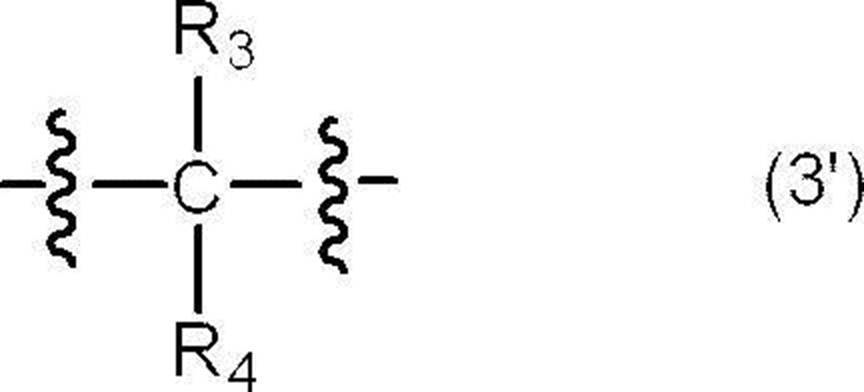
- X represents an oxygen atom or the following general formula (3 ') Represents a divalent group represented by
- R 3 and R 4 each independently represent a hydrogen atom or a hydrocarbon group having 1 to 30 carbon atoms which may have a substituent.
- each R 5 independently represents a hydrogen atom or an optionally substituted hydrocarbon group having 1 to 30 carbon atoms.
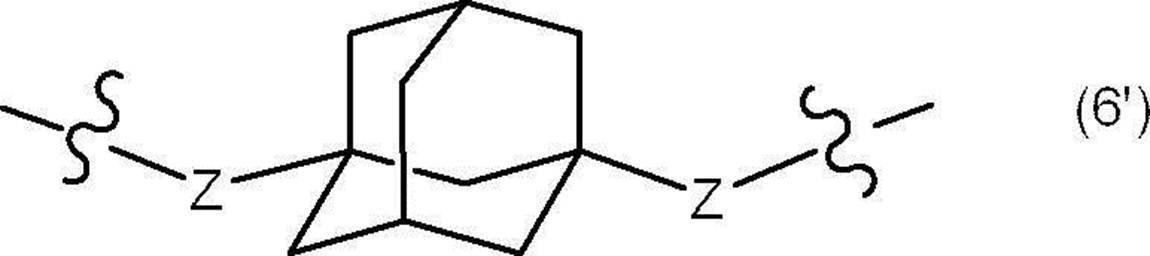
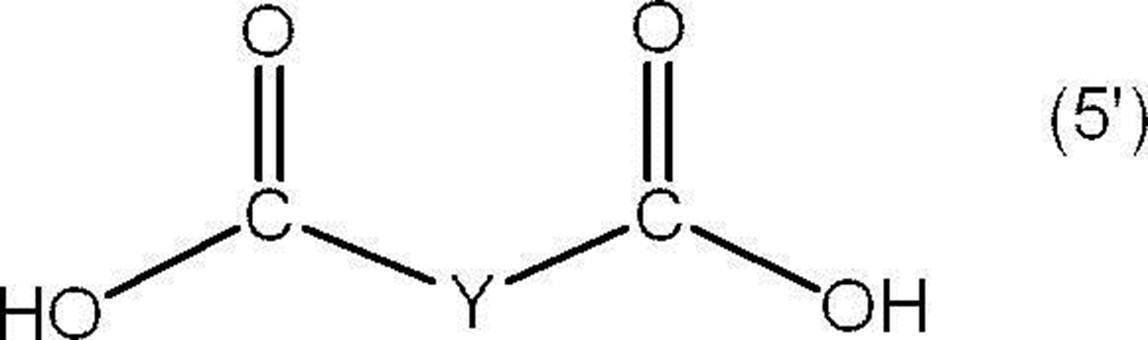
- Y represents a divalent group represented by the following general formula (6').
- the hydrogen atom of the adamantane skeleton may be substituted with a hydrocarbon group, an amino group, an oxo group, a hydroxyl group or a halogen atom.
- each Z independently has a substituent.
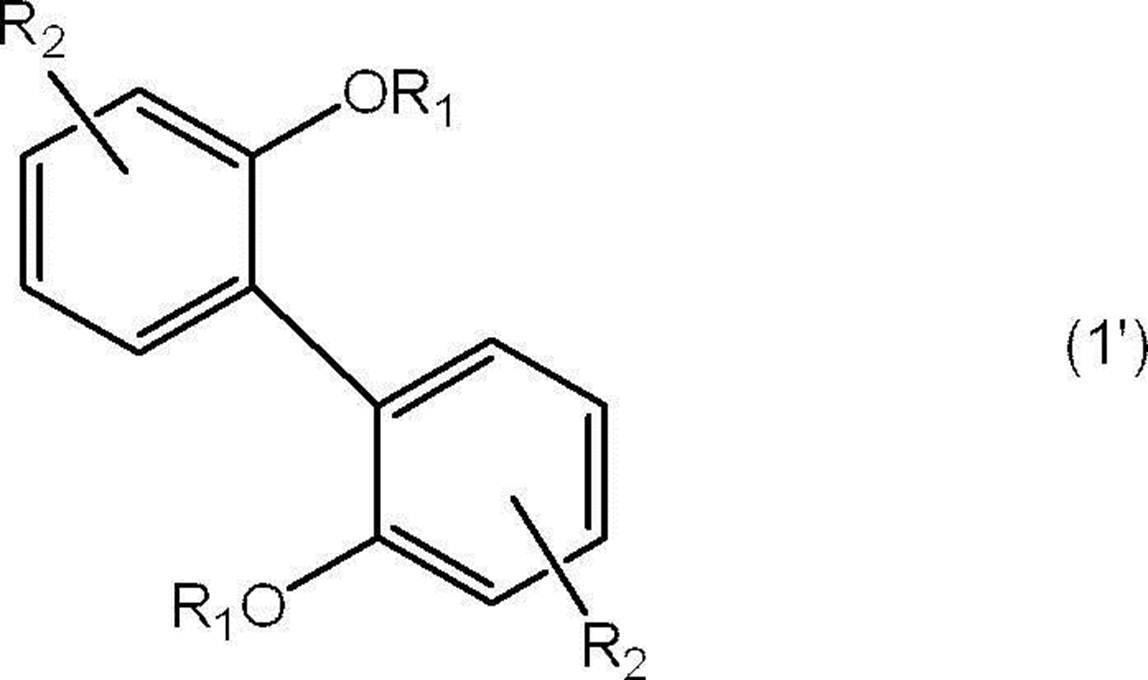
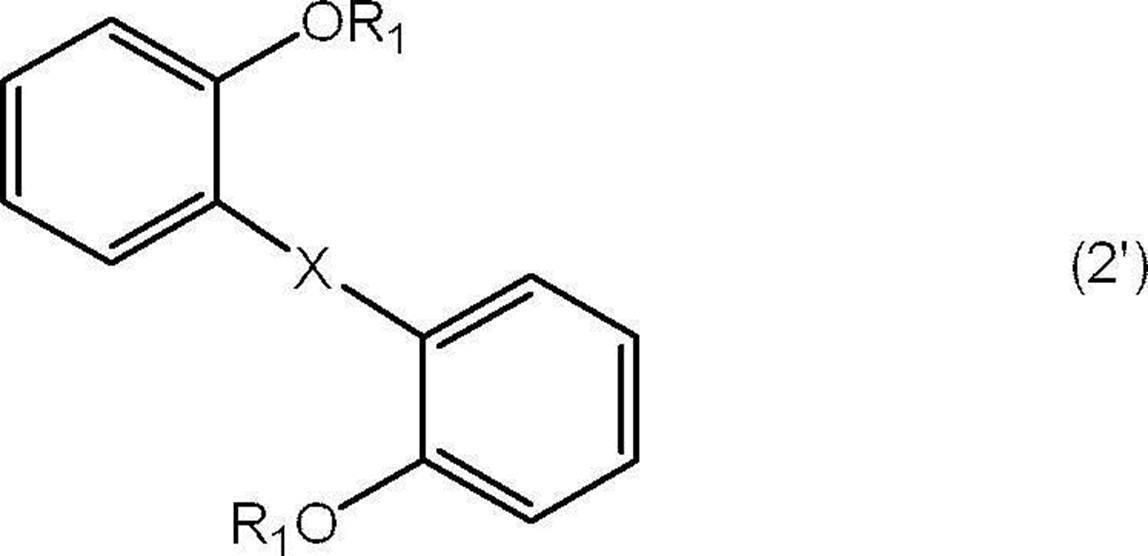
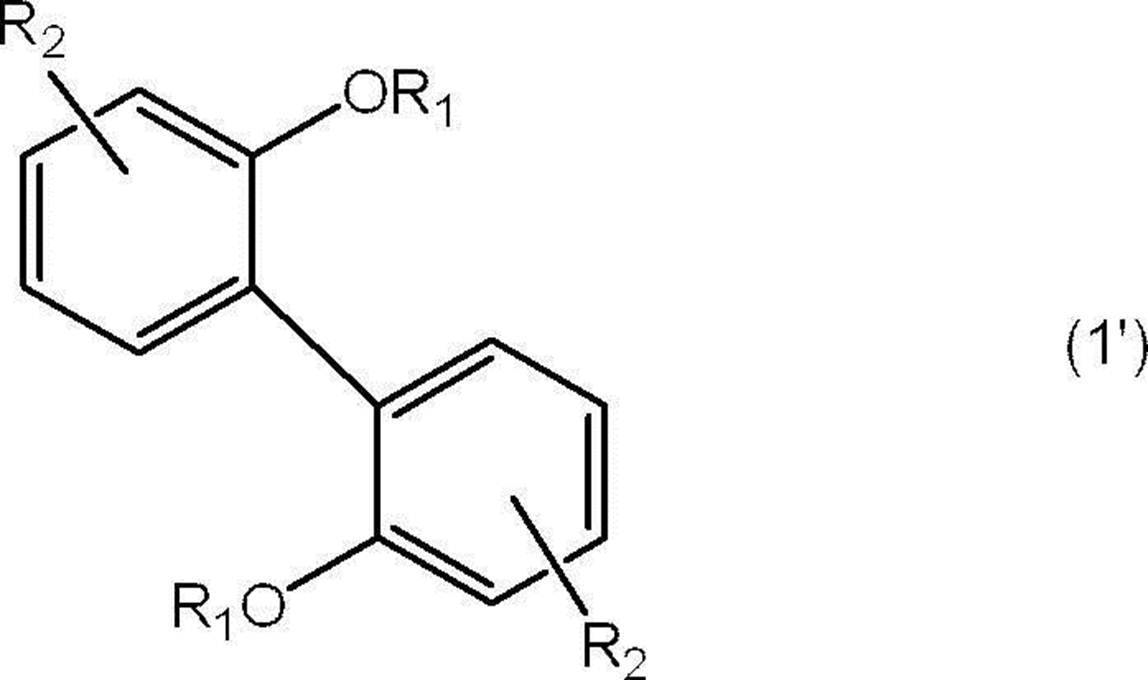
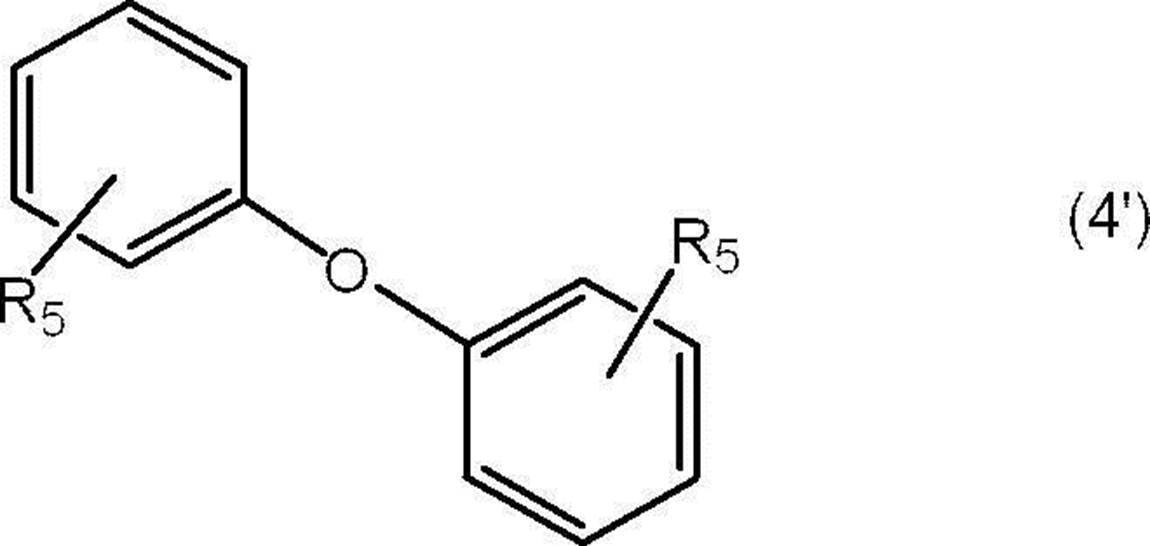
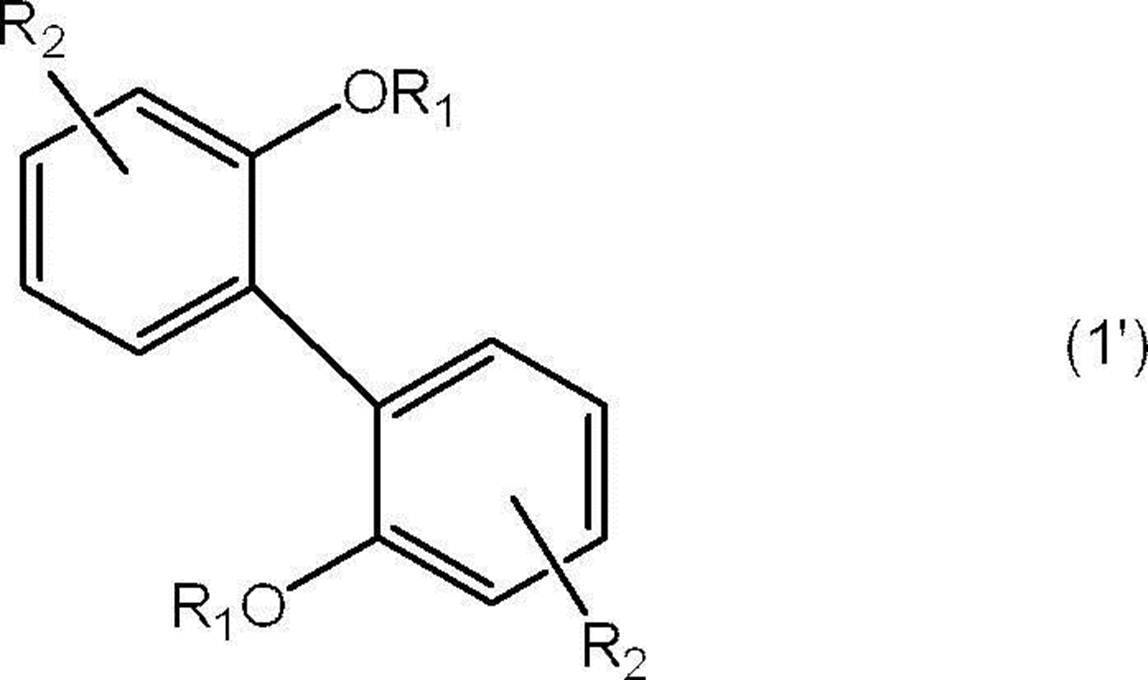
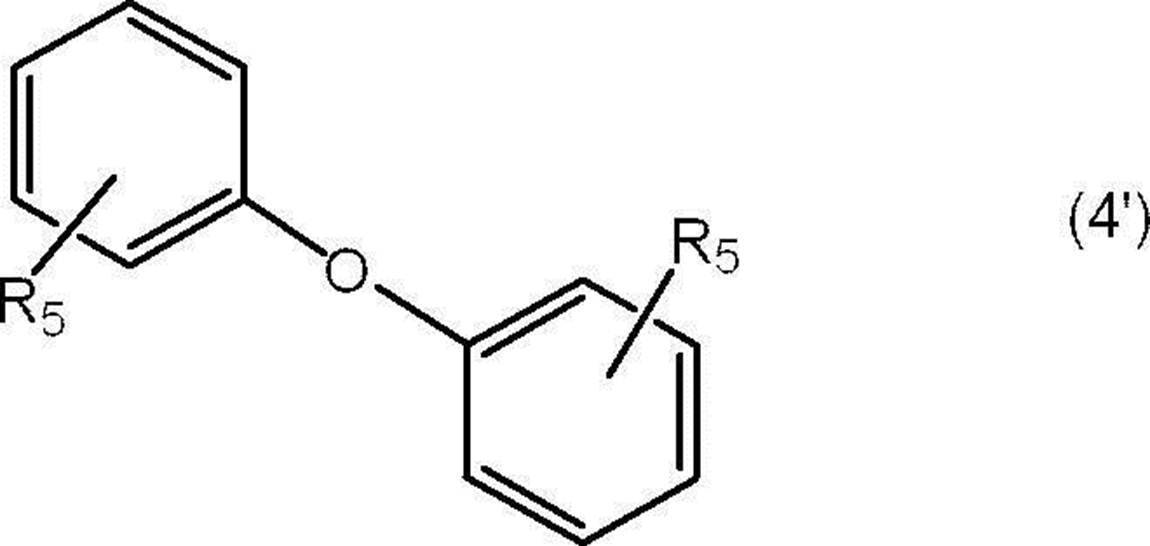
- An aromatic monomer represented by the following general formula (1 ′), the following general formula (2 ′) or the following general formula (4 ′), and a dicarboxylic acid monomer represented by the following general formula (5 ′) A process for producing an aromatic polyketone in which an acid is condensed in an acidic medium.
- each R 1 independently represents a hydrogen atom or an optionally substituted hydrocarbon group having 1 to 30 carbon atoms
- each R 2 independently represents a hydrogen atom or (This represents a hydrocarbon group having 1 to 30 carbon atoms which may have a substituent.)
- each R 1 independently represents a hydrogen atom or a hydrocarbon group having 1 to 30 carbon atoms which may have a substituent
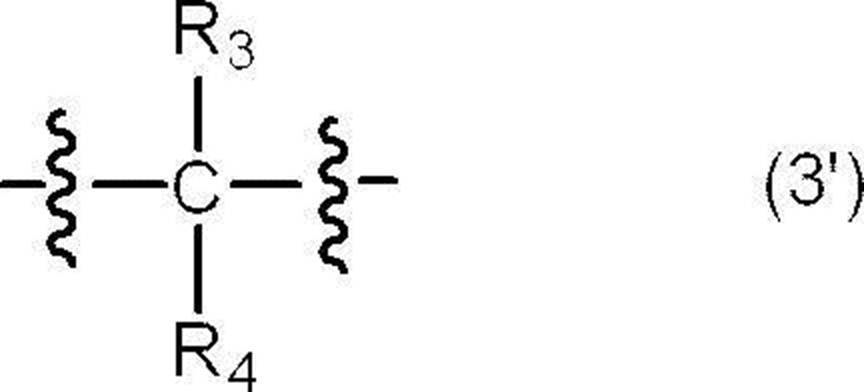
- X represents an oxygen atom or the following general formula (3 ') Represents a divalent group represented by
- R 3 and R 4 each independently represent a hydrogen atom or a hydrocarbon group having 1 to 30 carbon atoms which may have a substituent.
- each R 5 independently represents a hydrogen atom or an optionally substituted hydrocarbon group having 1 to 30 carbon atoms.
- the hydrogen atom of the adamantane skeleton may be substituted with a hydrocarbon group, an amino group, an oxo group, a hydroxyl group or a halogen atom.
- each Z independently has a substituent.
- an aromatic polyketone having excellent heat resistance and transparency and capable of forming a flexible film an aromatic polyketone composition containing the aromatic polyketone, and an aromatic polyketone film
- an optical element and an image display apparatus having the aromatic polyketone film can be provided.
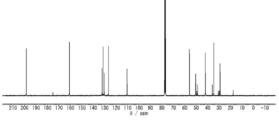
- FIG. 6 is a diagram showing a 13 C-NMR spectrum of polyketone PK1.
- the upper limit value or the lower limit value of the numerical range may be replaced with the values shown in the examples.
- the “film” includes a configuration formed in a part in addition to a configuration formed over the entire surface when observed as a plan view.
- the “step” is not limited to an independent step, and is included in the term if the intended action of the step is achieved even when it cannot be clearly distinguished from other steps.
- the term “layer” includes a configuration formed in a part in addition to a configuration formed in the entire surface when observed as a plan view.
- the term “stacked” indicates that the layers are stacked, and two or more layers may be bonded, or two or more layers may be detachable.
- transmission refers to the transmittance of visible light, and means that the transmittance of visible light having a wavelength of at least 400 nm is 80% or more (in terms of a film thickness of 1 ⁇ m).
- heat resistance means that the occurrence of yellowing due to heating is suppressed in a member containing the aromatic polyketone of the present invention.
- the aromatic polyketone of the present embodiment has one or more carbon atoms bonded by one or more alicyclic skeletons and two rotatable single bonds in the structural unit.
- the one or more carbon atoms that the structural unit has may be a divalent hydrocarbon group.
- the divalent hydrocarbon group may be bonded to a group having an alicyclic skeleton and a carbonyl group by two rotatable single bonds.
- the divalent hydrocarbon group may be a divalent saturated hydrocarbon group having 1 to 10 carbon atoms which may have a substituent. Specific examples of the alicyclic skeleton in the group having the alicyclic skeleton are as described above.
- Examples of the divalent saturated hydrocarbon having 1 to 10 carbon atoms which may have a substituent include a methylene group, an ethylene group, a trimethylene group, a methylethylene group, a tetramethylene group, a 1-methyltrimethylene group, 2- Methyl trimethylene group, ethylethylene group, 1,1-dimethylethylene group, 1,2-dimethylethylene group, pentylene group, 1-methyltetramethylene group, 2-methyltetramethylene group, 1-ethyltrimethylene group, 2 -Ethyltrimethylene group, 1,1-dimethyltrimethylene group, 2,2-dimethyltrimethylene group, 1,2-dimethyltrimethylene group, propylethylene group, ethylmethylethylene group, hexylene group, 1-methylpentylene Group, 2-methylpentylene group, 3-methylpentylene group, 1-ethyltetramethylene group, 2-ethyltetramethyl group Group, 1-propylt
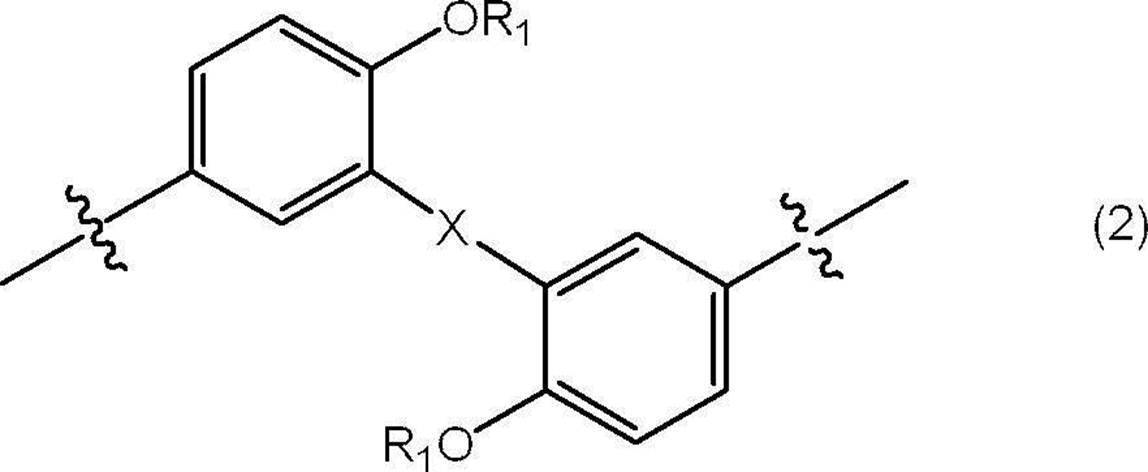
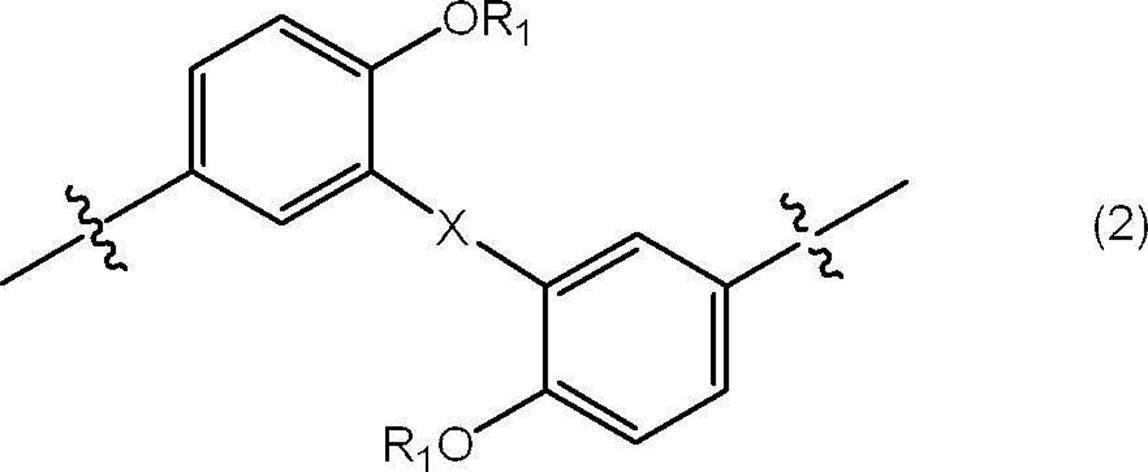
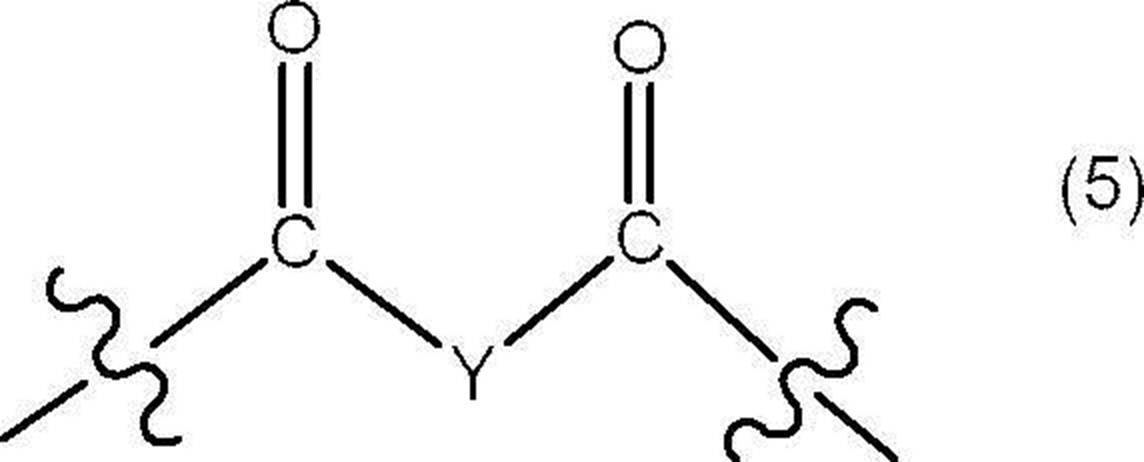
- the aromatic polyketone of the present embodiment includes a structural unit represented by the following general formula (1), the following general formula (2) or the following general formula (4), and a structural unit represented by the following general formula (5): , May be included.
- subjected the wavy line means a joint.
- each R 1 independently represents a hydrogen atom or a hydrocarbon group having 1 to 30 carbon atoms which may have a substituent
- each R 2 independently represents a hydrogen atom or a substituent.
- a hydrocarbon group having 1 to 30 carbon atoms which may have From the viewpoint of heat resistance the hydrocarbon group represented by R 1 is preferably a hydrocarbon group having 1 to 10 carbon atoms, and more preferably a hydrocarbon group having 1 to 5 carbon atoms from the viewpoint of reaction control.
- Examples of the hydrocarbon group represented by R 1 include a saturated aliphatic hydrocarbon group, an unsaturated aliphatic hydrocarbon group, and an alicyclic hydrocarbon group.
- the saturated aliphatic hydrocarbon group and the unsaturated aliphatic hydrocarbon group may be linear or branched. Further, the hydrocarbon group represented by R 1 may be a combination of these hydrocarbon groups.
- examples of the substituent include a halogen atom, an alkoxy group having 1 to 5 carbon atoms, and an acyl group having 2 to 5 carbon atoms. When the hydrocarbon group has a substituent, the carbon number of the hydrocarbon group does not include the carbon number of the substituent. The same applies thereafter.
- Saturated aliphatic hydrocarbon groups include methyl, ethyl, n-propyl, isopropyl, n-butyl, isobutyl, sec-butyl, t-butyl, n-pentyl, isopentyl, sec -Pentyl group, neo-pentyl group, t-pentyl group, n-hexyl group, n-heptyl group, n-octyl group, n-nonyl group, n-decyl group, n-icosanyl group, n-triacontanyl group Etc.
- Examples of the unsaturated aliphatic hydrocarbon group include alkenyl groups such as vinyl groups and allyl groups, and alkynyl groups such as ethynyl groups.
- Examples of the alicyclic hydrocarbon group include cyclopropyl groups such as cyclopropyl group, cyclobutyl group, cyclopentyl group, cyclohexyl group, cycloheptyl group, cyclooctyl group, norbornyl group, and cycloalkenyl groups such as cyclohexenyl group. .
- R 2 is preferably a hydrogen atom or a hydrocarbon group having 1 to 5 carbon atoms.
- a hydrocarbon group the thing similar to what was illustrated by R ⁇ 1 > in General formula (1) is mentioned.
- the substituent include a halogen atom, an alkoxy group having 1 to 5 carbon atoms, and an acyl group having 2 to 5 carbon atoms.
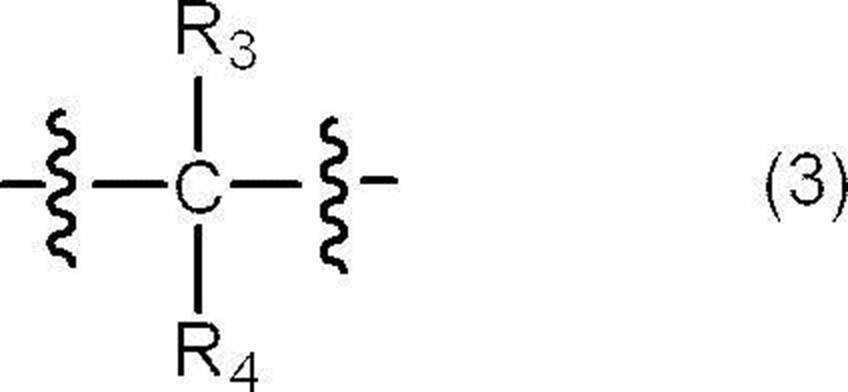
- each R 1 independently represents a hydrogen atom or an optionally substituted hydrocarbon group having 1 to 30 carbon atoms, and X represents an oxygen atom or the following general formula (3)
- the divalent group represented is shown.
- the general formula (2) R 1 in detail, is the same as R 1 in general formula (1).
- R 3 and R 4 each independently represent a hydrogen atom or a hydrocarbon group having 1 to 30 carbon atoms which may have a substituent. From the viewpoint of heat resistance, R 3 and R 4 are preferably hydrocarbon groups having 1 to 5 carbon atoms. As such a hydrocarbon group, the thing similar to what was illustrated by R ⁇ 1 > in General formula (1) is mentioned. Examples of the substituent include a halogen atom, an alkoxy group having 1 to 5 carbon atoms, and an acyl group having 2 to 5 carbon atoms.
- each R 5 independently represents a hydrogen atom or a hydrocarbon group having 1 to 30 carbon atoms which may have a substituent.
- R 5 is preferably a hydrocarbon group having 1 to 5 carbon atoms.
- the substituent include a halogen atom, an alkoxy group having 1 to 5 carbon atoms, and an acyl group having 2 to 5 carbon atoms.
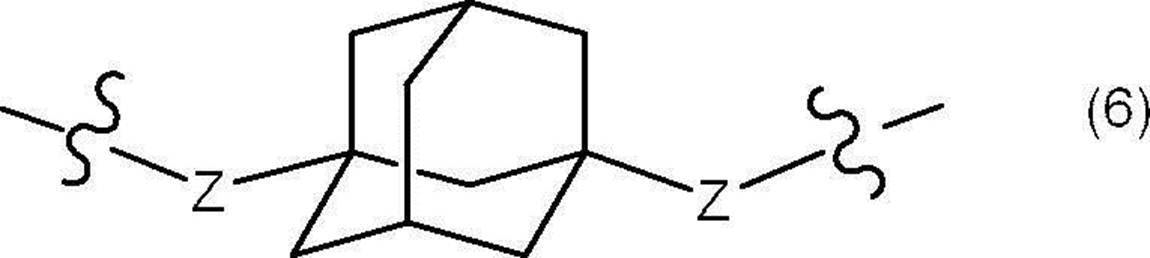
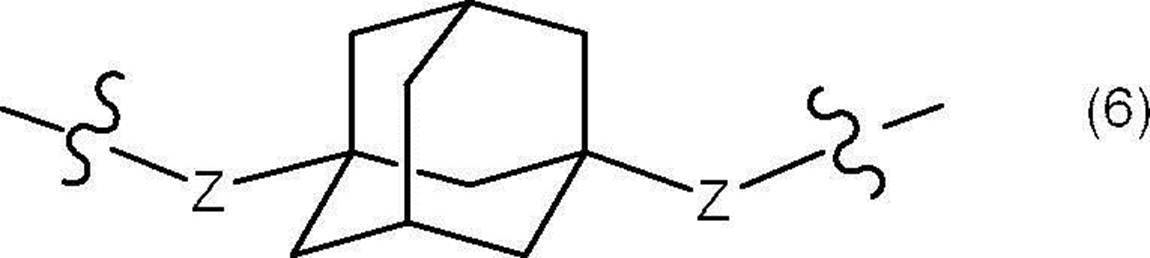
- Y represents a divalent group represented by the following general formula (6).
- the hydrogen atom of the adamantane skeleton may be substituted with a hydrocarbon group, an amino group, an oxo group, a hydroxyl group or a halogen atom.
- Z independently represents a divalent saturated hydrocarbon group having 1 to 10 carbon atoms which may have a substituent. From the viewpoint of heat resistance, Z is preferably a saturated hydrocarbon group having 1 to 5 carbon atoms. The presence of Z makes the later-described aromatic polyketone film flexible.
- Examples of the divalent hydrocarbon group represented by Z include methylene group, ethylene group, trimethylene group, methylethylene group, tetramethylene group, 1-methyltrimethylene group, 2-methyltrimethylene group, ethylethylene group, 1 , 1-dimethylethylene group, 1,2-dimethylethylene group, pentylene group, 1-methyltetramethylene group, 2-methyltetramethylene group, 1-ethyltrimethylene group, 2-ethyltrimethylene group, 1,1- Dimethyltrimethylene group, 2,2-dimethyltrimethylene group, 1,2-dimethyltrimethylene group, propylethylene group, 1-ethyl-2-methylethylene group, 1-ethyl-1-methylethylene group, hexylene group, 1-methylpentylene group, 2-methylpentylene group, 3-methylpentylene group, 1-ethyltetramethylene group, 2- Tiltetramethylene group, 1-propyltrimethylene group, 2-propyltrimethylene group, butyl
- the aromatic polyketone of the present embodiment has one or more alicyclic skeletons and one or more carbon atoms bonded by two rotatable single bonds in the structural unit, or the above general formula (1
- the structural unit represented by the general formula (2) or the general formula (4) and the structural unit represented by the general formula (5) the production method is not particularly limited.
- the aromatic polyketone of the present embodiment includes, for example, an aromatic monomer represented by the following general formula (1 ′), the following general formula (2 ′), or the following general formula (4 ′), and the following general formula (5 ′). Can be obtained by a condensation reaction in an acidic medium.
- the manufacturing method of the aromatic polyketone of this embodiment is an aromatic monomer represented by the following general formula (1 ′), the following general formula (2 ′) or the following general formula (4 ′), and the following general formula (
- the dicarboxylic acid monomer represented by 5 ′) may be subjected to a condensation reaction in an acidic medium.
- each R 1 independently represents a hydrogen atom or an optionally substituted hydrocarbon group having 1 to 30 carbon atoms
- each R 2 independently represents a hydrogen atom or a substituted group.
- the general formula (1 ') R 1 and R 2 each details is the same as R 1 and R 2 in general formula (1).
- each R 1 independently represents a hydrogen atom or a hydrocarbon group having 1 to 30 carbon atoms which may have a substituent
- X represents an oxygen atom or the following general formula (3 ′ ) Is a divalent group represented by
- the general formula (2 ') of R 1 in detail, is the same as R 1 in general formula (1).
- R 3 and R 4 each independently represent a hydrogen atom or a hydrocarbon group having 1 to 30 carbon atoms which may have a substituent.
- the more general formula (3 ') in the R 3 and R 4, are the same as R 3 and R 4 in general formula (3).
- each R 5 independently represents a hydrogen atom or a hydrocarbon group having 1 to 30 carbon atoms which may have a substituent. Details of the general formula (4 ') in R 5, is the same as R 5 in the general formula (4).
- Y represents a divalent group represented by the following general formula (6').
- the hydrogen atom of the adamantane skeleton may be substituted with a hydrocarbon group, an amino group, an oxo group, a hydroxyl group or a halogen atom.
- Z independently represents a divalent saturated hydrocarbon group having 1 to 10 carbon atoms which may have a substituent. Details of Z in the general formula (6 ′) are the same as those in Z in the general formula (6).
- the acidic medium used for the condensation reaction is not particularly limited, and an organic solvent solution of aluminum chloride, an organic solvent solution of trifluoroalkanesulfonic acid, polyphosphoric acid, a mixture of diphosphorus pentoxide and organic sulfonic acid, or the like can be used. From the viewpoint of reactivity and ease of handling, it is preferable to use a mixture of diphosphorus pentoxide and organic sulfonic acid as the acidic medium, and methanesulfonic acid is preferable as the organic sulfonic acid.
- the blending amount of the acidic medium relative to the total amount of the aromatic monomer and the dicarboxylic acid monomer is not particularly limited as long as it is an amount capable of dissolving the aromatic monomer and the dicarboxylic acid monomer, and should be used in the range from the catalyst amount to the solvent amount. Can do. From the viewpoint of reactivity and ease of handling, the range of 5 to 100 parts by mass is preferable with respect to 1 part by mass of the dicarboxylic acid monomer.
- the reaction temperature in the condensation reaction between the aromatic monomer and the dicarboxylic acid monomer is preferably 10 ° C. to 100 ° C. in order to prevent coloring and side reactions of the aromatic polyketone as a reaction product. In order to improve, 20 to 100 ° C. is more preferable.
- the reaction atmosphere in the condensation reaction between the aromatic monomer and the dicarboxylic acid monomer is not particularly limited, and can be performed in an open system. However, it is preferable to use dry air, nitrogen, argon, or the like because the reactivity of the acidic medium tends to decrease due to the presence of moisture. In order to prevent an unexpected side reaction, it is more preferable to use nitrogen or argon.
- the condensation reaction of the aromatic monomer and the dicarboxylic acid monomer can be promoted by stirring the reaction solution containing the aromatic monomer, the dicarboxylic acid monomer, and the acidic medium.
- the stirring method is not particularly limited, and a magnetic stirrer, a mechanical stirrer, or the like can be used.
- the reaction time in the condensation reaction between the aromatic monomer and the dicarboxylic acid monomer can vary depending on the reaction temperature, the molecular weight of the target aromatic polyketone, the type of monomer used in the reaction, and the like.
- the reaction time is preferably about 1 hour to 120 hours, and more preferably 1 hour to 72 hours from the viewpoint of productivity.
- the reaction pressure in the condensation reaction between the aromatic monomer and the dicarboxylic acid monomer is not particularly limited, and the reaction may be performed under normal pressure, under pressure, or under reduced pressure. From the viewpoint of cost, it is preferable to carry out the reaction under normal pressure.
- the reaction solution and the poor solvent of the aromatic polyketone are brought into contact with each other to extract impurities into the poor solvent layer, thereby depositing the aromatic polyketone.
- the precipitated aromatic polyketone can be separated from the liquid by a method such as filtration, decantation, or centrifugation. Furthermore, after this, the separated aromatic polyketone is dissolved again in a good solvent of the aromatic polyketone, and again contacted with the poor solvent of the aromatic polyketone to precipitate the aromatic polyketone, and the impurities are extracted and deposited in the poor solvent layer. You may repeat the process of isolate
- An aromatic polyketone composition containing the aromatic polyketone of the present embodiment and a solvent can be obtained by dissolving the aromatic polyketone of the present embodiment in a solvent.
- a method for dissolving the aromatic polyketone in the solvent is not particularly limited, and a method known in the art can be used. Moreover, you may filter an insoluble component after melt
- Specific examples of the aromatic polyketone composition include varnish, slurry, mixed powder, and the like.
- Examples of the solvent contained in the aromatic polyketone composition of the present embodiment include ⁇ -butyrolactone, ethyl lactate, propylene glycol monomethyl ether acetate, butyl acetate, benzyl acetate, ethoxyethyl propionate, and 3-methylmethoxypropionate.
- solvents can be
- the aromatic polyketone composition of the present embodiment may further contain additives in addition to the aromatic polyketone and the solvent.
- additives include an adhesion assistant, a surfactant, a leveling agent, an antioxidant, and an ultraviolet deterioration preventing agent.
- the aromatic polyketone film of the present embodiment includes the aromatic polyketone of the present embodiment.
- the method for producing the aromatic polyketone film of the present embodiment is not particularly limited.
- the aromatic polyketone film of this embodiment can be obtained using the aromatic polyketone composition of this embodiment.
- the aromatic polyketone film containing an aromatic polyketone according to the present embodiment is more flexible than an aromatic polyketone film containing a conventional aromatic polyketone polymerized from an alicyclic dicarboxylic acid and a 2,2′-dialkoxybiphenyl compound. .
- the aromatic polyketone composition is applied to at least a part of the surface of the substrate to form a composition layer.
- membrane of this embodiment provided in at least one part of the surface of this base material can be obtained.
- the method for applying the aromatic polyketone composition to the substrate is not particularly limited as long as the composition layer can be formed in an arbitrary shape at an arbitrary location on the substrate. For example, an immersion method, a spray method, a screen printing method, and a spin coating method are preferably used.
- the base material to which the aromatic polyketone composition is applied is not particularly limited, and is a glass substrate, a semiconductor substrate, a metal oxide insulator substrate (for example, a titanium oxide substrate and a silicon oxide substrate), a silicon nitride substrate, triacetyl cellulose, a transparent polyimide.
- a transparent resin substrate such as polycarbonate, acrylic resin, and cycloolefin resin.
- the shape of the substrate is not particularly limited, and may be a plate shape or a film shape.
- the composition layer After applying (applying) the aromatic polyketone composition of the present embodiment to a substrate to form a composition layer, the composition layer is dried in a drying step.
- the method for drying the composition layer is not particularly limited, and examples thereof include heating using a hot plate, an oven or the like. If necessary, the dried aromatic polyketone film can be used in a state where it is peeled off from the substrate.
- the dried aromatic polyketone film may be further heat-treated.
- the heat treatment method is not particularly limited, and is a box dryer, hot air conveyor dryer, quartz tube furnace, hot plate, rapid thermal annealing, vertical diffusion furnace, infrared curing furnace, electron beam curing furnace, microwave curing furnace. Etc. can be performed using an oven.
- any of air or an inert atmosphere such as nitrogen can be selected.
- the optical element and the image display device of the present embodiment have the aromatic polyketone film of the present embodiment.
- the aromatic polyketone film of this embodiment applied to the optical element and image display apparatus of this embodiment has a base material and the aromatic polyketone film of this embodiment provided on at least a part of the surface of the base material. You may use as an above-mentioned base material with an aromatic polyketone film
- the substrate with an aromatic polyketone film having the aromatic polyketone film of the present embodiment has the aromatic polyketone film of the present embodiment on at least one surface of the substrate such as the film-like transparent resin described above. It may be. Or you may have the aromatic polyketone film
- the aromatic polyketone film may be a single layer or a multi-layer structure in which two or more layers are laminated.
- the optical element and the image display apparatus are, for example, a liquid crystal display (ELD), an ELD, and the like on the substrate side such as a transparent resin film constituting the substrate with an aromatic polyketone film via an adhesive, an adhesive, or the like. It can be obtained by bonding to a member used in (electroluminescence display) or the like.
- the aromatic polyketone film of the present embodiment and various optical elements such as a polarizing plate using the same can be preferably used for various image display devices such as a liquid crystal display device.
- the image display apparatus according to the present embodiment may have the same configuration as that of a conventional image display apparatus except that the aromatic polyketone film according to the present embodiment is used.
- a drive circuit is formed by appropriately assembling respective components such as a liquid crystal cell, an optical element such as a polarizing plate, and an illumination system (backlight etc.) as necessary. It can be manufactured by incorporating it.
- the liquid crystal cell is not particularly limited. As the liquid crystal cell, various types such as a TN type, an STN type, and a ⁇ type can be used.
- the image display device of the present embodiment is used for any appropriate application.
- Applications include OA equipment such as desktop PCs, notebook PCs, copiers, mobile phones, watches, digital cameras, personal digital assistants (PDAs), portable devices such as portable game machines, homes such as video cameras, TVs, and microwave ovens.
- Example 1 Synthesis of Polyketone PK1
- a mixture of diphosphorus pentoxide and methanesulfonic acid (mass ratio 1:10) was placed in a flask containing 10 mmol of 2,2′-dimethoxybiphenyl and 10 mmol of 1,3-adamantanediacetic acid. ) was added, and a nitrogen balloon was attached, followed by stirring at 60 ° C. for 40 hours.
- the reaction solution was poured into 500 ml of methanol, and the produced precipitate was collected by filtration.
- the obtained solid was washed with distilled water and methanol and then dried to obtain polyketone PK1.
- the 13 C-NMR spectrum of the resulting polyketone PK1 is shown in FIG.
- the weight average molecular weight was 80,000 and the number average molecular weight was 20,000.
- Example 2 Preparation of varnish using polyketone PK1
- NMP N-methyl-2-pyrrolidone
- Example 3 Production of film using varnish of polyketone PK1
- the varnish of polyketone PK1 obtained in Example 2 was coated on a glass substrate and a Kapton film by a bar coating method, and a substrate with a film of polyketone PK1 was formed.
- Each of the obtained base materials with a film of polyketone PK1 was dried on a hot plate heated to 120 ° C. for 3 minutes, and the transparency, heat resistance, and bending resistance were evaluated by the methods described later.
- Polyketone PK2 was obtained in the same manner as in Example 1 except that 1,3-adamantane dicarboxylic acid was used instead of 1,3-adamantane diacetic acid.
- the resulting polyketone PK2 had a weight average molecular weight of 90,000 and a number average molecular weight of 20,000.
- the molecular weight was measured by GPC method using tetrahydrofuran (THF) in which 0.1% of tetrabutylammonium nitrate (TBA ⁇ NO 3 ) was dissolved as an eluent, and was calculated in terms of standard polystyrene. Details are as follows.
- the ultraviolet light transmittance at 400 nm of the glass substrate with a polyketone film obtained in Example 3 or Comparative Example was measured by an ultraviolet-visible absorption spectrum method using an ultraviolet-visible spectrophotometer (“U-3310 Spectrophotometer”, Hitachi High-Tech Co., Ltd.). It was measured.
- Table 1 shows the transmittance in terms of a film thickness of 1 ⁇ m using a glass substrate without a film as a reference.
- Example 3 (Evaluation of heat resistance)
- the glass substrate with the polyketone film obtained in Example 3 or Comparative Example was allowed to stand in an oven at 200 ° C. for 24 hours, and the ultraviolet light transmittance at 400 nm was measured using an ultraviolet-visible spectrophotometer (“U-3310 Spectrophotometer”, Hitachi High-Tech Co., Ltd.). Measured by UV-Vis absorption spectrum method. Moreover, the presence or absence of the crack of a film
- Table 1 shows the transmittance converted to a film thickness of 1 ⁇ m and the presence or absence of cracks in the film, using a glass substrate without a film as a reference.
- the Kapton film with an aromatic polyketone film obtained in Example 3 or Comparative Example was evaluated by a mandrel test (cylindrical mandrel method). The test was conducted according to JIS K5600-5-1: 1999. The diameter of the mandrel was changed from 25 mm to 3 mm, and the presence or absence of cracks was visually confirmed. Table 1 shows the minimum diameter of the mandrel that does not crack.
- the aromatic polyketone of the present embodiment exhibits the same transmittance and heat resistance as the conventional aromatic polyketone, and further has excellent bending resistance.
- an aromatic polyketone film excellent in transparency, heat resistance and bending resistance can be obtained, and can be used as a flexible transparent heat-resistant material.
Landscapes
- Chemical & Material Sciences (AREA)
- Physics & Mathematics (AREA)
- Chemical Kinetics & Catalysis (AREA)
- Organic Chemistry (AREA)
- Polymers & Plastics (AREA)
- Medicinal Chemistry (AREA)
- Health & Medical Sciences (AREA)
- Optics & Photonics (AREA)
- General Physics & Mathematics (AREA)
- Wood Science & Technology (AREA)
- Materials Engineering (AREA)
- Engineering & Computer Science (AREA)
- Life Sciences & Earth Sciences (AREA)
- Manufacture Of Macromolecular Shaped Articles (AREA)
- Nonlinear Science (AREA)
- Optical Elements Other Than Lenses (AREA)
- Compositions Of Macromolecular Compounds (AREA)
- Polyethers (AREA)
- Mathematical Physics (AREA)
- Crystallography & Structural Chemistry (AREA)
Abstract
Description
<1> 構造単位中に、1つ以上の脂環骨格及び回転可能な2つの単結合により結合された1つ以上の炭素原子を有する、芳香族ポリケトン。
<2> 下記一般式(1)、下記一般式(2)又は下記一般式(4)で表される構造単位と、下記一般式(5)で表される構造単位と、を有する芳香族ポリケトン。



<3> 下記一般式(1’)、下記一般式(2’)又は下記一般式(4’)で表される芳香族モノマと、下記一般式(5’)で表されるジカルボン酸モノマとを、酸性媒体中において縮合反応させることで得られる芳香族ポリケトン。


<4> <1>~<3>のいずれか1項に記載の芳香族ポリケトンと、溶媒と、を含む芳香族ポリケトン組成物。
<5> <1>~<3>のいずれか1項に記載の芳香族ポリケトンを含む芳香族ポリケトン膜。
<6> <5>に記載の芳香族ポリケトン膜を有する光学素子。
<7> <5>に記載の芳香族ポリケトン膜を有する画像表示装置。
<8> 下記一般式(1’)、下記一般式(2’)又は下記一般式(4’)で表される芳香族モノマと、下記一般式(5’)で表されるジカルボン酸モノマとを、酸性媒体中において縮合反応させる芳香族ポリケトンの製造方法。


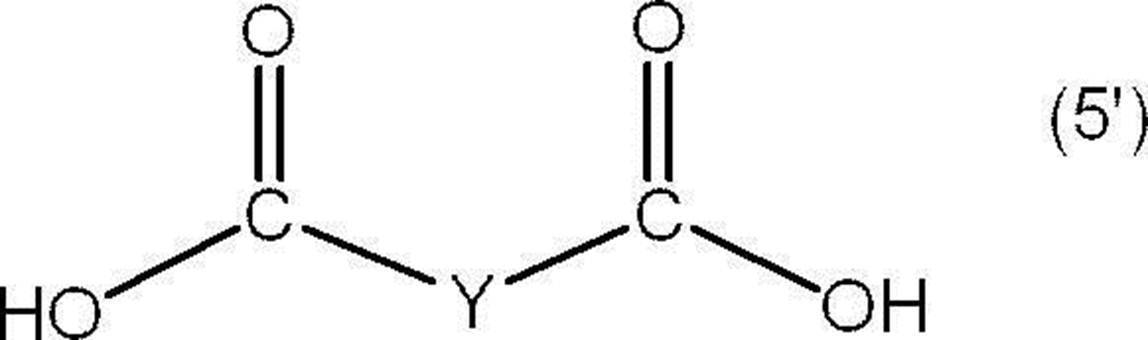
(一般式(5’)中、Yは下記一般式(6’)で表わされる2価の基を示す。)

本明細書において「~」を用いて示された数値範囲は、「~」の前後に記載される数値をそれぞれ最小値及び最大値として含む範囲を示す。
本明細書中に段階的に記載されている数値範囲において、一つの数値範囲で記載された上限値又は下限値は、他の段階的な記載の数値範囲の上限値又は下限値に置き換えてもよい。また、本明細書中に記載されている数値範囲において、その数値範囲の上限値又は下限値は、実施例に示されている値に置き換えてもよい。
本明細書において「膜」とは、平面図として観察したときに、全面に形成されている形状の構成に加え、一部に形成されている形状の構成も包含される。
本明細書において「工程」とは、独立した工程だけではなく、他の工程と明確に区別できない場合であってもその工程の所期の作用が達成されれば、本用語に含まれる。
本明細書において「層」との語は、平面図として観察したときに、全面に形成されている形状の構成に加え、一部に形成されている形状の構成も包含される。「積層」との語は、層を積み重ねることを示し、二以上の層が結合されていてもよく、二以上の層が着脱可能であってもよい。
本明細書において「透明性」とは、可視光の透過性をいい、少なくとも波長400nmの可視光の透過性が80%以上(膜厚1μm換算)であることを意味する。
本明細書において「耐熱性」とは、本発明の芳香族ポリケトンを含む部材において、加熱による黄変の発生が抑制されていることを意味する。
本実施形態の芳香族ポリケトンは、構造単位中に、1つ以上の脂環骨格及び回転可能な2つの単結合により結合された1つ以上の炭素原子を有する。
置換基を有していてもよい炭素数1~10の2価の飽和炭化水素としては、メチレン基、エチレン基、トリメチレン基、メチルエチレン基、テトラメチレン基、1-メチルトリメチレン基、2-メチルトリメチレン基、エチルエチレン基、1,1-ジメチルエチレン基、1,2-ジメチルエチレン基、ペンチレン基、1-メチルテトラメチレン基、2-メチルテトラメチレン基、1-エチルトリメチレン基、2-エチルトリメチレン基、1,1-ジメチルトリメチレン基、2,2-ジメチルトリメチレン基、1,2-ジメチルトリメチレン基、プロピルエチレン基、エチルメチルエチレン基、ヘキシレン基、1-メチルペンチレン基、2-メチルペンチレン基、3-メチルペンチレン基、1-エチルテトラメチレン基、2-エチルテトラメチレン基、1-プロピルトリメチレン基、2-プロピルトリメチレン基、ブチルエチレン基、1,1-ジメチルテトラメチレン基、2,2-ジメチルテトラメチレン基、1,2-ジメチルテトラメチレン基、1,3-ジメチルテトラメチレン基、1,4-ジメチルテトラメチレン基、1,2,3-トリメチルトリメチレン基、1,1,2-トリメチルトリメチレン基、1,1,3-トリメチルトリメチレン基、1,2,2-トリメチルトリメチレン基、1-エチル-1-メチルトリメチレン基、2-エチル-2-メチルトリメチレン基、1-エチル-2-メチルトリメチレン基、2-エチル-1-メチルトリメチレン基、ヘプチレン基、オクチレン基、ノニレン基、デシレン基等が挙げられる。

耐熱性の観点から、R1で示される炭化水素基は、炭素数1~10の炭化水素基が好ましく、反応制御の観点から、炭素数1~5の炭化水素基がより好ましい。


本実施形態の芳香族ポリケトンは、例えば、下記一般式(1’)、下記一般式(2’)又は下記一般式(4’)で表される芳香族モノマと、下記一般式(5’)で表されるジカルボン酸モノマとを、酸性媒体中において縮合反応させて得ることができる。
また、本実施形態の芳香族ポリケトンの製造方法は、下記一般式(1’)、下記一般式(2’)又は下記一般式(4’)で表される芳香族モノマと、下記一般式(5’)で表されるジカルボン酸モノマとを、酸性媒体中において縮合反応させるものであってもよい。


本実施形態の芳香族ポリケトンを溶媒に溶解させること等により、本実施形態の芳香族ポリケトンと、溶媒と、を含む芳香族ポリケトン組成物を得ることができる。芳香族ポリケトンを溶媒に溶解させる方法は特に限定されず、当該技術分野で既知の方法を用いることができる。また、必要に応じて、溶解後に、不溶成分を濾別してもよい。
芳香族ポリケトン組成物の具体的な態様としては、ワニス、スラリー、混合粉末等が挙げられる。
本実施形態の芳香族ポリケトン膜は、本実施形態の芳香族ポリケトンを含むものである。本実施形態の芳香族ポリケトン膜の製造方法は、特に限定されるものではない。例えば、本実施形態の芳香族ポリケトン組成物を用いて、本実施形態の芳香族ポリケトン膜を得ることができる。本実施形態の芳香族ポリケトンを含む芳香族ポリケトン膜は、脂環式ジカルボン酸と2,2’-ジアルコキシビフェニル化合物から重合される従来の芳香族ポリケトンを含む芳香族ポリケトン膜よりも柔軟である。
芳香族ポリケトン組成物を基材に付与する方法としては、組成物層を基材上の任意の場所に任意の形状で形成可能な手法であれば特に限定されない。例えば、浸漬法、スプレー法、スクリーン印刷法及び回転塗布法が好適に用いられる。
本実施形態の光学素子及び画像表示装置は、本実施形態の芳香族ポリケトン膜を有する。本実施形態の光学素子及び画像表示装置に適用される本実施形態の芳香族ポリケトン膜は、基材とこの基材の表面の少なくとも一部に設けられる本実施形態の芳香族ポリケトン膜とを有する上述の芳香族ポリケトン膜付基材として用いられてもよい。
2,2’-ジメトキシビフェニル10mmolと1,3-アダマンタン二酢酸10mmolが入ったフラスコに、五酸化二リンとメタンスルホン酸の混合液物(質量比1:10)を30ml加え、窒素風船をつけて60℃で40時間撹拌した。反応後、反応液をメタノール500ml中に投じ、生成した析出物を濾取した。得られた固体を蒸留水とメタノールで洗浄した後、乾燥し、ポリケトンPK1を得た。得られたポリケトンPK1の13C-NMRスペクトルを図1に示す。また、重量平均分子量は80,000、数平均分子量は20,000であった。
実施例1で得たポリケトンPK1を、N-メチル-2-ピロリドン(NMP)に濃度が20%となるように溶解し、ポリテトラフルオロエチレン製のメンブレンフィルター(孔径5μm)でろ過して、ポリケトンPK1のワニスを得た。
実施例2で得られたポリケトンPK1のワニスを、バーコート法によりガラス基板上及びカプトンフィルム上に塗布し、ポリケトンPK1の膜付き基材を得た。得られたポリケトンPK1の膜付き基材をそれぞれ、120℃に加熱したホットプレート上で3分間乾燥した後、透明性、耐熱性及び耐屈曲性を、後述の手法で評価した。
1,3-アダマンタン二酢酸の代わりに1,3-アダマンタンジカルボン酸を用いる以外は実施例1と同様にして、ポリケトンPK2を得た。得られたポリケトンPK2の重量平均分子量は90,000、数平均分子量は20,000であった。
ポリケトンPK1の代わりにポリケトンPK2を用いる以外は実施例2と同様にして、ポリケトンPK2を用いたワニスを得た。
ポリケトンPK1のワニスの代わりにポリケトンPK2のワニスを用いる以外は実施例3と同様にして、ポリケトンPK2のワニスを用いた膜を得て、評価を行った。
分子量は、溶離液として、硝酸テトラブチルアンモニウム(TBA・NO3)を0.1%溶解させたテトラヒドロフラン(THF)を用いて、GPC法によって測定し、標準ポリスチレン換算にて求めた。詳細は次のとおりである。
・装置名 : RI-8020(検出器)、DP-8020(ポンプ)、SD-8022(デガッサ)(東ソー株式会社)
・カラム : Gelpack GL-A150、GL-A160、GL-A170(製品名、日立化成株式会社)
・検出器 : RI検出器
・流速 : 1ml/min
実施例3又は比較例で得たポリケトン膜付きガラス基板の400nmにおける紫外光の透過率を、紫外可視分光光度計(「U-3310 Spectrophotometer」日立ハイテク株式会社)を用いた紫外可視吸収スペクトル法によって測定した。膜の付いていないガラス基板をリファレンスとして、膜厚1μmに換算した透過率を表1に示す。
実施例3又は比較例で得たポリケトン膜付きガラス基板を200℃のオーブンに24時間静置し、400nmにおける紫外光の透過率を、紫外可視分光光度計(「U-3310 Spectrophotometer」日立ハイテク株式会社)を用いた紫外可視吸収スペクトル法によって測定した。また、膜のクラックの有無を目視で確認した。膜の付いていないガラス基板をリファレンスとして、膜厚1μmに換算した透過率と、膜のクラックの有無を表1に示す。
実施例3又は比較例で得た芳香族ポリケトン膜付きカプトンフィルムを、マンドレル試験(円筒形マンドレル法)により評価した。試験はJIS K5600-5-1:1999に従って行った。マンドレルの直径は25mmから3mmまで変え、クラックの発生の有無を目視で確認した。クラックの発生しないマンドレルの最小直径を表1に示す。

本明細書に記載された全ての文献、特許出願、及び技術規格は、個々の文献、特許出願、及び技術規格が参照により取り込まれることが具体的かつ個々に記された場合と同程度に、本明細書中に参照により取り込まれる。
Claims (8)
- 構造単位中に、1つ以上の脂環骨格及び回転可能な2つの単結合により結合された1つ以上の炭素原子を有する、芳香族ポリケトン。
- 下記一般式(1)、下記一般式(2)又は下記一般式(4)で表される構造単位と、下記一般式(5)で表される構造単位と、を有する芳香族ポリケトン。

(一般式(1)中、R1はそれぞれ独立に、水素原子又は置換基を有していてもよい炭素数1~30の炭化水素基を示し、R2はそれぞれ独立に、水素原子又は置換基を有していてもよい炭素数1~30の炭化水素基を示す。)
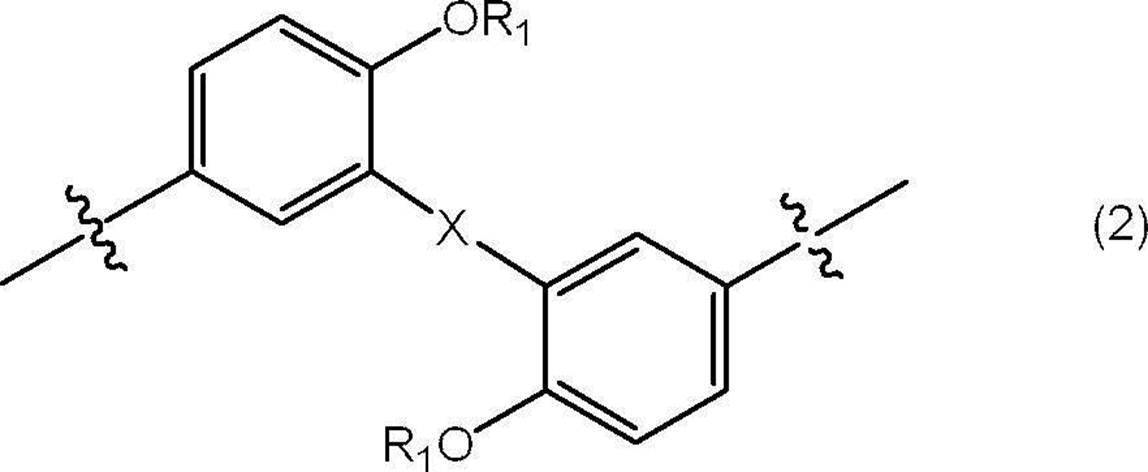
(一般式(2)中、R1はそれぞれ独立に、水素原子又は置換基を有していてもよい炭素数1~30の炭化水素基を示し、Xは酸素原子又は下記一般式(3)で表わされる2価の基を示す。)
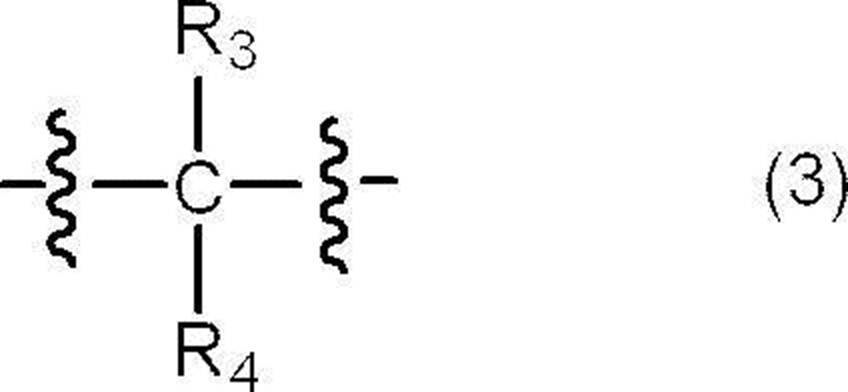
(一般式(3)中、R3及びR4はそれぞれ独立に、水素原子又は置換基を有していてもよい炭素数1~30の炭化水素基を示す。)
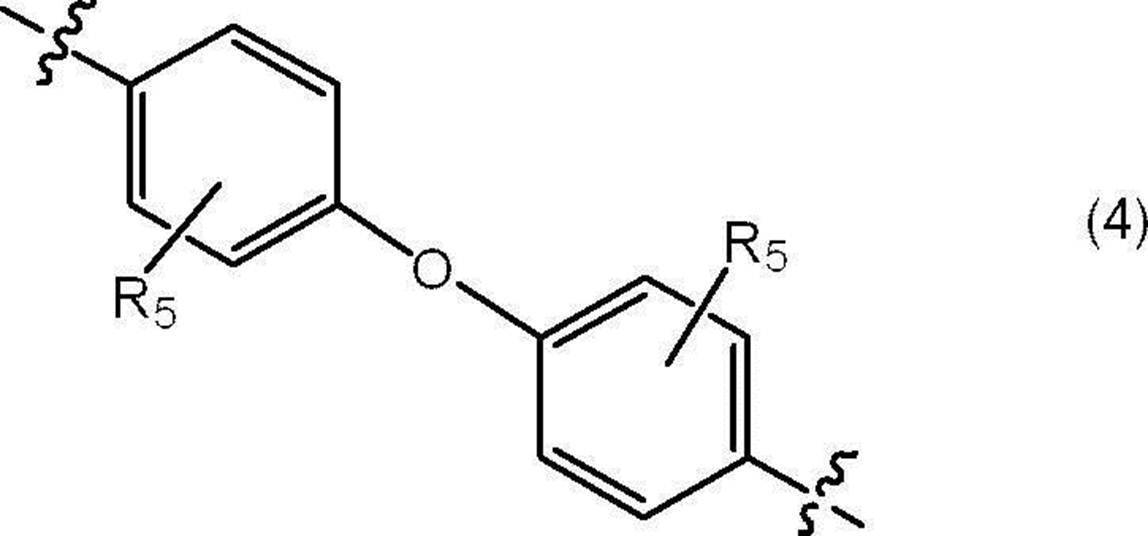
(一般式(4)中、R5はそれぞれ独立に、水素原子又は置換基を有していてもよい炭素数1~30の炭化水素基を示す。)
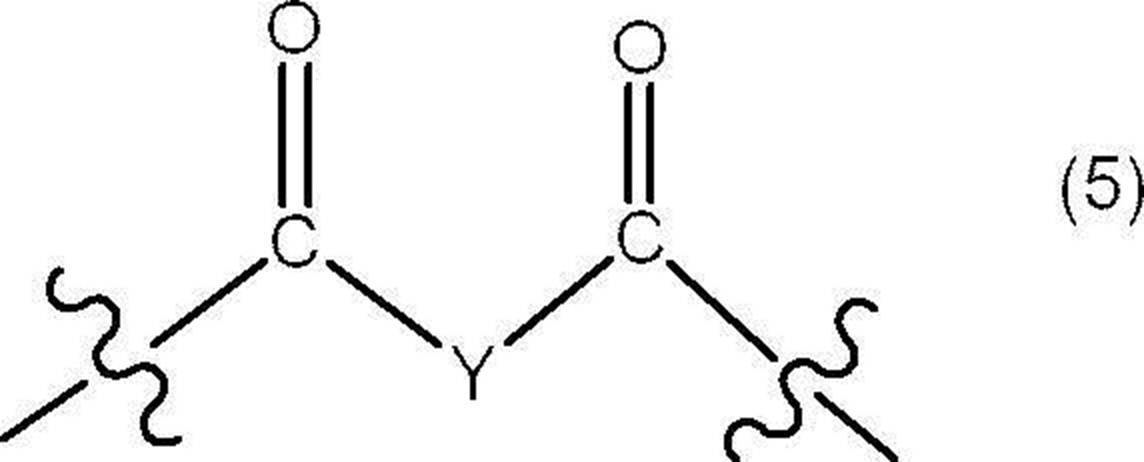
(一般式(5)中、Yは下記一般式(6)で表わされる2価の基を示す。)
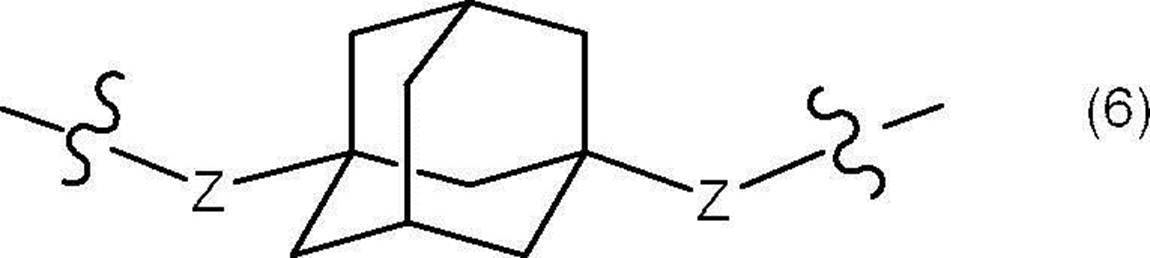
(一般式(6)中、アダマンタン骨格の水素原子は、炭化水素基、アミノ基、オキソ基、水酸基又はハロゲン原子で置換されていてもよい。また、Zはそれぞれ独立に、置換基を有していてもよい炭素数1~10の2価の飽和炭化水素基を示す。) - 下記一般式(1’)、下記一般式(2’)又は下記一般式(4’)で表される芳香族モノマと、下記一般式(5’)で表されるジカルボン酸モノマとを、酸性媒体中において縮合反応させることで得られる芳香族ポリケトン。

(一般式(1’)中、R1はそれぞれ独立に、水素原子又は置換基を有していてもよい炭素数1~30の炭化水素基を示し、R2はそれぞれ独立に、水素原子又は置換基を有していてもよい炭素数1~30の炭化水素基を示す。)
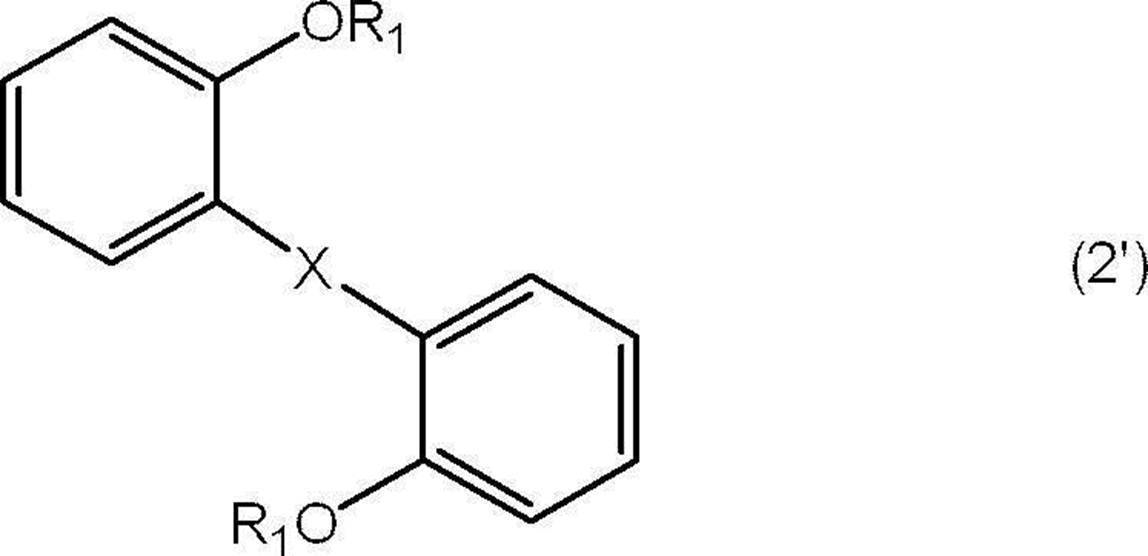
(一般式(2’)中、R1はそれぞれ独立に、水素原子又は置換基を有していてもよい炭素数1~30の炭化水素基を示し、Xは酸素原子又は下記一般式(3’)で表わされる2価の基を示す。)

(一般式(3’)中、R3及びR4はそれぞれ独立に、水素原子又は置換基を有していてもよい炭素数1~30の炭化水素基を示す。)
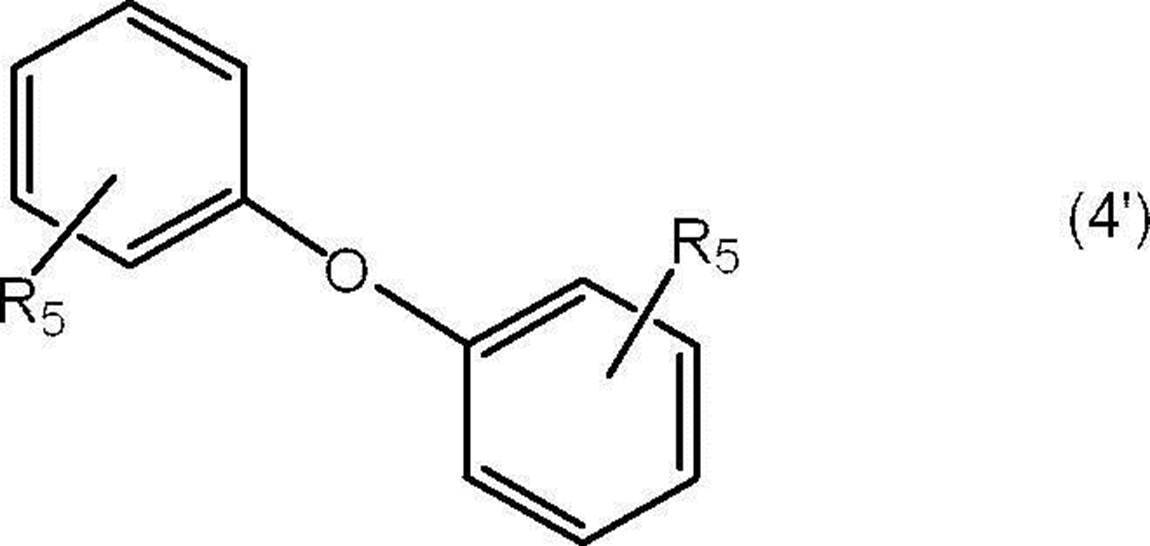
(一般式(4’)中、R5はそれぞれ独立に、水素原子又は置換基を有していてもよい炭素数1~30の炭化水素基を示す。)

(一般式(5’)中、Yは下記一般式(6’)で表わされる2価の基を示す。)
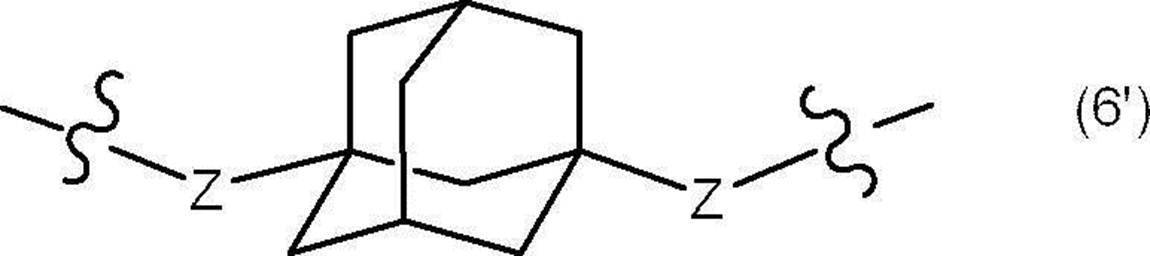
(一般式(6’)中、アダマンタン骨格の水素原子は、炭化水素基、アミノ基、オキソ基、水酸基又はハロゲン原子で置換されていてもよい。また、Zはそれぞれ独立に、置換基を有していてもよい炭素数1~10の2価の飽和炭化水素基を示す。) - 請求項1~請求項3のいずれか1項に記載の芳香族ポリケトンと、溶媒と、を含む芳香族ポリケトン組成物。
- 請求項1~請求項3のいずれか1項に記載の芳香族ポリケトンを含む芳香族ポリケトン膜。
- 請求項5に記載の芳香族ポリケトン膜を有する光学素子。
- 請求項5に記載の芳香族ポリケトン膜を有する画像表示装置。
- 下記一般式(1’)、下記一般式(2’)又は下記一般式(4’)で表される芳香族モノマと、下記一般式(5’)で表されるジカルボン酸モノマとを、酸性媒体中において縮合反応させる芳香族ポリケトンの製造方法。

(一般式(1’)中、R1はそれぞれ独立に、水素原子又は置換基を有していてもよい炭素数1~30の炭化水素基を示し、R2はそれぞれ独立に、水素原子又は置換基を有していてもよい炭素数1~30の炭化水素基を示す。)

(一般式(2’)中、R1はそれぞれ独立に、水素原子又は置換基を有していてもよい炭素数1~30の炭化水素基を示し、Xは酸素原子又は下記一般式(3’)で表わされる2価の基を示す。)
(一般式(3’)中、R3及びR4はそれぞれ独立に、水素原子又は置換基を有していてもよい炭素数1~30の炭化水素基を示す。)

(一般式(4’)中、R5はそれぞれ独立に、水素原子又は置換基を有していてもよい炭素数1~30の炭化水素基を示す。)
(一般式(5’)中、Yは下記一般式(6’)で表わされる2価の基を示す。)

(一般式(6’)中、アダマンタン骨格の水素原子は、炭化水素基、アミノ基、オキソ基、水酸基又はハロゲン原子で置換されていてもよい。また、Zはそれぞれ独立に、置換基を有していてもよい炭素数1~10の2価の飽和炭化水素基を示す。)
Priority Applications (4)
| Application Number | Priority Date | Filing Date | Title |
|---|---|---|---|
| CN201680008334.0A CN107207723B (zh) | 2015-02-04 | 2016-01-27 | 芳香族聚酮及其制造方法、芳香族聚酮组合物、芳香族聚酮膜、光学元件以及图像显示装置 |
| JP2016573305A JP6785423B2 (ja) | 2015-02-04 | 2016-01-27 | 芳香族ポリケトン及びその製造方法、芳香族ポリケトン組成物、芳香族ポリケトン膜、光学素子並びに画像表示装置 |
| KR1020177021487A KR20170110091A (ko) | 2015-02-04 | 2016-01-27 | 방향족 폴리케톤 및 그 제조 방법, 방향족 폴리케톤 조성물, 방향족 폴리케톤막, 광학 소자 및 화상 표시 장치 |
| US15/548,475 US10351670B2 (en) | 2015-02-04 | 2016-01-27 | Aromatic polyketone, method of producing the same, aromatic polyketone composition, aromatic polyketone film, optical element, and image display apparatus |
Applications Claiming Priority (2)
| Application Number | Priority Date | Filing Date | Title |
|---|---|---|---|
| JP2015-020442 | 2015-02-04 | ||
| JP2015020442 | 2015-02-04 |
Publications (1)
| Publication Number | Publication Date |
|---|---|
| WO2016125660A1 true WO2016125660A1 (ja) | 2016-08-11 |
Family
ID=56564009
Family Applications (1)
| Application Number | Title | Priority Date | Filing Date |
|---|---|---|---|
| PCT/JP2016/052363 Ceased WO2016125660A1 (ja) | 2015-02-04 | 2016-01-27 | 芳香族ポリケトン及びその製造方法、芳香族ポリケトン組成物、芳香族ポリケトン膜、光学素子並びに画像表示装置 |
Country Status (6)
| Country | Link |
|---|---|
| US (1) | US10351670B2 (ja) |
| JP (1) | JP6785423B2 (ja) |
| KR (1) | KR20170110091A (ja) |
| CN (1) | CN107207723B (ja) |
| TW (1) | TWI703175B (ja) |
| WO (1) | WO2016125660A1 (ja) |
Cited By (3)
| Publication number | Priority date | Publication date | Assignee | Title |
|---|---|---|---|---|
| WO2017212952A1 (ja) * | 2016-06-10 | 2017-12-14 | 日立化成株式会社 | 異なる二種類の構造単位を有する芳香族ポリケトン |
| WO2018142908A1 (ja) * | 2017-01-31 | 2018-08-09 | 日立化成株式会社 | ポリケトン組成物、ポリケトン膜、ポリケトン膜付基材、光学素子、画像表示装置、被覆部材、及び成形体 |
| JP2018168270A (ja) * | 2017-03-29 | 2018-11-01 | 日立化成株式会社 | 芳香族ポリケトン及びその製造方法、芳香族ポリケトン組成物、芳香族ポリケトン硬化物、光学素子並びに画像表示装置 |
Families Citing this family (1)
| Publication number | Priority date | Publication date | Assignee | Title |
|---|---|---|---|---|
| TWI762758B (zh) * | 2018-01-22 | 2022-05-01 | 日商迪愛生股份有限公司 | 聚伸芳基醚酮樹脂及其製造方法以及成形品 |
Citations (4)
| Publication number | Priority date | Publication date | Assignee | Title |
|---|---|---|---|---|
| JPS6438435A (en) * | 1987-07-09 | 1989-02-08 | Raychem Corp | Manufacture of poly(arylene ether ketone) and novel polymer |
| JPH0320469B2 (ja) * | 1984-11-30 | 1991-03-19 | Kobe Steel Ltd | |
| JPH04298531A (ja) * | 1991-01-30 | 1992-10-22 | Nkk Corp | 芳香族ポリケトン及びその製造方法 |
| JP2000290365A (ja) * | 1999-04-02 | 2000-10-17 | Mitsui Chemicals Inc | ポリケトンおよびその製造方法 |
Family Cites Families (5)
| Publication number | Priority date | Publication date | Assignee | Title |
|---|---|---|---|---|
| JPS627730A (ja) | 1985-07-05 | 1987-01-14 | Asahi Chem Ind Co Ltd | 結晶性芳香族ポリエ−テルケトンの製造方法 |
| DE4205811A1 (de) * | 1992-02-26 | 1993-11-18 | Hoechst Ag | Polyetherketone und Polyethersulfone auf Basis Phenylindan und ihre Verwendung für optische Systeme |
| JP3435843B2 (ja) * | 1994-10-06 | 2003-08-11 | 三菱瓦斯化学株式会社 | ポリカーボネート重合体 |
| JP4339729B2 (ja) | 2004-03-25 | 2009-10-07 | Tdk株式会社 | 芳香族ポリケトン及びその中間体、芳香族ポリケトンの製造方法、電気化学素子用ガスケット、電気化学素子用セパレータ、並びに、電気化学素子 |
| JP6218059B2 (ja) * | 2011-09-01 | 2017-10-25 | 国立大学法人山形大学 | 芳香族ポリケトンの製造方法と芳香族ポリケトン |
-
2016
- 2016-01-27 JP JP2016573305A patent/JP6785423B2/ja not_active Expired - Fee Related
- 2016-01-27 KR KR1020177021487A patent/KR20170110091A/ko not_active Ceased
- 2016-01-27 CN CN201680008334.0A patent/CN107207723B/zh not_active Expired - Fee Related
- 2016-01-27 WO PCT/JP2016/052363 patent/WO2016125660A1/ja not_active Ceased
- 2016-01-27 US US15/548,475 patent/US10351670B2/en not_active Expired - Fee Related
- 2016-01-29 TW TW105102902A patent/TWI703175B/zh not_active IP Right Cessation
Patent Citations (4)
| Publication number | Priority date | Publication date | Assignee | Title |
|---|---|---|---|---|
| JPH0320469B2 (ja) * | 1984-11-30 | 1991-03-19 | Kobe Steel Ltd | |
| JPS6438435A (en) * | 1987-07-09 | 1989-02-08 | Raychem Corp | Manufacture of poly(arylene ether ketone) and novel polymer |
| JPH04298531A (ja) * | 1991-01-30 | 1992-10-22 | Nkk Corp | 芳香族ポリケトン及びその製造方法 |
| JP2000290365A (ja) * | 1999-04-02 | 2000-10-17 | Mitsui Chemicals Inc | ポリケトンおよびその製造方法 |
Cited By (5)
| Publication number | Priority date | Publication date | Assignee | Title |
|---|---|---|---|---|
| WO2017212952A1 (ja) * | 2016-06-10 | 2017-12-14 | 日立化成株式会社 | 異なる二種類の構造単位を有する芳香族ポリケトン |
| JPWO2017212952A1 (ja) * | 2016-06-10 | 2019-04-04 | 日立化成株式会社 | 異なる二種類の構造単位を有する芳香族ポリケトン |
| WO2018142908A1 (ja) * | 2017-01-31 | 2018-08-09 | 日立化成株式会社 | ポリケトン組成物、ポリケトン膜、ポリケトン膜付基材、光学素子、画像表示装置、被覆部材、及び成形体 |
| CN110249003A (zh) * | 2017-01-31 | 2019-09-17 | 日立化成株式会社 | 聚酮组合物、聚酮膜、带有聚酮膜的基材、光学元件、图像显示装置、覆盖构件及成形体 |
| JP2018168270A (ja) * | 2017-03-29 | 2018-11-01 | 日立化成株式会社 | 芳香族ポリケトン及びその製造方法、芳香族ポリケトン組成物、芳香族ポリケトン硬化物、光学素子並びに画像表示装置 |
Also Published As
| Publication number | Publication date |
|---|---|
| TWI703175B (zh) | 2020-09-01 |
| CN107207723B (zh) | 2020-03-03 |
| JPWO2016125660A1 (ja) | 2017-11-16 |
| KR20170110091A (ko) | 2017-10-10 |
| TW201700535A (zh) | 2017-01-01 |
| CN107207723A (zh) | 2017-09-26 |
| US20180237588A1 (en) | 2018-08-23 |
| US10351670B2 (en) | 2019-07-16 |
| JP6785423B2 (ja) | 2020-11-18 |
Similar Documents
| Publication | Publication Date | Title |
|---|---|---|
| JP6547747B2 (ja) | 芳香族ポリケトン膜の製造方法、芳香族ポリケトン膜、芳香族ポリケトン膜付基材、光学素子及び画像表示装置 | |
| JP6785423B2 (ja) | 芳香族ポリケトン及びその製造方法、芳香族ポリケトン組成物、芳香族ポリケトン膜、光学素子並びに画像表示装置 | |
| WO2018142908A1 (ja) | ポリケトン組成物、ポリケトン膜、ポリケトン膜付基材、光学素子、画像表示装置、被覆部材、及び成形体 | |
| JP6879303B2 (ja) | 異なる二種類の構造単位を有する芳香族ポリケトン | |
| JP6778377B2 (ja) | 主鎖中にアルキレン基を有する芳香族ポリケトン、芳香族ポリケトンワニス、芳香族ポリケトン膜及び芳香族ポリケトンの製造方法 | |
| JP2018168270A (ja) | 芳香族ポリケトン及びその製造方法、芳香族ポリケトン組成物、芳香族ポリケトン硬化物、光学素子並びに画像表示装置 | |
| JP6520495B2 (ja) | 芳香族ポリケトンの製造方法 | |
| JP6759682B2 (ja) | 分岐型芳香族ポリケトン、分岐型芳香族ポリケトンの製造方法、分岐型芳香族ポリケトン組成物、分岐型芳香族ポリケトン膜、光学素子、画像表示装置及び分岐型芳香族ポリケトン膜付基材 | |
| JP2020105517A (ja) | 鎖状基を有する構造単位を含むポリケトンとヒドラジド化合物とを含有するポリケトン組成物、ポリケトン硬化物、光学素子、及び画像表示装置 | |
| JP2019014819A (ja) | デカリン骨格を有する芳香族ポリケトン及びその製造方法、デカリン骨格を有する芳香族ポリケトン組成物、デカリン骨格を有する芳香族ポリケトン膜、光学素子並びに画像表示装置 | |
| JP6769075B2 (ja) | 芳香族ポリケトン、芳香族ポリケトンの製造方法、芳香族ポリケトン組成物、芳香族ポリケトン膜、芳香族ポリケトン膜付基材、光学素子、画像表示装置及び被覆材料 | |
| JPWO2018025673A1 (ja) | 含窒素化合物を含有するポリケトン組成物、ポリケトン硬化物、光学素子及び画像表示装置 | |
| JP6874470B2 (ja) | ポリケトン樹脂組成物、ポリケトン硬化物、光学素子、画像表示装置、被覆材料及び成形体 | |
| JP2020105286A (ja) | 芳香環及び鎖状基を有する構造単位を含むポリケトン、ポリケトン組成物、ポリケトン膜、光学素子、画像表示装置、及びポリケトンの製造方法 | |
| CN110785466A (zh) | 含有酰肼化合物的聚酮组合物、聚酮固化物、光学元件及图像显示装置 | |
| CN108713043A (zh) | 含有环氧化合物的聚酮组合物、聚酮固化物、光学元件和图像显示装置 | |
| JP2020105287A (ja) | ヒドラジド化合物を含有するポリケトン組成物、ポリケトン硬化物、光学素子、及び画像表示装置 | |
| JP2017197687A (ja) | 芳香環及び四級炭素原子含有脂環を含む重合体、重合体の製造方法、組成物、膜、膜付基材、光学素子、画像表示装置、被覆材料及び成形体 |
Legal Events
| Date | Code | Title | Description |
|---|---|---|---|
| 121 | Ep: the epo has been informed by wipo that ep was designated in this application |
Ref document number: 16746491 Country of ref document: EP Kind code of ref document: A1 |
|
| ENP | Entry into the national phase |
Ref document number: 2016573305 Country of ref document: JP Kind code of ref document: A |
|
| ENP | Entry into the national phase |
Ref document number: 20177021487 Country of ref document: KR Kind code of ref document: A |
|
| WWE | Wipo information: entry into national phase |
Ref document number: 15548475 Country of ref document: US |
|
| NENP | Non-entry into the national phase |
Ref country code: DE |
|
| 122 | Ep: pct application non-entry in european phase |
Ref document number: 16746491 Country of ref document: EP Kind code of ref document: A1 |