WO2016010154A1 - 抗原特異的t細胞受容体遺伝子を有する多能性幹細胞の製造方法 - Google Patents
抗原特異的t細胞受容体遺伝子を有する多能性幹細胞の製造方法 Download PDFInfo
- Publication number
- WO2016010154A1 WO2016010154A1 PCT/JP2015/070623 JP2015070623W WO2016010154A1 WO 2016010154 A1 WO2016010154 A1 WO 2016010154A1 JP 2015070623 W JP2015070623 W JP 2015070623W WO 2016010154 A1 WO2016010154 A1 WO 2016010154A1
- Authority
- WO
- WIPO (PCT)
- Prior art keywords
- cells
- cell
- specific
- tcr
- ips
- Prior art date
- Legal status (The legal status is an assumption and is not a legal conclusion. Google has not performed a legal analysis and makes no representation as to the accuracy of the status listed.)
- Ceased
Links
Images




Classifications
-
- C—CHEMISTRY; METALLURGY
- C07—ORGANIC CHEMISTRY
- C07K—PEPTIDES
- C07K14/00—Peptides having more than 20 amino acids; Gastrins; Somatostatins; Melanotropins; Derivatives thereof
- C07K14/435—Peptides having more than 20 amino acids; Gastrins; Somatostatins; Melanotropins; Derivatives thereof from animals; from humans
- C07K14/705—Receptors; Cell surface antigens; Cell surface determinants
- C07K14/70503—Immunoglobulin superfamily
- C07K14/7051—T-cell receptor (TcR)-CD3 complex
-
- A—HUMAN NECESSITIES
- A61—MEDICAL OR VETERINARY SCIENCE; HYGIENE
- A61K—PREPARATIONS FOR MEDICAL, DENTAL OR TOILETRY PURPOSES
- A61K35/00—Medicinal preparations containing materials or reaction products thereof with undetermined constitution
- A61K35/12—Materials from mammals; Compositions comprising non-specified tissues or cells; Compositions comprising non-embryonic stem cells; Genetically modified cells
- A61K35/14—Blood; Artificial blood
- A61K35/17—Lymphocytes; B-cells; T-cells; Natural killer cells; Interferon-activated or cytokine-activated lymphocytes
-
- A—HUMAN NECESSITIES
- A61—MEDICAL OR VETERINARY SCIENCE; HYGIENE
- A61K—PREPARATIONS FOR MEDICAL, DENTAL OR TOILETRY PURPOSES
- A61K39/00—Medicinal preparations containing antigens or antibodies
- A61K39/0005—Vertebrate antigens
- A61K39/0011—Cancer antigens
-
- A—HUMAN NECESSITIES
- A61—MEDICAL OR VETERINARY SCIENCE; HYGIENE
- A61K—PREPARATIONS FOR MEDICAL, DENTAL OR TOILETRY PURPOSES
- A61K40/00—Cellular immunotherapy
- A61K40/10—Cellular immunotherapy characterised by the cell type used
-
- A—HUMAN NECESSITIES
- A61—MEDICAL OR VETERINARY SCIENCE; HYGIENE
- A61K—PREPARATIONS FOR MEDICAL, DENTAL OR TOILETRY PURPOSES
- A61K40/00—Cellular immunotherapy
- A61K40/30—Cellular immunotherapy characterised by the recombinant expression of specific molecules in the cells of the immune system
- A61K40/32—T-cell receptors [TCR]
-
- A—HUMAN NECESSITIES
- A61—MEDICAL OR VETERINARY SCIENCE; HYGIENE
- A61K—PREPARATIONS FOR MEDICAL, DENTAL OR TOILETRY PURPOSES
- A61K40/00—Cellular immunotherapy
- A61K40/40—Cellular immunotherapy characterised by antigens that are targeted or presented by cells of the immune system
- A61K40/41—Vertebrate antigens
- A61K40/42—Cancer antigens
- A61K40/4242—Transcription factors, e.g. SOX or c-MYC
- A61K40/4243—Wilms tumor 1 [WT1]
-
- C—CHEMISTRY; METALLURGY
- C12—BIOCHEMISTRY; BEER; SPIRITS; WINE; VINEGAR; MICROBIOLOGY; ENZYMOLOGY; MUTATION OR GENETIC ENGINEERING
- C12N—MICROORGANISMS OR ENZYMES; COMPOSITIONS THEREOF; PROPAGATING, PRESERVING, OR MAINTAINING MICROORGANISMS; MUTATION OR GENETIC ENGINEERING; CULTURE MEDIA
- C12N15/00—Mutation or genetic engineering; DNA or RNA concerning genetic engineering, vectors, e.g. plasmids, or their isolation, preparation or purification; Use of hosts therefor
- C12N15/09—Recombinant DNA-technology
-
- C—CHEMISTRY; METALLURGY
- C12—BIOCHEMISTRY; BEER; SPIRITS; WINE; VINEGAR; MICROBIOLOGY; ENZYMOLOGY; MUTATION OR GENETIC ENGINEERING
- C12N—MICROORGANISMS OR ENZYMES; COMPOSITIONS THEREOF; PROPAGATING, PRESERVING, OR MAINTAINING MICROORGANISMS; MUTATION OR GENETIC ENGINEERING; CULTURE MEDIA
- C12N5/00—Undifferentiated human, animal or plant cells, e.g. cell lines; Tissues; Cultivation or maintenance thereof; Culture media therefor
- C12N5/06—Animal cells or tissues; Human cells or tissues
- C12N5/0602—Vertebrate cells
- C12N5/0634—Cells from the blood or the immune system
- C12N5/0636—T lymphocytes
- C12N5/0638—Cytotoxic T lymphocytes [CTL] or lymphokine activated killer cells [LAK]
-
- C—CHEMISTRY; METALLURGY
- C12—BIOCHEMISTRY; BEER; SPIRITS; WINE; VINEGAR; MICROBIOLOGY; ENZYMOLOGY; MUTATION OR GENETIC ENGINEERING
- C12N—MICROORGANISMS OR ENZYMES; COMPOSITIONS THEREOF; PROPAGATING, PRESERVING, OR MAINTAINING MICROORGANISMS; MUTATION OR GENETIC ENGINEERING; CULTURE MEDIA
- C12N5/00—Undifferentiated human, animal or plant cells, e.g. cell lines; Tissues; Cultivation or maintenance thereof; Culture media therefor
- C12N5/06—Animal cells or tissues; Human cells or tissues
- C12N5/0602—Vertebrate cells
- C12N5/0696—Artificially induced pluripotent stem cells, e.g. iPS
-
- A—HUMAN NECESSITIES
- A61—MEDICAL OR VETERINARY SCIENCE; HYGIENE
- A61K—PREPARATIONS FOR MEDICAL, DENTAL OR TOILETRY PURPOSES
- A61K39/00—Medicinal preparations containing antigens or antibodies
- A61K2039/51—Medicinal preparations containing antigens or antibodies comprising whole cells, viruses or DNA/RNA
- A61K2039/515—Animal cells
- A61K2039/5156—Animal cells expressing foreign proteins
-
- A—HUMAN NECESSITIES
- A61—MEDICAL OR VETERINARY SCIENCE; HYGIENE
- A61K—PREPARATIONS FOR MEDICAL, DENTAL OR TOILETRY PURPOSES
- A61K39/00—Medicinal preparations containing antigens or antibodies
- A61K2039/57—Medicinal preparations containing antigens or antibodies characterised by the type of response, e.g. Th1, Th2
- A61K2039/572—Medicinal preparations containing antigens or antibodies characterised by the type of response, e.g. Th1, Th2 cytotoxic response
-
- C—CHEMISTRY; METALLURGY
- C12—BIOCHEMISTRY; BEER; SPIRITS; WINE; VINEGAR; MICROBIOLOGY; ENZYMOLOGY; MUTATION OR GENETIC ENGINEERING
- C12N—MICROORGANISMS OR ENZYMES; COMPOSITIONS THEREOF; PROPAGATING, PRESERVING, OR MAINTAINING MICROORGANISMS; MUTATION OR GENETIC ENGINEERING; CULTURE MEDIA
- C12N2506/00—Differentiation of animal cells from one lineage to another; Differentiation of pluripotent cells
- C12N2506/45—Differentiation of animal cells from one lineage to another; Differentiation of pluripotent cells from artificially induced pluripotent stem cells
-
- C—CHEMISTRY; METALLURGY
- C12—BIOCHEMISTRY; BEER; SPIRITS; WINE; VINEGAR; MICROBIOLOGY; ENZYMOLOGY; MUTATION OR GENETIC ENGINEERING
- C12N—MICROORGANISMS OR ENZYMES; COMPOSITIONS THEREOF; PROPAGATING, PRESERVING, OR MAINTAINING MICROORGANISMS; MUTATION OR GENETIC ENGINEERING; CULTURE MEDIA
- C12N2510/00—Genetically modified cells
Definitions
- This application relates to immune cell therapy.
- the present application relates to a method for inducing cells that can be used in immune cell therapy by introducing a T cell receptor gene exhibiting a desired antigen specificity into pluripotent stem cells.
- TCRs T cell receptors
- T cells immortalized includes fusion with cancer cells and long-term culture by TCR stimulation and cytokine stimulation.
- TCR stimulation and cytokine stimulation include fusion with cancer cells and long-term culture by TCR stimulation and cytokine stimulation.
- the T cells immortalized in this way are so-called cancer cells, and autotransplantation to return to the patient himself is dangerous. There is also a problem that the function is lowered in the cloning step.
- A. Cloning method using initialization technique A technique to solve the problem of T cell cloning for autologous transplantation has been proposed. This is a method of cloning as a stem cell having a specific TCR gene structure by using a reprogramming technique. Specifically, it is a method for producing pluripotent stem cells from T cells by nuclear transfer, iPS cell transformation, etc., and patent applications have been filed (WO2008 / 038579, WO2011 / 096482). Papers on such methods have been published in 2010 and 2013.
- This method is premised on autotransplantation in which ES cells or iPS cells are produced from the patient's own T cells, amplified, and the T cells are regenerated and returned to the patient.
- this method has at least the following three problems. A1) It is necessary to prepare iPS cells for each patient and cannot be prepared in advance. A2) Since iPS cells are prepared individually, each time they are prepared in terms of their effectiveness and safety and the quality of iPS cells. A3) T cells derived from T-iPS cells may become cancerous.
- TCR gene transfer T cell therapy The antigen-specific T cell receptor (TCR) gene is isolated, and the gene is expressed in the patient's normal T cells (a collection of many clones) and returned to the patient's body (autologous transplantation) There are several clinical trials of gene therapy in various regions (Morgan RA et al, Science, 314: 126. 2006). This method suppresses the expression of TCRs originally expressed by normal T cells of patients with, for example, siRNA (Okamoto S et al, Cancer Res 69: 9003, 2009), and self-expresses T cells that express only specific TCRs. Transplant. For example, a WT1 antigen-specific T cell receptor (TCR) gene has been isolated, and gene therapy for cancers that express WT1 has been performed.
- TCR antigen-specific T cell receptor
- T cells used for treatment are prepared from the patient's own T cells.
- the method B has the following three problems. B1) Since it is gene therapy, patient T cells may become cancerous. B2) Inhibition of endogenous TCR of T cells to be transplanted is not complete, and there is a risk of unexpected reactivity appearing. B3) Since it is a treatment for each patient, advance preparations cannot be made.
- Donor lymphocyte infusion therapy Bone marrow transplantation for tumors of the blood system such as leukemia has an aspect of immune cell therapy. That is, T cells contained in transplanted donor bone marrow cells are expected to attack the leukemia cells of the recipient. In order to enhance the effect, donor lymphocyte infusion is also known, in which only donor T cells are administered later. In recent years, a method has been reported in which T cells amplified as a clone for a desired antigen are transfused (Chapuis et al, Sci Transl Med, 5: 174ra27, 2013).
- the T cells used for treatment are cells derived from another donor
- the recipient's hematopoietic system after receiving a bone marrow transplant is the same as that of the donor. Is essentially regarded as a kind of autograft. This method requires prior bone marrow transplantation and the patient must receive an immunosuppressant for life.
- T cells As described above, various immune cell therapies using T cells have been proposed. Except for D, all of them are autotransplants or transplants of T cells under conditions that are considered autotransplants. Transplantation of T cells is contrary to the common sense of immune cell therapy. For example, in malignant tumors of the blood system (such as leukemia), bone marrow transplantation that transplants hematopoietic stem cells is performed, but is usually transplanted from an HLA-type donor that matches the recipient so that the donor's bone marrow is not rejected by the recipient. The However, in other humans, amino acid sequences are mismatched in many protein molecules other than HLA, and donor T cells can recognize these mismatches as targets for attack.
- This application aims to provide a more efficient, effective and safe immunotherapy.
- the present application derives a T progenitor cell or a mature T cell from a pluripotent stem cell having a desired antigen-specific T cell receptor gene, and the T progenitor cell or mature T cell is more than a certain amount with a donor from which the pluripotent stem cell is derived.
- Provide immune cell therapy including transplantation to patients with common HLA types.
- a pluripotent stem cell having a desired antigen-specific T cell receptor gene can be obtained by introducing a desired antigen-specific T cell receptor gene into the pluripotent stem cell.
- T cells used for immune cell therapy obtained by the method of the present application are T cells having a single antigen specificity, so there is no worry of causing graft-versus-host reaction, and not only for autotransplantation but also for allogeneic transplantation. Can be used.
- the method of the present application is a method that cannot be predicted at all from the common sense that other cell transplantation of T cells is contraindicated.
- the problem in the conventional technical recognition can be solved unexpectedly, and the following effects can be obtained: 1) It is not necessary to prepare T cells for transplantation for each patient, and preparation is possible. 2) Can be processed after confirming the safety and quality of transplanted cells in advance. 3) Even if the HLA matches, the minor antigen does not match, and it is a nontransgenic transplant. After a certain period of time, it is rejected by the patient's immune reaction, and the transferred cells are not likely to become cancerous.
- the T cells for transplantation of the present application are obtained by a method comprising a step of introducing a desired antigen-specific T cell receptor gene (TCR gene) into pluripotent stem cells, the following effects are obtained: 1) The quality of the obtained T cells for transplantation is assured by introducing the TCR gene with guaranteed efficacy and safety. 2) The TCR gene insertion site can be identified, a safe clone can be confirmed and used, and the problem of canceration of transplanted cells can be avoided in advance. 3) When pluripotent stem cells obtained by inserting the TCR gene into pluripotent stem cells are differentiated into T cells, the introduced TCR is first expressed during the differentiation process, so that the cells are originally present (hereinafter referred to as endogenous). The TCR is not reconstructed, and unexpected reactions rarely appear.
- TCR gene antigen-specific T cell receptor gene
- PTA2 vector used in Example 1 Lentiviral vector used in Example 1 It shows that mature T cells having WT1-TCR introduced from TCR-iPS cells in Example 1 were induced. It shows that iPS cells into which an HLA-A0201-restricted WT1-specific TCR gene was introduced in Example 2 were obtained. In Example 2, it is shown that the iPS cells into which the HLA-A0201-restricted WT1-specific TCR gene was introduced could be cloned.
- Example 3 shows that a WT1-specific TCR gene could be introduced into iPS cells.
- Example 4 shows that a WT1-specific TCR gene could be introduced into iPS cells.
- a pluripotent stem cell is a stem cell that has pluripotency capable of differentiating into many cells existing in a living body and also has a self-proliferating ability.
- pluripotent stem cells include embryonic stem (ES) cells, embryonic stem (ntES) cells derived from cloned embryos obtained by nuclear transfer, sperm stem cells (“GS cells”), embryonic germ cells (“EG cells”) "), Induced pluripotent stem (iPS) cells, cultured fibroblasts, bone marrow stem cell-derived pluripotent cells (Muse cells), and the like.
- GS cells embryonic stem cells
- EG cells embryonic germ cells
- iPS Induced pluripotent stem
- Muse cells bone marrow stem cell-derived pluripotent cells
- IPS cells may be derived from somatic cells at any site
- iPS cells Methods for inducing iPS cells from somatic cells are well known, and it is possible to obtain iPS cells by introducing Yamanaka factor into somatic cells (Takahashi and Yamanaka, nakaCell 126, 663-673 (2006), Takahashi et al., Cell 131, 861-872 (2007) and Grskovic et al., Nat. Rev. Drug Dscov. 10,915-929 (2011)).
- the factor used when inducing iPS cells is not limited to the Yamanaka factor, and any factor or means known to those skilled in the art may be used.
- T cell receptor genes exhibiting desired antigen specificity that have been clinically used and confirmed to be safe in TCR gene-transferred T cell therapy described as B in the background art.
- a TCR gene specific for the WT1 antigen is known.
- these known genes may be used, or a TCR gene that will be elucidated in the future may be used.
- the TCR gene may also be isolated or derived from T cells having a desired antigen specificity from cancer patients or infectious disease patients, and the TCR gene may be isolated from the T cells.
- the risk of canceration can be avoided.
- a TCR gene is introduced into iPS cells.
- Introduction of the TCR gene into iPS cells may be carried out by a conventional method, for example, according to the method described in Morgan R.A. et al, Science, 314: 126. 2006.
- the TCR gene may be placed on an appropriate vector and introduced into iPS cells.
- it can be introduced into somatic cells by techniques such as viruses, plasmids, artificial chromosomes, vectors, lipofection, liposomes, microinjection and the like.
- virus vectors include retrovirus vectors, lentivirus vectors, adenovirus vectors, adeno-associated virus vectors, Sendai virus vectors, and the like.
- artificial chromosome vectors examples include human artificial chromosomes (HAC), yeast artificial chromosomes (YAC), and bacterial artificial chromosomes (BAC, PAC).
- HAC human artificial chromosomes
- YAC yeast artificial chromosomes
- BAC bacterial artificial chromosomes
- a plasmid a plasmid for mammalian cells can be used.
- the vector can contain regulatory sequences such as a promoter, an enhancer, a ribosome binding sequence, a terminator, a polyadenylation site, etc., so that TCR can be expressed.
- GFP green fluorescent protein
- GUS ⁇ glucuronidase
- the TCR gene When the TCR gene is inserted using a vector as described above, it enters a site different from the TCR gene on the genome, but in other modes, it can be inserted into the TCR locus by “replacement”.
- a TCR gene When a TCR gene is inserted using a vector, iPS cells derived from somatic cells other than T cells are preferable. In the case of “replacement”, it is preferable to use T cell-derived iPS cells.
- the already reconstructed TCR ⁇ chain and TCR ⁇ chain genes can be replaced with the desired TCR ⁇ chain and TCR ⁇ chain genes, respectively, using genome editing technology or the like.
- the advantages of using this method are that 1) the time and level of expression of the introduced TCR can be close to that of the original TCR, so that high quality T cells can be produced, and 2) the genome is not damaged. is there.
- TCR-iPS cells obtained by introducing the TCR gene into iPS cells are induced to differentiate into T progenitor cells or mature T cells.
- Examples of the method for inducing differentiation into T cells include the method described in Timmermans et al., Journal of Immunology, 2009, 182: 6879-6888.
- T progenitor cell refers to a stage of a cell immediately before receiving positive selection / negative selection from a stage corresponding to a hematopoietic stem cell, which is the most undifferentiated cell among hematopoietic cells. To the equivalent of. T cell differentiation is described in Blood B111: 1318 (2008), NaturemmImmunology 11: 585 (2010).
- T precursor cells or mature T cells derived from TCR-iPS express the introduced TCR without reconstitution of the endogenous TCR. Therefore, safe treatment can be performed without causing an unexpected attack in immune cell therapy.
- the safety can be further improved by preventing the complete reconstitution of the endogenous TCR by deleting the Rag1 gene or the Rag2 gene at the iPS cell stage. Only one of the Rag1 gene and the Rag2 gene needs to be deleted. A method of simultaneously introducing SiRNA that suppresses the expression of endogenous TCR is also possible.
- the immune cell therapy of the present application can be used for treatment of diseases involving immunity such as cancer, infectious diseases, autoimmune diseases, and allergies that express an antigen to which the specific TCR specifically binds.
- induced T cells are suspended in an appropriate medium, such as physiological saline or PBS, and used for the treatment of a patient whose HLA matches with a donor derived from pluripotent stem cells at a certain level.
- an appropriate medium such as physiological saline or PBS
- an iPS cell group derived from a donor homozygous for HLA haplotype is used by selecting a cell having at least one of the HLA of the treatment subject from the iPS cell bank stored in association with the donor's HLA information. it can.
- the number of cells administered is not particularly limited, and may be appropriately determined according to the patient's age, sex, height, weight, target disease, symptom, and the like.
- the optimal number of cells to be administered may be appropriately determined by clinical trials.
- T cells can target various antigens, and the method of the present application can be applied to immune cell therapy for various diseases such as cancer, infectious diseases, autoimmune diseases, and allergies.
- WT1 gene is, for example, hematopoietic tumor such as leukemia, myelodysplastic syndrome, multiple myeloma, malignant lymphoma, stomach cancer, colon cancer, lung cancer, breast cancer, germ cell cancer, liver cancer, skin cancer, bladder cancer, prostate TCR-iPS cells that are highly expressed in the natural type in solid cancers such as cancer, uterine cancer, cervical cancer, ovarian cancer, etc.
- hematopoietic tumor such as leukemia, myelodysplastic syndrome, multiple myeloma, malignant lymphoma, stomach cancer, colon cancer, lung cancer, breast cancer, germ cell cancer, liver cancer, skin cancer, bladder cancer, prostate TCR-iPS cells that are highly expressed in the natural type in solid cancers such as cancer, uterine cancer, cervical cancer, ovarian cancer, etc.
- treatment for each patient is unnecessary, and it is sufficient to stock iPS cells into which a desired TCR has been introduced, or those obtained by regenerating T progenitor cells or mature T cells from the iPS cells. Therefore, not only can the time to treatment be shortened, but there is also an advantage that the quality of transplanted cells can be confirmed before transplantation.
- the present application provides a T cell preparation targeting a cancer antigen.
- TCR which has already been confirmed to be safe and effective in TCR gene therapy for cancer, is introduced into, for example, HLA haplotype homo iPS cells, stored in banks. If a person with a heterozygous HLA haplotype has cancer that expresses an antigen that is recognized by the TCR, T cells generated from banked TCR-iPS cells are administered to the patient (transplant) be able to. If the T precursor cells or T cells are stored in advance and cryopreserved, they can be administered more rapidly.
- WT1 antigen-specific TCR (Blood, 95: 286, 2000; Blood, 118: 1495, 2011) cloned from TAK-1 cells by Masataka Yasukawa and others of Ehime University can be used.
- iPS cells those produced by the iPS stock business being promoted by the iPS Cell Research Institute of Kyoto University can be used.
- HPS0077 cells deposited with RIKEN BRC can also be used as the most frequently used HLA haplotype iPS cells in Japan.
- iPS cells into which class I-restricted WT1 antigen-specific TCR has been introduced
- the target cells to be introduced are LMP2-T prepared in the field of regenerative immunology, Kyoto University Institute of Regenerative Medicine (Kyoto, Japan).
- -iPS cells (clone LMP2 # 1) were used.
- the introduced HLA-A2402 restricted WT1 TCR was B10 cloned in the laboratory of immunohematopoietic control (School of Suita, Osaka, Japan) (Anticancer Research 32 (12); 5201 -5209, 2012).
- This TCR recognizes the peptide CMTWNQMNL (SEQ ID NO: 4) in an HLA-A2402-restricted manner.
- RACE rapid amplification of cDNA ends
- Full-length cDNA was obtained using SMARTer RACE cDNA amplification kit (Clontech) and used as a template.
- LMP2-T-iPS cells are converted into complete single cells using TrypLE Select (Life Technologies). After centrifugation, the pellet was suspended in the lentivirus supernatant, centrifuged at 32 ° C. and 3000 rpm for 1 hour, and infected with LMP2-T-iPS cells to introduce WT1-TCR into LMP2-T-iPS cells. After infection, the cells were suspended in iPS cell culture medium and seeded on feeder cells. LMP2-T-iPS (WT1-TCR / LMP2-T-iPS) cells into which WT1-TCR had been introduced were selected under a fluorescence microscope by the expression of Venus protein contained in the vector.
- each medium for inducing differentiation from iPS cells to T cells is shown below.
- the penicillin / streptomycin solution consisted of penicillin 10000 U / mL and streptomycin 10000 ⁇ g / mL, with final concentrations of 100 U / mL and 100 ⁇ g / mL, respectively.
- the penicillin / streptomycin solution consisted of penicillin 10000 U / mL and streptomycin 10000 ⁇ g / mL, with final concentrations of 100 U / mL and 100 ⁇ g / mL, respectively.
- the penicillin / streptomycin solution consisted of penicillin 10000 U / mL and streptomycin 10000 ⁇ g / mL, with final concentrations of 100 U / mL and 0 ⁇ g / mL, respectively.
- OP9 cells Place 6 ml of 0.1% gelatin / PBS solution in a 10 cm culture dish and leave at 37 ° C for at least 30 minutes. Confluent OP9 cells were detached with trypsin / EDTA solution and seeded on a 10cm culture dish coated with 1/4 of gelatin. Medium A was added to medium A to 10 ml. 10 ml of medium A was newly added to the OP9 cell culture dish seeded 4 days later so that the total volume became 20 ml.
- Day 1 (medium change) After confirming whether the human iPS cell mass started to adhere and differentiate, the medium was replaced with fresh medium A 20 ml.
- Day 5 (change medium half amount) Half of the medium was replaced with 10 ml of fresh medium A.
- Day 9 (medium exchange) Half of the medium was replaced with 10 ml of fresh medium A.
- Day 13 Transfer induced mesoderm cells from OP9 cells to OP9 / DLL1 cells
- the medium was aspirated and the medium on the cell surface was washed away with HBSS (+ Mg + Ca). Thereafter, 10 ml of 250U collagenase IV / HBSS (+ Mg + Ca) solution was added, and the mixture was incubated at 37 ° C. for 45 minutes.
- the Collagenase solution was aspirated and washed away with 10 ml of PBS (-). Thereafter, 5 ml of 0.05% trypsin / EDTA solution was added and incubated at 37 ° C. for 20 minutes. After culturing, the cells peeled off into a membrane, so they were physically made fine by pipetting (to separate the adherent cells). Add 20 ml of fresh medium A and incubate at 37 ° C for 45 minutes. After culture, the supernatant containing floating cells was collected through a 100 ⁇ m mesh. After centrifuging at 4 ° C. and 1200 rpm for 7 minutes, the pellet was suspended in 10 ml of medium B.
- FACS analysis is performed to confirm the differentiation stage during the culture period, but many dead cells are observed during the culture in all periods. Therefore, it is desirable to perform analysis after removing dead cells using PI ⁇ ⁇ (Propidium Iodide), 7-AAD, etc. for FACS analysis.
- PI ⁇ ⁇ Propidium Iodide
- 7-AAD 7-AAD
- Day 37 Cells loosely adhering to OP9 / DLL1 cells were gently pipetted multiple times and collected through a 100 ⁇ m mesh into a 50 ml conical tube. Centrifuge at 1200 ° C for 7 minutes at 4 ° C and suspend the pellet in 10 ml medium B. These cells were seeded on newly prepared OP9 / DLL1 cells.
- Day 44 (Confirmation of CD4 + CD8 + T cells, start of induction of CD8 SP cells) FACS analysis was performed using anti-CD4 and anti-CD8 antibodies to confirm whether T cells were induced. Generation of CD4 + CD8 + T cells was confirmed. Add anti-CD3 / 28 antibody with huIL-2.
- New OP9 / DLL1 cells were prepared in 24-well plates, and T cells containing CD4 + CD8 + T cells were seeded at 3x10⁵ cells / well.
- Anti-CD3 antibody 50 ng / ml
- anti-CD28 antibody 2 ng / ml
- huIL-2 200 U / ml
- Day 50 (CD4-CD8 + cells appear)
- mature CD8SP cells were generated. The generated cells were stained with WT1-tetramer and anti-CD3 antibody (FIG. 3). It was confirmed that T cells expressing the introduced WT1-TCR were generated.
- HLA haplotype homo-iPS cells into which HLA-A0201-restricted WT1 antigen-specific TCR has been introduced.
- Peripheral healthy subjects in the field of regenerative immunology (Kyoto, Japan) HLA haplotype homo-type iPS cells prepared from blood monocytes were used.
- the HLA type of this iPS cell is HLA-A * 33: 03; B * 44: 03; C * 140: 3; DRB1 * 1302 Homozygous type.
- the introduced HLA-A0201-restricted WT1-specific TCR gene was Opt3E2, which was cloned in the laboratory of immunohematopoiesis control (Graduate School of Medicine, Osaka University, Suita, Japan).
- the peptide sequence is RMFPNAPYL (SEQ ID NO: 5).
- Example 1 The method for producing vectors and the method for introducing genes into iPS cells were the same as in Example 1.
- FIG. 5 shows a colony after one week of culture, and the colony into which the gene has been introduced is shown as a fluorescent dye positive colony. That is, it shows that the iPS cells into which the HLA-A0201-restricted WT1-specific TCR gene was introduced could be cloned. Thereafter, this positive colony was picked up and separated.
- HLA haplotype homo-iPS cells into which class II-restricted WT1 antigen-specific TCR has been introduced
- the Regenerative Immunology Division, Kyoto University Institute for Regenerative Medicine Korean
- HLA haplotype homo-type iPS cells prepared from normal human peripheral blood monocytes were used.
- the introduced WT1-specific TCR gene is Clone K and Clone 10, a class II-restricted WT1-specific TCR gene cloned in the laboratory of immunohematopoiesis control (Graduate School of Medicine, Osaka University, Suita, Osaka, Japan). Using.
- CloneK is HLA-DRB1 * 0405-restricted
- Clone10 is HLA-DPB1 * 0501-restricted
- the recognized peptide sequence is WT1-332 (KRYFKLSHLQMHSRKH (SEQ ID NO: 6)) (Microbiol Immunol 52: 591-600, 2008) .
- Example 1 The method for producing vectors and the method for introducing genes into iPS cells were the same as in Example 1.
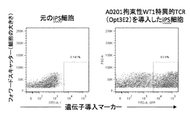
- the iPS cell after gene transfer was made into a single cell suspension and analyzed by flow cytometry. The results are shown in FIG. It was confirmed that WT1-specific TCR gene was introduced into iPS cells in both Clone10 and CloneK.
- HLA haplotype homo-iPS cells into which class I-restricted WT1 antigen-specific TCR has been introduced
- the cells to be introduced are the same as in Example 2, Department of Regenerative Immunology, Kyoto University Institute for Regenerative Medicine (Kyoto, Japan) HLA haplotype homo-type iPS cells prepared from normal human peripheral blood monocytes were used.
- the introduced WT1-specific TCR gene is a class I-restricted WT1-specific clone cloned from Clonn # 9 and Clone # 3-3 in the Department of Regenerative Immunology (Research Institute for Regenerative Medicine, Kyoto University, Kyoto, Japan). TCR gene.
- Example 1 The method for producing vectors and the method for introducing genes into iPS cells were the same as in Example 1.
Landscapes
- Health & Medical Sciences (AREA)
- Life Sciences & Earth Sciences (AREA)
- Engineering & Computer Science (AREA)
- Chemical & Material Sciences (AREA)
- Biomedical Technology (AREA)
- General Health & Medical Sciences (AREA)
- Genetics & Genomics (AREA)
- Organic Chemistry (AREA)
- Immunology (AREA)
- Zoology (AREA)
- Biotechnology (AREA)
- Wood Science & Technology (AREA)
- Bioinformatics & Cheminformatics (AREA)
- Epidemiology (AREA)
- Animal Behavior & Ethology (AREA)
- Public Health (AREA)
- Veterinary Medicine (AREA)
- General Engineering & Computer Science (AREA)
- Biochemistry (AREA)
- Cell Biology (AREA)
- Microbiology (AREA)
- Medicinal Chemistry (AREA)
- Molecular Biology (AREA)
- Biophysics (AREA)
- Hematology (AREA)
- Developmental Biology & Embryology (AREA)
- Pharmacology & Pharmacy (AREA)
- Physics & Mathematics (AREA)
- Plant Pathology (AREA)
- Transplantation (AREA)
- Toxicology (AREA)
- Gastroenterology & Hepatology (AREA)
- Proteomics, Peptides & Aminoacids (AREA)
- Mycology (AREA)
- Oncology (AREA)
- Virology (AREA)
- Micro-Organisms Or Cultivation Processes Thereof (AREA)
- Medicines Containing Material From Animals Or Micro-Organisms (AREA)
- Peptides Or Proteins (AREA)
Abstract
Description
A. 初期化技術を用いたクローニング法
自家移植を目的としたT細胞のクローニングの問題を解決する技術が提案されている。初期化の技術を用いて特異的TCR遺伝子の構造を有する幹細胞としてクローニングする方法である。具体的には核移植、iPS細胞化などによりT細胞から多能性幹細胞を作製する方法であり、特許出願もされている(WO2008/038579、WO2011/096482)。また、かかる方法についての論文は2010年、2013年に発表されている。
1) Watarai H, A Rybouchkin, N Hongo, Y Nagata, S Sakata, E Sekine, N Dashtsoodol, T Tashiro, S-I Fujii, K Shimizu, K Mori, K. Masuda, H Kawamoto, H Koseki, and M Taniguchi. Generation of functional NKT cells in vitro from embryonic stem cells bearing rearranged invariant Vα14-Jα18 TCRα gene. Blood115:230-237, 2010.
2) Vizcardo R, Masuda K, Yamada D, Ikawa T, Shimizu K, Fujii S-I, Koseki H, Kawamoto H. Regeneration of human tumor antigen-specific T cells from iPS cells derived from mature CD8+ T cells. Cell Stem Cell. 12: 31-36. 2013.
3) Nishimura T et al., Cell Stem Cell.12: 114-126. 2013.
抗原特異的T細胞受容体(TCR)遺伝子を単離し、その遺伝子を患者の正常T細胞(多くのクローンの集合体)に発現させて患者の体に戻す(自家移植)という遺伝子治療の臨床試験が各地で行われている(Morgan R.A. et al, Science, 314:126. 2006)。この方法では患者の正常T細胞がもともと発現しているTCRを例えばsiRNAなどで発現を抑制し(Okamoto S et al, Cancer Res 69:9003, 2009)、特定のTCRのみが発現したT細胞を自家移植する。例えば、WT1抗原特異的T細胞受容体(TCR)遺伝子が単離されていて、WT1を発現するがんに対する遺伝子治療が行われている。
白血病などの血液系の腫瘍に対して行われる骨髄移植は、免疫細胞療法としての側面をもつ。すなわち、移植されたドナーの骨髄細胞の中に含まれるT細胞がレシピエントの白血病細胞を攻撃することが期待されている。効果を高めるためにドナーのT細胞だけを後に追加して投与する、ドナーリンパ球輸注法も知られている。また近年、所望の抗原に対するクローンとして増幅させたT細胞を輸注するという方法が報告された(Chapuis et al, Sci Transl Med, 5:174ra27, 2013)。
臍帯血移植後に免疫力が低下した患者にウイルス感染症が発症することがある。そのようなケースを対象に移植に用いたドナー臍帯血ではなく他の臍帯血中のウイルス特異的CTLを輸注するという方法が提案されている(Blood, 116: 5045, 2010)。類似の発想で、HLAがある程度一致しているが完全には一致しないようなCTLを移植するというアイデアの特許出願が出されている(WO2011/021503)。しかしながら、臍帯血は多数のT細胞クローン、すなわち多種類のTCRを有する細胞の集団であり、移植片対宿主病(GVHD)を起こす危険性を回避できない。
1)移植用T細胞を患者ごとに作製する必要がなく事前準備ができる、
2)事前に移植細胞の安全性および品質を確認した上での処理をすることができる、
3)たとえHLAが一致していたとしてもマイナー抗原は一致しない他家移植であり、一定の期間の後には患者の免疫反応によって拒絶され、移入した細胞ががん化する恐れがない。
1)効果並びに安全性が保障されたTCRの遺伝子を導入することにより、得られる移植用T細胞の品質が保証される。
2)TCR遺伝子挿入箇所を同定し、安全なクローンを確定して用いることができ、移植細胞のがん化の問題を予め回避できる。
3)多能性幹細胞へTCR遺伝子挿入して得られる多能性幹細胞をT細胞へ分化させる場合、分化過程で導入TCRが先に発現することから細胞が元々もっている(以下内因性と表記)TCRが再構成されず、想定外の反応が出現することがほとんどない。
導入する対象の細胞としては京都大学再生医科学研究所再生免疫学分野(日本国京都府京都市)にて作製されたLMP2-T-iPS細胞(クローンLMP2#1)を用いた。
導入したHLA-A2402拘束性を有するWT1 TCRは,大阪大学医学系研究科免疫造血制御学研究室(日本国大阪府吹田市)でクローニングされたB10を用いた(Anticancer Research 32(12); 5201-5209, 2012). このTCRはHLA-A2402拘束性にペプチドCMTWNQMNL(配列番号4)を認識する。
クローンとなるように増幅したWT1特異的CTLもしくはWT1-T-iPS細胞から誘導されたCTLからRNAを調整する。SMARTer RACE cDNA増幅キット(クロンテック社)を用いて完全長cDNAを得,これを鋳型とした。 TCRα鎖の3’側からのプライマー(CACAGGCTGTCTTACAATCTTGCAGATC(配列番号1))もしくはTCRβ鎖の3’側からのプライマー2種(CTCCACTTCCAGGGCTGCCTTCA(配列番号2)またはTGACCTGGGATGGTTTTGGAGCTA(配列番号3))を用い,PCR反応によってWT1-TCRの二本鎖cDNAを得た。得られた二本鎖cDNAをpTA2ベクター(東洋紡社、図1)に組み込み,細胞株に導入することでWT1 TCRの特異性などの検定を行った。
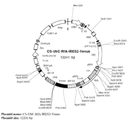
独立行政法人理化学研究所 バイオリソースセンター 細胞運命情報解析技術開発サブチーム(日本国茨城県つくば市)より提供されたCS-UbC-RfA-IRES2-Venusベクター(図2)を用い,GatewayシステムによりWT1-TCRを導入したCS-UbC-RfA-IRES2-Venus/WT1-TCRを作製した。
CS-UbC-RfA-IRES2-Venus/WT1-TCRをX-treamGENE9(ロシュ社)を用いてパッケージング細胞LentiX-293Tに導入した。翌日に培地交換を行い,2日目にレンチウィルスを含む培養上清を回収し,レンチウィルス上清として用いた。
LMP2-T-iPS細胞をTrypLE Select (ライフテクノロジーズ社)を用いて完全な単一細胞とする。遠心後,ペレットをレンチウィルス上清で懸濁し,32℃,3000rpmで1時間遠心し,LMP2-T-iPS細胞に感染させることでWT1-TCRをLMP2-T-iPS細胞に導入した。
感染後,iPS細胞用培地に懸濁し,フィーダー細胞上に播種した。WT1-TCRが導入されたLMP2-T-iPS(WT1-TCR/LMP2-T-iPS)細胞はベクターに含まれるVenusタンパク質の発現によって蛍光顕微鏡下で選択された。
1.2週間後にiPS細胞コロニーを目視により確認した。
2. 200ulチップによりコロニーを物理的に拾い上げた。
3. 各クローンを個別に樹立した。
各培地の組成を下記に示す。


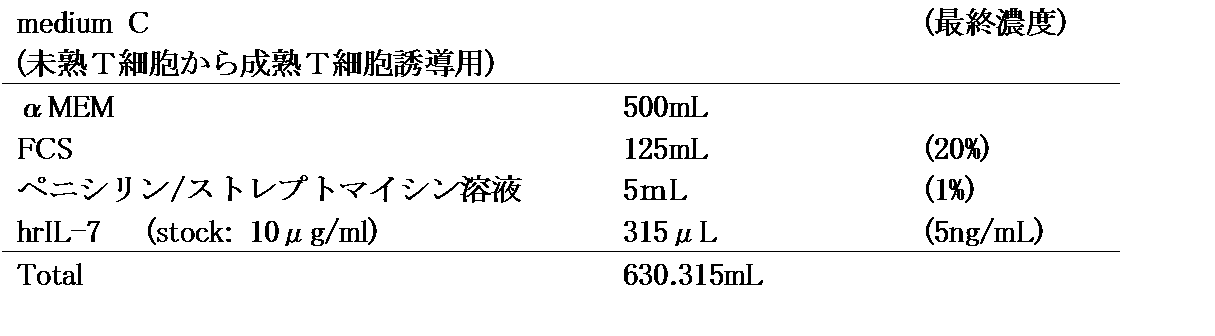
0.1% ゼラチン/PBS溶液6mlを10cm培養ディッシュに入れ,37℃で30分以上静置する。コンフルエントになったOP9細胞をトリプシン/EDTA溶液で剥がし,1/4相当量をゼラチンコートした10cm培養ディッシュに播種した。培地はmedium Aを10mlとなるように加えた。
4日後に播種したOP9細胞培養ディッシュに新たにmedium Aを10ml加え,全量が20mlとなるようにした。
共培養に使用するOP9細胞の培地を吸引し,新しいmedium Aに交換する。またヒトiPS細胞培養ディッシュの培地も同様に吸引し,新しいmedium Aを10ml加える。EZ-passageローラーでヒトiPS細胞を切る。カットしたiPS細胞塊を200ulピペットマンでピペッティングすることで浮遊させ,目視でおおよそ600個のiPS細胞塊をOP9細胞上に播種した。
ヒトiPS細胞1クローンあたり3枚以上のディッシュを用い,継代するときには細胞を一度一つに合わせてから同じ枚数に再分配することでディッシュ間のばらつきを減らした。
ヒトiPS細胞塊が接着し分化し始めているかどうかを確認し,培地を新しいmedium A 20mlに交換した。
Day 5 (培地半量交換)
半量分の培地を新しいmedium A 10mlに交換した。
Day 9 (培地交換)
半量分の培地を新しいmedium A 10mlに交換した。
Day 13 (誘導した中胚葉細胞をOP9細胞上からOP9/DLL1細胞上への移しかえる)
培地を吸引し,HBSS(+Mg+Ca)で細胞表面上の培地を洗い流した。その後250U collagenase IV/HBSS(+Mg+Ca) 溶液10mlを加え,37℃で45分間培養した。
Collagenase溶液を吸引し,PBS(-)10mlで洗い流した。その後5mlの0.05%トリプシン/EDTA溶液を加え,37℃で20分培養した。培養後,細胞が膜状に剥がれてくるのでピペッティングにより物理的に細かくした(接着細胞同士を離すため)。ここに新しいmedium Aを20ml加え,さらに37℃で45分間培養する。培養後、浮遊細胞を含む上清を,100μmのメッシュを通して回収した。4℃,1200rpmで7分間遠心し、ペレットを10mlのmedium Bに懸濁させた。このうち1/10をFACS解析用にとりわけ、残りの細胞を新たに用意したOP9/DLL1細胞上に播種した。複数枚のディッシュから得た細胞をプールした場合,元々の枚数と同じ枚数になるように再分配して細胞を播き直した。
次いで細胞をOP9/DLL1細胞上に播種した。この工程において,CD34lowCD43+細胞分画の細胞のソーティングは行わない。この分画をソーティングした場合,得られる細胞数が減少してしまうことやソーティングによる細胞へのダメージから,ソーティングしなかった場合に比べてT細胞への分化誘導効率が落ちることがある。
OP9/DLL1細胞に緩く接着している細胞を,穏やかに複数回ピペッティングし,100μmのメッシュを通して50mlコニカルチューブに回収した。4℃,1200rpmで7分間遠心し,ペレットを10mlのmedium Bに懸濁させる。これらの細胞を新たに用意したOP9/DLL1細胞上に播種した。
Day 23 (細胞の継代): 血液細胞コロニーが見え始める。
OP9/DLL1細胞に緩く接着している細胞を,穏やかに複数回ピペッティングし,100μmのメッシュを通して50mlコニカルチューブに回収する。4℃,1200rpmで7分間遠心し,ペレットを10mlのmedium Bに懸濁させた。これらの細胞を新たに用意したOP9/DLL1細胞上に播種した。
Day 30 (細胞の継代):
OP9/DLL1細胞に緩く接着している細胞を,穏やかに複数回ピペッティングし,100μmのメッシュを通して50mlコニカルチューブに回収した。4℃,1200rpmで7分間遠心し,ペレットを10mlのmedium Bに懸濁させる。これらの細胞を新たに用意したOP9/DLL1細胞上に播種した。
Day 37 (細胞の継代):
OP9/DLL1細胞に緩く接着している細胞を,穏やかに複数回ピペッティングし,100μmのメッシュを通して50mlコニカルチューブに回収した。4℃,1200rpmで7分間遠心し,ペレットを10mlのmedium Bに懸濁させる。これらの細胞を新たに用意したOP9/DLL1細胞上に播種した。
Day 44: (CD4+CD8+T細胞の確認、CD8 SP細胞の誘導開始)
T細胞が誘導されているかどうかを確かめるために抗CD4抗体,抗CD8抗体を用いてFACS解析した。CD4+CD8+T細胞の生成が確認された。
ここで抗CD3/28抗体をhuIL-2と供に加える.24穴プレートに新たにOP9/DLL1細胞を用意しておき,CD4+CD8+T細胞を含んだT細胞を3x105個/穴となるように播種した.ここに抗CD3抗体(50ng/ml),抗CD28抗体(2ng/ml), huIL-2 (200U/ml)を添加した.
Day 50: (CD4-CD8+細胞が現れる)
抗CD3抗体による刺激後6日目には,成熟CD8SP細胞が生成した.生成した細胞をWT1-テトラマーと抗CD3抗体で染色した(図3)。導入したWT1-TCRを発現するT細胞が生成しているのが確認された。
導入する対象の細胞として京都大学再生医科学研究所再生免疫学分野(日本国京都府京都市)にて健常人末梢血単球より作製されたHLAハプロタイプホモ型iPS細胞を用いた。
このiPS細胞のHLA型はHLA-A*33:03; B*44:03; C*140:3; DRB1*1302
のホモ接合型である。
導入したHLA-A0201拘束性を有するWT1特異的TCR遺伝子は,大阪大学医学系研究科免疫造血制御学研究室(日本国大阪府吹田市)でクローニングされたOpt3E2を用いた.このTCRが認識するペプチド配列はRMFPNAPYL(配列番号5)である。
2. 遺伝子導入後のiPS細胞をディッシュに播種し、クローナルなコロニーとして培養した。図5は培養1週間後のコロニーを示しており、遺伝子が導入されたコロニーは蛍光色素陽性コロニーとして写っている。すなわち、HLA-A0201拘束性WT1特異的TCR遺伝子が導入されたiPS細胞のクローニングできたことを示している。この後、この陽性コロニーをピックアップして分離した。
導入する対象の細胞としては実施例2と同じく京都大学再生医科学研究所再生免疫学分野(日本国京都府京都市)にて健常人末梢血単球より作製されたHLAハプロタイプホモ型iPS細胞を用いた。
導入したWT1特異的TCR遺伝子は,大阪大学医学系研究科免疫造血制御学研究室(日本国大阪府吹田市)でクローニングされたたクラスII拘束性WT1特異的TCR遺伝子、Clone KとClone 10を用いた。CloneKはHLA-DRB1*0405拘束性、Clone10はHLA-DPB1*0501拘束性で、認識するペプチド配列はWT1-332(KRYFKLSHLQMHSRKH(配列番号6))である(Microbiol Immunol 52: 591-600, 2008)。
導入する対象の細胞としては実施例2と同じく京都大学再生医科学研究所再生免疫学分野(日本国京都府京都市)にて健常人末梢血単球より作製されたHLAハプロタイプホモ型iPS細胞を用いた。
導入したWT1特異的TCR遺伝子は,京都大学再生医科学研究所再生免疫学分野(日本国京都府京都市)にてClonn#9とClone#3-3からクローニングされたクラスI拘束性WT1特異的TCR遺伝子である。
Claims (11)
- (1)所望の抗原特異性T細胞受容体を有するヒト多能性幹細胞を提供する工程、および
(2)工程(1)の多能性幹細胞からT細胞を誘導する工程
を含む、免疫細胞療法用T細胞を誘導する方法。 - 所望の抗原特異性T細胞受容体遺伝子を有する多能性幹細胞が、多能性幹細胞へ所望の抗原特異性T細胞受容体遺伝子を導入することによって得たものである、請求項1記載の方法。
- 多能性幹細胞がiPS細胞である、請求項1または2記載の方法。
- iPS細胞が、免疫療法対象者のHLAの何れか一方のハプロタイプをホモで有しているハプロタイプホモ接合型のHLAを有しているヒトから得られたiPS細胞である、請求項2または3記載の免疫療法用T細胞を誘導する方法。
- 免疫細胞療法が、がん、感染症、自己免疫疾患、アレルギーなど、免疫が関与する疾患を治療するためのものである、請求項1~4いずれかに記載の方法。
- 免疫細胞療法が、がんを治療するためのものである、請求項5に記載の方法。
- がんがWT1遺伝子を発現するがんである、請求項6記載の方法。
- 所望の抗原特異性T細胞受容体遺伝子が、WT1特異的T細胞受容体遺伝子である請求項1~7何れかに記載の方法。
- 所望の抗原特異性T細胞受容体遺伝子が、HLA-A2402拘束性であり、ペプチドCMTWNQMNLを認識するWT1抗原特異的TCRである請求項8記載の方法。
- 所望の抗原特異性T細胞受容体遺伝子が、HLA-A0201拘束性であり、ペプチドRMFPNAPYLを認識するWT1抗原特異的TCRである請求項8記載の方法。
- 所望の抗原特異性T細胞受容体遺伝子が、HLA-DRB1*0405拘束性またはHLA-DPB1*0501拘束性であり、ペプチドKRYFKLSHLQMHSRKHを認識するWT1抗原特異的TCRである請求項8記載の方法。
Priority Applications (12)
| Application Number | Priority Date | Filing Date | Title |
|---|---|---|---|
| LTEP15822874.2T LT3170896T (lt) | 2014-07-18 | 2015-07-17 | Pliuripotentinių kamieninių ląstelių, turinčių antigenui specifinį t ląstelių receptoriaus geną, gavimo būdas |
| EP15822874.2A EP3170896B1 (en) | 2014-07-18 | 2015-07-17 | Production method for pluripotent stem cells having antigen-specific t cell receptor gene |
| ES15822874T ES2793025T3 (es) | 2014-07-18 | 2015-07-17 | Método de producción de citoblastos pluripotentes que tienen un gen receptor de linfocitos T específico de antígenos |
| US15/326,973 US12194083B2 (en) | 2014-07-18 | 2015-07-17 | Method for establishing pluripotent stem cells bearing genes encoding antigen specific T cell receptor |
| JP2016534511A JP6942466B2 (ja) | 2014-07-18 | 2015-07-17 | 抗原特異的t細胞受容体遺伝子を有する多能性幹細胞の製造方法 |
| DK15822874.2T DK3170896T3 (da) | 2014-07-18 | 2015-07-17 | Fremgangsmåde til fremstilling af pluripotente stamceller med antigen-specifik T-celle-receptorgen |
| PL15822874T PL3170896T3 (pl) | 2014-07-18 | 2015-07-17 | Sposób wytwarzania pluripotencjalnych komórek macierzystych mających gen swoistego wobec antygenu receptora komórek T |
| SI201531243T SI3170896T1 (sl) | 2014-07-18 | 2015-07-17 | Postopek izdelave pluripotentnih matičnih celic, ki imajo receptorski gen za antigen-specifične T celice |
| CN201580049886.1A CN107002036A (zh) | 2014-07-18 | 2015-07-17 | 用于建立具有编码抗原特异性t细胞受体的基因的多能性干细胞的方法 |
| AU2015290560A AU2015290560B2 (en) | 2014-07-18 | 2015-07-17 | Method for establishing pluripotent stem cells bearing genes encoding antigen specific T cell receptor |
| CY20201100529T CY1122993T1 (el) | 2014-07-18 | 2020-06-10 | Μεθοδος παραγωγης για πολυδυναμα βλαστοκυτταρα που εχουν αντιγονο-ειδικο γονιδιο υποδοχεα τ κυτταρων |
| US18/909,551 US20250084145A1 (en) | 2014-07-18 | 2024-10-08 | Method for establishing pluripotent stem cells bearing genes encoding antigen specific t cell receptor |
Applications Claiming Priority (2)
| Application Number | Priority Date | Filing Date | Title |
|---|---|---|---|
| US201462026336P | 2014-07-18 | 2014-07-18 | |
| US62/026,336 | 2014-07-18 |
Related Child Applications (2)
| Application Number | Title | Priority Date | Filing Date |
|---|---|---|---|
| US15/326,973 A-371-Of-International US12194083B2 (en) | 2014-07-18 | 2015-07-17 | Method for establishing pluripotent stem cells bearing genes encoding antigen specific T cell receptor |
| US18/909,551 Continuation US20250084145A1 (en) | 2014-07-18 | 2024-10-08 | Method for establishing pluripotent stem cells bearing genes encoding antigen specific t cell receptor |
Publications (1)
| Publication Number | Publication Date |
|---|---|
| WO2016010154A1 true WO2016010154A1 (ja) | 2016-01-21 |
Family
ID=55078639
Family Applications (1)
| Application Number | Title | Priority Date | Filing Date |
|---|---|---|---|
| PCT/JP2015/070623 Ceased WO2016010154A1 (ja) | 2014-07-18 | 2015-07-17 | 抗原特異的t細胞受容体遺伝子を有する多能性幹細胞の製造方法 |
Country Status (14)
| Country | Link |
|---|---|
| US (2) | US12194083B2 (ja) |
| EP (1) | EP3170896B1 (ja) |
| JP (1) | JP6942466B2 (ja) |
| CN (1) | CN107002036A (ja) |
| AU (1) | AU2015290560B2 (ja) |
| CY (1) | CY1122993T1 (ja) |
| DK (1) | DK3170896T3 (ja) |
| ES (1) | ES2793025T3 (ja) |
| HU (1) | HUE049347T2 (ja) |
| LT (1) | LT3170896T (ja) |
| PL (1) | PL3170896T3 (ja) |
| PT (1) | PT3170896T (ja) |
| SI (1) | SI3170896T1 (ja) |
| WO (1) | WO2016010154A1 (ja) |
Cited By (9)
| Publication number | Priority date | Publication date | Assignee | Title |
|---|---|---|---|---|
| US10472610B2 (en) | 2014-05-21 | 2019-11-12 | Kyoto University | Method for generating pancreatic bud cells and therapeutic agent for pancreatic disease containing pancreatic bud cells |
| WO2020022512A1 (ja) | 2018-07-26 | 2020-01-30 | 国立大学法人京都大学 | 外来抗原レセプター遺伝子導入細胞の製造方法 |
| WO2022059780A1 (ja) * | 2020-09-18 | 2022-03-24 | サイアス株式会社 | iPS細胞を介する再生T細胞の製造方法 |
| CN115515606A (zh) * | 2020-05-11 | 2022-12-23 | 艾达普特免疫有限公司 | 修饰的iPSC |
| KR20230074505A (ko) | 2020-09-24 | 2023-05-30 | 고쿠리츠 다이가쿠 호진 교토 다이가쿠 | 원하는 특이성을 갖는 이펙터 세포의 제조 방법 |
| WO2025033358A1 (ja) * | 2023-08-04 | 2025-02-13 | 学校法人東京理科大学 | 免疫細胞の製造方法 |
| WO2025063257A1 (ja) | 2023-09-22 | 2025-03-27 | 国立大学法人大阪大学 | 制御性t細胞を製造する方法 |
| EP4324917A4 (en) * | 2021-04-16 | 2025-04-16 | Thyas Co. Ltd. | Cell bank composed of ips cells for introducing t cell receptor gene |
| US12391921B2 (en) | 2016-04-15 | 2025-08-19 | Kyoto University | Method for inducing antigen specific CD8 positive T cells |
Families Citing this family (1)
| Publication number | Priority date | Publication date | Assignee | Title |
|---|---|---|---|---|
| WO2019113169A2 (en) * | 2017-12-06 | 2019-06-13 | New York Blood Center, Inc. | HLA HOMOZYGOUS INDUCED PLURIPOTENT STEM CELL (iPSC) LIBRARIES |
Citations (1)
| Publication number | Priority date | Publication date | Assignee | Title |
|---|---|---|---|---|
| JP2006306822A (ja) * | 2005-05-02 | 2006-11-09 | Japan Science & Technology Agency | 移植片拒絶反応及び移植片対宿主疾患を防ぐ移植免疫反応抑制ポリフェノール溶液及び移植免疫反応抑制方法 |
Family Cites Families (8)
| Publication number | Priority date | Publication date | Assignee | Title |
|---|---|---|---|---|
| US20030039635A1 (en) * | 1998-09-30 | 2003-02-27 | Corixa Corporation | Compositions and methods for WT1 specific immunotherapy |
| US20090217403A1 (en) * | 2005-06-06 | 2009-08-27 | Hergen Spits | Means and methods for generating a t cell against an antigen of interest |
| JP5288183B2 (ja) | 2006-09-25 | 2013-09-11 | 独立行政法人理化学研究所 | 遺伝子再構成後の遺伝子型を有する幹細胞からのリンパ球のインビトロ分化誘導 |
| CN102596209A (zh) | 2009-08-17 | 2012-07-18 | 国立大学法人东京大学 | 含有短暂性存活ctl的医药品组合物 |
| US8871510B2 (en) * | 2009-12-03 | 2014-10-28 | University Of Utah Research Foundation | Methods for generating T lymphocytes from hematopoietic stem cells |
| US9206394B2 (en) * | 2010-02-03 | 2015-12-08 | The University Of Tokyo | Method for reconstructing immune function using pluripotent stem cells |
| JPWO2011096482A1 (ja) | 2010-02-03 | 2013-06-13 | 国立大学法人 東京大学 | 多能性幹細胞を用いた免疫機能再建法 |
| EP3789487A1 (en) * | 2013-04-03 | 2021-03-10 | Memorial Sloan Kettering Cancer Center | Effective generation of tumor-targeted t-cells derived from pluripotent stem cells |
-
2015
- 2015-07-17 US US15/326,973 patent/US12194083B2/en active Active
- 2015-07-17 WO PCT/JP2015/070623 patent/WO2016010154A1/ja not_active Ceased
- 2015-07-17 PT PT158228742T patent/PT3170896T/pt unknown
- 2015-07-17 PL PL15822874T patent/PL3170896T3/pl unknown
- 2015-07-17 JP JP2016534511A patent/JP6942466B2/ja active Active
- 2015-07-17 ES ES15822874T patent/ES2793025T3/es active Active
- 2015-07-17 HU HUE15822874A patent/HUE049347T2/hu unknown
- 2015-07-17 EP EP15822874.2A patent/EP3170896B1/en active Active
- 2015-07-17 SI SI201531243T patent/SI3170896T1/sl unknown
- 2015-07-17 CN CN201580049886.1A patent/CN107002036A/zh active Pending
- 2015-07-17 LT LTEP15822874.2T patent/LT3170896T/lt unknown
- 2015-07-17 DK DK15822874.2T patent/DK3170896T3/da active
- 2015-07-17 AU AU2015290560A patent/AU2015290560B2/en active Active
-
2020
- 2020-06-10 CY CY20201100529T patent/CY1122993T1/el unknown
-
2024
- 2024-10-08 US US18/909,551 patent/US20250084145A1/en active Pending
Patent Citations (1)
| Publication number | Priority date | Publication date | Assignee | Title |
|---|---|---|---|---|
| JP2006306822A (ja) * | 2005-05-02 | 2006-11-09 | Japan Science & Technology Agency | 移植片拒絶反応及び移植片対宿主疾患を防ぐ移植免疫反応抑制ポリフェノール溶液及び移植免疫反応抑制方法 |
Non-Patent Citations (12)
| Title |
|---|
| ATSUTAKA MINAGAWA ET AL.: "3.iPS Saibo kara no Kogen Tokuiteki T-Saibo Yudo to Sono Rinsho Oyo", HEMATOLOGY FRONTIER, vol. 24, no. 2, January 2014 (2014-01-01), pages 39 - 45, XP008185676 * |
| ATSUTAKA MINAGAWA ET AL.: "Genome Edit o Riyo shita, iPS Saibo yori no Kogen Tokuiteki T- Saibo no Saisei", THE 18TH JAPANESE ASSOCIATION OF CANCER IMMUNOLOGY SOKAI PROGRAM/SHOROKUSHU, June 2014 (2014-06-01), pages 161, Q19 - 3, XP008185843 * |
| HIROSHI KAWAMOTO ET AL.: "Shokika ni yoru Kogen Tokuiteki T-Saibo no Cloning to Bank-ka Koso", REGENERATIVE MEDICINE, vol. 13, no. Suppl. 2014, January 2014 (2014-01-01), pages 176, SY-25 - 4, XP008185711 * |
| HIROSHI KAWAMOTO: "Application of the iPSC technology to immune cell therapy against cancer", CLINICAL ONCOLOGY, vol. 12, no. 4, 2013, pages 450 - 459, XP008185663 * |
| JURGENS LISA A. ET AL.: "Transduction of Primary Lymphocytes with Epstein-Barr Virus (EBV) Latent Membrane Protein-Specific T- Cell Receptor Induces Lysis of Virus-Infected Cells: A Novel Strategy for the Treatment of Hodgkin's Disease and Nasopharyngeal Carcinoma", JOURNAL OF CLINICAL IMMUNOLOGY, vol. 26, no. 1, 2006, pages 22 - 32, XP019281116 * |
| KAWAMOTO HIROSHI ET AL.: "Regeneration of antigen specific T cells using the iPSC technology: A novel strategy for cancer immunotherapy", THE 18TH JAPANESE ASSOCIATION OF CANCER IMMUNOLOGY SOKAI PROGRAM/SHOROKUSHU, June 2014 (2014-06-01), pages 50, Sl-3 * |
| LEI FENGYANG ET AL.: "Dual signals of TCR and Notch promote antigen-specific T cell development from pluripotent stem cells (P4370", THE JOURNAL OF IMMUNOLOGY, vol. 190, 2013, pages 177.18 * |
| LEI FENGYANG ET AL.: "In Vivo Programming of Tumor Antigen-Specific T Lymphocytes from Pluripotent Stem Cells to Promote Cancer Immunosurveillance", CANCER RESEARCH, vol. 71, no. 14, 2011, pages 4742 - 4747, XP055143834, DOI: doi:10.1158/0008-5472.CAN-11-0359 * |
| RIOLOBOS LAURA ET AL.: "HLA Engineering of Human Pluripotent Stem Cells", MOLECULAR THERAPY, vol. 21, no. 6, 2013, pages 1232 - 1241, XP055145726, DOI: doi:10.1038/mt.2013.59 * |
| TAKUYA MAEDA ET AL.: "iPS Saibo Gijutsu o Mochiita Gan Kogen Tokuiteki T-Saibo no Saisei", REGENERATIVE MEDICINE, vol. 13, no. Suppl. 2014, January 2014 (2014-01-01), pages 226, O-29 - 2, XP008185842 * |
| TAMANAKA TAICHI ET AL.: "Recognition of a Natural WT1 Epitope by a Modified WT1 Peptide- specific T- Cell Receptor", ANTICANCER RESEARCH, vol. 32, 2012, pages 5201 - 5210, XP055386117 * |
| THEMELI MARIA ET AL.: "Generation of tumor- targeted human T lymphocytes from induced pluripotent stem cells for cancer therapy", NATURE BIOTECHNOLOGY, vol. 31, no. 10, 2013, pages 928 - 933, XP055143283, DOI: doi:10.1038/nbt.2678 * |
Cited By (11)
| Publication number | Priority date | Publication date | Assignee | Title |
|---|---|---|---|---|
| US10472610B2 (en) | 2014-05-21 | 2019-11-12 | Kyoto University | Method for generating pancreatic bud cells and therapeutic agent for pancreatic disease containing pancreatic bud cells |
| US12391921B2 (en) | 2016-04-15 | 2025-08-19 | Kyoto University | Method for inducing antigen specific CD8 positive T cells |
| WO2020022512A1 (ja) | 2018-07-26 | 2020-01-30 | 国立大学法人京都大学 | 外来抗原レセプター遺伝子導入細胞の製造方法 |
| CN115515606A (zh) * | 2020-05-11 | 2022-12-23 | 艾达普特免疫有限公司 | 修饰的iPSC |
| WO2022059780A1 (ja) * | 2020-09-18 | 2022-03-24 | サイアス株式会社 | iPS細胞を介する再生T細胞の製造方法 |
| JPWO2022059780A1 (ja) * | 2020-09-18 | 2022-03-24 | ||
| CN115698270A (zh) * | 2020-09-18 | 2023-02-03 | 赛雅思株式会社 | 一种通过iPS细胞生产再生T细胞的方法 |
| KR20230074505A (ko) | 2020-09-24 | 2023-05-30 | 고쿠리츠 다이가쿠 호진 교토 다이가쿠 | 원하는 특이성을 갖는 이펙터 세포의 제조 방법 |
| EP4324917A4 (en) * | 2021-04-16 | 2025-04-16 | Thyas Co. Ltd. | Cell bank composed of ips cells for introducing t cell receptor gene |
| WO2025033358A1 (ja) * | 2023-08-04 | 2025-02-13 | 学校法人東京理科大学 | 免疫細胞の製造方法 |
| WO2025063257A1 (ja) | 2023-09-22 | 2025-03-27 | 国立大学法人大阪大学 | 制御性t細胞を製造する方法 |
Also Published As
| Publication number | Publication date |
|---|---|
| EP3170896A1 (en) | 2017-05-24 |
| US12194083B2 (en) | 2025-01-14 |
| SI3170896T1 (sl) | 2020-08-31 |
| US20170304417A1 (en) | 2017-10-26 |
| AU2015290560B2 (en) | 2021-02-18 |
| EP3170896B1 (en) | 2020-03-11 |
| JPWO2016010154A1 (ja) | 2017-04-27 |
| PT3170896T (pt) | 2020-06-16 |
| DK3170896T3 (da) | 2020-06-08 |
| PL3170896T3 (pl) | 2020-11-02 |
| US20250084145A1 (en) | 2025-03-13 |
| JP6942466B2 (ja) | 2021-09-29 |
| CY1122993T1 (el) | 2021-10-29 |
| EP3170896A4 (en) | 2018-03-21 |
| CN107002036A (zh) | 2017-08-01 |
| ES2793025T3 (es) | 2020-11-12 |
| AU2015290560A1 (en) | 2017-03-09 |
| HUE049347T2 (hu) | 2020-09-28 |
| LT3170896T (lt) | 2020-07-10 |
Similar Documents
| Publication | Publication Date | Title |
|---|---|---|
| US20250084145A1 (en) | Method for establishing pluripotent stem cells bearing genes encoding antigen specific t cell receptor | |
| JP7072808B2 (ja) | 多能性幹細胞から免疫細胞療法用t細胞を誘導する方法 | |
| JP5258138B2 (ja) | 髄外脂肪組織細胞及び造血組織ならびに筋肉組織の再生のためのその使用 | |
| CN105051184B (zh) | 通过给定的因子将人内皮细胞重编程为造血多系祖细胞 | |
| JPH10507627A (ja) | Tリンパ球のインビトロ増殖の急速拡大方法(「rem」) | |
| EP1939278A1 (en) | Method for production of t cell population | |
| US20130142766A1 (en) | Production method for cell populations | |
| Lei et al. | Directed differentiation of induced pluripotent stem cells towards T lymphocytes | |
| WO2016010153A1 (ja) | 免疫細胞療法用t細胞の誘導方法 | |
| JP7385230B2 (ja) | 移植用培養細胞または培養組織の調製方法 | |
| CN103182089A (zh) | 用表达自杀基因的间充质干细胞进行细胞介导癌症基因治疗 | |
| US20220160789A1 (en) | DUAL ANTIGEN-RECOGNIZING iPS CELL-DERIVED CHIMERIC ANTIGEN RECEPTOR-T-CELL THERAPY | |
| JP2021509272A (ja) | 多能性幹細胞及びその分化したt細胞と使用 | |
| JP7743980B2 (ja) | ヒトT細胞由来iPS細胞由来の細胞傷害性T細胞 | |
| CN117157391A (zh) | 由用于导入T细胞受体基因的iPS细胞构成的细胞库 | |
| WO2017159087A1 (ja) | 免疫細胞療法用ny-eso1抗原特異的t細胞の誘導方法 | |
| KR20120054018A (ko) | 일과성 생착 ctl을 포함하는 의약품 조성물 | |
| WO2026100580A1 (ja) | エプスタイン・バー・ウイルス(ebv)に対して特異的なt細胞 | |
| JP2024518632A (ja) | 体液免疫系の再生方法およびその使用 |
Legal Events
| Date | Code | Title | Description |
|---|---|---|---|
| 121 | Ep: the epo has been informed by wipo that ep was designated in this application |
Ref document number: 15822874 Country of ref document: EP Kind code of ref document: A1 |
|
| ENP | Entry into the national phase |
Ref document number: 2016534511 Country of ref document: JP Kind code of ref document: A |
|
| NENP | Non-entry into the national phase |
Ref country code: DE |
|
| REEP | Request for entry into the european phase |
Ref document number: 2015822874 Country of ref document: EP |
|
| WWE | Wipo information: entry into national phase |
Ref document number: 2015822874 Country of ref document: EP |
|
| ENP | Entry into the national phase |
Ref document number: 2015290560 Country of ref document: AU Date of ref document: 20150717 Kind code of ref document: A |
|
| WWE | Wipo information: entry into national phase |
Ref document number: 15326973 Country of ref document: US |