WO2015190048A1 - ゴムクローラ - Google Patents
ゴムクローラ Download PDFInfo
- Publication number
- WO2015190048A1 WO2015190048A1 PCT/JP2015/002629 JP2015002629W WO2015190048A1 WO 2015190048 A1 WO2015190048 A1 WO 2015190048A1 JP 2015002629 W JP2015002629 W JP 2015002629W WO 2015190048 A1 WO2015190048 A1 WO 2015190048A1
- Authority
- WO
- WIPO (PCT)
- Prior art keywords
- rubber
- crawler
- adhesive
- carbon
- rubber crawler
- Prior art date
- Legal status (The legal status is an assumption and is not a legal conclusion. Google has not performed a legal analysis and makes no representation as to the accuracy of the status listed.)
- Ceased
Links
Images
Classifications
-
- B—PERFORMING OPERATIONS; TRANSPORTING
- B62—LAND VEHICLES FOR TRAVELLING OTHERWISE THAN ON RAILS
- B62D—MOTOR VEHICLES; TRAILERS
- B62D55/00—Endless track vehicles
- B62D55/08—Endless track units; Parts thereof
- B62D55/18—Tracks
- B62D55/26—Ground engaging parts or elements
-
- B—PERFORMING OPERATIONS; TRANSPORTING
- B62—LAND VEHICLES FOR TRAVELLING OTHERWISE THAN ON RAILS
- B62D—MOTOR VEHICLES; TRAILERS
- B62D55/00—Endless track vehicles
- B62D55/08—Endless track units; Parts thereof
- B62D55/18—Tracks
- B62D55/24—Tracks of continuously flexible type, e.g. rubber belts
- B62D55/244—Moulded in one piece, with either smooth surfaces or surfaces having projections, e.g. incorporating reinforcing elements
-
- C—CHEMISTRY; METALLURGY
- C08—ORGANIC MACROMOLECULAR COMPOUNDS; THEIR PREPARATION OR CHEMICAL WORKING-UP; COMPOSITIONS BASED THEREON
- C08G—MACROMOLECULAR COMPOUNDS OBTAINED OTHERWISE THAN BY REACTIONS ONLY INVOLVING UNSATURATED CARBON-TO-CARBON BONDS
- C08G18/00—Polymeric products of isocyanates or isothiocyanates
- C08G18/06—Polymeric products of isocyanates or isothiocyanates with compounds having active hydrogen
- C08G18/28—Polymeric products of isocyanates or isothiocyanates with compounds having active hydrogen characterised by the compounds used containing active hydrogen
- C08G18/30—Low-molecular-weight compounds
- C08G18/38—Low-molecular-weight compounds having heteroatoms other than oxygen
- C08G18/3855—Low-molecular-weight compounds having heteroatoms other than oxygen having sulfur
- C08G18/3876—Low-molecular-weight compounds having heteroatoms other than oxygen having sulfur containing mercapto groups
-
- C—CHEMISTRY; METALLURGY
- C08—ORGANIC MACROMOLECULAR COMPOUNDS; THEIR PREPARATION OR CHEMICAL WORKING-UP; COMPOSITIONS BASED THEREON
- C08G—MACROMOLECULAR COMPOUNDS OBTAINED OTHERWISE THAN BY REACTIONS ONLY INVOLVING UNSATURATED CARBON-TO-CARBON BONDS
- C08G18/00—Polymeric products of isocyanates or isothiocyanates
- C08G18/06—Polymeric products of isocyanates or isothiocyanates with compounds having active hydrogen
- C08G18/70—Polymeric products of isocyanates or isothiocyanates with compounds having active hydrogen characterised by the isocyanates or isothiocyanates used
- C08G18/72—Polyisocyanates or polyisothiocyanates
- C08G18/77—Polyisocyanates or polyisothiocyanates having heteroatoms in addition to the isocyanate or isothiocyanate nitrogen and oxygen or sulfur
- C08G18/78—Nitrogen
- C08G18/7806—Nitrogen containing -N-C=0 groups
- C08G18/7818—Nitrogen containing -N-C=0 groups containing ureum or ureum derivative groups
- C08G18/7831—Nitrogen containing -N-C=0 groups containing ureum or ureum derivative groups containing biuret groups
-
- C—CHEMISTRY; METALLURGY
- C08—ORGANIC MACROMOLECULAR COMPOUNDS; THEIR PREPARATION OR CHEMICAL WORKING-UP; COMPOSITIONS BASED THEREON
- C08G—MACROMOLECULAR COMPOUNDS OBTAINED OTHERWISE THAN BY REACTIONS ONLY INVOLVING UNSATURATED CARBON-TO-CARBON BONDS
- C08G18/00—Polymeric products of isocyanates or isothiocyanates
- C08G18/06—Polymeric products of isocyanates or isothiocyanates with compounds having active hydrogen
- C08G18/70—Polymeric products of isocyanates or isothiocyanates with compounds having active hydrogen characterised by the isocyanates or isothiocyanates used
- C08G18/72—Polyisocyanates or polyisothiocyanates
- C08G18/77—Polyisocyanates or polyisothiocyanates having heteroatoms in addition to the isocyanate or isothiocyanate nitrogen and oxygen or sulfur
- C08G18/78—Nitrogen
- C08G18/7806—Nitrogen containing -N-C=0 groups
- C08G18/7818—Nitrogen containing -N-C=0 groups containing ureum or ureum derivative groups
- C08G18/7837—Nitrogen containing -N-C=0 groups containing ureum or ureum derivative groups containing allophanate groups
-
- C—CHEMISTRY; METALLURGY
- C08—ORGANIC MACROMOLECULAR COMPOUNDS; THEIR PREPARATION OR CHEMICAL WORKING-UP; COMPOSITIONS BASED THEREON
- C08G—MACROMOLECULAR COMPOUNDS OBTAINED OTHERWISE THAN BY REACTIONS ONLY INVOLVING UNSATURATED CARBON-TO-CARBON BONDS
- C08G18/00—Polymeric products of isocyanates or isothiocyanates
- C08G18/06—Polymeric products of isocyanates or isothiocyanates with compounds having active hydrogen
- C08G18/70—Polymeric products of isocyanates or isothiocyanates with compounds having active hydrogen characterised by the isocyanates or isothiocyanates used
- C08G18/72—Polyisocyanates or polyisothiocyanates
- C08G18/77—Polyisocyanates or polyisothiocyanates having heteroatoms in addition to the isocyanate or isothiocyanate nitrogen and oxygen or sulfur
- C08G18/78—Nitrogen
- C08G18/79—Nitrogen characterised by the polyisocyanates used, these having groups formed by oligomerisation of isocyanates or isothiocyanates
- C08G18/791—Nitrogen characterised by the polyisocyanates used, these having groups formed by oligomerisation of isocyanates or isothiocyanates containing isocyanurate groups
- C08G18/792—Nitrogen characterised by the polyisocyanates used, these having groups formed by oligomerisation of isocyanates or isothiocyanates containing isocyanurate groups formed by oligomerisation of aliphatic and/or cycloaliphatic isocyanates or isothiocyanates
-
- C—CHEMISTRY; METALLURGY
- C08—ORGANIC MACROMOLECULAR COMPOUNDS; THEIR PREPARATION OR CHEMICAL WORKING-UP; COMPOSITIONS BASED THEREON
- C08G—MACROMOLECULAR COMPOUNDS OBTAINED OTHERWISE THAN BY REACTIONS ONLY INVOLVING UNSATURATED CARBON-TO-CARBON BONDS
- C08G18/00—Polymeric products of isocyanates or isothiocyanates
- C08G18/06—Polymeric products of isocyanates or isothiocyanates with compounds having active hydrogen
- C08G18/70—Polymeric products of isocyanates or isothiocyanates with compounds having active hydrogen characterised by the isocyanates or isothiocyanates used
- C08G18/72—Polyisocyanates or polyisothiocyanates
- C08G18/80—Masked polyisocyanates
- C08G18/8003—Masked polyisocyanates masked with compounds having at least two groups containing active hydrogen
- C08G18/8006—Masked polyisocyanates masked with compounds having at least two groups containing active hydrogen with compounds of C08G18/32
- C08G18/8009—Masked polyisocyanates masked with compounds having at least two groups containing active hydrogen with compounds of C08G18/32 with compounds of C08G18/3203
- C08G18/8022—Masked polyisocyanates masked with compounds having at least two groups containing active hydrogen with compounds of C08G18/32 with compounds of C08G18/3203 with polyols having at least three hydroxy groups
- C08G18/8025—Masked aliphatic or cycloaliphatic polyisocyanates
-
- C—CHEMISTRY; METALLURGY
- C09—DYES; PAINTS; POLISHES; NATURAL RESINS; ADHESIVES; COMPOSITIONS NOT OTHERWISE PROVIDED FOR; APPLICATIONS OF MATERIALS NOT OTHERWISE PROVIDED FOR
- C09J—ADHESIVES; NON-MECHANICAL ASPECTS OF ADHESIVE PROCESSES IN GENERAL; ADHESIVE PROCESSES NOT PROVIDED FOR ELSEWHERE; USE OF MATERIALS AS ADHESIVES
- C09J175/00—Adhesives based on polyureas or polyurethanes; Adhesives based on derivatives of such polymers
- C09J175/04—Polyurethanes
Definitions
- the present invention relates to a rubber crawler.
- the rubber crawler is a belt-shaped rubber elastic body, lugs, and projections (guides) that form the base (main body) of the crawler.
- Each rubber crawler is pre-vulcanized and bonded together using an adhesive rubber sheet. Is known (see, for example, Patent Document 1).
- an adhesive rubber sheet or the like is provided between the inner peripheral surface 21b of the crawler body 21 and the guide projection 23 that meshes with the sprocket of the tracked vehicle.
- a load F is applied in the width direction from the wheel (not shown) of the tracked vehicle to the guide protrusion 23.
- distortion occurs at the root of the guide protrusion 23 in the portion indicated by the region R in FIG.
- FIGS. 4A and 4B when the bonding means M is arranged at the same height as the inner peripheral surface 21b of the crawler body 21, the bonding means M is likely to be distorted. This may cause peeling of the bonding means M.
- An object of the present invention is to provide a rubber crawler excellent in durability in which a protrusion is bonded as a separate body to a crawler body.
- a rubber crawler according to the present invention includes a crawler body made of vulcanized rubber having a raised portion on at least one of an inner circumferential surface and an outer circumferential surface, and an adhesive means disposed on the raised portion of the crawler body. And a protrusion made of vulcanized rubber. According to the rubber crawler according to the present invention, it is possible to provide a rubber crawler excellent in durability in which a protrusion is bonded as a separate body to the crawler body.
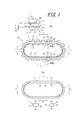
- (a) is a side view which shows typically the rubber crawler which is one Embodiment of this invention
- (b) is a crawler main body and lug used when manufacturing the rubber crawler of (a). It is a side view which shows typically each component of a projection part and a guide projection part.
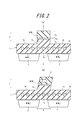
- (A) is sectional drawing which shows typically the state which cut
- (b) is a model which showed the state where the load was added to the rubber crawler of (a) from the width direction.
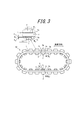
- FIG. It is a side view which shows typically the rubber crawler which is other embodiment of this invention.
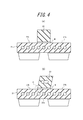
- (A) is sectional drawing which shows typically the state which cut
- (b) is the state which applied the load from the width direction to the rubber crawler of (a) typically. It is sectional drawing shown.
- width direction X means the width direction of the endless rubber crawler 1
- circumferential direction Y means the circumferential direction (extending direction) of the rubber crawler 1.
- radial direction Z means a direction perpendicular to the width direction X and the circumferential direction Y.
- reference numeral 10 denotes a rubber crawler that is an embodiment of the present invention.
- the rubber crawler 10 is bonded to an endless crawler body 1 made of vulcanized rubber by a bonding means M, with a plurality of lug protrusions 2 and a plurality of guide protrusions 3 made of vulcanized rubber.
- the crawler body 1 is a vulcanized molded product that has been vulcanized and molded in advance using unvulcanized rubber.
- the lug projection 2 and the guide projection 3 are also vulcanized molded products that are vulcanized and molded in advance using unvulcanized rubber, like the crawler body 1.
- the crawler body 1 is a main body of a rubber crawler 10 as a finished product.
- the crawler body 1 is an endless member in which both ends of a band-shaped member are connected.
- a plurality of steel cords ST extending in the circumferential direction Y are arranged in the crawler body 1 at regular intervals in the width direction X (FIGS. 2A and 2B). )) Is arranged.
- the outer peripheral surface 1a of the crawler main body 1 is comprised by the smooth plane with substantially no unevenness
- lug protrusions 2 are disposed on the outer peripheral surface 1 a of the crawler body 1.
- the lug protrusion 2 is bonded to the outer peripheral surface 1a of the crawler body 1 by bonding means M (hereinafter also referred to as “bonding means M2”).
- bonding means M2 hereinafter also referred to as “bonding means M2”.
- the lug protrusions 2 are arranged at regular intervals on both sides in the width direction X, as shown in FIG.
- the lug protrusion part 2 is arrange
- each lug protrusion 2 functions as a lug that can be grounded to a road surface or the like.
- the inner peripheral surface 1b of the crawler main body 1 is also formed of a smooth flat surface having almost no unevenness.
- the inner peripheral surface 1b of the crawler body 1 is a passing surface (rolling wheel passing surface) of a wheel (not shown) of the tracked vehicle.
- a raised portion 1 c is disposed on the inner peripheral surface 1 b of the crawler body 1.
- the raised portion 1 c is disposed at the center position in the width direction X of the crawler body 1.
- the raised portion 1 c is formed integrally with the crawler main body 1 and protrudes from the inner peripheral surface 1 b of the crawler main body 1 toward the inner peripheral side in the radial direction Z. Moreover, in this embodiment, as shown in FIG.1 (b), the protruding part 1c becomes a cyclic
- the raised portion 1c is configured as an annular raised portion. However, the raised portion 1c can be arranged on the inner peripheral surface 1b of the crawler body 1 with a constant interval in the circumferential direction Y.
- guide protrusions (protrusions) 3 are arranged at a certain interval in the circumferential direction Y on the raised portion 1c.
- Each of the guide protrusions 3 is bonded to the raised portion 1c of the crawler body 1 by bonding means M (hereinafter also referred to as “bonding means M3”).
- bonding means M3 is positioned on the inner peripheral side in the radial direction Z by the height h1 from the inner peripheral surface 1b of the crawler main body 1.
- the guide protrusion 3 constitutes a guide that meshes with a sprocket of a tracked vehicle together with the raised portion 1 c of the crawler body 1.
- Each guide meshes with a sprocket (not shown) of the tracked vehicle and transmits the rotational force of the sprocket to the crawler main body 1.
- the bonding means M3 is arranged at a position different from the inner peripheral surface 1b of the crawler main body 1, so that the distortion generated in the bonding means M3, particularly in this embodiment, FIG. As shown in b), the root of the guide where stress concentration is most likely to occur due to the load F applied in the width direction X from the wheel (not shown) of the tracked vehicle (in this embodiment, the root of the raised portion 1c corresponds to the base).
- the region R) in FIG. 4B and the adhesive layer formed by the adhesive means M3 do not coincide with each other, the distortion caused by the load F generated in the adhesive layer can be reduced.
- a slight wave (wavefront) in the width direction X may occur on the inner peripheral surface 1b of the crawler body 1.
- Such waves cause shear strain
- the adhesive means M3 is disposed on the inner peripheral side of the inner peripheral surface 1b of the crawler body 1 to suppress such shear strain. Can do.
- the durability of the steel cord ST is improved by suppressing the shear strain.
- the protruding part 1c comprises the cyclic
- the crawler body 1 can be easily manufactured because the rubber flow at the time of molding by the mold is better than the case where the raised portion 1c is provided in the circumferential direction Y so as to be aligned with the guide protrusion 3. It becomes.
- the guide protrusion 3 can be easily attached to the raised portion 1c, the rubber crawler can be easily manufactured.
- the rubber crawler is manufactured separately from the crawler main body and the protrusion, since the uneven portion of the crawler main body is reduced, the vulcanization molding time is increased due to the uneven shape formed in the mold, Disturbances in the arrangement of the steel cords ST accompanying the deterioration of the rubber flow are suppressed.
- providing the raised portion 1c on the crawler main body 1 as in the present embodiment may result in prolonged vulcanization molding time, disorder in the arrangement of the steel cords ST, and the like.
- the height (radial length) h1 of the raised portion 1c of the crawler body 1 is equal to the height (radial length) of the guide protrusion 3. ) It is set smaller (shorter) than h3. In this case, when the crawler main body 1 is manufactured, it is possible to suppress an increase in the vulcanization molding time, disorder of the arrangement of the steel cords ST, and the like.
- the configuration of the raised portion 1c of the crawler main body 1 and the guide protrusion 3 is adopted only on the inner peripheral surface 1b side of the crawler main body 1, but the outer peripheral surface 1a side of the crawler main body 1 is also used.
- a raised portion is provided on the lug side of the crawler body 1 and the same configuration as the guide side can be adopted together with the lug protrusion 3.
- the adhesion means M includes a composition that can be bonded to at least one carbon atom of a carbon-carbon bond existing in the vulcanized rubber.
- the bonding means M includes, for example, an adhesive and an adhesive sheet.
- the thickness d2 of the bonding means M2 is 0.5 mm or less not including 0 mm (0 ⁇ d2 ⁇ 0.5 mm).
- a preferable range of the thickness d2 is 10 to 300 ⁇ m, and more preferably 30 to 200 ⁇ m.
- the thickness d3 of the bonding means M3 is 0.5 mm or less (0 ⁇ d3 ⁇ 0.5 mm) not including 0 mm.
- a preferable range of the thickness d3 is 10 to 300 ⁇ m, more preferably 30 to 200 ⁇ m.
- composition An example of the composition used for the rubber crawler of the present invention is a polythiol compound (A) comprising a polythiol compound (A), an isocyanate group-containing compound (B), and a radical generator (C).
- the ratio (isocyanate group / thiol group) of the total number of moles of isocyanate groups contained in the blended isocyanate group-containing compound (B) with respect to the total number of moles of thiol groups contained in is, for example, 0.2 or more and 0.78 or less It is a composition.
- the composition not only unvulcanized rubber but also vulcanized rubber can be strongly bonded.
- the reason is estimated as follows. It is considered that the composition is strongly cured by causing a urethanization reaction between a part of the polythiol compound (A) and the isocyanate group-containing compound (B). Further, it is considered that another part of the polythiol compound (A) reacts with the radical generator (C) to generate a thiyl radical, which reacts with a carbon-carbon double bond present in the rubber. It is considered that the composition is strongly bonded to the rubber when the composition is chemically bonded to the rubber by the thiol-ene reaction.
- the polythiol compound (A), the isocyanate group-containing compound (B), the radical generator (C), the urethanization catalyst (D) and the surface conditioner (E) are respectively added to the component (A), It may be called a component (B), a component (C), a component (D), and a component (E).
- the polythiol compound (A) refers to a compound having two or more thiol groups in one molecule.
- the polythiol compound (A) is not particularly limited, but preferably has 2 to 6 thiol groups in one molecule from the viewpoint of improving adhesiveness.
- the polythiol compound (A) includes primary, secondary and tertiary compounds, but the primary is more preferable from the viewpoint of improving adhesiveness.
- the molecular weight of the polythiol compound (A) is preferably 3000 or less, more preferably 2000 or less, still more preferably 1000 or less, still more preferably 900 or less, more More preferably, it is 800 or less.
- molecular weight means the number average molecular weight of styrene conversion.
- polythiol compound (A) examples include aliphatic polythiols that may contain heteroatoms and aromatic polythiols that may contain heteroatoms. From the viewpoint of improving adhesiveness, polythiol compounds (A) may contain heteroatoms. Good aliphatic polythiols are preferred.
- the aliphatic polythiol which may contain a hetero atom refers to an aliphatic compound which may contain a hetero atom having two or more thiol groups in one molecule.
- aromatic polythiol which may contain the hetero atom means the aromatic compound which may contain the hetero atom which has two or more thiol groups in 1 molecule.
- the heteroatom is preferably at least one selected from oxygen, nitrogen, sulfur, phosphorus, halogen atoms, and silicon, more preferably oxygen, nitrogen, sulfur, phosphorus, and halogen atoms, from the viewpoint of improving adhesive strength. It is at least one selected, and more preferably at least one selected from oxygen, nitrogen and sulfur.
- Examples of the aliphatic polythiols that may contain heteroatoms include polythiols other than thiol groups, such as alkanedithiols having 2 to 20 carbon atoms, and halogen atoms of halohydrin adducts of alcohols.
- Thioglycolic acid ester obtained by esterification of polythiol substituted with thiol group, polythiol composed of hydrogen sulfide reaction product of polyepoxide compound, polyhydric alcohol having 2-6 hydroxyl groups in the molecule and thioglycolic acid Contains a mercapto fatty acid ester obtained by esterification of a polyhydric alcohol having 2 to 6 hydroxyl groups in the molecule and a mercapto fatty acid, a thiol isocyanurate compound obtained by reacting an isocyanurate compound and a thiol, and a polysulfide group Thiol Silicones modified with thiol groups, silsesquioxane or the like which is modified with a thiol group.
- the polyhydric alcohol having 2 to 6 hydroxyl groups in the molecule includes alkanediol having 2 to 20 carbon atoms, poly (oxyalkylene) glycol, glycerol, diglycerol, trimethylolpropane, ditrimethylolpropane, penta Examples include erythritol and dipentaerythritol.
- polythiols other than thiol groups are aliphatic hydrocarbons, polythiols obtained by substituting halogen atoms of alcohol halohydrin adducts with thiol groups, hydrogen sulfides of polyepoxide compounds
- a polythiol, a thioglycolic acid ester, a mercapto fatty acid ester, and a thiol isocyanurate compound are more preferable, a mercapto fatty acid ester and a thiol isocyanurate compound are more preferable, and a mercapto fatty acid ester is more preferable.
- a thiol containing no polysulfide group or siloxane bond is more preferable.
- Polythiol whose part other than thiol group is aliphatic hydrocarbon An example of a polythiol having an aliphatic hydrocarbon other than the thiol group is alkanedithiol having 2 to 20 carbon atoms.
- alkanedithiol having 2 to 20 carbon atoms examples include 1,2-ethanedithiol, 1,1-propanedithiol, 1,2-propanedithiol, 1,3-propanedithiol, 2,2-propanedithiol, 1,4 -Butanedithiol, 2,3-butanedithiol, 1,5-pentanedithiol, 1,6-hexanedithiol, 1,8-octanedithiol, 1,10-decanedithiol, 1,1-cyclohexanedithiol, 1,2- And cyclohexanedithiol.
- thioglycolic acid ester examples include 1,4-butanediol bisthioglycolate, 1,6-hexanediol bisthioglycolate, trimethylolpropane tristhioglycolate, pentaerythritol tetrakisthioglycolate, and the like.
- the mercapto fatty acid ester is preferably a mercapto fatty acid ester having a primary thiol group from the viewpoint of improving adhesiveness, and a ⁇ -mercaptopropionic ester of a polyhydric alcohol having 2 to 6 hydroxyl groups in the molecule. Is more preferable.
- the mercapto fatty acid ester product having a primary thiol group preferably has 4 to 6 thiol groups in one molecule from the viewpoint of improving adhesiveness, and preferably 4 or 5. Preferably, it is four.
- the ⁇ -mercaptopropionate esterified product having a primary thiol group is preferably tetraethylene glycol bis (3-mercaptopropionate) (EGMP-4), trimethylolpropane tris (3-mercaptopropionate). (TMMP), pentaerythritol tetrakis (3-mercaptopropionate) (PEMP), and dipentaerythritol hexakis (3-mercaptopropionate) (DPMP).
- TMMP pentaerythritol tetrakis (3-mercaptopropionate)
- DPMP dipentaerythritol hexakis
- PEMP and DPMP are preferable, and PEMP is more preferable.
- the ⁇ -mercaptopropionic acid esterified product having a secondary thiol group includes an esterified product of a polyhydric alcohol having 2 to 6 hydroxyl groups in the molecule and ⁇ -mercaptobutanoic acid. Specifically, 1,4-bis (3-mercaptobutyryloxy) butane, pentaerythritol tetrakis (3-mercaptobutyrate), and the like.
- thiol isocyanurate compound As a thiol isocyanurate compound obtained by reacting an isocyanurate compound with a thiol, a thiol isocyanurate compound having a primary thiol group is preferable from the viewpoint of improving adhesive strength.
- the thiol isocyanurate compound having a primary thiol group the number of thiol groups in one molecule is preferably 2 to 4 and more preferably 3 from the viewpoint of improving adhesiveness. .
- thiol isocyanurate compound having a primary thiol group tris-[(3-mercaptopropionyloxy) -ethyl] -isocyanurate (TEMPIC) is preferable.
- silicones modified with a thiol group examples include trade names KF-2001, KF-2004, X-22-167B (Shin-Etsu Chemical), SMS042, SMS022 (Gelest), PS849, PS850 (UCT). .
- Aromatic polythiols include 1,2-dimercaptobenzene, 1,3-dimercaptobenzene, 1,4-dimercaptobenzene, 1,2-bis (mercaptomethyl) benzene, 1,3-bis (mercaptomethyl) Benzene, 1,4-bis (mercaptomethyl) benzene, 1,2-bis (mercaptoethyl) benzene, 1,3-bis (mercaptoethyl) benzene, 1,4-bis (mercaptoethyl) benzene, 1,2, 3-trimercaptobenzene, 1,2,4-trimercaptobenzene, 1,3,5-trimercaptobenzene, 1,2,3-tris (mercaptomethyl) benzene, 1,2,4-tris (mercaptomethyl) Benzene, 1,3,5-tris (mercaptomethyl) benzene, 1,2,3-tris (mercaptoethyl) benze 1,2,
- Isocyanate group-containing compound (B) examples include aromatic, aliphatic and alicyclic diisocyanates, and modified products thereof.
- aromatic, aliphatic and alicyclic diisocyanates examples include tolylene diisocyanate (TDI), diphenylmethane diisocyanate (MDI), xylylene diisocyanate (XDI), naphthylene diisocyanate (NDI), phenylene diisocyanate (PPDI), m.
- TDI tolylene diisocyanate
- MDI diphenylmethane diisocyanate
- XDI xylylene diisocyanate
- NDI naphthylene diisocyanate
- PPDI phenylene diisocyanate
- TXDI methylcyclohexane diisocyanate
- MDI dicyclohexylmethane diisocyanate
- MDI dicyclohexylmethane diisocyanate
- PPDI cyclohexane diisocyanate
- IPDI isophorone diisocyanate
- HDI butanedi Cyanate, hexamethylene diisocyanate 2,2,4-trimethyl hexamethylene diisocyanate to 2,4,4-trimethyl like.
- the blended polythiol compound (A) is a mercapto fatty acid ester and / or a thiol isocyanurate compound
- the blended isocyanate group-containing compound (B) is hexamethylene diisocyanate (HDI), isophorone diisocyanate (IPDI).
- HDI hexamethylene diisocyanate
- IPDI isophorone diisocyanate
- TDI tolylene diisocyanate
- XDI xylylene diisocyanate
- MDI diphenylmethane diisocyanate
- HDI hexamethylene diisocyanate
- IPDI isophorone diisocyanate
- XDI xylylene diisocyanate
- TDI bis (isocyanatomethyl) cyclohexane
- 1 type or 2 types or more are more preferable.
- TMP trimethylolpropane
- isocyanurate obtained by trimerization of isocyanate Type modified products
- burette modified products obtained by reaction of urea and isocyanate
- allophanate modified products obtained by reaction of urethane and isocyanate
- prepolymers obtained by reaction of polyol and isocyanate etc. It can be used as appropriate.
- TMP adduct type modified body an isocyanurate type modified body, a burette type modified body, and an allophanate type modified body
- the following modified body is preferable from a viewpoint of an adhesive improvement. That is, as the TMP adduct type modified product, a TMP adduct type modified product obtained by the reaction of TMP and TDI, a TMP adduct type modified product obtained by the reaction of TMP and XDI, and a reaction of TMP and hydrogenated XDI are obtained.
- TMP adduct-type modified product TMP adduct-type modified product obtained by reaction of TMP and IPDI, TMP adduct-type modified product obtained by reaction of TMP and HDI, and TMP adduct type obtained by reaction of TMP and MDI Modified products are preferred.
- the isocyanurate-type modified product is an isocyanurate-type modified product obtained by trimming HDI, an isocyanurate-type modified product obtained by trimming IPDI, an isocyanurate-type modified product obtained by trimming TDI, and Isocyanurate-type modified products obtained by trimerization of hydrogenated XDI are preferred.
- burette type modified body the burette type modified body obtained by reaction of urea and HDI is preferable.
- allophanate type modified body the allophanate type modified body obtained by reaction of urethane and IPDI is preferable.
- the polythiol compound (A) used in combination with at least one of the above-mentioned TMP adduct type modified product, isocyanurate type modified product, burette type modified product and allophanate modified product is preferably ⁇ having a primary thiol group -One or two mercaptopropionic acid ester compounds and a thiol isocyanurate compound having a primary thiol group.
- the ⁇ -mercaptopropionate esterified product having a primary thiol group is preferably pentaerythritol tetrakis (3-mercaptopropionate) (PEMP) and dipentaerythritol hexakis (3-mercaptopropionate) ( DPMP).
- the thiol isocyanurate compound having a primary thiol group is preferably a thiol isocyanurate compound having a primary thiol group having 3 thiol groups in one molecule, more preferably tris-[( 3-mercaptopropionyloxy) -ethyl] -isocyanurate (TEMPIC).
- the radical generator (C) at least one of a thermal radical generator and a photo radical generator can be used.
- a thermal radical generator is preferable, a thermal radical generator composed of peroxide is more preferable, and organic A thermal radical generator made of peroxide is more preferred.
- a radical generator (C) can also be used individually by 1 type or in combination of 2 or more types.
- thermal radical generator composed of an organic peroxide
- examples of the thermal radical generator composed of an organic peroxide include t-butyl-2-ethylperoxyhexanoate, dilauroyl peroxide, 1,1,3,3-tetramethylbutylperoxy-2-ethylhexa.
- t-butyl-2-ethylperoxyhexanoate preferably t-butyl-2-ethylperoxyhexanoate, dilauroyl peroxide, 1,1,3,3-tetramethylbutylperoxy-2-ethylhexanoate, 1,1-di It is at least one of (t-hexylperoxy) cyclohexanone, di-t-butyl peroxide, and t-butylcumyl peroxide.
- the thermal radical generator composed of an organic peroxide can be used alone or in combination of two or more.
- Redox generation consisting of a combination of oxidizing agent and reducing agent such as a combination of hydrogen peroxide and iron (II) salt, a combination of persulfate and sodium bisulfite, etc. Agents.
- the thermal radical generator composed of an inorganic oxide can be used alone or in combination of two or more.
- photoradical generator known ones can be widely used and are not particularly limited. Examples thereof include intramolecular cleavage type photo radical generators, and benzoin alkyl ether photo radical generators such as benzoin ethyl ether, benzoin isobutyl ether and benzoin isopropyl ether; 2,2-diethoxyacetophenone, 4′-phenoxy-2 Acetophenone photo radical generator such as 2-dichloroacetophenone, 2-hydroxy-2-methylpropiophenone, 4′-isopropyl-2-hydroxy-2-methylpropiophenone, 4′-dodecyl-2-hydroxy- Propiophenone photoradical generators such as 2-methylpropiophenone; anthraquinone photoradical generators such as benzyldimethyl ketal, 1-hydroxycyclohexyl phenyl ketone and 2-ethylanthraquinone, 2-chloroanthraquinone; Sill phosphine
- Other hydrogen abstraction type photo radical generators include benzophenone / amine photo radical generator, Michler ketone / benzophenone photo radical generator, thioxanthone / amine photo radical generator, and the like.
- a non-extractable photoradical generator can be used. For example, there are those obtained by polymerizing an acetophenone radical generator and those obtained by adding a double bond of an acrylic group to benzophenone. These photo radical generators can be used alone or in combination of two or more.
- composition used for the rubber crawler of the present invention may further contain an optional component.
- Optional components include urethanization catalysts, surface conditioners, solvents, binders, fillers, pigment dispersants, conductivity imparting agents, UV absorbers, antioxidants, anti-drying agents, penetrants, pH adjusters, metal sequestering agents. , Fungicides, fungicides, surfactants, plasticizers, waxes, leveling agents and the like.
- urethanization catalyst Any urethanization catalyst can be used as the urethanization catalyst (D).
- the urethanization catalyst include dibutyltin dilaurate, dibutyltin diacetate, dibutyltin thiocarboxylate, dibutyltin dimaleate, dioctyltin thiocarboxylate, tin octenoate and monobutyltin oxide; inorganic such as stannous chloride Tin compounds; organic lead compounds such as lead octenoate; bis (2-dimethylaminoethyl) ether, N, N, N ′, N′-tetramethylhexamethylenediamine, triethylenediamine (TEDA), benzyldimethylamine, 2, Amines such as 2'-dimorpholinoethyl ether and N-methylmorpholine; Organic sulfonic acids such as p-toluenesulfonic acid, methane
- any surface conditioning agent can be used as the surface conditioning agent (E).
- the surface conditioner include acrylic, vinyl, silicone, and fluorine. Among these, a silicone type is preferable from the viewpoint of compatibility and surface tension reducing ability.
- the solvent is not particularly limited as long as it does not react with other compounding components, and examples thereof include aromatic solvents and aliphatic solvents. Specific examples of the aromatic solvent include toluene, xylene and the like. Hexane etc. are mentioned as an aliphatic solvent.
- the number ratio (isocyanate group / thiol group) is preferably 0.20 or more and 0.78 or less. When the ratio (isocyanate group / thiol group) is less than 0.20, the composition is not sufficiently hardened and the adhesive strength is reduced.
- the ratio (isocyanate group / thiol group) is greater than 0.78, the thiol-ene reaction is sufficiently performed between the thiol group and the carbon-carbon double bond of the rubber member because there are few thiol groups. Otherwise, the composition may not be firmly adhered to the rubber member, and the adhesive strength may be reduced.
- the ratio (isocyanate group / thiol group) is preferably 0.3 or more, more preferably 0.7 or less, and further preferably 0.4 to 0.7.
- the total number of moles of thiol groups contained in the blended polythiol compound (A) is obtained by multiplying the number of moles of the blended polythiol compound (A) by the number of thiol groups possessed by one molecule of the polythiol compound (A). Can be calculated. Further, the total number of moles of isocyanate groups contained in the isocyanate group-containing compound (B) to be blended can be measured by JIS K1603-1 B method. Furthermore, the ratio of the number of moles (isocyanate group / thiol group) is the polythiol compound blended with the total number of moles of isocyanate groups contained in the blended isocyanate group-containing compound (B) obtained as described above. It can be determined by dividing by the total number of moles of thiol groups contained in (A).
- the ratio of the total number of moles of the radical generator (C) to be blended to the total number of moles of thiol groups contained in the blended polythiol compound (A) is 0.025.
- the above is preferable.
- adhesiveness improves.
- the ratio (radical generator (C) / thiol group) is more preferably 0.03 or more, further preferably 0.035 or more, and still more preferably 0.04 or more.
- the ratio (radical generator (C) / thiol group) is preferably 0.5 or less, more preferably 0.45 or less, and still more preferably 0.4. It is as follows.
- a compound containing a carbon-carbon double bond may be blended.
- the polythiol compound (A) reacts with the compound containing the carbon-carbon double bond. This makes it difficult for the thiol-ene reaction between the polythiol compound (A) and the carbon-carbon double bond in the rubber to occur, which may reduce the adhesion of the composition to the rubber.
- the hydrogen abstraction reaction from the carbon-carbon bond main chain of the rubber hardly causes a reaction in which the sulfur atom of the thiol group of the polythiol compound (A) and the carbon atom of the carbon-carbon bond are chemically bonded.
- the ratio of the total number of moles of carbon-carbon double bonds contained in the compound containing carbon-carbon double bonds to the total number of moles of thiol groups contained in the blended polythiol compound (A) is preferably less than 0.4, more preferably less than 0.1, still more preferably 0.08 or less, and 0.05 or less. Is still more preferable, and it is especially preferable that it is 0.01 or less.
- the total number of moles of carbon-carbon double bonds contained in a compound containing a carbon-carbon double bond to be blended is the carbon-carbon possessed by one molecule of the compound in the number of moles of the compound to be blended. It can be determined by multiplying the number of double bonds.
- the molar ratio (carbon-carbon double bond / thiol group) is determined by the carbon-carbon double bond contained in the compound containing the carbon-carbon double bond to be blended obtained as described above. It can be determined by dividing the total number of moles by the total number of moles of thiol groups contained in the blended polythiol compound (A).
- the composition that can be used in the rubber crawler of the present invention may contain optional components in addition to the essential components (A) to (C).
- the total content of components (A) to (C) in the composition is preferably 80% by mass or more, more preferably 90% by mass or more, Still more preferably, it is 95 mass% or more, More preferably, it is 98 mass% or more.
- the total content of the components (A) to (E) is preferably 90% by mass or more, more preferably 95% by mass or more, still more preferably 99% by mass or more, and still more preferably 100% by mass. is there.
- An adhesive as an example of the bonding means M that can be used for manufacturing the rubber crawler of the present invention includes the above composition.
- This adhesive may contain components other than the above composition within a range not impairing the object of the present invention.
- the content of the composition in the adhesive is preferably 90% by mass or more, more preferably 95% by mass or more, still more preferably 99% by mass or more, and still more preferably. Is 100% by mass.
- An adhesive sheet as another example of the adhesive means M that can be used for manufacturing the rubber crawler of the present invention is formed by using the above-described composition.
- This adhesive sheet can be suitably manufactured by applying the composition on a release sheet such as a release paper or a release film and maintaining the sheet shape. By this holding, it is considered that at least a part of the thiol group and the isocyanate group in the composition undergo a thiolurethane reaction to form a sheet shape.
- an adhesive sheet can be suitably manufactured by leaving it at normal temperature after application
- the standing or heating temperature after coating is preferably ⁇ 30 to 60 ° C., more preferably ⁇ 20 to 40 ° C., and further preferably 0 to 40 ° C.
- the total thickness of the release sheet and the composition thereon can be appropriately selected according to the object to be bonded, the required adhesive strength, etc. It is 1 to 1000 ⁇ m, preferably 10 to 300 ⁇ m, and more preferably 30 to 200 ⁇ m.
- the holding time can be adjusted by the amount of the urethanization catalyst.
- the sheet shape is preferably 1 minute or more, more preferably 3 minutes or more, still more preferably 30 minutes or more, Still more preferably, it is 60 minutes or more.
- the holding temperature can usually be made into a sheet at room temperature, but it can also be heated to such an extent that the radical generator in the material is not cleaved. From the above viewpoint, it is preferably 0 to 60 ° C, more preferably 15 to 40 ° C. The release sheet is removed during use.
- the material of the release sheet is not particularly limited, but polyester resins such as polyethylene terephthalate, polycyclohexylene terephthalate and polyethylene naphthalate, polyamide resins such as nylon 46, modified nylon 6T, nylon MXD6 and polyphthalamide, polyphenylene sulfide
- polyester resins such as polyethylene terephthalate, polycyclohexylene terephthalate and polyethylene naphthalate
- polyamide resins such as nylon 46, modified nylon 6T, nylon MXD6 and polyphthalamide
- polyphenylene sulfide In addition to ketone resins such as polythioether sulfone, sulfone resins such as polysulfone and polyether sulfone, polyether nitrile, polyarylate, polyetherimide, polyamideimide, polycarbonate, polymethyl methacrylate, triacetyl cellulose, polystyrene
- the thickness of the adhesive sheet can be appropriately selected according to the object to be bonded, the required adhesive strength, and the like, but is, for example, 1 to 1000 ⁇ m, preferably 10 to 300 ⁇ m, more preferably 30 to 200 ⁇ m.
- it can be used after peeling the said adhesive sheet from a peeling sheet or peeling.
- the vulcanized rubber constituting the crawler body 1, lug protrusion 2 and guide protrusion 3 (hereinafter also referred to as “crawler body 1 etc.”) preferably has a carbon-carbon double bond.
- the carbon atom of the carbon-carbon double bond contained in the vulcanized rubber forms a carbon-sulfur bond with the sulfur atom of the thiol group of the polythiol compound (A) contained in the adhesion means M, for example.
- the crawler body 1 and the like can be obtained even if the vulcanized rubber does not have a carbon-carbon double bond.
- the vulcanized rubber preferably has a carbon-carbon double bond.
- the material of the vulcanized rubber is not particularly limited.
- natural rubber polyisoprene synthetic rubber (IR), polybutadiene rubber (BR), styrene-butadiene copolymer rubber (SBR), acrylonitrile butadiene rubber (NBR), chloroprene.
- Conjugated diene synthetic rubbers such as rubber (CR) and butyl rubber (IIR); ethylene-propylene copolymer rubber (EPM), ethylene-propylene-diene copolymer rubber (EPDM), polysiloxane rubber, etc.
- natural rubber and conjugated diene synthetic rubber are preferred.
- a rubber component may be used individually by 1 type or in combination of 2 or more types.
- a method for manufacturing the rubber crawler 10 using the adhesive will be described with reference to FIG.
- a crawler body 1 made of vulcanized rubber having a raised portion 1c is prepared, and a lug protrusion 2 and a guide protrusion 3 made of vulcanized rubber are respectively prepared.
- a lug protrusion 2 and a guide protrusion 3 made of vulcanized rubber are respectively prepared.
- the plurality of lug protrusions 2 are bonded to the outer peripheral surface 1 a of the crawler body 1, and the plurality of guide protrusions 3 are bonded to the bonding surface 1 f of the raised portion 1 c protruding from the inner peripheral surface 1 b of the crawler main body 1. More specifically, the adhesive is applied to the adhesive surfaces (adhesive application surfaces) 2a of the plurality of lug protrusions 2 that have been vulcanized and formed with the crawler body 1 in advance. Next, after leaving for a predetermined time as required, the adhesive surface 2 a of the lug protrusion 2 is brought into surface contact with the outer peripheral surface 1 a of the crawler body 1. The same applies to the guide protrusions 3.
- the adhesive is applied to the adhesive surfaces (adhesive application surfaces) 3 b of the plurality of guide protrusions 3 vulcanized and formed with the raised portions 1 c of the crawler body 1.
- the adhesive surface 3a of the guide protrusion 3 is brought into surface contact with the adhesive surface 1f of the raised portion 1c of the crawler body 1.
- the rubber crawler 10 as a finished product having a shape similar to that of FIG. 1A is suitably manufactured by curing the semi-finished product while applying a press pressure in the thickness direction. be able to.
- the thickness d2 of the adhesive means M2 disposed between the crawler body 1 and the lug protrusion 2 is 0.5 mm or less (0 ⁇ d2) not including 0 mm.
- the adhesive is applied so that ⁇ 0.5 mm.
- a more preferable range of the thickness d2 is 10 to 300 ⁇ m, and a more preferable range is 30 to 200 ⁇ m.
- the thickness of the adhesive applied as the adhesive means M2 can be at least 0.5 mm not including 0 mm.
- the thickness d3 of the bonding means M3 disposed between the raised portion 1c of the crawler body 1 and the guide projection 3 does not include 0 mm.
- the adhesive is applied so as to be 5 mm or less (0 ⁇ d3 ⁇ 0.5 mm).
- a more preferable range of the thickness d3 is 10 to 300 ⁇ m, and a more preferable range is 30 to 200 ⁇ m. Therefore, the thickness of the adhesive applied as the bonding means M3 can be at least 0.5 mm not including 0 mm.
- the standing time is preferably 0 to 30 minutes from the viewpoint of retaining the adhesive so that the adhesive does not leak from the semi-finished product during curing. More preferably, it is 1 to 15 minutes.
- the attachment order of the lug projection part 2 and the guide projection part 3 is not specifically limited.
- the adhesive may be applied to the outer peripheral surface 1a of the crawler body 1 and the adhesive surface 1f of the raised portion 1c.
- the lug protrusion 2 can be provided integrally with the crawler body 1.
- a lug-side raised portion can be provided on the outer peripheral surface 1a of the crawler main body 1, and the lug protrusion 2 can be bonded to this raised portion.
- the press pressure is preferably 0 to 5 MPa, more preferably from the viewpoint of improving the adhesive force and preventing or suppressing the leakage of the adhesive from the semi-finished product. Is 0 to 2.5 MPa, more preferably 0 to 1 MPa. From the same viewpoint, the pressing time is preferably 5 to 120 minutes, more preferably 10 to 60 minutes, and further preferably 15 to 45 minutes.
- the adhesive contains a thermal radical generator as a radical generator
- curing is preferably performed by heating.
- the temperature at which the thermal radical generator efficiently generates radicals can be appropriately selected as the heating temperature, but it is preferably about 1 minute half-life temperature ⁇ 30 ° C. of the thermal radical generator.
- the adhesive contains a photo radical generator as a radical generator
- curing is preferably performed by light irradiation.
- the light source is at least one selected from electromagnetic waves such as ultraviolet rays, visible rays, infrared rays, and X-rays, and particle beams such as ⁇ rays, ⁇ rays, and electron beams. It can be used suitably, and an ultraviolet lamp can be used more suitably.
- the light irradiation time is preferably several seconds to several tens of seconds, more preferably 1 second to 40 seconds, and further preferably 3 seconds to 20 seconds. It should be noted that the fact that a strong adhesive force can be obtained even when cured by heating is advantageous in that a heating method can be employed when it is difficult to sufficiently irradiate the adhesive.
- the bonding means M As another example of the bonding means M, a method for manufacturing the rubber crawler 10 using the adhesive sheet will be described.
- the lug protrusion 2 As will be described with reference to FIG. 1 (b), as with the case where an adhesive is used as the bonding means M, the lug protrusion 2 has an adhesive surface 2 a of the lug protrusion 2 and an outer peripheral surface 1 a of the crawler body 1. In between, the said composition after peeling a peeling sheet from the said adhesive sheet is interposed.
- the rubber crawler 10 as a finished product can be suitably manufactured by curing the semi-finished product while applying a press pressure in the thickness direction.
- the pressing pressure is preferably 0.1 to 5.0 MPa, more preferably 0.2 to 4.0 MPa from the viewpoint of improving the adhesive force. More preferably, it is 0.3 to 3.0 MPa. More preferably, it is 0.4 to 3.0 MPa, and still more preferably 0.5 to 3.0 MPa.
- the thickness d2 of the adhesive means (composition) M2 disposed between the crawler body 1 and the lug protrusion 2 is 0.5 mm or less not including 0 mm.
- the adhesive sheet is selected so that (0 ⁇ d2 ⁇ 0.5 mm).
- a more preferable range of the thickness d2 is 10 ⁇ m to 300 ⁇ m, and a more preferable range is 30 to 200 ⁇ m. Therefore, the thickness of the adhesive sheet applied as the adhesive means M2 can be at least 0.5 mm not including 0 mm.
- the thickness d3 of the bonding means (composition) M3 disposed between the raised portion 1c of the crawler body 1 and the protrusion 3 is 0 mm.
- the adhesive sheet is selected so that it does not contain 0.5 mm or less (0 ⁇ d3 ⁇ 0.5 mm).
- a more preferable range of the thickness d3 is 10 to 300 ⁇ m, and a more preferable range is 30 to 200 ⁇ m. Accordingly, the thickness of the adhesive sheet applied as the adhesive means M3 can be at least 0.5 mm not including 0 mm.
- the other pressing conditions (pressing time) and curing conditions are the same as in the case of using the adhesive described above.
- a rubber crawler has an endless track and is wound around a plurality of wheels.
- a compressive stress is generated on the inner peripheral side of the rubber crawler, while a tensile stress is generated on the outer peripheral side.
- the bending which arose in the rubber crawler is eliminated.
- the rubber crawler is repeatedly bent by being wound on the driving wheel or stretched on the rolling surface.
- the thickness of the rubber crawler increases in accordance with the thickness d2 of the bonding means (bonding portion) M2 and the thickness d3 of the bonding means (bonding portion) M3, and the higher the rubber crawler thickness, the higher the distortion.
- the fatigue of the rubber crawler is accelerated.
- the thickness d2 of the bonding means M2 and the thickness d3 of the bonding means M3 are large, when the rubber crawler 10 is wound around the sprocket, the distortion itself generated in the bonding means M2 and the bonding means M3 becomes large. This increases the fatigue of the bonding means M2 and the bonding means M3. That is, it has been clarified that the durability of the rubber crawler is also caused by the thickness d2 of the bonding means M2 and the thickness d3 of the bonding means M3.
- the adhesive means M has a thickness of 0.5 mm or less, so that the lug protrusion of the rubber crawler 10 winding portion when the rubber crawler 10 is wound around the wheel. It is possible to suppress the distortion generated in the bonded portion of the portion 2 and the guide projection portion 3 (in the present embodiment, the bonding means M2 and M3).
- an adhesive rubber containing a large amount of sulfur (unvulcanized rubber) is used as the bonding means M.
- the thickness of the adhesive rubber is 0.6 mm or less for the following reasons. It is difficult to.
- Reason 1 In terms of rubber molding, when the thickness is 0.6 mm or less, it is difficult to perform accurate molding.
- Reason 2 In vulcanization adhesion, it is necessary to transfer sulfur to the vulcanized rubber to be bonded by adding a large amount of sulfur to the adhesive rubber. For this reason, if the thickness of the adhesive rubber is made too thin, the absolute amount of sulfur decreases and the adhesive strength cannot be maintained.
- the adhesive means M containing the above composition does not require the use of an adhesive rubber containing a large amount of sulfur, the adhesive part has a thickness of 0.5 mm or less (actually 0.03 mm). In order to form a thin film having a range of up to 0.1 mm, it can be suitably used. Therefore, if the manufacturing method of this embodiment is used, the rubber crawler 10 which is reduced in size and weight and excellent in durability can be manufactured by suppressing the thickness of the bonding portion (bonding means M).
- the pretreatment using a separate sheet member is not required, for example, the material cost of the sheet member, the industrial disposal fee, and the man-hours required to peel off the sheet member are not required. Therefore, if the manufacturing method of the present embodiment is used, it is possible to reduce the manufacturing cost and the number of manufacturing steps.
- the manufacturing method of this embodiment since the manufacturing method is adhesion, it is not necessary to prepare a mold according to the shape of the rubber crawler according to the shape of the rubber crawler, and release is difficult.
- a rubber crawler having a shape can also be manufactured.
- the rubber crawler 10 can be obtained without performing integral vulcanization molding or vulcanization adhesion using a mold.
- the rubber crawler 10 of this embodiment is a rubber crawler that does not use vulcanization adhesion.
- the rubber crawler by suppressing the thickness of the bonded portion, the rubber crawler can be reduced in size and weight and has excellent durability. Further, since the bonding is not vulcanized bonding, the rubber crawler is reduced in manufacturing cost and manufacturing man-hours. Furthermore, since it is not necessary to use a mold for forming the entire rubber crawler, a rubber crawler having a shape that is difficult to release can be obtained.
- the rubber crawler 10 of the present embodiment is a rubber crawler that can be manufactured without performing integral vulcanization molding or vulcanization adhesion using a mold.
- the rubber crawler 10 and the manufacturing method thereof according to the present embodiment it is not necessary to use vulcanization adhesion when the rubber crawler is manufactured by adhesion.
- the said composition used in this embodiment has couple
- attachment means M which concerns on this invention is not limited to the thing containing the said composition,
- adhesive rubber unvulcanized rubber
- reference numeral 10 ′ is a rubber crawler which is another embodiment of the present invention.
- the rubber crawler 10 ' is the above-described embodiment in that a plurality of lug protrusions 2 and guide protrusions 3 formed by vulcanizing rubber are bonded to the crawler main body 1 formed by vulcanizing rubber by the bonding means M. It is the same.
- the raised portions 1c provided on the crawler main body 1 are different from the previous embodiments in that the raised portions 1c are provided at intervals in the circumferential direction Y in accordance with the guide protrusions 3.
- the tip of the lug protrusion 2 when the lug protrusion 2 is bonded to the crawler body 1 is formed in a tapered shape.
- the taper shape is composed of two inclined surfaces 2t arranged in the advancing / retreating direction of the rubber crawler 10 ′ when the lug protrusion 2 is bonded to the crawler main body 1. Yes. More specifically, each of the two inclined surfaces 2t is adjacent to the tip 2e of the lug projection 2 and is locally formed as a tip of the lug projection 2 with respect to the side surface on the advancing / retreating direction side.
- the inclined surface 2t can also have the side surface on the advancing / retreating direction side as an inclined surface, as in the case of the guide protrusion 3 described later. That is, in this embodiment, when the lug protrusion 2 is bonded to the crawler body 1, at least the tip of the lug protrusion 2 is a tapered taper shape constituted by two inclined surfaces arranged in the advancing and retreating directions. What is necessary is just to be formed. Further, as another embodiment, contrary to FIG. 3, at least the tip of the lug protrusion 2 when the lug protrusion 2 is bonded to the crawler body 1 can be formed in a reverse taper shape.
- the two inclined surfaces 2t it is possible to form a divergent reverse tapered shape in which the cross-sectional area increases toward the tip 2e.
- the improvement of the driving force can be realized by improving the scraping property (the catching property with respect to the ground surface).
- the guide protrusion 3 when the guide protrusion 3 is bonded to the raised portion 1c of the crawler body 1 is formed in a tapered shape together with the raised portion 1c.
- the tapered shape has two inclined surfaces 3t arranged in the advancing / retreating direction of the rubber crawler 10 'when the guide protrusion 3 is bonded to the raised portion 1c of the crawler body 1. It consists of More specifically, the inclined surface 3t is adjacent to the tip 3e of the guide protrusion 3, and is formed as a side surface on the advancing / retreating direction side.
- the inclined surface 3t is adjacent to the tip 3e of the guide projection 3 as in the case of the lug projection 2, and can be locally formed as the tip of the guide projection 3 on the side surface on the advancing / retreating side. That is, in this embodiment, when the guide projection 3 is bonded to the crawler body 1, at least the tip of the guide projection 3 is a tapered taper shape formed by two inclined surfaces arranged in the advancing and retreating directions. What is necessary is just to be formed. Further, as another embodiment, contrary to FIG. 2, when the guide protrusion 3 is bonded to the crawler body 1, at least two inclined surfaces in which at least the front end of the guide protrusion 3 is arranged in the advancing and retreating direction.
- the raised portion 1c of the crawler main body 1 and the guide protrusion 3 can be formed so as to have a reversely tapered shape that is configured as follows. That is, it is possible to form a reverse taper shape having a widening end with a cross-sectional area increasing toward the tip 3e by the two inclined surfaces 3t.
- the guide composed of the raised portion 1c of the crawler main body 1 and the guide projection portion 3 can be firmly held inside the wheel (sprocket), so that it is difficult to cause wheel removal.
- composition contained in the bonding means M that can be used in the present invention will be described in more detail with reference to examples.
- the composition contained in the bonding means M is not limited to the following examples. Absent.
- HDI burette-modified isocyanate manufactured by Sumitomo Bayer Urethane Co., Ltd., trade name “Death Module N3200”
- HDI isocyanurate-modified isocyanate Nippon Polyurethane Industry Co., Ltd., trade name “Coronate HXLV”
- IPDI isocyanurate-modified isocyanate Sumika Bayer Urethane Co., Ltd., trade name “Desmodur Z4470BA”
- IPDI allophanate modified isocyanate Sumika Bayer Urethane Co., Ltd., trade name "Desmodur XP2565" TDI TMP adduct-modified isocyanate: manufactured by Sumika Bayer Urethane Co., Ltd., trade name “Death Module L75 (C)”
- TDI isocyanurate-modified isocyanate manufactured by Mitsui Chemicals Poly
- ⁇ Surface Conditioner (E) (Component (E))> Mixture of polyether-modified polydimethylsiloxane and polyether: manufactured by Big Chemie Japan Co., Ltd., trade name “BYK-307”, 100% content By using these, sufficient adhesive force can be obtained.
- the present invention can be applied to a rubber crawler having lugs and guides on the crawler body.
Landscapes
- Chemical & Material Sciences (AREA)
- Organic Chemistry (AREA)
- Health & Medical Sciences (AREA)
- Chemical Kinetics & Catalysis (AREA)
- Medicinal Chemistry (AREA)
- Polymers & Plastics (AREA)
- Engineering & Computer Science (AREA)
- Combustion & Propulsion (AREA)
- Transportation (AREA)
- Mechanical Engineering (AREA)
- Adhesives Or Adhesive Processes (AREA)
Abstract
Description
本発明に係る、ゴムクローラによれば、クローラ本体に突起部が別体として接着された、耐久性に優れたゴムクローラとすることができる。
図1(a)において、符号10は、本発明の一実施形態である、ゴムクローラである。ゴムクローラ10は、加硫済みゴムからなる無端状のクローラ本体1に、この実施形態では、加硫済みゴムからなる複数のラグ突起部2および複数のガイド突起部3が接着手段Mによって接着されている。クローラ本体1は、予め未加硫ゴムを用いて加硫成形された加硫成形品である。ラグ突起部2およびガイド突起部3も、クローラ本体1と同様、予め未加硫ゴムを用いて加硫成形された加硫成形品である。
本発明のゴムクローラに用いられる前記組成物の一例は、ポリチオール化合物(A)、イソシアネート基含有化合物(B)、及びラジカル発生剤(C)を配合してなり、配合されるポリチオール化合物(A)に含まれるチオール基の合計モル数に対する、配合されるイソシアネート基含有化合物(B)に含まれるイソシアネート基の合計モル数の比(イソシアネート基/チオール基)が例えば0.2以上かつ0.78以下である、組成物である。
ポリチオール化合物(A)の一部とイソシアネート基含有化合物(B)とがウレタン化反応を起こすことにより、前記組成物が強固に硬化すると考えられる。また、ポリチオール化合物(A)の他の一部が、ラジカル発生剤(C)と反応してチイルラジカルが生じ、このチイルラジカルが、ゴム中に存在する炭素-炭素二重結合と反応すると考えられる。このようなチオール・エン反応により、前記組成物がゴムに化学的に結合することにより、前記組成物がゴムに強力に接着すると考えられる。特に、未加硫ゴムのみならず加硫ゴムにも炭素-炭素二重結合が存在するため、前記組成物によると、ゴム特に加硫ゴムを強力に接着することができると考えられる。
また、ゴム中に存在する炭素-炭素結合主鎖からの水素引き抜き反応により、ポリチオール化合物(A)のチオール基の硫黄原子と炭素-炭素結合の炭素原子とが化学的に結合すると考えられる。したがって、必ずしもゴム中に炭素-炭素二重結合が存在しなくても良い。
なお、本明細書において、ポリチオール化合物(A)、イソシアネート基含有化合物(B)、ラジカル発生剤(C)、ウレタン化触媒(D)及び表面調整剤(E)を、それぞれ、成分(A)、成分(B)、成分(C)、成分(D)及び成分(E)ということがある。
前記組成物において、ポリチオール化合物(A)とは、1分子中にチオール基を2つ以上有する化合物のことをいう。
ポリチオール化合物(A)には特に制限はないが、接着性を向上させる観点から、1分子中にチオール基を2~6個有するものが好ましい。
また、ポリチオール化合物(A)には、1級、2級及び3級のものが含まれるが、接着性を向上させる観点から、1級がより好ましい。
ポリチオール化合物(A)の分子量は、接着性を向上させる観点から、好ましくは3000以下であり、より好ましくは2000以下であり、更に好ましくは1000以下であり、より更に好ましくは900以下であり、より更に好ましくは800以下である。なお、ポリチオール化合物(A)がポリマーの場合、分子量とは、スチレン換算の数平均分子量のことをいう。
ここで、ヘテロ原子を含んでいてもよい脂肪族ポリチオールとは、1分子中にチオール基を2つ以上有する、ヘテロ原子を含んでもよい脂肪族化合物のことをいう。また、ヘテロ原子を含んでいてもよい芳香族ポリチオールとは、1分子中にチオール基を2つ以上有する、ヘテロ原子を含んでもよい芳香族化合物のことをいう。
ヘテロ原子は、接着力の向上の観点から、好ましくは酸素、窒素、硫黄、リン、ハロゲン原子、ケイ素から選択される少なくとも1種であり、より好ましくは酸素、窒素、硫黄、リン及びハロゲン原子から選択される少なくとも1種であり、更に好ましくは酸素、窒素及び硫黄から選択される少なくとも1種である。
なお、上記の分子内に水酸基2~6個を有する多価アルコールとしては、炭素数2~20のアルカンジオール、ポリ(オキシアルキレン)グリコール、グリセロール、ジグリセロール、トリメチロールプロパン、ジトリメチロールプロパン、ペンタエリスリトール、ジペンタエリスリトール等が挙げられる。
チオール基以外の部分が脂肪族炭化水素であるポリチオールの例としては、炭素数2~20のアルカンジチオールがある。
前記炭素数2~20のアルカンジチオールとしては、1,2-エタンジチオール、1,1-プロパンジチオール、1,2-プロパンジチオール、1,3-プロパンジチオール、2,2-プロパンジチオール、1,4-ブタンジチオール、2,3-ブタンジチオール、1,5-ペンタンジチオール、1,6-ヘキサンジチオール、1,8-オクタンジチオール、1,10-デカンジチオール、1,1-シクロヘキサンジチオール、1,2-シクロヘキサンジチオール等が挙げられる。
チオグリコール酸エステル化物としては、1,4-ブタンジオールビスチオグリコレート、1,6-ヘキサンジオールビスチオグリコレート、トリメチロールプロパントリスチオグリコレート、ペンタエリスリトールテトラキスチオグリコレート等が挙げられる。
メルカプト脂肪酸エステル化物としては、接着性の向上の観点から、1級チオール基を有するメルカプト脂肪酸エステル化物が好ましく、分子内に水酸基2~6個を有する多価アルコールの、β-メルカプトプロピオン酸エステル化物がより好ましい。また、1級チオール基を有するメルカプト脂肪酸エステル化物は、接着性の向上の観点から、1分子中におけるチオール基の数が4~6個であることが好ましく、4個又は5個であることが好ましく、4個であることがより好ましい。
イソシアヌレート化合物とチオールとを反応させてなるチオールイソシアヌレート化合物としては、接着力の向上の観点から、1級チオール基を有するチオールイソシアヌレート化合物が好ましい。また、1級チオール基を有するチオールイソシアヌレート化合物としては、接着性の向上の観点から、1分子中におけるチオール基の数が2~4個であることが好ましく、3個であることがより好ましい。
上記の1級チオール基を有するチオールイソシアヌレート化合物としては、トリス-[(3-メルカプトプロピオニルオキシ)-エチル]-イソシアヌレート(TEMPIC)が好ましい。
チオール基で変性されたシリコーンとしては、商品名KF-2001、KF-2004、X-22-167B(信越化学工業)、SMS042、SMS022(Gelest社)、PS849、PS850(UCT社)等が挙げられる。
芳香族ポリチオールとしては、1,2-ジメルカプトベンゼン、1,3-ジメルカプトベンゼン、1,4-ジメルカプトベンゼン、1,2-ビス(メルカプトメチル)ベンゼン、1,3-ビス(メルカプトメチル)ベンゼン、1,4-ビス(メルカプトメチル)ベンゼン、1,2-ビス(メルカプトエチル)ベンゼン、1,3-ビス(メルカプトエチル)ベンゼン、1,4-ビス(メルカプトエチル)ベンゼン、1,2,3-トリメルカプトベンゼン、1,2,4-トリメルカプトベンゼン、1,3,5-トリメルカプトベンゼン、1,2,3-トリス(メルカプトメチル)ベンゼン、1,2,4-トリス(メルカプトメチル)ベンゼン、1,3,5-トリス(メルカプトメチル)ベンゼン、1,2,3-トリス(メルカプトエチル)ベンゼン、1,2,4-トリス(メルカプトエチル)ベンゼン、1,3,5-トリス(メルカプトエチル)ベンゼン、2,5-トルエンジチオール、3,4-トルエンジチオール、1,3-ジ(p-メトキシフェニル)プロパン-2,2-ジチオール、1,3-ジフェニルプロパン-2,2-ジチオール、フェニルメタン-1,1-ジチオール、2,4-ジ(p-メルカプトフェニル)ペンタン等が挙げられる。
イソシアネート基含有化合物(B)としては、芳香族、脂肪族、脂環族のジイソシアネート、これらの変性体等が挙げられる。
すなわち、TMPアダクト型変性体としては、TMPとTDIとの反応により得られるTMPアダクト型変性体、TMPとXDIとの反応により得られるTMPアダクト型変性体、TMPと水素化XDIとの反応により得られるTMPアダクト型変性体、TMPとIPDIとの反応により得られるTMPアダクト型変性体、TMPとHDIとの反応により得られるTMPアダクト型変性体、及びTMPとMDIとの反応により得られるTMPアダクト型変性体が好ましい。
また、イソシアヌレート型変性体としては、HDIの3量化により得られるイソシアヌレート型変性体、IPDIの3量化により得られるイソシアヌレート型変性体、TDIの3量化により得られるイソシアヌレート型変性体、及び水素化XDIの3量化により得られるイソシアヌレート型変性体、が好ましい。
また、ビューレット型変性体としては、ウレアとHDIとの反応により得られるビューレット型変性体、が好ましい。
また、アロファネート型変性体としては、ウレタンとIPDIとの反応により得られるアロファネート型変性体が好ましい。
ここで、1級チオール基を有するβ-メルカプトプロピオン酸エステル化物としては、好ましくはペンタエリスリトールテトラキス(3-メルカプトプロピオネート)(PEMP)及びジペンタエリスリトールヘキサキス(3-メルカプトプロピオネート)(DPMP)の少なくとも1種である。また、1級チオール基を有するチオールイソシアヌレート化合物としては、好ましくは1分子中におけるチオール基の数が3個である1級チオール基を有するチオールイソシアヌレート化合物であり、より好ましくはトリス-[(3-メルカプトプロピオニルオキシ)-エチル]-イソシアヌレート(TEMPIC)である。
ラジカル発生剤(C)としては、熱ラジカル発生剤及び光ラジカル発生剤の少なくとも1種を用いることができる。これらの中で、接着力の向上の観点及び透明ではない(光を通さない)ゴムを接着できるという観点から、熱ラジカル発生剤が好ましく、過酸化物からなる熱ラジカル発生剤がより好ましく、有機過酸化物からなる熱ラジカル発生剤が更に好ましい。
ラジカル発生剤(C)は、1種を単独で又は2種以上を組み合わせて使用することもできる。
例えば分子内開裂型の光ラジカル発生剤が挙げられ、ベンゾインエチルエーテル、ベンゾインイソブチルエーテル、ベンゾインイソプロピルエーテル等のベンゾインアルキルエーテル系光ラジカル発生剤;2,2-ジエトキシアセトフェノン、4'-フェノキシ-2,2-ジクロロアセトフェノン等のアセトフェノン系光ラジカル発生剤;2-ヒドロキシ-2-メチルプロピオフェノン、4'-イソプロピル-2-ヒドロキシ-2-メチルプロピオフェノン、4'-ドデシル-2-ヒドロキシ-2-メチルプロピオフェノン等のプロピオフェノン系光ラジカル発生剤;ベンジルジメチルケタール、1-ヒドロキシシクロヘキシルフェニルケトン及び2-エチルアントラキノン、2-クロロアントラキノン等のアントラキノン系光ラジカル発生剤;アシルフォスフィンオキサイド系光ラジカル発生剤等が挙げられる。
これらの光ラジカル発生剤は、1種を単独で又は2種以上を組み合わせて使用することもできる。
本発明のゴムクローラに用いられる前記組成物は、更に任意成分が配合されてもよい。任意成分としては、ウレタン化触媒、表面調整剤、溶剤、バインダー、フィラー、顔料分散剤、導電性付与剤、紫外線吸収剤、酸化防止剤、乾燥防止剤、浸透剤、pH調整剤、金属封鎖剤、防菌防かび剤、界面活性剤、可塑剤、ワックス、レベリング剤等が挙げられる。
ウレタン化触媒(D)としては、任意のウレタン化触媒を用いることができる。該ウレタン化触媒としては、ジブチルスズジラウレート、ジブチルスズジアセテート、ジブチルスズチオカルボキシレート、ジブチルスズジマレエート、ジオクチルスズチオカルボキシレート、オクテン酸スズ、モノブチルスズオキシド等の有機スズ化合物;塩化第一スズ等の無機スズ化合物;オクテン酸鉛等の有機鉛化合物;ビス(2-ジメチルアミノエチル)エーテル、N,N,N’,N’-テトラメチルヘキサメチレンジアミン、トリエチレンジアミン(TEDA)、ベンジルジメチルアミン、2,2’-ジモルホリノエチルエーテル、N-メチルモルフォリン等のアミン類;p-トルエンスルホン酸、メタンスルホン酸、フルオロ硫酸等の有機スルホン酸;硫酸、リン酸、過塩素酸等の無機酸;ナトリウムアルコラート、水酸化リチウム、アルミニウムアルコラート、水酸化ナトリウム等の塩基類;テトラブチルチタネート、テトラエチルチタネート、テトライソプロピルチタネート等のチタン化合物;ビスマス化合物;四級アンモニウム塩等が挙げられる。これらの中でも、好ましくは上記アミン類であり、より好ましくはトリエチレンジアミン(TEDA)である。これら触媒は、1種単独で用いてもよく、2種以上組み合わせて用いてもよい。
表面調整剤(E)としては、任意の表面調整剤を使用することができる。該表面調整剤としては、アクリル系、ビニル系、シリコーン系、フッ素系などが挙げられる。これらの中でも、相溶性と表面張力低下能の観点からシリコーン系が好ましい。
溶剤としては、他の配合成分と反応しないものであれば特に制限はなく、芳香族溶媒や脂肪族溶媒が挙げられる。
芳香族溶媒の具体例としては、トルエン、キシレン等が挙げられる。脂肪族溶媒としては、ヘキサン等が挙げられる。
本発明のゴムクローラに用いられ得る前記組成物に配合されるポリチオール化合物(A)に含まれるチオール基の合計モル数に対する、配合されるイソシアネート基含有化合物(B)に含まれるイソシアネート基の合計モル数の比(イソシアネート基/チオール基)は、0.20以上0.78以下であることが好ましい。当該比(イソシアネート基/チオール基)が0.20未満であると、前記組成物が十分に強固に硬化せず、接着強度が小さくなる。また、当該比(イソシアネート基/チオール基)が0.78よりも大きいと、チオール基が少ないために、チオール基とゴム部材の炭素-炭素二重結合との間でチオール・エン反応が十分に行われず、前記組成物をゴム部材に強固に接着させることができなくなることがあり、接着強度が小さくなる虞がある。同様の観点から、当該比(イソシアネート基/チオール基)は、好ましくは0.3以上であり、より好ましくは0.7以下であり、さらに好ましくは0.4~0.7である。
ここで、配合されるポリチオール化合物(A)に含まれるチオール基の合計モル数は、配合されるポリチオール化合物(A)のモル数に、ポリチオール化合物(A)の1分子が有するチオール基数を乗じることにより算出することができる。
また、配合されるイソシアネート基含有化合物(B)に含まれるイソシアネート基の合計モル数は、JIS K1603-1 B法により測定することができる。
更に、上記モル数の比(イソシアネート基/チオール基)は、上記のようにして得られる、配合されるイソシアネート基含有化合物(B)に含まれるイソシアネート基の合計モル数を、配合されるポリチオール化合物(A)に含まれるチオール基の合計モル数で除することにより求めることができる。
ここで、配合される炭素-炭素二重結合を含む化合物に含まれる炭素-炭素二重結合の合計モル数は、配合される当該化合物のモル数に、当該化合物の1分子が有する炭素-炭素二重結合の数を乗じることにより求めることができる。
また、上記モル数の比(炭素-炭素二重結合/チオール基)は、上記のようにして得られる、配合される炭素-炭素二重結合を含む化合物に含まれる炭素-炭素二重結合の合計モル数を、配合されるポリチオール化合物(A)に含まれるチオール基の合計モル数で除することにより求めることができる。
同様の観点から、成分(A)~(E)の合計含有量は、好ましくは90質量%以上、より好ましくは95質量%以上、更に好ましくは99質量%以上、より更に好ましくは100質量%である。
本発明のゴムクローラの製造に使用可能な、接着手段Mの一例としての接着剤は、上記の組成物を含む。この接着剤は、本発明の目的を阻害しない範囲内において、上記の組成物以外の成分を含んでもよい。しかし、本発明の効果を良好に発現させる観点から、接着剤中における組成物の含有量は、好ましくは90質量%以上、より好ましくは95質量%以上、更に好ましくは99質量%以上、更に好ましくは100質量%である。
本発明のゴムクローラの製造に使用可能な、接着手段Mの他の一例としての接着シートは、前述した組成物を用いてなるものである。
この接着シートは、剥離紙や剥離フィルム等の剥離シート上に前記組成物を塗布し、シート形状を保持することにより、好適に製造することができる。この保持により、前記組成物中のチオール基とイソシアネート基の少なくとも一部がチオールウレタン反応することにより、シート形状になるものと考えられる。なお、塗布後、常温で放置することにより、接着シートを好適に製造することができる。また、塗布後、ラジカル発生剤によるラジカル反応が開始しない程度に加熱することにより、接着シートを製造してもよい。
塗布後の放置又は加熱温度は、好ましくは-30~60°Cであり、より好ましくは-20~40°C、更に好ましくは0~40°Cである。
塗布後、放置又は加熱する前の状態における、剥離シート及びその上の前記組成物の合計厚さは、接着する対象や要求される接着強度等に応じて適宜選択することができるが、例えば、1~1000μmであり、好ましくは10~300μmであり、より好ましくは30~200μmである。
保持時間は、ウレタン化触媒の量により調整することができる。シート化形成の作業性及び接着作業時にシート形状を維持し得る程度に保形させる観点から、好ましくは1分以上であり、より好ましくは3分以上であり、更に好ましくは30分以上であり、より更に好ましくは60分以上である。また、保持温度は、通常室温でシート化可能であるが、材料中のラジカル発生剤が開裂しない程度に加温することも可能である。以上の観点から好ましくは0~60°Cであり、より好ましくは15~40°Cである。なお、剥離シートは使用の際に取り除かれる。
前記接着シートの厚さは、接着する対象や要求される接着強度等に応じて適宜選択することができるが、例えば、1~1000μmであり、好ましくは10~300μmであり、より好ましくは30~200μmである。なお、当該接着シートを用いるときには、当該接着シートを剥離シートから剥離してから又は剥離しながら用いることができる。
クローラ本体1、ラグ突起部2およびガイド突起部3(以下、「クローラ本体1等」ともいう)を構成する加硫ゴムは、炭素-炭素二重結合を有することが好ましい。この場合、加硫ゴムに含まれる炭素-炭素二重結合の炭素原子が、接着手段Mに含まれる、例えば、ポリチオール化合物(A)のチオール基の硫黄原子と炭素-硫黄結合を形成すると推測される。
ただし、前記加硫ゴムが、炭素-炭素二重結合を有しなくても、クローラ本体1等を得ることができると推測される。これは前述したように、ポリチオール化合物(A)による、加硫ゴム中に存在する炭素-炭素結合主鎖からの水素引き抜き反応により、ポリチオール化合物(A)のチオール基の硫黄原子と炭素-炭素結合の炭素原子とが化学的に結合するためと推測される。しかし、接着力の向上の観点からは、前記加硫ゴムが、炭素-炭素二重結合を有することが好ましい。
次に、接着手段Mの一例として、前記接着剤を用いてゴムクローラ10を製造する方法について、図1(b)を参照して説明する。
本実施形態の製造方法では先ず、隆起部1cを有する、加硫済みのゴムからなるクローラ本体1を準備するととともに、同じく加硫済みのゴムからなるラグ突起部2およびガイド突起部3をそれぞれ、複数準備する。次いで、複数のラグ突起部2をクローラ本体1の外周面1aに接着するとともに、複数のガイド突起部3をクローラ本体1の内周面1bから突出した隆起部1cの接着面1fに接着する。さらに詳細には、予め加硫成形された複数のラグ突起部2のクローラ本体1との接着面(接着剤塗布面)2aに、前記接着剤を塗布する。次いで、必要に応じて所定時間放置した後、クローラ本体1の外周面1aに対して、ラグ突起部2の接着面2aを面接触させる。ガイド突起部3についても同様で、予め加硫成形された複数のガイド突起部3のクローラ本体1の隆起部1cとの接着面(接着剤塗布面)3bに、前記接着剤を塗布する。次いで、必要に応じて所定時間放置した後、クローラ本体1の隆起部1cの接着面1fに対して、ガイド突起部3の接着面3aを面接触させる。このようにして、クローラ本体1にラグ突起部2およびガイド突起部3を配置することにより、図1(a)に示すような形状の、ゴムクローラ10の半完成品を得る。
また、半完成品を得るに際しては、ラグ突起部2およびガイド突起部3の取り付け順序は特に限定されない。また、前記接着剤は、クローラ本体1の外周面1aおよび隆起部1cの接着面1fに塗布されていても良い。さらに、ラグ突起部2をクローラ本体1に対して一体に設けておくことができる。また、クローラ本体1の外周面1a側でも、クローラ本体1の外周面1aにラグ側の隆起部を設け、この隆起部にラグ突起部2を接着することができる。
また、半完成品にプレス圧を加える場合、接着力を向上させると共に半完成品から接着剤が漏出することを防止又は抑制する観点から、プレス圧は、好ましくは0~5MPaであり、より好ましくは0~2.5MPaであり、更に好ましくは0~1MPaである。また、同様の観点から、プレス時間は、好ましくは5~120分であり、より好ましくは10~60分であり、更に好ましくは15~45分である。
前記接着剤がラジカル発生剤として光ラジカル発生剤を含んでいる場合、硬化は光照射により行うことが好ましい。接着力の向上及びコスト低減の観点から、光源としては、紫外線、可視光線、赤外線、X線などの電磁波、及び、α線、γ線、電子線などの粒子線から選択される少なくとも1種を好適に用いることができ、紫外線ランプをより好適に用いることができる。また、同様の観点から、光照射時間は、好ましくは数秒~数十秒であり、より好ましくは1秒~40秒、更に好ましくは3秒~20秒である。
なお、加熱によって硬化させた場合にも強力な接着力が得られることは、接着剤へ十分な光照射をし難い場合に、加熱する方法を採用できる点で有益である。
次に、接着手段Mの他の例として、前記接着シートを用いてゴムクローラ10を製造する方法について説明する。
図1(b)を参照して説明するように、接着手段Mとして接着剤を用いたときと同様、ラグ突起部2については、ラグ突起部2の接着面2aとクローラ本体1の外周面1aとの間に、前記接着シートから剥離シートを剥がしたのちの前記組成物を介在させる。ガイド突起部3についても同様で、ガイド突起部3の接着面3bとクローラ本体1の隆起部1cの接着面1fとの間に、前記接着シートから剥離シートを剥がしたのちの前記組成物を介在させる。このようにして、クローラ本体1にラグ突起部2およびガイド突起部3を配置することにより、図1(a)に示すような、ゴムクローラ10の半完成品を得る。
なお、それ以外のプレス条件(プレス時間)や、硬化条件(加熱温度、加熱時間、光源、及び光照射時間)は、前述した接着剤を用いる場合と同様である。
ゴムクローラは無限軌道帯であり、複数の車輪に巻き掛けられている。ゴムクローラが駆動輪で巻き取られると、ゴムクローラの内周側には圧縮応力が生じる一方、外周側には引っ張り応力が生じる。そして転輪を通過するときには、ゴムクローラに生じた曲げは解消される。このように駆動輪で巻き取られたり転輪面で伸ばされたりすることにより、ゴムクローラには繰り返し曲げが生じる。このため、ゴムクローラの厚さは、接着手段(接着部分)M2の厚さd2および接着手段(接着部分)M3の厚さd3に従い厚くなり、ゴムクローラの厚みが厚くなればなるほど、高い歪が表面に生じることで、ゴムクローラの疲労を早めることになる。また、接着手段M2の厚さd2および接着手段M3の厚さd3が厚いと、スプロケットにゴムクローラ10を巻き掛けたときに、接着手段M2や接着手段M3に生じる歪みそのものが大きくなり、この歪みの増大は、接着手段M2や接着手段M3の疲労を早めることになる。
すなわち、ゴムクローラの耐久性は、接着手段M2の厚さd2や接着手段M3の厚さd3にも起因することが明らかになった。
理由1:ゴムの成形上、厚さが0.6mm以下の場合、精度の良い成形を行うことが困難である。
理由2:加硫接着では、接着ゴムに多量の硫黄を配合させることにより、接着の対象とする加硫ゴムに硫黄を移行させる必要がある。このため、接着ゴムの厚さを薄くし過ぎると、硫黄の絶対量が減少し、接着強度を維持することができない。
従って、本実施形態の製造方法を用いれば、接着部分(接着手段M)の厚みが抑えられることにより、小型軽量化が図られて耐久性に優れたゴムクローラ10を製造することができる。
これに対し、上記組成物を含有する接着手段Mを用いて接着を行う場合、加硫接着で必要な、バフ処理等の後処理や、別体のシート部材を用いた前処理が不要となる。バフ処理が不要となることで、例えば、バフ処理に要する工数やバフ粉の処理が不要となる。また、別体のシート部材を用いた前処理が不要となることで、例えば、シート部材の材料代、産業廃棄代、シート部材を剥がすのに要する工数が不要となる。
従って、本実施形態の製造方法を用いれば、製造コストおよび製造工数の削減等を図ることができる。
このように、本実施形態の製造方法によれば、金型を用いた一体加硫成形や加硫接着を行うことなく、ゴムクローラ10を得ることができる。
このように、本実施形態のゴムクローラ10は、金型を用いた一体加硫成形や加硫接着を行うことなく、製造可能な、ゴムクローラとなる。
原料等としては、次のものを用いることができる。
<ポリチオール化合物(A)(成分(A))>
ペンタエリスリトールテトラキス(3-メルカプトプロピオネート)(PEMP):SC有機化学株式会社製
ジペンタエリスリトールヘキサキス(3―メルカプトプロピオネート)(DPMP):SC有機化学株式会社製
トリス-[(3-メルカプトプロピオニルオキシ)-エチル]-イソシアヌレート(TEMPIC):SC有機化学株式会社製、商品名「TEMPIC」
HDIビューレット変性型イソシアネート:住友バイエルウレタン(株)製、商品名「デスモジュールN3200」
HDIイソシアヌレート変性型イソシアネート:日本ポリウレタン工業(株)製、商品名「コロネートHXLV」
IPDIイソシアヌレート変性型イソシアネート:住化バイエルウレタン(株)製、商品名「デスモジュールZ4470BA」
IPDIアロファネート変性型イソシアネート:住化バイエルウレタン(株)製、商品名「デスモジュールXP2565」
TDI TMPアダクト変性型イソシアネート:住化バイエルウレタン(株)製、商品名「デスモジュールL75(C)」
TDIイソシアヌレート変性型イソシアネート:三井化学ポリウレタン(株)製、商品名「D-204」
XDI TMPアダクト変性型イソシアネート:三井化学ポリウレタン(株)製、商品名「D-110N」
H6XDI TMPアダクト変性型イソシアネート:三井化学ポリウレタン(株)製、商品名「D-120N」
H6XDI イソシアヌレート変性型イソシアネート:三井化学ポリウレタン(株)製、商品名「D-127N」
IPDI:エボニックデグサジャパン(株)製、商品名「VESTANAT IPDI」、官能基当量111
t-ブチル-2-エチルペルオキシヘキサノアート:日本油脂株式会社製、商品名「パーブチルO」
ジラウロイルパーオキサイド:日本油脂株式会社製、商品名「パーロイルL」
1,1,3,3-テトラメチルブチルパーオキシ-2-エチルヘキサノアート:日本油脂株式会社製、商品名「パーオクタO」
1,1-ジ(t-ヘキシルパーオキシ)シクロヘキサノン:日本油脂株式会社製、商品名「パーヘキサHC」
ジ-t―ブチルパーオキサイド:日本油脂株式会社製、商品名「パーブチルD」
t-ブチルクミルパーオキサイド:日本油脂株式会社製、商品名「パーブチルC」
トリエチレンジアミン(TEDA): Air Products社製、商品名「DABCO 33LV catalyst」
ポリエーテル変性ポリジメチルシロキサンとポリエーテルの混合物:ビックケミー・ジャパン株式会社製、商品名「BYK-307」、含有量100%
これらを用いることで、十分な接着力を得ることができる。
1a 外周面
1b 内周面
1c 隆起部
1f 接着面
2 ラグ突起部(突起部)
2a 接着面
2e 先端
2t 傾斜面
3 ガイド突起部(突起部)
3b 接着面
3e 先端
3t 傾斜面
10 ゴムクローラ
10´ ゴムクローラ
M 接着手段(接着剤、接着シート)
M2 接着手段
d2 厚さ
M3 接着手段
d3 厚さ
h1 隆起部の高さ
h3 突起部の高さ
Claims (6)
- 内周面および外周面の少なくともいずれか一方に隆起部を有する、加硫済みゴムからなるクローラ本体と、前記クローラ本体の前記隆起部に接着手段を介して配置される、加硫済みゴムからなる突起部とを有することを特徴とする、ゴムクローラ。
- 請求項1において、前記隆起部は、連続的にゴムクローラの周方向に延在するものである、ゴムクローラ。
- 請求項1または2において、前記隆起部の高さが前記突起部の高さよりも小さい、ゴムクローラ。
- 請求項1乃至3のいずれか1項において、前記接着手段は、ゴム中に存在する炭素-炭素結合の少なくとも一つの炭素原子と結合し得る組成物を含むものである、ゴムクローラ。
- 請求項4において、前記組成物と結合し得る前記炭素-炭素結合は、炭素-炭素単結合および炭素-炭素二重結合から選択される1種以上の結合である、ゴムクローラ。
- 請求項4または5において、前記組成物は、少なくともポリチオール化合物(A)、イソシアネート基含有化合物(B)およびラジカル発生剤(C)を配合してなる組成物である、ゴムクローラ。
Priority Applications (2)
| Application Number | Priority Date | Filing Date | Title |
|---|---|---|---|
| CA2950557A CA2950557C (en) | 2014-06-10 | 2015-05-25 | Rubber crawler |
| US15/313,963 US10167029B2 (en) | 2014-06-10 | 2015-05-25 | Rubber crawler |
Applications Claiming Priority (2)
| Application Number | Priority Date | Filing Date | Title |
|---|---|---|---|
| JP2014119813A JP6352690B2 (ja) | 2014-06-10 | 2014-06-10 | ゴムクローラ |
| JP2014-119813 | 2014-06-10 |
Publications (1)
| Publication Number | Publication Date |
|---|---|
| WO2015190048A1 true WO2015190048A1 (ja) | 2015-12-17 |
Family
ID=54833166
Family Applications (1)
| Application Number | Title | Priority Date | Filing Date |
|---|---|---|---|
| PCT/JP2015/002629 Ceased WO2015190048A1 (ja) | 2014-06-10 | 2015-05-25 | ゴムクローラ |
Country Status (4)
| Country | Link |
|---|---|
| US (1) | US10167029B2 (ja) |
| JP (1) | JP6352690B2 (ja) |
| CA (1) | CA2950557C (ja) |
| WO (1) | WO2015190048A1 (ja) |
Cited By (1)
| Publication number | Priority date | Publication date | Assignee | Title |
|---|---|---|---|---|
| US10167029B2 (en) | 2014-06-10 | 2019-01-01 | Bridgestone Corporation | Rubber crawler |
Families Citing this family (1)
| Publication number | Priority date | Publication date | Assignee | Title |
|---|---|---|---|---|
| EP4574635A1 (en) * | 2023-12-21 | 2025-06-25 | CNH Industrial Belgium N.V. | Track unit for a work vehicle |
Citations (3)
| Publication number | Priority date | Publication date | Assignee | Title |
|---|---|---|---|---|
| JPH0196208A (ja) * | 1987-10-09 | 1989-04-14 | Mitsui Toatsu Chem Inc | 熱硬化性組成物 |
| JPH0423593U (ja) * | 1990-06-20 | 1992-02-26 | ||
| JP2001322577A (ja) * | 2000-05-16 | 2001-11-20 | Ohtsu Tire & Rubber Co Ltd :The | 弾性履帯及びその製造方法 |
Family Cites Families (6)
| Publication number | Priority date | Publication date | Assignee | Title |
|---|---|---|---|---|
| US4390214A (en) * | 1980-03-07 | 1983-06-28 | Dayco Corporation | Crawler track structure having wear surface |
| JPH11129354A (ja) | 1997-10-29 | 1999-05-18 | Bridgestone Corp | ゴムクロ−ラの製造方法 |
| CA2537042A1 (en) * | 2006-02-21 | 2007-08-21 | Soucy International Inc. | Polymeric endless track |
| WO2008088355A1 (en) * | 2007-01-16 | 2008-07-24 | Polaris Industries Inc. | Light weight track for a snowmobile |
| US9162718B2 (en) * | 2010-12-14 | 2015-10-20 | Camso Inc. | Endless track for traction of a vehicle |
| JP6352690B2 (ja) | 2014-06-10 | 2018-07-04 | 株式会社ブリヂストン | ゴムクローラ |
-
2014
- 2014-06-10 JP JP2014119813A patent/JP6352690B2/ja not_active Expired - Fee Related
-
2015
- 2015-05-25 WO PCT/JP2015/002629 patent/WO2015190048A1/ja not_active Ceased
- 2015-05-25 US US15/313,963 patent/US10167029B2/en active Active
- 2015-05-25 CA CA2950557A patent/CA2950557C/en active Active
Patent Citations (3)
| Publication number | Priority date | Publication date | Assignee | Title |
|---|---|---|---|---|
| JPH0196208A (ja) * | 1987-10-09 | 1989-04-14 | Mitsui Toatsu Chem Inc | 熱硬化性組成物 |
| JPH0423593U (ja) * | 1990-06-20 | 1992-02-26 | ||
| JP2001322577A (ja) * | 2000-05-16 | 2001-11-20 | Ohtsu Tire & Rubber Co Ltd :The | 弾性履帯及びその製造方法 |
Cited By (1)
| Publication number | Priority date | Publication date | Assignee | Title |
|---|---|---|---|---|
| US10167029B2 (en) | 2014-06-10 | 2019-01-01 | Bridgestone Corporation | Rubber crawler |
Also Published As
| Publication number | Publication date |
|---|---|
| JP6352690B2 (ja) | 2018-07-04 |
| CA2950557A1 (en) | 2015-12-17 |
| JP2015231810A (ja) | 2015-12-24 |
| US20170183046A1 (en) | 2017-06-29 |
| CA2950557C (en) | 2019-02-19 |
| US10167029B2 (en) | 2019-01-01 |
Similar Documents
| Publication | Publication Date | Title |
|---|---|---|
| WO2014109217A1 (ja) | 積層体及びその製造方法 | |
| JP6228599B2 (ja) | 接着剤、接着シート及び積層体 | |
| JP6225066B2 (ja) | シート形成体、接着シート及び積層体 | |
| JP6352690B2 (ja) | ゴムクローラ | |
| JP6085222B2 (ja) | 接合体の製造方法 | |
| JP6258696B2 (ja) | 組成物、接着剤、接着シート及び積層体 | |
| JP2014227499A (ja) | 組成物、接着剤、接着シート及び積層体 | |
| US20170021593A1 (en) | Adhesive sheet, manufacturing method thereof, and layered body | |
| JP6363880B2 (ja) | ゴムクローラおよびゴムクローラの製造方法 | |
| JP2015231811A (ja) | ゴムクローラ | |
| JP2015083341A (ja) | 更生タイヤの製造方法 | |
| JP2015168127A (ja) | 補修タイヤの製造方法 | |
| JP2015231714A (ja) | ゴムクローラの製造方法およびゴムクローラ | |
| JP2015107635A (ja) | 空気入りタイヤ及びその製造方法 | |
| JP6139251B2 (ja) | コーティング組成物、コーティングシート及びゴム複合体 | |
| JP6018546B2 (ja) | ゴム複合体の製造方法 | |
| JP2015155150A (ja) | 空気入りタイヤ及び空気入りタイヤの製造方法 | |
| JP2016008299A (ja) | 組成物、接着剤、接着シート及び積層体 | |
| JP6652343B2 (ja) | ゴムクローラの製造方法 | |
| JP2015071265A (ja) | タイヤ及びタイヤの製造方法 | |
| JP2016016630A (ja) | 複合積層体及びその製造方法、並びに、免震構造体 | |
| JP6389385B2 (ja) | 積層体 | |
| JP2016023198A (ja) | 接着剤組成物 | |
| WO2015156194A1 (ja) | 組成物、接着剤及び積層体 | |
| JP2015206018A (ja) | 組成物、接着剤、接着シート、及び積層体 |
Legal Events
| Date | Code | Title | Description |
|---|---|---|---|
| 121 | Ep: the epo has been informed by wipo that ep was designated in this application |
Ref document number: 15806893 Country of ref document: EP Kind code of ref document: A1 |
|
| WWE | Wipo information: entry into national phase |
Ref document number: 15313963 Country of ref document: US |
|
| ENP | Entry into the national phase |
Ref document number: 2950557 Country of ref document: CA |
|
| NENP | Non-entry into the national phase |
Ref country code: DE |
|
| 122 | Ep: pct application non-entry in european phase |
Ref document number: 15806893 Country of ref document: EP Kind code of ref document: A1 |