WO2015137252A1 - 潤滑油組成物 - Google Patents
潤滑油組成物 Download PDFInfo
- Publication number
- WO2015137252A1 WO2015137252A1 PCT/JP2015/056673 JP2015056673W WO2015137252A1 WO 2015137252 A1 WO2015137252 A1 WO 2015137252A1 JP 2015056673 W JP2015056673 W JP 2015056673W WO 2015137252 A1 WO2015137252 A1 WO 2015137252A1
- Authority
- WO
- WIPO (PCT)
- Prior art keywords
- lubricating oil
- oil composition
- less
- mass
- mixture
- Prior art date
- Legal status (The legal status is an assumption and is not a legal conclusion. Google has not performed a legal analysis and makes no representation as to the accuracy of the status listed.)
- Ceased
Links
Images
Classifications
-
- C—CHEMISTRY; METALLURGY
- C10—PETROLEUM, GAS OR COKE INDUSTRIES; TECHNICAL GASES CONTAINING CARBON MONOXIDE; FUELS; LUBRICANTS; PEAT
- C10M—LUBRICATING COMPOSITIONS; USE OF CHEMICAL SUBSTANCES EITHER ALONE OR AS LUBRICATING INGREDIENTS IN A LUBRICATING COMPOSITION
- C10M107/00—Lubricating compositions characterised by the base-material being a macromolecular compound
- C10M107/02—Hydrocarbon polymers; Hydrocarbon polymers modified by oxidation
-
- C—CHEMISTRY; METALLURGY
- C10—PETROLEUM, GAS OR COKE INDUSTRIES; TECHNICAL GASES CONTAINING CARBON MONOXIDE; FUELS; LUBRICANTS; PEAT
- C10M—LUBRICATING COMPOSITIONS; USE OF CHEMICAL SUBSTANCES EITHER ALONE OR AS LUBRICATING INGREDIENTS IN A LUBRICATING COMPOSITION
- C10M171/00—Lubricating compositions characterised by purely physical criteria, e.g. containing as base-material, thickener or additive, ingredients which are characterised exclusively by their numerically specified physical properties, i.e. containing ingredients which are physically well-defined but for which the chemical nature is either unspecified or only very vaguely indicated
-
- C—CHEMISTRY; METALLURGY
- C10—PETROLEUM, GAS OR COKE INDUSTRIES; TECHNICAL GASES CONTAINING CARBON MONOXIDE; FUELS; LUBRICANTS; PEAT
- C10N—INDEXING SCHEME ASSOCIATED WITH SUBCLASS C10M RELATING TO LUBRICATING COMPOSITIONS
- C10N2030/00—Specified physical or chemical properties which is improved by the additive characterising the lubricating composition, e.g. multifunctional additives
- C10N2030/24—Emulsion properties
-
- C—CHEMISTRY; METALLURGY
- C10—PETROLEUM, GAS OR COKE INDUSTRIES; TECHNICAL GASES CONTAINING CARBON MONOXIDE; FUELS; LUBRICANTS; PEAT
- C10N—INDEXING SCHEME ASSOCIATED WITH SUBCLASS C10M RELATING TO LUBRICATING COMPOSITIONS
- C10N2030/00—Specified physical or chemical properties which is improved by the additive characterising the lubricating composition, e.g. multifunctional additives
- C10N2030/64—Environmental friendly compositions
-
- C—CHEMISTRY; METALLURGY
- C10—PETROLEUM, GAS OR COKE INDUSTRIES; TECHNICAL GASES CONTAINING CARBON MONOXIDE; FUELS; LUBRICANTS; PEAT
- C10N—INDEXING SCHEME ASSOCIATED WITH SUBCLASS C10M RELATING TO LUBRICATING COMPOSITIONS
- C10N2040/00—Specified use or application for which the lubricating composition is intended
- C10N2040/02—Bearings
-
- C—CHEMISTRY; METALLURGY
- C10—PETROLEUM, GAS OR COKE INDUSTRIES; TECHNICAL GASES CONTAINING CARBON MONOXIDE; FUELS; LUBRICANTS; PEAT
- C10N—INDEXING SCHEME ASSOCIATED WITH SUBCLASS C10M RELATING TO LUBRICATING COMPOSITIONS
- C10N2040/00—Specified use or application for which the lubricating composition is intended
- C10N2040/04—Oil-bath; Gear-boxes; Automatic transmissions; Traction drives
-
- C—CHEMISTRY; METALLURGY
- C10—PETROLEUM, GAS OR COKE INDUSTRIES; TECHNICAL GASES CONTAINING CARBON MONOXIDE; FUELS; LUBRICANTS; PEAT
- C10N—INDEXING SCHEME ASSOCIATED WITH SUBCLASS C10M RELATING TO LUBRICATING COMPOSITIONS
- C10N2040/00—Specified use or application for which the lubricating composition is intended
- C10N2040/08—Hydraulic fluids, e.g. brake-fluids
-
- C—CHEMISTRY; METALLURGY
- C10—PETROLEUM, GAS OR COKE INDUSTRIES; TECHNICAL GASES CONTAINING CARBON MONOXIDE; FUELS; LUBRICANTS; PEAT
- C10N—INDEXING SCHEME ASSOCIATED WITH SUBCLASS C10M RELATING TO LUBRICATING COMPOSITIONS
- C10N2040/00—Specified use or application for which the lubricating composition is intended
- C10N2040/12—Gas-turbines
-
- C—CHEMISTRY; METALLURGY
- C10—PETROLEUM, GAS OR COKE INDUSTRIES; TECHNICAL GASES CONTAINING CARBON MONOXIDE; FUELS; LUBRICANTS; PEAT
- C10N—INDEXING SCHEME ASSOCIATED WITH SUBCLASS C10M RELATING TO LUBRICATING COMPOSITIONS
- C10N2040/00—Specified use or application for which the lubricating composition is intended
- C10N2040/25—Internal-combustion engines
-
- C—CHEMISTRY; METALLURGY
- C10—PETROLEUM, GAS OR COKE INDUSTRIES; TECHNICAL GASES CONTAINING CARBON MONOXIDE; FUELS; LUBRICANTS; PEAT
- C10N—INDEXING SCHEME ASSOCIATED WITH SUBCLASS C10M RELATING TO LUBRICATING COMPOSITIONS
- C10N2040/00—Specified use or application for which the lubricating composition is intended
- C10N2040/30—Refrigerators lubricants or compressors lubricants
-
- C—CHEMISTRY; METALLURGY
- C10—PETROLEUM, GAS OR COKE INDUSTRIES; TECHNICAL GASES CONTAINING CARBON MONOXIDE; FUELS; LUBRICANTS; PEAT
- C10N—INDEXING SCHEME ASSOCIATED WITH SUBCLASS C10M RELATING TO LUBRICATING COMPOSITIONS
- C10N2050/00—Form in which the lubricant is applied to the material being lubricated
- C10N2050/10—Form in which the lubricant is applied to the material being lubricated semi-solid; greasy
Definitions
- the present invention relates to a lubricating oil composition.
- Lubricating oil composition contains a lubricating base oil and additives combined according to required properties (see, for example, Patent Documents 1 to 5).
- the conventional lubricating oil composition has room for improvement from the viewpoint of reducing the environmental load.
- the conventional lubricating oil composition has been used in facilities such as factories where measures for preventing leakage of the lubricating oil composition have been sufficiently implemented.
- the composition is being used (eg, the use of a lubricating oil composition at a service station). In a residential area, measures for preventing leakage of the lubricating oil composition are not always sufficient, and it is practically difficult to take sufficient measures.
- the present invention has been made in view of the above problems, and an object thereof is to provide a lubricating oil composition with reduced environmental load.
- the present invention provides a lubricating oil composition containing a hydrocarbon base oil and satisfying the following conditions (a) and (b).
- COD in the present invention means a chemical oxygen demand measured in accordance with JIS K0102-17. Specifically, the sample is acidified with sulfuric acid, the amount of potassium permanganate consumed when reacted with potassium permanganate for 30 minutes is determined, and the amount of oxygen corresponding to the amount of potassium permanganate is defined as COD.
- the lubricating oil composition according to the present invention even if the lubricating oil composition leaks and comes into contact with rainwater or the like, the lubricating oil composition and the water are separated from each other, and the components in the lubricating oil composition Hard to mix in water. Therefore, it can suppress that a lubricating oil composition spread
- the lubricating oil composition preferably further contains an oily agent.
- the oily agent preferably contains a fatty acid.
- the content of the oily agent is preferably 1.0% by mass or less based on the total amount of the lubricating oil composition.
- the hydrocarbon base oil preferably gives an initial boiling point of 250 ° C. or higher in a gas chromatography distillation test specified by JIS K2254.
- the hydrocarbon base oil preferably contains a poly ⁇ -olefin.
- a lubricating oil composition with reduced environmental load can be provided.
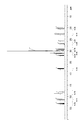
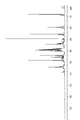
- 3 is a 13 C-NMR chart of isostearic acid A used in Examples. 3 is a 13 C-NMR chart of isostearic acid B used in Examples.
- the lubricating oil composition according to the present embodiment contains a hydrocarbon base oil and satisfies the conditions shown in the following (a) and (b).
- A When a 9: 1 volume ratio mixture of the lubricating oil composition and distilled water is shaken and then the mixture is allowed to stand, the mixture separates into an oil layer and an aqueous layer.
- B The COD of the aqueous layer is 50 mg / L or less.
- the hydrocarbon base oil is not particularly limited, and examples thereof include mineral oil base oil, wax decomposition base oil, synthetic base oil, or a mixture of two or more of these.
- Preferred synthetic base oils include poly ⁇ -olefins or hydrides thereof.
- the hydrocarbon base oil preferably contains 96% by mass or more, more preferably 99% by mass or more of poly ⁇ -olefin or a hydride thereof based on the total amount of the hydrocarbon base oil.
- hydrocarbon-based base oils waxes such as olefin oligomers, slack waxes, FT waxes and the like, base oils isomerized from them, base oils containing aromatic and / or unsaturated compounds such as terpene oil and crude oil distilled. It is also possible to use a base oil hydrogenated.
- the hydrocarbon base oil preferably has the following properties.
- the kinematic viscosity at 40 ° C. of the hydrocarbon base oil is preferably 10 mm 2 / s or more, more preferably 15 mm 2 / s or more, still more preferably 20 mm 2 / s or more, particularly preferably 30 mm 2 / s or more, and most preferably Is 50 mm 2 / s or more, preferably 800 mm 2 / s or less, more preferably 500 mm 2 / s or less, still more preferably 300 mm 2 / s or less, particularly preferably 200 mm 2 / s or less, most preferably 90 mm. 2 / s or less.
- the hydrocarbon base oil is preferably 2 mm 2 / s or more, more preferably 3 mm 2 / s or more, further preferably 4 mm 2 / s or more, particularly preferably 5 mm 2 / s or more, and most preferably.
- Is 8 mm 2 / s or more preferably 60 mm 2 / s or less, more preferably 50 mm 2 / s or less, still more preferably 35 mm 2 / s or less, particularly preferably 25 mm 2 / s or less, and most preferably 15 mm. 2 / s or less.
- the viscosity index of the hydrocarbon base oil is preferably 100 or more, more preferably 120 or more, still more preferably 130 or more, and preferably 160 or less, more preferably 155 or less.
- the viscosity index is equal to or higher than the lower limit, it is possible to suppress an increase in viscosity even when the ambient temperature is low when the leaked lubricating oil composition is recovered.
- the viscosity index is less than or equal to the upper limit value, it is possible to suppress crystallinity at low temperatures.
- the kinematic viscosity and viscosity index at 40 ° C. and 100 ° C. in the present invention mean values measured in accordance with JIS K2283 “Crude oil and petroleum products—Kinematic viscosity test method and viscosity index calculation method”, respectively.
- the distillation range of hydrocarbon base oil is 250 as the initial boiling point of the gas chromatography distillation test specified in JIS K2254 “Petroleum products-Distillation test method” from the viewpoint of keeping the vapor pressure of hydrocarbon base oil low. It is preferable that the temperature is higher than or equal to ° C, and more preferable that the temperature is higher than or equal to 300 ° C. Further, the 1% distillation point is preferably 350 ° C. or higher, and more preferably 400 ° C. or higher. It is also preferable to reduce a trace amount of light hydrocarbons that are not detected as initial boiling points in the gas chromatography distillation test. Therefore, when producing a hydrocarbon base oil, it is preferable to go through a distillation step with careful flushing, for example.
- the sulfur content of the hydrocarbon base oil is preferably 0.1% by mass (1000 ppm by mass) or less, more preferably 10% by mass or less, based on the total amount of the hydrocarbon base oil. More preferably, it is 1 mass ppm or less.
- the sulfur content in the present invention means a value measured according to JIS K2541 “Crude oil and petroleum products—Sulfur content test method”.
- the aromatic content of the hydrocarbon base oil is preferably 0.1% by mass or less, more preferably 0.01% by mass or less, based on the total amount of the hydrocarbon base oil, from the viewpoint of reducing the environmental load. is there.
- the aromatic content referred to in the present invention means a value measured in accordance with the fluorescent indicator adsorption method of JIS K2536 “Petroleum products—component test method”.
- the content of the hydrocarbon base oil is preferably 90% by mass or more, more preferably 95% by mass or more, still more preferably 98% by mass or more, and preferably 99.995 based on the total amount of the lubricating oil composition. It is 9 mass% or less, More preferably, it is 99.99 mass% or less, More preferably, it is 99.9 mass% or less.
- the lubricating oil composition according to this embodiment preferably further contains an oily agent from the viewpoint of reducing the friction coefficient.
- the oily agent include monovalent carboxylic acids typified by fatty acids, polyvalent carboxylic acids, monohydric alcohols, polyhydric alcohols, esters, and partial ester compounds of polyhydric alcohols.
- fatty acid, polyhydric alcohol, and partial ester compound of polyhydric alcohol are preferable, and fatty acid is more preferable.
- polyhydric alcohol examples include sorbitol, sorbitan, and trimethylolpropane.
- partial esters of polyhydric alcohols include polyhydric alcohols such as sorbitan, glycerin, and trimethylolpropane; fatty acids such as oleic acid, lauric acid, stearic acid, and isostearic acid; and naphthenic acid, dimer acid, sebacic acid, and phthalic acid. And partial esters with carboxylic acids such as
- the fatty acid As the fatty acid, a fatty acid having 14 to 22 carbon atoms is preferable, and a branched fatty acid having 14 to 22 carbon atoms is more preferable.
- the number of carbon atoms of the fatty acid is particularly preferably 16-20.
- the fatty acid is preferably a saturated fatty acid.
- Examples of fatty acids include oleic acid, isostearic acid, lauric acid, and stearic acid. Of these, isostearic acid is most preferred.
- the integrated value (peak area) of the peak intensity in the region where the chemical shift is 40 ppm or more is 15% of the total integrated value (peak area) of the peak intensity of all carbons.
- fatty acid is preferable, 10% or less is more preferable, 1% or less is further preferable, and 0.5% or less is particularly preferable.
- the reason why such a fatty acid is preferable is that the region having a chemical shift of 40 ppm or more is caused by a methine group and carbon adjacent to the methine group. ing.
- the ratio of the fatty acid in the oily agent is preferably 60 to 100% by mass, more preferably 85 to 100% by mass, and still more preferably 95 to 100% by mass based on the total amount of the oily agent.
- the content of the oily agent is preferably 0.005% by mass or more, more preferably 0.01% by mass or more, still more preferably 0.1% by mass or more, and particularly preferably 0.2% by mass based on the total amount of the lubricating oil composition. It is preferably at least 10.0 mass%, more preferably at most 5.0 mass%, even more preferably at most 2.0 mass%, particularly preferably at most 1.0 mass%.
- the lubricating oil composition may further contain an additive other than the oily agent as necessary.
- additives other than oily agents include antioxidants, rust inhibitors, corrosion inhibitors, pour point depressants, extreme pressure agents, metal deactivators, antifoaming agents, and cleaning dispersants.
- the content of additives other than the oily agent can be, for example, 1% by mass or less based on the total amount of the lubricating oil composition.
- the lubricating oil composition according to this embodiment satisfies the conditions shown in the following (a) and (b).
- (B) The COD of the aqueous layer is 50 mg / L or less.
- the lubricating oil composition according to the present embodiment satisfies the conditions shown in (a) above. That is, first, a 9: 1 volume ratio mixture of the lubricating oil composition and distilled water according to this embodiment is shaken. Shaking is performed at room temperature (25 ° C.) for 3 minutes at 1 stroke / second. The width of one stroke is in the range of 30 to 40 cm. The mixture is then allowed to stand for 6 hours at room temperature. Thereafter, the mixture separates into an oil layer and an aqueous layer.
- the separation of the mixture into an oil layer and an aqueous layer means that a clear aqueous layer equivalent to the amount of mixed distilled water appears in a range that can be visually confirmed.
- the separation of the mixture into an oil layer and an aqueous layer means that an emulsion of the lubricating oil composition and distilled water is not formed.
- that an emulsion is not formed means that an emulsified layer is 3/80 or less on the basis of the total amount in an anti-emulsification test performed in accordance with JIS K2250.
- the fact that the lubricating oil composition according to the present embodiment satisfies the conditions shown in (b) above is obtained by extracting the aqueous layer separated in (a) from the mixture and measuring the COD of the aqueous layer in accordance with JIS K0102-17. It is confirmed by doing.
- the COD of the aqueous layer is preferably 30 mg / L or less, more preferably 15 mg / L or less, and still more preferably 8 mg / L or less from the viewpoint of further reducing the environmental load.
- the sulfur content of the lubricating oil composition is 0.1 mass% (1000 mass ppm) or less, preferably 10 mass ppm or less, more preferably 1 mass ppm or less.
- the sulfur content in the present invention is measured by an ultraviolet fluorescence method defined in JIS K2541-6 “Sulfur content test method”.
- the metal element content of the lubricating oil composition is preferably 100 ppm by mass or less, more preferably 10 ppm by mass or less, from the viewpoint of reducing the environmental load.
- the metal element content in the present invention can be measured by, for example, inductively coupled plasma (ICP) emission spectroscopy, and the sample pretreatment is a solvent dilution method defined in JPI-5S-38-92. Etc. can be used.
- the lubricating oil composition according to this embodiment can be produced by mixing the above components.
- the removal of light hydrocarbons can be performed, for example, by mixing components such as a base oil and an oily agent and then stirring the mixture at a temperature of, for example, 80 ° C. or more for 3 hours or more.
- the light hydrocarbon content in the lubricating oil composition is preferably 100 mass ppm or less, more preferably 50 mass ppm or less, and even more preferably 25 mass ppm or less, based on the total amount of the lubricating oil composition.
- the light hydrocarbon content in the lubricating oil composition in the present invention is determined from the peak intensity derived from hydrocarbons having 10 or less carbon atoms in gas chromatography analysis defined in JIS K2254 “Petroleum products-distillation test method”. Calculated.
- the lubricating oil composition according to the present embodiment is suitably used as, for example, engine oil, drive system lubricating oil, grease, wet brake oil, hydraulic hydraulic oil, turbine oil, air compressor oil, hydrogen compressor oil, bearing oil, and the like. .
- Test oils 1 to 21 having the compositions shown in Tables 1 to 3 were prepared using the following hydrocarbon base oils and additives.
- A2 alkylnaphthalene
- A3 kinematic viscosity at 40 ° C. of 20.
- B3 oleic acid
- B4 sorbitan monooleate
- B5 glycerol monooleate
- B6 alkylated phenyl ⁇ naphthylamine
- B7 dialkylphenylamine
- B8 half ester of alkenyl succinic acid with aliphatic alcohol
- B9 polymethacrylate
- B10 tricresyl phosphate
- B11 Benzotriazole derivative
- B12 Polydimethylsilicone
- 13 C-NMR was measured by the following method.
- the measurement results for isostearic acid A and isostearic acid B are shown in FIGS. 1 and 2, respectively.
- Apparatus name Varian-NMR system 500, resonance frequency: 125.76 MHz, solvent: deuterated chloroform, measurement temperature: room temperature (25 ° C.), repetition time: 2 sec, integration number: 1024 times, probe: diameter 5 mm
Landscapes
- Chemical & Material Sciences (AREA)
- Chemical Kinetics & Catalysis (AREA)
- General Chemical & Material Sciences (AREA)
- Oil, Petroleum & Natural Gas (AREA)
- Organic Chemistry (AREA)
- Lubricants (AREA)
Abstract
本発明は、炭化水素系基油を含有し、下記(a)及び(b)に示す条件を満たす潤滑油組成物を提供する。 (a)前記潤滑油組成物と蒸留水との体積比9:1の混合物を振とうし、次いで該混合物を静置すると、該混合物が油層と水層とに分離する。 (b)前記水層のCODが50mg/L以下である。
Description
本発明は、潤滑油組成物に関する。
潤滑油組成物は、要求される特性に応じて組み合わされた潤滑油基油及び添加剤を含有している(例えば特許文献1~5参照)。
ところで、従来の潤滑油組成物には、環境負荷の低減という観点で改善の余地がある。この点について、従来の潤滑油組成物は、潤滑油組成物の漏洩を防止するための対策が十分になされた工場等の設備内で用いられてきたが、近時、居住地域においても潤滑油組成物が使用されつつある(例えばサービスステーションでの潤滑油組成物の使用)。居住地域においては、潤滑油組成物の漏洩を防止するための対策が必ずしも十分になされておらず、また、その対策を十分に講ずることは現実的に困難である。
本発明は、上記の課題に鑑みてなされたものであり、環境負荷が低減された潤滑油組成物を提供することを目的とする。
本発明は、炭化水素系基油を含有し、下記(a)及び(b)に示す条件を満たす潤滑油組成物を提供する。
(a)潤滑油組成物と蒸留水との体積比9:1の混合物を振とうし、次いで混合物を静置すると、混合物が油層と水層とに分離する。
(b)水層のCODが50mg/L以下である。
(a)潤滑油組成物と蒸留水との体積比9:1の混合物を振とうし、次いで混合物を静置すると、混合物が油層と水層とに分離する。
(b)水層のCODが50mg/L以下である。
ここで、本発明における「COD」とは、JIS K0102 17に準拠して測定される化学的酸素要求量(Chemical Oxygen Demand)を意味する。具体的には、試料を硫酸酸性とし、過マンガン酸カリウムで30分間反応させた際に消費した過マンガン酸カリウム量を求め、当該過マンガン酸カリウム量に相当する酸素量をCODとする。
本発明に係る潤滑油組成物においては、仮に潤滑油組成物が漏洩して雨水等と接触した場合でも、潤滑油組成物と水とは互いに分離する上に、潤滑油組成物中の成分が水に混入しにくい。そのため、潤滑油組成物が河川や海洋に拡散することを抑制でき、環境負荷を低減できる。
潤滑油組成物は、油性剤を更に含有することが好ましい。油性剤は、脂肪酸を含有することが好ましい。油性剤の含有量は、潤滑油組成物全量基準で1.0質量%以下であることが好ましい。
炭化水素系基油は、JIS K2254で規定されるガスクロマトグラフィー蒸留試験において、250℃以上の初留点を与えることが好ましい。炭化水素系基油は、ポリα-オレフィンを含有することが好ましい。
本発明によれば、環境負荷が低減された潤滑油組成物を提供することができる。
以下、本発明の好適な実施形態について詳細に説明する。
本実施形態に係る潤滑油組成物は、炭化水素系基油を含有し、下記(a)及び(b)に示す条件を満たす。
(a)潤滑油組成物と蒸留水との体積比9:1の混合物を振とうし、次いで混合物を静置すると、混合物が油層と水層とに分離する。
(b)水層のCODが50mg/L以下である。炭化水素系基油を含有する潤滑油組成物であって、該潤滑油組成物と蒸留水との体積比9:1の混合物を振とうしたときに、混合物が油層と水層とに分離し、水層のCODが50mg/L以下となる。
(a)潤滑油組成物と蒸留水との体積比9:1の混合物を振とうし、次いで混合物を静置すると、混合物が油層と水層とに分離する。
(b)水層のCODが50mg/L以下である。炭化水素系基油を含有する潤滑油組成物であって、該潤滑油組成物と蒸留水との体積比9:1の混合物を振とうしたときに、混合物が油層と水層とに分離し、水層のCODが50mg/L以下となる。
炭化水素系基油としては、特に制限されず、例えば、鉱油系基油、ワックス分解系基油、合成系基油、又はこれらの2種以上の混合油を挙げることができる。好ましい合成系基油としては、ポリα-オレフィン又はその水素化物を挙げられる。炭化水素系基油は、ポリα-オレフィン又はその水素化物を、炭化水素系基油全量基準で、好ましくは96質量%以上、より好ましくは99質量%以上含有する。炭化水素系基油として、オレフィンオリゴマー、スラックワックス、FTワックスなどのワックス類及びこれを異性化した基油、芳香族及び/又は不飽和化合物を含む基油、例えばテルペン油や原油を蒸留した留分を水素化した基油を用いることもできる。炭化水素系基油は、以下の性状を有することが好ましい。
炭化水素系基油の40℃における動粘度は、好ましくは10mm2/s以上、より好ましくは15mm2/s以上、更に好ましくは20mm2/s以上、特に好ましくは30mm2/s以上、最も好ましくは50mm2/s以上であり、また、好ましくは800mm2/s以下、より好ましくは500mm2/s以下、更に好ましくは300mm2/s以下、特に好ましくは200mm2/s以下、最も好ましくは90mm2/s以下である。炭化水素系基油の100℃における動粘度は、好ましくは2mm2/s以上、より好ましくは3mm2/s以上、更に好ましくは4mm2/s以上、特に好ましくは5mm2/s以上、最も好ましくは8mm2/s以上であり、また、好ましくは60mm2/s以下、より好ましくは50mm2/s以下、更に好ましくは35mm2/s以下、特に好ましくは25mm2/s以下、最も好ましくは15mm2/s以下である。炭化水素系基油の動粘度がこの範囲であると、有効な潤滑油膜を確保しつつ、漏洩時の洗浄性を両立できる。
炭化水素系基油の粘度指数は、好ましくは100以上、より好ましくは120以上、更に好ましくは130以上であり、また、好ましくは160以下、より好ましくは155以下である。粘度指数が下限値以上であると、漏洩した潤滑油組成物の回収時に周囲温度が低い場合でも高粘度化を抑制できる。粘度指数が上限値以下であると、低温時に結晶性を帯びることを抑制できる。
本発明における40℃及び100℃における動粘度並びに粘度指数は、それぞれJIS K2283「原油及び石油製品-動粘度試験方法及び粘度指数算出方法」に準拠して測定される値を意味する。
炭化水素系基油の蒸留範囲は、炭化水素系基油の蒸気圧を低く抑える観点から、JIS K2254「石油製品-蒸留試験方法」で規定されるガスクロマトグラフィー蒸留試験の初留点として、250℃以上であることが好ましく、300℃以上であることがより好ましい。また、1%留出点として、350℃以上であることが好ましく、400℃以上であることがより好ましい。ガスクロマトグラフィー蒸留試験では初留点として検出されない微量の軽質炭化水素についても、低減することが好ましい。したがって、炭化水素系基油を製造する際には、例えば入念なフラッシングを伴う蒸留工程を経ることが好ましい。
炭化水素系基油の硫黄分は、菌類の栄養素を低減する観点から、炭化水素系基油全量を基準として、好ましくは0.1質量%(1000質量ppm)以下、より好ましくは10質量ppm以下、更に好ましくは1質量ppm以下である。本発明でいう硫黄分とは、JIS K2541「原油及び石油製品-硫黄分試験方法」により測定された値を意味する。
炭化水素系基油の芳香族含有量は、環境負荷低減の観点から、炭化水素系基油全量を基準として、好ましくは0.1質量%以下であり、より好ましくは0.01質量%以下である。本発明でいう芳香族含有量とは、JIS K2536「石油製品-成分試験方法」の蛍光指示薬吸着法に準拠して測定された値を意味する。
炭化水素系基油の含有量は、潤滑油組成物全量基準で、好ましくは90質量%以上、より好ましくは95質量%以上、更に好ましくは98質量%以上であり、また、好ましくは99.995質量%以下、より好ましくは99.99質量%以下、更に好ましくは99.9質量%以下である。
本実施形態に係る潤滑油組成物は、摩擦係数を低減できる観点から、油性剤を更に含有することが好ましい。かかる油性剤としては、例えば脂肪酸に代表される1価カルボン酸、多価カルボン酸、1価アルコール、多価アルコール、エステル、多価アルコールの部分エステル化合物が挙げられる。これらの中でも、環境負荷をより低減できる観点から、脂肪酸、多価アルコール及び多価アルコールの部分エステル化合物が好ましく、脂肪酸がより好ましい。
多価アルコールとしては、ソルビトール、ソルビタン、トリメチロールプロパンが例示される。
多価アルコールの部分エステルとしては、ソルビタン、グリセリン、トリメチロールプロパン等の多価アルコールと、オレイン酸、ラウリン酸、ステアリン酸、イソステアリン酸等の脂肪酸や、ナフテン酸、ダイマー酸、セバシン酸、フタル酸などのカルボン酸との部分エステルが例示される。
脂肪酸としては、炭素数14~22の脂肪酸が好ましく、炭素数14~22の分岐脂肪酸がより好ましい。脂肪酸の炭素数は、16~20であることが特に好ましい。脂肪酸は、飽和脂肪酸であることが好ましい。脂肪酸としては、オレイン酸、イソステアリン酸、ラウリン酸、ステアリン酸が例示される。その中でも、イソステアリン酸が最も好ましい。分岐脂肪酸の中でも、13C-NMR分析において、化学シフト40ppm以上の領域におけるピーク強度の積分値(ピーク面積)が、全炭素のピーク強度の積分値(ピーク面積)の合計に対して、15%以下が好ましく、10%以下がより好ましく、1%以下が更に好ましく、0.5%以下が特に好ましい。このような脂肪酸が好ましい理由としては、化学シフト40ppm以上の領域はメチン基及びメチン基に隣接する炭素に起因することから、分岐の程度が適切な分岐脂肪酸が好ましいためと、発明者は予想している。
油性剤に占める脂肪酸の割合は、油性剤全量基準で、好ましくは60~100質量%であり、より好ましくは85~100質量%であり、更に好ましくは95~100質量%である。
油性剤の含有量は、潤滑油組成物全量基準で、好ましくは0.005質量%以上、より好ましくは0.01質量%以上、更に好ましくは0.1質量%以上、特に好ましくは0.2質量%以上であり、また、好ましくは10.0質量%以下、より好ましくは5.0質量%以下、更に好ましくは2.0質量%以下、特に好ましくは1.0質量%以下である。
潤滑油組成物は、必要に応じて油性剤以外の添加剤を更に含有してもよい。油性剤以外の添加剤としては、酸化防止剤、さび止め剤、腐食防止剤、流動点降下剤、極圧剤、金属不活性剤、消泡剤、清浄分散剤などが例示される。油性剤以外の添加剤の含有量は、例えば潤滑油組成物全量基準で1質量%以下とすることができる。
本実施形態に係る潤滑油組成物は、下記(a)及び(b)に示す条件を満たす。
(a)潤滑油組成物と蒸留水との体積比9:1の混合物を振とうし、次いで混合物を静置すると、混合物が油層と水層とに分離する。
(b)水層のCODが50mg/L以下である。
(a)潤滑油組成物と蒸留水との体積比9:1の混合物を振とうし、次いで混合物を静置すると、混合物が油層と水層とに分離する。
(b)水層のCODが50mg/L以下である。
本実施形態に係る潤滑油組成物が上記(a)に示す条件を満たすことは、より具体的には、以下のように確認される。すなわち、まず、本実施形態に係る潤滑油組成物と蒸留水との体積比9:1の混合物を振とうする。振とうは、室温(25℃)にて、3分間、1ストローク/秒にて行う。1ストロークの幅は、30~40cmの範囲内とする。次いで、混合物を室温にて6時間静置する。その後、混合物が油層と水層に分離する。
ここで、混合物が油層と水層とに分離するとは、混合した蒸留水の量と等量のクリアーな水層が目視で確認できる範囲で現れることを意味する。換言すれば、混合物が油層と水層に分離するとは、潤滑油組成物と蒸留水とのエマルションが形成されないことを意味する。なお、エマルションが形成されないとは、JIS K2250に準拠して行う抗乳化試験において、乳化層が全量基準で3/80以下となることを意味する。
本実施形態に係る潤滑油組成物が上記(b)に示す条件を満たすことは、上記(a)で分離した水層を混合物から抽出し、水層のCODをJIS K0102 17に準拠して測定することにより確認される。水層のCODは、環境負荷をより低減できる観点から、30mg/L以下であることが好ましく、15mg/L以下であることがより好ましく、8mg/L以下であることが更に好ましい。
潤滑油組成物の硫黄分は、0.1質量%(1000質量ppm)以下であり、好ましくは10質量ppm以下であり、より好ましくは1質量ppm以下である。本発明における硫黄分は、JIS K2541-6「硫黄分試験方法」で規定される紫外蛍光法によって測定される。
潤滑油組成物の金属元素含有量は、環境負荷低減の観点から、好ましくは100質量ppm以下であり、より好ましくは10質量ppm以下である。本発明における金属元素含有量は、例えば、誘導結合プラズマ(ICP)発光分光などより測定することができ、その試料の前処理としては、JPI-5S-38-92にて規定される溶剤希釈法などを利用することができる。
本実施形態に係る潤滑油組成物は、上記の成分を混合することによって製造することができる。ここで、潤滑油組成物の調製工程においては、炭化水素系基油の蒸気圧を低く抑える観点から、軽質炭化水素を除去することが好ましい。軽質炭化水素の除去は、例えば、基油、油性剤等の成分を混合した後、その混合物を、例えば80℃以上の温度で3時間以上撹拌することによって行うことができる。あるいは、窒素又はドライエアーでのバブリングを行うことが好ましく、80℃以上の温度で3時間以上の窒素バブリングを行うことがより好ましい。
潤滑油組成物中の軽質炭化水素含有量は、潤滑油組成物全量基準で、100質量ppm以下であることが好ましく、50質量ppm以下がより好ましく、25質量ppm以下であることが更に好ましい。本発明における潤滑油組成物中の軽質炭化水素含有量は、JIS K2254「石油製品-蒸留試験方法」で規定されるガスクロマトグラフィー分析にて、炭素数10以下の炭化水素に由来するピーク強度から算出される。
本実施形態に係る潤滑油組成物は、例えばエンジン油、駆動系用潤滑油、グリース、湿式ブレーキ油、油圧作動油、タービン油、空気圧縮機油、水素圧縮機油、軸受け油などとして好適に用いられる。
以下、実施例によって本発明をより具体的に説明するが、本発明は以下の実施例に限定されるものではない。
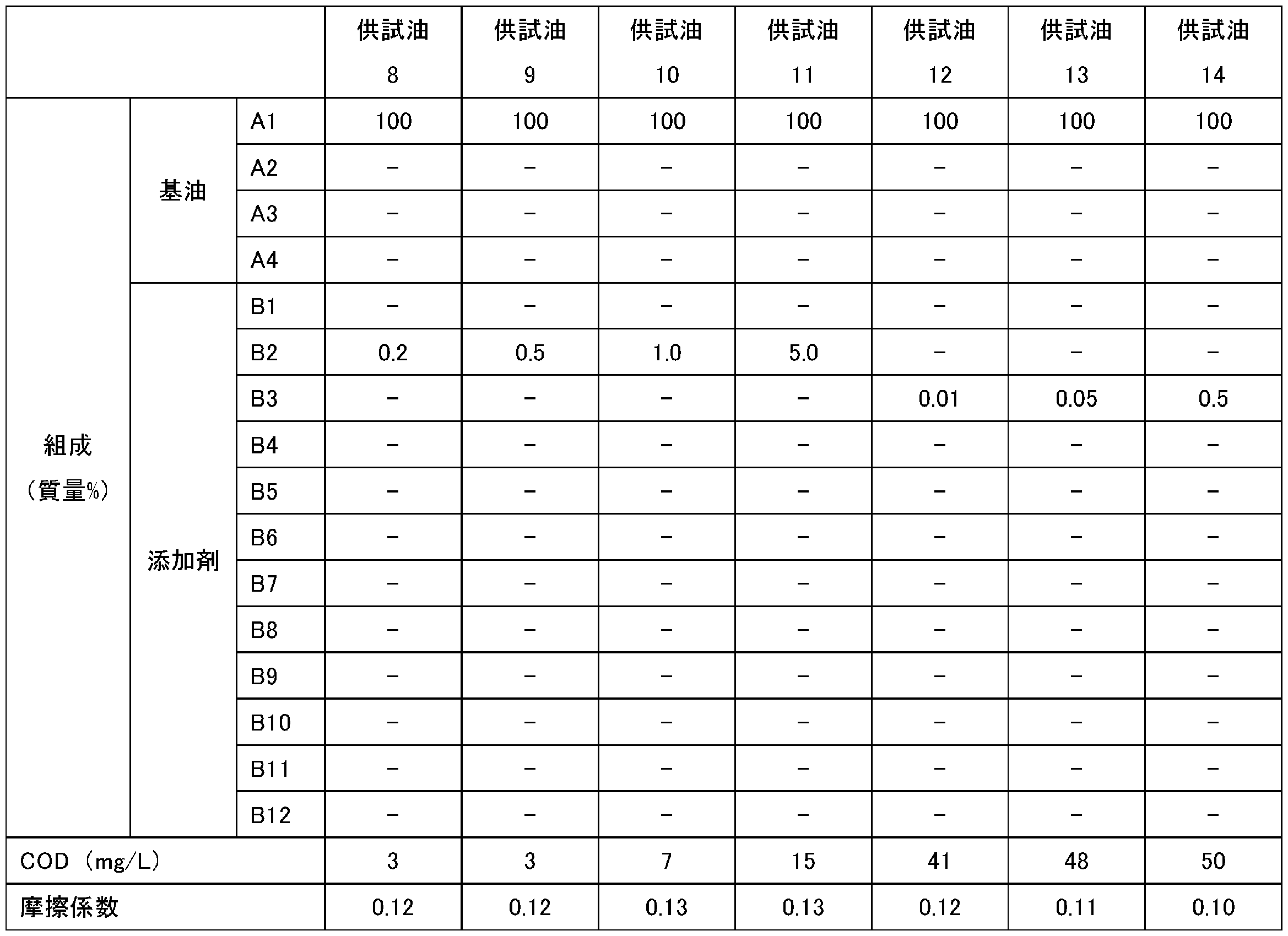
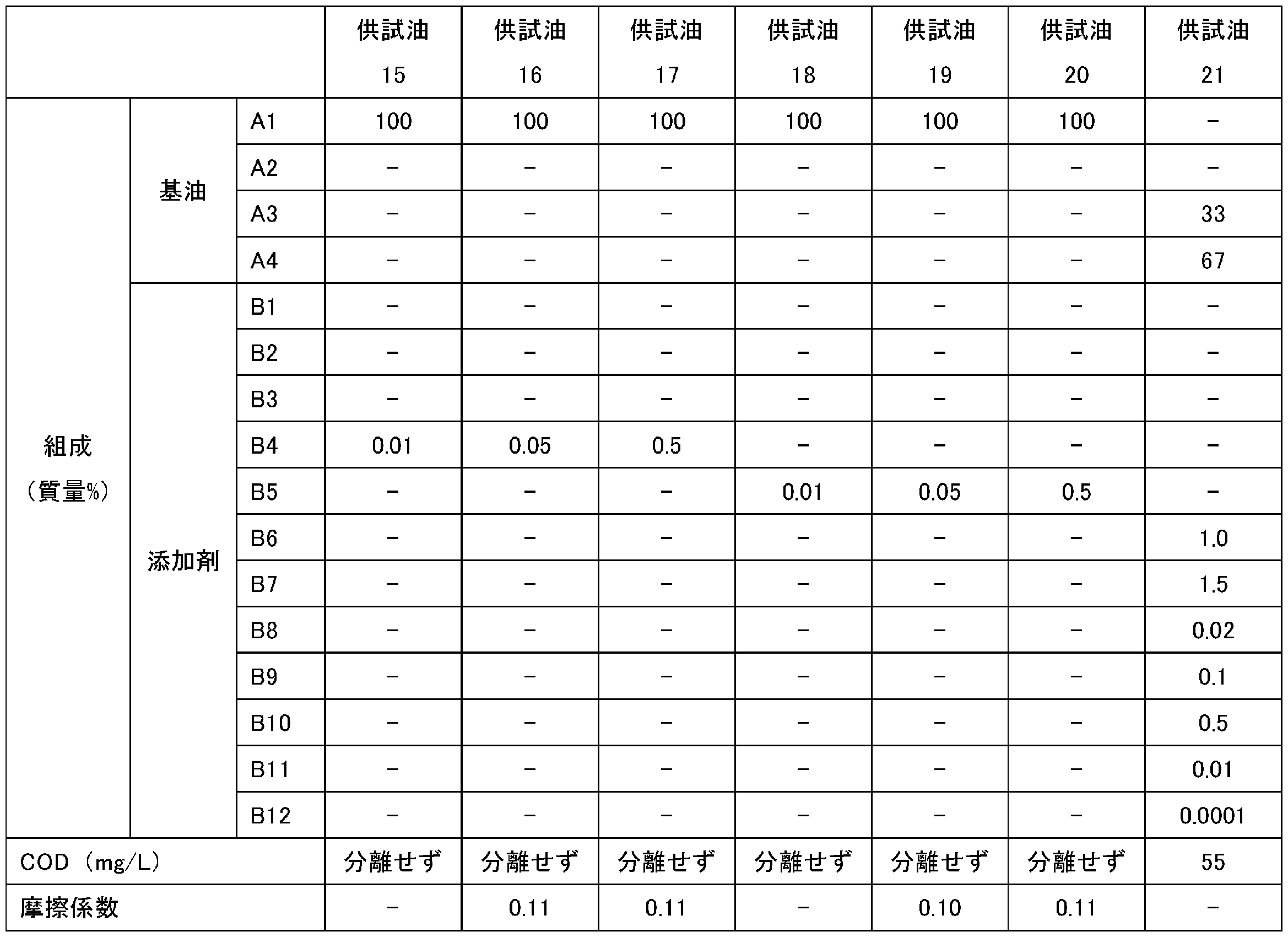
以下に示す炭化水素系基油及び添加剤を用いて、表1~3に示す組成を有する供試油1~21を調製した。
(炭化水素系基油)
A1:デセン誘導体で、40℃動粘度が63mm2/s、100℃動粘度が9.6mm2/s、粘度指数が134のポリα-オレフィン
A2:アルキルナフタレン
A3:40℃動粘度が20.3mm2/s、粘度指数が121、初留点が324℃の水素化分解系の鉱油
A4:40℃動粘度が37.5mm2/s、粘度指数が129、初留点が324℃の水素化分解系の鉱油
(添加剤)
B1:イソステアリン酸A(日産化学工業(株)製品)
B2:イソステアリン酸B(クローダジャパン(株)Prisorine 3503)
B3:オレイン酸
B4:ソルビタンモノオレート
B5:グリセリンモノオレート
B6:アルキル化フェニルαナフチルアミン
B7:ジアルキルフェニルアミン
B8:アルケニルコハク酸の脂肪族アルコールとのハーフエステル
B9:ポリメタクリレート
B10:トリクレジルフォスフェート
B11:ベンゾトリアゾール誘導体
B12:ポリジメチルシリコーン
(炭化水素系基油)
A1:デセン誘導体で、40℃動粘度が63mm2/s、100℃動粘度が9.6mm2/s、粘度指数が134のポリα-オレフィン
A2:アルキルナフタレン
A3:40℃動粘度が20.3mm2/s、粘度指数が121、初留点が324℃の水素化分解系の鉱油
A4:40℃動粘度が37.5mm2/s、粘度指数が129、初留点が324℃の水素化分解系の鉱油
(添加剤)
B1:イソステアリン酸A(日産化学工業(株)製品)
B2:イソステアリン酸B(クローダジャパン(株)Prisorine 3503)
B3:オレイン酸
B4:ソルビタンモノオレート
B5:グリセリンモノオレート
B6:アルキル化フェニルαナフチルアミン
B7:ジアルキルフェニルアミン
B8:アルケニルコハク酸の脂肪族アルコールとのハーフエステル
B9:ポリメタクリレート
B10:トリクレジルフォスフェート
B11:ベンゾトリアゾール誘導体
B12:ポリジメチルシリコーン
なお、イソステアリン酸A及びイソステアリン酸Bについては、以下の方法で13C-NMRを測定した。イソステアリン酸A及びイソステアリン酸Bについての測定結果を、それぞれ図1及び2に示す。
装置名:Varian-NMR system 500、共鳴周波数:125.76MHz、溶媒:重クロロホルム、測定温度:室温(25℃)、繰返時間:2sec、積算回数:1024回、プローブ:直径5mm
装置名:Varian-NMR system 500、共鳴周波数:125.76MHz、溶媒:重クロロホルム、測定温度:室温(25℃)、繰返時間:2sec、積算回数:1024回、プローブ:直径5mm
供試油1~21について、以下の手順でCODを測定した。また、供試油5~14,16~17及び19~20について、以下の手順で摩擦係数を測定した。結果を表1~3に示す。
(CODの評価)
まず、供試油900mLと蒸留水100mLとの混合物を分液ろうとに入れ、室温にて、3分間振とうした。次いで、混合物を室温にて6時間静置した。その後、分離した水層を混合物から抽出し、水層のCODをJIS K0102 17に準拠して測定した。なお、供試油と蒸留水とが分離しなかった試料については、CODの測定を行わず、表1~3においては「分離せず」と記した。
まず、供試油900mLと蒸留水100mLとの混合物を分液ろうとに入れ、室温にて、3分間振とうした。次いで、混合物を室温にて6時間静置した。その後、分離した水層を混合物から抽出し、水層のCODをJIS K0102 17に準拠して測定した。なお、供試油と蒸留水とが分離しなかった試料については、CODの測定を行わず、表1~3においては「分離せず」と記した。
(摩擦係数の評価)
摩擦係数の評価は、「曽田範宗 航空研究所報告(No.279、1943)」に規定される方法に準拠して行った。
摩擦係数の評価は、「曽田範宗 航空研究所報告(No.279、1943)」に規定される方法に準拠して行った。

Claims (6)
- 炭化水素系基油を含有し、下記(a)及び(b)に示す条件を満たす潤滑油組成物。
(a)前記潤滑油組成物と蒸留水との体積比9:1の混合物を振とうし、次いで該混合物を静置すると、該混合物が油層と水層とに分離する。
(b)前記水層のCODが50mg/L以下である。 - 油性剤を更に含有する、請求項1に記載の潤滑油組成物。
- 前記油性剤が脂肪酸を含有する、請求項2に記載の潤滑油組成物。
- 前記油性剤の含有量が、前記潤滑油組成物全量基準で1.0質量%以下である、請求項2又は3に記載の潤滑油組成物。
- 前記炭化水素系基油が、JIS K2254で規定されるガスクロマトグラフィー蒸留試験において、250℃以上の初留点を与える、請求項1~4のいずれか一項に記載の潤滑油組成物。
- 前記炭化水素系基油がポリα-オレフィンを含有する、請求項1~5のいずれか一項に記載の潤滑油組成物。
Applications Claiming Priority (2)
| Application Number | Priority Date | Filing Date | Title |
|---|---|---|---|
| JP2014-047642 | 2014-03-11 | ||
| JP2014047642A JP6207432B2 (ja) | 2014-03-11 | 2014-03-11 | 潤滑油組成物 |
Publications (1)
| Publication Number | Publication Date |
|---|---|
| WO2015137252A1 true WO2015137252A1 (ja) | 2015-09-17 |
Family
ID=54071698
Family Applications (1)
| Application Number | Title | Priority Date | Filing Date |
|---|---|---|---|
| PCT/JP2015/056673 Ceased WO2015137252A1 (ja) | 2014-03-11 | 2015-03-06 | 潤滑油組成物 |
Country Status (2)
| Country | Link |
|---|---|
| JP (1) | JP6207432B2 (ja) |
| WO (1) | WO2015137252A1 (ja) |
Cited By (2)
| Publication number | Priority date | Publication date | Assignee | Title |
|---|---|---|---|---|
| CN106433936A (zh) * | 2016-09-22 | 2017-02-22 | 浙江海洋大学 | 一种长寿命喷油回转式空气压缩机油组合物 |
| CN106433937A (zh) * | 2016-09-22 | 2017-02-22 | 浙江海洋大学 | 一种全合成daj重负荷螺杆式空气压缩机油组合物 |
Citations (6)
| Publication number | Priority date | Publication date | Assignee | Title |
|---|---|---|---|---|
| JPS5183606A (ja) * | 1975-01-20 | 1976-07-22 | Mitsubishi Oil Co | Teikogaikogyoyojunkatsuyusoseibutsu |
| JPH07502296A (ja) * | 1991-12-18 | 1995-03-09 | エクソン リサーチ アンド エンジニアリング カンパニー | 錆の生成を抑制するための潤滑油 |
| JP2006176760A (ja) * | 2004-11-26 | 2006-07-06 | Mitsui Chemicals Inc | 合成潤滑油および潤滑油組成物 |
| US20080274921A1 (en) * | 2007-05-04 | 2008-11-06 | Ian Macpherson | Environmentally-Friendly Lubricant Compositions |
| JP2013087220A (ja) * | 2011-10-19 | 2013-05-13 | Cosmo Oil Lubricants Co Ltd | 水系潤滑液組成物 |
| JP2013209604A (ja) * | 2012-03-30 | 2013-10-10 | Jx Nippon Oil & Energy Corp | 潤滑油基油の製造方法 |
Family Cites Families (1)
| Publication number | Priority date | Publication date | Assignee | Title |
|---|---|---|---|---|
| JP3529069B2 (ja) * | 1995-11-29 | 2004-05-24 | 出光興産株式会社 | 金属加工油組成物 |
-
2014
- 2014-03-11 JP JP2014047642A patent/JP6207432B2/ja active Active
-
2015
- 2015-03-06 WO PCT/JP2015/056673 patent/WO2015137252A1/ja not_active Ceased
Patent Citations (6)
| Publication number | Priority date | Publication date | Assignee | Title |
|---|---|---|---|---|
| JPS5183606A (ja) * | 1975-01-20 | 1976-07-22 | Mitsubishi Oil Co | Teikogaikogyoyojunkatsuyusoseibutsu |
| JPH07502296A (ja) * | 1991-12-18 | 1995-03-09 | エクソン リサーチ アンド エンジニアリング カンパニー | 錆の生成を抑制するための潤滑油 |
| JP2006176760A (ja) * | 2004-11-26 | 2006-07-06 | Mitsui Chemicals Inc | 合成潤滑油および潤滑油組成物 |
| US20080274921A1 (en) * | 2007-05-04 | 2008-11-06 | Ian Macpherson | Environmentally-Friendly Lubricant Compositions |
| JP2013087220A (ja) * | 2011-10-19 | 2013-05-13 | Cosmo Oil Lubricants Co Ltd | 水系潤滑液組成物 |
| JP2013209604A (ja) * | 2012-03-30 | 2013-10-10 | Jx Nippon Oil & Energy Corp | 潤滑油基油の製造方法 |
Cited By (2)
| Publication number | Priority date | Publication date | Assignee | Title |
|---|---|---|---|---|
| CN106433936A (zh) * | 2016-09-22 | 2017-02-22 | 浙江海洋大学 | 一种长寿命喷油回转式空气压缩机油组合物 |
| CN106433937A (zh) * | 2016-09-22 | 2017-02-22 | 浙江海洋大学 | 一种全合成daj重负荷螺杆式空气压缩机油组合物 |
Also Published As
| Publication number | Publication date |
|---|---|
| JP6207432B2 (ja) | 2017-10-04 |
| JP2015172115A (ja) | 2015-10-01 |
Similar Documents
| Publication | Publication Date | Title |
|---|---|---|
| JP5363565B2 (ja) | ギアオイル組成物、その製造方法及び使用方法 | |
| Bisht et al. | Additive properties of jojoba oil for lubricating oil formulations | |
| CA2838272C (en) | Turbine oil comprising a di -or tri-ester component | |
| WO2011030615A1 (ja) | さび止め油組成物 | |
| CN101578354A (zh) | 用于高度链烷属润滑基础油的防锈剂 | |
| RU2016135773A (ru) | Разветвленные сложные диэфиры для использования в качестве базового компонента и в качестве смазки | |
| CA2642697C (en) | Fuel additive composition to improve fuel lubricity | |
| RU2011152232A (ru) | Жидкости для прокатки | |
| CN106574206A (zh) | 具有改进的相容性的合成工业润滑剂 | |
| US20130029893A1 (en) | Process for Preparing a Turbine Oil Comprising an Ester Component | |
| CN106574201B (zh) | 用于防止和除去内燃机中的碳沉积物的润滑剂 | |
| JP6207432B2 (ja) | 潤滑油組成物 | |
| JP6721377B2 (ja) | 潤滑油組成物 | |
| RU2013132920A (ru) | Смазывающая композиция | |
| RU2683646C2 (ru) | Композиция смазочного масла | |
| JP5430980B2 (ja) | グリース基油 | |
| WO2015146665A1 (ja) | 潤滑油組成物 | |
| JP2008214380A (ja) | 潤滑油基油 | |
| Perez et al. | 22 Natural Oils as Lubricants | |
| WO2014208750A1 (ja) | 圧縮機油、圧縮機油の製造方法、水素の圧縮方法、発電方法及び水素の供給方法 | |
| JP6152366B2 (ja) | 圧縮機油 | |
| JP6126377B2 (ja) | 油類又は油類組成物の引火点向上方法及び引火点向上油性組成物 | |
| CA2910832A1 (en) | Diester-based base oil blends with improved cold flow properties and low noack | |
| Kumar et al. | Type of base oils used in lubricant formulation and their application scenarios | |
| KR20250006850A (ko) | 양친매성 아민 및 양친매성 산을 포함하는 윤활제의 증가된 전기 전도도 |
Legal Events
| Date | Code | Title | Description |
|---|---|---|---|
| 121 | Ep: the epo has been informed by wipo that ep was designated in this application |
Ref document number: 15760802 Country of ref document: EP Kind code of ref document: A1 |
|
| NENP | Non-entry into the national phase |
Ref country code: DE |
|
| 122 | Ep: pct application non-entry in european phase |
Ref document number: 15760802 Country of ref document: EP Kind code of ref document: A1 |