WO2015137192A1 - 無機ナノ粒子分散液およびその製造方法 - Google Patents
無機ナノ粒子分散液およびその製造方法 Download PDFInfo
- Publication number
- WO2015137192A1 WO2015137192A1 PCT/JP2015/056186 JP2015056186W WO2015137192A1 WO 2015137192 A1 WO2015137192 A1 WO 2015137192A1 JP 2015056186 W JP2015056186 W JP 2015056186W WO 2015137192 A1 WO2015137192 A1 WO 2015137192A1
- Authority
- WO
- WIPO (PCT)
- Prior art keywords
- inorganic
- nanoparticle dispersion
- cyclic lipopeptide
- inorganic nanoparticle
- mass
- Prior art date
- Legal status (The legal status is an assumption and is not a legal conclusion. Google has not performed a legal analysis and makes no representation as to the accuracy of the status listed.)
- Ceased
Links
- 0 *C(CC(NC(CCC(O)=O)C([*-][*-]I*NC1CC(O)=O)=O)=O)O*[*-]C1=O Chemical compound *C(CC(NC(CCC(O)=O)C([*-][*-]I*NC1CC(O)=O)=O)=O)O*[*-]C1=O 0.000 description 1
Classifications
-
- C—CHEMISTRY; METALLURGY
- C01—INORGANIC CHEMISTRY
- C01B—NON-METALLIC ELEMENTS; COMPOUNDS THEREOF; METALLOIDS OR COMPOUNDS THEREOF NOT COVERED BY SUBCLASS C01C
- C01B13/00—Oxygen; Ozone; Oxides or hydroxides in general
- C01B13/14—Methods for preparing oxides or hydroxides in general
- C01B13/145—After-treatment of oxides or hydroxides, e.g. pulverising, drying, decreasing the acidity
-
- C—CHEMISTRY; METALLURGY
- C01—INORGANIC CHEMISTRY
- C01B—NON-METALLIC ELEMENTS; COMPOUNDS THEREOF; METALLOIDS OR COMPOUNDS THEREOF NOT COVERED BY SUBCLASS C01C
- C01B32/00—Carbon; Compounds thereof
- C01B32/15—Nano-sized carbon materials
- C01B32/158—Carbon nanotubes
- C01B32/168—After-treatment
- C01B32/174—Derivatisation; Solubilisation; Dispersion in solvents
-
- C—CHEMISTRY; METALLURGY
- C09—DYES; PAINTS; POLISHES; NATURAL RESINS; ADHESIVES; COMPOSITIONS NOT OTHERWISE PROVIDED FOR; APPLICATIONS OF MATERIALS NOT OTHERWISE PROVIDED FOR
- C09K—MATERIALS FOR MISCELLANEOUS APPLICATIONS, NOT PROVIDED FOR ELSEWHERE
- C09K23/00—Use of substances as emulsifying, wetting, dispersing, or foam-producing agents
- C09K23/002—Inorganic compounds
-
- C—CHEMISTRY; METALLURGY
- C09—DYES; PAINTS; POLISHES; NATURAL RESINS; ADHESIVES; COMPOSITIONS NOT OTHERWISE PROVIDED FOR; APPLICATIONS OF MATERIALS NOT OTHERWISE PROVIDED FOR
- C09K—MATERIALS FOR MISCELLANEOUS APPLICATIONS, NOT PROVIDED FOR ELSEWHERE
- C09K23/00—Use of substances as emulsifying, wetting, dispersing, or foam-producing agents
- C09K23/16—Amines or polyamines
-
- C—CHEMISTRY; METALLURGY
- C09—DYES; PAINTS; POLISHES; NATURAL RESINS; ADHESIVES; COMPOSITIONS NOT OTHERWISE PROVIDED FOR; APPLICATIONS OF MATERIALS NOT OTHERWISE PROVIDED FOR
- C09K—MATERIALS FOR MISCELLANEOUS APPLICATIONS, NOT PROVIDED FOR ELSEWHERE
- C09K23/00—Use of substances as emulsifying, wetting, dispersing, or foam-producing agents
- C09K23/30—Proteins; Protein hydrolysates
-
- B—PERFORMING OPERATIONS; TRANSPORTING
- B82—NANOTECHNOLOGY
- B82Y—SPECIFIC USES OR APPLICATIONS OF NANOSTRUCTURES; MEASUREMENT OR ANALYSIS OF NANOSTRUCTURES; MANUFACTURE OR TREATMENT OF NANOSTRUCTURES
- B82Y30/00—Nanotechnology for materials or surface science, e.g. nanocomposites
Definitions
- the present invention relates to an inorganic nanoparticle dispersion in which the amount of surfactant is reduced or inorganic nanoparticles are dispersed with good dispersion stability and a method for producing the same.
- a surfactant In order to disperse inorganic fine particles in a solvent or to disperse one of incompatible materials such as water and oil in the other, a surfactant is generally used. However, particularly when solid inorganic fine particles are dispersed in a solvent, the inorganic fine particles may settle during storage. Accordingly, as such a surfactant, a surfactant having a high surface activity is preferable in order to ensure the stability of the dispersion.
- a so-called synthetic surfactant is used rather than a natural soap component such as a long-chain fatty acid salt in view of its high surfactant activity and production cost.
- an anionic surfactant is used together with a water-soluble polymer in order to disperse carbon nanotubes in water.
- urea and a surfactant such as an alkyl sulfate ester salt are used in combination for the same purpose.
- an anionic surfactant having a specific substituent is used for the same purpose.
- a surfactant having an aromatic group is used for the same purpose.
- a synthetic surfactant having a high surface activating effect is mainly used as the dispersant for inorganic fine particles.
- synthetic surfactants adversely affect the living body and the environment, so the amount to be used should be kept as low as possible.
- an object of the present invention is to provide an inorganic nanoparticle dispersion in which the amount of the surfactant is reduced or the inorganic nanoparticles are dispersed with good stable dispersibility and a method for producing the same.
- the inventors of the present invention have made extensive studies to solve the above problems. As a result, since the cyclic lipopeptide biosurfactant particularly improves the dispersibility of the inorganic nanoparticles, by using the cyclic lipopeptide biosurfactant as a surfactant, an inorganic nanoparticle dispersion with good dispersion stability can be obtained. Alternatively, the inventors have found that the amount of the surfactant used can be reduced and completed the present invention.
- [1] A method for producing an inorganic nanoparticle dispersion, Mixing inorganic nanoparticles, cyclic lipopeptide biosurfactant and solvent; and A method comprising the step of dispersing inorganic nanoparticles in the solvent.
- X represents an amino acid residue selected from leucine, isoleucine and valine; R 1 represents a C 9-18 alkyl group]
- An inorganic nanoparticle dispersion comprising inorganic nanoparticles, cyclic lipopeptide biosurfactant, and a solvent, wherein the inorganic nanoparticles are dispersed in the solvent.
- X represents an amino acid residue selected from leucine, isoleucine and valine; R 1 represents a C 9-18 alkyl group]
- X represents an amino acid residue selected from leucine, isoleucine and valine; R 1 represents a C 9-18 alkyl group]
- inorganic nanoparticles are carbon nanotubes, carbon nanofibers, or metal oxide nanoparticles.
- the cyclic lipopeptide biosurfactant used in the present invention can remarkably improve the dispersion stability of inorganic nanoparticles. Therefore, by blending the inorganic nanoparticle dispersion as a surfactant, an inorganic nanoparticle dispersion having extremely good dispersion stability can be obtained, or the amount of surfactant used can be reduced.
- the cyclic lipopeptide biosurfactant is safe for the living body because it is a peptide compound, and it is less susceptible to the environment because it is easily biodegradable. Therefore, this invention is very useful industrially as what enables the provision of the inorganic nanoparticle dispersion excellent in dispersion stability and safety.
- the material of the inorganic nanoparticles is not particularly limited as long as it is an inorganic substance that does not dissolve in the solvent.
- carbon materials such as carbon nanotube, carbon nanofiber, graphene, fullerene, diamond and carbon black
- metals such as Ag, Au, Si, SiC and TiC
- composite metal oxides such as Sb 2 O 3 .SnO 2 and Ca 10 (PO 4 ) 6 (OH) 2 can be given.
- the “nano” of inorganic nanoparticles means that the particles are fine enough to form a dispersion by some means, not the strict meaning that all particle sizes must be less than 1 ⁇ m.
- the particle size distribution of particles is measured under normal conditions using a laser diffraction particle size distribution analyzer, and the average particle size obtained from the obtained data may be less than 1 ⁇ m, and particles of 1 ⁇ m or more are included. May be.
- the measured value of the diameter of all particles is preferably less than 1 ⁇ m.
- the average particle diameter obtained by the above method includes volume average particle diameter, number average particle diameter, area average diameter, etc.
- the type of average particle diameter is not particularly limited, but the average in volume average particle diameter. It is preferable to determine the particle size.
- the mixing ratio of the inorganic nanoparticles is not particularly limited and may be adjusted as appropriate. For example, 0.0001% by mass or more and 5% by mass or less with respect to the total amount of inorganic nanoparticles, cyclic lipopeptide biosurfactant and solvent. can do. If the ratio is 0.0001% by mass or more, it is considered that the action effect of the inorganic nanoparticles is sufficiently exhibited in the obtained dispersion. On the other hand, if the proportion is too high, the inorganic nanoparticles may easily settle in the dispersion, and therefore the proportion is preferably 5% by mass or less.
- the proportion is preferably 0.0005% by mass or more, more preferably 0.001% by mass or more, further preferably 0.005% by mass or more, particularly preferably 0.01% by mass or more, and 2% by mass or less. Is preferably 1% by mass or less, more preferably 0.5% by mass or less, and particularly preferably 0.1% by mass or less.
- the cyclic lipopeptide biosurfactant is a cyclic peptide having a lipophilic group such as a long-chain alkyl group and having a surfactant activity.
- the present invention provides an inorganic nanoparticle dispersion that exhibits higher dispersion stability than cyclic lipopeptide biosurfactant.
- the amount of cyclic lipopeptide biosurfactant as a surfactant can be reduced.
- cyclic lipopeptide biosurfactant is a peptide compound, biodegradability is extremely high, and there is an advantage that the influence on the living body and the environment is small.
- the cyclic lipopeptide biosurfactant is not particularly limited as long as it is a peptide compound having a bulky cyclic structure and exhibiting a surface activity, and examples thereof include surfactin, arthrofactin, iturin, serawetin, lykesin, and viscosin. be able to.
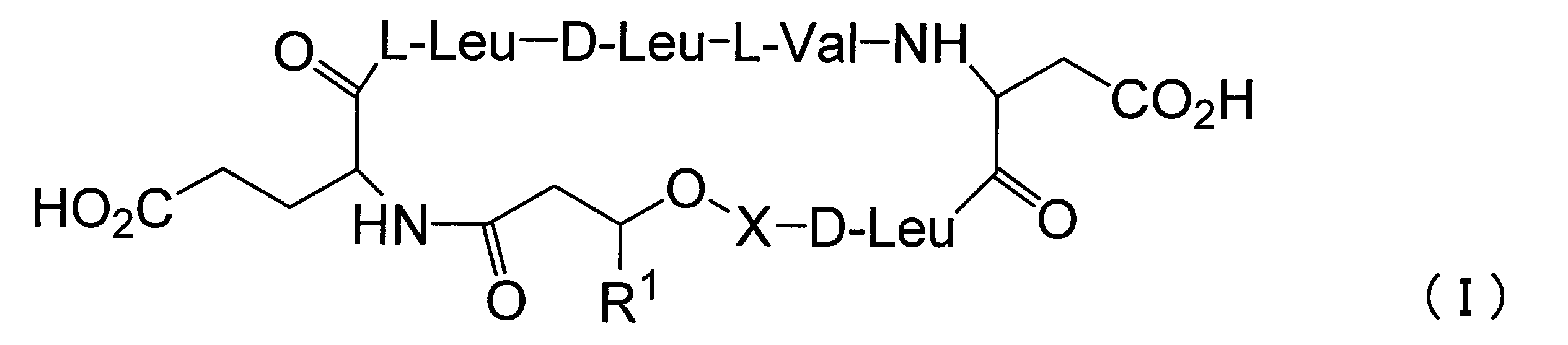
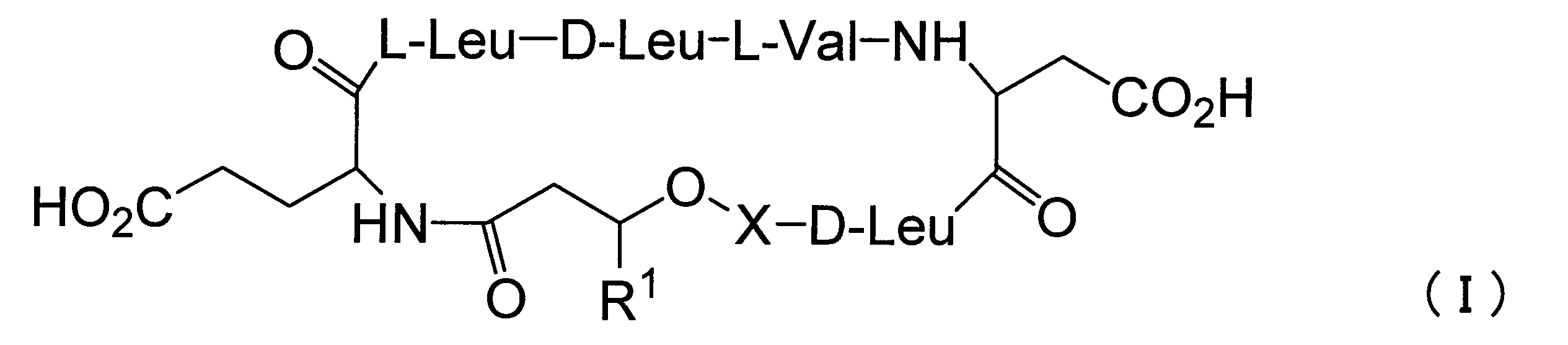
- Surfactin (I) or a salt thereof can be suitably used as the cyclic lipopeptide biosurfactant.
- X represents an amino acid residue selected from leucine, isoleucine and valine; R 1 represents a C 9-18 alkyl group]
- the amino acid residue as X may be L-form or D-form, but L-form is preferred.
- C 9-18 alkyl group refers to a linear or branched monovalent saturated hydrocarbon group having 9 to 18 carbon atoms.
- n-nonyl group 6-methyloctyl group, 7-methyloctyl group, n-decyl group, 8-methylnonyl group, n-undecyl group, 9-methyldecyl group, n-dodecyl group, 10-methylundecyl group N-tridecyl group, 11-methyldodecyl group, n-tetradecyl group, n-pentadecyl group, n-hexadecyl group, n-heptadecyl group, n-octadecyl group and the like.
- One or two or more of the above surfactins (I) may be used.
- it may contain a plurality of surfactins (I) in which the C 9-18 alkyl group of R 1 is different.
- Surfactin (I) can be cultivated according to a known method, for example, a strain belonging to Bacillus subtilis and separated from the culture solution. It can also be used. Moreover, what is obtained by a chemical synthesis method can be used similarly.
- the counter cation constituting the salt of Surfactin (I) is not particularly limited, and examples thereof include alkali metal ions and ammonium ions.
- the alkali metal ion that can be used for the salt of Surfactin (I) is not particularly limited, and represents a lithium ion, a sodium ion, a potassium ion, or the like. Further, the two alkali metal ions may be the same as or different from each other.
- Examples of the substituent of ammonium ion include alkyl groups such as methyl group, ethyl group, n-propyl group, isopropyl group, n-butyl group and t-butyl group; benzyl group, methylbenzyl group, phenylethyl group and the like. Aralkyl groups; organic groups such as aryl groups such as phenyl, toluyl, and xylyl groups.
- Examples of ammonium ions include tetramethylammonium ions, tetraethylammonium ions, pyridinium ions, and the like.
- the two counter cations may be the same or different from each other.
- One of the carboxy groups may be in the state of —COOH or —COO 2 — .
- the compounding amount of the cyclic lipopeptide biosurfactant is not particularly limited, and may be appropriately adjusted within a range in which the dispersibility of the obtained inorganic nanoparticle dispersion liquid is ensured.
- inorganic nanoparticle, cyclic lipopeptide biosurfactant and solvent 0.0005 mass% or more with respect to the total amount. If the said ratio is 0.0005 mass% or more, it is thought that the dispersibility of an inorganic nanoparticle can fully be improved in the obtained dispersion liquid.
- the upper limit of the ratio is not particularly limited. However, for example, if the ratio is too high, the effect of the cyclic lipopeptide biosurfactant is saturated.
- the proportion is preferably 0.001% by mass or more, more preferably 0.005% by mass or more, further preferably 0.01% by mass or more, particularly preferably 0.02% by mass or more, and 0.5% by mass.
- the following is preferable, 0.1 mass% or less is more preferable, and 0.05 mass% or less is further more preferable.
- the “solvent” used in the present invention is not particularly limited as long as it is a liquid that is liquid at normal temperature and pressure and can be used for dispersion of inorganic nanoparticles.
- water and an organic solvent can be mentioned.
- the organic solvent include alcohol solvents such as methanol, ethanol, and isopropanol; polyhydric alcohol solvents such as ethylene glycol, propylene glycol, diethylene glycol, dipropylene glycol, and glycerin; ether solvents such as diethyl ether and tetrahydrofuran; acetone Ketone solvents such as acetonitrile; nitrile solvents such as acetonitrile; amide solvents such as dimethylformamide and dimethylacetamide; sulfoxide solvents such as dimethyl sulfoxide; carboxylic acid solvents such as formic acid and acetic acid; ester solvents such as ethyl acetate; Aliphatic hydrocarbon solvents such as hexan
- the solvent used in the present invention may be a mixed solvent in which two or more solvents are mixed.
- a mixed solvent of water and a water-miscible organic solvent such as a mixed solvent of water and an alcohol solvent may be used.
- the “water-miscible organic solvent” refers to an organic solvent that can be mixed with water at an arbitrary ratio.
- the inorganic nanoparticles have a tendency that the smaller the particle diameter, the larger the surface area, and the larger the van der Waals force between the particles, the more likely to aggregate.
- the inorganic nanoparticles blended in the dispersion may be specially treated to inhibit such aggregation.
- carbon nanotubes have a polarity by being oxidized to suppress aggregation between particles.
- reaggregation can be suppressed by the action of the cyclic lipopeptide biosurfactant, but even the inorganic nanoparticles subjected to the aggregation suppression treatment are aggregated to some extent in the solid state, and are still in the aggregation state when the aggregation suppression treatment is not performed. . Therefore, in the present invention, in the mixture containing the inorganic nanoparticles obtained in the mixing step, the cyclic lipopeptide biosurfactant and the solvent, the inorganic nanoparticles in an aggregated state are crushed and dispersed in the solvent. As described above, the pulverized and dispersed inorganic nanoparticles are hardly reaggregated by the action of the cyclic lipopeptide biosurfactant.
- the means for dispersing the inorganic nanoparticles in the solvent is not particularly limited as long as the aggregated particles can be crushed.
- ultrasonic treatment stirring, high-speed stirring, ball mill, homogenizer, high-pressure homogenizer, jet mill, etc. Can be mentioned.
- the detailed conditions are not particularly limited, and may be appropriately adjusted so that the inorganic nanoparticles are sufficiently crushed.
- the ultrasonic wave output from the ultrasonic generator and irradiated to the mixture The energy of the sound wave can be 30 W or more and 1000 W or less, the frequency of the ultrasonic wave can be 20 kHz or more and 100 kHz or less, and the irradiation time of the ultrasonic wave can be 10 minutes or more and 5 hours or less.
- the inorganic nanoparticle dispersion liquid according to the present invention is produced by the above method, and the inorganic nanoparticle is dispersed in a solvent with high dispersion stability by the action of the cyclic lipopeptide biosurfactant, or inorganic The amount of the surfactant for stably dispersing the nanoparticles is reduced.
- the inorganic nanoparticle dispersion containing the same amount of cyclic lipopeptide biosurfactant as the conventional surfactant has higher dispersion stability than the conventional inorganic nanoparticle dispersion, and the conventional inorganic nanoparticle dispersion
- the inorganic nanoparticle dispersion of the present invention exhibiting the same dispersion stability as that of the present invention has a reduced amount of surfactant compared to the conventional inorganic nanoparticle dispersion, and the cyclic lipopeptide biosurfactant is useful for living organisms and the environment. Since the effect is small, it is extremely safe.
- the degree of “dispersion” in the present invention is not particularly limited, and for example, the concentration in the upper part and the lower part in the container may be visually equal immediately after the dispersion process. Such concentration comparison can be accurately performed by measuring absorbance at a wavelength corresponding to the inorganic nanoparticles.
- dispersion stability in the present invention can be evaluated under the following conditions. For example, the dispersion is centrifuged and separated into a supernatant portion and a precipitation portion. The absorbance of the supernatant is measured at a wavelength according to the inorganic nanoparticles, and if the measured value is 25% or more compared to the measured value immediately after the dispersion step, the dispersion stability is judged to be high. Can do.
- the inorganic nanoparticle dispersion according to the present invention may contain components other than inorganic nanoparticles, cyclic lipopeptide biosurfactant and solvent.
- components of the inorganic nanoparticle dispersion according to the present invention may be appropriately selected depending on the form of the final product, and are not particularly limited.
- thickening polysaccharides such as guar gum and xanthan gum; hydroxypropyl cellulose and carboxy Celluloses such as methylcellulose; carboxyvinyl polymers such as acrylic acid polymers and acrylic acid copolymers; silicone compounds; colorants; pH adjusters; plant extracts; preservatives; chelating agents; Medicinal components; fragrances; ultraviolet absorbers; antioxidants and the like.
- These components can be added and mixed together with the mixing step or the dispersing step or after any step of the mixing step or the dispersing step.
- the final form of the inorganic nanoparticle dispersion according to the present invention is not particularly limited.
- paint / ink products environmental protection products; sunscreen preparations, antiperspirants, creams, gels, lotions, shampoos, shower baths Products, deodorant products, decorative cosmetics, liquid dentifrices, mouthwashes and other cosmetics and toiletries; disinfectants for disinfection such as medical and household fingers; textiles; rubber and plastic-related products; Civil engineering / architectural products; paper / pulp products; machinery / metal products; cleaning products; beverages and foods; agriculture / fertilizer products; information industry products; and other industrial cleaners.
- Example 1 Dispersibility with respect to carbon nanotubes Multi-walled carbon nanotubes not subjected to oxidation treatment (hereinafter abbreviated as “MWCNT”; “FloTube 9000” manufactured by Cano, average diameter: 10 to 15 nm, average length: 10 nm) 4 g was added to 1500 g of distilled water, and 300 W of ultrasonic waves was irradiated for 30 minutes with an ultrasonic reactor (“SR-1500” manufactured by Shinshin Sangyo Co., Ltd.) to prepare a MWCNT pre-dispersion.
- MWCNT Multi-walled carbon nanotubes not subjected to oxidation treatment
- Surfactin sodium (“SFNa” manufactured by Kaneka Corporation) was added to 3.4 g of the MWCNT pre-dispersion liquid, and distilled water was further added to make a total of 20 g.
- SFNa Surfactin sodium
- distilled water was further added to make a total of 20 g.
- WT-600-40 manufactured by Nissan Electronics Co., Ltd.
- the concentration of the dispersed MWCNT was determined from the absorbance at 700 nm of the MWCNT dispersion supernatant. Immediately after the ultrasonic irradiation, the entire amount of MWCNT was well dispersed, and the concentration of MWCNT was 522 ppm.
- the MWCNT dispersion when allowed to stand at room temperature for 8 days, it apparently separated into a supernatant portion and a precipitation portion.
- the absorbance of the supernatant was measured, the dispersion retention of MWCNT in the supernatant was 79.1%.
Landscapes
- Chemical & Material Sciences (AREA)
- Organic Chemistry (AREA)
- Engineering & Computer Science (AREA)
- Materials Engineering (AREA)
- Inorganic Chemistry (AREA)
- Nanotechnology (AREA)
- Molecular Biology (AREA)
- Life Sciences & Earth Sciences (AREA)
- Health & Medical Sciences (AREA)
- Emulsifying, Dispersing, Foam-Producing Or Wetting Agents (AREA)
- Colloid Chemistry (AREA)
- Cosmetics (AREA)
- Carbon And Carbon Compounds (AREA)
- General Preparation And Processing Of Foods (AREA)
- Medicinal Preparation (AREA)
- Chemical Kinetics & Catalysis (AREA)
- General Chemical & Material Sciences (AREA)
- Textile Engineering (AREA)
Abstract
Description
無機ナノ粒子、環状リポペプチドバイオサーファクタントおよび溶媒を混合する工程、および、
上記溶媒中に無機ナノ粒子を分散させる工程を含むことを特徴とする方法。
Xは、ロイシン、イソロイシンおよびバリンから選択されるアミノ酸残基を示し;
R1はC9-18アルキル基を示す]

Xは、ロイシン、イソロイシンおよびバリンから選択されるアミノ酸残基を示し;
R1はC9-18アルキル基を示す]

Xは、ロイシン、イソロイシンおよびバリンから選択されるアミノ酸残基を示し;
R1はC9-18アルキル基を示す]
本発明では、無機ナノ粒子の溶媒中の分散安定性を、環状ポリペプチドバイオサーファクタントにより改善する。よって、本発明方法では、まず、これらを混合する。
Xは、ロイシン、イソロイシンおよびバリンから選択されるアミノ酸残基を示し;
R1はC9-18アルキル基を示す]
Xとしてのアミノ酸残基は、L体でもD体でもよいが、L体が好ましい。
無機ナノ粒子は、その粒子径が小さいほど表面積が大きくなり、粒子間のファンデルワールス力が大きくなって凝集する傾向がある。分散液中に配合される無機ナノ粒子は、このような凝集を阻害するために特別な処理をされている場合がある。例えばカーボンナノチューブでは、酸化することで極性をもたせ、粒子間の凝集を抑制している。
酸化処理を行っていない多層カーボンナノチューブ(以下、「MWCNTと略記する。;Cnano社製「FloTube9000」,平均直径:10~15nm,平均長さ:10nm)4.4gを1500gの蒸留水中に添加し、超音波反応装置(新科産業有限会社製「SR-1500」)で300Wの超音波を30分間照射して、MWCNTプレ分散液を作製した。続いて、当該MWCNTプレ分散液3.4gにサーファクチンナトリウム(カネカ社製「SFNa」)5mgを添加し、さらに蒸留水を加えて合計20gとした。超音波洗浄機(本多電子社製「WT-600-40」)の槽内を適量の水で満たし、上記希釈MWCNTプレ分散液20gの入ったスクリュー管を浸して、480Wの超音波を40分間照射してMWCNT分散水溶液を得た。
Claims (12)
- 無機ナノ粒子分散液を製造する方法であって、
無機ナノ粒子、環状リポペプチドバイオサーファクタントおよび溶媒を混合する工程、および、
上記溶媒中に無機ナノ粒子を分散させる工程を含むことを特徴とする方法。 - 上記環状リポペプチドバイオサーファクタントとして、下記式(I)で表されるサーファクチンまたはその塩を用いる請求項1に記載の方法。

Xは、ロイシン、イソロイシンおよびバリンから選択されるアミノ酸残基を示し;
R1はC9-18アルキル基を示す] - 上記無機ナノ粒子が、カーボンナノチューブ、カーボンナノファイバー、または金属酸化物ナノ粒子である請求項1または2に記載の方法。
- 上記無機ナノ粒子分散液における上記環状リポペプチドバイオサーファクタントの濃度を0.0005質量%以上、1質量%以下とする請求項1~3のいずれかに記載の方法。
- 無機ナノ粒子、環状リポペプチドバイオサーファクタントおよび溶媒を含み、当該無機ナノ粒子が当該溶媒中に分散していることを特徴とする無機ナノ粒子分散液。
- 上記環状リポペプチドバイオサーファクタントが、下記式(I)で表されるサーファクチンまたはその塩である請求項5に記載の無機ナノ粒子分散液。

Xは、ロイシン、イソロイシンおよびバリンから選択されるアミノ酸残基を示し;
R1はC9-18アルキル基を示す] - 上記無機ナノ粒子が、カーボンナノチューブ、カーボンナノファイバー、または金属酸化物ナノ粒子である請求項5または6に記載の無機ナノ粒子分散液。
- 上記無機ナノ粒子分散液における上記環状リポペプチドバイオサーファクタントの濃度が0.0005質量%以上、1質量%以下である請求項5~7のいずれかに記載の無機ナノ粒子分散液。
- 無機ナノ粒子を溶媒中に分散させて無機ナノ粒子分散液を製造するための環状リポペプチドバイオサーファクタントの使用。
- 上記環状リポペプチドバイオサーファクタントが下記式(I)で表されるサーファクチンまたはその塩である請求項9に記載の使用。

Xは、ロイシン、イソロイシンおよびバリンから選択されるアミノ酸残基を示し;
R1はC9-18アルキル基を示す] - 上記無機ナノ粒子が、カーボンナノチューブ、カーボンナノファイバー、または金属酸化物ナノ粒子である請求項9または10に記載の使用。
- 上記無機ナノ粒子分散液における上記環状リポペプチドバイオサーファクタントの濃度が0.0005質量%以上、1質量%以下である請求項9~11のいずれかに記載の使用。
Priority Applications (2)
| Application Number | Priority Date | Filing Date | Title |
|---|---|---|---|
| US15/120,258 US20170056851A1 (en) | 2014-03-11 | 2015-03-03 | Inorganic nanoparticle dispersion liquid and method for producing same |
| JP2016507465A JPWO2015137192A1 (ja) | 2014-03-11 | 2015-03-03 | 無機ナノ粒子分散液およびその製造方法 |
Applications Claiming Priority (2)
| Application Number | Priority Date | Filing Date | Title |
|---|---|---|---|
| JP2014048158 | 2014-03-11 | ||
| JP2014-048158 | 2014-03-11 |
Publications (1)
| Publication Number | Publication Date |
|---|---|
| WO2015137192A1 true WO2015137192A1 (ja) | 2015-09-17 |
Family
ID=54071640
Family Applications (1)
| Application Number | Title | Priority Date | Filing Date |
|---|---|---|---|
| PCT/JP2015/056186 Ceased WO2015137192A1 (ja) | 2014-03-11 | 2015-03-03 | 無機ナノ粒子分散液およびその製造方法 |
Country Status (3)
| Country | Link |
|---|---|
| US (1) | US20170056851A1 (ja) |
| JP (1) | JPWO2015137192A1 (ja) |
| WO (1) | WO2015137192A1 (ja) |
Cited By (4)
| Publication number | Priority date | Publication date | Assignee | Title |
|---|---|---|---|---|
| JP2017078041A (ja) * | 2015-10-20 | 2017-04-27 | ケミコスクリエイションズ株式会社 | 液体化粧料組成物 |
| JP2019044015A (ja) * | 2017-08-30 | 2019-03-22 | 株式会社パイロットコーポレーション | 筆記具用油性インキ組成物及びそれを収容したマーキングペン |
| WO2019138738A1 (ja) * | 2018-01-10 | 2019-07-18 | 株式会社カネカ | 乳化組成物の製造方法 |
| JP2023518247A (ja) * | 2020-03-20 | 2023-04-28 | ローカス アイピー カンパニー リミテッド ライアビリティ カンパニー | ナノ粒子の効率的な分散のための材料および方法 |
Families Citing this family (2)
| Publication number | Priority date | Publication date | Assignee | Title |
|---|---|---|---|---|
| EP4196547B1 (en) | 2020-08-20 | 2024-03-20 | The Lubrizol Corporation | Organic heat transfer system, method and fluid |
| CN115449352B (zh) * | 2022-09-20 | 2025-01-03 | 江阴市利伟轧辊印染机械有限公司 | 一种导热介质及一种热轧辊 |
Citations (4)
| Publication number | Priority date | Publication date | Assignee | Title |
|---|---|---|---|---|
| JP2001220521A (ja) * | 2000-02-07 | 2001-08-14 | Showa Denko Kk | 水性組成物 |
| JP2010051952A (ja) * | 2008-07-28 | 2010-03-11 | Canon Inc | ナノ粒子−分散剤複合体、ナノ粒子分散液およびナノ粒子−マトリックス材料複合体 |
| US20110171364A1 (en) * | 2010-01-13 | 2011-07-14 | CNano Technology Limited | Carbon Nanotube Based Pastes |
| JP2012166154A (ja) * | 2011-02-15 | 2012-09-06 | Nof Corp | 炭素材料用分散剤、炭素材料分散液および炭素材料組成物 |
-
2015
- 2015-03-03 JP JP2016507465A patent/JPWO2015137192A1/ja active Pending
- 2015-03-03 US US15/120,258 patent/US20170056851A1/en not_active Abandoned
- 2015-03-03 WO PCT/JP2015/056186 patent/WO2015137192A1/ja not_active Ceased
Patent Citations (4)
| Publication number | Priority date | Publication date | Assignee | Title |
|---|---|---|---|---|
| JP2001220521A (ja) * | 2000-02-07 | 2001-08-14 | Showa Denko Kk | 水性組成物 |
| JP2010051952A (ja) * | 2008-07-28 | 2010-03-11 | Canon Inc | ナノ粒子−分散剤複合体、ナノ粒子分散液およびナノ粒子−マトリックス材料複合体 |
| US20110171364A1 (en) * | 2010-01-13 | 2011-07-14 | CNano Technology Limited | Carbon Nanotube Based Pastes |
| JP2012166154A (ja) * | 2011-02-15 | 2012-09-06 | Nof Corp | 炭素材料用分散剤、炭素材料分散液および炭素材料組成物 |
Non-Patent Citations (3)
| Title |
|---|
| DIEGO STEFANI T. MARTINEZ ET AL.: "Exploring the use of biosurfactants from Bacillus subtilis in bionanotechnology: A potential dispersing agent for carbon nanotube ecotoxicological studies", PROCESS BIOCHEMISTRY, vol. 49, no. 7, 18 April 2014 (2014-04-18), pages 1162 - 1168, XP055223714, ISSN: 1359-5113 * |
| REDDY, A. SATYANARAYANA ET AL.: "Synthesis of Gold Nanoparticles via an Environmentally Benign Route Using a Biosurfactant", JOURNAL OF NANOSCIENECE AND NANOTECHNOLOGY, vol. 9, no. 11, pages 6693 - 6699 * |
| TADASHI YONEDA ET AL.: "Surfactin sodium salt: An excellent bio-surfactant for cosmetics", FRAGRANCE JOURNAL, vol. 29, no. 12, 15 December 2001 (2001-12-15), pages 93 - 97 * |
Cited By (4)
| Publication number | Priority date | Publication date | Assignee | Title |
|---|---|---|---|---|
| JP2017078041A (ja) * | 2015-10-20 | 2017-04-27 | ケミコスクリエイションズ株式会社 | 液体化粧料組成物 |
| JP2019044015A (ja) * | 2017-08-30 | 2019-03-22 | 株式会社パイロットコーポレーション | 筆記具用油性インキ組成物及びそれを収容したマーキングペン |
| WO2019138738A1 (ja) * | 2018-01-10 | 2019-07-18 | 株式会社カネカ | 乳化組成物の製造方法 |
| JP2023518247A (ja) * | 2020-03-20 | 2023-04-28 | ローカス アイピー カンパニー リミテッド ライアビリティ カンパニー | ナノ粒子の効率的な分散のための材料および方法 |
Also Published As
| Publication number | Publication date |
|---|---|
| JPWO2015137192A1 (ja) | 2017-04-06 |
| US20170056851A1 (en) | 2017-03-02 |
Similar Documents
| Publication | Publication Date | Title |
|---|---|---|
| JPWO2015137192A1 (ja) | 無機ナノ粒子分散液およびその製造方法 | |
| Khairunnisa et al. | Effective deagglomeration in biosynthesized nanoparticles: a mini review | |
| CN104955440A (zh) | 化妆料用添加剂及配合有该化妆料用添加剂的化妆料 | |
| JP4060849B2 (ja) | 疎水性金属酸化物微細粒子および分散助剤を含む高濃度水性分散液 | |
| CA3171859A1 (en) | Materials and methods for the efficient dispersion of nanoparticles | |
| Lin et al. | Plasma-aided green and controllable synthesis of silver nanoparticles and their compounding with gemini surfactant | |
| CN107057880A (zh) | 石墨烯抗菌复合液及其制备方法 | |
| JP2013185061A (ja) | 揺変剤およびその製造方法 | |
| Crawford et al. | Formation of shear thinning gels from partially oxidised cellulose nanofibrils | |
| JP6555595B2 (ja) | 臨界ミセル濃度の低減方法 | |
| Manna | Synthesis, characterization, and antimicrobial activity of zinc oxide nanoparticles | |
| Huang et al. | Extremely well-dispersed zinc oxide nanofluids with excellent antibacterial, antifungal, and formaldehyde and toluene removal properties | |
| Wang et al. | Effect of surfactants on synthesis of TiO2 nano-particles by homogeneous precipitation method | |
| Nagpal et al. | Application of Biosurfactants in the Green Synthesis of Inorganic Nanoparticles | |
| Kozlova et al. | Ceric phosphates and nanocrystalline ceria: selective toxicity to melanoma cells | |
| WO2013161553A1 (ja) | 表面修飾無機酸化物微粒子、及び該微粒子を含有するサンスクリーン化粧料 | |
| JPWO2015022944A1 (ja) | 界面自由エネルギーの低減方法と界面自由エネルギーが低減された組成物 | |
| JP6512574B2 (ja) | ジェミニ型界面活性剤を分散剤として用いたナノカーボン物質の水性分散液及びその製造方法 | |
| CN111867380A (zh) | 抗微生物颗粒组合物和包含其的个人护理组合物 | |
| WO2024064634A1 (en) | Modified sophorolipids with enhanced dispersion properties | |
| JP6477173B2 (ja) | 表面被覆酸化亜鉛粒子の製造方法 | |
| JP6694651B2 (ja) | 油性インク除去剤及びその製造方法 | |
| JP2023063250A (ja) | 芳香性粒子分散体及びこれを含有した筆記具用水性インク組成物 | |
| Kumar et al. | Novel Nanosurfactants and their Industrial Applications | |
| WO2024009548A1 (ja) | 紫外線吸収用組成物、及びその製造方法 |
Legal Events
| Date | Code | Title | Description |
|---|---|---|---|
| 121 | Ep: the epo has been informed by wipo that ep was designated in this application |
Ref document number: 15762087 Country of ref document: EP Kind code of ref document: A1 |
|
| ENP | Entry into the national phase |
Ref document number: 2016507465 Country of ref document: JP Kind code of ref document: A |
|
| WWE | Wipo information: entry into national phase |
Ref document number: 15120258 Country of ref document: US |
|
| NENP | Non-entry into the national phase |
Ref country code: DE |
|
| 122 | Ep: pct application non-entry in european phase |
Ref document number: 15762087 Country of ref document: EP Kind code of ref document: A1 |