WO2015129402A1 - 浸炭処理時の異常粒発生が抑制可能な肌焼鋼及びこれを用いた機械構造部品 - Google Patents
浸炭処理時の異常粒発生が抑制可能な肌焼鋼及びこれを用いた機械構造部品 Download PDFInfo
- Publication number
- WO2015129402A1 WO2015129402A1 PCT/JP2015/052958 JP2015052958W WO2015129402A1 WO 2015129402 A1 WO2015129402 A1 WO 2015129402A1 JP 2015052958 W JP2015052958 W JP 2015052958W WO 2015129402 A1 WO2015129402 A1 WO 2015129402A1
- Authority
- WO
- WIPO (PCT)
- Prior art keywords
- less
- density
- case
- carbide
- steel
- Prior art date
- Legal status (The legal status is an assumption and is not a legal conclusion. Google has not performed a legal analysis and makes no representation as to the accuracy of the status listed.)
- Ceased
Links
Images
Classifications
-
- C—CHEMISTRY; METALLURGY
- C22—METALLURGY; FERROUS OR NON-FERROUS ALLOYS; TREATMENT OF ALLOYS OR NON-FERROUS METALS
- C22C—ALLOYS
- C22C38/00—Ferrous alloys, e.g. steel alloys
-
- C—CHEMISTRY; METALLURGY
- C21—METALLURGY OF IRON
- C21D—MODIFYING THE PHYSICAL STRUCTURE OF FERROUS METALS; GENERAL DEVICES FOR HEAT TREATMENT OF FERROUS OR NON-FERROUS METALS OR ALLOYS; MAKING METAL MALLEABLE, e.g. BY DECARBURISATION OR TEMPERING
- C21D1/00—General methods or devices for heat treatment, e.g. annealing, hardening, quenching or tempering
- C21D1/06—Surface hardening
-
- C—CHEMISTRY; METALLURGY
- C21—METALLURGY OF IRON
- C21D—MODIFYING THE PHYSICAL STRUCTURE OF FERROUS METALS; GENERAL DEVICES FOR HEAT TREATMENT OF FERROUS OR NON-FERROUS METALS OR ALLOYS; MAKING METAL MALLEABLE, e.g. BY DECARBURISATION OR TEMPERING
- C21D9/00—Heat treatment, e.g. annealing, hardening, quenching or tempering, adapted for particular articles; Furnaces therefor
- C21D9/28—Heat treatment, e.g. annealing, hardening, quenching or tempering, adapted for particular articles; Furnaces therefor for plain shafts
-
- C—CHEMISTRY; METALLURGY
- C21—METALLURGY OF IRON
- C21D—MODIFYING THE PHYSICAL STRUCTURE OF FERROUS METALS; GENERAL DEVICES FOR HEAT TREATMENT OF FERROUS OR NON-FERROUS METALS OR ALLOYS; MAKING METAL MALLEABLE, e.g. BY DECARBURISATION OR TEMPERING
- C21D9/00—Heat treatment, e.g. annealing, hardening, quenching or tempering, adapted for particular articles; Furnaces therefor
- C21D9/30—Heat treatment, e.g. annealing, hardening, quenching or tempering, adapted for particular articles; Furnaces therefor for crankshafts; for camshafts
-
- C—CHEMISTRY; METALLURGY
- C22—METALLURGY; FERROUS OR NON-FERROUS ALLOYS; TREATMENT OF ALLOYS OR NON-FERROUS METALS
- C22C—ALLOYS
- C22C38/00—Ferrous alloys, e.g. steel alloys
- C22C38/001—Ferrous alloys, e.g. steel alloys containing N
-
- C—CHEMISTRY; METALLURGY
- C22—METALLURGY; FERROUS OR NON-FERROUS ALLOYS; TREATMENT OF ALLOYS OR NON-FERROUS METALS
- C22C—ALLOYS
- C22C38/00—Ferrous alloys, e.g. steel alloys
- C22C38/02—Ferrous alloys, e.g. steel alloys containing silicon
-
- C—CHEMISTRY; METALLURGY
- C22—METALLURGY; FERROUS OR NON-FERROUS ALLOYS; TREATMENT OF ALLOYS OR NON-FERROUS METALS
- C22C—ALLOYS
- C22C38/00—Ferrous alloys, e.g. steel alloys
- C22C38/04—Ferrous alloys, e.g. steel alloys containing manganese
-
- C—CHEMISTRY; METALLURGY
- C22—METALLURGY; FERROUS OR NON-FERROUS ALLOYS; TREATMENT OF ALLOYS OR NON-FERROUS METALS
- C22C—ALLOYS
- C22C38/00—Ferrous alloys, e.g. steel alloys
- C22C38/06—Ferrous alloys, e.g. steel alloys containing aluminium
-
- C—CHEMISTRY; METALLURGY
- C22—METALLURGY; FERROUS OR NON-FERROUS ALLOYS; TREATMENT OF ALLOYS OR NON-FERROUS METALS
- C22C—ALLOYS
- C22C38/00—Ferrous alloys, e.g. steel alloys
- C22C38/18—Ferrous alloys, e.g. steel alloys containing chromium
- C22C38/20—Ferrous alloys, e.g. steel alloys containing chromium with copper
-
- C—CHEMISTRY; METALLURGY
- C22—METALLURGY; FERROUS OR NON-FERROUS ALLOYS; TREATMENT OF ALLOYS OR NON-FERROUS METALS
- C22C—ALLOYS
- C22C38/00—Ferrous alloys, e.g. steel alloys
- C22C38/18—Ferrous alloys, e.g. steel alloys containing chromium
- C22C38/22—Ferrous alloys, e.g. steel alloys containing chromium with molybdenum or tungsten
-
- C—CHEMISTRY; METALLURGY
- C22—METALLURGY; FERROUS OR NON-FERROUS ALLOYS; TREATMENT OF ALLOYS OR NON-FERROUS METALS
- C22C—ALLOYS
- C22C38/00—Ferrous alloys, e.g. steel alloys
- C22C38/18—Ferrous alloys, e.g. steel alloys containing chromium
- C22C38/26—Ferrous alloys, e.g. steel alloys containing chromium with niobium or tantalum
-
- C—CHEMISTRY; METALLURGY
- C22—METALLURGY; FERROUS OR NON-FERROUS ALLOYS; TREATMENT OF ALLOYS OR NON-FERROUS METALS
- C22C—ALLOYS
- C22C38/00—Ferrous alloys, e.g. steel alloys
- C22C38/18—Ferrous alloys, e.g. steel alloys containing chromium
- C22C38/28—Ferrous alloys, e.g. steel alloys containing chromium with titanium or zirconium
-
- C—CHEMISTRY; METALLURGY
- C22—METALLURGY; FERROUS OR NON-FERROUS ALLOYS; TREATMENT OF ALLOYS OR NON-FERROUS METALS
- C22C—ALLOYS
- C22C38/00—Ferrous alloys, e.g. steel alloys
- C22C38/18—Ferrous alloys, e.g. steel alloys containing chromium
- C22C38/38—Ferrous alloys, e.g. steel alloys containing chromium with more than 1.5% by weight of manganese
-
- C—CHEMISTRY; METALLURGY
- C22—METALLURGY; FERROUS OR NON-FERROUS ALLOYS; TREATMENT OF ALLOYS OR NON-FERROUS METALS
- C22C—ALLOYS
- C22C38/00—Ferrous alloys, e.g. steel alloys
- C22C38/18—Ferrous alloys, e.g. steel alloys containing chromium
- C22C38/40—Ferrous alloys, e.g. steel alloys containing chromium with nickel
- C22C38/48—Ferrous alloys, e.g. steel alloys containing chromium with nickel with niobium or tantalum
-
- C—CHEMISTRY; METALLURGY
- C22—METALLURGY; FERROUS OR NON-FERROUS ALLOYS; TREATMENT OF ALLOYS OR NON-FERROUS METALS
- C22C—ALLOYS
- C22C38/00—Ferrous alloys, e.g. steel alloys
- C22C38/18—Ferrous alloys, e.g. steel alloys containing chromium
- C22C38/40—Ferrous alloys, e.g. steel alloys containing chromium with nickel
- C22C38/50—Ferrous alloys, e.g. steel alloys containing chromium with nickel with titanium or zirconium
-
- C—CHEMISTRY; METALLURGY
- C22—METALLURGY; FERROUS OR NON-FERROUS ALLOYS; TREATMENT OF ALLOYS OR NON-FERROUS METALS
- C22C—ALLOYS
- C22C38/00—Ferrous alloys, e.g. steel alloys
- C22C38/18—Ferrous alloys, e.g. steel alloys containing chromium
- C22C38/40—Ferrous alloys, e.g. steel alloys containing chromium with nickel
- C22C38/58—Ferrous alloys, e.g. steel alloys containing chromium with nickel with more than 1.5% by weight of manganese
-
- C—CHEMISTRY; METALLURGY
- C21—METALLURGY OF IRON
- C21D—MODIFYING THE PHYSICAL STRUCTURE OF FERROUS METALS; GENERAL DEVICES FOR HEAT TREATMENT OF FERROUS OR NON-FERROUS METALS OR ALLOYS; MAKING METAL MALLEABLE, e.g. BY DECARBURISATION OR TEMPERING
- C21D2211/00—Microstructure comprising significant phases
- C21D2211/004—Dispersions; Precipitations
-
- C—CHEMISTRY; METALLURGY
- C21—METALLURGY OF IRON
- C21D—MODIFYING THE PHYSICAL STRUCTURE OF FERROUS METALS; GENERAL DEVICES FOR HEAT TREATMENT OF FERROUS OR NON-FERROUS METALS OR ALLOYS; MAKING METAL MALLEABLE, e.g. BY DECARBURISATION OR TEMPERING
- C21D8/00—Modifying the physical properties of ferrous metals or ferrous alloys by deformation combined with, or followed by, heat treatment
- C21D8/06—Modifying the physical properties of ferrous metals or ferrous alloys by deformation combined with, or followed by, heat treatment during manufacturing of rods or wires
Definitions
- surface hardening heat treatment such as carburizing treatment or carbonitriding treatment (hereinafter sometimes collectively referred to as “carburizing treatment”) is performed on transportation equipment such as automobiles, construction machinery, and other industrial machines.
- the present invention relates to a machine structural part manufactured by the method and a case-hardened steel as a material for the machine structural part. More specifically, the present invention relates to a case hardening steel that can suppress the occurrence of abnormal grains during carburizing.
- case hardening Steel For structural materials that require high strength in transportation equipment, construction machinery, other industrial machines, etc., alloy steels for machine structures such as SCr, SCM, SNCM, etc., stipulated in JIS standards, so-called case hardening Steel is generally used. After this case-hardened steel is formed into a desired part shape by machining such as forging or cutting, surface-hardening heat treatment such as carburizing or carbonitriding is performed, followed by polishing and the like to produce mechanical structural parts.
- the heat treatment time is shortened by increasing the temperature in order to shorten the lead time during production.
- the temperature of the surface hardening heat treatment is increased, there is a problem that the crystal grains of the mechanical structural component are coarsened and the mechanical characteristics are deteriorated.
- Patent Documents 1 and 2 have been proposed as techniques for preventing such coarsening of crystal grains.
- pinning is performed by dispersing a composite nitride containing Nb and Ti as disclosed in Patent Document 1 and a Nb and / or Ti-containing precipitate as disclosed in Patent Document 2 in steel. The effect is demonstrated and the coarsening of the crystal grains is prevented.
- the present invention has been made in view of the circumstances as described above, and its purpose is a case-hardened steel capable of preventing the occurrence of abnormal grains in a surface hardening heat treatment such as a carburizing process or a carbonitriding process, and a mechanical structure using the same. To provide parts.
- the case-hardened steel of the present invention that has achieved the above-mentioned problems is % By mass C: 0.10 to 0.30%, Si: 0.01 to 0.50%, Mn: 0.80 to 2.00%, P: more than 0%, 0.030% or less, S: more than 0%, 0.030% or less, Cr: 0.50 to 1.50%, Al: 0.01 to 0.10%, N: 0.0010 to 0.010%, Nb: 0.040 to 0.150%, Ti: 0.040 to 0.150% The balance is iron and inevitable impurities,
- the density of carbide and carbonitride having an equivalent circle diameter of 10 nm or more and less than 200 nm containing Ti and Nb is 10 pieces / ⁇ m 2 or more,
- the density of carbide and carbonitride having an equivalent circle diameter of less than 10 nm containing Ti and Nb is 50 / ⁇ m 2 or more, and the density of precipitates having an equivalent circle diameter of 200 nm or more containing Ti and S is 0.20.
- the case-hardened steel of the present invention preferably further contains one or more of the following (a) and (b) in terms of mass% as necessary.
- the present invention is a machine structural part obtained by using any of the above-described case-hardened steels, the surface of which is carburized, and the minimum value of the prior austenite grain size number of the carburized layer is 6.0 or more. Also includes mechanical structural parts.
- the chemical composition is appropriately adjusted, and Ti and Nb-containing carbides and carbonitrides each having a predetermined amount of a circle equivalent diameter of 10 nm or more and less than 200 nm and a circle equivalent diameter of less than 10 nm. While ensuring the above, since the density of the precipitate of the predetermined magnitude
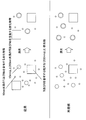
- FIG. 1 is a schematic diagram showing the concept of the behavior of precipitates before and after carburizing treatment.
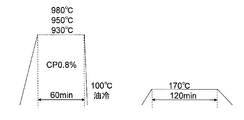
- FIG. 2 is a schematic diagram showing a heat treatment pattern during carburizing treatment.
- the present inventors have studied the influence of fine precipitates on the generation of abnormal grains, and conducted extensive research on the precipitation state of fine precipitates that can suppress the generation of abnormal grains.
- the most effective for preventing the coarsening of crystal grains and suppressing the occurrence of abnormal grains are carbides and carbonitrides containing Ti and Nb (hereinafter, In order to secure a predetermined amount of the above-described (i) carbide, etc., the size may be 10 nm or more and less than 200 nm (sometimes referred to as “(Ti, Nb) carbide, etc.”).
- FIG. 1 is a schematic diagram showing the concept of the behavior of precipitates before and after carburizing treatment.
- Ti and S combine to form precipitates, but if the density of coarse (Ti, S) precipitates is high, Ti is effective in (Ti, Nb) carbides of 10 nm or more that are effective in suppressing abnormal grain generation. It is not used effectively. Therefore, the density of coarse (Ti, S) precipitates must be reduced.
- the density of (Ti, Nb) carbide or the like of 10 nm or more and less than 200 nm is specifically 10 pieces / ⁇ m 2 or more.
- the density of (Ti, Nb) carbide or the like less than 10 nm is 50 pieces / ⁇ m 2 or more, and the density of (Ti, S) precipitates of 200 nm or more is 0.20 pieces / ⁇ m 2 or less.
- Ti, Nb (Ti, Nb) carbides and the like of 10 nm or more and less than 200 nm, that is, carbides and carbonitrides containing Ti and Nb effectively work to prevent crystal grain coarsening during carburizing treatment, and can suppress the occurrence of abnormal grains.
- the density needs to be 10 / ⁇ m 2 or more, preferably 15 / ⁇ m 2 or more, and more preferably 20 / ⁇ m 2 or more.
- the upper limit of the density of (Ti, Nb) carbide or the like of 10 nm or more and less than 200 nm is not particularly limited, but is usually about 150 pieces / ⁇ m 2 , preferably 120 pieces / ⁇ m 2 or less, more preferably 100 pieces / ⁇ m 2 or less. It is.
- (Ti, Nb) carbides and the like less than 10 nm that is, carbides and carbonitrides containing Ti and Nb are dissolved in the matrix during the carburizing treatment, and (Ti, Nb) carbides and the like of 10 nm or more and less than 200 nm. Ostwald growth to prevent solid solution in the matrix.
- the density of (Ti, Nb) carbide or the like of less than 10 nm needs to be 50 / ⁇ m 2 or more, preferably 100 / ⁇ m 2 or more, more preferably 150 / ⁇ m 2 or more.
- the upper limit of the density of (Ti, Nb) carbide or the like less than 10 nm is not particularly limited, but is usually about 300 / ⁇ m 2 .
- the lower limit of the size of (Ti, Nb) carbide or the like measured as (Ti, Nb) carbide or the like of less than 10 nm is not particularly limited, but is usually about 2 nm because of the measurement limit of a measuring device such as an electron microscope. is there.
- (Ti, Nb) carbide or the like has a peak indicating C or N detected by elemental analysis using energy dispersive X-ray spectroscopy (Energy Dispersive X-ray Spectroscopy, EDX) and the like. And a precipitate in which a peak of Nb is detected.
- energy dispersive X-ray spectroscopy Energy Dispersive X-ray Spectroscopy, EDX
- the density of (Ti, S) precipitates of 200 nm or more needs to be 0.20 pieces / ⁇ m 2 or less, preferably 0.15 pieces / ⁇ m 2 or less, more preferably 0.10 pieces / ⁇ m 2. It is as follows. The smaller the number of (Ti, S) precipitates of 200 nm or more, the better. However, it is usually a value exceeding 0 / ⁇ m 2 .
- the (Ti, S) precipitate in the present invention means a precipitate from which Ti and S peaks are detected by elemental analysis using EDX or the like.
- the chemical composition of the case-hardened steel needs to be adjusted appropriately in order to exhibit basic characteristics as case hardening steel. This will be described below. In this specification, all chemical compositions mean mass%.
- C 0.10 to 0.30%
- C is an element necessary for ensuring the core hardness necessary for carburized parts. If the C content is less than 0.10%, the static strength as a carburized part is insufficient due to insufficient hardness. Therefore, the C content needs to be 0.10% or more, preferably 0.12% or more, more preferably 0.15% or more. However, when C is excessively contained, the hardness becomes excessively high, so that toughness is reduced, impact characteristics are deteriorated, and cold forgeability is also reduced. Therefore, the C content needs to be 0.30% or less, preferably 0.28% or less, more preferably 0.25% or less.
- Si 0.01 to 0.50% Si is an effective element for improving the surface fatigue characteristics of mechanical structural parts by suppressing the decrease in tempering hardness. In order to exhibit such an effect effectively, it is necessary to contain Si 0.01%.
- the Si content is preferably 0.03% or more, more preferably 0.05% or more. However, if Si is contained excessively, it adversely affects the part formability such as machinability and forgeability. From such a viewpoint, the Si content needs to be 0.50% or less, preferably 0.45% or less, and more preferably 0.40% or less.
- Mn 0.80 to 2.00%
- Mn is an element effective for improving the hardenability during the carburizing process.
- Mn also acts as a deoxidizer, and is an element that has the effect of increasing the internal quality by reducing the amount of oxide inclusions in the steel.
- Mn also has an effect of preventing red heat embrittlement.
- the Mn content is preferably 0.85% or more, more preferably 0.90% or more.
- the Mn content needs to be 2.00% or less, preferably 1.8% or less, and more preferably 1.7% or less.
- P more than 0% and 0.030% or less
- P is an element contained as an inevitable impurity in steel and segregates at the grain boundary to deteriorate the impact fatigue characteristics of mechanical structural parts. Therefore, the P content needs to be 0.030% or less, preferably 0.025% or less, more preferably 0.020% or less. The smaller the P content, the better. However, it is difficult to make it 0% due to restrictions on the manufacturing process, and usually about 0.001% is included.
- S more than 0% and 0.030% or less
- S is an element that combines with Mn to form MnS and improves machinability when cutting.
- S is preferably contained in an amount of 0.001% or more, more preferably 0.002% or more.
- the S content needs to be 0.030% or less, preferably 0.025% or less, and more preferably 0.020% or less.
- Cr 0.50 to 1.50% Cr is an element necessary for promoting carburization and forming a hardened layer on the steel surface.
- Cr needs to be contained in an amount of 0.50% or more, preferably 0.60% or more, and more preferably 0.70% or more.
- the Cr content needs to be 1.50% or less, preferably 1.45% or less, more preferably 1.40% or less.
- Al 0.01 to 0.10%
- Al is an element that acts as a deoxidizing agent. In order to effectively exhibit such action, Al needs to be contained in an amount of 0.01% or more.
- the Al content is preferably 0.015% or more, and more preferably 0.020% or more.
- the Al content needs to be 0.10% or less, preferably 0.080% or less, and more preferably 0.060% or less.
- N 0.0010 to 0.010%
- N is an element necessary for forming TiNb carbonitride that acts to appropriately adjust the crystal grain size of the mechanical structural component.
- N needs to be contained in an amount of 0.0010% or more, preferably 0.0020% or more, and more preferably 0.0030% or more.
- the N content needs to be 0.010% or less, preferably 0.009% or less, more preferably 0.008% or less.
- Nb 0.040 to 0.150%
- Nb is an element necessary for forming TiNb carbides and carbonitrides that function to appropriately adjust the crystal grain size of mechanical structural components.
- Nb needs to be contained in an amount of 0.040% or more, preferably 0.045% or more, more preferably 0.050% or more.
- the Nb content needs to be 0.150% or less, preferably 0.120% or less, and more preferably 0.100% or less.
- Ti 0.040 to 0.150%
- Ti is an element necessary for forming TiNb carbides and carbonitrides that function to appropriately adjust the crystal grain size of mechanical structural components. In order to exhibit such an effect, Ti needs to be contained by 0.040% or more, preferably 0.045% or more, and more preferably 0.050% or more. However, when Ti is excessively contained, TiN, TiNb carbides and carbonitrides are excessively formed in the steel, and the machinability and forgeability are deteriorated. From such a viewpoint, the Ti content needs to be 0.150% or less, preferably 0.120% or less, more preferably 0.100% or less.
- the basic components of the case hardening steel according to the present invention are as described above, and the balance is substantially iron. However, it is naturally allowed that inevitable impurities brought into the steel depending on the situation of raw materials, materials, manufacturing equipment, etc. are contained in the steel.
- Mo more than 0% and not more than 2.0% Mo is an element that improves the hardenability in the carburizing process. In order to effectively exhibit such an action, it is preferable to contain 0.05% or more of Mo, more preferably 0.08% or more, and still more preferably 0.10% or more. However, when Mo is contained excessively, machinability and forgeability are deteriorated. Therefore, the Mo content is preferably 2.0% or less, more preferably 1.5% or less, and still more preferably 1.2% or less.
- Cu more than 0%, 0.10% or less and Ni: more than 0%, 3.0% or less
- Cu and Ni are effective for enhancing the hardenability in the carburizing treatment, similar to Mo. It is an element. Further, since Cu and Ni are elements that are less likely to be oxidized than Fe, they also act to improve the corrosion resistance of mechanical structural parts. In order to effectively exhibit these actions, Cu is preferably contained in an amount of 0.03% or more, and more preferably 0.04% or more. Ni is preferably contained in an amount of 0.03% or more, more preferably 0.05% or more, and further preferably 0.08% or more. However, when Cu is excessively contained, hot forgeability is lowered, and problems such as cracking are likely to occur.
- the Cu content is preferably 0.10% or less, more preferably 0.08% or less. Moreover, since it will become expensive if Ni is contained excessively, it is preferable to make Ni content into 3.0% or less, More preferably, it is 2.5% or less, More preferably, it is 2.0% or less. Cu and Ni may contain either one or both.
- a steel having a predetermined chemical composition is melted in accordance with a normal melting method, cast, split-rolled, and then subjected to bar rolling, in particular, in the series of rolling. It is preferable to appropriately adjust the heating temperature and the heating holding time during rolling and bar rolling. Specifically, the heating at the time of ingot rolling is set to 1000 to 1250 ° C. for less than 30 minutes, and the heating at the time of rolling the steel bar is set to 800 to 1000 ° C. for 60 minutes or less.
- the generation of (Ti, S) precipitates is suppressed, and (Ti, Nb) carbides and the like generated in the casting stage are not dissolved in the matrix as much as possible, and abnormal grains are generated.
- Precipitates that become nuclei such as (Ti, Nb) carbides of 10 nm or more and less than 200 nm that are effective for suppression are secured.
- the density of (Ti, Nb) carbide, etc. which is effective for suppressing the occurrence of abnormal grains by causing Ostwald growth of (Ti, Nb) carbide, etc. remaining in the partial rolling, is described above. To reach.
- the heating temperature at the time of the batch rolling is below 1000 ° C.
- the heating temperature is more preferably 1120 ° C or higher, and still more preferably 1150 ° C or higher.
- the heating temperature at the time of the block rolling is preferably 1250 ° C. or less, more preferably 1230 ° C. or less, and further preferably 1200 ° C.
- the heating and holding time in the temperature range is too long, (Ti, Nb) carbides and the like generated in the casting stage are dissolved in the matrix. Therefore, the heating and holding time is preferably less than 30 minutes, more preferably less than 25 minutes. On the other hand, if the heating and holding time is too short, temperature unevenness of the steel material is generated, leading to variations in the material. Therefore, the heating and holding time is preferably 5 minutes or more, and more preferably 10 minutes or more.
- the heating temperature at the time of steel bar rolling is preferably 800 ° C. or higher, more preferably 820 ° C. or higher, and further preferably 850 ° C. or higher.
- the heating temperature at the time of steel bar rolling exceeds 1000 ° C., the density of (Ti, Nb) carbide or the like of 10 nm or more and less than 200 nm decreases.
- the heating temperature is preferably 1000 ° C. or lower, more preferably 980 ° C. or lower, and further preferably 950 ° C. or lower.
- the heating and holding time in the above temperature range is too long, the density of (Ti, Nb) carbide or the like less than 10 nm decreases.
- the heat holding time is preferably 60 minutes or less, more preferably 45 minutes or less. If the heating and holding time is too short, the temperature of the steel material will be uneven, leading to variations in material quality. Therefore, the heating and holding time is preferably 5 minutes or more, more preferably 10 minutes or more.
- the density of (Ti, Nb) carbide or the like of 10 nm or more and less than 200 nm is 10 / ⁇ m 2 or more, 10 nm.
- the density of less than (Ti, Nb) carbide or the like can be 50 pieces / ⁇ m 2 or more, and the density of (Ti, S) precipitates of 200 nm or more can be 0.20 pieces / ⁇ m 2 or less.
- the shape of the case hardening steel of the present invention is not particularly limited, but is, for example, a steel bar having a diameter of 10 to 150 mm.
- Machine structural parts obtained by carburizing the case-hardened steel of the present invention that satisfies such requirements, that is, the surface of which is carburized, can suppress the occurrence of abnormal grains. It is included in the present invention.
- the mechanical structural component of the present invention can have a minimum prior austenite grain size number measured in accordance with JIS G0551 (2005) of 6 or more, that is, the largest prior austenite grain size is 6 in grain size number.
- the upper limit of the minimum value of the crystal grain size number is not limited, but is usually about 9th.
- the carburizing treatment conditions are not particularly limited, and may be performed at a temperature of 900 to 1000 ° C., for example, even when carburizing is performed at a high temperature such as 930 ° C. or higher, more preferably 950 ° C. or higher.
- Steel can suppress the generation of abnormal grains, and can obtain a machine structural component in which the generation of abnormal grains is suppressed.
- mechanical structural parts using the case-hardened steel of the present invention include gears, shafts, continuously variable transmissions (Continuously Variable Transmission, CVT) pulleys, constant velocity joints (Constant Velocity Joint, CVJ), bearings, and the like. Is mentioned.
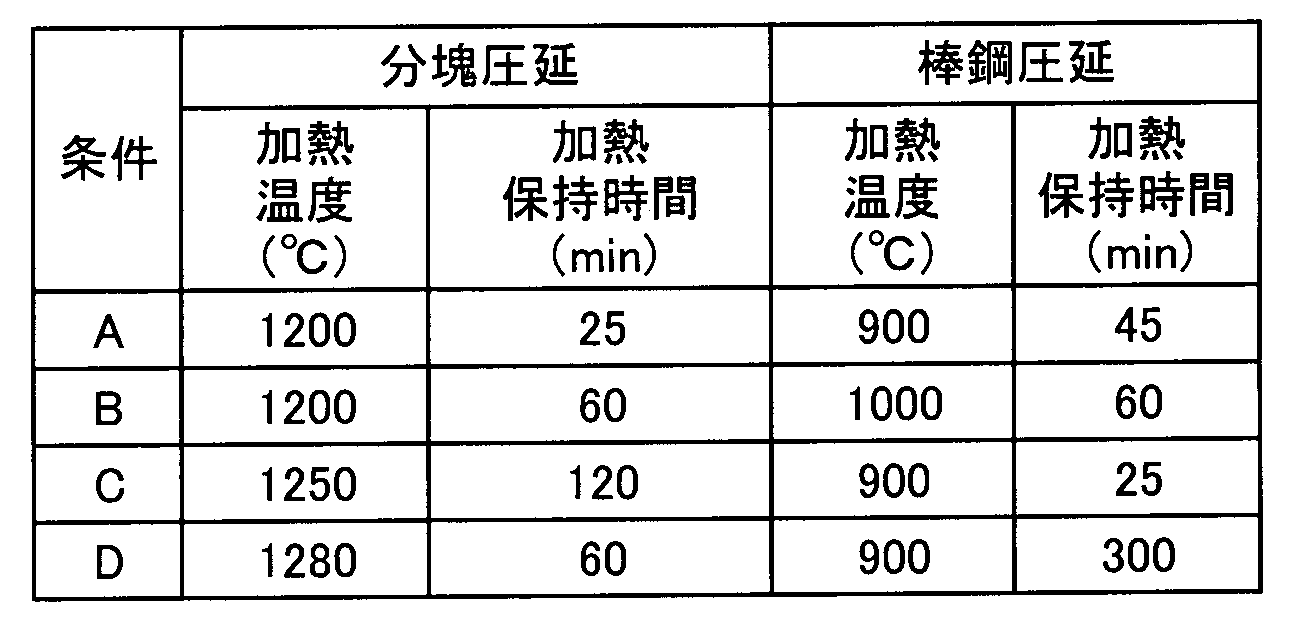
- the various steel pieces obtained were heated at the heating temperature and the heating holding time shown in Table 2 below, and then subjected to block rolling and cooled to room temperature. Next, the steel bar was rolled by heating at the heating temperature and the heating and holding time shown in Table 2 below to produce a steel bar having a diameter of 23 mm.
- a peak indicating C or N is detected, and a precipitate in which a peak of Ti and Nb is detected is determined as “a carbide and carbonitride containing Ti and Nb”, and a peak of Ti and S is detected.
- the precipitate was judged as “precipitate containing Ti and S”.
- the precipitate which showed the same aspect in a transmission image determined the precipitate by determining with the same structural element.
- the density of each precipitate was measured by Sumitomo Metal Technology's Particle Analysis Ver. Measured by 3.0. The measurement visual field was 1.35 ⁇ m ⁇ 1.60 ⁇ m, and five visual fields were observed. The arithmetic average value was defined as the density of each precipitate. The results are shown in Table 3 below.
- a cylindrical test piece of ⁇ 20 mm ⁇ L30 mm is prepared from the obtained steel bar so that the longitudinal direction is in equilibrium with the rolling direction, and cold compression of 50% in the longitudinal direction of the cylindrical test piece, that is, cold forging Went.
- this cold-compressed test piece was carburized for 60 minutes at carbon potential CP: 0.8%, temperature: 930, 950, and 980 ° C. and immersed in an oil bath at 100 ° C. After that, a tempering treatment was performed at 170 ° C. for 120 minutes to obtain a test piece for measuring crystal grain size.
- the procedure for measuring the grain size is as follows.
- No. 31 is an example using steel Z1 with a large amount of S, and (Ti, S) precipitates of 200 nm or more increase and density of (Ti, Nb) carbides of 10 nm or more and less than 200 nm cannot be secured. , Abnormal particles occurred.
- No. No. 32 is an example using steel Z2 with a small amount of Nb, and the density of (Ti, Nb) carbide or the like of less than 10 nm and not less than 10 nm and less than 200 nm could not be secured, and abnormal grains were generated.
- No. No. 33 is an example using steel Z3 with a small amount of Ti.
- No. No. 34 is an example using steel Z4 with a small amount of Nb and Ti, and the density of (Ti, Nb) carbide or the like of less than 10 nm and not less than 10 nm and less than 200 nm could not be secured, and abnormal particles were generated.
- No. No. 35 is an example using steel Z5 with a large amount of N and Nb, and the density of (Ti, Nb) carbide or the like of 10 nm or more and less than 200 nm could not be ensured, and abnormal grains were generated.
- No. Nos. 36 to 38 are examples in which the production condition B is used, which has a long heating and holding time during the block rolling, and (Ti, S) precipitates of 200 nm or more increase and (Ti, Nb) carbides of 10 nm or more and less than 200 nm. Thus, abnormal density was generated.
- No. Nos. 39 to 41 are examples in which the production condition C is used, which has a long heating and holding time during the batch rolling, and the density of (Ti, Nb) carbide or the like of 10 nm or more and less than 200 nm cannot be secured, and abnormal grains are generated. did. No. Nos.
- 42 to 44 are examples in which the production condition D is used, in which the heating temperature during the block rolling is high, the heating and holding time is long, and the heating and holding time during the steel bar rolling is long, and (Ti, S) precipitation of 200 nm or more As a result, the density of (Ti, Nb) carbide or the like of 10 nm or more and less than 200 nm could not be secured, and abnormal particles were generated.
- No. in 42 to 44 although the heating and holding time at the time of rolling the steel bar is long, the density of (Ti, Nb) carbide or the like of less than 10 nm can be sufficiently secured. This is no. In Nos.
- the case hardening steel of the present invention can be used for mechanical structural parts such as gears, shafts, continuously variable transmission (CVT) pulleys, constant velocity joints (Constant Velocity Joint, CVJ), bearings, etc. It is useful above.
- CVT continuously variable transmission
- CVJ Constant Velocity Joint
Landscapes
- Chemical & Material Sciences (AREA)
- Engineering & Computer Science (AREA)
- Mechanical Engineering (AREA)
- Materials Engineering (AREA)
- Metallurgy (AREA)
- Organic Chemistry (AREA)
- Physics & Mathematics (AREA)
- Thermal Sciences (AREA)
- Crystallography & Structural Chemistry (AREA)
- Heat Treatment Of Steel (AREA)
- Heat Treatment Of Articles (AREA)
- Solid-Phase Diffusion Into Metallic Material Surfaces (AREA)
Abstract
浸炭処理や浸炭窒化処理等の表面硬化熱処理において、異常粒発生を防止できる肌焼鋼を提供することを目的とする。本発明の肌焼鋼は、C、Si、Mn、P、S、Cr、Al、N、Nb、Tiを所定量含有するとともに、Ti及びNbを含有する円相当径10nm以上200nm未満の炭化物及び炭窒化物の密度が10個/μm2以上であり、Ti及びNbを含有する円相当径10nm未満の炭化物及び炭窒化物の密度が50個/μm2以上であり、更にTi及びSを含有する円相当径200nm以上の析出物の密度が0.20個/μm2以下であることを特徴とし、浸炭処理時の異常粒発生が抑制できる。
Description
本発明は、自動車等の輸送機器、建設機械、その他の産業機械等において、浸炭処理や浸炭窒化処理(以下、これらをまとめて「浸炭処理」と呼ぶ場合がある)等の表面硬化熱処理をして製造される機械構造部品、及びその素材となる肌焼鋼に関する。より詳細には、浸炭処理時の異常粒発生が抑制可能な肌焼鋼に関する。
輸送機器、建設機械、その他の産業機械等において、高強度が要求される機械構造部品の素材には、JIS規格で定められたSCr、SCM、SNCM等の機械構造用合金鋼鋼材いわゆる、肌焼鋼が使用されるのが一般的である。この肌焼鋼を、鍛造や切削等の機械加工により所望の部品形状に成形した後、浸炭処理や浸炭窒化処理等の表面硬化熱処理を施し、その後研磨等を行うことによって機械構造部品が製造される。
上記のような表面硬化熱処理においては、製造時のリードタイムを短縮するため、高温化を図ることによって、熱処理時間の短縮化等が行われている。しかしながら、表面硬化熱処理を高温化すると、機械構造部品の結晶粒が粗大化し、機械的特性が劣化するという問題が生じる。
このような結晶粒粗大化を防止する技術として、例えば特許文献1、2が提案されている。これらの技術では、特許文献1に開示されるようなNbおよびTiを含む複合窒化物や、特許文献2に開示されるようなNb及び/又はTi含有析出物を鋼中に分散させることによってピンニング効果を発揮させ、結晶粒の粗大化を防止している。
これまで提案されている技術のように、析出物によるピンニング効果を利用した結晶粒粗大化防止技術では、10nm以上の微細な析出物を利用していると考えられる。しかしながら、本発明者らが調査したところ、これまで提案されてきたピンニング効果を利用した技術では、近年の高温化する浸炭条件においては析出物密度が不足し、部分的に結晶粒が粗大化して異常粒が発生することが判明した。
本発明は上記のような事情に鑑みてなされたものであり、その目的は、浸炭処理や浸炭窒化処理等の表面硬化熱処理において、異常粒発生を防止できる肌焼鋼及びこれを用いた機械構造部品を提供することにある。
上記課題を達成した本発明の肌焼鋼は、
質量%で、
C :0.10~0.30%、
Si:0.01~0.50%、
Mn:0.80~2.00%、
P :0%超、0.030%以下、
S :0%超、0.030%以下、
Cr:0.50~1.50%、
Al:0.01~0.10%、
N :0.0010~0.010%、
Nb:0.040~0.150%、
Ti:0.040~0.150%
を含有し、残部が鉄及び不可避不純物であって、
Ti及びNbを含有する円相当径10nm以上200nm未満の炭化物及び炭窒化物の密度が10個/μm2以上であり、
Ti及びNbを含有する円相当径10nm未満の炭化物及び炭窒化物の密度が50個/μm2以上であり、更に
Ti及びSを含有する円相当径200nm以上の析出物の密度が0.20個/μm2以下であることを特徴とし、浸炭処理時の異常粒発生が抑制可能である。
質量%で、
C :0.10~0.30%、
Si:0.01~0.50%、
Mn:0.80~2.00%、
P :0%超、0.030%以下、
S :0%超、0.030%以下、
Cr:0.50~1.50%、
Al:0.01~0.10%、
N :0.0010~0.010%、
Nb:0.040~0.150%、
Ti:0.040~0.150%
を含有し、残部が鉄及び不可避不純物であって、
Ti及びNbを含有する円相当径10nm以上200nm未満の炭化物及び炭窒化物の密度が10個/μm2以上であり、
Ti及びNbを含有する円相当径10nm未満の炭化物及び炭窒化物の密度が50個/μm2以上であり、更に
Ti及びSを含有する円相当径200nm以上の析出物の密度が0.20個/μm2以下であることを特徴とし、浸炭処理時の異常粒発生が抑制可能である。
本発明の肌焼鋼は、必要に応じて更に質量%で以下の(a)、(b)のいずれかに属する1種以上を含有することが好ましい。
(a)Mo:0%超、2.0%以下
(b)Cu:0%超、0.10%以下及びNi:0%超、3.0%以下よりなる群から選択される1種以上
(a)Mo:0%超、2.0%以下
(b)Cu:0%超、0.10%以下及びNi:0%超、3.0%以下よりなる群から選択される1種以上
本発明は、上記したいずれかの肌焼鋼を用いて得られた、表面が浸炭処理されている機械構造部品であって、浸炭層の旧オーステナイト粒度番号の最小値が6.0以上である機械構造部品も包含する。
本発明によれば、化学組成を適切に調整し、Ti及びNbを含有する炭化物及び炭窒化物のうち、円相当径10nm以上200nm未満のもの、及び円相当径10nm未満のものをそれぞれ所定量以上確保するとともに、Ti及びSを含有する所定の大きさの析出物の密度を抑制しているため、浸炭処理時の異常粒発生を防止できる。
上述した特許文献1、2に開示されるように、Ti、Nbを含有する微細析出物は結晶粒粗大化防止に有効であるが、その密度が不足すると、不足した部分で結晶粒の粗大化が生じ、異常粒が発生した状態となる。特に近年の浸炭温度の高温化により、従来までに提案されてきた微細析出物によるピンニング効果では、異常粒発生を十分に抑制することができなかった。
そこで、本発明者らは、微細析出物が異常粒発生に与える影響を検討し、異常粒発生を抑制できる微細析出物の析出状態について鋭意研究を重ねた。その結果、(i)微細析出物のうち、結晶粒の粗大化を防止して異常粒発生を抑制するのに最も有効であるのは、Ti及びNbを含有する炭化物及び炭窒化物(以下、「(Ti、Nb)炭化物等」と呼ぶ場合がある。)のうち、サイズが10nm以上200nm未満のものであること、また前記した(i)の炭化物等を所定量確保するためには、(ii)Ti及びSを含有する粗大な析出物(以下、「粗大な(Ti、S)析出物」と呼ぶ場合がある。)を抑制することが重要であることが判明した。更に、浸炭処理時に前記した(i)の炭化物等がマトリックス中に固溶することなく、有効にピンニング効果を発揮して異常粒発生を抑制するためには、(iii)(Ti、Nb)炭化物等のうち、サイズが10nm未満であるものを所定量確保する必要があることも明らかになった。なお、本明細書において、炭化物等及び析出物のサイズは全て円相当径を意味する。
本発明者らは、浸炭処理時における異常粒発生が起こる原因について、図1のように考えた。図1は、浸炭処理前後の析出物の挙動の概念を示した模式図である。
TiとSは結合して析出物を形成するが、粗大な(Ti、S)析出物の密度が高いと、異常粒発生抑制に有効な10nm以上の(Ti、Nb)炭化物等に、Tiが有効に利用されない。そこで、粗大な(Ti、S)析出物の密度は低減しなければならない。
また、浸炭処理時には常温に比べてTi及びNbの固溶限が上昇するため、ナノオーダーのサイズの(Ti、Nb)炭化物等はマトリックス中に固溶しやすくなる。このとき、サイズの小さい(Ti、Nb)炭化物等の方がマトリックスに固溶しやすいため、10nm未満の(Ti、Nb)炭化物等を十分に確保し、浸炭時にこれらを優先的に固溶させてマトリックスの固溶限までの固溶量を補う。これによって異常粒発生を抑制するのに有効な10nm以上の(Ti、Nb)炭化物等が、浸炭処理時にマトリックス中へ固溶するのを防止できると考えられる。
以上のような考えに基づき、本発明では、浸炭処理時の異常粒発生を抑制するために、具体的に、10nm以上200nm未満の(Ti、Nb)炭化物等の密度を10個/μm2以上、10nm未満の(Ti、Nb)炭化物等の密度が50個/μm2以上とし、更に200nm以上の(Ti、S)析出物の密度が0.20個/μm2以下とする。
10nm以上200nm未満の(Ti、Nb)炭化物等、すなわち、Ti及びNbを含有する炭化物及び炭窒化物は、浸炭処理時の結晶粒粗大化防止に有効に働き、異常粒発生を抑制できる。このような効果を有効に発揮させるため、その密度は10個/μm2以上必要であり、好ましくは15個/μm2以上、より好ましくは20個/μm2以上である。10nm以上200nm未満の(Ti、Nb)炭化物等の密度の上限は特に限定されないが、通常150個/μm2程度であり、120個/μm2以下が好ましく、より好ましくは100個/μm2以下である。
10nm未満の(Ti、Nb)炭化物等、すなわち、Ti及びNbを含有する炭化物及び炭窒化物は、浸炭処理時にマトリックス中に固溶するとともに、10nm以上200nm未満の(Ti、Nb)炭化物等をオストワルド成長させ、マトリックス中への固溶を防止する。このような効果を有効に発揮させるため、10nm未満の(Ti、Nb)炭化物等の密度は、50個/μm2以上必要であり、好ましくは100個/μm2以上、より好ましくは150個/μm2以上である。10nm未満の(Ti、Nb)炭化物等の密度の上限は特に限定されないが、通常300個/μm2程度である。なお、10nm未満の(Ti、Nb)炭化物等として測定される(Ti、Nb)炭化物等のサイズの下限は特に限定されないが、電子顕微鏡等の測定装置の測定限界があるため、通常2nm程度である。
本発明における(Ti、Nb)炭化物等は、エネルギー分散型X線分光法(Energy Dispersive X-ray Spectroscopy、EDX)等を用いた元素分析により、C又はNを示すピークが検出されるとともに、Ti及びNbのピークが検出される析出物を意味する。
200nm以上の(Ti、S)析出物の密度が多くなりすぎると、異常粒発生の抑制に有効な10nm以上200nm未満の(Ti、Nb)炭化物等の個数を確保することができない。そこで、200nm以上の(Ti、S)析出物の密度は0.20個/μm2以下とする必要があり、好ましくは0.15個/μm2以下、より好ましくは0.10個/μm2以下である。200nm以上の(Ti、S)析出物は少なければ少ない程よいが、通常0個/μm2を超える値である。本発明における(Ti、S)析出物は、EDX等を用いた元素分析により、Ti及びSのピークが検出される析出物を意味する。
本発明は、上述したような炭化物等及び析出物の制御に加えて、肌焼鋼としての基本的な特性を発揮させるため、その化学組成も適切に調整する必要がある。以下に説明する。本明細書では、化学組成は全て質量%を意味する。
C:0.10~0.30%
Cは、浸炭部品として必要な芯部硬さを確保するために必要な元素である。C含有量が0.10%未満では、硬さ不足により浸炭部品としての静的強度が不足する。従ってC含有量は0.10%以上とする必要があり、好ましくは0.12%以上、より好ましくは0.15%以上である。しかしながら、Cを過剰に含有させると、硬さが過度に高くなるため靭性が低下し、衝撃特性が劣化するとともに、冷間鍛造性も低下する。従って、C含有量は0.30%以下とする必要があり、好ましくは0.28%以下、より好ましくは0.25%以下である。
Cは、浸炭部品として必要な芯部硬さを確保するために必要な元素である。C含有量が0.10%未満では、硬さ不足により浸炭部品としての静的強度が不足する。従ってC含有量は0.10%以上とする必要があり、好ましくは0.12%以上、より好ましくは0.15%以上である。しかしながら、Cを過剰に含有させると、硬さが過度に高くなるため靭性が低下し、衝撃特性が劣化するとともに、冷間鍛造性も低下する。従って、C含有量は0.30%以下とする必要があり、好ましくは0.28%以下、より好ましくは0.25%以下である。
Si:0.01~0.50%
Siは、焼戻し硬さの低下を抑えて機械構造部品の面疲労特性を改善するのに有効な元素である。こうした効果を有効に発揮させるため、Siは0.01%含有させる必要がある。Si含有量は、好ましくは0.03%以上、より好ましくは0.05%以上である。しかしながら、Siを過剰に含有させると、被削性や鍛造性等の部品成形性に悪影響を及ぼす。こうした観点からSi含有量は0.50%以下とする必要があり、好ましくは0.45%以下、より好ましくは0.40%以下である。
Siは、焼戻し硬さの低下を抑えて機械構造部品の面疲労特性を改善するのに有効な元素である。こうした効果を有効に発揮させるため、Siは0.01%含有させる必要がある。Si含有量は、好ましくは0.03%以上、より好ましくは0.05%以上である。しかしながら、Siを過剰に含有させると、被削性や鍛造性等の部品成形性に悪影響を及ぼす。こうした観点からSi含有量は0.50%以下とする必要があり、好ましくは0.45%以下、より好ましくは0.40%以下である。
Mn:0.80~2.00%
Mnは、浸炭処理時の焼入れ性を高めるのに有効な元素である。また、Mnは脱酸剤としても作用し、鋼中の酸化物系介在物量を低減して内部品質を高める作用を有する元素である。更に、Mnは赤熱脆性を防止する作用も有する。こうした作用を有効に発揮させるため、Mnは0.80%以上含有させる必要がある。Mn含有量は、好ましくは0.85%以上であり、より好ましくは0.90%以上である。しかしながら、Mnを過剰に含有させると、鍛造性が悪化しやすくなると共に、材質のばらつきが大きくなる。従って、Mn含有量は2.00%以下とする必要があり、好ましくは1.8%以下であり、より好ましくは1.7%以下である。
Mnは、浸炭処理時の焼入れ性を高めるのに有効な元素である。また、Mnは脱酸剤としても作用し、鋼中の酸化物系介在物量を低減して内部品質を高める作用を有する元素である。更に、Mnは赤熱脆性を防止する作用も有する。こうした作用を有効に発揮させるため、Mnは0.80%以上含有させる必要がある。Mn含有量は、好ましくは0.85%以上であり、より好ましくは0.90%以上である。しかしながら、Mnを過剰に含有させると、鍛造性が悪化しやすくなると共に、材質のばらつきが大きくなる。従って、Mn含有量は2.00%以下とする必要があり、好ましくは1.8%以下であり、より好ましくは1.7%以下である。
P:0%超、0.030%以下
Pは、鋼中に不可避不純物として含まれる元素であり、結晶粒界に偏析して機械構造部品の衝撃疲労特性を劣化させる。従って、P含有量は0.030%以下とする必要があり、好ましくは0.025%以下、より好ましくは0.020%以下である。P含有量は少なければ少ない程好ましいが、製造工程の制約上0%とすることは難しく、通常0.001%程度は含まれる。
Pは、鋼中に不可避不純物として含まれる元素であり、結晶粒界に偏析して機械構造部品の衝撃疲労特性を劣化させる。従って、P含有量は0.030%以下とする必要があり、好ましくは0.025%以下、より好ましくは0.020%以下である。P含有量は少なければ少ない程好ましいが、製造工程の制約上0%とすることは難しく、通常0.001%程度は含まれる。
S:0%超、0.030%以下
Sは、Mnと結合してMnSを形成し、切削加工するときの被削性を改善する元素である。こうした作用を有効に発揮させるため、Sは0.001%以上含有させることが好ましく、より好ましくは0.002%以上である。しかしながら、S含有量が過剰になってMnSの生成量が多くなると、Ti及びSを含有する析出物密度の増大や、機械構造部品としての強度劣化を引き起こす。こうした観点から、S含有量は0.030%以下とする必要があり、好ましくは0.025%以下、より好ましくは0.020%以下である。
Sは、Mnと結合してMnSを形成し、切削加工するときの被削性を改善する元素である。こうした作用を有効に発揮させるため、Sは0.001%以上含有させることが好ましく、より好ましくは0.002%以上である。しかしながら、S含有量が過剰になってMnSの生成量が多くなると、Ti及びSを含有する析出物密度の増大や、機械構造部品としての強度劣化を引き起こす。こうした観点から、S含有量は0.030%以下とする必要があり、好ましくは0.025%以下、より好ましくは0.020%以下である。
Cr:0.50~1.50%
Crは、浸炭を促進し、鋼の表面に硬化層を形成するために必要な元素である。こうした作用を有効に発揮させるため、Crは0.50%以上含有させる必要があり、好ましくは0.60%以上、より好ましくは0.70%以上である。しかしながら、Crを過剰に含有させると、過剰浸炭を引き起こし、機械構造部品の強度を低下させる。こうした観点から、Cr含有量は1.50%以下とする必要があり、好ましくは1.45%以下、より好ましくは1.40%以下である。
Crは、浸炭を促進し、鋼の表面に硬化層を形成するために必要な元素である。こうした作用を有効に発揮させるため、Crは0.50%以上含有させる必要があり、好ましくは0.60%以上、より好ましくは0.70%以上である。しかしながら、Crを過剰に含有させると、過剰浸炭を引き起こし、機械構造部品の強度を低下させる。こうした観点から、Cr含有量は1.50%以下とする必要があり、好ましくは1.45%以下、より好ましくは1.40%以下である。
Al:0.01~0.10%
Alは、脱酸剤として作用する元素であり、こうした作用を有効に発揮させるため、Alは0.01%以上含有させる必要がある。Al含有量は、好ましくは0.015%以上であり、より好ましくは0.020%以上である。しかしながら、Alを過剰に含有させると、鋼の変形抵抗が増大し、冷間鍛造性が劣化する。従って、Al含有量は0.10%以下とする必要があり、好ましくは0.080%以下であり、より好ましくは0.060%以下である。
Alは、脱酸剤として作用する元素であり、こうした作用を有効に発揮させるため、Alは0.01%以上含有させる必要がある。Al含有量は、好ましくは0.015%以上であり、より好ましくは0.020%以上である。しかしながら、Alを過剰に含有させると、鋼の変形抵抗が増大し、冷間鍛造性が劣化する。従って、Al含有量は0.10%以下とする必要があり、好ましくは0.080%以下であり、より好ましくは0.060%以下である。
N:0.0010~0.010%
Nは、機械構造部品の結晶粒度を適切に調整するために作用するTiNb炭窒化物を形成するために必要な元素である。こうした効果を発揮させるためには、Nは0.0010%以上含有させる必要があり、好ましくは0.0020%以上、より好ましくは0.0030%以上である。しかしながら、Nを過剰に含有させると、鋼中にAlN、TiNなどの窒化物が多量に形成され、切削性や鍛造性を劣化させる。こうした観点から、N含有量は0.010%以下とする必要があり、好ましくは0.009%以下、より好ましくは0.008%以下である。
Nは、機械構造部品の結晶粒度を適切に調整するために作用するTiNb炭窒化物を形成するために必要な元素である。こうした効果を発揮させるためには、Nは0.0010%以上含有させる必要があり、好ましくは0.0020%以上、より好ましくは0.0030%以上である。しかしながら、Nを過剰に含有させると、鋼中にAlN、TiNなどの窒化物が多量に形成され、切削性や鍛造性を劣化させる。こうした観点から、N含有量は0.010%以下とする必要があり、好ましくは0.009%以下、より好ましくは0.008%以下である。
Nb:0.040~0.150%
Nbは、機械構造部品の結晶粒度を適切に調整するために作用するTiNb炭化物及び炭窒化物を形成するために必要な元素である。こうした効果を発揮させるためには、Nbは0.040%以上含有させる必要があり、好ましくは0.045%以上、より好ましくは0.050%以上である。しかしながら、Nbを過剰に含有させると、鋼中に過剰にTiNb炭化物及び炭窒化物を形成し、切削性や鍛造性を劣化させる。こうした観点からNb含有量は0.150%以下とする必要があり、好ましくは0.120%以下、より好ましくは0.100%以下である。
Nbは、機械構造部品の結晶粒度を適切に調整するために作用するTiNb炭化物及び炭窒化物を形成するために必要な元素である。こうした効果を発揮させるためには、Nbは0.040%以上含有させる必要があり、好ましくは0.045%以上、より好ましくは0.050%以上である。しかしながら、Nbを過剰に含有させると、鋼中に過剰にTiNb炭化物及び炭窒化物を形成し、切削性や鍛造性を劣化させる。こうした観点からNb含有量は0.150%以下とする必要があり、好ましくは0.120%以下、より好ましくは0.100%以下である。
Ti:0.040~0.150%
Tiは、機械構造部品の結晶粒度を適切に調整するために作用するTiNb炭化物及び炭窒化物を形成するために必要な元素である。こうした効果を発揮させるためには、Tiは0.040%以上含有させる必要があり、好ましくは0.045%以上、より好ましくは0.050%以上である。しかしながら、Tiを過剰に含有させると、鋼中に過剰にTiNやTiNb炭化物及び炭窒化物を形成し、切削性や鍛造性を劣化させる。こうした観点からTi含有量は0.150%以下とする必要があり、好ましくは0.120%以下、より好ましくは0.100%以下である。
Tiは、機械構造部品の結晶粒度を適切に調整するために作用するTiNb炭化物及び炭窒化物を形成するために必要な元素である。こうした効果を発揮させるためには、Tiは0.040%以上含有させる必要があり、好ましくは0.045%以上、より好ましくは0.050%以上である。しかしながら、Tiを過剰に含有させると、鋼中に過剰にTiNやTiNb炭化物及び炭窒化物を形成し、切削性や鍛造性を劣化させる。こうした観点からTi含有量は0.150%以下とする必要があり、好ましくは0.120%以下、より好ましくは0.100%以下である。
本発明に係る肌焼鋼の基本成分は上記の通りであり、残部は実質的に鉄である。但し、原材料、資材、製造設備等の状況によって持ち込まれる不可避不純物が鋼中に含まれることは当然に許容される。
さらに本発明では、必要に応じて更に(a)Mo:0%超、2.0%以下、(b)Cu:0%超、0.10%以下及びNi:0%超、3.0%以下の少なくとも1種を含有することも有用であり、含有される元素の種類に応じて肌焼鋼の特性が更に改善される。
Mo:0%超、2.0%以下
Moは、浸炭処理における焼入性を向上する元素である。こうした作用を有効に発揮させるため、Moを0.05%以上含有させることが好ましく、より好ましくは0.08%以上、更に好ましくは0.10%以上である。しかしながら、Moを過剰に含有させると、切削性や鍛造性を劣化させる。従って、Mo含有量は2.0%以下であることが好ましく、より好ましくは1.5%以下、更に好ましくは1.2%以下である。
Moは、浸炭処理における焼入性を向上する元素である。こうした作用を有効に発揮させるため、Moを0.05%以上含有させることが好ましく、より好ましくは0.08%以上、更に好ましくは0.10%以上である。しかしながら、Moを過剰に含有させると、切削性や鍛造性を劣化させる。従って、Mo含有量は2.0%以下であることが好ましく、より好ましくは1.5%以下、更に好ましくは1.2%以下である。
Cu:0%超、0.10%以下及びNi:0%超、3.0%以下の少なくとも1種
Cu及びNiは、上記Moと同様に、浸炭処理における焼入性を高めるのに有効な元素である。また、CuとNiは、Feよりも酸化され難い元素であるため、機械構造部品の耐食性を改善するのにも作用する。これらの作用を有効に発揮させるには、Cuは0.03%以上含有することが好ましく、より好ましくは0.04%以上である。Niは0.03%以上含有することが好ましく、より好ましくは0.05%以上、更に好ましくは0.08%以上である。しかしながら、Cuを過剰に含有させると、熱間鍛造性が低下し、割れなどの問題が発生しやすくなる。従って、Cu含有量は0.10%以下とすることが好ましく、より好ましくは0.08%以下である。またNiを過剰に含有させるとコスト高となるため、Ni含有量は3.0%以下とすることが好ましく、より好ましくは2.5%以下、更に好ましくは2.0%以下である。CuとNiは、何れか一方を含有しても良いし、両方を含有しても良い。
Cu及びNiは、上記Moと同様に、浸炭処理における焼入性を高めるのに有効な元素である。また、CuとNiは、Feよりも酸化され難い元素であるため、機械構造部品の耐食性を改善するのにも作用する。これらの作用を有効に発揮させるには、Cuは0.03%以上含有することが好ましく、より好ましくは0.04%以上である。Niは0.03%以上含有することが好ましく、より好ましくは0.05%以上、更に好ましくは0.08%以上である。しかしながら、Cuを過剰に含有させると、熱間鍛造性が低下し、割れなどの問題が発生しやすくなる。従って、Cu含有量は0.10%以下とすることが好ましく、より好ましくは0.08%以下である。またNiを過剰に含有させるとコスト高となるため、Ni含有量は3.0%以下とすることが好ましく、より好ましくは2.5%以下、更に好ましくは2.0%以下である。CuとNiは、何れか一方を含有しても良いし、両方を含有しても良い。
本発明の肌焼鋼を製造するためには、所定の化学組成の鋼を通常の溶製法に従って溶製し、鋳造、分塊圧延した後、棒鋼圧延するという一連の工程において、特に分塊圧延時及び棒鋼圧延時の加熱温度と加熱保持時間を適切に調整することが好ましい。具体的には、分塊圧延時の加熱を1000~1250℃で30分未満とし、棒鋼圧延時の加熱を800~1000℃で60分以下とする。
本発明において、分塊圧延では、(Ti、S)析出物の生成を抑制しすると共に、鋳造段階で生成した(Ti、Nb)炭化物等をできるだけマトリックス中に固溶させず、異常粒発生の抑制に有効な10nm以上200nm未満の(Ti、Nb)炭化物等の核となる析出物を確保する。また、棒鋼圧延では、分塊圧延にて残存させた(Ti、Nb)炭化物等をオストワルド成長させ、異常粒発生の抑制に有効な10nm以上200nm未満の(Ti、Nb)炭化物等を上述した密度に到達させる。
分塊圧延時の加熱温度が1000℃を下回ると、分塊圧延時の圧延機への負荷が大きくなり、所望形状への圧延が困難になる。このため、加熱温度は1000℃以上が好ましい。加熱温度は1120℃以上がより好ましく、更に好ましくは1150℃以上である。しかしながら、加熱温度が高くなりすぎると、鋳造段階で生成した(Ti、Nb)炭化物等がマトリックス中に固溶するとともに、200nm以上の(Ti、S)析出物の密度が増大する。従って、分塊圧延時の加熱温度は1250℃以下が好ましく、より好ましくは1230℃以下であり、更に好ましくは1200℃以下である。また前記温度範囲での加熱保持時間が長すぎると、鋳造段階で生成した(Ti、Nb)炭化物等がマトリックス中へ固溶する。従って、加熱保持時間は30分未満が好ましく、より好ましくは25分未満である。一方、加熱保持時間が短すぎると鋼材の温度ムラができ、材質のばらつきにつながるため、加熱保持時間は5分以上が好ましく、より好ましくは10分以上である。
棒鋼圧延時の加熱温度が800℃を下回ると、棒鋼圧延機への負荷が大きくなり、所望形状への圧延が困難となる。このため、棒鋼圧延時の加熱温度は800℃以上が好ましく、より好ましくは820℃以上であり、更に好ましくは850℃以上である。しかしながら、棒鋼圧延時の加熱温度が1000℃を超えると10nm以上200nm未満の(Ti、Nb)炭化物等の密度が低下する。このため、加熱温度は1000℃以下が好ましく、より好ましくは980℃以下であり、更に好ましくは950℃以下である。また、前記温度範囲での加熱保持時間が長すぎると10nm未満の(Ti、Nb)炭化物等の密度が低下する。このため、加熱保持時間は60分以下が好ましく、より好ましくは45分以下である。加熱保持時間が短すぎると鋼材の温度ムラができ、材質のばらつきにつながるため、加熱保持時間は5分以上が好ましく、より好ましくは10分以上である。
上記のように分塊圧延時及び棒鋼圧延時の加熱温度及び加熱保持時間の条件を満足させることによって、10nm以上200nm未満の(Ti、Nb)炭化物等の密度を10個/μm2以上、10nm未満の(Ti、Nb)炭化物等の密度を50個/μm2以上とし、更に200nm以上の(Ti、S)析出物の密度を0.20個/μm2以下とできる。本発明の肌焼鋼の形状は特に限定されないが、例えばφ10~150mmの棒鋼である。このような要件を満足する本発明の肌焼鋼に、浸炭処理を施して得られる、すなわち表面が浸炭処理されている機械構造部品は、異常粒発生を抑制でき、このような機械構造部品も本発明に含まれる。特に、本発明の機械構造部品は、JIS G0551(2005)に基づいて測定される旧オーステナイト結晶粒度番号の最小値を6番以上とでき、すなわち最も大きな旧オーステナイト結晶粒径を粒度番号で6番以上とでき、異常粒の発生を抑制できる。前記結晶粒度番号の最小値の上限は限定されないが、通常9番程度である。前記浸炭処理条件は特に限定されず、例えば900~1000℃の温度で行えば良く、特に930℃以上、更に好ましくは950℃以上のような高温で浸炭を行った場合でも、本発明の肌焼鋼は異常粒発生を抑制でき、異常粒発生の抑制された機械構造部品を得ることができる。
本発明の肌焼鋼を用いた機械構造部品としては、具体的に、歯車、シャフト類、無段変速機(Continuously Variable Transmission、CVT)プーリ、等速ジョイント(Constant Velocity Joint、CVJ)、軸受等が挙げられる。
本願は、2014年2月27日に出願された日本国特許出願第2014-036210号に基づく優先権の利益を主張するものである。2014年2月27日に出願された日本国特許出願第2014-036210号の明細書の全内容が、本願に参考のため援用される。
以下、実施例を挙げて本発明をより具体的に説明する。本発明は以下の実施例によって制限を受けるものではなく、前記、後記の趣旨に適合し得る範囲で適当に変更を加えて実施することも勿論可能であり、それらはいずれも本発明の技術的範囲に包含される。
下記表1に示す化学組成を満たす鋼を、通常の溶製法に従って溶製炉で溶製し、鋼片を製造した。
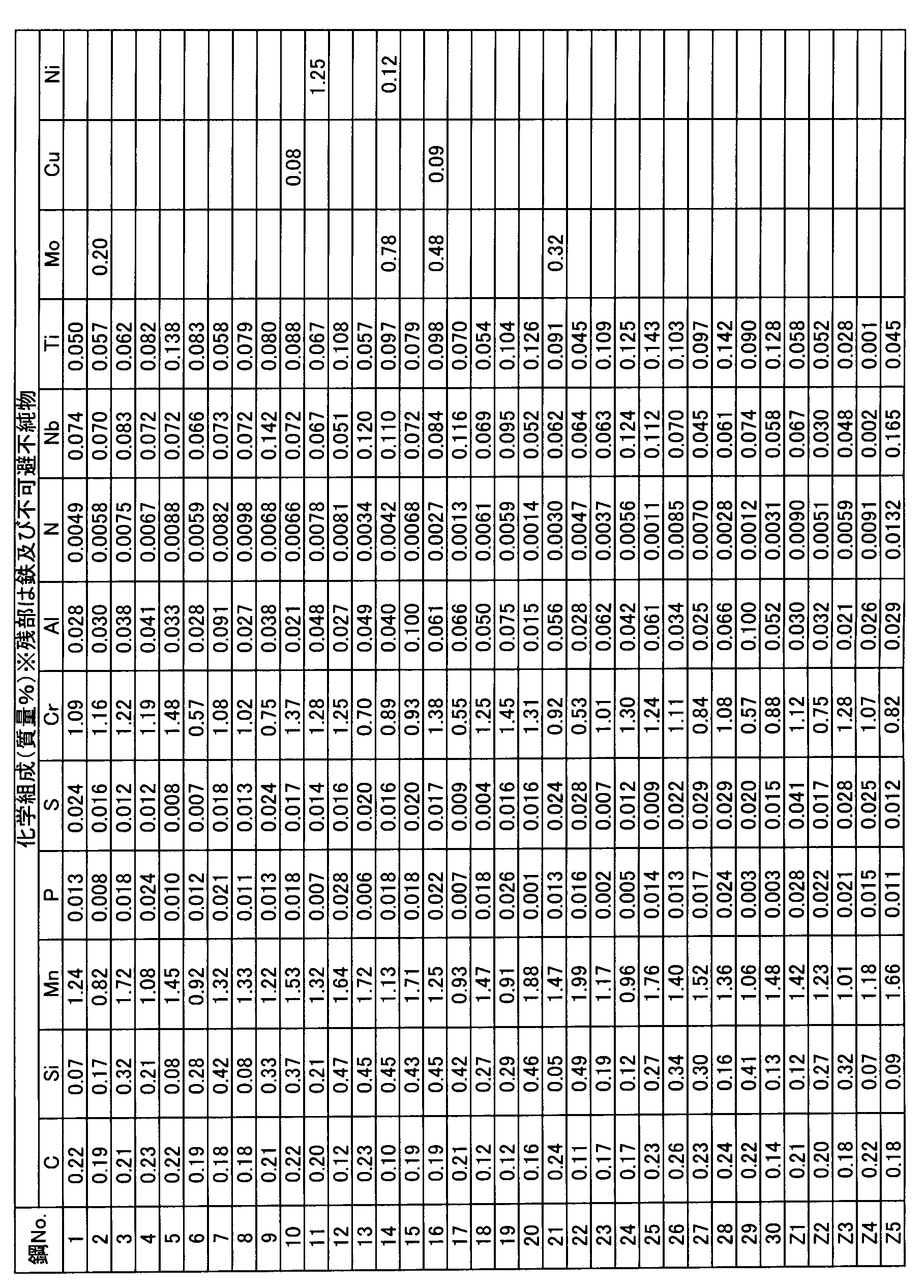
得られた各種鋼片を、下記表2に示す加熱温度及び加熱保持時間で加熱した後、分塊圧延を行い、室温まで冷却した。次いで、下記表2に示す加熱温度及び加熱保持時間に加熱して棒鋼圧延を行い、直径23mmの棒鋼を製造した。
Ti及びNbを含有する炭化物及び炭窒化物、ならびにTi及びSを含有する析出物の観察を次の手順で行った。
(1)各析出物の密度の測定
得られた棒鋼の横断面、すなわち、棒鋼の軸心と垂直な断面を機械研磨した後、電解研磨を行い、エタノールと3%硝酸との混合液であるナイタール液によるエッチングの後、カーボン蒸着を行う抽出レプリカ法によりレプリカ膜を作製した。析出物の観察は、棒鋼の直径をDとして、前記横断面のD/4位置を、日立製作所製の透過電子顕微鏡H-800を用いて75000倍で観察することにより行った。観察された析出物の構成元素は、堀場製作所製EDX分析装置EMAX-7000による点分析により測定した。C又はNを示すピークが検出されるとともに、Ti及びNbのピークが検出される析出物を「Ti及びNbを含有する炭化物及び炭窒化物」と判断し、Ti及びSのピークが検出される析出物を「Ti及びSを含有する析出物」と判断した。なお、透過画像にて同様の様相を呈する析出物は同一の構成元素と判定することにより析出物の判定を行った。また、各析出物の密度は、住友金属テクノロジー社製粒子解析Ver.3.0により測定した。測定視野は1.35μm×1.60μmとして、5視野観察し、その算術平均値を各析出物の密度とした。結果を下記表3に示す。
得られた棒鋼の横断面、すなわち、棒鋼の軸心と垂直な断面を機械研磨した後、電解研磨を行い、エタノールと3%硝酸との混合液であるナイタール液によるエッチングの後、カーボン蒸着を行う抽出レプリカ法によりレプリカ膜を作製した。析出物の観察は、棒鋼の直径をDとして、前記横断面のD/4位置を、日立製作所製の透過電子顕微鏡H-800を用いて75000倍で観察することにより行った。観察された析出物の構成元素は、堀場製作所製EDX分析装置EMAX-7000による点分析により測定した。C又はNを示すピークが検出されるとともに、Ti及びNbのピークが検出される析出物を「Ti及びNbを含有する炭化物及び炭窒化物」と判断し、Ti及びSのピークが検出される析出物を「Ti及びSを含有する析出物」と判断した。なお、透過画像にて同様の様相を呈する析出物は同一の構成元素と判定することにより析出物の判定を行った。また、各析出物の密度は、住友金属テクノロジー社製粒子解析Ver.3.0により測定した。測定視野は1.35μm×1.60μmとして、5視野観察し、その算術平均値を各析出物の密度とした。結果を下記表3に示す。
次に、得られた棒鋼より、長手方向が圧延方向と平衡になるようにφ20mm×L30mmの円柱試験片を作製し、該円柱試験片の長手方向に50%の冷間圧縮、すなわち冷間鍛造を行った。この冷間圧縮を行った試験片を、図2で示す通り、カーボンポテンシャルCP:0.8%、温度:930、950、980℃の各温度で60分間浸炭して100℃の油浴に浸漬した後、170℃で120分間の焼戻し処理を行って、結晶粒度測定用の試験片とした。結晶粒度測定の手順は以下の通りである。
(2)旧オーステナイト粒の結晶粒度番号の判定
前記した結晶粒度測定用の試験片の、圧縮方向に平行な面を切出し、ナイタール液でエッチングした後、光学顕微鏡を用いて倍率100倍で観察し、JIS G0551(2005)に従って旧オーステナイト粒の粒度番号を測定した。粒度番号の測定は、圧縮端部の表層部で行い、結晶粒が最も大きくなった部分の粒度番号、すなわち最大γ粒度を測定した。そして最大γ粒度が6.0以上であるものを、異常粒の「発生なし」と評価した。結果を表3に示す。
前記した結晶粒度測定用の試験片の、圧縮方向に平行な面を切出し、ナイタール液でエッチングした後、光学顕微鏡を用いて倍率100倍で観察し、JIS G0551(2005)に従って旧オーステナイト粒の粒度番号を測定した。粒度番号の測定は、圧縮端部の表層部で行い、結晶粒が最も大きくなった部分の粒度番号、すなわち最大γ粒度を測定した。そして最大γ粒度が6.0以上であるものを、異常粒の「発生なし」と評価した。結果を表3に示す。
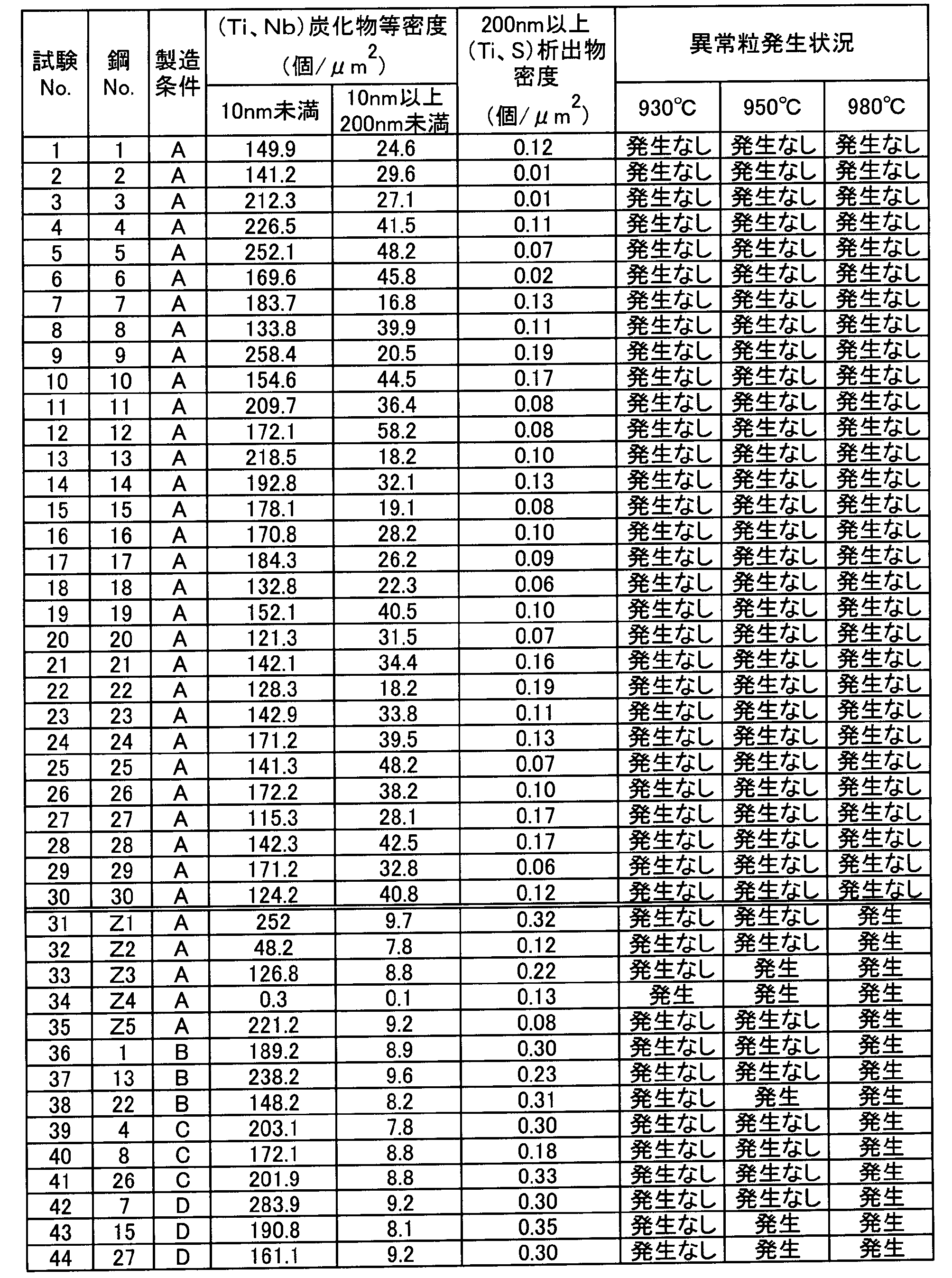
表3の試験No.1~30は、本発明で規定する化学組成を満足する鋼を、適切な製造条件、すなわち適切な分塊圧延時及び棒鋼圧延時の加熱温度及び加熱保持時間で製造したため、(Ti、Nb)炭化物等や(Ti、S)析出物の密度を本発明の要件を満足するように調整でき、浸炭処理時の異常粒発生を抑制できた。
一方、表3の試験No.31~44は、鋼の化学組成又は製造条件が不適切だったため、(Ti、Nb)炭化物等や(Ti、S)析出物の密度を、本発明で規定する範囲に調整することができず、浸炭処理時の異常粒が発生した。
No.31はS量が多い鋼Z1を用いた例であり、200nm以上の(Ti、S)析出物が増加し、10nm以上200nm未満の(Ti、Nb)炭化物等の密度を確保することができず、異常粒が発生した。No.32はNb量が少ない鋼Z2を用いた例であり、10nm未満、及び10nm以上200nm未満の(Ti、Nb)炭化物等の密度を確保することができず、異常粒が発生した。No.33はTi量が少ない鋼Z3を用いた例であり、200nm以上の(Ti、S)析出物が増加し、10nm以上200nm未満の(Ti、Nb)炭化物等の密度を確保することができず、異常粒が発生した。No.34はNb及びTi量が少ない鋼Z4を用いた例であり、10nm未満、及び10nm以上200nm未満の(Ti、Nb)炭化物等の密度を確保することができず、異常粒が発生した。No.35はN及びNb量が多い鋼Z5を用いた例であり、10nm以上200nm未満の(Ti、Nb)炭化物等の密度を確保することができず、異常粒が発生した。これは、過剰なN量の存在により粗大なTiNが析出し、(Ti、Nb)炭化物等を形成するためのTi量が不足したため、10nm以上200nm未満の(Ti、Nb)炭化物等の密度が不足したと考えられる。
No.36~38は、分塊圧延時の加熱保持時間が長い製造条件Bを採用した例であり、200nm以上の(Ti、S)析出物が増加し、10nm以上200nm未満の(Ti、Nb)炭化物等の密度を確保することができず、異常粒が発生した。No.39~41は分塊圧延時の加熱保持時間が長い製造条件Cを採用した例であり、10nm以上200nm未満の(Ti、Nb)炭化物等の密度を確保することができず、異常粒が発生した。No.42~44は、分塊圧延時の加熱温度が高いとともに加熱保持時間が長く、さらに棒鋼圧延時の加熱保持時間が長い製造条件Dを採用した例であり、200nm以上の(Ti、S)析出物が増加し、10nm以上200nm未満の(Ti、Nb)炭化物等の密度を確保することができず、異常粒が発生した。なお、No.42~44では棒鋼圧延時の加熱保持時間が長いものの、10nm未満の(Ti、Nb)炭化物等の密度を十分に確保できている。これは、No.42~44では、分塊圧延時の加熱温度が高いとともに加熱保持時間も長いため、鋳造時に生成した(Ti、Nb)炭化物等が十分に固溶し、その結果、分塊圧延時に微細な10nm未満の(Ti、Nb)炭化物等が多く析出したためと考えられる。また、製造条件Dのように、鋳造時に生成した(Ti、Nb)炭化物等を分塊圧延時に一旦固溶させてしまうと、後の棒鋼圧延時に長時間加熱しても10nm以上200nm未満の(Ti、Nb)炭化物等の密度を十分に確保することができない。
本発明の肌焼鋼は、歯車、シャフト類、無段変速機(Continuously Variable Transmission、CVT)プーリ、等速ジョイント(Constant Velocity Joint、CVJ)、軸受等の機械構造部品に用いることができ、産業上有用である。
Claims (3)
- 質量%で、
C :0.10~0.30%、
Si:0.01~0.50%、
Mn:0.80~2.00%、
P :0%超、0.030%以下、
S :0%超、0.030%以下、
Cr:0.50~1.50%、
Al:0.01~0.10%、
N :0.0010~0.010%、
Nb:0.040~0.150%、
Ti:0.040~0.150%
を含有し、残部が鉄及び不可避不純物であって、
Ti及びNbを含有する円相当径10nm以上200nm未満の炭化物及び炭窒化物の密度が10個/μm2以上であり、
Ti及びNbを含有する円相当径10nm未満の炭化物及び炭窒化物の密度が50個/μm2以上であり、更に
Ti及びSを含有する円相当径200nm以上の析出物の密度が0.20個/μm2以下であることを特徴とする浸炭処理時の異常粒発生が抑制可能な肌焼鋼。 - 更に、質量%で以下の(a)、(b)のいずれかに属する1種以上を含有する請求項1に記載の肌焼鋼。
(a)Mo:0%超、2.0%以下
(b)Cu:0%超、0.10%以下及びNi:0%超、3.0%以下よりなる群から選択される1種以上 - 請求項1または2に記載の肌焼鋼を用いて得られた、表面が浸炭処理されている機械構造部品であって、浸炭層の旧オーステナイト粒度番号の最小値が6.0以上であることを特徴とする機械構造部品。
Applications Claiming Priority (2)
| Application Number | Priority Date | Filing Date | Title |
|---|---|---|---|
| JP2014036210A JP6186289B2 (ja) | 2014-02-27 | 2014-02-27 | 浸炭処理時の異常粒発生が抑制可能な肌焼鋼及びこれを用いた機械構造部品 |
| JP2014-036210 | 2014-02-27 |
Publications (1)
| Publication Number | Publication Date |
|---|---|
| WO2015129402A1 true WO2015129402A1 (ja) | 2015-09-03 |
Family
ID=54008728
Family Applications (1)
| Application Number | Title | Priority Date | Filing Date |
|---|---|---|---|
| PCT/JP2015/052958 Ceased WO2015129402A1 (ja) | 2014-02-27 | 2015-02-03 | 浸炭処理時の異常粒発生が抑制可能な肌焼鋼及びこれを用いた機械構造部品 |
Country Status (3)
| Country | Link |
|---|---|
| JP (1) | JP6186289B2 (ja) |
| TW (1) | TWI544089B (ja) |
| WO (1) | WO2015129402A1 (ja) |
Cited By (1)
| Publication number | Priority date | Publication date | Assignee | Title |
|---|---|---|---|---|
| JP2020164936A (ja) * | 2019-03-29 | 2020-10-08 | Jfeスチール株式会社 | 浸炭用鋼およびその製造方法 |
Families Citing this family (2)
| Publication number | Priority date | Publication date | Assignee | Title |
|---|---|---|---|---|
| JP7200646B2 (ja) * | 2018-12-12 | 2023-01-10 | 日本製鉄株式会社 | 浸炭部品、浸炭部品用の素形材、及び、それらの製造方法 |
| JP2020139185A (ja) * | 2019-02-27 | 2020-09-03 | Jfeスチール株式会社 | 肌焼鋼の製造方法 |
Citations (4)
| Publication number | Priority date | Publication date | Assignee | Title |
|---|---|---|---|---|
| JP2011094169A (ja) * | 2009-10-27 | 2011-05-12 | Kobe Steel Ltd | 結晶粒粗大化防止特性に優れた肌焼鋼 |
| JP2011219854A (ja) * | 2010-03-26 | 2011-11-04 | Jfe Steel Corp | 肌焼鋼およびその製造方法 |
| JP2012072427A (ja) * | 2010-09-28 | 2012-04-12 | Kobe Steel Ltd | 肌焼鋼およびその製造方法 |
| JP2012158827A (ja) * | 2011-02-03 | 2012-08-23 | Sumitomo Metal Ind Ltd | 表面硬化用熱間加工鋼材 |
-
2014
- 2014-02-27 JP JP2014036210A patent/JP6186289B2/ja not_active Expired - Fee Related
-
2015
- 2015-02-03 WO PCT/JP2015/052958 patent/WO2015129402A1/ja not_active Ceased
- 2015-02-10 TW TW104104422A patent/TWI544089B/zh not_active IP Right Cessation
Patent Citations (4)
| Publication number | Priority date | Publication date | Assignee | Title |
|---|---|---|---|---|
| JP2011094169A (ja) * | 2009-10-27 | 2011-05-12 | Kobe Steel Ltd | 結晶粒粗大化防止特性に優れた肌焼鋼 |
| JP2011219854A (ja) * | 2010-03-26 | 2011-11-04 | Jfe Steel Corp | 肌焼鋼およびその製造方法 |
| JP2012072427A (ja) * | 2010-09-28 | 2012-04-12 | Kobe Steel Ltd | 肌焼鋼およびその製造方法 |
| JP2012158827A (ja) * | 2011-02-03 | 2012-08-23 | Sumitomo Metal Ind Ltd | 表面硬化用熱間加工鋼材 |
Cited By (1)
| Publication number | Priority date | Publication date | Assignee | Title |
|---|---|---|---|---|
| JP2020164936A (ja) * | 2019-03-29 | 2020-10-08 | Jfeスチール株式会社 | 浸炭用鋼およびその製造方法 |
Also Published As
| Publication number | Publication date |
|---|---|
| JP6186289B2 (ja) | 2017-08-23 |
| TW201544608A (zh) | 2015-12-01 |
| TWI544089B (zh) | 2016-08-01 |
| JP2015160979A (ja) | 2015-09-07 |
Similar Documents
| Publication | Publication Date | Title |
|---|---|---|
| CN103443316B (zh) | 表面硬化钢及其制造方法、以及使用表面硬化钢的机械构造零件 | |
| JP4956146B2 (ja) | 鍛造性と結晶粒粗大化防止特性に優れた肌焼鋼およびその製造方法並びに浸炭部品 | |
| JP5385656B2 (ja) | 最大結晶粒の縮小化特性に優れた肌焼鋼 | |
| JP6479527B2 (ja) | 酸洗性、および焼入れ焼戻し後の耐遅れ破壊性に優れたボルト用線材、並びにボルト | |
| WO2012046779A1 (ja) | 肌焼鋼及びその製造方法 | |
| JP4725401B2 (ja) | 鋼製部品及びその製造方法 | |
| WO2012043074A1 (ja) | 肌焼鋼およびその製造方法 | |
| JP6182489B2 (ja) | 優れた冷間鍛造性を有し、浸炭処理時の異常粒発生が抑制可能な肌焼鋼 | |
| CN111684094A (zh) | 进行渗碳处理的部件用钢材 | |
| JP2012237052A (ja) | 冷間鍛造性および結晶粒粗大化抑制能に優れた肌焼鋼とその製造方法 | |
| JP4464862B2 (ja) | 耐結晶粒粗大化特性と冷間加工性に優れた軟化焼鈍の省略可能な肌焼用鋼 | |
| JP5649887B2 (ja) | 肌焼鋼およびその製造方法 | |
| JP4347763B2 (ja) | 高温浸炭用鋼およびその製造方法 | |
| JP6186289B2 (ja) | 浸炭処理時の異常粒発生が抑制可能な肌焼鋼及びこれを用いた機械構造部品 | |
| JP5643622B2 (ja) | 肌焼鋼、およびこれを用いた機械構造部品 | |
| JP7149131B2 (ja) | 冷間加工性および耐結晶粒粗大化特性に優れた機械構造用鋼 | |
| JP6029950B2 (ja) | 熱間鍛造後、焼ならし省略可能で、高温浸炭性に優れた肌焼鋼および部品の製造方法 | |
| JP2017133052A (ja) | 浸炭時の粗大粒防止特性と疲労特性と被削性に優れた肌焼鋼およびその製造方法 | |
| CN112955571B (zh) | 软氮化用钢及软氮化部件以及它们的制造方法 | |
| JP2005200667A (ja) | 高温浸炭用鋼およびその製造方法 | |
| JP4807949B2 (ja) | 高温浸炭特性に優れた肌焼用圧延棒鋼 | |
| JP2016188422A (ja) | 浸炭部品 | |
| JP4464861B2 (ja) | 耐結晶粒粗大化特性と冷間加工性に優れた肌焼用鋼 | |
| WO2017170127A1 (ja) | 肌焼鋼 | |
| JP6635100B2 (ja) | 肌焼鋼 |
Legal Events
| Date | Code | Title | Description |
|---|---|---|---|
| 121 | Ep: the epo has been informed by wipo that ep was designated in this application |
Ref document number: 15755294 Country of ref document: EP Kind code of ref document: A1 |
|
| NENP | Non-entry into the national phase |
Ref country code: DE |
|
| 122 | Ep: pct application non-entry in european phase |
Ref document number: 15755294 Country of ref document: EP Kind code of ref document: A1 |