WO2015087628A1 - 消泡剤組成物 - Google Patents
消泡剤組成物 Download PDFInfo
- Publication number
- WO2015087628A1 WO2015087628A1 PCT/JP2014/078225 JP2014078225W WO2015087628A1 WO 2015087628 A1 WO2015087628 A1 WO 2015087628A1 JP 2014078225 W JP2014078225 W JP 2014078225W WO 2015087628 A1 WO2015087628 A1 WO 2015087628A1
- Authority
- WO
- WIPO (PCT)
- Prior art keywords
- group
- polyoxyalkylene
- carbon atoms
- alkyl
- acid
- Prior art date
- Legal status (The legal status is an assumption and is not a legal conclusion. Google has not performed a legal analysis and makes no representation as to the accuracy of the status listed.)
- Ceased
Links
- 0 C=*1C2NCC12 Chemical compound C=*1C2NCC12 0.000 description 2
Images




Classifications
-
- C—CHEMISTRY; METALLURGY
- C08—ORGANIC MACROMOLECULAR COMPOUNDS; THEIR PREPARATION OR CHEMICAL WORKING-UP; COMPOSITIONS BASED THEREON
- C08G—MACROMOLECULAR COMPOUNDS OBTAINED OTHERWISE THAN BY REACTIONS ONLY INVOLVING UNSATURATED CARBON-TO-CARBON BONDS
- C08G77/00—Macromolecular compounds obtained by reactions forming a linkage containing silicon with or without sulfur, nitrogen, oxygen or carbon in the main chain of the macromolecule
- C08G77/42—Block-or graft-polymers containing polysiloxane sequences
- C08G77/46—Block-or graft-polymers containing polysiloxane sequences containing polyether sequences
-
- B—PERFORMING OPERATIONS; TRANSPORTING
- B01—PHYSICAL OR CHEMICAL PROCESSES OR APPARATUS IN GENERAL
- B01D—SEPARATION
- B01D19/00—Degasification of liquids
- B01D19/02—Foam dispersion or prevention
- B01D19/04—Foam dispersion or prevention by addition of chemical substances
-
- C—CHEMISTRY; METALLURGY
- C07—ORGANIC CHEMISTRY
- C07F—ACYCLIC, CARBOCYCLIC OR HETEROCYCLIC COMPOUNDS CONTAINING ELEMENTS OTHER THAN CARBON, HYDROGEN, HALOGEN, OXYGEN, NITROGEN, SULFUR, SELENIUM OR TELLURIUM
- C07F7/00—Compounds containing elements of Groups 4 or 14 of the Periodic Table
- C07F7/02—Silicon compounds
- C07F7/08—Compounds having one or more C—Si linkages
- C07F7/18—Compounds having one or more C—Si linkages as well as one or more C—O—Si linkages
- C07F7/1804—Compounds having Si-O-C linkages
-
- C—CHEMISTRY; METALLURGY
- C08—ORGANIC MACROMOLECULAR COMPOUNDS; THEIR PREPARATION OR CHEMICAL WORKING-UP; COMPOSITIONS BASED THEREON
- C08G—MACROMOLECULAR COMPOUNDS OBTAINED OTHERWISE THAN BY REACTIONS ONLY INVOLVING UNSATURATED CARBON-TO-CARBON BONDS
- C08G81/00—Macromolecular compounds obtained by interreacting polymers in the absence of monomers, e.g. block polymers
Definitions
- the present invention relates to a gemini-type alkyl-polyoxyalkylene-modified silicone, a method for producing the same, and an antifoaming composition containing the silicone, and more specifically, self-emulsification with good water dispersibility and excellent defoaming sustainability.
- the present invention relates to a mold defoamer composition.
- Gemini type alkyl-polyoxyalkylene modified silicone Conventional surfactants were mainly straight-chain type composed of one hydrophilic part and one hydrophobic part. Recently, however, Gemini type and multi-chains with multiple hydrophilic parts and hydrophobic parts are used. Development of next-generation surfactants such as molds has been promoted, and gemini-type surfactants with different structures of hydrophobic groups, hydrophilic groups, and linking groups have been synthesized and their performance has been analyzed.
- Gemini-type surfactants have a lower critical micelle concentration than straight-chain surfactants, and the surface activity equivalent to that of linear-type surfactants can be obtained with a very small amount, reducing the total amount of surfactant in chemical products. Therefore, it has been attracting attention as an environmentally friendly alternative material that not only improves the productivity of a process using a surfactant but also reduces the environmental load.
- each activator molecule In the straight-chain type, each activator molecule must be spaced apart by intermolecular repulsion, whereas in the Gemini type, the straight-chain part approaches and is oriented to the interface, so a dense higher-order molecular assembly Can be formed. In addition, many have excellent properties such as emulsifying power, dispersing power, and cell characteristics.
- silicone oils the hydrocarbon groups and siloxane chains of general surfactants are poorly compatible and often cause destabilization in emulsions of silicone oils.
- An agent may be used in combination.
- the silicone-based surfactant has a problem that it is difficult to form a strong high-order molecular assembly at the interface due to the non-crystalline nature of the siloxane bond, and sufficient stability cannot be ensured.
- silicone surfactants having a siloxane skeleton in the hydrophobic part those having such a Gemini-type structure are disclosed in Patent Document 1, but can be applied because the hydrophilic part is a cationic functional group. There was a limitation in composition.
- Silicone-based antifoaming agents have various superior properties compared to other antifoaming agents, so that chemical industry, food industry, petroleum industry, textile industry, paper industry, paper pulp industry, pharmaceutical industry, etc. Widely used in processes involving foaming, for example, an oil compound type antifoaming agent obtained by mixing silicone oil such as dimethylpolysiloxane, methylphenylpolysiloxane, methylvinylpolysiloxane and the like with fine powder silica, and these silicone oil compounds. An emulsion type antifoaming agent dispersed in water together with a surfactant is widely used.
- this emulsion type antifoaming agent has a problem that the emulsified particles are destroyed under severe conditions such as high temperature, high alkalinity, and high shearing force, and the defoaming ability is lowered.
- Self-emulsifying antifoaming agents Patent Documents 2 to 6) in which an organopolysiloxane modified with a group and a silicone oil compound are used in combination have been proposed.
- silicone-based antifoaming agents may cause problems such as a decrease in defoaming performance and separation / precipitation due to prolonged contact with a foaming liquid, particularly an alkaline foaming liquid. there were.
- Patent Document 7 a method of hydrophobizing silica used in an oil compound with chlorosilane or the like in advance
- Patent Document 8 a method of treating with a contained organosilicon compound
- the present invention provides a novel gemini-type alkyl-polyoxyalkylene-modified silicone useful for the preparation of a silicone emulsion and a method for producing the same, and an aqueous dispersion containing the gemini-type alkyl-polyoxyalkylene-modified silicone.
- An object of the present invention is to provide a self-emulsifying antifoaming agent composition having good properties and excellent defoaming sustainability.
- the present inventor uses low-cost and naturally derived ricinoleic acid and its derivatives, which account for the majority of fatty acids constituting castor oil, as a starting material, esterification with one-end-capped polyoxyalkylene, and then reactive groups at both ends.
- the present invention has been completed by finding a gemini-type alkyl-polyoxyalkylene-modified silicone having three components of a polysiloxane moiety, an alkyl moiety, and a polyether moiety in one molecule and a process for producing the same by condensing with an organopolysiloxane having .
- the present inventor uses a gemini-type alkyl-polyoxyalkylene-modified silicone having three components of a polysiloxane moiety, an alkyl moiety, and a polyether moiety in one molecule as a dispersant, a silicone oil compound, a polyoxy
- an antifoaming agent composition containing an alkylene-modified organopolysiloxane and, if necessary, a polyoxyalkylene polymer has good water dispersibility and excellent antifoaming sustainability, thereby completing the present invention.
- the present invention provides the following gemini-type alkyl-polyoxyalkylene-modified silicone, a process for producing the same, and an antifoaming composition containing the gemini-type alkyl-polyoxyalkylene-modified silicone.
- a gemini-type alkyl-polyoxyalkylene-modified silicone represented by the following general formula (A):
- R 1 , R 2 , R 3 , R 4 , R 5 and R 6 are the same or different and may have a halogen atom, hydroxyl group, amino group, thiol group or hydrosilyl group, An alkyl group having 1 to 30 carbon atoms, a cycloalkyl group having 3 to 30 carbon atoms, an aryl group having 6 to 30 carbon atoms, or an aralkyl group having 7 to 30 carbon atoms, and n is an integer of 0 to 300.
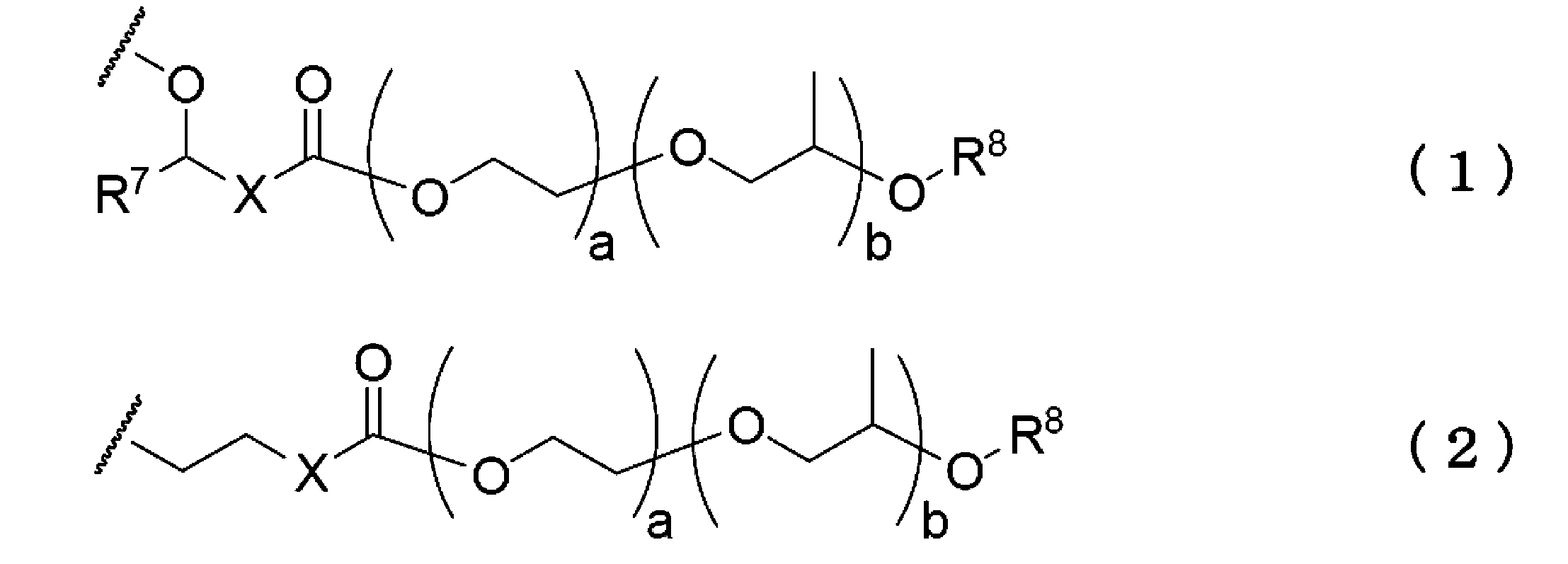
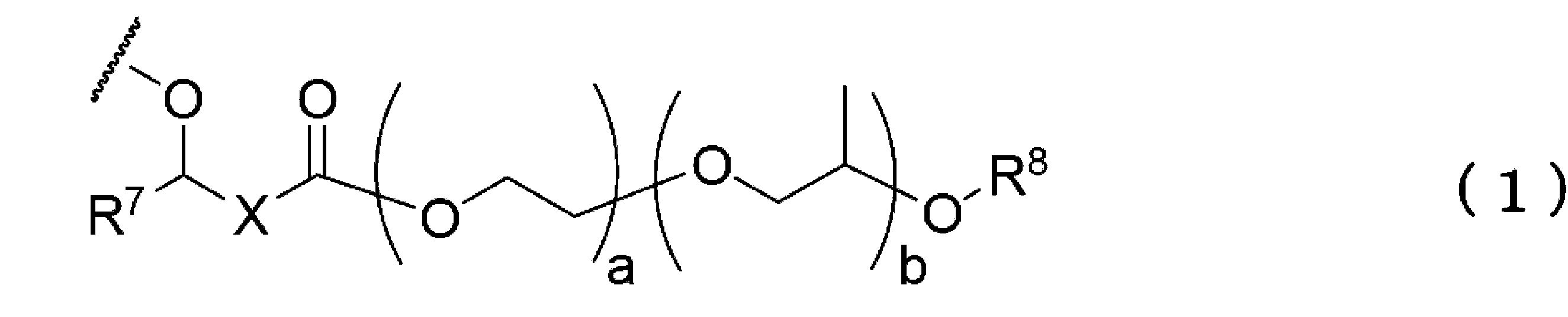
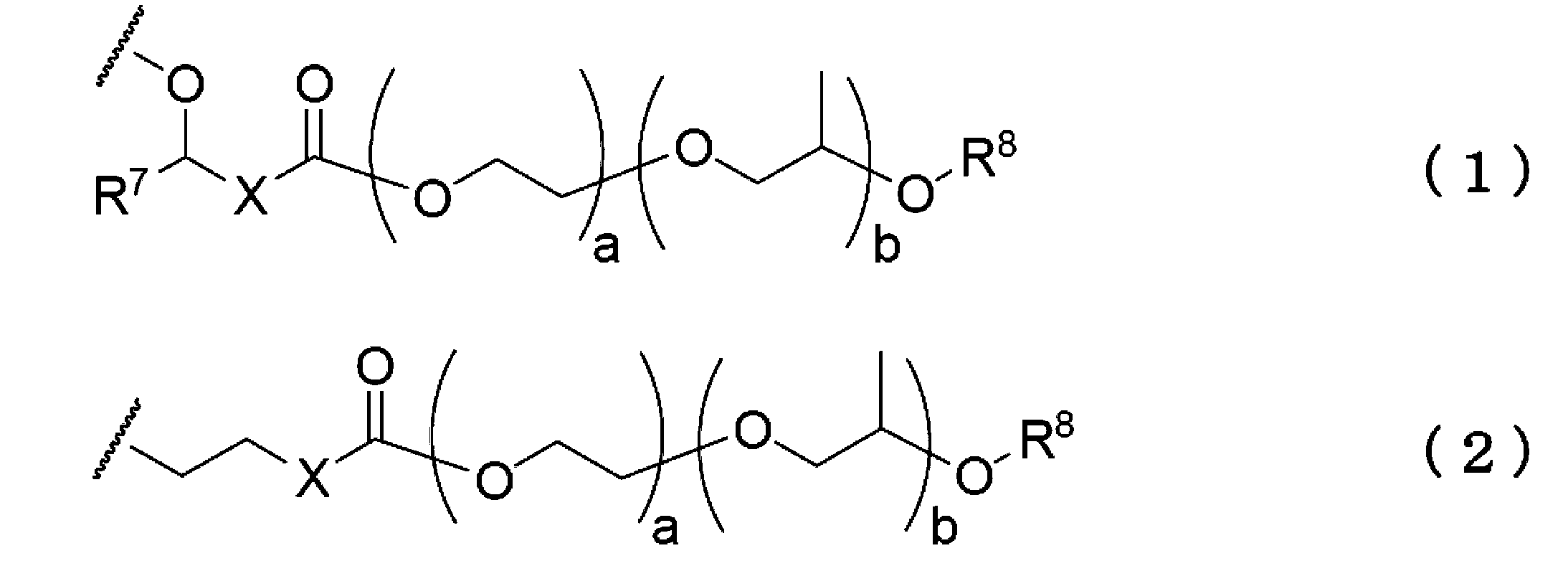
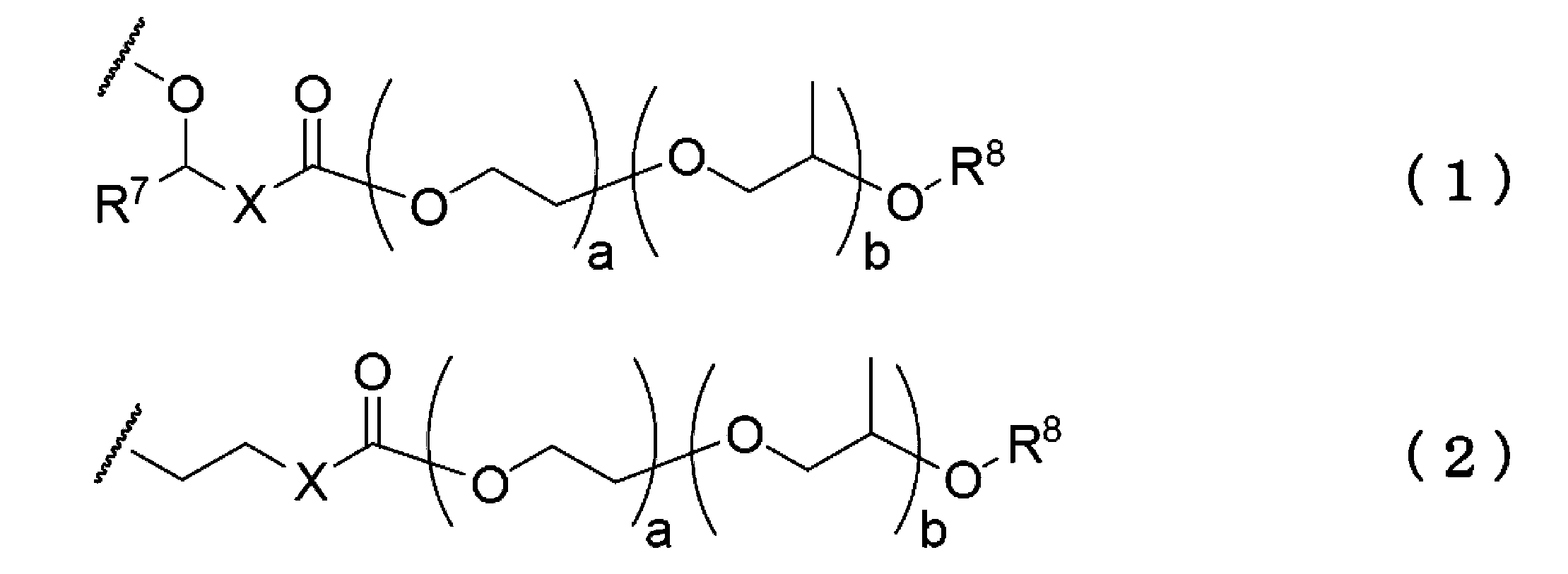
- B is the same or different and represents a group represented by the following general formula (1) or a group represented by the following general formula (2).
- R 7 and X are each a hydrocarbon group having 1 to 40 carbon atoms which may be substituted with a halogen atom, an alkoxy group, a nitro group, a cyano group or a substituted amino group, and R 8 is a hydrogen atom.
- R 8 is a hydrogen atom.
- a and b are numbers satisfying 2 ⁇ a ⁇ 200, 0 ⁇ b ⁇ 200, and a + b satisfying 2 to 200, respectively.
- One end-capped polyoxyalkylene and a hydroxyalkyl carboxylic acid derivative a) Transesterification reaction of one end-capped polyoxyalkylene with a hydroxyalkyl carboxylic acid ester or b) One end-capped polyoxyalkylene hydroxyl group and hydroxy A first step of condensing by subjecting to a carboxyl group esterification reaction of an alkyl carboxylic acid;
- the hydroxyalkyl-polyoxyalkylene condensate obtained in this first step and the organopolysiloxane having reactive groups at both ends are c) hydroxyl groups of the hydroxyalkyl-polyoxyalkylene condensate and hydrosilyl groups at both ends Dehydrocondensation reaction with an organopolysiloxane having a platinum group metal catalyst or base catalyst, or d) Hydrolyzable groups directly bonded to the hydroxyl group and silicon atom of the hydroxyalkyl-polyoxyalkylene condensate at
- the hydroxyalkyl carboxylic acid derivative is at least one selected from the group consisting of ricinoleic acid, 12-hydroxystearic acid and their methyl esters, ethyl esters, n-propyl esters, i-propyl esters and butyl esters.
- alkylcarboxylic acid having a double bond at the terminal is selected from the group consisting of undecylenic acid and their methyl esters, ethyl esters, n-propyl esters, i-propyl esters, butyl esters.
- Gemini-type alkyl-polyoxyalkylene-modified silicone represented by the following general formula (A): 1 to 80% by mass
- R 1 , R 2 , R 3 , R 4 , R 5 and R 6 are the same or different and may have a halogen atom, hydroxyl group, amino group, thiol group or hydrosilyl group, An alkyl group having 1 to 30 carbon atoms, a cycloalkyl group having 3 to 30 carbon atoms, an aryl group having 6 to 30 carbon atoms, or an aralkyl group having 7 to 30 carbon atoms, and n is an integer of 0 to 300.
- (B) is the same or different and represents a group represented by the following general formula (1).
- R 7 and X are each a hydrocarbon group having 1 to 40 carbon atoms which may be substituted with a halogen atom, an alkoxy group, a nitro group, a cyano group or a substituted amino group, and R 8 is a hydrogen atom.
- R 8 is a hydrogen atom.
- a and b are numbers satisfying 2 ⁇ a ⁇ 200, 0 ⁇ b ⁇ 200, and a + b satisfying 2 to 200, respectively.
- the gemini-type alkyl-polyoxyalkylene-modified silicone of the present invention is useful for the preparation of silicone emulsions, and the production method of the present invention can be obtained in a short step from fatty acids that are inexpensive and easily available from nature. And Further, the self-emulsifying antifoam composition of the present invention has particularly good water dispersibility and excellent defoaming sustainability.
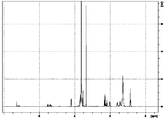
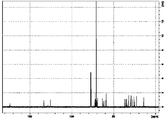
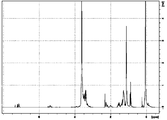
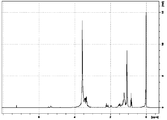
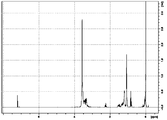
- 1 is a 1 H-NMR spectrum of a ricinoleic acid / polyoxyethylene condensate obtained in (1) of Example 1.
- 3 is a 13 C-NMR spectrum of a ricinoleic acid-polyoxyethylene condensate obtained in (1) of Example 1.
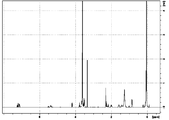
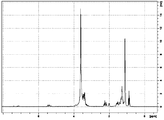
- 2 is a 1 H-NMR spectrum of a gemini-type alkyl-polyoxyethylene-modified silicone obtained in (2) of Example 1.
- 3 is a 13 C-NMR spectrum of a gemini-type alkyl-polyoxyethylene-modified silicone obtained in Example 1 (2).
- 2 is a 1 H-NMR spectrum of a ricinoleic acid / polyoxyalkylene condensate obtained in (3) of Example 2.
- 3 is a 13 C-NMR spectrum of a ricinoleic acid / polyoxyalkylene condensate obtained in (2) of Example 2.
- 1 is a 1 H-NMR spectrum of a gemini-type alkyl-polyoxyalkylene-modified silicone obtained in (4) of Example 2.
- 3 is a 13 C-NMR spectrum of a gemini-type alkyl-polyoxyalkylene-modified silicone obtained in (4) of Example 2.
- 1 is a 1 H-NMR spectrum of a gemini-type alkyl-polyoxyalkylene-modified silicone obtained in Example 2 (5).
- 6 is a 13 C-NMR spectrum of a gemini-type alkyl-polyoxyalkylene-modified silicone obtained in Example 2 (5).
- FIG. 3 is a 1 H-NMR spectrum of a 12-hydroxystearic acid / polyoxyalkylene condensate obtained in (4) of Example 4.
- FIG. 1 is a 1 H-NMR spectrum of a gemini-type alkyl-polyoxyalkylene-modified silicone obtained in Example 9, (9).
- an organopolysiloxane residue having a reactive group at both ends and an alkyl-polyoxyalkylene residue (B) can be obtained by Si—C or Si—O bonding.
- R 1 , R 2 , R 3 , R 4 , R 5 and R 6 are the same or different and may have a halogen atom, hydroxyl group, amino group, thiol group or hydrosilyl group, An alkyl group having 1 to 30 carbon atoms, a cycloalkyl group having 3 to 30 carbon atoms, an aryl group having 6 to 30 carbon atoms, or an aralkyl group having 7 to 30 carbon atoms, and n is an integer of 0 to 300.
- B is the same or different and represents a group represented by the following general formula (1) or a group represented by the following general formula (2).
- R 7 and X are each a hydrocarbon group having 1 to 40 carbon atoms which may be substituted with a halogen atom, an alkoxy group, a nitro group, a cyano group or a substituted amino group, and R 8 is a hydrogen atom.
- R 8 is a hydrogen atom.
- a and b are numbers satisfying 2 ⁇ a ⁇ 200, 0 ⁇ b ⁇ 200, and a + b satisfying 2 to 200, respectively.
- R 1 , R 2 , R 3 , R 4 , R 5 and R 6 are the same or different and each represents a halogen atom, a hydroxyl group, an amino group, a thiol group or a hydrosilyl group.
- alkyl group having 1 to 30 carbon atoms, a cycloalkyl group having 3 to 30 carbon atoms, an aryl group having 6 to 30 carbon atoms, or an aralkyl group having 7 to 30 carbon atoms which may be included, Examples include alkyl groups such as methyl, ethyl, propyl, butyl, pentyl, hexyl, heptyl, octyl, nonyl and decyl; cycloalkyl such as cyclopentyl and cyclohexyl; phenyl Group, aryl groups such as tolyl group; aralkyl groups such as benzyl group and phenethyl group; some hydrogens such as trifluoropropyl group and nonafluorooctyl group Examples include a group substituted with a rogen, preferably a methyl group.
- N is an integer of 0 or more and 300 or less, preferably 2 to 100, more preferably 5 to 50.
- the organosiloxane residue has, for example, an organohydrogensiloxane having Si—H groups at both ends and hydrolyzable groups bonded to silicon atoms at both ends, as will be described later with respect to the method for producing the silicone of the present invention. It can be derived from an organon polysiloxane.
- (B) is the same or different and represents a group represented by the following general formula (1) or a group represented by the following general formula (2).
- R 7 and X are basically hydrocarbon groups having 1 to 40 carbon atoms, preferably 1 to 20 carbon atoms.
- examples of the hydrocarbon group include an alkyl group, an alkenylene group, a cycloalkyl group, a cycloalkenylene group, an aryl group, and an arylene group.
- These hydrocarbon groups may further have a substituent, such as an alkoxy group (methoxy group, ethoxy group, propoxy group, n-butoxy group, isobutoxy group, t-butoxy group, etc.). ); Halogen atom (fluorine atom, chlorine atom, etc.); nitro group; cyano group; substituted amino group (dialkylamino group etc.).
- R 7 and X are preferably unsubstituted linear hydrocarbon groups because they can be derived from readily available raw materials and suppress side reactions.
- R 8 represents a hydrogen atom, an alkyl group having 1 to 30 carbon atoms such as a methyl group, an ethyl group, a propyl group, a butyl group, a pentyl group or a hexyl group, or an acyl group having 2 to 30 carbon atoms such as a formyl group or an acetyl group.
- a methyl group, a butyl group, and an acetyl group are preferable because they are easily available.
- a and b are integers of 2 ⁇ a ⁇ 200, preferably 5 ⁇ a ⁇ 100, 0 ⁇ b ⁇ 200, preferably 0 ⁇ b ⁇ 100, and a + b is 2 to 200, preferably 5 to 100 It is.
- the polyoxyalkylene moiety in the general formulas (1) and (2) is composed of both an ethylene oxide unit and a propylene oxide unit, it is either a block polymer or a random polymer of these both units. May be.
- the hydroxyalkylcarboxylic acid residues in the alkyl-polyoxyalkylene residue (B) may be the same or different and examples of suitable hydroxyalkylcarboxylic acids are glycolic acid, lactic acid, 5-hydroxyvaleric acid, 6-hydroxy Examples include caproic acid, ricinoleic acid, 12-hydroxystearic acid, 12-hydroxydodecanoic acid, 5-hydroxydodecanoic acid, 5-hydroxydecanoic acid, 4-hydroxydecanoic acid and their derivatives. Availability and cost Therefore, ricinoleic acid and its derivatives, or 12-hydroxystearic acid and its derivatives are particularly preferable.
- the present inventors have found the following method as a method for producing the gemini-type alkyl-polyoxyalkylene-modified silicone of the present invention.
- One end-capped polyoxyalkylene and a hydroxyalkyl carboxylic acid derivative a) Transesterification reaction of one end-capped polyoxyalkylene with a hydroxyalkyl carboxylic acid ester or b) One end-capped polyoxyalkylene hydroxyl group And a first step of condensing by subjecting to a carboxyl group esterification reaction of hydroxyalkyl carboxylic acid,
- the hydroxyalkyl-polyoxyalkylene condensate obtained in this first step and the organopolysiloxane having reactive groups at both ends are c) hydroxyl groups of the hydroxyalkyl-polyoxyalkylene condensate and hydrosilyl groups at both ends
- a process for producing a gemini-type alkyl-polyoxyalkylene-modified silicone characterized in that it is produced by a second step of subjecting an organopolysiloxane having a terminal to a condensation reaction under a condensation catalyst.
- Examples of the carboxylic acid used for condensing the polyoxyalkylene with one end blocked by transesterification with the hydroxyalkyl carboxylic acid ester or the alkyl carboxylic acid ester having a double bond at the main chain terminal include glycolic acid, lactic acid, 5-hydroxyvaleric acid, 6-hydroxycaproic acid, ricinoleic acid, 12-hydroxystearic acid, 12-hydroxydodecanoic acid, 5-hydroxydodecanoic acid, 5-hydroxydecanoic acid and 4-hydroxydecanoic acid, methyl ester of undecylenic acid , Ethyl ester, n-propyl ester, i-propyl ester, butyl ester, but ricinoleic acid, 12-hydroxystearic acid, methyl ester of undecylenic acid, and ethyl ester are preferred because of their availability and cost. .
- the amount of the hydroxyalkyl carboxylic acid ester or the alkyl carboxylic acid ester having a double bond at the end of the main chain is preferably 0.9 to 1.4 mol relative to 1 mol of the one-end blocked polyoxyalkylene, In particular, 1.0 to 1.3 mol is preferable, and 1.05 to 1.25 mol is more preferable.
- reaction may be carried out by adding the entire amount to one-end-capped polyoxyalkylene at the time of preparation. Alternatively, it can be added in the middle of the reaction.
- the reaction can be performed without solvent or using a solvent.
- the solvent to be used is not particularly limited, but an aromatic hydrocarbon solvent such as toluene and xylene, an aliphatic hydrocarbon solvent such as hexane and heptane, diethyl ether, tetrahydrofuran, monoethylene glycol dimethyl ether, diethylene glycol Ether solvents such as dimethyl ether, ketone solvents such as acetone, methyl ethyl ketone and methyl isobutyl ketone, ester solvents such as ethyl acetate, butyl acetate and gamma butyrolactone, amide solvents such as dimethylformamide, dimethylacetamide and N-methylpyrrolidone Are preferably used. These solvents may be used alone, or a plurality of arbitrary solvents may be mixed and used.
- the amount of the hydroxyalkyl carboxylic acid ester as the raw material or the concentration of the alkyl carboxylic acid ester having a double bond at the main chain terminal is usually at least 0.1% by mass, preferably 1% by mass.
- the upper limit is not particularly limited, but is usually 80% by mass or less, preferably 60% by mass or less.
- the transesterification reaction is usually performed in the presence of a catalyst.
- a catalyst those generally usable in transesterification can be applied.
- transition metal compounds such as titanium tetraisopropoxide, alkali metal or alkaline earth metal alcoholates such as sodium methoxide, etc.
- aluminum alkoxides such as aluminum triisopropoxide, alkali metal or alkaline earth metal hydroxides such as lithium hydroxide and sodium hydroxide, and tin compounds such as dibutyltin oxide and dioctyltin oxide.
- the lower limit of the amount of these catalysts used is usually 0.01 mol% or more, preferably 0 with respect to 1 mol of the raw material hydroxyalkylcarboxylic acid ester or alkylcarboxylic acid ester having a double bond at the end of the main chain.
- the addition method of these catalysts is not particularly limited, and after adding the whole amount to the raw material hydroxyalkyl carboxylic acid ester or the alkyl carboxylic acid ester having a double bond at the main chain terminal, it is reacted with the one-end-capped polyoxyalkylene.
- reaction it is also possible to carry out the reaction with a hydroxyalkyl carboxylic acid ester or an alkyl carboxylic acid ester having a double bond at the end of the main chain after addition of the whole amount at the time of preparation of one-end-capped polyoxyalkylene,
- the reaction may be carried out by adding an acid ester or an alkyl carboxylic acid ester having a double bond at the end of the main chain and one end-blocked polyoxyalkylene and then adding the whole amount. Further, it is also possible to adopt addition in divided portions during the reaction.
- the reaction is preferably performed in a reactor equipped with a normal stirring device. Further, the reaction may be carried out while transferring the equilibrium to the production system while distilling off the alcohol generated during the reaction.
- the reaction temperature is preferably heated to obtain a sufficient reaction rate.
- the lower limit is usually ⁇ 10 ° C. or higher, preferably 0 ° C. or higher
- the upper limit is usually 200 ° C. or lower, preferably 150 ° C. or lower.
- the reaction time is arbitrarily selected, but since alcohol is produced as the reaction proceeds, it is preferable to continue the reaction until a predetermined amount of alcohol is produced.
- the lower limit is usually 10 minutes or longer, preferably 30 minutes or longer
- the upper limit is not particularly limited, but is usually 50 hours or shorter, preferably 30 hours or shorter.
- Examples of the carboxylic acid used when condensing one-end-capped polyoxyalkylene with hydroxyalkyl carboxylic acid or alkyl carboxylic acid having a double bond at the end of the main chain by direct dehydration include glycolic acid, lactic acid, 5-hydroxy Herbic acid, 6-hydroxycaproic acid, ricinoleic acid, 12-hydroxystearic acid, 12-hydroxydodecanoic acid, 5-hydroxydodecanoic acid, 5-hydroxydecanoic acid and 4-hydroxydecanoic acid, undecylenic acid, In terms of ease and cost, ricinoleic acid, 12-hydroxystearic acid and undecylenic acid are preferred.
- the lower limit of the amount of the hydroxyalkyl carboxylic acid or the alkyl carboxylic acid having a double bond at the end of the main chain is 0.9 mol equivalent or more, preferably 1 with respect to the number of moles of the one-end blocked polyoxyalkylene.
- 0.0 mole equivalent or more preferably 1.05 mole equivalent or more
- the upper limit is 1.4 mole equivalent or less, preferably 1.3 mole equivalent or less, preferably 1.25 mole equivalent or less.
- reaction may be carried out by adding the entire amount to the one-end blocked polyoxyalkylene at the time of preparation, or It is also possible to employ addition in divided portions during the reaction.
- the reaction proceeds rapidly when a dehydrating condensing agent is present.
- a dehydrating condensing agent any condensing agent generally known for esterification can be used without particular limitation.
- N, N′-dicyclohexylcarbodiimide, 2-chloro-1,3-dimethylimidazolium chloride can be used.
- Propanephosphonic anhydride is preferably used.
- an organic basic substance such as pyridine, 4-dimethylaminopyridine or triethylamine may be used in combination.
- the lower limit of the reaction temperature usually employed in this reaction is usually ⁇ 20 ° C., preferably ⁇ 10 ° C.
- the upper limit is usually 150 ° C., preferably 100 ° C.
- the amount of the dehydrating condensing agent used is theoretically sufficient if it is used in an equivalent amount or more with respect to the hydroxyalkyl carboxylic acid as the substrate or the alkyl carboxylic acid having a double bond at the end of the main chain, but it can be used in excess. .
- it is 1.0 molar equivalent or more, more preferably 1.1 molar equivalent or more.
- the reaction is carried out while distilling off the water produced in the presence of acid in the presence of acid-blocked polyoxyalkylene and hydroxyalkylcarboxylic acid or alkylcarboxylic acid having a double bond at the end of the main chain. be able to.
- the acid used here is not particularly limited as long as it is an acid used in ordinary esterification reactions.
- inorganic acids such as sulfuric acid and hydrochloric acid, p-toluenesulfonic acid, methanesulfonic acid, camphorsulfonic acid And organic sulfonic acids such as acid-type ion exchange resins, Lewis acids such as fluorinated boron / ether complexes, and water-soluble Lewis acids such as lanthanide triflate.
- Lewis acids such as fluorinated boron / ether complexes
- water-soluble Lewis acids such as lanthanide triflate.
- the lower limit of the amount of the acid used is 0.001 mol% or more, preferably 0.01 mol% or more, more preferably 1 mol of hydroxyalkylcarboxylic acid or 1 mol of alkylcarboxylic acid having a double bond at the end of the main chain. Is 0.1 mol% or more.
- the upper limit is not limited and is 10 mol equivalent or less, preferably 1 mol equivalent or less.
- This reaction can be performed without a solvent or using a solvent.
- the solvent to be used is not particularly limited, but an aromatic hydrocarbon solvent such as toluene and xylene, an aliphatic hydrocarbon solvent such as hexane and heptane, diethyl ether, tetrahydrofuran, monoethylene glycol dimethyl ether, diethylene glycol Ether solvents such as dimethyl ether, halogen solvents such as methylene chloride, chloroform, carbon tetrachloride, and the like are preferably used. These solvents may be used alone, or a plurality of arbitrary solvents may be mixed and used.
- the amount of the hydroxyalkyl carboxylic acid as the raw material or the concentration of the alkyl carboxylic acid having a double bond at the main chain terminal is usually 0.1% by mass or more, preferably 1% by mass.
- the upper limit is not particularly limited, but is usually 80% by mass or less, and preferably 60% by mass or less.
- the reaction is usually carried out at or above the boiling point of the solvent used, and the reaction is carried out while distilling off the water produced.
- the reaction time is arbitrarily selected, but the end point of the reaction can be recognized by measuring the amount of water produced.
- the lower limit is usually 10 minutes or more, preferably 30 minutes or more
- the upper limit is not particularly limited, but is usually 20 hours or less, preferably 10 hours or less.
- Dehydrogenation condensation In order to introduce an organopolysiloxane group into the hydroxyalkyl-polyoxyalkylene condensate obtained in the first step, hydrosilyl at both ends having hydrogen atoms bonded to silicon atoms (ie, Si—H groups) Dehydrogenation condensation is performed in the presence of a group-containing organopolysiloxane and a platinum group metal catalyst such as platinum or rhodium, or a base catalyst.
- the amount of the organopolysiloxane having hydrosilyl groups at both ends is preferably 0.4 to 0.55 mol, particularly 0.45 to 0.52 mol, relative to 1 mol of the hydroxyalkyl-polyoxyalkylene condensate. Is preferred.
- the reaction can be carried out by adding the entire amount to the hydroxyalkyl-polyoxyalkylene condensate at the time of charging, or added in the middle of the reaction.
- the platinum group metal catalyst used in the present dehydrogenative condensation reaction is preferably a platinum catalyst, and examples thereof include chloroplatinic acid, alcohol-modified chloroplatinic acid, and chloroplatinic acid-vinylsiloxane complex.
- Base catalysts include monomethylamine, dimethylamine, monoethylamine, diethylamine, diethylhydroxyamine, triethylamine, triethanolamine, monopropylamine, dipropylamine, dipropylhydroxyamine, tripropylamine, monobutylamine, dibutylamine , Dibutylhydroxyamine, tributylamine, monoheptylamine, monohexylamine, dihexylamine, dihexylhydroxyamine, trihexylamine, monooctylamine, dioctylamine, dioctylhydroxyamine, trioctylamine, monolaurylamine, dilaurylamine, Dilaurylhydroxyamine, trilaurylamine,
- the amount of the dehydrogenative condensation reaction catalyst is not particularly limited as long as it is an effective amount.
- the amount of platinum group metal such as platinum or rhodium is not limited to organopolysiloxane having hydrosilyl groups at both ends and hydroxyalkyl-polyoxy.
- the total amount of the alkylene condensate is usually preferably 50 ppm or less, particularly preferably 20 ppm or less, and particularly preferably 0.1 ppm or more as the lower limit, based on mass.
- the amount of the base catalyst used is not particularly limited, but is usually 2% by mass or less on a mass basis with respect to the total amount of the organopolysiloxane having hydrosilyl groups at both ends and the hydroxyalkyl-polyoxyalkylene condensate.
- the lower limit is preferably 0.01% by mass or more, particularly preferably 1% by mass or less.
- the reaction with the hydroxyalkyl-polyoxyalkylene condensate can be carried out. It can be reacted with an organopolysiloxane having hydrosilyl groups at both ends after addition of the whole amount at the time of preparation of the alkyl-polyoxyalkylene condensate, or an organopolysiloxane having hydrosilyl groups at both ends and a hydroxyalkyl-polyoxy After mixing the alkylene condensate, the whole amount may be added to carry out the reaction. Further, it is also possible to adopt addition in divided portions during the reaction.
- the above dehydrogenation condensation reaction may be performed in an organic solvent as necessary.
- the organic solvent is preferably one having no active hydrogen, for example, aromatic hydrocarbons such as toluene and xylene; aliphatic or alicyclic hydrocarbons such as n-pentane, n-hexane and cyclohexane; dichloromethane, chloroform, And halogenated hydrocarbons such as carbon tetrachloride.
- the amount of the solvent is such that the concentration of the raw material hydroxyalkyl-polyoxyalkylene condensate is usually at least 0.1% by mass, preferably at least 1% by mass, and the upper limit is not particularly limited.
- the amount is 80% by mass or less, preferably 60% by mass or less.
- the conditions for the dehydrogenative condensation reaction are not particularly limited, but it is desirable to carry out the reaction for about 1 to 10 hours under reflux.
- an alkoxy group such as a methoxy group, an ethoxy group, a propoxy group, a butoxy group, a methoxyethoxy group or an isopropenoxy group directly bonded to a silicon atom
- an acyloxy group such as an acetoxy group, an ethylamino group, or the like
- Those having an oxime group such as an amino group, an amide group, and an ethylmethylbutanoxime group, and a halogen atom such as a chlorine atom and a bromine atom.
- a methoxy group, an ethoxy group, a propoxy group, and a butoxy group are industrially advantageous.
- alkoxy groups include CH 3 COO—, CH 3 (C 2 H 5 ) C ⁇ NO—, (C 2 H 5 ) 2 N—, CH 3 CO (C 2 H 5 ) N—, CH 2 It may be substituted with a group such as ⁇ (CH 3 ) CO—.
- the amount of the organopolysiloxane having hydrolyzable groups bonded to silicon atoms at both ends is preferably 0.4 to 0.55 mol per mol of the hydroxyalkyl-polyoxyalkylene condensate. More preferably 45 to 0.52 mol.
- the reaction can be carried out by adding the entire amount to the hydroxyalkyl-polyoxyalkylene condensate at the time of charging, or It is also possible to employ addition in divided portions during the reaction.
- condensation catalyst used in this reaction examples include organic tin compounds (dibutyltin dimethoxide, dioctyltin dimethoxide, dibutyltin dilaurate, etc.), organic titanium compounds (tetran-butyl titanate, etc.), organic acids (acetic acid, methanesulfonic acid, etc.) , Fluorine-modified carboxylic acid, etc.), inorganic acids (hydrochloric acid, sulfuric acid, etc.) and the like. Of these, acetic acid, tetra-n-butyl titanate, dibutyltin dilaurate, fluorine-modified carboxylic acid and the like are particularly desirable.
- the addition amount of the condensation catalyst may be a so-called catalytic amount, and is usually 0.01 to 5 parts by mass with respect to 100 parts by mass in total of the hydroxyalkyl-polyoxyalkylene condensate and the organon polysiloxane having hydrolyzable groups at both ends. In particular, 0.1 to 1 part by mass is preferable.
- condensation reaction is not particularly limited in the solvent used, but aromatic hydrocarbon solvents such as toluene and xylene, aliphatic hydrocarbon solvents such as hexane and heptane, diethyl ether, tetrahydrofuran, monoethylene glycol dimethyl ether, Ether solvents such as diethylene glycol dimethyl ether, ketone solvents such as acetone, methyl ethyl ketone and methyl isobutyl ketone, ester solvents such as ethyl acetate, butyl acetate and gamma butyrolactone, amide solvents such as dimethylformamide, dimethylacetamide and N-methylpyrrolidone Etc. are preferably used. These solvents may be used alone, or a plurality of arbitrary solvents may be mixed and used.
- the amount of the solvent is such that the concentration of the raw material alkyl-polyoxyalkylene condensate is usually 0.1% by mass or more, preferably 1% by mass or more, and the upper limit is not particularly limited.
- the amount is less than mass%, preferably less than 60 mass%.
- reaction conditions are not particularly limited, but the reaction is carried out at the boiling point or higher of the solvent to be used, and by repeating the solvent substitution several times, the component derived from the hydrolyzable group to be generated is removed, and the equilibrium is transferred to the production system. It is desirable to carry out the reaction.
- the amount of the organopolysiloxane having hydrosilyl groups at both ends is preferably 0.4 to 0.55 mol, based on 1 mol of the alkyl-polyoxyalkylene condensate having a double bond at the end, and 0.45 to 0.52 mol is more preferable.
- the reaction may be carried out by adding the entire amount to the alkyl-polyoxyalkylene condensate having a double bond at the ends at the time of charging, or Although it is possible to add it in the middle of the reaction, it is desirable to add dropwise using a dropping funnel or the like in order to avoid the release of heat due to a rapid reaction.
- the platinum group metal catalyst used in the above addition reaction is preferably a platinum catalyst, and examples thereof include chloroplatinic acid, alcohol-modified chloroplatinic acid, chloroplatinic acid-vinylsiloxane complex, and the like.
- the amount of addition reaction catalyst used is not particularly limited as long as it is an effective amount, but as an amount of platinum group metal such as platinum or rhodium, it has an organopolysiloxane having hydrosilyl groups at both ends and a double bond at the ends.
- the total amount of the alkyl-polyoxyalkylene condensate is usually preferably 50 ppm or less, particularly preferably 20 ppm or less, and particularly preferably 0.1 ppm or more as a lower limit, based on the mass.
- the amount of alkylamine used is not particularly limited, but on a mass basis with respect to the total amount of the organopolysiloxane having hydrosilyl groups at both ends and the alkyl-polyoxyalkylene condensate having double bonds at the ends, Usually, it is preferably 2% by mass or less, particularly preferably 1% by mass or less, and the lower limit is preferably 0.01% by mass or more.
- the addition method of these addition reaction catalysts is not particularly limited, and after adding the whole amount to the organopolysiloxane having hydrosilyl groups at both ends of the raw material, the reaction is performed with an alkyl-polyoxyalkylene condensate having a double bond at the ends.
- the whole is added and then reacted with an organopolysiloxane having a hydrosilyl group at the terminal, or an organopolysiloxane having a hydrosilyl group at the terminal.
- the reaction may be carried out by mixing siloxane and an alkyl-polyoxyalkylene condensate having a double bond at the terminal and then adding the entire amount. Further, it is also possible to adopt addition in divided portions during the reaction.
- the above addition reaction may be performed in an organic solvent as necessary.
- the organic solvent is preferably one having no active hydrogen, for example, aromatic hydrocarbons such as toluene and xylene; aliphatic or alicyclic hydrocarbons such as n-pentane, n-hexane and cyclohexane; dichloromethane, chloroform, And halogenated hydrocarbons such as carbon tetrachloride.
- the amount of the solvent is such that the concentration of the alkyl-polyoxyalkylene condensate having a double bond at the terminal, which is a raw material, is usually a lower limit of 0.1% by mass or more, preferably 1% by mass or more. Although there is no restriction
- the conditions for this addition reaction are not particularly limited, but it is desirable to carry out the reaction for about 1 to 10 hours under reflux.
- the component (A) of the defoamer composition of the present invention comprises the aforementioned organopolysiloxane residue and alkyl-polyoxyalkylene residue (1) represented by the following general formula (A): It is a gemini-type alkyl-polyoxyalkylene-modified silicone obtained by O-bonding, and is a component for helping to disperse the silicone oil compound of the composition of the present invention and imparting good water dispersibility and defoaming persistence. .
- a component may be used individually by 1 type, or may be used in combination of 2 or more type.
- R 1 , R 2 , R 3 , R 4 , R 5 and R 6 are the same or different and may have a halogen atom, hydroxyl group, amino group, thiol group or hydrosilyl group, An alkyl group having 1 to 30 carbon atoms, a cycloalkyl group having 3 to 30 carbon atoms, an aryl group having 6 to 30 carbon atoms, or an aralkyl group having 7 to 30 carbon atoms, and n is an integer of 0 to 300.
- (B) is the same or different and represents a group represented by the following general formula (1).
- R 7 and X are each a hydrocarbon group having 1 to 40 carbon atoms which may be substituted with a halogen atom, an alkoxy group, a nitro group, a cyano group or a substituted amino group, and R 8 is a hydrogen atom.
- R 8 is a hydrogen atom.
- a and b are numbers satisfying 2 ⁇ a ⁇ 200, 0 ⁇ b ⁇ 200, and a + b satisfying 2 to 200, respectively.
- the viscosity of this Gemini-type alkyl-polyoxyalkylene-modified silicone (A) at 25 ° C. measured with a Cannon Fenceke (SO) viscometer is 50 to 100,000 mm 2 in terms of defoaming properties, dispersibility, and workability. / S, preferably 100 to 20,000 mm 2 / s. 50mm antifoam is less than 2 / s, poor dispersibility, workability viscosity is increased in the antifoam composition is more than 100,000 mm 2 / s is deteriorated.
- gemini-type alkyl-polyoxyalkylene-modified silicone (A) include the following.
- the content of the gemini-type alkyl-polyoxyalkylene-modified silicone (A) is 1 to 80% by mass, preferably 5 to 50% by mass, based on the total antifoam composition. .
- the content exceeds 80% by mass, the defoaming property of the composition is deteriorated, and when it is less than 1% by mass, the dispersibility in an aqueous system may be deteriorated.
- the silicone oil compound is a main component for imparting defoaming properties to the composition, and is composed of organopolysiloxane (a) and fine powder silica (b).
- a silicone oil compound may be used individually by 1 type, or may use 2 or more types together.
- the organopolysiloxane may be linear or branched, and may be used alone or in combination of two or more.
- the organopolysiloxane has the following general formula (3): R 9 C SiO (4-C) / 2 (3) (In the formula, R 9 is, independently of each other, a substituted or unsubstituted monovalent hydrocarbon group, and c is a number of 1.9 to 2.2.) It is represented by The organopolysiloxane represented by the general formula (3) is essentially hydrophobic.
- R 9 is preferably a substituted or unsubstituted monovalent hydrocarbon group having 1 to 18 carbon atoms, independently of each other.
- the monovalent hydrocarbon group include methyl group, ethyl group, propyl group, butyl group, pentyl group, hexyl group, heptyl group, octyl group, nonyl group, decyl group, dodecyl group, tridecyl group, tetradecyl group, Hexadecyl, octadecyl and other alkyl groups, cyclohexyl and other cycloalkyl groups, vinyl and allyl groups and other alkenyl groups, phenyl and tolyl groups and other aryl groups, styryl groups and ⁇ -methylstyryl groups and other aralkyl groups Or some or all of the hydrogen atoms bonded to the carbon atoms of these groups are substituted with hal
- 80% or more, particularly 90% or more, of the total number of groups represented by R 9 is a methyl group.
- c is a number satisfying 1.9 ⁇ c ⁇ 2.2, preferably 1.95 ⁇ c ⁇ 2.15.
- the end of the organopolysiloxane may be blocked with a triorganosilyl group represented by R 9 3 Si— or with a diorganohydroxysilyl group represented by HOR 9 2 Si—.
- the organopolysiloxane antifoam, and the workability of the surface having a viscosity of 10 ⁇ 100,000mm 2 / s at 25 ° C. as measured by an Ostwald viscometer, preferably 50 ⁇ 10,000mm 2 / s Those are preferred. If it is less than the lower limit, the defoaming performance of the silicone oil compound is inferior, and if it exceeds the upper limit, the viscosity of the silicone oil compound increases and the workability deteriorates.
- organopolysiloxane represented by the general formula (3) include dimethylpolysiloxane, diethylpolysiloxane, methylphenylpolysiloxane, dimethylsiloxane-diphenylsiloxane copolymer, methyl (3,3,3-trifluoropropyl). ) Polysiloxane, ⁇ , ⁇ -dihydroxydimethylpolysiloxane, and the like.
- the fine powder silica may be any known one, and for example, wet silica such as precipitated silica, dry silica such as silica xerogel and fumed silica can be used. All the silicas are hydrophilic silicas. In the present invention, the hydrophilic silica may be used as it is, or a surface treated with a compound having an organic silyl group to form hydrophobic silica may be used. The fine powder silica may be used alone or in combination of two or more.
- a commercially available product can be used as the fine powder silica.
- the fine powder silica has a specific surface area of 100 m 2 / g or more by the BET method, preferably 150 m 2 / g or more, more preferably 150 to 500 m 2 / g.
- the amount of finely divided silica is preferably 0.1 to 30, 0.1 to 20, 1 to 20 parts, particularly 2 to 15 parts by weight with respect to 100 parts by weight of the above (a) organopolysiloxane.
- the amount of fine powder silica is too small, the defoaming performance is inferior, and when it is too large, the viscosity of the silicone oil compound increases and the workability deteriorates.
- the silicone oil compound may be prepared by a known method. For example, the above (a) organopolysiloxane and (b) fine powdered silica are mixed and heated at a temperature of room temperature to 200 ° C. And / or by removing the low-boiling fraction.
- This silicone oil compound includes inorganic ammonium salts, organosilicon compounds, siloxane resins, and alkali catalysts described in JP-B-4-42043, JP-A-5-261206, and JP-A-2005-324140. Or the like may be further added to improve the antifoaming sustainability, high temperature characteristics, dilution stability, alkali resistance and the like of the antifoaming agent.
- the polyoxyalkylene-modified organopolysiloxane constituting the antifoaming composition of the present invention includes the above-mentioned silicone together with the gemini-type alkyl-polyoxyalkylene-modified silicone (A) and the polyoxyalkylene polymer (D) described later. It is for emulsifying and dispersing the oil compound (B) in an aqueous system, and preferred examples include those represented by the following general formula (4).
- R 10 is the same or different substituted or unsubstituted monovalent hydrocarbon group having 1 to 18 carbon atoms, specifically, methyl group, ethyl group, propyl group, isopropyl Group, butyl group, isobutyl group, pentyl group, hexyl group, heptyl group, octyl group, nonyl group, decyl group, dodecyl group, tridecyl group, tetradecyl group, hexadecyl group, octadecyl group, etc. alkyl group, cyclohexyl group, etc.
- Alkyl groups such as alkyl groups, vinyl groups and allyl groups; aryl groups such as phenyl groups and tolyl groups; aralkyl groups such as styryl groups and ⁇ -methylstyryl groups; or hydrogen atoms bonded to carbon atoms of these groups Chloromethyl group, 3-chloropropyl group, 3,3,3-trimethyl group, part or all of which are substituted with halogen atom, cyano group, amino group, etc.
- R 11 is a polyoxyalkylene group represented by the following general formula (5). —R 13 —O— (CH 2 CH 2 O) f — (CH 2 CH (CH 3 ) O) g —Q (5)
- R 13 is a divalent hydrocarbon group having 2 to 6 carbon atoms, and examples thereof include an alkylene group and an alkenylene group. Examples thereof include an ethylene group, a propylene group, a butylene group, a pentylene group, and hexylene. Groups and the like.
- Q is a hydrogen atom, an alkyl group having 1 to 6 carbon atoms, an acetyl group, or an isocyan group. Examples of the alkyl group include a methyl group, an ethyl group, a propyl group, a butyl group, and a pentyl group.
- f is a number satisfying f>
- R 12 is the same group as R 10 or R 11 , a hydroxyl group or an alkoxy group having 1 to 6 carbon atoms.
- the groups exemplified as R 10 and R 11 above, and the alkoxy group includes methoxy Group, ethoxy group, propoxy group, butoxy group and the like.
- d is an integer of 5 to 200, preferably 20 to 150, and e is an integer of 1 to 30, preferably 1 to 20.
- the polyoxyalkylene-modified organopolysiloxane may be used singly or as a mixture of two or more, but the viscosity at 25 ° C. measured with an Ostwald viscometer is 10 to 10,000 mm 2 / s. Preferably, it is 50 to 8,000 mm 2 / s, more preferably 500 to 5,000 mm 2 / s.
- polyoxyalkylene-modified organopolysiloxane examples include the following, but are not limited thereto.
- this polyoxyalkylene-modified organopolysiloxane a commercially available polyoxyalkylene-modified organopolysiloxane may be used.
- a conventionally known method for example, an organopolysiloxane containing a SiH group is used at the molecular chain end. It can be easily obtained by adding a polyoxyalkylene compound having an unsaturated group such as a vinyl group or an allyl group in the presence of a platinum catalyst.
- the blending amount of the polyoxyalkylene-modified organopolysiloxane (C) in 100% by mass of the antifoam composition of the present invention is 1 to 95% by mass, preferably 1 to 60% by mass, and more preferably 5 to 40% by mass. preferable. If the amount is less than 1% by mass, the water dispersibility is deteriorated.
- the polyoxyalkylene polymer (D) is a dispersion aid for improving the dispersibility of the component (B), similarly to the components (A) and (C).
- component can be added to this invention composition as an arbitrary component.
- a component may be used individually by 1 type, or may be used in combination of 2 or more type.
- Examples of the polyoxyalkylene polymer (D) include those represented by the following general formula (6). R 14 —O— (CH 2 CH 2 O) h — (CH 2 CH (CH 3 ) O) i —Q ′ (6)
- R 14 is a monovalent organic group
- examples thereof include an alkyl group such as a methyl group, an ethyl group, a propyl group, and a butyl group; an alkenyl group such as a vinyl group and an allyl group; an acetyl group, a stearoyl group, and the like.
- alkyl group such as a methyl group, an ethyl group, a propyl group, and a butyl group
- an alkenyl group such as a vinyl group and an allyl group
- an acetyl group such as a stearoyl group, and the like.
- Q ′ is a hydrogen atom, an alkyl group having 1 to 6 carbon atoms, an acetyl group, or an isocyan group.
- alkyl group include a methyl group, an ethyl group, a propyl group, a butyl group, A pentyl group etc. are mentioned.
- h is a number satisfying h>
- the weight average molecular weight of the component (D) measured by GPC is preferably 500 to 10,000, more preferably 1,000 to 5,000 in terms of polystyrene.
- the resulting antifoaming agent composition tends to have good product stability, and workability tends to be good because the viscosity is difficult to increase.
- component (D) polyoxyalkylene polymer examples include the following, but are not limited thereto.
- CH 2 CHCH 2 O- (C 2 H 4 O) 30 (C 3 H 6 O) 10 -C 4 H 9 HO— (C 3 H 6 O) 35 —H
- the amount of component (D) added is 0 to 80% by mass, preferably 0 to 50% by mass, based on the total antifoam composition. When this addition amount exceeds 80 mass%, the product stability of the obtained antifoamer composition tends to deteriorate.
- the addition amount may be an effective amount which can improve the dispersibility of (B) component, but it is preferable that it is 5 mass% or more.
- ⁇ Other ingredients> In addition to the above-described components, other components may be added to the antifoaming agent composition of the present invention as necessary as long as the object of the present invention is not impaired.
- a small amount of preservatives and bactericides may be added to the antifoam composition for the purpose of preserving.
- the preservative / disinfectant include sodium hypochlorite, sorbic acid, potassium sorbate, salicylic acid, sodium salicylate, benzoic acid, sodium benzoate, parabens, isothiazoline compounds and the like.
- the amount of these additives is preferably 0 to 0.5% by mass based on the whole antifoam composition of the present invention.
- the present invention also provides a liquid defoaming method comprising the step of adding to the liquid an antifoam composition of the present invention containing a predetermined amount of the components (A) to (D).
- the liquid include a liquid composed of a single component, a solution, an emulsion, and a suspension.
- the liquid may be either an aqueous liquid or an oily liquid, but is preferably an aqueous liquid.
- the aqueous liquid include agricultural chemicals, scouring agents, and aqueous cutting oils.
- the addition amount of the antifoam composition of the present invention is usually 0.01 to 5 parts by mass, preferably 0.05 to 1 part by mass with respect to 100 parts by mass of the liquid. is there.
- the viscosity in an Example is a value in 25 degreeC measured with the Canon Fenceke (SO) viscometer (model name: No. 500, Shibata Kagaku company make).
- Example 1 (I) Manufacture of ricinoleic acid / polyoxyethylene condensate Castor oil fatty acid CO-FAS (manufactured by Ito Oil Co., Ltd., 90% ricinoleic acid) in a flask equipped with a thermometer, condenser, Dean-Stark apparatus and stirrer 218 g and 877 g of UNIOX M1000 (manufactured by NOF Corporation, polyoxyethylene glycol monomethyl ether, weight average molecular weight 1000) were dissolved in 1096 g of toluene.
- the mixture was aged for 6 hours while maintaining the internal temperature of 130 ° C.
- the solvent was distilled off under a reduced pressure of 10 mmHg or less, cooled to room temperature (25 ° C.), and filtered.
- NA-10 manufactured by Advantec
- the 1 H-NMR chart is shown in FIG. 7, and the 13 C-NMR chart is shown in FIG.
- the mixture was aged for 6 hours while maintaining the internal temperature of 130 ° C.
- the solvent was distilled off under a reduced pressure of 10 mmHg or less, cooled to room temperature (25 ° C.), and filtered.
- NA-10 manufactured by Advantec
- the mixture was aged for 6 hours while maintaining the internal temperature of 130 ° C.
- the solvent was distilled off under a reduced pressure of 10 mmHg or less, cooled to room temperature (25 ° C.), and filtered.
- 458 g of a gemini-type alkyl-polyoxyalkylene-modified silicone whose average structure is represented by the following formula (19) as a reaction product (yield 92%) Got.
- ⁇ Antifoamer composition > (A) Gemini-type alkyl-polyoxyalkylene-modified silicone (a-1): produced in Example 2 (IV) (formula (11)). (A-2): produced in Example 7 (XIV) (formula (21)). (A-3): produced in Example 2 (V) (formula (12)). (A-4): produced in Example 1 (II) (formula (9)).
- Silicone oil compound (b-1) Silicone mixture 1 90 parts by mass of dimethylpolysiloxane having a viscosity of 1,000 mm 2 / s (manufactured by Shin-Etsu Chemical Co., Ltd., KF96 (1,000 cs)) and hydrophilic wet silica (manufactured by Tosoh Silica Co., Ltd., Nipsil HD-2, BET specific surface area: 300 m 2 / g) 10 parts by mass were mixed at 150 ° C. for 3 hours under a nitrogen gas atmosphere to obtain a silicone oil compound.
- (C) Polyoxyalkylene-modified organopolysiloxane (c-1) Polyoxyalkylene-modified organopolysiloxane 1 having an average composition represented by the following general formula (22) and a viscosity of 1,720 mm 2 / s R 15 2 R 16 SiO— (R 15 2 SiO) m — (R 15 R 17 SiO) n —SiR 15 2 R 16 (22) (Wherein R 15 and R 16 are —CH 3 , R 17 is —C 3 H 6 O (CH 2 CH 2 O) 23 (CH 2 CH (CH 3 ) O) 23 C 4 H 9 , m is 27 , N is 3.)
- C-2) Polyoxyalkylene-modified organopolysiloxane 2 having an average composition represented by the following general formula (23) and a viscosity of 1,100 mm 2 / s R 18 2 R 20 SiO— (R 19 2 SiO) x — (R 19 R 20 SiO) y —SiR 18 2 R 20 (23) (However, R 18 is —CH 3 , R 20 is —C 3 H 6 O (C 2 H 4 O) 6 (C 3 H 6 O) 24 CH 3 , R 19 is —C 13 H 27 , and x is 80 , Y is 2.)
- As a foaming liquid 150 mL of 0.2% by weight aqueous solution of a synthetic detergent for household kitchen “Mama Lemon” (manufactured by Lion Corporation) is filled into an automatic circulation type defoaming test apparatus (manufactured by Tecris, MiniJet), and the foaming liquid temperature is 25 Circulation was started at 0 ° C.
Landscapes
- Chemical & Material Sciences (AREA)
- Organic Chemistry (AREA)
- Health & Medical Sciences (AREA)
- Chemical Kinetics & Catalysis (AREA)
- Medicinal Chemistry (AREA)
- Polymers & Plastics (AREA)
- Toxicology (AREA)
- Dispersion Chemistry (AREA)
- Silicon Polymers (AREA)
- Degasification And Air Bubble Elimination (AREA)
- Other Resins Obtained By Reactions Not Involving Carbon-To-Carbon Unsaturated Bonds (AREA)
Abstract
Description
従来の界面活性剤は親水性部と疎水性部がそれぞれ1つずつから構成される直鎖型が主流であったが、近年、複数の親水性部と疎水性部を持つジェミニ型や多鎖型といった次世代界面活性剤の開発が進められており、疎水基、親水基、連結基の構造を変えたジェミニ型界面活性剤が合成され、性能の解析がなされてきた。
シリコーン系消泡剤は、他の消泡剤に比べて種々の優れた性質を有しているため、化学工業、食品工業、石油工業、織物工業、製紙工業、紙パルプ工業又は医薬品工業等の発泡を伴う工程において広く使用されており、例えば、ジメチルポリシロキサン、メチルフェニルポリシロキサン、メチルビニルポリシロキサン等のシリコーンオイルを微粉末シリカと混合したオイルコンパウンド型消泡剤、これらのシリコーンオイルコンパウンドを界面活性剤と共に水中に分散してなるエマルジョン型消泡剤が汎用されている。しかし、このエマルジョン型消泡剤は、高温、高アルカリ性、高剪断力といった過酷な条件下では乳化粒子が破壊され、消泡能力が低下するという問題があるため、これに代わるものとしてポリオキシアルキレン基で変性されたオルガノポリシロキサンとシリコーンオイルコンパウンドとを併用した自己乳化型消泡剤(特許文献2~6)が提案されている。
下記一般式(A)で表わされるジェミニ型アルキル-ポリオキシアルキレン変性シリコーン。

(B)は同一又は異なって、下記一般式(1)で表わされる基又は下記一般式(2)で表わされる基を示す。
片末端封鎖ポリオキシアルキレンとヒドロキシアルキルカルボン酸誘導体を
a)片末端封鎖ポリオキシアルキレンのヒドロキシル基と、ヒドロキシアルキルカルボン酸エステルのエステル交換反応
又は
b)片末端封鎖ポリオキシアルキレンのヒドロキシル基と、ヒドロキシアルキルカルボン酸のカルボキシル基のエステル化反応
に付すことで縮合する第一の工程と、
この第一の工程で得られたヒドロキシアルキル-ポリオキシアルキレン縮合物と
両末端に反応基を有するオルガノポリシロキサンを
c)該ヒドロキシアルキル-ポリオキシアルキレン縮合物のヒドロキシル基と、両末端にヒドロシリル基を有するオルガノポリシロキサンとを白金族金属系触媒又は塩基触媒下に脱水素縮合反応
又は
d)該ヒドロキシアルキル-ポリオキシアルキレン縮合物のヒドロキシル基と
ケイ素原子に直接結合した加水分解性基を両末端に有するオルガノポリシロキサンとを縮合触媒下に縮合反応
に付す第二の工程によって製造することを特徴とする<1>に記載のジェミニ型アルキル-ポリオキシアルキレン変性シリコーンの製造方法。
片末端封鎖ポリオキシアルキレンと主鎖末端に二重結合を有するアルキルカルボン酸を
e)片末端封鎖ポリオキシアルキレンのヒドロキシル基と主鎖末端に二重結合を有するアルキルカルボン酸エステルのエステル交換反応
又は
f)片末端封鎖ポリオキシアルキレンのヒドロキシル基と末端に二重結合を有するアルキルカルボン酸のカルボキシル基のエステル化反応
に付すことで付加する第一の工程と、
この第一の工程で得られた末端に二重結合を有するアルキル-ポリオキシアルキレン縮合物と両末端にヒドロシリル基を有するオルガノポリシロキサンを白金族金属系触媒下、付加反応に付す第二の工程によって製造することを特徴とする<1>に記載のジェミニ型アルキル-ポリオキシアルキレン変性シリコーンの製造方法。
ヒドロキシアルキルカルボン酸誘導体が、リシノール酸、12-ヒドロキシステアリン酸及びこれらのメチルエステル、エチルエステル、n-プロピルエステル、i-プロピルエステル及びブチルエステルから成る群から選択される1種以上であることを特徴とする<2>に記載のジェミニ型アルキル-ポリオキシアルキレン変性シリコーンの製造方法。
末端に二重結合を有するアルキルカルボン酸が、ウンデシレン酸及びこれらのメチルエステル、エチルエステル、n-プロピルエステル、i-プロピルエステル、ブチルエステルから成るグループから選択されることを特徴とする<3>に記載のジェミニ型アルキル-ポリオキシアルキレン変性シリコーンの製造方法。
下記一般式(A)で表わされるジェミニ型アルキル-ポリオキシアルキレン変性シリコーン:1~80質量%

(B)は同一又は異なって、下記一般式(1)で表わされる基を示す。
R9cSiO(4-C)/2 (3)
(式中、R9は、互いに独立に、置換もしくは非置換の1価炭化水素基であり、cは1.9~2.2の数である。)
で表わされる、25℃における粘度が10~100,000mm2/sであるオルガノポリシロキサンと、
(b)BET法による比表面積が100m2/g以上の微粉末シリカ:(a)成分100質量部に対し0.1~30質量部
とを含有するシリコーンオイルコンパウンド:15~60質量%
及び
(C)1種又は2種以上のポリオキシアルキレン変性オルガノポリシロキサン:5~95質量%
を含有することを特徴とする消泡剤組成物。
更に、(D)1種又は2種以上のポリオキシアルキレン重合体:5~80質量%
を含有することを特徴とする<6>に記載の消泡剤組成物。
本発明は、例えば、反応性基を両末端に有するオルガノポリシロキサン残基と、アルキル-ポリオキシアルキレン残基(B)とが、Si-C又はSi-O結合することで得られる下記一般式(A)で表わされるジェミニ型アルキル-ポリオキシアルキレン変性シリコーンである。

(B)は同一又は異なって、下記一般式(1)で表わされる基又は下記一般式(2)で表わされる基を示す。
a)片末端封鎖ポリオキシアルキレンのヒドロキシル基と、ヒドロキシアルキルカルボン酸エステルのエステル交換反応
又は
b)片末端封鎖ポリオキシアルキレンのヒドロキシル基と、ヒドロキシアルキルカルボン酸のカルボキシル基のエステル化反応
に付すことで縮合する第一の工程と、
この第一の工程で得られたヒドロキシアルキル-ポリオキシアルキレン縮合物と両末端に反応基を有するオルガノポリシロキサンを
c)該ヒドロキシアルキル-ポリオキシアルキレン縮合物のヒドロキシル基と、両末端にヒドロシリル基を有するオルガノポリシロキサンとを白金族金属系触媒又は、塩基触媒下に脱水素縮合反応
又は
d)該ヒドロキシアルキル-ポリオキシアルキレン縮合物のヒドロキシル基とケイ素原子に直接結合した加水分解性基を両末端に有するオルガノポリシロキサンとを縮合触媒下に縮合反応
に付す第二の工程によって製造することを特徴とするジェミニ型アルキル-ポリオキシアルキレン変性シリコーンの製造方法。
e)片末端封鎖ポリオキシアルキレンのヒドロキシル基と主鎖末端に二重結合を有するアルキルカルボン酸エステルのエステル交換反応
又は
f)片末端封鎖ポリオキシアルキレンのヒドロキシル基と主鎖末端に二重結合を有するアルキルカルボン酸のカルボキシル基のエステル化反応
に付すことで付加する第一の工程と、
この第一の工程で得られた末端に二重結合を有するアルキル-ポリオキシアルキレン縮合物と両末端にヒドロシリル基を有するオルガノポリシロキサンを白金族金属系触媒下、付加反応に付す第二の工程によって製造することを特徴とするジェミニ型アルキル-ポリオキシアルキレン変性シリコーンの製造方法。
エステル交換反応により片末端封鎖ポリオキシアルキレンと、ヒドロキシアルキルカルボン酸エステル又は主鎖末端に二重結合を有するアルキルカルボン酸エステルとを縮合させるときに用いるカルボン酸としては、例えば、グリコール酸、乳酸、5-ヒドロキシ吉草酸、6-ヒドロキシカプロン酸、リシノール酸、12-ヒドロキシステアリン酸、12-ヒドロキシドデカン酸、5-ヒドロキシドデカン酸、5-ヒドロキシデカン酸及び4-ヒドロキシデカン酸、ウンデシレン酸のメチルエステル、エチルエステル、n-プロピルエステル、i-プロピルエステル、ブチルエステルが挙げられるが、入手の容易さ及びコスト面からリシノール酸、12-ヒドロキシステアリン酸、ウンデシレン酸のメチルエステル、エチルエステルが好ましい。
直接脱水法により片末端封鎖ポリオキシアルキレンと、ヒドロキシアルキルカルボン酸又は主鎖末端に二重結合を有するアルキルカルボン酸とを縮合させるとき用いる該カルボン酸としては、グリコール酸、乳酸、5-ヒドロキシ吉草酸、6-ヒドロキシカプロン酸、リシノール酸、12-ヒドロキシステアリン酸、12-ヒドロキシドデカン酸、5-ヒドロキシドデカン酸、5-ヒドロキシデカン酸及び4-ヒドロキシデカン酸、ウンデシレン酸が挙げられるが、入手の容易さ及びコスト面からリシノール酸、12-ヒドロキシステアリン酸、ウンデシレン酸が好ましい。
第一の工程にて得られたヒドロキシアルキル-ポリオキシアルキレン縮合物に、オルガノポリシロキサン基を導入するには、ケイ素原子に結合した水素原子(即ち、Si-H基)を有する両末端にヒドロシリル基を有するオルガノポリシロキサンと、白金又はロジウム等の白金族金属系触媒、若しくは塩基触媒存在下で脱水素縮合させる。
第一の工程にて得られたヒドロキシアルキル-ポリオキシアルキレン縮合物に、オルガノポリシロキサン基を導入するには、ケイ素原子に結合した加水分解性基を両末端に有するオルガノンポリシロキサンと、縮合触媒存在下で縮合させる。
第一の工程にて得られた末端に二重結合を有するアルキル-ポリオキシアルキレン縮合物に、オルガノポリシロキサン基を導入するには、両末端にヒドロシリル基を有するオルガノポリシロキサンと、白金又はロジウム等の白金族金属系触媒存在下で付加反応させる方法がある。
<(A)ジェミニ型アルキル-ポリオキシアルキレン変性シリコーン>
本発明の消泡剤組成物の(A)成分は、前述した、下記一般式(A)で表わされる、オルガノポリシロキサン残基と、アルキル-ポリオキシアルキレン残基(1)とが、Si-O結合することで得られるジェミニ型アルキル-ポリオキシアルキレン変性シリコーンであり、本発明組成物のシリコーンオイルコンパウンドの分散を助け、良好な水分散性と消泡持続性を付与するための成分である。(A)成分は、1種単独で使用しても、2種以上組み合わせて使用しても良い。

(B)は同一又は異なって、下記一般式(1)で表わされる基を示す。


シリコーンオイルコンパウンドは、この組成物に消泡性を付与するための主成分となるもので、オルガノポリシロキサン(a)と微粉末シリカ(b)からなるものである。シリコーンオイルコンパウンドは、1種を単独で使用しても、2種以上を併用してもよい。
オルガノポリシロキサンは、直鎖状、分岐状のいずれであってもよく、1種を単独で使用しても、2種以上を併用してもよい。該オルガノポリシロキサンは、下記一般式(3):
R9 CSiO(4-C)/2 (3)
(式中、R9は、互いに独立に、置換もしくは非置換の1価炭化水素基であり、cは1.9~2.2の数である。)
で表されるものである。なお、上記一般式(3)で示されるオルガノポリシロキサンは本質的に疎水性である。
微粉末シリカは公知のものであればよく、例えば、沈降シリカ等の湿式シリカ、シリカキセロゲル、ヒュームドシリカ等の乾式シリカが使用できる。上記シリカはいずれも親水性シリカである。本発明は、該親水性シリカをそのまま用いてもよいし、有機シリル基を有する化合物で表面処理して疎水性シリカとしたものを用いてもよい。微粉末シリカは1種を単独で使用しても、2種以上を併用してもよい。
シリコーンオイルコンパウンドの調製は公知の方法に従えばよいが、例えば、上記(a)オルガノポリシロキサンと(b)微粉末シリカを混合し、室温~200℃の温度で加熱処理した後、必要に応じて中和及び/又は低沸点留分を除くことによって製造することができる。このシリコーンオイルコンパウンドには、特公平4-42043号公報、特開平5-261206号公報、及び特開2005-324140号公報等に記載される無機質アンモニウム塩、有機ケイ素化合物、シロキサン樹脂、及びアルカリ触媒などを、消泡剤の消泡持続性、高温特性、希釈安定性、及び耐アルカリ性などの向上のために更に添加してもよい。
本発明の消泡剤組成物を構成するポリオキシアルキレン変性オルガノポリシロキサンは、ジェミニ型アルキル-ポリオキシアルキレン変性シリコーン(A)及び、後記する、ポリオキシアルキレン重合体(D)と共に、前記したシリコーンオイルコンパウンド(B)を水系に乳化分散させるためのものであり、好ましいものとしては、下記一般式(4)で示されるものが挙げられる。
R10 2R12SiO-(R10 2SiO)d-(R10R11SiO)e-SiR10 2R12 (4)
-R13-O-(CH2CH2O)f-(CH2CH(CH3)O)g-Q (5)
なお、上記一般式(4)中のdは5~200、好ましくは20~150の整数であり、eは1~30、好ましくは1~20の整数である。
(CH3)3SiO-[(CH3)2SiO]30-[(CH3)R’SiO]5-Si(CH3)3
R’:-C3H6O-(C2H4O)30-(C3H6O)10-C4H9、
(CH3)3SiO-[(CH3)2SiO]30-[(CH3)R’SiO]3-Si(CH3)3
R’:-C3H6O-(C2H4O)20-(C3H6O)20-C4H9、
(CH3)3SiO-[(CH3)2SiO]40-[(CH3)R’SiO]4-Si(CH3)3
R’:-C3H6O-(C2H4O)21-(C3H6O)7-COCH3、
(CH3)3SiO-[(CH3)2SiO]50-[(CH3)R’’SiO]6-[(CH3)R’’’SiO]1-Si(CH3)3
R’’:-C3H6O-(C2H4O)32-(C3H6O)8-C4H9
R’’’:-C12H25、
(CH3)3SiO-[(CH3)2SiO]135-[(CH3)R’SiO]15-Si(CH3)3
R’:-C3H6O-(C2H4O)21-(C3H6O)21-CH3、
(CH3)3SiO-[(CH3)2SiO]30-[(CH3)R’SiO]5-Si(CH3)3
R’:-C3H6O-(C2H4O)25.5-(C3H6O)8.5-C4H9、
(CH3)3SiO-[(CH3)2SiO]27-[(CH3)R’SiO]3-Si(CH3)3
R’:-C3H6O-(C2H4O)23-(C3H6O)23-C4H9
ポリオキシアルキレン重合体(D)は、(A)、(C)成分と同様に、(B)成分の分散性を向上させるための分散助剤である。(D)成分は、任意成分として本発明組成物に添加することができる。(D)成分は、1種単独で使用しても、2種以上を組み合わせて使用してもよい。該ポリオキシアルキレン重合体(D)としては、下記一般式(6)で示されるものが挙げられる。
R14-O-(CH2CH2O)h-(CH2CH(CH3)O)i-Q’ (6)
CH2=CHCH2O-(C2H4O)21(C3H6O)21-CH3
HO-(C2H4O)25(C3H6O)35-H
CH2=CHCH2O-(C2H4O)30(C3H6O)10-C4H9
HO-(C3H6O)35-H
本発明の消泡剤組成物には、上記成分以外に、本発明の目的を損なわない限り必要に応じ、その他の成分を配合してもよい。例えば、防腐の目的で少量の保存料・殺菌料を該消泡剤組成物に添加してもよい。この保存料・殺菌料の具体例としては、次亜塩素酸ナトリウム、ソルビン酸、ソルビン酸カリウム、サリチル酸、サリチル酸ナトリウム、安息香酸、安息香酸ナトリウム、パラベン類、イソチアゾリン化合物等が挙げられる。これらの添加量は、好ましくは本発明の消泡剤組成物全体の0~0.5質量%である。
本発明は、液体の消泡方法であって、上記(A)~(D)成分の所定量を含有する本発明の消泡剤組成物を該液体に添加する工程を含む方法も提供する。該液体としては、例えば、単一の成分からなる液体、溶液、乳濁液、懸濁液などが挙げられる。また、当該液体は、水性液体及び油性液体のどちらでもよいが、好ましくは水性液体である。水性液体としては、例えば、農薬、精練剤、水性切削油などが挙げられる。本発明の消泡方法において、本発明の消泡剤組成物の添加量は、該液体100質量部に対して、通常、0.01~5質量部、好ましくは0.05~1質量部である。
(I)リシノール酸・ポリオキシエチレン縮合物の製造
温度計、冷却管、ディーン・スターク装置、撹拌機を取り付けたフラスコ中で、ヒマシ油脂肪酸CO-FA S(伊藤製油製、リシノール酸90%)218g、ユニオックスM1000(日油社製、ポリオキシエチレングリコールモノメチルエーテル、重量平均分子量1000)877gをトルエン1096gに溶解した。触媒としてパラトルエンスルフォン酸一水和物1.4gを加え120℃まで加熱し、7時間をかけて還流、副生する水を留去した。加熱を停止し室温(25℃)まで冷却した後、炭酸水素ナトリウム7.3g、硫酸ナトリウム14.7gを加え室温で2時間撹拌することで中和・脱水した。再び120℃まで加熱し、10mmHg以下の減圧下で溶剤を留去して、濾過板(Advantec社製、NA-10)を用いて加圧濾過することで、反応生成物として平均構造が下記式(7)で示されるリシノール酸・ポリオキシエチレン縮合物1018g(収率93%)を得た。なお、1H-NMRチャートを図1に、13C-NMRチャートを図2に示す。

温度計、冷却管、撹拌機を取り付けたフラスコに、上記(I)で得たリシノール酸・ポリオキシエチレン縮合物310gとトルエン498gを充填し、130℃まで加熱した後、白金触媒1g(信越化学工業社製、PL-50T、塩化白金酸のビニルシロキサン錯体のトルエン溶液(白金金属濃度0.5質量%))を添加し、平均構造が下記式(8)で示される両末端にヒドロシリル基を有するオルガノポリシロキサン187gを15分間かけて徐々に滴下した。


(III)リシノール酸・ポリオキシアルキレン縮合物の製造
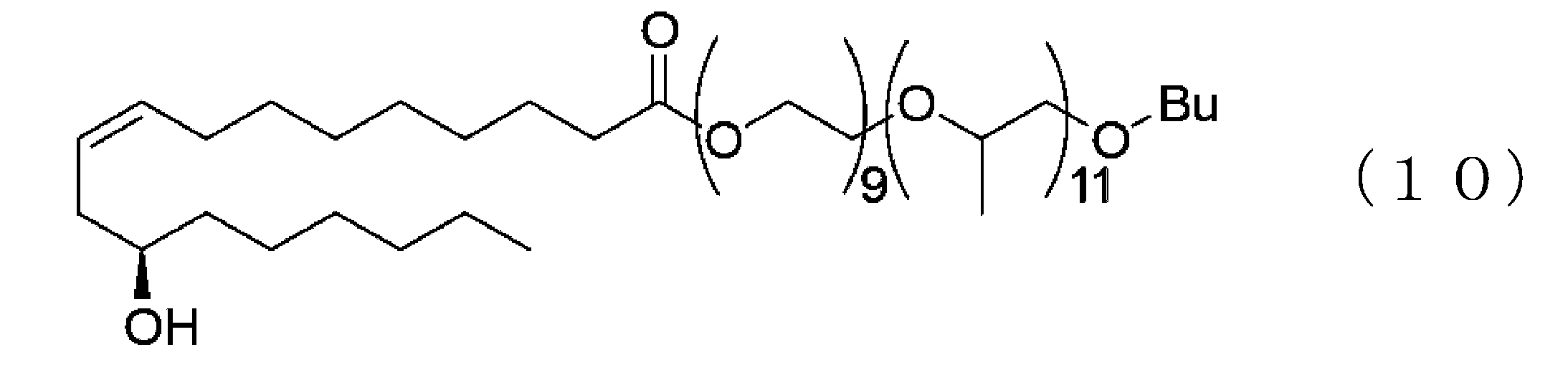
温度計、冷却管、ディーン・スターク装置、撹拌機を取り付けたフラスコ中で、ヒマシ油脂肪酸CO-FA S(伊藤製油製、リシノール酸90%)280g、ユニルーブ50MB-11(日油社製、ポリオキシエチレン(9)ポリオキシプロピレン(11)モノブチルエーテル)1184gをトルエン1465gに溶解した。触媒としてパラトルエンスルフォン酸一水和物1.78gを加え120℃まで加熱し、7時間をかけて還流、副生する水を留去した。加熱を停止し室温(25℃)まで冷却した後、炭酸水素ナトリウム9.4g、硫酸ナトリウム18.8gを加え室温で2時間撹拌することで中和・脱水した。再び120℃まで加熱し、10mmHg以下の減圧下で溶剤を留去して、濾過板(Advantec社製、NA-10)を用いて加圧濾過することで、反応生成物として平均構造が下記式(10)で示されるリシノール酸・ポリオキシアルキレン縮合物1391g(収率95%)を得た。なお、1H-NMRチャートを図5に、13C-NMRチャートを図6に示す。
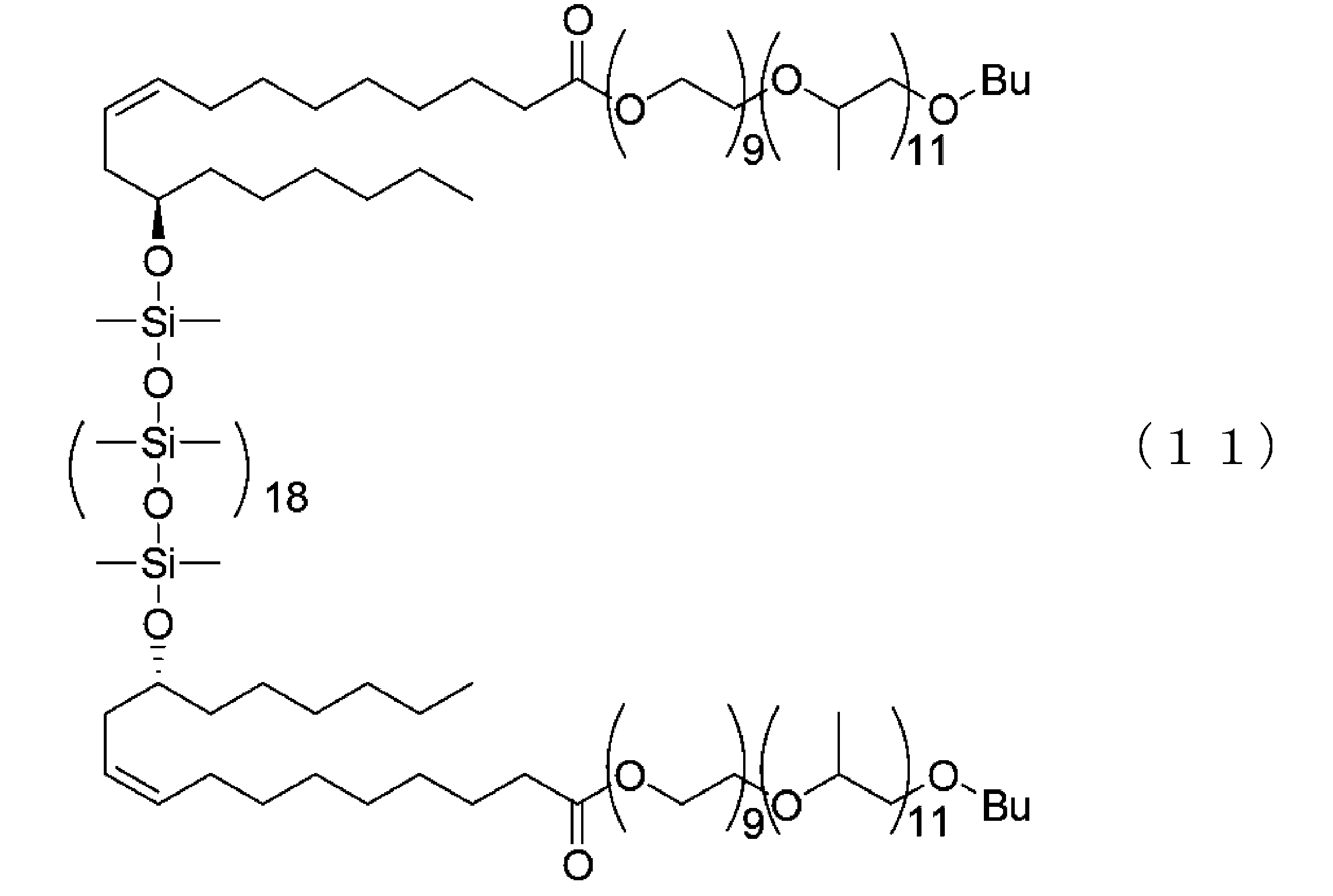
温度計、冷却管、撹拌機を取り付けたフラスコに、上記(III)で得たリシノール酸・ポリオキシアルキレン縮合物320gとトルエン500gを充填し、130℃まで加熱した後、白金触媒1g(信越化学工業社製、PL-50T、塩化白金酸のビニルシロキサン錯体のトルエン溶液(白金金属濃度0.5質量%))を添加し、平均構造が上記式(8)で示される両末端オルガノハイドロジェンポリシロキサン178gを15分間かけて徐々に滴下した。滴下終了後、内温130℃を維持したまま6時間熟成し、反応の外観が透明になったところで10mmHg以下の減圧下とし溶剤を留去し、室温(25℃)まで冷却して、濾過板(Advantec社製、NA-10)を用いて加圧濾過することで、反応生成物として平均構造が下記式(11)で示されるジェミニ型アルキル-ポリオキシアルキレン変性シリコーン463g(収率93%)を得た。なお、1H-NMRチャートを図7に、13C-NMRチャートを図8に示す。
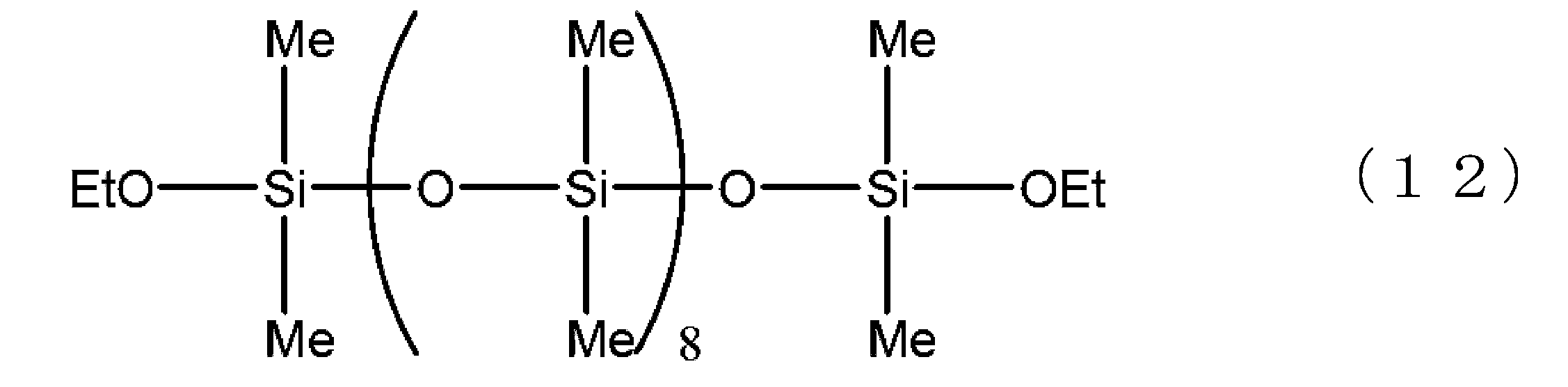
温度計、冷却管、ディーン・スターク装置、撹拌機を取り付けたフラスコに、上記(III)で得たリシノール酸・ポリオキシアルキレン縮合物400gとトルエン498gを充填し、130℃まで加熱した後、トリフルオロ酢酸1g、酢酸カリウム0.1gを添加し、平均構造が下記式(12)で示される両末端エトキシ変性オルガノポリシロキサン98gを全量一括で添加した。

(VI)リシノール酸・ポリオキシアルキレン縮合物の製造
温度計、冷却管、ディーン・スターク装置、撹拌機を取り付けたフラスコに、ヒドロキシ脂肪酸エステルCO-FAメチルエステル(伊藤製油製、リシノール酸メチル)344g、ユニルーブ50MB-11(日油社製、ポリオキシエチレン(9)ポリオキシプロピレン(11)モノブチルエーテル)1000gを充填し、触媒としてテトライソプロピルチタン1.4gを加え、真空ポンプにより20mmHg以下の減圧下とした後、120℃まで加熱し6時間保温した。加熱を停止し室温(25℃)まで冷却した後、常圧に戻し、濾過板(Advantec社製、NA-10)を用いて加圧濾過することで、反応生成物として平均構造が上記式(10)で示されるリシノール酸・ポリオキシアルキレン縮合物1236g(収率92%)を得た。
温度計、冷却管、撹拌機を取り付けたフラスコに、上記(VI)で得たリシノール酸・ポリオキシアルキレン縮合物320gとトルエン500gを充填し、130℃まで加熱した後、白金触媒1g(信越化学工業社製、PL-50T、塩化白金酸のビニルシロキサン錯体のトルエン溶液(白金金属濃度0.5質量%))を添加し、平均構造が上記式(8)で示される両末端オルガノハイドロジェンポリシロキサン178gを15分間かけて徐々に滴下した。滴下終了後、内温130℃を維持したまま6時間熟成し、反応の外観が透明になったところで10mmHg以下の減圧下とし溶剤を留去し、室温(25℃)まで冷却して、濾過板(Advantec社製、NA-10)を用いて加圧濾過することで、反応生成物として平均構造が上記式(11)で示されるジェミニ型アルキル-ポリオキシアルキレン変性シリコーン473g(収率95%)を得た。
(VIII)12-ヒドロキシステアリン酸・ポリオキシアルキレン縮合物の製造
温度計、冷却管、ディーン・スターク装置、撹拌機を取り付けたフラスコ中で、12-ヒドロキシステアリン酸(伊藤製油製)150g、ユニルーブ50MB-11(日油社製、ポリオキシエチレン(9)ポリオキシプロピレン(11)モノブチルエーテル)630gをトルエン780gに溶解した。触媒としてパラトルエンスルフォン酸一水和物0.95gを加え120℃まで加熱し、7時間をかけて還流、副生する水を留去した。加熱を停止し室温(25℃)まで冷却した後、炭酸水素ナトリウム5g、硫酸ナトリウム10gを加え室温で2時間撹拌することで中和・脱水した。再び120℃まで加熱、10mmHg以下の減圧下で溶剤を留去し、濾過板(Advantec社製、NA-10)を用いて加圧濾過することで、反応生成物として平均構造が下記式(14)で示される12-ヒドロキシステアリン酸・ポリオキシアルキレン縮合物702g(収率90%)を得た。なお、1H-NMRチャートを図11に示す。

温度計、冷却管、撹拌機を取り付けたフラスコに、上記(VIII)で得た12-ヒドロキシステアリン酸・ポリオキシアルキレン縮合物200gとトルエン320gを充填し、130℃まで加熱した後、白金触媒3.2g(信越化学工業社製、PL-50T、塩化白金酸のビニルシロキサン錯体のトルエン溶液(白金金属濃度0.5質量%))を添加し、平均構造が上記式(8)で示される両末端オルガノハイドロジェンポリシロキサン117gを10分間かけて徐々に滴下した。滴下終了後、内温130℃を維持したまま6時間熟成し、反応の外観が透明になったところで10mmHg以下の減圧下とし溶剤を留去し、室温(25℃)まで冷却して、濾過板(Advantec社製、NA-10)を用いて加圧濾過することで、反応生成物として平均構造が下記式(15)で示されるジェミニ型アルキル-ポリオキシアルキレン変性シリコーン285g(収率90%)を得た。なお、1H-NMRチャートを図12に示す。

(X)ウンデシレン酸・ポリオキシエチレン縮合物の製造
温度計、冷却管、ディーン・スターク装置、撹拌機を取り付けたフラスコ中で、ウンデシレン酸(伊藤製油製)133g、ユニオックスM1000(日油社製、ポリオキシエチレングリコールモノメチルエーテル、重量平均分子量1000)867gをトルエン1000gに溶解した。触媒としてパラトルエンスルフォン酸一水和物1.4gを加え120℃まで加熱し、7時間をかけて還流、副生する水を留去した。加熱を停止し室温(25℃)まで冷却した後、炭酸水素ナトリウム7.3g、硫酸ナトリウム14.7gを加え室温で2時間撹拌することで中和・脱水した。再び120℃まで加熱し、10mmHg以下の減圧下で溶剤を留去し、濾過板(Advantec社製、NA-10)を用いて加圧濾過することで、反応生成物として平均構造が下記式(16)で示されるウンデシレン酸・ポリオキシエチレン縮合物910g(収率91%)を得た。

温度計、冷却管、撹拌機を取り付けたフラスコに、上記(X)で得たウンデシレン酸・ポリオキシエチレン縮合物318gとトルエン500gを充填し、130℃まで加熱した後、白金触媒1g(信越化学工業社製、PL-50T、塩化白金酸のビニルシロキサン錯体のトルエン溶液(白金金属濃度0.5質量%))を添加し、平均構造が上記式(8)で示される両末端にヒドロシリル基を有するオルガノポリシロキサン182gを15分間かけて徐々に滴下した。滴下終了後、内温130℃を維持したまま6時間熟成し、反応の外観が透明になったところで10mmHg以下の減圧下とし溶剤を留去し、室温(25℃)まで冷却して、濾過板(Advantec社製、NA-10)を用いて加圧濾過することで、反応生成物として平均構造が下記式(17)で示されるジェミニ型アルキル-ポリオキシエチレン変性シリコーン461g(収率92%)を得た。

(XII)ウンデシレン酸・ポリオキシアルキレン縮合物の製造
温度計、冷却管、ディーン・スターク装置、撹拌機を取り付けたフラスコに、ウンデシレン酸(伊藤製油製)133g、ユニルーブ50MB-11(日油社製、ポリオキシエチレン(9)ポリオキシプロピレン(11)モノブチルエーテル)867gを充填し、触媒としてテトライソプロピルチタン1.1gを加え、真空ポンプにより20mmHg以下の減圧下とした後、120℃まで加熱し6時間保温した。加熱を停止し室温(25℃)まで冷却した後、常圧に戻し、濾過板(Advantec社製、NA-10)を用いて加圧濾過することで、反応生成物として平均構造が下記式(18)で示されるウンデシレン酸・ポリオキシアルキレン縮合物903g(収率90%)を得た。

温度計、冷却管、撹拌機を取り付けたフラスコに、上記(XII)で得たウンデシレン酸・ポリオキシアルキレン縮合物318gとトルエン500gを充填し、130℃まで加熱した後、白金触媒1g(信越化学工業社製、PL-50T、塩化白金酸のビニルシロキサン錯体のトルエン溶液(白金金属濃度0.5質量%))を添加し、平均構造が上記式(8)で示される両末端オルガノハイドロジェンポリシロキサン182gを15分間かけて徐々に滴下した。滴下終了後、内温130℃を維持したまま6時間熟成し、反応の外観が透明になったところで10mmHg以下の減圧下とし溶剤を留去し、室温(25℃)まで冷却して、濾過板(Advantec社製、NA-10)を用いて加圧濾過することで、反応生成物として平均構造が下記式(19)で示されるジェミニ型アルキル-ポリオキシアルキレン変性シリコーン458g(収率92%)を得た。

(XIV)ジェミニ型アルキル-ポリオキシアルキレン変性シリコーンの製造
温度計、冷却管、ディーン・スターク装置、撹拌機を取り付けたフラスコ中で、ヒマシ油脂肪酸CO-FA S(伊藤製油製、リシノール酸90%)175g、ユニルーブ50MB-26(日油社製、ポリオキシエチレン(17)ポリオキシプロピレン(17)モノブチルエーテル)1274gをトルエン1451gに溶解した。触媒としてパラトルエンスルフォン酸一水和物1.78gを加え120℃まで加熱し、7時間をかけて還流、副生する水を留去した。加熱を停止し室温(25℃)まで冷却した後、炭酸水素ナトリウム9.4g、硫酸ナトリウム18.8gを加え室温で2時間撹拌することで中和・脱水した。再び120℃まで加熱し、10mmHg以下の減圧下で溶剤を留去して、濾過板(Advantec社製、NA-10)を用いて加圧濾過することで、反応生成物として平均構造が下記式(20)で示されるリシノール酸・ポリオキシアルキレン縮合物1391g(収率95%)を得た。


(A)ジェミニ型アルキル-ポリオキシアルキレン変性シリコーン
(a-1):実施例2(IV)で製造されたもの(式(11))。
(a-2):実施例7(XIV)で製造されたもの(式(21))。
(a-3):実施例2(V)で製造されたもの(式(12))。
(a-4):実施例1(II)で製造されたもの(式(9))。
(b-1)シリコーン混合物1
粘度1,000mm2/sを有するジメチルポリシロキサン(信越化学工業社製、KF96(1,000cs))90質量部、及び親水性湿式シリカ(東ソーシリカ社製、Nipsil HD-2、BET比表面積:300m2/g)10質量部を、窒素ガス雰囲気下で150℃、3時間混合してシリコーンオイルコンパウンドを得た。
粘度1,000mm2/sを有するジメチルポリシロキサン(信越化学工業社製、KF96(1,000cs))90質量部、疎水性ヒュームドシリカ(日本アエロジル社製、Aerosil R974、BET比表面積:170m2/g)10質量部、及び水酸化カリウムを3%含有するカリウムシリコネート(信越化学工業社製)5質量部を、窒素ガス雰囲気下で150℃、3時間混合した後、2-クロロエタノールで中和し、次いで低沸点留分を除去してシリコーンオイルコンパウンドを得た。
(c-1)平均組成が下記一般式(22)で表され、かつ粘度が1,720mm2/sであるポリオキシアルキレン変性オルガノポリシロキサン1
R15 2R16SiO-(R15 2SiO)m-(R15R17SiO)n-SiR15 2R16 (22)
(式中、R15及びR16は-CH3、R17は-C3H6O(CH2CH2O)23(CH2CH(CH3)O)23C4H9、mは27、nは3である。)
R18 2R20SiO-(R19 2SiO)x-(R19R20SiO)y-SiR18 2R20 (23)
(但し、R18は-CH3、R20は-C3H6O(C2H4O)6(C3H6O)24CH3、R19は-C13H27、xは80、yは2である。)
(d-1)平均組成が下記式(24)で表わされるポリオキシアルキレン重合体1
CH2=CHCH2O-(C2H4O)21(C3H6O)21-CH3 (24)
HO-(C2H4O)25(C3H6O)35-H (25)
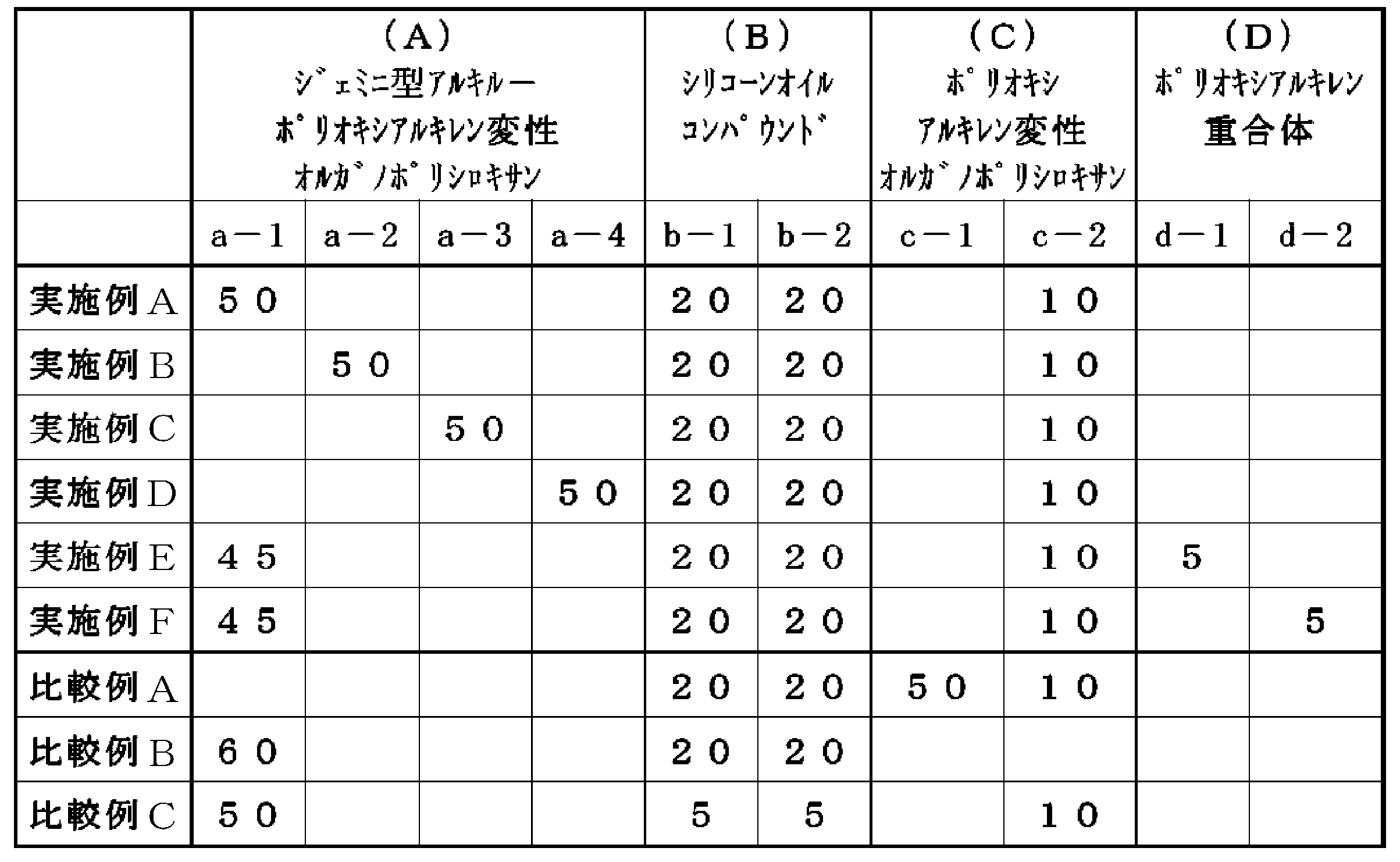
表1に示した量(質量部)のジェミニ型アルキル-ポリオキシアルキレン変性シリコーン(A)、シリコーンオイルコンパウンド(B)、ポリオキシアルキレン変性オルガノポリシロキサン(C)、ポリオキシアルキレン重合体(D)をホモミキサーで混合して消泡剤組成物を調製した。これらの組成物の消泡性、水分散性、製品安定性を評価した。
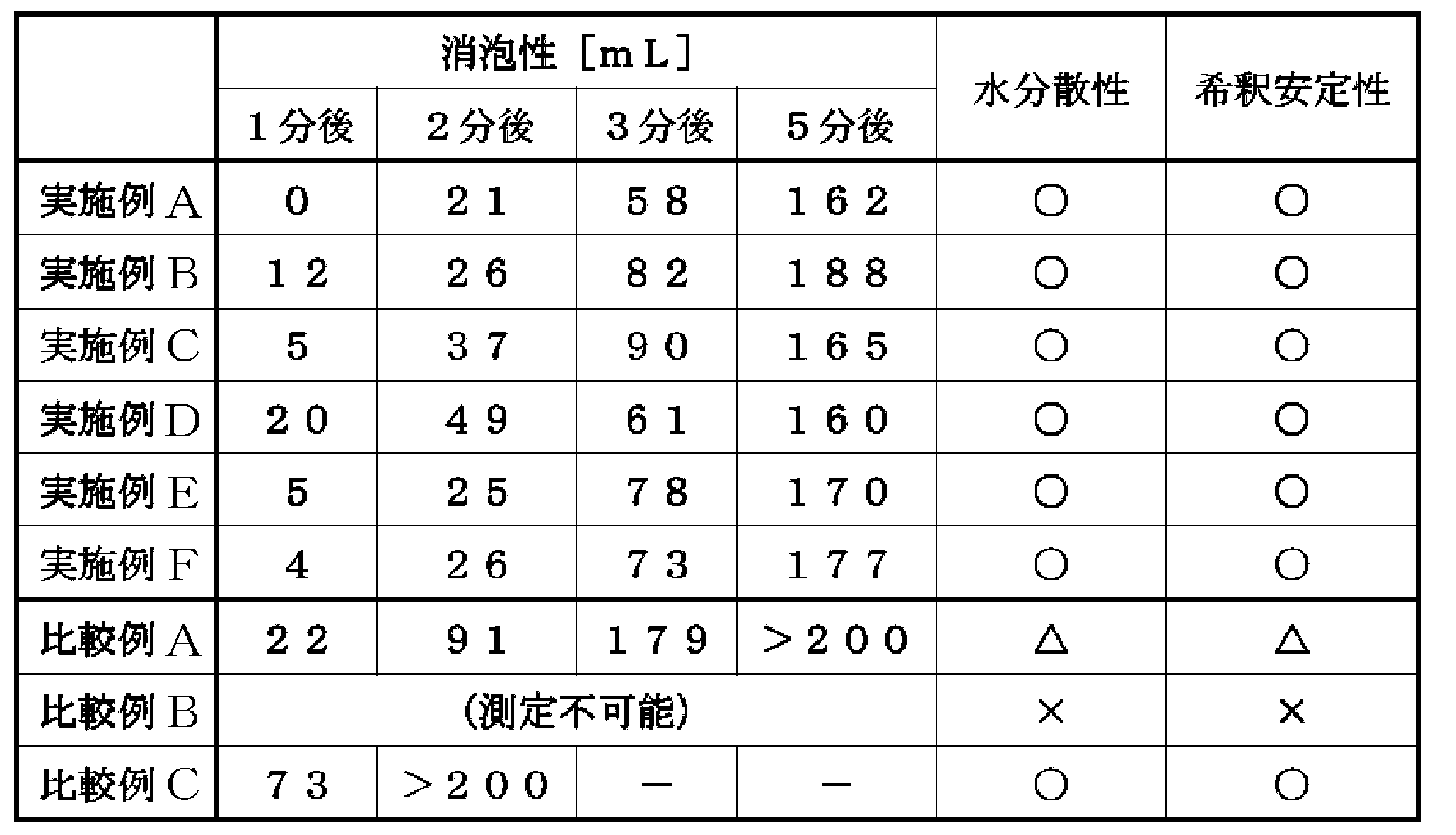
表1にしたがって調製した消泡剤組成物1gとイオン交換水1gを、スパチュラを用いて撹拌し乳化物とし、続いて8gのイオン交換水で希釈し、10倍希釈液とした。発泡液として家庭用台所用合成洗剤「ママレモン」(ライオン株式会社製)の0.2質量%水溶液150mLを、自動循環式消泡試験装置(Teclis社製、MiniJet)へ充填し、発泡液温度25℃、発泡液循環流量500mL/minにて循環を開始し、泡体積が100mLに達した瞬間に、前記希釈消泡剤組成物を添加した。該希釈消泡剤組成物を添加してから1分後、2分後、3分後、5分後の泡体積を測定し、消泡性を評価した。その結果を表2に示す。
表1にしたがって調製した消泡剤組成物5gを、150mLの透明ガラス瓶(広口規格ガラスびんPS-No.12)にイオン交換水95gとともに充填した。これを振とう器で250rpm×1分間撹拌し、撹拌停止直後の消泡剤組成物の状態を目視で観察し、水分散性を下記の基準で評価した。その結果を表2に示す。
○:消泡剤組成物が完全に分散し、乳化が認められた
△:一部乳化が認められるものの、消泡剤組成物の未分散物が確認された
×:一部乳化が認められるものの、消泡剤組成物の大部分が溶け残り、スカムが確認された
表1にしたがって調製した消泡剤組成物10gとイオン交換水10gを、スパチュラを用いて撹拌し乳化物とし、続いて80gのイオン交換水で希釈し、10倍希釈液とした。希釈後の該消泡剤組成物を25℃で1日間保存した後の状態を目視で観察し、下記の基準で評価した。その結果を表2に示す。
○:油層と水層の分離/スカムの発生は認められなかった
△:油層と水層の濃淡分離が認められた/スカムの発生は認められなかった
×:油層と水層の分離、あるいはスカムの発生が認められた
Claims (7)
- 下記一般式(A)で表わされるジェミニ型アルキル-ポリオキシアルキレン変性シリコーン。

(式中、R1、R2、R3、R4、R5及びR6は、同一又は異なって、ハロゲン原子、ヒドロキシル基、アミノ基、チオール基又はヒドロシリル基を有していてもよい、炭素数1~30のアルキル基、炭素数3~30のシクロアルキル基、炭素数6~30のアリール基又は炭素数7~30のアラルキル基を示し、nは0~300の整数である。
(B)は同一又は異なって、下記一般式(1)で表わされる基又は下記一般式(2)で表わされる基を示す。

(式中、R7、Xはそれぞれ、ハロゲン原子、アルコキシ基、ニトロ基、シアノ基又は置換アミノ基で置換されていてもよい炭素数1~40の炭化水素基であり、R8は水素原子、炭素数1~30の炭化水素基、ホルミル基又は炭素数2~30アシル基を示し、a及びbはそれぞれ2≦a≦200、0≦b≦200、かつa+bが2~200を満たす数である。)) - 片末端封鎖ポリオキシアルキレンとヒドロキシアルキルカルボン酸誘導体を
a)片末端封鎖ポリオキシアルキレンのヒドロキシル基と、ヒドロキシアルキルカルボン酸エステルのエステル交換反応
又は
b)片末端封鎖ポリオキシアルキレンのヒドロキシル基と、ヒドロキシアルキルカルボン酸のカルボキシル基のエステル化反応
に付すことで縮合する第一の工程と、
この第一の工程で得られたヒドロキシアルキル-ポリオキシアルキレン縮合物と
両末端に反応基を有するオルガノポリシロキサンを
c)該ヒドロキシアルキル-ポリオキシアルキレン縮合物のヒドロキシル基と
両末端にヒドロシリル基を有するオルガノポリシロキサンとを白金族金属系触媒又は塩基触媒下に脱水素縮合反応
又は
d)該ヒドロキシアルキル-ポリオキシアルキレン縮合物のヒドロキシル基と
ケイ素原子に直接結合した加水分解性基を両末端に有するオルガノポリシロキサンとを縮合触媒下に縮合反応
に付す第二の工程によって製造することを特徴とする請求項1に記載のジェミニ型アルキル-ポリオキシアルキレン変性シリコーンの製造方法。 - 片末端封鎖ポリオキシアルキレンと主鎖末端に二重結合を有するアルキルカルボン酸を
e)片末端封鎖ポリオキシアルキレンのヒドロキシル基と主鎖末端に二重結合を有するアルキルカルボン酸エステルのエステル交換反応
又は
f)片末端封鎖ポリオキシアルキレンのヒドロキシル基と末端に二重結合を有するアルキルカルボン酸のカルボキシル基のエステル化反応
に付すことで付加する第一の工程と、
この第一の工程で得られた末端に二重結合を有するアルキル-ポリオキシアルキレン縮合物と両末端にヒドロシリル基を有するオルガノポリシロキサンを白金族金属系触媒下、付加反応に付す第二の工程によって製造することを特徴とする請求項1に記載のジェミニ型アルキル-ポリオキシアルキレン変性シリコーンの製造方法。 - ヒドロキシアルキルカルボン酸誘導体が、リシノール酸、12-ヒドロキシステアリン酸及びこれらのメチルエステル、エチルエステル、n-プロピルエステル、i-プロピルエステル及びブチルエステルから成る群から選択される1種以上であることを特徴とする請求項2に記載のジェミニ型アルキル-ポリオキシアルキレン変性シリコーンの製造方法。
- 末端に二重結合を有するアルキルカルボン酸が、ウンデシレン酸及びこれらのメチルエステル、エチルエステル、n-プロピルエステル、i-プロピルエステル、ブチルエステルから成るグループから選択されることを特徴とする請求項3に記載のジェミニ型アルキル-ポリオキシアルキレン変性シリコーンの製造方法。
- 下記一般式(A)で表わされるジェミニ型アルキル-ポリオキシアルキレン変性シリコーン:1~80質量%

(式中、R1、R2、R3、R4、R5及びR6は、同一又は異なって、ハロゲン原子、ヒドロキシル基、アミノ基、チオール基又はヒドロシリル基を有していてもよい、炭素数1~30のアルキル基、炭素数3~30のシクロアルキル基、炭素数6~30のアリール基又は炭素数7~30のアラルキル基を示し、nは0~300の整数である。
(B)は同一又は異なって、下記一般式(1)で表わされる基を示す。
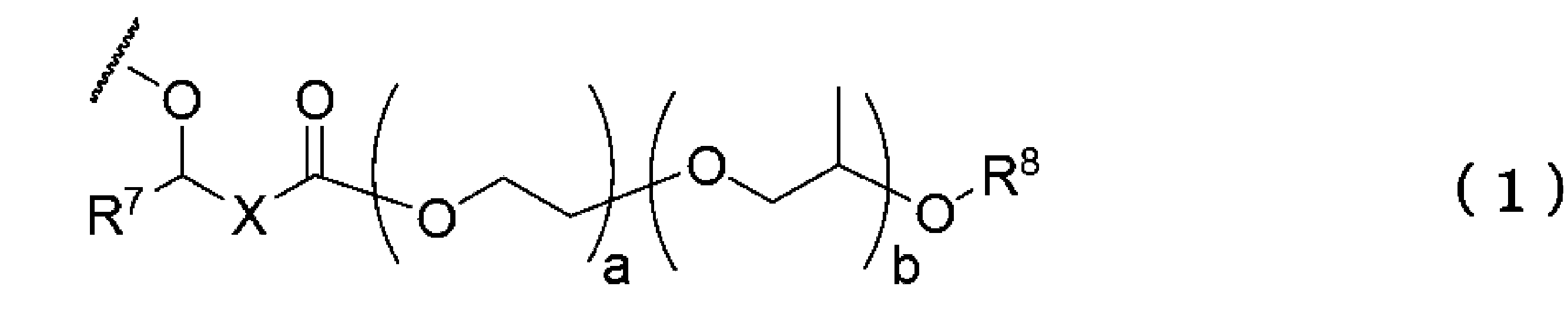
(式中、R7、Xはそれぞれ、ハロゲン原子、アルコキシ基、ニトロ基、シアノ基又は置換アミノ基で置換されていてもよい炭素数1~40の炭化水素基であり、R8は水素原子、炭素数1~30の炭化水素基、ホルミル基又は炭素数2~30アシル基を示し、a及びbはそれぞれ2≦a≦200、0≦b≦200、かつa+bが2~200を満たす数である。))
(B)(a)下記一般式(3)
R9cSiO(4-C)/2 (3)
(式中、R9は、互いに独立に、置換もしくは非置換の1価炭化水素基であり、cは1.9~2.2の数である。)
で表わされる、25℃における粘度が10~100,000mm2/sであるオルガノポリシロキサンと、
(b)BET法による比表面積が100m2/g以上の微粉末シリカ:(a)成分100質量部に対し0.1~30質量部
とを含有するシリコーンオイルコンパウンド:15~60質量%
及び
(C)1種又は2種以上のポリオキシアルキレン変性オルガノポリシロキサン:5~95質量%
を含有することを特徴とする消泡剤組成物。 - 更に、(D)1種又は2種以上のポリオキシアルキレン重合体:5~80質量%を含有することを特徴とする請求項6記載の消泡剤組成物。
Priority Applications (2)
| Application Number | Priority Date | Filing Date | Title |
|---|---|---|---|
| US15/102,611 US9777121B2 (en) | 2013-12-10 | 2014-10-23 | Defoaming agent composition |
| JP2015552361A JP6172292B2 (ja) | 2013-12-10 | 2014-10-23 | 消泡剤組成物 |
Applications Claiming Priority (4)
| Application Number | Priority Date | Filing Date | Title |
|---|---|---|---|
| JP2013-255247 | 2013-12-10 | ||
| JP2013255246 | 2013-12-10 | ||
| JP2013255247 | 2013-12-10 | ||
| JP2013-255246 | 2013-12-10 |
Publications (1)
| Publication Number | Publication Date |
|---|---|
| WO2015087628A1 true WO2015087628A1 (ja) | 2015-06-18 |
Family
ID=53370945
Family Applications (1)
| Application Number | Title | Priority Date | Filing Date |
|---|---|---|---|
| PCT/JP2014/078225 Ceased WO2015087628A1 (ja) | 2013-12-10 | 2014-10-23 | 消泡剤組成物 |
Country Status (3)
| Country | Link |
|---|---|
| US (1) | US9777121B2 (ja) |
| JP (1) | JP6172292B2 (ja) |
| WO (1) | WO2015087628A1 (ja) |
Cited By (3)
| Publication number | Priority date | Publication date | Assignee | Title |
|---|---|---|---|---|
| JP2022537207A (ja) * | 2019-06-24 | 2022-08-24 | ダウ シリコーンズ コーポレーション | シリコーンポリエーテル泡制御剤 |
| KR20250091182A (ko) | 2022-10-20 | 2025-06-20 | 디아이씨 가부시끼가이샤 | 소포제, 당해 소포제를 포함하는 윤활유 조성물 및 당해 윤활유 조성물을 사용한 기계 |
| WO2025225522A1 (ja) * | 2024-04-25 | 2025-10-30 | 信越化学工業株式会社 | オルガノポリシロキサン及びこれを含有する化粧料 |
Families Citing this family (5)
| Publication number | Priority date | Publication date | Assignee | Title |
|---|---|---|---|---|
| WO2020061004A1 (en) * | 2018-09-17 | 2020-03-26 | Elevance Renewable Sciences, Inc | Functionalized silicone polymers and methods of making and using the same |
| WO2020061000A1 (en) | 2018-09-17 | 2020-03-26 | Elevance Renewable Sciences, Inc | Segmented silicone polymers and methods of making and using the same |
| WO2021167728A1 (en) | 2020-02-20 | 2021-08-26 | Dow Silicones Corporation | Foam control composition |
| CN111944142B (zh) * | 2020-09-01 | 2023-06-30 | 珠海东诚新材料股份有限公司 | 一种有机硅表面活性剂及其制备方法、聚氨酯泡沫 |
| WO2023122364A1 (en) | 2021-12-20 | 2023-06-29 | Dow Silicones Corporation | Silicone polyethers |
Citations (7)
| Publication number | Priority date | Publication date | Assignee | Title |
|---|---|---|---|---|
| JPS4924889A (ja) * | 1972-05-15 | 1974-03-05 | ||
| JPS4989690A (ja) * | 1972-12-11 | 1974-08-27 | ||
| JPS5171886A (ja) * | 1974-12-19 | 1976-06-22 | Dow Corning | |
| JPS5334854A (en) * | 1976-09-14 | 1978-03-31 | Toray Silicone Co Ltd | Self-emulsifiable silicone composition |
| JPH07126392A (ja) * | 1993-11-02 | 1995-05-16 | Shin Etsu Chem Co Ltd | ポリエーテル−シロキサンブロック共重合体及びその製造方法 |
| JPH09278891A (ja) * | 1996-04-09 | 1997-10-28 | Kao Corp | ノニオン変性オルガノ(ポリ)シロキサン、その製造方法、及びそれを含有する洗浄剤組成物 |
| JP2004532720A (ja) * | 2001-03-21 | 2004-10-28 | ダウ コーニング アジア株式会社 | シリコーン消泡剤 |
Family Cites Families (13)
| Publication number | Priority date | Publication date | Assignee | Title |
|---|---|---|---|---|
| DE1544001C3 (de) | 1966-08-31 | 1978-09-21 | Deutsche Gold- Und Silber-Scheideanstalt Vormals Roessler, 6000 Frankfurt | Aktivierung von Entschäumerflüssigkeiten |
| US3965150A (en) * | 1970-12-18 | 1976-06-22 | General Electric Company | Polyether esters of alkenoic acids |
| US3784479A (en) | 1972-05-15 | 1974-01-08 | Dow Corning | Foam control composition |
| US3984200A (en) | 1972-12-11 | 1976-10-05 | Dow Corning Corporation | Carpet dyeing antifoam |
| US3879696A (en) | 1973-02-23 | 1975-04-22 | Tokyo Shibaura Electric Co | Surge voltage absorber |
| JPS5135556B2 (ja) | 1973-06-08 | 1976-10-02 | ||
| US4144206A (en) * | 1978-01-13 | 1979-03-13 | General Electric Company | Static dissipating heat curable silicone rubber compositions |
| US4150048A (en) * | 1978-03-28 | 1979-04-17 | Union Carbide Corporation | Nonhydrolyzable siloxane block copolymers of organosiloxanes and organic ethers |
| US4304897A (en) * | 1980-07-17 | 1981-12-08 | General Electric Company | Room temperature vulcanizable silicone rubber compositions and process of making |
| US4587320A (en) * | 1984-12-21 | 1986-05-06 | Dow Corning Corporation | Method for making carboxyfunctional silicone glycols |
| EP1048698A1 (en) * | 1999-04-30 | 2000-11-02 | Toda Kogyo Corporation | Magnetic recording medium |
| DE60301928T2 (de) | 2002-08-28 | 2006-07-27 | Samsung Electronics Co., Ltd., Suwon | Geminitenside und Verfahren zur Herstellung mesoporösen Materials |
| DE10243992A1 (de) * | 2002-09-21 | 2004-04-01 | Goldschmidt Ag | Polyestergruppen aufweisende amphiphile Organopolysiloxane und deren Verwendung als Emulgatoren oder Dispergierhilfsmittel |
-
2014
- 2014-10-23 WO PCT/JP2014/078225 patent/WO2015087628A1/ja not_active Ceased
- 2014-10-23 JP JP2015552361A patent/JP6172292B2/ja active Active
- 2014-10-23 US US15/102,611 patent/US9777121B2/en not_active Expired - Fee Related
Patent Citations (7)
| Publication number | Priority date | Publication date | Assignee | Title |
|---|---|---|---|---|
| JPS4924889A (ja) * | 1972-05-15 | 1974-03-05 | ||
| JPS4989690A (ja) * | 1972-12-11 | 1974-08-27 | ||
| JPS5171886A (ja) * | 1974-12-19 | 1976-06-22 | Dow Corning | |
| JPS5334854A (en) * | 1976-09-14 | 1978-03-31 | Toray Silicone Co Ltd | Self-emulsifiable silicone composition |
| JPH07126392A (ja) * | 1993-11-02 | 1995-05-16 | Shin Etsu Chem Co Ltd | ポリエーテル−シロキサンブロック共重合体及びその製造方法 |
| JPH09278891A (ja) * | 1996-04-09 | 1997-10-28 | Kao Corp | ノニオン変性オルガノ(ポリ)シロキサン、その製造方法、及びそれを含有する洗浄剤組成物 |
| JP2004532720A (ja) * | 2001-03-21 | 2004-10-28 | ダウ コーニング アジア株式会社 | シリコーン消泡剤 |
Cited By (4)
| Publication number | Priority date | Publication date | Assignee | Title |
|---|---|---|---|---|
| JP2022537207A (ja) * | 2019-06-24 | 2022-08-24 | ダウ シリコーンズ コーポレーション | シリコーンポリエーテル泡制御剤 |
| JP7248826B2 (ja) | 2019-06-24 | 2023-03-29 | ダウ シリコーンズ コーポレーション | シリコーンポリエーテル泡制御剤 |
| KR20250091182A (ko) | 2022-10-20 | 2025-06-20 | 디아이씨 가부시끼가이샤 | 소포제, 당해 소포제를 포함하는 윤활유 조성물 및 당해 윤활유 조성물을 사용한 기계 |
| WO2025225522A1 (ja) * | 2024-04-25 | 2025-10-30 | 信越化学工業株式会社 | オルガノポリシロキサン及びこれを含有する化粧料 |
Also Published As
| Publication number | Publication date |
|---|---|
| US9777121B2 (en) | 2017-10-03 |
| JP6172292B2 (ja) | 2017-08-02 |
| US20160311982A1 (en) | 2016-10-27 |
| JPWO2015087628A1 (ja) | 2017-03-16 |
Similar Documents
| Publication | Publication Date | Title |
|---|---|---|
| JP6172292B2 (ja) | 消泡剤組成物 | |
| US5075403A (en) | Amino/polyoxyalkylenated polydioganosiloxanes | |
| US8222303B2 (en) | Defoamer formulations | |
| US6512015B1 (en) | Silicone foam control compositions | |
| US6605183B1 (en) | Antifoam formulation | |
| US8536109B2 (en) | Foam control composition | |
| US6187891B1 (en) | Linear polyether-polysiloxane copolymers, their preparation and use | |
| US5613988A (en) | Use of organofunctionally modified polysiloxanes for defoaming diesel | |
| KR20110069827A (ko) | 소포성 조성물 | |
| KR20070088384A (ko) | 소포제 조성물 | |
| US10765970B2 (en) | Defoamer oil compound, production method therefor, and defoamer composition | |
| US11383182B2 (en) | Linear silicone polyether foam control agent | |
| CA1040964A (en) | Foam control composition | |
| CN1864792B (zh) | 消泡剂组合物 | |
| CN111054100A (zh) | 一种有机硅组合物及其制备方法 | |
| JP5163909B2 (ja) | 消泡剤用オイルコンパウンドの製造方法及び消泡剤組成物 | |
| JP6179479B2 (ja) | 消泡剤用オイルコンパウンド及びその製造方法並びに消泡剤組成物 | |
| CN116457408A (zh) | 有机硅系消泡剂用油复配物及其制造方法、以及包含有机硅系消泡剂用油复配物的消泡剂 | |
| CN106536594A (zh) | 反应产物及其在消泡剂组合物中的用途以及消泡方法 | |
| JP6197768B2 (ja) | 消泡剤用オイルコンパウンド及びその製造方法並びに消泡剤組成物 | |
| KR20200049836A (ko) | 옥사미도에스테르-관능화 오르가노폴리실록산의 수성 에멀젼 | |
| US20180346661A1 (en) | Organosilicone emulsion composition | |
| EP4268922A1 (en) | Silicone-based defoamer composition | |
| CN1215162C (zh) | 在洗涤剂中稳定的硅氧烷基控泡组合物 | |
| CN119857288A (zh) | 一种有机硅消泡组合物 |
Legal Events
| Date | Code | Title | Description |
|---|---|---|---|
| 121 | Ep: the epo has been informed by wipo that ep was designated in this application |
Ref document number: 14868780 Country of ref document: EP Kind code of ref document: A1 |
|
| ENP | Entry into the national phase |
Ref document number: 2015552361 Country of ref document: JP Kind code of ref document: A |
|
| WWE | Wipo information: entry into national phase |
Ref document number: 15102611 Country of ref document: US |
|
| NENP | Non-entry into the national phase |
Ref country code: DE |
|
| 122 | Ep: pct application non-entry in european phase |
Ref document number: 14868780 Country of ref document: EP Kind code of ref document: A1 |