WO2015033658A1 - 包装体 - Google Patents
包装体 Download PDFInfo
- Publication number
- WO2015033658A1 WO2015033658A1 PCT/JP2014/067887 JP2014067887W WO2015033658A1 WO 2015033658 A1 WO2015033658 A1 WO 2015033658A1 JP 2014067887 W JP2014067887 W JP 2014067887W WO 2015033658 A1 WO2015033658 A1 WO 2015033658A1
- Authority
- WO
- WIPO (PCT)
- Prior art keywords
- resin layer
- layer
- heat seal
- package
- heat
- Prior art date
- Legal status (The legal status is an assumption and is not a legal conclusion. Google has not performed a legal analysis and makes no representation as to the accuracy of the status listed.)
- Ceased
Links
Images



Classifications
-
- B—PERFORMING OPERATIONS; TRANSPORTING
- B32—LAYERED PRODUCTS
- B32B—LAYERED PRODUCTS, i.e. PRODUCTS BUILT-UP OF STRATA OF FLAT OR NON-FLAT, e.g. CELLULAR OR HONEYCOMB, FORM
- B32B27/00—Layered products comprising a layer of synthetic resin
- B32B27/06—Layered products comprising a layer of synthetic resin as the main or only constituent of a layer, which is next to another layer of the same or of a different material
- B32B27/08—Layered products comprising a layer of synthetic resin as the main or only constituent of a layer, which is next to another layer of the same or of a different material of synthetic resin
-
- B—PERFORMING OPERATIONS; TRANSPORTING
- B32—LAYERED PRODUCTS
- B32B—LAYERED PRODUCTS, i.e. PRODUCTS BUILT-UP OF STRATA OF FLAT OR NON-FLAT, e.g. CELLULAR OR HONEYCOMB, FORM
- B32B27/00—Layered products comprising a layer of synthetic resin
- B32B27/30—Layered products comprising a layer of synthetic resin comprising vinyl (co)polymers; comprising acrylic (co)polymers
- B32B27/302—Layered products comprising a layer of synthetic resin comprising vinyl (co)polymers; comprising acrylic (co)polymers comprising aromatic vinyl (co)polymers, e.g. styrenic (co)polymers
-
- B—PERFORMING OPERATIONS; TRANSPORTING
- B32—LAYERED PRODUCTS
- B32B—LAYERED PRODUCTS, i.e. PRODUCTS BUILT-UP OF STRATA OF FLAT OR NON-FLAT, e.g. CELLULAR OR HONEYCOMB, FORM
- B32B27/00—Layered products comprising a layer of synthetic resin
- B32B27/30—Layered products comprising a layer of synthetic resin comprising vinyl (co)polymers; comprising acrylic (co)polymers
- B32B27/306—Layered products comprising a layer of synthetic resin comprising vinyl (co)polymers; comprising acrylic (co)polymers comprising vinyl acetate or vinyl alcohol (co)polymers
-
- B—PERFORMING OPERATIONS; TRANSPORTING
- B32—LAYERED PRODUCTS
- B32B—LAYERED PRODUCTS, i.e. PRODUCTS BUILT-UP OF STRATA OF FLAT OR NON-FLAT, e.g. CELLULAR OR HONEYCOMB, FORM
- B32B27/00—Layered products comprising a layer of synthetic resin
- B32B27/32—Layered products comprising a layer of synthetic resin comprising polyolefins
-
- B—PERFORMING OPERATIONS; TRANSPORTING
- B32—LAYERED PRODUCTS
- B32B—LAYERED PRODUCTS, i.e. PRODUCTS BUILT-UP OF STRATA OF FLAT OR NON-FLAT, e.g. CELLULAR OR HONEYCOMB, FORM
- B32B27/00—Layered products comprising a layer of synthetic resin
- B32B27/34—Layered products comprising a layer of synthetic resin comprising polyamides
-
- B—PERFORMING OPERATIONS; TRANSPORTING
- B32—LAYERED PRODUCTS
- B32B—LAYERED PRODUCTS, i.e. PRODUCTS BUILT-UP OF STRATA OF FLAT OR NON-FLAT, e.g. CELLULAR OR HONEYCOMB, FORM
- B32B27/00—Layered products comprising a layer of synthetic resin
- B32B27/36—Layered products comprising a layer of synthetic resin comprising polyesters
-
- B—PERFORMING OPERATIONS; TRANSPORTING
- B32—LAYERED PRODUCTS
- B32B—LAYERED PRODUCTS, i.e. PRODUCTS BUILT-UP OF STRATA OF FLAT OR NON-FLAT, e.g. CELLULAR OR HONEYCOMB, FORM
- B32B7/00—Layered products characterised by the relation between layers; Layered products characterised by the relative orientation of features between layers, or by the relative values of a measurable parameter between layers, i.e. products comprising layers having different physical, chemical or physicochemical properties; Layered products characterised by the interconnection of layers
- B32B7/04—Interconnection of layers
- B32B7/06—Interconnection of layers permitting easy separation
-
- B—PERFORMING OPERATIONS; TRANSPORTING
- B32—LAYERED PRODUCTS
- B32B—LAYERED PRODUCTS, i.e. PRODUCTS BUILT-UP OF STRATA OF FLAT OR NON-FLAT, e.g. CELLULAR OR HONEYCOMB, FORM
- B32B7/00—Layered products characterised by the relation between layers; Layered products characterised by the relative orientation of features between layers, or by the relative values of a measurable parameter between layers, i.e. products comprising layers having different physical, chemical or physicochemical properties; Layered products characterised by the interconnection of layers
- B32B7/04—Interconnection of layers
- B32B7/10—Interconnection of layers at least one layer having inter-reactive properties
-
- B—PERFORMING OPERATIONS; TRANSPORTING
- B32—LAYERED PRODUCTS
- B32B—LAYERED PRODUCTS, i.e. PRODUCTS BUILT-UP OF STRATA OF FLAT OR NON-FLAT, e.g. CELLULAR OR HONEYCOMB, FORM
- B32B2307/00—Properties of the layers or laminate
- B32B2307/50—Properties of the layers or laminate having particular mechanical properties
- B32B2307/582—Tearability
-
- B—PERFORMING OPERATIONS; TRANSPORTING
- B32—LAYERED PRODUCTS
- B32B—LAYERED PRODUCTS, i.e. PRODUCTS BUILT-UP OF STRATA OF FLAT OR NON-FLAT, e.g. CELLULAR OR HONEYCOMB, FORM
- B32B2307/00—Properties of the layers or laminate
- B32B2307/70—Other properties
- B32B2307/748—Releasability
-
- B—PERFORMING OPERATIONS; TRANSPORTING
- B32—LAYERED PRODUCTS
- B32B—LAYERED PRODUCTS, i.e. PRODUCTS BUILT-UP OF STRATA OF FLAT OR NON-FLAT, e.g. CELLULAR OR HONEYCOMB, FORM
- B32B2439/00—Containers; Receptacles
- B32B2439/40—Closed containers
-
- B—PERFORMING OPERATIONS; TRANSPORTING
- B32—LAYERED PRODUCTS
- B32B—LAYERED PRODUCTS, i.e. PRODUCTS BUILT-UP OF STRATA OF FLAT OR NON-FLAT, e.g. CELLULAR OR HONEYCOMB, FORM
- B32B2439/00—Containers; Receptacles
- B32B2439/70—Food packaging
-
- B—PERFORMING OPERATIONS; TRANSPORTING
- B32—LAYERED PRODUCTS
- B32B—LAYERED PRODUCTS, i.e. PRODUCTS BUILT-UP OF STRATA OF FLAT OR NON-FLAT, e.g. CELLULAR OR HONEYCOMB, FORM
- B32B2439/00—Containers; Receptacles
- B32B2439/80—Medical packaging
Definitions
- the present invention relates to a packaging body having a multilayer film as a lid or bottom material, and more particularly to a resealable packaging body suitably used for packaging foods, pharmaceuticals and the like.
- Patent Documents 1 and 2 include a surface resin layer, an adhesive resin layer containing a hydrogenated styrene-diene rubber block copolymer and a tackifier, and a heat seal resin layer.
- a multilayer film that can be exposed in an adhesive state in which the adhesive resin layer can be resealed at the heat seal portion when the multilayer film used as a lid material is peeled from the bottom material of the package is disclosed. Yes.
- these multilayer films contain a large amount of hydrogenated rubber block copolymer as essential components in the adhesive resin layer and tackifying resins such as rosin resins, terpene resins, petroleum hydrocarbon resins as essential components. Contains.
- tackifying resins such as rosin resins, terpene resins, petroleum hydrocarbon resins as essential components. Contains.
- n-heptane which is a pseudo solvent for oily food, for the tackifier resin. It is preferable not to mix the tackifier resin with the adhesive resin layer as much as possible.
- Patent Documents 2 and 3 a heat seal resin layer (corresponding to a weld layer in Patent Document 3) and this heat seal resin layer and a heat-sealable thermoplastic resin layer are heat sealed, and then peeled off.
- the heat seal resin layer breaks and the heat seal resin layer and the adhesive resin layer (corresponding to the intermediate adhesive layer in Patent Document 3) are separated, and the adhesive resin layer is resealed at the heat seal portion.
- a package using a multilayer film characterized by being exposed in a possible adhesive state as a container lid is disclosed.
- Patent Document 4 discloses a heat-sealing packaging material in which an adhesive resin layer (adhesive layer) and a heat seal agent layer are formed in this order on at least one surface of a base material, and the adhesive resin layer and the above-mentioned A packaging material is disclosed in which the adhesive strength between the heat sealant layers is smaller than the heat seal strength between the heat sealant layer and the layer to be heat sealed.
- a laminate film made of polyester and biaxially stretched polypropylene
- 10% by mass of styrene and 90% by mass of a diene hydrocarbon are formed on a biaxially stretched polypropylene surface of a laminate film (thickness 50 ⁇ m) made of polyester and biaxially stretched polypropylene.
- Heat seal in which an adhesive resin layer having a thickness of 25 ⁇ m is laminated by extrusion lamination using a random copolymer with a hydrogenated product of a random copolymer, and a solvent-soluble acrylic heat seal lacquer is further coated on the adhesive resin layer
- stacked the agent layer is illustrated.
- the packaging body having the above structure has a process in which the adhesive resin is exposed to the outside before coating the heat sealing agent, and dust, dust, etc. floating in the atmosphere adhere to the adhesive resin.
- resealability may be reduced, and special equipment such as a coater for coating and a drying equipment is required, resulting in an increase in manufacturing cost.
- the present inventors use the styrenic thermoplastic elastomer having specific viscoelastic properties as the main component of the adhesive resin layer, and arrange the release resin layer between the adhesive resin layer and the heat seal resin layer to achieve the above problem.
- Patent Documents 5 to 9 have been successfully commercialized.
- the heat seal resin layer (D) is mainly composed of an olefin resin (ethylene resin, polypropylene resin, etc.), a styrene resin, an ester resin, and a styrene thermoplastic elastomer. It is disclosed that a resin is suitably used.
- the heat seal resin layer (D) must be the same type as the heat seal resin layer of the bottom material or lid material of the package body to be sealed.
- the heat seal resin layer of the sealed object is a polyethylene resin
- the heat seal resin layer (D) has a delamination strength between the release resin layer (C) and the adhesive resin layer (B) and the release resin layer (C). It is disclosed that an adhesive resin can be contained in the heat seal resin layer (D) in order to make it greater than the interlaminar peel strength.
- the present invention has been made in order to solve the problems of the conventional multilayer film, and the problem to be solved is that the heat seal resin of the bottom or lid of the package body to be sealed is ethylene, propylene resin or the like. However, it can be sealed without changing the type of heat seal resin of the multi-layer film with reseal function, has excellent blocking resistance, is excellent in food hygiene, has good easy-openability, Another object of the present invention is to provide a re-sealable package that has both good resealability only by pressure and pressure bonding with a finger.
- the present inventors have used a styrene-based thermoplastic elastomer having specific viscoelastic properties as a main component of the adhesive resin layer, and a release resin layer between the adhesive resin layer and the heat seal resin layer.
- a polyethylene adhesive resin having a specific Vicat softening point and molecular weight distribution in the heat seal resin layer it was found that the above problems could be solved, and the present invention was completed.
- the gist of the present invention is to cover a multilayer film in which a surface resin layer (A), an adhesive resin layer (B), a release resin layer (C), and a heat seal resin layer (D) are sequentially laminated. It is a package formed by heat-sealing the heat-seal resin layer (D) of the multilayer film on the bottom or lid of the package, which is a sealed body, In the seal portion, when the adhesive resin layer (B) and the release resin layer (C) are delaminated, both the layers are exposed in a resealable state, and the adhesive resin layer (B ) Comprises a layer composed mainly of a styrene-based thermoplastic elastomer having a temperature showing a peak value of loss tangent (tan ⁇ ) measured at a frequency of 10 Hz by dynamic viscoelasticity measurement of ⁇ 35 ° C.
- Heat seal resin layer (D
- the Vicat softening point is 70 ° C. or more and 100 ° C. or less
- the peak value of the weight average molecular weight measured by the high temperature GPC method is 160000 or more and 220,000 or less
- the weight average molecular weight (Mw) and the number average molecular weight (Mn) lies in a package comprising a layer composed mainly of a polyethylene-based adhesive resin having a polydispersity (Mw / Mn) as a ratio of 1.5 or more and 2.3 or less.
- the present invention it is excellent in blocking resistance, and the type of the heat seal resin of the multilayer film with a reseal function is changed regardless of whether the heat seal resin of the sealed object is ethylene, propylene resin or the like. It is possible to provide a re-sealable package that can be sealed without any problem, has excellent food hygiene, has good easy-openability, and has good resealability only by pressure and pressure bonding with hands and fingers.
- the industrial value of the present invention is high.
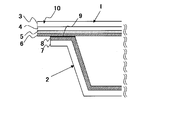
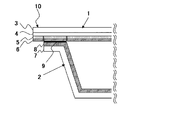
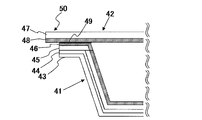
- Partial sectional view of the package of the present invention using the multilayer film defined in the present invention as a lid In the package shown in FIG. 1, a partial cross-sectional view of the package in a state in which a part of the lid is peeled from the container In the package shown in FIG. 1, a partial cross-sectional view showing a state in which the lid and the bottom material are resealed Partial sectional view of the package of the present invention using the multilayer film defined in the present invention as a bottom material In the package shown in FIG.
- a partial cross-sectional view of the package in a state where a part of the lid is peeled from the container 4 is a partial cross-sectional view showing a state where the lid and the bottom material are resealed in the package shown in FIG.
- the multilayer film with a reseal function a lid material, a bottom material, and a package that constitute the package of the present invention will be described in detail.
- “configured as a main component” is intended to allow other components to be included within a range that does not impede the action and effect of the resin constituting each layer. Further, this term does not limit the specific content, but it is 70% by mass or more and 100% by mass or less, preferably 85% by mass or more and 100% by mass or less, more preferably 95% by mass of the total components of each layer. It means to occupy from 100% to 100% by mass.
- the film constituting the package of the present invention is a multilayer film in which a surface resin layer (A), an adhesive resin layer (B), a release resin layer (C), and a heat seal resin layer (D) are sequentially laminated.
- the adhesive resin layer (B) is composed mainly of a styrene thermoplastic elastomer having a temperature showing a peak value of loss tangent (tan ⁇ ) measured at a frequency of 10 Hz by dynamic viscoelasticity measurement of ⁇ 35 ° C. or more.
- the heat seal resin layer (D) has a Vicat softening point of 70 ° C. or higher and 100 ° C.
- a peak value of weight average molecular weight measured by a high temperature GPC method is 160000 or higher and 220,000 or lower
- weight Consists of a polyethylene-based adhesive resin whose polydispersity (Mw / Mn), which is the ratio of the average molecular weight (Mw) to the number average molecular weight (Mn), is 1.5 or more and 2.3 or less.
- Mw / Mn polydispersity
- Mw polydispersity
- Mn the ratio of the average molecular weight (Mw) to the number average molecular weight (Mn)
- the adhesive resin layer (B) and the release resin layer (C) are delaminated in the heat seal portion, and the adhesive resin layer ( B) has a reseal function that is exposed to the release resin layer (C) in a resealable state.
- the surface resin layer (A) of the film is a layer composed of the thermoplastic resin (a) as a main component, and the delamination strength between the surface resin layer (A) and the adhesive resin layer (B) at the time of peeling is adhesive.
- the layer structure is not particularly limited as long as it is greater than the delamination strength between the resin layer (B) and the release resin layer (C), and may be a single layer or a multilayer.
- thermoplastic resin (a) used as the main component of the surface resin layer (A) is the resin used as the main component of the adhesive resin layer (B), the release resin layer (C), and the heat seal resin layer (D). It is preferable to select appropriately considering the type. Since the thermoplastic resin (a) has a melt extrusion temperature in a range of approximately 180 ° C. or more and 300 ° C. or less, a thermoplastic resin that can be melt extruded within this range is suitably used.
- thermoplastic resin (a) examples include olefin resins (ethylene resins, propylene resins, cyclic olefin resins, etc.), amide resins, saponified ethylene-vinyl acetate copolymers, ester resins, Examples thereof include styrene resins and carbonate resins.
- olefin resins ethylene resins, propylene resins, cyclic olefin resins, etc.
- amide resins saponified ethylene-vinyl acetate copolymers
- ester resins examples thereof include styrene resins and carbonate resins.
- thermoplastic resins can be used alone or as a mixed resin composition of two or more, and can form a single layer structure or a multilayer structure.
- the thermoplastic resin (a) includes olefin resin, amide resin, saponified ethylene-vinyl acetate copolymer, ester resin, and At least one thermoplastic resin selected from the group consisting of styrenic resins can be suitably used.
- ethylene resin examples include ethylene resins such as very low density polyethylene (VLDPE), linear low density polyethylene (LLDPE), low density polyethylene (LDPE), medium density polyethylene (MDPE), and high density polyethylene (HDPE); Ethylene-vinyl acetate copolymer (EVA), ethylene-methyl methacrylate copolymer (EMMA), ethylene-ethyl acrylate copolymer (EEA), ethylene-methyl acrylate copolymer (EMA), ethylene-acrylic acid copolymer Polymer (EAA), ethylene-methacrylic acid copolymer (EMAA), ethylene-glycidyl methacrylate copolymer (E-GMA), ethylene-vinyl acetate-glycidyl methacrylate copolymer (E-VA-GMA), ethylene- Maleic anhydride copolymer (EM H), ethylene copolymers such as ethylene-ethyl acrylate-maleic anhydride copolymer (V
- propylene-based resin examples include propylene homopolymers and copolymers of propylene and other ⁇ -olefins such as ethylene and butene.
- the copolymer may be a random copolymer or a block copolymer. Can also be used.
- the stereoregularity may be any of an isotactic structure, a syndiotactic structure, an atactic structure, a stereo block structure, and the like. These may be used alone or in combination of two or more.
- amide resin examples include, as aliphatic polyamide polymers, ring-opening polymers of cyclic lactams, polycondensates of aminocarboxylic acids, polycondensates of dicarboxylic acids and diamines, and the like. Specific examples include a homopolymer of ⁇ -caprolactam called 6 nylon, polyhexamethylene adipamide called 66 nylon, or 6-66 nylon which is a copolymer thereof. Moreover, as an aromatic polyamide polymer, a resin containing 70 mol% or more of a polyamide constituent unit composed of xylylenediamine and an ⁇ , ⁇ aliphatic dicarboxylic acid having 6 to 12 carbon atoms in the molecular chain, etc.
- homopolymers such as polymetaxylylene adipamide, polymetaxylylene pimeramide, polymetaxylylene azelamide, polyparaxylylene azelamide, polyparaxylylene decanamide, metaxylylene / paraxylylene azamide
- copolymer examples include a amide copolymer, a metaxylylene / paraxylylene pimeramide copolymer, a metaxylylene / paraxylylene azeramide copolymer, and a metaxylylene / paraxylylene sepacamide copolymer. These may be used alone or in combination of two or more.
- the saponified ethylene-vinyl acetate copolymer has an ethylene content of 29% or more, preferably 32% or more, 47 mol% or less, preferably 44 mol% or less, and a saponification degree of 90%. Above, preferably 95% or more is suitably used.
- a grade in which the ethylene content and the degree of saponification are in the above ranges the gas barrier properties and mechanical strength of the film can be improved. These may be used alone or in combination of two or more.
- ester resin examples include polyethylene terephthalate resin, polypropylene terephthalate resin, polybutylene terephthalate resin, polyethylene isophthalate resin, polyethylene naphthalate resin, polybutylene naphthalate resin, polyethylene terephthalate / isophthalate copolymer resin, 1,4-cyclohexane. Represented by low crystalline or amorphous polyethylene terephthalate resin, polyethylene / neopentyl terephthalate copolymer resin, and polylactic acid-based resin containing 15 to 50 mol% of dimethanol units in all glycol monomer units. Examples include aliphatic polyester resins.
- thermoplastic polyester elastomer having a high melting point and high crystallinity aromatic polyester as a hard segment and an amorphous polyester or amorphous polyether as a soft segment may be appropriately mixed with the ester resin.
- elastomers may be used alone or in a suitable mixture of two or more.
- styrenic resin examples include general-purpose polystyrene (GPPS), high impact polystyrene (HIPS), styrene- (meth) acrylic acid ester copolymer, and a styrenic copolymer composed of a styrenic monomer and a (meth) acrylic acid ester.
- GPPS general-purpose polystyrene
- HIPS high impact polystyrene
- styrene- (meth) acrylic acid ester copolymer examples include a styrenic copolymer composed of a styrenic monomer and a (meth) acrylic acid ester.
- the surface resin layer (A) is composed of two or more layers, and the saponified ethylene-vinyl acetate copolymer is the main component. It is preferable to have at least one layer mainly composed of an amide resin or the like.
- the delamination strength between the resin layers constituting the multilayer is the delamination strength between the adhesive resin layer (B) and the release resin layer (C). It is also important to appropriately select and use an adhesive resin that is larger than that.
- examples of the adhesive resin include ethylene resins such as linear low density polyethylene (LLDPE), low density polyethylene (LDPE), and ethylene-vinyl acetate copolymer (EVA), propylene homopolymer, and Propylene resins such as copolymers of propylene and other ⁇ -olefins, monobasic unsaturated fatty acids such as acrylic acid or methacrylic acid, methyl acrylate, methyl methacrylate, glycidyl methacrylate, etc.
- LLDPE linear low density polyethylene
- LDPE low density polyethylene
- EVA ethylene-vinyl acetate copolymer
- propylene resins such as copolymers of propylene and other ⁇ -olefins, monobasic unsaturated fatty acids such as acrylic acid or methacrylic acid, methyl acrylate, methyl methacrylate, glycidyl methacrylate, etc.
- An olefin-based adhesive resin in which an ester compound of a monobasic unsaturated fatty acid or an anhydride of a dibasic fatty acid such as maleic acid, fumaric acid or itaconic acid is chemically bonded is preferably used.
- Specific examples of such an adhesive resin include trade name “Admer” manufactured by Mitsui Chemicals, Inc. and trade name “Modic” manufactured by Mitsubishi Chemical Corporation.
- components may be appropriately added to the surface resin layer (A) within a range not impairing the gist of the present invention.
- Specific examples include components such as an antifogging agent, an antistatic agent, a heat stabilizer, a nucleating agent, an antioxidant, a lubricant, an antiblocking agent, a release agent, and an ultraviolet absorber.
- an antifogging agent such as an antifogging agent, an antistatic agent, a heat stabilizer, a nucleating agent, an antioxidant, a lubricant, an antiblocking agent, a release agent, and an ultraviolet absorber.
- the surface resin layer (A) may be added only to a specific layer or may be added to all layers.
- the adhesive resin layer (B) is mainly composed of a styrene-based thermoplastic elastomer (b) having a temperature showing a peak value of loss tangent (tan ⁇ ) measured at a frequency of 10 Hz by dynamic viscoelasticity measurement of ⁇ 35 ° C. or more. It is important that the layer is composed.
- the temperature showing the peak value of the loss tangent (tan ⁇ ) is ⁇ 35 ° C. or higher, the pressure-sensitive adhesive resin layer (B) and the release resin layer (C) exposed at the time of peeling are only pressure-bonded by hand or fingers. It is preferable because of practical resealability.
- the resealability is presumed to be affected by viscoelastic properties at room temperature, particularly the value of loss tangent (tan ⁇ ), and the value of loss tangent (tan ⁇ ) at room temperature is 0.1 or more (upper limit)
- the value is usually more preferably about 0.6).
- the upper limit of the temperature which shows the peak value of loss tangent (tan-delta) of a styrene-type thermoplastic elastomer (b) is 10 degrees C or less normally from the characteristic as an elastomer.
- the temperature showing the peak value of loss tangent (tan ⁇ )
- the preferred range is ⁇ 35 ° C. or higher, more preferably ⁇ 25 ° C. or higher, and 5 ° C. or lower, more preferably 0 ° C. or lower.
- the styrenic thermoplastic elastomer (b) is preferably styrene, a copolymer of a styrene homologue such as ⁇ -methylstyrene and a conjugated diene, or a hydrogenated derivative thereof.
- the conjugated diene constituting the conjugated diene moiety include 1,3-butadiene, isoprene, 1,3-pentadiene, and the like. These may be used alone or in a state where two or more kinds are mixed in the copolymer. It may be included.
- the thermal stability and weather resistance when a double bond mainly consisting of vinyl bonds in the conjugated diene moiety remains are extremely poor. To improve this, 80% or more, preferably 95% of the double bonds. It is preferable to use one added with hydrogen.
- the temperature showing the peak value of the loss tangent (tan ⁇ ) of the styrenic thermoplastic elastomer (b) mainly consists of the styrene content and the vinyl bond content of the conjugated diene part (for example, 1,2 bond in the case of butadiene, isoprene).
- the amount depends on the amount of 1,2 and 3,4 bonds.
- the styrene content is 1% by mass or more, preferably 5% by mass or more, more preferably 10% by mass or more, 25% by mass or less, preferably 20% by mass or less, more preferably 15% by mass or less.
- a styrenic thermoplastic elastomer having a vinyl bond content of the conjugated diene moiety of 40 mol% or more, preferably 50 mol% or more is suitably used.
- thermoplastic elastomer examples include the product name “Hibler 7311” manufactured by Kuraray Co., Ltd., the product name “Tuftec H1221” manufactured by Asahi Kasei Co., Ltd., and the product name “Dynalon” manufactured by JSR Corporation. 1320P "etc. can be illustrated.
- resins and components may be appropriately added to the pressure-sensitive adhesive resin layer (B) as long as the gist of the present invention is not impaired.
- resins and components include low crystalline or amorphous olefin resins, softeners, oils (mineral oils), stabilizers (antioxidants, etc.), liquid paraffin, and the like.
- the release resin layer (C) is a layer composed mainly of the thermoplastic resin (c), and the delamination strength between the adhesive resin layer (B) and the release resin layer (C) during the peeling is the surface. Especially if it is a layer structure which becomes smaller than the delamination strength between the resin layer (A) and the adhesive resin layer (B) and between the release resin layer (C) and the heat seal resin layer (D) However, it may be a single layer or multiple layers as desired.
- the thermoplastic resin (c) contained as the main component of the release resin layer (C) has a melt extrusion temperature of about 180 ° C. or higher, like the thermoplastic resin (a) constituting the main component of the surface resin layer (A).
- a thermoplastic resin that can be melt-extruded at 300 ° C. or lower is preferably used.
- the thermoplastic resin (c) the balance between easy-openability and resealability with the adhesive resin layer (B) containing the styrenic thermoplastic elastomer (b) as a main component, molding processability and transparency.
- at least one thermoplastic resin selected from the group consisting of ester resins, amide resins, cyclic olefin resins, and saponified ethylene-vinyl acetate copolymers may be used.
- the thermoplastic resin (c) that is suitably used in the release resin layer (C) is excellent in rigidity, and the adhesive resin layer (B) by an external force at the time of delamination from the adhesive resin layer (B).
- the surface of the release resin layer (C) and the unevenness of the delamination surface and unevenness of each layer can be suppressed to a low level, and the easy-openability and re-sealability when opening-resealing is repeated are industrially stable. It is also preferable to use an amide resin that is available at a relatively low cost.
- An amide resin such as a low crystalline or amorphous polyamide resin obtained by reacting a dicarboxylic acid such as isophthalic acid with a diamine such as hexamethylenediamine or isophoronediamine can be preferably used.
- Examples of the amide resin include 6-66 nylon resin such as “Novamid 2063” manufactured by Mitsubishi Engineering Plastics, “UBE Nylon 5033B” manufactured by Ube Industries, Ltd., and the like.
- Examples of the 12 nylon resin include a product name “UBESTA 3035UF” manufactured by Ube Industries, Ltd., a product name “Griramid L25” manufactured by Ems Showa Denko Corporation, and the like.
- Examples of the amorphous polyamide resin include trade name “Novamid X21” manufactured by DSM Japan Engineering Plastics Co., Ltd. and trade name “Sealer PA3426” manufactured by Mitsui DuPont Polychemical Co., Ltd.
- the release resin layer (C) By disposing the release resin layer (C) between the adhesive resin layer (B) and the heat seal resin layer (D), the heat seal portion of the bottom material or lid material of the package body to be sealed is configured.
- the resin it is possible to impart a good initial peel strength and resealability with the adhesive resin layer (B).
- the thermoplastic resin (c) a thermoplastic resin having an excellent initial peel strength from the adhesive resin layer (B) and resealability rather than the thermoplastic resin (d).
- an olefin resin that can be heat-sealed under the heat seal condition (temperature: about 120 to 180 ° C.) that is usually employed is mainly used.
- an amide resin and a heat seal resin layer (D) The Vicat softening point is 70 ° C. or more and 100 ° C.
- the peak value of the weight average molecular weight measured by the high temperature GPC method is 160000 or more and 220,000 or less, and the weight average molecular weight (Mw) and the number average molecular weight (Mn).
- a layer mainly comprising a polyethylene-based adhesive resin having a polydispersity (Mw / Mn) as a ratio of 1.5 or more and 2.3 or less is selected.
- the heat seal resin layer (D) has a Vicat softening point of 70 ° C. or more and 100 ° C. or less, a peak value of the weight average molecular weight measured by the high temperature GPC method is 160000 or more and 220,000 or less, and the weight average molecular weight (Mw)
- a heat-sealable resin layer composed mainly of a polyethylene-based adhesive resin (d) having a polydispersity (Mw / Mn) which is a ratio of the number average molecular weight (Mn) of 1.5 or more and 2.3 or less. is there.
- the release resin layer (C) and the heat seal resin layer (D ) are not particularly limited as long as it has a layer structure. It may be a resin layer having a layer structure or a resin layer having a multilayer structure.
- the polyethylene-based adhesive resin (d) is a kind of resin used as a main component of the sealing surface material, the surface resin layer (A), the adhesive resin layer (B), and the release resin layer (C) of the sealed object.
- a resin having an appropriate heat seal strength can be appropriately selected and used.
- the polyethylene-based adhesive resin (d) is produced using a known Ziegler catalyst, vanadium catalyst, single-site catalyst, etc., and as the single-site catalyst, a metallocene catalyst, a geometrically constrained catalyst (CGC), a catalyst using a nonmetallocene complex Etc.
- the polyethylene adhesive resin manufactured using a single site catalyst shows a very sharp molecular weight distribution compared to the polyethylene adhesive resin manufactured using a conventional Ziegler-Natta catalyst. Since it is uniform, it is difficult to block and has excellent surface lubricity. Therefore, it is not necessary to use an anti-blocking powder, and even when a slip agent or an anti-blocking agent is added, the amount added can be reduced. Further, even during high-temperature storage, blocking can be prevented because there is little elution of low molecular weight components.
- polyethylene adhesive resin (d) suitable for the present invention examples include linear low density polyethylene (LLDPE) and VLDPE (very low density polyethylene) obtained by copolymerization of ethylene and ⁇ -olefin via a single site catalyst.
- LLDPE linear low density polyethylene
- VLDPE very low density polyethylene
- Monobasic unsaturated fatty acids such as acrylic acid or methacrylic acid, or ester compounds of monobasic unsaturated fatty acids such as methyl acrylate, methyl methacrylate, or glycidyl methacrylate, or maleic acid, fumaric acid or
- Polyethylene obtained by chemically bonding an anhydride of a dibasic fatty acid such as itaconic acid is preferably used. These may be used alone or in combination of two or more.
- the polyethylene-based adhesive resin having a Vicat softening point of 70 ° C. or more and 100 ° C. or less is used in the slitting operation of the film (mechanically making a cut in the film winding direction and winding it while cutting it). It can be finished with a good roll appearance without causing defects such as wrinkles, displacement and sagging.
- a conventional polyethylene-based adhesive resin using a Ziegler-Natta catalyst a low molecular weight component is included, so that it is easy to block and a defective phenomenon occurs, resulting in poor productivity. Further, in storage at high temperatures, there is a problem that the heat seal tree surface is roughened when unwinding because of blocking due to sticky components such as low molecular weight components.
- the Vicat softening point when the Vicat softening point is 70 ° C. or lower, the softening point tends to block at a high temperature because it tends to soften. Further, when the Vicat softening point is 100 ° C. or higher, the interlayer adhesive strength with the release resin layer (C) is lowered, and normal peeling does not occur when opening, and a delamination phenomenon tends to occur. In addition, since the Vicat softening point is high, it is necessary to change the setting conditions of the packaging machine such as increasing the heat seal temperature or extending the seal time.
- Vicat softening point refers to the Vicat softening point measured by a method defined in JIS K7206 (1999) [Plastic-thermoplastic plastic—Vicat softening temperature (VST) test method].
- the peak value of the weight average molecular weight of the heat seal resin layer (D) is preferably from 160000 to 220,000, more preferably from 170000 to 210000.
- the peak value of the weight average molecular weight is less than 150,000 and the molecular weight distribution tends to be wide, the low molecular weight component increases and causes stickiness.
- the peak value of the weight average molecular weight is 220,000 or more, the extrusion moldability deteriorates and film formation becomes difficult.
- the molecular weight peak value means the maximum molecular weight measured by high-temperature GPC.
- the weight average molecular weight (Mw) / number average molecular weight (Mn) ratio (hereinafter referred to as polydispersity Mw / Mn) representing the molecular weight distribution is preferably 1.5 to 2.3. More preferably, it is from 8 to 2.3. This means that the smaller the Mw / Mn, the smaller the variation in the molecular weight of the comonomer and the narrower the molecular weight distribution. However, when the Mw / Mn is less than 1.5, problems such as a decrease in extrusion moldability occur. Production is difficult. On the other hand, when Mw / Mn exceeds 2.3, the amount of low molecular weight components increases, and problems such as easy film blocking due to elution of the low molecular weight components occur.
- adhesive resins include metallocene-catalyzed polyethylene-based adhesive resins in the trade name “Admer” manufactured by Mitsui Chemicals, Inc. and the product name “Modic” manufactured by Mitsubishi Chemical Corporation. it can.
- the heat sealing resin layers (D) are overlapped, stored in a constant temperature layer at 40 ° C. for 24 hours, left to stand at 23 ° C. and 50% RH for 24 hours, and then the blocking force measured by ASTM 3354 is 3 N or less. And more preferably 2.5N or less. If the blocking force is 3N or more, defects such as wrinkles, displacement and sagging may occur during slit processing.
- a lubricant or an anti-blocking agent to the heat seal resin layer (D) as appropriate from the viewpoint of processing suitability during extrusion film formation and packaging suitability in a filling machine such as a deep drawing packaging machine.
- a lubricant or an anti-blocking agent to the heat seal resin layer (D) as appropriate from the viewpoint of processing suitability during extrusion film formation and packaging suitability in a filling machine such as a deep drawing packaging machine.
- the adhesive resin layer (B) and the heat seal resin layer (D) are directly adjacent to each other, additives such as a lubricant and an antiblocking agent added to the heat seal resin layer (D) after opening are changed over time. There is a concern that the reseal peel strength with the adhesive resin layer (B) may decrease due to bleeding on the exposed surface of the heat seal resin layer.
- the peeling resin layer (C) was distribute
- additives such as lubricants and antiblocking agents that are suitably added to the heat seal resin layer (D) Since it is difficult to directly affect the peeled portion, there is also an advantage that stable resealability can be obtained with little influence on reseal strength.
- heat seal resin layer (D) may be appropriately added to the heat seal resin layer (D) as long as the gist of the present invention is not impaired.
- Specific examples include antifogging agents, antistatic agents, heat stabilizers, nucleating agents, antioxidants, mold release agents, and ultraviolet absorbers.
- the delamination strength between the resin layer (B) and the release resin layer (C) is between the surface resin layer (A) and the adhesive resin layer (B), and between the release resin layer (C) and the heat seal resin layer (D Between) It is preferable to reduce consisting configuration than peel strength. At the same time, it is also important to ensure the delamination strength to such an extent that the function as a package can be maintained so that the layers are not easily peeled off or opened by a slight impact.
- the interlayer peel strength is in the range of 1 N / 15 mm width to 20 N / 15 mm width. It is preferable to select as follows. Here, if the delamination strength is 1 N / 15 mm width or more, problems such as easy opening of the packaging body due to a slight impact are unlikely to occur, and if it is 20 N / 15 mm width or less, the packaging body Is easy because it is easy to open by hand, which is preferable.
- the more preferable range of the interlaminar peel strength (initial peel strength) between the adhesive resin layer (B) and the release resin layer (C) has a lower limit of 3 N / 15 mm width or more, and more preferably 5 N / 15 mm. It is not less than the width and the upper limit is not more than 15 N / 15 mm width, more preferably not more than 10 N / 15 mm width.
- the delamination strength is preferably 0.5 N / 15 mm width or more.
- the reseal peel strength is 0.5 N / 15 mm width or more, preferably 0.75 N / 15 mm width or more, more preferably 1.0 N / 15 mm width or more (only re-seal strength is obtained by pressure bonding with hands or fingers).
- the upper limit of the sealing peel strength is not more than the delamination strength between the adhesive resin layer (B) and the release resin layer (C), preferably not more than 10 N / 15 mm width, more preferably not more than 5.0 N / 15 mm width. If so, it is preferable because practical resealability can be obtained.
- the surface resin layer (A) is mainly composed of at least one thermoplastic resin selected from the group consisting of olefin resins, amide resins, saponified ethylene-vinyl acetate copolymers, ester resins, and styrene resins.
- (D) is a ratio between the weight average molecular weight (Mw) and the number average molecular weight (Mn) of the peak value of the weight average molecular weight measured by the high temperature GPC method at a Vicat softening point of 70 ° C. to 100 ° C.
- Mw weight average molecular weight
- Mn number average molecular weight
- Examples thereof include a polydispersity (Mw / Mn) having a layer composed mainly of a polyethylene adhesive resin having a polydispersity of 1.5 or more and 2.3 or less.
- the surface resin layer (A) is a resin layer having a single layer or a multilayer structure, and usually has a thickness of 1 ⁇ m or more, preferably 10 ⁇ m or more, more preferably 20 ⁇ m or more, and 1000 ⁇ m or less, preferably 600 ⁇ m or less, Preferably it is 500 micrometers or less.
- the thickness of the surface resin layer (A) is 1 ⁇ m or more, it is easy to dispose a layer imparting characteristics such as gas barrier properties and pinhole resistance and an adhesive resin layer, and the thickness thereof. Is preferably 1000 ⁇ m or less, because heat can be easily transferred to the heat seal resin layer (D) during heat sealing, and can be easily heat sealed with the sealing portion of the object to be sealed.
- the adhesive resin layer (B) is usually a resin layer having a single layer structure, and the thickness thereof is not particularly limited, but the balance between easy-openability and resealability, moldability, production cost, etc. Therefore, 0.5 ⁇ m or more, preferably 5 ⁇ m or more, more preferably 10 ⁇ m or more and 100 ⁇ m or less, preferably 70 ⁇ m or less, more preferably 50 ⁇ m or less is suitably employed.
- the total thickness of the release resin layer (C) and the heat seal resin layer (D) is not particularly limited, but is 1 ⁇ m or more, preferably 3 ⁇ m or more, more preferably 5 ⁇ m or more, 30 ⁇ m or less, preferably 25 ⁇ m. In the following, it is more preferable that the thickness is 15 ⁇ m or less.
- the total thickness is 1 ⁇ m or more, it is preferable because the deformation such as pressurization by a heat seal hot plate at the time of heat sealing can prevent problems such as deterioration of the function of each layer, and the thickness is also preferable.
- the release resin layer (C) and the heat seal resin layer (D) can be easily broken when the adhesive resin layer (B) and the release resin layer (C) are peeled off. It is preferable because the layer (B) can be exposed in a resealable state.
- the thickness of the release resin layer (C) is 0.5 ⁇ m or more, preferably 2 ⁇ m or more, more preferably 3 ⁇ m or more and 29.5 ⁇ m or less, preferably 20 ⁇ m or less, more preferably 10 ⁇ m or less. If the thickness of the release resin layer (C) is 0.5 ⁇ m or more, the release resin layer (C) is deformed by the heat sealing pressure during heat sealing, and there are few problems such as a decrease in the function as the release resin layer. If the thickness is 29.5 ⁇ m or less, the release resin layer (C) can be easily broken at the time of opening even when a resin having a high rigidity such as an ester resin is disposed. The layer (C) and the heat seal resin layer (D) are preferred because they do not easily break down such as a layer remaining on the multilayer film side without breaking.
- the thickness of the heat seal resin layer (D) is 0.5 ⁇ m or more, preferably 2 ⁇ m or more, more preferably 3 ⁇ m or more and 29.5 ⁇ m or less, preferably 20 ⁇ m or less, more preferably 10 ⁇ m or less.
- the thickness of the heat seal resin layer (D) is 0.5 ⁇ m or more, the release resin layer (C) and good interlayer adhesive strength can be maintained.
- the release resin layer (D) is deformed by the heat seal pressure during heat sealing, which is preferable because defects such as deterioration of the function as the heat seal resin layer are reduced, and the thickness is preferably 29.5 ⁇ m or less.
- the release resin layer (C) and the heat seal resin layer ( D) is preferred because it does not easily cause problems such as a layer remaining on the multilayer film side without breaking.
- the resin compositions used for the surface resin layer (A), the adhesive resin layer (B), the release resin layer (C), and the heat seal resin layer (D) described above are heated and melted in separate extruders, After being laminated in the order of (A) / (B) / (C) / (D) in a molten state by a known method such as a manifold method or a feed block method, it is formed into a multilayer film by a T-die / chill roll method or an inflation method. Can be molded.
- Examples of the surface treatment method include corona treatment, plasma treatment, chromic acid treatment, flame treatment, surface oxidation treatment such as hot air treatment ozone / ultraviolet treatment, sand blasting, and the like. Corona treatment is preferably used from the viewpoint of effects, productivity, and manufacturing cost.
- the multilayer film specified in the present invention is formed on the surface resin layer (A) opposite to the surface on which the adhesive resin layer (B) is laminated by a known method such as a dry lamination method or an extrusion lamination method, as necessary. Then, a laminate base material can be laminated through an adhesive resin, an adhesive, or the like to obtain a laminate film or laminate sheet.
- the laminate substrate is not particularly limited, for example, biaxially stretched polypropylene film, biaxially stretched nylon film, biaxially stretched polyethylene terephthalate film, unstretched polypropylene sheet, unstretched polyethylene terephthalate sheet, An aluminum foil, paper, a nonwoven fabric, etc. are mentioned.
- a dry lamination method is preferably used, and examples of the adhesive used at that time include a polyester-polyurethane adhesive and a polyether-polyurethane adhesive.
- the film itself or a laminate film or laminate sheet obtained by laminating a film and a laminate base material can be used as a cover material or a bottom material of various packaging bodies, respectively.
- a laminate film is used as a lid for a package (container)
- the package (container) (sealed body) filled with a heat seal resin layer (D) of the lid and contents such as food
- a package (container) having airtightness, practical initial peel strength, and resealing function can be obtained.
- This package (container) is exposed on the peeled surface after opening in a state where the adhesive resin layer (B) can be resealed, and can be resealed only by pressure pressing with a hand or a finger.
- the adhesive resin layer (B) can be resealed, and can be resealed only by pressure pressing with a hand or a finger.
- a bottom material of various packaging bodies (containers) it is possible to obtain a packaging body (container) having a reseal function similarly by performing deep drawing or the like.
- FIG. 1 is a partial cross-sectional view of a deep-drawn package using a multilayer film defined in the present invention as a lid
- FIG. 2 is a diagram illustrating a part of the lid in the deep-drawn package shown in FIG.
- FIG. 3 is a partial cross-sectional view showing a state in which the lid material and the bottom material are resealed in the deep-drawn package shown in FIG. 2.
- FIG. 4 is a partial cross-sectional view of a deep-drawn package using the film defined in the present invention as a bottom material
- FIG. 1 is a partial cross-sectional view of a deep-drawn package using a multilayer film defined in the present invention as a lid
- FIG. 2 is a diagram illustrating a part of the lid in the deep-drawn package shown in FIG.
- FIG. 3 is a partial cross-sectional view showing a state in which the lid material and the bottom material are resealed in the deep-drawn package shown in FIG.
- FIG. 5 is a diagram illustrating a part of the lid material in the deep-drawn package shown in FIG.
- FIG. 6 is a partial cross-sectional view of the deep-drawn package body in a state of being peeled from the material, and is a partial cross-sectional view showing a state in which the lid material and the bottom material are resealed in the deep-drawn package body shown in FIG. 5.
- reference numeral 1 is a lid member
- reference numeral 2 is a bottom material (sealed body)
- reference numeral 3 is a surface resin layer of the lid member
- reference numeral 4 is an adhesive resin layer of the lid member
- reference numeral 5 is a lid member.
- 6 is a heat seal resin layer of the lid material
- 7 is a surface resin layer of the bottom material
- 8 is a heat seal resin layer of the bottom material
- 9 is a heat seal portion
- 10 is a tab portion
- Reference numeral 11 denotes an exposed portion of the adhesive resin layer 4 at the time of peeling
- reference numeral 12 denotes an exposed portion of the peeling resin layer 5 at the time of peeling.
- reference numeral 41 is a bottom material
- reference numeral 42 is a lid member (sealed body)
- reference numeral 43 is a bottom surface resin layer
- reference numeral 44 is a bottom adhesive resin layer
- reference numeral 45 is a bottom material.
- Peeling resin layer reference numeral 46 is a heat seal resin layer of the bottom material
- reference numeral 47 is a surface resin layer of the cover material
- reference numeral 48 is a heat seal resin layer of the cover material
- reference numeral 49 is a heat seal portion of the cover material
- reference numeral 50 is a cover.
- the tab part of the material, reference numeral 51 is an exposed part of the adhesive resin layer 44 at the time of peeling, and reference numeral 52 is an exposed part of the peeling resin layer 45 at the time of peeling.
- the cover material 1 includes a surface resin layer 3, an adhesive resin layer 4, a release resin layer 5, and a heat seal resin layer 6 in this order.
- the heat seal resin layer 6 of the lid 1 is heat-sealed with the heat seal resin layer 8 of the bottom material 2 that is the object to be sealed. That is, the lid member 1 and the bottom member 2 are bonded by the heat seal portion 9 formed by heat sealing.
- the release resin layer 5 and the heat seal resin layer 6 on the tab portion 10 side are separated from the lid material 1. While being broken, peeling is started between the adhesive resin layer 4 and the release resin layer 5 in the lid member 1.
- peeling between the adhesive resin layer 4 and the release resin layer 5 reaches the heat seal portion 9 on the side opposite to the tab portion 10 side, the release resin layer 5 and the heat seal resin layer 6 of the lid member 1 are broken.
- the release resin layer 5 and the heat seal resin layer 6 of the lid material 1 that has been broken move to the bottom material 2 side that is a sheet body, and the exposed portion 11 of the adhesive resin layer 4 and the exposed portion 12 of the release resin layer 5 It is formed.
- the peeled cover material 1 is covered on the bottom material 2, and the surface resin layer 3 is pressure-bonded by hand or fingers to form the adhesive resin layer 4 of the cover material 1.
- the lid material 1 and the bottom material 2 can be resealed.
- the bottom material 41 includes a surface resin layer 43, an adhesive resin layer 44, a release resin layer 45, and The heat seal resin layer 46 is laminated in this order.
- the lid member 42 and the bottom member 41 are bonded together by a heat seal portion 49 formed by heat sealing.
- cover the peeled lid material 42 on the bottom material 41 when resealing, cover the peeled lid material 42 on the bottom material 41, and press and pressure-bond the surface resin layer 47 of the lid material with a hand or a finger to obtain the bottom material.
- the cover material 42 and the bottom material 41 can be resealed by overlapping the exposed portion 51 of the adhesive resin layer 44 of 41 and the exposed portion 52 of the release resin layer 45 of the bottom material 41 transferred to the cover material 42. .
- the package of the present invention can be used as a lid or bottom material for various containers, and its use is not particularly limited.
- instant noodles, snack confectionery, chocolate confectionery, livestock meat processing such as sliced ham
- livestock meat processing such as sliced ham
- Such as cosmetics, sanitary products, shipping medicines, emergency adhesive plasters, throat candy, etc. that are used as containers packed in several units, such as products, wet tissues, sweat paper, fragrances, disposable diapers, etc.
- It can be used as a container in which pharmaceutical products are packaged.
- it can be suitably used as a package for storing contents that remain susceptible to deterioration such as oxidative deterioration, moisture absorption, and drying after the opening.
- the present invention will be described in more detail with reference to examples. However, the present invention is not limited to these examples.
- the various measured value and evaluation about the film displayed in this specification were performed as follows.
- the flow direction from the extruder of the film is called the vertical direction
- the orthogonal direction is called the horizontal direction.
- Vicat softening point A plate-shaped test piece of about 10 mm ⁇ width 10 mm ⁇ thickness 3 mm was molded by injection molding and then left in a constant temperature and humidity chamber at a temperature of 23 ° C. and a relative humidity of 50% for 24 hours to adjust the state. Using a heat distortion tester S3EH type (Toyo Seiki Seisakusho), the temperature at which the indenter entered 1 mm into the test piece was measured under the condition of a heating rate of 50 ° C./hr using a 50 N weight. The test was performed twice, and the average value was defined as the Vicat softening point (° C.).
- Peak value of molecular weight and molecular weight polydispersity After dissolving 4 mg of the pellet of the sample in 4 ml of a solvent o-dichlorobenzene at 140 ° C., using a high temperature GPC system GPCV2000 (manufactured by Nippon Waters Co., Ltd.), columns: Styragel HT6E, 4, 3 (4.6 mm diameter 300 mm, 3 mm Ream) (manufactured by Nihon Waters Co., Ltd.), standard sample polystyrene, temperature average 140 ° C., weight average molecular weight (Mw) and number average molecular weight (Mn) are analyzed, weight average molecular weight peak value and molecular weight polydispersity (Mw / Mz) was determined.
- GPC system GPCV2000 manufactured by Nippon Waters Co., Ltd.
- Styragel HT6E 4, 3 (4.6 mm diameter 300 mm, 3 mm Ream) (manufactured
- Remaining layer The situation when peeled by hand from the bottom material of the obtained deep-drawn package and the heat seal part of the lid was visually evaluated according to the following criteria.
- Reseal peel strength The bottom seal of the obtained deep-drawn package and the heat seal part of the lid were cut into strips with a width of 15 mm to form test pieces. The heat seal part is opened, and the part peeled between the adhesive resin layer (B) and the release resin layer (C) is pressure-pressed with a finger and resealed five times. Then, using a universal testing machine (manufactured by Intesco), the peel strength (N / 15 mm width) measured under the conditions of a temperature of 23 ° C., a tensile speed of 200 mm / min, and a tensile angle of 180 degrees was defined as the re-sealing peel strength. In addition, the following standards are also shown. A: When the reseal peel strength is 0.5 N / 15 mm width or more B: When the reseal peel strength is less than 0.5 N / 15 mm width
- Blocking property The obtained multilayer film was cut into a size of 10 ⁇ 15 cm, the heat seal resin layers (D) were overlapped, and sandwiched between glass plates. It was stored in a constant temperature layer at 40 ° C. for 24 hours, and then allowed to stand at 23 ° C. and 50% humidity for 24 hours. Two films were peeled off by a tensile tester by the method of ASTM D3354, and the blocking force was measured. In addition, the following standards are also shown. A: Blocking force is 3N or less B: Blocking force is 3N or more
- Example 1 [Cover material]
- the surface resin layer (A) has a three-layer structure using the following three types of resins.
- A1 Saponified ethylene-vinyl acetate copolymer (manufactured by Kuraray Co., Ltd., trade name “EVAL E105”, hereinafter abbreviated as “EVOH”)
- A2 6-66 nylon resin (manufactured by DSM Japan Engineering Plastics Co., Ltd., trade name “Novamid 2030”, hereinafter abbreviated as “6-66Ny”)
- A3 Olefin-based adhesive resin (manufactured by Mitsui Chemicals, trade name “Admer NF558”, hereinafter abbreviated as “AD1”)
- the pressure-sensitive adhesive resin layer (B) is a styrene-based thermoplastic elastomer resin (manufactured by Kuraray Co., Ltd., trade name “Hibler 7311”, a styrene content of 12% by mass, a temperature indicating a peak value of loss tangent (tan ⁇ ) of ⁇ 18.6 ° C. And a tan ⁇ value of 0.19 at 20 ° C., hereinafter abbreviated as “TPS1”).
- the release resin layer (C) was configured using an amorphous polyamide resin (DSM Japan Engineering Plastics Co., Ltd., trade name “Novamid X21”, hereinafter abbreviated as “amorphous Ny”).
- amorphous Ny amorphous polyamide resin
- the heat seal resin layer (D) has a Vicat softening point of 80 ° C., a peak value of weight average molecular weight measured by the high temperature GPC method of 191119, and a polydispersion that is a ratio of the weight average molecular weight (Mw) to the number average molecular weight (Mn).
- a polyethylene adhesive resin hereinafter abbreviated as “AD2”) manufactured using a metallocene catalyst with a degree (Mw / Mn) of 2.2, 500 ppm of erucic acid amide as a lubricant, and natural as an antiblocking agent
- a resin composition in which 1000 ppm of silica was added and mixed was used.
- A Extruder for layer (single screw extruder of 50 mm in diameter for all three layers), (B) Extruder for layer (single screw extruder of 50 mm in diameter), (C) Extruder for layer (caliber) 50 mm single-screw extruder), (D) T-die / chill roll co-extrusion multi-layer film production apparatus having a layer extruder (single-screw extruder with a diameter of 50 mm) is supplied to each extruder and set for extrusion. Co-extruded under the conditions of a temperature of 190 to 230 ° C.
- a multilayer film (X1) having a thickness of 10 ⁇ m / 20 ⁇ m / 10 ⁇ m / 20 ⁇ m / 5 ⁇ m / 5 ⁇ m and a total thickness of 70 ⁇ m was obtained.
- a dry lamination adhesive As a dry lamination adhesive, a two-component curable adhesive (manufactured by Dainippon Ink Co., Ltd. as the main agent, trade name “Dick Dry LX-75A”, as a curing agent, Dainippon Ink Co., Ltd., trade name “Dick Dry KW-40” was used.
- An unstretched polyethylene terephthalate sheet (Mitsubishi Chemical Co., Ltd., trade name “Novaclear”) having a total thickness of 250 ⁇ m is bonded to the outermost layer side (EVOH surface) of this multilayer film (Y1) by a dry lamination method.
- the grade similar to the case where a laminate film (X1LF) is produced was used as an adhesive for dry lamination.
- Example 2 [Cover material] In the same manner as in Example 1, a laminate film (X1LF) was obtained and used as a lid for the package.
- X1LF laminate film
- Example 1 except that the resin used in the heat seal resin layer used in Example 1 was changed to random polypropylene (manufactured by Nippon Polypro Co., Ltd., trade name “NOVATEC PP EG7FTB”, hereinafter abbreviated as PP1).
- PP1 random polypropylene
- EVOH, 6-66Ny, AD1, PP1 are laminated in order of a resin composition (heat seal resin layer) in which 1000 ppm of erucamide is added as a lubricant and 2000 ppm of natural silica is added as an antiblocking agent.
- An unstretched polyethylene terephthalate sheet having a total thickness of 250 ⁇ m (product name “Novaclear”, manufactured by Mitsubishi Chemical Corporation) is bonded to the outermost layer side (EVOH surface) of the multilayer film (Y2) by a dry lamination method.
- a laminate sheet (Y2LS) having a thickness of 320 ⁇ m was obtained and used as a bottom material of the package.
- the grade similar to the case where a laminate film (X1LF) is produced was used as an adhesive for dry lamination.
- Example 3 [Cover material] In the same manner as in Example 1, a laminate film (X1LF) was obtained and used as a lid for the package. [Bottom material] Example 1 except that the resin used for the heat seal resin layer used in Example 1 was changed to homopolypropylene (manufactured by Nippon Polypro Co., Ltd., trade name “NOVATEC PP FB3HAT”, hereinafter abbreviated as PP2). Similarly, the resin composition (heat seal resin layer) in which EVOH, 6-66Ny, AD1, PP2 is mixed with 1000 ppm of erucamide as a lubricant and 2000 ppm of natural silica as an antiblocking agent is mixed in the order from the outermost layer side. A multilayer film (Y3) having an average thickness of each layer of 10 ⁇ m / 20 ⁇ m / 10 ⁇ m / 30 ⁇ m and a total thickness of 70 ⁇ m was obtained by a coextrusion method.
- PP2 homopolypropy
- An unstretched polyethylene terephthalate sheet having a total thickness of 250 ⁇ m (manufactured by Mitsubishi Chemical Corporation, trade name “Novaclear”) is bonded to the outermost layer side (EVOH surface) of this multilayer film (Y3) by a dry lamination method.
- a laminate sheet (Y3LS) having a thickness of 320 ⁇ m was obtained and used as the bottom material of the package.
- the grade similar to the case where a laminate film (X1LF) is produced was used as an adhesive for dry lamination.
- Example 4 [Cover material]
- the resin used for the heat seal resin layer (D) was 90 parts by mass of AD2 used in Example 1 and a linear low density polyethylene resin (manufactured by Nippon Polyethylene Co., Ltd., trade name “NOVATEC LLUF240”). Hereinafter, it is abbreviated as “LLDPE”.) (A1) / (A2) / (A3) / (B) / In the same manner as in Example 1 except that the resin composition was mixed with 10 parts by mass.
- LLDPE linear low density polyethylene resin
- a multilayer film (X2) having a 6-layer configuration of (C) / (D), with an average thickness of each layer being 10 ⁇ m / 20 ⁇ m / 10 ⁇ m / 20 ⁇ m / 5 ⁇ m / 5 ⁇ m and a total thickness of 70 ⁇ m was obtained.
- a biaxially stretched polyethylene terephthalate film was bonded by a dry lamination method to obtain a laminate film (X2LF) having a total thickness of 86 ⁇ m, which was used as a lid for a package.
- Example 5 [Cover material] On the outermost layer side (EVOH surface) of the multilayer film (Y1) produced in Example 1, a biaxially stretched polyethylene terephthalate film (manufactured by Unitika Ltd., trade name “Embret PET”, thickness 16 ⁇ m) is obtained by a dry lamination method. A laminated film (Y1LF) having a total thickness of 86 ⁇ m was obtained by bonding, and used as a cover material of the package.
- a biaxially stretched polyethylene terephthalate film manufactured by Unitika Ltd., trade name “Embret PET”, thickness 16 ⁇ m
- Y1LF laminated film having a total thickness of 86 ⁇ m was obtained by bonding, and used as a cover material of the package.
- Example 6 [Cover material] A biaxially stretched polyethylene terephthalate film (manufactured by Unitika Ltd., trade name “Emblet PET”, thickness 16 ⁇ m) is applied to the outermost layer side (EVOH surface) of the multilayer film (Y2) produced in Example 2 by a dry lamination method. A laminated film (Y2LF) having a total thickness of 86 ⁇ m was obtained by bonding, and used as a cover material for the package.
- Emblet PET thickness 16 ⁇ m
- Example 1 [Cover material]
- the resin used for the heat seal resin layer (D) has a Vicat softening point of 62 ° C., a peak value of weight average molecular weight measured by a high temperature GPC method of 162972, a weight average molecular weight (Mw) and a number average molecular weight.
- Mw weight average molecular weight
- AD3 polyethylene-based adhesive resin
- Mn polydispersity
- Example 2 Except that the average thickness of each layer is the same as in Example 1 except for the six-layer configuration of (A1) / (A2) / (A3) / (B) / (C) / (D).
- Example 2 a biaxially stretched polyethylene terephthalate film base material was bonded together by a dry lamination method to obtain a laminate film (X3LF) having a total thickness of 86 ⁇ m, which was used as a cover material for a package.
- X3LF laminate film
- Comparative Example 2 [Cover material]
- the resin used for the heat seal resin layer (D) is a Vicat softening point of 108 ° C.
- the peak value of the weight average molecular weight measured by the high temperature GPC method is 199856
- the weight average molecular weight (Mw) and the number average molecular weight.
- the polydispersity (Mw / Mn) which is the ratio of (Mn)
- AD4 polyethylene-based adhesive resin
- Example 2 Except that the average thickness of each layer is the same as in Example 1 except for the six-layer configuration of (A1) / (A2) / (A3) / (B) / (C) / (D).
- Example 2 a biaxially stretched polyethylene terephthalate film was bonded by a dry lamination method to obtain a laminate film (X4LF) having a total thickness of 86 ⁇ m, and used as a lid for a package.
- X4LF laminate film
- Example 3 [Cover material]
- the resin used for the heat seal resin layer (D) has a Vicat softening point of 80 ° C., the peak value of the weight average molecular weight measured by the high temperature GPC method is 142467, the weight average molecular weight (Mw) and the number average molecular weight ( Except for changing to a polyethylene-based adhesive resin (hereinafter abbreviated as “AD5”) produced using a Ziegler-Natta catalyst having a polydispersity (Mw / Mn) of 2.8, which is the ratio of Mn)
- the average thickness of each layer was 10 ⁇ m / 20 ⁇ m / 10 ⁇ m / in a six-layer configuration of (A1) / (A2) / (A3) / (B) / (C) / (D).
- a multilayer film (X5) having a thickness of 20 ⁇ m / 5 ⁇ m / 5 ⁇ m and a total layer thickness of 70 ⁇
- Example 2 a biaxially stretched polyethylene terephthalate film was bonded by a dry lamination method to obtain a laminate film (X5LF) having a total thickness of 86 ⁇ m, which was used as a lid material for a package.
- X5LF laminate film
- Comparative Example 4 [Cover material] A laminate film (X5LF) was obtained in the same manner as in Comparative Example 3, and used as a lid for the package.
- Example 5 [Cover material]
- the resin used for the adhesive resin layer (B) was changed from TPS1 to a styrene thermoplastic elastomer (manufactured by Asahi Kasei Corporation, trade name “Tuftec H1052”, styrene content: 20 mass%, loss tangent (tan ⁇ ).
- (A1) / (A) in the same manner as in Example 1 except that the temperature indicating the peak value: ⁇ 42.2 ° C., the tan ⁇ value at 20 ° C .: 0.06, and abbreviated as “TPS2” hereinafter.
- Multilayer film (X6) was obtained.
- Example 2 a biaxially stretched polyethylene terephthalate film was bonded by a dry lamination method to obtain a laminate film (X6LF) having a total thickness of 86 ⁇ m, which was used as a cover material for a package.
- X6LF laminate film
- Example 6 [Cover material]
- the resin used for the adhesive resin layer (B) was changed from TPS1 to styrene-based thermoplastic elastomer (styrene content: 20% by mass, loss tangent (tan ⁇ ) showing peak values of 2 ° C. and tan ⁇ at 20 ° C. (A1) / (A2) / (A3) / (B) / (C) / (D)
- TPS3 loss tangent
- a multilayer film (X7) having an average thickness of 10 ⁇ m / 20 ⁇ m / 10 ⁇ m / 20 ⁇ m / 5 ⁇ m / 5 ⁇ m and a total thickness of 70 ⁇ m was obtained.
- Example 2 a biaxially stretched polyethylene terephthalate film was bonded by a dry lamination method to obtain a laminate film (X7LF) having a total thickness of 86 ⁇ m, and used as a lid for a package.
- X7LF laminate film
- Example 1 As in Example 1, a laminate sheet (Y1LS) was used as the bottom material of the package.
- Y1LS laminate sheet
- Example 1 in a six-layer configuration of (A1) / (A2) / (A3) / (B) / (C) / (D), only the thickness of the release resin layer (D) was 40 ⁇ m, and the average of each layer A multilayer film (X8) having a total thickness of 105 ⁇ m was obtained in the same manner as in Example 1 except that the thickness was changed to 10 ⁇ m / 20 ⁇ m / 10 ⁇ m / 20 ⁇ m / 5 ⁇ m / 40 ⁇ m, respectively.
- a biaxially stretched polyethylene terephthalate film was bonded by a dry lamination method to obtain a laminate film (X8LF) having a total thickness of 121 ⁇ m, and used as a lid material for a package.
- X8LF laminate film
- the re-sealable packaging body (deep-drawing packaging body) formed with the lid or bottom material using the multilayer film defined in the present invention has an initial peel strength, a remaining layer and a reseal peel strength.
- the heat seal resin layer of the body to be sealed (bottom material) was a polypropylene resin, it had a sufficient seal strength (initial peel strength). (Examples 2, 3, and 6).
- a multilayer film in which a polyethylene-based adhesive resin produced using a metallocene catalyst having a Vicat softening point of 62 ° C. and a weight average molecular weight peak of 162972 and a polydispersity of 2.6 is arranged on the heat seal resin layer,
- the roll appearance at the time of slit processing was poor due to poor sliding property, and blocking occurred during high temperature storage (Comparative Example 1).
- a multilayer film in which a polyethylene-based adhesive resin produced using a metallocene catalyst having a Vicat softening point of 108 ° C., a weight average molecular weight peak of 199856, and a polydispersity of 1.9 is disposed on the heat seal resin layer. Had low interlayer adhesion strength with the release resin layer (C), and a delamination phenomenon occurred (Comparative Example 2).
- a multilayer film provided with a polyethylene adhesive resin produced using a Ziegler-Natta catalyst having a Vicat softening point of 80 ° C., a weight average molecular weight peak of 142467 and a polydispersity of 2.8 is poor in slipperiness and stored at high temperature.
- the blocking also occurred in (Comparative Example 3).
- the heat seal resin of the to-be-sealed body (bottom material) is a polypropylene resin, it was difficult to heat seal (Comparative Example 4).
Landscapes
- Laminated Bodies (AREA)
- Packages (AREA)
- Wrappers (AREA)
Abstract
包装体の底材と蓋材とをヒートシール成る包装体であって、両者のヒートシール部におけるヒートシール樹脂層を同一種類にする必要がなく、ヒートシール部における手指による加圧圧着のみで再封止が可能な包装体を提供する。 表面樹脂層(A)、粘着樹脂層(B)、剥離樹脂層(C)、ヒートシール樹脂層(D)が順次に積層されてなる多層フィルムを包装体の蓋材または底材の一方に用い、当該多層フィルムのヒートシール樹脂層(D)を被シール体である包装体の底材または蓋材にヒートシールしてなる包装体であり、層(B)が、損失正接のピーク温度が-35℃以上のスチレン系熱可塑性エラストマーを主成分として構成される層からなり、層(D)が、ビカット軟化点70~100℃、重量平均分子量ピーク値が160000以上220000以下、重量平均分子量と数平均分子量との比が1.5以上2.3以下であるポリエチレン系接着樹脂を主成分とする層からなる包装体。
Description
本発明は、多層フィルムを蓋材または底材とする包装体に関し、さらに詳細には、食品や医薬品などの包装に好適に用いられる、再封可能な包装体に関するものである。
使用する度に開封と再封を繰り返す化粧品や生理用品、あるいは一度では消費しきれない量の食品や医薬品などの包装手段としては、従来、再封機能を有する各種の包装体が用いられていた。この包装体は、開封後に残存する内容物の酸化劣化、あるいは吸湿、乾燥などによる変敗を防ぐことができ、例えば、プラスチック製のジッパーをラミネートしたジッパータイプの包装体が知られている。しかし、この包装体は繰り返し開封可能であり、優れた耐久性を有するものの、ジッパーなどの付属物を包装体に取り付けるための専用装置が必要であり、またそれに伴う加工工程も必要であるため、製造コストが嵩み、生産効率も低下するなどの問題点がある。
一方、ジッパーなどの付属物を取り付けることなく包装体自体に再封機能を付与させることのできる多層フィルムも開発されている。例えば、特許文献1および2には、表面樹脂層と、スチレン-ジエン系ゴム質ブロック共重合体の水素添加物と粘着付与剤とを含有してなる粘着樹脂層と、ヒートシール樹脂層とからなる多層フィルムであって、包装体の底材から蓋材として用いられた前記多層フィルムを剥がす際に粘着樹脂層がヒートシール部分において再封可能な粘着状態で露出可能な多層フィルムが開示されている。
しかし、これらの多層フィルムは、粘着樹脂層に必須成分としてゴム質ブロック共重合体の水素添加物と、ロジン系樹脂、テルペン樹脂、石油炭化水素樹脂などの粘着付与樹脂とを必須成分として多量に含有している。この多層フィルムを食品用包装体に用いた場合、前記粘着付与樹脂が油脂性食品の疑似溶媒であるn-ヘプタンを用いた溶出試験において抽出量が増加する傾向にあるため、食品衛生面からはできるだけ粘着樹脂層に粘着付与樹脂を混合しない方が好ましい。
さらに、特許文献2および3には、ヒートシール樹脂層(特許文献3では溶着層に相当する)と、このヒートシール樹脂層とヒートシール可能な熱可塑性樹脂層とをヒートシールし、次いで引き剥がした場合に、ヒートシール樹脂層が破断すると共にヒートシール樹脂層と粘着樹脂層(特許文献3においては中間接着層に相当する)の層間が剥離して、粘着樹脂層がヒートシール部分において再封可能な粘着状態で露出することを特徴とする多層フィルムを容器の蓋材として使用した包装体が開示されている。
しかしながら、これらの包装体においては、粘着樹脂層とヒートシール樹脂層とが直接隣接しているため開封後にヒートシール樹脂層に添加された滑剤やアンチブロッキング剤等の添加剤が経時的に、露出したヒートシール樹脂層の表面にブリードするなどして、粘着樹脂層との再封剥離強度が低下してしまう懸念がある。
また、特許文献4には、基材の少なくとも一面に粘着樹脂層(粘着剤層)とヒートシール剤層とがこの順に形成されたヒートシール用の包装材料であって、前記粘着樹脂層と前記ヒートシール剤層の間の接着強度がヒートシール剤層とヒートシールの対象となる層の間のヒートシール強度よりも小さい包装材料が開示されている。
具体的には、実施例として、ポリエステルと二軸延伸ポリプロピレンとからなるラミネートフィルム(厚さ50μm)基材の二軸延伸ポリプロピレン面上に、スチレン10質量%とジエン系炭化水素90質量%からなるランダム共重合体の水素添加物をTダイによる押出しラミネートにより25μmの厚さにした粘着樹脂層をラミネートし、さらにこの粘着樹脂層上に溶剤可溶型のアクリル系ヒートシールラッカーをコーティングしたヒートシール剤層を積層した包装材料が例示されている。この包装材料をタブ付の円形に切り抜き、蓋材としてポリスチレン容器にヒートシールした包装体の場合、タブをつまんで引っ張ると、粘着樹脂層とヒートシール剤層との界面で剥離が生じ、剥離した蓋を容器に被せて指等で圧着すると粘着樹脂層がフランジ部に再粘着し、再度封をすることが記載されている。
しかしながら、上記の構成を有する包装体は、ヒートシール剤をコーティングする前段階で、粘着樹脂が外部に露出する工程が発生し、大気中に浮遊している塵、埃などが粘着樹脂に付着し、再封性が低下してしまう場合があり、さらにコーティングのためのコーターや乾燥設備などの特別な設備も必要となり、製造コストがアップするなどの問題がある。
本発明者らは、特定の粘弾性特性を有するスチレン系熱可塑性エラストマーを粘着樹脂層の主成分として用い、粘着樹脂層とヒートシール樹脂層との層間に剥離樹脂層を配することにより上記課題を解決できることを見出し、商業化することに成功した(特許文献5~9)。
特許文献5~9において、ヒートシール樹脂層(D)は、オレフィン系樹脂(エチレン系樹脂、ポリプロピレン系樹脂など)、スチレン系樹脂、エステル系樹脂、スチレン系熱可塑性樹脂エラストマーをそれぞれ主成分とする樹脂が好適に用いられていると開示されている。
しかしながら、これらの多層フィルムにおいて、ヒートシール樹脂層(D)を被シール体である包装体の底材または蓋材のヒートシール樹脂層と同種類にしなければならなかった。例えば、上記の被シール体のヒートシール樹脂層がポリエチレン系樹脂の場合、再封機能付き多層フィルムのヒートシール樹脂層(D)としてポリチレンレン系樹脂を配す必要がある(シール材のシール適性として、ポリエチレンとポリプロピレンはヒートシールできない)。
また、特許文献6、7、8において、ヒートシール樹脂層(D)は、剥離樹脂層(C)との間の層間剥離強度を、粘着樹脂層(B)と剥離樹脂層(C)との間の層間剥離強度よりも大きくするため、ヒートシール樹脂層(D)に接着性樹脂を含有させることができると開示されている。
[規則91に基づく訂正 16.09.2014]
しかしながら、ヒートシール層(D)に接着性樹脂を配した場合、ヒートシール層の滑り性が低下するため、巻きずれやコブ、幅ぶれなどのフィルムロールの不良が発生し、生産性に劣る問題があった。特に、夏場の高温環境でロールを保管した場合、接着樹脂や接着樹脂のベース原料に含有する低分子量成分(ベタツキ成分)により、ブロッキングが発生し、フィルムの巻きを解く際にヒートシール面が荒れて透明性が損なわれる、という問題があった。また、ドライラミネーションや押出ラミネーションなどのラミネート基材を積層させる工程で、表面樹脂層(A)上にブロッキング防止パウダーを散布する必要がある。
しかしながら、ヒートシール層(D)に接着性樹脂を配した場合、ヒートシール層の滑り性が低下するため、巻きずれやコブ、幅ぶれなどのフィルムロールの不良が発生し、生産性に劣る問題があった。特に、夏場の高温環境でロールを保管した場合、接着樹脂や接着樹脂のベース原料に含有する低分子量成分(ベタツキ成分)により、ブロッキングが発生し、フィルムの巻きを解く際にヒートシール面が荒れて透明性が損なわれる、という問題があった。また、ドライラミネーションや押出ラミネーションなどのラミネート基材を積層させる工程で、表面樹脂層(A)上にブロッキング防止パウダーを散布する必要がある。
[規則91に基づく訂正 16.09.2014]
特開2003-175567号公報 特開2004-75181号公報 特表2000-500722号公報 特開2005-41539号公報 特許第4749119号公報 特許第4902237号公報 特許第5106795号公報 特許第5121244号公報 特許第5117255号公報
本発明は、従来の多層フィルムの課題を解決するためになされたものであり、その解決課題は、被シール体である包装体の底材または蓋材のヒートシール樹脂がエチレン、プロピレン系樹脂等であっても、再封機能付き多層フィルムのヒートシール樹脂の種類を変更することなくシールすることができ、耐ブロッキング性に優れており、食品衛生面に優れ、良好な易開封性と、手や指による加圧圧着のみで良好な再封性とを併有する、再封可能な包装体を提供することにある。
本発明者らは、鋭意検討を重ねた結果、特定の粘弾性特性を有するスチレン系熱可塑性エラストマーを粘着樹脂層の主成分として用い、粘着樹脂層とヒートシール樹脂層との層間に剥離樹脂層を配し、ヒートシール樹脂層に特定のビカット軟化点と分子量分布を有するポリエチレン系接着樹脂を用いることにより、上記課題を解決できることを見いだし、本発明を完成するに至った。
すなわち、本発明の要旨は、表面樹脂層(A)、粘着樹脂層(B)、剥離樹脂層(C)、ヒートシール樹脂層(D)が順次に積層されてなる多層フィルムを包装体の蓋材または底材の一方に用い、当該多層フィルムのヒートシール樹脂層(D)を被シール体である包装体の底材または蓋材にヒートシールしてなる包装体であり、当該包装体のヒートシール部において、前記粘着樹脂層(B)と前記剥離樹脂層(C)とが層間剥離したときに、両層が再封可能な状態で露出する包装体であって、前記粘着樹脂層(B)が、動的粘弾性測定により周波数10Hzで測定される損失正接(tanδ)のピーク値を示す温度が-35℃以上であるスチレン系熱可塑性エラストマーを主成分として構成される層からなり、前記ヒートシール樹脂層(D)が、ビカット軟化点70℃以上100℃以下であり、高温GPC法により測定された重量平均分子量のピーク値が160000以上220000以下であり、かつ重量平均分子量(Mw)と数平均分子量(Mn)の比である多分散度(Mw/Mn)が1.5以上2.3以下であるポリエチレン系接着樹脂を主成分として構成される層からなることを特徴とする包装体に存する。
本発明によれば、耐ブロッキング性に優れ、前記の被シール体のヒートシール樹脂がエチレン、プロピレン系樹脂等のどちらであっても、再封機能付き多層フィルムのヒートシール樹脂の種類を変更することなくシールすることができ、食品衛生面に優れ、良好な易開封性と、手や指による加圧圧着のみで良好な再封性とを併有する再封可能な包装体を提供することができ、本発明の工業的価値は高い。
以下、本発明の包装体を構成する、再封機能付き多層フィルム、蓋材、底材、および包装体について詳細に説明する。
なお、本明細書において、「主成分として構成される」とは、各層を構成する樹脂の作用・効果を妨げない範囲で、他の成分を含むことを許容する趣旨である。さらに、この用語は、具体的な含有率を制限するものではないが、各層の構成成分全体の70質量%以上100質量%以下、好ましくは85質量%以上100質量%以下、さらに好ましくは95質量%以上100質量%以下を占めることを意味する。
なお、本明細書において、「主成分として構成される」とは、各層を構成する樹脂の作用・効果を妨げない範囲で、他の成分を含むことを許容する趣旨である。さらに、この用語は、具体的な含有率を制限するものではないが、各層の構成成分全体の70質量%以上100質量%以下、好ましくは85質量%以上100質量%以下、さらに好ましくは95質量%以上100質量%以下を占めることを意味する。
本発明の包装体を構成するフィルムは、表面樹脂層(A)、粘着樹脂層(B)、剥離樹脂層(C)、ヒートシール樹脂層(D)が順次に積層されている多層フィルムであって、前記粘着樹脂層(B)が動的粘弾性測定により周波数10Hzで測定される損失正接(tanδ)のピーク値を示す温度が-35℃以上のスチレン系熱可塑性エラストマーを主成分として構成される層からなり、前記ヒートシール樹脂層(D)が、ビカット軟化点70℃以上100℃以下であり、高温GPC法により測定された重量平均分子量のピーク値が160000以上220000以下であり、かつ重量平均分子量(Mw)と数平均分子量(Mn)の比である多分散度(Mw/Mn)が1.5以上2.3以下であるポリエチレン系接着樹脂を主成分として構成される層からなる多層フィルムである。そして、この多層フィルムは次の機能を有する。すなわち、多層フィルムを包装体の蓋材または底材の一方に用い、当該多層フィルムのヒートシール樹脂層(D)を被シール体である包装体の底材または蓋材のヒートシール部でヒートシールさせ、次いで該ヒートシール部から前記多層フィルムを剥離したときに、前記ヒートシール部において、前記粘着樹脂層(B)と前記剥離樹脂層(C)とが層間剥離し、かつ前記粘着樹脂層(B)が前記剥離樹脂層(C)と再封可能な状態で露出する再封機能を有する。
まず、上記フィルムの表面樹脂層(A)について説明する。表面樹脂層(A)は、熱可塑性樹脂(a)を主成分として構成される層であり、剥離時に表面樹脂層(A)と粘着樹脂層(B)との間の層間剥離強度が、粘着樹脂層(B)と剥離樹脂層(C)との間の層間剥離強度よりも大きくなる層構成であれば特に制限されるものではなく、単層であっても多層であってもよい。
表面樹脂層(A)の主成分として用いられる熱可塑性樹脂(a)は、粘着樹脂層(B)、剥離樹脂層(C)、およびヒートシール樹脂層(D)の主成分として用いられる樹脂の種類を考慮して適宜選択することが好ましい。熱可塑性樹脂(a)は、溶融押出温度が概ね180℃以上300℃以下の範囲であることから、この範囲内で溶融押出可能な熱可塑性樹脂が好適に用いられる。具体的に熱可塑性樹脂(a)としては、オレフィン系樹脂(エチレン系樹脂、プロピレン系樹脂、環状オレフィン系樹脂等)、アミド系樹脂、エチレン-酢酸ビニル共重合体のケン化物、エステル系樹脂、スチレン系樹脂、カーボネート系樹脂等が挙げられる。これらの熱可塑性樹脂は、単独あるいは2種以上の混合樹脂組成物として用いることができ、単層構成または多層構成を形成できる。
本発明では、成型加工性、製造コスト、透明性などを考慮すると、熱可塑性樹脂(a)としては、オレフィン系樹脂、アミド系樹脂、エチレン-酢酸ビニル共重合体ケン化物、エステル系樹脂、およびスチレン系樹脂からなる群から選ばれる少なくとも1種の熱可塑性樹脂を好適に用いることができる。
前記エチレン系樹脂としては、超低密度ポリエチレン(VLDPE)、線状低密度ポリエチレン(LLDPE)、低密度ポリエチレン(LDPE)、中密度ポリエチレン(MDPE)、高密度ポリエチレン(HDPE)等のエチレン系樹脂;エチレン-酢酸ビニル共重合体(EVA)、エチレン-メチルメタアクリレート共重合体(EMMA)、エチレン-エチルアクリレート共重合体(EEA)、エチレン-メチルアクリレート共重合体(EMA)、エチレン-アクリル酸共重合体(EAA)、エチレン-メタクリル酸共重合体(EMAA)、エチレン-グリシジルメタクリレート共重合体(E-GMA)、エチレン-酢酸ビニル-グリシジルメタクリレート共重合体(E-VA-GMA)、エチレン-無水マレイン酸共重合体(E-MAH)、エチレン-エチルアクリレート-無水マレイン酸共重合体(E-EA-MAH)、等のエチレン系共重合体;さらにはエチレン-アクリル酸共重合体の金属中和物、エチレン-メタクリル酸共重合体の金属中和物等が挙げられる。これらは、一種のみを単独で、または2種以上を混合して使用してもよい。
前記プロピレン系樹脂としては、プロピレン単独重合体、プロピレンと他のα-オレフィン、例えばエチレン、ブテン等との共重合体が挙げられ、共重合体としてはランダム共重合体、ブロック共重合体のいずれもが使用できる。また、立体規則性については、アイソタクチック構造、シンジオタクチック構造、アタクチック構造、ステレオブロック構造などいずれであってもよい。これらは、一種のみを単独で、または2種以上を混合して使用してもよい。
前記アミド系樹脂としては、まず、脂肪族ポリアミド重合体として、環状ラクタムの開環重合物、アミノカルボン酸の重縮合物、ジカルボン酸とジアミンとの重縮合物などが挙げられる。具体的には、6ナイロンと称されるε-カプロラクタムの単独重合体や66ナイロンと称されるポリヘキサメチレンアジパミド、あるいは、これらの共重合体である6-66ナイロン等が挙げられる。また、芳香族ポリアミド重合体として、キシリレンジアミンと炭素数が6以上12以下のα,ω脂肪族ジカルボン酸とからなるポリアミド構成単位を分子鎖中に70モル%以上含有している樹脂等が使用できる。具体的には、ポリメタキシリレンアジパミド、ポリメタキシリレンピメラミド、ポリメタキシリレンアゼラミド、ポリパラキシリレンアゼラミド、ポリパラキシリレンデカナミドなどの単独重合体、メタキシリレン/パラキシリレンアジパミド共重合体、メタキシリレン/パラキシリレンピメラミド共重合体、メタキシリレン/パラキシリレンアゼラミド共重合体、メタキシリレン/パラキシリレンセパカミド共重合体などの共重合体が挙げられる。これらは、一種のみを単独で、2種以上を混合して使用してもよい。
前記エチレン-酢酸ビニル共重合体ケン化物としては、エチレン含有率が29%以上好ましくは32%以上であり、かつ47モル%以下、好ましくは44モル%以下であり、またケン化度が90%以上、好ましくは95%以上のものが好適に用いられる。エチレン含有量とケン化度が上記範囲のグレードを選択することにより、フィルムのガスバリアー性や力学強度等を良好なものとすることができる。これらは、一種のみを単独で、2種以上を混合して使用してもよい。
前記エステル系樹脂としては、ポリエチレンテレフタレート樹脂、ポリプロピレンテレフタレート樹脂、ポリブチレンテレフタレート樹脂、ポリエチレンイソフタレート樹脂、ポリエチレンナフタレート樹脂、ポリブチレンナフタレート樹脂、ポリエチレンテレフタレート/イソフタレート共重合樹脂、1,4-シクロヘキサンジメタノール単位を全グリコール単量体単位中に15モル%以上50モル%以下含有する低結晶性あるいは非晶性ポリエチレンテレフタレート樹脂、ポリエチレン/ネオペンチルテレフタレート共重合樹脂、ポリ乳酸系樹脂に代表される脂肪族ポリエステル樹脂類などが挙げられる。
また、前記エステル系樹脂にハードセグメントとして高融点高結晶性の芳香族ポリエステル、ソフトセグメントとして非晶性ポリエステルや非晶性ポリエーテルなどを有する熱可塑性ポリエステル系エラストマーも適宜混合してもかまわない。これらのエラストマーは、一種のみを単独で、または2種以上を適宜混合して使用してもよい。
前記スチレン系樹脂としては、汎用ポリスチレン(GPPS)、ハイインパクトポリスチレンン(HIPS)、スチレン-(メタ)アクリル酸エステル共重合体、スチレン系モノマーと(メタ)アクリル酸エステルからなるスチレン系共重合体の連続相に分散粒子としてゴム状弾性体を1質量%以上20質量%以下含有した樹脂などが挙げられる。これらは、一種のみを単独でまたは2種以上を混合して使用してもよい。
多層フィルムにガスバリアー性、耐ピンホール性などの機能を付与するためには、表面樹脂層(A)を2層以上の層構成とし、かつエチレン-酢酸ビニル共重合体ケン化物を主成分とする層および/またはアミド系樹脂等を主成分とする層を少なくとも1層有することが好ましい。ただし、表面樹脂層(A)を多層構成とした場合には、多層を構成する各樹脂層間の層間剥離強度は、粘着樹脂層(B)と剥離樹脂層(C)との間の層間剥離強度よりも大きくなるような接着性樹脂を適宜選択し使用することも重要である。
ここで、前記接着性樹脂としては、線状低密度ポリエチレン(LLDPE)、低密度ポリエチレン(LDPE)、およびエチレン-酢酸ビニル共重合体(EVA)などのエチレン系樹脂や、プロピレン単独重合体、およびプロピレンと他のα-オレフィンとの共重合体などのプロピレン系樹脂に、アクリル酸、あるいは、メタアクリル酸などの一塩基性不飽和脂肪酸、またはメチルアクリレート、メチルメタアクリレート、若しくはグリシジルメタアクリレートなどの一塩基性不飽和脂肪酸のエステル化合物、またはマレイン酸、フマル酸若しくはイタコン酸などの二塩基性脂肪酸の無水物などを化学的に結合させたオレフィン系接着性樹脂が好適に用いられる。このような接着性樹脂の具体例としては、三井化学(株)製の商品名「アドマー」や三菱化学(株)製の商品名「モディック」等を例示することができる。
表面樹脂層(A)には、本発明の主旨を損なわない範囲でその他の成分を適宜添加しても構わない。具体的には、防曇剤、帯電防止剤、熱安定剤、造核剤、酸化防止剤、滑剤、アンチブロッキング剤、離型剤、紫外線吸収剤等の成分が挙げられる。表面樹脂層(A)が多層構成である場合には、特定の層にのみ添加しても、あるいは、全ての層に添加しても構わない。
次に、粘着樹脂層(B)について説明する。粘着樹脂層(B)は、動的粘弾性測定により周波数10Hzで測定される損失正接(tanδ)のピーク値を示す温度が-35℃以上であるスチレン系熱可塑性エラストマー(b)を主成分として構成される層であることが重要である。ここで、前記損失正接(tanδ)のピーク値を示す温度が-35℃以上にあれば、剥離時に露出した粘着樹脂層(B)と剥離樹脂層(C)を手や指による加圧圧着のみで実用性のある再封性が発現するため好ましい。この再封性には、常温での粘弾性特性、特に、損失正接(tanδ)の値も影響しているものと推察され、常温での損失正接(tanδ)の値が0.1以上(上限値は、通常、0.6程度)であることがさらに好ましい。また、スチレン系熱可塑性エラストマー(b)の損失正接(tanδ)のピーク値を示す温度の上限値は、エラストマーとしての特性から、通常、10℃以下である。さらに、本発明の包装体は、冷蔵庫に代表される冷蔵設備などの低温での環境下でも使用されることがあるため、これらのことを考慮すると、損失正接(tanδ)のピーク値を示す温度の好ましい範囲は、-35℃以上、より好ましくは-25℃以上であり、5℃以下、より好ましくは0℃以下の範囲である。
前記スチレン系熱可塑性エラストマー(b)としては、スチレン、あるいはα-メチルスチレンなどのスチレン同族体と共役ジエンとの共重合体またはその水素添加誘導体であることが好ましい。ここで、共役ジエン部分を構成する共役ジエンとしては、1,3-ブタジエン、イソプレン、1,3-ペンタジエンなどが挙げられ、これらは共重合体中に単独または2種以上が混合された状態で含まれていてもよい。ただし、この共役ジエン部分のビニル結合を主とした二重結合が残った場合の熱安定性や耐候性は極めて悪いので、これを改良するため、二重結合の80%以上、好ましくは95%以上に水素を添加したものを用いることが好ましい。
前記スチレン系熱可塑性エラストマー(b)の損失正接(tanδ)のピーク値を示す温度は、主に、スチレン含有量と共役ジエン部分のビニル結合量(例えば、ブタジエンの場合は1,2結合、イソプレンの場合は1,2結合と3,4結合の結合量)に依存する。本発明においては、スチレン含有量が1質量%以上、好ましくは5質量%以上、さらに好ましくは10質量%以上であり、25質量%以下、好ましくは20質量%以下、さらに好ましくは15質量%以下であり、共役ジエン部分のビニル結合量が40モル%以上、好ましくは50モル%以上であるスチレン系熱可塑性エラストマーが好適に用いられる。
このようなスチレン系熱可塑性エラストマーの具体例としては、(株)クラレ製の商品名「ハイブラー7311」、旭化成(株)製の商品名「タフテックH1221」、JSR(株)製の商品名「ダイナロン1320P」等を例示することができる。
前記粘着樹脂層(B)には、本発明の主旨を損なわない範囲でその他の樹脂や成分を適宜添加しても構わない。具体的には、低結晶性あるいは非晶性のオレフィン系樹脂、軟化剤、オイル(鉱物油)、安定剤(酸化防止剤等)、流動パラフィン等が挙げられる。
次に、剥離樹脂層(C)について説明する。剥離樹脂層(C)は、熱可塑性樹脂(c)を主成分として構成される層であり、剥離時に粘着樹脂層(B)と剥離樹脂層(C)との間の層間剥離強度が、表面樹脂層(A)と粘着樹脂層(B)との間および剥離樹脂層(C)とヒートシール樹脂層(D)との間の層間剥離強度よりも小さくなるような層構成であれば特に制限されるものではなく、所望により単層であっても多層であってもよい。
剥離樹脂層(C)の主成分として含有される熱可塑性樹脂(c)は、表面樹脂層(A)の主成分を構成する熱可塑性樹脂(a)と同様、溶融押出温度が概ね180℃以上300℃以下で溶融押出可能な熱可塑性樹脂が好適に用いられる。具体的に熱可塑性樹脂(c)としては、前記スチレン系熱可塑性エラストマー(b)を主成分とする粘着樹脂層(B)との易開封性と再封性とのバランス、成型加工性および透明性などを考慮すると、エステル系樹脂、アミド系樹脂、環状オレフィン系樹脂およびエチレン-酢酸ビニル共重合体のケン化物からなる群から選ばれる少なくとも1種の熱可塑性樹脂が挙げられる。
本発明において、剥離樹脂層(C)で好適に用いられる熱可塑性樹脂(c)としては、剛性に優れ、粘着樹脂層(B)との層間剥離の際に、外力によって粘着樹脂層(B)と剥離樹脂層(C)の層間剥離面の荒れや各層の凹凸などを少なく抑えられ、易開封性と開封-再封を繰り返した場合の再封性が良好であり、工業的に安定し、かつ比較的安価に入手できるアミド系樹脂を用いることが好ましい。中でも成形加工性や透明性などに優れ、わずかな衝撃では層間剥離し、あるいは開封してしまうことがなく、また開封したい場合には容易に層間剥離できる6-66ナイロン、12ナイロン、テレフタル酸やイソフタル酸などのジカルボン酸類とヘキサメチレンジアミンやイソフォロンジアミンなどのジアミン類が反応することで得られる低結晶性あるいは非晶性ポリアミド樹脂などのアミド系樹脂を好適に用いることができる。
アミド系樹脂は、6-66ナイロン樹脂としては、例えば、三菱エンジニアリングプラスチックス(株)製の商品名「ノバミッド 2063」や宇部興産(株)製の商品名「UBEナイロン 5033B」等を例示できる。また、12ナイロン樹脂としては、例えば、宇部興産(株)製の商品名「UBESTA 3035UF」、(株)エムス昭和電工製の商品名「Grilamid L25」等が例示できる。また、非晶性ポリアミド樹脂としては、例えば、ディーエスエムジャパンエンジニアリングプラスチックス(株)製の商品名「ノバミッド X21」や三井デュポンポリケミカル(株)製の商品名「シーラーPA3426」等を例示できる。
粘着樹脂層(B)とヒートシール樹脂層(D)との間に剥離樹脂層(C)を配することで、被シール体である包装体の底材または蓋材のヒートシール部を構成する樹脂に制限されることなく、粘着樹脂層(B)との良好な初期剥離強度と再封性の機能を付与することができる。本発明では熱可塑性樹脂(c)に、熱可塑性樹脂(d)よりも粘着樹脂層(B)との初期剥離強度と再封性の機能に優れた熱可塑性樹脂を用いるのが好ましい。
具体的には、現在、前記の被シール体のヒートシール部を構成する樹脂としては、通常採用されているヒートシール条件(温度:120~180℃程度)でヒートシール可能なオレフィン系樹脂が主に用いられているが、本発明においては、粘着樹脂層(B)との良好な初期剥離強度と再封性を発現する剥離樹脂層(C)としてアミド系樹脂、ヒートシール樹脂層(D)として、ビカット軟化点70℃以上100℃以下であり、高温GPC法により測定された重量平均分子量のピーク値が160000以上220000以下であり、かつ重量平均分子量(Mw)と数平均分子量(Mn)の比である多分散度(Mw/Mn)が1.5以上2.3以下であるポリエチレン系接着樹脂をそれぞれ主成分とする層を選択する。
また、剥離樹脂層(C)には、粘着樹脂層(B)との層間で安定した再封性を発現させるために、剥離樹脂層(C)の表面にブリードしやすい添加剤などの混合はできるだけ行わない方が好ましい。
次に、ヒートシール樹脂層(D)について説明する。ヒートシール樹脂層(D)は、ビカット軟化点70℃以上100℃以下であり、高温GPC法により測定された重量平均分子量のピーク値が160000以上220000以下であり、かつ重量平均分子量(Mw)と数平均分子量(Mn)の比である多分散度(Mw/Mn)が1.5以上2.3以下であるポリエチレン系接着樹脂(d)を主成分として構成されるヒートシール可能な樹脂層である。
ヒートシール樹脂層(D)は、前記の被シール体のヒートシール部でヒートシールさせ、次いで前記ヒートシール部から多層フィルムを剥離するときに、剥離樹脂層(C)とヒートシール樹脂層(D)の間の層間剥離強度が、粘着樹脂層(B)と剥離樹脂層(C)の間の層間剥離強度よりも大きくなるような層構成であれば特に制限されるものではなく、所望により単層構成の樹脂層であっても、多層構成の樹脂層であってもよい。
ポリエチレン系接着樹脂(d)は、前記の被シール体のシール面の材質や表面樹脂層(A)、粘着樹脂層(B)、および剥離樹脂層(C)の主成分として用いられる樹脂の種類を考慮して適切なヒートシール強度となるような樹脂を適宜選択し使用することができる。
ポリエチレン系接着樹脂(d)は、公知のチーグラー触媒、バナジウム触媒、シングルサイト触媒などを用いて製造され、シングルサイト触媒としては、メタロセン触媒、幾何拘束型触媒(CGC)、非メタロセン錯体を用いる触媒などが挙げられる。
中でも、シングルサイト触媒を用いて製造されたポリエチレン系接着樹脂は、従来のチーグラー・ナッタ触媒を用いて製造されたポリエチレン系接着樹脂と比較して非常にシャープな分子量分布を示し、コモノマーの分布も均一なため、ブロッキングしにくく、表面滑性が優れている。したがって、ブロッキング防止パウダーを使用する必要がなく、スリップ剤やアンチブロッキング剤を添加する場合でも添加量を削減することができる。また、高温保管時においても、低分子量成分の溶出が少ないため、ブロッキングを防ぐことができる。
本発明に適するポリエチレン系接着樹脂(d)を例示すれば、シングルサイト触媒を介してエチレンとα-オレフィンとの共重合で得られる直鎖状低密度ポリエチレン(LLDPE)やVLDPE(超低密度ポリエチレン)に、アクリル酸、あるいはメタアクリル酸などの一塩基性不飽和脂肪酸、またはメチルアクリレート、メチルメタアクリレート、若しくはグリシジルメタアクリレートなどの一塩基性不飽和脂肪酸のエステル化合物、またはマレイン酸、フマル酸若しくはイタコン酸などの二塩基性脂肪酸の無水物などを化学的に結合させたポリエチレンが好適に用いられる。これらは、一種のみを単独で、または2種以上を混合して使用してもよい。
これらの中でも、ビカット軟化点が70℃以上100℃以下であるポリエチレン系接着樹脂は、フィルムのスリット作業(フィルムの巻き方向に、機械的に切れ目を入れ、切断しながら、巻き取ること)において、シワやズレ、たるみなどの不良を発生することなく、良好なロール外観のまま仕上げることができる。
従来のチーグラー・ナッタ触媒を用いたポリエチレン系接着樹脂の場合、低分子量成分が含まれるため、ブロッキングしやすく、不良現象が発生し生産性が悪かった。また、高温下での保管において、低分子量成分などのベタツキ成分により、ブロッキングしてしまい、巻きを解く際にヒートシール樹面が荒れてしまうという問題があった。
従来のチーグラー・ナッタ触媒を用いたポリエチレン系接着樹脂の場合、低分子量成分が含まれるため、ブロッキングしやすく、不良現象が発生し生産性が悪かった。また、高温下での保管において、低分子量成分などのベタツキ成分により、ブロッキングしてしまい、巻きを解く際にヒートシール樹面が荒れてしまうという問題があった。
ただし、ビカット軟化点が70℃以下の場合は、高温下で軟化しやすいためブロッキングしてしまう傾向がある。また、ビカット軟化点100℃以上の場合は、剥離樹脂層(C)との層間接着強度が低下し、開封する際に正規の剥離を示さず、デラミネーション現象が発生しやすい傾向がある。また、ビカット軟化点が高いため、ヒートシール温度を高くしたり、シール時間を長めにしたりと包装機の設定条件を変更する必要もある。
本発明において「ビカット軟化点」とは、JIS K7206(1999)[プラスチック-熱可塑性プラスチック-ビカット軟化温度(VST)試験方法]に規定される方法により測定されたビカット軟化点をさす。
ヒートシール樹脂層(D)の重量平均分子量のピーク値は、160000以上220000以下が好ましく、170000以上210000以下がより好ましい。ピーク値の分子量が高くシャープであるほど、側鎖の分岐が少なく、分子量、コモノマーの分布が均一である。
従来のチーグラー・ナッタ触媒では、重量平均分子量のピーク値が150000未満で分子量分布が広い傾向なので、低分子量成分が多くなり、ベタツキの原因となる。一方、重量平均分子量のピーク値が220000以上では、押出成形性が悪くなり、フィルム製膜が困難となる。本発明において、分子量のピーク値とは、高温GPCにより測定した最大頻度の分子量を意味する。
従来のチーグラー・ナッタ触媒では、重量平均分子量のピーク値が150000未満で分子量分布が広い傾向なので、低分子量成分が多くなり、ベタツキの原因となる。一方、重量平均分子量のピーク値が220000以上では、押出成形性が悪くなり、フィルム製膜が困難となる。本発明において、分子量のピーク値とは、高温GPCにより測定した最大頻度の分子量を意味する。
また、分子量の分布状態を表す重量平均分子量(Mw)/数平均分子量(Mn)の比(以下、多分散度Mw/Mnという)が、1.5~2.3であることが好ましく、1.8~2.3であることがより好ましい。Mw/Mnが小さいほど、コモノマーの分子量のばらつき状態が小さくなり分子量分布が狭いことを意味するが、Mw/Mnが1.5未満だと、押し出し成形性が低下する等の問題が生じ、工業的に生産することも困難となる。一方、Mw/Mnが2.3を超えた場合は、低分子量成分が多くなり、低分子量成分の溶出によってフィルムがブロッキングし易くなる等の問題が生じる。
このような接着性樹脂の具体例としては、三井化学(株)製の商品名「アドマー」や三菱化学(株)製の商品名「モディック」等の中で、メタロセン触媒ポリエチレン系接着樹脂が例示できる。
また、前記ヒートシール樹脂層(D)同士を重ねて、40℃の恒温層に24時間保管し、23℃湿度50%RHで24時間放置した後、ASTM 3354により測定されたブロッキング力が3N以下であることが好ましく、さらに好ましくは2.5N以下が特に好ましい。ブロッキング力が3N以上だとスリット加工時にシワやズレ、たるみなどの不良が発生することがある。
ヒートシール樹脂層(D)には、押出製膜時の加工適性や深絞り包装機などの充填機における包装適性の点から、滑剤やアンチブロッキング剤を適宜添加することが好ましい。ここで、特許文献1などで開示されている表面樹脂層(A)/粘着樹脂層(B)/ヒートシール樹脂層(D)の順に積層され、ヒートシール部分を引き剥がした場合に粘着樹脂層(B)とヒートシール樹脂層(D)との層間で層間剥離する多層フィルムでは、次のような問題点がある。
すなわち、粘着樹脂層(B)とヒートシール樹脂層(D)とが直接隣接しているため開封後にヒートシール樹脂層(D)に添加された滑剤やアンチブロッキング剤等の添加剤が経時的に、露出したヒートシール樹脂層の表面にブリードするなどして、粘着樹脂層(B)との再封剥離強度が低下してしまう懸念がある。これに対して、本発明で規定する多層フィルムのように、粘着樹脂層(B)とヒートシール樹脂層(D)の間に剥離樹脂層(C)が配され、ヒートシール部分を引き剥がした場合に粘着樹脂層(B)と剥離樹脂層(C)との層間で層間剥離する多層フィルムでは、ヒートシール樹脂層(D)に好適に添加される滑剤やアンチブロッキング剤等の添加剤が層間剥離部分へ直接影響しにくいため、再封強度への影響が少なく、安定した再封性が得られるという利点もある。
さらにヒートシール樹脂層(D)には、本発明の主旨を損なわない範囲でその他の成分を適宜添加しても構わない。具体的には、防曇剤、帯電防止剤、熱安定剤、造核剤、酸化防止剤、離型剤、紫外線吸収剤等が挙げられる。
本発明で規定する多層フィルムは、該フィルムのヒートシール樹脂層(D)を被シール体のヒートシール部でヒートシールさせ、次いでヒートシール部から多層フィルムを剥離するときに、粘着樹脂層(B)の露出が、前記ヒートシール部において、前記剥離樹脂層(C)および前記ヒートシール樹脂層(D)の前記多層フィルムからの破断と、前記粘着樹脂層(B)と前記剥離樹脂層(C)との層間剥離と、前記剥離樹脂層(C)および前記ヒートシール樹脂層(D)の被シール体側への移行により行われることから、各々の層に選定される樹脂の組み合わせとしては、粘着樹脂層(B)と剥離樹脂層(C)の間の層間剥離強度が、表面樹脂層(A)と粘着樹脂層(B)の間、かつ剥離樹脂層(C)とヒートシール樹脂層(D)の間の層間剥離強度よりも小さくなるような構成にすることが好ましい。同時に、わずかな衝撃などで容易に層間が剥離し、あるいは開封してしまうことがないよう、包装体としての機能が維持できる程度の層間剥離強度を確保していることも重要である。
これらの観点から粘着樹脂層(B)と剥離樹脂層(C)に選定される樹脂の組み合わせとしては、層間剥離強度(初期剥離強度)が1N/15mm幅以上20N/15mm幅以下の範囲となるように選定することが好ましい。ここで、前記層間剥離強度が1N/15mm幅以上であれば、わずかな衝撃により包装体が容易に開封してしまうなどの不具合が発生しにくく、また20N/15mm幅以下であれば、包装体を手で容易に開封できる特性である易開封性が良好であるため好ましい。
本発明においては、粘着樹脂層(B)と剥離樹脂層(C)との層間剥離強度(初期剥離強度)のより好ましい範囲は、下限が3N/15mm幅以上であり、さらに好ましくは5N/15mm幅以上であり、かつ上限が15N/15mm幅以下、さらに好ましくは10N/15mm幅以下である。
次に、開封後の再封性については、例えば、手や指による加圧圧着のみで開封と再封を計5回繰り返した後の粘着樹脂層(B)と剥離樹脂層(C)との層間剥離強度(再封剥離強度)が0.5N/15mm幅以上であることが好ましい。ここで、手や指による加圧圧着のみで再封剥離強度が0.5N/15mm幅以上、好ましくは0.75N/15mm幅以上、さらに好ましくは、1.0N/15mm幅以上(なお、再封剥離強度の上限は粘着樹脂層(B)と剥離樹脂層(C)との層間剥離強度以下であり、好ましくは10N/15mm幅以下、さらに好ましくは5.0N/15mm幅以下である。)であれば、実用的な再封性が得られるため好ましい。
本発明において、このような条件を満たす表面樹脂層(A)と粘着樹脂層(B)と剥離樹脂層(C)およびヒートシール樹脂層(D)の好適な組み合わせとしては、上述したように表面樹脂層(A)としてオレフィン系樹脂、アミド系樹脂、エチレン-酢酸ビニル共重合体のケン化物、エステル系樹脂、およびスチレン系樹脂からなる群から選ばれる少なくとも1種の熱可塑性樹脂を主成分として構成される層を配し、粘着樹脂層(B)として動的粘弾性測定により周波数10Hzで測定される損失正接(tanδ)のピーク値を示す温度が-35℃以上であるスチレン系熱可塑性エラストマーを主成分として構成される層を配し、剥離樹脂層(C)としては、エステル系樹脂を主成分として構成される層を配し、さらにヒートシール樹脂層(D)としてビカット軟化点70℃以上100℃以下で高温GPC法により測定された重量平均分子量のピーク値が160000以上220000以下かつ重量平均分子量(Mw)と数平均分子量(Mn)の比である多分散度(Mw/Mn)が、1.5以上2.3以下であるポリエチレン系接着樹脂を主成分として構成される層を配したものが挙げられる。
次に、上述した各層の厚みについて説明する。表面樹脂層(A)は、単層あるいは多層構成の樹脂層であり、通常、その厚みは1μm以上、好ましくは10μm以上、さらに好ましくは20μm以上であり、かつ1000μm以下、好ましくは600μm以下、さらに好ましくは500μm以下である。ここで、表面樹脂層(A)の厚みが1μm以上であれば、ガスバリアー性や耐ピンホール性などの特性を付与する層や接着性樹脂層を配することが容易であり、またその厚みが1000μm以下であれば、ヒートシール時に熱がヒートシール樹脂層(D)に伝わりやすく被シール体のシール部と容易にヒートシールができるため好ましい。
粘着樹脂層(B)は、通常、単層構成の樹脂層であり、その厚みは、特に制限されるものではないが、易開封性と再封性とのバランス、成形加工性、製造コストなどから、0.5μm以上、好ましくは5μm以上、さらに好ましくは10μm以上であって100μm以下、好ましくは70μm以下、さらに好ましくは50μm以下が好適に採用される。
剥離樹脂層(C)とヒートシール樹脂層(D)との合計厚みは特に制限されるものではないが、1μm以上、好ましくは3μm以上、さらに好ましくは5μm以上であり、30μm以下、好ましくは25μm以下、さらに好ましくは15μm以下であることが望ましい。ここで、合計厚みが1μm以上であれば、ヒートシール時にヒートシール熱板による加圧等により変形し、これらの各層の機能が低下してしまうなどの不具合が防止できるため好ましく、またその厚みが30μm以下であれば、粘着樹脂層(B)と剥離樹脂層(C)を剥離させる際に、剥離樹脂層(C)とヒートシール樹脂層(D)を容易に破断させることができ、粘着樹脂層(B)を再封可能な状態で露出することが可能になるため好ましい。
また、剥離樹脂層(C)の厚みは、0.5μm以上、好ましくは2μm以上、さらに好ましくは3μm以上であって29.5μm以下、好ましくは20μm以下、さらに好ましくは10μm以下である。剥離樹脂層(C)の厚みが0.5μm以上であれば、ヒートシール時にヒートシール圧力によって剥離樹脂層(C)が変形し、剥離樹脂層としての機能が低下してしまうなどの不具合が少なくなるため好ましく、またその厚みが29.5μm以下であれば、剥離樹脂層(C)にエステル系樹脂等の剛性の大きい樹脂が配している場合においても、開封時に容易に破断し、剥離樹脂層(C)とヒートシール樹脂層(D)が破断せずに多層フィルム側に層が残る等の不具合が発生しにくいため好ましい。
また、ヒートシール樹脂層(D)の厚みは、0.5μm以上、好ましくは2μm以上、さらに好ましくは3μm以上であって29.5μm以下、好ましくは20μm以下、さらに好ましくは10μm以下である。ヒートシール樹脂層(D)の厚みが0.5μm以上であれば、剥離樹脂層(C)と良好な層間接着強度を維持することできる。また、ヒートシール時にヒートシール圧力によって剥離樹脂層(D)が変形し、ヒートシール樹脂層としての機能が低下してしまうなどの不具合が少なくなるため好ましく、またその厚みが29.5μm以下であれば、ヒートシール樹脂層(D)にメタロセン系ポリエチレン接着樹脂等の衝撃強度の大きい樹脂が配している場合においても、開封時に容易に破断し、剥離樹脂層(C)とヒートシール樹脂層(D)が破断されずに多層フィルム側に層が残る等の不具合が発生しにくいため好ましい。
次に、本発明で規定する多層フィルムの製造方法について説明する。多層フィルムの製造方法としては、特に制限されるものではないが、粘着樹脂層(B)の保護や生産性および衛生性等に優れている共押出法を好適に用いることができる。すなわち、上述した表面樹脂層(A)、粘着樹脂層(B)、剥離樹脂層(C)、ヒートシール樹脂層(D)に用いる各樹脂組成物をそれぞれ別の押出機で加熱溶融させ、マルチマニホールド法やフィードブロック法等の公知の方法で溶融状態において(A)/(B)/(C)/(D)の順で積層した後、Tダイ・チルロール法やインフレーション法等により多層フィルムに成形することができる。ここで、印刷適性やラミネート適性を向上させるために、得られた多層フィルムの表面樹脂層(A)の最外層の表面に表面処理を施すことが好ましい。表面処理の方法としては、コロナ処理、プラズマ処理、クロム酸処理、火炎処理、熱風処理オゾン・紫外線処理等の表面酸化処理、あるいはサンドブラスト等の方法が挙げられるが、本発明においては、表面処理の効果や生産性および製造コストの観点からコロナ処理が好適に用いられる。
本発明で規定する多層フィルムは、粘着樹脂層(B)が積層される面と反対側の表面樹脂層(A)上に、ドライラミネーション法や押出ラミネーション法などの公知の方法により、必要に応じて、接着性樹脂や接着剤などを介してラミネート基材を積層させ、ラミネートフィルムやラミネートシートとすることができる。ここで、ラミネート基材としては、特に限定されるものではないが、例えば、二軸延伸ポリプロピレンフィルム、二軸延伸ナイロンフィルム、二軸延伸ポリエチレンテレフタレートフィルム、無延伸ポリプロピレンシート、無延伸ポリエチレンテレフタレートシート、アルミニウム箔、紙、不織布等が挙げられる。本発明においては、ドライラミネーション法が好適に用いられ、その際に用いられる接着剤としては、ポリエステル-ポリウレタン系接着剤、ポリエーテル-ポリウレタン系接着剤等が例示できる。
本発明において、フィルム自体、あるいはフィルムとラミネート基材とを積層したラミネートフィルムやラミネートシートは、それぞれ各種の包装体の蓋材や底材として用いることができる。例えば、ラミネートフィルムを包装体(容器)の蓋材として使用した場合、この蓋材のヒートシール樹脂層(D)と、食品等の内容物が充填された包装体(容器)(被シール体)のヒートシール樹脂層とを重ね合わせてヒートシールすることにより、気密性や実用的な初期剥離強度および再封機能を有する包装体(容器)とすることができる。この包装体(容器)は、開封後の剥離面に粘着樹脂層(B)が再封可能な状態で露出し、手や指による加圧圧着のみで再封が可能となる。また、各種の包装体(容器)の底材としては、深絞り成形などを行うことにより同様に再封機能を有する包装体(容器)を得ることが可能である。
次に、本発明で規定する多層フィルムを蓋材または底材として用いた深絞り包装体における再封機能について説明する。図1は、本発明で規定する多層フィルムを蓋材として用いた深絞り包装体の部分断面図であり、図2は、図1で示す深絞り包装体において、蓋材の一部を底材から剥離した状態の包装体の部分断面図であり、図3は、図2で示す深絞り包装体において、蓋材と底材とを再封した状態を示す部分断面図である。
また、図4は、本発明で規定するフィルムを底材として用いた深絞り包装体の部分断面図であり、図5は、図4で示す深絞り包装体において、蓋材の一部を底材から剥離した状態の深絞り包装体の部分断面図であり、図5で示す深絞り包装体において、蓋材と底材とを再封した状態を示す部分断面図である。
また、図4は、本発明で規定するフィルムを底材として用いた深絞り包装体の部分断面図であり、図5は、図4で示す深絞り包装体において、蓋材の一部を底材から剥離した状態の深絞り包装体の部分断面図であり、図5で示す深絞り包装体において、蓋材と底材とを再封した状態を示す部分断面図である。
ここで、図1~3における符号1は蓋材、符号2は底材(被シール体)、符号3は蓋材の表面樹脂層、符号4は蓋材の粘着樹脂層、符号5は蓋材の剥離樹脂層、符号6は蓋材のヒートシール樹脂層、符号7は底材の表面樹脂層、符号8は底材のヒートシール樹脂層、符号9はヒートシール部、符号10はタブ部、符号11は剥離時における粘着樹脂層4の露出部、符号12は剥離時における剥離樹脂層5の露出部である。
また、図4~6における符号41は底材、符号42は蓋材(被シール体)、符号43は底材の表面樹脂層、符号44は底材の粘着樹脂層、符号45は底材の剥離樹脂層、符号46は底材のヒートシール樹脂層、符号47は蓋材の表面樹脂層、符号48は蓋材のヒートシール樹脂層、符号49は蓋材のヒートシール部、符号50は蓋材のタブ部、符号51は剥離時における粘着樹脂層44の露出部、符号52は剥離時における剥離樹脂層45の露出部である。
本発明の包装体は、図1に示すように、蓋材1は、表面樹脂層3、粘着樹脂層4、剥離樹脂層5、ヒートシール樹脂層6がこの順で構成される。蓋材1のヒートシール樹脂層6は、被シール体である底材2のヒートシール樹脂層8とヒートシールされている。つまり、蓋材1と底材2とは、ヒートシールによって形成されたヒートシール部9で接着されている。
蓋材1に設けられたタブ部10を摘んで引っ張ると、図2に示すように、ヒートシール部9において、先ずタブ部10側の剥離樹脂層5およびヒートシール樹脂層6が蓋材1から破断されるとともに、蓋材1における粘着樹脂層4と剥離樹脂層5との層間で剥離が開始される。粘着樹脂層4と剥離樹脂層5との剥離がタブ部10側と反対側のヒートシール部9に到達すると、蓋材1の剥離樹脂層5およびヒートシール樹脂層6が破断される。破断された蓋材1の剥離樹脂層5およびヒートシール樹脂層6は、被シート体である底材2側に移行し、粘着樹脂層4の露出部11と剥離樹脂層5の露出部12が形成される。
再封する場合には、図3に示すように、剥離した蓋材1を底材2に被せて、表面樹脂層3を手や指で加圧圧着し、蓋材1の粘着樹脂層4の露出部11と、底材2へ移行した蓋材1の剥離樹脂層5の露出部12と重ね合わせることにより蓋材1と底材2とを再封することができる。
一方、本発明で規定する多層フィルムを深絞り包装体の底材として使用する場合、図4に示すように、底材41は、表面樹脂層43、粘着樹脂層44、剥離樹脂層45、およびヒートシール樹脂層46がこの順で積層されて構成されている。図1と同様にヒートシールによって形成されたヒートシール部49により、蓋材42と底材41とは接着している。
蓋材42に設けたタブ部50をつまんで引っ張ると、図5に示すように、ヒートシール部49において、先ずタブ部50側の剥離樹脂層45およびヒートシール樹脂層46が底材41から破断されるとともに、底材41における粘着樹脂層44と剥離樹脂層45との層間で剥離が開始される。粘着樹脂層44と剥離樹脂層45との剥離がタブ部50側と反対側のヒートシール部49に到達すると、底材41の剥離樹脂層45およびヒートシール樹脂層46が破断される。破断された底材41の剥離樹脂層45およびヒートシール樹脂層46は、被シート体である蓋材42に移行し、粘着樹脂層44の露出部51と表面樹脂層45の露出部52とが形成される。
そして、図6に示すように、再封する場合には、剥離した蓋材42を底材41に被せて、蓋材の表面樹脂層47を手や指で加圧圧着することにより、底材41の粘着樹脂層44の露出部51と蓋材42へ移行した底材41の剥離樹脂層45の露出部52とを重ね合わせることにより蓋材42と底材41とを再封することができる。
本発明の包装体は、各種容器の蓋材や底材等として用いることができ、その用途が特に限定されるものではないが、例えば、インスタントラーメン、スナック菓子、チョコレート菓子、スライスハム等の畜肉加工品、ウェットティッシュ、汗取り紙、芳香剤、使い捨ておしめ等のように数個単位で包装した容器として用いたり、その都度開封して使用する化粧品や生理用品、シップ薬、救急絆創膏、のど飴等の医薬品を包装した容器として用いたりすることができる。特に、開封後に残存する内容物が酸化劣化、吸湿や乾燥などの変敗の影響を受けやすいものを収納するための包装体として好適に使用することができる。
以下に実施例で本発明をさらに詳しく説明するが、これらにより本発明は何ら制限を受けるものではない。なお、本明細書中に表示されるフィルムについての種々の測定値および評価は次のようにして行った。ここで、フィルムの押出機からの流れ方向を縦方向、その直交方向を横方向と呼ぶ。
(1)損失正接(tanδ)のピーク値を示す温度:
試料を縦4mm、横60mmに切り出し、粘弾性スペクトロメーターDVA-200(アイティ計測(株)製)を用い、振動周波数10Hz、ひずみ0.1%、昇温速度3℃/分、チャック間25mmの条件で、横方向について-100℃から測定し、得られたデータから損失正接(tanδ)のピーク値を示す温度(℃)を求めた。
試料を縦4mm、横60mmに切り出し、粘弾性スペクトロメーターDVA-200(アイティ計測(株)製)を用い、振動周波数10Hz、ひずみ0.1%、昇温速度3℃/分、チャック間25mmの条件で、横方向について-100℃から測定し、得られたデータから損失正接(tanδ)のピーク値を示す温度(℃)を求めた。
(2)ビカット軟化点:
約10mm×幅10mm×厚さ3mmの板状試験片を射出成形にて成形後、温度23℃、相対湿度50%の恒温恒湿室にて24時間放置し状態調整した。ヒートディストーションテスターS3EH型(東洋精機製作所)を用い、50Nのウエイトを使用し、昇温速度50℃/hrの条件で、試験片に圧子が1mm進入した時の温度を測定した。2回試験を行い、その平均値をビカット軟化点(℃)とした。
約10mm×幅10mm×厚さ3mmの板状試験片を射出成形にて成形後、温度23℃、相対湿度50%の恒温恒湿室にて24時間放置し状態調整した。ヒートディストーションテスターS3EH型(東洋精機製作所)を用い、50Nのウエイトを使用し、昇温速度50℃/hrの条件で、試験片に圧子が1mm進入した時の温度を測定した。2回試験を行い、その平均値をビカット軟化点(℃)とした。
(3)重量平均分子量のピーク値ならび分子量多分散度:
試料のペレット4mgを140℃で溶媒o-ジクロロベンゼン4mlに溶解した後、高温GPCシステムGPCV2000(日本ウォーターズ(株)製)を用い、カラム:Styragel HT6E,4,3(4.6mm径300mm、3連)(日本ウォーターズ(株)製)、標準試料ポリスチレン、温度140℃の条件で、重量平均分子量(Mw)及び数平均分子量(Mn)を分析し、重量平均分子量のピーク値と分子量多分散度(Mw/Mz)を求めた。
試料のペレット4mgを140℃で溶媒o-ジクロロベンゼン4mlに溶解した後、高温GPCシステムGPCV2000(日本ウォーターズ(株)製)を用い、カラム:Styragel HT6E,4,3(4.6mm径300mm、3連)(日本ウォーターズ(株)製)、標準試料ポリスチレン、温度140℃の条件で、重量平均分子量(Mw)及び数平均分子量(Mn)を分析し、重量平均分子量のピーク値と分子量多分散度(Mw/Mz)を求めた。
(4)初期剥離強度:
得られた深絞り包装体の底材と蓋材のヒートシール部を15mm幅の短冊状に切り出し試験片とした。この試験片を万能試験機(インテスコ(株)製)を用い、温度23℃、引張速度200mm/min、引張角度180度の条件で測定した、粘着樹脂層(B)と剥離樹脂層(C)との層間剥離強度(N/15mm幅)を初期剥離強度とした。また、下記の基準も併記した。
A:初期剥離強度が5N/15mm幅以上10N/15mmの場合
B:初期剥離強度が5N/15mm幅未満の場合または10N/15mm以上の場合
得られた深絞り包装体の底材と蓋材のヒートシール部を15mm幅の短冊状に切り出し試験片とした。この試験片を万能試験機(インテスコ(株)製)を用い、温度23℃、引張速度200mm/min、引張角度180度の条件で測定した、粘着樹脂層(B)と剥離樹脂層(C)との層間剥離強度(N/15mm幅)を初期剥離強度とした。また、下記の基準も併記した。
A:初期剥離強度が5N/15mm幅以上10N/15mmの場合
B:初期剥離強度が5N/15mm幅未満の場合または10N/15mm以上の場合
(5)層の残り方:
得られた深絞り包装体の底材と蓋材のヒートシール部から手で剥離する場合の状況を下記の基準で目視により評価した。
A:剥離樹脂層(C)とヒートシール樹脂層(D)が、多層フィルムからきれいに破断し、毛羽立ち立ちがない場合
B:剥離樹脂層(C)とヒートシール樹脂層(D)が、多層フィルムから破断できなかったり、破断した場合でも毛羽立ちがある場合
得られた深絞り包装体の底材と蓋材のヒートシール部から手で剥離する場合の状況を下記の基準で目視により評価した。
A:剥離樹脂層(C)とヒートシール樹脂層(D)が、多層フィルムからきれいに破断し、毛羽立ち立ちがない場合
B:剥離樹脂層(C)とヒートシール樹脂層(D)が、多層フィルムから破断できなかったり、破断した場合でも毛羽立ちがある場合
(6)再封剥離強度:
得られた深絞り包装体の底材と蓋材のヒートシール部を15mm幅の短冊状に切り出し試験片とした。そのヒートシール部を開封し、粘着樹脂層(B)と剥離樹脂層(C)との間で剥離した箇所を、指で加圧圧着して再封することを5回繰り返す。そして、万能試験機(インテスコ(株)製)を用い、温度23℃、引張速度200mm/min、引張角度180度の条件で測定した剥離強度(N/15mm幅)を再封剥離強度とした。また、下記の基準も併記した。
A:再封剥離強度が0.5N/15mm幅以上の場合
B:再封剥離強度が0.5N/15mm幅未満の場合
得られた深絞り包装体の底材と蓋材のヒートシール部を15mm幅の短冊状に切り出し試験片とした。そのヒートシール部を開封し、粘着樹脂層(B)と剥離樹脂層(C)との間で剥離した箇所を、指で加圧圧着して再封することを5回繰り返す。そして、万能試験機(インテスコ(株)製)を用い、温度23℃、引張速度200mm/min、引張角度180度の条件で測定した剥離強度(N/15mm幅)を再封剥離強度とした。また、下記の基準も併記した。
A:再封剥離強度が0.5N/15mm幅以上の場合
B:再封剥離強度が0.5N/15mm幅未満の場合
(7)滑り性:
得られた多層フィルムの表面樹脂層(A)とヒートシール樹脂層(D)の静止摩擦係数をJIS K 7125に規定される方法で測定した。また、下記の基準も併記した。
A:静止摩擦係数が2.0未満でスリット加工時のロール外観が良好な場合
B:静止摩擦係数が2.0以上でスリット加工時のロール外観が不良な場合
得られた多層フィルムの表面樹脂層(A)とヒートシール樹脂層(D)の静止摩擦係数をJIS K 7125に規定される方法で測定した。また、下記の基準も併記した。
A:静止摩擦係数が2.0未満でスリット加工時のロール外観が良好な場合
B:静止摩擦係数が2.0以上でスリット加工時のロール外観が不良な場合
(8)ブロッキング性
得られた多層フィルムを10×15cmのサイズに切り取り、ヒートシール樹脂層(D)同士を重ねて、ガラスプレートで挟み込んだ。40℃の恒温層に24時間保管し、その後23℃湿度50%で24時間放置した。ASTM D3354の方法で、2枚のフィルムを引張り試験機により剥離させ、ブロッキング力を測定した。また、下記の基準も併記した。
A:ブロッキング力が3N以下
B:ブロッキング力が3N以上
得られた多層フィルムを10×15cmのサイズに切り取り、ヒートシール樹脂層(D)同士を重ねて、ガラスプレートで挟み込んだ。40℃の恒温層に24時間保管し、その後23℃湿度50%で24時間放置した。ASTM D3354の方法で、2枚のフィルムを引張り試験機により剥離させ、ブロッキング力を測定した。また、下記の基準も併記した。
A:ブロッキング力が3N以下
B:ブロッキング力が3N以上
(9)層間接着強度
得られた多層フィルムを15mm幅の短冊状に切り出し試験片とした。その試験片のヒートシール層(D)同士を重ねてヒートシールし、剥離樹脂層(C)とヒートシール樹脂層(D)との間を剥離させ、万能試験機(インテスコ(株)製)を用い、温度23℃、引張速度200mm/min、引張角度180度の条件で測定した剥離強度(N/15mm幅)を層間接着強度とした。また、下記の基準も併記した。
A:層間接着強度が1.5N/15mm幅以上の場合
B:層間接着強度が1.5N/15mm幅未満の場合
得られた多層フィルムを15mm幅の短冊状に切り出し試験片とした。その試験片のヒートシール層(D)同士を重ねてヒートシールし、剥離樹脂層(C)とヒートシール樹脂層(D)との間を剥離させ、万能試験機(インテスコ(株)製)を用い、温度23℃、引張速度200mm/min、引張角度180度の条件で測定した剥離強度(N/15mm幅)を層間接着強度とした。また、下記の基準も併記した。
A:層間接着強度が1.5N/15mm幅以上の場合
B:層間接着強度が1.5N/15mm幅未満の場合
実施例1:
[蓋材]
表面樹脂層(A)を以下の3種類の樹脂を用いて3層構成とした。
A1:エチレン-酢酸ビニル共重合体のケン化物((株)クラレ製、商品名「エバールE105」、以下「EVOH」と略称する。)
A2:6-66ナイロン樹脂(ディーエスエムジャパンエンジニアリングプラスチックス(株)製、商品名「ノバミッド2030」、以下「6-66Ny」と略称する。)
A3:オレフィン系接着性樹脂(三井化学(株)製、商品名「アドマーNF558」、以下「AD1」と略称する。)
[蓋材]
表面樹脂層(A)を以下の3種類の樹脂を用いて3層構成とした。
A1:エチレン-酢酸ビニル共重合体のケン化物((株)クラレ製、商品名「エバールE105」、以下「EVOH」と略称する。)
A2:6-66ナイロン樹脂(ディーエスエムジャパンエンジニアリングプラスチックス(株)製、商品名「ノバミッド2030」、以下「6-66Ny」と略称する。)
A3:オレフィン系接着性樹脂(三井化学(株)製、商品名「アドマーNF558」、以下「AD1」と略称する。)
粘着樹脂層(B)は、スチレン系熱可塑性エラストマー樹脂((株)クラレ製、商品名「ハイブラー7311」、スチレン含量12質量%、損失正接(tanδ)のピーク値を示す温度-18.6℃、20℃でのtanδ値0.19、以下「TPS1」と略称する。)を用いて構成した。
剥離樹脂層(C)は、非晶性ポリアミド樹脂(ディーエスエムジャパンエンジニアリングプラスチックス(株)製、商品名「ノバミッド X21」以下「非晶性Ny」と略称する。)を用いて構成した。
ヒートシール樹脂層(D)は、ビカット軟化点80℃、高温GPC法により測定された重量平均分子量のピーク値が191119、重量平均分子量(Mw)と数平均分子量(Mn)の比である多分散度(Mw/Mn)が2.2である、メタロセン触媒を用いて製造されたポリエチレン系接着樹脂(以下「AD2」と略称する。)に、滑剤としてエルカ酸アミドを500ppm、アンチブロッキング剤として天然シリカを1000ppm添加混合した樹脂組成物を用いて構成した。
上記の樹脂を(A)層用押出機(3層とも口径50mmの単軸押出機)、(B)層用押出機(口径50mmの単軸押出機)、(C)層用押出機(口径50mmの単軸押出機)、(D)層用押出機(口径50mmの単軸押出機)を有するTダイ・チルロール法の共押出多層フィルム製造装置の各押出機にそれぞれ供給して、押出設定温度190~230℃、Tダイ設定温度235℃の条件で共押出し、(A1)/(A2)/(A3)/(B)/(C)/(D)の6層構成で、各層の平均厚さが各々10μm/20μm/10μm/20μm/5μm/5μm、全層の厚さが70μmの多層フィルム(X1)を得た。
次いで、得られた多層フィルム(X1)の表面樹脂層(A)の最外層側に二軸延伸ポリエチレンテレフタレートフィルム(ユニチカ(株)製、商品名「エンブレットPET」、厚さ16μm)をドライラミネーション法により貼り合わせて、総厚み86μmのラミネートフィルム(X1LF)を得、包装体の蓋材に使用した。
なお、ドライラミネーション用の接着剤としては2液硬化型接着剤(主剤として大日本インキ(株)製、商品名「ディックドライLX-75A」、硬化剤として大日本インキ(株)製、商品名「ディックドライKW-40」を使用した。
[底材]
最外層側から、EVOH、6-66Ny、AD1、線状低密度ポリエチレン樹脂(日本ポリエチレン(株)製、商品名「ノバテックLLUF240」、以下「LLDPE」と略称する。)に滑剤としてエルカ酸アミドを1000ppm、アンチブロッキング剤として天然シリカを2000ppm添加混合した樹脂組成物(ヒートシール樹脂層)の順に積層させ、各層の平均厚さが各々10μm/20μm/10μm/30μm、全層の厚さが70μmの多層フィルム(Y1)を共押出法によって得た。
最外層側から、EVOH、6-66Ny、AD1、線状低密度ポリエチレン樹脂(日本ポリエチレン(株)製、商品名「ノバテックLLUF240」、以下「LLDPE」と略称する。)に滑剤としてエルカ酸アミドを1000ppm、アンチブロッキング剤として天然シリカを2000ppm添加混合した樹脂組成物(ヒートシール樹脂層)の順に積層させ、各層の平均厚さが各々10μm/20μm/10μm/30μm、全層の厚さが70μmの多層フィルム(Y1)を共押出法によって得た。
この多層フィルム(Y1)の最外層側(EVOH面)に、総厚みが250μmの無延伸ポリエチレンテレフタレートシート(三菱化学(株)製、商品名「ノバクリアー」)をドライラミネーション法により貼り合わせて、総厚み320μmのラミネートシート(Y1LS)を得、包装体の底材に使用した。なお、ドライラミネーション用接着剤としてはラミネートフィルム(X1LF)を作製する場合と同様のグレードを使用した。
[深絞り包装体]
深絞り包装機(ムルチバック社製、型番:R-530)を使用して、上記の底材(Y1LS)を無延伸ポリエチレンテレフタレートシート層が外層になるように深絞り成形することにより、縦130mm、横170mm、フランジ部幅6mmの長方形の形状の容器に加工し、ヒートシール部において、深絞りされた底材に設けられたフランジ部分に上記の蓋材(X1LF)を、ヒートシール温度140℃、シール時間2秒、シール圧力4kg/cm2の条件でヒートシールすることにより深絞り包装体を作製した。この深絞り包装体を用いて評価した結果を下記表1に示した。
深絞り包装機(ムルチバック社製、型番:R-530)を使用して、上記の底材(Y1LS)を無延伸ポリエチレンテレフタレートシート層が外層になるように深絞り成形することにより、縦130mm、横170mm、フランジ部幅6mmの長方形の形状の容器に加工し、ヒートシール部において、深絞りされた底材に設けられたフランジ部分に上記の蓋材(X1LF)を、ヒートシール温度140℃、シール時間2秒、シール圧力4kg/cm2の条件でヒートシールすることにより深絞り包装体を作製した。この深絞り包装体を用いて評価した結果を下記表1に示した。
実施例2:
[蓋材]
実施例1と同様に、ラミネートフィルム(X1LF)を得、包装体の蓋材に使用した。
[蓋材]
実施例1と同様に、ラミネートフィルム(X1LF)を得、包装体の蓋材に使用した。
[底材]
実施例1の使用したヒートシール樹脂層に使用する樹脂をランダムポリプロピレン(日本ポリプロ(株)製、商品名「ノバテックPP EG7FTB」、以下PP1と略称する。)に変更した以外は、実施例1と同様にして、最外層側から、EVOH、6-66Ny、AD1、PP1に滑剤としてエルカ酸アミドを1000ppm、アンチブロッキング剤として天然シリカを2000ppm添加混合した樹脂組成物(ヒートシール樹脂層)の順に積層させ、各層の平均厚さが各々10μm/20μm/10μm/30μm、全層の厚さが70μmの多層フィルム(Y2)を共押出法によって得た。
実施例1の使用したヒートシール樹脂層に使用する樹脂をランダムポリプロピレン(日本ポリプロ(株)製、商品名「ノバテックPP EG7FTB」、以下PP1と略称する。)に変更した以外は、実施例1と同様にして、最外層側から、EVOH、6-66Ny、AD1、PP1に滑剤としてエルカ酸アミドを1000ppm、アンチブロッキング剤として天然シリカを2000ppm添加混合した樹脂組成物(ヒートシール樹脂層)の順に積層させ、各層の平均厚さが各々10μm/20μm/10μm/30μm、全層の厚さが70μmの多層フィルム(Y2)を共押出法によって得た。
この多層フィルム(Y2)の最外層側(EVOH面)に、総厚みが250μmの無延伸ポリエチレンテレフタレートシート(三菱化学(株)製、商品名「ノバクリアー」)をドライラミネーション法により貼り合わせて、総厚み320μmのラミネートシート(Y2LS)を得、包装体の底材に使用した。なお、ドライラミネーション用接着剤としてはラミネートフィルム(X1LF)を作製する場合と同様のグレードを使用した。
[深絞り包装体]
ヒートシール温度を180℃に変更した以外は、実施例1と同様の方法で、深絞り包装体を作製した。この深絞り包装体を用いて評価した結果を表1に示した。
ヒートシール温度を180℃に変更した以外は、実施例1と同様の方法で、深絞り包装体を作製した。この深絞り包装体を用いて評価した結果を表1に示した。
実施例3:
[蓋材]
実施例1と同様に、ラミネートフィルム(X1LF)を得、包装体の蓋材に使用した。
[底材]
実施例1の使用したヒートシール樹脂層に使用する樹脂をホモポリプロピレン(日本ポリプロ(株)製、商品名「ノバテックPP FB3HAT」、以下PP2と略称する。)に変更した以外は、実施例1と同様にして、最外層側から、EVOH、6-66Ny、AD1、PP2に滑剤としてエルカ酸アミドを1000ppm、アンチブロッキング剤として天然シリカを2000ppm添加混合した樹脂組成物(ヒートシール樹脂層)の順に積層させ、各層の平均厚さが各々10μm/20μm/10μm/30μm、全層の厚さが70μmの多層フィルム(Y3)を共押出法によって得た。
[蓋材]
実施例1と同様に、ラミネートフィルム(X1LF)を得、包装体の蓋材に使用した。
[底材]
実施例1の使用したヒートシール樹脂層に使用する樹脂をホモポリプロピレン(日本ポリプロ(株)製、商品名「ノバテックPP FB3HAT」、以下PP2と略称する。)に変更した以外は、実施例1と同様にして、最外層側から、EVOH、6-66Ny、AD1、PP2に滑剤としてエルカ酸アミドを1000ppm、アンチブロッキング剤として天然シリカを2000ppm添加混合した樹脂組成物(ヒートシール樹脂層)の順に積層させ、各層の平均厚さが各々10μm/20μm/10μm/30μm、全層の厚さが70μmの多層フィルム(Y3)を共押出法によって得た。
この多層フィルム(Y3)の最外層側(EVOH面)に、総厚みが250μmの無延伸ポリエチレンテレフタレートシート(三菱化学(株)製、商品名「ノバクリアー」)をドライラミネーション法により貼り合わせて、総厚み320μmのラミネートシート(Y3LS)を得、包装体の底材に使用した。なお、ドライラミネーション用接着剤としてはラミネートフィルム(X1LF)を作製する場合と同様のグレードを使用した。
[深絞り包装体]
実施例2と同様の方法で、深絞り包装体を作製した。この深絞り包装体を用いて評価し
た結果を表1に示した。
実施例2と同様の方法で、深絞り包装体を作製した。この深絞り包装体を用いて評価し
た結果を表1に示した。
実施例4:
[蓋材]
実施例1において、ヒートシール樹脂層(D)に使用する樹脂を、実施例1で使用したAD2の90質量部と線状低密度ポリエチレン樹脂(日本ポリエチレン(株)製、商品名「ノバテックLLUF240」、以下「LLDPE」と略称する。)10質量部とを混合した樹脂組成物に変更した以外は、実施例1と同様にして、(A1)/(A2)/(A3)/(B)/(C)/(D)の6層構成で、各層の平均厚さが各々10μm/20μm/10μm/20μm/5μm/5μm、全層の厚さが70μmの多層フィルム(X2)を得た。次いで、実施例1と同様にして、二軸延伸ポリエチレンテレフタレートフィルムをドライラミネーション法により貼り合わせて、総厚み86μmのラミネートフィルム(X2LF)を得、包装体の蓋材に使用した。
[蓋材]
実施例1において、ヒートシール樹脂層(D)に使用する樹脂を、実施例1で使用したAD2の90質量部と線状低密度ポリエチレン樹脂(日本ポリエチレン(株)製、商品名「ノバテックLLUF240」、以下「LLDPE」と略称する。)10質量部とを混合した樹脂組成物に変更した以外は、実施例1と同様にして、(A1)/(A2)/(A3)/(B)/(C)/(D)の6層構成で、各層の平均厚さが各々10μm/20μm/10μm/20μm/5μm/5μm、全層の厚さが70μmの多層フィルム(X2)を得た。次いで、実施例1と同様にして、二軸延伸ポリエチレンテレフタレートフィルムをドライラミネーション法により貼り合わせて、総厚み86μmのラミネートフィルム(X2LF)を得、包装体の蓋材に使用した。
[底材]
実施例1と同様に、ラミネートシート(Y1LS)を包装体の底材に使用した。
実施例1と同様に、ラミネートシート(Y1LS)を包装体の底材に使用した。
[深絞り包装体]
実施例1と同様の方法で、深絞り包装体を作製した。この深絞り包装体を用いて評価した結果を表1に示した。
実施例1と同様の方法で、深絞り包装体を作製した。この深絞り包装体を用いて評価した結果を表1に示した。
実施例5:
[蓋材]
実施例1で作製した多層フィルム(Y1)の最外層側(EVOH面)に二軸延伸ポリエチレンテレフタレートフィルム(ユニチカ(株)製、商品名「エンブレットPET」、厚さ16μm)をドライラミネーション法により貼り合わせて、総厚み86μmのラミネートフィルム(Y1LF)を得、包装体の蓋材に使用した。
[蓋材]
実施例1で作製した多層フィルム(Y1)の最外層側(EVOH面)に二軸延伸ポリエチレンテレフタレートフィルム(ユニチカ(株)製、商品名「エンブレットPET」、厚さ16μm)をドライラミネーション法により貼り合わせて、総厚み86μmのラミネートフィルム(Y1LF)を得、包装体の蓋材に使用した。
[底材]
実施例1で作製した多層フィルム(X1)の最外層側(EVOH面)に、総厚みが250μmの無延伸ポリエチレンテレフタレートシート(三菱化学(株)製、商品名「ノバクリアー」)をドライラミネーション法により貼り合わせて、総厚み320μmのラミネートシート(X1LS)を得、包装体の底材に使用した。
実施例1で作製した多層フィルム(X1)の最外層側(EVOH面)に、総厚みが250μmの無延伸ポリエチレンテレフタレートシート(三菱化学(株)製、商品名「ノバクリアー」)をドライラミネーション法により貼り合わせて、総厚み320μmのラミネートシート(X1LS)を得、包装体の底材に使用した。
[深絞り包装体]
実施例1と同様の方法で、深絞り包装体を作製した。この深絞り包装体を用いて評価した結果を表1に示した。
実施例1と同様の方法で、深絞り包装体を作製した。この深絞り包装体を用いて評価した結果を表1に示した。
実施例6:
[蓋材]
実施例2で作製した多層フィルム(Y2)の最外層側(EVOH面)に二軸延伸ポリエチレンテレフタレートフィルム(ユニチカ(株)製、商品名「エンブレットPET」、厚さ16μm)をドライラミネーション法により貼り合わせて、総厚み86μmのラミネートフィルム(Y2LF)を得、包装体の蓋材に使用した。
[蓋材]
実施例2で作製した多層フィルム(Y2)の最外層側(EVOH面)に二軸延伸ポリエチレンテレフタレートフィルム(ユニチカ(株)製、商品名「エンブレットPET」、厚さ16μm)をドライラミネーション法により貼り合わせて、総厚み86μmのラミネートフィルム(Y2LF)を得、包装体の蓋材に使用した。
[底材]
実施例1で作製した多層フィルム(X1)の最外層側(EVOH面)に、総厚みが250μmの無延伸ポリエチレンテレフタレートシート(三菱化学(株)製、商品名「ノバクリアー」)をドライラミネーション法により貼り合わせて、総厚み320μmのラミネートシート(X1LS)を得、包装体の底材に使用した。
実施例1で作製した多層フィルム(X1)の最外層側(EVOH面)に、総厚みが250μmの無延伸ポリエチレンテレフタレートシート(三菱化学(株)製、商品名「ノバクリアー」)をドライラミネーション法により貼り合わせて、総厚み320μmのラミネートシート(X1LS)を得、包装体の底材に使用した。
[深絞り包装体]
実施例2と同様の方法で、深絞り包装体を作製した。この深絞り包装体を用いて評価した結果を表1に示した。
実施例2と同様の方法で、深絞り包装体を作製した。この深絞り包装体を用いて評価した結果を表1に示した。
比較例1:
[蓋材]
実施例1において、ヒートシール樹脂層(D)に使用する樹脂を、ビカット軟化点62℃、高温GPC法により測定された重量平均分子量のピーク値が162972、重量平均分子量(Mw)と数平均分子量(Mn)の比である多分散度(Mw/Mn)が2.6である、メタロセン触媒を用いて製造されたポリエチレン系接着樹脂(以下AD3)と略称する。)に変更した以外は、実施例1と同様にして、(A1)/(A2)/(A3)/(B)/(C)/(D)の6層構成で、各層の平均厚さが各々10μm/20μm/10μm/20μm/5μm/5μm、全層の厚さが70μmの多層フィルム(X3)を得た。
[蓋材]
実施例1において、ヒートシール樹脂層(D)に使用する樹脂を、ビカット軟化点62℃、高温GPC法により測定された重量平均分子量のピーク値が162972、重量平均分子量(Mw)と数平均分子量(Mn)の比である多分散度(Mw/Mn)が2.6である、メタロセン触媒を用いて製造されたポリエチレン系接着樹脂(以下AD3)と略称する。)に変更した以外は、実施例1と同様にして、(A1)/(A2)/(A3)/(B)/(C)/(D)の6層構成で、各層の平均厚さが各々10μm/20μm/10μm/20μm/5μm/5μm、全層の厚さが70μmの多層フィルム(X3)を得た。
次いで、実施例1と同様にして、2軸延伸ポリエチレンテレフタレートフィルム基材をドライラミネーション法により貼り合わせて、総厚み86μmのラミネートフィルム(X3LF)を得、包装体の蓋材に使用した。
[底材]
実施例1と同様に、ラミネートシート(Y1LS)を包装体の底材に使用した。
実施例1と同様に、ラミネートシート(Y1LS)を包装体の底材に使用した。
[深絞り包装体]
実施例1と同様の方法で、深絞り包装体を作製した。この深絞り包装体を用いて評価した結果を表1に示した。
実施例1と同様の方法で、深絞り包装体を作製した。この深絞り包装体を用いて評価した結果を表1に示した。
比較例2:
[蓋材]
実施例1において、ヒートシール樹脂層(D)に使用する樹脂を、ビカット軟化点108℃、高温GPC法により測定された重量平均分子量のピーク値が199856、重量平均分子量(Mw)と数平均分子量(Mn)の比である多分散度(Mw/Mn)が1.9である、メタロセン触媒を用いて製造されたポリエチレン系接着樹脂(以下AD4)と略称する。)に変更した以外は、実施例1と同様にして、(A1)/(A2)/(A3)/(B)/(C)/(D)の6層構成で、各層の平均厚さが各々10μm/20μm/10μm/20μm/5μm/5μm、全層の厚さが70μmの多層フィルム(X4)を得た。
[蓋材]
実施例1において、ヒートシール樹脂層(D)に使用する樹脂を、ビカット軟化点108℃、高温GPC法により測定された重量平均分子量のピーク値が199856、重量平均分子量(Mw)と数平均分子量(Mn)の比である多分散度(Mw/Mn)が1.9である、メタロセン触媒を用いて製造されたポリエチレン系接着樹脂(以下AD4)と略称する。)に変更した以外は、実施例1と同様にして、(A1)/(A2)/(A3)/(B)/(C)/(D)の6層構成で、各層の平均厚さが各々10μm/20μm/10μm/20μm/5μm/5μm、全層の厚さが70μmの多層フィルム(X4)を得た。
次いで、実施例1と同様にして、二軸延伸ポリエチレンテレフタレートフィルムをドライラミネーション法により貼り合わせて、総厚み86μmのラミネートフィルム(X4LF)を得、包装体の蓋材に使用した。
[底材]
実施例1と同様に、ラミネートシート(Y1LS)を包装体の底材に使用した。
実施例1と同様に、ラミネートシート(Y1LS)を包装体の底材に使用した。
[深絞り包装体]
実施例1と同様の方法で、深絞り包装体を作製した。この深絞り包装体を用いて評価した結果を表1に示した。
実施例1と同様の方法で、深絞り包装体を作製した。この深絞り包装体を用いて評価した結果を表1に示した。
比較例3:
[蓋材]
実施例1において、ヒートシール樹脂層(D)に使用する樹脂をビカット軟化点80℃、高温GPC法により測定された重量平均分子量のピーク値が142467、重量平均分子量(Mw)と数平均分子量(Mn)の比である多分散度(Mw/Mn)が2.8であるチーグラー・ナッタ触媒を用いて製造されたポリエチレン系接着樹脂(以下「AD5」と略称する。)に変更した以外は、実施例1と同様にして、(A1)/(A2)/(A3)/(B)/(C)/(D)の6層構成で、各層の平均厚さが各々10μm/20μm/10μm/20μm/5μm/5μm、全層の厚さが70μmの多層フィルム(X5)を得た。
[蓋材]
実施例1において、ヒートシール樹脂層(D)に使用する樹脂をビカット軟化点80℃、高温GPC法により測定された重量平均分子量のピーク値が142467、重量平均分子量(Mw)と数平均分子量(Mn)の比である多分散度(Mw/Mn)が2.8であるチーグラー・ナッタ触媒を用いて製造されたポリエチレン系接着樹脂(以下「AD5」と略称する。)に変更した以外は、実施例1と同様にして、(A1)/(A2)/(A3)/(B)/(C)/(D)の6層構成で、各層の平均厚さが各々10μm/20μm/10μm/20μm/5μm/5μm、全層の厚さが70μmの多層フィルム(X5)を得た。
次いで、実施例1と同様にして、二軸延伸ポリエチレンテレフタレートフィルムをドライラミネーション法により貼り合わせて、総厚み86μmのラミネートフィルム(X5LF)を得、包装体の蓋材に使用した。
[底材]
実施例1と同様に、ラミネートシート(Y1LS)を包装体の底材に使用した。
実施例1と同様に、ラミネートシート(Y1LS)を包装体の底材に使用した。
[深絞り包装体]
実施例1と同様の方法で、深絞り包装体を作製した。この深絞り包装体を用いて評価した結果を表1に示した。
実施例1と同様の方法で、深絞り包装体を作製した。この深絞り包装体を用いて評価した結果を表1に示した。
比較例4:
[蓋材]
比較例3と同様にラミネートフィルム(X5LF)を得、包装体の蓋材に使用した。
[蓋材]
比較例3と同様にラミネートフィルム(X5LF)を得、包装体の蓋材に使用した。
[底材]
実施例2と同様に、ラミネートシート(Y2LS)を包装体の底材に使用した。
実施例2と同様に、ラミネートシート(Y2LS)を包装体の底材に使用した。
[深絞り包装体]
実施例2と同様の方法で、深絞り包装体を作製した。この深絞り包装体を用いて評価した結果を表1に示した。
実施例2と同様の方法で、深絞り包装体を作製した。この深絞り包装体を用いて評価した結果を表1に示した。
比較例5:
[蓋材]
実施例1において、粘着樹脂層(B)に使用する樹脂をTPS1からスチレン系熱可塑性エラストマー(旭化成(株)製、商品名「タフテックH1052」、スチレン含量:20質量%、損失正接(tanδ)のピーク値を示す温度:-42.2℃、20℃でのtanδ値:0.06、以下「TPS2」と略称する)に変更した以外は、実施例1と同様にして、(A1)/(A2)/(A3)/(B)/(C)/(D)の6層構成で、各層の平均厚さが各々10μm/20μm/10μm/20μm/5μm/5μm、全層の厚さが70μmの多層フィルム(X6)を得た。
[蓋材]
実施例1において、粘着樹脂層(B)に使用する樹脂をTPS1からスチレン系熱可塑性エラストマー(旭化成(株)製、商品名「タフテックH1052」、スチレン含量:20質量%、損失正接(tanδ)のピーク値を示す温度:-42.2℃、20℃でのtanδ値:0.06、以下「TPS2」と略称する)に変更した以外は、実施例1と同様にして、(A1)/(A2)/(A3)/(B)/(C)/(D)の6層構成で、各層の平均厚さが各々10μm/20μm/10μm/20μm/5μm/5μm、全層の厚さが70μmの多層フィルム(X6)を得た。
次いで、実施例1と同様にして、二軸延伸ポリエチレンテレフタレートフィルムをドライラミネーション法により貼り合わせて、総厚み86μmのラミネートフィルム(X6LF)を得、包装体の蓋材に使用した。
[底材]
実施例1と同様に、ラミネートシート(Y1LS)を包装体の底材に使用した。
実施例1と同様に、ラミネートシート(Y1LS)を包装体の底材に使用した。
[深絞り包装体]
実施例1と同様の方法で、深絞り包装体を作製した。この深絞り包装体を用いて評価した結果を表1に示した。
実施例1と同様の方法で、深絞り包装体を作製した。この深絞り包装体を用いて評価した結果を表1に示した。
比較例6:
[蓋材]
実施例1において、粘着樹脂層(B)に使用する樹脂をTPS1からスチレン系熱可塑性エラストマー(スチレン含量:20質量%、損失正接(tanδ)のピーク値を示す温度2℃、20℃でのtanδ値0.07、以下「TPS3」と略称する)に変更した以外は、実施例1と同様にして、(A1)/(A2)/(A3)/(B)/(C)/(D)の6層構成で、各層の平均厚さが各々10μm/20μm/10μm/20μm/5μm/5μm、全層の厚さが70μmの多層フィルム(X7)を得た。
[蓋材]
実施例1において、粘着樹脂層(B)に使用する樹脂をTPS1からスチレン系熱可塑性エラストマー(スチレン含量:20質量%、損失正接(tanδ)のピーク値を示す温度2℃、20℃でのtanδ値0.07、以下「TPS3」と略称する)に変更した以外は、実施例1と同様にして、(A1)/(A2)/(A3)/(B)/(C)/(D)の6層構成で、各層の平均厚さが各々10μm/20μm/10μm/20μm/5μm/5μm、全層の厚さが70μmの多層フィルム(X7)を得た。
次いで、実施例1と同様にして、二軸延伸ポリエチレンテレフタレートフィルムをドライラミネーション法により貼り合わせて、総厚み86μmのラミネートフィルム(X7LF)を得、包装体の蓋材に使用した。
[底材]
実施例1と同様に、ラミネートシート(Y1LS)を包装体の底材に使用した。
[深絞り包装体]
実施例1と同様の方法で、深絞り包装体を作製した。この深絞り包装体を用いて評価した結果を表1に示した。
実施例1と同様に、ラミネートシート(Y1LS)を包装体の底材に使用した。
[深絞り包装体]
実施例1と同様の方法で、深絞り包装体を作製した。この深絞り包装体を用いて評価した結果を表1に示した。
参考例:
[蓋材]
実施例1において、(A1)/(A2)/(A3)/(B)/(C)/(D)の6層構成で、剥離樹脂層(D)の厚みのみを40μmとし、各層の平均厚さを各々10μm/20μm/10μm/20μm/5μm/40μmに変更した以外は、実施例1と同様にして、全層の厚さが105μmの多層フィルム(X8)を得た。
[蓋材]
実施例1において、(A1)/(A2)/(A3)/(B)/(C)/(D)の6層構成で、剥離樹脂層(D)の厚みのみを40μmとし、各層の平均厚さを各々10μm/20μm/10μm/20μm/5μm/40μmに変更した以外は、実施例1と同様にして、全層の厚さが105μmの多層フィルム(X8)を得た。
次いで、実施例1と同様にして、二軸延伸ポリエチレンテレフタレートフィルムをドライラミネーション法により貼り合わせて、総厚み121μmのラミネートフィルム(X8LF)を得、包装体の蓋材に使用した。
[底材]
実施例1と同様に、ラミネートシート(Y1LS)を包装体の底材に使用した。
実施例1と同様に、ラミネートシート(Y1LS)を包装体の底材に使用した。
[深絞り包装体]
実施例1と同様の方法で、深絞り包装体を作製した。この深絞り包装体を用いて評価した結果を表1に示した。
実施例1と同様の方法で、深絞り包装体を作製した。この深絞り包装体を用いて評価した結果を表1に示した。

表1より、本発明で規定する多層フィルムを用いた蓋材または底材で形成された再封可能な包装体(深絞り包装体)は、初期剥離強度、層の残り方および再封剥離強度、滑り性、ブロッキング性、層間剥離強度のすべての特性に問題がなく実用性に優れていることを確認できた(実施例1~5)。また、被シール体(底材)のヒートシール樹脂層がポリプロピレン樹脂でも、十分なシール強度(初期剥離強度)であることが確認できた。(実施例2、3、6)。
これに対して、ヒートシール樹脂層にビカット軟化点62℃で重量平均分子量ピーク162972かつ多分散度2.6である、メタロセン触媒を用いて製造されたポリエチレン系接着樹脂を配した多層フィルムは、滑り性が悪くスリット加工時のロール外観が不良になり、高温保管時においてブロッキングが発生した(比較例1)。
また、ヒートシール樹脂層に、ビカット軟化点108℃であり、重量平均分子量ピーク199856であり、多分散度1.9である、メタロセン触媒を用いて製造されたポリエチレン系接着樹脂を配した多層フィルムは、剥離樹脂層(C)との層間接着強度が低く、デラミネーション現象が発生した(比較例2)。
また、ヒートシール樹脂層に、ビカット軟化点108℃であり、重量平均分子量ピーク199856であり、多分散度1.9である、メタロセン触媒を用いて製造されたポリエチレン系接着樹脂を配した多層フィルムは、剥離樹脂層(C)との層間接着強度が低く、デラミネーション現象が発生した(比較例2)。
また、ビカット軟化点80℃で重量平均分子量ピーク142467かつ多分散度2.8である、チーグラー・ナッタ触媒を用いて製造されたポリエチレン接着樹脂を配した多層フィルムは、滑り性が悪く、高温保管においてもブロッキングが発生した(比較例3)。
また、被シール体(底材)のヒートシール樹脂がポリプロピレン系樹脂の場合、ヒートシールすることが困難であった(比較例4)。
また、被シール体(底材)のヒートシール樹脂がポリプロピレン系樹脂の場合、ヒートシールすることが困難であった(比較例4)。
本発明で規定する範囲外の粘弾性特性を有するスチレン系熱可塑性エラストマーを粘着樹脂層に用いた場合には、再封剥離強度が不十分であったりした(比較例5、6)。
なお、剥離樹脂層とヒートシール樹脂層との合計厚みが厚くなると(30μmを超える場合)、ヒートシール部から手で剥離する場合に剥離樹脂層とヒートシール樹脂層が破断できず、被シール体(底材側)に層が残ってしまった(参考例)。
なお、剥離樹脂層とヒートシール樹脂層との合計厚みが厚くなると(30μmを超える場合)、ヒートシール部から手で剥離する場合に剥離樹脂層とヒートシール樹脂層が破断できず、被シール体(底材側)に層が残ってしまった(参考例)。
1 蓋材
2 底材
3 蓋材の表面樹脂層
4 蓋材の粘着樹脂層
5 蓋材の剥離樹脂層
6 蓋材のヒートシール樹脂層
7 底材の表面樹脂層
8 底材のヒートシール樹脂層
9 底材のヒートシール部
10 蓋材のタブ部
11 剥離時における粘着樹脂層の露出部
12 剥離時におけるヒートシール樹脂層の露出部
41 底材
42 蓋材
43 底材の表面樹脂層
44 底材の粘着樹脂層
45 底材の剥離樹脂層
46 底材のヒートシール樹脂層
47 蓋材の表面樹脂層
48 蓋材のヒートシール樹脂層
49 蓋材のヒートシール部
50 蓋材のタブ部
51 剥離時における粘着樹脂層の露出部
52 剥離時における剥離樹脂層の露出部
2 底材
3 蓋材の表面樹脂層
4 蓋材の粘着樹脂層
5 蓋材の剥離樹脂層
6 蓋材のヒートシール樹脂層
7 底材の表面樹脂層
8 底材のヒートシール樹脂層
9 底材のヒートシール部
10 蓋材のタブ部
11 剥離時における粘着樹脂層の露出部
12 剥離時におけるヒートシール樹脂層の露出部
41 底材
42 蓋材
43 底材の表面樹脂層
44 底材の粘着樹脂層
45 底材の剥離樹脂層
46 底材のヒートシール樹脂層
47 蓋材の表面樹脂層
48 蓋材のヒートシール樹脂層
49 蓋材のヒートシール部
50 蓋材のタブ部
51 剥離時における粘着樹脂層の露出部
52 剥離時における剥離樹脂層の露出部
Claims (9)
- 表面樹脂層(A)、粘着樹脂層(B)、剥離樹脂層(C)、ヒートシール樹脂層(D)が順次に積層されてなる多層フィルムを包装体の蓋材または底材の一方に用い、当該多層フィルムのヒートシール樹脂層(D)を被シール体である包装体の底材または蓋材にヒートシールしてなる包装体であり、当該包装体のヒートシール部において、前記粘着樹脂層(B)と前記剥離樹脂層(C)とが層間剥離したときに、両層が再封可能な状態で露出する包装体であって、前記粘着樹脂層(B)が、動的粘弾性測定により周波数10Hzで測定される損失正接(tanδ)のピーク値を示す温度が-35℃以上であるスチレン系熱可塑性エラストマーを主成分として構成される層からなり、前記ヒートシール樹脂層(D)が、ビカット軟化点70℃以上100℃以下であり、高温GPC法により測定された重量平均分子量のピーク値が160000以上220000以下であり、かつ重量平均分子量(Mw)と数平均分子量(Mn)の比である多分散度(Mw/Mn)が1.5以上2.3以下であるポリエチレン系接着樹脂を主成分として構成される層からなることを特徴とする包装体。
- 包装体のヒートシール部における粘着樹脂層(B)の露出が、剥離樹脂層(C)および前記ヒートシール樹脂層(D)の多層フィルムからの破断と、粘着樹脂層(B)と剥離樹脂層(C)との層間剥離と、剥離樹脂層(C)およびヒートシール樹脂層(D)の被シール体側への移行とにより行われる請求項1に記載の包装体。
- 表面樹脂層(A)が、オレフィン系樹脂、アミド系樹脂、エチレン-酢酸ビニル共重合体ケン化物、エステル系樹脂、およびスチレン系樹脂からなる群から選ばれる少なくとも1種の熱可塑性樹脂を主成分として構成された多層フィルムを用いる請求項1または2に記載の包装体。
- 剥離樹脂層(C)がアミド系樹脂を主成分として構成された多層フィルムを用いる請求項1~3のいずれかに記載の包装体。
- 表面樹脂層(A)が2層以上で構成され、エチレン-酢酸ビニル共重合体ケン化物を主成分とする層および/またはポリアミド系樹脂を主成分とする層を有する多層フィルムを用いる請求項1~4のいずれかに記載の包装体。
- 剥離樹脂層(C)とヒートシール樹脂層(D)との合計厚みが1μm以上30μm以下である多層フィルムを用いる請求項1~5のいずれかに記載の包装体。
- ポリプロピレン系のフィルムまたはシートと、180℃、3秒でヒートシールした後、粘着樹脂層(B)と剥離樹脂層(C)との層間剥離強度(初期剥離強度)が5N/15mm幅以上10N/15mm幅以下である請求項1~6のいずれかに記載の包装体。
- ポリエチレン系のフィルムまたはシートと、140℃、3秒でヒートシールした後、粘着樹脂層(B)と剥離樹脂層(C)との層間剥離強度(初期剥離強度)が5N/15mm幅以上10N/15mm幅以下である請求項1~7のいずれかに記載の包装体。
- ヒートシール樹脂層(D)同士を重ねて、40℃の恒温層に24時間保管し、その後23℃湿度50%RHで24時間放置した後、ASTM D3354により測定されたブロッキング力が3N以下である請求項1~8のいずれかに記載の包装体。
Applications Claiming Priority (2)
| Application Number | Priority Date | Filing Date | Title |
|---|---|---|---|
| JP2013184536 | 2013-09-06 | ||
| JP2013-184536 | 2013-09-06 |
Publications (1)
| Publication Number | Publication Date |
|---|---|
| WO2015033658A1 true WO2015033658A1 (ja) | 2015-03-12 |
Family
ID=52628147
Family Applications (1)
| Application Number | Title | Priority Date | Filing Date |
|---|---|---|---|
| PCT/JP2014/067887 Ceased WO2015033658A1 (ja) | 2013-09-06 | 2014-07-04 | 包装体 |
Country Status (3)
| Country | Link |
|---|---|
| JP (1) | JP6331783B2 (ja) |
| TW (1) | TW201520146A (ja) |
| WO (1) | WO2015033658A1 (ja) |
Cited By (1)
| Publication number | Priority date | Publication date | Assignee | Title |
|---|---|---|---|---|
| CN114514185A (zh) * | 2019-10-15 | 2022-05-17 | 住友电木株式会社 | 多层膜及包装体 |
Families Citing this family (9)
| Publication number | Priority date | Publication date | Assignee | Title |
|---|---|---|---|---|
| JP6369221B2 (ja) * | 2014-08-25 | 2018-08-08 | 三菱ケミカル株式会社 | 包装体 |
| JP2019043642A (ja) * | 2017-09-05 | 2019-03-22 | 三菱ケミカル株式会社 | 包装用多層フィルム、包装体及び包装用容器 |
| JP6897852B1 (ja) * | 2020-02-27 | 2021-07-07 | 住友ベークライト株式会社 | 透明多層フィルム及び包装体 |
| CN115004283A (zh) | 2020-08-10 | 2022-09-02 | 色恩西株式会社 | 点字教育教材及其制造方法 |
| KR20230069082A (ko) * | 2020-09-15 | 2023-05-18 | 디아이씨 가부시끼가이샤 | 실란트 필름, 라미네이트 필름 및 포장재 |
| CA3199705A1 (en) * | 2020-11-24 | 2022-06-02 | Masafumi Asano | Lid material for ptp and ptp body |
| CN114474927B (zh) * | 2022-01-11 | 2023-07-07 | 江苏睿捷新材料科技有限公司 | 一种包装材料 |
| JP7753902B2 (ja) * | 2022-01-27 | 2025-10-15 | Dic株式会社 | シーラントフィルム、ラミネートフィルム及び包装材 |
| JP7373710B1 (ja) * | 2022-07-08 | 2023-11-06 | 東洋インキScホールディングス株式会社 | 再封性ヒートシール積層体、並びに再封性包装容器 |
Citations (5)
| Publication number | Priority date | Publication date | Assignee | Title |
|---|---|---|---|---|
| JP2003019773A (ja) * | 2001-07-09 | 2003-01-21 | Fujimori Kogyo Co Ltd | 包装用フィルム |
| US20030039412A1 (en) * | 2001-07-25 | 2003-02-27 | Rodick Ronald G. | Resealable closure for package |
| US20050042445A1 (en) * | 2003-03-12 | 2005-02-24 | Van Driesten Sjoerd Johannes | Reusable closures for packages and methods of making and using the same |
| JP2009083230A (ja) * | 2007-09-28 | 2009-04-23 | Gunze Ltd | 熱収縮性多層フィルム及び熱収縮性ラベル |
| JP4902237B2 (ja) * | 2006-03-22 | 2012-03-21 | 三菱樹脂株式会社 | 再封機能付き多層フィルム及びこれを用いた再封可能な包装体 |
Family Cites Families (4)
| Publication number | Priority date | Publication date | Assignee | Title |
|---|---|---|---|---|
| US4540753A (en) * | 1983-06-15 | 1985-09-10 | Exxon Research & Engineering Co. | Narrow MWD alpha-olefin copolymers |
| JP4749119B2 (ja) * | 2005-11-04 | 2011-08-17 | 三菱樹脂株式会社 | 再封機能付き多層フィルム及びこれを用いた再封可能な包装体 |
| JP5121244B2 (ja) * | 2007-02-19 | 2013-01-16 | 三菱樹脂株式会社 | 再封機能付き底材及びこれを用いた包装体 |
| JP5882885B2 (ja) * | 2011-12-23 | 2016-03-09 | 日本ポリエチレン株式会社 | 極性基含有オレフィン共重合体とその製造方法並びにそれを利用する接着材、積層体及びその他の用途製品 |
-
2014
- 2014-07-04 WO PCT/JP2014/067887 patent/WO2015033658A1/ja not_active Ceased
- 2014-07-08 JP JP2014140149A patent/JP6331783B2/ja active Active
- 2014-07-17 TW TW103124526A patent/TW201520146A/zh unknown
Patent Citations (5)
| Publication number | Priority date | Publication date | Assignee | Title |
|---|---|---|---|---|
| JP2003019773A (ja) * | 2001-07-09 | 2003-01-21 | Fujimori Kogyo Co Ltd | 包装用フィルム |
| US20030039412A1 (en) * | 2001-07-25 | 2003-02-27 | Rodick Ronald G. | Resealable closure for package |
| US20050042445A1 (en) * | 2003-03-12 | 2005-02-24 | Van Driesten Sjoerd Johannes | Reusable closures for packages and methods of making and using the same |
| JP4902237B2 (ja) * | 2006-03-22 | 2012-03-21 | 三菱樹脂株式会社 | 再封機能付き多層フィルム及びこれを用いた再封可能な包装体 |
| JP2009083230A (ja) * | 2007-09-28 | 2009-04-23 | Gunze Ltd | 熱収縮性多層フィルム及び熱収縮性ラベル |
Cited By (2)
| Publication number | Priority date | Publication date | Assignee | Title |
|---|---|---|---|---|
| CN114514185A (zh) * | 2019-10-15 | 2022-05-17 | 住友电木株式会社 | 多层膜及包装体 |
| CN114514185B (zh) * | 2019-10-15 | 2022-09-27 | 住友电木株式会社 | 包装体 |
Also Published As
| Publication number | Publication date |
|---|---|
| TW201520146A (zh) | 2015-06-01 |
| JP2015071290A (ja) | 2015-04-16 |
| JP6331783B2 (ja) | 2018-05-30 |
Similar Documents
| Publication | Publication Date | Title |
|---|---|---|
| JP5117255B2 (ja) | 再封機能付き多層フィルム及びこれを用いた包装体 | |
| JP6331783B2 (ja) | 包装体 | |
| JP5121244B2 (ja) | 再封機能付き底材及びこれを用いた包装体 | |
| JP6057801B2 (ja) | 再封可能な包装体 | |
| JP6369221B2 (ja) | 包装体 | |
| JP5713190B2 (ja) | 易開封性多層フィルム及び該フィルムを用いた包装材 | |
| CN101423135A (zh) | 具有金属化非取向薄膜的阻隔包装金属薄片 | |
| JP5822956B2 (ja) | 低吸着性ラミネート用多層フィルム、これを用いた複合フィルム及び包装材 | |
| JP4902237B2 (ja) | 再封機能付き多層フィルム及びこれを用いた再封可能な包装体 | |
| JP5106795B2 (ja) | 再封機能付き蓋材及びこれを用いた包装体 | |
| JP5182183B2 (ja) | 易開封性フィルム、これを用いる蓋材及び包装袋 | |
| JP2002301786A (ja) | 共押出多層フィルムおよび容器の蓋材 | |
| JP2005119075A (ja) | 多層フィルム、容器の蓋材および袋 | |
| JP4749119B2 (ja) | 再封機能付き多層フィルム及びこれを用いた再封可能な包装体 | |
| JP2004075181A (ja) | 容器の蓋材および再封性包装容器 | |
| JP2015189481A (ja) | 包装体 | |
| JP2019151351A (ja) | 包装体 | |
| JP5380866B2 (ja) | 積層体、及びこれを用いた密閉容器用蓋材並びに密閉容器 | |
| JP7395839B2 (ja) | シーラントフィルム | |
| JP2016175328A (ja) | 包装体 | |
| JP2017088229A (ja) | 包装体 | |
| US11752747B2 (en) | Sealant film, laminate film, and packaging material | |
| JP7276394B2 (ja) | 積層フィルム及び包装材 | |
| JP6839924B2 (ja) | 蓋材 | |
| JP2019043642A (ja) | 包装用多層フィルム、包装体及び包装用容器 |
Legal Events
| Date | Code | Title | Description |
|---|---|---|---|
| 121 | Ep: the epo has been informed by wipo that ep was designated in this application |
Ref document number: 14842140 Country of ref document: EP Kind code of ref document: A1 |
|
| NENP | Non-entry into the national phase |
Ref country code: DE |
|
| 122 | Ep: pct application non-entry in european phase |
Ref document number: 14842140 Country of ref document: EP Kind code of ref document: A1 |