WO2014142006A1 - 環状オレフィン樹脂用紫外線硬化性組成物及びそれを用いた環状オレフィン樹脂フィルム - Google Patents
環状オレフィン樹脂用紫外線硬化性組成物及びそれを用いた環状オレフィン樹脂フィルム Download PDFInfo
- Publication number
- WO2014142006A1 WO2014142006A1 PCT/JP2014/055831 JP2014055831W WO2014142006A1 WO 2014142006 A1 WO2014142006 A1 WO 2014142006A1 JP 2014055831 W JP2014055831 W JP 2014055831W WO 2014142006 A1 WO2014142006 A1 WO 2014142006A1
- Authority
- WO
- WIPO (PCT)
- Prior art keywords
- meth
- acrylate
- cyclic olefin
- curable composition
- ultraviolet curable
- Prior art date
- Legal status (The legal status is an assumption and is not a legal conclusion. Google has not performed a legal analysis and makes no representation as to the accuracy of the status listed.)
- Ceased
Links
- FIOCEWASVZHBTK-UHFFFAOYSA-N O=C(C(OCCOCCOC(C(c1ccccc1)=O)=O)=O)c1ccccc1 Chemical compound O=C(C(OCCOCCOC(C(c1ccccc1)=O)=O)=O)c1ccccc1 FIOCEWASVZHBTK-UHFFFAOYSA-N 0.000 description 1
Classifications
-
- C—CHEMISTRY; METALLURGY
- C08—ORGANIC MACROMOLECULAR COMPOUNDS; THEIR PREPARATION OR CHEMICAL WORKING-UP; COMPOSITIONS BASED THEREON
- C08F—MACROMOLECULAR COMPOUNDS OBTAINED BY REACTIONS ONLY INVOLVING CARBON-TO-CARBON UNSATURATED BONDS
- C08F2/00—Processes of polymerisation
- C08F2/46—Polymerisation initiated by wave energy or particle radiation
- C08F2/48—Polymerisation initiated by wave energy or particle radiation by ultraviolet or visible light
- C08F2/50—Polymerisation initiated by wave energy or particle radiation by ultraviolet or visible light with sensitising agents
-
- C—CHEMISTRY; METALLURGY
- C08—ORGANIC MACROMOLECULAR COMPOUNDS; THEIR PREPARATION OR CHEMICAL WORKING-UP; COMPOSITIONS BASED THEREON
- C08J—WORKING-UP; GENERAL PROCESSES OF COMPOUNDING; AFTER-TREATMENT NOT COVERED BY SUBCLASSES C08B, C08C, C08F, C08G or C08H
- C08J7/00—Chemical treatment or coating of shaped articles made of macromolecular substances
- C08J7/04—Coating
- C08J7/0427—Coating with only one layer of a composition containing a polymer binder
-
- C—CHEMISTRY; METALLURGY
- C08—ORGANIC MACROMOLECULAR COMPOUNDS; THEIR PREPARATION OR CHEMICAL WORKING-UP; COMPOSITIONS BASED THEREON
- C08J—WORKING-UP; GENERAL PROCESSES OF COMPOUNDING; AFTER-TREATMENT NOT COVERED BY SUBCLASSES C08B, C08C, C08F, C08G or C08H
- C08J7/00—Chemical treatment or coating of shaped articles made of macromolecular substances
- C08J7/04—Coating
- C08J7/043—Improving the adhesiveness of the coatings per se, e.g. forming primers
-
- C—CHEMISTRY; METALLURGY
- C08—ORGANIC MACROMOLECULAR COMPOUNDS; THEIR PREPARATION OR CHEMICAL WORKING-UP; COMPOSITIONS BASED THEREON
- C08J—WORKING-UP; GENERAL PROCESSES OF COMPOUNDING; AFTER-TREATMENT NOT COVERED BY SUBCLASSES C08B, C08C, C08F, C08G or C08H
- C08J7/00—Chemical treatment or coating of shaped articles made of macromolecular substances
- C08J7/04—Coating
- C08J7/046—Forming abrasion-resistant coatings; Forming surface-hardening coatings
-
- C—CHEMISTRY; METALLURGY
- C08—ORGANIC MACROMOLECULAR COMPOUNDS; THEIR PREPARATION OR CHEMICAL WORKING-UP; COMPOSITIONS BASED THEREON
- C08J—WORKING-UP; GENERAL PROCESSES OF COMPOUNDING; AFTER-TREATMENT NOT COVERED BY SUBCLASSES C08B, C08C, C08F, C08G or C08H
- C08J2323/00—Characterised by the use of homopolymers or copolymers of unsaturated aliphatic hydrocarbons having only one carbon-to-carbon double bond; Derivatives of such polymers
- C08J2323/02—Characterised by the use of homopolymers or copolymers of unsaturated aliphatic hydrocarbons having only one carbon-to-carbon double bond; Derivatives of such polymers not modified by chemical after treatment
- C08J2323/04—Homopolymers or copolymers of ethene
- C08J2323/08—Copolymers of ethene
-
- C—CHEMISTRY; METALLURGY
- C08—ORGANIC MACROMOLECULAR COMPOUNDS; THEIR PREPARATION OR CHEMICAL WORKING-UP; COMPOSITIONS BASED THEREON
- C08J—WORKING-UP; GENERAL PROCESSES OF COMPOUNDING; AFTER-TREATMENT NOT COVERED BY SUBCLASSES C08B, C08C, C08F, C08G or C08H
- C08J2423/00—Characterised by the use of homopolymers or copolymers of unsaturated aliphatic hydrocarbons having only one carbon-to-carbon double bond; Derivatives of such polymers
- C08J2423/02—Characterised by the use of homopolymers or copolymers of unsaturated aliphatic hydrocarbons having only one carbon-to-carbon double bond; Derivatives of such polymers not modified by chemical after treatment
- C08J2423/04—Homopolymers or copolymers of ethene
- C08J2423/08—Copolymers of ethene
Definitions
- the present invention by applying and curing on the surface of a cyclic olefin resin, it is possible to form a hard coat layer comprising a cured coating film having high scratch resistance, excellent adhesion to the ground, and little coloration.
- the present invention relates to an ultraviolet curable composition for olefin resin and a cyclic olefin resin film using the same.
- Cyclic olefin resin films are excellent in transparency, low birefringence, low moisture absorption, heat resistance, electrical insulation, chemical resistance, etc., and are widely used in optical members, medical, packaging films, automobiles, semiconductor applications, etc. .
- optical members are highly transparent in place of plastic films such as polyethylene terephthalate (PET) and triacetyl cellulose (TAC) that have been used in the past in line with diversification of units for liquid crystal display and touch panel applications.
- PET polyethylene terephthalate
- TAC triacetyl cellulose
- the surface of the UV curable composition may be It has been studied to provide a protective layer such as a hard coat layer made of a cured coating film.
- a protective layer such as a hard coat layer made of a cured coating film.
- the main structure of the cyclic olefin resin film is an alicyclic structure, the polarity of the film surface is low and the water contact angle is as high as about 90 °. Therefore, when an ultraviolet curable composition is applied, Is difficult to spread and the adhesion between the surface of the cyclic olefin resin film and the hard coat layer is low.
- a cured coating film of a curable composition containing a (meth) acrylate having an alicyclic structure is used as the hard coat layer.
- a curable composition containing a (meth) acrylate having an alicyclic structure has been proposed (see, for example, Patent Document 2).
- this curable composition it is necessary to increase the ratio of (meth) acrylate having an alicyclic structure in order to achieve sufficient adhesion to the surface of the cyclic olefin resin film.
- the ratio of the (meth) acrylate having an alicyclic structure is increased, there is a problem that the crosslink density of the cured coating film is lowered and the scratch resistance on the surface of the cured coating film becomes insufficient.
- the surface of the cyclic olefin resin film can be highly scratch-resistant, a cured coating film having excellent adhesion with the surface of the cyclic olefin resin film can be formed without a primer layer, and the cured coating film can be colored. There has been a need for UV curable compositions that do not.
- the problem to be solved by the present invention is that a hard coat comprising a cured coating film having high scratch resistance, excellent adhesion to the cyclic olefin resin, and less coloring by coating and curing on the surface of the cyclic olefin resin. It is providing the ultraviolet curable composition for cyclic olefin resins which can form a layer, and a cyclic olefin resin film using the same.
- cyclic olefins by using a compound having two or more specific structures in one molecule as a photopolymerization initiator used in an ultraviolet curable composition.
- a cured coating film having excellent adhesion to the surface of a cyclic olefin resin molded product such as a resin film can be formed, and the surface of the cured coating film has high scratch resistance and little coloration. Completed.
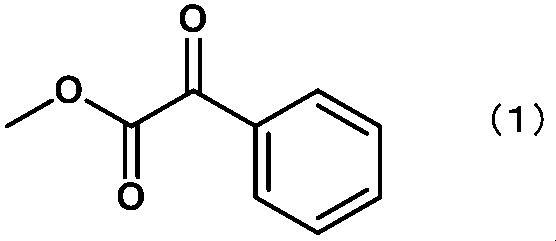
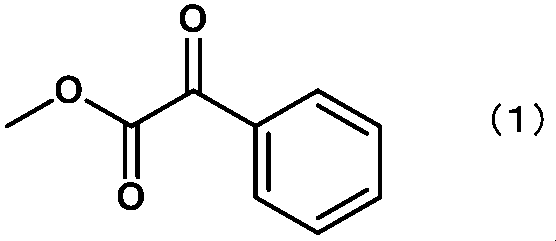
- the present invention contains, as an essential component, a compound having two or more groups represented by the following formula (1) in one molecule as an ultraviolet curable compound (A) and a photopolymerization initiator (B).
- the present invention relates to a characteristic ultraviolet curable composition for cyclic olefin resin and a cyclic olefin resin film using the same.
- the ultraviolet curable composition of the present invention can impart high scratch resistance to the surface of a cyclic olefin resin molded product, and can provide a cured coating film that is excellent in adhesion to the cyclic olefin resin molded product and less colored. Therefore, the ultraviolet curable composition of the present invention can be used as a material for forming a hard coat layer having high scratch resistance on the surface of various cyclic olefin resin molded products, particularly the cyclic olefin resin film. Moreover, the cyclic olefin resin film which has a hard-coat layer which consists of a cured coating film of the ultraviolet curable composition of this invention can be used as an optical film used for a liquid crystal display or a touch panel use.
- the ultraviolet curable composition of this invention contains the compound which has two or more groups represented by following formula (1) in 1 molecule as an ultraviolet curable compound (A) and a photoinitiator (B). It is.
- Examples of the ultraviolet curable compound (A) include polyfunctional (meth) acrylate (A1) and urethane (meth) acrylate (A2). These can be used alone or in combination of two or more.
- (meth) acrylate refers to one or both of acrylate and methacrylate
- (meth) acryloyl group refers to one or both of acryloyl group and methacryloyl group.
- the polyfunctional (meth) acrylate (A1) is a compound having two or more (meth) acryloyl groups in one molecule.
- Specific examples of the polyfunctional (meth) acrylate (a1) include 1,4-butanediol di (meth) acrylate, 3-methyl-1,5-pentanediol di (meth) acrylate, and 1,6-hexanediol.
- polyfunctional (meth) acrylates (A1) can be used alone or in combination of two or more.
- these polyfunctional (meth) acrylates (A1) since the scratch resistance of the cured coating film of the ultraviolet curable composition of the present invention is improved, dipentaerythritol hexa (meth) acrylate, dipentaerythritol Penta (meth) acrylate, pentaerythritol tetra (meth) acrylate, and pentaerythritol tri (meth) acrylate are preferred.
- the urethane (meth) acrylate (A2) is obtained by reacting polyisocyanate (a2-1) with (meth) acrylate (a2-2) having a hydroxyl group.
- polyisocyanate (a2-1) examples include aliphatic polyisocyanates and aromatic polyisocyanates. Since the coloration of the cured coating film of the ultraviolet curable composition of the present invention can be further reduced, aliphatic polyisocyanates. Is preferred.
- the aliphatic polyisocyanate is a compound in which a portion excluding an isocyanate group is composed of an aliphatic hydrocarbon.
- Specific examples of the aliphatic polyisocyanate include aliphatic polyisocyanates such as hexamethylene diisocyanate, lysine diisocyanate, and lysine triisocyanate; norbornane diisocyanate, isophorone diisocyanate, methylene bis (4-cyclohexyl isocyanate), 1,3-bis (isocyanato).
- cycloaliphatic polyisocyanates such as methyl) cyclohexane, 2-methyl-1,3-diisocyanatocyclohexane and 2-methyl-1,5-diisocyanatocyclohexane.
- a trimerized product obtained by trimming the aliphatic polyisocyanate or the alicyclic polyisocyanate can also be used as the aliphatic polyisocyanate.
- These aliphatic polyisocyanates can be used alone or in combination of two or more.
- aliphatic polyisocyanates in order to improve the scratch resistance of the coating film, among the aliphatic polyisocyanates, hexamethylene diisocyanate, which is a linear aliphatic hydrocarbon diisocyanate, norbornane diisocyanate, which is an alicyclic diisocyanate, isophorone Diisocyanate is preferred.
- the (meth) acrylate (a2-2) is a compound having a hydroxyl group and a (meth) acryloyl group.
- Specific examples of the (meth) acrylate (a2-2) include 2-hydroxyethyl (meth) acrylate, 2-hydroxypropyl (meth) acrylate, 2-hydroxybutyl (meth) acrylate, and 4-hydroxybutyl (meth).
- Divalent compounds such as acrylate, 1,5-pentanediol mono (meth) acrylate, 1,6-hexanediol mono (meth) acrylate, neopentyl glycol mono (meth) acrylate, and hydroxypivalate neopentyl glycol mono (meth) acrylate Mono (meth) acrylate of alcohol; trimethylolpropane di (meth) acrylate, ethylene oxide (EO) modified trimethylolpropane (meth) acrylate, propylene oxide (PO) modified trimethylolpropane di (meta) Mono- or di (meth) acrylate of trivalent alcohol such as acrylate, glycerin di (meth) acrylate, bis (2- (meth) acryloyloxyethyl) hydroxyethyl isocyanurate, or a part of these alcoholic hydroxyl groups Mono- and di (meth) acrylates having hydroxyl groups modified with
- the urethane (meth) acrylate (A2) those having four or more (meth) acryloyl groups in one molecule can improve the scratch resistance of the cured coating film of the ultraviolet curable composition of the present invention. preferable. Since the urethane (meth) acrylate (A2) has four or more (meth) acryloyl groups in one molecule, the (meth) acrylate (a2-2) has 2 (meth) acryloyl groups. Those having at least two are preferred.
- Examples of such (meth) acrylate (a2-2) include trimethylolpropane di (meth) acrylate, ethylene oxide modified trimethylolpropane di (meth) acrylate, propylene oxide modified trimethylolpropane di (meth) acrylate, Glycerin di (meth) acrylate, bis (2- (meth) acryloyloxyethyl) hydroxyethyl isocyanurate, pentaerythritol tri (meth) acrylate, ditrimethylolpropane tri (meth) acrylate, dipentaerythritol penta (meth) acrylate, etc. Can be mentioned.
- (meth) acrylates (a2-2) can be used singly or in combination of two or more of the aliphatic polyisocyanate (a1).
- pentaerythritol tri (meth) acrylate and dipentaerythritol penta (meth) acrylate are preferable because they can improve scratch resistance.
- the reaction of the polyisocyanate (a2-1) and the (meth) acrylate (a2-2) can be carried out by a conventional urethanization reaction. Moreover, in order to accelerate
- urethanization catalyst examples include amine compounds such as pyridine, pyrrole, triethylamine, diethylamine, and dibutylamine; phosphorus compounds such as triphenylphosphine and triethylphosphine; dibutyltin dilaurate, octyltin trilaurate, octyltin diacetate, and dibutyltin.
- amine compounds such as pyridine, pyrrole, triethylamine, diethylamine, and dibutylamine
- phosphorus compounds such as triphenylphosphine and triethylphosphine
- dibutyltin dilaurate examples of organic tin compounds
- organic tin compounds such as diacetate and tin octylate
- organic zinc compounds such as zinc octylate.
- ultraviolet curable compound (A) other than said polyfunctional (meth) acrylate (A1) and urethane (meth) acrylate (A2) epoxy (meth) acrylate, polyester (meth) acrylate, A relatively high molecular weight (meth) acrylate (A3) such as polyether (meth) acrylate can be used.
- the epoxy (meth) acrylate include those obtained by reacting (meth) acrylic acid with bisphenol-type epoxy resin, novolac-type epoxy resin, polyglycidyl methacrylate and the like and esterifying it.
- polyester (meth) acrylate (meth) acrylic acid is made to react and esterify with the polyester which the both terminal obtained by polycondensation of polyhydric carboxylic acid and polyhydric alcohol is a hydroxyl group, for example. Or a product obtained by reacting (meth) acrylic acid with ester obtained by adding an alkylene oxide to a polyvalent carboxylic acid.
- polyether (meth) acrylate what was obtained by reacting (meth) acrylic acid with polyether polyol and esterifying is mentioned, for example.
- the said (meth) acrylate (A3) can be used individually or can be used together 2 or more types.
- the ultraviolet curable composition of the present invention contains (meth) acrylate (A4) having a phosphate group. It is preferable because the adhesion to the substrate can be further improved.
- the (meth) acrylate (A4) having a phosphate group is a (meth) acrylate having at least one phosphate group in one molecule.
- Examples of the (meth) acrylate (A4) having a phosphate group include (meth) acryloyloxyethyl phosphate, di (meth) acryloyloxyethyl phosphate, tri (meth) acryloyloxyethyl phosphate, caprolactone-modified phosphorus An acid (meth) acryloyloxyethyl etc. are mentioned, The compound which has a 2 or more (meth) acryloyl group in 1 molecule can also be used. These (meth) acrylates (A4) having a phosphate group can be used alone or in combination of two or more.
- the blending amount thereof can improve the adhesion to the substrate more and the resistance of the cured coating film surface. Since the scratch resistance can be further improved, the content of the ultraviolet curable compound (A) is preferably 0.1 to 30% by mass, and more preferably 0.5 to 20% by mass.
- (B1) is contained as an essential component.
- the phenyl group in following formula (1) may have substituents, such as an alkyl group, an alkoxy group, and a halogen group.
- the cured coating film of the ultraviolet curable composition of the present invention has high scratch resistance, excellent adhesion to the cyclic olefin resin, and less coloring. An excellent hard coat layer can be formed.
- Examples of the compound (B1) include oxyphenylacetic acid 2- (2-oxo-2-phenylacetoxyethoxy) ethyl ester represented by the following formula (2).
- the compound (B1) is an essential component as the photopolymerization initiator (B) contained in the ultraviolet curable composition of the present invention
- other photopolymerization initiators (B2) can be used.
- the photopolymerization initiator (B2) include diethoxyacetophenone, 2-hydroxy-2-methyl-1-phenylpropan-1-one, oligo ⁇ 2-hydroxy-2-methyl-1- [4- ( 1-methylvinyl) phenyl] propanone ⁇ , benzyldimethyl ketal, 1- (4-isopropylphenyl) -2-hydroxy-2-methylpropan-1-one, 4- (2-hydroxyethoxy) phenyl- (2-hydroxy -2-propyl) ketone, 1-hydroxycyclohexyl phenyl ketone, 2-methyl-2-morpholino (4-thiomethylphenyl) propan-1-one, 2-benzyl-2-dimethylamino-1- (4-morpholinophenyl) ) -Acetophenone compounds such
- Thioxanthone compounds aminobenzophenone compounds such as Mihira-ketone and 4,4′-diethylaminobenzophenone; 10-butyl-2-chloroacridone, 2-ethylanthraquinone, 9,10-phenanthrenequinone, camphorquinone 1- [4- (4-benzoylphenylsulfanyl) phenyl] -2-methyl-2- (4-methylphenylsulfonyl) propan-1-one, and the like.
- the compounding amount of the compound (B1) in the ultraviolet curable composition of the present invention is such that the curability is good and the adhesion with the cyclic polyolefin is further improved. Therefore, the ultraviolet curable compound (A) 100 described above is used.
- the amount is preferably 0.1 to 20 parts by mass, more preferably 0.5 to 10% by mass with respect to parts by mass.
- the ratio of the compound (B1) in the photopolymerization initiator (B) contained in the ultraviolet curable composition of the present invention is preferably 50% by mass or more, more preferably 65% by mass or more, and 80% by mass. % Or more is more preferable.
- the ultraviolet curable composition of the present invention includes a photosensitizer, an organic solvent, and a polymerization inhibitor depending on the application and required characteristics.
- a photosensitizer an organic solvent, and a polymerization inhibitor depending on the application and required characteristics.
- the scratch resistance of the cured coating film surface of the ultraviolet curable composition of the present invention can be further improved, and the adhesion to the substrate can be further improved.
- the silica particles may have a surface modified with an organic group or a surface not modified.
- silica fine particles having a nanometer order size are preferable, and colloidal silica is more preferable.
- the average particle diameter of the silica fine particles is preferably in the range of 5 to 200 nm, more preferably in the range of 5 to 100 nm. The average particle diameter is a value measured by a dynamic light scattering method.
- the blending amount when blending the inorganic filler can improve the scratch resistance of the surface of the cured coating film of the ultraviolet curable composition of the present invention and can further improve the adhesion to the substrate.
- the amount is preferably 1 to 150 parts by weight and more preferably 5 to 100 parts by weight with respect to 100 parts by weight of the curable compound (A).
- the photosensitizer examples include tertiary amine compounds such as diethanolamine, N-methyldiethanolamine and tributylamine, urea compounds such as o-tolylthiourea, sodium diethyldithiophosphate, and s-benzylisothiunium-p-toluene. And sulfur compounds such as sulfonates.
- the blending amount is preferably 0.01 to 20 parts by weight, and more preferably 0.5 to 10% by weight with respect to 100 parts by weight of the ultraviolet curable compound (A). .
- the organic solvent is useful for appropriately adjusting the solution viscosity of the active energy ray-curable composition of the present invention, and it is particularly easy to adjust the film thickness for thin film coating.
- the organic solvent that can be used here include aromatic hydrocarbons such as toluene and xylene; alcohols such as methanol, ethanol, isopropanol, and t-butanol; esters such as ethyl acetate, butyl acetate, and propylene glycol monomethyl ether acetate.
- Ketones such as acetone, methyl ethyl ketone, methyl isobutyl ketone, and cyclohexanone; These solvents can be used alone or in combination of two or more.
- the substrate for applying the ultraviolet curable composition of the present invention is cyclic. It is an olefin resin molded product, and a cyclic olefin resin film is particularly preferable.
- a cyclic olefin resin if it is what polymerized cyclic olefin, even if it is a homopolymer or a copolymer, it can use without a restriction
- Examples of commercially available cyclic olefin resins include “ZEONOR” and “ZEONEX” manufactured by ZEON Corporation; “ARTON” manufactured by JSR Corporation; “TOPAS” manufactured by Polyplastics Corporation, and the like.
- the cyclic olefin resin film is obtained by molding a cyclic olefin resin on the film. Further, the surface of the cyclic olefin resin film is subjected to surface roughening treatment by sandblasting, solvent treatment, etc. in order to improve adhesion with the cured coating film of the ultraviolet curable composition of the present invention. Discharge treatment, atmospheric pressure plasma treatment), chromic acid treatment, flame treatment, hot air treatment, ozone / ultraviolet ray / electron beam irradiation treatment, oxidation treatment, etc. are preferable. Among these, corona discharge treatment, atmospheric pressure plasma treatment are preferable. Those subjected to electrical treatment such as the above are more preferred.
- the thickness of the cyclic olefin resin film is preferably in the range of 50 to 200 ⁇ m, more preferably in the range of 80 to 150 ⁇ m, and still more preferably in the range of 90 to 130 ⁇ m.
- the cyclic olefin resin film of the present invention is obtained by applying the ultraviolet curable composition of the present invention to at least one surface of the film and then irradiating the film with ultraviolet rays to form a cured coating film.
- Examples of the method for applying the ultraviolet curable composition of the present invention to the cyclic olefin resin film include die coating, microgravure coating, gravure coating, roll coating, comma coating, air knife coating, kiss coating, spray coating, transfer coating, Examples include dip coating, spinner coating, wheeler coating, brush coating, solid coating with silk screen, wire bar coating, and flow coating.
- a device for irradiating ultraviolet rays to cure the ultraviolet curable composition for example, a low pressure mercury lamp, a high pressure mercury lamp, an ultrahigh pressure mercury lamp, a metal halide lamp, an electrodeless lamp (fusion lamp), a chemical lamp, Examples include black light lamps, mercury-xenon lamps, short arc lamps, helium / cadmium lasers, argon lasers, sunlight, and LEDs.
- the cyclic olefin resin film having the cured coating film of the ultraviolet curable composition of the present invention has excellent scratch resistance on the surface in addition to the excellent optical properties, dimensional stability, heat resistance and transparency of the substrate. Therefore, it is useful as an optical film used in an image display unit of an image display device such as a liquid crystal display (LCD) or an organic EL display (OLED).
- an image display unit of an image display device such as a liquid crystal display (LCD) or an organic EL display (OLED).
- LCD liquid crystal display
- OLED organic EL display
- it since it has excellent scratch resistance even if it is thin, for example, electronic notebooks, mobile phones, smartphones, portable audio players, mobile personal computers, tablet terminals, etc. It can use suitably as an optical film of the image display part of this image display apparatus.
- an optical film when using as an optical film, it can use as a protective film used for the outermost surface of the image display part of an image display apparatus, and a base material of a touch panel.
- a protective film for example, in an image display device having a configuration in which a transparent panel for protecting the image display module is provided on the upper part of an image display module such as an LCD module or an OLED module, the transparent panel By sticking to the front or back surface of the plate, it is effective for preventing damage and preventing scattering when the transparent panel is damaged.
- PE4A 75/25 (mass ratio) and 497 parts by mass of isocyanuric acid ethylene oxide-modified diacrylate were added dropwise over 1 hour. After completion of the dropwise addition, the mixture is reacted at 70 ° C. for 3 hours, and further reacted until the infrared absorption spectrum of 2250 cm ⁇ 1 indicating the isocyanate group disappears, and urethane acrylate (A2-1) having 6 acryloyl groups in one molecule is obtained. A non-volatile content 80% by mass solution was obtained. This solution contains 19.5% by mass of PE4A in addition to urethane acrylate (A2-1) in the nonvolatile content.
- Cyclic olefin resin film (“ZEONOR” manufactured by Nippon Zeon Co., Ltd.) whose surface was previously electrically treated (corona discharge treatment; output 100 W, speed 1.0 m / min) was obtained from the ultraviolet curable composition (1) obtained above.
- Film ZF16-100 (thickness 100 ⁇ m) was applied using a wire bar, heated at 60 ° C.
- Ultraviolet curable composition (1) Except having changed the application quantity, it carried out similarly to preparation of said film for evaluation, and obtained the film for thick film adhesive evaluation which has a 6 micrometers thick cured coating film. About the obtained film, it carried out similarly to said adhesive evaluation and evaluated thick film adhesiveness.
- Example 2 An ultraviolet curable composition (2) was prepared in the same manner as in Example 1 except that the amount of the photopolymerization initiator (B1-1) was changed from 3 parts by mass to 6 parts by mass.
- Example 3 An ultraviolet curable composition (3) having a nonvolatile content of 25% by mass was prepared in the same manner as in Example 1 except that the blending amount of the photopolymerization initiator (B1-1) was changed from 3 parts by mass to 9 parts by mass. .
- Example 4 125 parts by mass of polyfunctional urethane acrylate (A2-1) obtained in Synthesis Example 1 (non-volatile content: 80% by mass) (100 parts by mass as polyfunctional acrylate), 25 parts by mass of silica fine particle dispersion (1) (as silica fine particles) 7.5 parts by mass) and 3 parts by mass of the photopolymerization initiator (B1-1) were uniformly stirred and diluted with methyl ethyl ketone to prepare an ultraviolet curable composition (4) having a nonvolatile content of 25% by mass.
- Example 5 An ultraviolet curable composition (5) having a nonvolatile content of 25% by mass was prepared in the same manner as in Example 4 except that the blending amount of the photopolymerization initiator (B1-1) was changed from 3 parts by mass to 6 parts by mass. .
- Example 6 An ultraviolet curable composition (6) having a nonvolatile content of 25% by mass was prepared in the same manner as in Example 4 except that the blending amount of the photopolymerization initiator (B1-1) was changed from 3 parts by mass to 9 parts by mass. .
- Example 7 125 parts by mass of polyfunctional urethane acrylate (A2-1) obtained in Synthesis Example 1 (non-volatile content: 80% by mass) (100 parts by mass as polyfunctional acrylate), silica fine particles (“MEK-ST40” manufactured by Nissan Chemical Industries, Ltd.) Average particle size 10-20 nm, organosilica sol 40 mass% methyl ethyl ketone dispersion; hereinafter abbreviated as “silica fine particle dispersion (2)”) 62.5 parts by mass (25 parts by mass as silica fine particles), and light After 6 parts by mass of the polymerization initiator (B1-1) was uniformly stirred, it was diluted with methyl ethyl ketone to prepare an ultraviolet curable composition (7) having a nonvolatile content of 25% by mass.
- silica fine particles (“MEK-ST40” manufactured by Nissan Chemical Industries, Ltd.) Average particle size 10-20 nm, organosilica sol 40 mass% methyl ethyl ketone disper
- Example 8 Polyfunctional urethane acrylate (A2-1) (non-volatile content 80% by mass) 123.75 parts by mass (99 parts by mass as polyfunctional acrylate), methacrylate having a phosphoric acid group (“Miramar SC1400” manufactured by MIWON); 1 part by mass, 62.5 parts by mass of silica fine particle dispersion (2) (25 parts by mass as silica fine particles), and 6 parts by mass of the photopolymerization initiator (B1-1). After stirring uniformly, it was diluted with methyl ethyl ketone to prepare an ultraviolet curable composition (8) having a nonvolatile content of 25% by mass.
- Miramar SC1400 manufactured by MIWON
- Example 9 118.75 parts by mass of polyfunctional urethane acrylate (A2-1) (non-volatile content: 80% by mass) (95 parts by mass as polyfunctional acrylate), 5 parts by mass of phosphoric acid methacrylate (1), silica fine particle dispersion (2) 62. 5 parts by mass (25 parts by mass as silica fine particles) and 6 parts by mass of the photopolymerization initiator (B1-1) were uniformly stirred and then diluted with methyl ethyl ketone to obtain an ultraviolet curable composition having a nonvolatile content of 25% by mass ( 9) was prepared.
- Multifunctional urethane acrylate (A2-1) non-volatile content 80% by mass) 113.75 parts by mass (91 parts by mass as polyfunctional acrylate), phosphoric acid methacrylate (1) 9 parts by mass, silica fine particle dispersion (2) 62. 5 parts by mass (25 parts by mass as silica fine particles) and 6 parts by mass of the photopolymerization initiator (B1-1) were uniformly stirred and then diluted with methyl ethyl ketone to obtain an ultraviolet curable composition having a nonvolatile content of 25% by mass ( 10) was prepared.
- Example 11 An ultraviolet curable composition (11) having a nonvolatile content of 25% by mass was prepared in the same manner as in Example 7 except that the silica fine particle dispersion (2) was not blended.
- Example 12 An ultraviolet curable composition (12) having a nonvolatile content of 25% by mass was prepared in the same manner as in Example 9 except that the silica fine particle dispersion (2) was not blended.
- Comparative Example 2 An ultraviolet curable composition was prepared in the same manner as in Example 1 except that 9 parts by mass of the photopolymerization initiator (R1) was used instead of 3 parts by mass of the photopolymerization initiator (B1-1) used in Example 1. (R2) was prepared.
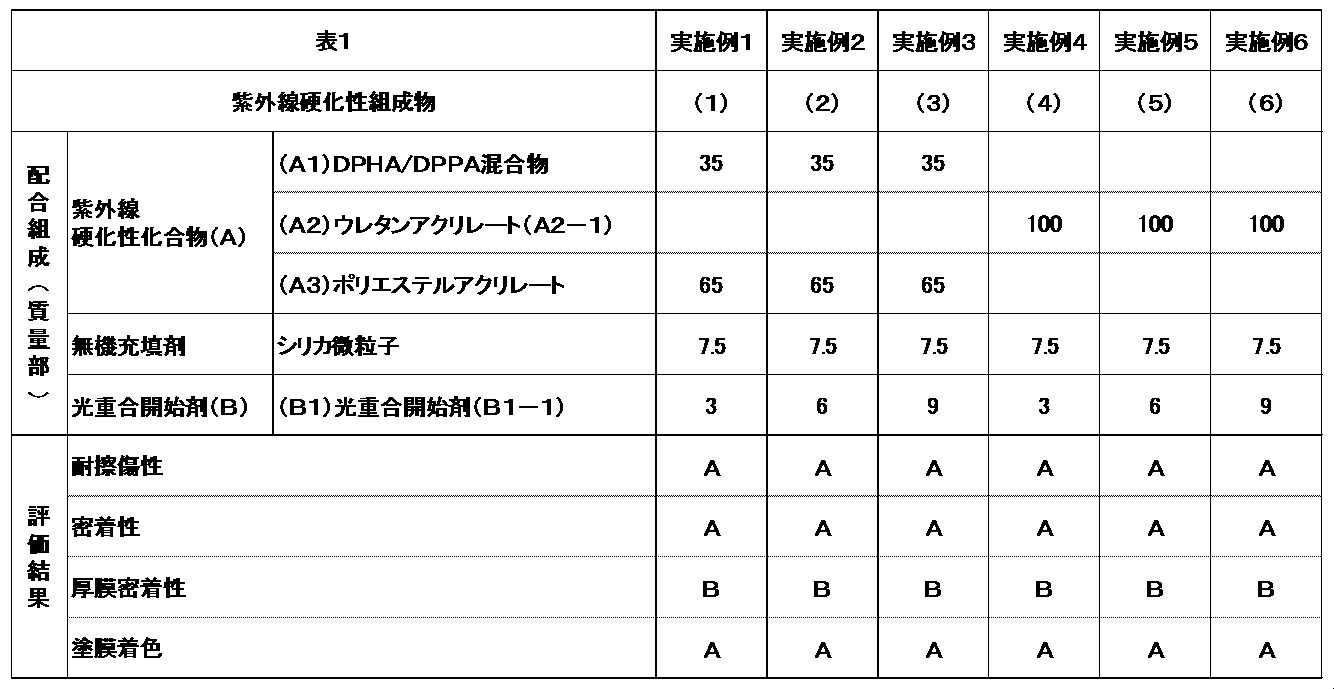
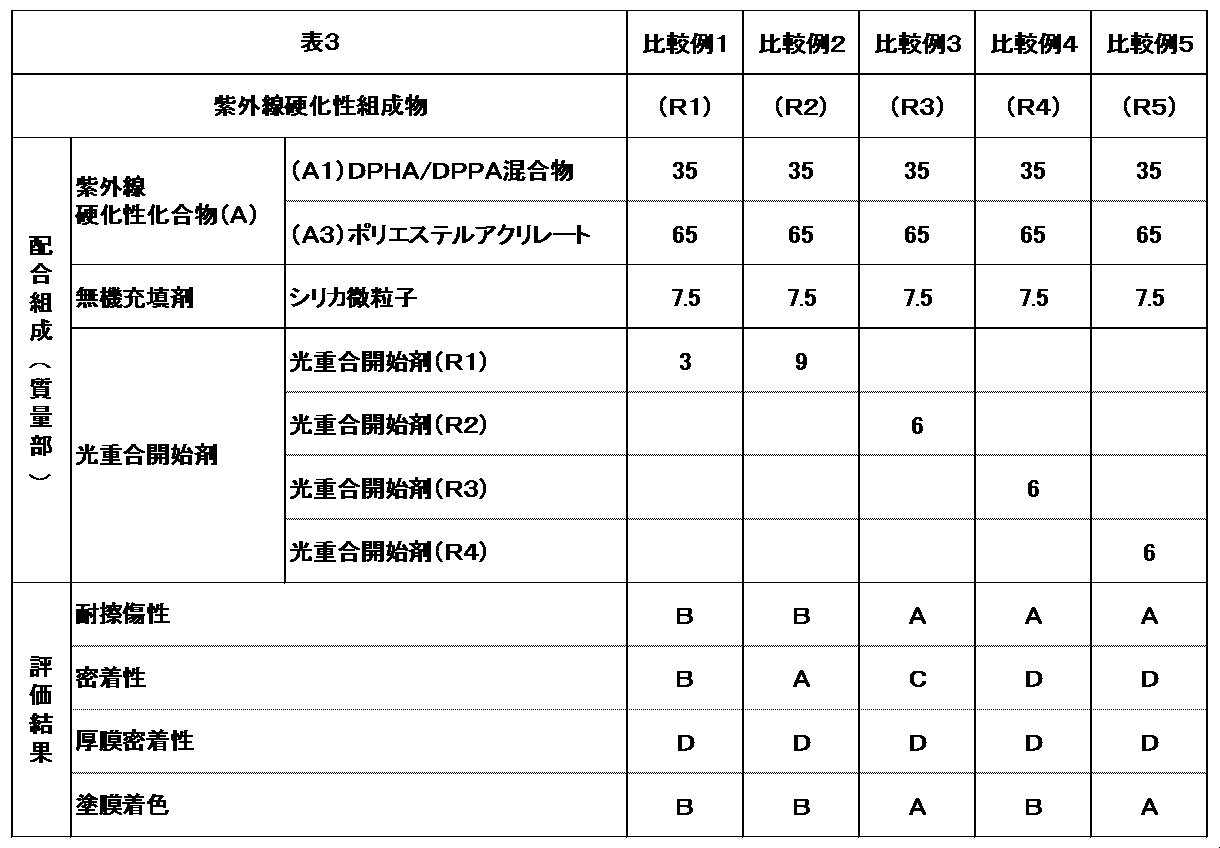
- Tables 1 to 4 show the compositions and evaluation results of the ultraviolet curable compositions used in Examples 1 to 12 and Comparative Examples 1 to 10 described above.
- the compositions in Tables 1 to 4 are all described in terms of nonvolatile content.
- the ultraviolet curable compositions of Examples 1 to 12 which are the ultraviolet curable compositions of the present invention have excellent scratch resistance on the surface of the cured coating film, and the cyclic polyolefin resin film as the substrate. The adhesion was also high, and the coating film was not colored.
- the UV curable compositions (8) to (10) of Examples 8 to 10 containing acrylates having phosphoric acid groups and silica fine particles had excellent adhesion even in thick films.
- the ultraviolet curable compositions of Comparative Examples 1 to 10 are examples using a photopolymerization initiator that does not contain a compound as an essential component in the present invention. None of these UV-curable compositions satisfy all of the evaluation that the cured coating film surface has sufficient scratch resistance, sufficient adhesion with the cyclic polyolefin resin film as the base material, and no coating coloration. It was.
Landscapes
- Chemical & Material Sciences (AREA)
- Health & Medical Sciences (AREA)
- Chemical Kinetics & Catalysis (AREA)
- Medicinal Chemistry (AREA)
- Polymers & Plastics (AREA)
- Organic Chemistry (AREA)
- Paints Or Removers (AREA)
- Polymerisation Methods In General (AREA)
- Engineering & Computer Science (AREA)
- Manufacturing & Machinery (AREA)
- Addition Polymer Or Copolymer, Post-Treatments, Or Chemical Modifications (AREA)
- Coating Of Shaped Articles Made Of Macromolecular Substances (AREA)
- Materials Engineering (AREA)
Abstract
Description


攪拌機、ガス導入管、冷却管及び温度計を備えたフラスコに、酢酸ブチル254質量部、イソホロンジイソシアネート222質量部、p-メトキシフェノール0.5質量部及びジブチル錫ジアセテート0.5質量部を仕込み、空気を吹き込みながら、70℃に昇温した後、ペンタエリスリトールトリアクリレート(以下、「PE3A」と略記する。)及びペンタエリスリトールテトラアクリレート(以下、「PE4A」と略記する。)の混合物(PE3A/PE4A=75/25(質量比))400質量部とイソシアヌル酸エチレンオキシド変性ジアクリレート497質量部を1時間かけて滴下した。滴下終了後、70℃で3時間反応させ、さらにイソシアネート基を示す2250cm-1の赤外線吸収スペクトルが消失するまで反応を行い、1分子中に6つのアクリロイル基を有するウレタンアクリレート(A2-1)を含む不揮発分80質量%溶液を得た。なお、この溶液には、不揮発分中にウレタンアクリレート(A2-1)の他にPE4Aが19.5質量%含まれる。
ジペンタエリスリトールヘキサアクリレート(以下、「DPHA」と略記する。)及びジペンタエリスリトールペンタアクリレート(以下、「DPPA」と略記する。)の混合物(DPHA/DPPA=65/35(質量比))35質量部、ポリエステルアクリレート(4官能、分子量1,800)65質量部、シリカ微粒子(日産化学工業株式会社製「MEK-ST」、平均粒子径10~20nm、オルガノシリカゾルの30質量%メチルエチルケトン分散液;以下、「シリカ微粒子分散液(1)」と略記する。)25質量部(シリカ微粒子として7.5質量部)、及びオキシフェニル酢酸2-(2-オキソ-2-フェニルアセトキシエトキシ)エチルエステル(以下、「光重合開始剤(B1-1)」と略記する。)3質量部を均一に攪拌した後、メチルエチルケトンで希釈して、不揮発分25質量%の紫外線硬化性組成物(1)を調製した。
上記で得られた紫外線硬化性組成物(1)を、予めその表面を電気的処理(コロナ放電処理;出力100W、速度1.0m/分)した環状オレフィン樹脂フィルム(日本ゼオン株式会社製「ゼオノアフィルムZF16-100」、厚さ100μm)上に、ワイヤーバーを用いて塗布し、60℃で90秒間加熱後、空気雰囲気下で紫外線照射装置(アイグラフィックス株式会社製「MIDN-042-C1」、ランプ:120W/cm、高圧水銀灯)を用いて、照射光量0.3J/cm2で紫外線を照射して、厚さ4μmの硬化塗膜を有する評価用フィルムを得た。
上記で得られた評価用フィルムの硬化塗膜の表面について、クロックメーター形摩擦試験器(直径1.0cm円形摩擦子、スチールウール#0000、荷重300g、10往復)を用いて試験を行い、試験後の硬化塗膜表面を目視で観察し、下記の基準により耐擦傷性を評価した。
A:傷の数が9本以下である。
B:傷の数が10本以上である。
上記で得られた評価用フィルムに、フィルムの硬化被膜表面に1mm間隔で縦、横11本の切れ目を入れて100個のマス目を作製した。次いで、市販のセロハンテープをその表面に密着させた後、一気に剥がす操作を2回繰り返した。剥離せずに残ったマス目の数を数え、下記の基準により密着性を評価した。
A:残ったマス目の数が100個である。
B:残ったマス目の数が80個以上99個以下である。
C:残ったマス目の数が60個以上80個以下である。
D:残ったマス目の数が59個以下である。
紫外線硬化性組成物(1)塗布量を変更した以外は上記の評価用フィルムの作製と同様に行い、厚さ6μmの硬化塗膜を有する厚膜密着性評価用フィルムを得た。得られたフィルムについて、上記の密着性の評価と同様に行い、厚膜密着性を評価した。
上記で得られた評価用フィルムを50mm×80mmの大きさにカットし、外径8mmのロッドにフィルムを巻き付け、セロハンテープで固定した。次いで、ロッドを引き抜いた後、ロール状の評価用フィルムの色味を目視で観察し、下記の基準により塗膜着色を評価した。
A:無色である。
B:黄味の着色がある。
光重合開始剤(B1-1)の配合量を3質量部から6質量部に変更した以外は実施例1と同様に行い、紫外線硬化性組成物(2)を調製した。
光重合開始剤(B1-1)の配合量を3質量部から9質量部に変更した以外は実施例1と同様に行い、不揮発分25質量%の紫外線硬化性組成物(3)を調製した。
合成例1で得られた多官能ウレタンアクリレート(A2-1)(不揮発分80質量%)125質量部(多官能アクリレートとして100質量部)、シリカ微粒子分散液(1)25質量部(シリカ微粒子として7.5質量部)及び光重合開始剤(B1-1)3質量部を均一に攪拌した後、メチルエチルケトンで希釈して、不揮発分25質量%の紫外線硬化性組成物(4)を調製した。
光重合開始剤(B1-1)の配合量を3質量部から6質量部に変更した以外は実施例4と同様に行い、不揮発分25質量%の紫外線硬化性組成物(5)を調製した。
光重合開始剤(B1-1)の配合量を3質量部から9質量部に変更した以外は実施例4と同様に行い、不揮発分25質量%の紫外線硬化性組成物(6)を調製した。
合成例1で得られた多官能ウレタンアクリレート(A2-1)(不揮発分80質量%)125質量部(多官能アクリレートとして100質量部)、シリカ微粒子(日産化学工業株式会社製「MEK-ST40」、平均粒子径10~20nm、オルガノシリカゾルの40質量%メチルエチルケトン分散液;以下、「シリカ微粒子分散液(2)」と略記する。)62.5質量部(シリカ微粒子として25質量部)、及び光重合開始剤(B1-1)6質量部を均一に攪拌した後、メチルエチルケトンで希釈して、不揮発分25質量%の紫外線硬化性組成物(7)を調製した。
多官能ウレタンアクリレート(A2-1)(不揮発分80質量%)123.75質量部(多官能アクリレートとして99質量部)、リン酸基を有するメタクリレート(MIWON社製「ミラマー SC1400」;以下、「リン酸メタクリレート(1)」と略記する。)1質量部、シリカ微粒子分散液(2)62.5質量部(シリカ微粒子として25質量部)、及び光重合開始剤(B1-1)6質量部を均一に攪拌した後、メチルエチルケトンで希釈して、不揮発分25質量%の紫外線硬化性組成物(8)を調製した。
多官能ウレタンアクリレート(A2-1)(不揮発分80質量%)118.75質量部(多官能アクリレートとして95質量部)、リン酸メタクリレート(1)5質量部、シリカ微粒子分散液(2)62.5質量部(シリカ微粒子として25質量部)、及び光重合開始剤(B1-1)6質量部を均一に攪拌した後、メチルエチルケトンで希釈して、不揮発分25質量%の紫外線硬化性組成物(9)を調製した。
多官能ウレタンアクリレート(A2-1)(不揮発分80質量%)113.75質量部(多官能アクリレートとして91質量部)、リン酸メタクリレート(1)9質量部、シリカ微粒子分散液(2)62.5質量部(シリカ微粒子として25質量部)、及び光重合開始剤(B1-1)6質量部を均一に攪拌した後、メチルエチルケトンで希釈して、不揮発分25質量%の紫外線硬化性組成物(10)を調製した。
シリカ微粒子分散液(2)を配合しなかった以外は実施例7と同様に行い、不揮発分25質量%の紫外線硬化性組成物(11)を調製した。
シリカ微粒子分散液(2)を配合しなかった以外は実施例9と同様に行い、不揮発分25質量%の紫外線硬化性組成物(12)を調製した。
実施例1で用いた光重合開始剤(B1-1)に代えて、4-(4-メチルフェニルチオ)ベンゾフェノン(以下、「光重合開始剤(R1)」と略記する。)を用いた以外は実施例1と同様に行い、紫外線硬化性組成物(R1)を調製した。
実施例1で用いた光重合開始剤(B1-1)3質量部に代えて、光重合開始剤(R1)9質量部を用いた以外は実施例1と同様に行い、紫外線硬化性組成物(R2)を調製した。
実施例1で用いた光重合開始剤(B1-1)3質量部に代えて、1-ヒドロキシシクロヘキシルフェニルケトン(以下、「光重合開始剤(R2)」と略記する。)6質量部を用いた以外は実施例1と同様に行い、紫外線硬化性組成物(R3)を調製した。
実施例1で用いた光重合開始剤(B1-1)3質量部に代えて、2-ベンジル-2-ジメチルアミノ-1-(4-モルホリノフェニル)-1-ブタノン(以下、「光重合開始剤(R3)」と略記する。)6質量部を用いた以外は実施例1と同様に行い、紫外線硬化性組成物(R4)を調製した。
実施例1で用いた光重合開始剤(B1-1)3質量部に代えて、2-メチル-1-(4-メチルチオフェニル)-2-モルホリノプロパン-1-オン(以下、「光重合開始剤(R4)」と略記する。)6質量部を用いた以外は実施例1と同様に行い、紫外線硬化性組成物(R5)を調製した。
実施例1で用いた光重合開始剤(B1-1)3質量部に代えて、2-ヒドロキシ-1-[4-(2-ヒドロキシエトキシ)-フェニル]-2-メチル-1-プロパン-1-オン(以下、「光重合開始剤(R5)」と略記する。)6質量部を用いた以外は実施例1と同様に行い、紫外線硬化性組成物(R6)を調製した。
実施例1で用いた光重合開始剤(B1-1)3質量部に代えて、ジフェニル(2,4,6-トリメチルベンゾイル)ホスフィンオキサイド(以下、「光重合開始剤(R6)」と略記する。)6質量部を用いた以外は実施例1と同様に行い、紫外線硬化性組成物(R7)を調製した。
実施例1で用いた光重合開始剤(B1-1)3質量部に代えて、2-ヒドロキシ-2-メチル-1-フェニル-1-プロパノン(以下、「光重合開始剤(R7)」と略記する。)6質量部を用いた以外は実施例1と同様に行い、紫外線硬化性組成物(R8)を調製した。
実施例1で用いた光重合開始剤(B1-1)3質量部に代えて、2-ヒロドキシ-1-{4-[4-(2-ヒドロキシ-2-メチル-プロピオニル)-ベンジル]フェニル}-2-メチル-1-プロパノン(以下、「光重合開始剤(R8)」と略記する。)6質量部を用いた以外は実施例1と同様に行い、紫外線硬化性組成物(R9)を調製した。
実施例1で用いた光重合開始剤(B1-1)3質量部に代えて、2,4-ジエチルチオキサントン(以下、「光重合開始剤(R9)」と略記する。)6質量部を用いた以外は実施例1と同様に行い、紫外線硬化性組成物(R10)を調製した。


Claims (8)
- 紫外線硬化性化合物(A)及び光重合開始剤(B)として下記式(1)で表される基を1分子中に2つ以上有する化合物(B1)を必須成分として含有することを特徴とする環状オレフィン樹脂用紫外線硬化性組成物。

- 前記化合物(B1)が、オキシフェニル酢酸2-(2-オキソ-2-フェニルアセトキシエトキシ)エチルエステルである請求項1記載の環状オレフィン樹脂用紫外線硬化性組成物。
- 前記紫外線硬化性化合物(A)が、多官能(メタ)アクリレート(A1)を含むものである請求項1又は2記載の環状オレフィン樹脂用紫外線硬化性組成物。
- 前記多官能(メタ)アクリレート(A1)が、ジペンタエリスリトールヘキサ(メタ)アクリレート、ジペンタエリスリトールペンタ(メタ)アクリレート、ペンタエリスリトールテトラ(メタ)アクリレート及びペンタエリスリトールトリ(メタ)アクリレートからなる群から選ばれる1種以上のものである請求項3記載の環状オレフィン樹脂用紫外線硬化性組成物。
- さらにリン酸基を有する(メタ)アクリレート(A4)を含有する請求項1~4のいずれか1項記載の環状オレフィン樹脂用紫外線硬化性組成物。
- さらに無機充填剤を含有する請求項1~5のいずれか1項記載の環状オレフィン樹脂用紫外線硬化性組成物。
- 環状オレフィン樹脂フィルムの少なくとも1面に、請求項1~6のいずれか1項記載の紫外線硬化性組成物を塗工し、その後紫外線を照射して硬化塗膜とすることで得られることを特徴とする環状オレフィン樹脂フィルム。
- 前記環状オレフィン樹脂フィルムの少なくとも1面が予め電気的処理を施されており、該処理面に請求項1~6のいずれか1項記載の紫外線硬化性組成物を塗工し、その後紫外線を照射して硬化塗膜とすることで得られることを特徴とする環状オレフィン樹脂フィルム。
Priority Applications (3)
| Application Number | Priority Date | Filing Date | Title |
|---|---|---|---|
| KR1020157028665A KR101639546B1 (ko) | 2013-03-14 | 2014-03-06 | 고리형 올레핀 수지용 자외선 경화성 조성물 및 그것을 사용한 고리형 올레핀 수지 필름 |
| CN201480014865.1A CN105102488B (zh) | 2013-03-14 | 2014-03-06 | 环状烯烃树脂用紫外线固化性组合物及使用其的环状烯烃树脂膜 |
| JP2015505435A JP5773099B2 (ja) | 2013-03-14 | 2014-03-06 | 環状オレフィン樹脂フィルム |
Applications Claiming Priority (2)
| Application Number | Priority Date | Filing Date | Title |
|---|---|---|---|
| JP2013-051793 | 2013-03-14 | ||
| JP2013051793 | 2013-03-14 |
Publications (1)
| Publication Number | Publication Date |
|---|---|
| WO2014142006A1 true WO2014142006A1 (ja) | 2014-09-18 |
Family
ID=51536669
Family Applications (1)
| Application Number | Title | Priority Date | Filing Date |
|---|---|---|---|
| PCT/JP2014/055831 Ceased WO2014142006A1 (ja) | 2013-03-14 | 2014-03-06 | 環状オレフィン樹脂用紫外線硬化性組成物及びそれを用いた環状オレフィン樹脂フィルム |
Country Status (5)
| Country | Link |
|---|---|
| JP (1) | JP5773099B2 (ja) |
| KR (1) | KR101639546B1 (ja) |
| CN (1) | CN105102488B (ja) |
| TW (1) | TWI586767B (ja) |
| WO (1) | WO2014142006A1 (ja) |
Cited By (3)
| Publication number | Priority date | Publication date | Assignee | Title |
|---|---|---|---|---|
| JP2017226794A (ja) * | 2016-06-24 | 2017-12-28 | Dic株式会社 | 環状オレフィン樹脂用活性エネルギー線硬化性組成物及びそれを用いた環状オレフィン樹脂フィルム |
| EP3418782B1 (en) * | 2016-12-26 | 2023-05-03 | LG Chem, Ltd. | Polarizer protection film, polarizing plate comprising the same, liquid crystal display comprising the polarizing plate, and coating composition for polarizer protecting film |
| JP2024024252A (ja) * | 2022-08-09 | 2024-02-22 | Dic株式会社 | 活性エネルギー線硬化性組成物、硬化物、積層体及びレンズ |
Families Citing this family (1)
| Publication number | Priority date | Publication date | Assignee | Title |
|---|---|---|---|---|
| JP7020579B1 (ja) * | 2021-08-20 | 2022-02-16 | 荒川化学工業株式会社 | 環状オレフィン樹脂用コーティング剤、硬化物及び積層物 |
Citations (2)
| Publication number | Priority date | Publication date | Assignee | Title |
|---|---|---|---|---|
| JP2007016215A (ja) * | 2005-06-09 | 2007-01-25 | Nippon Synthetic Chem Ind Co Ltd:The | 活性エネルギー線硬化型樹脂組成物及びコーティング剤組成物 |
| JP2012173698A (ja) * | 2011-02-24 | 2012-09-10 | Dic Corp | 反射防止膜用組成物、それを用いた物品及び反射防止フィルム |
Family Cites Families (4)
| Publication number | Priority date | Publication date | Assignee | Title |
|---|---|---|---|---|
| JP2002275392A (ja) | 2001-03-19 | 2002-09-25 | Dainippon Ink & Chem Inc | 紫外線硬化性組成物及びそれを被覆した樹脂成型品 |
| JP2004284158A (ja) | 2003-03-20 | 2004-10-14 | Dainippon Printing Co Ltd | ハードコートフィルム |
| US7309550B2 (en) * | 2004-09-20 | 2007-12-18 | Chemence, Inc. | Photosensitive composition with low yellowing under UV-light and sunlight exposure |
| JP5262549B2 (ja) | 2008-10-10 | 2013-08-14 | Jsr株式会社 | 無機蒸着層を有する積層フィルムおよびその製造方法 |
-
2014
- 2014-03-06 WO PCT/JP2014/055831 patent/WO2014142006A1/ja not_active Ceased
- 2014-03-06 KR KR1020157028665A patent/KR101639546B1/ko active Active
- 2014-03-06 CN CN201480014865.1A patent/CN105102488B/zh active Active
- 2014-03-06 JP JP2015505435A patent/JP5773099B2/ja active Active
- 2014-03-13 TW TW103108894A patent/TWI586767B/zh active
Patent Citations (2)
| Publication number | Priority date | Publication date | Assignee | Title |
|---|---|---|---|---|
| JP2007016215A (ja) * | 2005-06-09 | 2007-01-25 | Nippon Synthetic Chem Ind Co Ltd:The | 活性エネルギー線硬化型樹脂組成物及びコーティング剤組成物 |
| JP2012173698A (ja) * | 2011-02-24 | 2012-09-10 | Dic Corp | 反射防止膜用組成物、それを用いた物品及び反射防止フィルム |
Cited By (3)
| Publication number | Priority date | Publication date | Assignee | Title |
|---|---|---|---|---|
| JP2017226794A (ja) * | 2016-06-24 | 2017-12-28 | Dic株式会社 | 環状オレフィン樹脂用活性エネルギー線硬化性組成物及びそれを用いた環状オレフィン樹脂フィルム |
| EP3418782B1 (en) * | 2016-12-26 | 2023-05-03 | LG Chem, Ltd. | Polarizer protection film, polarizing plate comprising the same, liquid crystal display comprising the polarizing plate, and coating composition for polarizer protecting film |
| JP2024024252A (ja) * | 2022-08-09 | 2024-02-22 | Dic株式会社 | 活性エネルギー線硬化性組成物、硬化物、積層体及びレンズ |
Also Published As
| Publication number | Publication date |
|---|---|
| JPWO2014142006A1 (ja) | 2017-02-16 |
| KR20150121250A (ko) | 2015-10-28 |
| CN105102488A (zh) | 2015-11-25 |
| TW201441316A (zh) | 2014-11-01 |
| CN105102488B (zh) | 2017-03-15 |
| JP5773099B2 (ja) | 2015-09-02 |
| KR101639546B1 (ko) | 2016-07-13 |
| TWI586767B (zh) | 2017-06-11 |
Similar Documents
| Publication | Publication Date | Title |
|---|---|---|
| JP4003800B2 (ja) | フィルム保護層用活性エネルギー線硬化型樹脂組成物及びそれを用いたフィルム | |
| JP6025010B2 (ja) | 活性エネルギー線硬化性組成物及びそれを用いたフィルム | |
| WO2015098495A1 (ja) | ハードコートフィルム及び情報表示装置 | |
| WO2015068682A1 (ja) | 活性エネルギー線硬化性組成物、その硬化物及びその硬化塗膜を有する物品 | |
| JP2014189566A (ja) | 環状オレフィン樹脂用活性エネルギー線硬化性組成物及びそれを用いた環状オレフィン樹脂フィルム | |
| JP5773099B2 (ja) | 環状オレフィン樹脂フィルム | |
| KR20130074830A (ko) | 안티블로킹 하드코팅액 조성물 및 안티블로킹용 하드코팅층 | |
| JP6372685B2 (ja) | 活性エネルギー線硬化性組成物及びそれを用いたフィルム | |
| WO2014192654A1 (ja) | 活性エネルギー線硬化性組成物及びそれを用いたフィルム | |
| JP7140187B2 (ja) | 活性エネルギー線硬化性組成物及びそれを用いたフィルム | |
| JP6531969B2 (ja) | 活性エネルギー線硬化性組成物、及び、ハードコートフィルム | |
| JP6508559B2 (ja) | 活性エネルギー線硬化性組成物及びそれを用いたフィルム | |
| JP6725864B2 (ja) | 活性エネルギー線硬化性組成物及びそれを用いたフィルム | |
| JP6331115B2 (ja) | 環状オレフィン樹脂フィルム | |
| JP6135234B2 (ja) | 環状オレフィン樹脂用活性エネルギー線硬化性組成物及びそれを用いた環状オレフィン樹脂フィルム | |
| JP5892799B2 (ja) | 伸びがあり耐傷つき性に優れる硬化物を形成するウレタン(メタ)アクリレートおよびそれを含有する光硬化性樹脂組成物 | |
| JP6870222B2 (ja) | 環状オレフィン樹脂用活性エネルギー線硬化性組成物及びそれを用いた環状オレフィン樹脂フィルム |
Legal Events
| Date | Code | Title | Description |
|---|---|---|---|
| WWE | Wipo information: entry into national phase |
Ref document number: 201480014865.1 Country of ref document: CN |
|
| 121 | Ep: the epo has been informed by wipo that ep was designated in this application |
Ref document number: 14765547 Country of ref document: EP Kind code of ref document: A1 |
|
| ENP | Entry into the national phase |
Ref document number: 2015505435 Country of ref document: JP Kind code of ref document: A |
|
| NENP | Non-entry into the national phase |
Ref country code: DE |
|
| ENP | Entry into the national phase |
Ref document number: 20157028665 Country of ref document: KR Kind code of ref document: A |
|
| 122 | Ep: pct application non-entry in european phase |
Ref document number: 14765547 Country of ref document: EP Kind code of ref document: A1 |