WO2014136177A1 - リチウムイオン二次電池用負極活物質 - Google Patents
リチウムイオン二次電池用負極活物質 Download PDFInfo
- Publication number
- WO2014136177A1 WO2014136177A1 PCT/JP2013/055836 JP2013055836W WO2014136177A1 WO 2014136177 A1 WO2014136177 A1 WO 2014136177A1 JP 2013055836 W JP2013055836 W JP 2013055836W WO 2014136177 A1 WO2014136177 A1 WO 2014136177A1
- Authority
- WO
- WIPO (PCT)
- Prior art keywords
- negative electrode
- active material
- electrode active
- ion secondary
- lithium ion
- Prior art date
- Legal status (The legal status is an assumption and is not a legal conclusion. Google has not performed a legal analysis and makes no representation as to the accuracy of the status listed.)
- Ceased
Links
Images


Classifications
-
- C—CHEMISTRY; METALLURGY
- C01—INORGANIC CHEMISTRY
- C01G—COMPOUNDS CONTAINING METALS NOT COVERED BY SUBCLASSES C01D OR C01F
- C01G49/00—Compounds of iron
- C01G49/0018—Mixed oxides or hydroxides
- C01G49/0027—Mixed oxides or hydroxides containing one alkali metal
-
- H—ELECTRICITY
- H01—ELECTRIC ELEMENTS
- H01M—PROCESSES OR MEANS, e.g. BATTERIES, FOR THE DIRECT CONVERSION OF CHEMICAL ENERGY INTO ELECTRICAL ENERGY
- H01M4/00—Electrodes
- H01M4/02—Electrodes composed of, or comprising, active material
- H01M4/36—Selection of substances as active materials, active masses, active liquids
- H01M4/362—Composites
- H01M4/364—Composites as mixtures
-
- H—ELECTRICITY
- H01—ELECTRIC ELEMENTS
- H01M—PROCESSES OR MEANS, e.g. BATTERIES, FOR THE DIRECT CONVERSION OF CHEMICAL ENERGY INTO ELECTRICAL ENERGY
- H01M4/00—Electrodes
- H01M4/02—Electrodes composed of, or comprising, active material
- H01M4/36—Selection of substances as active materials, active masses, active liquids
- H01M4/48—Selection of substances as active materials, active masses, active liquids of inorganic oxides or hydroxides
- H01M4/485—Selection of substances as active materials, active masses, active liquids of inorganic oxides or hydroxides of mixed oxides or hydroxides for inserting or intercalating light metals, e.g. LiTi2O4 or LiTi2OxFy
-
- H—ELECTRICITY
- H01—ELECTRIC ELEMENTS
- H01M—PROCESSES OR MEANS, e.g. BATTERIES, FOR THE DIRECT CONVERSION OF CHEMICAL ENERGY INTO ELECTRICAL ENERGY
- H01M4/00—Electrodes
- H01M4/02—Electrodes composed of, or comprising, active material
- H01M4/36—Selection of substances as active materials, active masses, active liquids
- H01M4/48—Selection of substances as active materials, active masses, active liquids of inorganic oxides or hydroxides
- H01M4/52—Selection of substances as active materials, active masses, active liquids of inorganic oxides or hydroxides of nickel, cobalt or iron
- H01M4/525—Selection of substances as active materials, active masses, active liquids of inorganic oxides or hydroxides of nickel, cobalt or iron of mixed oxides or hydroxides containing iron, cobalt or nickel for inserting or intercalating light metals, e.g. LiNiO2, LiCoO2 or LiCoOxFy
-
- C—CHEMISTRY; METALLURGY
- C01—INORGANIC CHEMISTRY
- C01P—INDEXING SCHEME RELATING TO STRUCTURAL AND PHYSICAL ASPECTS OF SOLID INORGANIC COMPOUNDS
- C01P2006/00—Physical properties of inorganic compounds
- C01P2006/40—Electric properties
-
- H—ELECTRICITY
- H01—ELECTRIC ELEMENTS
- H01M—PROCESSES OR MEANS, e.g. BATTERIES, FOR THE DIRECT CONVERSION OF CHEMICAL ENERGY INTO ELECTRICAL ENERGY
- H01M10/00—Secondary cells; Manufacture thereof
- H01M10/05—Accumulators with non-aqueous electrolyte
- H01M10/052—Li-accumulators
-
- Y—GENERAL TAGGING OF NEW TECHNOLOGICAL DEVELOPMENTS; GENERAL TAGGING OF CROSS-SECTIONAL TECHNOLOGIES SPANNING OVER SEVERAL SECTIONS OF THE IPC; TECHNICAL SUBJECTS COVERED BY FORMER USPC CROSS-REFERENCE ART COLLECTIONS [XRACs] AND DIGESTS
- Y02—TECHNOLOGIES OR APPLICATIONS FOR MITIGATION OR ADAPTATION AGAINST CLIMATE CHANGE
- Y02E—REDUCTION OF GREENHOUSE GAS [GHG] EMISSIONS, RELATED TO ENERGY GENERATION, TRANSMISSION OR DISTRIBUTION
- Y02E60/00—Enabling technologies; Technologies with a potential or indirect contribution to GHG emissions mitigation
- Y02E60/10—Energy storage using batteries
Definitions
- the present invention relates to a negative electrode active material for a lithium ion secondary battery, and a lithium ion secondary battery using the negative electrode active material.
- lithium ion secondary batteries which are secondary batteries that can be reduced in size and weight
- carbon-based materials typified by graphite (artificial graphite and natural graphite) and amorphous carbon, or alloy materials having silicon, tin or the like as a main component are studied. Practical application is in progress.
- the above-mentioned conventional negative electrode active material (carbon-based material or alloy material) has a potential near 0 V with respect to Li metal, so the battery may deteriorate or may be overcharged. In such a case, there is a risk that Li metal dendrite may be generated. Therefore, as a new negative electrode active material, various materials such as lithium titanate and the like in which the potential during charging is higher than 1 V and dendrite of Li metal does not occur are attracting attention.
- Patent Document 1 discloses a technique using a negative electrode active material in which the potential with respect to Li metal is 1 V or more in order to reduce the risk of generating Li metal dendrite in the charge and discharge cycle. And, as a negative electrode active material used at that time, Li 4 + x Ti 5 O 12 (in the formula, x is -1 to 3) having a spinel structure or Li 2 + y Ti 3 O 7 (in the formula) having a ramsdellite structure , Y is -1 to 3) and the like, and lithium titanate-based oxides are mentioned. In addition, (Non-Patent Document 1), by using Li 4 + x Ti 5 O 12 having a spinel structure (in the formula, x is -1 to 3), a potential about 1.5 V higher than Li metal It is shown to charge and discharge at
- Patent Document 2 shows that the specific capacity of lithium titanate represented by Li 4 Ti 5 O 12 is 175 Ah / kg, and this specific capacity is 372 Ah, which is the theoretical capacity of graphite. It is pointed out that the problem is low compared to / kg. Therefore, in (Patent Document 2), high capacity is achieved by mixing 50% to 90% by weight of molybdenum dioxide which operates at the same potential as lithium titanate and has a weight specific capacity of 210 Ah / kg. There is. According to this method, although a slight improvement in capacity can be expected, it is difficult to exceed 210 Ah / kg in the mixed electrode with lithium titanate because the capacity of molybdenum dioxide is 210 Ah / kg.
- Patent Document 3 discloses a technology for achieving high capacity by mixing zirconia and tungsten oxide with iron oxide. According to this method, a value exceeding 250 Ah / kg can be obtained as the initial capacity, but the capacity retention rate after 100 cycles is 71% or less, and there is a problem in terms of cycle life.
- An object of the present invention is to provide a negative electrode active material capable of realizing high capacity and improvement of cycle characteristics in a lithium ion secondary battery, in view of the above-mentioned conventional situation.
- the present inventors have found that the above problems can be solved by using a material obtained by adding an Fe-based oxide to lithium titanate as a negative electrode active material, and completed the invention.
- the negative electrode active material for a lithium ion secondary battery of the present invention is characterized in that lithium titanate and an oxide containing iron are mixed.
- the present invention by using a material in which lithium titanate and an oxide containing iron are blended as the negative electrode active material, it is possible to obtain a lithium ion secondary battery in which high capacity and cycle characteristics are compatible. . Further, by setting the amount of the iron-containing oxide in a predetermined range, it is possible to obtain a negative electrode active material having an initial discharge capacity exceeding 210 Ah / kg. Problems, configurations, and effects other than those described above will be apparent from the description of the embodiments below.
- the negative electrode active material for a lithium ion secondary battery according to the present invention is characterized in that lithium titanate and an oxide containing iron are mixed.
- lithium titanate Li y TiO 2 , Li 4 + y Ti 5 O 12 , Li 4 + y Ti 11 O 20 (wherein y is -1 to 3) and the like are applicable.
- One of these lithium titanates may be used alone, or two or more thereof may be used in combination.
- lithium-containing iron oxide represented by LiFeO or LiFe 5 O 8 is applicable.
- One of these oxides containing iron may be used alone, or two or more of these oxides may be used in combination.
- Such a mixture of lithium-containing iron oxides is, for example, compounded with lithium hydroxide hydrate as a Li raw material and iron oxyhydroxide or ferric trioxide as a Fe raw material in a predetermined ratio, together with water It can be formed by a hydrothermal reaction in a reaction vessel (hydrothermal method).
- the hydrothermal reaction can be obtained, for example, by placing a reaction vessel into which the raw material is charged in an electric furnace and maintaining the reaction vessel at 200 ° C. for 20 hours.
- the material after reaction is washed several times with distilled water, the solution is separated by filtration, and dried, for example, at 80 ° C. for 4 hours or more.
- said reaction conditions are an example, It is not limited to these.
- the drying process after filtration can be performed under reduced pressure using a vacuum dryer or the like.
- the above lithium-containing iron oxide is particularly preferable because it contains Li, so that it is excellent in charge and discharge efficiency.
- the amount of the iron-containing oxide in the negative electrode active material is not particularly limited, but if the proportion of the iron-containing oxide is too small, the effect of increasing the capacity is the advantage of using the iron-containing oxide. On the other hand, if the amount is too large, the operating potential is reduced, and the cycle life may be reduced due to the decomposition of the electrolyte, etc.
- the weight ratio to the total amount of the negative electrode active material is preferably 0.5% to 10%, and more preferably 2.5% to 7.5%. By setting in the range of 0.5% or more and 10% or less, a value exceeding 210 Ah / kg can be obtained for the initial discharge capacity per unit weight of the negative electrode active material.
- FIG. 1 shows a cross-sectional view of one embodiment of a lithium ion secondary battery according to the present invention.
- the battery of FIG. 1 is a coin-type lithium ion secondary battery, and includes a positive electrode 11, a porous separator 12, and a negative electrode 13.
- a lithium ion secondary battery can be obtained by putting the above into a battery case 14 and injecting a non-aqueous electrolyte, and caulking the upper lid 16 also serving as the negative electrode terminal through the gasket 15.
- the negative electrode 13 can be manufactured by a conventionally known method except that a blend of lithium titanate and an oxide containing iron is used as a negative electrode active material.
- a negative electrode active material a solution in which a binder such as PVDF is dissolved, and a conductive agent such as carbon black as needed are mixed to obtain a desired mixture composition, and a negative electrode mixture slurry is prepared.
- the particle size of the negative electrode active material is defined to be equal to or less than the thickness of the mixture layer. When there are coarse particles having a size equal to or larger than the thickness of the mixture layer in the negative electrode active material powder, the coarse particles are removed in advance by sieve classification, air flow classification or the like to produce particles of less than the thickness of the mixture layer.
- the negative electrode mixture slurry is applied to a negative electrode current collector such as copper foil and dried
- the negative electrode can be manufactured by molding such as a press or cutting to a desired size.
- the application of the slurry can be carried out using a known method such as a doctor blade method, a dipping method or a spray method, and the means is not limited.
- the positive electrode 11 is composed of a positive electrode active material, a binder, and a current collector.
- the positive electrode active material include, but are not limited to, LiCoO 2 , LiNiO 2 , LiMn 2 O 4 and the like.
- the particle size of the positive electrode active material is defined to be equal to or less than the thickness of the mixture layer. When there are coarse particles having a size equal to or larger than the thickness of the mixture layer in the positive electrode active material powder, the coarse particles are removed in advance by sieve classification, air flow classification or the like to produce particles of less than the thickness of the mixture layer.
- Conductive fibers include vapor grown carbon or fibers produced by carbonizing at high temperature using pitch (by-products such as petroleum, coal, coal tar, etc.) as raw materials, carbon fibers produced from acrylic fibers (polyacrylonitrile), etc. There is.
- the positive electrode 11 can be manufactured.
- the positive electrode current collector aluminum foil having a thickness of about 10 to 100 ⁇ m, perforated aluminum foil, expanded metal, foamed metal plate, etc. are used, and in addition to aluminum, stainless steel, titanium, etc. can be applied. is there.
- the positive electrode mixture slurry can be applied by a known method such as a doctor blade method, a dipping method, or a spray method, and the method is not limited.
- the non-aqueous electrolytic solution is a solution in which a lithium salt is dissolved in a non-aqueous solvent, and conventionally known non-aqueous electrolytic solutions can be applied.
- any of LiClO 4 , LiCF 3 SO 3 , LiPF 6 , LiBF 4 , LiAsF 6 and the like can be used alone or in combination of two or more.
- non-aqueous solvent various cyclic carbonates, chain carbonates and the like can be used.
- ethylene carbonate, propylene carbonate, dimethyl carbonate, ethyl methyl carbonate, diethyl carbonate and the like, or derivatives thereof substituted with fluorine and the like are applicable.
- various additives can be added to the non-aqueous electrolytic solution as long as the object of the present invention is not hindered, and, for example, phosphate esters and the like can be added to impart flame retardancy.
- lithium ion secondary batteries having various shapes such as cylindrical, square, and laminate types can be manufactured.
- the cylindrical lithium ion secondary battery can be manufactured as follows. That is, first, terminals for extracting current are provided in uncoated portions of the positive electrode and negative electrode which are cut into a band shape. A separator is held between the positive electrode and the negative electrode, and this is cylindrically wound to prepare an electrode assembly, which is then housed in a container made of SUS or aluminum. A non-aqueous electrolyte can be injected into dry air or an inert gas atmosphere in a container containing the electrode group, and the container can be sealed to produce a cylindrical lithium ion secondary battery.
- a prismatic lithium ion battery is manufactured, for example, as follows. That is, in the above-mentioned winding step, the winding axis is made to be two axes, and an elliptical electrode group is manufactured. As in the case of the cylindrical lithium ion secondary battery, it is housed in a square container, and after injecting the non-aqueous electrolyte, the container is sealed to obtain a square lithium ion secondary battery.
- an electrode group in which a separator, a positive electrode, a separator, a negative electrode, and a separator are stacked in this order can also be used.
- a laminate type lithium ion secondary battery is manufactured, for example, as follows. That is, the above-described stacked electrode group is housed in a bag-like aluminum laminate sheet lined with an insulating sheet such as polyethylene or polypropylene. The non-aqueous electrolyte is injected in a state where the electrode terminal protrudes from the opening, and then the opening is sealed.
- the application of the lithium ion secondary battery of the present invention is not particularly limited.
- various power sources such as motive power sources such as electric vehicles and hybrid type electric vehicles, industrial devices such as elevators having a system for recovering at least a part of kinetic energy, power sources for various business use and home storage systems It can be used as a large power source.
- Example 1 A negative electrode active material was prepared by blending Li 4 Ti 5 O 12 (average particle diameter 17 ⁇ m) as lithium titanate and ⁇ -Fe 2 O 3 as an iron-containing oxide. The compounding ratio was 90% by weight of lithium titanate and 10% by weight of ⁇ -Fe 2 O 3 .
- Example 2 A negative electrode active material was prepared in the same manner as Example 1, except that 97.5 wt% of lithium titanate and 2.5 wt% of ⁇ -Fe 2 O 3 were used.
- Example 3 A negative electrode active material was prepared in the same manner as Example 1, except that 95.0 wt% of lithium titanate and 5.0 wt% of ⁇ -Fe 2 O 3 were used.
- a negative electrode active material was prepared by blending Li 4 Ti 5 O 12 (average particle diameter 17 ⁇ m) as lithium titanate and a mixture of LiFeO 2 and LiFe 5 O 8 as an iron-containing oxide. The compounding ratio was 99.5% by weight of lithium titanate, and 0.5% by weight of a mixture of LiFeO 2 and LiFe 5 O 8 .
- the mixture of LiFeO 2 and LiFe 5 O 8 was prepared by the following procedure.
- lithium hydroxide monohydrate manufactured by Wako Pure Chemical Industries, Ltd.
- ferric trioxide Fe 2 O 3
- Fe 2 O 3 and lithium hydroxide monohydrate were mixed at a predetermined ratio, and placed in a closed sample reaction vessel (manufactured by Sanai Scientific Co., Ltd.) together with distilled water (manufactured by Wako Pure Chemical Industries, Ltd.). Then, the reaction vessel was placed in an electric furnace, and held at 200 ° C. for a predetermined time to cause a hydrothermal reaction. The treated material was washed several times with distilled water, the solution was separated by filtration and dried at 80 ° C. for 5 hours to obtain a mixture of LiFeO 2 and LiFe 5 O 8 .
- the crystalline state of the obtained mixture was identified using a wide-angle X-ray diffractometer (manufactured by RIGAKU, RU200B).
- the measurement conditions in the identification of crystals are as follows.
- the X-ray source was Cu, and its output was set to 50 kV, 150 mA.
- a convergent optical system with a monochromator was used, a divergence slit of 1.0 deg, a receiving slit of 0.3 mm, and a scattering slit of 1.0 deg were selected.
- the scanning axis of X-ray diffraction was 2 ⁇ / ⁇ interlocking, and the measurement was performed in the range of 30 ⁇ 2 ⁇ ⁇ 50 deg by continuous scanning at a scanning speed of 2.0 deg / min and a sampling of 0.02 deg.
- crystals precipitated in the material were identified using ICDD data, which is a collection of X-ray diffraction standard data. As a result, it was confirmed that the obtained material was a mixture of LiFeO 2 and LiFe 5 O 8 .
- Example 5 A negative electrode active material was prepared in the same manner as Example 4, except that 99.0% by weight of lithium titanate and 1.0% by weight of a mixture of LiFeO 2 and LiFe 5 O 8 were used.
- Example 6 A negative electrode active material was prepared in the same manner as Example 4, except that 92.5 wt% of lithium titanate and 7.5 wt% of a mixture of LiFeO 2 and LiFe 5 O 8 were used.
- Example 7 A negative electrode active material was prepared in the same manner as in Example 4 except that 95.0% by weight of lithium titanate and 5.0% by weight of a mixture of LiFeO 2 and LiFe 5 O 8 were used.
- Example 8 A negative electrode active material was prepared in the same manner as in Example 4, except that 97.5% by weight of lithium titanate and 2.5% by weight of a mixture of LiFeO 2 and LiFe 5 O 8 were used.
- Example 9 A negative electrode active material was prepared in the same manner as in Example 1, except that 85.0 wt% of lithium titanate and 15.0 wt% of ⁇ -Fe 2 O 3 were used.
- coin-type lithium ion secondary batteries shown in FIG. 1 were produced using the negative electrode active materials of Examples 1 to 9 and Comparative Example 1, and the charge and discharge efficiency of the obtained batteries was evaluated.
- a negative electrode mixture slurry was prepared to have a viscosity of The prepared slurry was applied onto a copper foil of a negative electrode current collector using a doctor blade and dried to prepare a negative electrode mixture layer.
- the negative electrode mixture layer and the negative electrode current collector were both punched out by a punch to prepare a negative electrode 13.
- the separator 12 is sandwiched between the positive electrode 11 (using metal Li foil) and the negative electrode 13 and installed in the coin-shaped battery case 14 and the gasket 15 is set. Were installed to make a coin-type lithium ion secondary battery.
- the charge and discharge characteristics of the lithium ion secondary battery can be determined using TSCAT 3000 (manufactured by Toyo System) at a current density of 0.3 mA / cm 2 in the range of 2.5 to 0.3 V (vs. Li / Li + ).
- the battery was discharged, and the charge capacity (Ah / g) and the discharge capacity (Ah / g) were measured per weight of the negative electrode active material contained in the negative electrode.
- the evaluation of charge and discharge capacity was performed at the first time, after 100 cycles, after 300 cycles, and after 600 cycles.
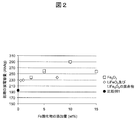
- FIGS. 2 shows the initial discharge capacity measured before the cycle test
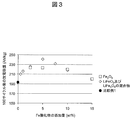
- FIG. 3 shows the discharge capacity after 100 cycles of charge and discharge
- FIG. 4 shows the discharge capacity after 600 cycles of charge and discharge.
- the initial discharge capacity shows a value larger than 210 Ah / kg, and the charge / discharge cycle It became clear that the discharge capacity after repeating the above could be maintained high.
- the present invention is not limited to the above-described embodiment, but includes various modifications. For example, with respect to a part of the configuration of the embodiment, it is possible to add, delete, and replace other configurations.
Landscapes
- Chemical & Material Sciences (AREA)
- Inorganic Chemistry (AREA)
- Chemical Kinetics & Catalysis (AREA)
- Electrochemistry (AREA)
- General Chemical & Material Sciences (AREA)
- Organic Chemistry (AREA)
- Composite Materials (AREA)
- Battery Electrode And Active Subsutance (AREA)
Abstract
リチウムイオン二次電池において、高容量化とサイクル特性の向上とを実現可能な負極活物質を提供することを目的とする。 上記課題を解決するため、本発明のリチウムイオン二次電池用負極活物質は、チタン酸リチウムと、鉄を含む酸化物とを配合してなることを特徴とする。鉄を含む酸化物の量は、負極活物質の全体量に対して重量比で0.5%以上10%以下とすることが好ましい。
Description
本発明は、リチウムイオン二次電池用の負極活物質、及びその負極活物質を用いたリチウムイオン二次電池に関する。
電子機器の電源として、小型化・軽量化が可能な二次電池であるリチウムイオン二次電池が期待されている。リチウムイオン二次電池の負極活物質としては、黒鉛(人造黒鉛、天然黒鉛)や非晶質炭素に代表される炭素系材料、あるいはケイ素やスズ等を主成分とする合金材料等が検討され、実用化が進められている。
近年、電気自動車等の大型製品へ応用するために、電池の高エネルギー密度化への要求が高まっている。それに伴い、単位重量当たりの容量が高い材料の技術開発が求められている。また、電池が高エネルギー密度化することに伴い、高安全性との両立も求められている。
リチウムイオン二次電池の充電時において、上述の従来の負極活物質(炭素系材料や合金材料)は、Li金属に対する電位が0V近くであるために、電池が劣化した場合や過充電状態に陥った場合に、Li金属デンドライトが発生する恐れがあった。そこで、新しい負極活物質として、充電時における電位が1Vより高く、Li金属のデンドライトが発生しないチタン酸リチウム等の種々の材料が注目されている。
(特許文献1)には、充放電サイクルにおいてLi金属デンドライトが発生する危険性を低減させるために、Li金属に対する電位を1V以上とする負極活物質を用いる技術が開示されている。そして、その際に用いる負極活物質としては、スピネル構造を有するLi4+xTi5O12(式中、xは-1~3である)やラムスデライト構造を有するLi2+yTi3O7(式中、yは-1~3である)等、チタン酸リチウム系の酸化物が挙げられている。また、(非特許文献1)には、スピネル構造を有するLi4+xTi5O12(式中、xは-1~3である)を用いることにより、Li金属に対して1.5V程度高い電位で充放電することが示されている。
また、(特許文献2)には、Li4Ti5O12で表されるチタン酸リチウムの比容量が175Ah/kgであることが示されており、この比容量は黒鉛の理論容量である372Ah/kgと比較して低いという問題が指摘されている。そこで、(特許文献2)では、チタン酸リチウムと同じ電位で動作し、重量比容量が210Ah/kgである二酸化モリブテンを重量比で50%~90%混合することで、高容量化を図っている。本手法によれば、若干の容量向上が期待できるが、二酸化モリブテンの容量が210Ah/kgであるために、チタン酸リチウムとの混合電極において210Ah/kgを超えることは困難であった。さらに、(特許文献3)には、酸化鉄にジルコニアや酸化タングステンを混合して高容量化を図る技術が開示されている。本手法によれば、初期容量として、250Ah/kgを超えるような値が得られるが、100サイクル後の容量維持率が71%以下であり、サイクル寿命の面で課題があった。
セラミックス, 45, No.3, P.135 (2010)
本発明は、上記従来の状況に鑑み、リチウムイオン二次電池において、高容量化とサイクル特性の向上とを実現可能な負極活物質を提供することを目的とする。
本発明者らが鋭意検討を行った結果、負極活物質として、チタン酸リチウムにFe系酸化物を添加した材料を用いることにより、上記課題を解決できることを見出し、発明を完成した。
すなわち、本発明のリチウムイオン二次電池用負極活物質は、チタン酸リチウムと、鉄を含む酸化物とを配合してなることを特徴とする。
本発明によれば、負極活物質として、チタン酸リチウムと鉄を含む酸化物とを配合した材料を用いることにより、高容量化とサイクル特性とが両立したリチウムイオン二次電池を得ることができる。また、鉄を含む酸化物の量を所定の範囲内とすることにより、初期の放電容量が210Ah/kgを超えるような負極活物質を得ることができる。上記した以外の課題、構成及び効果は、以下の実施形態の説明により明らかにされる。
以下、実施の形態に基づき、本発明を詳細に説明する。
本発明に係るリチウムイオン二次電池用の負極活物質は、チタン酸リチウムと、鉄を含む酸化物とを配合してなることを特徴とする。
チタン酸リチウムとしては、LiyTiO2、Li4+yTi5O12、Li4+yTi11O20(式中、yは-1~3である)等が適用可能である。これらのチタン酸リチウムは、いずれか一種を単独で用いても良いし、複数種を組み合せて用いても良い。
また、鉄を含む酸化物としては、FeO、Fe2O3、Fe3O4等の酸化鉄やLiFeOあるいはLiFe5O8で表されるリチウム含有鉄酸化物が適用可能である。これらの鉄を含む酸化物は、いずれか一種を単独で用いても良いし、複数種を組み合せて用いても良い。このようなリチウム含有鉄酸化物の混合物は、例えば、Li原料としての水酸化リチウム水和物と、Fe原料としてのオキシ水酸化鉄又は3酸化2鉄とを所定の割合で配合し、水とともに反応容器内で水熱反応させることにより形成することができる(水熱法)。水熱反応は、例えば、原料を仕込んだ反応容器を電気炉中に設置し、200℃で20時間保持することにより得ることができる。反応後の材料は、蒸留水で数回洗浄し、ろ過により溶液を分離し、例えば80℃で4時間以上乾燥させる。なお、上記の反応条件は一例であり、これらに限定されるものではない。例えば、ろ過後の乾燥工程を、真空乾燥機等を用いて減圧条件下で実施することができる。上記のリチウム含有鉄酸化物は、Liを含むため、充放電効率に優れており特に好ましい。
また、負極活物質における鉄を含む酸化物の量は、特に限定されるものではないが、鉄を含む酸化物の割合が少な過ぎると鉄を含む酸化物を用いる利点である高容量化の効果が低下し、逆に多過ぎると動作電位が低下し,電解液等の分解によるサイクル寿命の低下等が考えられ、これらのバランスを考慮して適宜設定される。具体的には、負極活物質の全体量に対して重量比で0.5%以上10%以下、特に2.5%以上7.5%以下とすることが好ましい。0.5%以上10%以下の範囲内に設定することにより、負極活物質の単位重量当たりにおける初期の放電容量について、210Ah/kgを超える値を得ることができる。
以上のような負極活物質は、リチウムイオン二次電池の負極に用いることができる。図1に、本発明に係るリチウムイオン二次電池の一実施形態の断面図を示す。図1の電池は、コイン型リチウムイオン二次電池であり、正極11、多孔質なセパレータ12、及び負極13を備えている。これらを電池ケース14に納めて非水電解液を注液し、ガスケット15を介して、負極端子を兼ねる上蓋16をかしめることにより、リチウムイオン二次電池を得ることができる。
負極13は、負極活物質としてチタン酸リチウムと鉄を含む酸化物との配合物を用いる以外は、従来知られた方法により作製することができる。例えば、まず、所望の合剤組成となるように負極活物質、PVDF等のバインダを溶解した溶液、及び必要に応じてカーボンブラック等の導電剤を秤量して混合し、負極合剤スラリーを作製する。負極活物質の粒径は、合剤層の厚さ以下になるように規定される。負極活物質粉末中に合剤層の厚さ以上のサイズを有する粗粒がある場合、予めふるい分級、風流分級等により粗粒を除去し、合剤層の厚さ以下の粒子を作製する。
この負極合剤スラリーを銅箔等の負極集電体に塗布し乾燥させた後、プレス等の成型や所望の大きさにする裁断等を行うことにより、負極を作製することができる。スラリーの塗布には、ドクターブレード法、ディッピング法、スプレー法等の既知の製法を採ることができ、手段に制限はない。
正極11は、正極活物質、バインダ及び集電体から構成される。正極活物質を例示すると、LiCoO2、LiNiO2、LiMn2O4等が挙げられるがこれらに限定されるものではない。正極活物質の粒径は、合剤層の厚さ以下になるように規定される。正極活物質粉末中に合剤層の厚さ以上のサイズを有する粗粒がある場合、予めふるい分級、風流分級等により粗粒を除去し、合剤層の厚さ以下の粒子を作製する。
導電剤としては、黒鉛、非晶質炭素、易黒鉛化炭素、デンカブラック等のカーボンブラック、活性炭、炭素繊維、カーボンナノチューブ等の公知の材料を用いることができる。導電性繊維には、気相成長炭素、又はピッチ(石油、石炭、コールタール等の副生成物)を原料として高温で炭化して製造した繊維、アクリル繊維(ポリアクリロニトリル)から製造した炭素繊維等がある。
正極活物質、バインダ、及び導電剤の混合物を攪拌、混合しながら、溶媒を添加して正極合剤スラリーを調製し、そのスラリーを正極集電体に塗布し、溶媒を蒸発させ乾燥することによって正極11を製造することができる。正極集電体には、厚さが10~100μm程度のアルミニウム箔、アルミニウム製穿孔箔、エキスパンドメタル、発泡金属板等が用いられ、材質もアルミニウムの他に、ステンレス鋼、チタン等が適用可能である。なお、正極合剤スラリーの塗布には、ドクターブレード法、ディッピング法、スプレー法等の既知の製法を採ることができ、手段に制限はない。
また、非水電解液は、リチウム塩を非水溶媒に溶解させたものであり、従来知られた非水電解液が適用可能である。
リチウム塩としては、LiClO4、LiCF3SO3、LiPF6、LiBF4、LiAsF6等のいずれかを単独でもしくは2種類以上を組み合わせて用いることができる。
非水溶媒としては、各種環状カーボネートや鎖状カーボネート等を用いることができる。例えばエチレンカーボネート、プロピレンカーボネート、ジメチルカーボネート、エチルメチルカーボネート及びジエチルカーボネート等、あるいはそのフッ素等を置換した誘導体が適用可能である。さらに、本発明の目的を妨げない範囲で、非水電解液に各種の添加剤を加えることができ、例えば、難燃性を付与するためにリン酸エステル等を添加することができる。
さらに、図1のコイン型リチウムイオン二次電池の他にも、円筒型、角型、ラミネート型等の種々の形状を有するリチウムイオン二次電池を作製することができる。
円筒型のリチウムイオン二次電池は、次のようにして作製することができる。すなわち、まず帯状に裁断した正極と負極の各々の未塗工部に電流を取り出すための端子を設ける。正極と負極との間にセパレータを挟み、これを円筒状に捲回して電極群を作製し、SUSやアルミニウム製の容器に収納する。この電極群を収納した容器に、乾燥空気中又は不活性ガス雰囲気中で非水電解液を注入し、容器を封止して円筒型リチウムイオン二次電池を作製することができる。
また、角形のリチウムイオン電池は例えば以下のようにして作製する。すなわち、上記の捲回工程において捲回軸を二軸とし、楕円形の電極群を作製する。円筒型リチウムイオン二次電池と同様に、角型容器にこれを収納し非水電解液を注入後、密封して角形リチウムイオン二次電池を得ることができる。
また、捲回する代わりに、セパレータ、正極、セパレータ、負極、セパレータの順に積層した電極群を用いることもできる。
また、ラミネート型のリチウムイオン二次電池は例えば以下のようにして作製する。すなわち、上記の積層型の電極群を、ポリエチレンやポリプロピレン等の絶縁性シートで内張りした袋状のアルミラミネートシートに収納する。開口部から電極の端子が突き出た状態として非水電解液を注入後、開口部を封止する。
本発明のリチウムイオン二次電池の用途は特に限定されない。例えば、電気自動車やハイブリッド型電気自動車等の動力用電源や、運動エネルギーの少なくとも一部を回収するシステムを有するエレベータ等の産業用機器、各種業務用や家庭用の蓄電システム用の電源等、各種大型電源として用いることができる。
また、各種携帯型機器や情報機器、家庭用電気機器、電動工具等の各種小型電源としても用いることができる。
次に、実施例及び比較例に基づき、本発明をさらに詳細に説明するが、これらに限定されるものではない。
(実施例1)
チタン酸リチウムとしてLi4Ti5O12(平均粒径17μm)と、鉄を含む酸化物としてγ-Fe2O3とを配合して負極活物質を調製した。配合比は、チタン酸リチウムを90重量%、γ-Fe2O3を10重量%とした。
チタン酸リチウムとしてLi4Ti5O12(平均粒径17μm)と、鉄を含む酸化物としてγ-Fe2O3とを配合して負極活物質を調製した。配合比は、チタン酸リチウムを90重量%、γ-Fe2O3を10重量%とした。
(実施例2)
チタン酸リチウムを97.5重量%、γ-Fe2O3を2.5重量%とした以外は、実施例1と同様にして負極活物質を調製した。
チタン酸リチウムを97.5重量%、γ-Fe2O3を2.5重量%とした以外は、実施例1と同様にして負極活物質を調製した。
(実施例3)
チタン酸リチウムを95.0重量%、γ-Fe2O3を5.0重量%とした以外は、実施例1と同様にして負極活物質を調製した。
チタン酸リチウムを95.0重量%、γ-Fe2O3を5.0重量%とした以外は、実施例1と同様にして負極活物質を調製した。
(実施例4)
チタン酸リチウムとしてLi4Ti5O12(平均粒径17μm)と、鉄を含む酸化物としてLiFeO2及びLiFe5O8の混合物とを配合して負極活物質を調製した。配合比は、チタン酸リチウムを99.5重量%、LiFeO2及びLiFe5O8の混合物を0.5重量%とした。
チタン酸リチウムとしてLi4Ti5O12(平均粒径17μm)と、鉄を含む酸化物としてLiFeO2及びLiFe5O8の混合物とを配合して負極活物質を調製した。配合比は、チタン酸リチウムを99.5重量%、LiFeO2及びLiFe5O8の混合物を0.5重量%とした。
なお、LiFeO2及びLiFe5O8の混合物は、以下の手順により調製した。
まず、Li原料として水酸化リチウム1水和物(和光純薬工業製)と、Fe原料として3酸化2鉄(Fe2O3)を用いた。Fe2O3と水酸化リチウム1水和物を所定の割合で配合し、密閉型試料反応容器(三愛科学製)に蒸留水(和光純薬製)と共に入れた。そして、その反応容器を電気炉中に設置し、200℃で所定の時間保持し水熱反応させた。処理した材料は、蒸留水で数回洗浄し、ろ過により溶液を分離し、80℃で5時間乾燥してLiFeO2及びLiFe5O8の混合物を得た。
得られた混合物の結晶状態を、広角X線回折装置(リガク製、RU200B)を使用して同定した。結晶の同定における測定条件は次の通りである。
X線源はCuであり、その出力は50kV、150mAに設定した。モノクロメータ付の集中法光学系を使用し、ダイバージェンススリットは1.0deg、レシービングスリットは0.3mm、スキャッタリングスリットは1.0degを選択した。X線回折の走査軸は2θ/θ連動式で、連続走査による30≦2θ≦50degの範囲を、走査速度2.0deg/min、サンプリング0.02degの条件で測定を行った。結晶の同定は、X線回折標準データ集であるICDDデータを用いて材料中に析出している結晶を同定した。その結果、得られた材料は、LiFeO2及びLiFe5O8の混合物であることを確認した。
(実施例5)
チタン酸リチウムを99.0重量%、LiFeO2及びLiFe5O8の混合物を1.0重量%とした以外は、実施例4と同様にして負極活物質を調製した。
チタン酸リチウムを99.0重量%、LiFeO2及びLiFe5O8の混合物を1.0重量%とした以外は、実施例4と同様にして負極活物質を調製した。
(実施例6)
チタン酸リチウムを92.5重量%、LiFeO2及びLiFe5O8の混合物を7.5重量%とした以外は、実施例4と同様にして負極活物質を調製した。
チタン酸リチウムを92.5重量%、LiFeO2及びLiFe5O8の混合物を7.5重量%とした以外は、実施例4と同様にして負極活物質を調製した。
(実施例7)
チタン酸リチウムを95.0重量%、LiFeO2及びLiFe5O8の混合物を5.0重量%とした以外は、実施例4と同様にして負極活物質を調製した。
チタン酸リチウムを95.0重量%、LiFeO2及びLiFe5O8の混合物を5.0重量%とした以外は、実施例4と同様にして負極活物質を調製した。
(実施例8)
チタン酸リチウムを97.5重量%、LiFeO2及びLiFe5O8の混合物を2.5重量%とした以外は、実施例4と同様にして負極活物質を調製した。
チタン酸リチウムを97.5重量%、LiFeO2及びLiFe5O8の混合物を2.5重量%とした以外は、実施例4と同様にして負極活物質を調製した。
(実施例9)
チタン酸リチウムを85.0重量%、γ-Fe2O3を15.0重量%とした以外は、実施例1と同様にして負極活物質を調製した。
チタン酸リチウムを85.0重量%、γ-Fe2O3を15.0重量%とした以外は、実施例1と同様にして負極活物質を調製した。
(比較例1)
100重量%のチタン酸リチウムLi4Ti5O12(平均粒径17μm)を負極活物質として用いた。
100重量%のチタン酸リチウムLi4Ti5O12(平均粒径17μm)を負極活物質として用いた。
(充放電効率の評価)
次に、実施例1~9及び比較例1の負極活物質を用いて図1に示すコイン型リチウムイオン二次電池を作製し、得られた電池について充放電効率の評価を行った。
次に、実施例1~9及び比較例1の負極活物質を用いて図1に示すコイン型リチウムイオン二次電池を作製し、得られた電池について充放電効率の評価を行った。
具体的には、各実施例及び比較例において作製した負極活物質80質量%、カーボンブラック(導電剤)10質量%、及びバインダ10質量%を混合し、ノルマルメチルピロリドンを添加して15Pa・sの粘度にした負極合剤スラリーを作製した。調製したスラリーを負極集電体の銅箔上にドクターブレードを用いて塗布し、乾燥させて負極合剤層を作製した。負極合剤層及び負極集電体を共にパンチで打ち抜いて、負極13を作製した。
そして、図1に示すように、正極11(金属Li箔を用いた)と負極13との間にセパレータ12を挟み、コイン型の電池ケース14に設置し、ガスケット15をセットした後に、上蓋16を設置して、コイン型リチウムイオン二次電池を作製した。
非水電解液としては、LiPF6を1モル含有したエチレンカーボネート(EC)とエチルメチルカーボネート(EMC)の混合溶媒(EC:EMC=1:2)を用いた。リチウムイオン二次電池の充放電特性は、TSCAT3000(東洋システム製)を用い、0.3mA/cm2の電流密度で、2.5~0.3V(vs.Li/Li+)の範囲で充放電を行い、負極に含まれる負極活物質重量当たりにおける、充電容量(Ah/g)及び放電容量(Ah/g)を測定した。充放電容量の評価は、初回、100サイクル後、300サイクル後、及び600サイクル後のそれぞれで実施した。
実施例1~9及び比較例1の放電容量を評価した結果を図2~4に示す。図2はサイクル試験前に測定した初期の放電容量を示し、図3は100サイクルの充放電後の放電容量を示し、図4は600サイクルの充放電後の放電容量を示している。測定の結果、負極活物質としてチタン酸リチウムと鉄を含む酸化物との配合物を用いた実施例1~9では、放電容量が高く、充放電サイクルを繰り返した後の放電容量も高く維持できることが確認された。特に、鉄を含む酸化物の量を、負極活物質の全体量に対して0.5重量%以上10重量%以下とすると、初期の放電容量が210Ah/kgより大きな値を示し、充放電サイクルを繰り返した後の放電容量も高く維持できることが明らかとなった。
なお、本発明は上記した実施形態に限定されるものではなく、様々な変形例が含まれる。例えば、実施形態の構成の一部について、他の構成の追加・削除・置換をすることが可能である。
本明細書で引用した全ての刊行物、特許及び特許出願をそのまま参考として本明細書にとり入れるものとする。
11 正極
12 セパレータ
13 負極
14 電池ケース
15 ガスケット
16 上蓋
12 セパレータ
13 負極
14 電池ケース
15 ガスケット
16 上蓋
Claims (6)
- チタン酸リチウムと、鉄を含む酸化物とを配合してなるリチウムイオン二次電池用負極活物質。
- 鉄を含む酸化物の量が、負極活物質の全体量に対して重量比で0.5%以上10%以下である請求項1に記載のリチウムイオン二次電池用負極活物質。
- 鉄を含む酸化物が、LiFeO2及びLiFe5O8の混合物である請求項1又は2に記載のリチウムイオン二次電池用負極活物質。
- 鉄を含む酸化物が、FeO、Fe2O3及びFe3O4からなる群から選択される一種以上である請求項1又は2に記載のリチウムイオン二次電池用負極活物質。
- 請求項1~4のいずれかに記載の負極活物質を含む負極と、正極と、リチウム塩を非水溶媒に溶解した非水電解液とを有するリチウムイオン二次電池。
- 負極活物質の単位重量当たりにおける初期の放電容量が、210Ah/kgよりも大きい請求項5に記載のリチウムイオン二次電池。
Priority Applications (1)
| Application Number | Priority Date | Filing Date | Title |
|---|---|---|---|
| PCT/JP2013/055836 WO2014136177A1 (ja) | 2013-03-04 | 2013-03-04 | リチウムイオン二次電池用負極活物質 |
Applications Claiming Priority (1)
| Application Number | Priority Date | Filing Date | Title |
|---|---|---|---|
| PCT/JP2013/055836 WO2014136177A1 (ja) | 2013-03-04 | 2013-03-04 | リチウムイオン二次電池用負極活物質 |
Publications (1)
| Publication Number | Publication Date |
|---|---|
| WO2014136177A1 true WO2014136177A1 (ja) | 2014-09-12 |
Family
ID=51490746
Family Applications (1)
| Application Number | Title | Priority Date | Filing Date |
|---|---|---|---|
| PCT/JP2013/055836 Ceased WO2014136177A1 (ja) | 2013-03-04 | 2013-03-04 | リチウムイオン二次電池用負極活物質 |
Country Status (1)
| Country | Link |
|---|---|
| WO (1) | WO2014136177A1 (ja) |
Cited By (1)
| Publication number | Priority date | Publication date | Assignee | Title |
|---|---|---|---|---|
| WO2017072793A1 (en) * | 2015-10-27 | 2017-05-04 | Council Of Scientific & Industrial Research | An anode composition for enhanced li-ion battery applications and its extraction from red mud |
Citations (6)
| Publication number | Priority date | Publication date | Assignee | Title |
|---|---|---|---|---|
| JPH1069922A (ja) * | 1996-08-27 | 1998-03-10 | Matsushita Electric Ind Co Ltd | 非水電解質リチウム二次電池 |
| JPH10241667A (ja) * | 1997-02-26 | 1998-09-11 | Toyota Central Res & Dev Lab Inc | 非水系電池用電極活物質 |
| JP2010186734A (ja) * | 2008-09-17 | 2010-08-26 | Equos Research Co Ltd | 二次電池用正極及び二次電池 |
| JP2011181229A (ja) * | 2010-02-26 | 2011-09-15 | Toyo Ink Sc Holdings Co Ltd | 電極用導電性組成物 |
| JP2011216472A (ja) * | 2010-03-18 | 2011-10-27 | Sumitomo Chemical Co Ltd | 正極用粉末 |
| WO2012172623A1 (ja) * | 2011-06-13 | 2012-12-20 | 株式会社日立製作所 | リチウムイオン二次電池の負極活物質、その製造方法およびリチウムイオン二次電池 |
-
2013
- 2013-03-04 WO PCT/JP2013/055836 patent/WO2014136177A1/ja not_active Ceased
Patent Citations (6)
| Publication number | Priority date | Publication date | Assignee | Title |
|---|---|---|---|---|
| JPH1069922A (ja) * | 1996-08-27 | 1998-03-10 | Matsushita Electric Ind Co Ltd | 非水電解質リチウム二次電池 |
| JPH10241667A (ja) * | 1997-02-26 | 1998-09-11 | Toyota Central Res & Dev Lab Inc | 非水系電池用電極活物質 |
| JP2010186734A (ja) * | 2008-09-17 | 2010-08-26 | Equos Research Co Ltd | 二次電池用正極及び二次電池 |
| JP2011181229A (ja) * | 2010-02-26 | 2011-09-15 | Toyo Ink Sc Holdings Co Ltd | 電極用導電性組成物 |
| JP2011216472A (ja) * | 2010-03-18 | 2011-10-27 | Sumitomo Chemical Co Ltd | 正極用粉末 |
| WO2012172623A1 (ja) * | 2011-06-13 | 2012-12-20 | 株式会社日立製作所 | リチウムイオン二次電池の負極活物質、その製造方法およびリチウムイオン二次電池 |
Cited By (1)
| Publication number | Priority date | Publication date | Assignee | Title |
|---|---|---|---|---|
| WO2017072793A1 (en) * | 2015-10-27 | 2017-05-04 | Council Of Scientific & Industrial Research | An anode composition for enhanced li-ion battery applications and its extraction from red mud |
Similar Documents
| Publication | Publication Date | Title |
|---|---|---|
| KR101787141B1 (ko) | 리튬 복합 화합물 입자 분말 및 그의 제조 방법, 및 비수전해질 이차 전지 | |
| US20100129714A1 (en) | Lithium secondary battery | |
| CN102315441B (zh) | 正极活性物质、制造该正极活性物质的方法和锂二次电池 | |
| JP7060776B2 (ja) | 非水系電解質二次電池用正極活物質とその製造方法、非水系電解質二次電池用正極合材ペーストおよび非水系電解質二次電池 | |
| JP5731276B2 (ja) | リチウム二次電池用正極活物質、その製造方法及びリチウム二次電池 | |
| KR20120099375A (ko) | 금속 산화물이 코팅된 리튬 기반 배터리용 양극 물질 | |
| CN104428254A (zh) | 掺杂的镍酸盐化合物 | |
| JP6493409B2 (ja) | 非水電解質二次電池 | |
| JP2004253169A (ja) | リチウム二次電池及びそれに用いる正極活物質の製造方法 | |
| CN106848212A (zh) | 锂离子二次电池所使用的正极活性物质 | |
| CN104221192A (zh) | 锂离子二次电池用活性物质和锂离子二次电池 | |
| JP2025502227A (ja) | 正極活物質、その製造方法、およびこれを含む正極およびリチウム二次電池 | |
| KR102228750B1 (ko) | 리튬 이차 전지용 양극 활물질, 이의 제조 방법 및 이를 포함하는 리튬 이차 전지 | |
| JP7670424B2 (ja) | 正極材、その製造方法およびこれを含むリチウム二次電池 | |
| JP2024505835A (ja) | 正極活物質およびその製造方法 | |
| CN108878880B (zh) | 非水二次电池用负极活性物质以及非水二次电池 | |
| JP5997087B2 (ja) | リチウム二次電池用正極材料の製造方法 | |
| CN104781963A (zh) | 锂电池用正极活性物质以及含有该锂电池用正极活性物质的锂电池 | |
| WO2015045254A1 (ja) | リチウムチタン複合酸化物 | |
| KR20180043276A (ko) | 비수계 전해질 이차 전지용 정극 활물질과 그의 제조 방법, 및 비수계 전해질 이차 전지 | |
| JPWO2020012586A1 (ja) | リチウムイオン二次電池及びリチウムイオン二次電池の製造方法 | |
| JP7006108B2 (ja) | 負極活物質、負極、及び非水電解質蓄電素子 | |
| JP2022095988A (ja) | 非水系電解質二次電池用正極活物質、および非水系電解質二次電池 | |
| JP2024503159A (ja) | リチウム遷移金属酸化物、リチウム二次電池用正極添加剤およびそれを含むリチウム二次電池 | |
| JP5891024B2 (ja) | リチウムイオン二次電池 |
Legal Events
| Date | Code | Title | Description |
|---|---|---|---|
| 121 | Ep: the epo has been informed by wipo that ep was designated in this application |
Ref document number: 13877290 Country of ref document: EP Kind code of ref document: A1 |
|
| NENP | Non-entry into the national phase |
Ref country code: DE |
|
| 122 | Ep: pct application non-entry in european phase |
Ref document number: 13877290 Country of ref document: EP Kind code of ref document: A1 |
|
| NENP | Non-entry into the national phase |
Ref country code: JP |