WO2014106927A1 - 携帯端末装置及び情報処理システム - Google Patents
携帯端末装置及び情報処理システム Download PDFInfo
- Publication number
- WO2014106927A1 WO2014106927A1 PCT/JP2013/083815 JP2013083815W WO2014106927A1 WO 2014106927 A1 WO2014106927 A1 WO 2014106927A1 JP 2013083815 W JP2013083815 W JP 2013083815W WO 2014106927 A1 WO2014106927 A1 WO 2014106927A1
- Authority
- WO
- WIPO (PCT)
- Prior art keywords
- lip
- recognition
- data
- unit
- lip movement
- Prior art date
- Legal status (The legal status is an assumption and is not a legal conclusion. Google has not performed a legal analysis and makes no representation as to the accuracy of the status listed.)
- Ceased
Links
Images












Classifications
-
- G—PHYSICS
- G06—COMPUTING OR CALCULATING; COUNTING
- G06F—ELECTRIC DIGITAL DATA PROCESSING
- G06F3/00—Input arrangements for transferring data to be processed into a form capable of being handled by the computer; Output arrangements for transferring data from processing unit to output unit, e.g. interface arrangements
- G06F3/16—Sound input; Sound output
- G06F3/167—Audio in a user interface, e.g. using voice commands for navigating, audio feedback
-
- G—PHYSICS
- G06—COMPUTING OR CALCULATING; COUNTING
- G06F—ELECTRIC DIGITAL DATA PROCESSING
- G06F3/00—Input arrangements for transferring data to be processed into a form capable of being handled by the computer; Output arrangements for transferring data from processing unit to output unit, e.g. interface arrangements
- G06F3/002—Specific input/output arrangements not covered by G06F3/01 - G06F3/16
- G06F3/005—Input arrangements through a video camera
-
- G—PHYSICS
- G06—COMPUTING OR CALCULATING; COUNTING
- G06F—ELECTRIC DIGITAL DATA PROCESSING
- G06F3/00—Input arrangements for transferring data to be processed into a form capable of being handled by the computer; Output arrangements for transferring data from processing unit to output unit, e.g. interface arrangements
- G06F3/01—Input arrangements or combined input and output arrangements for interaction between user and computer
- G06F3/011—Arrangements for interaction with the human body, e.g. for user immersion in virtual reality
-
- G—PHYSICS
- G06—COMPUTING OR CALCULATING; COUNTING
- G06F—ELECTRIC DIGITAL DATA PROCESSING
- G06F3/00—Input arrangements for transferring data to be processed into a form capable of being handled by the computer; Output arrangements for transferring data from processing unit to output unit, e.g. interface arrangements
- G06F3/01—Input arrangements or combined input and output arrangements for interaction between user and computer
- G06F3/011—Arrangements for interaction with the human body, e.g. for user immersion in virtual reality
- G06F3/012—Head tracking input arrangements
-
- G—PHYSICS
- G06—COMPUTING OR CALCULATING; COUNTING
- G06F—ELECTRIC DIGITAL DATA PROCESSING
- G06F3/00—Input arrangements for transferring data to be processed into a form capable of being handled by the computer; Output arrangements for transferring data from processing unit to output unit, e.g. interface arrangements
- G06F3/01—Input arrangements or combined input and output arrangements for interaction between user and computer
- G06F3/048—Interaction techniques based on graphical user interfaces [GUI]
- G06F3/0481—Interaction techniques based on graphical user interfaces [GUI] based on specific properties of the displayed interaction object or a metaphor-based environment, e.g. interaction with desktop elements like windows or icons, or assisted by a cursor's changing behaviour or appearance
- G06F3/0482—Interaction with lists of selectable items, e.g. menus
-
- G—PHYSICS
- G06—COMPUTING OR CALCULATING; COUNTING
- G06V—IMAGE OR VIDEO RECOGNITION OR UNDERSTANDING
- G06V40/00—Recognition of biometric, human-related or animal-related patterns in image or video data
- G06V40/20—Movements or behaviour, e.g. gesture recognition
-
- G—PHYSICS
- G10—MUSICAL INSTRUMENTS; ACOUSTICS
- G10L—SPEECH ANALYSIS TECHNIQUES OR SPEECH SYNTHESIS; SPEECH RECOGNITION; SPEECH OR VOICE PROCESSING TECHNIQUES; SPEECH OR AUDIO CODING OR DECODING
- G10L15/00—Speech recognition
- G10L15/24—Speech recognition using non-acoustical features
- G10L15/25—Speech recognition using non-acoustical features using position of the lips, movement of the lips or face analysis
-
- G—PHYSICS
- G06—COMPUTING OR CALCULATING; COUNTING
- G06F—ELECTRIC DIGITAL DATA PROCESSING
- G06F2203/00—Indexing scheme relating to G06F3/00 - G06F3/048
- G06F2203/038—Indexing scheme relating to G06F3/038
- G06F2203/0381—Multimodal input, i.e. interface arrangements enabling the user to issue commands by simultaneous use of input devices of different nature, e.g. voice plus gesture on digitizer
-
- G—PHYSICS
- G10—MUSICAL INSTRUMENTS; ACOUSTICS
- G10L—SPEECH ANALYSIS TECHNIQUES OR SPEECH SYNTHESIS; SPEECH RECOGNITION; SPEECH OR VOICE PROCESSING TECHNIQUES; SPEECH OR AUDIO CODING OR DECODING
- G10L15/00—Speech recognition
- G10L15/22—Procedures used during a speech recognition process, e.g. man-machine dialogue
- G10L2015/223—Execution procedure of a spoken command
-
- H—ELECTRICITY
- H04—ELECTRIC COMMUNICATION TECHNIQUE
- H04M—TELEPHONIC COMMUNICATION
- H04M2250/00—Details of telephonic subscriber devices
- H04M2250/52—Details of telephonic subscriber devices including functional features of a camera
-
- H—ELECTRICITY
- H04—ELECTRIC COMMUNICATION TECHNIQUE
- H04M—TELEPHONIC COMMUNICATION
- H04M2250/00—Details of telephonic subscriber devices
- H04M2250/74—Details of telephonic subscriber devices with voice recognition means
Definitions
- the present invention relates to a mobile terminal device and an information processing system.
- An object of the present invention is to provide a portable terminal device and an information processing system that are more user-friendly even in an environment in which it is not preferable to utter a voice or an environment in which noise is high in consideration of the above problems.
- a storage unit that stores lip movement recognition data
- an imaging unit that captures an image including at least the lip part of the operator
- movement data and lip movement of the lip part of the operator obtained from the imaging unit
- a configuration including a lip movement recognition unit that recognizes an operation to be executed by comparing the recognition data and a control unit that performs an operation that can be executed in accordance with the lip movement recognition unit is used.
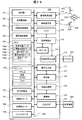
- FIG. 1 is a block diagram showing an example of the internal configuration of a mobile terminal device 100 according to an embodiment of the present invention.
- the mobile terminal 100 includes a control unit 101, a voice recognition unit 102, a lip movement recognition unit 103, a memory 104, a storage 105, a GPS (Global Positioning System) reception unit 106, a geomagnetic sensor 107, an acceleration sensor 108, a gyro sensor 109, and a base station.
- Communication unit 110, wireless communication unit 111, microphone 112, audio processing unit 113, speaker 114, audio output unit 115, touch panel 116, operation input unit 117, display unit 118, image processing unit 119, imaging unit 120, input / output I / O F121 are provided, and each is connected to the bus 150.
- the base station communication unit 110 is a communication interface for performing long-distance wireless communication with the base station 400 such as W-CDMA (Wideband Code Division Multiple Access) and GSM (registered trademark) (Global System for Mobile communications). As a result, it is possible to connect to the external network 600 through the base station 500 and transmit / receive information.
- W-CDMA Wideband Code Division Multiple Access
- GSM Global System for Mobile communications
- the control unit 101 is composed of a CPU (Central Processing Unit) or the like, and controls each component by executing a program stored in the memory 104 to perform various processes.
- CPU Central Processing Unit
- the voice recognition unit 102 recognizes the operator's voice taken in from the microphone 112 via the voice processing unit 113 and recognizes the operation instructed by voice. Also, the lip movement recognition unit 103 recognizes an image including the operator's lips captured from the imaging unit 120 via the image processing unit 119 and recognizes an operation instructed by the movement of the operator's lips.
- the control unit 101 selects whether to perform an operation based on a result recognized from the operator's voice or to execute an operation based on a result recognized from the movement of the operator's lips, and executes an operation based on the selected result. .
- the memory 104 is a flash memory or the like, and stores programs, data, and the like. Data used for recognition by the voice recognition unit 102 and the lip movement recognition unit 103 is stored in predetermined areas 104 a and 104 b of the memory 104.
- the mobile terminal 100 includes a storage 105 such as a memory card, and the storage 105 can store e-mail addresses, music, video, photo data, and the like.
- the program or data stored in the memory 104 or the storage 105 can be updated and added as needed by the base station communication unit 110 performing wireless communication with the base station and downloading from an external server (not shown). It is also possible to connect to an external device 300 such as a personal computer via the input / output I / F 121 to update and add data, programs, and the like.
- the GPS receiver 106 receives signals from GPS satellites in the sky. Thereby, the current position of the mobile terminal 100 can be detected.
- the geomagnetic sensor 107 is a sensor that detects the direction in which the mobile terminal 100 is facing.
- the acceleration sensor 108 is a sensor that detects the acceleration of the mobile terminal 100
- the gyro sensor 109 is a sensor that detects the angular velocity of the mobile terminal 100. Accordingly, the tilt and movement of the mobile terminal 100 can be detected in detail.
- the wireless communication unit 111 is a communication interface that performs wireless communication using a wireless LAN such as IEEE802.11a / b / n, and can be connected to the external network 600 via the wireless router 500.
- a wireless LAN such as IEEE802.11a / b / n
- the microphone 112 is for inputting external sound, and the speaker 111 is for outputting sound to the outside.
- the external audio output unit 115 connects the earphone 200 and outputs audio.
- the input / output sound is processed by the sound processing unit 113.
- the touch panel 116 includes an operation input unit 117 and a display unit 118.
- the display unit 118 displays images and images such as an LCD, and has an operation input unit 117 such as a touch pad on its display surface.
- the operation input unit 117 is, for example, a capacitive touch pad, and detects a contact operation (hereinafter referred to as touch) with a finger or a touch pen as an operation input.
- the imaging unit 120 is a camera or the like.
- the video displayed on the display unit 118 and the video input from the imaging unit 120 are processed by the image processing unit 119.
- the input / output I / F 121 is, for example, a USB (Universal Serial Bus) or the like, and is an interface that transmits / receives data to / from the external device 300.
- USB Universal Serial Bus
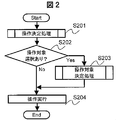
- FIG. 2 shows an example of a flowchart of processing of the control unit 101 that executes an operation by voice recognition or lip movement recognition in the mobile terminal device 100.
- FIG. 2 first, it is determined what operation is to be performed from the choices of operations that can be executed according to the state of the mobile terminal device 100 (S201).
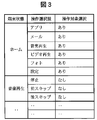
- FIG. 3 shows an example of a table of operations that can be executed corresponding to the state of the mobile terminal device 100. For example, when the home screen is displayed, “music playback”, “mail”, and the like are operation options, and when music is being played, “stop”, “previous skip”, and the like are operation options.
- branch processing is performed depending on whether or not the target to be operated needs to be selected (S202). For example, when “music playback” is performed as an operation, it is necessary to select a target (song, etc.) on which an operation (music playback, etc.) is performed, such as which music is to be played back.
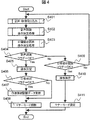
- FIG. 4 is a flowchart showing an example of the operation determination process S201.
- branching process 406 it is determined by the lip detection flag whether or not the lip portion is captured without the lip portion being out of the imaging range and the lip movement data has been successfully acquired. If the lip movement data acquisition is successful (Yes), the lip movement recognition data in the memory area 104b is updated corresponding to the voice recognition result (S407), the manner mode is canceled (S408), and the process is terminated. In the operation after the manner mode is canceled, an operation guide by sound from the speaker 114 (or from the earphone through the external sound output unit 115 when the earphone 200 is connected), an incoming call guidance by sound, and the like are performed.
- the operation is determined according to the voice recognition result, and when the voice recognition operation determination process fails and the lip movement recognition operation determination process is successful, the lip movement recognition is performed. The operation is determined. If the speech recognition is successful and the lip movement data is successfully acquired, the lip movement recognition data in the memory area 104b is updated.
- the manner mode can be set / released automatically by voice recognition and lip movement recognition processing.
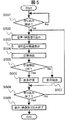
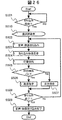
- FIG. 5 is a flowchart showing an example of a process S401 for capturing an image including audio and a lip portion.
- the determination of the start of capturing for example, the determination is made based on whether a predetermined part M of the touch panel 116 of the mobile terminal device 100 illustrated in FIG. 6 is touched.
- the capturing of the sound and the image of the lip portion is started (S502), and the captured image is displayed on the predetermined part W of the display unit 118 of the mobile terminal device 100. (S503).
- the lip movement detection unit 103 detects whether or not the lip portion is out of the shooting range from the captured image (S504).
- branch processing is performed based on the lip detection result, and when the lip portion is not out of the imaging range (Yes) as shown in FIG. 6A, for example, the display of the predetermined part W of the display unit 118 is performed.
- the frame is blue (S506).
- the display frame of the predetermined part W of the display unit 118 is set to red (S507).
- the process returns to S502 to continue capturing audio and video. If it is determined that the predetermined part M has been touched (Yes), the capturing of the sound and the video of the lip is terminated (S509), and the process is terminated.
- the above processing audio and video of the lips are captured. Further, it is possible to easily determine whether or not the lip portion is out of the shooting range based on the display of the captured image and the color of the display frame, and the operator can correct the shooting position.
- the color of the display frame is changed as a method for notifying the operator whether or not the image of the lip portion is out of the shooting range, but it may be notified by other display methods.
- voice analysis is performed to extract a time series pattern (specifically, time series of spectrum and cepstrum) of feature parameters of input voice (S701).
- the likelihood with the speech recognition data corresponding to the operation option stored in the memory area 104a as an acoustic model based on HMM (Hidden Markov Model) is calculated (S702).
- the speech recognition flag is set to OK (S704).
- an operation option that gives the maximum probability is determined as a recognition result (S705), and the process ends.
- the voice recognition flag is set to NG (S706), and the process is terminated.
- lip movement is detected from the input video of the lip movement, and lip movement data is acquired (S801).
- the lip movement data for example, as shown in FIG. 9, a temporal change in the horizontal size X of the lips and the vertical size Y of the lips is detected. If the lip portion is out of the imaging range and the lip portion cannot be detected from the input video and the lip movement data acquisition process S801 fails to acquire the lip movement data, the branch process 802 determines No, The lip detection flag and the lip movement recognition flag are set to NG (S803, S809), and the process ends.
- the lip movement recognition flag is set to OK (S804).
- the likelihood of the acquired lip movement data and the lip movement recognition data corresponding to the operation option stored in the memory area 104b is calculated (S805).
- the lip movement recognition flag is set to OK (S807).
- the operation option giving the maximum probability is determined as the recognition result (S808), and the process is terminated.
- the lip movement recognition flag is set to NG (S809), and the process ends.
- FIG. 10 shows examples of lip movement recognition data Xr (t), Yr (t) and acquired lip movement data Xd (t), Yd (t).
- FIG. 10A corresponds to the operation option “music playback (ongakusaisei)”
- FIG. 10 (b) corresponds to “video playback (bidesaisei)”.
- X indicates the horizontal size of the lips
- Y indicates the vertical size of the lips.
- the sizes of the lips of “GA” and “SA” corresponding to the vowel “A” are large in both X and Y.
- the lip size “X” corresponding to the vowel “I” is relatively large, while Y is small.
- FIG. 11A shows the lip movement recognition data Yr (t) before update
- FIG. 11B shows the acquired lip movement data Yd (t)
- FIG. 11C shows the lip movement recognition data Yr after update. (t) '.
- the updated lip movement recognition data Yr (t) ′ is defined by the following equation.
- the updated lip movement recognition data Yr (t) ′ is used as lip movement recognition data Yr (t) in the next lip movement recognition.
- the updated lip movement recognition data Xr (t) ' is also given by the following equation.
- FIG. 12 shows an example of a flowchart of the operation target determination process.
- a sound is captured from the microphone 112 via the sound processing unit 113, and an image including at least the lip portion of the operator is captured from the imaging unit 120 via the image processing unit 119 (S1201).
- speech recognition category determination processing S1202 and lip movement recognition category determination processing S1203 are performed.
- the branch process S1204 it is determined by the voice recognition flag whether or not the voice recognition is successful in the voice recognition category determination process S1202. If the speech recognition is successful (Yes), the operation target category is determined based on the result recognized in the speech recognition category determination processing S1202 (S1205).
- the branching process 1206 it is determined by the lip detection flag whether or not the lip portion has been captured without the lip portion being out of the shooting range and the lip movement data has been successfully acquired.
- the lip movement recognition data in the memory area 104b is updated corresponding to the voice recognition result (S1207), and the process proceeds to the next process S1210.
- the lip movement recognition data in the memory area 104b is not updated, and the process proceeds to the next process S1210.
- the branching process 1208 determines whether the recognition has succeeded in the lip movement recognition category determination process S1203 based on the lip movement recognition flag. If the lip movement recognition is successful (Yes), the operation target category is determined based on the result recognized in the lip movement recognition category determination process S403 (S1209), and the process proceeds to the next process S1210. On the other hand, if it is determined in the branching process S1208 that the lip movement recognition flag has failed due to the lip movement recognition flag (No), the process returns to the process of capturing audio and video again (S1201).
- the audio and the video including at least the lip of the operator are captured again.
- a voice recognition operation target determination process S1211 and a lip movement recognition operation target determination process S1212 are performed based on the captured voice and video.
- the branch process S1213 it is determined by the voice recognition flag whether or not the recognition is successful in the voice recognition operation target determination process S1211.
- the operation target is determined based on the result recognized in the voice recognition operation target determination process S1211 (S1214).
- branch processing S1215 it is determined by the lip detection flag whether the lip portion has been captured without the lip portion being out of the photographing range and the lip movement data has been successfully acquired.
- the lip movement recognition data in the memory area 104b is updated corresponding to the voice recognition result (S1216), and the process is terminated.
- the lip movement recognition data in the memory area 104b is not updated, and the process ends.
- FIG. 13 is a flowchart showing an example of the lip movement recognition category determination process.
- lip movement is detected from the input video of lip movement, and lip movement data is acquired (S1301). If the lip part is out of the imaging range and lip detection cannot be performed, and lip movement data acquisition fails in the lip movement data acquisition process S1301, it is determined No in the branch process 1302, and the lip detection flag and lip movement recognition are determined. The flag is set to NG (S1303, S1309), and the process ends. On the other hand, when the lip movement data is successfully acquired from the lip image input in the lip movement data acquisition process S1301, it is determined Yes in the branch process 1302, and the lip detection flag is set to OK (S1304). Next, the likelihood between the acquired lip movement data and the lip movement recognition data corresponding to the operation option stored in the memory area 104b is calculated (S1305).
- FIG. 14 shows an example of a category option table corresponding to the operation.
- Metadata attributes assigned to data such as music and photos correspond to categories.
- data related to attributes such as song titles, artists, albums, etc. are assigned to each music data as metadata.
- FIG. 15 is a flowchart showing an example of the voice recognition category determination process.
- lip movement recognition operation target determination processing and voice recognition operation target determination processing for determining operation targets belonging to the determined category will be described.
- FIG. 16 is a flowchart showing an example of lip movement recognition operation target determination processing.
- lip movement is detected from the input video of lip movement, and lip movement data is acquired (S1601).
- the lip movement data acquisition process S1601 if the lip part is out of the imaging range and the lip cannot be detected and the lip movement data acquisition fails, it is determined No in the branch process S1602, and the lip detection flag and the lip movement recognition are determined. The flag is set to NG (S1603, S1611), and the process ends.
- the lip detection flag is set to OK (S1604). .
- the maximum probability ⁇ (maximum likelihood) of the likelihood calculation result is equal to or greater than a predetermined value (here, 0.6 is assumed as an example) (Yes)
- a predetermined value here, 0.6 is assumed as an example
- there is a plurality of candidates that is, the maximum A branch process is performed by determining whether there is a plurality of data whose probabilities are equal to or greater than a predetermined value (S1607).
- the lip movement recognition flag is set to OK (S1608), the operation target that gives the maximum probability is determined as the recognition result (S1609), and the process ends.
- the operation target selection process S1610 will be described with reference to the flowchart of FIG.
- FIG. 17 shows lip movement recognition data and acquired lip movement data corresponding to this.
- the lip movement recognition data Xr (t) and Yr (t) include almost the same part, and the operation target cannot be determined only by the lip movement. Therefore, characters with different lip shapes for selection are added to the song title and displayed (here, “A”, “I”, “U”).
- an image including at least the lip portion of the operator is captured from the imaging unit 120 via the image processing unit 119 (S1702).
- lip movement is detected from the input video of lip movement, and lip movement data is acquired (S1703).
- lip movement data acquisition process S1703 when the lip is out of the photographing range and the lip cannot be detected and the acquisition of the lip movement data fails, it is determined No in the branch process 1704, and the lip detection flag and the lip movement recognition flag are determined. Is set to NG (S1705, S1711), and the process ends.
- the lip detection flag is set to OK (S1706).
- the likelihood of the lip movement data corresponding to the input video and the lip movement recognition data corresponding to the characters added for selection is calculated. (S1707).
- branch processing S1708 when the maximum probability (maximum likelihood) of the likelihood calculation result is equal to or greater than a predetermined value (here, 0.6 is set as an example) (Yes), the lip motion recognition flag is set to OK (S1709). ), The option giving the maximum probability is determined as the operation target (S1710), and the process is terminated.
- the lip movement recognition flag is set to NG (S1711), and the process ends.
- the operation target can be determined by adding a character or a character string having a different lip shape.
- FIG. 20 is a flowchart showing an example of the speech recognition operation target determination process S1211.
- the recognition flag is set to OK (S2105), The operation option that gives the maximum probability is determined as a recognition result (S2106), and the process ends.
- the recognition flag is set to NG (S2107), and the process ends.
- FIG. 22 shows an example of a table of vowel arrangements corresponding to operation options stored in advance in the memory 104b.
- the vowel line corresponding to “music playback” is “aoi ei”.
- the likelihood of the vowel arrangement corresponding to this operation option and the vowel arrangement corresponding to the input video is calculated, and the operation option having the highest likelihood is determined as a recognition result.
- the operation options and the vowel arrangement correspond one-to-one, and the operation options can be determined based on the vowels and the vowels.
- FIG. 24 shows an example of a lip shape corresponding to a vowel.
- lip shapes for Japanese vowels “a”, “i”, “u”, “e”, and “o” are shown.
- the vertical width X and horizontal width Y of the lips are represented in three levels and correspond to each vowel.
- the vertical width X and the horizontal width Y of the lip shape of the input video can be obtained, and the corresponding vowel can be determined according to the table of FIG.
- the above vowel recognition method is not limited to the lip movement recognition operation determination process S405, but may be applied to the lip movement recognition category determination process S1104 and the lip movement recognition operation target determination process S1109.
- FIG. 26 is a flowchart showing another embodiment of processing for capturing video including audio and lip portions.
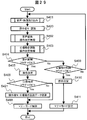
- FIG. 29 is a flowchart showing an example of the operation determination process S201 according to the second embodiment, and the same processes as those in the flowchart of FIG. 4 are denoted by the same symbols.
- FIG. 29 first, sound is acquired from the microphone 112 via the audio processing unit 113, and video including at least the lip portion of the operator is acquired from the imaging unit 120 via the image processing unit 119 (S401).
- the operator recognition unit 122 recognizes the operator N who is operating based on the voice and / or video captured in the audio / video capturing process S401 and the operator recognition data stored in the memory area 104d ( S420).
- the operator recognition data for example, voice authentication data or face authentication data registered in advance for logging in to the mobile terminal device 100 can be used.
- the speech recognition unit 102 performs speech recognition operation determination processing S402, and the lip motion recognition unit 103 performs lip motion recognition operation determination processing S403.
- branch process S404 it is determined from the voice recognition flag whether or not the voice recognition is successful in the voice recognition operation determination process S402. If the speech recognition is successful (Yes), it is determined what operation to perform based on the result recognized in the speech recognition operation determination processing S402 (S405). Next, in branching process 406, it is determined by the lip detection flag whether or not the lip portion is captured without the lip portion being out of the imaging range and the lip movement data has been successfully acquired. If the lip movement data acquisition is successful (Yes), the lip movement recognition data corresponding to the operator N in the memory area 104b is updated corresponding to the voice recognition result (S421), and the manner mode is canceled (S408). To finish the process.
- lip movement recognition data corresponding to the operator is updated for each operator, and lip movement recognition data corresponding to individual differences in lip movement can be obtained. Therefore, in the lip movement recognition operation determination processing S403, lip movement recognition is performed using the lip movement recognition data updated corresponding to the operator, so that lip movement recognition can be performed even when a plurality of people use the mobile terminal device. Accuracy can be improved. Further, not only the operation determination process S201 but also the lip movement recognition data update process corresponding to the operator may be applied to the operation target determination process S203.
- FIG. 30 is a block diagram showing a configuration example of the third embodiment of the mobile terminal device 100.
- FIG. 31 is a block diagram illustrating a schematic configuration of a voice / lip motion recognition information processing system including the mobile terminal device 100 and the voice / lip motion recognition server 700 according to the present embodiment.
- the voice recognition unit 102, the lip movement recognition unit 103, and the voice recognition data area and the lip movement recognition data area of the memory 104 are not provided in the configuration example of FIG.
- the voice / lip motion recognition server 700 is provided with a part to be operated.
- the voice / lip movement recognition server 700 includes a control unit 701, a voice recognition unit 702, a lip movement recognition unit 703, a memory 704, a storage 705, and a communication unit 706, which are mutually connected to a bus 710. .
- the communication unit 706 is an interface for connecting to the external network 600, and is connected to the mobile terminal device 100 via the base station 400 or the wireless router 500.
- the control unit 701 is configured by a CPU or the like, and controls each component by executing a program stored in the memory 704 to perform various processes.
- the voice recognition unit 702 recognizes the voice data of the operator of the mobile terminal device 100 obtained through the communication unit 706 and converts it into a character string corresponding to the voice data. Also, the lip movement recognition unit 703 recognizes the movement of the lips from the video data of the operator of the portable terminal device 100 obtained via the communication unit 706 and converts it into a character string corresponding to the video data.
- the control unit 701 transmits the result recognized from the operator's voice or the result recognized from the movement of the operator's lips to the mobile terminal device 100 via the communication unit 706.
- the memory 704 is a flash memory or the like, and stores programs, data, and the like.
- the storage 705 is an SSD (Solid State Device) or a hard disk, and data used for recognition by the voice recognition unit 702 and the lip movement recognition unit 703 is stored in predetermined areas 705 a and 705 b of the storage 705.
- the captured audio and video data is transmitted to the audio / lip motion recognition server 700 via the base station communication unit 110 or the wireless communication unit 111 (S3203).
- the voice / lip movement recognition server 700 performs voice and lip movement recognition processing S3204 based on the received voice and video data, and transmits the recognition result to the mobile terminal device 100 via the communication unit 706 (S3205).
- branch processing is performed based on the speech recognition flag and lip motion recognition flag of the recognition result sent from the speech / lip motion recognition server 700, and if speech recognition and lip motion recognition fails (No), the speech / video The process returns to the capturing process S3201.
- the operation determination process S3207 is performed, and the method is determined based on the likelihood of the option data related to the operation shown in FIG. 3 stored in the memory 104c and the recognition result. If there is an operation option corresponding to the recognition result, the decision success / failure flag is set to OK. In the branch process 3408, a branch process is performed based on the decision success / failure flag, and if there is no operation option corresponding to the recognition result (No), the process returns to the audio / video capturing process S3201. If there is an operation option corresponding to the recognition result (Yes), branch processing is performed based on the voice recognition flag in branch processing S3209. When the speech recognition is successful (Yes), the manner mode is canceled (S3210), and when the speech recognition is unsuccessful (No), the manner mode is set (S3211).
- branch processing is performed depending on whether or not the target to be operated is selected (S3212). For example, when “music playback” is performed as an operation, it is necessary to select a target (song, etc.) on which an operation (music playback, etc.) is performed, such as which music is to be played back. In addition, when “stop” is performed as an operation during music playback, it is not necessary to select a target to be operated (such as stop). If there is no selection of an operation target (No), the determined operation is executed (S3228). When it is determined that there is an operation option in the branch process S3212 (Yes), an audio / video capturing process S3213 is performed, and the captured audio and video data is transmitted to the audio / lip motion recognition server 700 (S3214).
- the voice / lip movement recognition server 700 performs voice and lip movement recognition processing S3215 based on the received voice and video data, and transmits the recognition result to the mobile terminal device 100 (S3216).
- branch processing is performed based on the speech recognition flag and lip motion recognition flag of the recognition result sent from the speech / lip motion recognition server 700, and if speech recognition and lip motion recognition fails (No), the speech / video The process returns to the capturing process S3213.
- the operation category determination process S3218 is performed, and the likelihood of the category option data corresponding to the operation shown in FIG.
- the operation target category is determined based on the determination result, and if there is a category option corresponding to the recognition result, the determination success / failure flag is set to OK.
- a branch process is performed based on the decision success / failure flag. If there is no category option corresponding to the recognition result (No), the process returns to the audio / video capturing process S3213. If there is a category option corresponding to the recognition result (Yes), an audio / video capturing process S3220 is performed, and the captured audio and video data is transmitted to the audio / lip movement recognition server 700 (S3221).
- the voice / lip movement recognition server 700 performs voice and lip movement recognition processing S3222 based on the received voice and video data, and transmits the recognition result to the mobile terminal device 100 (S3223).
- branch processing is performed based on the speech recognition flag and lip motion recognition flag of the recognition result sent from the speech / lip motion recognition server 700, and when speech recognition and lip motion recognition fails (No), the speech / video The process returns to the capturing process S3220.
- an operation target determination process S3225 is performed. History data for each operator is stored in the memory 104e of the portable terminal 100, and a history of words or the like to be searched when searching the Internet by voice recognition is stored.
- Metadata relating to attributes such as title, artist, shooting date, and the like is added to data such as music and photos stored in the storage 105 of the mobile terminal device 100.
- Description of history data stored in the memory 104e and attribute portion of the category determined in the operation category determination processing S3218 (for example, when a song name is selected as a category, it corresponds to a song title recorded as metadata of each music data)
- the operation target is determined based on the likelihood of the recognition result and the recognition result, and if there is an operation target corresponding to the recognition result, the decision success / failure flag is set to OK.
- a branch process is performed based on the decision success / failure flag.
- the process returns to the audio / video capturing process S3220.
- the determined operation target is added / updated to the history data corresponding to the operator N stored in the memory 104e (S3227), and the determined operation target is set. The operation is executed on the device (S3228).
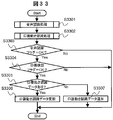
- FIG. 33 shows an example of a flowchart of voice / lip movement recognition processing S3204, S3215, and S3222.
- the voice recognition unit 702 performs voice recognition processing S3301, and the lip movement recognition unit 703 performs lip movement recognition.
- Regular processing S3302 is performed.
- the branch process S3303 it is determined from the voice recognition flag whether or not the voice recognition is successful in the voice recognition process S3301. If the speech recognition fails (No), the process ends.
- the video is captured without the lip portion being out of the shooting range, and it is determined by the lip detection flag whether the lip movement data has been successfully acquired. If acquisition of lip movement data is successful (Yes), branch processing is performed depending on the presence or absence of lip recognition data corresponding to a character string obtained by speech recognition. When there is lip recognition data corresponding to the character string obtained by voice recognition (Yes), the lip recognition data in the storage area 705b corresponding to the character string is updated (S3306), and there is no lip recognition data (No). , Lip recognition data corresponding to the character string obtained by voice recognition is added to the storage area 705b (S3307), and the process is terminated. On the other hand, if it is determined in the branching process S3304 that acquisition of lip movement data has failed (No), the lip movement recognition data is not updated and the process ends.
- the lip movement recognition data corresponding to the voice recognition result is updated and added.
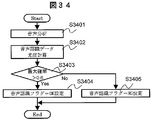
- FIG. 34 shows an example of a flowchart of the speech recognition process S3301.
- voice analysis is first performed to extract a time series pattern of feature parameters of the input voice (S3401).
- the likelihood with the speech recognition data stored in the predetermined area 705a of the storage as an acoustic model by the HMM is calculated (S3402).
- the speech recognition flag is set to OK (S3404).
- the processing ends with the speech recognition data giving the maximum probability as the recognition result.
- the speech recognition flag is set to NG (S3405), and the processing is terminated.
- the movement of the lips is detected from the input video, and the lip movement data is acquired (S3501). If the lip part is out of the imaging range and the lip part cannot be detected from the input video, and the lip movement data acquisition process S3501 fails to acquire the lip movement data, the branch process 3702 determines No, The lip detection flag and the lip movement recognition flag are set to NG (S3503, S3508), and the process ends. On the other hand, if the lip movement data is successfully acquired from the input video, it is determined Yes in the branch processing S3502, and the lip detection flag is set to OK (S3504). Next, the likelihood between the acquired lip movement data and the lip movement recognition data stored in the predetermined area 705b of the storage is calculated (S3505).
- the voice / lip movement recognition server 700 performs voice recognition and lip recognition, so that the lip movement recognition data is updated based on the voice and lip movement data of many operators. It is possible to further improve the accuracy. Also, by providing history data for each operator, adding words and phrases newly used in voice recognition as history data, and using the history data in lip movement recognition, the frequency of use for each operator of the mobile terminal device It is possible to recognize words with high lip movement.
- voice recognition data, lip movement recognition data, and option data are stored in the memory 104, but may be stored in the storage 105.
- a part of the configuration of one embodiment can be replaced with the configuration of another embodiment, and the configuration of another embodiment can be added to the configuration of one embodiment. Further, it is possible to add, delete, and replace other configurations for a part of the configuration of each embodiment.
- each of the above-described configurations, functions, processing units, processing means, and the like may be realized by hardware by designing a part or all of them with, for example, an integrated circuit.
- Each of the above-described configurations, functions, and the like may be realized by software by interpreting and executing a program that realizes each function by the processor. Information such as programs, tables, and files for realizing each function can be placed in the memory 104 or the storage 105.
Landscapes
- Engineering & Computer Science (AREA)
- Theoretical Computer Science (AREA)
- General Engineering & Computer Science (AREA)
- Human Computer Interaction (AREA)
- Physics & Mathematics (AREA)
- General Physics & Mathematics (AREA)
- Multimedia (AREA)
- Health & Medical Sciences (AREA)
- Audiology, Speech & Language Pathology (AREA)
- General Health & Medical Sciences (AREA)
- Computational Linguistics (AREA)
- Acoustics & Sound (AREA)
- Computer Vision & Pattern Recognition (AREA)
- Psychiatry (AREA)
- Social Psychology (AREA)
- User Interface Of Digital Computer (AREA)
- Telephone Function (AREA)
Abstract
口唇動き認識データを記憶する記憶部と、操作者の少なくとも口唇部分を含む映像を撮影する撮像部と、撮像部から得られた操作者の口唇部分の動きデータと口唇動き認識データを比較することにより実行する操作を認識する口唇動き認識部と、口唇動き認識部に従って実行可能な操作を行う制御部とを備える。
Description
本発明は、携帯端末装置及び情報処理システムに関する。
近年、携帯電話、カーナビゲーションシステム、家庭内AV機器等の端末において、キーボードやマウス等の操作手段を用いずに、音声を認識することにより容易に操作可能なユーザインタフェースが注目されている。
しかし、これらの音声認識により操作を行う端末では、図書館のように声を発するのが好ましくない環境や騒音が大きい環境では操作できないという問題が生じる。
本発明の目的は、前記課題を考慮し、声を発するのが好ましくない環境や騒音が大きい環境においても、より使い勝手の良い携帯端末装置及び情報処理システムを提供することにある。
前記課題を解決するための手段として、例えば特許請求の範囲に記載の構成を採用すればよい。一例を挙げるならば、口唇動き認識データを記憶する記憶部と、操作者の少なくとも口唇部分を含む映像を撮影する撮像部と、撮像部から得られた操作者の口唇部分の動きデータと口唇動き認識データを比較することにより実行する操作を認識する口唇動き認識部と、口唇の動き認識部に従って実行可能な操作を行う制御部とを備える構成を用いる。
本発明の技術を用いることにより、声を発するのが好ましくない環境や騒音が大きい環境においても、より使い勝手の良い携帯端末装置及び情報処理システムを提供することが可能となる。
以下、本発明の実施形態の例を、図面を用いて説明する。
図1は、本発明の一実施例による携帯端末装置100の内部構成例を示すブロック図である。
ここでは、スマートフォンの場合を例にして説明する。携帯端末100は、制御部101、音声認識部102、口唇動き認識部103、メモリ104、ストレージ105、GPS(Global Positioning System)受信部106、地磁気センサ107、加速度センサ108、ジャイロセンサ109、基地局通信部110、無線通信部111、マイク112、音声処理部113、スピーカ114、音声出力部115、タッチパネル116、操作入力部117、表示部118、画像処理部119、撮像部120、入出力I/F121を備え、それぞれはバス150に相互に接続されている。
基地局通信部110は、W-CDMA(Wideband Code Division Multiple Access)やGSM(登録商標)(Global System for Mobile communications)などの基地局400と遠距離の無線通信を行う通信インターフェースである。これにより基地局500を通して外部ネットワーク600に接続し、情報の送受信を行うこともできる。
制御部101はCPU(Central Processing Unit)等で構成されは、メモリ104に記憶したプログラムを実行することによって、各構成部を制御し、各種の処理を行っている。
音声認識部102はマイク112から音声処理部113を介して取り込んだ操作者の音声を認識し、音声で指示した操作を認識するものである。また、口唇動き認識部103は撮像部120から画像処理部119を介して取り込んだ操作者の口唇を含む映像を認識し、操作者の口唇の動きで指示した操作を認識するものである。
制御部101は、操作者の音声から認識した結果により操作を実行するか、操作者の口唇の動きから認識した結果により操作を実行するかを選択し、選択した結果に基づいて操作を実行する。
メモリ104は、フラッシュメモリなどであり、プログラム、データなどを記憶している。上記した音声認識部102や口唇動き認識部103で認識のために使用するデータはメモリ104の所定の領域104a,104bに保存されている。
さらに携帯端末100はメモリカードなどのストレージ105を備えており、ストレージ105にもメールアドレスや音楽、ビデオ、写真のデータなどを保存することができる。
メモリ104或いはストレージ105に記憶されるプログラム或いはデータは、基地局通信部110が基地局と無線通信を行い、図示しない外部サーバーなどからダウンロードすることにより、随時更新・追加することが可能である。また、入出力I/F121を介してパソコン等の外部機器300と接続し、データやプログラム等を更新、追加することも可能である。
GPS受信部106は、上空にあるGPS衛星からの信号を受信するものである。これにより、携帯端末100の現在位置を検出することができる。
地磁気センサ107は携帯端末100の向いている方向を検出するセンサである。
加速度センサ108は携帯端末100の加速度を検出するセンサ、ジャイロセンサ109は、携帯端末100の角速度を検出するセンサである。これらにより、携帯端末100の傾き、動きを詳細に検出することができる。
無線通信部111は、IEEE802.11a/b/nなどの無線LANによる無線通信を行う通信インターフェースであり、無線ルータ500を介して外部ネットワーク600に接続することができる。
マイク112は、外部の音声を入力するものであり、スピーカ111は、外部に対して音声を出力するものである。外部音声出力部115はイヤフォン200を接続して音声を出力するものである。入出力される音声は、音声処理部113にて音声処理される。
タッチパネル116は、操作入力部117、表示部118からなる。表示部118はLCDなど映像や画像を表示するものであり、その表示面にはタッチパッドのような操作入力部117を有する。
操作入力部117は、例えば静電容量式などのタッチパッドであり、指やタッチペンなどによる接触操作(以降、タッチという)を操作入力として検出するものである。
撮像部120は、カメラなどである。表示部118に表示される映像や、撮像部120から入力された映像は、画像処理部119にて処理される。
入出力I/F121は、例えばUSB(Universal Serial Bus)などであり、外部機器300とデータの送受信を行うインターフェースである。
次に携帯端末装置100において、音声認識或いは口唇動き認識により操作を実行する制御部101の処理のフローチャートの例を図2に示す。
図2において、まず携帯端末装置100の状態により実行可能な操作の選択肢から、どのような操作を行うかを決定する(S201)。図3に携帯端末装置100の状態に対応した実行可能な操作のテーブルの例を示す。例えば、ホーム画面が表示されている状態では「音楽再生」や「メール」等が操作選択肢となり、音楽を再生している状態では「停止」や「前スキップ」等が操作選択肢となる。次に、操作を行う対象を選択する必要の有無により分岐処理を行う(S202)。例えば、操作として「音楽再生」を行う場合、どの曲を再生するのかというように操作(音楽再生など)を行う対象(曲など)の選択が必要となる。また、音楽再生中の操作として「停止」を行う場合、操作(停止など)を行う対象の選択は必要ない。操作対象の選択がある場合(Yes)には,操作対象を決定する処理S203を行い、選択した操作対象(例えば曲)に対して、操作(例えば音楽再生)を実行する(S204)。分岐処理S202で操作対象の選択がない場合(No)には操作(例えば停止)を実行する。図3に示した携帯端末装置の状態に応じた操作選択肢のテーブルデータはメモリ領域104cに記憶されている。 図4は操作決定処理S201の一例を示すフローチャートである。
図4において、まずマイク112から音声処理部113を介して音声を、撮像部120から画像処理部119を介して操作者の少なくとも口唇部分を含む映像を取り込む(S401)。次に、音声認識部102で音声認識操作決定処理S402を行い、口唇動き認識部103で口唇動き認識操作決定処理S403を行う。分岐処理S404では音声認識操作決定処理S402で音声認識に成功したかどうかを音声認識フラグにより判断する。音声認識に成功した場合(Yes)には音声認識操作決定処理S402で認識した結果に基づいてどのような操作を行うかを決定する(S405)。次に分岐処理406で口唇部分が撮影範囲から外れることなく映像の取り込みが行われ、口唇動きデータの取得に成功したかを口唇検出フラグにより判断する。口唇動きデータの取得に成功した場合(Yes)には音声認識結果に対応してメモリ領域104bの口唇動き認識データを更新し(S407)、マナーモードを解除(S408)して処理を終了する。マナーモード解除以降の操作においては、スピーカ114から(或いはイヤフォン200が接続されている場合には外部音声出力部115を介して、イヤフォンから)の音声による操作ガイド、音による着信案内等を行う。一方、分岐処理S406で口唇検出フラグにより口唇動きデータの取得に失敗したと判断した場合(No)にはメモリ領域104bの口唇動き認識データを更新せず、マナーモードを解除(S408)して処理を終了する。
分岐処理S404で音声認識フラグにより音声認識に失敗したと判断した場合(No)には分岐処理409で口唇動き認識フラグにより口唇動き認識操作決定処理S403で認識に成功したかどうかを判断する。口唇動き認識に成功した場合(Yes)には口唇動き認識操作決定処理S403で認識した結果に基づいてどのような操作を行うかを決定(S410)し、マナーモードを設定(S411)して処理を終了する。マナーモードにおいてはスピーカ114からの出力をオフとし、音声無しの画面表示での操作ガイド或いは着信案内等を行う。一方、分岐処理S409で口唇動き認識フラグにより口唇動き認識が失敗したと判断した場合(No)には再度音声および映像を取り込む処理(S401)に戻る。
以上の処理により、音声認識操作決定処理に成功した場合には音声認識結果に従って操作が決定され、音声認識操作決定処理に失敗して口唇動き認識操作決定処理に成功した場合には口唇動き認識に従って操作が決定される。また、音声認識に成功し、口唇動きデータの取得に成功した場合にはメモリ領域104bの口唇動き認識データの更新が行われる。
以上の説明のように、雑踏等で騒音が大きい環境や図書館等で声を出すのがふさわしくない環境で音声認識操作決定処理が行えない場合にも、口唇動き認識操作決定処理を行うことでどのような操作を行うかを決定することができる。また、マナーモードの設定・解除が音声認識及び口唇動き認識の処理によって自動的に行うことが可能となる。
図5は音声及び口唇部分を含む映像を取り込む処理S401の一例を示すフローチャートである。
図5において、まず音声及び映像の取り込み開始を判断する(S501)。取り込み開始の判断としては、例えば図6に示す携帯端末装置100のタッチパネル116の所定の部位Mがタッチされたかにより判断を行う。所定の部位Mがタッチされた(Yes)と判断すると、音声及び口唇部分の映像の取り込み(S502)を開始するとともに、取り込んだ映像を携帯端末装置100の表示部118の所定の部位Wに表示する(S503)。口唇動き検出部103により、取り込んだ映像により口唇部分が撮影範囲から外れていないかを検出する(S504)。分岐処理S505では口唇検出結果により分岐処理を行い、図6(a)のように、口唇部分が撮影範囲から外れていない(Yes)の場合には、例えば表示部118の所定の部位Wの表示枠を青色とする(S506)。図6(b)のように口唇部分が撮影範囲から外れている(No)と判断した場合には、例えば表示部118の所定の部位Wの表示枠を赤色とする(S507)。分岐処理S508では音声及び映像の取り込み終了を判断する。取り込み終了の判断としては、携帯端末装置100のタッチパネル116の所定の部位Mが再度タッチされたかにより判断を行う。所定の部位Mがタッチされていない(No)と判断した場合にはS502に戻り、音声及び映像の取り込みを続ける。所定の部位Mがタッチされた(Yes)と判断すると、音声及び口唇部分の映像の取り込みを終了し(S509)、処理を終了する。
以上の処理により、音声及び口唇部分の映像の取り込みが行われる。また、取り込んだ映像の表示及び表示枠の色により口唇部分が撮影範囲から外れたかどうかを容易に判断することができ、操作者が撮影位置を修正することができる。なお、ここでは口唇部分の映像が撮影範囲から外れたかどうかを操作者に知らせる方法として表示枠の色を変えるようにしたが、他の表示方法により知らせるようにしてもよい。
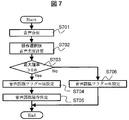
次に,音声認識部102における音声認識操作決定処理S402のフローチャートの一例を図7に示す。
図7において、まず音声分析を行い、入力音声の特徴パラメータの時系列パターン(具体的には,スペクトルやケプストラムの時系列)を抽出する(S701)。次にHMM(Hidden Markov Model)による音響モデルとしてメモリ領域104aに記憶された操作選択肢に対応する音声認識データとの尤度を計算する(S702)。分岐処理S703では、尤度計算の結果の最大確率 (最大尤度)が所定の値(ここでは一例として0.6とした)以上の場合(Yes)には音声認識フラグをOKとし(S704)、最大確率を与える操作選択肢を認識結果として決定し(S705)、処理を終了する。一方、分岐処理S703でNoと判断した場合には、騒音等により音声認識が失敗したと判断し、音声認識フラグをNGとして(S706)、処理を終了する。
次に、口唇動き認識部103における口唇動き認識操作決定処理S403について、図8の例を用いて説明する。
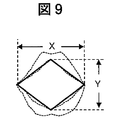
図8のフローチャートにおいて、まず入力された口唇の動きの映像から、口唇の動きを検出し、口唇動きデータを取得する(S801)。口唇の動きのデータとしては、例えば図9に示すように口唇の横の大きさXと口唇の縦の大きさYの時間的な変化を検出する。口唇部分が撮影範囲から外れていて入力された映像から口唇部分の検出ができず、口唇動きデータ取得処理S801において口唇動きデータの取得に失敗した場合には、分岐処理802においてNoと判断し、口唇検出フラグ及び口唇動き認識フラグをNGに設定(S803、S809)し、処理を終了する。一方、入力された映像から口唇動きデータの取得に成功した場合には、分岐処理S802においてYesと判断し、口唇検出フラグをOKに設定(S804)する。次に、この取得した口唇動きデータとメモリ領域104bに記憶されている操作選択肢に対応する口唇動き認識データとの尤度を計算する(S805)。分岐処理S806では尤度計算の結果の最大確率 (最大尤度)が所定の値(ここでは一例として0.6とした)以上の場合(Yes)には、口唇動き認識フラグをOKとし(S807)、最大確率を与える操作選択肢を認識結果として決定し(S808)、処理を終了する。一方、分岐処理S806でNoと判断した場合には口唇動き認識フラグをNGとし(S809)、処理を終了する。
図10に口唇動き認識データXr(t)、Yr(t)と取得した口唇動きデータXd(t)、Yd(t)の例を示す。図10(a)は操作選択肢「音楽再生(おんがくさいせい)」に対応し、図10(b)は「ビデオ再生(びでおさいせい)」に対応する。Xは口唇の横の大きさ、Yは口唇の縦の大きさを示している。例えば母音「あ」に対応する「が」「さ」の口唇の大きさはX、Yともに大きくなっている。一方、母音「い」に対応する「い」「び」の口唇の大きさXは比較的大きいのに対して、Yは小さくなっている。このように、口唇の動きとして取得した口唇動きデータXd(t)、Yd(t)とメモリ104に記憶された操作選択肢に対応する口唇動き認識データXr(t)、Yr(t)から口唇の大きさX,Yの時間的変化が最も近い選択肢を認識結果として決定することができる。
口唇動き認識データ更新処理S407の一例を、図11を用いて説明する。
図11(a)は更新前の口唇動き認識データYr(t)を、図11(b)は取得した口唇動きデータYd(t)を、図11(c)は更新後の口唇動き認識データYr(t)‘を示している。ここで、更新後の口唇動き認識データYr(t)‘を以下の式で定義する。
(数1) Yr(t)‘=Yr(t)+α・(Yd(t)-Yr(t))
更新後の口唇動き認識データYr(t)‘は次の口唇動き認識における口唇動き認識データYr(t)として用いられる。
ここで、αは口唇動き認識データが取得した口唇動きデータに収束する速さを決定する係数であり、例えば、α=1とすると、
(数2) Yr(t)‘=Yd(t)
となり、取得した口唇動きデータYd(t)が次の口唇動き認識における口唇動き認識データとなる。α=0.5とすると、
(数3) Yr(t)‘=0.5・(Yd(t)+Yr(t))
となり、取得した口唇動きデータYd(t)と更新前の口唇動き認識データYr(t)の平均が次の口唇動き認識における口唇動き認識データとなる。αの範囲は、
(数4) 0<α<1
が選ばれる。αが大きいほど口唇動き認識データが取得した口唇動きデータに早く収束する。図11(c)はα=0.5の場合を示している。
更新後の口唇動き認識データYr(t)‘は次の口唇動き認識における口唇動き認識データYr(t)として用いられる。
ここで、αは口唇動き認識データが取得した口唇動きデータに収束する速さを決定する係数であり、例えば、α=1とすると、
(数2) Yr(t)‘=Yd(t)
となり、取得した口唇動きデータYd(t)が次の口唇動き認識における口唇動き認識データとなる。α=0.5とすると、
(数3) Yr(t)‘=0.5・(Yd(t)+Yr(t))
となり、取得した口唇動きデータYd(t)と更新前の口唇動き認識データYr(t)の平均が次の口唇動き認識における口唇動き認識データとなる。αの範囲は、
(数4) 0<α<1
が選ばれる。αが大きいほど口唇動き認識データが取得した口唇動きデータに早く収束する。図11(c)はα=0.5の場合を示している。
更新後の口唇動き認識データXr(t)‘も同様に次式で与えられる。
(数5) Xr(t)‘=Xr(t)+α・(Xd(t)-Xr(t))
以上の処理により、更新後の口唇動き認識データXr(t)’、Yr(t)’は更新前よりも実際に取得した口唇動きに近いデータに更新され、次の口唇動き認識において口唇動き認識データXr(t)、Yr(t)として用いられる。これを繰り返すことで、より操作者の口唇動きに合わせた口唇動き認識データXr(t)、Yr(t)を得ることができ、口唇動き認識の精度を向上することができる。
以上の処理により、更新後の口唇動き認識データXr(t)’、Yr(t)’は更新前よりも実際に取得した口唇動きに近いデータに更新され、次の口唇動き認識において口唇動き認識データXr(t)、Yr(t)として用いられる。これを繰り返すことで、より操作者の口唇動きに合わせた口唇動き認識データXr(t)、Yr(t)を得ることができ、口唇動き認識の精度を向上することができる。
以上の音声認識操作決定処理、或いは口唇動き認識操作決定処理によりどのような操作を行うかを決定することができる。
次に操作を行う対象を決定する処理(S203)について説明する。
図12に操作対象決定処理のフローチャートの例を示す。
図12において、まずマイク112から音声処理部113を介して音声を、撮像部120から画像処理部119を介して操作者の少なくとも口唇部分を含む映像を取り込む(S1201)。次に、音声認識カテゴリ決定処理S1202、口唇動き認識カテゴリ決定処理S1203を行う。分岐処理S1204では音声認識カテゴリ決定処理S1202で音声認識に成功したかどうかを音声認識フラグにより判断する。音声認識に成功した場合(Yes)には音声認識カテゴリ決定処理S1202で認識した結果に基づいて操作対象のカテゴリを決定する(S1205)。次に分岐処理1206で口唇部分が撮影範囲から外れることなく映像の取り込みが行われ、口唇動きデータの取得に成功したかを口唇検出フラグにより判断する。口唇動きデータの取得に成功した場合(Yes)には音声認識結果に対応してメモリ領域104bの口唇動き認識データを更新(S1207)し、次の処理S1210に進む。一方、分岐処理S1206で口唇検出フラグにより口唇動きデータの取得に失敗したと判断した場合(No)にはメモリ領域104bの口唇動き認識データを更新せず、次の処理S1210に進む。
分岐処理S1204で音声認識フラグにより音声認識に失敗したと判断した場合(No)には分岐処理1208で口唇動き認識フラグにより口唇動き認識カテゴリ決定処理S1203で認識に成功したかどうかを判断する。口唇動き認識に成功した場合(Yes)には口唇動き認識カテゴリ決定処理S403で認識した結果に基づいて操作対象のカテゴリを決定し(S1209)、次の処理S1210に進む。一方、分岐処理S1208で口唇動き認識フラグにより口唇動き認識に失敗したと判断した場合(No)には再度音声および映像を取り込む処理(S1201)に戻る。
S1210では再度音声及び操作者の少なくとも口唇部分を含む映像を取り込む。取り込んだ音声及び映像をもとに音声認識操作対象決定処理S1211、口唇動き認識操作対象決定処理S1212を行う。分岐処理S1213では音声認識操作対象決定処理S1211で認識に成功したかどうかを音声認識フラグにより判断する。音声認識に成功した場合(Yes)には音声認識操作対象決定処理S1211で認識した結果に基づいて操作対象を決定する(S1214)。次に分岐処理S1215で口唇部分が撮影範囲から外れることなく映像の取り込みが行われ、口唇動きデータの取得に成功したかを口唇検出フラグにより判断する。口唇動きデータの取得に成功した場合(Yes)には音声認識結果に対応してメモリ領域104bの口唇動き認識データを更新し(S1216)、処理を終了する。一方、分岐処理S1215で口唇検出フラグにより口唇動きデータの取得に失敗したと判断した場合(No)にはメモリ領域104bの口唇動き認識データを更新せず、処理を終了する。
分岐処理S1213で音声認識フラグにより音声認識に失敗したと判断した場合(No)には分岐処理1217で口唇動き認識フラグにより口唇動き認識操作対象決定処理S1212で口唇動き認識に成功したかどうかを判断する。口唇動き認識に成功した場合(Yes)には口唇動き認識操作対象決定処理S1212で認識した結果に基づいて操作対象を決定(S1218)し、処理を終了する。一方、分岐処理S1217で口唇動き認識フラグにより口唇動き認識に失敗したと判断した場合(No)には再度音声および映像を取り込む処理(S1210)に戻る。
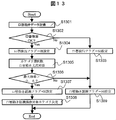
図13は口唇動き認識カテゴリ決定処理の一例を示すフローチャートである。
図13のフローチャートにおいて、まず入力された口唇の動きの映像から、口唇の動きを検出し、口唇動きデータを取得する(S1301)。口唇部分が撮影範囲から外れていて口唇検出ができず、口唇動きデータ取得処理S1301において口唇動きデータの取得に失敗した場合には、分岐処理1302においてNoと判断し、口唇検出フラグ及び口唇動き認識フラグをNGに設定(S1303、S1309)し、処理を終了する。一方、口唇動きデータ取得処理S1301において入力された口唇の映像からの口唇動きデータの取得に成功した場合には、分岐処理1302においてYesと判断し、口唇検出フラグをOKに設定する(S1304)。次に、この取得した口唇動きデータとメモリ領域104bに記憶されている操作選択肢に対応する口唇動き認識データとの尤度を計算する(S1305)。
図14に操作に対応したカテゴリ選択肢のテーブルの例を示す。音楽、写真等のデータに付与されているメタデータの属性がカテゴリに相当する。例えば各音楽データには曲名、アーティスト、アルバム等の属性(カテゴリ)に関するデータがメタデータとして付与されている。
分岐処理S1306では尤度計算の結果の最大確率 (最大尤度)が所定の値(ここでは一例として0.6とした)以上の場合(Yes)には、口唇動き認識フラグをOKとし(S1307)、最大確率を与える操作カテゴリを認識結果として決定し(S1308)、処理を終了する。一方、分岐処理S1306でNoと判断した場合には口唇動き認識フラグをNGとし(S1309)、処理を終了する。
次に、音声認識カテゴリ決定処理(S1202)について説明する。
図15は音声認識カテゴリ決定処理の一例を示すフローチャートである。
図15において、まずマイク112から音声処理部113を介して入力された音声の分析を行い、入力音声の特徴パラメータの時系列パターンを抽出する(S1501)。次にHMMによる音響モデルとしてメモリ領域104aに記憶されたカテゴリ選択肢に対応する音声認識データとの尤度を計算する(S1502)。分岐処理S1503では、尤度計算の結果の最大確率 (最大尤度)が所定の値(ここでは一例として0.6とした)以上の場合(Yes)には認識フラグをOKとし(S1504)、最大確率を与えるカテゴリ選択肢を認識結果として決定し(S1505)、処理を終了する。一方、分岐処理S1503でNoと判断した場合には、騒音等により音声認識に失敗したと判断し、認識フラグをNGとし(S1506)、処理を終了する。
以上の口唇動き認識カテゴリ決定処理、或いは音声認識カテゴリ決定処理により操作対象がどのカテゴリに属するかを決定することができる。
次に、決定したカテゴリに属する操作対象を決定するための口唇動き認識操作対象決定処理、および音声認識操作対象決定処理について説明する。
図16は口唇動き認識操作対象決定処理の例を示すフローチャートである。
図16のフローチャートにおいて、まず入力された口唇の動きの映像から、口唇の動きを検出し、口唇動きデータを取得する(S1601)。口唇動きデータ取得処理S1601において口唇部分が撮影範囲から外れていて口唇検出ができず、口唇動きデータの取得に失敗した場合には、分岐処理S1602においてNoと判断し、口唇検出フラグ及び口唇動き認識フラグをNGに設定(S1603、S1611)し、処理を終了する。一方、口唇動きデータ取得処理S1601において入力された口唇部分の映像からの口唇動きデータの取得に成功した場合には、分岐処理S1602においてYesと判断し、口唇検出フラグをOKに設定する(S1604)。ストレージ105に記憶されている音楽、写真等のデータにはタイトル、アーティスト、撮影日等の属性に関するメタデータ付与されている。S1605では選択したカテゴリの属性部分の記述に対応した口唇動き認識データ(例えばカテゴリとして曲名を選択した場合には各音楽データのメタデータとして記録されている曲のタイトルに対応した口唇動き認識データ)と取得した口唇動きデータとの尤度を計算する。分岐処理1606では尤度計算の結果の最大確率 (最大尤度)が所定の値(ここでは一例として0.6とした)以上の場合(Yes)には、候補数が複数あるか、すなわち最大確率が所定の値以上となるデータが複数あるかを判断して分岐処理を行う(S1607)。候補数が1つの場合(Yes)には口唇動き認識フラグをOKとし(S1608)、最大確率を与える操作対象を認識結果として決定し(S1609)、処理を終了する。一方、分岐処理S1607で候補数が複数の場合(No)と判断した場合には操作対象選択処理(S1610)を行い、処理を終了する。一方、分岐処理S1606でNoと判断した場合には、口唇動き認識フラグをNGとし(S1611)、処理を終了する。
操作対象選択処理S1610について、図17のフローチャートを用いて説明する。
図17において、まずタッチパッド116の表示部118に複数の候補を表示する(S1701)。表示の例を図18に示す。ここでは、候補となる曲が3つある場合の例である。また、これに対応した口唇動き認識データおよび取得口唇動きデータを図19に示す。この場合、口唇動き認識データXr(t),Yr(t)がほとんど同じ部分が含まれ、口唇の動きだけでは操作対象を決定できない。そこで、選択のための口唇形状が異なる文字を曲名に付加して表示している(ここでは、「あ」「い」「う」)。次に撮像部120から画像処理部119を介して操作者の少なくとも口唇部分を含む映像を取り込む(S1702)。まず入力された口唇の動きの映像から、口唇の動きを検出し、口唇動きデータを取得する(S1703)。口唇動きデータ取得処理S1703において口唇が撮影範囲から外れていて口唇検出ができず、口唇動きデータの取得に失敗した場合には、分岐処理1704においてNoと判断し、口唇検出フラグ及び口唇動き認識フラグをNGに設定(S1705、S1711)し、処理を終了する。一方、口唇動きデータ取得処理S1703において入力された映像から口唇動きデータの取得に成功した場合には、分岐処理S1704においてYesと判断し、口唇検出フラグをOKに設定する(S1706)。次に、この入力映像に対応した口唇動きデータと選択のために付加した文字(図18の例では「あ」「い」「う」)に対応した口唇動き認識データとの尤度を計算する(S1707)。分岐処理S1708では尤度計算の結果の最大確率 (最大尤度)が所定の値(ここでは一例として0.6とした)以上の場合(Yes)には、口唇動き認識フラグをOKとし(S1709)、最大確率を与える選択肢を操作対象として決定し(S1710)、処理を終了する。一方、分岐処理S1708でNoと判断した場合には口唇動き認識フラグをNGとし(S1711)、処理を終了する。
以上のように、口唇動きがほぼ同じ候補が複数ある場合にも、口唇形状が異なる文字或いは文字列を付加することで、操作対象を決定することができる。
図20は音声認識操作対象決定処理S1211の例を示すフローチャートである。
図20において、まずマイク112から音声処理部113を介して入力された音声の分析を行い、入力音声の特徴パラメータの時系列パターンを抽出する(S2001)。音楽、写真等のデータの属性部分の記載(例えばカテゴリとして曲名を選択した場合には各音楽データのメタデータとして記録されている曲のタイトル)について、メモリ領域104aに音響モデルとして記憶されている音声認識データとの尤度を計算する(S2002)。分岐処理S2003では、尤度計算の結果の最大確率 (最大尤度)が所定の値(ここでは一例として0.6とした)以上の場合(Yes)には音声認識フラグをOKとし(S2004)、最大確率を与える操作対象を認識結果として決定し(S2005)、処理を終了する。一方、分岐処理S2003でNoと判断した場合には、音声認識フラグをNGとして処理を終了する。
口唇動き認識操作決定処理S405の他の実施例を図21に示す。本実施例では口唇の形状を母音に対応させ、口唇の動きを母音の並びとして認識を行うものである。
図21において、まず入力された口唇の動きの映像から、音節数Nを決定する(S2101)。次に、音節母音並び変換処理により各音節に対応する口唇の形状がどの母音に対応するかを判別し、N個の音節に対応した母音の並びに変換する(S2102)。この入力映像に対応した母音の並びとメモリ104bに記憶されている操作選択肢に対応する母音の並びで表現された口唇動き認識データとの尤度を計算する(S2103)。
分岐処理2104では尤度計算の結果の最大確率 (最大尤度)が所定の値(ここでは一例として0.6とした)以上の場合(Yes)には、認識フラグをOKとし(S2105)、最大確率を与える操作選択肢を認識結果として決定し(S2106)、処理を終了する。一方、分岐処理S2104でNoと判定した場合には認識フラグをNGとし(S2107)、処理を終了する。
図21において、まず入力された口唇の動きの映像から、音節数Nを決定する(S2101)。次に、音節母音並び変換処理により各音節に対応する口唇の形状がどの母音に対応するかを判別し、N個の音節に対応した母音の並びに変換する(S2102)。この入力映像に対応した母音の並びとメモリ104bに記憶されている操作選択肢に対応する母音の並びで表現された口唇動き認識データとの尤度を計算する(S2103)。
分岐処理2104では尤度計算の結果の最大確率 (最大尤度)が所定の値(ここでは一例として0.6とした)以上の場合(Yes)には、認識フラグをOKとし(S2105)、最大確率を与える操作選択肢を認識結果として決定し(S2106)、処理を終了する。一方、分岐処理S2104でNoと判定した場合には認識フラグをNGとし(S2107)、処理を終了する。
メモリ104bに予め記憶されている操作選択肢に対応する母音並びのテーブルの例を図22に示す。例えば「音楽再生」に対応する母音並びは「おあうあいえい」となる。この操作選択肢に対応する母音並びと入力映像に対応した母音並びの尤度を計算し、最も尤度が大きい操作選択肢を認識結果として決定する。各操作選択肢の文字列の母音並びが異なるようにすることで操作選択肢と母音並びが一対一に対応し、母音並びにより操作選択肢を決定することができる。母音並びによる認識では操作選択肢に対する母音の並びを記憶するため、図10に示す操作選択肢に対する口唇動き認識データのように口唇の大きさX及びYの時間的な変化を記憶する必要がなく、メモリ104bの使用量を少なくすることができる。
図23に音節母音並び変換処理(S2102)のフローチャートの一例を示す。
図23において、まず母音口唇形状と比較する音節を指定するパラメータIを1から音節数Nまでとして、ループ処理を開始し(S2301)、S2303のループ終了処理までS2302の処理を繰り返して行う。S2302では入力された映像のI番目の音節に対応する口唇の形状とメモリ104bに記憶されている口唇認識データの母音に対応する口唇の形状を比較し、I番目の音節に対応する母音を決定する。以上の処理により、入力映像に対応したN個の音節が母音の並びに変換される。
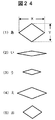
図24に母音に対応した口唇形状の例を示す。ここでは、日本語の「あ」「い」「う」「え」「お」の母音に対する口唇形状を示している。例えば、図25のテーブルに示すように口唇の縦の幅Xと横の幅Yの大きさを3段階で表し、各母音と対応させる。これにより、入力映像の口唇形状の縦の幅Xと横の幅Yを求め、図25のテーブルに従って対応する母音を決定することができる。
以上の母音並びによる認識方法は口唇動き認識操作決定処理S405に限らず、口唇動き認識カテゴリ決定処理S1104、口唇動き認識操作対象決定処理S1109に適用してもよい。
図26は音声及び口唇部分を含む映像を取り込む処理の他の実施例を示すフローチャートである。
図26において、図5の音声・映像取り込み処理と異なるのは選択肢表示処理S510を付加した点である。図27に音声及び口唇部分を含む映像を取り込む処理における表示の例を示す。図27(a)は操作決定処理においてホームの状態での操作選択肢の表示であり、図27(b)は操作対象決定処理において音楽再生時におけるカテゴリ選択肢の表示である。選択のための母音が異なる文字或いは文字列を付加して表示し、付加した文字或いは文字列部分について音声認識或いは口唇動き認識により操作選択処理を行なう。これにより、母音が異なる短い文字或いは文字列で認識できるため、認識を容易に確実に行うことが可能となる。
以上のように、選択肢を表示部118に表示することで操作選択肢或いはカテゴリ選択肢をいちいち覚えておく必要がなく、確実に選択することができる。ただし、操作者が携帯端末の操作に慣れた場合などには選択肢を表示しないように、選択肢を表示するかどうかを設定できるようにしてもよい。
図28は携帯端末装置100の第2の実施例の構成例を示すブロック図であり、図1の構成例と同一機能部分には同じ記号を付し、説明を省略する。
本実施例では図1の構成例に対して操作者認識部122及びメモリ104の所定の領域104dに操作者認識データを設けるようにしており、携帯端末装置100を使用する操作者が複数いる場合に対応するものである。
図29は実施例2に係る操作決定処理S201の一例を示すフローチャートであり、図4のフローチャートと同一処理には同一の記号を付している。
図29において、まずマイク112から音声処理部113を介して音声を、撮像部120から画像処理部119を介して操作者の少なくとも口唇部分を含む映像を取り込む(S401)。次に、操作者認識部122で音声・映像取り込み処理S401で取り込んだ音声及び/或いは映像とメモリ領域104dに記憶されている操作者認識データに基づいて操作している操作者Nを認識する(S420)。操作者認識データとしては、例えば携帯端末装置100にログインするために予め登録した音声認証用データ或いは顔認証用データを用いることができる。操作者認識後、音声認識部102で音声認識操作決定処理S402を行い、口唇動き認識部103で口唇動き認識操作決定処理S403を行う。分岐処理S404では音声認識操作決定処理S402で音声認識に成功したかどうかを音声認識フラグにより判断する。音声認識に成功した場合(Yes)には音声認識操作決定処理S402で認識した結果に基づいてどのような操作を行うかを決定する(S405)。次に分岐処理406で口唇部分が撮影範囲から外れることなく映像の取り込みが行われ、口唇動きデータの取得に成功したかを口唇検出フラグにより判断する。口唇動きデータの取得に成功した場合(Yes)には音声認識結果に対応してメモリ領域104bの操作者Nに対応した口唇動き認識データを更新し(S421)、マナーモードを解除(S408)して処理を終了する。マナーモード解除以降の操作においては、スピーカ114から(或いはイヤフォン200が接続されている場合には外部音声出力部115を介して、イヤフォンから)の音声による操作ガイド、音による着信案内等を行う。一方、分岐処理S406で口唇検出フラグにより口唇動きデータの取得に失敗したと判断した場合(No)にはメモリ領域104bの口唇動き認識データを更新せず、マナーモードを解除(S408)して処理を終了する。
分岐処理S404で音声認識フラグにより音声認識に失敗したと判断した場合(No)には分岐処理409で口唇動き認識フラグにより口唇動き認識操作決定処理S403で認識に成功したかどうかを判断する。口唇動き認識に成功した場合(Yes)には口唇動き認識操作決定処理S403で認識した結果に基づいてどのような操作を行うかを決定(S410)し、マナーモードを設定(S411)して処理を終了する。マナーモードにおいてはスピーカ114からの出力をオフとし、音声無しの画面表示での操作ガイド或いは着信案内等を行う。一方、分岐処理S409で口唇動き認識フラグにより口唇動き認識が失敗したと判断した場合(No)には再度音声および映像を取り込む処理(S401)に戻る。
以上の処理により、操作者毎に操作者に対応した口唇動き認識データが更新され、口唇の動きの個人差に対応した口唇動き認識データを得ることができる。したがって、口唇動き認識操作決定処理S403では操作者に対応して更新された口唇動き認識データを用いて口唇動き認識を行うことで、携帯端末装置を複数の人が使用する場合にも口唇動き認識の精度を向上することができる。
また、操作決定処理S201に限らず、操作対象決定処理S203についても同様に操作者に対応した口唇動き認識データ更新処理を適用してもよい。
また、操作決定処理S201に限らず、操作対象決定処理S203についても同様に操作者に対応した口唇動き認識データ更新処理を適用してもよい。
図30は携帯端末装置100の第3の実施例の構成例を示すブロック図であり、図28の構成例と同一機能部分には同じ記号を付し、説明を省略する。また、図31は本実施例の携帯端末装置100と音声・口唇動き認識サーバー700からなる音声・口唇動き認識情報処理システムの概略構成を示すブロック図である。
本実施例の携帯端末装置100では図28の構成例に対して音声認識部102、口唇動き認識部103、メモリ104の音声認識データ領域及び口唇動き認識データ領域を設けておらず、これらに対応する部位を音声・口唇動き認識サーバー700に設けている。
図31において音声・口唇動き認識サーバー700は、制御部701、音声認識部702、口唇動き認識部703、メモリ704、ストレージ705、通信部706を備え、それぞれはバス710に相互に接続されている。
通信部706は外部ネットワーク600と接続するためのインターフェースであり、基地局400或いは無線ルータ500を介して携帯端末装置100と接続される。
制御部701はCPU等で構成されは、メモリ704に記憶したプログラムを実行することによって、各構成部を制御し、各種の処理を行っている。
音声認識部702は通信部706を介して得られた携帯端末装置100の操作者の音声データを認識し、音声データに対応した文字列に変換するものである。また、口唇動き認識部703は通信手段706を介して得られた携帯端末装置100の操作者の映像データから口唇の動きを認識し、映像データに対応した文字列に変換するものである。制御部701は操作者の音声から認識した結果或いは操作者の口唇の動きから認識した結果を通信部706を介して携帯端末装置100に送信する。
メモリ704は、フラッシュメモリなどであり、プログラム、データなどを記憶している。ストレージ705はSSD(Solid State Device)或いはハードディスクであり、上記した音声認識部702や口唇動き認識部703で認識のために使用するデータはストレージ705の所定の領域705a,705bに保存されている。
図32は図31の携帯端末装置100と音声・口唇動き認識サーバー700からなる情報処理システムにおける制御部101及び制御部701の処理の一例を示すフローチャートである。
図32において、まず携帯端末装置100においてマイク112から音声処理部113を介して音声を、撮像部120から画像処理部119を介して操作者の少なくとも口唇部分を含む映像を取り込む(S3201)。操作者認識部122で音声・映像取り込み処理S3201で取り込んだ音声及び/或いは映像とメモリ領域104dに記憶されている操作者認識データに基づいて操作している操作者Nを認識する(S3202)。
次に、取り込んだ音声及び映像のデータを基地局通信部110或いは無線通信部111を介して音声・口唇動き認識サーバー700に送信する(S3203)。音声・口唇動き認識サーバー700では受信した音声及び映像のデータに基づいて音声及び口唇動き認識処理S3204を行い、認識結果を通信部706を介して携帯端末装置100に送信する(S3205)。S3206では音声・口唇動き認識サーバー700から送られた認識結果の音声認識フラグ及び口唇動き認識フラグに基づいて分岐処理を行い、音声認識及び口唇動き認識に失敗した場合(No)には音声・映像取り込み処理S3201に戻る。音声認識或いは口唇動き認識に成功した場合(Yes)には操作決定処理S3207を行い、メモリ104cに記憶された図3に示すような操作に関する選択肢データと認識結果との尤度に基づいてどのような操作を行うのかを決定し、認識結果に対応した操作選択肢が存在する場合には決定成否フラグをOKとする。分岐処理3408では決定成否フラグにより分岐処理を行い、認識結果に対応した操作選択肢が存在しない場合(No)には音声・映像取り込み処理S3201に戻る。認識結果に対応した操作選択肢が存在する場合(Yes)には分岐処理S3209で音声認識フラグに基づいて分岐処理を行う。音声認識に成功した場合(Yes)にはマナーモードを解除(S3210)し、失敗した場合(No)にはマナーモードを設定(S3211)する。
次に、操作を行う対象を選択する必要の有無により分岐処理を行う(S3212)。例えば、操作として「音楽再生」を行う場合、どの曲を再生するのかというように操作(音楽再生など)を行う対象(曲など)の選択が必要となる。また、音楽再生中の操作として「停止」を行う場合、操作(停止など)を行う対象の選択は必要ない。操作対象の選択がない場合(No)には決定した操作を実行する(S3228)。分岐処理S3212において操作選択肢ありと判断した場合(Yes)には音声・映像取り込み処理S3213を行い、取り込んだ音声及び映像のデータを音声・口唇動き認識サーバー700に送信する(S3214)。音声・口唇動き認識サーバー700では受信した音声及び映像のデータに基づいて音声及び口唇動き認識処理S3215を行い、認識結果を携帯端末装置100に送信する(S3216)。S3217では音声・口唇動き認識サーバー700から送られた認識結果の音声認識フラグ及び口唇動き認識フラグに基づいて分岐処理を行い、音声認識及び口唇動き認識に失敗した場合(No)には音声・映像取り込み処理S3213に戻る。音声認識或いは口唇動き認識に成功した場合(Yes)には操作カテゴリ決定処理S3218を行い、メモリ104cに記憶された図13に示すような操作に対応したカテゴリ選択肢データと認識結果との尤度に基づいて操作対象のカテゴリを決定し、認識結果に対応したカテゴリ選択肢が存在する場合には決定成否フラグをOKとする。分岐処理3418では決定成否フラグにより分岐処理を行い、認識結果に対応したカテゴリ選択肢が存在しない場合(No)には音声・映像取り込み処理S3213に戻る。認識結果に対応したカテゴリ選択肢が存在する場合(Yes)には音声・映像取り込み処理S3220を行い、取り込んだ音声及び映像のデータを音声・口唇動き認識サーバー700に送信する(S3221)。音声・口唇動き認識サーバー700では受信した音声及び映像のデータに基づいて音声及び口唇動き認識処理S3222を行い、認識結果を携帯端末装置100に送信する(S3223)。S3224では音声・口唇動き認識サーバー700から送られた認識結果の音声認識フラグ及び口唇動き認識フラグに基づいて分岐処理を行い、音声認識及び口唇動き認識に失敗した場合(No)には音声・映像取り込み処理S3220に戻る。認識に成功した場合(Yes)には操作対象決定処理S3225を行う。携帯端末100のメモリ104eには操作者毎の履歴データが記憶されており、音声認識によりインターネット検索したときの検索対象の語句等の履歴が保存されている。また、携帯端末装置100のストレージ105に記憶されている音楽、写真等のデータにはタイトル、アーティスト、撮影日等の属性に関するメタデータ付与されている。メモリ104eに記憶された履歴データ及び操作カテゴリ決定処理S3218で決定したカテゴリの属性部分の記述(例えばカテゴリとして曲名を選択した場合には各音楽データのメタデータとして記録されている曲のタイトルに対応した記述)と認識結果との尤度に基づいて操作対象を決定し、認識結果に対応した操作対象が存在する場合には決定成否フラグをOKとする。分岐処理3426では決定成否フラグにより分岐処理を行い、認識結果に対応した操作対象が存在しない場合(No)には音声・映像取り込み処理S3220に戻る。認識結果に対応した操作対象が存在する場合(Yes)にはメモリ104eに記憶されている操作者Nに対応した履歴データに決定した操作対象を追加・更新(S3227)し、決定した操作対象に対して操作を実行する(S3228)。
音声・口唇動き認識処理S3204,S3215,S3222のフローチャートの一例を図33に示す。図33において、まず通信部706を介して取得した操作者の音声データ及び少なくとも口唇部分を含む映像データに基づいて音声認識部702で音声認識処理S3301を行い、口唇動き認識部703で口唇動き認識定処理S3302を行う。分岐処理S3303では音声認識処理S3301で音声認識に成功したかどうかを音声認識フラグにより判断する。音声認識に失敗した場合(No)には処理を終了する。音声認識に成功した場合(Yes)には分岐処理S3304で口唇部分が撮影範囲から外れることなく映像の取り込みが行われ、口唇動きデータの取得に成功したかを口唇検出フラグにより判断する。口唇動きデータの取得に成功した場合(Yes)には音声認識で得られた文字列に対応した口唇認識データの有無により分岐処理を行う。音声認識で得られた文字列に対応した口唇認識データがある場合(Yes)には文字列に対応したストレージ領域705bの口唇認識データを更新し(S3306)、口唇認識データがない場合(No)には音声認識で得られた文字列に対応した口唇認識データをストレージ領域705bに追加し(S3307)、処理を終了する。一方、分岐処理S3304で口唇動きデータの取得に失敗したと判断した場合(No)には口唇動き認識データを更新せず、処理を終了する。
以上の処理により、音声認識に成功し、口唇動きデータの取得に成功した場合には音声認識結果に対応した口唇動き認識データの更新及び追加が行われる。
音声認識処理S3301のフローチャートの一例を図34に示す。図34において、まず音声分析を行い、入力音声の特徴パラメータの時系列パターンを抽出する(S3401)。次にHMMによる音響モデルとしてストレージの所定の領域705aに記憶された音声認識データとの尤度を計算する(S3402)。分岐処理S3403では、尤度計算の結果の最大確率 (最大尤度)が所定の値(ここでは一例として0.6とした)以上の場合(Yes)には音声認識フラグをOKとし(S3404)、最大確率を与える音声認識データを認識結果として処理を終了する。一方、分岐処理S3403でNoと判断した場合には、騒音等により音声認識が失敗したと判断し、音声認識フラグをNGとして(S3405)、処理を終了する。
次に、口唇動き認識処理S3302について、図35の例を用いて説明する。
図35のフローチャートにおいて、まず入力された映像から口唇の動きを検出し、口唇動きデータを取得する(S3501)。口唇部分が撮影範囲から外れていて入力された映像から口唇部分の検出ができず、口唇動きデータ取得処理S3501において口唇動きデータの取得に失敗した場合には、分岐処理3702においてNoと判断し、口唇検出フラグ及び口唇動き認識フラグをNGに設定(S3503、S3508)し、処理を終了する。一方、入力された映像から口唇動きデータの取得に成功した場合には、分岐処理S3502においてYesと判断し、口唇検出フラグをOKに設定(S3504)する。次に、この取得した口唇動きデータとストレージの所定の領域705bに記憶されている口唇動き認識データとの尤度を計算する(S3505)。分岐処理S3506では尤度計算の結果の最大確率 (最大尤度)が所定の値(ここでは一例として0.6とした)以上の場合(Yes)には、口唇動き認識フラグをOKとし(S3507)、最大確率を与える口唇動き認識データを認識結果として処理を終了する。一方、分岐処理S3506でNoと判断した場合には口唇動き認識フラグをNGとし(S3508)、処理を終了する。
上記の実施例では携帯端末装置100において取り込んだ音声及び映像データを音声・口唇動き認識サーバー700に送信するようにしているが、携帯端末装置100において入力音声の特徴パラメータの時系列パターンを抽出する音声分析を行い、入力された映像から口唇の動きを検出して口唇動きデータ取得した結果を音声・口唇動き認識サーバー700に送信するようにしてもよい。これにより、携帯端末装置100から音声・口唇動き認識サーバー700に送るデータ量を低減し、処理時間を低減することが可能となる。
以上の実施例では音声・口唇動き認識サーバー700で音声認識及び口唇認識を行うことにより、多数の操作者の音声及び口唇動きのデータに基づいて口唇動き認識データが更新されるため、口唇動き認識の精度をより高めることが可能となる。また、操作者毎の履歴データを設け、音声認識で新たに使用された語句等を履歴データとして追加し、履歴データを口唇動き認識において利用することで、携帯端末装置の操作者毎に使用頻度の高い語句を口唇動き認識させることが可能となる。
尚、上記した実施例は本発明を分かりやすく説明するために詳細に説明したものであり、必ずしも説明した全ての構成を備えるものに限定されるものではない。例えば、第1及び第2の実施例では音声認識データ、口唇動き認識データ、選択肢データ、をメモリ104に記憶するようにしたが、ストレージ105に記憶するようにしてもよい。また、ある実施例の構成の一部を他の実施例の構成に置き換えることが可能であり、また、ある実施例の構成に他の実施例の構成を加えることも可能である。また、各実施例の構成の一部について、他の構成の追加・削除・置換をすることが可能である。
また、上記の各構成、機能、処理部、処理手段等は、それらの一部又は全部を、例えば集積回路で設計する等によりハードウェアで実現しても良い。また、上記の各構成、機能等は、プロセッサがそれぞれの機能を実現するプログラムを解釈し、実行することによりソフトウェアで実現しても良い。各機能を実現するプログラム、テーブル、ファイル等の情報は、メモリ104やストレージ105に置くことができる。
また、制御線や情報線は説明上必要と考えられるものを示しており、製品上必ずしも全ての制御線や情報線を示しているとは限らない。実際には殆ど全ての構成が相互に接続されていると考えても良い。
100:携帯端末装置、101:制御部、102:音声認識部、103:口唇動き認識部、104:メモリ、105:ストレージ、110:基地局通信部、111:無線通信部、112:マイク、113:音声処理部、114:スピーカ、115:外部音声出力部、116:タッチパネル、117:操作入力部、118:表示部、119:画像処理部、120:撮像部、122:操作者認識部、400:基地局、500:無線ルータ、600:外部ネットワーク、700:音声・口唇動き認識サーバー、701:制御部、702:音声認識部、703:口唇動き認識部、705:ストレージ、706:通信部
Claims (11)
- 口唇動き認識データを記憶する記憶部と、
操作者の少なくとも口唇部分を含む映像を撮影する撮像部と、
前記撮像部から得られた操作者の口唇部分の動きデータと前記口唇動き認識データを比較することにより実行する操作を認識する口唇動き認識部と、
前記口唇動き認識部に従って実行可能な操作を行う制御部とを備える
ことを特徴とする携帯端末装置。 - 操作者の音声を取り込むマイクと、
前記マイクから取り込んだ音声により実行する操作を認識する音声認識部を備え、
前記制御部は前記音声認識部及び口唇動き認識部の認識結果に基づいて実行可能な操作を行う
ことを特徴とする請求項1に記載の携帯端末装置。 - 前記制御部は、
前記音声認識部から実行する操作を決定する結果が得られた場合には音声認識部の結果に基づいて実行可能な操作を行い、前記口唇の動き認識部から実行する操作を認識する結果が得られ、かつ音声認識部から実行する操作を認識する結果が得られない場合には前記口唇動き認識部の結果に基づいて実行可能な操作を行う
ことを特徴とする請求項2に記載の携帯端末装置。 - 前記選択部は、
前記音声認識部から実行する操作を決定する結果が得られた場合にはマナーモードを解除し、前記口唇の動き認識部から実行する操作を認識する結果が得られ、かつ音声認識部から実行する操作を認識する結果が得られない場合にはマナーモードを設定する
ことを特徴とする請求項2に記載の携帯端末装置。 - 実行可能な操作に対応した文字列の選択肢を表示する表示部を備える
ことを特徴とする請求項1に記載の携帯端末装置。 - 前記選択肢は、少なくとも口唇部分の形状が異なる音節の文字、或いは口唇部分の形状が異なる音節の並びが異なる文字列を含む
ことを特徴とする請求項1に記載の携帯端末装置。 - 前記選択肢は少なくとも母音が異なる文字、或いは母音の並びが異なる文字列を含む
ことを特徴とする請求項1に記載の携帯端末装置。 - 口唇部分の形状を記憶する記憶部を設け、
前記口唇動き認識部は前記記憶部に記憶された口唇部分の形状に基づいて操作者の口唇部分の映像から文字列の音節の並びを識別する
ことを特徴とする請求項1に記載の携帯端末装置。 - 前記音声認識部において実行する操作を決定する結果が得られ、かつ前記口唇動き認識部において操作者の口唇部分の動きデータが得られた場合には前記口唇部分の動きデータに基づいて前記口唇動き認識データを更新する
ことを特徴とする請求項2に記載の携帯端末装置。 - 前記マイクから取り込んだ音声及び/或いは前記撮像部で撮影した映像により操作者を識別する操作者識別部を設け、
前記音声認識部において実行する操作を決定する結果が得られ、かつ前記口唇動き認識部において操作者の口唇部分の動きデータが得られた場合には前記口唇部分の動きデータに基づいて前記操作者認識部で認識した操作者に対応した前記口唇動き認識データを更新する
ことを特徴とする請求項2に記載の携帯端末装置。 - 携帯端末装置と音声認識及び口唇動き認識を行うサーバーを備える情報処理システムであって、
前記携帯端末装置は、
操作者の少なくとも口唇部分を含む映像を撮影する撮像部と、
操作者の音声を取り込むマイクと、
前記撮像部で取り込んだ映像データと前記マイクで取り込んだ音声データを前記サーバーに送信し、認識結果を受信する通信部とを備え、
前記サーバーは、
前記携帯端末装置からの音声データと映像データを受信し、認識結果を送信する通信部と、
口唇動き認識データを記憶する記憶部と、
前記サーバーの通信部を介して受信した操作者の音声データにより認識を行う音声認識部と、
前記サーバーの通信部を介して受信した操作者の映像データと前記口唇動き認識データにより認識を行う口唇動き認識部とを備える
ことを特徴とする情報処理システム。
Priority Applications (6)
| Application Number | Priority Date | Filing Date | Title |
|---|---|---|---|
| US14/651,002 US10303433B2 (en) | 2013-01-07 | 2013-12-18 | Portable terminal device and information processing system |
| CN201380064683.0A CN104838339B (zh) | 2013-01-07 | 2013-12-18 | 便携终端装置以及信息处理系统 |
| US16/396,985 US11487502B2 (en) | 2013-01-07 | 2019-04-29 | Portable terminal device and information processing system |
| US17/969,868 US11861264B2 (en) | 2013-01-07 | 2022-10-20 | Portable terminal device and information processing system |
| US18/379,239 US12282708B2 (en) | 2013-01-07 | 2023-10-12 | Portable terminal device and information processing system |
| US19/075,888 US20250208829A1 (en) | 2013-01-07 | 2025-03-11 | Portable terminal device and information processing system |
Applications Claiming Priority (2)
| Application Number | Priority Date | Filing Date | Title |
|---|---|---|---|
| JP2013000297A JP5902632B2 (ja) | 2013-01-07 | 2013-01-07 | 携帯端末装置及び情報処理システム |
| JP2013-000297 | 2013-01-07 |
Related Child Applications (2)
| Application Number | Title | Priority Date | Filing Date |
|---|---|---|---|
| US14/651,002 A-371-Of-International US10303433B2 (en) | 2013-01-07 | 2013-12-18 | Portable terminal device and information processing system |
| US16/396,985 Continuation US11487502B2 (en) | 2013-01-07 | 2019-04-29 | Portable terminal device and information processing system |
Publications (1)
| Publication Number | Publication Date |
|---|---|
| WO2014106927A1 true WO2014106927A1 (ja) | 2014-07-10 |
Family
ID=51062249
Family Applications (1)
| Application Number | Title | Priority Date | Filing Date |
|---|---|---|---|
| PCT/JP2013/083815 Ceased WO2014106927A1 (ja) | 2013-01-07 | 2013-12-18 | 携帯端末装置及び情報処理システム |
Country Status (4)
| Country | Link |
|---|---|
| US (5) | US10303433B2 (ja) |
| JP (1) | JP5902632B2 (ja) |
| CN (1) | CN104838339B (ja) |
| WO (1) | WO2014106927A1 (ja) |
Families Citing this family (16)
| Publication number | Priority date | Publication date | Assignee | Title |
|---|---|---|---|---|
| JP6518134B2 (ja) * | 2015-05-27 | 2019-05-22 | 株式会社ソニー・インタラクティブエンタテインメント | 眼前装着型表示装置 |
| CN106919891B (zh) * | 2015-12-26 | 2019-08-23 | 腾讯科技(深圳)有限公司 | 一种图像处理方法及装置 |
| US10360441B2 (en) | 2015-11-25 | 2019-07-23 | Tencent Technology (Shenzhen) Company Limited | Image processing method and apparatus |
| CN105632497A (zh) * | 2016-01-06 | 2016-06-01 | 昆山龙腾光电有限公司 | 一种语音输出方法、语音输出系统 |
| JP6532085B2 (ja) * | 2016-03-07 | 2019-06-19 | セイコーソリューションズ株式会社 | 注文管理システム |
| JP2018091954A (ja) * | 2016-12-01 | 2018-06-14 | オリンパス株式会社 | 音声認識装置、及び音声認識方法 |
| CN107679449B (zh) * | 2017-08-17 | 2018-08-03 | 平安科技(深圳)有限公司 | 嘴唇动作捕捉方法、装置及存储介质 |
| EP3450372A1 (en) * | 2017-08-28 | 2019-03-06 | Otis Elevator Company | Spoken command interface |
| KR102417524B1 (ko) * | 2017-10-13 | 2022-07-07 | 현대자동차주식회사 | 음성 인식 기반의 자동차 제어 방법 |
| JP7010012B2 (ja) * | 2018-01-17 | 2022-01-26 | 株式会社Jvcケンウッド | 音声出力制御装置、電子機器、音声出力制御方法およびプログラム |
| JP7081164B2 (ja) * | 2018-01-17 | 2022-06-07 | 株式会社Jvcケンウッド | 表示制御装置、通信装置、表示制御方法および通信方法 |
| CN108521516A (zh) * | 2018-03-30 | 2018-09-11 | 百度在线网络技术(北京)有限公司 | 用于终端设备的控制方法和装置 |
| CN108538291A (zh) * | 2018-04-11 | 2018-09-14 | 百度在线网络技术(北京)有限公司 | 语音控制方法、终端设备、云端服务器及系统 |
| CN119105724A (zh) * | 2018-05-04 | 2024-12-10 | 谷歌有限责任公司 | 自动化助手功能的免热词调配 |
| WO2019219968A1 (en) * | 2018-05-18 | 2019-11-21 | Deepmind Technologies Limited | Visual speech recognition by phoneme prediction |
| CN111049664A (zh) * | 2018-10-11 | 2020-04-21 | 中兴通讯股份有限公司 | 一种网络告警处理方法、装置及存储介质 |
Citations (10)
| Publication number | Priority date | Publication date | Assignee | Title |
|---|---|---|---|---|
| JPH09325793A (ja) * | 1996-06-05 | 1997-12-16 | Oki Electric Ind Co Ltd | 音声認識方法及び装置 |
| JP2000068882A (ja) * | 1998-08-17 | 2000-03-03 | Matsushita Electric Ind Co Ltd | 無線通信装置 |
| JP2002118623A (ja) * | 2000-10-06 | 2002-04-19 | Matsushita Electric Ind Co Ltd | 移動体通信装置 |
| JP2002335304A (ja) * | 2001-05-07 | 2002-11-22 | Ricoh Co Ltd | 移動体無線端末 |
| JP2004246095A (ja) * | 2003-02-14 | 2004-09-02 | Nec Saitama Ltd | 携帯電話装置及び遠隔制御方法 |
| WO2006080161A1 (ja) * | 2005-01-28 | 2006-08-03 | Kyocera Corporation | 発声内容認識装置及び発声内容認識方法 |
| WO2007049569A1 (ja) * | 2005-10-24 | 2007-05-03 | Advanced Media, Inc. | 情報検索システム及びサーバ装置 |
| JP2007280179A (ja) * | 2006-04-10 | 2007-10-25 | Mitsubishi Electric Corp | 携帯端末 |
| WO2011037264A1 (ja) * | 2009-09-28 | 2011-03-31 | 京セラ株式会社 | 電子機器および制御方法 |
| JP2011186994A (ja) * | 2010-03-11 | 2011-09-22 | Fujitsu Ltd | 文字入力装置および文字入力方法 |
Family Cites Families (19)
| Publication number | Priority date | Publication date | Assignee | Title |
|---|---|---|---|---|
| US6014625A (en) * | 1996-12-30 | 2000-01-11 | Daewoo Electronics Co., Ltd | Method and apparatus for producing lip-movement parameters in a three-dimensional-lip-model |
| WO2001031788A1 (en) * | 1999-10-27 | 2001-05-03 | Firooz Ghassabian | Integrated keypad system |
| JP2001358828A (ja) | 2000-06-10 | 2001-12-26 | Masahiko Okuno | モバイル機器、モバイル機器の指紋認証方法及びモバイル機器の指紋認証プログラムを記録した記録媒体 |
| JP2002368870A (ja) | 2001-06-04 | 2002-12-20 | Nec Corp | 移動通信端末装置 |
| JP2005184485A (ja) | 2003-12-19 | 2005-07-07 | Casio Comput Co Ltd | 撮像装置、撮像装置の動作制御方法及びプログラム |
| JP2007041089A (ja) | 2005-08-01 | 2007-02-15 | Hitachi Ltd | 情報端末および音声認識プログラム |
| US20070048695A1 (en) * | 2005-08-31 | 2007-03-01 | Wen-Chen Huang | Interactive scoring system for learning language |
| KR101502003B1 (ko) * | 2008-07-08 | 2015-03-12 | 엘지전자 주식회사 | 이동 단말기 및 그 텍스트 입력 방법 |
| JP2010026731A (ja) | 2008-07-17 | 2010-02-04 | Nec Saitama Ltd | 文字入力装置、文字入力方法、文字入力システム、文字入力サーバー及び端末 |
| JP2010272077A (ja) * | 2009-05-25 | 2010-12-02 | Toshiba Corp | 情報再生方法及び情報再生装置 |
| JP5341678B2 (ja) | 2009-08-27 | 2013-11-13 | 京セラ株式会社 | 通信システム |
| KR101092820B1 (ko) * | 2009-09-22 | 2011-12-12 | 현대자동차주식회사 | 립리딩과 음성 인식 통합 멀티모달 인터페이스 시스템 |
| CN102104651A (zh) * | 2009-12-22 | 2011-06-22 | 康佳集团股份有限公司 | 移动终端接收来电时播放预留语音的方法及其移动终端 |
| CN102117115B (zh) * | 2009-12-31 | 2016-11-23 | 上海量科电子科技有限公司 | 一种利用唇语进行文字输入选择的系统及实现方法 |
| US8635066B2 (en) * | 2010-04-14 | 2014-01-21 | T-Mobile Usa, Inc. | Camera-assisted noise cancellation and speech recognition |
| US8700392B1 (en) * | 2010-09-10 | 2014-04-15 | Amazon Technologies, Inc. | Speech-inclusive device interfaces |
| BR112014015844A8 (pt) * | 2011-12-26 | 2017-07-04 | Intel Corp | determinação das entradas de áudio e visuais de ocupantes baseada em veículo |
| KR101891259B1 (ko) * | 2012-04-04 | 2018-09-28 | 삼성전자주식회사 | 지능형 이벤트 정보 출력 지원 방법 및 단말기 |
| TW201342278A (zh) * | 2012-04-06 | 2013-10-16 | Wei-Yen Yeh | 資訊整合互動系統及其方法 |
-
2013
- 2013-01-07 JP JP2013000297A patent/JP5902632B2/ja active Active
- 2013-12-18 WO PCT/JP2013/083815 patent/WO2014106927A1/ja not_active Ceased
- 2013-12-18 CN CN201380064683.0A patent/CN104838339B/zh active Active
- 2013-12-18 US US14/651,002 patent/US10303433B2/en active Active
-
2019
- 2019-04-29 US US16/396,985 patent/US11487502B2/en active Active
-
2022
- 2022-10-20 US US17/969,868 patent/US11861264B2/en active Active
-
2023
- 2023-10-12 US US18/379,239 patent/US12282708B2/en active Active
-
2025
- 2025-03-11 US US19/075,888 patent/US20250208829A1/en active Pending
Patent Citations (10)
| Publication number | Priority date | Publication date | Assignee | Title |
|---|---|---|---|---|
| JPH09325793A (ja) * | 1996-06-05 | 1997-12-16 | Oki Electric Ind Co Ltd | 音声認識方法及び装置 |
| JP2000068882A (ja) * | 1998-08-17 | 2000-03-03 | Matsushita Electric Ind Co Ltd | 無線通信装置 |
| JP2002118623A (ja) * | 2000-10-06 | 2002-04-19 | Matsushita Electric Ind Co Ltd | 移動体通信装置 |
| JP2002335304A (ja) * | 2001-05-07 | 2002-11-22 | Ricoh Co Ltd | 移動体無線端末 |
| JP2004246095A (ja) * | 2003-02-14 | 2004-09-02 | Nec Saitama Ltd | 携帯電話装置及び遠隔制御方法 |
| WO2006080161A1 (ja) * | 2005-01-28 | 2006-08-03 | Kyocera Corporation | 発声内容認識装置及び発声内容認識方法 |
| WO2007049569A1 (ja) * | 2005-10-24 | 2007-05-03 | Advanced Media, Inc. | 情報検索システム及びサーバ装置 |
| JP2007280179A (ja) * | 2006-04-10 | 2007-10-25 | Mitsubishi Electric Corp | 携帯端末 |
| WO2011037264A1 (ja) * | 2009-09-28 | 2011-03-31 | 京セラ株式会社 | 電子機器および制御方法 |
| JP2011186994A (ja) * | 2010-03-11 | 2011-09-22 | Fujitsu Ltd | 文字入力装置および文字入力方法 |
Also Published As
| Publication number | Publication date |
|---|---|
| CN104838339B (zh) | 2018-03-13 |
| US11487502B2 (en) | 2022-11-01 |
| US10303433B2 (en) | 2019-05-28 |
| JP2014132396A (ja) | 2014-07-17 |
| US12282708B2 (en) | 2025-04-22 |
| US20190250884A1 (en) | 2019-08-15 |
| CN104838339A (zh) | 2015-08-12 |
| JP5902632B2 (ja) | 2016-04-13 |
| US20150324168A1 (en) | 2015-11-12 |
| US20240036815A1 (en) | 2024-02-01 |
| US11861264B2 (en) | 2024-01-02 |
| US20230039067A1 (en) | 2023-02-09 |
| US20250208829A1 (en) | 2025-06-26 |
Similar Documents
| Publication | Publication Date | Title |
|---|---|---|
| JP5902632B2 (ja) | 携帯端末装置及び情報処理システム | |
| CN107644646B (zh) | 语音处理方法、装置以及用于语音处理的装置 | |
| KR102081925B1 (ko) | 디스플레이 디바이스 및 스피치 검색 방법 | |
| JP2022532313A (ja) | 分散システムにおいてユーザの好みに最適化するためのカスタマイズされた出力 | |
| EP2323351A2 (en) | Mobile communication terminal that delivers vibration information, and method thereof | |
| KR101696555B1 (ko) | 영상 또는 지리 정보에서 음성 인식을 통한 텍스트 위치 탐색 시스템 및 그 방법 | |
| US20200403816A1 (en) | Utilizing volume-based speaker attribution to associate meeting attendees with digital meeting content | |
| EP4485948A1 (en) | Video processing method and apparatus, device and medium | |
| CN107479854A (zh) | 一种投影仪及投影方法 | |
| WO2019101099A1 (zh) | 视频节目识别方法、设备、终端、系统和存储介质 | |
| KR20170044386A (ko) | 전자기기 및 전자기기의 제어방법 | |
| CN105302335B (zh) | 词汇推荐方法和装置及计算机可读存储介质 | |
| CN114171019A (zh) | 一种控制方法及装置、存储介质 | |
| CN105765532A (zh) | 一种信息处理方法以及智能手环 | |
| JP6190909B2 (ja) | 携帯端末装置及び情報処理システム | |
| US9343065B2 (en) | System and method for processing a keyword identifier | |
| US20240004921A1 (en) | Information processing system, information processing method, and non-transitory recording medium | |
| CN111091807A (zh) | 语音合成方法、装置、计算机设备及存储介质 | |
| KR102527585B1 (ko) | 이동 단말기 및 그 제어방법 | |
| JP2023123080A (ja) | 機器管理システム、情報処理システム、機器管理方法、プログラム、機器 | |
| KR102315211B1 (ko) | 단말기 및 그것의 동작 방법 | |
| CN112214114A (zh) | 一种输入方法、装置和电子设备 | |
| CN112218149B (zh) | 一种多媒体数据采集方法、装置、设备及介质 | |
| JP2017152913A (ja) | 通信システム、通信端末、サーバ装置、および情報処理方法 | |
| CN107948696A (zh) | 一种机顶盒文本输入方法、系统及机顶盒 |
Legal Events
| Date | Code | Title | Description |
|---|---|---|---|
| 121 | Ep: the epo has been informed by wipo that ep was designated in this application |
Ref document number: 13869893 Country of ref document: EP Kind code of ref document: A1 |
|
| WWE | Wipo information: entry into national phase |
Ref document number: 14651002 Country of ref document: US |
|
| NENP | Non-entry into the national phase |
Ref country code: DE |
|
| 122 | Ep: pct application non-entry in european phase |
Ref document number: 13869893 Country of ref document: EP Kind code of ref document: A1 |