WO2014104496A1 - 모노머, 상기 모노머를 포함하는 하드마스크 조성물 및 상기 하드마스크 조성물을 사용하는 패턴형성방법 - Google Patents
모노머, 상기 모노머를 포함하는 하드마스크 조성물 및 상기 하드마스크 조성물을 사용하는 패턴형성방법 Download PDFInfo
- Publication number
- WO2014104496A1 WO2014104496A1 PCT/KR2013/004903 KR2013004903W WO2014104496A1 WO 2014104496 A1 WO2014104496 A1 WO 2014104496A1 KR 2013004903 W KR2013004903 W KR 2013004903W WO 2014104496 A1 WO2014104496 A1 WO 2014104496A1
- Authority
- WO
- WIPO (PCT)
- Prior art keywords
- group
- formula
- substituted
- unsubstituted
- hard mask
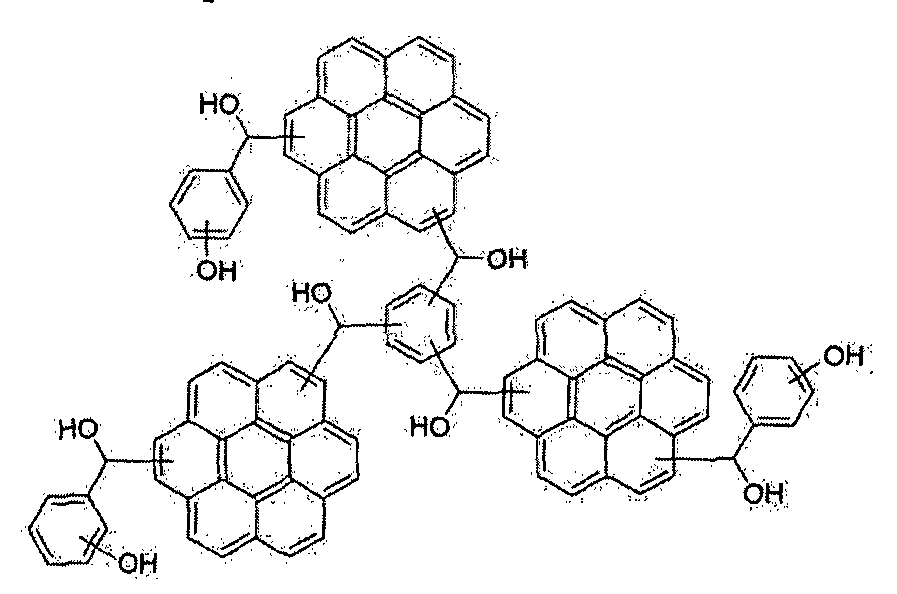
- Prior art date
- Legal status (The legal status is an assumption and is not a legal conclusion. Google has not performed a legal analysis and makes no representation as to the accuracy of the status listed.)
- Ceased
Links
- VPUGDVKSAQVFFS-UHFFFAOYSA-N c1c(cc2)c3c4c5c6c7c3c2ccc7ccc6ccc5ccc4c1 Chemical compound c1c(cc2)c3c4c5c6c7c3c2ccc7ccc6ccc5ccc4c1 VPUGDVKSAQVFFS-UHFFFAOYSA-N 0.000 description 1
Classifications
-
- C—CHEMISTRY; METALLURGY
- C07—ORGANIC CHEMISTRY
- C07C—ACYCLIC OR CARBOCYCLIC COMPOUNDS
- C07C39/00—Compounds having at least one hydroxy or O-metal group bound to a carbon atom of a six-membered aromatic ring
- C07C39/12—Compounds having at least one hydroxy or O-metal group bound to a carbon atom of a six-membered aromatic ring polycyclic with no unsaturation outside the aromatic rings
Definitions
- It relates to a monomer, a hard mask composition comprising the monomer, and a pattern formation method using the hard mask composition.
- a typical lithographic technique involves forming a material layer on a semiconductor substrate, coating a photoresist layer thereon, exposing and developing a photoresist pattern, and then etching the material layer using the photoresist pattern as a mask. do.
- a fine pattern may be formed by forming a layer called a hardmask layer between the material layer to be etched and the photoresist layer.
- the hard mask layer serves as an interlayer that transfers the fine pattern of the photoresist to the material layer through a selective etching process. Therefore, the hard mask layer requires properties such as heat resistance and etching resistance to withstand multiple etching processes.
- the hard mask layer is formed by a spin on coating method instead of the chemical vapor deposition method.
- the spin-on coating method is not only easy to process but can also improve gap-fill and planarization properties.
- the spin-on coating method may use a hard mask composition having solubility in a solvent.
- One embodiment provides a monomer for a hard mask composition that can secure solvent solubility, gap-fill characteristics, and planarization characteristics while also satisfying chemical resistance, heat resistance, and etching resistance.
- Another embodiment provides a hardmask composition comprising the monomer.
- Another embodiment provides a method of forming a pattern using the hard mask composition.
- a monomer for a hard mask composition represented by Chemical Formula 1 is provided.
- a 1 to A 3 are each independently an aliphatic ring group or an aromatic ring group
- X 1 to X 3 are each independently hydrogen, a hydroxy group, a substituted or unsubstituted amino group, a halogen atom, a halogen-containing group or a combination thereof,
- L 1 and L 2 are each independently a single bond or a substituted or unsubstituted C1 to C6 alkylene group
- n is an integer from 1 to 5
- n is an integer of 1-3.
- a 1 to A 3 may be each independently a substituted or unsubstituted ring group selected from Group 1 below.
- Z 1 and Z 2 are each independently a single bond, a substituted or unsubstituted C1 to C20 alkylene group, a substituted or unsubstituted C3 to C20 cycloalkylene group, a substituted or unsubstituted C6 to C20 arylene group, a substituted or unsubstituted C2 to C20 heteroarylene group, substituted or unsubstituted C2 to C20 alkenylene group, substituted or unsubstituted C2 to C20 alkynylene group, C ⁇ O, NR a , oxygen (O), sulfur (S) or these and a combination in which R a is hydrogen, substituted or unsubstituted C1 to C10 alkyl group, a halogen atom, or a combination thereof,
- At least one of A 1 to A 3 may be a polycyclic aromatic group.
- a 1 and A 3 may each independently be a benzene group, a naphthalene group, a biphenyl group or a pyrene group, and the A 2 may be a pyrene group, a perylene group, a benzoperylene group or a coronene group.
- the monomer for the hard mask composition may be represented by the following formula (2) or (3).
- a 1 to A 3 are each independently an aliphatic ring group or an aromatic ring group
- X 1 to X 3 are each independently hydrogen, a hydroxy group, a substituted or unsubstituted amino group, a halogen atom, a halogen-containing group or a combination thereof.
- the monomer for the hard mask composition may be represented by one selected from the group consisting of the following formula 4 to 14.
- the monomer may have a molecular weight of about 500 to 5,000.
- a hard mask composition including a monomer and a solvent represented by Formula 1 is provided.
- a 1 to A 3 are each independently an aliphatic ring group or an aromatic ring group
- X 1 to X 3 are each independently hydrogen, a hydroxy group, a substituted or unsubstituted amino group, a halogen atom, a halogen-containing group or a combination thereof,
- L 1 and L 2 are each independently a single bond or a substituted or unsubstituted C1 to C6 alkylene group
- n is an integer from 1 to 5
- n is an integer of 1-3.
- the monomer may be represented by Formula 2 or 3.
- the monomer may include at least one monomer represented by one selected from the group consisting of Chemical Formulas 4 to 14.
- the monomer may have a molecular weight of about 500 to 5,000.
- the monomer may be included in about 0.1 to 50% by weight based on the total content of the hard mask composition.
- a material layer on a substrate applying the hardmask composition on the material layer, heat treating the hardmask composition to form a hardmask layer, and silicon on the hardmask layer.
- Forming a containing thin film layer forming a photoresist layer on the silicon containing thin film layer, exposing and developing the photoresist layer to form a photoresist pattern, using the photoresist pattern and the silicon containing thin film layer and the Selectively removing the hardmask layer, exposing a portion of the material layer, and etching the exposed portion of the material layer.
- Applying the hard mask composition may be performed by a spin-on coating method.
- Solubility in solvents, gap-fill and planarization properties can be satisfied while also providing heat and etch resistance.
- 'substituted' means that a hydrogen atom in a compound is a halogen atom (F, Cl, Br, or I), a hydroxyl group, an alkoxy group, a nitro group, a cyano group, an amino group, an azido group, an amino group Dino groups, hydrazino groups, hydrazono groups, carbonyl groups, carbamyl groups, thiol groups, ester groups, carboxyl groups or salts thereof, sulfonic acid groups or salts thereof, phosphoric acid or salts thereof, C1 to C20 alkyl groups, C2 to C20 alkenyl groups, C2 to C20 alkynyl group, C6 to C30 aryl group, C7 to C30 arylalkyl group, C1 to C4 alkoxy group, C1 to C20 heteroalkyl group, C3 to C20 heteroarylalkyl group, C3 to C30 cycloalkyl group,
- hetero means containing 1 to 3 heteroatoms selected from N, O, S and P.
- Monomers for the hard mask composition according to one embodiment may be represented by the formula (1).
- a 1 to A 3 is a ring having one or more rings substituted or unsubstituted, each independently may be an aliphatic ring group or an aromatic ring group,
- X 1 to X 3 are each independently hydrogen, a hydroxy group, a substituted or unsubstituted amino group, a halogen atom, a halogen-containing group or a combination thereof,
- L 1 and L 2 are each independently a single bond or a substituted or unsubstituted C1 to C6 alkylene group
- n is an integer from 1 to 5
- n is an integer of 1-3.
- the monomer may have rigid properties by including an aliphatic ring group or an aromatic ring group each having one or two or more rings in the core and the substituent.
- the monomer may be effectively formed by a spin-on coating method by further improving solubility by a plurality of functional groups (X 1 to X 3 ) included in each substituent, as well as spin-on on a lower layer having a predetermined pattern.
- the gap-fill properties and planarization properties that can fill the gap between patterns when formed by the coating method are also excellent.
- X 1 and X 2 may be amplified cross-linking based on the condensation reaction with the functional group represented by X 3 can exhibit excellent crosslinking properties. Accordingly, the monomer may be crosslinked into a high molecular weight polymer in a short time even after heat treatment at a relatively low temperature, thereby exhibiting the properties required in a hard mask layer such as excellent mechanical properties, heat resistance, chemical resistance, and etching resistance.
- a 1 to A 3 may be each independently a substituted or unsubstituted ring group selected from Group 1 below.
- Z 1 and Z 2 are each independently a single bond, a substituted or unsubstituted C1 to C20 alkylene group, a substituted or unsubstituted C3 to C20 cycloalkylene group, a substituted or unsubstituted C6 to C20 arylene group, a substituted or unsubstituted C2 to C20 heteroarylene group, substituted or unsubstituted C2 to C20 alkenylene group, substituted or unsubstituted C2 to C20 alkynylene group, C ⁇ O, NR a , oxygen (O), sulfur (S) or these and a combination in which R a is hydrogen, substituted or unsubstituted C1 to C10 alkyl group, a halogen atom, or a combination thereof,
- each ring is not particularly limited, and each ring may be substituted or unsubstituted.
- the ring listed in Group 1 is a substituted ring, it may be substituted with, for example, a C1 to C20 alkyl group, a halogen atom, a hydroxy group or the like, but the substituent is not limited.
- a 1 to A 3 may be, for example, a substituted or unsubstituted aromatic group, and may be, for example, a benzene group, a naphthalene group, a biphenyl group, a pyrene group, a perylene group, a benzoperylene group, a coronene group, or a combination thereof.
- the A 1 to A 3 may be, for example, an aromatic group substituted with a hydroxy group.
- a 2 when A 2 is a pyrene group, it may be represented by the following Formula A.
- the number of functional groups is not particularly limited, and in Chemical Formula A, k may be an integer of 0 to 8.
- At least one of A 1 to A 3 may be a polycyclic aromatic group, for example, a pyrene group, a perylene group, a benzoperylene group, a coronene group, or a combination thereof.
- a 1 and A 3 may be each independently a benzene group, a naphthalene group, a biphenyl group or a pyrene group, and the A 2 may be a pyrene group, a perylene group, a benzoperylene group or a coronene group.
- the monomer may be represented by, for example, the following Chemical Formula 2 or 3.
- a 1 to A 3 are each independently an aliphatic ring group or an aromatic ring group
- X 1 to X 3 are each independently hydrogen, a hydroxy group, a substituted or unsubstituted amino group, a halogen atom, a halogen-containing group or a combination thereof.
- the monomer may control physical properties such as solubility by adjusting the number of substituents.
- the monomer may be, for example, a compound of a multipaired dendritic structure having three or more multiple substituents with an aliphatic ring group or an aromatic ring group having one or more rings as a core.
- the monomer may be represented by any one selected from, for example, the following Chemical Formulas 1-1 to 1-9.
- La, Lb, Lc, Ld, L'a, L'b, L'c and L'd are each independently a single bond or a substituted or unsubstituted C1 to C6 alkylene group,
- xa and xb are each independently an integer of 0 to 5
- xc and xd are each independently an integer of 0 to 8,
- ya and yb are each independently an integer of 0 to 8
- yc and yd are each independently an integer of 0-7.
- La, Lb, Lc, Ld, Le, Lf, Lg, Lh, L'a, L'b, L'c, L'd, L'e, L'f, L'g and L'h are each independent A single bond or a substituted or unsubstituted C1 to C6 alkylene group,
- xa, xb, yc, yd, ze and zf are each independently integers from 0 to 5,
- Tg and Th are each independently an integer of 0-9.
- La, Lb, Lc, Ld, Le, Lf, Lg, Lh, Li, L'a, L'b, L'c, L'd, L'e, L'f, L'g, L'h and L'i is each independently a single bond or a substituted or unsubstituted C1 to C6 alkylene group,
- xa, yb, zc, xd ye, zf, xg, yh and zi are each independently integers of 0 to 5.
- the monomer may be represented by one selected from the group consisting of the following Chemical Formulas 4 to 14, for example.
- the monomer may have a molecular weight of about 500 to 5,000. By having a molecular weight in the above range, the monomer having a high carbon content has excellent solubility in a solvent and a good thin film by spin-on coating can be obtained.
- the hardmask composition according to one embodiment includes the monomer and the solvent described above.
- the monomer is as described above, one monomer may be included alone or two or more monomers may be mixed and included.
- the solvent is not particularly limited as long as it has sufficient solubility or dispersibility in the monomer, and for example, propylene glycol, propylene glycol diacetate, methoxy propanediol, diethylene glycol, diethylene glycol butyl ether, tri (ethylene glycol) mono At least one selected from methyl ether, propylene glycol monomethyl ether, propylene glycol monomethyl ether acetate, cyclohexanone, ethyl lactate, gamma-butyrolactone, "methylpyrrolidone, acetylacetone" and ethyl 3-ethoxypropionate It may include one.
- the monomer may be included in about 0.1 to 50% by weight based on the total content of the hard mask composition. By including the monomer in the above range can be coated with a thin film of the desired thickness.
- the hardmask composition may further include a surfactant.
- the surfactant may be, for example, alkylbenzenesulfonic acid salt, alkylpyridinium salt, polyethylene glycol, quaternary ammonium salt and the like, but is not limited thereto.
- the surfactant may be included in an amount of about 0.001 to 3 parts by weight based on 100 parts by weight of the hard mask composition. By including in the above range, solubility can be ensured without changing the optical properties of the hard mask composition.
- a method of forming a pattern includes providing a material layer on a substrate, applying a hardmask composition including the monomer and the solvent to the material layer, and heat treating the hardmask composition to form a hardmask layer. Forming a photoresist layer on the hard mask layer; forming a photoresist layer on the silicon mask layer; exposing and developing the photoresist layer to form a photoresist pattern; Selectively removing the silicon-containing thin film layer and the hardmask layer, exposing a portion of the material layer, and etching the exposed portion of the material layer.
- the substrate may be, for example, a silicon wafer, a glass substrate or a polymer substrate.
- the material layer is a material to be finally patterned, and may be, for example, a metal layer such as aluminum or copper, a semiconductor layer such as silicon, or an insulating layer such as silicon oxide, silicon nitride, or the like.
- the material layer can be formed, for example, by chemical vapor deposition.
- the hard mask composition may be prepared in a solution form and applied by a spin-on coating method.
- the coating thickness of the hard mask composition is not particularly limited, but may be applied, for example, to a thickness of about 50 to 50,000 kPa.
- Heat treating the hard mask composition may be performed, for example, at about 100 to 500 ° C. for about 10 seconds to 10 minutes.
- the monomer may cause self-crosslinking and / or mutual crosslinking reaction.
- the silicon-containing thin film layer may be made of silicon nitride or silicon oxide, for example.
- a bottom anti-reflective coating may be further formed on the silicon-containing thin film layer.
- Exposing the photoresist layer may be performed using, for example, ArF, KrF or EUV.
- a heat treatment process may be performed at about 100 to 500 ° C. after exposure.
- Etching the exposed portion of the material layer may be performed by dry etching using an etching gas, which may use, for example, CHF 3 , CF 4 , Cl 2 , BCl 3 and mixtures thereof.
- an etching gas which may use, for example, CHF 3 , CF 4 , Cl 2 , BCl 3 and mixtures thereof.
- the etched material layer may be formed in a plurality of patterns, and the plurality of patterns may be a metal pattern, a semiconductor pattern, an insulation pattern, or the like, and may be applied in various patterns in a semiconductor integrated circuit device.
- Synthesis was carried out in the same manner as in Synthesis Example 1 except that 22.07 g of methoxy naphthoyl chloride was added to the reactor instead of methoxy benzoyl chloride to obtain a monomer represented by the following Chemical Formula 5a.
- a solution was prepared by adding 40.4 g (0.1345 mol) of coronene, 22.94 g (0.1345 mol) of 4-methoxybenzoyl chloride and 731 g of 1,2-dichloroethane to the flask. Subsequently, 17.9 g (0.1345 mol) of aluminum chloride was slowly added to the solution, followed by stirring at room temperature for 12 hours. Upon completion of the reaction, methanol was added and the precipitate formed was filtered and dried to obtain a compound.
- Second step remove the methyl group demethylation ) reaction
- a compound represented by the following Chemical Formula 8b was obtained in the same manner as in Synthesis Example 1 except for reacting with 2.34 g (0.01151 mol) of isophthaloyl chloride instead of terephthaloyl chloride in the first step of Synthesis Example 5.
- a solution was prepared by adding 20.0 g (0.07239 mol) of benzoperylene, 12.4 g (0.07239 mol) of 4-methoxybenzoyl chloride and 378 g of 1,2-dichloroethane to the flask. Subsequently, 9.65 g (0.07239 mol) of aluminum chloride was slowly added to the solution, followed by stirring at room temperature for 12 hours. Upon completion of the reaction, methanol was added and the precipitate formed was filtered and dried to obtain a compound.
- Second step remove the methyl group demethylation ) reaction
- the solution was prepared by adding 18.5 g (0.07330 mol) of perylene, 12.5 g (0.07330 mol) of 4-methoxybenzoyl chloride and 367 g of 1,2-dichloroethane to the flask. 9.77 g (0.07330 mol) of aluminum chloride was slowly added to the solution, followed by stirring at room temperature for 12 hours. Upon completion of the reaction, methanol was added and the precipitate formed was filtered and dried to obtain a compound.
- Second step remove the methyl group demethylation ) reaction
- a solution was prepared by adding 10.0 g (0.03329 mol) of coronene, 8.81 g (0.03329 mol) of 1-pyrenecarbonyl chloride and 209 g of 1,2-dichloroethane to the flask. Subsequently, 4.44 g (0.03329 mol) of aluminum chloride was slowly added to the solution, followed by stirring at room temperature for 12 hours. Upon completion of the reaction, methanol was added and the precipitate formed was filtered and dried to obtain a compound.
- a solution was prepared by adding 10 g (0.0494 mol) of pyrene, 8.43 g (0.0494 mol) of 4-methoxybenzoyl chloride and 100.11 g of 1,2-dichloroethane to the flask. Subsequently, 6.59 g (0.0494 mol) of aluminum chloride was slowly added to the solution, followed by stirring at room temperature for 2 hours. Upon completion of the reaction, methanol was added to the solution, and the precipitate formed was filtered and dried to obtain a compound.
- the solution was then prepared by adding 15.46 g (0.0460 mol) of the compound obtained above, 4.07 g (0.0153 mol) of 1,3,5-benzenetricarboxylic acid chloride and 102.62 g of 1,2-dichloroethane to the flask. Subsequently, 6.13 g (0.0460 mol) of aluminum chloride was slowly added to the solution, followed by stirring at room temperature for 6 hours. After the reaction was completed, methanol was added to the solution, and the precipitate formed was filtered and dried.
- Second step remove the methyl group demethylation ) reaction
- a solution was prepared by adding 11.84 g (0.0105 mol) of the compound obtained above and 40 g of tetrahydrofuran to the flask. Subsequently, an aqueous solution of 7.98 g (0.2108 mol) of sodium borohydride was slowly added to the solution, followed by stirring at room temperature for 24 hours. Upon completion of the reaction, the mixture was neutralized to pH 7 with 5% hydrogen chloride solution, extracted with ethyl acetate, and dried to obtain a compound represented by Chemical Formula 12a.
- a solution was prepared by adding 10 g (0.0333 mol) of coronene, 5.68 g (0.0333 mol) of 4-methoxybenzoyl chloride and 80.48 g of 1,2-dichloroethane to the flask. 4.44 g (0.0333 mol) of aluminum chloride was slowly added to the solution, followed by stirring at room temperature for 4 hours. After the reaction was completed, methanol was added and the precipitate formed was filtered and dried.
- a solution was prepared by adding 12.00 g (0.0276 mol) of the compound obtained above, 2.44 g (0.0092 mol) of 1,3,5-benzenetricarboxylic acid chloride and 72.51 g of 1,2-dichloroethane to the flask. 3.68 g (0.0276 mol) of aluminum chloride was slowly added to the solution, followed by stirring at room temperature for 12 hours. After the reaction was completed, methanol was added and the precipitate formed was filtered and dried.
- a solution was prepared by adding 9.84 g (0.0067 mol) of the compound obtained above and 30 g of tetrahydrofuran to the flask. An aqueous solution of 5.06 g (0.1337 mol) of sodium borohydride was slowly added to the solution, followed by stirring at room temperature for 24 hours. Upon completion of the reaction, the mixture was neutralized to pH 7 with 5% hydrogen chloride solution, extracted with ethyl acetate, and dried to obtain a compound represented by Chemical Formula 13a.
- the solution was prepared by adding 15 g (0.0595 mol) of perylene, 13.12 g (0.0595 mol) of 6-methoxynaphthalene-2-carbonylchloride and 144.18 g of 1,2-dichloroethane to the flask. Subsequently, 7.93 g (0.0595 mol) of aluminum chloride was slowly added to the solution, followed by stirring at room temperature for 5 hours. After the reaction was completed, methanol was added and the precipitate formed was filtered and dried.
- a solution was prepared by adding 22.80 g (0.0522 mol) of the compound obtained above, 4.62 g (0.0174 mol) of 1,3,5-benzenetricarboxylic acid chloride and 137.55 g of 1,2-dichloroethane to the flask. Subsequently, 6.96 g (0.0522 mol) of aluminum chloride was slowly added to the solution, followed by stirring at room temperature for 12 hours. After the reaction was completed, methanol was added and the precipitate formed was filtered and dried.
- a solution was prepared by adding 10.50 g (0.0074 mol) of the compound obtained above and 22 g of tetrahydrofuran to the flask. An aqueous solution of 8.37 g (0.2213 mol) of sodium borohydride was slowly added to the solution and stirred at 50 ° C. for 24 hours. Upon completion of the reaction, the mixture was neutralized to pH 7 with 5% hydrogen chloride solution, extracted with ethyl acetate, and dried to obtain a compound represented by Chemical Formula 14a.
- a 500 ml three-necked flask equipped with a thermometer, a condenser and a mechanical stirrer was prepared and immersed in an oil thermostat at 90 ° C to 100 ° C. It was stirred using a stirring magnet while maintaining a constant temperature. Subsequently, 28.83 g (0.2 mol) of 1-naphthol, 30.56 g (0.14 mol) of hydroxy pyrene and 12.0 g (0.34 mol) of paraformaldehyde were added to the three necked flask, and 0.38 g (2 mmol) of p-toluene sulfonic acid monohydrate. Was dissolved in 162 g of propylene glycol monomethyl ether acetate (PGMEA), and the solution was added to the three neck flask and stirred for 5 to 12 hours to carry out the reaction.
- PGMEA propylene glycol monomethyl ether acetate
- Samples were taken from the polymerization reactant at 1 hour intervals, and the weight average molecular weight of the sample was measured to complete the reaction when the weight average molecular weight was 1,800 to 2,000.
- the reaction was cooled to room temperature, and then the reaction was added to 40 g of distilled water and 400 g of methanol, followed by vigorous stirring. The supernatant was removed, and the precipitate was dissolved in 80 g of propylene glycol monomethyl ether acetate (PGMEA), followed by vigorous stirring using 320 g of methanol, followed by standing (primary). The supernatant obtained at this time was removed again and the precipitate was dissolved in 80 g of propylene glycol monomethyl ether acetate (PGMEA) (secondary).
- the first and second processes were referred to as one-time purification processes, and this purification process was carried out three times in total.
- the purified polymer was dissolved in 80 g of propylene glycol monomethyl ether acetate (PGMEA), and methanol and distilled water remaining in the solution were removed under reduced pressure to obtain a polymer represented by the following formula (16).
- the weight average molecular weight of the polymer was 1,870, and the degree of dispersion was 1.19.
- This solution was placed in a separatory funnel, and n-heptane was added to remove the monomer and the low molecular weight to obtain a polymer represented by the following formula (18).
- the weight average molecular weight of the polymer was 12,000, and the degree of dispersion was 2.04.
- a hardmask composition was prepared in the same manner as in Example 1, except that the monomers obtained in Synthesis Examples 2 to 12 were used instead of the monomers obtained in Synthesis Example 1, respectively.
- a hardmask composition was prepared in the same manner as in Example 1, except that the compounds obtained in Comparative Synthesis Examples 1 to 4 were used instead of the compounds obtained in Synthesis Example 1.
- the baking process was performed and then the V-SEM equipment was used. The gap-fill characteristics and planarization characteristics were observed.
- the gap-fill characteristics were determined by the presence of voids by observing the pattern cross section with an electron scanning microscope (SEM), and the planarization characteristics were quantified by Equation 1 below.
- the flattening characteristics are excellent as the difference between h1 and h2 is not large, so the smaller the number, the better the flattening characteristics.
- the gap-fill characteristics were determined by the presence of voids by observing a pattern cross section of 40 nm in width and 500 nm in depth, and the planarization characteristics were quantified by Equation 1 by observing a pattern cross section of 180 nm in width and 500 nm in depth. .
- Example 5 void no 6.5%
- Example 6 void no 5.8%
- Example 7 void no 7.8%
- Example 8 void no 6.8%
- Example 9 void no 7.5% Comparative
- Example 3 void occurs 17.4%
- the patterned silicon wafer was spin-on coated with a hard mask composition (compound content: 10.0 wt%) according to Examples 10 to 12 and heat-treated at 400 ° C. for 120 seconds, followed by a field emission electron scanning microscope (FE-SEM). The equipment was used to observe gap-fill characteristics and planarization characteristics.
- a hard mask composition compound content: 10.0 wt% according to Examples 10 to 12 and heat-treated at 400 ° C. for 120 seconds, followed by a field emission electron scanning microscope (FE-SEM). The equipment was used to observe gap-fill characteristics and planarization characteristics.
- the gap-fill characteristics were determined by the presence or absence of voids by observing the pattern cross section with FE-SEM, and the planarization property was calculated by Equation 1 by measuring the thickness of the hard mask layer from the image of the pattern cross section observed by FE-SEM. Digitized.
- the thin film formed from the hard mask composition according to Examples 10 to 12 has a good degree of planarization and no voids are observed to show excellent gap-fill characteristics.
- the film was prebaked at 180 ° C. for 60 seconds at a thickness of about 800 ⁇ s and then at 400 ° C. Out gas produced upon baking for 120 seconds was measured using QCM (Quartz Crystal Microbalace).
- the hard mask composition according to Examples 1 to 4 can be seen that outgas of less than 60ng while being baked at a high temperature (400 °C) can be stably performed a high temperature process. On the contrary, it can be seen that the hard mask compositions according to Comparative Examples 1 and 2 are not suitable for the high temperature process because the amount of outgas generated is relatively high.
- a thin film was formed by heat treatment at 240 ° C. for 1 minute on a hot plate.
- the thickness of the initial thin film was measured with a thin film thickness meter of K-MAC.
- the thin film was heat treated again at 400 ° C. for 2 minutes, and then the thickness of the thin film was measured. Then, the thin film thickness reduction rate was calculated according to the following Equation 2.
- Thin film thickness reduction rate (film thickness after baking at 240 °C-thin film thickness after baking at 400 °C) / thin film thickness after baking at 240 °C X 100 (%)
- Example 5 Thin film thickness reduction rate (%) Out gas volume (ng) Example 5 -5.75 24 Example 6 -5.87 20 Example 7 -8.82 25 Example 8 -9.98 37 Example 9 -10.32 52 Comparative Example 3 -34.08 180
- the hard mask composition according to Examples 5 to 9 has a smaller thickness reduction rate after heat treatment at 400 ° C. compared with the thin film formed from the hard mask composition according to Comparative Example 3.
- the hard mask composition according to Examples 5 to 9 can be stably performed at a high temperature because the amount of outgas generated during baking at a high temperature (400 ° C.) is small.
- the hard mask composition according to Comparative Example 3 has a relatively large amount of outgas generation and is not suitable for high temperature processes.
- the hard mask composition according to Examples 5 to 9 has a high crosslinking degree of the thin film as compared with the hard mask composition according to Comparative Example 3 and has high heat resistance even at a high temperature of 400 ° C.
- Example 10 -4.39 21
- Example 11 -3.96 32
- Example 12 -4.31 24
- the thin film formed from the hard mask composition according to Examples 10 to 12 has a low thickness reduction rate and a low outgassing at high temperature, and from this, it can be seen that the heat resistance is high.
- the hard mask composition (compound content: 13% by weight) according to Examples 5 to 12 and Comparative Example 4 on the silicon wafer was heat-treated at 400 °C for 2 minutes on a hot plate to form a thin film. Subsequently, the thickness of the thin film was measured. Subsequently, the thin film was dry-etched using N 2 / O 2 mixed gas and CF x gas for 60 seconds and 100 seconds, respectively, and the thickness of the thin film was measured again. The bulk etch rate (BER) was calculated by the following equation 3 from the thickness and etching time of the thin film before and after dry etching.
- BER bulk etch rate
- the thin film formed from the hard mask composition according to Examples 5 to 12 had a low etching rate because of sufficient etching resistance to the etching gas compared to the thin film formed from the hard mask composition according to Comparative Example 4. Can be.
- a 3000 (thick silicon oxide (SiO 2 ) layer was formed on the silicon wafer by chemical vapor deposition. Subsequently, after spin-on coating the hard mask composition (compound content: 15 wt%) according to Examples 5 to 12 and Comparative Examples 3 and 4 on the silicon oxide layer, the hard mask layer was heat-treated at 400 ° C. for 2 minutes on a hot plate. Formed. Subsequently, a silicon nitride (SiN) layer was formed on the hard mask layer by chemical vapor deposition. Then, a KrF photoresist was coated on the silicon nitride layer, heat treated at 110 ° C.
- SiN silicon nitride
- TMAH tetramethylammonium hydroxide
- the cross section of the pattern of the hard mask layer and the silicon oxide layer was observed using an electron scanning microscope (SEM).
- the hard mask layer formed from the hard mask composition according to Examples 5 to 12 and the silicon oxide layer thereunder are all patterned in a vertical shape, whereas the hard mask layer formed from the hard mask composition according to Comparative Examples 3 and 4 was used. It can be seen that the mask layer is patterned in a tapered shape. From this, when the hard mask composition according to Examples 5 to 12 was used, the material layer was formed in a good pattern due to better etching resistance than that of the hard mask compositions according to Comparative Examples 3 and 4, and is located below the hard mask layer. It can also be seen that it is formed in a good pattern.
- the refractive index (n) and extinction coefficient (k) of the hard mask layer were measured.
- the refractive index and the extinction coefficient were measured using an Ellipsometer (manufactured by J.A. Woollam) while irradiating light with a wavelength of 193 nm to 633 nm.
- the hard mask layer formed of the hard mask composition according to Examples 1 to 4 has a refractive index (n) and an absorption coefficient (k) suitable for use as a hard mask layer, such as 193 nm. It can be seen that it is also applicable to the hard mask layer even in the pattern process using a low light source.
- the extinction coefficient (k) at 633 nm has a low value of 0.1 or less, so it can be applied to a thick hard mask of about 10,000 ⁇ to 50,000 ⁇ . Can be.
- the extinction coefficient (k) at 633 nm has a high value of more than 0.1, so that the hard mask composition according to Comparative Examples 1 and 2 is applied to a process requiring a thick hard mask such as a metal pattern. It is difficult to see.
- the hard mask composition according to Examples 1 to 4 has a high solubility, thereby increasing the maximum solid content to form a thick film.
- the hard mask composition according to Comparative Example 1 has a low maximum solids content due to relatively low solubility, so that the thickness of the formed film is thin.
Landscapes
- Chemical & Material Sciences (AREA)
- Organic Chemistry (AREA)
- Materials For Photolithography (AREA)
Abstract
화학식 1로 표현되는 하드마스크 조성물용 모노머, 상기 모노머를 포함하는 하드마스크 조성물 및 상기 하드마스크 조성물을 사용한 패턴 형성 방법에 관한 것이다. 상기 화학식 1에서, A1 내지 A3, X1 내지 X3, L1, L2, n 및 m의 정의는 명세서에 기재된 바와 같다.
Description
모노머, 상기 모노머를 포함하는 하드마스크 조성물 및 상기 하드마스크 조성물을 사용하는 패턴형성방법에 관한 것이다.
최근 반도체 산업은 수백 나노미터 크기의 패턴에서 수 내지 수십 나노미터 크기의 패턴을 가지는 초미세 기술로 발전하고 있다. 이러한 초미세 기술을 실현하기 위해서는 효과적인 리쏘그래픽 기법이 필수적이다.
전형적인 리쏘그래픽 기법은 반도체 기판 위에 재료층을 형성하고 그 위에 포토레지스트 층을 코팅하고 노광 및 현상을 하여 포토레지스트 패턴을 형성한 후, 상기 포토레지스트 패턴을 마스크로 하여 재료층을 식각하는 과정을 포함한다.
근래, 형성하고자 하는 패턴의 크기가 감소함에 따라 상술한 전형적인 리쏘그래픽 기법만으로는 양호한 프로파일을 가진 미세 패턴을 형성하기 어렵다. 이에 따라 식각하고자 하는 재료층과 포토레지스트 층 사이에 일명 하드마스크 층(hardmask layer)이라고 불리는 층을 형성하여 미세 패턴을 형성할 수 있다.
하드마스크 층은 선택적 식각 과정을 통하여 포토레지스트의 미세 패턴을 재료 층으로 전사해주는 중간막으로서 역할을 한다. 따라서 하드마스크 층은 다중 식각 과정 동안 견딜 수 있도록 내열성 및 내식각성 등의 특성이 요구된다.
한편, 근래 하드마스크 층은 화학기상증착 방법 대신 스핀-온 코팅(spin on coating) 방법으로 형성하는 것이 제안되었다. 스핀-온 코팅 방법은 공정이 용이할 뿐만 아니라 갭-필(gap-fill) 특성 및 평탄화 특성을 개선할 수 있다. 스핀-온 코팅 방법은 용매에 대한 용해성을 가지는 하드마스크 조성물을 사용할 수 있다.
그러나 하드마스크 층에 요구되는 상술한 특성과 용해성은 서로 상충 관계에 있어서 이들을 모두 만족할 수 있는 하드마스크 조성물이 필요하다.
일 구현예는 용매에 대한 용해성, 갭-필 특성 및 평탄화 특성을 확보하면서도 내화학성, 내열성 및 식각 저항성 또한 만족할 수 있는 하드마스크 조성물용 모노머를 제공한다.
다른 구현예는 상기 모노머를 포함하는 하드마스크 조성물을 제공한다.
또 다른 구현예는 상기 하드마스크 조성물을 사용한 패턴 형성 방법을 제공한다.
일 구현예에 따르면, 하기 화학식 1로 표현되는 하드마스크 조성물용 모노머를 제공한다.
[화학식 1]

상기 화학식 1에서,
A1 내지 A3는 각각 독립적으로 지방족 고리기 또는 방향족 고리기이고,
X1 내지 X3는 각각 독립적으로 수소, 히드록시기, 치환 또는 비치환된 아미노기, 할로겐 원자, 할로겐 함유기 또는 이들의 조합이고,
L1 및 L2는 각각 독립적으로 단일 결합 또는 치환 또는 비치환된 C1 내지 C6 알킬렌기이고,
n은 1 내지 5의 정수이고,
m은 1 내지 3의 정수이다.
상기 A1 내지 A3는 각각 독립적으로 하기 그룹 1에서 선택된 치환 또는 비치환된 고리기일 수 있다.
[그룹 1]
[규칙 제91조에 의한 정정 12.07.2013]
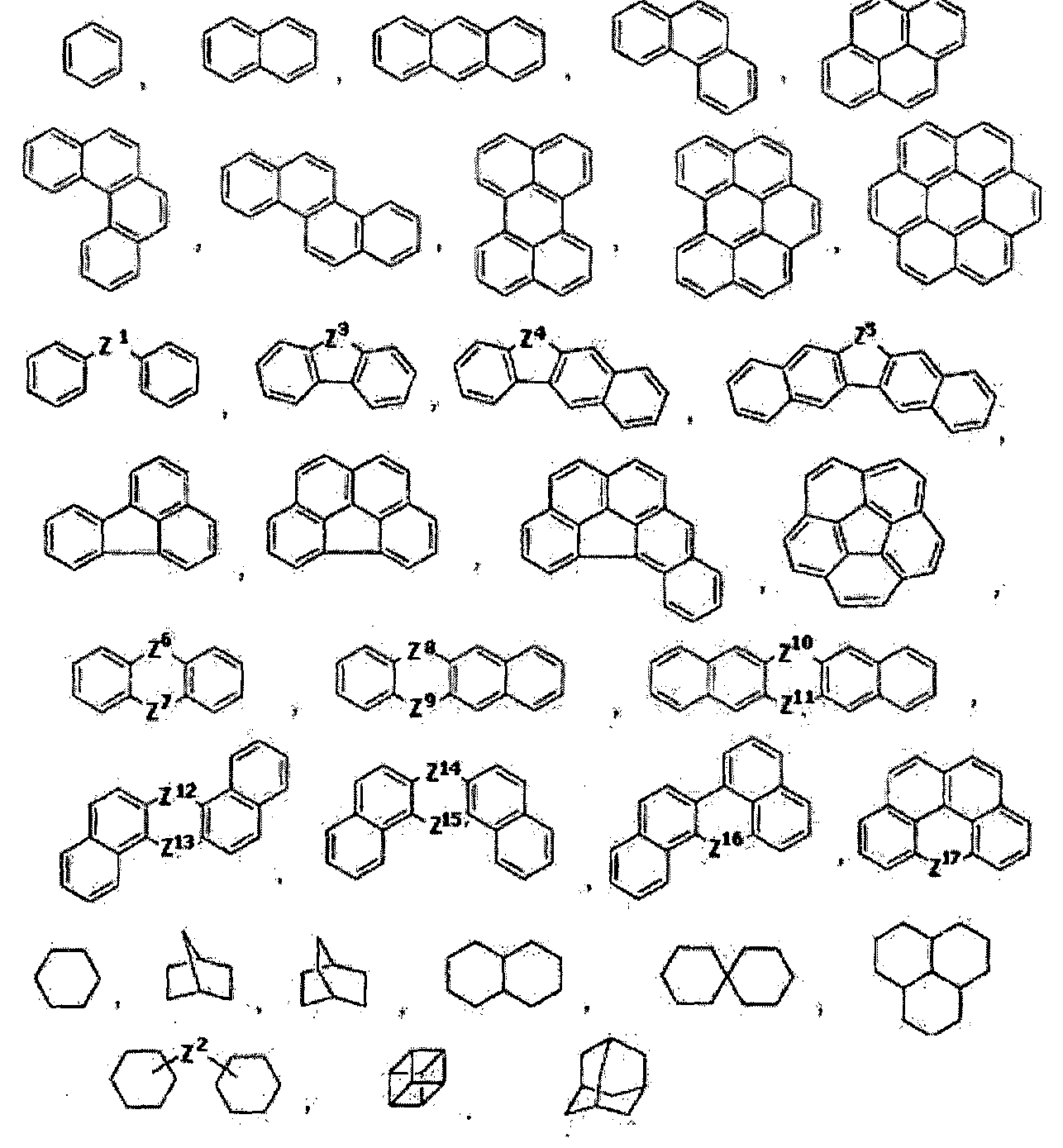
상기 그룹 1에서,
Z1 및 Z2는 각각 독립적으로 단일 결합, 치환 또는 비치환된 C1 내지 C20 알킬렌기, 치환 또는 비치환된 C3 내지 C20 사이클로알킬렌기, 치환 또는 비치환된 C6 내지 C20 아릴렌기, 치환 또는 비치환된 C2 내지 C20 헤테로아릴렌기, 치환 또는 비치환된 C2 내지 C20 알케닐렌기, 치환 또는 비치환된 C2 내지 C20 알키닐렌기, C=O, NRa, 산소(O), 황(S) 또는 이들의 조합이고, 여기서 Ra는 수소, 치환 또는 비치환된 C1 내지 C10 알킬기, 할로겐 원자 또는 이들의 조합이고,
Z3 내지 Z17은 각각 독립적으로 C=O, NRa, 산소(O), 황(S), CRbRc
또는 이들의 조합이고, 여기서 Ra 내지 Rc는 각각 독립적으로 수소, 치환 또는 비치환된 C1 내지 C10 알킬기, 할로겐 원자, 할로겐 함유기 또는 이들의 조합이다.
상기 A1 내지 A3 중 적어도 하나는 다환 방향족 기일 수 있다.
상기 A1 및 A3 는 각각 독립적으로 벤젠 기, 나프탈렌 기, 바이페닐기 또는 피렌 기일 수 있고, 상기 A2 는 피렌기, 퍼릴렌기, 벤조퍼릴렌기 또는 코로넨기일 수 있다.
상기 하드마스크 조성물용 모노머는 하기 화학식 2 또는 3으로 표현될 수 있다.
[화학식 2]

[화학식 3]

상기 화학식 2 또는 3에서,
A1 내지 A3는 각각 독립적으로 지방족 고리기 또는 방향족 고리기이고,
X1 내지 X3는 각각 독립적으로 수소, 히드록시기, 치환 또는 비치환된 아미노기, 할로겐 원자, 할로겐 함유기 또는 이들의 조합이다.
상기 하드마스크 조성물용 모노머는 하기 화학식 4 내지 14로 이루어진 군에서 선택되는 하나로 표현될 수 있다.
[화학식 4]

[화학식 5]

[화학식 6]

[화학식 7]

[화학식 8]

[화학식 9]

[화학식 10]

[화학식 11]

[화학식 12]
[규칙 제91조에 의한 정정 12.07.2013]
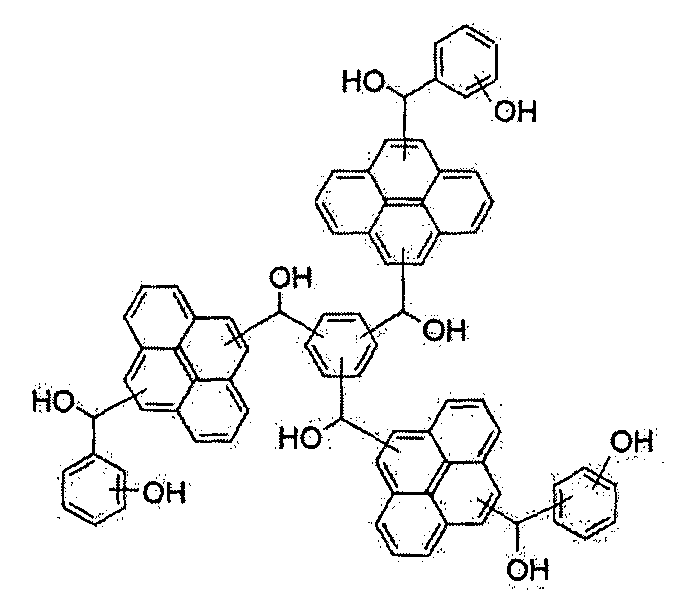
[화학식 13]
[규칙 제91조에 의한 정정 12.07.2013]
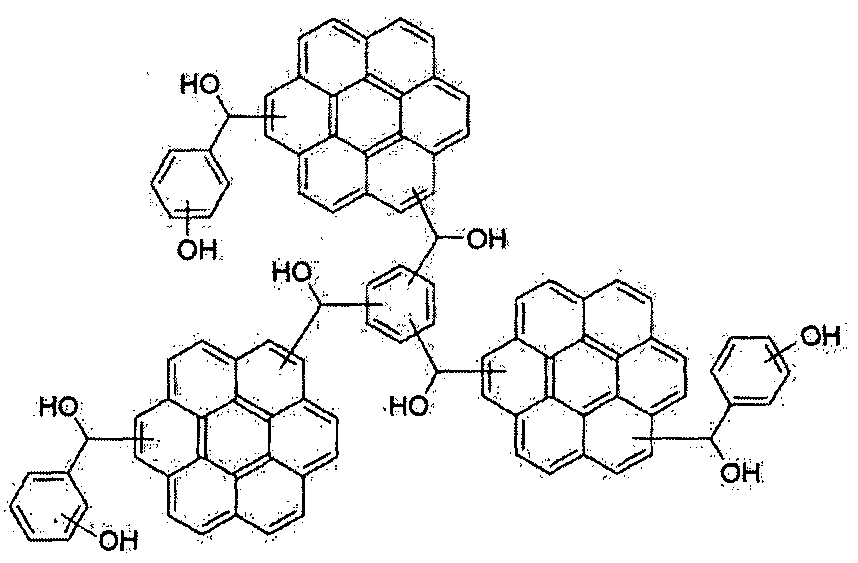
[화학식 14]
[규칙 제91조에 의한 정정 12.07.2013]
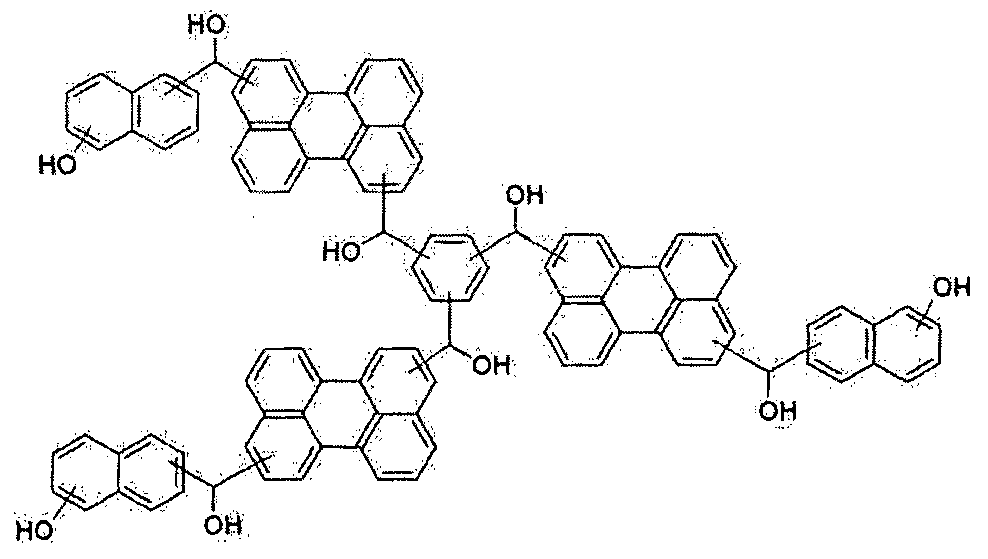
상기 모노머는 약 500 내지 5,000의 분자량을 가질 수 있다.
다른 구현예에 따르면, 하기 화학식 1로 표현되는 모노머 및 용매를 포함하는 하드마스크 조성물을 제공한다.
[화학식 1]
[규칙 제91조에 의한 정정 12.07.2013]
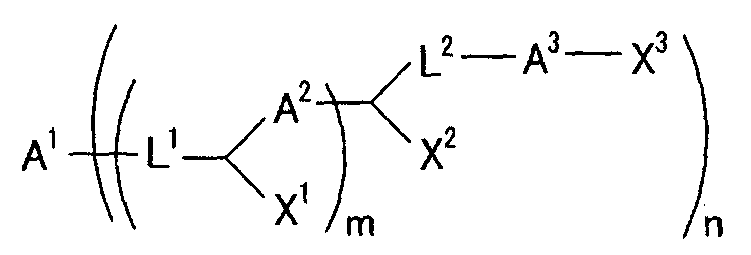
상기 화학식 1에서,
A1 내지 A3는 각각 독립적으로 지방족 고리기 또는 방향족 고리기이고,
X1 내지 X3는 각각 독립적으로 수소, 히드록시기, 치환 또는 비치환된 아미노기, 할로겐 원자, 할로겐 함유기 또는 이들의 조합이고,
L1 및 L2는 각각 독립적으로 단일 결합 또는 치환 또는 비치환된 C1 내지 C6 알킬렌기이고,
n은 1 내지 5의 정수이고,
m은 1 내지 3의 정수이다.
상기 모노머는 상기 화학식 2 또는 3으로 표현될 수 있다.
상기 모노머는 상기 화학식 4 내지 14로 이루어진 군에서 선택되는 하나로 표현되는 모노머를 적어도 하나 포함할 수 있다.
상기 모노머는 약 500 내지 5,000의 분자량을 가질 수 있다.
상기 모노머는 상기 하드마스크 조성물의 총 함량에 대하여 약 0.1 내지 50 중량%로 포함될 수 있다.
또 다른 구현예에 따르면, 기판 위에 재료 층을 제공하는 단계, 상기 재료 층 위에 상기 하드마스크 조성물을 적용하는 단계, 상기 하드마스크 조성물을 열처리하여 하드마스크 층을 형성하는 단계, 상기 하드마스크 층 위에 실리콘 함유 박막층을 형성하는 단계, 상기 실리콘 함유 박막층 위에 포토레지스트 층을 형성하는 단계, 상기 포토레지스트 층을 노광 및 현상하여 포토레지스트 패턴을 형성하는 단계, 상기 포토레지스트 패턴을 이용하여 상기 실리콘 함유 박막층 및 상기 하드마스크 층을 선택적으로 제거하고 상기 재료 층의 일부를 노출하는 단계, 그리고 상기 재료 층의 노출된 부분을 식각하는 단계를 포함하는 패턴 형성 방법을 제공한다.
상기 하드마스크 조성물을 적용하는 단계는 스핀-온 코팅 방법으로 수행할 수 있다.
용매에 대한 용해성, 갭-필 특성 및 평탄화 특성을 만족하면서 내열성 및 식각 저항성 또한 확보할
이하, 본 발명의 구현예에 대하여 본 발명이 속하는 기술분야에서 통상의 지식을 가진 자가 용이하게 실시할 수 있도록 상세히 설명한다. 그러나 본 발명은 여러 가지 상이한 형태로 구현될 수 있으며 여기에서 설명하는 구현예에 한정되지 않는다.
본 명세서에서 별도의 정의가 없는 한, '치환된'이란, 화합물 중의 수소 원자가 할로겐 원자(F, Cl, Br, 또는 I), 히드록시기, 알콕시기, 니트로기, 시아노기, 아미노기, 아지도기, 아미디노기, 히드라지노기, 히드라조노기, 카르보닐기, 카르바밀기, 티올기, 에스테르기, 카르복실기나 그의 염, 술폰산기나 그의 염, 인산이나 그의 염, C1 내지 C20 알킬기, C2 내지 C20의 알케닐기, C2 내지 C20 알키닐기, C6 내지 C30 아릴기, C7 내지 C30의 아릴알킬기, C1 내지 C4의 알콕시기, C1 내지 C20의 헤테로알킬기, C3 내지 C20의 헤테로아릴알킬기, C3 내지 C30 사이클로알킬기, C3 내지 C15의 사이클로알케닐기, C6 내지 C15의 사이클로알키닐기, C2 내지 C30 헤테로사이클로알킬기 및 이들의 조합에서 선택된 치환기로 치환된 것을 의미한다.
또한, 본 명세서에서 별도의 정의가 없는 한, '헤테로'란, N, O, S 및 P에서 선택된 헤테로 원자를 1 내지 3개 함유한 것을 의미한다.
이하 일 구현예에 따른 하드마스크 조성물용 모노머를 설명한다.
일 구현예에 따른 하드마스크 조성물용 모노머는 하기 화학식 1로 표현될 수 있다.
[화학식 1]

상기 화학식 1에서,
A1 내지 A3는 치환 또는 비치환된 하나 또는 둘 이상의 고리를 가지는 고리기로, 각각 독립적으로 지방족 고리기 또는 방향족 고리기일 수 있고,
X1 내지 X3는 각각 독립적으로 수소, 히드록시기, 치환 또는 비치환된 아미노기, 할로겐 원자, 할로겐 함유기 또는 이들의 조합이고,
L1 및 L2는 각각 독립적으로 단일 결합 또는 치환 또는 비치환된 C1 내지 C6 알킬렌기이고,
n은 1 내지 5의 정수이고,
m은 1 내지 3의 정수이다.
상기 모노머는 코어(core) 및 치환기에 각각 하나 또는 둘 이상의 고리를 가지는 지방족 고리기 또는 방향족 고리기를 포함함으로써, 단단한(rigid) 특성을 가질 수 있다.
상기 모노머는 각 치환기에 포함된 복수의 작용기들(X1 내지 X3)에 의해 용해도를 더욱 개선시켜 스핀-온 코팅 방법으로 효과적으로 형성할 수 있을 뿐만 아니라 소정의 패턴을 가지는 하부막 위에 스핀-온 코팅 방법으로 형성될 때 패턴들 사이의 갭을 채울 수 있는 갭-필 특성 및 평탄화 특성 또한 우수하다.
또한 예컨대 X1 및 X2로 표현되는 작용기는 X3로 표현되는 작용기와의 축합 반응을 바탕으로 증폭 가교가 가능하여 우수한 가교 특성을 나타낼 수 있다. 이에 따라, 상기 모노머는 비교적 저온에서 열처리하여도 단시간 내에 높은 분자량의 고분자 형태로 가교됨으로써 우수한 기계적 특성, 내열 특성, 내화학성 및 식각 저항성과 같은 하드마스크 층에서 요구되는 특성을 나타낼 수 있다.
상기 A1 내지 A3는 각각 독립적으로 하기 그룹 1에서 선택된 치환 또는 비치환된 고리기일 수 있다.
[그룹 1]
[규칙 제91조에 의한 정정 12.07.2013]
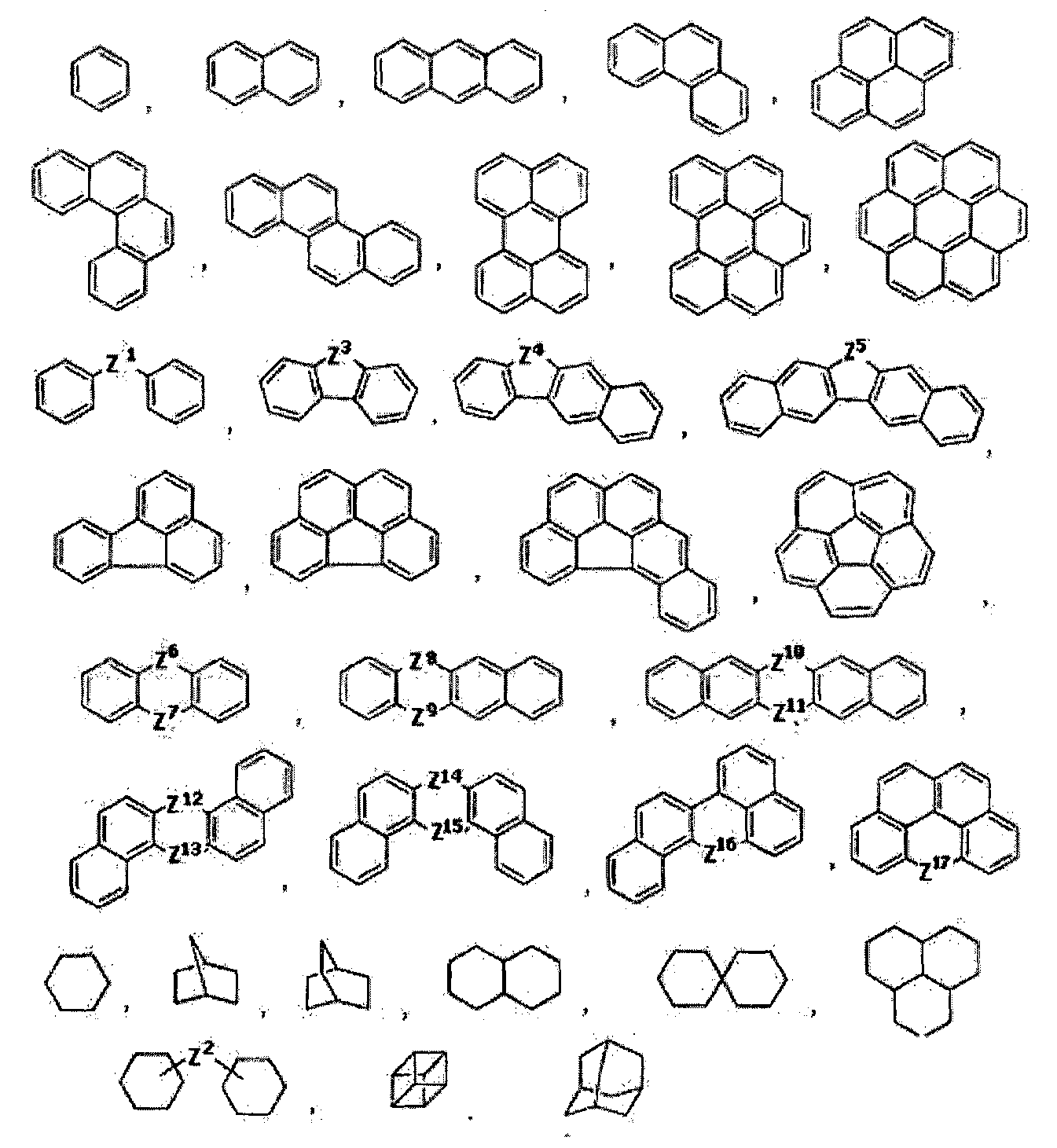
상기 그룹 1에서,
Z1 및 Z2는 각각 독립적으로 단일 결합, 치환 또는 비치환된 C1 내지 C20 알킬렌기, 치환 또는 비치환된 C3 내지 C20 사이클로알킬렌기, 치환 또는 비치환된 C6 내지 C20 아릴렌기, 치환 또는 비치환된 C2 내지 C20 헤테로아릴렌기, 치환 또는 비치환된 C2 내지 C20 알케닐렌기, 치환 또는 비치환된 C2 내지 C20 알키닐렌기, C=O, NRa, 산소(O), 황(S) 또는 이들의 조합이고, 여기서 Ra는 수소, 치환 또는 비치환된 C1 내지 C10 알킬기, 할로겐 원자 또는 이들의 조합이고,
Z3 내지 Z17은 각각 독립적으로 C=O, NRa, 산소(O), 황(S), CRbRc
또는 이들의 조합이고, 여기서 Ra 내지 Rc는 각각 독립적으로 수소, 치환 또는 비치환된 C1 내지 C10 알킬기, 할로겐 원자, 할로겐 함유기 또는 이들의 조합이다.
상기 그룹 1에서, 각 고리의 연결 위치는 특별히 한정되지 않으며, 각 고리는 치환 또는 비치환될 수 있다. 상기 그룹 1에 나열된 고리가 치환된 고리인 경우, 예컨대 C1 내지 C20 알킬기, 할로겐 원자, 히드록시기 등으로 치환될 수 있으나, 치환기는 한정되지 않는다.
상기 A1 내지 A3 는 예컨대 치환 또는 비치환된 방향족 기일 수 있으며, 예컨대 벤젠 기, 나프탈렌 기, 바이페닐기, 피렌기, 퍼릴렌기, 벤조퍼릴렌기, 코로넨기 또는 이들의 조합일 수 있다.
상기 A1 내지 A3 는 예컨대 히드록시기로 치환된 방향족 기일 수 있으며, 예컨대 상기 A2가 피렌 기인 경우 하기 화학식 A로 표현될 수 있다.
[화학식 A]

여기서 작용기 수는 특별히 제한되지 않으며, 상기 화학식 A에서 k는 0 내지 8인 정수일 수 있다.
상기 A1 내지 A3 중 적어도 하나는 다환 방향족 기(polycyclic aromatic group)일 수 있으며, 예컨대 피렌기, 퍼릴렌기, 벤조퍼릴렌기, 코로넨기 또는 이들의 조합일 수 있다.
예컨대 상기 A1 및 A3 는 각각 독립적으로 벤젠 기, 나프탈렌 기, 바이페닐기 또는 피렌 기일 수 있고, 상기 A2 는 피렌기, 퍼릴렌기, 벤조퍼릴렌기 또는 코로넨기일 수 있다.
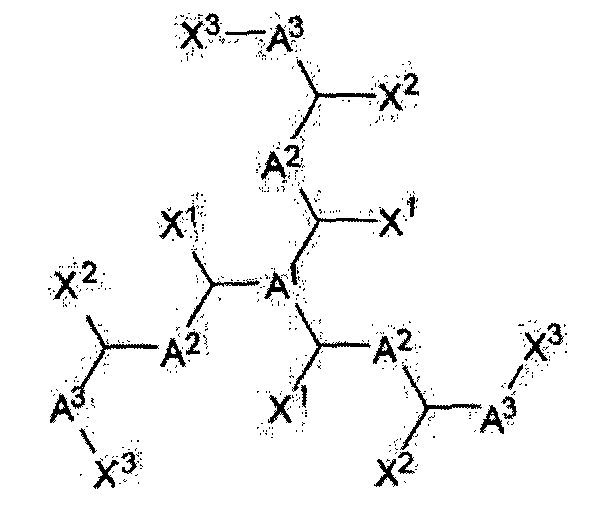
상기 모노머는 예컨대 하기 화학식 2 또는 3으로 표현될 수 있다.
[화학식 2]

[화학식 3]

상기 화학식 2 또는 3에서,
A1 내지 A3는 각각 독립적으로 지방족 고리기 또는 방향족 고리기이고,
X1 내지 X3는 각각 독립적으로 수소, 히드록시기, 치환 또는 비치환된 아미노기, 할로겐 원자, 할로겐 함유기 또는 이들의 조합이다.
상기 모노머는 치환기의 개수를 조절함으로써 예컨대 용해도와 같은 물성을 조절할 수 있다. 상기 모노머는 예컨대 하나 또는 둘 이상의 고리를 가지는 지방족 고리기 또는 방향족 고리기를 코어(core)로 하여 세 개 이상의 다중 치환기를 가지는 다중 짝지음 덴드리틱 구조의 화합물일 수 있다.
상기 모노머는 예컨대 하기 화학식 1-1 내지 1-9 중에서 선택되는 어느 하나로 표현될 수 있다.
[화학식 1-1]

[화학식 1-2]

상기 화학식 1-1 및 1-2에서,
La, Lb, Lc, Ld, L’a, L’b, L’c 및 L’d는 각각 독립적으로 단일 결합 또는 치환 또는 비치환된 C1 내지 C6 알킬렌기이고,
xa 및 xb는 각각 독립적으로 0 내지 5인 정수이고,
xc 및 xd는 각각 독립적으로 0 내지 8인 정수이고,
ya 및 yb는 각각 독립적으로 0 내지 8인 정수이고,
yc 및 yd는 각각 독립적으로 0 내지 7인 정수이다.
[화학식 1-3]

[화학식 1-4]

[화학식 1-5]

[화학식 1-6]

상기 화학식 1-3, 1-4, 1-5 및 1-6에서,
La, Lb, Lc, Ld, Le, Lf, Lg, Lh, L’a, L’b, L’c, L’d, L’e, L’f, L’g 및 L’h 는 각각 독립적으로 단일 결합 또는 치환 또는 비치환된 C1 내지 C6 알킬렌기이고,
xa, xb, yc, yd, ze 및 zf는 각각 독립적으로 0 내지 5인 정수이고,
Tg 및 Th는 각각 독립적으로 0 내지 9인 정수이다.
[화학식 1-7]

[화학식 1-8]

[화학식 1-9]

상기 화학식 1-7, 1-8 및 1-9에서,
La, Lb, Lc, Ld, Le, Lf, Lg, Lh, Li, L'a, L'b, L'c, L'd, L'e, L'f, L'g,L'h 및 L'i는 각각 독립적으로 단일 결합 또는 치환 또는 비치환된 C1 내지 C6 알킬렌기이고,
xa, yb, zc, xd ye, zf, xg, yh 및 zi는 각각 독립적으로 0 내지 5인 정수이다.
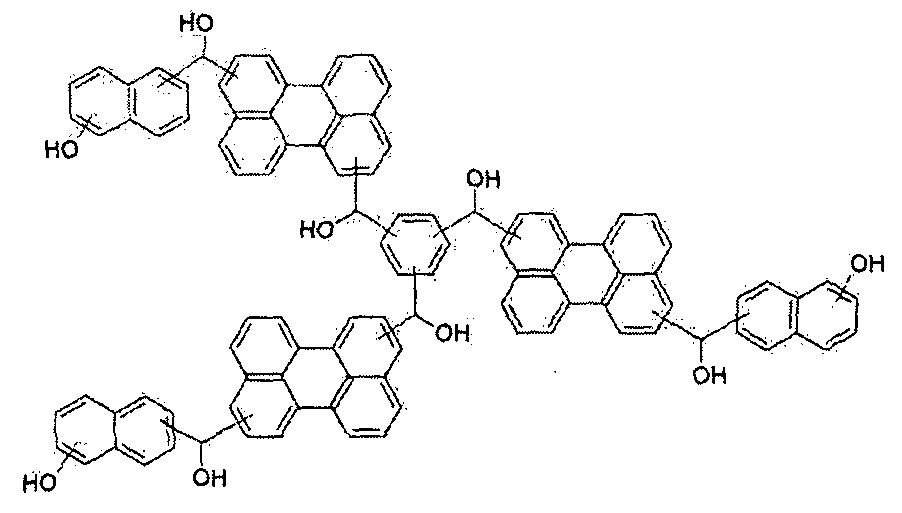
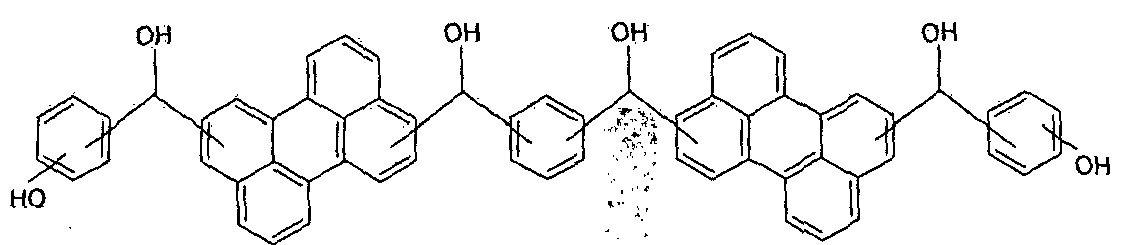
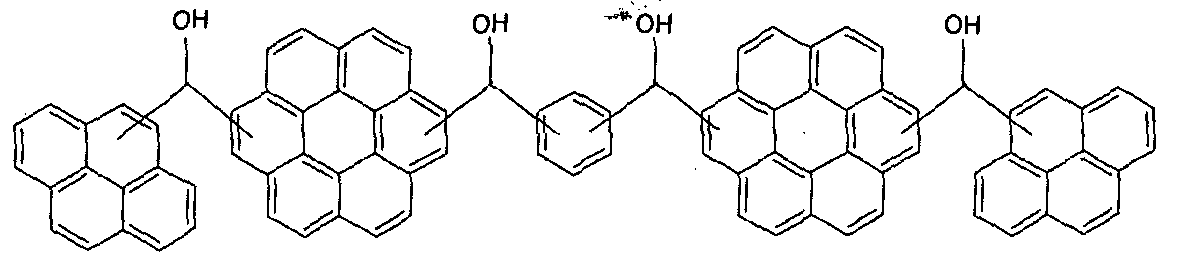
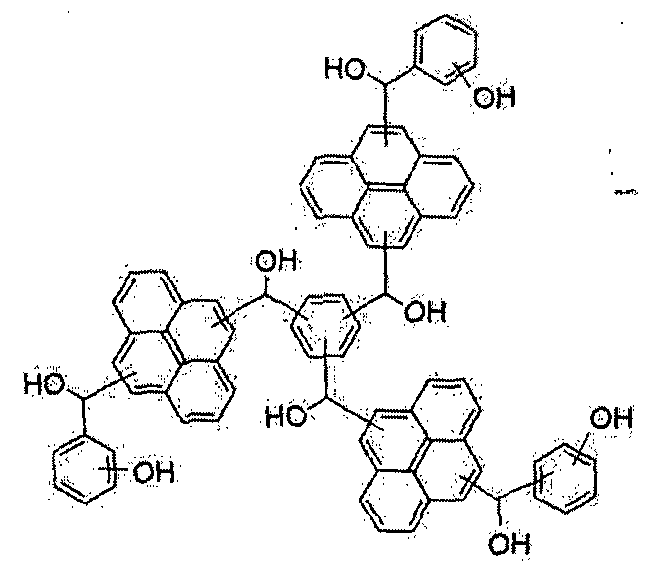
상기 모노머는 예컨대 하기 화학식 4 내지 14로 이루어진 군에서 선택되는 하나로 표현될 수 있다.
[화학식 4]

[화학식 5]

[화학식 6]

[화학식 7]

[화학식 8]

[화학식 9]

[화학식 10]
[규칙 제91조에 의한 정정 12.07.2013]
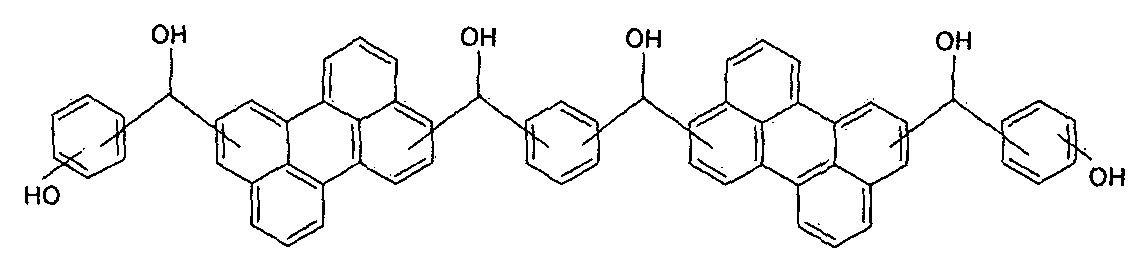
[화학식 11]
[규칙 제91조에 의한 정정 12.07.2013]

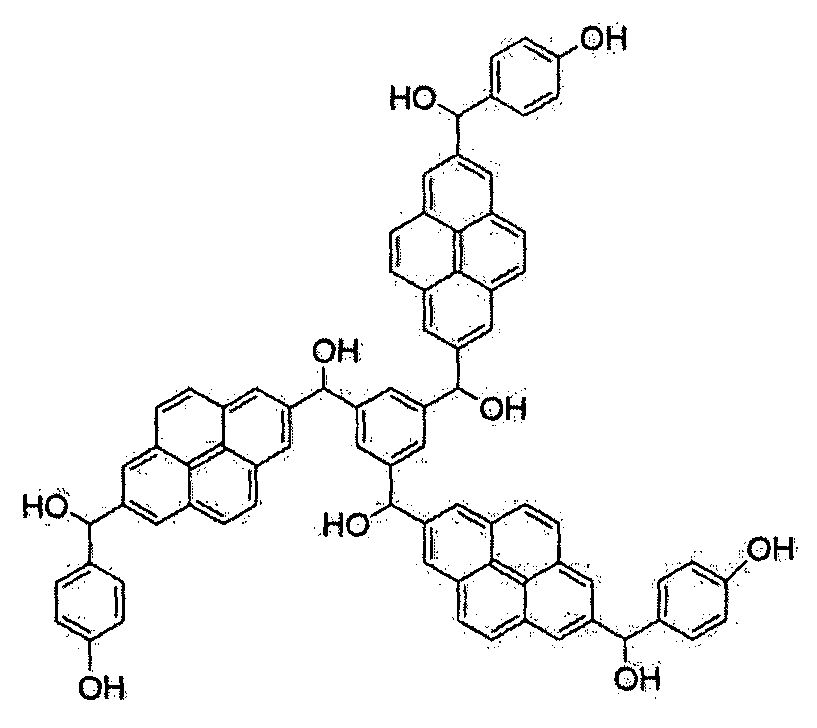
[화학식 12]
[규칙 제91조에 의한 정정 12.07.2013]

[화학식 13]
[규칙 제91조에 의한 정정 12.07.2013]
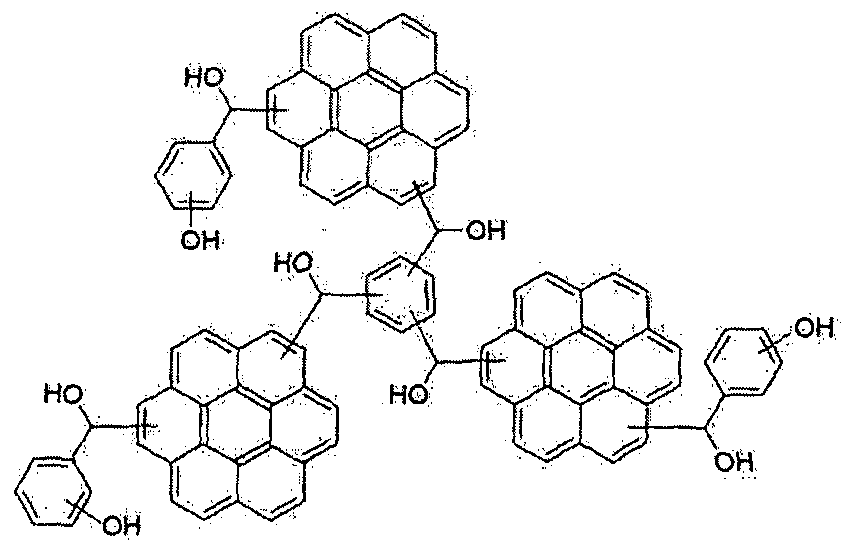
[화학식 14]
[규칙 제91조에 의한 정정 12.07.2013]
상기 모노머는 약 500 내지 5,000의 분자량을 가질 수 있다. 상기 범위의 분자량을 가짐으로써 고탄소 함량의 상기 모노머가 용매에 대한 우수한 용해도를 가지게 되며 스핀-온 코팅에 의한 양호한 박막을 얻을 수 있다.
이하 일 구현예에 따른 하드마스크 조성물에 대하여 설명한다.
일 구현예에 따른 하드마스크 조성물은 상술한 모노머 및 용매를 포함한다.
상기 모노머는 전술한 바와 같으며, 1종의 모노머가 단독으로 포함될 수도 있고 2종 이상의 모노머가 혼합되어 포함될 수도 있다.
상기 용매는 상기 모노머에 대한 충분한 용해성 또는 분산성을 가지는 것이면 특별히 한정되지 않으나, 예컨대 프로필렌글리콜, 프로필렌글리콜 디아세테이트, 메톡시 프로판디올, 디에틸렌글리콜, 디에틸렌글리콜 부틸에테르, 트리(에틸렌글리콜)모노메틸에테르, 프로필렌글리콜 모노메틸에테르, 프로필렌글리콜 모노메틸에테르 아세테이트, 사이클로헥사논, 에틸락테이트, 감마-부티로락톤, 메틸피롤리돈,아세틸아세톤 및 에틸 3-에톡시프로피오네이트에서 선택되는 적어도 하나를 포함할 수 있다.
상기 모노머는 상기 하드마스크 조성물 총 함량에 대하여 약 0.1 내지 50 중량%로 포함될 수 있다. 상기 모노머가 상기 범위로 포함됨으로써 목적하고자 하는 두께의 박막으로 코팅할 수 있다.
상기 하드마스크 조성물은 추가적으로 계면 활성제를 더 포함할 수 있다.
상기 계면 활성제는 예컨대 알킬벤젠설폰산 염, 알킬피리디늄 염, 폴리에틸렌글리콜, 제4 암모늄 염 등을 사용할 수 있으나, 이에 한정되는 것은 아니다.
상기 계면 활성제는 상기 하드마스크 조성물 100 중량부에 대하여 약 0.001 내지 3 중량부로 포함될 수 있다. 상기 범위로 포함함으로써 하드마스크 조성물의 광학적 특성을 변경시키지 않으면서 용해도를 확보할 수 있다.
이하 상술한 하드마스크 조성물을 사용하여 패턴을 형성하는 방법에 대하여 설명한다.
일 구현예에 따른 패턴 형성 방법은 기판 위에 재료 층을 제공하는 단계, 상기 재료 층 위에 상술한 모노머 및 용매를 포함하는 하드마스크 조성물을 적용하는 단계, 상기 하드마스크 조성물을 열처리하여 하드마스크 층을 형성하는 단계, 상기 하드마스크 층 위에 실리콘 함유 박막층을 형성하는 단계, 상기 실리콘 함유 박막층 위에 포토레지스트 층을 형성하는 단계, 상기 포토레지스트 층을 노광 및 현상하여 포토레지스트 패턴을 형성하는 단계, 상기 포토레지스트 패턴을 이용하여 상기 실리콘 함유 박막층 및 상기 하드마스크 층을 선택적으로 제거하고 상기 재료 층의 일부를 노출하는 단계, 그리고 상기 재료 층의 노출된 부분을 식각하는 단계를 포함한다.
상기 기판은 예컨대 실리콘웨이퍼, 유리 기판 또는 고분자 기판일 수 있다.
상기 재료 층은 최종적으로 패턴하고자 하는 재료이며, 예컨대 알루미늄, 구리 등과 같은 금속층, 실리콘과 같은 반도체 층 또는 산화규소, 질화규소 등과 같은 절연층일 수 있다. 상기 재료 층은 예컨대 화학기상증착 방법으로 형성될 수 있다.
상기 하드마스크 조성물은 용액 형태로 제조되어 스핀-온 코팅(spin-on coating) 방법으로 도포될 수 있다. 이 때 상기 하드마스크 조성물의 도포 두께는 특별히 한정되지 않으나, 예컨대 약 50 내지 50,000Å 두께로 도포될 수 있다.
상기 하드마스크 조성물을 열처리하는 단계는 예컨대 약 100 내지 500 ℃에서 약 10초 내지 10분 동안 수행할 수 있다. 상기 열처리 단계에서, 상기 모노머는 자기 가교 및/또는 상호 가교 반응을 일으킬 수 있다.
상기 실리콘 함유 박막층은 예컨대 질화규소 또는 산화규소로 만들어질 수 있다.
또한 상기 실리콘 함유 박막층 상부에 바닥 반사방지 층(bottom anti-reflective coating, BARC)을 더 형성할 수도 있다.
상기 포토레지스트 층을 노광하는 단계는 예컨대 ArF, KrF 또는 EUV 등을 사용하여 수행할 수 있다. 또한 노광 후 약 100 내지 500℃에서 열처리 공정을 수행할 수 있다.
상기 재료 층의 노출된 부분을 식각하는 단계는 식각 가스를 사용한 건식 식각으로 수행할 수 있으며, 식각 가스는 예컨대 CHF3, CF4, Cl2, BCl3 및 이들의 혼합 가스를 사용할 수 있다.
상기 식각된 재료 층은 복수의 패턴으로 형성될 수 있으며, 상기 복수의 패턴은 금속 패턴, 반도체 패턴, 절연 패턴 등 다양할 수 있으며, 예컨대 반도체 집적 회로 디바이스 내의 다양한 패턴으로 적용될 수 있다.
이하 실시예를 통하여 상술한 본 발명의 구현예를 보다 상세하게 설명한다. 다만 하기의 실시예는 단지 설명의 목적을 위한 것이며 본 발명의 범위를 제한하는 것은 아니다.
모노머의
합성
합성예
1
1L의 3구 플라스크에 파이렌 21.24g (0.105mol), 메톡시 벤조일 클로라이드 17.06g (0.1mol)을 370g의 디클로로메탄과 함께 넣고 교반 자석(stirring bar)을 이용하여 교반하며, 트리클로로알루미늄 14.67g (0.11mol)을 실온에서 조금씩 투입하며 반응시켰다. 이어서 상기 반응물을 실온에서 1시간 동안 교반하였다. 반응 종료 후 상기 반응물에 테레프탈로일 클로라이드 10.15g(0.05mol) 넣고 교반하며 트리클로로알루미늄 29.33g (0.22mol)을 조금씩 투입하며 반응시켰다. 이 때 발열을 제어하기 위해 얼음 배쓰에서 3시간 동안 반응시켰다. 반응 종료 후 파우더로 얻어진 반응물을 물을 사용하여 여과하고 건조시켰다.
상기 건조된 파우더 40g과 수산화칼륨 7g (0.125mol), 도데칸 싸이올 20g (0.1mol)을 1L 플라스크에 넣은 후 디메틸포름아미드를 270g 첨가하고 이후 100℃ 에서 12시간 교반하였다. 반응 종료 확인 후 50℃로 냉각시킨 후 수소화 붕소 나트륨 37.83g (1mol)을 조금씩 첨가하여 18시간 교반하였다. 반응 종료 후 7% 염화수소 용액으로 약 pH 6로 중화시킨 후 에틸 아세테이트로 추출하여 하기 화학식 4a로 표현되는 모노머를 얻었다.
[화학식 4a]

합성예
2
메톡시 벤조일 클로라이드 대신 메톡시 나프토일 클로라이드 22.07g을 반응기에 가한 것을 제외하고는 상기 합성예 1과 동일한 방법으로 합성하였으며, 하기 화학식 5a로 표현되는 모노머를 얻었다.
[화학식 5a]

합성예
3
파이렌 대신 메톡시 파이렌 22.71g을 반응기에 가한 것을 제외하고는 상기 합성예 1과 동일한 방법으로 합성하였으며, 하기 화학식 6a로 표현되는 모노머를 얻었다.
[화학식 6a]

합성예
4
파이렌 대신 메톡시 파이렌 22.71g을 반응기에 가한 것과 메톡시 벤조일 클로라이드 대신 나프토일 클로라이드 19.06g을 반응기에 가한 것을 제외하고는 상기 합성예 1과 동일한 방법으로 합성하였으며, 하기 화학식 7a 로 표현되는 모노머를 얻었다.
[화학식 7a]

합성예
5
제1 단계:
프리델
-
크래프트
아실레이션
(
Friedel
-
Craft
Acylation
) 반응
플라스크에 코로넨 40.4 g(0.1345 mol), 4-메톡시벤조일 클로라이드 22.94 g(0.1345 mol) 및 1,2-다이클로로에탄 731 g을 첨가하여 용액을 준비하였다. 이어서 상기 용액에 알루미늄 클로라이드 17.9 g(0.1345 mol)를 천천히 첨가한 후 상온에서 12 시간동안 교반하였다. 반응이 완결되면 메탄올을 첨가한 후 형성된 침전을 여과 및 건조하여 화합물을 얻었다.
이어서 플라스크에 상기에서 얻은 화합물 10.0 g(0.02302 mol), 테레프탈로일 클로라이드 2.34 g(0.01151 mol) 및 1,2-다이클로로에탄 194 g을 첨가하였다. 상기 용액에 알루미늄 클로라이드 9.21 g(0.06906 mol)을 천천히 첨가한 후 상온에서 12 시간동안 교반하였다. 반응이 완결되면 메탄올을 첨가한 후 형성된 침전을 여과하여 건조하였다.
제2 단계: 메틸기 제거(
demethylation
) 반응
플라스크에 상기 제1 단계에서 얻은 화합물 10.00 g(0.01001 mol), 1-도데칸사이올 10.13 g(0.05005 mol), 수산화칼륨 3.37 g(0.06006 mol) 및 N,N-다이메틸포름아마이드 35.3 g을 첨가한 후 120 ℃에서 8 시간 동안 교반하였다. 상기 혼합물을 냉각하고 5% 염화수소 용액으로 pH 6 내지 pH 7 정도로 중화한 후 형성된 침전을 여과하여 건조하였다.
제3 단계: 환원(
reduction
) 반응
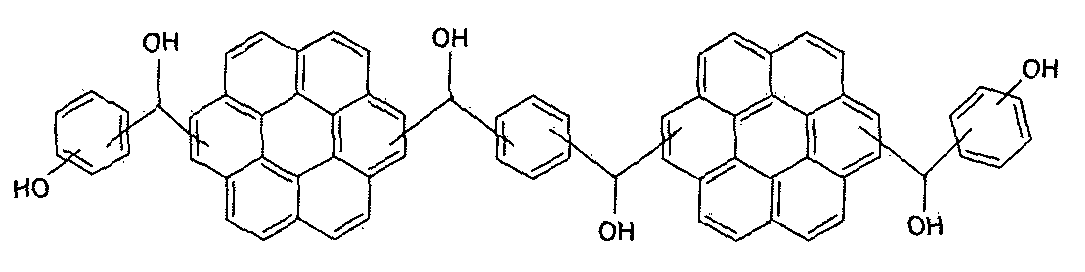
플라스크에 상기 제2 단계에서 얻은 화합물 4.00 g(0.004120 mol)과 테트라하이드로퓨란 28.5 g을 첨가하였다. 상기 용액에 수소화 붕소나트륨 3.12 g(0.08240 mol) 수용액을 천천히 첨가하여 24시간 동안 상온에서 교반하였다. 반응이 완결되면 5% 염화수소 용액으로 pH 7 정도로 중화한 후 에틸아세테이트로 추출 및 건조하여 하기 화학식 8a로 표현된 화합물을 얻었다.
[화학식 8a]

합성예
6
합성예 5의 제1 단계에서 테레프탈로일 클로라이드 대신 이소프탈로일 클로라이드 2.34 g(0.01151 mol)와 반응시킨 것을 제외하고는 합성예 1과 동일하게 하여 하기 화학식 8b로 표현된 화합물을 얻었다.
[화학식 8b]

합성예
7
제1 단계:
프리델
-
크래프트
아실레이션
(
Friedel
-
Craft
Acylation
) 반응
플라스크에 벤조퍼릴렌 20.0 g(0.07239 mol), 4-메톡시벤조일 클로라이드 12.4 g(0.07239 mol) 및 1,2-다이클로로에탄 378 g을 첨가하여 용액을 준비하였다. 이어서 상기 용액에 알루미늄 클로라이드 9.65 g(0.07239 mol)를 천천히 첨가한 후 상온에서 12 시간동안 교반하였다. 반응이 완결되면 메탄올을 첨가한 후 형성된 침전을 여과 및 건조하여 화합물을 얻었다.
이어서 플라스크에 상기에서 얻은 화합물 9.77 g(0.02380 mol), 이소프탈로일 클로라이드 2.42 g(0.01190 mol) 및 1,2-다이클로로에탄 195 g을 첨가하였다. 상기 용액에 알루미늄 클로라이드 9.52 g(0.07140 mol)를 천천히 첨가한 후 상온에서 12 시간동안 교반하였다. 반응이 완결되면 메탄올을 첨가한 후 형성된 침전을 여과하여 건조하였다.
제2 단계: 메틸기 제거(
demethylation
) 반응
플라스크에 상기 제1 단계에서 얻은 화합물 5.94 g(0.006250 mol), 1-도데칸사이올 6.33 g(0.03125 mol), 수산화칼륨 2.10 g(0.03750 mol) 및 N,N-다이메틸포름아마이드 21.6 g을 첨가한 후 120 ℃에서 8 시간 동안 교반하였다. 상기 혼합물을 냉각하고 5% 염화수소 용액으로 pH 6 내지 pH 7 정도로 중화한 후 형성된 침전을 여과하여 건조하였다. .
제3 단계: 환원(
reduction
) 반응
플라스크에 상기 제2 단계에서 얻은 화합물 2.85 g(0.003090 mol)과 테트라하이드로퓨란 20.8 g을 첨가하였다. 상기 용액에 수소화 붕소나트륨 2.34 g(0.06180 mol) 수용액을 천천히 첨가하여 24시간 동안 상온에서 교반하였다. 반응이 완결되면 5% 염화수소 용액으로 pH 7 정도로 중화한 후 에틸아세테이트로 추출 및 건조하여 하기 화학식 9a로 표현된 화합물을 얻었다.
[화학식 9a]

합성예
8
제1 단계:
프리델
-
크래프트
아실레이션
(
Friedel
-
Craft
Acylation
) 반응
플라스크에 퍼릴렌 18.5 g(0.07330 mol), 4-메톡시벤조일 클로라이드 12.5 g(0.07330 mol) 및 1,2-다이클로로에탄 367 g을 첨가하여 용액을 준비하였다. 상기 용액에 알루미늄 클로라이드 9.77 g(0.07330 mol)를 천천히 첨가한 후 상온에서 12 시간동안 교반하였다. 반응이 완결되면 메탄올을 첨가한 후 형성된 침전을 여과 및 건조하여 화합물을 얻었다.
이어서 플라스크에 상기에서 얻은 화합물 7.00 g(0.01812 mol), 이소프탈로일 클로라이드 1.84 g(0.009060 mol) 및 1,2-다이클로로에탄 145 g을 첨가하였다. 상기 용액에 알루미늄 클로라이드 7.25 g(0.05436 mol)를 천천히 첨가한 후 상온에서 12 시간동안 교반하였다. 반응이 완결되면 메탄올을 첨가한 후 형성된 침전을 여과하여 건조하였다.
제2 단계: 메틸기 제거(
demethylation
) 반응
플라스크에 상기 제1 단계에서 얻은 화합물 7.00 g(0.007750 mol), 1-도데칸사이올 7.84 g(0.03875 mol), 수산화칼륨 2.61 g(0.04650 mol) 및 N,N-다이메틸포름아마이드 26.2 g을 첨가한 후 120 ℃에서 8 시간 동안 교반하였다. 상기 혼합물을 냉각하고 5% 염화수소 용액으로 pH 6 내지 pH 7 정도로 중화한 후 형성된 침전을 여과하여 건조하였다.
제3 단계: 환원(
reduction
) 반응
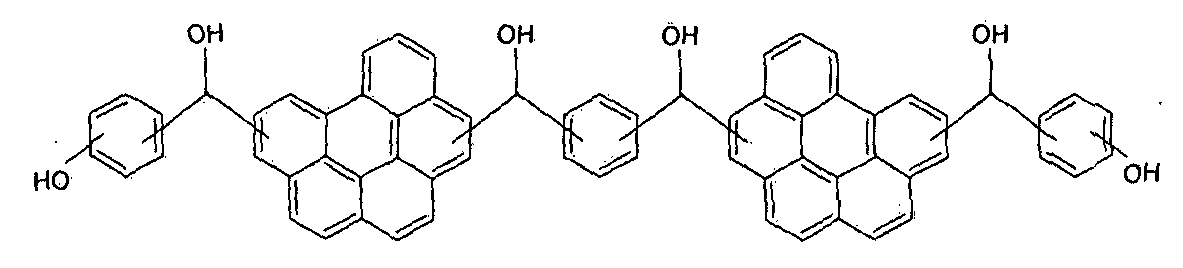
플라스크에 상기 제2 단계에서 얻은 화합물 5.00 g(0.005720 mol)과 테트라하이드로퓨란 37.3 g을 첨가하였다. 이 용액에 수소화 붕소 나트륨 4.33 g(0.1144 mol) 수용액을 천천히 첨가하여 24시간 동안 상온에서 교반하였다. 반응이 완결되면 5% 염화수소 용액으로 pH 7 정도로 중화한 후 에틸아세테이트로 추출 및 건조하여 하기 화학식 10a로 표현된 화합물을 얻었다.
[화학식 10a]

합성예
9
제1 단계:
프리델
-
크래프트
아실레이션
(
Friedel
-
Craft
Acylation
) 반응
플라스크에 코로넨 10.0 g(0.03329 mol), 1-파이렌카르보닐 클로라이드 8.81 g(0.03329 mol) 및 1,2-다이클로로에탄 209 g을 첨가하여 용액을 준비하였다. 이어서 상기 용액에 알루미늄 클로라이드 4.44 g(0.03329 mol)를 천천히 첨가한 후 상온에서 12 시간동안 교반하였다. 반응이 완결되면 메탄올을 첨가한 후 형성된 침전을 여과 및 건조하여 화합물을 얻었다.
이어서 플라스크에 상기에서 얻은 화합물 10.0 g(0.01892 mol), 이소프탈로일 클로라이드 1.92 g(0.00946 mol) 및 1,2-다이클로로에탄 175 g을 첨가하였다. 상기 용액에 알루미늄 클로라이드 7.57 g(0.05675 mol)을 천천히 첨가한 후 상온에서 12 시간동안 교반하였다. 반응이 완결되면 메탄올을 첨가한 후 형성된 침전을 여과하여 건조하였다.
제2 단계: 환원(
reduction
) 반응
플라스크에 상기 제1 단계에서 얻은 화합물 5.00 g(0.004211 mol)과 테트라하이드로퓨란 32.7 g을 첨가하였다. 상기 용액에 수소화 붕소나트륨 3.19 g(0.08423 mol) 수용액을 천천히 첨가하여 24시간 동안 상온에서 교반하였다. 반응이 완결되면 5% 염화수소 용액으로 pH 7 정도로 중화한 후 에틸아세테이트로 추출 및 건조하여 하기 화학식 11a로 표현된 화합물을 얻었다.
[화학식 11a]
합성예
10
제1 단계:
프리델
-
크래프트
아실레이션
(
Friedel
-
Craft
Acylation
) 반응
플라스크에 피렌 10g(0.0494 mol), 4-메톡시벤조일 클로라이드 8.43g(0.0494 mol) 및 1,2-디클로로에탄 100.11g을 첨가하여 용액을 준비하였다. 이어서, 상기 용액에 알루미늄 클로라이드 6.59g(0.0494 mol)를 천천히 첨가한 후 상온에서 2 시간 동안 교반하였다. 반응이 완결되면 상기 용액에 메탄올을 첨가한 후 형성된 침전을 여과 및 건조하여 화합물을 얻었다.
이어서 플라스크에 상기에서 얻은 화합물 15.46g(0.0460 mol), 1,3,5-벤젠트리카복실릭 에시드 클로라이드 4.07g(0.0153 mol) 및 1,2-디클로로에탄 102.62g을 첨가하여 용액을 준비하였다. 이어서 상기 용액에 알루미늄 클로라이드 6.13g(0.0460 mol)를 천천히 첨가한 후 상온에서 6 시간 동안 교반하였다. 반응이 완결되면 상기 용액에 메탄올을 첨가한 후 형성된 침전을 여과하여 건조하였다.
제2 단계: 메틸기 제거(
demethylation
) 반응
플라스크에 상기에서 얻은 화합물 15.17g(0.0130 mol), 1-도데칸사이올 13.18g(0.0651 mol), 수산화칼륨 4.38 g(0.0781 mol) 및 N,N-디메틸포름아마이드 76.37 g을 첨가한 후 120 ℃에서 3 시간 동안 교반하였다. 이어서 상기 혼합물을 냉각시켜 5% 염화수소 용액으로 pH 6~7 정도로 중화한 후 형성된 침전을 여과하여 건조하였다.
제3 단계: 환원(
reduction
) 반응
플라스크에 상기에서 얻은 화합물 11.84g(0.0105 mol)과 테트라하이드로퓨란 40 g을 첨가하여 용액을 준비하였다. 이어서 상기 용액에 수소화 붕소 나트륨 7.98g(0.2108 mol) 수용액을 천천히 첨가하여 24시간 동안 상온에서 교반하였다. 반응이 완결되면 5% 염화수소 용액으로 pH 7 정도로 중화한 후 에틸아세테이트로 추출 및 건조하여 하기 화학식 12a로 표현되는 화합물을 얻었다.
[화학식 12a]
[규칙 제91조에 의한 정정 12.07.2013]
합성예
11
제1 단계:
프리델
-
크래프트
아실레이션
반응
플라스크에 코로넨 10g(0.0333 mol), 4-메톡시벤조일 클로라이드 5.68g(0.0333 mol) 및 1,2-디클로로에탄 80.48g을 첨가하여 용액을 준비하였다. 상기 용액에 알루미늄 클로라이드 4.44g(0.0333 mol)를 천천히 첨가한 후 상온에서 4 시간 동안 교반하였다. 반응이 완결되면 메탄올을 첨가한 후 형성된 침전을 여과하여 건조하였다.
플라스크에 상기에서 얻은 화합물 12.00g(0.0276 mol), 1,3,5-벤젠트리카복실릭 에시드 클로라이드 2.44g(0.0092 mol) 및 1,2-디클로로에탄 72.51g을 첨가하여 용액을 준비하였다. 상기 용액에 알루미늄 클로라이드 3.68g(0.0276 mol)을 천천히 첨가한 후 상온에서 12 시간 동안 교반하였다. 반응이 완결되면 메탄올을 첨가한 후 형성된 침전을 여과하여 건조하였다.
제2 단계: 메틸기 제거 반응
플라스크에 상기에서 얻은 화합물 10.61g(0.0073 mol), 1-도데칸사이올 7.36g(0.0363 mol), 수산화칼륨 2.45g(0.0436 mol) 및 N,N-디메틸포름아마이드 47.63g을 첨가한 후 120 ℃에서 5 시간 동안 교반하였다. 이어서 상기 혼합물을 냉각시켜 5% 염화수소 용액으로 pH 6~7 정도로 중화한 후 형성된 침전을 여과하여 건조하였다.
제3 단계: 환원 반응
플라스크에 상기에서 얻은 화합물 9.84g(0.0067 mol)과 테트라하이드로퓨란 30 g을 첨가하여 용액을 준비하였다. 상기 용액에 수소화 붕소 나트륨 5.06g(0.1337 mol) 수용액을 천천히 첨가하여 24시간 동안 상온에서 교반하였다. 반응이 완결되면 5% 염화수소 용액으로 pH 7 정도로 중화한 후 에틸아세테이트로 추출 및 건조하여 하기 화학식 13a로 표현되는 화합물을 얻었다.
[화학식 13a]

합성예
12
제1 단계:
프리델
-
크래프트
아실레이션
반응
플라스크에 퍼릴렌 15g(0.0595 mol), 6-메톡시나프탈렌-2-카보닐클로라이드 13.12g(0.0595 mol) 및 1,2-디클로로에탄 144.18g을 첨가하여 용액을 준비하였다. 이어서 상기 용액에 알루미늄 클로라이드 7.93g(0.0595 mol)을 천천히 첨가한 후 상온에서 5 시간 동안 교반하였다. 반응이 완결되면 메탄올을 첨가한 후 형성된 침전을 여과하여 건조하였다.
플라스크에 상기에서 얻은 화합물 22.80 g(0.0522 mol), 1,3,5-벤젠트리카복실릭 에시드 클로라이드 4.62g(0.0174 mol) 및 1,2-디클로로에탄 137.55g을 첨가하여 용액을 준비하였다. 이어서 상기 용액에 알루미늄 클로라이드 6.96g(0.0522 mol)를 천천히 첨가한 후 상온에서 12 시간 동안 교반하였다. 반응이 완결되면 메탄올을 첨가한 후 형성된 침전을 여과하여 건조하였다.
제2 단계: 메틸기 제거 반응
플라스크에 상기에서 얻은 화합물 15.00g(0.0102 mol), 1-도데칸사이올 12.43g(0.0819 mol), 수산화칼륨 4.59 g(0.0819 mol) 및 N,N-디메틸포름아마이드 74.72g을 첨가한 후 120 ℃에서 12 시간 동안 교반하였다. 이어서 혼합물을 냉각시켜 5% 염화수소 용액으로 pH 6~7 정도로 중화한 후 형성된 침전을 여과하여 건조하였다.
제3 단계: 환원 반응
플라스크에 상기에서 얻은 화합물 10.50g(0.0074 mol)과 테트라하이드로퓨란 22g을 첨가하여 용액을 준비하였다. 상기 용액에 수소화 붕소 나트륨 8.37g(0.2213 mol) 수용액을 천천히 첨가하여 24시간 동안 50℃에서 교반하였다. 반응이 완결되면 5% 염화수소 용액으로 pH 7 정도로 중화한 후 에틸아세테이트로 추출 및 건조하여 하기 화학식 14a로 표현되는 화합물을 얻었다.
[화학식 14a]

비교합성예
1
2L의 3구 플라스크에 벤조퍼릴렌 27.6g (0.1mol), 나프토일 클로라이드 61g (0.32mol)을 500g의 클로로포름/디클로로메탄 혼합액과 함께 넣고 교반 자석을 이용하여 교반하며, 트리클로로 알루미늄 85.7g (0.35mol)을 조금씩 투입하며 반응시켰다. 반응 종료 후 물을 사용하여 트리클로로 알루미늄을 제거하여 파우더 형태의 반응물을 얻었다. 이어서 상기 반응물을 테트라하이드로퓨란(tetrahydrofuran, THF)에 녹이고, 리튬 알루미늄 하이드라이드 18.98g(0.5mol)을 조금씩 첨가하며 반응시켰다. 반응 종료 후 물/메탄올 혼합물을 사용하여 반응 부수물을 제거하여, 하기 화학식 15로 표현되는 모노머를 얻었다.
[화학식 15]

비교합성예
2
온도계, 콘덴서 및 기계교반기를 구비한 500ml 3구 플라스크를 준비하고 90℃ 내지 100℃의 오일 항온조에 침지하였다. 항온을 유지하면서 교반 자석을 사용하여 교반하였다. 이어서 상기 3구 플라스크에 1-나프톨 28.83g(0.2mol), 하이드록시 파이렌 30.56g(0.14mol) 및 파라포름알데히드 12.0g(0.34mol)을 투입하고 p-톨루엔 술폰산모노하이드레이트 0.38g(2mmol)을 프로필렌글리콜모노메틸에테르아세테이트(propylene glycol monomethyl ether acetate, PGMEA) 162g에 녹인 후, 이 용액을 상기 3구 플라스크에 투입하여 5 내지 12시간 동안 교반하여 반응을 수행하였다.
1시간 간격으로 상기 중합 반응물로부터 시료를 채취하여, 그 시료의 중량평균분자량을 측정하여, 중량평균분자량이 1,800 내지 2,000일 때 반응을 완료하였다.
중합 반응이 완료된 후, 반응물을 상온으로 냉각한 후 상기 반응물을 증류수 40g 및 메탄올 400g에 투입하여 강하게 교반한 후, 정치시켰다. 상등액을 제거하고 침전물을 프로필렌글리콜 모노메틸에테르아세테이트(PGMEA) 80g에 녹인 후, 메탄올 320g를 이용하여 강하게 교반한 후, 정치시켰다(1차). 이때 얻어지는 상등액을 다시 제거하고 침전물을 프로필렌글리콜 모노메틸에테르아세테이트(PGMEA) 80g에 녹였다(2차). 상기 1차 및 2차 공정을 1회 정제 공정이라 하고, 이 정제 공정을 총 3회 실시하였다. 정제가 끝난 중합체를 프로필렌글리콜 모노메틸에테르아세테이트(PGMEA) 80g에 녹인 후, 감압 하에서 용액에 남아있는 메탄올 및 증류수를 제거하여 하기 화학식 16로 표현되는 중합체를 얻었다.
[화학식 16]
상기 중합체의 중량평균분자량은 1,870이었고, 분산도는 1.19였다.
비교합성예
3
제1 단계: 짝지음 반응
플라스크에 코로넨 50.0g(0.166 mol), 벤조일클로라이드 46.8g(0.333 mol) 및1,2-다이클로로에탄 330g을 첨가하였다. 상기 용액에 알루미늄 클로라이드 44.4g(0.333 mol)를 상온에서 천천히 첨가한 후 60 ℃로 승온하여 8시간 동안 교반하였다. 반응이 완결되면 상기 용액에 메탄올을 첨가하여 형성된 침전을 여과하여 건조하였다.
제2 단계: 환원 반응
플라스크에 상기 제1 단계에서 얻은 화합물 25.0g(0.0492 mol)과 테트라하이드로퓨란 174 g을 첨가하였다. 상기 용액에 수소화 붕소나트륨 수용액 18.6g(0.492 mol)을 천천히 첨가하여 24시간 동안 상온에서 교반하였다. 반응이 완결되면 5% 염화수소 용액으로 pH 7 정도로 중화한 후 에틸 아세테이트로 추출 및 건조하여 하기 화학식 17로 표현되는 중합체를 얻었다.
[화학식 17]

비교합성예
4
플라스크에 α, α'-디클로로-p-크실렌 8.75g(0.05 mol), 알루미늄 클로라이드 26.66g 및 γ-부티로락톤 200g을 첨가하였다. 상기 용액에 4,4'-(9-플루오레닐리덴)디페놀 35.03g(0.10 mol)을 γ-부티로락톤 200g에 녹인 용액을 천천히 첨가한 후 120 ℃에서 12 시간 동안 교반하였다. 중합 후, 물을 사용하여 산을 제거한 후에 농축하였다. 이어서 메틸아밀케톤과 메탄올을 사용하여 중합 생성물을 희석하고 다시 15 중량% 농도의 메틸아밀케톤/메탄올 = 4/1 (중량비)의 용액을 첨가하여 농도를 조절하였다. 이 용액을 분액깔대기에 넣고 n-헵탄을 첨가하여 모노머 및 저분자량체를 제거하여 하기 화학식18으로 표현되는 중합체를 얻었다.
[화학식 18]

상기 중합체의 중량평균분자량은 12,000 이었고, 분산도는 2.04 였다.
하드마스크
조성물의 제조
실시예
1
합성예 1에서 얻은 화합물을 프로필렌글리콜모노메틸에테르아세테이트(propylene glycol monomethyl ether acetate, PGMEA)와 사이클로헥사논(cyclohexanone)(7:3 (v/v))의 혼합 용매에 녹인 후 여과하여 하드마스크 조성물을 제조하였다.
실시예
2 내지 12
합성예 1에서 얻은 모노머 대신 합성예 2 내지 12에서 얻은 모노머를 각각 사용한 것을 제외하고는 실시예 1과 동일한 방법으로 하드마스크 조성물을 제조하였다.
비교예
1 내지 4
합성예 1에서 얻은 화합물 대신 비교합성예 1 내지 4에서 얻은 화합물을 각각 사용한 것을 제외하고는 실시예 1과 동일한 방법으로 하드마스크 조성물을 제조하였다.
평가
평가 1: 갭-필 및 평탄화 특성
(
실시예
1 내지 4,
비교예
1 및 2)
폭 1 ㎛, 깊이 1.5 ㎛의 홀이 있는 패턴 웨이퍼와 폭 100nm, 깊이 1000nm의 홀이 있는 패턴 웨이퍼에 하드마스크 조성물을 스핀-온 코팅 방법으로 도포하여 베이크 공정을 거친 후, V-SEM 장비를 이용하여 갭-필 특성과 평탄화 특성을 관찰하였다.
갭-필 특성은 패턴 단면을 전자주사현미경(SEM)으로 관찰하여 보이드(void) 발생 유무로 판별하였고, 평탄화 특성은 하기 계산식 1로 수치화하였다. 평탄화 특성은 h1 및 h2의 차이가 크기 않을수록 우수한 것이므로 그 수치가 작을수록 평탄화 특성이 우수한 것이다.
[계산식 1]

그 결과는 표 1과 같다.
표 1
| 갭-필 특성 (Void 유무) | 평탄화 특성(1500 rpm) | ||
| aspect ratio(1 : 1.5) | aspect ratio(1 : 10) | ||
| 실시예 1 | void 없음 | void 없음 | 20.23 |
| 실시예 2 | void 없음 | void 없음 | 25.34 |
| 실시예 3 | void 없음 | void 없음 | 22.17 |
| 실시예 4 | void 없음 | void 없음 | 19.89 |
| 비교예 1 | void 없음 | void 없음 | 28.31 |
| 비교예 2 | void 없음 | void 발생 | 39.55 |
표 1을 참고하면, 실시예 1 내지 4에 따른 하드마스크 조성물을 사용한 경우 비교예 1 및 2 에 따른 하드마스크 조성물을 사용한 경우와 비교하여 평탄화 정도가 우수함을 알 수 있다.
또한, 실시예 1 내지 4에 따른 하드마스크 조성물을 사용한 경우 패턴의 깊이가 상대적으로 깊은 조건(aspect ratio= 1: 10)에서도 보이드가 관찰되지 않아 갭-필 특성이 우수함을 알 수 있다. 이에 반해, 비교예 2에 따른 하드마스크 조성물을 사용한 경우 깊이가 상대적으로 낮은 조건(aspect ratio=1: 1.5)에서는 보이드가 발생하지 않았지만 깊이가 상대적으로 깊은 조건(aspect ratio= 1: 10)에서는 보이드가 발생함을 알 수 있다.
(
실시예
5 내지 9,
비교예
3)
패턴 웨이퍼에 실시예 5 내지 9와 비교예 3에 따른 모노머 함량 13.0 중량%의 하드마스크 조성물을 스핀-온 코팅 방법으로 도포하여 400 ℃에서 2분 동안 열처리한 후, 패턴 단면을 V-SEM 장비를 이용하여 관찰하였다.
갭-필 특성은 폭 40 nm, 깊이 500 nm의 패턴 단면을 관찰하여 보이드(void) 발생 유무로 판별하였고, 평탄화 특성은 폭 180 nm, 깊이 500 nm의 패턴 단면을 관찰하여 상기 계산식 1로 수치화하였다.
그 결과는 표 2와 같다.
표 2
| 갭-필 특성 | 평탄화 특성 | |
| 실시예 5 | void 없음 | 6.5% |
| 실시예 6 | void 없음 | 5.8% |
| 실시예 7 | void 없음 | 7.8% |
| 실시예 8 | void 없음 | 6.8% |
| 실시예 9 | void 없음 | 7.5% |
| 비교예 3 | void 발생 | 17.4% |
표 2를 참고하면, 실시예 5 내지 9에 따른 하드마스크 조성물을 사용한 경우 비교예 3에 따른 하드마스크 조성물을 사용한 경우와 비교하여 보이드가 관찰되지 않아 우수한 갭-필 특성을 나타낼 뿐만 아니라 평탄화 정도도 우수함을 알 수 있다.
(
실시예
10 내지 12)
패턴화된 실리콘 웨이퍼에 실시예 10 내지 12에 따른 하드마스크 조성물(화합물 함유량: 10.0중량%)을 스핀-온 코팅하고 400℃에서 120초 동안 열처리한 후, 전계방출 전자주사현미경(FE-SEM) 장비를 이용하여 갭-필 특성 및 평탄화 특성을 관찰하였다.
갭-필 특성은 패턴 단면을 FE-SEM으로 관찰하여 보이드(void) 발생 유무로 판별하였고, 평탄화 특성은 FE-SEM 으로 관찰된 패턴 단면의 이미지로부터 하드마스크 층의 두께를 측정하여 상기 계산식 1로 수치화하였다.
그 결과는 표 3과 같다.
표 3
| 평탄화 특성 | 갭-필 특성 | |
| 실시예 10 | 5.3% | 보이드 없음 |
| 실시예 11 | 9.3% | 보이드 없음 |
| 실시예 12 | 7.1% | 보이드 없음 |
표 3을 참고하면, 실시예 10 내지 12에 따른 하드마스크 조성물로부터 형성된 박막은 평탄화 정도가 우수하고 보이드 또한 관찰되지 않아 우수한 갭-필 특성을 나타내는 것을 알 수 있다.
평가 2: 내열성
(
실시예
1 내지 4,
비교예
1 및 2)
질화규소가 형성되어 있는 실리콘웨이퍼 위에 실시예 1 내지 4 및 비교예 1 및 2에 따른 하드마스크 조성물을 스핀-온 코팅 방법으로 도포한 후 약 800Å 두께로 180℃에서 60초 간 프리 베이크 후 400℃에서 120초 간 베이크 시에 생성되는 아웃 가스를 QCM(Quartz Crystal Microbalace)를 이용하여 측정하였다.
아웃 가스 평가 결과는 표 4와 같다.
표 4
| 아웃가스의 양 (ng) | |
| 실시예 1 | 43 |
| 실시예 2 | 52 |
| 실시예 3 | 38 |
| 실시예 4 | 60 |
| 비교예 1 | 175 |
| 비교예 2 | 77 |
표 4을 참고하면, 실시예 1 내지 4에 따른 하드마스크 조성물은 고온(400℃)에서 베이크 되는 동안 60ng 이하의 아웃가스가 관찰되어 안정적으로 고온 공정을 수행 가능함을 알 수 있다. 이에 반해, 비교예 1 및 2에 따른 하드마스크 조성물은 상대적으로 아웃가스의 발생량이 많아 고온 공정에 적합하지 않음을 알 수 있다.
(
실시예
5 내지 9,
비교예
3)
실리콘 웨이퍼 위에 실시예 5 내지 9와 비교예 3에 따른 모노머 함량 5.0 중량%의 하드마스크 조성물을 스핀-온 코팅 방법으로 도포한 후, 핫플레이트 위에서 240℃로 1분간 열처리하여 박막을 형성하였다. K-MAC社의 박막두께측정기로 초기 박막의 두께를 측정하였다. 이어서 상기 박막을 400℃에서 2분 동안 다시 열처리한 후 박막의 두께를 측정한 후, 하기 계산식 2에 따라 박막 두께 감소율을 산출하였다.
[계산식 2]
박막 두께 감소율 = (240 ℃에서 베이크한 후 박막 두께 - 400 ℃에서 베이크한 후 박막 두께)/240 ℃에서 베이크한 후 박막 두께 X 100 (%)
한편, 실리콘 웨이퍼 위에 실시예 5 내지 9 및 비교예 3에 따른 하드마스크 조성물을 스핀-온 코팅 방법으로 도포하여 180℃에서 60초 간 프리 베이크 후 400℃에서 120초 간 베이크 시에 생성되는 아웃 가스를 QCM(Quartz Crystal Microbalace)을 이용하여 측정하였다.
박막 두께 감소율 및 아웃 가스 평가 결과는 표 5와 같다.
표 5
| 박막두께 감소율 (%) | 아웃 가스 양 (ng) | |
| 실시예 5 | -5.75 | 24 |
| 실시예 6 | -5.87 | 20 |
| 실시예 7 | -8.82 | 25 |
| 실시예 8 | -9.98 | 37 |
| 실시예 9 | -10.32 | 52 |
| 비교예 3 | -34.08 | 180 |
표 5를 참고하면, 실시예 5 내지 9에 따른 하드마스크 조성물은 비교예 3에 따른 하드마스크 조성물로부터 형성된 박막과 비교하여 400℃ 열처리 후 두께 감소율이 적은 것을 알 수 있다.
또한 실시예 5 내지 9에 따른 하드마스크 조성물은 고온(400℃)에서 베이크 되는 동안 아웃가스의 발생량이 적어 안정적으로 고온 공정을 수행 가능함을 알 수 있다. 이에 반해, 비교예 3에 따른 하드마스크 조성물은 상대적으로 아웃가스의 발생량이 많아 고온 공정에 적합하지 않음을 알 수 있다.
또한, 이로부터 실시예 5 내지 9에 따른 하드마스크 조성물은 비교예 3에 따른 하드마스크 조성물과 비교하여 박막의 가교도가 높아 400℃의 고온에서도 내열성이 높은 것을 알 수 있다.
(
실시예
10 내지 12)
실시예 10 내지 12에 따른 조성물에 대하여 모노머 함량을 10중량%으로 한 것을 제외하고는 상기 실시예 5 내지 9의 경우와 동일하게 하여 내열성 평가를 수행하였다.
그 결과는 표 6과 같다.
표 6
| 박막두께 감소율 (%) | 아웃 가스 양 (ng) | |
| 실시예 10 | -4.39 | 21 |
| 실시예 11 | -3.96 | 32 |
| 실시예 12 | -4.31 | 24 |
표 6을 참고하면, 실시예 10 내지 12에 따른 하드마스크 조성물로부터 형성된 박막은 고온에서 두께 감소율이 적고 아웃개싱이 낮은 것을 확인할 수 있고, 이로부터 내열성이 높은 것을 알 수 있다.
평가 3:
내식각성
실리콘 웨이퍼 위에 실시예 5 내지 12과 비교예 4에 따른 하드마스크 조성물(화합물 함량: 13중량%)을 스핀-온 코팅한 후 핫플레이트 위에서 400℃로 2분간 열처리하여 박막을 형성하였다. 이어서 상기 박막의 두께를 측정하였다. 이어서 상기 박막에 N2/O2 혼합 가스 및 CFx 가스를 사용하여 각각 60초 및 100초 동안 건식 식각한 후 박막의 두께를 다시 측정하였다. 건식 식각 전후의 박막의 두께와 식각 시간으로부터 하기 계산식 3에 의해 식각율(bulk etch rate, BER)을 계산하였다.
[계산식 3]
(초기 박막 두께 - 식각 후 박막 두께)/식각 시간 (Å/s)
그 결과는 표 7과 같다.
표 7
| 식각율 (N2/O2 , /s) | 식각율 (CFx) | |
| 실시예 5 | 22.5 | 26.1 |
| 실시예 6 | 22.3 | 25.7 |
| 실시예 7 | 22.5 | 26.7 |
| 실시예 8 | 23.9 | 28.8 |
| 실시예 9 | 24.2 | 26.5 |
| 실시예 10 | 20.4 | 25.1 |
| 실시예 11 | 19.8 | 24.1 |
| 실시예 12 | 20.9 | 24.8 |
| 비교예 4 | 26.7 | 32.0 |
표 7을 참고하면, 실시예 5 내지 12에 따른 하드마스크 조성물로부터 형성된 박막은 비교예 4에 따른 하드마스크 조성물로부터 형성된 박막과 비교하여 식각 가스에 대한 충분한 내식각성이 있어서 낮은 식각율을 나타내는 것을 확인할 수 있다.
평가 4: 패턴 형성
실리콘 웨이퍼 위에 3000Å 두께의 산화규소(SiO2) 층을 화학기상증착 방법으로 형성하였다. 이어서 상기 산화규소 층 위에 실시예 5 내지 12와 비교예 3, 4에 따른 하드마스크 조성물(화합물 함량: 15 중량%)을 스핀-온 코팅한 후 핫플레이트 위에서 400℃로 2분간 열처리하여 하드마스크 층을 형성하였다. 이어서 상기 하드마스크 층 위에 질화규소(SiN) 층을 화학기상증착법에 의해 형성하였다. 이어서 질화규소 층 위에 KrF용 포토레지스트를 코팅하여 110℃에서 60초 동안 열처리한 후 ASML(XT: 1400, NA 0.93) 노광 장비를 사용하여 노광한 후 2.38wt% 테트라메틸암모늄 하이드록시드(TMAH) 수용액으로 현상하였다. 이어서 상기 패터닝된 포토레지스트를 마스크로 하여 CHF3/CF4 혼합가스를 사용하여 질화규소층을 건식 식각하였다. 이어서 패터닝된 질화규소 층을 마스크로 하여 N2/O2 혼합가스를 사용하여 하드마스크 층을 건식 식각하고, 패터닝된 하드마스크 층을 마스크로 하여 CHF3/CF4 혼합 가스를 사용하여 산화규소 층을 건식식각하였다. 이어서 O2 가스를 사용하여 남아있는 유기물을 제거하였다.
전자주사현미경(SEM)을 사용하여 하드마스크 층 및 산화규소 층의 패턴의 단면을 관찰하였다.
그 결과는 표 8과 같다.
표 8
| 하드마스크 층 패턴 모양 | 산화규소 층 패턴 모양 | |
| 실시예 5 | 수직 모양 | 수직 모양 |
| 실시예 6 | 수직 모양 | 수직 모양 |
| 실시예 7 | 수직 모양 | 수직 모양 |
| 실시예 8 | 수직 모양 | 수직 모양 |
| 실시예 9 | 수직 모양 | 수직 모양 |
| 실시예 10 | 수직 모양 | 수직 모양 |
| 실시예 11 | 수직 모양 | 수직 모양 |
| 실시예 12 | 수직 모양 | 수직 모양 |
| 비교예 3 | 테이퍼진 모양 | 테이퍼진 모양 |
| 비교예 4 | 테이퍼진 모양 | 테이퍼진 모양 |
표 8을 참고하면, 실시예 5 내지 12에 따른 하드마스크 조성물로부터 형성된 하드마스크 층 및 그 하부의 산화규소 층은 모두 수직 모양으로 패터닝된 반면, 비교예 3, 4에 따른 하드마스크 조성물로부터 형성된 하드마스크 층은 테이퍼진 모양으로 패터닝된 것을 알 수 있다. 이로부터 실시예 5 내지 12에 따른 하드마스크 조성물을 사용한 경우 비교예 3, 4에 따른 하드마스크 조성물을 사용한 경우보다 내식각성이 우수하여 양호한 패턴으로 형성되고 그로부터 하드마스크 층의 하부에 위치하는 재료층 또한 양호한 패턴으로 형성되는 것을 알 수 있다.
평가 5: 광학 특성
질화규소가 형성되어 있는 실리콘웨이퍼 위에 실시예 1 내지 4와 비교예 1, 2에 따른 하드마스크 조성물을 스핀-온 코팅 방법으로 도포한 후 400 ℃에서 120초간 베이크 하여 약 800 Å두께의 하드마스크 층을 형성하였다.
상기 하드마스크 층의 굴절률(refractive index, n) 및 흡광 계수(extinction coefficient, k)를 측정하였다. 굴절률 및 흡광 계수는 193nm 내지633nm 파장의 광을 조사하면서 Ellipsometer(J.A.Woollam 사 제조)를 사용하여 측정하였다.
그 결과는 표 9와 같다.
표 9
| 광학 특성(193nm) | 광학 특성(633nm) | |||
| 굴절률(n) | 흡광계수(k) | 굴절률(n) | 흡광계수(k) | |
| 실시예 1 | 1.453 | 0.593 | 1.868 | 0.046 |
| 실시예 2 | 1.430 | 0.539 | 1.857 | 0.055 |
| 실시예 3 | 1.448 | 0.560 | 1.862 | 0.058 |
| 실시예 4 | 1.408 | 0.532 | 1.888 | 0.075 |
| 비교예 1 | 1.295 | 0.525 | 1.946 | 0.108 |
| 비교예 2 | 1.410 | 0.523 | 1.955 | 0.217 |
표 9를 참고하면, 실시예 1 내지 4에 따른 하드마스크 조성물로 형성된 하드마스크 층은 하드마스크 층으로 사용하기에 적합한 굴절률(n) 및 흡광계수(k)를 가짐을 알 수 있으며, 193nm와 같은 낮은 파장의 광원을 이용한 패턴 공정에서도 하드마스크층으로 적용 가능함을 알 수 있다.
또한, 실시예 1 내지 4에 따른 하드마스크 조성물을 사용한 경우는 633nm에서의 흡광계수(k)가 0.1 이하의 낮은 값을 가지므로 10,000Å~ 50,000Å 정도의 두꺼운 하드마스크 용으로도 적용 가능함을 알 수 있다. 이에 반해, 비교예 1 및 2에 따른 하드마스크 조성물을 사용한 경우는 633nm에서의 흡광계수(k)가 0.1을 초과하는 높은 값을 가지므로 금속 패턴과 같이 두꺼운 하드마스크를 필요로 하는 공정에 적용되기 어려운 것을 알 수 있다.
평가 6: 최대고형분에서의 필름두께 평가
상온에서 용매 PGMEA(Propylene Glycol Methyl Ether Acetate)에 대한 실시예 1 내지 4 및 비교예 1에 대한 최대 용해도를 확인 하였으며, 최대 고형분에서 형성 가능한 필름 두께 측정을 위해 질화규소가 형성되어 있는 실리콘웨이퍼 위에 실시예 1 내지 4 및 비교예 1에 따른 하드마스크 조성물을 도포하고 240℃에서 1분 베이크 후 형성된 필름의 두께를 측정하였다.
그 결과는 표 10과 같다.
표 10
| 최대 고형분(wt%, in PGMEA) | 필름 두께(㎛) | |
| 실시예 1 | 30 | 1.8 |
| 실시예 2 | 27 | 1.9 |
| 실시예 3 | 37 | 2.6 |
| 실시예 4 | 30 | 2.1 |
| 비교예 1 | 17 | 0.75 |
표 10을 참고하면, 실시예 1 내지 4에 따른 하드마스크 조성물은 용해도가 높음으로써 최대고형분 함량이 증가하여 두꺼운 필름을 형성할 수 있음을 알 수 있다. 이에 반해, 비교예 1 따른 하드마스크 조성물은 상대적으로 낮은 용해도로 인하여 최대고형분 함량이 낮아 형성되는 필름의 두께가 얇음을 알 수 있다.
이상에서 본 발명의 바람직한 실시예들에 대하여 상세하게 설명하였지만 본 발명의 권리 범위는 이에 한정되는 것은 아니고 다음의 청구 범위에서 정의하고 있는 본 발명의 기본 개념을 이용한 당업자의 여러 변형 및 개량 형태 또한 본 발명의 권리 범위에 속하는 것이다.
Claims (17)
- 하기 화학식 1로 표현되는 하드마스크 조성물용 모노머:[화학식 1]
 상기 화학식 1에서,A1 내지 A3는 각각 독립적으로 지방족 고리기 또는 방향족 고리기이고,X1 내지 X3는 각각 독립적으로 수소, 히드록시기, 치환 또는 비치환된 아미노기, 할로겐 원자, 할로겐 함유기 또는 이들의 조합이고,L1 및 L2는 각각 독립적으로 단일 결합 또는 치환 또는 비치환된 C1 내지 C6 알킬렌기이고,n은 1 내지 5의 정수이고,m은 1 내지 3의 정수이다.
 - [규칙 제91조에 의한 정정 12.07.2013]
제1항에서,상기 A1 내지 A3는 각각 독립적으로 하기 그룹 1에서 선택된 치환 또는 비치환된 고리기인 모노머:[그룹 1]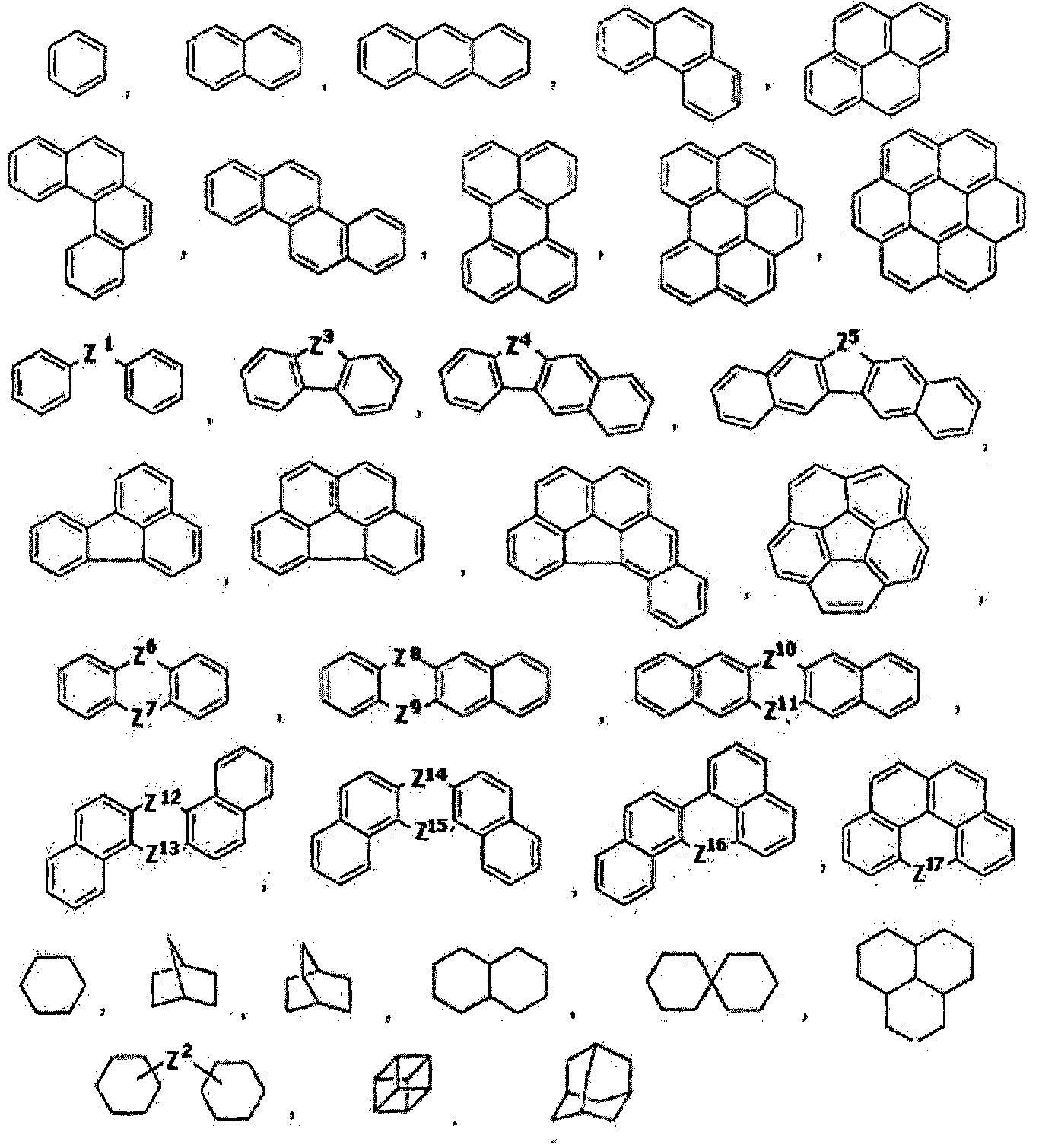 상기 그룹 1에서,Z1 및 Z2는 각각 독립적으로 단일 결합, 치환 또는 비치환된 C1 내지 C20 알킬렌기, 치환 또는 비치환된 C3 내지 C20 사이클로알킬렌기, 치환 또는 비치환된 C6 내지 C20 아릴렌기, 치환 또는 비치환된 C2 내지 C20 헤테로아릴렌기, 치환 또는 비치환된 C2 내지 C20 알케닐렌기, 치환 또는 비치환된 C2 내지 C20 알키닐렌기, C=O, NRa, 산소(O), 황(S) 또는 이들의 조합이고, 여기서 Ra는 수소, 치환 또는 비치환된 C1 내지 C10 알킬기, 할로겐 원자 또는 이들의 조합이고,Z3 내지 Z17은 각각 독립적으로 C=O, NRa, 산소(O), 황(S), CRbRc 또는 이들의 조합이고, 여기서 Ra 내지 Rc는 각각 독립적으로 수소, 치환 또는 비치환된 C1 내지 C10 알킬기, 할로겐 원자, 할로겐 함유기 또는 이들의 조합이다.
 - 제1항에서,상기 A1 내지 A3 중 적어도 하나는 다환 방향족 기인 하드마스크 조성물용 모노머.
- 제3항에서,상기 A1 및 A3 는 각각 독립적으로 벤젠 기, 나프탈렌 기, 바이페닐기 또는 피렌 기이고,상기 A2 는 피렌기, 퍼릴렌기, 벤조퍼릴렌기 또는 코로넨기인하드마스크 조성물용 모노머.
- [규칙 제91조에 의한 정정 12.07.2013]
제1항에서,하기 화학식 2 또는 3으로 표현되는 하드마스크 조성물용 모노머:[화학식 2] [화학식 3]
 상기 화학식 2 또는 3에서,A1 내지 A3는 각각 독립적으로 지방족 고리기 또는 방향족 고리기이고,X1 내지 X3는 각각 독립적으로 수소, 히드록시기, 치환 또는 비치환된 아미노기, 할로겐 원자, 할로겐 함유기 또는 이들의 조합이다.
 - [규칙 제91조에 의한 정정 12.07.2013]
제5항에서,하기 화학식 4 내지 14로 이루어진 군에서 선택되는 하나로 표현되는 하드마스크 조성물용 모노머:[화학식 4] [화학식 5]
 [화학식 6]
 [화학식 7]
 [화학식 8]
 [화학식 9]
 [화학식 10]
 [화학식 11]
 [화학식 12]
 [화학식 13]
 [화학식 14]
- 제1항에서,상기 모노머는 500 내지 5,000의 분자량을 가지는 모노머.
- [규칙 제91조에 의한 정정 12.07.2013]
하기 화학식 1로 표현되는 모노머, 그리고용매를 포함하는 하드마스크 조성물:[화학식 1] 상기 화학식 1에서,A1 내지 A3는 각각 독립적으로 지방족 고리기 또는 방향족 고리기이고,X1 내지 X3는 각각 독립적으로 수소, 히드록시기, 치환 또는 비치환된 아미노기, 할로겐 원자, 할로겐 함유기 또는 이들의 조합이고,L1 및 L2는 각각 독립적으로 단일 결합 또는 치환 또는 비치환된 C1 내지 C6 알킬렌기이고,n은 1 내지 5의 정수이고,m은 1 내지 3의 정수이다.
 - [규칙 제91조에 의한 정정 12.07.2013]
제8항에서,상기 A1 내지 A3는 각각 독립적으로 하기 그룹 1에서 선택된 치환 또는 비치환된 고리기인 하드마스크 조성물:[그룹 1]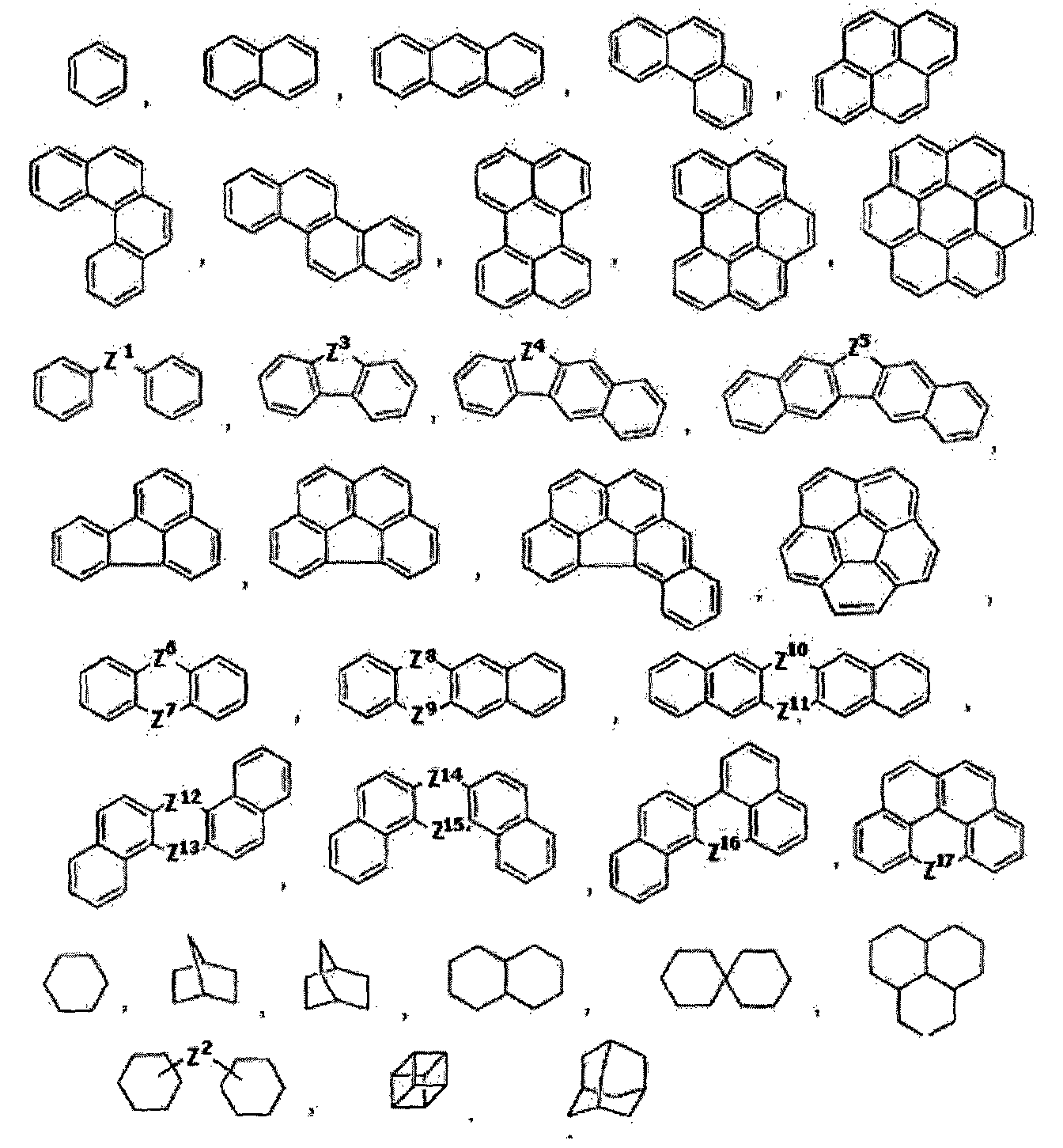 상기 그룹 1에서,Z1 및 Z2는 각각 독립적으로 단일 결합, 치환 또는 비치환된 C1 내지 C20 알킬렌기, 치환 또는 비치환된 C3 내지 C20 사이클로알킬렌기, 치환 또는 비치환된 C6 내지 C20 아릴렌기, 치환 또는 비치환된 C2 내지 C20 헤테로아릴렌기, 치환 또는 비치환된 C2 내지 C20 알케닐렌기, 치환 또는 비치환된 C2 내지 C20 알키닐렌기, C=O, NRa, 산소(O), 황(S) 또는 이들의 조합이고, 여기서 Ra는 수소, 치환 또는 비치환된 C1 내지 C10 알킬기, 할로겐 원자 또는 이들의 조합이고,Z3 내지 Z17은 각각 독립적으로 C=O, NRa, 산소(O), 황(S), CRbRc 또는 이들의 조합이고, 여기서 Ra 내지 Rc는 각각 독립적으로 수소, 치환 또는 비치환된 C1 내지 C10 알킬기, 할로겐 원자, 할로겐 함유기 또는 이들의 조합이다.
 - 제8항에서,상기 A1 내지 A3 중 적어도 하나는 다환 방향족 기인 하드마스크 조성물.
- 제10항에서,상기 A1 및 A3 는 각각 독립적으로 벤젠 기, 나프탈렌 기, 바이페닐기 또는 피렌 기이고,상기 A2 는 피렌기, 퍼릴렌기, 벤조퍼릴렌기 또는 코로넨기인하드마스크 조성물.
- 제8항에서,상기 모노머는 하기 화학식 2 또는 3으로 표현되는 하드마스크 조성물:[화학식 2]
 [화학식 3]
 상기 화학식 2 또는 3에서,A1 내지 A3는 각각 독립적으로 지방족 고리기 또는 방향족 고리기이고,X1 내지 X3는 각각 독립적으로 수소, 히드록시기, 치환 또는 비치환된 아미노기, 할로겐 원자, 할로겐 함유기 또는 이들의 조합이다.
 - [규칙 제91조에 의한 정정 12.07.2013]
제12항에서,상기 모노머는 하기 화학식 4 내지 14로 이루어진 군에서 선택되는 하나로 표현되는 모노머를 적어도 하나 포함하는 하드마스크 조성물:[화학식 4] [화학식 5]
 [화학식 6]
 [화학식 7]
 [화학식 8]
 [화학식 9]
 [화학식 10]
 [화학식 11]
 [화학식 12]
 [화학식 13]
 [화학식 14]
- 제8항에서,상기 모노머는 500 내지 5,000의 분자량을 가지는 하드마스크 조성물.
- 제8항에서,상기 모노머는 상기 하드마스크 조성물의 총 함량에 대하여 0.1 내지 50 중량%로 포함되어 있는 하드마스크 조성물.
- 기판 위에 재료 층을 제공하는 단계,상기 재료 층 위에 제8항 내지 제15항 중 어느 한 항에 따른 하드마스크 조성물을 적용하는 단계,상기 하드마스크 조성물을 열처리하여 하드마스크 층을 형성하는 단계,상기 하드마스크 층 위에 실리콘 함유 박막층을 형성하는 단계,상기 실리콘 함유 박막층 위에 포토레지스트 층을 형성하는 단계,상기 포토레지스트 층을 노광 및 현상하여 포토레지스트 패턴을 형성하는 단계상기 포토레지스트 패턴을 이용하여 상기 실리콘 함유 박막층 및 상기 하드마스크 층을 선택적으로 제거하고 상기 재료 층의 일부를 노출하는 단계, 그리고상기 재료 층의 노출된 부분을 식각하는 단계를 포함하는 패턴 형성 방법.
- 제16항에서,상기 하드마스크 조성물을 적용하는 단계는 스핀-온 코팅 방법으로 수행하는 패턴 형성 방법.
Priority Applications (2)
| Application Number | Priority Date | Filing Date | Title |
|---|---|---|---|
| CN201380059507.8A CN104812729B (zh) | 2012-12-26 | 2013-06-04 | 单体、包含此单体的硬屏蔽组成物及使用此硬屏蔽组成物形成图案的方法 |
| US14/441,241 US9556094B2 (en) | 2012-12-26 | 2013-06-04 | Monomer, hardmask composition including monomer, and method for forming pattern by using hardmask composition |
Applications Claiming Priority (8)
| Application Number | Priority Date | Filing Date | Title |
|---|---|---|---|
| KR10-2012-0153752 | 2012-12-26 | ||
| KR20120153752 | 2012-12-26 | ||
| KR10-2012-0153751 | 2012-12-26 | ||
| KR1020120153750A KR101590810B1 (ko) | 2012-12-26 | 2012-12-26 | 모노머, 상기 모노머를 포함하는 하드마스크 조성물 및 상기 하드마스크 조성물을 사용하는 패턴형성방법 |
| KR10-2012-0153750 | 2012-12-26 | ||
| KR1020120153751A KR101590809B1 (ko) | 2012-12-26 | 2012-12-26 | 하드마스크 조성물용 모노머, 상기 모노머를 포함하는 하드마스크 조성물 및 상기 하드마스크 조성물을 사용하는 패턴형성방법 |
| KR1020130017054A KR101693612B1 (ko) | 2012-12-26 | 2013-02-18 | 하드마스크 조성물용 모노머, 상기 모노머를 포함하는 하드마스크 조성물 및 상기 하드마스크 조성물을 사용하는 패턴형성방법 |
| KR10-2013-0017054 | 2013-02-18 |
Publications (1)
| Publication Number | Publication Date |
|---|---|
| WO2014104496A1 true WO2014104496A1 (ko) | 2014-07-03 |
Family
ID=51021527
Family Applications (1)
| Application Number | Title | Priority Date | Filing Date |
|---|---|---|---|
| PCT/KR2013/004903 Ceased WO2014104496A1 (ko) | 2012-12-26 | 2013-06-04 | 모노머, 상기 모노머를 포함하는 하드마스크 조성물 및 상기 하드마스크 조성물을 사용하는 패턴형성방법 |
Country Status (2)
| Country | Link |
|---|---|
| TW (1) | TWI509364B (ko) |
| WO (1) | WO2014104496A1 (ko) |
Cited By (3)
| Publication number | Priority date | Publication date | Assignee | Title |
|---|---|---|---|---|
| US20160237306A1 (en) * | 2015-02-17 | 2016-08-18 | Samsung Sdi Co., Ltd. | Monomer, organic layer composition, organic layer, and method of forming patterns |
| US10777412B2 (en) | 2017-07-14 | 2020-09-15 | Samsung Electronics Co., Ltd. | Hardmask composition, method of preparing the same, and method of forming patterned layer by using the hardmask composition |
| TWI724702B (zh) * | 2018-12-21 | 2021-04-11 | 南韓商三星Sdi股份有限公司 | 硬罩幕組成物、硬罩幕層以及形成圖案的方法 |
Families Citing this family (2)
| Publication number | Priority date | Publication date | Assignee | Title |
|---|---|---|---|---|
| KR101806329B1 (ko) * | 2014-11-24 | 2017-12-07 | 삼성에스디아이 주식회사 | 모노머, 중합체, 유기막 조성물, 유기막, 및 패턴형성방법 |
| US9862668B2 (en) * | 2014-11-24 | 2018-01-09 | Samsung Sdi Co., Ltd. | Monomer, polymer, organic layer composition, organic layer, and method of forming patterns |
Citations (5)
| Publication number | Priority date | Publication date | Assignee | Title |
|---|---|---|---|---|
| KR20070024512A (ko) * | 2004-04-15 | 2007-03-02 | 미츠비시 가스 가가쿠 가부시키가이샤 | 레지스트 조성물 |
| KR100833212B1 (ko) * | 2006-12-01 | 2008-05-28 | 제일모직주식회사 | 반사방지 하드마스크 조성물 |
| KR20090120827A (ko) * | 2008-05-20 | 2009-11-25 | 제일모직주식회사 | 방향족 고리 함유 중합체, 이를 포함하는 반사방지하드마스크 조성물 및 이를 이용한 재료의 패턴화 방법 |
| KR20100080139A (ko) * | 2008-12-31 | 2010-07-08 | 제일모직주식회사 | 고탄소 함량을 가지는 방향족 고리 함유 중합체, 이를 포함하는 레지스트 하층막용 조성물 및 이를 이용한 재료의패턴화 방법 |
| KR20120067602A (ko) * | 2010-12-16 | 2012-06-26 | 제일모직주식회사 | 하드마스크 조성물, 이를 사용한 패턴 형성 방법 및 상기 패턴을 포함하는 반도체 집적회로 디바이스 |
Family Cites Families (2)
| Publication number | Priority date | Publication date | Assignee | Title |
|---|---|---|---|---|
| TW320629B (ko) * | 1994-10-20 | 1997-11-21 | Chisso Corp | |
| KR101344792B1 (ko) * | 2010-12-17 | 2013-12-24 | 제일모직주식회사 | 하드마스크 조성물, 이를 사용한 패턴 형성 방법 및 상기 패턴을 포함하는 반도체 집적회로 디바이스 |
-
2013
- 2013-06-04 WO PCT/KR2013/004903 patent/WO2014104496A1/ko not_active Ceased
- 2013-07-17 TW TW102125537A patent/TWI509364B/zh active
Patent Citations (5)
| Publication number | Priority date | Publication date | Assignee | Title |
|---|---|---|---|---|
| KR20070024512A (ko) * | 2004-04-15 | 2007-03-02 | 미츠비시 가스 가가쿠 가부시키가이샤 | 레지스트 조성물 |
| KR100833212B1 (ko) * | 2006-12-01 | 2008-05-28 | 제일모직주식회사 | 반사방지 하드마스크 조성물 |
| KR20090120827A (ko) * | 2008-05-20 | 2009-11-25 | 제일모직주식회사 | 방향족 고리 함유 중합체, 이를 포함하는 반사방지하드마스크 조성물 및 이를 이용한 재료의 패턴화 방법 |
| KR20100080139A (ko) * | 2008-12-31 | 2010-07-08 | 제일모직주식회사 | 고탄소 함량을 가지는 방향족 고리 함유 중합체, 이를 포함하는 레지스트 하층막용 조성물 및 이를 이용한 재료의패턴화 방법 |
| KR20120067602A (ko) * | 2010-12-16 | 2012-06-26 | 제일모직주식회사 | 하드마스크 조성물, 이를 사용한 패턴 형성 방법 및 상기 패턴을 포함하는 반도체 집적회로 디바이스 |
Cited By (6)
| Publication number | Priority date | Publication date | Assignee | Title |
|---|---|---|---|---|
| US20160237306A1 (en) * | 2015-02-17 | 2016-08-18 | Samsung Sdi Co., Ltd. | Monomer, organic layer composition, organic layer, and method of forming patterns |
| CN105884685A (zh) * | 2015-02-17 | 2016-08-24 | 三星Sdi株式会社 | 单体、有机层组合物、有机层以及形成图案的方法 |
| US10332751B2 (en) | 2015-02-17 | 2019-06-25 | Samsung Sdi Co., Ltd. | Monomer, organic layer composition, organic layer, and method of forming patterns |
| US10777412B2 (en) | 2017-07-14 | 2020-09-15 | Samsung Electronics Co., Ltd. | Hardmask composition, method of preparing the same, and method of forming patterned layer by using the hardmask composition |
| TWI724702B (zh) * | 2018-12-21 | 2021-04-11 | 南韓商三星Sdi股份有限公司 | 硬罩幕組成物、硬罩幕層以及形成圖案的方法 |
| US11409197B2 (en) | 2018-12-21 | 2022-08-09 | Samsung Sdi Co., Ltd. | Hardmask composition, hardmask layer and method of forming patterns |
Also Published As
| Publication number | Publication date |
|---|---|
| TW201426198A (zh) | 2014-07-01 |
| TWI509364B (zh) | 2015-11-21 |
Similar Documents
| Publication | Publication Date | Title |
|---|---|---|
| WO2013100409A1 (ko) | 하드마스크 조성물용 모노머, 상기 모노머를 포함하는 하드마스크 조성물 및 상기 하드마스크 조성물을 사용하는 패턴형성방법 | |
| WO2019022404A1 (ko) | 바닥반사 방지막 형성용 중합체 및 이를 포함하는 바닥반사 방지막 형성용 조성물 | |
| WO2020076122A1 (ko) | 화합물, 이를 포함하는 포토레지스트 조성물, 이를 포함하는 포토레지스트 패턴 및 포토레지스트 패턴의 제조 방법 | |
| WO2016043558A1 (en) | Photo-acid generating agent | |
| WO2017057813A1 (ko) | 바인더 수지 및 이를 포함하는 감광성 수지 조성물 | |
| WO2014065500A1 (ko) | 하드마스크 조성물 및 이를 사용한 패턴형성방법 | |
| WO2014104496A1 (ko) | 모노머, 상기 모노머를 포함하는 하드마스크 조성물 및 상기 하드마스크 조성물을 사용하는 패턴형성방법 | |
| WO2013100298A1 (en) | Positive photosensitive resin composition | |
| WO2021054570A1 (ko) | 하드마스크 조성물, 하드마스크 층 및 패턴 형성 방법 | |
| WO2022260283A1 (ko) | 감광성 수지 조성물, 이를 이용한 감광성 수지막, 컬러필터 및 디스플레이 장치 | |
| WO2012005418A1 (ko) | 레지스트 하층막용 방향족 고리 함유 화합물, 이를 포함하는 레지스트 하층막 조성물 및 이를 이용하는 소자의 패턴 형성 방법 | |
| WO2021091223A1 (ko) | 바인더 수지, 네가티브형 감광성 수지 조성물 및 이를 이용하여 형성된 블랙뱅크를 포함하는 디스플레이 장치 | |
| WO2023113085A1 (ko) | 신규 광산발생제, 포토레지스트 조성물 및 포토레지스트 패턴 형성 방법 | |
| WO2019074262A1 (ko) | 바인더 수지 및 이를 포함하는 감광성 수지 조성물 또는 코팅 용액 | |
| WO2022045737A1 (ko) | 포지티브형 감광성 수지 조성물 | |
| WO2020197179A1 (ko) | 알칼리 가용성, 광경화성 및 열경화성을 갖는 공중합체, 이를 이용한 감광성 수지 조성물, 감광성 수지 필름, 및 컬러필터 | |
| WO2013062255A2 (ko) | 열산발생제 결합 모노머, 상기 열산발생제 결합 모노머로부터 얻어진 중합체, 상기 중합체를 포함하는 레지스트 하층막용 조성물 및 상기 레지스트 하층막용 조성물을 사용한 패턴 형성 방법 | |
| WO2023033465A1 (ko) | 클릭반응을 이용한 cnt 트랜지스터 및 이의 제조방법 | |
| WO2020067638A1 (ko) | 포지티브형 감광성 수지 조성물, 이를 이용한 감광성 수지막 및 전자 소자 | |
| WO2022182014A1 (ko) | 광결정 구조체 및 이의 제조 방법 | |
| WO2021080267A1 (ko) | 폴리실록산 공중합체, 이의 제조방법 및 이를 포함하는 수지 조성물 | |
| WO2020184972A1 (ko) | 폴리이미드 공중합체, 폴리이미드 공중합체의 제조방법, 이를 이용한 감광성 수지 조성물, 감광성 수지 필름 및 광학 장치 | |
| WO2016122160A1 (ko) | 신규한 디옥심에스테르 화합물 및 이를 포함하는 광중합 개시제 및 포토레지스트 조성물 | |
| WO2025079919A1 (ko) | 감광성 수지 전구체 조성물, 감광성 수지 조성물, 절연막 및 반도체 장치 | |
| WO2020153771A1 (ko) | 디아민 화합물, 및 이를 이용한 폴리이미드 전구체 및 폴리이미드 필름 |
Legal Events
| Date | Code | Title | Description |
|---|---|---|---|
| 121 | Ep: the epo has been informed by wipo that ep was designated in this application |
Ref document number: 13869352 Country of ref document: EP Kind code of ref document: A1 |
|
| WWE | Wipo information: entry into national phase |
Ref document number: 14441241 Country of ref document: US |
|
| NENP | Non-entry into the national phase |
Ref country code: DE |
|
| 122 | Ep: pct application non-entry in european phase |
Ref document number: 13869352 Country of ref document: EP Kind code of ref document: A1 |