WO2014080593A1 - エンドレスベルトの製造方法及びエンドレスベルト - Google Patents
エンドレスベルトの製造方法及びエンドレスベルト Download PDFInfo
- Publication number
- WO2014080593A1 WO2014080593A1 PCT/JP2013/006662 JP2013006662W WO2014080593A1 WO 2014080593 A1 WO2014080593 A1 WO 2014080593A1 JP 2013006662 W JP2013006662 W JP 2013006662W WO 2014080593 A1 WO2014080593 A1 WO 2014080593A1
- Authority
- WO
- WIPO (PCT)
- Prior art keywords
- belt
- rubber
- unvulcanized
- longitudinal direction
- adhesive
- Prior art date
- Legal status (The legal status is an assumption and is not a legal conclusion. Google has not performed a legal analysis and makes no representation as to the accuracy of the status listed.)
- Ceased
Links
Images

Classifications
-
- B—PERFORMING OPERATIONS; TRANSPORTING
- B29—WORKING OF PLASTICS; WORKING OF SUBSTANCES IN A PLASTIC STATE IN GENERAL
- B29C—SHAPING OR JOINING OF PLASTICS; SHAPING OF MATERIAL IN A PLASTIC STATE, NOT OTHERWISE PROVIDED FOR; AFTER-TREATMENT OF THE SHAPED PRODUCTS, e.g. REPAIRING
- B29C65/00—Joining or sealing of preformed parts, e.g. welding of plastics materials; Apparatus therefor
- B29C65/48—Joining or sealing of preformed parts, e.g. welding of plastics materials; Apparatus therefor using adhesives, i.e. using supplementary joining material; solvent bonding
- B29C65/4805—Joining or sealing of preformed parts, e.g. welding of plastics materials; Apparatus therefor using adhesives, i.e. using supplementary joining material; solvent bonding characterised by the type of adhesives
- B29C65/483—Reactive adhesives, e.g. chemically curing adhesives
-
- B—PERFORMING OPERATIONS; TRANSPORTING
- B29—WORKING OF PLASTICS; WORKING OF SUBSTANCES IN A PLASTIC STATE IN GENERAL
- B29C—SHAPING OR JOINING OF PLASTICS; SHAPING OF MATERIAL IN A PLASTIC STATE, NOT OTHERWISE PROVIDED FOR; AFTER-TREATMENT OF THE SHAPED PRODUCTS, e.g. REPAIRING
- B29C65/00—Joining or sealing of preformed parts, e.g. welding of plastics materials; Apparatus therefor
- B29C65/48—Joining or sealing of preformed parts, e.g. welding of plastics materials; Apparatus therefor using adhesives, i.e. using supplementary joining material; solvent bonding
- B29C65/50—Joining or sealing of preformed parts, e.g. welding of plastics materials; Apparatus therefor using adhesives, i.e. using supplementary joining material; solvent bonding using adhesive tape, e.g. thermoplastic tape; using threads or the like
- B29C65/5042—Joining or sealing of preformed parts, e.g. welding of plastics materials; Apparatus therefor using adhesives, i.e. using supplementary joining material; solvent bonding using adhesive tape, e.g. thermoplastic tape; using threads or the like covering both elements to be joined
- B29C65/505—Joining or sealing of preformed parts, e.g. welding of plastics materials; Apparatus therefor using adhesives, i.e. using supplementary joining material; solvent bonding using adhesive tape, e.g. thermoplastic tape; using threads or the like covering both elements to be joined and placed in a recess formed in the parts to be joined, e.g. in order to obtain a continuous surface
-
- B—PERFORMING OPERATIONS; TRANSPORTING
- B29—WORKING OF PLASTICS; WORKING OF SUBSTANCES IN A PLASTIC STATE IN GENERAL
- B29C—SHAPING OR JOINING OF PLASTICS; SHAPING OF MATERIAL IN A PLASTIC STATE, NOT OTHERWISE PROVIDED FOR; AFTER-TREATMENT OF THE SHAPED PRODUCTS, e.g. REPAIRING
- B29C66/00—General aspects of processes or apparatus for joining preformed parts
- B29C66/01—General aspects dealing with the joint area or with the area to be joined
- B29C66/02—Preparation of the material, in the area to be joined, prior to joining or welding
- B29C66/022—Mechanical pre-treatments, e.g. reshaping
- B29C66/0224—Mechanical pre-treatments, e.g. reshaping with removal of material
- B29C66/02245—Abrading, e.g. grinding, sanding, sandblasting or scraping
-
- B—PERFORMING OPERATIONS; TRANSPORTING
- B29—WORKING OF PLASTICS; WORKING OF SUBSTANCES IN A PLASTIC STATE IN GENERAL
- B29C—SHAPING OR JOINING OF PLASTICS; SHAPING OF MATERIAL IN A PLASTIC STATE, NOT OTHERWISE PROVIDED FOR; AFTER-TREATMENT OF THE SHAPED PRODUCTS, e.g. REPAIRING
- B29C66/00—General aspects of processes or apparatus for joining preformed parts
- B29C66/01—General aspects dealing with the joint area or with the area to be joined
- B29C66/05—Particular design of joint configurations
- B29C66/10—Particular design of joint configurations particular design of the joint cross-sections
- B29C66/12—Joint cross-sections combining only two joint-segments; Tongue and groove joints; Tenon and mortise joints; Stepped joint cross-sections
- B29C66/128—Stepped joint cross-sections
- B29C66/1282—Stepped joint cross-sections comprising at least one overlap joint-segment
- B29C66/12821—Stepped joint cross-sections comprising at least one overlap joint-segment comprising at least two overlap joint-segments
- B29C66/12822—Stepped joint cross-sections comprising at least one overlap joint-segment comprising at least two overlap joint-segments comprising at least three overlap joint-segments
-
- B—PERFORMING OPERATIONS; TRANSPORTING
- B29—WORKING OF PLASTICS; WORKING OF SUBSTANCES IN A PLASTIC STATE IN GENERAL
- B29C—SHAPING OR JOINING OF PLASTICS; SHAPING OF MATERIAL IN A PLASTIC STATE, NOT OTHERWISE PROVIDED FOR; AFTER-TREATMENT OF THE SHAPED PRODUCTS, e.g. REPAIRING
- B29C66/00—General aspects of processes or apparatus for joining preformed parts
- B29C66/01—General aspects dealing with the joint area or with the area to be joined
- B29C66/05—Particular design of joint configurations
- B29C66/10—Particular design of joint configurations particular design of the joint cross-sections
- B29C66/12—Joint cross-sections combining only two joint-segments; Tongue and groove joints; Tenon and mortise joints; Stepped joint cross-sections
- B29C66/128—Stepped joint cross-sections
- B29C66/1284—Stepped joint cross-sections comprising at least one butt joint-segment
- B29C66/12841—Stepped joint cross-sections comprising at least one butt joint-segment comprising at least two butt joint-segments
- B29C66/12842—Stepped joint cross-sections comprising at least one butt joint-segment comprising at least two butt joint-segments comprising at least three butt joint-segments
-
- B—PERFORMING OPERATIONS; TRANSPORTING
- B29—WORKING OF PLASTICS; WORKING OF SUBSTANCES IN A PLASTIC STATE IN GENERAL
- B29C—SHAPING OR JOINING OF PLASTICS; SHAPING OF MATERIAL IN A PLASTIC STATE, NOT OTHERWISE PROVIDED FOR; AFTER-TREATMENT OF THE SHAPED PRODUCTS, e.g. REPAIRING
- B29C66/00—General aspects of processes or apparatus for joining preformed parts
- B29C66/01—General aspects dealing with the joint area or with the area to be joined
- B29C66/05—Particular design of joint configurations
- B29C66/10—Particular design of joint configurations particular design of the joint cross-sections
- B29C66/14—Particular design of joint configurations particular design of the joint cross-sections the joint having the same thickness as the thickness of the parts to be joined
-
- B—PERFORMING OPERATIONS; TRANSPORTING
- B29—WORKING OF PLASTICS; WORKING OF SUBSTANCES IN A PLASTIC STATE IN GENERAL
- B29C—SHAPING OR JOINING OF PLASTICS; SHAPING OF MATERIAL IN A PLASTIC STATE, NOT OTHERWISE PROVIDED FOR; AFTER-TREATMENT OF THE SHAPED PRODUCTS, e.g. REPAIRING
- B29C66/00—General aspects of processes or apparatus for joining preformed parts
- B29C66/40—General aspects of joining substantially flat articles, e.g. plates, sheets or web-like materials; Making flat seams in tubular or hollow articles; Joining single elements to substantially flat surfaces
- B29C66/41—Joining substantially flat articles ; Making flat seams in tubular or hollow articles
- B29C66/43—Joining a relatively small portion of the surface of said articles
- B29C66/432—Joining a relatively small portion of the surface of said articles for making tubular articles or closed loops, e.g. by joining several sheets ; for making hollow articles or hollow preforms
- B29C66/4322—Joining a relatively small portion of the surface of said articles for making tubular articles or closed loops, e.g. by joining several sheets ; for making hollow articles or hollow preforms by joining a single sheet to itself
-
- B—PERFORMING OPERATIONS; TRANSPORTING
- B29—WORKING OF PLASTICS; WORKING OF SUBSTANCES IN A PLASTIC STATE IN GENERAL
- B29C—SHAPING OR JOINING OF PLASTICS; SHAPING OF MATERIAL IN A PLASTIC STATE, NOT OTHERWISE PROVIDED FOR; AFTER-TREATMENT OF THE SHAPED PRODUCTS, e.g. REPAIRING
- B29C66/00—General aspects of processes or apparatus for joining preformed parts
- B29C66/40—General aspects of joining substantially flat articles, e.g. plates, sheets or web-like materials; Making flat seams in tubular or hollow articles; Joining single elements to substantially flat surfaces
- B29C66/41—Joining substantially flat articles ; Making flat seams in tubular or hollow articles
- B29C66/43—Joining a relatively small portion of the surface of said articles
- B29C66/432—Joining a relatively small portion of the surface of said articles for making tubular articles or closed loops, e.g. by joining several sheets ; for making hollow articles or hollow preforms
- B29C66/4324—Joining a relatively small portion of the surface of said articles for making tubular articles or closed loops, e.g. by joining several sheets ; for making hollow articles or hollow preforms for making closed loops, e.g. belts
-
- B—PERFORMING OPERATIONS; TRANSPORTING
- B29—WORKING OF PLASTICS; WORKING OF SUBSTANCES IN A PLASTIC STATE IN GENERAL
- B29C—SHAPING OR JOINING OF PLASTICS; SHAPING OF MATERIAL IN A PLASTIC STATE, NOT OTHERWISE PROVIDED FOR; AFTER-TREATMENT OF THE SHAPED PRODUCTS, e.g. REPAIRING
- B29C66/00—General aspects of processes or apparatus for joining preformed parts
- B29C66/70—General aspects of processes or apparatus for joining preformed parts characterised by the composition, physical properties or the structure of the material of the parts to be joined; Joining with non-plastics material
- B29C66/71—General aspects of processes or apparatus for joining preformed parts characterised by the composition, physical properties or the structure of the material of the parts to be joined; Joining with non-plastics material characterised by the composition of the plastics material of the parts to be joined
-
- B—PERFORMING OPERATIONS; TRANSPORTING
- B29—WORKING OF PLASTICS; WORKING OF SUBSTANCES IN A PLASTIC STATE IN GENERAL
- B29C—SHAPING OR JOINING OF PLASTICS; SHAPING OF MATERIAL IN A PLASTIC STATE, NOT OTHERWISE PROVIDED FOR; AFTER-TREATMENT OF THE SHAPED PRODUCTS, e.g. REPAIRING
- B29C66/00—General aspects of processes or apparatus for joining preformed parts
- B29C66/70—General aspects of processes or apparatus for joining preformed parts characterised by the composition, physical properties or the structure of the material of the parts to be joined; Joining with non-plastics material
- B29C66/72—General aspects of processes or apparatus for joining preformed parts characterised by the composition, physical properties or the structure of the material of the parts to be joined; Joining with non-plastics material characterised by the structure of the material of the parts to be joined
- B29C66/723—General aspects of processes or apparatus for joining preformed parts characterised by the composition, physical properties or the structure of the material of the parts to be joined; Joining with non-plastics material characterised by the structure of the material of the parts to be joined being multi-layered
-
- B—PERFORMING OPERATIONS; TRANSPORTING
- B29—WORKING OF PLASTICS; WORKING OF SUBSTANCES IN A PLASTIC STATE IN GENERAL
- B29C—SHAPING OR JOINING OF PLASTICS; SHAPING OF MATERIAL IN A PLASTIC STATE, NOT OTHERWISE PROVIDED FOR; AFTER-TREATMENT OF THE SHAPED PRODUCTS, e.g. REPAIRING
- B29C66/00—General aspects of processes or apparatus for joining preformed parts
- B29C66/70—General aspects of processes or apparatus for joining preformed parts characterised by the composition, physical properties or the structure of the material of the parts to be joined; Joining with non-plastics material
- B29C66/73—General aspects of processes or apparatus for joining preformed parts characterised by the composition, physical properties or the structure of the material of the parts to be joined; Joining with non-plastics material characterised by the intensive physical properties of the material of the parts to be joined, by the optical properties of the material of the parts to be joined, by the extensive physical properties of the parts to be joined, by the state of the material of the parts to be joined or by the material of the parts to be joined being a thermoplastic or a thermoset
- B29C66/737—General aspects of processes or apparatus for joining preformed parts characterised by the composition, physical properties or the structure of the material of the parts to be joined; Joining with non-plastics material characterised by the intensive physical properties of the material of the parts to be joined, by the optical properties of the material of the parts to be joined, by the extensive physical properties of the parts to be joined, by the state of the material of the parts to be joined or by the material of the parts to be joined being a thermoplastic or a thermoset characterised by the state of the material of the parts to be joined
- B29C66/7375—General aspects of processes or apparatus for joining preformed parts characterised by the composition, physical properties or the structure of the material of the parts to be joined; Joining with non-plastics material characterised by the intensive physical properties of the material of the parts to be joined, by the optical properties of the material of the parts to be joined, by the extensive physical properties of the parts to be joined, by the state of the material of the parts to be joined or by the material of the parts to be joined being a thermoplastic or a thermoset characterised by the state of the material of the parts to be joined uncured, partially cured or fully cured
- B29C66/73755—General aspects of processes or apparatus for joining preformed parts characterised by the composition, physical properties or the structure of the material of the parts to be joined; Joining with non-plastics material characterised by the intensive physical properties of the material of the parts to be joined, by the optical properties of the material of the parts to be joined, by the extensive physical properties of the parts to be joined, by the state of the material of the parts to be joined or by the material of the parts to be joined being a thermoplastic or a thermoset characterised by the state of the material of the parts to be joined uncured, partially cured or fully cured the to-be-joined area of at least one of the parts to be joined being fully cured, i.e. fully cross-linked, fully vulcanized
- B29C66/73756—General aspects of processes or apparatus for joining preformed parts characterised by the composition, physical properties or the structure of the material of the parts to be joined; Joining with non-plastics material characterised by the intensive physical properties of the material of the parts to be joined, by the optical properties of the material of the parts to be joined, by the extensive physical properties of the parts to be joined, by the state of the material of the parts to be joined or by the material of the parts to be joined being a thermoplastic or a thermoset characterised by the state of the material of the parts to be joined uncured, partially cured or fully cured the to-be-joined area of at least one of the parts to be joined being fully cured, i.e. fully cross-linked, fully vulcanized the to-be-joined areas of both parts to be joined being fully cured
-
- B—PERFORMING OPERATIONS; TRANSPORTING
- B29—WORKING OF PLASTICS; WORKING OF SUBSTANCES IN A PLASTIC STATE IN GENERAL
- B29C—SHAPING OR JOINING OF PLASTICS; SHAPING OF MATERIAL IN A PLASTIC STATE, NOT OTHERWISE PROVIDED FOR; AFTER-TREATMENT OF THE SHAPED PRODUCTS, e.g. REPAIRING
- B29C66/00—General aspects of processes or apparatus for joining preformed parts
- B29C66/80—General aspects of machine operations or constructions and parts thereof
- B29C66/83—General aspects of machine operations or constructions and parts thereof characterised by the movement of the joining or pressing tools
- B29C66/836—Moving relative to and tangentially to the parts to be joined, e.g. transversely to the displacement of the parts to be joined, e.g. using a X-Y table
- B29C66/8362—Rollers, cylinders or drums moving relative to and tangentially to the parts to be joined
-
- B—PERFORMING OPERATIONS; TRANSPORTING
- B29—WORKING OF PLASTICS; WORKING OF SUBSTANCES IN A PLASTIC STATE IN GENERAL
- B29C—SHAPING OR JOINING OF PLASTICS; SHAPING OF MATERIAL IN A PLASTIC STATE, NOT OTHERWISE PROVIDED FOR; AFTER-TREATMENT OF THE SHAPED PRODUCTS, e.g. REPAIRING
- B29C66/00—General aspects of processes or apparatus for joining preformed parts
- B29C66/80—General aspects of machine operations or constructions and parts thereof
- B29C66/84—Specific machine types or machines suitable for specific applications
- B29C66/861—Hand-held tools
-
- B—PERFORMING OPERATIONS; TRANSPORTING
- B29—WORKING OF PLASTICS; WORKING OF SUBSTANCES IN A PLASTIC STATE IN GENERAL
- B29D—PRODUCING PARTICULAR ARTICLES FROM PLASTICS OR FROM SUBSTANCES IN A PLASTIC STATE
- B29D29/00—Producing belts or bands
-
- F—MECHANICAL ENGINEERING; LIGHTING; HEATING; WEAPONS; BLASTING
- F16—ENGINEERING ELEMENTS AND UNITS; GENERAL MEASURES FOR PRODUCING AND MAINTAINING EFFECTIVE FUNCTIONING OF MACHINES OR INSTALLATIONS; THERMAL INSULATION IN GENERAL
- F16G—BELTS, CABLES, OR ROPES, PREDOMINANTLY USED FOR DRIVING PURPOSES; CHAINS; FITTINGS PREDOMINANTLY USED THEREFOR
- F16G3/00—Belt fastenings, e.g. for conveyor belts
- F16G3/10—Joining belts by sewing, sticking, vulcanising, or the like; Constructional adaptations of the belt ends for this purpose
-
- B—PERFORMING OPERATIONS; TRANSPORTING
- B29—WORKING OF PLASTICS; WORKING OF SUBSTANCES IN A PLASTIC STATE IN GENERAL
- B29C—SHAPING OR JOINING OF PLASTICS; SHAPING OF MATERIAL IN A PLASTIC STATE, NOT OTHERWISE PROVIDED FOR; AFTER-TREATMENT OF THE SHAPED PRODUCTS, e.g. REPAIRING
- B29C66/00—General aspects of processes or apparatus for joining preformed parts
- B29C66/70—General aspects of processes or apparatus for joining preformed parts characterised by the composition, physical properties or the structure of the material of the parts to be joined; Joining with non-plastics material
- B29C66/73—General aspects of processes or apparatus for joining preformed parts characterised by the composition, physical properties or the structure of the material of the parts to be joined; Joining with non-plastics material characterised by the intensive physical properties of the material of the parts to be joined, by the optical properties of the material of the parts to be joined, by the extensive physical properties of the parts to be joined, by the state of the material of the parts to be joined or by the material of the parts to be joined being a thermoplastic or a thermoset
- B29C66/731—General aspects of processes or apparatus for joining preformed parts characterised by the composition, physical properties or the structure of the material of the parts to be joined; Joining with non-plastics material characterised by the intensive physical properties of the material of the parts to be joined, by the optical properties of the material of the parts to be joined, by the extensive physical properties of the parts to be joined, by the state of the material of the parts to be joined or by the material of the parts to be joined being a thermoplastic or a thermoset characterised by the intensive physical properties of the material of the parts to be joined
- B29C66/7316—Surface properties
- B29C66/73161—Roughness or rugosity
-
- B—PERFORMING OPERATIONS; TRANSPORTING
- B29—WORKING OF PLASTICS; WORKING OF SUBSTANCES IN A PLASTIC STATE IN GENERAL
- B29K—INDEXING SCHEME ASSOCIATED WITH SUBCLASSES B29B, B29C OR B29D, RELATING TO MOULDING MATERIALS OR TO MATERIALS FOR MOULDS, REINFORCEMENTS, FILLERS OR PREFORMED PARTS, e.g. INSERTS
- B29K2021/00—Use of unspecified rubbers as moulding material
-
- B—PERFORMING OPERATIONS; TRANSPORTING
- B29—WORKING OF PLASTICS; WORKING OF SUBSTANCES IN A PLASTIC STATE IN GENERAL
- B29K—INDEXING SCHEME ASSOCIATED WITH SUBCLASSES B29B, B29C OR B29D, RELATING TO MOULDING MATERIALS OR TO MATERIALS FOR MOULDS, REINFORCEMENTS, FILLERS OR PREFORMED PARTS, e.g. INSERTS
- B29K2105/00—Condition, form or state of moulded material or of the material to be shaped
- B29K2105/24—Condition, form or state of moulded material or of the material to be shaped crosslinked or vulcanised
-
- B—PERFORMING OPERATIONS; TRANSPORTING
- B29—WORKING OF PLASTICS; WORKING OF SUBSTANCES IN A PLASTIC STATE IN GENERAL
- B29L—INDEXING SCHEME ASSOCIATED WITH SUBCLASS B29C, RELATING TO PARTICULAR ARTICLES
- B29L2029/00—Belts or bands
Definitions
- the present invention relates to an endless belt manufacturing method and an endless belt.
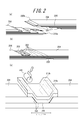
- a typical endless process is as follows. First, as shown in FIG. 2 (a), after part of the surface rubber 204 at both longitudinal ends 200a and 200b of the belt is cut off, the core canvas is peeled off stepwise at the both ends 200a and 200b. Next, as shown in FIG. 2 (b), an adhesive processing material 202 such as rubber cement and unvulcanized adhesive rubber is pasted on the step surface 201, and the belt surface rubber is bonded to both ends in the longitudinal direction of the belt. The both end portions 200a and 200b are overlapped so that a recess 203 is formed therebetween. Thereafter, as shown in FIG.
- one or more layers here two layers of unvulcanized rubber sheets 210a and 210b, cover the recess 203 to which the bonding material 202 has been adhered, and the upper layer of unvulcanized rubber sheet 210a and 210b.
- the upper surface of the rubber sheet 210b is pressed by the roller 300, and the unvulcanized rubber sheets 210a and 210b, the bonding processing material 202, and the surface rubber 204 including the recess 203 are pressed.
- the unvulcanized rubber sheets 210a and 210b are vulcanized and bonded to the adjacent rubber by heating the overlapping longitudinal ends of the belt including the recess 203 while pressing from the upper surface side and the lower surface side. Endless belts can be manufactured.
- the sticking property between the bonding material 202 and the vulcanized surface rubber 204 of the belt is not high, so that the upper unvulcanized rubber sheet 210b of the upper layer as shown in FIG. Even if the upper surface is pressed by the roller 300, the unvulcanized rubber sheets 210a, 210b and the bonding material 202 are peeled off from the surface rubber 204 before vulcanization, and the workability of the vulcanization process is significantly reduced. In some cases, foreign matter was mixed in. Further, after covering the concave portion 203 with the unvulcanized rubber sheets 210a and 210b, the portion laminated on the surface rubber 204 of the unvulcanized rubber sheets 210a and 210b as shown in FIG.
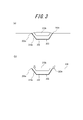
- the belt of the vulcanized rubber sheet to the extent that the edge 203e of the recess is visible as shown in FIG. Buffing at both ends in the longitudinal direction may occur.
- the adhesive processing material 202 is deteriorated by being exposed at the edge 203e of the recess, which causes the belt to crack at the edge 203e, or a layer of the vulcanized rubber sheet indicated by an arrow in the figure.
- the vulcanized rubber sheets 210a and 210b may be completely peeled off from the exposed portion of the boundary surface.
- the present invention effectively solves the above-described problem, and provides an endless belt manufacturing method capable of improving the workability of endless processing and obtaining a highly durable endless belt, and a highly durable endless belt. It is intended to provide.
- the manufacturing method of the endless belt according to the present invention is such that the belt longitudinal direction distance between the belt longitudinal direction edge of the boundary surface between the unvulcanized rubber sheet and the bonding material and the belt longitudinal direction edge of the recess is A, A ⁇ B, where B is the distance in the belt longitudinal direction between the belt longitudinal edge of the region where the workpiece is pasted and the belt longitudinal edge of the recess.
- surface rubber refers to rubber that is disposed in layers and forms the outer surface of the belt.
- the length of the belt longitudinal direction distance A between the belt longitudinal direction edge of the belt boundary surface of the unvulcanized rubber sheet and the adhesive processing material and the belt longitudinal direction edge of the concave portion is the unvulcanized rubber sheet or the like. It shall be before vulcanization.
- “pasting” an adhesive processing material includes disposing and adhering the adhesive processing material to the region.
- an endless belt according to the present invention it is possible to improve the workability of endless processing and obtain an endless belt having high durability. Moreover, according to the endless belt according to the present invention, durability of the endless belt can be enhanced.
- FIG. 1 It is a perspective perspective view which shows one Embodiment of the manufacturing method of the endless belt of this invention. It is a perspective perspective view which shows the manufacturing method of the conventional endless belt. It is a side view which shows the manufacturing method of the conventional endless belt.
- a belt 100 having both ends is manufactured by covering a plurality of layers of canvas 120 with a surface rubber 104, and a part of the surface rubber 104 at both longitudinal ends 100a and 100b of the belt 100 is cut off.
- the core canvas is peeled off stepwise and the step surface 101 is formed at both ends 100a and 100b.
- both end portions of one belt are joined to produce an endless belt.
- the present invention can also be applied to the case of finally producing an endless belt by joining the end portions of a plurality of belts. It is.
- an adhesive improvement processing is performed on the region 105 of the surface rubber 104 as an adhesive improvement processing step.
- the rubber surface is roughened by buffing the outer surface of the surface rubber with a grinder or the like as an adhesive improvement process.
- adheresion improvement processing applied to the surface rubber is bonded to the surface rubber, for example, by buffing the outer surface of the surface rubber or cutting the surface rubber. It shall mean the process which improves the adhesiveness with an unvulcanized rubber sheet or a processing material for adhesion.
- the bonding processing material 102 is bonded to both ends of the step surface 101 and the surface rubber 104 in the longitudinal direction of the belt as a bonding material bonding step.
- the distance in the belt longitudinal direction (hereinafter also referred to as the length of the adhesive material pasting region) between the belt longitudinal direction edge 102e in the region to which the bonding work material 102 is pasted and the belt longitudinal direction edge 103e in the recess to be described later is defined as B.
- the length B of the adhesive material pasting region is defined by the belt longitudinal edge 110e at the boundary surface between the unvulcanized rubber sheet 110a and the bonding material 102, and the belt longitudinal edge 103e of the recess, which will be described later.
- the bonding processing material 102 is affixed so as to be larger than the distance A in the longitudinal direction (hereinafter also referred to as the length of the unvulcanized rubber sheet) A.
- rubber cement and unvulcanized adhesive rubber (rubber cement and rubber cement, which have been widely used as an adhesive processing material 102, which have been widely used in the past, for example, an unvulcanized adhesive rubber dissolved in an organic solvent with strong adhesive strength.
- unvulcanized adhesive rubber having sufficient adhesive strength alone can be used.
- a simpler method is to use an unvulcanized adhesive rubber. In this case, the environmental load can be reduced without using rubber cement or by reducing the amount used.
- Unvulcanized adhesive rubber or unvulcanized adhesive rubber can be used (attached) by laminating only one layer or two or more layers.
- the adhesive force of the unvulcanized adhesive rubber may be 1.0 N / mm or more, and is preferably 1.5 N / mm or more.
- the measurement of adhesive strength is performed according to JIS K 6322.
- the longitudinal direction of the belt is such that the concave portion 103 is formed between both ends of the surface rubber 104 in the longitudinal direction of the belt. Both end portions 100a and 100b are overlapped.
- the adhesive processing material is attached to the recess.
- the belt surface side is the step surface 101.
- the concave portion 103 is formed by an overlapping process, and then the bonding processing material 102 is pasted on the surface rubber 104 of the belt longitudinal direction end portion 100b. Moreover, after forming a recessed part, the processing material for adhesion
- the unvulcanized rubber sheet covering step as shown in FIG. 1 (d), one or more layers, in this embodiment, two layers of unvulcanized rubber sheets 110a and 110b were attached to the bonding material 102.
- the recess 103 between both ends in the longitudinal direction of the belt is covered.
- the adhesive processing material since the adhesive processing material has low weather resistance, it tends to deteriorate if it is exposed on the outer surface of the belt. If the bonding material is exposed at the edge 103e of the recess, cracks are likely to occur at that portion, which may cause the unvulcanized rubber sheet to completely peel off.
- the unvulcanized rubber sheets 110a and 110b are disposed so that the unvulcanized rubber sheets 110a and 110b completely cover the edge 103e of the recess. Then, the unvulcanized rubber sheets 110a and 110b are cut so that the width A of the unvulcanized rubber sheet is smaller than the length B of the adhesive material pasting area. In this way, by bonding the bonding material 102 to a region wider than the region where the unvulcanized rubber sheet is disposed, the unvulcanized rubber sheet and the bonding material can be surface rubber before vulcanization. It can prevent peeling from 104, and can improve the workability of endless processing. As a result, a highly durable endless belt can be obtained by vulcanization joining.
- the length of the upper layer unvulcanized rubber sheet 110b in the belt longitudinal direction is shorter than the same length of the lower layer unvulcanized rubber sheet 110a.
- the length of the unvulcanized rubber sheet is shortened as the distance from the surface rubber increases, thereby facilitating cutting of the unvulcanized rubber sheet.
- it can flow moderately in the longitudinal direction of the belt, and the surface of the belt after vulcanization can be further flattened.
- after unvulcanized rubber sheet 110a, 110b can be laminated
- the upper surface of the upper unvulcanized rubber sheet 110 b is pressed with a roller 300, and the unvulcanized rubber sheets 110 a and 110 b, the bonding material 102, and the surface rubber 104 including the recess 103 are pressed.
- the adhesive processing material 102 is easy to stick firmly to the unvulcanized rubber sheets 110a and 110b, particularly when it contains unvulcanized rubber. Since it is difficult to affix to the surface rubber 104, in the conventional technique, the adhesive processing material 102 is affixed to the unvulcanized rubber sheet 110a rather than the surface rubber 104 when the roller is applied as described above.
- the vulcanized rubber sheets 110 a and 110 b and the bonding processing material 102 peel from the surface rubber 104. Therefore, in the present invention, the length B of the adhesive material pasting region is made larger than the length A of the unvulcanized rubber sheet so that the adhesive processing material 102 protrudes from the unvulcanized rubber sheets 110a and 110b, In the protruding area, the bonding material 102 and the surface rubber 104 are firmly attached. Accordingly, when the upper surface of the upper unvulcanized rubber sheet 110b is pressed by the roller 300, the unvulcanized rubber sheets 110a and 110b and the bonding processing material 102 are effectively prevented from peeling from the surface rubber 104. be able to.
- the unvulcanized rubber sheets 110a and 110b are vulcanized by heating while pressing both longitudinal ends of the overlapped belt including the recess 103 from the upper surface side and the lower surface side.
- the longitudinal end portions 100a and 100b of the belt are firmly bonded by vulcanization, and an endless belt having high durability can be obtained.
- the pressed and heated rubber sheet flows in the longitudinal direction of the belt.
- the height difference (unevenness) between the unvulcanized rubber sheets 110a and 110b and the surface rubber 104 that existed before vulcanization is flattened.
- the length of the unvulcanized rubber sheet in the longitudinal direction of the belt decreases as the distance from the surface rubber increases. It becomes easy to flow.
- the rubber In the vulcanization joining process, when the rubber flows to a region where the adhesion improving process such as buffing is not performed, the rubber that has flowed may become a film on the surface rubber and peel in that region. . In this case, the appearance deteriorates and there is a possibility that the peeled rubber or the like may be mixed into the conveyed product. Therefore, it is necessary to remove the peeled rubber by buffing the belt surface as a finishing work after the vulcanization joining process. It was.
- the distance in the belt longitudinal direction between the belt longitudinal edge 105e of the region 105 subjected to the adhesion improving process and the belt longitudinal edge 103e of the recess hereinafter also referred to as the length of the adhesive improving processed region).
- the adhesion improving region 105 of the surface rubber 104 can be exposed immediately before vulcanization joining. Thereby, the rubber that has flowed in the longitudinal direction of the belt at the time of vulcanization joining can be joined to the surface rubber 104 in the adhesion improving processing region 105, thereby reducing the finishing work after the vulcanization joining process.
- vulcanization is performed in a state where a gas-permeable heat-resistant film is stuck on the surface of the unvulcanized rubber sheet.
- the surface shape after vulcanization can be made better than the case where the surface of the unvulcanized rubber sheet is covered with a cloth, and even if wrinkles occur, the surface shape after belt vulcanization can be improved.
- the formed wrinkles can be made small.
- a resin such as fluororesin or polyolefin can be used as a material that can withstand high heat of 200 ° C. at the maximum.
- the thickness of the transparent heat resistant film is preferably 20 ⁇ m to 100 ⁇ m, and more preferably 30 ⁇ m to 50 ⁇ m.
- the thickness is too thin, wrinkles are likely to be formed on the surface of the belt after vulcanization, and if the thickness is too thick, the surface rubber or adhesive processing material flows during vulcanization, and it protrudes outside the film pasting range. As long as the film is attached, a step is likely to occur between the unvulcanized rubber and the vulcanized rubber.
- a gas-permeable heat-resistant film that has been matted or smoothed, the belt surface after vulcanization is prevented from having an unnatural luster, and the appearance of the belt is further improved. be able to.
Landscapes
- Engineering & Computer Science (AREA)
- Mechanical Engineering (AREA)
- General Engineering & Computer Science (AREA)
- Chemical & Material Sciences (AREA)
- Chemical Kinetics & Catalysis (AREA)
- General Chemical & Material Sciences (AREA)
- Belt Conveyors (AREA)
- Lining Or Joining Of Plastics Or The Like (AREA)
Abstract
Description
一般的なエンドレス加工の工程は以下の通りである。まず、図2(a)に示すように、ベルトの長手方向両端部200a及び200bの表面ゴム204の一部を切除した後、該両端部200a及び200bについて芯体帆布を階段状に剥離しステップ加工し、次に、図2(b)に示すように、ステップ面201にゴムセメント及び未加硫接着ゴム等の接着用加工材202を貼付けし、該ベルトの表面ゴムのベルト長手方向両端の間に凹部203が形成されるように該両端部200a及び200bを重ね合わせる。その後、図2(c)に示すように、一層以上、ここでは二層の未加硫ゴムシート210a及び210bで、接着用加工材202が貼付けされた凹部203を被覆し、上層の未加硫ゴムシート210bの上面をローラ300で押圧して、未加硫ゴムシート210a、210bと接着用加工材202と凹部203を含む表面ゴム204とを圧着させる。それから、凹部203を含む、重ね合わせたベルト長手方向両端部を、上面側及び下面側から押圧しながら加熱することで、未加硫ゴムシート210a、210bが加硫されて隣接するゴムと接合し、エンドレスベルトを製造することができる。
また、未加硫ゴムシート210a及び210bで凹部203を被覆した後に、図3(a)のように、未加硫ゴムシート210a及び210bの表面ゴム204上に積層された部分を、表面ゴム204の表面とほぼ水平となるように切除してから加硫し、さらに外観を整えるために、図3(b)のように、凹部の縁203eが視認できる程度まで、加硫済ゴムシートのベルト長手方向両端部バフ掛けすることがある。この場合、接着用加工材202が凹部の縁203eで露出することで劣化し、該縁203eの部分でベルトに亀裂が生じる原因となったり、図に矢印で示す、加硫済ゴムシートの層境界面の表出した部分から、加硫済ゴムシート210a及び210bが完全に剥離したりしてしまうおそれがあった。
なお、この明細書において、「表面ゴム」とは、層状に配設されベルトの外表面を形成するゴムをいう。
また、未加硫ゴムシート及び接着用加工材のベルト境界面のベルト長手方向縁と、凹部のベルト長手方向縁との間のベルト長手方向距離A等の寸法は、未加硫ゴムシート等を加硫する前のものとする。また、接着用加工材を「貼付け」するとは、該領域に接着用加工材を塗布、散布等して配置することも含むものとする。
本実施形態では、複数層の帆布120を表面ゴム104で被覆した、両端のあるベルト100を製造し、ベルト100の長手方向両端部100a及び100bの表面ゴム104の一部を切除した後、図1(a)に示すように、ステップ加工工程として、該両端部100a及び100bについて、芯体帆布を階段状に剥離しステップ加工してステップ面101を形成する。なお、本実施形態では1本のベルトの両端部について接合し、エンドレスベルトを製造するが、複数本のベルトの端部同士を接合することにより最終的にエンドレスベルトを製造する場合にも適用可能である。
なお、この明細書において、表面ゴムに施される「接着性向上加工」とは、例えば表面ゴムの外表面をバフ掛けしたり表面ゴムを切削したりすることで、該表面ゴムに接合される未加硫ゴムシートや接着用加工材との接着性を向上させる加工をいうものとする。
なお、接着用加工材102として、ゴムセメント及び未加硫接着ゴム、または未加硫粘着ゴムを用いることで、加硫前の、部材同士の接着性を向上させることができ、また加硫によってベルトの長手方向両端部同士を強固に接合することができる。
なお、この実施形態では、ベルトの長手方向両端部が重ね合わされて凹部を形成する時点で、凹部には接着用加工材が貼付けされているが、例えば、ベルト表面側がステップ面101となっているベルト長手方向端部100aのみに、接着用加工材102を貼付けてから、重ね合わせ工程により凹部103を形成した後に、ベルト長手方向端部100bの表面ゴム104に接着用加工材102を貼付ける等、凹部を形成した後に接着用加工材を貼付けすることもできる。
一般に、接着用加工材は耐候性が低いため、ベルトの外表面に露出していると劣化しやすい。接着用加工材が、特に凹部の縁103eで露出していると、その部分で亀裂が生じやすくなり、ひいては未加硫ゴムシートが完全に剥離してしまう原因となるおそれがある。そのため、未加硫ゴムシート110a及び110bが、凹部の縁103eを完全に覆うように、未加硫ゴムシート110a及び110bを配設させる。
それから、未加硫ゴムシート110a及び110bをカットして、未加硫ゴムシートの幅Aが、接着材貼付け領域の長さBよりも小さくなるようにする。このように、未加硫ゴムシートが配設される領域よりも広い領域に、接着用加工材102を貼付けすることで、未加硫ゴムシート及び接着用加工材が、加硫前に表面ゴム104から剥離することを防止し、エンドレス加工の施工性を高めることができる。その結果として、加硫接合により耐久性の高いエンドレスベルトを得ることができる。
ここで、図1(d)に示すように、上層の未加硫ゴムシート110bのベルト長手方向の長さを、下層の未加硫ゴムシート110aの同長さよりも短くすることが好ましい。このように、表面ゴムから離れるほど未加硫ゴムシートの長さが短くなるようにすることで、未加硫ゴムシートのカットが容易となり、また後述するように、加硫接合工程時にゴムシートが、ベルトの長手方向に適度に流れ、加硫後のベルトの表面をより平坦化させることができる。なお図1(e)に示すように、未加硫ゴムシート110a、110bを積層した後にカッター等で斜めに切断して台形状とすることもできる。
ここで、接着用加工材102は、特にはそれが未加硫ゴムを含む場合に、未加硫ゴムシート110a、110bとは強固に貼付きやすいが、当該接着用加工材102と加硫済みの表面ゴム104とは貼付きにくいため、従来の技術では、上記のようなローラ掛けの際等に、接着用加工材102が表面ゴム104よりも未加硫ゴムシート110aの方に貼付いて、未加硫ゴムシート110a、110b及び接着用加工材102が、表面ゴム104から剥離する場合があった。
そこで、この発明では、接着材貼付け領域の長さBを、未加硫ゴムシートの長さAよりも大きくして、接着用加工材102を未加硫ゴムシート110a、110bからはみ出させ、少なくともそのはみ出た領域では、接着用加工材102と表面ゴム104とが強固に貼付くようにしている。従って、ローラ300で上層の未加硫ゴムシート110bの上面を押圧した際等に、未加硫ゴムシート110a、110b及び接着用加工材102が、表面ゴム104から剥離することを有効に防止することができる。
ここで、接着性向上加工を施した領域105のベルト長手方向縁105eと、凹部のベルト長手方向縁103eとの間のベルト長手方向距離(以下、接着性向上加工領域の長さともいう)をCとすると、A<B<Cとすることで、加硫接合の直前に、表面ゴム104の接着性向上加工領域105を露出させることができる。これにより、加硫接合時に、ベルトの長手方向に流れたゴムを、該接着性向上加工領域105で表面ゴム104と接合させて、加硫接合工程後の仕上げ作業を軽減することができる。
なお、ガス透過性耐熱フィルムには、例えば最大200℃の高熱に耐えうる素材として、例えばフッ素樹脂系やポリオレフィン等の樹脂を使用することができる。透過性耐熱フィルムの厚みは20μm~100μmとすることが好ましく、特に30μm~50μmとすることが好ましい。厚みが薄すぎると、加硫後のベルト表面にシワが形成されやすく、また厚みが厚すぎると、加硫時に表面ゴムや接着用加工材が流れて、フィルム貼付け範囲の外にはみ出した場合、フィルムが貼付けされた範囲で、未加硫ゴムと加硫済みゴムとの間に段差が生じ易くなる。加えて、マット加工したり平滑化したガス透過性耐熱フィルムを使用したりすることで、加硫後のベルト表面が不自然な光沢を持つことを防止して、ベルトの外観性を一層向上させることができる。
100a、100b:ベルトの長手方向端部
101:ステップ面
102:接着用加工材
102e:接着用加工材の長手方向縁
103:凹部
103e:凹部のベルト長手方向縁
104:表面ゴム
105:接着性向上加工を施した領域
105e:接着性向上加工を施した領域のベルト長手方向縁
110a、110b:未加硫ゴムシート
110e:未加硫ゴムシート及び接着用加工材の境界面のベルト長手方向縁
200a、200b:ベルトの長手方向端部
201:ステップ面
202:接着用加工材
203:凹部
204:表面ゴム
210a、210b:ゴムシート
300:ローラ
Claims (5)
- ベルトの表面ゴムのベルト長手方向両端の間に形成され、接着用加工材が貼付けされた凹部を、一層以上の未加硫ゴムシートで被覆する未加硫ゴムシート被覆工程と、
前記未加硫ゴムシートを加硫して前記表面ゴムに接合させる加硫接合工程とを含む、エンドレスベルトの製造方法であり、
該未加硫ゴムシート及び該接着用加工材の境界面のベルト長手方向縁と、該凹部のベルト長手方向縁との間のベルト長手方向距離をAとし、該接着用加工材が貼付けされた領域のベルト長手方向縁と、該凹部のベルト長手方向縁との間のベルト長手方向距離をBとしたときに、A<Bであることを特徴とする、エンドレスベルトの製造方法。 - 前記未加硫ゴムシート被覆工程の前に、前記表面ゴムのベルトの長手方向両端部に接着性向上加工を施す、接着性向上加工工程を含み、
該接着性向上加工を施した領域のベルト長手方向縁と、前記凹部のベルト長手方向縁との間のベルト長手方向距離をCとしたときに、A<B<Cである、請求項1に記載のエンドレスベルトの製造方法。 - 10mm≦A≦20mm、かつ20mm<B≦40mm、かつ50mm<C≦70mmとする、請求項2に記載のエンドレスベルトの製造方法。
- 前記接着用加工材が、ゴムセメント及び未加硫接着ゴム、または、未加硫粘着ゴムである、請求項1~3のいずれか一項に記載のエンドレスベルトの製造方法。
- 請求項1~4のいずれか一項に記載のエンドレスベルトの製造方法によって製造されたことを特徴とする、エンドレスベルト。
Priority Applications (3)
| Application Number | Priority Date | Filing Date | Title |
|---|---|---|---|
| AU2013349192A AU2013349192B2 (en) | 2012-11-26 | 2013-11-12 | Method for producing endless belt, and endless belt |
| US14/646,967 US9944032B2 (en) | 2012-11-26 | 2013-11-12 | Method for manufacturing endless belt and endless belt |
| CN201380061697.7A CN104838168B (zh) | 2012-11-26 | 2013-11-12 | 环带的制造方法及环带 |
Applications Claiming Priority (2)
| Application Number | Priority Date | Filing Date | Title |
|---|---|---|---|
| JP2012-257794 | 2012-11-26 | ||
| JP2012257794A JP5981835B2 (ja) | 2012-11-26 | 2012-11-26 | エンドレスベルトの製造方法 |
Publications (1)
| Publication Number | Publication Date |
|---|---|
| WO2014080593A1 true WO2014080593A1 (ja) | 2014-05-30 |
Family
ID=50775789
Family Applications (1)
| Application Number | Title | Priority Date | Filing Date |
|---|---|---|---|
| PCT/JP2013/006662 Ceased WO2014080593A1 (ja) | 2012-11-26 | 2013-11-12 | エンドレスベルトの製造方法及びエンドレスベルト |
Country Status (5)
| Country | Link |
|---|---|
| US (1) | US9944032B2 (ja) |
| JP (1) | JP5981835B2 (ja) |
| CN (1) | CN104838168B (ja) |
| AU (1) | AU2013349192B2 (ja) |
| WO (1) | WO2014080593A1 (ja) |
Cited By (1)
| Publication number | Priority date | Publication date | Assignee | Title |
|---|---|---|---|---|
| TWI773700B (zh) * | 2016-11-18 | 2022-08-11 | 荷蘭商Vmi荷蘭公司 | 接合裝置及接合帶形成輪胎元件之方法 |
Families Citing this family (2)
| Publication number | Priority date | Publication date | Assignee | Title |
|---|---|---|---|---|
| US9969137B2 (en) | 2016-04-29 | 2018-05-15 | Contitech Transportbandsysteme Gmbh | Multi ply thermoplastic conveyor belt |
| CN110549632A (zh) * | 2019-08-01 | 2019-12-10 | 山东双一科技股份有限公司 | 一种玻璃钢连接结构及其连接方法 |
Citations (5)
| Publication number | Priority date | Publication date | Assignee | Title |
|---|---|---|---|---|
| JPS6065936A (ja) * | 1983-09-21 | 1985-04-15 | Bridgestone Corp | コンベアベルト用高張力帆布層の接合構造 |
| JPH01148328U (ja) * | 1988-03-26 | 1989-10-13 | ||
| JPH09239845A (ja) * | 1996-03-14 | 1997-09-16 | Bridgestone Corp | コンベヤベルトの接合方法 |
| JP2000344318A (ja) * | 1999-05-31 | 2000-12-12 | Tokai Rubber Ind Ltd | コンベヤベルト及びその接合方法 |
| JP2001301937A (ja) * | 2000-04-18 | 2001-10-31 | Yokohama Rubber Co Ltd:The | コンベヤベルトの接合方法 |
Family Cites Families (9)
| Publication number | Priority date | Publication date | Assignee | Title |
|---|---|---|---|---|
| US2259161A (en) * | 1940-04-02 | 1941-10-14 | American Anode Inc | Deposition belt and method of making the same |
| FR2109325A5 (ja) | 1970-10-12 | 1972-05-26 | Kleber Colombes | |
| GB1563703A (en) * | 1975-10-03 | 1980-03-26 | Dunlop Ltd | Belting |
| JPS58170947A (ja) * | 1982-03-30 | 1983-10-07 | Mitsuboshi Belting Ltd | コンベヤベルトの接合方法 |
| JP3992711B2 (ja) * | 2004-12-21 | 2007-10-17 | 吉野ゴム工業株式会社 | 急傾斜コンベヤの熱加硫接着方法 |
| US9010378B2 (en) * | 2009-04-16 | 2015-04-21 | James F. Young | Fluid liner fabrication and installation |
| CN101780876B (zh) * | 2010-03-15 | 2012-07-25 | 承德建龙特殊钢有限公司 | 耐热矿石输送带的冷粘生产方法 |
| CN102506123A (zh) * | 2011-10-31 | 2012-06-20 | 山西太钢不锈钢股份有限公司 | 输送皮带冷硫化连接方法 |
| CN202499476U (zh) * | 2012-02-17 | 2012-10-24 | 洛阳栾川钼业集团股份有限公司 | 一种运输皮带 |
-
2012
- 2012-11-26 JP JP2012257794A patent/JP5981835B2/ja not_active Expired - Fee Related
-
2013
- 2013-11-12 AU AU2013349192A patent/AU2013349192B2/en not_active Ceased
- 2013-11-12 US US14/646,967 patent/US9944032B2/en not_active Expired - Fee Related
- 2013-11-12 CN CN201380061697.7A patent/CN104838168B/zh not_active Expired - Fee Related
- 2013-11-12 WO PCT/JP2013/006662 patent/WO2014080593A1/ja not_active Ceased
Patent Citations (5)
| Publication number | Priority date | Publication date | Assignee | Title |
|---|---|---|---|---|
| JPS6065936A (ja) * | 1983-09-21 | 1985-04-15 | Bridgestone Corp | コンベアベルト用高張力帆布層の接合構造 |
| JPH01148328U (ja) * | 1988-03-26 | 1989-10-13 | ||
| JPH09239845A (ja) * | 1996-03-14 | 1997-09-16 | Bridgestone Corp | コンベヤベルトの接合方法 |
| JP2000344318A (ja) * | 1999-05-31 | 2000-12-12 | Tokai Rubber Ind Ltd | コンベヤベルト及びその接合方法 |
| JP2001301937A (ja) * | 2000-04-18 | 2001-10-31 | Yokohama Rubber Co Ltd:The | コンベヤベルトの接合方法 |
Cited By (1)
| Publication number | Priority date | Publication date | Assignee | Title |
|---|---|---|---|---|
| TWI773700B (zh) * | 2016-11-18 | 2022-08-11 | 荷蘭商Vmi荷蘭公司 | 接合裝置及接合帶形成輪胎元件之方法 |
Also Published As
| Publication number | Publication date |
|---|---|
| AU2013349192B2 (en) | 2016-03-10 |
| CN104838168B (zh) | 2016-09-14 |
| AU2013349192A9 (en) | 2015-10-22 |
| AU2013349192A1 (en) | 2015-06-04 |
| JP5981835B2 (ja) | 2016-08-31 |
| CN104838168A (zh) | 2015-08-12 |
| US9944032B2 (en) | 2018-04-17 |
| US20150298407A1 (en) | 2015-10-22 |
| JP2014105746A (ja) | 2014-06-09 |
Similar Documents
| Publication | Publication Date | Title |
|---|---|---|
| JP5140503B2 (ja) | 生タイヤの成型方法 | |
| JP6352724B2 (ja) | 無端状平ベルトおよびその製造方法 | |
| JP2012519615A5 (ja) | ||
| CN105745064A (zh) | 充气轮胎的制造方法 | |
| JP5981835B2 (ja) | エンドレスベルトの製造方法 | |
| JP2013534285A (ja) | 粘着剤処理の施されたシート紙を有する床材 | |
| CN106426950A (zh) | 一种输送带无缝接头的方法 | |
| US20230311455A1 (en) | Reflective Insulation | |
| JP2020040341A5 (ja) | ||
| CN103407180B (zh) | 一种聚酯输送带热胶结硫化连接方法 | |
| JP4724243B2 (ja) | 加硫ゴムシートおよび複合加硫ゴムシート並びにこれらの製造方法 | |
| CN105082668B (zh) | 一种汽车天窗包边顶棚专用干法pu基材及其生产工艺 | |
| JP5567799B2 (ja) | 特定の結合構造を有するコンベヤベルトおよびコンベヤベルトの接合方法 | |
| CN104520213B (zh) | 传送带的接合方法 | |
| CN107116860A (zh) | 一种金属复合地板及其制作工艺 | |
| JP6598842B2 (ja) | ラッピング化粧板及びその製造方法 | |
| JP3992711B2 (ja) | 急傾斜コンベヤの熱加硫接着方法 | |
| CN110225816A (zh) | 带有剥离层的成型构件 | |
| RU2520264C1 (ru) | Многослойная лента | |
| CN108929637B (zh) | 粘合层控制粘合剂间隔物 | |
| JP2015112738A (ja) | トレッド用ゴムシートの切断装置およびトレッド用ゴムシートの切断方法 | |
| CN205344000U (zh) | 纤维单面复合覆膜无胎类防水卷材 | |
| CN202157489U (zh) | 一种pvc胶面覆膜胶合板 | |
| CN205855137U (zh) | 一种输送带 | |
| JP3658695B2 (ja) | 急傾斜コンベヤベルトの製造方法 |
Legal Events
| Date | Code | Title | Description |
|---|---|---|---|
| 121 | Ep: the epo has been informed by wipo that ep was designated in this application |
Ref document number: 13857430 Country of ref document: EP Kind code of ref document: A1 |
|
| WWE | Wipo information: entry into national phase |
Ref document number: 14646967 Country of ref document: US |
|
| NENP | Non-entry into the national phase |
Ref country code: DE |
|
| ENP | Entry into the national phase |
Ref document number: 2013349192 Country of ref document: AU Date of ref document: 20131112 Kind code of ref document: A |
|
| 122 | Ep: pct application non-entry in european phase |
Ref document number: 13857430 Country of ref document: EP Kind code of ref document: A1 |