WO2014069178A1 - 熱伝導性粘着シートおよびその製造方法 - Google Patents
熱伝導性粘着シートおよびその製造方法 Download PDFInfo
- Publication number
- WO2014069178A1 WO2014069178A1 PCT/JP2013/077273 JP2013077273W WO2014069178A1 WO 2014069178 A1 WO2014069178 A1 WO 2014069178A1 JP 2013077273 W JP2013077273 W JP 2013077273W WO 2014069178 A1 WO2014069178 A1 WO 2014069178A1
- Authority
- WO
- WIPO (PCT)
- Prior art keywords
- conductive particles
- heat conductive
- thermally conductive
- sensitive adhesive
- pressure
- Prior art date
- Legal status (The legal status is an assumption and is not a legal conclusion. Google has not performed a legal analysis and makes no representation as to the accuracy of the status listed.)
- Ceased
Links
Images
Classifications
-
- C—CHEMISTRY; METALLURGY
- C09—DYES; PAINTS; POLISHES; NATURAL RESINS; ADHESIVES; COMPOSITIONS NOT OTHERWISE PROVIDED FOR; APPLICATIONS OF MATERIALS NOT OTHERWISE PROVIDED FOR
- C09J—ADHESIVES; NON-MECHANICAL ASPECTS OF ADHESIVE PROCESSES IN GENERAL; ADHESIVE PROCESSES NOT PROVIDED FOR ELSEWHERE; USE OF MATERIALS AS ADHESIVES
- C09J4/00—Adhesives based on organic non-macromolecular compounds having at least one polymerisable carbon-to-carbon unsaturated bond ; adhesives, based on monomers of macromolecular compounds of groups C09J183/00 - C09J183/16
Definitions
- the present invention relates to a heat conductive pressure-sensitive adhesive sheet and a method for producing the same.
- heat conductivity is improved as compared with a base pressure-sensitive adhesive by containing heat conductive particles in an acrylic pressure-sensitive adhesive.
- heat conductive particles are adhered by blending heat conductive particles (metal oxide particles and hydrated metal compound particles) having two different average particle sizes.
- the sheet is closely packed to increase thermal conductivity.
- the heat conductive particles when the heat conductive particles are densely packed, the heat conductive particles may contact or interfere with each other in the pressure sensitive adhesive sheet, and the hardness of the pressure sensitive adhesive sheet may be excessively increased. If it does so, a malfunction will arise as an adhesive sheet in which moderate softness is calculated
- an object of the present invention is to provide a heat conductive pressure-sensitive adhesive sheet having excellent heat conductivity and good hardness (appropriate softness) and a method for producing the same.
- the heat conductive adhesive sheet of this invention is equipped with the acrylic adhesive layer,
- the said acrylic adhesive layer contains 3 or more types of heat conductive particles from which an average particle diameter differs,
- the said 3 or more types of heat conduction The space ratio when the conductive particles are mixed is 72% or less, and the content ratio of the three or more kinds of thermally conductive particles with respect to the acrylic pressure-sensitive adhesive layer is 55% by volume or more and 75% by volume or less. It is a feature.
- At least one of the three or more heat conductive particles is made of a metal oxide or a metal nitride, and the other heat conductive particles. Is preferably made of a metal hydroxide.
- the content ratio of the thermally conductive particles made of the metal oxide or metal nitride is 5% by volume or more and 25% by volume or less with respect to the acrylic adhesive layer. Is preferred.
- the three or more kinds of heat conductive particles are first heat conductive particles having an average particle diameter of less than 3 ⁇ m, second heat conductive particles having an average particle diameter of 3 ⁇ m or more and less than 70 ⁇ m, and It is preferable to contain third heat conductive particles having an average particle diameter of 70 ⁇ m or more.
- the three or more kinds of heat conductive particles are first heat conductive particles having an average particle diameter of less than 3 ⁇ m, second heat conductive particles having an average particle diameter of 3 ⁇ m or more and less than 70 ⁇ m, and It is preferable to contain the 4th heat conductive particle which is a scaly shape with an average particle diameter of 3 micrometers or more and less than 70 micrometers.
- the said acrylic adhesive layer is obtained by superposing
- the monomer component does not substantially contain a monomer having a carboxyl group.
- the polar group-containing monomer contains a nitrogen-containing monomer and / or a hydroxyl group-containing monomer.
- the hardness of the heat conductive pressure-sensitive adhesive sheet is 80 or less when measured 30 seconds after the pressure surface of the type C durometer is brought into close contact in a type C hardness test. Is preferred.
- the heat conductive pressure-sensitive adhesive sheet of the present invention preferably has a heat conductivity of 1.7 W / m ⁇ K or more in the thickness direction of the heat conductive pressure-sensitive adhesive sheet.
- the heat conductive pressure-sensitive adhesive sheet of the present invention it is preferable that the heat conductive pressure-sensitive adhesive sheet satisfies the V-0 standard in the UL94 flame retardant test.
- the manufacturing method of the heat conductive adhesive sheet of this invention is a method of manufacturing a heat conductive adhesive sheet provided with an acrylic adhesive layer, Comprising: It is an average to the monomer component which has (meth) acrylic-acid alkylester as a main component. Mixing three or more kinds of thermally conductive particles having different particle diameters to obtain a pressure-sensitive adhesive raw material, and reacting the pressure-sensitive adhesive raw material to obtain the acrylic pressure-sensitive adhesive layer. When the heat conductive particles are mixed, the space ratio is 72% or less, and the content ratio of the three or more heat conductive particles with respect to the acrylic pressure-sensitive adhesive layer is 55% by volume to 75% by volume. It is characterized by being.
- an acrylic pressure-sensitive adhesive layer is provided, and the acrylic pressure-sensitive adhesive layer contains three or more kinds of heat conductive particles having different average particle diameters, and three or more kinds of heat conduction.
- the space ratio is 72% or less, and the content ratio of the three or more kinds of thermally conductive particles with respect to the acrylic pressure-sensitive adhesive is 55% by volume or more and 75% by volume or less.
- the heat conductive adhesive sheet of the present invention is excellent in heat conductivity in the thickness direction and has a good hardness.
- a heat conductive pressure-sensitive adhesive sheet of the present invention a heat conductive pressure-sensitive adhesive sheet having excellent heat conductivity and good hardness can be easily produced.
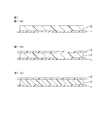
- FIG. 1 is an explanatory view for explaining a method for producing a heat conductive pressure-sensitive adhesive sheet, in which FIG. 1 (a) shows a step of applying a pressure-sensitive adhesive material on a base film, and FIG. The process of arrange
- the heat conductive pressure-sensitive adhesive sheet of the present invention is formed into a sheet shape from a pressure-sensitive adhesive raw material containing a monomer component and / or a polymer component and heat conductive particles.
- Examples of the monomer component include (meth) acrylic acid alkyl ester monomers as essential components, and optional components include polar group-containing monomers and copolymerizable monomers copolymerizable with these monomers.
- (meth) acrylic acid alkyl ester monomers examples include methacrylic acid alkyl ester monomers and / or acrylic acid alkyl ester monomers, such as methyl (meth) acrylate, ethyl (meth) acrylate, and propyl (meth) acrylate.
- (meth) acrylic acid alkyl ester monomers (meth) acrylic acid C2-12 alkyl ester is preferred, and (meth) acrylic acid C4-9 is more preferred, particularly from the viewpoint of easily balancing the adhesive properties.
- examples include alkyl esters.
- the (meth) acrylic acid alkyl ester monomer is blended in the monomer component in a proportion of, for example, 60% by mass or more, preferably 80% by mass or more, for example, 99% by mass or less.
- Examples of polar group-containing monomers include nitrogen-containing monomers, hydroxyl group-containing monomers, sulfo group-containing monomers, nitrogen / hydroxyl group-containing monomers, nitrogen / sulfo group-containing monomers, hydroxyl group / phosphate group-containing monomers, and carboxyl group-containing monomers. Etc.
- nitrogen-containing monomer examples include cyclic (meth) acrylamides such as N- (meth) acryloylmorpholine and N-acryloylpyrrolidine, such as (meth) acrylamide, N-substituted (meth) acrylamide (eg, N-ethyl (meth) ) Acrylamide, N-alkyl (meth) acrylamides such as Nn-butyl (meth) acrylamide, for example, N, N-dimethyl (meth) acrylamide, N, N-diethyl (meth) acrylamide, N, N-dipropyl ( N, N-dialkyl such as (meth) acrylamide, N, N-diisopropyl (meth) acrylamide, N, N-di (n-butyl) (meth) acrylamide, N, N-di (t-butyl) (meth) acrylamide (Meth) acrylamide) and other non-cyclic (
- hydroxyl group-containing monomer examples include 2-hydroxyethyl (meth) acrylate, 3-hydroxypropyl (meth) acrylate, 4-hydroxybutyl (meth) acrylate, 6-hydroxyhexyl (meth) acrylate, (meth ) 8-hydroxyoctyl acrylate, 10-hydroxydecyl (meth) acrylate, 12-hydroxylauryl (meth) acrylate, (4-hydroxymethylcyclohexyl) methyl methacrylate, and the like.
- sulfo group-containing monomer examples include styrene sulfonic acid, allyl sulfonic acid, sulfopropyl (meth) acrylate, (meth) acryloyloxynaphthalene sulfonic acid, and the like.
- nitrogen / hydroxyl monomer examples include N- (2-hydroxyethyl) (meth) acrylamide (HEAA), N- (2-hydroxypropyl) (meth) acrylamide, and N- (1-hydroxypropyl) (meta).
- HEAA N- (2-hydroxyethyl) (meth) acrylamide
- N- (2-hydroxypropyl) (meth) acrylamide N- (2-hydroxypropyl) (meth) acrylamide
- Acrylamide N- (3-hydroxypropyl) (meth) acrylamide, N- (2-hydroxybutyl) (meth) acrylamide, N- (3-hydroxybutyl) (meth) acrylamide, N- (4-hydroxybutyl) N-hydroxyalkyl (meth) acrylamides such as (meth) acrylamide can be mentioned.
- nitrogen / sulfo group-containing monomer examples include 2- (meth) acrylamide-2-methylpropanesulfonic acid and (meth) acrylamidepropanesulfonic acid.
- hydroxyl group / phosphate group-containing monomer examples include 2-hydroxyethyl acryloyl phosphate.
- carboxyl group-containing monomer examples include (meth) acrylic acid, itaconic acid, maleic acid, fumaric acid, crotonic acid, isocrotonic acid, maleic anhydride, itaconic anhydride, and the like.
- nitrogen-containing monomers from the viewpoint of imparting high adhesiveness and holding power to the pressure-sensitive adhesive layer (described later), nitrogen-containing monomers, hydroxyl group-containing monomers, nitrogen / hydroxyl group-containing monomers are preferred, and more Preferably, N-vinyl-2-pyrrolidone, N- (meth) acryloylmorpholine, N, N-diethyl (meth) acrylamide, hydroxyethyl (meth) acrylate, hydroxybutyl (meth) acrylate, N- (2- Hydroxyethyl) (meth) acrylamide.
- the polar group-containing monomer is blended in the monomer component in a proportion of, for example, 1% by mass or more, preferably 5% by mass or more, and for example, 30% by mass or less, preferably 25% by mass or less.
- a proportion of, for example, 1% by mass or more, preferably 5% by mass or more, and for example, 30% by mass or less, preferably 25% by mass or less is within the above range.
- the monomer component preferably contains substantially no carboxyl group-containing monomer.
- the mixing ratio of the carboxyl group-containing monomer is, for example, 5% by mass or less, preferably 1% by mass or less, and more preferably 0.5% by mass or less in the monomer component.
- the heat conductive particles can be dispersed without gelation.
- Examples of the copolymerizable monomer include epoxy group-containing monomers such as glycidyl (meth) acrylate and allyl glycidyl ether, such as 2-methoxyethyl (meth) acrylate, 3-methoxypropyl (meth) acrylate, (meth) Alkoxy group-containing monomers such as methoxyethylene glycol acrylate and methoxypolypropylene glycol (meth) acrylate, cyano group-containing monomers such as acrylonitrile and methacrylonitrile, styrene monomers such as styrene and ⁇ -methylstyrene, ⁇ -olefins such as ethylene, propylene, isoprene, butadiene and isobutylene, for example, isocyanate groups such as 2-isocyanatoethyl acrylate and 2-isocyanatoethyl methacrylate Monomers, for example, vinyl ester monomers
- an alkoxy group-containing monomer is preferable, and 2-methoxyethyl acrylate is more preferable.
- the copolymerizable monomer is blended in the monomer component, for example, at a ratio of 30% by mass or less, preferably 20% by mass or less, for example, 1% by mass or more, preferably 5% by mass or more.
- These monomers can be used alone (only one kind) or in combination of two or more kinds.
- the monomer component is, for example, 1% by mass or more, preferably 5% by mass or more, more preferably 10% by mass or more, for example, 90% by mass or less, preferably 60% by mass in the pressure-sensitive adhesive raw material. % Or less, more preferably 50% by mass or less.
- the polymer component examples include a polymer (polymer) obtained by reacting the monomer component described above.
- the polymer is not particularly limited, but, for example, an acrylic polymer, more specifically, a (meth) acrylic acid alkyl ester monomer is used as an essential component, and as an optional component, a polar group-containing monomer, these monomers and Examples thereof include acrylic polymers using copolymerizable monomers that can be copolymerized.
- the polymer includes a partially polymerized monomer as described above.
- These polymers can be used alone (only one kind) or in combination of two or more kinds.
- the polymer component is, for example, 1% by mass or more, preferably 5% by mass or more, more preferably 10% by mass or more, for example, 50% by mass or less, preferably 40% by mass or less in the pressure-sensitive adhesive raw material. More preferably, it mix
- the total amount of the monomer component and the polymer component in the pressure-sensitive adhesive material is, for example, 1% by mass or more, preferably 5% by mass or more. More preferably, it is blended so that the ratio is 10% by mass or more, for example, 50% by mass or less, preferably 40% by mass or less, and more preferably 30% by mass or less.
- Examples of the heat conductive particles include hydrated metal compounds.
- the hydrated metal compound has a decomposition start temperature in the range of 150 to 500 ° C., and has a general formula MxOy ⁇ nH 2 O (M is a metal atom, x and y are integers of 1 or more determined by the valence of the metal, and n is contained) Or a double salt containing the above compound.
- Examples of the hydrated metal compound include aluminum hydroxide [Al 2 O 3 .3H 2 O; or Al (OH) 3 ], boehmite [Al 2 O 3 .H 2 O; or AlOOH], magnesium hydroxide [MgO H 2 O; or Mg (OH) 2 ], calcium hydroxide [CaO ⁇ H 2 O; or Ca (OH) 2 ], zinc hydroxide [Zn (OH) 2 ], silicic acid [H 4 SiO 4 ; H 2 SiO 3 ; or H 2 Si 2 O 5 ], iron hydroxide [Fe 2 O 3 .H 2 O or 2FeO (OH)], copper hydroxide [Cu (OH) 2 ], barium hydroxide [BaO.
- Hydrated metal compounds are commercially available.
- aluminum hydroxide the trade name “Hijilite H-100-ME” (average particle size 75 ⁇ m) (manufactured by Showa Denko KK), the trade name “Hijilite H-10” is available.
- the thermally conductive particles include, for example, metal nitrides such as boron nitride, aluminum nitride, silicon nitride, and gallium nitride, such as silicon dioxide, aluminum oxide, magnesium oxide, and oxide.
- metal nitrides such as boron nitride, aluminum nitride, silicon nitride, and gallium nitride, such as silicon dioxide, aluminum oxide, magnesium oxide, and oxide.
- Metal oxides such as titanium, zinc oxide, tin oxide, copper oxide, nickel oxide, such as silicon carbide, antimonic acid doped tin oxide, calcium carbonate, barium titanate, potassium titanate, copper, silver, gold, nickel, aluminum Platinum, carbon black, carbon tube (carbon nanotube), carbon fiber, diamond and the like.
- thermally conductive particles are commercially available, for example, as boron nitride, trade name “HP-40” (manufactured by Mizushima Alloy Iron Co., Ltd.), trade name “PT110” (average particle size 35 ⁇ m) (manufactured by Momentive)
- the product name “AL-13KT” average particle size 97 ⁇ m) (manufactured by Showa Denko)
- AS-50 Showa Denko
- AS-10 manufactured by Showa Denko KK
- antimonic acid doped tin the product name “SN-100S” (manufactured by Ishihara Sangyo Co., Ltd.), the product name “SN-100P” (Ishihara Sangyo Co., Ltd.)
- Product name “SN-100D (water-dispersed product)” (manufactured by Ishihara Sangyo Co., Ltd.), for example, titanium oxide, product name “
- thermally conductive particles preferably, a hydrated metal compound is used, and more preferably, aluminum hydroxide is used because it imparts high thermal conductivity and flame retardancy to the pressure-sensitive adhesive layer.
- metal nitrides and metal oxides are also preferable, and boron nitride, aluminum oxide, and magnesium oxide are more preferable.
- the shape of the thermally conductive particles is not particularly limited, and may be a bulk shape, a needle shape, a plate shape, or a scale shape (including a layer shape).
- the bulk shape includes, for example, a spherical shape, a rectangular parallelepiped shape, a crushed shape, a round shape, an aggregate, or a deformed shape thereof.
- the heat conductive particles contain three or more kinds of heat conductive particles having different average particle diameters.
- the space ratio when mixing three or more kinds of thermally conductive particles having different average particle diameters is 72% or less, preferably 70% or less, and more preferably 65% or less. And, for example, 30% or more, preferably 50% or more, and more preferably 55% or more.
- the tap density is measured using a powder characteristic evaluation device (powder tester “PT-R”, manufactured by Hosokawa Micron Corporation).
- the true density of the thermally conductive particles is, for example, 0.8 g / cm 3 or more, preferably 1.5 g / cm 3 or more, and for example, 20 g / cm 3 or less, preferably 10 g / cm 3 or less. But there is.
- the true density of the thermally conductive particles is determined by a dry densimeter (gas displacement method).
- the heat conductive particles are a first heat conductive particle having an average particle diameter of less than 3 ⁇ m, a second heat conductive particle having an average particle diameter of 3 ⁇ m or more and less than 70 ⁇ m, and at least one kind of heat having a different average particle diameter. Contains conductive particles.
- the thermally conductive particles contain first thermally conductive particles, second thermally conductive particles, and third thermally conductive particles having an average particle diameter of 70 ⁇ m or more.
- the heat conductive particles contain first heat conductive particles, second heat conductive particles, and fourth heat conductive particles having an average particle diameter of 3 ⁇ m or more and less than 70 ⁇ m and having a scaly shape.
- a higher thermal conductivity can be imparted to the pressure-sensitive adhesive layer.
- the average particle diameter of the first heat conductive particles is less than 3 ⁇ m, preferably 2 ⁇ m or less, and for example, 0.5 ⁇ m or more.
- Examples of the shape of the first thermally conductive particles include the shapes described above, and preferably a bulk shape.
- the average particle diameter of the second heat conductive particles is 3 ⁇ m or more, preferably 20 ⁇ m or more, and is, for example, less than 70 ⁇ m, preferably less than 60 ⁇ m.
- the shape of the second thermally conductive particles includes the above-described shape, and preferably a bulk shape.
- the average particle size of the third heat conductive particles is 70 ⁇ m or more, preferably 90 ⁇ m or more, and is, for example, less than 300 ⁇ m, preferably less than 150 ⁇ m.
- the shape of the third thermally conductive particles includes the above-described shape, and preferably a bulk shape.
- the fourth heat conductive particles are formed in a scale shape, and the average particle diameter thereof is 3 ⁇ m or more, preferably 20 ⁇ m or more, and for example, less than 70 ⁇ m, preferably less than 50 ⁇ m.
- the average particle size of the thermally conductive particles is determined by a particle size distribution measurement method in the laser scattering method (specifically, measured by a laser scattering particle size distribution meter), based on a D50 value (cumulative 50% median). (Diameter).
- thermally conductive particles preferably, at least one of the thermally conductive particles is formed of a metal oxide or a metal nitride, and the other thermally conductive particles are a metal hydroxide. Formed from.
- the first thermally conductive particles are preferably formed from a metal hydroxide, more preferably aluminum hydroxide.
- the second thermally conductive particles are preferably formed from metal hydroxide, metal oxide or metal nitride, more preferably from aluminum hydroxide or magnesium oxide.
- the third thermally conductive particles are preferably formed from metal oxide or metal nitride, more preferably metal oxide, and still more preferably aluminum oxide.
- the fourth thermally conductive particles are made of metal oxide or metal nitride, more preferably metal nitride, and still more preferably boron nitride.
- the heat conductive particles formed from the metal hydroxide are, for example, 30% by volume or more, preferably 40% by volume or more, and, for example, 70% by volume or less with respect to the pressure-sensitive adhesive raw material.
- the content ratio of the heat conductive particles formed from metal oxide or metal nitride is, for example, 5% by volume or more with respect to the pressure-sensitive adhesive raw material.
- the heat conductive particles only need to contain three or more kinds of heat conductive particles having an average particle diameter, and for example, may contain four kinds of heat conductive particles having an average particle diameter.
- the first heat conductive particles include the second heat conductive particles, the third heat conductive particles, and the fourth heat conductive particles.
- the thermally conductive particles two or more kinds of average particle diameters can be further provided.
- the second heat conductive particles having an average particle diameter of 3 ⁇ m or more and less than 70 ⁇ m are further, for example, the second heat conductive particles having an average particle diameter of 3 ⁇ m or more and less than 40 ⁇ m and the second heat conductive particles having an average particle diameter of 40 ⁇ m or more and less than 70 ⁇ m.
- Thermally conductive particles can be provided.
- the first heat conductive particles may include the second heat conductive particles, the third heat conductive particles, and the fourth heat conductive particles, which include heat conductive particles made of two or more different materials. It can.
- the second thermally conductive particles include thermally conductive particles made of two different materials. That is, the heat conductive particles preferably include first heat conductive particles and two types of second heat conductive particles formed of different materials.
- Such two different materials preferably include a combination of a metal hydroxide and a metal oxide, more preferably a combination of magnesium hydroxide and magnesium oxide.
- the blending ratio of the first heat conductive particles in the total amount of the heat conductive particles is, for example, 10% by mass or more, preferably 20% by mass or more, more preferably 30% by mass or more, and for example, 70% by mass. % Or less, preferably 55% by mass or less, more preferably 45% by mass or less.
- the blending ratio of the second thermally conductive particles in the total amount of thermally conductive particles is, for example, 15% by mass or more, preferably 25% by mass or more, more preferably 35% by mass or more, and for example, 70% by mass. % Or less, preferably 60% by mass or less, more preferably 50% by mass or less.
- the sum total of the mixture ratio is 30 for example with respect to the total amount of heat conductive particles.
- % By mass or more preferably 40% by mass or more, more preferably 50% by mass or more, and for example, 80% by mass or less, preferably 75% by mass or less, more preferably 70% by mass or less. .
- the blending ratio of the third heat conductive particles in the total amount of the heat conductive particles is, for example, 5% by mass or more, preferably 10% by mass or more, and more preferably. Is 15% by mass or more, and is, for example, 50% by mass or less, preferably 40% by mass or less, and more preferably 30% by mass or less.
- the blending ratio of the fourth heat conductive particles in the total amount of the heat conductive particles is, for example, 1% by mass or more, preferably 5% by mass or more, and more preferably. Is 10% by mass or more, and for example, 40% by mass or less, preferably 30% by mass or less, more preferably 20% by mass or less.
- the total amount of these heat conductive particles is, for example, 75% by mass or more, preferably 80% by mass or more, for example, 90% by mass or less, preferably 87% by mass or less in the pressure-sensitive adhesive raw material. Is done.
- the total amount of the heat conductive particles is 55% by volume or more, preferably 60% by volume or more, and 75% by volume or less, preferably 70% by volume or less in the pressure-sensitive adhesive raw material.
- the blending ratio of the heat conductive particles is within the above range, high thermal conductivity, good hardness and flame retardancy can be imparted to the pressure-sensitive adhesive layer.
- a monomer composition containing the above-described monomer component and a polymerization initiator is prepared.
- a polymerization initiator is blended with the above monomer components.
- polymerization initiator examples include a photopolymerization initiator and a thermal polymerization initiator.
- the photopolymerization initiator examples include a benzoin ether photopolymerization initiator, an acetophenone photopolymerization initiator, an ⁇ -ketol photopolymerization initiator, an aromatic sulfonyl chloride photopolymerization initiator, and a photoactive oxime photopolymerization initiator.
- Agents benzoin photopolymerization initiators, benzyl photopolymerization initiators, benzophenone photopolymerization initiators, thioxanthone photopolymerization initiators, and the like.
- benzoin ether photopolymerization initiator examples include benzoin methyl ether, benzoin ethyl ether, benzoin propyl ether, benzoin isopropyl ether, benzoin isobutyl ether, 2,2-dimethoxy-1,2-diphenylethane-1-one, and anisole.
- examples include methyl ether.
- acetophenone photopolymerization initiator examples include 2,2-diethoxyacetophenone, 2,2-dimethoxy-2-phenylacetophenone, 4-phenoxydichloroacetophenone, 4- (t-butyl) dichloroacetophenone, and the like.
- Examples of ⁇ -ketol photopolymerization initiators include 2-methyl-2-hydroxypropiophenone, 1- [4- (2-hydroxyethyl) phenyl] -2-methylpropan-1-one, and 1-hydroxy. Examples include cyclohexyl phenyl ketone.
- aromatic sulfonyl chloride photopolymerization initiator examples include 2-naphthalene sulfonyl chloride.
- Examples of the photoactive oxime photopolymerization initiator include 1-phenyl-1,1-propanedione-2- (o-ethoxycarbonyl) -oxime.
- benzoin photopolymerization initiator examples include benzoin.
- benzyl photopolymerization initiator examples include benzyl.
- benzophenone photopolymerization initiator examples include benzophenone, benzoylbenzoic acid, 3,3′-dimethyl-4-methoxybenzophenone, and polyvinylbenzophenone.
- thioxanthone photopolymerization initiator examples include thioxanthone, 2-chlorothioxanthone, 2-methylthioxanthone, 2,4-dimethylthioxanthone, isopropylthioxanthone, 2,4-diisopropylthioxanthone, decylthioxanthone, and the like.
- thermal polymerization initiator examples include 2,2′-azobisisobutyronitrile, 2,2′-azobis-2-methylbutyronitrile, 2,2′-azobis (2-methylpropionic acid) dimethyl, 4,4'-azobis-4-cyanovaleric acid, azobisisovaleronitrile, 2,2'-azobis (2-amidinopropane) dihydrochloride, 2,2'-azobis [2- (5-methyl-2- Imidazolin-2-yl) propane] dihydrochloride, 2,2'-azobis (2-methylpropionamidine) disulfate, 2,2'-azobis (N, N'-dimethyleneisobutylamidine) hydrochloride, 2, Azo polymerization initiators such as 2′-azobis [N- (2-carboxyethyl) -2-methylpropionamidine] hydrate, Peroxide polymerization initiators such as zoyl peroxide, t-butyl permaleate, t-butyl hydro
- These polymerization initiators can be used alone (only one kind) or in combination of two or more kinds.
- a photopolymerization initiator is preferable because of the advantage that the polymerization time can be shortened.
- the photopolymerization initiator is not particularly limited, but is, for example, 0.01 parts by mass or more, preferably 0 with respect to 100 parts by mass of the monomer component. 0.05 parts by mass or more, and for example, 5 parts by mass or less, preferably 3 parts by mass or less.
- thermal polymerization initiator when a thermal polymerization initiator is blended as a polymerization initiator, the thermal polymerization initiator is not particularly limited and is blended in an available ratio.
- a part of the monomer component can be polymerized if necessary.
- the mixture of the monomer component and the photopolymerization initiator is irradiated with ultraviolet rays.
- the monomer composition has a viscosity (BH viscometer, No. 5 rotor, 10 rpm, measurement temperature 30 ° C.) with irradiation energy that excites the photopolymerization initiator, for example, 5 Pa ⁇ s. Irradiation is carried out until it is above (preferably 10 Pa ⁇ s or more), for example, 30 Pa ⁇ s or less (preferably 20 Pa ⁇ s or less).
- the mixture of the monomer component and the thermal polymerization initiator is polymerized at, for example, a temperature higher than the decomposition temperature of the thermal polymerization initiator, specifically about 20 to 100 ° C.
- the viscosity of the monomer composition is, for example, 5 Pa ⁇ s or more (preferably 10 Pa ⁇ s or higher), for example, 30 Pa ⁇ s or lower (preferably 20 Pa ⁇ s or lower).
- a (meth) acrylic acid alkyl ester monomer When preparing a monomer composition by polymerizing a part of the monomer component, a (meth) acrylic acid alkyl ester monomer, a monomer selected from a polar group-containing monomer and a copolymerizable monomer, and a polymerization initiator As described above, a part of the monomer can be polymerized, and then a crosslinking agent can be blended.
- the crosslinking agent is a polyfunctional compound having a plurality of ethylenically unsaturated hydrocarbon groups.
- the crosslinking agent can be used alone or in combination of two or more.
- dipentaerythritol hexa (meth) acrylate is preferable.
- the content of the crosslinking agent is, for example, 0.001 part by mass or more, preferably 0.01 part by mass or more, for example, 10 parts by mass or less, preferably 1 part by mass with respect to 100 parts by mass of the monomer component. It is also below mass parts.
- the above-described monomer composition is blended with the above-described thermally conductive particles.
- heat conductive particles etc. can be mix
- the pressure-sensitive adhesive raw material forms a polymer component containing the thermally conductive particles by polymerizing all the monomer components in the monomer composition in which the thermally conductive particles are blended. It can also be prepared as a polymer composition by dissolving in a solvent.
- dispersants for monomer compositions and polymer compositions, dispersants, tackifiers, acrylic oligomers, silane coupling agents, fluorosurfactants, plasticizers, fillers, anti-aging agents, colorants, etc., are necessary. These additives can also be blended.
- a dispersant is preferably blended in the monomer composition or the polymer composition.
- the dispersant include phosphate ester-based dispersants. Specifically, polyoxyethylene alkyl (or alkylallyl) ether or polyoxyethylene alkylaryl ether phosphate monoester, polyoxyethylene alkyl ether Alternatively, polyoxyethylene alkylaryl ether phosphoric acid diesters, phosphoric acid triesters, derivatives thereof, and the like can be given.
- phosphate ester dispersants can be used alone or in combination of two or more.
- the blending ratio of the dispersant in the pressure-sensitive adhesive raw material is, for example, 0.01% by mass or more, preferably 0.1% by mass or more, and for example, 10% by mass or less, preferably 5% by mass or less. is there.
- the viscosity of the obtained pressure-sensitive adhesive material is, for example, 50 Pa ⁇ s or less, preferably 40 Pa ⁇ s or less, more preferably 35 Pa ⁇ s or less. Also, for example, 5 Pa ⁇ s or more, more preferably 10 Pa ⁇ s or more.
- the pressure-sensitive adhesive material may contain bubbles.
- a heat conductive adhesive sheet can be made into a foam by producing a heat conductive adhesive sheet using the adhesive raw material containing air bubbles.
- a stator fixed tooth
- a rotor having a large number of teeth on the disk facing the stator
- a gas is introduced into the adhesive raw material.
- the gas introduced into the pressure-sensitive adhesive raw material is not particularly limited, and examples thereof include inert gases such as nitrogen, carbon dioxide, and argon, such as air.
- the gas introduced into the pressure-sensitive adhesive material is preferably an inert gas, more preferably nitrogen, because it hardly inhibits the reaction of the pressure-sensitive adhesive material.
- the bubbles are, for example, 5% by volume or more, preferably 10% by volume or more, more preferably 12% by volume or more, for example, 50% by volume or less, based on the total volume of the pressure-sensitive adhesive material. Preferably, it is introduced at a ratio of 40% by volume or less, more preferably 35% by volume or less.
- FIG. 1 is an explanatory view for explaining a method for producing a heat conductive pressure-sensitive adhesive sheet.
- a pressure-sensitive adhesive material 2 is applied to the surface of the base film 1 as a base material that has been subjected to a peeling treatment.
- the base film 1 examples include a polyester film (polyethylene terephthalate film and the like), for example, a fluorine-based polymer (for example, polytetrafluoroethylene, polychlorotrifluoroethylene, polyvinyl fluoride, polyvinylidene fluoride, tetrafluoroethylene-hexafluoro).
- a fluorine-based polymer for example, polytetrafluoroethylene, polychlorotrifluoroethylene, polyvinyl fluoride, polyvinylidene fluoride, tetrafluoroethylene-hexafluoro.
- Fluorine film made of propylene copolymer, chlorofluoroethylene-vinylidene fluoride copolymer, etc. for example, olefin resin film made of olefin resin (polyethylene, polypropylene, etc.), eg, polyvinyl chloride film, polyimide film , Polyamide base film (nylon film), plastic base film (synthetic resin film) such as rayon film, eg, fine paper, Japanese paper, kraft paper, glass Down paper, synthetic paper, paper such as top-coated paper, for example, and they were double layered composites and the like.
- olefin resin film made of olefin resin polyethylene, polypropylene, etc.
- polyvinyl chloride film polyimide film
- Polyamide base film polyamide base film
- plastic base film synthetic resin film
- rayon film eg, fine paper, Japanese paper, kraft paper, glass Down paper
- synthetic paper paper such as top-coated paper, for example, and they were double
- the adhesive raw material 2 is prepared as a monomer composition and contains a photopolymerization initiator
- a base film 1 that transmits ultraviolet rays is used so as not to interfere with irradiation of ultraviolet rays to the adhesive raw material 2. To do.
- Examples of the method for applying the adhesive material 2 to the base film 1 include roll coating, kiss roll coating, gravure coating, reverse coating, roll brush, spray coating, dip roll coating, bar coating, knife coating, air knife coating, Examples include an extrusion coating method using a curtain coat, a lip coat, a die coater, and the like.
- the coating thickness of the pressure-sensitive adhesive raw material 2 is, for example, 10 ⁇ m or more, preferably 50 ⁇ m or more, more preferably 100 ⁇ m or more, and for example, 10,000 ⁇ m or less, preferably 5000 ⁇ m or less, more preferably 3000 ⁇ m or less. But there is.
- a cover film 3 is then placed on the coating film of the pressure-sensitive adhesive raw material 2 as shown in FIG. In order to arrange
- cover film 3 examples include the same film as the base film 1 described above. Further, when the pressure-sensitive adhesive raw material 2 is prepared as a monomer composition and contains a photopolymerization initiator, a cover film 3 that transmits ultraviolet rays is used so as not to interfere with irradiation of the pressure-sensitive adhesive raw material 2 with ultraviolet rays. To do.
- the adhesive raw material 2 is prepared as a monomer composition
- the adhesive raw material 2 is reacted as shown in FIG.
- the system pressure-sensitive adhesive layer 4 is formed.
- the adhesive raw material 2 is irradiated with ultraviolet rays and the thermal polymerization initiator is blended.
- the adhesive raw material 2 is heated.
- the acrylic pressure-sensitive adhesive layer 4 is formed by applying the pressure-sensitive adhesive material 2 and drying it to remove the solvent.
- the thickness of the acrylic pressure-sensitive adhesive layer 4 of the obtained heat conductive pressure-sensitive adhesive sheet is, for example, 10 ⁇ m or more, preferably 50 ⁇ m or more, more preferably 100 ⁇ m or more, and for example, 10,000 ⁇ m or less, preferably 5000 ⁇ m. Hereinafter, more preferably, it is 3000 ⁇ m or less.
- the thickness of the acrylic pressure-sensitive adhesive layer 4 By setting the thickness of the acrylic pressure-sensitive adhesive layer 4 to 10 ⁇ m or more, better adhesive force can be obtained. Further, by setting the thickness of the acrylic pressure-sensitive adhesive layer 4 to 10000 ⁇ m or less, better thermal conductivity can be obtained.
- the content ratio of the heat conductive particles to the acrylic pressure-sensitive adhesive layer 4 is 55% by volume or more, preferably 60% by volume or more, and 75% by volume or less. Preferably, it is also 70 volume% or less.
- the content ratio of the heat conductive particles made of metal oxide or metal nitride is, for example, 5% by volume or more with respect to the acrylic pressure-sensitive adhesive layer 4, preferably 8 volume% or more, and for example, 25 volume% or less, preferably 20 volume% or less.
- the thermal conductivity and flame retardancy are good.
- the content ratio of the heat conductive particles made of metal hydroxide is, for example, 30% by volume or more, preferably 40% by volume or more, and, for example, 70% by volume or less with respect to the acrylic pressure-sensitive adhesive layer 4. Preferably, it is 60 volume% or less.
- the obtained heat conductive pressure-sensitive adhesive sheet preferably has first heat conductive particles having an average particle diameter of less than 3 ⁇ m, second heat conductive particles having an average particle diameter of 3 ⁇ m or more and less than 70 ⁇ m, and an average particle diameter of 70 ⁇ m or more. 3rd heat conductive particle and / or 4th heat conductive particle which is a scaly shape with an average particle diameter of 3 micrometers or more and less than 70 micrometers are contained.
- 90 degree peeling adhesive strength of the obtained heat conductive adhesive sheet is, for example, 3N / 20mm or more, preferably 10N / 20mm or more, more preferably 15N / 20mm or more, for example, 100N / 20mm or less.
- the hardness (measured according to the type C hardness test specified in JIS K 7312) of the obtained heat conductive adhesive sheet is 3 after the pressure surface of the type C durometer is brought into close contact.
- it is, for example, 80 or less, preferably 70 or less, and for example, 20 or more, preferably 30 or more.
- the thermal conductivity of the acrylic pressure-sensitive adhesive layer 4 of the obtained heat conductive pressure-sensitive adhesive sheet is, for example, 1.7 W / m ⁇ K or more, preferably 2.0 W / m ⁇ K or more, more preferably 2.5 W / m ⁇ K or more, for example, 10 W / m ⁇ K or less.
- the obtained heat conductive pressure-sensitive adhesive sheet is, for example, flame retardant UL94 standard V-0.
- a heat conductive adhesive sheet is excellent in flame retardancy when the flame retardancy UL94 standard is V-0.
- This heat conductive adhesive sheet includes an acrylic adhesive layer 4. Therefore, the acrylic pressure-sensitive adhesive layer 4 has tackiness on both sides. Therefore, it can be used as a double-sided pressure-sensitive adhesive (pressure-sensitive adhesive) sheet.
- the acrylic adhesive layer 4 contains three or more types of heat conductive particles having different average particle diameters, and the space ratio when three or more types of heat conductive particles are mixed. However, it is 72% or less, and the content rate of 3 or more types of heat conductive particles with respect to the acrylic adhesive layer 4 is 55 volume% or more and 75 volume% or less.
- the acrylic pressure-sensitive adhesive layer 4 is closely packed with the heat conductive particles while maintaining an appropriate distance. Therefore, even when the acrylic pressure-sensitive adhesive layer 4 is deformed, Contact or interference between the thermally conductive particles is suppressed. Therefore, it has excellent thermal conductivity and good hardness (appropriate softness). Furthermore, it also has good flame retardancy.
- the manufacturing method of an above described heat conductive adhesive sheet is the monomer component (monomer composition) which has (meth) acrylic-acid alkylester as a main component, and the heat conductive particle which is 3 or more types from which an average particle diameter differs.
- a step of mixing to obtain the pressure-sensitive adhesive raw material 2 and a step of reacting the pressure-sensitive adhesive raw material 2 to obtain the acrylic pressure-sensitive adhesive layer 4 are provided.
- the pressure-sensitive adhesive material 2 can be applied to the base film 1 to form the acrylic pressure-sensitive adhesive layer 4, the heat conductive particles are densely packed without performing a compression step such as hot pressing. , Gaps generated between the thermally conductive particles (location where the monomer component or polymer component is filled) can be reduced. Therefore, a heat conductive adhesive sheet provided with the outstanding heat conductivity can be manufactured simply.
- this heat conductive adhesive sheet is excellent in heat conductivity and a flame retardance, it is a semiconductor device, a hard disk, LED device (television, illumination, a display, etc.), EL device (organic EL display, organic EL illumination, etc.) ), Capacitors, capacitors, batteries (such as lithium ion batteries), and power modules.
- thermoly conductive particles measured according to the following.
- D50 value (accumulated 50% based on the particle size distribution measured by a laser scattering particle size distribution meter (trade name SALD-2100, manufactured by Shimadzu Corporation)). Median diameter). -Porosity of thermally conductive particles (%) The space ratio of the heat conductive particles was calculated according to the following formula.
- the tap density was measured using a powder tester “PT-R” (manufactured by Hosokawa Micron Co., Ltd.) by selecting “hardened bulk density” measurement as the measurement mode. Specifically, the heat conductive particles were filled in the cup using a sieve having an aperture of 1.1 mm, and then tapped 360 times with a tapping stroke of 18 mm. After tapping, the upper part of the cup was scraped with a flat plate, and the tap density was determined from the mass of the thermally conductive particles filled in the cup.
- the true density of the thermally conductive particles was calculated by a dry density meter (trade name Accupic 1330, manufactured by Shimadzu Corporation) (gas displacement method).
- Example 1 Preparation of monomer composition
- EHA 2-ethylhexyl acrylate
- MEA 2-methoxyethyl acrylate
- NVP N-vinyl-2-pyrrolidone
- HEAA hydroxyethyl acrylamide
- DPHA dipentaerythritol hexaacrylate, trade name “KAYARAD DPHA-40H”, manufactured by Nippon Kayaku Co., Ltd.
- Plisurf trade name “Plisurf”
- A212E (Daiichi Kogyo Seiyaku Co., Ltd.) 3 parts by mass was blended and mixed to obtain a monomer composition.
- the obtained adhesive material is dried and cured on the release surface of a base film (polyethylene terephthalate film, trade name “Diafoil MRF38”, manufactured by Mitsubishi Chemical Polyester Film Co., Ltd.) that has been subjected to release treatment on one side. It applied so that thickness might be set to 1000 micrometers (refer Fig.1 (a)).
- a base film polyethylene terephthalate film, trade name “Diafoil MRF38”, manufactured by Mitsubishi Chemical Polyester Film Co., Ltd.
- a cover film (the same film as the base film) was placed on the adhesive material coating film so that the adhesive material coating film was sandwiched between the base film (see FIG. 1B).
- the adhesive raw material was irradiated with ultraviolet rays (illuminance of about 5 mW / cm 2 ) for 3 minutes (corresponding to an irradiation energy of 900 mJ / cm 2 ) from both sides (base film side and cover film side).
- the monomer component in the pressure-sensitive adhesive raw material was polymerized to form an acrylic pressure-sensitive adhesive layer, and a heat conductive pressure-sensitive adhesive sheet was produced (see FIG. 1C).
- the pressure-sensitive adhesive layer of the thermally conductive pressure-sensitive adhesive sheet of Example 1 had tackiness on the front and back surfaces. From this, it has confirmed that it was a double-sided adhesive sheet.
- thermally conductive pressure-sensitive adhesive sheet was produced in the same manner as in Example 1 except that the kind of thermally conductive particles and the blending ratio thereof were changed to the blending ratios shown in Table 1.
- Each of the pressure-sensitive adhesive layers of the heat conductive pressure-sensitive adhesive sheet of each example had tackiness on the front surface and the back surface. From this, it has confirmed that it was a double-sided adhesive sheet.
- Blending ratio of heat conductive particles in the pressure-sensitive adhesive layer (mass%, volume%), blending ratio of aluminum hydroxide in the pressure-sensitive adhesive layer (volume%), blending of metal oxide and metal nitride in the pressure-sensitive adhesive layer
- Table 1 shows the ratio (volume%) and the space ratio of the thermally conductive particles.
- Comparative Examples 1 to 4 A thermally conductive pressure-sensitive adhesive sheet was produced in the same manner as in Example 1 except that the kind of thermally conductive particles and the blending ratio thereof were changed to the blending ratios shown in Table 1. In Comparative Example 4, the pressure-sensitive adhesive material in the blending ratio described in Comparative Example 4 could not be formed into a sheet shape.
- Each adhesive layer of the heat conductive adhesive sheet of each comparative example had tackiness on the front surface and the back surface. From this, it has confirmed that it was a double-sided adhesive sheet.
- Blending ratio of heat conductive particles in the pressure-sensitive adhesive layer (mass%, volume%), blending ratio of aluminum hydroxide in the pressure-sensitive adhesive layer (volume%), blending of metal oxide and metal nitride in the pressure-sensitive adhesive layer
- Table 1 shows the ratio (volume%) and the space ratio of the thermally conductive particles.
- thermal conductivity The thermal conductivity of the thermally conductive tape was measured. That is, the thermal conductivity in the thickness direction (TD) was measured by a pulse heating method using a xenon flash analyzer “LFA-447 type” (manufactured by NETZSCH).
- the heat conductive adhesive sheet is cut into a 1 cm ⁇ 1 cm square to obtain a section, and the surface of the section (one surface in the thickness direction) is coated with a heat conductive sheet carbon spray (carbon alcohol dispersion) and dried.
- the portion was used as a light receiving portion, and carbon spray was applied to the back surface (the other surface in the thickness direction) to form a detection portion.
- the thermal diffusivity (D1) in the thickness direction was measured by irradiating the light receiving part with an energy ray by a xenon flash and detecting the temperature of the detecting part.
- thermal conductivity (TC1) in the thickness direction of the thermally conductive adhesive sheet was determined by the following formula. The results are shown in Table 1.
- TC1 D1 ⁇ ⁇ ⁇ Cp ⁇ : density of heat conductive tape at 25 ° C. (sample was punched to 2.5 cm ⁇ , and density was calculated from thickness and weight)
- Cp Specific heat of the heat conductive tape (specific heat was measured by DSC by the following specific heat capacity measurement) (Specific heat capacity measurement) The specific heat capacity was measured using a differential scanning calorimeter (hereinafter DSC) “EXSTAR 6200” (manufactured by Seiko Instruments Inc.) under the following conditions.
- DSC differential scanning calorimeter
- Cp h / H ⁇ m ′ / m ⁇ C′p
- Cp specific heat capacity of heat conductive tape (J / g ° C)
- C′p specific heat capacity of reference material (J / g ° C.)
- h Difference in DSC curve between empty container and heat conduction tape
- H Difference in DSC curve between empty container and reference material
- m Weight of heat conduction tape
- m ′ reference substance weight (g)
- the temperature was raised at a rate of 10 ° C./min, and after reaching 65 ° C., the temperature was kept isothermal for 5 minutes.
- DSC curves of the empty container, sapphire, and heat conductive tape were obtained, and the specific heat capacity of the heat conductive tape at 25 ° C. was obtained from the above equation. This operation was repeated three times, and the average value was used as the specific heat capacity.
- an evaluation sample was prepared by cutting the pressure-sensitive adhesive layer of the heat-conductive pressure-sensitive adhesive sheet into a width of 20 mm and a length of 20 mm, and laminating it so as to have a thickness of 4 mm. ), The hardness (Asker C hardness) 30 seconds after the pressure surface of the Asker C hardness tester was brought into close contact under an atmosphere of 23 ° C. and 50% RH. The results are shown in Table 1.
- the heat conductive adhesive sheet prepared in each example and comparative example was cut into a size of 12.7 mm ⁇ 127 mm, the base film and the cover film were peeled off, and five test pieces were prepared, respectively. The test was conducted.
- test pieces were fixed and the lower ends were suspended. Then, the flame of the burner was first applied to the lower end of the test piece for 10 seconds, and then the flame was released from the test piece, and then the flame was applied again to the lower end of the test piece for 10 seconds.
- the total flammable combustion time of each test piece (the total of the combustion time after applying the first flame and the combustion time after applying the second flame) is within 10 seconds.
- the flame burning time and the flameless burning time of each test piece after applying the flame for the second time are within 30 seconds.
- ⁇ The number of evaluation items satisfying the above 1 to 5 is 3 or more and satisfies the V-0 standard.
- X The number of evaluation items that satisfy the above 1 to 5 is less than 3, and the V-0 standard is not satisfied.
- the unit of a monomer component, a polymerization initiator, a crosslinking agent, and a dispersant is part by mass.
- Hijilite H-42 trade name, manufactured by Showa Denko KK, aluminum hydroxide, average particle size 1 ⁇ m, crushed, true density 2.4 g / cm 3 BE033: trade name, manufactured by Nippon Light Metal Co., Ltd., aluminum hydroxide, average particle size 3 ⁇ m, crushed, true density 2.4 g / cm 3
- Hijilite H-31 trade name, manufactured by Showa Denko KK, aluminum hydroxide, average particle diameter 18 ⁇ m, crushed), true density 2.4 g / cm 3 ⁇ Hijilite H-10: trade name, manufactured by Showa Denko KK, aluminum hydroxide, average particle size 55 ⁇ m, crushed, true density 2.4 g / cm 3 MCP524-50: trade name, manufactured by Ube Materials, magnesium oxide, average particle size 50 ⁇ m, spherical, true density 3.6 g / cm 3 AL-13KT: trade name, manufactured by Showa Denko
- the heat conductive pressure-sensitive adhesive sheet of the present invention can be applied to various industrial products, such as a semiconductor device, a hard disk, an LED device, an EL device, a heat dissipation sheet attached to a capacitor, a capacitor, a battery, a power module, and the like. Is mentioned.
Landscapes
- Chemical & Material Sciences (AREA)
- Organic Chemistry (AREA)
- Adhesive Tapes (AREA)
- Adhesives Or Adhesive Processes (AREA)
- Inorganic Chemistry (AREA)
Abstract
熱伝導性粘着シートは、アクリル系粘着剤層を備える。アクリル系粘着剤層は、平均粒子径が異なる3種以上の熱伝導性粒子を含有し、3種以上の熱伝導性粒子を混合したときの空間率が、72%以下であり、アクリル系粘着剤層に対する3種以上の熱伝導性粒子の含有割合が、55体積%以上75体積%以下である。
Description
本発明は、熱伝導性粘着シートおよびその製造方法に関する。
従来、熱伝導性シートにおいて、アクリル系粘着剤中に熱伝導性粒子を含有させることにより、ベースとなる粘着剤に比べて熱伝導性を向上させることが知られている。
例えば、アクリル共重合体と、平均粒径が20~200μmの金属酸化物の粒子と、平均粒径10μm以下の水和金属化合物の粒子を含有する熱伝導性粘着シートが提案されている(下記特許文献1参照。)。
上記特許文献1に記載の熱伝導性粘着シートでは、異なる2種の平均粒子径の熱伝導性粒子(金属酸化物粒子および水和金属化合物粒子)を配合することにより、熱伝導性粒子を粘着シート内に密に充填し、熱伝導性を高めている。
しかしながら、単に2種の平均粒子径の熱伝導性粒子を配合するのみでは、十分に密に充填することができず、さらなる熱伝導性の向上が望まれている。
また、熱伝導性粒子が密に充填されることにより、熱伝導性粒子が粘着シート内で接触または干渉し、過度に粘着シートの硬度が高くなる場合がある。そうすると、適度な柔らかさが求められる粘着シートとして不具合が生じる。
そこで、本発明の目的は、熱伝導性に優れ、良好な硬度(適度な柔らかさ)を備える熱伝導性粘着シートおよびその製造方法を提供することにある。
本発明の熱伝導性粘着シートは、アクリル系粘着剤層を備え、前記アクリル系粘着剤層は、平均粒子径が異なる3種以上の熱伝導性粒子を含有し、前記3種以上の熱伝導性粒子を混合したときの空間率が、72%以下であり、前記アクリル系粘着剤層に対する前記3種以上の熱伝導性粒子の含有割合が、55体積%以上75体積%以下であることを特徴としている。
また、本発明の熱伝導性粘着シートは、前記3種以上の熱伝導性粒子のうち少なくとも1種の熱伝導性粒子は、金属酸化物または金属窒化物からなり、それ以外の熱伝導性粒子は、金属水酸化物からなることが好適である。
本発明の熱伝導性粘着シートは、前記金属酸化物または金属窒化物からなる熱伝導性粒子の含有割合が、前記アクリル系粘着剤層に対して、5体積%以上25体積%以下であることが好適である。
本発明の熱伝導性粘着シートは、前記3種類以上の熱伝導性粒子が、平均粒子径3μm未満の第1熱伝導性粒子、平均粒子径3μm以上70μm未満の第2熱伝導性粒子、および、平均粒子径70μm以上の第3熱伝導性粒子を含有することが好適である。
本発明の熱伝導性粘着シートは、前記3種類以上の熱伝導性粒子が、平均粒子径3μm未満の第1熱伝導性粒子、平均粒子径3μm以上70μm未満の第2熱伝導性粒子、および、平均粒子径3μm以上70μm未満で鱗片状である第4熱伝導性粒子を含有することが好適である。
本発明の熱伝導性粘着シートでは、前記アクリル系粘着剤層は、(メタ)アクリル酸アルキルエステルを主成分とし、極性基含有モノマーを5質量%以上含有するモノマー成分を重合することにより得られるアクリル系ポリマーを含有することが好適である。
本発明の熱伝導性粘着シートでは、前記モノマー成分は、カルボキシル基を有するモノマーを実質的に含まないことが好適である。
本発明の熱伝導性粘着シートでは、前記極性基含有モノマーは、窒素含有モノマーおよび/または水酸基含有モノマーを含有することが好適である。
本発明の熱伝導性粘着シートは、前記熱伝導性粘着シートの硬度が、タイプC硬さ試験において、タイプCデュロメータの加圧面を密着させてから30秒後に測定したときに、80以下であることが好適である。
本発明の熱伝導性粘着シートは、前記熱伝導性粘着シートの厚み方向における熱伝導率が、1.7W/m・K以上であることが好適である。
本発明の熱伝導性粘着シートでは、前記熱伝導性粘着シートは、UL94難燃性試験において、V-0規格を満たすことが好適である。
本発明の熱伝導性粘着シートの製造方法は、アクリル系粘着剤層を備える熱伝導性粘着シートの製造する方法であって、(メタ)アクリル酸アルキルエステルを主成分とするモノマー成分に、平均粒子径が異なる3種以上である熱伝導性粒子を混合して、粘着剤原料を得る工程、および前記粘着剤原料を反応させ、前記アクリル系粘着剤層を得る工程を備え、前記3種以上の熱伝導性粒子を混合したときの空間率が、72%以下であり、前記アクリル系粘着剤層に対する前記3種以上の熱伝導性粒子の含有割合が、55体積%以上75体積%以下であることを特徴している。
本発明の熱伝導性粘着シートによれば、アクリル系粘着剤層を備え、アクリル系粘着剤層は、平均粒子径が異なる3種以上の熱伝導性粒子を含有し、3種以上の熱伝導性粒子を混合したときの空間率が、72%以下であり、アクリル系粘着剤に対する前記3種以上の熱伝導性粒子の含有割合が、55体積%以上75体積%以下である。
そのため、本発明の熱伝導性粘着シートは、厚み方向の熱伝導性に優れ、良好な硬度を有する。
また、本発明の熱伝導性粘着シートの製造方法によれば、熱伝導性に優れ、良好な硬度を有する熱伝導性粘着シートを簡便に製造することができる。
本発明の熱伝導性粘着シートは、モノマー成分および/またはポリマー成分と、熱伝導性粒子とを含有している粘着剤原料からシート状に形成されている。
モノマー成分としては、例えば、必須成分として、(メタ)アクリル酸アルキルエステルモノマーが挙げられ、任意成分として、極性基含有モノマー、これらのモノマーと共重合可能な共重合可能モノマーが挙げられる。
(メタ)アクリル酸アルキルエステルモノマーとしては、メタクリル酸アルキルエステルモノマーおよび/またはアクリル酸アルキルエステルモノマーであって、例えば、(メタ)アクリル酸メチル、(メタ)アクリル酸エチル、(メタ)アクリル酸プロピル、(メタ)アクリル酸イソプロピル、(メタ)アクリル酸ブチル、(メタ)アクリル酸イソブチル、(メタ)アクリル酸s-ブチル、(メタ)アクリル酸t-ブチル、(メタ)アクリル酸ペンチル、(メタ)アクリル酸イソペンチル、(メタ)アクリル酸ヘキシル、(メタ)アクリル酸ヘプチル、(メタ)アクリル酸オクチル、(メタ)アクリル酸2-エチルヘキシル、(メタ)アクリル酸イソオクチル、(メタ)アクリル酸ノニル、(メタ)アクリル酸イソノニル、(メタ)アクリル酸デシル、(メタ)アクリル酸イソデシル、(メタ)アクリル酸ウンデシル、(メタ)アクリル酸ドデシル、(メタ)アクリル酸トリデシル、(メタ)アクリル酸テトラデシル、(メタ)アクリル酸ペンタデシル、(メタ)アクリル酸ヘキサデシル、(メタ)アクリル酸ヘプタデシル、(メタ)アクリル酸オクタデシル、(メタ)アクリル酸ノナデシル、(メタ)アクリル酸エイコシルなどが挙げられる。
これらの(メタ)アクリル酸アルキルエステルモノマーのうち、特に接着特性のバランスを取りやすい点から、好ましくは、(メタ)アクリル酸C2-12アルキルエステル、より好ましくは、(メタ)アクリル酸C4-9アルキルエステルが挙げられる。
(メタ)アクリル酸アルキルエステルモノマーは、モノマー成分中に、例えば、60質量%以上、好ましくは、80質量%以上、例えば、99質量%以下の割合で配合される。
極性基含有モノマーとしては、例えば、窒素含有モノマー、水酸基含有モノマー、スルホ基含有モノマー、窒素・水酸基併有モノマー、窒素・スルホ基併有モノマー、水酸基・リン酸基併有モノマー、カルボキシル基含有モノマーなどが挙げられる。
窒素含有モノマーとしては、例えば、N-(メタ)アクリロイルモルホリン、N-アクリロイルピロリジンなどの環状(メタ)アクリルアミド、例えば、(メタ)アクリルアミド、N-置換(メタ)アクリルアミド(例えば、N-エチル(メタ)アクリルアミド、N-n-ブチル(メタ)アクリルアミドなどのN-アルキル(メタ)アクリルアミド、例えば、N,N-ジメチル(メタ)アクリルアミド、N,N-ジエチル(メタ)アクリルアミド、N,N-ジプロピル(メタ)アクリルアミド、N,N-ジイソプロピル(メタ)アクリルアミド、N,N-ジ(n-ブチル)(メタ)アクリルアミド、N,N-ジ(t-ブチル)(メタ)アクリルアミドなどのN,N-ジアルキル(メタ)アクリルアミド)などの非環状(メタ)アクリルアミド、例えば、N-ビニル-2-ピロリドン(NVP)、N-ビニル-2-ピペリドン、N-ビニル-3-モルホリノン、N-ビニル-2-カプロラクタム、N-ビニル-1,3-オキサジン-2-オン、N-ビニル-3,5-モルホリンジオンなどのN-ビニル環状アミド、例えば、アミノエチル(メタ)アクリレート、N,N-ジメチルアミノエチル(メタ)アクリレート、N,N-ジメチルアミノプロピル(メタ)アクリレートなどのアミノ基含有モノマー、例えば、N-シクロヘキシルマレイミド、N-フェニルマレイミドなどのマレイミド骨格含有モノマー、例えば、N-メチルイタコンイミド、N-エチルイタコンイミド、N-ブチルイタコンイミド、N-2-エチルヘキシルイタコンイミド、N-ラウリルイタコンイミド、N-シクロヘキシルイタコンイミドなどのイタコンイミド系モノマーなどが挙げられる。
水酸基含有モノマーとしては、例えば、(メタ)アクリル酸2-ヒドロキシエチル、(メタ)アクリル酸3-ヒドロキシプロピル、(メタ)アクリル酸4-ヒドロキシブチル、(メタ)アクリル酸6-ヒドロキシヘキシル、(メタ)アクリル酸8-ヒドロキシオクチル、(メタ)アクリル酸10-ヒドロキシデシル、(メタ)アクリル酸12-ヒドロキシラウリル、(4-ヒドロキシメチルシクロへキシル)メチルメタクリレートなどが挙げられる。
スルホ基含有モノマーとしては、例えば、スチレンスルホン酸、アリルスルホン酸、スルホプロピル(メタ)アクリレート、(メタ)アクリロイルオキシナフタレンスルホン酸などが挙げられる。
窒素・水酸基併有モノマーとしては、例えば、N-(2-ヒドロキシエチル)(メタ)アクリルアミド(HEAA)、N-(2-ヒドロキシプロピル)(メタ)アクリルアミド、N-(1-ヒドロキシプロピル)(メタ)アクリルアミド、N-(3-ヒドロキシプロピル)(メタ)アクリルアミド、N-(2-ヒドロキシブチル)(メタ)アクリルアミド、N-(3-ヒドロキシブチル)(メタ)アクリルアミド、N-(4-ヒドロキシブチル)(メタ)アクリルアミドなどのN-ヒドロキシアルキル(メタ)アクリルアミドが挙げられる。
窒素・スルホ基併有モノマーとしては、例えば、2-(メタ)アクリルアミド-2-メチルプロパンスルホン酸、(メタ)アクリルアミドプロパンスルホン酸などが挙げられる。
水酸基・リン酸基併有モノマーとしては、例えば、2-ヒドロキシエチルアクリロイルホスフェートなどが挙げられる。
カルボキシル基含有モノマーとしては、例えば、(メタ)アクリル酸、イタコン酸、マレイン酸、フマル酸、クロトン酸、イソクロトン酸、無水マレイン酸、無水イタコン酸などが挙げられる。
これらの極性基含有モノマーのうち、粘着剤層(後述)に高い接着性と保持力を付与するという点から、好ましくは、窒素含有モノマー、水酸基含有モノマー、窒素・水酸基含有モノマーが挙げられ、より好ましくは、N-ビニル-2-ピロリドン、N-(メタ)アクリロイルモルホリン、N,N-ジエチル(メタ)アクリルアミド、(メタ)アクリル酸ヒドロキシエチル、(メタ)アクリル酸ヒドロキシブチル、N-(2-ヒドロキシエチル)(メタ)アクリルアミドが挙げられる。
極性基含有モノマーは、モノマー成分中に、例えば、1質量%以上、好ましくは、5質量%以上、また、例えば、30質量%以下、好ましくは、25質量%以下の割合で配合される。極性基含有モノマーの配合割合が上記範囲内であると、粘着剤層に良好な保持力を付与することができる。
なお、モノマー成分中に、好ましくは、カルボキシル基含有モノマーは、実質的に含まない。具体的には、カルボキシル基含有モノマーの配合割合は、モノマー成分中に、例えば、5質量%以下、好ましくは、1質量%以下、さらに好ましくは、0.5質量%以下である。カルボキシル基含有モノマーの配合割合が上記範囲内であると、熱伝導性粒子をゲル化することなく分散することができる。
共重合可能モノマーとしては、例えば、グリシジル(メタ)アクリレート、アリルグリシジルエーテルなどのエポキシ基含有モノマー、例えば、(メタ)アクリル酸2-メトキシエチル、(メタ)アクリル酸3-メトキシプロピル、(メタ)アクリル酸メトキシエチレングリコール、(メタ)アクリル酸メトキシポリプロピレングリコールなどのアルコキシ基含有モノマー、例えば、アクリロニトリル、メタクリロニトリルなどのシアノ基含有モノマー、例えば、スチレン、α-メチルスチレンなどのスチレン系モノマー、例えば、エチレン、プロピレン、イソプレン、ブタジエン、イソブチレンなどのα-オレフィン、例えば、2-イソシアナートエチルアクリレート、2-イソシアナートエチルメタクリレートなどのイソシアネート基含有モノマー、例えば、酢酸ビニル、プロピオン酸ビニルなどのビニルエステル系モノマー、例えば、アルキルビニルエーテルなどのビニルエーテル系モノマー、例えば、テトラヒドロフルフリル(メタ)アクリレートなどの複素環含有(メタ)アクリル酸エステル、例えば、フルオロアルキル(メタ)アクリレートなどのハロゲン原子含有モノマー、例えば、3-メタクリロキシプロピルトリメトキシシラン、ビニルトリメトキシシランなどのアルコキシシリル基含有モノマー、例えば、(メタ)アクリル基含有シリコーンなどのシロキサン骨格含有モノマー、例えば、シクロペンチル(メタ)アクリレート、シクロヘキシル(メタ)アクリレート、ボルニル(メタ)アクリレート、イソボルニル(メタ)アクリレートなどの脂環式炭化水素基含有(メタ)アクリレート、例えば、フェニル(メタ)アクリレート、ベンジル(メタ)アクリレート、フェノキシエチル(メタ)アクリレート、(メタ)アクリル酸フェノキシジエチレングリコールなどの芳香族炭化水素基含有(メタ)アクリレートなどが挙げられる。
これらの共重合可能モノマーのうち、好ましくは、アルコキシ基含有モノマー、より好ましくは、アクリル酸2-メトキシエチルが挙げられる。アルコキシ基含有モノマーを配合することで、粘着剤層の被着体に対する密着性を向上させることができ、被着体からの熱を効率よく伝導させることができる。
共重合可能モノマーは、モノマー成分中に、例えば、30質量%以下、好ましくは、20質量%以下、また、例えば、1質量%以上、好ましくは、5質量%以上の割合で配合される。
これらのモノマーは、単独(1種類のみ)で使用することもでき、また、2種以上組み合わせて使用することもできる。
また、モノマー成分は、粘着剤原料中に、例えば、1質量%以上、好ましくは、5質量%以上、より好ましくは、10質量%以上、また、例えば、90質量%以下、好ましくは、60質量%以下、さらに好ましくは、50質量%以下の割合で配合される。
ポリマー成分としては、例えば、上記したモノマー成分を反応させて得られる重合体(ポリマー)が挙げられる。詳しくは、ポリマーとしては、特に制限されないが、例えば、アクリルポリマー、より詳しくは、必須成分として、(メタ)アクリル酸アルキルエステルモノマーが用いられ、任意成分として、極性基含有モノマー、これらのモノマーと共重合可能な共重合可能モノマーが用いられたアクリル重合体などが挙げられる。なお、ポリマーには、上記したモノマーの一部重合物が含まれる。
これらのポリマーは、単独(1種類のみ)で使用することもでき、また、2種以上組み合わせて使用することもできる。
ポリマー成分は、粘着剤原料中に、例えば、1質量%以上、好ましくは、5質量%以上、より好ましくは、10質量%以上、また、例えば、50質量%以下、好ましくは、40質量%以下、さらに好ましくは、30質量%以下の割合で配合される。
なお、粘着剤原料にモノマー成分およびポリマー成分の両方が配合される場合、モノマー成分及びポリマー成分は、粘着剤原料中に、その総量が、例えば、1質量%以上、好ましくは、5質量%以上、より好ましくは、10質量%以上、また、例えば、50質量%以下、好ましくは、40質量%以下、さらに好ましくは、30質量%以下の割合となるように、配合される。
熱伝導性粒子としては、例えば、水和金属化合物などが挙げられる。
水和金属化合物は、分解開始温度が150~500℃の範囲であり、一般式MxOy・nH2O(Mは金属原子、x,yは金属の原子価によって定まる1以上の整数、nは含有結晶水の数)で表される化合物または上記化合物を含む複塩である。
水和金属化合物としては、例えば、水酸化アルミニウム[Al2O3・3H2O;またはAl(OH)3]、ベーマイト[Al2O3・H2O;またはAlOOH]、水酸化マグネシウム[MgO・H2O;またはMg(OH)2]、水酸化カルシウム[CaO・H2O;またはCa(OH)2]、水酸化亜鉛[Zn(OH)2]、珪酸[H4SiO4;またはH2SiO3;またはH2Si2O5]、水酸化鉄[Fe2O3・H2Oまたは2FeO(OH)]、水酸化銅[Cu(OH)2]、水酸化バリウム[BaO・H2O;またはBaO・9H2O]、酸化ジルコニウム水和物[ZrO・nH2O]、酸化スズ水和物[SnO・H2O]、塩基性炭酸マグネシウム[3MgCO3・Mg(OH)2・3H2O]、ハイドロタルサイト[6MgO・Al2O3・H2O]、ドウソナイト[Na2CO3・Al2O3・nH2O]、硼砂[Na2O・B2O5・5H2O]、ホウ酸亜鉛[2ZnO・3B2O5・3.5H2O]などが挙げられる。
水和金属化合物は、市販されており、例えば、水酸化アルミニウムとして、商品名「ハイジライトH-100-ME」(平均粒子径75μm)(昭和電工社製)、商品名「ハイジライトH-10」(平均粒子径55μm)(昭和電工社製)、商品名「ハイジライトH-32」(平均粒子径8μm)(昭和電工社製)、商品名「ハイジライトH-31」(平均粒子径18μm)(昭和電工社製)、商品名「ハイジライトH-42」(平均粒子径1μm)(昭和電工社製)、商品名「B103ST」(平均粒子径8μm)(日本軽金属社製)、商品名「BE033T」(平均粒子径3μm)(日本軽金属社製)など、例えば、水酸化マグネシウムとして、商品名「KISUMA 5A」(平均粒子径1μm)(協和化学工業社製)などが挙げられる。
また、熱伝導性粒子としては、上記した水和金属化合物の他に、例えば、窒化ホウ素、窒化アルミニウム、窒化ケイ素、窒化ガリウムなどの金属窒化物、例えば、二酸化ケイ素、酸化アルミニウム、酸化マグネシウム、酸化チタン、酸化亜鉛、酸化スズ、酸化銅、酸化ニッケルなどの金属酸化物、例えば、炭化ケイ素、アンチモン酸ドープ酸化スズ、炭酸カルシウム、チタン酸バリウム、チタン酸カリウム、銅、銀、金、ニッケル、アルミニウム、白金、カーボンブラック、カーボンチューブ(カーボンナノチューブ)、カーボンファイバー、ダイヤモンドなどが挙げられる。
これらの熱伝導性粒子は、市販されており、例えば、窒化ホウ素として、商品名「HP-40」(水島合金鉄社製)、商品名「PT110」(平均粒子径35μm)(モメンティブ社製)、商品名「PT620」(モメンティブ社製)など、例えば、酸化アルミニウムとして、商品名「AL-13KT」(平均粒子径97μm)(昭和電工社製)、商品名「AS-50」(昭和電工社製)、商品名「AS-10」(昭和電工社製)など、例えば、アンチモン酸ドープスズとして、商品名「SN-100S」(石原産業社製)、商品名「SN-100P」(石原産業社製)、商品名「SN-100D(水分散品)」(石原産業社製)など、例えば、酸化チタンとして、商品名「TTOシリーズ」(石原産業社製)など、例えば、酸化亜鉛として、商品名「SnO-310」(住友大阪セメント社製)、商品名「SnO-350」(住友大阪セメント社製)、商品名「SnO-410」(住友大阪セメント社製)などが挙げられる。
これらの熱伝導性粒子のうち、好ましくは、水和金属化合物が挙げられ、より好ましくは、粘着剤層に高い熱伝導性と難燃性とを付与するという理由から、水酸化アルミニウムが挙げられる。また、金属窒化物、金属酸化物も好ましく挙げられ、より好ましくは、窒化ホウ素、酸化アルミニウム、酸化マグネシウムが挙げられる。
なお、熱伝導性粒子の形状は特に限定されず、バルク状、針形状、板形状、鱗片状(層状を含む)であってもよい。バルク形状には、例えば、球形状、直方体形状、破砕状、丸味状、凝集体またはそれらの異形形状が含まれる。
熱伝導性粒子は、平均粒子径が異なる3種以上の熱伝導性粒子を含有している。具体的には、平均粒子径が異なる3種類以上の熱伝導性粒子を混合したときの空間率が、72%以下であり、好ましくは、70%以下であり、さらに好ましくは、65%以下であり、また、例えば、30%以上、好ましくは、50%以上、さらに好ましくは、55%以上である。
空間率が上記範囲内であると、高い熱伝導率を粘着剤層に付与することができる。
空間率は、「空間率(%)=100-{(タップ密度)/(熱伝導性粒子の真密度)}×100」により、算出される。なお、タップ密度は、紛体特性評価装置(パウダーテスタ「PT-R」、ホソカワミクロン社製)を用いて、測定される。
熱伝導性粒子の真密度は、例えば、0.8g/cm3以上、好ましくは、1.5g/cm3以上であり、また、例えば、20g/cm3以下、好ましくは、10g/cm3以下でもある。
熱伝導性粒子の真密度は、乾式密度計(ガス置換法)によって求められる。
好ましくは、熱伝導性粒子が、平均粒子径3μm未満の第1熱伝導性粒子と、平均粒子径3μm以上70μm未満の第2熱伝導性粒子と、少なくともさらに平均粒子径が異なる1種の熱伝導性粒子を含有している。
より好ましくは、熱伝導性粒子が、第1熱伝導性粒子と、第2熱伝導性粒子と、平均粒子径70μm以上の第3熱伝導性粒子とを含有している。または、熱伝導性粒子が、第1熱伝導性粒子と、第2熱伝導性粒子と、平均粒子径3μm以上70μm未満で鱗片状である第4熱伝導性粒子とを含有している。このような3種類以上の熱伝導性粒子を含有すると、より一層高い熱伝導率を粘着剤層に付与することができる。
第1熱伝導性粒子の平均粒子径は、3μm未満、好ましくは、2μm以下であり、また、例えば、0.5μm以上である。第1熱伝導性粒子の形状は、上記した形状が挙げられ、好ましくは、バルク状が挙げられる。
第2熱伝導性粒子の平均粒子径は、3μm以上、好ましくは、20μm以上であり、また、例えば、70μm未満、好ましくは、60μm未満である。第2熱伝導性粒子の形状は、上記した形状が挙げられ、好ましくは、バルク状が挙げられる。
第3熱伝導性粒子の平均粒子径は、70μm以上、好ましくは、90μm以上であり、また、例えば、300μm未満、好ましくは、150μm未満である。第3熱伝導性粒子の形状は、上記した形状が挙げられ、好ましくは、バルク状が挙げられる。
第4熱伝導性粒子は、鱗片状に形成され、その平均粒子径は、3μm以上、好ましくは、20μm以上であり、また、例えば、70μm未満、好ましくは、50μm未満である。
熱伝導性粒子の平均粒子径は、レーザー散乱法における粒度分布測定法によって求められる(具体的には、レーザー散乱式粒度分布計により計測する)粒度分布に基づいて、D50値(累積50%メジアン径)として求められる。
また、3種以上の熱伝導性粒子において、好ましくは、そのうち少なくとも1種の熱伝導性粒子が、金属酸化物または金属窒化物から形成され、それ以外の熱伝導性粒子が、金属水酸化物から形成されている。
具体的には、第1熱伝導性粒子は、好ましくは、金属水酸化物、より好ましくは、水酸化アルミニウムから形成されている。第2熱伝導性粒子は、好ましくは、金属水酸化物、金属酸化物または金属窒化物、より好ましくは、水酸化アルミニウムまたは酸化マグネシウムから形成されている。また、第3熱伝導性粒子は、好ましくは、金属酸化物または金属窒化物、より好ましくは、金属酸化物、さらに好ましくは、酸化アルミニウムから形成されている。また、第4熱伝導性粒子は、金属酸化物または金属窒化物、より好ましくは、金属窒化物、さらに好ましくは、窒化ホウ素から形成されている。
この場合、金属水酸化物から形成される熱伝導性粒子は、粘着剤原料に対して、例えば、30体積%以上、好ましくは、40体積%以上であり、また、例えば、70体積%以下、好ましくは、60体積%以下の割合で配合される。また、金属酸化物または金属窒化物(より好ましくは、酸化アルミニウム、酸化マグネシウムまたは窒化ホウ素)から形成される熱伝導性粒子の含有割合は、粘着剤原料に対して、例えば、5体積%以上、好ましくは、8体積%以上であり、また、例えば、25体積%以下、好ましくは、20体積%以下の配合割合で配合される。
また、熱伝導性粒子は、3種以上の平均粒子径の熱伝導性粒子を含有していればよく、例えば、4種類の平均粒子径の熱伝導性粒子を含有することもできる。
熱伝導性粒子が、4種類の平均粒子径の熱伝導性粒子を含有する場合、例えば、第1熱伝導性粒子が、第2熱伝導性粒子、第3熱伝導性粒子、および、第4熱伝導性粒子のいずれにおいても、さらに2種類以上の平均粒子径を備えることができる。具体的には、平均粒子径3μm以上70μm未満の第2熱伝導性粒子が、さらに、例えば、平均粒子径3μm以上40μm未満の第2熱伝導性粒子および平均粒子径40μm以上70μm未満の第2熱伝導性粒子を備えることができる。
また、第1熱伝導性粒子が、第2熱伝導性粒子、第3熱伝導性粒子、および、第4熱伝導性粒子は、2種類以上の異なる材料からなる熱伝導性粒子を備えることができる。具体的には、例えば、第2熱伝導性粒子は、2種類の異なる材料からなる熱伝導性粒子を備える。すなわち、熱伝導性粒子は、好ましくは、第1熱伝導性粒子と、異なる材料から形成される2種の第2熱伝導性粒子とを備えている。このような2種類の異なる材料としては、好ましくは、金属水酸化物と金属酸化物との組み合わせが挙げられ、より好ましくは、水酸化マグネシウムと酸化マグネシウムとの組み合わせが挙げられる。
熱伝導性粒子全量中における第1熱伝導性粒子の配合割合は、例えば、10質量%以上、好ましくは、20質量%以上、より好ましくは、30質量%以上であり、また、例えば、70質量%以下、好ましくは、55質量%以下、より好ましくは、45質量%以下でもある。
熱伝導性粒子全量中における第2熱伝導性粒子の配合割合は、例えば、15質量%以上、好ましくは、25質量%以上、より好ましくは、35質量%以上であり、また、例えば、70質量%以下、好ましくは、60質量%以下、より好ましくは、50質量%以下でもある。なお、第2熱伝導性粒子が異なる2種の材料を備えたり、異なる2種の平均粒子径を備える場合は、その配合割合の合計は、熱伝導性粒子全量中に対して、例えば、30質量%以上、好ましくは、40質量%以上、より好ましくは、50質量%以上であり、また、例えば、80質量%以下、好ましくは、75質量%以下、より好ましくは、70質量%以下でもある。
熱伝導性粒子が第3熱伝導性粒子を含む場合、熱伝導性粒子全量中における第3熱伝導性粒子の配合割合は、例えば、5質量%以上、好ましくは、10質量%以上、より好ましくは、15質量%以上であり、また、例えば、50質量%以下、好ましくは、40質量%以下、より好ましくは、30質量%以下でもある。
熱伝導性粒子が第4熱伝導性粒子を含む場合、熱伝導性粒子全量中における第4熱伝導性粒子の配合割合は、例えば、1質量%以上、好ましくは、5質量%以上、より好ましくは、10質量%以上であり、また、例えば、40質量%以下、好ましくは、30質量%以下、より好ましくは、20質量%以下でもある。
これらの熱伝導性粒子全量は、粘着剤原料中に、例えば、75質量%以上、好ましくは、80質量%以上であり、例えば、90質量%以下、好ましくは、87質量%以下の割合で配合される。また、熱伝導性粒子全量は、粘着剤原料中に、55体積%以上、好ましくは、60体積%以上であり、75体積%以下、好ましくは、70体積%以下の割合で配合される。
熱伝導性粒子の配合割合が上記範囲内であると、高い熱伝導率、良好な硬度および難燃性を粘着剤層に付与することができる。
次いで、粘着剤原料の調製方法について説明する。
粘着剤原料を調製するには、まず、上記したモノマー成分と、重合開始剤とを含有するモノマー組成物を調製する。
モノマー組成物を調製するには、上記したモノマー成分に重合開始剤を配合する。
重合開始剤としては、例えば、光重合開始剤、熱重合開始剤などが挙げられる。
光重合開始剤としては、例えば、ベンゾインエーテル系光重合開始剤、アセトフェノン系光重合開始剤、α-ケトール系光重合開始剤、芳香族スルホニルクロリド系光重合開始剤、光活性オキシム系光重合開始剤、ベンゾイン系光重合開始剤、ベンジル系光重合開始剤、ベンゾフェノン系光重合開始剤、チオキサントン系光重合開始剤などが挙げられる。
ベンゾインエーテル系光重合開始剤としては、例えば、ベンゾインメチルエーテル、ベンゾインエチルエーテル、ベンゾインプロピルエーテル、ベンゾインイソプロピルエーテル、ベンゾインイソブチルエーテル、2,2-ジメトキシ-1,2-ジフェニルエタン-1-オン、アニソールメチルエーテルなどが挙げられる。
アセトフェノン系光重合開始剤としては、例えば、2,2-ジエトキシアセトフェノン、2,2-ジメトキシ-2-フェニルアセトフェノン、4-フェノキシジクロロアセトフェノン、4-(t-ブチル)ジクロロアセトフェノンなどが挙げられる。
α-ケトール系光重合開始剤としては、例えば、2-メチル-2-ヒドロキシプロピオフェノン、1-[4-(2-ヒドロキシエチル)フェニル]-2-メチルプロパン-1-オン、1-ヒドロキシシクロヘキシルフェニルケトンなどが挙げられる。
芳香族スルホニルクロリド系光重合開始剤としては、例えば、2-ナフタレンスルホニルクロライドなどが挙げられる。
光活性オキシム系光重合開始剤としては、例えば、1-フェニル-1,1-プロパンジオン-2-(o-エトキシカルボニル)-オキシムなどが挙げられる。
ベンゾイン系光重合開始剤としては、例えば、ベンゾインなどが挙げられる。
ベンジル系光重合開始剤としては、例えば、ベンジルなどが挙げられる。
ベンゾフェノン系光重合開始剤としては、例えば、ベンゾフェノン、ベンゾイル安息香酸、3、3′-ジメチル-4-メトキシベンゾフェノン、ポリビニルベンゾフェノンなどが挙げられる。
チオキサントン系光重合開始剤としては、例えば、チオキサントン、2-クロロチオキサントン、2-メチルチオキサントン、2,4-ジメチルチオキサントン、イソプロピルチオキサントン、2,4-ジイソプロピルチオキサントン、デシルチオキサントンなどが挙げられる。
熱重合開始剤としては、例えば、2,2′-アゾビスイソブチロニトリル、2,2′-アゾビス-2-メチルブチロニトリル、2,2′-アゾビス(2-メチルプロピオン酸)ジメチル、4,4′-アゾビス-4-シアノバレリアン酸、アゾビスイソバレロニトリル、2,2′-アゾビス(2-アミジノプロパン)ジヒドロクロライド、2,2′-アゾビス[2-(5-メチル-2-イミダゾリン-2-イル)プロパン]ジヒドロクロライド、2,2′-アゾビス(2-メチルプロピオンアミジン)二硫酸塩、2,2′-アゾビス(N,N′-ジメチレンイソブチルアミジン)ヒドロクロライド、2,2’-アゾビス[N-(2-カルボキシエチル)-2-メチルプロピオンアミジン]ハイドレートなどのアゾ系重合開始剤、例えば、ジベンゾイルペルオキシド、t-ブチルペルマレエート、t-ブチルハイドロパーオキサイド、過酸化水素などの過酸化物系重合開始剤、例えば、過硫酸カリウム、過硫酸アンモニウムなどの過硫酸塩、例えば、過硫酸塩と亜硫酸水素ナトリウムとの組み合わせ、過酸化物とアスコルビン酸ナトリウムとの組み合わせなどのレドックス系重合開始剤などが挙げられる。
これらの重合開始剤は、単独(1種類のみ)で使用することもでき、また、2種以上組み合わせて使用することもできる。
これらの重合開始剤のうち、重合時間を短くすることができる利点などから、好ましくは、光重合開始剤が挙げられる。
重合開始剤として光重合開始剤を配合する場合には、光重合開始剤は、特に限定されないが、例えば、モノマー成分100質量部に対して、例えば、0.01質量部以上、好ましくは、0.05質量部以上であり、また、例えば、5質量部以下、好ましくは、3質量部以下の割合で配合される。
また、重合開始剤として熱重合開始剤を配合する場合には、熱重合開始剤は、特に限定されず、利用可能な割合で配合される。
モノマー組成物では、必要により、モノマー成分の一部を重合させることもできる。
モノマー成分の一部を重合させるには、光重合開始剤を配合している場合には、モノマー成分と光重合開始剤との混合物に紫外線を照射する。紫外線を照射するには、光重合開始剤が励起されるような照射エネルギーで、モノマー組成物の粘度(BH粘度計、No.5ロータ、10rpm、測定温度30℃)が、例えば、5Pa・s以上(好ましくは、10Pa・s以上)、例えば、30Pa・s以下(好ましくは、20Pa・s以下)になるまで、照射する。
また、熱重合開始剤を配合している場合には、モノマー成分と熱重合開始剤との混合物を、例えば、熱重合開始剤の分解温度以上、具体的には、20~100℃程度の重合温度で、光重合開始剤を配合している場合と同様に、モノマー組成物の粘度(BH粘度計、No.5ロータ、10rpm、測定温度30℃)が、例えば、5Pa・s以上(好ましくは、10Pa・s以上)、例えば、30Pa・s以下(好ましくは、20Pa・s以下)になるまで加熱する。
なお、モノマー成分の一部を重合させてモノマー組成物を調製する場合には、(メタ)アクリル酸アルキルエステルモノマーと、極性基含有モノマーおよび共重合可能モノマーから選択されるモノマーと、重合開始剤とを配合して、上記したように、モノマーの一部を重合させ、その後、架橋剤を配合することもできる。
架橋剤は、エチレン系不飽和炭化水素基を複数有する多官能化合物であって、例えば、ヘキサンジオールジ(メタ)アクリレート、(ポリ)エチレングリコールジ(メタ)アクリレート、(ポリ)プロピレングリコールジ(メタ)アクリレート、ネオペンチルグリコールジ(メタ)アクリレート、ペンタエリスリトールジ(メタ)アクリレート、ペンタエリスリトールトリ(メタ)アクリレート、ジペンタエリスリトールヘキサ(メタ)アクリレート、トリメチロールプロパントリ(メタ)アクリレート、テトラメチロールプロパントリ(メタ)アクリレート、アリル(メタ)アクリレート、ビニル(メタ)アクリレート、エポキシ(メタ)アクリレート、ポリエステル(メタ)アクリレート、ウレタン(メタ)アクリレートなどの2官能以上の多官能オリゴマーが挙げられる。
架橋剤は、単独使用または2種以上併用することができる。
架橋剤として、好ましくは、ジペンタエリスリトールヘキサ(メタ)アクリレートが挙げられる。
架橋剤の含有割合は、モノマー成分100質量部に対して、例えば、0.001質量部以上、好ましくは、0.01質量部以上であり、また、例えば、10質量部以下、好ましくは、1質量部以下でもある。
次いで、粘着剤原料を調製するには、得られたモノマー組成物に、上記した熱伝導性粒子を配合し、混合する。
なお、熱伝導性粒子などは、有機溶剤などの溶媒中に分散又は溶解した状態で、モノマー組成物に配合することができる。
これにより、粘着剤原料が調製される。
また、粘着剤原料は、熱伝導性粒子が配合されたモノマー組成物において、モノマー成分をすべて重合させることにより熱伝導性粒子を含有するポリマー成分を形成し、その後、そのポリマー成分を有機溶媒などの溶媒に溶解させることにより、ポリマー組成物として調製することもできる。
なお、モノマー組成物やポリマー組成物には、必要により、分散剤、粘着付与剤、アクリル系オリゴマー、シランカップリング剤、フッ素系界面活性剤、可塑剤、充填材、老化防止剤、着色剤などの添加剤を配合することもできる。
熱伝導性粒子を凝集させることなく安定して分散させる観点から、モノマー組成物やポリマー組成物中に、好ましくは、分散剤を配合する。分散剤としては、例えば、リン酸エステル系分散剤が挙げられ、具体的には、ポリオキシエチレンアルキル(またはアルキルアリル)エーテルまたはポリオキシエチレンアルキルアリールエーテルのリン酸モノエステル、ポリオキシエチレンアルキルエーテルまたはポリオキシエチレンアルキルアリールエーテルのリン酸ジエステル、リン酸トリエステル、これらの誘導体などが挙げられる。
具体的には、第一工業製薬社製の「プライサーフシリーズ」A212E、A208F、A210G、A212C,A215C、東邦化学社製の「フォスファノール」RE610,RS710,RS610などが挙げられる。
これらのリン酸エステル系分散剤は、単独または2種以上混合して使用することができる。
粘着剤原料中における分散剤の配合割合は、例えば、0.01質量%以上、好ましくは、0.1質量%以上であり、また、例えば、10質量%以下、好ましくは、5質量%以下でもある。
得られた粘着剤原料の粘度(BM粘度計、No.4ロータ、12rpm、測定温度23℃)は、例えば、50Pa・s以下、好ましくは、40Pa・s以下、より好ましくは、35Pa・s以下であり、また、例えば、5Pa・s以上、より好ましくは、10Pa・s以上でもある。
なお、粘着剤原料には、気泡を含有させることもできる。気泡を含有した粘着剤原料を用いて、熱伝導性粘着シートを作製することにより、熱伝導性粘着シートを発泡体とすることができる。
粘着剤原料に気泡を含有させるには、例えば、中央部に貫通孔を持った円盤上に多数の歯を有するステータ(固定歯)と、ステータに対向し、円盤上に多数の歯を有するロータ(回転歯)とを備えた撹拌装置を用いて、ステータの歯とロータの歯との間に粘着剤原料を導入し、ロータを高速回転させながら、ステータの貫通孔を通して気泡を形成させるための気体を、粘着剤原料中に導入する。
粘着剤原料に導入される気体としては、特に限定されず、例えば、窒素、二酸化炭素、アルゴンなどの不活性ガス、例えば、空気などが挙げられる。
粘着剤原料に導入される気体としては、粘着剤原料の反応を阻害しにくいことから、好ましくは、不活性ガス、より好ましくは、窒素が挙げられる。
気泡は、例えば、粘着剤原料の全体積に対して、例えば、5体積%以上、好ましくは、10体積%以上、より好ましくは、12体積%以上であり、また、例えば、50体積%以下、好ましくは、40体積%以下、より好ましくは、35体積%以下の割合で導入される。
図1は、熱伝導性粘着シートの作製方法を説明する説明図である。
次いで、熱伝導性粘着シートの作製方法について説明する。
熱伝導性粘着シートを作製するには、まず、図1(a)に示すように、基材としてのベースフィルム1の剥離処理が施された面に粘着剤原料2を塗布する。
ベースフィルム1としては、例えば、ポリエステルフィルム(ポリエチレンテレフタレートフィルムなど)、例えば、フッ素系ポリマー(例えば、ポリテトラフルオロエチレン、ポリクロロトリフルオロエチレン、ポリフッ化ビニル、ポリフッ化ビニリデン、テトラフルオロエチレン-ヘキサフルオロプロピレン共重合体、クロロフルオロエチレン-フッ化ビニリデン共重合体など)からなるフッ素系フィルム、例えば、オレフィン系樹脂(ポリエチレン、ポリプロピレンなど)からなるオレフィン系樹脂フィルム、例えば、ポリ塩化ビニルフィルム、ポリイミドフィルム、ポリアミドフィルム(ナイロンフィルム)、レーヨンフィルムなどのプラスチック系基材フィルム(合成樹脂フィルム)、例えば、上質紙、和紙、クラフト紙、グラシン紙、合成紙、トップコート紙などの紙類、例えば、これらを複層化した複合体などが挙げられる。
なお、粘着剤原料2がモノマー組成物として調製され、光重合開始剤を含有している場合には、粘着剤原料2に対する紫外線の照射を妨げないように、紫外線を透過するベースフィルム1を使用する。
粘着剤原料2をベースフィルム1に塗布する方法としては、例えば、ロールコート、キスロールコート、グラビアコート、リバースコート、ロールブラッシュ、スプレーコート、ディップロールコート、バーコート、ナイフコート、エアーナイフコート、カーテンコート、リップコート、ダイコーターなどによる押出しコート法などが挙げられる。
粘着剤原料2の塗工厚みとしては、例えば、10μm以上、好ましくは、50μm以上、より好ましくは、100μm以上であり、また、例えば、10000μm以下、好ましくは、5000μm以下、より好ましくは、3000μm以下でもある。
熱伝導性粘着シートを作製するには、次いで、図1(b)に示すように、粘着剤原料2の塗膜の上にカバーフィルム3を配置する。カバーフィルム3を塗膜の上に配置するには、カバーフィルム3の剥離処理が施された面が塗膜に接触するように、配置する。
カバーフィルム3としては、例えば、上記したベースフィルム1と同様のフィルムが挙げられる。また、粘着剤原料2がモノマー組成物として調製され、光重合開始剤を含有している場合には、粘着剤原料2に対する紫外線の照射を妨げないように、紫外線を透過するカバーフィルム3を使用する。
熱伝導性粘着シートを作製するには、次いで、粘着剤原料2がモノマー組成物として調製されている場合には、図1(c)に示すように、粘着剤原料2を反応させて、アクリル系粘着剤層4を形成する。
粘着剤原料2を反応させるには、上記したように、光重合開始剤を配合している場合には、粘着剤原料2に紫外線を照射し、熱重合開始剤を配合している場合には、粘着剤原料2を加熱する。
また、粘着剤原料2がポリマー組成物から調製されている場合には、粘着剤原料2の塗工後、乾燥させて、溶媒を除去することにより、アクリル系粘着剤層4を形成する。
これにより、熱伝導性粘着シートを得る。
得られた熱伝導性粘着シートのアクリル系粘着剤層4の厚みは、例えば、10μm以上、好ましくは、50μm以上、より好ましくは、100μm以上であり、また、例えば、10000μm以下、好ましくは、5000μm以下、より好ましくは、3000μm以下でもある。
アクリル系粘着剤層4の厚みを10μm以上とすることにより、より良好な接着力を得ることができる。また、アクリル系粘着剤層4の厚みを10000μm以下とすることにより、より良好な熱伝導性を得ることができる。
また、得られた熱伝導性粘着シートは、アクリル系粘着剤層4に対する熱伝導性粒子の含有割合が、55体積%以上、好ましくは、60体積%以上であり、また、75体積%以下、好ましくは、70体積%以下でもある。
熱伝導性粒子の含有割合が55体積%未満であると、十分な熱伝導性を得ることができない。一方、熱伝導性粒子の含有割合が75体積%を超過すると、シートとしての形状を保つことができない。
金属酸化物または金属窒化物(好ましくは、酸化アルミニウム、酸化マグネシウムまたは窒化ホウ素)からなる熱伝導性粒子の含有割合は、アクリル系粘着剤層4に対して、例えば、5体積%以上、好ましくは、8体積%以上であり、また、例えば、25体積%以下、好ましくは、20体積%以下でもある。金属酸化物または金属窒化物の含有割合が上記範囲であると、熱伝導性、難燃性が良好となる。
金属水酸化物からなる熱伝導性粒子の含有割合は、アクリル系粘着剤層4に対して、例えば、30体積%以上、好ましくは、40体積%以上であり、また、例えば、70体積%以下、好ましくは、60体積%以下である。
また、得られた熱伝導粘着シートは、好ましくは、平均粒子径3μm未満の第1熱伝導性粒子と、平均粒子径3μm以上70μm未満の第2熱伝導性粒子と、平均粒子径70μm以上の第3熱伝導性粒子および/または平均粒子径3μm以上70μm未満で鱗片状である第4熱伝導性粒子とを含有している。
また、得られた熱伝導粘着シートは、好ましくは、平均粒子径3μm未満の第1熱伝導性粒子と、平均粒子径3μm以上70μm未満の第2熱伝導性粒子と、平均粒子径70μm以上の第3熱伝導性粒子および/または平均粒子径3μm以上70μm未満で鱗片状である第4熱伝導性粒子とを含有している。
また、得られた熱伝導性粘着シートの90度剥離接着力(ステンレス鋼板に接着した後、ステンレス鋼板に対して剥離角度90度で剥離速度300mm/分剥離したときの接着力)は、例えば、3N/20mm以上、好ましくは、10N/20mm以上、より好ましくは、15N/20mm以上であり、例えば、100N/20mm以下である。
また、得られた熱伝導性粘着シートの硬度(JIS K 7312に規定されるタイプC硬さ試験に準じて測定する。)は、タイプCデュロメータの加圧面を密着させてから3
0秒後に測定したときに、例えば、80以下、好ましくは、70以下であり、また、例えば、20以上、好ましくは、30以上である。
0秒後に測定したときに、例えば、80以下、好ましくは、70以下であり、また、例えば、20以上、好ましくは、30以上である。
硬度が上記範囲であると、段差追従性、作業性が良好である。
また、得られた熱伝導性粘着シートのアクリル系粘着剤層4の熱伝導率(後述の実施例に記載の方法により測定する。)は、例えば、1.7W/m・K以上、好ましくは、2.0W/m・K以上、さら好ましくは、2.5W/m・K以上であり、例えば、10W/m・K以下である。
また、得られた熱伝導性粘着シートは、例えば、難燃性UL94規格がV-0である。熱伝導性粘着シートは、難燃性UL94規格がV-0であると、難燃性に優れる。
この熱伝導性粘着シートは、アクリル系粘着剤層4を備えている。そのため、そのアクリル系粘着剤層4は、その両面において、タック性を備えている。従って、両面性の粘着(感圧接着)シートとして使用することができる。
また、この熱伝導性粘着シートでは、アクリル系粘着剤層4が、平均粒子径が異なる3種以上の熱伝導性粒子を含有し、3種以上の熱伝導性粒子を混合したときの空間率が、72%以下であり、アクリル系粘着剤層4に対する3種以上の熱伝導性粒子の含有割合が、55体積%以上75体積%以下である。
この熱伝導性粘着シートによれば、そのアクリル系粘着剤層4に熱伝導性粒子が適度な距離を保ちながら密に充填されているため、アクリル系粘着剤層4が変形する際にも、熱伝導性粒子同士の接触または干渉が抑制される。よって、優れた熱伝導性および良好な硬度(適度な柔らかさ)を兼ね備えている。さらには、良好な難燃性も備えている。
また、上記した熱伝導性粘着シートの製造方法は、(メタ)アクリル酸アルキルエステルを主成分とするモノマー成分(モノマー組成物)に、平均粒子径が異なる3種以上である熱伝導性粒子を混合して、粘着剤原料2を得る工程、および粘着剤原料2を反応させ、アクリル系粘着剤層4を得る工程を備えている。
そのため、粘着剤原料2をベースフィルム1に塗布して、アクリル系粘着剤層4を形成することができるので、熱プレスなどの圧縮工程を実施せずとも、熱伝導性粒子が密に充填され、熱伝導性粒子間に発生する隙間(モノマー成分やポリマー成分などが充填される箇所)を減らすことができる。そのため、優れた熱伝導性を備える熱伝導性粘着シートを簡便に製造することができる。
また、この熱伝導性粘着シートは、熱伝導性と難燃性とに優れるため、半導体装置、ハードディスク、LED装置(テレビジョン、照明、ディスプレイなど)、EL装置(有機ELディスプレイ、有機EL照明など)、キャパシタやコンデンサ、バッテリー(リチウムイオンバッテリーなど)、パワーモジュールなどの用途に好適に用いることができる。
以下、本発明を各実施例および各比較例に基づいて説明するが、本発明はこれらの実施例および比較例によって何ら限定されるものではない。
なお、以下に示す実施例の数値は、上記の実施形態において記載される数値(すなわち、上限値または下限値)に代替することができる。
各実施例および各比較例で用いる測定方法の詳細を次に記載する。
・熱伝導性粒子の平均粒子径:下記に従い測定した。
・熱伝導性粒子の平均粒子径:下記に従い測定した。
レーザー散乱法における粒度分布測定用によって求められる(具体的には、レーザー散乱式粒度分布計(商品名SALD-2100、島津製作所社製)により計測する粒度分布に基づいて、D50値(累積50%メジアン径)として求められる。
・熱伝導性粒子の空隙率(%)
熱伝導性粒子の空間率を下記の式に従って、算出した。
・熱伝導性粒子の空隙率(%)
熱伝導性粒子の空間率を下記の式に従って、算出した。
空間率(%)=100-{(タップ密度)/(熱伝導性粒子の真密度)}×100
タップ密度は、パウダーテスタ「PT-R」(ホソカワミクロン社製)を用いて、測定モードとして「固めかさ密度」測定を選択することにより、測定した。詳しくは、目開き1.1mmのふるいを用いて、熱伝導性粒子をカップに充填し、次いで、タッピングストロークを18mmとして、360回タッピングした。タッピング終了後、カップ上部を平板で擦切り、カップに充填された熱伝導性粒子の質量から、タップ密度を求めた。
タップ密度は、パウダーテスタ「PT-R」(ホソカワミクロン社製)を用いて、測定モードとして「固めかさ密度」測定を選択することにより、測定した。詳しくは、目開き1.1mmのふるいを用いて、熱伝導性粒子をカップに充填し、次いで、タッピングストロークを18mmとして、360回タッピングした。タッピング終了後、カップ上部を平板で擦切り、カップに充填された熱伝導性粒子の質量から、タップ密度を求めた。
熱伝導性粒子の真密度は、乾式密度計(商品名アキュピック1330、島津製作所社製)(ガス置換法)により算出した。
異なる材料を含有する熱伝導性粒子の場合は、各熱伝導性粒子の真密度および配合割合より、理論真密度を算出した。この値を表1に示す。
1.実施例および比較例
実施例1
(モノマー組成物の調製)
(メタ)アクリル酸アルキルエステルとして、アクリル酸2-エチルヘキシル(2EHA)82質量部と、アクリル酸2-メトキシエチル(MEA)12質量部と、極性基含有モノマーとして、N-ビニル-2-ピロリドン(NVP)5質量部およびヒドロキシエチルアクリルアミド(HEAA)1質量部とを配合し、混合して、モノマー成分を得た。
実施例1
(モノマー組成物の調製)
(メタ)アクリル酸アルキルエステルとして、アクリル酸2-エチルヘキシル(2EHA)82質量部と、アクリル酸2-メトキシエチル(MEA)12質量部と、極性基含有モノマーとして、N-ビニル-2-ピロリドン(NVP)5質量部およびヒドロキシエチルアクリルアミド(HEAA)1質量部とを配合し、混合して、モノマー成分を得た。
得られたモノマー成分に、光重合開始剤として商品名「イルガキュア651」(2,2-ジメトキシ-1,2-ジフェニルエタン-1-オン、チバ・ジャパン社製)0.10質量部および商品名「イルガキュア184」(1-ヒドロキシシクロヘキシルフェニルケトン、チバ・ジャパン社製)0.05質量部を配合した。
その後、混合物に、粘度(BH粘度計No.5ロータ、10rpm、測定温度30℃)が約20Pa・sになるまで紫外線を照射して、モノマーの一部が重合した部分重合物(シロップ状)を調製した。
調製した部分重合物に、架橋剤として、DPHA(ジペンタエリスリトールヘキサアクリレート、商品名「KAYARAD DPHA-40H」、日本化薬社製)0.05質量部と、分散剤として、商品名「プライサーフA212E」(第一工業製薬社製)3質量部とを配合し、混合して、モノマー組成物を得た。
(粘着剤原料の調製)
得られたモノマー組成物に、熱伝導性粒子として、ハイジライトH-42(商品名、昭和電工社製、水酸化アルミニウム、平均粒子径1μm、破砕状)266質量部、ハイジライトH-10(商品名、昭和電工社製、水酸化アルミニウム、平均粒子径55μm、破砕状)74質量部、および、AL-13KT(商品名、昭和電工社製、平均粒子径97μm、凝集体)85質量部を配合し、混合して、粘着剤原料を得た。
得られたモノマー組成物に、熱伝導性粒子として、ハイジライトH-42(商品名、昭和電工社製、水酸化アルミニウム、平均粒子径1μm、破砕状)266質量部、ハイジライトH-10(商品名、昭和電工社製、水酸化アルミニウム、平均粒子径55μm、破砕状)74質量部、および、AL-13KT(商品名、昭和電工社製、平均粒子径97μm、凝集体)85質量部を配合し、混合して、粘着剤原料を得た。
(熱伝導性粘着シートの作製)
得られた粘着剤原料を、片面に剥離処理が施されているベースフィルム(ポリエチレンテレフタレートフィルム、商品名「ダイアホイルMRF38」、三菱化学ポリエステルフィルム社製)の剥離処理面に、乾燥及び硬化後の厚みが1000μmとなるように塗布した(図1(a)参照)。
得られた粘着剤原料を、片面に剥離処理が施されているベースフィルム(ポリエチレンテレフタレートフィルム、商品名「ダイアホイルMRF38」、三菱化学ポリエステルフィルム社製)の剥離処理面に、乾燥及び硬化後の厚みが1000μmとなるように塗布した(図1(a)参照)。
次いで、ベースフィルムとの間に粘着剤原料の塗膜を挟むように、粘着剤原料の塗膜の上に、カバーフィルム(ベースフィルムと同じフィルム)を配置した(図1(b)参照)。
次いで、粘着剤原料に、両側(ベースフィルム側およびカバーフィルム側)から紫外線(照度約5mW/cm2)を3分間(照射エネルギー900mJ/cm2に相当)照射した。
これにより、粘着剤原料中のモノマー成分を重合させて、アクリル系粘着剤層を形成し、熱伝導性粘着シートを作製した(図1(c)参照)。
実施例1の熱伝導性粘着シートの粘着剤層は、その表面および裏面において、タック性を有した。このことから、両面粘着シートであることが確認できた。
粘着剤層中における熱伝導性粒子の配合割合(質量%、体積%)、粘着剤層中における水酸化アルミニウムの配合割合(体積%)、粘着剤層中における金属酸化物および金属窒化物(具体的には、酸化アルミニウム、酸化マグネシウムおよび窒化ホウ素)の配合割合(体積%)、および、熱伝導性粒子の空間率を、表1に示す。
実施例2~6
熱伝導性粒子の種類及びその配合割合を表1に示す配合割合とした以外は、実施例1と同様にして、熱伝導性粘着シートを作製した。
熱伝導性粒子の種類及びその配合割合を表1に示す配合割合とした以外は、実施例1と同様にして、熱伝導性粘着シートを作製した。
各実施例の熱伝導性粘着シートの粘着剤層はいずれも、その表面および裏面において、タック性を有した。このことから、両面粘着シートであることが確認できた。
粘着剤層中における熱伝導性粒子の配合割合(質量%、体積%)、粘着剤層中における水酸化アルミニウムの配合割合(体積%)、粘着剤層中における金属酸化物および金属窒化物の配合割合(体積%)、および、熱伝導性粒子の空間率を、表1に示す。
比較例1~4
熱伝導性粒子の種類及びその配合割合を表1に示す配合割合とした以外は、実施例1と同様にして、熱伝導性粘着シートを作製した。なお、比較例4においては、比較例4に記載の配合割合における粘着剤原料では、シート状に形成することができなかった。
熱伝導性粒子の種類及びその配合割合を表1に示す配合割合とした以外は、実施例1と同様にして、熱伝導性粘着シートを作製した。なお、比較例4においては、比較例4に記載の配合割合における粘着剤原料では、シート状に形成することができなかった。
各比較例の熱伝導性粘着シートの粘着剤層はいずれも、その表面および裏面において、タック性を有した。このことから、両面粘着シートであることが確認できた。
粘着剤層中における熱伝導性粒子の配合割合(質量%、体積%)、粘着剤層中における水酸化アルミニウムの配合割合(体積%)、粘着剤層中における金属酸化物および金属窒化物の配合割合(体積%)、および、熱伝導性粒子の空間率を、表1に示す。
2.評価
(熱伝導率)
熱伝導性テープの熱伝導率を測定した。すなわち、厚み方向(TD)における熱伝導率を、キセノンフラッシュアナライザー「LFA-447型」(NETZSCH社製)を用いるパルス加熱法により測定した。
(熱伝導率)
熱伝導性テープの熱伝導率を測定した。すなわち、厚み方向(TD)における熱伝導率を、キセノンフラッシュアナライザー「LFA-447型」(NETZSCH社製)を用いるパルス加熱法により測定した。
熱伝導性粘着シートを、1cm×1cmの正方形に切り出して切片を得、切片の表面(厚み方向一方面)に熱伝導性シートカーボンスプレー(カーボンのアルコール分散溶液)を塗布して乾燥し、かかる部分を受光部とし、裏面(厚み方向他方面)にカーボンスプレーを塗布して、これを検出部とした。
次いで、受光部に、キセノンフラッシュによりエネルギー線を照射して、検出部の温度を検出することによって、厚み方向の熱拡散率(D1)を測定した。
得られた熱拡散率(D1)から、次式によって、熱伝導性粘着シートの厚み方向の熱伝導率(TC1)を求めた。この結果を表1に示す。
TC1=D1×ρ×Cp
ρ : 熱伝導性テープの25℃における密度(試料を2.5cmφに打ち抜き、厚み・重量から密度を算出した)
Cp : 熱伝導性テープの比熱(比熱はDSCにより下記比熱容量測定により測定した。)
(比熱容量測定)
比熱容量の測定を、示差走査熱量測定装置(以下DSC)「EXSTAR6200」(セイコーインスツル社製)を用いて、下記条件にて行った。
ρ : 熱伝導性テープの25℃における密度(試料を2.5cmφに打ち抜き、厚み・重量から密度を算出した)
Cp : 熱伝導性テープの比熱(比熱はDSCにより下記比熱容量測定により測定した。)
(比熱容量測定)
比熱容量の測定を、示差走査熱量測定装置(以下DSC)「EXSTAR6200」(セイコーインスツル社製)を用いて、下記条件にて行った。
DSCを用いて、比熱容量を測定する場合、次式にて算出することが可能である。
Cp=h/H・m′/m・C′p
Cp : 熱伝導性テープの比熱容量(J/g℃)
C′p : 基準物質の比熱容量(J/g℃)
h : 空容器と熱伝導テープのDSC曲線の差
H : 空容器と基準物質のDSC曲線の差
m : 熱伝導テープ重量(g)
m′ : 基準物質重量(g)
基準物質としては、サファイヤを用いて測定を行い(25℃における比熱容量は、0.75J/g℃)、空容器、サファイヤ、熱伝導テープそれぞれを、-15℃にて5分間等温保持した後、10℃/分の速度で昇温、65℃に到達した後、5分間等温保持した。これにより、空容器、サファイヤ、熱伝導テープそれぞれのDSC曲線を得て、上式により25℃における熱伝導テープの比熱容量を求めた。この操作を三回繰り返し、これらの平均値を比熱容量として用いた。
Cp : 熱伝導性テープの比熱容量(J/g℃)
C′p : 基準物質の比熱容量(J/g℃)
h : 空容器と熱伝導テープのDSC曲線の差
H : 空容器と基準物質のDSC曲線の差
m : 熱伝導テープ重量(g)
m′ : 基準物質重量(g)
基準物質としては、サファイヤを用いて測定を行い(25℃における比熱容量は、0.75J/g℃)、空容器、サファイヤ、熱伝導テープそれぞれを、-15℃にて5分間等温保持した後、10℃/分の速度で昇温、65℃に到達した後、5分間等温保持した。これにより、空容器、サファイヤ、熱伝導テープそれぞれのDSC曲線を得て、上式により25℃における熱伝導テープの比熱容量を求めた。この操作を三回繰り返し、これらの平均値を比熱容量として用いた。
(硬度)
各実施例および各比較例の熱伝導性粘着シートを用いて、JIS K 7312(1996)に準じて、下記条件にて試験を実施した。
各実施例および各比較例の熱伝導性粘着シートを用いて、JIS K 7312(1996)に準じて、下記条件にて試験を実施した。
詳しくは、熱伝導性粘着シートの粘着剤層を幅20mm、長さ20mmに切断し、厚みが4mmになるように積層させたものを評価用サンプルとして、アスカーC硬度計(高分子計器社製)で、23℃、50%RH雰囲気下において、アスカーC硬度計の加圧面を密着させてから30秒後の硬さ(アスカーC硬度)を測定した。この結果を表1に示す。
(難燃性)
各実施例および比較例で作製した熱伝導性粘着シートを、12.7mm×127mmの大きさにカットし、ベースフィルムおよびカバーフィルムを剥がして、それぞれ5つの試験片を作製し、UL94難燃性試験を実施した。
各実施例および比較例で作製した熱伝導性粘着シートを、12.7mm×127mmの大きさにカットし、ベースフィルムおよびカバーフィルムを剥がして、それぞれ5つの試験片を作製し、UL94難燃性試験を実施した。
詳しくは、それらの試験片を、その上端を固定して下端を垂下させた。そして、試験片の下端に、まず、10秒間、バーナーの炎を当て、その後、炎を試験片から離した後、再度、試験片の下端に、10秒間、炎を当てた。
そして、以下の評価基準に従って、V-0規格の合否を評価した。この結果を表1に示す。
1:各試験片の合計有炎燃焼時間(最初の炎をあてた後の燃焼時間と、2回目の炎をあてた後の燃焼時間の合計)が10秒以内である。
2:各試験片5つの合計有炎燃焼時間の総計が50秒以内である。
3:2回目に炎をあてた後の各試験片の有炎燃焼時間および無炎燃焼時間が30秒以内である。
4:試験片から燃焼滴下物が落下した場合に、下に配置された綿に着火しない。
5:各試験片はいずれもその吊り下げ部分まで燃え尽きない。
○:上記した1~5を満たす評価項目数が3個以上であり、V-0規格を満たしている。
×:上記した1~5を満たす評価項目数が3個未満であり、V-0規格を満たしていない。

なお、モノマー成分、重合開始剤、架橋剤および分散剤の単位は、質量部である。
また、表中、各成分について、以下にその詳細を記載する。
・ハイジライトH-42:商品名、昭和電工社製、水酸化アルミニウム、平均粒子径1μm、破砕状、真密度2.4g/cm3
・BE033:商品名、日本軽金属社製、水酸化アルミニウム、平均粒子径3μm、破砕状、真密度2.4g/cm3
・ハイジライトH-31:商品名、昭和電工社製、水酸化アルミニウム、平均粒子径18μm、破砕状)、真密度2.4g/cm3
・ハイジライトH-10:商品名、昭和電工社製、水酸化アルミニウム、平均粒子径55μm、破砕状、真密度2.4g/cm3
・MCP524-50:商品名、宇部マテリアルズ社製、酸化マグネシウム、平均粒子径50μm、球状、真密度3.6g/cm3
・AL-13KT:商品名、昭和電工社製、酸化アルミニウム、平均粒子径97μm、凝集体、真密度4.0g/cm3
・PT110:商品名モメンティブ社製、窒化ホウ素、平均粒子径35μm、鱗片状、真密度2.3g/cm3
なお、上記発明は、本発明の例示の実施形態として提供したが、これは単なる例示に過ぎず、限定的に解釈してはならない。当該技術分野の当業者によって明らかな本発明の変形例は、後記特許請求の範囲に含まれる。
・ハイジライトH-42:商品名、昭和電工社製、水酸化アルミニウム、平均粒子径1μm、破砕状、真密度2.4g/cm3
・BE033:商品名、日本軽金属社製、水酸化アルミニウム、平均粒子径3μm、破砕状、真密度2.4g/cm3
・ハイジライトH-31:商品名、昭和電工社製、水酸化アルミニウム、平均粒子径18μm、破砕状)、真密度2.4g/cm3
・ハイジライトH-10:商品名、昭和電工社製、水酸化アルミニウム、平均粒子径55μm、破砕状、真密度2.4g/cm3
・MCP524-50:商品名、宇部マテリアルズ社製、酸化マグネシウム、平均粒子径50μm、球状、真密度3.6g/cm3
・AL-13KT:商品名、昭和電工社製、酸化アルミニウム、平均粒子径97μm、凝集体、真密度4.0g/cm3
・PT110:商品名モメンティブ社製、窒化ホウ素、平均粒子径35μm、鱗片状、真密度2.3g/cm3
なお、上記発明は、本発明の例示の実施形態として提供したが、これは単なる例示に過ぎず、限定的に解釈してはならない。当該技術分野の当業者によって明らかな本発明の変形例は、後記特許請求の範囲に含まれる。
本発明の熱伝導性粘着シートは、各種の工業製品に適用することができ、例えば、半導体装置、ハードディスク、LED装置、EL装置、キャパシタやコンデンサ、バッテリー、パワーモジュールなどに貼着する放熱シートなどが挙げられる。
Claims (12)
- アクリル系粘着剤層を備え、
前記アクリル系粘着剤層は、平均粒子径が異なる3種以上の熱伝導性粒子を含有し、
前記3種以上の熱伝導性粒子を混合したときの空間率が、72%以下であり、
前記アクリル系粘着剤層に対する前記3種以上の熱伝導性粒子の含有割合が、55体積%以上75体積%以下である
ことを特徴する、熱伝導性粘着シート。 - 前記3種以上の熱伝導性粒子のうち少なくとも1種の熱伝導性粒子は、金属酸化物または金属窒化物からなり、それ以外の熱伝導性粒子は、金属水酸化物からなることを特徴とする、請求項1に記載の熱伝導性粘着シート。
- 前記金属酸化物または金属窒化物からなる熱伝導性粒子の含有割合が、前記アクリル系粘着剤層に対して、5体積%以上25体積%以下であることを特徴とする、請求項2に記載の熱伝導性粘着シート。
- 前記3種類以上の熱伝導性粒子が、平均粒子径3μm未満の第1熱伝導性粒子、平均粒子径3μm以上70μm未満の第2熱伝導性粒子、および、平均粒子径70μm以上の第3熱伝導性粒子を含有することを特徴とする、請求項1に記載の熱伝導性粒子。
- 前記3種類以上の熱伝導性粒子が、平均粒子径3μm未満の第1熱伝導性粒子、平均粒子径3μm以上70μm未満の第2熱伝導性粒子、および、平均粒子径3μm以上70μm未満で鱗片状である第4熱伝導性粒子を含有することを特徴とする、請求項1に記載の熱伝導性粒子。
- 前記アクリル系粘着剤層は、(メタ)アクリル酸アルキルエステルを主成分とし、極性基含有モノマーを5質量%以上含有するモノマー成分を重合することにより得られるアクリル系ポリマーを含有することを特徴とする、請求項1に記載の熱伝導性粘着シート。
- 前記モノマー成分は、カルボキシル基を有するモノマーを実質的に含まないことを特徴とする、請求項6に記載の熱伝導性粘着シート。
- 前記極性基含有モノマーは、窒素含有モノマーおよび/または水酸基含有モノマーを含有することを特徴とする、請求項6に記載の熱伝導性粘着シート。
- 前記熱伝導性粘着シートの硬度が、タイプC硬さ試験において、タイプCデュロメータの加圧面を密着させてから30秒後に測定したときに、80以下であることを特徴とする、請求項1に記載の熱伝導性粘着シート。
- 前記熱伝導性粘着シートの厚み方向における熱伝導率が、1.7W/m・K以上であることを特徴とする、請求項1に記載の熱伝導性粘着シート。
- 前記熱伝導性粘着シートは、UL94難燃性試験において、V-0規格を満たすことを特徴とする、請求項1に記載の熱伝導性粘着シート。
- アクリル系粘着剤層を備える熱伝導性粘着シートの製造する方法であって、
(メタ)アクリル酸アルキルエステルを主成分とするモノマー成分に、平均粒子径が異なる3種以上である熱伝導性粒子を混合して、粘着剤原料を得る工程、および
前記粘着剤原料を反応させ、前記アクリル系粘着剤層を得る工程
を備え、
前記3種以上の熱伝導性粒子を混合したときの空間率が、72%以下であり、
前記アクリル系粘着剤層に対する前記3種以上の熱伝導性粒子の含有割合が、55体積%以上75体積%以下であることを特徴する、熱伝導性粘着シートの製造方法。
Priority Applications (2)
| Application Number | Priority Date | Filing Date | Title |
|---|---|---|---|
| KR1020157006482A KR20150079559A (ko) | 2012-10-30 | 2013-10-07 | 열전도성 점착 시트 및 그의 제조 방법 |
| CN201380056450.6A CN104755574A (zh) | 2012-10-30 | 2013-10-07 | 导热性粘合片及其制造方法 |
Applications Claiming Priority (2)
| Application Number | Priority Date | Filing Date | Title |
|---|---|---|---|
| JP2012239442A JP6029932B2 (ja) | 2012-10-30 | 2012-10-30 | 熱伝導性粘着シートおよびその製造方法 |
| JP2012-239442 | 2012-10-30 |
Publications (1)
| Publication Number | Publication Date |
|---|---|
| WO2014069178A1 true WO2014069178A1 (ja) | 2014-05-08 |
Family
ID=50627094
Family Applications (1)
| Application Number | Title | Priority Date | Filing Date |
|---|---|---|---|
| PCT/JP2013/077273 Ceased WO2014069178A1 (ja) | 2012-10-30 | 2013-10-07 | 熱伝導性粘着シートおよびその製造方法 |
Country Status (5)
| Country | Link |
|---|---|
| JP (1) | JP6029932B2 (ja) |
| KR (1) | KR20150079559A (ja) |
| CN (1) | CN104755574A (ja) |
| TW (1) | TW201416407A (ja) |
| WO (1) | WO2014069178A1 (ja) |
Cited By (4)
| Publication number | Priority date | Publication date | Assignee | Title |
|---|---|---|---|---|
| WO2015045919A1 (ja) * | 2013-09-26 | 2015-04-02 | 日本ゼオン株式会社 | 熱伝導性感圧接着剤組成物、熱伝導性感圧接着性シート状成形体、これらの製造方法、及び電子機器 |
| US20220089855A1 (en) * | 2019-01-15 | 2022-03-24 | Cosmo Oil Lubricants Co., Ltd. | Curable Composition and Cured Material |
| US12312518B2 (en) | 2018-12-20 | 2025-05-27 | Avery Dennison Corporation | Adhesive with high filler content |
| US12617940B2 (en) * | 2019-01-15 | 2026-05-05 | Cosmo Oil Lubricants Co., Ltd. | Curable composition and cured material |
Families Citing this family (6)
| Publication number | Priority date | Publication date | Assignee | Title |
|---|---|---|---|---|
| KR101653369B1 (ko) * | 2014-11-24 | 2016-09-01 | 도레이첨단소재 주식회사 | 열전도성 점착제 조성물 및 이로부터 제조된 열전도성 박막 점착시트 |
| CN105611805B (zh) * | 2016-01-25 | 2019-04-09 | 电子科技大学 | 一种用于高发热量电子元器件的散热装置及其制备方法 |
| JP6603795B2 (ja) * | 2016-03-31 | 2019-11-06 | 富士フイルム株式会社 | 感圧粘着フィルム |
| JP6665749B2 (ja) * | 2016-09-30 | 2020-03-13 | ブラザー工業株式会社 | 粘着テープカートリッジ及び粘着テープロール並びに粘着テープロールの製造方法 |
| KR102140728B1 (ko) * | 2017-12-18 | 2020-08-05 | (주)무진오토 | 세라믹에 폴리머가 코팅된 파우더를 함유하는 펠렛 및 사출성형용 펠렛의 제조방법 |
| EP4258342B1 (en) | 2020-12-01 | 2026-04-01 | Cosmo Oil Lubricants Co., Ltd. | Two-component curable composition and cured product thereof |
Citations (5)
| Publication number | Priority date | Publication date | Assignee | Title |
|---|---|---|---|---|
| JP2001348488A (ja) * | 2000-06-06 | 2001-12-18 | Matsushita Electric Works Ltd | 熱伝導性樹脂組成物、プリプレグ、放熱性回路基板及び放熱性発熱部品 |
| JP2004027039A (ja) * | 2002-06-26 | 2004-01-29 | Dainippon Ink & Chem Inc | 難燃性熱伝導電気絶縁粘着体 |
| JP2004059851A (ja) * | 2002-07-31 | 2004-02-26 | Dainippon Ink & Chem Inc | 熱伝導電気絶縁感圧接着剤用組成物、およびこれを用いた粘着シート |
| WO2010087230A1 (ja) * | 2009-01-30 | 2010-08-05 | 日東電工株式会社 | 熱伝導性粘着剤組成物および熱伝導性粘着シート |
| WO2012108289A1 (ja) * | 2011-02-11 | 2012-08-16 | 日東電工株式会社 | 難燃性熱伝導性粘着シート |
Family Cites Families (1)
| Publication number | Priority date | Publication date | Assignee | Title |
|---|---|---|---|---|
| JP5646812B2 (ja) * | 2008-12-15 | 2014-12-24 | スリーエム イノベイティブ プロパティズ カンパニー | アクリル系熱伝導性シートおよびその製造方法 |
-
2012
- 2012-10-30 JP JP2012239442A patent/JP6029932B2/ja not_active Expired - Fee Related
-
2013
- 2013-10-07 KR KR1020157006482A patent/KR20150079559A/ko not_active Withdrawn
- 2013-10-07 WO PCT/JP2013/077273 patent/WO2014069178A1/ja not_active Ceased
- 2013-10-07 CN CN201380056450.6A patent/CN104755574A/zh active Pending
- 2013-10-24 TW TW102138538A patent/TW201416407A/zh unknown
Patent Citations (5)
| Publication number | Priority date | Publication date | Assignee | Title |
|---|---|---|---|---|
| JP2001348488A (ja) * | 2000-06-06 | 2001-12-18 | Matsushita Electric Works Ltd | 熱伝導性樹脂組成物、プリプレグ、放熱性回路基板及び放熱性発熱部品 |
| JP2004027039A (ja) * | 2002-06-26 | 2004-01-29 | Dainippon Ink & Chem Inc | 難燃性熱伝導電気絶縁粘着体 |
| JP2004059851A (ja) * | 2002-07-31 | 2004-02-26 | Dainippon Ink & Chem Inc | 熱伝導電気絶縁感圧接着剤用組成物、およびこれを用いた粘着シート |
| WO2010087230A1 (ja) * | 2009-01-30 | 2010-08-05 | 日東電工株式会社 | 熱伝導性粘着剤組成物および熱伝導性粘着シート |
| WO2012108289A1 (ja) * | 2011-02-11 | 2012-08-16 | 日東電工株式会社 | 難燃性熱伝導性粘着シート |
Cited By (4)
| Publication number | Priority date | Publication date | Assignee | Title |
|---|---|---|---|---|
| WO2015045919A1 (ja) * | 2013-09-26 | 2015-04-02 | 日本ゼオン株式会社 | 熱伝導性感圧接着剤組成物、熱伝導性感圧接着性シート状成形体、これらの製造方法、及び電子機器 |
| US12312518B2 (en) | 2018-12-20 | 2025-05-27 | Avery Dennison Corporation | Adhesive with high filler content |
| US20220089855A1 (en) * | 2019-01-15 | 2022-03-24 | Cosmo Oil Lubricants Co., Ltd. | Curable Composition and Cured Material |
| US12617940B2 (en) * | 2019-01-15 | 2026-05-05 | Cosmo Oil Lubricants Co., Ltd. | Curable composition and cured material |
Also Published As
| Publication number | Publication date |
|---|---|
| JP6029932B2 (ja) | 2016-11-24 |
| KR20150079559A (ko) | 2015-07-08 |
| CN104755574A (zh) | 2015-07-01 |
| JP2014088506A (ja) | 2014-05-15 |
| TW201416407A (zh) | 2014-05-01 |
Similar Documents
| Publication | Publication Date | Title |
|---|---|---|
| JP6029932B2 (ja) | 熱伝導性粘着シートおよびその製造方法 | |
| TWI531634B (zh) | Flame retardant thermal conductive adhesive sheet | |
| CN103459532B (zh) | 阻燃性热传导性粘合片 | |
| US11149171B2 (en) | Thermally-conductive pressure-sensitive adhesive sheet | |
| CN104159991B (zh) | 粘合剂原料及导热性粘合片 | |
| JP5921970B2 (ja) | 熱伝導性粘着組成物 | |
| WO2013132932A1 (ja) | 熱伝導性粘着シートおよび電子・電気装置 | |
| CN104093803A (zh) | 阻燃性导热性粘合片 | |
| KR20150091994A (ko) | 열전도성 양면 점착 시트 | |
| JP6497844B2 (ja) | 熱伝導性粘着シート | |
| WO2014021090A1 (ja) | 熱伝導性粘着シート | |
| CN104212368B (zh) | 导热性粘合片 | |
| WO2013161766A1 (ja) | 熱伝導性粘着シート、その製造方法、熱伝導性粘着シートの貼り付け方法、および、貼着構造物 | |
| WO2013191046A1 (ja) | 熱伝導性粘着組成物 |
Legal Events
| Date | Code | Title | Description |
|---|---|---|---|
| 121 | Ep: the epo has been informed by wipo that ep was designated in this application |
Ref document number: 13851352 Country of ref document: EP Kind code of ref document: A1 |
|
| ENP | Entry into the national phase |
Ref document number: 20157006482 Country of ref document: KR Kind code of ref document: A |
|
| NENP | Non-entry into the national phase |
Ref country code: DE |
|
| 122 | Ep: pct application non-entry in european phase |
Ref document number: 13851352 Country of ref document: EP Kind code of ref document: A1 |