WO2014046017A1 - 水素添加用触媒組成物及び当該水素添加用触媒組成物を用いた水素添加方法 - Google Patents
水素添加用触媒組成物及び当該水素添加用触媒組成物を用いた水素添加方法 Download PDFInfo
- Publication number
- WO2014046017A1 WO2014046017A1 PCT/JP2013/074749 JP2013074749W WO2014046017A1 WO 2014046017 A1 WO2014046017 A1 WO 2014046017A1 JP 2013074749 W JP2013074749 W JP 2013074749W WO 2014046017 A1 WO2014046017 A1 WO 2014046017A1
- Authority
- WO
- WIPO (PCT)
- Prior art keywords
- hydrogenation
- bis
- titanium
- compound
- catalyst composition
- Prior art date
- Legal status (The legal status is an assumption and is not a legal conclusion. Google has not performed a legal analysis and makes no representation as to the accuracy of the status listed.)
- Ceased
Links
- 0 *c1cc(*)c(*)c(*)c1 Chemical compound *c1cc(*)c(*)c(*)c1 0.000 description 1
Classifications
-
- B—PERFORMING OPERATIONS; TRANSPORTING
- B01—PHYSICAL OR CHEMICAL PROCESSES OR APPARATUS IN GENERAL
- B01J—CHEMICAL OR PHYSICAL PROCESSES, e.g. CATALYSIS OR COLLOID CHEMISTRY; THEIR RELEVANT APPARATUS
- B01J31/00—Catalysts comprising hydrides, coordination complexes or organic compounds
- B01J31/16—Catalysts comprising hydrides, coordination complexes or organic compounds containing coordination complexes
- B01J31/22—Organic complexes
-
- B—PERFORMING OPERATIONS; TRANSPORTING
- B01—PHYSICAL OR CHEMICAL PROCESSES OR APPARATUS IN GENERAL
- B01J—CHEMICAL OR PHYSICAL PROCESSES, e.g. CATALYSIS OR COLLOID CHEMISTRY; THEIR RELEVANT APPARATUS
- B01J31/00—Catalysts comprising hydrides, coordination complexes or organic compounds
- B01J31/02—Catalysts comprising hydrides, coordination complexes or organic compounds containing organic compounds or metal hydrides
- B01J31/0201—Oxygen-containing compounds
- B01J31/0204—Ethers
-
- B—PERFORMING OPERATIONS; TRANSPORTING
- B01—PHYSICAL OR CHEMICAL PROCESSES OR APPARATUS IN GENERAL
- B01J—CHEMICAL OR PHYSICAL PROCESSES, e.g. CATALYSIS OR COLLOID CHEMISTRY; THEIR RELEVANT APPARATUS
- B01J31/00—Catalysts comprising hydrides, coordination complexes or organic compounds
- B01J31/02—Catalysts comprising hydrides, coordination complexes or organic compounds containing organic compounds or metal hydrides
- B01J31/0201—Oxygen-containing compounds
- B01J31/0209—Esters of carboxylic or carbonic acids
-
- B—PERFORMING OPERATIONS; TRANSPORTING
- B01—PHYSICAL OR CHEMICAL PROCESSES OR APPARATUS IN GENERAL
- B01J—CHEMICAL OR PHYSICAL PROCESSES, e.g. CATALYSIS OR COLLOID CHEMISTRY; THEIR RELEVANT APPARATUS
- B01J31/00—Catalysts comprising hydrides, coordination complexes or organic compounds
- B01J31/02—Catalysts comprising hydrides, coordination complexes or organic compounds containing organic compounds or metal hydrides
- B01J31/0234—Nitrogen-, phosphorus-, arsenic- or antimony-containing compounds
- B01J31/0235—Nitrogen containing compounds
- B01J31/0237—Amines
-
- B—PERFORMING OPERATIONS; TRANSPORTING
- B01—PHYSICAL OR CHEMICAL PROCESSES OR APPARATUS IN GENERAL
- B01J—CHEMICAL OR PHYSICAL PROCESSES, e.g. CATALYSIS OR COLLOID CHEMISTRY; THEIR RELEVANT APPARATUS
- B01J31/00—Catalysts comprising hydrides, coordination complexes or organic compounds
- B01J31/02—Catalysts comprising hydrides, coordination complexes or organic compounds containing organic compounds or metal hydrides
- B01J31/12—Catalysts comprising hydrides, coordination complexes or organic compounds containing organic compounds or metal hydrides containing organo-metallic compounds or metal hydrides
- B01J31/122—Metal aryl or alkyl compounds
-
- B—PERFORMING OPERATIONS; TRANSPORTING
- B01—PHYSICAL OR CHEMICAL PROCESSES OR APPARATUS IN GENERAL
- B01J—CHEMICAL OR PHYSICAL PROCESSES, e.g. CATALYSIS OR COLLOID CHEMISTRY; THEIR RELEVANT APPARATUS
- B01J31/00—Catalysts comprising hydrides, coordination complexes or organic compounds
- B01J31/02—Catalysts comprising hydrides, coordination complexes or organic compounds containing organic compounds or metal hydrides
- B01J31/12—Catalysts comprising hydrides, coordination complexes or organic compounds containing organic compounds or metal hydrides containing organo-metallic compounds or metal hydrides
- B01J31/14—Catalysts comprising hydrides, coordination complexes or organic compounds containing organic compounds or metal hydrides containing organo-metallic compounds or metal hydrides of aluminium or boron
- B01J31/143—Catalysts comprising hydrides, coordination complexes or organic compounds containing organic compounds or metal hydrides containing organo-metallic compounds or metal hydrides of aluminium or boron of aluminium
-
- B—PERFORMING OPERATIONS; TRANSPORTING
- B01—PHYSICAL OR CHEMICAL PROCESSES OR APPARATUS IN GENERAL
- B01J—CHEMICAL OR PHYSICAL PROCESSES, e.g. CATALYSIS OR COLLOID CHEMISTRY; THEIR RELEVANT APPARATUS
- B01J31/00—Catalysts comprising hydrides, coordination complexes or organic compounds
- B01J31/16—Catalysts comprising hydrides, coordination complexes or organic compounds containing coordination complexes
- B01J31/22—Organic complexes
- B01J31/2282—Unsaturated compounds used as ligands
- B01J31/2295—Cyclic compounds, e.g. cyclopentadienyls
-
- C—CHEMISTRY; METALLURGY
- C07—ORGANIC CHEMISTRY
- C07F—ACYCLIC, CARBOCYCLIC OR HETEROCYCLIC COMPOUNDS CONTAINING ELEMENTS OTHER THAN CARBON, HYDROGEN, HALOGEN, OXYGEN, NITROGEN, SULFUR, SELENIUM OR TELLURIUM
- C07F17/00—Metallocenes
-
- C—CHEMISTRY; METALLURGY
- C07—ORGANIC CHEMISTRY
- C07F—ACYCLIC, CARBOCYCLIC OR HETEROCYCLIC COMPOUNDS CONTAINING ELEMENTS OTHER THAN CARBON, HYDROGEN, HALOGEN, OXYGEN, NITROGEN, SULFUR, SELENIUM OR TELLURIUM
- C07F7/00—Compounds containing elements of Groups 4 or 14 of the Periodic Table
- C07F7/28—Titanium compounds
-
- C—CHEMISTRY; METALLURGY
- C08—ORGANIC MACROMOLECULAR COMPOUNDS; THEIR PREPARATION OR CHEMICAL WORKING-UP; COMPOSITIONS BASED THEREON
- C08C—TREATMENT OR CHEMICAL MODIFICATION OF RUBBERS
- C08C19/00—Chemical modification of rubber
- C08C19/02—Hydrogenation
-
- C—CHEMISTRY; METALLURGY
- C08—ORGANIC MACROMOLECULAR COMPOUNDS; THEIR PREPARATION OR CHEMICAL WORKING-UP; COMPOSITIONS BASED THEREON
- C08F—MACROMOLECULAR COMPOUNDS OBTAINED BY REACTIONS ONLY INVOLVING CARBON-TO-CARBON UNSATURATED BONDS
- C08F299/00—Macromolecular compounds obtained by interreacting polymers involving only carbon-to-carbon unsaturated bond reactions, in the absence of non-macromolecular monomers
- C08F299/02—Macromolecular compounds obtained by interreacting polymers involving only carbon-to-carbon unsaturated bond reactions, in the absence of non-macromolecular monomers from unsaturated polycondensates
-
- C—CHEMISTRY; METALLURGY
- C08—ORGANIC MACROMOLECULAR COMPOUNDS; THEIR PREPARATION OR CHEMICAL WORKING-UP; COMPOSITIONS BASED THEREON
- C08F—MACROMOLECULAR COMPOUNDS OBTAINED BY REACTIONS ONLY INVOLVING CARBON-TO-CARBON UNSATURATED BONDS
- C08F8/00—Chemical modification by after-treatment
- C08F8/04—Reduction, e.g. hydrogenation
-
- B—PERFORMING OPERATIONS; TRANSPORTING
- B01—PHYSICAL OR CHEMICAL PROCESSES OR APPARATUS IN GENERAL
- B01J—CHEMICAL OR PHYSICAL PROCESSES, e.g. CATALYSIS OR COLLOID CHEMISTRY; THEIR RELEVANT APPARATUS
- B01J2231/00—Catalytic reactions performed with catalysts classified in B01J31/00
- B01J2231/60—Reduction reactions, e.g. hydrogenation
-
- B—PERFORMING OPERATIONS; TRANSPORTING
- B01—PHYSICAL OR CHEMICAL PROCESSES OR APPARATUS IN GENERAL
- B01J—CHEMICAL OR PHYSICAL PROCESSES, e.g. CATALYSIS OR COLLOID CHEMISTRY; THEIR RELEVANT APPARATUS
- B01J2231/00—Catalytic reactions performed with catalysts classified in B01J31/00
- B01J2231/60—Reduction reactions, e.g. hydrogenation
- B01J2231/64—Reductions in general of organic substrates, e.g. hydride reductions or hydrogenations
-
- B—PERFORMING OPERATIONS; TRANSPORTING
- B01—PHYSICAL OR CHEMICAL PROCESSES OR APPARATUS IN GENERAL
- B01J—CHEMICAL OR PHYSICAL PROCESSES, e.g. CATALYSIS OR COLLOID CHEMISTRY; THEIR RELEVANT APPARATUS
- B01J2231/00—Catalytic reactions performed with catalysts classified in B01J31/00
- B01J2231/60—Reduction reactions, e.g. hydrogenation
- B01J2231/64—Reductions in general of organic substrates, e.g. hydride reductions or hydrogenations
- B01J2231/641—Hydrogenation of organic substrates, i.e. H2 or H-transfer hydrogenations, e.g. Fischer-Tropsch processes
- B01J2231/645—Hydrogenation of organic substrates, i.e. H2 or H-transfer hydrogenations, e.g. Fischer-Tropsch processes of C=C or C-C triple bonds
-
- B—PERFORMING OPERATIONS; TRANSPORTING
- B01—PHYSICAL OR CHEMICAL PROCESSES OR APPARATUS IN GENERAL
- B01J—CHEMICAL OR PHYSICAL PROCESSES, e.g. CATALYSIS OR COLLOID CHEMISTRY; THEIR RELEVANT APPARATUS
- B01J2531/00—Additional information regarding catalytic systems classified in B01J31/00
- B01J2531/40—Complexes comprising metals of Group IV (IVA or IVB) as the central metal
- B01J2531/46—Titanium
Definitions
- the present invention selectively hydrogenates an olefinically unsaturated double bond-containing compound (hereinafter sometimes simply referred to as an olefin compound) using the hydrogenation catalyst composition and the hydrogenation catalyst composition. (Hereinafter, simply referred to as “hydrogenation”).
- heterogeneous catalysts and homogeneous catalysts are generally known as hydrogenation catalysts used in the hydrogenation step for olefin compounds.
- the former heterogeneous catalyst is widely used industrially, but generally has a lower activity than the latter homogeneous catalyst, and requires a large amount of catalyst to perform the desired hydrogenation reaction. Since it is carried out under high temperature and high pressure, it has the problem of becoming uneconomical.
- the latter homogeneous catalyst usually has a feature that the hydrogenation reaction proceeds in a homogeneous system, so that the activity is higher and the amount of the catalyst used is smaller than in a heterogeneous system, and hydrogenation can be carried out at a lower temperature and lower pressure.
- a polymer containing an olefinically unsaturated double bond is advantageously used for vulcanization or the like, while the unsaturated double bond has such a double bond. It has a disadvantage that it is inferior in stability such as stability. This disadvantage of poor stability is significantly improved by hydrogenating the polymer to eliminate the unsaturated double bond in the polymer chain.
- hydrogenation of a polymer is difficult to hydrogenate because it is affected by the viscosity of the reaction system, steric hindrance of the polymer chain, and the like, compared with hydrogenation of a low molecular compound. Further, after the hydrogenation is completed, it is very difficult to physically remove the catalyst, and there is a drawback that it cannot be completely separated.
- Patent Documents 1 and 2 describe a method of hydrogenating an olefin compound by combining a specific titanocene compound and an alkyl lithium
- Patent Documents 3 and 4 describe a metallocene compound, organoaluminum, zinc, and magnesium.
- Patent Documents 5 and 6 include a method of hydrogenating a living polymer containing an olefinically unsaturated group by combining a specific titanocene compound and an alkyl lithium. Is disclosed.
- Patent Document 7 discloses a method of hydrogenating olefinic double bonds in an olefinically unsaturated double bond-containing polymer by combining a specific titanocene compound and alkoxylithium. This method further requires an expensive organometallic compound other than alkoxylithium as a reducing agent. Further, Patent Document 8 discloses a method of hydrogenating an olefinically unsaturated double bond-containing polymer by combining a specific titanocene compound, an olefin compound and a reducing agent.
- an olefin compound is hydrogenated by combining a metallocene compound having a pentamethylcycloentadienyl group in which all five hydrogen atoms of a cyclopentadienyl group are substituted with methyl groups and a reducing agent.
- a method is disclosed.
- Patent Documents 10 and 11 include a method of hydrogenating an olefin compound with a catalyst composition for hydrogenation containing a specific titanocene compound, a reducing agent, an olefinically unsaturated double bond-containing polymer, and a polar compound. It is disclosed.
- Patent Document 12 discloses a method of hydrogenating an olefin compound with a specific metallocene compound and a hydrogenation catalyst composition containing a compound selected from a conjugated diene monomer, an acetylene compound, and an acetylene monomer. It is disclosed.
- an olefinically unsaturated double bond-containing compound (including a polymer containing an olefinically unsaturated double bond) can be hydrogenated economically advantageously, and has excellent storage stability.
- An object of the present invention is to provide a hydrogenation catalyst composition that has good feedability and can produce a polymer excellent in colorlessness by a hydrogenation step.
- the present inventors have obtained (A) a predetermined titanocene compound, (B) a compound containing a predetermined element, and (C) a predetermined unsaturated compound. (D) In the hydrogenation catalyst composition containing a predetermined polar compound, the range of the mass ratio ((C) / (A)) between the component (C) and the component (A), and the (D ) By specifying the range of the mass ratio ((D) / (A)) between the component (A) and the component (A), the inventors have found that the above-mentioned problems of the prior art can be solved, and completed the present invention. It was. That is, the present invention is as follows.
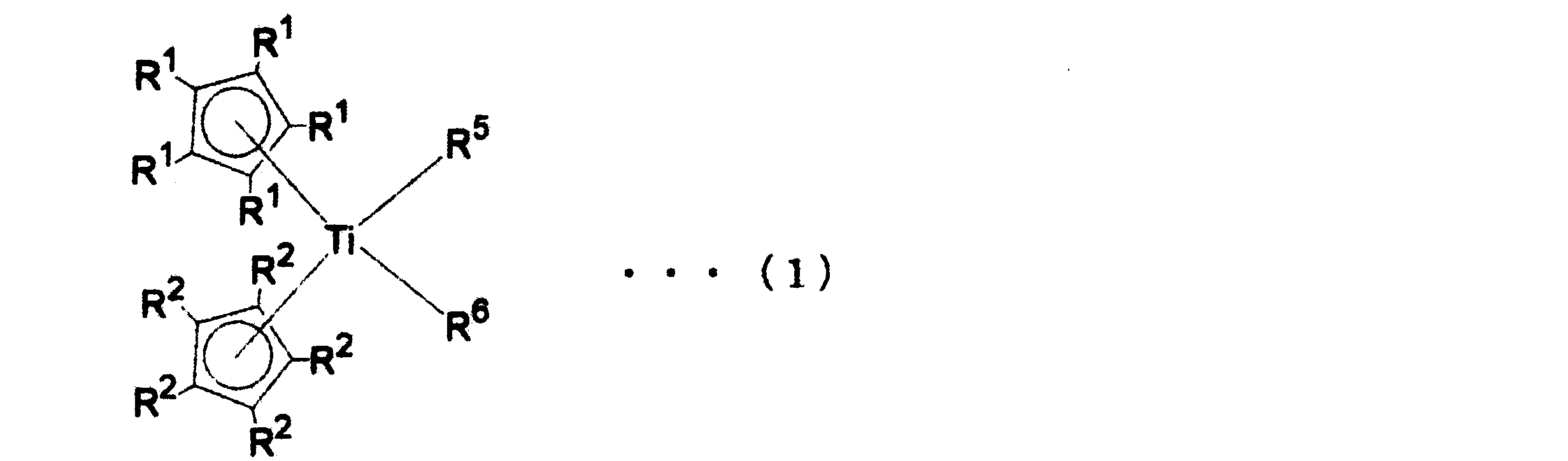
- Catalyst composition for hydrogenation. (A): Titanocene compound represented by the following general formula (1)
- R 5 and R 6 represent any group selected from the group consisting of hydrogen, C1 to C12 hydrocarbon groups, aryloxy groups, alkoxy groups, halogen groups, and carbonyl groups. , R 5 and R 6 may be the same or different.
- R 1 and R 2 represent any group selected from the group consisting of hydrogen and C1 to C12 hydrocarbon groups, and R 1 and R 2 may be the same or different. However, the case where R 1 and R 2 are all hydrogen or all C1 to C12 hydrocarbon groups is excluded.
- a hydrogenation catalyst composition capable of producing a hydrogenated olefin compound having high hydrogenation activity, good feedability, high storage stability, and excellent colorlessness.
- the present embodiment a mode for carrying out the present invention (hereinafter referred to as “the present embodiment”) will be described in detail.
- the following embodiments are examples for explaining the present invention, and are not intended to limit the present invention to the following contents.
- the present invention can be implemented with appropriate modifications within the scope of the gist.
- the hydrogenation catalyst composition of the present embodiment is a hydrogenation catalyst composition containing (A), (B), (C), and (D) described later, and includes the following (C) and the following (A).
- component (A) titanocene compound>
- component (A) A titanocene compound (in the present specification, the component (A) may be simply referred to as (A)) is represented by the following general formula (1).
- R 5 and R 6 represent any group selected from the group consisting of hydrogen, C1 to C12 hydrocarbon group, aryloxy group, alkoxy group, halogen group and carbonyl group, R 5 and R 6 may be the same or different.
- R 1 and R 2 represent any group selected from the group consisting of hydrogen and C1 to C12 hydrocarbon groups, and R 1 and R 2 may be the same or different. However, the case where R 1 and R 2 are all hydrogen or all C1 to C12 hydrocarbon groups is excluded.
- the C1 to C12 hydrocarbon group of R 1 , R 2 , R 5 and R 6 includes, for example, a substituent represented by the following general formula (2).
- the titanocene compound is not limited to the following examples.
- titanocene compounds having an alkyl group-substituted cyclopentadienyl group are not limited to the examples described above, and those other than those described above, in which the number of substitution of the alkyl group of the cyclopentadienyl ring is 2, 3, or 4 are also suitable. Used.
- the hydrogenation catalyst composition of this embodiment is an olefin of an olefin compound (an olefinically unsaturated double bond-containing compound, hereinafter sometimes referred to simply as an olefin compound).
- the unsaturated olefinic double bond is hydrogenated to a high level, and the heat resistance of the olefin compound after hydrogenation is excellent.
- hydrogenation activity for olefinically unsaturated double bonds in conjugated diene polymers or copolymers of conjugated dienes and vinyl aromatic hydrocarbons is high, and the unsaturated double bonds are made higher in a wide temperature range.
- the following compounds are preferred as the (A) titanocene compound.
- the (A) titanocene compound is not limited to the following, but includes, for example, bis ( ⁇ (5) -methylcyclopentadienyl) titanium dichloride, bis ( ⁇ (5) -n-butylcyclopentadienyl) titanium dichloride, bis ( ⁇ (5) -methylcyclopentadienyl) titanium diphenyl, bis ( ⁇ (5) -n-butylcyclopentadienyl) titanium diphenyl Bis ( ⁇ (5) -methylcyclopentadienyl) titanium di (p-tolyl) and bis ( ⁇ (5) -n-butylcyclopentadienyl) titanium di (p-tolyl) are preferable. It is done.
- the titanocene compound can be synthesized, for example, by reacting a tetravalent titanocene halogen compound having a cyclopentadienyl group having an alkyl substituent with aryllithium.
- the structure of the synthesized titanocene compound can be specified by 1H-NMR and MS spectrum.
- ⁇ (B) component a compound containing a predetermined element>
- the compound (B) containing a predetermined element in the present specification, simply referred to as the component (B) or (B) in some cases) has the ability to reduce the titanocene compound of the component (A) described above.
- compounds containing one or more elements selected from the group consisting of Li, Na, K, Mg, Zn, Al, and Ca elements are used.
- Component (B) examples include organic lithium compounds, organic sodium compounds, organic potassium compounds, organic zinc compounds, organic magnesium compounds, organic aluminum compounds, and organic calcium compounds. These may be used alone or in combination of two or more.
- the organic lithium compound as the component (B) is not limited to the following, but for example, methyl lithium, ethyl lithium, n-propyl lithium, isopropyl lithium, n-butyl lithium, sec-butyl lithium, isobutyl lithium, t-butyllithium, n-pentyllithium, n-hexyllithium, phenyllithium, cyclopentadienyllithium, m-tolyllithium, p-tolyllithium, xylyllithium, dimethylaminolithium, diethylaminolithium, methoxylithium, ethoxylithium N-propoxylithium, isopropoxylithium, n-butoxylithium, sec-butoxylithium, t-butoxylithium, pentyloxylithium, hexyloxylithium, heptyloxylithium, Chi oxy lithium, phenoxy lithium, 4-methylphenoxy lithium, benzy
- a lithium phenolate compound obtained by reacting a phenol-based stabilizer with the various alkyl lithiums can also be used.
- phenol stabilizers include, but are not limited to, 1-oxy-3-methyl-4-isopropylbenzene, 2,6-di-t-butylphenol, 2,6-di-t.
- 2,6-di-t-butyl-4-methylphenoxylithium in which the hydroxyl group of 2,6-di-t-butyl-p-cresol, which is the most general-purpose, is —OLi, is particularly preferably used. Is called.
- organolithium compounds such as trimethylsilyllithium, diethylmethylsilyllithium, dimethylethylsilyllithium, triethylsilyllithium, triphenylsilyllithium and the like can be used as the organolithium compound as the component (B).
- the organic sodium compound as the component (B) is not limited to the following.
- the organic potassium compound as the component (B) is not limited to the following.
- a part of the organic alkali metal compound and organic alkaline earth metal compound as the component (B) is also used as a living anion polymerization initiator of a conjugated diene compound and / or a vinyl aromatic hydrocarbon compound.
- the olefin compound as an additive is a conjugated diene polymer having an active terminal of these metals or a copolymer (living polymer) of a conjugated diene and a vinyl aromatic hydrocarbon, these active terminals are also (B ) Acts as an ingredient.
- organic zinc compound as the component (B) examples include, but are not limited to, diethyl zinc, bis ( ⁇ (5) -cyclopentadienyl) zinc, and diphenyl zinc.
- the organic magnesium compound as the component (B) is not limited to the following.
- the organoaluminum compound as the component (B) is not limited to the following.
- trimethylaluminum, triethylaluminum, triisobutylaluminum, triphenylaluminum, diethylaluminum chloride, dimethylaluminum chloride, ethylaluminum dichloride examples include methylaluminum sesquichloride, ethylaluminum sesquichloride, diethylaluminum hydride, diisobutylaluminum hydride, triphenylaluminum, tri (2-ethylhexyl) aluminum, (2-ethylhexyl) aluminum dichloride, methylaluminoxane, and ethylaluminoxane.
- alkaline (earth) metal hydrides such as lithium hydride, potassium hydride, sodium hydride, calcium hydride, sodium aluminum hydride, potassium aluminum hydride, diisobutyl sodium aluminum hydride,
- a hydride containing two or more metals such as tri (t-butoxy) aluminum hydride, triethyl sodium aluminum hydride, diisobutyl sodium aluminum hydride, triethyl sodium aluminum hydride, triethoxy sodium aluminum hydride, triethyl lithium aluminum hydride can also be used.
- a complex synthesized by reacting the organoalkali metal compound and the organoaluminum compound in advance a complex synthesized by reacting an organoalkali metal compound and an organomagnesium compound in advance (art complex), and the like ( B) can be used as a component.
- the organometallic compound / metal-containing compound (B) which is a compound containing a predetermined element a compound containing Li or Al is preferable from the viewpoint of high hydrogenation activity. From the viewpoint of higher hydrogenation activity, an organolithium compound is more preferable.
- the unsaturated compound (C) (in the present specification, simply referred to as component (C) or (C)) is a compound having a molecular weight of 400 or less having one or more unsaturated groups in the molecule. .
- the molecular weight of the component (C) is 400 or less from the viewpoint of feedability after storage of the hydrogenation catalyst composition, preferably 300 or less, more preferably 200 or less, and even more preferably 150 or less. preferable.
- Component (C) When the unsaturated compound is a polymer, it can be produced by polymerizing a predetermined monomer.
- Examples of the monomer include, but are not limited to, 1,3-butadiene, isoprene, 2,3-dimethylbutadiene, 1,3-pentadiene, 2-methyl-1,3-pentadiene, 1, Conjugated dienes generally having 4 to about 12 hydrocarbons such as 3-hexadiene, 4,5-diethyl-1,3-octadiene, 3-butyl-1,3-octadiene, monoterpenes, vinyl aromatic compounds, norbornadiene , Cyclopentadiene, cyclohexadiene, 2,3-dihydrodicyclopentadiene, and acetylenes. These monomers may be used alone or in combination of two or more.
- the unsaturated compound ( The preferred range of the unsaturated group amount in C) is determined. That is, the amount of unsaturated groups in (C) is preferably 2 mol or more per mol of (C) from the viewpoint of high hydrogenation activity and feedability. From the viewpoint of high hydrogenation activity and suppression of yellowing of the polymer, the amount is preferably 5 mol or less. The range of 2 mol or more and 4 mol or less is more preferable, the range of 2 mol or more and 3 mol or less is more preferable, and 3 mol is even more preferable. The amount of unsaturated groups in component (C) can be measured by NMR.
- the molar ratio of the unsaturated group amount of the (C) unsaturated compound and the above-mentioned (A) titanocene compound ( It is preferable that the unsaturated group amount of C) / (A)) is 0.1 or more, storage stability regarding the feedability of the hydrogenation catalyst composition of the present embodiment, economy, suppression of yellowing of the polymer, From the viewpoint of high hydrogenation activity, it is preferably 25 or less.
- the amount of the unsaturated group (C) / (A) is more preferably in the range of 0.6 to 20, and further preferably in the range of 1.0 to 10.
- the amount of unsaturated groups in (C) is in the above range in the molar ratio with component (A)
- the amount of unsaturated groups in (C) is in the above range in the molar ratio with component (A)
- the amount of hydrogenation can be reduced, and high hydrogenation activity can be obtained.
- Polar compound in the present specification, simply referred to as component (D) or (D) is a compound having N, O or S, and is limited to the following.
- component (D) or (D) is a compound having N, O or S, and is limited to the following.
- alcohol compounds, ether compounds, thioether compounds, ketone compounds, sulfoxide compounds, carboxylic acid compounds, carboxylic acid ester compounds, aldehyde compounds, lactam compounds, lactone compounds, amine compounds, amide compounds, nitrile compounds, epoxies Compounds and oxime compounds Specific examples of these polar compounds include the following compounds.
- the alcohol compound examples include, but are not limited to, methyl alcohol, ethyl alcohol, propyl alcohol, n-butyl alcohol, sec-butyl alcohol, isobutyl alcohol, tert-butyl alcohol, n-amyl alcohol, Isoamyl alcohol, hexyl alcohol and its isomer, heptyl alcohol and its isomer, octyl alcohol and its isomer, capryl alcohol, nonyl alcohol and its isomer, decyl alcohol and its isomer, benzyl alcohol, phenol, cresol, 2, Monohydric alcohols such as 6-di-tert-butyl-p-cresol, ethylene glycol, propylene glycol, butanediol, pentyl glycol, hexyl glycol, hep Glycol and glycol is these isomers (dihydric alcohol) and the like.
- the alcohol compound which has other functional groups in 1 molecule such as trihydric alcohol
- ether compound examples include, but are not limited to, dimethyl ether, diethyl ether, di-n-propyl ether, diisopropyl ether, di-n-butyl ether, di-sec-butyl ether, diphenyl ether, methyl ethyl ether.
- numerator like tetrahydrofurancarboxylic acid may be sufficient.
- thioether compound examples include, but are not limited to, dimethyl sulfide, diethyl sulfide, di-n-butyl sulfide, di-sec-butyl sulfide, di-tert-butyl sulfide, diphenyl sulfide, and methyl ethyl.
- examples thereof include sulfide, ethylbutyl sulfide, thioanisole, ethylphenyl sulfide, thiophene, and tetrahydrothiophene.
- ketone compound examples include, but are not limited to, acetone, diethyl ketone, di-n-propyl ketone, diisopropyl ketone, di-n-butyl ketone, di-sec-butyl ketone, and di-tert-butyl ketone.
- Benzophenone methyl ethyl ketone, acetophenone, benzyl phenyl ketone, propiophenone, cyclopentanone, cyclohexanone, diacetyl, acetylacetone, benzoylacetone and the like.
- sulfoxide compound examples include, but are not limited to, dimethyl sulfoxide, diethyl sulfoxide, tetramethylene sulfoxide, pentamethylene sulfoxide, diphenyl sulfoxide, dibenzyl sulfoxide, p-tolyl sulfoxide, and the like.
- carboxylic acid compound examples include, but are not limited to, formic acid, acetic acid, propionic acid, butyric acid, caproic acid, lauric acid, palmitic acid, stearic acid, cyclohexylpropionic acid, cyclohexylcaproic acid, and benzoic acid.
- Monobasic acids such as phenylacetic acid, o-toluic acid, m-toluic acid, p-toluic acid, acrylic acid, methacrylic acid, oxalic acid, maleic acid, malonic acid, fumaric acid, succinic acid, adipic acid, pimelic acid
- dibasic acids such as suberic acid, sebacic acid, itaconic acid, phthalic acid, isophthalic acid, terephthalic acid, naphthalic acid, and diphenic acid, trimellitic acid, pyromellitic acid, and derivatives thereof may be mentioned. Further, for example, it may be a compound having another functional group in one molecule such as hydroxybenzoic acid.
- carboxylic acid ester examples include, but are not limited to, formic acid, acetic acid, propionic acid, butyric acid, caproic acid, lauric acid, palmitic acid, stearic acid, cyclohexylpropionic acid, cyclohexylcaproic acid, and benzoic acid.
- Monobasic acids such as phenylacetic acid, o-toluic acid, m-toluic acid, p-toluic acid, acrylic acid, methacrylic acid, oxalic acid, maleic acid, malonic acid, fumaric acid, succinic acid, adipic acid, pimelic acid
- Dibasic acids such as suberic acid, sebacic acid, itaconic acid, phthalic acid, isophthalic acid, terephthalic acid, naphthalic acid, diphenic acid and the like, methyl alcohol, ethyl alcohol, propyl alcohol, n-butyl alcohol, sec-butyl alcohol, Isobutyl alcohol, tert-butyl alcohol, n-a Alcohol, isoamyl alcohol, hexyl alcohol and its isomer, heptyl alcohol and its isomer, octyl alcohol and its isomer, capryl alcohol, nonyl alcohol and its isomer, decyl
- lactone compound examples include, but are not limited to, ⁇ -propiolactone, ⁇ -valerolactone, ⁇ -caprolactone, and lactone compounds corresponding to the following acids. That is, examples of the acid include 2-methyl-3-hydroxypropionic acid, 3-hydroxynonane or 3-hydroxypelargonic acid, 2-dodecyl-3-hydroxypropionic acid, 2-cyclopentyl-3-hydroxypropionic acid, 2- n-butyl-3-cyclohexyl-3-hydroxypropionic acid, 2-phenyl-3-hydroxytridecanoic acid, 2- (2-ethylcyclopentyl) -3-hydroxypropionic acid, 2-methylphenyl-3-hydroxypropionic acid 3-benzyl-3-hydroxypropionic acid, 2,2-dimethyl-3-hydroxypropionic acid, 2-methyl-5-hydroxyvaleric acid, 3-cyclohexyl-5-hydroxyvaleric acid, 4-phenyl-5 -Hydroxyvaleric acid, 2-heptyl-4
- amine compound examples include, but are not limited to, methylamine, ethylamine, isopropylamine, n-butylamine, sec-butylamine, tert-butylamine, n-amylamine, sec-amylamine, tert-amylamine, n-hexylamine, n-heptylamine, aniline, benzylamine, o-anisidine, m-anisidine, p-anisidine, ⁇ -naphthylamine, dimethylamine, diethylamine, di-n-propylamine, diisopropylamine, di-n- Butylamine, di-sec-butylamine, diisobutylamine, di-tert-butylamine, di-n-amylamine, diisoamylamine, dibenzylamine, N-methylaniline, N-ethylaniline, N-ethyl-o Toluidine, N
- the amide compound is a compound having at least one —C ( ⁇ O) —N ⁇ or —C ( ⁇ S) —N ⁇ bond in the molecule, and is not limited to the following. , N-dimethylformamide, N-dimethylacetamide, N-methylpyrrolidone, acetamide, propionamide, benzamide, acetanilide, benzanilide, N-methylacetanilide, N, N-dimethylthioformamide, N, N-dimethyl-N, N '-(p-dimethylamino) benzamide, N-ethylene-N-methyl-8-quinyllinecarboxamide, N, N-dimethylicotinamide, N, N-dimethylmethacrylamide, N-methylphthalimide, N- Phenylphthalimide, N-acetyl- ⁇ -caprolactam, N, N, N ′, N′-tetramethyl Phthalamide, 10-acetylphenox
- epoxy compound examples include, but are not limited to, 1,3-butadiene monooxide, 1,3-butadiene oxide, 1,2-butylene oxide, 2,3-butylene oxide, cyclohexene oxide, 1,2-epoxycyclododecane, 1,2-epoxydecane, 1,2-epoxyeicosane, 1,2-epoxyheptane, 1,2-epoxyhexadecane, 1,2-epoxyhexadecane, 1,2-epoxyoctadecane 1,2-epoxyoctane, ethylene glycol diglycidyl ether, 1,2-epoxytetradecane, hexamethylene oxide, isobutylene oxide, 1,7-octadiene epoxide, 2-phenylpropylene oxide, propylene oxide, trans-stilbene oxide, Sti N'okishido, epoxidized 1,2-polybutadiene, epoxidized linseed oil,
- oxime compound examples include, but are not limited to, acetooxime, methyl ethyl ketone oxime, diethyl ketone oxime, acetophenone oxime, benzophenone oxime, benzyl phenyl ketone oxime, cyclopentanone oxime, cyclohexanone oxime, benzaldehyde oxime, and the like. Is mentioned.
- a polar compound may be used individually by 1 type, and may use 2 or more types together.
- a polar compound an amine compound and an ether compound are preferable.
- An amine compound is more preferable in terms of high hydrogenation activity and high feedability of the hydrogenation catalyst composition.
- the hydrogenation catalyst composition of the present embodiment is produced by mixing the above-described components (A), (B), (C) and (D) using a predetermined solvent as necessary. it can.
- the above-described components (A), (B), (C) and (D) from the viewpoint of high hydrogenation activity, high feedability, and colorlessness, the above-described components (A), (B), (C) and (D
- the component (B) is preferably added last in the presence of the component (A), the component (C) and the component (D).
- the order of adding the component (A), the component (C), and the component (D) is arbitrary and is not particularly limited.
- the hydrogenation catalyst composition may be prepared in advance in a catalyst tank separately from the reaction system for the hydrogenated product and then introduced into the reaction system.
- the components of the hydrogenation catalyst composition may be introduced into the reaction system. May be introduced separately.
- the hydrogenation catalyst composition of this embodiment has a low viscosity, good feedability, and excellent storage stability, so it is prepared in a separate catalyst tank and then introduced into the hydrogenation reaction system. Suitable for the method to do. In particular, it is suitable for a hydrogenation method (continuous hydrogenation) in which a hydrogenated product and a previously prepared hydrogenation catalyst composition are continuously supplied.
- the hydrogenated product is a conjugated diene polymer or a copolymer of a conjugated diene and a vinyl aromatic hydrocarbon, and the polymer or copolymer starts an organic alkali metal or an organic alkaline earth metal.
- the component of the hydrogenation catalyst composition is introduced into the reaction system when the component is obtained by living anionic polymerization as an agent, the active end of the polymer or copolymer is also partially or as the component (B) All are available.
- part or all of the active terminal may be deactivated by a polymerization deactivator.
- An excessive alcohol or ketone compound or the like is also preferably used as the polymerization deactivator.
- the atmosphere for preparing the hydrogenation catalyst composition of the present embodiment may be an inert gas atmosphere or a hydrogen atmosphere.
- the preparation temperature and storage temperature are preferably in the range of ⁇ 50 ° C. to 50 ° C., more preferably ⁇ 20 ° C. to 30 ° C.
- the time required for preparation varies depending on the preparation temperature, it is several seconds to 60 days under the condition of 25 ° C., and preferably 1 minute to 20 days.
- the component (A) constituting the hydrogenation catalyst composition of this embodiment ( The component (B), the component (C), and the component (D) are more easily handled and preferably used as a solution dissolved in an inert organic solvent.
- an inert organic solvent a solvent that does not react with any participant in the hydrogenation reaction is used.
- it is the same solvent as the solvent used for the hydrogenation reaction.
- the hydrogenation catalyst composition produced is subjected to hydrogenation when performing the hydrogenation.
- the hydrogenation reactor hydrogenation tank
- the temperature at the time of transfer is preferably ⁇ 30 ° C. to 100 ° C., more preferably ⁇ 10 ° C. to 50 ° C., and it is preferably added immediately before the hydrogenation reaction.
- the mixing ratio of each component for expressing high hydrogenation activity and hydrogenation selectivity is the ratio of the number of moles of metal in component (B) to the number of moles of metal (Ti) in component (A) (hereinafter referred to as Metal ( B) / Metal (A) molar ratio) is preferably in the range of about 20 or less.
- Metal (B) / Metal (A) molar ratio 0, that is, even in the absence of Metal (B), it is possible to perform quantitative hydrogenation by thermal reduction. Since a catalyst amount is required, it is preferable that Metal (B) is present.
- the molar ratio of Metal (B) / Metal (A) is 20 or less, it is possible to prevent excessive use of an expensive catalyst component (B) that is not involved in substantial activity improvement, which is economically excellent and unnecessary. Side reactions can be prevented.
- the mixing ratio of the component (A) and the component (B) so that the molar ratio of Metal (B) / Metal (A) is in the range of 0.5 to 10, the hydrogenation catalyst composition Since the hydrogenation activity is improved, the molar ratio is most preferable.
- the living terminal acts as a reducing agent. Therefore, when hydrogenating a polymer having a living active terminal, the above-mentioned optimal Metal ( In order to achieve the B) / Metal (A) molar ratio, it is preferable to deactivate the living active terminal with various active hydrogen or halogen-containing compounds.
- Examples of the compound having active hydrogen include water and methanol, ethanol, n-propanol, n-butanol, sec-butanol, t-butanol, 1-pentanol, 2-pentanol, 3-pentanol, 1-hexanol, Alcohols such as 2-hexanol, 3-hexanol, 1-heptanol, 2-heptanol, 3-heptanol, 4-heptanol, octanol, nonanol, decanol, undecanol, lauryl alcohol, allyl alcohol, cyclohexanol, cyclopentanol, benzyl alcohol Phenol, o-cresol, m-cresol, p-cresol, p-allylphenol, 2,6-di-t-butyl-p-cresol, xylenol, dihydroanthraquinone, dihydroxycoumarin 1-hydroxy anthraquino
- Examples of the acid include organic carboxylic acids such as acetic acid, propionic acid, butyric acid, isoacetic acid, pentanoic acid, hexanoic acid, heptanoic acid, decalic acid, myristic acid, stearic acid, behenic acid, and benzoic acid.
- organic carboxylic acids such as acetic acid, propionic acid, butyric acid, isoacetic acid, pentanoic acid, hexanoic acid, heptanoic acid, decalic acid, myristic acid, stearic acid, behenic acid, and benzoic acid.
- organic carboxylic acids such as acetic acid, propionic acid, butyric acid, isoacetic acid, pentanoic acid, hexanoic acid, heptanoic acid, decalic acid, myristic acid, stearic acid, behenic acid, and benzoic acid.
- benzyl chloride trimethyls
- hydrogenation is performed by bringing the olefinically unsaturated double bond-containing compound into contact with hydrogen in the presence of the above-described hydrogenation catalyst composition of the present embodiment.
- the catalyst composition for hydrogenation of this embodiment can be used in the process of hydrogenating all compounds having an olefinically unsaturated double bond.
- Examples of the compound having an olefinically unsaturated double bond include, but are not limited to, aliphatic olefins such as isomers such as ethylene, propylene, butene, pentene, hexene, heptene, octene; cyclopentene, Alicyclic olefins such as methylcyclopentene, cyclopentadiene, cyclohexene, methylcyclohexene, and cyclohexadiene; monomers such as styrene, butadiene, and isoprene; at least one olefin in the molecule such as unsaturated fatty acid and derivatives thereof, and unsaturated liquid oligomer An unsaturated double bond-containing low molecular weight polymer.
- aliphatic olefins such as isomers such as ethylene, propylene, butene, pentene, hexene, heptene,
- the hydrogenation catalyst composition of the present embodiment can also be applied to selective hydrogenation of olefinically unsaturated double bonds of conjugated diene polymers and copolymers of conjugated dienes and olefin monomers.
- the selective hydrogenation referred to here is to selectively hydrogenate the olefinic unsaturated double bond of the conjugated diene portion of the conjugated diene polymer or the copolymer of conjugated diene and olefin monomer.
- a vinyl aromatic compound such as vinyl aromatic hydrocarbon is used as the olefin monomer, it means that the carbon-carbon double bond of the aromatic ring is not substantially hydrogenated.
- the selective hydrogenated product of an olefinically unsaturated double bond of a conjugated diene polymer or a copolymer of a conjugated diene and an olefin monomer is industrially useful as an elastic body or a thermoplastic elastic body.
- the conjugated diene used for the production of the conjugated diene polymer as the hydrogenated product generally includes conjugated dienes having 4 to about 12 carbon atoms.
- conjugated dienes having 4 to about 12 carbon atoms.
- the microstructure of the butadiene portion includes 1,2 bonds and 1,4 bonds (cis + trans), and both of the hydrogenation catalyst compositions of this embodiment can be hydrogenated quantitatively.
- the isoprene moiety has an olefinically unsaturated bond in the side chain of 1,2 bond, 3,4 bond and the main chain of 1,4 bond (cis + trans), which is obtained by the production method of this embodiment.
- Any of the hydrogenation catalyst compositions can be quantitatively hydrogenated.
- the structure and hydrogenation rate of the compound hydrogenated with the hydrogenation catalyst composition of the present embodiment can be measured by 1H-NMR.
- the 1,2 bond, 1,4 bond of the butadiene part, and the side chain of the 1,2 bond, 3,4 bond of the isoprene part are particularly It can be selectively hydrogenated.
- 1,3-butadiene is selected as the main component of the conjugated diene polymer to be hydrogenated with the hydrogenation catalyst composition
- butadiene as a hydrogenated product is particularly effective for developing elastomer elasticity from low temperature to room temperature.
- the amount of 1,2 bonds is preferably 8% or more, more preferably 20% or more, and further preferably 30 to 80%.
- the microstructure of the isoprene unit has 1,4 bonds.
- the amount is preferably 50% or more, more preferably 75% or more.
- vinyl aromatic hydrocarbons copolymerizable with at least one conjugated diene examples include styrene, tert-butylstyrene, ⁇ -methylstyrene, p-methylstyrene, divinylbenzene, 1,1-diphenylethylene, N, N -Dimethyl-p-aminoethyl styrene, N, N-diethyl-p-aminoethyl styrene and the like are mentioned, and styrene and / or ⁇ -methyl styrene is particularly preferable.
- the copolymer As specific examples of the copolymer, a butadiene / styrene copolymer, an isoprene / styrene copolymer, a butadiene / isoprene / styrene copolymer and the like are preferable because they give a hydrogenated copolymer having a high industrial value. is there.
- These copolymers are not particularly limited, such as random, block, and tapered block copolymers.
- the hydrogenation of the carbon-carbon double bond (aromatic ring) of the vinyl aromatic hydrocarbon unit in the copolymer is as follows. Virtually does not happen.
- the hydrogenation reaction using the hydrogenation catalyst composition of the present embodiment is preferably carried out by bringing a compound having an olefinically unsaturated double bond into contact with hydrogen in a solution dissolved in an inert organic solvent.
- inert organic solvent as used herein means a solvent that does not react with any participant in the hydrogenation reaction.
- aliphatic hydrocarbons such as n-pentane, n-hexane, n-heptane and n-octane
- alicyclic hydrocarbons such as cyclohexane, cycloheptane and cycloheptane
- Ethers such as diethyl ether and tetrahydrofuran, or a mixture thereof.
- aromatic hydrocarbons such as benzene, toluene, xylene, and ethylbenzene can be used only when the aromatic double bond is not hydrogenated under the selected hydrogenation conditions.
- the hydrogenated solution is maintained at a predetermined temperature under hydrogen or an inert atmosphere, and the catalyst composition for hydrogenation is added with stirring or without stirring.
- hydrogen gas is introduced and pressurized to a predetermined pressure.
- the inert atmosphere means an atmosphere that does not react with any participant in the hydrogenation reaction such as nitrogen, helium, neon, and argon. Air and oxygen are not preferred because they oxidize the catalyst components and cause deactivation of the hydrogenation catalyst composition. Since the hydrogenation catalyst composition of the present embodiment has a low viscosity, good feedability, and excellent storage stability, the hydrogenated product and the hydrogenation catalyst composition are continuously added to the hydrogenation reactor. It is suitable for the hydrogenation method (continuous hydrogenation) to be supplied.
- the amount of the hydrogenation catalyst composition added is preferably in the range of 0.001 to 20 mmol per 100 g of the hydrogenated product in terms of the molar amount of component (A).
- this addition amount range it is possible to preferentially hydrogenate the olefinically unsaturated double bond of the hydrogenated product, and the hydrogenation of the double bond of the aromatic ring in the copolymer is substantially reduced. Since it does not occur, extremely high selective hydrogenation is realized. Hydrogenation reaction is possible even when a hydrogenation catalyst composition in an amount exceeding 20 millimoles per 100 g of hydrogenated product is added in terms of the molar amount of component (A). This is disadvantageous because it becomes economical and the catalyst deashing and removal after the hydrogenation reaction become complicated.
- the amount of the preferred hydrogenation catalyst composition for quantitatively hydrogenating the unsaturated double bond of the conjugated diene unit of the polymer under the selected conditions is the amount of water covered in terms of the molar amount of component (A). 0.01 to 5 mmol per 100 g of additive.
- the hydrogenation reaction is more preferably carried out with stirring, whereby the hydrogen introduced can be brought into contact with the hydrogenated product sufficiently quickly.
- the hydrogenation reaction is preferably carried out in the temperature range of 0 to 200 ° C.
- 0 degreeC or more it can carry out with sufficient hydrogenation speed
- 200 degrees C or less by carrying out at 200 degrees C or less, a side reaction, a decomposition reaction, gelation, and these simultaneous occurrence can be prevented, and also the deactivation of a hydrogenation catalyst composition and a hydrogenation activity can be prevented from falling.
- a more preferable temperature range is 20 to 180 ° C.
- the pressure of hydrogen used for the hydrogenation reaction is preferably 1 to 100 kgf / cm 2 . If the pressure is less than 1 kgf / cm 2 , the hydrogenation rate becomes slow and a sufficient hydrogenation rate may not be obtained. If the pressure exceeds 100 kgf / cm 2 , the hydrogenation reaction is almost completed at the same time as increasing the pressure. Side reactions and gelation may occur.
- the hydrogenation hydrogen pressure is more preferably 2 to 30 kgf / cm 2 , but the optimum hydrogen pressure is selected in relation to the addition amount of the hydrogenation catalyst composition, and the amount of the hydrogenation catalyst composition is substantially small. Accordingly, it is preferable that the hydrogen pressure is selected by selecting the high pressure side.
- the hydrogenation reaction time is usually several seconds to 50 hours. The hydrogenation reaction time and hydrogenation pressure are appropriately selected within the above range depending on the desired hydrogenation rate.
- the olefinic unsaturated double bond of the olefin compound, the conjugated diene copolymer, and the olefinic unsaturated double bond in the copolymer of conjugated diene and vinyl aromatic hydrocarbon are used for the purpose.
- an arbitrary hydrogenation rate can be obtained.
- the hydrogenated product can be easily removed from the solution containing the hydrogenated product by chemical or physical means such as distillation or precipitation. Can be separated.
- the hydrogenated product is a polymer
- the residue of the hydrogenation catalyst composition is removed as necessary from the polymer solution subjected to the hydrogenation reaction, and the hydrogenated polymer is used as a solution.
- Can be separated from Examples of the separation method include, for example, a method of adding a polar solvent that is a poor solvent for a hydrogenated polymer such as acetone or alcohol to the reaction solution after hydrogenation to precipitate and recover the hydrogenated polymer, and stirring the reaction solution
- a polar solvent that is a poor solvent for a hydrogenated polymer such as acetone or alcohol
- Examples thereof include a method of distilling and recovering the hydrogenated polymer together with the solvent after charging into hot water, or a method of recovering the hydrogenated polymer by directly distilling the solvent by heating the reaction solution.
- reaction solution was filtered under a helium atmosphere to obtain a colorless and transparent p-tolyl lithium solution.
- the ether solution of p-tolyllithium synthesized previously was added dropwise over about 2 hours with stirring at room temperature.
- the reaction mixture was filtered in air, the insoluble part was washed with dichloromethane, the filtrate and the washing solution were combined, and the solvent was removed under reduced pressure.
- the residue was dissolved in a small amount of dichloromethane and recrystallized by adding petroleum ether.
- the obtained crystals were filtered off, the filtrate was concentrated again, and the above operation was repeated to obtain bis ( ⁇ (5) -cyclopentadienyl) titanium di (p-tolyl).
- the yield was 87%.
- the obtained crystals are orange-yellow needles, have good solubility in toluene and cyclohexane, have a melting point of 145 ° C., elemental analysis values: C, 80.0, H, 6.7, Ti, 13.3. It was.
- ⁇ (A-2) Synthesis of bis ( ⁇ (5) -cyclopentadienyl) titanium di (phenyl)> Synthesis was performed in the same manner as in the above (A-1) except that 157 g (1 mol) of bromobenzene was used instead of the p-bromotoluene used in the above (A-1) to obtain phenyllithium. Using the phenyllithium, bis ( ⁇ (5) -cyclopentadienyl) titanium diphenyl was obtained by the same process as (A-1) described above. The yield was 120 g (90% yield). The obtained crystals are orange-yellow needle-like, slightly soluble in toluene and cyclohexane, melting point 147 ° C., elemental analysis values: C, 79.5, H, 6.1, Ti, 14.4. there were.
- ⁇ (A-4) Bis ( ⁇ (5) -1,3-dimethylcyclopentadienyl) titanium dichloride> A reagent obtained by recrystallizing a reagent manufactured by Nippon Fine Chemical Co., Ltd. in dichloromethane was used.
- (B) component (B-1): Triethylaluminum; hexane solution (manufactured by Tosoh Akzo) was used as it was.
- ⁇ polymer ⁇ Polymerization of styrene-butadiene-styrene block copolymer
- 4000 g of cyclohexane, 150 g of styrene monomer, 1.10 g of n-butyllithium and 25 g of tetrahydrofuran were added and polymerized at 60 ° C. for 3 hours with stirring. For 3 hours.
- 150 g of styrene monomer was added, and polymerization was performed at 60 ° C. for 3 hours.
- the active terminal was deactivated with water and vacuum dried at 60 ° C. for 12 hours.
- the resulting styrene-butadiene-styrene block copolymer is a complete block copolymer, with a bound styrene content of 30% by mass, a 1,2-vinyl bond content of butadiene units of 45 mol%, and measured by GPC (polystyrene equivalent molecular weight). The weight average molecular weight was about 60,000. The 1,2-vinyl bond amount was measured by NMR.
- NMR Measurement method of 1,2-vinyl bond content and hydrogenation rate
- Measuring equipment JNM-LA400 (manufactured by JEOL) Solvent: Deuterated chloroform Measurement sample: Sample taken before and after hydrogenation of polymer Sample concentration: 50 mg / mL Observation frequency: 400 MHz Chemical shift criteria: TMS (tetramethylsilane) Pulse delay: 2.904 seconds Number of scans: 64 times Pulse width: 45 ° Measurement temperature: 26 ° C
- the hydrogenated polymers produced as described above using the hydrogenation catalyst compositions of Examples 1 to 15 and Comparative Examples 1 to 5 were the polymers of Production Examples 1 to 15 and Comparative Production Examples 1 to 5, respectively. It was.
- Table 1 shows the hydrogenation rates of the hydrogenated polymers of Production Examples 1 to 15 and Comparative Production Examples 1 to 5, the feed properties of the hydrogenation catalyst compositions of Examples 1 to 15 and Comparative Examples 1 to 5, and the production. The evaluation of yellowing suppression of the hydrogenated polymers of Examples 1 to 15 and Production Comparative Examples 1 to 5 was shown, respectively.
- Component (A) (A-1): Bis ( ⁇ (5) -cyclopentadienyl) titanium di (p-tolyl) (A-2): Bis ( ⁇ (5) -cyclopentadienyl) titanium di (phenyl) (A-3): Bis ( ⁇ (5) -cyclopentadienyl) titanium di (3,4-xylyl) (A-4): Bis ( ⁇ (5) -1,3-dimethylcyclopentadienyl) titanium dichloride (B) component (B-1): Triethylaluminum (B-2): sec-butyllithium (C) Component (C-1): Myrcene (C-2): Isoprene (C-3): Octene (C-4): 1,7-octadiene (C-5): Polyisoprene (D) Component (D-1) : Tetrahydrofuran (D-2): Eth-dimethylcyclopentadienyl) titanium dichlor
- the hydrogenation catalyst composition of the present invention is industrially applicable as a hydrogenation catalyst composition used in a hydrogenation step for producing a hydrogenated polymer compound used as a modifier for polypropylene or polyethylene. have.
Landscapes
- Chemical & Material Sciences (AREA)
- Organic Chemistry (AREA)
- Chemical Kinetics & Catalysis (AREA)
- Engineering & Computer Science (AREA)
- Materials Engineering (AREA)
- Health & Medical Sciences (AREA)
- Medicinal Chemistry (AREA)
- Polymers & Plastics (AREA)
- Inorganic Chemistry (AREA)
- General Chemical & Material Sciences (AREA)
- Addition Polymer Or Copolymer, Post-Treatments, Or Chemical Modifications (AREA)
- Catalysts (AREA)
Abstract
Description
前者の不均一系触媒は、広く工業的に用いられているが、後者の均一系触媒と比べると一般に活性が低く、所望の水添反応を行うためには多量の触媒を要し、さらには高温高圧下で行われるので不経済となるという問題を有している。
一方、後者の均一系触媒は、通常均一系で水添反応が進行するので不均一系と比べると活性が高く触媒使用量が少なくて済み、より低温、低圧で水添できるという特徴を有しているが、反面、触媒調製が煩雑で触媒自体の安定性も十分であるとは言えず、再現性にも劣り副反応を併発しやすいという欠点を有している。また、立体障害を有するアルキル置換のオレフィン性不飽和二重結合を水添する場合において十分な水添活性が得られないという問題も有している。
上述したことから、高活性で取扱いの容易な水添触媒の開発が強く望まれているのが現状である。
しかし、重合体を水添する場合には、低分子化合物を水添する場合に比べて、反応系の粘度や重合体鎖の立体障害等の影響を受けるため、水添しにくい。さらに水添終了後、触媒を物理的に除去することが極めて難しく、実質上完全に分離することができない等の欠点がある。
また、特許文献7には、特定のチタノセン化合物とアルコキシリチウムとを組み合わせてオレフィン性不飽和二重結合含有ポリマー中のオレフィン性二重結合を水添する方法が開示されている。なお、この方法ではさらに還元剤としてアルコキシリチウム以外の高価な有機金属化合物を必要としている。
さらに、特許文献8には、特定のチタノセン化合物とオレフィン化合物と還元剤とを組み合わせてオレフィン性不飽和二重結合含有ポリマーを水添する方法が開示されている。
さらにまた、特許文献9には、シクロペンタジエニル基の5個の水素を全てメチル基に置換したペンタメチルシクロエンタジエニル基を有するメタロセン化合物と還元剤とを組み合わせてオレフィン化合物を水添する方法が開示されている。
またさらに、特許文献10及び11には、特定のチタノセン化合物、還元剤、オレフィン性不飽和二重結合含有重合体、及び極性化合物を含む水素添加用触媒組成物でオレフィン化合物を水添する方法が開示されている。
また、特許文献12には、特定のメタロセン化合物と、共役ジエン単量体、アセチレン系化合物及びアセチレン系単量体から選ばれる化合物を含む水素添加用触媒組成物によりオレフィン化合物を水添する方法が開示されている。
そこで、本発明においては、経済的に有利にオレフィン性不飽和二重結合含有化合物(オレフィン性不飽和二重結合を含有する重合体を含む)を水添可能であり、貯蔵安定性に優れ、フィード性が良好で、水添工程により無色性に優れた重合体を製造可能な、水素添加用触媒組成物を提供することを目的とする。
すなわち、本発明は以下の通りである。
下記(A)、(B)、(C)、(D)を含む水素添加用触媒組成物であって、
(C)と(A)との質量比(=(C)/(A))が、0.1~4.0であり、
(D)と(A)との質量比(=(D)/(A))が、0.01~1.00である、
水素添加用触媒組成物。
(A):下記一般式(1)で示されるチタノセン化合物
(C):分子量が400以下の不飽和化合物
(D):極性化合物
前記(C)中の不飽和基量が、当該(C)1molあたり2mol以上である、前記〔1〕に記載のオレフィン化合物の水素添加用触媒組成物。
〔3〕
前記(B)が有機リチウム化合物である、前記〔1〕又は〔2〕に記載の水素添加用触媒組成物。
〔4〕
前記〔1〕乃至〔3〕のいずれか一に記載の水素添加用触媒組成物の存在下で、オレフィン性不飽和二重結合含有化合物を、不活性有機溶媒中にて水素と接触させる、水素添加方法。
〔5〕
前記オレフィン性不飽和二重結合含有化合物が、共役ジエン系重合体、又は共役ジエンとビニル芳香族炭化水素との共重合体である、前記〔4〕に記載の水素添加方法。
以下の本実施形態は、本発明を説明するための例示であり、本発明を以下の内容に限定する趣旨ではない。本発明は、その要旨の範囲内で適宜に変形して実施することができる。
本実施形態の水素添加用触媒組成物は、後述する(A)、(B)、(C)、(D)を含む水素添加用触媒組成物であって、下記(C)と下記(A)との質量比(=(C)/(A))が0.1~4.0の範囲であり、下記(D)と下記(A)との質量比(=(D)/(A))が、0.01~1.00の範囲である、水素添加用触媒組成物である。
以下、本実施形態の水素添加用触媒組成物を構成する成分について詳細に説明する。
<(A)成分:チタノセン化合物>
(A)成分:チタノセン化合物(本明細書中、単に(A)成分、(A)と記載する場合もある。)は、下記一般式(1)で示される。
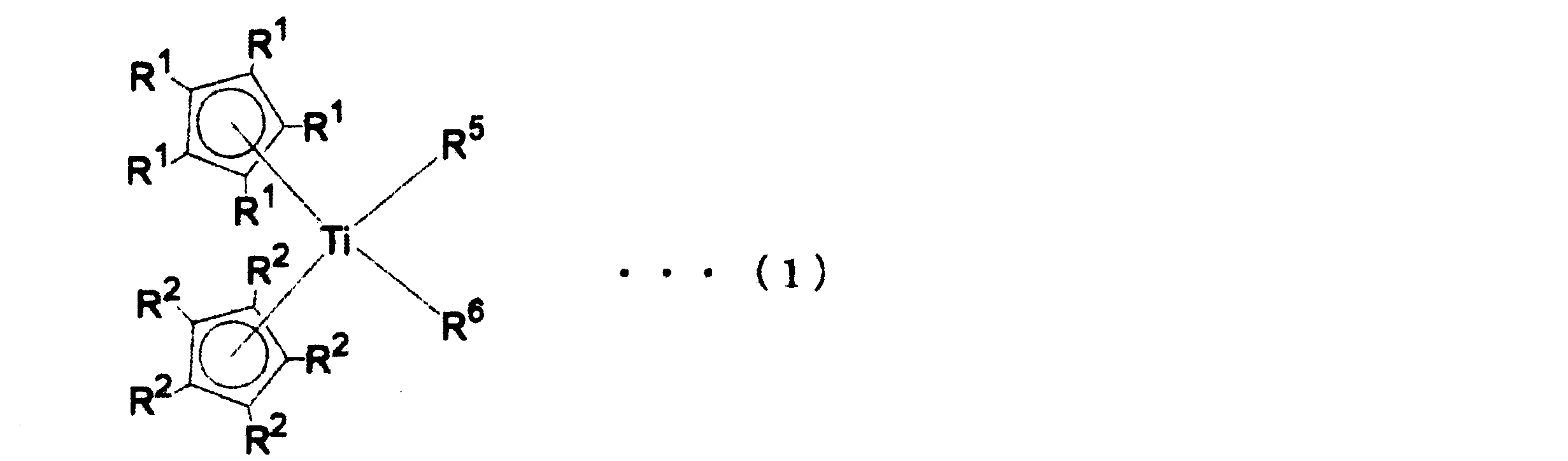
R1、R2は、水素及びC1 ~C12の炭化水素基からなる群より選択されるいずれかの基を表し、R1、R2は同一でも異なっていてもよい。但し、R1、R2が全て水素又は全てC1 ~C12の炭化水素基である場合を除く。

ビス(η(5)-n-ブチルシクロペンタジエニル)チタニウムジエチル、ビス(η(5)-メチルシクロペンタジエニル)チタニウムジ-sec-ブチル、ビス(η(5)-1,3-ジメチルシクロペンタジエニル)チタニウムジ-sec-ブチル、ビス(η(5)-エチルシクロペンタジエニル)チタニウムジ-sec-ブチル、ビス(η(5)-プロピルシクロペンタジエニル)チタニウムジ-sec-ブチル、ビス(η(5)-n-ブチルシクロペンタジエニル)チタニウムジ-sec-ブチル、ビス(η(5)-メチルシクロペンタジエニル)チタニウムジヘキシル、ビス(η(5)-1,3-ジメチルシクロペンタジエニル)チタニウムジヘキシル、ビス(η(5)-エチルシクロペンタジエニル)チタニウムジヘキシル、ビス(η(5)-プロピルシクロペンタジエニル)チタニウムジヘキシル、ビス(η(5)-n-ブチルシクロペンタジエニル)チタニウムジヘキシル、ビス(η(5)-メチルシクロペンタジエニル)チタニウムジオクチル、
ビス(η(5)-1,3-ジメチルシクロペンタジエニル)チタニウムジオクチル、ビス(η(5)-エチルシクロペンタジエニル)チタニウムジオクチル、ビス(η(5)-プロピルシクロペンタジエニル)チタニウムジオクチル、ビス(η(5)-n-ブチルシクロペンタジエニル)チタニウムジオクチル、ビス(η(5)-メチルシクロペンタジエニル)チタニウムジメトキシド、ビス(η(5)-1,3-ジメチルシクロペンタジエニル)チタニウムジメトキシド、ビス(η(5)-エチルシクロペンタジエニル)チタニウムジメトキシド、ビス(η(5)-プロピルシクロペンタジエニル)チタニウムジメトキシド、ビス(η(5)-n-ブチルシクロペンタジエニル)チタニウムジメトキシド、ビス(η(5)-メチルシクロペンタジエニル)チタニウムジエトキシド、ビス(η(5)-1,3-ジメチルシクロペンタジエニル)チタニウムジエトキシド、ビス(η(5)-エチルシクロペンタジエニル)チタニウムジエトキシド、ビス(η(5)-プロピルシクロペンタジエニル)チタニウムジエトキシド、ビス(η(5)-n-ブチルシクロペンタジエニル)チタニウムジエトキシド、ビス(η(5)-メチルシクロペンタジエニル)チタニウムジプロポキシド、
ビス(η(5)-ジメチルシクロペンタジエニル)チタニウムジプロポキシド、ビス(η(5)-エチルシクロペンタジエニル)チタニウムジプロポキシド、ビス(η(5)-プロピルシクロペンタジエニル)チタニウムジプロポキシド、ビス(η(5)-n-ブチルシクロペンタジエニル)チタニウムジプロポキシド、ビス(η(5)-メチルシクロペンタジエニル)チタニウムジブトキシド、ビス(η(5)-1,3-ジメチルシクロペンタジエニル)チタニウムジブトキシド、ビス(η(5)-エチルシクロペンタジエニル)チタニウムジブトキシド、ビス(η(5)-プロピルシクロペンタジエニル)チタニウムジブトポキシド、ビス(η(5)-n-ブチルシクロペンタジエニル)チタニウムジブトポキシド、ビス(η(5)-メチルシクロペンタジエニル)チタニウムジフェニル、ビス(η(5)-1,3-メチルシクロペンタジエニル)チタニウムジフェニル、ビス(η(5)-エチルシクロペンタジエニル)チタニウムジフェニル、ビス(η(5)-プロピルシクロペンタジエニル)チタニウムジフェニル、ビス(η(5)-n-ブチルシクロペンタジエニル)チタニウムジフェニル、ビス(η(5)-メチルシクロペンタジエニル)チタニウムジ(m-トリル)、
ビス(η(5)-1,3-メチルシクロペンタジエニル)チタニウムジ(m-トリル)、ビス(η(5)-エチルシクロペンタジエニル)チタニウムジ(m-トリル)、ビス(η(5)-プロピルシクロペンタジエニル)チタニウムジ(m-トリル)、ビス(η(5)-n-ブチルシクロペンタジエニル)チタニウムジ(m-トリル)、ビス(η(5)-メチルシクロペンタジエニル)チタニウムジ(p-トリル)、ビス(η(5)-1,3-メチルシクロペンタジエニル)チタニウムジ(p-トリル)、ビス(η(5)-エチルシクロペンタジエニル)チタニウムジ(p-トリル)、ビス(η(5)-プロピルシクロペンタジエニル)チタニウムジ(p-トリル)、ビス(η(5)-n-ブチルシクロペンタジエニル)チタニウムジ(p-トリル)、ビス(η(5)-メチルシクロペンタジエニル)チタニウムジ(m,p-キシリル)、ビス(η(5)-1,3-ジメチルシクロペンタジエニル)チタニウムジ(m,p-キシリル)、ビス(η(5)-エチルシクロペンタジエニル)チタニウムジ(m,p-キシリル)、
ビス(η(5)-プロピルシクロペンタジエニル)チタニウムジ(m,p-キシリル)、ビス(η(5)-n-ブチルシクロペンタジエニル)チタニウムジ(m,p-キシリル)、ビス(η(5)-メチルシクロペンタジエニル)チタニウムジ(4-エチルフェニル)、ビス(η(5)-1,3-ジメチルシクロペンタジエニル)チタニウムジ(4-エチルフェニル)、ビス(η(5)-エチルシクロペンタジエニル)チタニウムジ(4-エチルフェニル)、ビス(η(5)-プロピルシクロペンタジエニル)チタニウムジ(4-エチルフェニル)、ビス(η(5)-n-ブチルシクロペンタジエニル)チタニウムジ(4-エチルフェニル)、ビス(η(5)-メチルシクロペンタジエニル)チタニウムジ(4-ヘキシルフェニル)、ビス(η(5)-1,3-ジメチルシクロペンタジエニル)チタニウムジ(4-ヘキシルフェニル)、
ビス(η(5)-エチルシクロペンタジエニル)チタニウムジ(4-ヘキシルフェニル)、ビス(η(5)-プロピルシクロペンタジエニル)チタニウムジ(4-ヘキシルフェニル)、ビス(η(5) -n-ブチルシクロペンタジエニル)チタニウムジ(4-ヘキシルフェニル)、ビス(η(5)-メチルシクロペンタジエニル)チタニウムジフェノキシド、ビス(η(5)-1,3-ジメチルシクロペンタジエニル)チタニウムジフェノキシド、ビス(η(5)-エチルシクロペンタジエニル)チタニウムジフェノキシド、ビス(η(5)-プロピルシクロペンタジエニル)チタニウムジフェノキシド、ビス(η(5)-n-ブチルシクロペンタジエニル)チタニウムジフェノキシド、ビス(η(5)-n-ブチルシクロペンタジエニル)チタニウムジ(4-ヘキシルフェニル)、ビス(η(5)-メチルシクロペンタジエニル)チタニウムジフルオライド、ビス(η(5)-1,3-ジメチルシクロペンタジエニル)チタニウムジフルオライド、ビス(η(5)-エチルシクロペンタジエニル)チタニウムジフルオライド、ビス(η(5)-プロピルシクロペンタジエニル)チタニウムジフルオライド、ビス(η(5)-n-ブチルシクロペンタジエニル)チタニウムジフルオライド、ビス(η(5)-メチルシクロペンタジエニル)チタニウムジクロライド、
ビス(η(5)-1,3-ジメチルシクロペンタジエニル)チタニウムジクロライド、ビス(η(5)-エチルシクロペンタジエニル)チタニウムジクロライド、ビス(η(5)-プロピルシクロペンタジエニル)チタニウムジクロライド、ビス(η(5)-n-ブチルシクロペンタジエニル)チタニウムジクロライド、ビス(η(5)-メチルシクロペンタジエニル)チタニウムジブロマイド、ビス(η(5)-1,3-ジメチルシクロペンタジエニル)チタニウムジブロマイド、ビス(η(5)-エチルシクロペンタジエニル)チタニウムジブロマイド、ビス(η(5)-プロピルシクロペンタジエニル)チタニウムジブロマイド、ビス(η(5)-n-ブチルシクロペンタジエニル)チタニウムジブロマイド、ビス(η(5)-メチルシクロペンタジエニル)チタニウムジイオダイド、ビス(η(5)-1,3-ジメチルシクロペンタジエニル)チタニウムジイオダイド、ビス(η(5)-エチルシクロペンタジエニル)チタニウムジイオダイド、ビス(η(5)-プロピルシクロペンタジエニル)チタニウムジイオダイド、
ビス(η(5)-n-ブチルシクロペンタジエニル)チタニウムジイオダイド、ビス(η(5)-メチルシクロペンタジエニル)チタニウムクロライドメチル、ビス(η(5)-ジ1,3-メチルシクロペンタジエニル)チタニウムクロライドメチル、ビス(η(5)-エチルシクロペンタジエニル)チタニウムクロライドメチル、ビス(η(5)-プロピルシクロペンタジエニル)チタニウムクロライドメチル、ビス(η(5)-n-ブチルシクロペンタジエニル)チタニウムクロライドメチル、ビス(η(5)-メチルシクロペンタジエニル)チタニウムクロライドエトキサイド、ビス(η(5)-1,3-ジメチルシクロペンタジエニル)チタニウムクロライドエトキサイド、ビス(η(5)-エチルシクロペンタジエニル)チタニウムクロライドエトキサイド、ビス(η(5)-プロピルシクロペンタジエニル)チタニウムクロライドエトキサイド、ビス(η(5)-n-ブチルシクロペンタジエニル)チタニウムクロライドエトキサイド、ビス(η(5)-メチルシクロペンタジエニル)チタニウムクロライドフェノキサイド、ビス(η(5)-1,3-ジメチルシクロペンタジエニル)チタニウムクロライドフェノキサイド、ビス(η(5)-エチルシクロペンタジエニル)チタニウムクロライドフェノキサイド、ビス(η(5)-プロピルシクロペンタジエニル)チタニウムクロライドフェノキサイド、ビス(η(5)-n-ブチルシクロペンタジエニル)チタニウムクロライドフェノキサイド、ビス(η(5)-メチルシクロペンタジエニル)チタニウムジベンジル、ビス(η(5)-1,3-ジメチルシクロペンタジエニル)チタニウムジベンジル、ビス(η(5)-エチルシクロペンタジエニル)チタニウムジベンジル、ビス(η(5)-プロピルシクロペンタジエニル)チタニウムジベンジル、ビス(η(5)-n-ブチルシクロペンタジエニル)チタニウムジベンジル、ビス(η(5)-メチルシクロペンタジエニル)チタニウムジカルボニル、ビス(η(5)-1,3-ジメチルシクロペンタジエニル)チタニウムジカルボニル、ビス(η(5)-エチルシクロペンタジエニル)チタニウムジカルボニル、ビス(η(5)-プロピルシクロペンタジエニル)チタニウムジカルボニル、ビス(η(5)-n-ブチルシクロペンタジエニル)チタニウムジカルボニル等が挙げられる。
これらは、1種のみを単独で用いてもよく、2種以上を組み合わせて用いてもよい。
これらアルキル基置換のシクロペンタジエニル基を有するチタノセン化合物は、上述した例に限定されず、上記以外の、シクロペンタジエニル環のアルキル基の置換数が2、3、4のものも好適に用いられる。
さらに、空気中でも安定して取り扱えるという観点からは、(A)チタノセン化合物としては、以下に限定されるものではないが、例えば、ビス(η(5)-メチルシクロペンタジエニル)チタニウムジクロライド、ビス(η(5)-n-ブチルシクロペンタジエニル)チタニウムジクロライド、ビス(η(5)-メチルシクロペンタジエニル)チタニウムジフェニル、ビス(η(5)-n-ブチルシクロペンタジエニル)チタニウムジフェニル、ビス(η(5)-メチルシクロペンタジエニル)チタニウムジ(p-トリル)、ビス(η(5)-n-ブチルシクロペンタジエニル)チタニウムジ(p-トリル)が好適なものとして挙げられる。
所定の元素を含有する化合物(B)(本明細書中、単に(B)成分、(B)と記載する場合もある。)としては、上述した(A)成分のチタノセン化合物を還元する能力のある公知の有機金属化合物・含金属化合物のうち、Li、Na、K、Mg、Zn、Al、Ca元素からなる群より選ばれる、一つ以上の元素を含有する化合物が用いられる。
(B)成分:所定の元素を含有する化合物としては、有機リチウム化合物、有機ナトリウム化合物、有機カリウム化合物、有機亜鉛化合物、有機マグネシウム化合物、有機アルミニウム化合物、有機カルシウム化合物等を挙げられる。これらは、1種のみを単独で用いてもよく、2種以上を併用してもよい。
かかるフェノール系安定剤としては、以下に限定されるものではないが、例えば、1-オキシ-3-メチル-4-イソプロピルベンゼン、2,6-ジ-t-ブチルフェノール、2,6-ジ-t-ブチル-4-エチルフェノール、2,6-ジ-t-ブチル-p-クレゾール、2,6-ジ-t-ブチル-4-n-ブチルフェノール、4-ヒドロキシメチル-2,6-ジ-t-ブチルフェノール、ブチルヒドロキシアニソール、2-(1-メチルシクロヘキシル)-4,6-ジメチルフェノール、2,4-ジメチル-6-t-ブチルフェノール、2-メチル-4,6-ジノニルフェノール、2,6-ジ-t-ブチル-α-ジメチルアミノ-p-クレゾール、メチレン-ビス-(ジメチル-4,6-フェノール)、2,2'-メチレン-ビス-(4-メチル-6-t-ブチルフェノール)、2,2'-メチレン-ビス-(4-メチル-6-シクロヘキシルフェノール)、2,2'-メチレン-ビス-(4-エチル-6-t-ブチルフェノール)、4,4'-メチレン-ビス-(2,6-ジ-t-ブチルフェノール)、2,2'-メチレン-ビス-(6-α-メチル-ベンジル-p-クレゾール)等が挙げられる。
上記具体例のうち、最も汎用的な2,6-ジ-t-ブチル-p-クレゾールの水酸基を-OLiとした2,6-ジ-t-ブチル-4-メチルフェノキシリチウムが特に好適に使われる。
なお、(B)所定の元素を含有する化合物である有機金属化合物・含金属化合物としては、高い水添活性の観点から、Li、Alを含有する化合物が好ましい。より高い水添活性の点で、有機リチウム化合物がより好ましい。
不飽和化合物(C)(本明細書中、単に(C)成分、(C)と記載する場合がある。)とは、分子中に不飽和基を1つ以上有する分子量400以下の化合物である。
(C)成分の分子量は、水素添加用触媒組成物の貯蔵後のフィード性の観点から、400以下であるものとし、分子量300以下であることが好ましく、200以下がより好ましく、150以下がさらに好ましい。
(C)成分:不飽和化合物が重合体である場合は、所定のモノマーを重合することにより製造できる。
前記モノマーとしては、以下に限定されるものではないが、例えば、1,3-ブタジエン、イソプレン、2,3-ジメチルブタジエン、1,3-ペンタジエン、2-メチル-1,3-ペンタジエン、1,3-ヘキサジエン、4,5-ジエチル-1,3-オクタジエン、3-ブチル-1,3-オクタジエン等の一般に4~約12個の炭化水素を有する共役ジエン、モノテルペン、ビニル芳香族化合物、ノルボルナジエン、シクロペンタジエン、シクロヘキサジエン、2,3-ジヒドロジシクロペンタジエン、アセチレン類が挙げられる。
これらのモノマーは、これらは、単独で用いてもよく、二種以上共重合させてもよい。
すなわち、(C)中の不飽和基量は高い水添活性やフィード性の観点から、(C)1molあたり2mol以上であることが好ましい。高い水添活性やポリマーの黄変化抑制の観点から5mol以下であることが好ましい。2mol以上4mol以下の範囲であることがより好ましく、2mol以上3mol以下の範囲がさらに好ましく、3molがさらにより好ましい。
(C)成分中の不飽和基量は、NMRにより測定することができる。
(C)成分と(A)成分との質量比(=(C)/(A))は、0.5~3.0の範囲が好ましく、1.0~2.5の範囲がより好ましい。
前記(C)の不飽和基量/(A)は、0.6~20の範囲がより好ましく、1.0~10の範囲がさらに好ましい。
(D)成分:極性化合物(本明細書中、単に、(D)成分、(D)と記載する場合がある。)とは、N、OあるいはSを有する化合物であり、以下に限定されるものではないが、例えば、アルコール化合物、エーテル化合物、チオエーテル化合物、ケトン化合物、スルホキシド化合物、カルボン酸化合物、カルボン酸エステル化合物、アルデヒド化合物、ラクタム化合物、ラクトン化合物、アミン化合物、アミド化合物、ニトリル化合物、エポキシ化合物及びオキシム化合物が挙げられる。
これら極性化合物としては、以下の化合物を具体例として挙げることができる。
また、テトラヒドロフランカルボン酸のように、分子中に他の官能基を有する化合物でもよい。
すなわち、前記酸としては、2-メチル-3-ヒドロキシプロピオン酸、3-ヒドロキシノナン又は3-ヒドロキシペラルゴン酸、2-ドデシル-3-ヒドロキシプロピオン酸、2-シクロペンチル-3-ヒドロキシプロピオン酸、2-n-ブチル-3-シクロヘキシル-3-ヒドロキシプロピオン酸、2-フェニル-3-ヒドロキシトリデカン酸、2-(2-エチルシクロペンチル)-3-ヒドロキシプロピオン酸、2-メチルフェニル-3-ヒドロキシプロピオン酸、3-ベンジル-3-ヒドロキシプロピオン酸、2,2-ジメチル-3-ヒドロキシプロピオン酸、2-メチル-5-ヒドロキシバレリル酸、3-シクロヘキシル-5-ヒドロキシバレリル酸、4-フェニル-5-ヒドロキシバレリル酸、2-ヘプチル-4-シクロペンチル-5-ヒオロキシバレリル酸、3-(2-シクロヘキシルエチル)-5-ヒドロキシバレリル酸、2-(2-フェニルエチル)-4-(4-シクロヘキシルベンジル)-5-ヒドロキシバレリル酸、ベンジル-5-ヒヂロキシバレリル酸、3-エチル-5-イソプロピル-6-ヒドロキシカプロン酸、2-シクロペンチル-4-ヘキシル-6-ヒドロキシカプロン酸、2-シクロペンチル-4-ヘキシル-6-ヒドロキシカプロン酸、3-フェニル-6-ヒドロキシカプロン酸、3-(3,5-ジエチル-シクロヘキシル)-5-エチル-6-ヒドロキシカプロン酸、4-(3-フェニル-プロピル)-6-ヒドロキシカプロン酸、2-ベンジル-5-イシブチル-6-ヒドロキシカプロン酸、7-フェニル-6-ヒドロキシル-オクトエノ酸、2,2-ジ(1-シクロヘキセニル)-5-ヒドロキシ-5-ヘプテノ酸、2,2-ジプロペニル-5-ヒドロキシ-5-ヘプテノ酸、2,2-ジメチル-4-プロペニル-3-ヒドロキシ-3,5-ヘプタジエノ酸等が挙げられる。
極性化合物としては、アミン化合物やエーテル化合物好ましい。高い水添活性や水素添加用触媒組成物の高いフィード性の点で、アミン化合物がより好ましい。
本実施形態の水素添加用触媒組成物の水添活性や、フィード性に関する貯蔵安定性の観点から、前記(D)成分と前記(A)成分との質量比(=(D)/(A))は、0.01以上であるものとし、本実施形態の水素添加用触媒組成物の水添活性、フィード性に関する貯蔵安定性、経済性の観点から1.00以下であるものとする。
前記(D)成分と前記(A)成分との質量比(=(D)/(A))は、0.015~0.500の範囲が好ましく、0.020~0.300の範囲がより好ましい。
本実施形態の水素添加用触媒組成物は、上述した(A)成分、(B)成分、(C)成分及び(D)成分を、必要に応じて所定の溶媒を用い、混合することにより製造できる。
本実施形態の水素添加用触媒組成物の製造方法においては、高い水添活性、高いフィード性、無色性の観点から、上述した(A)成分、(B)成分、(C)成分及び(D)成分を、(A)成分、(C)成分及び(D)成分の共存下で、最後に(B)成分を添加することが好ましい。このとき、前記(A)成分、(C)成分、(D)成分の添加順序は任意であり、特に限定されるものではない。
本実施形態の水素添加用触媒組成物は、粘度が低く、フィード性が良好で、貯蔵安定性に優れているため、別個の触媒槽にて調製しておいてから、水添反応系に導入する方法に適している。特に、被水添物と、予め調製した水素添加用触媒組成物とを連続的に供給する水素添加方法(連続水添)に好適である。
また、被水添物である重合体又は共重合体の重合後に、活性末端を一部又は全部を、重合失活剤により失活させてもよい。
重合失活剤として過剰のアルコールないしケトン化合物等も好適に用いられる。反応系に水素添加用触媒組成物の成分を別々に導入する場合において、過剰分の失活剤が反応系中に存在する場合は、これらも(D)成分、あるいは(D)成分の一部とみなすことができる。なお、かかる場合において、上述した(D)成分と(A)成分との質量比(=(D)/(A))は、過剰分の失活剤を(D)成分とみなして算出する。
調製温度ならびに貯蔵温度は-50℃~50℃の範囲が好ましく、-20℃~30℃がより好ましい。
調製に要する時間は、調合温度によっても異なるが、25℃の条件下では、数秒から60日であり、1分から20日が好ましい。
前記不活性有機溶媒としては、水添反応のいかなる関与体とも反応しない溶媒を用いる。好ましくは水添反応に用いる溶媒と同一の溶媒である。
移送する時の温度は、-30℃~100℃の温度が好ましく、より好ましくは-10℃~50℃の温度にて水添反応直前に添加するのが好ましい。
高い水添活性及び水添選択性を発現するための各成分の混合比率は、成分(B)の金属モル数と、成分(A)の金属(Ti)モル数との比率(以下、Metal(B)/Metal(A)モル比)で約20以下の範囲であることが好ましい。
Metal(B)/Metal(A)のモル比=0、すなわちMetal(B)が存在しない場合においても熱還元により定量的な水添を行うことは可能であるが、より高温・長時間、高触媒量を要するため、Metal(B)が存在している方が好ましい。
Metal(B)/Metal(A)モル比が20以下であることにより、実質的な活性向上に関与しない高価な触媒成分(B)を過剰に用いることが防止でき、経済的に優れ、不必要な副反応を防止することができる。
Metal(B)/Metal(A)モル比=0.5~10の範囲となるように、成分(A)と成分(B)との混合比率を選択することにより、水素添加用触媒組成物の水添活性が向上するため、当該モル比が最も好適である。
かかる活性水素を有する化合物としては、水及びメタノール、エタノール、n-プロパノール、n-ブタノール、sec-ブタノール、t-ブタノール,1-ペンタノール、2-ペンタノール、3-ペンタノール、1-ヘキサノール、2-ヘキサノール、3-ヘキサノール、1-ヘプタノール、2-ヘプタノール、3-ヘプタノール、4-ヘプタノール、オクタノール、ノナノール、デカノール、ウンデカノール、ラウリルアルコール、アリルアルコール、シクロヘキサノール、シクロペンタノール、ベンジルアルコール等のアルコール類、フェノール、o-クレゾール、m-クレゾール、p-クレゾール、p-アリルフェノール、2,6-ジ-t-ブチル-p-クレゾール、キシレノール、ジヒドロアントラキノン、ジヒドロキシクマリン、1-ヒドロキシアントラキノン、m-ヒドロキシベンジルアルコール、レゾルシノール、ロイコアウリン等のフェノール類が挙げられる。
また、酸として酢酸、プロピオン酸、酪酸、イソ酢酸、ペンタン酸、ヘキサン酸、ヘプタン酸、デカリン酸、ミリスチン酸、ステアリン酸、ベヘン酸、安息香酸等の有機カルボン酸等を挙げることができる。
また、ハロゲンを有する化合物として塩化ベンジル、トリメチルシリルクロライド(ブロマイド)、t-ブチルシリルクロライド(ブロマイド)、メチルクロライド(ブロマイド)、エチルクロライド(ブロマイド)、プロピルクロライド(ブロマイド)、n-ブチルクロライド(ブロマイド)等を挙げることができる。
これらは1種のみを単独で使用してもよく、2種以上を併用してもよい。
本実施形態においては、上述した本実施形態の水素添加用触媒組成物の存在下で、オレフィン性不飽和二重結合含有化合物を、水素と接触させることにより水素添加を行う。
本実施形態の水素添加用触媒組成物は、オレフィン性不飽和二重結合を有する全ての化合物の水素添加を行う工程において、用いることができる。
オレフィン性不飽和二重結合を有する化合物としては、以下に限定されるものではないが、例えば、エチレン、プロピレン、ブテン、ペンテン、ヘキセン、ヘプテン、オクテン等の異性体等の脂肪族オレフィン;シクロペンテン、メチルシクロペンテン、シクロペンタジエン、シクロヘキセン、メチルシクロヘキセン、シクロヘキサジエン等の脂環式オレフィン;スチレン、ブタジエン、イソプレン等のモノマー類;不飽和脂肪酸及びその誘導体、不飽和液状オリゴマー等、分子中に少なくとも一つのオレフィン性不飽和二重結合含有低分子重合物等が挙げられる。
ここで言う選択的水添とは、共役ジエン系重合体、共役ジエンとオレフィン単量体との共重合体の共役ジエン部分のオレフィン性不飽和二重結合を選択的に水添することであり、具体的には、前記オレフィン単量体としてビニル芳香族化合物、例えばビニル芳香族炭化水素を用いた場合、芳香環の炭素-炭素二重結合は実質的に水添されないことを意味する。
共役ジエン系重合体、共役ジエンとオレフィン単量体との共重合体のオレフィン性不飽和二重結合の選択的水添物は、弾性体や熱可塑性弾性体として工業的に有用である。
以下に限定されるものではないが、例えば、1,3-ブタジエン、イソプレン、2,3-ジメチル-1,3-ブタジエン、1,3-ペンタジエン、2-メチル-1,3-ペンタジエン、1,3-ヘキサジエン、4,5-ジエチル-1,3-オクタジエン、3-ブチル-1,3-オクタジエン等が挙げられる。
工業的に有利に展開でき、物性の優れた弾性体を得る観点からは、1,3-ブタジエン、イソプレンが好ましい。
ブタジエン部分のミクロ構造には、1,2結合と1,4結合(シス+トランス)があるが、本実施形態の水素添加用触媒組成物は、どちらも定量的に水添することができる。
また、イソプレン部分には、1,2結合、3,4結合の側鎖と1,4結合(シス+トランス)の主鎖にオレフィン性不飽和結合があるが、本実施形態の製造方法により得られる水素添加用触媒組成物は、いずれも定量的に水添することができる。
本実施形態の水素添加用触媒組成物によって水添した化合物の構造及び水添率は、1H-NMRによって測定することができる。
本実施形態の水素添加用触媒組成物を用いた水素添加方法によると、ブタジエン部分の1,2結合、1,4結合、及びイソプレン部分の1,2結合、3,4結合の側鎖を特に選択的に水添させることが可能である。
水素添加用触媒組成物で水添される共役ジエン系重合体の主成分として、1,3-ブタジエンを選択した場合、特に低温から室温でエラストマー弾性を発現させるには、被水添物のブタジエンユニット部分のミクロ構造として1,2結合の量は8%以上であることが好ましく、より好ましくは20%以上であり、さらに好ましい範囲は30~80%である。
また、水素添加用触媒組成物で水添される被水添物の共役ジエン系重合体の主成分としてイソプレンを選択した場合には同様の理由により、イソプレンユニットのミクロ構造として1,4結合の量は50%以上であることが好ましく、より好ましくは75%以上である。
具体的な共重合体の例としては、ブタジエン/スチレン共重合体、イソプレン/スチレン共重合体、ブタジエン/イソプレン/スチレン共重合体等が工業的価値の高い水添共重合体を与えるので好適である。これら共重合体はランダム、ブロック、テーパードブロック共重合体等、特に限定されない。
本実施形態の水素添加用触媒組成物を用い、後述する好ましい水添条件を選択すると、かかる共重合体中のビニル芳香族炭化水素ユニットの炭素-炭素二重結合(芳香環)の水添は実質的に起こらない。
ここで言う「不活性有機溶媒」とは、溶媒が水添反応のいかなる関与体とも反応しないものを意味する。以下に限定されるものではないが、例えば、n-ペンタン、n-ヘキサン、n-ヘプタン、n-オクタンの如き脂肪族炭化水素類、シクロヘキサン、シクロヘプタン、シクロヘプタンの如き脂環式炭化水素類、ジエチルエーテル、テトラヒドロフランの如きエーテル類の単独もしくは混合物が挙げられる。また、ベンゼン、トルエン、キシレン、エチルベンゼンの如き芳香族炭化水素も、選択された水添条件下で芳香族二重結合が水添されない時に限って使用することができる。
水添反応は、一般的には、上記被水添物溶液を、水素又は不活性雰囲気下、所定の温度に保持し、撹拌下又は不撹拌下にて水素添加用触媒組成物を添加し、ついで水素ガスを導入して所定圧に加圧することによって実施される。不活性雰囲気とは、例えば窒素、ヘリウム、ネオン、アルゴン等の水添反応のいかなる関与体とも反応しない雰囲気を意味する。空気や酸素は触媒成分を酸化したりして水素添加用触媒組成物の失活を招くので好ましくない。
本実施形態の水素添加用触媒組成物は、粘度が低く、フィード性が良好で、貯蔵安定性に優れるため、水添反応器に、被水添物と水素添加用触媒組成物とを連続的に供給する水素添加方法(連続水添)に好適である。
この添加量範囲であれば、被水添物のオレフィン性不飽和二重結合を優先的に水添することが可能で、共重合体中の芳香環の二重結合の水添は実質的に起こらないので極めて高い選択的水添が実現される。
成分(A)のモル量換算で、被水添物100g当り20ミリモルを超える量の水素添加用触媒組成物を添加した場合においても水添反応は可能であるが、必要以上の触媒使用は不経済となり、水添反応後の触媒脱灰、除去が複雑となる等不利となる。
また選択された条件下で重合体の共役ジエン単位の不飽和二重結合を定量的に水添する好ましい水素添加用触媒組成物の添加量は、成分(A)のモル量換算で、被水添物100g当り0.01~5ミリモルである。
0℃以上で行うことにより十分な水添速度で行うことができ、多量の触媒を要することを防止できる。また200℃以下で行うことにより、副反応、分解反応、ゲル化や、これらの併発を防止でき、さらには水素添加用触媒組成物の失活、水添活性が低下を防止できる。
より好ましい温度範囲は20~180℃である。
1kgf/cm2 未満では水添速度が遅くなって、十分な水添率が得られないおそれがあり、100kgf/cm2 を超える圧力では昇圧と同時に水添反応がほぼ完了してしまい、不必要な副反応やゲル化を招来するおそれがある。
より好ましい水添水素圧力は2~30kgf/cm2 であるが、水素添加用触媒組成物添加量等との相関で最適水素圧力は選択され、実質的には前記水素添加用触媒組成物量が少量になるに従って水素圧力は高圧側を選択して実施することが好ましい。
また、水添反応時間は、通常数秒~50時間である。
水添反応時間及び水添圧力は所望の水添率によって上記範囲内で適宜選択して実施される。
特に、被水添物が重合体である場合、水添反応を行った重合体溶液からは、必要に応じて水素添加用触媒組成物の残査を除去し、水添された重合体を溶液から分離することができる。
分離の方法としては、例えば、水添後の反応液にアセトン又はアルコール等の水添重合体に対する貧溶媒となる極性溶媒を加えて水添重合体を沈澱させて回収する方法、反応液を撹拌下、熱湯中に投入後、溶媒と共に水添重合体を蒸留回収する方法、又は直接反応液を加熱して溶媒を留去して水添重合体を回収する方法等を挙げることができる。
<(A-1):ビス(η(5)-シクロペンタジエニル)チタニウムジ(p-トリル)の合成>
撹拌機、滴下漏斗、及び還流冷却器を備えた1L容量の三つ口フラスコに無水エーテル200mLを加えた。
装置を乾燥ヘリウムで乾燥し、リチウムワイヤー小片17.4g(2.5モル)をフラスコ中に切り落とし、エーテル300mL、p-ブロモトルエン171g(1モル)の溶液を室温で少量滴下した後、還流下で除々にp-ブロモトルエンのエーテル溶液を全量加えた。
反応終了後、反応溶液をヘリウム雰囲気下にてろ過し、無色透明なp-トリルリチウム溶液を得た。
乾燥ヘリウムで置換した撹拌機、滴下漏斗を備えた2L三つ口フラスコ、ビス(η(5)-シクロペンタジエニル)チタニウムジクロリド99.6g(0.4モル)、及び無水エーテル500mLを加えた。
先に合成したp-トリルリチウムのエーテル溶液を室温撹拌下にて約2時間で滴下した。
反応混合物を空気中でろ別し、不溶部をジクロロメタンで洗浄後、ろ液及び洗浄液を合わせ減圧下にて溶媒を除去した。
残留物を少量のジクロロメタンに溶解後、石油エーテルを加えて再結晶を行った。
得られた結晶をろ別し、ろ液は再び濃縮させ上記操作を繰り返しビス(η(5)-シクロペンタジエニル)チタニウムジ(p-トリル)を得た。
収率は87%であった。
得られた結晶は橙黄色針状である、トルエン、シクロヘキサンに対する溶解性は良好であり、融点145℃、元素分析値:C,80.0、H,6.7、Ti,13.3であった。
上述した(A-1)で使用したp-ブロモトルエンの代わりにブロモベンゼン157g(1モル)用いた以外は、上述した(A-1)と同様に合成を行い、フェニルリチウムを得た。当該フェニルリチウムを用い、上述した(A-1)と同様の工程により、ビス(η(5)-シクロペンタジエニル)チタニウムジフェニルを得た。収量は120g(収率90%)であった。
得られた結晶は橙黄色針状であり、トルエン、シクロヘキサンに対する溶解性はやや良好であり、融点147℃、元素分析値:C,79.5、H,6.1、Ti,14.4であった。
上述した(A-1)で使用したp-ブロモトルエンの代わりに4-ブロモ-o-キシレン(1モル)を用いた以外は、上述した(A-1)と同様に合成を行い、ビス(η(5)-シクロペンタジエニル)チタニウムジ(3,4-キシリル)を得た。収率は83%であった。
得られた結晶は黄色針状晶であり、トルエン、シクロヘキサンに対する溶解性は良好であり、融点は155℃、元素分析値:C,80.6、H,7.2、Ti,12.2であった。
日本ファインケミカル社製試薬をジクロロメタン中で再結晶させたものを用いた。
(B-1):トリエチルアルミニウム;ヘキサン溶液(東ソー・アクゾ社製)をそのまま用いた。
(B-2):sec-ブチルリチウム;ヘキサン溶液(関東化学製試薬)を不活性雰囲気下で濾別し、黄色透明な部分を用いた。
下記(C-1)~(C-4)は、市販の特級試薬を用いた。
(C-1):ミルセン(分子量 136、(C-1)1モルに対する不飽和基数 3モル)
(C-2): イソプレン(分子量 68、(C-2)1モルに対する不飽和基数 2モル)
(C-3):オクテン(分子量 112、(C-3)1モルに対する不飽和基数 1モル)
(C-4):1,7-オクタジエン(分子量 110、(C-4)1モルに対する不飽和基数 2モル)
(C-5):ポリイソプレン(GPCにより測定した数平均分子量 3100、(C-5)1モルに対する不飽和基数 46モル)
すべて、市販の特級試薬を使用した。
(D-1):テトラヒドロフラン
(D-2):酢酸エチル
(D-3):N,N,N',N'-テトラメチルエチレンジアミン
(A)、(B)、(C)、(D)成分を、下記表1に示す比率で、最終濃度が5質量%のシクロヘキサン溶液になるように添加した。
各成分の添加順序として、(A)成分、(C)成分、(D)成分の共存下に、最後に(B)成分を添加した。
(スチレン-ブタジエン-スチレンブロック共重合体の重合)
7Lのオートクレーブ中に、シクロヘキサン4000g、スチレンモノマー150gとn-ブチルリチウム1.10g及びテトラヒドロフラン25gを加え、撹拌下60℃にて3時間重合し、次いで1,3-ブタジエンモノマーを700g加えて60℃で3時間重合した。
最後にスチレンモノマー150gを添加し、60℃で3時間重合した。
活性末端を水で失活させ、60℃で12時間真空乾燥を行った。
得られたスチレン-ブタジエン-スチレンブロック共重合体は完全ブロック共重合体で、結合スチレン含有量30質量%、ブタジエン単位の1,2-ビニル結合含有率45mol%、GPC(ポリスチレン換算分子量)で測定した重量平均分子量は約6万であった。
なお、1,2-ビニル結合量はNMRで測定した。
<水添率>
後述する水添ポリマーの製造例である〔製造例1~15〕、〔比較製造例1~5〕に示すようにポリマーの水添反応を行い、得られた水添ポリマーの水添率を下記NMRで測定した。
実施例1~15、比較例1~5の水素添加用触媒組成物を調製後、直後(初期)に用いた場合と、調製後に30℃30日間保管した後に用いた場合の両方を評価した。
共に、水添率は高い方が良く、99.5%以上を◎、99.0%以上99.5%未満を○、97.0%以上99.0%未満を△、97%未満を×とした。
(NMR:1,2-ビニル結合含有量と水素添加率の測定方法)
共役ジエン中の1,2-ビニル結合含有量と不飽和基の水素添加率は、核磁気共鳴スペクトル解析(NMR)により、下記の条件で測定した。
水添反応後に、大量のメタノール中に沈澱させることで、水添重合体を回収し、次いでアセトン抽出・真空乾燥を行い、1H-NMR測定を行った。
測定機器:JNM-LA400(JEOL製)
溶媒:重水素化クロロホルム
測定サンプル:ポリマーを水素添加する前後の抜き取り品
サンプル濃度:50mg/mL
観測周波数:400MHz
化学シフト基準:TMS(テトラメチルシラン)
パルスディレイ:2.904秒
スキャン回数:64回
パルス幅:45°
測定温度:26℃
実施例1~15、比較例1~7の水素添加用触媒組成物を調製後、30℃で30日間保管した後に、フィード性を、1リットルの分液ロート(SPC29、柴田科学製)を用い、水素添加用触媒組成物を1リットル流して評価した。
詰まりが無く、連続的に流れたものが良く○とし、断続的に流れた場合を△とし、詰まった場合を×とした。
調製後に30℃温度環境下で30日間保管した水素添加用触媒組成物を用いて、上記の<水添率>と同じ条件で水添反応を行った。すなわち、後述する水添ポリマーの製造例である〔製造例1~15〕、〔比較製造例1~5〕に示すようにポリマーの水添反応を行った。その後に、メタノール水を添加し、次に安定剤としてオクタデシル-3-(3,5-ジ-t-ブチル-4-ヒドロキシフェニル)プロピオネートを、上述のようにして製造した水添ポリマー100質量部に対して0.3質量部添加し、溶剤を乾燥した。得られた水添ポリマーを、200℃10分間プレス成型した時の変色を目視で観察した。
色がつかない方が良く○とし、色がついた場合を×とした。
上述のようにして製造した〔ポリマー〕:スチレン-ブタジエン-スチレンブロック共重合体を、水素置換した1000mLの耐圧オートクレーブに、それぞれ80gとなるように精製乾燥させたシクロヘキサン溶液として加えた(溶液濃度10質量%)。
上述のようにして製造した実施例1~15、比較例1~5の水素添加用触媒組成物を、前記ポリマーに対してTi量が150ppmになるように、耐圧オートクレーブに打ち込み、水素圧5kgf/cm2で加圧した。
撹拌下、100℃で20分間水添反応を行った。
実施例1~15、比較例1~5の水素添加用触媒組成物を用いて、上記のようにして製造した水添ポリマーを、それぞれ、製造例1~15、比較製造例1~5のポリマーとした。
下記表1に、製造例1~15、比較製造例1~5の水添ポリマーの水添率、実施例1~15、比較例1~5の水素添加用触媒組成物のフィード性、前記製造例1~15、製造比較例1~5の水添ポリマーの黄変化抑制の評価について、それぞれ示した。

(A)成分
(A-1):ビス(η(5)-シクロペンタジエニル)チタニウムジ(p-トリル)
(A-2):ビス(η(5)-シクロペンタジエニル)チタニウムジ(フェニル)
(A-3):ビス(η(5)-シクロペンタジエニル)チタニウムジ(3,4-キシリル)
(A-4):ビス(η(5)-1,3-ジメチルシクロペンタジエニル)チタニウムジクロリド
(B)成分
(B-1):トリエチルアルミニウム
(B-2):sec-ブチルリチウム
(C)成分
(C-1):ミルセン
(C-2):イソプレン
(C-3):オクテン
(C-4):1,7-オクタジエン
(C-5):ポリイソプレン
(D)成分
(D-1):テトラヒドロフラン
(D-2):酢酸エチル
(D-3):N,N,N',N'-テトラメチルエチレンジアミン
Claims (5)
- 下記(A)、(B)、(C)、(D)を含む水素添加用触媒組成物であって、
(C)と(A)との質量比(=(C)/(A))が、0.1~4.0であり、
(D)と(A)との質量比(=(D)/(A))が、0.01~1.00である、
水素添加用触媒組成物。
(A):下記一般式(1)で示されるチタノセン化合物

(B):Li、Na、K、Mg、Zn、Al、Ca元素からなる群より選ばれる、一つ以上の元素を含有する化合物
(C):分子量が400以下の不飽和化合物
(D):極性化合物 - 前記(C)中の不飽和基量が、当該(C)1molあたり2mol以上である、請求項1に記載のオレフィン化合物の水素添加用触媒組成物。
- 前記(B)が有機リチウム化合物である、請求項1又は2に記載の水素添加用触媒組成物。
- 請求項1乃至3のいずれか一項に記載の水素添加用触媒組成物の存在下で、
オレフィン性不飽和二重結合含有化合物を、不活性有機溶媒中にて水素と接触させる、水素添加方法。 - 前記オレフィン性不飽和二重結合含有化合物が、共役ジエン系重合体、又は共役ジエンとビニル芳香族炭化水素との共重合体である、請求項4に記載の水素添加方法。
Priority Applications (9)
| Application Number | Priority Date | Filing Date | Title |
|---|---|---|---|
| KR1020157005175A KR101684198B1 (ko) | 2012-09-21 | 2013-09-12 | 수소 첨가용 촉매 조성물 및 당해 수소 첨가용 촉매 조성물을 사용한 수소 첨가 방법 |
| RU2015109977A RU2608996C2 (ru) | 2012-09-21 | 2013-09-12 | Композиция катализатора для гидрирования и способ гидрирования с ее использованием |
| ES13839238.6T ES2649690T3 (es) | 2012-09-21 | 2013-09-12 | Composición de catalizador para la hidrogenación y procedimiento de hidrogenación utilizando la composición de catalizador para la hidrogenación |
| JP2014536818A JP6215214B2 (ja) | 2012-09-21 | 2013-09-12 | 水素添加用触媒組成物及び当該水素添加用触媒組成物を用いた水素添加方法 |
| US14/428,622 US10016749B2 (en) | 2012-09-21 | 2013-09-12 | Catalyst composition for hydrogenation and method for hydrogenation using the same |
| EP13839238.6A EP2898950B1 (en) | 2012-09-21 | 2013-09-12 | Catalyst composition for hydrogenation and hydrogenation method using catalyst composition for hydrogenation |
| CN201380047452.9A CN104640629B (zh) | 2012-09-21 | 2013-09-12 | 氢化用催化剂组合物和使用了该氢化用催化剂组合物的氢化方法 |
| SG11201501532YA SG11201501532YA (en) | 2012-09-21 | 2013-09-12 | Catalyst composition for hydrogenation and method for hydrogenation using the same |
| IN1779DEN2015 IN2015DN01779A (ja) | 2012-09-21 | 2013-09-12 |
Applications Claiming Priority (2)
| Application Number | Priority Date | Filing Date | Title |
|---|---|---|---|
| JP2012-208283 | 2012-09-21 | ||
| JP2012208283 | 2012-09-21 |
Publications (2)
| Publication Number | Publication Date |
|---|---|
| WO2014046017A1 true WO2014046017A1 (ja) | 2014-03-27 |
| WO2014046017A8 WO2014046017A8 (ja) | 2015-03-12 |
Family
ID=50341331
Family Applications (1)
| Application Number | Title | Priority Date | Filing Date |
|---|---|---|---|
| PCT/JP2013/074749 Ceased WO2014046017A1 (ja) | 2012-09-21 | 2013-09-12 | 水素添加用触媒組成物及び当該水素添加用触媒組成物を用いた水素添加方法 |
Country Status (12)
| Country | Link |
|---|---|
| US (1) | US10016749B2 (ja) |
| EP (1) | EP2898950B1 (ja) |
| JP (1) | JP6215214B2 (ja) |
| KR (1) | KR101684198B1 (ja) |
| CN (1) | CN104640629B (ja) |
| ES (1) | ES2649690T3 (ja) |
| IN (1) | IN2015DN01779A (ja) |
| MY (1) | MY169989A (ja) |
| RU (1) | RU2608996C2 (ja) |
| SG (1) | SG11201501532YA (ja) |
| TW (1) | TWI483958B (ja) |
| WO (1) | WO2014046017A1 (ja) |
Cited By (2)
| Publication number | Priority date | Publication date | Assignee | Title |
|---|---|---|---|---|
| WO2017090714A1 (ja) * | 2015-11-27 | 2017-06-01 | 旭化成株式会社 | 水素添加用触媒組成物及びその製造方法、並びに水素添加重合体及びその製造方法 |
| WO2023038095A1 (ja) | 2021-09-13 | 2023-03-16 | 日本エラストマー株式会社 | 架橋ゴム組成物、架橋ゴム組成物の製造方法 |
Families Citing this family (3)
| Publication number | Priority date | Publication date | Assignee | Title |
|---|---|---|---|---|
| CN109328200B (zh) * | 2016-06-23 | 2022-08-19 | 博里利斯股份公司 | 催化剂失活的方法 |
| WO2020081202A1 (en) * | 2018-10-16 | 2020-04-23 | Exxonmobil Chemical Patents Inc. | Methods of stabilizing hydrogenation catalysts |
| CN109518209B (zh) * | 2019-01-15 | 2020-08-25 | 河北工业大学 | 电催化木质素中的4-羟基苯甲醚单元与叔丁基氯制备3-叔丁基4-羟基苯甲醚的方法 |
Citations (17)
| Publication number | Priority date | Publication date | Assignee | Title |
|---|---|---|---|---|
| JPS6128507A (ja) | 1984-07-18 | 1986-02-08 | Asahi Chem Ind Co Ltd | オレフイン性不飽和ポリマ−の水添方法 |
| JPS6133132A (ja) | 1984-07-25 | 1986-02-17 | Asahi Chem Ind Co Ltd | オレフインの水添方法 |
| JPS6147706A (ja) | 1984-08-13 | 1986-03-08 | Asahi Chem Ind Co Ltd | リビングポリマ−の水添法 |
| JPS62209103A (ja) | 1986-03-10 | 1987-09-14 | Asahi Chem Ind Co Ltd | ポリマ−の水添方法 |
| JPS635402A (ja) | 1986-06-25 | 1988-01-11 | Omron Tateisi Electronics Co | プログラマブル・コントロ−ラ |
| JPS6453851A (en) | 1987-08-25 | 1989-03-01 | Hitachi Ltd | Printing system |
| JPH01275605A (ja) | 1988-04-28 | 1989-11-06 | Japan Synthetic Rubber Co Ltd | 重合体の水素添加方法および触媒 |
| JPH02172537A (ja) | 1988-12-26 | 1990-07-04 | Japan Synthetic Rubber Co Ltd | 水素添加触媒および水素添加方法 |
| JPH0496904A (ja) | 1990-08-15 | 1992-03-30 | Asahi Chem Ind Co Ltd | オレフィン化合物の水添法 |
| JPH0827216A (ja) * | 1994-07-15 | 1996-01-30 | Asahi Chem Ind Co Ltd | アルキル基置換共役ジエン系重合体の水添方法 |
| JPH0833846A (ja) | 1994-05-18 | 1996-02-06 | Asahi Chem Ind Co Ltd | オレフィン水添複合触媒及び水添共役ジエン系重合体の製造方法 |
| JPH0841081A (ja) | 1994-05-25 | 1996-02-13 | Asahi Chem Ind Co Ltd | 新規チタノセン化合物、オレフィン化合物の水素添加用触媒及び該触媒組成物を用いたオレフィン化合物の水素添加方法 |
| WO2002002650A1 (fr) * | 2000-06-30 | 2002-01-10 | Asahi Kasei Kabushiki Kaisha | Procede d'hydrognation d'un polymere |
| JP2003524515A (ja) * | 1998-10-30 | 2003-08-19 | シエル・インターナシヨネイル・リサーチ・マーチヤツピイ・ベー・ウイ | 水素化触媒系の製造方法 |
| JP2004269665A (ja) | 2003-03-07 | 2004-09-30 | Asahi Kasei Chemicals Corp | 共役ジエン系重合体の水素添加方法 |
| US20080146733A1 (en) * | 2006-12-19 | 2008-06-19 | Chih-Kuang Tsai | Hydrogenation catalyst composition and method for hydrogenation of conjugated diene polymer |
| JP2010059415A (ja) * | 2008-08-08 | 2010-03-18 | Sumitomo Chemical Co Ltd | 水素添加触媒及びオレフィン重合体の製造方法 |
Family Cites Families (3)
| Publication number | Priority date | Publication date | Assignee | Title |
|---|---|---|---|---|
| IT1284105B1 (it) * | 1996-07-04 | 1998-05-08 | Enichem Elastomers | Procedimento per la preparazione di un catalizzatore utile per la idrogenazione di copolimeri stirene-butadiene |
| ES2185855T3 (es) * | 1997-06-30 | 2003-05-01 | Asahi Chemical Ind | Proceso para hidrogenar un polimero de dieno conjugado. |
| TWI403363B (zh) | 2010-12-28 | 2013-08-01 | Ind Tech Res Inst | 觸媒系統及共軛二烯類聚合物之選擇性氫化製程 |
-
2013
- 2013-09-12 MY MYPI2015700665A patent/MY169989A/en unknown
- 2013-09-12 EP EP13839238.6A patent/EP2898950B1/en active Active
- 2013-09-12 IN IN1779DEN2015 patent/IN2015DN01779A/en unknown
- 2013-09-12 ES ES13839238.6T patent/ES2649690T3/es active Active
- 2013-09-12 US US14/428,622 patent/US10016749B2/en active Active
- 2013-09-12 KR KR1020157005175A patent/KR101684198B1/ko active Active
- 2013-09-12 CN CN201380047452.9A patent/CN104640629B/zh active Active
- 2013-09-12 JP JP2014536818A patent/JP6215214B2/ja active Active
- 2013-09-12 SG SG11201501532YA patent/SG11201501532YA/en unknown
- 2013-09-12 RU RU2015109977A patent/RU2608996C2/ru active
- 2013-09-12 WO PCT/JP2013/074749 patent/WO2014046017A1/ja not_active Ceased
- 2013-09-16 TW TW102133519A patent/TWI483958B/zh active
Patent Citations (17)
| Publication number | Priority date | Publication date | Assignee | Title |
|---|---|---|---|---|
| JPS6128507A (ja) | 1984-07-18 | 1986-02-08 | Asahi Chem Ind Co Ltd | オレフイン性不飽和ポリマ−の水添方法 |
| JPS6133132A (ja) | 1984-07-25 | 1986-02-17 | Asahi Chem Ind Co Ltd | オレフインの水添方法 |
| JPS6147706A (ja) | 1984-08-13 | 1986-03-08 | Asahi Chem Ind Co Ltd | リビングポリマ−の水添法 |
| JPS62209103A (ja) | 1986-03-10 | 1987-09-14 | Asahi Chem Ind Co Ltd | ポリマ−の水添方法 |
| JPS635402A (ja) | 1986-06-25 | 1988-01-11 | Omron Tateisi Electronics Co | プログラマブル・コントロ−ラ |
| JPS6453851A (en) | 1987-08-25 | 1989-03-01 | Hitachi Ltd | Printing system |
| JPH01275605A (ja) | 1988-04-28 | 1989-11-06 | Japan Synthetic Rubber Co Ltd | 重合体の水素添加方法および触媒 |
| JPH02172537A (ja) | 1988-12-26 | 1990-07-04 | Japan Synthetic Rubber Co Ltd | 水素添加触媒および水素添加方法 |
| JPH0496904A (ja) | 1990-08-15 | 1992-03-30 | Asahi Chem Ind Co Ltd | オレフィン化合物の水添法 |
| JPH0833846A (ja) | 1994-05-18 | 1996-02-06 | Asahi Chem Ind Co Ltd | オレフィン水添複合触媒及び水添共役ジエン系重合体の製造方法 |
| JPH0841081A (ja) | 1994-05-25 | 1996-02-13 | Asahi Chem Ind Co Ltd | 新規チタノセン化合物、オレフィン化合物の水素添加用触媒及び該触媒組成物を用いたオレフィン化合物の水素添加方法 |
| JPH0827216A (ja) * | 1994-07-15 | 1996-01-30 | Asahi Chem Ind Co Ltd | アルキル基置換共役ジエン系重合体の水添方法 |
| JP2003524515A (ja) * | 1998-10-30 | 2003-08-19 | シエル・インターナシヨネイル・リサーチ・マーチヤツピイ・ベー・ウイ | 水素化触媒系の製造方法 |
| WO2002002650A1 (fr) * | 2000-06-30 | 2002-01-10 | Asahi Kasei Kabushiki Kaisha | Procede d'hydrognation d'un polymere |
| JP2004269665A (ja) | 2003-03-07 | 2004-09-30 | Asahi Kasei Chemicals Corp | 共役ジエン系重合体の水素添加方法 |
| US20080146733A1 (en) * | 2006-12-19 | 2008-06-19 | Chih-Kuang Tsai | Hydrogenation catalyst composition and method for hydrogenation of conjugated diene polymer |
| JP2010059415A (ja) * | 2008-08-08 | 2010-03-18 | Sumitomo Chemical Co Ltd | 水素添加触媒及びオレフィン重合体の製造方法 |
Non-Patent Citations (1)
| Title |
|---|
| YIN-HENG FAN ET AL.: "Extremely active catalysts for the hydrogenation of terminal alkenes", JOURNAL OF CATALYSIS, vol. 205, pages 294 - 298, XP027233419 * |
Cited By (3)
| Publication number | Priority date | Publication date | Assignee | Title |
|---|---|---|---|---|
| WO2017090714A1 (ja) * | 2015-11-27 | 2017-06-01 | 旭化成株式会社 | 水素添加用触媒組成物及びその製造方法、並びに水素添加重合体及びその製造方法 |
| JPWO2017090714A1 (ja) * | 2015-11-27 | 2018-08-30 | 旭化成株式会社 | 水素添加用触媒組成物及びその製造方法、並びに水素添加重合体及びその製造方法 |
| WO2023038095A1 (ja) | 2021-09-13 | 2023-03-16 | 日本エラストマー株式会社 | 架橋ゴム組成物、架橋ゴム組成物の製造方法 |
Also Published As
| Publication number | Publication date |
|---|---|
| TWI483958B (zh) | 2015-05-11 |
| KR20150038473A (ko) | 2015-04-08 |
| ES2649690T3 (es) | 2018-01-15 |
| EP2898950A1 (en) | 2015-07-29 |
| KR101684198B1 (ko) | 2016-12-07 |
| CN104640629B (zh) | 2017-05-24 |
| MY169989A (en) | 2019-06-19 |
| TW201420623A (zh) | 2014-06-01 |
| CN104640629A (zh) | 2015-05-20 |
| RU2015109977A (ru) | 2016-11-10 |
| EP2898950B1 (en) | 2017-11-08 |
| US10016749B2 (en) | 2018-07-10 |
| US20150273459A1 (en) | 2015-10-01 |
| SG11201501532YA (en) | 2015-05-28 |
| JPWO2014046017A1 (ja) | 2016-08-18 |
| RU2608996C2 (ru) | 2017-01-30 |
| IN2015DN01779A (ja) | 2015-05-29 |
| EP2898950A4 (en) | 2015-09-02 |
| JP6215214B2 (ja) | 2017-10-18 |
| WO2014046017A8 (ja) | 2015-03-12 |
Similar Documents
| Publication | Publication Date | Title |
|---|---|---|
| JP6240082B2 (ja) | 水素添加用触媒組成物の製造方法 | |
| JP6215214B2 (ja) | 水素添加用触媒組成物及び当該水素添加用触媒組成物を用いた水素添加方法 | |
| JP6325447B2 (ja) | 水素添加用触媒組成物及び当該水素添加用触媒組成物を用いた水素添加方法 | |
| JP3617553B2 (ja) | オレフィン水添複合触媒及び水添共役ジエン系重合体の製造方法 | |
| JP6691550B2 (ja) | 水素添加用触媒組成物及びその製造方法、並びに水素添加重合体及びその製造方法 | |
| JP3868015B2 (ja) | 新規チタノセン化合物、オレフィン化合物の水素添加用触媒及び該触媒組成物を用いたオレフィン化合物の水素添加方法 |
Legal Events
| Date | Code | Title | Description |
|---|---|---|---|
| 121 | Ep: the epo has been informed by wipo that ep was designated in this application |
Ref document number: 13839238 Country of ref document: EP Kind code of ref document: A1 |
|
| ENP | Entry into the national phase |
Ref document number: 2014536818 Country of ref document: JP Kind code of ref document: A |
|
| ENP | Entry into the national phase |
Ref document number: 20157005175 Country of ref document: KR Kind code of ref document: A |
|
| REEP | Request for entry into the european phase |
Ref document number: 2013839238 Country of ref document: EP |
|
| WWE | Wipo information: entry into national phase |
Ref document number: 14428622 Country of ref document: US |
|
| NENP | Non-entry into the national phase |
Ref country code: DE |
|
| ENP | Entry into the national phase |
Ref document number: 2015109977 Country of ref document: RU Kind code of ref document: A |