WO2014003188A1 - 強化ガラス基板及びその製造方法 - Google Patents
強化ガラス基板及びその製造方法 Download PDFInfo
- Publication number
- WO2014003188A1 WO2014003188A1 PCT/JP2013/067951 JP2013067951W WO2014003188A1 WO 2014003188 A1 WO2014003188 A1 WO 2014003188A1 JP 2013067951 W JP2013067951 W JP 2013067951W WO 2014003188 A1 WO2014003188 A1 WO 2014003188A1
- Authority
- WO
- WIPO (PCT)
- Prior art keywords
- glass substrate
- less
- tempered glass
- glass
- mass
- Prior art date
- Legal status (The legal status is an assumption and is not a legal conclusion. Google has not performed a legal analysis and makes no representation as to the accuracy of the status listed.)
- Ceased
Links
Images

Classifications
-
- C—CHEMISTRY; METALLURGY
- C03—GLASS; MINERAL OR SLAG WOOL
- C03C—CHEMICAL COMPOSITION OF GLASSES, GLAZES OR VITREOUS ENAMELS; SURFACE TREATMENT OF GLASS; SURFACE TREATMENT OF FIBRES OR FILAMENTS MADE FROM GLASS, MINERALS OR SLAGS; JOINING GLASS TO GLASS OR OTHER MATERIALS
- C03C21/00—Treatment of glass, not in the form of fibres or filaments, by diffusing ions or metals in the surface
- C03C21/001—Treatment of glass, not in the form of fibres or filaments, by diffusing ions or metals in the surface in liquid phase, e.g. molten salts, solutions
- C03C21/006—Treatment of glass, not in the form of fibres or filaments, by diffusing ions or metals in the surface in liquid phase, e.g. molten salts, solutions to perform an exchange of the type Xn+ ----> nH+
-
- C—CHEMISTRY; METALLURGY
- C03—GLASS; MINERAL OR SLAG WOOL
- C03B—MANUFACTURE, SHAPING, OR SUPPLEMENTARY PROCESSES
- C03B17/00—Forming molten glass by flowing-out, pushing-out, extruding or drawing downwardly or laterally from forming slits or by overflowing over lips
- C03B17/06—Forming glass sheets
- C03B17/064—Forming glass sheets by the overflow downdraw fusion process; Isopipes therefor
-
- C—CHEMISTRY; METALLURGY
- C03—GLASS; MINERAL OR SLAG WOOL
- C03C—CHEMICAL COMPOSITION OF GLASSES, GLAZES OR VITREOUS ENAMELS; SURFACE TREATMENT OF GLASS; SURFACE TREATMENT OF FIBRES OR FILAMENTS MADE FROM GLASS, MINERALS OR SLAGS; JOINING GLASS TO GLASS OR OTHER MATERIALS
- C03C21/00—Treatment of glass, not in the form of fibres or filaments, by diffusing ions or metals in the surface
- C03C21/001—Treatment of glass, not in the form of fibres or filaments, by diffusing ions or metals in the surface in liquid phase, e.g. molten salts, solutions
- C03C21/002—Treatment of glass, not in the form of fibres or filaments, by diffusing ions or metals in the surface in liquid phase, e.g. molten salts, solutions to perform ion-exchange between alkali ions
-
- C—CHEMISTRY; METALLURGY
- C03—GLASS; MINERAL OR SLAG WOOL
- C03C—CHEMICAL COMPOSITION OF GLASSES, GLAZES OR VITREOUS ENAMELS; SURFACE TREATMENT OF GLASS; SURFACE TREATMENT OF FIBRES OR FILAMENTS MADE FROM GLASS, MINERALS OR SLAGS; JOINING GLASS TO GLASS OR OTHER MATERIALS
- C03C3/00—Glass compositions
- C03C3/04—Glass compositions containing silica
- C03C3/076—Glass compositions containing silica with 40% to 90% silica, by weight
- C03C3/083—Glass compositions containing silica with 40% to 90% silica, by weight containing aluminium oxide or an iron compound
-
- C—CHEMISTRY; METALLURGY
- C03—GLASS; MINERAL OR SLAG WOOL
- C03C—CHEMICAL COMPOSITION OF GLASSES, GLAZES OR VITREOUS ENAMELS; SURFACE TREATMENT OF GLASS; SURFACE TREATMENT OF FIBRES OR FILAMENTS MADE FROM GLASS, MINERALS OR SLAGS; JOINING GLASS TO GLASS OR OTHER MATERIALS
- C03C3/00—Glass compositions
- C03C3/04—Glass compositions containing silica
- C03C3/076—Glass compositions containing silica with 40% to 90% silica, by weight
- C03C3/083—Glass compositions containing silica with 40% to 90% silica, by weight containing aluminium oxide or an iron compound
- C03C3/085—Glass compositions containing silica with 40% to 90% silica, by weight containing aluminium oxide or an iron compound containing an oxide of a divalent metal
-
- C—CHEMISTRY; METALLURGY
- C03—GLASS; MINERAL OR SLAG WOOL
- C03C—CHEMICAL COMPOSITION OF GLASSES, GLAZES OR VITREOUS ENAMELS; SURFACE TREATMENT OF GLASS; SURFACE TREATMENT OF FIBRES OR FILAMENTS MADE FROM GLASS, MINERALS OR SLAGS; JOINING GLASS TO GLASS OR OTHER MATERIALS
- C03C3/00—Glass compositions
- C03C3/04—Glass compositions containing silica
- C03C3/076—Glass compositions containing silica with 40% to 90% silica, by weight
- C03C3/083—Glass compositions containing silica with 40% to 90% silica, by weight containing aluminium oxide or an iron compound
- C03C3/085—Glass compositions containing silica with 40% to 90% silica, by weight containing aluminium oxide or an iron compound containing an oxide of a divalent metal
- C03C3/087—Glass compositions containing silica with 40% to 90% silica, by weight containing aluminium oxide or an iron compound containing an oxide of a divalent metal containing calcium oxide, e.g. common sheet or container glass
-
- C—CHEMISTRY; METALLURGY
- C03—GLASS; MINERAL OR SLAG WOOL
- C03C—CHEMICAL COMPOSITION OF GLASSES, GLAZES OR VITREOUS ENAMELS; SURFACE TREATMENT OF GLASS; SURFACE TREATMENT OF FIBRES OR FILAMENTS MADE FROM GLASS, MINERALS OR SLAGS; JOINING GLASS TO GLASS OR OTHER MATERIALS
- C03C3/00—Glass compositions
- C03C3/04—Glass compositions containing silica
- C03C3/076—Glass compositions containing silica with 40% to 90% silica, by weight
- C03C3/089—Glass compositions containing silica with 40% to 90% silica, by weight containing boron
- C03C3/091—Glass compositions containing silica with 40% to 90% silica, by weight containing boron containing aluminium
- C03C3/093—Glass compositions containing silica with 40% to 90% silica, by weight containing boron containing aluminium containing zinc or zirconium
-
- C—CHEMISTRY; METALLURGY
- C03—GLASS; MINERAL OR SLAG WOOL
- C03C—CHEMICAL COMPOSITION OF GLASSES, GLAZES OR VITREOUS ENAMELS; SURFACE TREATMENT OF GLASS; SURFACE TREATMENT OF FIBRES OR FILAMENTS MADE FROM GLASS, MINERALS OR SLAGS; JOINING GLASS TO GLASS OR OTHER MATERIALS
- C03C4/00—Compositions for glass with special properties
- C03C4/18—Compositions for glass with special properties for ion-sensitive glass
-
- G—PHYSICS
- G09—EDUCATION; CRYPTOGRAPHY; DISPLAY; ADVERTISING; SEALS
- G09F—DISPLAYING; ADVERTISING; SIGNS; LABELS OR NAME-PLATES; SEALS
- G09F9/00—Indicating arrangements for variable information in which the information is built-up on a support by selection or combination of individual elements
-
- C—CHEMISTRY; METALLURGY
- C03—GLASS; MINERAL OR SLAG WOOL
- C03C—CHEMICAL COMPOSITION OF GLASSES, GLAZES OR VITREOUS ENAMELS; SURFACE TREATMENT OF GLASS; SURFACE TREATMENT OF FIBRES OR FILAMENTS MADE FROM GLASS, MINERALS OR SLAGS; JOINING GLASS TO GLASS OR OTHER MATERIALS
- C03C2204/00—Glasses, glazes or enamels with special properties
-
- Y—GENERAL TAGGING OF NEW TECHNOLOGICAL DEVELOPMENTS; GENERAL TAGGING OF CROSS-SECTIONAL TECHNOLOGIES SPANNING OVER SEVERAL SECTIONS OF THE IPC; TECHNICAL SUBJECTS COVERED BY FORMER USPC CROSS-REFERENCE ART COLLECTIONS [XRACs] AND DIGESTS
- Y10—TECHNICAL SUBJECTS COVERED BY FORMER USPC
- Y10T—TECHNICAL SUBJECTS COVERED BY FORMER US CLASSIFICATION
- Y10T428/00—Stock material or miscellaneous articles
- Y10T428/31—Surface property or characteristic of web, sheet or block
- Y10T428/315—Surface modified glass [e.g., tempered, strengthened, etc.]
Definitions
- the present invention relates to a tempered glass substrate and a manufacturing method thereof, and more particularly to a tempered glass substrate suitable for a mobile phone, a digital camera, a PDA (portable terminal), a solar cell cover glass, or a touch panel display substrate and a manufacturing method thereof.
- Devices such as mobile phones, digital cameras, PDAs, solar cells, touch panel displays, etc. are widely used and are becoming increasingly popular, and in these applications, they are chemically strengthened as cover glass or substrates.
- a glass substrate is used.
- a tempered glass substrate as a protective member for displays such as TVs and monitors is being studied.
- the tempered glass substrate includes, for example, (1) having high mechanical strength, (2) low density and light weight, (3) being able to supply a large amount at low cost, (4) being excellent in foam quality, 5) Properties such as having a high light transmittance in the visible range and (6) having a high Young's modulus so that it is difficult to bend when the surface is pushed with a pen or a finger are required.
- the characteristic of (1) is important (see Patent Document 1 and Non-Patent Document 1).
- the internal tensile stress value tends to increase.
- the tempered glass substrate is easily damaged.
- the larger the tempered glass substrate the higher the probability.
- the present invention has been made in view of such circumstances, and its technical problem is to devise a tempered glass substrate that has high mechanical strength and is difficult to break even if it is large, and a method for manufacturing the same. It is.
- the tempered glass substrate of the present invention is a tempered glass substrate having a compressive stress layer on its surface, and is characterized in that the number of devitrification beads containing Zr is 1 / cm 3 or less.
- “devitrified beads containing Zr” is observed with a stereomicroscope, and when devitrified beads of 1 ⁇ m or more are observed in the observation field, it is counted as devitrified beads and used for the measurement. The rate of occurrence of devitrification per cm 3 is calculated from the size of the (tempered glass substrate).
- the tempered glass substrate of the present invention preferably has the compressive stress layer on the surface of the glass substrate formed by the overflow downdraw method.
- the “overflow down draw method” is a method in which molten glass is overflowed from both sides of a heat-resistant bowl-shaped structure, and the molten glass overflowed is joined at the lower end of the bowl-like structure, and then stretched downward. And a glass substrate manufacturing method.
- a zirconia-based refractory or a zircon-based refractory has been used as a bowl-shaped structure.
- a zirconia-based refractory or a zircon-based refractory is used as the bowl-shaped structure, it becomes difficult to control the devitrification bump containing Zr to 1 piece / cm 3 or less, and a mating surface (confluence surface)
- the content of Zr (ZrO 2 ) tends to increase.
- a high Al 2 O 3 content refractory is used as the cage structure, it is possible to reduce devitrification bumps containing Zr as much as possible.
- the high Al 2 O 3 -containing refractory does not easily deform even when used for a long time, and it is difficult to generate devitrification beads other than devitrification beads containing Zr.
- the content of Al 2 O 3 in the cage structure is preferably 10% by mass or more, preferably 30% by mass or more, preferably 50% by mass or more, preferably 70% by mass or more, preferably 90% by mass or more, Especially preferably, it is 95 mass% or more. If it does in this way, it will become difficult to elute Zr in a molten glass from a cage-shaped structure at the time of shaping
- the content of Al 2 O 3 in the molten brick of the melting furnace is preferably 10% by mass or more, preferably 30% by mass or more, preferably 50% by mass or more, preferably 70% by mass or more, preferably 90% by mass or more. Especially preferably, it is 95 mass% or more. If it does in this way, it will become difficult to elute Zr in the molten glass from the molten brick of a melting furnace at the time of melting.
- the tempered glass substrate of the present invention is characterized in that the value of (Zr content in the center of the plate thickness) / (Zr content in the vicinity of the surface) is 3 or less.
- “(content of Zr at the center of the plate thickness) / (content of Zr near the surface)” refers to, for example, a value measured by SIMS, and the content of Zr at the center of the plate thickness is A
- the average values Aave and Bave of values obtained when the content of Zr in the vicinity of the surface is set to B and normalized with Si are calculated as Aave / Bave.
- the central portion of the plate thickness becomes a tensile stress layer.
- the tempered glass substrate is easily damaged. Therefore, if the value of (Zr content in the center of the plate thickness) / (Zr content in the vicinity of the surface) is restricted to 3 or less, the tempered glass substrate is hardly damaged even if the internal tensile stress value is high. Become.
- the tempered glass substrate of the present invention preferably has a compressive stress layer formed by chemical treatment.
- the tempered glass substrate of the present invention preferably has a surface compressive stress value of 300 MPa or more, a stress depth of 10 ⁇ m or more, and an internal tensile stress value of 200 MPa or less.
- compressive stress value of compressive stress layer and “stress depth” are interference fringes observed when a sample is observed using a surface stress meter (for example, FSM-6000 manufactured by Toshiba Corporation). The value calculated from the number of and the interval.
- the “internal tensile stress value” refers to a value calculated by the following mathematical formula.
- the tempered glass substrate of the present invention preferably has an unpolished surface.
- the tempered glass substrate of the present invention has, as a glass composition, SiO 2 40 to 71%, Al 2 O 3 3 to 30%, Li 2 O 0 to 3.5%, Na 2 O 7 in mass%. to 20%, and preferably contains K 2 O 0 ⁇ 15%.
- the tempered glass substrate having this glass composition is particularly refractory containing Zr-containing devitrification beads when it comes into contact with a zirconia-based refractory or a zircon-based refractory, and conversely containing 10% by mass or more of Al 2 O 3 .
- the above tendency the greater the content of Al 2 O 3 in the glass composition becomes remarkable.
- the tempered glass substrate of the present invention has, as a glass composition, SiO 2 40 to 71%, Al 2 O 3 7.5 to 30%, Li 2 O 0 to 2%, Na 2 O 10 in mass%. It is preferable to contain ⁇ 19%, K 2 O 0 to 15%, MgO 0 to 6%, CaO 0 to 6%, SrO 0 to 3%, BaO 0 to 3%, ZnO 0 to 8%.
- the tempered glass substrate of the present invention is preferably used for a cover glass of a display.
- the tempered glass substrate of the present invention is preferably used for a cover glass of a solar cell.
- the method for producing a tempered glass substrate of the present invention comprises the step (1) of preparing a glass raw material, and the prepared raw material so that the devitrification content containing Zr is 1 / cm 3 or less. After obtaining molten glass, a step (2) of forming the molten glass into a plate shape and a step of performing an ion exchange treatment to form a compressive stress layer on the glass surface to obtain a tempered glass substrate ( And 3).
- the step (1) is, as a glass composition, in mass%, SiO 2 40 ⁇ 71% , Al 2 O 3 3 ⁇ 30%, Li 2 O 0 It is preferable to have a step of preparing the glass raw material so as to contain ⁇ 3.5%, Na 2 O 7 to 20%, and K 2 O 0 to 15%.
- a process (2) has a process shape
- the step (2) is, the Al 2 O 3 refractory containing more than 10 wt%, it is preferable to have the step of contacting molten glass.
- the step (2) has a step of bringing molten glass into contact with a refractory containing 10% by mass or more of Al 2 O 3 during molding. .
- the refractory containing 10% by mass or more of Al 2 O 3 has a viscosity of 10 4 dPa ⁇ s or more and 10 It is preferable to have a step of contacting a molten glass of 5 dPa ⁇ s or less.
- the step (1) of preparing a glass raw material and the obtained raw material are melted to obtain molten glass, and then 10 mass of Al 2 O 3 is obtained.
- % Of the refractory containing at least% the molten glass is brought into contact, and the molten glass is formed into a plate shape (2) 'and ion exchange treatment is performed to form a compressive stress layer on the glass surface, and a tempered glass substrate And (3).
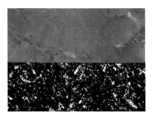
- Sample No. 1 in [Example 1] It is an electron micrograph of the refractory interface of 1.
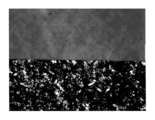
- Sample No. 1 in [Example 1] It is an electron micrograph of the refractory interface of 2.
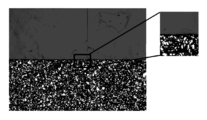
- Sample No. 1 in [Example 1] 3 is an electron micrograph of a refractory interface 3.
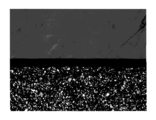
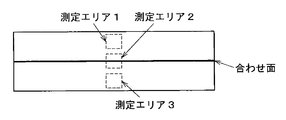
- Sample No. 1 in [Example 1] 4 is an electron micrograph of a refractory interface of No. 4; It is a conceptual diagram which shows the measurement area
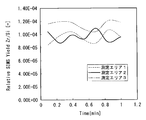
- Sample No. 2 in [Example 2] It is a measurement result of 2 SIMS.
- Sample No. 2 in [Example 2] 4 is a measurement result of SIMS.
- the devitrification content containing Zr is 1 piece / cm 3 or less, preferably 1 piece / cm 3 or less, preferably 0.5 pieces / cm 3 or less, preferably 0.3 pieces. / Cm 3 or less, preferably 0.1 piece / cm 3 or less, preferably 0.05 piece / cm 3 or less, particularly preferably 0.01 piece / cm 3 or less.
- a method of reducing devitrification including Zr a method of increasing the content of Al 2 O 3 in a member (molten brick, bowl-shaped refractory, etc.) in contact with molten glass in the glass substrate manufacturing process, molten glass
- a member molten brick, bowl-shaped refractory, etc.
- the member in contact with the substrate include a method using platinum, molybdenum and the like, a method of reducing the content of ZrO 2 in the glass composition, and the like.
- the tempered glass substrate of the present invention has a compressive stress layer on its surface.
- Methods for forming a compressive stress layer on the surface include a physical strengthening method and a chemical strengthening method.
- a chemical strengthening method is a method of introducing alkali ions having a large ion radius to the surface of the glass by performing an ion exchange treatment at a temperature below the strain point of the glass. If the compressive stress layer is formed by the chemical strengthening method, a desired mechanical strength can be obtained even if the plate thickness of the glass substrate is small. Furthermore, even if the tempered glass is cut after forming the compressive stress layer, unlike a physical strengthening method such as an air cooling strengthening method, it is not easily broken.
- the conditions for the ion exchange treatment are not particularly limited, and may be determined in consideration of the viscosity characteristics of the glass.
- a compressive stress layer can be efficiently formed on the surface of the glass substrate.
- the compressive stress value of the compressive stress layer is preferably 600 MPa or more, preferably 800 MPa or more, preferably 1000 MPa or more, preferably 1200 MPa or more, and particularly preferably 1300 MPa or more.
- the compressive stress increases, the mechanical strength of the tempered glass substrate increases.
- microcracks may be generated on the surface, which may lower the mechanical strength of the tempered glass substrate.
- a compressive stress value shall be 2500 Mpa or less.
- the content of Al 2 O 3 , TiO 2 , ZrO 2 , MgO, ZnO, SnO 2 may be increased, or the content of SrO, BaO may be reduced. Moreover, what is necessary is just to shorten the time which ion exchange requires, or to lower the temperature of an ion exchange solution.
- the stress depth is preferably 10 ⁇ m or more, preferably 15 ⁇ m or more, preferably 20 ⁇ m or more, and particularly preferably 30 ⁇ m or more.
- the deeper the stress depth the harder the tempered glass substrate breaks even if the tempered glass is deeply damaged. On the other hand, it may be difficult to cut the tempered glass substrate, or the internal tensile stress may become extremely high and may be damaged. Therefore, the stress depth is preferably 100 ⁇ m or less, more preferably 80 ⁇ m or less, and particularly preferably 60 ⁇ m or less.
- the contents of K 2 O, P 2 O 5 , TiO 2 and ZrO 2 may be increased, or the contents of SrO and BaO may be reduced. Moreover, what is necessary is just to lengthen the time which ion exchange requires, or to raise the temperature of an ion exchange solution.
- the internal tensile stress value is preferably 200 MPa or less, preferably 150 MPa or less, preferably 100 MPa or less, preferably 60 MPa or less, particularly preferably 50 MPa or less. As this value decreases, the tempered glass substrate is less likely to be damaged by internal defects. Moreover, it becomes easy to cut
- the tempered glass substrate of the present invention preferably forms a compressive stress layer on the surface of the glass substrate formed by the overflow downdraw method. If the glass substrate is formed by the overflow down draw method, a glass substrate that is unpolished and has good surface quality can be produced. The reason for this is that, in the case of the overflow down draw method, the surface to be the surface of the glass substrate does not come into contact with the bowl-like refractory, and is molded in a free surface state. This is because it can be molded. If the liquidus temperature is 1200 ° C. or less and the liquidus viscosity is 10 4.0 dPa ⁇ s or more, the glass substrate can be formed by the overflow downdraw method.
- a method other than the overflow downdraw method can be adopted.
- a molding method such as a downdraw method (slot down method, redraw method, etc.), a float method, a rollout method, or a press method can be employed.
- the value of (Zr content at the center of the plate thickness) / (Zr content near the surface) is preferably 3 or less, preferably 2.5 or less, preferably 2 or less, Preferably it is 1.5 or less, preferably 1.3 or less, preferably 1.2 or less, particularly preferably 1 or less. If this value is too large, the tempered glass substrate tends to be damaged by internal tensile stress.
- the value of (content of ZrO 2 at the center of the plate thickness) / (content of ZrO 2 near the surface) is also preferably 3 or less, preferably 2.5 or less, preferably 2 or less, preferably 1.5 or less, preferably 1.3 or less, preferably 1.2 or less, particularly preferably 1 or less.
- the tempered glass substrate of the present invention preferably has an unpolished surface, and the average surface roughness (Ra) of the unpolished surface is preferably 10 mm or less, preferably 5 mm or less, preferably 4 mm or less, preferably 3 mm. Hereinafter, it is particularly preferably 2 mm or less.
- the average surface roughness (Ra) may be measured by a method based on SEMI D7-97 “Measurement method of surface roughness of FPD glass substrate”. Although the theoretical strength of glass is inherently very high, it often breaks even at stresses much lower than the theoretical strength. This is because a small defect called Griffith flow is generated on the glass surface in a post-molding process such as a polishing process.
- the tempered glass substrate of the present invention if the entire effective surface is unpolished, the tempered glass substrate becomes more difficult to break. Moreover, in order to prevent the situation which breaks from the cut surface of a tempered glass substrate, you may perform a chamfering process, an etching process, etc. to a cut surface. In order to obtain an unpolished surface, a glass substrate may be formed by an overflow down draw method.
- SiO 2 is a component that forms a glass network, and its content is preferably 40 to 71%, preferably 40 to 63%, preferably 45 to 63%, preferably 50 to 59%, particularly preferably. 55 to 58.5%. If the content of SiO 2 is too large, it will be difficult to melt or mold the glass, or the thermal expansion coefficient will be too low, and it will be difficult to match the thermal expansion coefficient with the surrounding materials. On the other hand, if the content of SiO 2 is too small, it becomes difficult to vitrify. Moreover, a thermal expansion coefficient becomes high and the thermal shock resistance of glass tends to fall.
- Al 2 O 3 is a component that enhances ion exchange performance. It also has the effect of increasing the strain point and Young's modulus, and its content is preferably 3 to 30%.
- the content of Al 2 O 3 is too large, it is difficult to forming by the overflow down-draw method or the like is easily devitrified crystal glass deposition.
- the interface spinel devitrification crystals of high Al 2 O 3 trough structure containing It becomes easy to precipitate.
- the thermal expansion coefficient becomes too low, making it difficult to match the thermal expansion coefficient with the surrounding materials, and increasing the high-temperature viscosity, making it difficult to melt.
- the upper limit of the range of Al 2 O 3 is preferably 25% or less, preferably 22% or less, particularly preferably 21% or less, and the lower limit is preferably 7.5% or more, preferably 8%. 0.5% or more, preferably 9% or more, preferably 10% or more, preferably 12% or more, preferably 13% or more, preferably 14% or more, preferably 16% or more, preferably 18% or more, preferably 19 % Or more, particularly preferably 20% or more.
- Li 2 O is an ion exchange component and a component that lowers the high-temperature viscosity and improves the meltability and moldability.
- Li 2 O is a component that improves the Young's modulus.
- Li 2 O has a large effect of increasing the compressive stress value among alkali metal oxides.
- the thermal expansion coefficient becomes too high, the thermal shock resistance is lowered, and it is difficult to match the thermal expansion coefficient with the surrounding materials.
- the compressive stress value may be lowered.
- the content of Li 2 O is preferably 0 to 3.5%, preferably 0 to 2%, preferably 0 to 1%, preferably 0 to 0.5%, preferably 0 to 0.1%. It is most preferable not to contain substantially, that is, to suppress to less than 0.01%.
- Li 2 O content is preferably 0.001% or more, particularly preferably 0.01% or more.
- Na 2 O is an ion exchange component and a component that lowers the high temperature viscosity and improves the meltability and moldability. Na 2 O is also a component that improves devitrification resistance.
- the upper limit of the range of Na 2 O is preferably 20% or less, preferably 19% or less, preferably 17% or less, preferably 15% or less, preferably 14% or less, and particularly preferably 13.5% or less.
- the lower limit is preferably 7% or more, preferably 8% or more, preferably 10% or more, particularly preferably 12% or more.
- K 2 O has an effect of promoting ion exchange, and has a high effect of increasing the stress depth among alkali metal oxides. Moreover, it is a component which reduces a high temperature viscosity and improves a meltability and a moldability. K 2 O is also a component that improves devitrification resistance.
- the content of K 2 O is preferably 0 to 15%. When the content of K 2 O is too large, the thermal expansion coefficient becomes high, or the thermal shock resistance is lowered, the peripheral material and the coefficient of thermal expansion is hardly consistent. Furthermore, there is a tendency that the strain point is excessively lowered, the balance of the glass composition is lacking, and the devitrification resistance is lowered.
- the upper limit range of K 2 O is preferably 12% or less, preferably 10% or less, preferably 8% or less, preferably 6% or less, preferably 5% or less, preferably 4% or less, preferably 3%. In the following, it is preferably 2% or less, particularly preferably less than 2%.
- the total amount of the alkali metal oxide R 2 O (R is one or more selected from Li, Na, and K) becomes too large, the glass tends to devitrify and the coefficient of thermal expansion becomes too high. As a result, the thermal shock resistance is lowered, and the thermal expansion coefficient is difficult to match with the surrounding material. Further, there is a case where the total content of alkali metal oxides R 2 O is too large, too lowered strain point, not obtain a high compression stress value. Furthermore, the viscosity in the vicinity of the liquidus temperature may decrease, and it may be difficult to ensure a high liquidus viscosity. Therefore, the total amount of R 2 O is preferably 22% or less, more preferably 20% or less, and particularly preferably 19% or less.
- the total amount of R 2 O is preferably 8% or more, preferably 10% or more, preferably 13% or more, and particularly preferably 15% or more.
- the value of (Na 2 O + K 2 O) / Al 2 O 3 is set to 0.7 to 2, or 0.8 to 1.6, or 0.9 to 1.6, or 1 to 1.6, It is preferable to regulate to 1.2 to 1.6.
- this value is increased, the low-temperature viscosity is excessively decreased, the ion exchange performance is decreased, the Young's modulus is decreased, the thermal expansion coefficient is excessively increased, and the thermal shock resistance is easily decreased.
- this value becomes large the component balance of a glass composition will be impaired and it will become easy to devitrify glass. On the other hand, when this value is small, the meltability and devitrification resistance are liable to decrease.
- the molar ratio (Al 2 O 3 + MgO) / Na 2 O is preferably 1.1 or less, preferably 1.08 or less, preferably 1.07 or less, preferably 1.06 or less, preferably 1.04 or less, Especially preferably, it is 1.02 or less. In this way, it becomes easy to suppress the occurrence of devitrification at the interface of the high Al 2 O 3 containing cage structure. Specifically, when glass is held for 48 hours at a viscosity of 10 4.5 dPa ⁇ s (viscosity during molding), the occurrence of devitrification bumps at the interface of high Al 2 O 3 -containing cage structures is suppressed. It becomes easy to do.
- the range of the mass ratio of K 2 O / Na 2 O is preferably 0-2.
- the compressive stress value and the stress depth can be changed.
- the mass ratio is 0.3-2, 0.5-2, 1-2, 1 or 1. It is preferable to adjust to 2 to 2, particularly 1.5 to 2.
- the reason why the upper limit of the mass ratio is set to 2 is that if it exceeds 2, the glass composition is not balanced and the glass is easily devitrified.
- alkaline earth metal oxide R′O (R ′ is one or more selected from Mg, Ca, Sr, and Ba) is a component that can be added for various purposes.
- R′O alkaline earth metal oxide
- the total amount of R′O is preferably 0 to 9.9%, preferably 0 to 8%, preferably 0 to 6, particularly preferably 0 to 5%.
- MgO is a component that lowers the viscosity at high temperature to increase meltability and moldability, and increases the strain point and Young's modulus.
- MgO has a large effect of improving ion exchange performance.
- the MgO content is preferably 0 to 6%.
- the content of MgO increases, the density and thermal expansion coefficient increase, and the glass tends to devitrify.
- using a high Al 2 O 3 trough structure containing when molding glass substrate by an overflow down draw method, the interface spinel devitrification crystals of high Al 2 O 3 trough structure containing It becomes easy to precipitate.
- the content is preferably 4% or less, preferably 3% or less, preferably 2.5% or less, preferably 2% or less, particularly preferably 1.5% or less.
- content of MgO becomes like this.
- it is 0.01% or more, Preferably it is 0.1%, Preferably it is 0.5% or more, Most preferably, it is 1% or more.
- CaO is a component that lowers the high-temperature viscosity to increase meltability and formability, and increases the strain point and Young's modulus.
- CaO has a great effect of improving ion exchange performance.
- the CaO content is preferably 0 to 6%.
- the content of CaO is increased, the density and thermal expansion coefficient may be increased, the glass may be easily devitrified, and the ion exchange performance may be decreased. Therefore, the content is preferably 4% or less, particularly preferably 3% or less.
- SrO and BaO are components that lower the high-temperature viscosity to improve the meltability and moldability, and increase the strain point and Young's modulus, and their contents are preferably 0 to 3% each.
- the content of SrO is preferably 2% or less, preferably 1.5% or less, preferably 1% or less, preferably 0.5% or less, preferably 0.2% or less, particularly preferably 0.1% or less.
- the content of BaO is preferably 2.5% or less, preferably 2% or less, preferably 1% or less, preferably 0.8% or less, preferably 0.5% or less, preferably 0.2%. Hereinafter, it is particularly preferably 0.1% or less.
- ZnO is a component that enhances ion exchange performance, and is particularly effective in increasing the compressive stress value. Further, it is a component having an effect of lowering the high temperature viscosity without lowering the low temperature viscosity, and its content is preferably 0 to 8%. However, if the ZnO content is increased, the glass is phase-divided, the devitrification resistance is decreased, or the density is increased. Therefore, the content is preferably 6% or less, more preferably 4% or less, Particularly preferably, it is 3% or less.
- SrO + BaO has the effect
- a preferable range of SrO + BaO is 0 to 3%, more preferably 0 to 2.5%, more preferably 0 to 2%, more preferably 0 to 1%, more preferably 0 to 0.2%, and particularly preferably 0. ⁇ 0.1%.
- SnO 2 has an effect of improving the ion exchange performance, particularly the compressive stress value, so it is preferably contained in an amount of 0.01 to 3%, more preferably 0.01 to 1.5%, and particularly preferably 0. It is preferable to contain 1 to 1%. When the content of SnO 2 increases, devitrification due to SnO 2 occurs or the glass tends to be colored.
- the ZrO 2 has the effect of significantly improving the ion exchange performance, increasing the Young's modulus and strain point, and lowering the high temperature viscosity. Moreover, since it has the effect of increasing the viscosity in the vicinity of the liquid phase viscosity, the ion exchange performance and the liquid phase viscosity can be simultaneously increased by containing a predetermined amount. However, if the content of ZrO 2 is too large, the devitrification resistance may be extremely lowered. Therefore, the content of ZrO 2 is preferably 0 to 10%, preferably 0.001 to 10%, preferably 0.1 to 9%, preferably 0.5 to 7%, preferably 1 to 5%. Particularly preferred is 2.5 to 5%. When it is desired to reduce the devitrification material containing Zr as much as possible, the content of ZrO 2 is preferably 1% or less, preferably 0.5% or less, preferably 0.1% or less, particularly preferably 0. Less than 1%.
- B 2 O 3 has the effect of lowering the liquidus temperature, the high temperature viscosity and the density and has the effect of improving the ion exchange performance, particularly the compressive stress value. If it is too high, the surface may be burned by ion exchange, the water resistance may decrease, or the liquid phase viscosity may decrease. In addition, the stress depth tends to decrease. Therefore, the content of B 2 O 3 is preferably 0 to 6%, more preferably 0 to 4%, and particularly preferably 0 to 3%.
- TiO 2 is a component that has an effect of improving ion exchange performance. It also has the effect of reducing the high temperature viscosity. However, when there is too much the content, glass will color, devitrification resistance will fall, or a density will become high. In particular, when used as a cover glass for a display, if the content of TiO 2 is increased, the transmittance is likely to change when the melting atmosphere or the raw material is changed. Therefore, in the process of bonding the glass substrate to the device using light such as ultraviolet curable resin, the ultraviolet irradiation conditions are likely to fluctuate, and stable production becomes difficult.
- the content of TiO 2 is preferably 10% or less, preferably 8% or less, preferably 6% or less, preferably 5% or less, preferably 4% or less, preferably 2% or less, preferably 0.7 % Or less, preferably 0.5% or less, preferably 0.1% or less, particularly preferably 0.01% or less.
- the content of Al 2 O 3 + ZrO 2 is preferably determined as follows. If the content of Al 2 O 3 + ZrO 2 is preferably more than 12%, preferably 13% or more, preferably 15% or more, preferably 17% or more, preferably 18% or more, preferably 19% or more, ions The exchange performance can be improved more effectively. However, if the content of Al 2 O 3 + ZrO 2 is too large, the devitrification resistance is extremely reduced, so the content is preferably 28% or less, preferably 25% or less, preferably 23% or less, Preferably it is 22% or less, Most preferably, it is 21% or less.
- P 2 O 5 is a component that enhances the ion exchange performance, and since the effect of deepening the stress depth is particularly great, its content is preferably 0 to 8%. However, when the content of P 2 O 5 is increased, the glass is phase-separated, and water resistance and devitrification resistance are liable to decrease. Therefore, the content is preferably 5% or less, preferably 4% or less. , Preferably 3% or less, particularly preferably 2% or less.
- As a fining agent 0.001 to 3% of one or more selected from the group consisting of As 2 O 3 , Sb 2 O 3 , CeO 2 , F, SO 3 , and Cl may be added.
- As 2 O 3 and Sb 2 O 3 are preferably used as much as possible in consideration of the environment, and each content is preferably less than 0.1%, particularly preferably less than 0.01%, that is, substantially It is preferable not to contain.
- CeO 2 is a component that lowers the transmittance, and the content thereof is preferably less than 0.1%, particularly preferably less than 0.01%, that is, it is preferably not substantially contained.
- F may lower the low temperature viscosity and may cause a decrease in compressive stress value.
- the content of F is preferably less than 0.1%, particularly preferably less than 0.01%, that is, it is preferably not substantially contained.
- preferred fining agents are SO 3 and Cl, and it is preferable to add 0.001 to 3%, preferably 0.001 to 1% of one or both of SO 3 and Cl. It is preferable to add 0.01 to 0.5%, and it is more preferable to add 0.05 to 0.4%.
- Rare earth oxides such as Nd 2 O 3 and La 2 O 3 are components that increase the Young's modulus. However, the cost of the raw material itself is high, and if it is contained in a large amount, the devitrification resistance is lowered. Therefore, their content is preferably 3% or less, preferably 2% or less, preferably 1% or less, preferably 0.5% or less, and particularly preferably 0.1% or less.
- Transition metal elements such as Co and Ni that strongly color the glass tend to reduce the transmittance.
- the content of the transition metal element is preferably 0.5% or less, preferably 0.1% or less, and particularly preferably 0.05%. Therefore, the amount of the raw material or cullet can be adjusted. desirable.
- a suitable content range of each component can be appropriately selected to obtain a preferable glass composition range. Specific examples are shown below.
- a glass composition that is 10% and does not substantially contain As 2 O 3 and Sb 2 O 3 .
- a glass composition that is 10% and does not substantially contain As 2 O 3 and Sb 2 O 3 .
- the tempered glass substrate of the present invention has a plate thickness of preferably 3.0 mm or less, preferably 1.5 mm or less, preferably 0.7 mm or less, preferably 0.5 mm or less, preferably 0.4 mm or less, particularly preferably. 0.3 mm or less.
- the tempered glass substrate of the present invention has an advantage that it is difficult to break even if the plate thickness is reduced. Note that when the molten glass is formed by the overflow downdraw method, the glass substrate can be thinned or smoothed without polishing and etching.
- the density is preferably 2.8 g / cm 3 or less, preferably 2.7 g / cm 3 or less, particularly preferably 2.6 g / cm 3 or less.
- the “density” can be measured by, for example, the well-known Archimedes method. In order to decrease the density, the content of SiO 2 , P 2 O 5 , B 2 O 3 is increased, or the content of alkali metal oxide, alkaline earth metal oxide, ZnO, ZrO 2 , TiO 2 is included. The amount may be reduced.
- the strain point is preferably 540 ° C. or higher, more preferably 550 ° C. or higher, and particularly preferably 560 ° C. or higher.
- the “strain point” refers to a value measured based on the method of ASTM C336. As the strain point is higher, the heat resistance is improved, and even if the tempered glass substrate is subjected to heat treatment, the thermal shrinkage of the tempered glass substrate is reduced and the compressive stress layer is hardly lost. Also, if the strain point is high, stress relaxation is difficult to occur during the ion exchange treatment, and a high compressive stress value can be obtained. In order to increase the strain point, the content of the alkali metal oxide is reduced or the content of the alkaline earth metal oxide, Al 2 O 3 , ZrO 2 , P 2 O 5 is increased. Good.
- the temperature at 10 2.5 dPa ⁇ s is preferably 1650 ° C. or lower, preferably 1500 ° C. or lower, preferably 1450 ° C. or lower, preferably 1430 ° C. or lower, preferably 1420 ° C. or lower, particularly Preferably it is 1400 degrees C or less.
- “temperature at 10 2.5 dPa ⁇ s” refers to a value measured by a platinum ball pulling method.
- the temperature at a high temperature viscosity of 10 2.5 dPa ⁇ s corresponds to the melting temperature of the glass, and the lower this temperature, the more the glass can be melted.
- the glass substrate can be manufactured at low cost.
- the content of alkali metal oxide, alkaline earth metal oxide, ZnO, B 2 O 3 , TiO 2 is increased, or SiO 2 , Al
- the content of 2 O 3 may be reduced.
- the liquidus temperature is preferably 1200 ° C. or lower, preferably 1050 ° C. or lower, preferably 1030 ° C. or lower, preferably 1010 ° C. or lower, preferably 1000 ° C. or lower, preferably 950 ° C. or lower, preferably Is 900 ° C. or lower, particularly preferably 870 ° C. or lower.
- the content of Na 2 O, K 2 O, B 2 O 3 is increased or the content of Al 2 O 3 , Li 2 O, MgO, ZnO, TiO 2 , ZrO 2 is increased. Should be reduced.
- Liquid phase temperature means that glass powder that passes through a standard sieve 30 mesh (a sieve opening of 500 ⁇ m) and remains at 50 mesh (a sieve opening of 300 ⁇ m) is placed in a platinum boat and is placed in a temperature gradient furnace for 24 hours. It refers to the temperature at which crystals precipitate after being held.
- Liquidus viscosity is preferably 10 4.0 dPa ⁇ s or more, preferably 10 4.3 dPa ⁇ s or more, preferably 10 4.5 dPa ⁇ s or more, preferably 10 5.0 dPa ⁇ s or more, preferably Is 10 5.4 dPa ⁇ s or more, preferably 10 5.8 dPa.s. s or more, preferably 10 6.0 dPa ⁇ s or more, particularly preferably 10 6.2 dPa ⁇ s or more.
- liquid phase viscosity refers to a value obtained by measuring the viscosity at the liquid phase temperature by a platinum ball pulling method.
- the liquidus temperature is 1200 ° C. or less, if the liquidus viscosity of 10 4.0 dPa ⁇ s or more, it is possible to form the glass substrate by an overflow down draw method.
- the thermal expansion coefficient in the temperature range of 30 to 380 ° C. is preferably 70 ⁇ 10 ⁇ 7 to 110 ⁇ 10 ⁇ 7 / ° C., preferably 75 ⁇ 10 ⁇ 7 to 110 ⁇ 10 ⁇ 7. / ° C., preferably 80 ⁇ 10 ⁇ 7 to 110 ⁇ 10 ⁇ 7 / ° C., particularly preferably 85 ⁇ 10 ⁇ 7 to 110 ⁇ 10 ⁇ 7 / ° C.
- the thermal expansion coefficient is easily matched with a member such as a metal or an organic adhesive, and peeling of the member such as a metal or an organic adhesive can be prevented.
- the “thermal expansion coefficient” refers to a value obtained by measuring an average thermal expansion coefficient in a temperature range of 30 to 380 ° C. using a dilatometer.
- the content of alkali metal oxides and alkaline earth metal oxides may be increased.
- alkali metal oxides and alkaline earth metal oxides may be increased. What is necessary is just to reduce content.
- the Young's modulus is preferably 70 GPa or more, more preferably 73 GPa or more, and particularly preferably 75 GPa or more.
- the higher the Young's modulus the smaller the amount of deformation when the surface of the cover glass is pressed with a pen or finger when using it as a cover glass for a display, so that damage to the internal display can be reduced.
- the manufacturing method of the tempered glass substrate of the present invention includes the step (1) of preparing a glass raw material, and melting and melting the obtained raw material so that the devitrification content containing Zr is 1 piece / cm 3 or less. After obtaining glass, it has the process (2) which shape
- a method of manufacturing a tempered glass substrate of the present invention includes a step (1) formulating the glass raw materials, melting the resulting formulation material, after obtaining the molten glass, the Al 2 O 3 more than 10 wt%
- Technical features of the method for producing a tempered glass substrate of the present invention (particularly, technical features in the steps (1) and (3)) overlap with the technical features of the tempered glass substrate of the present invention.
- the detailed description of the overlapping part is abbreviate
- the glass composition is SiO 2 40 to 71%, Al 2 O 3 3 to 30%, Li 2 O 0 to 3.5%, Na 2 O 7 to 20%, K 2 in mass%. It is preferable to have a step of preparing the glass raw material so as to contain O 0 to 15%. In this way, it becomes easy to produce a tempered glass having both devitrification resistance and ion exchange performance.
- the blended raw material is put into a continuous melting furnace, heated and melted at 1500 to 1600 ° C., clarified, and then supplied to a molding apparatus to form molten glass into a plate shape. Slow cooling is preferred. In this way, a high-quality glass substrate can be produced efficiently.
- the steps (2) and (2) ' have a step of forming into a plate shape by an overflow down draw method.
- Step (2) the Al 2 O 3 refractory containing more than 10 wt%, it is preferable to have the step of contacting molten glass.
- the step (2) is at the time of molding, the Al 2 O 3 refractory containing more than 10 wt%, it is preferable to have the step of contacting molten glass. If it does in this way, while the devitrification object containing Zr can be reduced, other devitrification objects can also be reduced.
- a refractory containing 10% by mass or more of Al 2 O 3 has a viscosity of 10 4.0 dPa ⁇ s or more (preferably 10 4.2 dPa ⁇ s or more, preferably 10 4.3 dPa ⁇ s or more, preferably 10 4.4 dPa ⁇ s or more, particularly preferably 10 4.5 dPa ⁇ s or more), and 10 5.5 dPa ⁇ s or less (preferably 10 5.
- dPa ⁇ s or less preferably 10 5.3 dPa ⁇ s or less, preferably 10 5.2 dPa ⁇ s or less, preferably 10 5.1 dPa ⁇ s or less, particularly preferably 10 5.0 dPa ⁇ s or less. It is preferable to have the process of making the molten glass contact. If the viscosity of the molten glass is too high during molding, the tensile stress applied to the glass becomes too high, and the glass may be damaged during molding. On the other hand, when the viscosity of the molten glass is too low at the time of molding, the glass is likely to be deformed, and the quality such as bending and warping is likely to be lowered.
- refractories can be used as the refractory containing 10% by mass or more of Al 2 O 3 .
- a high Al 2 O 3 -containing refractory can be produced, for example, by sintering predetermined high-purity powder. If necessary, a sintering aid may be added before sintering.
- Al 2 O 3 -containing refractory As a high Al 2 O 3 -containing refractory, from the viewpoint of compatibility with the molten glass according to the present invention, for example, a refractory described in JP-T-2007-504088 (composition as mass%, Al 2 O 3 Refractory containing 40 to 94%, ZrO 2 0 to 41%, SiO 2 2 to 22%, Y 2 O 3 + V 2 O 5 + TiO 2 + Sb 2 O 3 + Yb 2 O 3 + Na 2 O> 1%), special Refractory described in Japanese Unexamined Patent Publication No. 2012-020926 (Alumina refractory having a tin concentration of 1% by mass or less based on oxide), US Patent Application Publication No.
- 2012/0006509 Tein concentration is 1% by mass based on oxide
- an alumina refractory having a total amount of Ti component + Zr component + Hf component of 1.5% by mass or less is preferred.
- the refractory described in International Publication No. 2012/125507 refractory containing at least 90% by mass of Al 2 O 3 and further including one or more of Ta component, Nb component, Hf component), International Publication No.
- Refractories described in 2012/135762 (As composition, at least Al 2 O 3 is contained in an amount of 10% by mass or more, the content of SiO 2 is 6% by mass or less, and further, Ti component, Mg component, Nb component, Ta component Refractories containing one or more of these), and refractories described in International Publication No. 2012/142348 (refractory containing at least 50% by mass of ⁇ -Al 2 O 3 as a composition) are also preferable.
- high Al 2 O 3 containing refractory is preferably formed by produced by cold isostatic pressing.
- the pressure is preferably less than 5 kpsi (about 34 MPa) to more than 40 kpsi (about 276 MPa).
- the average creep rate of the cage structure is preferably less than 2.5 ⁇ 10 ⁇ 7 / hour at 1180 ° C. and 1000 psi, and preferably less than 2.5 ⁇ 10 ⁇ 6 / hour at 1250 ° C. and 1000 psi. In this way, the life of the bowl-shaped structure can be extended.
- the ion exchange treatment can be performed, for example, by immersing the glass substrate in a potassium nitrate solution at 400 to 550 ° C. for 1 to 8 hours.
- the conditions for the ion exchange treatment may be selected in consideration of the viscosity characteristics of the glass, the application, the plate thickness, the tensile stress value inside the glass, and the like.
- the cutting to a predetermined size may be performed before the ion exchange treatment, but it is preferable to carry out after the ion exchange treatment from the viewpoint of manufacturing cost.
- Table 1 shows experimental samples (sample Nos. 1 to 4) used for explaining the present invention.
- Each sample was prepared as follows. First, glass raw materials were prepared so as to have the glass composition in the table, and were melted at 1580 ° C. for 8 hours using a platinum pot. Thereafter, the molten glass was poured onto a carbon plate and formed into a plate shape. Various characteristics were evaluated about the obtained glass substrate.
- the density is a value measured by the well-known Archimedes method.
- strain point Ps and the annealing point Ta are values measured based on the method of ASTM C336.
- the softening point Ts is a value measured based on the method of ASTM C338.
- the temperature at a high temperature viscosity of 10 4.0 dPa ⁇ s, 10 3.0 dPa ⁇ s, and 10 2.5 dPa ⁇ s is a value measured by a platinum ball pulling method.
- the liquid phase temperature TL is obtained by crushing glass, passing through a standard sieve 30 mesh (a sieve opening of 500 ⁇ m), and putting the glass powder remaining in 50 mesh (a sieve opening of 300 ⁇ m) into a platinum boat and placing it in a temperature gradient furnace for 24 hours. The temperature at which the crystals are deposited is measured.
- the liquid phase viscosity log ⁇ TL is the viscosity of the glass at the liquid phase temperature, and is a value measured by the platinum ball pulling method.
- the thermal expansion coefficient ⁇ is a value obtained by measuring an average thermal expansion coefficient in a temperature range of 30 to 380 ° C. using a dilatometer.
- the obtained glass substrate had a density of 2.54 g / cm 3 or less and a thermal expansion coefficient of 92 ⁇ 10 ⁇ 7 to 100 ⁇ 10 ⁇ 7 / ° C., and was suitable as a tempered glass material. Further, since the liquid phase viscosity is 10 5.8 dPa ⁇ s or more, molding by the overflow down-draw method is possible, and the temperature at 10 2.5 dPa ⁇ s is 1578 ° C. or less, so the productivity is high. It is considered that a large amount of glass substrate can be supplied at low cost.
- each sample was immersed in KNO 3 molten salt at 440 ° C. for 6 hours to perform ion exchange treatment.
- the surface compressive stress value and the stress depth were calculated from the number of interference fringes observed using a surface stress meter (FSM-6000 manufactured by Toshiba Corporation) and the distance between the interference fringes. .
- the refractive index of the sample was 1.52, and the optical elastic constant was 28 [(nm / cm) / MPa].
- each sample had a compressive stress of 500 MPa or more on its surface and a thickness of 35 ⁇ m or more.
- the glass composition of the untempered glass and the tempered glass are microscopically different in the surface layer, but when viewed as a whole, the glass compositions of the two are not substantially different. Therefore, properties such as density and viscosity are not substantially different between untempered glass and tempered glass.
- sample no. 1 to 4 were evaluated using a refractory. 20 cc of each sample was prepared, and this was put into a Pt boat laid with 5 ⁇ 12 ⁇ 140 mm prismatic refractories.
- Sample No. In Nos. 1 and 2 a refractory containing alumina as a main component (90% by mass or more) is used.
- a refractory material containing zircon as a main component (95% by mass or more) was used. Then, after holding at a temperature of 240 hours this Pt boat in 10 4.4 dPa ⁇ s of each sample, along with observing the crystals precipitated at the interface of refractory and observed bubbles generated at the interface of refractory .
- Sample No. 4 as shown in FIG. 4, devitrification was observed and generation of bubbles was also observed.
- Sample No. In No. 2 a refractory containing alumina as a main component (90% by mass or more) is used as a molded body.
- a refractory material containing zircon as a main component (95% by mass or more) was used as a molded body.
- the measurement area has three points as shown in FIG. 5.
- the measurement area 1 is a portion where the center of the measurement area is 125 ⁇ m inside the glass substrate surface, the measurement area 2 is the center of the measurement area, and the glass substrate surface. 350 ⁇ m inside (part of the mating surface), the measurement area 3 is a part whose center of the measurement area is 125 ⁇ m inside from the back surface of the glass substrate.
- the analysis conditions of SIMS are: analysis element: 28Si, 90Zr, analysis size: 200 ⁇ m, primary ion species acceleration energy: 8.0 keV, secondary ion polarity: Positive, measurement time: 1 minute.
- the obtained Zr profile was normalized with the Si profile.
- Sample No. 2 shows the measurement results of SIMS 2.
- Sample No. The measurement result of SIMS 4 is shown in FIG. Table 2 shows the measurement data of SIMS. Note that S in Table 2 is a value of measurement area 2 / ((measurement area 1 + measurement area 3) / 2).
- S in Table 2 is a value of measurement area 2 / ((measurement area 1 + measurement area 3) / 2).
- the tempered glass of the present invention is suitable as a cover glass for mobile phones, digital cameras, PDAs, solar cells, etc., or as a substrate for touch panel displays.
- the tempered glass of the present invention is used for applications requiring high mechanical strength, such as window glass, magnetic disk substrates, flat panel display substrates, cover glass for solid-state image sensors, tableware, etc. Application to can be expected.
Landscapes
- Chemical & Material Sciences (AREA)
- Engineering & Computer Science (AREA)
- Organic Chemistry (AREA)
- Materials Engineering (AREA)
- Chemical Kinetics & Catalysis (AREA)
- Life Sciences & Earth Sciences (AREA)
- General Chemical & Material Sciences (AREA)
- Geochemistry & Mineralogy (AREA)
- Physics & Mathematics (AREA)
- Theoretical Computer Science (AREA)
- General Physics & Mathematics (AREA)
- Glass Compositions (AREA)
- Surface Treatment Of Glass (AREA)
Description
本発明は、強化ガラス基板及びその製造方法に関し、特に携帯電話、デジタルカメラ、PDA(携帯端末)、太陽電池のカバーガラス、或いはタッチパネルディスプレイの基板に好適な強化ガラス基板及びその製造方法に関する。
携帯電話、デジタルカメラ、PDA、太陽電池、タッチパネルディスプレイ等のデバイスは、広く使用されており、益々普及する傾向にあり、これらの用途では、カバーガラス又は基板として、化学的に強化されてなる強化ガラス基板が用いられている。
現在、TV、モニター等のディスプレイの保護部材として、強化ガラス基板を用いることが検討されている。
強化ガラス基板には、例えば、(1)高い機械的強度を有すること、(2)低密度で軽量であること、(3)安価で多量に供給できること、(4)泡品位に優れること、(5)可視域において高い光透過率を有すること、(6)ペンや指等で表面を押した際に撓み難いように、高いヤング率を有すること等の特性が要求される。特に、保護部材として化学強化ガラス基板を使用する場合、(1)の特性が重要になる(特許文献1、非特許文献1参照)。
泉谷徹朗等、「新しいガラスとその物性」、初版、株式会社経営システム研究所、1984年8月20日、p.451−498
強化ガラスの機械的強度を高めるためには、ガラス組成中のAl2O3の含有量を増加させて、イオン交換性能を高める必要がある。一方、Al2O3の含有量が多くなると、ガラスの粘度が上昇し、溶融温度が高くなる。このようなガラスを溶融させて成形する場合、従来までは、当該ガラスとの接触壁部に、ジルコニア系耐火物又はジルコン系耐火物が使用されていた。
しかし、特定のガラス組成を有する強化ガラス基板を作製する場合、ジルコニア系耐火物又はジルコン系耐火物を使用すると、耐火物と溶融ガラスとの界面において、高濃度のZr層が形成されると共に、高濃度のZrを含む溶融ガラス生地が、溶融工程~成形工程中の低温部分で停滞して、後にZrを含む失透ブツとして析出する虞がある。
また、大型の強化ガラス基板の機械的強度を高めるために、圧縮応力値を大きく、且つ応力深さを深くすると、内部の引っ張り応力値が大きくなる傾向がある。この場合、内部の引っ張り応力層中に失透ブツが存在すると、強化ガラス基板が破損し易くなる。特に、強化ガラス基板が大型になる程、その確率が上昇する。
本発明は、このような事情に鑑みて成されたものであり、その技術的課題は、大型であっても、機械的強度が高く、破損し難い強化ガラス基板及びその製造方法を創案することである。
本発明者等は、種々の検討を行った結果、強化ガラス基板中のZrを含む失透ブツの数を所定範囲に規制することにより、上記技術的課題を解決し得ることを見出し、本発明として提案するものである。すなわち、本発明の強化ガラス基板は、表面に圧縮応力層を有する強化ガラス基板であって、Zrを含む失透ブツが1個/cm3以下であることを特徴とする。ここで、「Zrを含む失透ブツ」は、実体顕微鏡により観察を行い、観察視野内に1μm以上の失透ブツが観察された場合、失透ブツとしてカウントし、測定に使用したガラス基板(強化ガラス基板)のサイズから1cm3当たりの失透ブツの発生率を算出したものである。
第二に、本発明の強化ガラス基板は、オーバーフローダウンドロー法により成形されてなるガラス基板の表面に前記圧縮応力層を有することが好ましい。ここで、「オーバーフローダウンドロー法」は、溶融状態のガラスを耐熱性の樋状構造物の両側から溢れさせて、溢れた溶融ガラスを樋状構造物の下端で合流させながら、下方に延伸成形してガラス基板を製造する方法である。
従来まで、オーバーフローダウンドロー法では、樋状構造物として、ジルコニア系耐火物又はジルコン系耐火物が使用されていた。しかし、樋状構造物として、ジルコニア系耐火物又はジルコン系耐火物を使用すると、Zrを含む失透ブツを1個/cm3以下に規制し難くなることに加えて、合わせ面(合流面)のZr(ZrO2)の含有量が多くなり易い。そこで、樋状構造物として、高Al2O3含有耐火物を使用すると、Zrを含む失透ブツを可及的に低減することが可能になる。しかも、合わせ面のZr(ZrO2)の含有量を低減し易くなる。また、高Al2O3含有耐火物は、長時間使用しても変形し難く、Zrを含む失透ブツ以外の失透ブツも発生させ難い。
樋状構造物中のAl2O3の含有量は、好ましくは10質量%以上、好ましくは30質量%以上、好ましくは50質量%以上、好ましくは70質量%以上、好ましくは90質量%以上、特に好ましくは95質量%以上である。このようにすれば、成形時に、樋状構造物から溶融ガラス中にZrが溶出し難くなる。
溶融炉の溶融煉瓦として、高Al2O3含有耐火物を使用することも好ましい。このようにすれば、Zrを含む失透ブツを1個/cm3以下に規制し易くなる。溶融炉の溶融煉瓦中のAl2O3の含有量は、好ましくは10質量%以上、好ましくは30質量%以上、好ましくは50質量%以上、好ましくは70質量%以上、好ましくは90質量%以上、特に好ましくは95質量%以上である。このようにすれば、溶融時に、溶融炉の溶融煉瓦から溶融ガラス中にZrが溶出し難くなる。
第三に、本発明の強化ガラス基板は、(板厚中央部のZrの含有量)/(表面付近のZrの含有量)の値が3以下であることを特徴とする。ここで、「(板厚中央部のZrの含有量)/(表面付近のZrの含有量)」は、例えば、SIMSで測定した値を指し、板厚中央部のZrの含有量をA、表面付近のZrの含有量をBとした上で、Siで規格化した際に得られる値の平均値Aave、Baveをそれぞれ算出し、Aave/Baveとして計算した値である。
強化ガラス基板において、板厚中央部は、引っ張り応力層になるが、この部分に失透ブツが存在すると、強化ガラス基板が破損し易くなる。そこで、(板厚中央部のZrの含有量)/(表面付近のZrの含有量)の値を3以下に規制すれば、内部の引っ張り応力値が高くても、強化ガラス基板が破損し難くなる。
第四に、本発明の強化ガラス基板は、圧縮応力層が化学的処理によって形成されてなることが好ましい。
第五に、本発明の強化ガラス基板は、表面の圧縮応力値が300MPa以上、応力深さが10μm以上、且つ内部の引っ張り応力値が200MPa以下であることが好ましい。ここで、「圧縮応力層の圧縮応力値」及び「応力深さ」は、表面応力計(例えば、株式会社東芝製FSM−6000)を用いて、試料を観察した際に、観察される干渉縞の本数とその間隔から算出される値を指す。「内部の引っ張り応力値」は、下記数式で計算された値を指す。
内部の引っ張り応力値=(圧縮応力値×応力深さ)/(板厚−応力深さ×2)
第六に、本発明の強化ガラス基板は、表面が未研磨面であることが好ましい。
第七に、本発明の強化ガラス基板は、ガラス組成として、質量%で、SiO2 40~71%、Al2O3 3~30%、Li2O 0~3.5%、Na2O 7~20%、K2O 0~15%を含有することが好ましい。このガラス組成を有する強化ガラス基板は、特にジルコニア系耐火物、ジルコン系耐火物に接触した場合にZrを含む失透ブツが析出し易く、逆にAl2O3を10質量%以上含む耐火物を使用した場合には、Zrを含む失透ブツ、発泡等の不具合が発生し難く、長期間の使用が可能になる。なお、上記傾向は、ガラス組成中のAl2O3の含有量が多い程、顕著になる。
第八に、本発明の強化ガラス基板は、ガラス組成として、質量%で、SiO2 40~71%、Al2O3 7.5~30%、Li2O 0~2%、Na2O 10~19%、K2O 0~15%、MgO 0~6%、CaO 0~6%、SrO 0~3%、BaO 0~3%、ZnO 0~8%を含有することが好ましい。
第九に、本発明の強化ガラス基板は、ディスプレイのカバーガラスに用いることが好ましい。
第十に、本発明の強化ガラス基板は、太陽電池のカバーガラスに用いることが好ましい。
第十一に、本発明の強化ガラス基板の製造方法は、ガラス原料を調合する工程(1)と、Zrを含む失透ブツが1個/cm3以下になるように、得られた調合原料を溶融し、溶融ガラスを得た後、該溶融ガラスを板状に成形する工程(2)と、イオン交換処理を行い、ガラス表面に圧縮応力層を形成して、強化ガラス基板を得る工程(3)と、を有することを特徴とする。
第十二に、本発明の強化ガラス基板の製造方法は、工程(1)が、ガラス組成として、質量%で、SiO2 40~71%、Al2O3 3~30%、Li2O 0~3.5%、Na2O 7~20%、K2O 0~15%を含有するように、ガラス原料を調合する工程を有することが好ましい。
第十三に、本発明の強化ガラス基板の製造方法は、工程(2)が、オーバーフローダウンドロー法により板状に成形する工程を有することが好ましい。
第十四に、本発明の強化ガラス基板の製造方法は、工程(2)が、Al2O3を10質量%以上含む耐火物に、溶融ガラスを接触させる工程を有することが好ましい。
第十五に、本発明の強化ガラス基板の製造方法は、工程(2)が、成形時に、Al2O3を10質量%以上含む耐火物に、溶融ガラスを接触させる工程を有することが好ましい。
第十六に、本発明の強化ガラス基板の製造方法は、工程(2)が、成形時に、Al2O3を10質量%以上含む耐火物に、粘度が104dPa・s以上で且つ105dPa・s以下の溶融ガラスを接触させる工程を有することが好ましい。
第十七に、本発明の強化ガラス基板の製造方法は、ガラス原料を調合する工程(1)と、得られた調合原料を溶融し、溶融ガラスを得た後、Al2O3を10質量%以上含む耐火物に、溶融ガラスを接触させて、該溶融ガラスを板状に成形する工程(2)’と、イオン交換処理を行い、ガラス表面に圧縮応力層を形成して、強化ガラス基板を得る工程(3)と、を有することを特徴とする。
本発明の強化ガラス基板において、Zrを含む失透ブツは1個/cm3以下であり、好ましくは1個/cm3以下、好ましくは0.5個/cm3以下、好ましくは0.3個/cm3以下、好ましくは0.1個/cm3以下、好ましくは0.05個/cm3以下、特に好ましくは0.01個/cm3以下である。Zrを含む失透ブツが多過ぎると、強化ガラス基板の外観不良率が低下すると共に、強化ガラス基板が破損し易くなる。
Zrを含む失透ブツを低減する方法として、ガラス基板の製造工程中で、溶融ガラスと接触する部材(溶融煉瓦、樋状耐火物等)のAl2O3の含有量を高める方法、溶融ガラスと接触する部材として、白金、モリブデン等を用いる方法、ガラス組成中のZrO2の含有量を低下させる方法等が挙げられる。
本発明の強化ガラス基板は、その表面に圧縮応力層を有する。表面に圧縮応力層を形成する方法には、物理強化法と化学強化法があり、本発明では、化学強化法で圧縮応力層を形成することが好ましい。化学強化法は、ガラスの歪点以下の温度でイオン交換処理を行うことにより、ガラスの表面にイオン半径が大きいアルカリイオンを導入する方法である。化学強化法で圧縮応力層を形成すれば、ガラス基板の板厚が小さくても、所望の機械的強度を得ることができる。更に、圧縮応力層を形成した後に、強化ガラスを切断しても、風冷強化法等の物理強化法とは異なり、容易に破壊することがない。
イオン交換処理の条件は、特に限定されず、ガラスの粘度特性等を考慮して決定すればよい。特に、KNO3溶融塩中のKイオンをガラス基板中のNa成分とイオン交換すると、ガラス基板の表面に圧縮応力層を効率良く形成することができる。
本発明の強化ガラス基板において、圧縮応力層の圧縮応力値は、好ましくは600MPa以上、好ましくは800MPa以上、好ましくは1000MPa以上、好ましくは1200MPa以上、特に好ましくは1300MPa以上である。圧縮応力が大きくなるにつれて、強化ガラス基板の機械的強度が高くなる。一方、表面に極端に大きな圧縮応力が形成されると、表面にマイクロクラックが発生し、かえって強化ガラス基板の機械的強度が低下する虞がある。また、強化ガラス基板に内在する引っ張り応力が極端に高くなる虞があるため、圧縮応力値を2500MPa以下とするのが好ましい。なお圧縮応力値を大きくするには、Al2O3、TiO2、ZrO2、MgO、ZnO、SnO2の含有量を増加させたり、SrO、BaOの含有量を低減すればよい。また、イオン交換に要する時間を短くしたり、イオン交換溶液の温度を下げればよい。
応力深さは、好ましくは10μm以上、好ましくは15μm以上、好ましくは20μm以上、特に好ましくは30μm以上である。応力深さが深い程、強化ガラスに深い傷が付いても、強化ガラス基板が割れ難くなる。一方、強化ガラス基板を切断し難くなったり、内部の引っ張り応力が極端に高くなって破損する虞れがある。よって、応力深さは、好ましくは100μm以下、より好ましくは80μm以下、特に好ましくは60μm以下である。なお、応力深さを深くするには、K2O、P2O5、TiO2、ZrO2の含有量を増加させたり、SrO、BaOの含有量を低減すればよい。また、イオン交換に要する時間を長くしたり、イオン交換溶液の温度を高めればよい。
内部の引っ張り応力値は、好ましくは200MPa以下、好ましくは150MPa以下、好ましくは100MPa以下、好ましくは60MPa以下、特に好ましくは50MPa以下である。この値が小さくなる程、内部の欠陥によって強化ガラス基板が破損し難くなる。また、強化ガラス基板を安定して切断し易くなる。更に、切断時の寸法変化を少なくすることが可能になる。しかし、内部の引っ張り応力値が極端に小さくなると、表面の圧縮応力値や応力深さが低下する。よって、内部の引っ張り応力値は、好ましくは1MPa以上、より好ましくは10MPa以上、特に好ましくは15MPa以上である。
本発明の強化ガラス基板は、オーバーフローダウンドロー法で成形されてなるガラス基板の表面に圧縮応力層を形成することが好ましい。オーバーフローダウンドロー法でガラス基板を成形すれば、未研磨で表面品位が良好なガラス基板を製造することができる。その理由は、オーバーフローダウンドロー法の場合、ガラス基板の表面となるべき面は樋状耐火物に接触せず、自由表面の状態で成形されることにより、無研磨で表面品位が良好なガラス基板を成形できるからである。なお、液相温度が1200℃以下、液相粘度が104.0dPa・s以上であれば、オーバーフローダウンドロー法でガラス基板を成形することができる。
なお、高い表面品位が要求されない場合には、オーバーフローダウンドロー法以外の方法を採用することができる。例えば、ダウンドロー法(スロットダウン法、リドロー法等)、フロート法、ロールアウト法、プレス法等の成形方法を採用することができる。
本発明の強化ガラス基板において、(板厚中央部のZrの含有量)/(表面付近のZrの含有量)の値は、好ましくは3以下、好ましくは2.5以下、好ましくは2以下、好ましくは1.5以下、好ましくは1.3以下、好ましくは1.2以下、特に好ましくは1以下である。この値が大き過ぎると、内部の引っ張り応力により強化ガラス基板が破損し易くなる。同様にして、(板厚中央部のZrO2の含有量)/(表面付近のZrO2の含有量)の値も、好ましくは3以下、好ましくは2.5以下、好ましくは2以下、好ましくは1.5以下、好ましくは1.3以下、好ましくは1.2以下、特に好ましくは1以下である。
本発明の強化ガラス基板は、未研磨の表面を有することが好ましく、未研磨の表面の平均表面粗さ(Ra)は、好ましくは10Å以下、好ましくは5Å以下、好ましくは4Å以下、好ましくは3Å以下、特に好ましくは2Å以下である。なお、平均表面粗さ(Ra)は、SEMI D7−97「FPDガラス基板の表面粗さの測定方法」に準拠した方法により測定すればよい。ガラスの理論強度は本来非常に高いが、理論強度よりも遥かに低い応力でも破壊に至ることが多い。これはガラス表面にグリフィスフローと呼ばれる小さな欠陥が成形後の工程、例えば研磨工程等で生じるからである。それ故、ガラス表面を未研磨とすれば、本来のガラスの機械的強度が損なわれず、ガラス基板が破壊し難くなる。また、ガラス表面を未研磨とすれば、研磨工程を省略できるため、ガラス基板の製造コストを下げることができる。本発明の強化ガラス基板において、有効面全体を未研磨とすれば、強化ガラス基板が更に破壊し難くなる。また、強化ガラス基板の切断面から破壊に至る事態を防止するため、切断面に面取り加工やエッチング処理等を行ってもよい。なお、未研磨の表面を得るためには、オーバーフローダウンドロー法でガラス基板を成形すればよい。
本発明の強化ガラス基板において、各成分の含有量を限定した理由を以下に説明する。なお、各成分の含有量の説明において、%表示は、質量%を意味している。
SiO2は、ガラスのネットワークを形成する成分であり、その含有量は、好ましくは40~71%、好ましくは40~63%、好ましくは45~63%、好ましくは50~59%、特に好ましくは55~58.5%である。SiO2の含有量が多過ぎると、ガラスの溶融や成形が難しくなったり、熱膨張係数が低くなり過ぎて、周辺材料と熱膨張係数が整合し難くなる。一方、SiO2の含有量が少な過ぎると、ガラス化し難くなる。また、熱膨張係数が高くなり、ガラスの耐熱衝撃性が低下し易くなる。
Al2O3は、イオン交換性能を高める成分である。また歪点やヤング率を高める効果もあり、その含有量は3~30%が好ましい。Al2O3の含有量が多過ぎると、ガラスに失透結晶が析出し易くなってオーバーフローダウンドロー法等による成形が困難になる。特に、高Al2O3含有の樋状構造物を用いて、オーバーフローダウンドロー法でガラス基板を成形する場合、高Al2O3含有の樋状構造物との界面にスピネルの失透結晶が析出し易くなる。また熱膨張係数が低くなり過ぎて、周辺材料と熱膨張係数が整合し難くなったり、高温粘性が高くなり溶融し難くなる。Al2O3の含有量が少な過ぎると、十分なイオン交換性能を発揮できない虞が生じる。上記観点から、Al2O3の範囲は上限が、好ましくは25%以下、好ましくは22%以下、特に好ましくは21%以下であり、また下限が、好ましくは7.5%以上、好ましくは8.5%以上、好ましくは9%以上、好ましくは10%以上、好ましくは12%以上、好ましくは13%以上、好ましくは14%以上、好ましくは16%以上、好ましくは18%以上、好ましくは19%以上、特に好ましくは20%以上である。
Li2Oは、イオン交換成分であると共に、高温粘度を低下させて溶融性や成形性を向上させる成分である。また、Li2Oは、ヤング率を向上させる成分である。更に、Li2Oは、アルカリ金属酸化物の中では圧縮応力値を高める効果が大きい。しかし、Li2Oの含有量が多過ぎると、液相粘度が低下して、ガラスが失透し易くなる。また、熱膨張係数が高くなり過ぎて、耐熱衝撃性が低下したり、周辺材料と熱膨張係数が整合し難くなる。更に、低温粘性が低下し過ぎて、応力緩和が起こり易くなると、かえって圧縮応力値が低くなる場合がある。従って、Li2Oの含有量は、好ましくは0~3.5%、好ましくは0~2%、好ましくは0~1%、好ましくは0~0.5%、好ましくは0~0.1%であり、実質的に含有しないこと、つまり0.01%未満に抑えることが最も好ましい。なお、Li2Oを添加する場合、Li2Oの含有量は0.001%以上が好ましく、特に0.01%以上が好ましい。
Na2Oは、イオン交換成分であると共に、高温粘度を低下させて、溶融性や成形性を向上させる成分である。また、Na2Oは、耐失透性を改善する成分でもある。Na2Oの範囲は上限が、好ましくは20%以下、好ましくは19%以下、好ましくは17%以下、好ましくは15%以下、好ましくは14%以下、特に好ましくは13.5%以下であり、下限が、好ましくは7%以上、好ましくは8%以上、好ましくは10%以上、特に好ましくは12%以上である。Na2Oの含有量が多過ぎると、熱膨張係数が高くなり過ぎて、耐熱衝撃性が低下したり、周辺材料と熱膨張係数が整合し難くなる。また、歪点が低下し過ぎたり、ガラス組成のバランスを欠き、かえって耐失透性が低下する傾向がある。一方、Na2Oの含有量が少な過ぎると、溶融性が低下したり、熱膨張係数が低くなり過ぎたり、イオン交換性能が低下し易くなる。
K2Oは、イオン交換を促進する効果があり、アルカリ金属酸化物の中では応力深さを深くする効果が高い。また、高温粘度を低下させて、溶融性や成形性を高める成分である。また、K2Oは、耐失透性を改善する成分でもある。K2Oの含有量は0~15%が好ましい。K2Oの含有量が多過ぎると、熱膨張係数が高くなり、耐熱衝撃性が低下したり、周辺材料と熱膨張係数が整合し難くなる。更に、歪点が低下し過ぎたり、ガラス組成のバランスを欠き、かえって耐失透性が低下する傾向がある。よって、K2Oの上限範囲は、好ましくは12%以下、好ましくは10%以下、好ましくは8%以下、好ましくは6%以下、好ましくは5%以下、好ましくは4%以下、好ましくは3%以下、好ましくは2%以下、特に好ましくは2%未満である。
アルカリ金属酸化物R2O(RはLi、Na、Kから選ばれる1種以上)の合量が多くなり過ぎると、ガラスが失透し易くなることに加えて、熱膨張係数が高くなり過ぎて、耐熱衝撃性が低下したり、周辺材料と熱膨張係数が整合し難くなる。また、アルカリ金属酸化物R2Oの合量が多過ぎると、歪点が低下し過ぎて、高い圧縮応力値が得られない場合がある。更に、液相温度付近の粘性が低下し、高い液相粘度を確保することが困難となる場合がある。よって、R2Oの合量は、好ましくは22%以下、より好ましくは20%以下、特に好ましくは19%以下である。一方、R2Oの合量が少な過ぎると、イオン交換性能や溶融性が低下する場合がある。よって、R2Oの合量は、好ましくは8%以上、好ましくは10%以上、好ましくは13%以上、特に好ましくは15%以上である。
また、(Na2O+K2O)/Al2O3の値を、0.7~2、もしくは0.8~1.6、もしくは0.9~1.6、もしくは1~1.6、特に1.2~1.6に規制することが好ましい。この値が大きくなると、低温粘性が低下し過ぎて、イオン交換性能が低下したり、ヤング率が低下したり、熱膨張係数が高くなり過ぎて、耐熱衝撃性が低下し易くなる。また、この値が大きくなると、ガラス組成の成分バランスが損なわれて、ガラスが失透し易くなる。一方、この値が小さくなると、溶融性や耐失透性が低下し易くなる。
モル比(Al2O3+MgO)/Na2Oは、好ましくは1.1以下、好ましくは1.08以下、好ましくは1.07以下、好ましくは1.06以下、好ましくは1.04以下、特に好ましくは1.02以下である。このようにすれば、高Al2O3含有の樋状構造物界面での失透ブツの発生を抑制し易くなる。具体的には、104.5dPa・sの粘度(成形時の粘度)でガラスを48時間保持した時に、高Al2O3含有の樋状構造物界面での失透ブツの発生を抑制し易くなる。
また、K2O/Na2Oの質量比の範囲は、0~2が好ましい。K2O/Na2Oの質量比を変化させると、圧縮応力値と応力深さを変化させることが可能になる。圧縮応力値を高く設定したい場合には、上記質量比が、0~0.3、もしくは0~0.2、特に0~0.1となるように調整することが好ましい。一方、応力深さをより深くしたり、短時間で深い圧縮応力層を形成したい場合には、上記質量比が、0.3~2、もしくは0.5~2、もしくは1~2、もしくは1.2~2、特に1.5~2となるように調整することが好ましい。ここで、上記質量比の上限を2に設定した理由は、2より大きくなると、ガラス組成のバランスを欠いて、ガラスが失透し易くなるからである。
例えば、アルカリ土類金属酸化物R’O(R’はMg、Ca、Sr、Baから選ばれる1種以上)は、種々の目的で添加可能な成分である。しかし、R’Oの合量が多くなると、密度や熱膨張係数が高くなったり、耐失透性が低下したりすることに加えて、イオン交換性能が低下する傾向がある。よって、R’Oの合量は、好ましくは0~9.9%、好ましくは0~8%、好ましくは0~6、特に好ましくは0~5%である。
MgOは、高温粘度を低下させて、溶融性や成形性を高めたり、歪点やヤング率を高める成分であり、アルカリ土類金属酸化物の中では、イオン交換性能を向上させる効果が大きい。MgOの含有量は0~6%が好ましい。しかし、MgOの含有量が多くなると、密度、熱膨張係数が高くなったり、ガラスが失透し易くなる。特に、高Al2O3含有の樋状構造物を用いて、オーバーフローダウンドロー法でガラス基板を成形する場合、高Al2O3含有の樋状構造物との界面にスピネルの失透結晶が析出し易くなる。したがって、その含有量は、好ましくは4%以下、好ましくは3%以下、好ましくは2.5%以下、好ましくは2%以下、特に好ましくは1.5%以下である。なお、MgOを添加する場合、MgOの含有量は、好ましくは0.01%以上、好ましくは0.1%、好ましくは0.5%以上、特に好ましくは1%以上である。
CaOは、高温粘度を低下させて溶融性や成形性を高めたり、歪点やヤング率を高める成分であり、アルカリ土類金属酸化物の中では、イオン交換性能を向上させる効果が大きい。CaOの含有量は0~6%が好ましい。しかし、CaOの含有量が多くなると、密度、熱膨張係数が高くなったり、ガラスが失透し易くなったり、更にはイオン交換性能が低下する場合がある。したがって、その含有量は、4%以下が好ましく、特に3%以下が好ましい。
SrO及びBaOは、高温粘度を低下させて溶融性や成形性を向上させたり、歪点やヤング率を高める成分であり、その含有量は各々0~3%が好ましい。SrOやBaOの含有量が多くなると、イオン交換性能が低下する傾向がある。また、密度、熱膨張係数が高くなったり、ガラスが失透し易くなる。SrOの含有量は、好ましくは2%以下、好ましくは1.5%以下、好ましくは1%以下、好ましくは0.5%以下、好ましくは0.2%以下、特に好ましくは0.1%以下である。また、BaOの含有量は、好ましくは2.5%以下、好ましくは2%以下、好ましくは1%以下、好ましくは0.8%以下、好ましくは0.5%以下、好ましくは0.2%以下、特に好ましくは0.1%以下である。
ZnOは、イオン交換性能を高める成分であり、特に、圧縮応力値を高くする効果が大きい。また、低温粘性を低下させずに高温粘性を低下させる効果を有する成分であり、その含有量は0~8%が好ましい。しかし、ZnOの含有量が多くなると、ガラスが分相したり、耐失透性が低下したり、密度が高くなるため、その含有量は、好ましくは6%以下、より好ましくは4%以下、特に好ましくは3%以下である。
SrO+BaOの合量を0~5%に規制すると、イオン交換性能をより効果的に向上させることができる。つまりSrOとBaOは、上述の通り、イオン交換反応を阻害する作用があるため、これらの成分を多く含むことは、強化ガラスの機械的強度を高める上で不利である。SrO+BaOの好ましい範囲は0~3%、より好ましくは0~2.5%、より好ましくは0~2%、より好ましくは0~1%、より好ましくは0~0.2%、特に好ましくは0~0.1%である。
R’Oの合量をR2Oの合量で除した値が大きくなると、耐失透性が低下する傾向が現れる。よって、質量分率でR’O/R2Oの値を0.5以下に規制することが好ましく、0.4以下に規制することがより好ましく、特に0.3以下に規制することが好ましい。
SnO2は、イオン交換性能、特に圧縮応力値を向上させる効果があるため、0.01~3%含有することが好ましく、0.01~1.5%含有することがより好ましく、特に0.1~1%含有することが好ましい。SnO2の含有量が多くなると、SnO2に起因する失透が発生したり、ガラスが着色し易くなる傾向がある。
ZrO2は、イオン交換性能を顕著に向上させると共に、ヤング率や歪点を高くし、高温粘性を低下させる効果がある。また、液相粘度付近の粘性を高める効果があるため、所定量含有させることで、イオン交換性能と液相粘度を同時に高めることができる。但し、ZrO2の含有量が多くなり過ぎると、耐失透性が極端に低下する場合がある。よって、ZrO2の含有量は、好ましくは0~10%、好ましくは0.001~10%、好ましくは0.1~9%、好ましくは0.5~7%、好ましくは1~5%、特に好ましくは2.5~5%である。なお、Zrを含む失透ブツを可及的に低減したい場合、ZrO2の含有量は、好ましくは1%以下、好ましくは0.5%以下、好ましくは0.1%以下、特に好ましくは0.1%未満である。
B2O3は、液相温度、高温粘度及び密度を低下させる効果を有すると共に、イオン交換性能、特に圧縮応力値を向上させる効果があるため、上記成分と共に含有できるが、その含有量が多過ぎると、イオン交換によって表面にヤケが発生したり、耐水性が低下したり、液相粘度が低下する虞がある。また、応力深さが低下する傾向にある。よって、B2O3の含有量は、好ましくは0~6%、より好ましくは0~4%、特に好ましくは0~3%である。
TiO2は、イオン交換性能を向上させる効果がある成分である。また、高温粘度を低下させる効果がある。しかし、その含有量が多過ぎると、ガラスが着色したり、耐失透性が低下したり、密度が高くなる。特にディスプレイのカバーガラスとして使用する場合、TiO2の含有量が多くなると、溶融雰囲気や原料を変更した時、透過率が変化し易くなる。そのため紫外線硬化樹脂等の光を利用してガラス基板をデバイスに接着する工程において、紫外線照射条件が変動し易くなり、安定生産が困難となる。よって、TiO2の含有量は、好ましくは10%以下、好ましくは8%以下、好ましくは6%以下、好ましくは5%以下、好ましくは4%以下、好ましくは2%以下、好ましくは0.7%以下、好ましくは0.5%以下、好ましくは0.1%以下、特に好ましくは0.01%以下である。
本発明において、イオン交換性能向上の観点から、ZrO2とTiO2を上記範囲に規制することが好ましいが、TiO2源、ZrO2源として試薬を用いてもよく、原料等に含まれる不純物から導入してもよい。
耐失透性とイオン交換性能を両立する観点から、Al2O3+ZrO2の含有量を以下のように定めることが好ましい。Al2O3+ZrO2の含有量が好ましくは12%超、好ましくは13%以上、好ましくは15%以上、好ましくは17%以上、好ましくは18%以上、好ましくは19%以上であれば、イオン交換性能をより効果的に向上させることが可能になる。しかし、Al2O3+ZrO2の含有量が多過ぎると、耐失透性が極端に低下するため、その含有量は、好ましくは28%以下、好ましくは25%以下、好ましくは23%以下、好ましくは22%以下、特に好ましくは21%以下である。
P2O5は、イオン交換性能を高める成分であり、特に、応力深さを深くする効果が大きいため、その含有量を0~8%とすることが好ましい。しかし、P2O5の含有量が多くなると、ガラスが分相したり、耐水性や耐失透性が低下し易くするため、その含有量は、好ましくは5%以下、好ましくは4%以下、好ましくは3%以下、特に好ましくは2%以下である。
清澄剤として、As2O3、Sb2O3、CeO2、F、SO3、Clの群から選択された一種又は二種以上を0.001~3%添加してもよい。但し、As2O3及びSb2O3は環境に対する配慮から、使用は極力控えることが好ましく、各々の含有量は0.1%未満が好ましく、特に0.01%未満が好ましく、つまり実質的に含有しないことが好ましい。CeO2は、透過率を低下させる成分であり、その含有量は、好ましくは0.1%未満、特に好ましくは0.01%未満であって、つまり実質的に含有しないことが好ましい。Fは、低温粘性を低下させ、圧縮応力値の低下を招く虞がある。よって、Fの含有量は、好ましくは0.1%未満、特に好ましくは0.01%未満であって、つまり実質的に含有しないことが好ましい。従って、好ましい清澄剤は、SO3とClであり、SO3とClの1者又は両者を、0.001~3%添加することが好ましく、0.001~1%添加することが好ましく、0.01~0.5%添加することが好ましく、更には0.05~0.4%添加することが好ましい。
Nd2O3やLa2O3等の希土類酸化物は、ヤング率を高める成分である。しかし、原料自体のコストが高く、また多量に含有させると耐失透性が低下する。よって、それらの含有量は、好ましくは3%以下、好ましくは2%以下、好ましくは1%以下、好ましくは0.5%以下、特に好ましくは0.1%以下である。
ガラスを強く着色するようなCo、Ni等の遷移金属元素は、透過率を低下させる傾向がある。特に、ディスプレイに用いる場合、遷移金属元素の含有量が多いと、ディスプレイの視認性が低下し易くなる。よって、遷移金属酸化物の含有量は、好ましくは0.5%以下、好ましくは0.1%以下、特に好ましくは0.05%であり、そのために原料又はカレットの使用量を調整することが望ましい。
Pb、Bi等の物質は、環境に対する配慮から、その酸化物の含有量をそれぞれ0.1%未満に制限することが好ましい。
本発明の強化ガラス基板において、各成分の好適な含有範囲を適宜選択し、好ましいガラス組成範囲とすることができる。その具体例を以下に示す。
(1)質量%でSiO2 40~71%、Al2O3 7.5~30%、Li2O 0~2%、Na2O 10~19%、K2O 0~15%、MgO 0~6%、CaO 0~6%、SrO 0~3%、BaO 0~3%、ZnO 0~8%、SnO2 0.01~3%を含有するガラス組成。
(2)質量%でSiO2 40~71%、Al2O3 7.5~30%、Li2O 0~2%、Na2O 10~19%、K2O 0~15%、MgO 0~6%、CaO 0~6%、SrO 0~3%、BaO 0~3%、ZnO 0~8%、SnO2 0.01~3%、ZrO2 0.001~10%を含有するガラス組成。
(3)質量%でSiO2 40~71%、Al2O3 8.5~30%、Li2O 0~1%、Na2O 10~19%、K2O 0~10%、MgO 0~6%、CaO 0~6%、SrO 0~3%、BaO 0~3%、ZnO 0~8%、SnO2 0.01~3%を含有するガラス組成。
(4)質量%でSiO2 40~71%、Al2O3 8.5~30%、Li2O 0~1%、Na2O 10~19%、K2O 0~10%、MgO 0~6%、CaO 0~6%、SrO 0~3%、BaO 0~3%、ZnO 0~8%、SnO2 0.01~3%、ZrO2 0.001~10%を含有するガラス組成。
(5)質量%でSiO2 40~71%、Al2O3 9~25%、B2O3 0~6%、Li2O 0~2%、Na2O 10~19%、K2O 0~15%、MgO 0~6%、CaO 0~6%、SrO 0~3%、BaO 0~3%、ZnO 0~6%、SnO2 0.1~1%、ZrO2 0.001~10%であり、実質的にAs2O3及びSb2O3を含有しないガラス組成。
(6)質量%でSiO2 40~71%、Al2O3 9~23%、B2O3 0~4%、Li2O 0~2%、Na2O 11~17%、K2O 0~6%、MgO 0~6%、CaO 0~6%、SrO 0~3%、BaO 0~3%、ZnO 0~6%、SnO2 0.1~1%、ZrO2 0.001~10%であり、実質的にAs2O3及びSb2O3を含有しないガラス組成。
(7)質量%でSiO2 40~63%、Al2O3 9~22%、B2O3 0~3%、Li2O 0~0.1%、Na2O 10~17%、K2O 0~7%、MgO 0~5%、CaO 0~4%、SrO+BaO 0~3%、SnO2 0.01~2%であり、実質的にAs2O3及びSb2O3を含有せず、質量分率で(Na2O+K2O)/Al2O3の値が0.9~1.6、K2O/Na2O 0~0.4であるガラス組成。
(8)質量%でSiO2 40~71%、Al2O3 3~30%、Li2O 0~2%、Na2O 10~20%、K2O 0~9%、MgO 0~5%、TiO2 0~0.5%、SnO2 0.001~3%を含有するガラス組成。
(9)質量%でSiO2 40~71%、Al2O3 8~30%、Li2O 0~2%、Na2O 10~20%、K2O 0~9%、MgO 0~5%、TiO2 0~0.5%、SnO2 0.001~3%を含有し、実質的にAs2O3及びSb2O3を含有しないガラス組成。
(10)質量%でSiO2 40~65%、Al2O3 8.5~30%、Li2O 0~1%、Na2O 10~20%、K2O 0~9%、MgO 0~5%、TiO2 0~0.5%、SnO2 0.01~3%を含有し、質量分率で(Na2O+K2O)/Al2O3の値が0.7~2であって、実質的にAs2O3、Sb2O3及びFを含有しないガラス組成。
(11)質量%でSiO2 40~65%、Al2O3 8.5~30%、Li2O 0~1%、Na2O 10~20%、K2O 0~9%、MgO 0~5%、TiO2 0~0.5%、SnO2 0.01~3%、MgO+CaO+SrO+BaO 0~8%を含有し、質量分率で(Na2O+K2O)/Al2O3の値が0.9~1.7であって、実質的にAs2O3、Sb2O3及びFを含有しないガラス組成。
(12)質量%でSiO2 40~63%、Al2O3 9~25%、B2O3 0~3%、Li2O 0~1%、Na2O 10~20%、K2O 0~9%、MgO 0~5%、TiO2 0~0.1%、SnO2 0.01~3%、ZrO2 0.001~10%、MgO+CaO+SrO+BaO 0~8%を含有し、質量分率で(Na2O+K2O)/Al2O3の値が1.2~1.6であって、実質的にAs2O3、Sb2O3及びFを含有しないガラス組成。
(13)質量%でSiO2 40~63%、Al2O3 9~22%、B2O3 0~3%、Li2O 0~1%、Na2O 10~20%、K2O 0~9%、MgO 0~5%、TiO2 0~0.1%、SnO2 0.01~3%、ZrO2 0.1~8%、MgO+CaO+SrO+BaO 0~8%を含有し、質量分率で(Na2O+K2O)/Al2O3の値が1.2~1.6であって、実質的にAs2O3、Sb2O3及びFを含有しないガラス組成。
(14)質量%でSiO2 40~59%、Al2O3 10~21%、B2O3 0~3%、Li2O 0~0.1%、Na2O 10~20%、K2O 0~7%、MgO 0~5%、TiO2 0~0.1%、SnO2 0.01~3%、ZrO2 1~8%、MgO+CaO+SrO+BaO 0~8%を含有し、質量分率で(Na2O+K2O)/Al2O3の値が1.2~1.6であって、実質的にAs2O3、Sb2O3及びFを含有しないガラス組成。
(1)質量%でSiO2 40~71%、Al2O3 7.5~30%、Li2O 0~2%、Na2O 10~19%、K2O 0~15%、MgO 0~6%、CaO 0~6%、SrO 0~3%、BaO 0~3%、ZnO 0~8%、SnO2 0.01~3%を含有するガラス組成。
(2)質量%でSiO2 40~71%、Al2O3 7.5~30%、Li2O 0~2%、Na2O 10~19%、K2O 0~15%、MgO 0~6%、CaO 0~6%、SrO 0~3%、BaO 0~3%、ZnO 0~8%、SnO2 0.01~3%、ZrO2 0.001~10%を含有するガラス組成。
(3)質量%でSiO2 40~71%、Al2O3 8.5~30%、Li2O 0~1%、Na2O 10~19%、K2O 0~10%、MgO 0~6%、CaO 0~6%、SrO 0~3%、BaO 0~3%、ZnO 0~8%、SnO2 0.01~3%を含有するガラス組成。
(4)質量%でSiO2 40~71%、Al2O3 8.5~30%、Li2O 0~1%、Na2O 10~19%、K2O 0~10%、MgO 0~6%、CaO 0~6%、SrO 0~3%、BaO 0~3%、ZnO 0~8%、SnO2 0.01~3%、ZrO2 0.001~10%を含有するガラス組成。
(5)質量%でSiO2 40~71%、Al2O3 9~25%、B2O3 0~6%、Li2O 0~2%、Na2O 10~19%、K2O 0~15%、MgO 0~6%、CaO 0~6%、SrO 0~3%、BaO 0~3%、ZnO 0~6%、SnO2 0.1~1%、ZrO2 0.001~10%であり、実質的にAs2O3及びSb2O3を含有しないガラス組成。
(6)質量%でSiO2 40~71%、Al2O3 9~23%、B2O3 0~4%、Li2O 0~2%、Na2O 11~17%、K2O 0~6%、MgO 0~6%、CaO 0~6%、SrO 0~3%、BaO 0~3%、ZnO 0~6%、SnO2 0.1~1%、ZrO2 0.001~10%であり、実質的にAs2O3及びSb2O3を含有しないガラス組成。
(7)質量%でSiO2 40~63%、Al2O3 9~22%、B2O3 0~3%、Li2O 0~0.1%、Na2O 10~17%、K2O 0~7%、MgO 0~5%、CaO 0~4%、SrO+BaO 0~3%、SnO2 0.01~2%であり、実質的にAs2O3及びSb2O3を含有せず、質量分率で(Na2O+K2O)/Al2O3の値が0.9~1.6、K2O/Na2O 0~0.4であるガラス組成。
(8)質量%でSiO2 40~71%、Al2O3 3~30%、Li2O 0~2%、Na2O 10~20%、K2O 0~9%、MgO 0~5%、TiO2 0~0.5%、SnO2 0.001~3%を含有するガラス組成。
(9)質量%でSiO2 40~71%、Al2O3 8~30%、Li2O 0~2%、Na2O 10~20%、K2O 0~9%、MgO 0~5%、TiO2 0~0.5%、SnO2 0.001~3%を含有し、実質的にAs2O3及びSb2O3を含有しないガラス組成。
(10)質量%でSiO2 40~65%、Al2O3 8.5~30%、Li2O 0~1%、Na2O 10~20%、K2O 0~9%、MgO 0~5%、TiO2 0~0.5%、SnO2 0.01~3%を含有し、質量分率で(Na2O+K2O)/Al2O3の値が0.7~2であって、実質的にAs2O3、Sb2O3及びFを含有しないガラス組成。
(11)質量%でSiO2 40~65%、Al2O3 8.5~30%、Li2O 0~1%、Na2O 10~20%、K2O 0~9%、MgO 0~5%、TiO2 0~0.5%、SnO2 0.01~3%、MgO+CaO+SrO+BaO 0~8%を含有し、質量分率で(Na2O+K2O)/Al2O3の値が0.9~1.7であって、実質的にAs2O3、Sb2O3及びFを含有しないガラス組成。
(12)質量%でSiO2 40~63%、Al2O3 9~25%、B2O3 0~3%、Li2O 0~1%、Na2O 10~20%、K2O 0~9%、MgO 0~5%、TiO2 0~0.1%、SnO2 0.01~3%、ZrO2 0.001~10%、MgO+CaO+SrO+BaO 0~8%を含有し、質量分率で(Na2O+K2O)/Al2O3の値が1.2~1.6であって、実質的にAs2O3、Sb2O3及びFを含有しないガラス組成。
(13)質量%でSiO2 40~63%、Al2O3 9~22%、B2O3 0~3%、Li2O 0~1%、Na2O 10~20%、K2O 0~9%、MgO 0~5%、TiO2 0~0.1%、SnO2 0.01~3%、ZrO2 0.1~8%、MgO+CaO+SrO+BaO 0~8%を含有し、質量分率で(Na2O+K2O)/Al2O3の値が1.2~1.6であって、実質的にAs2O3、Sb2O3及びFを含有しないガラス組成。
(14)質量%でSiO2 40~59%、Al2O3 10~21%、B2O3 0~3%、Li2O 0~0.1%、Na2O 10~20%、K2O 0~7%、MgO 0~5%、TiO2 0~0.1%、SnO2 0.01~3%、ZrO2 1~8%、MgO+CaO+SrO+BaO 0~8%を含有し、質量分率で(Na2O+K2O)/Al2O3の値が1.2~1.6であって、実質的にAs2O3、Sb2O3及びFを含有しないガラス組成。
本発明の強化ガラス基板は、板厚が、好ましくは3.0mm以下、好ましくは1.5mm以下、好ましくは0.7mm以下、好ましくは0.5mm以下、好ましくは0.4mm以下、特に好ましくは0.3mm以下である。板厚が薄い程、強化ガラス基板を軽量化することできる。また、本発明の強化ガラス基板は、板厚を薄くしても、破壊し難い利点を有している。なお、溶融ガラスの成形をオーバーフローダウンドロー法で行うと、研磨、エッチングを行わなくても、ガラス基板の薄肉化や平滑化を達成することができる。
本発明の強化ガラス基板において、密度は、好ましくは2.8g/cm3以下、好ましくは2.7g/cm3以下、特に好ましくは2.6g/cm3以下である。密度が低い程、強化ガラス基板の軽量化を図ることができる。ここで、「密度」は、例えば、周知のアルキメデス法で測定可能である。なお、密度を低下させるには、SiO2、P2O5、B2O3の含有量を増加させたり、アルカリ金属酸化物、アルカリ土類金属酸化物、ZnO、ZrO2、TiO2の含有量を低減すればよい。
本発明の強化ガラス基板において、歪点は、好ましくは540℃以上、より好ましくは550℃以上、特に好ましくは560℃以上である。ここで、「歪点」は、ASTM C336の方法に基づいて測定した値を指す。歪点が高い程、耐熱性が向上し、強化ガラス基板に対して熱処理を施したとしても、強化ガラス基板の熱収縮が小さくなると共に、圧縮応力層が消失し難くなる。また、歪点が高いと、イオン交換処理時に応力緩和が生じ難くなり、高い圧縮応力値を得ることが可能になる。なお、歪点を高くするためには、アルカリ金属酸化物の含有量を低減させたり、アルカリ土類金属酸化物、Al2O3、ZrO2、P2O5の含有量を増加させればよい。
本発明の強化ガラス基板において、102.5dPa・sにおける温度は、好ましくは1650℃以下、好ましくは1500℃以下、好ましくは1450℃以下、好ましくは1430℃以下、好ましくは1420℃以下、特に好ましくは1400℃以下である。ここで、「102.5dPa・sにおける温度」は、白金球引き上げ法で測定した値を指す。高温粘度102.5dPa・sにおける温度は、ガラスの溶融温度に相当しており、この温度が低い程、低温でガラスを溶融することができる。従って、この温度が低い程、溶融窯等のガラス製造設備への負担が小さくなる共に、泡品位を向上させることができる。結果として、ガラス基板を安価に製造することができる。なお、102.5dPa・sにおける温度を低下させるには、アルカリ金属酸化物、アルカリ土類金属酸化物、ZnO、B2O3、TiO2の含有量を増加させたり、SiO2、Al2O3の含有量を低減すればよい。
本発明の強化ガラス基板において、液相温度は、好ましくは1200℃以下、好ましくは1050℃以下、好ましくは1030℃以下、好ましくは1010℃以下、好ましくは1000℃以下、好ましくは950℃以下、好ましくは900℃以下、特に好ましくは870℃以下である。液相温度を低下させるには、Na2O、K2O、B2O3の含有量を増加したり、Al2O3、Li2O、MgO、ZnO、TiO2、ZrO2の含有量を低減すればよい。なお、「液相温度」とは、標準篩30メッシュ(篩目開き500μm)を通過し、50メッシュ(篩目開き300μm)に残るガラス粉末を白金ボートに入れて、温度勾配炉中に24時間保持した後、結晶が析出する温度を指す。
液相粘度は、好ましくは104.0dPa・s以上、好ましくは104.3dPa・s以上、好ましくは104.5dPa・s以上、好ましくは105.0dPa・s以上、好ましくは105.4dPa・s以上、好ましくは105.8dPa.s以上、好ましくは106.0dPa・s以上、特に好ましくは106.2dPa・s以上である。液相粘度を上昇させるには、Na2O、K2Oの含有量を増加したり、Al2O3、Li2O、MgO、ZnO、TiO2、ZrO2の含有量を低減すればよい。なお、「液相粘度」とは、液相温度における粘度を白金球引き上げ法で測定した値を指す。
なお、液相粘度が高く、液相温度が低い程、耐失透性に優れると共に、成形性に優れている。そして、液相温度が1200℃以下、液相粘度が104.0dPa・s以上であれば、オーバーフローダウンドロー法でガラス基板を成形することができる。
本発明の強化ガラス基板において、30~380℃の温度範囲における熱膨張係数は、好ましくは70×10−7~110×10−7/℃、好ましくは75×10−7~110×10−7/℃、好ましくは80×10−7~110×10−7/℃、特に好ましくは85×10−7~110×10−7/℃である。熱膨張係数を上記範囲とすれば、金属、有機系接着剤等の部材と熱膨張係数が整合し易くなり、金属、有機系接着剤等の部材の剥離を防止することができる。ここで、「熱膨張係数」とは、ディラトメーターを用いて、30~380℃の温度範囲における平均熱膨張係数を測定した値を指す。なお、熱膨張係数を上昇させるには、アルカリ金属酸化物、アルカリ土類金属酸化物の含有量を増加さればよく、逆に低下させるには、アルカリ金属酸化物、アルカリ土類金属酸化物の含有量を低減すればよい。
本発明の強化ガラス基板において、ヤング率は、好ましくは70GPa以上、より好ましくは73GPa以上、特に好ましくは75GPa以上である。ヤング率が高い程、ディスプレイのカバーガラスとして使用する場合、カバーガラスの表面をペンや指で押した際の変形量が小さくなるため、内部のディスプレイに与えるダメージを低減することができる。
本発明の強化ガラス基板の製造方法は、ガラス原料を調合する工程(1)と、Zrを含む失透ブツが1個/cm3以下になるように、得られた調合原料を溶融し、溶融ガラスを得た後、該溶融ガラスを板状に成形する工程(2)と、イオン交換処理を行い、ガラス表面に圧縮応力層を形成して、強化ガラス基板を得る工程(3)とを有することを特徴とする。また、本発明の強化ガラス基板の製造方法は、ガラス原料を調合する工程(1)と、得られた調合原料を溶融し、溶融ガラスを得た後、Al2O3を10質量%以上含む耐火物に、溶融ガラスを接触させて、該溶融ガラスを板状に成形する工程(2)’と、イオン交換処理を行い、ガラス表面に圧縮応力層を形成して、強化ガラス基板を得る工程(3)と、を有することを特徴とする。本発明の強化ガラス基板の製造方法の技術的特徴(特に、工程(1)、(3)における技術的特徴)は、本発明の強化ガラス基板の技術的特徴と重複する。ここでは、本発明の強化ガラス基板の製造方法の技術的特徴について、重複部分の詳細な説明を省略する。
工程(1)において、ガラス組成として、質量%で、SiO2 40~71%、Al2O3 3~30%、Li2O 0~3.5%、Na2O 7~20%、K2O 0~15%を含有するように、ガラス原料を調合する工程を有することが好ましい。このようにすれば、耐失透性とイオン交換性能を兼備した強化ガラスを作製し易くなる。
工程(2)、(2)’において、調合原料を連続溶融炉に投入し、1500~1600℃で加熱溶融し、清澄した後、成形装置に供給した上で溶融ガラスを板状に成形し、徐冷することが好ましい。このようにすれば、高品質のガラス基板を効率良く作製することができる。
本発明の強化ガラス基板の製造方法において、工程(2)、(2)’は、オーバーフローダウンドロー法により板状に成形する工程を有することが好ましい。
工程(2)は、Al2O3を10質量%以上含む耐火物に、溶融ガラスを接触させる工程を有することが好ましい。また、工程(2)は、成形時に、Al2O3を10質量%以上含む耐火物に、溶融ガラスを接触させる工程を有することが好ましい。このようにすれば、Zrを含む失透ブツを低減し得ると共に、その他の失透ブツも低減することができる。
工程(2)、(2)’が、成形時に、Al2O3を10質量%以上含む耐火物に、粘度が104.0dPa・s以上(好ましくは104.2dPa・s以上、好ましくは104.3dPa・s以上、好ましくは104.4dPa・s以上、特に好ましくは104.5dPa・s以上)、且つ105.5dPa・s以下(好ましくは105.4dPa・s以下、好ましくは105.3dPa・s以下、好ましくは105.2dPa・s以下、好ましくは105.1dPa・s以下、特に好ましくは105.0dPa・s以下)の溶融ガラスを接触させる工程を有することが好ましい。成形時に溶融ガラスの粘度が高過ぎると、ガラスにかかる引っ張り応力が高くなり過ぎて、成形中にガラスが破損する虞がある。一方、成形時に溶融ガラスの粘度が低過ぎると、ガラスが変形し易くなって、撓みや反り等の品位が低下し易くなる。
Al2O3を10質量%以上含む耐火物として、種々の耐火物が使用可能である。このような高Al2O3含有耐火物は、例えば、所定の高純度粉末を焼結することにより作製することができる。必要に応じて、焼結前に焼結助剤を添加してもよい。
高Al2O3含有耐火物として、本発明に係る溶融ガラスとの適合性の観点から、例えば、特表2007−504088号公報に記載の耐火物(組成として、質量%で、Al2O3 40~94%、ZrO2 0~41%、SiO2 2~22%、Y2O3+V2O5+TiO2+Sb2O3+Yb2O3+Na2O 1%超含有する耐火物)、特開2012−020926号公報に記載の耐火物(スズ濃度が酸化物基準で1質量%以下のアルミナ耐火物)、米国特許出願公開第2012/0006509号公報(スズ濃度が酸化物基準で1質量%以下、且つTi成分+Zr成分+Hf成分の合量が1.5質量%以下のアルミナ耐火物)が好ましい。また、国際公開第2012/125507号に記載の耐火物(少なくともAl2O3を90質量%含み、更にTa成分、Nb成分、Hf成分の一種又は二種以上を含む耐火物)、国際公開第2012/135762号に記載の耐火物(組成として、少なくともAl2O3を10質量%以上含み、SiO2の含有量が6質量%以下であり、更にTi成分、Mg成分、Nb成分、Ta成分の一種又は二種以上を含む耐火物)、国際公開第2012/142348号に記載の耐火物(組成として、少なくともβ−Al2O3を50質量%以上含む耐火物)も好ましい。
樋状構造物を高Al2O3含有耐火物とする場合、高Al2O3含有耐火物は、低温静水圧プレスにより作製されてなることが好ましい。この場合、5kpsi(約34MPa)未満から40kpsi(約276MPa)超の圧力とすることが好ましい。また、樋状構造物の平均クリープ速度は、1180℃、1000psiにおいて、2.5×10⁻⁷/時未満が好ましく、1250℃、1000psiにおいて、2.5×10−6/時未満が好ましい。このようにすれば、樋状構造物を長寿命化することができる。
工程(3)において、イオン交換処理は、例えば、400~550℃の硝酸カリウム溶液中にガラス基板を1~8時間浸漬することにより行うことができる。イオン交換処理の条件は、ガラスの粘度特性や、用途、板厚、ガラス内部の引っ張り応力値等を考慮して最適な条件を選択すればよい。
所定サイズに切断するのは、イオン交換処理の前でもよいが、イオン交換処理の後に行う方が製造コストの観点から好ましい。
以下、本発明を実施例に基づいて説明する。なお、以下の実施例は、単なる例示である。本発明は、以下の実施例に何ら限定されない。
表1は、本発明の説明に用いる実験試料(試料No.1~4)を示している。

次のようにして、各試料を作製した。まず表中のガラス組成となるように、ガラス原料を調合し、白金ポットを用いて1580℃で8時間溶融した。その後、溶融ガラスをカーボン板の上に流し出して板状に成形した。得られたガラス基板について、種々の特性を評価した。
密度は、周知のアルキメデス法によって測定した値である。
歪点Ps、徐冷点Taは、ASTM C336の方法に基づいて測定した値である。
軟化点Tsは、ASTM C338の方法に基づいて測定した値である。
高温粘度104.0dPa・s、103.0dPa・s、102.5dPa・sにおける温度は、白金球引き上げ法で測定した値である。
液相温度TLは、ガラスを粉砕し、標準篩30メッシュ(篩目開き500μm)を通過し、50メッシュ(篩目開き300μm)に残るガラス粉末を白金ボートに入れ、温度勾配炉中に24時間保持して、結晶の析出する温度を測定したものである。
液相粘度logηTLは、液相温度におけるガラスの粘度であり、白金球引き上げ法で測定した値である。
熱膨張係数αは、ディラトメーターを用いて、30~380℃の温度範囲における平均熱膨張係数を測定した値である。
その結果、得られたガラス基板は、密度が2.54g/cm3以下、熱膨張係数が92×10−7~100×10−7/℃であって、強化ガラス素材として好適であった。また液相粘度が105.8dPa・s以上であるため、オーバーフローダウンドロー法による成形が可能であり、しかも102.5dPa・sにおける温度が1578℃以下であるため、生産性が高く、安価に大量のガラス基板を供給できるものと考えられる。
続いて、各試料の両表面に光学研磨を施した後、440℃のKNO3溶融塩中に、各試料を6時間浸漬することによりイオン交換処理を行った。次に、各試料の表面を洗浄した後、表面応力計(株式会社東芝製FSM−6000)を用いて観察される干渉縞の本数とその間隔から表面の圧縮応力値と応力深さを算出した。算出に当たり、試料の屈折率を1.52、光学弾性定数を28[(nm/cm)/MPa]とした。その結果、各試料は、その表面に500MPa以上の圧縮応力が発生しており、且つその厚みが35μm以上であった。なお、未強化ガラスと強化ガラスは、表層において、微視的にガラス組成が異なっているが、全体として見た場合、両者のガラス組成は実質的に相違していない。従って、未強化ガラスと強化ガラスでは、密度、粘度等の特性が実質的に相違していない。
更に、試料No.1~4について、耐火物を用いた評価を行った。各試料20ccを用意し、これを5×12×140mmの角柱状耐火物を敷き詰めたPtボート内に投入した。ここで、試料No.1、2では、アルミナを主成分(90質量%以上)とする耐火物を用い、試料No.3、4では、ジルコンを主成分(95質量%以上)とする耐火物を用いた。次に、このPtボートを各試料の104.4dPa・sにおける温度で240時間保持した後、耐火物の界面に析出した結晶を観察すると共に、耐火物の界面に発生した泡を観察した。その結果、試料No.1では、図1に示す通り、失透が認められず、泡の発生も認められなかった。また、試料No.2では、図2に示す通り、失透が認められず、泡の発生も認められなかった。一方、試料No.3では、図3に示す通り、失透が認められると共に、泡の発生も認められた。また、試料No.4では、図4に示す通り、失透が認められると共に、泡の発生も認められた。
試料No.2、4に記載のガラスについて、オーバーフローダウンドロー法により厚み0.7mmのガラス板を作製した。ここで、試料No.2では、成形体として、アルミナを主成分(90質量%以上)とする耐火物を用い、試料No.4では、成形体として、ジルコンを主成分(95質量%以上)とする耐火物を用いた。得られたガラス板の断面について、SIMS(ATOMIKA製SIMS4000)により、Zr(ZrO2)の含有量を測定した。測定エリアは、図5に示す3点とし、具体的には、測定エリア1は、測定エリアの中心がガラス基板表面から125μm内側の部分、測定エリア2は、測定エリアの中心が、ガラス基板表面から350μm内側の部分(合わせ面の部分)、測定エリア3は、測定エリアの中心がガラス基板裏面から125μm内側の部分である。SIMSの分析条件は、分析元素:28Si,90Zr、分析サイズ:200μm、1次イオン種加速エネルギー:8.0keV、二次イオン極性:Positive、測定時間:1分である。なお、得られたZrのプロファイルをSiのプロファイルで規格化した。
試料No.2のSIMSの測定結果を図6に示し、試料No.4のSIMSの測定結果を図7に示す。また、SIMSの測定データを表2に示す。なお、表2中のSは、測定エリア2/((測定エリア1+測定エリア3)/2)の値である。その結果、試料No.2では、合わせ面でのZr(ZrO2)の含有量が少なかった。一方、試料No.4では、合わせ面でのZr(ZrO2)の含有量が多かった。

試料No.2について、実体顕微鏡により観察を行い、Zrを含む失透ブツ(サイズ:1μm以上)をカウントし、1cm3当たりの発生率に換算したところ、0.01個/cm3以下であった。
本発明の強化ガラスは、携帯電話、デジタルカメラ、PDA、太陽電池等のカバーガラス、あるいはタッチパネルディスプレイの基板として好適である。また、本発明の強化ガラスは、これらの用途以外にも、高い機械的強度が要求される用途、例えば窓ガラス、磁気ディスク用基板、フラットパネルディスプレイ用基板、固体撮像素子用カバーガラス、食器等への応用が期待できる。
Claims (17)
- 表面に圧縮応力層を有する強化ガラス基板であって、Zrを含む失透ブツが1個/cm3以下であることを特徴とする強化ガラス基板。
- オーバーフローダウンドロー法により成形されてなるガラス基板の表面に前記圧縮応力層を有することを特徴とする請求項1に記載の強化ガラス基板。
- (板厚中央部のZrの含有量)/(表面付近のZrの含有量)の値が3以下であることを特徴とする強化ガラス基板。
- 前記圧縮応力層が、化学的処理によって形成されてなることを特徴とする請求項1~3の何れか一項に記載の強化ガラス基板。
- 表面の圧縮応力値が300MPa以上、応力深さが10μm以上、且つ内部の引っ張り応力値が200MPa以下であることを特徴とする請求項1~3の何れか一項に記載の強化ガラス基板。
- 表面が未研磨面であることを特徴とする請求項1~5の何れか一項に記載の強化ガラス基板。
- ガラス組成として、質量%で、SiO2 40~71%、Al2O3 3~30%、Li2O 0~3.5%、Na2O 7~20%、K2O 0~15%を含有することを特徴とする請求項1~6の何れか一項に記載の強化ガラス基板。
- ガラス組成として、質量%で、SiO2 40~71%、Al2O3 7.5~30%、Li2O 0~2%、Na2O 10~19%、K2O 0~15%、MgO 0~6%、CaO 0~6%、SrO 0~3%、BaO 0~3%、ZnO 0~8%を含有することを特徴とする請求項1~7の何れか一項に記載の強化ガラス基板。
- ディスプレイのカバーガラスに用いることを特徴とする請求項1~8の何れか一項に記載の強化ガラス基板。
- 太陽電池のカバーガラスに用いることを特徴とする請求項1~8の何れか一項に記載の強化ガラス基板。
- ガラス原料を調合する工程(1)と、
Zrを含む失透ブツが1個/cm3以下になるように、得られた調合原料を溶融し、溶融ガラスを得た後、該溶融ガラスを板状に成形する工程(2)と、
イオン交換処理を行い、ガラス表面に圧縮応力層を形成して、強化ガラス基板を得る工程(3)と、を有することを特徴とする強化ガラス基板の製造方法。 - 工程(1)が、ガラス組成として、質量%で、SiO2 40~71%、Al2O3 3~30%、Li2O 0~3.5%、Na2O 7~20%、K2O 0~15%を含有するように、ガラス原料を調合する工程を有することを特徴とする請求項11に記載の強化ガラス基板の製造方法。
- 工程(2)が、オーバーフローダウンドロー法により板状に成形する工程を有することを特徴とする請求項11又は12に記載の強化ガラス基板の製造方法。
- 工程(2)が、Al2O3を10質量%以上含む耐火物に、溶融ガラスを接触させる工程を有することを特徴とする請求項11~13の何れか一項に記載の強化ガラス基板の製造方法。
- 工程(2)が、成形時に、Al2O3を10質量%以上含む耐火物に、溶融ガラスを接触させる工程を有することを特徴とする請求項11~14の何れか一項に記載の強化ガラス基板の製造方法。
- 工程(2)が、成形時に、Al2O3を10質量%以上含む耐火物に、粘度が104dPa・s以上で且つ105dPa・s以下の溶融ガラスを接触させる工程を有することを特徴とする請求項11~15の何れか一項に記載の強化ガラス基板の製造方法。
- ガラス原料を調合する工程(1)と、
得られた調合原料を溶融し、溶融ガラスを得た後、Al2O3を10質量%以上含む耐火物に、溶融ガラスを接触させて、該溶融ガラスを板状に成形する工程(2)’と、
イオン交換処理を行い、ガラス表面に圧縮応力層を形成して、強化ガラス基板を得る工程(3)と、を有することを特徴とする強化ガラス基板の製造方法。
Priority Applications (3)
| Application Number | Priority Date | Filing Date | Title |
|---|---|---|---|
| CN201380020130.5A CN104302591A (zh) | 2012-06-25 | 2013-06-21 | 强化玻璃基板及其制造方法 |
| KR1020147018217A KR101641980B1 (ko) | 2012-06-25 | 2013-06-21 | 강화 유리 기판 및 그 제조 방법 |
| US14/560,785 US20150093581A1 (en) | 2012-06-25 | 2014-12-04 | Toughened glass substrate and manufacturing process therefor |
Applications Claiming Priority (4)
| Application Number | Priority Date | Filing Date | Title |
|---|---|---|---|
| JP2012141920 | 2012-06-25 | ||
| JP2012-141920 | 2012-06-25 | ||
| JP2013057722 | 2013-03-21 | ||
| JP2013-057722 | 2013-03-21 |
Related Child Applications (1)
| Application Number | Title | Priority Date | Filing Date |
|---|---|---|---|
| US14/560,785 Continuation-In-Part US20150093581A1 (en) | 2012-06-25 | 2014-12-04 | Toughened glass substrate and manufacturing process therefor |
Publications (1)
| Publication Number | Publication Date |
|---|---|
| WO2014003188A1 true WO2014003188A1 (ja) | 2014-01-03 |
Family
ID=49783322
Family Applications (1)
| Application Number | Title | Priority Date | Filing Date |
|---|---|---|---|
| PCT/JP2013/067951 Ceased WO2014003188A1 (ja) | 2012-06-25 | 2013-06-21 | 強化ガラス基板及びその製造方法 |
Country Status (6)
| Country | Link |
|---|---|
| US (1) | US20150093581A1 (ja) |
| JP (1) | JP2014205604A (ja) |
| KR (1) | KR101641980B1 (ja) |
| CN (1) | CN104302591A (ja) |
| TW (1) | TWI570080B (ja) |
| WO (1) | WO2014003188A1 (ja) |
Cited By (3)
| Publication number | Priority date | Publication date | Assignee | Title |
|---|---|---|---|---|
| US20180141857A1 (en) * | 2015-05-15 | 2018-05-24 | Nippon Electric Glass Co., Ltd. | Strengthened glass plate producing method, glass plate for strengthening, and strengthened glass plate |
| CN114573229A (zh) * | 2022-03-28 | 2022-06-03 | 醴陵旗滨电子玻璃有限公司 | 中铝玻璃及其制备方法 |
| CN116523906A (zh) * | 2023-06-28 | 2023-08-01 | 长沙韶光芯材科技有限公司 | 一种玻璃基板光学性能检测方法和系统 |
Families Citing this family (36)
| Publication number | Priority date | Publication date | Assignee | Title |
|---|---|---|---|---|
| US9359251B2 (en) | 2012-02-29 | 2016-06-07 | Corning Incorporated | Ion exchanged glasses via non-error function compressive stress profiles |
| US9187365B2 (en) * | 2013-02-25 | 2015-11-17 | Corning Incorporated | Methods for measuring the asymmetry of a glass-sheet manufacturing process |
| JPWO2014168246A1 (ja) * | 2013-04-12 | 2017-02-16 | 旭硝子株式会社 | 屋外用化学強化ガラス板 |
| US11079309B2 (en) | 2013-07-26 | 2021-08-03 | Corning Incorporated | Strengthened glass articles having improved survivability |
| JP5668828B1 (ja) * | 2013-11-22 | 2015-02-12 | 旭硝子株式会社 | 化学強化ガラス板 |
| US9517968B2 (en) | 2014-02-24 | 2016-12-13 | Corning Incorporated | Strengthened glass with deep depth of compression |
| TWI697403B (zh) | 2014-06-19 | 2020-07-01 | 美商康寧公司 | 無易碎應力分布曲線的玻璃 |
| CN108046589A (zh) | 2014-10-08 | 2018-05-18 | 康宁股份有限公司 | 包含金属氧化物浓度梯度的玻璃和玻璃陶瓷 |
| US10150698B2 (en) | 2014-10-31 | 2018-12-11 | Corning Incorporated | Strengthened glass with ultra deep depth of compression |
| WO2016073539A1 (en) | 2014-11-04 | 2016-05-12 | Corning Incorporated | Deep non-frangible stress profiles and methods of making |
| JP6460459B2 (ja) * | 2014-12-08 | 2019-01-30 | 日本電気硝子株式会社 | 強化ガラス及びその製造方法 |
| US11104602B2 (en) | 2015-06-26 | 2021-08-31 | Corning Incorporated | Glass with high surface strength |
| KR102640959B1 (ko) | 2015-06-26 | 2024-02-27 | 코닝 인코포레이티드 | 높은 표면 강도를 갖는 유리 |
| US10579106B2 (en) | 2015-07-21 | 2020-03-03 | Corning Incorporated | Glass articles exhibiting improved fracture performance |
| US11613103B2 (en) | 2015-07-21 | 2023-03-28 | Corning Incorporated | Glass articles exhibiting improved fracture performance |
| TWI697463B (zh) | 2015-12-11 | 2020-07-01 | 美商康寧公司 | 具有金屬氧化物濃度梯度之可熔融成形的玻璃基物件 |
| WO2017106629A1 (en) | 2015-12-17 | 2017-06-22 | Corning Incorporated | Ion exchangeable glass with fast diffusion |
| CN111423110A (zh) | 2016-04-08 | 2020-07-17 | 康宁股份有限公司 | 包含金属氧化物浓度梯度的玻璃基制品 |
| KR20200091500A (ko) | 2016-04-08 | 2020-07-30 | 코닝 인코포레이티드 | 두 영역을 포함하는 응력 프로파일을 포함하는 유리-계 물품, 및 제조 방법 |
| US11419231B1 (en) | 2016-09-22 | 2022-08-16 | Apple Inc. | Forming glass covers for electronic devices |
| US11535551B2 (en) * | 2016-09-23 | 2022-12-27 | Apple Inc. | Thermoformed cover glass for an electronic device |
| US11565506B2 (en) | 2016-09-23 | 2023-01-31 | Apple Inc. | Thermoformed cover glass for an electronic device |
| US10800141B2 (en) | 2016-09-23 | 2020-10-13 | Apple Inc. | Electronic device having a glass component with crack hindering internal stress regions |
| US20200317558A1 (en) * | 2017-12-26 | 2020-10-08 | Nippon Electric Glass Co., Ltd. | Cover glass |
| CN108623147B (zh) * | 2018-05-21 | 2021-03-26 | 山东柔光新材料有限公司 | 一种同时含有MgO和ZnO的高强碱铝硅酸盐玻璃 |
| US11420900B2 (en) | 2018-09-26 | 2022-08-23 | Apple Inc. | Localized control of bulk material properties |
| US11680010B2 (en) | 2019-07-09 | 2023-06-20 | Apple Inc. | Evaluation of transparent components for electronic devices |
| DE112020006214T5 (de) * | 2019-12-19 | 2022-10-13 | Nippon Electric Glass Co., Ltd. | Verfahren zur Herstellung eines Glasartikels und Glasartikel |
| CN115955798A (zh) | 2020-03-28 | 2023-04-11 | 苹果公司 | 用于电子设备壳体的玻璃覆盖构件 |
| US11460892B2 (en) | 2020-03-28 | 2022-10-04 | Apple Inc. | Glass cover member for an electronic device enclosure |
| US11666273B2 (en) | 2020-05-20 | 2023-06-06 | Apple Inc. | Electronic device enclosure including a glass ceramic region |
| US12065372B2 (en) | 2020-12-17 | 2024-08-20 | Apple Inc. | Fluid forming a glass component for a portable electronic device |
| CN116635340B (zh) | 2020-12-17 | 2025-12-09 | 苹果公司 | 用于便携式电子设备的玻璃部件的形成和粘结 |
| CN116783152A (zh) | 2020-12-23 | 2023-09-19 | 苹果公司 | 用于电子设备的透明部件的基于激光的切割 |
| CN115159864A (zh) * | 2022-07-05 | 2022-10-11 | 四川虹科创新科技有限公司 | 一种能够延长熔盐寿命的强碰撞玻璃及其制备方法 |
| CN118993531B (zh) * | 2024-08-16 | 2025-05-23 | 鲁米星高科技(南通)有限公司 | 一种高氧化锆含量的硅酸盐玻璃及其制备方法和应用 |
Citations (3)
| Publication number | Priority date | Publication date | Assignee | Title |
|---|---|---|---|---|
| WO2009019965A1 (ja) * | 2007-08-03 | 2009-02-12 | Nippon Electric Glass Co., Ltd. | 強化ガラス基板及びその製造方法 |
| JP2012020926A (ja) * | 2010-07-12 | 2012-02-02 | Corning Inc | スズ含有ガラスに使用するためのアルミナ製アイソパイプ |
| JP2012020925A (ja) * | 2010-07-12 | 2012-02-02 | Corning Inc | 高静疲労性アルミナ製アイソパイプ |
Family Cites Families (17)
| Publication number | Priority date | Publication date | Assignee | Title |
|---|---|---|---|---|
| JP4432110B2 (ja) * | 2003-02-19 | 2010-03-17 | 日本電気硝子株式会社 | 半導体パッケージ用カバーガラス |
| JP2006083045A (ja) | 2004-09-17 | 2006-03-30 | Hitachi Ltd | ガラス部材 |
| JP5605736B2 (ja) * | 2006-05-25 | 2014-10-15 | 日本電気硝子株式会社 | 強化ガラス及びその製造方法 |
| CN102898023B (zh) * | 2006-05-25 | 2016-11-23 | 日本电气硝子株式会社 | 强化玻璃及其制造方法 |
| JP2008195602A (ja) * | 2007-01-16 | 2008-08-28 | Nippon Electric Glass Co Ltd | 強化ガラス基板の製造方法及び強化ガラス基板 |
| US7666511B2 (en) * | 2007-05-18 | 2010-02-23 | Corning Incorporated | Down-drawable, chemically strengthened glass for cover plate |
| JP5743125B2 (ja) * | 2007-09-27 | 2015-07-01 | 日本電気硝子株式会社 | 強化ガラス及び強化ガラス基板 |
| JP5339173B2 (ja) * | 2007-09-27 | 2013-11-13 | 日本電気硝子株式会社 | 強化ガラス基板及びガラス並びに強化ガラス基板の製造方法 |
| EP3138822B1 (en) * | 2008-02-26 | 2023-07-26 | Corning Incorporated | Fining agents for silicate glasses |
| US9011752B2 (en) * | 2008-03-03 | 2015-04-21 | Nokia Corporation | Electromagnetic wave transmission lines using magnetic nanoparticle composites |
| JP5429684B2 (ja) * | 2008-11-11 | 2014-02-26 | 日本電気硝子株式会社 | 強化ガラス基板及びその製造方法 |
| US20100212359A1 (en) * | 2009-02-23 | 2010-08-26 | Hilary Tony Godard | Spinel isopipe for fusion forming alkali containing glass sheets |
| US8802581B2 (en) * | 2009-08-21 | 2014-08-12 | Corning Incorporated | Zircon compatible glasses for down draw |
| JP5645099B2 (ja) * | 2009-09-09 | 2014-12-24 | 日本電気硝子株式会社 | 強化ガラス |
| TWI401219B (zh) * | 2009-12-24 | 2013-07-11 | Avanstrate Inc | Glass plate manufacturing method and glass plate manufacturing apparatus |
| US9171702B2 (en) * | 2010-06-30 | 2015-10-27 | Lam Research Corporation | Consumable isolation ring for movable substrate support assembly of a plasma processing chamber |
| CN102417301A (zh) * | 2011-08-22 | 2012-04-18 | 河南国控宇飞电子玻璃有限公司 | 一种玻璃组合物及由其制成的玻璃、制法和用途 |
-
2013
- 2013-06-21 KR KR1020147018217A patent/KR101641980B1/ko active Active
- 2013-06-21 CN CN201380020130.5A patent/CN104302591A/zh active Pending
- 2013-06-21 JP JP2013130454A patent/JP2014205604A/ja active Pending
- 2013-06-21 WO PCT/JP2013/067951 patent/WO2014003188A1/ja not_active Ceased
- 2013-06-24 TW TW102122297A patent/TWI570080B/zh active
-
2014
- 2014-12-04 US US14/560,785 patent/US20150093581A1/en not_active Abandoned
Patent Citations (3)
| Publication number | Priority date | Publication date | Assignee | Title |
|---|---|---|---|---|
| WO2009019965A1 (ja) * | 2007-08-03 | 2009-02-12 | Nippon Electric Glass Co., Ltd. | 強化ガラス基板及びその製造方法 |
| JP2012020926A (ja) * | 2010-07-12 | 2012-02-02 | Corning Inc | スズ含有ガラスに使用するためのアルミナ製アイソパイプ |
| JP2012020925A (ja) * | 2010-07-12 | 2012-02-02 | Corning Inc | 高静疲労性アルミナ製アイソパイプ |
Cited By (4)
| Publication number | Priority date | Publication date | Assignee | Title |
|---|---|---|---|---|
| US20180141857A1 (en) * | 2015-05-15 | 2018-05-24 | Nippon Electric Glass Co., Ltd. | Strengthened glass plate producing method, glass plate for strengthening, and strengthened glass plate |
| CN114573229A (zh) * | 2022-03-28 | 2022-06-03 | 醴陵旗滨电子玻璃有限公司 | 中铝玻璃及其制备方法 |
| CN116523906A (zh) * | 2023-06-28 | 2023-08-01 | 长沙韶光芯材科技有限公司 | 一种玻璃基板光学性能检测方法和系统 |
| CN116523906B (zh) * | 2023-06-28 | 2023-09-12 | 长沙韶光芯材科技有限公司 | 一种玻璃基板光学性能检测方法和系统 |
Also Published As
| Publication number | Publication date |
|---|---|
| US20150093581A1 (en) | 2015-04-02 |
| TWI570080B (zh) | 2017-02-11 |
| KR101641980B1 (ko) | 2016-07-22 |
| JP2014205604A (ja) | 2014-10-30 |
| CN104302591A (zh) | 2015-01-21 |
| KR20140098236A (ko) | 2014-08-07 |
| TW201402480A (zh) | 2014-01-16 |
Similar Documents
| Publication | Publication Date | Title |
|---|---|---|
| WO2014003188A1 (ja) | 強化ガラス基板及びその製造方法 | |
| JP4817133B1 (ja) | 強化ガラス基板及びその製造方法 | |
| JP2009013052A (ja) | 強化ガラス基板及びその製造方法 | |
| WO2014010544A1 (ja) | 強化ガラス基板の製造方法及び強化ガラス基板 | |
| JP2014166938A (ja) | 強化ガラス、強化ガラス板及び強化用ガラス | |
| JP5413817B2 (ja) | 強化ガラス基板及びガラス並びに強化ガラス基板の製造方法 |
Legal Events
| Date | Code | Title | Description |
|---|---|---|---|
| 121 | Ep: the epo has been informed by wipo that ep was designated in this application |
Ref document number: 13809015 Country of ref document: EP Kind code of ref document: A1 |
|
| ENP | Entry into the national phase |
Ref document number: 20147018217 Country of ref document: KR Kind code of ref document: A |
|
| NENP | Non-entry into the national phase |
Ref country code: DE |
|
| 122 | Ep: pct application non-entry in european phase |
Ref document number: 13809015 Country of ref document: EP Kind code of ref document: A1 |