WO2013157706A1 - 전도성 섬유의 제조 방법, 전도성 섬유, 회로 기판의 제조 방법 및 회로 기판 - Google Patents
전도성 섬유의 제조 방법, 전도성 섬유, 회로 기판의 제조 방법 및 회로 기판 Download PDFInfo
- Publication number
- WO2013157706A1 WO2013157706A1 PCT/KR2012/007606 KR2012007606W WO2013157706A1 WO 2013157706 A1 WO2013157706 A1 WO 2013157706A1 KR 2012007606 W KR2012007606 W KR 2012007606W WO 2013157706 A1 WO2013157706 A1 WO 2013157706A1
- Authority
- WO
- WIPO (PCT)
- Prior art keywords
- fiber
- conductive
- ions
- metal
- conductive fiber
- Prior art date
- Legal status (The legal status is an assumption and is not a legal conclusion. Google has not performed a legal analysis and makes no representation as to the accuracy of the status listed.)
- Ceased
Links
Images
Classifications
-
- H—ELECTRICITY
- H01—ELECTRIC ELEMENTS
- H01B—CABLES; CONDUCTORS; INSULATORS; SELECTION OF MATERIALS FOR THEIR CONDUCTIVE, INSULATING OR DIELECTRIC PROPERTIES
- H01B13/00—Apparatus or processes specially adapted for manufacturing conductors or cables
- H01B13/30—Drying; Impregnating
-
- D—TEXTILES; PAPER
- D06—TREATMENT OF TEXTILES OR THE LIKE; LAUNDERING; FLEXIBLE MATERIALS NOT OTHERWISE PROVIDED FOR
- D06M—TREATMENT, NOT PROVIDED FOR ELSEWHERE IN CLASS D06, OF FIBRES, THREADS, YARNS, FABRICS, FEATHERS OR FIBROUS GOODS MADE FROM SUCH MATERIALS
- D06M11/00—Treating fibres, threads, yarns, fabrics or fibrous goods made from such materials, with inorganic substances or complexes thereof; Such treatment combined with mechanical treatment, e.g. mercerising
- D06M11/83—Treating fibres, threads, yarns, fabrics or fibrous goods made from such materials, with inorganic substances or complexes thereof; Such treatment combined with mechanical treatment, e.g. mercerising with metals; with metal-generating compounds, e.g. metal carbonyls; Reduction of metal compounds on textiles
-
- D—TEXTILES; PAPER
- D06—TREATMENT OF TEXTILES OR THE LIKE; LAUNDERING; FLEXIBLE MATERIALS NOT OTHERWISE PROVIDED FOR
- D06M—TREATMENT, NOT PROVIDED FOR ELSEWHERE IN CLASS D06, OF FIBRES, THREADS, YARNS, FABRICS, FEATHERS OR FIBROUS GOODS MADE FROM SUCH MATERIALS
- D06M13/00—Treating fibres, threads, yarns, fabrics or fibrous goods made from such materials, with non-macromolecular organic compounds; Such treatment combined with mechanical treatment
- D06M13/10—Treating fibres, threads, yarns, fabrics or fibrous goods made from such materials, with non-macromolecular organic compounds; Such treatment combined with mechanical treatment with compounds containing oxygen
- D06M13/144—Alcohols; Metal alcoholates
-
- H—ELECTRICITY
- H05—ELECTRIC TECHNIQUES NOT OTHERWISE PROVIDED FOR
- H05K—PRINTED CIRCUITS; CASINGS OR CONSTRUCTIONAL DETAILS OF ELECTRIC APPARATUS; MANUFACTURE OF ASSEMBLAGES OF ELECTRICAL COMPONENTS
- H05K1/00—Printed circuits
- H05K1/02—Details
-
- H—ELECTRICITY
- H05—ELECTRIC TECHNIQUES NOT OTHERWISE PROVIDED FOR
- H05K—PRINTED CIRCUITS; CASINGS OR CONSTRUCTIONAL DETAILS OF ELECTRIC APPARATUS; MANUFACTURE OF ASSEMBLAGES OF ELECTRICAL COMPONENTS
- H05K1/00—Printed circuits
- H05K1/02—Details
- H05K1/03—Use of materials for the substrate
- H05K1/038—Textiles
-
- H—ELECTRICITY
- H05—ELECTRIC TECHNIQUES NOT OTHERWISE PROVIDED FOR
- H05K—PRINTED CIRCUITS; CASINGS OR CONSTRUCTIONAL DETAILS OF ELECTRIC APPARATUS; MANUFACTURE OF ASSEMBLAGES OF ELECTRICAL COMPONENTS
- H05K3/00—Apparatus or processes for manufacturing printed circuits
- H05K3/10—Apparatus or processes for manufacturing printed circuits in which conductive material is applied to the insulating support in such a manner as to form the desired conductive pattern
- H05K3/105—Apparatus or processes for manufacturing printed circuits in which conductive material is applied to the insulating support in such a manner as to form the desired conductive pattern by conversion of non-conductive material on or in the support into conductive material, e.g. by using an energy beam
-
- H—ELECTRICITY
- H05—ELECTRIC TECHNIQUES NOT OTHERWISE PROVIDED FOR
- H05K—PRINTED CIRCUITS; CASINGS OR CONSTRUCTIONAL DETAILS OF ELECTRIC APPARATUS; MANUFACTURE OF ASSEMBLAGES OF ELECTRICAL COMPONENTS
- H05K2201/00—Indexing scheme relating to printed circuits covered by H05K1/00
- H05K2201/02—Fillers; Particles; Fibers; Reinforcement materials
- H05K2201/0275—Fibers and reinforcement materials
- H05K2201/0281—Conductive fibers
-
- H—ELECTRICITY
- H05—ELECTRIC TECHNIQUES NOT OTHERWISE PROVIDED FOR
- H05K—PRINTED CIRCUITS; CASINGS OR CONSTRUCTIONAL DETAILS OF ELECTRIC APPARATUS; MANUFACTURE OF ASSEMBLAGES OF ELECTRICAL COMPONENTS
- H05K2203/00—Indexing scheme relating to apparatus or processes for manufacturing printed circuits covered by H05K3/00
- H05K2203/11—Treatments characterised by their effect, e.g. heating, cooling, roughening
- H05K2203/1157—Using means for chemical reduction
-
- H—ELECTRICITY
- H05—ELECTRIC TECHNIQUES NOT OTHERWISE PROVIDED FOR
- H05K—PRINTED CIRCUITS; CASINGS OR CONSTRUCTIONAL DETAILS OF ELECTRIC APPARATUS; MANUFACTURE OF ASSEMBLAGES OF ELECTRICAL COMPONENTS
- H05K3/00—Apparatus or processes for manufacturing printed circuits
- H05K3/10—Apparatus or processes for manufacturing printed circuits in which conductive material is applied to the insulating support in such a manner as to form the desired conductive pattern
- H05K3/103—Apparatus or processes for manufacturing printed circuits in which conductive material is applied to the insulating support in such a manner as to form the desired conductive pattern by bonding or embedding conductive wires or strips
-
- Y—GENERAL TAGGING OF NEW TECHNOLOGICAL DEVELOPMENTS; GENERAL TAGGING OF CROSS-SECTIONAL TECHNOLOGIES SPANNING OVER SEVERAL SECTIONS OF THE IPC; TECHNICAL SUBJECTS COVERED BY FORMER USPC CROSS-REFERENCE ART COLLECTIONS [XRACs] AND DIGESTS
- Y10—TECHNICAL SUBJECTS COVERED BY FORMER USPC
- Y10T—TECHNICAL SUBJECTS COVERED BY FORMER US CLASSIFICATION
- Y10T156/00—Adhesive bonding and miscellaneous chemical manufacture
- Y10T156/10—Methods of surface bonding and/or assembly therefor
-
- Y—GENERAL TAGGING OF NEW TECHNOLOGICAL DEVELOPMENTS; GENERAL TAGGING OF CROSS-SECTIONAL TECHNOLOGIES SPANNING OVER SEVERAL SECTIONS OF THE IPC; TECHNICAL SUBJECTS COVERED BY FORMER USPC CROSS-REFERENCE ART COLLECTIONS [XRACs] AND DIGESTS
- Y10—TECHNICAL SUBJECTS COVERED BY FORMER USPC
- Y10T—TECHNICAL SUBJECTS COVERED BY FORMER US CLASSIFICATION
- Y10T29/00—Metal working
- Y10T29/49—Method of mechanical manufacture
- Y10T29/49826—Assembling or joining
Definitions
- a method for producing a conductive fiber a method for producing a conductive fiber, a method for producing a conductive fiber, a circuit board, and a circuit board.
- Smart Wear is a new product designed to use digital functions anytime and anywhere by applying new signal transmission fiber technology and embedding various digital devices in textile fashion products.
- it is a new type of clothing that maintains the properties of textiles or clothes and mounts necessary digital functions on textile materials and clothes.
- Smart Wear which has been developed for military use since the mid-1990s, is currently being actively developed in clothing and medical fields.
- smart materials using printing electronic technology may be used in various military textile products of a wearable computer.
- printed electronic technology is used as an interconnection method for connecting various parts and conductive fiber fabrics having the characteristics of clothing and electrical properties in smart materials, the application value is high because fabric-based electronic circuit design is possible.
- the application of printing electronic technology to military uniforms can reduce weight and reduce volume, thereby enabling the development of military uniforms that incorporate bodily injury and communication functions.
- soldiers In modern warfare-oriented warfare, soldiers must carry more than 45kg of equipment when fully armed, so the development of this technology is urgently required.
- BAN body area network
- Various methods have been proposed for this purpose, for example, to form a fabric from an insulated wire, a metal yarn imparted with electrical conductivity, or an insulating spun yarn.
- the conductivity is determined by the number and size of the electrically conductive metal yarns or the spun yarns.
- the problem of attaching the insulated wire to the final garment is to add the step of attaching / insulating the insulated wire in the final process, resulting in the increase of the cost and also the continuous use of the wearer. Due to this, the insulated wire in the fiber is broken so that it does not exhibit its original function.
- an electrically conductive fabric in which conductive fibers and non-conductive fibers are woven with each other, but the non-conductive fibers impart elasticity to the fabric and selectively impart elasticity to the fabric.
- WO2003 / 095729 also discloses a multi-layer weft yarn for forming one or more cavities as a multilayer fabric having an electronic function therein;
- a multilayer comprising at least one conductive spun yarn having a portion thereof in one of a plurality of layers disposed between the inclined yarns and forming at least one cavity and at least one circuit carrier disposed in the cavity and electrically connected to at least one electrically conductive spun yarn Fabrics have been proposed.
- a highly soluble fiber electrode and a fiber electrical circuit board that can be applied to wearable electronics, such as a wearable computer and a human body protection device, can be manufactured.
- preparing a conductive ink composition comprising a solvent and a metal precursor; Impregnating a fiber with the conductive ink composition; And reducing the metal precursor in the fiber impregnated with the conductive ink composition to obtain a fiber coated with metal particles.
- Reducing the metal precursor in the fiber impregnated with the conductive ink composition to obtain a fiber coated with metal particles may be performed by a method of leaving the fiber impregnated with the conductive ink composition at room temperature.
- Reducing the metal precursor in the fiber impregnated with the conductive ink composition to obtain a fiber coated with metal particles may be performed by a method of heat-treating the fiber impregnated with the conductive ink composition.
- the heat treatment method may be 150 ° C or less.
- Impregnating the fiber with the conductive ink composition may further comprise exposing the fiber to a catalyst or reducing agent.
- the metal precursor is a metal hydride, metal hydroxide, metal sulfur oxide, metal nitrate, metal nitrate, metal halide, a coordination compound thereof Or combinations thereof.
- the metal precursor is in the form of a metal inorganic salt
- anions of the metal inorganic salt are hydroxide ions, acetate ions, propionate ions, acetylacetonate ions, 2,2, 6,6-tetramethyl-3,5-heptanedionate (2,2,6,6-tetramethyl-3,5-heptanedionate) ions, methoxide ions, sec-butoxide Ions, tert-butoxide ions, n-propoxide ions, i-propoxide ions, ethoxide ions, phosphate ions , Alkylphosphate ions, nitrate ions, perchlorate ions, sulfate ions, alkylsulfonate ions, phenoxide ions, bromide ions, iodide Iide ions, chloride ions, or a combination thereof.
- the metal of the metal precursor is aluminum (Al), lithium (Li), sodium (Na), potassium (K), rubidium (Rb), cesium (Cs), beryllium (Be), magnesium (Mg), calcium (Ca) , Strontium (Sr), Barium (Ba), Titanium (Ti), Zirconium (Zr), Hafnium (Hf), Vanadium (V), Niobium (Nb), Tantalum (Ta), Chromium (Cr), Molybdenum (Mo) , Tungsten (W), manganese (Mn), technetium (Tc), rhenium (Re), iron (Fe), ruthenium (Ru), osmium (Os), cobalt (Co), rhodium (Rh), iridium (Ir) , Nickel (Ni), palladium (Pd), platinum (Pt), copper (Cu), silver (Ag), gold (Au), cadmium (Cd), mercury (Hg), boron (B),
- the metal precursor is AlH 3 , OAlH 3 (C 2 H 5 ) 2 , OAlH 3 (C 3 H 7 ) 2 , OAlH 3 (C 4 H 9 ) 2 , AlH 3 ⁇ NMe 3 , AlH 3 ⁇ NMe 2 Et, AlH 3 ⁇ tetramethylethylenediamine (TMEDA), AlH 3 ⁇ dioxane, or a combination thereof.
- TEDA tetramethylethylenediamine
- the solvent is water, tetrahydrofuran (THF), alcohol (alcohol) solvent, ether solvent, sulfide solvent, toluene solvent, xylene solvent, benzene ( It may be a benzene solvent, an alkane solvent, an oxane solvent, an amine solvent, a polyol solvent, or a combination thereof.
- the conductive ink composition is 50 to 99% by weight of the solvent; And it may include 1 to 50% by weight of the metal precursor.
- the conductive ink composition may further include a solution stabilizer.
- the solution stabilizer is diketone, amino alcohol, polyamine, ethanol amine, diethanol amine, ethane thiol, propane thiol , Butane thiol, pentane thiol, hexane thiol, heptane thiol, octane thiol, nonane thiol, decane thiol, Undecane thiol or a combination thereof.
- the content of the solution stabilizer may be 1 to 50 parts by weight based on 100 parts by weight of the solvent and the metal precursor.
- a conductive fiber prepared according to the method described above.
- the sheet resistance of the conductive fiber may be 0.1 to 100 ⁇ / sq.
- the electrical conductivity of the conductive fiber may be 10 -5 to 10 -2 ⁇ ⁇ m.
- a method of manufacturing a circuit board including the step of attaching the aforementioned conductive fiber to the substrate.
- Attaching the conductive fiber to the substrate may use a method of attaching the conductive fiber and the substrate using an adhesive.
- Attaching the conductive fiber to the substrate may be used to attach the conductive fiber by applying a pressure after being placed on the substrate.
- Attaching the conductive fiber to the substrate may be used after the conductive fiber is located on the substrate by applying heat.
- Attaching the conductive fiber to the substrate may use a method of attaching the conductive fiber to the substrate through sewing.
- a circuit board according to the method of manufacturing a circuit board is provided.
- the conductive fiber can be produced without damaging the fiber through a low temperature process.
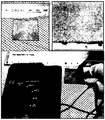
- Example 1 is a general experimental photograph of a conductive cloth according to Example 1.
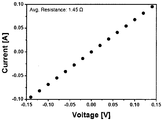
- FIG. 2 is data showing electrical characteristics of the conductive cloth according to Example 1.
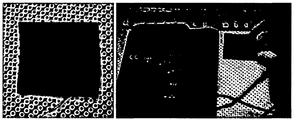
- Example 3 is a general experimental photograph of a conductive cloth according to Example 2.
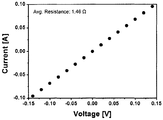
- FIG. 4 is data showing electrical characteristics of the conductive cloth according to Example 2.
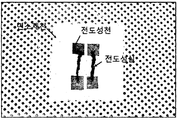
- FIG. 5 is a photograph showing that the conductive chamber and the LED lamp connected to the conductive chamber according to the third embodiment is turned on when supplying electricity.
- FIG. 6 is data showing electrical characteristics of the conductive seal according to the third embodiment.
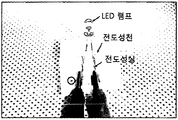
- FIG. 7 is a photograph showing that the conductive chamber and the LED lamp connected to the conductive chamber according to the fourth embodiment are turned on when electricity is supplied.
- Figure 9 is a general picture of a circuit manufactured by sewing on a cotton material that does not conduct electricity through the conductive cloth and thread through the sewing.
- FIG. 10 is a general picture showing the state when the electricity is supplied to the LED lamp to the circuit composed of a cotton cloth with a conductive cloth and a thread.
- preparing a conductive ink composition comprising a solvent and a metal precursor; Impregnating a fiber with the conductive ink composition; And reducing the metal precursor in the fiber impregnated with the conductive ink composition to obtain a fiber coated with metal particles.
- the fibers generally mean fibers that can be used in clothing and are not limited to any particular kind.
- the fiber may be a paper or the like composed of a fiber.
- the fibers may include all fibers of the unit of cotton to the minimum unit of fiber.
- the metal precursor may be represented by the following Chemical Formula 1.
- M means a conductive metal material
- R 1 is a material that exists together to maintain a stable state, such as M when the conductive material M is present as a precursor
- R 2 is two elements It is a substance that can be added as a single element or a compound to a precursor material of a conductive material that is difficult to exist as a stable compound only to maintain stability.
- x, y and z respectively means the number of atoms required for M, R 1 and R 2 to exist as a stable state of the compound, x may be 1 to 6, y may be 1 to 6 days Z may be 0 to 10.
- the metal precursor when the metal precursor is AlH 3 , M is Al, R 1 is H, x is 1, y is 3, z is 0, and R 2 is not present.
- M when the metal precursor is AlH 3 O (C 4 H 9 ) 2 , M is Al, R 1 is H, x is 1, y is 3, R 2 is O (C 4 H 9 ) 2 and z is 1 to be. In some cases, there may be more than one substance corresponding to R 2 .
- the metal precursor is Cu 2 (OH 2 ) 2 (O 2 C (CH 2 ) 4 CH 3 ) 4
- M is Cu
- x is 2
- R 1 is OH 2
- y is 2
- R 2 is OC (CH 2 ) 4 CH 3
- z is 4.
- the metal precursor is a metal hydride, a metal hydroxide, a metal sulfur oxide, a metal nitrate, a metal halide, a complex thereof (coordination compound) or a combination thereof.
- a reduction reaction may occur more effectively in the manufacture of the conductive fiber later.
- the metal precursor may be in the form of a metal inorganic salt, wherein the anion of the metal inorganic salt is a hydroxide ion, an acetate ion, a propionate ion, an acetylacetonate Ions, 2,2,6,6-tetramethyl-3,5-heptanedionate ions, methoxide ions, secondary-butoxide Sec-butoxide ions, tert-butoxide ions, n-propoxide ions, i-propoxide ions, ethoxide ions , Phosphate ions, alkylphosphonate ions, nitrate ions, perchlorate ions, sulfate ions, alkylsulfonate ions, phenoxide ions, bromide ( bromide ions, iodide ions, chloride ions, or Combinations thereof.
- the anion of the metal inorganic salt is a hydroxide i
- the metal of the metal precursor is aluminum (Al), lithium (Li), sodium (Na), potassium (K), rubidium (Rb), cesium (Cs), beryllium (Be), magnesium (Mg), calcium ( Ca), Strontium (Sr), Barium (Ba), Titanium (Ti), Zirconium (Zr), Hafnium (Hf), Vanadium (V), Niobium (Nb), Tantalum (Ta), Chromium (Cr), Molybdenum ( Mo), tungsten (W), manganese (Mn), technetium (Tc), rhenium (Re), iron (Fe), ruthenium (Ru), osmium (Os), cobalt (Co), rhodium (Rh), iridium ( Ir), nickel (Ni), palladium (Pd), platinum (Pt), copper (Cu), silver (Ag), gold (Au), cadmium (Cd), mercury (Hg), boron (B), gallium ( Ga), in
- the metal precursor is AlH 3 , OAlH 3 (C 2 H 5 ) 2 , OAlH 3 (C 3 H 7 ) 2 , OAlH 3 (C 4 H 9 ) 2 , AlH 3 ⁇ NMe 3 , AlH 3 ⁇ NMe 2 Et, AlH 3 ⁇ tetramethylethylenediamine (TMEDA), AlH 3 ⁇ dioxane, or a combination thereof.
- TEDA tetramethylethylenediamine
- the solvent is water, tetrahydrofuran (THF), alcohol solvent, ether solvent, sulfide solvent, toluene solvent, xylene solvent, benzene Solvents (e.g. benzene, 1,3,5-trinitromethylbenzene, etc.), alkanes solvents (e.g. C n H 2n + 2 ; C 5 H 12 , C 6 H 14 , C 7 H 16 , C 8 H 18, etc.), an oxane solvent, an amine solvent, a polyol solvent, or a combination thereof, but is not limited thereto.
- the solvent may be selectively used according to the type of the metal precursor.
- the conductive ink composition is 50 to 99% by weight of the solvent; And it may include 1 to 50% by weight of the metal precursor. This may be in a range suitable for effectively impregnating the fiber with the conductive ink composition.
- the conductive ink composition may optionally further include a solution stabilizer.
- the solution stabilizer is diketone, amino alcohol, polyamine, ethanol amine, diethanol amine, ethane thiol, propane thiol , Butane thiol, pentane thiol, hexane thiol, heptane thiol, octane thiol, nonane thiol, decane thiol, Undecane thiol or a combination thereof.
- the content of the solution stabilizer may be 1 to 50 parts by weight or 1 to 20 parts by weight with respect to 100 parts by weight of the solvent and the metal precursor, which may be a range suitable for coating the conductive ink on the fiber.
- Impregnation of the fiber with the conductive ink composition may be performed by a general method.
- the fiber may be placed in the conductive ink composition so that the conductive ink composition is sufficiently penetrated into the fiber.
- the properties of the general fiber is not compromised, it is not limited thereto.
- the metal precursor in the fiber impregnated with the conductive ink composition may be reduced to obtain a fiber coated with metal particles.
- Reducing the metal precursor in the fiber impregnated with the conductive ink composition to obtain a fiber coated with metal particles may be performed by a method of leaving the fiber impregnated with the conductive ink composition at room temperature. That is, the conductive fiber can be obtained without a separate heat treatment process.
- reducing the metal precursor in the fiber impregnated with the conductive ink composition to obtain a fiber coated with metal particles may be performed by a method of heat treating the fiber impregnated with the conductive ink composition.
- the heat treatment temperature may be a low temperature range in which the fiber is not damaged. For example, it may be 150 ° C or less.
- the fiber impregnated with the conductive ink composition may be heat-treated in an oven or a hot plate by the heat treatment method, or a method of heating the fiber in the conductive ink soaked may be used.
- the method may further comprise exposing the fiber to a catalyst or reducing agent.
- catalysts that can be used include titanium isopropoxide (Ti (O- i -Pr) 4 , titanium chloride (TiCl 4 ), Lindla catalyst, etc., as a reducing agent lithium aluminum hydride (LiAlH 4 ), hydrogen (H), sodium-mercury amalgam (Na (Hg)), superhydride (NaBH 4 ), compounds containing Sn 2+ (such as SnCl 2 ), compounds containing SO 3 2- (sulfite; Na 2 SO 3 , NaHSO 3 , KHSO 3, etc.), hydrazine (hydrazine; N 2 H 4 ), zinc-mercury amalgam (Zn (Hg)), diisobutylaluminum hydride (DIBAH), oxalic acid ( oxalic acid: C 2 H 2 O 4 ), formic acid (HCOOH), ascorbic acid (C 6 H 8 O 6 ), phosphate (PO 3 3- ), hypophosphite H
- the conductive fibers can be obtained by leaving the non-conductive fibers in the metal precursor ink at room temperature.
- the metal precursor may be solved through heat treatment or a catalyst.
- room temperature refers to a state in which there is no supply of special external energy, and may vary according to region, time, and the like.
- the sheet resistance of the conductive fiber may be 0.1 to 100 ⁇ / sq.
- the electrical conductivity of the conductive fiber may be 10 -5 to 10 -2 ⁇ ⁇ m.
- This range is sufficient for use as substrates in the electrical and / or electronic field.
- a method of manufacturing a circuit board comprising the step of attaching the above-described conductive fiber to the substrate.
- Attaching the conductive fiber to the substrate may use a method of attaching the conductive fiber and the substrate using an adhesive.
- the adhesive that can be used at this time is not particularly limited as long as the adhesive used in the general electric and electronic device field.
- the step of attaching the conductive fiber to the substrate may be a method of attaching the conductive fiber by applying a pressure after being placed on the substrate.
- Attaching the conductive fiber to the substrate may be a method of attaching the conductive fiber by applying heat after being located on the substrate.
- the heat and pressure conditions can be adjusted according to the type of substrate used and the properties required.
- attaching the conductive fiber to the substrate may use a method of attaching the conductive fiber to the substrate through sewing. This method uses the characteristics of the fiber and can be applied to various fields without any limitation on the type of substrate.
- the circuit board may be an electronic circuit board, an electric circuit board, or the like.
- AlCl 3 and LiAlH 4 were mixed with dibutylether in a molar ratio of 1: 3, and then heated and stirred at 70 ° C. for 1 hour. The solution stirred by heating for 1 hour was filtered to obtain a conductive ink composition which was a byproduct filtered through a filter and a clean solution.
- the conductive ink composition is comprised of about 20% by weight aluminum precursor and about 80% by weight dibutyl ether.
- AlCl 3 and LiAlH 4 are generally used in a molar ratio of 1: 3, but an excessive amount of LiAlH 4 may be used in a molar ratio of 1: 5 or more to induce a complete reaction.
- the aluminum precursor ink composition prepared by the above reaction is easily decomposed at room temperature to make Al. Therefore, a cloth composed of cotton was immersed in an aluminum precursor ink and left at room temperature for about 1 day to obtain a conductive fiber.
- titanium isopropoxide was vaporized and exposed to a fabric made of cotton for about one minute, and then left at room temperature for about one hour in an aluminum precursor ink composition. .
- FIG. 1 is a general experimental photograph of a conductive cloth according to Example 1
- Figure 2 is a data showing the electrical properties of the conductive cloth according to Example 1.
- the white-based cotton cloth was coated with aluminum and turned into a dark gray cloth, and the electrical resistance of about 1.45 ⁇ was confirmed, and it was also confirmed that the electrical conductivity was very good.
- FIG 3 is a general experimental photograph of the conductive fabric according to Example 2
- Figure 4 is a data showing the electrical properties of the conductive fabric according to Example 2.
- the cotton cloth of white ground was changed to a dark gray cloth, such as a conductive cloth manufactured without using a catalyst, and the electrical resistance of about 1.46 ⁇ was also confirmed.
- a dark gray cloth such as a conductive cloth manufactured without using a catalyst
- Example 1 a conductive yarn was manufactured using the same method except for using a cotton yarn instead of a cotton cloth.
- Conductive yarns were manufactured in the same manner as in Example 2 except for using cotton-made yarns instead of cotton-made cloths.
- FIG. 5 is a photograph showing that the conductive seal according to the third embodiment and the LED lamp connected to the conductive seal is turned on when supplying electricity
- Figure 6 is a data showing the electrical characteristics of the conductive seal according to the third embodiment.
- the white-based cotton thread was coated with aluminum and turned dark gray, and the electrical resistance of about 1.8 ⁇ was confirmed, and it was also confirmed that the electrical conductivity was very good.
- FIG. 7 is a photograph showing that the conductive seal according to the fourth embodiment and the LED lamp connected to the conductive seal is turned on when supplying electricity
- Figure 8 is a data showing the electrical characteristics of the conductive seal according to the fourth embodiment.
- the white-based cotton yarn was turned into a dark gray color by coating with aluminum, such as a conductive yarn made without using a catalyst. .
- the electrical characteristics of the non-conductive fabric were fabricated using the fabrics and yarns prepared in Examples 2 and 4 to examine the electrical characteristics.
- the conductive circuit and the conductive thread of 0.5 cm in width and 0.5 cm in length were fabricated using an electric cotton fabric as shown in FIG.
- Figure 9 is a general picture of the circuit produced on the cotton cloth non-electric conductive cloth and thread through the stitching.
- Figure 10 is a general picture showing the state when the electricity is supplied to the LED lamp to the circuit composed of a cotton cloth with a conductive cloth and a thread.
- the LED lamp When no electricity was supplied, the LED lamp was not lit, but when about 3 volts of electricity was supplied, it was confirmed that the LED lamp was installed in an electric circuit composed of LED conductive fiber material.
Landscapes
- Engineering & Computer Science (AREA)
- Textile Engineering (AREA)
- Microelectronics & Electronic Packaging (AREA)
- Manufacturing & Machinery (AREA)
- Chemical Or Physical Treatment Of Fibers (AREA)
- Catalysts (AREA)
Description
전도성 섬유의 제조 방법, 전도성 섬유, 회로 기판의 제조 방법 및 회로 기판에 관한 것이다.
스마트 의류(Smart Wear)는 섬유 패션 제품 내에 신호 전달성 섬유 신기술을 적용하고 각종 디지털 장치들을 내장시킴으로써, 언제 어디에서나 디지털 기능을 사용할 있도록 고안된 신종 제품이다. 즉 섬유 또는 의류의 속성을 유지하며 필요한 디지털 기능들을 섬유재료 및 의류에 탑재시킨 신종의류이다.
이 때문에 일반 직물과 다름 없는 촉감과 물성을 나타내는 동시에 디지털 신호를 전달하여야 한다. 따라서 섬유나 의복 자체가 외부 자극을 감지하고 스스로 반응하는 소재의 기능성(Hifunction materials properties) 및 의복 및 직물 자체가 갖지 못한 디지털 기능(Digitalized properties)을 결합한 새로운 개념의 의류를 총칭한다 할 수 있다.
1990년대 중반부터 군사용으로 개발하기 시작한 스마트 웨어(Smart Wear)는 현재 의류 분야와 의료 분야 등에서 가장 활발하게 개발되고 있다. 특히 프린팅 전자 기술을 이용한 스마트 소재는 착용형 컴퓨터(wearable computer)의 군사용 섬유제품에 다양하게 사용될 수 있다. 스마트 소재에서 의류의 특성과 전기적 특성을 갖는 전도성 섬유 직물과 각종 부품을 연결하는 인터커넥션(interconnection) 방법으로 프린팅 전자 기술이 이용될 경우, 직물 기반의 전자 회로 설계가 가능하기 때문에 적용 가치가 높다.
예를 들어 프린팅 전자 기술을 군복에 적용할 경우 무게 경감, 부피 축소의 가능성이 있으며, 이에 따라 부상치유 기능, 통신 기능 등이 일체형으로된 군복 개발이 가능해진다. 첨단을 지향하는 현대전에서도 군인은 완전무장시 45㎏이 넘는 장비를 짊어져야 하기 때문에 본 기술의 개발이 절실히 요구된다.
이러한 스마트 의류를 제조하기 위해서는 Body Area Network(BAN)를 위한 여러 가지 요소들을 통합하는 기술이 요구된다.
이를 위하여 다양한 방식들이 제안되고 있는데 절연된 전선이나 전기 전도성이 부여된 금속사 또는 절연 방적사로 직물을 형성하는 하는 것이 그 예이다. 이러한 방식은 전기전도성 금속사나 방적사의 개수와 크기에 의해 전도성이 결정된다.
상기 제안되고 있는 방식에서, 절연된 전선을 최종 의류에 부착하는 방식의 문제점으로는, 최종 공정에서 절연 전선을 부착/절연시키는 공정이 추가되어 결과적으로 비용의 상승이 초래하며, 또한 착용자의 지속적인 사용으로 인해 섬유내 절연선이 단선되어 고유의 기능을 발휘하지 못하는 것이다.
보다 구체적으로 국제공개특허 WO2004/107831에는 전도성 섬유와 비전도성 섬유가 서로 직조되되 상기 비전도성 섬유는 직물에 탄성을 부여하여 선택적으로 직물에 탄력성을 부여할 수 있는 전기전도성 직물이 제안되었다.
또 국제공개특허 WO2003/095729에는 내부에 전자기능을 갖는 다층직물로서 일 이상의 캐비티를 형성하도록 다층의 경위사 방적사; 상기 경위사 사이에 배치되어 일 이상의 캐비티을 형성하는 다수의 층들 중에 하나에서 그 일부분을 갖는 일 이상의 전도성 방적사 및 상기 캐비티에 배치되고 일 이상의 전기 전도성 방적사와 전기적으로 접속되는 일 이상의 회로 캐리어를 포함하는 다층직물이 제안되었다.
효과적인 전도성 섬유의 제조 방법을 제공하여, 가용성이 뛰어난 전기 또는 전자 회로 기판을 제조할 수 있다. 구체적으로 입는 컴퓨터 및 인체 보호용 소자 등과 같이 입는 전자소자(wearable electronics) 등에 적용할 수 있는 가용성이 뛰어난 섬유 전극 및 섬유 전기 회로 기판을 제조할 수 있다.
본 발명의 일 구현예에서는, 용매 및 금속 전구체를 포함하는 전도성 잉크 조성물을 준비하는 단계; 섬유(fiber)에 상기 전도성 잉크 조성물을 함침(impregnation)시키는 단계; 및 상기 전도성 잉크 조성물이 함침된 섬유 내 금속 전구체를 환원시켜 금속 입자가 코팅된 섬유를 수득하는 단계;를 포함하는 전도성 섬유의 제조 방법을 제공한다.
상기 전도성 잉크 조성물이 함침된 섬유 내 금속 전구체를 환원시켜 금속 입자가 코팅된 섬유를 수득하는 단계;는, 상기 전도성 잉크 조성물이 함침된 섬유를 상온에서 방치하는 방법에 의해 수행될 수 있다.
상기 전도성 잉크 조성물이 함침된 섬유 내 금속 전구체를 환원시켜 금속 입자가 코팅된 섬유를 수득하는 단계;는, 상기 전도성 잉크 조성물이 함침된 섬유를 열처리하는 방법으로 수행될 수 있다.
상기 열처리 방법은 150℃ 이하일 수 있다.
상기 섬유(fiber)에 상기 전도성 잉크 조성물을 함침(impregnation)시키는 단계; 이전에, 상기 섬유를 촉매 또는 환원제에 노출시키는 단계를 더 포함할 수 있다.
상기 금속 전구체는 금속 수소화물(metal hydride), 금속 수산화물(metal hydroxide), 금속 황산화물(metal sulfur oxide), 금속 질산화물(metal nitrate), 금속 할로겐화물(metal halide), 이들의 착화합물(coordination compound) 또는 이들의 조합일 수 있다.
상기 금속 전구체는 금속 무기염의 형태이며, 상기 금속 무기염의 음이온은 히드록사이드(hydroxide) 이온, 아세테이트(acetate) 이온, 프로피오네이트(propionate) 이온, 아세틸아세토네이트(acetylacetonate) 이온, 2,2,6,6-테트라메틸-3,5-헵탄디오네이트(2,2,6,6-tetramethyl-3,5-heptanedionate) 이온, 메톡사이드(methoxide) 이온, 2차-부톡사이드(sec-butoxide) 이온, 3차-부톡사이드(t-butoxide) 이온, n-프로폭사이드(n-propoxide) 이온, i-프로폭사이드(i-propoxide) 이온, 에톡사이드(ethoxide) 이온, 포스페이트(phosphate) 이온, 알킬포스페이트(alkylphosphonate) 이온, 나이트레이트(nitrate) 이온, 과염소산(perchlorate) 이온, 황산(sulfate) 이온, 알킬설포네이트(alkylsulfonate) 이온, 페녹사이드(phenoxide) 이온, 브로마이드(bromide) 이온, 요오다이드(iodide) 이온, 클로라이드(chloride) 이온 또는 이들의 조합일 수 있다.
상기 금속 전구체의 금속은 알루미늄(Al), 리튬(Li), 나트륨(Na), 칼륨(K), 루비듐(Rb), 세슘(Cs), 베릴륨(Be), 마그네슘(Mg), 칼슘(Ca), 스트론튬(Sr), 바륨(Ba), 티타늄(Ti), 지르코늄(Zr), 하프늄(Hf), 바나듐(V), 니오븀(Nb), 탄탈륨(Ta), 크롬(Cr), 몰리브덴(Mo), 텅스텐(W), 망간(Mn), 테크네튬(Tc), 레늄(Re), 철(Fe), 루테늄(Ru), 오스뮴(Os), 코발트(Co), 로듐(Rh), 이리듐(Ir), 니켈(Ni), 팔라듐(Pd), 백금(Pt), 구리(Cu), 은(Ag), 금(Au), 카드뮴(Cd), 수은(Hg), 붕소(B), 갈륨(Ga), 인듐(In), 탈륨(Tl), 규소(Si), 게르마늄(Ge), 주석(Sn), 납(Pb), 인(P), 비소(As), 안티몬(Sb), 비스무트(Bi) 또는 이들의 조합일 수 있다.
상기 금속 전구체는 AlH3, OAlH3(C2H5)2, OAlH3(C3H7)2, OAlH3(C4H9)2, AlH3·NMe3, AlH3·NMe2Et, AlH3·테트라메틸에틸렌디아민(tetramethylethylenediamine, TMEDA), AlH3·다이옥세인(dioxane) 또는 이들의 조합일 수 있다.
상기 용매는 물, 테트라히드로퓨란(THF), 알코올(alcohol)계 용매, 에테르(ether)계 용매, 설파이드(sulfide)계 용매, 톨루엔(toluene)계 용매, 크실렌(xylene계)계 용매, 벤젠(benzene)계 용매, 알칸(alkane)계 용매, 옥세인(oxane)계 용매, 아민(amine)계 용매, 폴리올(polyol)계 용매 또는 이들의 조합일 수 있다.
상기 전도성 잉크 조성물은 용매 50 내지 99 중량%; 및 금속 전구체 1 내지 50 중량%를 포함할 수 있다.
상기 전도성 잉크 조성물은 용액 안정제를 더 포함할 수 있다.
상기 용액 안정제는 다이케톤(diketone), 아미노 알코올(amino alcohol), 폴리아민(polyamine), 에탄올 아민(ethanol amine), 다이에탄올 아민(diethylnol amine), 에탄 티올 (ethane thiol), 프로판 티올(propane thiol), 부탄 티올(butane thiol), 펜탄 티올(pentane thiol), 헥산 티올(hexane thiol), 헵탄 티올 (heptanes thiol), 옥탄 티올(octane thiol), 노난 티올 (nonane thiol), 데칸 티올(decane thiol), 운데칸 티올(undecane thiol) 또는 이들의 조합일 수 있다.
상기 용액 안정제의 함량은, 상기 용매 및 금속 전구체의 함량 100중량부에 대해 1 내지 50 중량부일 수 있다.
본 발명의 다른 일 구현예에서는, 전술한 방법에 따라 제조된 전도성 섬유를 제공한다.
상기 전도성 섬유의 면저항은 0.1 내지 100Ω/sq일 수 있다.
상기 전도성 섬유의 전기 전도도는 10-5 내지 10-2Ωㆍm일 수 있다.
본 발명의 또 다른 일 구현예에서는, 전술한 전도성 섬유를 기판에 부착하는 단계;를 포함하는 회로 기판의 제조 방법을 제공한다.
상기 전도성 섬유를 기판에 부착하는 단계;는, 상기 전도성 섬유와 상기 기판을 접착제를 이용하여 부착하는 방법을 이용할 수 있다.
상기 전도성 섬유를 기판에 부착하는 단계;는, 상기 전도성 섬유를 상기 기판 상에 위치한 후 압력을 가하여 부착하는 방법을 이용할 수 있다.
상기 전도성 섬유를 기판에 부착하는 단계;는, 상기 전도성 섬유를 상기 기판 상에 위치한 후 열을 가하여 부착하는 방법을 이용할 수 있다.
상기 전도성 섬유를 기판에 부착하는 단계;는, 상기 전도성 섬유를 재봉질을 통해 상기 기판에 부착하는 방법을 이용할 수 있다.
본 발명의 또 다른 일 구현예에서는, 전술한 회로 기판의 제조 방법에 따른 회로 기판을 제공한다.
효과적인 전도성 섬유의 제조 방법을 제공하여, 가용성이 뛰어난 전기 회로 기판을 제조할 수 있다. 보다 구체적으로, 저온 공정을 통해 섬유의 손상 없이 전도성 섬유를 제조할 수 있다.
또한, 입는 컴퓨터 및 인체 보호용 소자 등과 같이 입는 전자소자(wearable electronics) 등에 적용할 수 있는 가용성이 뛰어난 섬유 전극 및 섬유 전기 회로 기판을 제조할 수 있다.
도 1은 실시예 1에 따른 전도성 천에 대한 일반 실험 사진이다.
도 2는 실시예 1에 따른 전도성 천의 전기적 특성을 나타낸 데이터이다.
도 3은 실시예 2에 따른 전도성 천의 일반 실험 사진이다.
도 4는 실시예 2에 따른 전도성 천의 전기적 특성을 나타낸 데이터이다.
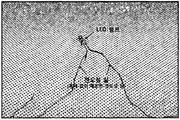
도 5는 실시예 3에 따른 전도성 실과 전도성 실에 연결된 LED 램프가 전기를 공급할 때 불이 들어오는 것을 보여주는 사진이다.
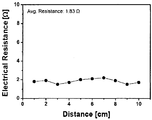
도 6은 실시예 3에 따른 전도성 실의 전기적 특성을 나타낸 데이터이다.
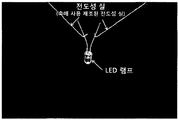
도 7는 실시예 4에 따른 전도성 실과 전도성 실에 연결된 LED 램프가 전기를 공급할 때 불이 들어오는 것을 보여주는 사진이다.
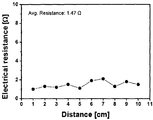
도 8은 실시예 4에 따른 전도성 실의 전기적 특성을 나타낸 데이터이다.
도 9는 바느질을 통해 전도성 천과 실을 전기가 통하지 않는 면소재 천에 바느질을 통해 제조한 회로의 일반 사진이다.
도 10은 전도성 천과 실로 면소재 천에 구성된 회로에 LED 램프를 달아 전기를 공급했을 때의 상태를 보여주는 일반 사진이다.
이하, 본 발명의 구현예를 상세히 설명하기로 한다. 다만, 이는 예시로서 제시되는 것으로, 이에 의해 본 발명이 제한되지는 않으며 본 발명은 후술할 청구범위의 범주에 의해 정의될 뿐이다.
본 발명의 일 구현예에서는, 용매 및 금속 전구체를 포함하는 전도성 잉크 조성물을 준비하는 단계; 섬유(fiber)에 상기 전도성 잉크 조성물을 함침(impregnation)시키는 단계; 및 상기 전도성 잉크 조성물이 함침된 섬유 내 금속 전구체를 환원시켜 금속 입자가 코팅된 섬유를 수득하는 단계;를 포함하는 전도성 섬유의 제조 방법을 제공한다.
상기 섬유는 일반적으로 의류에 사용될 수 있는 섬유를 의미하는 것으로 특별한 종류에 제한되는 것은 아니다. 또한 상기 섬유는 섬유질로 구성되어 있는 종이 등일 수도 있다.
또한, 상기 섬유는 최소 단위인 섬유질부터 면 단위의 섬유를 모두 포함할 수 있다.
상기 금속 전구체는 하기 화학식 1로 표시될 수 있다.
[화학식 1]
MxR1
yR2
z
상기 화학식 1에서, M은 전도성(conductive) 금속물질을 의미하고, R1은 전도성 물질인 M이 전구체로 존재할 경우 M과 같이 안정한 상태를 유지하기 위해 함께 존재하는 물질이며, R2는 두 가지 원소로만 안정한 화합물로 존재하기 어려운 전도성 물질의 전구체 물질에 단일원소 또는 화합물로 첨가되어 안정성을 유지할 수 있도록 하는 물질이다.
또한, x, y 및 z 는 각각 M, R1 및 R2가 안정한 상태의 화합물로 존재하기 위해 필요한 원자수를 의미한며, x는 1 내지 6이 될 수 있으며, y는 1 내지 6일 될 수 있으며, z는 0 내지 10이 될 수 있다.
예를 들면 금속 전구체가 AlH3일 경우 여기서 M은 Al, R1은 H, x는 1, y는 3이며, z는 0으로 R2는 존재하지 않는다. 다른 예로 금속 전구체가 AlH3O(C4H9)2인 경우 M은 Al, R1은 H, x는 1, y는 3이며, R2는 O(C4H9)2이고 z는 1이다. 경우에 따라 R2에 해당하는 물질은 한 가지 이상이 될 수도 있다.
또 다른 예로 금속 전구체가 Cu2(OH2)2(O2C(CH2)4CH3)4인 경우 M은 Cu, x는 2, R1은 OH2, y는 2, R2는 OC(CH2)4CH3, z는 4이다.
보다 구체적으로, 상기 금속 전구체는 금속 수소화물(metal hydride), 금속 수산화물(metal hydroxide), 금속 황산화물(metal sulfur oxide), 금속 질산화물(metal nitrate), 금속 할로겐화물(metal halide), 이들의 착화합물(coordination compound) 또는 이들의 조합일 수 있다. 상기 금속 전구체가 상기 예시와 같은 구조인 경우 추후 전도성 섬유의 제조 시 환원 반응이 보다 효과적으로 일어날 수 있다.
보다 구체적으로, 상기 금속 전구체는 금속 무기염의 형태일 수 있으며, 상기 금속 무기염의 음이온은 히드록사이드(hydroxide) 이온, 아세테이트(acetate) 이온, 프로피오네이트(propionate) 이온, 아세틸아세토네이트(acetylacetonate) 이온, 2,2,6,6-테트라메틸-3,5-헵탄디오네이트(2,2,6,6-tetramethyl-3,5-heptanedionate) 이온, 메톡사이드(methoxide) 이온, 2차-부톡사이드(sec-butoxide) 이온, 3차-부톡사이드(t-butoxide) 이온, n-프로폭사이드(n-propoxide) 이온, i-프로폭사이드(i-propoxide) 이온, 에톡사이드(ethoxide) 이온, 포스페이트(phosphate) 이온, 알킬포스페이트(alkylphosphonate) 이온, 나이트레이트(nitrate) 이온, 과염소산(perchlorate) 이온, 황산(sulfate) 이온, 알킬설포네이트(alkylsulfonate) 이온, 페녹사이드(phenoxide) 이온, 브로마이드(bromide) 이온, 요오다이드(iodide) 이온, 클로라이드(chloride) 이온 또는 이들의 조합일 수 있다.
또한, 상기 금속 전구체의 금속은 알루미늄(Al), 리튬(Li), 나트륨(Na), 칼륨(K), 루비듐(Rb), 세슘(Cs), 베릴륨(Be), 마그네슘(Mg), 칼슘(Ca), 스트론튬(Sr), 바륨(Ba), 티타늄(Ti), 지르코늄(Zr), 하프늄(Hf), 바나듐(V), 니오븀(Nb), 탄탈륨(Ta), 크롬(Cr), 몰리브덴(Mo), 텅스텐(W), 망간(Mn), 테크네튬(Tc), 레늄(Re), 철(Fe), 루테늄(Ru), 오스뮴(Os), 코발트(Co), 로듐(Rh), 이리듐(Ir), 니켈(Ni), 팔라듐(Pd), 백금(Pt), 구리(Cu), 은(Ag), 금(Au), 카드뮴(Cd), 수은(Hg), 붕소(B), 갈륨(Ga), 인듐(In), 탈륨(Tl), 규소(Si), 게르마늄(Ge), 주석(Sn), 납(Pb), 인(P), 비소(As), 안티몬(Sb), 비스무트(Bi) 또는 이들의 조합일 수 있으며, 전도성 금속이라면 이에 제한되지는 않는다.
보다 구체적으로, 금속 전구체는 AlH3, OAlH3(C2H5)2, OAlH3(C3H7)2, OAlH3(C4H9)2, AlH3·NMe3, AlH3·NMe2Et, AlH3·테트라메틸에틸렌디아민(tetramethylethylenediamine, TMEDA), AlH3·다이옥세인(dioxane) 또는 이들의 조합일 수 있다.
상기 용매는 물, 테트라히드로퓨란(THF), 알코올(alcohol)계 용매, 에테르(ether)계 용매, 설파이드(sulfide)계 용매, 톨루엔(toluene)계 용매, 크실렌(xylene) 용매, 벤젠(benzene) 용매(예를 들어, 벤젠, 1,3,5-트리니트로벤젠trinitromethylbenzene 등), 알칸(alkane) 용매(예를 들어, CnH2n+2; C5H12, C6H14, C7H16, C8H18 등), 옥세인(oxane) 용매, 아민(amine) 용매, 폴리올(polyol계) 용매 또는 이들의 조합일 수 있으며, 이에 제한되지는 않는다. 다만, 상기 용매는 금속 전구체의 종류에 따라 선택적으로 이용될 수 있다.
상기 전도성 잉크 조성물은 용매 50 내지 99 중량%; 및 금속 전구체 1 내지 50 중량%를 포함할 수 있다. 이는 효과적으로 섬유에 전도성 잉크 조성물을 함침시키기에 적합한 범위일 수 있다.
상기 전도성 잉크 조성물은 선택적으로 용액 안정제를 더 포함할 수 있다.
상기 용액 안정제는 다이케톤(diketone), 아미노 알코올(amino alcohol), 폴리아민(polyamine), 에탄올 아민(ethanol amine), 다이에탄올 아민(diethylnol amine), 에탄 티올 (ethane thiol), 프로판 티올(propane thiol), 부탄 티올(butane thiol), 펜탄 티올(pentane thiol), 헥산 티올(hexane thiol), 헵탄 티올 (heptanes thiol), 옥탄 티올(octane thiol), 노난 티올 (nonane thiol), 데칸 티올(decane thiol), 운데칸 티올(undecane thiol) 또는 이들의 조합일 수 있다.
상기 용액 안정제의 함량은, 상기 용매 및 금속 전구체의 함량 100중량부에 대해 1 내지 50 중량부 또는 1 내지 20중량부 일 수 있으며, 이는 섬유에 전도성 잉크가 코팅되는데 적합한 범위일 수 있다.
상기 섬유(fiber)에 상기 전도성 잉크 조성물을 함침(impregnation)시키는 단계는 일반적인 방법에 의해 수행될 수 있다.
예를 들어, 상기 섬유에 상기 전도성 잉크 조성물이 충분히 스며들 수 있도록, 상기 섬유를 상기 전도성 잉크 조성물에 넣어둘 수 있다. 일반적인 섬유의 특성이 훼손되지 않는 방법이라면 이에 제한되지는 않는다.
상기 전도성 잉크 조성물이 함침된 섬유 내 금속 전구체를 환원시켜 금속 입자가 코팅된 섬유를 수득할 수 있다.
상기 전도성 잉크 조성물이 함침된 섬유 내 금속 전구체를 환원시켜 금속 입자가 코팅된 섬유를 수득하는 단계;는, 상기 전도성 잉크 조성물이 함침된 섬유를 상온에서 방치하는 방법으로 수행될 수 있다. 즉, 별도의 열처리 과정 없이 전도성 섬유를 수득할 수 있다.
또는, 상기 전도성 잉크 조성물이 함침된 섬유 내 금속 전구체를 환원시켜 금속 입자가 코팅된 섬유를 수득하는 단계;는, 상기 전도성 잉크 조성물이 함침된 섬유를 열처리하는 방법으로 수행될 수 있다. 이 때 열처리 온도는 섬유에 손상이 가지 않는 저온 범위일 수 있다. 구체적인 예를 들어, 150℃이하일 수 있다.
또한, 상기 열처리 방법으로 상기 전도성 잉크 조성물이 함침된 섬유를 오븐 또는 핫플레이드에서 열처리할 수도 있으며, 상기 전도성 잉크 내 섬유를 담구어 둔 상태로 가열을 하는 방법을 이용할 수도 있다.
또한, 상기 섬유(fiber)에 상기 전도성 잉크 조성물을 함침(impregnation)시키는 단계; 이전에, 상기 섬유를 촉매 또는 환원제에 노출시키는 단계를 더 포함할 수 있다.
이 때 이용될 수 있는 촉매로는 티타늄이소프로폭사이드(Ti(O-i-Pr)4, 티타늄 클로라이드(TiCl4), 린들라 촉매(Lindlar catalyst) 등이 있으며, 환원제로는 리튬알루미늄수소화물(LiAlH4), 수소(H), 나트륨-수은 아말감(Na(Hg)), 슈퍼하이드라이드(NaBH4), Sn2+를 함유하는 화합물(SnCl2 등), SO3
2-를 함유하는 화합물(sulfite; Na2SO3, NaHSO3, KHSO3 등), 히드라진(hydrazine; N2H4), 아연-수은 아말감(Zn(Hg)), 디이소부틸알루미늄하이드라이드(DIBAH), 옥살릭산(oxalic acid: C2H2O4), 포믹산(formic acid; HCOOH), 아스코빅산(ascorbic acid; C6H8O6), 포스파이트(phosphate; PO3
3-), 하이포포스파이트(hypophosphite; H2PO2-). 인산(phosphorous acid; H3PO3), DTT(dithiothreitol; C4H10O2S2), Fe2+이온을 함유하는 화합물 (FeSO4 등)이 있다.
즉, 상기 금속 전구체가 외부의 에너지 공급 없이 상온 범위에서 금속 입자로 환원이 가능한 경우라면, 상온의 금속 전구체 잉크내에 비전도성 섬유를 방치하는 방법에 의해 전도성 섬유를 얻을 수 있다.
다만, 상기 금속 전구체에 따라 일부 외부 에너지가 필요한 경우 열처리를 통하거나, 촉매를 통해 이를 해결할 수 있다.
본 명세서에서 상온의 의미는 특별한 외부 에너지의 공급이 없는 상태를 의미하는 것으로 지역, 시간 등에 따라 변할 수 있다.
본 발명의 다른 일 구현 예에서는, 전술한 방법에 따른 전도성 섬유를 제공한다.
상기 전도성 섬유의 면저항은 0.1 내지 100 Ω/sq일 수 있다. 또한, 상기 전도성 섬유의 전기 전도도는 10-5 내지 10-2Ωㆍm일 수 있다.
이러한 범위는 전기 및/또는 전자 분야의 기판으로 이용되기에 충분한 범위이다.
본 발명의 다른 일 구현예에서는, 전술한 전도성 섬유를 기판에 부착하는 단계;를 포함하는 회로 기판의 제조 방법을 제공한다.
상기 전도성 섬유를 기판에 부착하는 단계;는, 상기 전도성 섬유와 상기 기판을 접착제를 이용하여 부착하는 방법을 이용할 수 있다. 이때 사용될 수 있는 접착제는 일반적인 전기 및 전자 기기 분야에 이용되는 접착제라면 특별히 제한되지 않는다.
또는, 상기 전도성 섬유를 기판에 부착하는 단계;는, 상기 전도성 섬유를 상기 기판 상에 위치한 후 압력을 가하여 부착하는 방법을 이용할 수 있다. 상기 전도성 섬유를 기판에 부착하는 단계;는, 상기 전도성 섬유를 상기 기판 상에 위치한 후 열을 가하여 부착하는 방법을 이용할 수도 있다.
상기 열 및 압력 조건은 이용되는 기판의 종류 및 요구되는 특성에 따라 조절될 수 있다.
또는, 상기 전도성 섬유를 기판에 부착하는 단계;는, 상기 전도성 섬유를 재봉질을 통해 상기 기판에 부착하는 방법을 이용할 수 있다. 이러한 방법은 섬유의 특성을 이용한 것으로 기판의 종류에 제한 없이 다양한 분야에 적용될 수 있는 방법이다.
본 발명의 또 다른 일 구현예에서는, 전술한 회로 기판의 제조 방법에 따라 제조된 회로 기판을 제공한다. 상기 회로 기판은 전자 회로 기판, 전기 회로 기판 등일 수 있다.
이하에서는 본 발명의 구체적인 실시예들을 제시한다. 다만, 하기에 기재된 실시예들은 본 발명을 구체적으로 예시하거나 설명하기 위한 것에 불과하며, 이로서 본 발명이 제한되어서는 아니된다.
실시예 1: 전도성 천의 제조
전도성 잉크 조성물의 제조
AlCl3과 LiAlH4를 디부틸에테르(dibutylether)에 1:3의 몰비로 혼합한 후 70℃에서 1시간 동안 가열 교반하였다. 1시간 동안 가열 교반된 용액을 필터링하여 부산물은 필터에 거르고 깨끗한 용액인 전도성 잉크 조성물을 얻었다.
상기 전도성 잉크 조성물은 알루미늄 전구체 약 20 중량% 및 디부틸에테르 약 80 중량%로 구성된다.
다만, 알루미늄 전구체 잉크 조성물 제조 시 일반적으로 AlCl3과 LiAlH4를 1:3의 몰비로 사용하나 완전한 반응 유도를 위해 1:5 이상의 몰비로 LiAlH4를 과량 사용할 수 있다.
전도성 섬유의 제조
상기 반응에 의해 제조된 알루미늄 전구체 잉크 조성물은 상온에서 쉽게 분해가 일어나 Al이 만들어진다. 그러므로 면(cotton)으로 구성된 천을 알루미늄 전구체 잉크에 담궈 약 1일동안 상온에서 방치하여 전도성 섬유를 수득하였다.
실시예 2: 전도성 천의 제조
보다 빠른 전도성 섬유 제조를 위해 티타늄이소프로폭사이드를 증기상태로 만들어 공급한 공간에 면(cotton)으로 구성된 천을 약 1분간 노출시킨 후 알루미늄 전구체 잉크 조성물에 담군 상태로 약 1시간 동안 상온에서 방치하였다.
실험예 1: 전도성 천에 대한 전기 전도성 평가
도 1은 실시예 1에 따른 전도성 천에 대한 일반 실험 사진이며, 도 2는 실시예 1에 따른 전도성 천의 전기적 특성을 나타낸 데이터이다.
결과에서 보듯이 백색 바탕의 면소재 천이 알루미늄으로 코팅되어 어두운 회색의 천으로 변한 것을 볼 수 있으며, 약 1.45Ω의 전기저항을 보여 전기 전도성이 매우 좋은 것도 확인할 수 있었다.
도 3은 실시예 2에 따른 전도성 천의 일반 실험 사진이며, 도 4는 실시예 2에 따른 전도성 천의 전기적 특성을 나타낸 데이터이다.
결과에서 보듯이 촉매를 사용하지 않고 제조한 전도성 천과 같이 백색바탕의 면소재 천이 알루미늄으로 코팅되어 어두운 회색의 천으로 변한 것을 볼 수 있으며, 약 1.46Ω의 전기저항을 보여 전기 전도성이 매우 좋은 것도 확인할 수 있었다.
실시예 3: 전도성 실의 제조
상기 실시예 1에서 면으로 구성된 천 대신, 면으로 구성된 실을 이용한 점을 제외하고는 동일한 방법을 이용하여 전도성 실을 제조하였다.
실시예 4: 전도성 실의 제조
상기 실시예 2에서 면으로 구성된 천 대신, 면으로 구성된 실을 이용한 점을 제외하고는 동일한 방법을 이용하여 전도성 실을 제조하였다.
실험예 2: 전도성 실에 대한 전기 전도성 평가
도 5는 실시예 3에 따른 전도성 실과 전도성 실에 연결된 LED 램프가 전기를 공급할 때 불이 들어오는 것을 보여주는 사진이며, 도 6은 실시예 3에 따른 전도성 실의 전기적 특성을 나타낸 데이터이다.
결과에서 보듯이 백색 바탕의 면소재 실이 알루미늄으로 코팅되어 어두운 회색으로 변한 것을 볼 수 있으며, 약 1.8Ω의 전기저항을 보여 전기 전도성이 매우 좋은 것도 확인할 수 있었다.
도 7는 실시예 4에 따른 전도성 실과 전도성 실에 연결된 LED 램프가 전기를 공급할 때 불이 들어오는 것을 보여주는 사진이며, 도 8은 실시예 4에 따른 전도성 실의 전기적 특성을 나타낸 데이터이다.
결과에서 보듯이 촉매를 사용하지 않고 제조한 전도성 실과 같이 백색 바탕의 면소재 실이 알루미늄으로 코팅되어 어두운 회색으로 변한 것을 볼 수 있으며, 약 1.5Ω의 전기저항을 보여 전기 전도성이 매우 좋은 것도 확인할 수 있었다.
실험예 3: 전도성 천과 전도성 실을 이용한 회로의 구성
실시예 2 및 4를 통해 제조한 천과 실을 이용하여 비전도성 천에 전기회로를 구성하여 전기적 특성을 살펴보았다.
가로 0.5센티미터, 세로 0.5센티미터의 전도성 천과 전도성 실을 일반 면소재의 천에 바느질을 이용하여 도 9와 같이 전기회로를 구성한 후 LED 램프를 달아 전기적 특성을 살펴보았다.
도 9는 바느질을 통해 전도성 천과 실을 전기가 통하지 않는 면소재 천에 제조한 회로의 일반 사진이다.
또한, 도 10은 전도성 천과 실로 면소재 천에 구성된 회로에 LED 램프를 달아 전기를 공급했을 때의 상태를 보여주는 일반 사진이다.
전기를 공급하지 않은 경우 LED 램프에 불이 들어오지 않았으나 약 3볼드의 전기가 공급될 때 LED 전도성 섬유소재로 구성된 전기회로에 설치된 LED 램프에 불이 들어오는 것을 확인할 수 있었다.
본 발명은 상기 실시예들에 한정되는 것이 아니라 서로 다른 다양한 형태로 제조될 수 있으며, 본 발명이 속하는 기술분야에서 통상의 지식을 가진 자는 본 발명의 기술적 사상이나 필수적인 특징을 변경하지 않고서 다른 구체적인 형태로 실시될 수 있다는 것을 이해할 수 있을 것이다. 그러므로 이상에서 기술한 실시예들은 모든 면에서 예시적인 것이며 한정적이 아닌 것으로 이해해야만 한다.
Claims (23)
- 용매 및 금속 전구체를 포함하는 전도성 잉크 조성물을 준비하는 단계;섬유(fiber)에 상기 전도성 잉크 조성물을 함침(impregnation)시키는 단계; 및상기 전도성 잉크 조성물이 함침된 섬유 내 금속 전구체를 환원시켜 금속 입자가 코팅된 섬유를 수득하는 단계;를 포함하는 전도성 섬유의 제조 방법.
- 제1항에 있어서,상기 전도성 잉크 조성물이 함침된 섬유 내 금속 전구체를 환원시켜 금속 입자가 코팅된 섬유를 수득하는 단계;는,상기 전도성 잉크 조성물이 함침된 섬유를 상온에서 방치하는 방법에 의해 수행되는 것인 전도성 섬유의 제조 방법.
- 제1항에 있어서,상기 전도성 잉크 조성물이 함침된 섬유 내 금속 전구체를 환원시켜 금속 입자가 코팅된 섬유를 수득하는 단계;는,상기 전도성 잉크 조성물이 함침된 섬유를 열처리하는 방법으로 수행되는 것인 전도성 섬유의 제조 방법.
- 제3항에 있어서,상기 열처리 방법은 150℃ 이하인 것인 전도성 섬유의 제조 방법.
- 제1항에 있어서,상기 섬유(fiber)에 상기 전도성 잉크 조성물을 함침(impregnation)시키는 단계; 이전에,상기 섬유를 촉매 또는 환원제에 노출시키는 단계를 더 포함하는 것인 전도성 섬유의 제조 방법.
- 제1항에 있어서,상기 금속 전구체는 금속 수소화물(metal hydride), 금속 수산화물(metal hydroxide), 금속 황산화물(metal sulfur oxide), 금속 질산화물(metal nitrate), 금속 할로겐화물(metal halide), 이들의 착화합물(coordination compound) 또는 이들의 조합인 것인 전도성 섬유의 제조 방법.
- 제1항에 있어서,상기 금속 전구체는 금속 무기염의 형태이며, 상기 금속 무기염의 음이온은 히드록사이드(hydroxide) 이온, 아세테이트(acetate) 이온, 프로피오네이트(propionate) 이온, 아세틸아세토네이트(acetylacetonate) 이온, 2,2,6,6-테트라메틸-3,5-헵탄디오네이트(2,2,6,6-tetramethyl-3,5-heptanedionate) 이온, 메톡사이드(methoxide) 이온, 2차-부톡사이드(sec-butoxide) 이온, 3차-부톡사이드(t-butoxide) 이온, n-프로폭사이드(n-propoxide) 이온, i-프로폭사이드(i-propoxide) 이온, 에톡사이드(ethoxide) 이온, 포스페이트(phosphate) 이온, 알킬포스페이트(alkylphosphonate) 이온, 나이트레이트(nitrate) 이온, 과염소산(perchlorate) 이온, 황산(sulfate) 이온, 알킬설포네이트(alkylsulfonate) 이온, 페녹사이드(phenoxide) 이온, 브로마이드(bromide) 이온, 요오다이드(iodide) 이온, 클로라이드(chloride) 이온 또는 이들의 조합인 것인 전도성 섬유의 제조 방법.
- 제1항에 있어서,상기 금속 전구체의 금속은 알루미늄(Al), 리튬(Li), 나트륨(Na), 칼륨(K), 루비듐(Rb), 세슘(Cs), 베릴륨(Be), 마그네슘(Mg), 칼슘(Ca), 스트론튬(Sr), 바륨(Ba), 티타늄(Ti), 지르코늄(Zr), 하프늄(Hf), 바나듐(V), 니오븀(Nb), 탄탈륨(Ta), 크롬(Cr), 몰리브덴(Mo), 텅스텐(W), 망간(Mn), 테크네튬(Tc), 레늄(Re), 철(Fe), 루테늄(Ru), 오스뮴(Os), 코발트(Co), 로듐(Rh), 이리듐(Ir), 니켈(Ni), 팔라듐(Pd), 백금(Pt), 구리(Cu), 은(Ag), 금(Au), 카드뮴(Cd), 수은(Hg), 붕소(B), 갈륨(Ga), 인듐(In), 탈륨(Tl), 규소(Si), 게르마늄(Ge), 주석(Sn), 납(Pb), 인(P), 비소(As), 안티몬(Sb), 비스무트(Bi) 또는 이들의 조합인 것인 전도성 섬유의 제조 방법.
- 제1항에 있어서,상기 금속 전구체는 AlH3, OAlH3(C2H5)2, OAlH3(C3H7)2, OAlH3(C4H9)2, AlH3·NMe3, AlH3·NMe2Et, AlH3·테트라메틸에틸렌디아민(tetramethylethylenediamine, TMEDA), AlH3·다이옥세인(dioxane) 또는 이들의 조합인 것인 전도성 섬유의 제조 방법.
- 제1항에 있어서,상기 용매는 물, 테트라히드로퓨란(THF), 알코올(alcohol)계 용매, 에테르(ether)계 용매, 설파이드(sulfide)계 용매, 톨루엔(toluene)계 용매, 크실렌(xylene계)계 용매, 벤젠(benzene)계 용매, 알칸(alkane)계 용매, 옥세인(oxane)계 용매, 아민(amine)계 용매, 폴리올(polyol)계 용매 또는 이들의 조합인 것인 전도성 섬유의 제조 방법.
- 제1항에 있어서,상기 전도성 잉크 조성물은 용매 50 내지 99 중량%; 및 금속 전구체 1 내지 50 중량%를 포함하는 것인 전도성 섬유의 제조 방법.
- 제1항에 있어서,상기 전도성 잉크 조성물은 용액 안정제를 더 포함하는 것인 전도성 섬유의 제조 방법.
- 제12항에 있어서,상기 용액 안정제는 다이케톤(diketone), 아미노 알코올(amino alcohol), 폴리아민(polyamine), 에탄올 아민(ethanol amine), 다이에탄올 아민(diethylnol amine), 에탄 티올 (ethane thiol), 프로판 티올(propane thiol), 부탄 티올(butane thiol), 펜탄 티올(pentane thiol), 헥산 티올(hexane thiol), 헵탄 티올 (heptanes thiol), 옥탄 티올(octane thiol), 노난 티올 (nonane thiol), 데칸 티올(decane thiol), 운데칸 티올(undecane thiol) 또는 이들의 조합인 것인 전도성 섬유의 제조 방법.
- 제12항에 있어서,상기 용액 안정제의 함량은, 상기 용매 및 금속 전구체의 함량 100중량부에 대해 1 내지 50 중량부인 것인 전도성 섬유의 제조 방법.
- 제1항의 방법에 따라 제조된 전도성 섬유.
- 제15항에 있어서,상기 전도성 섬유의 면저항은 0.1 내지 100Ω/sq인 것인 전도성 섬유.
- 제15항에 있어서,상기 전도성 섬유의 전기 전도도는 10-5 내지 10-2Ωㆍm인 것인 전도성 섬유.
- 제1항에 따른 전도성 섬유를 기판에 부착하는 단계;를 포함하는 회로 기판의 제조 방법.
- 제18항에 있어서,상기 전도성 섬유를 기판에 부착하는 단계;는,상기 전도성 섬유와 상기 기판을 접착제를 이용하여 부착하는 방법을 이용하는 것인 회로 기판의 제조 방법.
- 제18항에 있어서,상기 전도성 섬유를 기판에 부착하는 단계;는,상기 전도성 섬유를 상기 기판 상에 위치한 후 압력을 가하여 부착하는 방법을 이용하는 것인 회로 기판의 제조 방법.
- 제18항에 있어서,상기 전도성 섬유를 기판에 부착하는 단계;는,상기 전도성 섬유를 상기 기판 상에 위치한 후 열을 가하여 부착하는 방법을 이용하는 것인 회로 기판의 제조 방법.
- 제18항에 있어서,상기 전도성 섬유를 기판에 부착하는 단계;는,상기 전도성 섬유를 재봉질을 통해 상기 기판에 부착하는 방법을 이용하는 것인 회로 기판의 제조 방법.
- 제18항의 제조 방법에 따른 회로 기판.
Priority Applications (1)
| Application Number | Priority Date | Filing Date | Title |
|---|---|---|---|
| US14/042,867 US20140027038A1 (en) | 2012-04-16 | 2013-10-01 | Method for manufacturing conductive fiber and/or fabrics, conductive fiber and/or fabric, and method for manufacturing circuit board |
Applications Claiming Priority (2)
| Application Number | Priority Date | Filing Date | Title |
|---|---|---|---|
| KR1020120039275A KR101195545B1 (ko) | 2012-04-16 | 2012-04-16 | 전도성 섬유의 제조 방법, 전도성 섬유, 회로 기판의 제조 방법 및 회로 기판 |
| KR10-2012-0039275 | 2012-04-16 |
Related Child Applications (1)
| Application Number | Title | Priority Date | Filing Date |
|---|---|---|---|
| US14/042,867 Continuation US20140027038A1 (en) | 2012-04-16 | 2013-10-01 | Method for manufacturing conductive fiber and/or fabrics, conductive fiber and/or fabric, and method for manufacturing circuit board |
Publications (1)
| Publication Number | Publication Date |
|---|---|
| WO2013157706A1 true WO2013157706A1 (ko) | 2013-10-24 |
Family
ID=47288904
Family Applications (1)
| Application Number | Title | Priority Date | Filing Date |
|---|---|---|---|
| PCT/KR2012/007606 Ceased WO2013157706A1 (ko) | 2012-04-16 | 2012-09-21 | 전도성 섬유의 제조 방법, 전도성 섬유, 회로 기판의 제조 방법 및 회로 기판 |
Country Status (3)
| Country | Link |
|---|---|
| US (1) | US20140027038A1 (ko) |
| KR (1) | KR101195545B1 (ko) |
| WO (1) | WO2013157706A1 (ko) |
Families Citing this family (10)
| Publication number | Priority date | Publication date | Assignee | Title |
|---|---|---|---|---|
| KR20030010176A (ko) * | 2001-07-25 | 2003-02-05 | 이병두 | 은행 열매 추출물과 호도 열매 추출물을 이용한 천식 치료제 |
| FR2955972B1 (fr) * | 2010-02-03 | 2012-03-09 | Commissariat Energie Atomique | Procede d'assemblage d'au moins une puce avec un tissu incluant un dispositif a puce |
| US9234112B2 (en) | 2013-06-05 | 2016-01-12 | Korea Institute Of Machinery & Materials | Metal precursor powder, method of manufacturing conductive metal layer or pattern, and device including the same |
| KR101534051B1 (ko) * | 2013-06-05 | 2015-07-06 | 한국기계연구원 | 금속 전구체 분말, 전도성 금속 층 또는 패턴의 제조 방법, 및 이를 포함하는 전자 장치 |
| KR101684860B1 (ko) * | 2015-03-26 | 2016-12-09 | 한국기계연구원 | 전도성 필터 및 전도성 필터의 제조 방법 |
| EP3073321A1 (en) | 2015-03-26 | 2016-09-28 | Centre National de la Recherche Scientifique (C.N.R.S.) | Metal-polymer composite material |
| KR102563946B1 (ko) * | 2016-03-30 | 2023-08-03 | 도레이첨단소재 주식회사 | 피복조성물, 이를 통해 제조된 전도성 섬유집합체 및 이의 제조방법 |
| US20210307163A1 (en) * | 2018-08-03 | 2021-09-30 | Electroninks Incorporated | Conductive materials and their methods of preparation by metallization with metal complex conductive ink compositions |
| KR102293362B1 (ko) * | 2019-11-21 | 2021-08-24 | 엔젯 주식회사 | 전도성 잉크 조성물 |
| CN111479396B (zh) * | 2020-03-31 | 2023-06-20 | 西安工程大学 | 一种织物基高导电性线路的制备方法 |
Citations (4)
| Publication number | Priority date | Publication date | Assignee | Title |
|---|---|---|---|---|
| JP2000138426A (ja) * | 1998-11-02 | 2000-05-16 | Tomoegawa Paper Co Ltd | 電磁波シールド用金属繊維シート付フレキシブルプリント基板及びその製造方法 |
| JP2010070826A (ja) * | 2008-09-19 | 2010-04-02 | Du Pont Toray Co Ltd | 導電性繊維の製造方法 |
| KR20110046439A (ko) * | 2008-07-24 | 2011-05-04 | 코비오 인코포레이티드 | 알루미늄 잉크 및 이의 제조 방법, 알루미늄 잉크 증착 방법 및 알루미늄 잉크의 인쇄 및/또는 증착에 의해 형성된 필름 |
| KR101124620B1 (ko) * | 2011-08-24 | 2012-03-20 | 한국기계연구원 | 습식공정용 알루미늄 전구체 잉크 및 이의 제조방법 |
Family Cites Families (3)
| Publication number | Priority date | Publication date | Assignee | Title |
|---|---|---|---|---|
| US5885321A (en) * | 1996-07-22 | 1999-03-23 | The United States Of America As Represented By The Secretary Of The Navy | Preparation of fine aluminum powders by solution methods |
| US6228922B1 (en) * | 1998-01-19 | 2001-05-08 | The University Of Dayton | Method of making conductive metal-containing polymer fibers and sheets |
| JP2009259965A (ja) | 2008-04-15 | 2009-11-05 | Tayca Corp | 電磁波シールド繊維シート及びその製造方法 |
-
2012
- 2012-04-16 KR KR1020120039275A patent/KR101195545B1/ko active Active
- 2012-09-21 WO PCT/KR2012/007606 patent/WO2013157706A1/ko not_active Ceased
-
2013
- 2013-10-01 US US14/042,867 patent/US20140027038A1/en not_active Abandoned
Patent Citations (4)
| Publication number | Priority date | Publication date | Assignee | Title |
|---|---|---|---|---|
| JP2000138426A (ja) * | 1998-11-02 | 2000-05-16 | Tomoegawa Paper Co Ltd | 電磁波シールド用金属繊維シート付フレキシブルプリント基板及びその製造方法 |
| KR20110046439A (ko) * | 2008-07-24 | 2011-05-04 | 코비오 인코포레이티드 | 알루미늄 잉크 및 이의 제조 방법, 알루미늄 잉크 증착 방법 및 알루미늄 잉크의 인쇄 및/또는 증착에 의해 형성된 필름 |
| JP2010070826A (ja) * | 2008-09-19 | 2010-04-02 | Du Pont Toray Co Ltd | 導電性繊維の製造方法 |
| KR101124620B1 (ko) * | 2011-08-24 | 2012-03-20 | 한국기계연구원 | 습식공정용 알루미늄 전구체 잉크 및 이의 제조방법 |
Also Published As
| Publication number | Publication date |
|---|---|
| US20140027038A1 (en) | 2014-01-30 |
| KR101195545B1 (ko) | 2012-10-29 |
Similar Documents
| Publication | Publication Date | Title |
|---|---|---|
| WO2013157706A1 (ko) | 전도성 섬유의 제조 방법, 전도성 섬유, 회로 기판의 제조 방법 및 회로 기판 | |
| US3162641A (en) | Charge-transfer compounds of 7, 7, 8, 8-tetracyano-p-quinodimethan and chydrocarbylsubstituted 7, 7, 8, 8-tetracyano-p-quinodimethans with lewis bases | |
| WO2016159556A1 (ko) | 기능성 황화구리 조성물 및 이로부터 제조된 기능성 섬유 | |
| WO2018194414A1 (ko) | 인쇄회로 나노섬유웹 제조방법, 이를 통해 제조된 인쇄회로 나노섬유웹 및 이를 이용한 전자기기 | |
| CN112310330A (zh) | 一种量子点材料、量子点发光器件、显示装置及制作方法 | |
| US20160046818A1 (en) | Metal precursor powder, method of manufactuirng conductive metal layer or pattern, and device including the same | |
| Wang et al. | Graphene/SiC-coated textiles with excellent electromagnetic interference shielding, Joule heating, high-temperature resistance, and pressure-sensing performances. | |
| CN108316011A (zh) | 一种基于纳米颗粒和纳米线复合改性的透明导电的智能纺织品的制备方法 | |
| WO2014104559A1 (ko) | 탄소 섬유 기판을 이용한 led용 방열 플렉서블 모듈 및 이의 제조 방법 | |
| WO2020111634A1 (ko) | 적층형 세라믹 커패시터의 내부전극용 도전성 잉크 조성물의 제조방법 및 이를 이용한 적층형 세라믹 커패시터의 내부전극 제조방법 | |
| WO2014069698A1 (ko) | 내산화성 구리 나노 입자의 제조방법 및 내산화성 구리 나노 입자 | |
| KR20140114187A (ko) | 표면이 평탄화된 코팅원단시트를 적용한 면상발열체 및 이의 제조방법 | |
| WO2014034996A1 (ko) | 전도성 이온 잉크 조성물, 그 제조방법 및 이를 이용한 고전도성 패턴 또는 막의 형성방법 | |
| KR101403411B1 (ko) | 스마트 기능 접목을 위한 특수복 소재용 전도성 원사 및 그 제조방법 | |
| WO2020076113A1 (ko) | 전도성 섬유 및 제조방법 | |
| WO2022059966A1 (ko) | 합금 분말 및 이의 제조방법 | |
| WO2014061949A1 (ko) | 도금층을 구비한 도전성 페이스트 인쇄회로기판 및 이의 제조방법 | |
| Duff et al. | Transition metal–carbon bonds. Part XXXVI. Internal metallations of platinum–dimethyl (1-naphthyl) phosphine and–dimethyl (1-naphthyl) arsine complexes and attempts to effect similar reactions with palladium | |
| WO2013162108A1 (ko) | 금속-카본 복합체와 그 제조방법 및 이를 이용하여 제조된 페이스트 | |
| KR101930952B1 (ko) | 미세 전류 발생 직물 및 이의 제조 방법 | |
| CN113963856B (zh) | 一种环保型铝护套无卤阻燃防火电缆的成型工艺 | |
| WO2010032937A2 (ko) | 전도성 금속 전극 형성용 잉크조성물 및 그 제조방법 | |
| WO2019017620A2 (ko) | 다기능 의복용 원단 및 이의 제조방법 | |
| CN110079240B (zh) | 一种具有阻燃电磁屏蔽功能的胶粘带及其制备方法 | |
| WO2023054785A1 (ko) | 무기나노 파이버웹의 저온 제조방법 |
Legal Events
| Date | Code | Title | Description |
|---|---|---|---|
| 121 | Ep: the epo has been informed by wipo that ep was designated in this application |
Ref document number: 12874909 Country of ref document: EP Kind code of ref document: A1 |
|
| NENP | Non-entry into the national phase |
Ref country code: DE |
|
| 122 | Ep: pct application non-entry in european phase |
Ref document number: 12874909 Country of ref document: EP Kind code of ref document: A1 |